
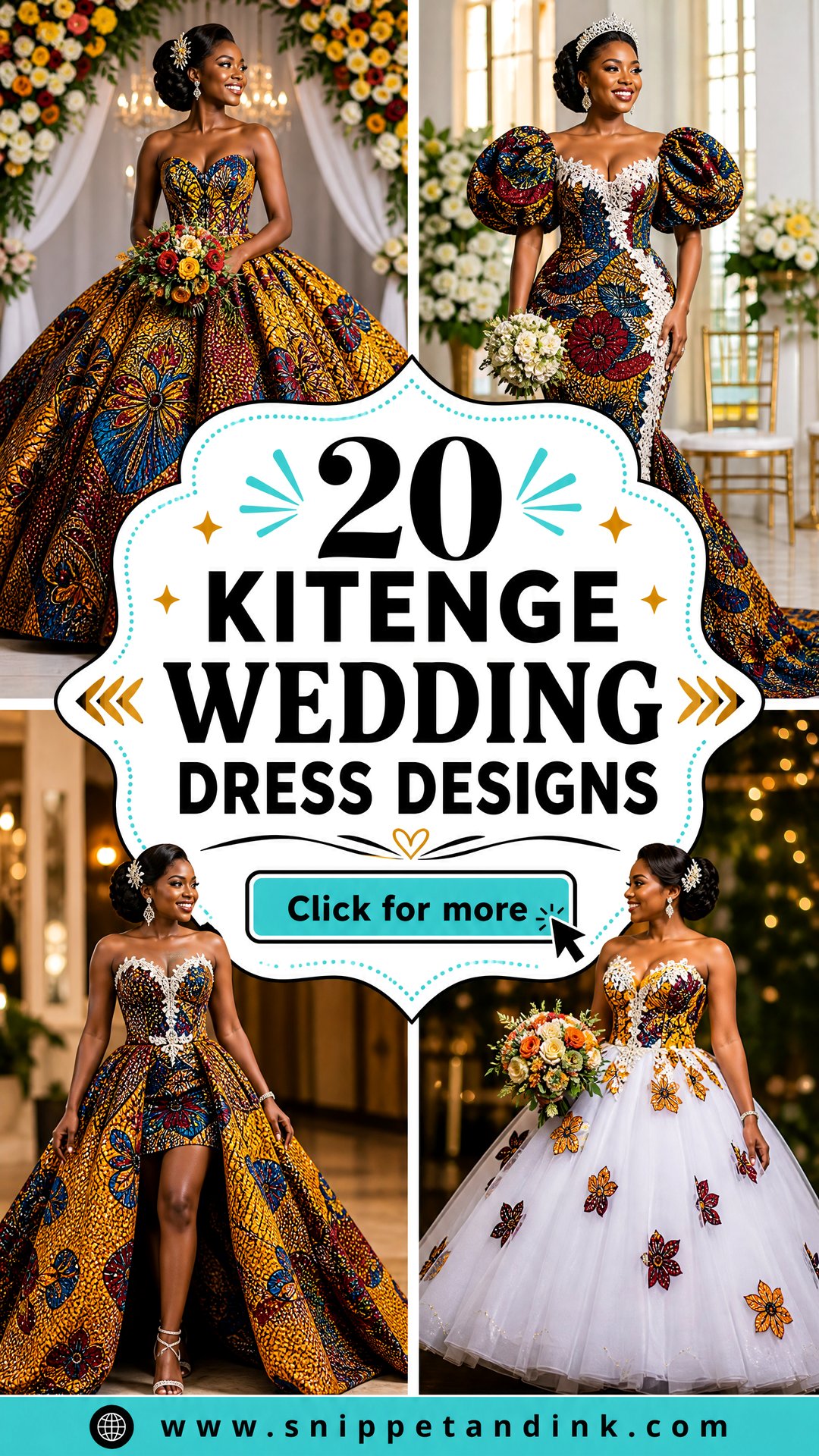
Kitenge brings color, heritage and personality into bridal clothing, and it works as well for a traditional ceremony as for a reception change. The designs below show how African prints can sit in a bridal silhouette without losing polish: ball gowns, fitted mermaid shapes, modest long sleeves and two-piece sets. Almost every one can be customized with print placement, lace panels, beadwork or detachable pieces. When I start a Kitenge gown with a bride, the first conversation is about the print itself, because a bold repeat looks very different once it is cut and crosses seams. After that come the setting and how much she needs to move.
Buying Kitenge by the Piece for a Gown With Matched Seams
Most bridal Kitenge gowns start with the bride buying fabric and taking it to a tailor, and the most common problem I see is simply running short. Wax print is usually sold in fixed lengths, and a gown with matched seams uses far more than a pattern envelope suggests.
- Buy all the fabric from one batch at the same time. Prints from a later run can differ slightly in color.
- Add extra for pattern matching. The bigger the repeat, the more fabric is lost lining motifs up across seams.
- Check quality by looking at the back. Good wax print shows the design clearly on both sides; cheaper imitations are often pale on the reverse.
- Wash a small offcut first to see whether it shrinks or bleeds, then decide with your tailor whether to pre-wash the whole piece before cutting.
- Take photos of designs you like, but also bring a sketch of where you want the main motifs to sit on your body.
Allow time for at least two or three fittings. Cotton print has almost no stretch, so small adjustments at the bust and waist make a visible difference to how the dress sits.
1. Kitenge Mermaid Wedding Dress
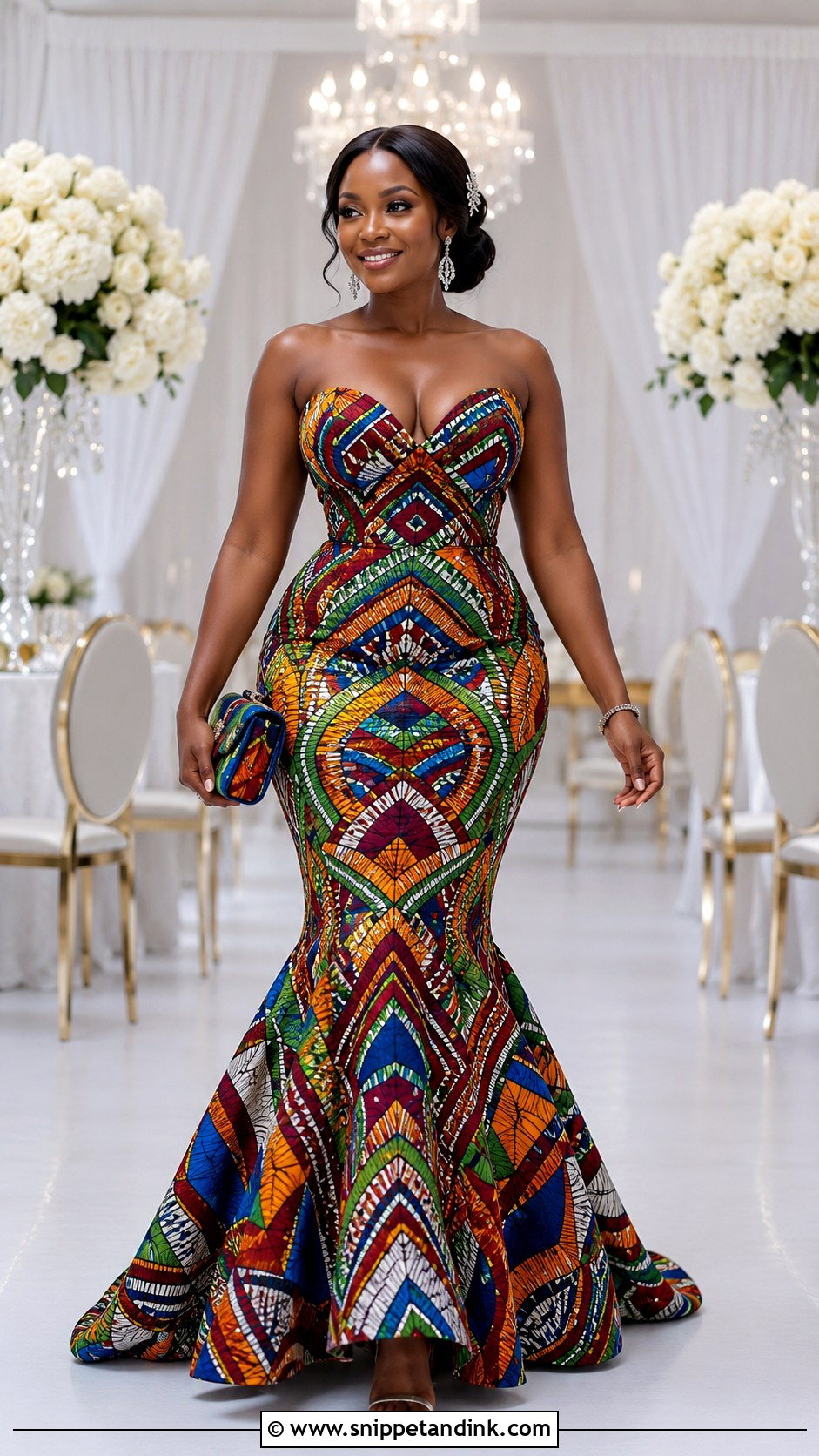
A mermaid shape fits close through the bodice and hips and flares near the knee or below. It suits geometric prints with an even repeat, since the motifs can be placed to follow the body’s curves. A large, irregular print is harder; I have seen motifs land awkwardly across the hips when no one planned the cut. Choose a boned, lined bodice and a sweetheart, square or illusion neckline. Metallic heels, drop earrings, a simple bracelet and a Kitenge clutch are enough, with a plain light veil or a beaded comb instead.
2. Kitenge Ball Gown Wedding Dress
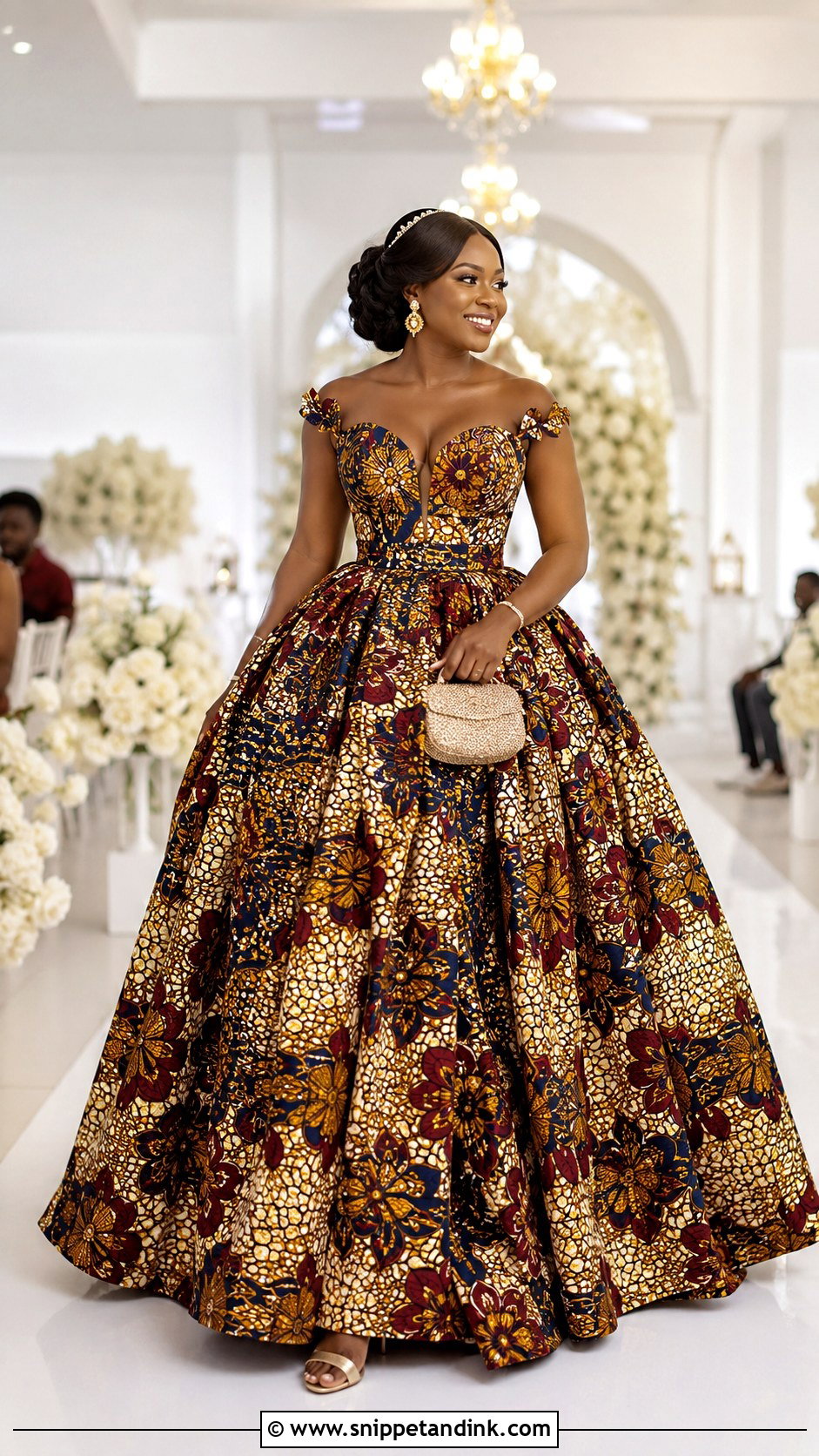
A ball gown makes the grandest entrance, and its wide skirt is the best canvas for a large-scale print. You can print the whole gown, or pair a solid bodice with a Kitenge skirt for balance. Wax-print cotton is crisp, so it holds a full shape well over a petticoat without needing heavy layers underneath. Block heels, a structured mini bag, polished earrings and a sleek bun or braided updo finish it. With a very colorful fabric, I pick accessories in gold, silver, nude, or one quiet shade lifted straight from the print.
3. White Wedding Dress With Kitenge Train
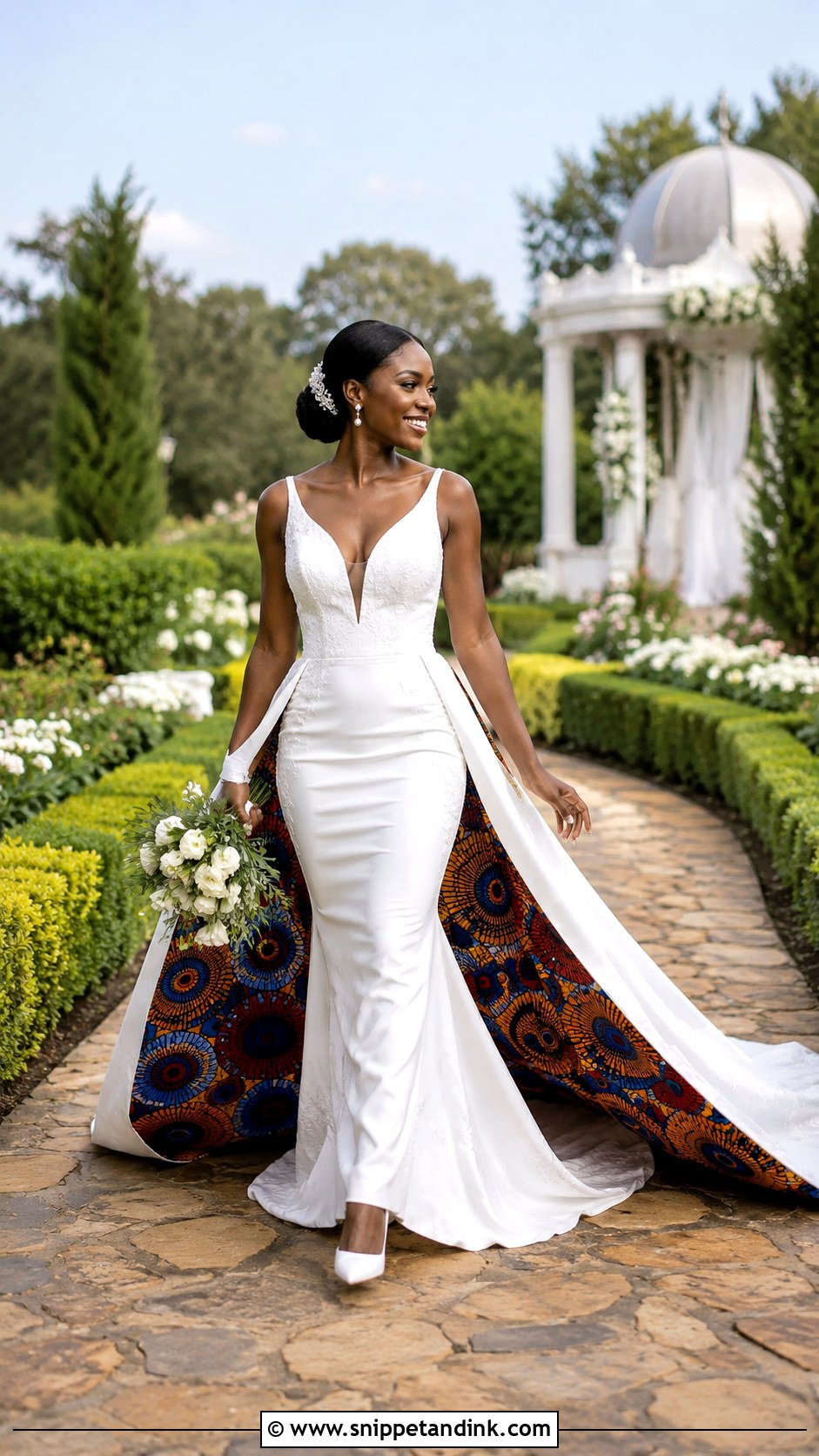
A white gown with a Kitenge train gives you classic bridal lines and a flash of print every time you walk or turn. Start with a clean white A-line, column or fitted dress and add the Kitenge under or along the train’s edges. A detachable train is practical once the dancing starts. Pattern matching is where I push tailors hardest here: where two panels meet in the middle of the train, the repeat should line up, or the eye goes straight to the seam. White or metallic heels, pearl earrings, a veil that does not cover the print and a small bouquet complete it.
4. Off Shoulder Kitenge Wedding Dress
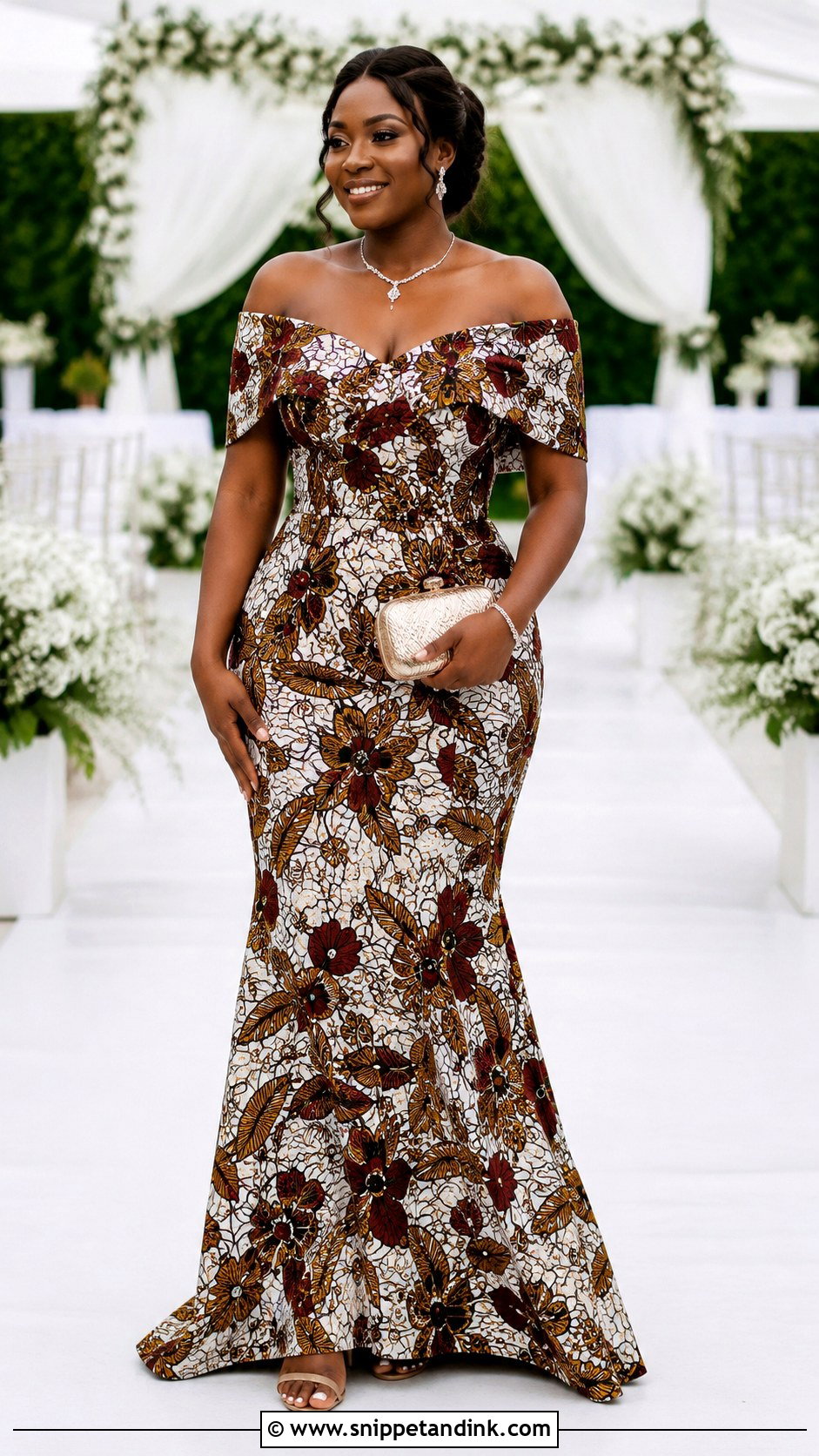
An off-shoulder Kitenge gown frames the collarbones and gives a bold print a graceful shape. The neckline can be softly folded, edged in scalloped lace or built on a corset bodice. Balance the bare shoulders with a floor-length A-line, mermaid or trumpet skirt. Cotton print has less stretch than bridal satin, so the bust fit has to be exact; I ask brides to bring the bra or shapewear they will actually wear to every fitting. A short necklace, small earrings, heeled sandals and an updo finish it, and a removable tulle wrap adds coverage if you want it.
5. Long Sleeve Kitenge Wedding Dress
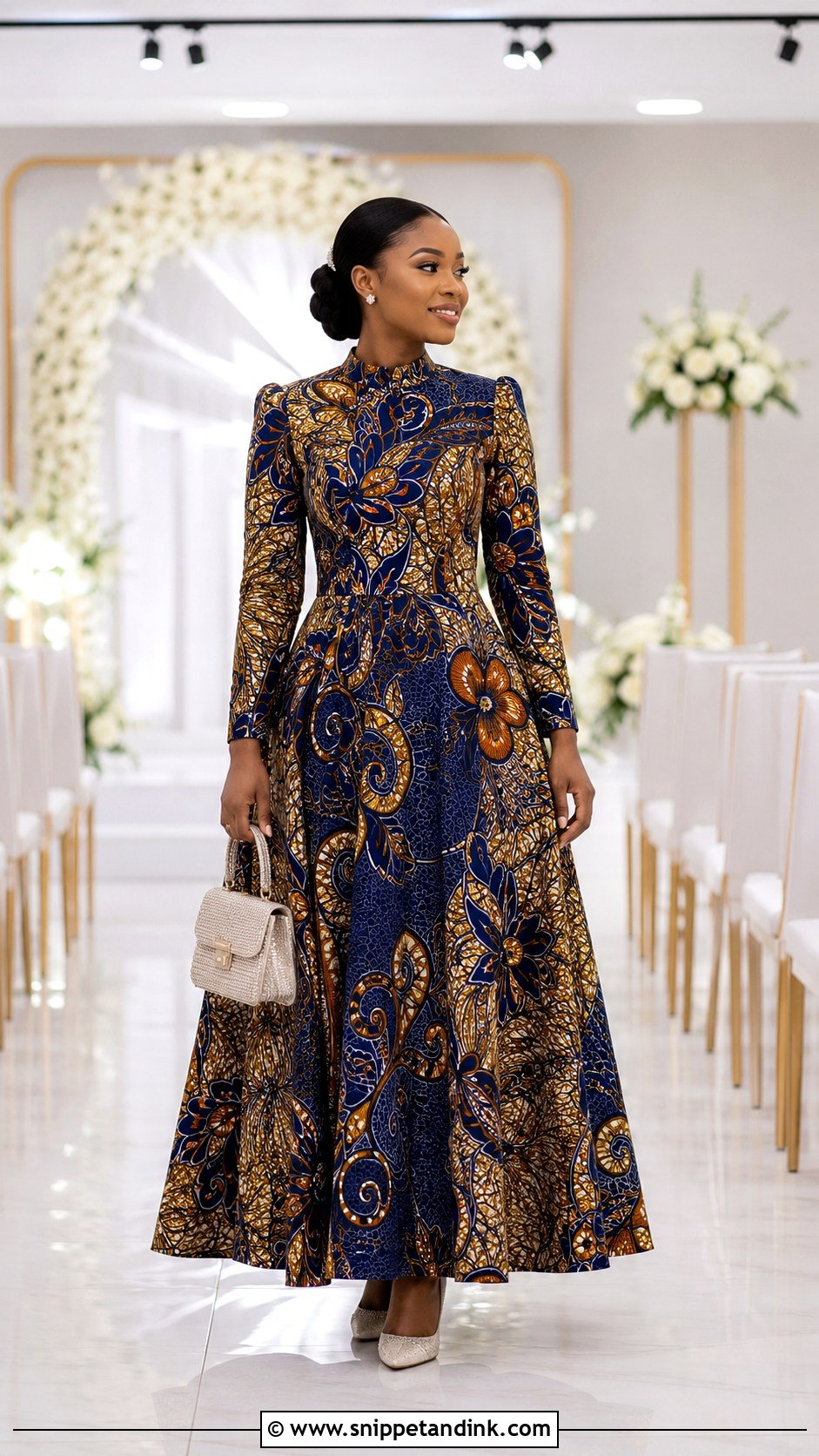
Long sleeves give coverage and still look light when they are cut well. Fitted sleeves keep the line sleek; puff or bishop sleeves add softness, and sheer lace sections at the arm can break up a busy print. Pair them with a defined waist and an A-line or gently flared skirt. I warn brides about heat with this one: wax-print cotton breathes, but full sleeves with a lining get warm, so for a hot climate I suggest a cotton lining rather than polyester. Closed-toe pumps, a structured bag, studs and a low bun complete it, and the print should match across shoulders and cuffs.
6. Kitenge Lace Wedding Dress
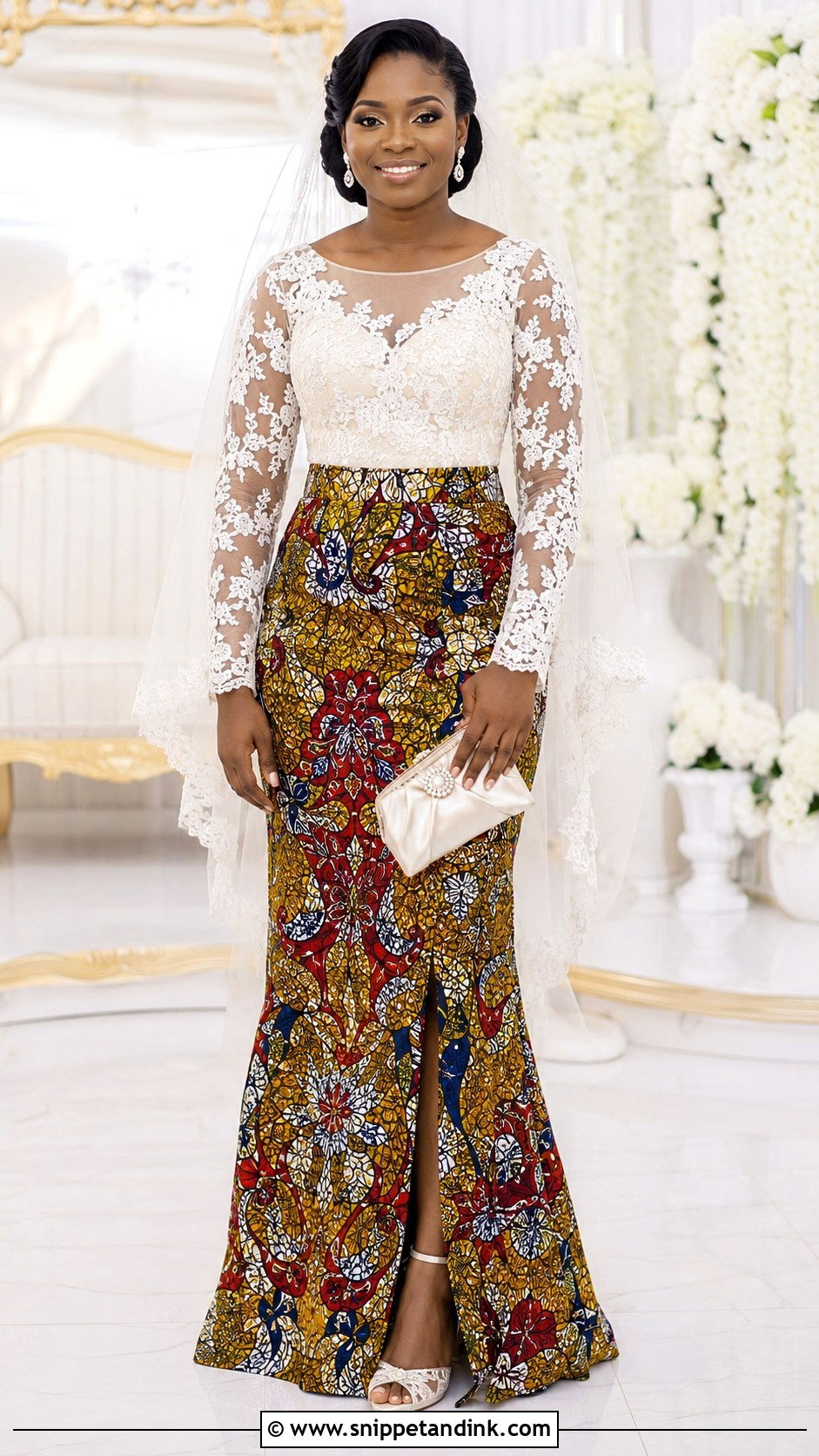
Lace and wax print together give you strength and softness in the same dress. White, ivory, navy or colored lace can cover the bodice, shape the sleeves or form skirt panels. My trick for making them agree is to pick lace in one of the quieter colors in the Kitenge, never the brightest. A defined waist and a floor-length skirt keep it bridal. Lace-trimmed heels, a small satin clutch, fine earrings and a fingertip veil are plenty, because print and texture already give a lot to look at. Sheer areas need careful lining, and lace edges should sit symmetrically at the neckline and waist.
7. Kitenge A Line Wedding Dress
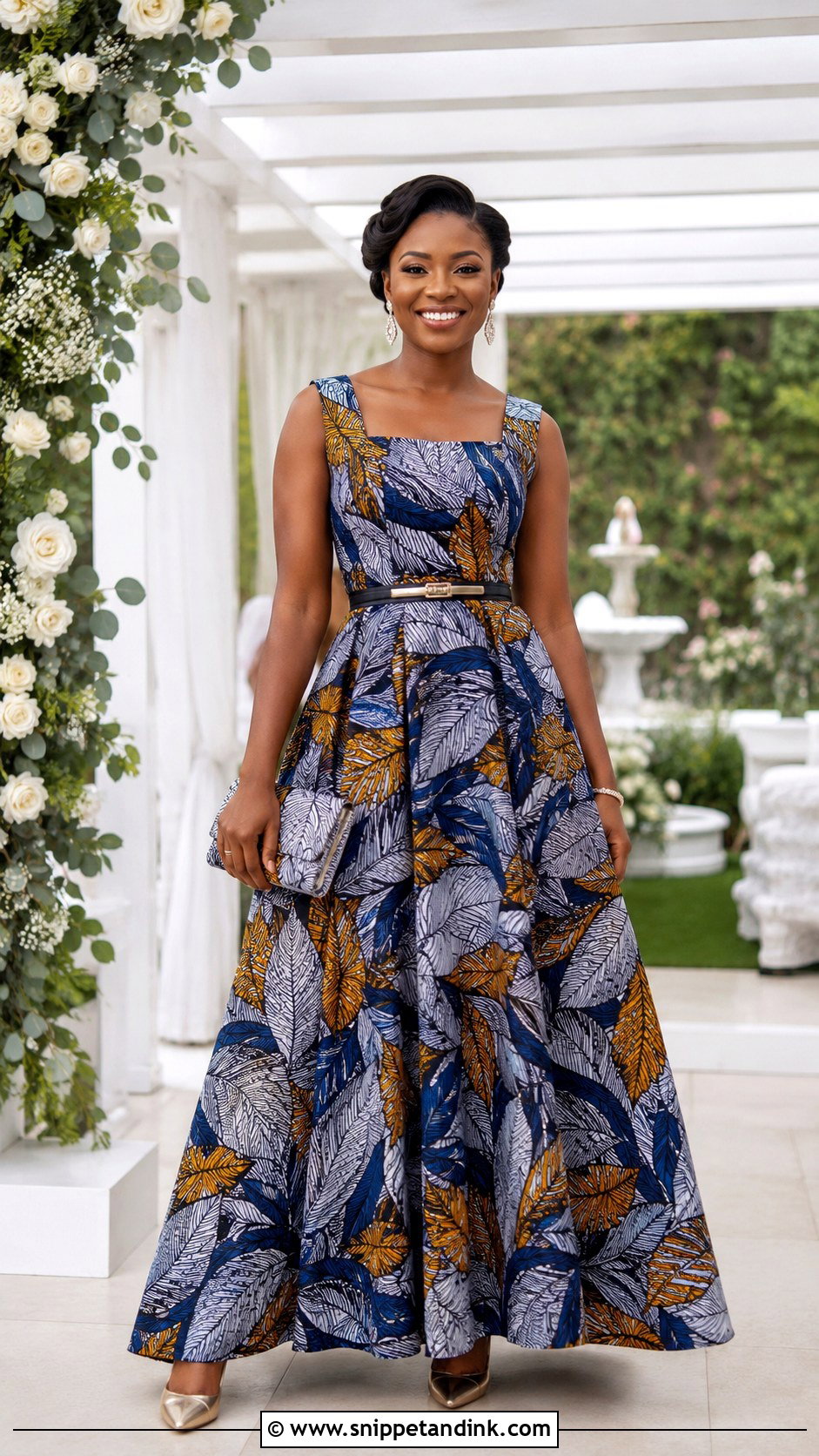
The A-line is the shape I recommend most for a first Kitenge gown, because it suits many bodies and lets the print show clearly without a ball gown’s volume. It fits at the shoulders and waist and widens gradually to the floor. Choose a V, square or high round neckline for the coverage you want. Pointed pumps, a slim metallic belt, drop earrings and a Kitenge clutch finish it, with a soft veil or wrapped headpiece. Place the waist seam at the narrowest part of the torso and use soft pleats instead of gathers, which add bulk over the stomach in a crisp cotton.
8. Kitenge High Low Wedding Dress
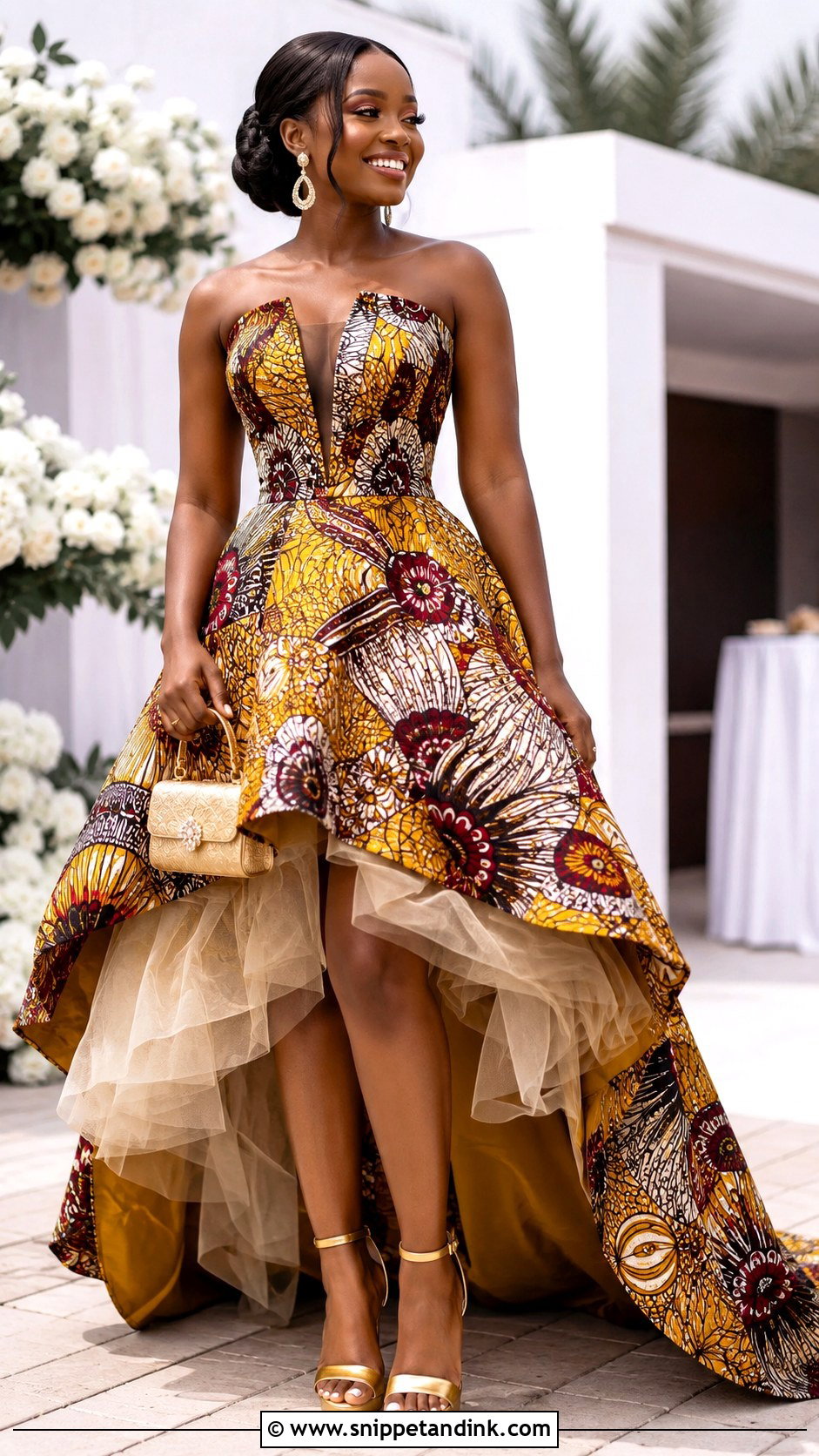
A high-low hem feels playful and practical for a lively celebration. The short front shows off the shoes, and the long back keeps some train drama. A structured bodice and a well-shaped hem stop it looking casual. Since the shoes are on show all day, I would rather a bride chooses a pair she can stand in for hours than a fragile showpiece. Gold, silver, white or a color from the print all work, with a small bag, polished earrings and a simple hair accessory. A layer of tulle underneath adds movement, and a satin lining helps the print hold its shape.
9. Kitenge Peplum Wedding Dress
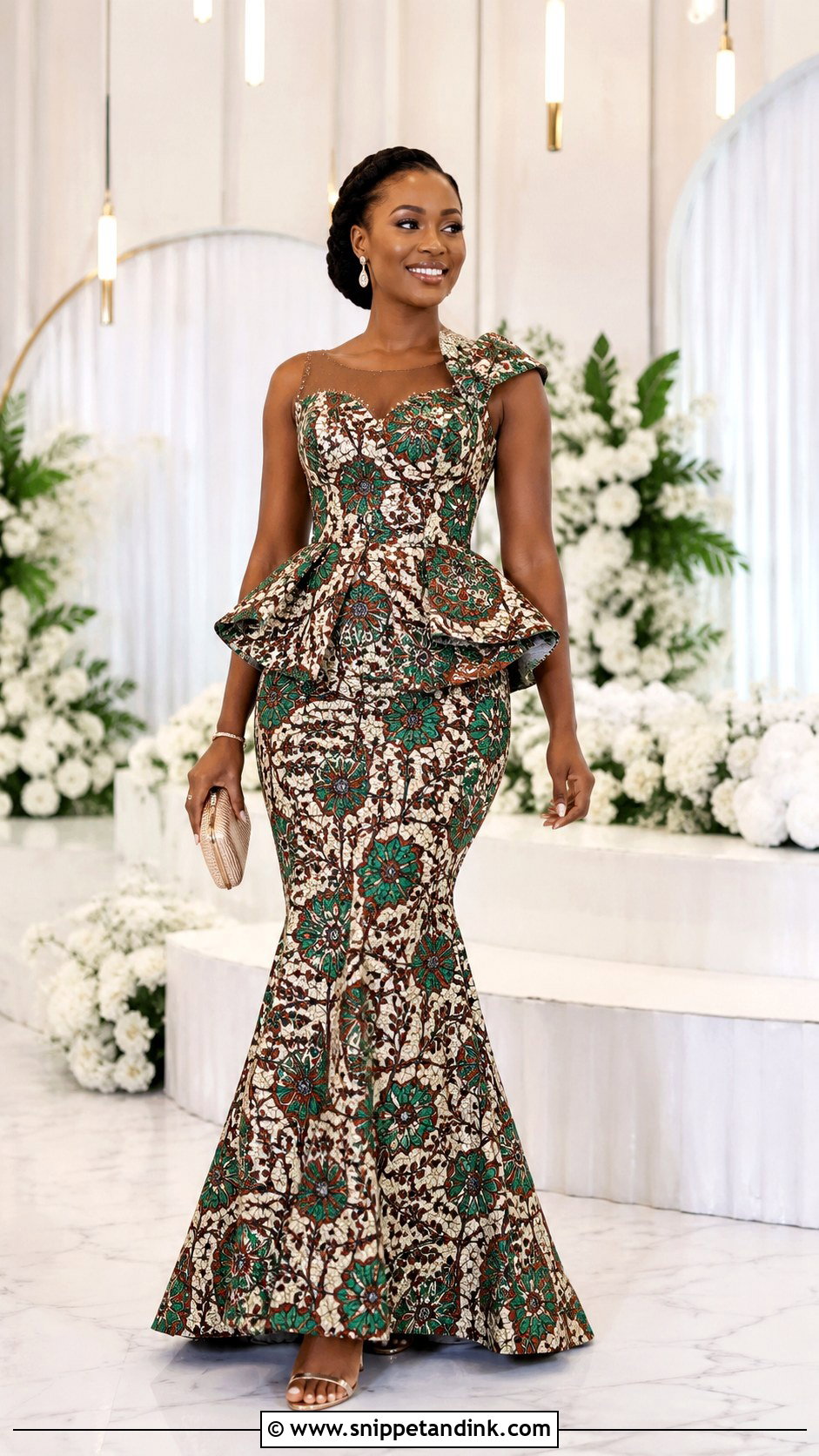
A peplum adds a short flare of fabric at the waist, which gives a Kitenge peplum wedding dress its tailored shape. Below it, the skirt can be straight, pencil, trumpet or mermaid. A small peplum defines; a wide asymmetric one is a statement. Keep the bodice smooth so the print and the peplum do not fight. The position of the peplum changes everything, so at fittings I pin it a couple of centimeters higher and lower before it is stitched, and we choose by looking in a full mirror. Slim heels, a structured clutch, an updo and a plain veil finish it.
10. Strapless Kitenge Wedding Dress
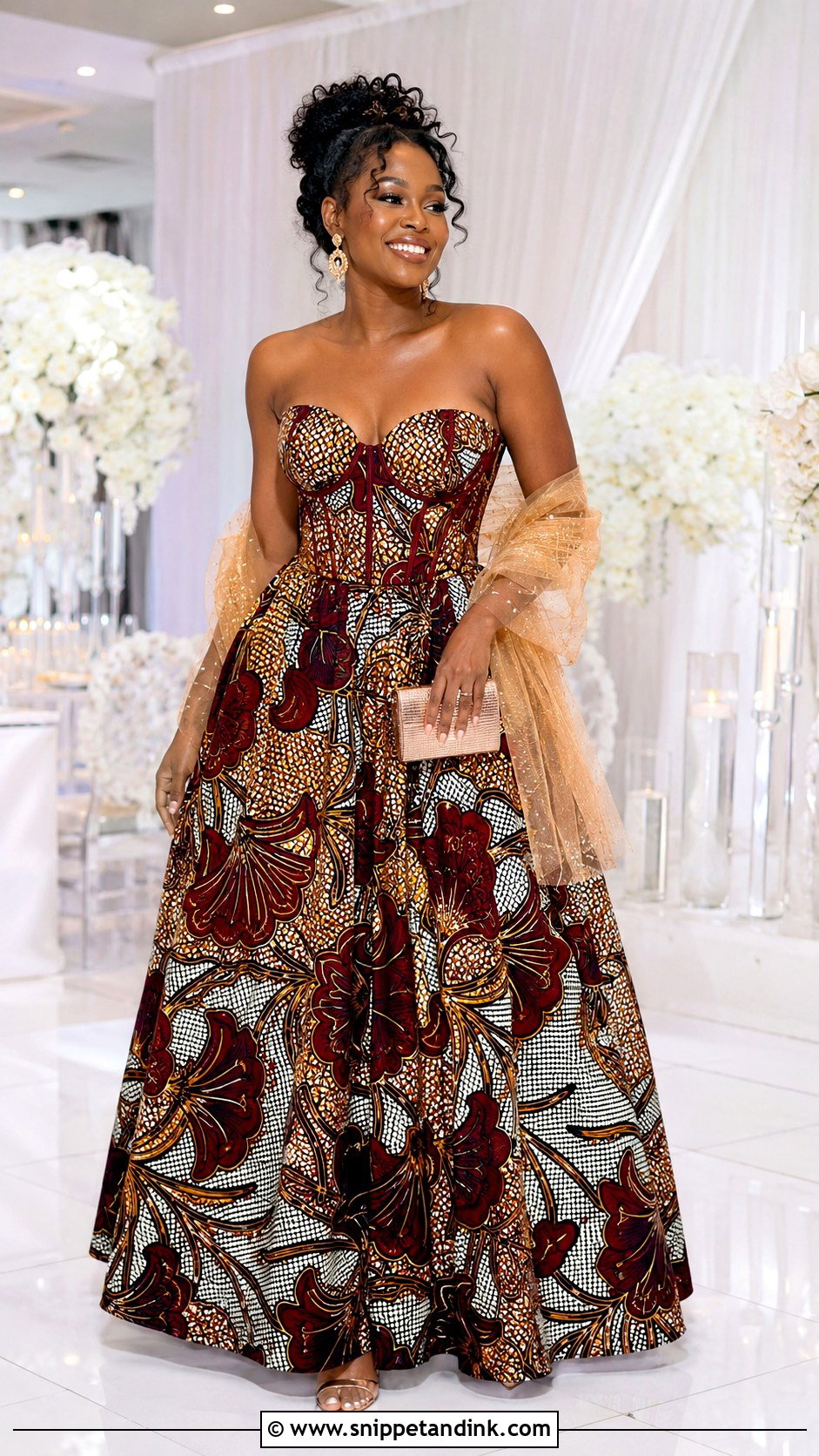
Strapless lets the print speak with nothing interrupting it. A boned bodice gives the structure, with a straight or sweetheart neckline, and the skirt can be fitted, flared or full. The bodice must stay up without squeezing, which in a non-stretch cotton means a precise fit and good internal support rather than tightness. I add a light detachable wrap or cape for church ceremonies where shoulders are expected to be covered. A short pendant, medium earrings, metallic heels and a coordinated clutch suit it, or one sculptural bracelet if you prefer less jewelry.
11. Kitenge Two Piece Wedding Dress
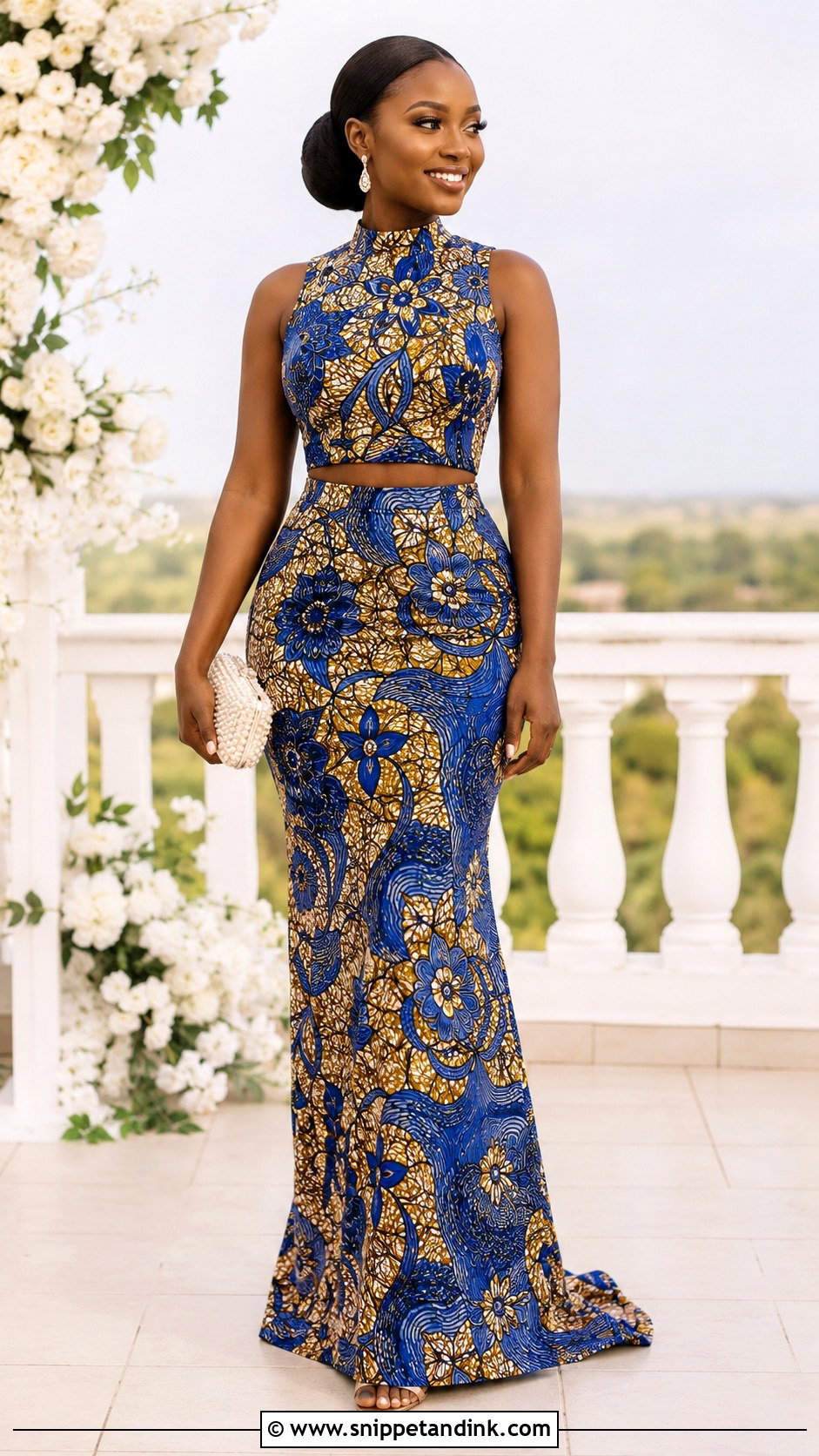
A two-piece set is flexible and still reads as bridal. It might be a fitted crop top with a high-waisted maxi skirt, a peplum top with a mermaid skirt, or a modest blouse over a full skirt. One print throughout looks like a gown; a solid top with a printed skirt gives contrast. Quality lining and clean finishing keep it from looking like daywear. The part brides love later is that both pieces can be worn again, so I suggest finishing the seams well enough to survive washing. Heeled sandals, a beaded clutch and simple jewelry complete it.
12. Kitenge Cape Wedding Dress
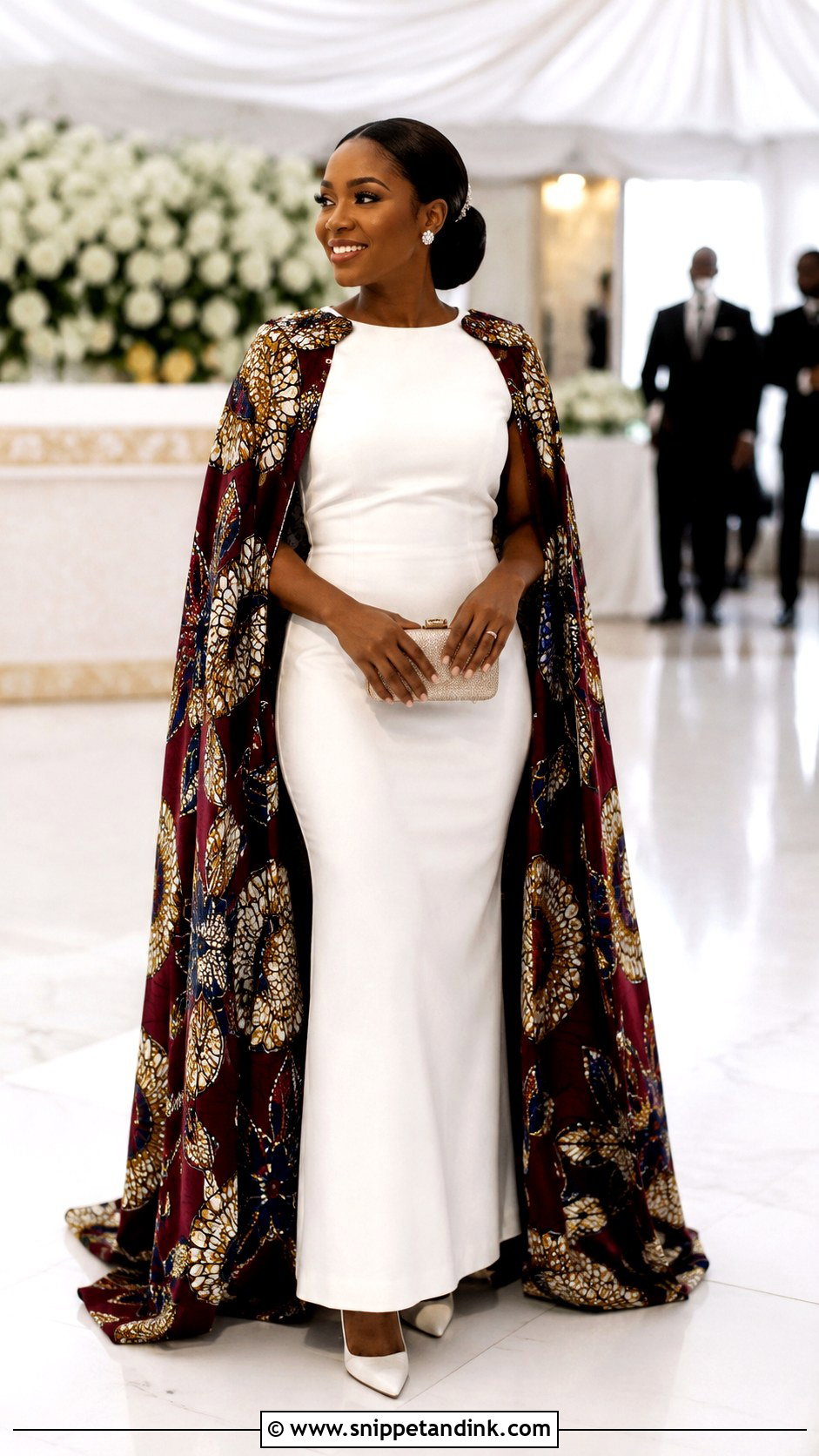
A cape gives ceremony drama without a heavy skirt or long veil. It can be all print, lined in a solid color, or attached to a white gown through Kitenge-trimmed shoulders. Floor length looks regal; shorter capes move more and add coverage. Keep the dress underneath streamlined. Wax print is heavier than chiffon, so a long Kitenge cape pulls back on the neck; I always ask for fastenings anchored into the shoulder seams, not just a hook at the throat. Pointed heels, a slim clutch, studs and a smooth bun complete it, and making it detachable gives you a simpler reception look.
13. Kitenge Wrap Wedding Dress
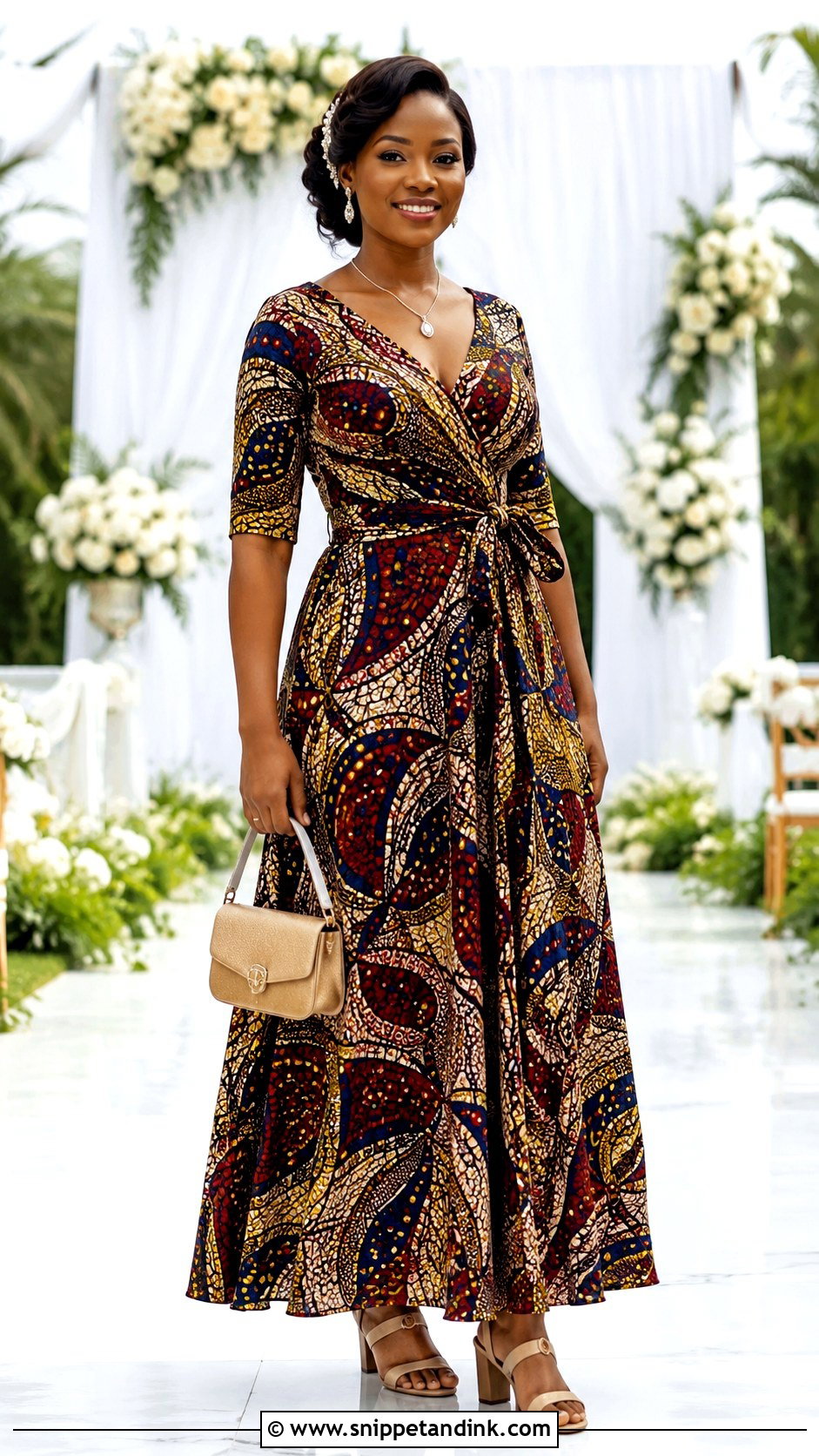
A wrap dress adjusts to the body, which makes it comfortable and forgiving. The overlapping bodice forms a V-neck and the tie defines the waist. Choose a full-length skirt with controlled gathers for a formal finish, and flutter, elbow or long structured sleeves for coverage. Wrap bodices tend to open when you sit or hug, so I have the tailor add a hidden snap at the cross-over point and an internal waist stay. Block heels, a compact bag, a fine pendant and a matching headwrap or simple updo complete the look.
14. Kitenge One Shoulder Wedding Dress
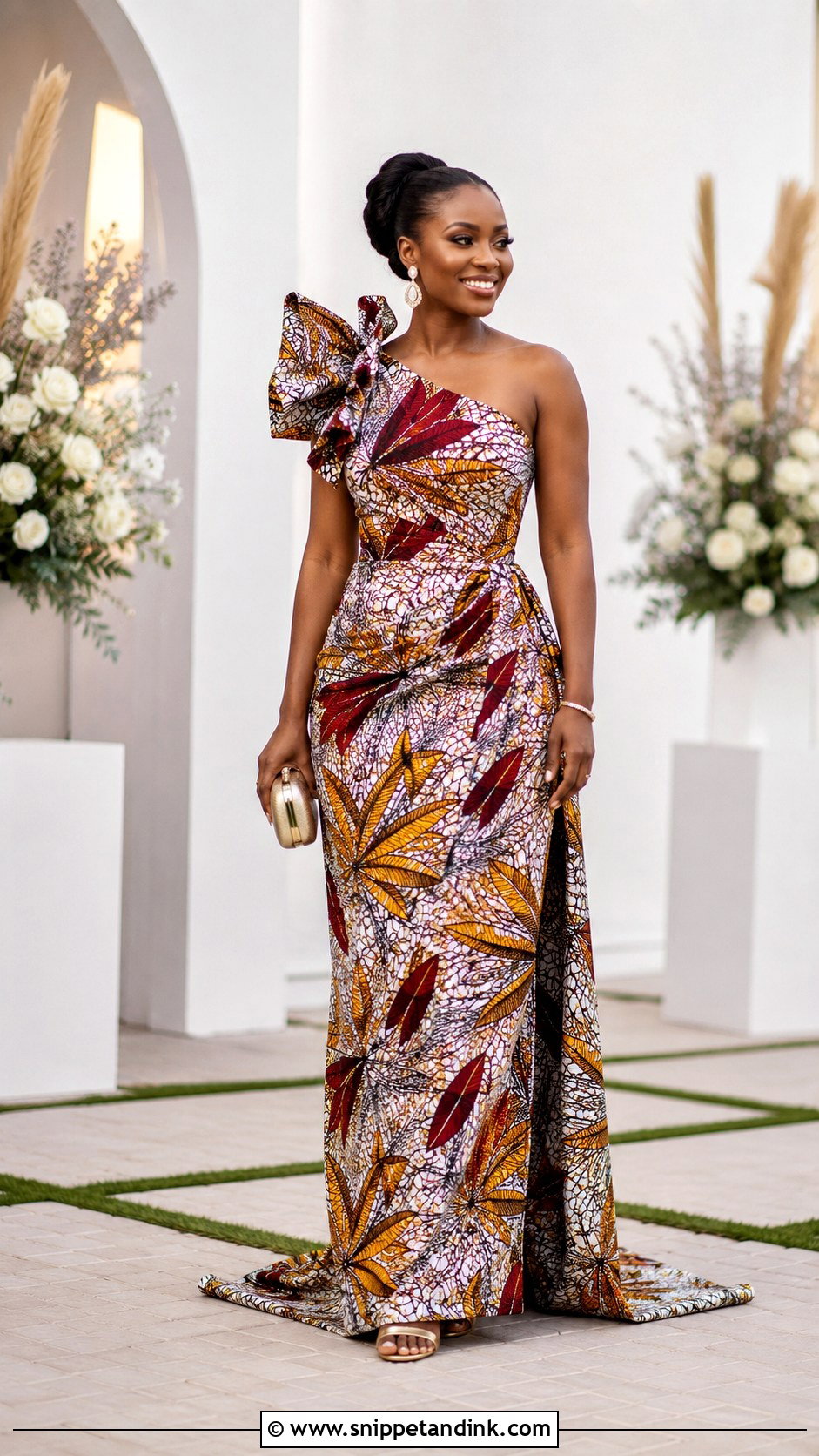
One shoulder makes a print look modern and gives it direction. The single shoulder can be a clean strap, a draped panel or a sculpted ruffle, balanced with a fitted waist and a column, A-line or mermaid skirt. Skip the necklace; statement earrings, a slim bracelet, metallic heels and a small clutch are enough. Hair should go toward the bare shoulder or up in a high bun. With large motifs, I map their placement on the cutting table before the first cut, because a diagonal neckline makes any off-center motif look even more obvious.
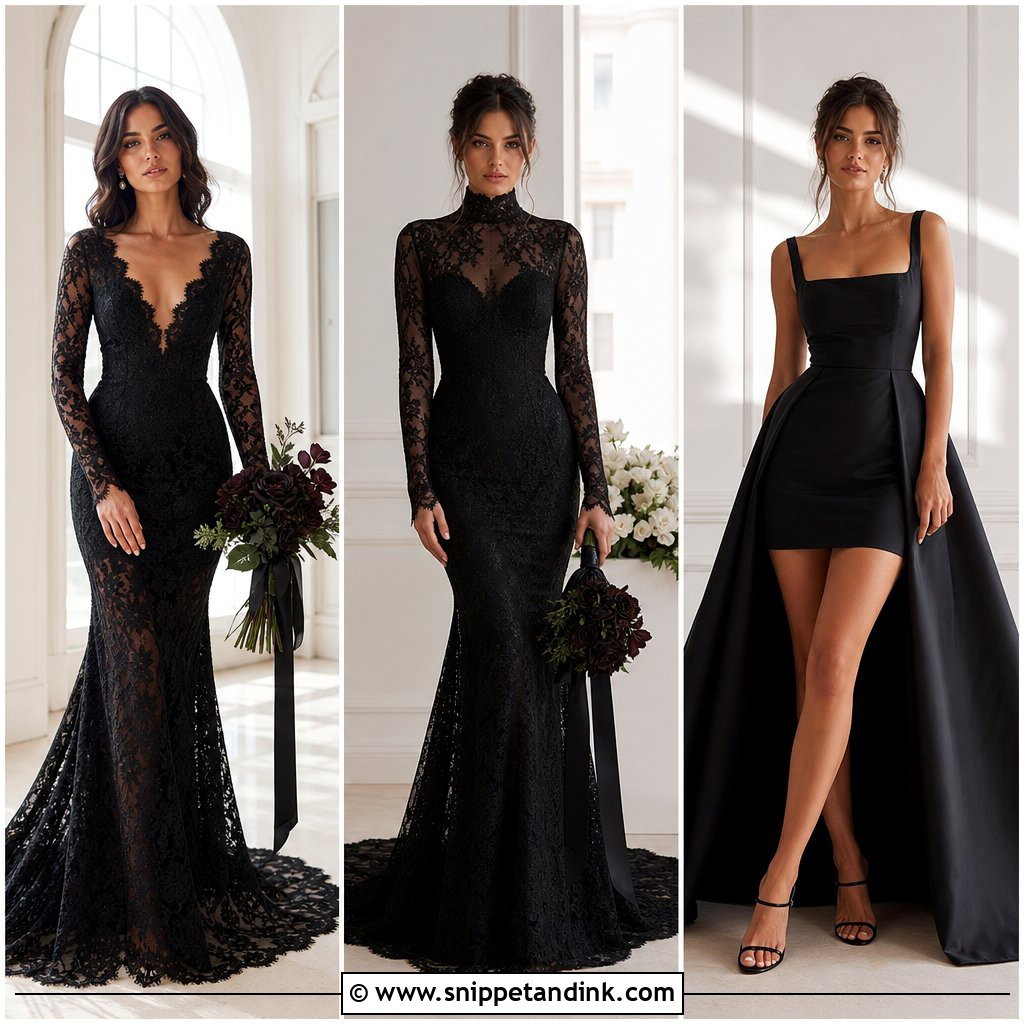
15. Kitenge Puff Sleeve Wedding Dress
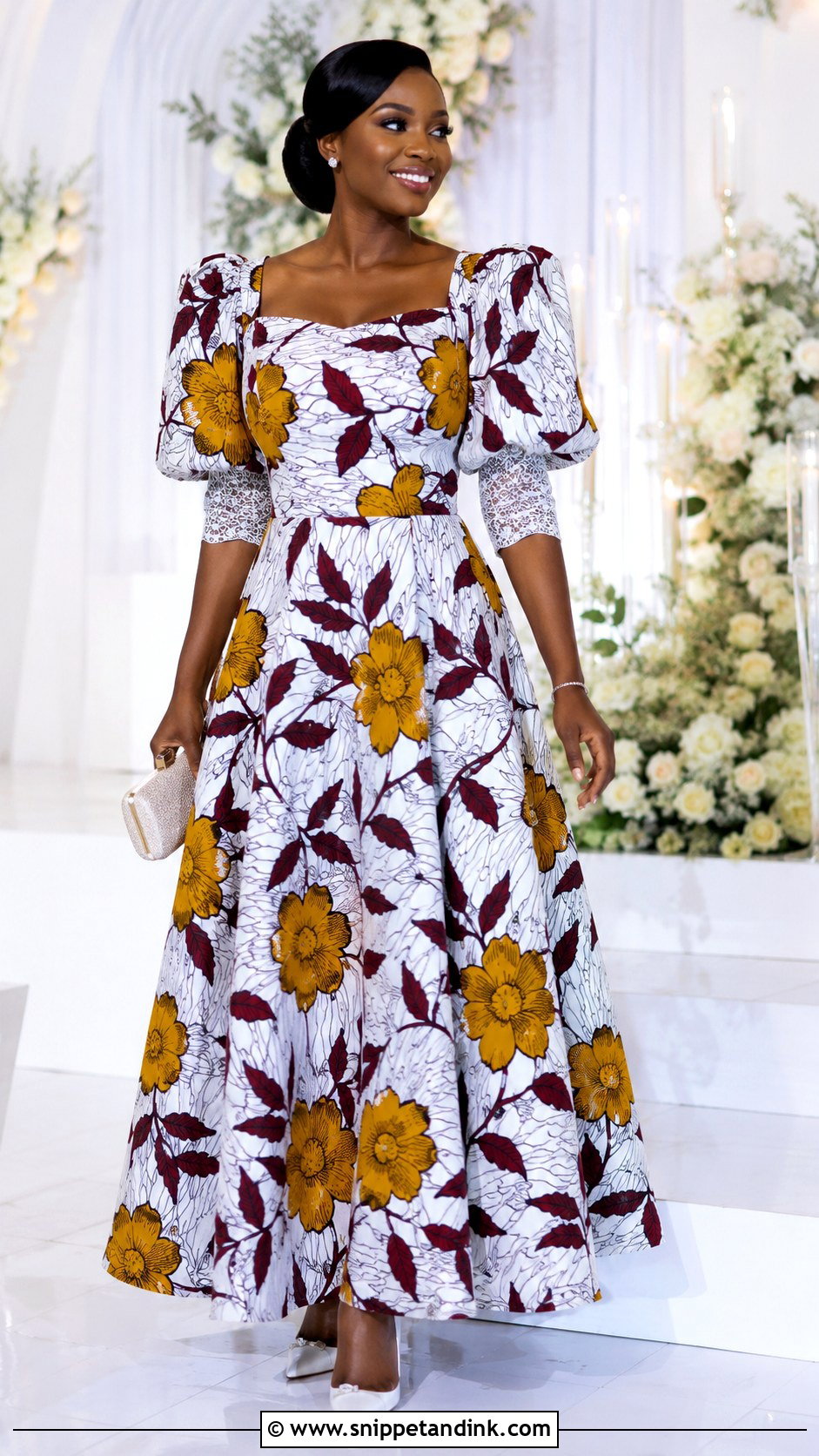
Puff sleeves are confident and a little romantic. They can be short and round, elbow-length, or full with fitted cuffs. Big sleeves need a smooth bodice and a simple A-line or fitted skirt to balance them, while small puffs suit a fuller gown. Crisp wax cotton holds a puff on its own, which is why it works so well here. For broader shoulders, I start the volume a little below the shoulder line; for narrower frames, a higher, more sculpted puff adds width. Low-profile earrings, a structured clutch, pointed heels and hair pulled back complete it.
16. Kitenge Jumpsuit Wedding Outfit
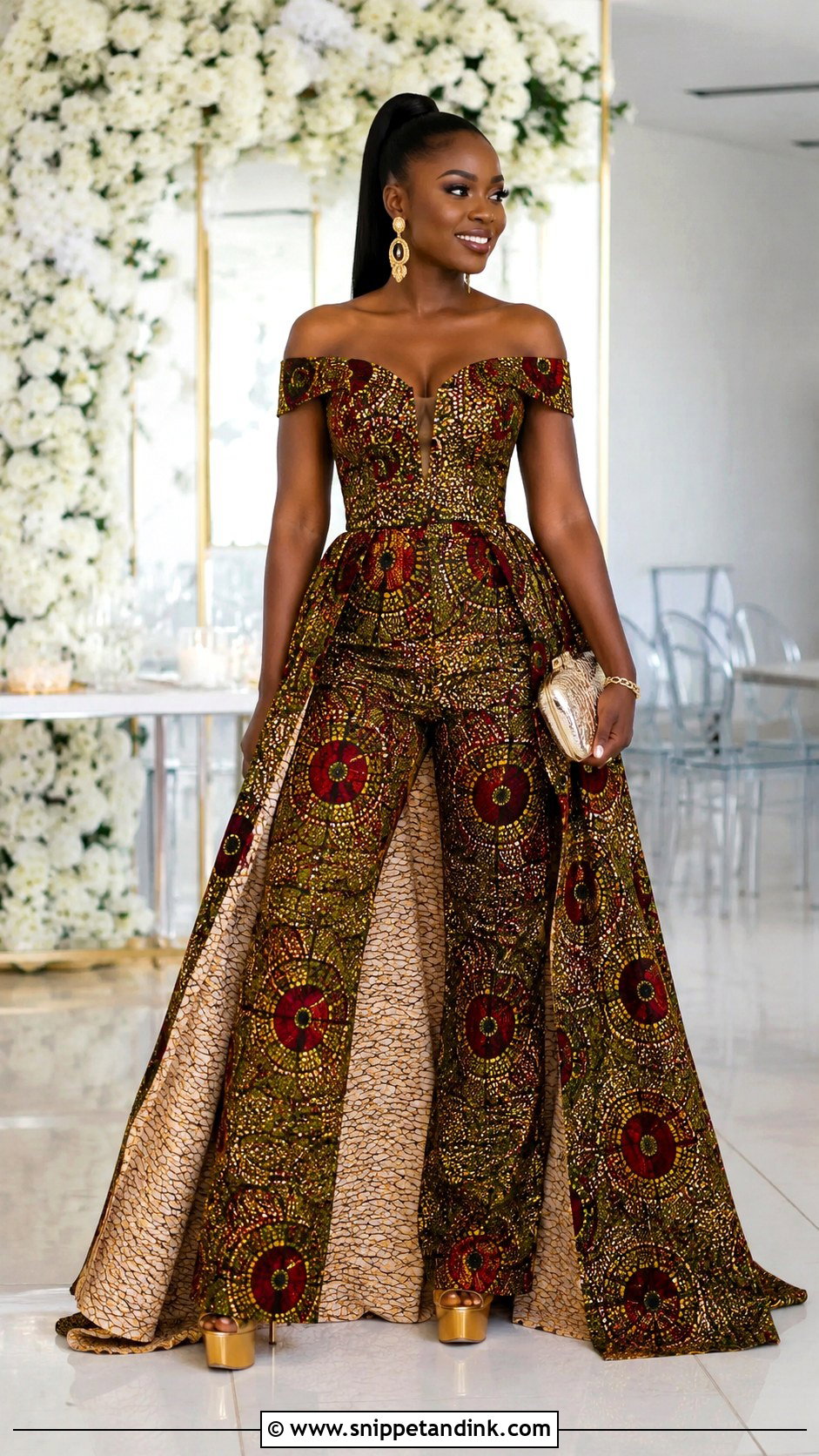
A Kitenge jumpsuit wedding outfit suits a civil ceremony, a destination wedding or a reception change. Wide legs move like a skirt while a fitted bodice keeps the bridal shape. An off-shoulder neckline, structured sleeves or a removable overskirt adds ceremony drama. The rise is where jumpsuits fail, so I have brides sit, squat and lift their arms at the fitting; too short a torso pulls uncomfortably. Platform heels, statement earrings, a structured clutch and a sleek ponytail finish it, and a solid belt can break up a busy print at the waist.
17. Kitenge Wedding Dress With Detachable Skirt
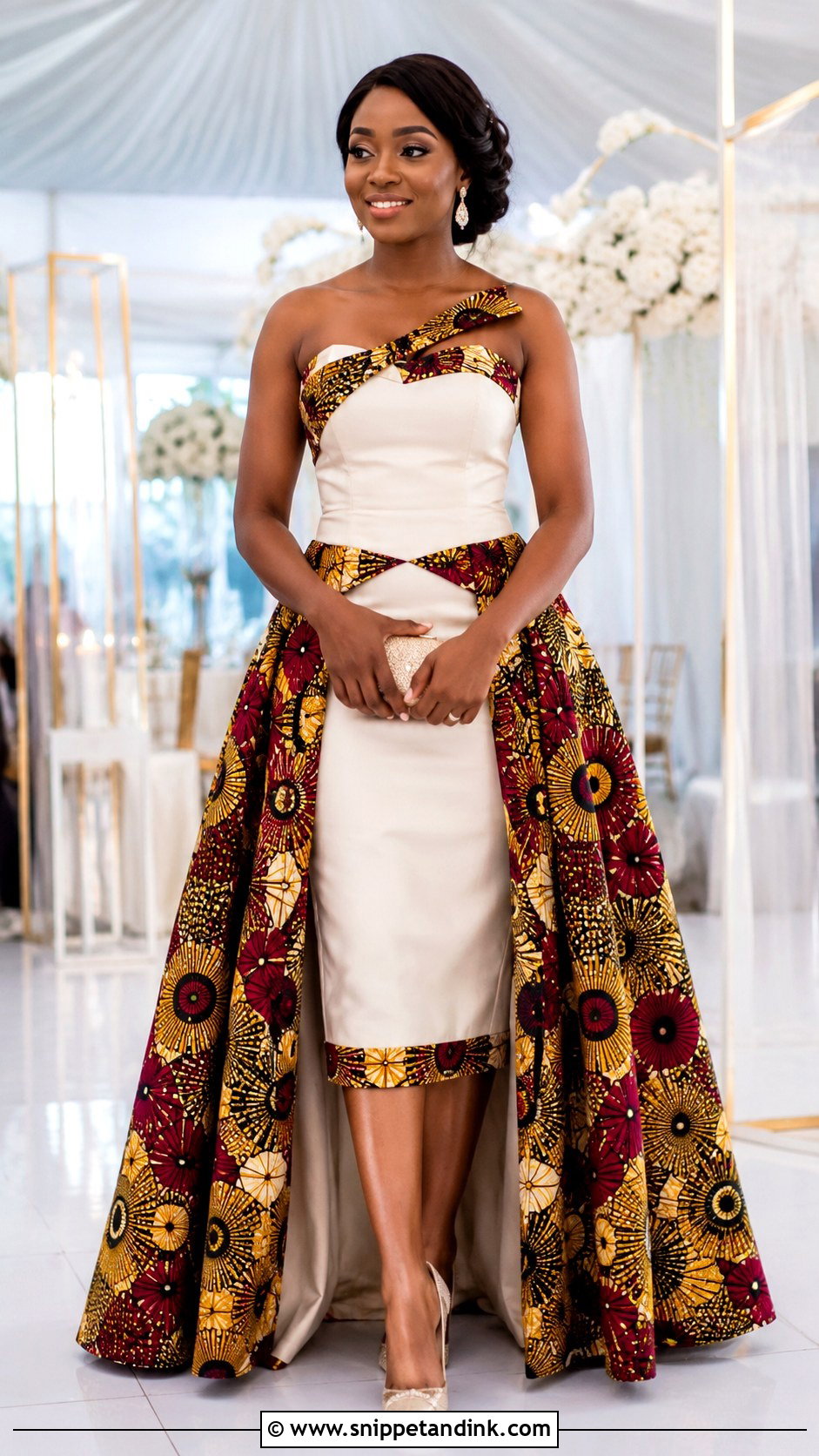
One outfit can give you two looks if you choose a Kitenge wedding dress with a detachable skirt. Start with a fitted mini, midi, column dress or jumpsuit as the base, and add a full printed overskirt for the ceremony. Hidden hooks, snaps or a covered waistband should hold it smoothly. I always rehearse the removal with the person who will help on the day, timed, because a fiddly fastening can turn a quick change into twenty minutes in a bathroom. Use a little of the same Kitenge on the base for continuity, and choose a hairstyle that works with both versions.
18. Kitenge Wedding Dress With Tulle Skirt
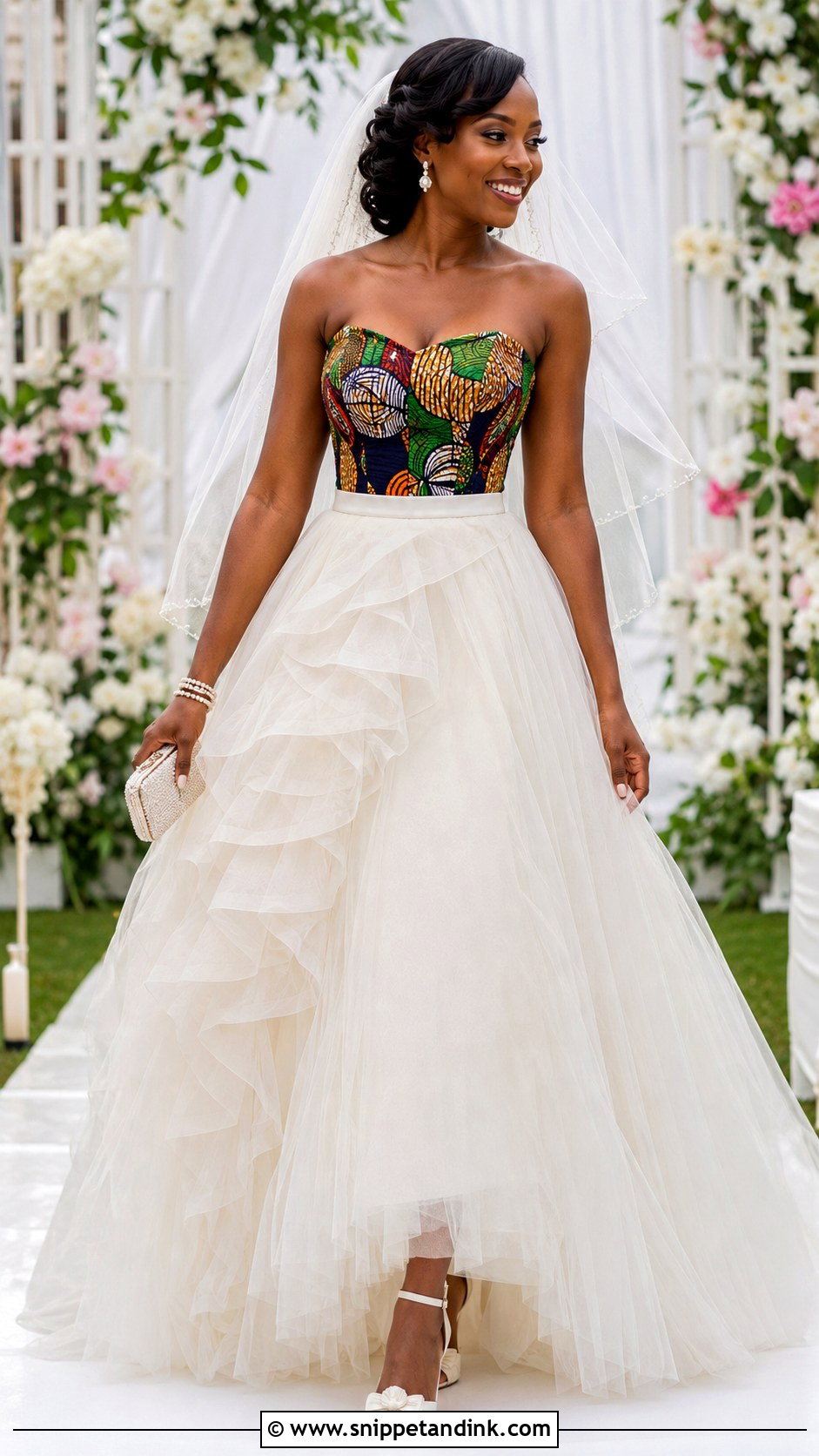
Tulle softens bold print beautifully. A fitted Kitenge bodice can sit over ivory, white, blush or colored tulle, or the printed panels can go under sheer tulle for a veiled effect. Define the waist with a neat seam, a narrow band or a little beadwork. Satin heels, a small clutch, pearl or crystal earrings and a light veil finish it. Scale the tulle to the bride’s height and the venue; a petite bride in a vast skirt can disappear. Tulle hems catch on heels easily, so I ask for the hem to clear the floor slightly once she has her shoes on.
19. Kitenge Halter Neck Wedding Dress
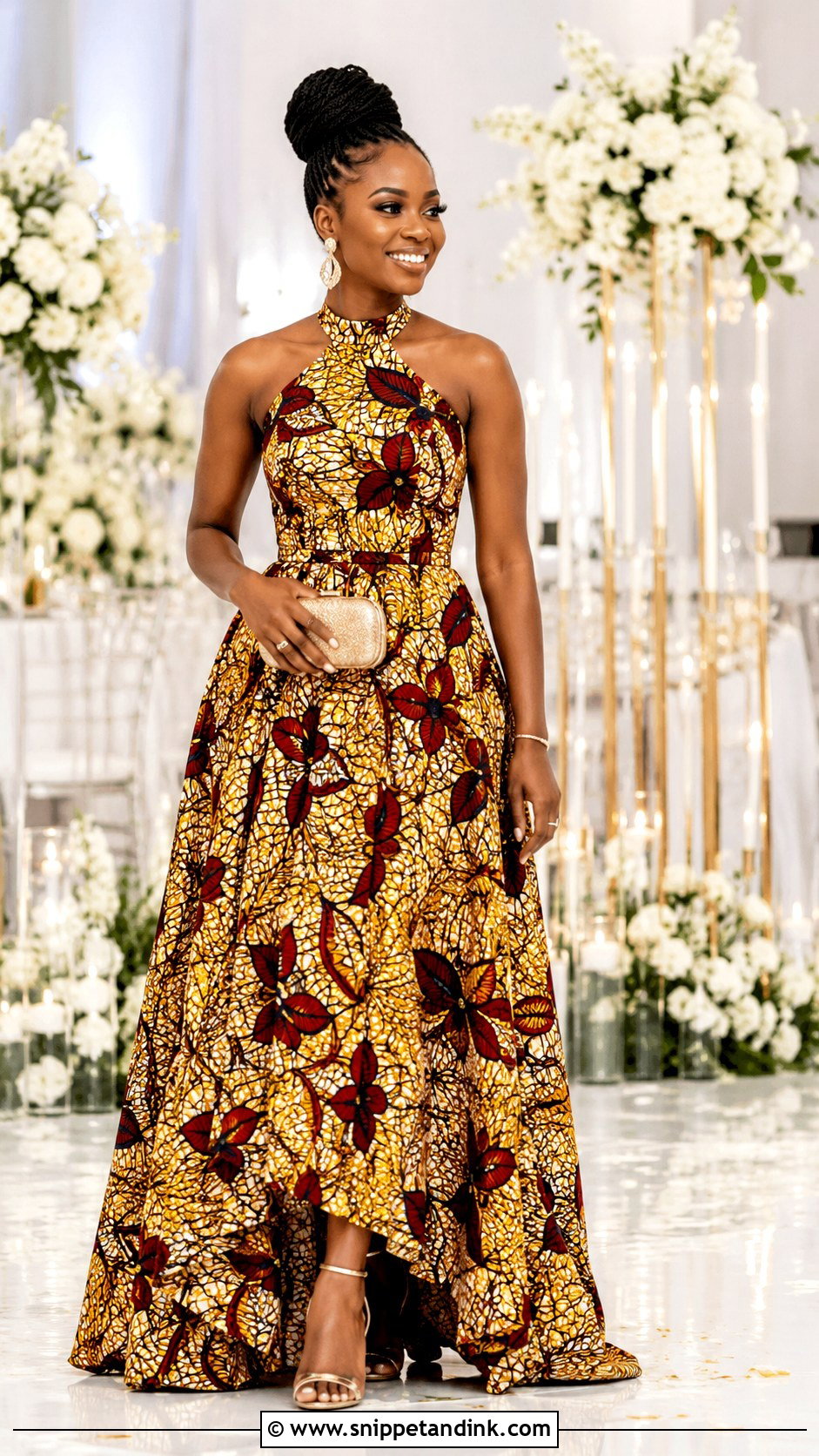
A halter neck lifts the eye and frames the shoulders cleanly. It can fasten at the nape, rise into a high collar or include a modest front keyhole. Pair it with a fitted mermaid skirt for a sculpted look or an A-line for ease. The neckline is the detail, so skip the necklace and choose polished earrings. A firm inner bodice matters with a halter, because otherwise all the weight of a cotton skirt hangs from the neck strap. Metallic heels, a slim bracelet, a clutch and a bun or high ponytail complete it, with a detachable cape for extra coverage.
20. Kitenge Wedding Dress With Matching Headwrap
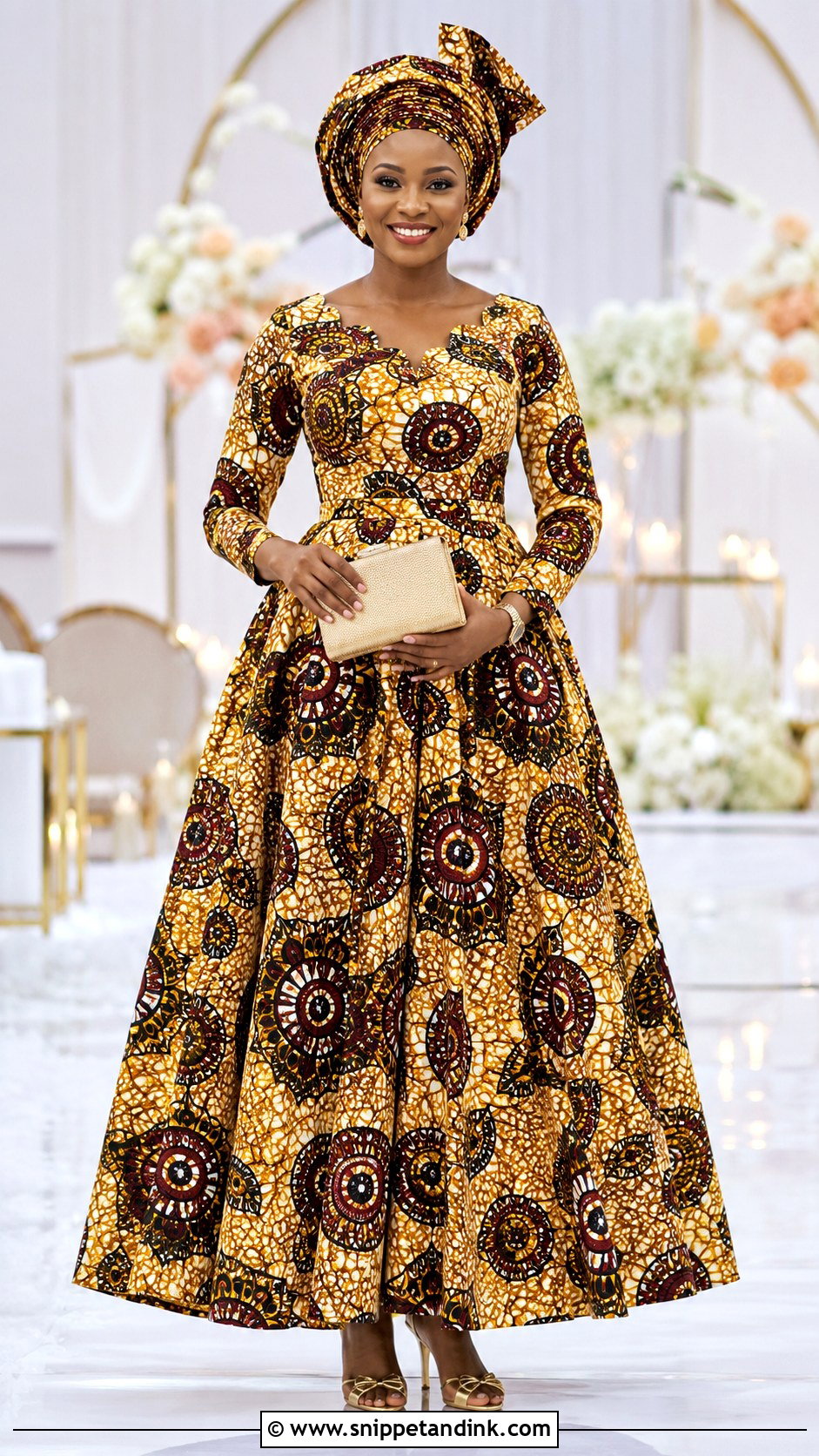
A matching headwrap makes the outfit feel complete and personal. It can repeat the exact print or use a solid fabric with a narrow printed border. A tall, structured wrap pairs best with a streamlined gown; a softer wrap suits a full A-line. Keep the rest simple with metallic heels, studs and a small clutch. The wrap must feel secure without pressing on the temples for hours, so I tie a practice version during the hair trial. Ask the designer to plan both pieces together on the fabric so the best motifs land on the bodice and the visible front of the wrap.
Does a Big Print Read Well From the Back Row?
Kitenge motifs that look lively on a fabric bolt can behave very differently on a body, in a church, and in photographs. Before cutting, I drape the fabric on the bride and step back as far as the guests will be.
Scale against height
Very large motifs can overwhelm a petite frame and look broken up on a fitted shape. Small, dense prints can blur into a single color from a distance. A medium repeat is the safest choice for a fitted gown; save the biggest prints for full skirts, trains and capes.
Color in photographs
Bright prints can come out more saturated on camera than in person, especially reds and oranges in sunlight. A quick phone photo outdoors and indoors under warm light will show you which version to expect. If the print feels loud in those test shots, a solid-colored bodice or lace panel gives the eye somewhere to rest.
Creasing during the day
Cotton wax print creases when you sit, more than satin does. Steam the gown on the morning, and ask someone to carry a small travel steamer for the change between ceremony and reception.
Print Placement Matters More Than the Silhouette
A good Kitenge bridal look shows your taste and still respects comfort, fit and what the ceremony asks of you. Ball gowns, capes and detachable skirts make an entrance; A-lines, wraps and jumpsuits give you freedom to move. Print placement and skilled tailoring make the biggest difference in all of them. Choose accessories that support the fabric instead of competing with it, and do your fittings with the shoes and underwear you will wear on the day. You can also carry the print into small details for your partner or bridal party, so the whole wedding party ties together.
You'll Like These Ideas:


Leave a Reply