
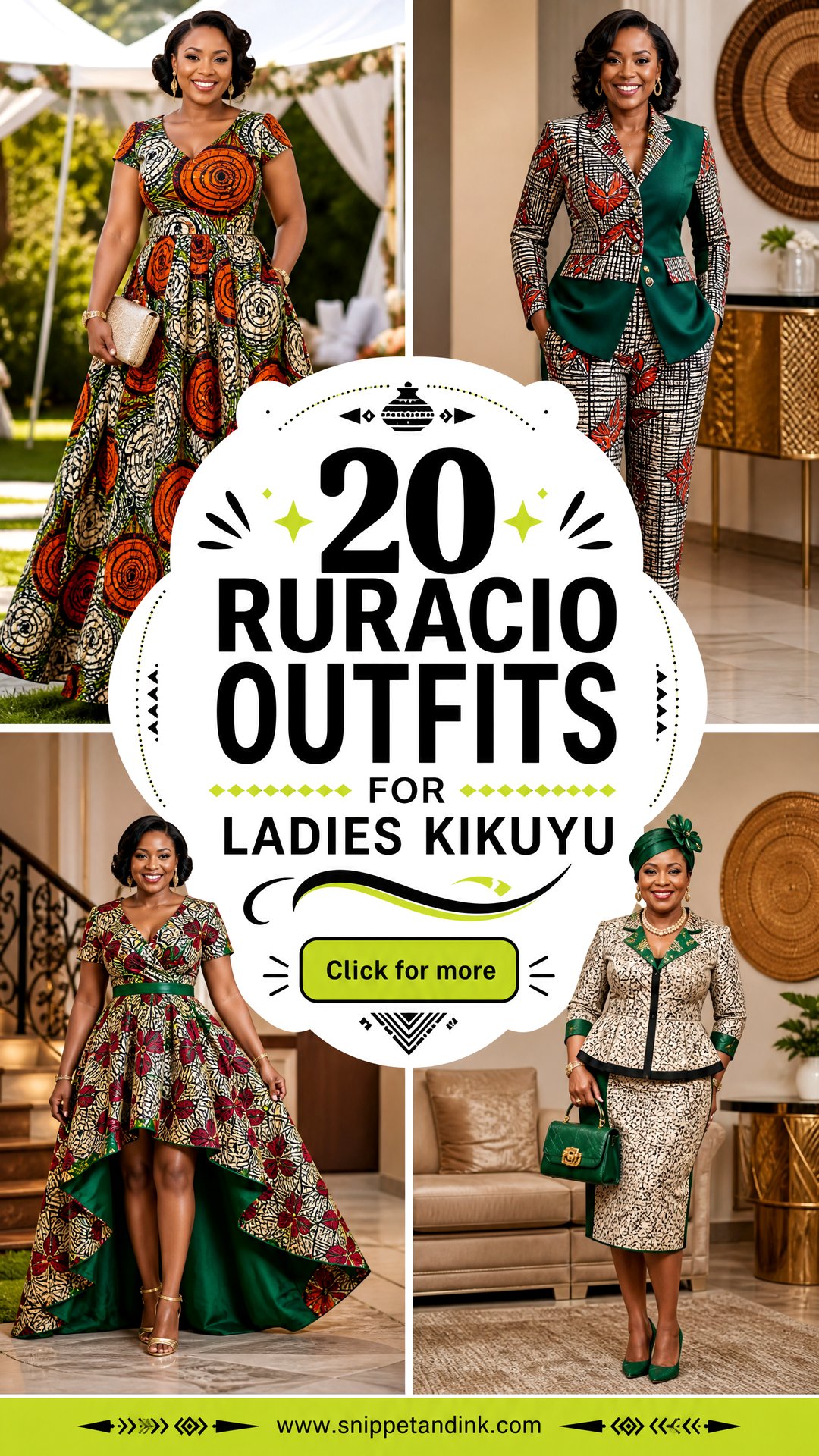
Ruracio is the day two Kikuyu families sit down together, negotiate, eat and get to know each other, so what you wear has to survive hours of sitting, greeting elders and walking across a compound, not just a few photographs. The best women’s outfits I put together for it respect the occasion first and look polished second. Brown garments with beads or cowrie shells still read instantly as traditional, while Ankara, kitenge, kanga, lace and tailored pieces give you far more room to play. Many families also agree on a shared fabric or colour for certain women. Before you buy anything, find out your role, the venue and how long the day will run, because those three answers rule out half the options below.
Your Role at the Ruracio Decides the Outfit Before You Do
The first question I ask anyone dressing for a Ruracio is not what colour she likes, it is who she is on the day. The bride, her mother, the aunties on the host side, the women arriving with the groom’s family and ordinary guests are all dressed differently, and the family often decides some of it for you.
- The bride: the most traditional or the most embellished outfit in the room, often brown or the agreed family colour, with the richest beadwork.
- Her mother and senior women: coverage first, usually sleeves and a long skirt, with a head wrap. They host and serve, so the outfit must move.
- Family groups wearing a shared fabric: buy from the same bolt if you can, because two batches of one kitenge design can differ in shade.
- Guests: smart and festive, but never in the family fabric unless you were invited to wear it, and never more decorated than the bride.
Ask early whether there is a family fabric. Once it is chosen, everyone buys at once, and latecomers end up with a slightly different dye lot that shows clearly in group photos.
1. Brown Kikuyu Ruracio Gown
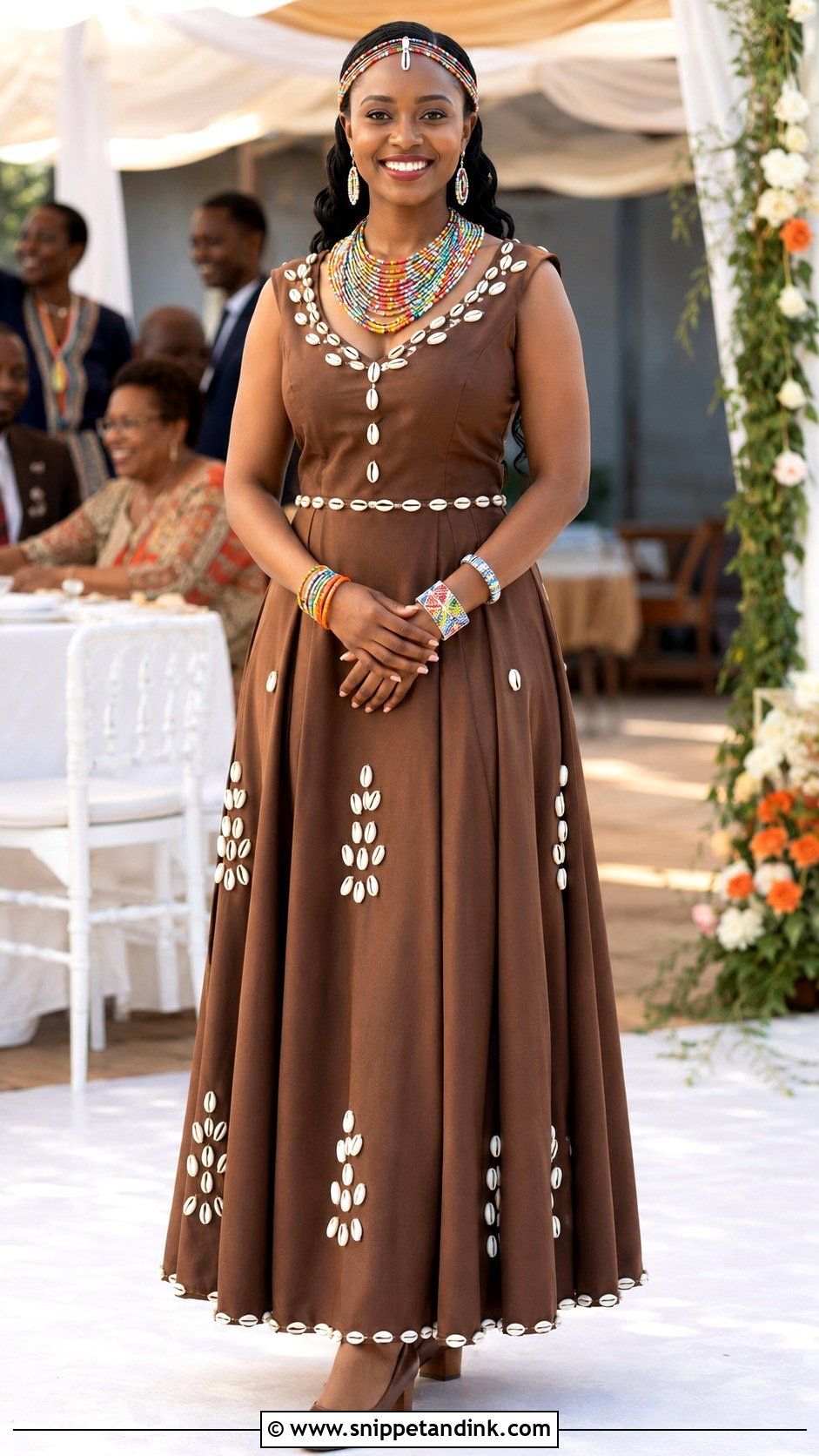
Brown, floor-length and fitted at the bodice is the look most elders will recognise straight away. I ask for an A-line or gently flared skirt rather than a tight column, because you will be lowering yourself onto low chairs and getting up again many times. Cowrie shells look best concentrated in one zone, the neckline or the hem, since shells scattered everywhere add weight and pull a light fabric out of shape. Older Kikuyu dress was made from leather, which is why so many modern versions borrow that earthy brown and finish it with layered bead necklaces. Pair it with brown leather flats or a low block heel, add bangles and a beaded headband, and stop there.
2. Kikuyu Ruracio Off-Shoulder Skirt Set
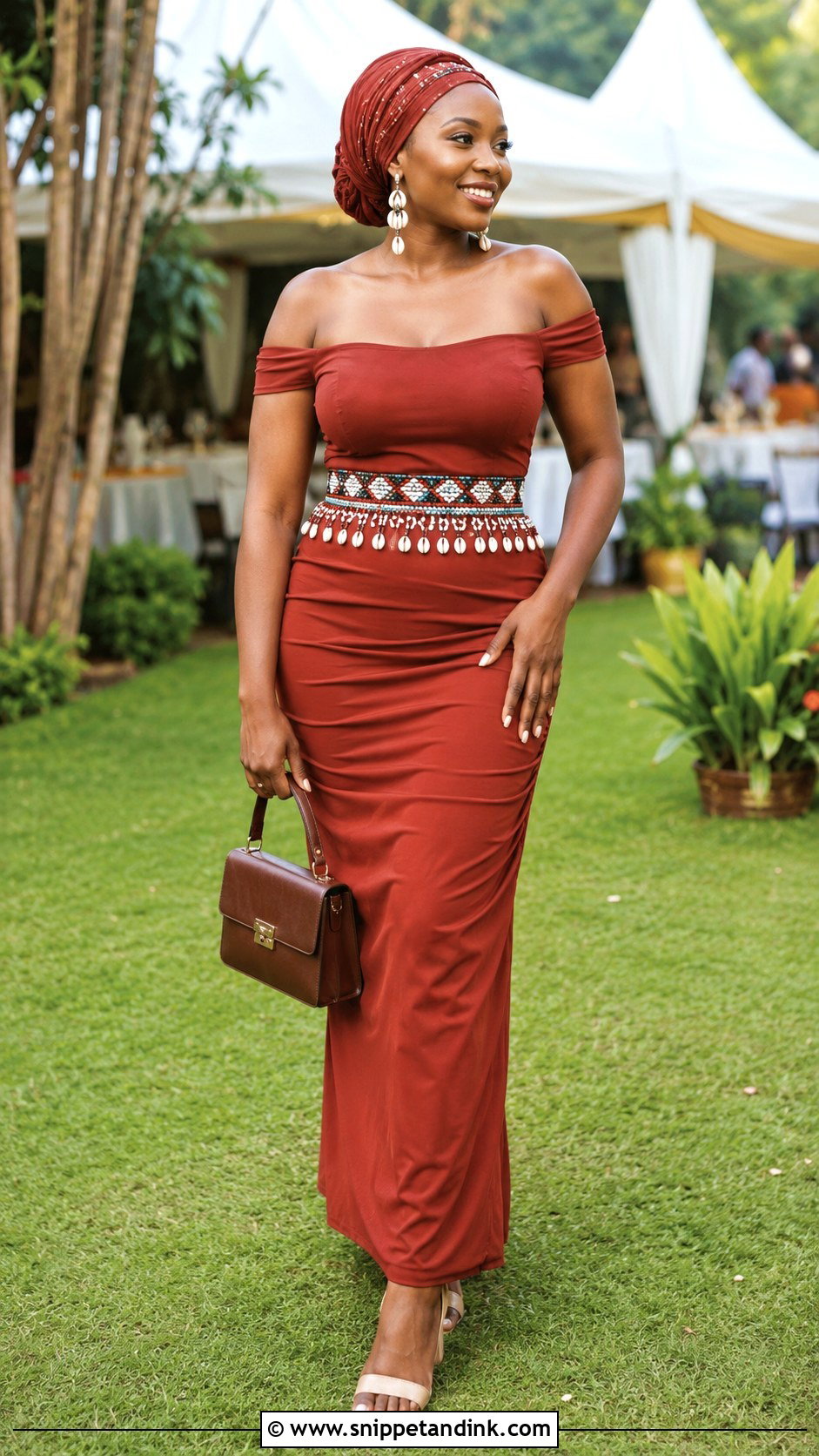
The weak point of any off-shoulder top is the elastic or boning at the neckline, and I always test it by having the wearer hug someone and lift a plate. If it rides up, ask the tailor to add a silicone grip strip inside the band. Rust, beige or a rich patterned brown suit the occasion, and a high-waisted maxi skirt gives you room to sit through the negotiations. A wide beaded belt ties the two pieces together visually. A head wrap in matching fabric makes the set feel ceremonial enough for the bride or a close relative. If the neckline already carries beadwork, wear one simple necklace, not three.
3. Ankara Maxi Dress Ruracio Outfit
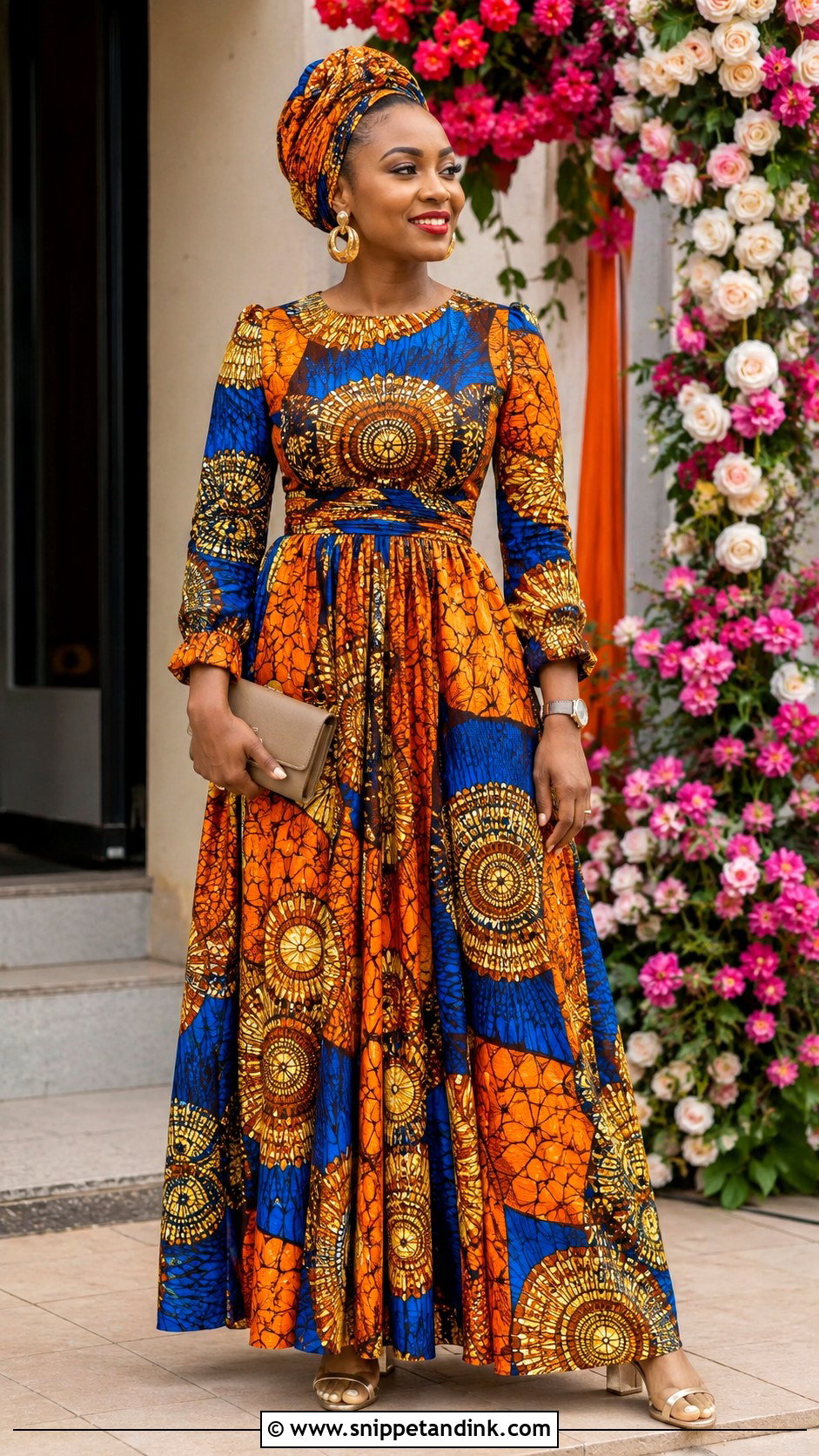
Ankara is a wax-printed cotton, so it holds a crisp shape and its colours stay bold in strong daylight, which is exactly what most Ruracio photographs are taken in. I keep the cut quiet: defined waist, modest neckline, full skirt, and let the print carry the outfit. Orange, cobalt, green, burgundy and gold prints all hold up well outdoors. Pull one colour out of the print for your shoes, tie a head wrap from the leftover fabric and keep jewellery to gold earrings and slim bangles. Prewash the cloth before it goes to the tailor, since cotton wax print can shrink slightly and an unwashed dress may fit differently after its first clean. One print per outfit is my rule; two competing prints look accidental.
4. Kitenge Peplum Ruracio Dress
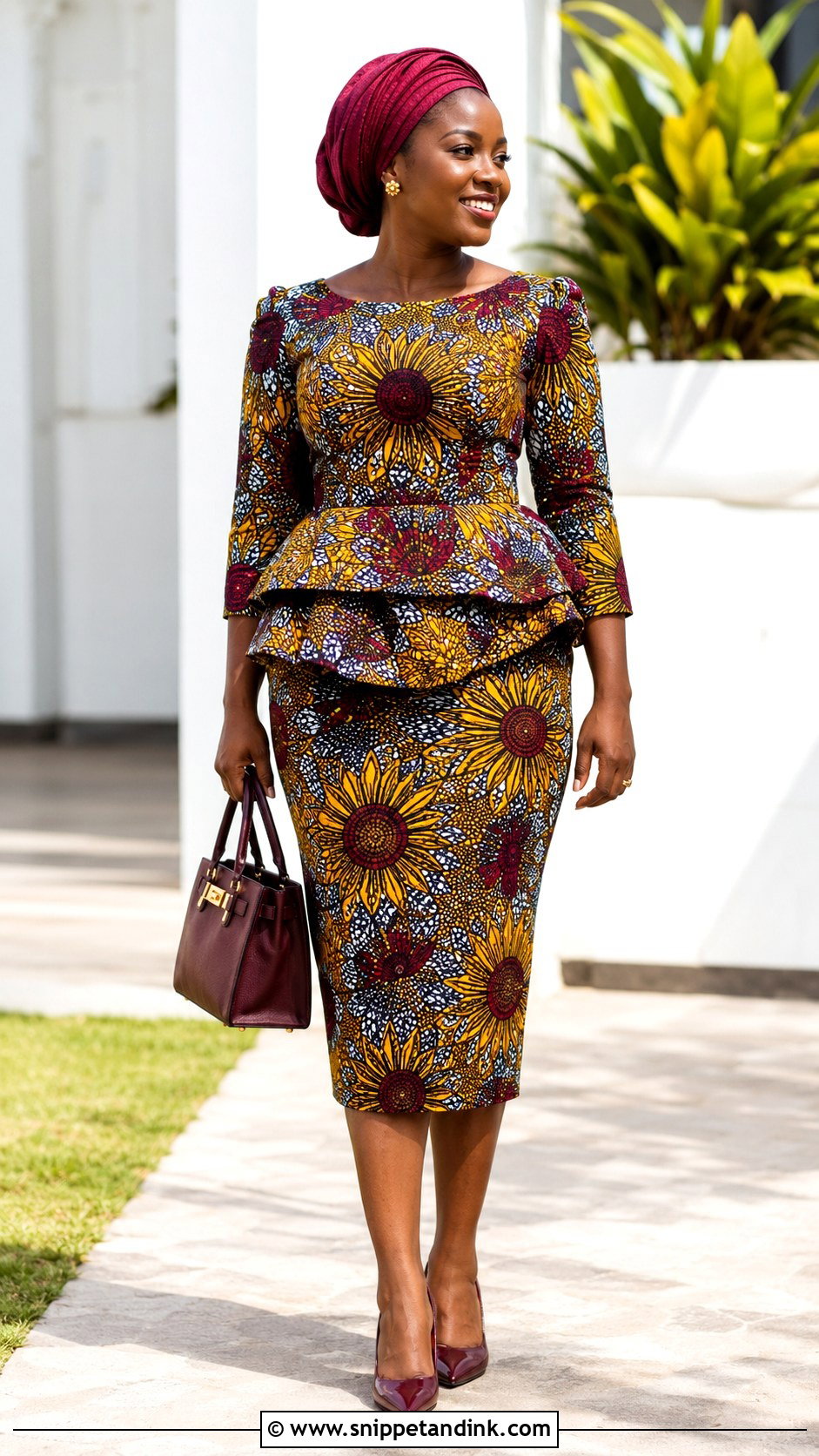
A kitenge peplum dress earns its place for anyone who wants a defined waist without a belt. The peplum must start exactly at your natural waist; a few centimetres too low and it adds width at the hip instead of shape. Knee, midi and full length all work, so follow the family dress code on length. A plain bodice over a printed skirt looks more grown-up than an all-over print. I’d give this to sisters, cousins and guests, with low block heels, a solid head wrap and small gold earrings.
5. Kikuyu Ruracio Mermaid Dress
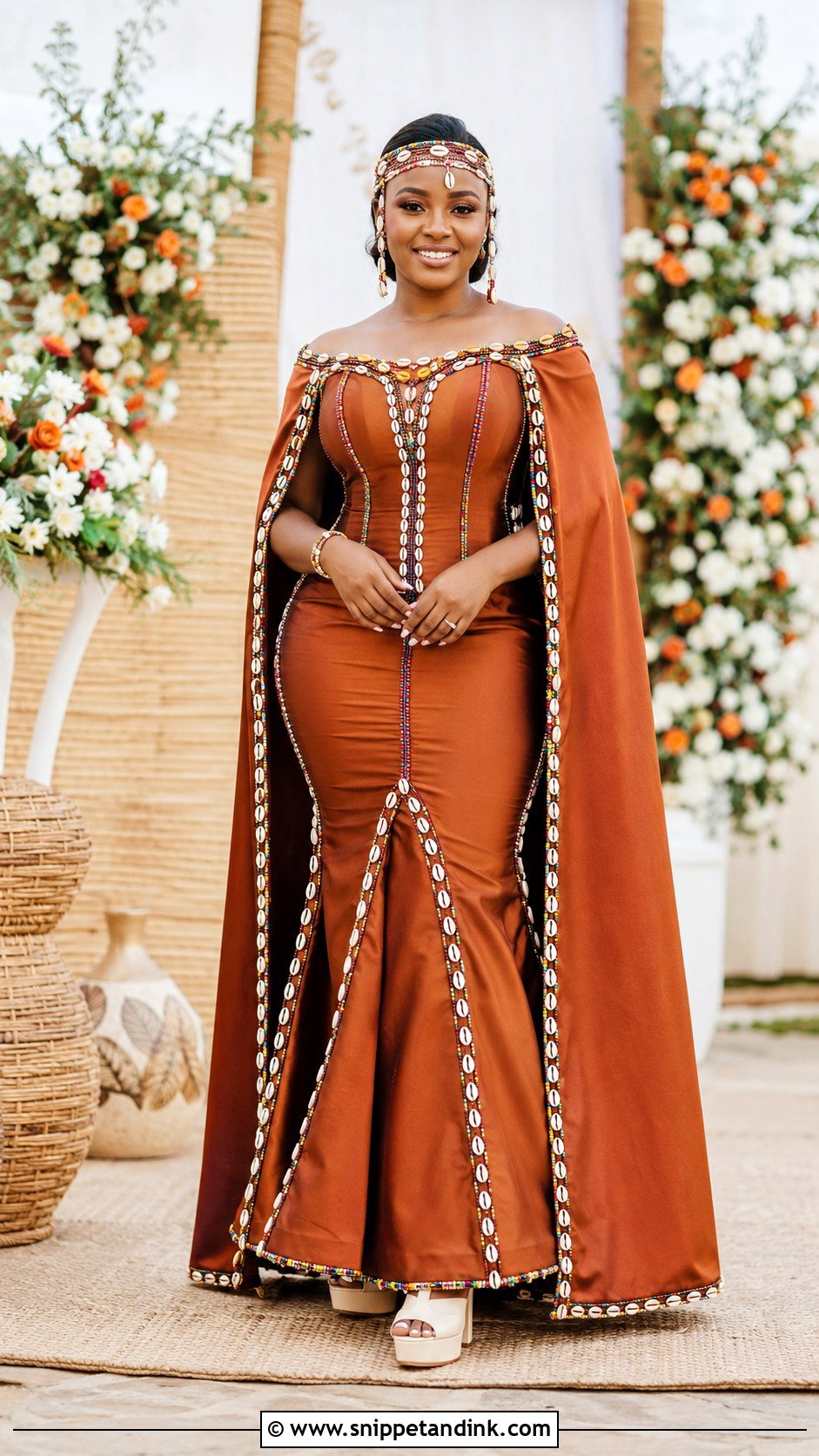
Mermaid dresses look dramatic in photographs and are the hardest silhouette on this list to live in for a full Ruracio. My condition for anyone who wants one is that the flare starts at or just above the knee, never mid-calf, otherwise you will shuffle across the compound. Brown, copper, deep green or burgundy gives cowrie trim and colourful beadwork a strong base. A detachable shawl or short cape adds coverage for the formal part of the day. Choose low platform heels over stilettos on grass. At the final fitting, sit on a low chair and walk up a step before the tailor finishes the hem.
6. Kanga Wrap Dress Ruracio Outfit
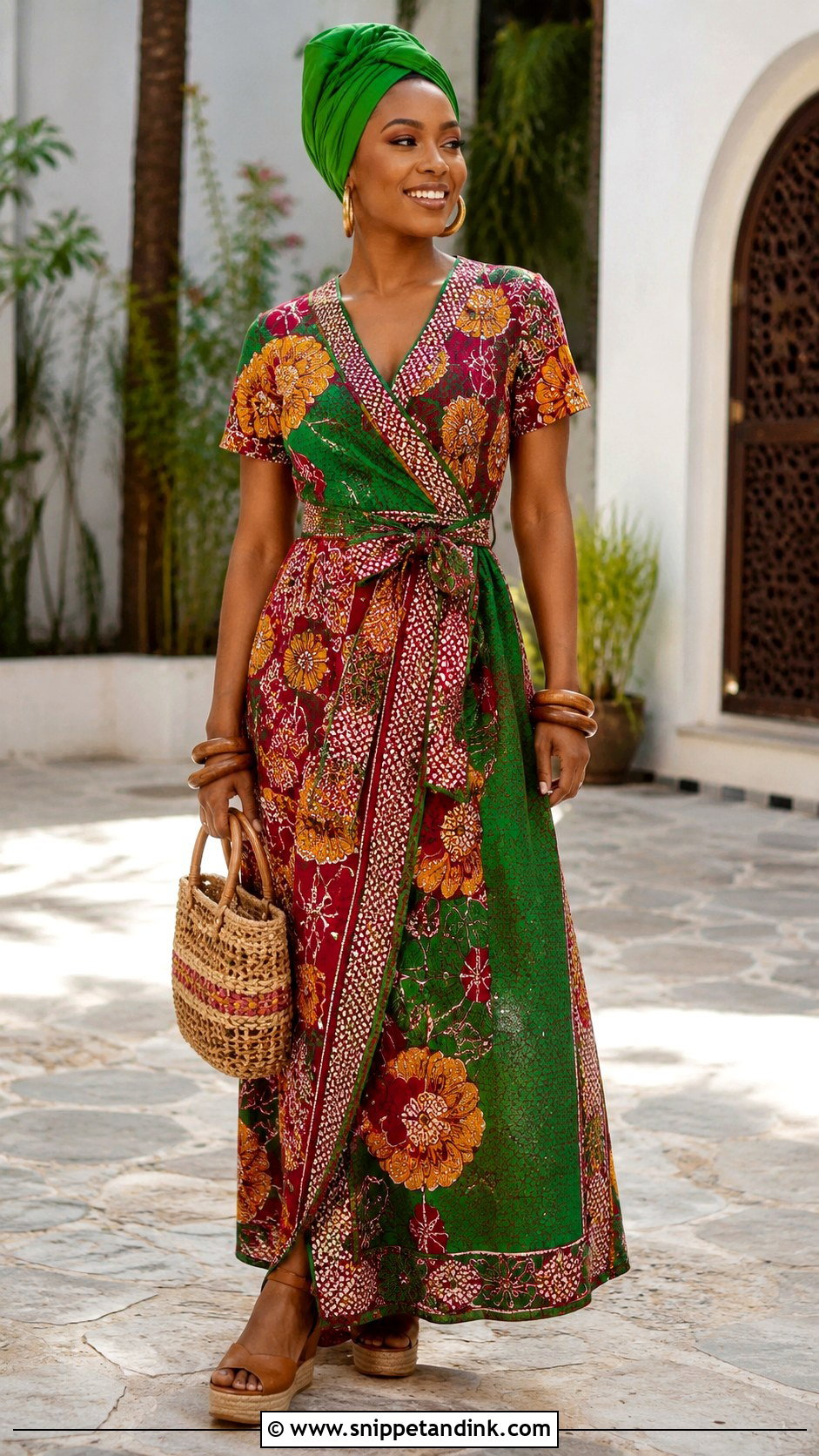
Kanga is the most forgiving fabric here because a wrap adjusts to your body through the whole day, including after a big lunch. Position the printed border deliberately, along the neckline, sleeves or hem, and give the front a generous overlap so it never opens when you walk. Tan wedges or low sandals suit a garden; closed flats are safer on gravel. Keep the head wrap plain so the kanga print stays the focus. Every kanga carries a printed saying, the jina, so read it, or ask someone who reads Swahili well to check it, before you cut. A cheeky proverb can land badly in front of the in-laws.
7. Ruracio Jumpsuit With African Print
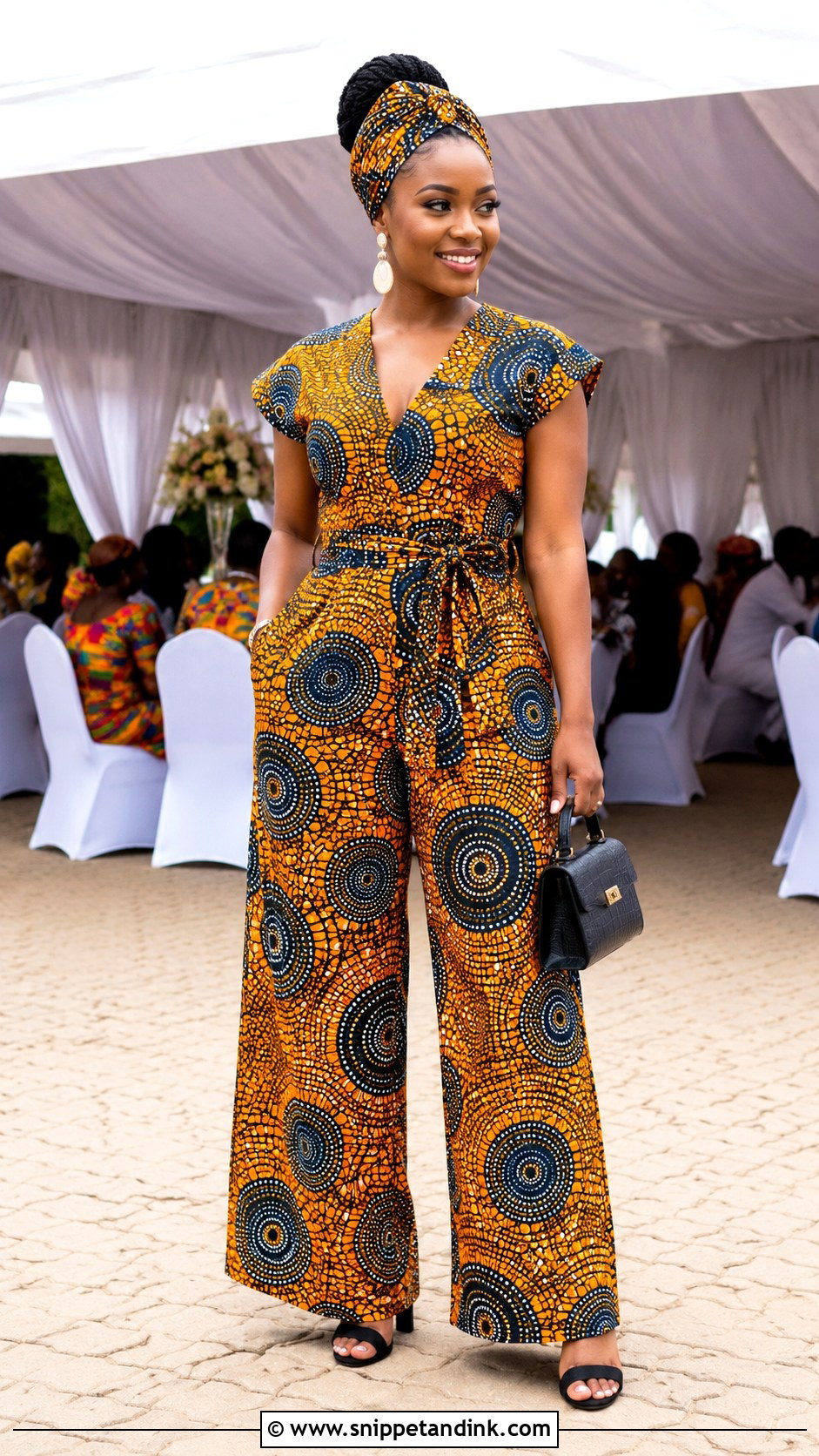
A well-tailored jumpsuit suits guests and younger relatives who want to move freely. I go for a wide leg with a fitted waist and a modest V, square neckline or short sleeve; a narrow leg reads more casual. A print jumpsuit feels festive, and a solid one with printed lapels or a detachable belt is the quieter version. The practical catch is the bathroom: a back zip you cannot reach alone is a real problem at a family home with one shared toilet, so ask for a side zip or a front closure. Block heels, a matching head wrap and statement earrings finish it.
8. Lace And Kitenge Ruracio Dress
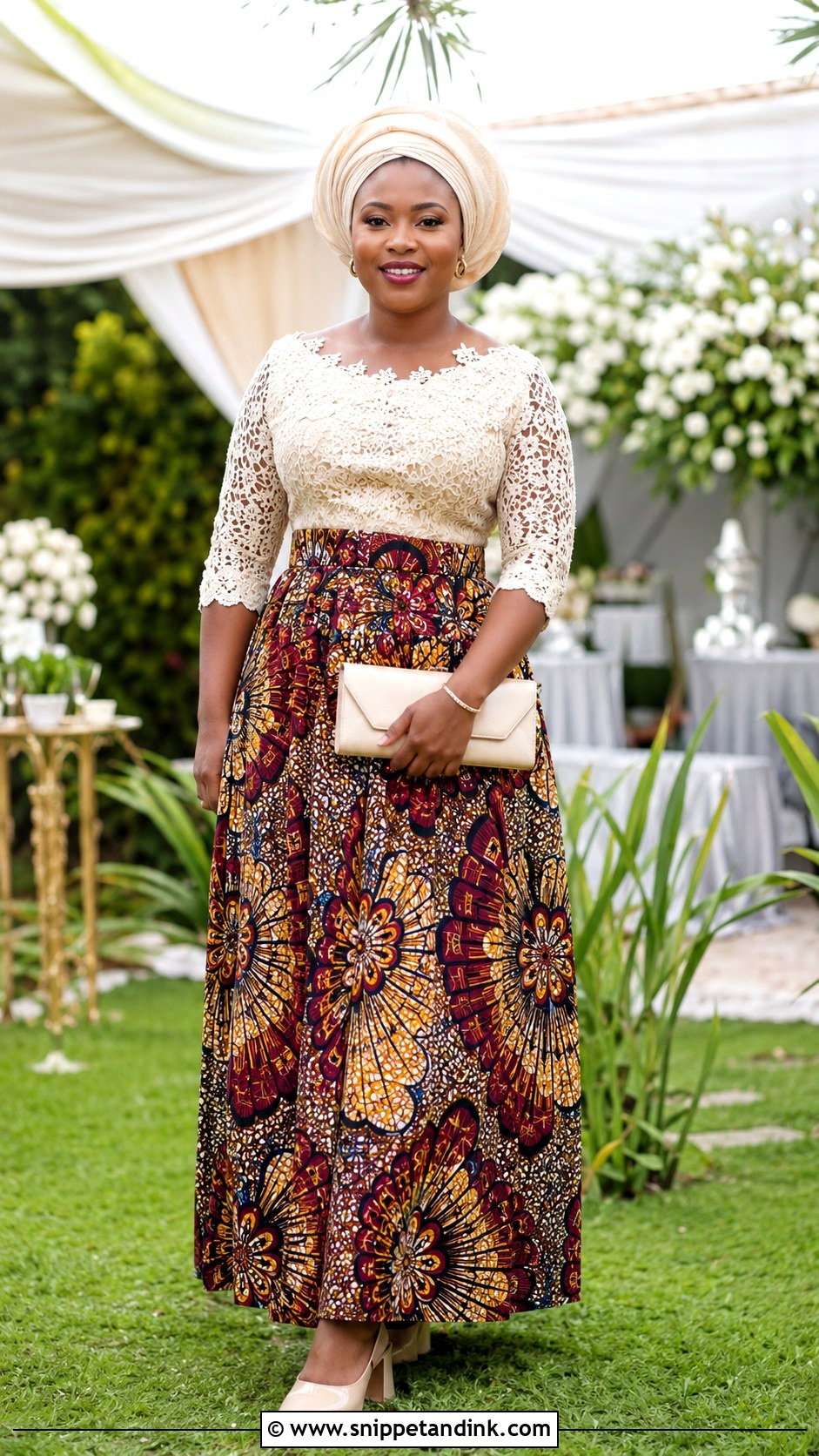
Lace with kitenge is how I dress a mother or aunt who wants colour but also wants to look formal. A lace bodice with three-quarter sleeves over a full kitenge skirt balances coverage and print well. The reverse also works: a solid lace dress with kitenge panels at the waist and hem. Cream, champagne, burgundy and navy lace all calm a busy print. Insist that both fabrics are lined. Unlined lace shows skin in flash photography and kitenge without lining creases hard at the hips after a few hours of sitting.
9. Ruracio Skirt And Blouse Outfit
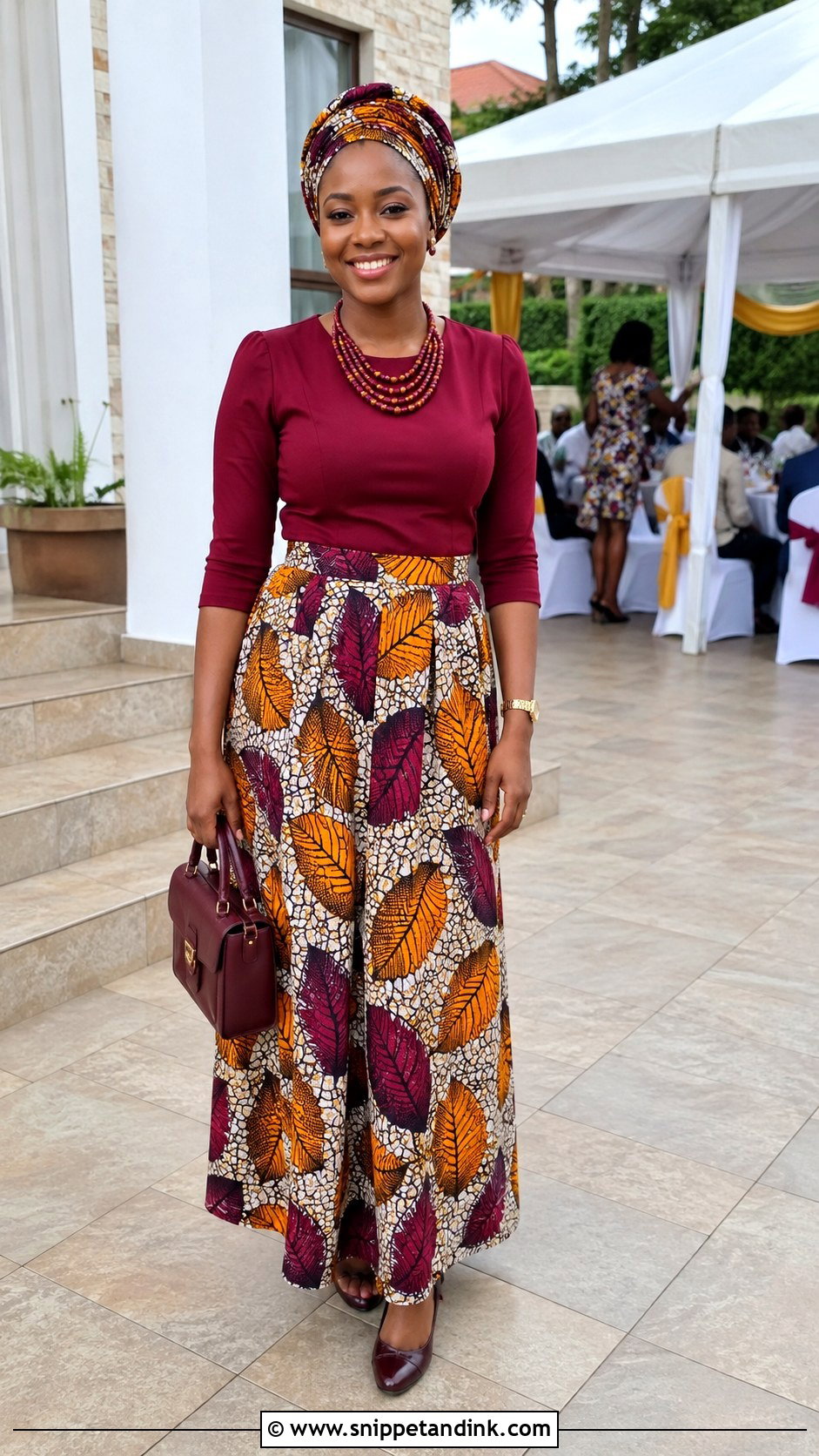
Separates are the outfit I recommend most to women who want something they will wear again. A patterned maxi skirt with a plain fitted blouse, or a solid skirt with a printed peplum top, both look tidy at a family event. Three-quarter sleeves and a modest neckline are the safe pairing. Tuck the blouse in or have the tailor finish its hem exactly at the waist so nothing bunches when you sit. A beaded necklace adds the cultural note. The detail people forget is the waistband: if it digs in after twenty minutes of sitting at a fitting, it will be unbearable by the speeches.
10. Plus-Size Ruracio Empire-Waist Dress
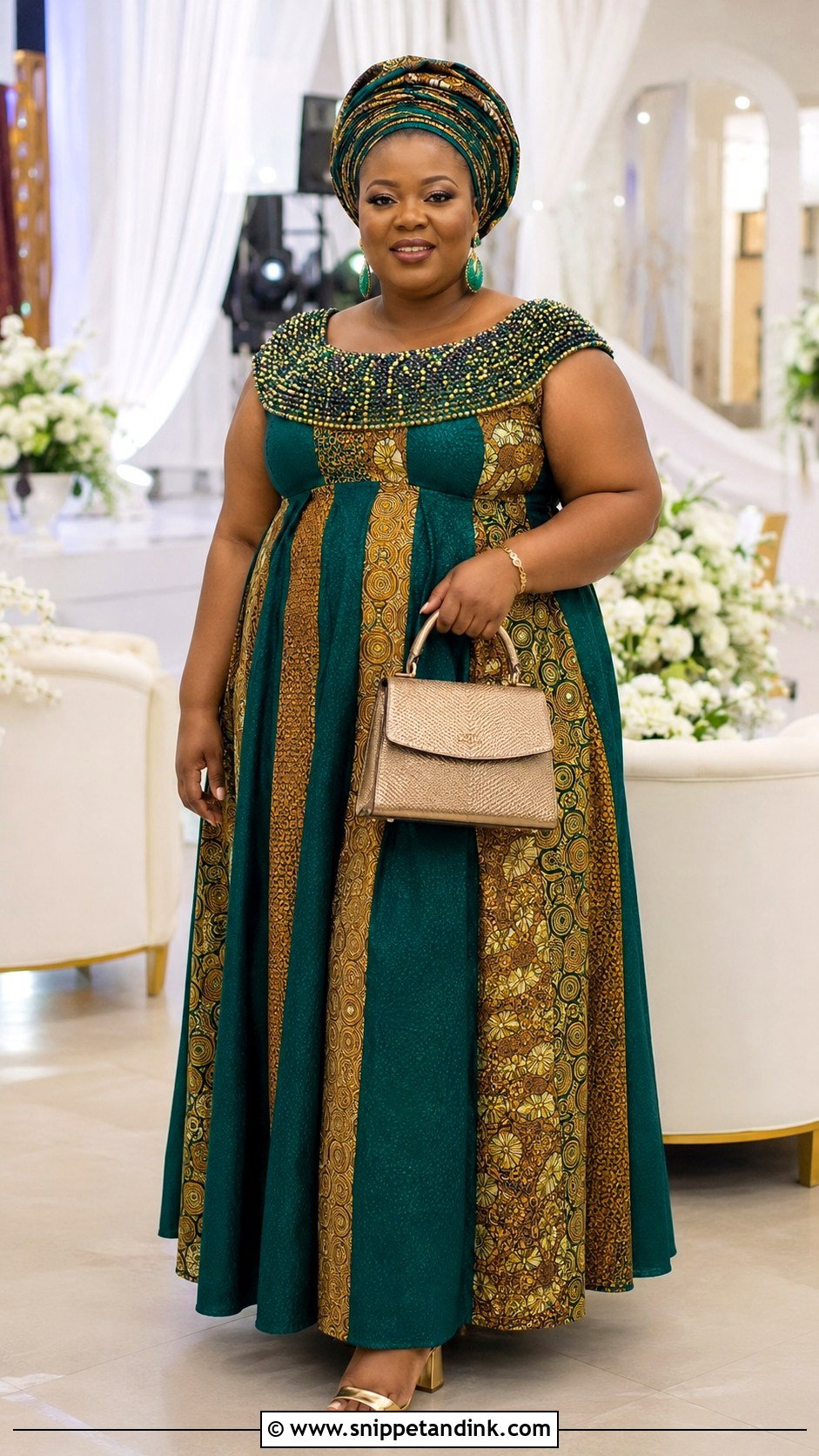
On a plus-size client, an empire waist works when it sits securely under the bust and the fabric has enough body to fall rather than cling. Very soft, thin fabric tends to tent from the bust, so I choose a heavier kitenge or a lined cotton. Side panels or a print placed vertically give a balanced line. Emerald, royal blue, earthy browns and rich prints all suit it. A beaded collar frames the face nicely, though not if the neckline is already heavily patterned. Get the undergarments sorted before the first fitting; a correctly fitted bra changes where the empire seam needs to sit, and fitting without it wastes an appointment.
11. Mother Of The Bride Ruracio Outfit
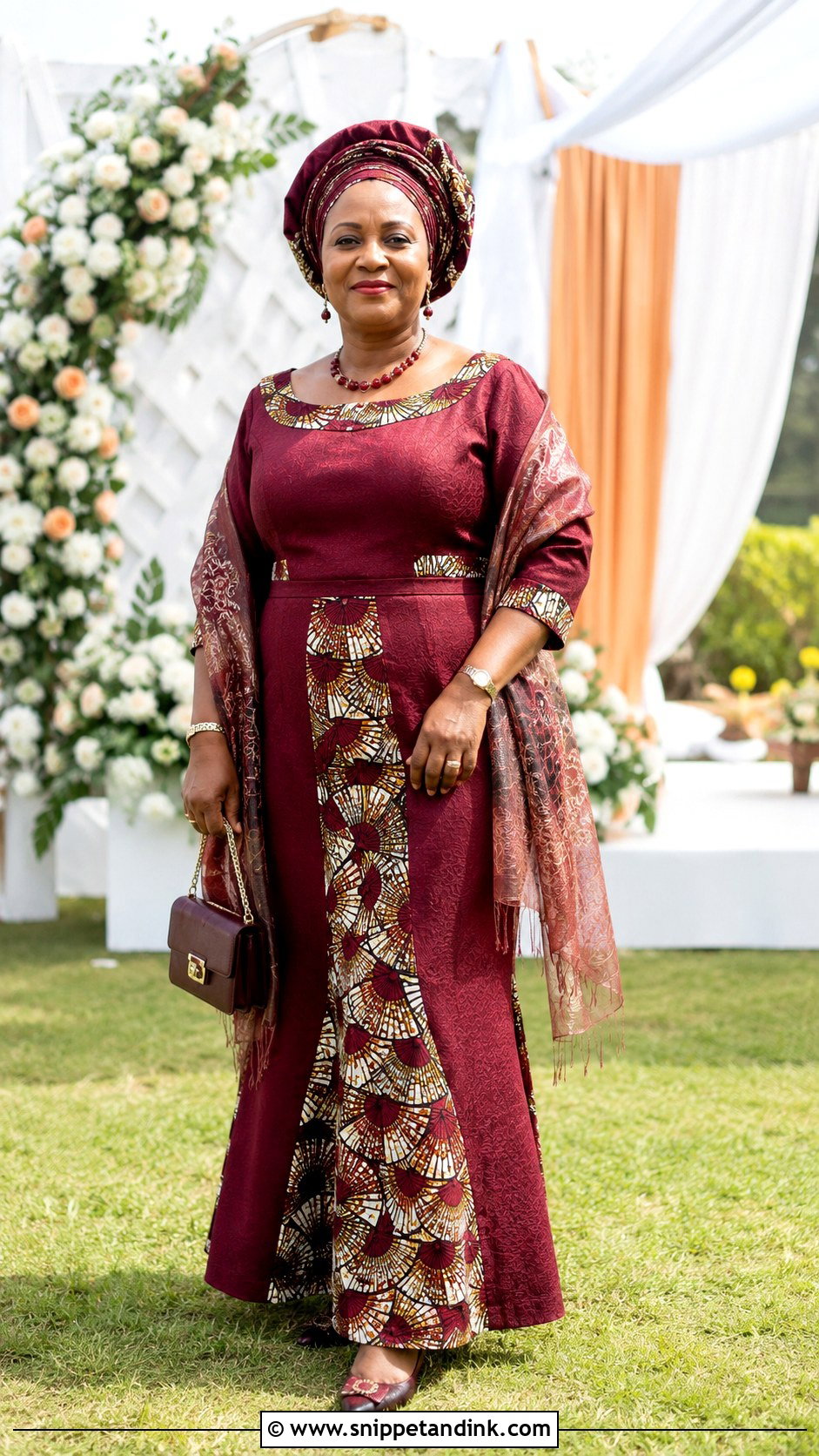
The mother of the bride is hosting, greeting and often serving, so her outfit has to move. I usually steer her toward a structured kitenge gown, a brown traditional dress or a solid dress with African-print panels, all with three-quarter sleeves and a gently flared skirt. A head wrap matched to the dress, low closed-toe heels and a refined handbag complete it. Cowrie accents or a decorative shawl bring in the cultural detail. When the women of the family share one fabric, I give her a different neckline or richer beading so guests can tell who she is at a glance. She should never outshine the bride, but she should be easy to find.
12. Ruracio Pantsuit For Ladies
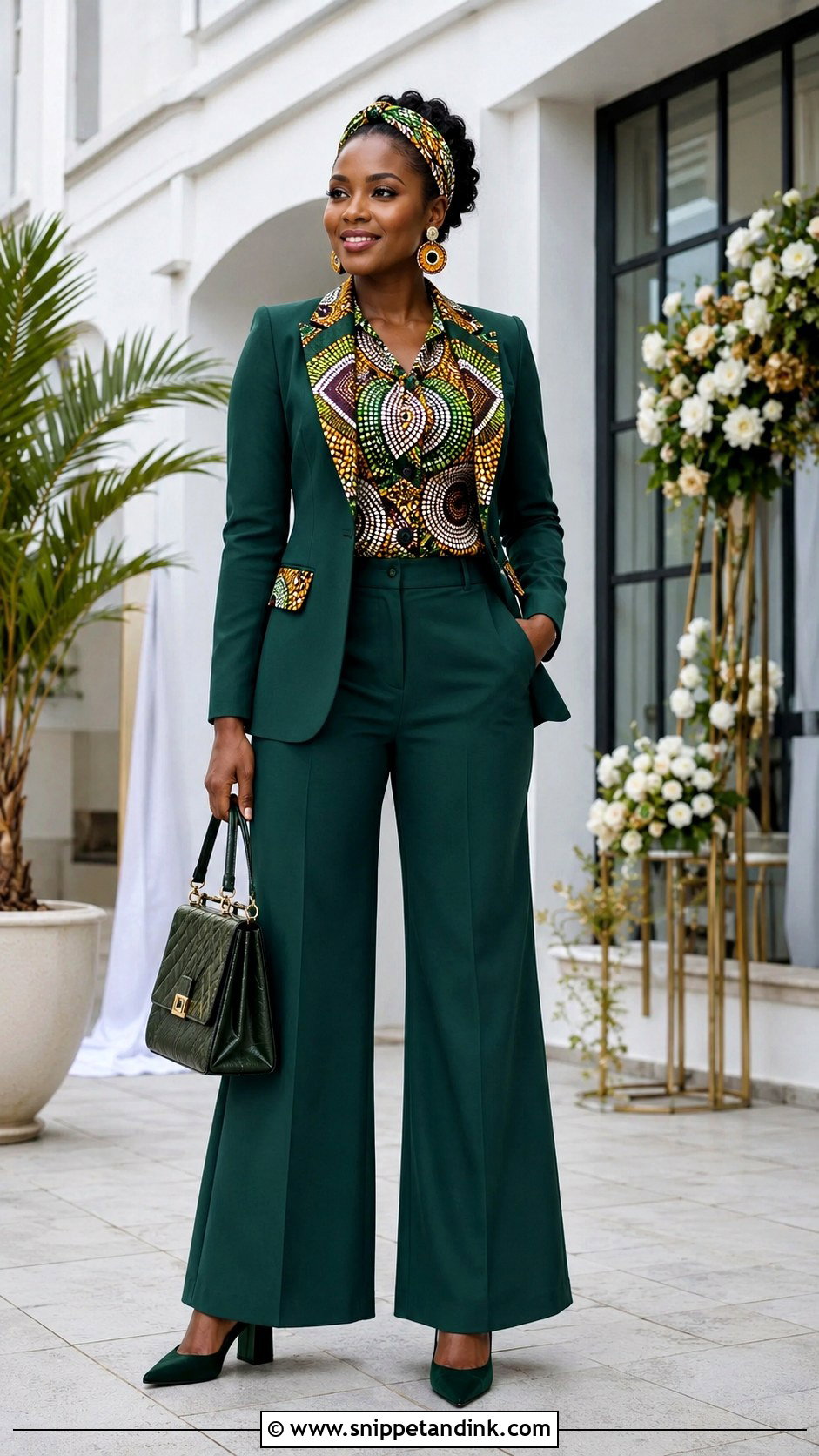
Trousers are perfectly acceptable for many guests, but at Ruracio a suit can drift toward office wear if it is too plain. What fixes that is the print: an Ankara camisole, a printed blouse or kitenge lapels. Burgundy, forest green, camel or navy all work, or the agreed family colour. I check two things on the fit. The blazer must close without pulling across the bust, and the trouser hem should just skim the shoe, since a dragging hem collects mud on a lawn within the hour. Bold earrings and a print headband suit it better than a heavy necklace.
13. Ruracio High-Low Dress Outfit
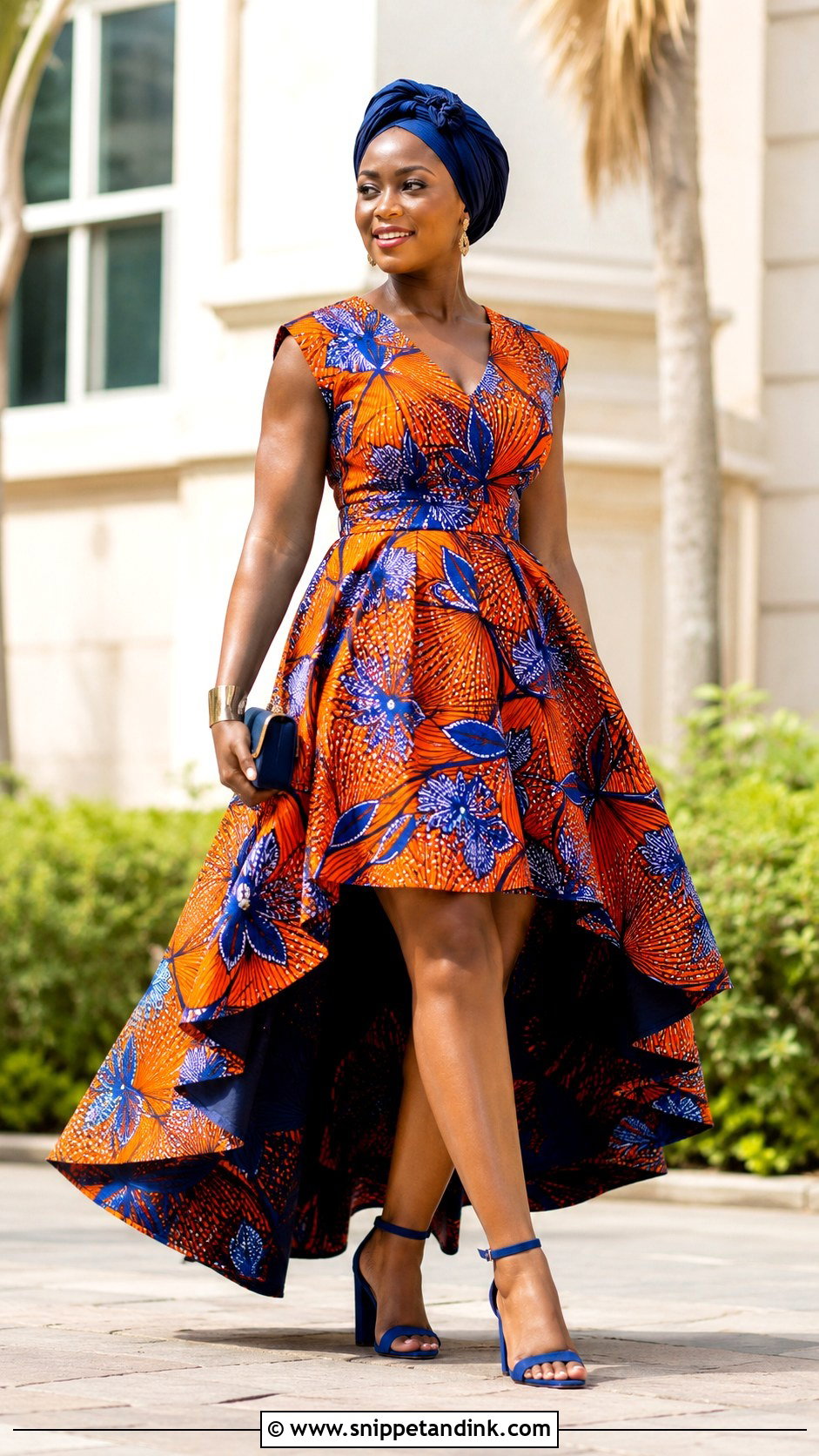
A high-low hem shows off your shoes, which means the shoes have to be good. Keep the front between the knee and mid-calf and the back no longer than the ankle; a trailing back picks up grass and gets stepped on in a crowded tent. Ankara, kitenge or solid brown with restrained beadwork at the neckline and waist all suit it. I give this one to younger guests, sisters and bridesmaids. Coordinated block heels, a simple head wrap, a cuff and a small clutch are enough.
14. Ruracio Cape Dress For Ladies
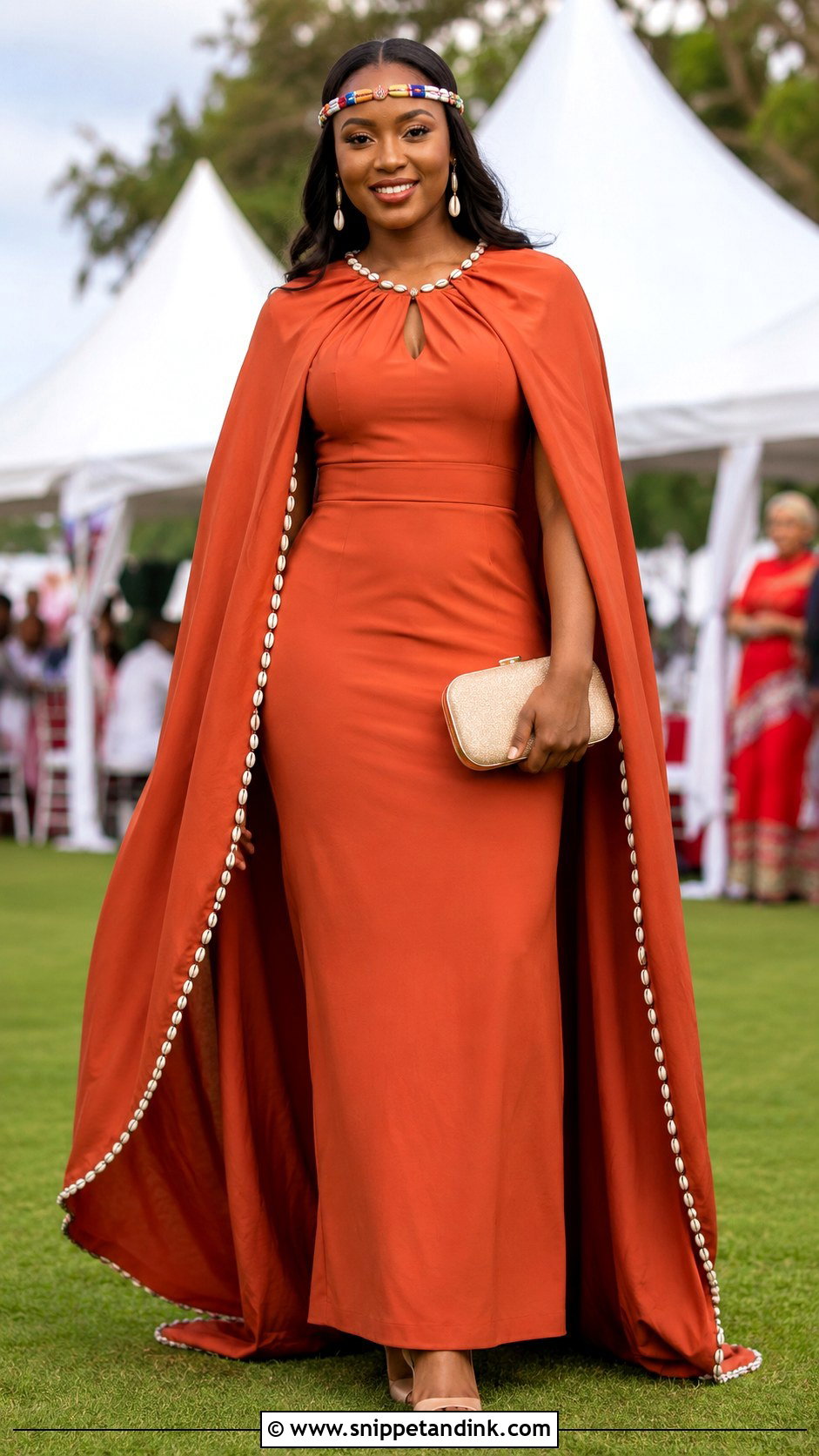
Cape dresses give coverage without the fuss of a shawl that keeps sliding off. The inner dress should be fitted and the cape lightweight, falling from the shoulders and stopping above the wrist so your hands are free to greet people and carry gifts. Brown, copper, cream, burgundy and deep green all take bead or cowrie-shell edging well. Because the cape is already the drama, I keep the clutch simple and skip the big necklace. It suits the bride, her mother or a senior relative. Line the cape for a cool morning start; go unlined in warm weather or it will feel like a blanket by noon.
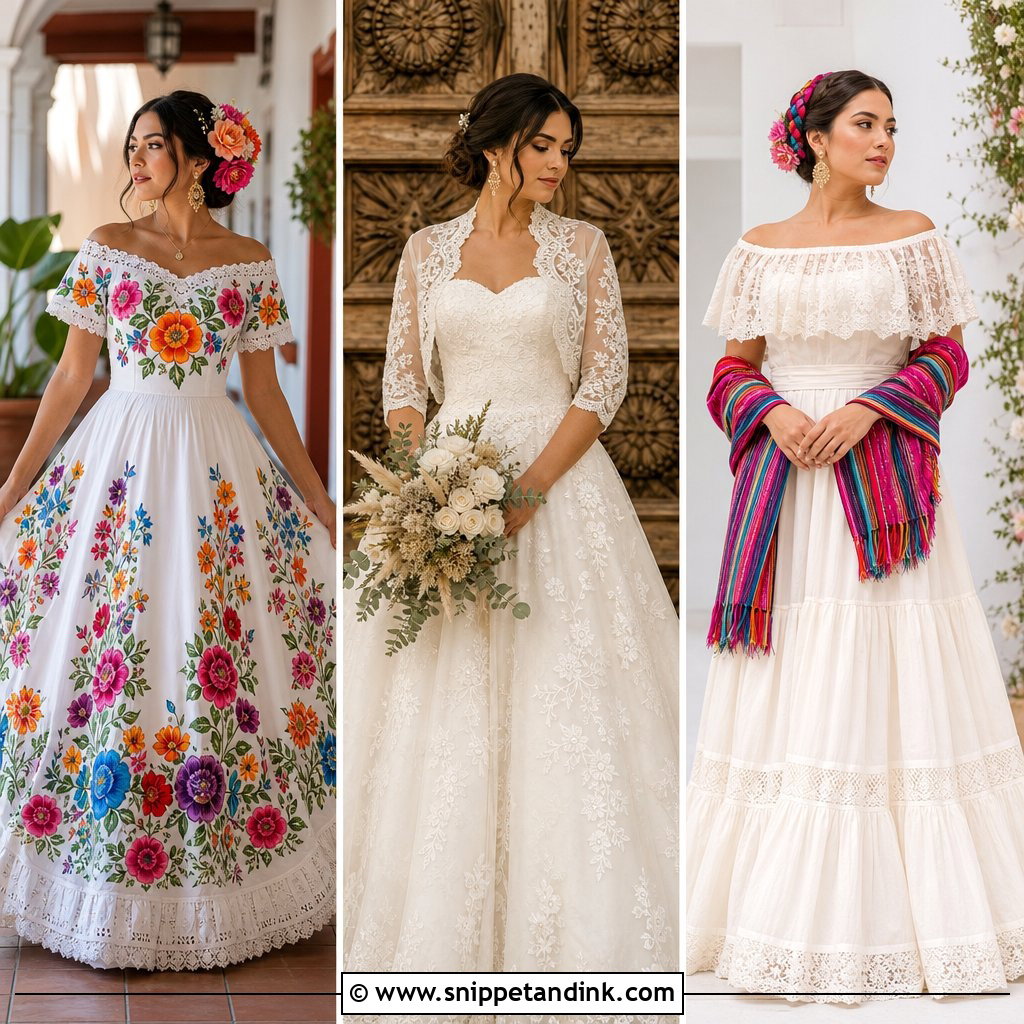
15. Ruracio Bridesmaid Matching Outfit
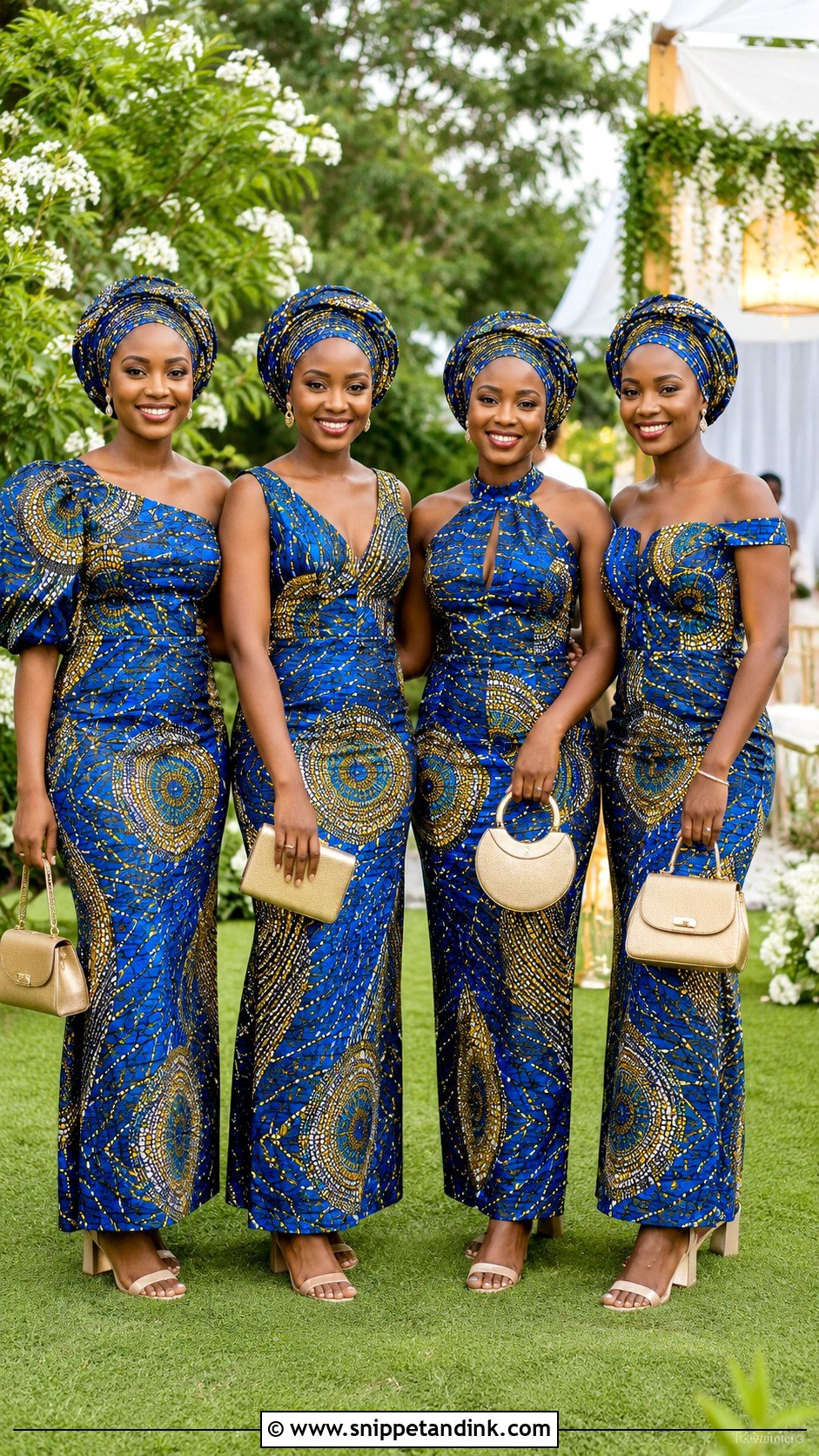
Bridesmaid groups photograph best when everyone shares one fabric and each woman gets a small choice of neckline or sleeve. Forcing identical strapless cuts on six different bodies is the mistake I see most. A matching kitenge maxi is the dependable route, though wrap dresses, skirt sets and wide-leg jumpsuits in the same fabric still read as a group. Keep shoes in one neutral, such as tan, brown, black or gold. Head wraps can be tied identically or in complementary shapes. Schedule fittings early so hems and print placement line up, and keep the bride distinct through richer beadwork or a different silhouette.
16. Mature Ladies Ruracio Skirt Suit
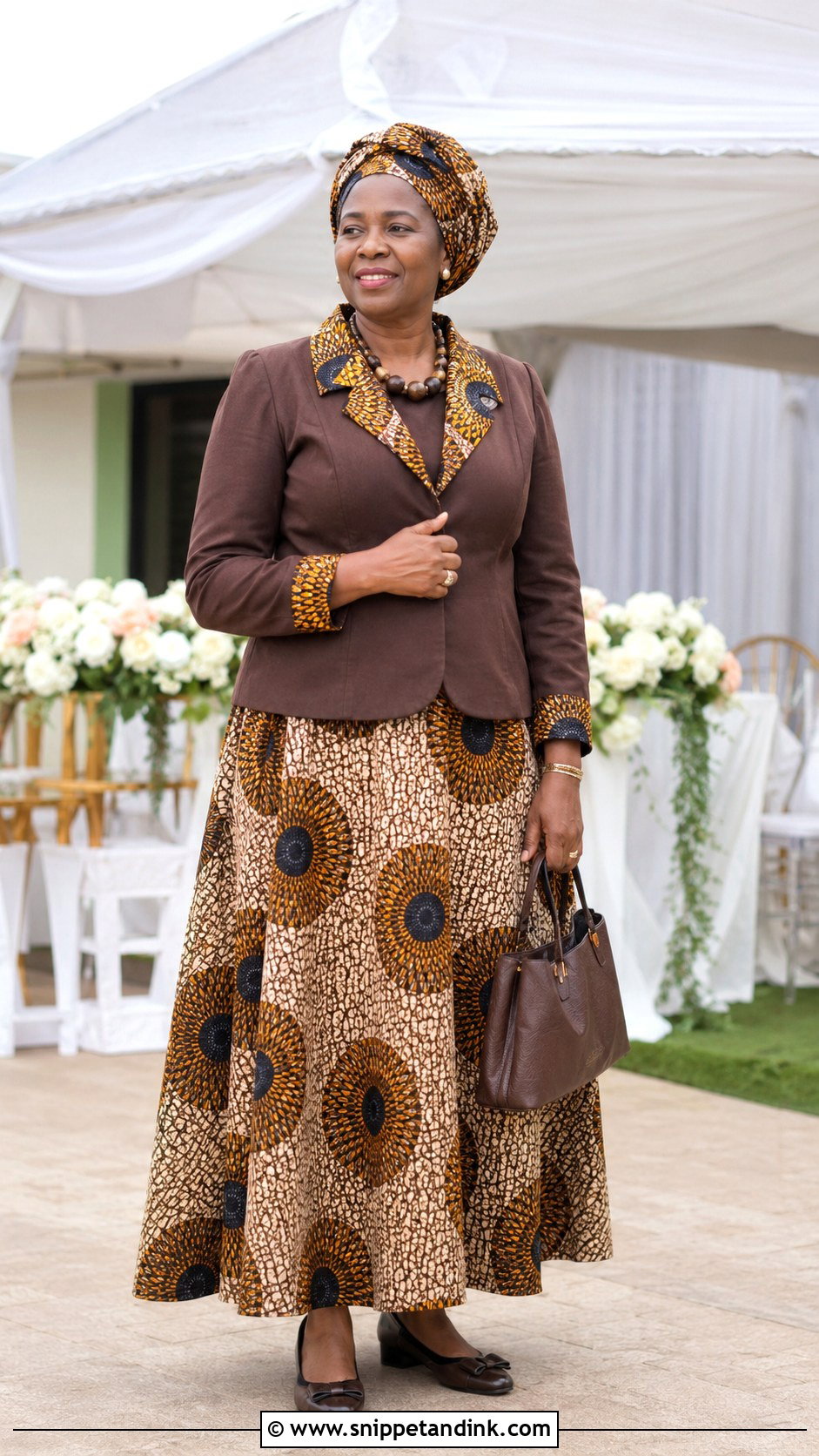
For mature ladies I rarely suggest a dress; a skirt suit simply sits better through a long day of greetings, meals and discussions. A calf or ankle-length A-line skirt with a structured jacket or peplum blouse is the base. Full kitenge looks festive, while a solid fabric with printed cuffs, collar and pocket details is more understated. Check that the neckline sits comfortably under a beaded necklace or scarf. Very stiff fabric fights you every time you sit, so I prefer a medium-weight cloth with soft lining, a comfortable waistband and shoulders fitted properly. Supportive flats or low block heels and a coordinated head wrap finish it.
17. Maternity Ruracio Maxi Dress
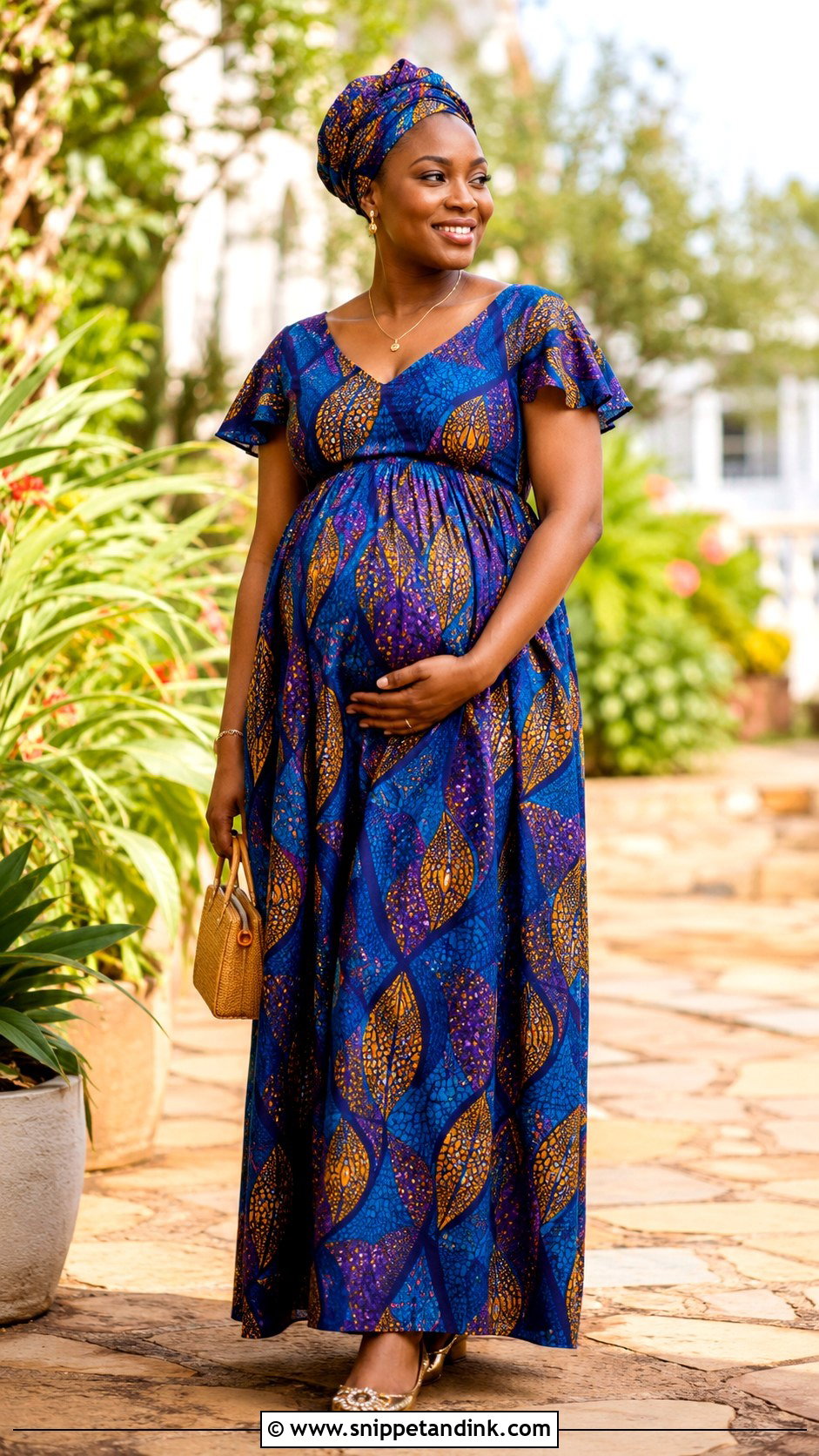
Maternity fittings need one extra step: book the final fitting as close to the day as your tailor allows, because a bump can change noticeably in a few weeks. An empire waist, wrap front or gathered bodice all leave room while still giving shape. Breathable kitenge, cotton or chiffon over lining suit a warm tent. Flutter or three-quarter sleeves cover the arms without restricting them. I’d skip tight belts and long trailing hems entirely. Supportive flats or low wedges, a light head wrap and a small crossbody bag keep it easy. If the family is coordinating fabric, ask the tailor to cut the shared print into a maternity silhouette rather than squeezing into the standard pattern.
18. Ruracio Midi Dress For Guests
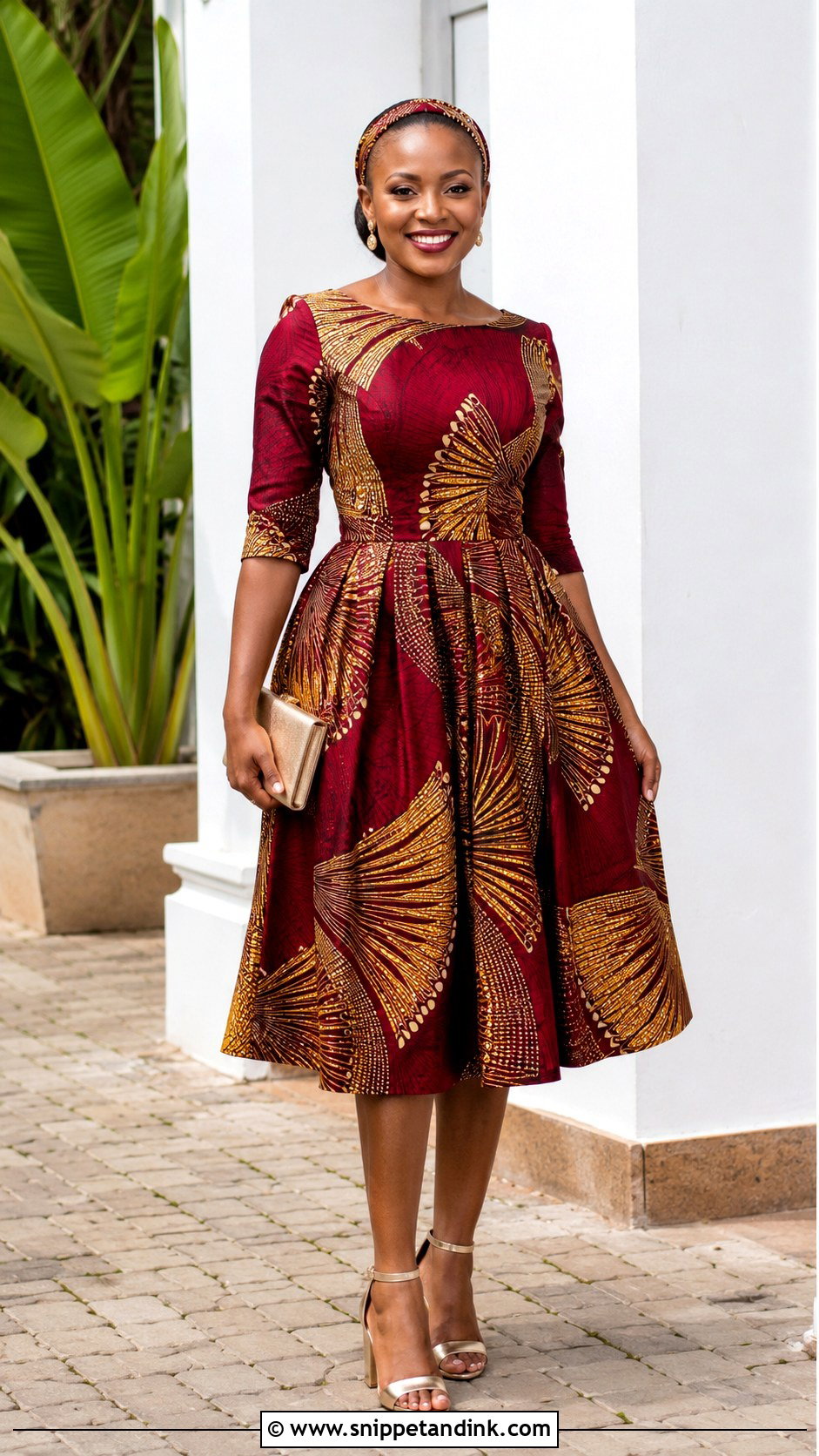
When the guest dress code is smart rather than traditional, a midi dress is the easiest answer. Fit-and-flare, wrap or softly pleated cuts in Ankara, kitenge or a solid family colour all look appropriate. Keep the hem below the knee; low seating makes short hems ride up fast. Pair it with block heels, dressy flats or wedges, a plain clutch and one bracelet. A narrow headband from matching fabric adds a cultural note without a full head wrap. The one firm rule I give guests: do not copy the bride’s fabric or her heavy traditional beading, because the principal family women should stand out.
19. Ruracio Wrap Skirt And Bodysuit Outfit
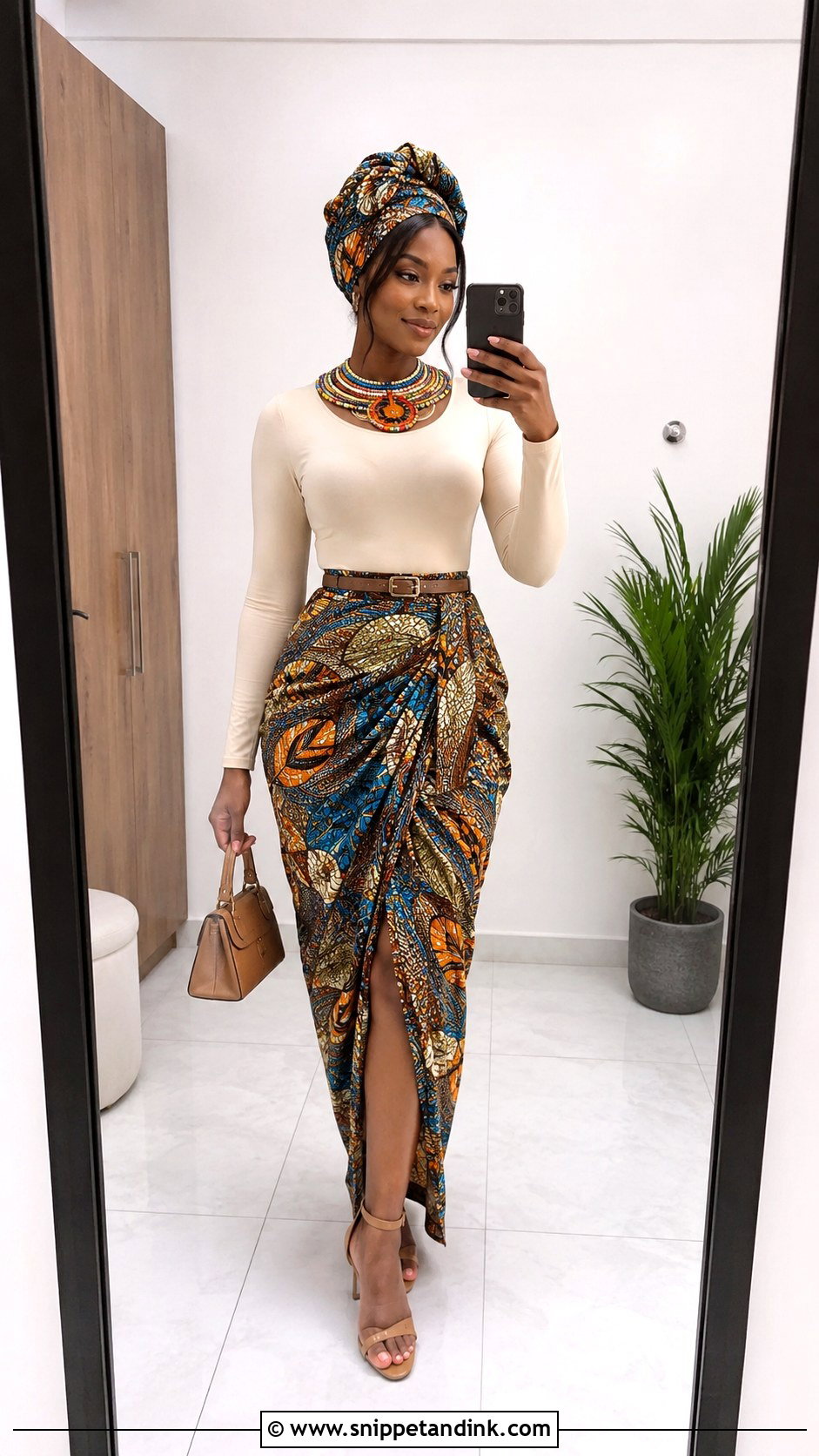
A full-length African-print wrap skirt with a plain bodysuit looks young and current while staying respectful. The risk is the wrap itself, so I ask tailors to add a hidden hook or inner tie; a skirt held only by a knot will loosen by the afternoon. Choose a top with sleeves, a modest square neckline or a boat neck. Black, cream, rust or brown sets off a bright kitenge skirt cleanly. A slim belt can define the waist if it does not cut the print in an awkward place. Cousins and younger guests suit this most. A matching head wrap and beaded necklace complete it.
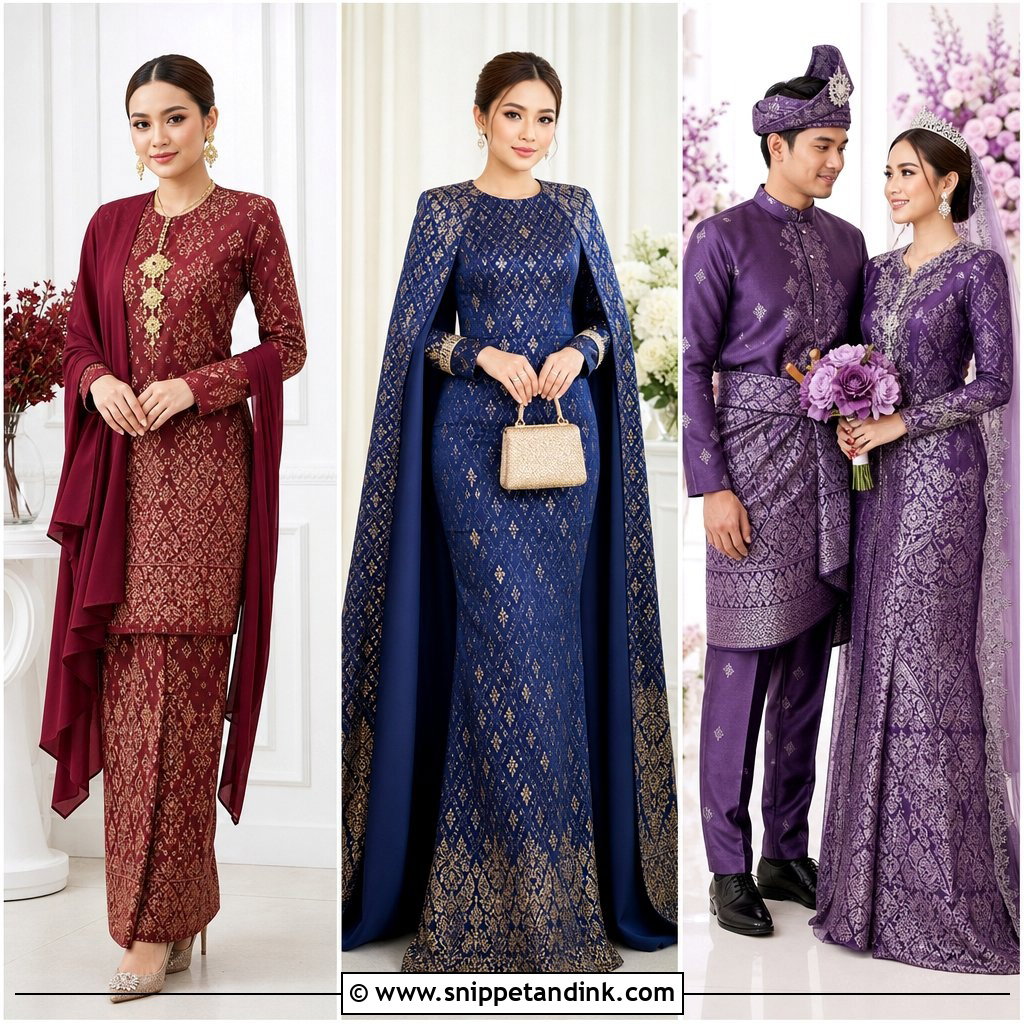
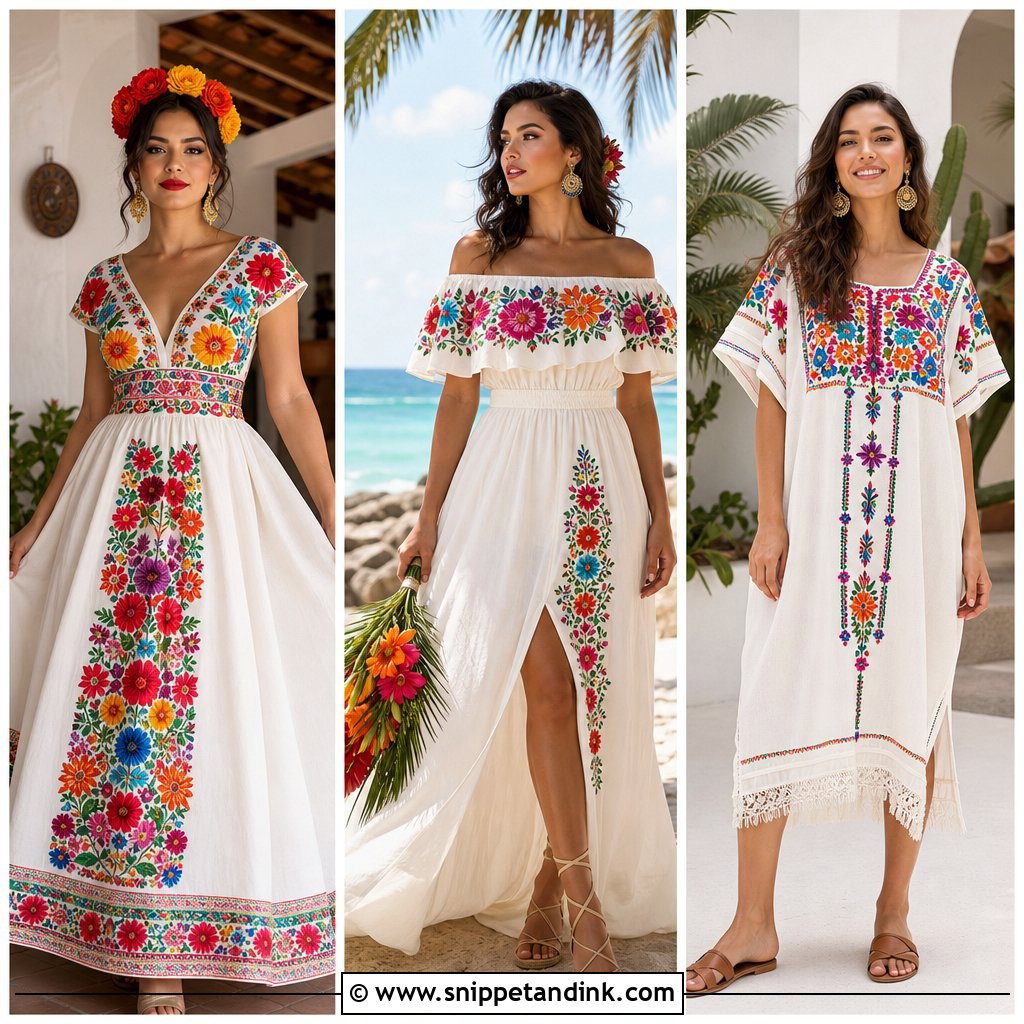
20. Kikuyu Ruracio Shuka Cape Outfit
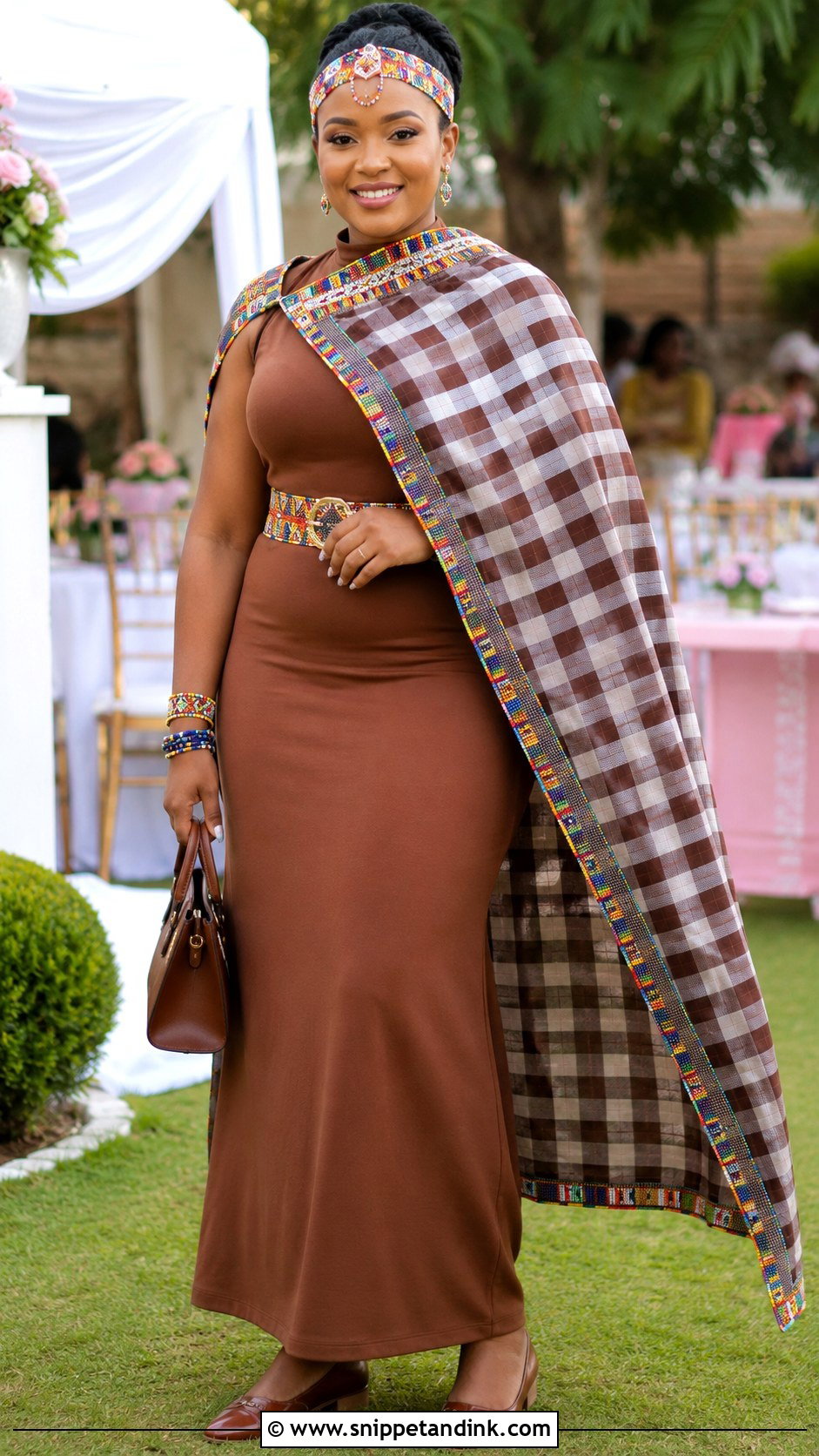
Start from a fitted brown, beige, black or burgundy dress kept almost plain, and let the shuka be the whole statement. Draped across one shoulder, a loose shuka slips constantly, so I pin it at the shoulder seam from underneath, or have it tailored into a fixed cape. Beadwork along the cape border, neckline or waist links the two layers. Leather flats or low heels, a beaded headpiece and stacked bangles finish the look. It suits the bride, her sisters or close relatives. Walk in it before the day: a heavy cotton shuka shifts differently from a light one, and you want to know which you have.
Getting Kitenge and Ankara Through the Tailor Without Drama
Almost every outfit above is made to measure, so the tailor matters as much as the fabric. Here is the order I work in when a client brings me her cloth.
- Wash the fabric first. Cotton prints can shrink a little and loose dye sometimes runs in the first wash, so you want that to happen before cutting, not after the event.
- Buy a little more than the tailor quotes. Matching a large print across seams eats fabric, and a spare piece gives you a head wrap or a repair.
- Bring a photo of the front, back and side of the design, plus the shoes you will wear, so the hem is set at the right length the first time.
- Plan at least two fittings. The first sets the shape; the second is where you sit, raise your arms and walk, and the tailor fixes what pulls.
- Collect the outfit with time to spare, not the evening before, so there is room to fix a zip or a hem.
Busy tailors fill up quickly in wedding season, so I’d start the conversation with yours as soon as the date is set.
Grass, Low Chairs and a Long Afternoon
Most Ruracio days happen at a family home, under tents, with guests sitting for hours and walking across grass or gravel between the house, the tent and the food. That shapes my advice more than any trend.
Thin stiletto heels sink into a lawn, so I send everyone in block heels, wedges or flats. Light colours near the hem pick up red soil quickly; a deeper shade at the bottom of the skirt hides it. Mornings can start cool and afternoons get warm, which is why I like a cape or shawl that comes off without ruining the look. And pack a small kit: safety pins, a spare head wrap pin, plasters for new shoes and a stain wipe for the inevitable splash of stew.
Dressing for a Day That Belongs to Both Families
The right Ruracio outfit starts with your role, then the family colour plan, then your own taste. Traditional brown, cowrie shells, beadwork, kanga, Ankara and kitenge all have a place, and so do jumpsuits, pantsuits, wrap dresses and capes when they are worn respectfully. Whatever you choose, spend your money on tailoring and comfortable shoes before you spend it on extra accessories. Let one element lead, the print, the beadwork or the silhouette, and keep the rest quiet. Above all, confirm the family colour scheme before a single metre of fabric is cut.
You'll Like These Ideas:



Leave a Reply