
Non traditional wedding dress ideas used to mean a colored sash on a white gown. Now the brides I style are getting married in suits, jumpsuits, minis, separates, capes, vintage pieces and every color from champagne to red. The freedom is real, but so is the catch: without the bridal rules, it’s on you and your stylist to make the outfit read as a wedding look rather than a nice party outfit. That usually comes down to fabric quality, fit and one clearly bridal detail. Here are thirty directions, from courthouse-simple to full evening drama, with what I’d check before saying yes to each.
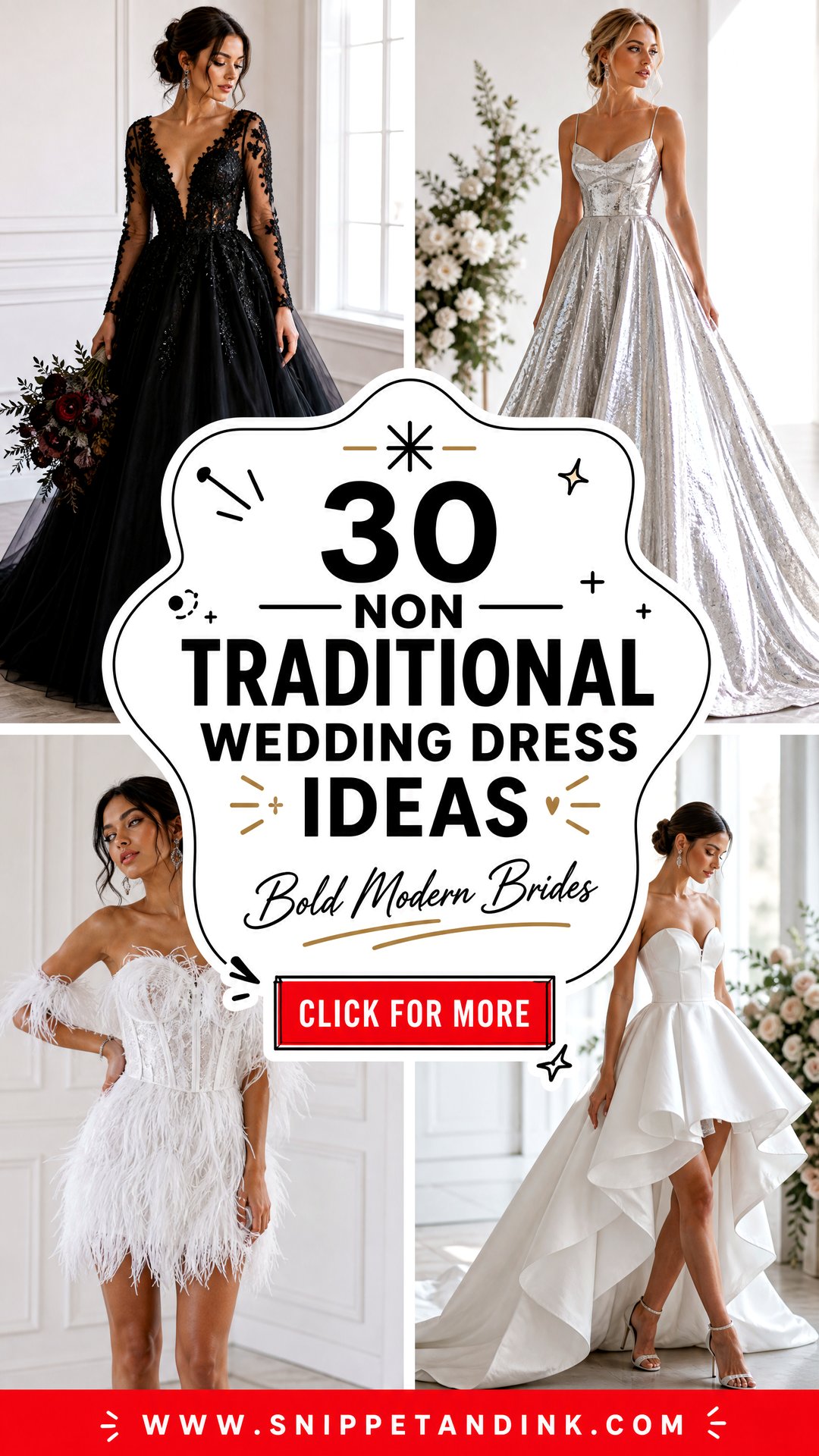
Shopping Beyond the Bridal Salon
Most of these looks aren’t sold in bridal salons, which changes how you shop. Evening-wear and ready-to-wear departments carry colored gowns, suits and minis in stock, so you can often buy within weeks rather than waiting months for a made-to-order gown. The trade-off is that ready-to-wear is cut for an average body and almost always needs tailoring.
- For suits and tuxedos, find a tailor who works on women’s tailoring; shoulders, sleeves and trouser breaks need different adjustments than a gown.
- Order a size that fits your largest measurement; it’s easier to take in than let out.
- Ask about returns before buying online; many stores have short windows.
- Plan for two fittings, even for simple pieces, so the hem matches your final shoes.
1. Colorful Floral Wedding Dress
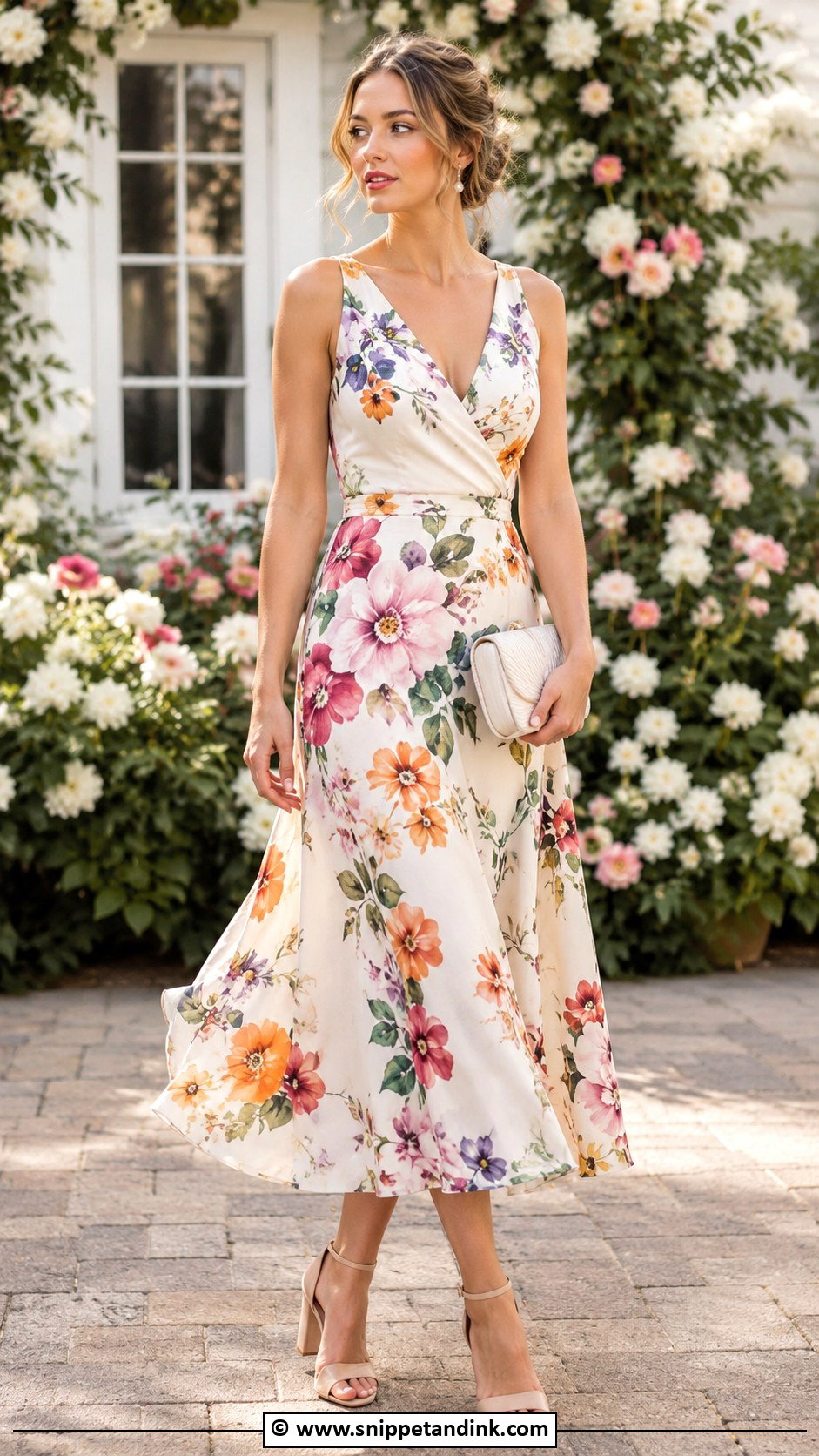
Florals are romantic and forgiving, and the print does most of the styling for you. Watercolor prints read soft; bold garden prints read festive. I look at the scale of the print against the bride’s frame, because a huge bloom on a petite bride can swallow her in photos. Keep the rest quiet: nude block heels, pearl drops, an ivory clutch. If the print is bright, a soft veil or hair bow keeps it bridal. Spring gardens and flower farms are its natural setting.
2. White Bridal Jumpsuit
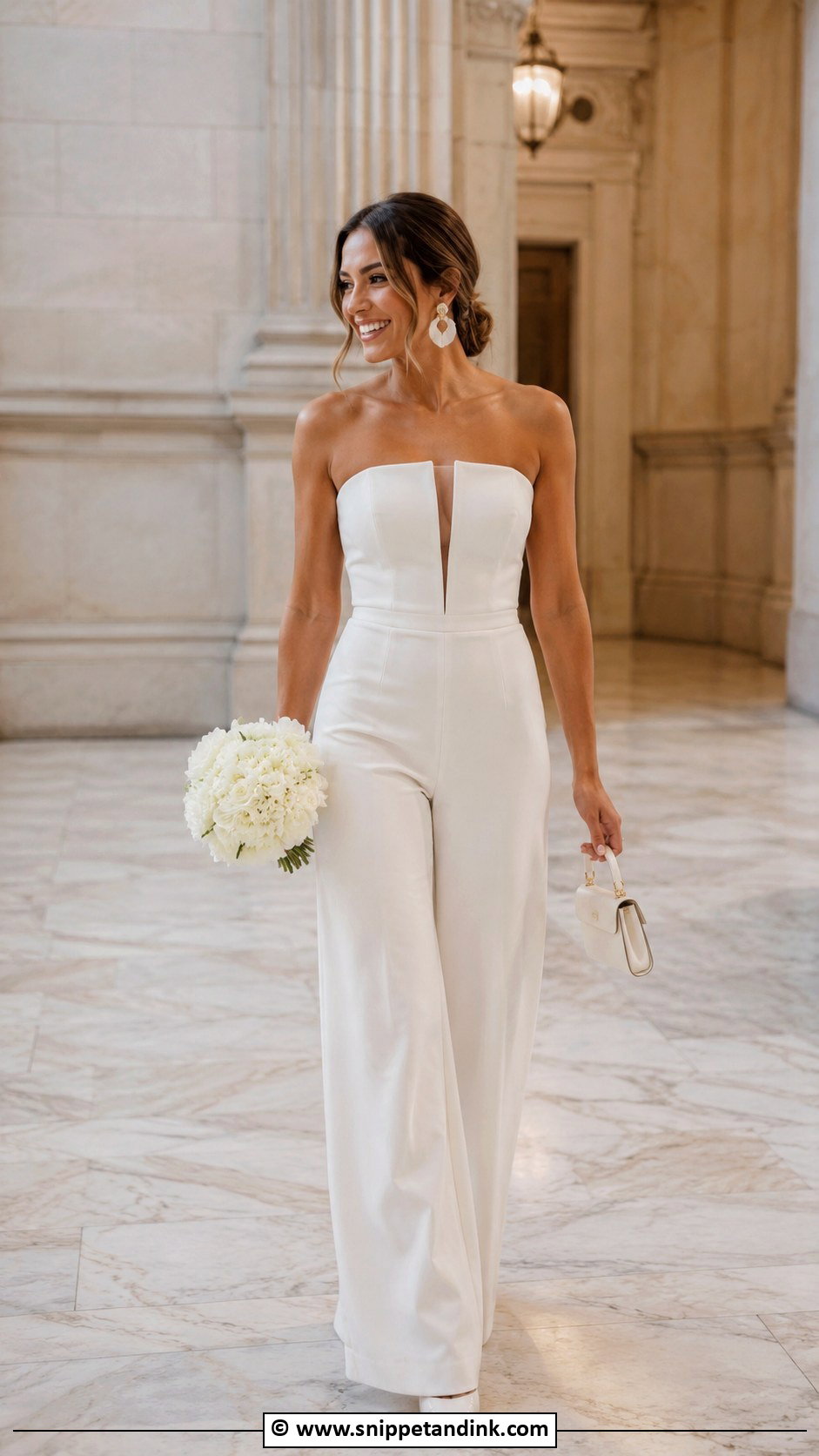
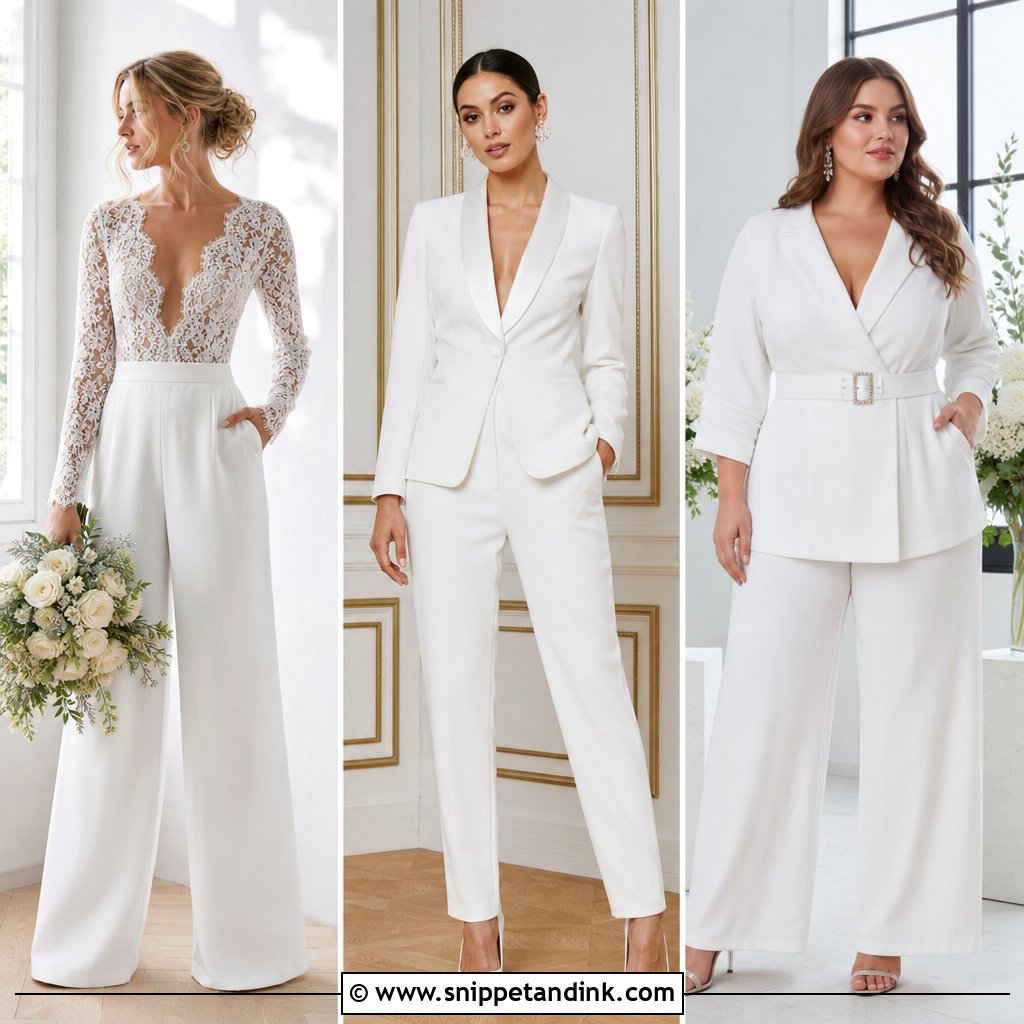
The white bridal jumpsuit wins on movement. You can walk, sit, hug and dance without managing a skirt. Wide legs lengthen the body; a structured bodice keeps it sharp. The thing I always test is the rise: sit down in it, because a short rise pulls uncomfortably, and the bathroom logistics are worth thinking about too. A cape, overskirt or one-shoulder neckline adds drama.
3. Bridal Pantsuit
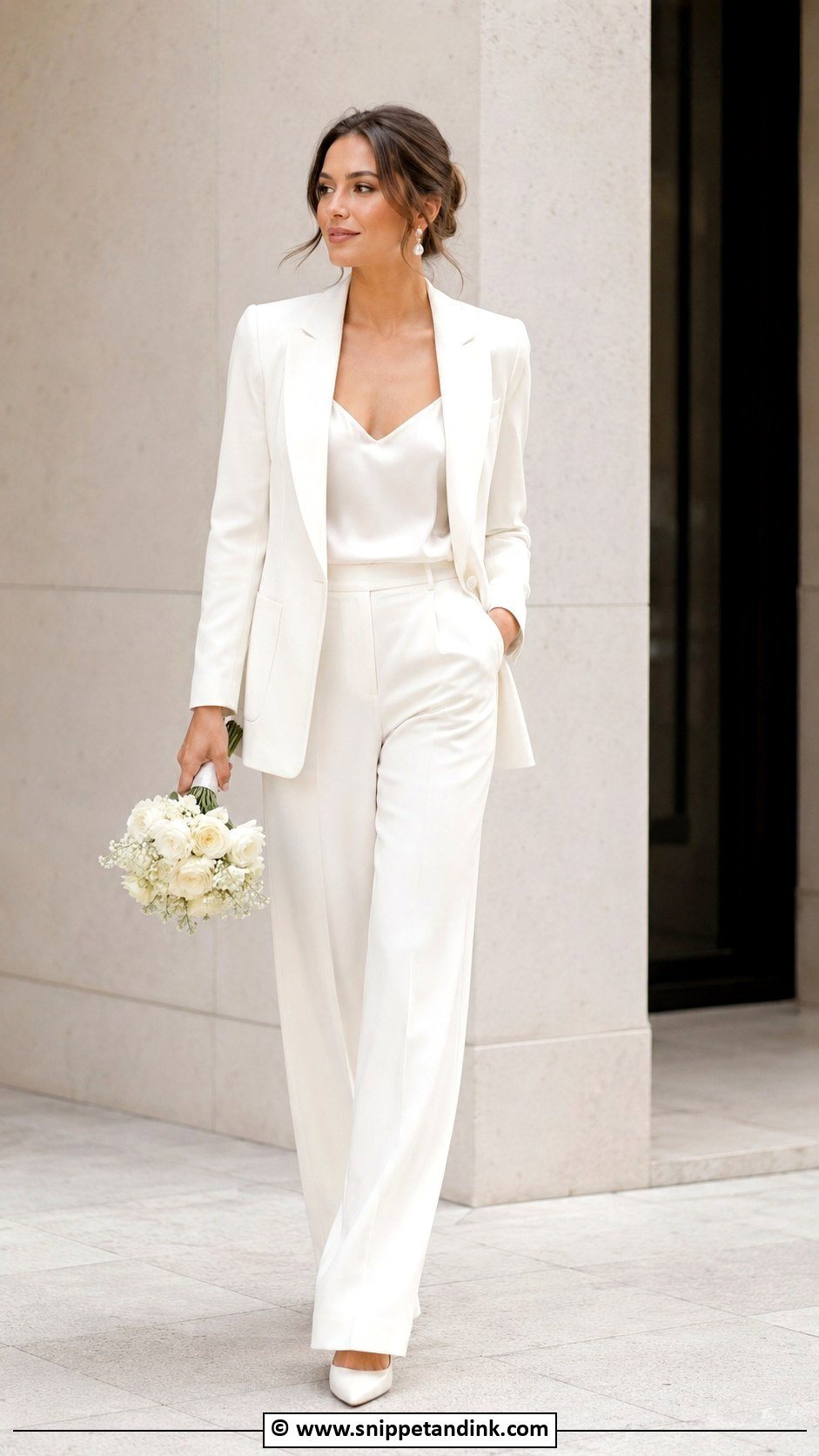
A bridal pantsuit suits brides who feel most like themselves in tailoring. An ivory blazer and matching trousers with a silk camisole, lace bodysuit or vest underneath. The blazer’s shoulder fit is what makes or breaks it; shoulders are hard to alter, so buy for the shoulder and tailor the rest. Satin lapels or a longline jacket make it feel more bridal. Pearls, a low bun and a mini bouquet soften it.
4. Two Piece Wedding Dress
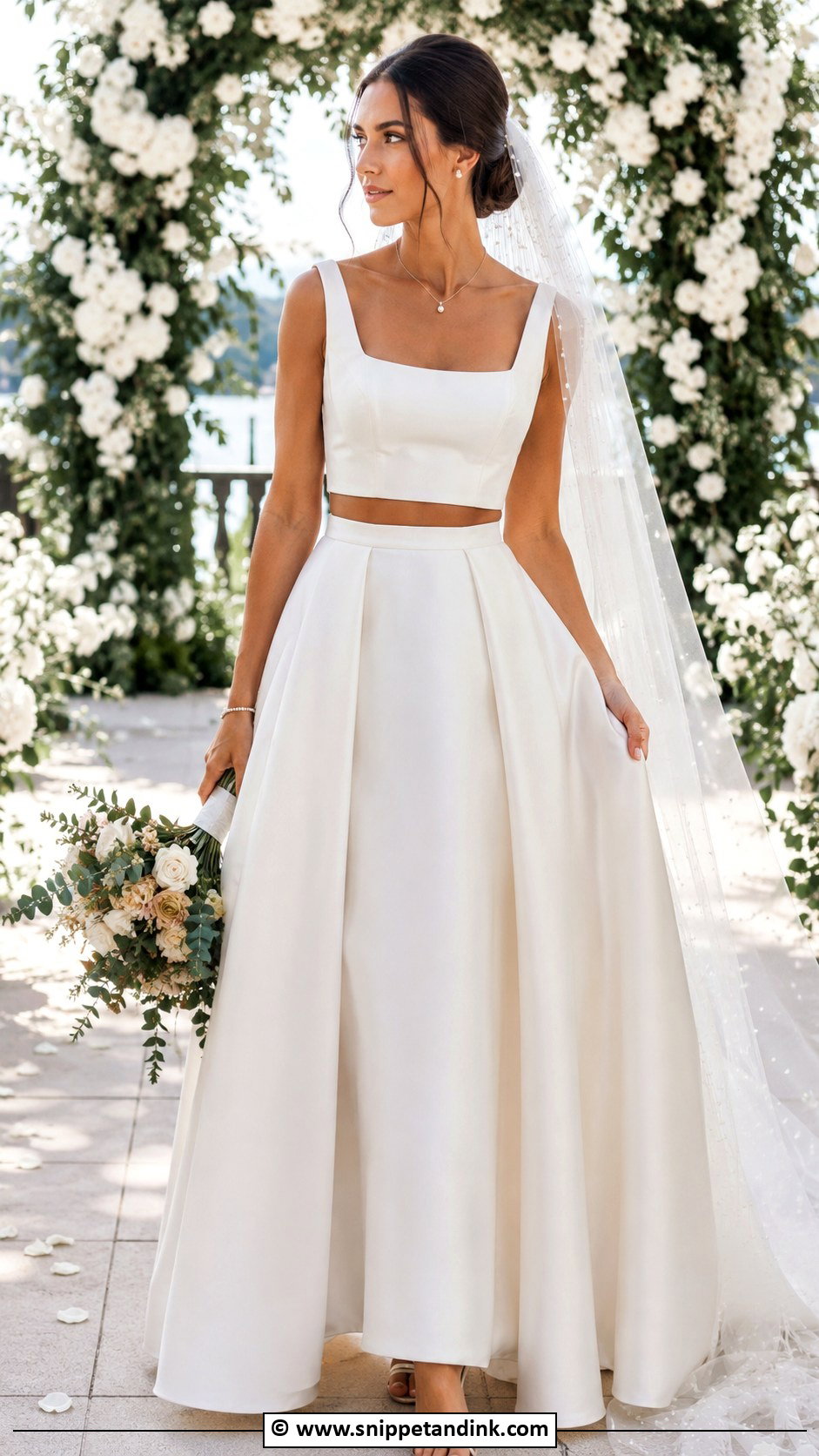
Separates give flexibility, and you can often rewear each piece. A structured crop top with a full skirt is modern; a lace top with a satin slip skirt is softer. The challenge is color matching: two whites from different makers almost never match, so I’d buy both pieces from the same designer or fabric. Delicate heels and a small veil keep it bridal.
5. Short Wedding Dress
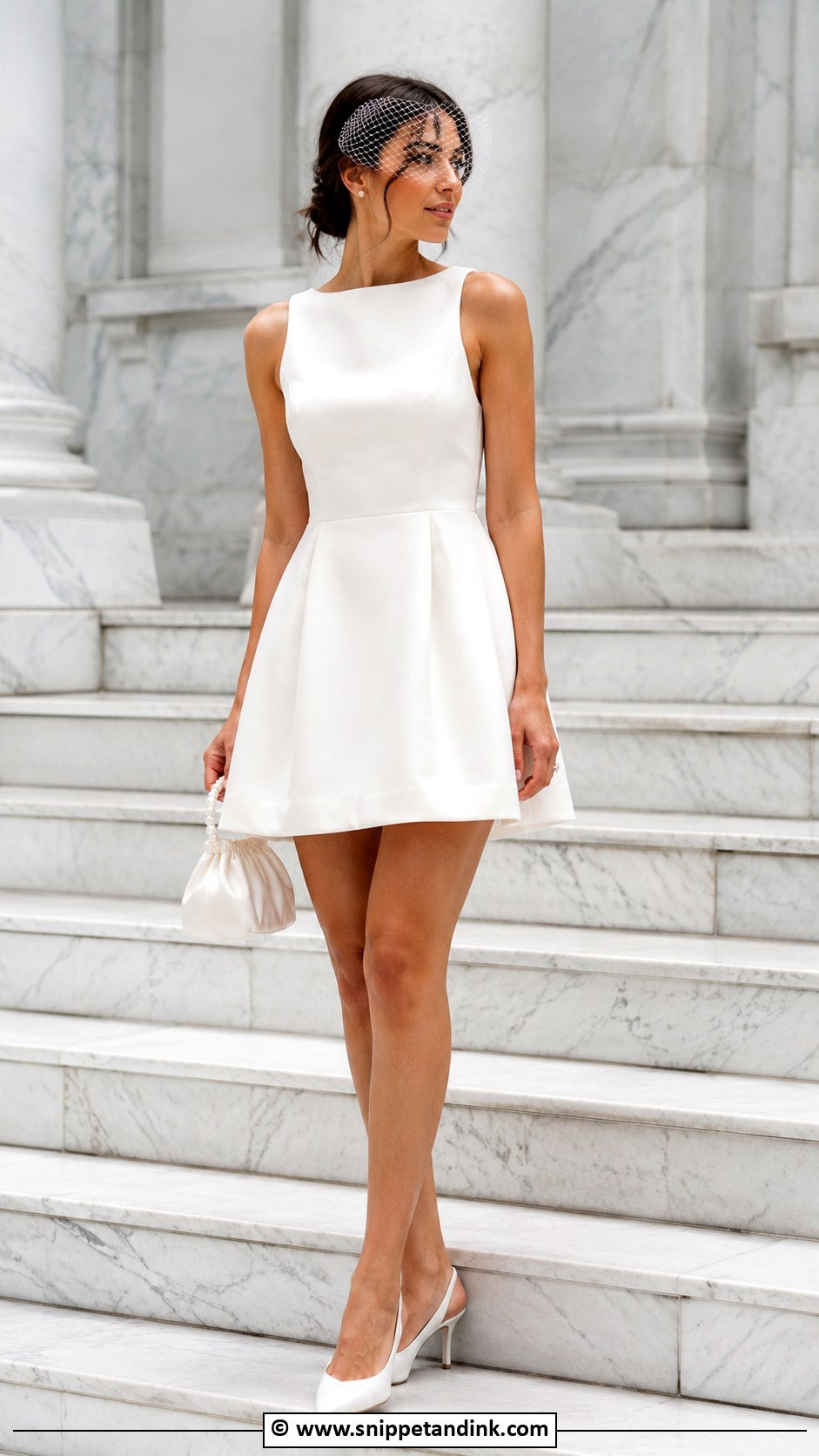
Short dresses are playful and practical: courthouse weddings, elopements and reception changes. A clean mini is modern; lace or satin is sweeter. Balance the short hem with refined styling, pointed slingbacks, pearl studs and a neat bag. Check the length while sitting, since minis ride up more than you’d expect. A birdcage veil or bow adds the bridal detail.
6. Tea Length Wedding Dress
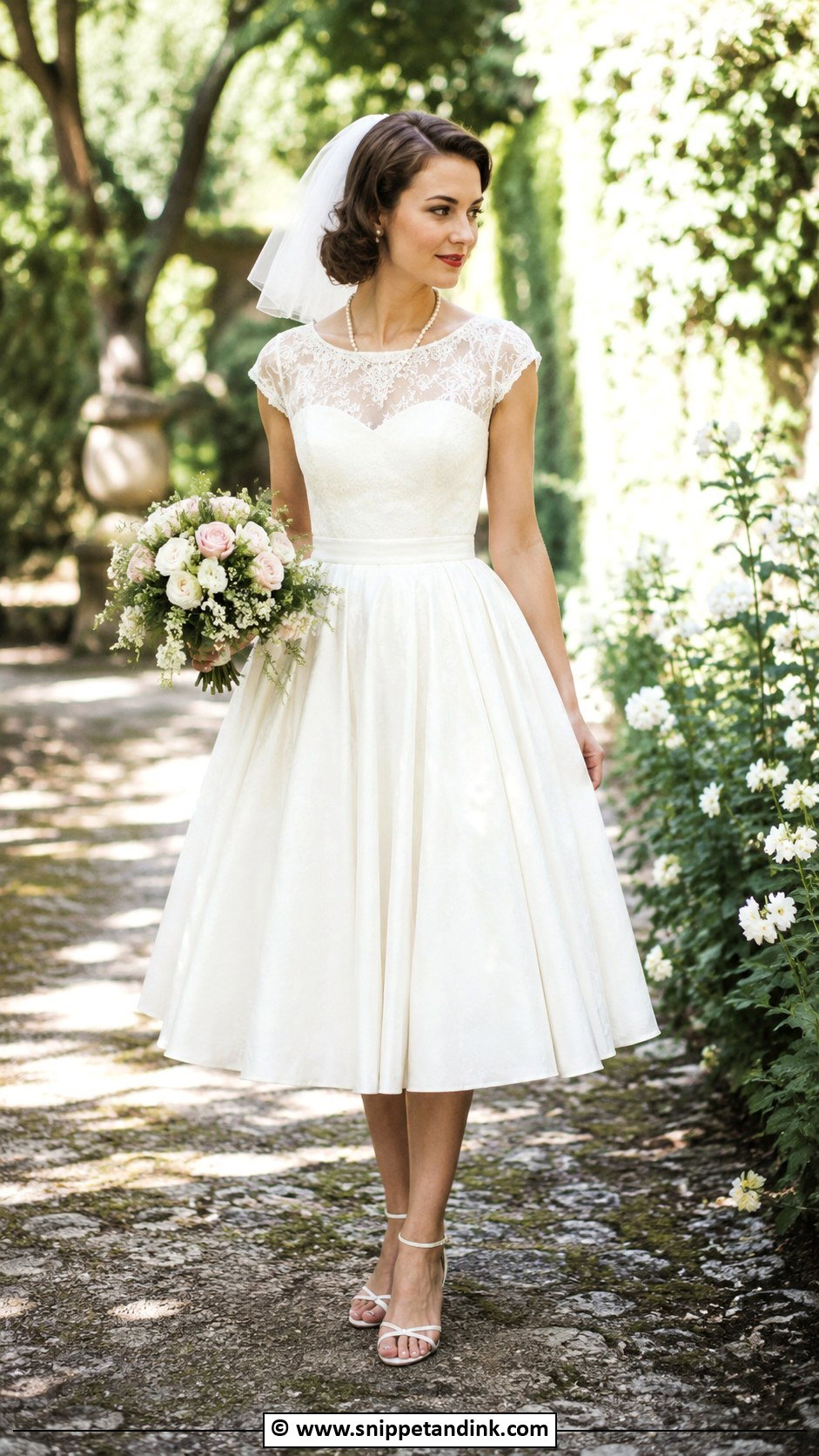
A tea length wedding dress falls between the knee and ankle, so your shoes are on show. Structured bodice with a full skirt reads 1950s; sleek satin feels modern. I’d add a petticoat for a fuller skirt, because tea-length without volume can look limp. Block heels or ankle straps, a short veil and soft curls complete it.
7. Black Wedding Dress
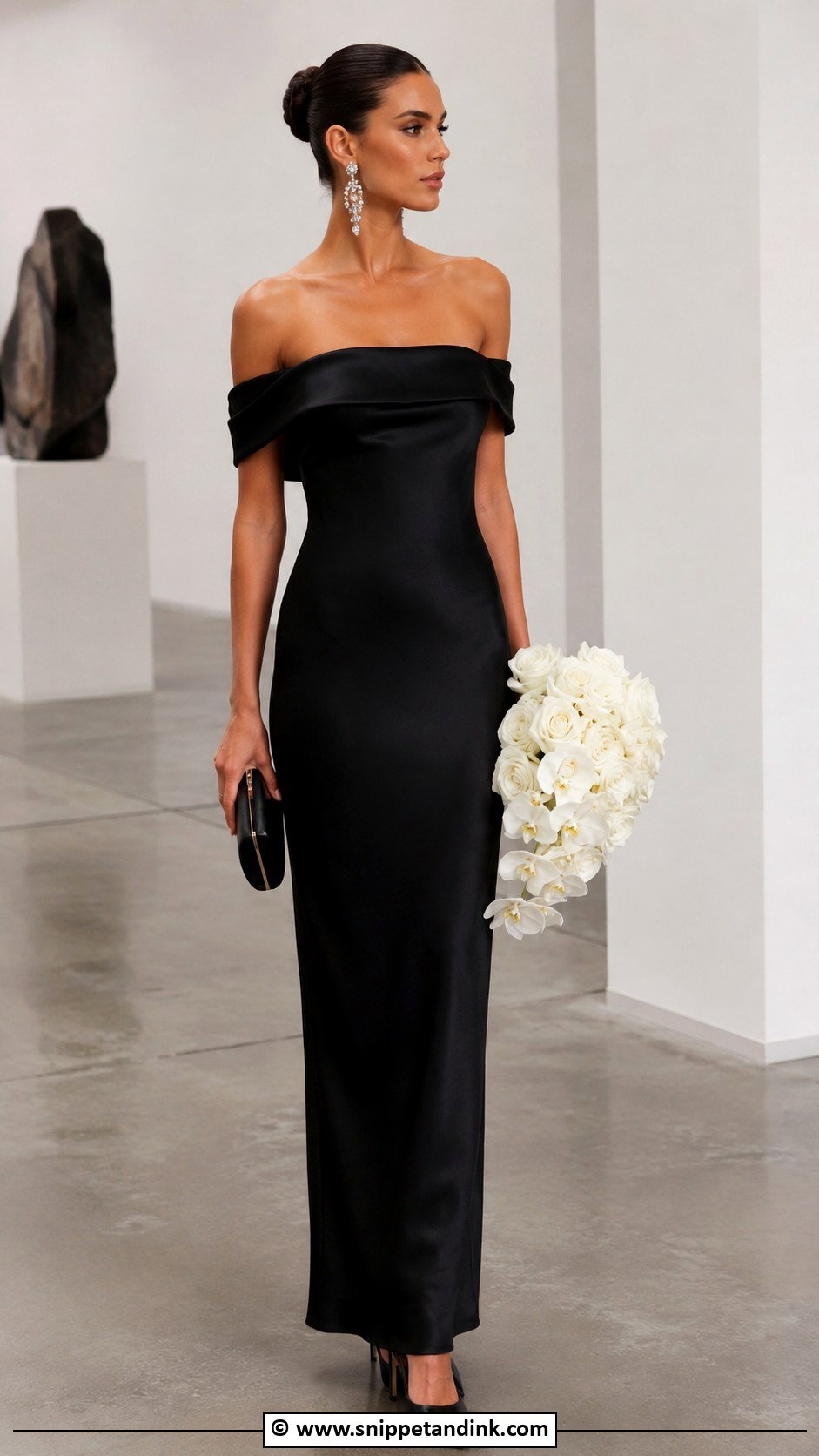
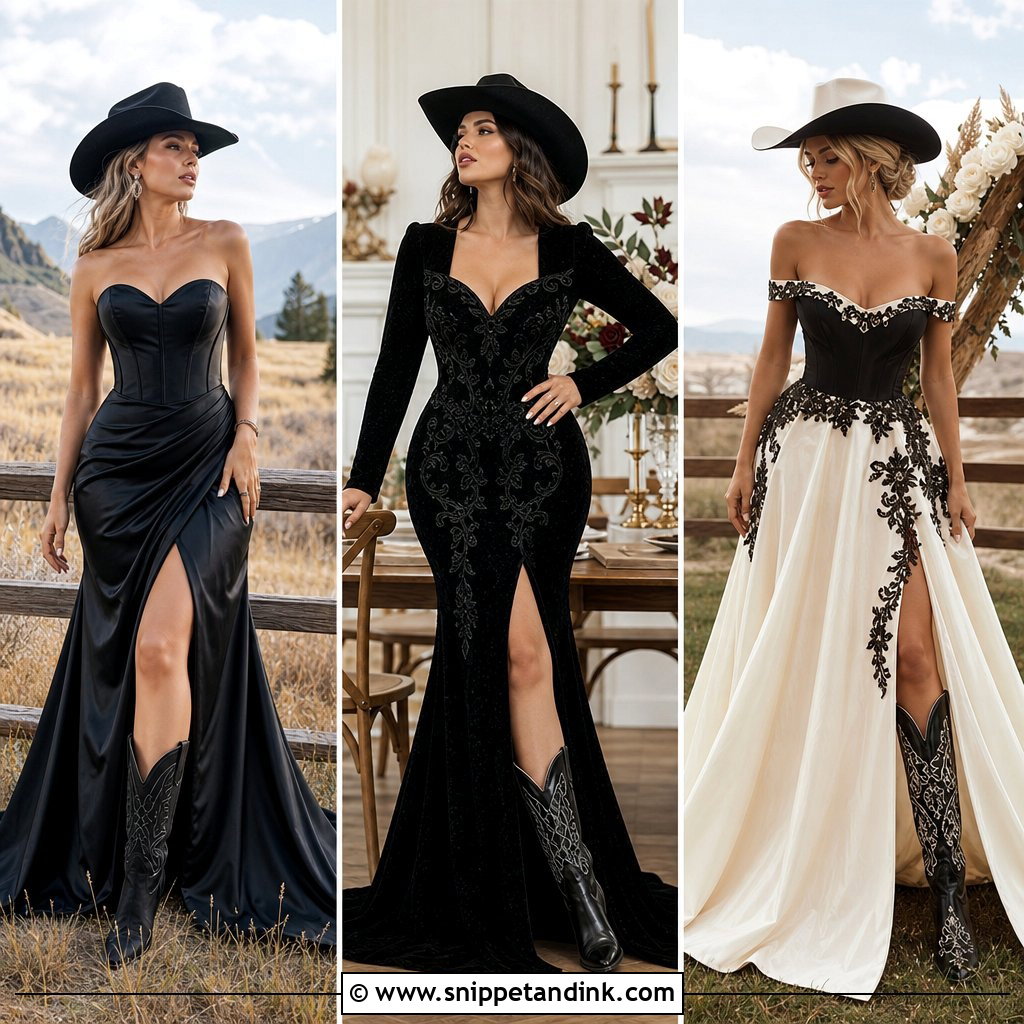
Black is unforgettable, and that’s the point. To keep it bridal, choose rich fabrics: satin, tulle or lace in a clean silhouette. Cheap black fabric looks flat and gray in photos, so quality matters more here than with white. A white bouquet or ivory gloves add contrast. Evening weddings, galleries and city venues suit it.
8. Champagne Wedding Dress
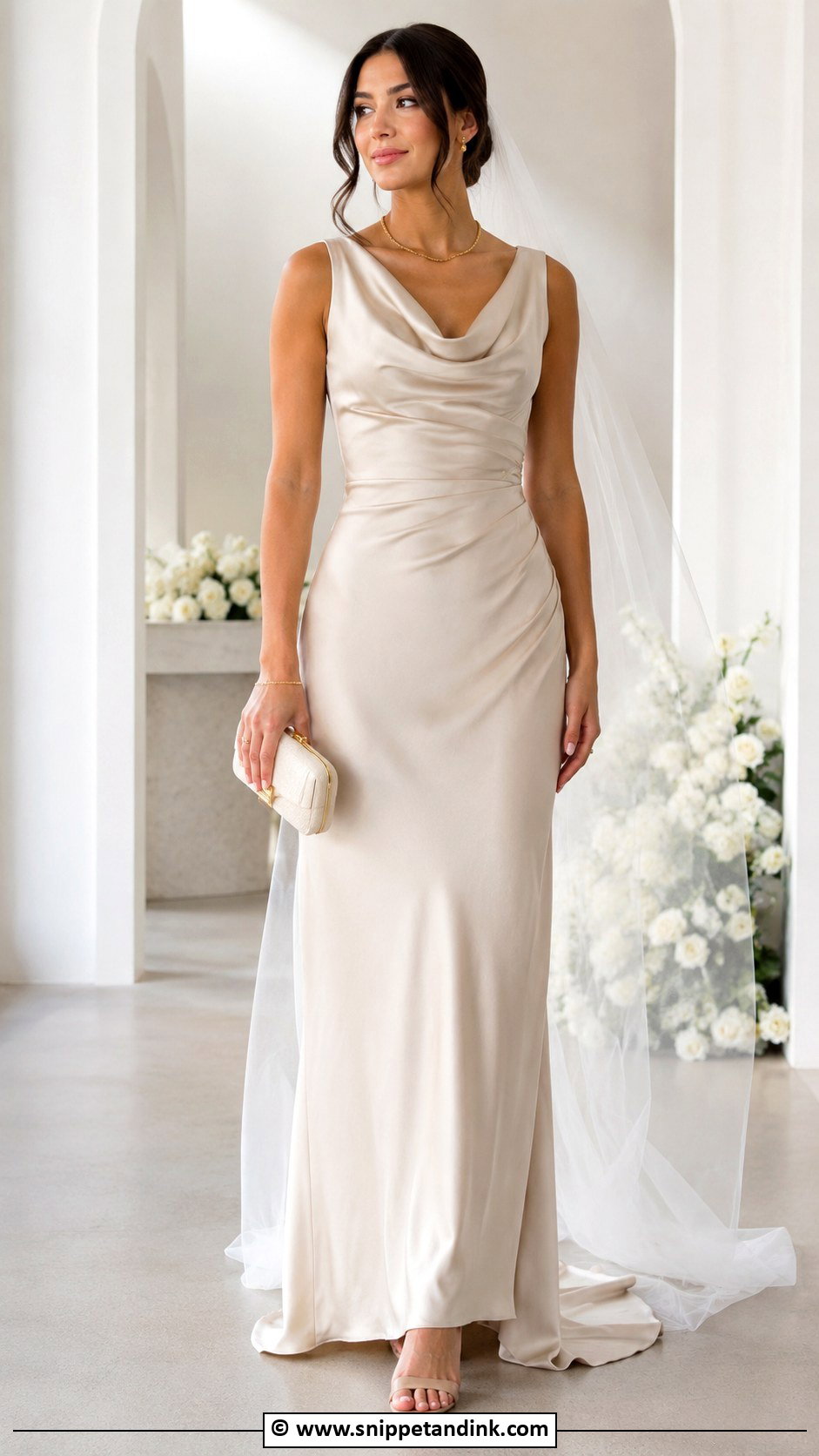
Champagne is the easiest alternative to white, and it flatters warmer skin tones especially. It works in satin, tulle, chiffon, sequins or lace. Gold jewelry and a cream clutch keep it cohesive. I’d check the shade against your skin in daylight, since some champagnes go pinkish, others gray. Sunset ceremonies and formal dinners suit it.
9. Blush Pink Wedding Dress
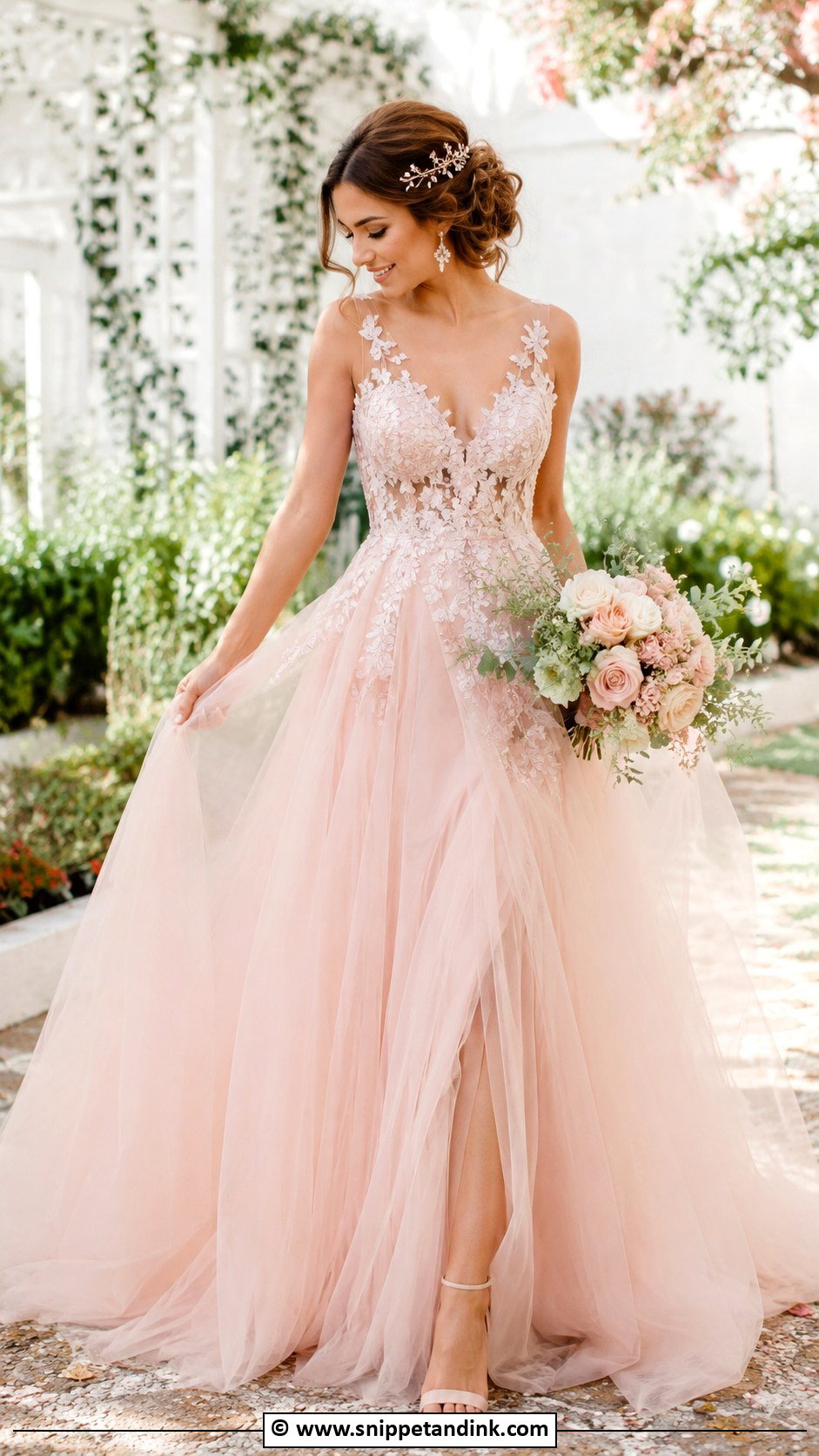
Blush gives color in a subtle way. Tulle feels fairy-tale, satin feels minimal, and floral embroidery suits gardens. Blush can wash out fair skin if it’s too close to your skin tone, so pick one a shade warmer or cooler. Rose gold jewelry, nude sandals and a delicate hair comb keep it light.
10. Blue Wedding Dress
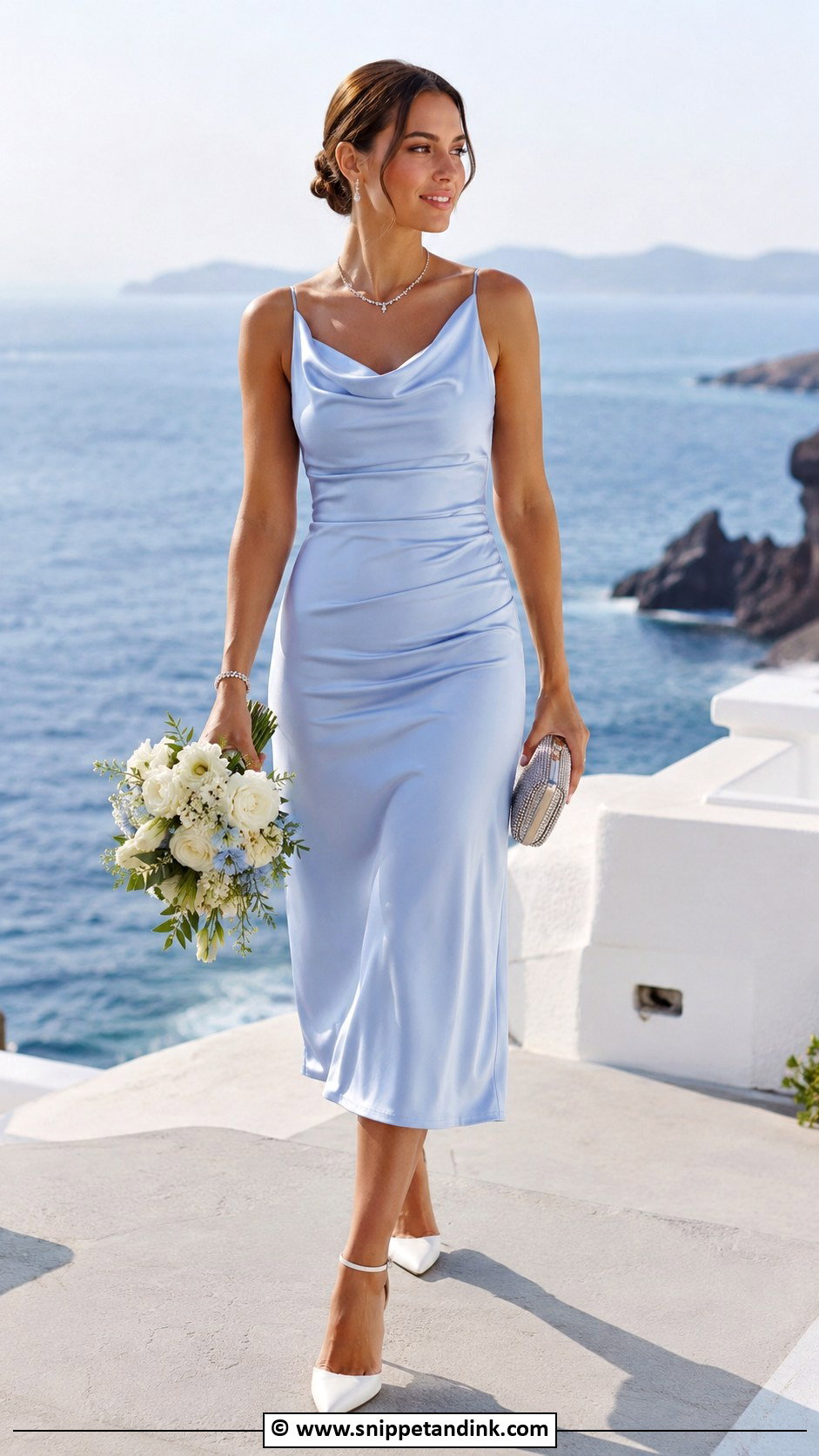
Blue as the main outfit takes the “something blue” tradition a step further. Pale blue satin, powder blue tulle, icy organza or blue floral embroidery all work for bridal. Silver jewelry and white heels keep it clean. If the shade is bold, keep the shape simple; if it’s soft, add pleats, lace or sheer sleeves for texture. Seaside, winter and garden weddings suit it.
11. Red Wedding Dress
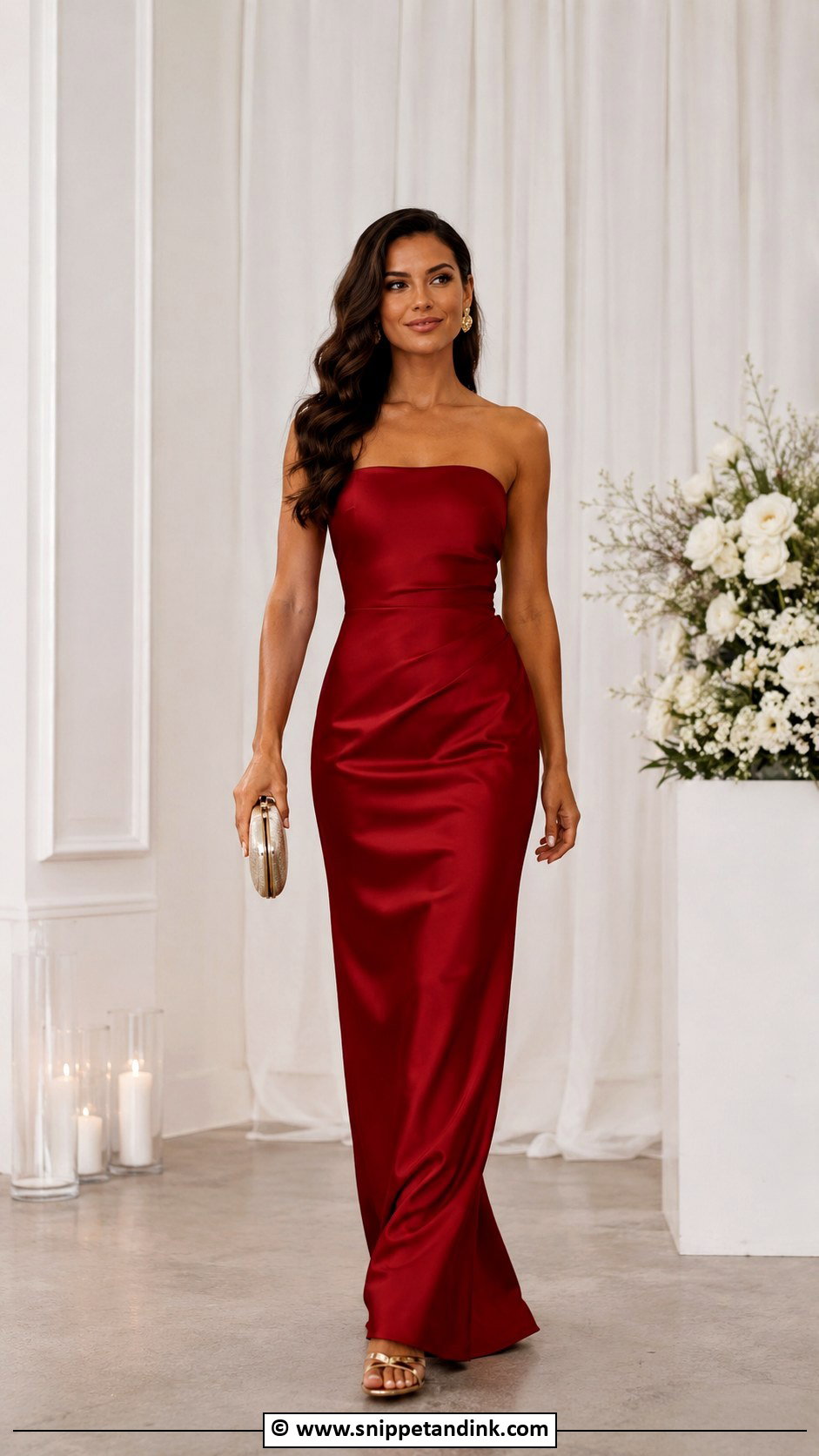
Red owns the room. It can be sleek in satin, romantic in tulle or dramatic in long-sleeve lace. In many cultures red is the traditional bridal color, so it carries extra meaning for some families. Since red is strong, keep accessories simple: gold heels, simple earrings, a clean clutch. Loose waves or a smooth bun suit it. Red stains and shows sweat less than white, which is a practical bonus.
12. Green Wedding Dress
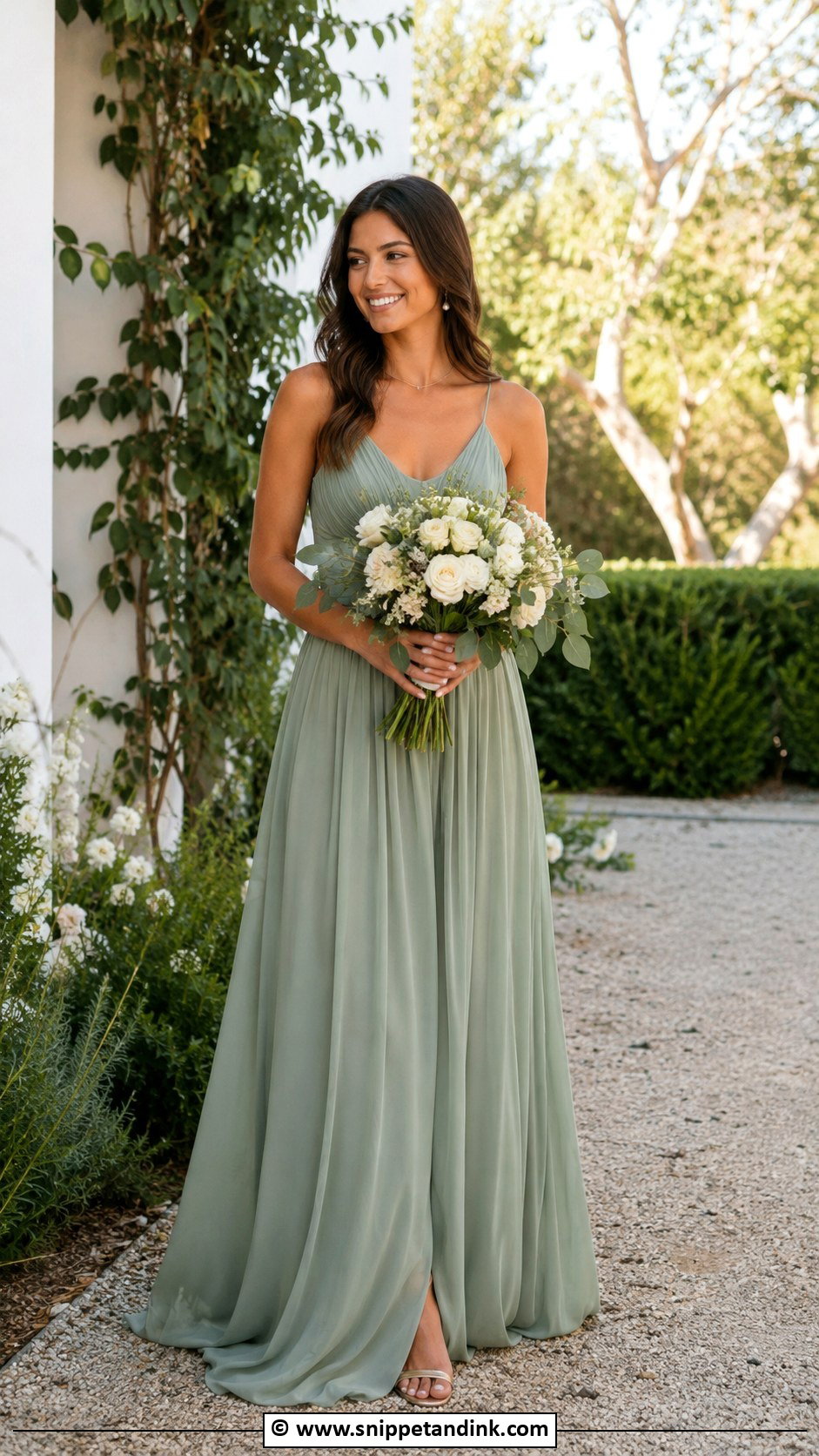
Green ranges from sage to emerald, and each shade sets a different mood. Sage suits gardens; emerald feels rich in the evening. I’d test green against your skin, because some greens bring out redness. Metallic sandals, pearl earrings and a cream bouquet add contrast. Green looks right at home against trees, stone and open fields.
13. Gold Sequin Wedding Dress
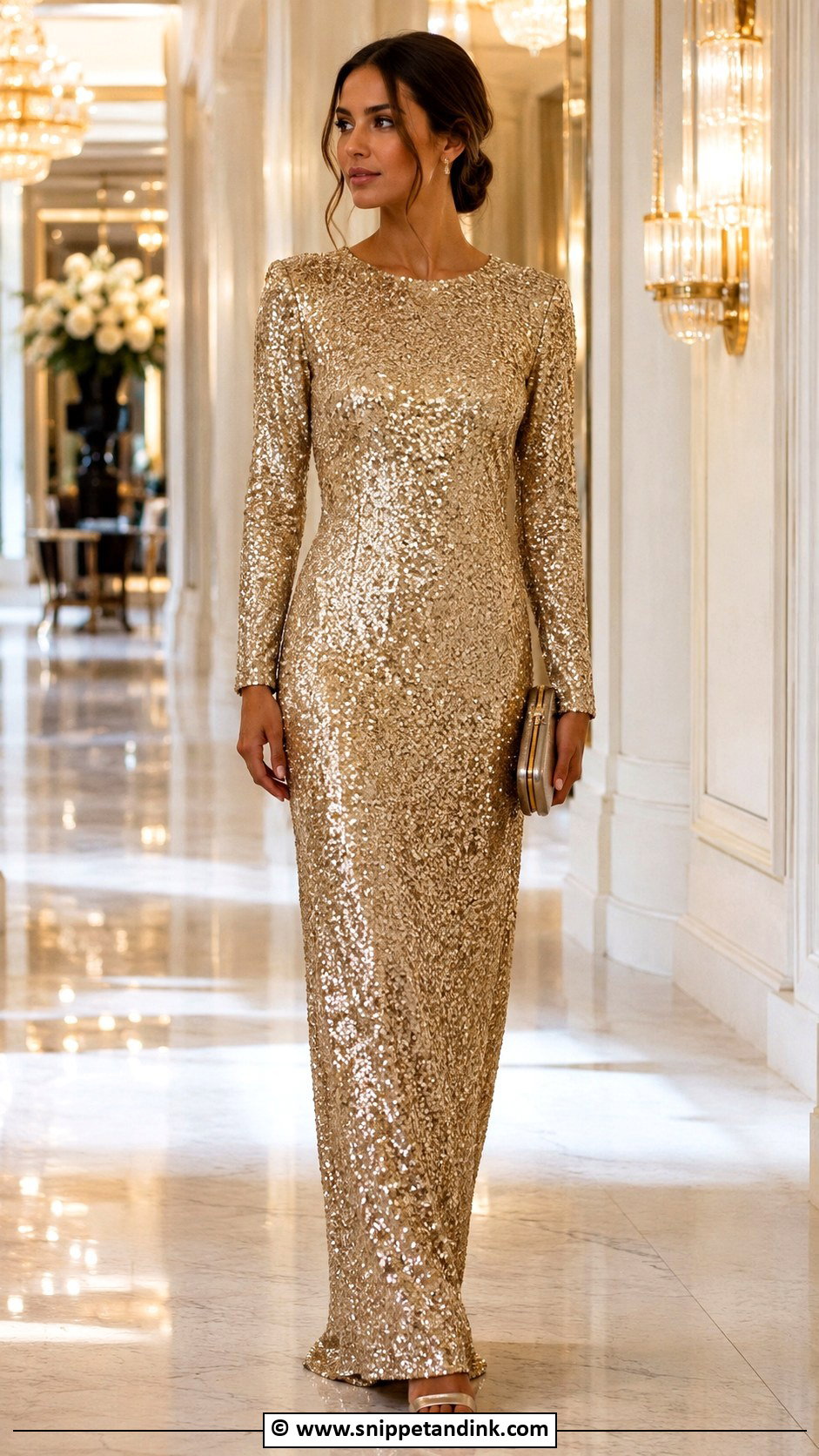
Gold sequins are made for celebration: evening weddings, rooftops and after-parties. Choose a simple shape, a sequin column or slip gown, so the shine is elegant. Sequins can scratch your arms and your partner’s when you hug, so I’d ask about lining. Neutral shoes and minimal jewelry let the dress shine.
14. Silver Metallic Wedding Dress
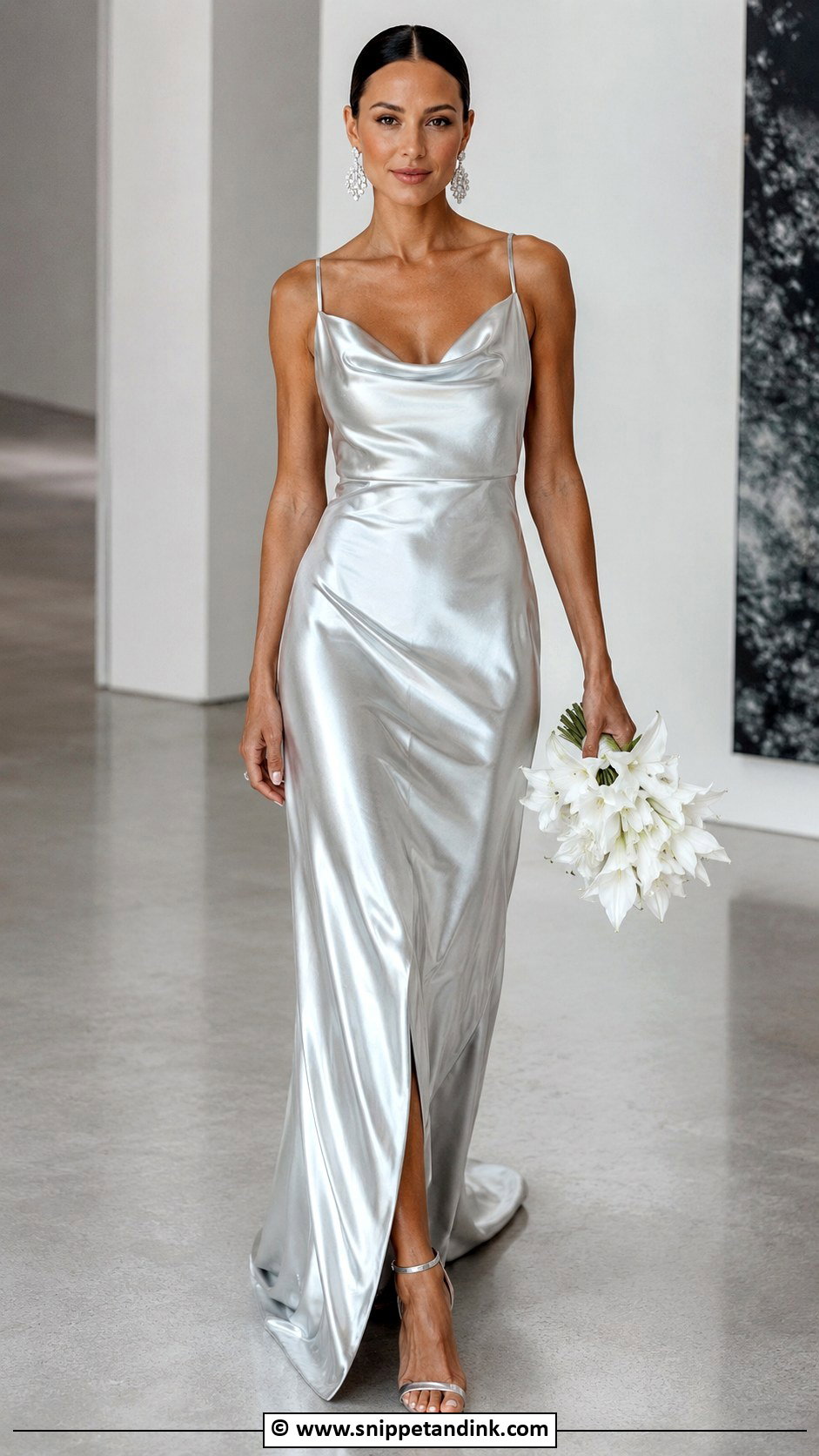
Silver metallic feels futuristic and glamorous, catching light in photos. Liquid satin, metallic pleats or soft shimmer in a streamlined shape. To avoid looking too party, balance the shine with simple hair and natural makeup. Silver heels and a white bouquet complete it. City and winter weddings suit it.


15. Bridal Slip Dress
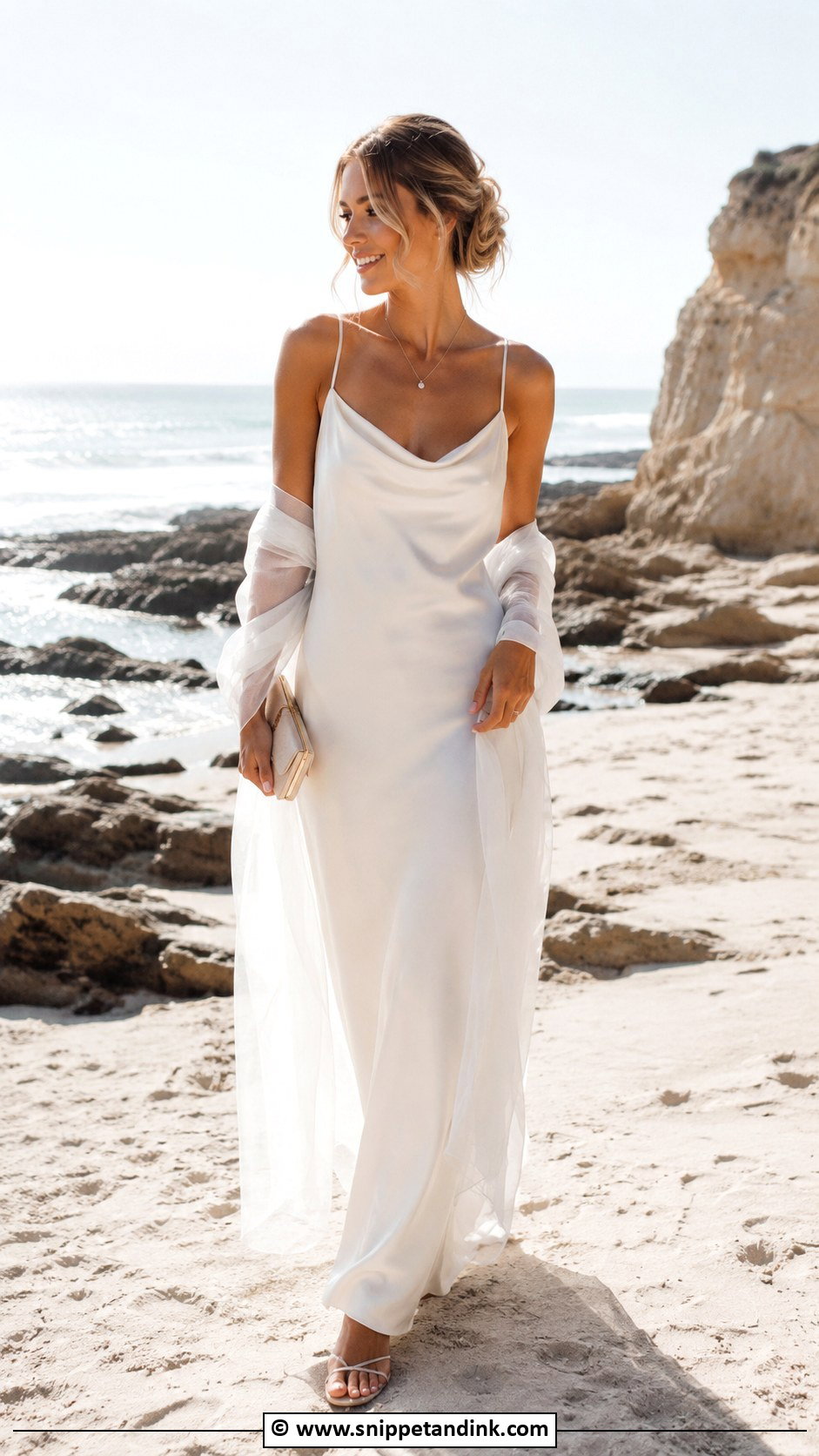
The slip dress is all about fit: it skims the body, so it shows every seam and line underneath. Silk or satin drapes best in ivory, champagne or blush. I’d always pair it with tailoring and the right undergarments. A sheer wrap or cropped blazer adds coverage. Beach weddings, city elopements and intimate dinners suit it.
16. Bridal Corset And Skirt
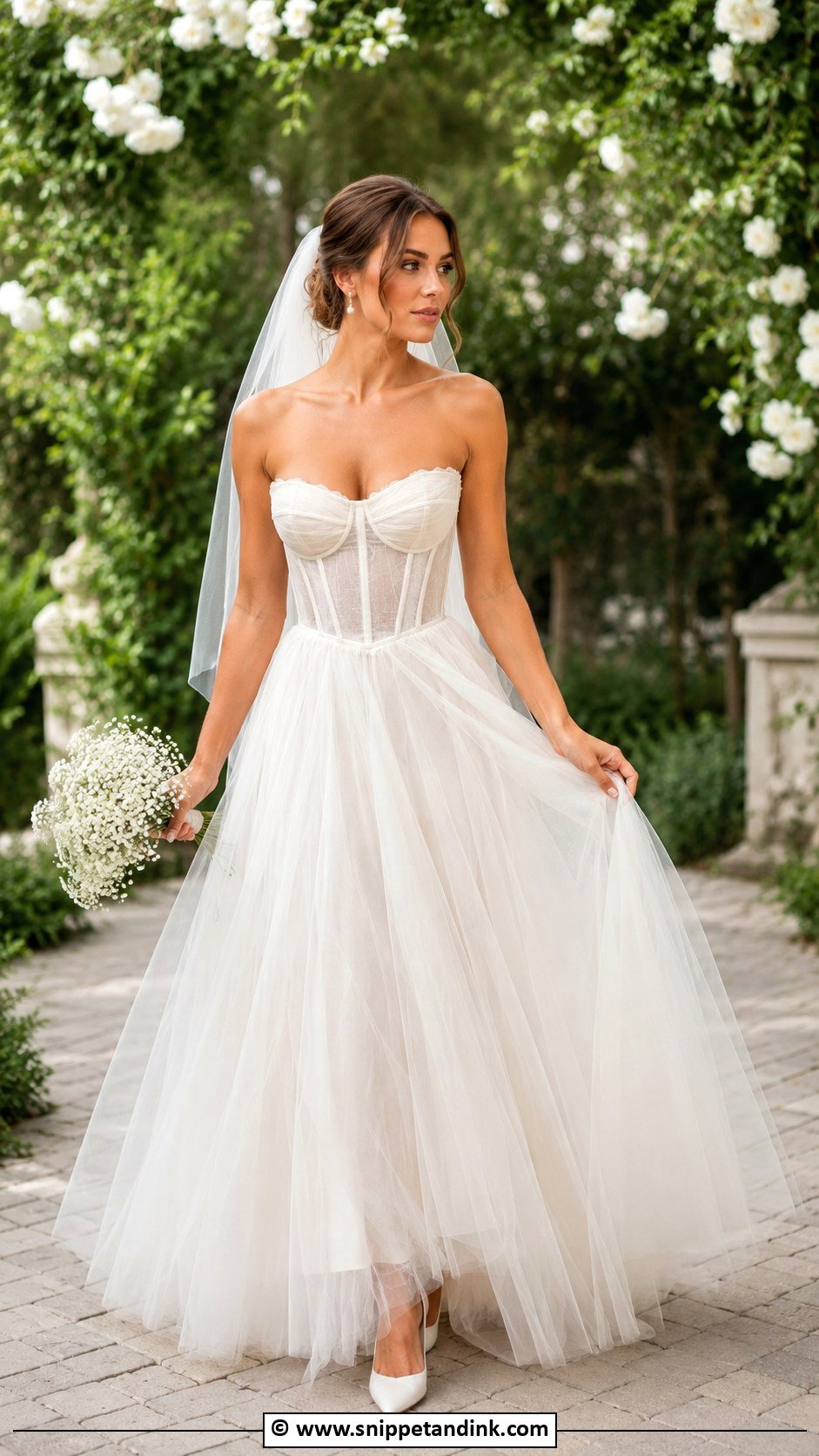
A corset and skirt gives structure and flexibility. A fitted corset with a full tulle skirt is dramatic; satin with a slim skirt is clean. You can swap the skirt for trousers at the reception. Corsets need a proper fit and a sitting test, since boning can dig in. Pointed heels and a simple veil finish it.
17. Bridal Cape Dress
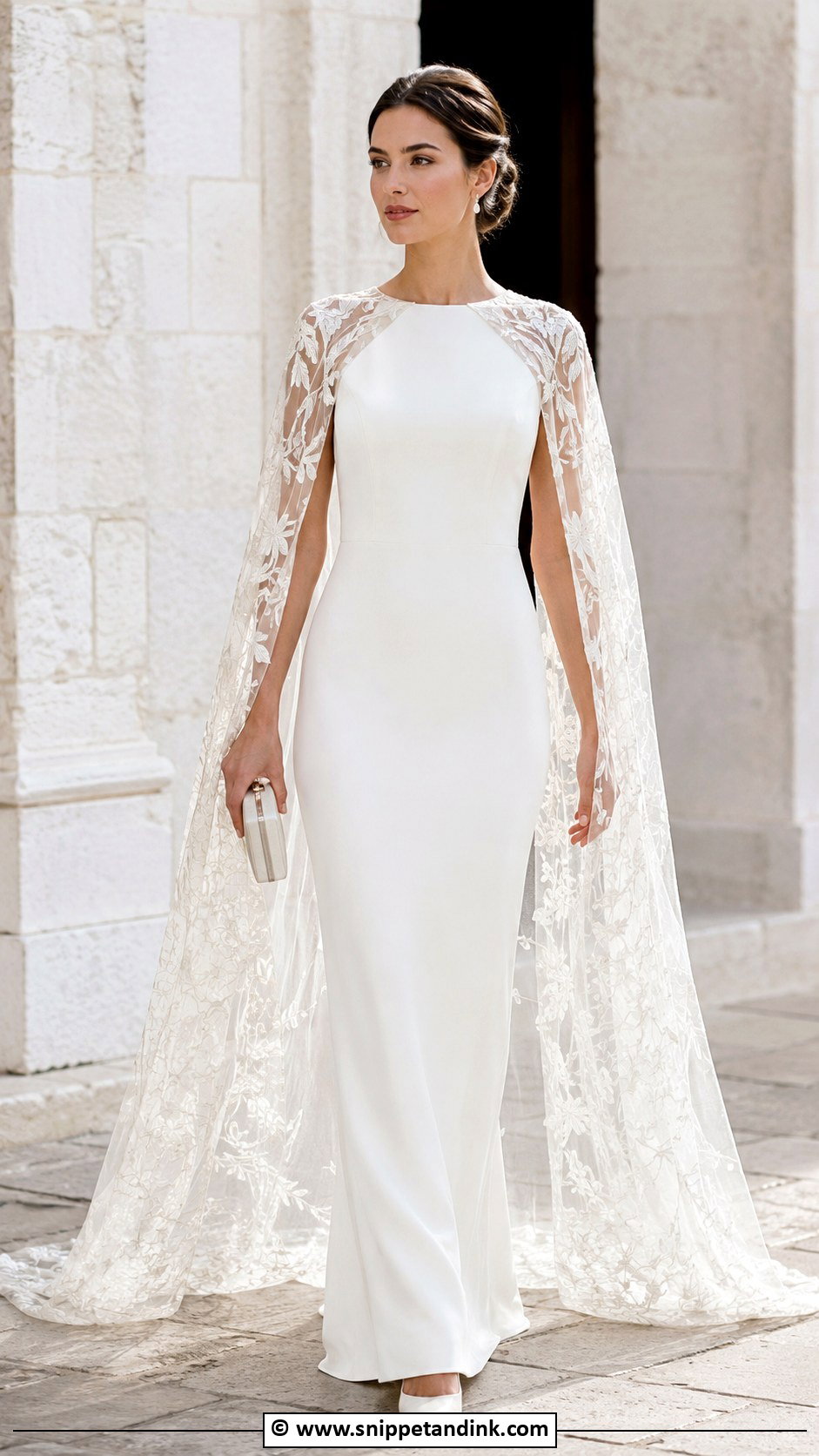
A cape gives drama without a train. A simple column dress with a sheer cape is elegant; a structured cape over a jumpsuit or mini is modern. Choose embroidery, pearls, tulle or crepe. Capes need secure fastening at the shoulders so they stay put during the ceremony. Keep accessories minimal.
18. Feather Trim Wedding Dress
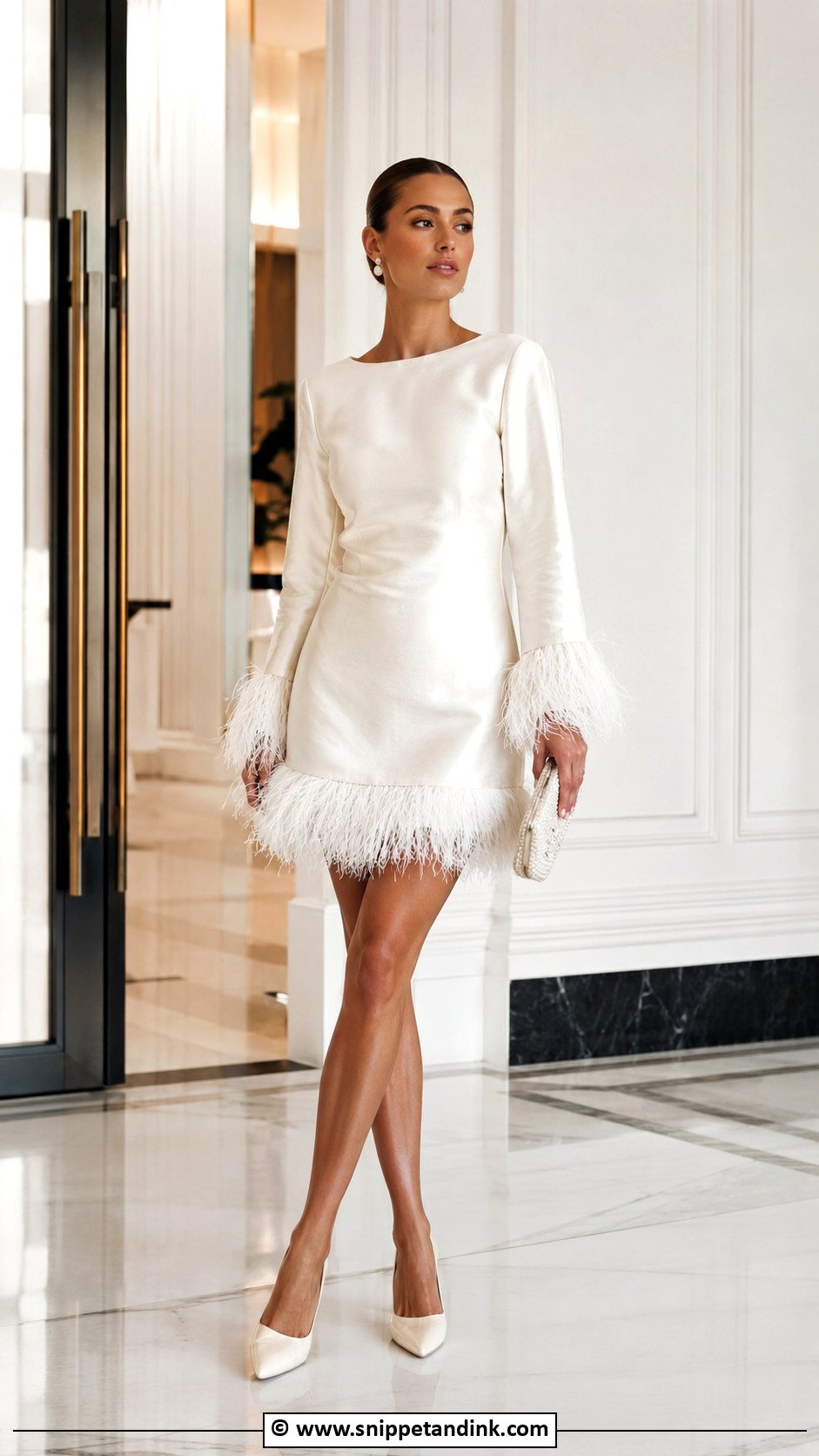
Feathers add texture and movement but need restraint: cuffs, a hem or a neckline rather than all over. Feathers shed and get crushed, so I’d keep a feather trim away from the bouquet’s path and bring a lint roller. A short feather dress suits a reception; feather sleeves on a column can work for the ceremony. Keep jewelry sleek.
19. Bow Detail Wedding Dress
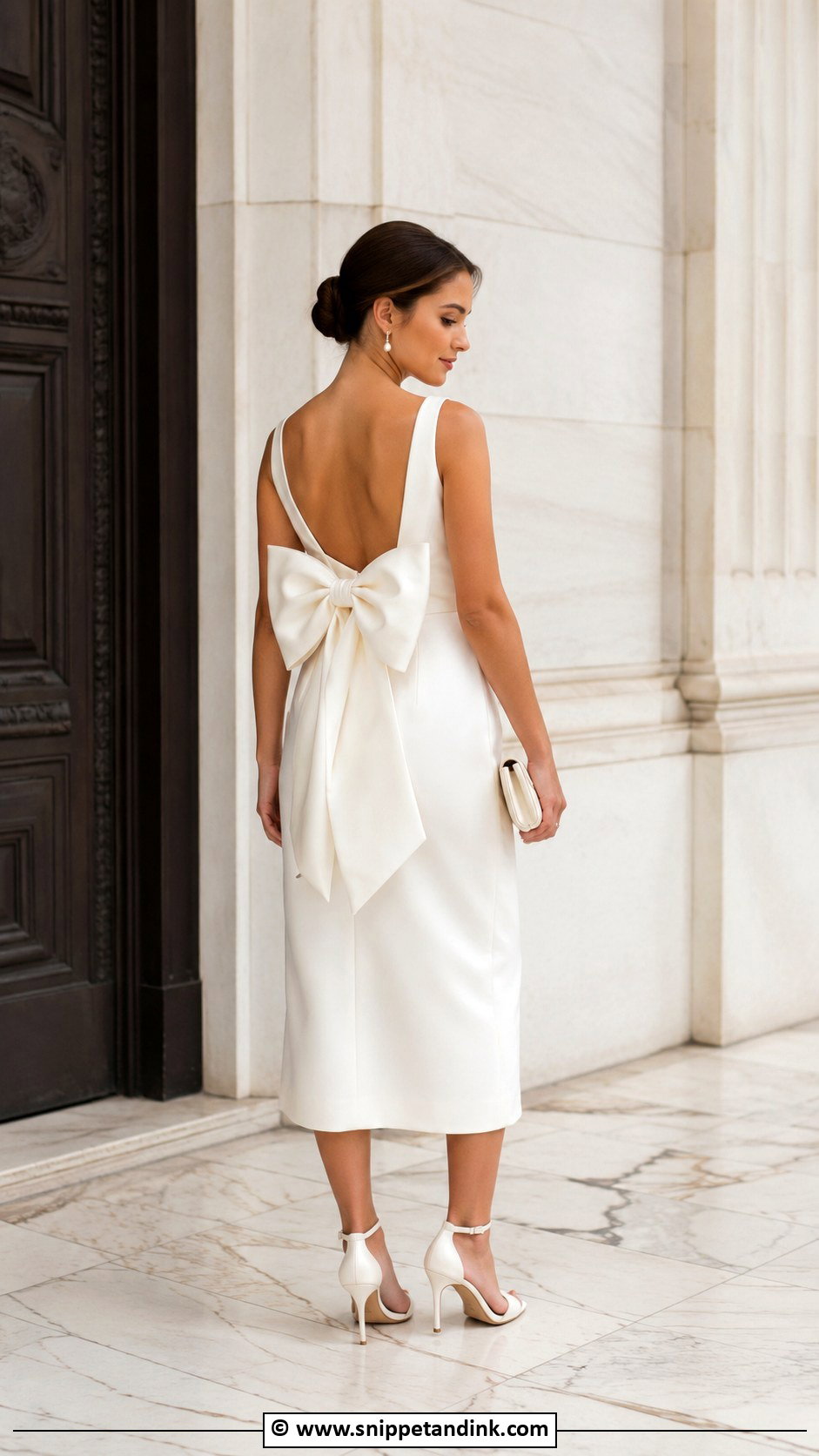
Bows are sweet and modern when used deliberately: an oversized back bow on a mini, shoulder bows on a column or a bow waist on a midi. If the bow is large, keep everything else simple. A big back bow gets crushed when you sit, so I’d ask for a structured interfacing inside. It makes a great photo from behind.
20. High Low Wedding Dress
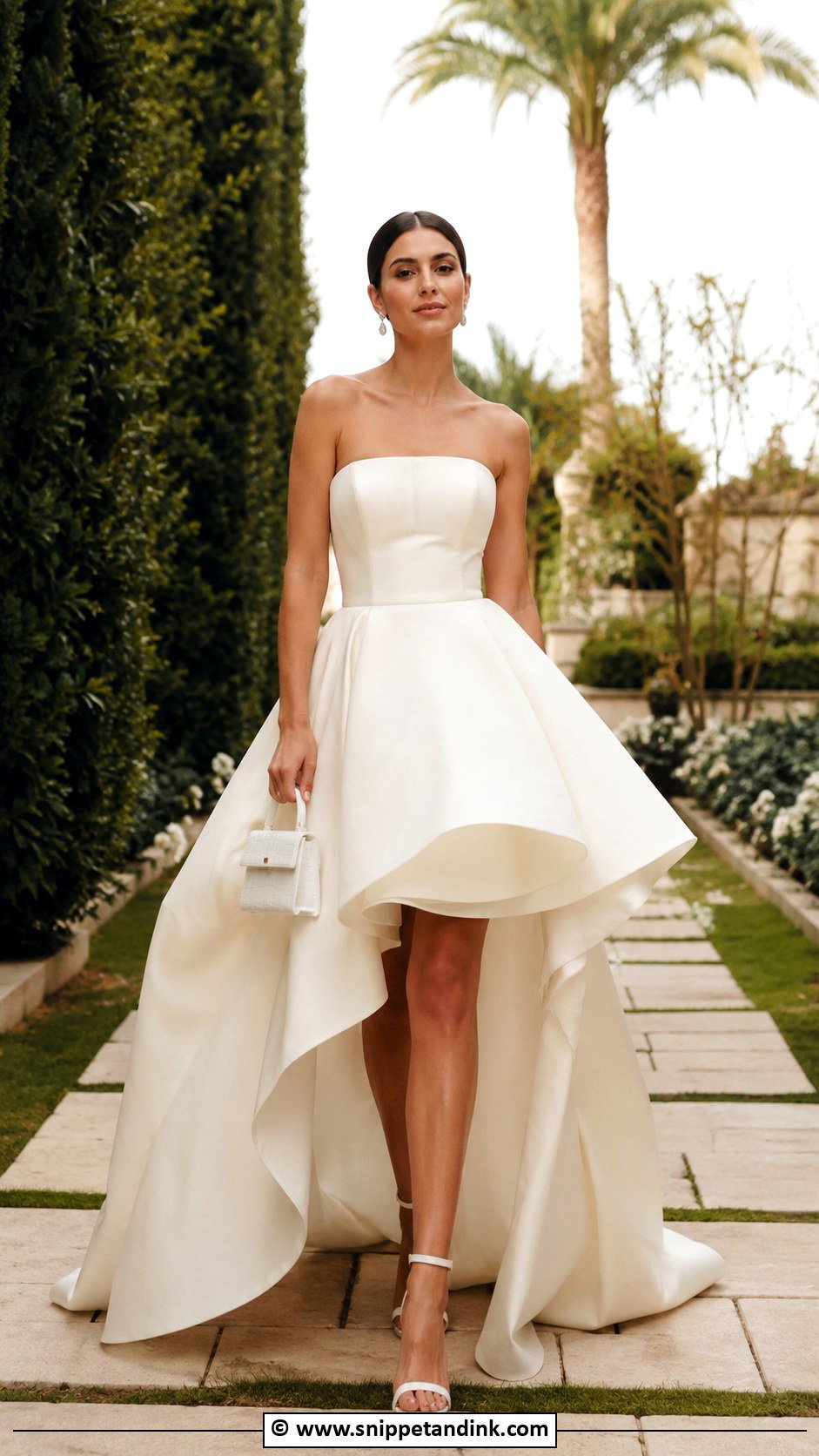
High low hems show off shoes and keep fabric off the ground while the back still flows. Satin, tulle, organza or jacquard work. Outdoor ceremonies suit it because the front stays clear of grass and dirt. Ankle-strap heels and drop earrings finish it. It moves well when you dance.
21. Bridal Romper With Overskirt
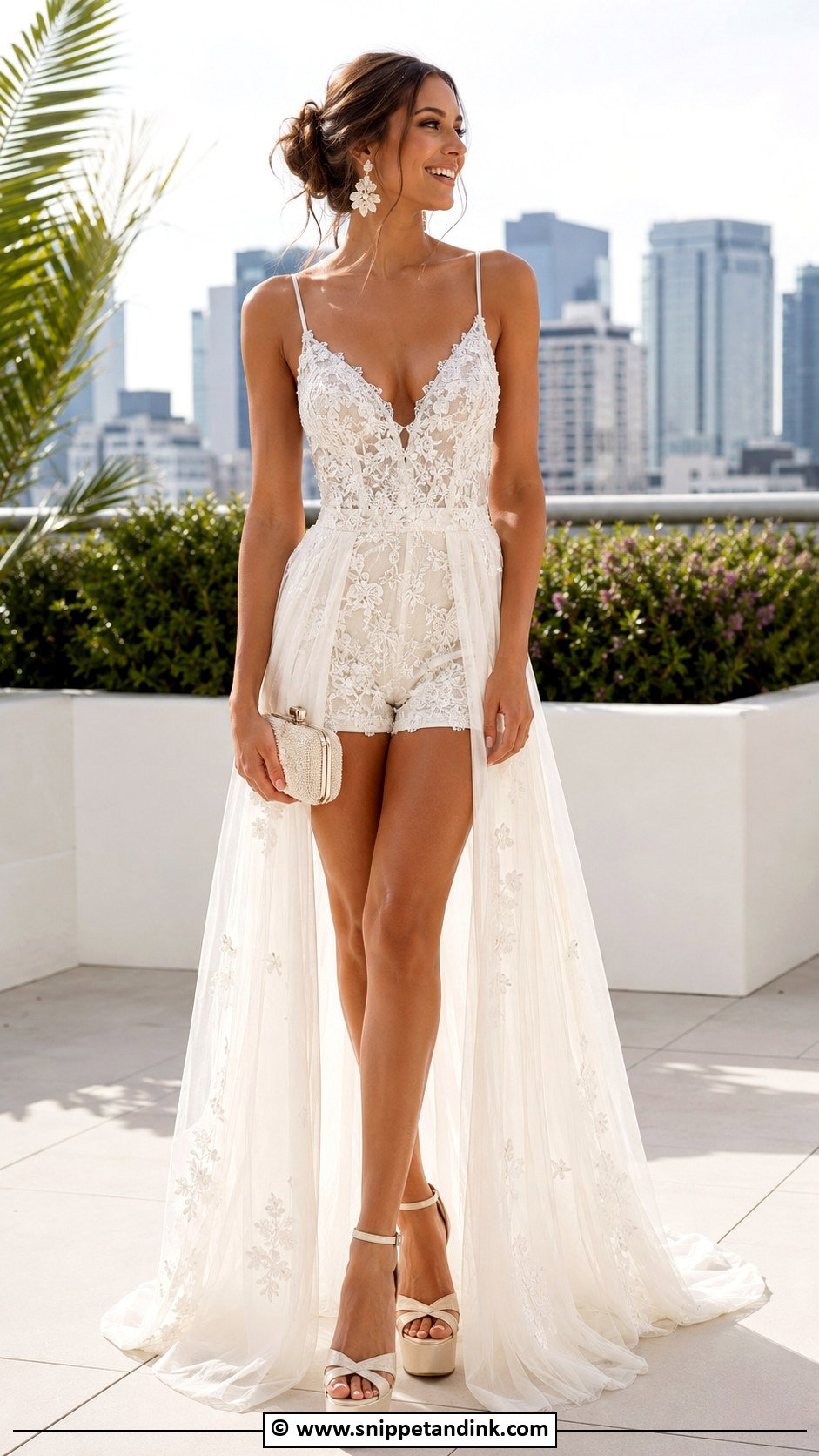
A romper with overskirt looks like a gown from the front and gives you shorts underneath. Remove the overskirt for the reception for a second look. I’d make sure the overskirt attaches with strong hooks or snaps, since it gets tugged during the day. Ivory satin, lace or crepe keep it bridal. Beach and summer weddings suit it.
22. Lace Pantsuit Wedding Outfit
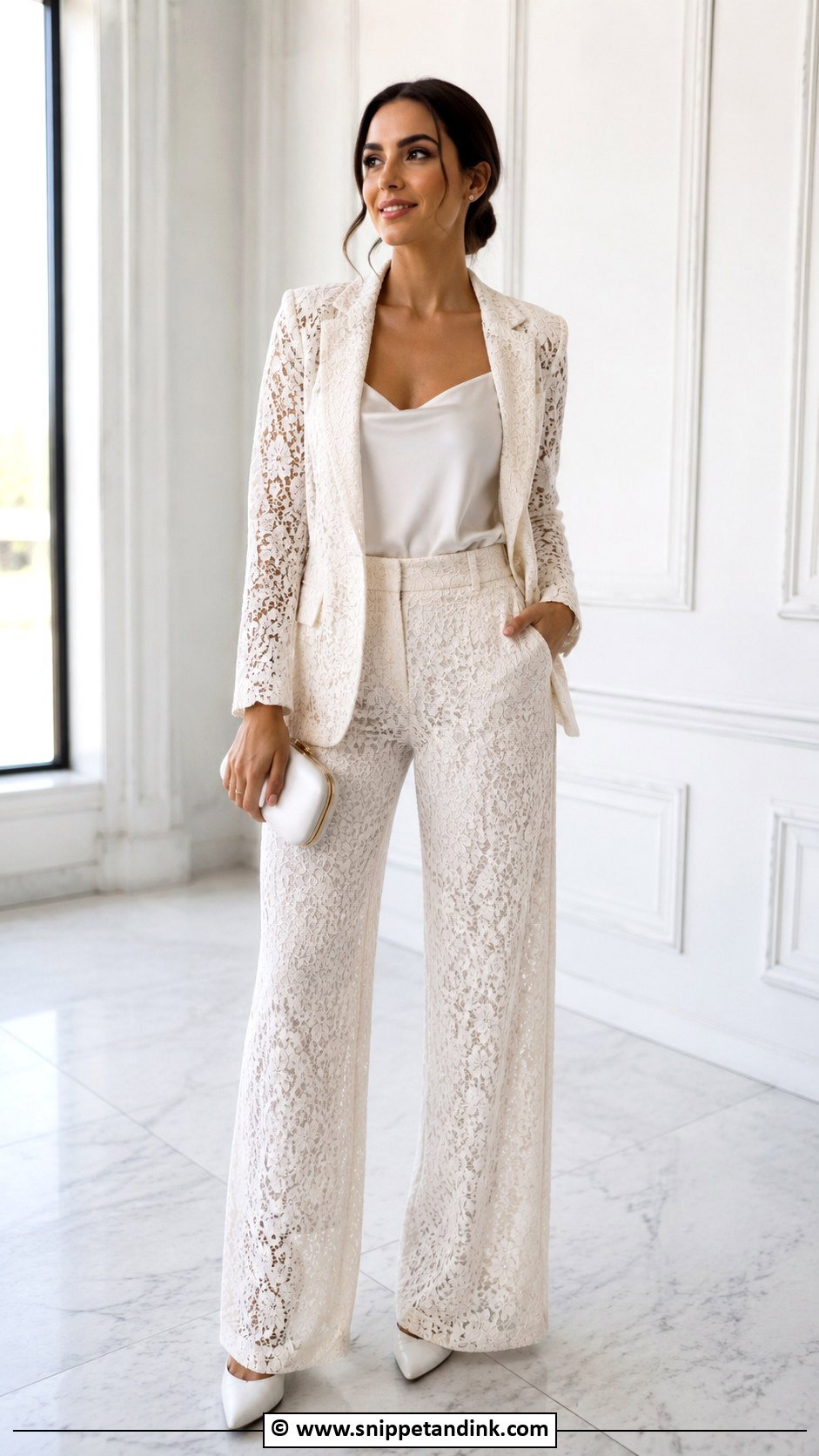
A lace pantsuit softens tailoring with detail. A lace blazer with wide-leg trousers looks refined; lace pants with a satin top feel relaxed. Lining matters with lace trousers: unlined lace can show more than you’d want in flash photos. Pointed heels, pearl studs and a sleek bun complete it.
23. White Tuxedo Wedding Outfit
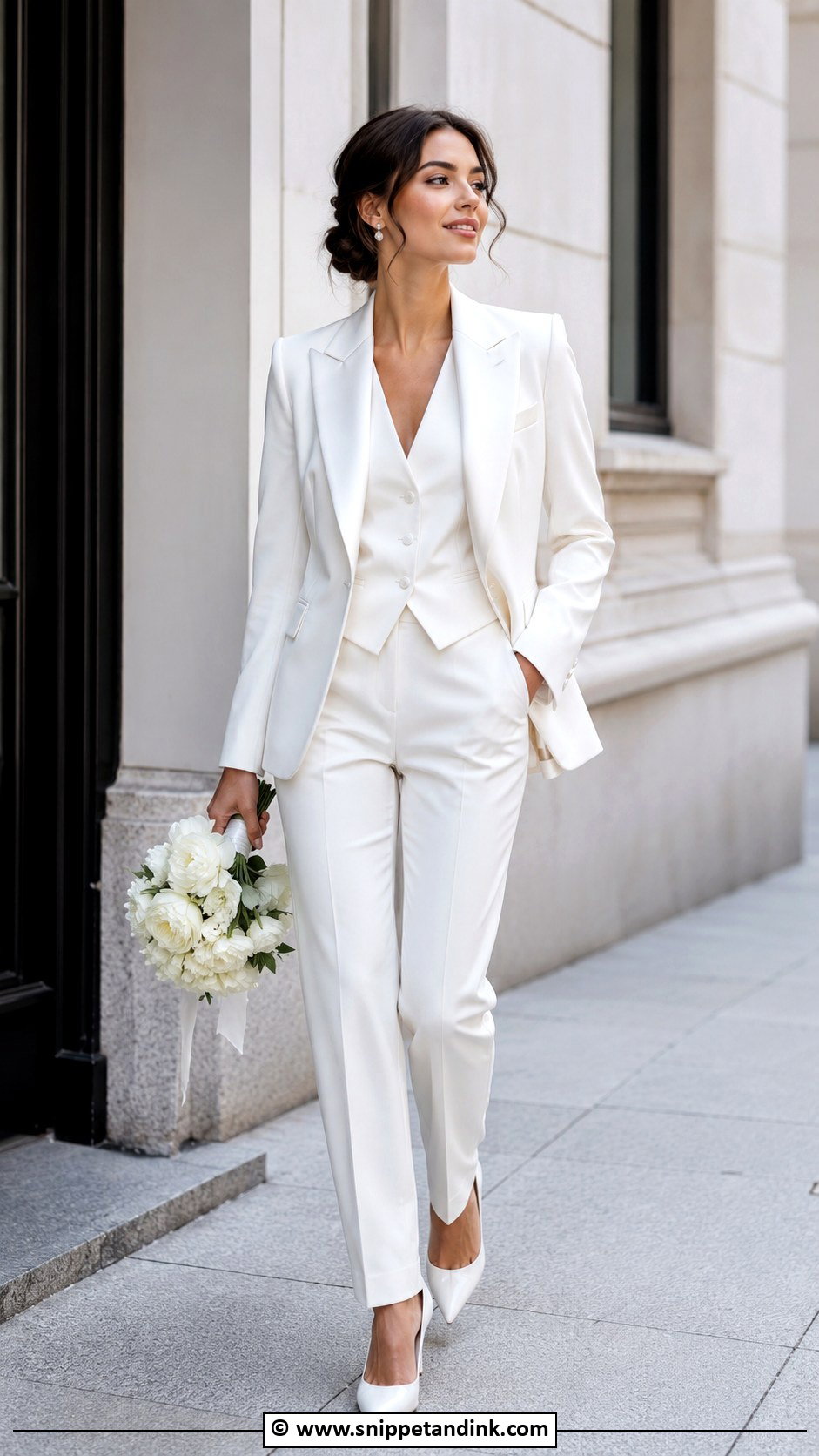
A white tuxedo is one of the strongest non-traditional looks. A sharp white or ivory jacket with satin lapels, tailored trousers and a camisole or vest. Worn buttoned with nothing underneath, it needs perfect fit and some fashion tape. Pointed pumps and diamond or pearl earrings finish it. It suits brides who prefer a masculine, androgynous, or sharply tailored style.
24. Bridal Midi Dress
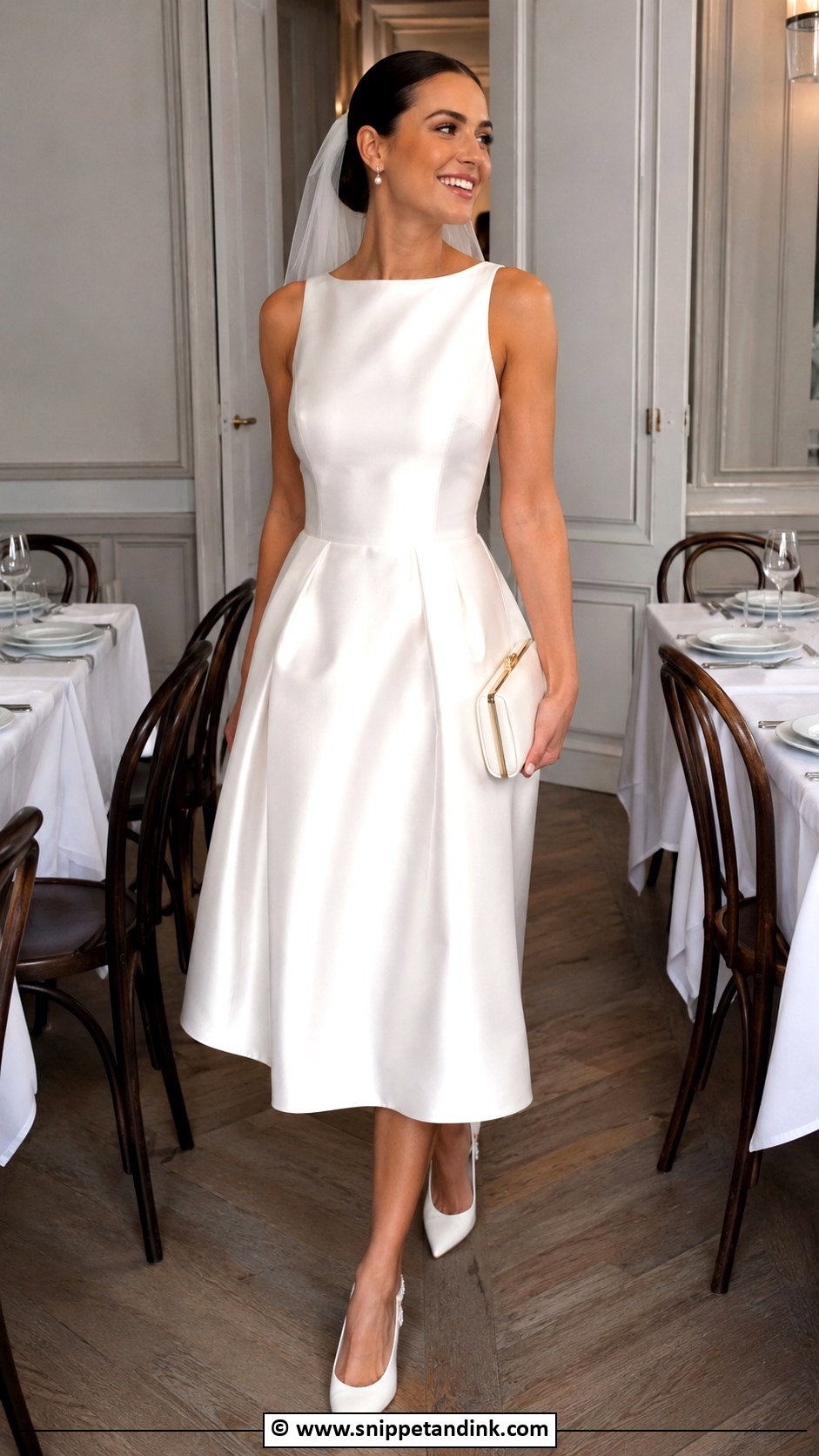
A bridal midi is easy to wear and flexible. Satin for a city ceremony, lace for romance, crepe for modern. It’s a dress you might wear again for future events. Slingback heels, pearl earrings and a small veil or bow suit it. Courthouse steps and restaurant receptions are where it fits best.
25. Sheer Overlay Wedding Dress
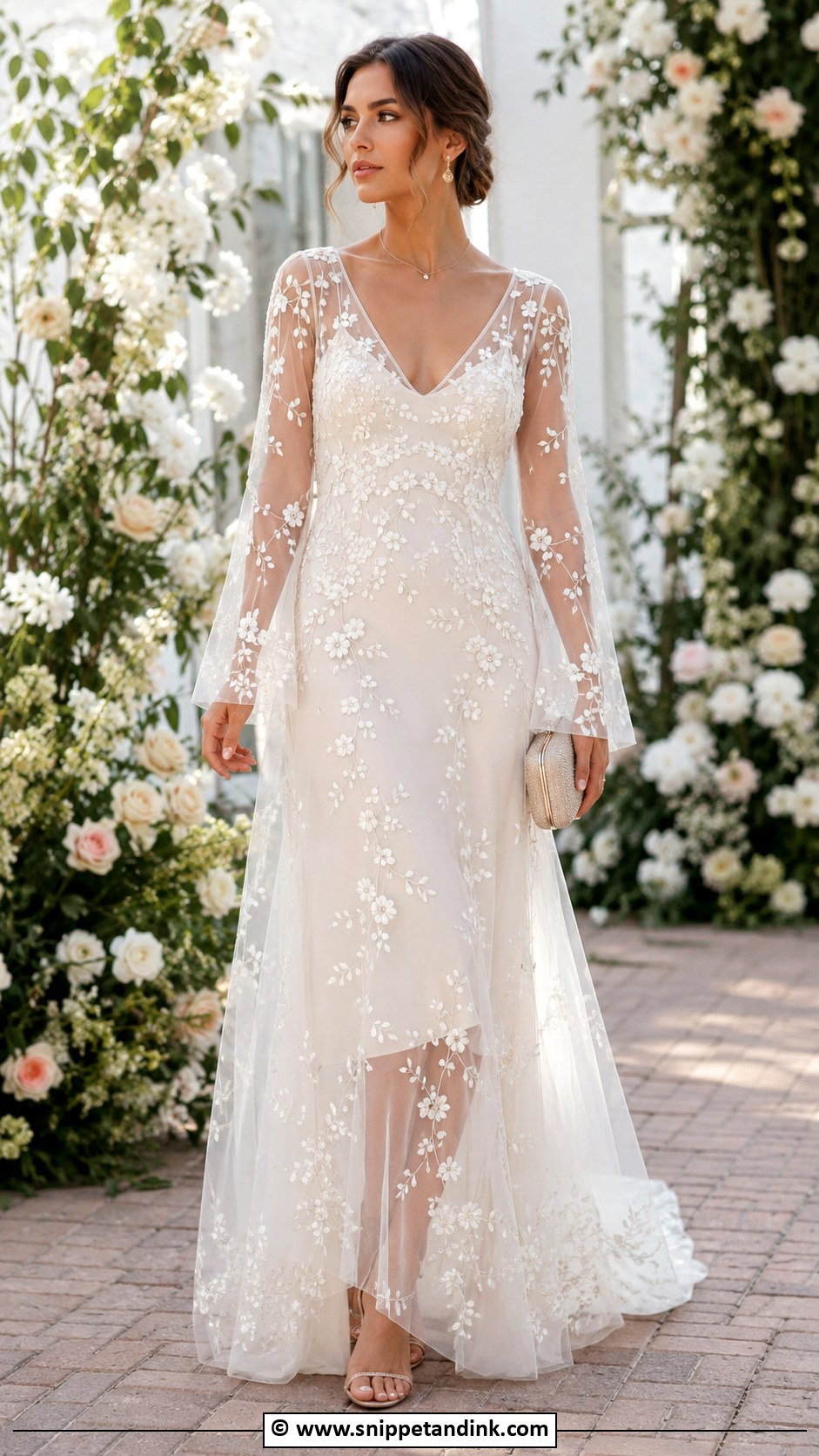
A sheer overlay adds soft drama while keeping things light: tulle, organza, lace or embroidered mesh over a slip or column. Overlays show the outline of the base dress, so the base needs to fit well. Delicate embroidery or pearls add romance. Nude heels and fine jewelry keep it soft.
26. Vintage Inspired Wedding Dress
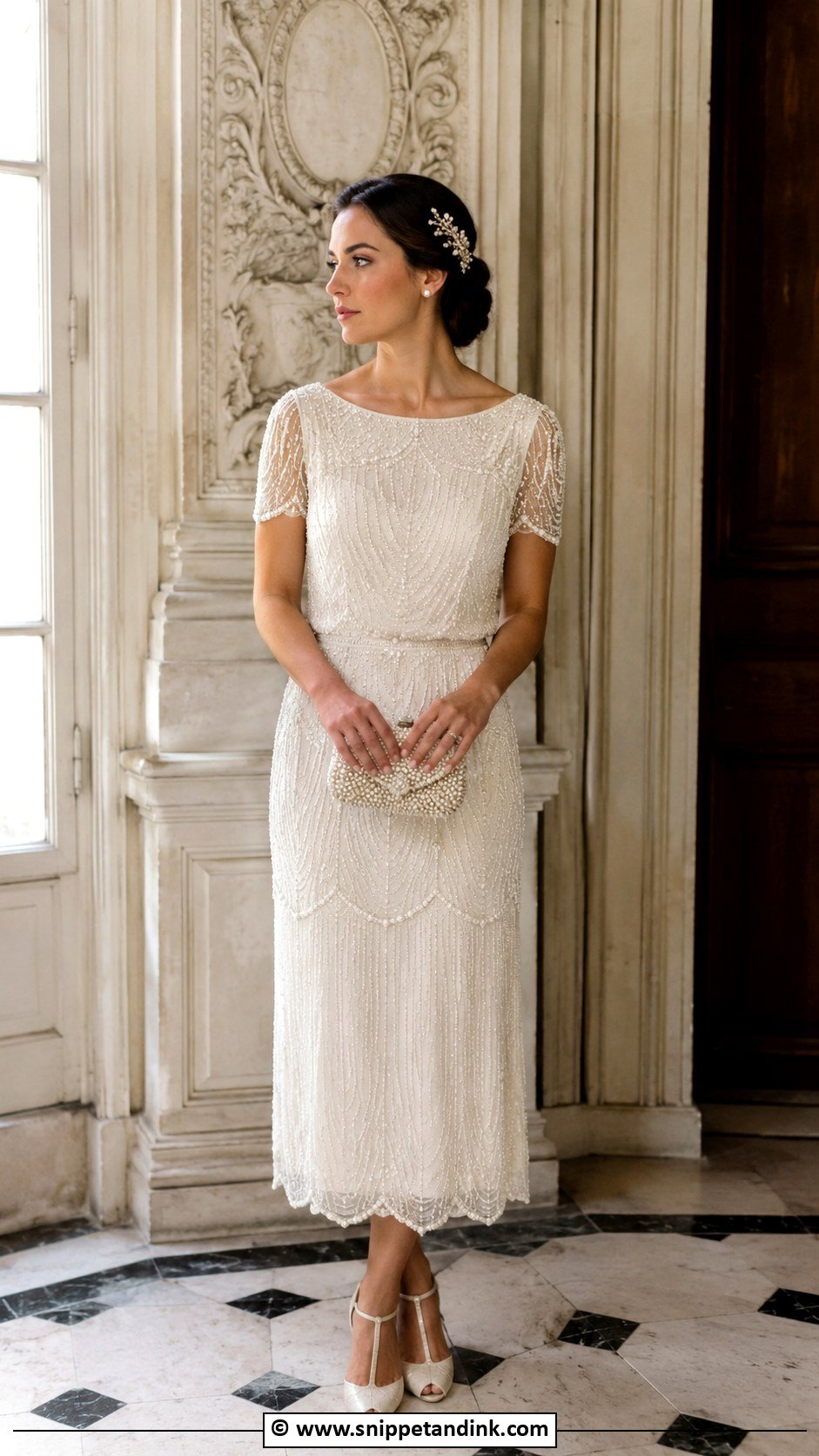
Vintage inspiration can come from any decade: 1920s beading, 1950s tea length, 1970s sleeves or a 1990s slip. Keep styling modern so it’s inspiration, not costume. If you buy true vintage, allow time for alterations and fabric care; old fabric can be fragile and sizes run differently. A well-fitted vintage piece feels one of a kind.
27. Printed Wedding Dress
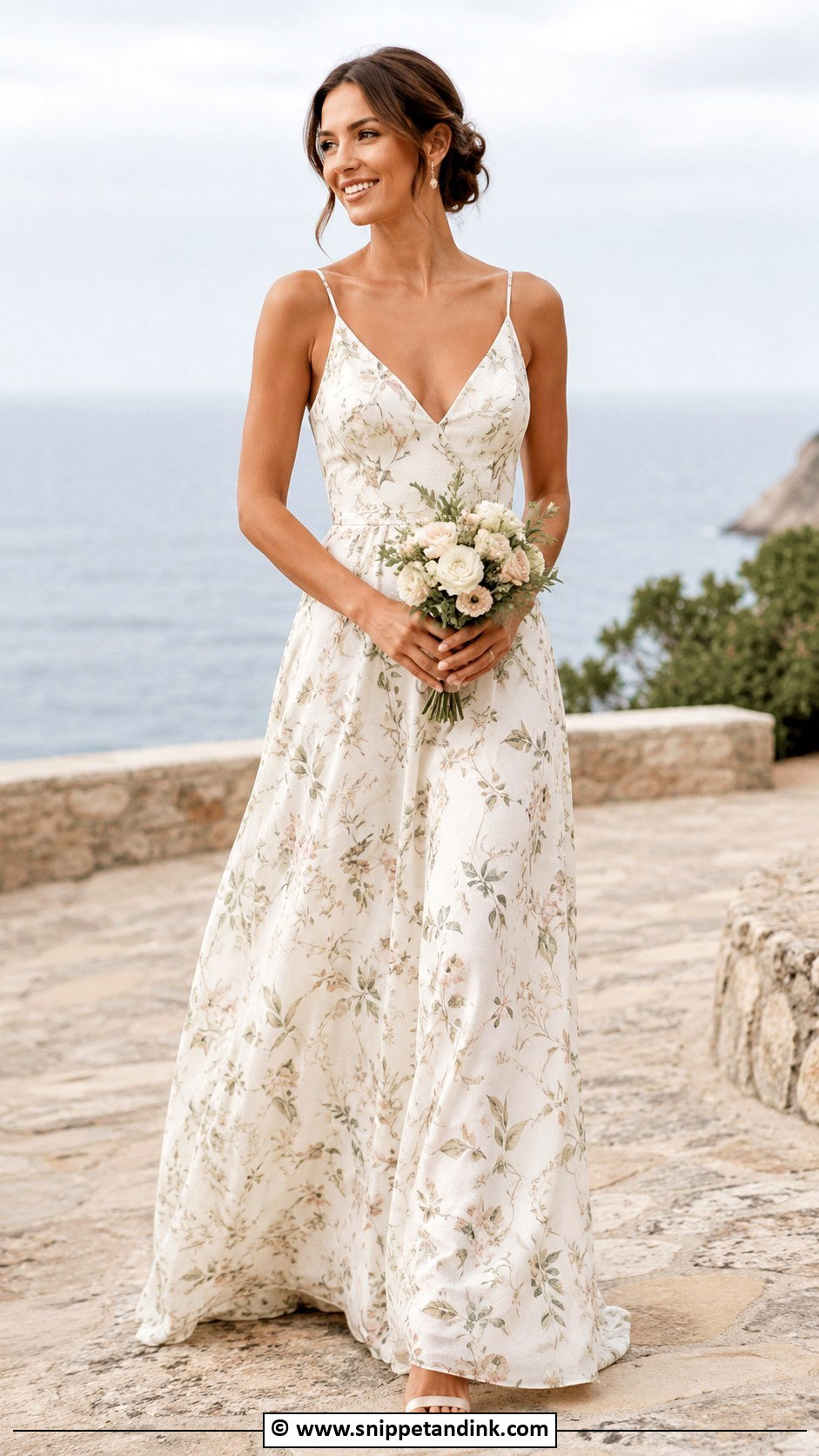
Prints show personality while staying dressy. Florals, watercolors, subtle stripes or botanical prints in a midi, maxi or A-line. Simple heels and understated jewelry keep it from looking busy. Prints on ivory, cream or blush backgrounds feel more bridal. Outdoor weddings and destination ceremonies suit it.
28. Bridal Blazer Dress
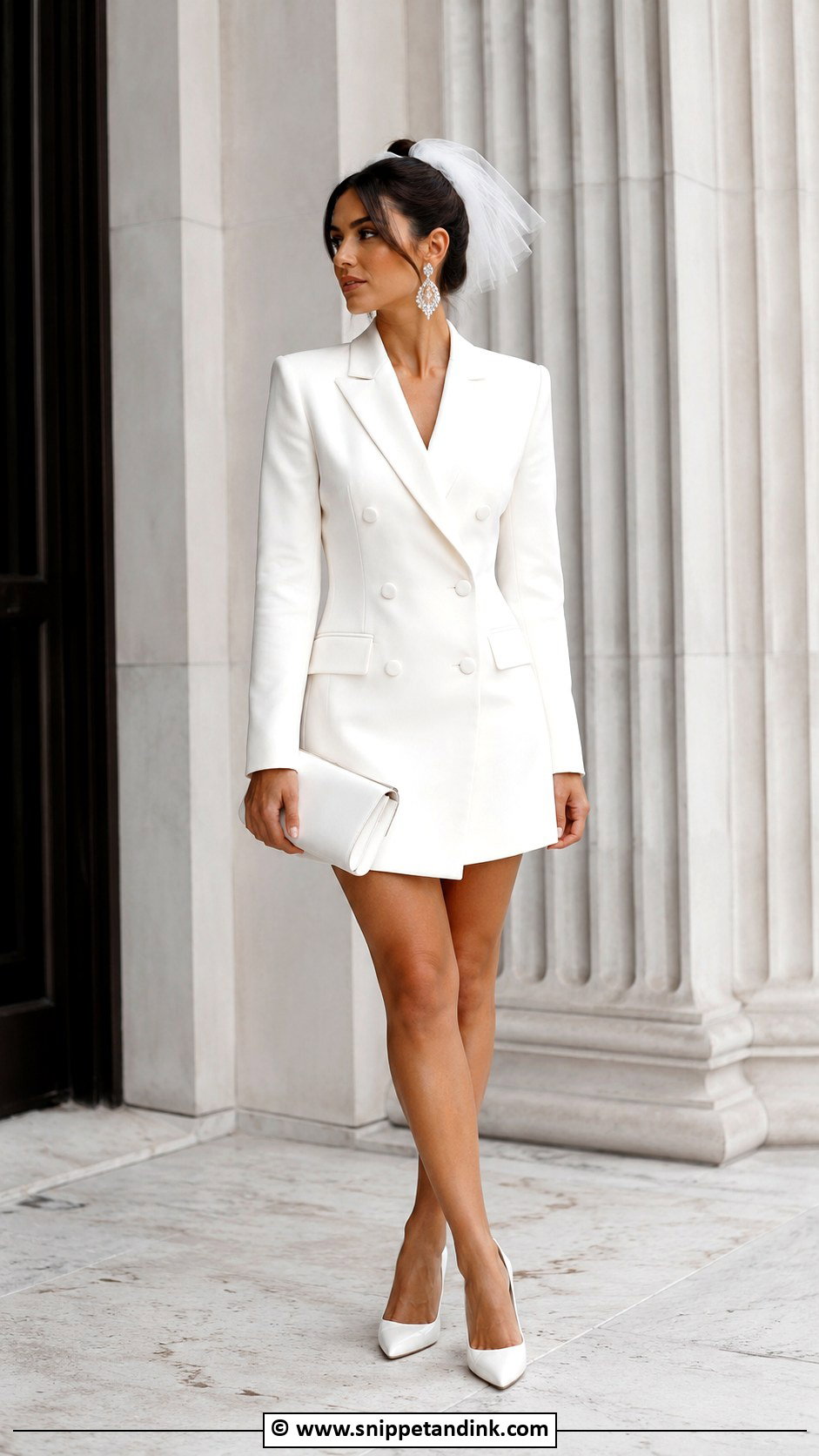
A blazer dress gives tailoring in a short dress. An ivory double-breasted, belted or satin-lapel version. Pointed pumps, statement earrings and a mini veil or bow make it bridal. Blazer dresses often gape at the chest when you move, so I’d add a hidden snap. Courthouse weddings and elopements suit it.
29. Bridal Skirt And Sweater
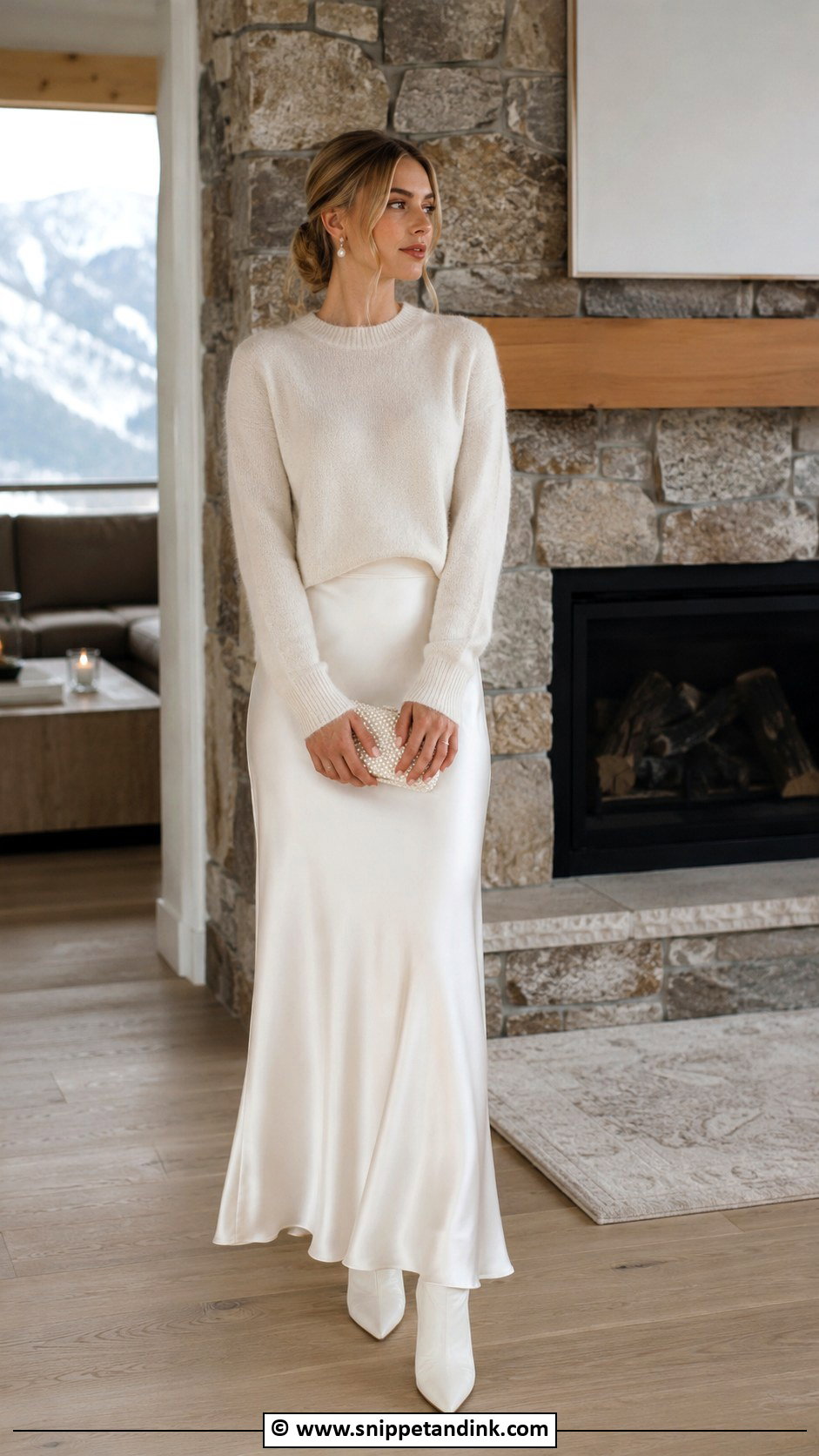
A bridal skirt and sweater outfit is cozy and romantic for cool weather. A cream cashmere sweater with a satin, tulle or lace skirt. Choose rich textures, like real cashmere and heavy satin, so it reads intentional rather than casual. Pointed boots or closed heels, pearl earrings and a low bun complete it. Mountain elopements and winter courthouse weddings suit it.
30. Bridal Mini Dress With Veil
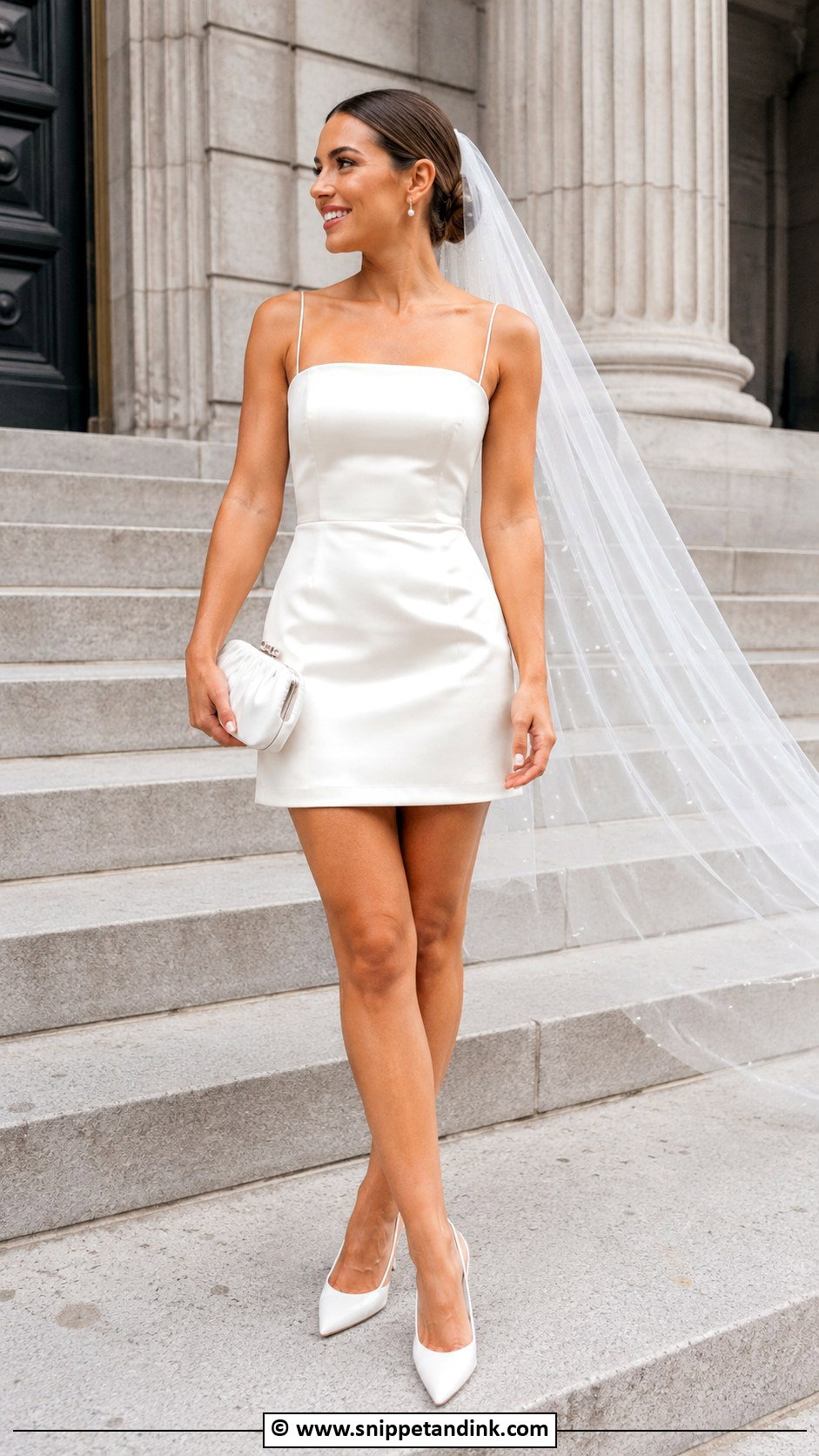
A mini with a veil is fun and youthful: the mini keeps it modern, the veil says bride. A structured satin mini, lace long-sleeve mini or crepe shift. A long veil with a short dress makes a striking contrast. Slingbacks or platform sandals finish it. It’s easy to dance in and still special.
Making Trousers and Short Hems Look Bridal
The difference between a party outfit and a bridal one usually comes down to three things I check at every fitting.
Fabric weight
Heavier crepe, duchess satin and good lace read bridal; thin polyester reads party. If you’re buying ready-to-wear, feel the fabric and look at it under bright light.
Trouser length and break
Wide-leg trousers should just skim the floor in your heels, with no break. Too long and you’ll step on them; too short and they look borrowed. Bring the shoes to every fitting.
One bridal signal
A veil, a bouquet, pearls or satin lapels. Pick one and make it clear. Without it, a white jumpsuit can look like a guest outfit in photos.
Is a Second Look Worth the Changing Time?
Several of these outfits, the romper, the sequin mini, the feather dress, are often worn as a reception change. I like a second look when the first one limits you, a full skirt or a long train, and the second one solves that. If your first outfit already lets you dance, a change can feel like a lost half hour.
When brides do change, I plan it for a natural pause, usually just before the first dance or after dinner, and keep hair and makeup the same so it takes fifteen minutes rather than forty. Pack the second outfit with its shoes, earrings and fashion tape in one bag, and choose someone to carry the first one home. A detachable overskirt, cape or train gives you the same effect with no changing room at all.
Your Rules, Your Fabric, Your Fit
Leaving tradition behind gives you room to build a bridal look around your personality. Color, tailoring, sparkle, prints, separates, a jumpsuit or a short dress can all look wedding-ready. Think about your venue, your comfort, the season and the alterations needed before deciding. A non-traditional look doesn’t have to shock. It can be soft, bold, simple or playful. Most of all, it should feel like you.
You'll Like These Ideas:






Leave a Reply