
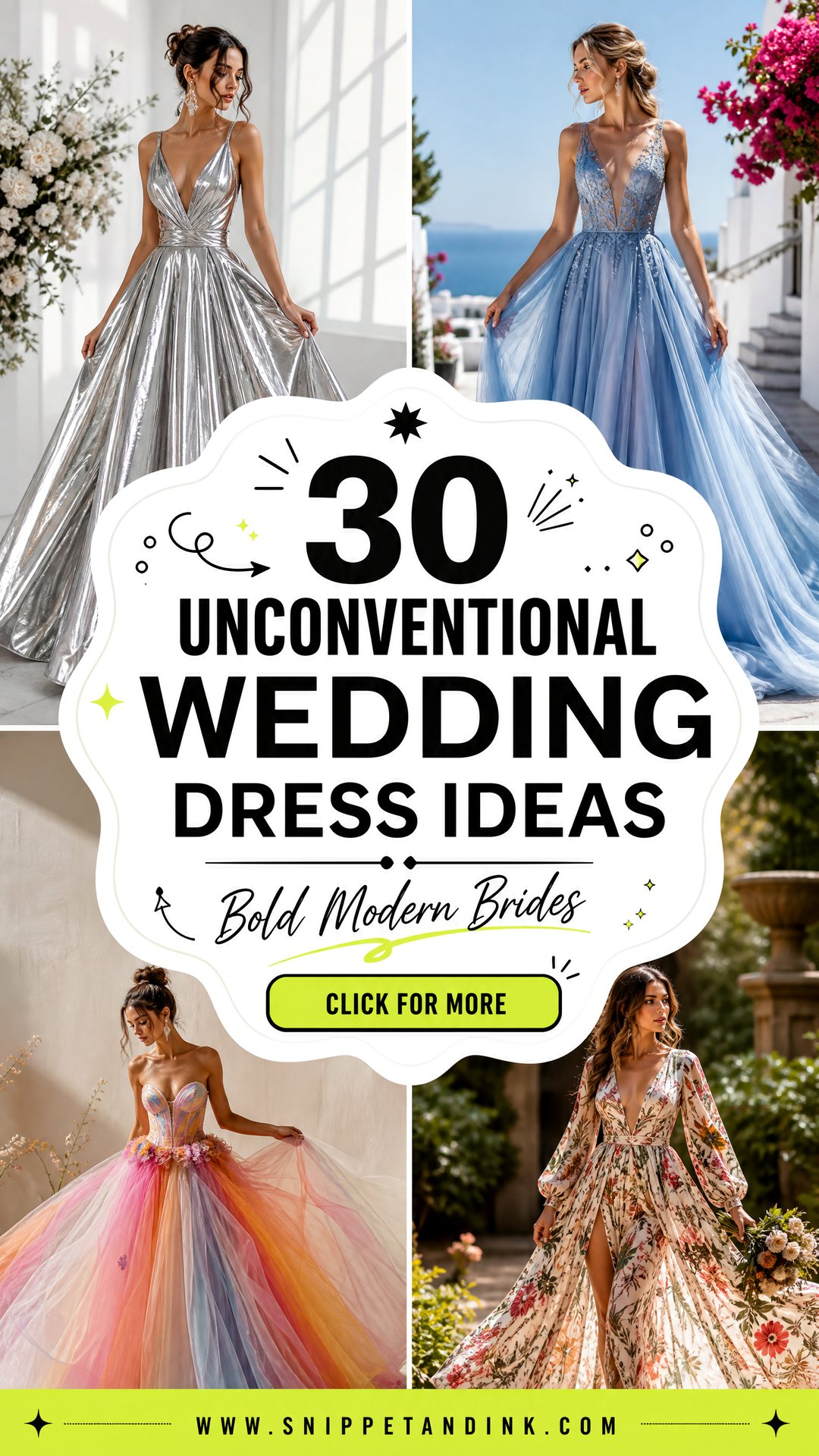
If the usual white ball gown never felt like you, take that seriously. A wedding dress can break with tradition through color, cut, fabric or attitude and still look romantic and ready for a ceremony. Black lace, blush satin, a tailored suit, a mini, metallics, separates: each can look completely right on the right bride. What decides it is fit, how you’ll move, what your venue’s light does to the fabric, and whether the dress actually sounds like you. City hall, garden, rooftop or beach elopement, there’s a non-traditional option for each, and with every one below I’ll tell you what I’d watch for.
Testing a Colored Gown Against Your Skin and Your Venue
Color is where most non-traditional dresses succeed or fail, and you can’t judge it from a website photo. Before I let a bride order a colored or metallic gown, we run a simple test.
- Hold a swatch, or the sample itself, right under your chin, first bare-faced and then with makeup. The color it reflects onto your face matters more than the color on the hanger.
- Look at it by a window in daylight, then under warm indoor bulbs. Champagnes, golds and greens shift the most.
- Take a phone photo with the flash on. Some shades change on camera, and nude linings can read as bare skin.
- Lay it next to your partner’s suit fabric and a flower or two from your palette, so nothing clashes in the ceremony photos.
For an evening venue, ask the coordinator about the lighting as well. Colored uplighting tints a pale gown, and a blush dress under purple lights can turn a muddy grey-lilac.
1. Black Lace Wedding Dress
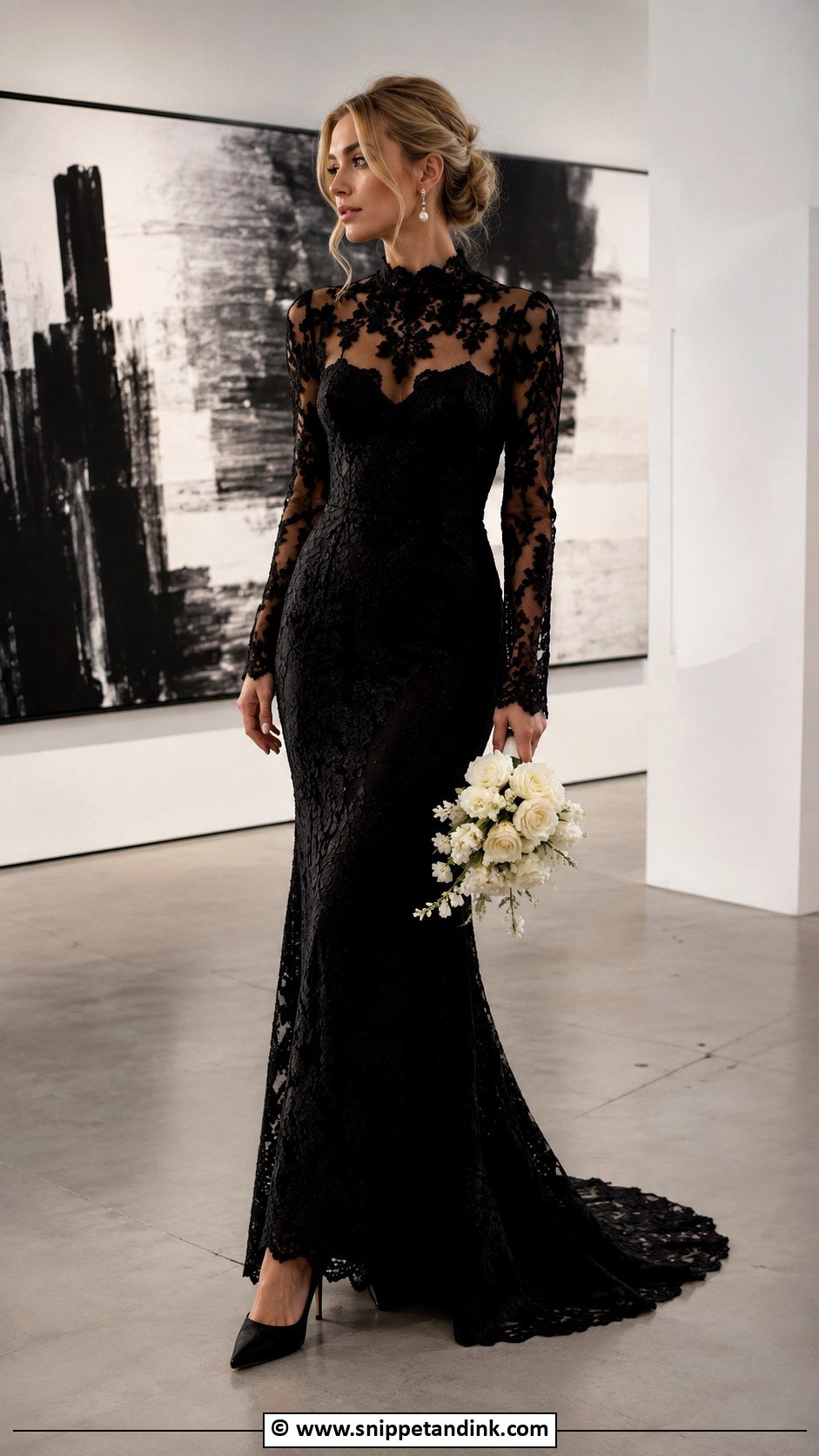
Black lace keeps the softness of bridal fabric while changing the whole mood. The lining decides how bold it reads: nude lining under black lace looks delicate and a little daring, black lining looks graphic and formal. For an evening venue I’d style it with pointed black heels, pearl drops and a sleek low bun; outdoors, velvet flats, loose waves and a small ivory bouquet soften it. Black also hides nothing in daylight. Lint, pet hair and deodorant marks all show on camera, so a lint roller belongs in the getting-ready room.
2. Blush Pink Wedding Dress
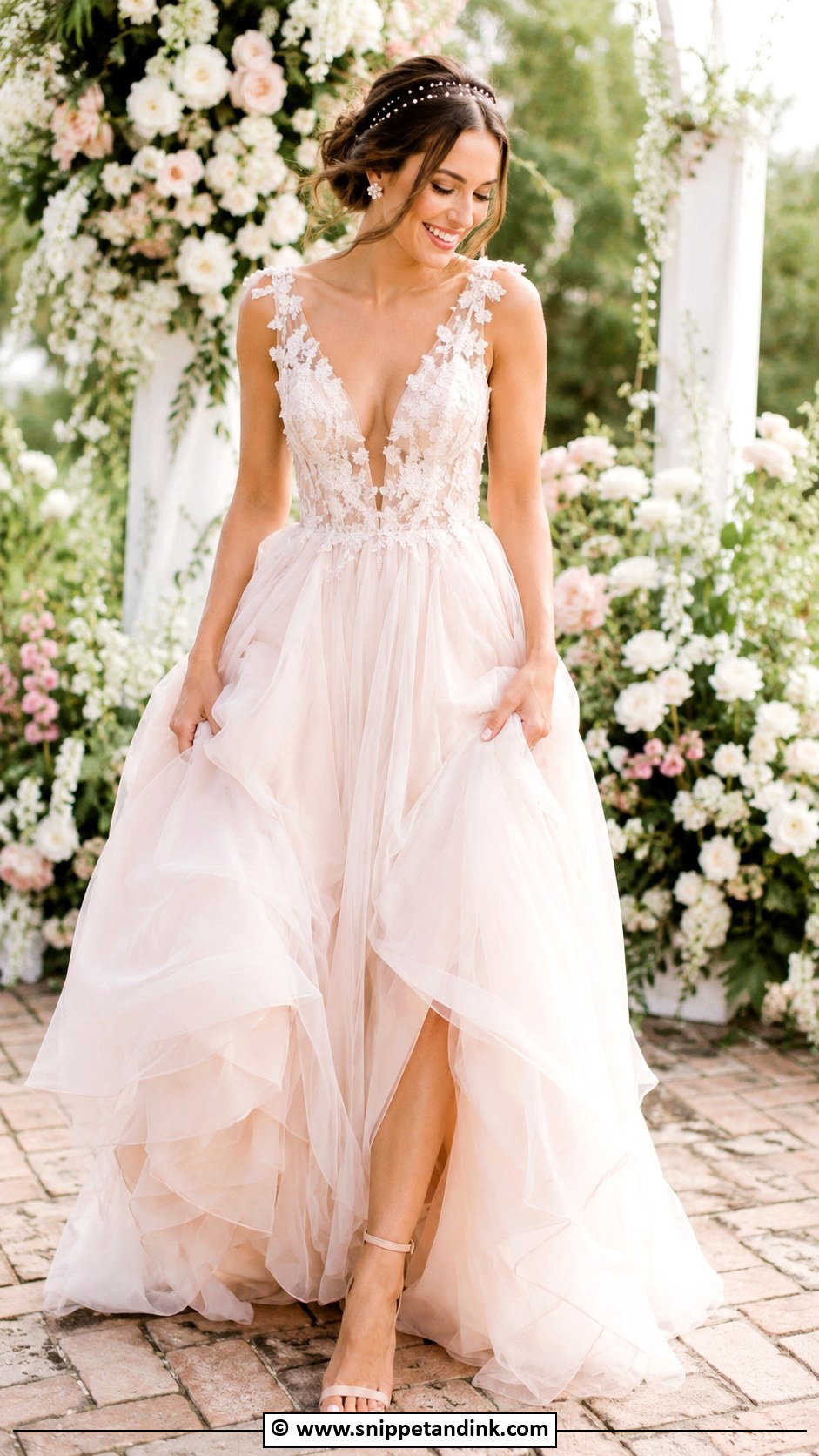
Blush is my usual suggestion when a bride wants color but still wants to feel like a bride. Tulle, satin, organza and chiffon all take it well. Because it’s warm, it tends to flatter rather than fight the skin, though very fair skin with pink undertones can disappear into it, so I hold the fabric near the face before anything is ordered. Nude heels and rose-gold jewelry keep it soft. A veil makes it classic, while a pearl headband or sculptural earrings make it modern.
3. Bridal Pantsuit Wedding Dress
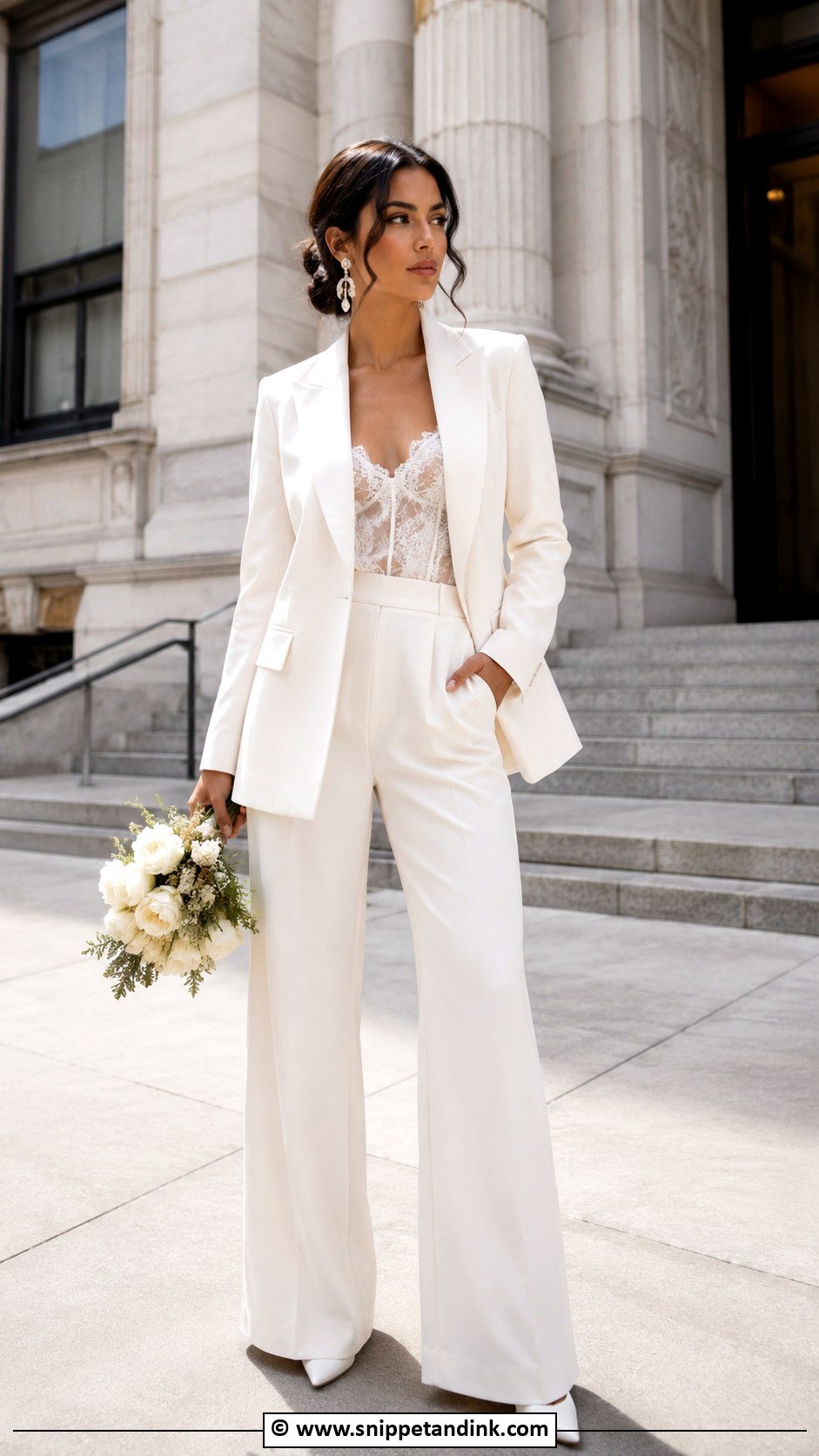
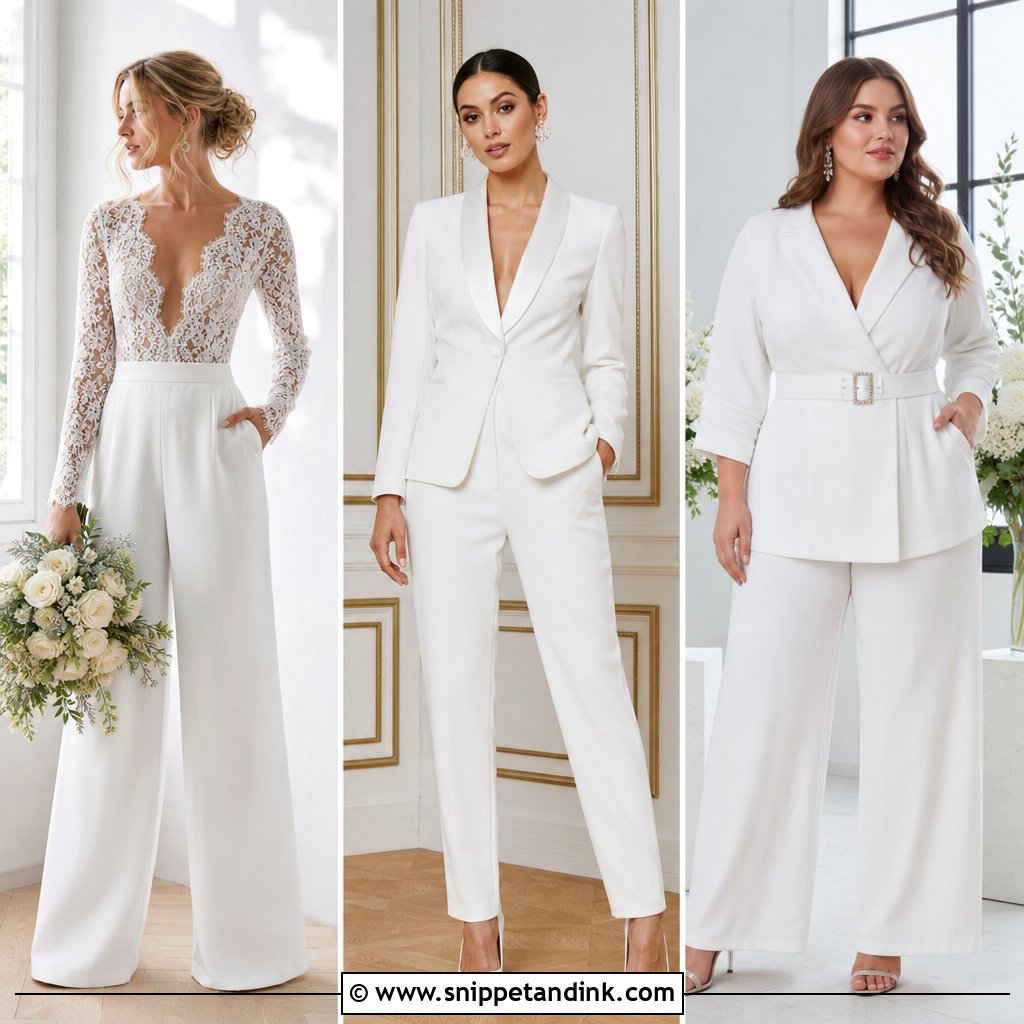
A bridal pantsuit gives you structure and comfort in one look. White, ivory or champagne with sharp tailoring, wide-leg trousers and a fitted blazer is the starting point, with a lace camisole, silk bodysuit or corset top underneath. Spend the alteration budget on the jacket, and buy for the shoulders: they’re the hardest part of a blazer to change, while sleeves, waist and trouser hems are routine. A detachable overskirt, cape or long veil brings ceremony drama if you want it.
4. Short Mini Wedding Dress
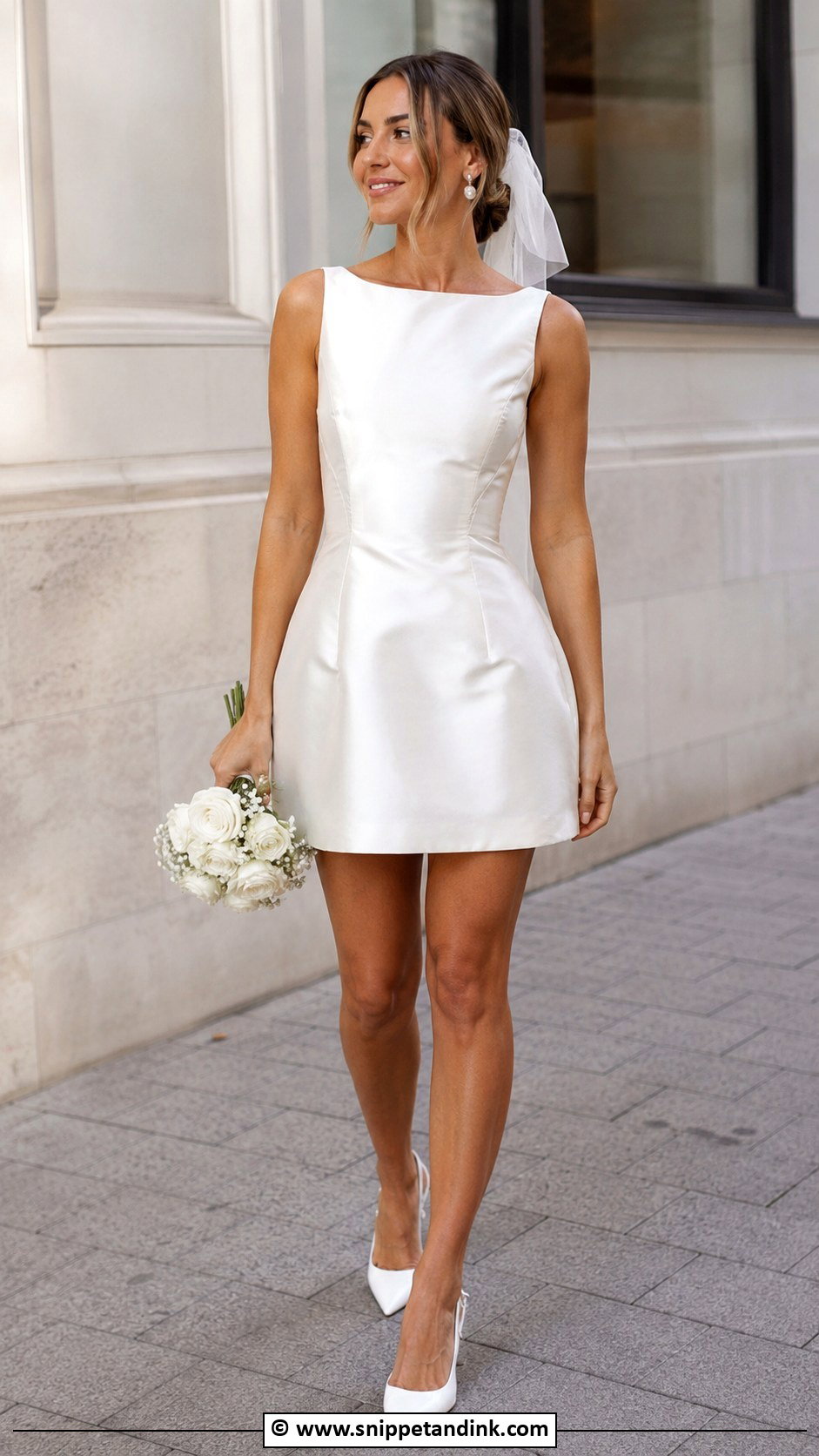
A mini is the easiest dress here to move in. A structured shape with a square neck or puff sleeves keeps it bridal instead of looking like a night-out dress. Shoes become central, and so do your legs in photos. If you’d normally wear tights, sheer ivory ones look intentional, while shiny nude ones look dated on camera. Pearl earrings, sheer gloves or a tiny veil finish it, and plenty of brides keep a mini as their reception look, which is the smartest use of one.
5. Tea Length Wedding Dress
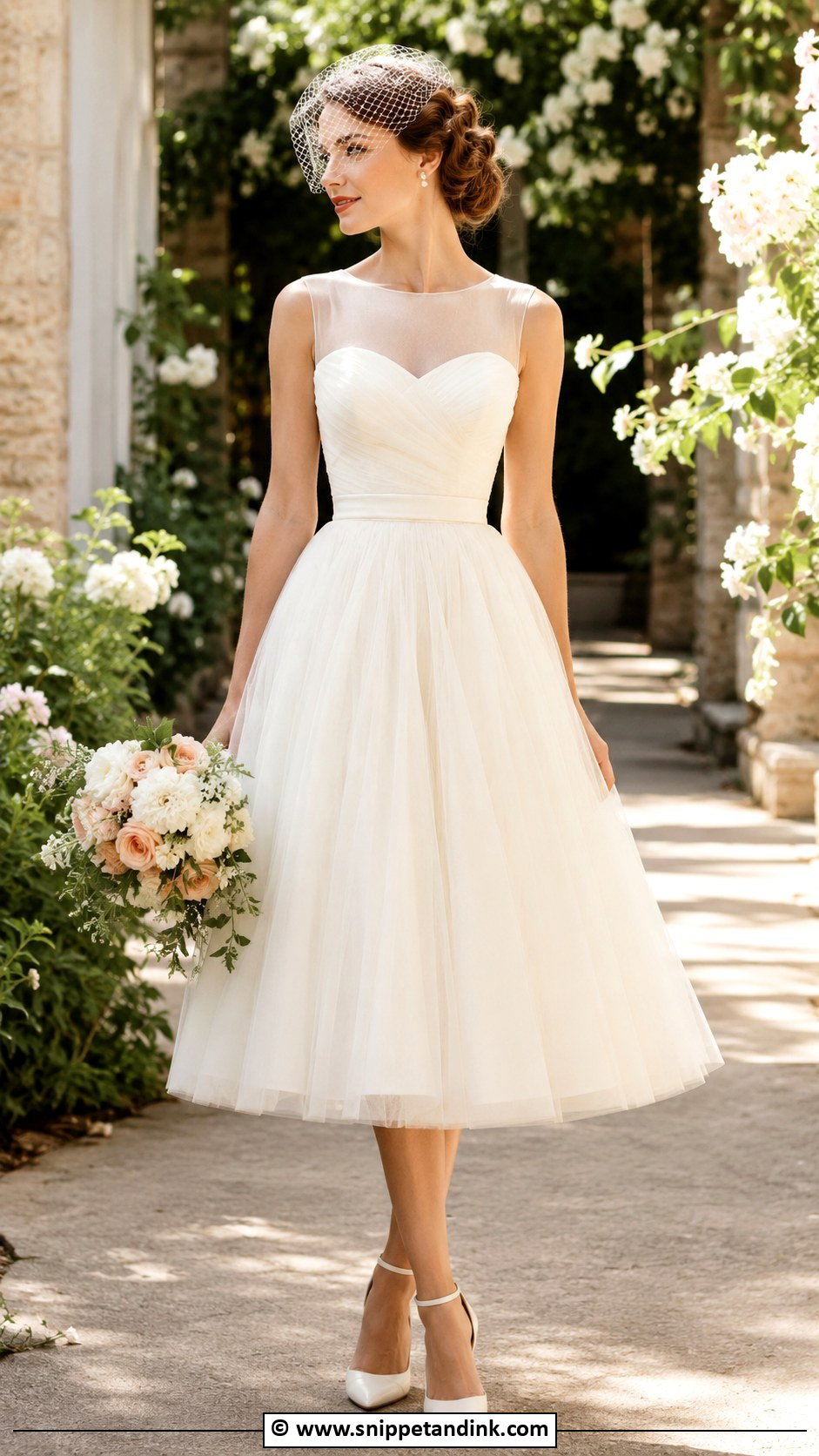
Tea length lands between the knee and ankle, which gives you vintage charm, shows off the shoes and keeps the hem out of wet grass. The classic version pairs a fitted bodice and full skirt in tulle, mikado or organza. I set the hem at a narrow point of the leg, either above or below the fullest part of the calf, because a line cutting right across the widest point shortens the leg. Mary Janes or ankle-strap heels, a birdcage veil and pearl studs complete it.
6. Floral Embroidered Wedding Dress
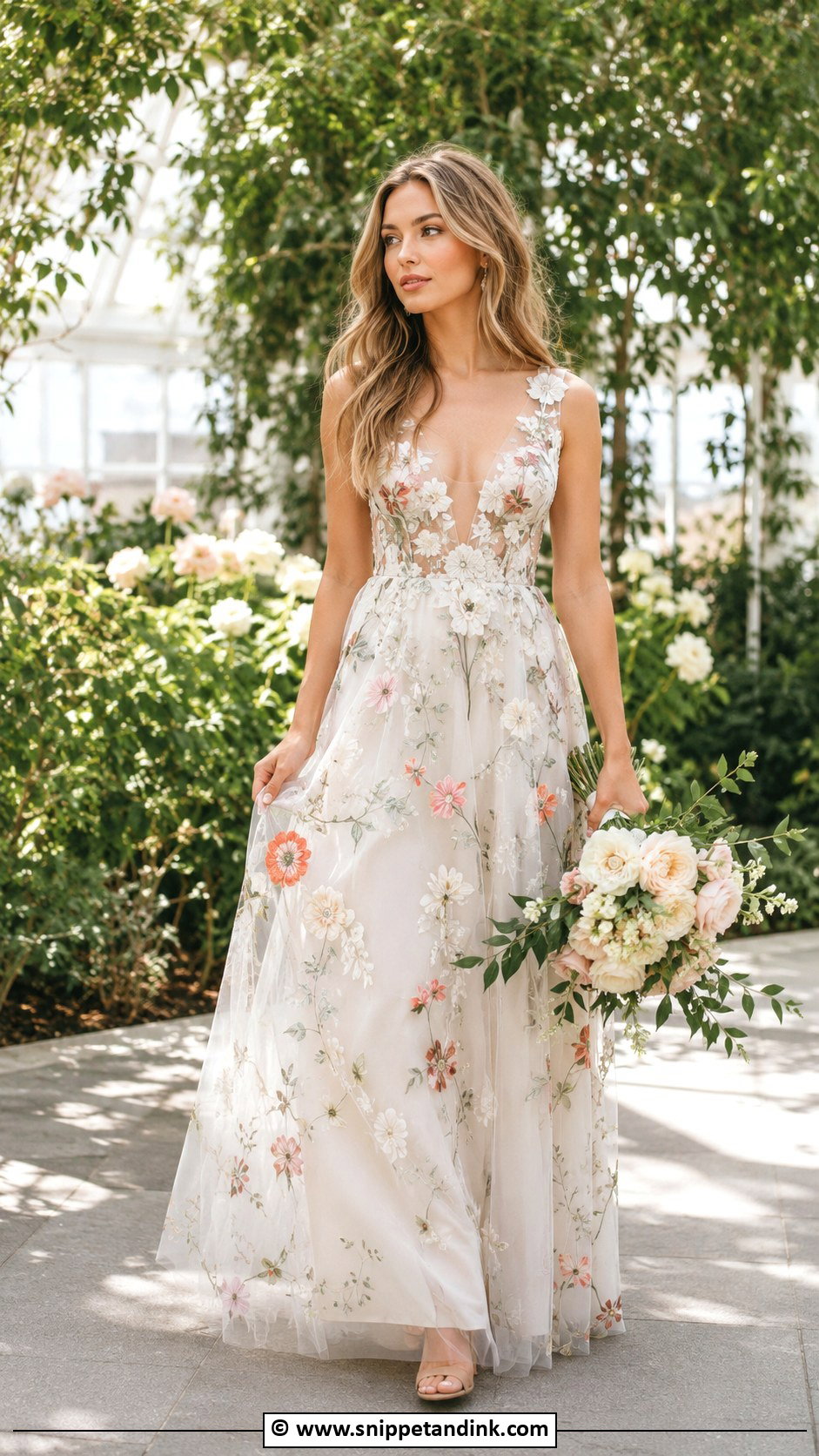
Embroidery adds color and texture that feels made by hand rather than printed. Pastel threadwork reads romantic; big colorful blooms across tulle read bold. I keep accessories very quiet with these. The question I’d ask the maker is how the embroidery is backed, since heavy stitching on sheer tulle needs stabilizing or it puckers around each motif and drags the skirt unevenly. Echo one thread color in your flowers and the dress feels tied to the rest of the day.
7. Champagne Satin Wedding Dress
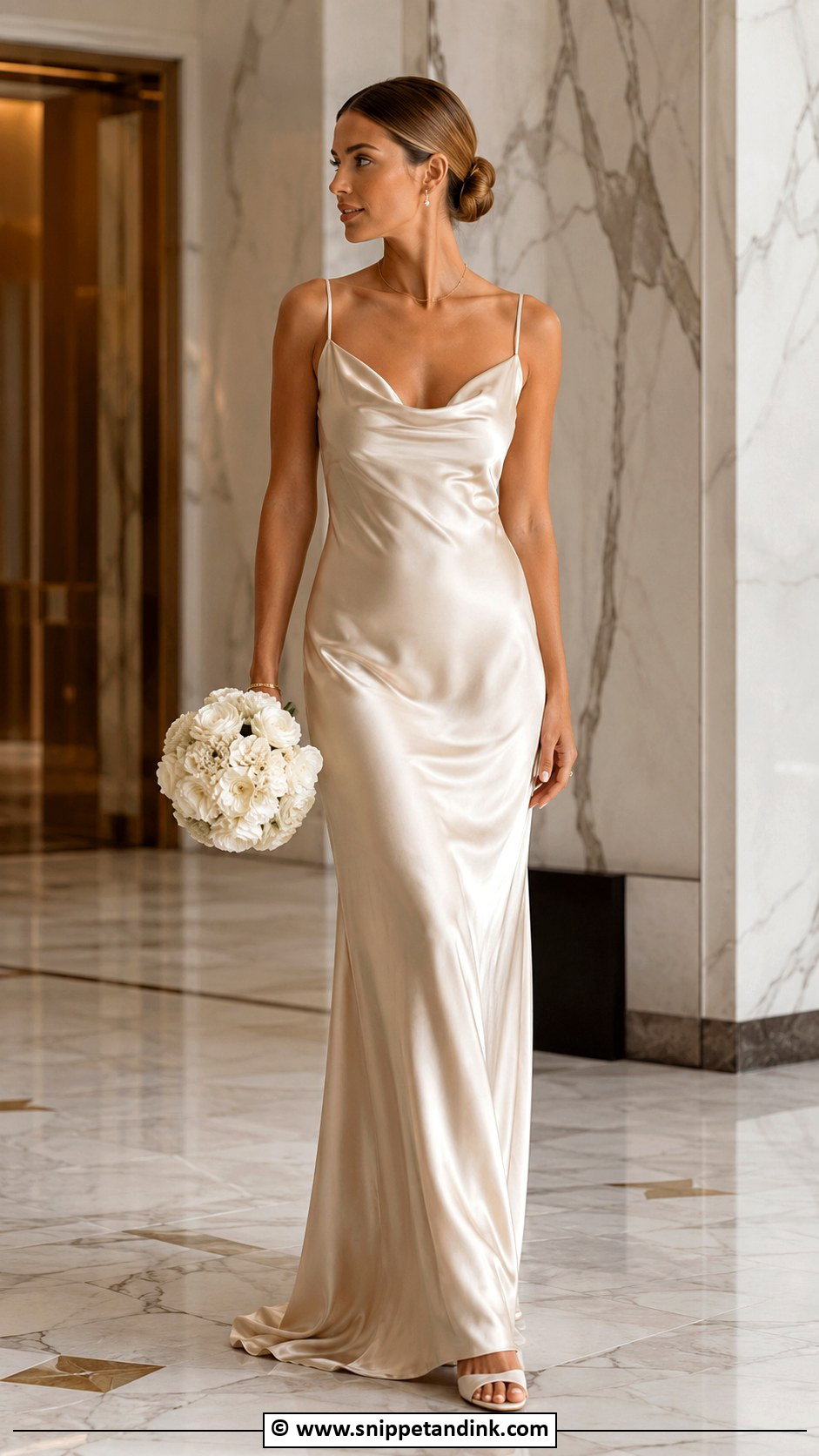
Champagne satin is the quiet alternative to bright white. A slip cut feels minimal and a structured ball skirt more formal. I pair it with gold jewelry, ivory heels and a smooth updo, adding a white bouquet or pearls if it needs contrast. Silk satin water-spots easily, so a raindrop or a splash of champagne can leave a ring. Blot with a clean white cloth, never rub.
8. Silver Metallic Wedding Dress
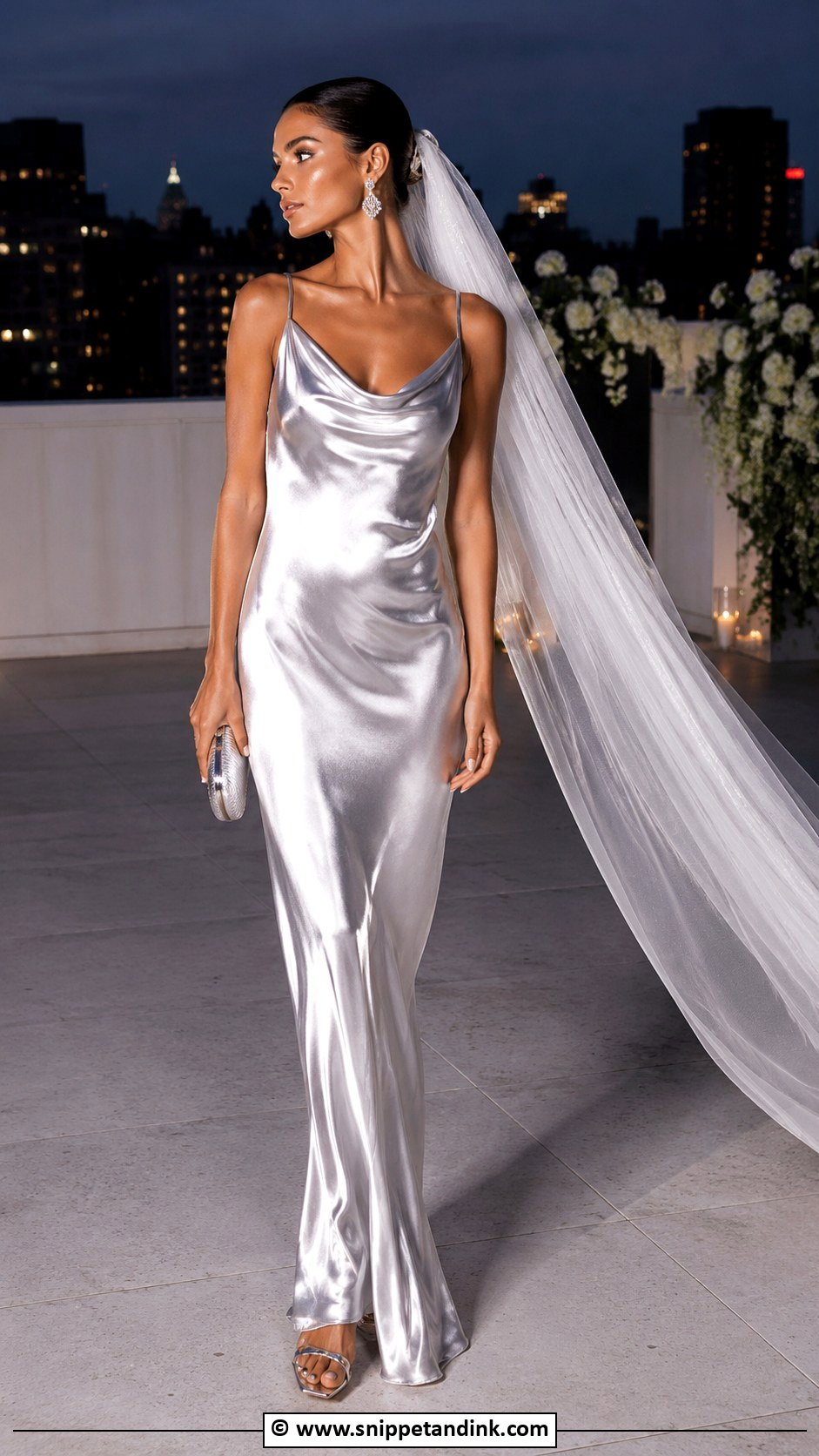
Silver metallic gives you shine without extra decoration, so the shape has to stay simple: a column, a slip or a structured midi in liquid satin, lamé or beaded mesh. Silver sandals, crystal earrings and a sleek clutch are enough. Skin undertone matters more with silver than with gold. Cool and olive undertones usually look brighter beside it, while very warm skin can look sallow unless the makeup adds warmth back. Rooftops, art deco rooms and winter weddings suit it.
9. Gold Wedding Dress
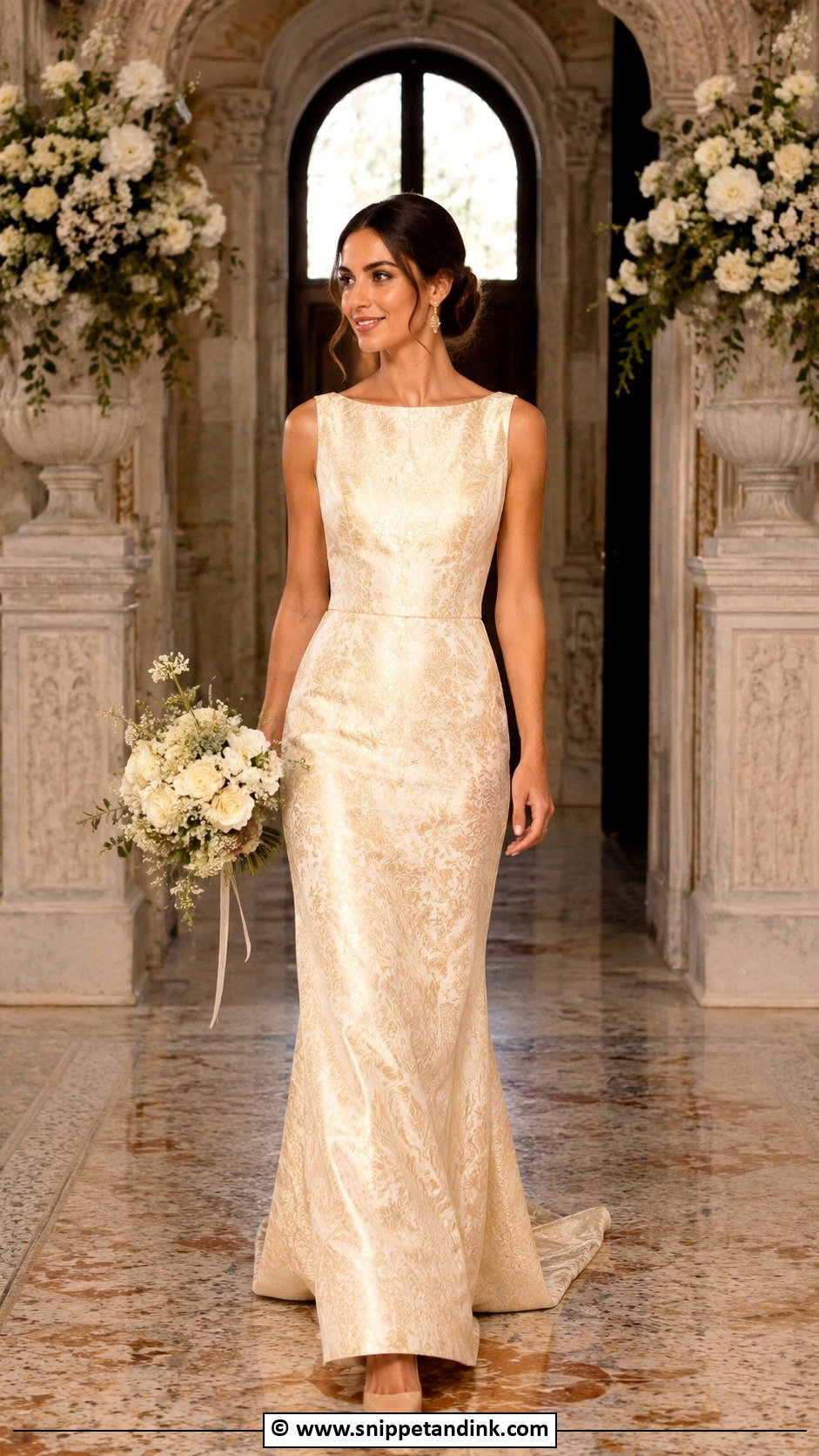
Pale gold glows; antique gold makes a stronger statement. Satin, jacquard, sequins and brocade all take the color, and the more ornate the fabric, the plainer the cut should be. I keep the heels gold or nude, the jewelry delicate and the bouquet cream. Brocade and jacquard are stiff, which means they hold a sculpted shape but don’t drape, and they get warm. For a hot desert setting I’d switch to pale gold satin.
10. Blue Wedding Dress
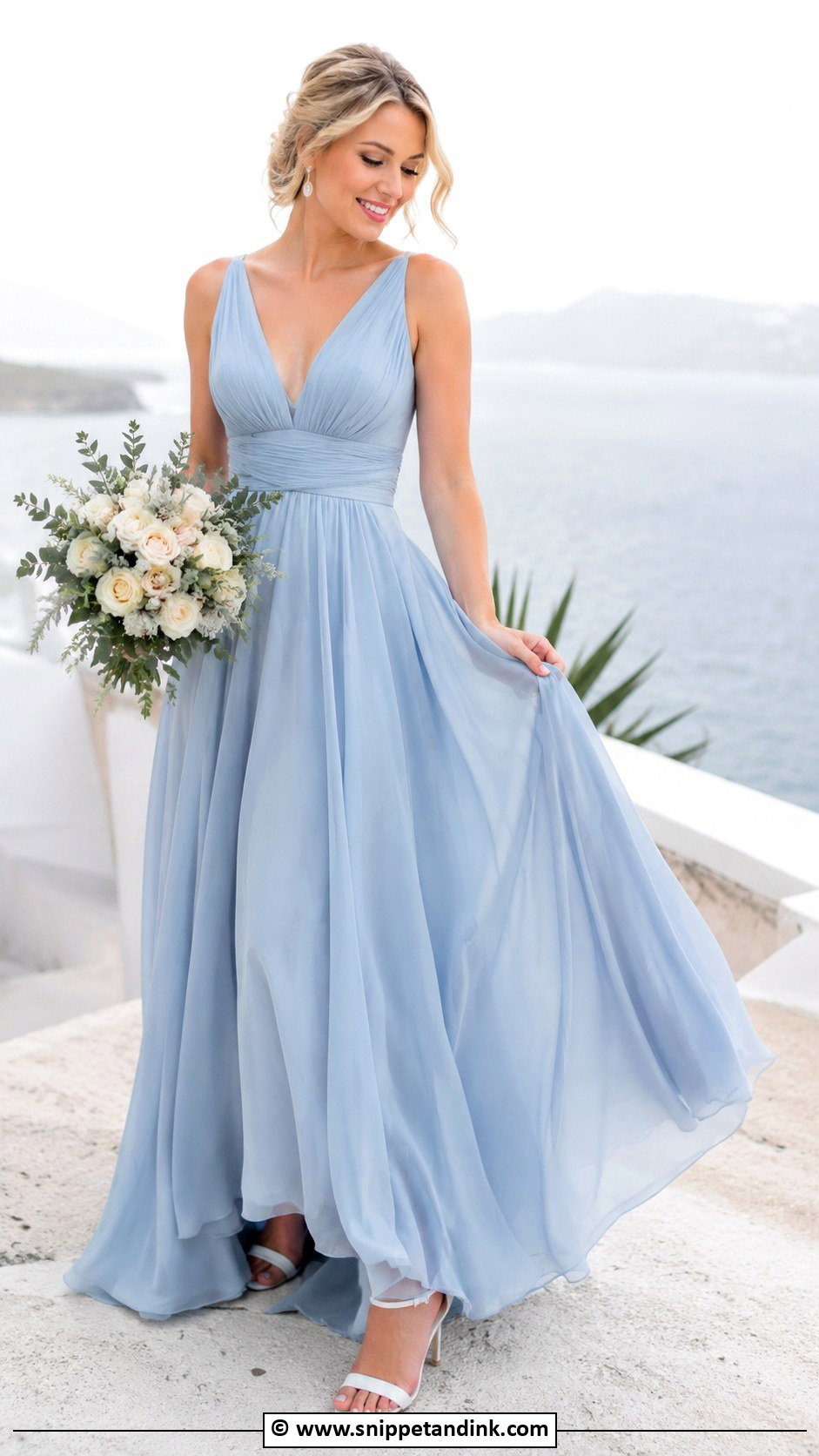
Making your something blue the entire dress is a lovely twist on an old custom. Powder blue feels soft; navy, slate or icy blue feels more dramatic. Chiffon moves, satin polishes, tulle softens. Light blue pairs with silver jewelry and ivory heels, darker blue with pearls and metallic sandals. Blue also tends to be an easy color for families to accept, because it nods to tradition rather than breaking from it.
11. Red Wedding Dress
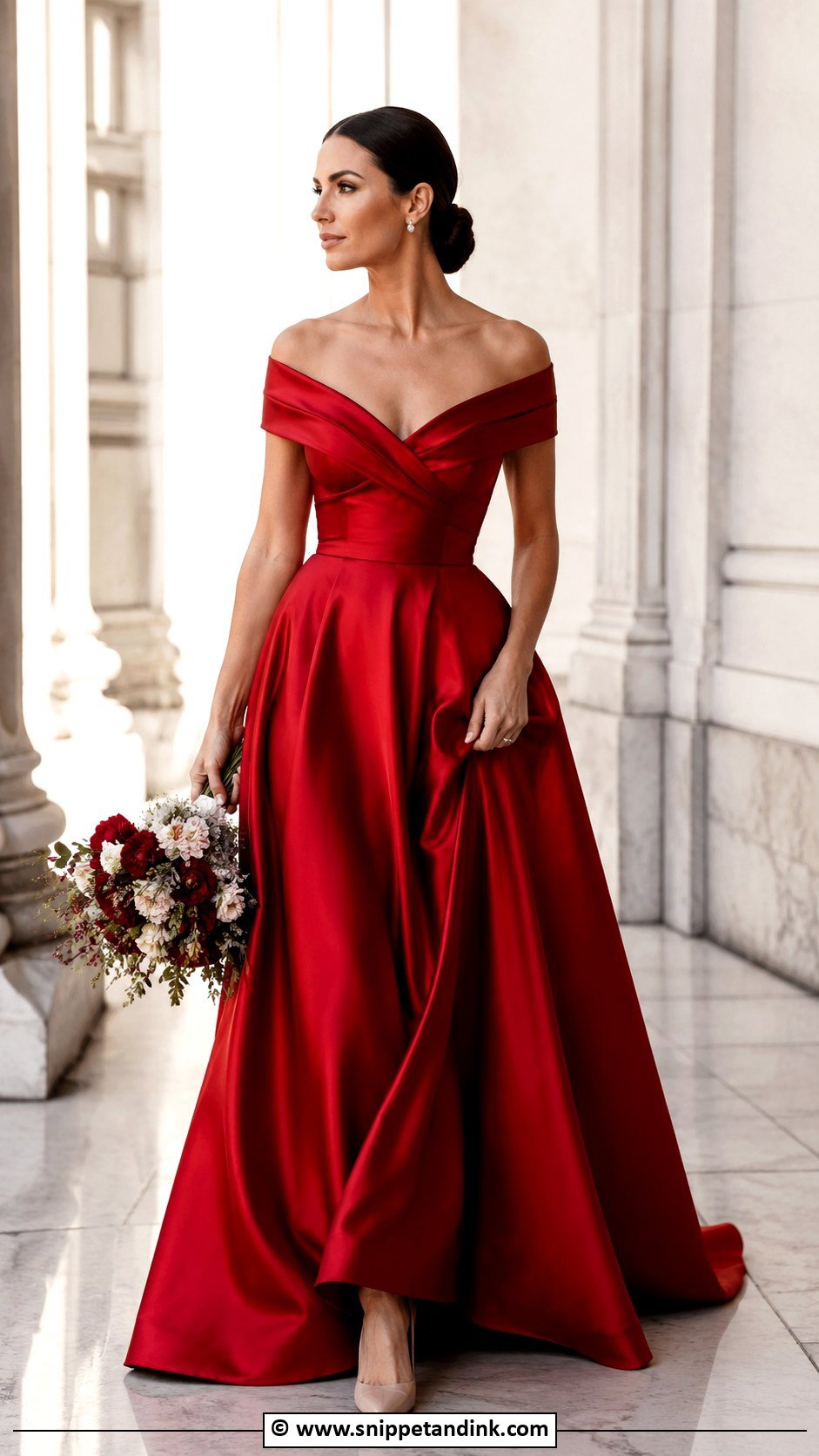
Red changes meaning with the shade and the culture; in several traditions it’s the bridal color rather than a rebellion. Deep red satin, ruby tulle, crimson lace and burgundy velvet each feel different. The undertone matters most. Blue-based reds tend to suit cool skin and orange-based reds warm skin, so I test both near the face in daylight. Keep everything else neutral: simple earrings, plain heels, polished hair. A red dress needs very few extras.
12. Green Wedding Dress
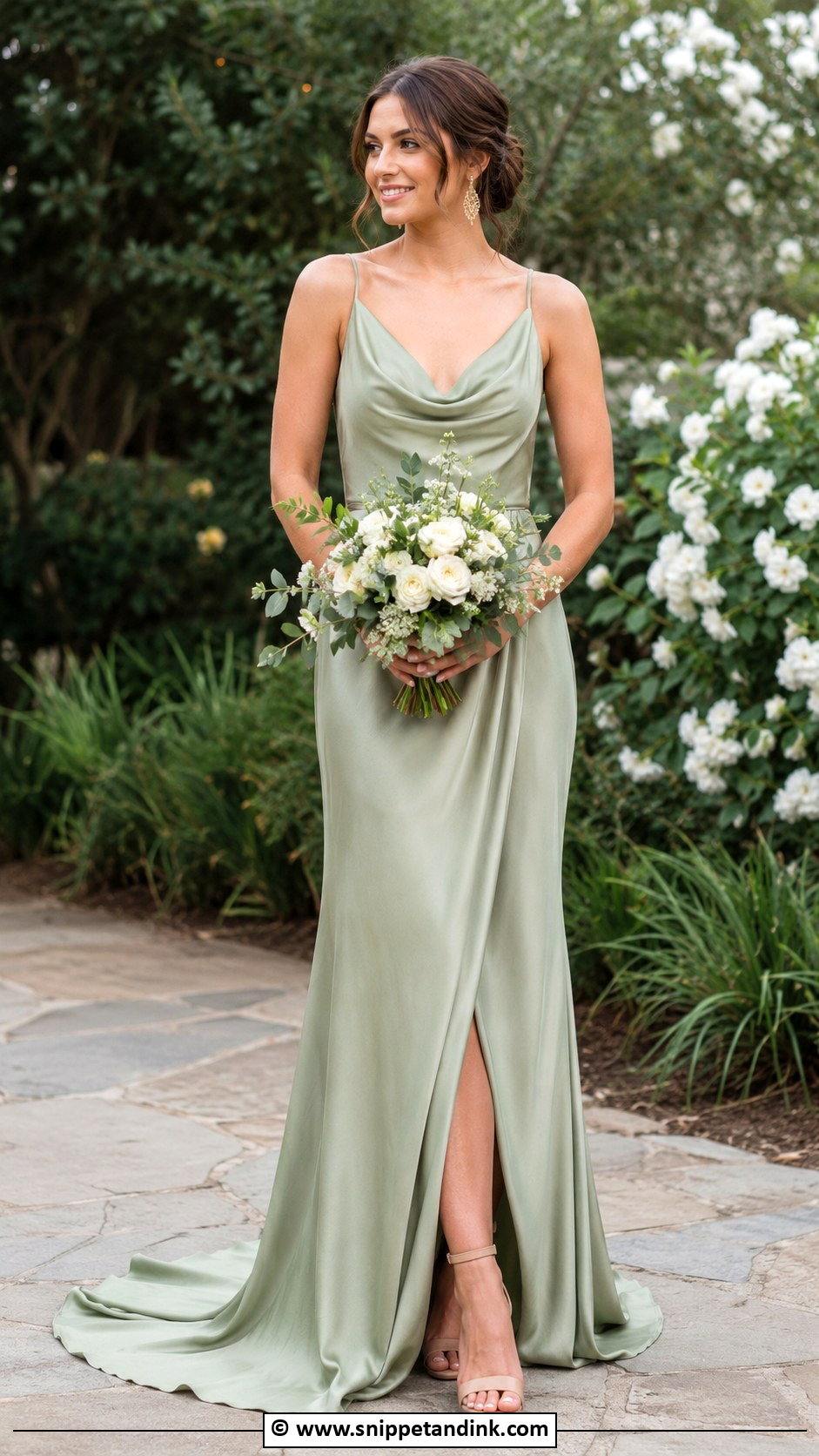
Sage suits a garden, emerald is richer and more formal, and olive, mint and seafoam fall in between. Silk, chiffon, satin and tulle all work. Green blends into outdoor backgrounds more than any other color, which is both its charm and its risk: a sage dress against lawn and hedges can lose its outline in wide shots. I’d ask the photographer to frame some portraits against stone, sky or water. Gold jewelry and cream flowers keep it warm.
13. Floral Print Wedding Dress
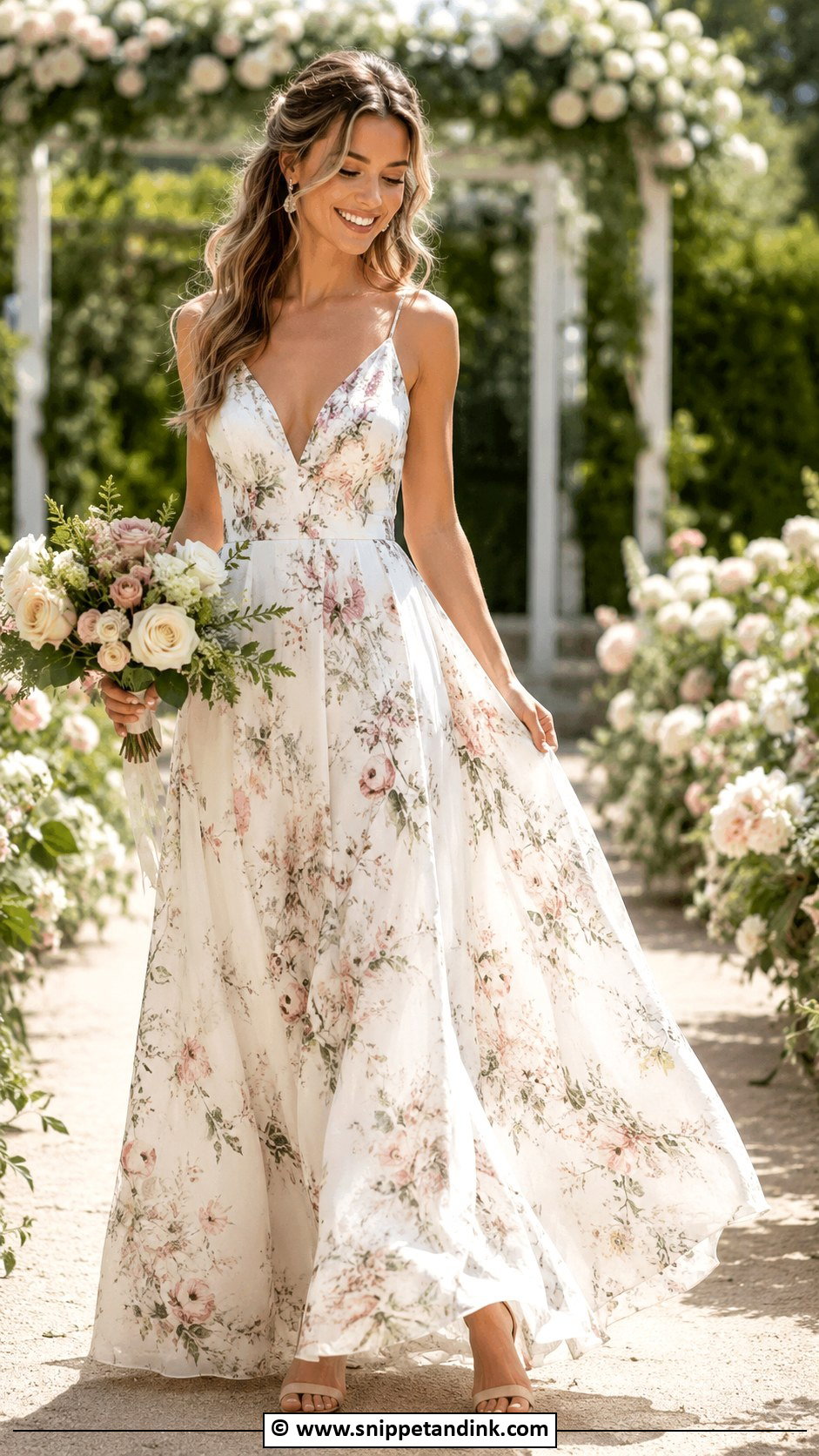
Prints feel lighter and more relaxed than embroidery, especially on chiffon, silk, cotton or organza. Watercolor florals lean romantic and large botanicals bolder. Scale matters on the body: big prints read best on long, simple shapes, while small prints suit fitted, detailed ones. Simple heels, natural makeup, minimal jewelry. A printed dress is also one you’ll realistically wear again, and a strong silhouette is what keeps it feeling like a wedding dress the first time.
14. Bridal Jumpsuit Wedding Dress
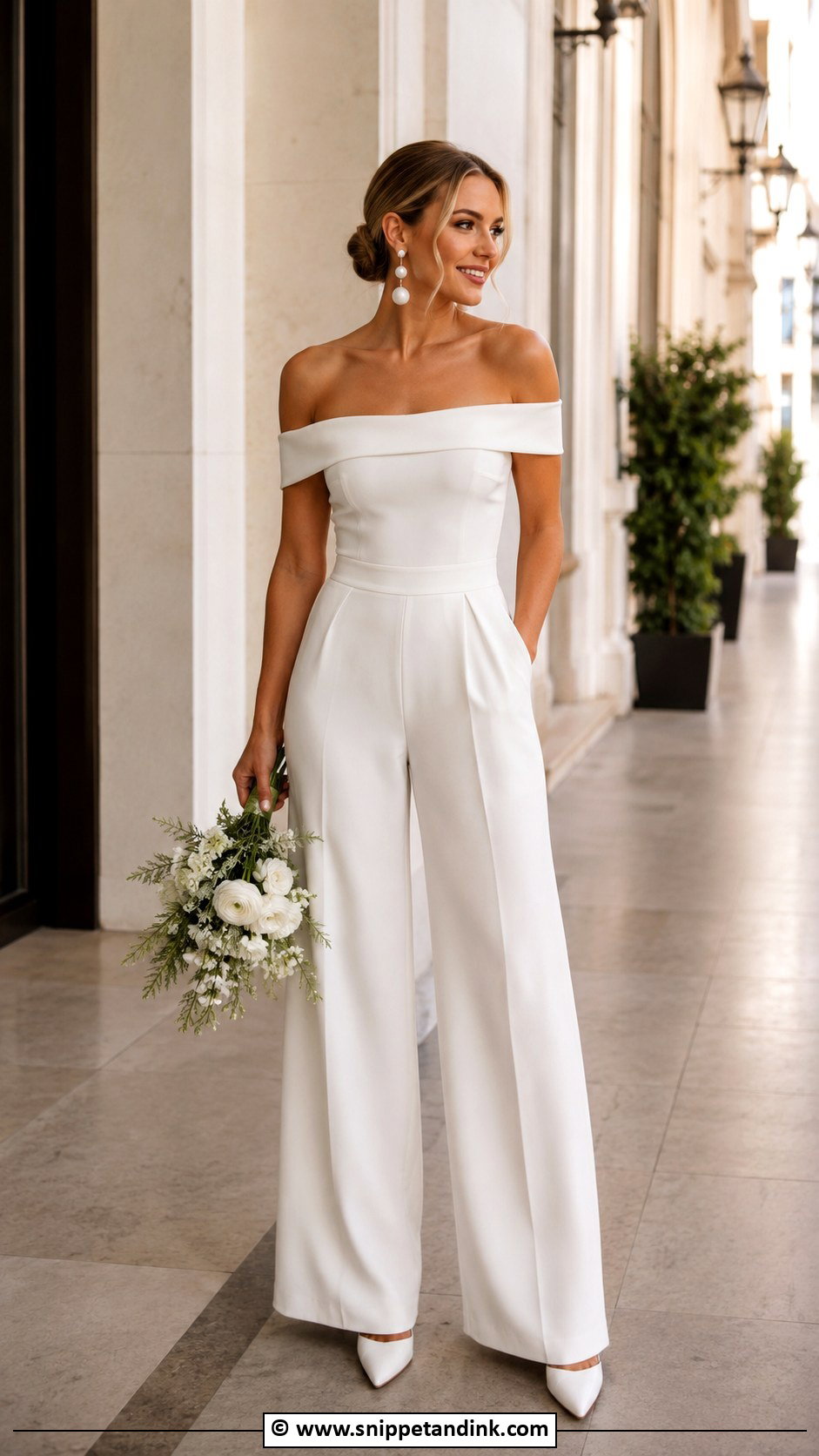
A bridal jumpsuit lets you move all day without managing a train. I look for wide legs, a fitted waist and a neckline with some interest, a halter or square cut, in crepe, satin or heavy silk, because thin fabric shows every line of what’s underneath. Heels, a structured clutch and bold earrings finish it; a long cape, overskirt or veil adds ceremony drama. Have the legs hemmed with your exact shoes on, so the fabric just grazes the floor.
15. Two Piece Wedding Dress
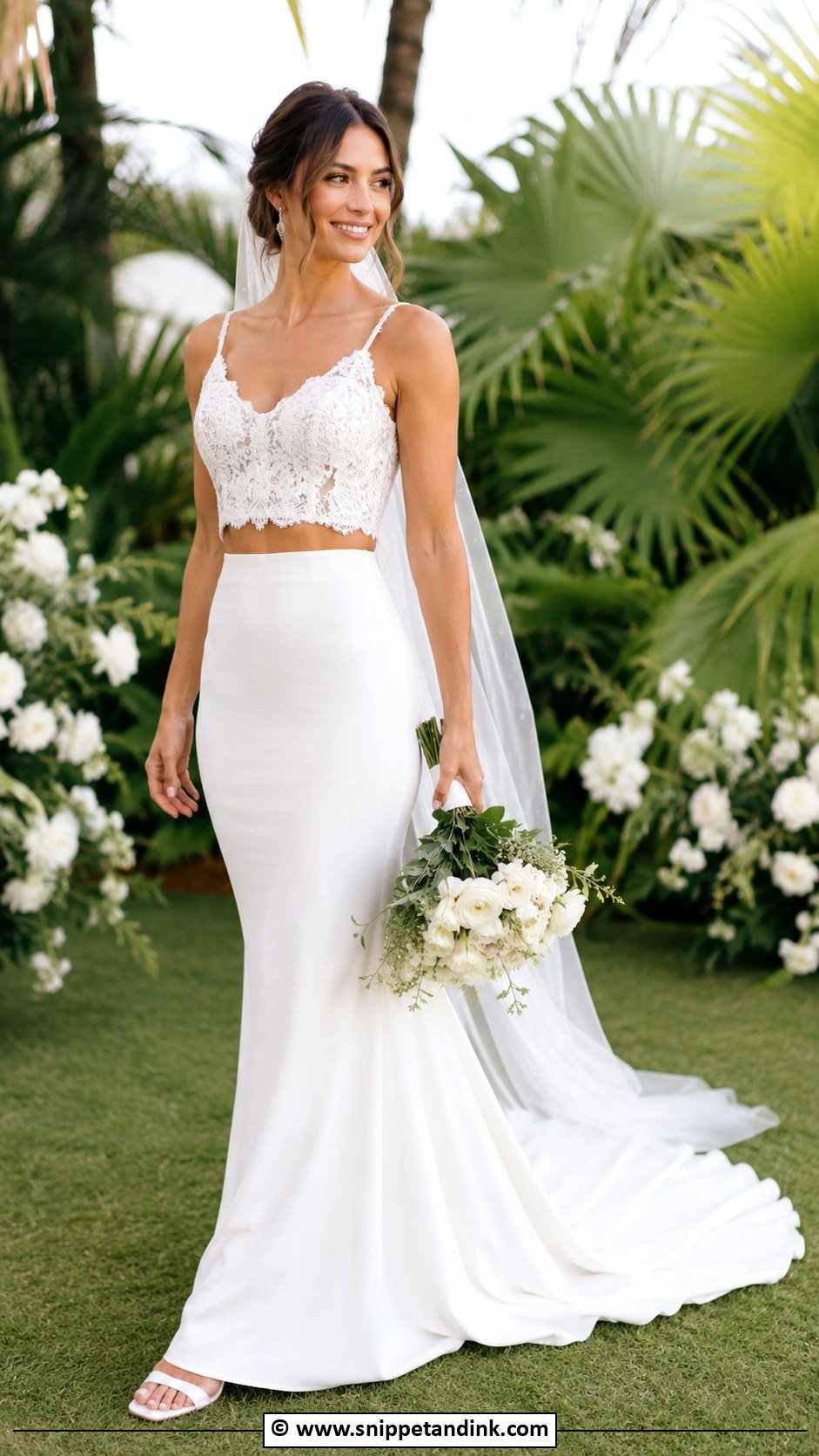
Separates give you flexibility and still read as fully bridal: a lace crop top over a high-waist skirt, a satin bandeau with a ball skirt, a tailored blouse with a column skirt. Each piece is fitted on its own, which simplifies alterations and lets you wear the skirt again. The gap between top and skirt is what I test. Lift your arms, sit, bend, and see how much skin appears and whether the top rides up. Then choose simple heels and a veil or earrings depending on formality.
16. Corset And Skirt Wedding Dress
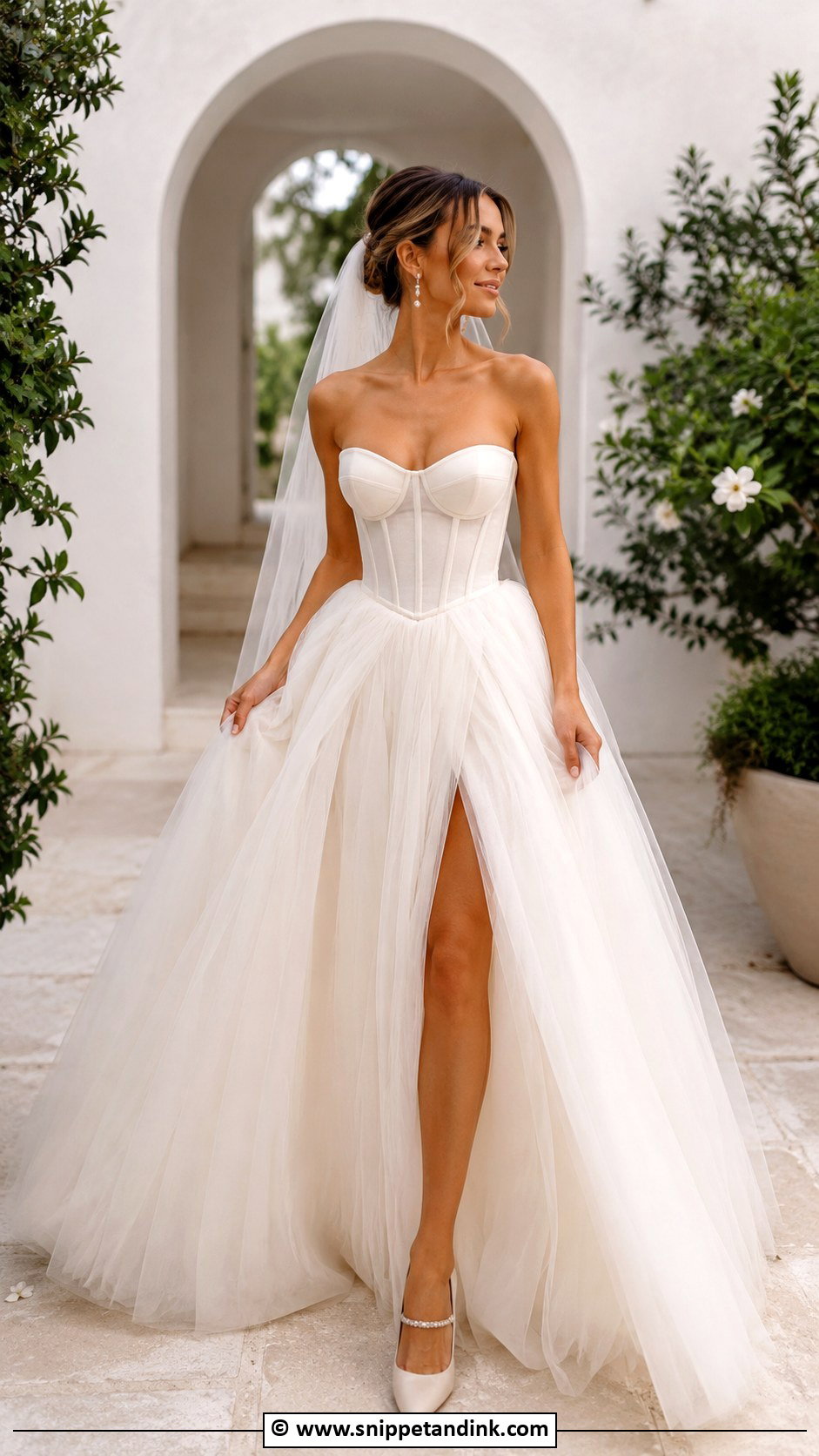
The corset gives shape and support; the skirt sets the mood. Tulle softens, satin adds drama, lace adds detail, and mixing textures looks designed rather than matched. I make sure the corset’s lower edge sits over the skirt’s waistband, not tucked under it, so no ridge shows through. Pointed heels, drop earrings and a veil if you want the classic touch. Coverage and volume are easy to adjust later, since each piece can be changed independently.
17. Cape Wedding Dress
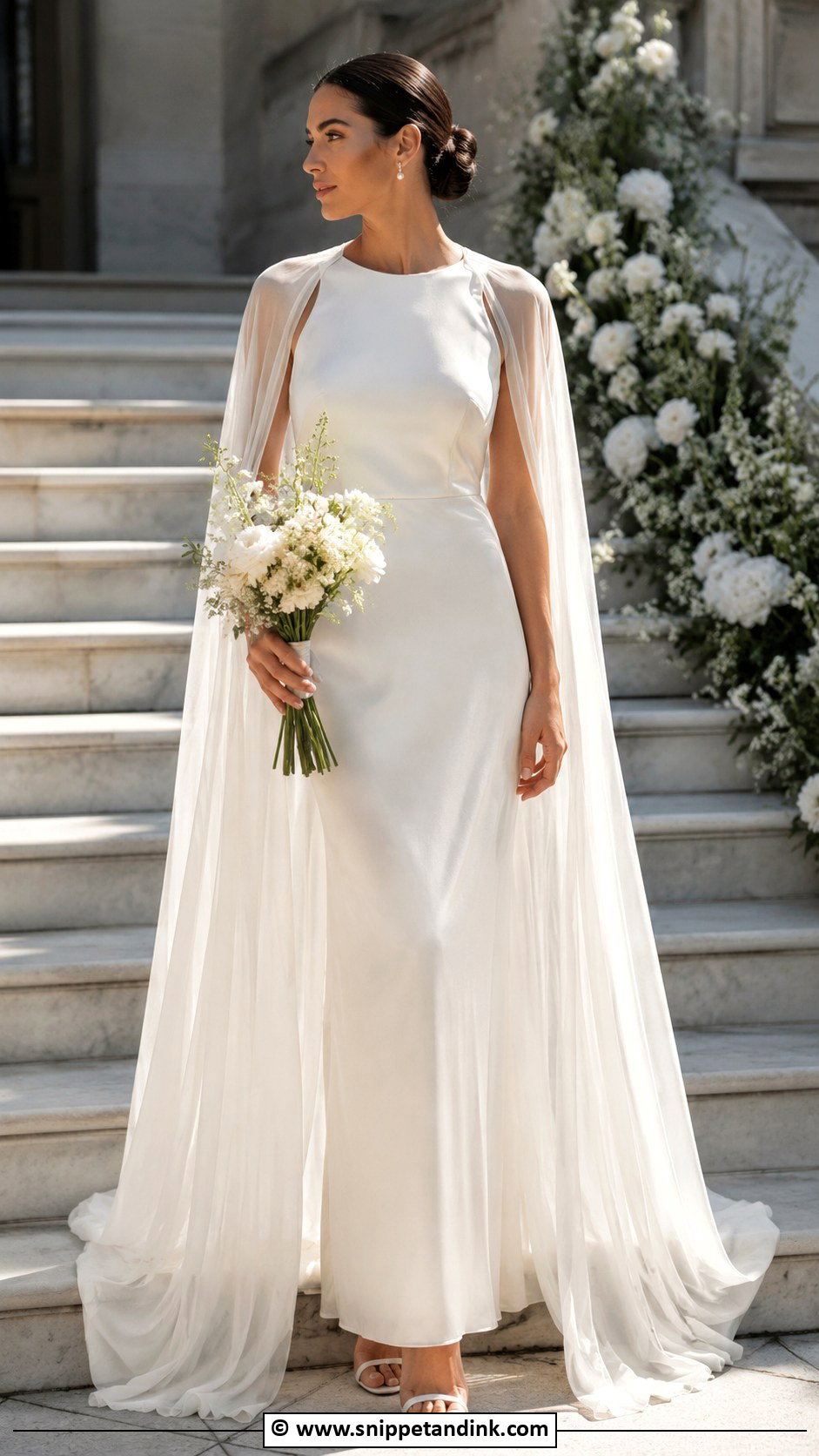
A cape gives you the movement of a veil with nothing on your head. Sheer, lace capelet, floor length or structured satin, it looks best over a plain column, jumpsuit or minimal gown, with the front kept clean and the jewelry simple. There’s a practical reason to choose one, too. A sheer cape over a strapless dress covers your shoulders for a chilly ceremony or a house of worship that asks for it, then comes off for the party.
18. Feather Wedding Dress
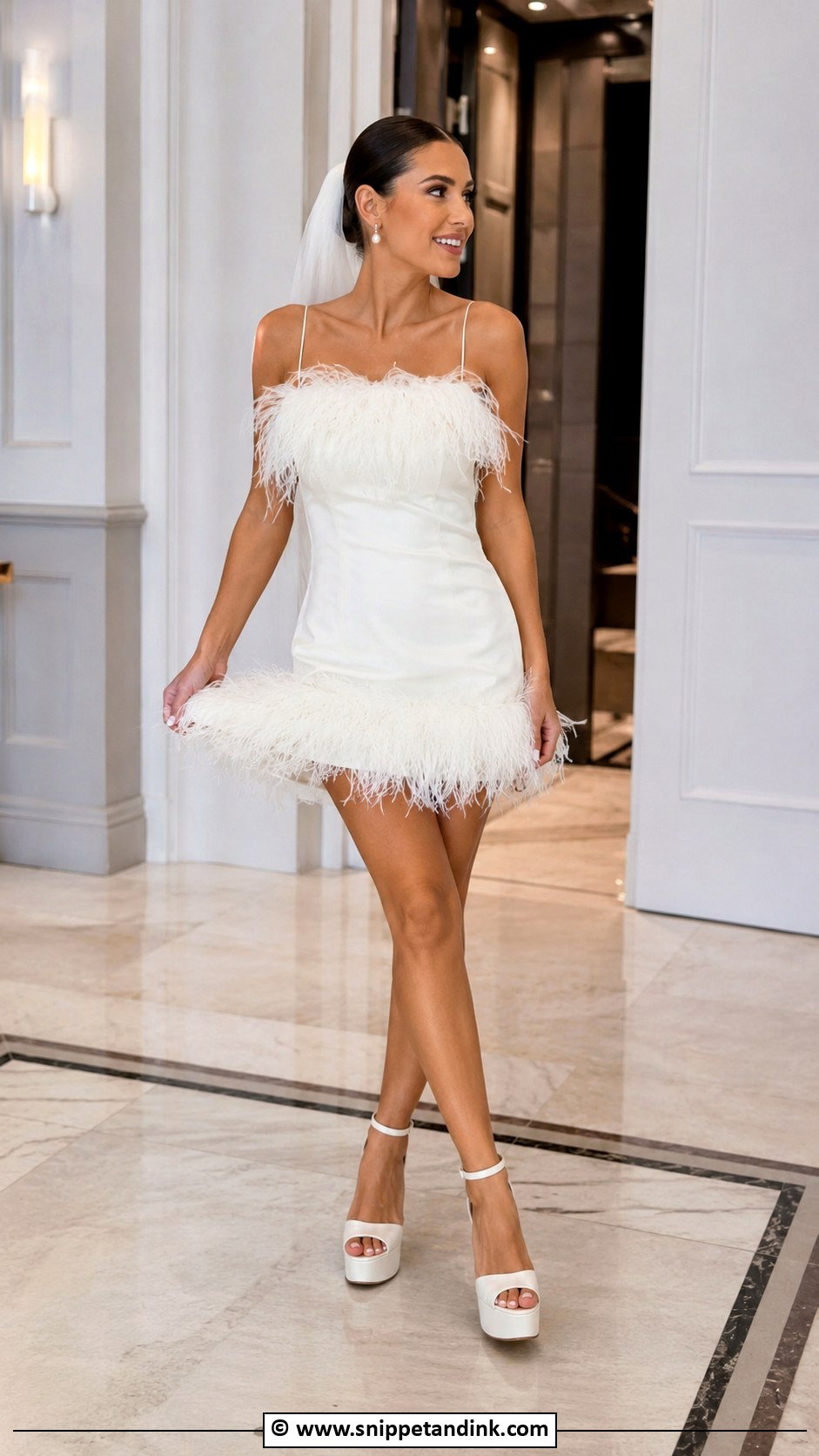
You don’t need feathers everywhere. Cuffs, a hem, a feathered cape or a trimmed mini are enough, with clean hair, simple heels and minimal jewelry. Ivory, cream, blush or black on a structured shape keeps it elegant rather than fluffy. Feathers at the neckline sit right in your face all day, and they’ll bother anyone with a feather sensitivity, you included, so I’d keep them to the hem or cuffs if there’s any doubt.
19. Velvet Wedding Dress
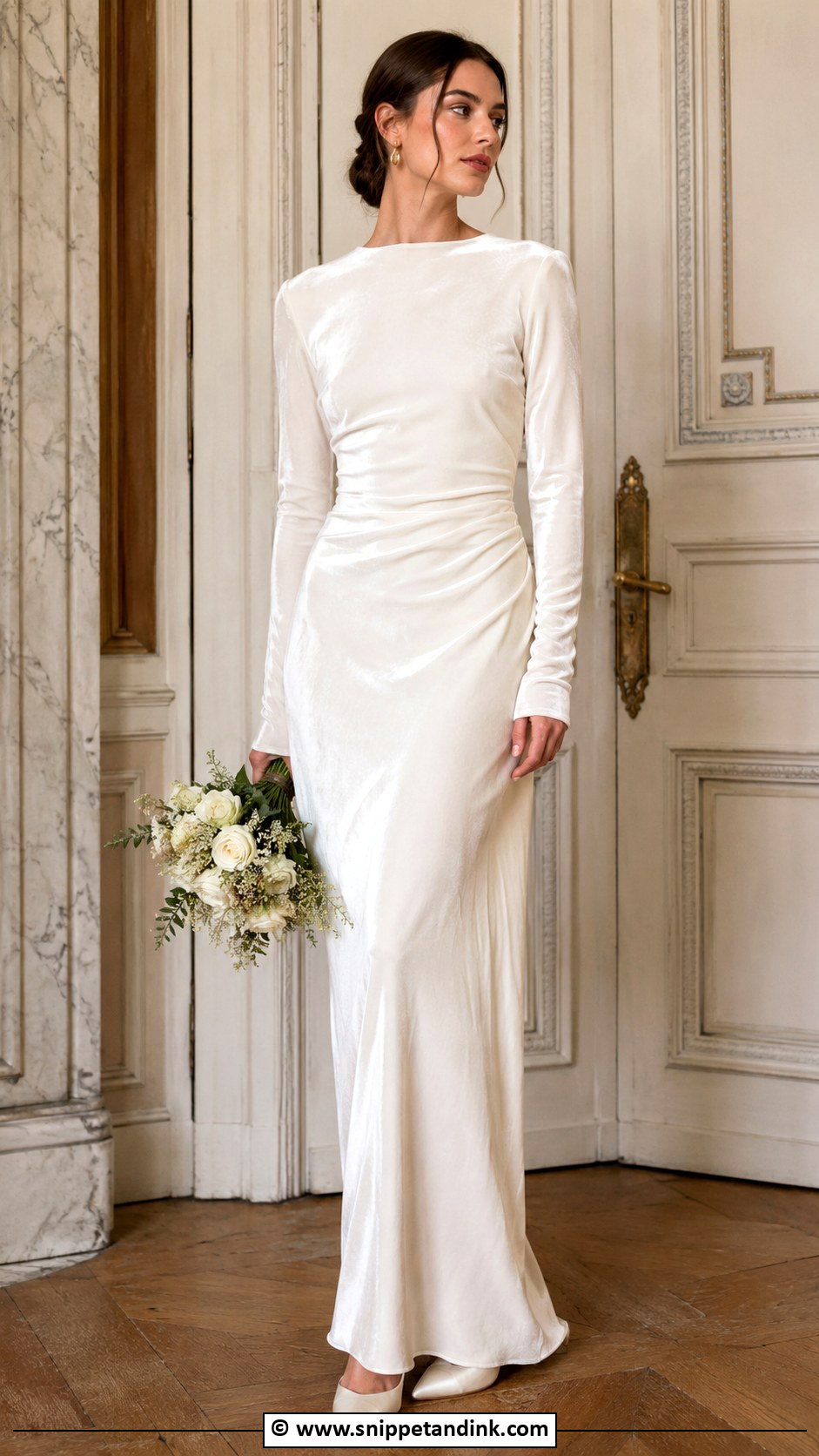
Velvet is my first suggestion for a cold-weather wedding. Ivory velvet is subtle, while emerald, burgundy, navy or black makes the unconventional statement. Keep the shape clean, a long-sleeve column or wrap dress, so the fabric’s weight doesn’t add bulk. Satin heels, gold jewelry and a simple bouquet finish it. Velvet pile looks lighter or darker depending on which way it lies, so every panel has to be cut in the same direction; check under daylight that the shade looks even across the seams.
20. Sheer Sleeve Wedding Dress
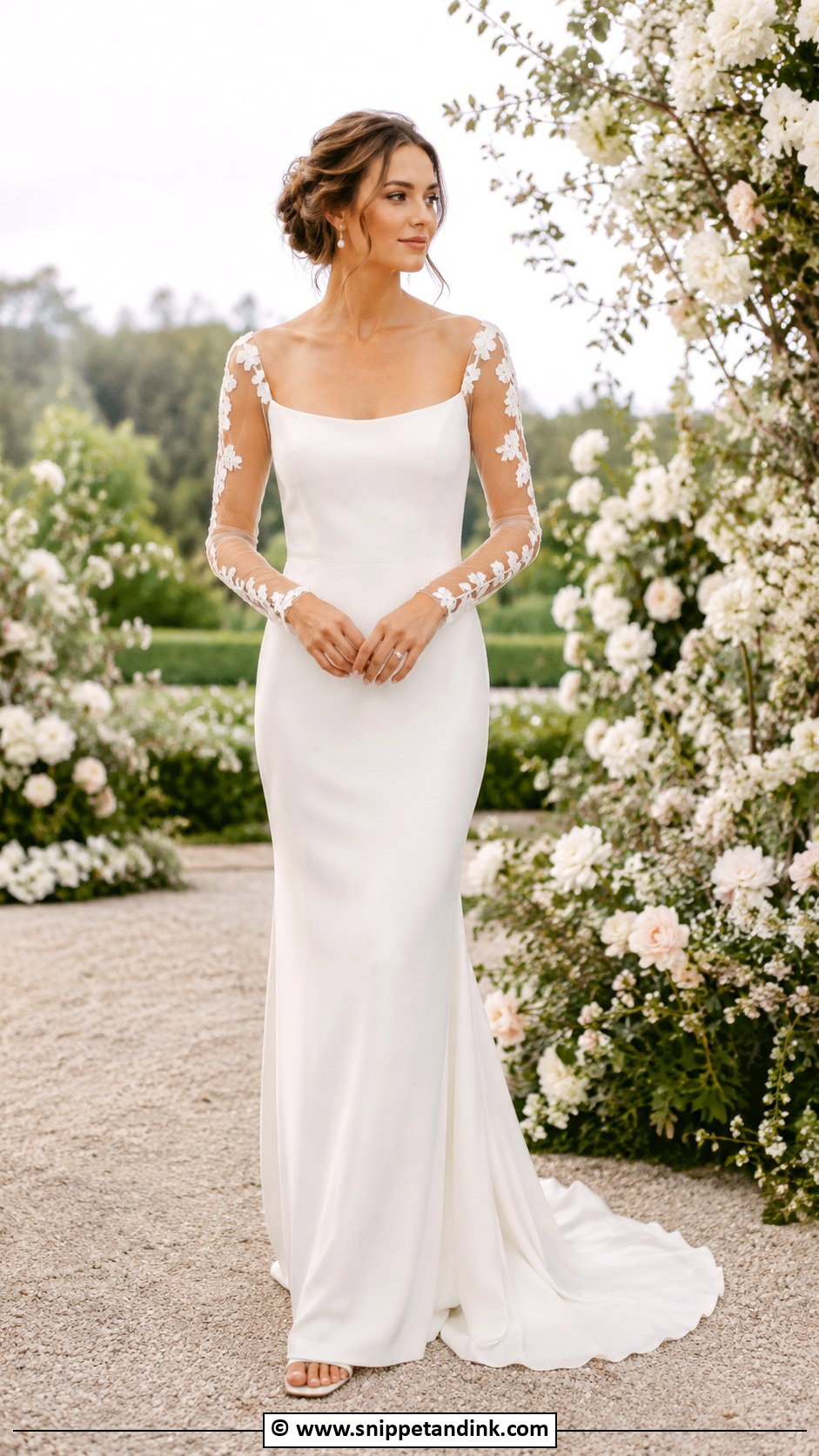
Sheer sleeves make a classic shape just slightly unusual. Lace appliqué, pearls, embroidery or dotted tulle all work while the body of the dress stays simple, and you get arm coverage without weight. I check the armhole and cuff most carefully. Sheer mesh has very little give, so a tight armhole stops you raising your arms to hug or dance. Delicate heels, a soft updo and small earrings finish it.
21. High Low Wedding Dress
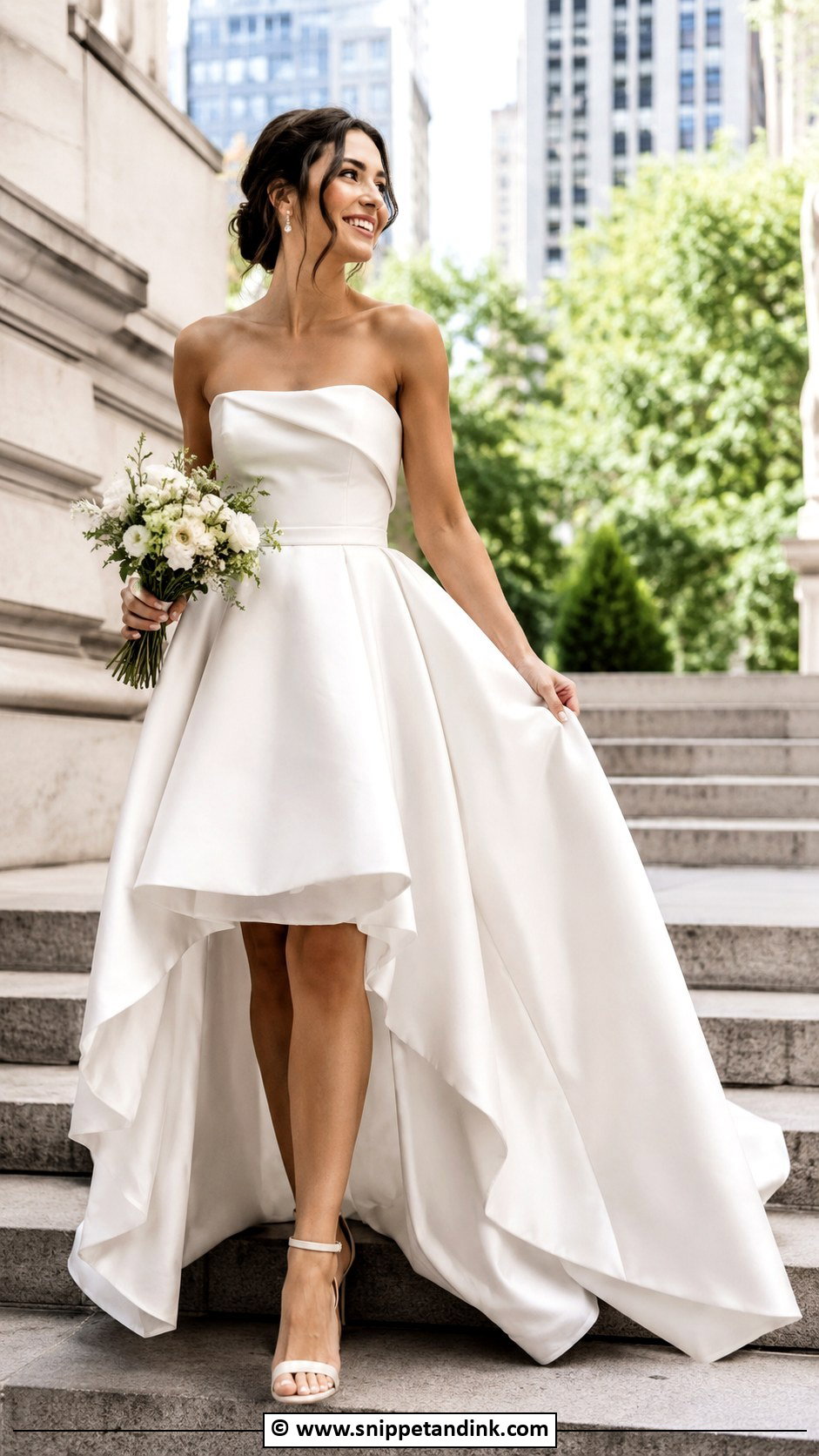
Train drama behind, a shorter hem in front so you can walk and dance. Crisp satin makes a modern shape, tulle a softer one, organza light volume. Statement heels are mandatory here, with simple jewelry and a bouquet that stays clear of the hemline. Uneven hems swing with every step, which is the reason to choose one. At the fitting I’d watch the dress on a short walk before fixing the front length, because an inch either way changes the whole effect.
22. Colored Tulle Wedding Dress
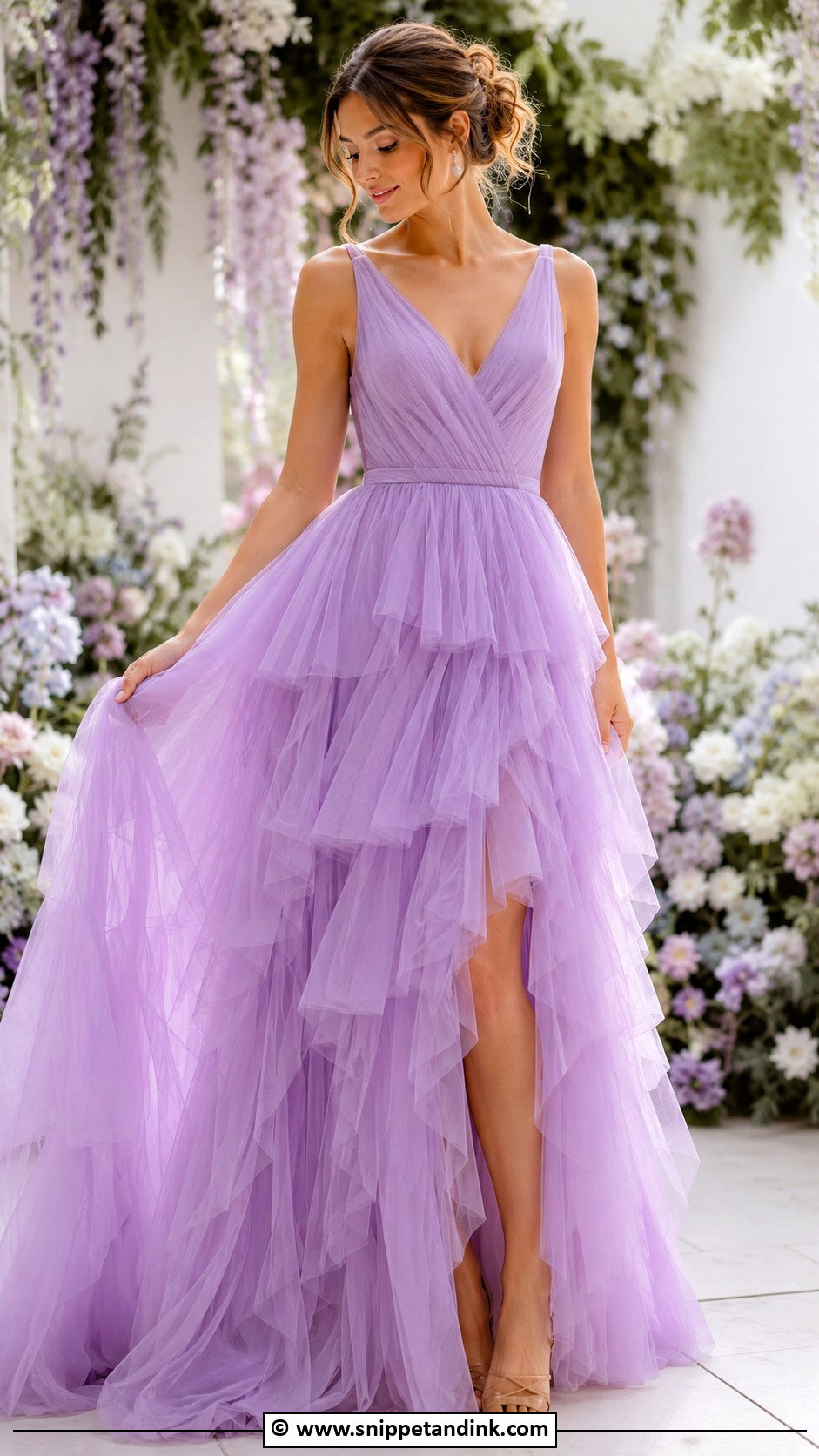
Lavender, blush, misty blue, sage, champagne, even black: colored tulle keeps the dreamy volume and drops the tradition. Keep the bodice fitted if the skirt is very full. Tulle color deepens as the layers stack, so a skirt built from many layers of pale blue looks noticeably darker than a single swatch. I always judge the shade from several layers held together, never one. Simple sandals, dainty jewelry and natural makeup let the color lead.
23. Printed Maxi Wedding Dress
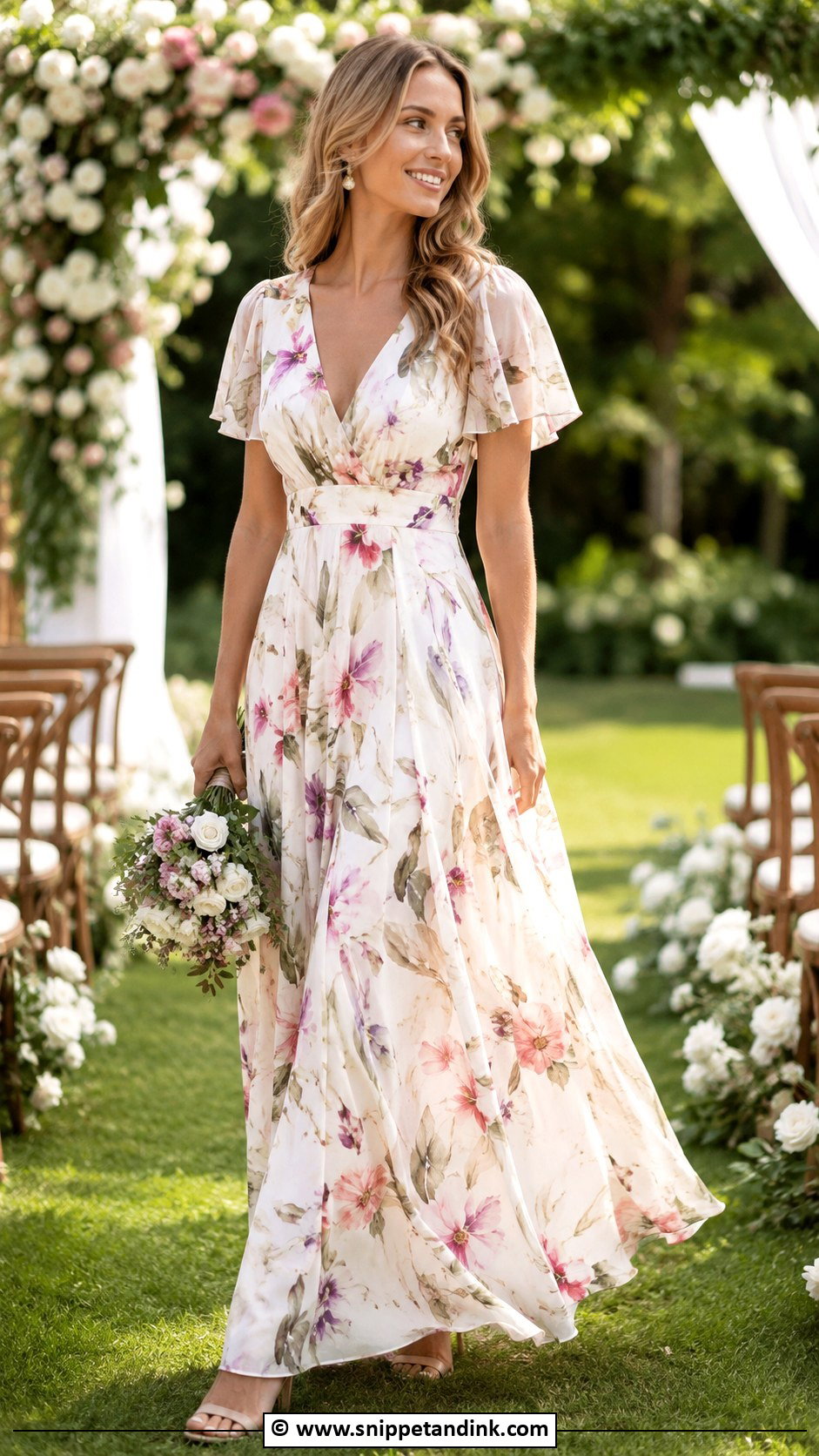
A printed maxi is relaxed and very wearable. Painterly, abstract, soft floral and subtle metallic prints all work in a flowing shape, styled with block heels and loose waves, or flat sandals and a woven clutch for a destination wedding. The risk with a maxi is that it reads as a vacation dress. I’d put the money into fabric weight and a fitted waist, because a thin, cheap print looks like resort wear in photos however carefully it’s styled.
24. Sequined Wedding Dress
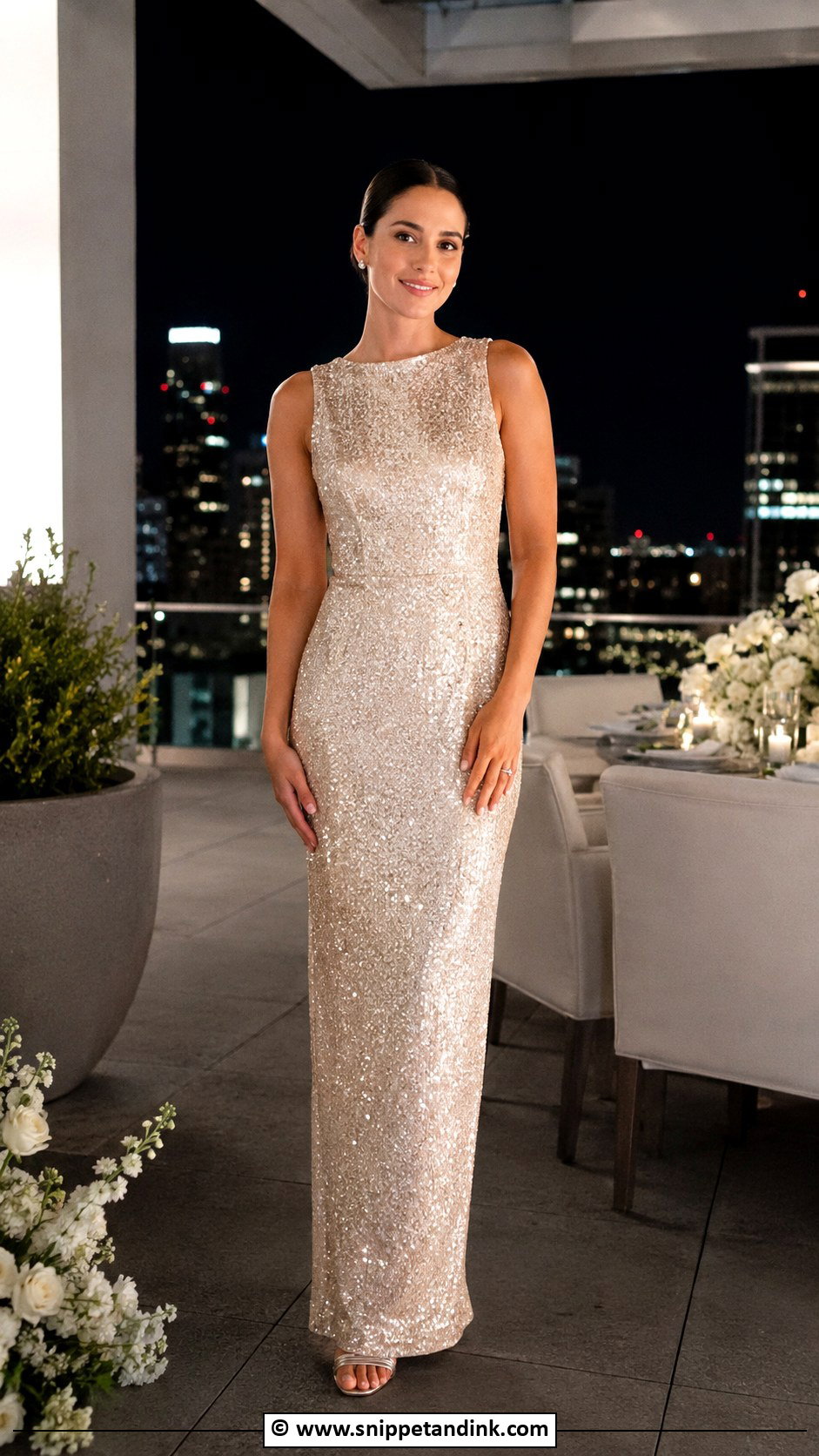
Sequins carry you from ceremony to dance floor without a change. White sequins feel bridal, silver cool and modern, champagne softer. A slip, column, midi or long-sleeve sheath keeps them refined, with minimal heels, clean hair and small earrings. Look inside before you buy. Sewn sequins hold far better than glued ones, which can pop off when you sit, and the internal seams should be bound so the cut edges don’t scratch.
25. Asymmetrical Wedding Dress
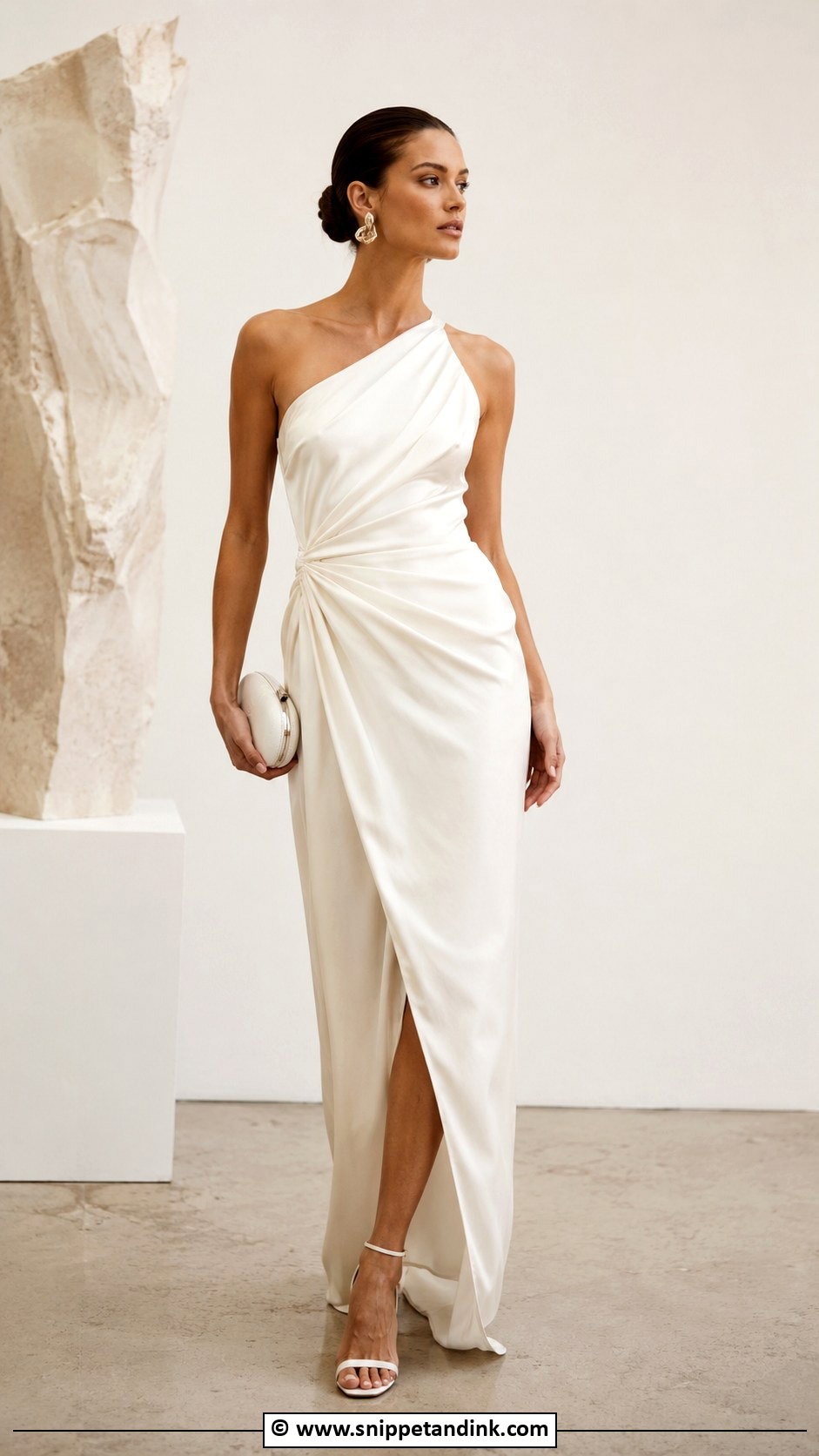
One-shoulder necklines, angled hems, side draping and diagonal bodices all break the expected bridal shape. Crepe, satin, silk or structured mikado holds those lines crisply, while limp fabric lets them sag. With the neckline as the focus, I’d choose earrings over a necklace, then add sleek heels and a simple clutch. The irregular line does the decorating, so the dress needs nothing else. Minimal venues and galleries suit it.
26. Bridal Blazer Dress
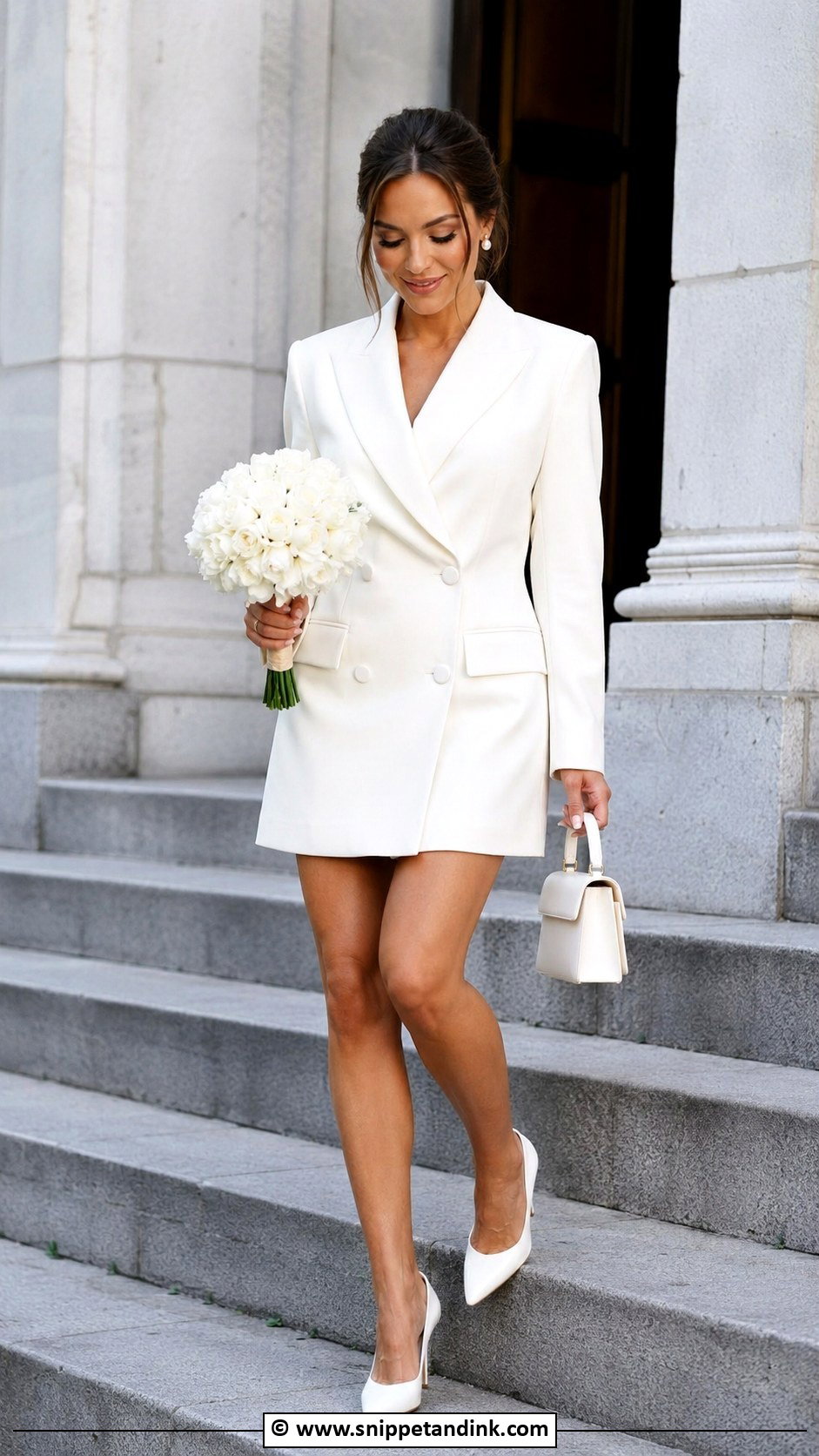
A white or ivory double-breasted blazer dress looks sharp at a modern ceremony. Pick the hem length you’re comfortable in, then style it with sheer tights if needed, pointed pumps, pearl earrings and a small structured bag. Tailored shorts underneath give extra coverage. Watch the buttons: a double-breasted front fitted too tightly pulls into an X across the stomach when you sit, so I fit blazer dresses seated as well as standing.
27. Vintage Slip Wedding Dress
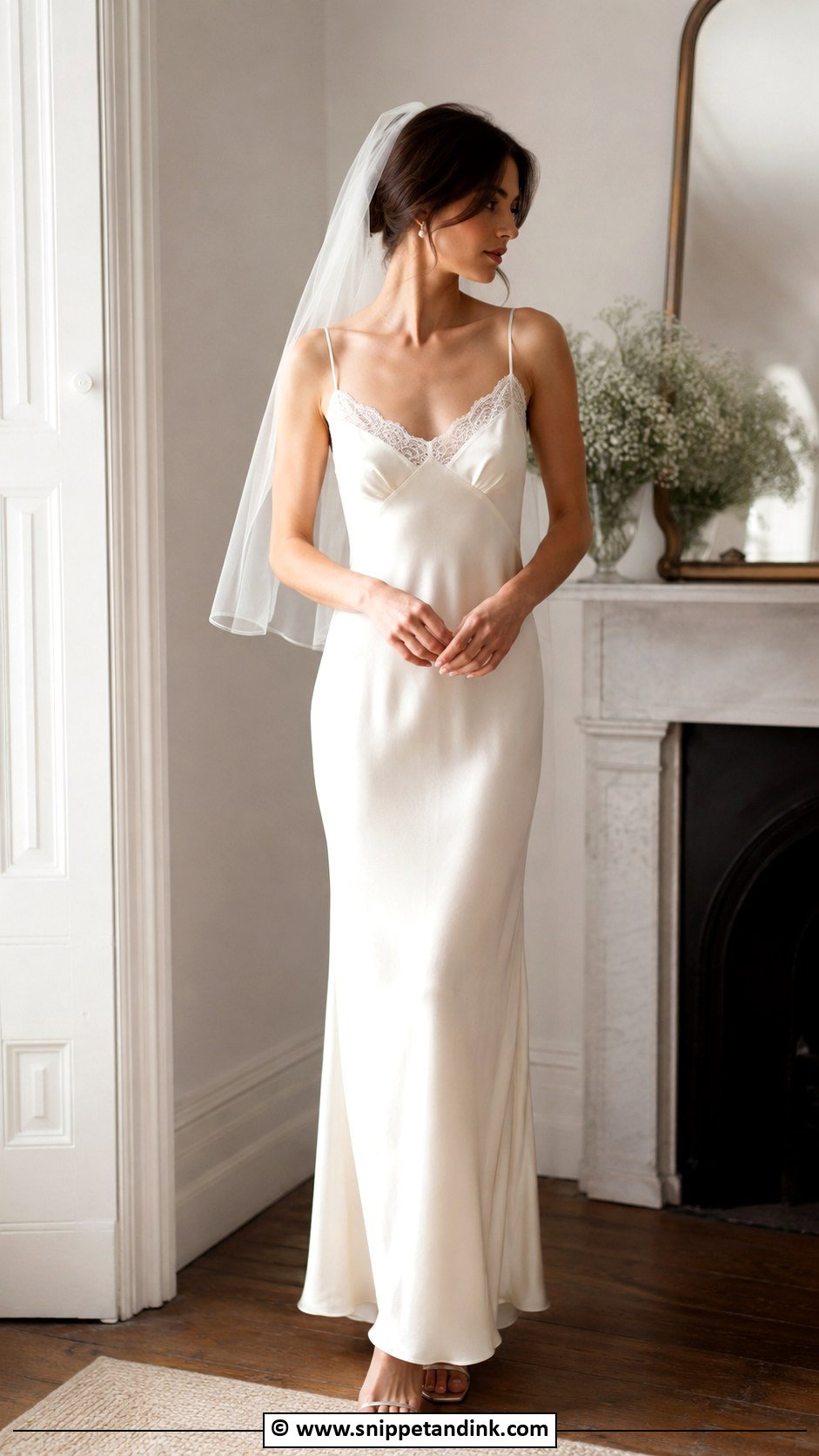
A vintage slip wedding dress is all about fit. Bias-cut silk or satin, a cowl neck, perhaps lace trim: there’s nothing structured to hide behind, so the tailoring has to be precise. I’d pair it with barely-there sandals, pearl studs and a soft veil or scarf, plus a coat or shrug for cover. Bias-cut fabric stretches and drops as it hangs, so a slip should hang for a day before it’s hemmed, and the hem gets checked again at the final fitting.
28. Hand Painted Wedding Dress
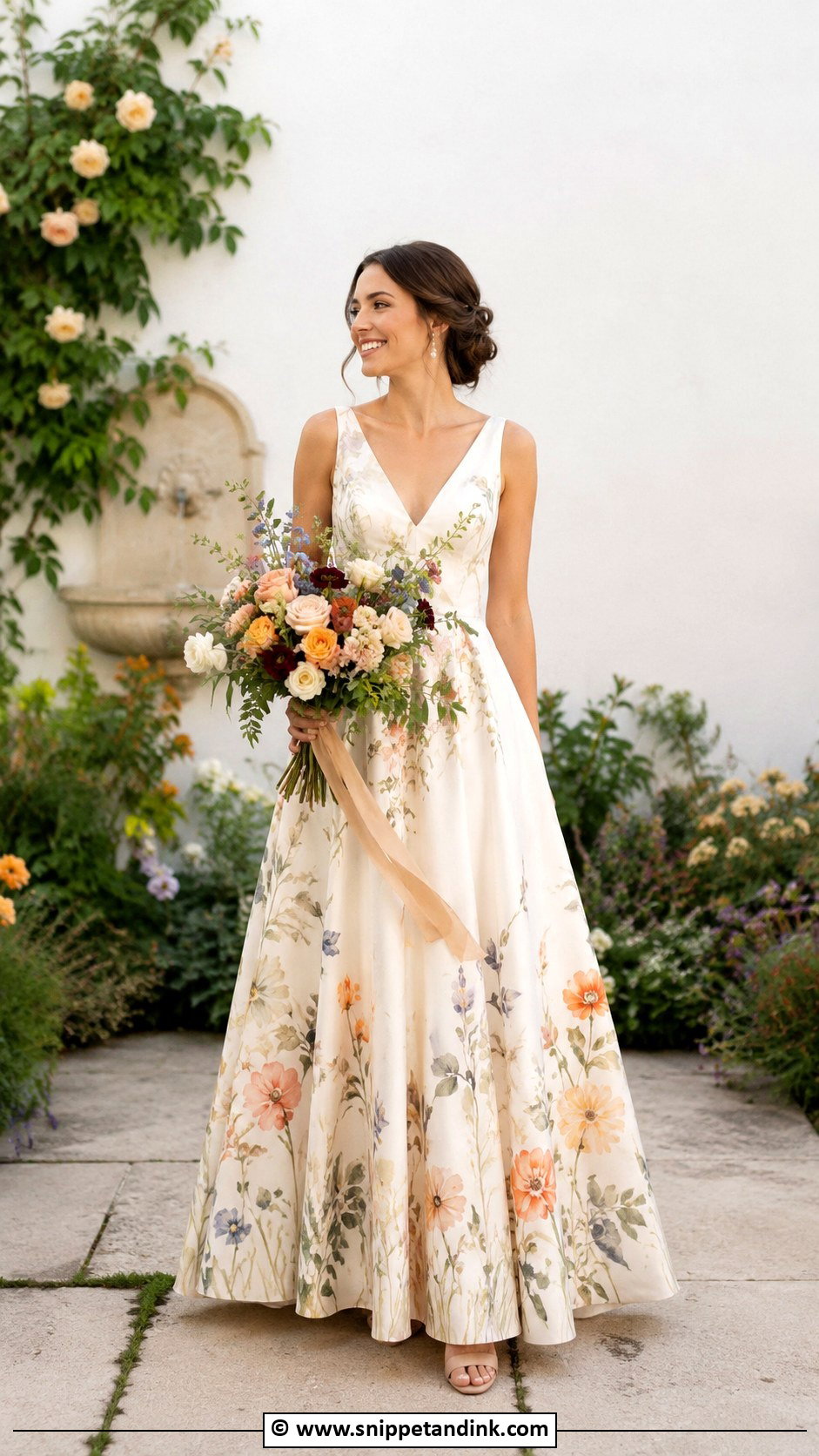
Hand painting turns the dress into a piece of art: florals, abstract strokes, washes of color or symbols that mean something to you. A plain base, an A-line, slip or column, gives the painting room. Neutral heels, understated jewelry and a bouquet that picks up the paint colors finish it. Commissions take time, often several months, and fabric paint changes how the cloth feels and drapes. Ask how the paint is set and how the dress can be cleaned afterward, because some paints don’t survive dry cleaning.
29. Bridal Romper Wedding Dress
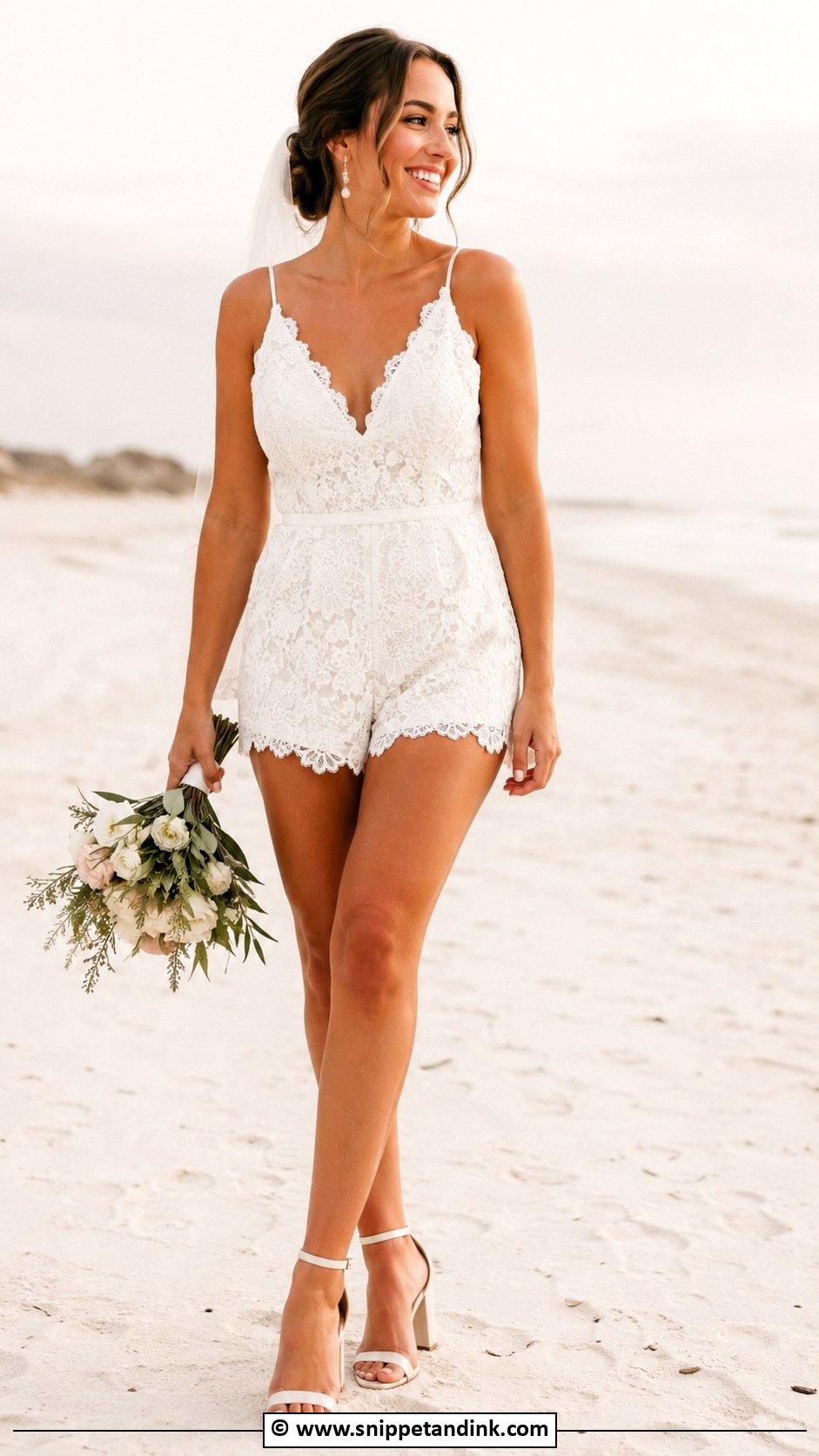
From some angles a romper looks like a short dress, yet it gives you more freedom than one. Lace, crepe or satin with a defined waist and a flattering neckline, then block heels, pearl earrings and a short veil or bow. A tailored blazer or sheer cape handles cooler weather. Rompers depend on torso length more than any other measurement. Too short in the body and they pull uncomfortably every time you sit, so that’s the first thing I check.
30. Detachable Skirt Wedding Dress
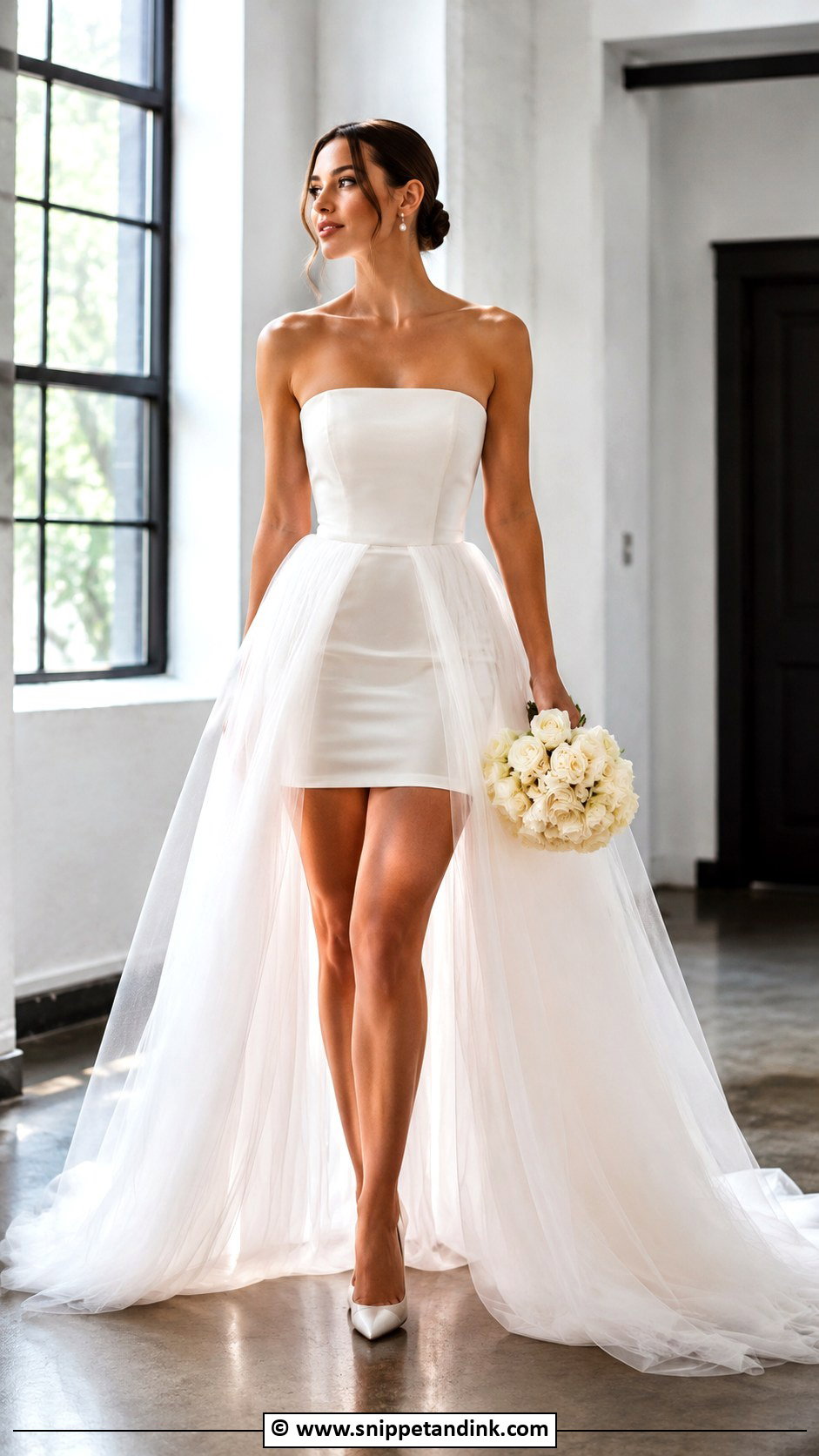
A detachable skirt wedding dress gives you two looks without a full change. A fitted mini, jumpsuit, slip or bodysuit sits underneath, with a dramatic overskirt added for the ceremony and removed after photos or the first dance. Tulle, satin and organza each give different volume. Choose one pair of heels that suits both versions. Once the overskirt is off, have someone put it somewhere safe; a tulle skirt left draped on a reception chair tends to collect spilled drinks.
What Goes Under a Slip, a Jumpsuit or a Sheer Sleeve
Unconventional shapes usually hide less than a structured ball gown, so what you wear underneath matters. Bring the actual pieces to every fitting, because the dress is fitted over them.
- Slip and bias-cut dresses: smooth, no-line underwear in your skin tone, not white, which shows through ivory. A low-back or adhesive bra if the back is open.
- Jumpsuits and rompers: separates rather than a one-piece shaper, which you’d have to take off entirely for every bathroom trip.
- Two-pieces and corset tops: test the skirt waistband over whatever smoothing layer you plan to wear, since it changes the fit.
- Sheer sleeves and overlays: a strapless bra in your skin tone, because straps show through lace and tulle.
Giving the Dress a Life After the Wedding
Plenty of these dresses can be worn again, which is part of why brides pick them. Have yours cleaned within a few weeks, because sugary drink spills dry invisible and then yellow over time. Store it in a breathable cotton bag rather than dry-cleaning plastic, away from light. If you’d like to dye it later, check the label first: silk and cotton take dye well, while polyester mostly won’t with ordinary home dyes.
Fit, Fabric, Then Personality
The right unconventional dress feels like you before it feels like a trend. Black, pink, blue, metallic, short, tailored or painted, any of them can carry meaning. Get the fit right first, then the fabric for your venue and season, then let accessories support the dress rather than compete with it. Choose shoes for the ground you’ll stand on, not only for the photo. Above all, wear something you can move, laugh and celebrate in until the last song.
You'll Like These Ideas:






Leave a Reply