
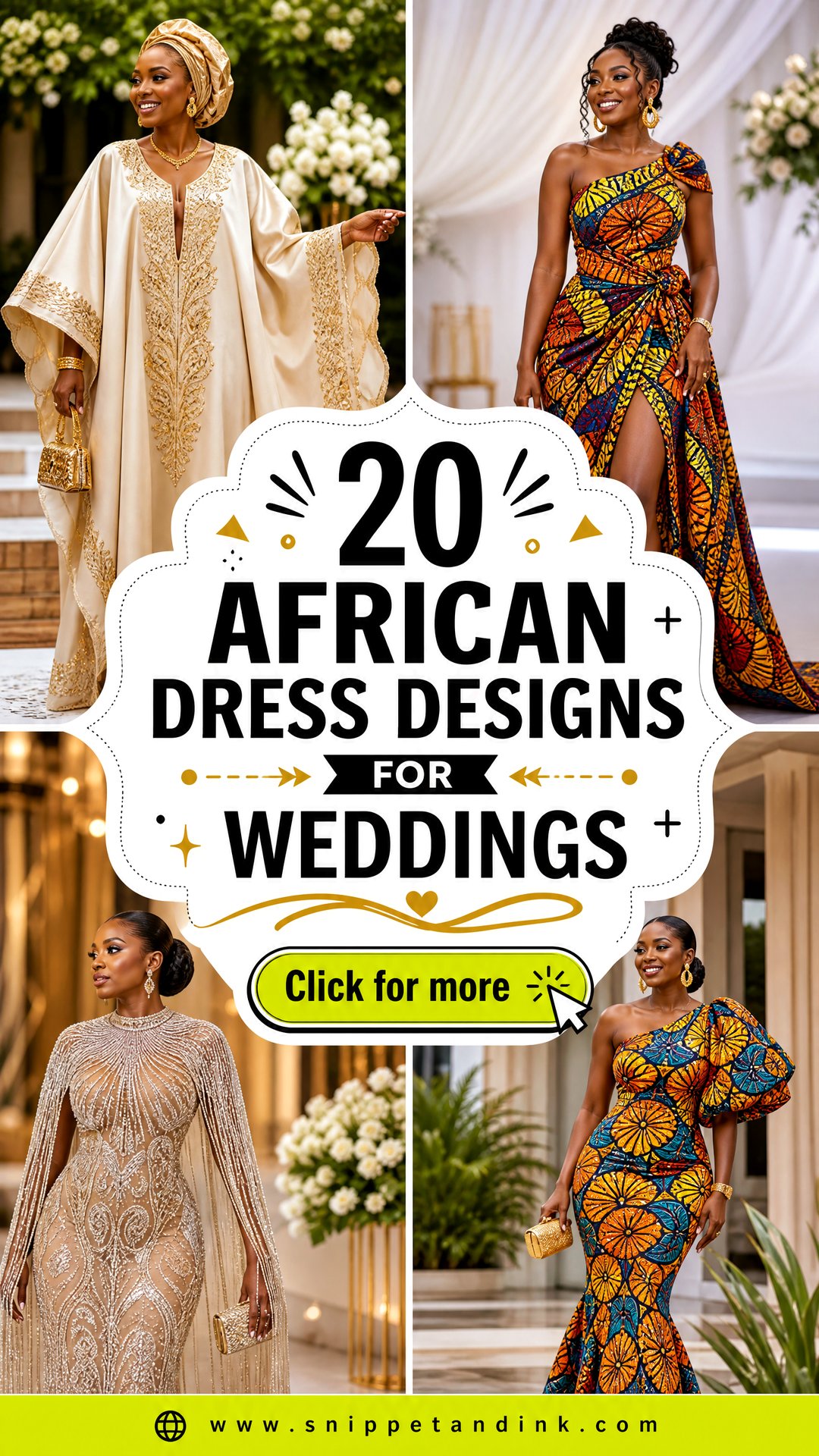
African wedding fashion covers dozens of countries and textile traditions, so no single dress can stand for all of it. Kente, Ankara, aso oke, lace, shweshwe, umbhaco and embroidered cotton each set a different mood and sit on the body differently. The designs below mix bridal gowns, formal guest dresses and traditional ceremony looks. Before you pick one, I’d check three things: what the invitation asks for, what your role is on the day, and whether the family has chosen a fabric or colour for guests to wear. After that, a skilled tailor can shape the neckline, sleeves, structure and length around you.
Bride, Family or Guest? Your Role Sets the Rules
The same Ankara gown can be exactly right on one person and a misstep on another, depending on who you are at the wedding. Most of my styling questions at African weddings come down to role, not taste.
If the family has chosen an aso ebi fabric
At many Nigerian weddings, the couple or their families pick a fabric, sometimes with a matching gele, for relatives and friends to buy and wear. If you’re offered it, wearing it is a sign of closeness. You can choose your own silhouette from the list below, but the cloth is decided for you. Order early, since everyone is chasing the same tailors in the weeks before the date.
If you’re a guest with no set fabric
- Keep white and ivory for the bride unless the couple say otherwise.
- Ask whether there’s a colour theme; many families publish one and appreciate guests who follow it.
- A traditional ceremony usually runs long and may be outdoors, so favour fabrics you can sit in for hours.
- Wear a culturally specific garment from a tradition that isn’t yours only when the hosts have invited it.
Brides have the opposite problem: you usually need two looks, one for the traditional ceremony and one for the white wedding or reception, so pick them as a pair.
1. Ankara Mermaid Dress for Weddings
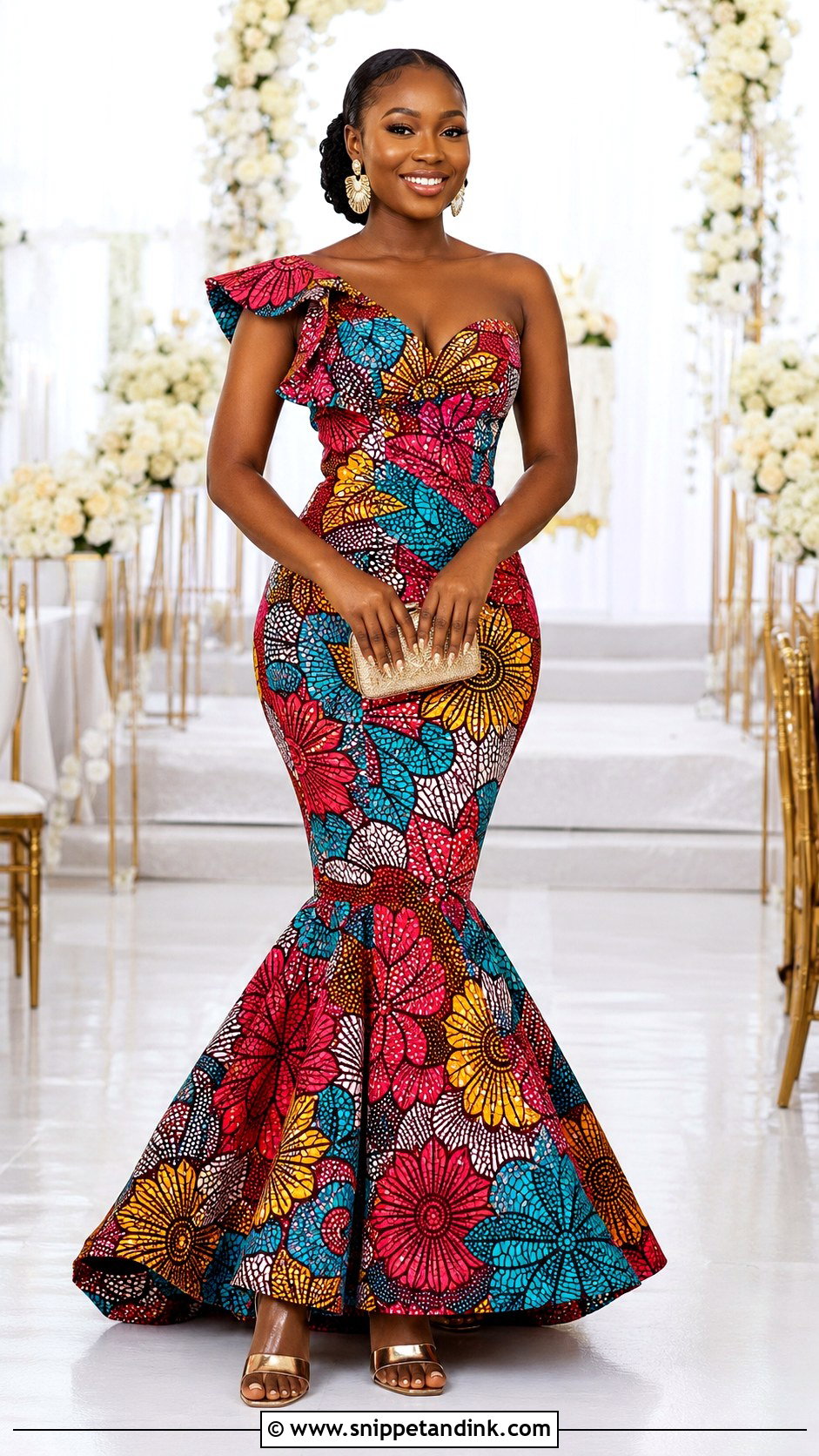
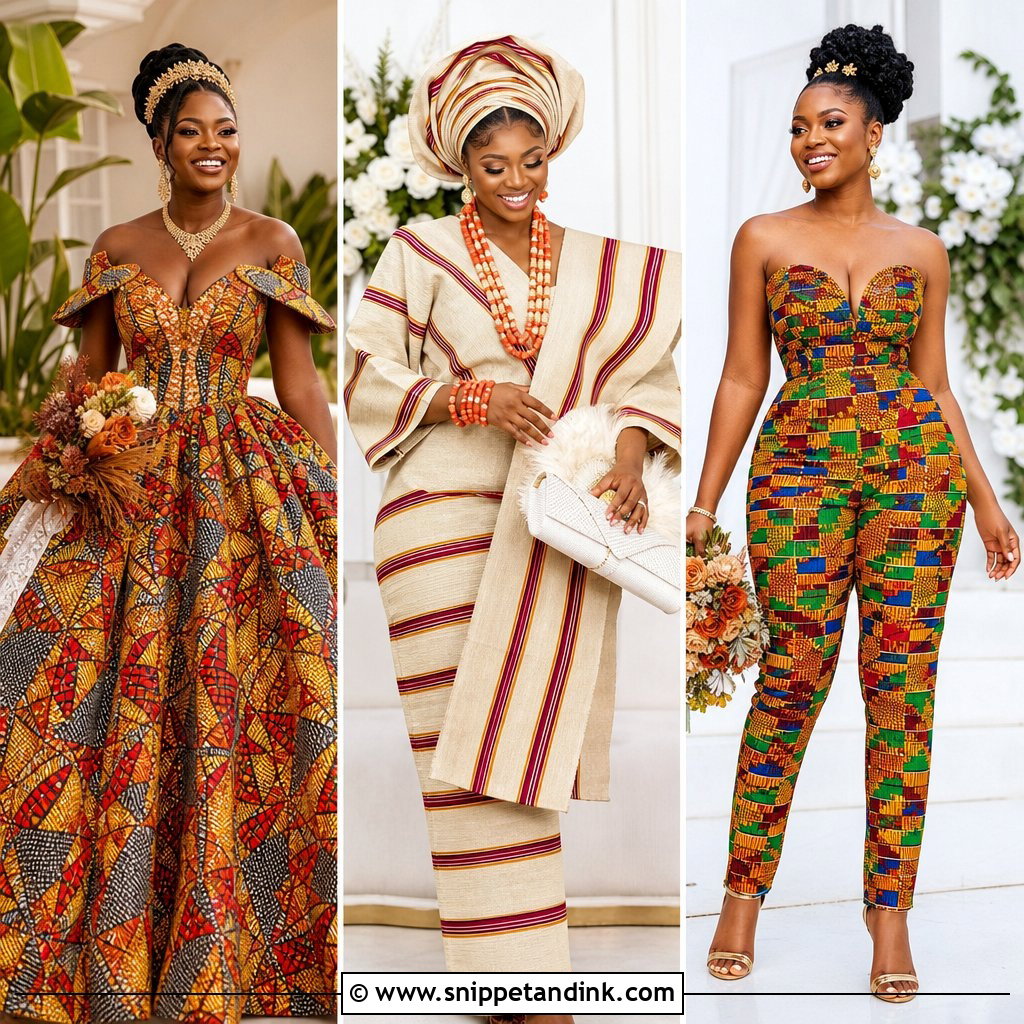
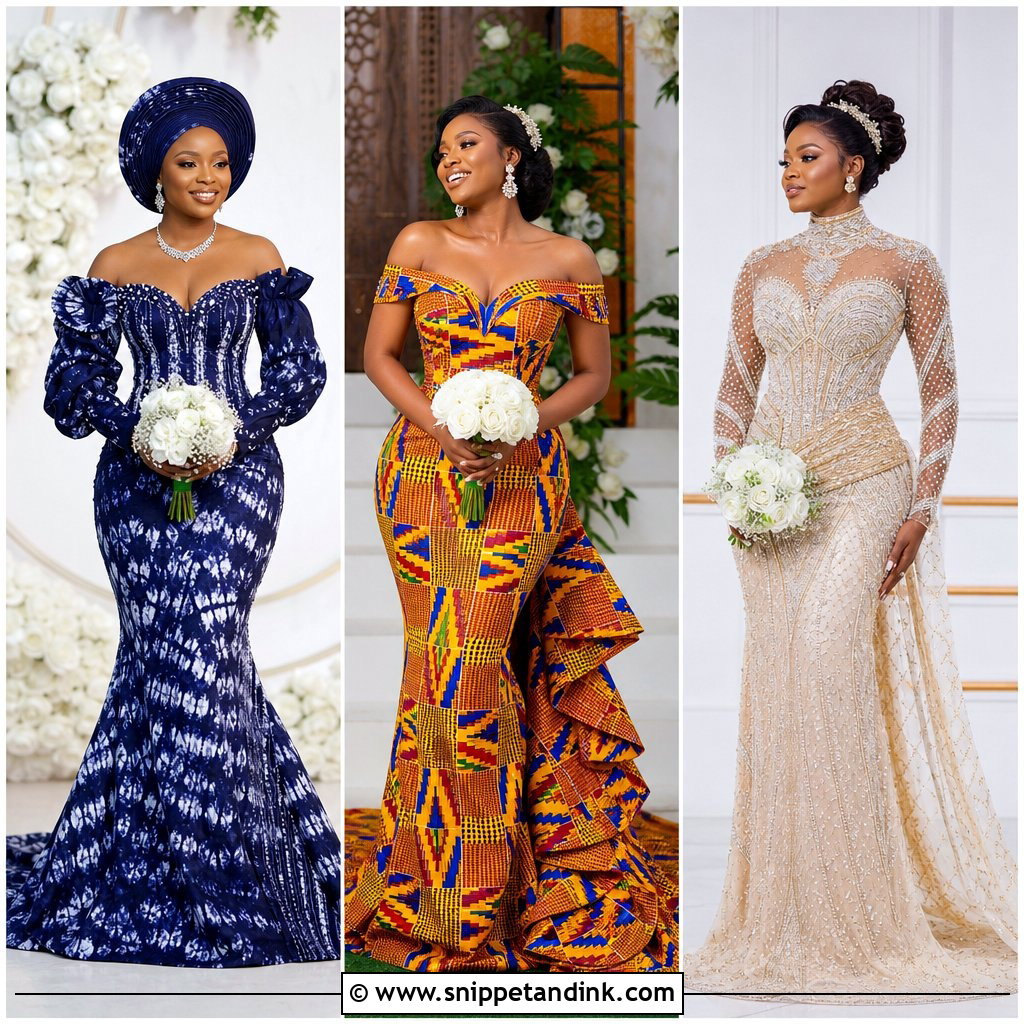
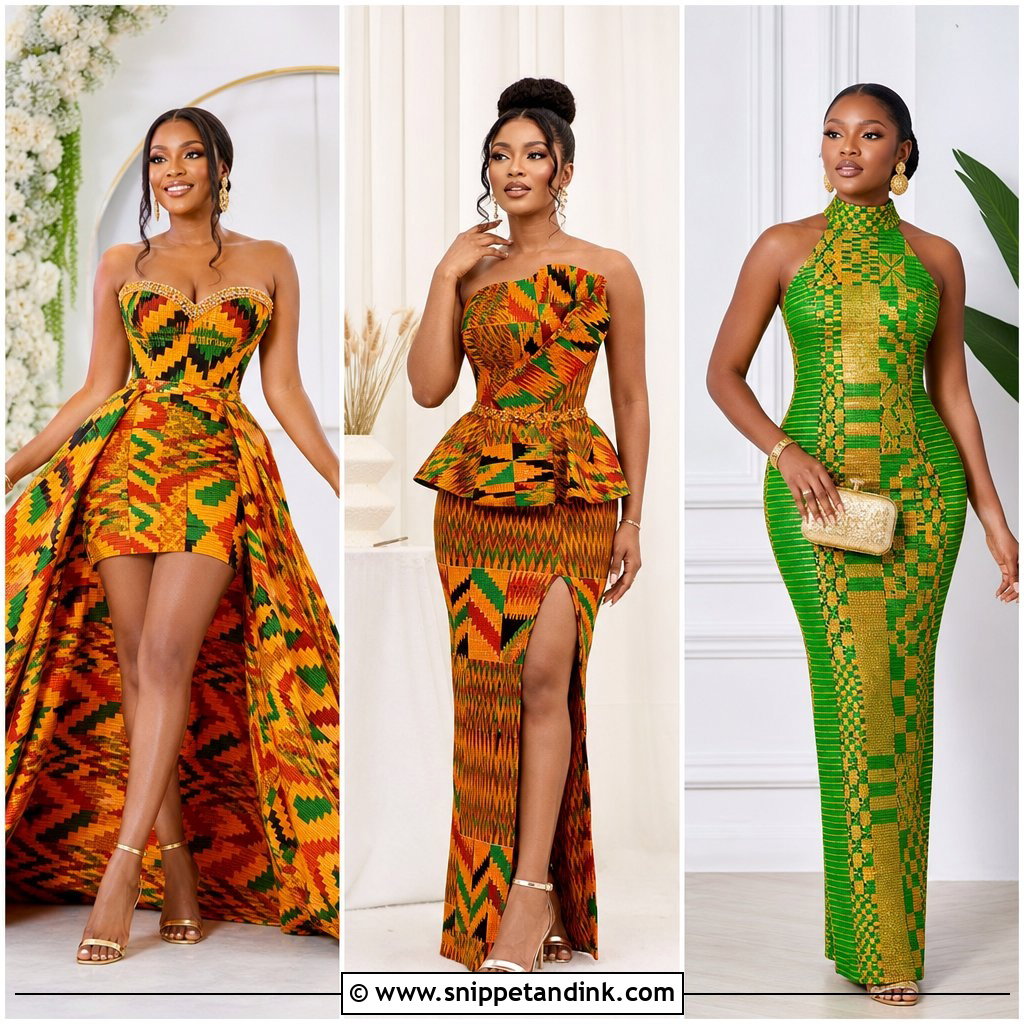
Wax print cotton is firm with almost no stretch, which is good news for a mermaid shape and bad news for sitting down. The bodice should follow the waist and hips closely, then open into the flare around the knee, and I always ask for a little ease at the hip seam so the dress survives a three-course dinner. A sweetheart, square or gently curved neckline balances the skirt. Brides can add a detachable train in matching Ankara or plain tulle; as a guest, keep any train short enough to dance in. Metallic block heels, sculptural earrings and a clutch in one of the print’s quieter colours finish it. The fabric is already doing the work, so stop there.
2. Kente Ball Gown for Weddings
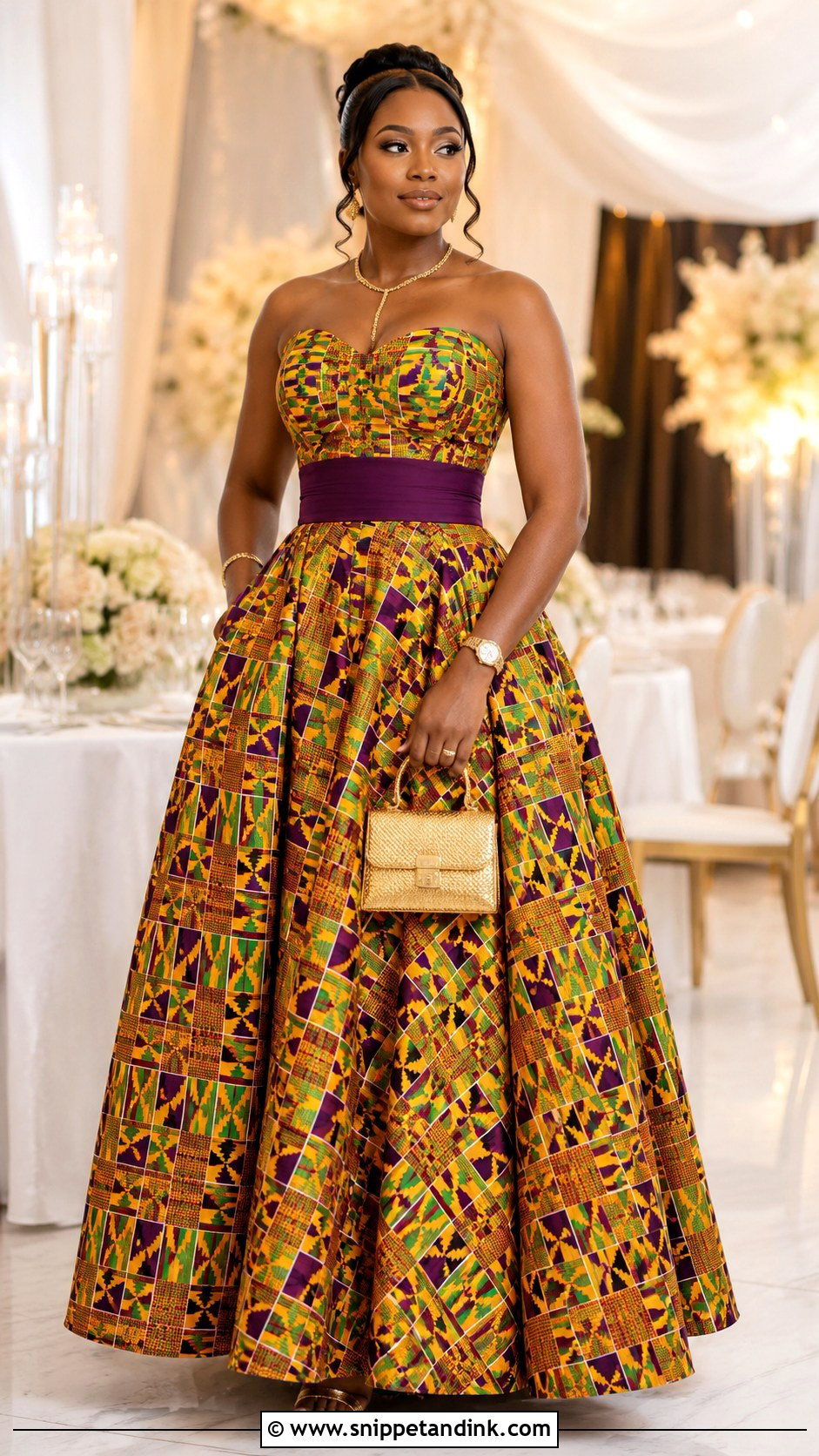
A Kente ball gown is about as formal as a printed or woven dress gets. True Kente comes from Ghana and is woven in narrow strips that are sewn together, while printed versions copy the pattern on flat cotton at a far lower cost. Woven Kente is stiffer and heavier, so a full skirt in it needs a sturdy waistband to hold the weight. Build the gown around a fitted bodice and a floor-length skirt, and use a solid waistband to separate competing motifs. Brides can add a plain satin train; guests can go less voluminous. Gold heels, a structured mini bag and simple gold jewellery are all it needs. If a particular cloth has meaning in your family, ask relatives before ordering.
3. Aso Oke Bridal Gown With Gele
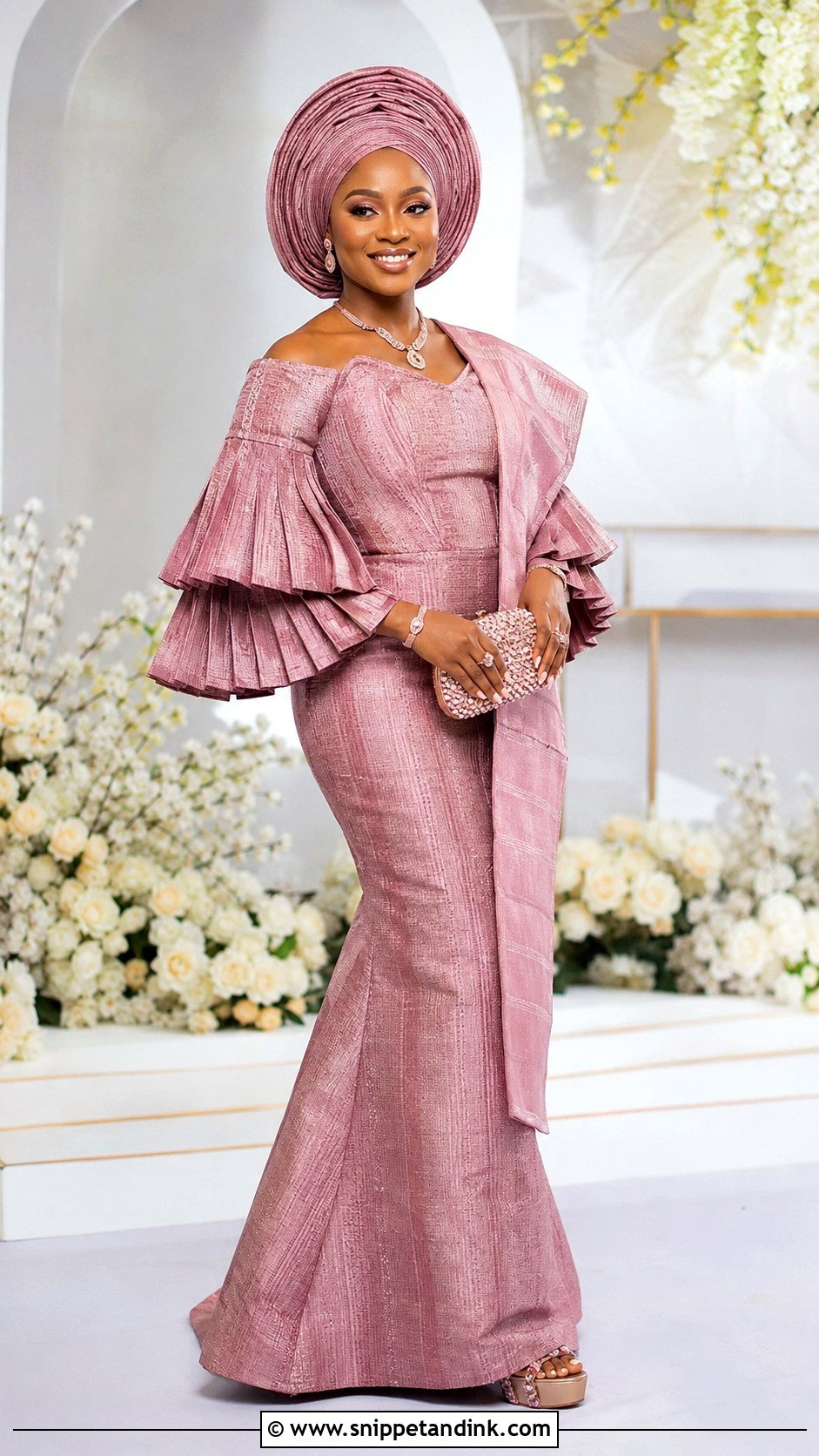
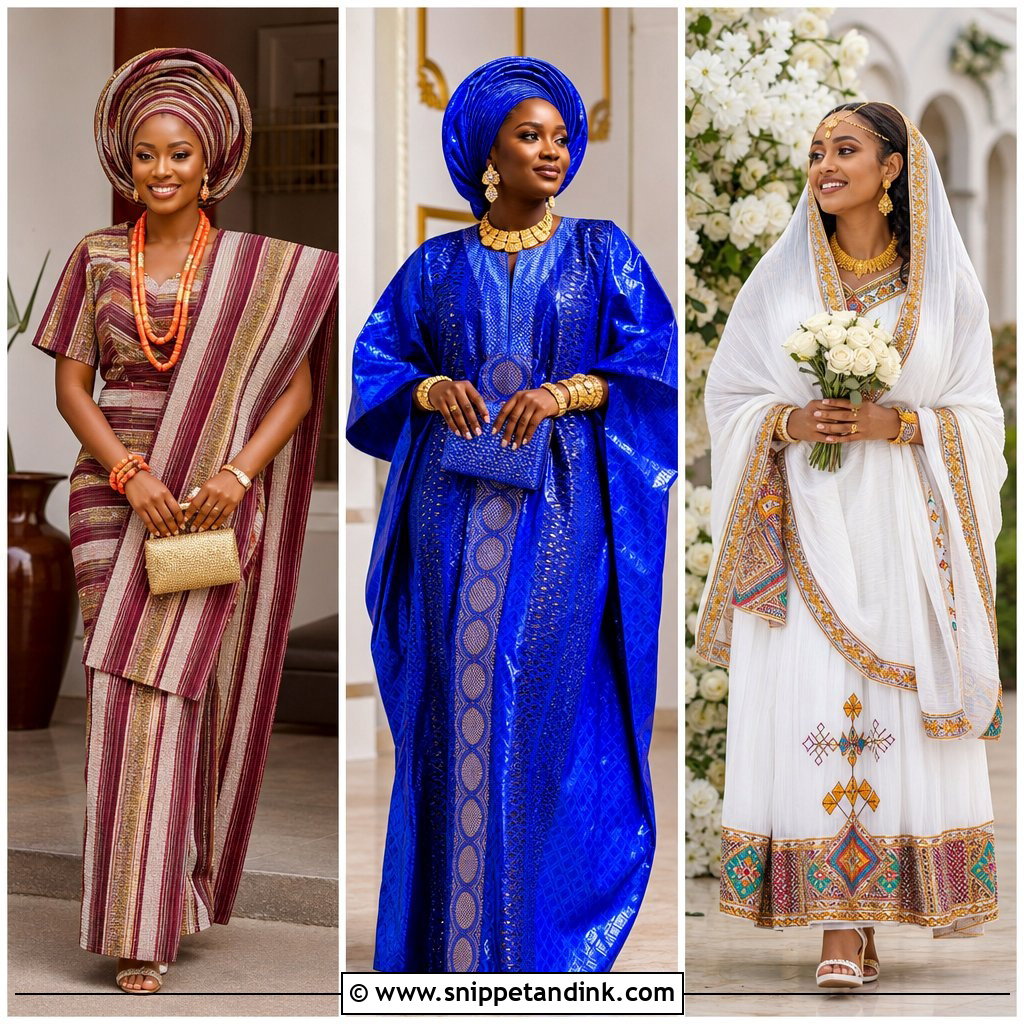
Aso oke is a hand-loomed Yoruba ceremonial cloth, and many families commission it in a set colour for everyone close to the couple. Cut into a fitted gown with a straight or softly curved neckline, a shaped waist and a flared lower skirt, it gains a very regal line. Pleated sleeves or a detachable shoulder drape add volume without hiding the weave. The gele can match exactly or go metallic for contrast. Here’s what I warn about: aso oke is firm, almost papery in some weaves, so seams sit where the cloth lets them, not where you’d like. Ask for a smooth lining and real room through the hips for sitting and dancing. A beaded clutch, platform sandals and restrained jewellery at the neckline complete it.
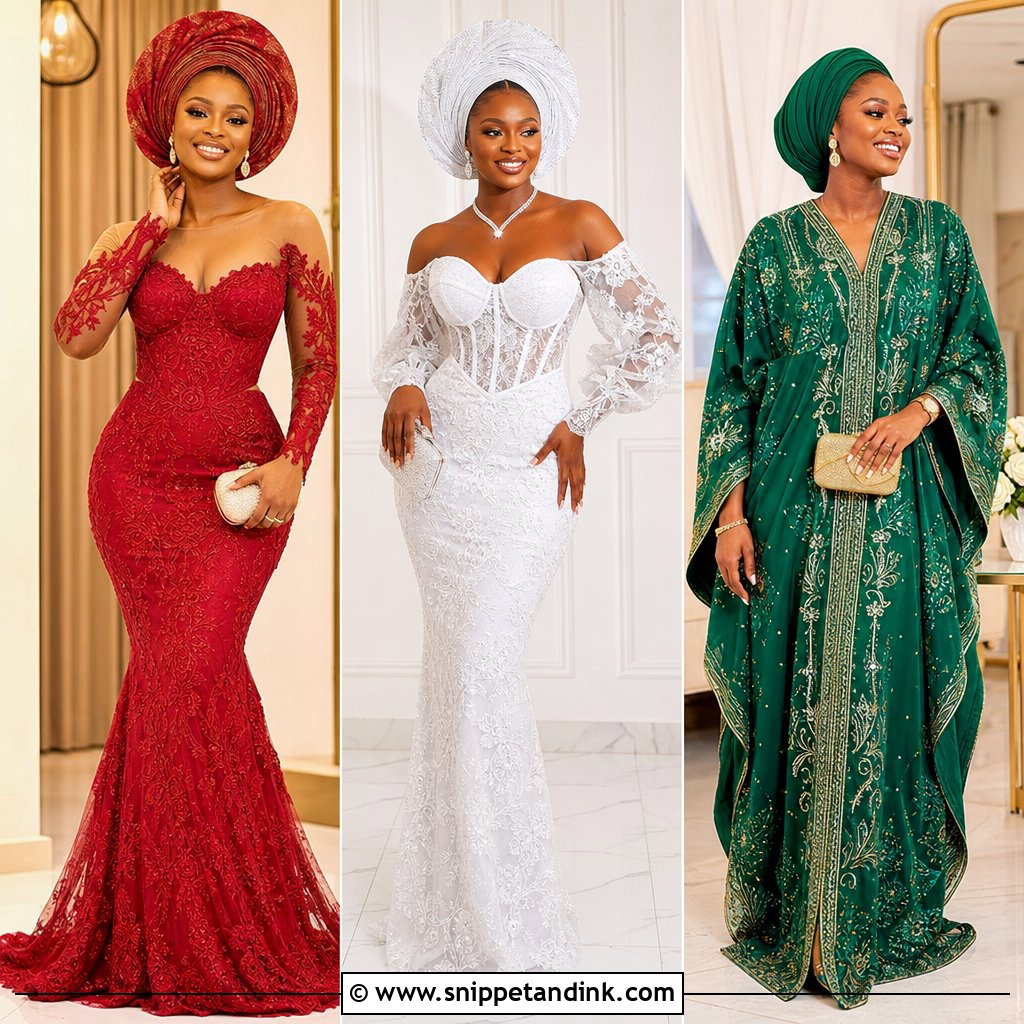
4. Nigerian Lace Peplum Gown for Weddings
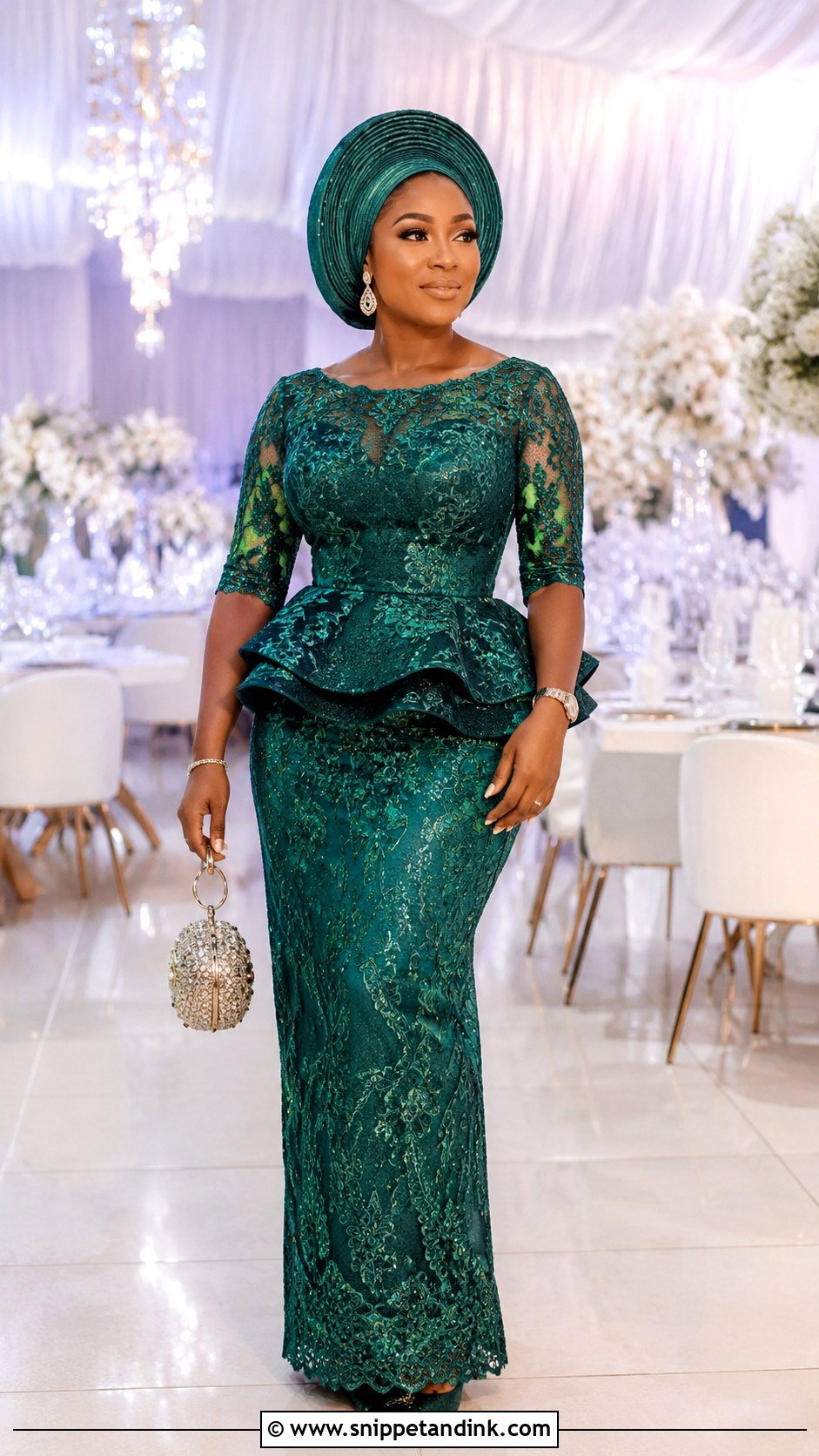
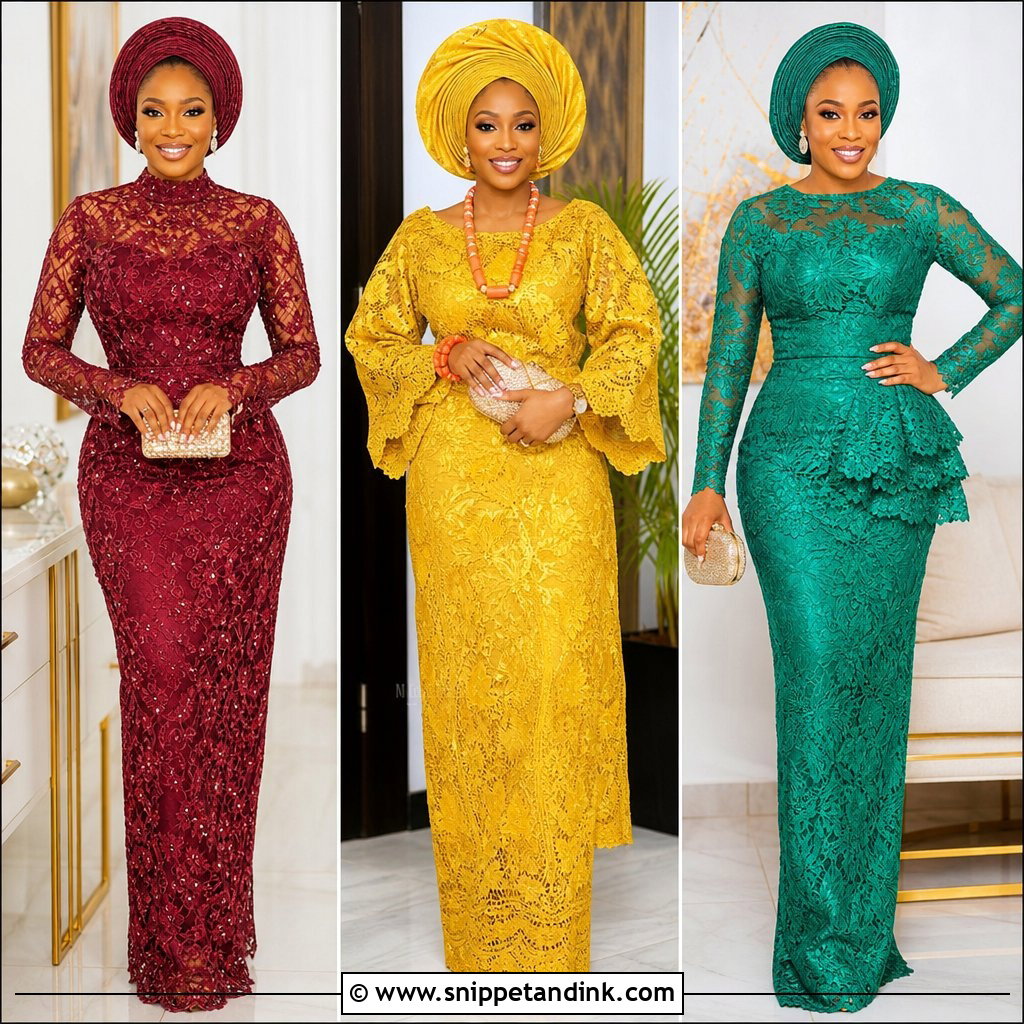
A Nigerian lace peplum gown is the shape I reach for when a guest wants some coverage at the stomach without losing a defined waist. The peplum should start exactly at the natural waist; a peplum sewn even slightly low makes the torso look shorter. Underneath, a fitted column or mermaid skirt keeps the line clean. Lined lace in emerald, burgundy, cobalt, blush or champagne works, depending on the colour requested. A bateau neckline with elbow sleeves is polished, and a modest V lengthens the upper body. Add a matching gele, pointed pumps, drop earrings and a small embellished purse. Densely beaded lace already has plenty going on, so keep the shoes and jewellery quiet.
5. Shweshwe Fit and Flare Dress for Weddings
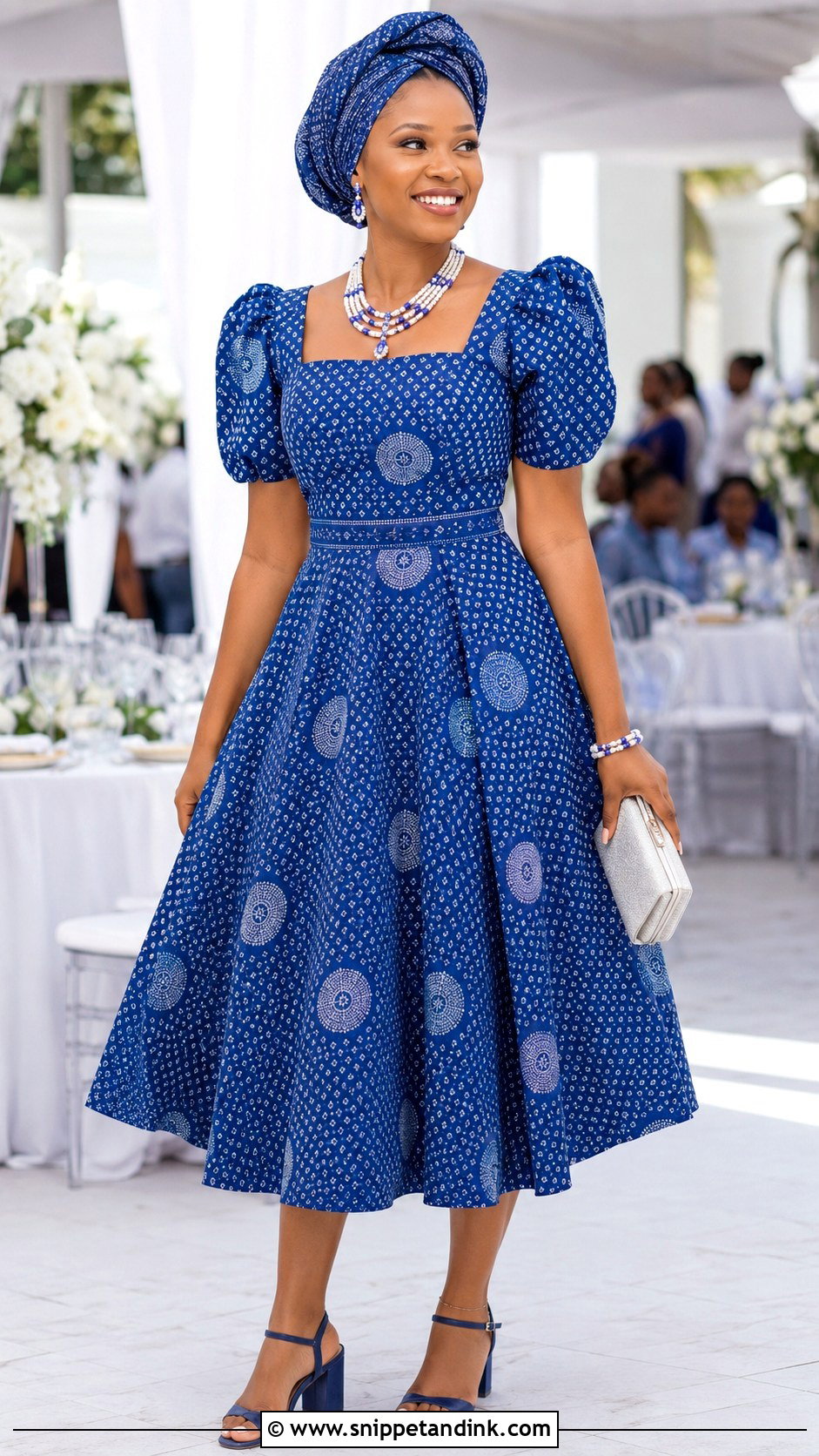
A shweshwe fit-and-flare dress is my top pick for an outdoor daytime wedding where you’ll be on your feet and dancing. Shweshwe is the indigo-dyed cotton strongly associated with South African dress, though it now comes in many colours, and its starchy finish holds a full midi or ankle skirt with no petticoat needed. Ask for motifs aligned at centre front and the side seams; on a print this regular, a half-pattern jump stands out. A square neckline, short puff sleeves and covered buttons suit the crisp fabric. Low block heels, a neat clutch and simple beaded jewellery finish it, and a scrap of the same cloth on a headwrap ties it together.
6. Xhosa Umbhaco Maxi Dress for Weddings
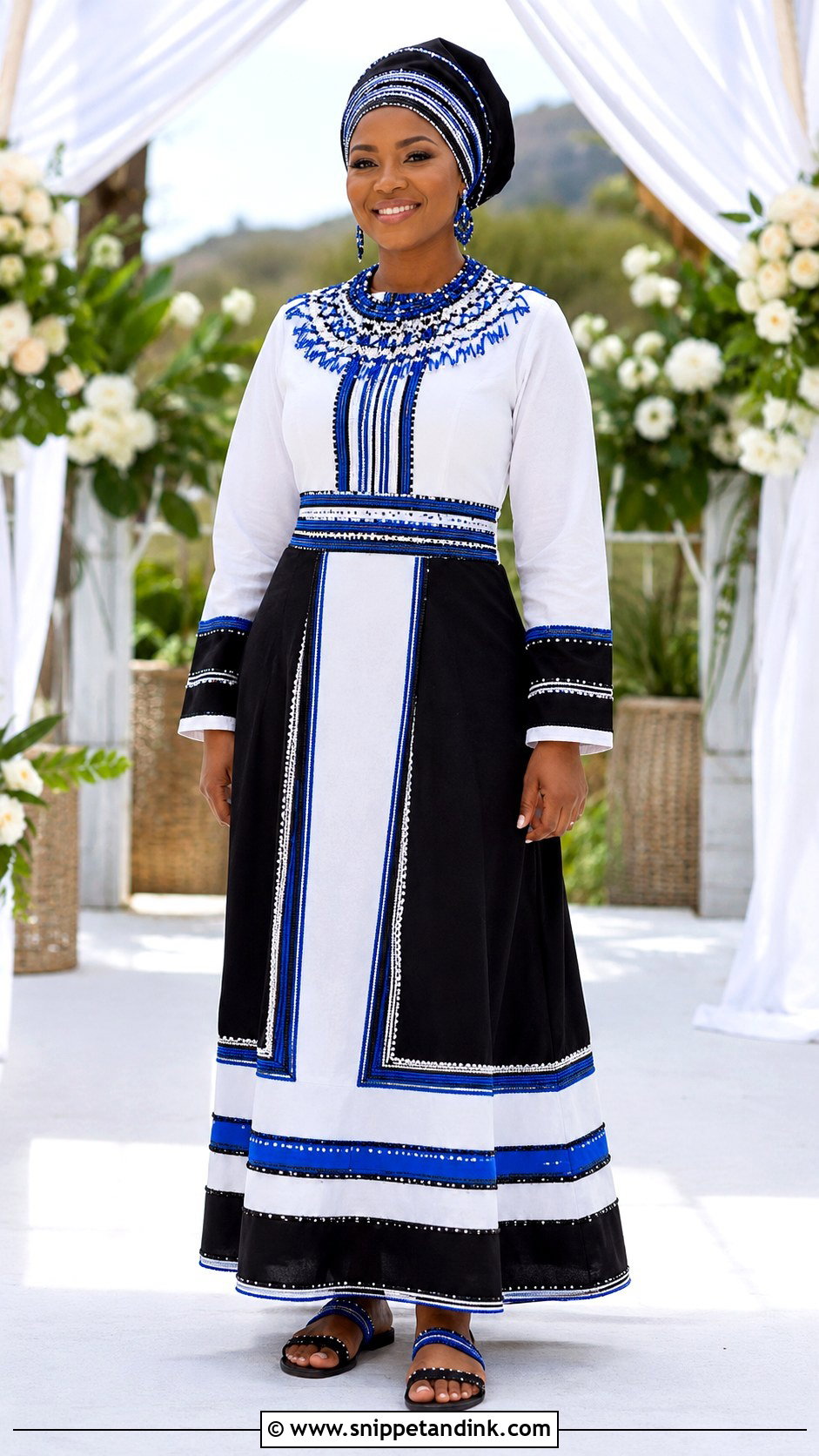
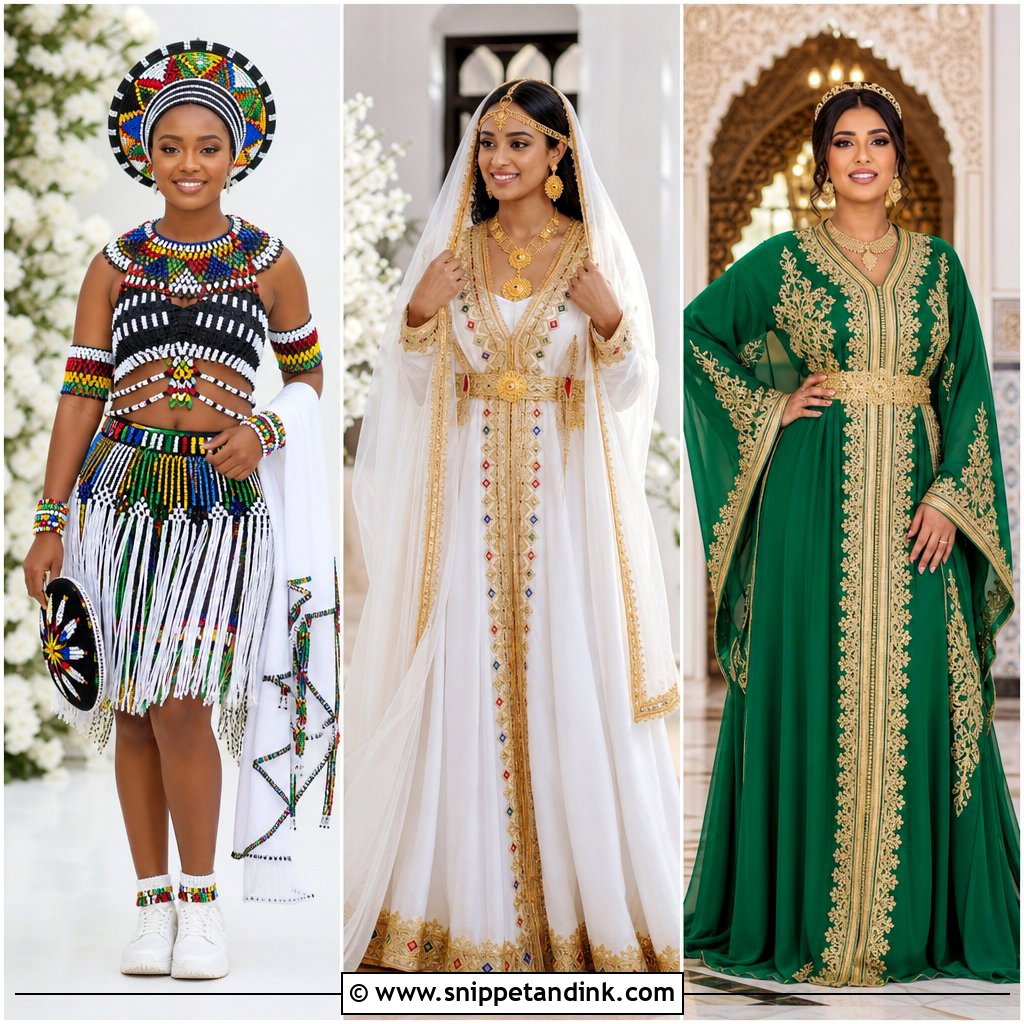
Umbhaco is the Xhosa cloth known for its contrasting braid bands, and on a maxi dress those bands are the design. Keep the bodice neat and let the skirt fall straight or with a soft flare, so the stripes stay level. Black and white is the most graphic version; blue, rust or red accents can link the outfit to the wedding colours. Repeat the bands at the sleeve and lower hem so the eye travels from shoulder to floor. When it’s culturally appropriate, add a matching headwrap, beaded collar or layered necklace, and choose low heels or flat sandals for a long ceremony. This isn’t a trend to borrow casually. Work with someone who knows the garment and how its details should be placed.
7. Habesha Kemis With Netela for Weddings
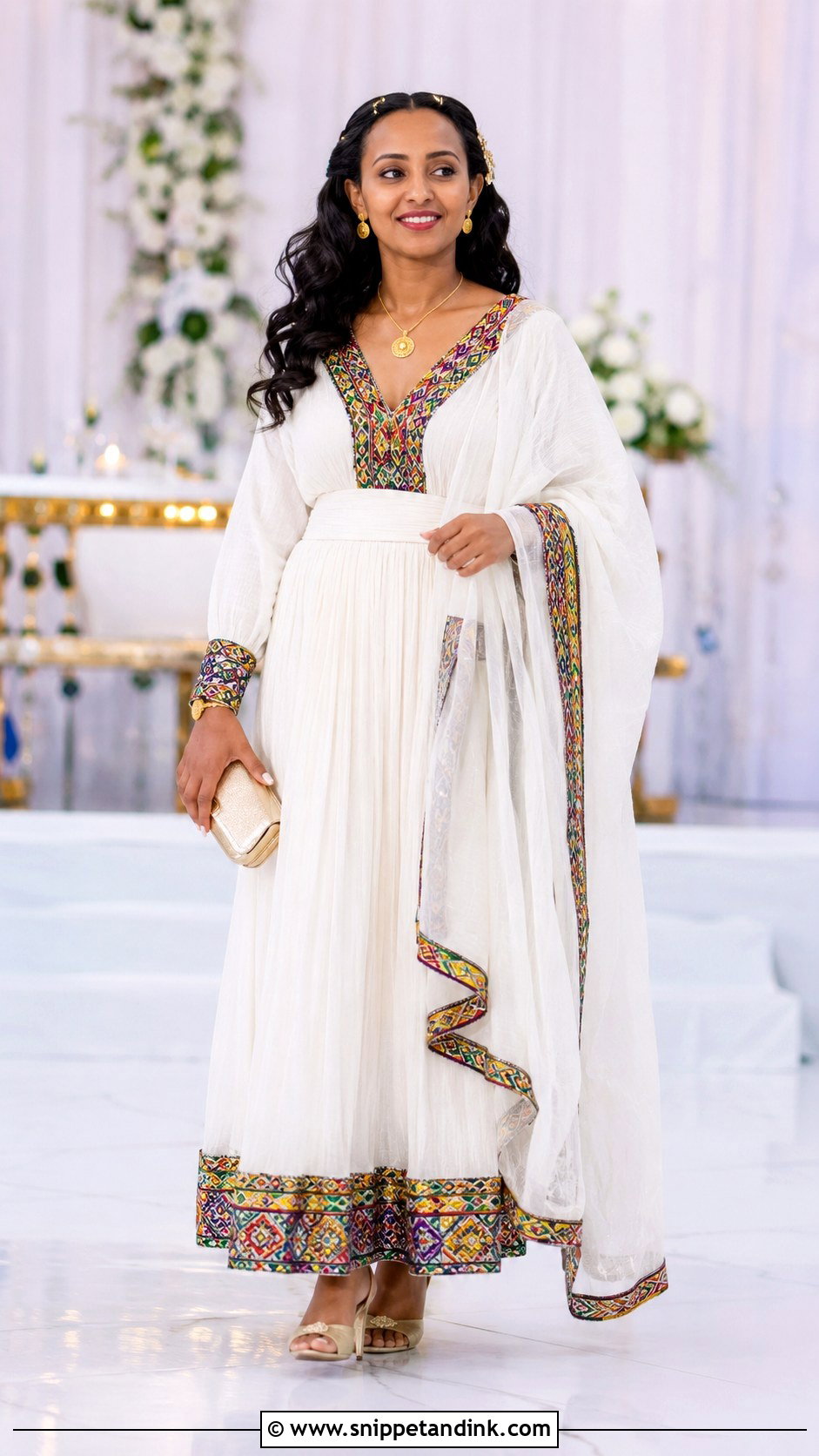
A Habesha kemis is worn by Ethiopian and Eritrean women and usually comes with a netela, the light shawl edged to match the dress. For a wedding, white, cream or pale grey with coloured or metallic borders at the neckline, cuffs and hem is the familiar look. Leave the waist only softly defined; cinch it hard and the cotton loses its float. The netela can cover both shoulders or fall from one for a longer line. When I have a kemis altered, I check the borders first, because taking in a side seam can tilt the woven band at the hem. Delicate gold jewellery, a small clutch and low metallic heels are plenty.
8. Senegalese Embroidered Boubou Dress for Weddings
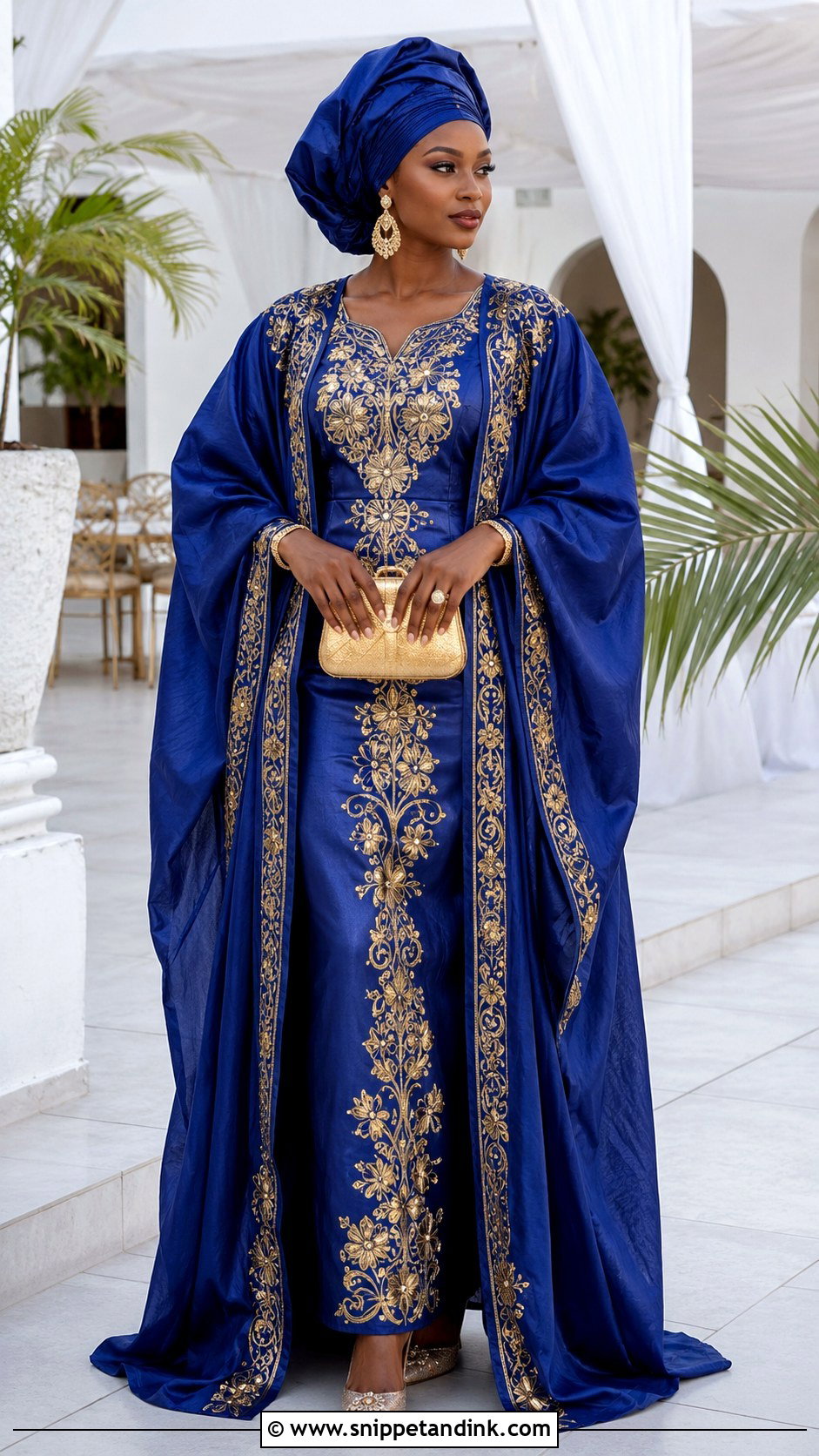
A Senegalese embroidered boubou dress is the answer for a guest who wants glamour without anything tight. The wide outer layer flows, and the embroidery frames the neckline, chest, sleeves and front panel. Polished cotton, brocade, silk blend or jacquard in jewel tones, pastels or white all work. The part most people forget is the inner dress: it has to fit comfortably under the outer layer, or it twists and shows at the side openings when you lift your arms. Pointed mules, a structured clutch and bold earrings finish it. With very elaborate embroidery, skip the necklace, and use a headwrap if you want height.
9. African Print Off Shoulder Maxi Dress
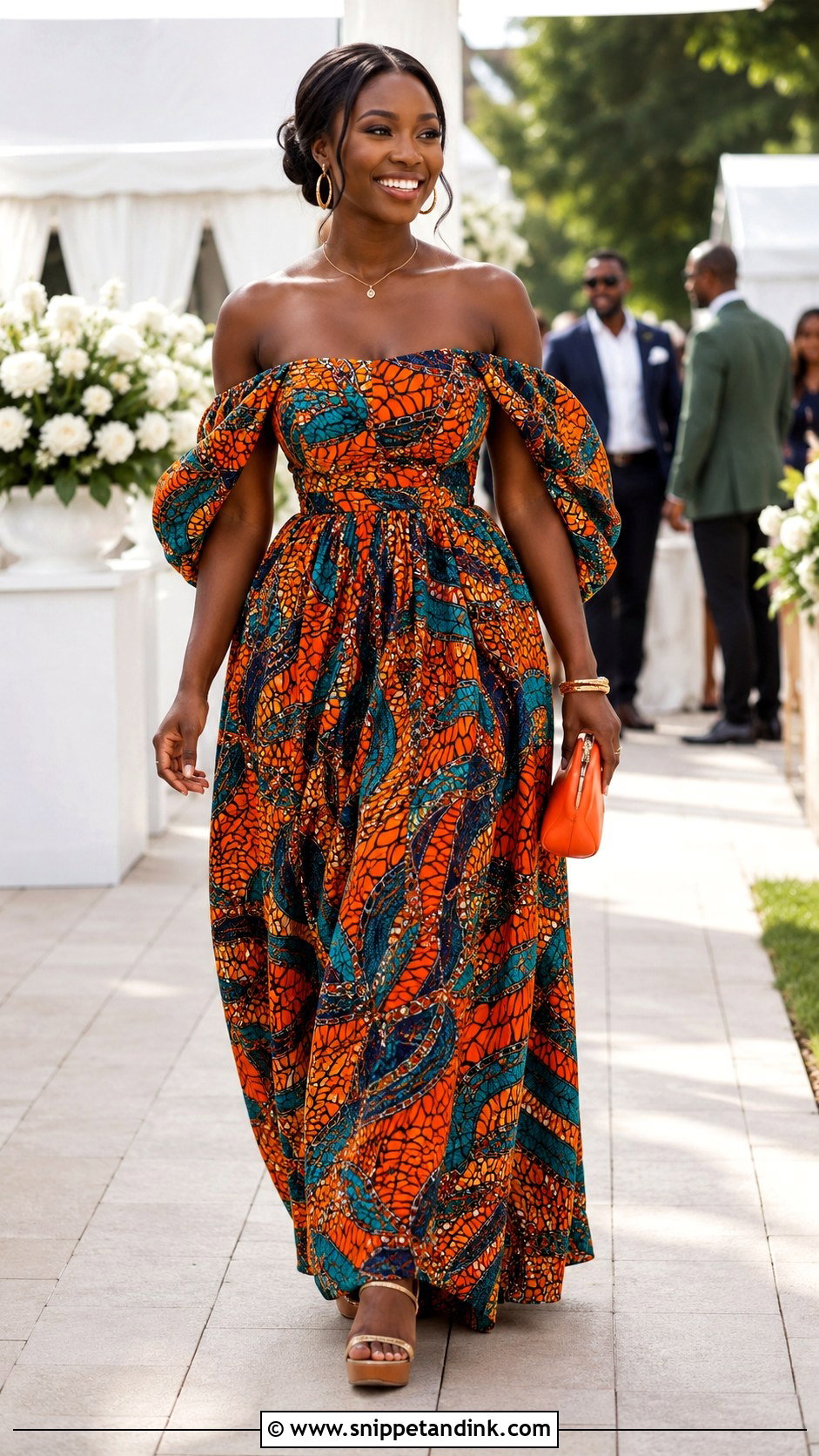
Off-shoulder is the neckline I fit most carefully, because the upper band has to stay up without pinning your arms to your sides. Elastic alone won’t do it on a heavier print; I want boning or a silicone strip inside. The skirt can gather softly from the waist or open into an A-line for smoother walking. Medium-scale prints are the easiest to wear, while oversized motifs need simple seams and very little trim. Add platform sandals, hoops and a small bag taken from the least dominant colour in the print. If you’d like more coverage, ask the tailor for short draped sleeves or a detachable shawl in the same fabric.
10. Ankara High Low Wedding Dress
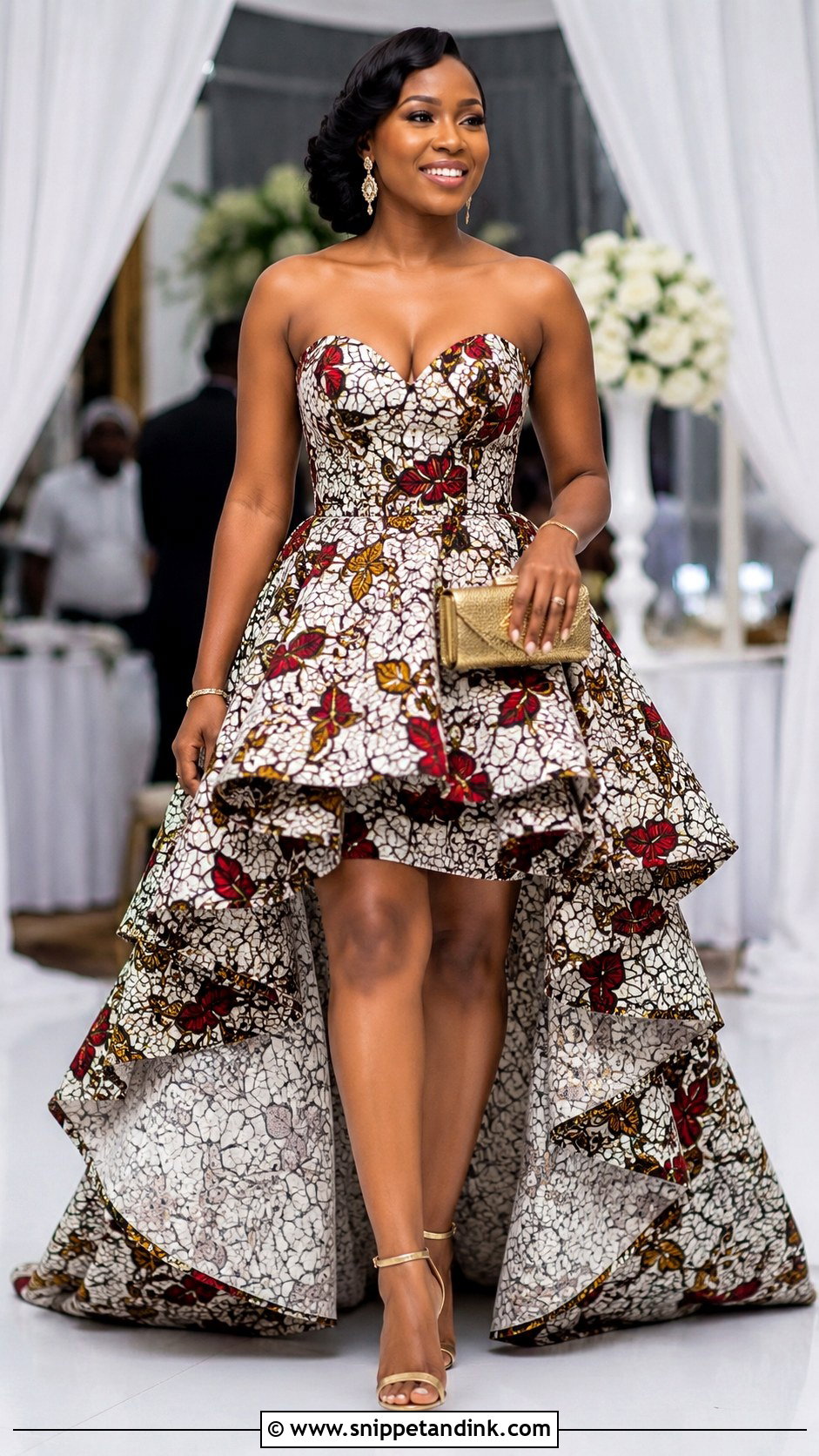
Movement is the whole point here. The short front shows your shoes and the long back gives you the formal sweep, but the curve between them must be gradual, or it reads as costume. A fitted waist and structured bodice balance the volume below. A bride can layer plain organza under the print; a guest is better off with a lighter, unlined ruffle at the hem. Ankle-strap heels, a box clutch and earrings repeating one print colour finish it. Since the shoes are fully on show, pick a stable heel with a clean finish. Wax print holds a fold line stubbornly, so steam every layer before you leave the house.
11. Kitenge Wrap Maxi Dress for Weddings
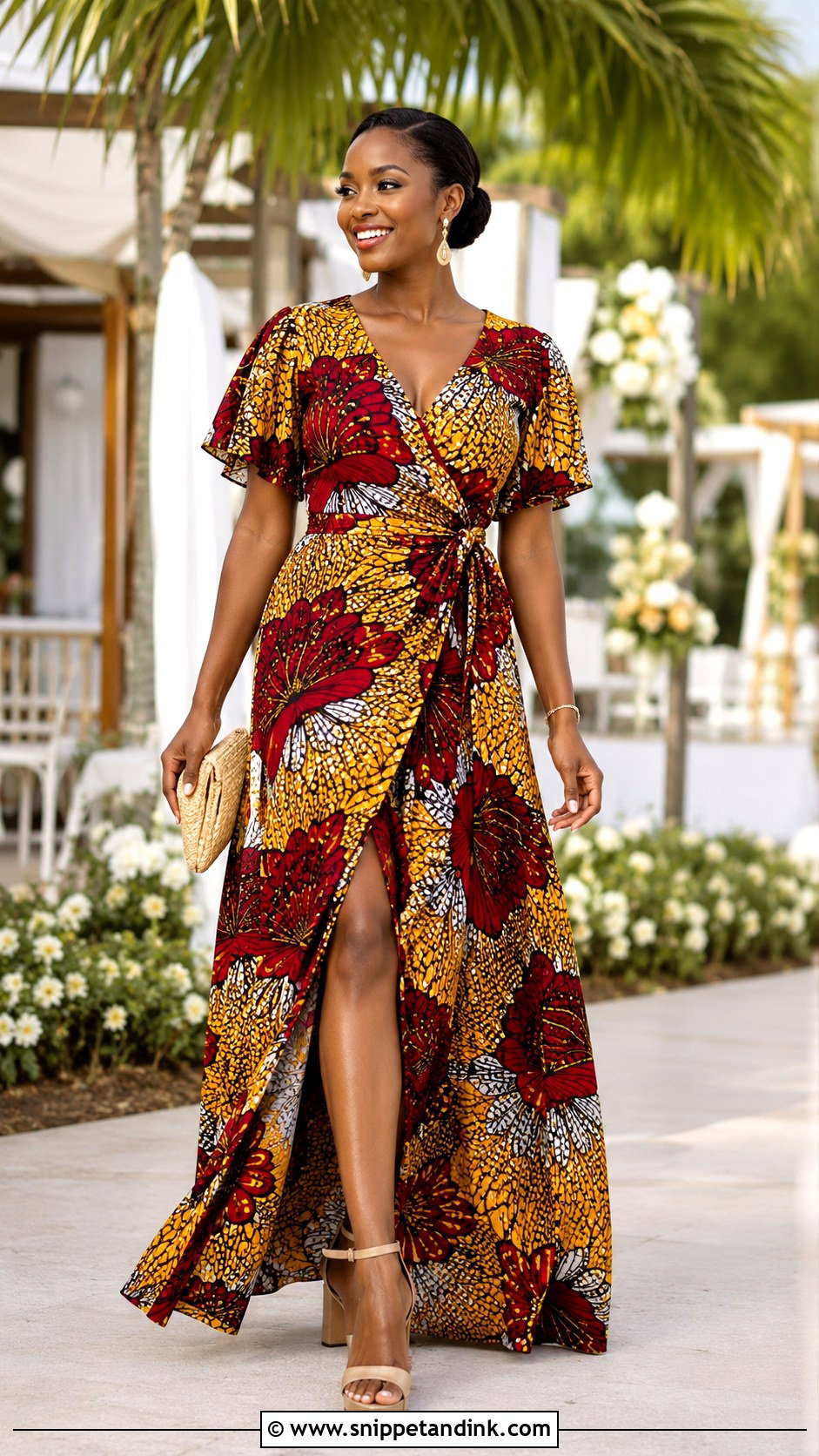
I like a kitenge wrap maxi for destination and outdoor weddings because you can adjust the fit as the day goes on. The crossed bodice makes a V neckline and the waist tie lets you loosen up after dinner. The thing to check in the fitting room is overlap: sit down and walk a few steps, and if the front skirt opens, you need a wider wrap or a hidden fastening. A discreet snap at the neckline does the same job up top. Flutter sleeves soften a strong print; fitted elbow sleeves look more tailored. With a multicoloured kitenge, keep the shoes and bag in one neutral shade.
12. African Lace Column Gown for Weddings
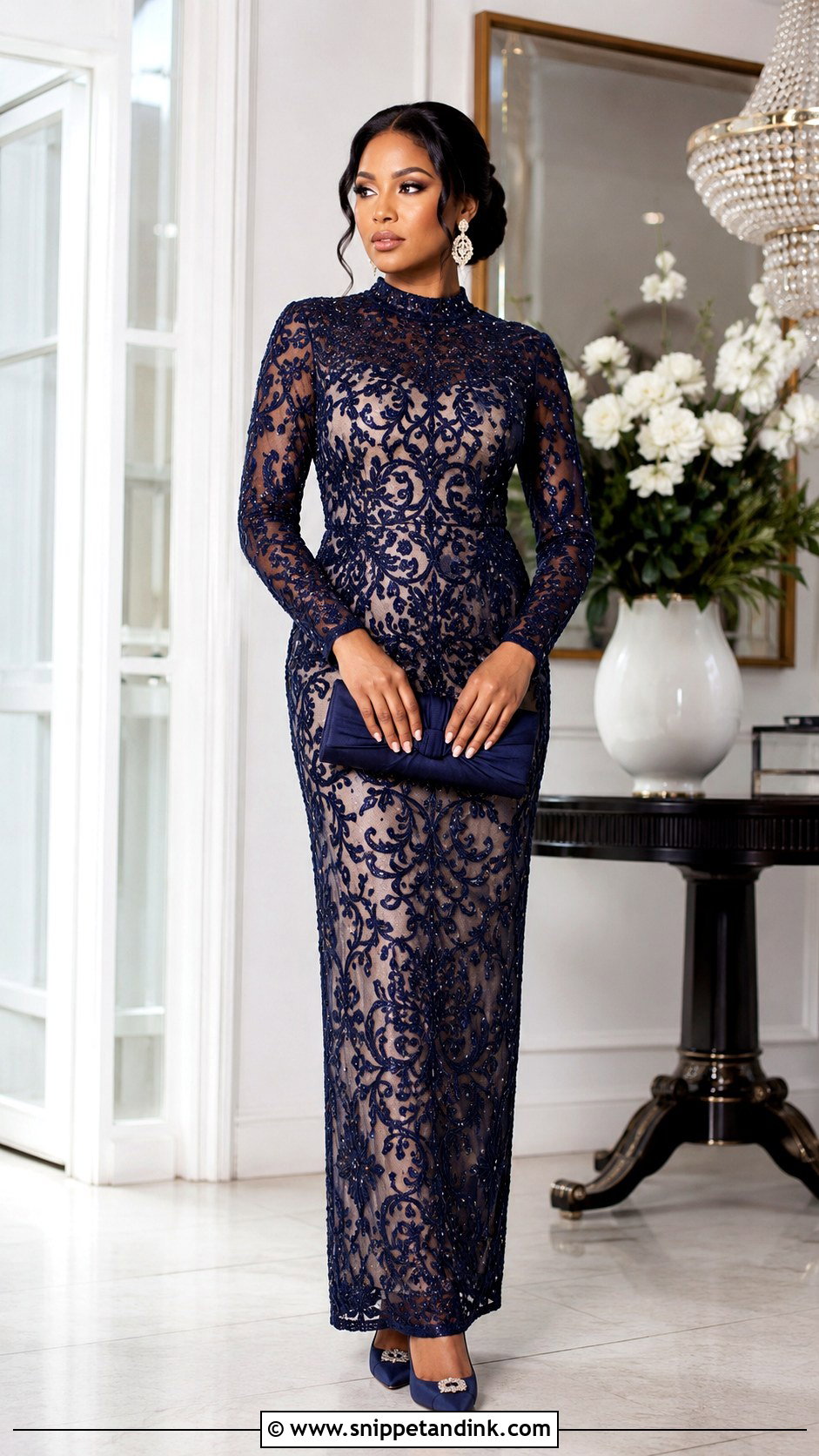
A column gown has nowhere to hide, so the lace and the fit have to be right. It should skim rather than grip, with enough room at the knee to walk without a hobble. Embroidered or sequined lace over a contrasting lining shows the pattern most clearly: navy over champagne gives depth, a tonal lining reads softer. Long fitted sleeves, a high neckline or a subtle sweetheart all work depending on formality. Pick one statement accessory, chandelier earrings or a jewelled headband, with pointed pumps and a satin clutch. Two things I’d insist on: a smooth interior lining, because lace scratches over a long evening, and a back vent or small kick pleat.
13. Beaded Cape African Gown for Weddings
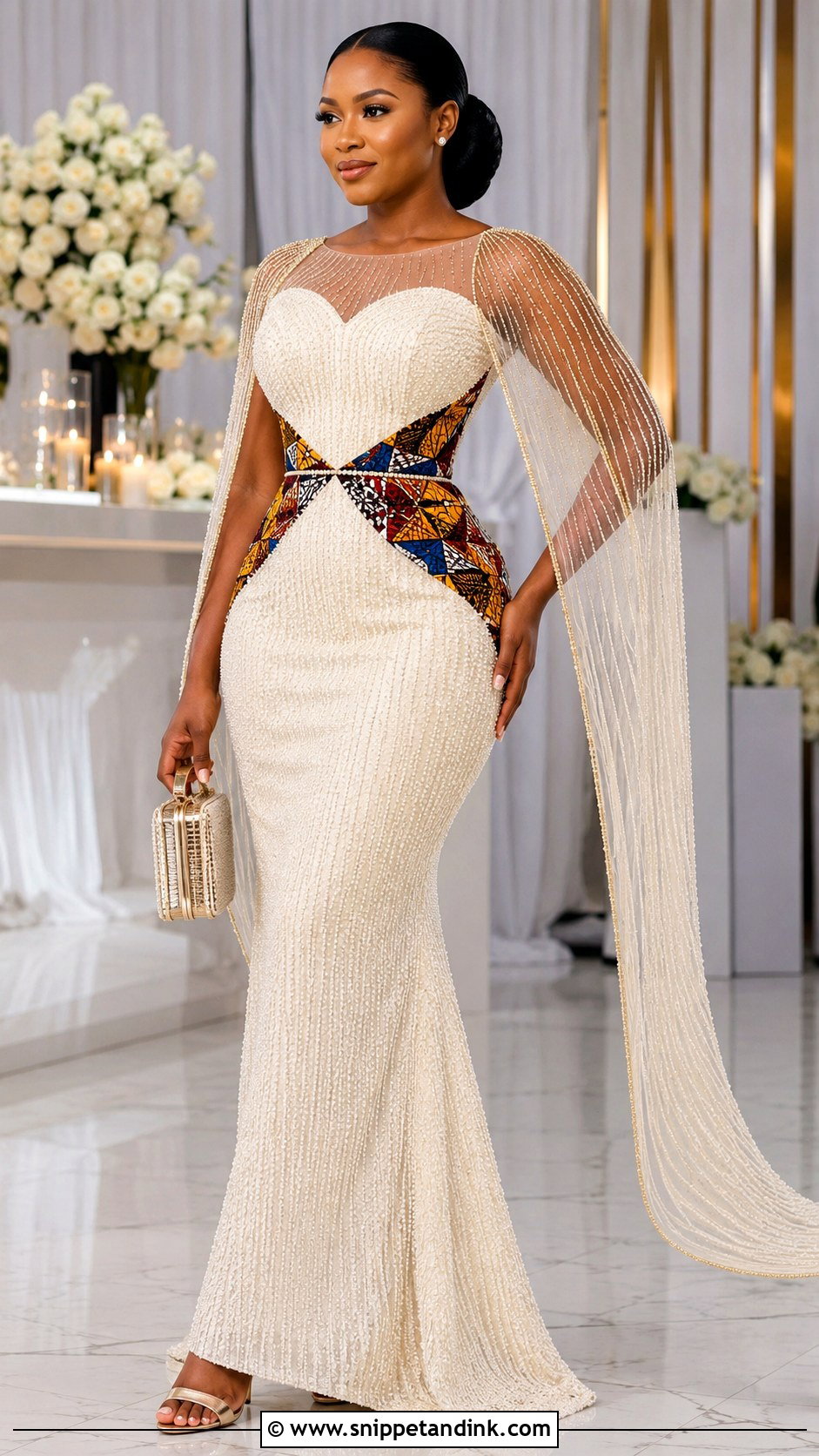
A beaded cape does the job of a necklace, a wrap and a statement piece at once. Wear a simple fitted dress underneath and let a sheer or fabric cape fall to the elbow, wrist or floor. Beads can trace the neckline and the cape’s edges, with African print panels at the waist, cuffs or lower skirt. Keep the print in those few places, or the look gets heavy fast. Sleek heels, studs and a compact metallic bag are enough, and skip the necklace entirely if the cape is beaded near the collarbone. Ivory with gold or print accents suits a bride; sapphire, plum, green or bronze suit a guest. A beaded cape weighs more than people expect, so check that it’s anchored and not pulling the neckline back.
14. One Shoulder Ankara Gown for Weddings
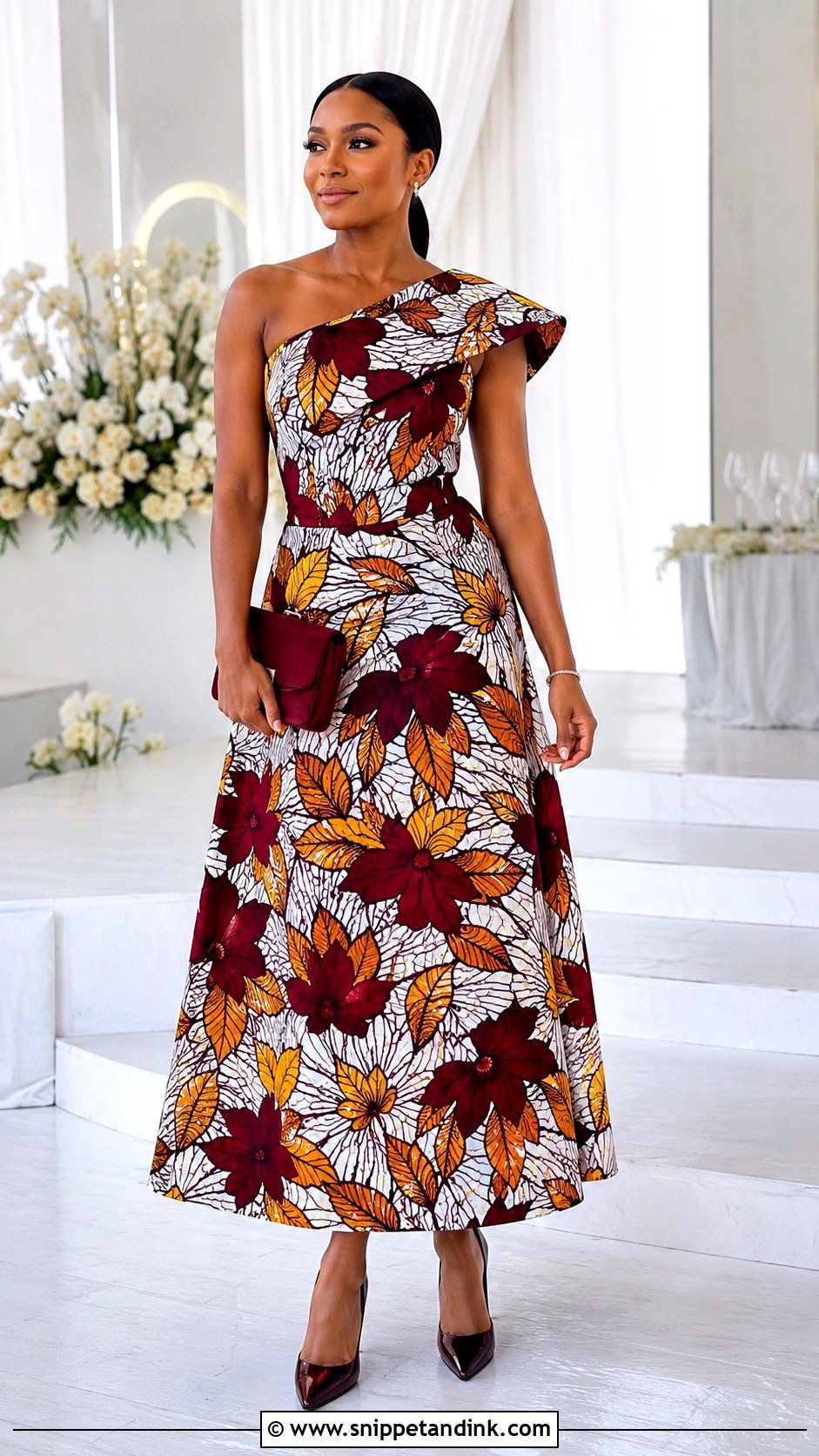
A one-shoulder neckline pulls the eye up and to one side, so the rest of the gown should stay calm. A fitted mermaid base adds drama; an A-line is lighter and better for daytime. I’d choose a folded shoulder panel, a modest bow or a short draped sleeve over a big ruffle, which tends to sit right next to your face in every photo. One slim bracelet, understated earrings, pointed heels and a solid clutch matching one small print detail are plenty. With a fuller bust, internal structure isn’t optional. Ask about boning, cups and a concealed strap so the neckline stays level for the whole evening.
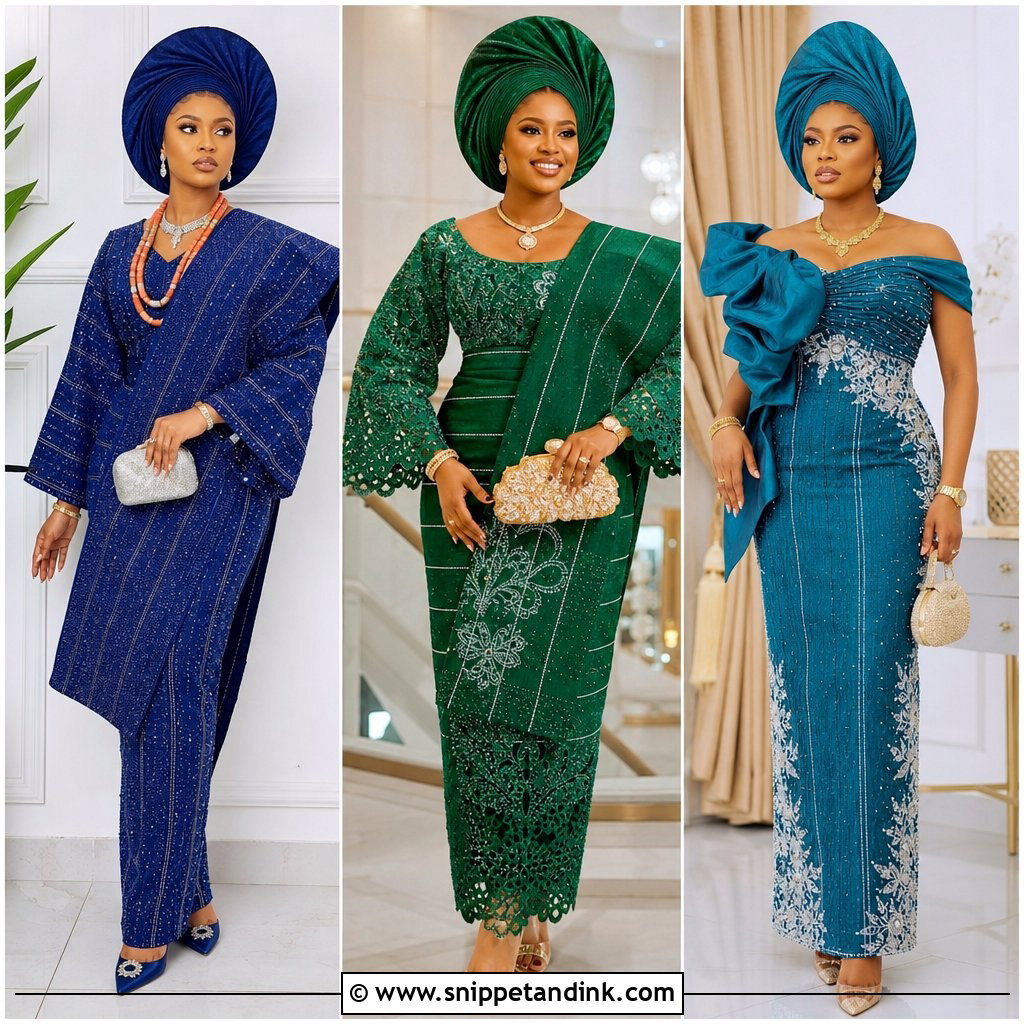
15. Velvet and Ankara Mermaid Dress
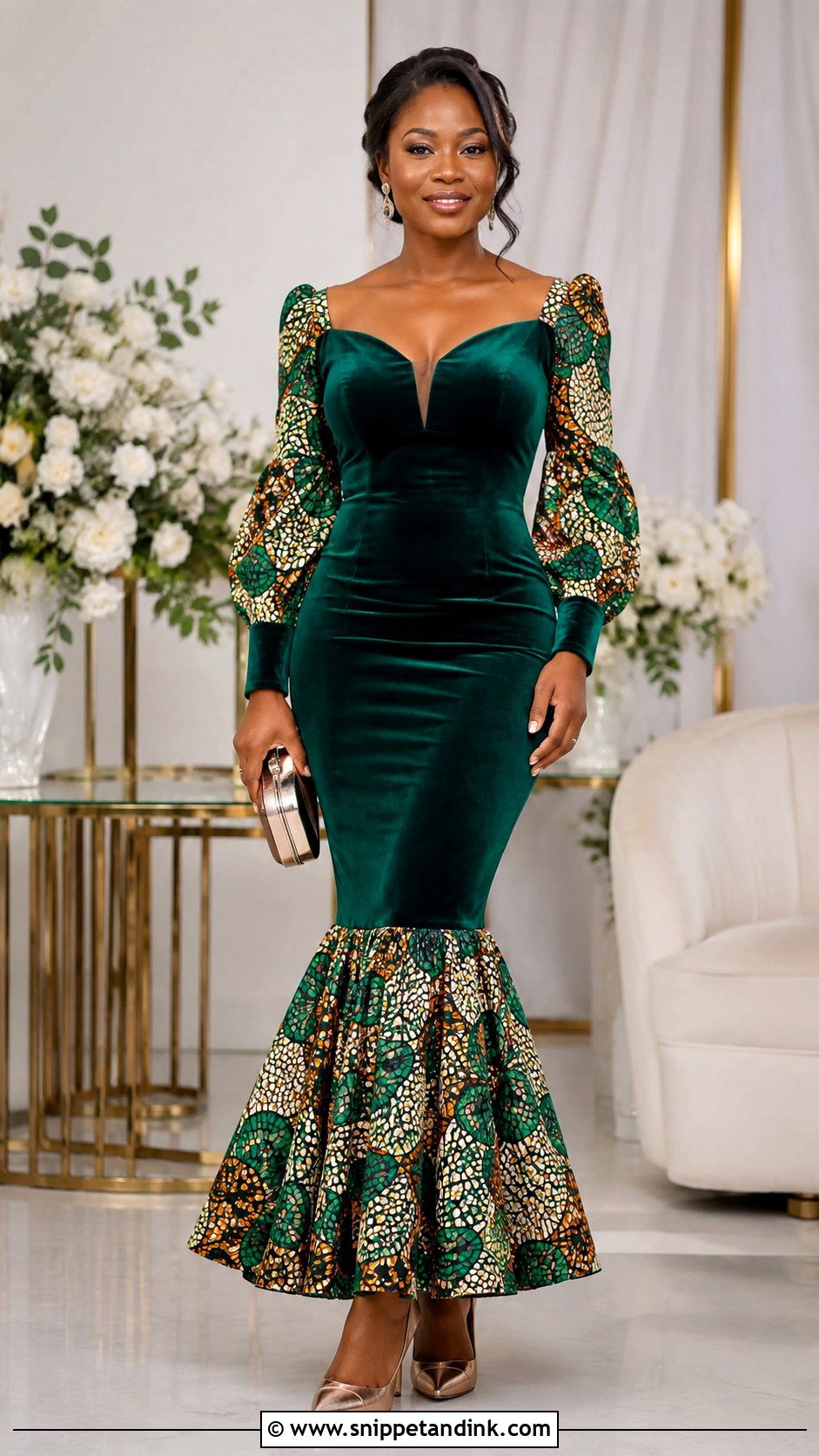
Velvet next to wax print gives you soft and sharp in one dress. Use velvet through the bodice and upper skirt, then bring in Ankara at the sleeves, side panels, peplum or mermaid hem so the print has a clear job. Deep green, navy, plum or burgundy velvet sits well with gold-heavy prints for an evening wedding. Velvet is warm and has a pile that crushes where you sit, so in a hot climate I limit it to the bodice or trim, and I’d keep it away from the back of the skirt. A breathable lining and small stretch panels help. Metallic pumps, a hard-case clutch and simple earrings finish it.
16. Tiered Ankara Maxi Dress for Weddings
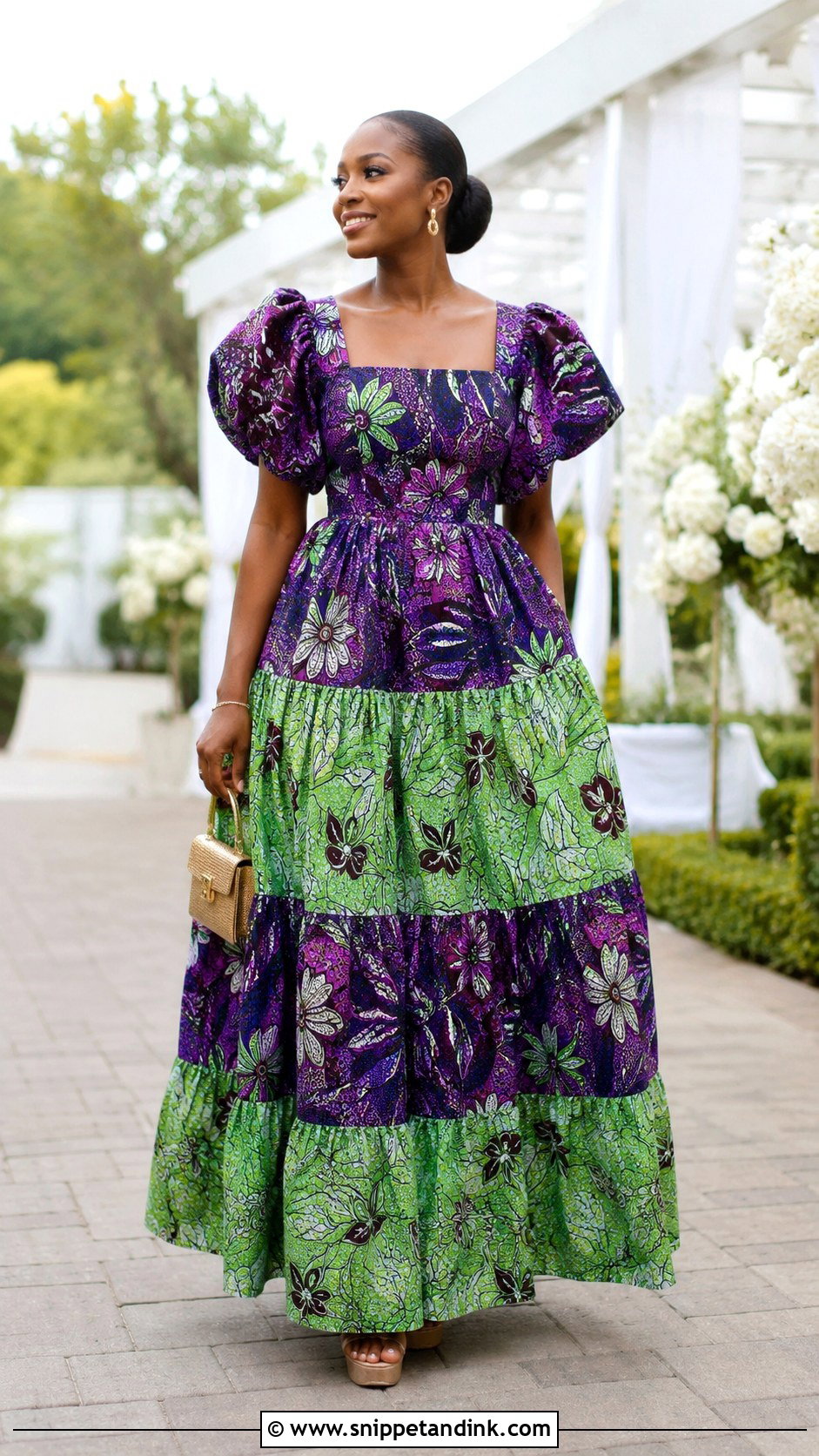
Tiers are where proportion goes wrong most often. Two or three broad tiers make a smooth, formal line; lots of narrow ones add bulk at every seam. Start with a fitted or lightly shaped bodice. A square neckline and puff sleeves balance the full skirt, as long as the sleeve volume stops above the elbow. If the print is bold, check that no tier seam cuts through the middle of a main motif. Petite women can use fewer tiers and a slightly raised waist; taller women can take an ankle-grazing hem that shows the shoes. Platform sandals, a mini top-handle bag and gold hoops suit the festive feel.
17. Puff Sleeve African Print Midi Dress
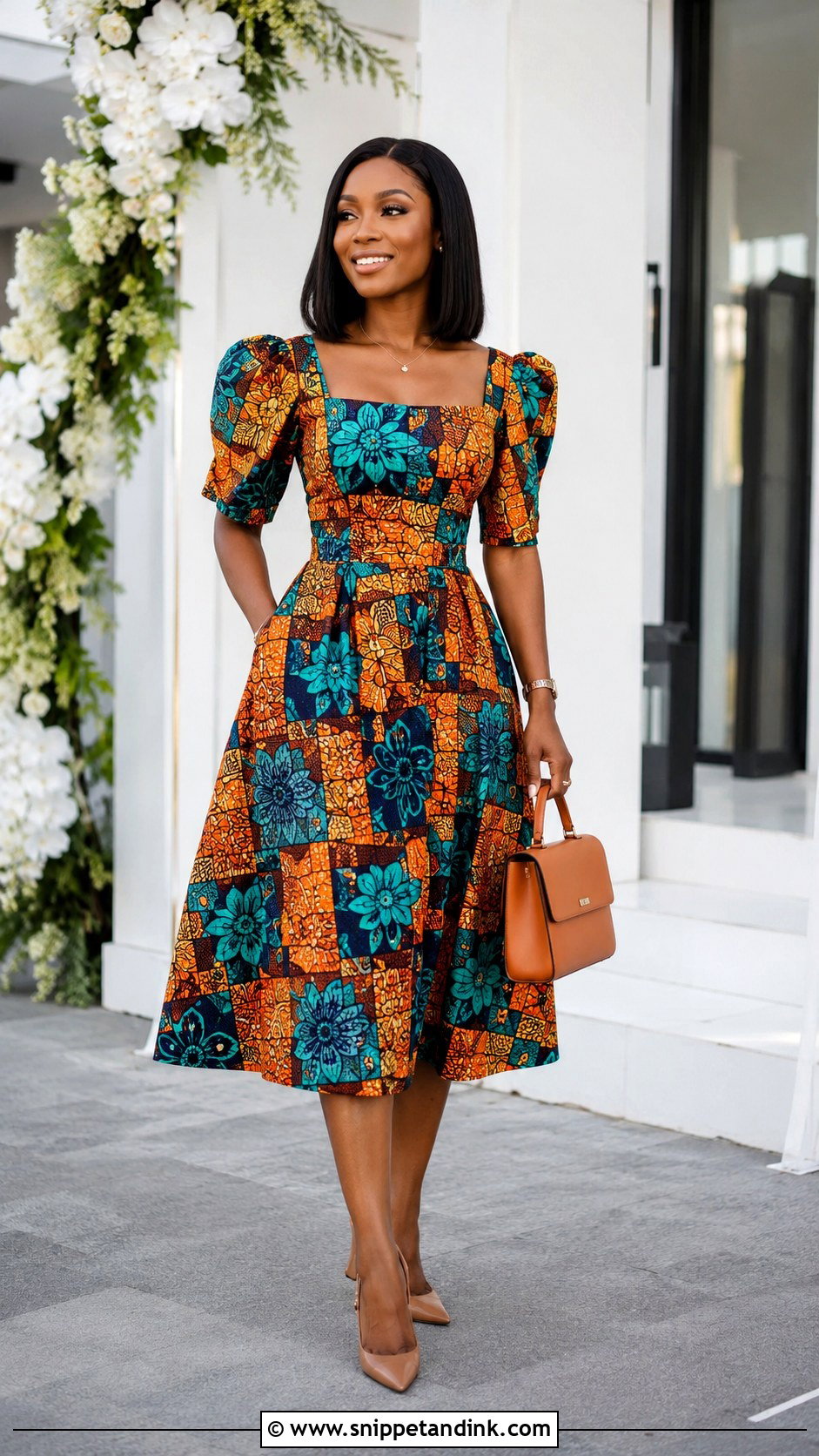
For a daytime wedding, a small reception or a cocktail dress code, a puff-sleeve midi sits right between formal and relaxed. Keep the sleeve full at the shoulder and narrow at the cuff, otherwise the volume drifts onto the upper arm and widens you. A fitted waist and softly flared skirt ending below the knee or at mid-calf, with a square or shallow V neckline, opens up the face. Slingbacks, a structured handbag and simple jewellery complete it, and fabric-covered buttons add detail without a new colour. Set the hem only after trying it with your chosen shoes. A midi looks best ending where the calf narrows.
18. Brocade Kaftan Wedding Dress
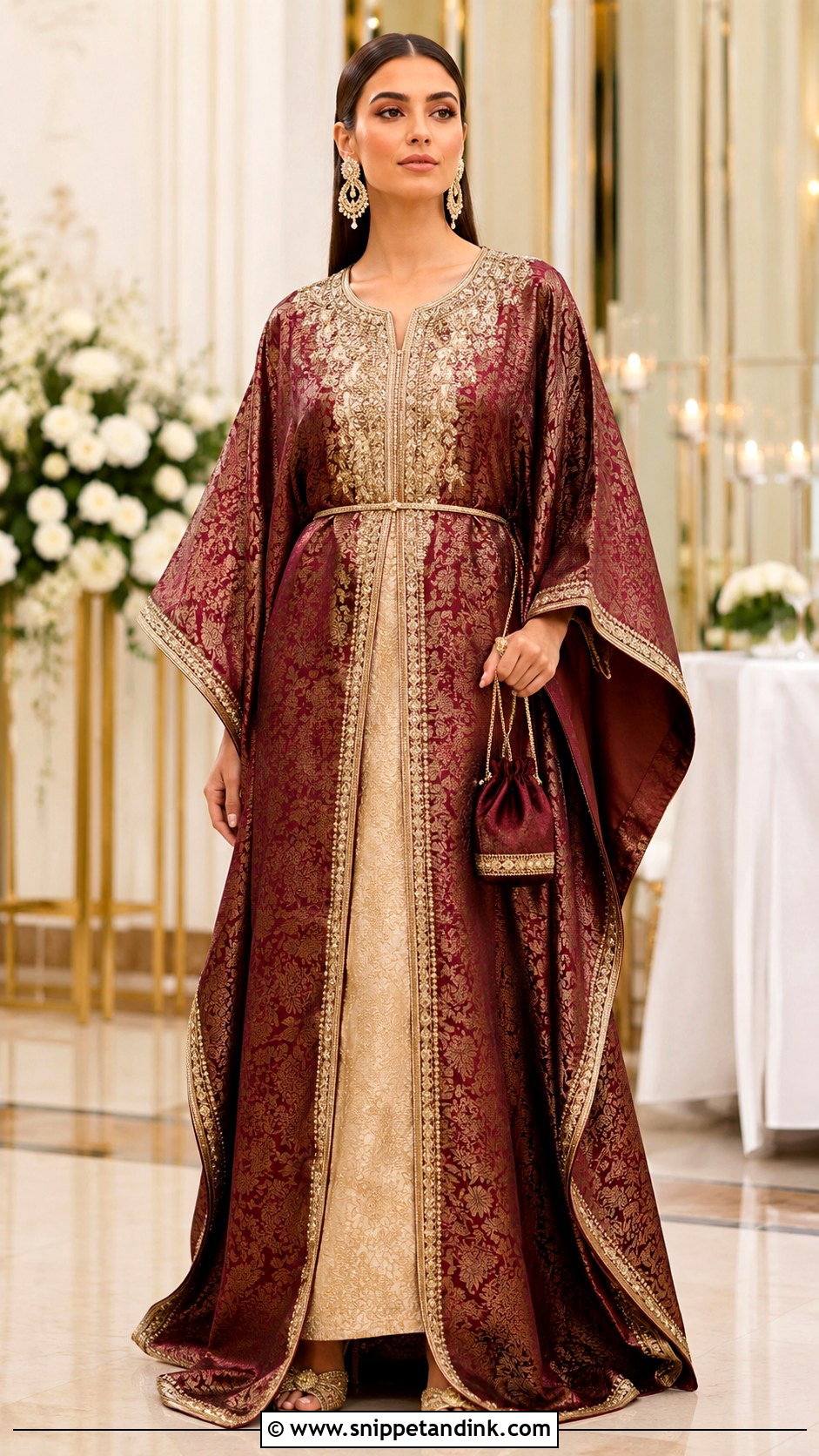
Brocade has the stiffness and sheen to make a kaftan feel truly formal. Choose a long flowing cut with a defined centre panel or an inner belt that shapes the waist gently. Thread colour for embroidery at the neckline and sleeves should sit close to the fabric, since a strong contrast on a patterned brocade turns muddy. Jewel tones suit a guest; ivory, pearl or pale gold can be a bride’s change of outfit if the families are happy with it. Embroidered mules, a small satin bag and statement earrings are enough, so skip the necklace on an ornate front. Brocade doesn’t give, so test the armholes by reaching up and across before the final fitting.
19. Color Block African Print Gown
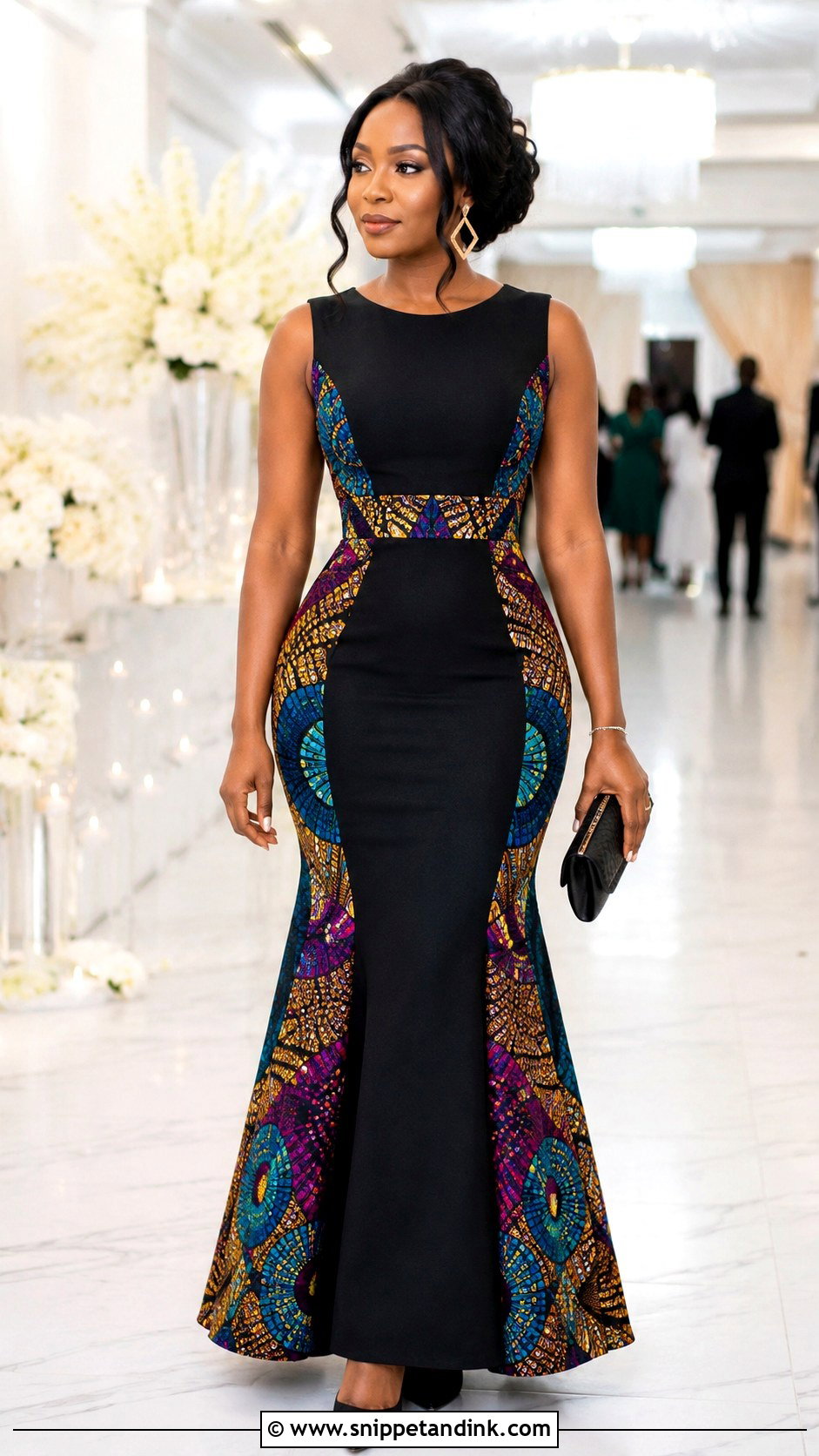
Colour blocking lets you show African print without wearing it head to toe. Start with a solid column, trumpet or A-line dress and set printed panels along the bodice, waist, sleeves or skirt. Vertical side panels lengthen the figure, while a printed waistband pulls the eye to your middle, so choose based on what you want noticed. Stick to one print and one or two solids. Black with a jewel-toned wax print reads formal; cream with orange or blue accents feels brighter for daytime. Solid pumps, a slim clutch and geometric earrings suit the clean lines. Surrounded by plain fabric, a lopsided motif is obvious, so ask the tailor to mirror the print on both sides.
20. White Bridal Gown With African Print Accents
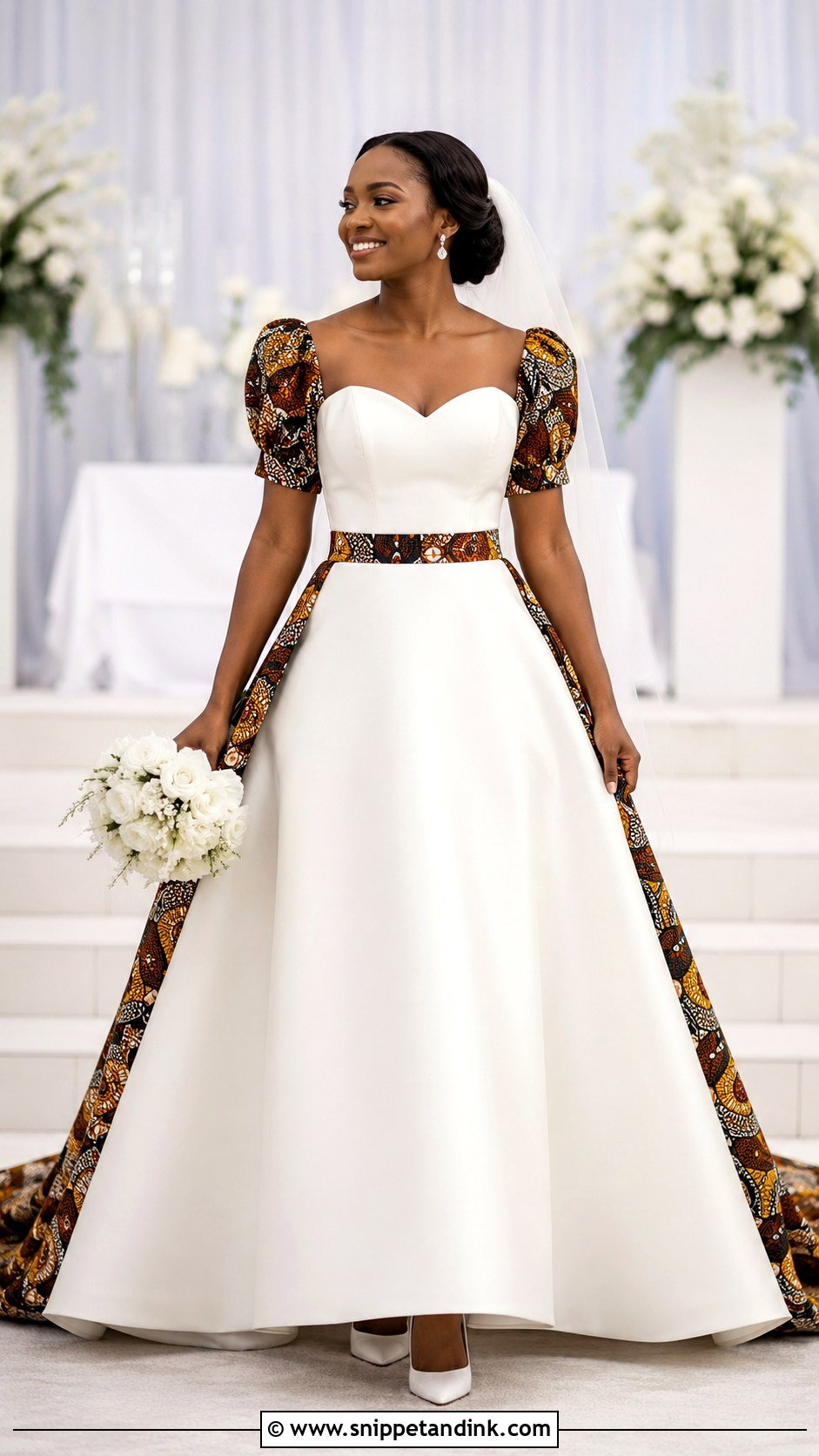
For a bride who wants classic white for the ceremony and her heritage in the details, start with the silhouette she already loves: A-line, ball gown, column or mermaid. Then add print at the waistband, a detachable train, structured sleeves, a back bow or a placed appliqué. One or two strong accents look far more deliberate than a scatter of small patches. The groom can echo it through a pocket square, waistcoat, cap or ceremonial outfit. A simple veil works if it doesn’t cover the printed details, and white or metallic heels with delicate earrings keep it light. Plan motif placement with the designer before any cutting, and if the cloth carries family or regional meaning, check that its use is appropriate.
Wax Print and Woven Cloth Need Prep Before the Tailor Cuts
Half the fitting problems I’m called in to fix started before the first cut. Cotton prints like Ankara, kitenge and shweshwe can shrink on their first wash, and some dyes release colour the first time they get wet, which is a disaster on a dress with white panels. Ask your tailor whether they pre-wash, and if not, do it yourself in cool water before handing the fabric over.
- Buy all your fabric from one batch, so the colour matches across every panel.
- Pre-wash cotton prints in cool water and dry them flat, then press.
- Test any print that will sit beside white lace or satin by pressing a damp white cloth against it.
- Leave woven Kente and aso oke unwashed, and ask the tailor how they want it handled.
- Hand over a little more than the tailor asks for, so a recut is possible if a panel goes wrong.
When the dress comes back, look inside before you look in the mirror. Neat seam finishes, a lining that doesn’t pull and a hem that is level all the way round tell you more about the tailor’s care than the front of the dress does.
Does Your Dress Pass the Sit, Walk and Dance Test?
Sculpted Ankara, Kente ball gowns, a Habesha kemis, an embroidered boubou: whichever direction you go, the dress has to work for a whole day, not one photo. Read the invitation again and ask the family directly about colours, formality and any fabric chosen for guests. At your last fitting, sit, walk and dance in it. Good lining, a neckline that stays put, balanced pattern placement and shoes you can stand in for hours are what turn a design into something you can actually celebrate in. And with garments tied to a specific culture, ask first and wear it with respect.
You'll Like These Ideas:


Leave a Reply