
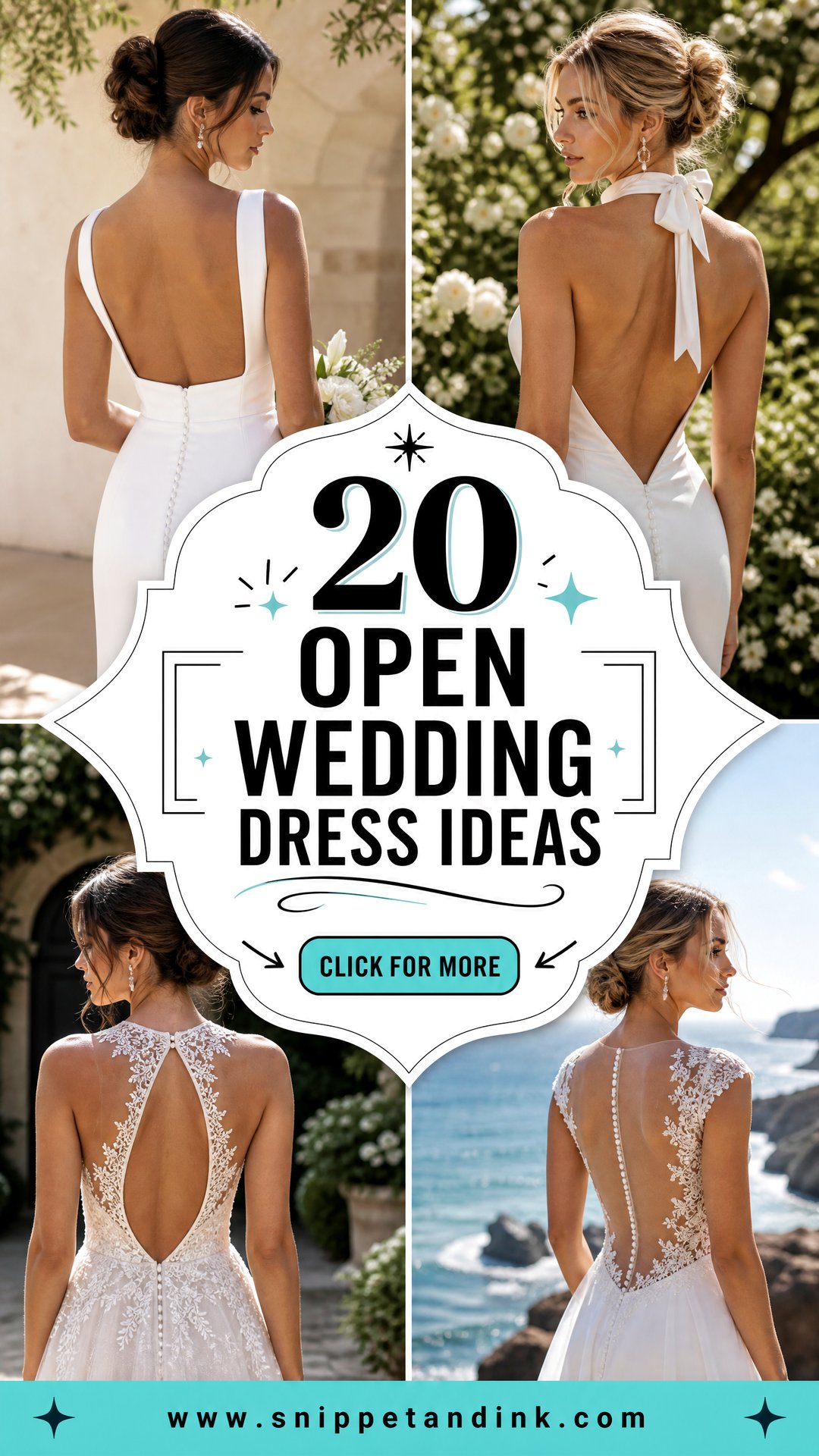
Open backs come in far more degrees than most brides realise, and the degree matters more than the dress style. A small keyhole and a plunge to the waist need completely different support, underwear and hair. Open-back wedding dresses run from discreet cutouts and wide scoops to deep V-backs and designs that are almost entirely bare, with illusion lace, floral appliqués and plunging satin along the way. When I help a bride choose, I ask about her venue, how much skin she’s comfortable showing in front of family, and what support she needs, before we look at a single gown. Accessories follow from there: a veil that doesn’t bury the back, proper support underneath, shoes you can stand in, and jewellery that stays out of the way. Here are twenty complete looks across that whole range.
Bare Backs in a Church, Mosque or Temple
Before falling for a plunging back, find out what your ceremony venue expects. Many churches, mosques, gurdwaras and temples ask brides to cover their shoulders and back during the service, and some families will expect it even where the building doesn’t. Ask the officiant directly. It’s a common question and they’ll have a clear answer.
You don’t have to give up the open back to respect those rules. These are the cover-ups I use most, each easy to remove before the reception:
- A sheer floor-length cape attached at the shoulders, which hides the back while keeping the outline visible.
- A lace or tulle bolero in the gown’s fabric, sometimes made by the seamstress from leftover hem material.
- A long, wide veil fixed at the crown so it falls over the whole back.
- Detachable illusion panels that hook into the back opening for the ceremony.
Order the cover-up at the same time as the dress if you can. Matching ivory shades from different makers is surprisingly hard, and a mismatched bolero is obvious in photos.
1. Minimalist Satin Open Back Wedding Dress
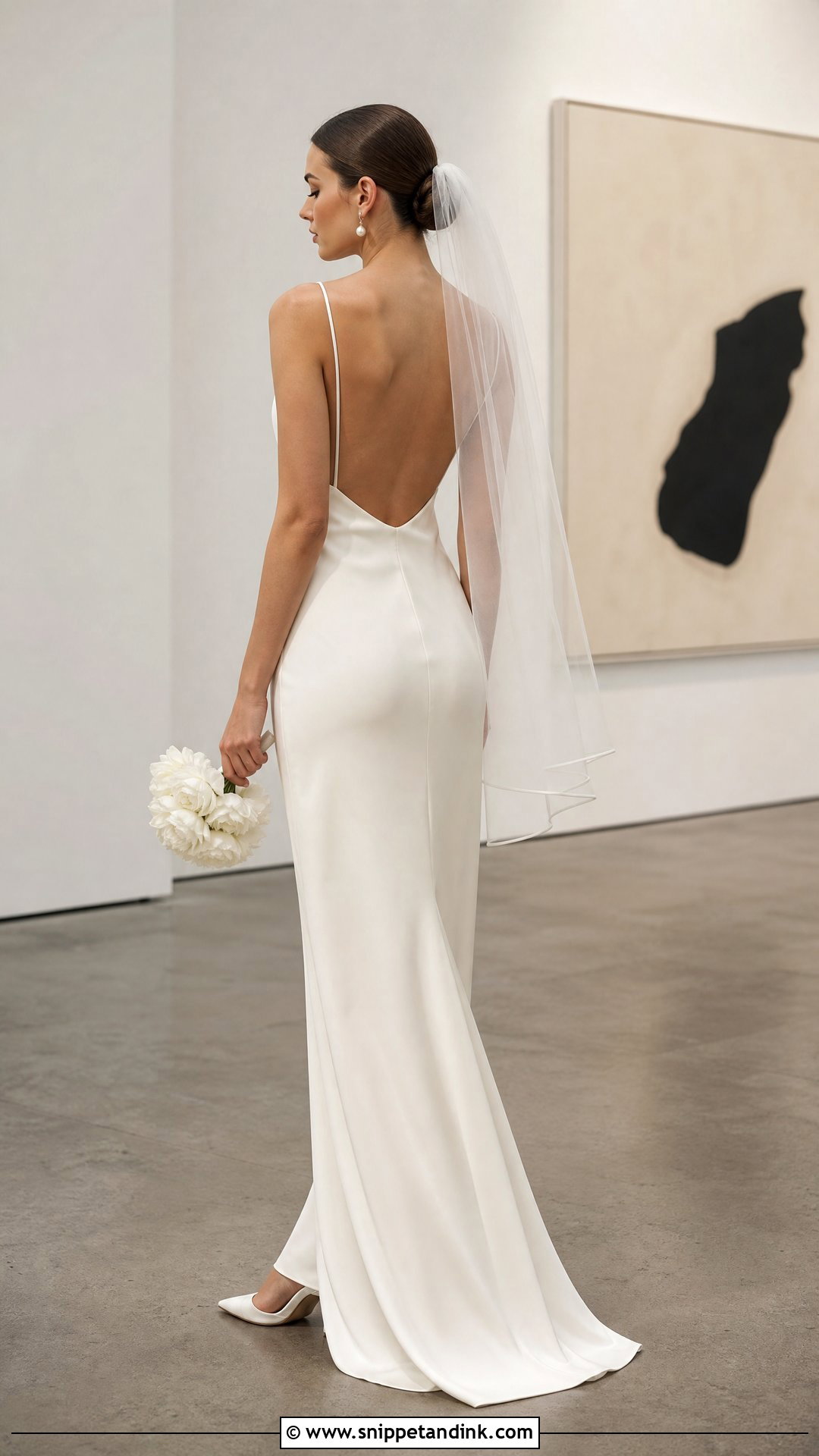
Minimal satin is the hardest open back to get right and the most rewarding when it works. A floor-length sheath or softly fitted column with narrow straps and a gentle train should skim the body, never cling, or you’ll see strain lines the moment you sit. Pearl drop earrings, a sleek low bun and pointed ivory pumps are all it needs, plus a compact bouquet of white flowers and greenery. A fingertip veil lets the back show quickly after the vows. Satin reveals every seam, so budget for alterations and sewn-in cups rather than relying on adhesive. Galleries, modern hotels and pared-back indoor rooms suit it best.
2. Lace Long Sleeve Open Back Wedding Dress
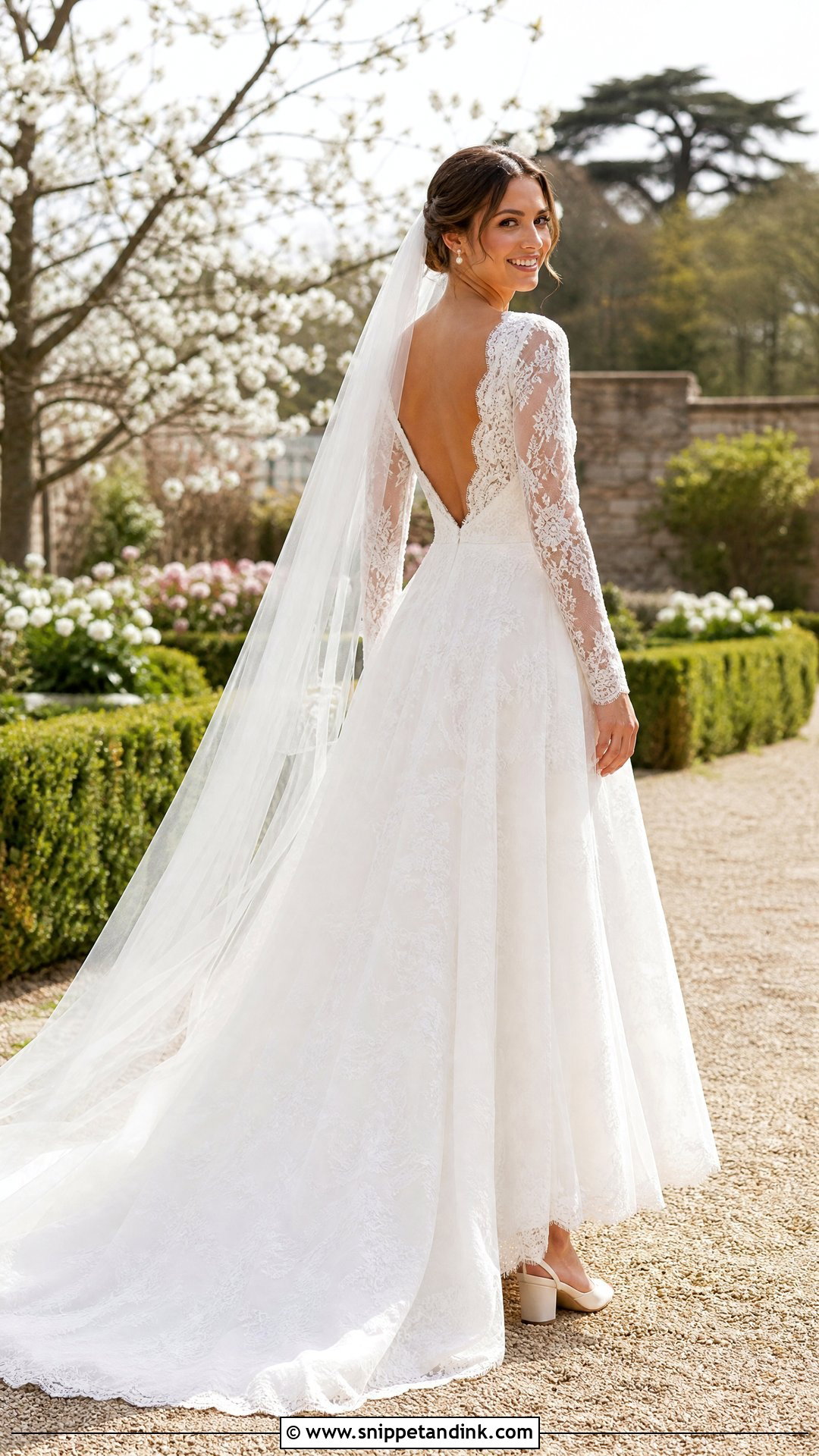
Lace sleeves with a bare back is the combination I suggest to brides who want to feel covered from the front. An A-line with fitted sleeves, a defined waist and a deep V or rounded back is the classic build, and floral lace continuing around the edge of the opening softens the line between fabric and skin. Wear block heels for steady footing, a chapel veil and pearl studs, with a loose chignon or braided updo. One caution: when you lift your arms, fitted sleeves pull the back edges outward, so test hugging at every fitting. It suits autumn through early spring, and lightweight lace works for a mild outdoor day.
3. Square Neck Open Back Wedding Dress
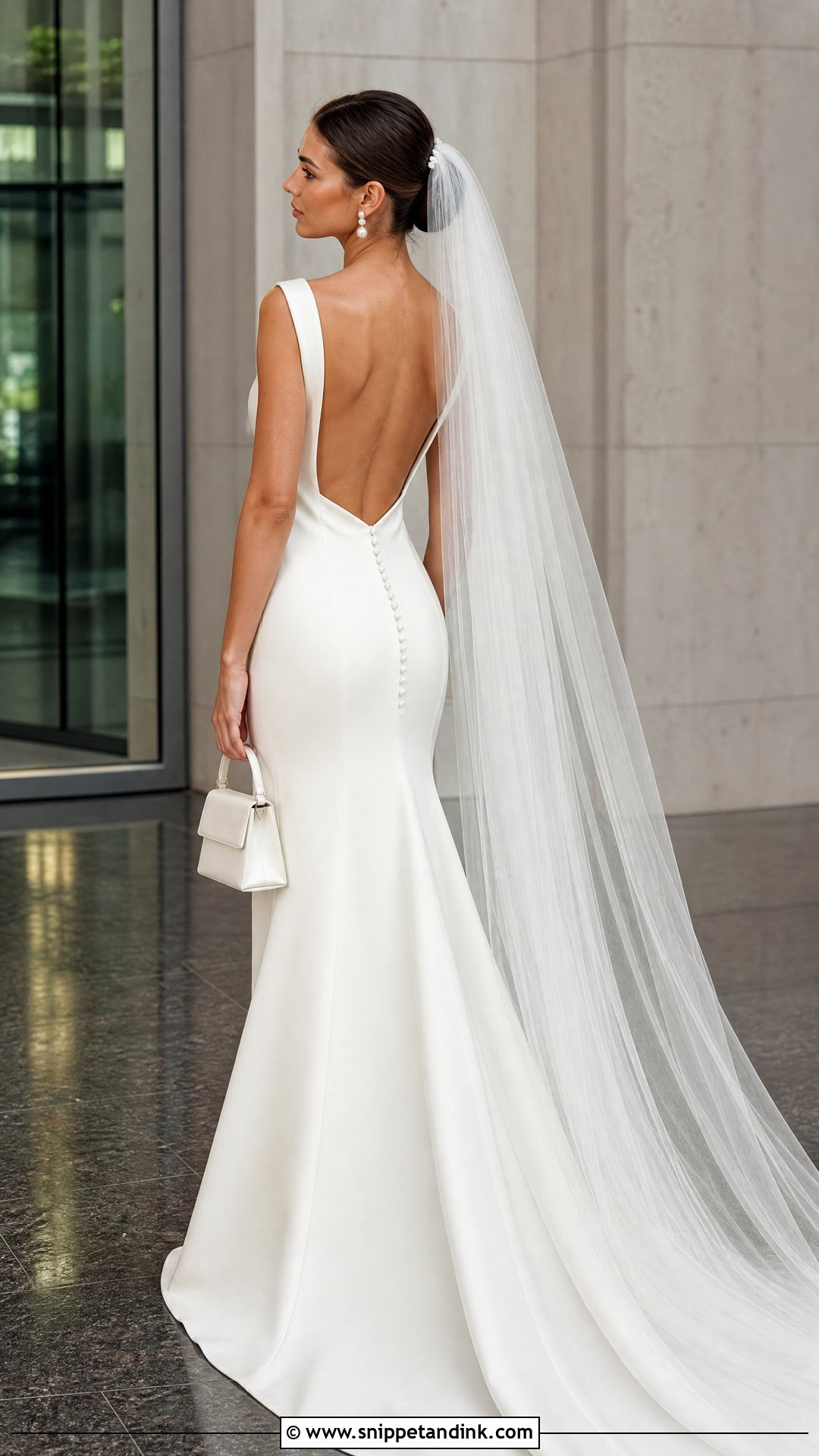
Wide straps and a square back give an open back real stability, which is why I like this one for brides worried about straps slipping. A fitted crepe gown or clean A-line with supportive shoulder straps and a low square back looks architectural and modern. Wear a smooth cathedral veil for the ceremony, then take it off at the reception to reveal the back. Pearl earrings, a structured mini bag and pointed closed-toe heels keep it polished, with a twisted bun or sleek ponytail. Corners are the weak spot on any square cut; watch them when you bend forward, and have the straps shortened if they lift away. City weddings and formal indoor rooms suit it.
4. Halter Open Back Wedding Dress
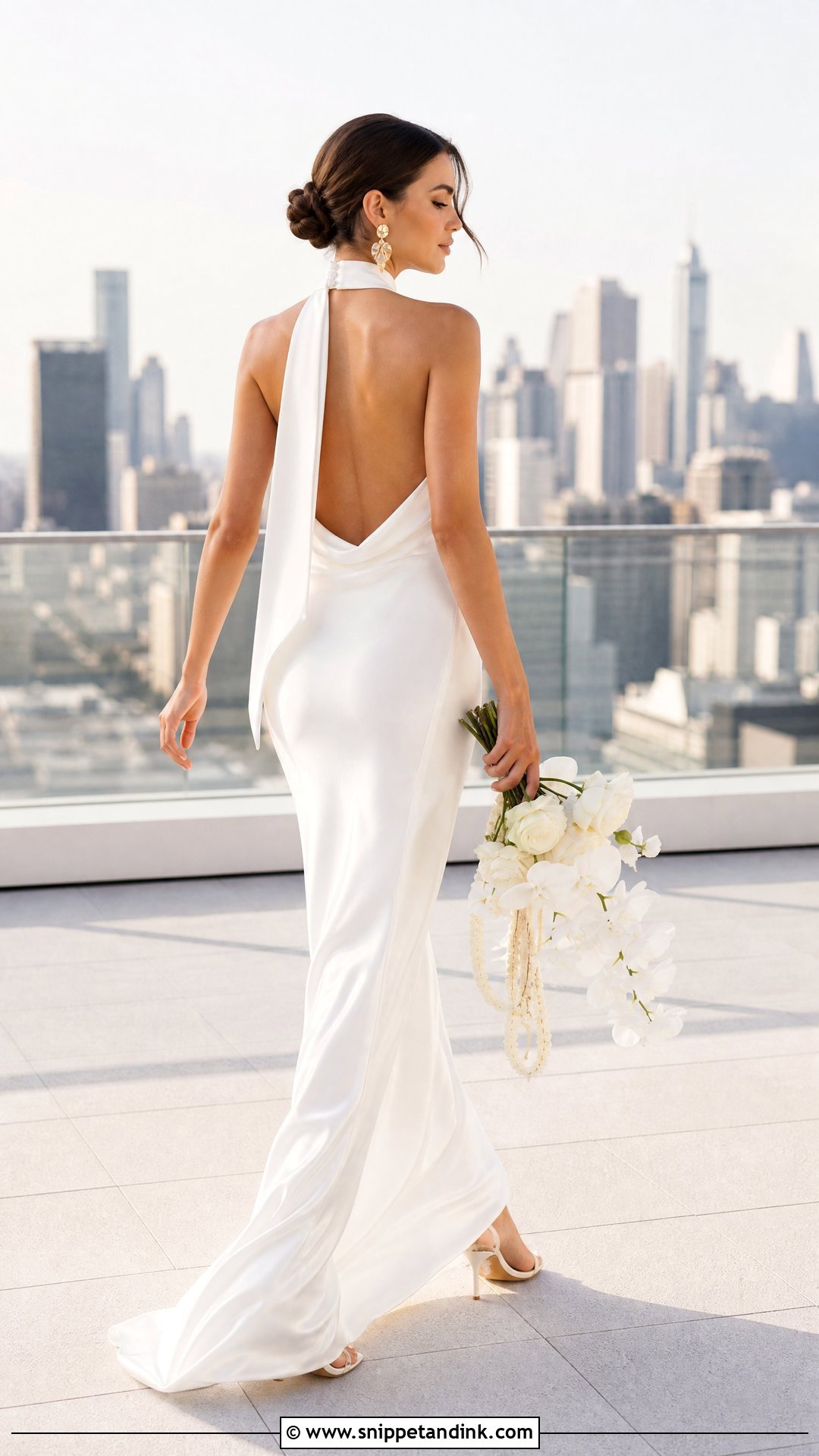
A high halter neckline with a completely open back draws one long line from the throat to the hem. Fluid satin, silk-like crepe or light chiffon all suit it, with secure neck closures and a fitted waist. Sculptural earrings, metallic or ivory sandals and a small, clean-shaped bouquet complete it; skip the necklace. A neat bun stops hair tangling in the neck fastening. The halter carries the whole bodice, so ask your seamstress to set the tension carefully and add a hidden waist stay. Too tight and you’ll feel it on the back of your neck by the first dance. Rooftops, coastal venues and destination weddings are its natural fit.
5. Corset Open Back Ball Gown Wedding Dress
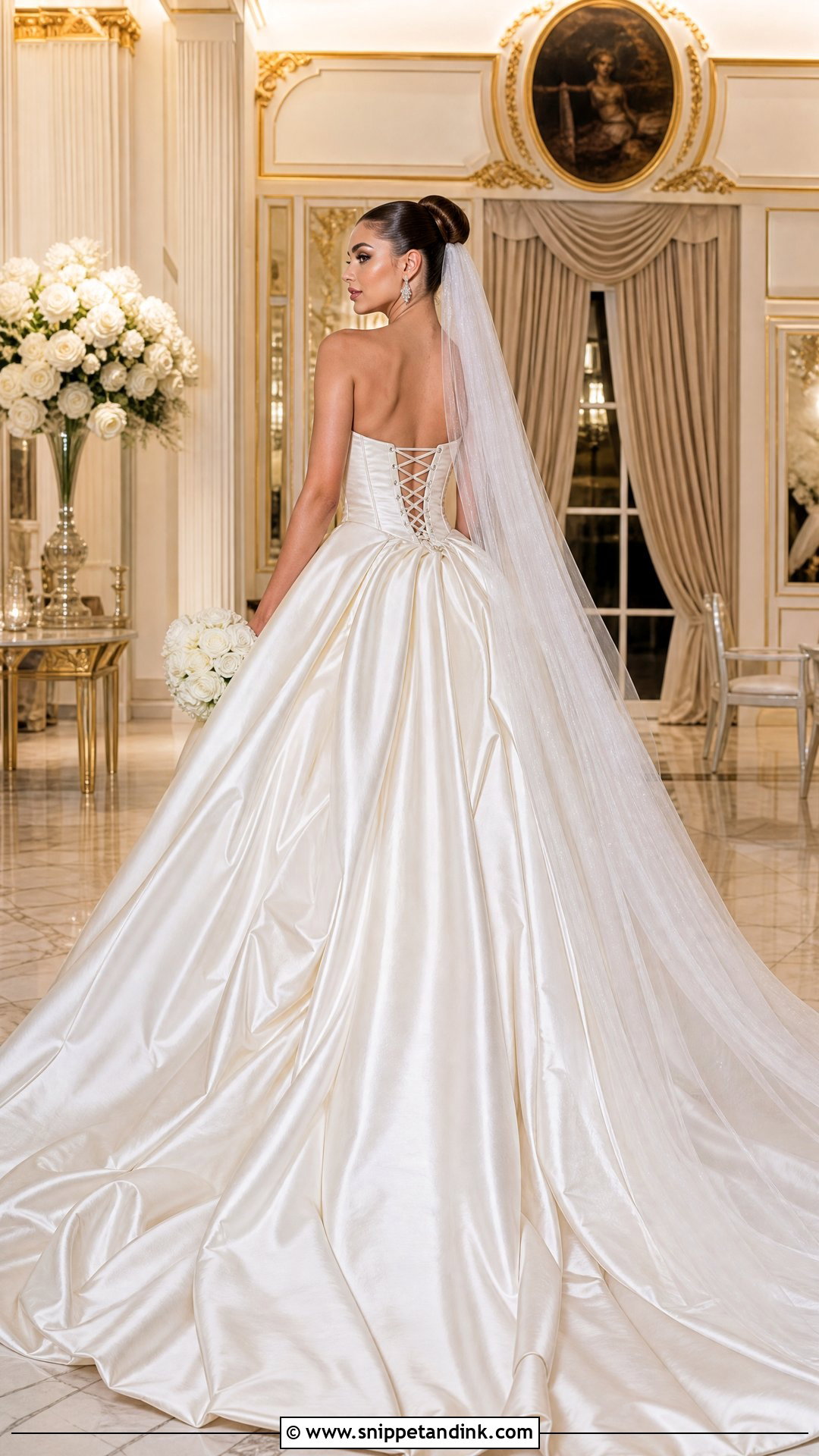
Corsetry and a ball gown skirt give you full traditional volume with a defined back. A structured bodice with visible corset detailing over satin, tulle or organza works, with lace-up ties, curved panels or a dip below the shoulder blades. Under a full skirt, nobody sees your shoes, so wear comfortable platform heels. A long veil, fine crystal earrings and a polished updo complete it, with a medium bouquet that doesn’t fight the skirt’s scale. Fitting is everything here. A corset should hold your bust and waist firmly while you can still breathe deeply and eat dinner, and if it doesn’t, it’s too tight. Ballrooms and grand estates suit it.
6. Boho Chiffon Open Back Wedding Dress
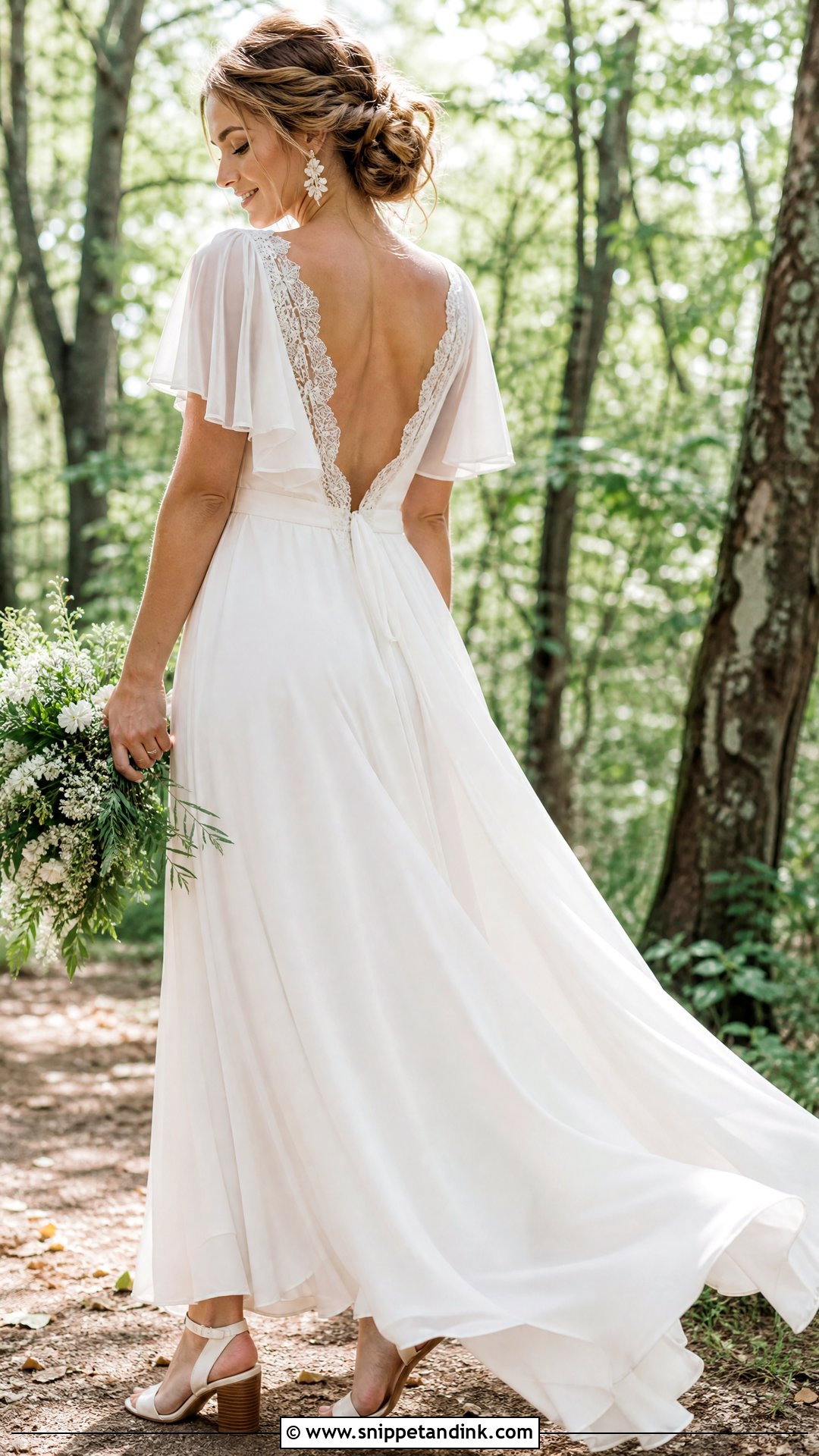
Chiffon moves in the slightest breeze, which makes it the obvious fabric for an outdoor open back. A flowing A-line with flutter sleeves, a gathered waist and a back opening edged in lace or slim ties feels relaxed and easy. Low block-heel sandals, small floral earrings and a loose braided updo suit it, with a light veil or a simple hair comb. Choose a loose bouquet of mixed white blooms and greenery. On grass, avoid thin heels and a long train; both will drag you into the lawn. Chiffon also frays and snags easily, so keep the hem slightly off the ground. Woodland, desert and rustic venues all suit it.
7. Mermaid Lace Open Back Wedding Dress
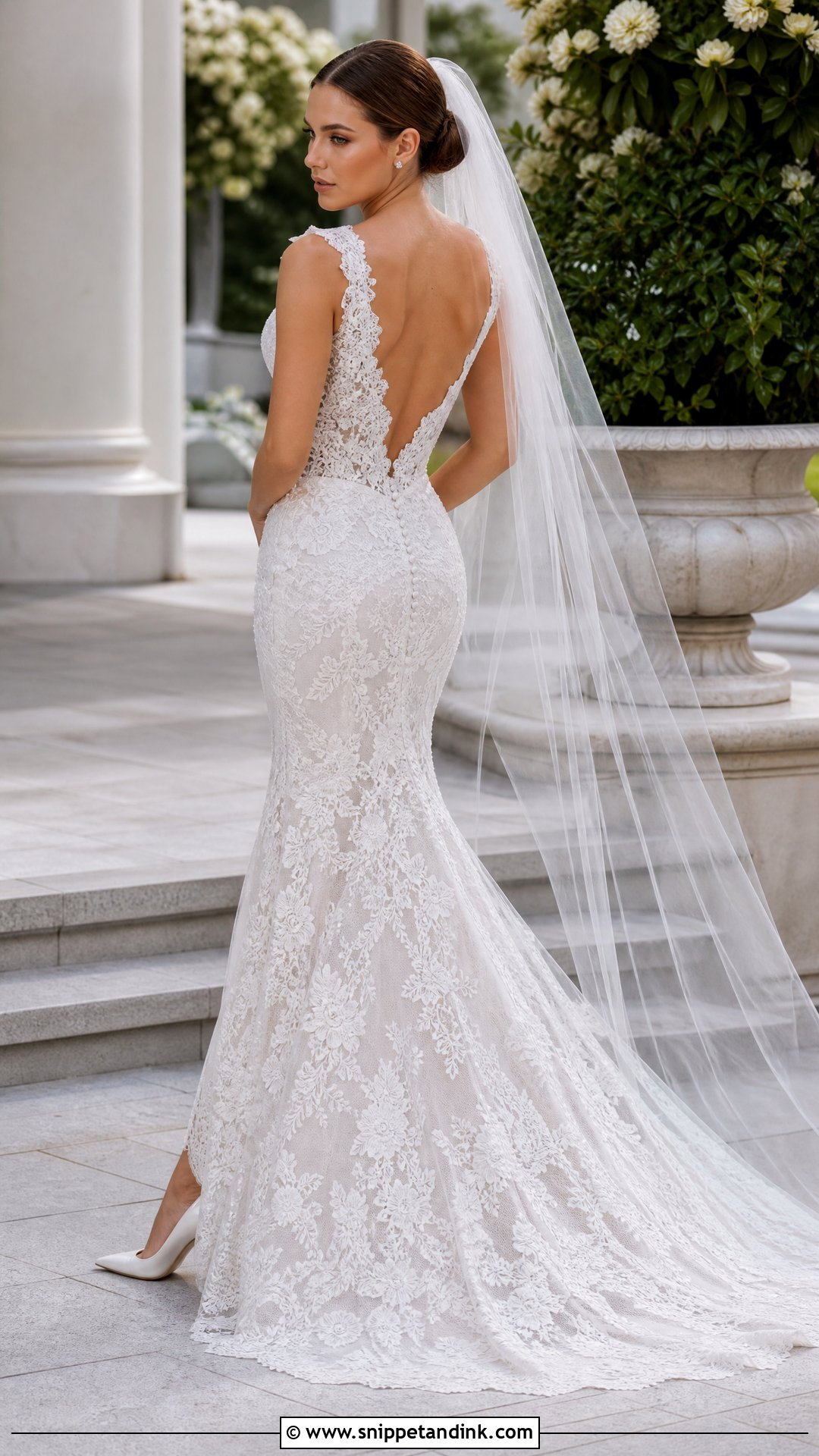
Lace mermaids follow the body through the hips before flaring, which makes the back view part of the silhouette. A low V-back with a scalloped lace edge and covered buttons gives the rear plenty to look at. A simple tulle veil, crystal studs and stable pointed pumps or block heels finish it, with hair lifted into a low bun. The fitted skirt shortens your stride, so at alterations sit, walk and take a few long steps before signing off the hem. Uneven ground catches a lace train easily, so this one suits indoor venues and paved garden paths best.
8. Bow Open Back Wedding Dress
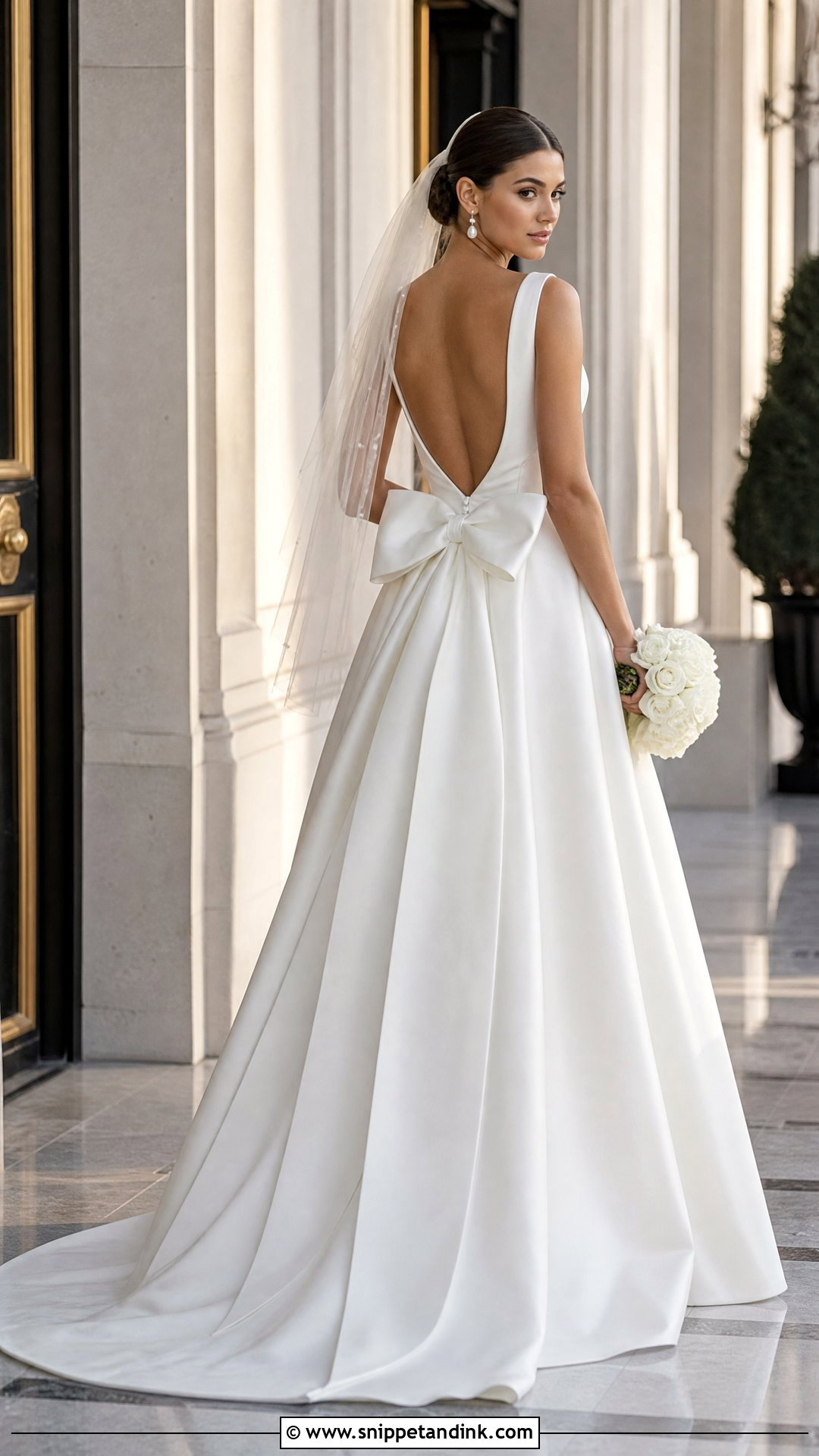
A bow on an open back is pure fashion and needs a plain gown to work. Satin or mikado holds a bow’s shape best; softer fabrics let it droop by the afternoon. A low back with the bow at the waist or upper back suits a fitted column, an A-line or a clean ball gown. Pearl earrings, a sleek bun and understated ivory heels keep the attention on the bow, and a plain veil avoids competing trims. Ask whether it’s detachable. A removable bow can come off before dancing, which is handy, since a large bow gets crushed against chairs and in hugs. City venues and formal rooms with a fashion lean suit it.
9. Keyhole Open Back Wedding Dress
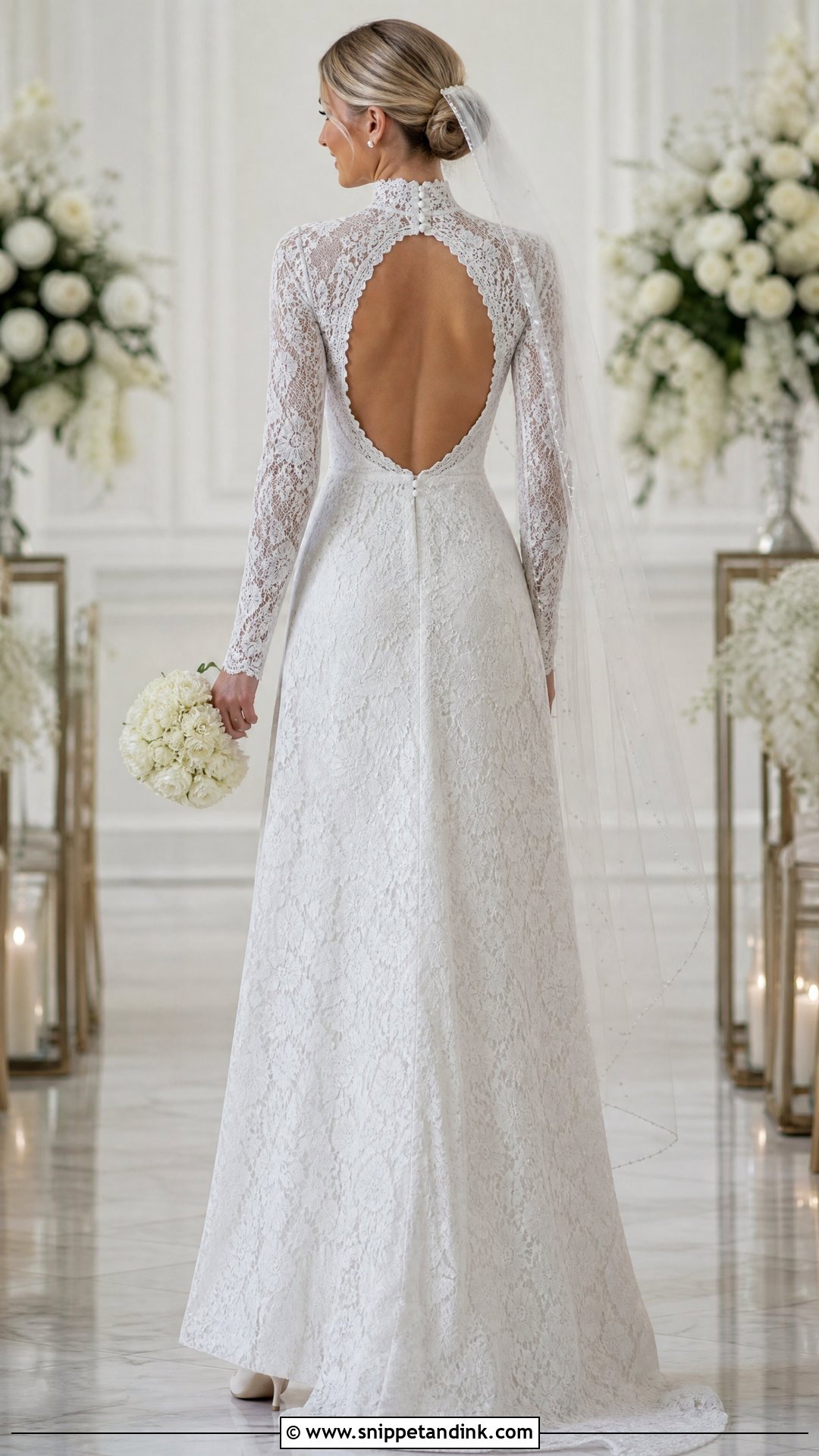
A keyhole-back gown is the most restrained opening in this list, and that restraint has a practical bonus. Because the fabric meets above and below the cutout, many keyholes allow a normal or slightly modified bra, depending on where the opening sits. The keyhole may be round, oval or teardrop-shaped, usually fastened with a button at the neck. An A-line or sheath with lace sleeves or a high neck suits it. Pearl studs, a low chignon and closed-toe kitten heels finish the look, and a shoulder or fingertip veil comes off after the ceremony to reveal the detail. It works well for religious ceremonies and brides who prefer coverage.
10. Cowl Back Slip Wedding Dress
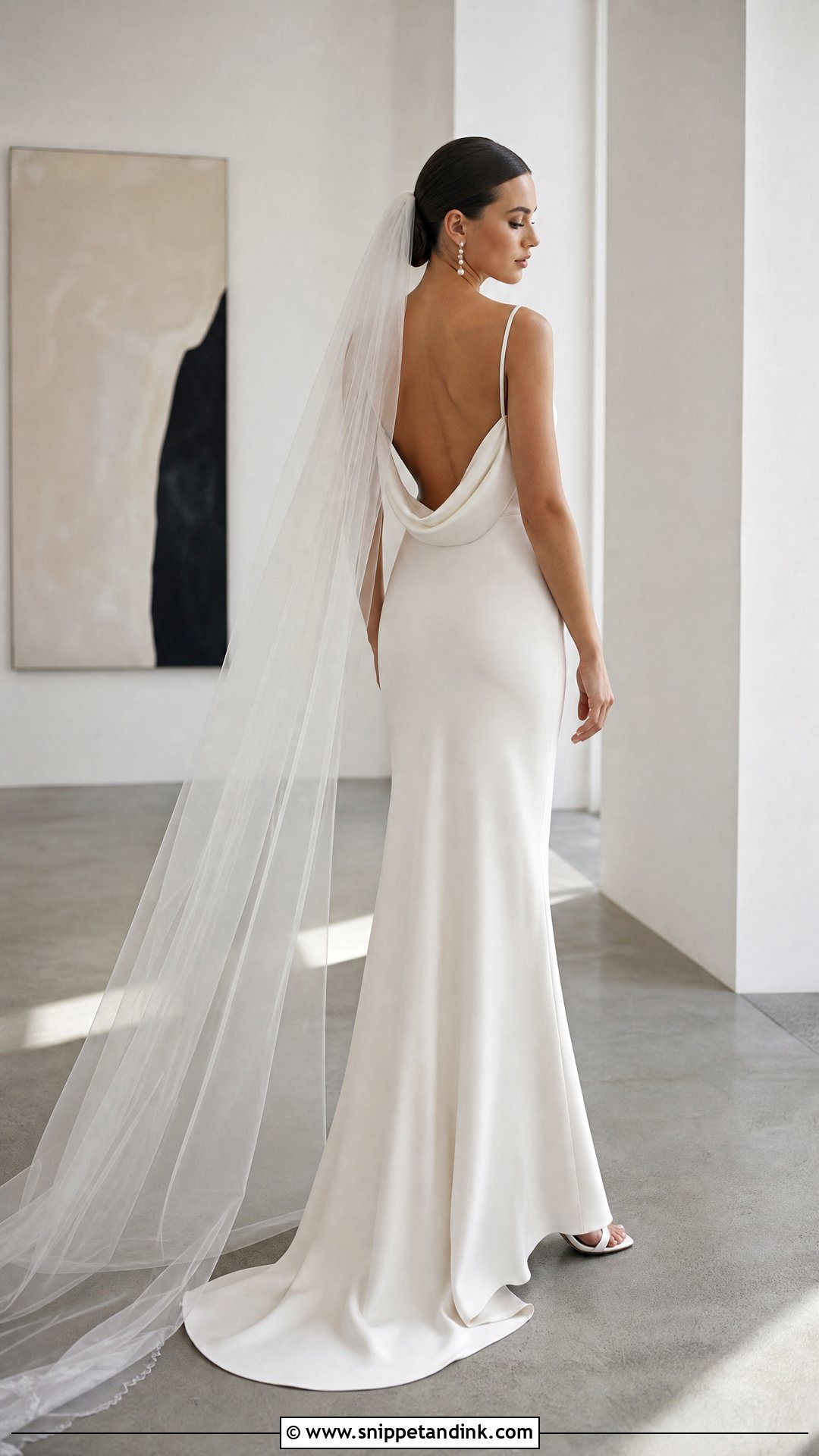
A cowl back is fabric draped in soft folds across the lower back, and it only falls properly on a bias-cut slip. Look for satin with narrow straps and a fluid skirt. The cowl’s depth is set by how the fabric hangs, so even a small fit change can make it gape or flatten; have your seamstress adjust it with you standing naturally, not posed. Pearl drops, minimal sandals and a smooth low bun suit the simplicity. A sheer cathedral veil adds drama for the vows, and the cowl shows once it’s off. Choose fewer, better accessories, and wear smooth, no-line underwear. Destination weddings, restaurants and small evening ceremonies suit it.
11. Illusion Open Back Wedding Dress
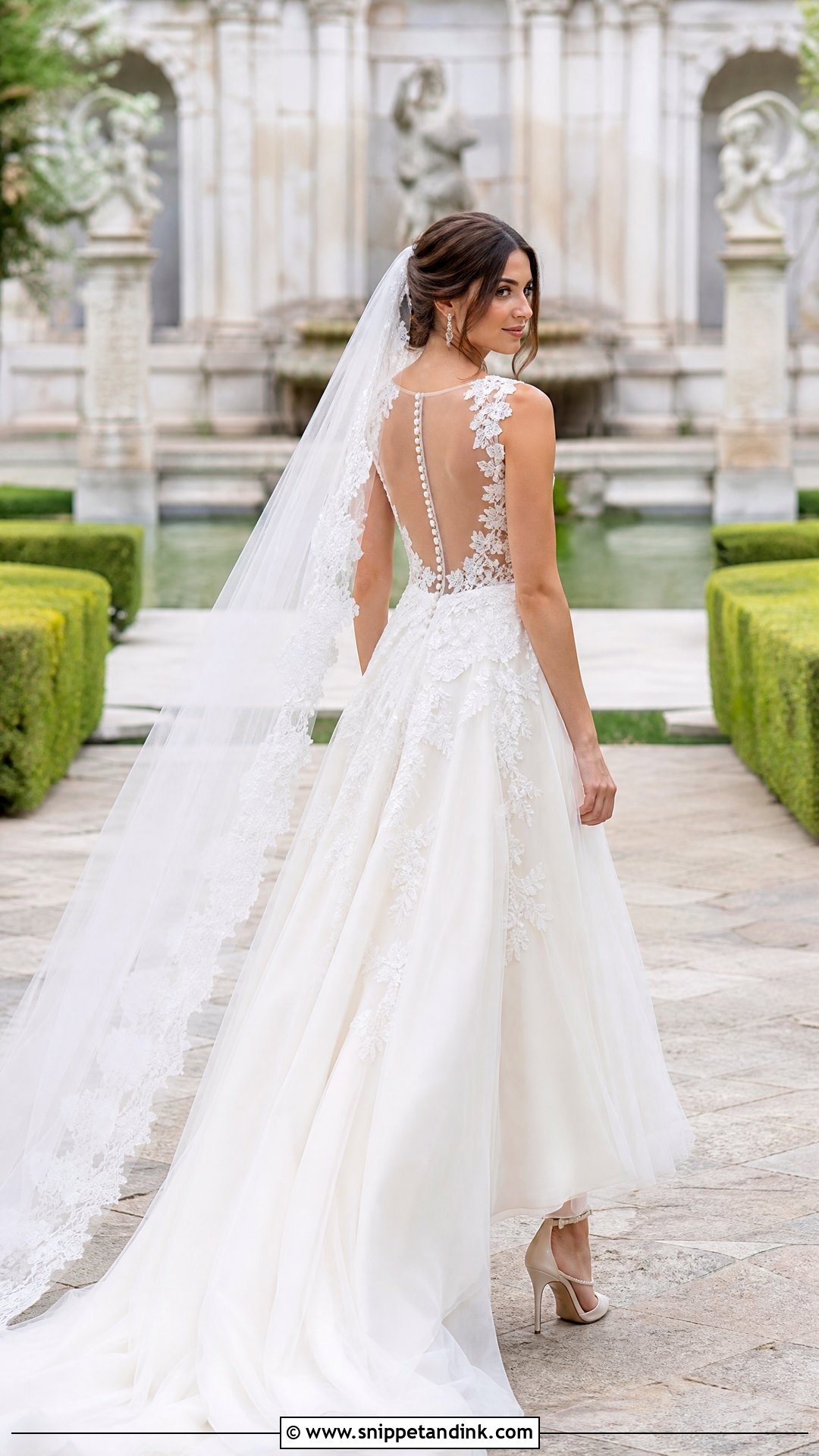
An illusion back looks bare from a distance and gives the bodice something to hold on to. Sheer tulle with carefully placed lace appliqués and covered buttons along the spine is the classic version, over a fitted, A-line or layered skirt. A lace-edged veil, delicate earrings and ivory heels with an ankle strap finish it, with a textured low bun. The tulle should be matched to your skin tone in daylight, not just under shop lighting, and it needs to lie flat without ripples. Have the shoulders fitted closely; a loose fit lets the illusion panel sag in the middle. Traditional ceremonies, estates and formal gardens suit it.
12. Pearl Open Back Wedding Dress
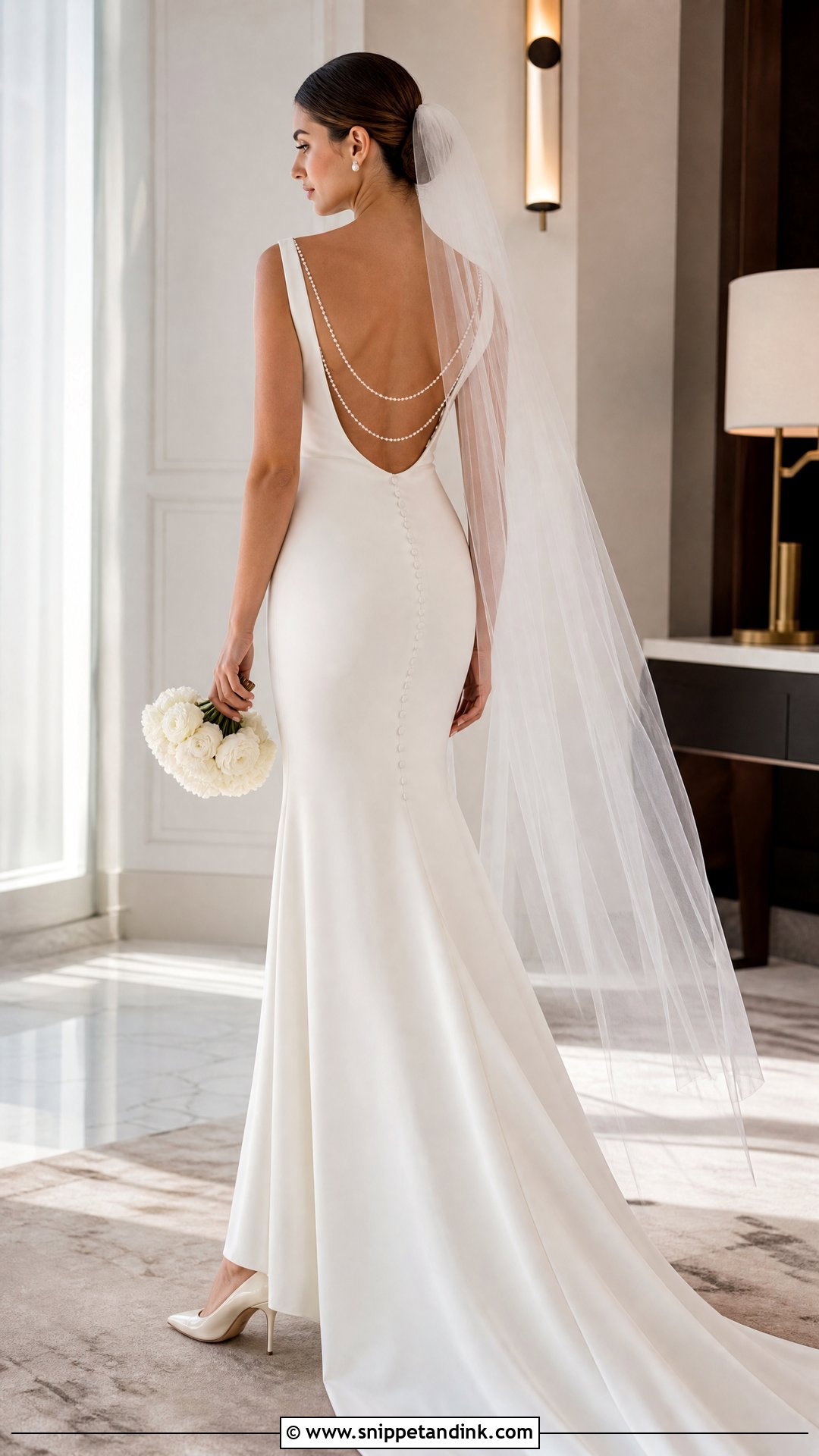
Pearl strands across an open back look striking and have one real drawback: you’ll lean on them. Draped strands, pearl-edged straps or beading round a deep scoop all press into your back when you sit against a chair. At a fitting, sit back against both a hard chair and an upholstered one. A smooth crepe or satin base keeps the pearls the focus, with pearl studs, pointed ivory heels and a simple veil. A sleek bun or short hair stops strands catching on the beads. Check that your bouquet’s stems and ribbons won’t snag the strands either. Hotel weddings and coastal venues suit the clean palette.
13. Floral Open Back Wedding Dress
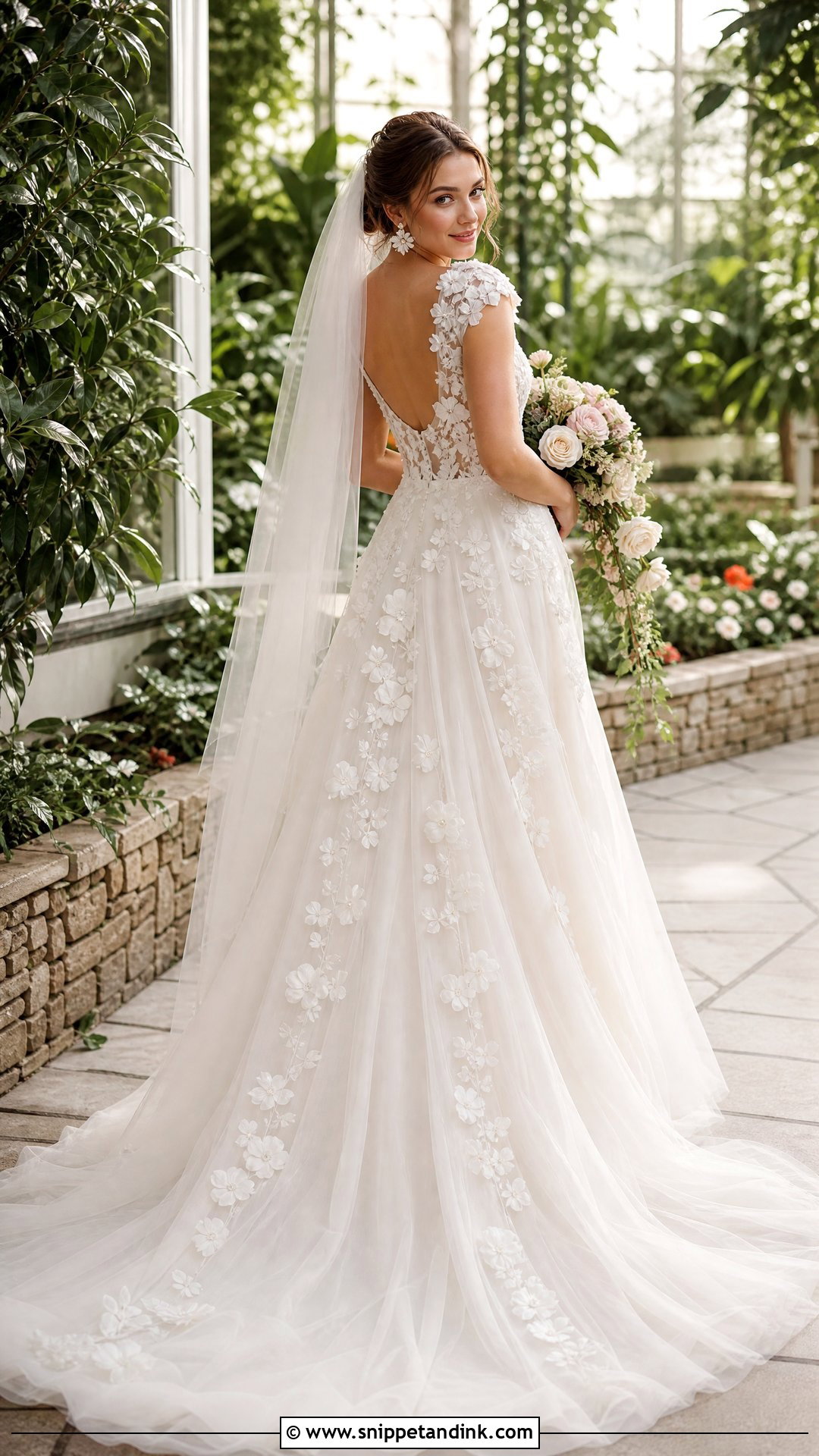
Three-dimensional flowers around the back opening turn the rear of the gown into its focal point. Tulle or organza with appliqués around the opening, shoulders and train holds the flowers well. A soft A-line with a fitted bodice keeps it wearable. Small floral earrings, neutral ivory pumps and a plain veil let the appliqués lead, with a loose updo that has very little decoration. For the bouquet, echo one or two flower shapes from the dress instead of matching every one. Raised appliqués crush under a heavy veil, so I’d keep the veil light. Spring gardens and conservatories show the texture best in natural light.
14. Off Shoulder Open Back Wedding Dress
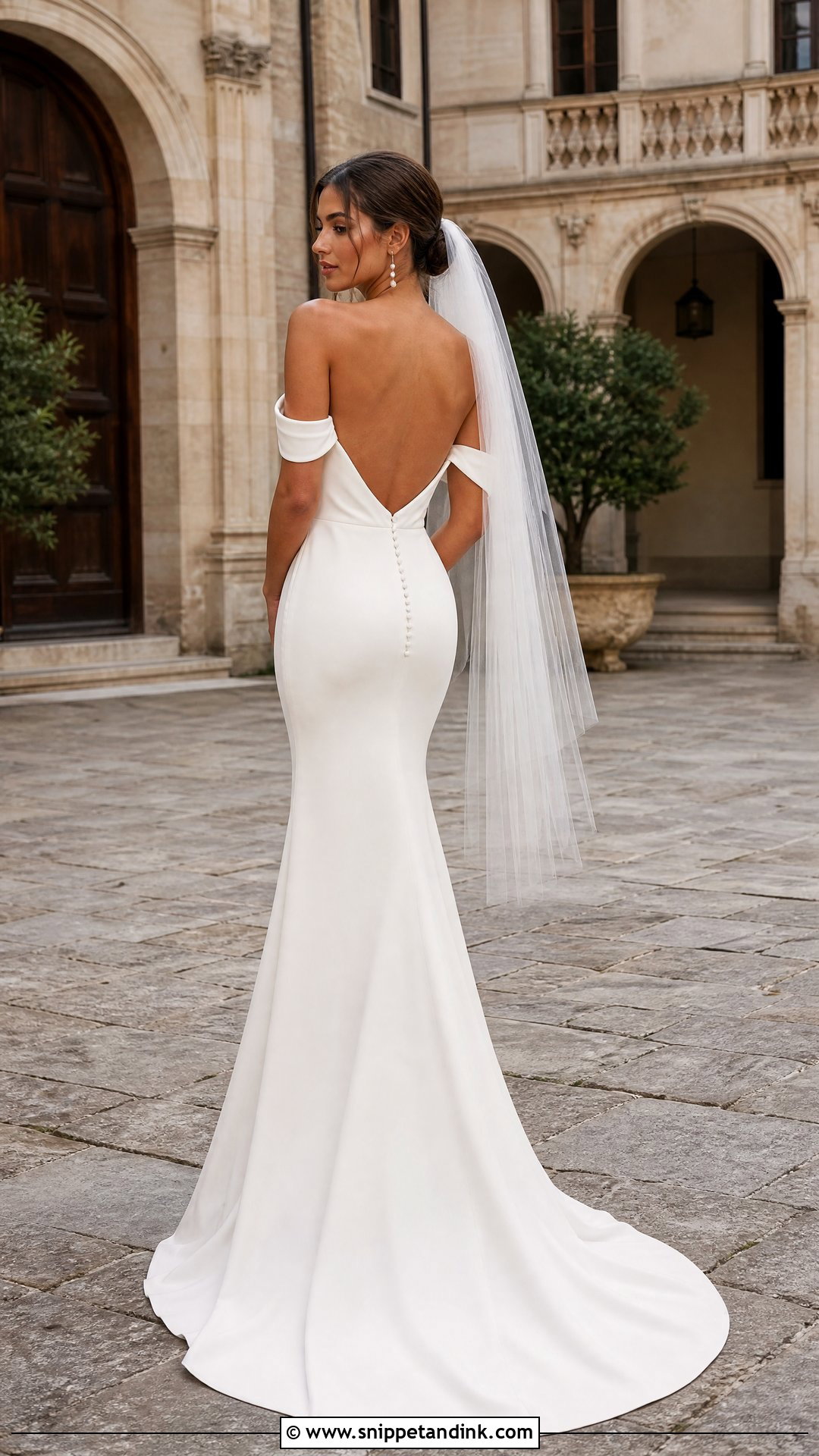
Off-the-shoulder bands frame the collarbones and lead the eye round into the open back. A fitted crepe gown, a satin A-line or a structured ball gown all work if the bands let your arms move. Drop earrings, pointed heels and a soft veil fixed below a low bun complete it; a necklace is optional because the neckline does plenty already. At the fitting, raise your arms, hug someone and sit down. The bands should stay put and not drag the bodice. Fashion tape is fine for small tweaks, never as a substitute for proper tailoring. Historic venues and formal indoor ceremonies suit it.


15. Beach Open Back Wedding Dress
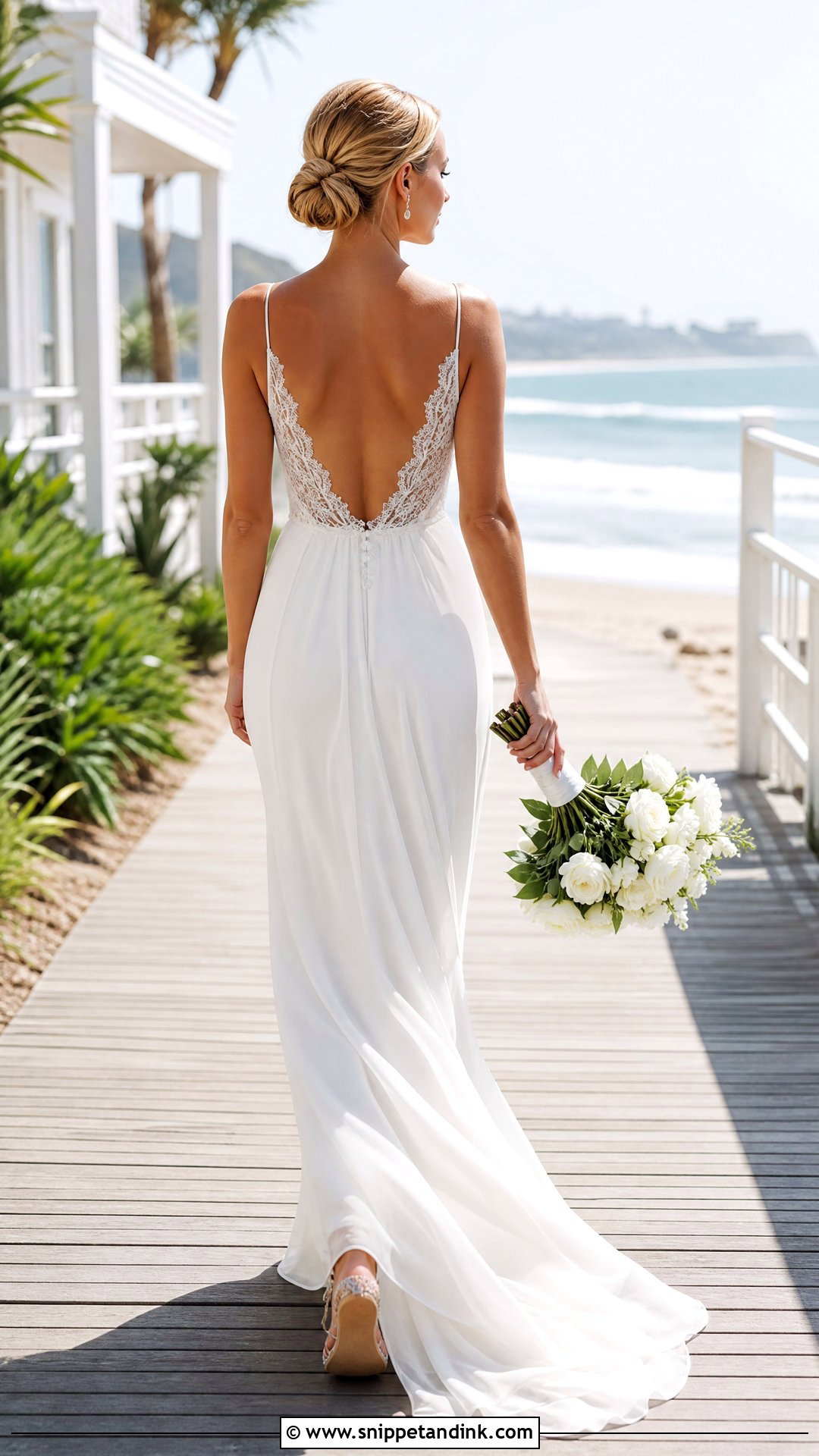
Wind is the issue I plan around for a beach open back. Light chiffon, fine crepe or a lace sheath with slim straps and a short sweep train moves well and won’t fill with sand. Flat embellished sandals, small earrings and a low bun pinned to survive a breeze finish it. A short veil, sheer scarf or floral hair comb is far easier to control outdoors than a cathedral veil, which can wrap round you in a gust. Choose sturdy flowers with neatly wrapped stems, since delicate blooms wilt fast in sun. Avoid heavy skirts and fine beading that catches on boardwalk planks. The look should feel polished but relaxed.
16. High Neck Open Back Wedding Dress
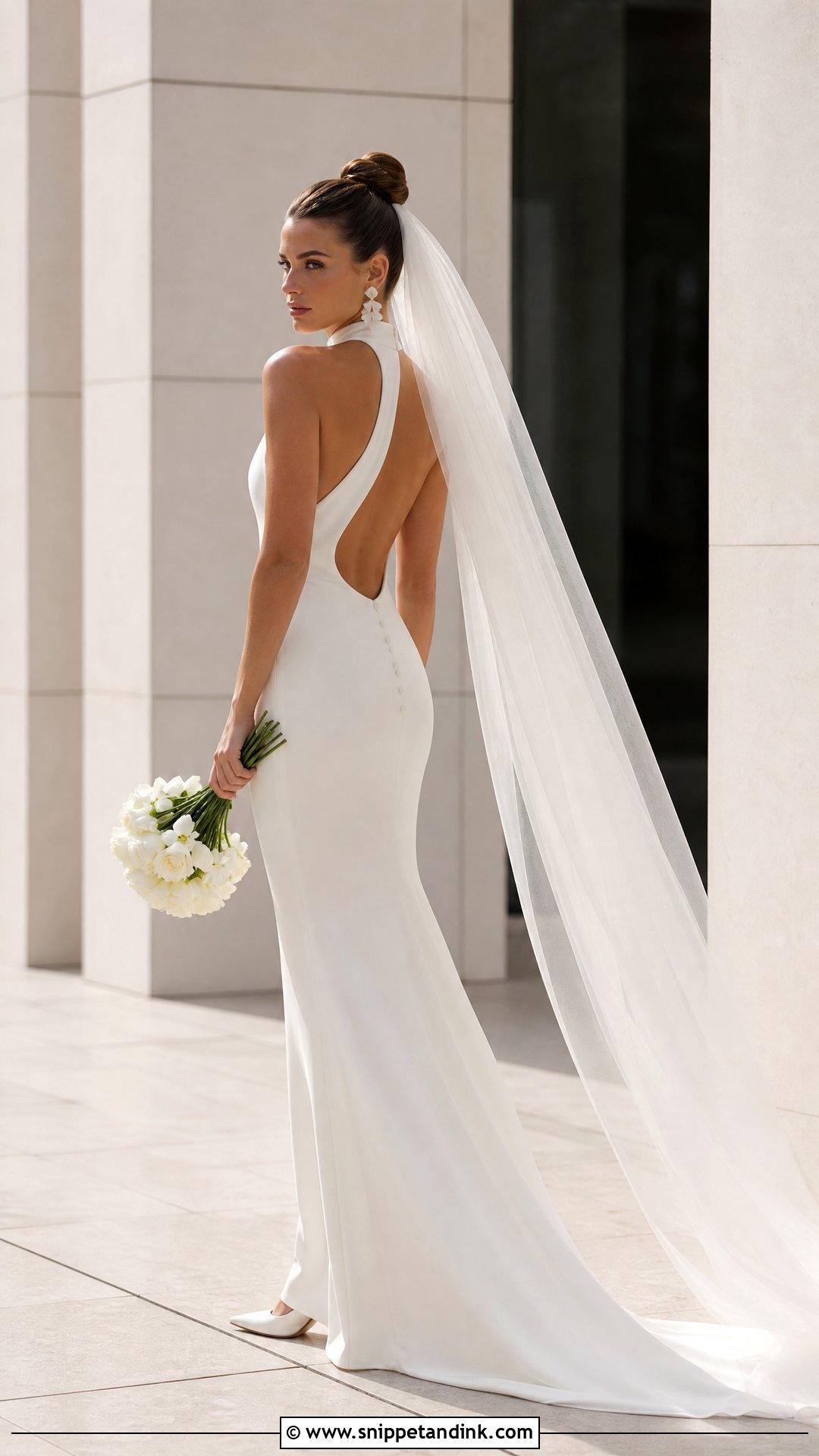
Covered at the front, bare behind: a high neck with an open back gives you two different dresses depending on which way you face. A halter-style column, a lace A-line or a smooth crepe sheath all work. Statement earrings, a high bun and slim ivory pumps keep the neckline clean, with no necklace. A veil fixed below the bun frames the back rather than hiding it. The neck closure shouldn’t carry the gown’s full weight; internal support at the waist and side seams should do most of that work. If you feel a pull at the throat, ask for it to be redistributed. Formal evening venues suit it well.
17. Tea Length Open Back Wedding Dress
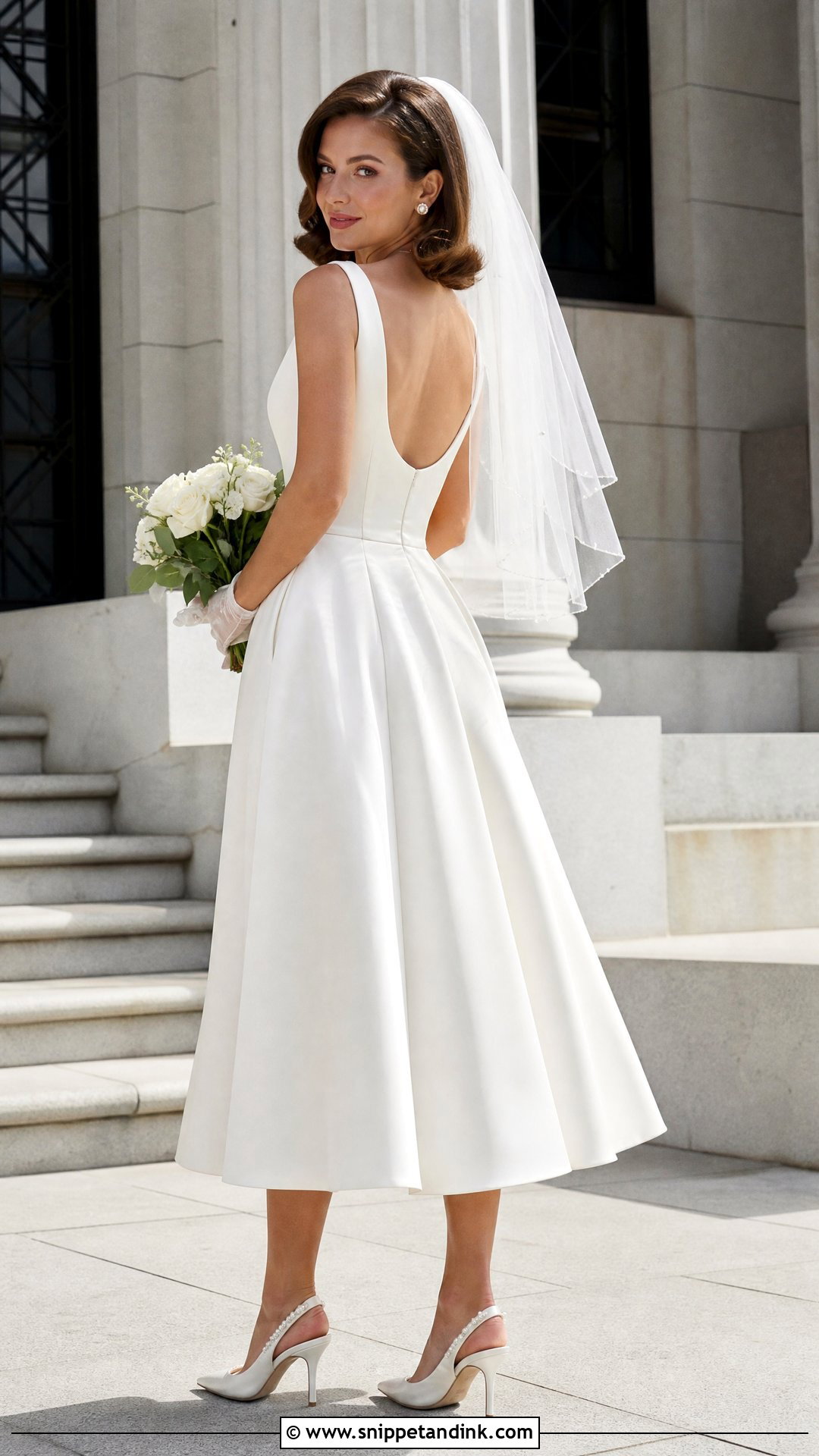
A tea-length dress with an open back feels playful, and the shorter hem means your back and your shoes both get attention. A fitted bodice with a scoop or V-back over a full skirt ending between the lower calf and ankle is the shape. Pearl-trimmed pumps, slingbacks or low block heels, short gloves if you like them, studs and a compact bouquet complete it. A birdcage veil, shoulder veil or structured hair bow suits the length. Make sure the skirt has enough fullness to walk and dance freely; some tea-length skirts are cut narrow and hobble your stride. Courthouses, daytime weddings and vintage venues suit it.
18. Open Back Wedding Dress With Cape
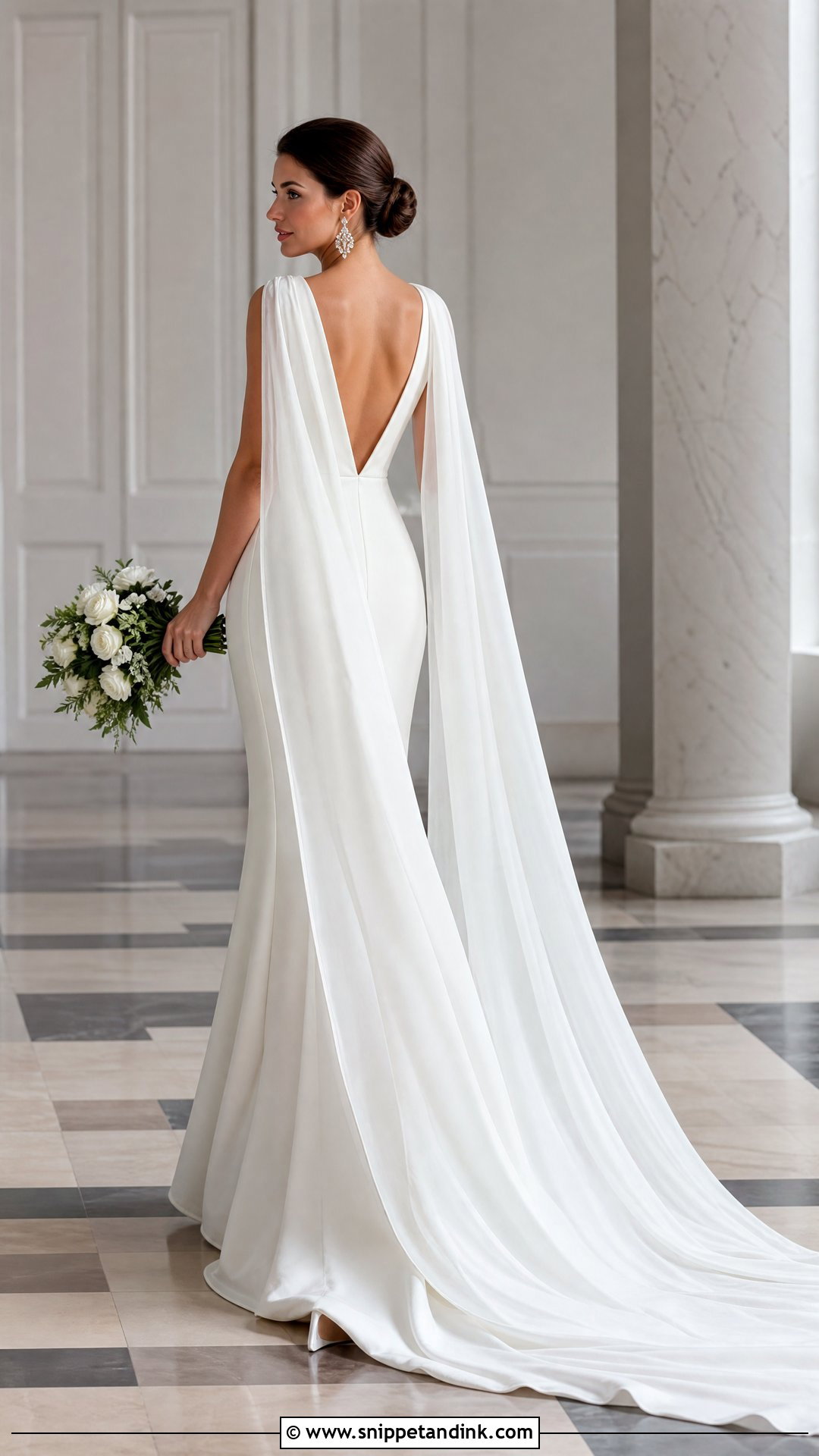
A cape lets you be covered for the ceremony and open for the party, which is why I recommend it for brides marrying in a church or temple that expects shoulders and back to be covered. Start with a fitted gown or simple A-line with a deep scoop or V-back, and add a sheer floor-length cape for the vows. Crystal earrings, a structured bun and pointed heels finish it. Attach the cape at the shoulders or neckline, not to delicate straps, which it would drag on. Plain tulle feels minimal; subtle appliqués add texture. Keep the cape light, because a heavy one pulls backward on the neck. It suits cooler weather and formal venues too.
19. Plus Size Open Back A-Line Wedding Dress
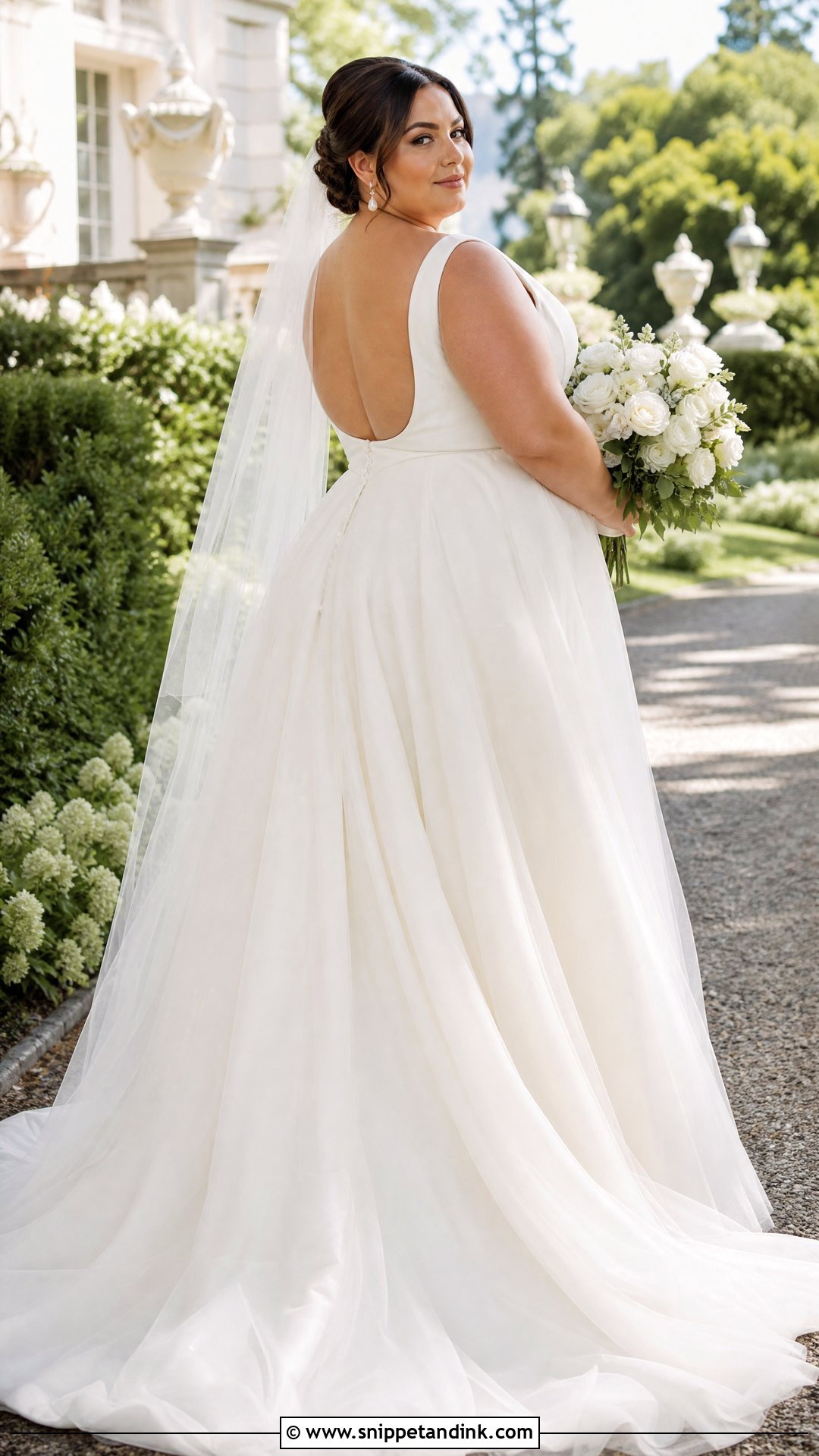
Open backs work at every size; what changes is how much support has to be built in. For a plus-size A-line, I look for a structured bodice, wide straps, internal boning and a back opening that sits above a firm waist panel. Soft tulle, satin and lace all suit the flowing skirt. Cushioned block heels, pearl or crystal earrings and a veil secured beneath a polished updo complete it. Don’t rule out a neckline or fabric; focus on construction instead. A good bridal seamstress can move straps, raise or lower the opening and add discreet support. Test it standing, sitting, hugging and dancing. It suits almost any venue.


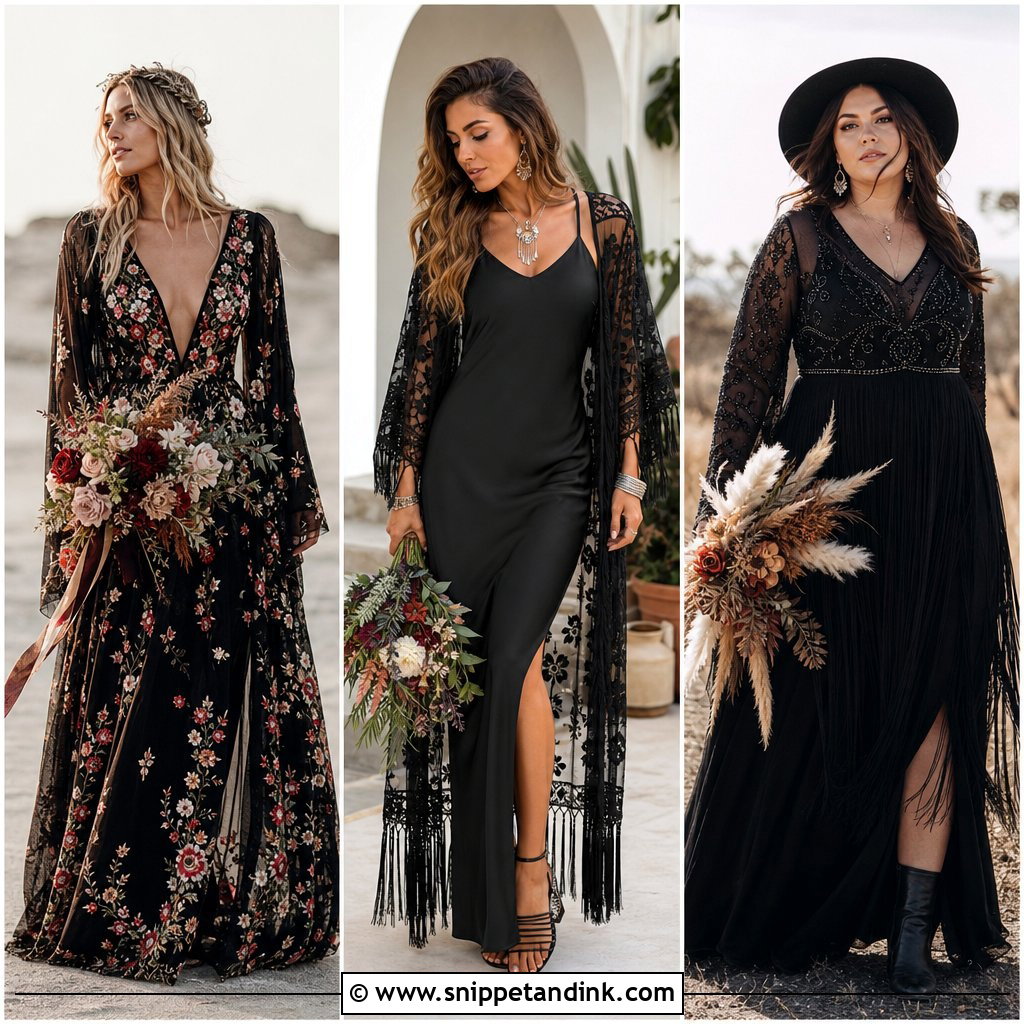
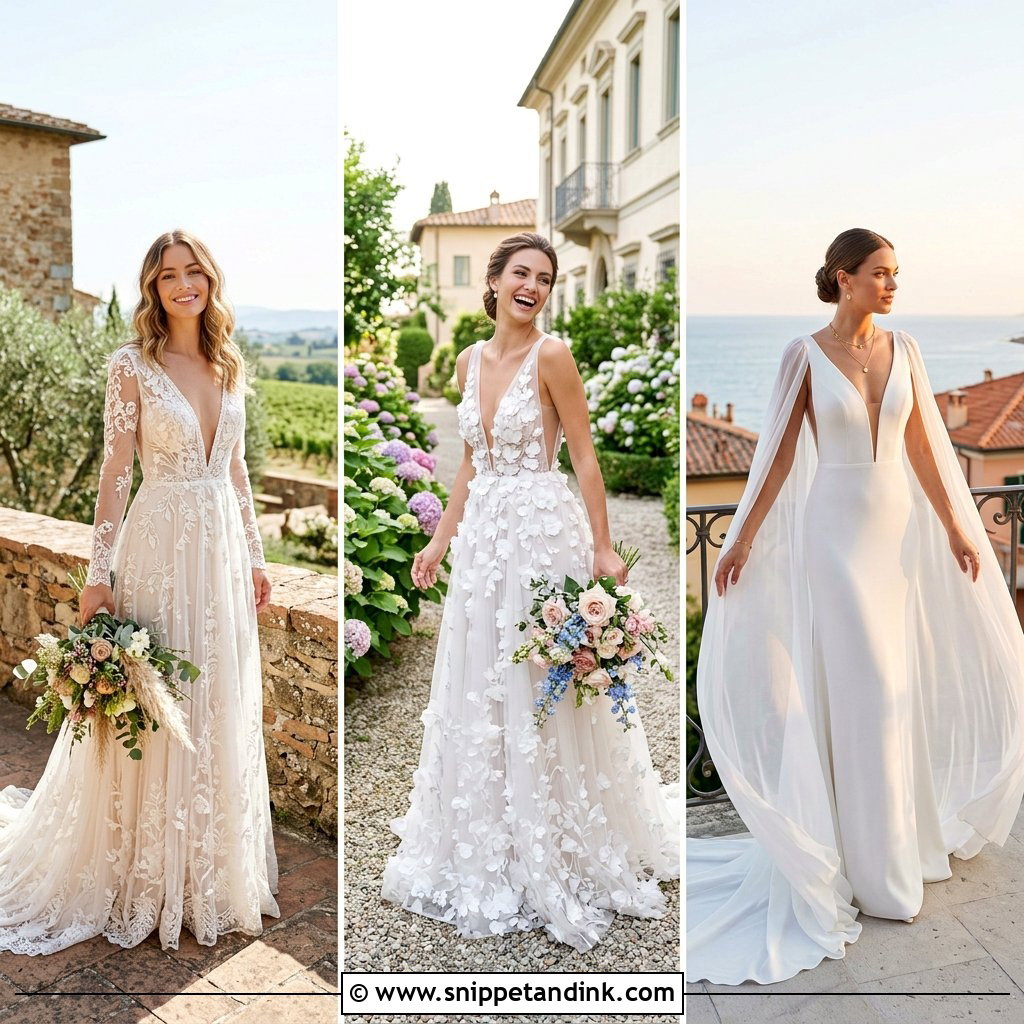
20. Champagne Open Back Wedding Dress
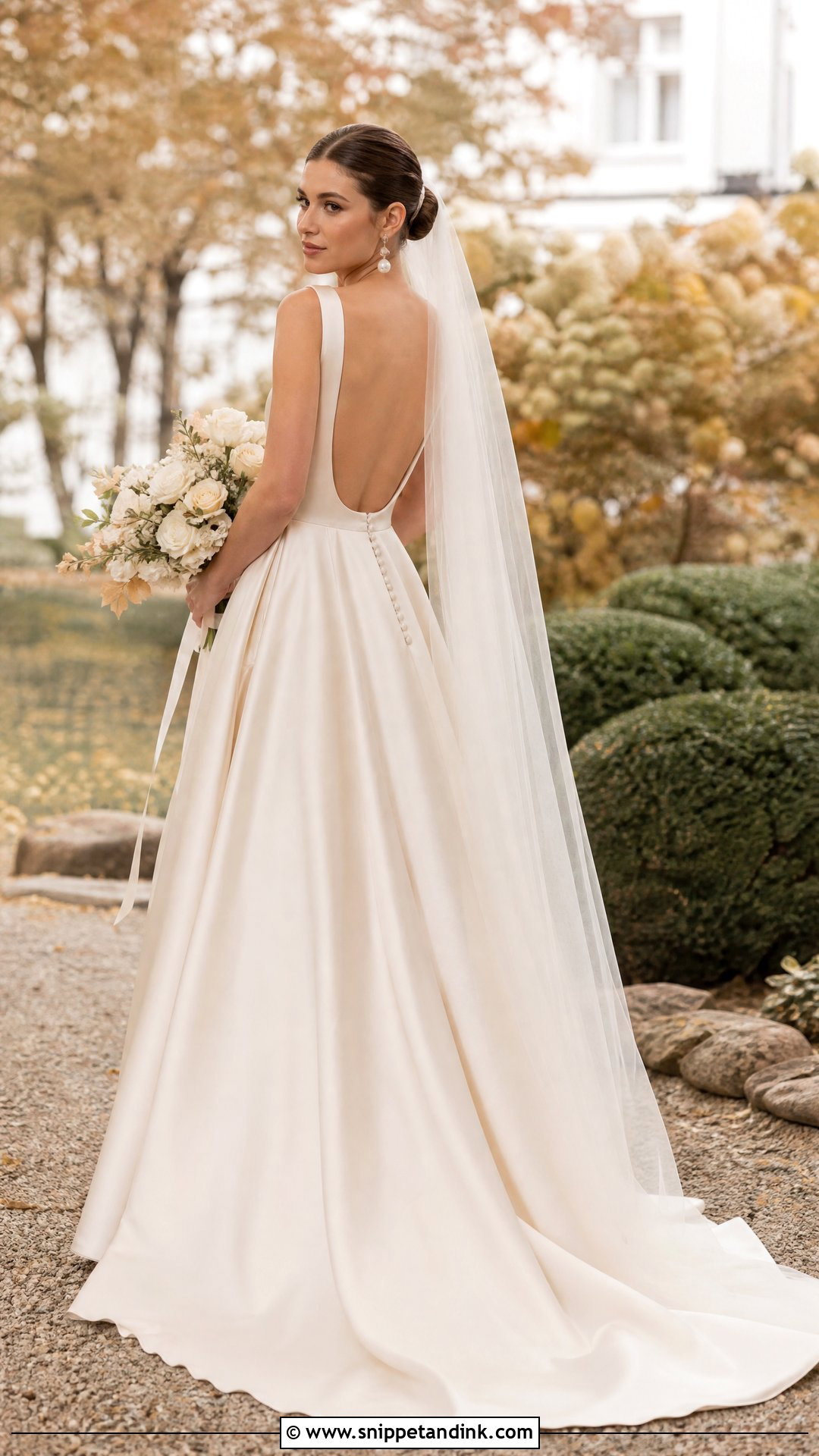
Champagne adds warmth to an open back, and it often suits skin tones that look washed out against stark white. A satin slip, a lace A-line or a soft ball gown in champagne, light gold or warm ivory all work, with a low scoop back to show off the glow of the fabric. Neutral metallic heels and pearl earrings finish it. Match your veil to the gown, not to white; a bright white veil over a deeper champagne dress makes the gown look dingy unless you want that contrast on purpose. Bring a fabric swatch when you choose the veil. A smooth bun and a bouquet of ivory flowers and greenery suit the softer palette for autumn or candlelit venues.
Your Guests Spend the Whole Ceremony Looking at Your Back
Most brides think about how the dress looks walking down the aisle. Then they stand at the front, facing their partner, and every guest spends the next twenty minutes or so looking at the back of the gown. That’s the moment an open back earns its place, and it’s also when a sagging strap or a veil bunched over the opening is most noticeable. Ask whoever helps you dress to check the back view in a mirror before you walk, and to straighten the veil once you’re in place.
Strap marks and skin in the weeks before
Bra straps, swimsuits and vest tops leave tan lines that show clearly against an open back. In the month or two before the wedding, wear sunscreen on your back and choose strapless or halter tops outdoors. If your back is prone to breakouts, start gentle exfoliation well ahead rather than trying something new that week. Body makeup can even out the skin on the day, but let it set fully before you step into the dress, since fresh product transfers onto lining and lace.
Temperature matters too. A bare back in an air-conditioned venue or a stone church gets cold quickly. A wrap or the ceremony cape keeps you comfortable during photos between the service and the reception.
How Far Down Should Your Back Go?
The right open back looks good and still lets you move freely all day. These pairings run from minimal satin and lace sleeves to supportive A-lines, ball gowns and relaxed beach dresses. When comparing them, look at how deep the opening goes, what support is built in, where the straps sit, how heavy the fabric is and how long the train runs. Bring your shoes and the underwear you plan to wear to every fitting so the alterations are accurate. Plan your hair and veil so they frame the back rather than hiding it. And pick the depth you’ll be comfortable in when you’re standing in front of the people you know best.
You'll Like These Ideas:






Leave a Reply