
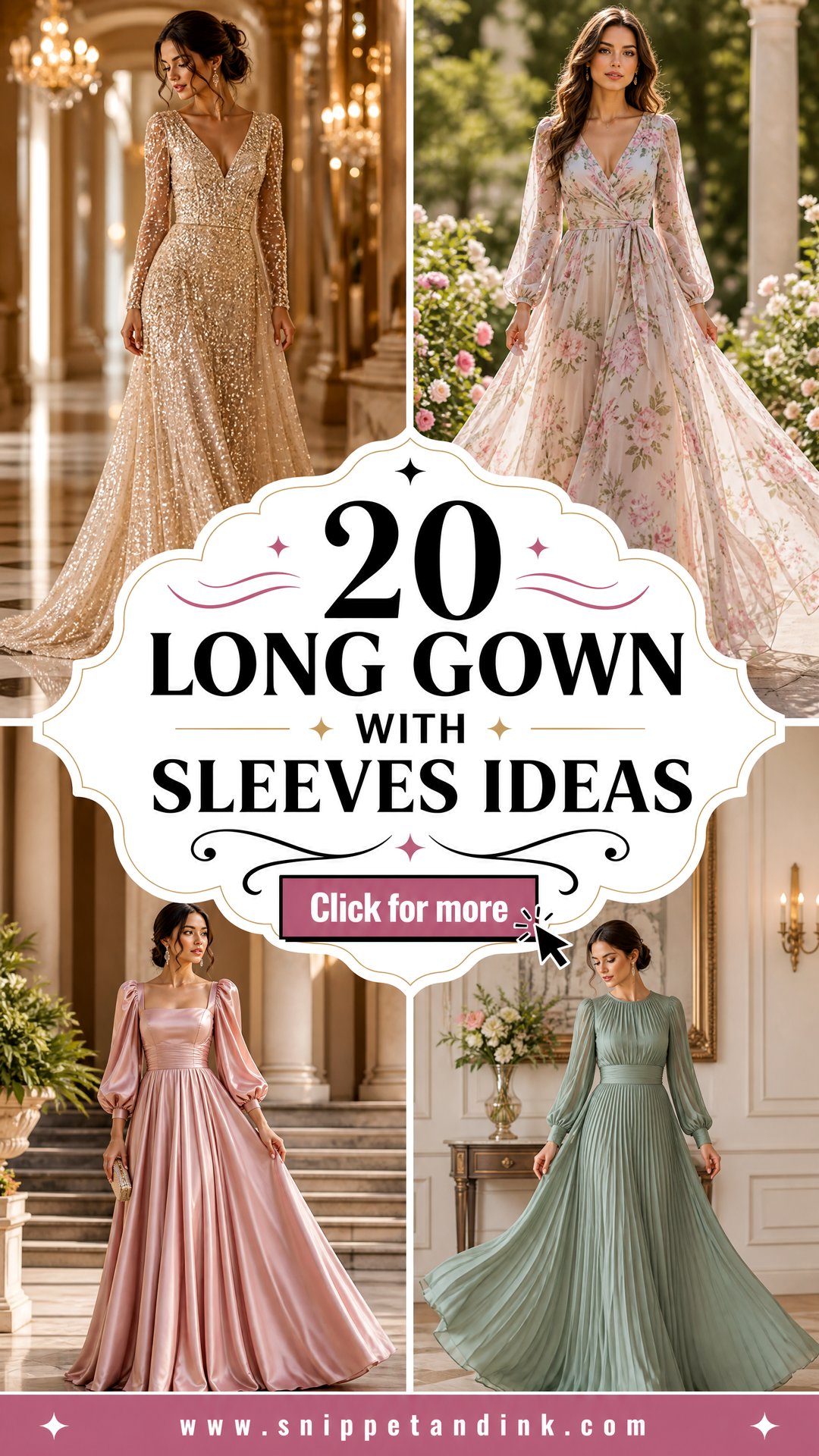
A floor-length gown with sleeves solves a problem I hear about constantly in fittings: people want to look formal but hate spending the night tugging at straps or feeling cold in an air-conditioned ballroom. Sleeves fix that, but they also add the trickiest part of any dress to fit. The sleeve decides whether you can hug, dance, lift a glass and reach for your bag without the bodice riding up. Below are twenty complete looks, from crepe columns and velvet to sequins, lace and softer plus-size and petite cuts, each with the shoes, jewelry and hair I’d put with it, plus the fit checks I do before anyone takes a sleeved gown home.
How a Sleeve Is Cut Decides How Much You Can Move
Two gowns can look identical on a hanger and feel completely different once you lift a glass. The difference is almost always in how the sleeve is built, and it’s the first thing I look at when someone brings me a sleeved gown to assess.
Set-in sleeves
This is the classic sleeve, sewn into a round armhole. A high, close armhole looks neat and actually gives more lift, because the sleeve doesn’t drag the bodice up with it. A low, deep armhole looks roomy but pulls the whole side seam upward the moment you raise your arm.
Raglan, dolman and kimono sleeves
These run in one line into the neckline or bodice, so they’re easier to move in and forgiving on broad shoulders. The trade-off is a softer, less tailored shoulder, which reads more relaxed than a crisp set-in sleeve.
Fabric and stretch
- Stretch crepe and jersey sleeves can be cut close to the arm and still let you reach.
- Non-stretch lace, satin and sequins need ease built in, or a small gusset under the arm.
- Sheer mesh shows every pull line, so it needs either stretch or a generous cut.
- Heavy beading on the sleeve adds weight that drags the shoulder seam down over a long evening.
In a fitting I ask you to do three things: cross your arms, reach forward as if for a handshake, and lift both hands above your head. If the hem rises more than a little or the back seam strains, the sleeve is wrong for you, however good it looks standing still.
1. Black Long Gown with Sleeves
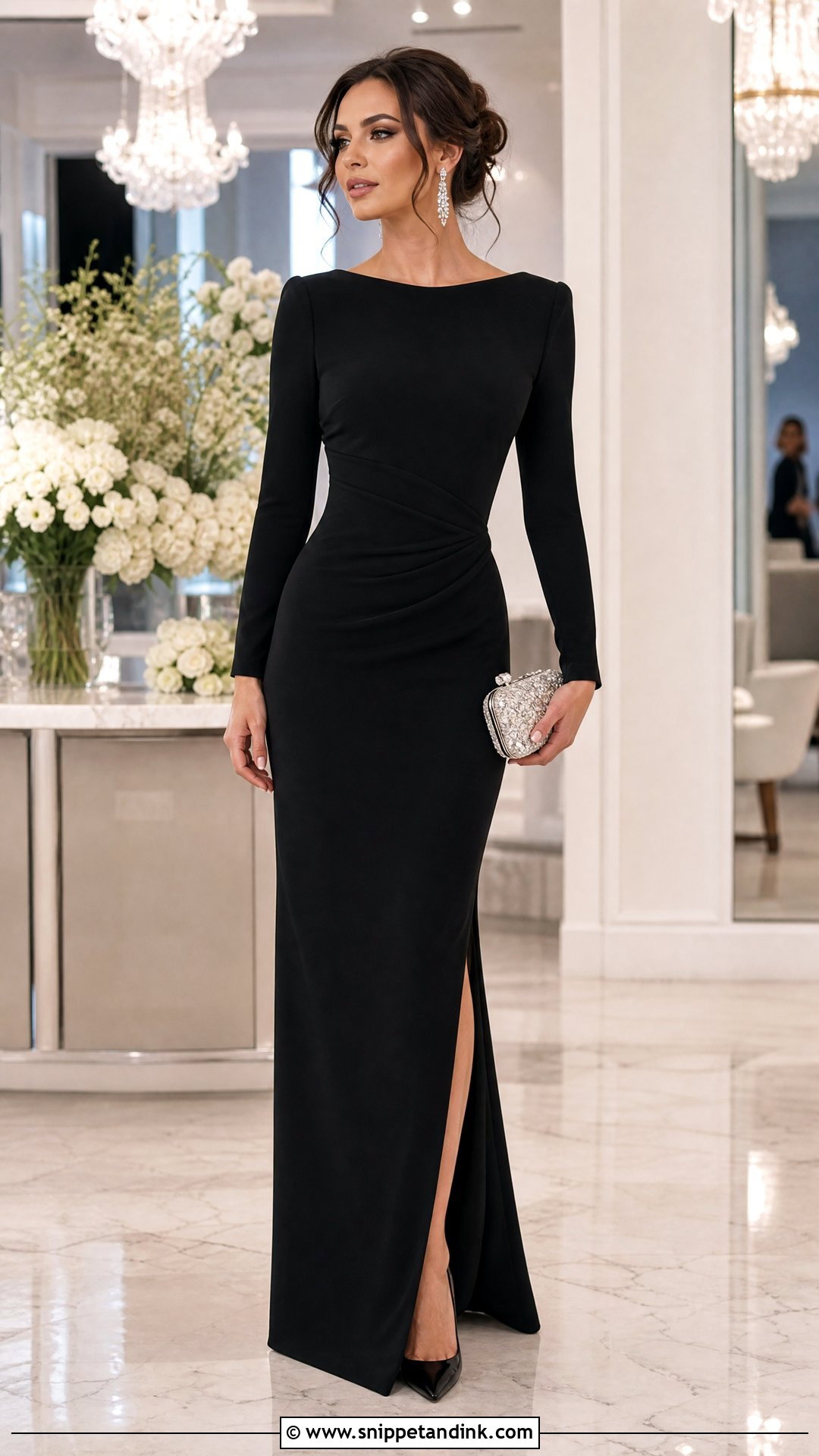
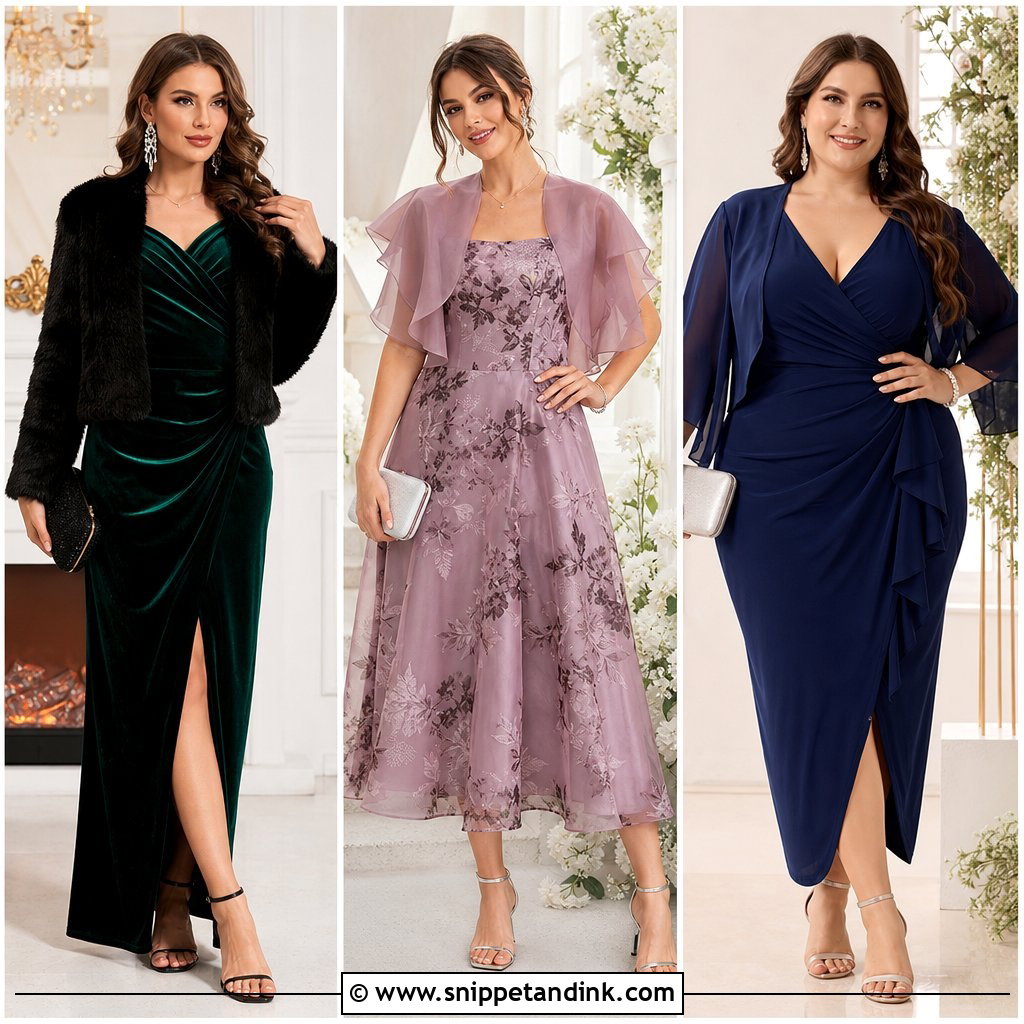
Black crepe is the gown I reach for when the invitation says black tie and the guest has no time for a long hunt. Look for a defined waist, shoulders with a little structure and a column skirt that grazes the floor; a modest side slit makes stairs and dancing far easier. Pointed black pumps, a small crystal clutch and silver drop earrings finish it, with a smooth low bun to keep the neckline clear. With a high neck, skip the necklace entirely. I hem black crepe with the actual shoes on, about a finger’s width off the floor, because crepe has weight and will catch under a toe if it’s even slightly long.
2. Navy Blue Long Gown with Sleeves
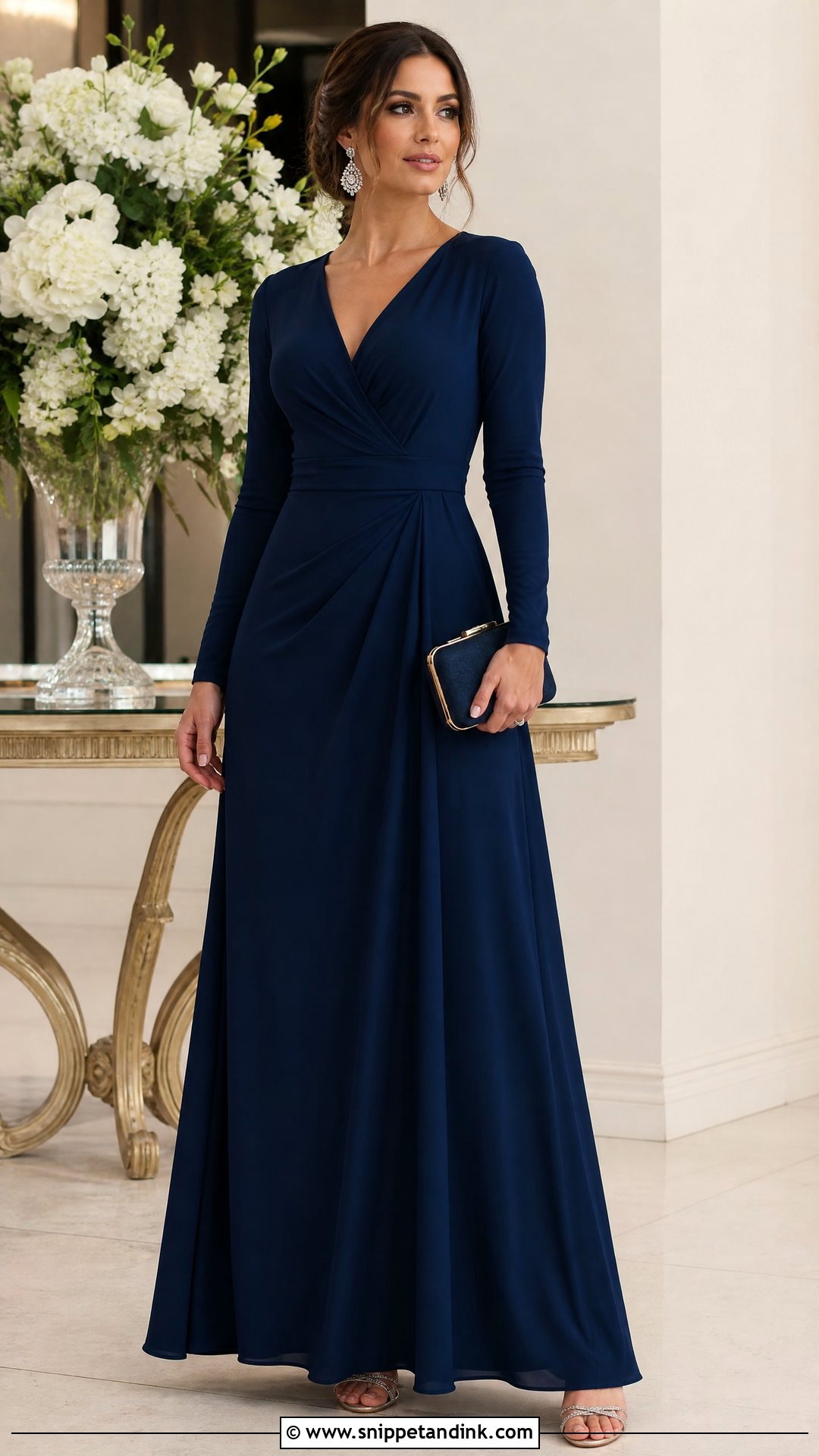
Navy reads as formal as black but softer next to the face, especially in daylight photos. I like it on a wrap bodice with fitted sleeves and an A-line skirt, since the diagonal neckline marks the waist and opens up the chest. Silver sandals, a compact navy clutch and crystal earrings add just enough light. Wrist-length plain sleeves leave room for one fine bracelet. Matte jersey or crepe is the fabric to ask for if you’ll be seated through a long dinner; a wrap front in a stiff fabric tends to gape once you sit, so I always have clients sit down in the fitting room before deciding.
3. Emerald Green Velvet Long Gown with Sleeves
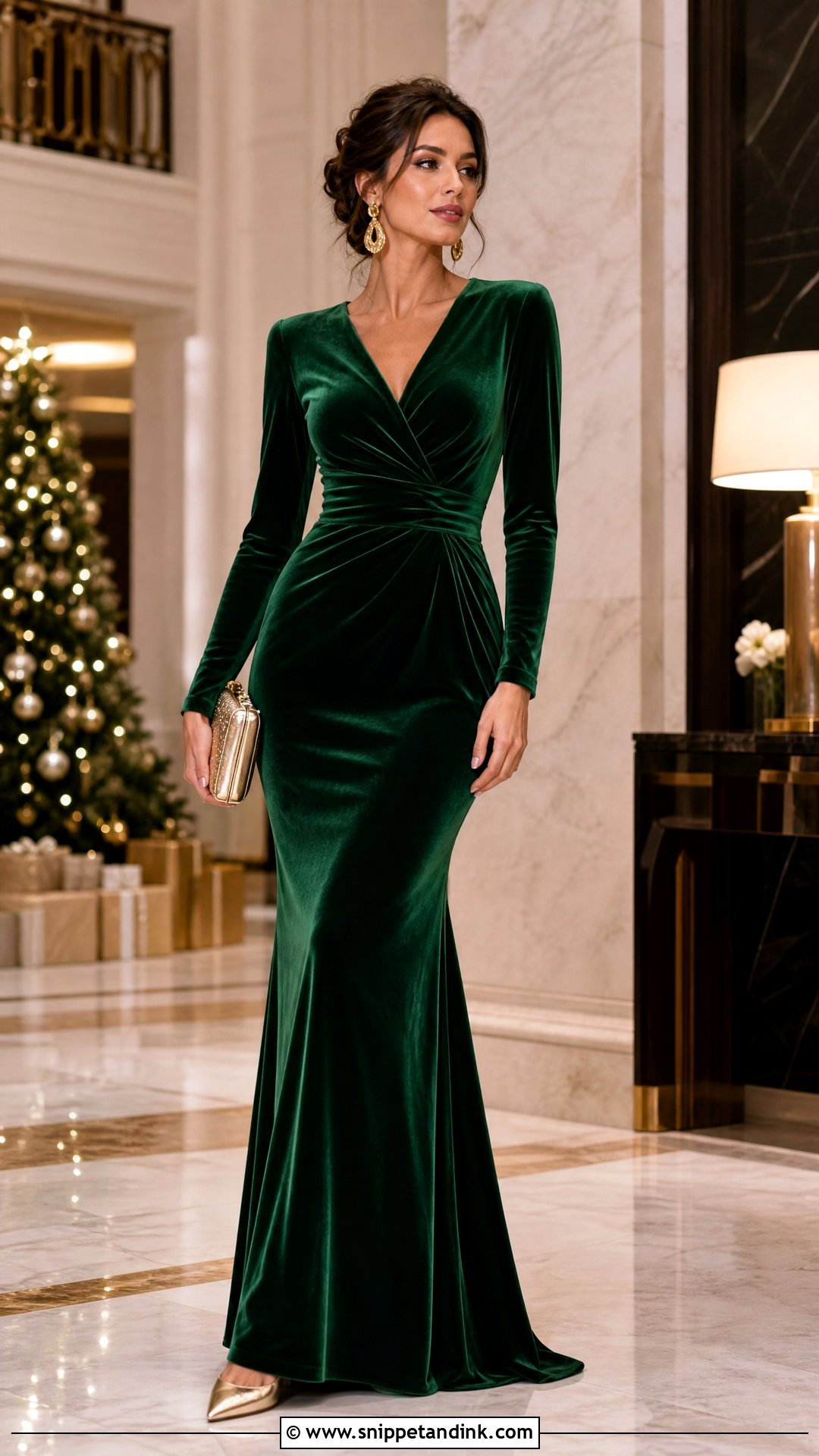
Velvet has a pile, which means its color shifts with the light: rich emerald velvet looks almost black in a dim room and glows under a spotlight. Keep it for fall and winter, when the weight is welcome. A V-neck stops the heavier fabric from swallowing your upper body, and fitted sleeves keep the line smooth. Gold earrings, a structured metallic clutch and pointed heels are plenty, with an updo so the velvet isn’t brushing your hair all night. Never press velvet flat with an iron; I steam it from the inside and brush the pile in one direction so it doesn’t look patchy in photos.
4. Burgundy Satin Long Gown with Sleeves
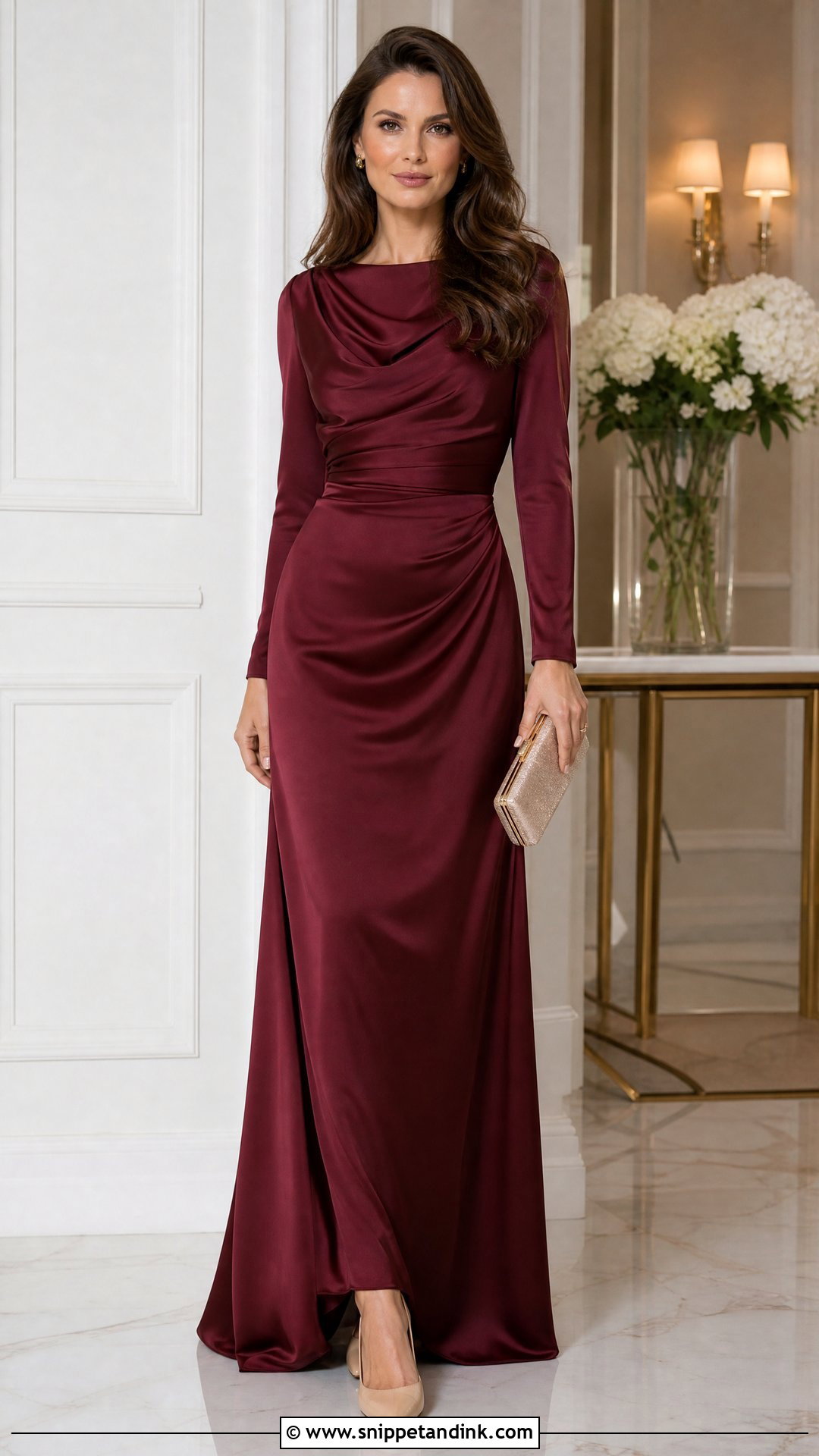
Satin is honest fabric: it shows every pull and every crease, so burgundy satin needs a cut that truly fits. A draped bodice hides a lot, narrow long sleeves keep it sleek and a softly defined waist keeps all that shine from looking shapeless. Nude pointed pumps, a champagne clutch and small gold earrings suit the color, and an open neckline takes a thin pendant at most. Before buying, I’d sit, raise your arms and walk across the room in it. Satin creases where you sit, so a long ceremony will leave lines across the lap; a quick steam before the reception fixes it.
5. Champagne Sequin Long Gown with Sleeves
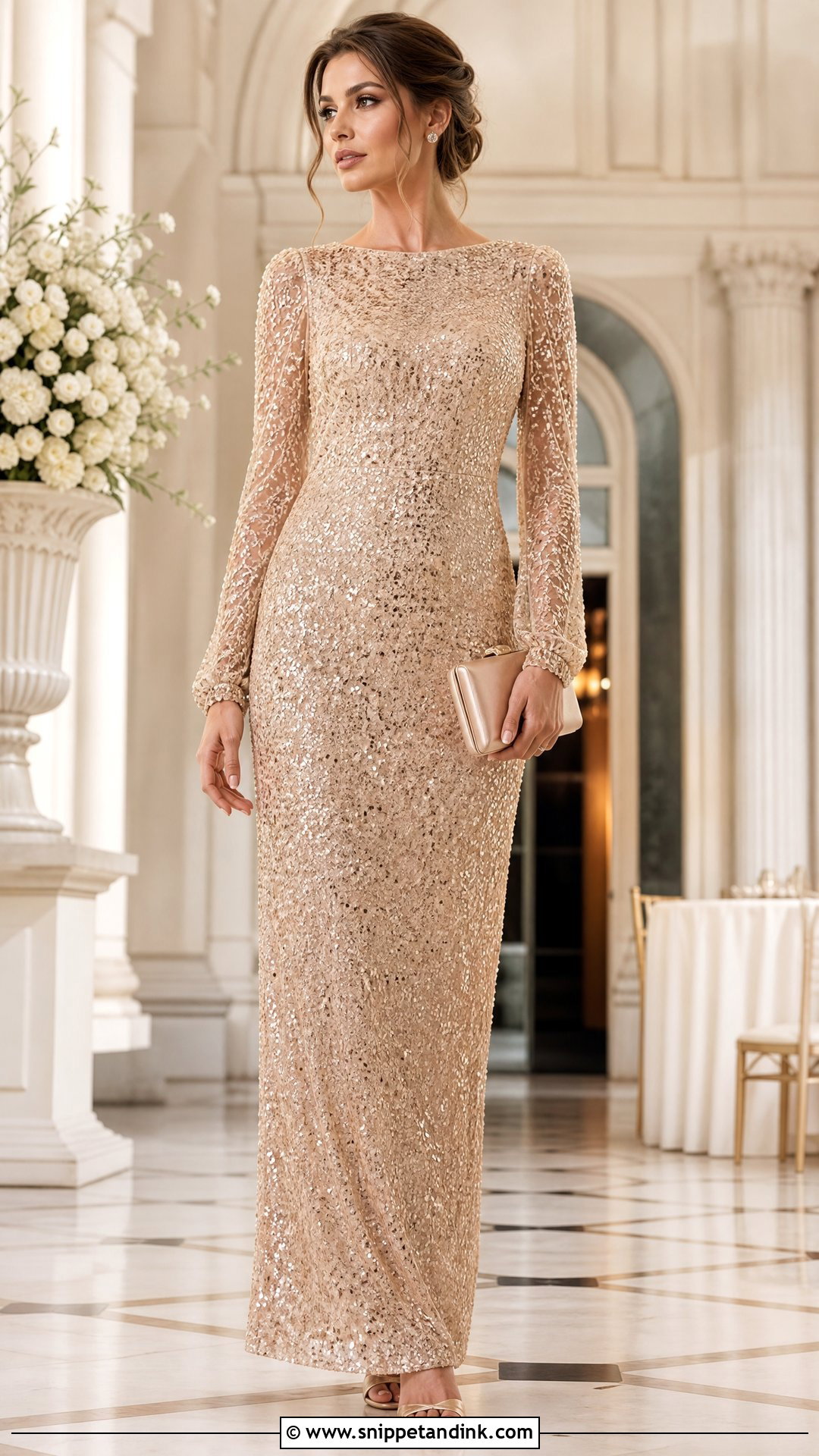
Sequins are loud by nature, so a champagne sequin gown needs a quiet shape. A simple column with tonal sequins, a fully lined bodice and sheer or lightly beaded sleeves keeps the shimmer polished. Champagne sandals, a satin box clutch and small studs are enough; sleek hair or a neat low bun keeps it calm. The one thing I always check here is the inside: run a hand along the underarm seams and inner sleeves, because cheap sequin work is stitched straight through and scratches skin raw by the end of the night. Skip bracelets, they catch on the sequins and pull threads.
6. Floral Chiffon Long Gown with Sleeves
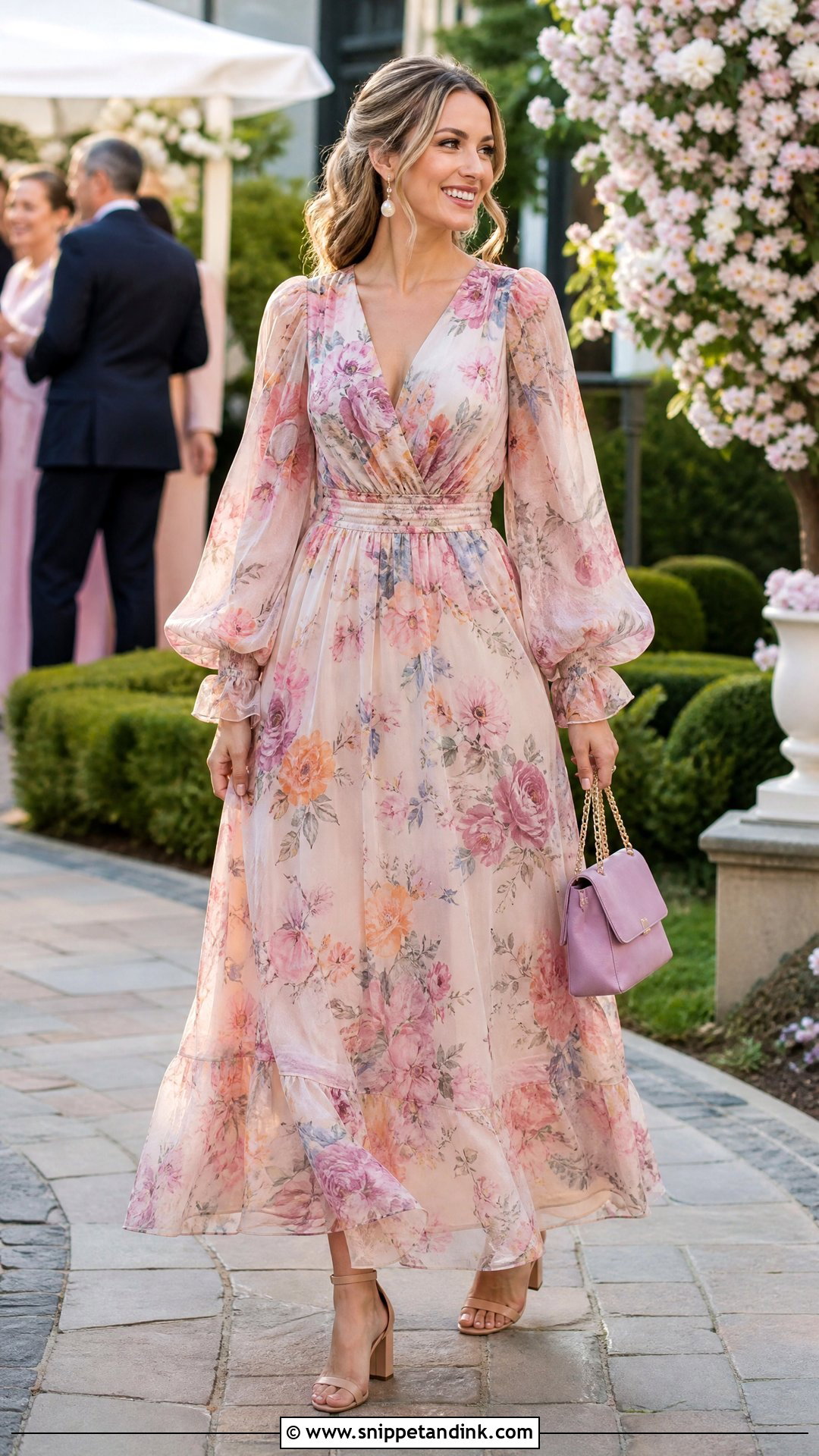
Chiffon moves with every step, which is exactly why I like floral chiffon for spring weddings, garden receptions and daytime formal events. Keep the print small to medium in scale, add sheer bishop sleeves, a fitted waist and a flowing A-line skirt. Nude block-heel sandals, a small pastel bag and pearl or crystal earrings suit it, with loose waves or a soft pinned style. Pull one shade from the print for your clutch or lip rather than matching everything. Check where the lining stops, since sheer chiffon over a short lining looks unfinished in sunlight, and hem it slightly shorter for grass so it doesn’t drag and stain.
7. Lace A-Line Long Gown with Sleeves
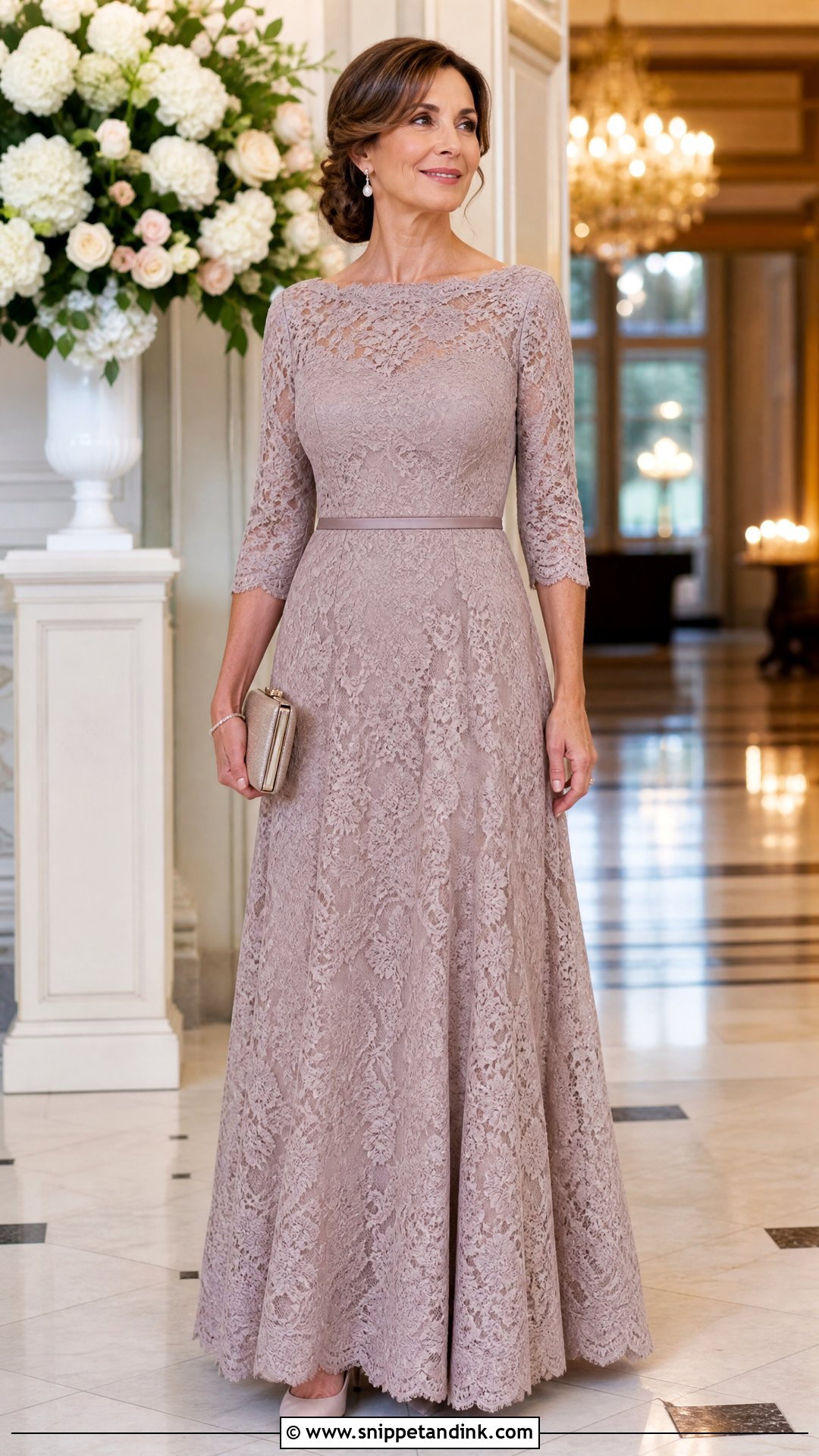
Lace over an A-line skirt flatters a wide range of ages and figures because the fitted top and gradually widening skirt balance almost any proportion. Choose a gown with a natural waist, lace sleeves and a smooth lining underneath; a bateau, scoop or shallow V neckline keeps it classic. Closed-toe pumps, a structured clutch and pearl drops finish it. If the lace is busy, leave the neckline bare. Lace sleeves are where I see most fitting problems: non-stretch lace cut close to the arm restricts reaching, so lift your arms overhead in the store. A chignon or soft side-parted waves keeps the shoulders on show.
8. Beaded Mermaid Long Gown with Sleeves
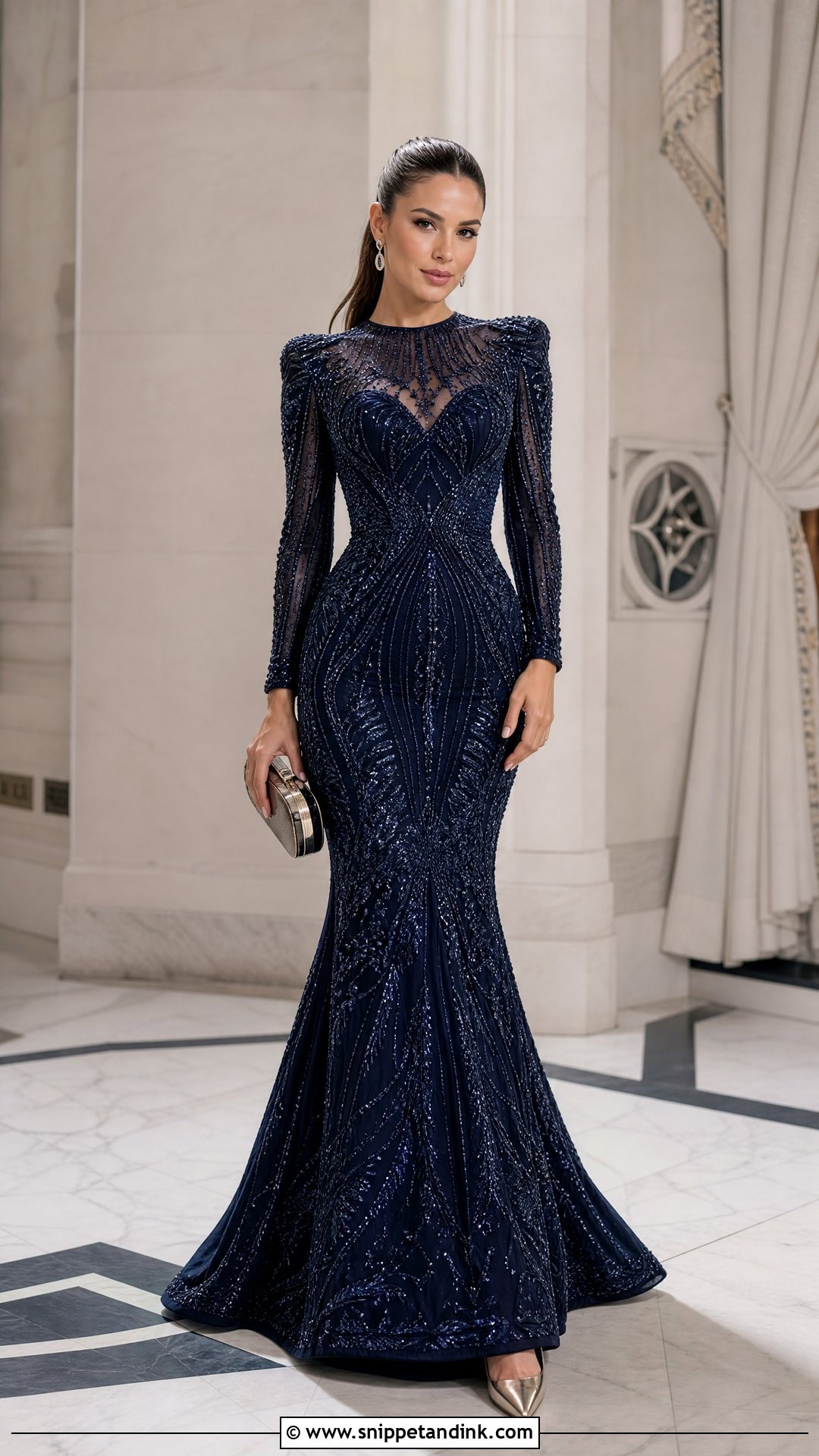
A beaded mermaid gown is the most dramatic shape here, made for galas, prom and black-tie receptions. It follows the body through the hips and flares near the knee, and long sleeves balance that big skirt while giving the beadwork room to show. Deep navy, charcoal, plum and emerald all carry beading well. Pointed metallic heels, a hard-shell clutch, simple earrings and a sleek ponytail or structured updo are all it needs. I’d sit down in a mermaid before buying it, because if the flare starts too low you’ll be taking tiny steps and perching on the edge of every chair. Heavy beading also drags on the shoulders, so look for a firm internal waistband that carries the weight.
9. High-Neck Long Gown with Sleeves
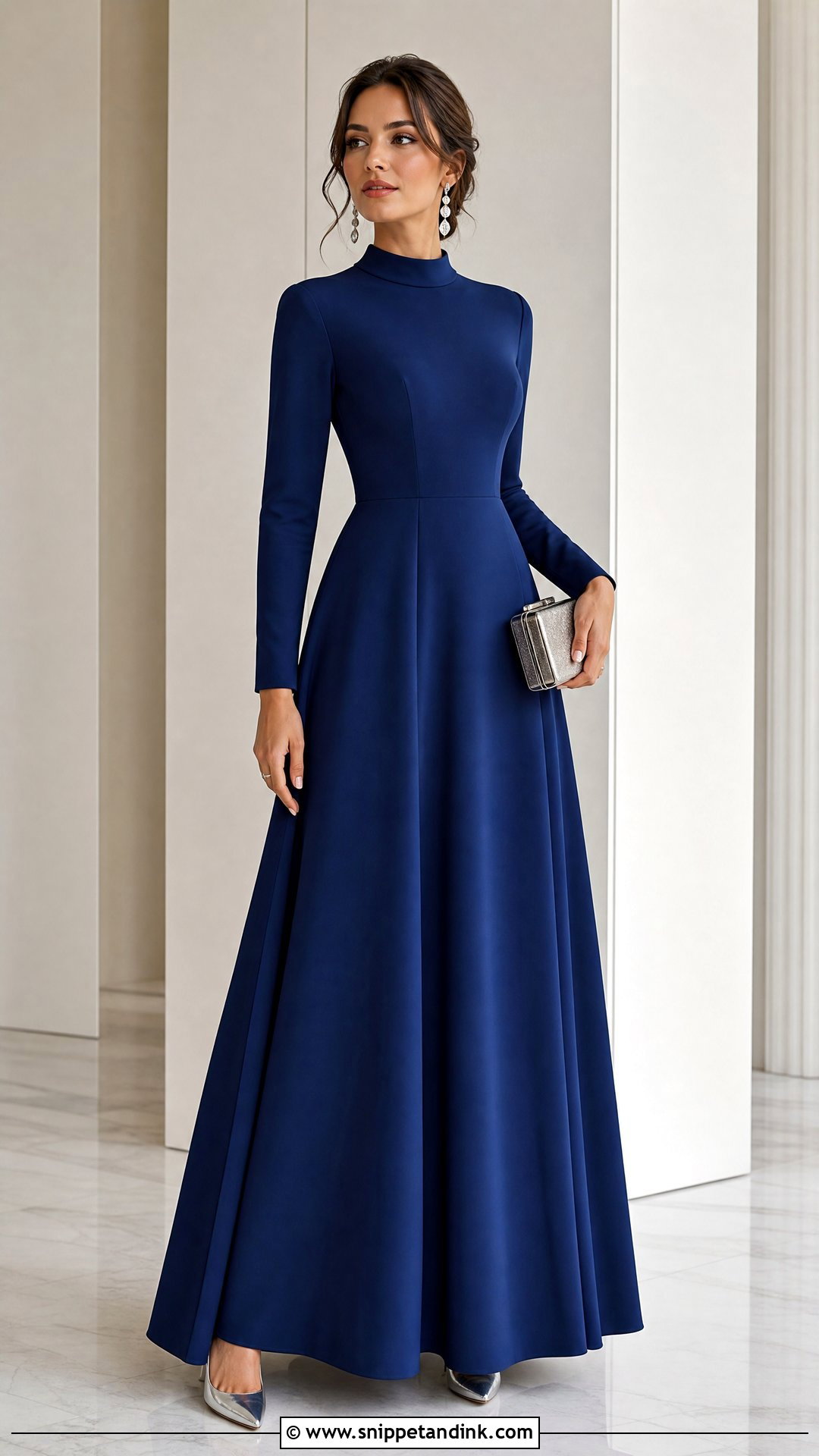
A high neck gives full coverage and still looks sharp, provided the rest of the gown is streamlined. Pair the collar with fitted sleeves, a softly shaped waist and a column or gentle A-line skirt so the covered bodice doesn’t feel heavy. Drop earrings do the work a necklace would, so leave the throat bare. Pull hair into a low knot, sleek ponytail or swept-back style. Solid black, sapphire, forest green and plum all suit this cut. Sit down and turn your head both ways while wearing it: a collar that’s fine standing can dig into the neck once you’re seated, and that’s the moment you’ll want to take it off.
10. V-Neck Long Gown with Sleeves
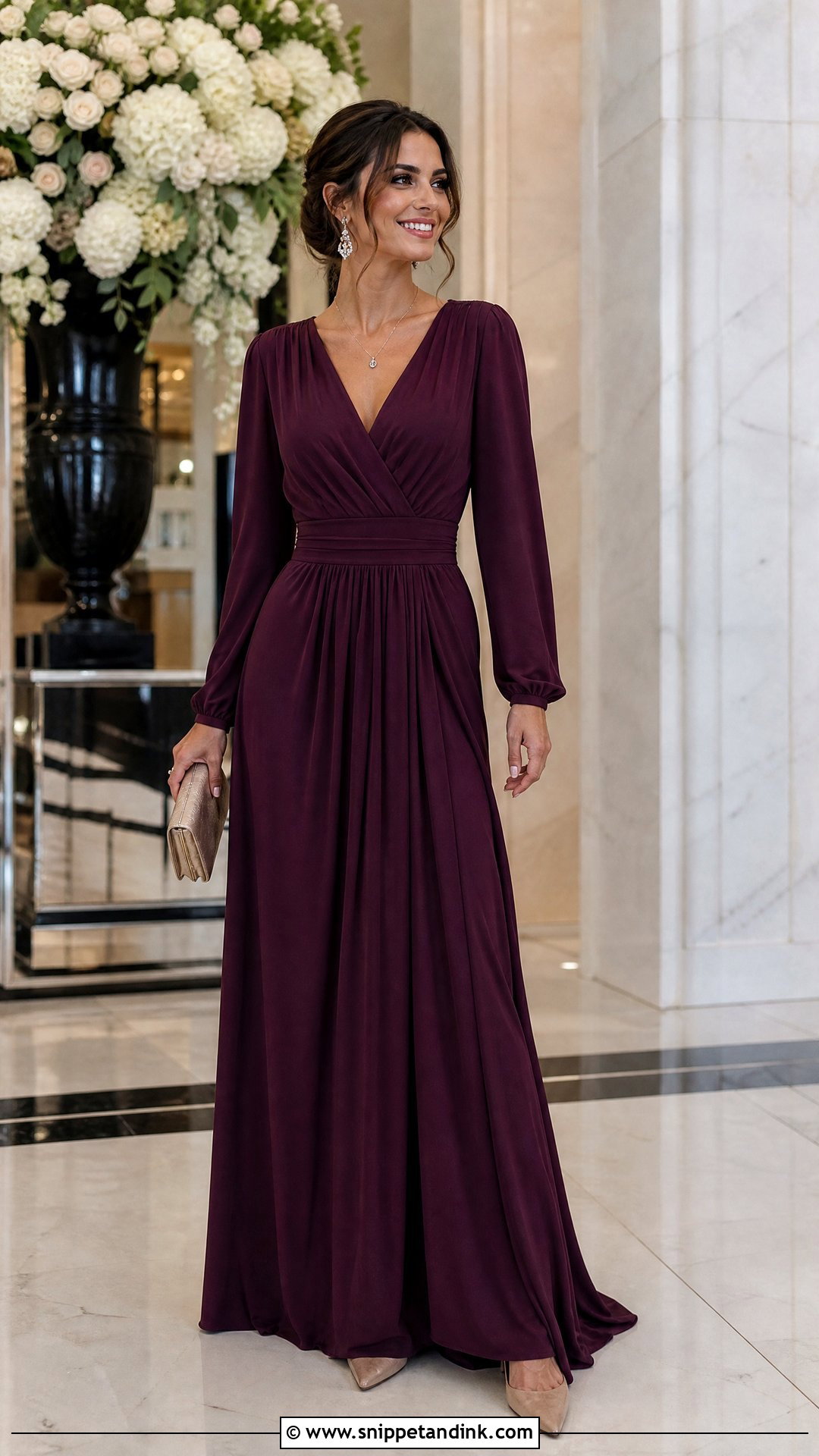
Few necklines lengthen the upper body like a V-neck. For a formal finish, I pair it with a wrap-inspired bodice, a structured waistband and a floor-length skirt with some movement. Depth is personal; go as shallow as you’re comfortable with for the event. A fine pendant, small drop earrings, a sleek clutch and pointed pumps complete it, but if the neckline is embroidered, earrings only. Curled hair worn to one side frames the shape without hiding it. Deep V-necks slip when you sit, so I tape them on the day or have a tailor add a small hidden snap where the wrap crosses.
11. Off-Shoulder Long Gown with Sleeves
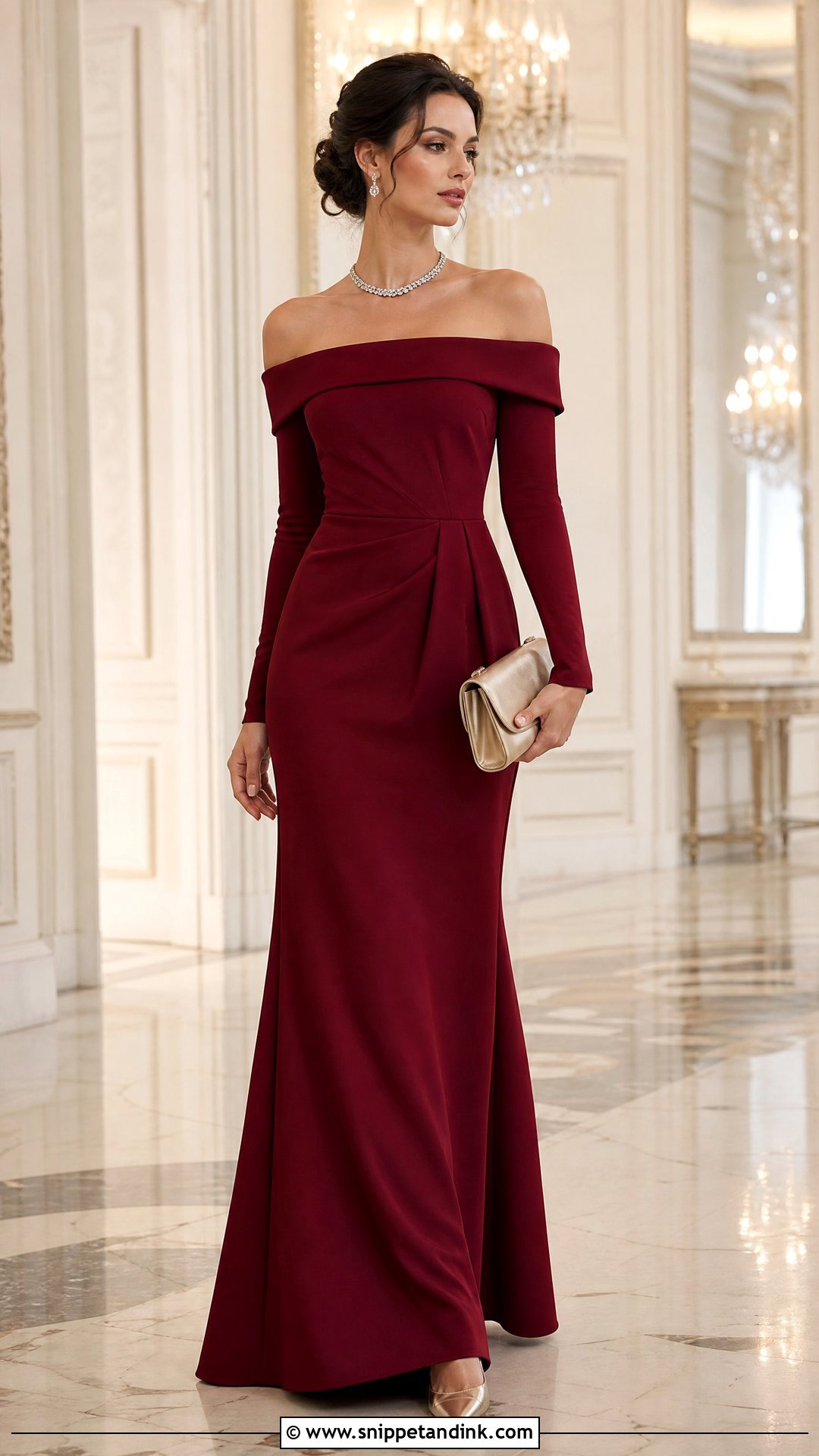
Off-shoulder sleeves look easy and are actually one of the hardest styles to keep in place. You want a structured bodice with real inner support, long sleeves set just below the shoulder, a fitted waist and a gently flared skirt. A short crystal necklace, matching earrings, a satin clutch and metallic pumps suit the open neckline, with hair up or swept back. The test I insist on: lift both arms as if hugging someone. If the bodice rises with the sleeves, the sleeve band is too tight, and a tailor can add stretch elastic or boning so you’re not hitching it up all evening.
12. Cape Sleeve Long Gown
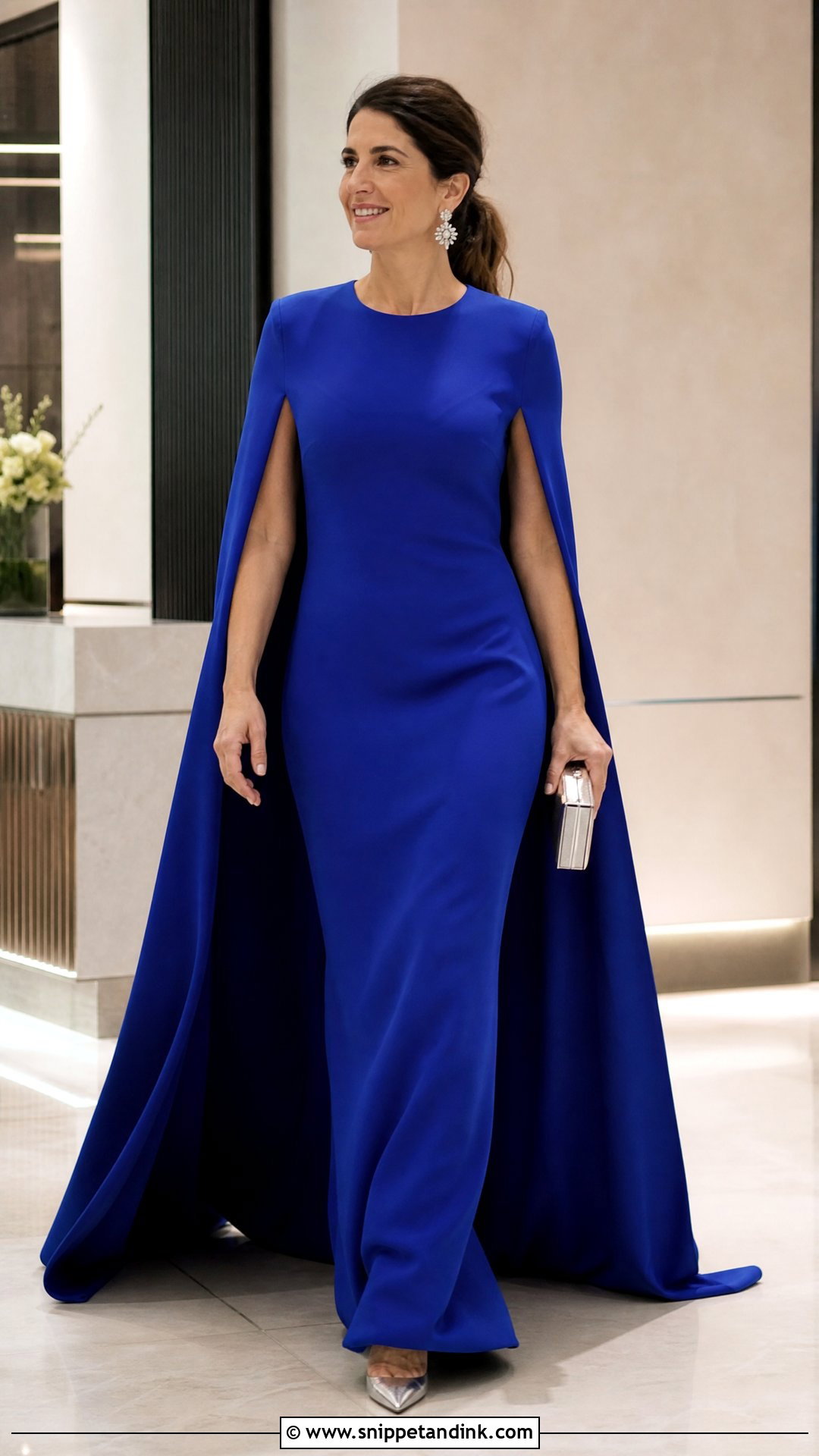
Cape sleeves get their drama from movement, not decoration. Look for a clean column gown with panels attached at the shoulder or upper arm that fall smoothly without hiding the waist. Solid cobalt, burgundy, black or ivory gives that architectural look. Sleek pointed pumps, a structured mini clutch and bold earrings are enough, with a polished bun so the shoulders stay visible. Skip long necklaces and bracelets. Walk, turn and sit in it: chiffon or light crepe panels float, while heavier fabric can swing into your plate at dinner or catch the back of a chair.
13. Bell Sleeve Long Gown
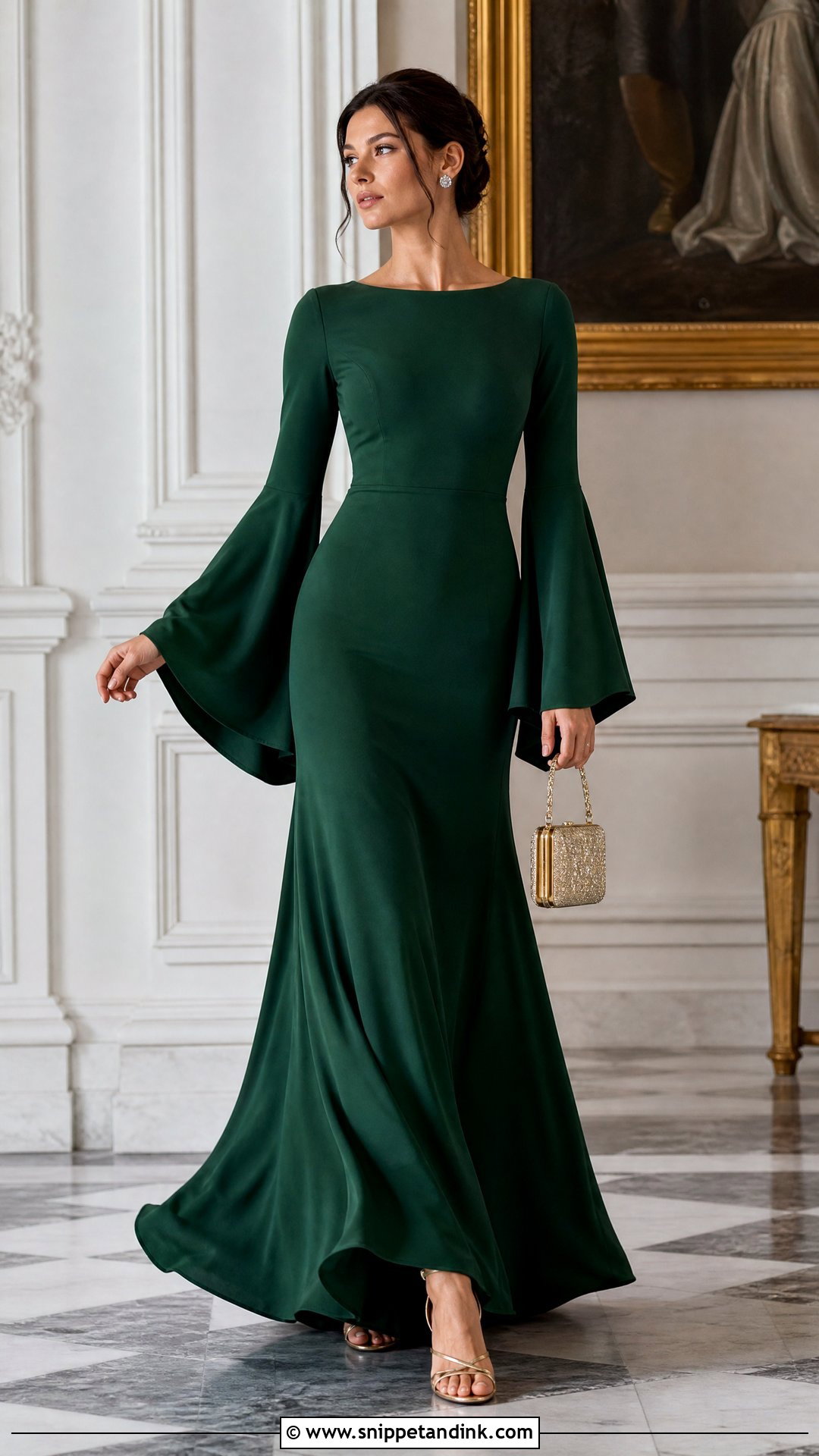
Bell sleeves are fun until you’re eating. Choose a fitted bodice with sleeves that flare below the elbow and a column or soft A-line skirt, so all the volume stays at the wrist. Slim metallic heels, a small top-handle bag and stud or drop earrings work, but bracelets disappear under the cuffs and snag. A center-parted low bun contrasts nicely with the flowing shape. I check the cuff length in the fitting with arms bent: if the opening covers your hands, it’ll trail through sauces and get in the way every time you open your clutch.
14. Sheer Sleeve Long Gown
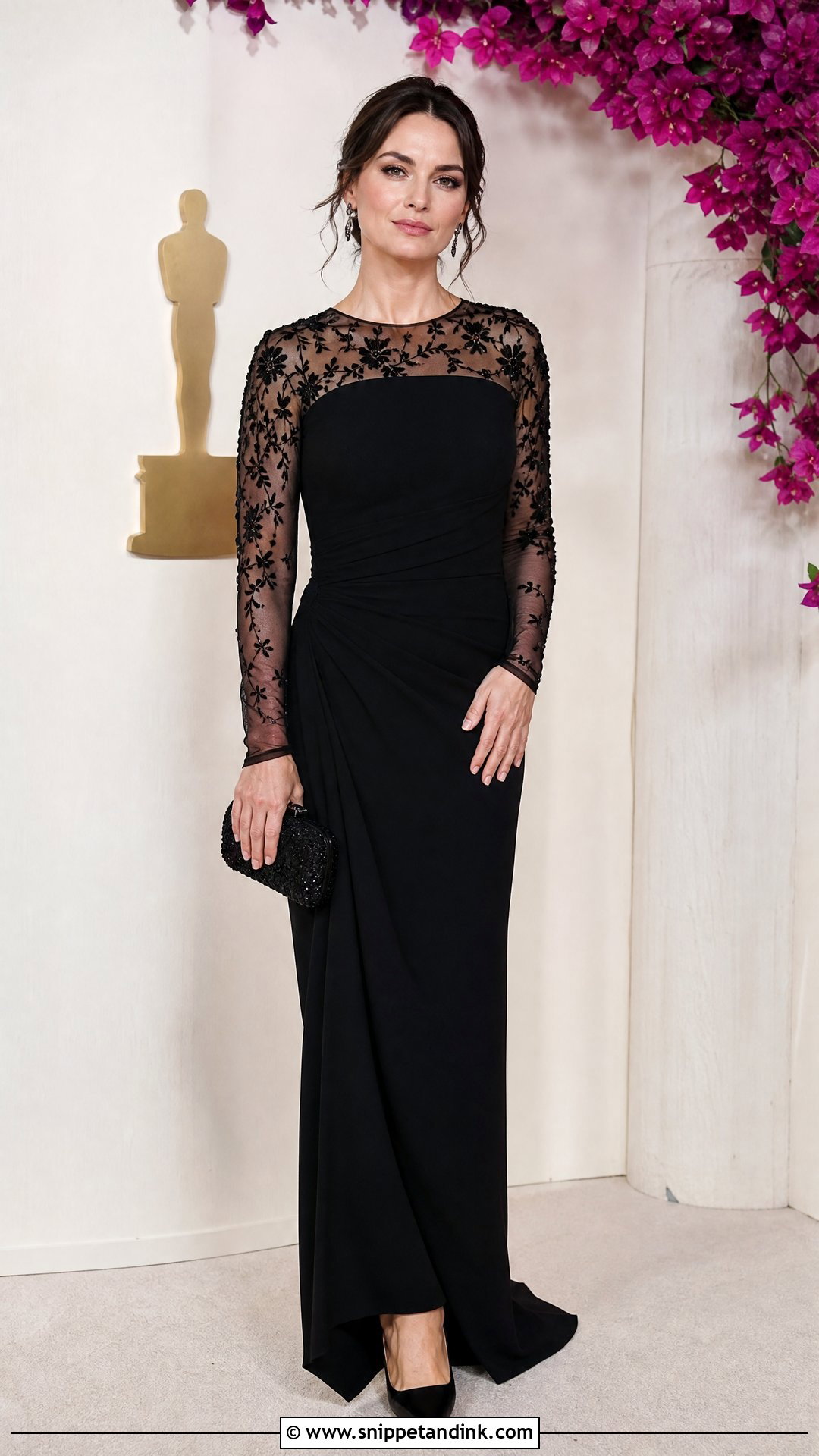
Sheer mesh sleeves add formality without weight, which makes them a good choice for warm venues. Look for a lined bodice with fitted mesh sleeves and appliqué that runs along the arm in a clean line; a floor-length crepe or chiffon skirt balances the light top. Satin pumps, a small beaded clutch and refined earrings suit it, with hair up to show the shoulder detail. Mesh tears where it’s stressed, so I check the armholes, elbows and wrists for pulling while reaching forward. Keep sharp rings and bracelets off; one snag in fine mesh runs fast.
15. Puff Sleeve Long Gown
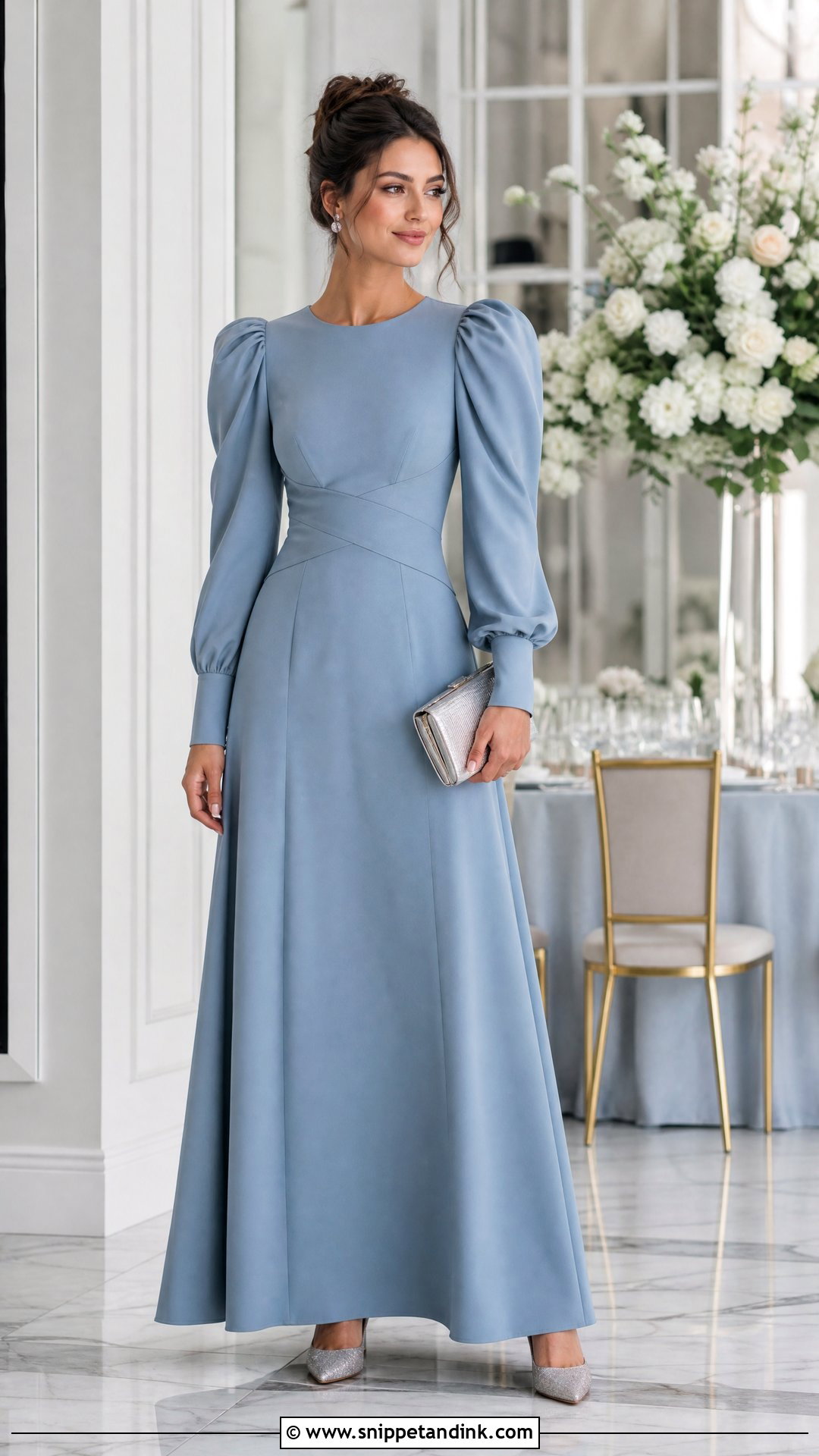
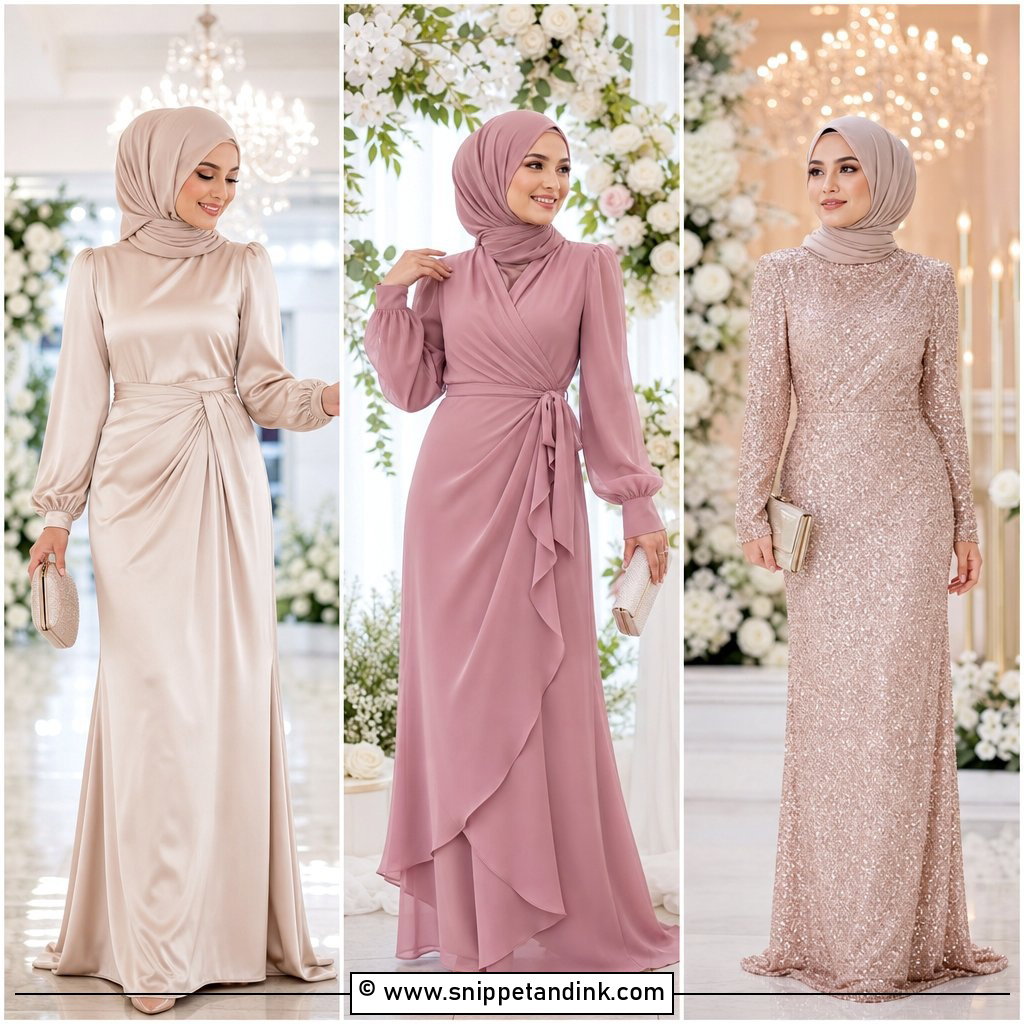
Puff sleeves give a distinctive romantic shape on their own, so the rest of the gown should stay simple. Ask for controlled volume at the shoulder, fitted cuffs, a streamlined bodice and a straight or simple A-line skirt. Jewel tones, soft pastels and black all suit it. Pointed pumps, a structured clutch and small earrings keep the focus up top, with a low bun or smooth ponytail. With broad shoulders, I’d choose a softer puff with less height. Petite frames do better with puffs in chiffon or organza, which hold their shape without the bulk of gathered satin.
16. Pleated Long Gown with Sleeves
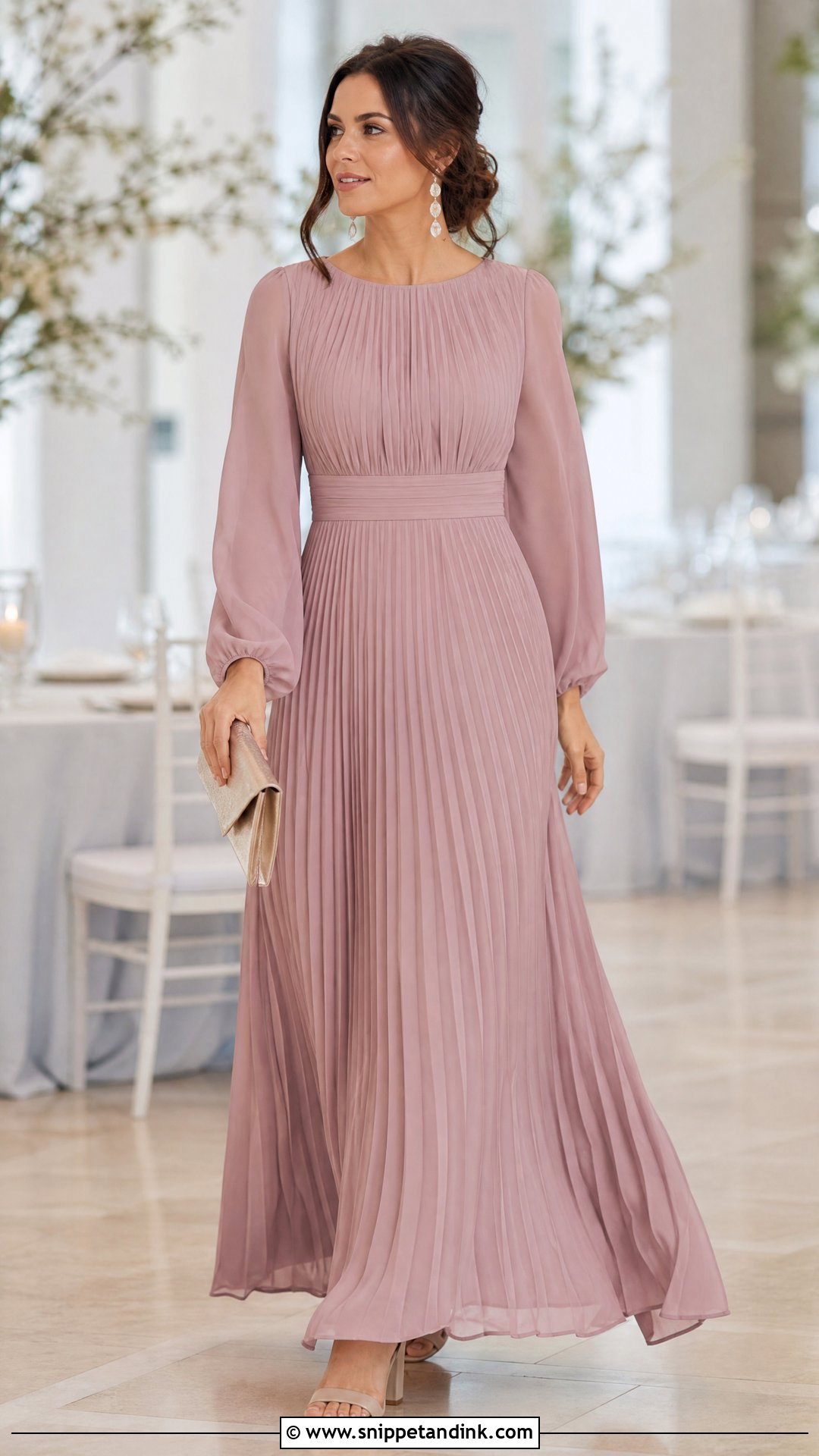
Fine pleats give texture and swing, but they also limit what a tailor can do. Choose a pleated chiffon skirt, a lightly gathered bodice and a fitted waistband; sleeves can be sheer, softly billowed or pleated to match. Neutral block heels, a metallic envelope clutch and delicate drop earrings suit it, with a softly pinned updo. Bulky belts crush the pleats, so skip them. The real issue is the hem: machine-set pleats are usually finished before they’re pressed, so shortening can flatten them. Buy the right length if you can, try it with your shoes and store it with space around it so the pleats aren’t crushed.
17. Plus-Size Empire Waist Long Gown with Sleeves
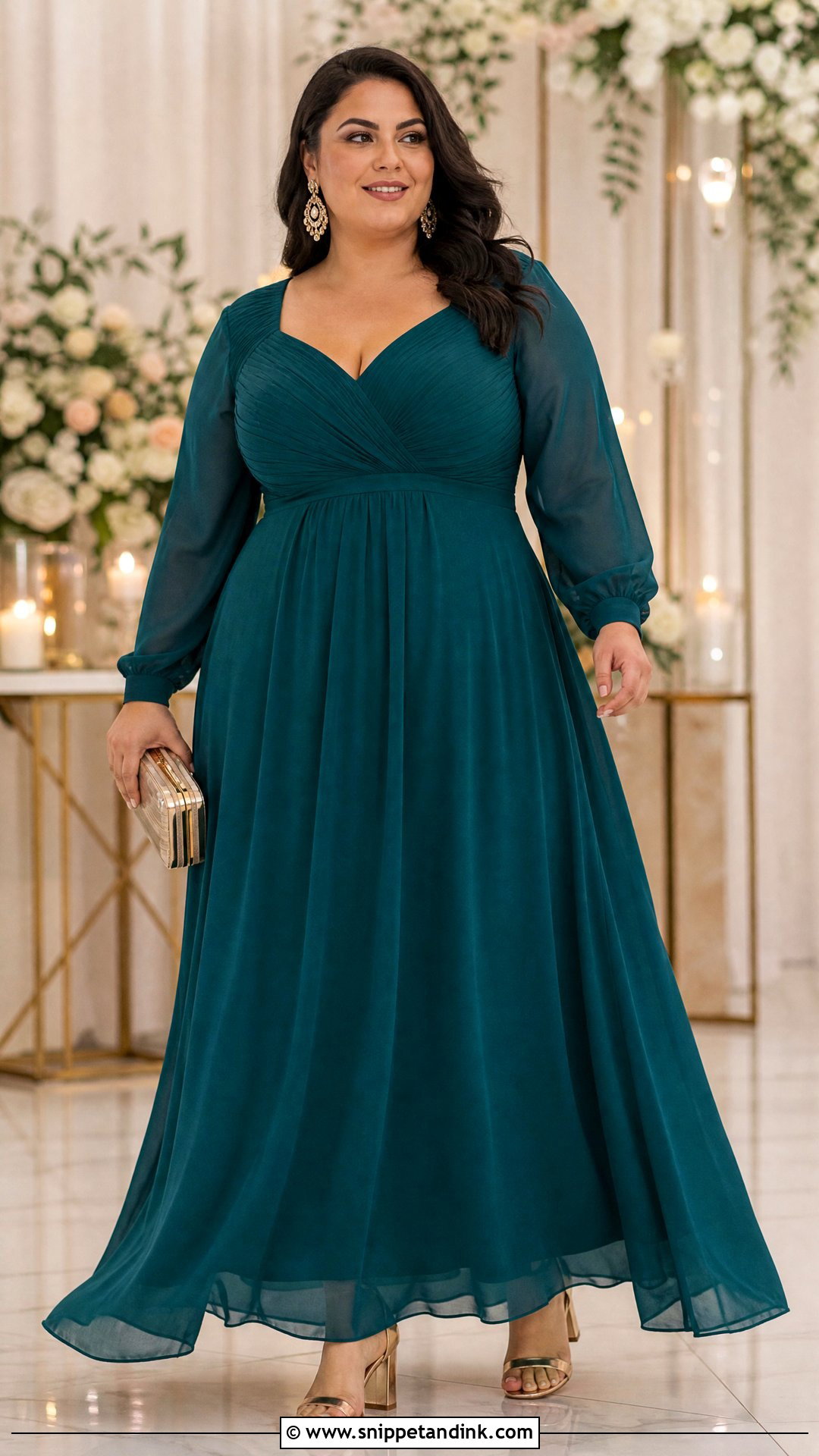
A plus-size empire waist gown is comfortable for a long formal evening, but the fit under the bust has to be precise. Look for a bodice that sits securely there, comfortable long sleeves and a skirt that falls without bulky gathering; soft chiffon, matte jersey and fluid crepe drape best. Supportive block heels, a structured clutch and earrings that frame the face finish it, with a side-swept style or low updo. My most important check: reach forward and lift your arms. A well-cut sleeve moves freely without pulling across the upper back. Hemming the skirt, adjusting the waist seam and setting the sleeve length can make the whole gown look made for you.
18. Petite Column Long Gown with Sleeves
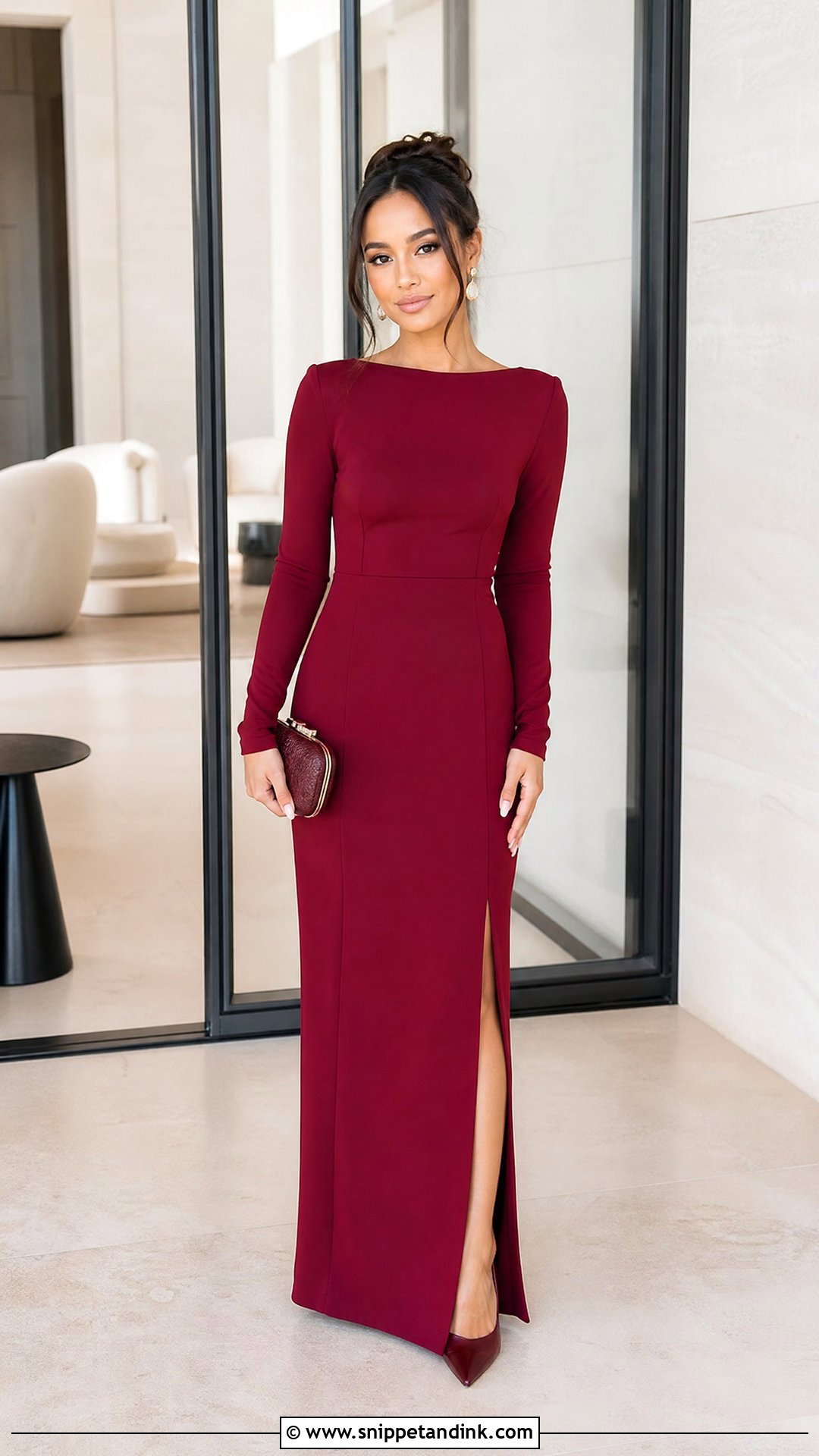
Petite frames carry a long gown with sleeves very well when the lines run vertically. A fitted column with a natural or raised waist, narrow sleeves and little horizontal decoration is the shape I suggest first, and one color head to toe keeps the line unbroken. Pointed heels in a matching shade, a compact clutch and delicate earrings suit the scale; oversized bags, very wide sleeves and layered skirts swamp a small frame. Wear your hair up or behind the shoulders. Even petite sizing usually needs sleeves shortened, and that’s worth doing: excess length bunches at the wrist and makes the whole gown look borrowed.
19. Modest Long Gown with Sleeves
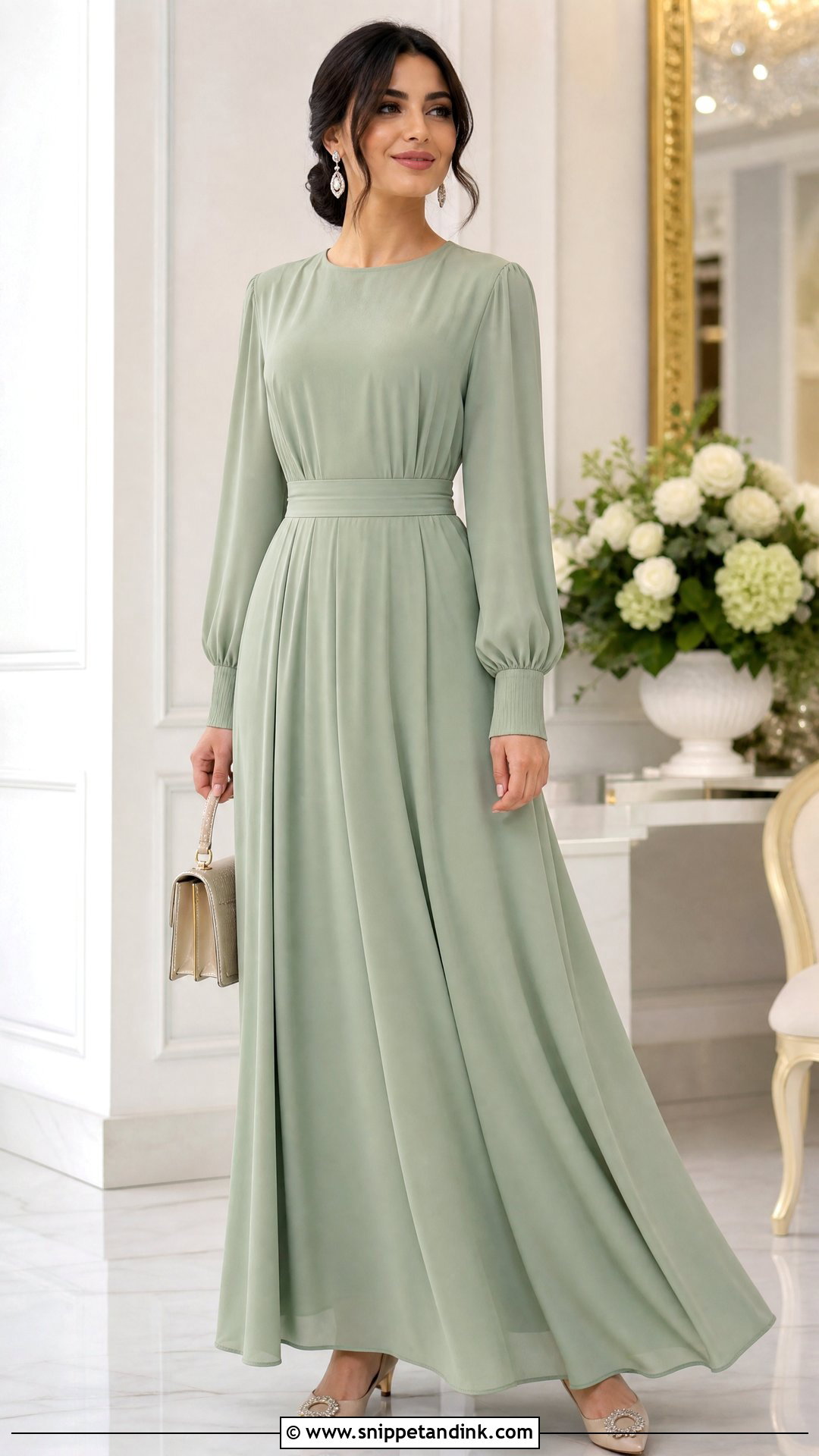
Modest doesn’t have to mean plain. An opaque gown with a high or softly rounded neck, full sleeves, a defined waist and a flowing skirt looks current and dressy; crepe, georgette and lined chiffon give coverage while still moving well. Embellished pointed flats or low block heels, a structured bag and polished earrings complete it. Add a narrow belt only if the waist needs definition. A smooth bun, soft waves or a neatly styled head covering all suit it. What makes a modest gown look expensive is in the details, so look for covered buttons, pleated cuffs, tonal embroidery or subtle beading.
20. Mother of the Bride Long Gown with Sleeves
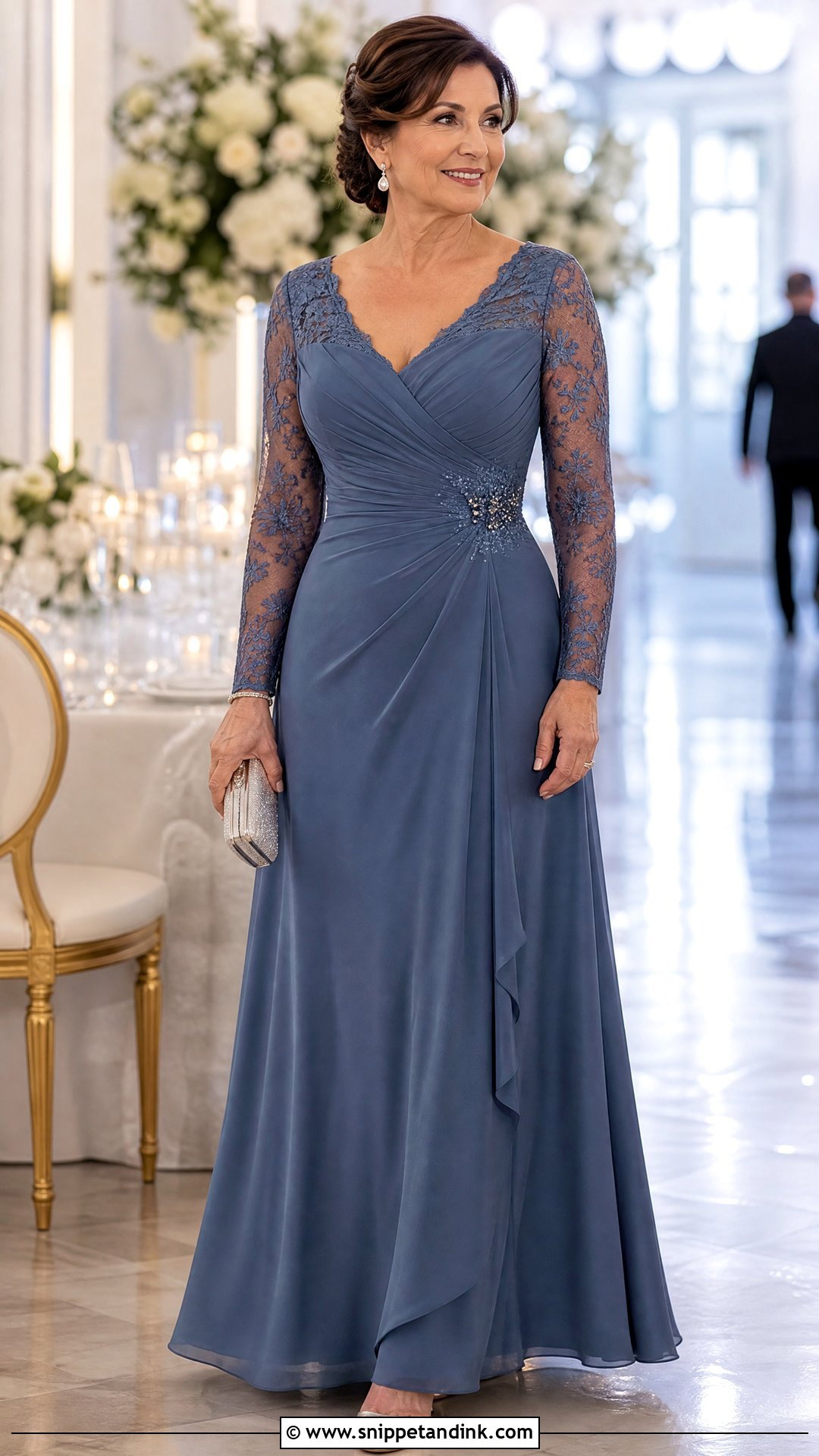
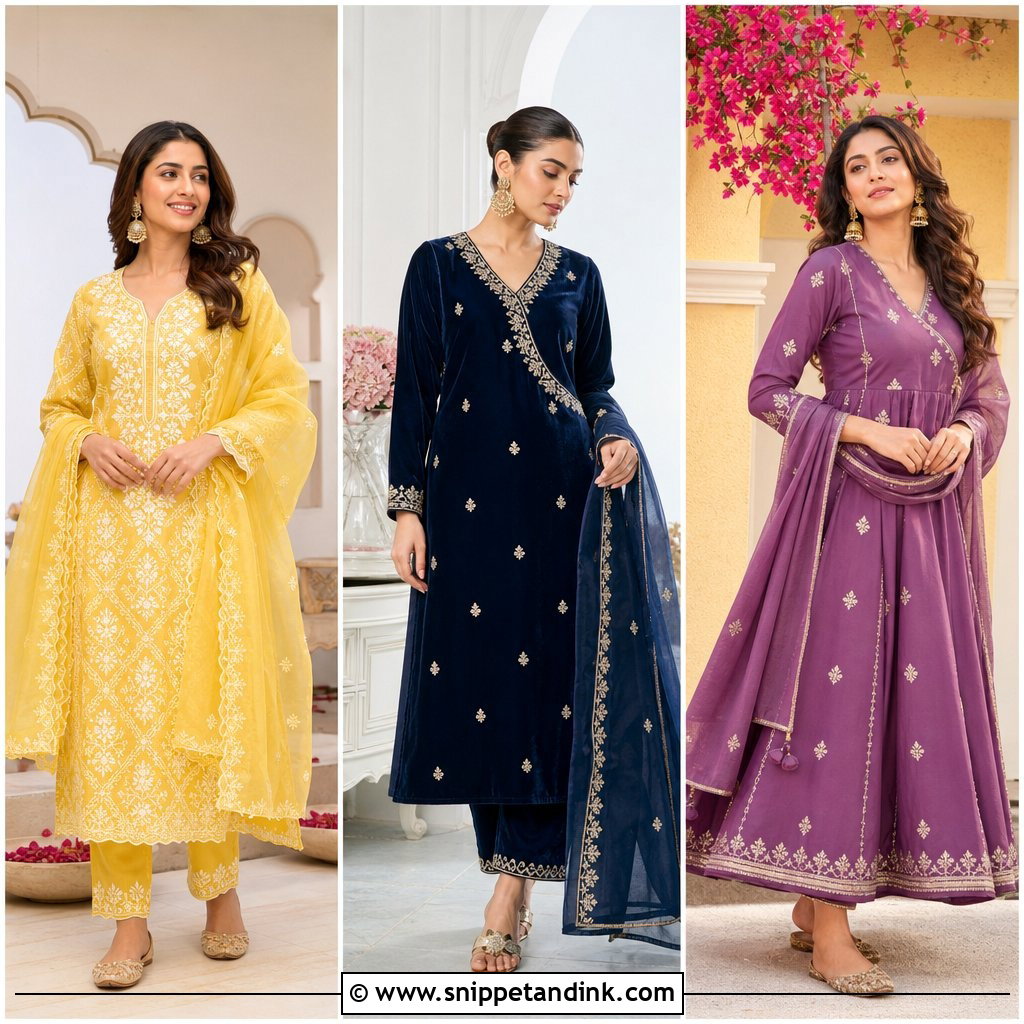
For a mother of the bride or groom, the gown has to match the wedding’s formality and survive a very long day. I often suggest an A-line with lace sleeves, a softly draped bodice and a little beading at the waist or neckline. Navy, slate blue, plum, sage and champagne all sit well with most wedding palettes. Low heels, a compact clutch, pearl or crystal earrings and a polished updo complete it. Avoid anything close to the bride’s color unless she’s asked for it. Plan alterations early, ideally two or three fittings, and bring the exact shoes and undergarments to every one, because a hem set in flats is wrong in heels.
Altering Sleeves Without Ruining the Gown
Sleeves are the alteration people underestimate. Hemming a plain crepe sleeve at the wrist is quick work. Shortening a lace sleeve that ends in a scalloped edge is not, because the tailor has to unpick the lace border, cut the sleeve and reattach the scallop so it still looks original. Beaded cuffs are similar: every bead along the seam line has to be removed and restitched.
Here’s how I’d plan it if the gown is for a wedding date that’s fixed:
- Buy the gown six to eight weeks ahead if it needs sleeve or hem work, longer for lace or beading.
- Bring the exact shoes, bra or shapewear and any jacket to the first fitting.
- Ask the tailor to pin the sleeve with your arm slightly bent, since that’s how you’ll hold it most of the night.
- Book a final fitting about a week before, and move in it: sit, dance a few steps, hug the tailor if you have to.
Taking a sleeve in is usually easy; letting one out often isn’t, because many gowns have narrow seam allowances. If a sleeve feels tight across the upper arm in the store, I’d size up and have the bodice taken in rather than hope the sleeve can be released later. Costs vary a lot by tailor and fabric, so get a quote before you commit to a complicated sleeve.
Sit, Reach and Hug Before You Say Yes to the Gown
The gown is only half of the outfit. Start with a shape you can move in and that matches the formality of the event, then build the neckline, sleeve, shoes, bag, jewelry, hair and undergarments around it. A plain gown looks expensive when the tailoring is precise; a heavily embellished one usually needs very little else. Whatever you pick, from black crepe to floral chiffon, velvet or sequins, test the sleeves by sitting, reaching and lifting your arms, and hem it in the shoes you’ll actually wear.
You'll Like These Ideas:


Leave a Reply