
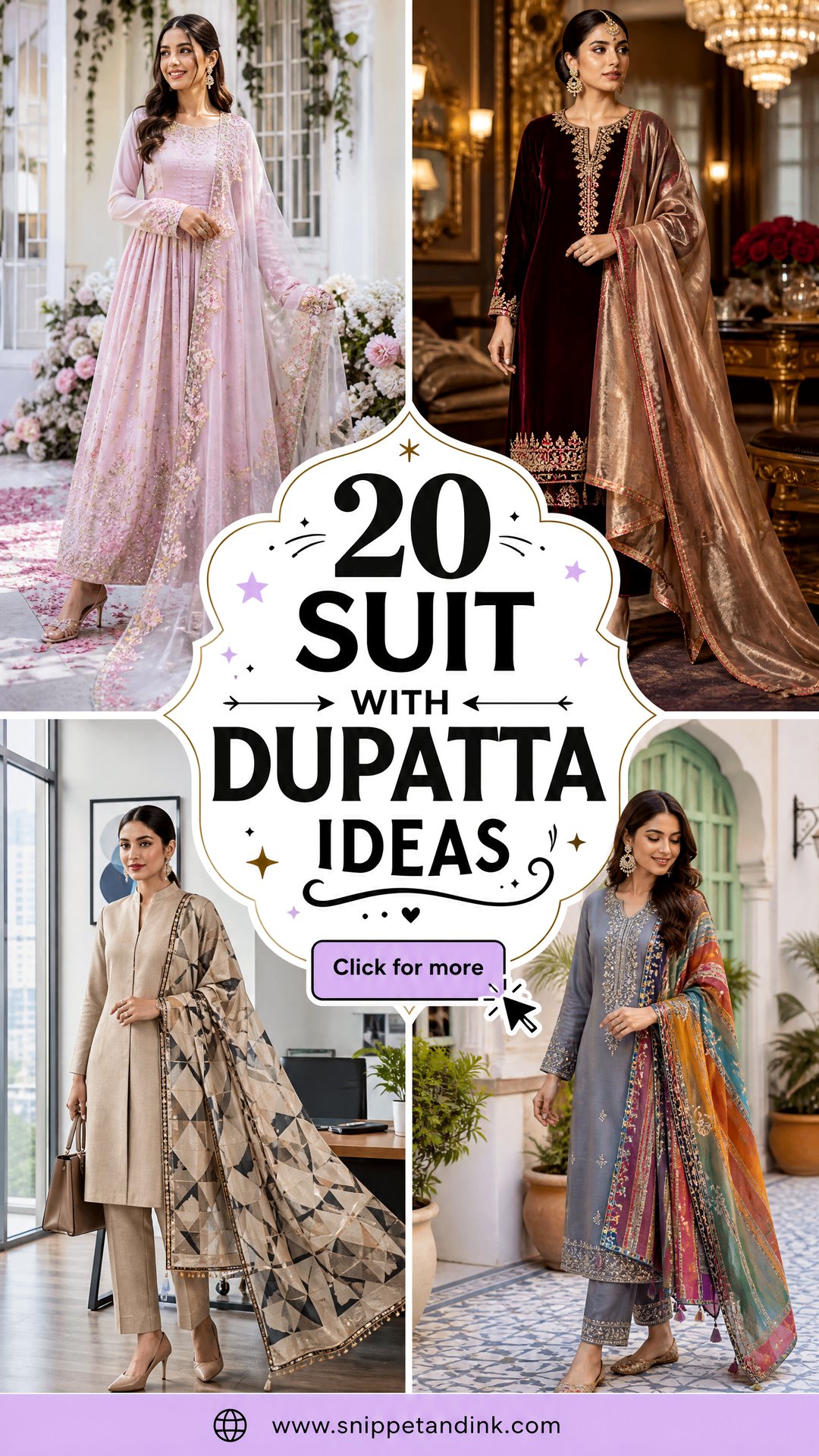
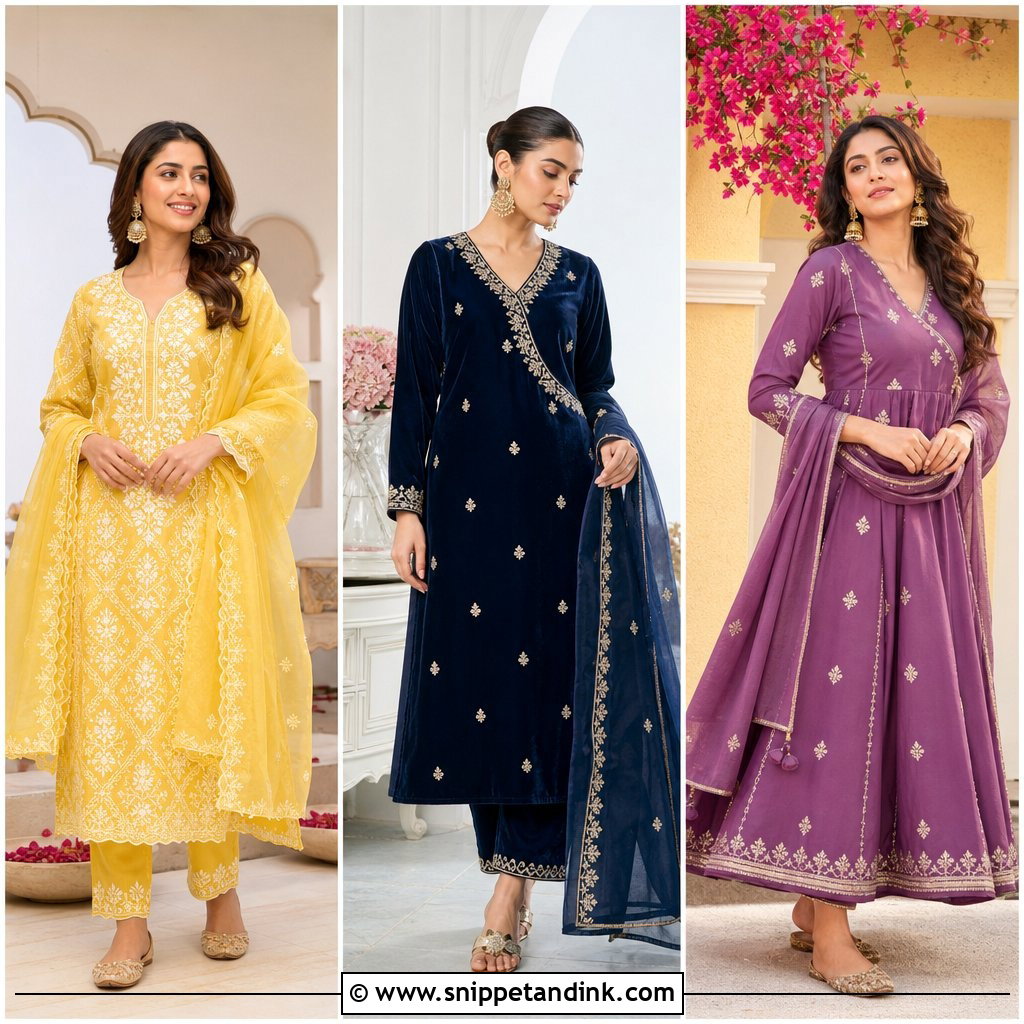
Most suits are decided by the dupatta. The same plain kurta can look like office wear with a printed cotton drape and like a wedding outfit with a woven silk one. When I style a suit, I decide early which piece is going to lead. A heavily embroidered kurta wants a light dupatta; a simple set leaves room for bold prints, rich weaving or a deep border. Fabric matters as much as color, because organza, chiffon and silk all sit and move differently on the shoulder. The twenty pairings below run from breathable cotton sets to Anarkalis and shararas, across seasons, occasions and ages, with notes on how I’d drape each one.
Five Drapes and the Events Each One Suits
How a dupatta is worn changes an outfit as much as which dupatta you pick. These are the drapes I use most, and where I’d use each.
- Pleated over one shoulder: fold the dupatta lengthwise into three or four pleats, pin at the shoulder seam and let it fall behind. Neat, formal and good for heavy silk.
- Across both shoulders: center it at the throat and let both ends fall behind. Traditional, and the drape I suggest for religious ceremonies or meeting elders.
- The forearm drape: one end over a shoulder, the other resting across the opposite forearm. It shows the border and keeps the kurta front visible.
- Diagonal sash: across the torso from one shoulder to the opposite hip, pinned at both points. Best for dancing.
- Loose loop around the neck with both ends in front: relaxed and easy, made for light chiffon or cotton at casual events.
For a temple, gurdwara or any setting where you may need to cover your head, pick a dupatta long and wide enough to go over your hair and still reach your shoulders.
1. White Chikankari Suit With Pink Organza Dupatta
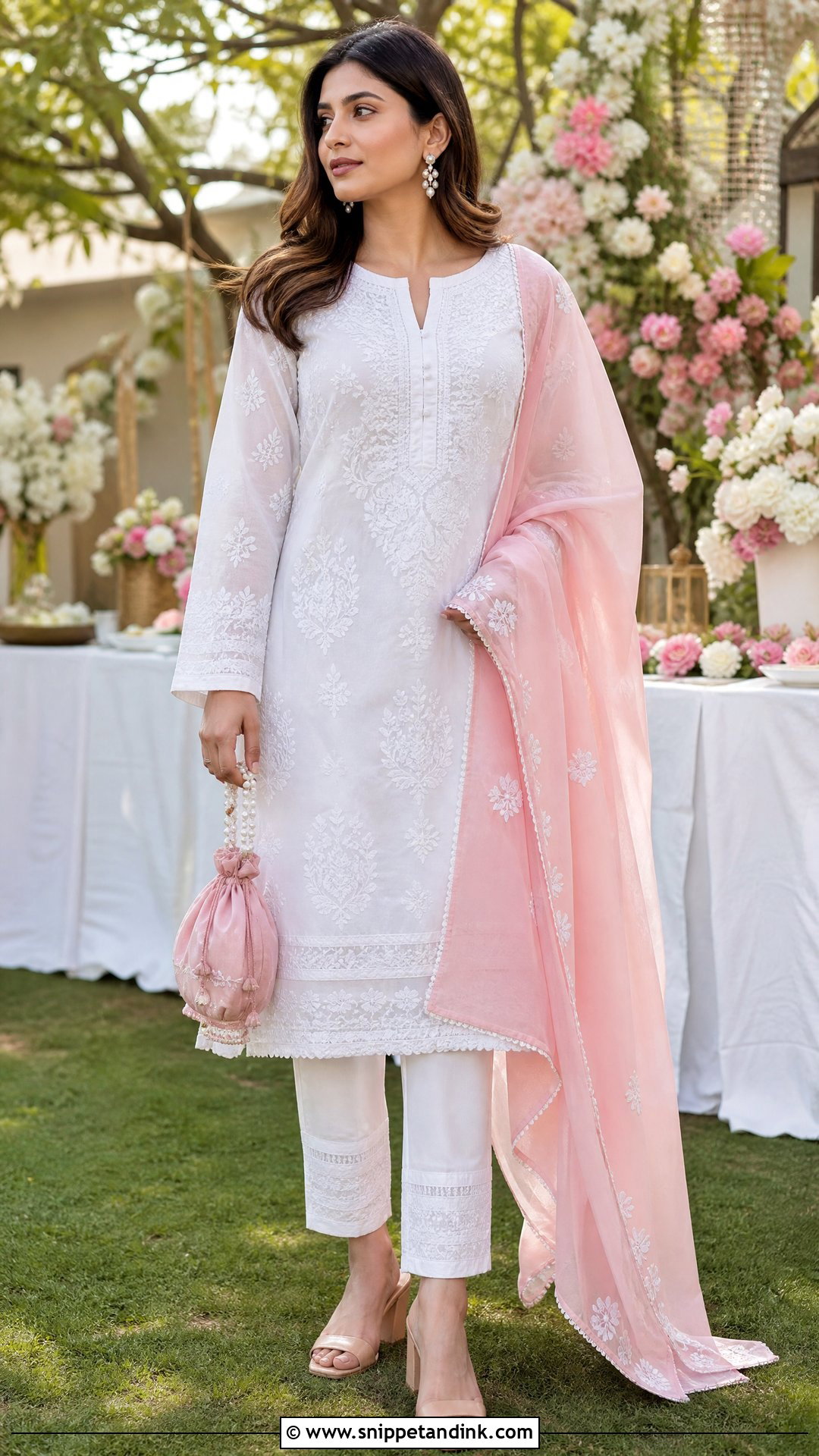
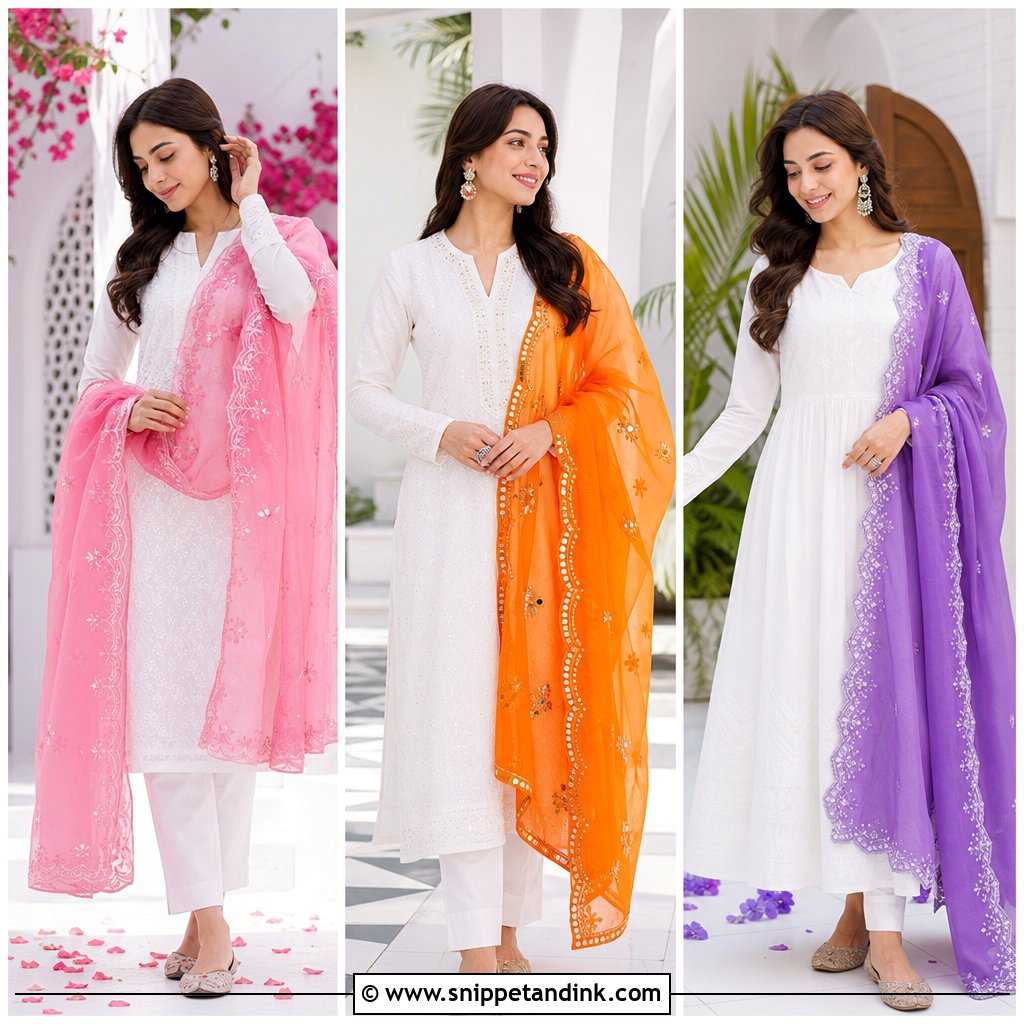
White chikankari is quiet on its own, which is exactly why a bright pink organza dupatta works over it. Pair a straight or gently flared kurta with white cigarette pants and drape the dupatta over one shoulder, border out. Organza is crisp and slightly transparent, so it adds color without hiding the fine embroidery underneath, which a heavier silk would. Nude block heels or silver juttis suit a daytime lunch where you’ll stand for hours. A small pink potli and pearl drops keep the pink in two places only, and soft rosy makeup finishes it.
2. Black Straight Suit With Bandhani Dupatta
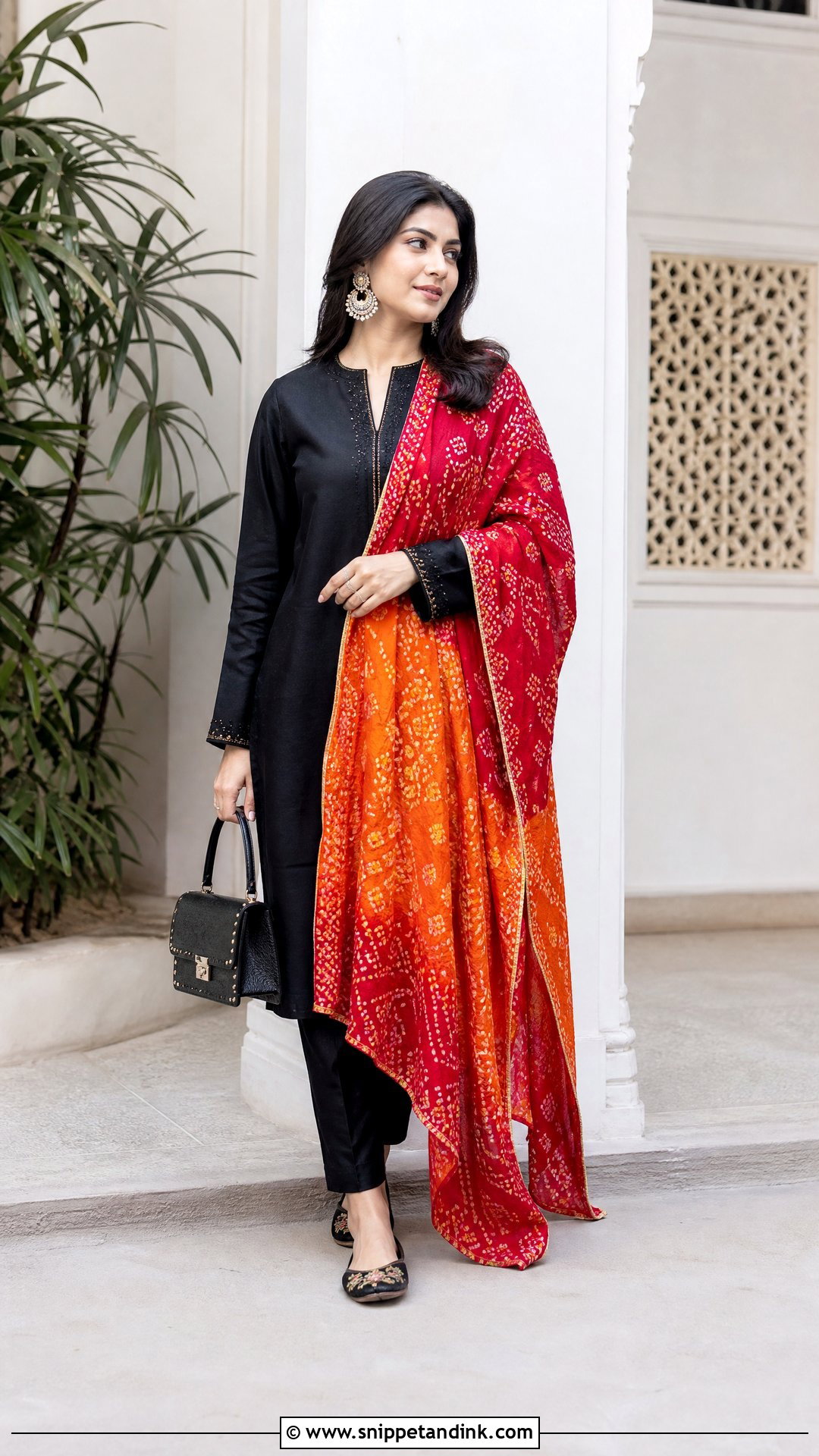
What makes a plain black suit memorable? A Bandhani dupatta. Its tie-dyed dots give movement and traditional character against the dark base, and every color in it looks clearer next to black. Start with a knee-length straight kurta and slim pants, then add a red, orange or multicolor Bandhani dupatta with a narrow gold border. Across both shoulders it looks classic; over one, it’s more relaxed. I’d keep the jewelry to oxidized silver earrings and maybe a small bindi. Hand-dyed Bandhani can bleed if it gets wet, so don’t let it sit damp against the black.
3. Pastel Anarkali Suit With Embroidered Net Dupatta
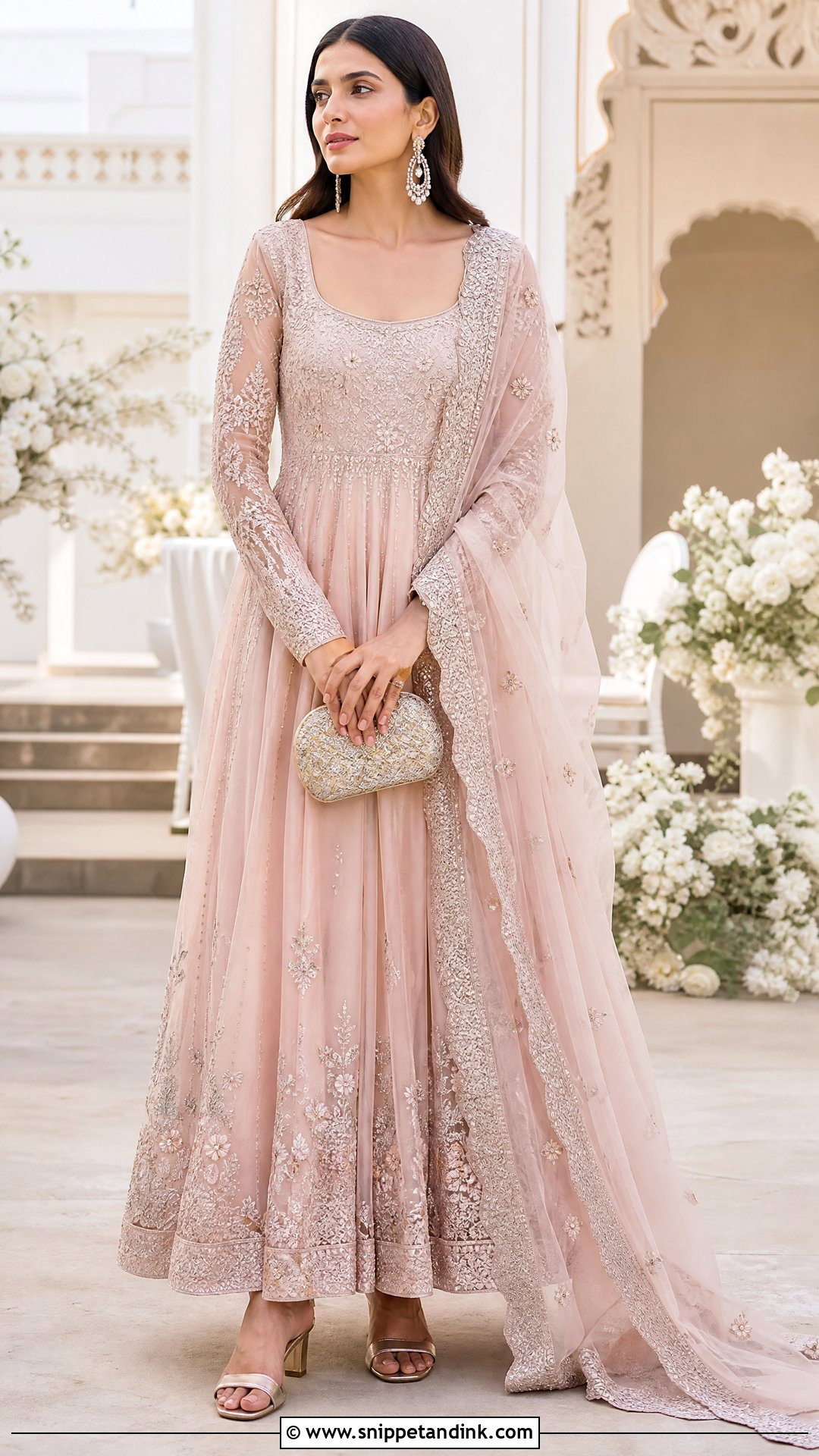
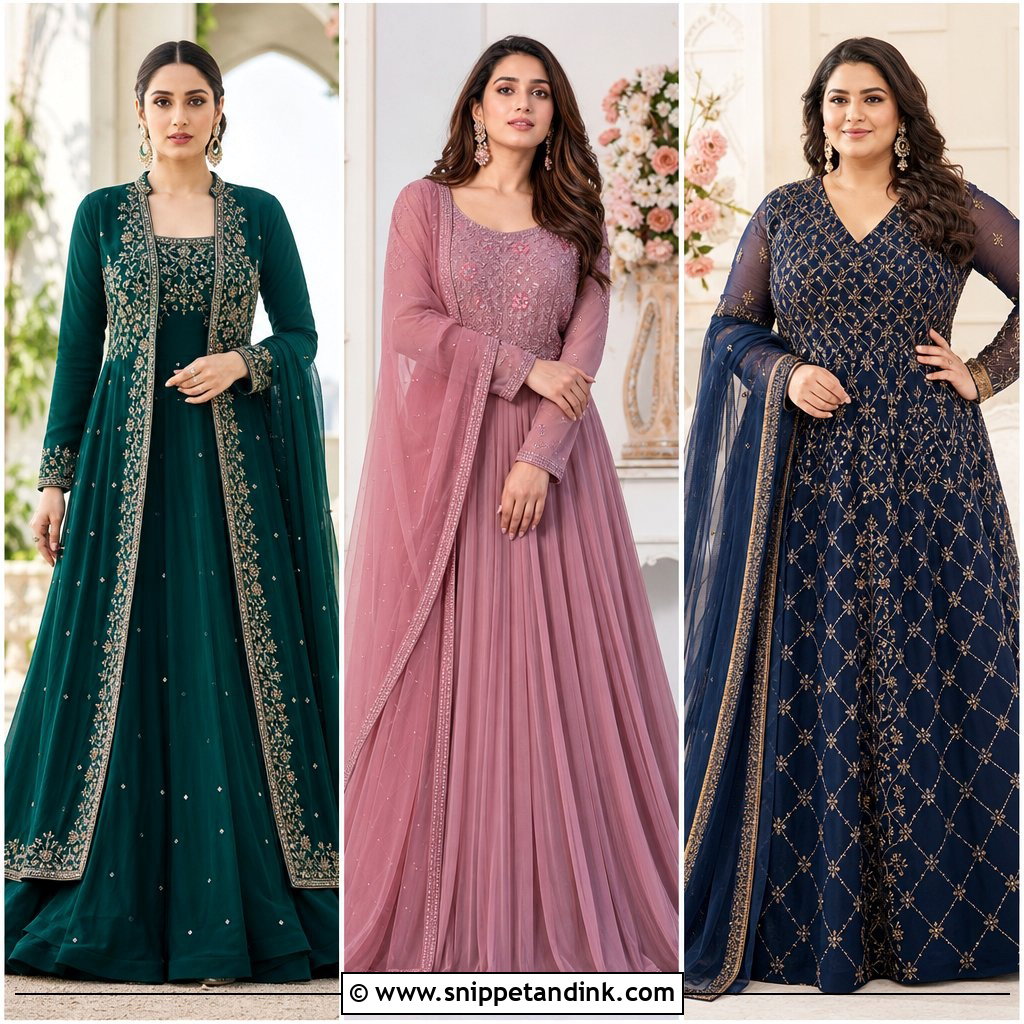
Pastel Anarkalis already move a great deal, so the dupatta should stay out of the way. A floor-length blush, powder blue or mint Anarkali with embroidery at the neckline and cuffs pairs well with a light net dupatta with scattered embellishment. Net catches on itself and on sequins, so I always ask for a finished border and pin it at one shoulder rather than letting it float. Metallic low heels and crystal earrings suit it. Skip a big stack of bangles, as the flare is detail enough. A low bun keeps the neckline clear.
4. Punjabi Patiala Suit With Phulkari Dupatta
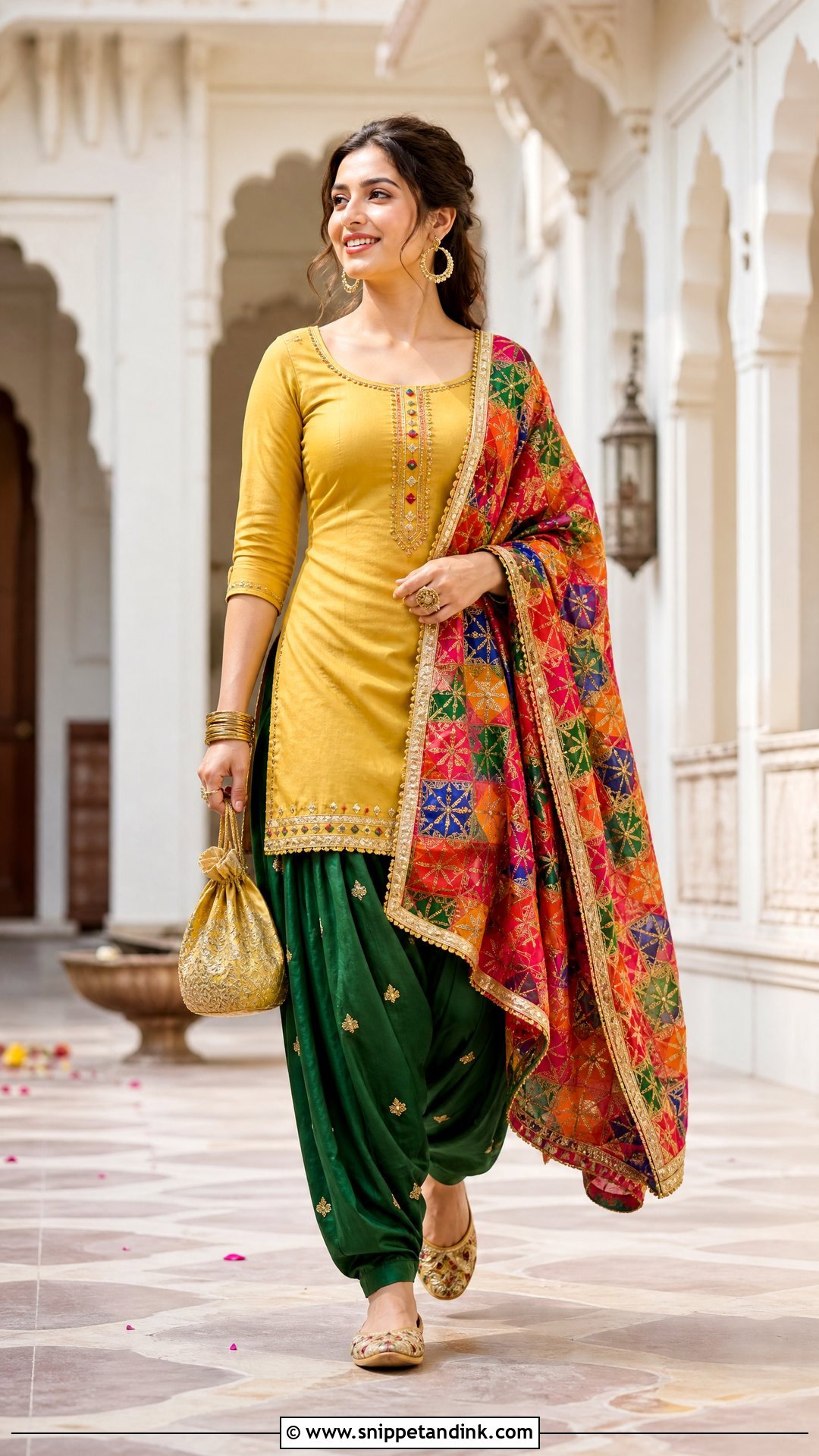
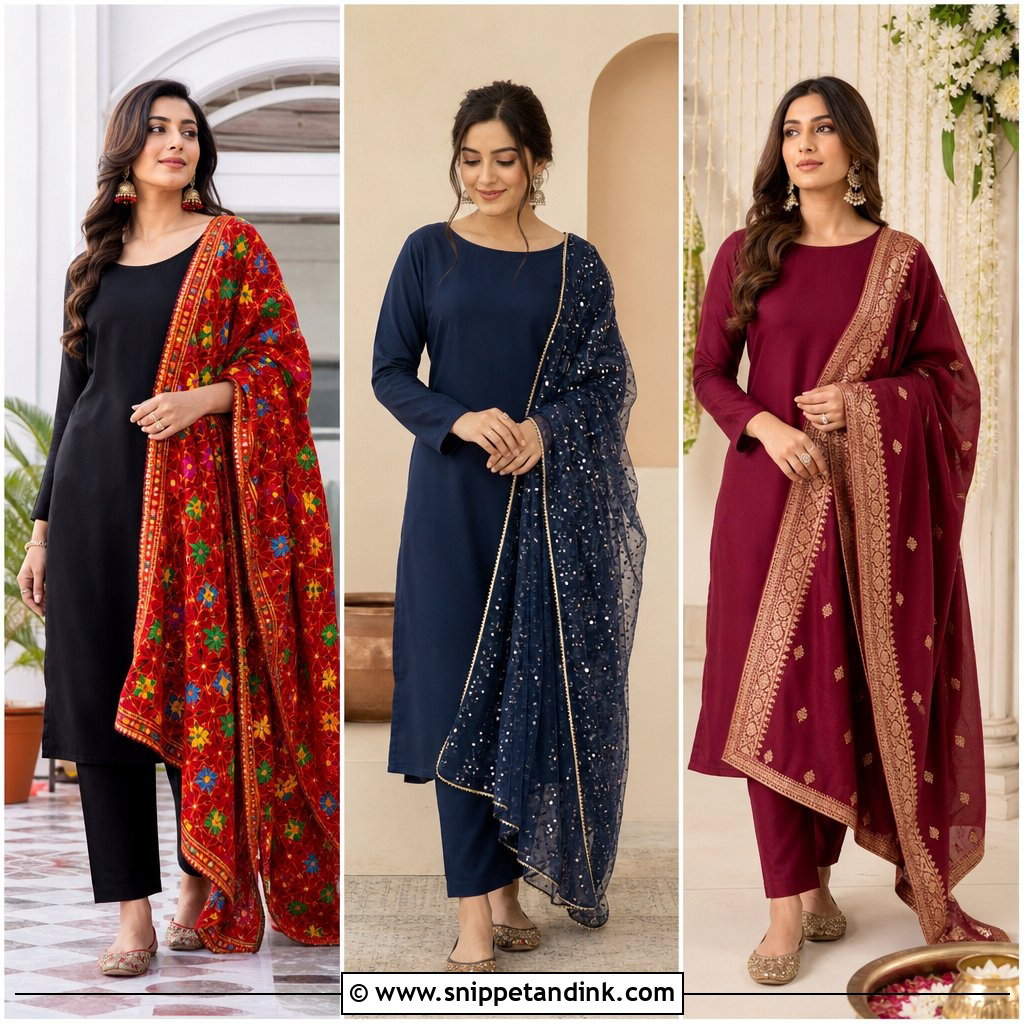
A Punjabi Patiala suit with a Phulkari dupatta is built for dancing. A short solid kurta in mustard, green or deep pink with a coordinating Patiala salwar keeps the base calm, so the densely embroidered Phulkari can lead. Phulkari is heavy because the silk floss covers so much of the cloth, which means it stays put better than chiffon. Drape it across the front with both ends behind the shoulders, or pin one side if you’ll be on the dance floor. Embroidered juttis, gold hoops, colorful bangles and a small potli are plenty. A side braid sits well against the full drape.
5. Sharara Suit With Mirror Work Dupatta
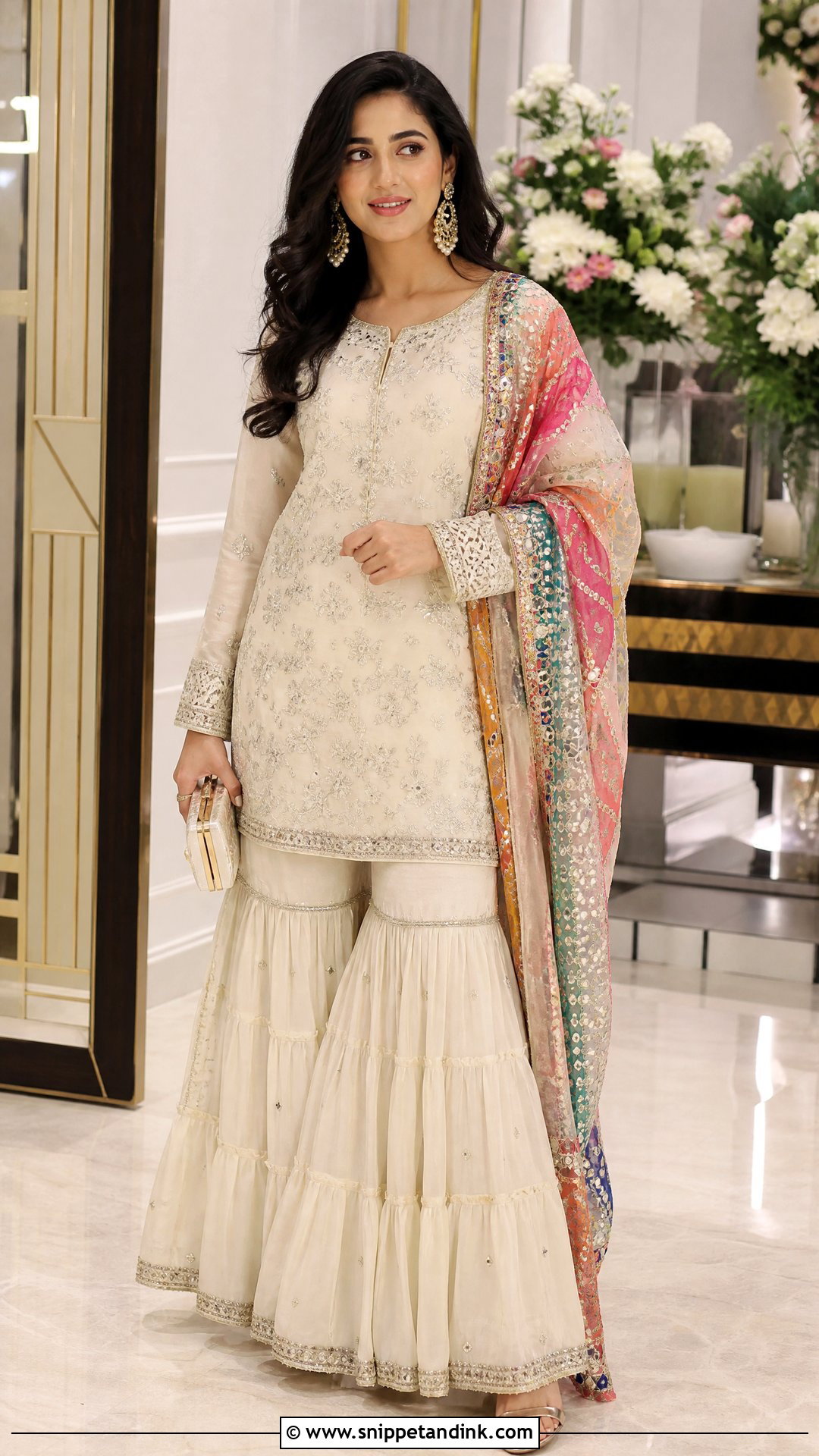
Two statement pieces in one outfit need a referee, and in a sharara suit with a mirror work dupatta that referee is the kurta. Keep its neckline and sleeves simple, with restrained embroidery, over wide tiered sharara pants in the same color. Choose a dupatta that repeats one or two shades from the outfit. Mirror work dupattas are heavier than they look and can drag one shoulder down, so I secure them diagonally across the torso with a hidden pin rather than letting them hang. Metallic heels add height under the wide pants, and chandbalis with a smooth low ponytail keep attention on the mirrors.
6. Palazzo Suit With Printed Chiffon Dupatta
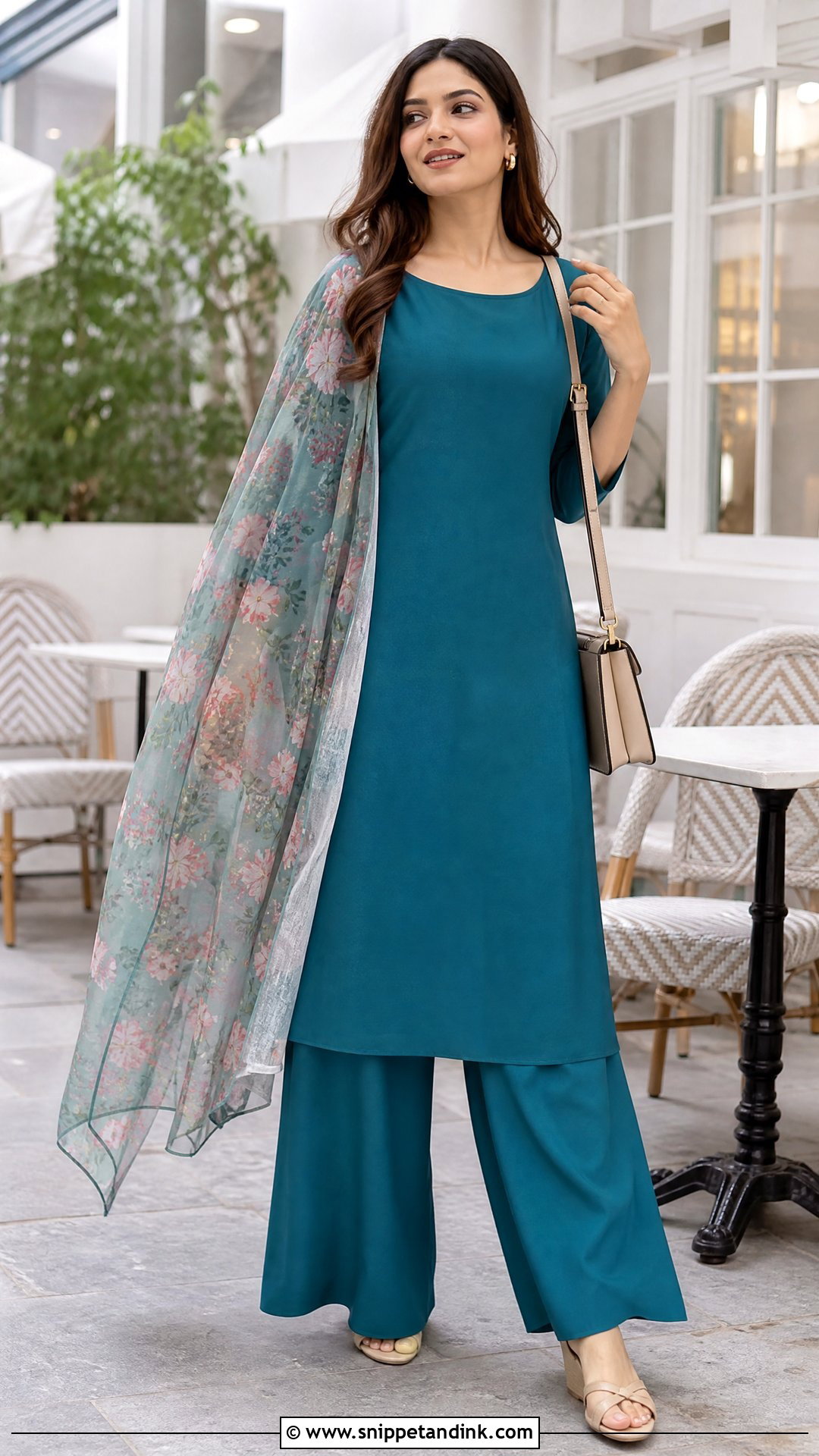
A straight kurta with palazzos travels well from a casual lunch to a semi-formal evening. A solid teal, rust, navy or cream suit is a good background for a printed chiffon dupatta in florals, paisley or small geometrics. Chiffon is the lightest dupatta fabric there is, which makes it comfortable and also restless. In wind or under a fan, it flies off, so I prefer the loose loop around the neck with both ends forward for this one. Pick shoes in a color already in the print. Low wedges and small hoops keep it relaxed.
7. Ivory Suit With Banarasi Silk Dupatta
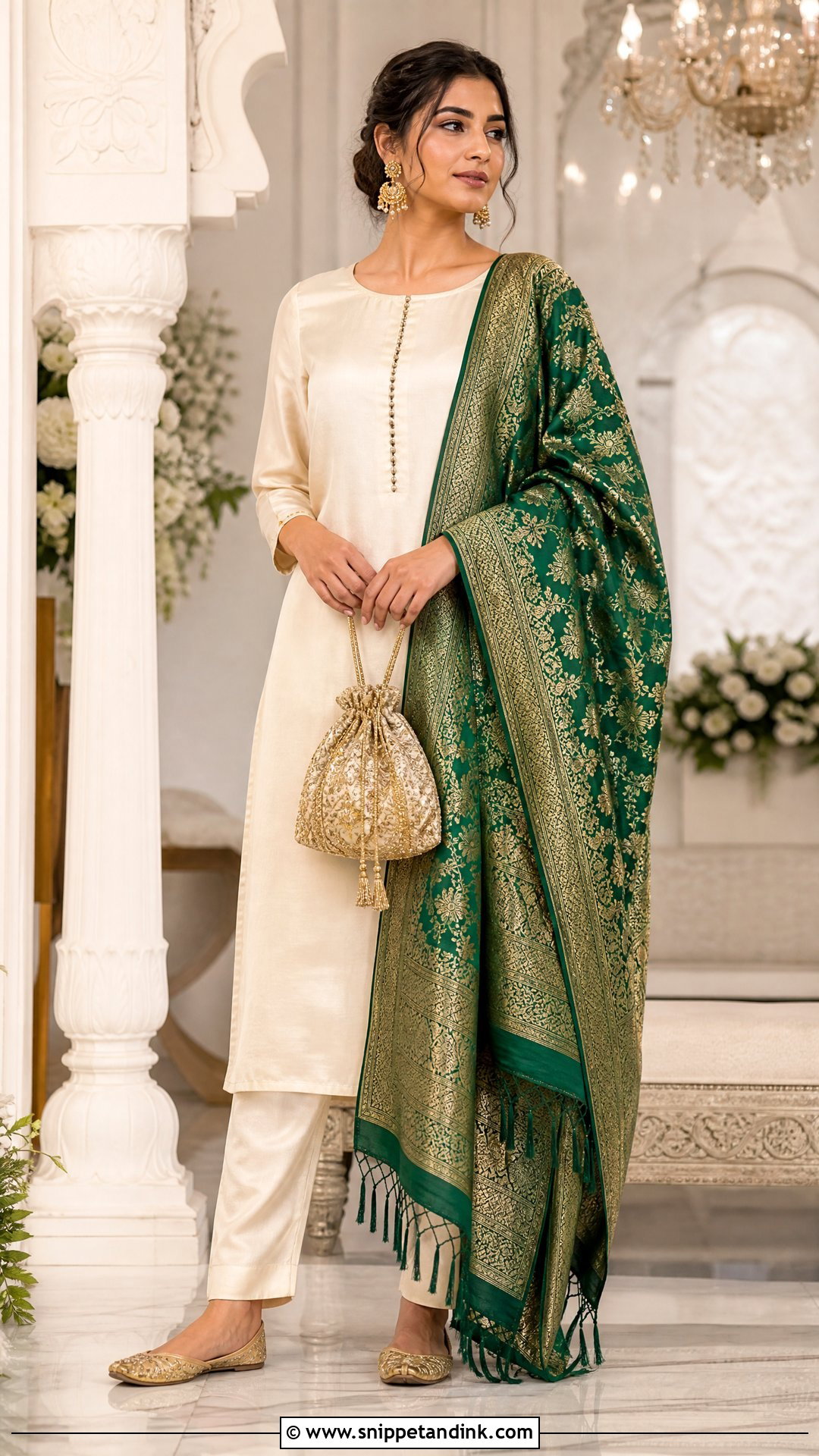
Banarasi weaving is the reason this outfit works, so everything else should step back. An ivory silk-blend kurta and straight pants with minimal gold piping let an emerald, magenta, royal blue or deep red Banarasi dupatta carry the look. I fold Banarasi into broad pleats and pin it at the shoulder, leaving at least half the width open so the motifs and border show. Silk this heavy slides less than chiffon, but it pulls on a single pin, so use two. Gold juttis, traditional earrings and a neat bun suit the formal mood.
8. Cotton Suit With Block Print Dupatta
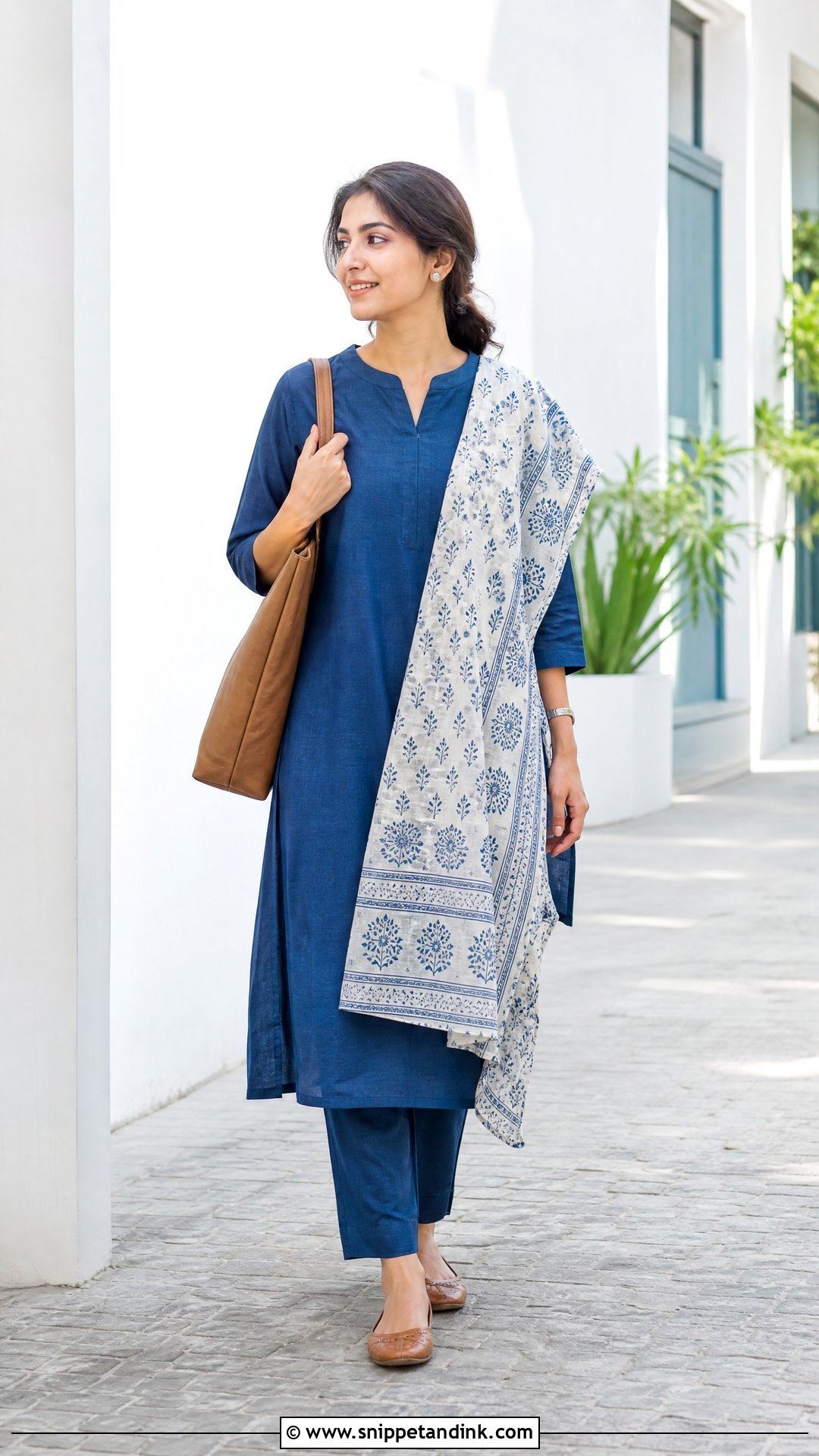
On a hot day, cotton is the only fabric I trust. A solid cotton kurta with straight pants or a salwar in white, indigo, rust or sage, plus a block print cotton dupatta with vines or a contrasting border, breathes all day. Block printing is done by hand with carved wooden blocks, so small irregularities are normal and part of the charm. Wear the dupatta evenly over both shoulders for work or a formal daytime setting, or loosely around the neck when you’re out running errands. Leather flats, small silver studs and a roomy tote make it practical for daily use. Expect the dupatta to fade gently over many washes, so wash it alone the first few times.
9. Navy Blue Suit With Gold Dupatta
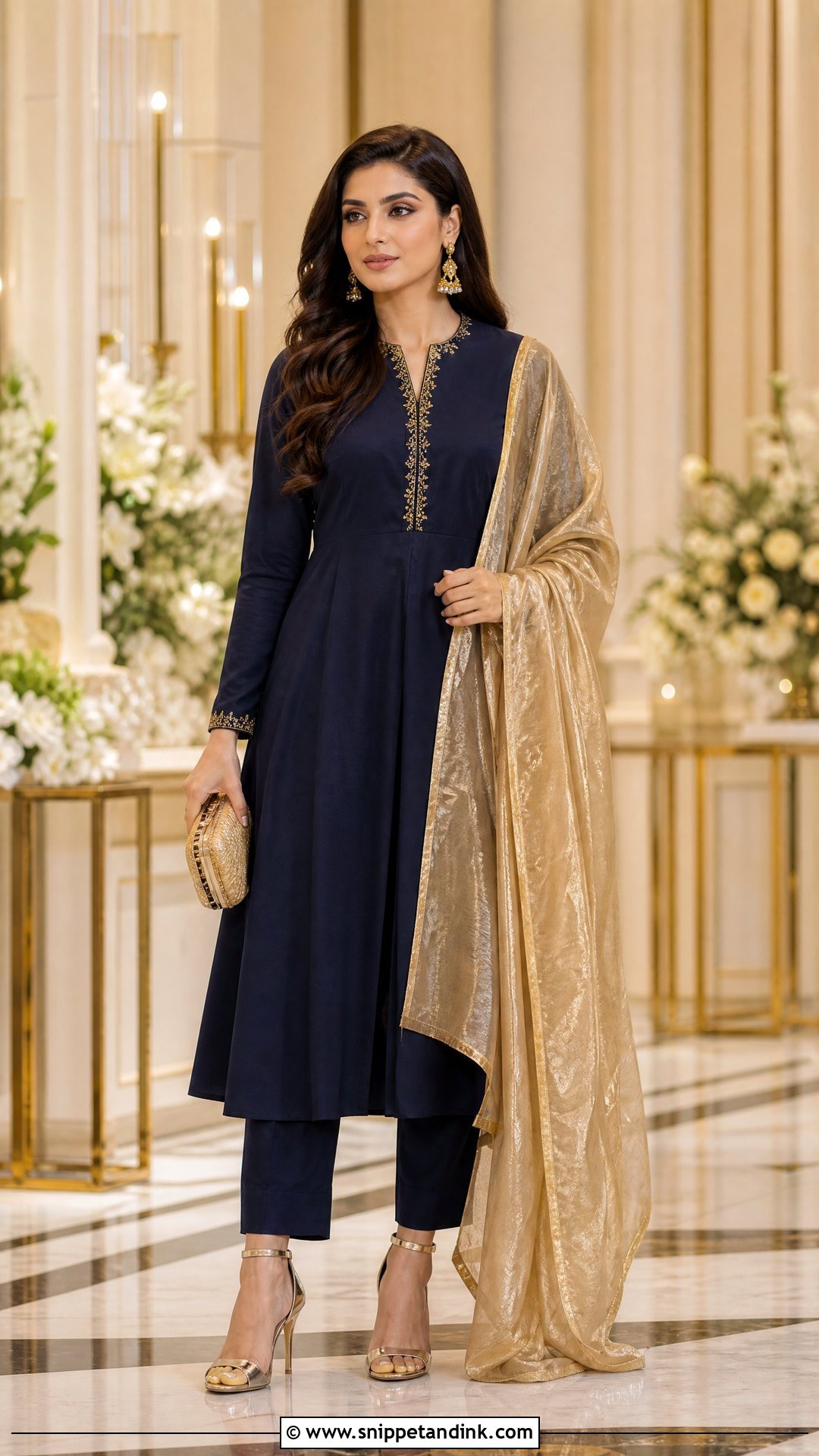
Navy is softer than black and takes gold naturally. A navy A-line or straight suit with matching pants and subtle neckline embroidery, paired with a gold tissue or brocade dupatta, makes a formal evening outfit. My favorite drape for this is one end over the shoulder and the other resting across the opposite forearm, which shows the border and keeps the kurta front visible. Tissue fabric creases sharply, so steam it rather than folding it tightly in your bag. Skip a necklace if the neckline is already embroidered, and add medium drop earrings.
10. Green A-Line Suit With Pink Dupatta
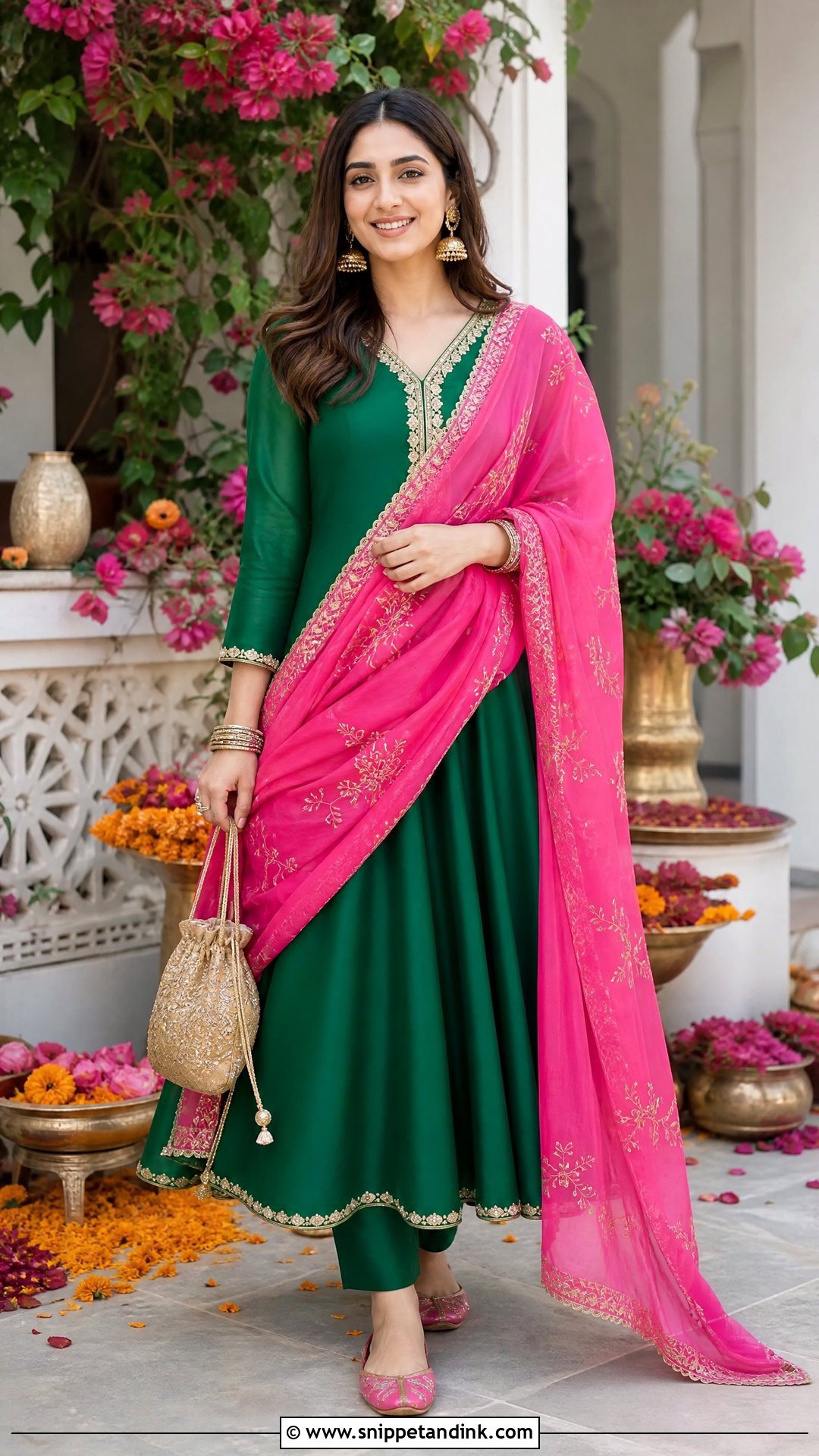
Green and pink are an old, reliable pairing. An emerald or bottle green A-line kurta with matching straight pants and a bright pink dupatta with a woven border flatters a wide range of skin tones. Pin it at one shoulder and let it fall diagonally across the body. Pink juttis can echo the dupatta; then carry a green or metallic potli so you don’t add a third color. When a client is unsure about a strong contrast like this, I hold the dupatta under her face in daylight first, as some pinks turn cool and harsh on warm skin. Gold earrings and a few slim bangles finish it.
11. Yellow Suit With Leheriya Dupatta
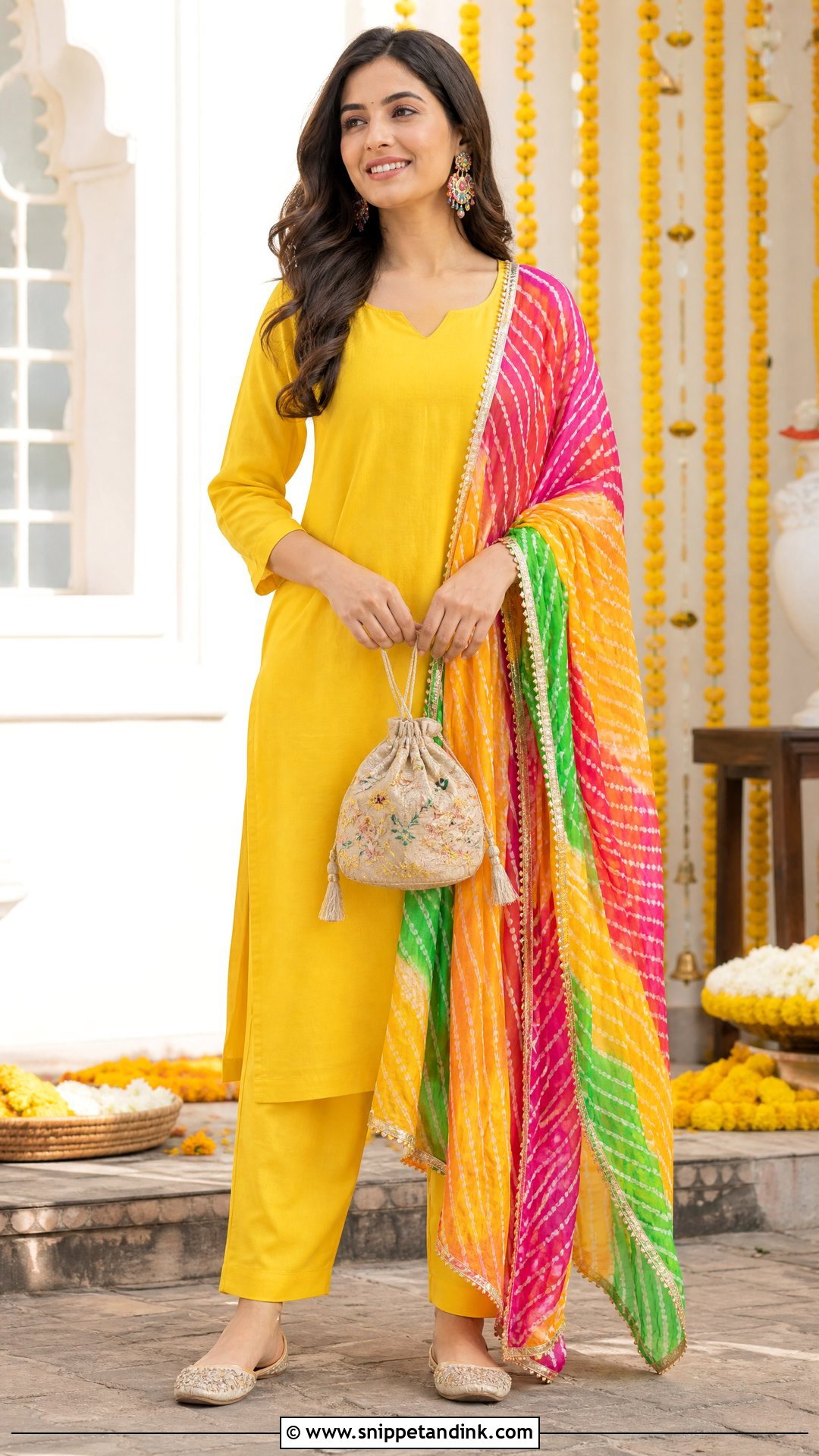
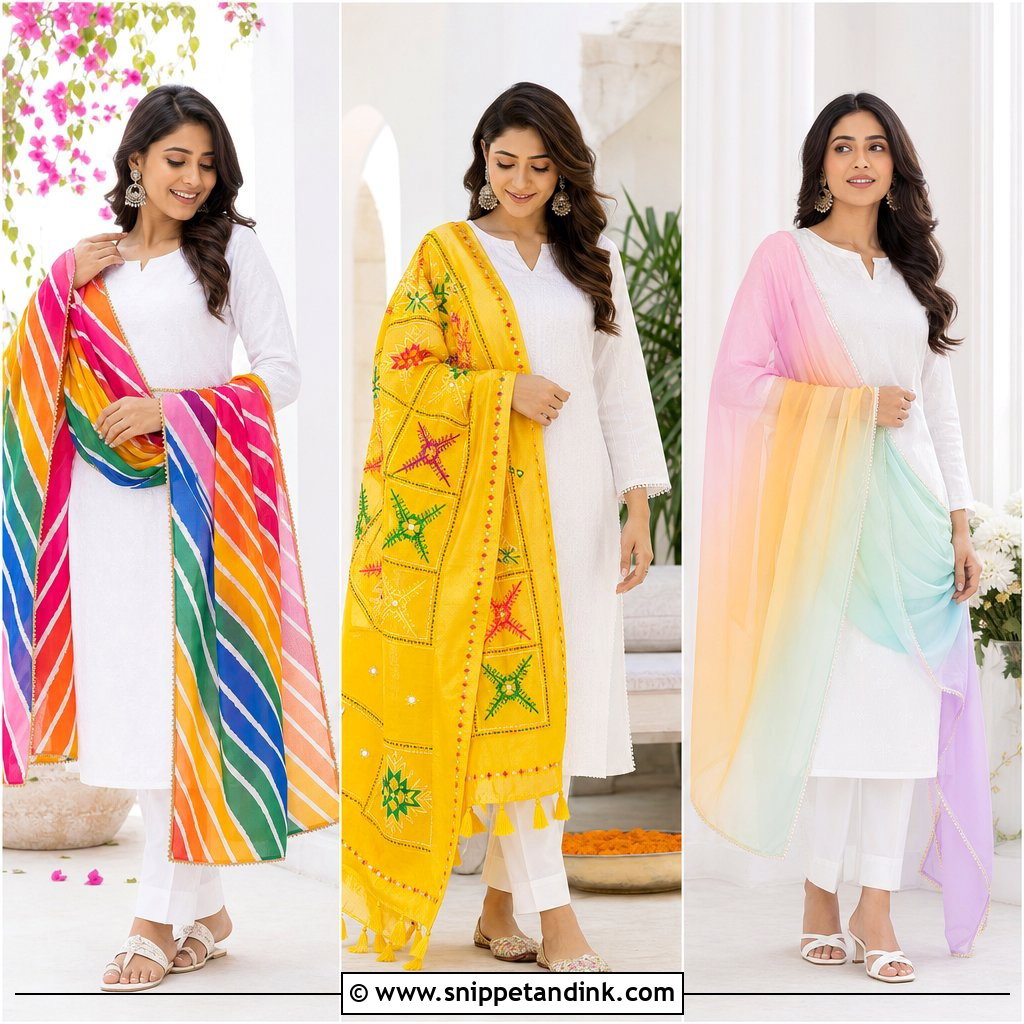
Leheriya means wave, and the diagonal stripes are made by rolling and tying the cloth before dyeing. Over a plain yellow suit, a multicolor Leheriya dupatta adds the movement a matching set lacks. Choose one with pink, orange, green or blue stripes and drape it loosely over both arms, or pin it to one shoulder if you need your hands. The stripes are busy, so I keep the jewelry moderate and the shoes neutral. A loose braid with a simple hair accessory suits it, and this is a combination I’d send someone to a daytime haldi or lunch in.
12. Maroon Velvet Suit With Tissue Dupatta
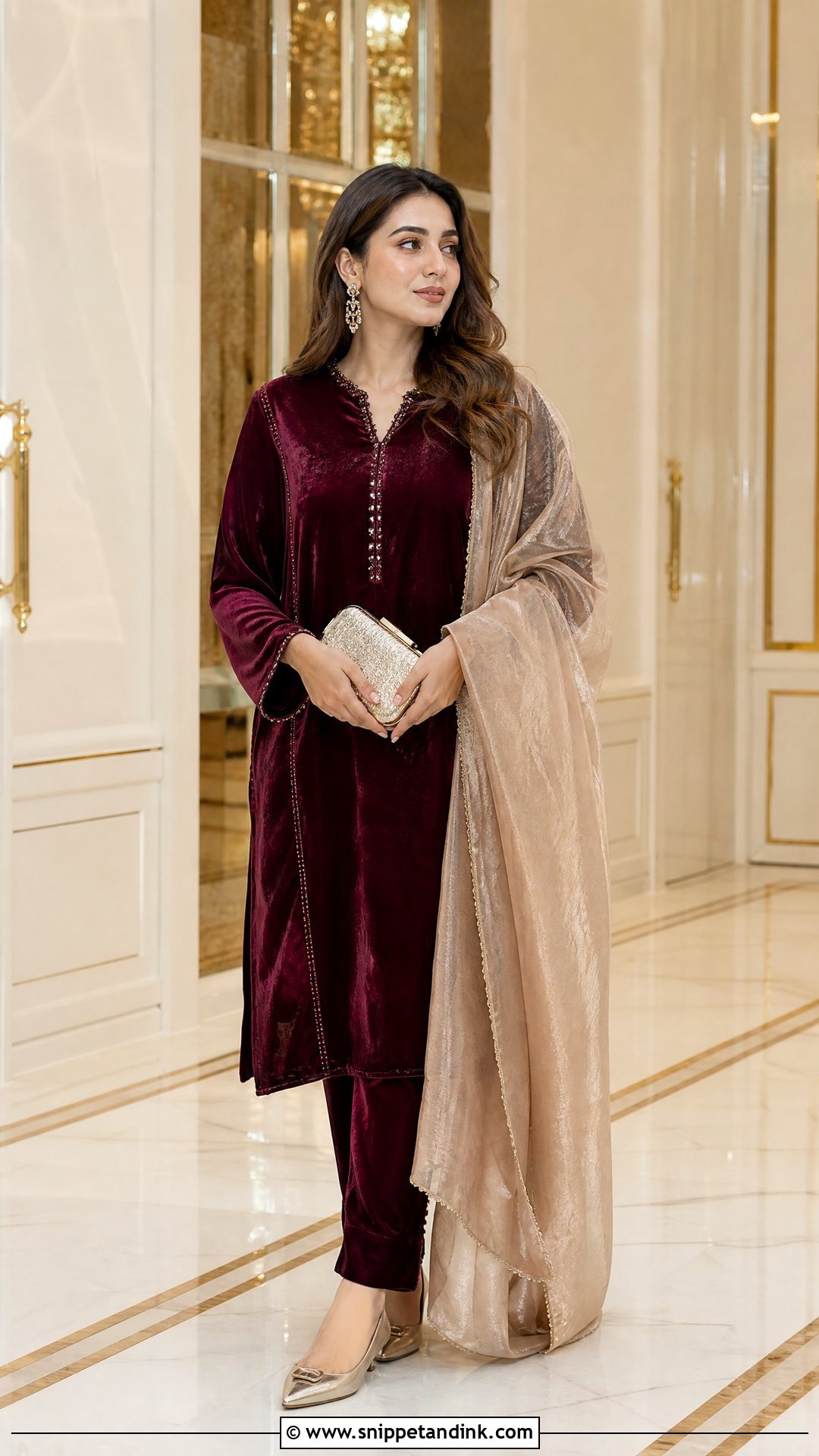
Velvet and tissue are opposites in the best way. A maroon velvet straight kurta with side slits absorbs light, and a champagne or antique gold tissue dupatta reflects it. Keep the pants in a lighter fabric so the outfit isn’t bulky. I pleat tissue neatly over one shoulder and secure it with a discreet pin, because it’s slippery against velvet pile and will slide off if left loose. Pointed metallic flats, stone earrings and minimal bracelets let the velvet cuffs show. This is a winter outfit; in warm weather velvet becomes uncomfortable quickly.
13. Lavender Suit With Floral Organza Dupatta
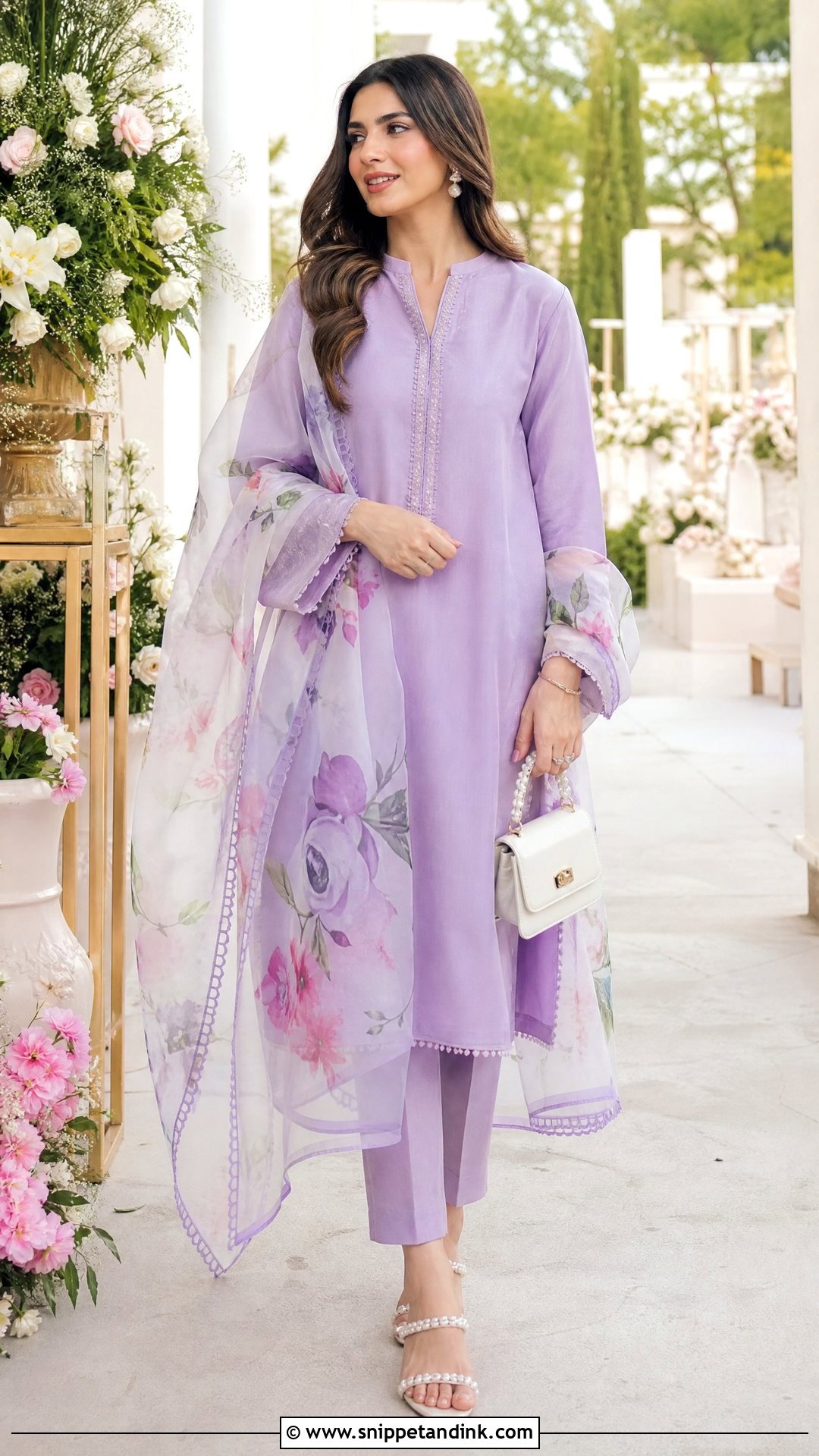
Lavender suits daytime and gardens, and an organza dupatta with watercolor florals or small embroidered flowers gives it lift. Choose a lavender straight kurta and ankle-length pants with light threadwork, and wear the dupatta over one shoulder so the print shows against the solid suit. If the border has strong secondary colors, I’ll match a lipstick or a shoe to one of them, never both. Organza is stiff enough to hold a shape, so it photographs crisply, but it can scratch bare arms on a long day. Pearl sandals and delicate earrings keep it light.
14. Red Churidar Suit With Zari Dupatta
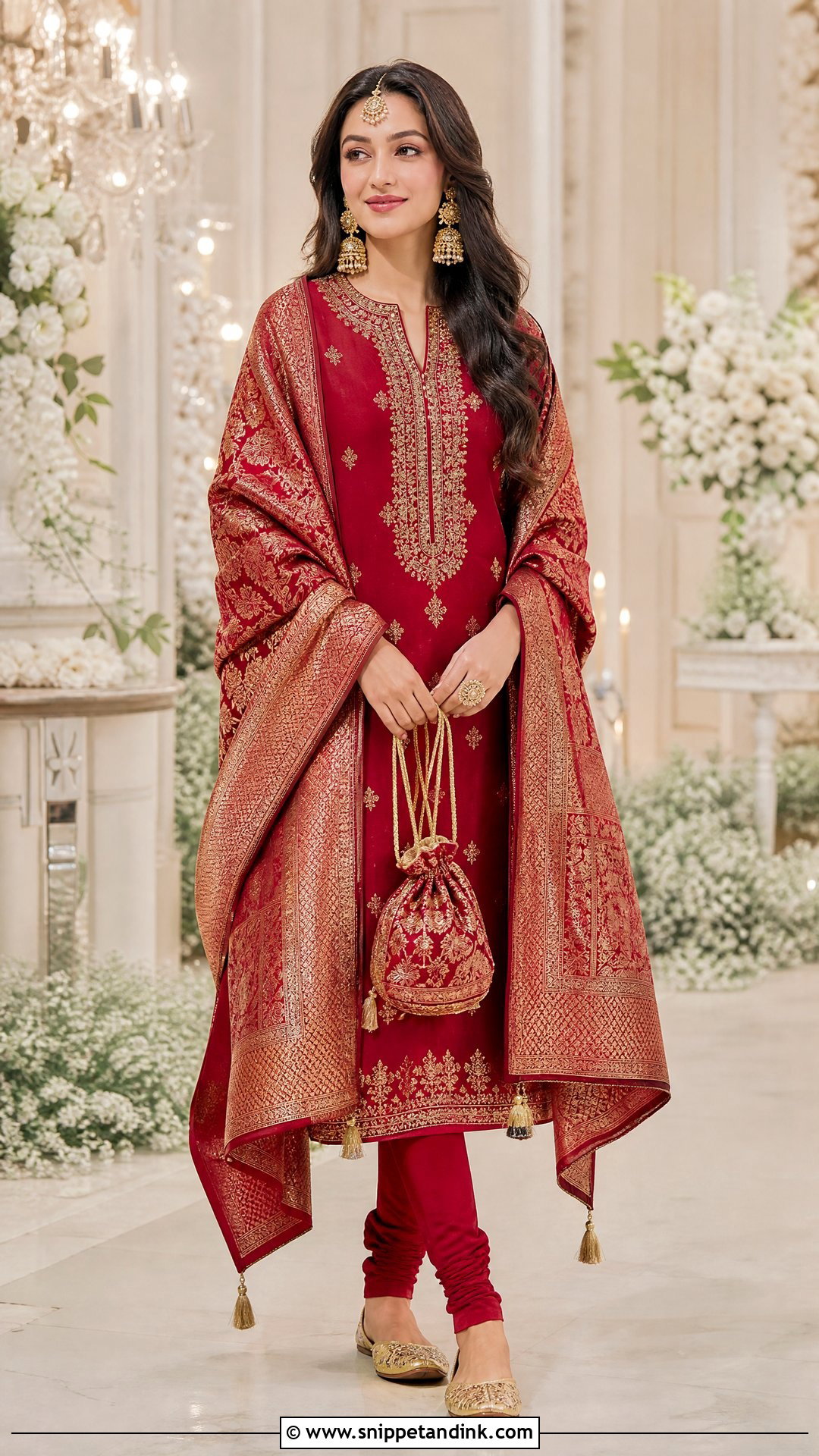
Red is a strong color, so a red churidar suit needs very few accessories. A long red kurta with side slits, fitted churidar and restrained gold embroidery pairs with a red-and-gold zari dupatta, or with an ivory zari drape for contrast. Across both shoulders, the border frames the front of the suit. A churidar should gather in neat folds at the ankle, so the trousers need to be cut longer than your leg, and I check that at the fitting. Check too whether red is reserved for the bride at the wedding you’re attending. A short, simple necklace, if any, and a center-parted bun complete it.
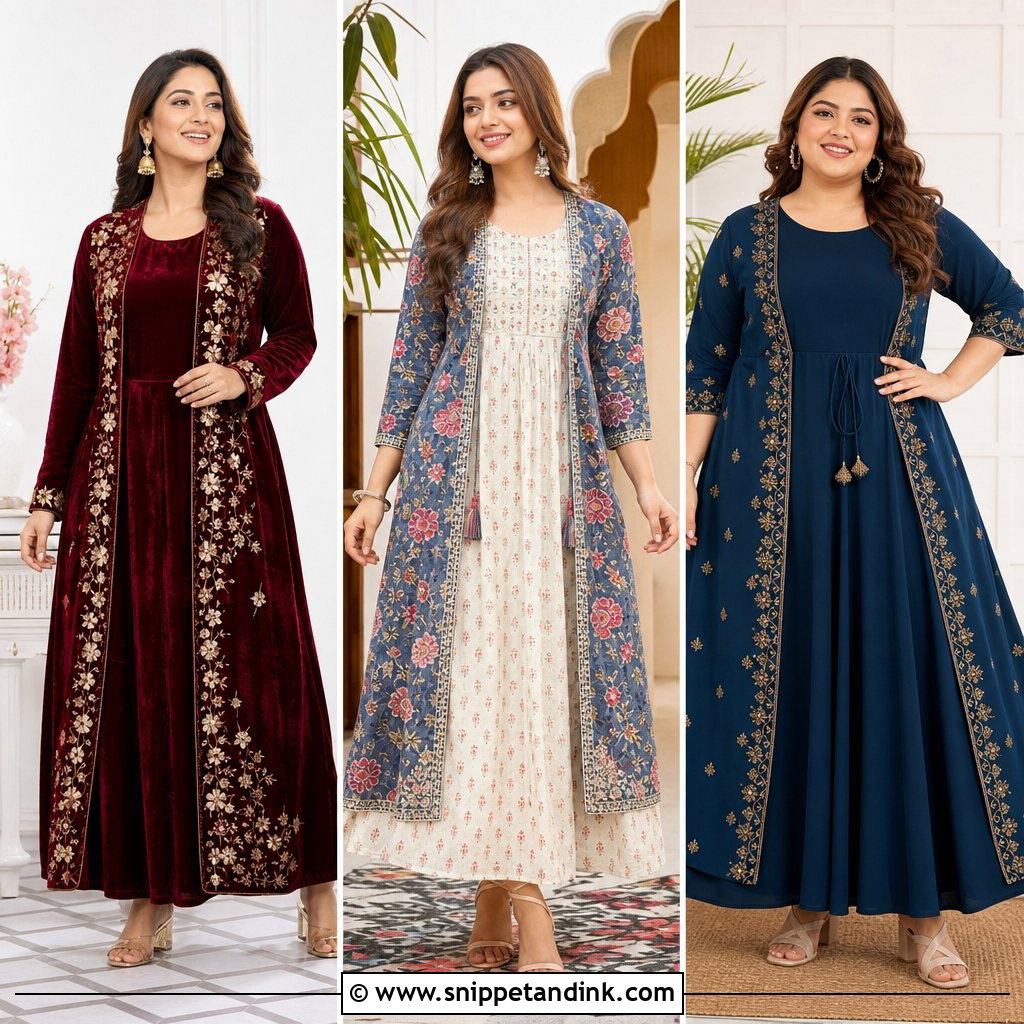
15. Teal Pakistani Suit With Scalloped Dupatta
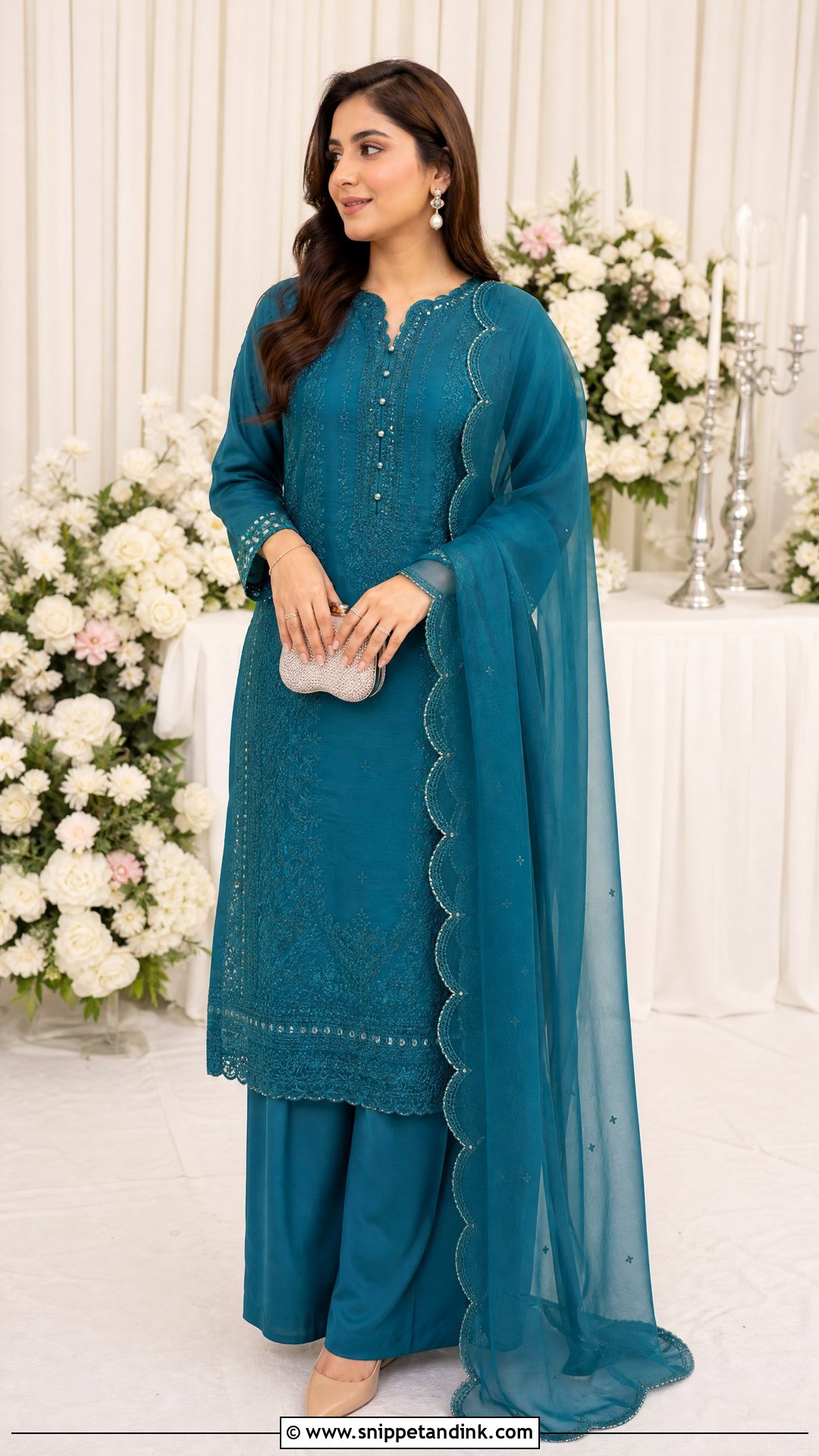
The long, straight cut of a teal Pakistani suit does most of the styling for you. A calf or ankle-length kurta with wide-leg pants and detailed cuffs pairs with a matching chiffon or organza dupatta with scalloped edges. Let the front edge fall straight down from one shoulder, which lengthens the line further. If the embroidery is silver, I keep accessories cool-toned rather than mixing in yellow gold. Nude heels, pearl drops and sleek hair keep the neckline in view, which suits formal dinners and engagement events.
16. Beige Office Suit With Geometric Dupatta
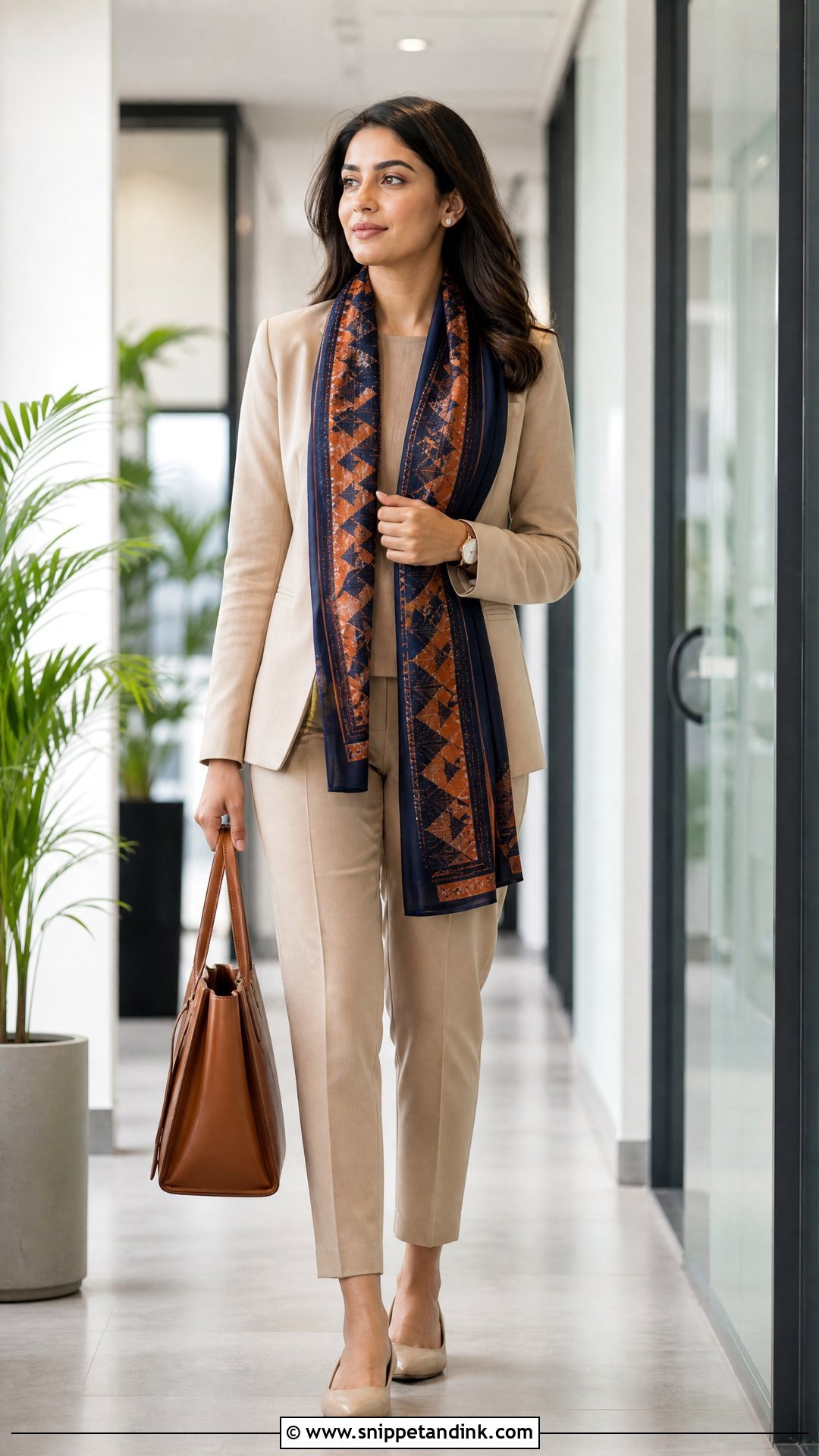
Office wear has different rules. A beige, taupe or soft gray straight kurta with cigarette pants and a clean neckline, plus a lightweight geometric dupatta in navy, rust or muted green, looks professional without being dull. Fold it lengthwise and drape it evenly around the neck like a scarf, so it stays put while you type or carry files. Avoid loose embellishment and wide borders that catch on desks and bag straps. Closed-toe flats, a structured tote and small studs keep it practical for meetings and workplaces where traditional clothing is welcome.
17. Peach Peplum Suit With Gharara And Net Dupatta
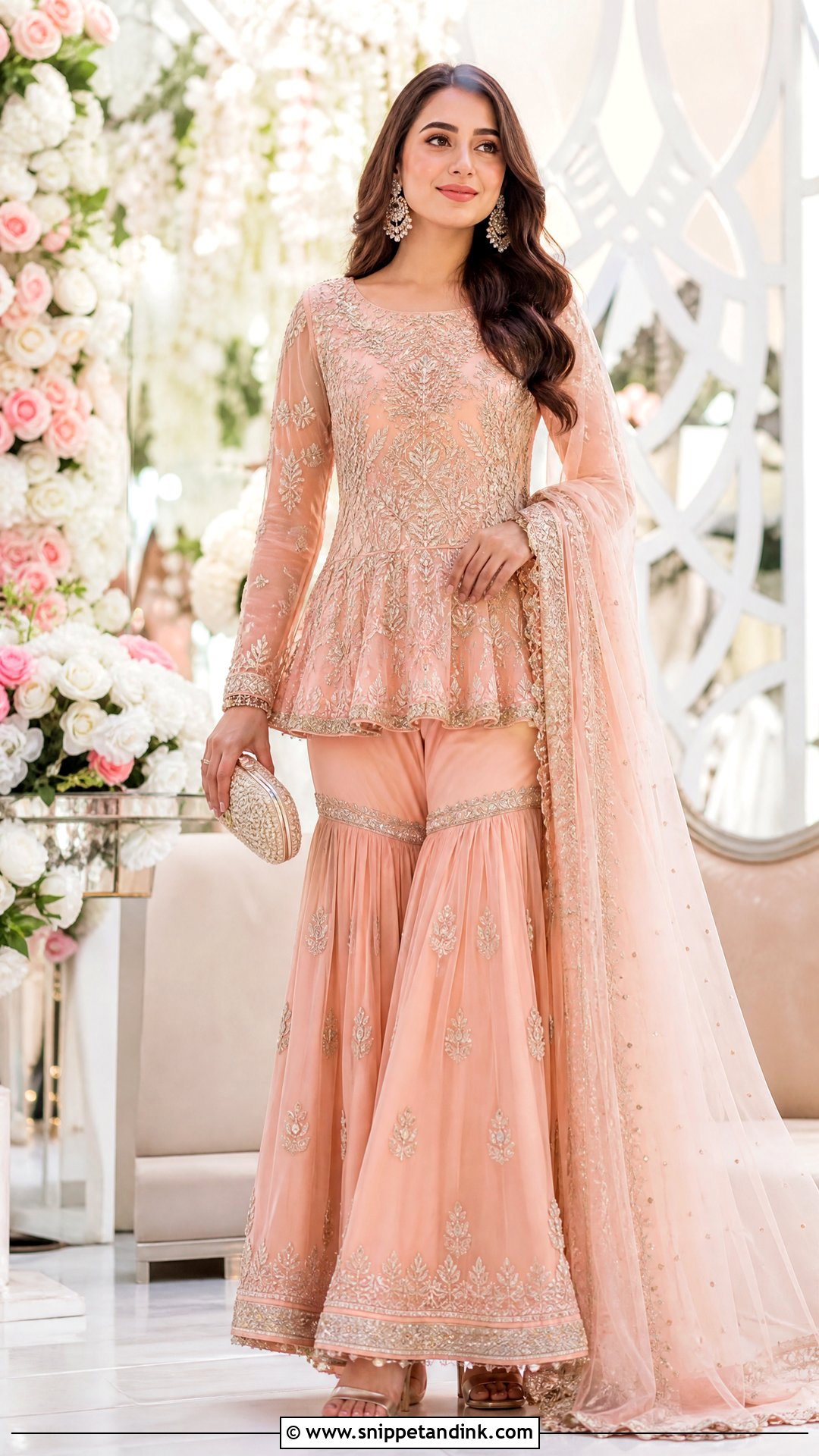
A peach peplum kurta over a gharara is young and festive, with a clear waist. Keep the gharara in the same peach so the outfit reads as one piece, and choose a light net dupatta with a narrow embroidered edge. Because the gharara flares at the knee, I’d rather the dupatta didn’t hang to the floor and tangle in it, so pin it at one shoulder and carry the other end over your forearm. Block heels support the length. Skip a necklace if the peplum neckline is detailed, and a curled ponytail keeps the outfit fresh for an engagement party.
18. Gray Suit With Multicolor Dupatta
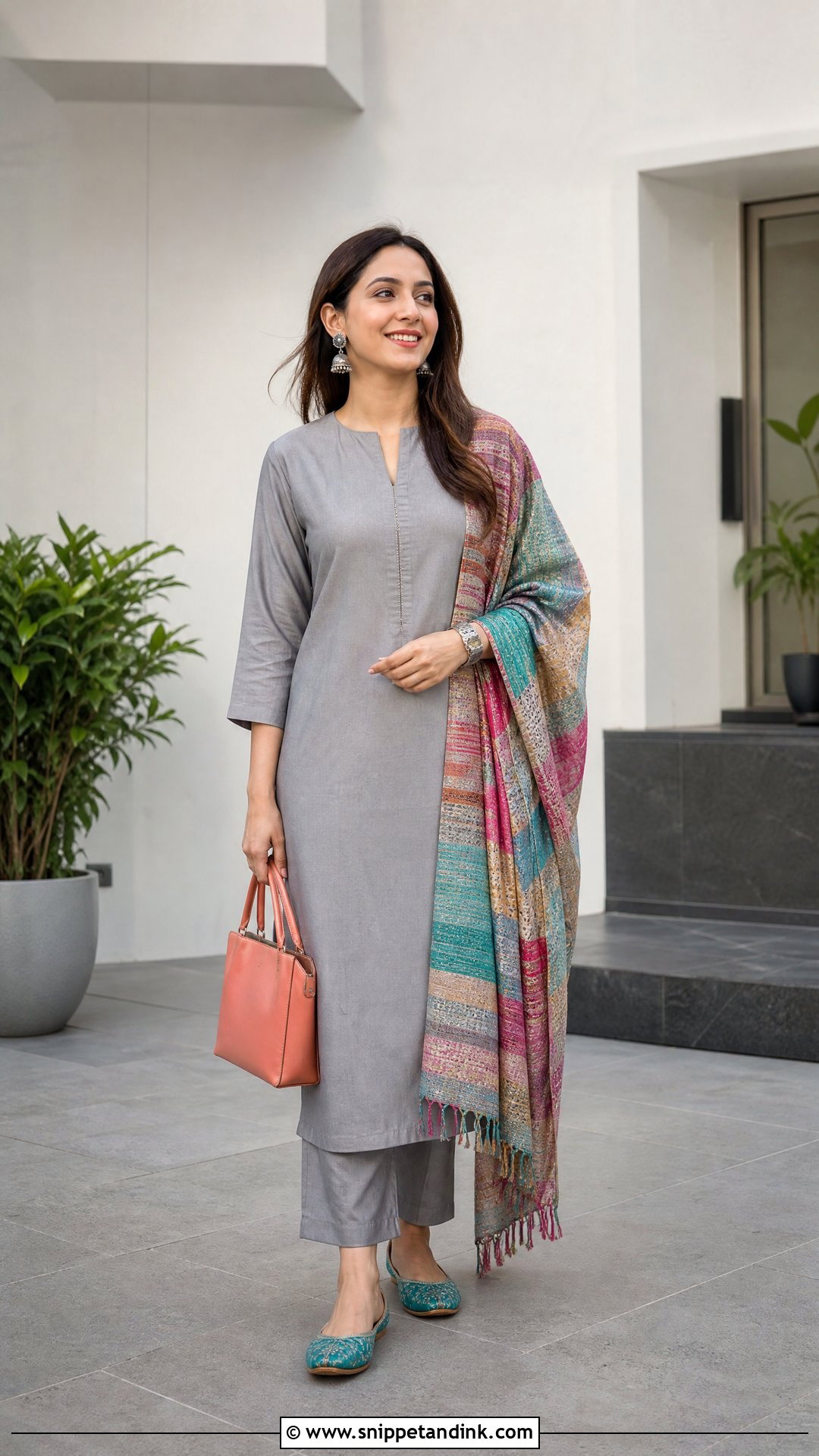
Gray is an underrated base for a colorful dupatta. Charcoal, dove or silver-gray kurtas with straight pants and minimal surface work let a multicolor woven, embroidered or printed dupatta in turquoise, coral, mustard and pink take over. Let it fall naturally from one shoulder so all the colors show. The mistake I steer clients away from is trying to match every shade in the dupatta with an accessory. Pick one, for the juttis or the bag. Oxidized silver earrings and a relaxed bun suit it, and how formal it looks depends almost entirely on the dupatta’s fabric.
19. Pink Suit With Ombre Dupatta
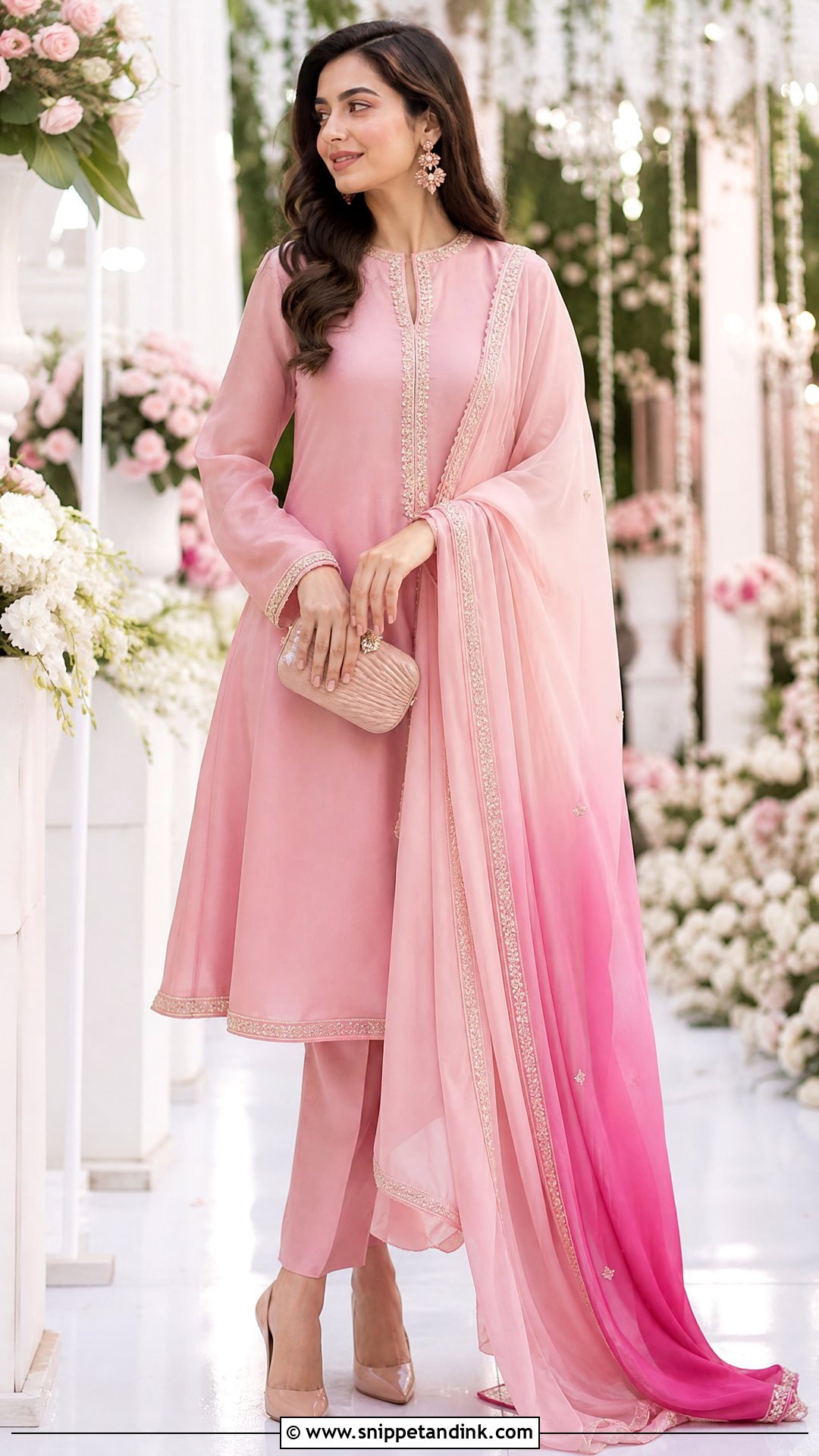
An ombre dupatta that moves from pale blush to deep fuchsia gives a monochrome pink outfit dimension. Choose a straight or softly flared pink kurta with matching pants and keep the suit plain so the gradient shows. I drape it diagonally with the darkest section at the shoulder, which draws the eye up toward the face. Nude heels and a blush clutch give a smooth tonal finish; deep pink juttis matched to the darkest shade add definition. Ombre dyeing can be uneven on cheaper fabric, so look at the full length unfolded before you buy.
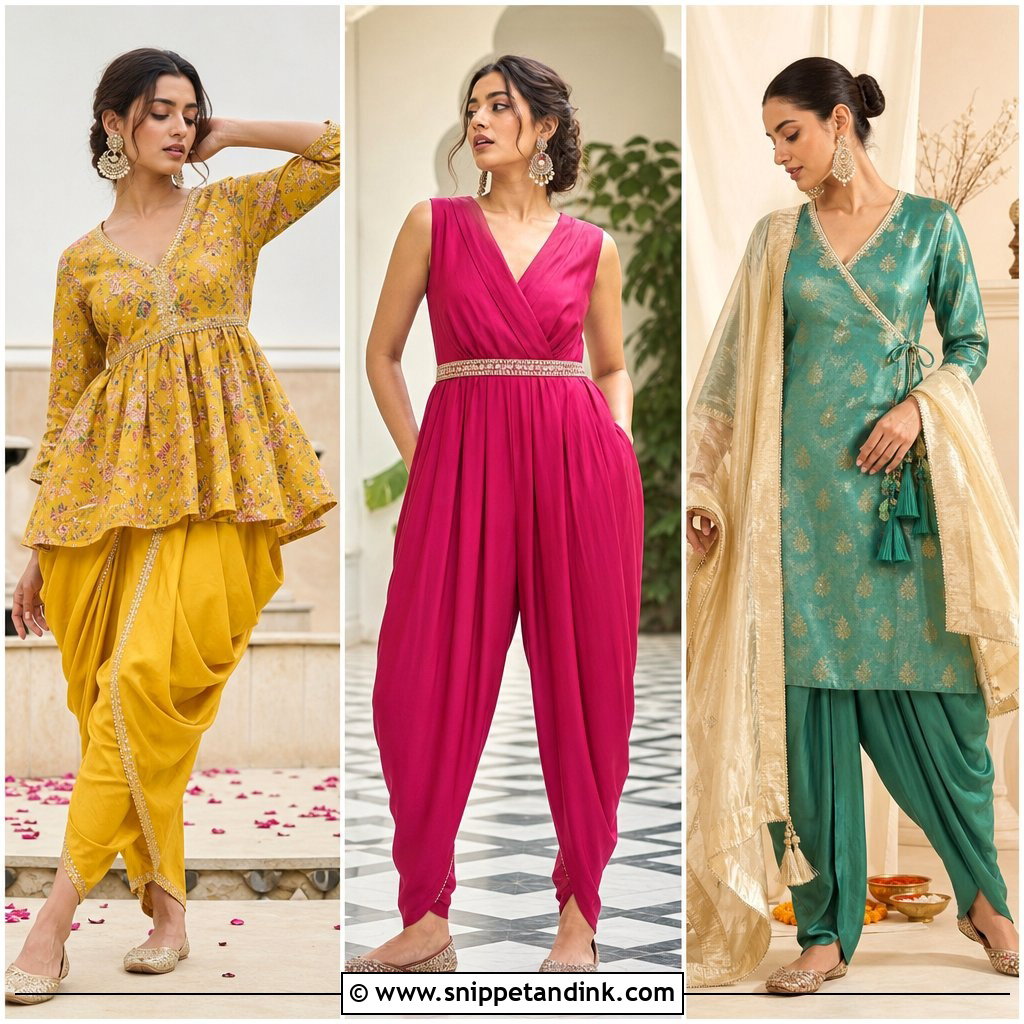
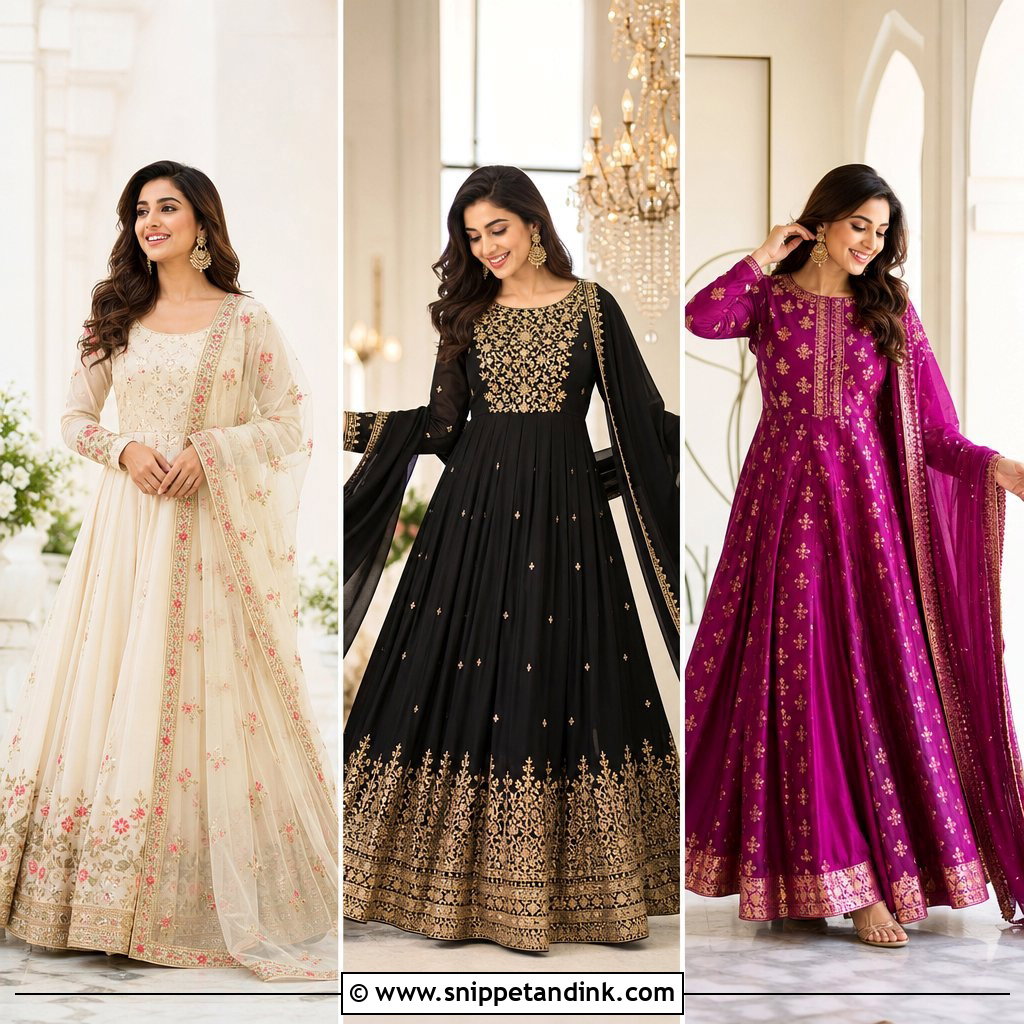
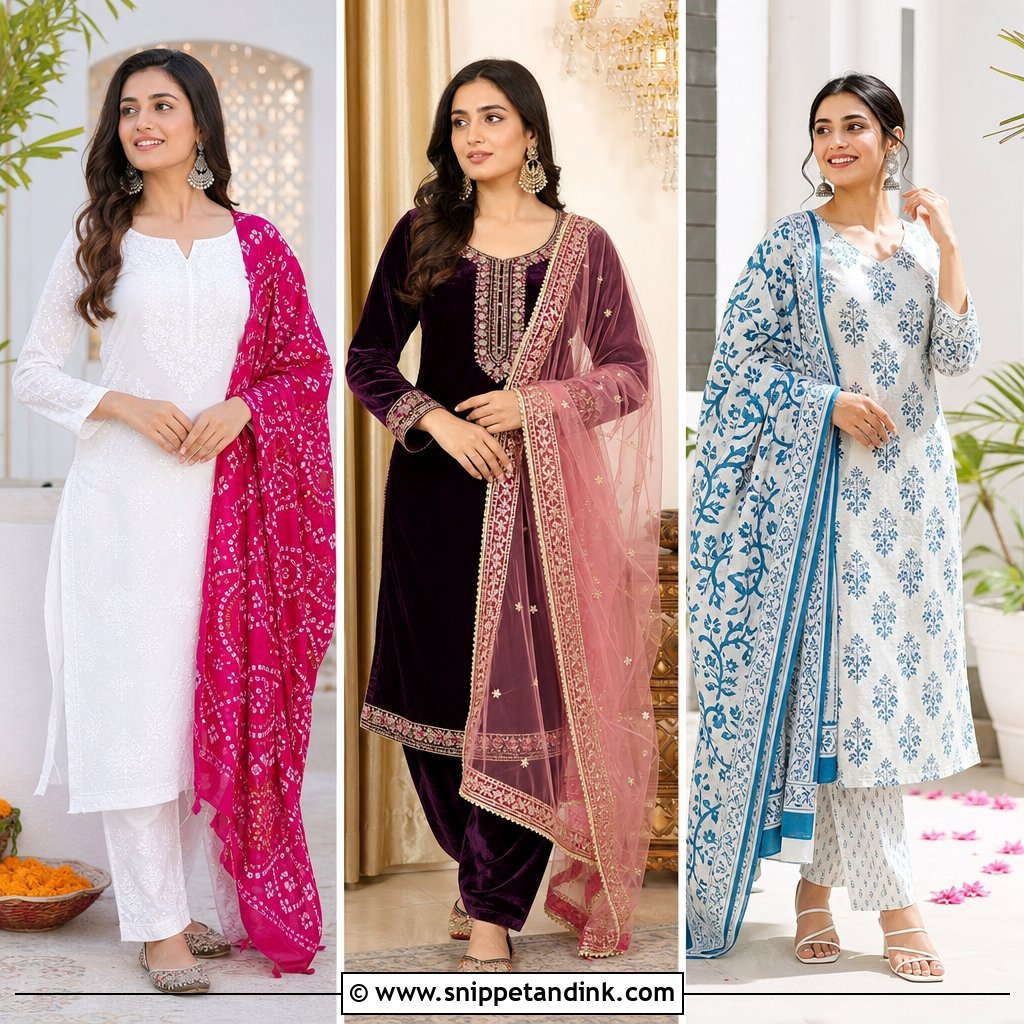
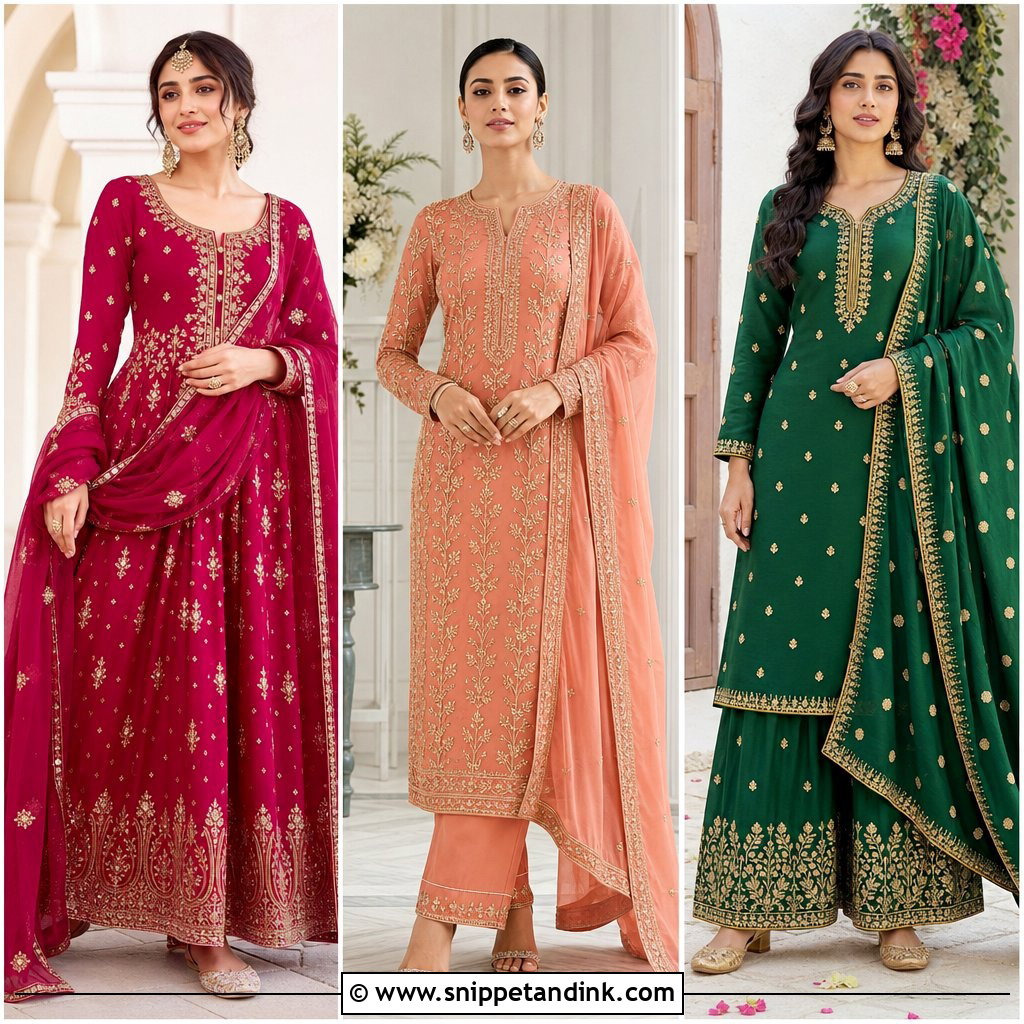
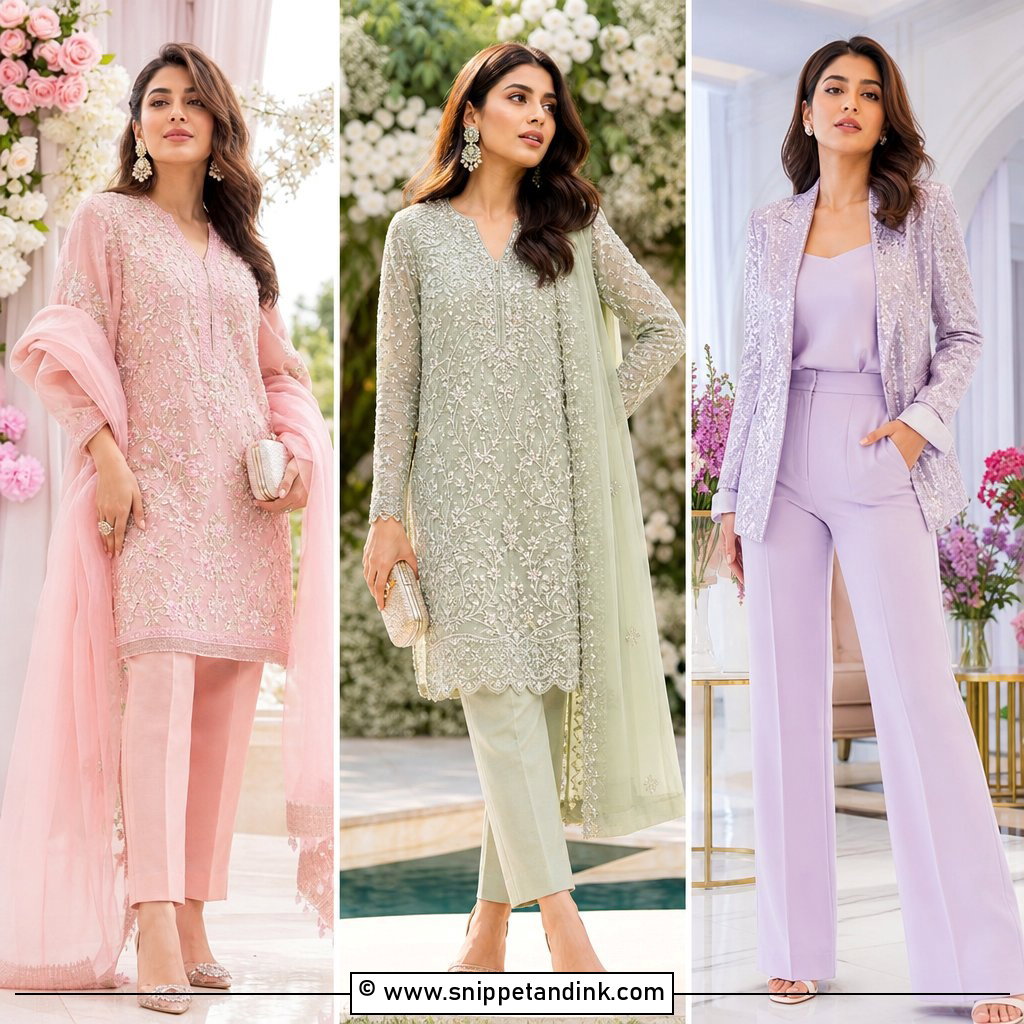
20. White Palazzo Suit With Colorful Dupatta
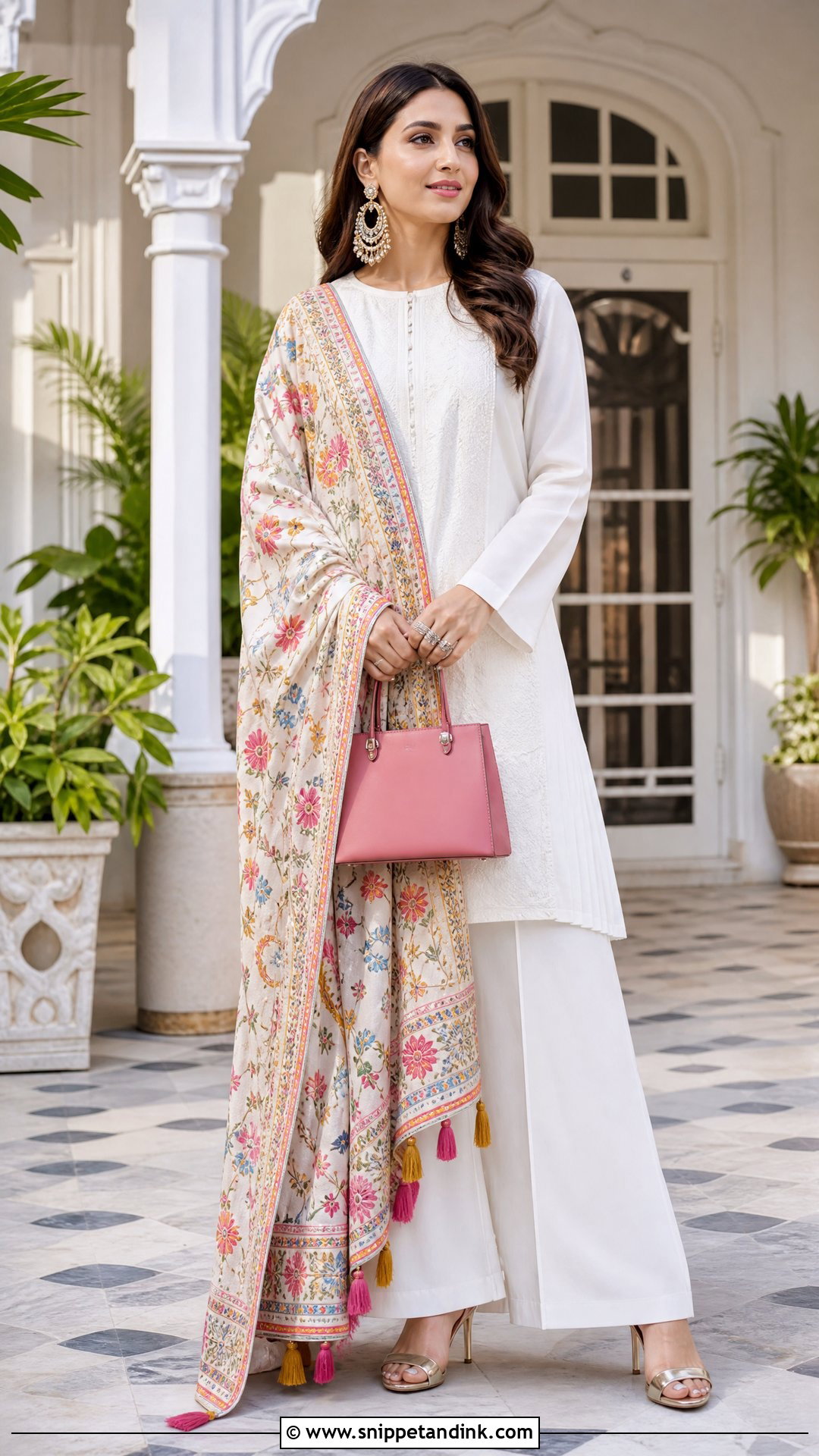
Few outfits are as useful as a crisp white suit with a colorful statement dupatta, because you can change its whole character by swapping one piece. A white cotton, linen-blend or silk-blend kurta with wide palazzos is the base. Phulkari, Ajrakh, Kalamkari and floral prints each bring a different mood; Ajrakh, for instance, is block printed with natural dyes in deep indigo and red, so it reads earthy and grounded. Place it over one shoulder with the other side open to show the design. Tan flats for a casual event, metallic heels for a formal one, and a solid-colored bag either way.
Pins, Weights and Fabrics That Actually Stay Put
A dupatta that keeps slipping ruins an evening. Each fabric misbehaves in its own way, so I plan the fix around it.
- Chiffon and georgette are light and fly in a breeze. A small latkan or tassel on each corner adds just enough weight to keep the ends down.
- Net catches on embroidery and earrings. Pin it in two places and keep sharp-edged jewelry away from it.
- Organza and tissue are slippery. Pin through the dupatta into the kurta’s shoulder seam, not the open fabric, where the pin can tear a hole.
- Heavy silk and Phulkari stay put but pull on a single pin, so use two, about a hand’s width apart.
I use small brooch pins or safety pins hidden under the fold, and leave magnetic pins for thicker fabrics, since on fine silk they can slide and mark the surface.
Folding a Banarasi Dupatta So the Zari Lasts
Woven silk dupattas are often the most valuable piece in a suit, and they’re easy to damage in storage. Zari is metallic thread, and it cracks if it sits on the same fold for months.
- Wrap it in a clean muslin or cotton cloth, never plastic, which traps moisture.
- Refold along different lines every few months so no single crease wears through.
- Keep mothballs away from direct contact with the zari, as they can discolor the metal thread.
- Air it out in the shade after each wear before you put it back.
Have heavy silk dupattas dry cleaned rather than washed at home, and tell the cleaner about the zari so they handle it gently.
Let the Dupatta or the Suit Lead, Never Both
Every outfit here starts with the same decision: which piece leads. Detailed kurtas need simpler drapes, and plain suits give woven, printed or embroidered dupattas room to show. Begin with the occasion and how long you’ll be wearing it, then match one visible color across the shoes or bag instead of matching everything. Choose a drape you can move in. From cotton for daily wear to silk, velvet and full gharara outfits, one well-chosen dupatta can carry a simple suit to many different events.
You'll Like These Ideas:


Leave a Reply