
Long waves are the style I get asked for most, and the one that disappoints most often when it isn’t set properly. Worn loose they move with you, so they suit a ballroom as easily as a field ceremony. Worn half-up, braided or gathered low, they still keep that softness around the face. The catch is that length is heavy, and weight pulls a curl straight within a few hours unless the prep and the setting are right. Below are 20 long wavy styles for brides, bridesmaids and guests, with my notes on what each one needs to last, who it suits, and where it tends to go wrong.
Why Long Waves Fall Flat by the Reception
Length is the enemy of a curl. The longer and heavier the hair, the faster gravity pulls the bend out, which is why a wave that looks perfect at 10am can be almost straight by the toasts. Most of what I do to make waves last happens before the iron touches the hair.
- Wash the day before, not the morning of. Hair that is completely clean is slippery and won’t hold a curl or a pin. One day of natural oil gives it grip.
- Blow-dry with a little volumizing mousse at the roots. Waves curled onto hair that was air-dried tend to go frizzy and lose shape faster.
- Curl in small sections. A thick section only heats on the outside, so the inside never sets and the wave drops.
- Let every curl cool before touching it. I pin each one in a loop against the head while I work through the rest. This step is the single biggest difference between waves that last and waves that don’t.
- Brush out last, and only once. Repeated brushing breaks the curl structure.
Humidity is the other factor. If you’re getting married by the sea or in a hot, damp month, I’d set the waves tighter than the finished look you want, because they will relax. A flexible-hold spray applied from a distance helps; a heavy lacquer makes long hair look crunchy and stiff in close-up photos.
1. Loose Hollywood Waves for Long Hair
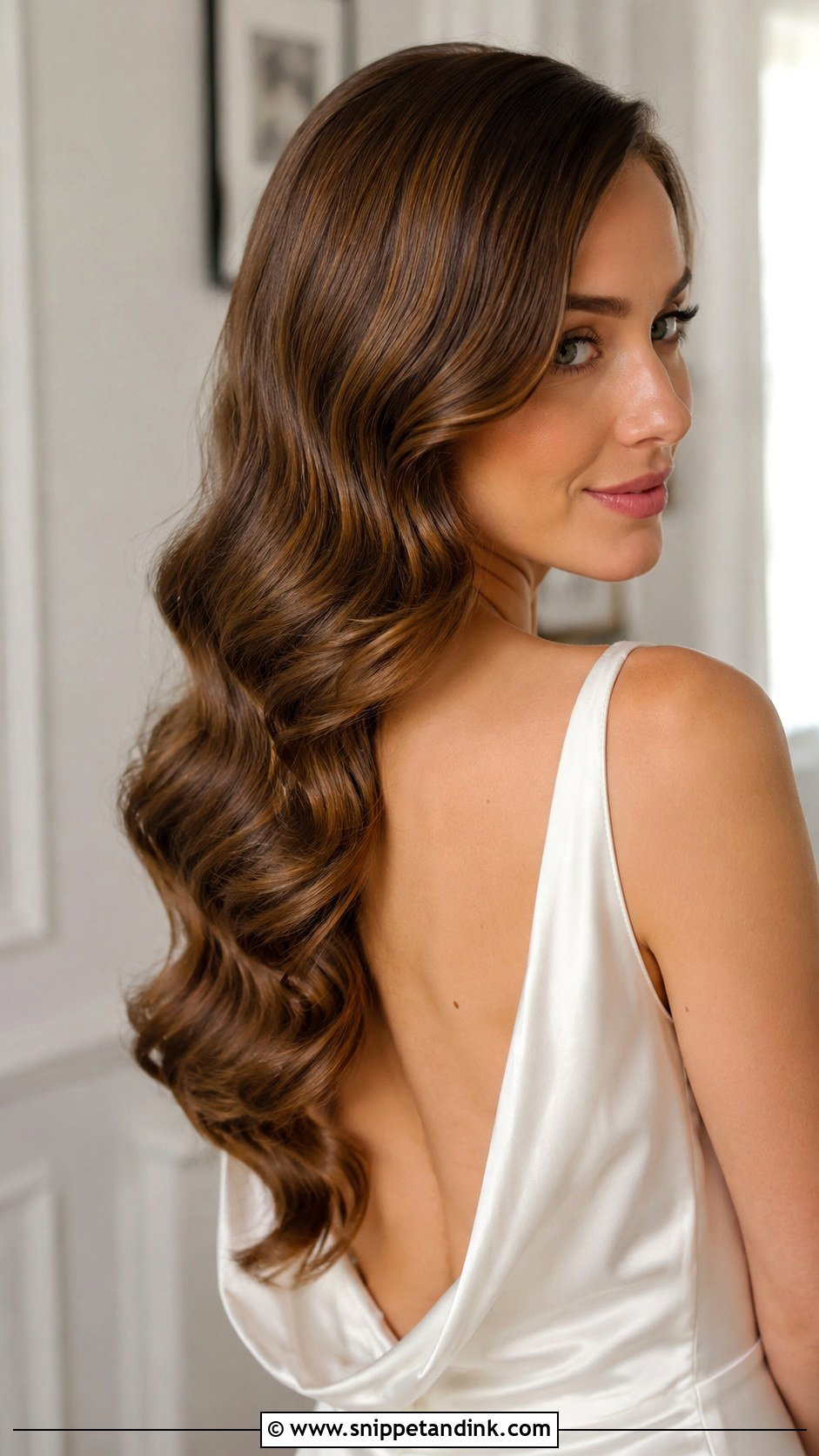
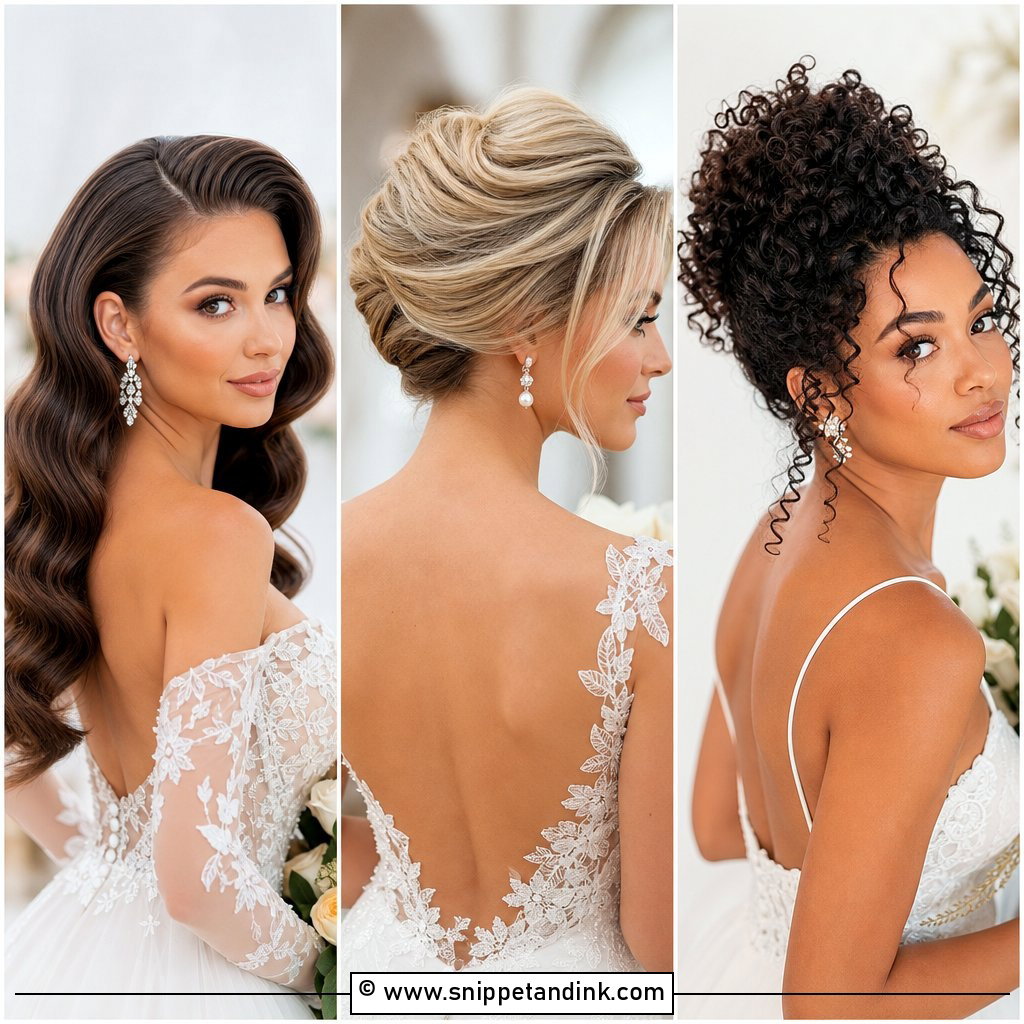
Hollywood waves are the most technical look on this list, because the waves have to line up into one continuous S rather than sit as separate ringlets. I start from a smooth blowout, curl every section in the same direction with a large barrel iron, and pin each curl to cool before anything is brushed. Brushing too early is the usual mistake; the pattern falls apart and you get frizz instead of ridges. A deep side part gives the sweep its drama. I’d pair it with a sleek satin gown or a formal evening room, and I’d keep it away from a windy outdoor ceremony, since one gust breaks the line.
2. Side-Swept Waves for Brides
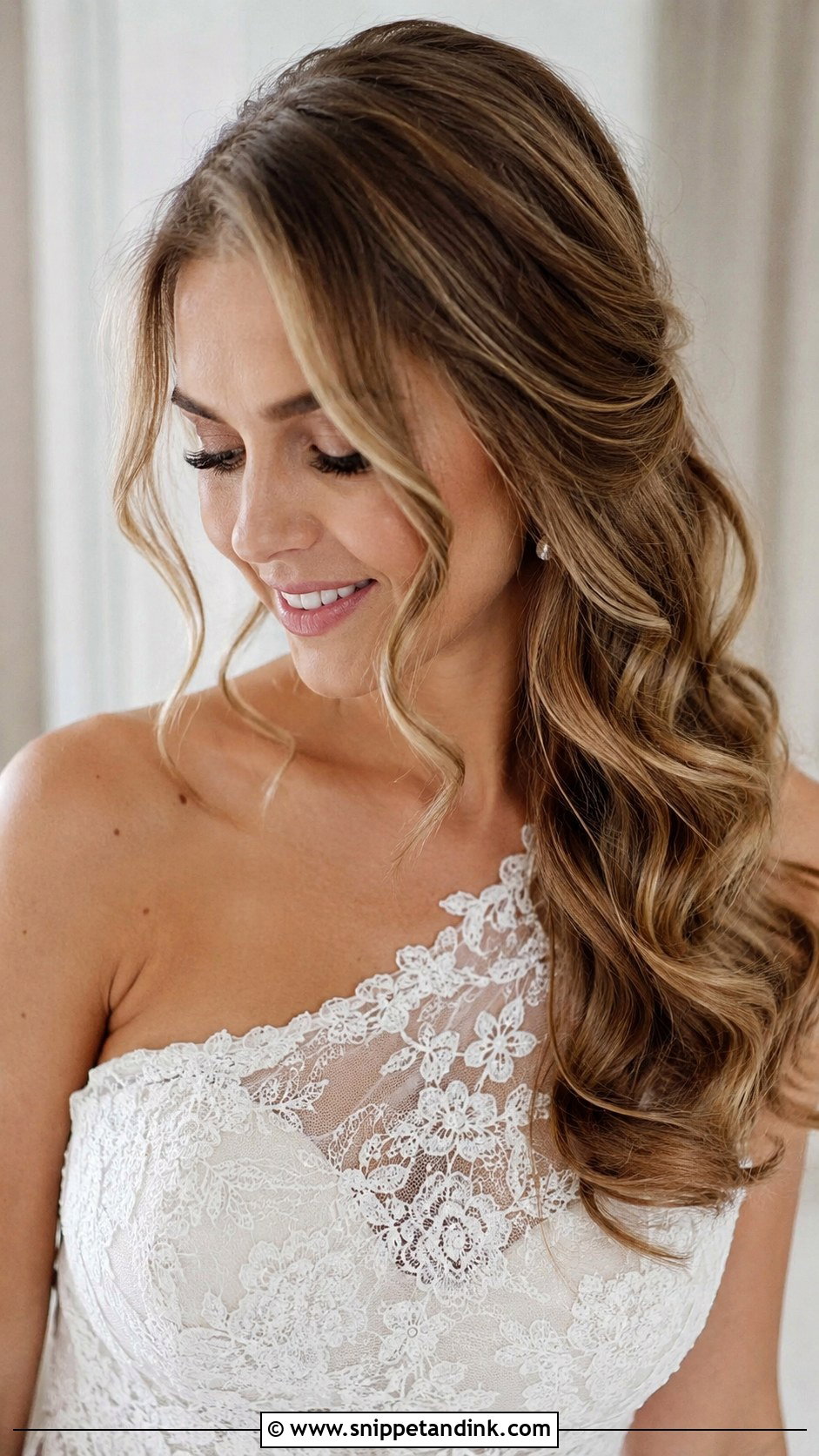
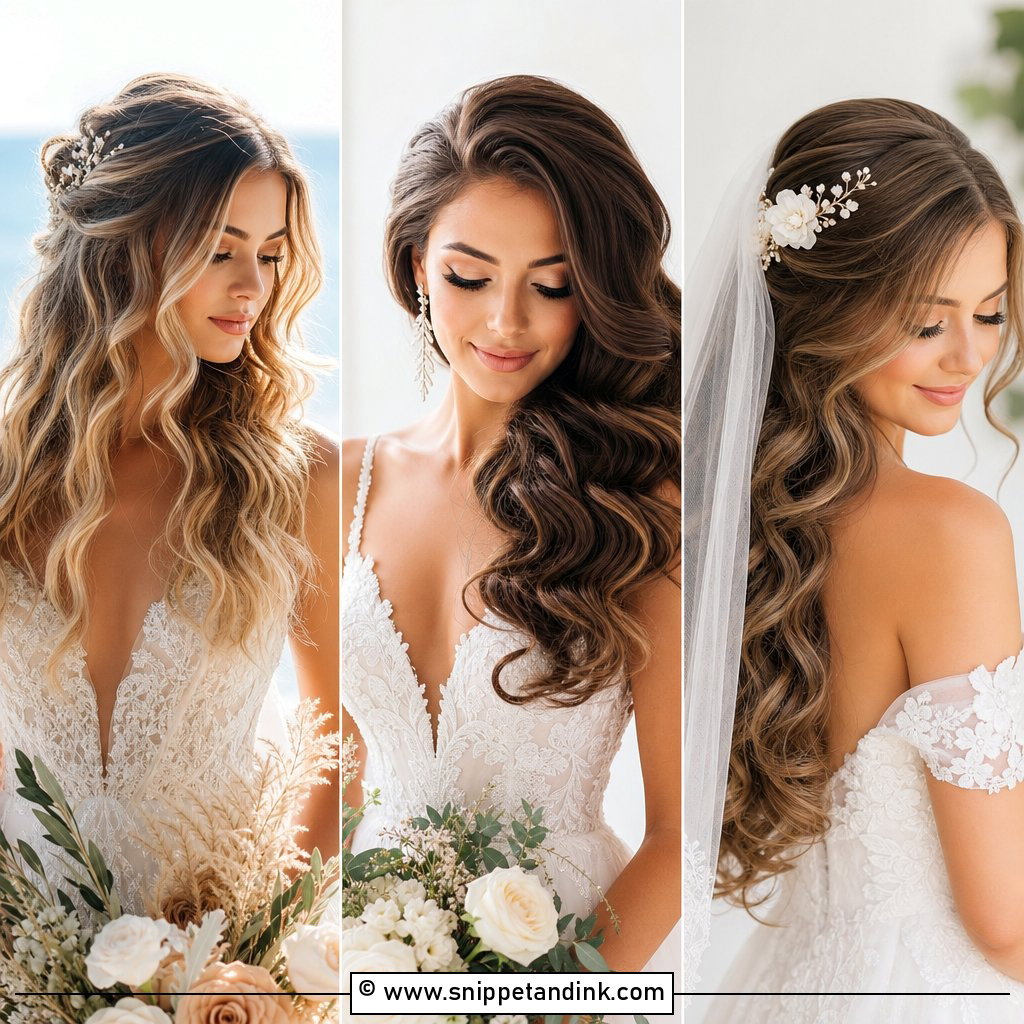
Gathering every wave over one shoulder shows off a statement earring or a one-shoulder neckline better than any other loose style. The hidden work is on the other side: I cross two or three bobby pins behind the ear on the bare side, then cover them with a small clip so the hair can’t slide back as you turn your head. Without that anchor, the whole mass migrates to the middle by the first dance. It’s a low-maintenance choice once it’s pinned. Lace gowns with detail at the back are a good match, because the open side leaves the back of the dress visible.
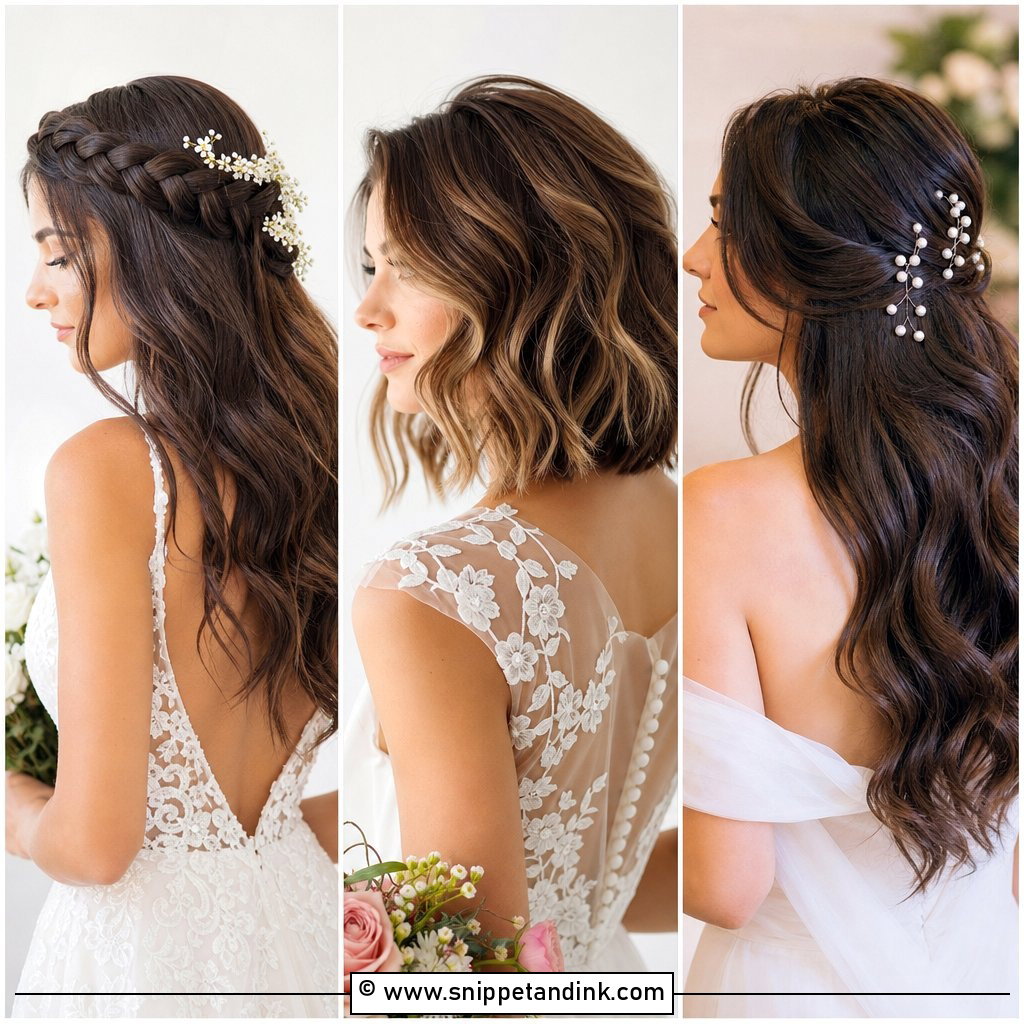
3. Half-Up Half-Down Wavy Wedding Hair
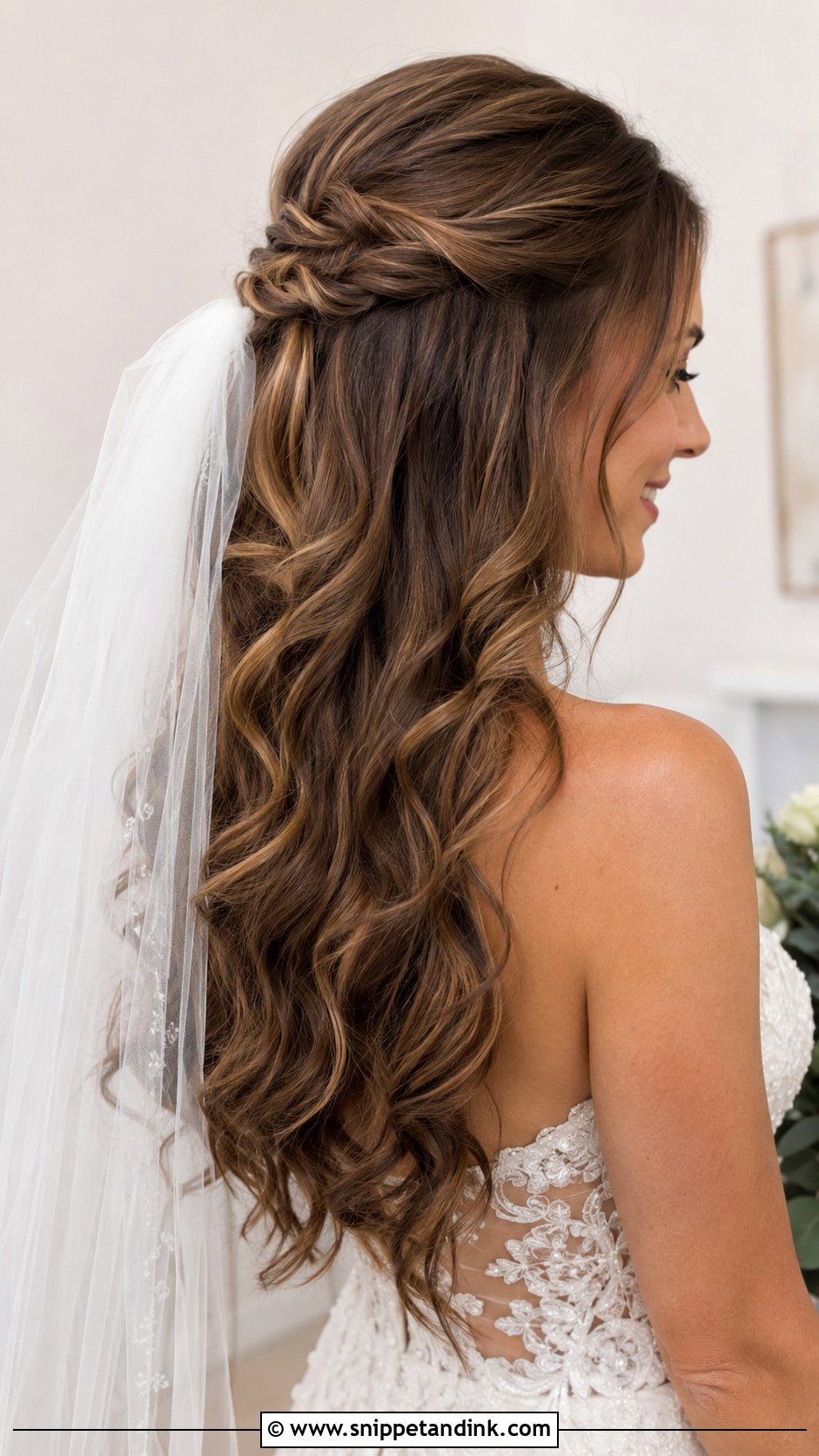
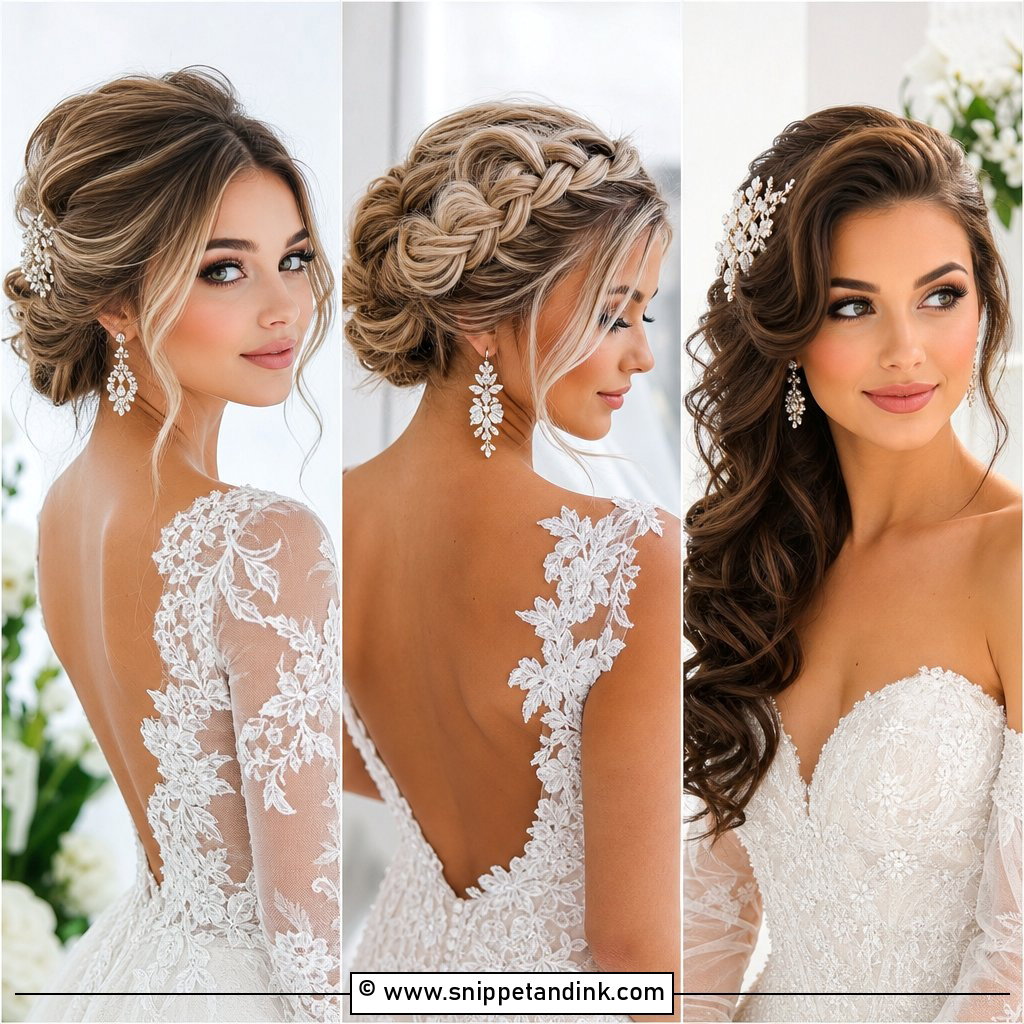
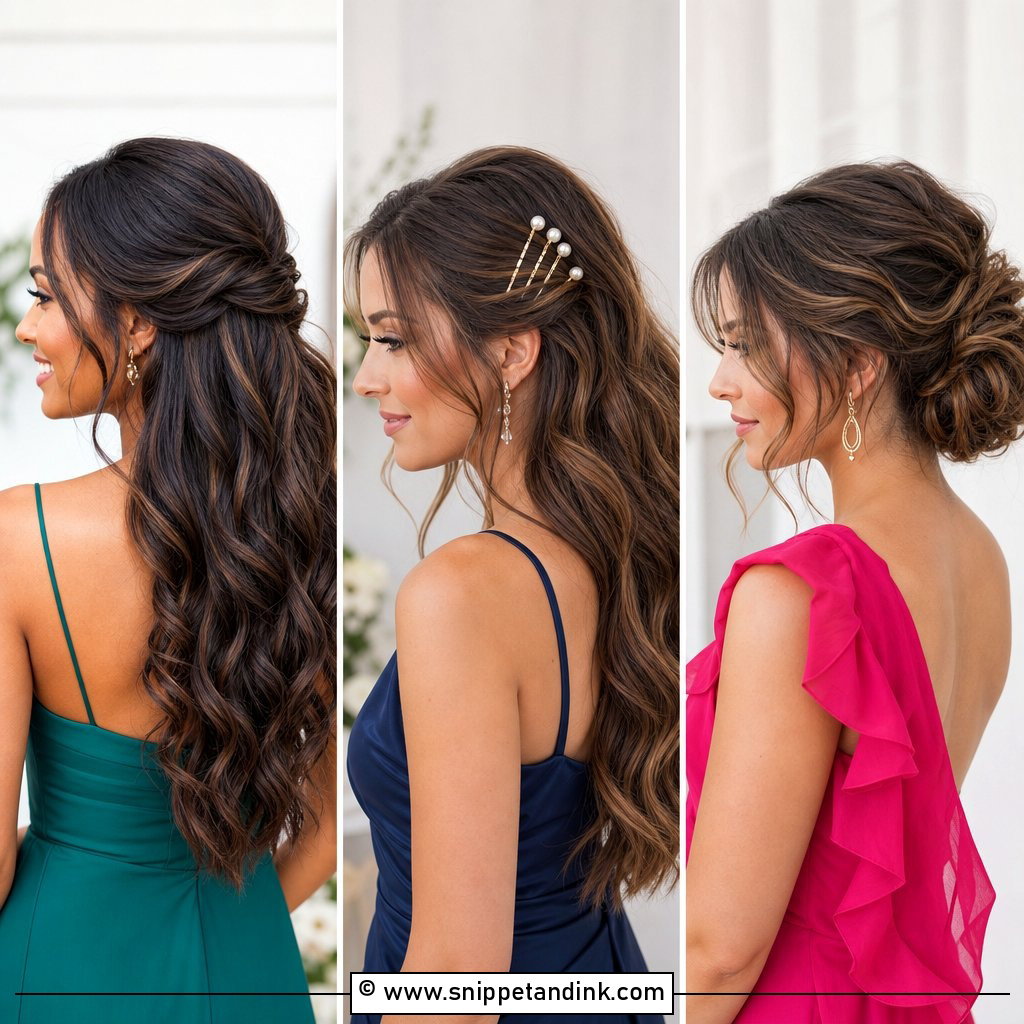
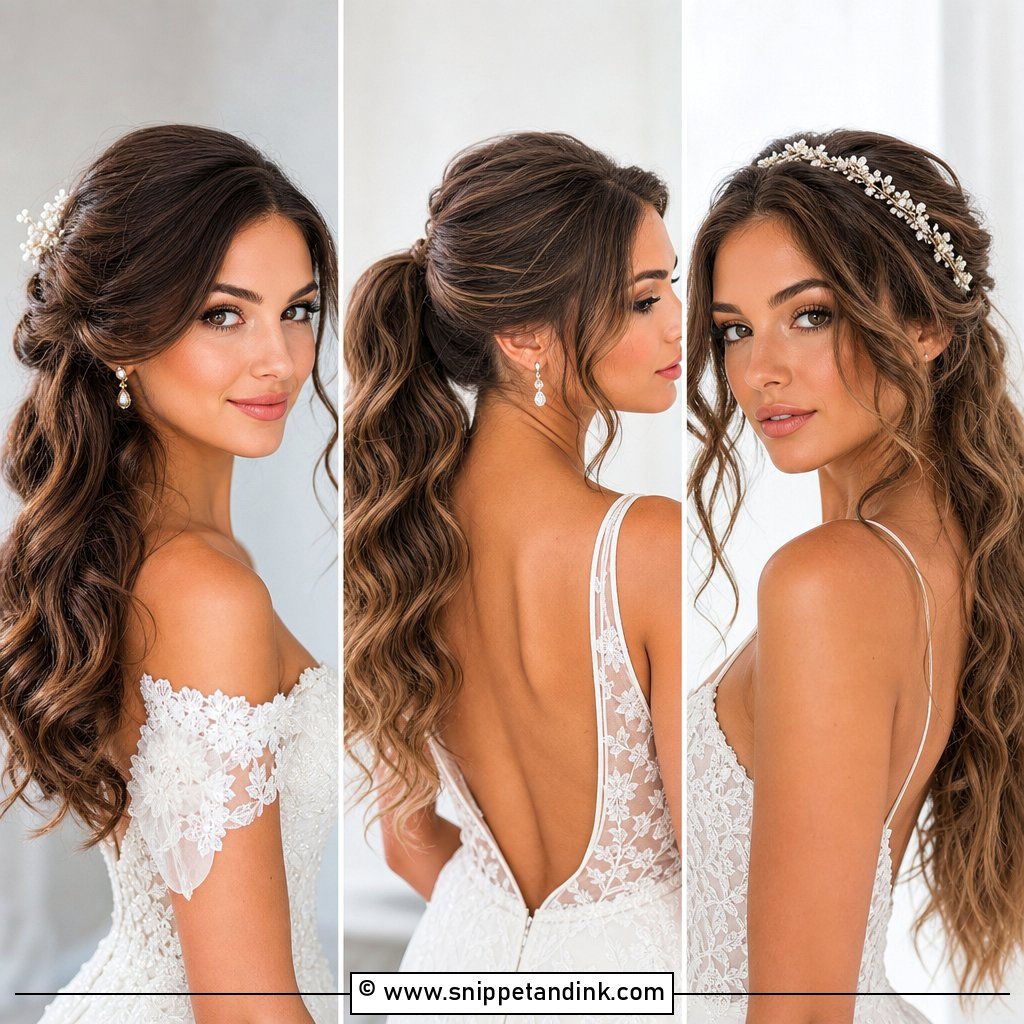
Half-up, half-down is the answer when a bride can’t choose, and it is more practical than it looks. Lifting the top section keeps hair out of your eyes and off your lip gloss, while the length still shows. I secure the top section with a small elastic first and then cover it with pins or a clip, because a clip alone slides down fine hair within an hour. If you’re wearing a veil, the comb sits just under that gathered section, which gives it something solid to grip. Bring a spare pin or two in your bag; a quick re-twist at the reception refreshes the whole look.
4. Boho Waves With Floral Crown
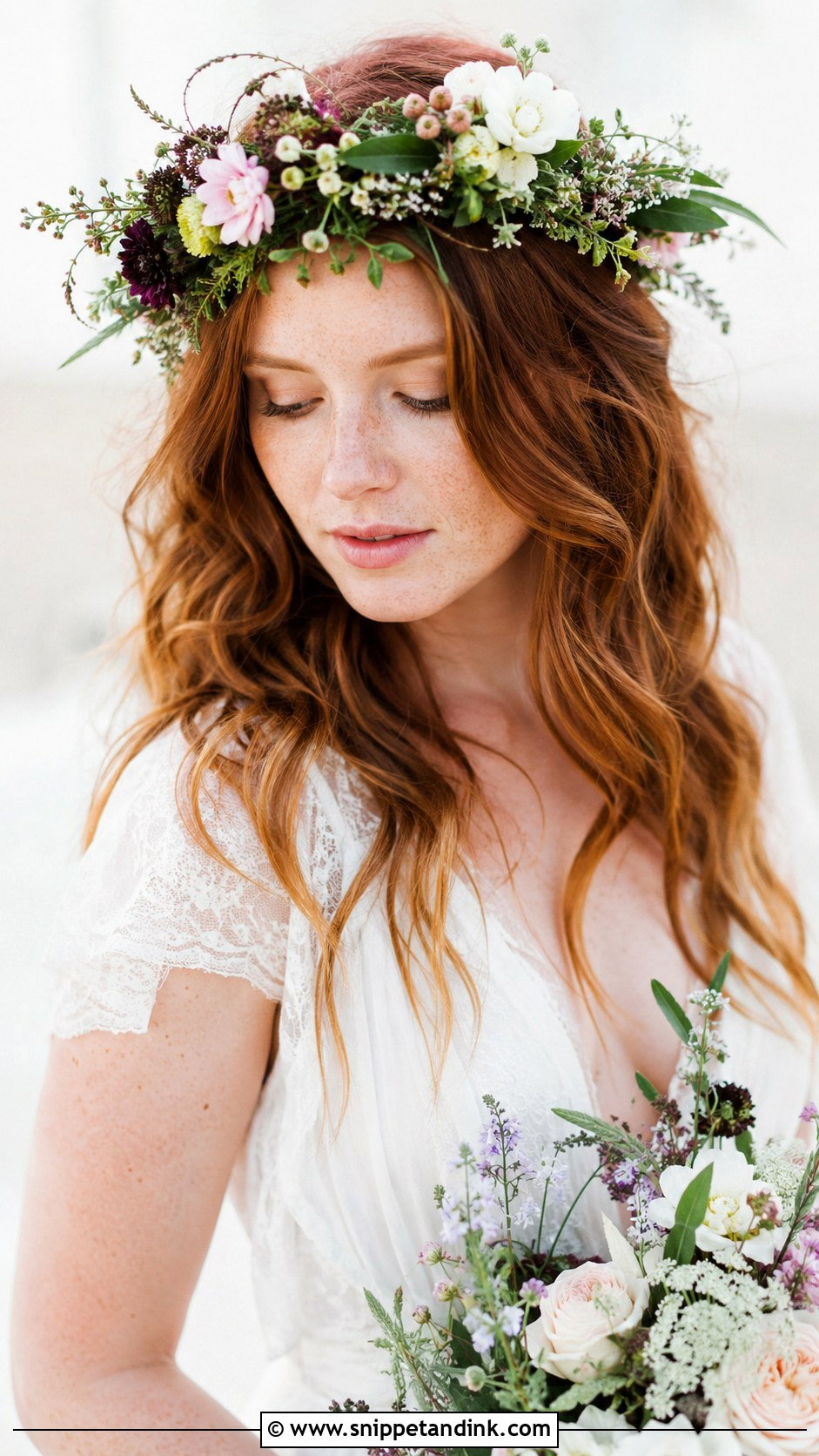
A floral crown sits best on waves that have a bit of grit in them, so I add texture spray before the crown goes on and leave a few pieces loose around the face. Fresh flowers are heavy and wilt in direct sun, which is why I usually suggest a mix with sturdier stems, or dried and silk blooms for a summer ceremony. Wildflowers, baby’s breath and small spray roses all hold up reasonably well if the florist wires them onto a firm base. I secure the crown with pins crossed underneath it at each temple. Flowing dresses and barefoot beach ceremonies are where this one feels most at home.
5. Braided Half-Up Wavy Hairstyle
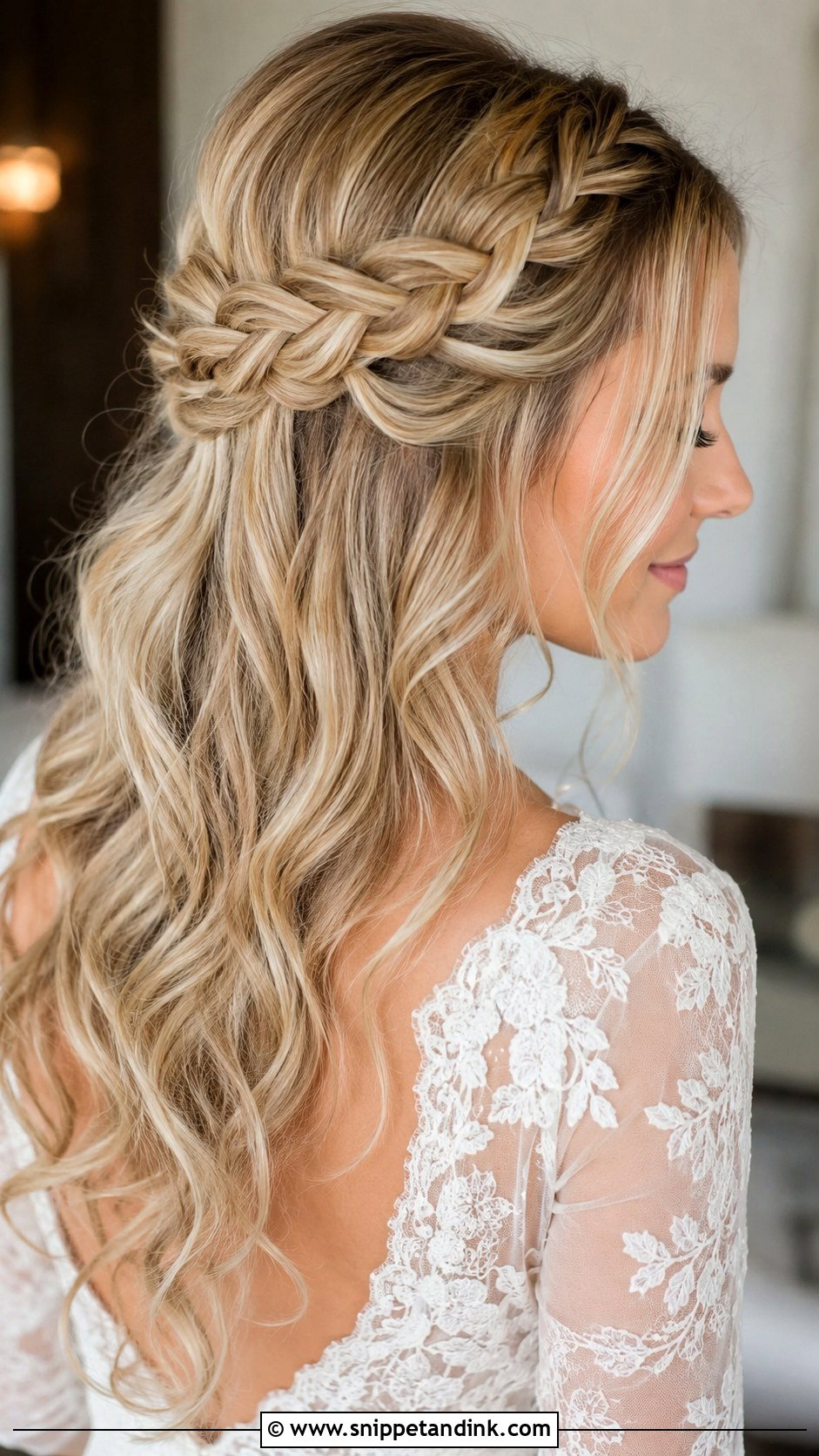
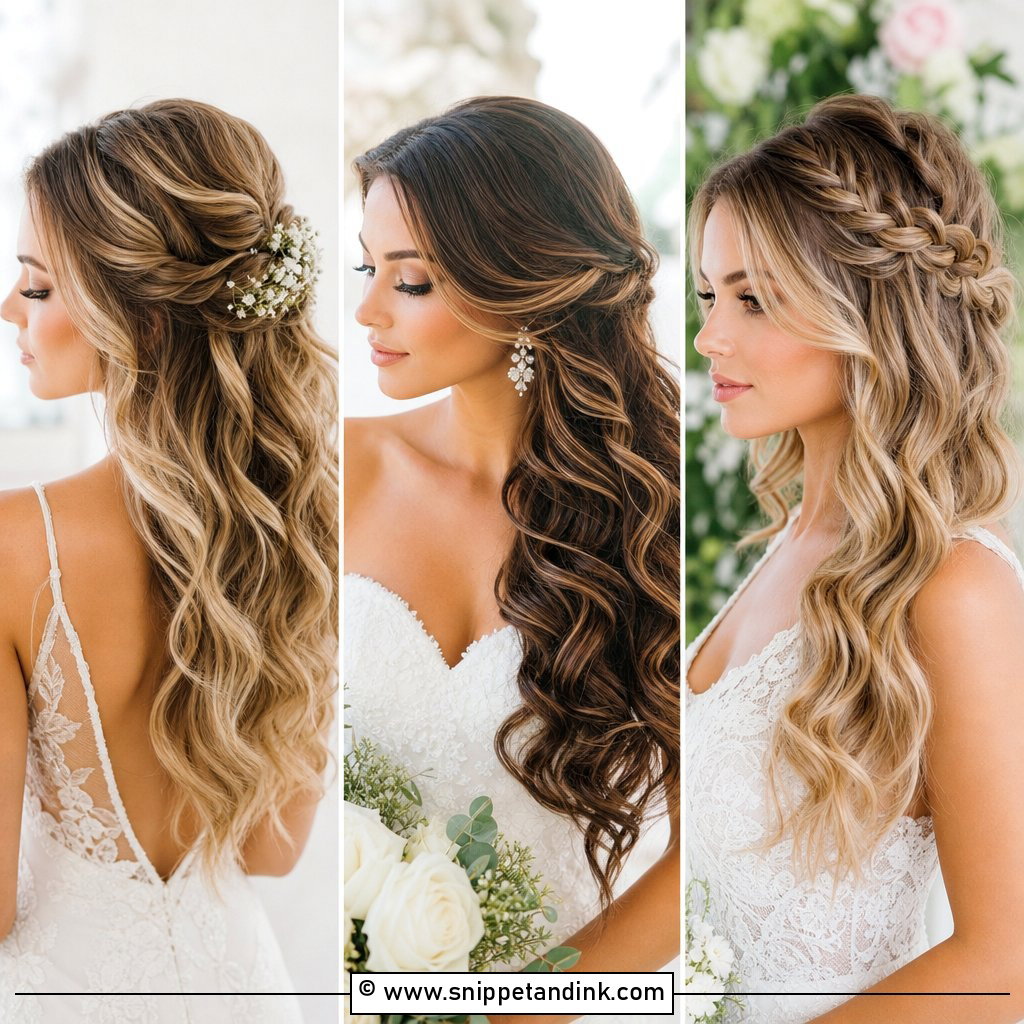
Braids give long waves some structure, which matters more than people expect on an outdoor day. I braid the front sections loosely, pin them where they meet at the crown, and leave the lengths below in soft curls. Then I pull the braid apart with my fingertips so it looks fuller in photos from the front. The braid also acts as a shelf that stops the top layer from collapsing flat. If your hair is very fine, I’d add a few clip-in pieces at the crown first so the braid doesn’t look thin once it’s pancaked out. Small flowers or pearl pins tuck into the plaits easily.
6. Low Wavy Bridal Ponytail
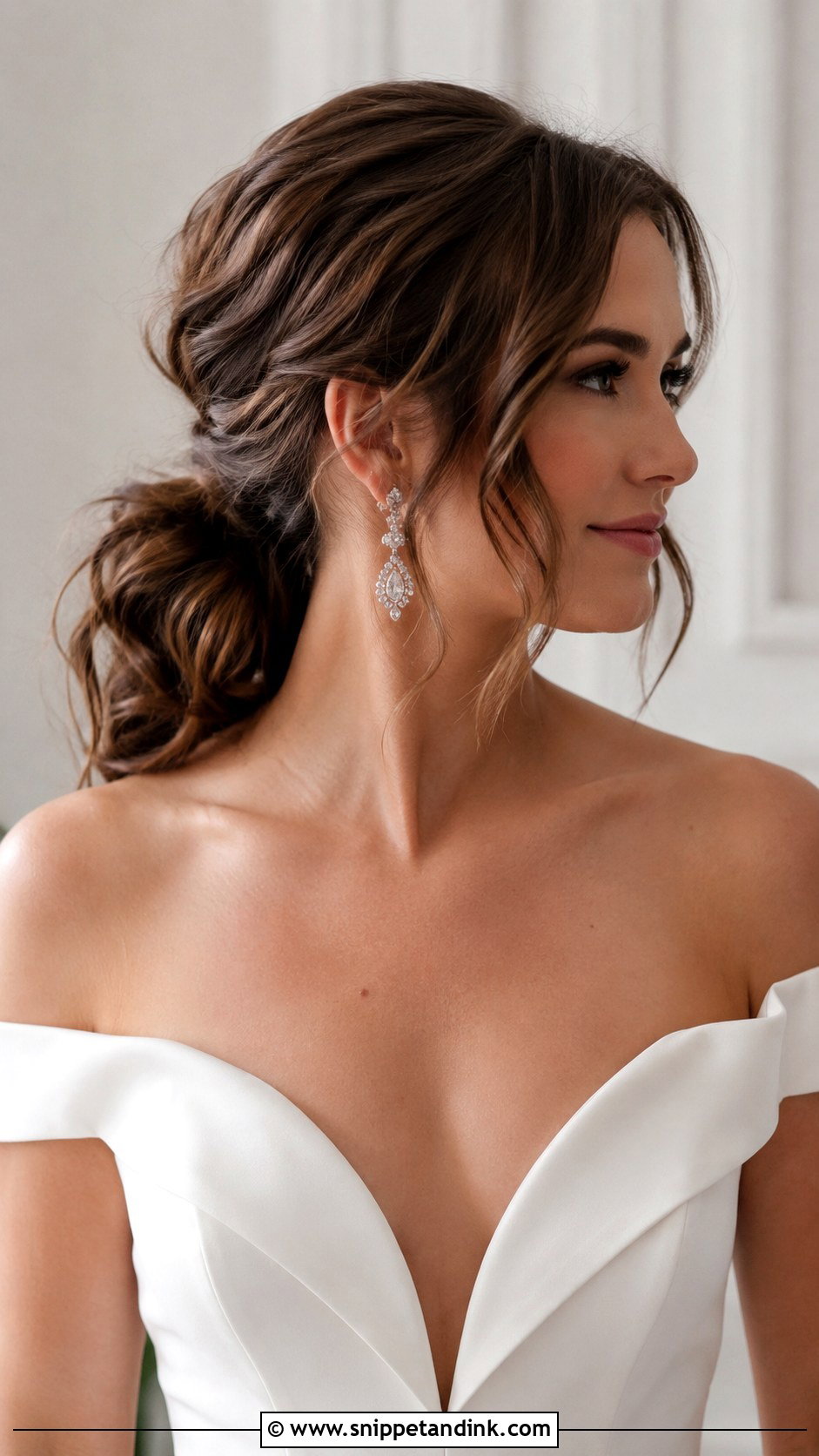
A low ponytail is quieter than it sounds, and it lasts well into the evening. I gather the waves at the nape, secure them with a clear elastic, and wrap a small section around the band to hide it, pinned underneath. A few loose strands at the front stop it reading as gym hair. The texture in the tail is what makes it bridal, so I curl the lengths before gathering rather than after, when the elastic flattens everything above it. Statement earrings and open necklines show well here, and the ponytail moves from vows to dancing without needing touch-ups.
7. Wavy Updo With Loose Tendrils
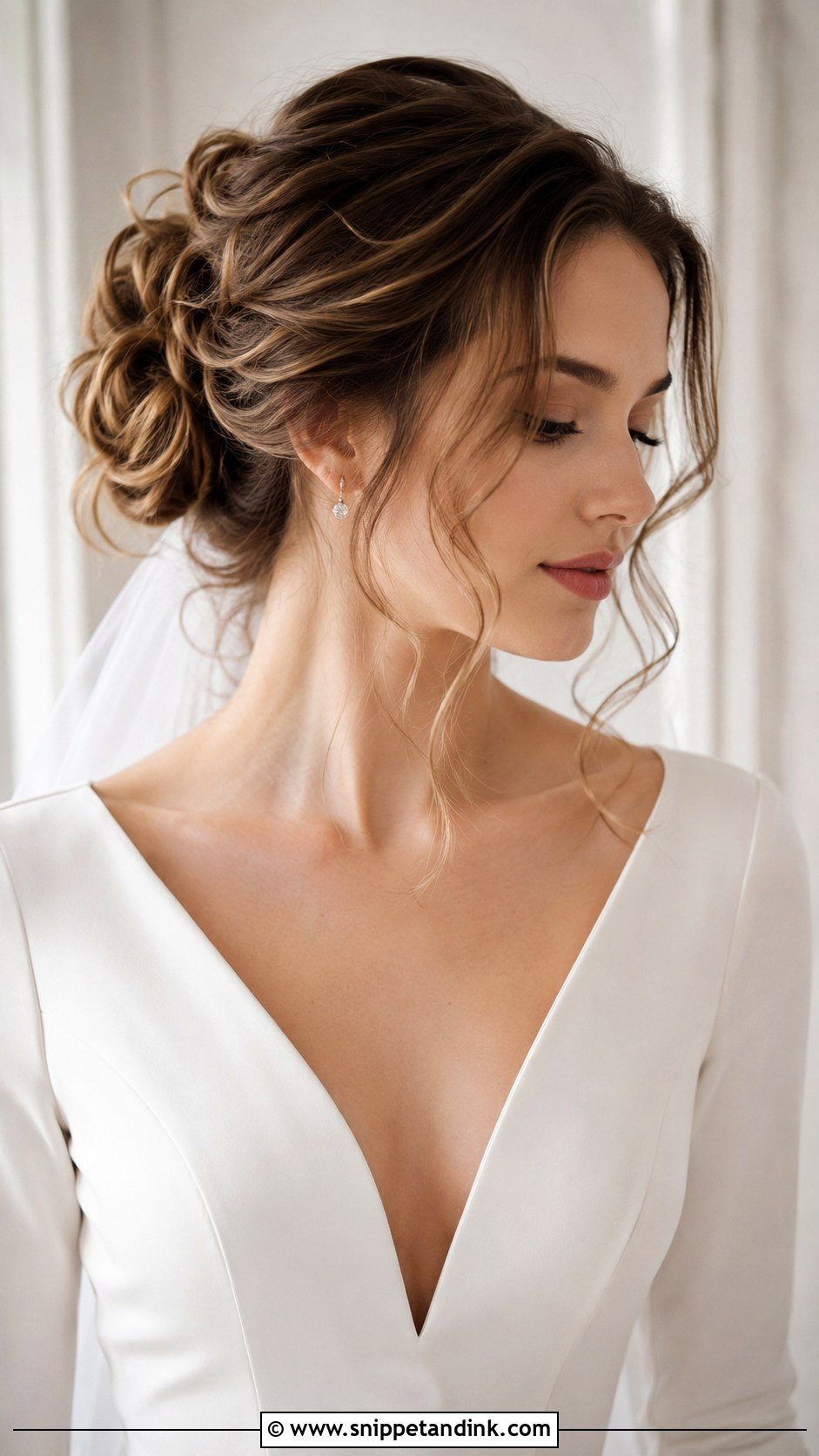
This is the updo I suggest for brides who hate the feeling of tight pins. The waves are gathered into a soft twist or bun, and loose, wispy tendrils are pulled out around the hairline. The skill is in choosing those tendrils: I take them from the hairline rather than the crown, and curl them separately, because pieces pulled from inside the bun come out kinked and uneven. Heat is the reason many choose it, since the neck stays clear. A small hairpiece or a few blooms can sit at the side of the bun. It suits a long neckline and lets earrings show.
8. Wavy Hair With Pearl Hair Pins
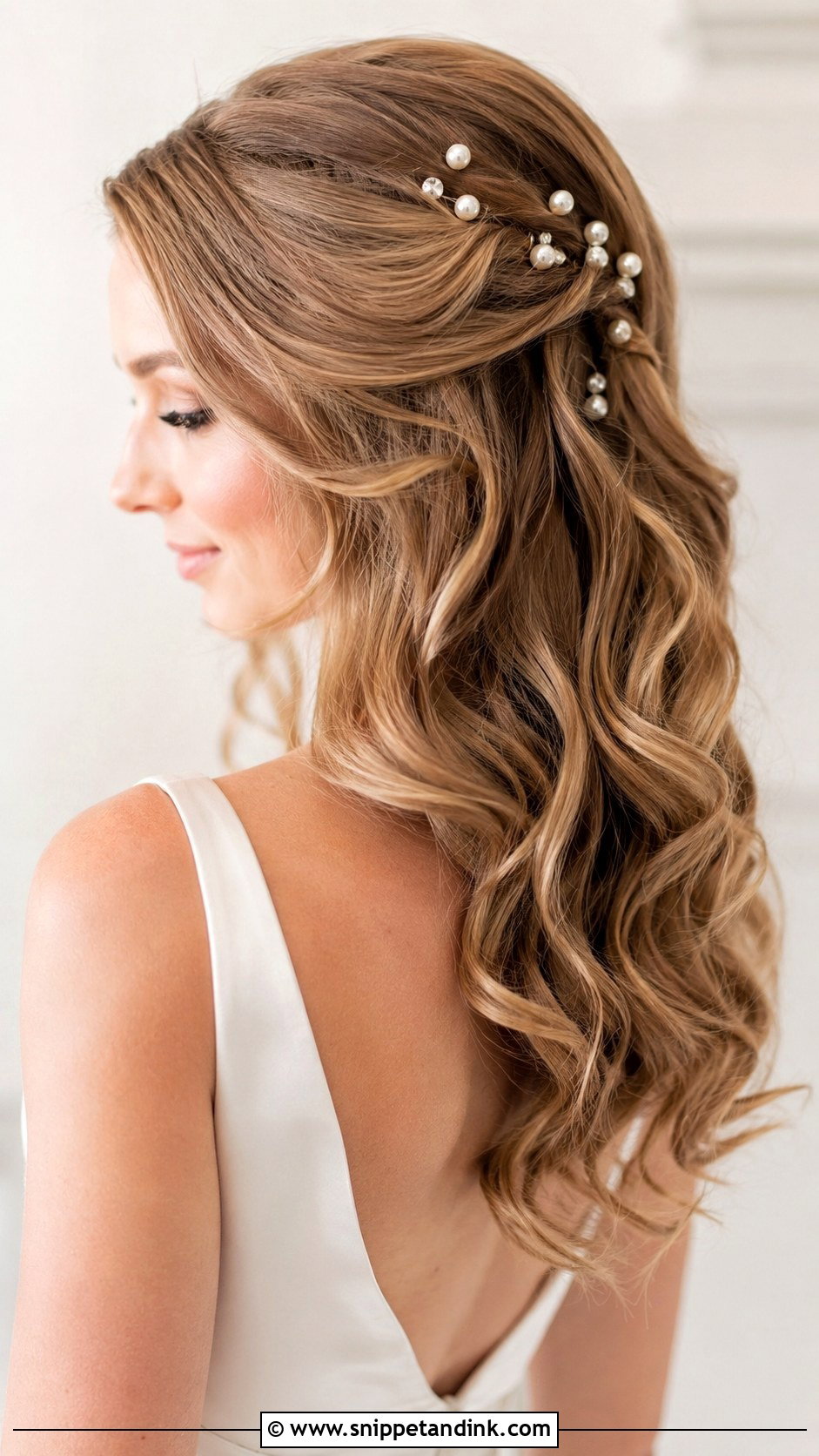
Pearl pins are one of the simplest ways to make loose waves look finished, and they cost very little. I scatter them across one side or along the crown, angling each pin into a curl so it grips hair underneath rather than sitting on top. On very silky hair they slide, so I spray a little dry texture at the roots where they’ll sit. Odd numbers look more natural than a tidy row. Pearls work well with a veil, and they still look intentional after the veil comes off. Keep makeup soft so the pearls are the brightest thing near your face.
9. Beach Waves for a Wedding
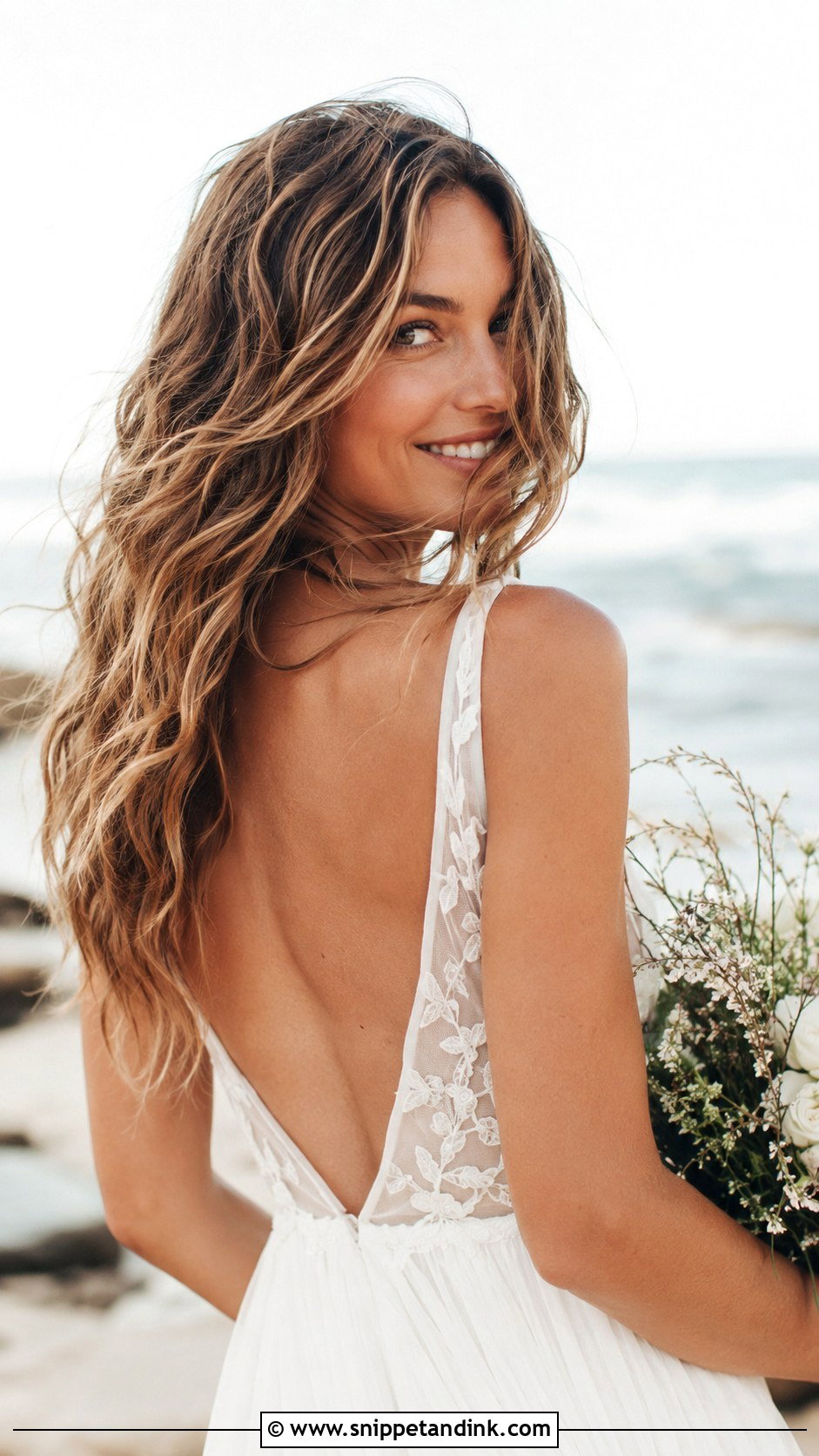
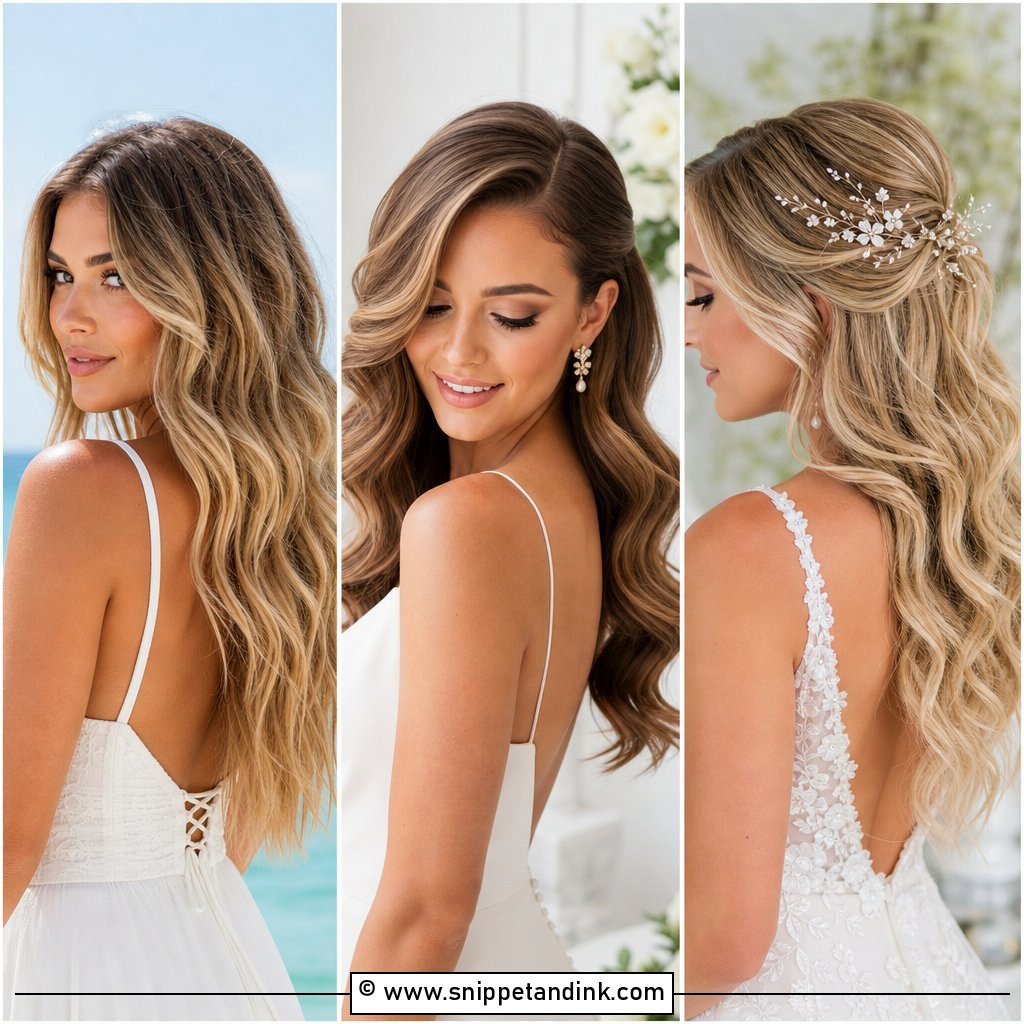
Beach waves are looser than Hollywood curls, made with a wand and with the last inch of each section left out of the barrel so the ends stay straight. I break them up with my fingers instead of a brush, then add texture spray for grip. Here’s the honest catch: because the bend is gentle, beach waves are the first to drop on smooth or fine hair, especially by the sea. If your hair doesn’t hold a curl, I’d curl it tighter than you want and let it relax over the day. They go with flowy dresses and minimal accessories, and they suit guests and bridesmaids too.
10. Wavy Hair With Side Braid
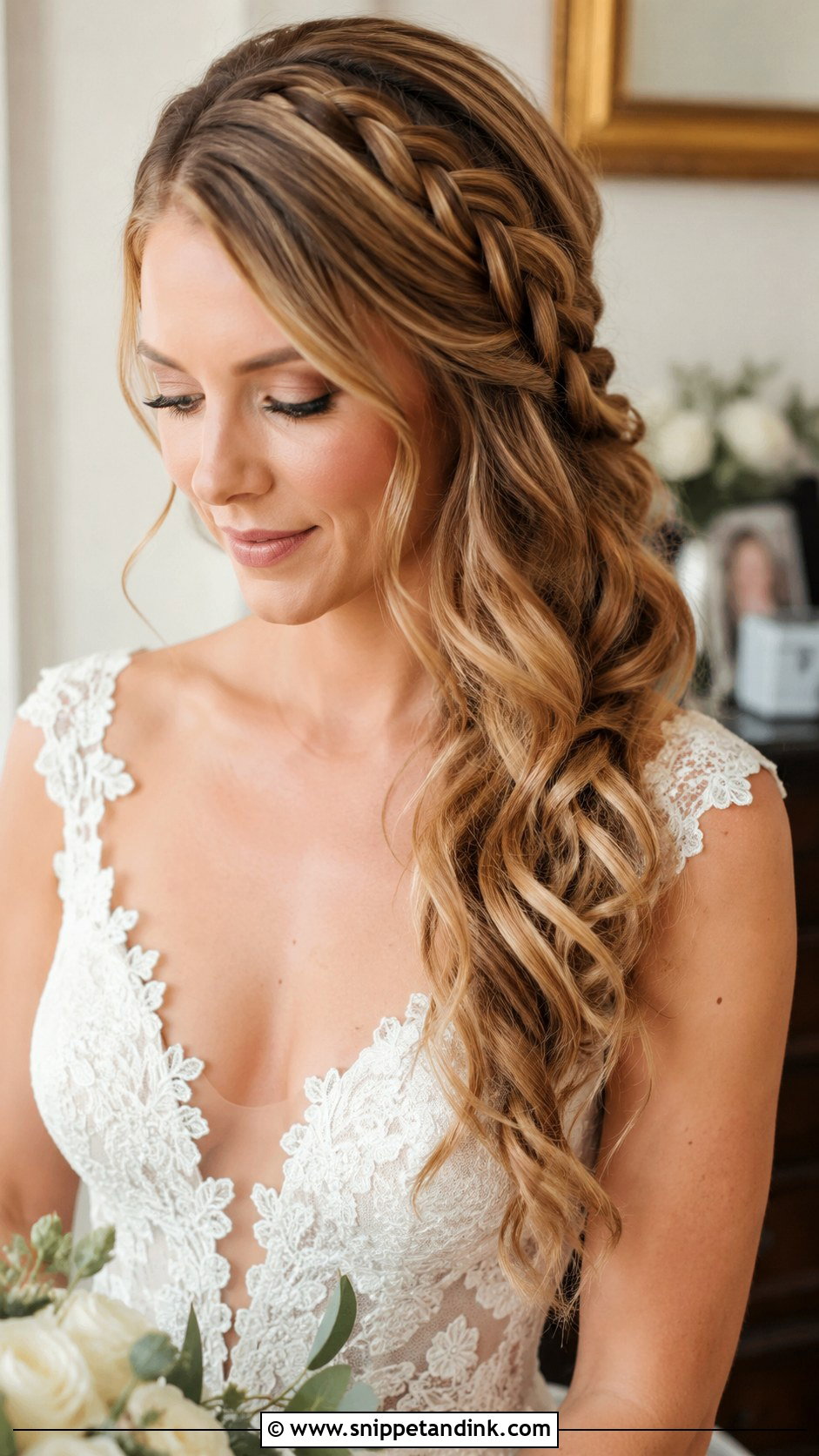
A side braid gives long wavy hair a focal point without pulling it all up. I sweep the hair over one shoulder, braid it loosely, and pull the loops apart for width, starting the braid a little lower than you’d expect so the waves above it still show. Layered hair can poke out of a side braid, so I tuck short ends in with a few small pins. It keeps hair off your face at an outdoor ceremony. Small flowers or pearls slot into the braid easily, and the bare side shows off an earring and your neckline.
11. Crown Braid With Wavy Hair
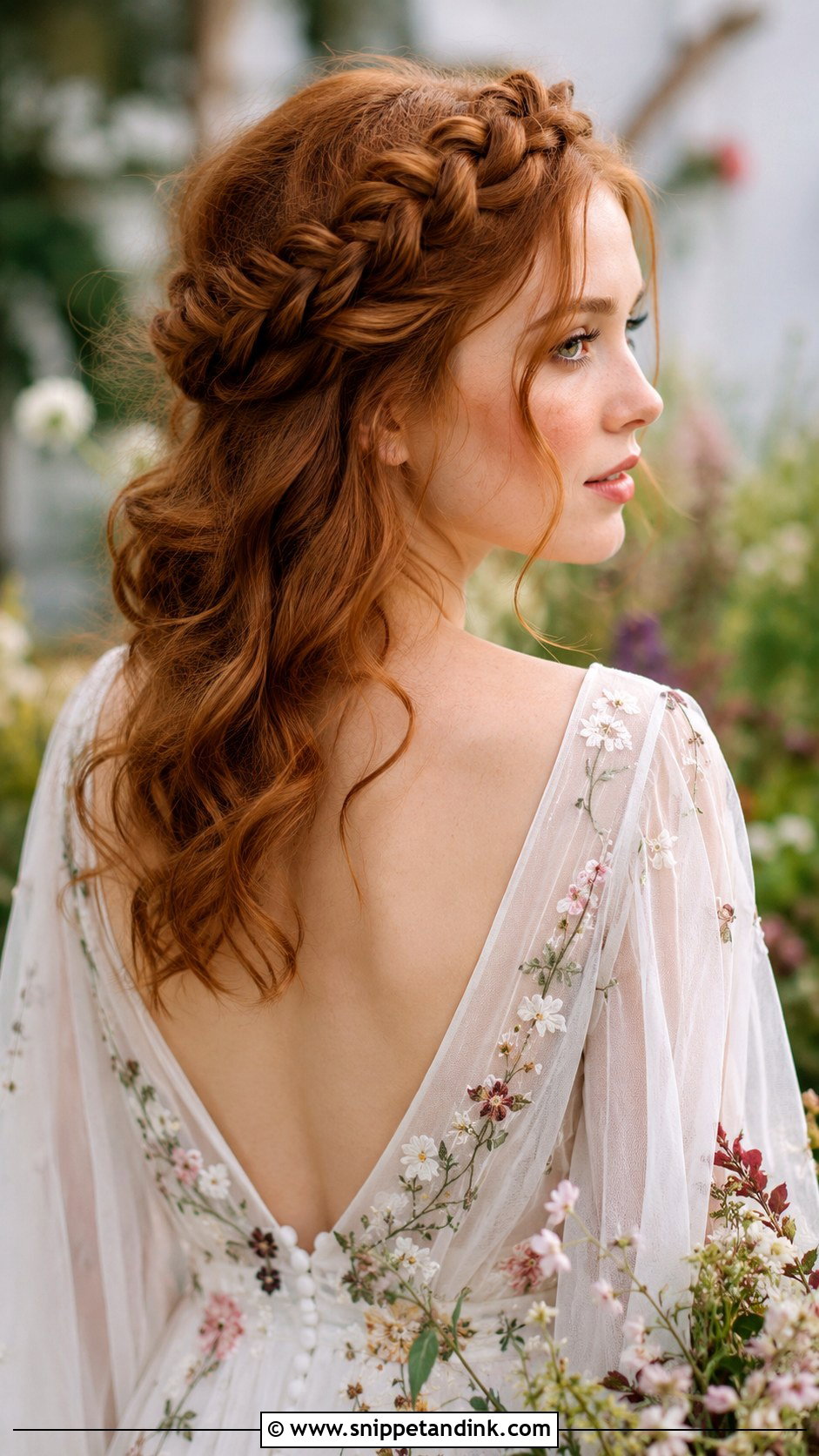
A crown braid sits across the head like a halo, with the lengths below left in waves. I braid a section from each side, cross them over the top and pin them where they meet, hiding the ends under the opposite braid. The fit depends on length; if the side sections don’t reach across, I use a single braid or a matching clip-in piece instead. It keeps the face completely clear, which helps in wind. Tiny flowers along the braid suit garden weddings, and a flowing gown balances the structure on top.
12. Deep Side Part Wavy Wedding Hair
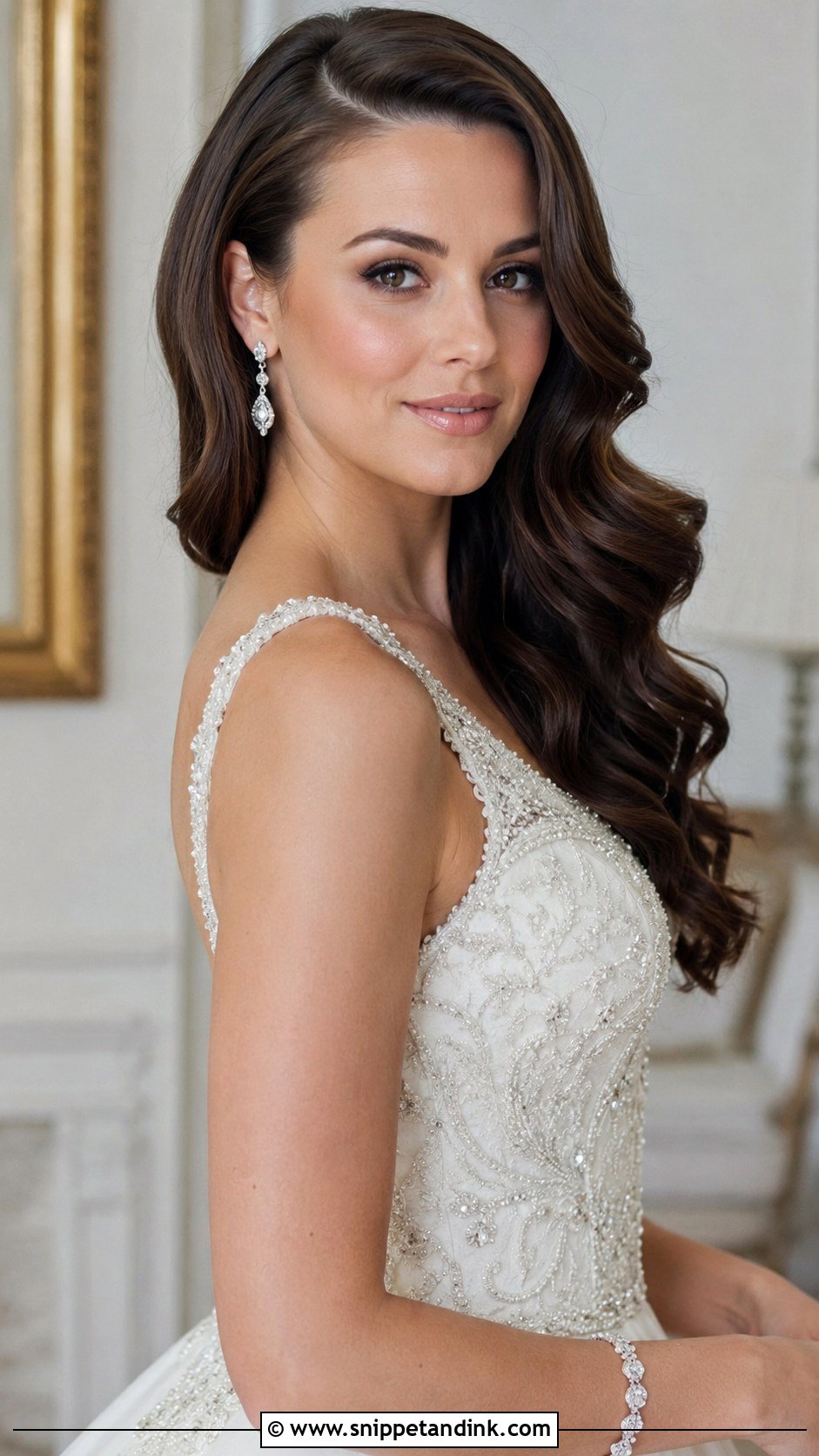
Moving the part far to one side instantly adds volume on the heavy side and gives the face a sweep that reads as old Hollywood. I find the new part with a tail comb while the hair is still damp and blow-dry the roots across, because a part flipped only at the end tends to spring back to its natural line by the reception. Smooth, defined waves work best with it. A small sparkly clip on the lighter side balances the weight. It suits formal weddings, and it’s useful if you want a bit more height than your natural part allows.
13. Wavy Hair With Veil and Waves
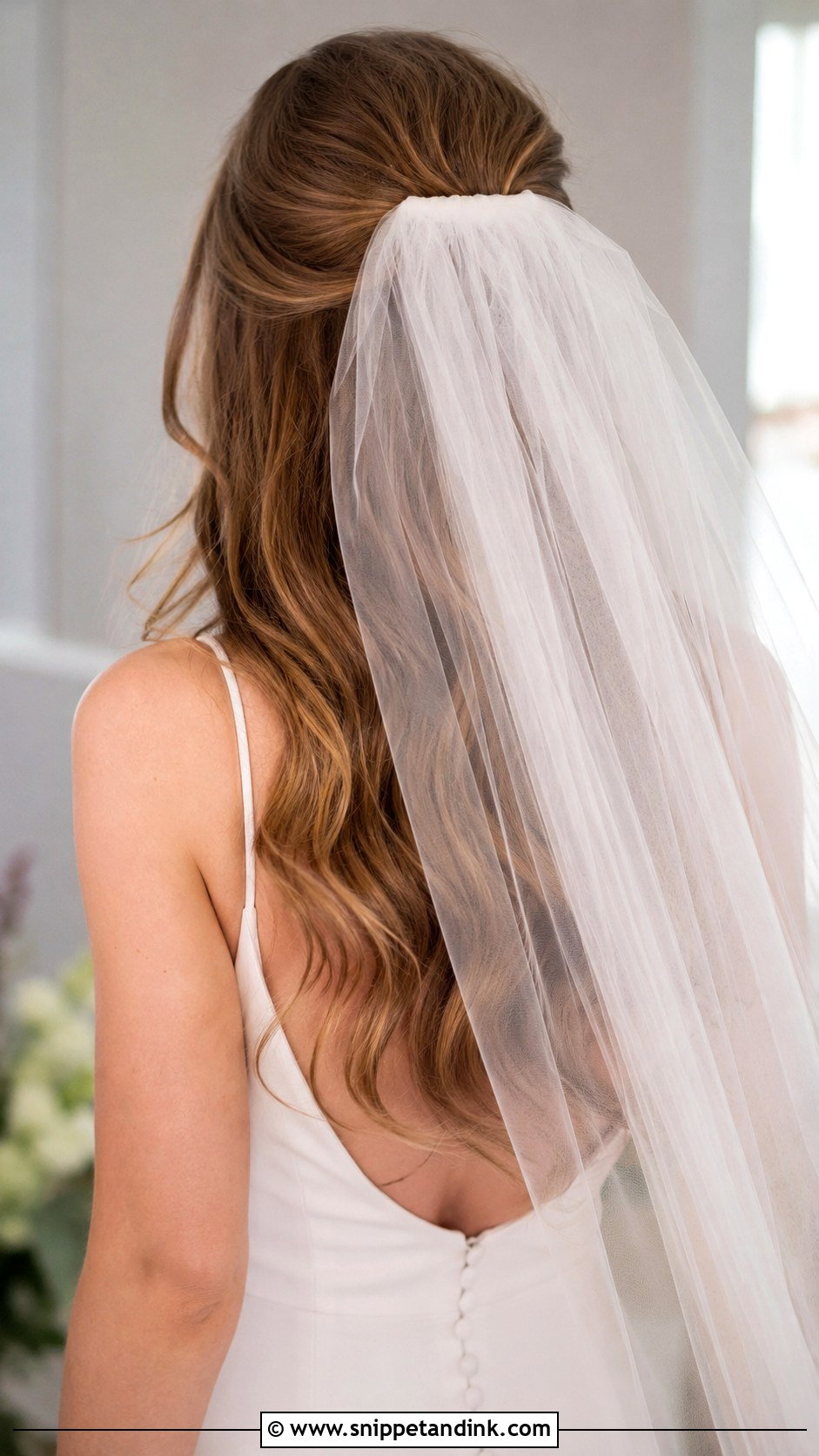
Few things say bride like waves under a veil, but a veil can flatten loose curls if the comb goes in last. I set the waves first, then slide the comb in at the crown or just beneath a half-up section, crossing two bobby pins under it so its weight doesn’t drag the hair down. A sheer single layer lets the waves show through the tulle. When the veil comes off at the reception, a quick shake and a little spray at the roots brings the shape back. Match the veil length to your dress and the venue; a long cathedral veil on grass needs someone to manage it.
14. Twisted Half-Up Wavy Style
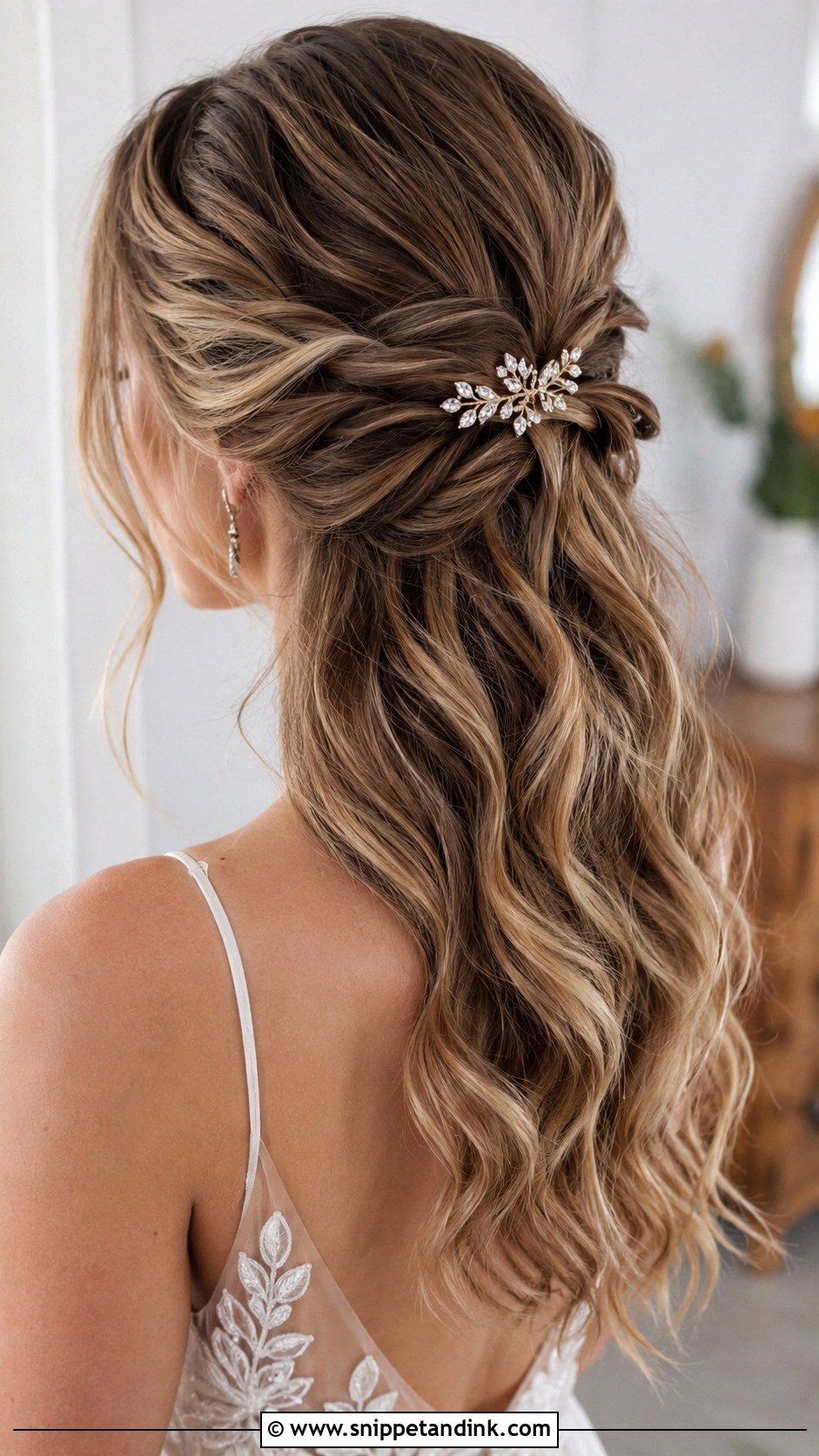
Twists are the gentler alternative to braids and much quicker to do, which makes them a good choice for bridesmaids styled in a tight timeline. I take a section from each side, twist it back away from the face, and pin it at the back. Twisting toward the back of the head keeps the twist tight; twisting the other way loosens it within an hour. Once pinned, I loosen each twist slightly for fullness. A decorative pin or a couple of small flowers can cover the spot where they meet, and the lengths stay down in waves.
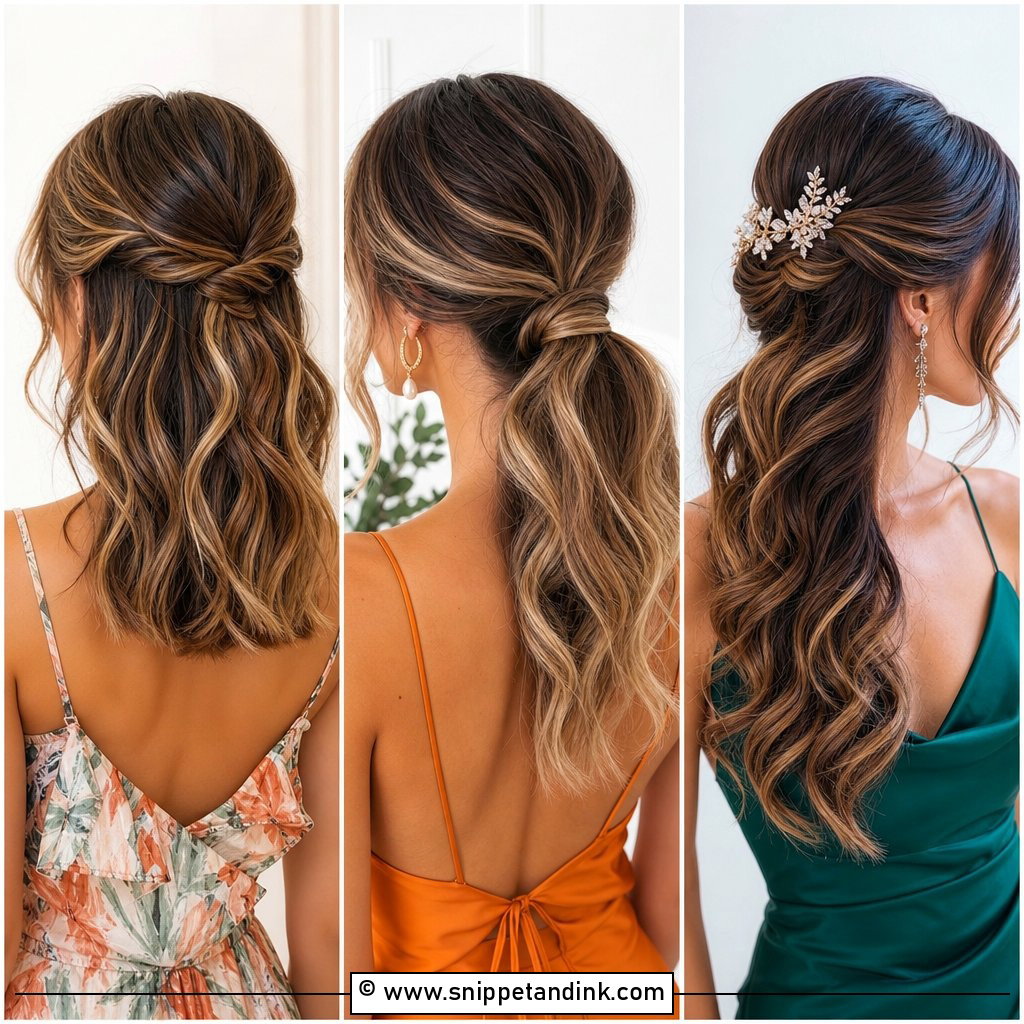
15. Voluminous Wavy Hair for Brides
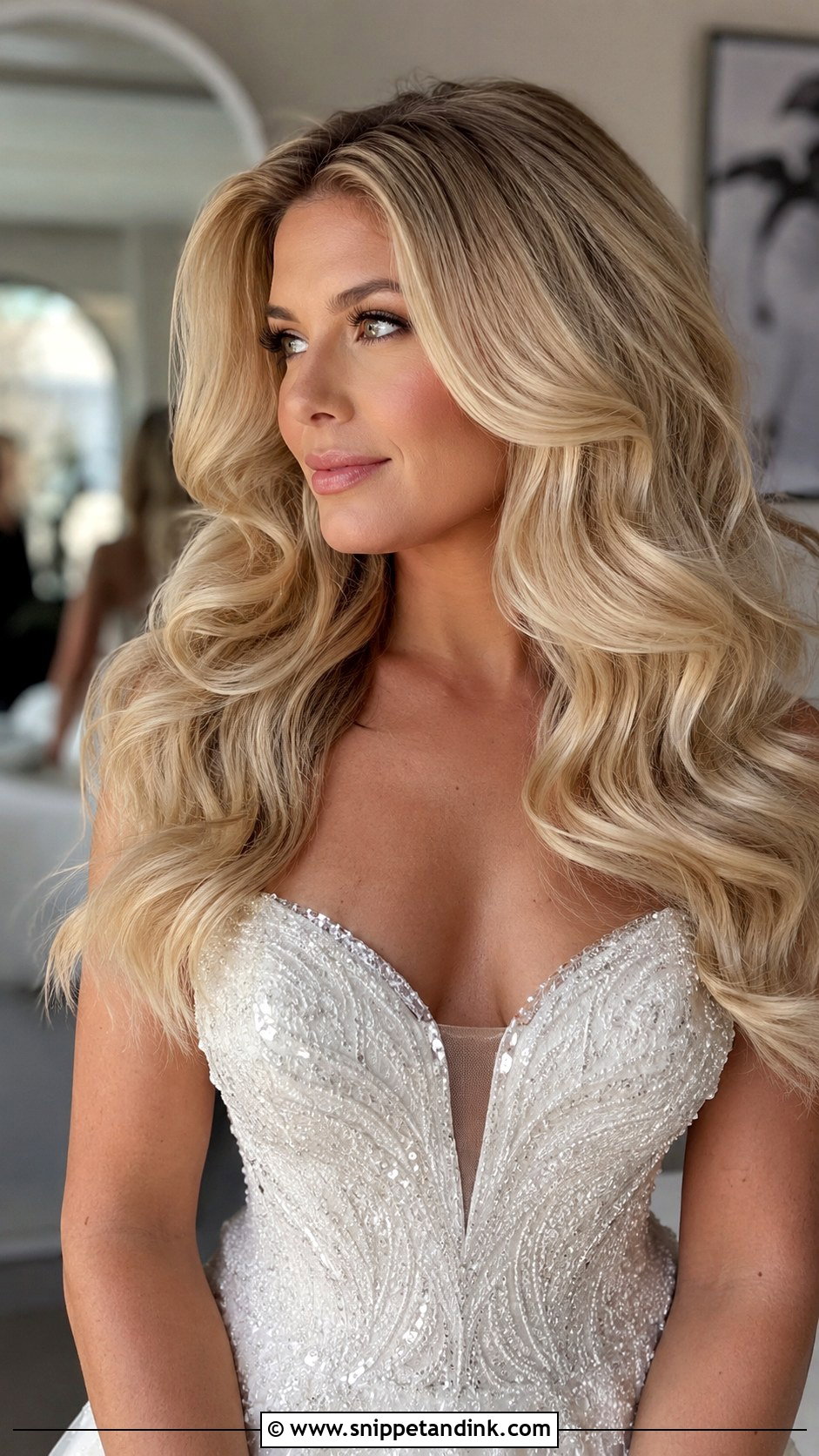
Big volume is the look to pick if you want your hair noticed from the back pew. I build it at the roots with large rollers or a wide barrel, let it set fully, then brush it into full waves and backcomb lightly at the crown. The volume has to be built in before the waves, because adding teasing on top of finished curls flattens them. This one takes the most time in the chair. It suits formal weddings, a statement gown and bold accessories, and I’d be careful with it under a heavy veil, which presses the crown back down.
16. Wavy Hair With Hair Vine
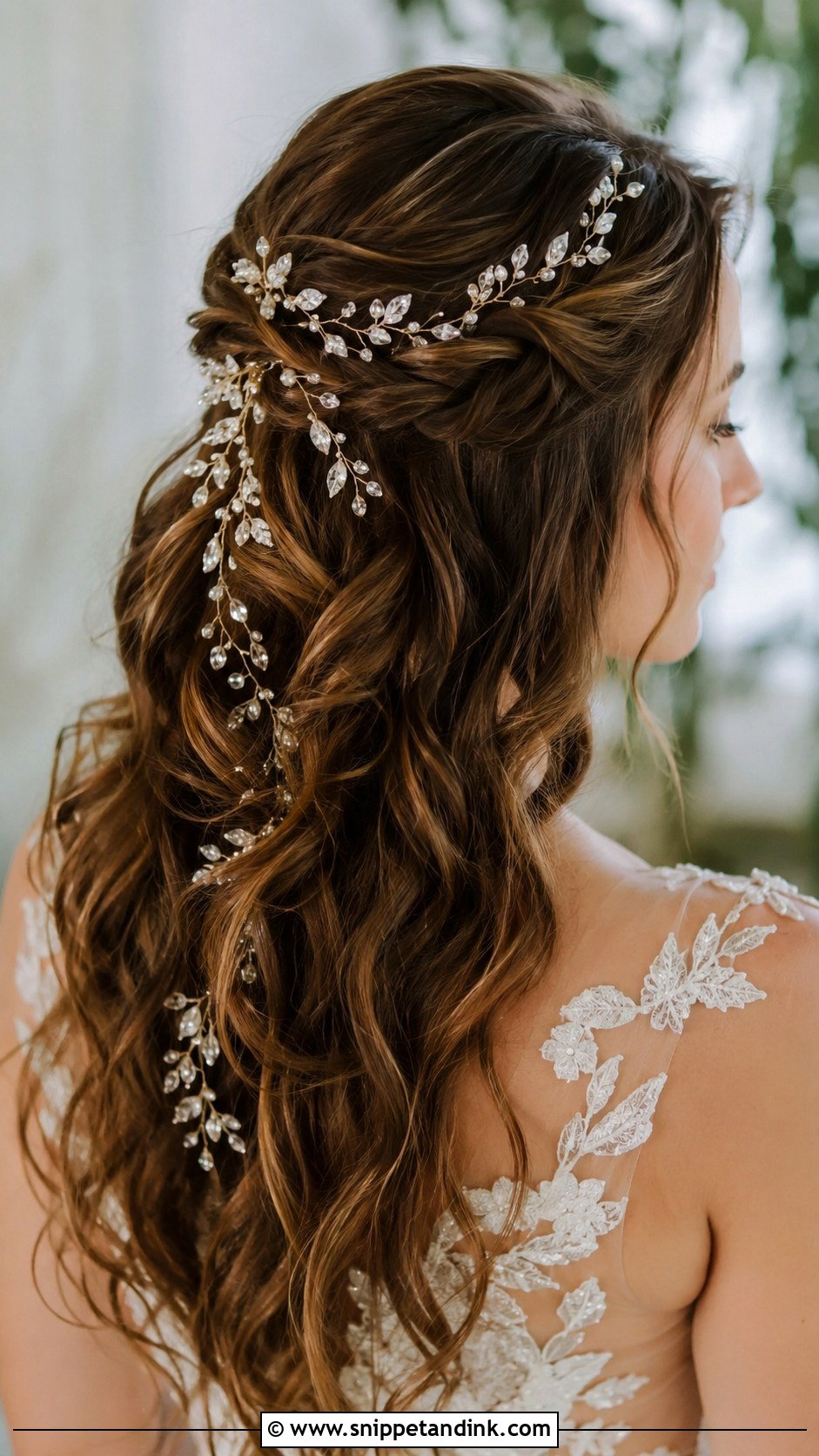
A delicate hair vine works like jewelry for the hair, and it suits both half-up and fully loose waves. I thread the wire through one side or around the crown, pinning it at the ends and at a couple of points along the way so it follows the head instead of sticking up. Bend the vine to the shape of your head before the day; a straight vine out of the box never sits flat. Crystals, pearls or leaf details catch light without the weight of a tiara. Pick one that echoes something in your dress, such as beading or lace motifs.
17. Messy Wavy Bun With Face-Framing Waves
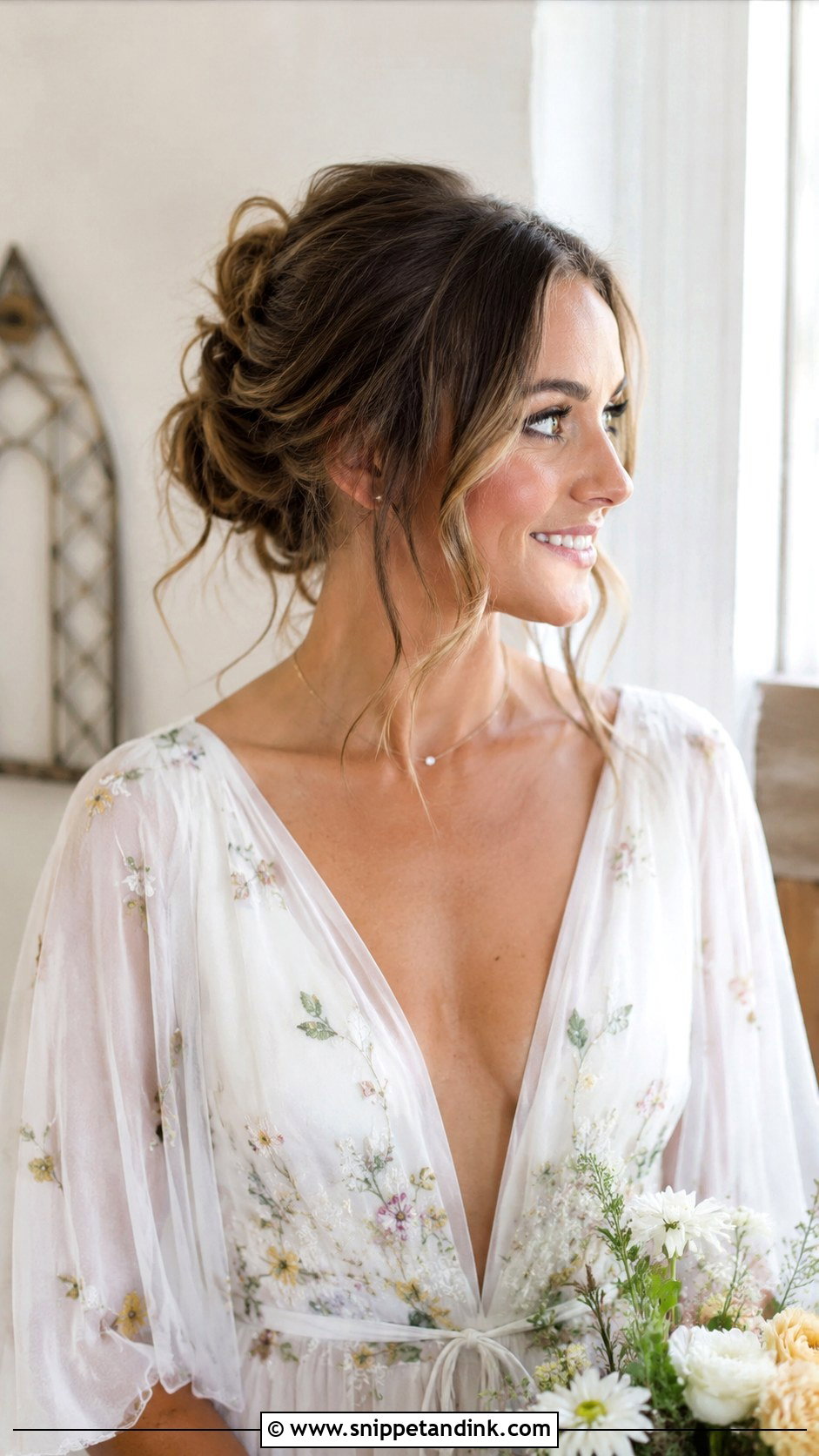
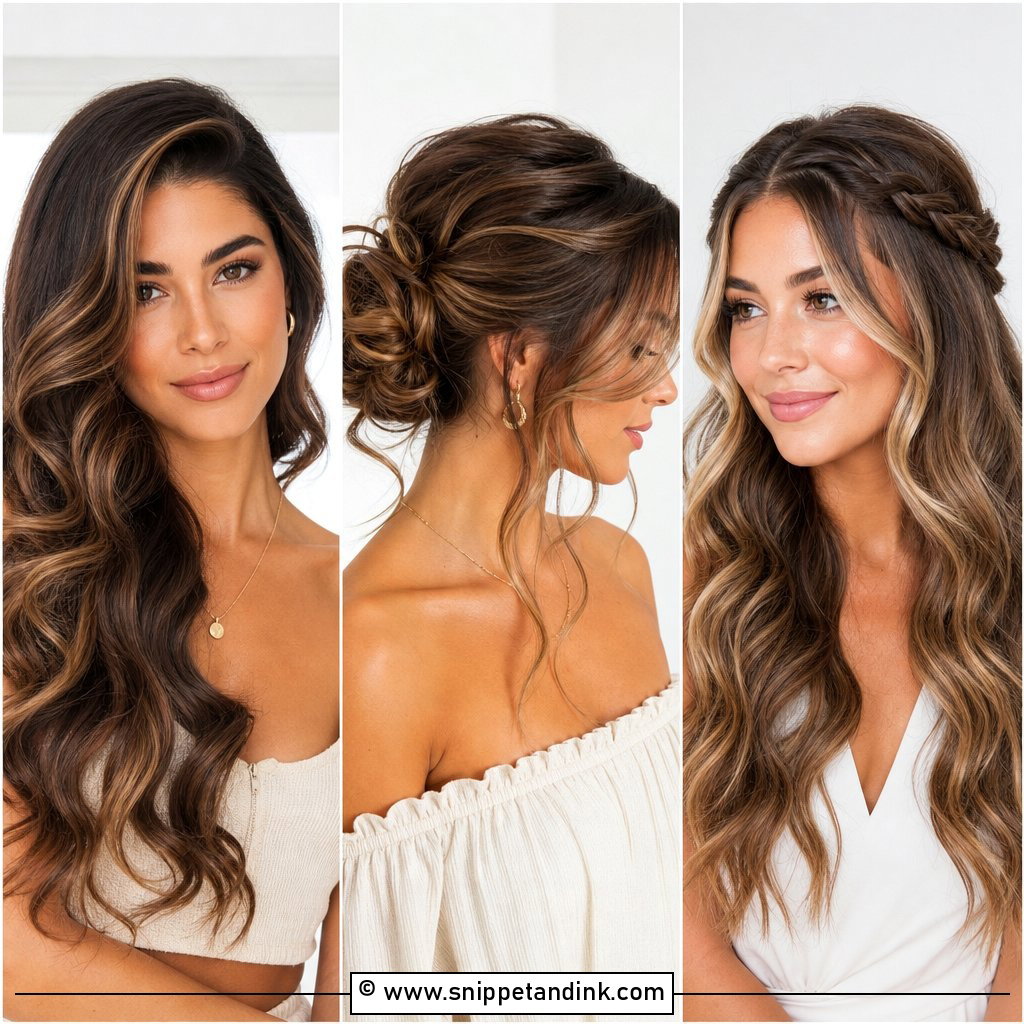
The messy bun is meant to look undone, but it needs as many pins as a neat one to survive the dance floor. I gather the waves into a loose bun at the back, pin it in a criss-cross pattern so it can’t slide, then pull a few curls loose around the cheeks. The trick is to curl the hair before gathering it; a bun made from straight hair just looks rushed. It keeps your neck cool at a summer wedding. Flowers or decorative pins tuck into it well, and it pairs naturally with a flowy dress and a relaxed venue.
18. Wavy Hair With Tiara or Headband
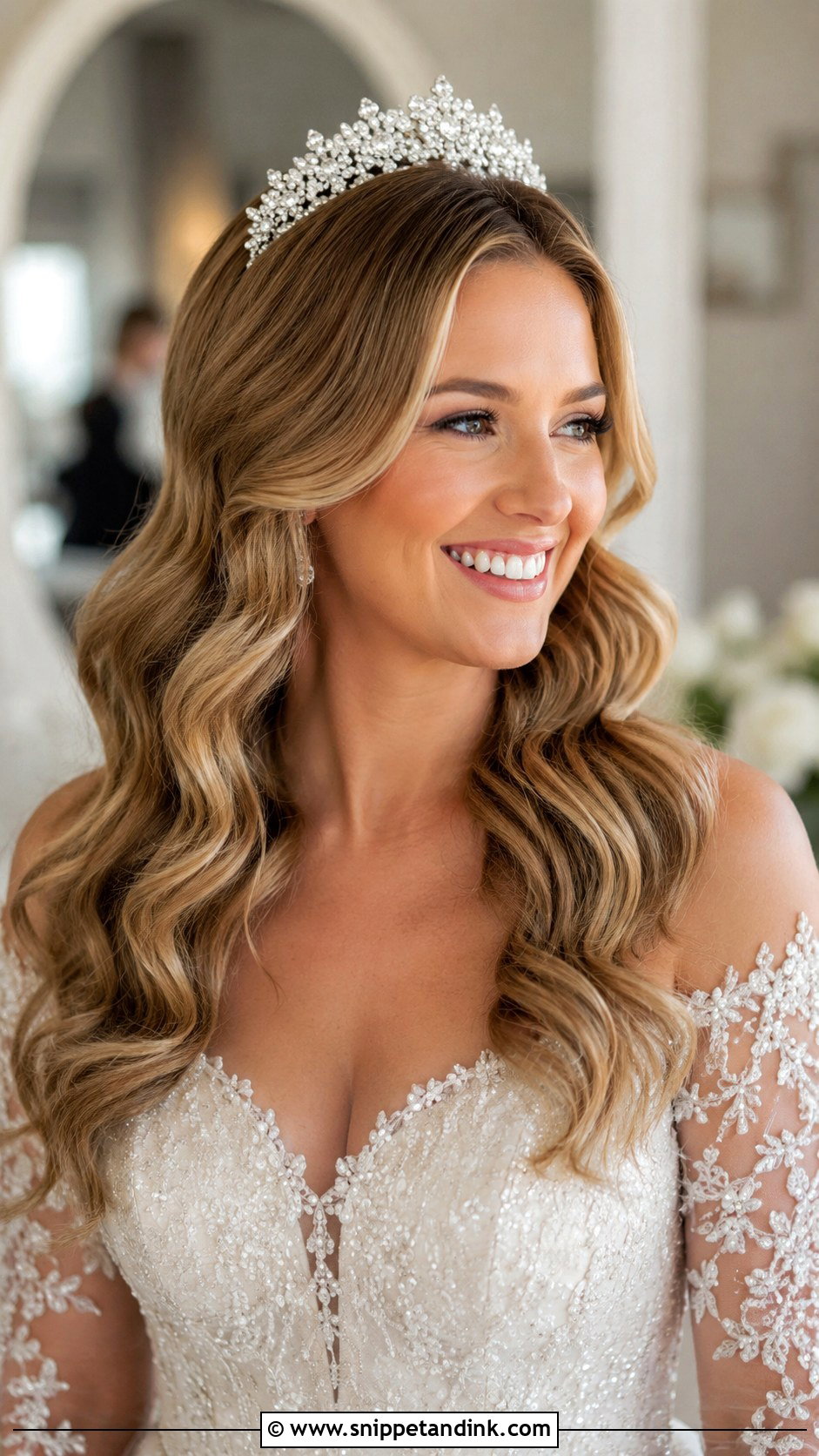
A tiara turns long waves into a formal look, and I always fit it during the trial rather than on the morning. Paired with full waves, a sparkling tiara or jeweled headband sits just behind the hairline, with a little backcombing underneath to give its combs something to grip. Without that base, a heavy tiara slowly tips forward. I’d keep the other accessories minimal so the headpiece leads. It suits traditional and formal weddings, and the waves flowing below balance the structure on top.
19. Curtain Bangs With Long Wavy Hair
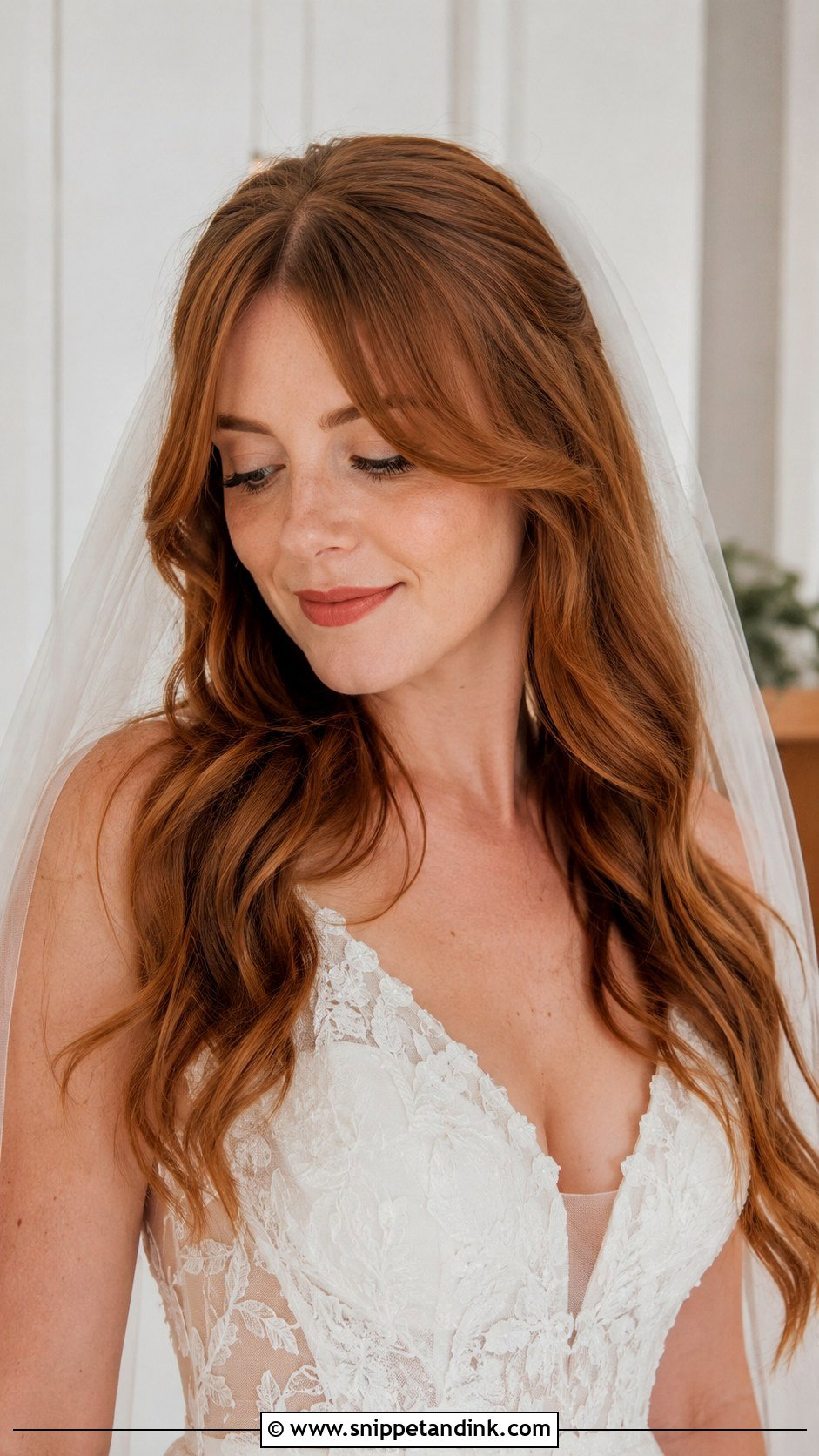
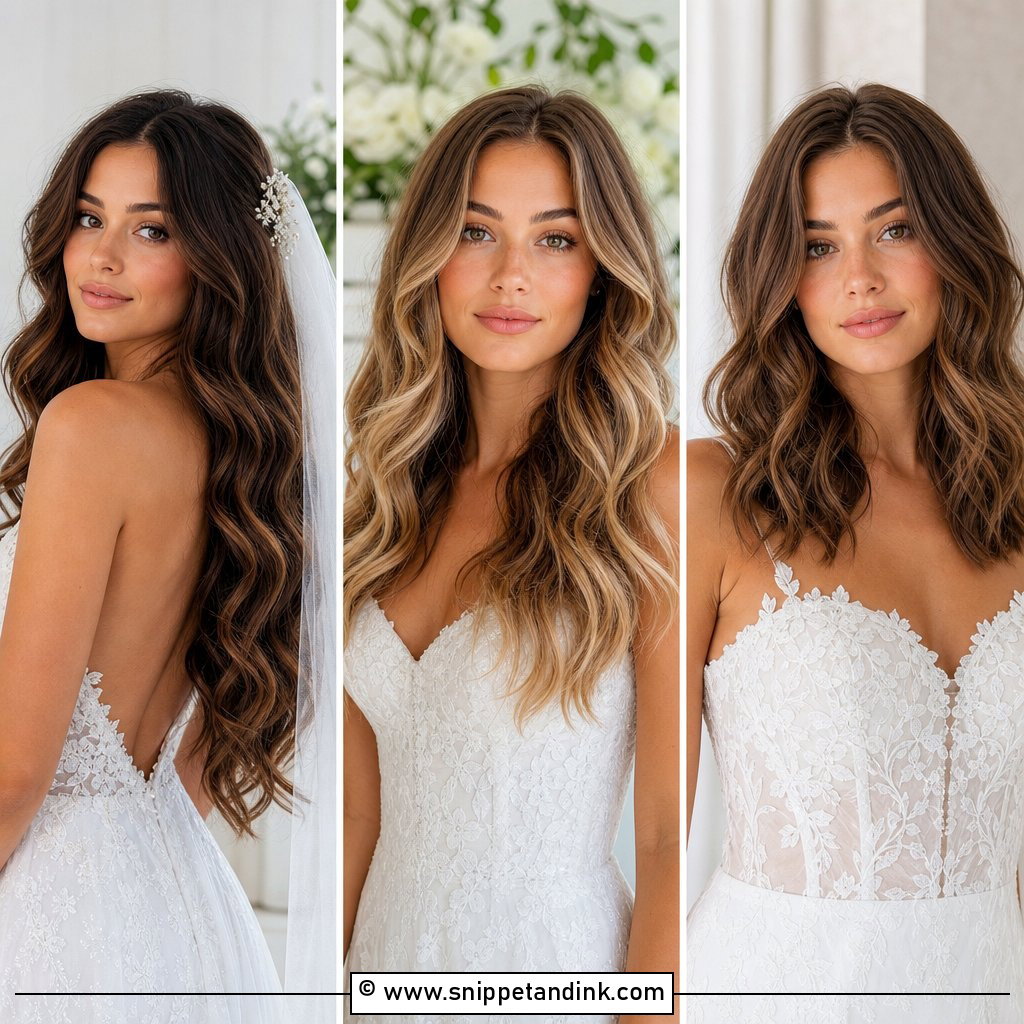
Curtain bangs soften long waves and draw attention to the eyes. They part in the middle and sweep out to each side, and I curl them away from the face with a small round brush or a medium iron so they blend into the lengths. If your bangs are freshly cut, have them trimmed a week or two before the wedding, not the day before; new bangs sit too short and stubborn. Humidity makes them separate, so a light spray and a hand off them helps. They work with half-up and fully down looks, and they give a modern bride something a little different.
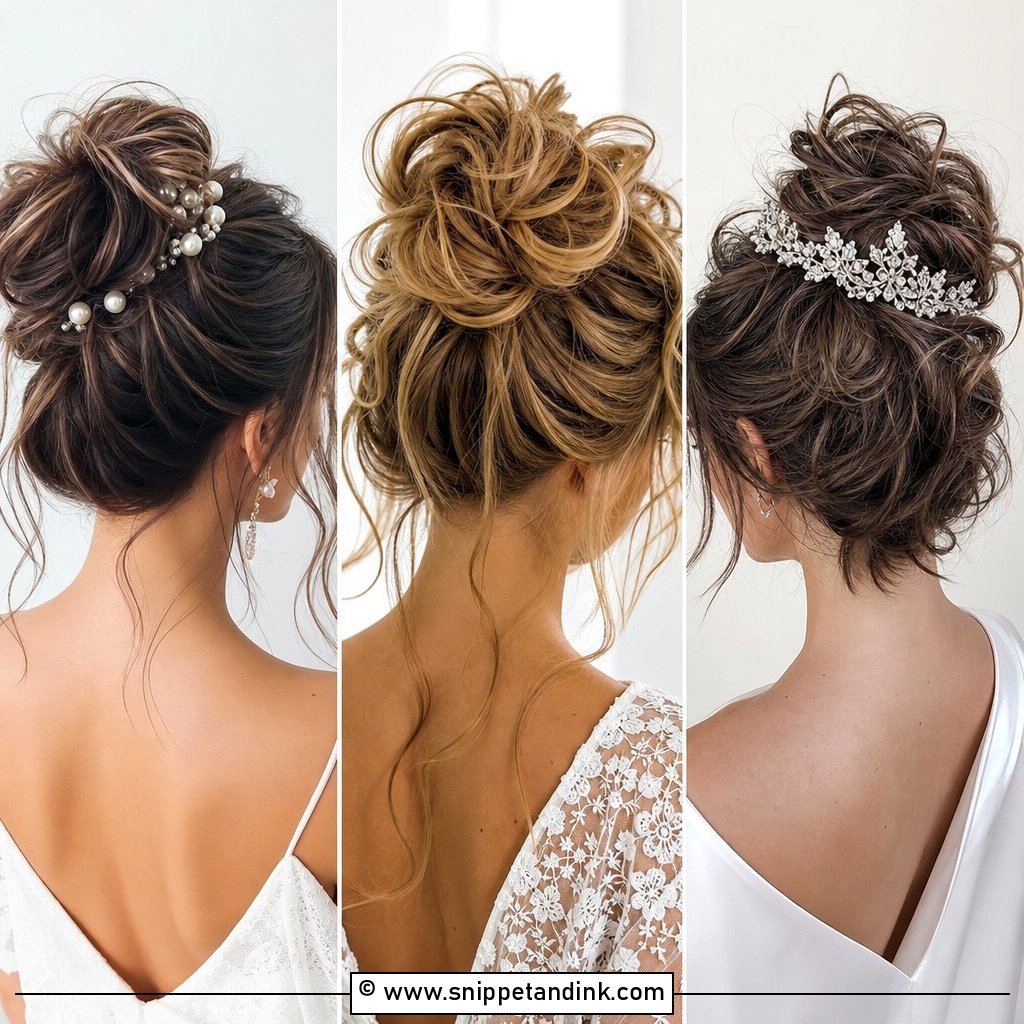
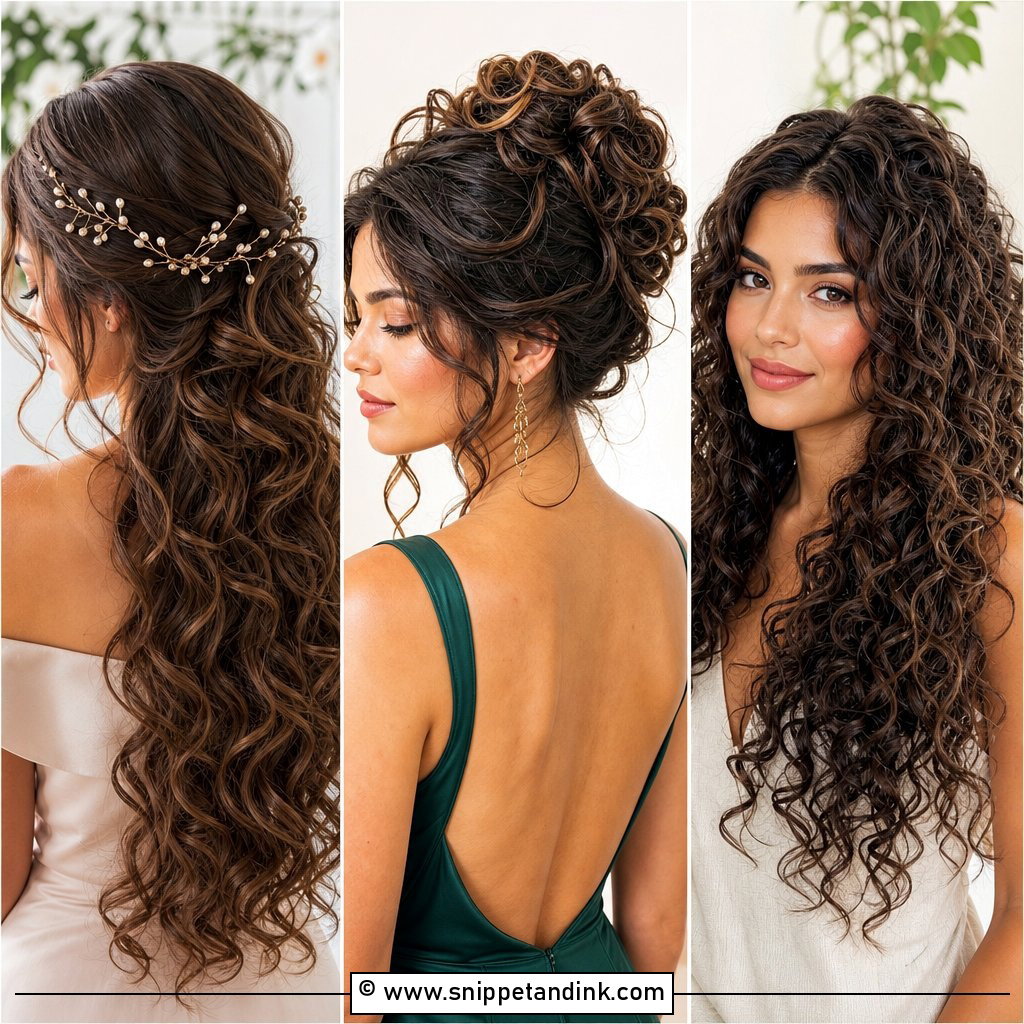
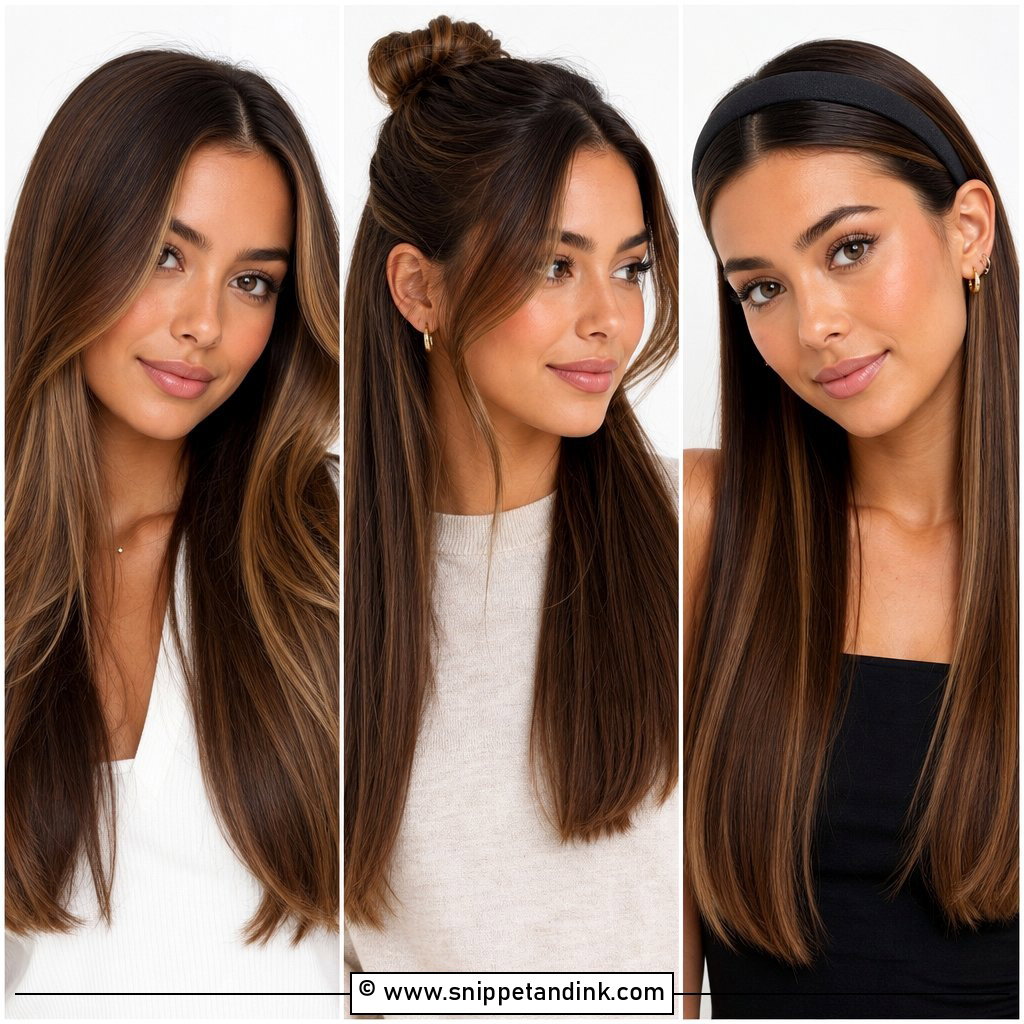
20. Sleek Wavy Hair With Middle Part
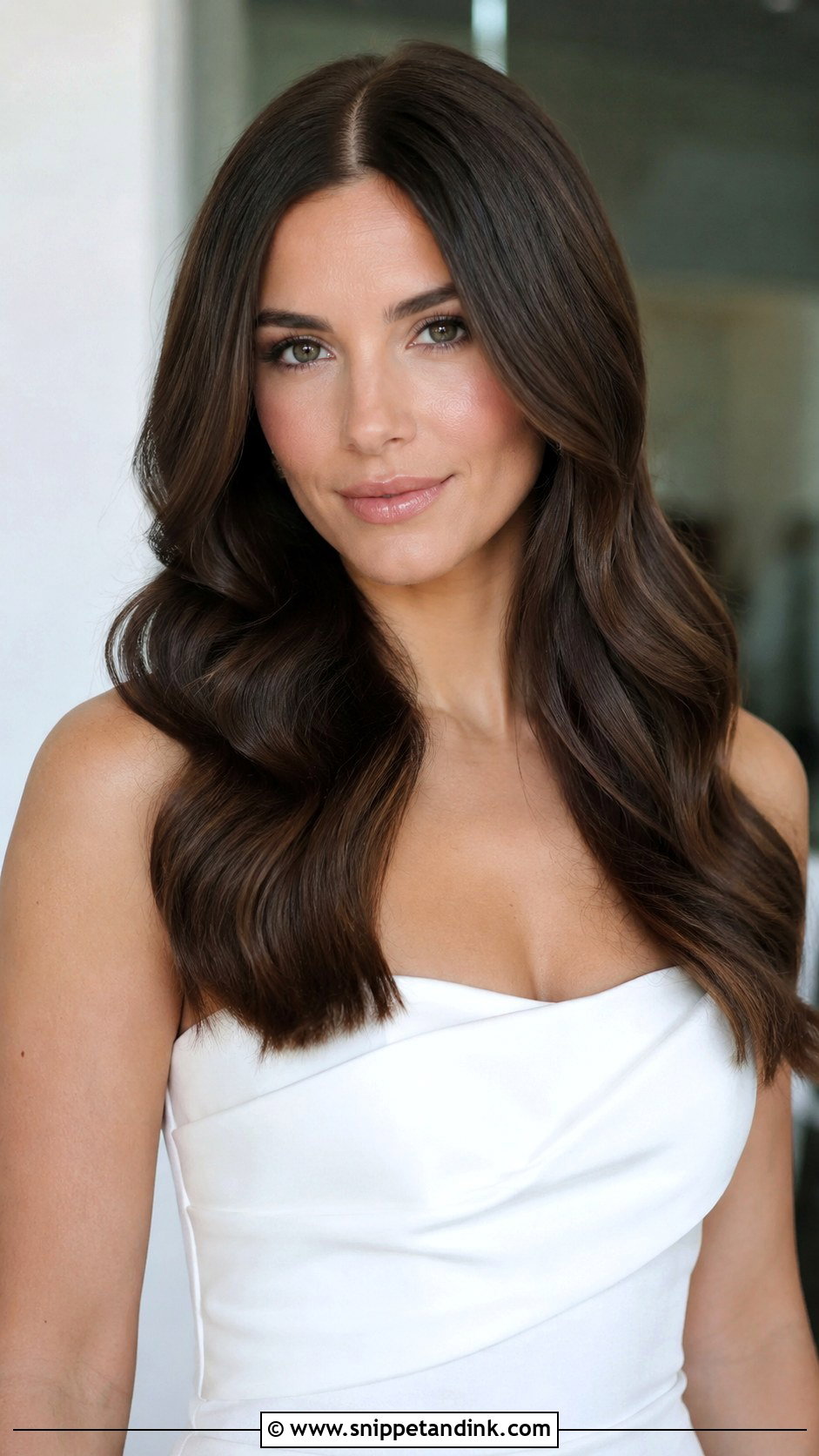
A middle part brings symmetry and a cleaner, contemporary finish. I keep the roots smooth and flat and start the waves from the mid-lengths, which reads as polished rather than romantic. The honest limitation is that a center part shows any unevenness in the face or a strong cowlick, so I test it at the trial before committing. A small clip or no accessories at all both suit it. It pairs best with a simple, structured gown and natural makeup.
Adjusting the Waves for Fine, Thick or Layered Hair
The same style behaves differently on different hair, and I adjust the plan at the trial rather than forcing every bride into the picture she brought.
Fine or very silky hair
It curls quickly but drops just as quickly. I use a smaller barrel than the inspiration photo suggests, add texture spray before curling, and often recommend clip-in extensions for fullness. Half-up styles hold better on fine hair than fully loose waves, because the pins give the top some support.
Thick or coarse hair
It holds a wave well but takes longer to heat through, so I work in more sections and allow extra chair time. Very thick hair can look bulky when worn loose, which is where a side sweep or a low pony helps control the width.
Heavily layered hair
Short layers pop out of braids and twists. Loose waves actually suit layers well, since the different lengths give natural movement. For braided styles I plan on pinning those ends in, or I suggest growing the layers out a little if the wedding is several months away.
Matching the Wave to the Day You’re Actually Having
Every one of these styles starts from the same base: well-prepped, properly set waves. From there it’s about how much of your hair you want up, how windy and warm your venue is, and how many hours you’ll be wearing it. Hollywood waves and a deep part suit a formal evening room. Braids, twists and a low bun keep you comfortable outdoors. Accessories like pearls, flowers or a vine are the easy way to make the look yours. Save the three styles you keep coming back to, take them to your trial, and test the one you love in the conditions you’ll actually face on your special day.
You'll Like These Ideas:


Leave a Reply