
Waves are the bridal style I’m asked for most, and also the one people underestimate. A wave looks casual, but a set that lasts from the first look to the last dance is built with more structure than most updos. The bridal waves I style now cover a lot of ground: sculpted Hollywood waves, half up sections, textured buns, ponytails, veils, pearls and natural texture left to do its own thing. Which one suits you comes down to your neckline, your length, the venue and how much hold your hair actually accepts. Below are twenty of them, with notes from the chair on how each one behaves.
How a Wave Gets Set So It Survives Past Dinner
Most brides assume waves are the quick option. In the chair, the long-lasting ones are built in three stages, and skipping any of them is usually why curls have dropped by the first dance.
- Prep: a light mousse or setting spray on damp roots and mid-lengths, then a full blow-dry. Hair that’s still faintly damp inside won’t hold heat.
- Curl and pin: each section is curled, rolled back up and clipped flat to the head while it’s still hot. The curl sets as it cools, not while it’s on the iron.
- Brush out: once everything has cooled for 15 to 20 minutes, the clips come out and the curls are brushed into waves. A brushed curl looks softer and holds far longer than one left untouched.
Fine hair and thick hair need opposite fixes
Fine hair needs grip before it needs heat, so I work texture spray or a little dry shampoo through clean hair and keep the iron a little cooler to protect the ends. Thick hair holds a curl but takes much longer to cool, so I take smaller sections and leave the clips in longer. Very coarse or tightly curled hair usually does better with its own pattern refined than with a new one ironed in.
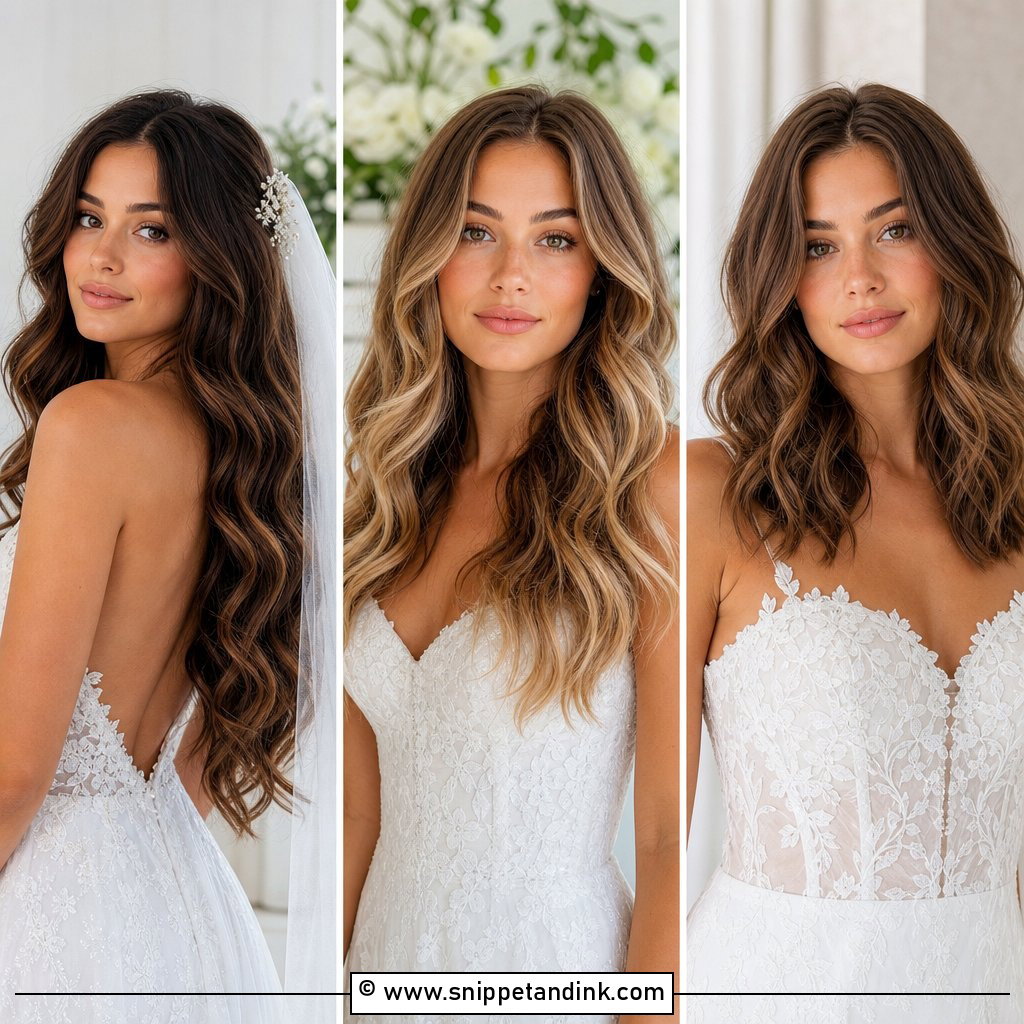
1. Wavy Bride Hair Down
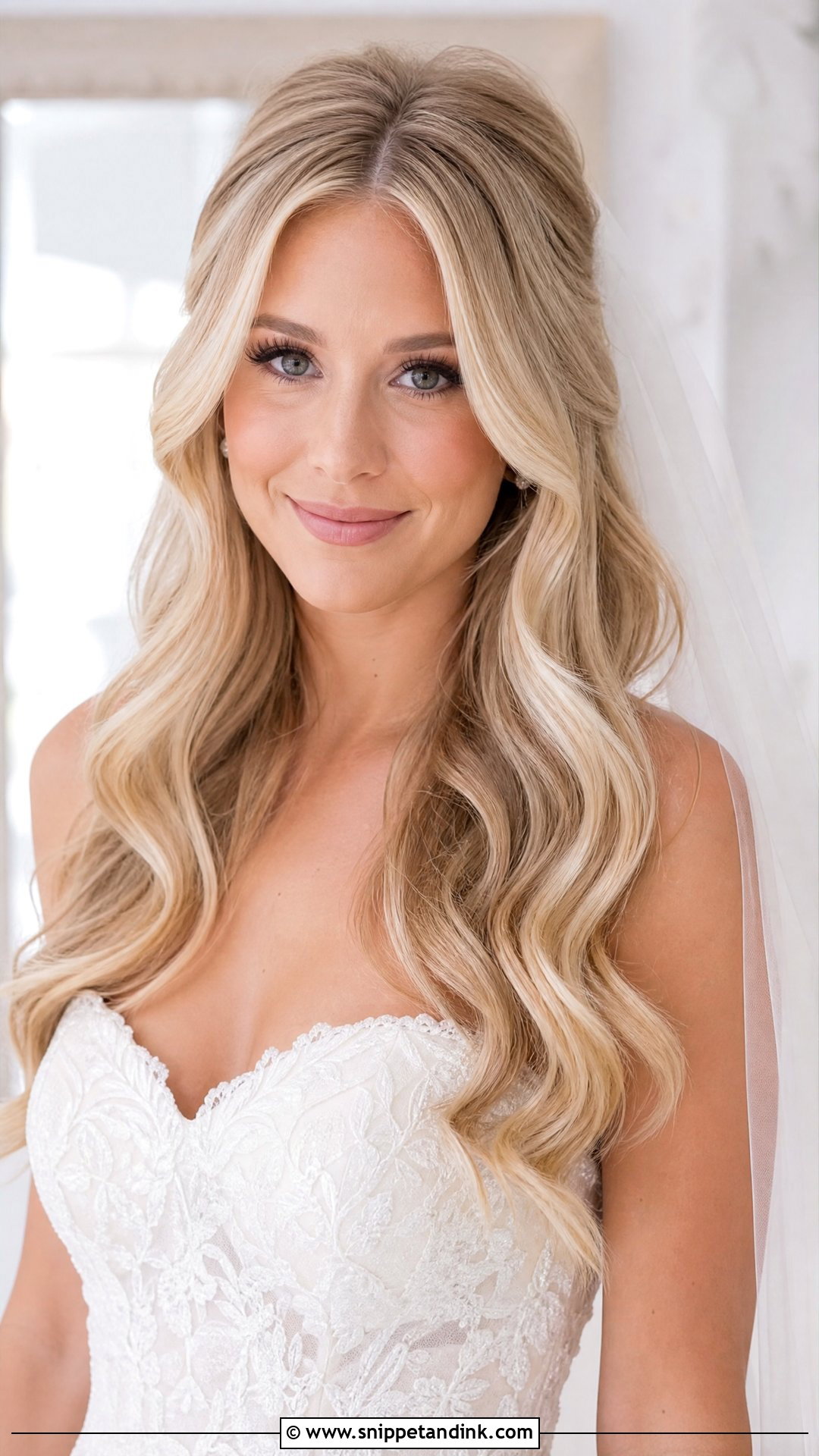
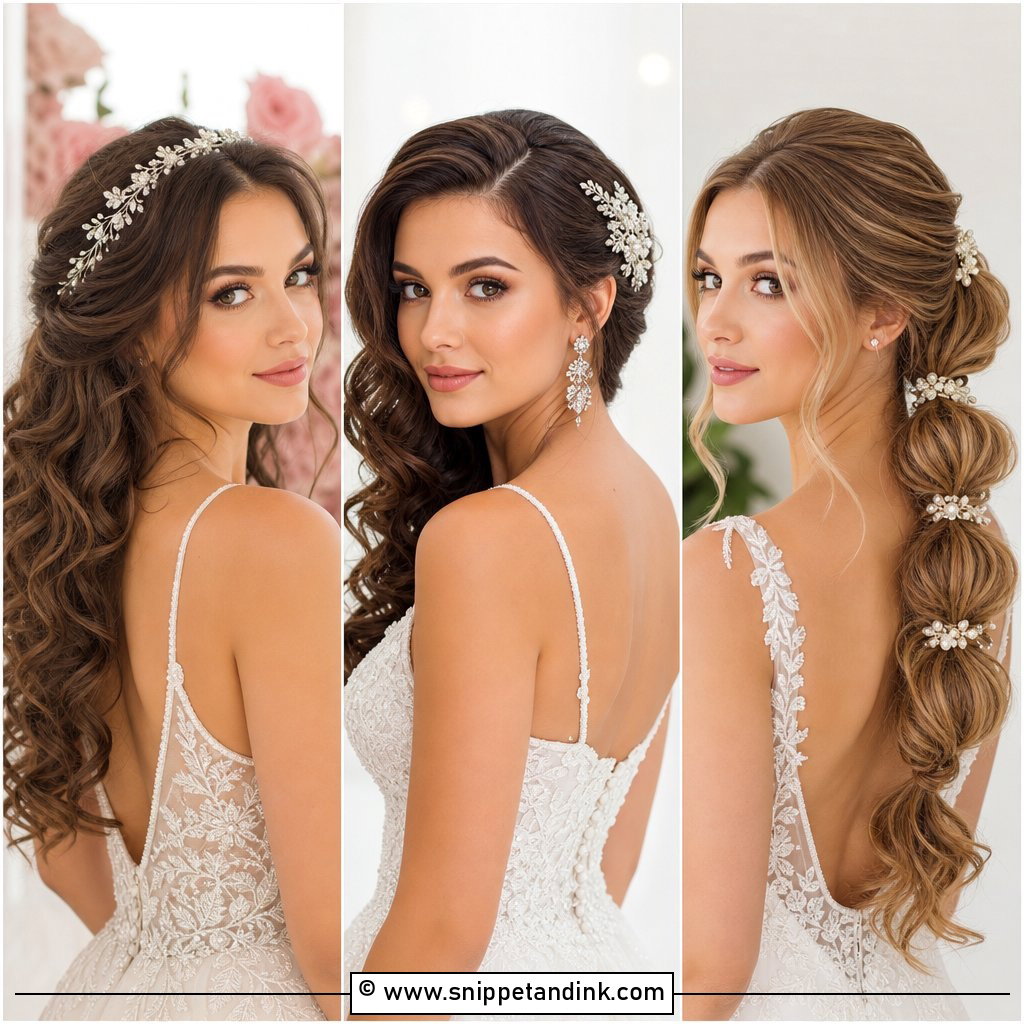
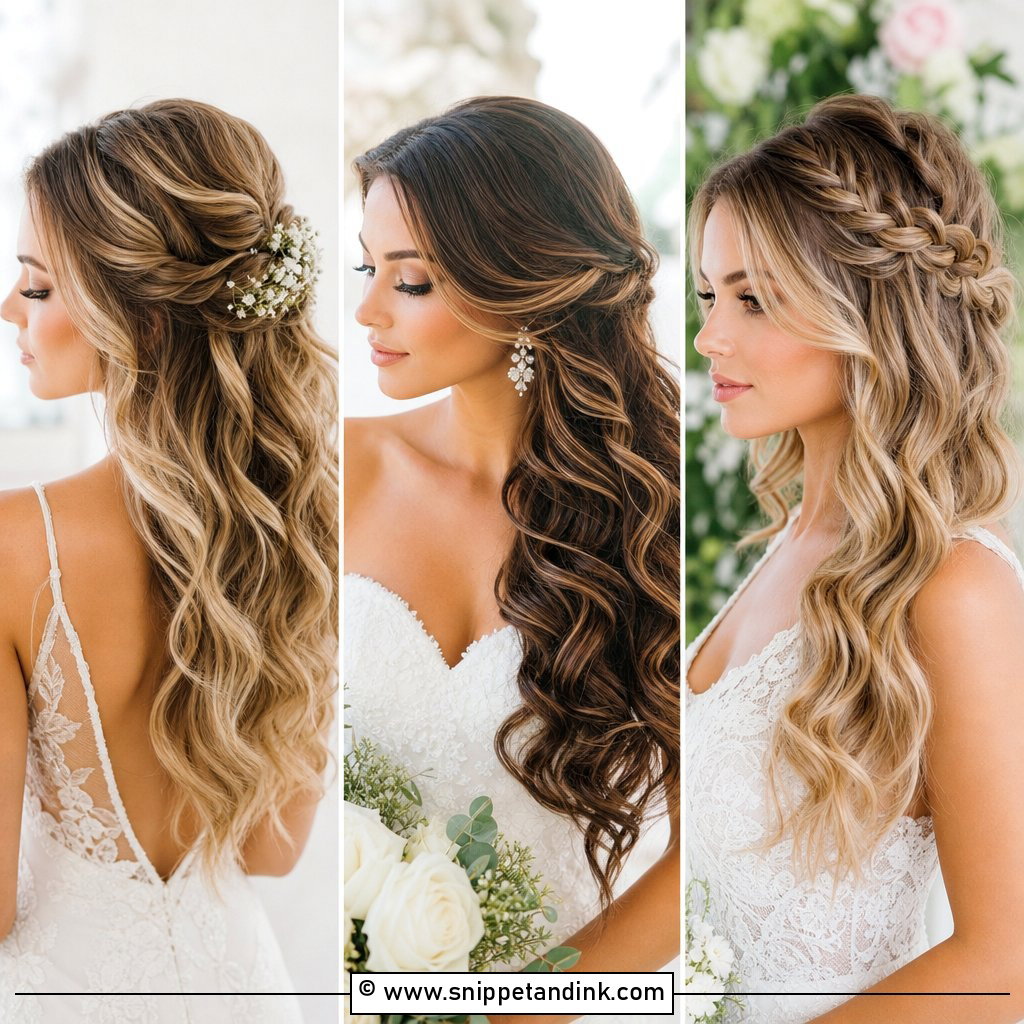
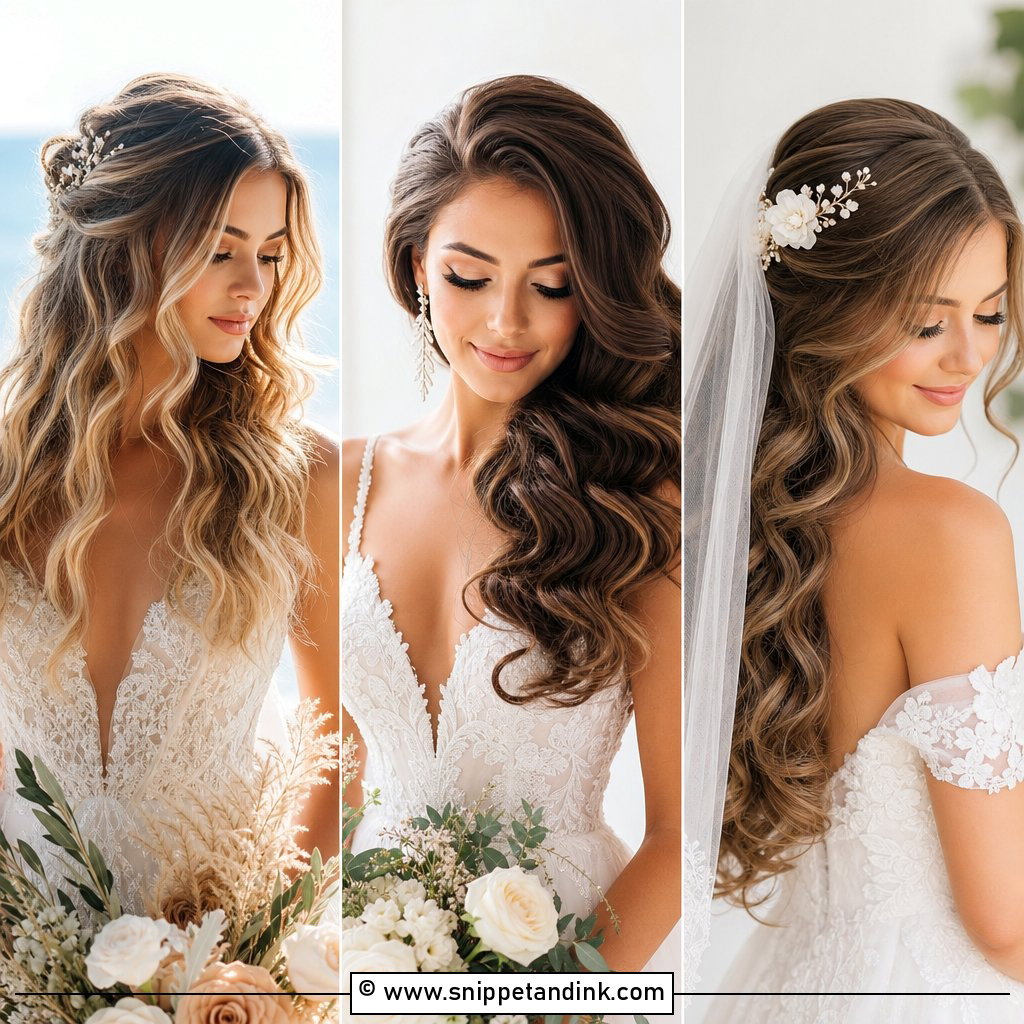
Worn fully down, waves need length to show their movement, so I usually keep this one for hair past the collarbone. Ask for smooth, brushed waves with some lift at the crown rather than tight ringlets; the brush-out is what makes it read as bridal and not prom. A middle part looks current, and a soft side part leans romantic. Down hair sits best against strapless and off-shoulder necklines, where nothing on the dress competes with it. I finish with a flexible spray, never a firm one, because you’ll be hugged all day and crunchy hair shows every squeeze.
2. Wavy Bride Half Up Half Down Hair
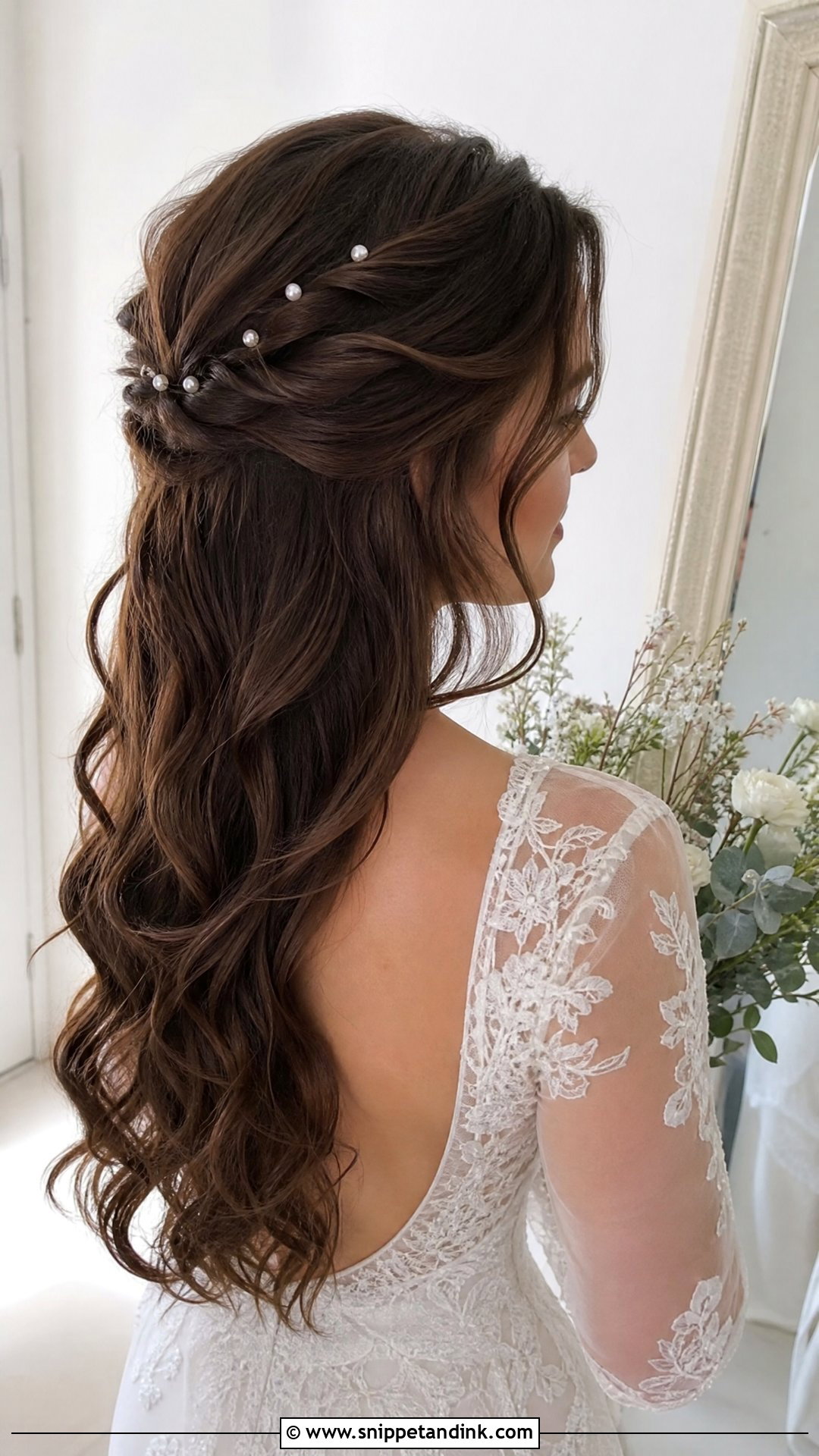
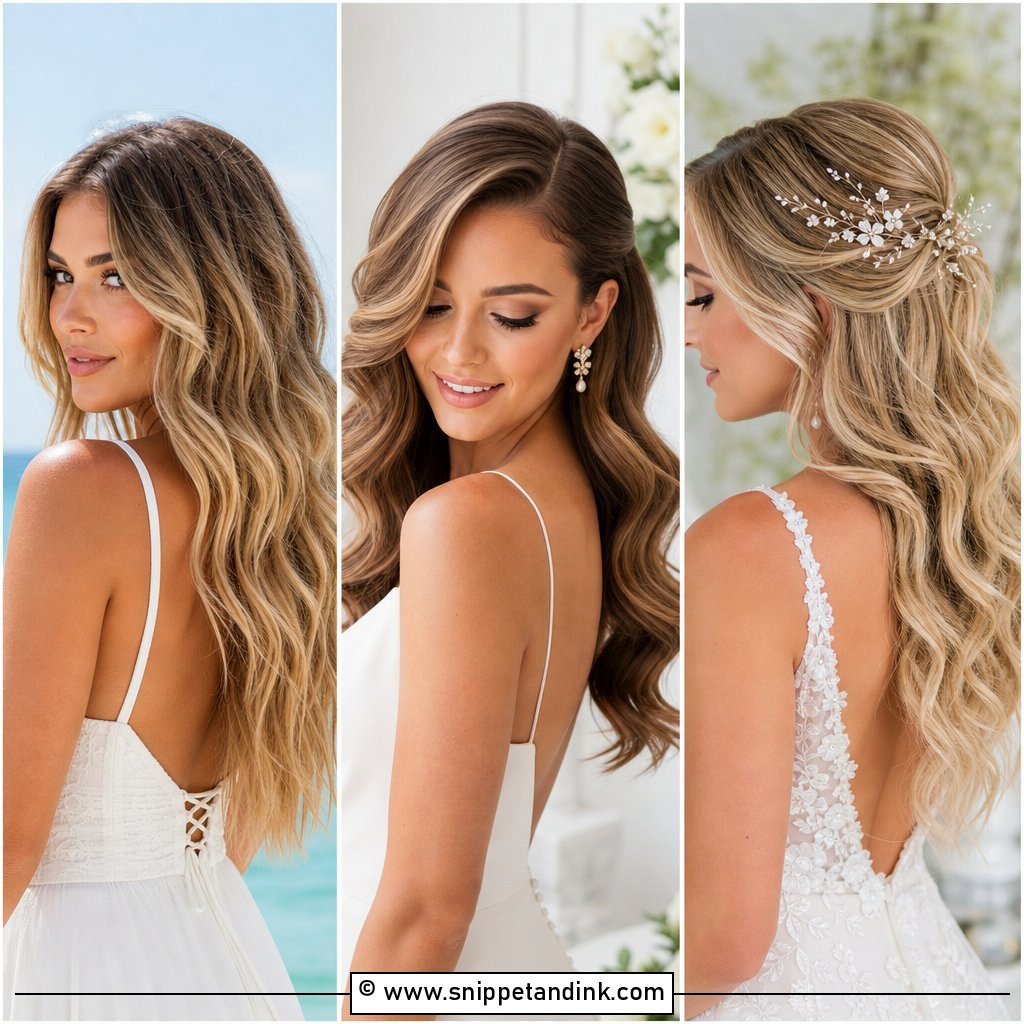
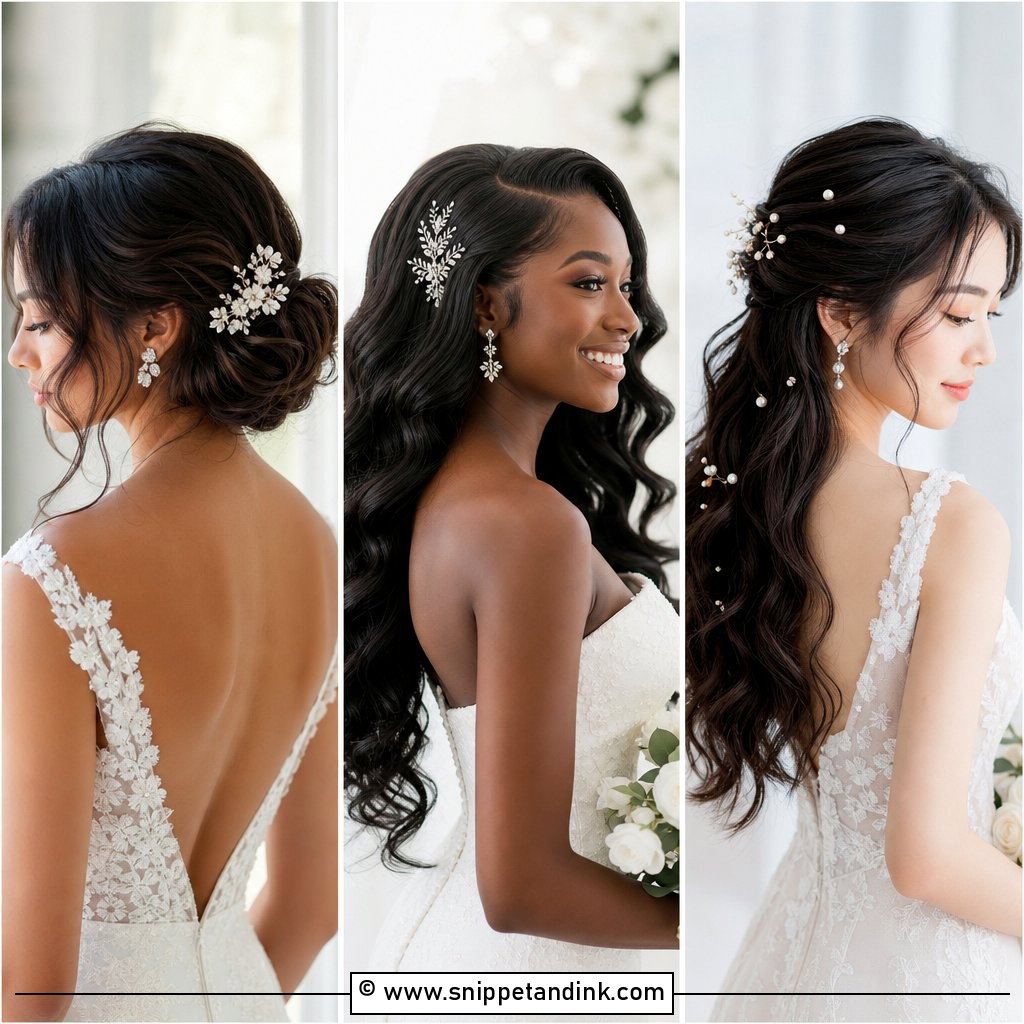
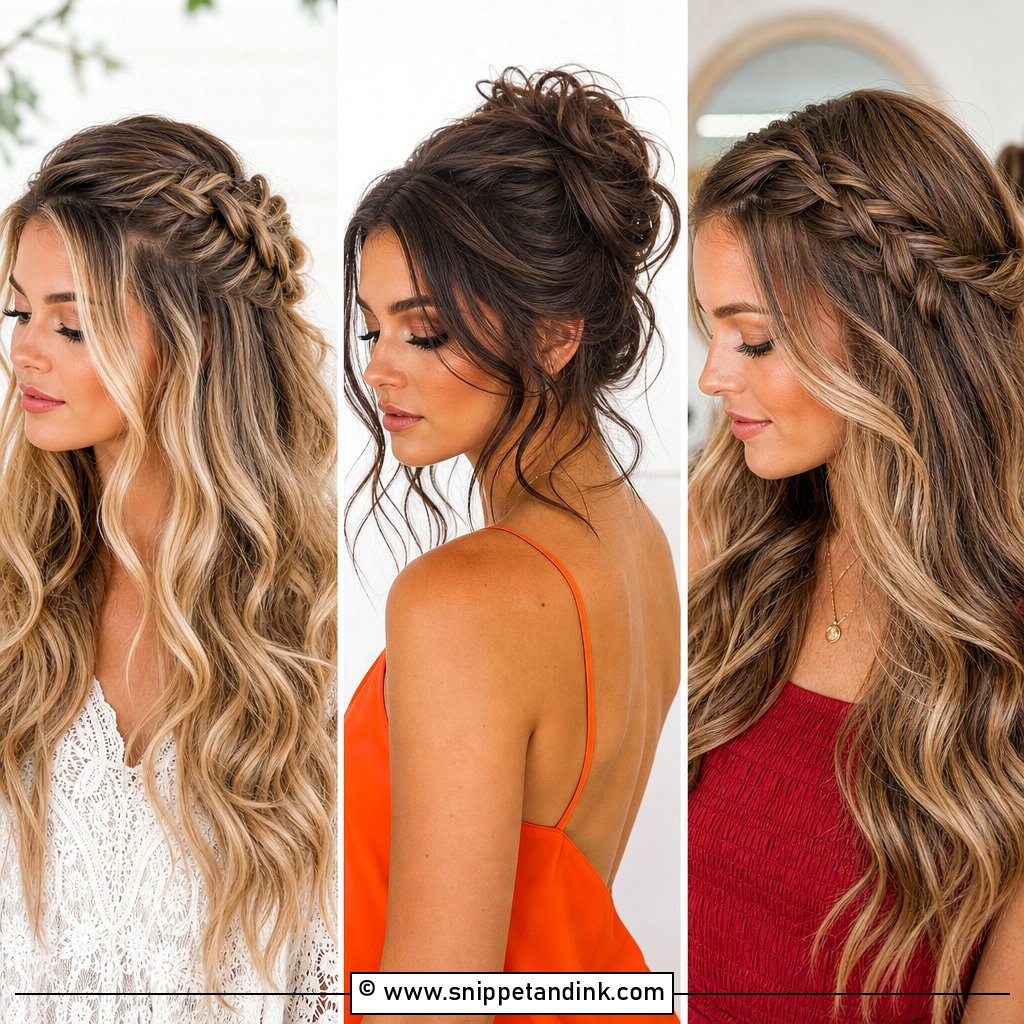
Half up is my default suggestion for an outdoor ceremony. Pinning back the top section keeps hair off your lip gloss when the wind picks up, and it shows your earrings. Before twisting it, I backcomb a little at the crown so the pinned part doesn’t sit flat against the head. The rest falls in waves down the back. That pinned section also gives a veil comb something solid to grip, which is why I rarely have veil trouble with this style. A few pearl pins or a small comb finish it.
3. Wavy Bride Hollywood Waves
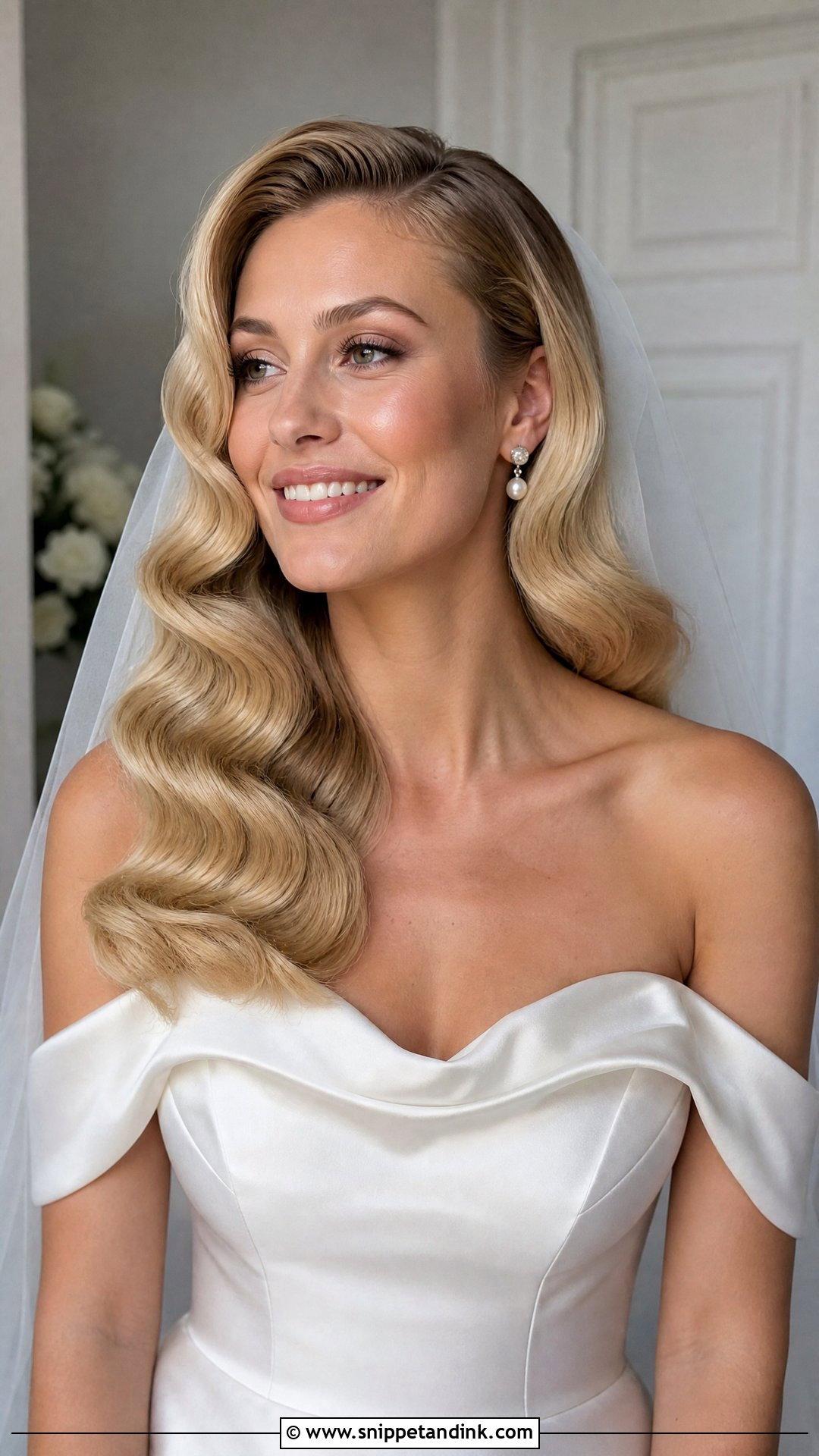
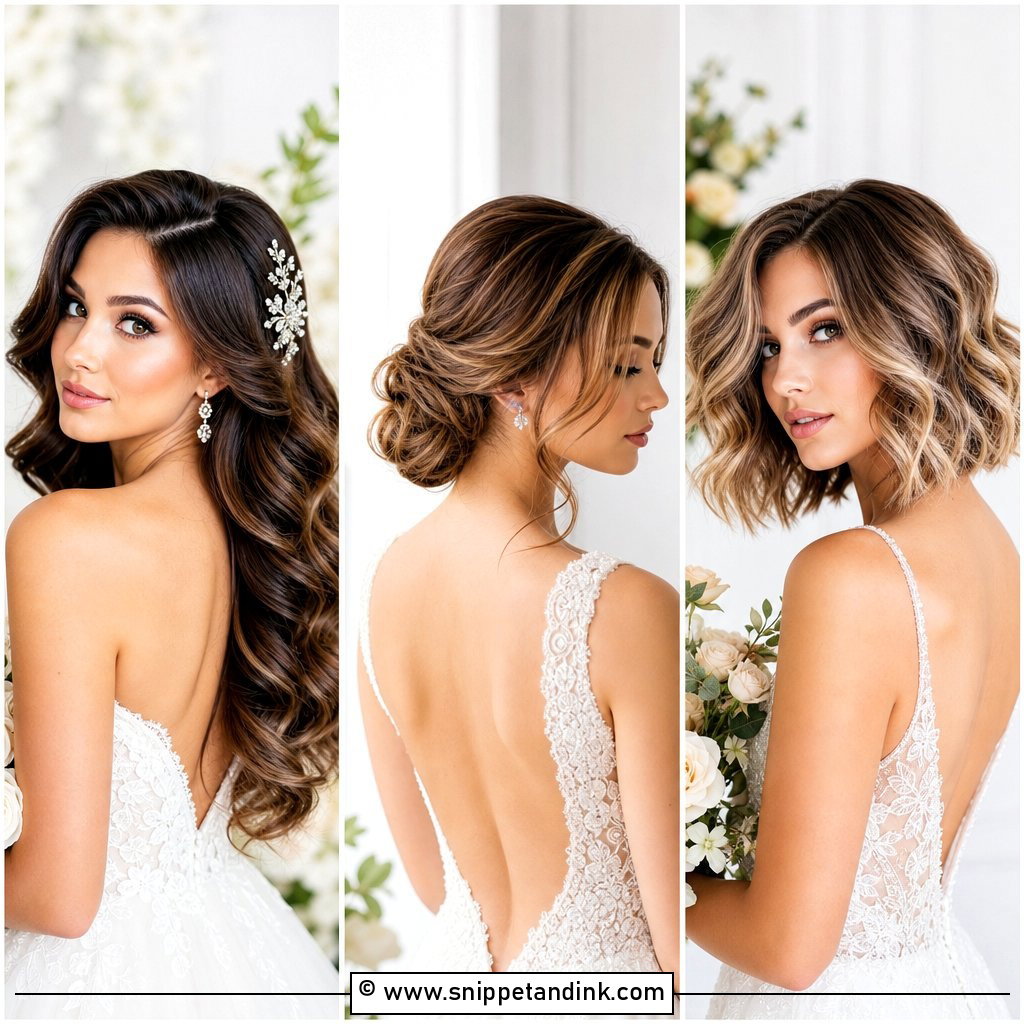
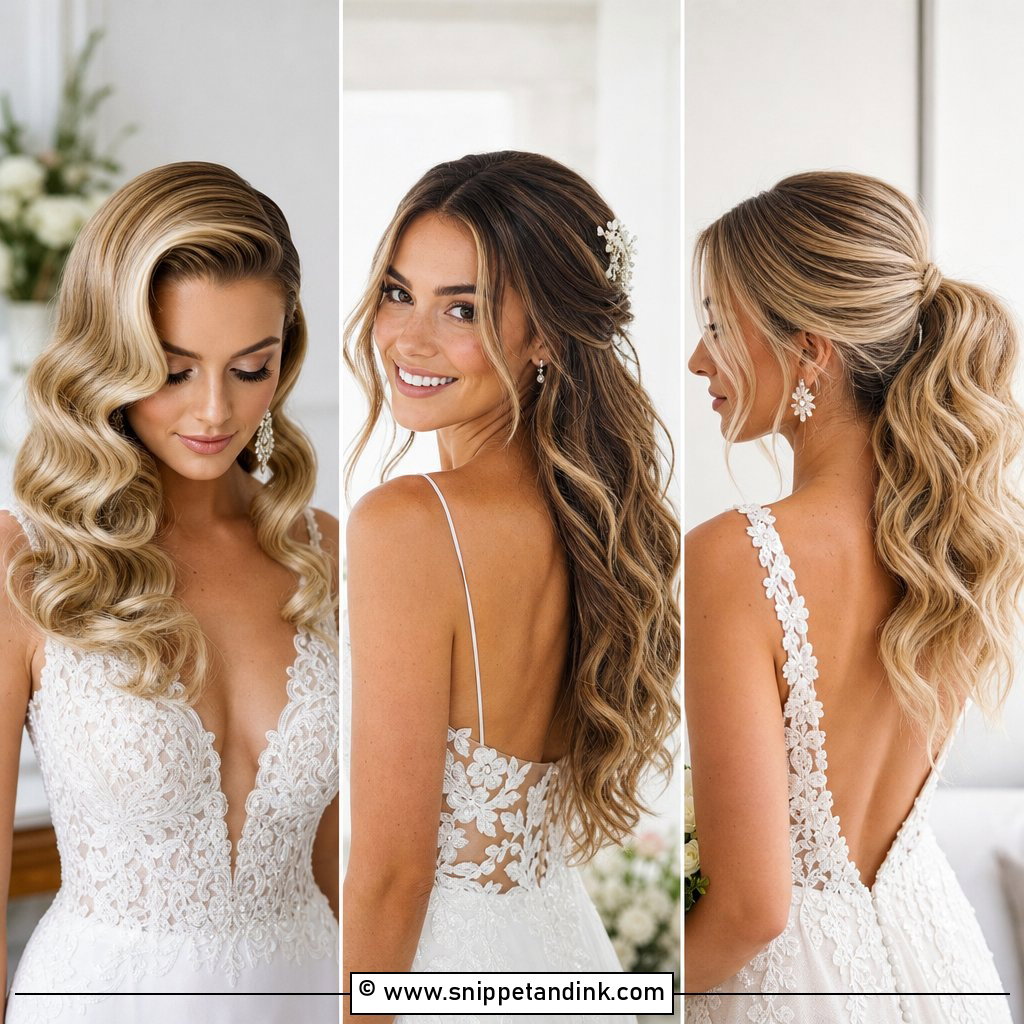
Hollywood waves are the most technical style here, and the least forgiving. Every wave has to travel in the same direction off a deep side part, so I curl each section the same way, pin it while hot, let it cool completely, then brush it into one continuous ripple and press the ridges with flat clips. On a satin gown with a clean neckline, nothing else needs adding. Hair that drops a curl within an hour is a poor candidate unless you’ll accept heavier product, so test this one at the trial before you fall for it.
4. Wavy Bride Low Bun
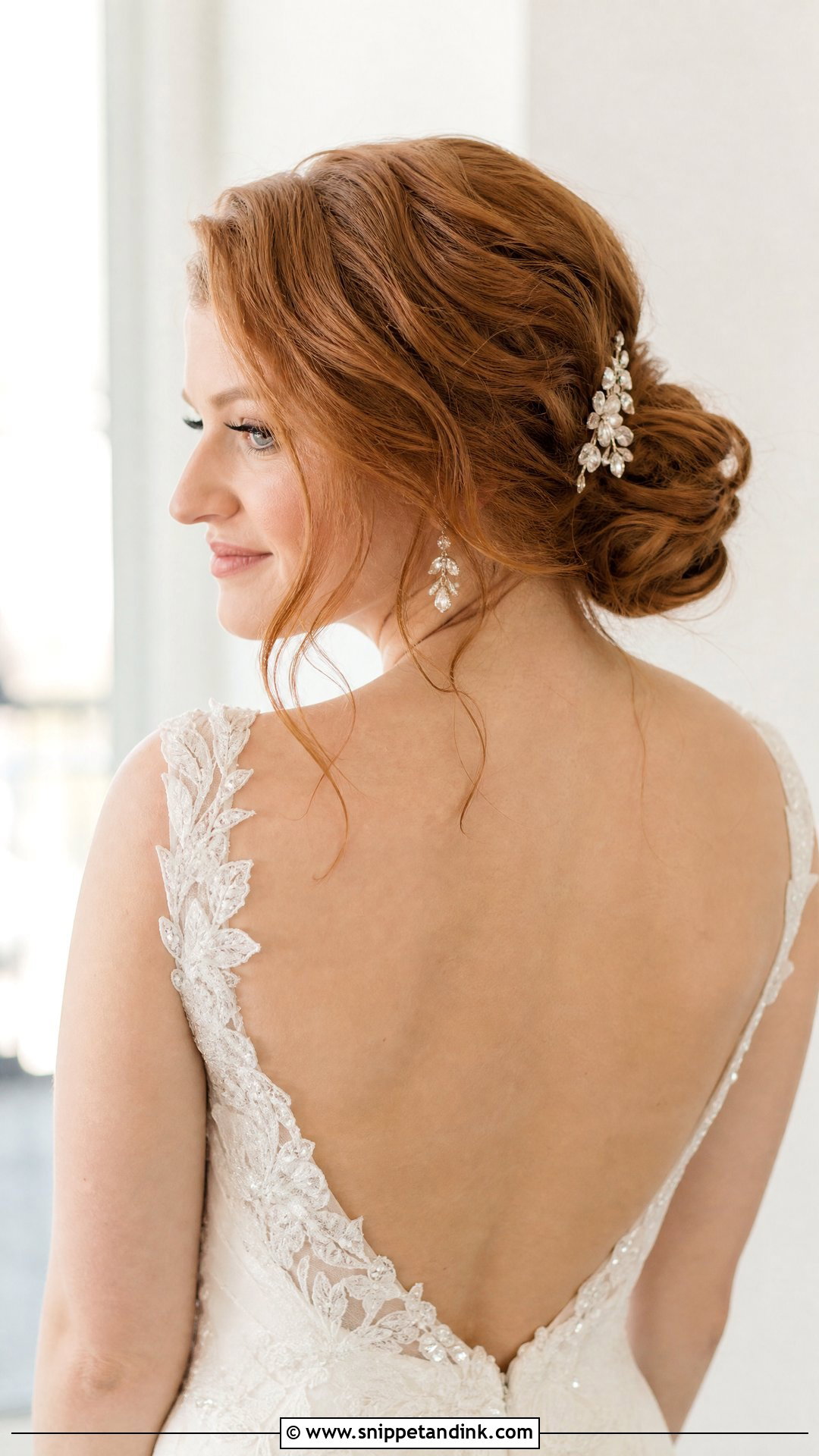
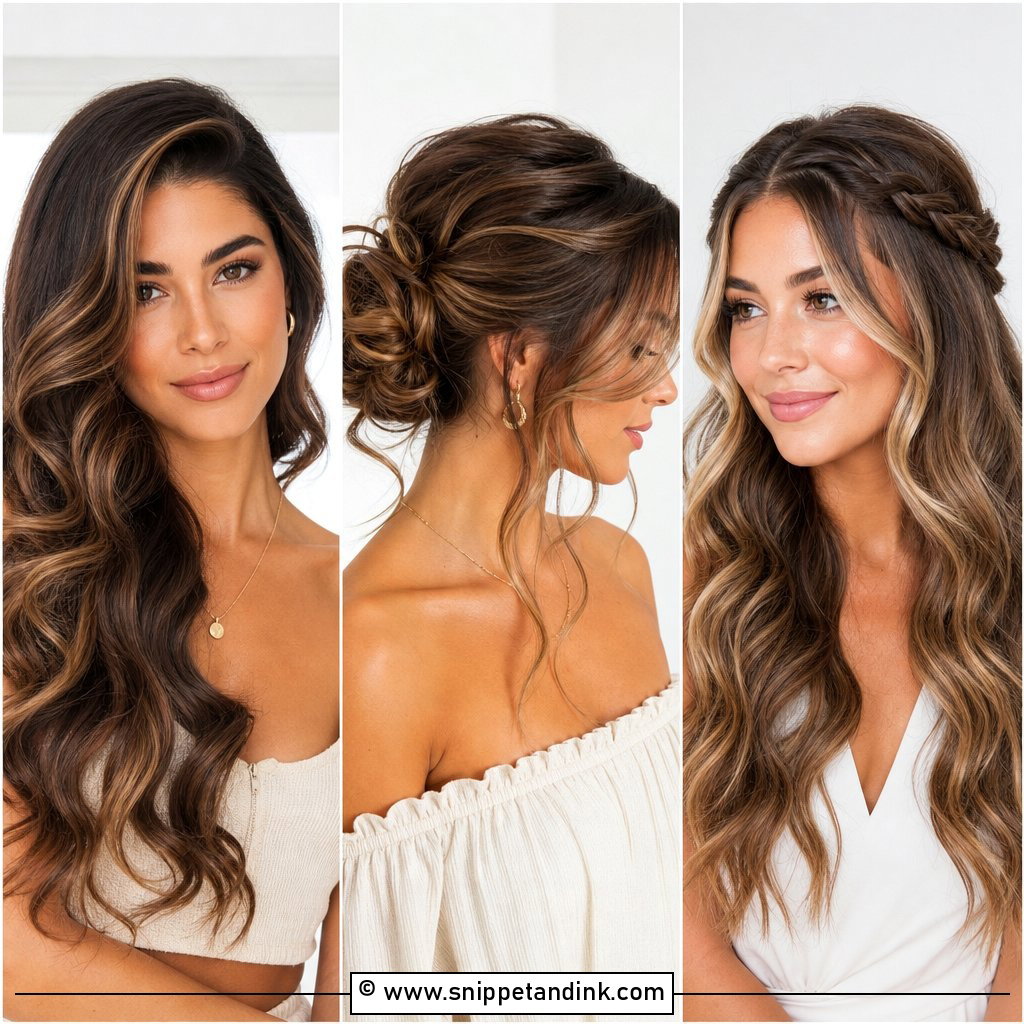
A low wavy bun is the style I trust most for a long day in humid weather, because nearly all the hair is pinned. Instead of a sleek knot, I curl first and then gather loosely, so the bun has bends and texture rather than a smooth ball. Sitting at the nape, it leaves room for a veil comb above and shows off a low back. Leave out a couple of face-framing pieces to soften the front. Ask your photographer for a profile shot during the ceremony, since the side view is where this bun earns its place.
5. Wavy Bride Side Swept Hair
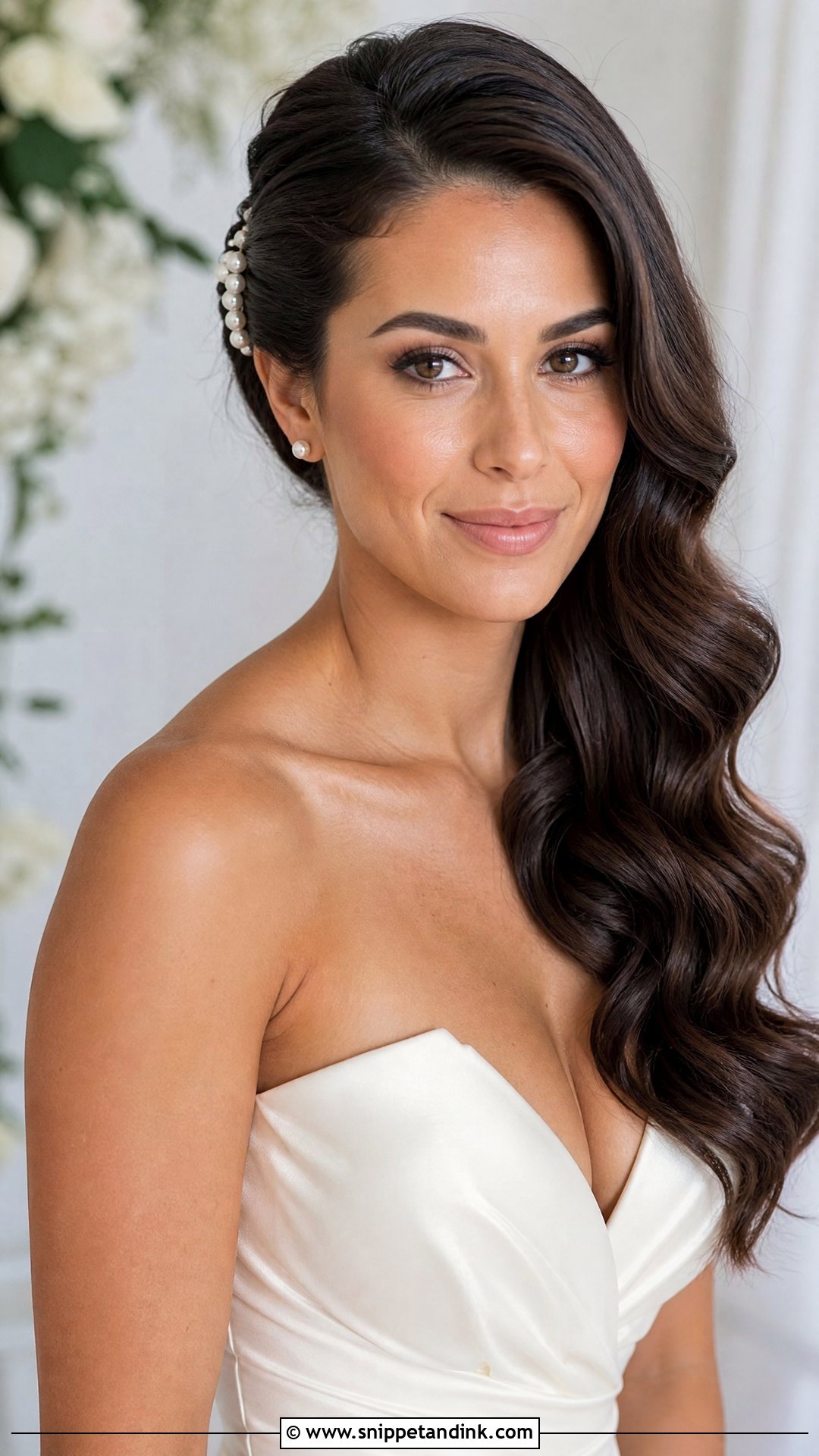
Sweeping everything over one shoulder balances a one-shoulder gown or a bodice with detail on one side. The real work happens at the back: I cross bobby pins in an X along the nape on the far side so the weight doesn’t drag the hair back to center by mid-afternoon. A deep, polished part reads formal, and a softer one feels relaxed. A pearl clip or a single flower pin on the tucked side hides those pins neatly. Expect a quick adjustment after you sit for dinner, because sitting pushes the hair forward.
6. Wavy Bride Ponytail
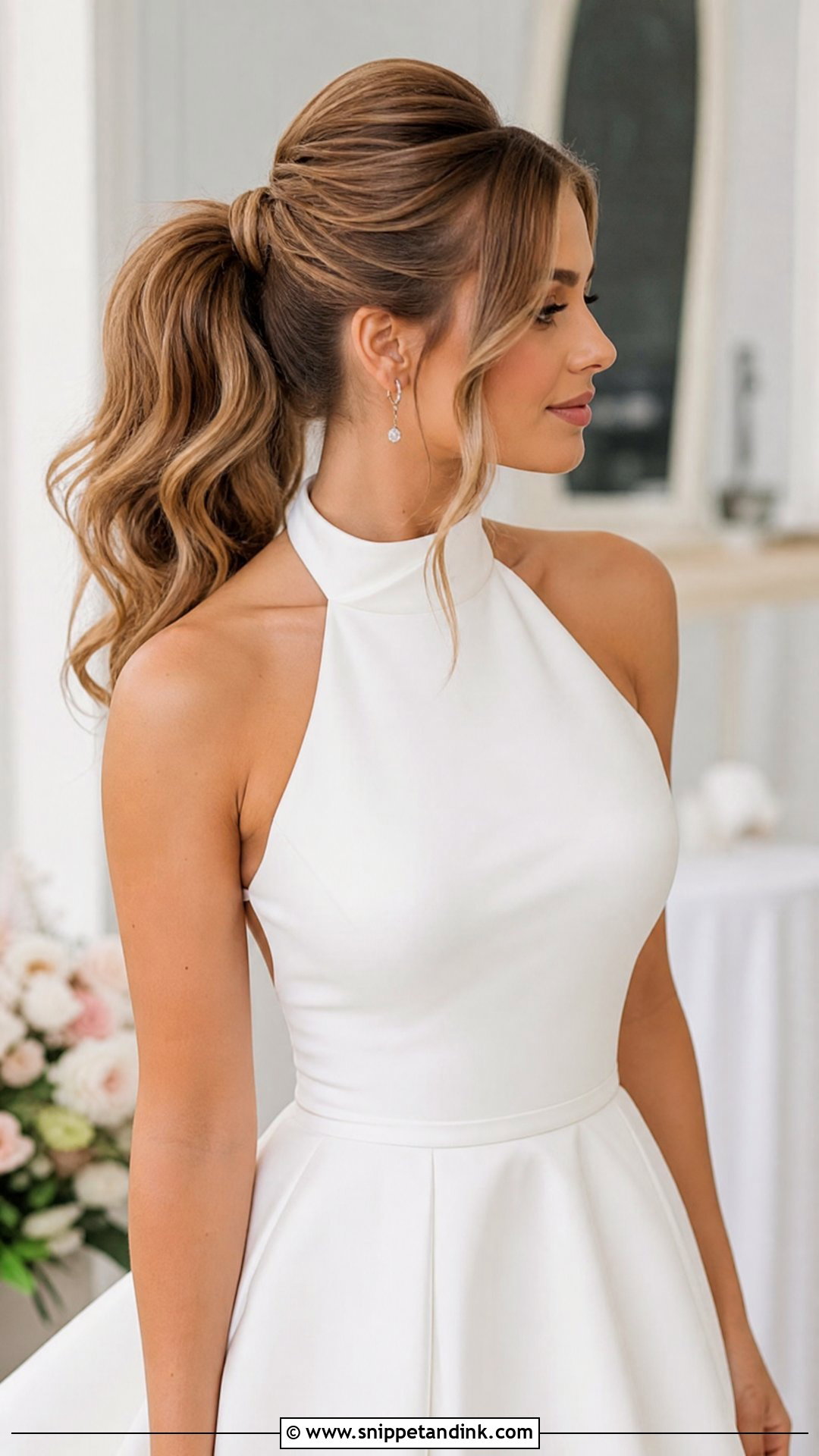
A ponytail sounds casual until you see it done with volume and long, brushed bends. Height changes the mood: high pulls the face up and reads fashion-led, while low feels softer. I wrap a strand around the elastic and pin it underneath, then backcomb the base so the tail looks fuller than it is. This is the style I suggest to brides planning to dance hard or wearing a high neck, where loose hair would hide the dress. Fine hair usually needs a clip-in piece hidden inside the tail to give the waves any weight.
7. Wavy Bride Hair With Veil
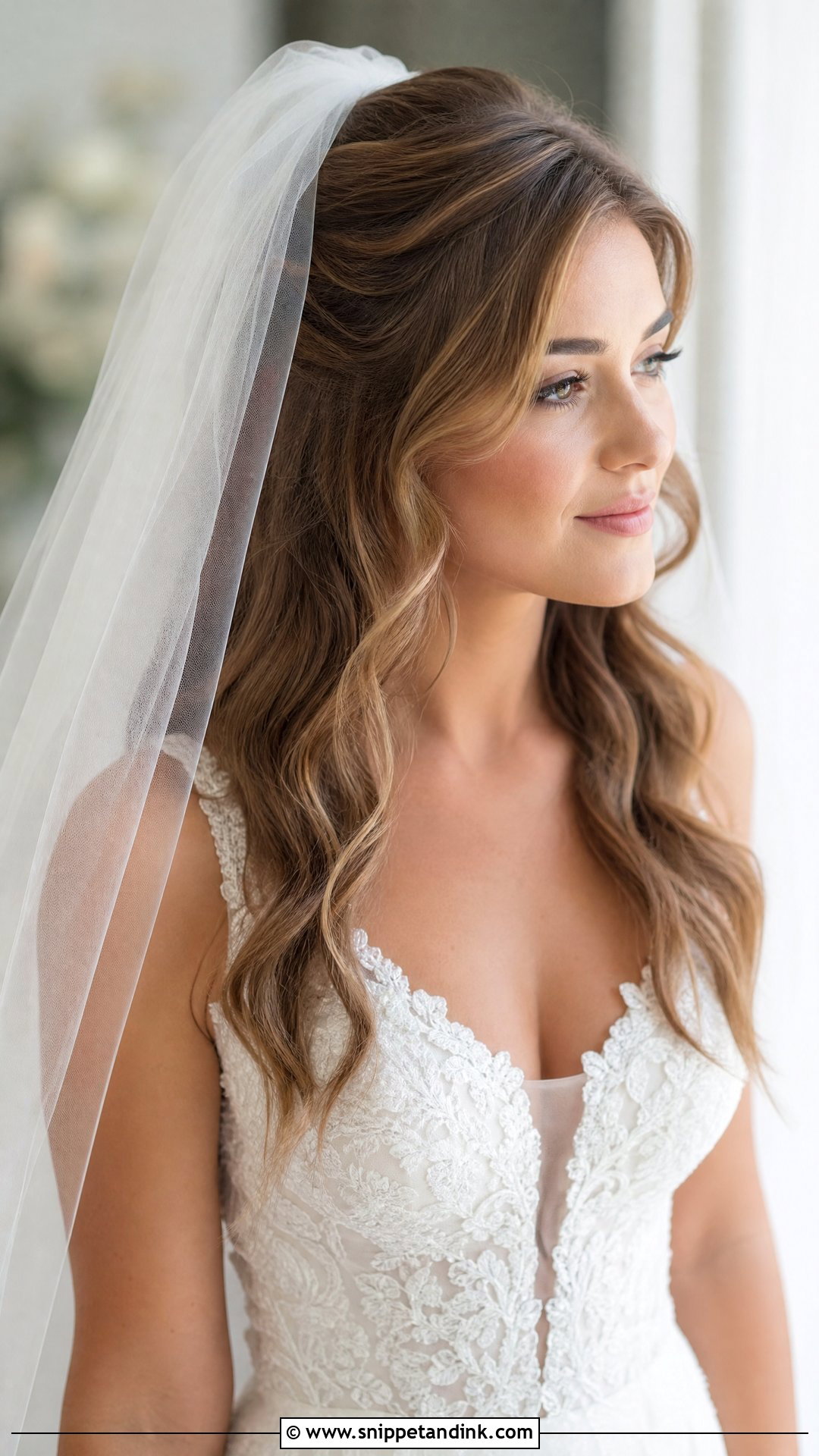
Veils and loose waves get along only if the comb has something to hold. A half up wave, a low pinned section or a small twist at the crown each give it an anchor. When a bride wants every strand down, I build a hidden base under the top layer, a little backcombing and two crossed bobby pins, so the comb slides in and locks. Keep the waves smooth where the veil sits, since frizzy texture catches tulle and drags it sideways. Plan for the veil to come out after the ceremony and leave pin dents; that’s what the touch-up brush in your bridesmaid’s bag is for.
8. Wavy Bride Hair With Pearl Pins
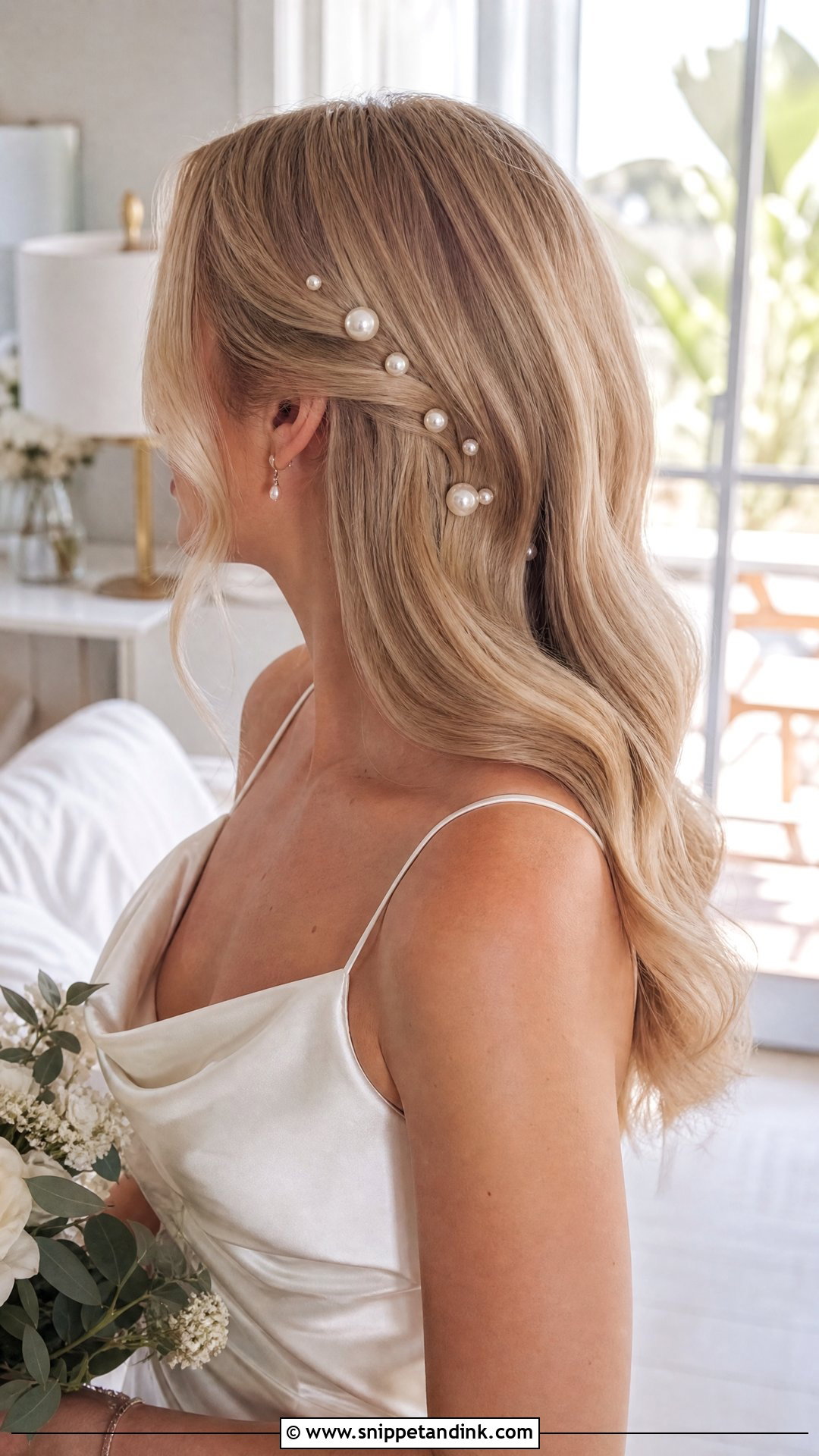
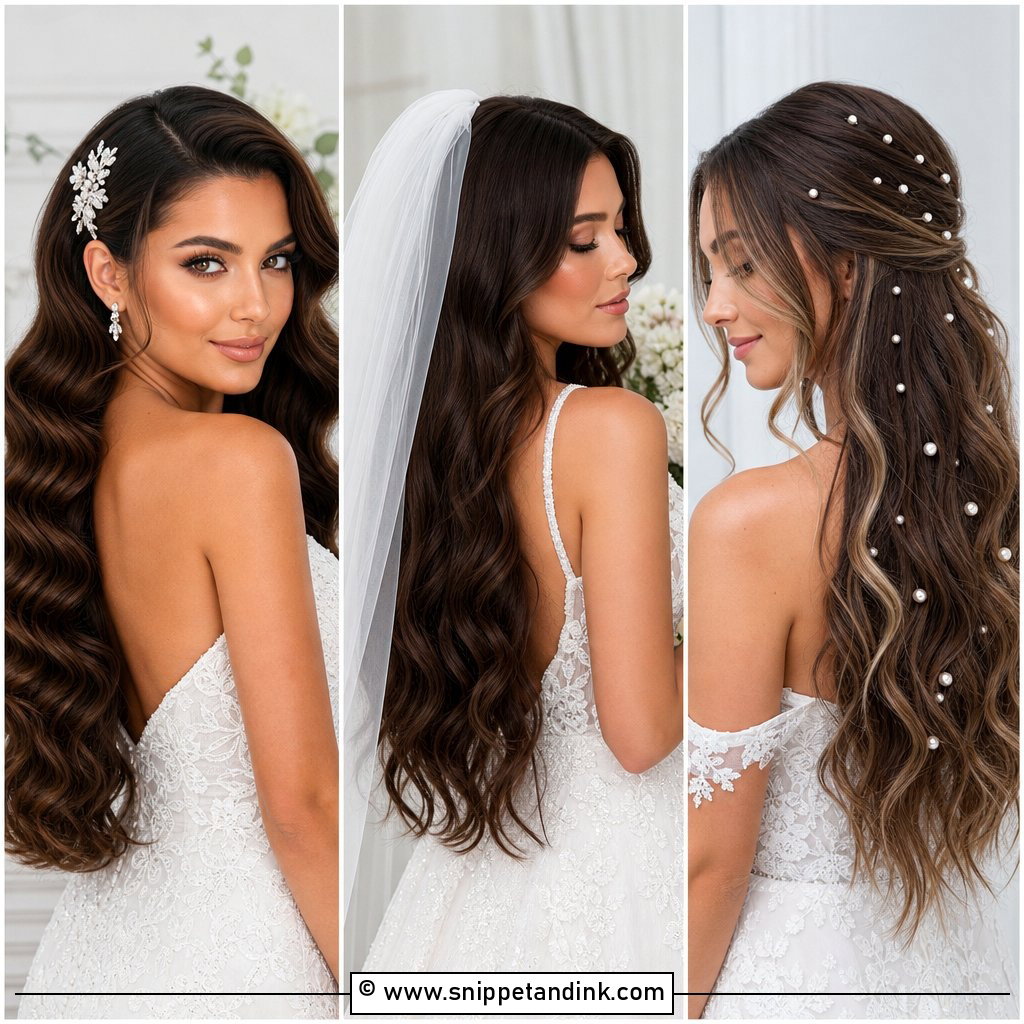
Pearl pins suit waves because the pearls sit in the dips between bends and catch light there. They can be scattered through a half up style or tucked into a low bun. Spacing is where most home attempts go wrong: clustered pins look crowded, so I place them on a loose diagonal and step back before adding another. They’re a good stand-in for a veil if you’re skipping one. On very fine, slippery hair I slide each decorative pin over a small bobby pin first so it doesn’t migrate by the speeches.
9. Wavy Bride Hair With Flowers
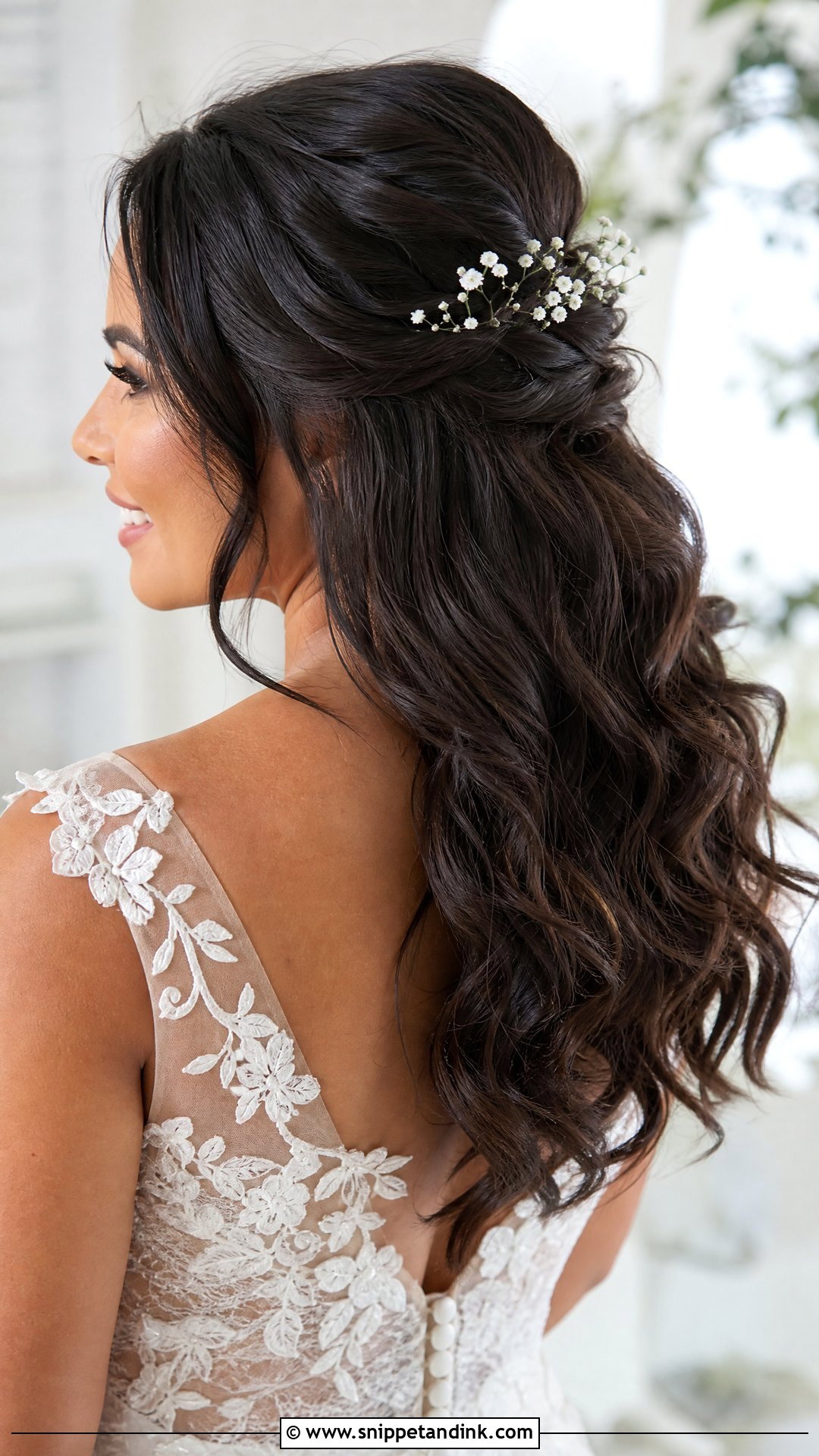
Flowers belong at garden, spring and outdoor weddings, and small blooms are far easier to wear than one large head. A big bloom shifts the balance of the face and often droops by the reception. Ask your florist for hardy stems: spray roses, waxflower and small orchids last much longer out of water than gardenias or peonies, which bruise and brown quickly. I wire and pin flowers last, once the hair is finished, and keep a few spares chilled for touch-ups. Set around a half up twist or into a low bun, they read as part of the hair rather than an add-on.
10. Wavy Bride Hair With Curtain Bangs
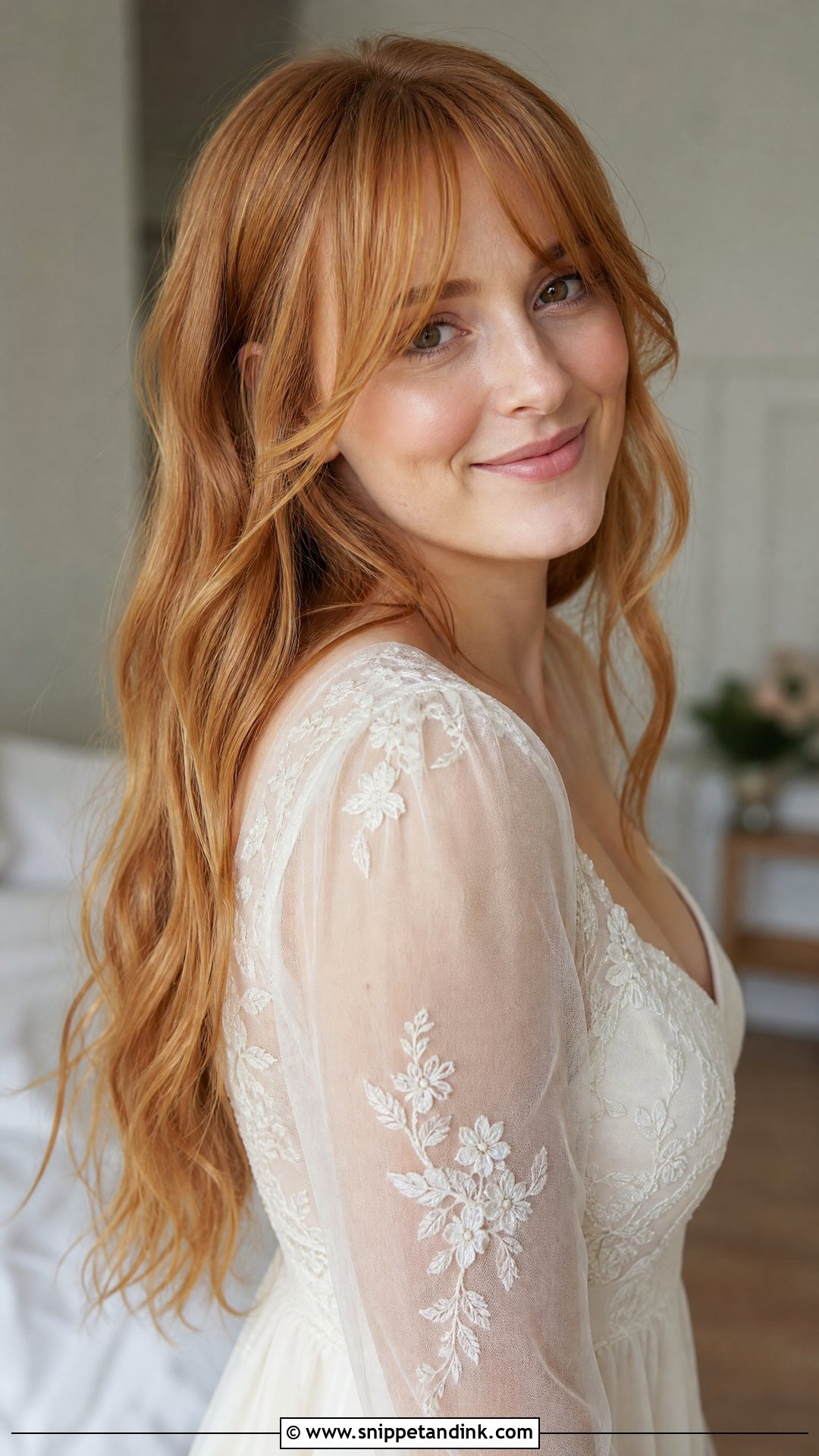
Curtain bangs frame waves softly and blend into the front layers of a low bun or half up style. If yours are new, have them cut a few weeks ahead and tidied about a week before, so they’ve settled and aren’t sitting at an awkward length. I set them with a round brush and then bend them away from the face, so they open at the center instead of falling into your eyes. Breaking up the line at the cheekbone flatters most face shapes. Use a light cream rather than wax, because heavy product separates bangs into stringy pieces under flash.
11. Wavy Bride Hair With Middle Part
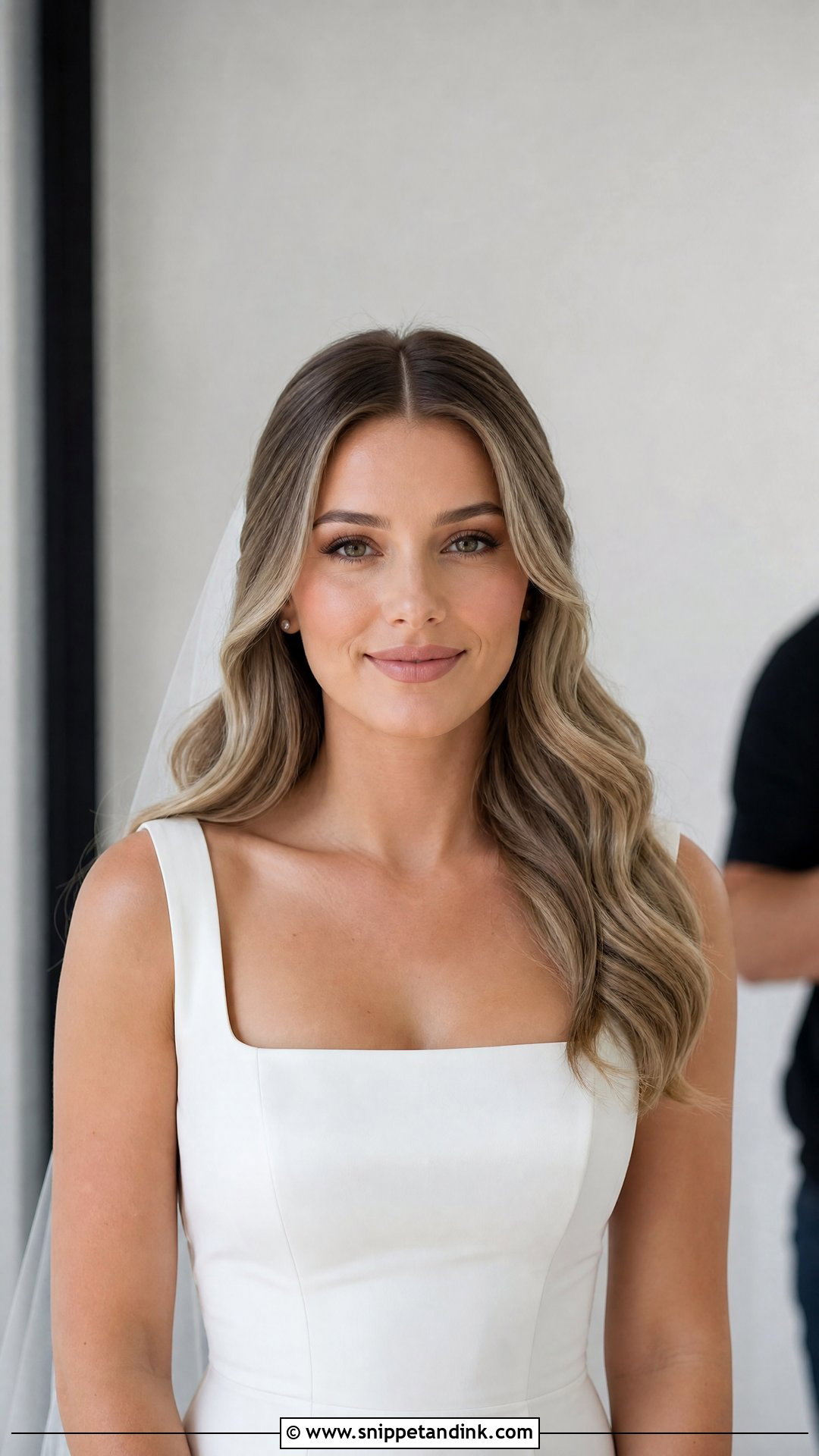
A middle part is clean and current, but it shows any asymmetry, so I check where your hair naturally parts before committing. If you have a strong cowlick on one side, forcing a center part means fighting it all day. It suits minimal gowns and pared-back makeup, and it keeps the front simple under a veil. To avoid the flat, split look, I spray the roots on both sides with a little volumizer and dry them lifted against their direction. Wear the waves fully down or tucked behind both ears.
12. Wavy Bride Hair With Side Part
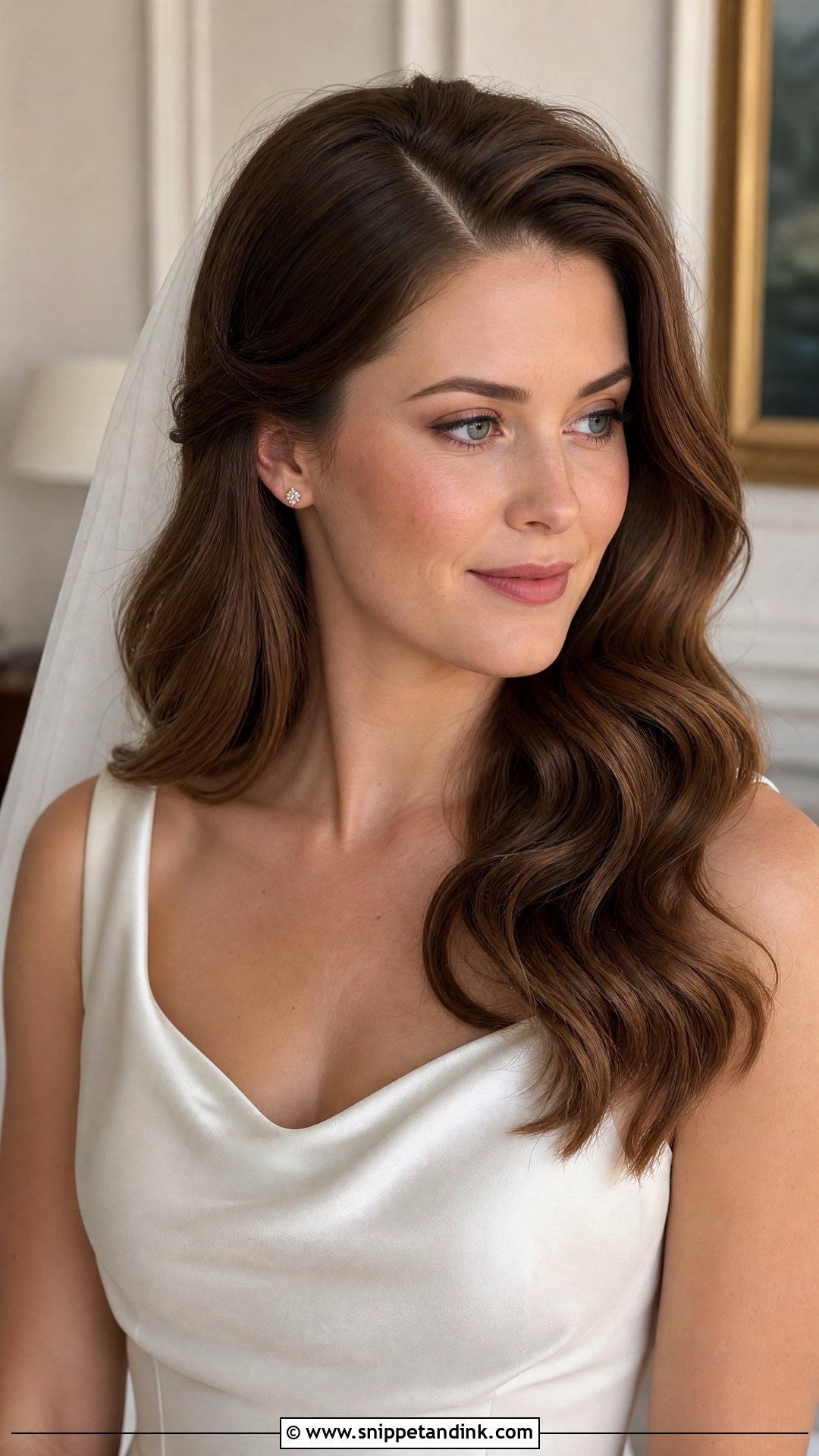
Shifting the part to one side instantly adds height on that side, which helps if your hair tends to lie flat at the crown. It pairs naturally with Hollywood waves and side swept styles. A deep part pushes the look toward glamour, while a shallow one stays relaxed. I set the part on the side your hair already wants to fall, then smooth it with a fine tail comb so the line is clean without looking drawn on. Earrings and makeup on the open side get much more attention.
13. Wavy Bride Hair For Long Hair
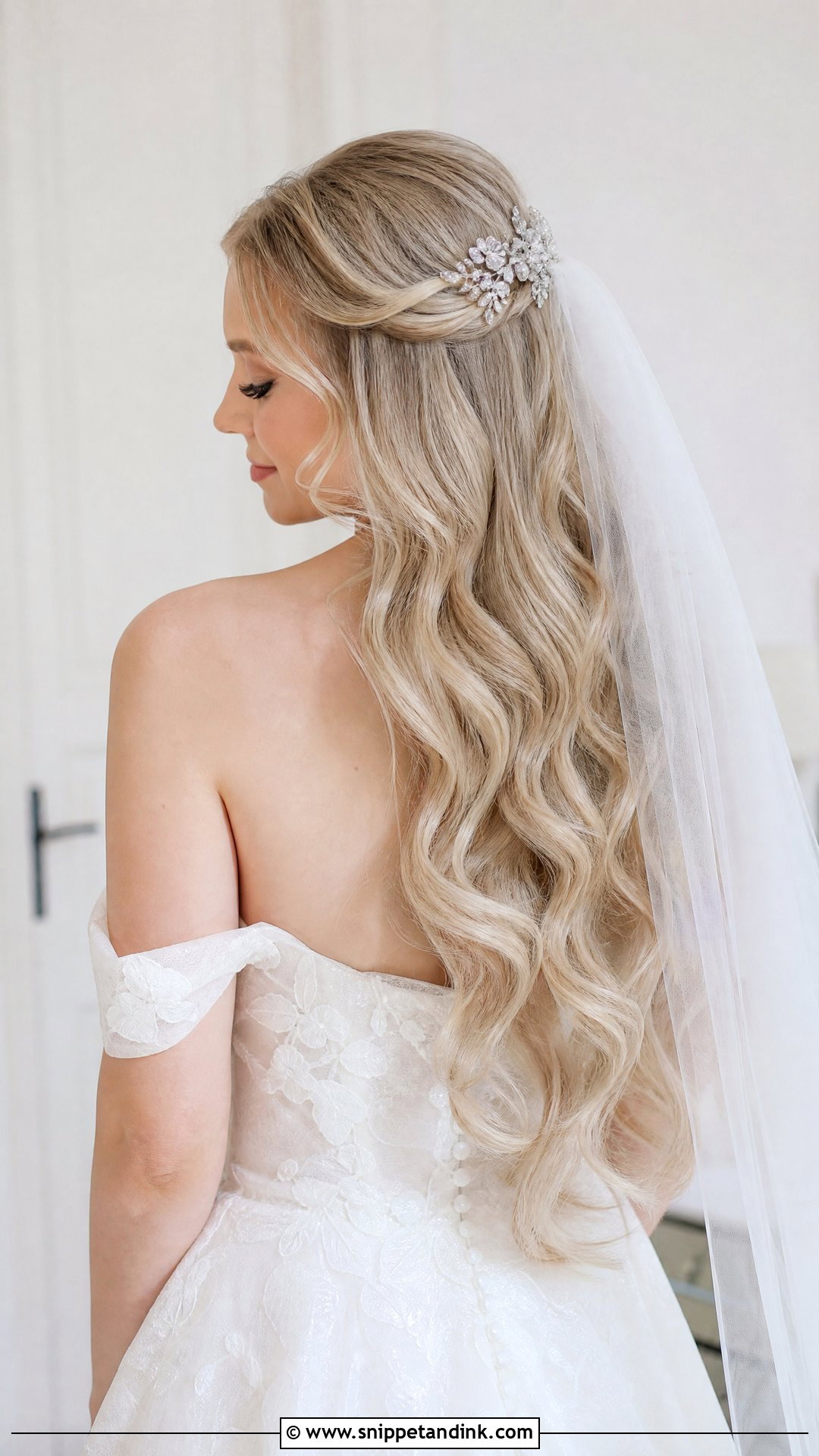
Long hair shows the whole length of a wave down the back, especially with layered ends. Its problem is weight: the longer and heavier the hair, the faster a curl drops, so prep matters more here than at any other length. Unless your stylist says otherwise, come to the trial with hair washed the day before rather than that morning, because freshly washed hair is often too slippery to hold a set. I curl long hair with a slightly smaller barrel than the wave I want at the end, knowing it will relax over the day. Veils, vines, pearl pins and simple combs all sit well against this length.
14. Wavy Bride Hair For Medium Hair
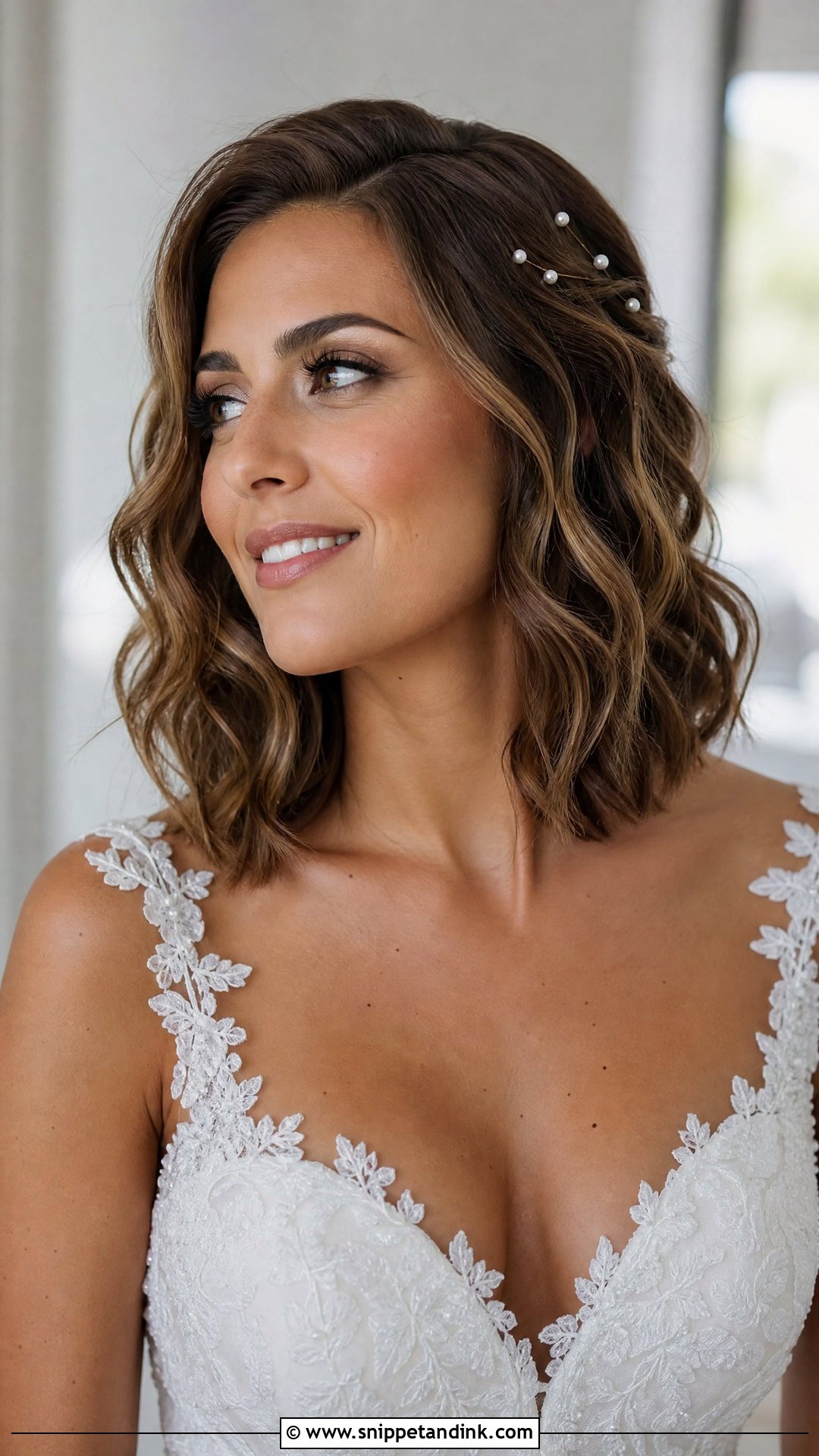
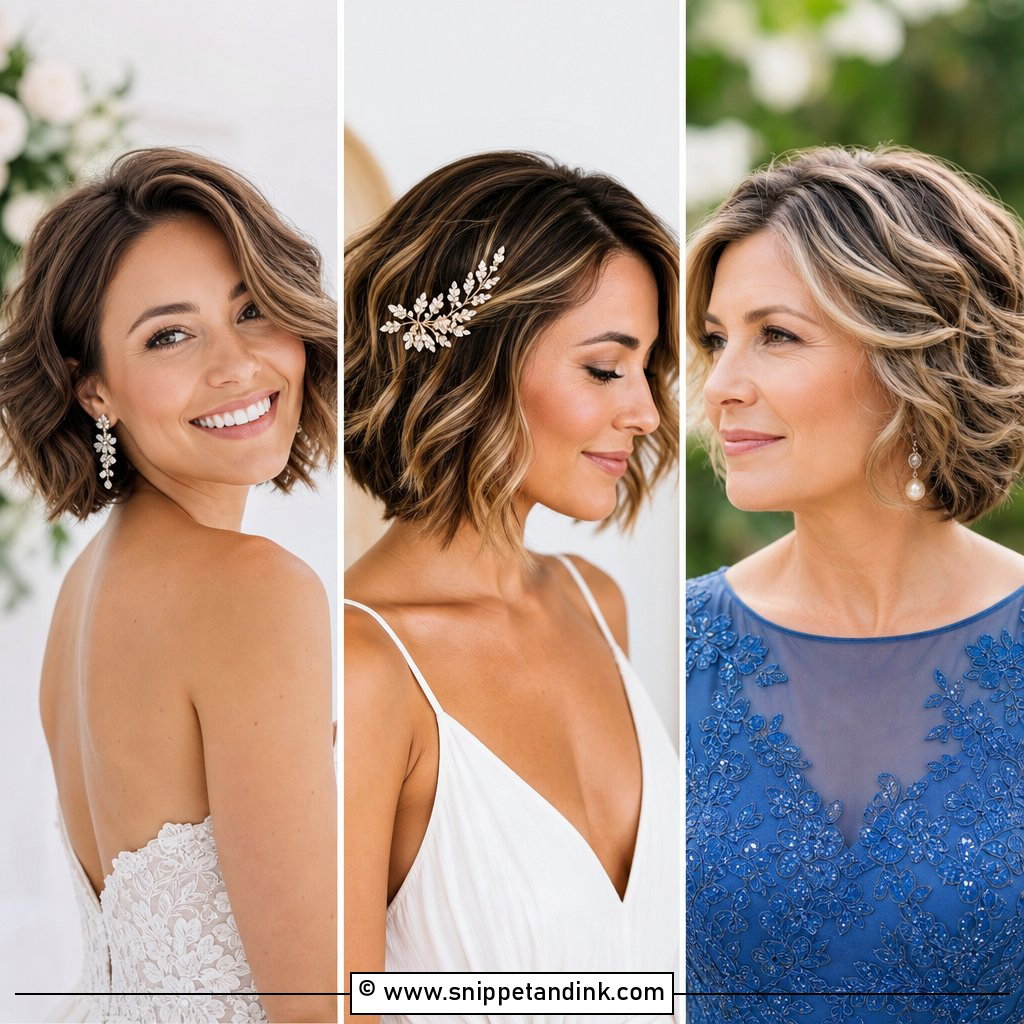
Shoulder and collarbone length is easy to wave and easy to wear. There’s enough hair for a half up style or a small low bun, without the weight that pulls long curls out. A few clip-in extensions blend well if you want more fullness, though plenty of medium styles look full on their own. It’s also cooler on the neck at a summer wedding. One quirk to plan for: waves at this length flip outward where they rub the shoulder, so I curl the ends away from the face to work with that rather than against it. A small comb or a few pearl pins supply the bridal detail.
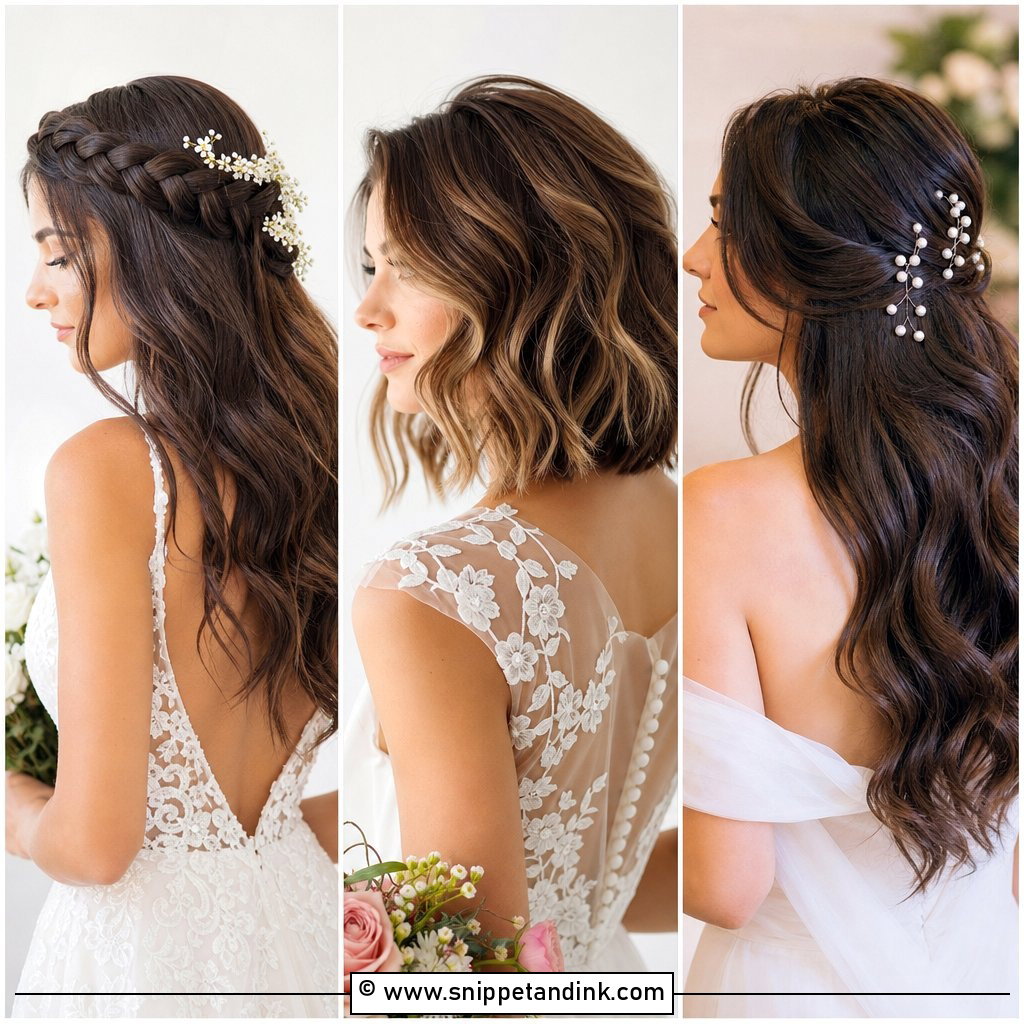
15. Wavy Bride Hair For Short Hair
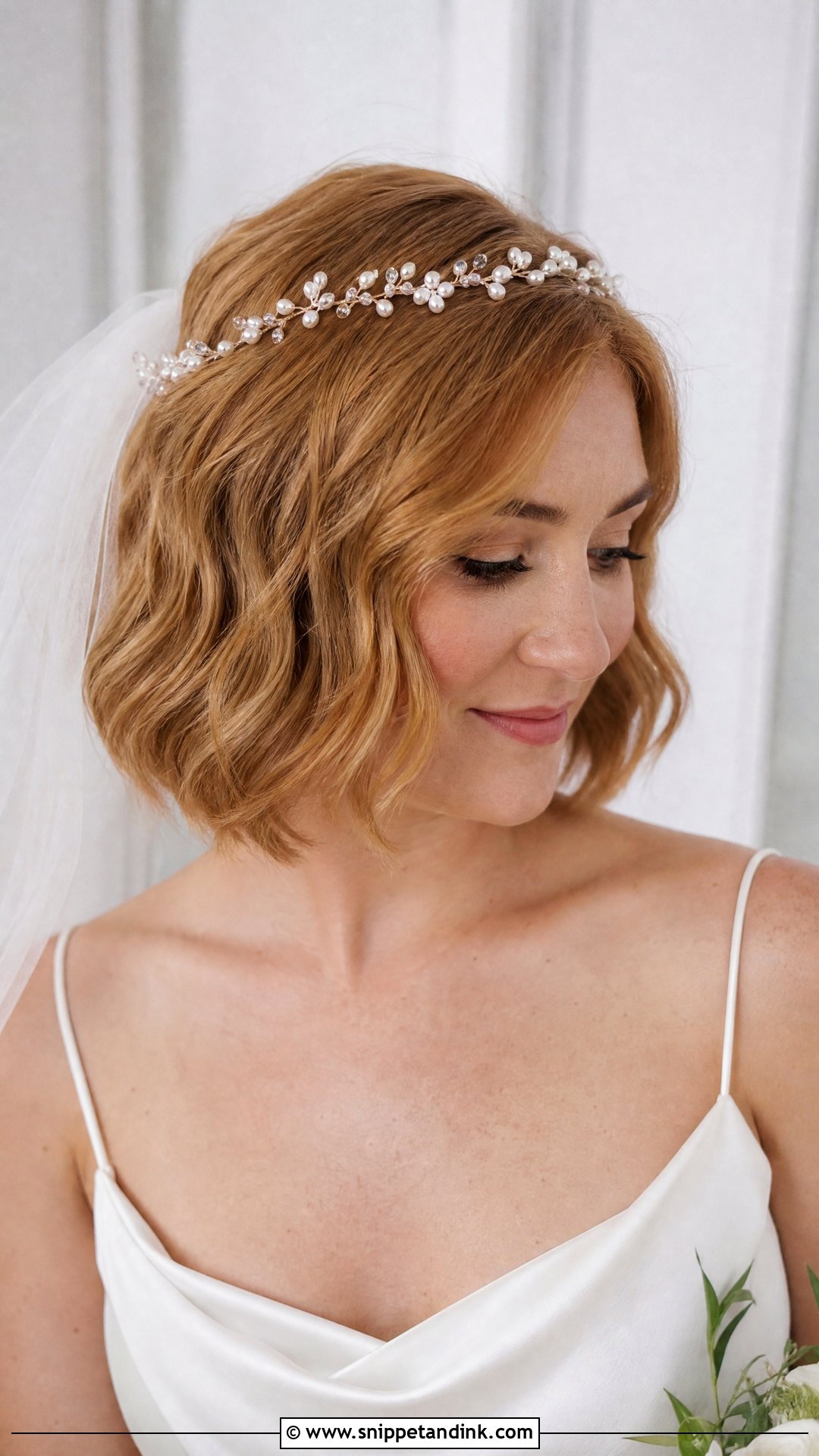
Short wavy bride hair needs its waves to look placed. On a bob or lob I use a flat iron or a small barrel to make S-bends that line up with each other; otherwise short waves can look slept-in. A side part adds a vintage note and a middle part keeps it modern. Accessories do more work on short hair because there’s less length to carry detail, so a pearl clip or a slim headband goes a long way. Keep the bends close to the face to give shape along the jaw.
16. Wavy Bride Hair With Braided Crown
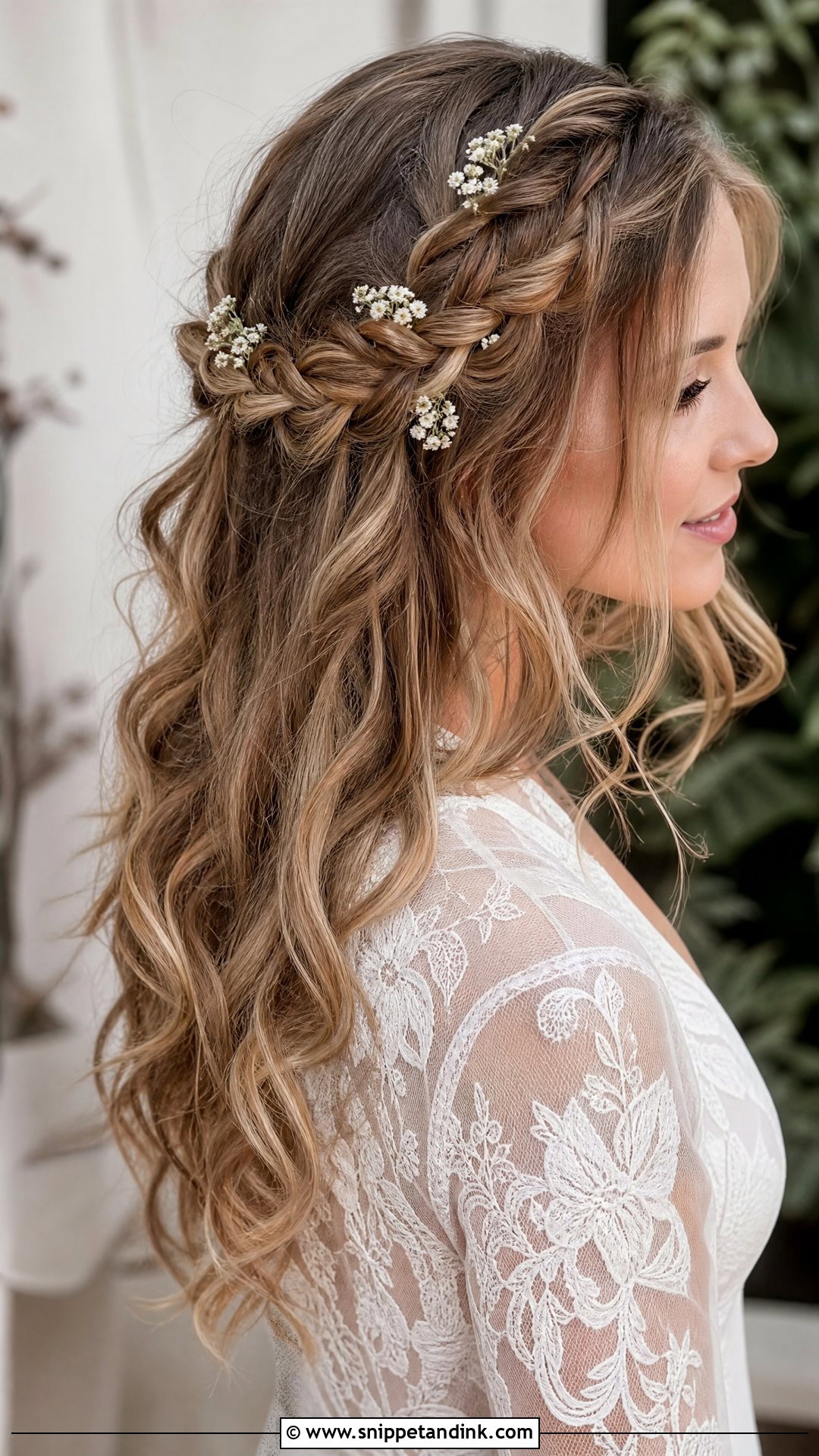
A braided crown holds the front in place while the waves stay loose behind, which is why I reach for it at outdoor and boho weddings. I braid loosely, then gently pull the outer loops of each stitch so the braid looks wider and softer. Thin braids look delicate, and fuller ones read more rustic. Fine hair often needs a little extension hair woven into the braid to give it any size. The rest can fall down the back or gather into a low bun, with small flowers or pearl pins tucked in to hide the grips.
17. Wavy Bride Hair With Hair Vine
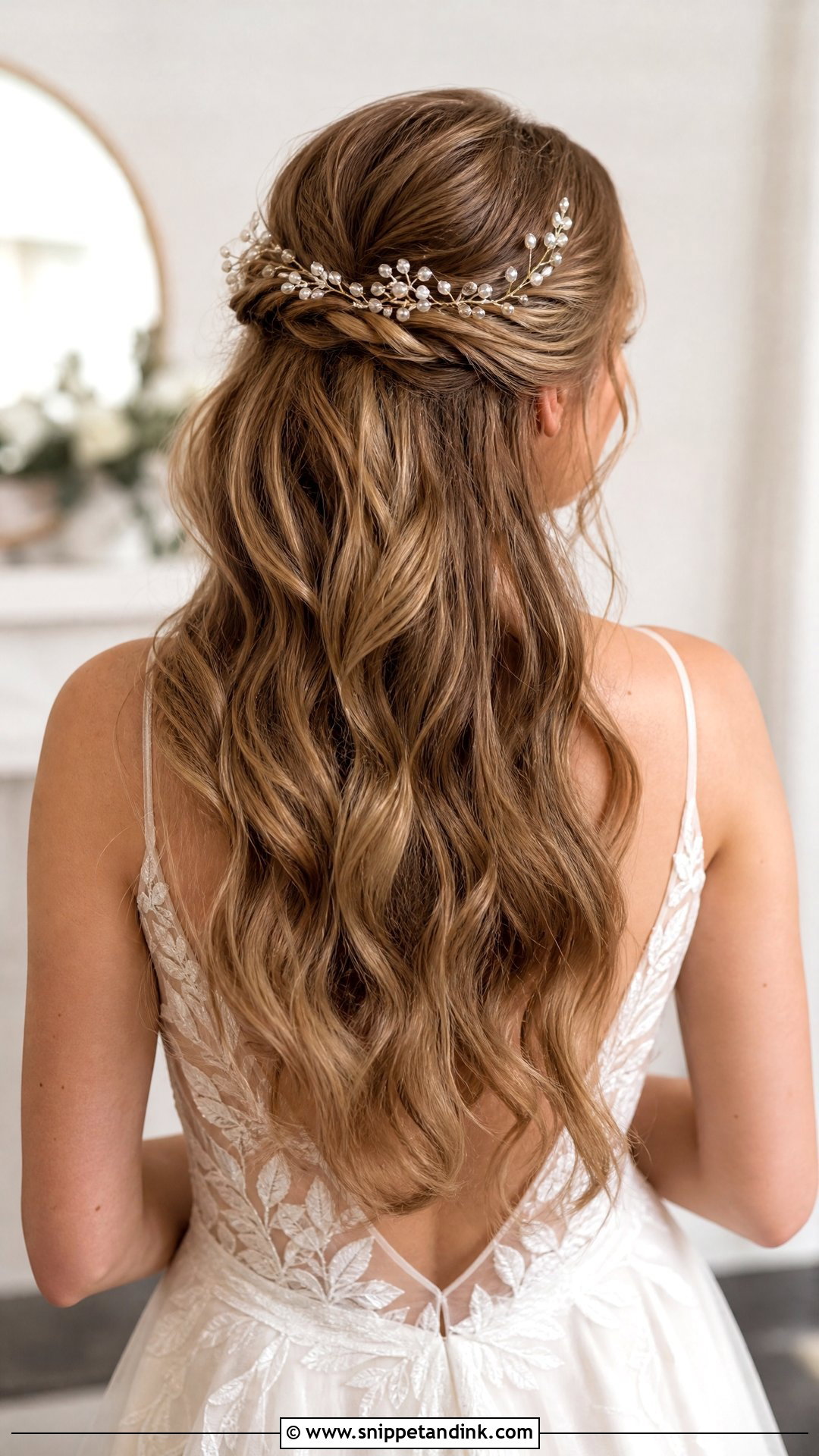
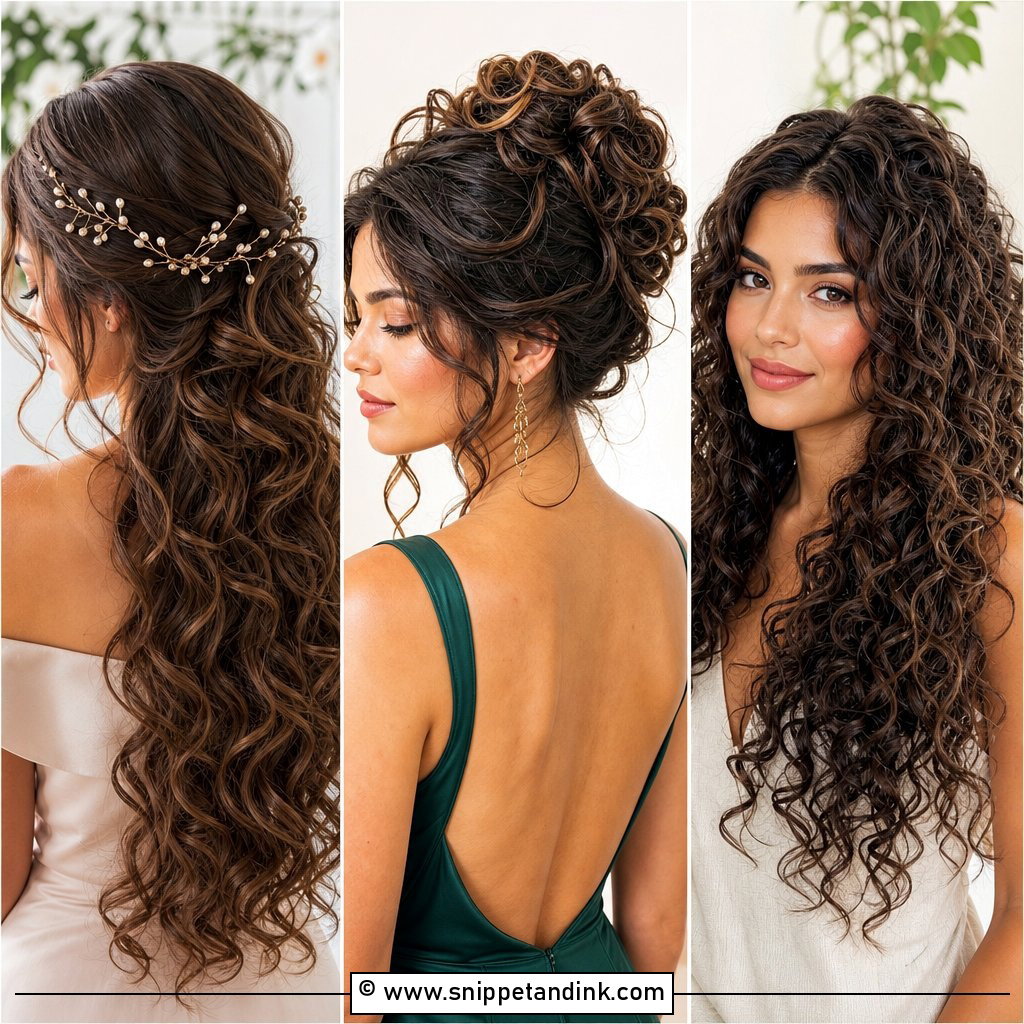
A hair vine adds detail without the weight of a large comb. Being flexible wire, it bends to follow a half up section, wraps a low bun or crosses the back of loose waves. It sits especially well with soft waves because it can trace their movement. I secure a vine with small bobby pins hooked through its wire loops every few inches, so it doesn’t slide when you turn your head. Match pearl, crystal or floral detail to the dress, and keep the waves defined so the vine doesn’t sink into fluffy hair and vanish.
18. Wavy Bride Hair With Headband
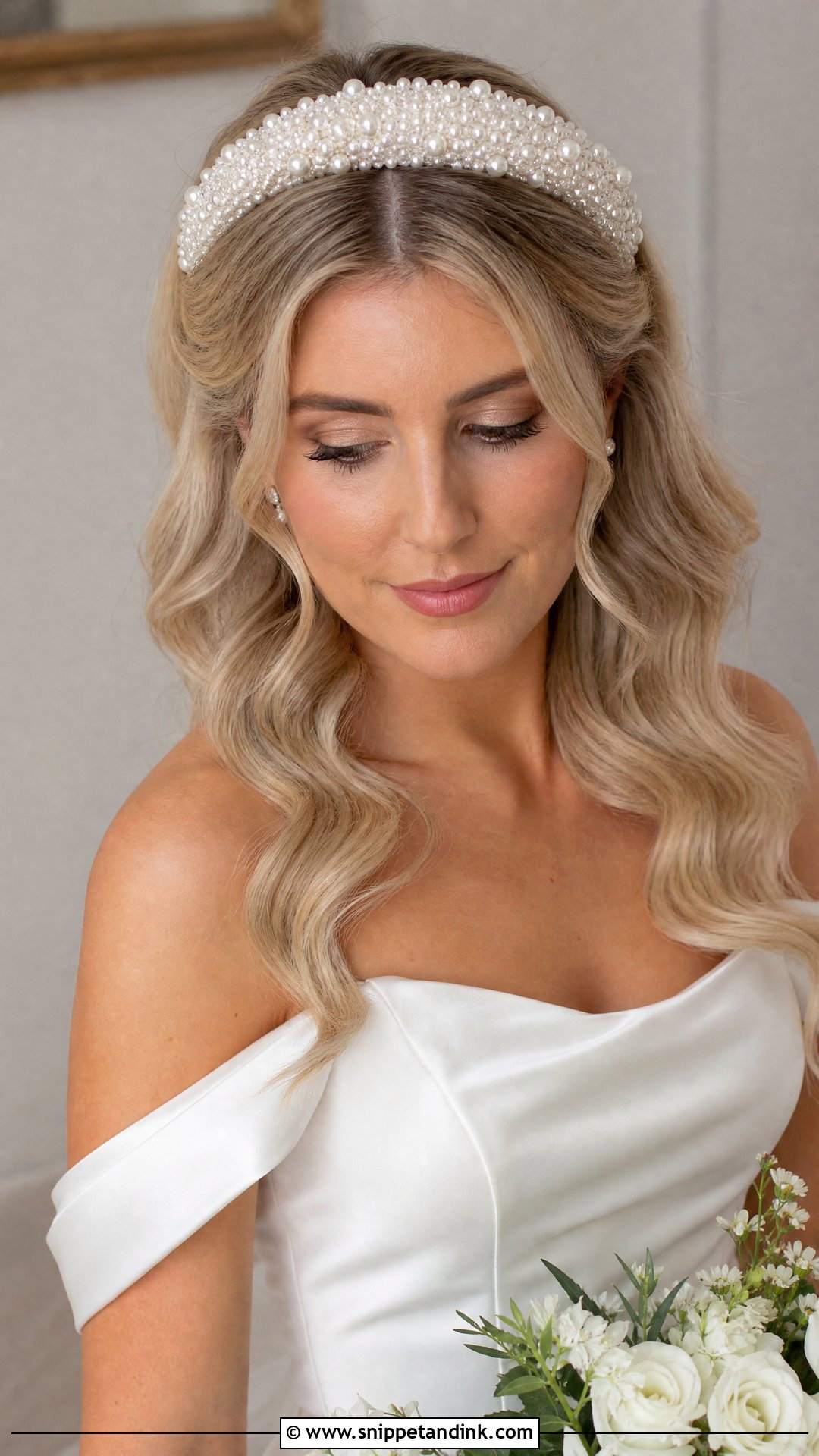
A headband gives you a visible accessory from the front with almost no pinning. A pearl headband feels classic, satin feels modern, and crystal adds sparkle. It works at any length, with waves worn down or tucked behind the ears. Fit is my main concern: a band that’s slightly tight starts to ache behind the ears after a few hours, so wear yours around the house for an afternoon before the wedding. I backcomb a little behind the band to keep volume at the crown.
19. Wavy Bride Hair With Natural Texture
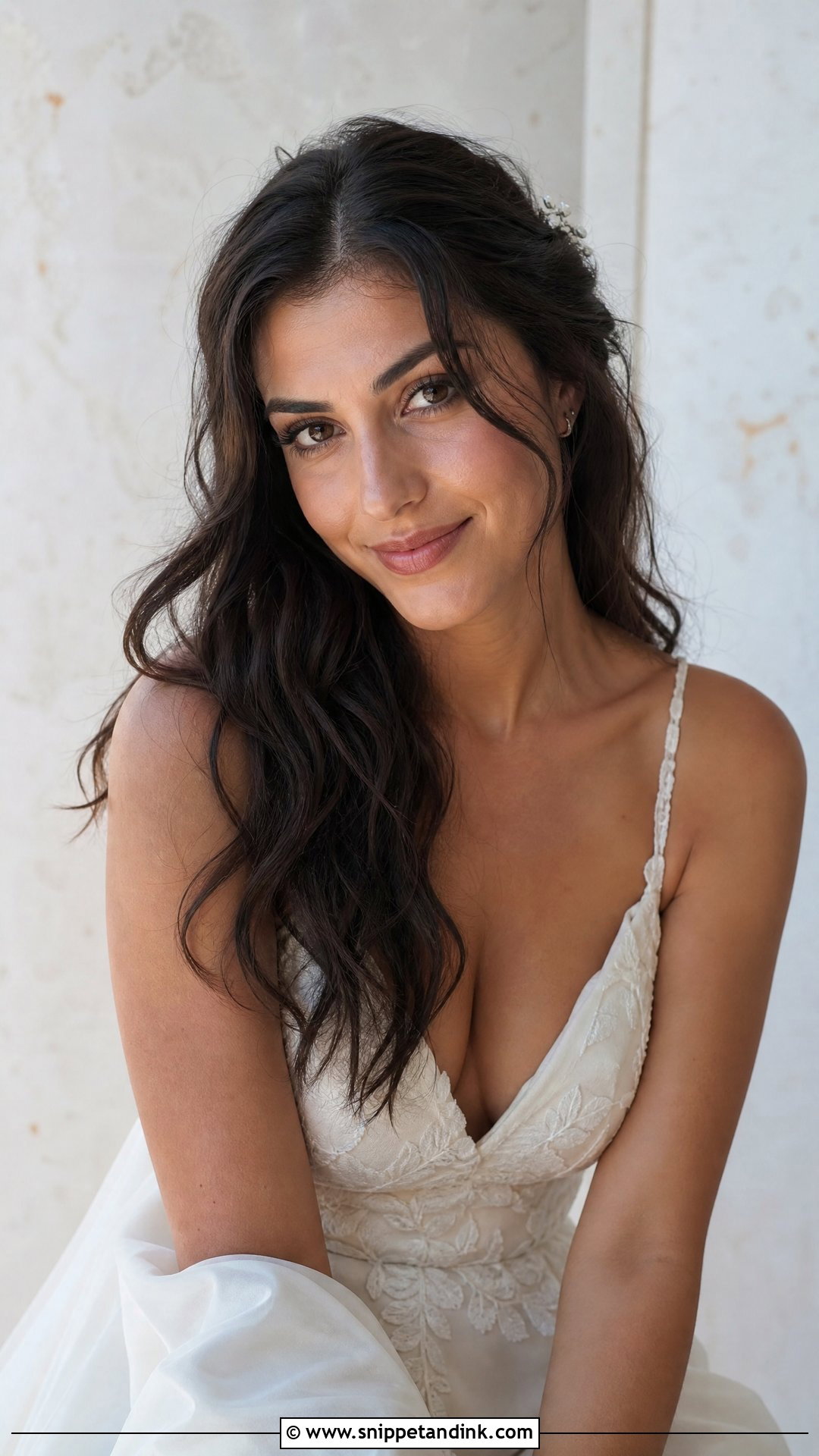
Natural waves are my favorite to work with when the pattern is healthy, because the hair already knows where it wants to bend. Instead of forcing a new shape with heat, I define the existing wave with a curl cream or mousse, diffuse it dry, and only touch up with an iron where the pattern is uneven. Humidity is the wild card: natural texture can swell or frizz with the weather, so a trial in similar conditions is worth more here than for any other style. Down, half up or in a textured bun, it suits relaxed weddings and brides who want to look like themselves.
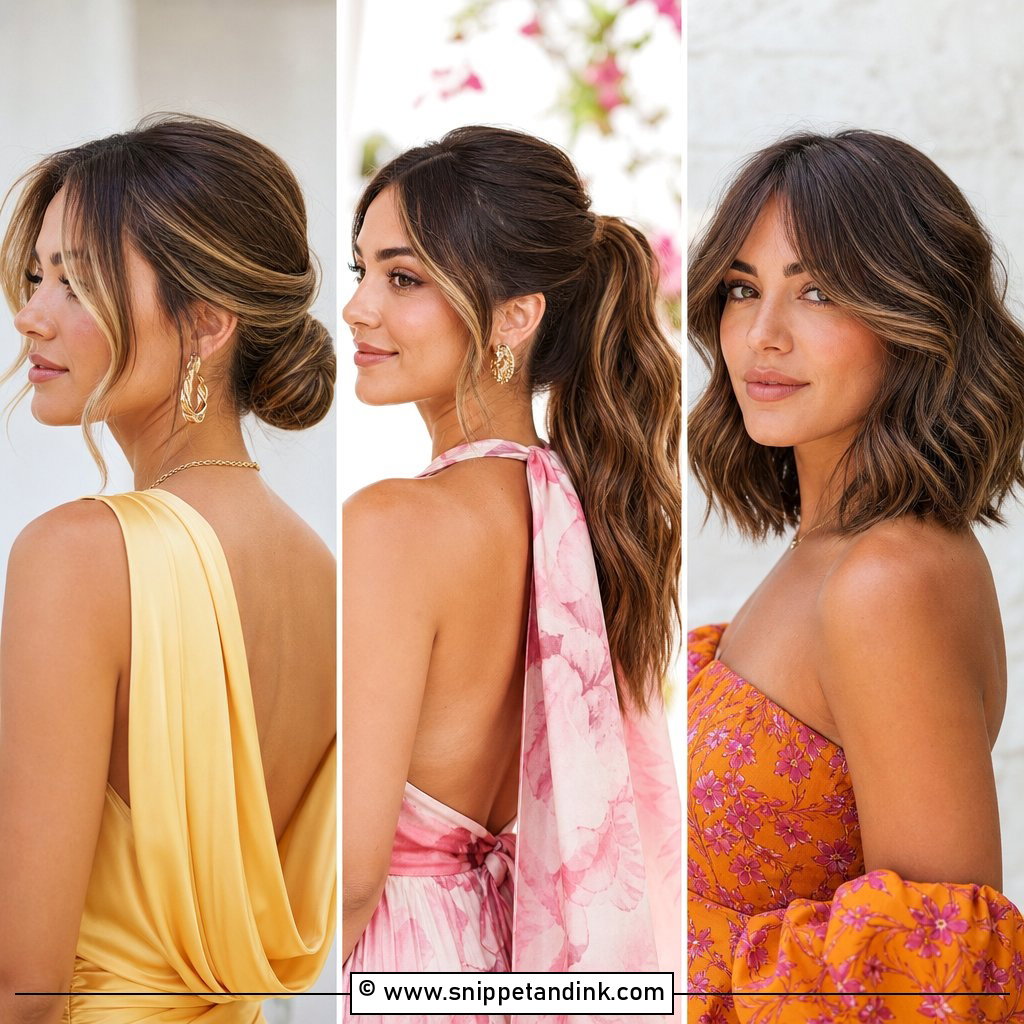
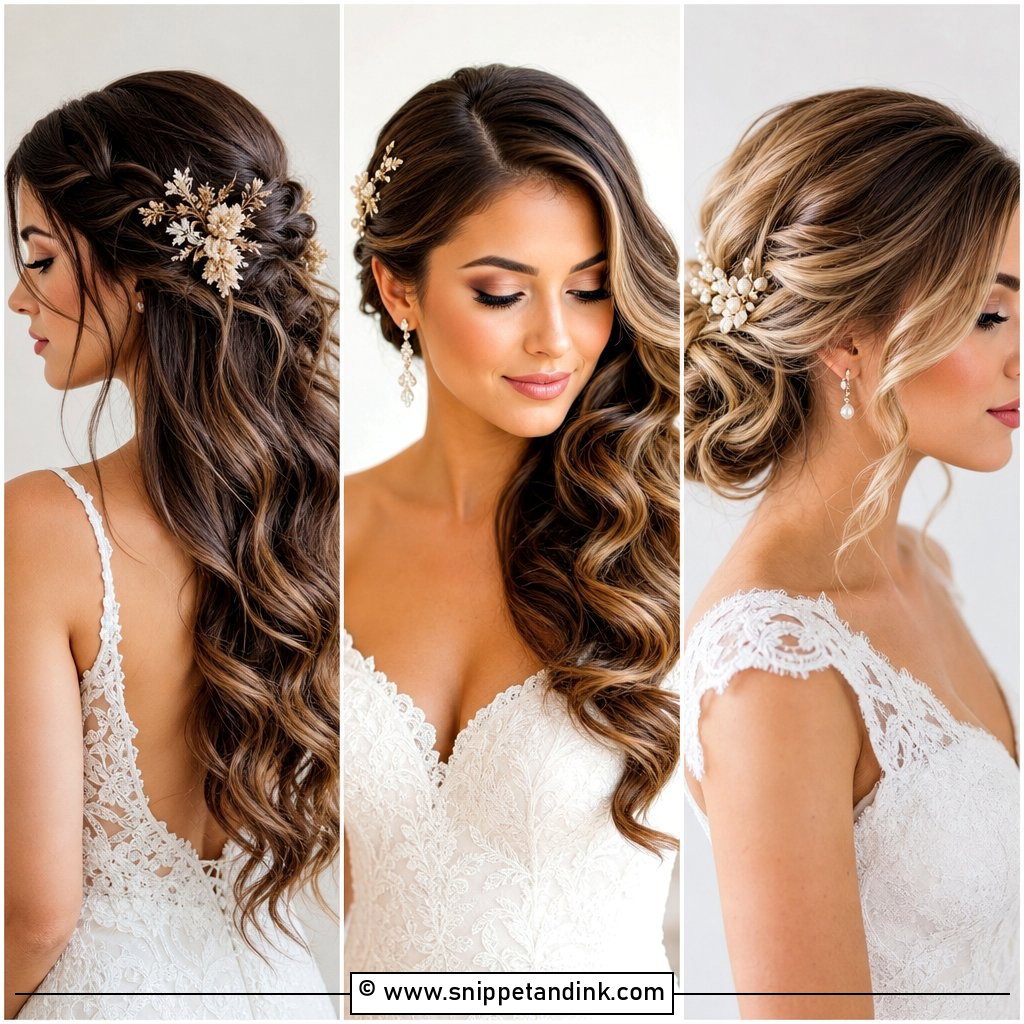

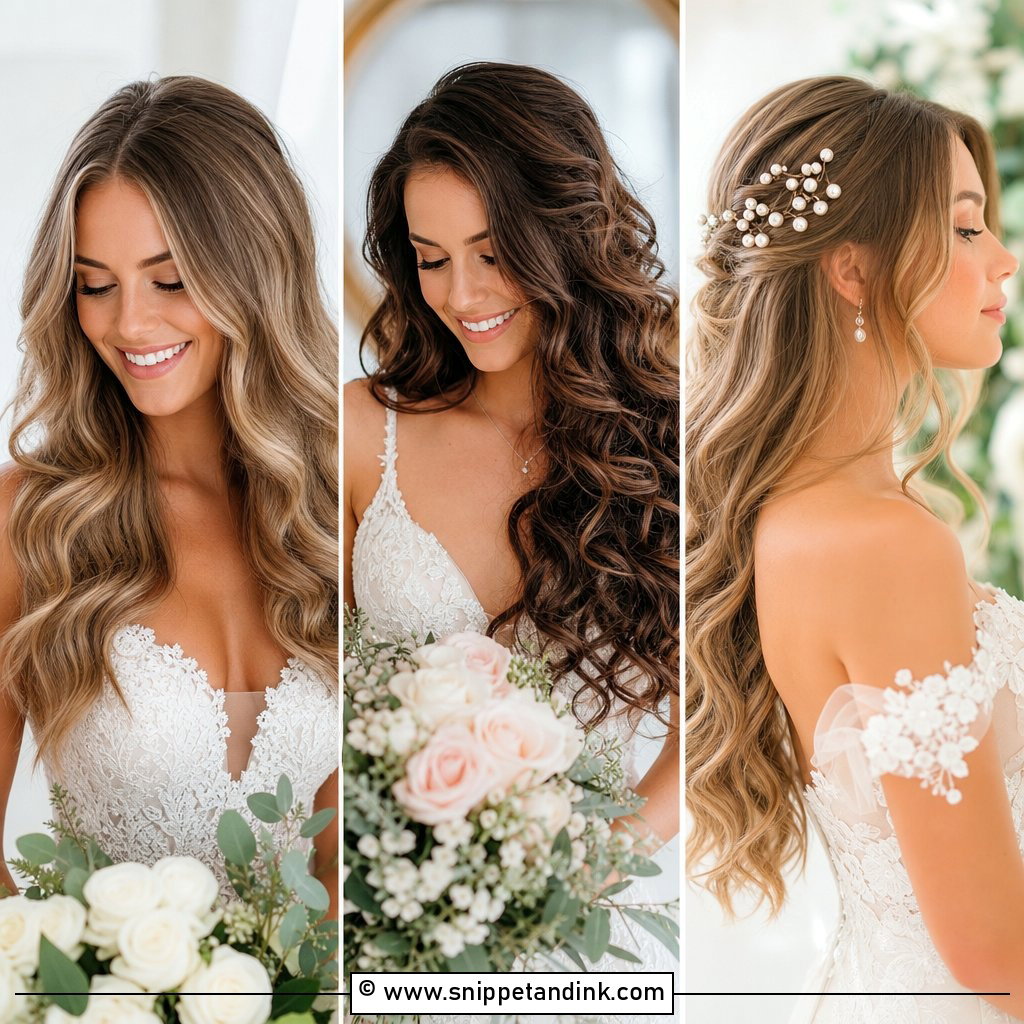
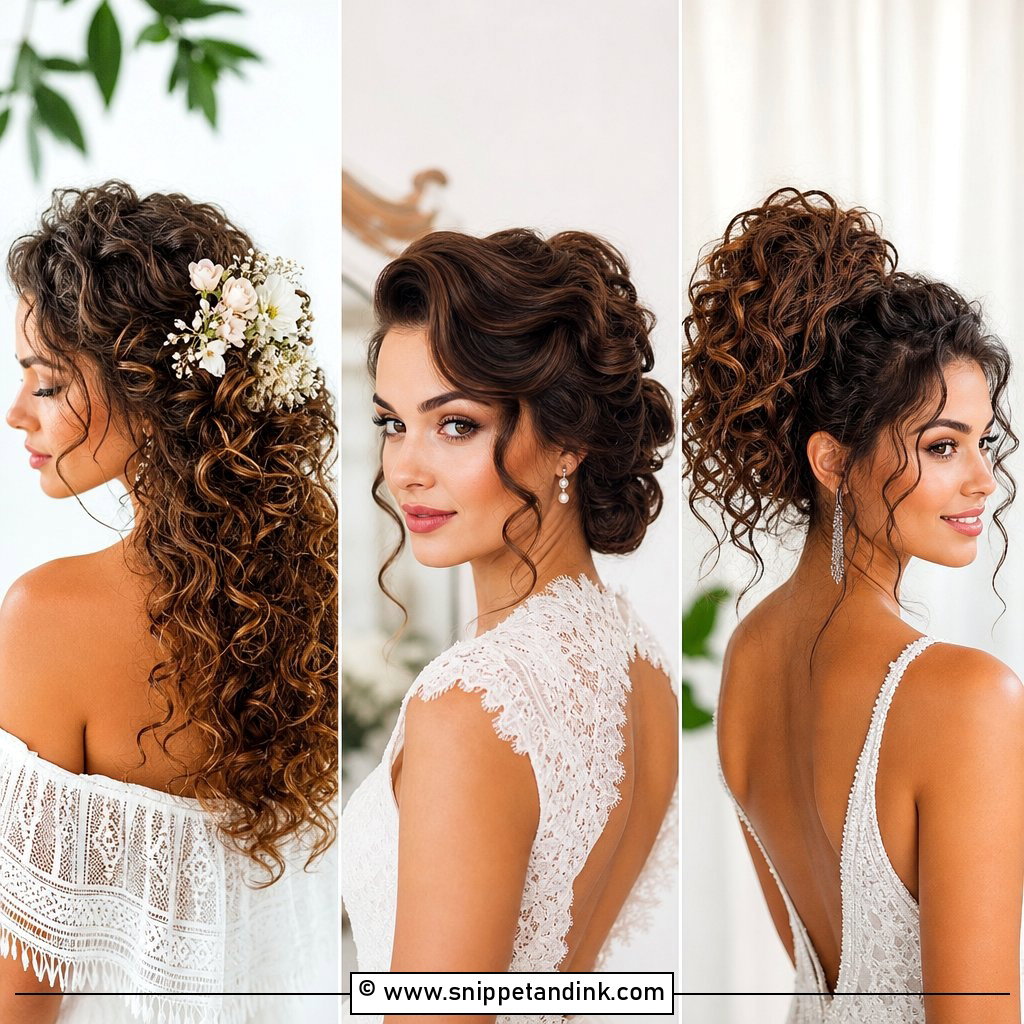
20. Wavy Bride Hair With Low Twisted Updo
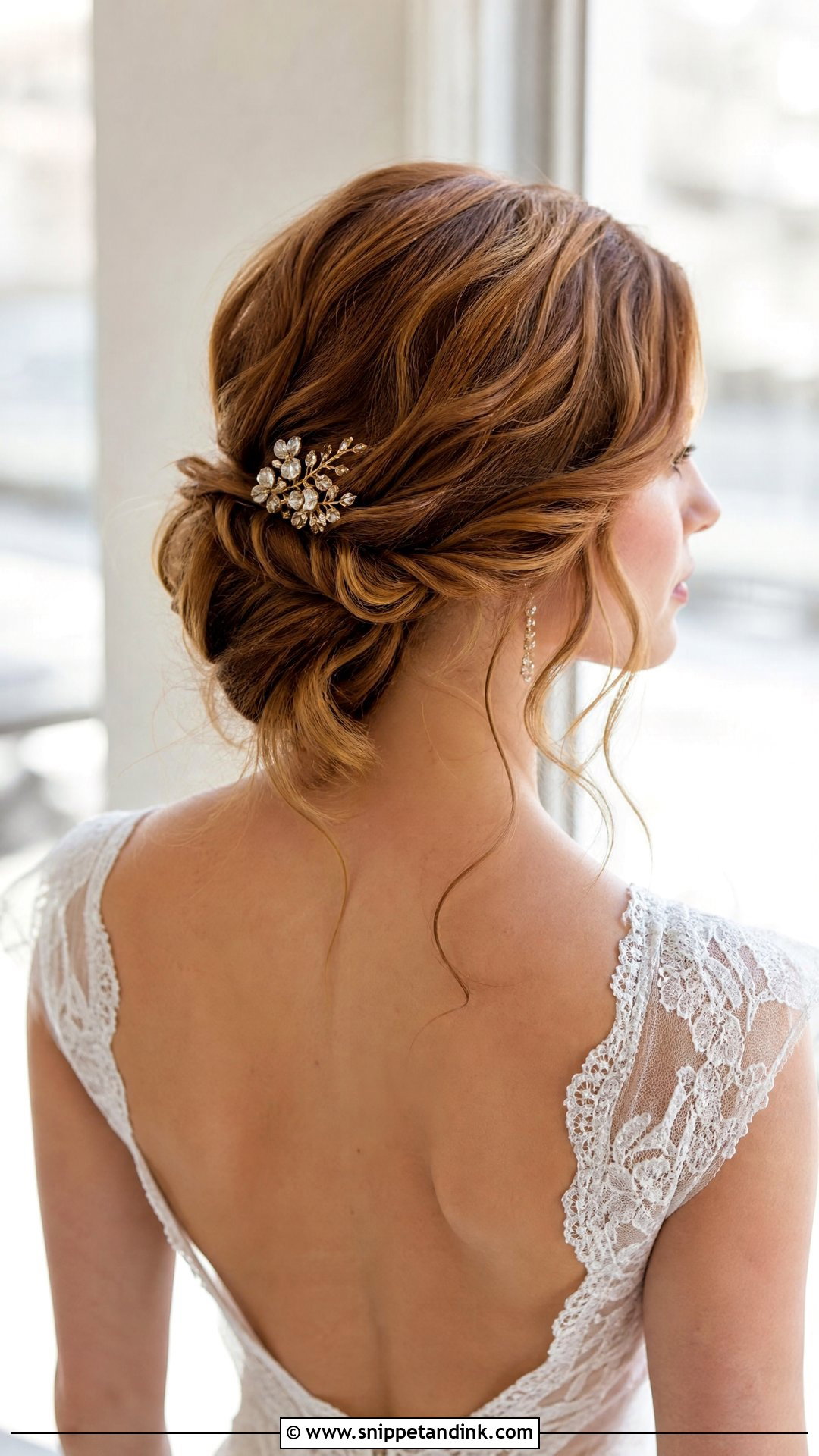
Twisting waved hair at the nape gives an updo shape and texture instead of a flat roll. I curl first, then twist each section loosely toward the center and pin it, so the back shows the twists. I recommend this one for long ceremonies and late receptions, where hair worn down tends to end up stringy. It sits well under a veil or a comb and leaves an open back on show. A few face-framing pieces keep the front soft, and flexible products stop it feeling crunchy by night.
Rain, Hugs and a Veil Coming Off: The Day Itself
I schedule wave sets near the end of the hair timeline, so the curls wait as little as possible before photos. If you’re first in the chair anyway, keep the clips in until just before you step into the dress.
When the forecast turns humid
Damp air loosens waves faster than anything else. On a sticky day I drop to a smaller barrel, use a firmer spray on the underneath layers only, and may suggest moving loose waves into a half up style or a low bun for an outdoor ceremony. That swap is far easier to agree on at the trial than in a muggy tent an hour before the vows.
The touch-up pouch for your bridesmaid
- A dozen bobby pins matched to your hair color
- A travel-size flexible-hold spray
- A small teasing brush for lifting a flattened crown
- Blotting papers, since an oily hairline makes front pieces cling flat to the face
The moment a fix is most often needed is right after the veil comes out, when the crown is flat and dented from the comb. Two minutes with that brush and a mist of spray puts it back.
Twenty Waves, One Head of Hair
Waves stretch across almost every wedding style, from sculpted Hollywood glam to your own natural texture. What decides the right one is how your hair actually holds a curl, more than any photo. Bring your pictures to the trial, then listen when your stylist adjusts them for your texture and length. That’s the session for testing hold, veil placement and accessories, not the wedding morning. With good prep, waves can still look polished at the last song.
You'll Like These Ideas:


Leave a Reply