
A traditional wedding outfit is often the only garment a woman wears that her grandmother would recognise. It carries a region’s weaving, a religion’s customs and a family’s expectations, and each of those changes what the bride can and cannot alter. I have pulled together twenty bridal looks from South Asia, East and Southeast Asia, Africa, Europe and Latin America, each described from garment to shoes to headwear. Treat them as starting points. The colour, cloth and jewellery that are right for one family can be wrong for the next, so the most useful thing you can do before ordering anything is talk to the relatives or elders who know how it is meant to be worn.
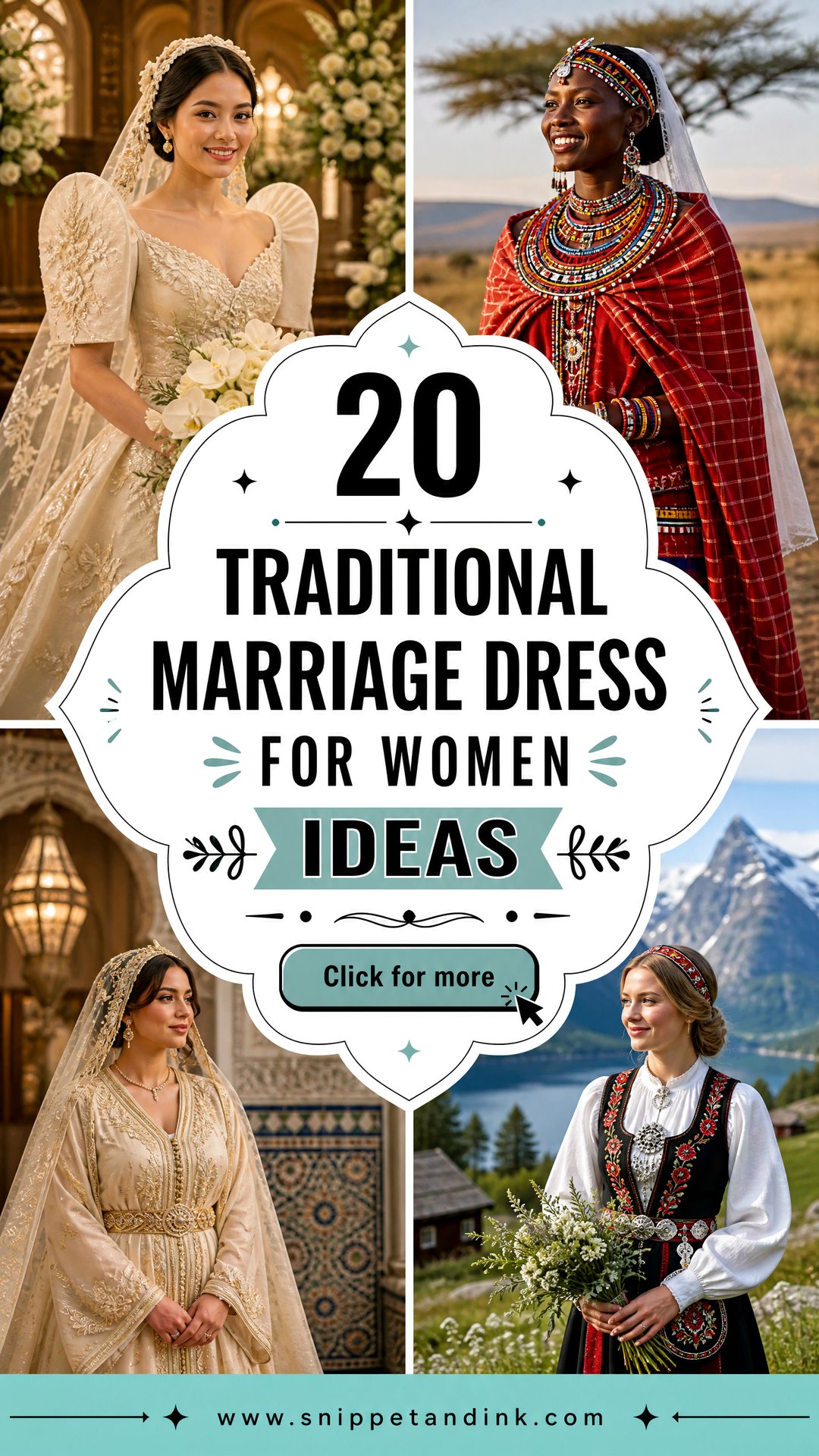
Wearing a Tradition You Are Marrying Into
More of the brides I work with now come from two cultures, or are marrying into one that is not their own. That is usually a lovely thing for the families, as long as the bride is invited rather than borrowing. My rule is simple: let the family who owns the tradition lead. They will often lend jewellery, tie the headwrap or dress her themselves, and that involvement matters more to them than any designer detail.
For couples blending two heritages, I rarely suggest fusing both into one garment. Two clear outfits, one for each ceremony or each half of the day, respect both cultures better than a hybrid that belongs to neither.
Questions worth asking the elders
- Which colours are expected for the bride, and which are reserved or avoided?
- Are there pieces, like a crown, coral or a blanket, that only family may give or place?
- Is there a particular way of draping or tying that marks a bride rather than a guest?
- Who usually dresses the bride, and when should they arrive?
1. Indian Traditional Marriage Dress With Red Lehenga
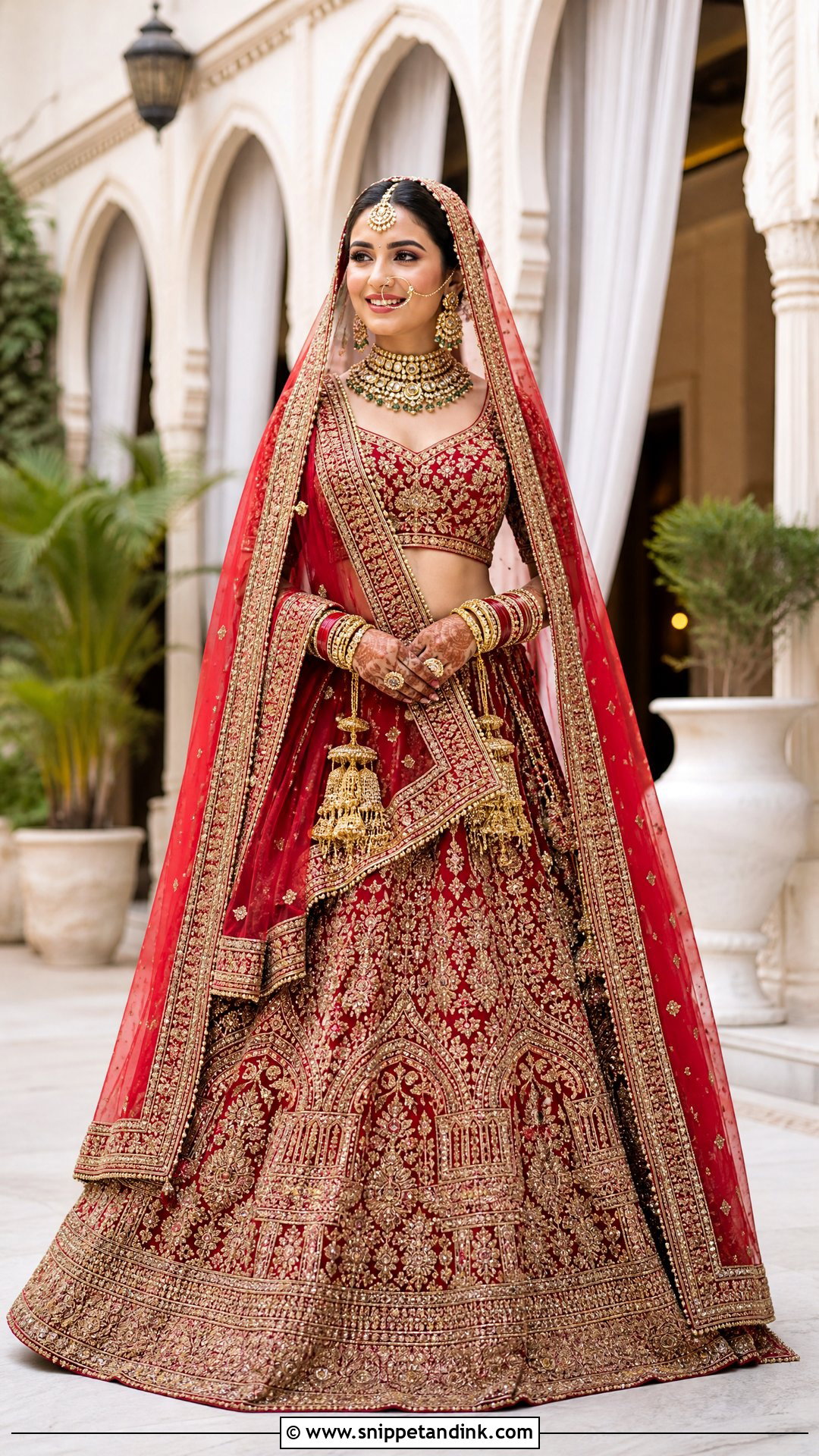
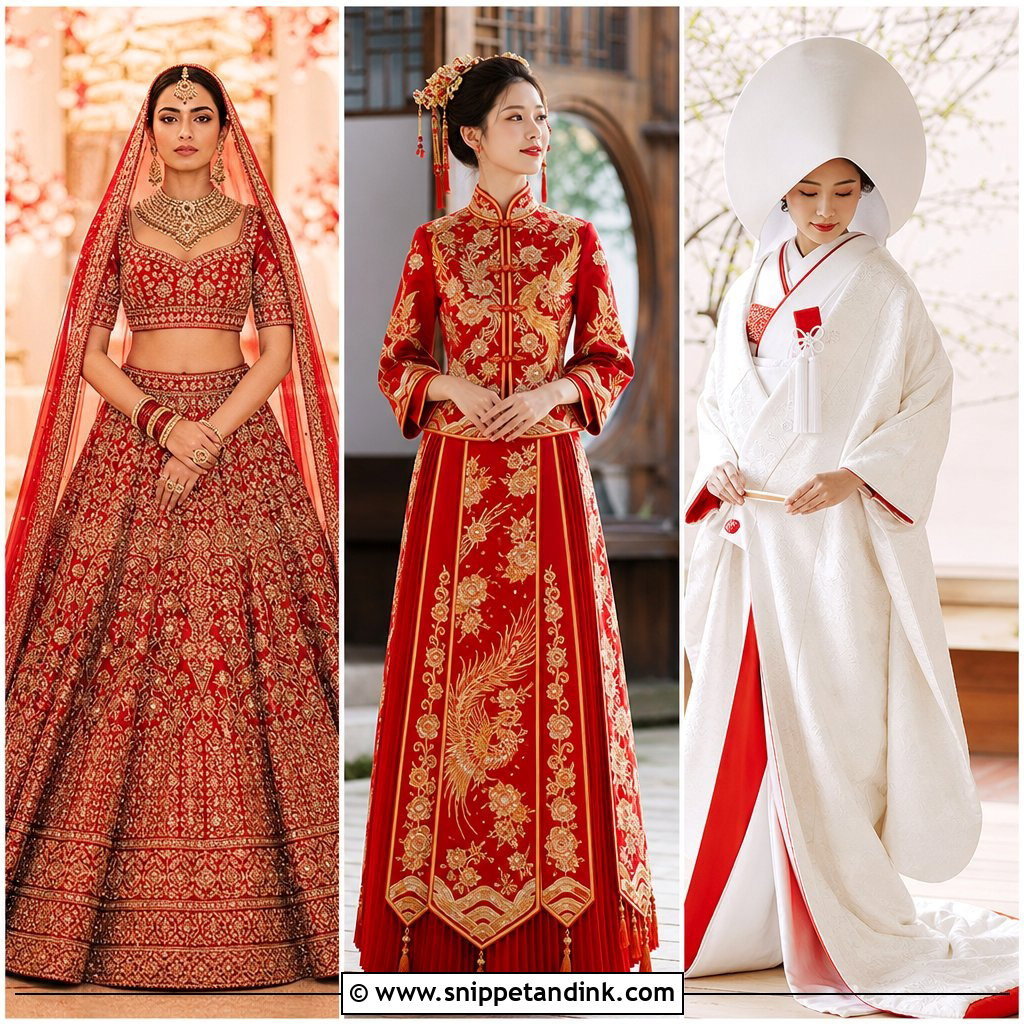
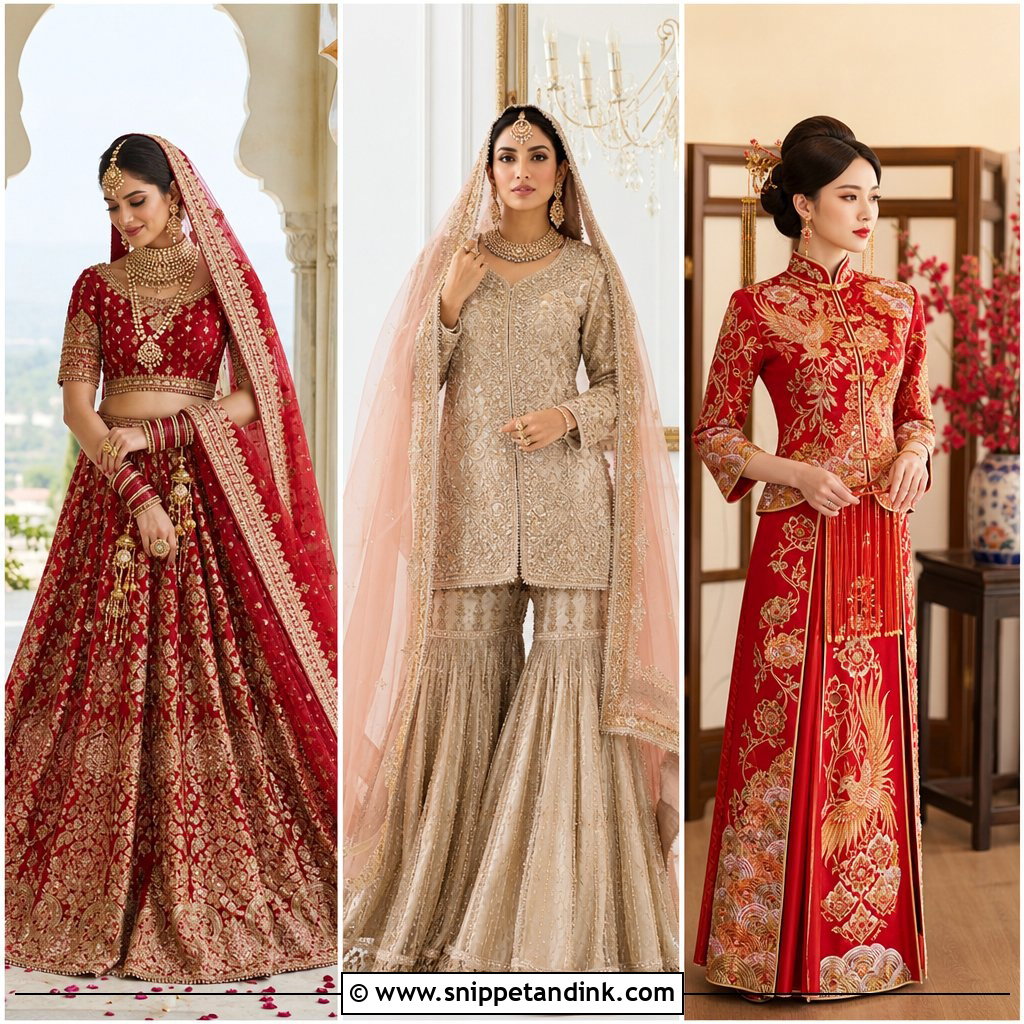
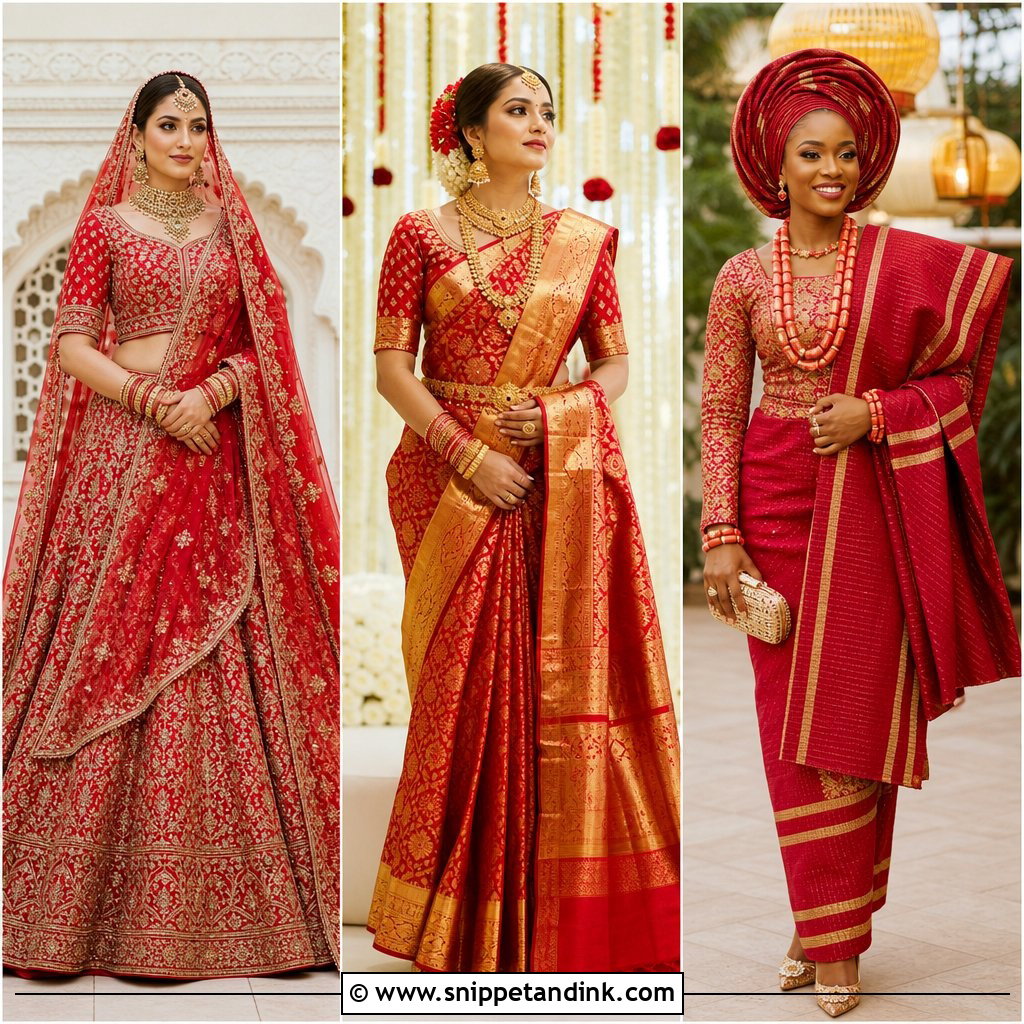
The red lehenga is the image most people hold of an Indian bride, and a full skirt, fitted choli and dupatta in silk, velvet or brocade is still the standard. Zari embroidery, beads and sequins give it depth; the skill is in placing them so the blouse, skirt and border are not all shouting. Many brides wear two dupattas, one over the head and one pinned across the shoulder. Necklace, earrings, bangles, anklets and maang tikka follow family custom, with juttis or block-heel sandals underneath. The thing I warn about most is weight. A heavily worked velvet lehenga can be very heavy at the waist, and you may be seated on the floor for the pheras, so ask your maker how much it weighs before you fall for it.
2. South Indian Traditional Marriage Dress With Silk Saree
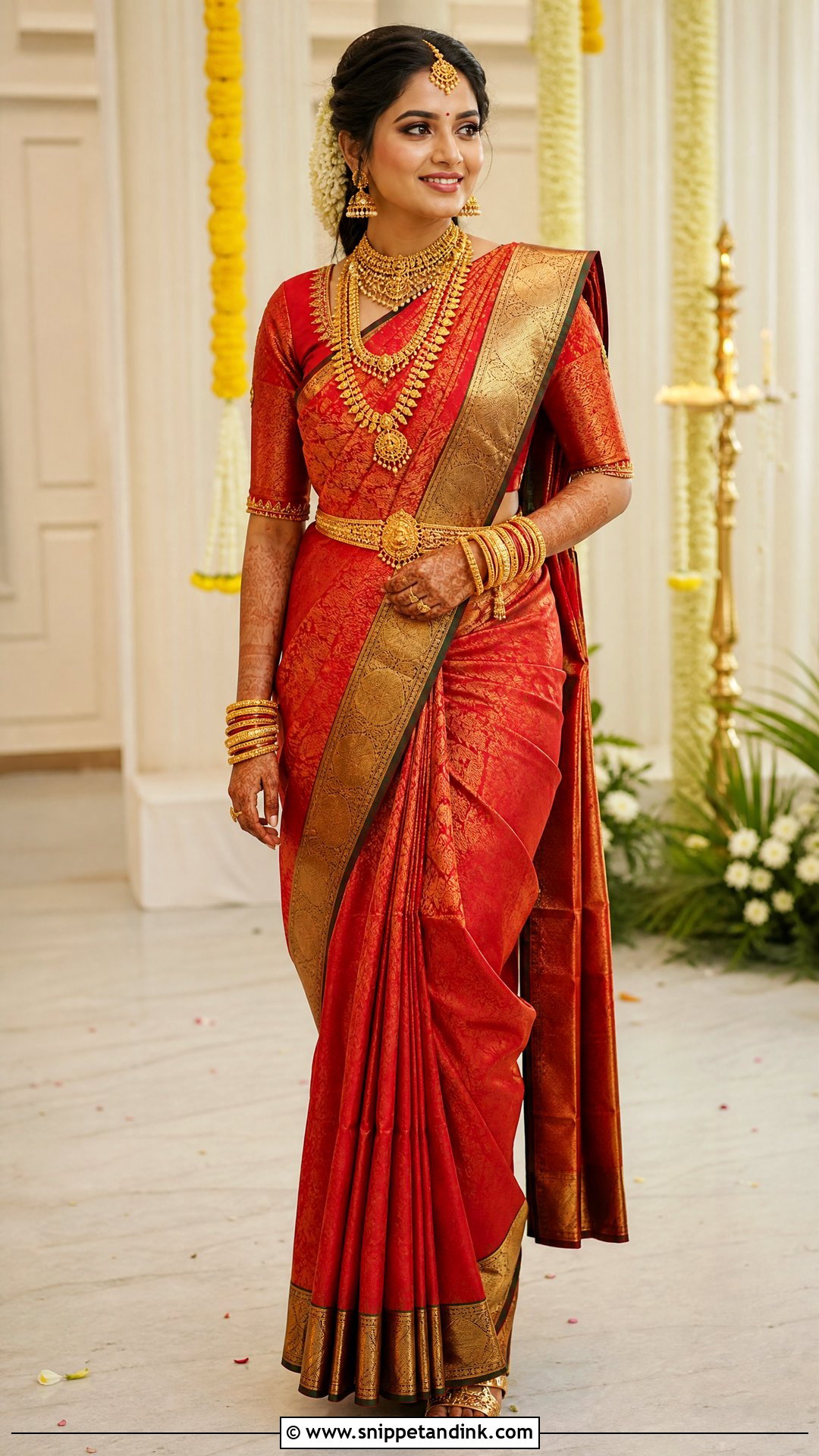
South Indian brides tend to choose a silk saree with a contrasting border, usually red, green, gold or deep maroon, and it is the drape, more than the colour, that makes the look. The blouse matters more than people expect: it carries layered necklaces all day, so I want it lined, close fitting and cut with enough room under the arm to raise a garland. Traditional gold jewellery, bangles, earrings, a waist belt and hair ornaments complete it, with jasmine around a braid or bun. Low block heels or flat sandals stay hidden under the hem. Heavy silk needs an experienced draper; poorly pinned pleats open up after an hour of sitting and standing for rituals.
3. Pakistani Traditional Marriage Dress With Gharara
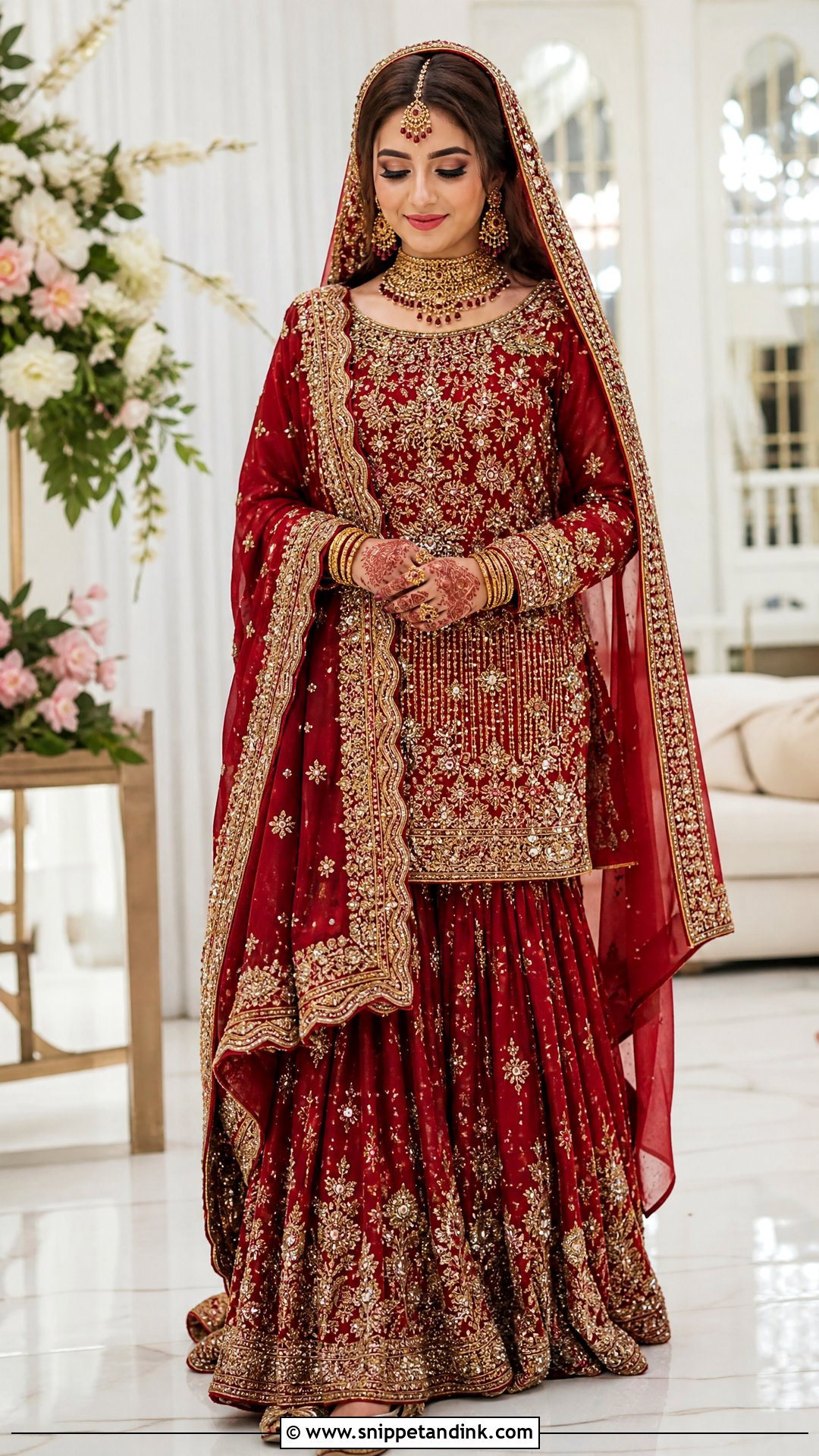
A Pakistani bridal gharara is a decorated kurti over trousers that are fitted to the knee and then flare out dramatically, with a dupatta over the head and one shoulder. Deep red, ruby, emerald, plum and antique gold are traditional for the main day; blush and ivory turn up at related events where the family is comfortable with them. Gota, zari, dabka and hand embroidery usually sit at the neckline, the hem and the trouser flare. Add a tikka, statement earrings, bangles, a necklace and khussa shoes. With so many worked pieces, I pick one metal tone, gold or antique, and keep it throughout. Mixing silver and gold embroidery on one bride almost always looks accidental.
4. Chinese Traditional Marriage Dress With Red Qun Kwa
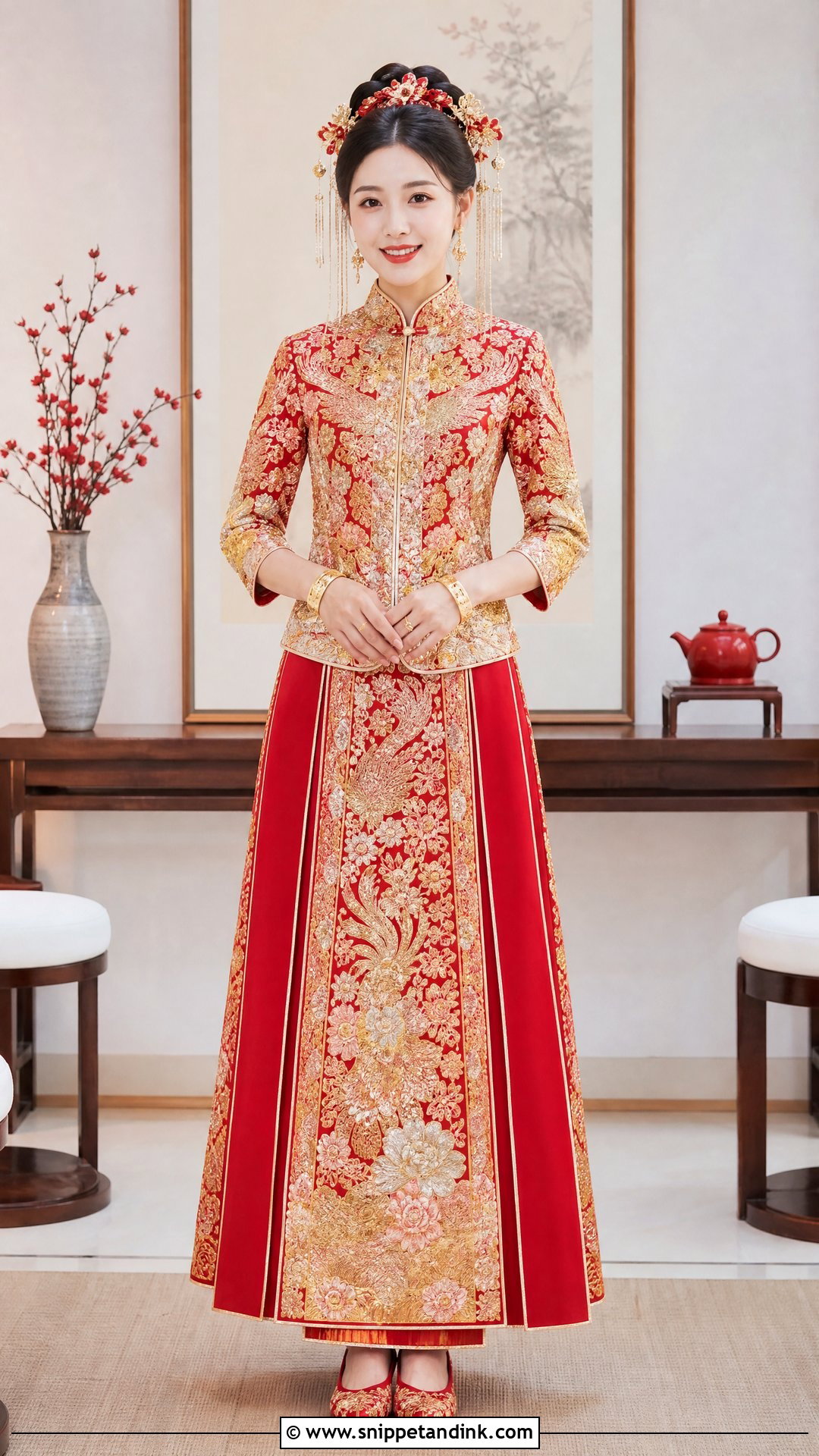
The qun kwa is a two-piece Chinese bridal outfit, a jacket and skirt in red, embroidered in gold and silver thread, typically with dragon and phoenix motifs that stand for the couple. The amount of embroidery coverage changes how formal it looks, so it is worth asking the family what they expect. Gold earrings, bangles, a simple necklace and traditional hair pieces suit it; red embroidered flats are practical for a tea ceremony, where you will be kneeling, serving and standing repeatedly. Keep makeup refined, with a red or rose lip. If the qun kwa is inherited, have a specialist check the frog closures and lining. Old metallic thread snags easily on bracelets, so I keep sleeves and jewellery from touching.
5. Japanese Traditional Marriage Dress With Shiromuku Kimono
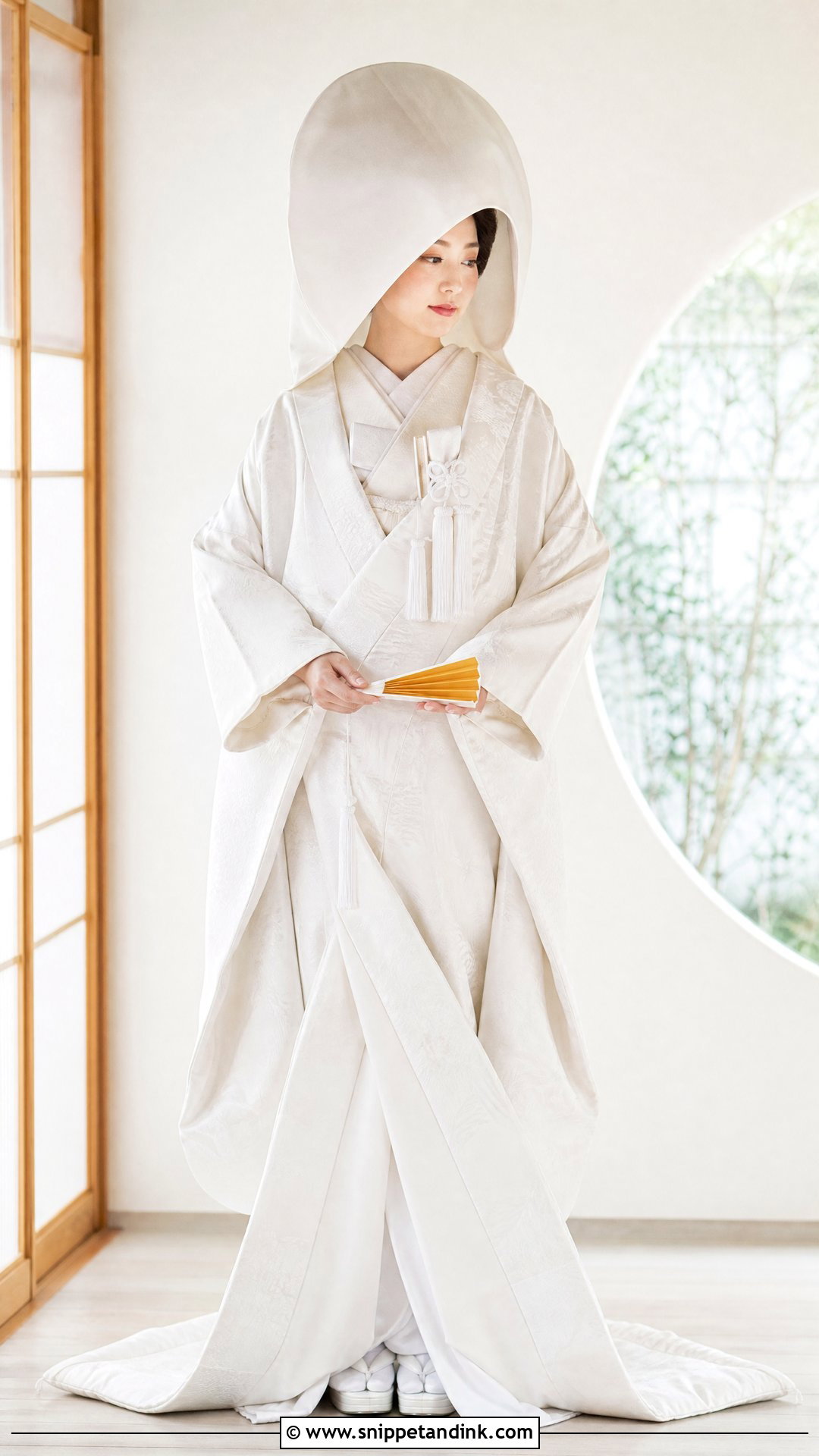
The Japanese shiromuku is all white, layer on layer, and it is not something a bride can put on herself. A professional kimono dresser handles the underlayers, the obi and the outer robe, and the process takes a good while, so book her time before you book the hair. White tabi and zori go on the feet; the head takes either a wataboshi hood or a tsunokakushi, depending on the ceremony. Keep jewellery out of it entirely. The layers change how you walk, with short steps and a controlled posture, so practise. Many brides change into a coloured iro-uchikake or a different outfit for the reception.
6. Korean Traditional Marriage Dress With Hwarot Hanbok
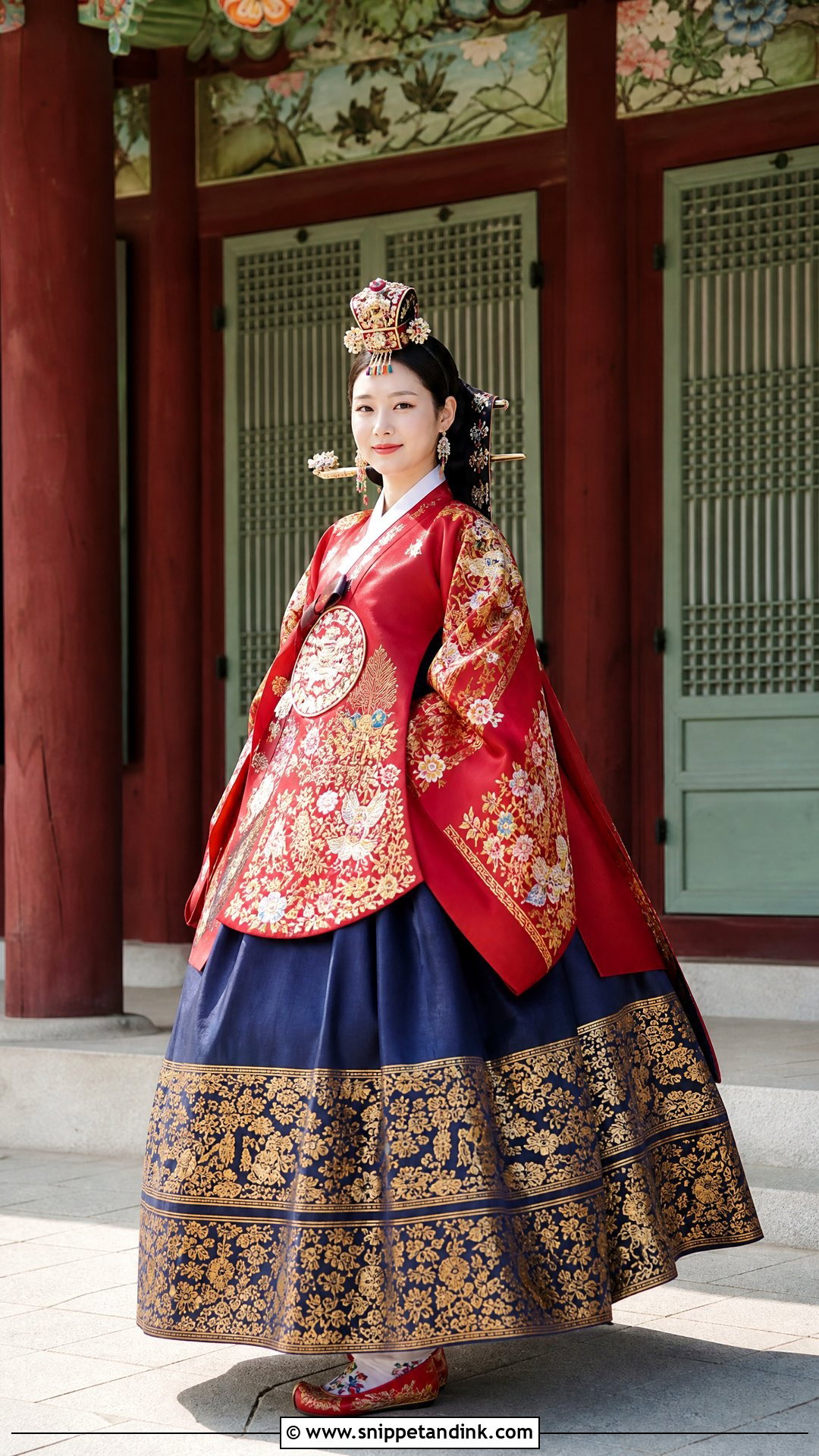
A Korean bridal hwarot and hanbok outfit builds from a jeogori jacket and full chima skirt, with the embroidered hwarot robe on top. The robe was once court dress and is covered in motifs of flowers, birds and symbols of long life and many children, in red, blue, green, yellow and gold. A small jokduri crown, ornamental hairpins, embroidered socks and traditional shoes finish it. Skip a modern necklace; it fights the neckline. The hwarot has long, heavy sleeves, and during the deep bows of a pyebaek it is easy to step on the hem, so I always have a trained dresser adjust the ties and skirt volume and run through a bow before the ceremony.
7. Vietnamese Traditional Marriage Dress With Red Ao Dai
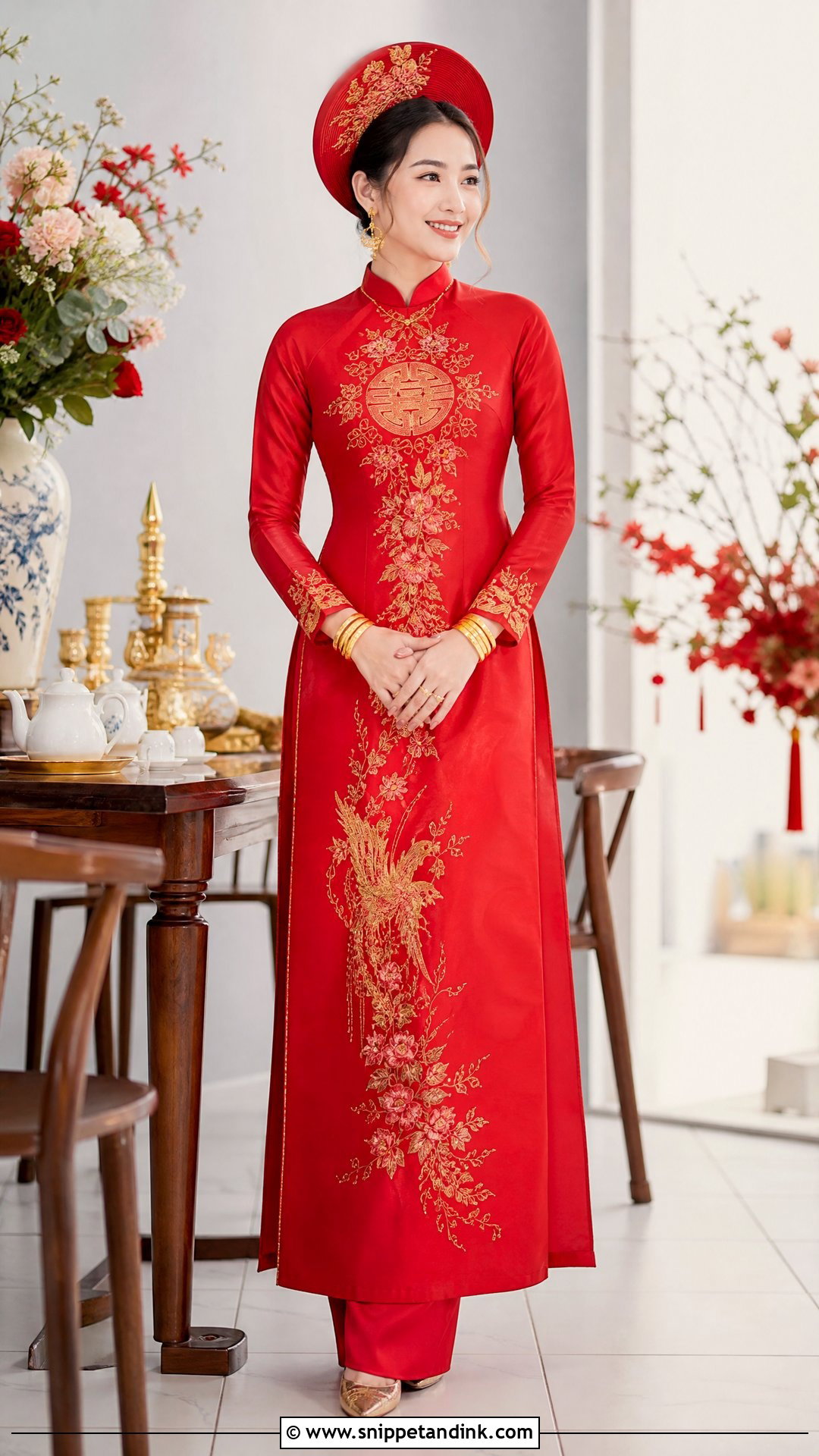
Red silk áo dài is the outfit many Vietnamese brides wear for the family ceremonies. The fitted tunic splits into two long panels over loose trousers, so it moves as you walk. Silk or brocade with gold embroidery, beading or symbolic motifs keeps it formal, and a matching khăn vấn headpiece completes the look. Pointed flats or low heels suit the trousers. A high collar means one necklace at most; earrings and bangles do the rest. Áo dài are cut very close through the torso, which flatters but can restrict breathing when you sit after a meal, so I have the bride sit and eat at the fitting. White and other colours appear at many modern weddings, but red remains the bridal favourite.
8. Thai Traditional Marriage Dress With Silk Chut Thai
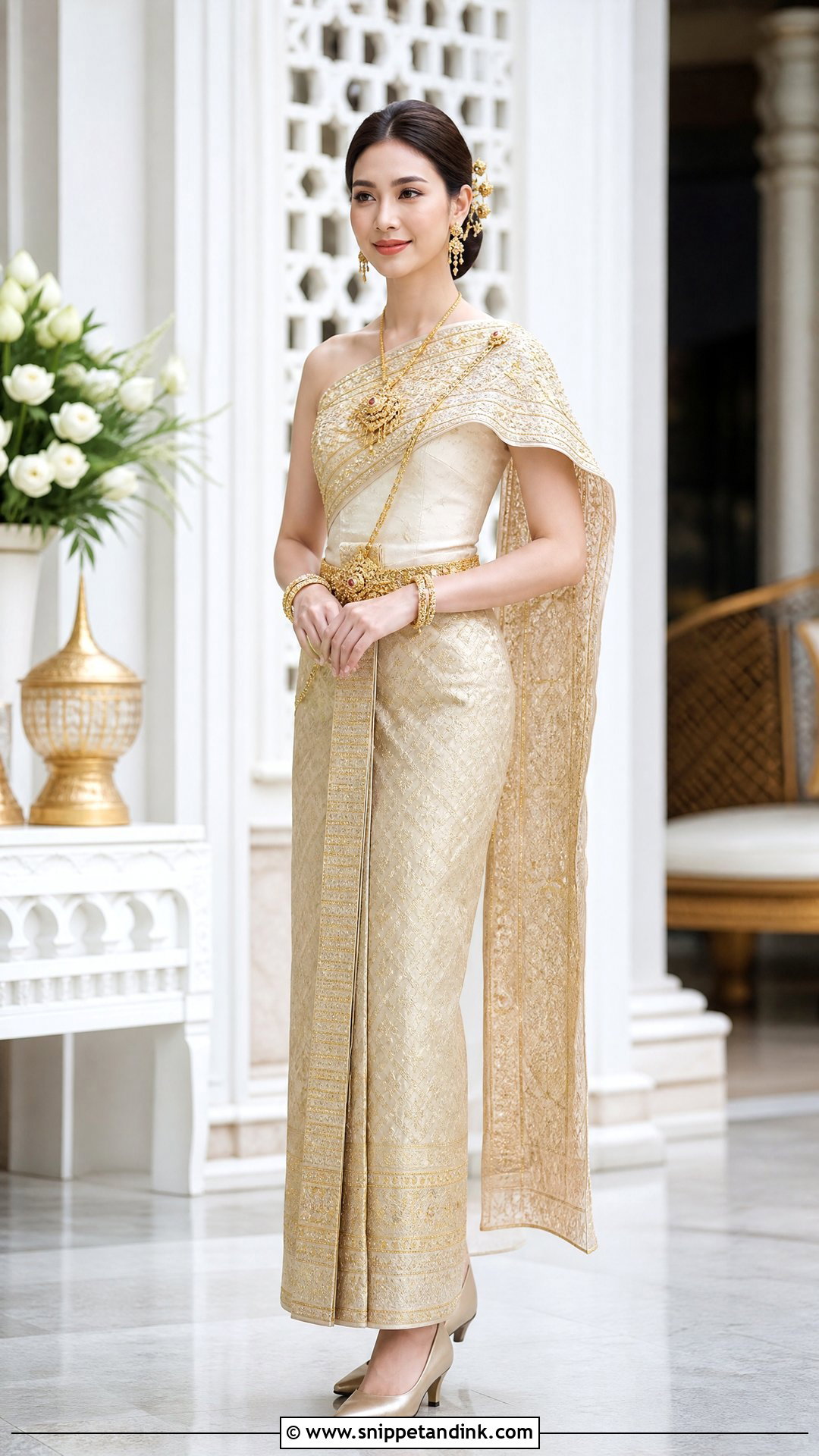
Thai national dress, chut Thai, comes in several official styles, and the formal ones for a bride often combine a fitted top, a shoulder drape called a sabai and a wrapped silk skirt known as a pha sin. Gold, ivory, blush and soft green look rich in silk brocade. Gold earrings, a necklace, bangles, a belt and fine hair ornaments complete it, with low metallic heels or embroidered flats. The styles differ in neckline and drape, so I ask a designer who knows them to match the version to the ceremony. A sabai slips off a bare shoulder easily; it should be anchored with hidden stitches or pins under the arm, not just tucked.
9. Indonesian Traditional Marriage Dress With Kebaya And Batik
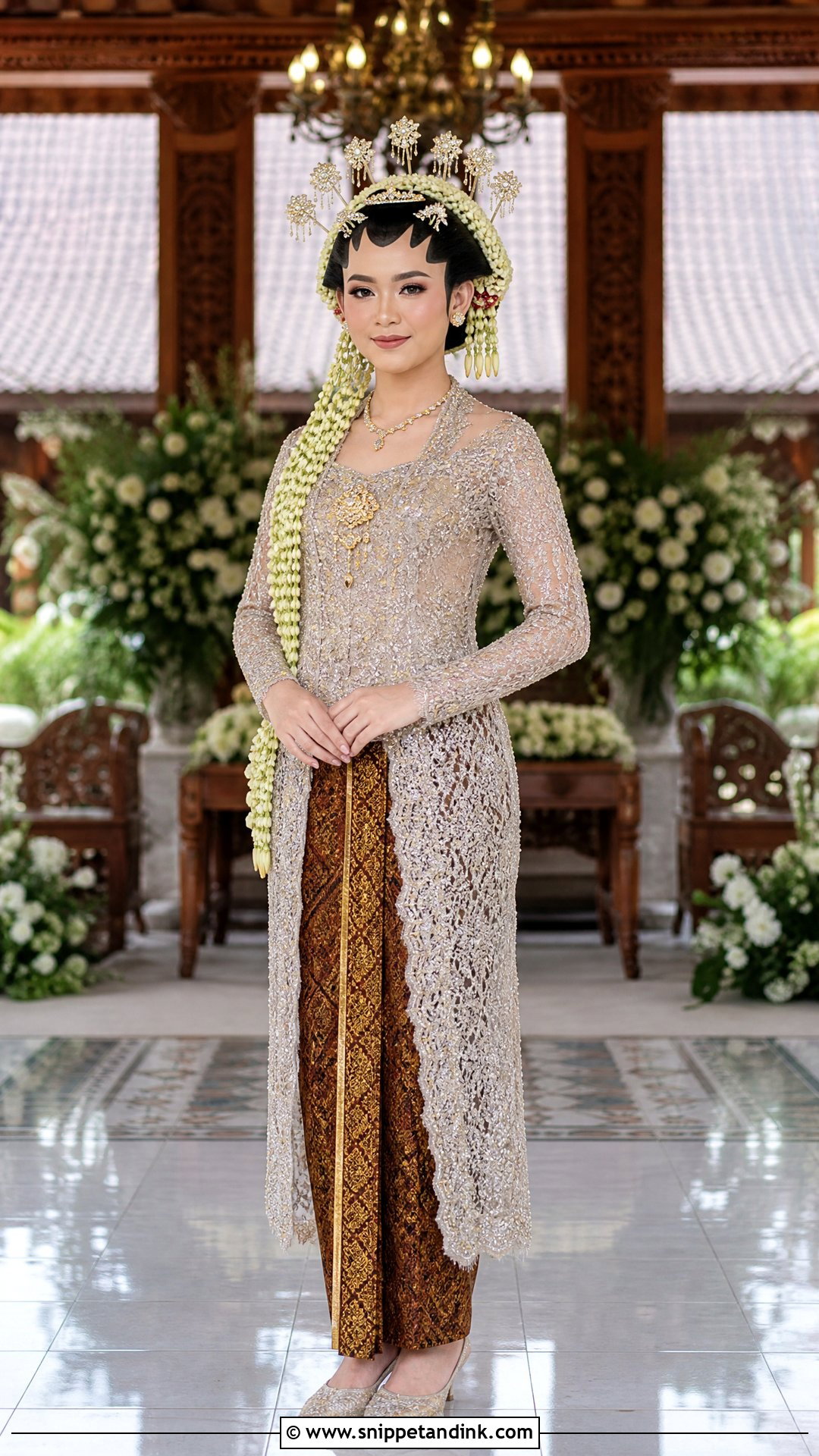
In Java, a bride’s kebaya is embroidered or beaded over a supportive inner layer and worn with a batik kain wrapped tightly around the lower body. Brown, black, gold, green and deep red show the batik pattern well. Traditional styling can include an elaborate bun, gold ornaments and a headpiece, and in some regions the forehead is painted in black for the ceremony. The tight kain means short steps, so low heels or closed flats are the sensible choice. Wrapping methods differ between regions and families, so I let an experienced dresser fasten each layer. Coordinate the kebaya embroidery with the batik rather than matching every colour, so both crafts can be seen.
10. Malaysian Traditional Marriage Dress With Songket Baju Kurung
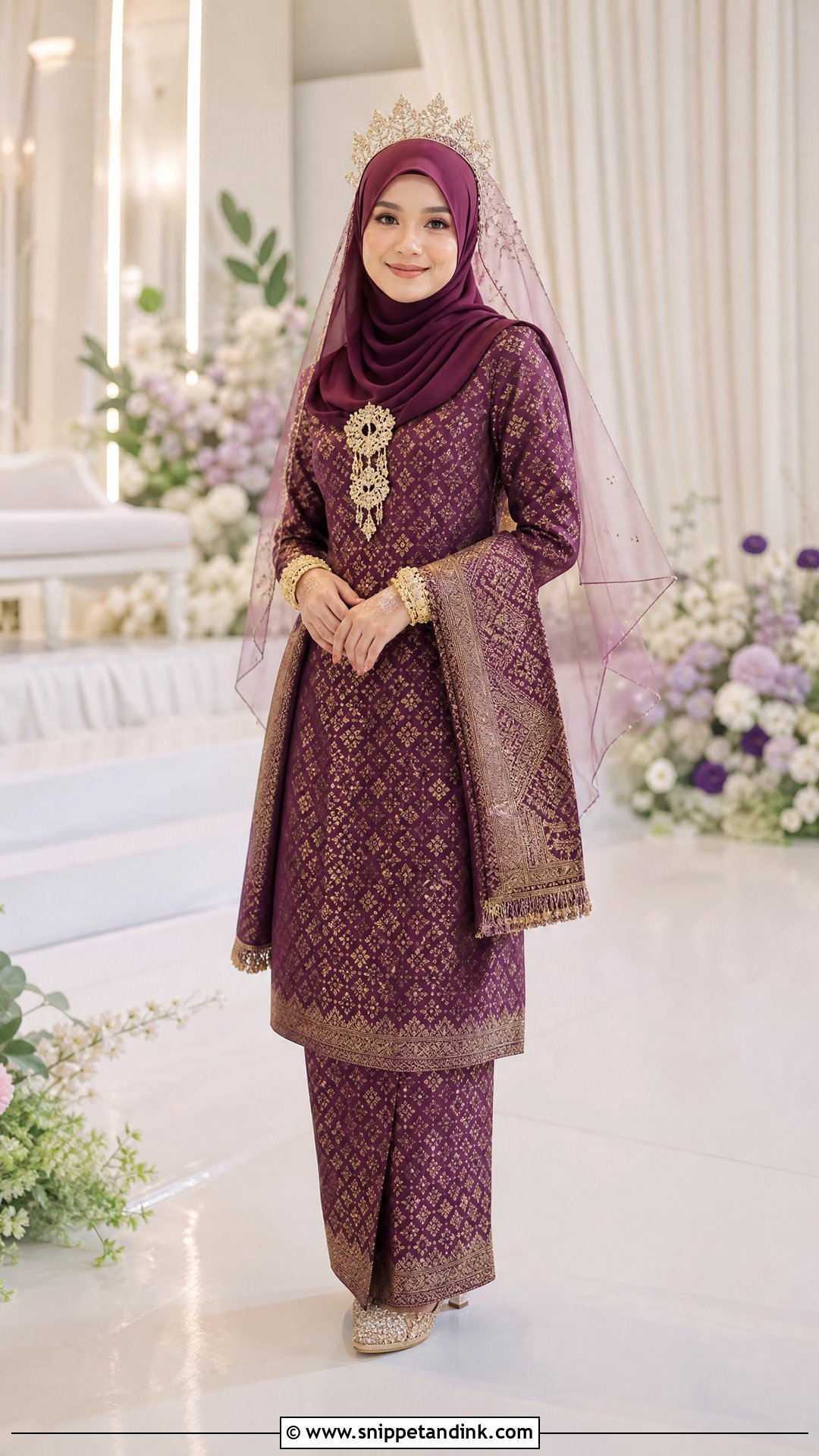
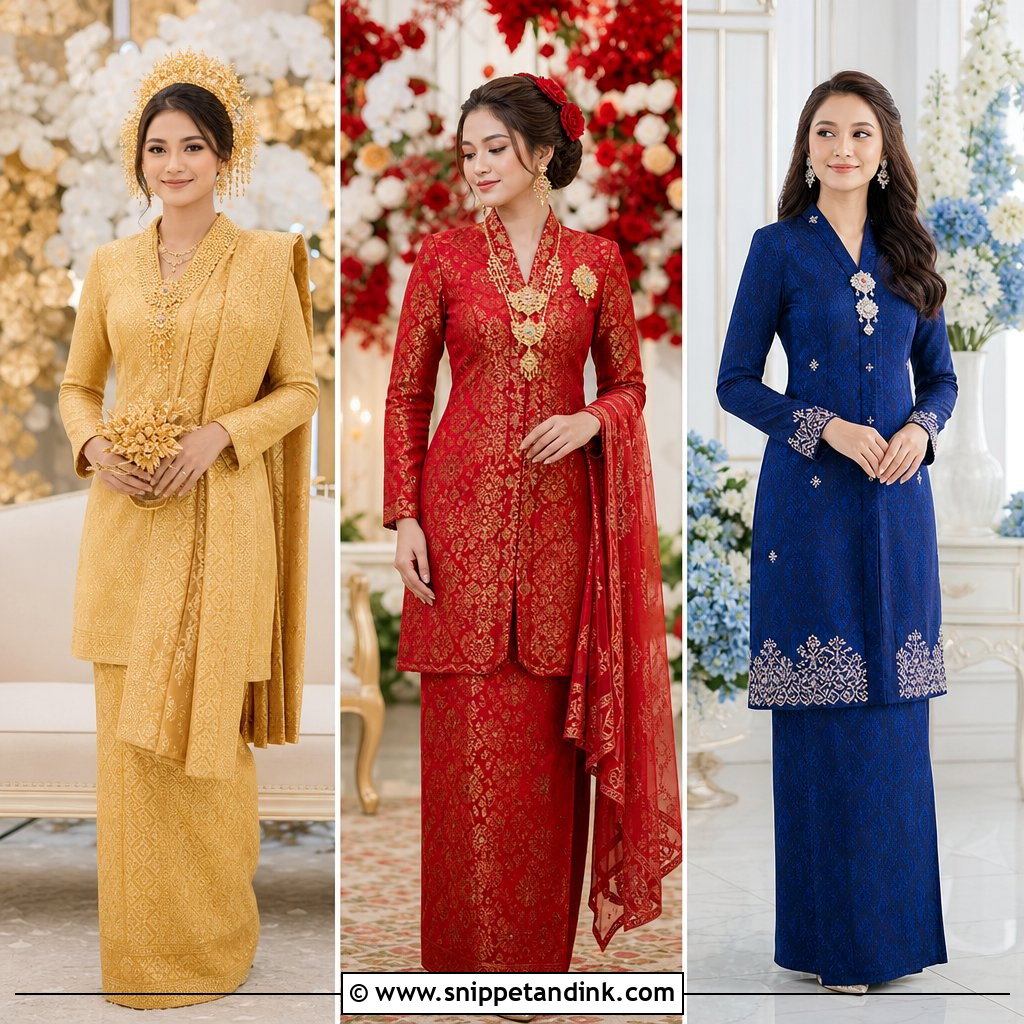
A Malaysian bride in a baju kurung made with songket gets modest coverage and a lot of texture. The long-sleeved top and full-length skirt make a long, smooth line. Jewel tones, soft pastels, ivory and gold all look formal enough. A selendang over the shoulder or a tudung with a bridal veil, plus a crown-style headpiece, a brooch, earrings, bangles and closed heels or flats finish it. Songket is woven with metallic thread and it is warm and stiff, so I line the top with something breathable and leave out any extra underlayers. Shoulders and sleeves need precise tailoring, because stiff cloth will not drape around a poor fit.
11. Filipino Traditional Marriage Dress With Terno Gown
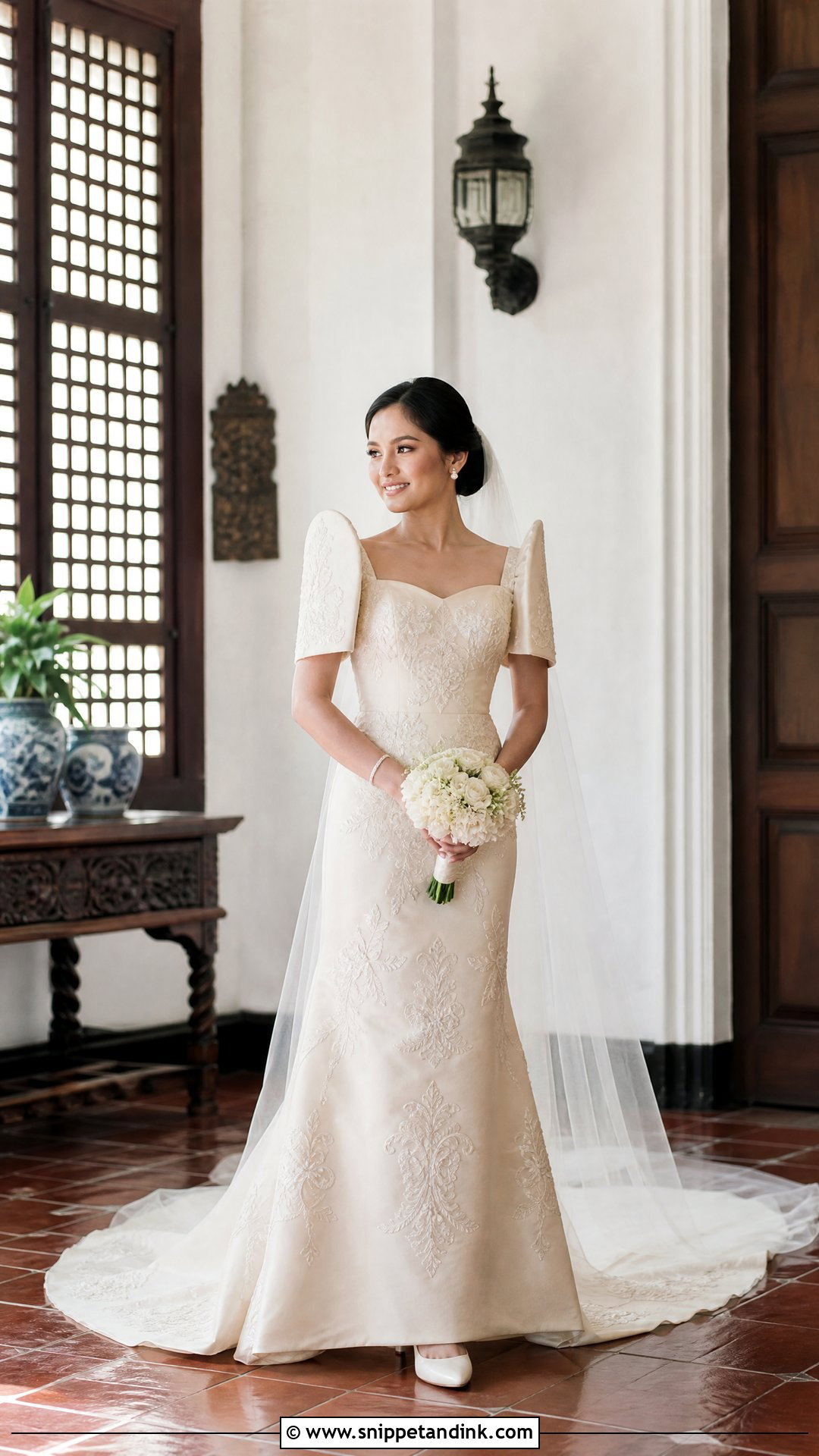
The butterfly sleeves of a Filipino terno stand up off the shoulder, and the fabric decides whether they stay up. Piña and jusi, the fine fibres often used for Filipiniana, have a natural crispness; soft fabrics need interfacing or the sleeves collapse. An ivory or white floor-length gown with embroidery or subtle beading, a flowing skirt and a small train is the classic version. Pearl earrings, a fine bracelet, a simple veil and neutral pumps keep the focus on the sleeves. A baro’t saya or María Clara-style outfit, with blouse, long skirt and pañuelo, is the more layered heritage option. Either way, choose a Filipiniana designer who understands sleeve proportion.
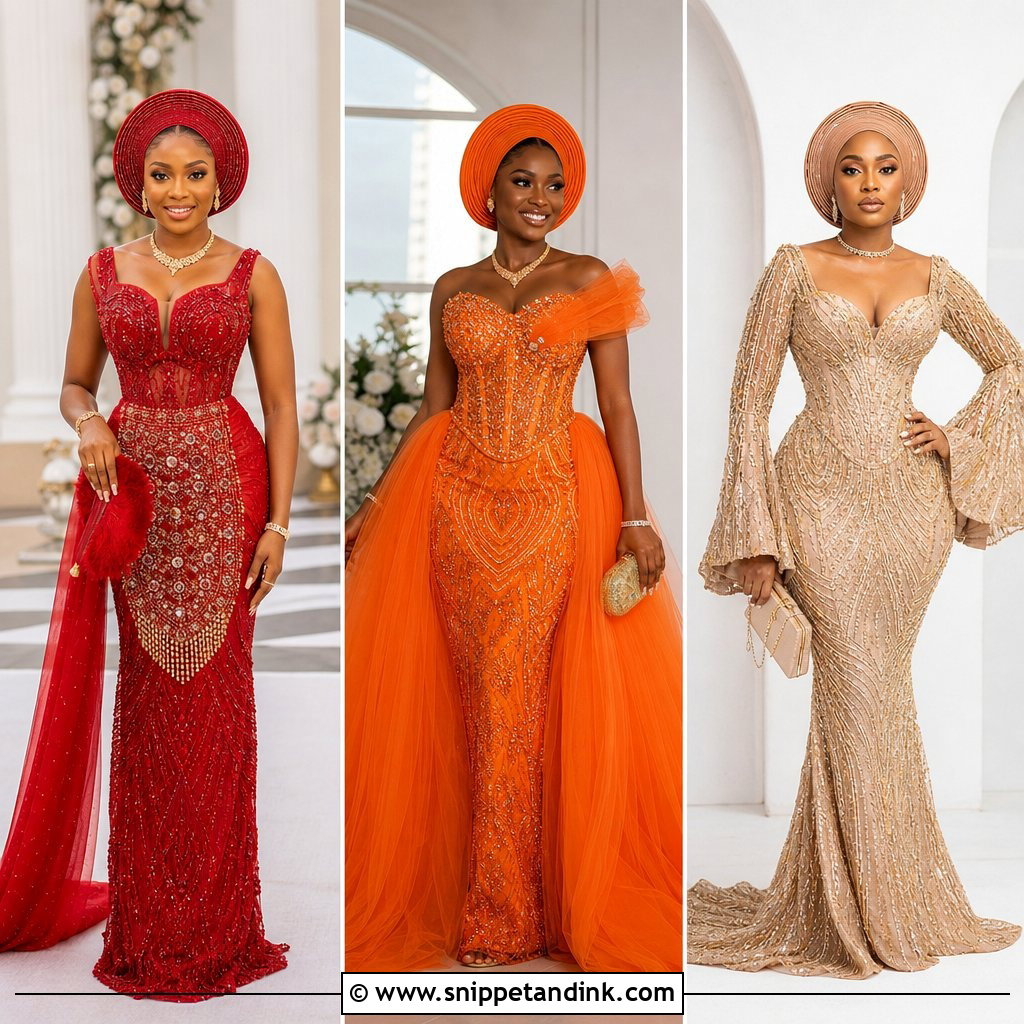
12. Yoruba Traditional Marriage Dress With Aso Oke
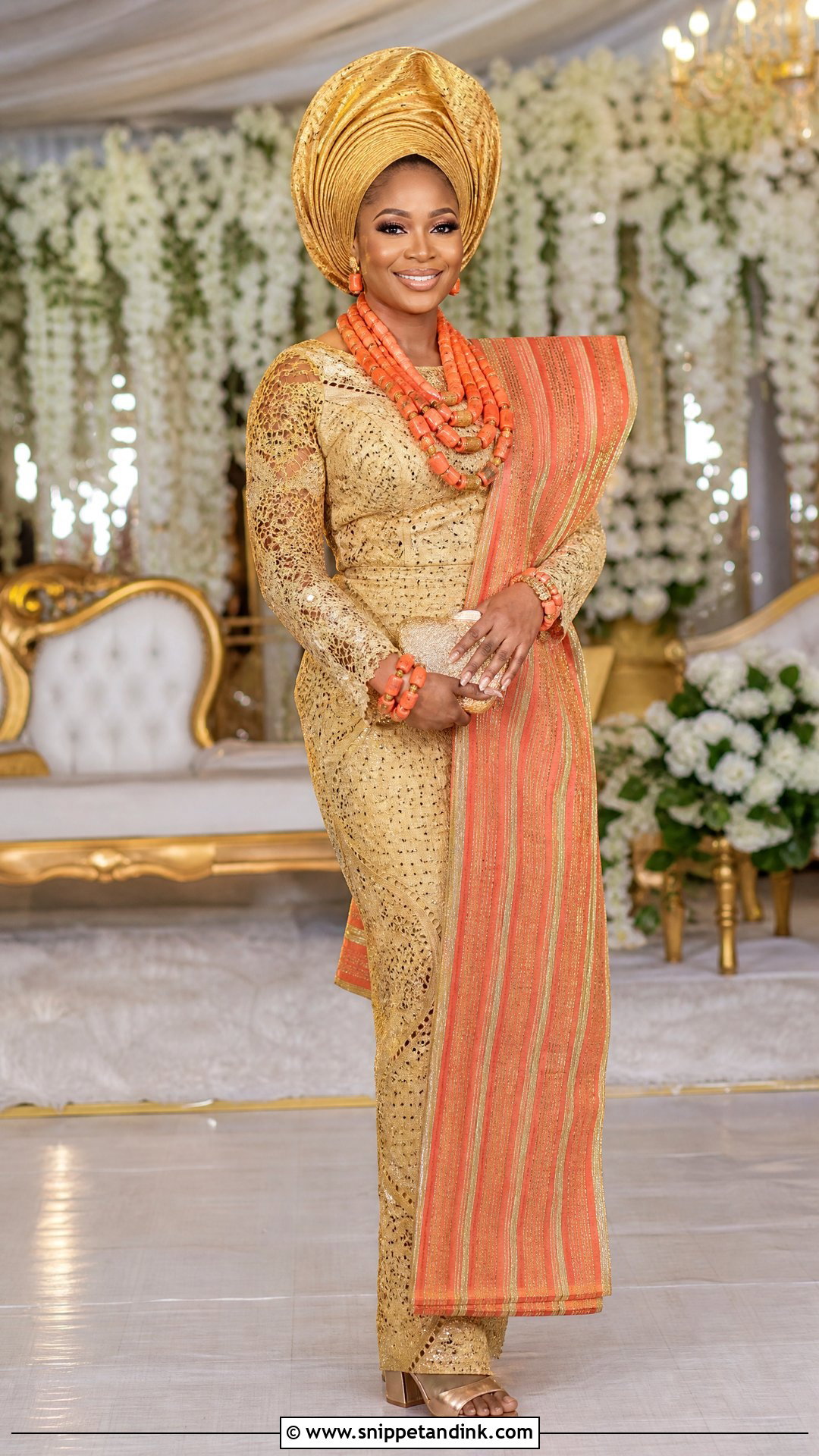
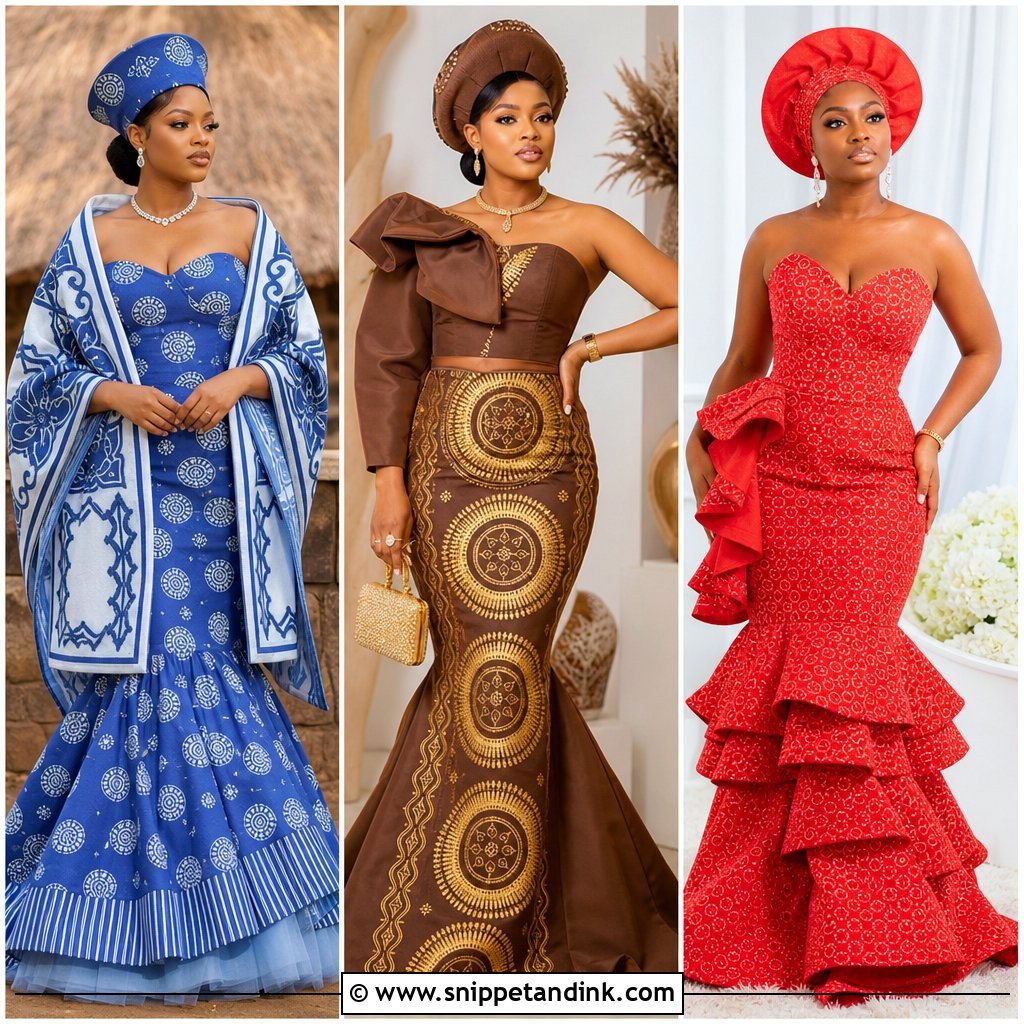
Aso oke is a hand-loomed Yoruba cloth with real body, which is why it holds the sculpted shape of a gele so well. The bridal set can include the iro wrapper, buba blouse, ipele sash over the shoulder and the gele. Gold, coral, white, deep red and custom family colours are all common. Layer coral beads at the neck and wrists, sized against the height of the gele. Metallic heels or sandals must be steady under the wrapper. Couples often match fabric, and many families choose an aso ebi colour for guests too. A professional gele tier is worth paying for, since proportion makes or breaks this look; I’d have her and the tailor see the full outfit together before the day.
13. Igbo Traditional Marriage Dress With George Wrapper
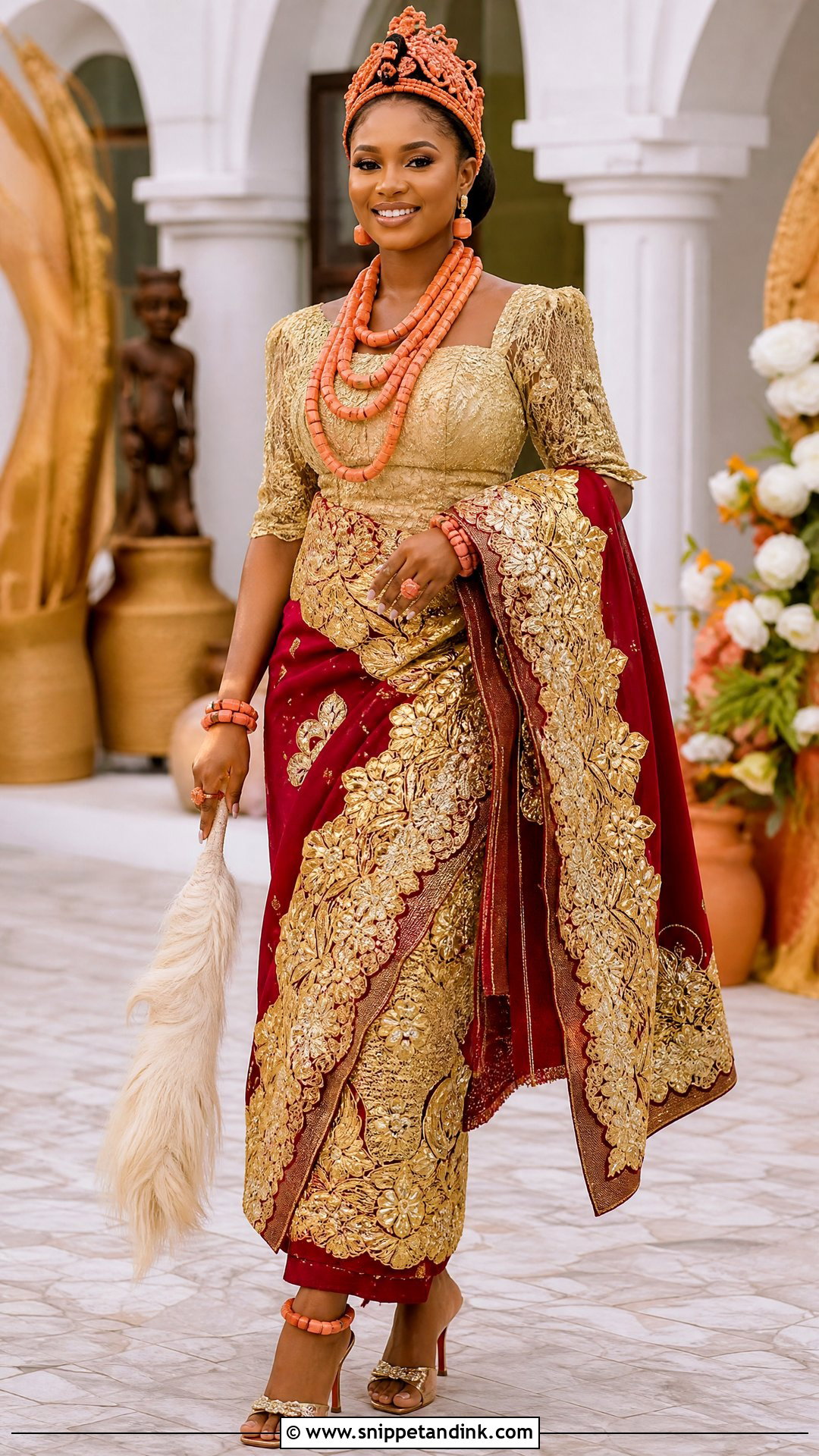
An Igbo traditional bridal outfit is built on a George wrapper, a heavy, richly worked cloth, tied at the waist with an embroidered blouse in a matching metallic or jewel tone. Some brides add a second wrapper for volume. Coral necklaces, bracelets, earrings and a beaded headpiece are the signature, arranged according to community and family custom. Gold sandals or low heels keep the palette together. Coral strands are heavier than they look, and a blouse neckline cut too low lets them sit on bare collarbones all day, so I test the full set early. Many brides change outfits during the celebration, so plan quick-release wrapper ties.
14. Ghanaian Traditional Marriage Dress With Kente
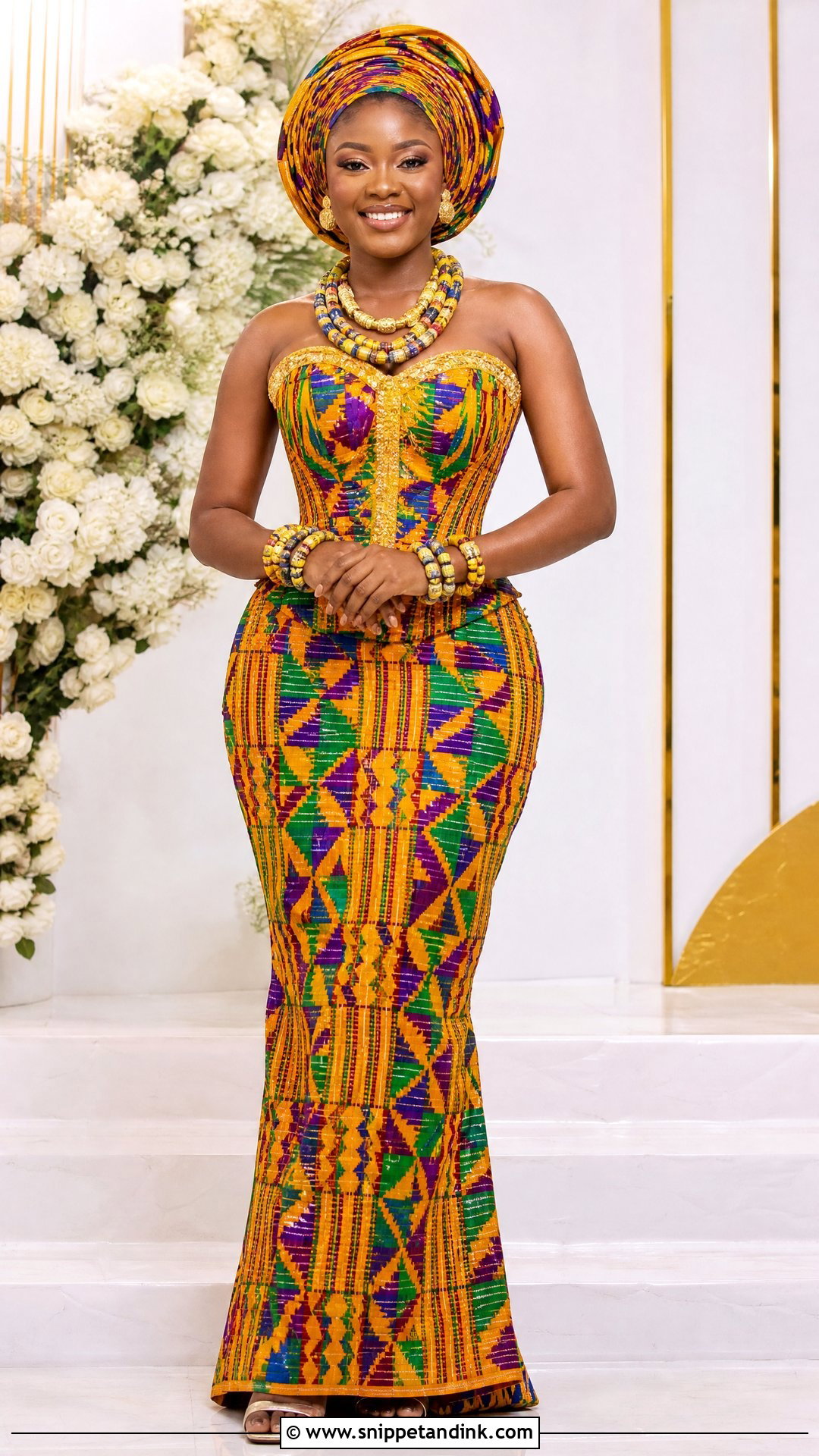
Kente is woven in narrow strips that are then sewn together, which is why its patterns sit in neat blocks. A Ghanaian bride can wear it wrapped and draped or tailored into a gown, peplum top and long skirt. Patterns and colours often have names and associations, so pick with family guidance. A matching duku headwrap, layered beads at the neck and wrists, and metallic sandals or block heels complete it. Couples who coordinate look best repeating one or two colours rather than wearing identical cloth. When kente is tailored, pattern placement is everything: I mark where the strongest strip will fall before a single cut, so it shows in full-length photographs.
15. Maasai Traditional Marriage Dress With Shuka And Beadwork
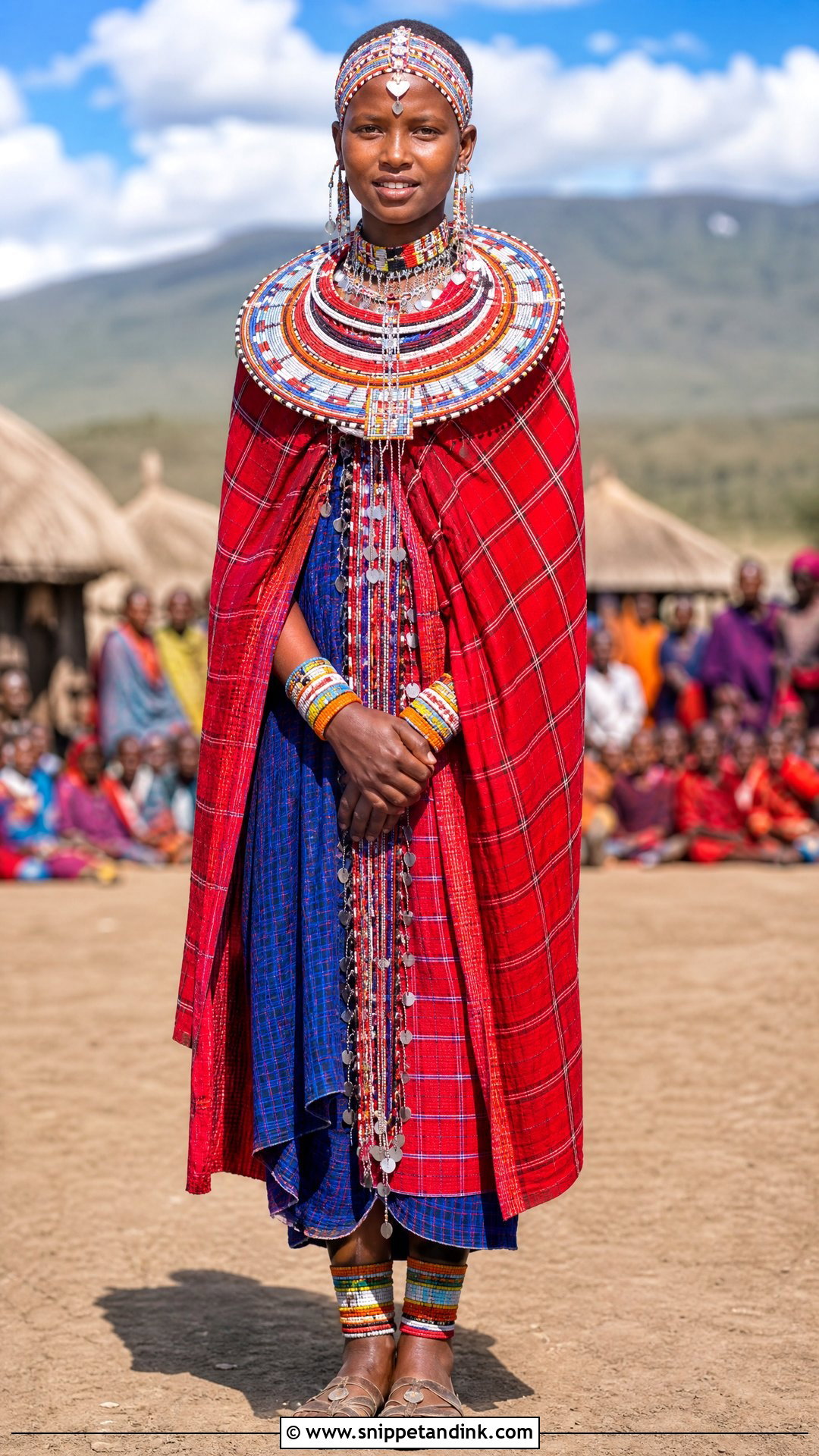
Maasai bridal dress starts with shuka cloth, red, blue or checked, and is crowned by beadwork made by women in the community. The broad circular collar is usually the dominant piece, so keep the cloth arrangement clean at the shoulders. Bracelets, anklets, earrings and a beaded headpiece complete it, with simple leather sandals. These pieces can carry family and community meaning, so guidance from Maasai relatives or artisans is essential, and swapping in costume jewellery misses the point. I’d only style this look for a bride who belongs to the tradition or is marrying into it with her new family dressing her.
16. Xhosa Traditional Marriage Dress With Umbhaco
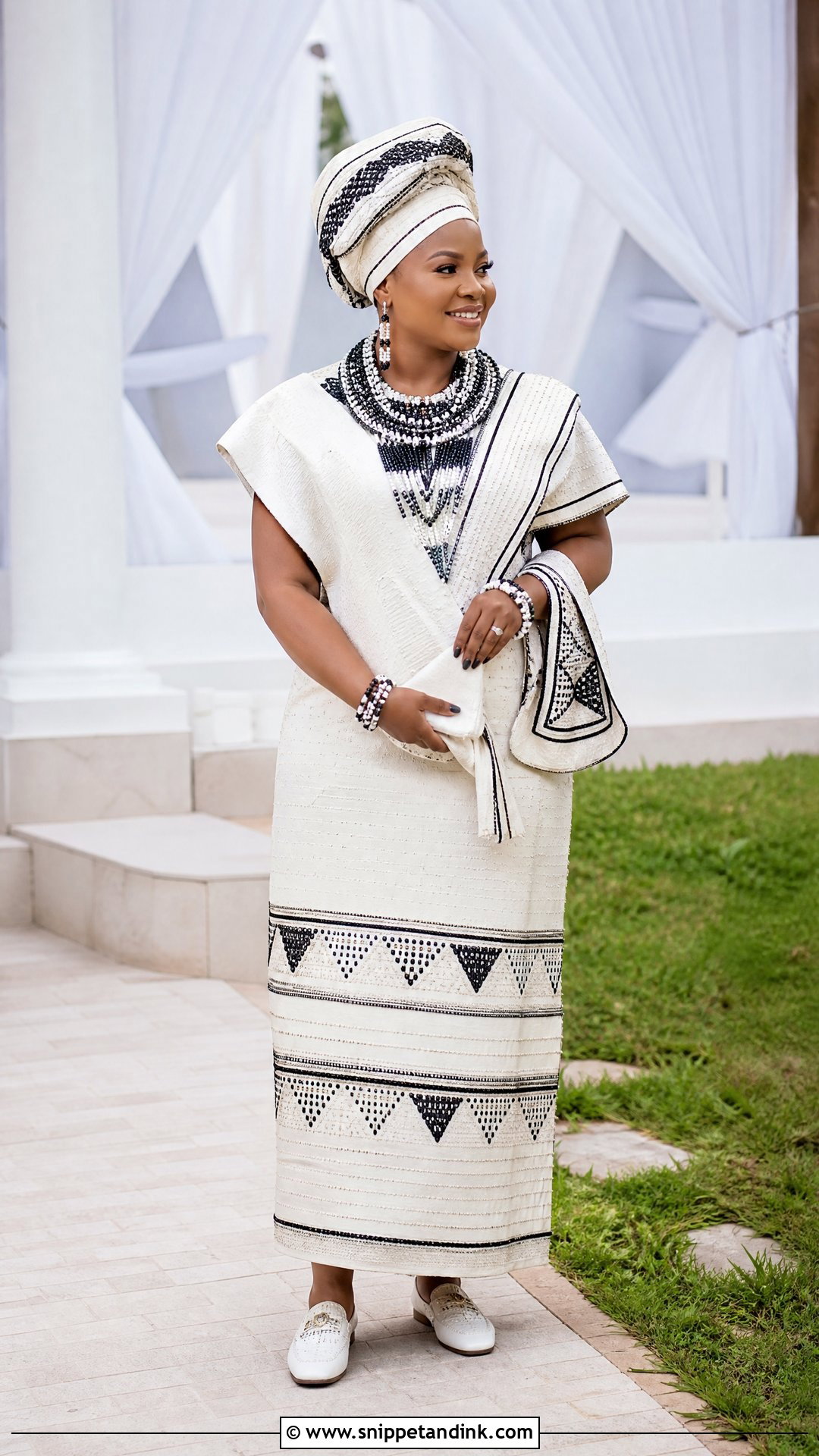
Xhosa bridal umbhaco is white or cream cloth bordered with bold black braid, which gives it its graphic edge. A long wrap skirt, top, shoulder covering and doek make the full look, with red, orange or blue accents. Beaded necklaces, earrings and bracelets complete it, with sandals or low shoes. Beadwork and head covering can signal identity and marital status, so let family choose them. The cloth can be stiff, so I leave extra room through the shoulders and hips. A good dressmaker aligns the black bands at every seam so the outfit reads cleanly from front, side and back.
17. Moroccan Traditional Marriage Dress With Caftan
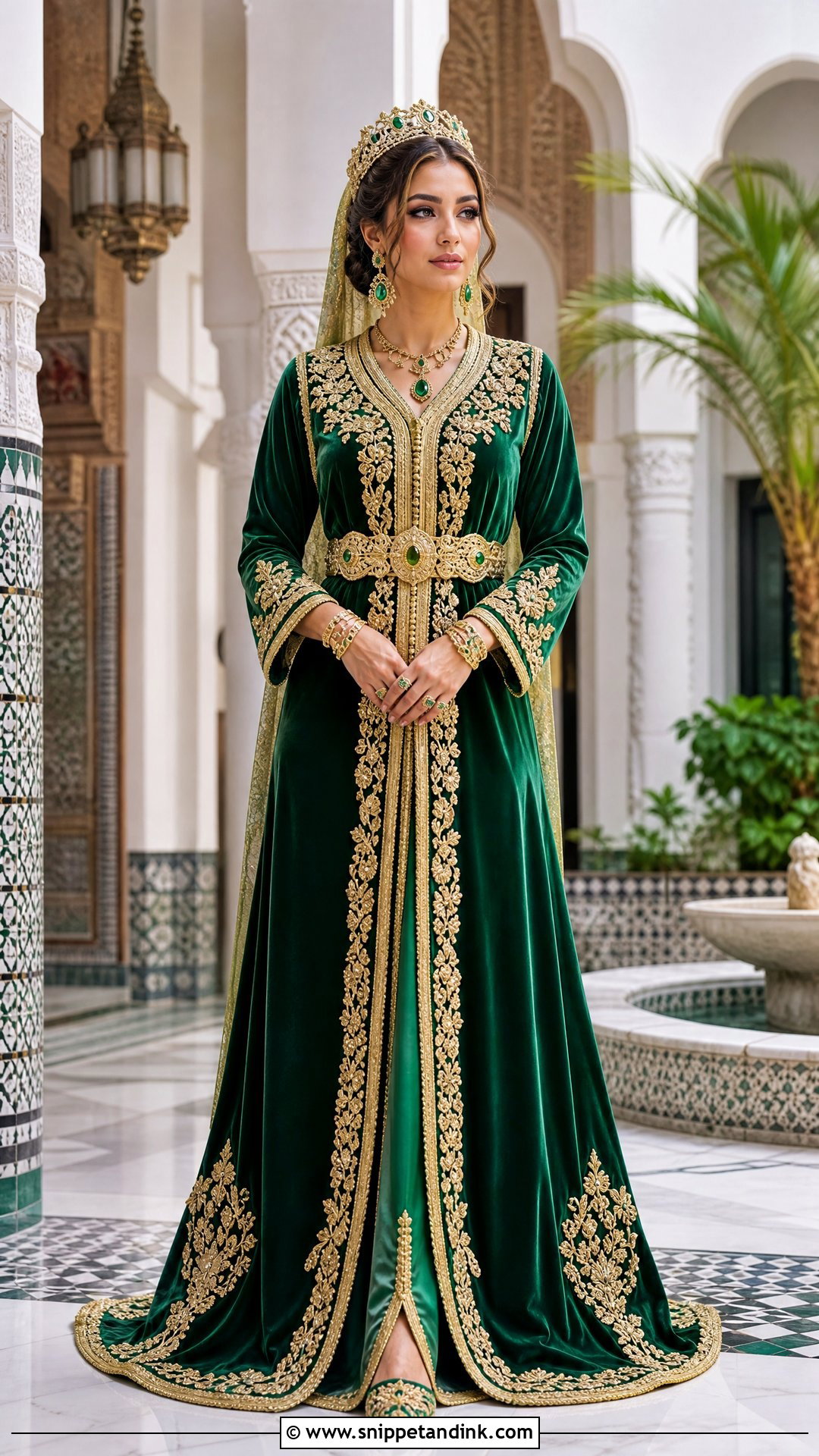
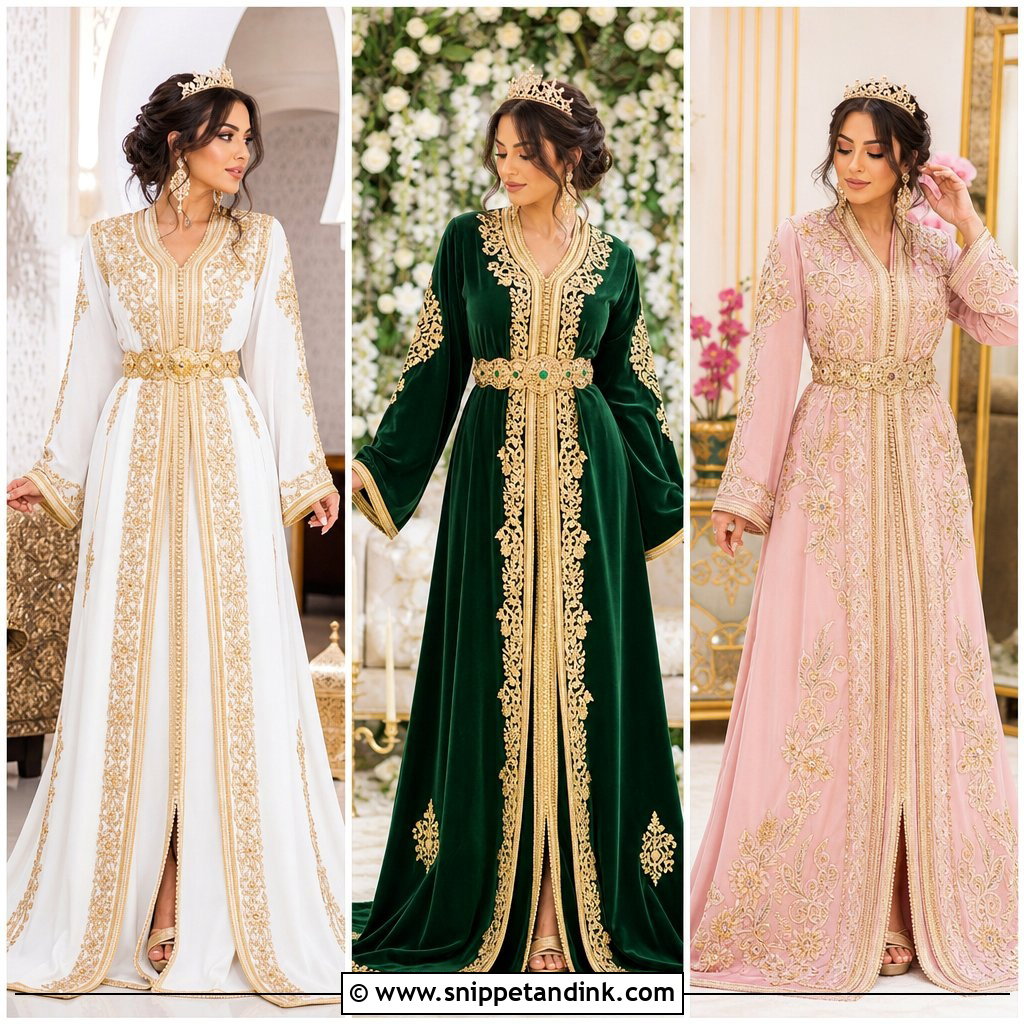
A Moroccan bride rarely wears just one outfit. Several changes through the night are common, often managed by a negafa, the bridal dresser who brings the garments, jewellery and sometimes the throne the bride is carried on. A caftan or two-layer takchita in velvet, silk, satin or brocade with embroidery, beadwork or braided trim, belted at the waist, is the base for most of them. Emerald, royal blue, burgundy, white and gold all suit. Gold earrings, necklace, bracelets and an ornamental headpiece complete each look, with embroidered slippers or low heels. Plan the order by weight: I put the heaviest outfit early, while the bride still has energy.
18. Norwegian Traditional Marriage Dress With Bunad
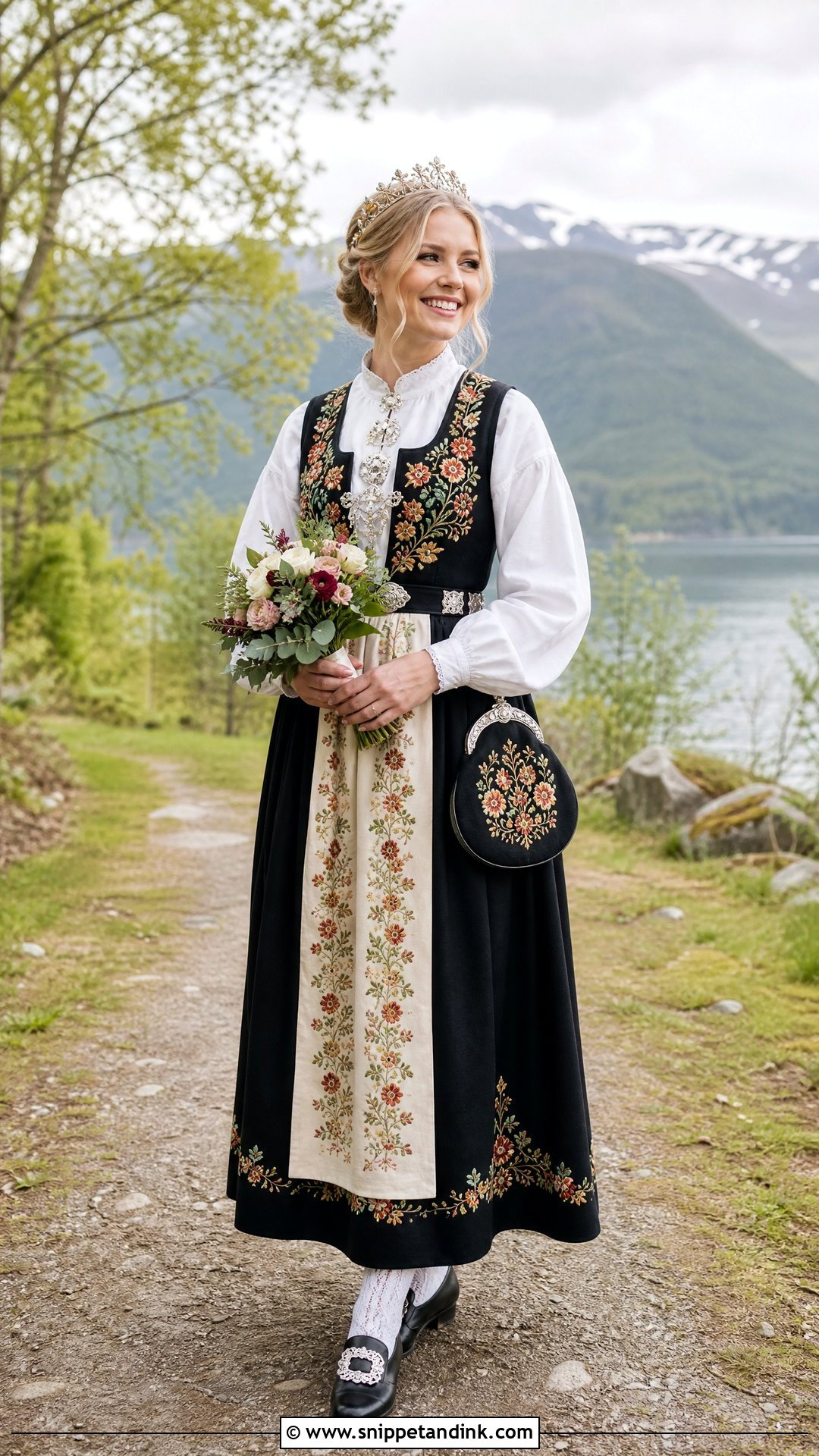
A bunad is tied to a specific region of Norway, so the right one is the version connected to the bride’s family or home area, not the one in the nicest colour. The full set may include a blouse, fitted bodice, long wool skirt, apron, embroidered bag, stockings and shoes, with silver brooches and fastenings. Some regions have a silver bridal crown, worn only where it suits the tradition. The bodice should close comfortably over the blouse with room to sit and dance; wool is warm at a summer wedding, so I’d plan shade and water. With an inherited bunad, every alteration should be reversible, so the original cloth and embroidery survive for the next bride.
19. Peruvian Traditional Marriage Dress With Layered Pollera
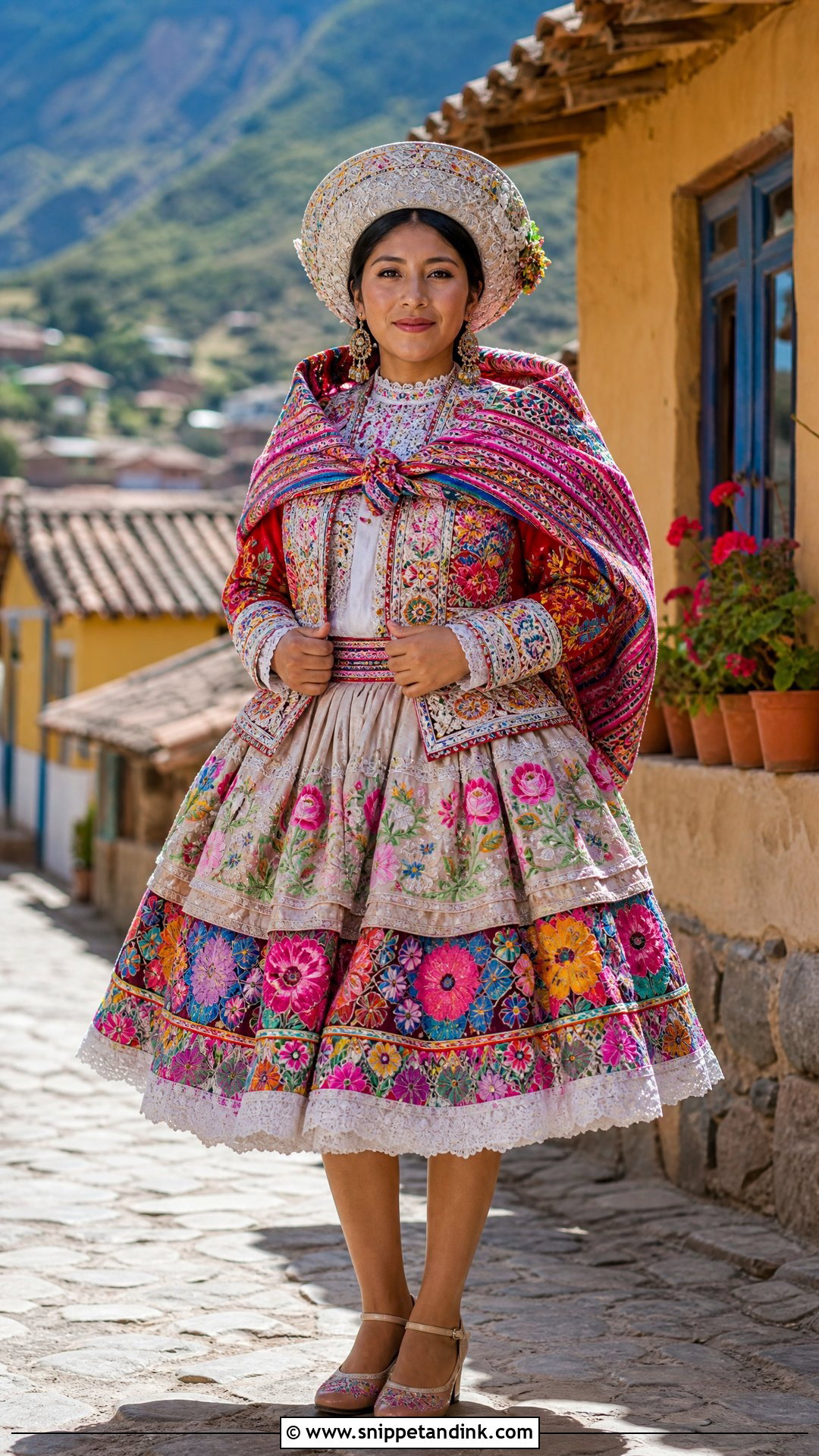
In the Andes, colour is half the point. A Peruvian bridal outfit builds around a full pollera, often several skirts layered for volume, with an embroidered blouse or fitted jacket, a decorated montera hat, a woven shawl and handmade jewellery. Red, green, blue, yellow and white patterns can be combined when they come from the bride’s village or local textile tradition. Choose sturdy low shoes for uneven ground and long celebrations. Layered skirts get heavy fast, so I keep the volume to what the bride can dance in. Work with local artisans or family rather than mixing patterns from different regions.
20. Guatemalan Traditional Marriage Dress With Huipil
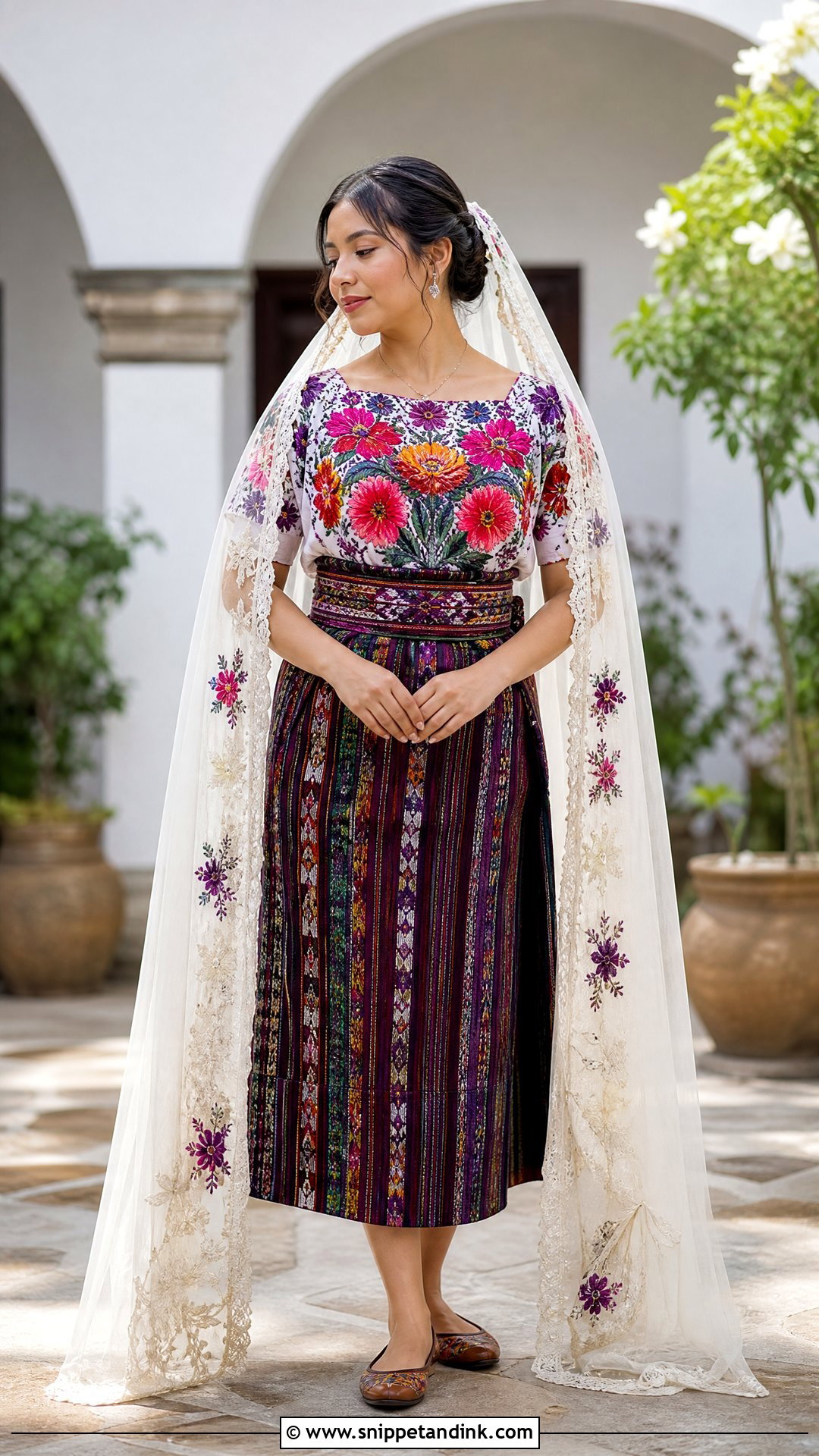
A Guatemalan huipil is often woven on a backstrap loom, and its motifs can identify the town or community it comes from. That is why I’d choose one connected to the bride’s own community and pair it with a corte skirt held by a woven belt. A long veil, a traditional head covering or a hair ornament adds formality where custom allows. A modest necklace, earrings and leather flats complete the look. Let one strong colour link the blouse, skirt, belt and veil without forcing an exact match. Handwoven huipiles are thick, so in warm weather I suggest a cotton slip rather than anything synthetic underneath.
Dressers, Drapers and Gele Tiers Need Their Own Time Slot
Most of the outfits above cannot be put on alone. A shiromuku needs a kimono dresser, a Kanjeevaram needs a draper, an aso oke gele needs a tier and a takchita change needs a negafa. The common mistake is giving that person a quarter of an hour squeezed between hair and photos. I build the morning backwards from the ceremony: photos, then dressing, then hair and makeup, with a buffer between each, because traditional dressing always runs long once the jewellery goes on.
Agree who goes first. A gele or hood goes over finished hair, while some saree drapes are done before the final necklace. Settle the order at the trial so nobody undoes anyone else’s work on the morning.
Altering an Heirloom So It Can Be Undone
Inherited bridal garments are common across nearly every culture in this list, and they rarely fit the next bride. I ask the tailor to take in seams rather than cut them, to fold excess fabric inside, and to add panels in matching cloth rather than reshaping the original. Check old fabric in daylight for weak spots and fading before the fitting, and clean it only with a specialist who handles antique textiles. Old metallic thread, silk and hand embroidery are far more fragile than they look, and a careful alteration means the garment is still there for the bride after you.
Twenty Brides, Twenty Inherited Wardrobes
From lehengas and áo dài to kente, gele, bunads and huipiles, these looks all carry identity through cloth, colour and jewellery. The most decorated outfit is rarely the right one. The right one fits, lets you move and follows your family’s customs. If you want to see more, there is a separate collection of Traditional Marriage Dress for Women Ideas on the site. Learn how your tradition differs by region before choosing garments or motifs, and bring in relatives, artisans or a cultural dress specialist early, while there is still time to listen to them.
You'll Like These Ideas:


Leave a Reply