
Asian bridal fashion carries centuries of handwork, and every colour in it means something to somebody’s grandmother. The twenty looks below travel from South Asia through East and Southeast Asia: lehengas, sarees, qipaos, hanboks, kimonos, áo dài, kebayas and a few fusion gowns. Most brides I dress now wear two or more of these across a wedding, a ceremonial piece first and something lighter once the dancing starts. My first question is never about colour. It’s about which ceremonies you have, how long each one runs, and how much sitting, bowing or walking each involves, because that decides the fabric weight long before we talk embroidery. Where a ceremonial detail carries real meaning, I always loop in the family member who knows it best.
How Many Outfits Can One Wedding Day Really Hold?
Multi-ceremony weddings often mean two to four looks in a single day: a tea ceremony qipao, a hwarot for the pyebaek, a lehenga for the pheras, then something lighter for the reception. I plan these backwards from the timeline, not forwards from the wardrobe. Every change needs a private room, a mirror, good light and at least one helper who knows how the outfit closes.
- Allow roughly 30 to 45 minutes for a saree or lehenga change once hair and makeup are done, and considerably more for a kimono, which a trained dresser has to build layer by layer.
- Wear the heaviest, most ceremonial outfit first while you are fresh, and save the lightest for dancing.
- Keep one hairstyle that suits every outfit, or schedule a quick restyle; tearing down a bun to fit a headpiece eats time.
- Hang each outfit with its shoes, jewellery, safety pins and underlayers bagged together, labelled in order of wear.
If the timeline only allows one change, choose the ceremonial outfit you would regret not wearing and let the reception look carry the rest.
1. Red Bridal Lehenga With Dupatta
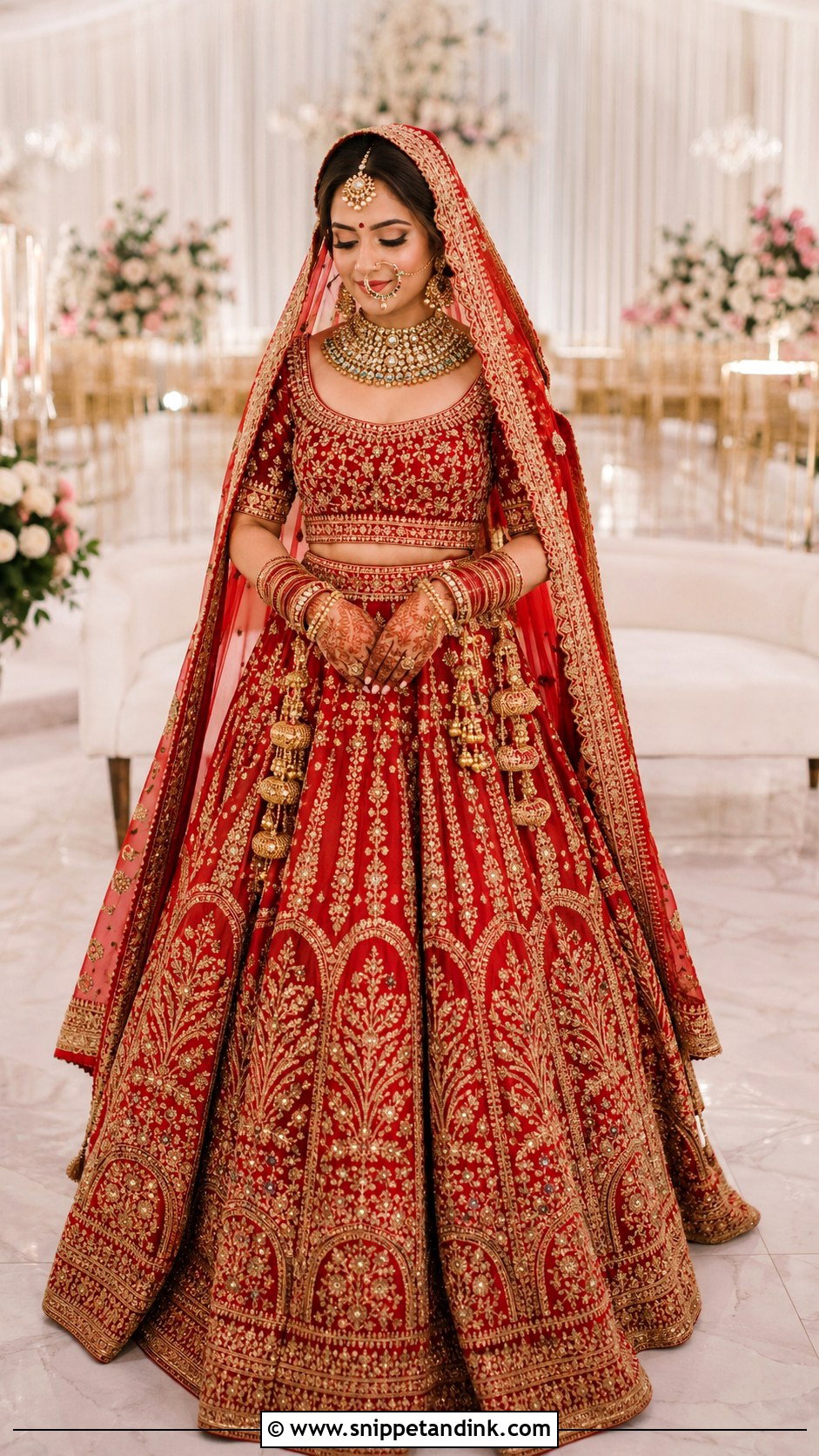
A red lehenga is the outfit most families picture first, and the one where weight catches brides out. A heavily worked skirt can sit on the hips all evening, so I check the waistband and can-can layer at the first fitting, not the last. Ask for a structured blouse with proper boning, then decide early whether the dupatta goes over the head or across one shoulder, since that changes where the border embroidery should fall. Gold zari and sequins add depth without crowding when they are concentrated at the hem and border. Petite brides usually look better in smaller motifs; taller brides can carry a wide border. Embellished juttis beat heels for a long ceremony, and a sleek bun gives the dupatta something firm to pin into.
2. Ivory Bridal Lehenga With Pearl Jewelry
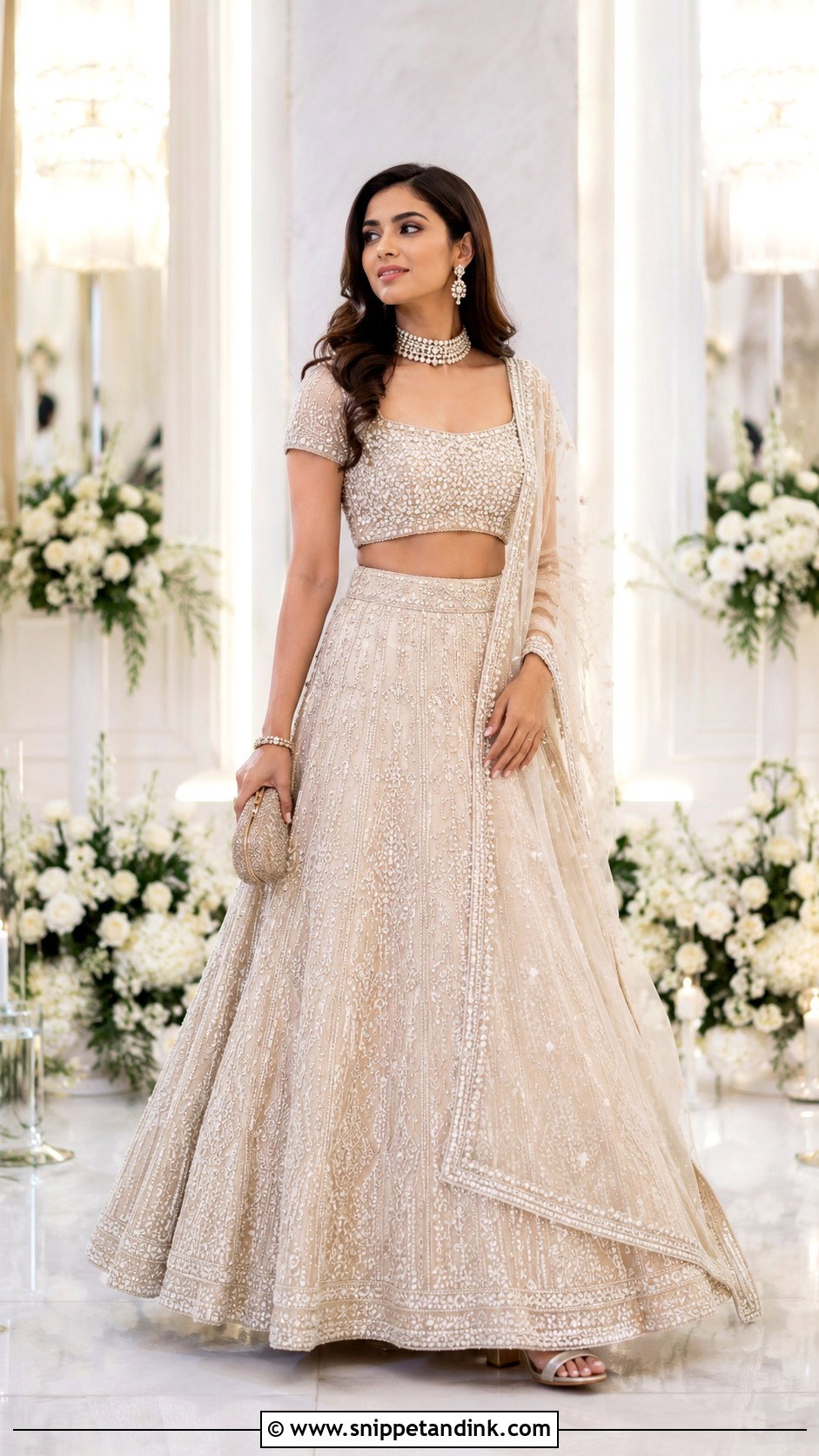
Ivory is harder to wear than it looks. Under flash, flat ivory with flat embroidery can read as one pale blur, so I push brides toward tonal texture: silver threadwork, pearls and a little crystal that catch light at different angles. An A-line or gently flared skirt keeps it light. A sleeved blouse with a sheer dupatta gives coverage without bulk. Pearl drops and a fine choker are enough; anything heavier fights the fabric. Low block heels hidden under the hem will carry you further than stilettos, and fresh white flowers in a low bun finish it. One warning from fittings: ivory shows every henna smudge and foundation transfer, so dress after your makeup has set.
3. Red Banarasi Saree Bridal Look
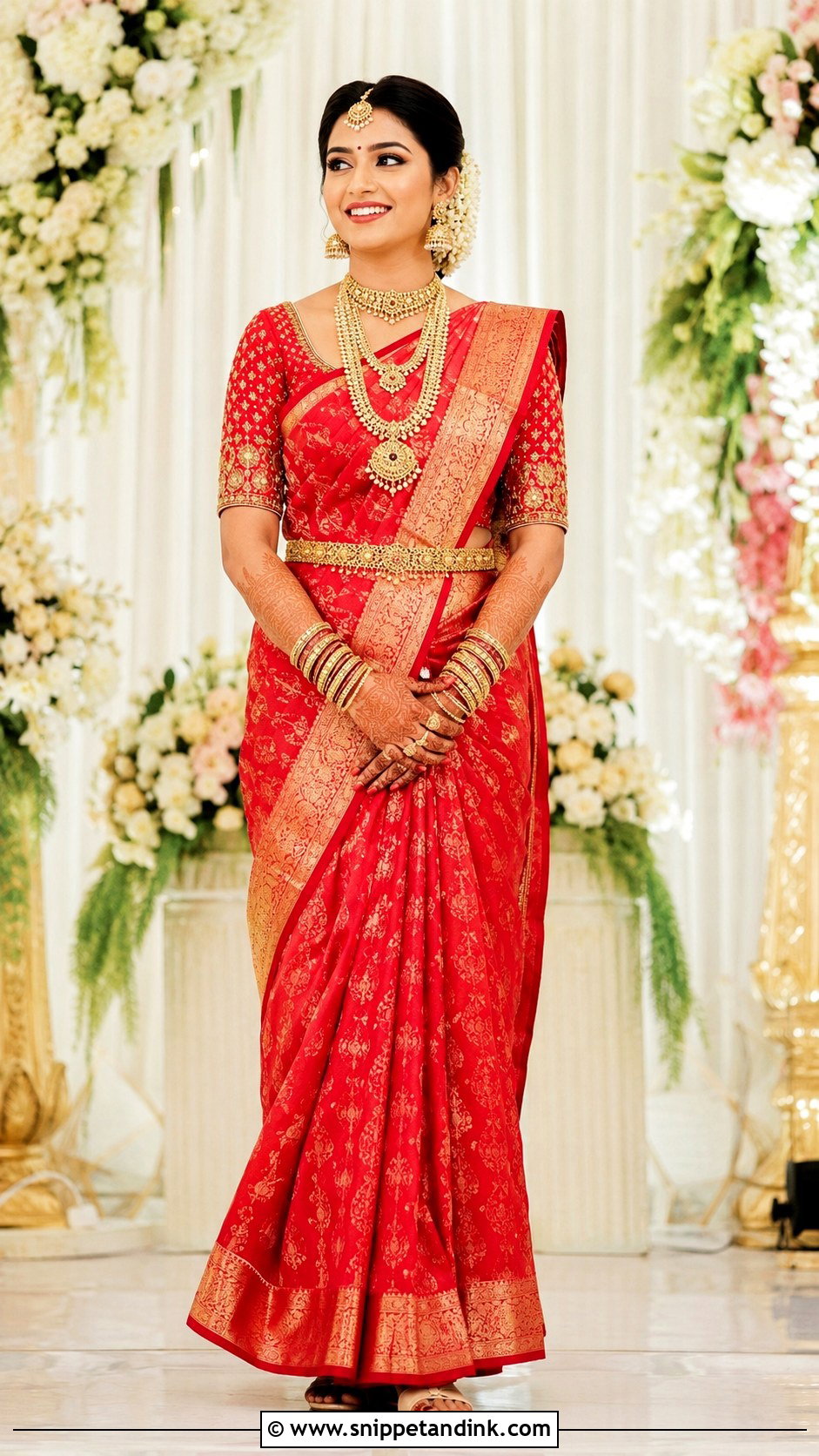
Banarasi silk has woven gold that sits slightly stiff, which is exactly why pleating matters so much. I pleat a Banarasi in fewer, wider folds than a soft georgette, otherwise the zari bunches at the navel and the drape looks thick. Pair it with an elbow-sleeve blouse in a shaped neckline, matched to the gold. A waist belt isn’t just decoration here; it holds the pleats when you sit cross-legged. Choose your temple jewellery, layered necklaces, bangles and maang tikka so each piece has its own space. Low gold heels or embroidered flats, a centre-parted bun with flowers, defined eyes and a lip that sits within the red family of the saree finish the look.
4. Kanjivaram Silk Saree Wedding Look
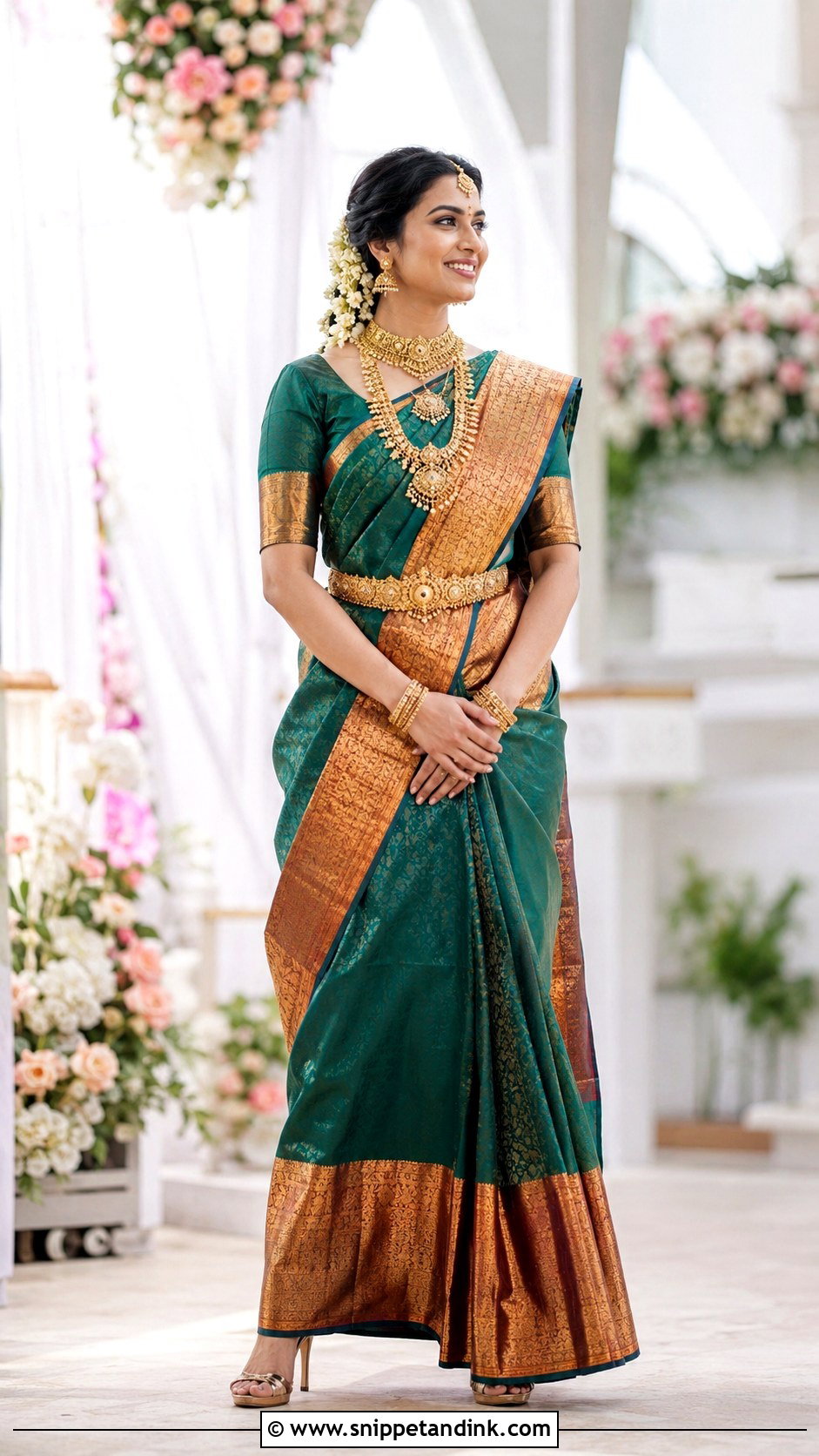
Kanjivaram is the heaviest silk in this list, and its contrast border is the whole point. Crimson with a gold border, emerald against magenta, purple with deep pink: the pairing is woven in, so the blouse should stay clean and well cut rather than add a third story. I pin the pallu at the shoulder in two places, never one, because the silk is weighty enough to drag a single pin loose during the ceremony. A lightweight petticoat instead of a starched cotton one takes real bulk off the hips. Gold necklace, earrings, bangles, an oddiyanam belt and hair jewellery complete it, with jasmine or flowers softening a braid or low bun. Padded sandals help when you stand for a long muhurtham.
5. Pakistani Bridal Sharara With Long Shirt
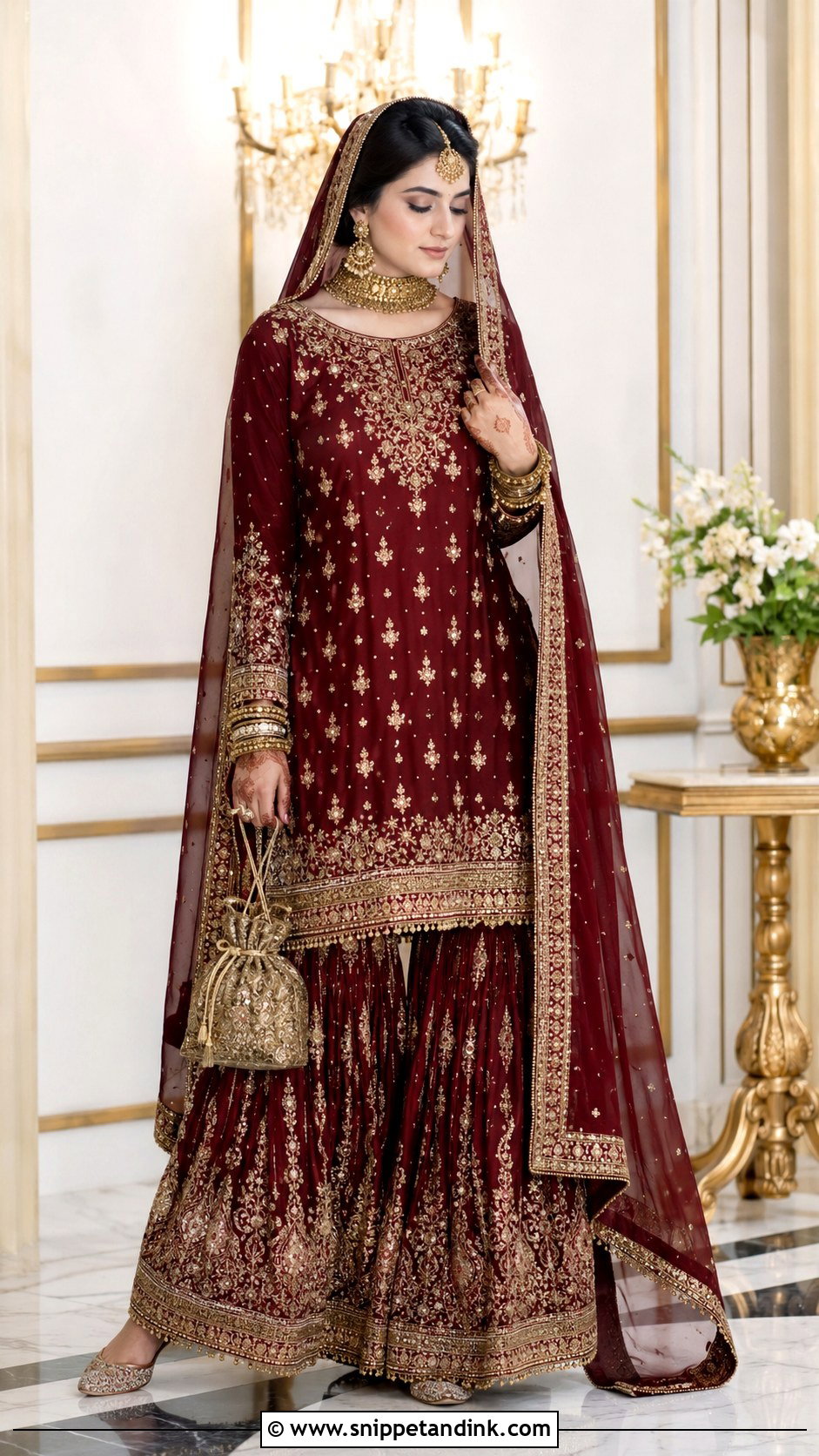
A sharara gives you the drama of a full skirt with far less weight, since the volume sits in two flared legs rather than one heavy circle of fabric. The trap is length: wide pants drag and collect dust from the floor of the venue, so I hem them at the fitting while you wear the exact flats you will dance in. Match the embroidery across neckline, cuffs, shirt hem and pant borders so it reads as one outfit. Maroon, rust and antique gold suit evening events. Drape the dupatta over the head with one border brought forward. A statement choker, drop earrings, bangles and a potli bag are plenty; keep the hair smooth so the neckline stays clear.
6. Pakistani Bridal Gharara With Dupatta
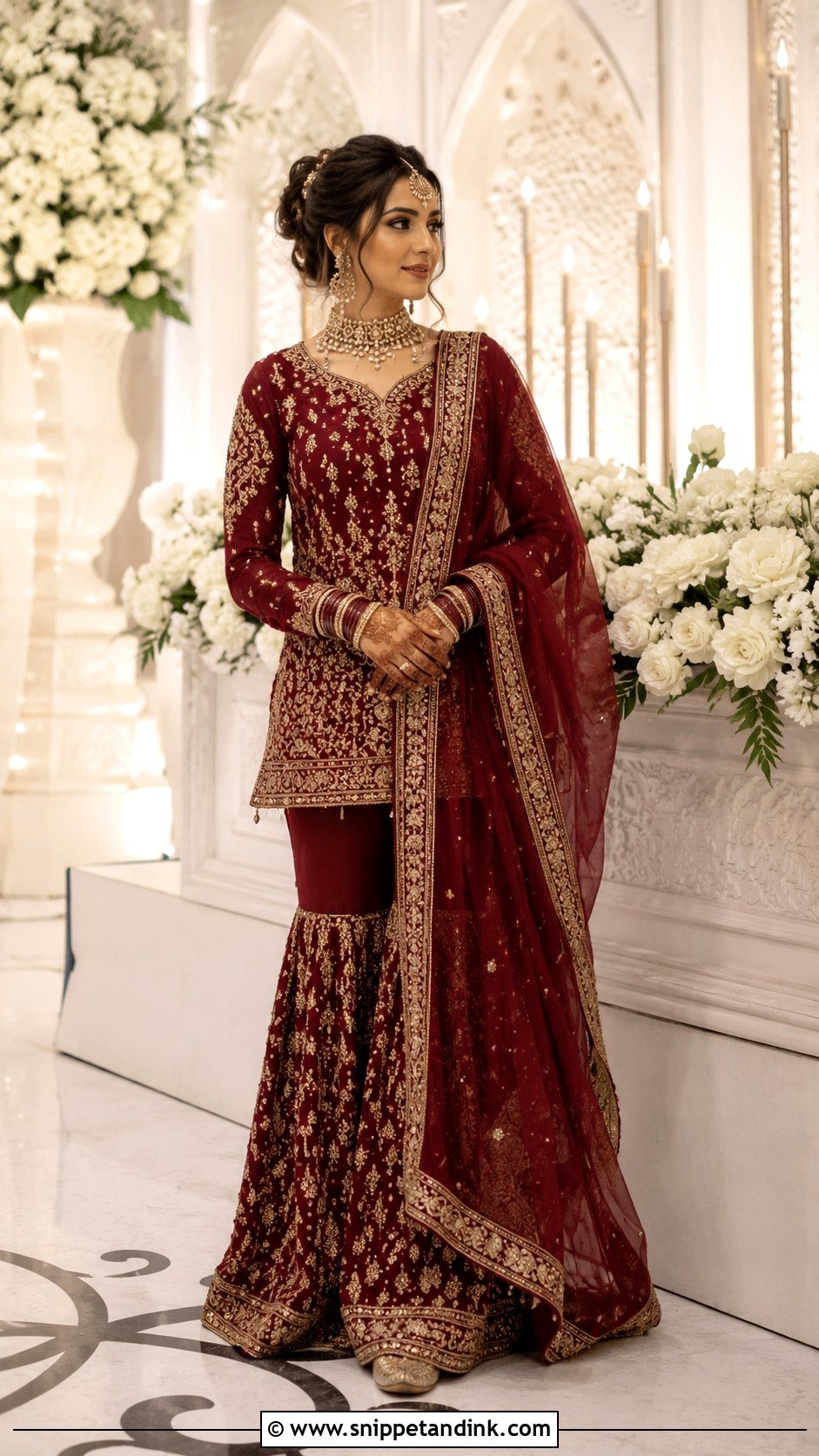
The gharara is fitted to the knee and flares from a gathered band there, so the seam position is everything. Put that band two centimetres too high or low and the whole silhouette looks off, which is why I mark it on you, standing, in your shoes. A short or knee-length kurta keeps that flare visible. Red, green, ivory and gold all work, depending on family tradition and the setting. Secure the bordered dupatta over the head and pin it firmly at both shoulders, because a gharara bride moves a lot. Add a choker, long earrings, bangles and embroidered flats, and keep the bag compact: the pants already supply all the volume you need.
7. Embroidered Bridal Anarkali With Churidar
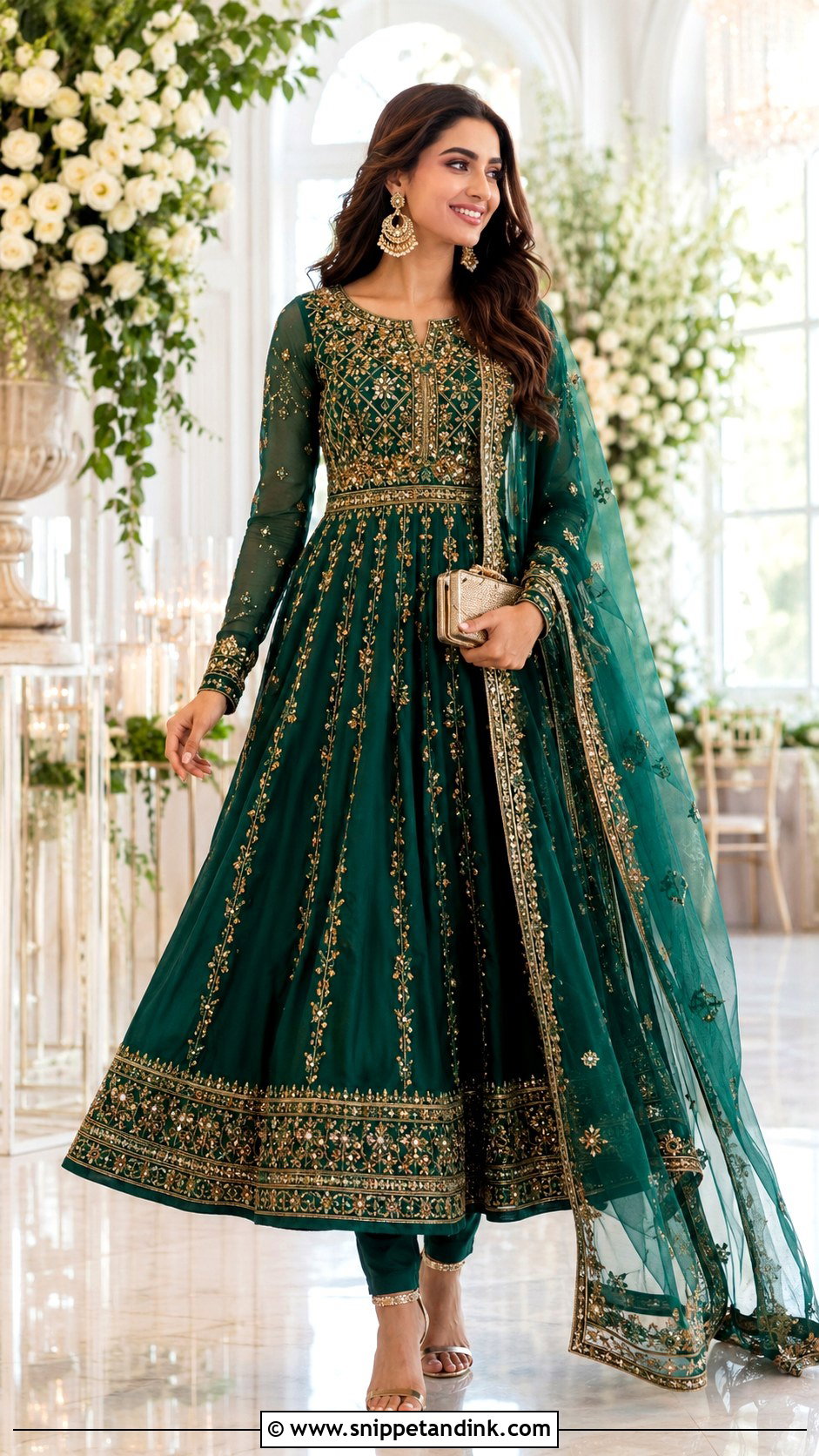
An Anarkali gives you a gown shape without stepping outside South Asian tradition. The fitted bodice and high waist flare into panels that open as you walk, and the kalis (the triangular panels) are what make it swing. I check the number of panels before anything else; too few and it hangs like a tent. Wear it over slim churidar with a light dupatta across both arms or one shoulder. Emerald, burgundy and navy feel evening-ready. Sheer embroidered sleeves and a higher neck add coverage without heat. Keep jewellery around the face, with statement earrings and a small tikka, and choose a sleek bun or a soft half-up style so the neckline breathes.
8. Red Chinese Qipao Wedding Dress
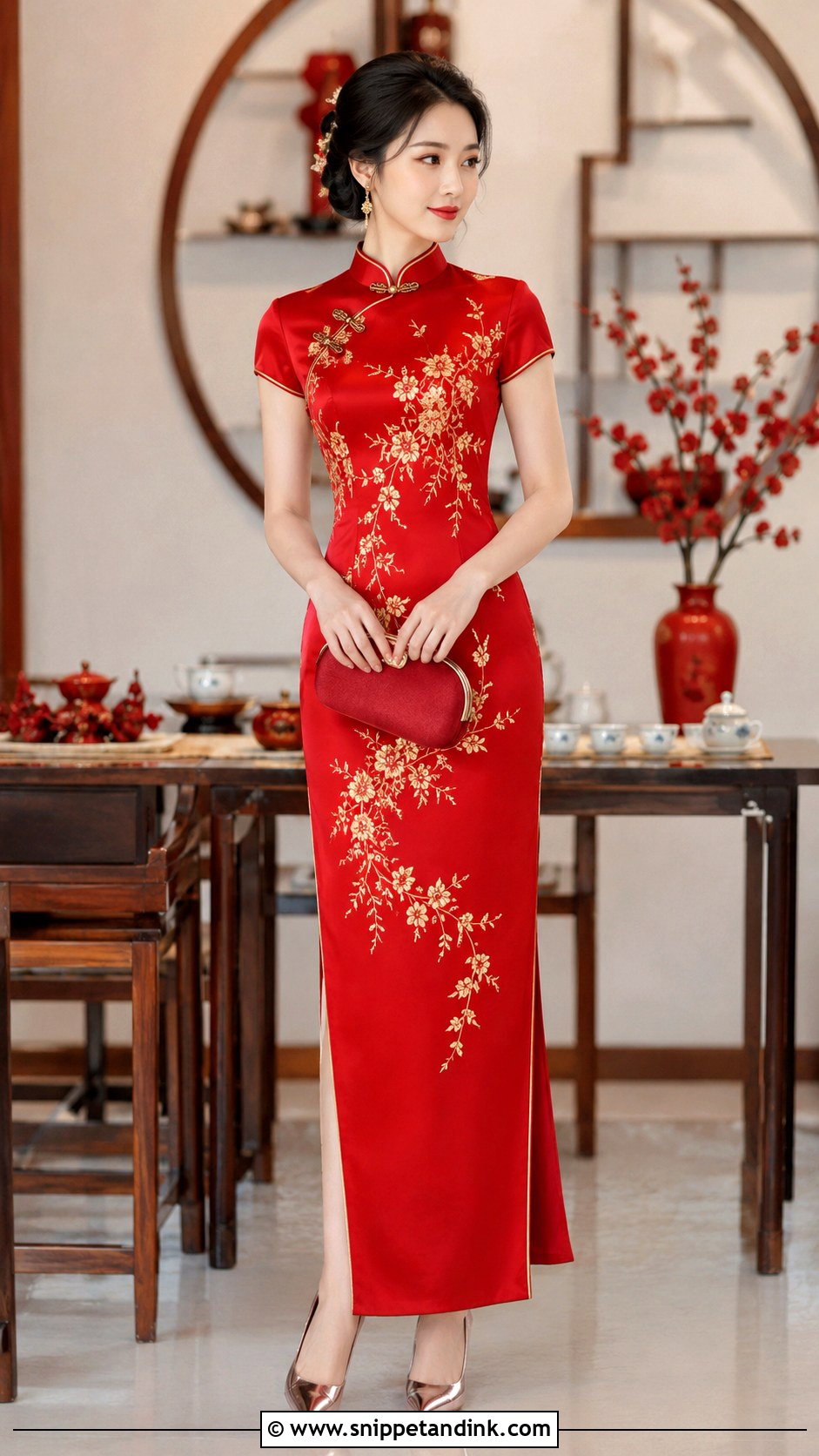
A qipao forgives nothing in the fit, which is its charm and its difficulty. The high collar, the side closure and the line from bust to hip all depend on precise tailoring, so I book the final fitting no more than two weeks out; even small weight changes show here. Floor length feels formal; tea length is easier for a tea ceremony where you are kneeling and serving. Gold embroidery and frog closures carry the decoration. Gold drop earrings, a slim bracelet, red or metallic pumps and a structured clutch are all it needs. A smooth low bun keeps the collar visible. If you dance, ask for a modest side slit or a gently flared lower skirt.
9. Chinese Long Feng Gua Wedding Outfit
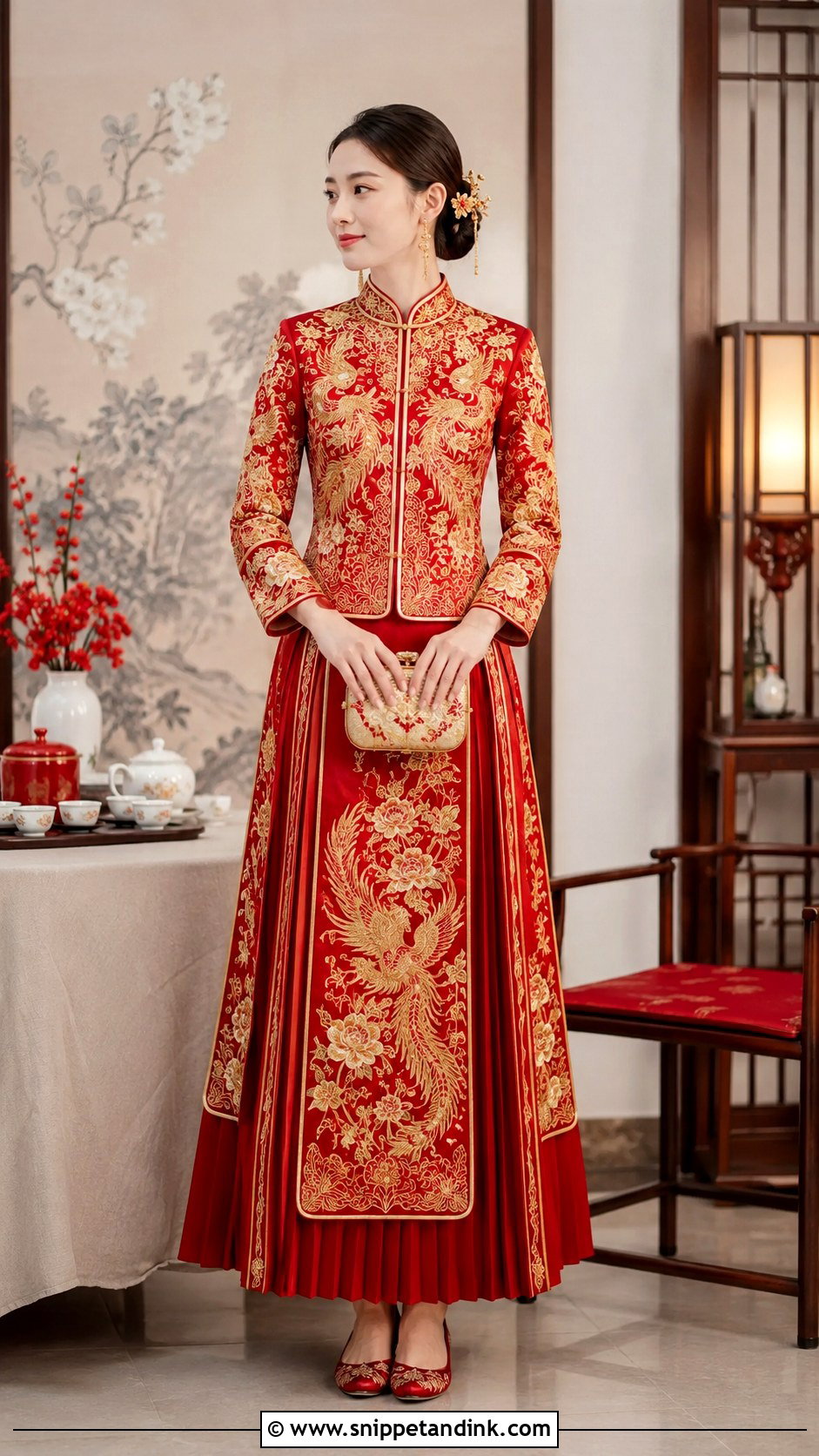
The long feng gua is a two-piece of embroidered jacket and skirt, often worked so densely in gold dragon and phoenix motifs that the fabric stands on its own. That density is lovely in photographs and heavy on the shoulders, so the jacket must close without pulling or the embroidery ripples across the back. I have brides sit, pour tea and stand again in it at the fitting. Keep accessories refined: gold earrings, red embroidered flats and a compact clutch. A low bun with simple gold ornaments or a sleek updo keeps the collar clear. Check the skirt hem in your actual shoes, since feng gua skirts are often cut long to be adjusted.
10. Chinese Xiu He Fu Wedding Outfit
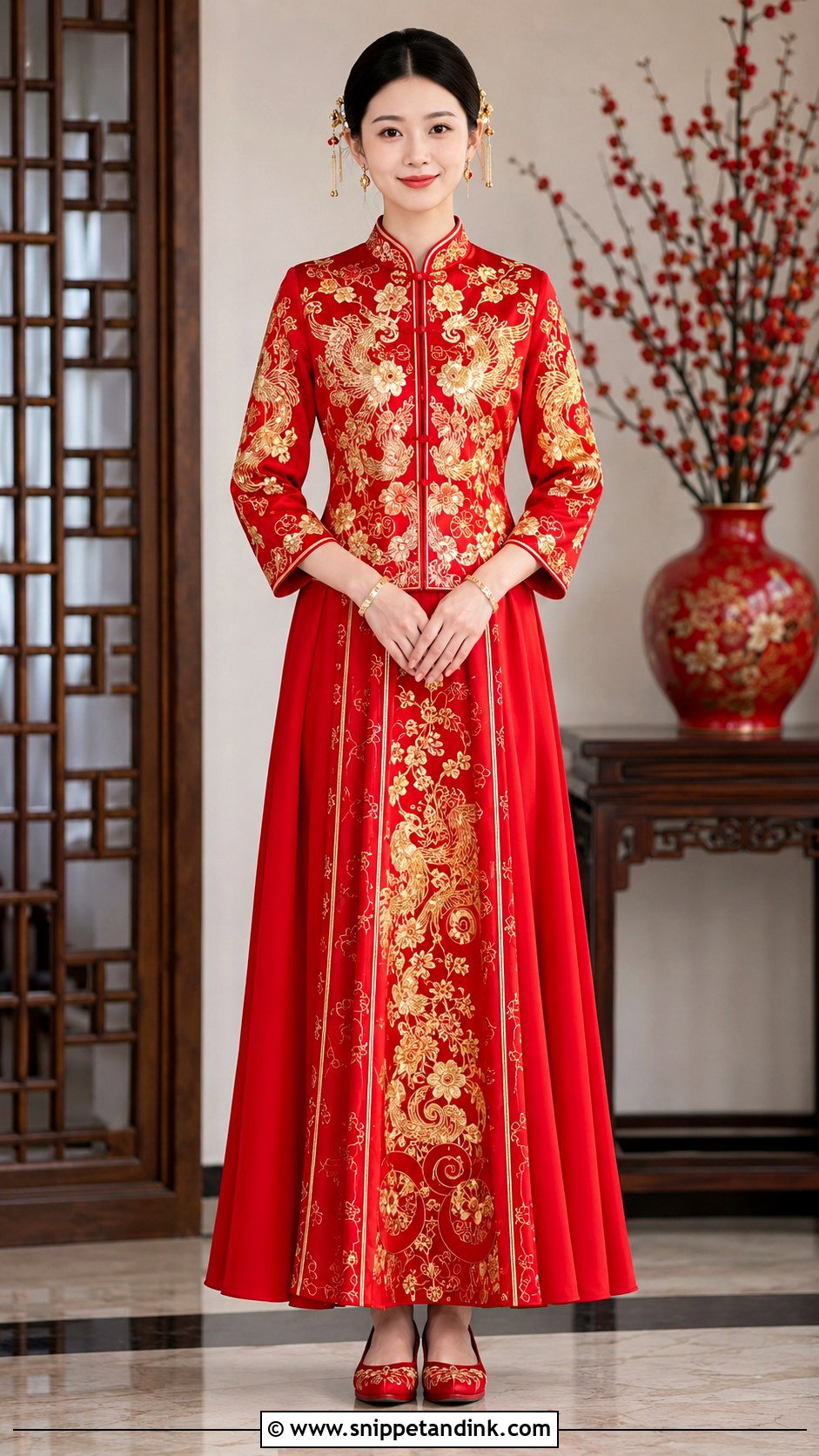
Xiu He Fu is the softer cousin of the feng gua: a looser jacket, a flowing skirt and embroidery spread across the whole surface instead of packed into one dense field. Brides who find a qipao restrictive usually relax in it. Because the floral, bird and botanical work already covers so much, I keep accessories small: gold studs, a fine bracelet, red flats and a hair ornament only if your family is comfortable with it. A centre-parted bun suits the balanced cut. Sleeves should end cleanly at the wrist, and the skirt should clear the floor. Off-the-rack versions often run long and wide, so give a knowledgeable tailor time to keep its proportions intact.
11. White Korean Hanbok Wedding Dress
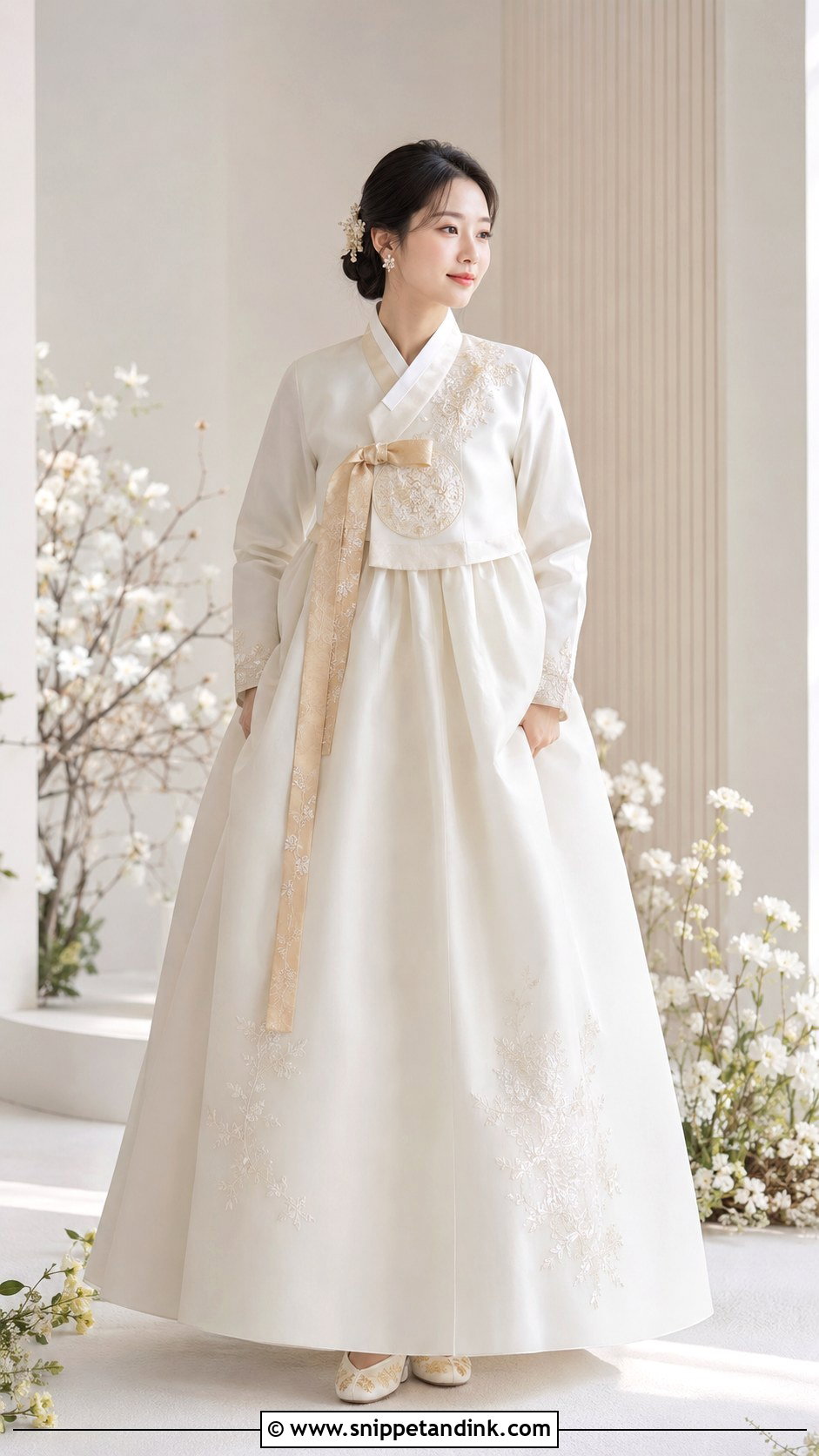
A white Korean wedding hanbok keeps the short jeogori jacket and full chima skirt but swaps ceremonial colour for ivory and cream, which modern brides often wear for portraits or a second look. My worry with pale hanbok is flatness, so I look for subtle embroidery or a sheen difference between jacket and skirt. Pale gold or blush at the collar, goreum ribbon and cuffs gives definition. The chima is cut long and full, and many brides trip on it at first; have it shortened so the toe of your shoe just shows when walking. A breathable underlayer helps indoors. Contemporary versions may use lace or satin while keeping the silhouette, and a smooth hairstyle lets the neckline stay clean.
12. Red Korean Hwarot Wedding Dress
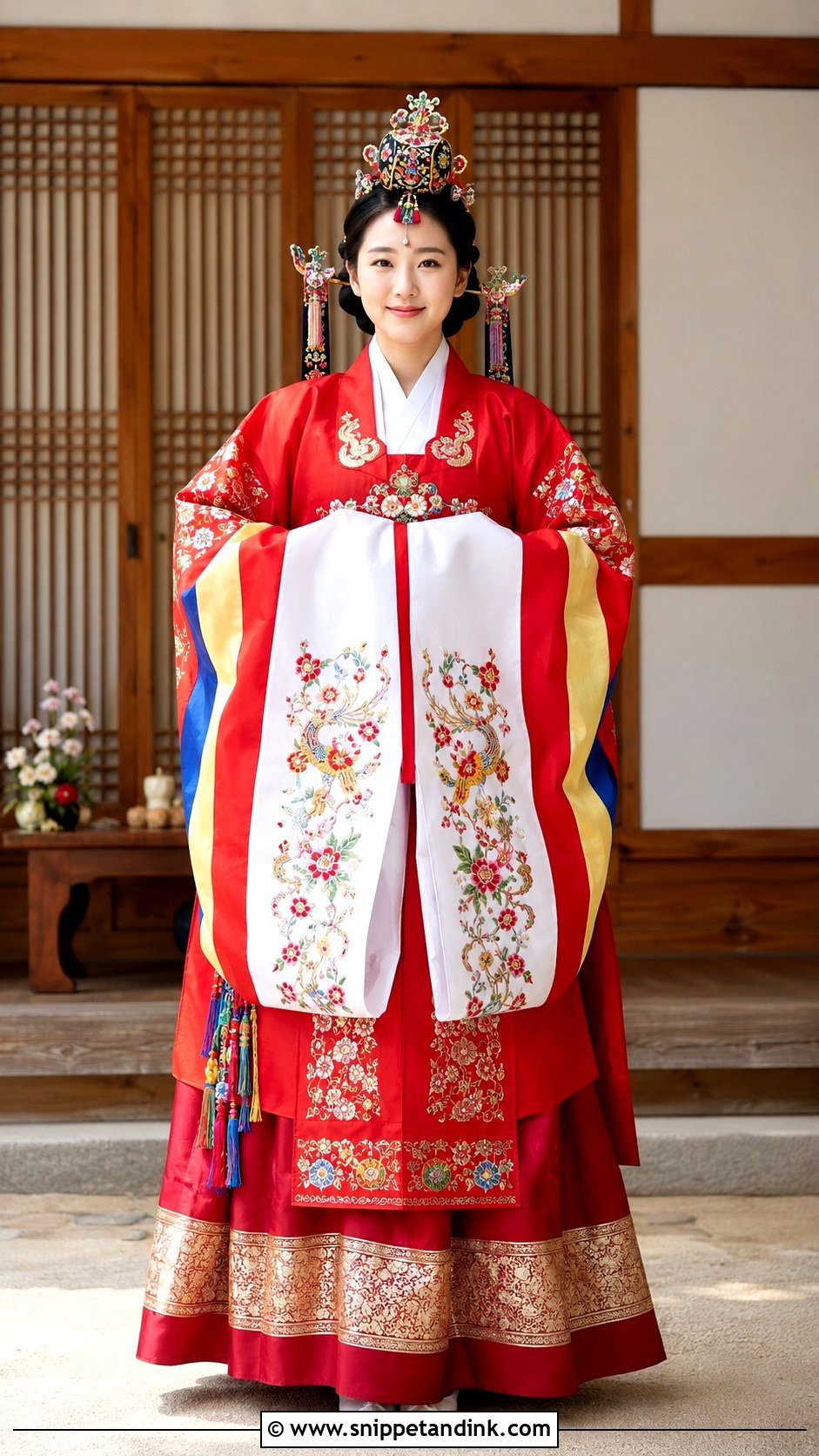
The hwarot is a ceremonial robe worn over the hanbok, red and heavily embroidered, and it is genuinely heavy. Underneath, keep the layers quiet: a full skirt, a fitted jacket and shoes hidden by the hem. The headpiece needs a centred, firm base, so I build a low bun and anchor it before the robe goes on. Visible jewellery is unnecessary; the sleeves and neckline say enough. Please practise bowing, sitting and walking in every layer before the day, because the deep bows of the pyebaek are tiring in that weight. Most brides wear the hwarot only for that ceremonial part and change afterward, so plan the change into your timeline.
13. White Japanese Shiromuku Wedding Kimono
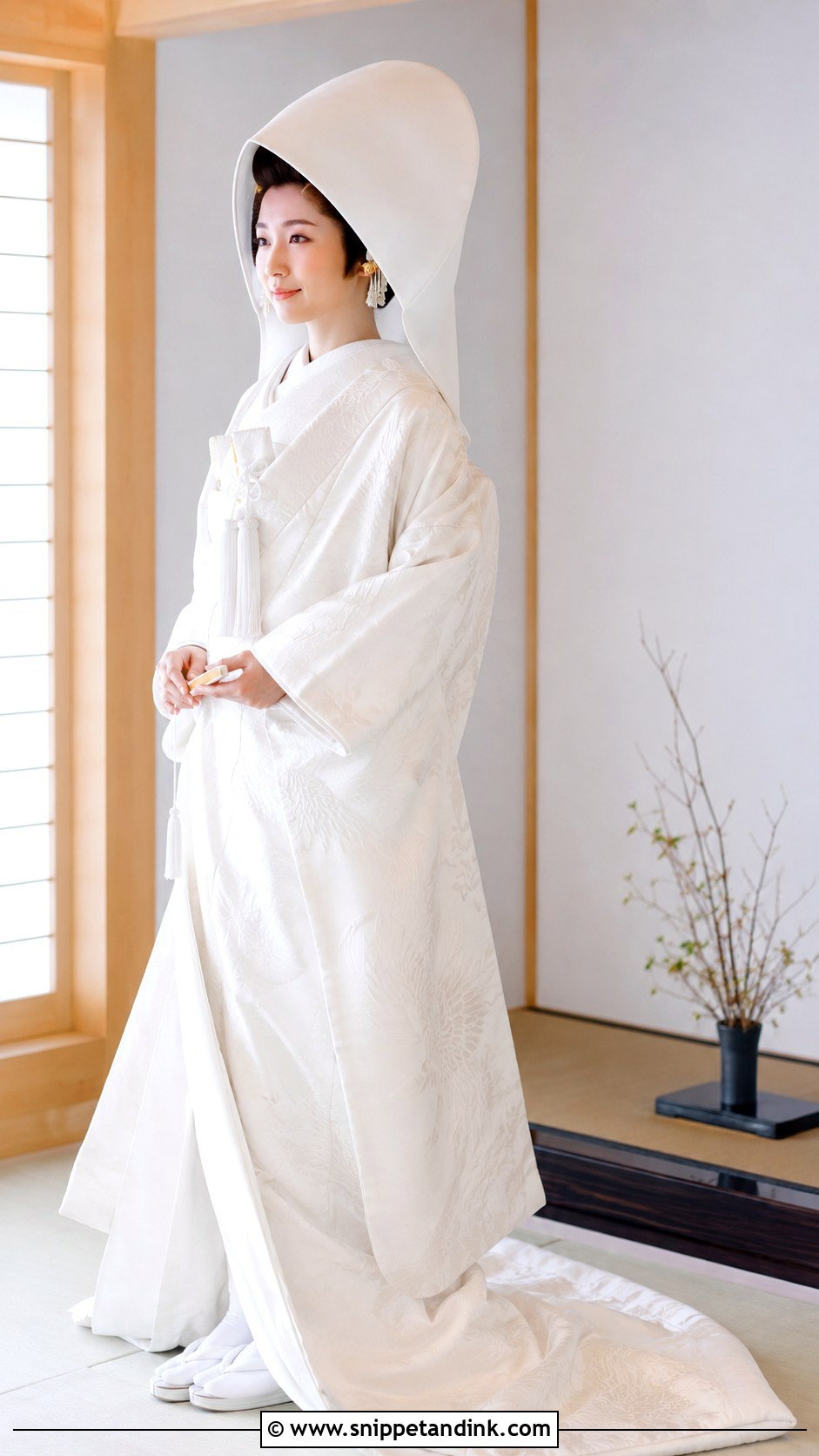
A shiromuku wedding kimono is white from collar to hem, so its beauty lives entirely in woven pattern, embroidery and the shift in sheen between layers. It is not something you put on yourself. A trained kitsuke dresser builds the underlayers, obi and padding, and that takes time, so I schedule the dressing well ahead of the ceremony and keep everyone else out of the room. Traditional footwear, a white wataboshi or tsunokakushi and almost no visible jewellery complete it. Traditional white makeup should be done by artists who know the ceremony. Practise short steps and sitting. For portraits, choose a plain background so the texture reads.
14. Colorful Uchikake Wedding Kimono
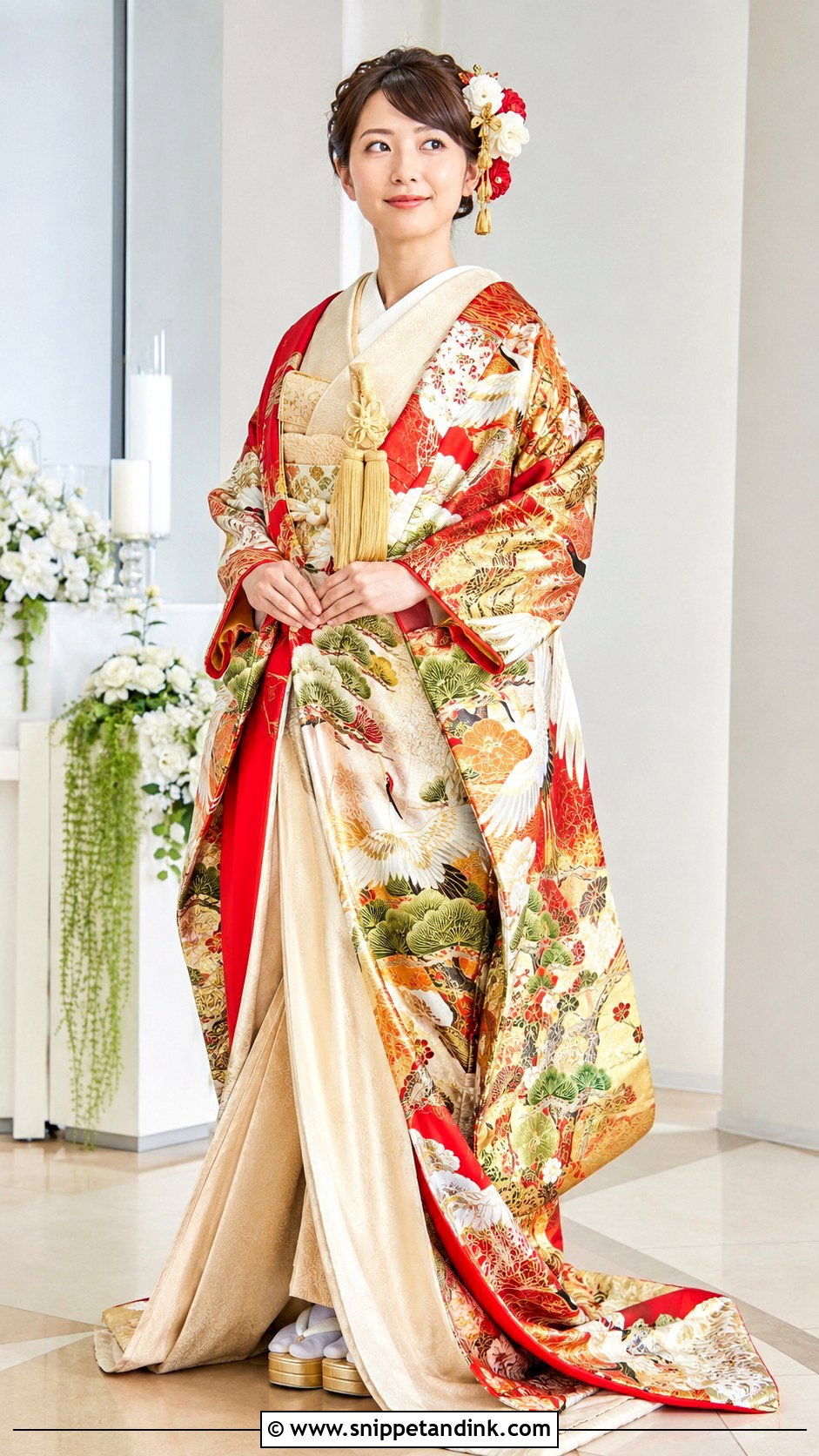
An uchikake is an outer robe worn open over the kimono, and its motifs often run right across the back and down to a padded hem. Cranes, pine and peony in red, gold, orange and green can all appear at once, so the under-kimono, obi and hair ornaments should hold back. I always ask the photographer for front, side and full-back shots, because the best part of the design is frequently behind you. The robe is heavy and its weight sits on the shoulders, which is another reason a professional dresser is worth booking. Keep makeup polished, not dramatic. If you wear it only for portraits, set aside a private changing room and a realistic window to move between outfits.
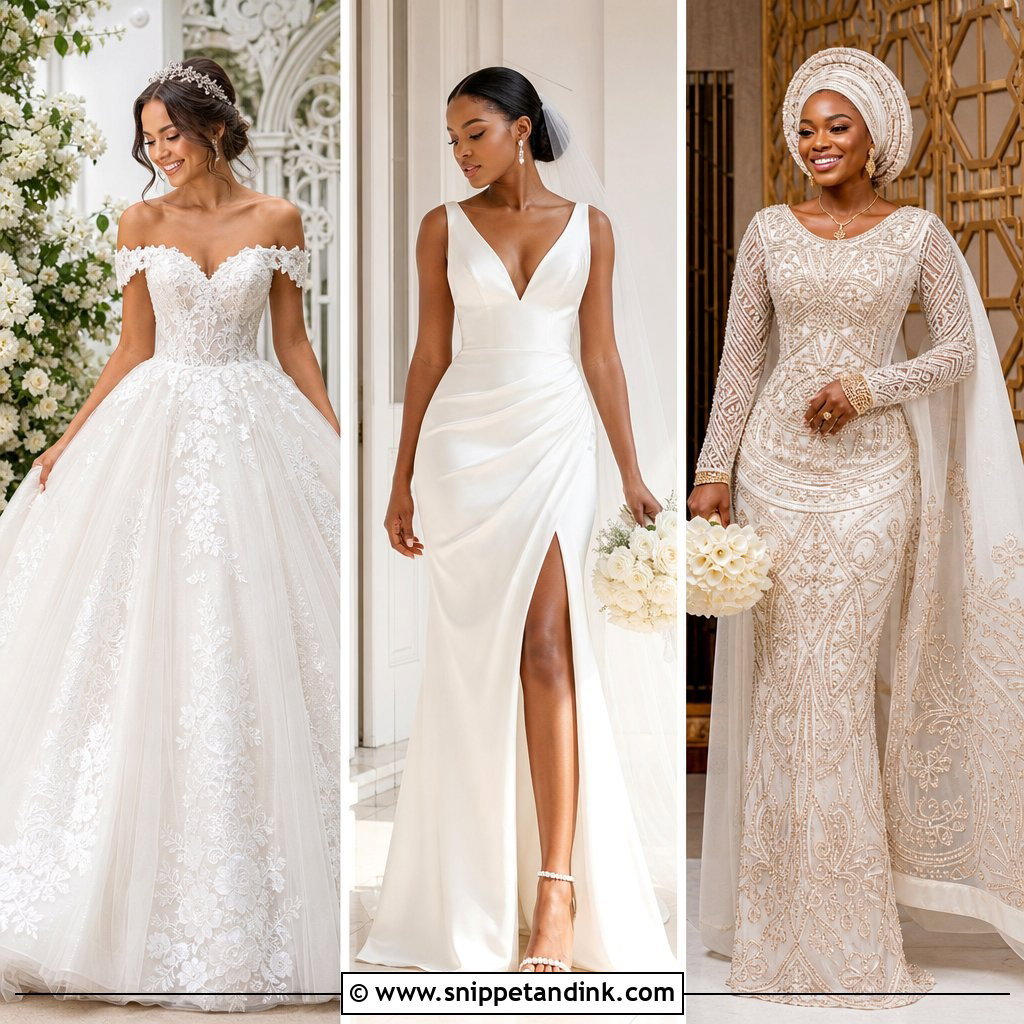
15. Red Vietnamese Ao Dai Wedding Dress
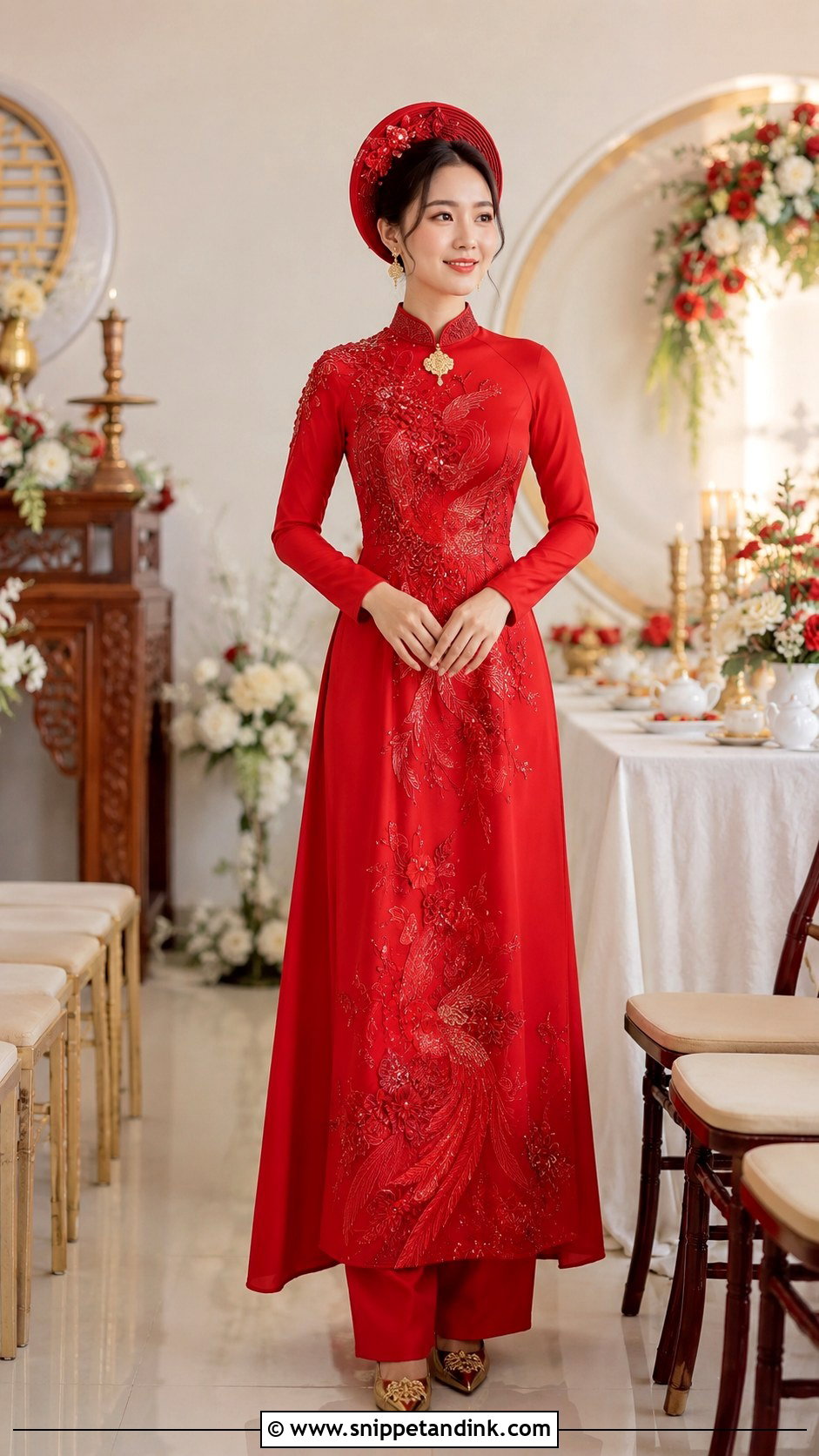
A red áo dài is a long fitted tunic split high at both sides over loose trousers, and the movement of those front and back panels is why it looks so graceful when you walk. Gold embroidery, florals or beading turn it bridal, often finished with a khăn vấn headpiece for the ceremony. The tunic should skim the body; if it pulls at the waist, the side slits gape when you sit. Matching red or gold trousers, pointed heels and simple earrings complete it. A low bun keeps the mandarin collar clear, and soft waves suit the reception. Red is the traditional bridal colour for this outfit, though modern designs give plenty of room in fabric, decoration and cut.
16. White Vietnamese Ao Dai Wedding Dress
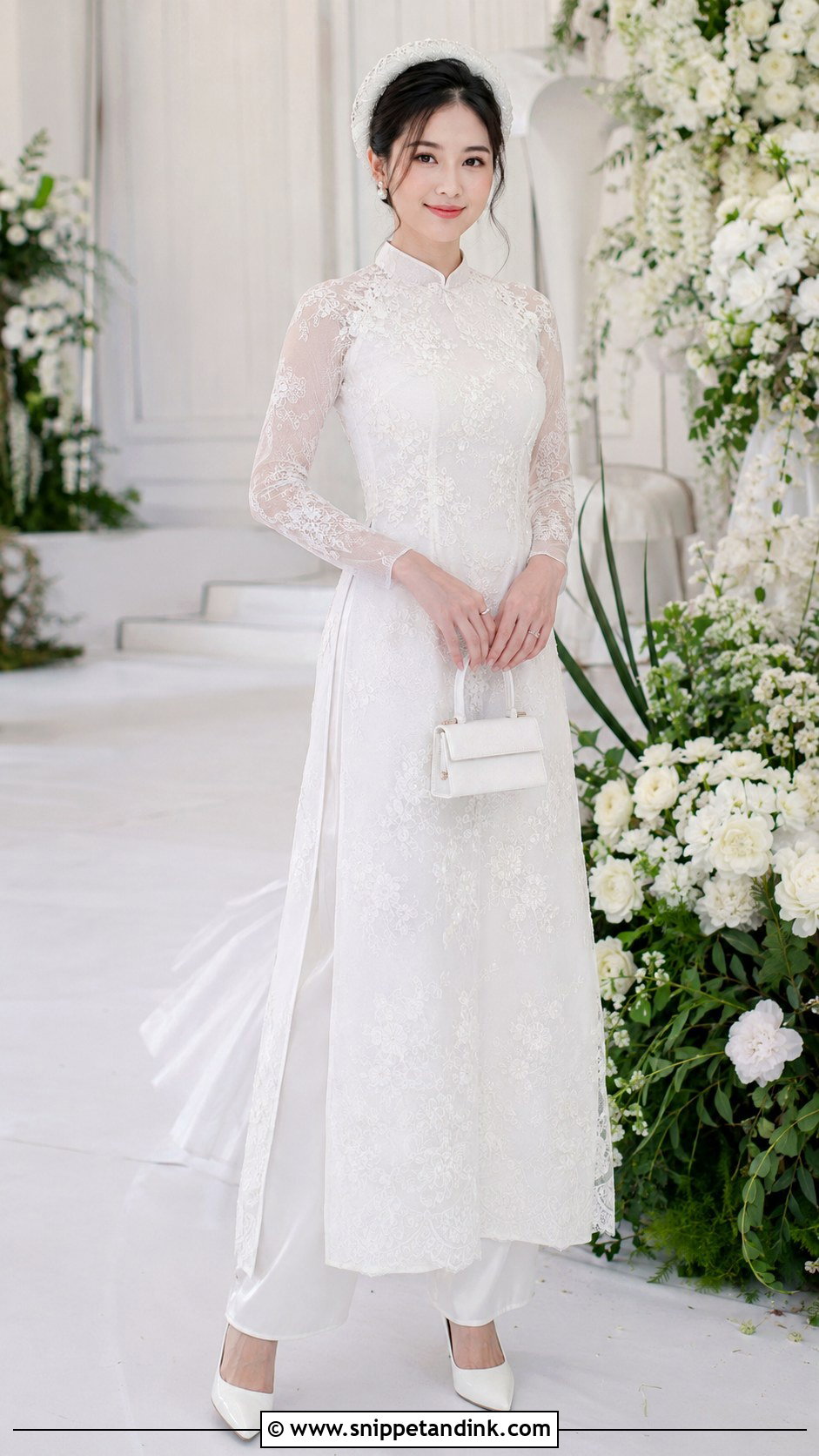
White lace or satin turns the áo dài into a crisp modern option for ceremony, portraits or a reception entrance. I usually steer brides toward a lined tunic, because unlined white lace shows every seam and skin tone line under bright light. Keep the high neck, long sleeves and flowing panels over white or pearl trousers, with tonal beading for definition. Pearl earrings, white pumps and a structured little bag are enough. Satin creases at the hip when you sit, so ask the tailor for a touch more ease there, especially in fabric without stretch. Smooth, carefully matched underlayers are essential. A subtle train adds drama without stopping you moving.
17. Indonesian Kebaya Wedding Dress
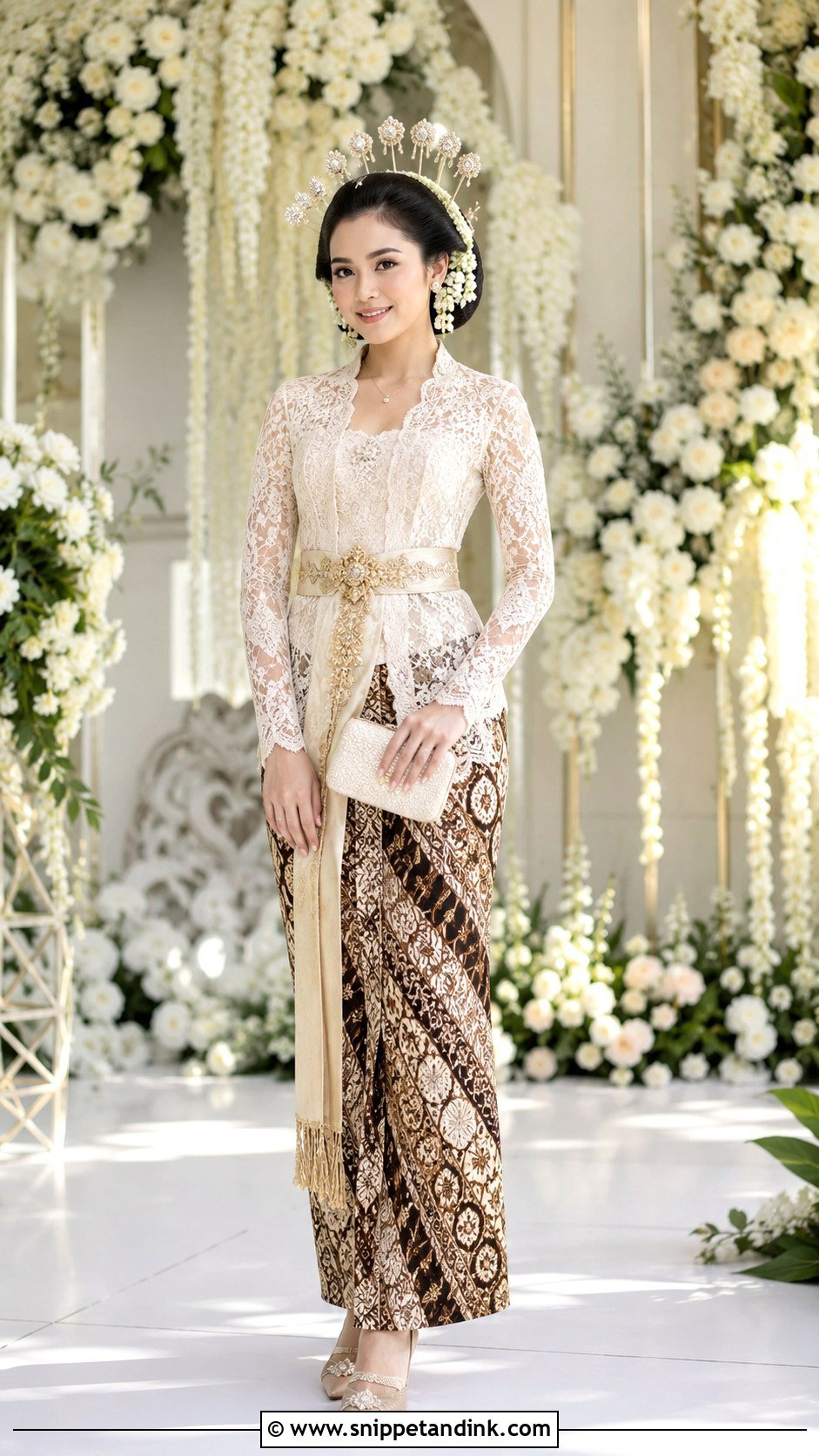
An Indonesian bridal kebaya is built for a close fit through shoulder, waist and sleeve, worn over a long batik or songket wrap skirt. Lace kebayas should be lined; I check the lining fit separately because a loose lining wrinkles visibly through open lace. The wrapped skirt needs to sit securely and still allow normal steps, so I add a hidden hook rather than relying on folds alone. A sash or belt ties blouse and skirt together. Choose jewellery that sits beside the lace rather than over it. Kebaya traditions differ a great deal between Javanese, Sundanese, Balinese and other communities, so check textiles, hairpieces and ceremonial details with family or a designer who knows your region.
18. Malaysian Songket Kebaya Wedding Dress
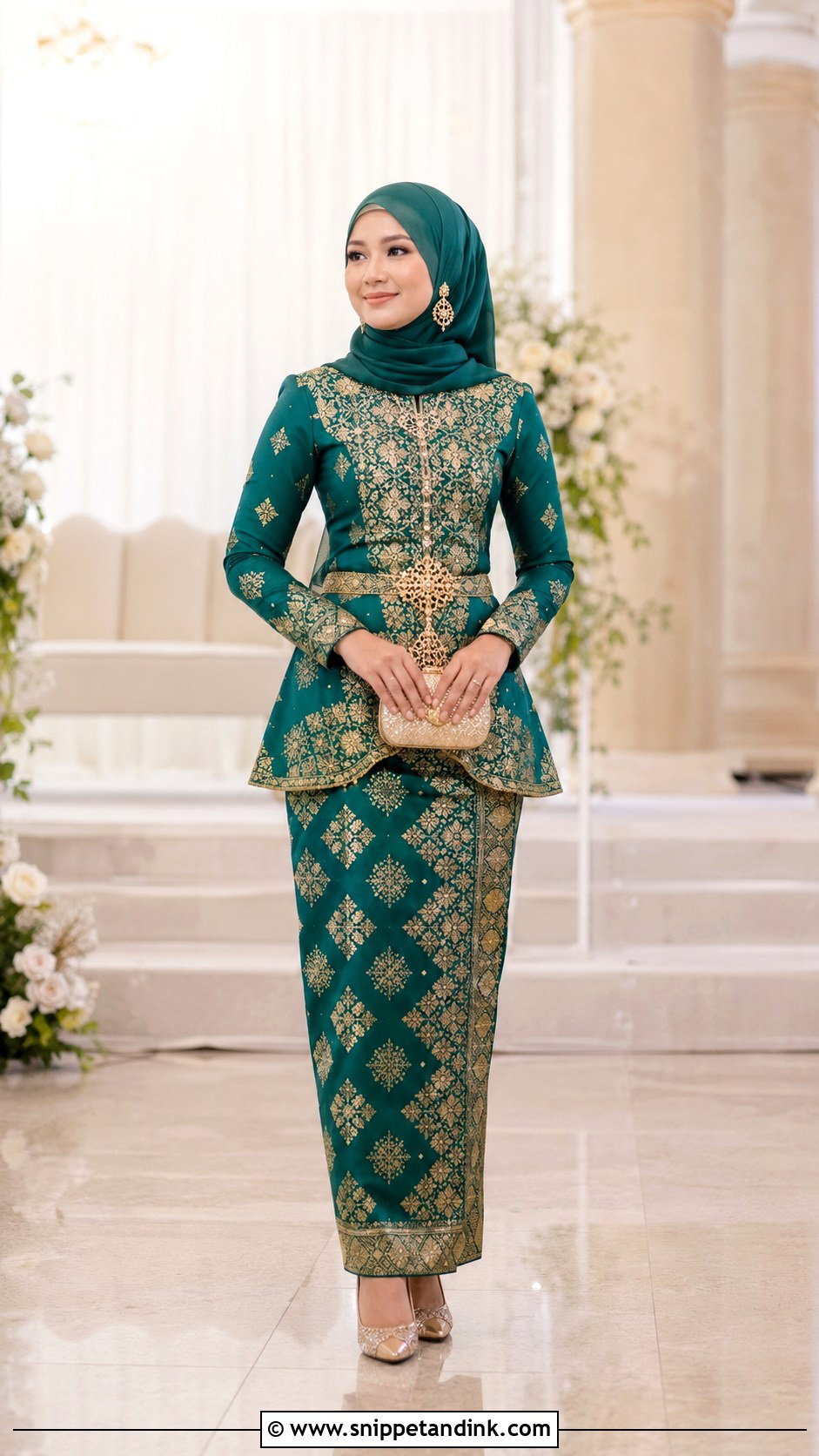
Songket is hand-woven with metallic thread, and it behaves more like a light board than a soft silk. That gives a Malaysian kebaya wedding outfit real structure, but it also means the skirt will not stretch when you sit on a low pelamin dais. I always have brides sit, walk and climb a step at the fitting. Pair a fitted long-sleeve kebaya with the patterned skirt and define the waist with a belt or brooch set. Emerald, royal blue and deep red suit indoor lighting. A matching headscarf or polished updo depends on your preference and the customs of the day. A smooth lining stops songket scratching, and embellishment kept to neckline, cuffs or waist leaves the weave visible.
19. Filipino Terno Wedding Dress
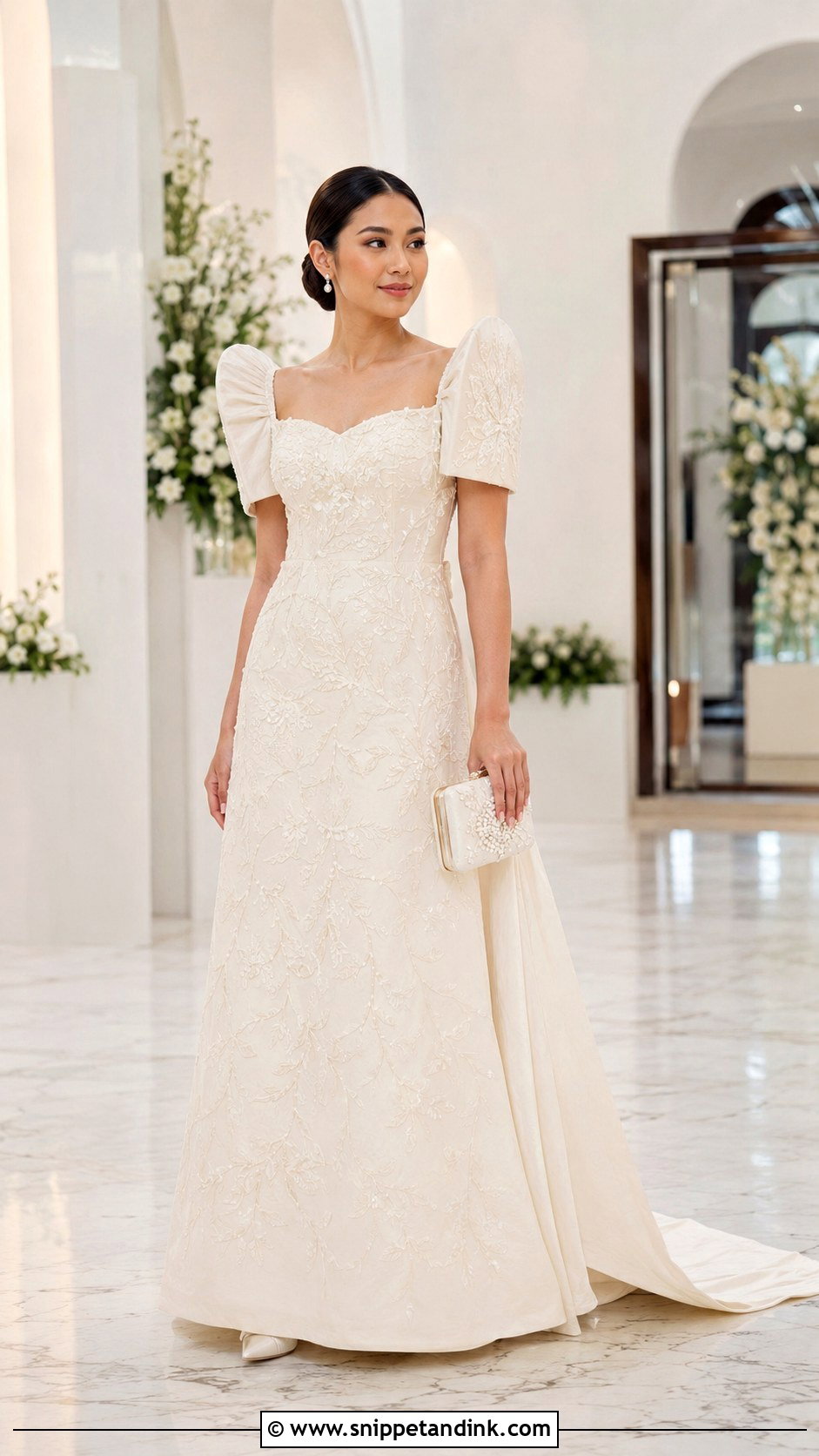
The sculpted butterfly sleeves of a Filipino terno are stiffened and stand up from the shoulder, so the rest of the gown should stay calm: a streamlined column, soft A-line or gently flared floor-length skirt. Piña-inspired fabric, lace, organza or embroidered silk keeps it light. The sleeve support is where I spend the fitting. If it is too rigid, you cannot lift your arms to hug guests; too soft and the sleeves collapse by the reception. Pearl earrings, pointed pumps, a small clutch and a sleek low bun finish it, with no big necklace competing with embroidered sleeves. A detachable train gives ceremony drama and comes off for dancing.
20. Asian Fusion Wedding Dress With Cultural Details
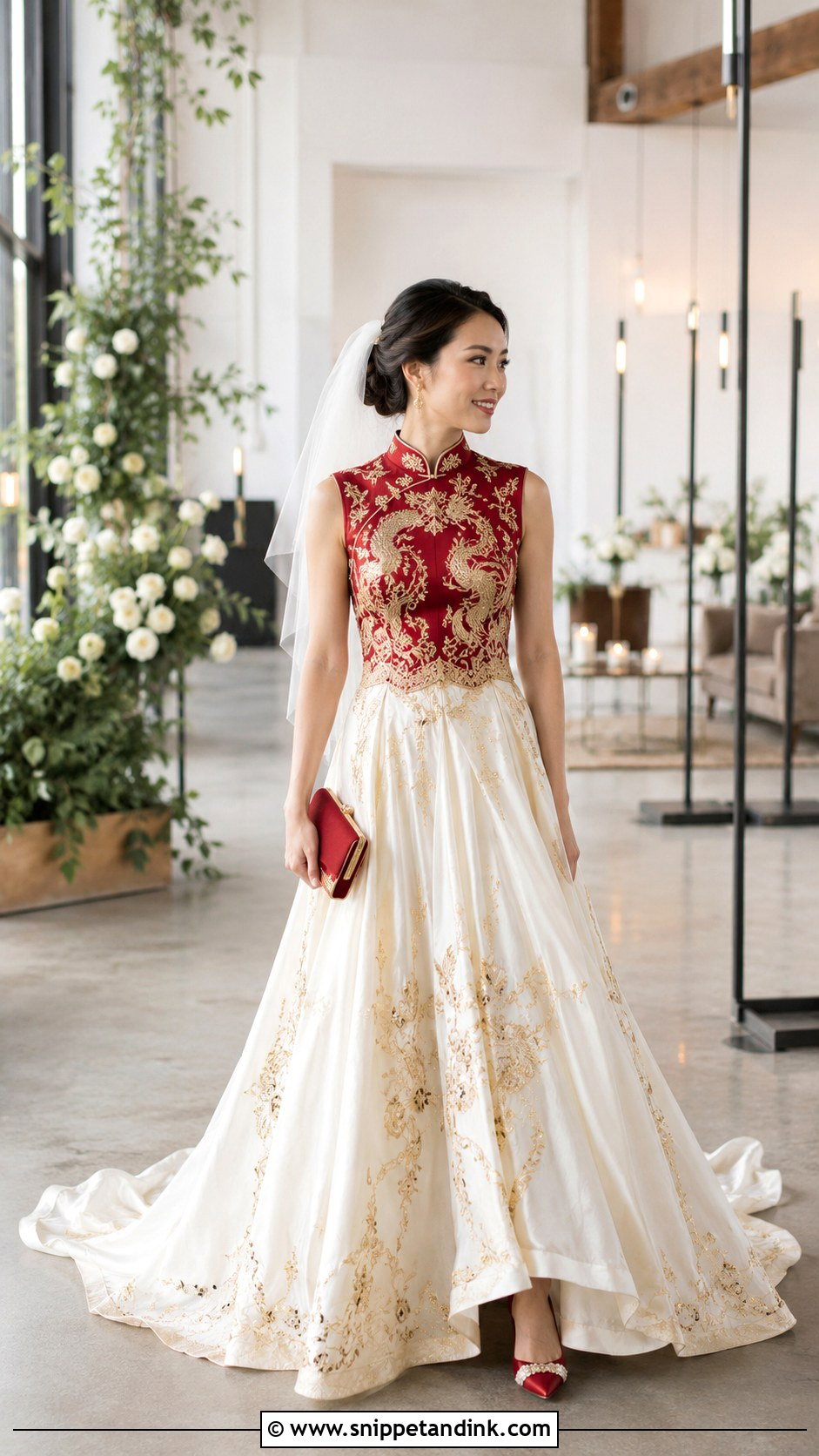
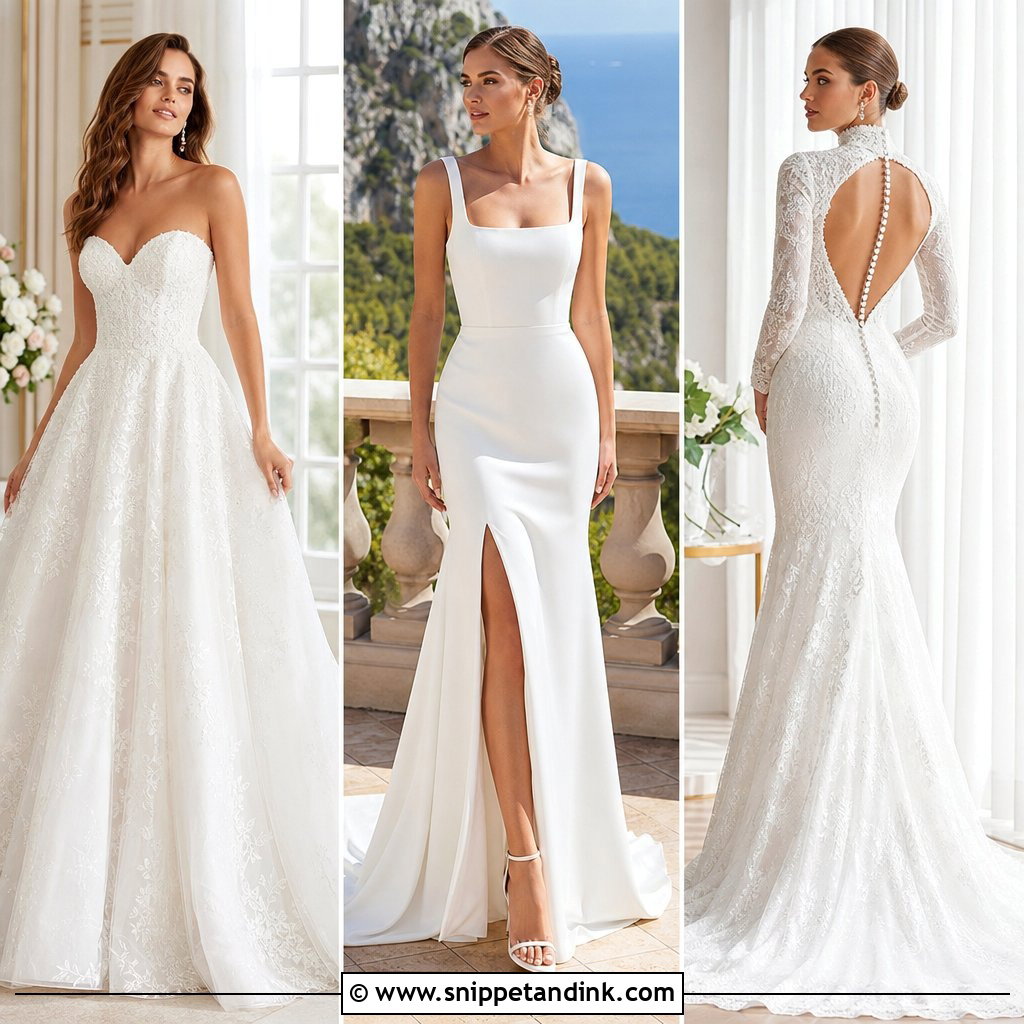
Fusion works when one culture sets the silhouette and the other supplies a few details. Put every element of two traditions into one dress and it looks like a costume. So start with a single clear base: an A-line gown, a lehenga skirt, a qipao-inspired column or an áo dài-style tunic. Then add two or three deliberate details, such as a mandarin collar, an embroidered border, a symbolic colour or a strip of family textile. I’d pair a qipao-style bodice with a flowing skirt, gold earrings, red heels and a simple veil, for instance. Sit down with relatives early to separate what is ceremonial from what is purely decorative, and let a custom designer handle proportion.
Heavy Silk, Hot Venues and How Much the Outfit Actually Weighs
Brides are rarely warned about weight. A heavily embroidered lehenga can weigh several kilograms, a Kanjivaram saree is solid silk, and a full uchikake rests on your shoulders for every portrait. In a warm marquee or a hall without good air conditioning, that weight becomes the thing you remember.
At the first fitting I ask brides to stand for twenty minutes in the sample, then sit on the floor and get up without using their hands. If either feels hard, we lighten the can-can, swap a lining to cotton or move embroidery off the hips. For outdoor summer events, silk blends, georgette and organza breathe far better than velvet or thick brocade. Underlayers matter too: a cotton petticoat or slip absorbs sweat that would otherwise mark pale silk.
Folding Zari and Silk So the Gold Doesn’t Crack
These garments often become heirlooms, so how they are stored after the wedding decides whether a daughter can wear them later. Metallic zari tarnishes and the thread can split along a fold that never moves.
- Air the outfit for a day before putting it away, then have it dry cleaned by someone experienced with hand embroidery and real zari.
- Wrap it in undyed muslin or acid-free tissue, never plastic, which traps moisture.
- Refold sarees and dupattas along different lines every few months so no crease sets permanently.
- Store heavy lehenga skirts flat or rolled, not on a hanger, where the weight pulls the waistband out of shape.
- Keep kimono in a flat paper wrapper of the kind made for them, away from direct light and damp.
Dressing for Your Heritage Without Losing Your Own Taste
Every outfit here, from a heavily worked lehenga to a quiet shiromuku or a structured terno, asks the same practical questions: how heavy is it, how long will you wear it, and who will help you into it? Shoes, jewellery, hair ornaments, underlayers and fabric weight decide how freely you move far more than the colour does. Book fittings early, rehearse sitting and walking, and ask the relatives who know the ceremonies. Then make the colour, coverage and accessories your own, so the clothes feel like you and not like someone else’s wedding.
You'll Like These Ideas:


Leave a Reply