
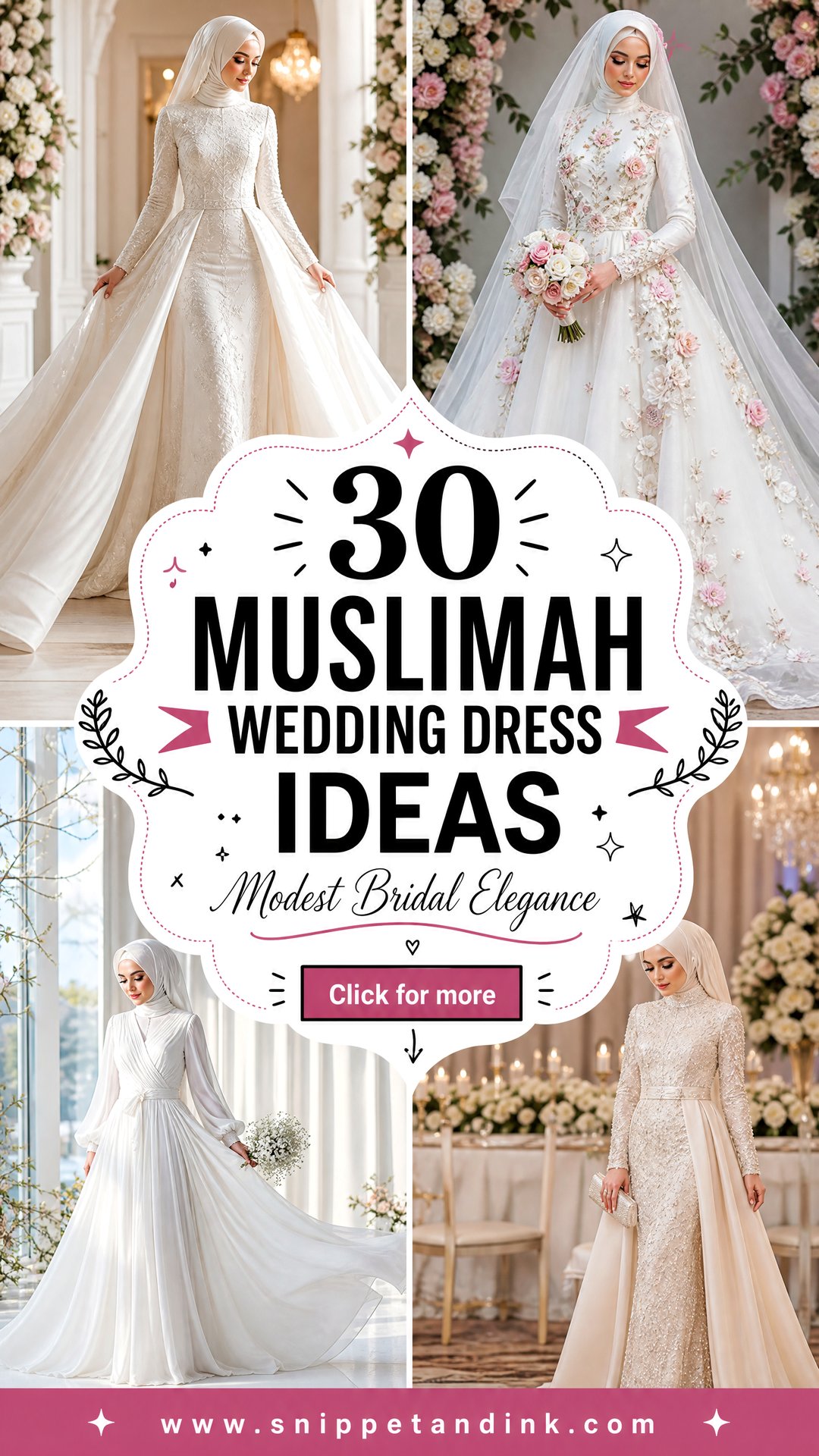
Ask a hijabi bride what she wants from her dress and the answer is rarely about decoration. It’s coverage that holds when she moves, a hijab that sits right against the neckline, and an outfit that still feels like her. Modest bridal wear now includes high necks, long sleeves, lined lace, flowing skirts, capes, embellished dupattas and sharp tailoring, so there’s real choice. I treat the dress, hijab, shoes, veil, bouquet and accessories as one outfit from the start. Below are thirty dresses, from a simple satin gown to a heavily embroidered princess dress, each with the detail I’d check before you commit.
Six Movements to Test Before You Say Yes to a Covered Gown
A modest gown can look perfect standing still in front of a mirror and fail the moment you move. Coverage gaps, riding sleeves and a neckline that opens when you bend are much easier to fix before the order than after. I take every hijabi bride through the same short routine in the fitting room, with her hijab and underscarf on.
- Raise both arms as if hugging someone taller than you. Watch the cuffs and the gap between top and skirt on two-piece outfits.
- Sit on a low chair, then on the edge of a sofa. Check that the hem still covers your ankles and that the bodice doesn’t dig in.
- Bend forward to greet an elder or pick something up. The neckline and the hijab hem should stay in place.
- Climb a step or two, holding the skirt with one hand, because stages and stairways are part of most receptions.
- Turn your head fully left and right. A high collar should move with you without pushing the hijab out of shape.
- Hold your bouquet for a full minute. Heavy cuffs and capes often reveal their problems only once your arms are occupied.
Anything that fails gets written down and shown to the seamstress at the first alteration appointment. Most fixes are simple, like an extra snap, a lining panel or a longer sleeve, but they take time to source in matching fabric.
1. White Muslimah Wedding Dress With Hijab
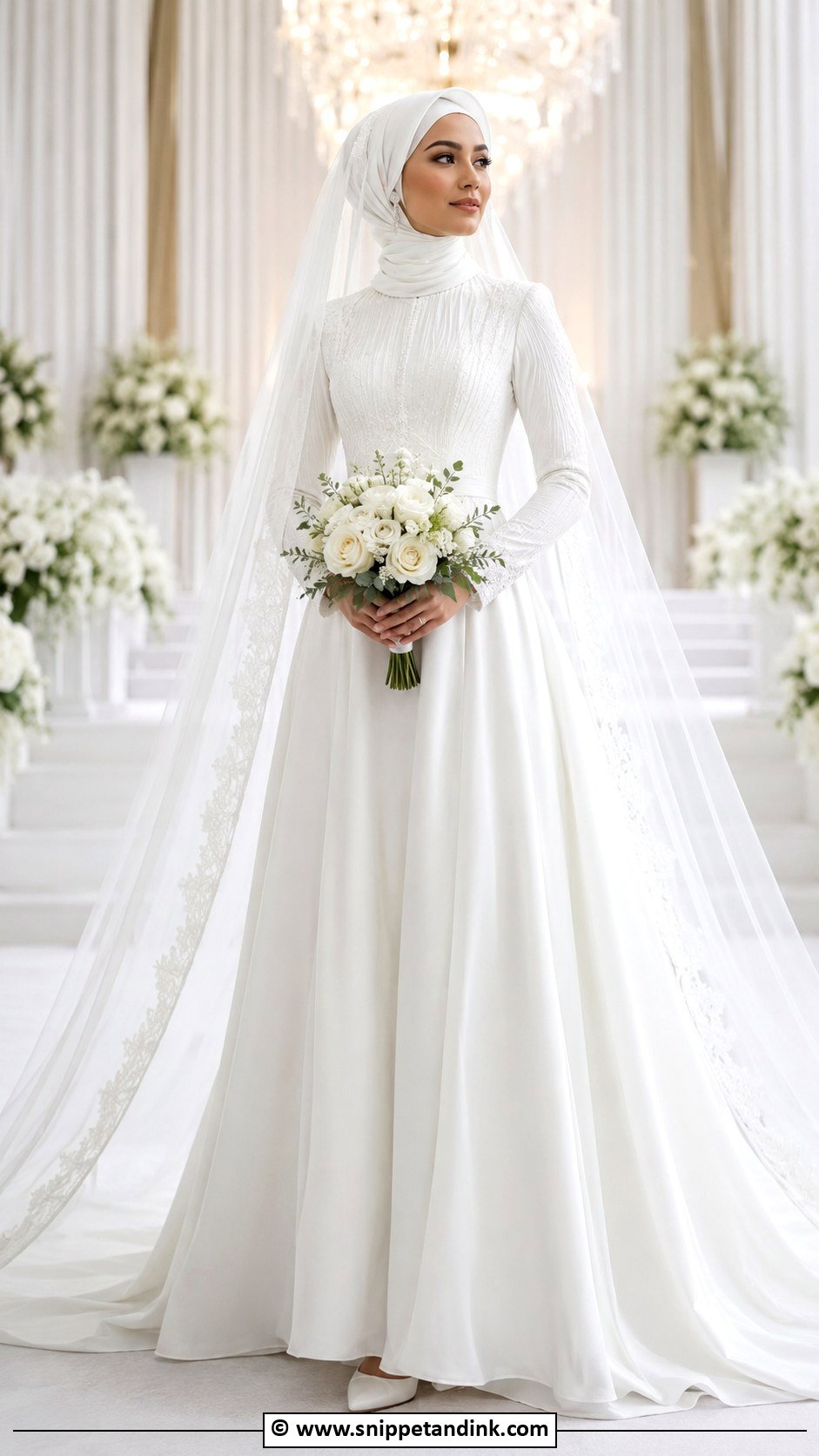
White with a hijab is the starting point for most modest brides. A long-sleeve gown with a high neck, a softly structured bodice and an A-line or ball gown skirt is the classic shape. A smooth chiffon or silk hijab frames the face without bulk. Match the hijab closely to the dress, since bright white next to ivory makes the gown look dingy and ivory next to bright white makes the hijab look grey. A delicate tiara, pearl pins and closed-toe heels finish it for a mosque ceremony, hotel wedding or formal reception.
2. Lace Muslimah Wedding Dress
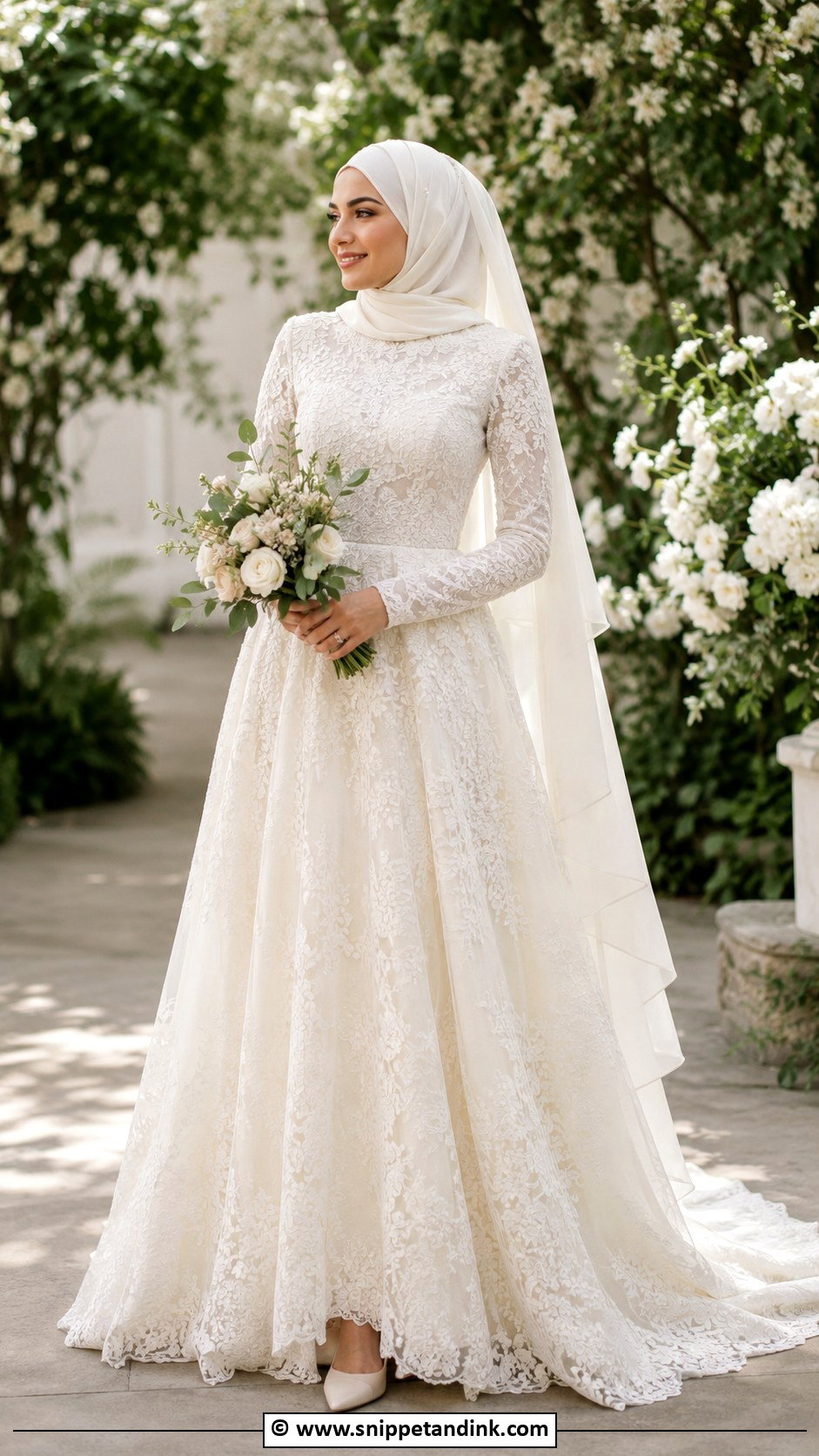
Lace gives texture, but on a covered gown the lining is where I spend my attention. Lined lace sleeves and a high illusion neckline backed with modest lining keep coverage solid under bright lights. Floral lace flatters most and needs little jewelry. If the lace runs from neckline to hem, keep the hijab plain chiffon or satin. Ivory heels, a small bouquet and pearl pins on the hijab complete it, and it suits garden venues and bright indoor halls.
3. Satin Muslimah Wedding Dress
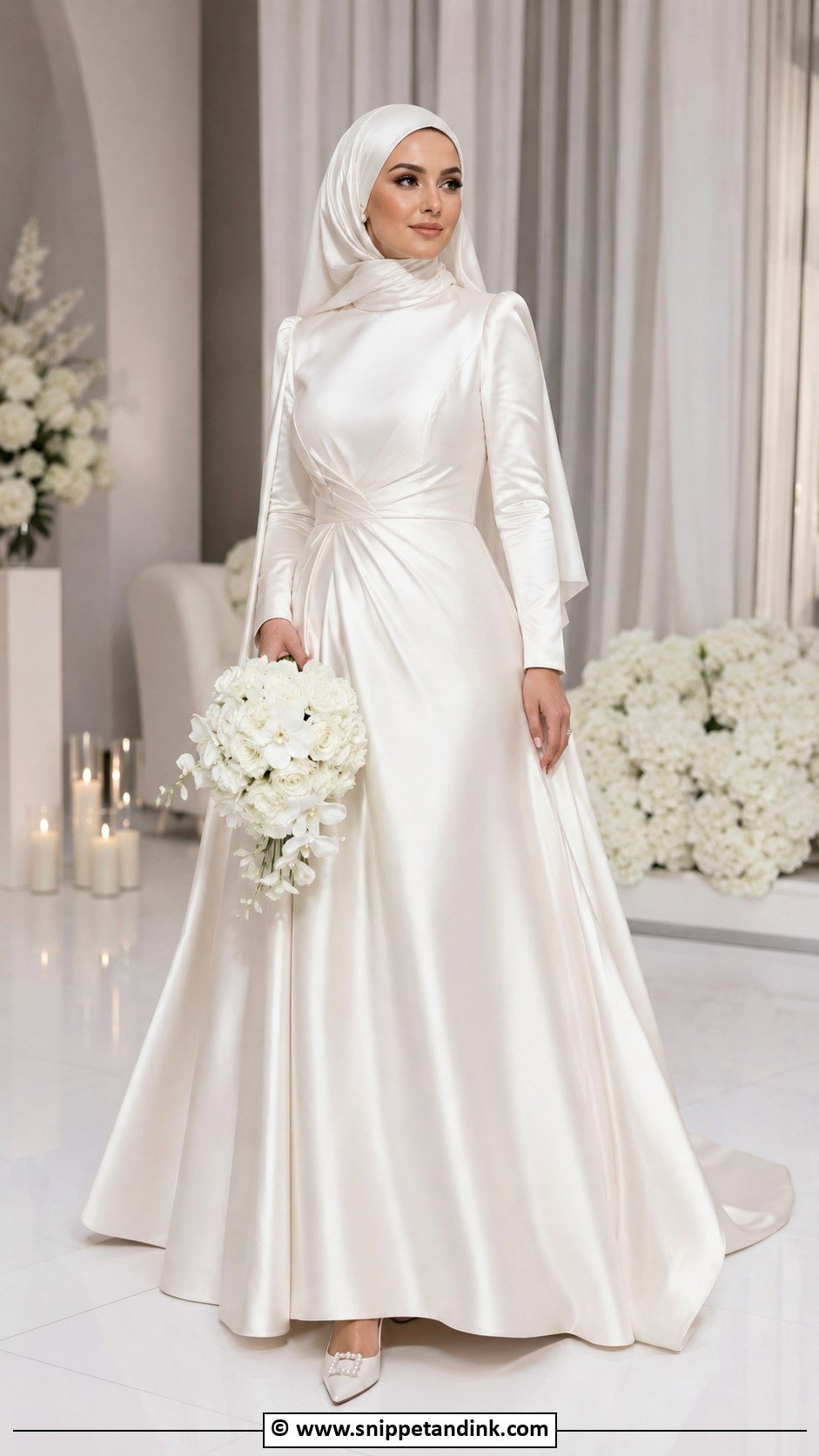
Satin’s natural sheen makes even a simple gown look expensive, and that’s also why it shows every fitting flaw: a pull across the back or a puckered seam catches the light. Choose long sleeves, a high neck, a fitted waist and a full skirt. A matching satin or matte chiffon hijab keeps it balanced. Because satin reflects so much light, I keep accessories matte or pearl rather than crystal. Pearl studs if they show, pointed heels and a structured bouquet are enough for an evening or city wedding.
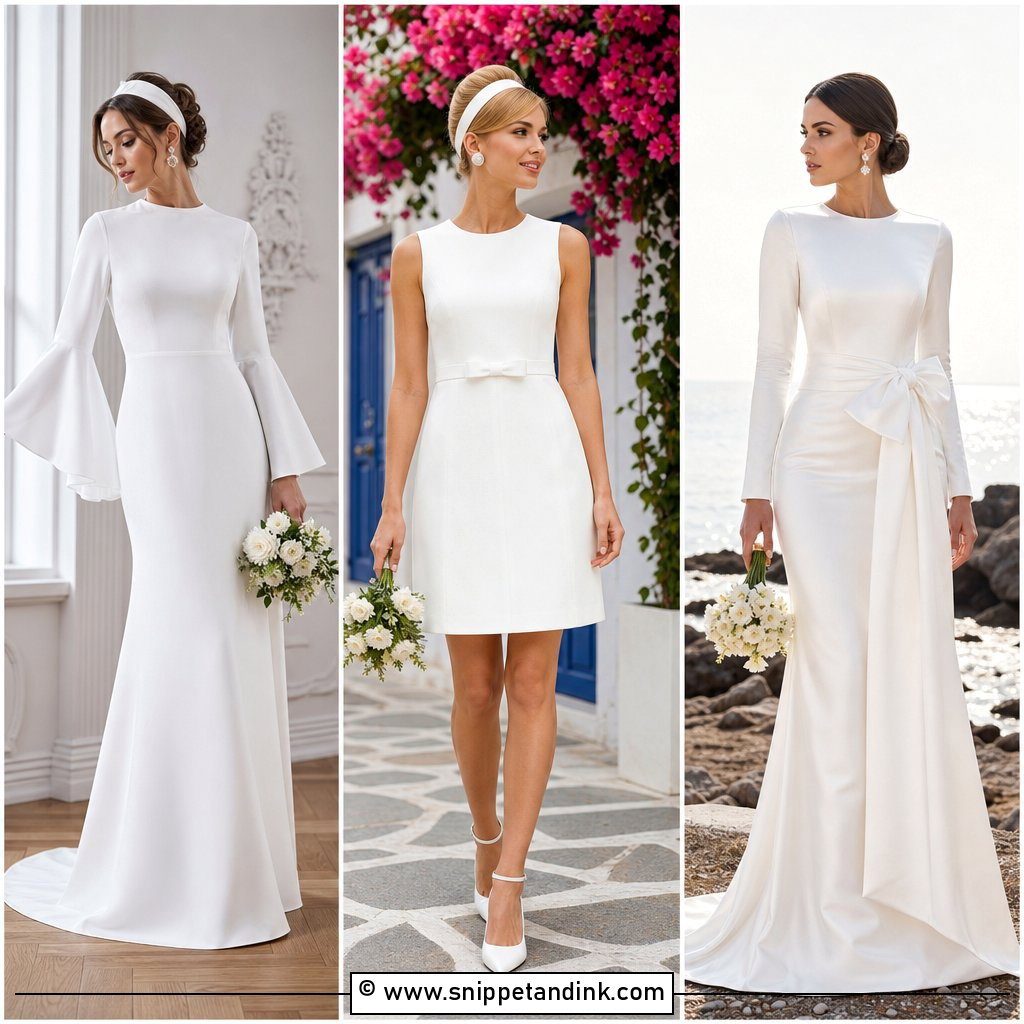
4. Simple Muslimah Wedding Dress
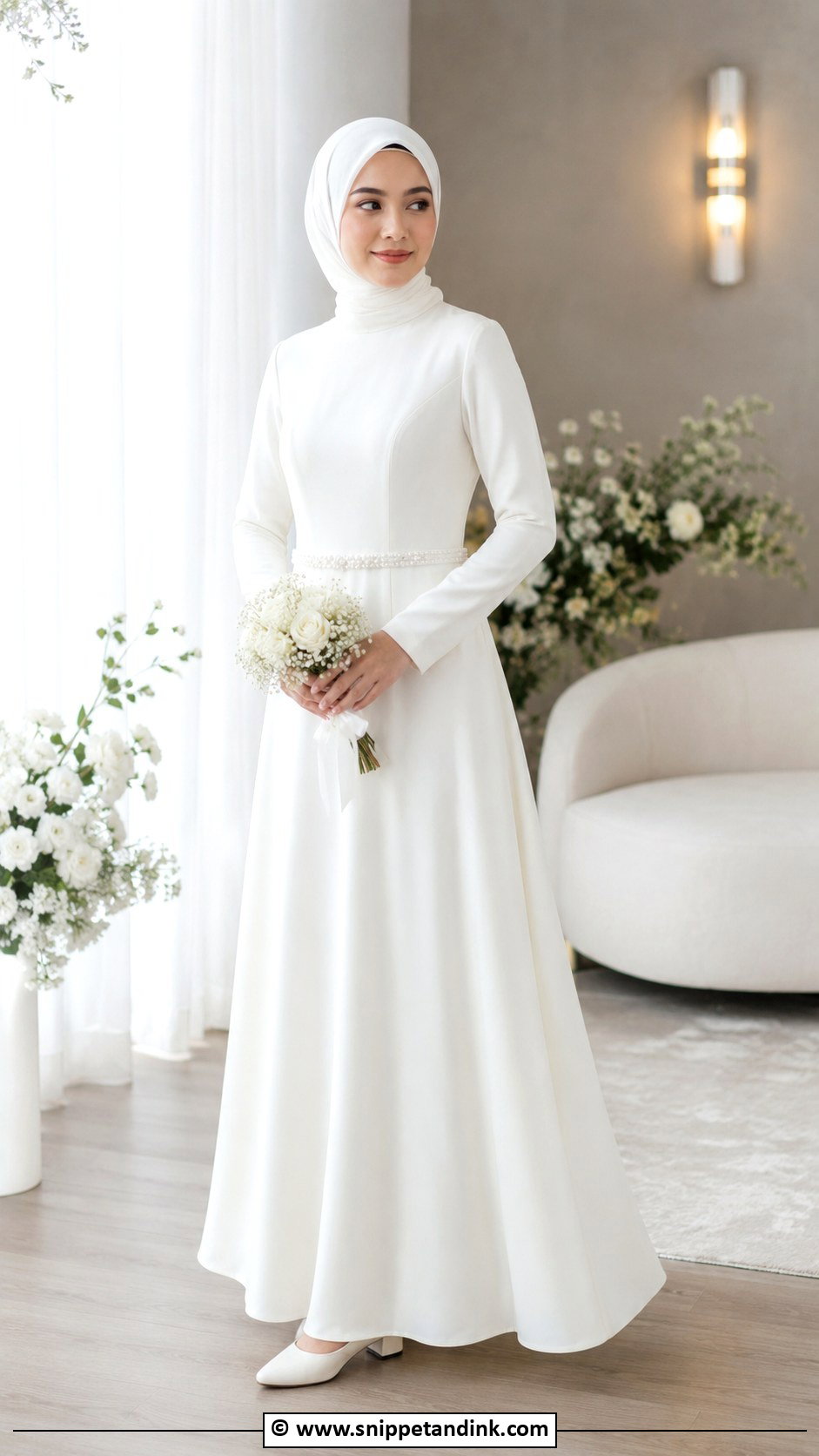
A simple dress can look as special as a heavily embellished one, provided the fit is right, and fit is what I’d spend the budget on. Clean lines, long sleeves, a high neck and a soft A-line or column skirt are the base. Crepe, matte satin and silk blends look polished without decoration. Pair it with a neatly wrapped hijab, low block heels and one accessory, such as a pearl belt or small tiara. It suits nikah ceremonies, civil weddings and brides who don’t like sparkle.
5. Princess Muslimah Wedding Dress
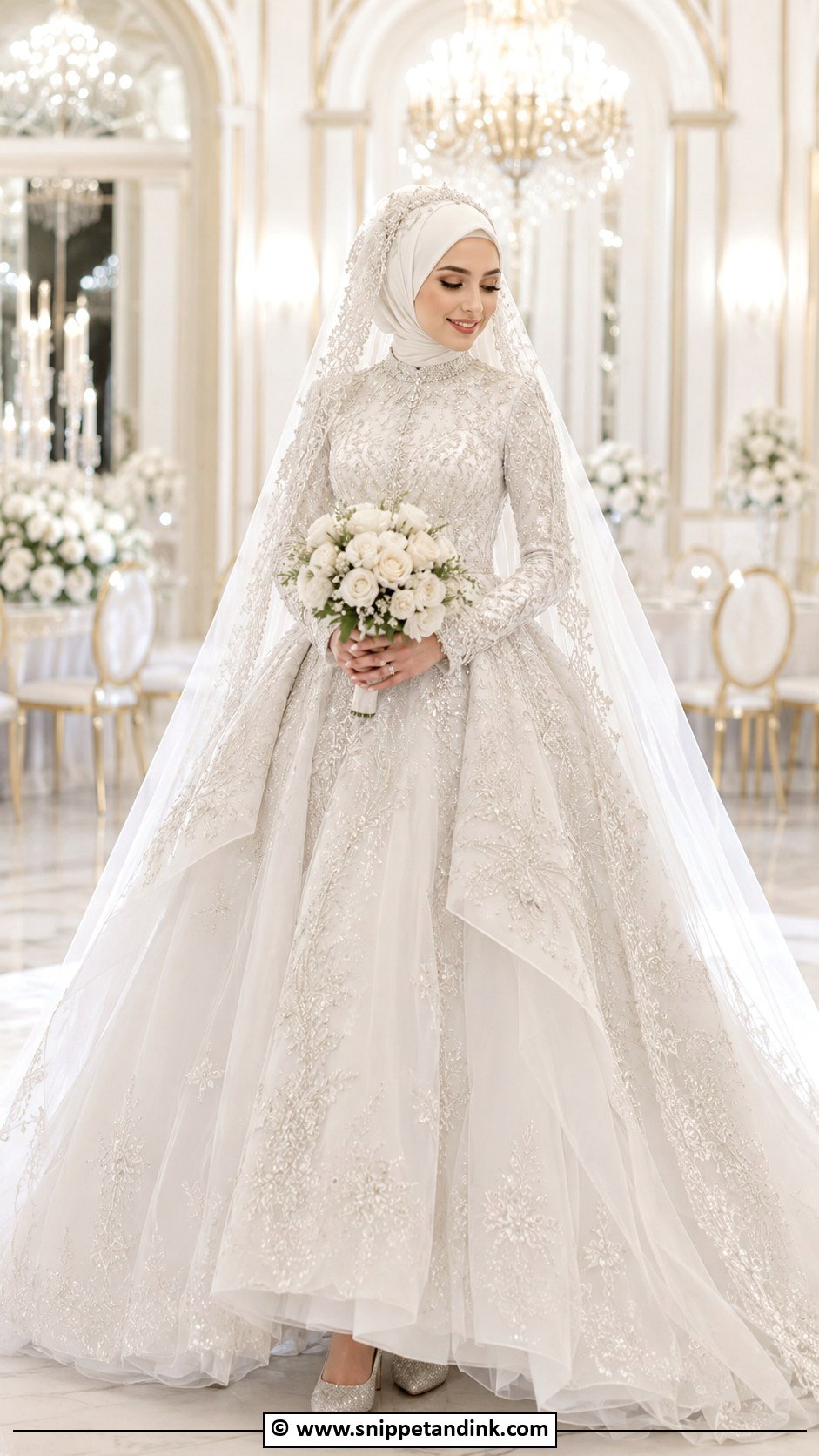
A princess gown is about the entrance. Choose a covered ball gown with long sleeves, a high neck and a full layered skirt; tulle, organza and mikado create volume. A fitted bodice with embroidery or beadwork defines the waist without revealing anything. Add a long bridal hijab, a cathedral veil and sparkling closed-toe heels. Keep the bouquet medium-sized so it doesn’t compete. One thing to plan for: a skirt this wide won’t fit through every doorway or into every car, so measure both before the day.
6. A Line Muslimah Wedding Dress
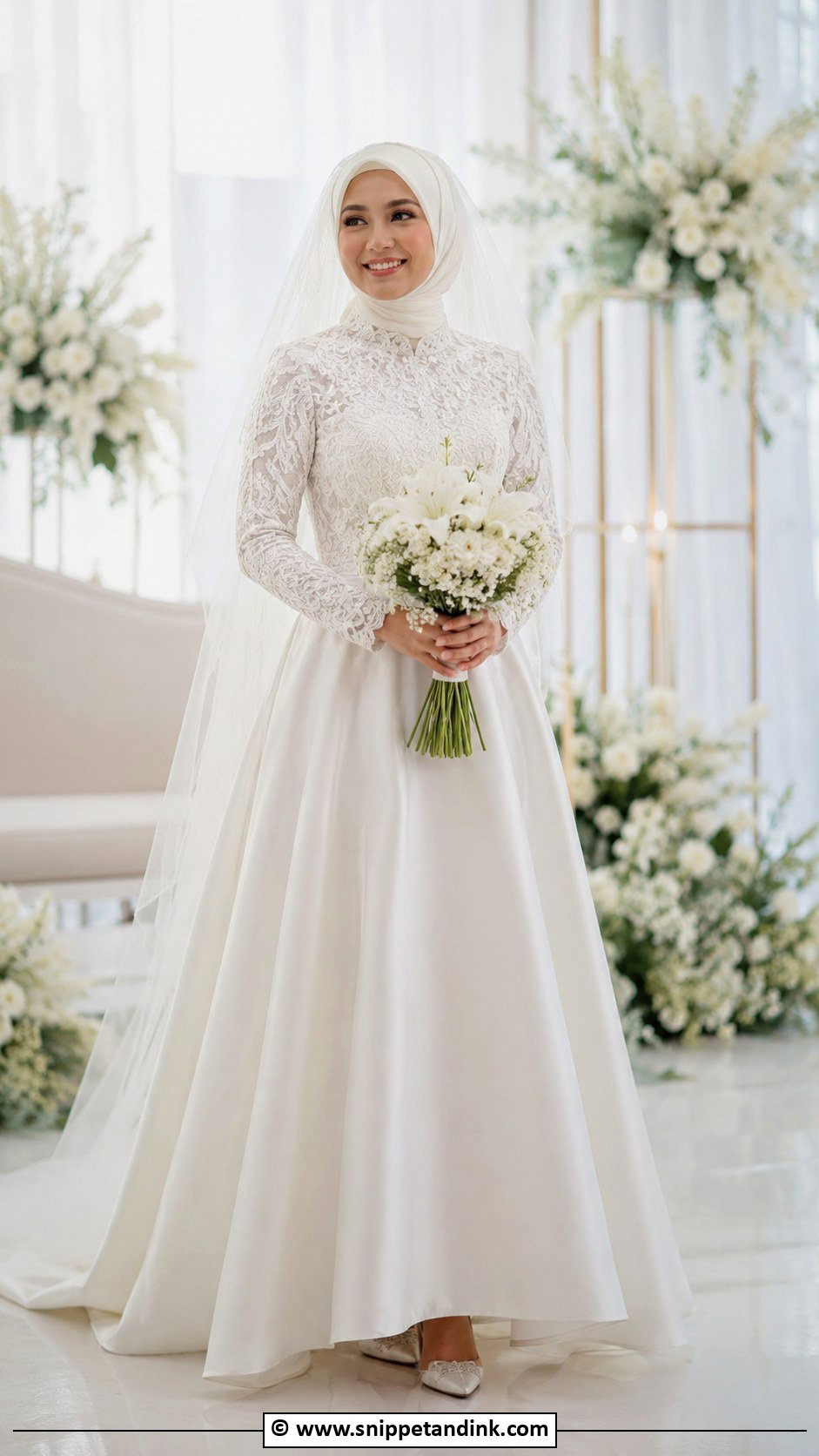
An A-line shapes the waist and flows away from the hips, so it suits many figures and stays comfortable all day. Choose a long-sleeve bodice in lace, satin or crepe and let the skirt fall softly to the floor. A plain hijab works with a detailed bodice, while a lightly embellished hijab adds interest to a plainer dress. I’d keep only one of the two decorated, never both. Low heels, a soft veil and a fresh bouquet complete it for anything from an intimate nikah to a large celebration.
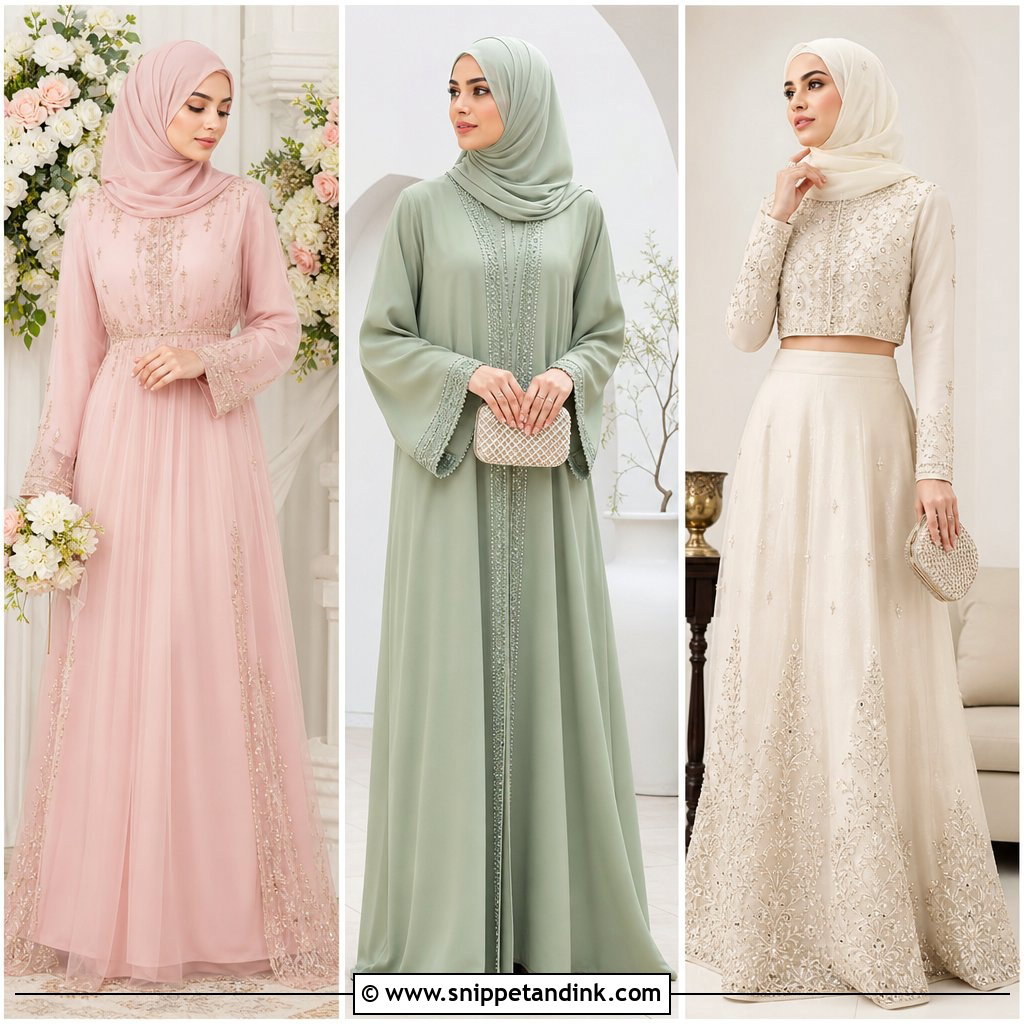
7. Mermaid Muslimah Wedding Dress
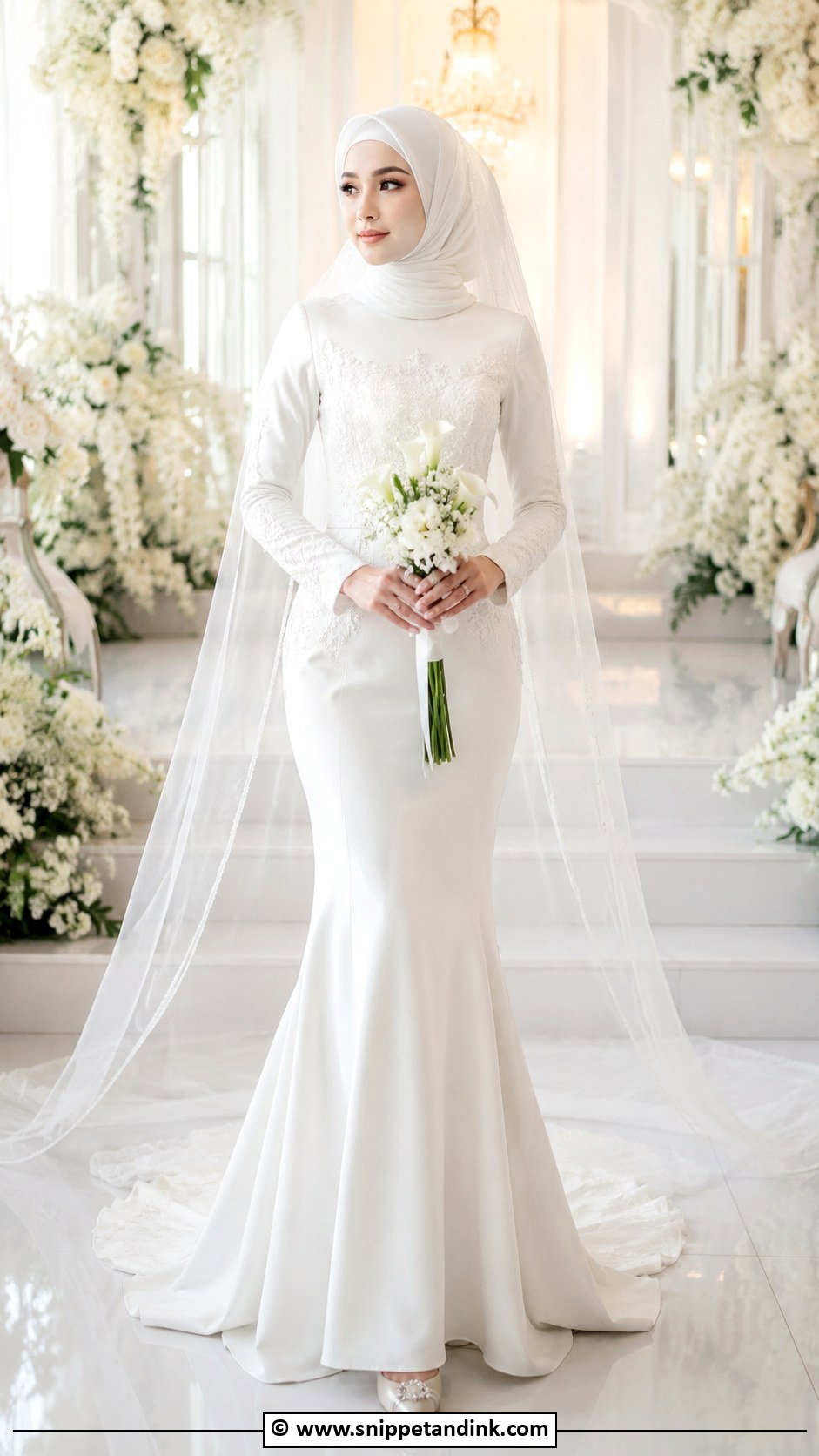
A mermaid should skim rather than cling. Look for long sleeves, a high neck and a flare that starts below the knee. Stretch crepe, lace or satin work if the lining feels secure. I always do a sitting test with mermaid brides, because a skirt that’s tight at the knee rides up when you sit and can show the ankle and shin. A smooth hijab wrap and a long veil soften the fitted line, and simple heels with a narrow bouquet keep it elegant.
8. Ball Gown Muslimah Wedding Dress
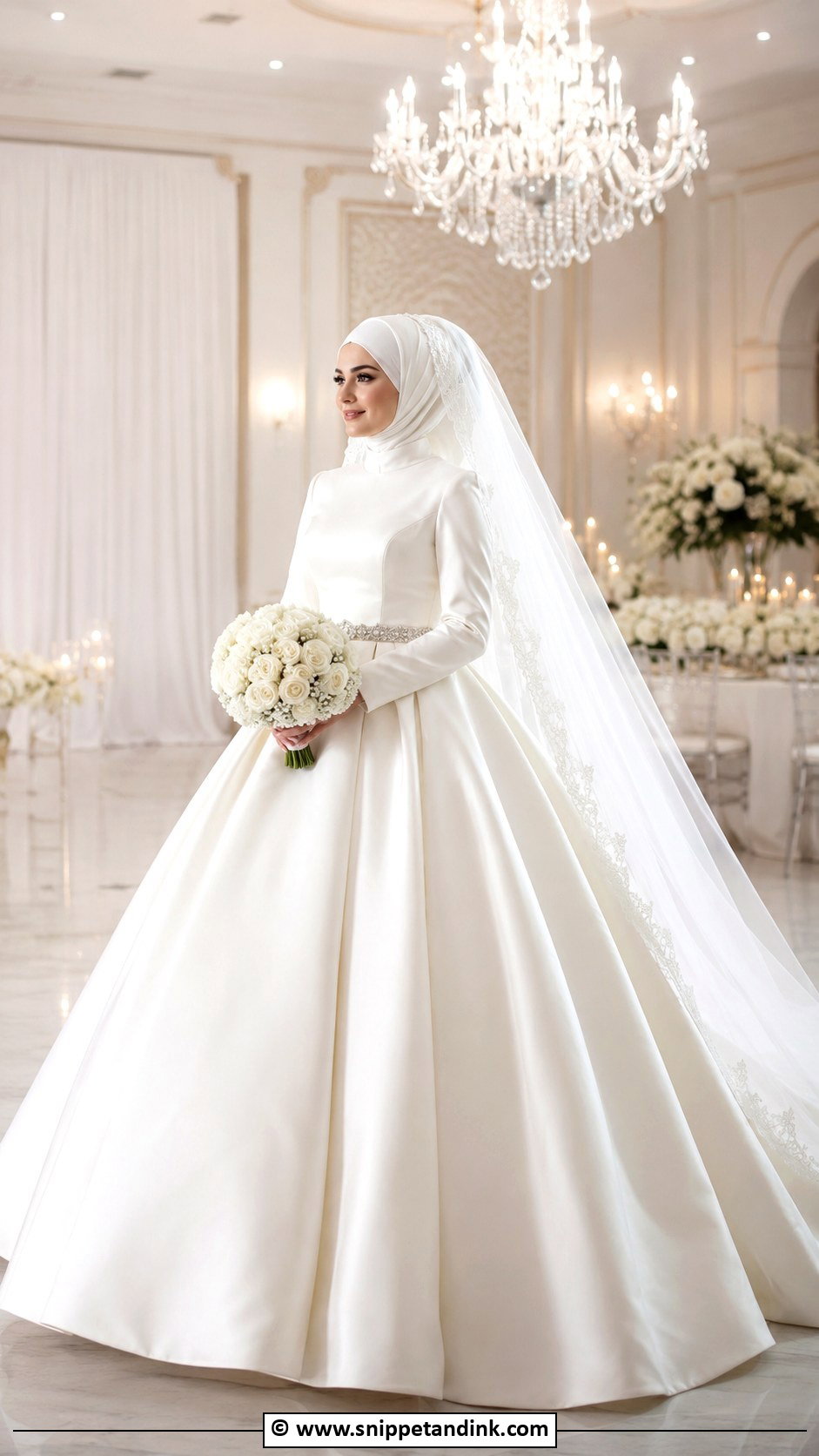
A ball gown brings drama with a covered, regal feel. The full skirt gives presence while long sleeves and a high neck keep it modest. Structured mikado gives a clean royal effect; layered tulle is softer and lighter. If the skirt is very full, balance it with a neat hijab and a fitted bodice. A crystal belt defines the waist. Pair it with a long veil, classic pumps and a round bouquet for a ballroom wedding, and ask for a bustle so you can dance later without someone stepping on the train.
9. Long Sleeve Muslimah Wedding Dress
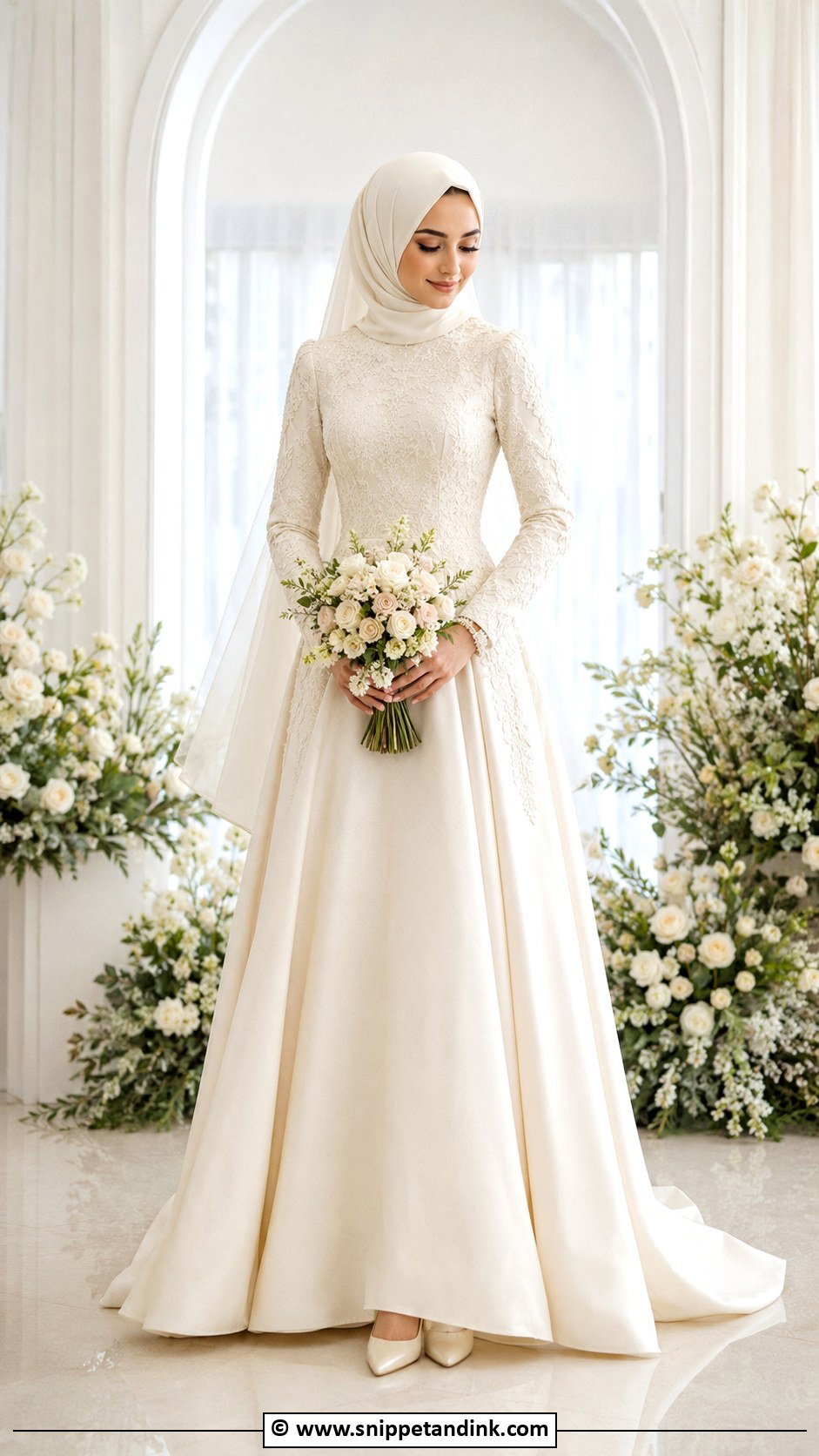
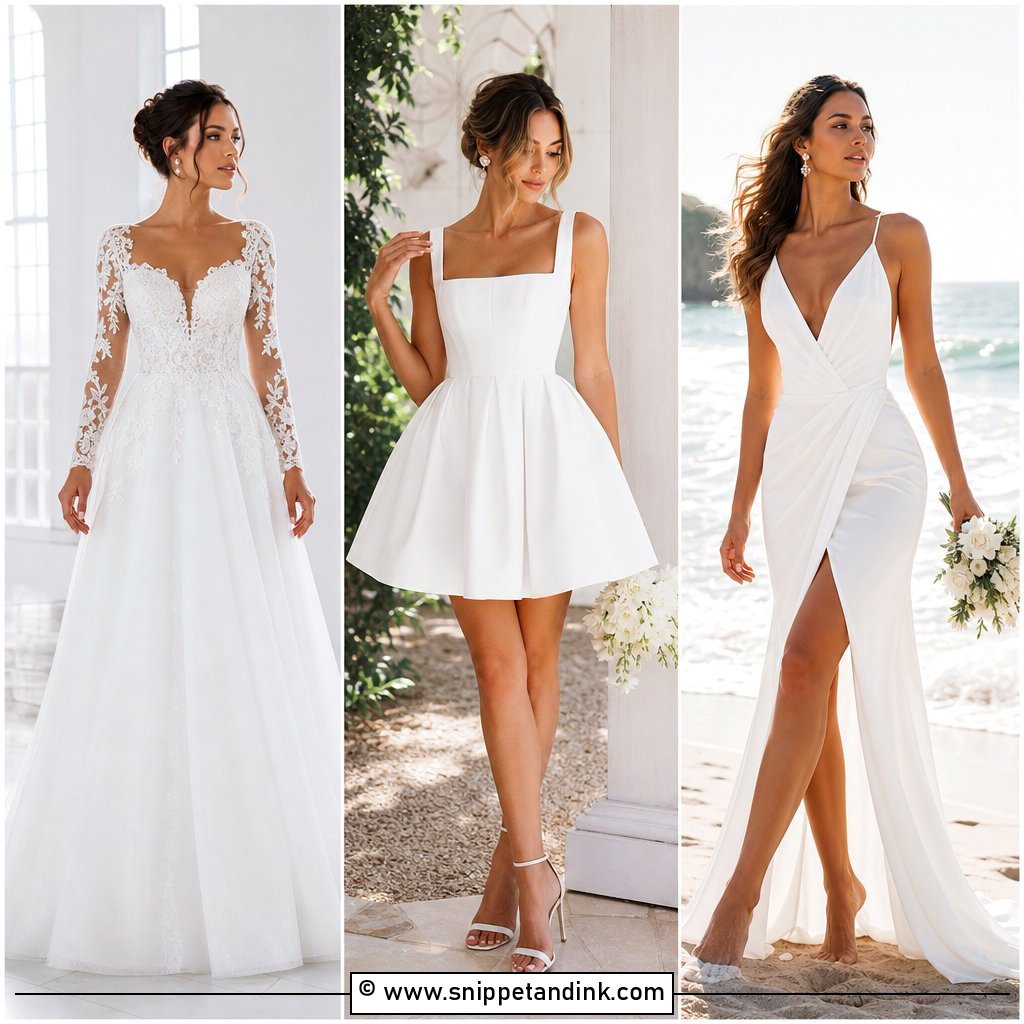
Sleeves set the mood of a covered gown more than any other detail. Fitted lace reads romantic, satin polished and puff sleeves a little vintage. Line them for coverage under bright lights, and check you can lift your arms fully, since tight sleeves set into a high armhole restrict movement more than you’d guess. Choose a hijab that sits smoothly at the neckline so the upper body doesn’t look crowded. A bracelet worn over the cuff and closed-toe heels complete it, in any season.
10. High Neck Muslimah Wedding Dress
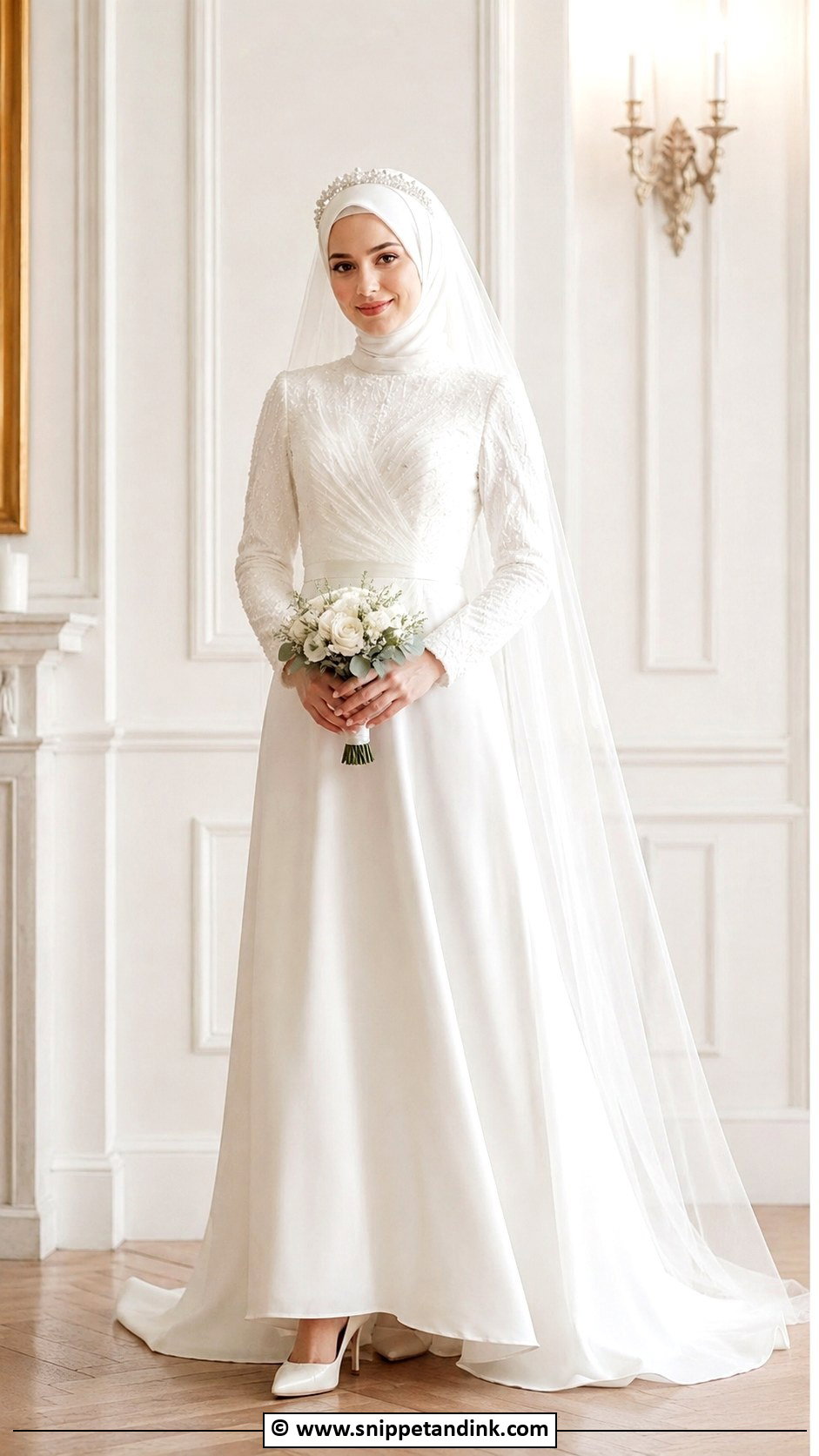
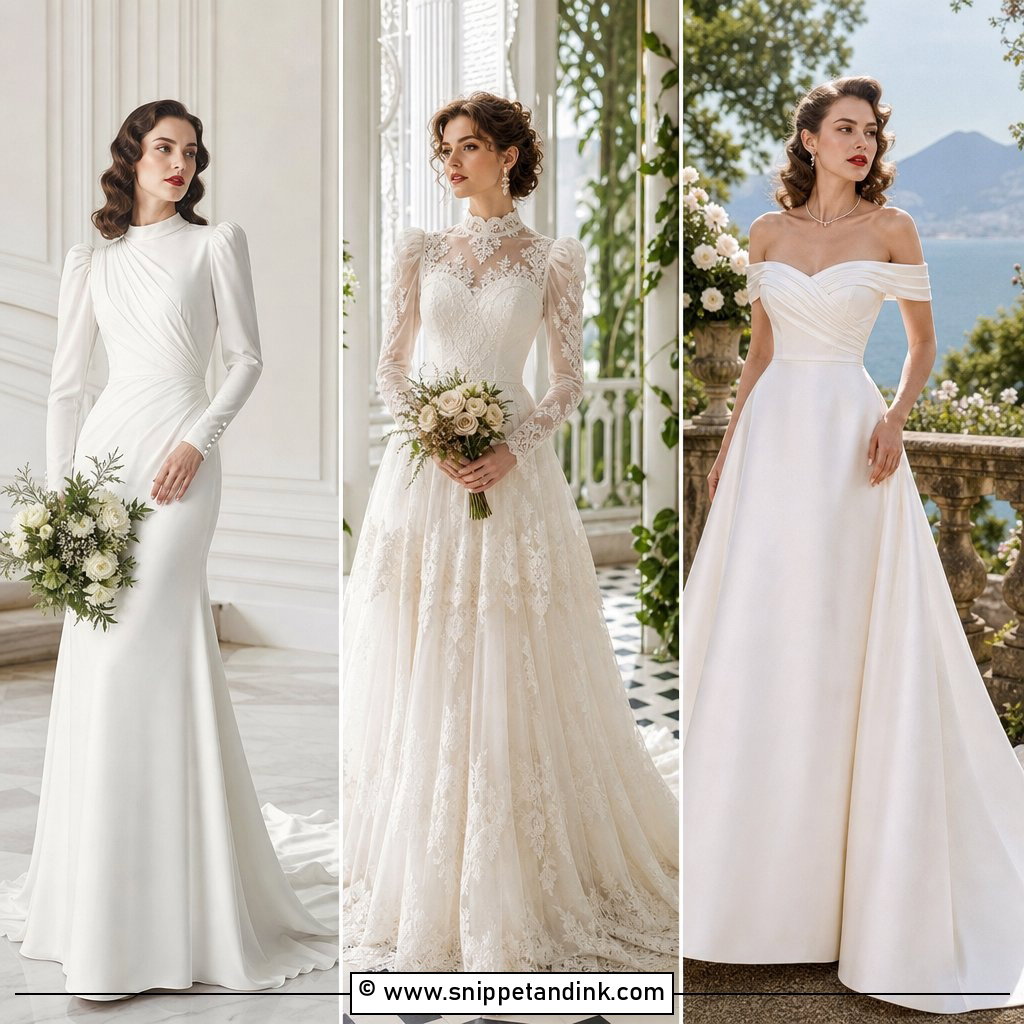
A high neck runs straight into the hijab, creating one clean line from face to bodice. A mock neck, soft collar or covered illusion neckline all work. If the neckline has lace or beading, keep the hijab plain and close-fitting; if it’s simple, add a pearl headpiece or delicate veil. I fit the collar while the bride wears her underscarf, because the extra layer at the throat can make a tight collar uncomfortable. A-line, column and ball gown silhouettes all suit it.
11. Cape Muslimah Wedding Dress
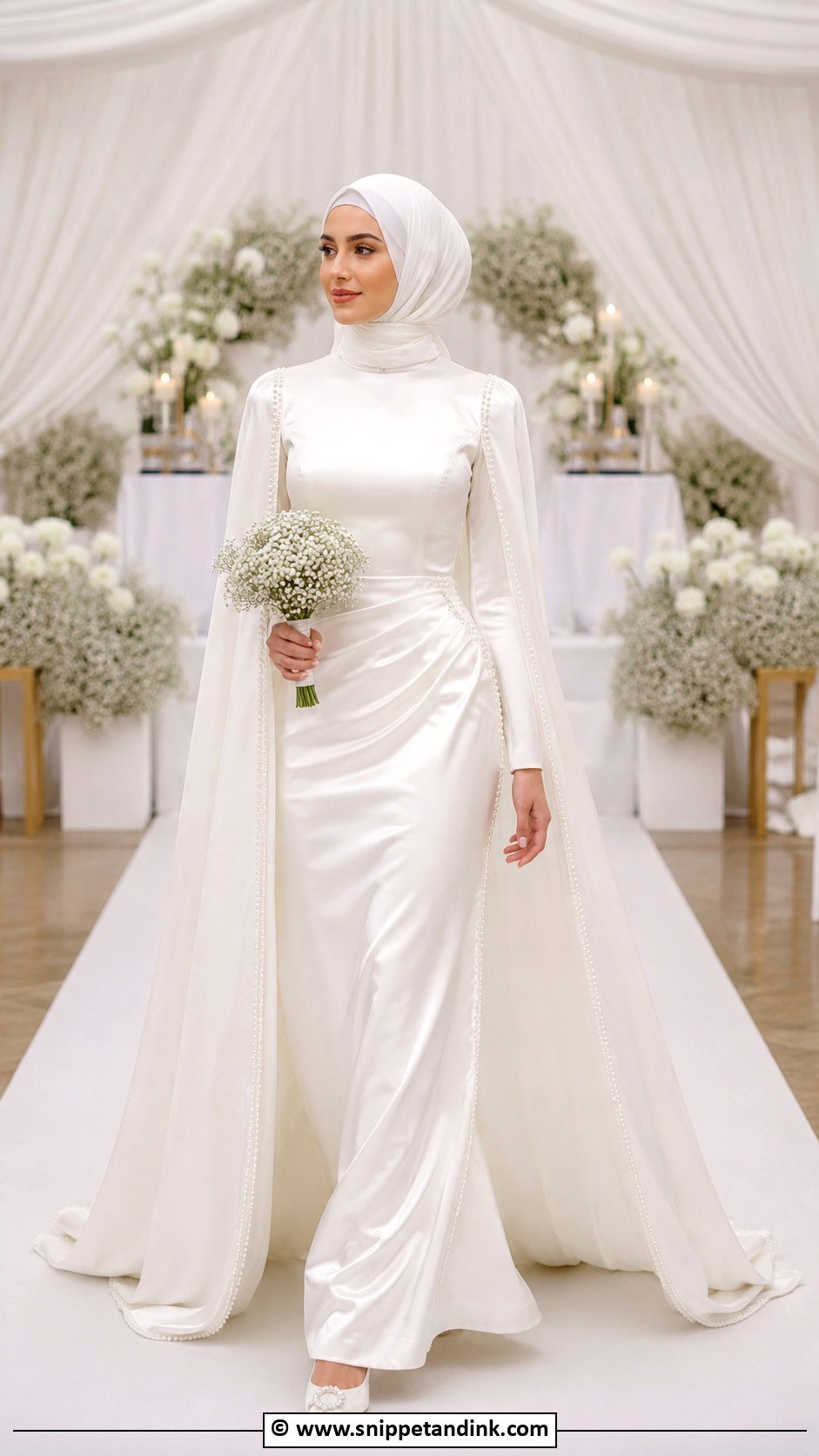
A cape Muslimah wedding dress gives drama without a traditional veil. The cape can flow from the shoulders, attach at the neckline or fall from the back of the gown. Choose a simple crepe or satin dress underneath so the cape stays the feature. A plain hijab, pointed heels and minimal jewelry keep it sharp. Embroidered or pearl-trimmed capes suit formal receptions, plain chiffon softer ceremonies. Check that the cape clears your hands when you hold the bouquet, or it’ll bunch in every photo.
12. Muslimah Wedding Dress With Detachable Train
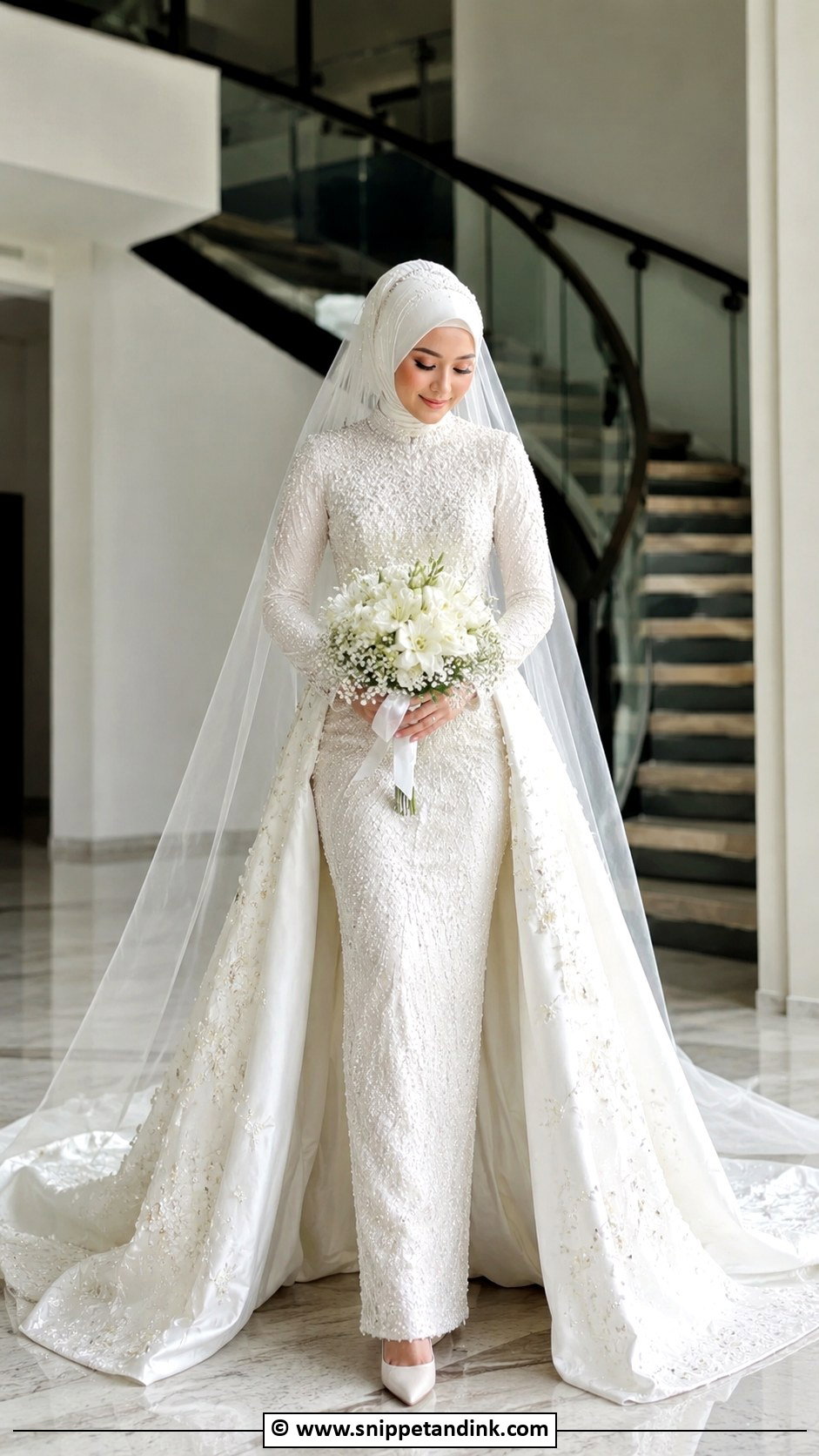
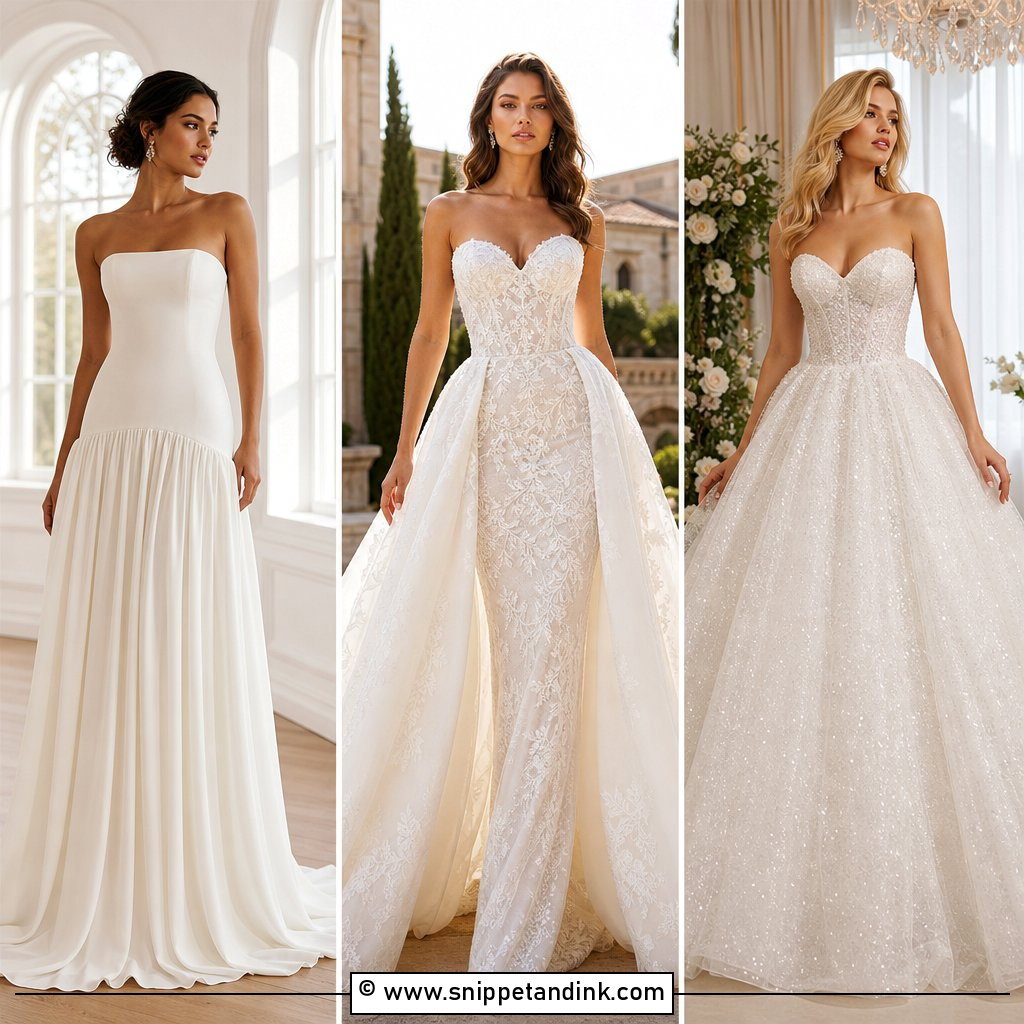
A detachable train gives you two outfits in one: a dramatic entrance for the ceremony and an easier dress for the reception. Choose a modest long-sleeve gown with a secure waist attachment or back overlay, and test the fastening several times at fittings, because hooks and snaps behave differently under the weight of the fabric than on a dress form. A matching hijab and veil complete the ceremony look. After the train comes off, switch to lighter shoes or add earrings over the hijab for the evening.
13. Embroidered Muslimah Wedding Dress
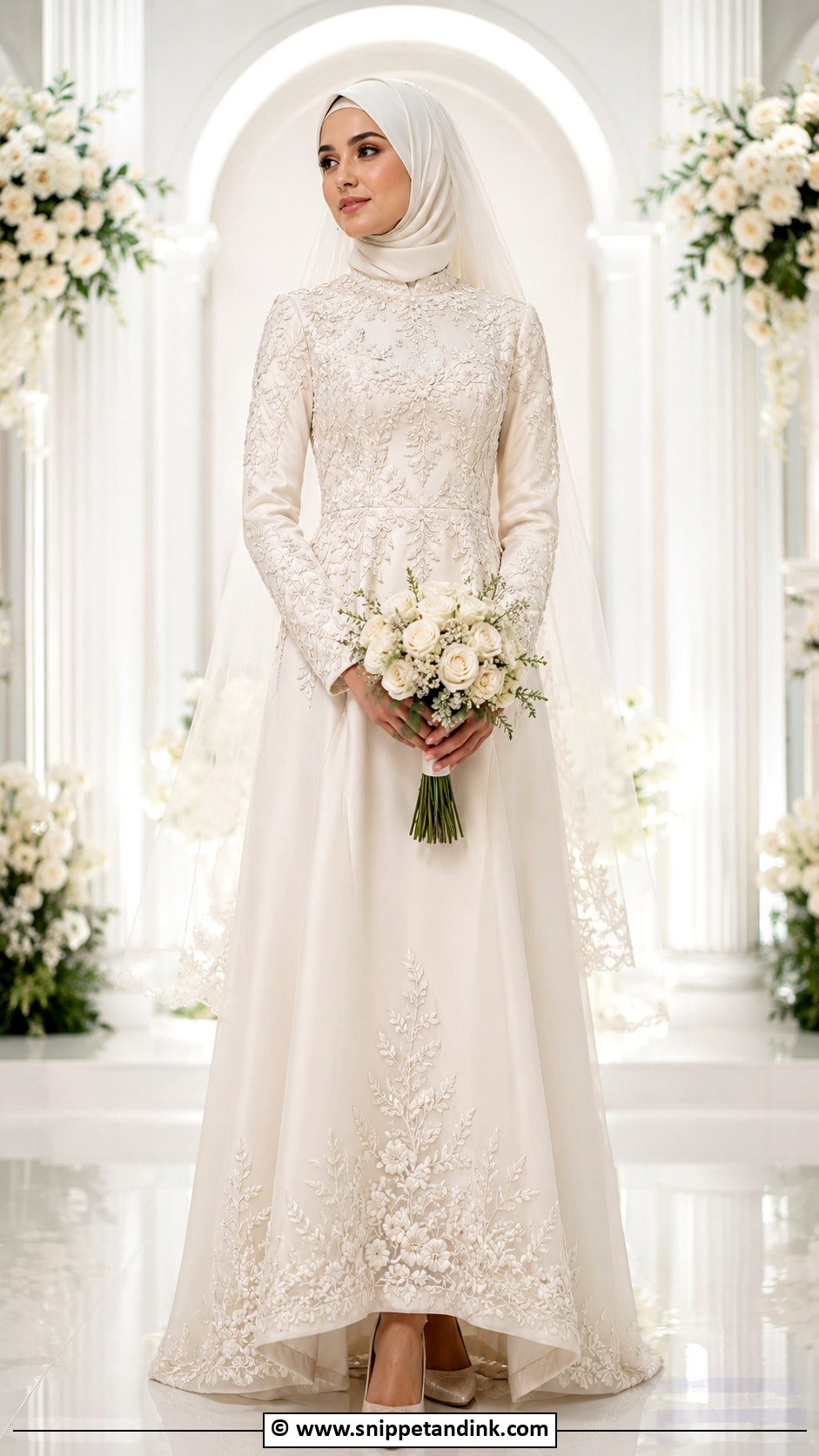
An embroidered Muslimah wedding dress feels personal and rich. Embroidery can be floral, geometric, vine-like or drawn from cultural motifs. For a modest look, place the heaviest work on the bodice, cuffs, hem or train so the dress doesn’t look busy. A plain hijab lets the embroidery stand out and a soft veil adds romance. Shoes in ivory, champagne or a shade matching the thread tie it together. Embroidery adds weight where it’s dense, so check that heavy cuffs don’t pull the sleeves over your hands.
14. Beaded Muslimah Wedding Dress
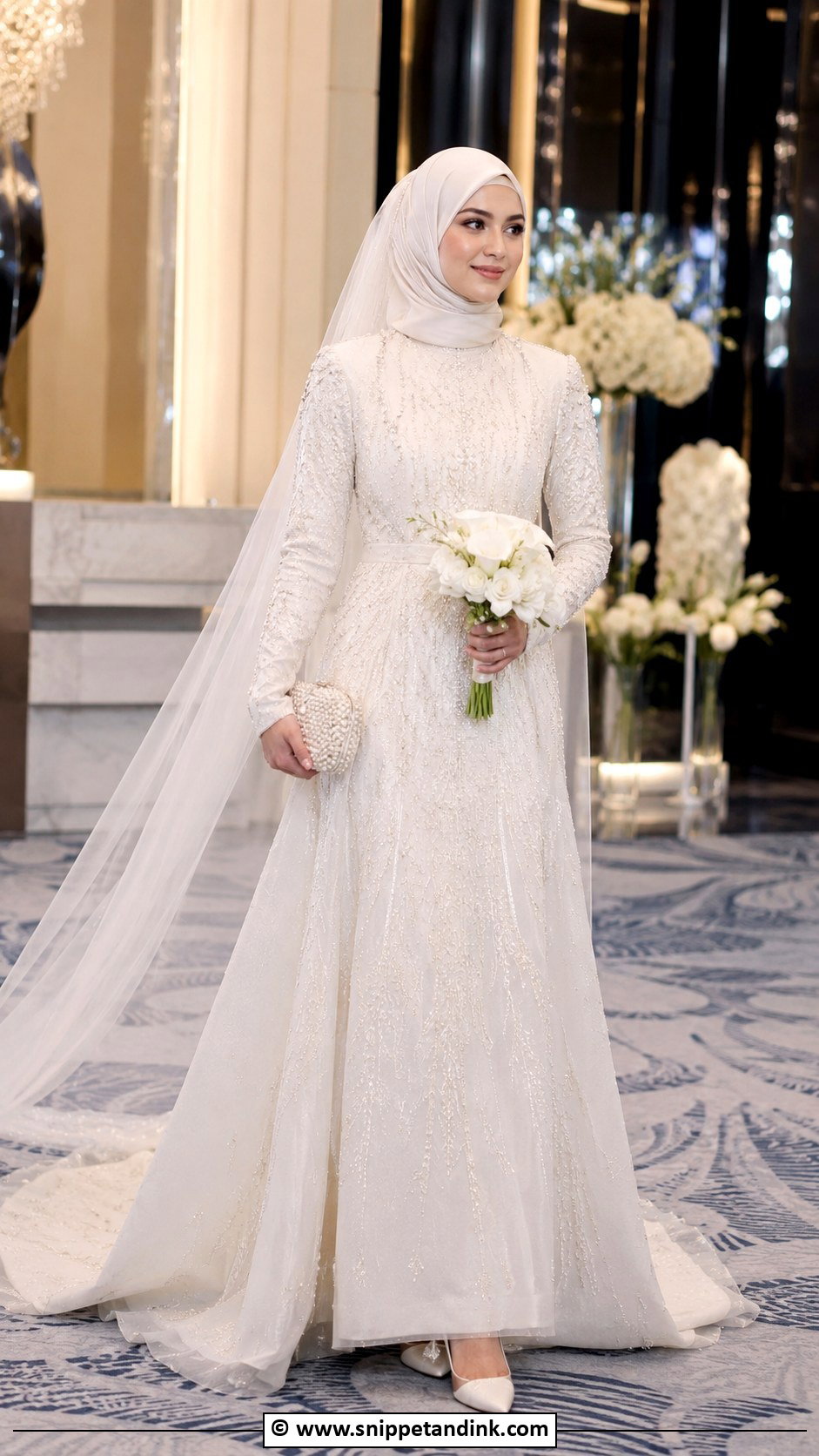
Beading catches light softly at evening weddings, hotel receptions and formal venues. A fully lined gown with long sleeves and a high neck keeps the sparkle modest. If the dress is heavily beaded, keep the hijab matte and simple; satin can work with subtle beadwork, but chiffon usually looks softer. Beads snag fine chiffon, so I keep veils short of the most beaded areas. Closed-toe heels, a small clutch and minimal jewelry complete it.
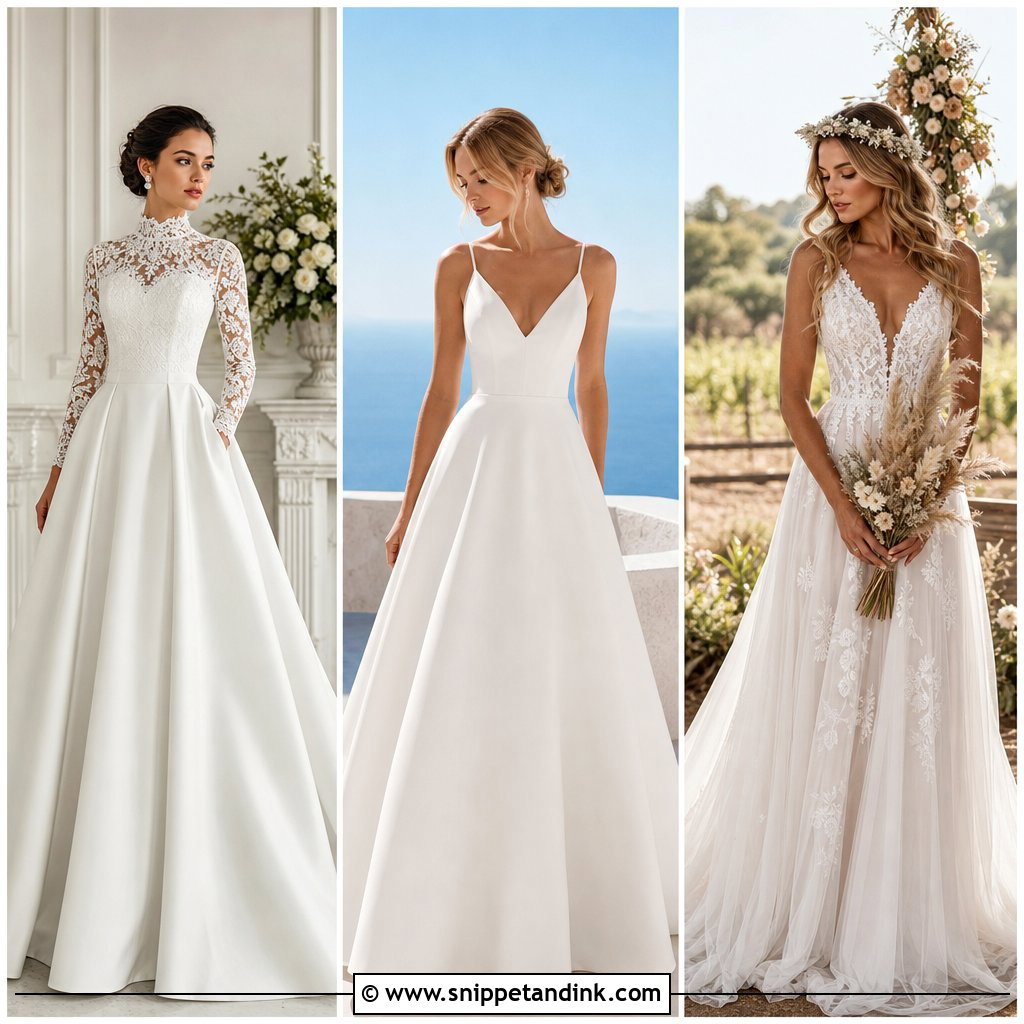
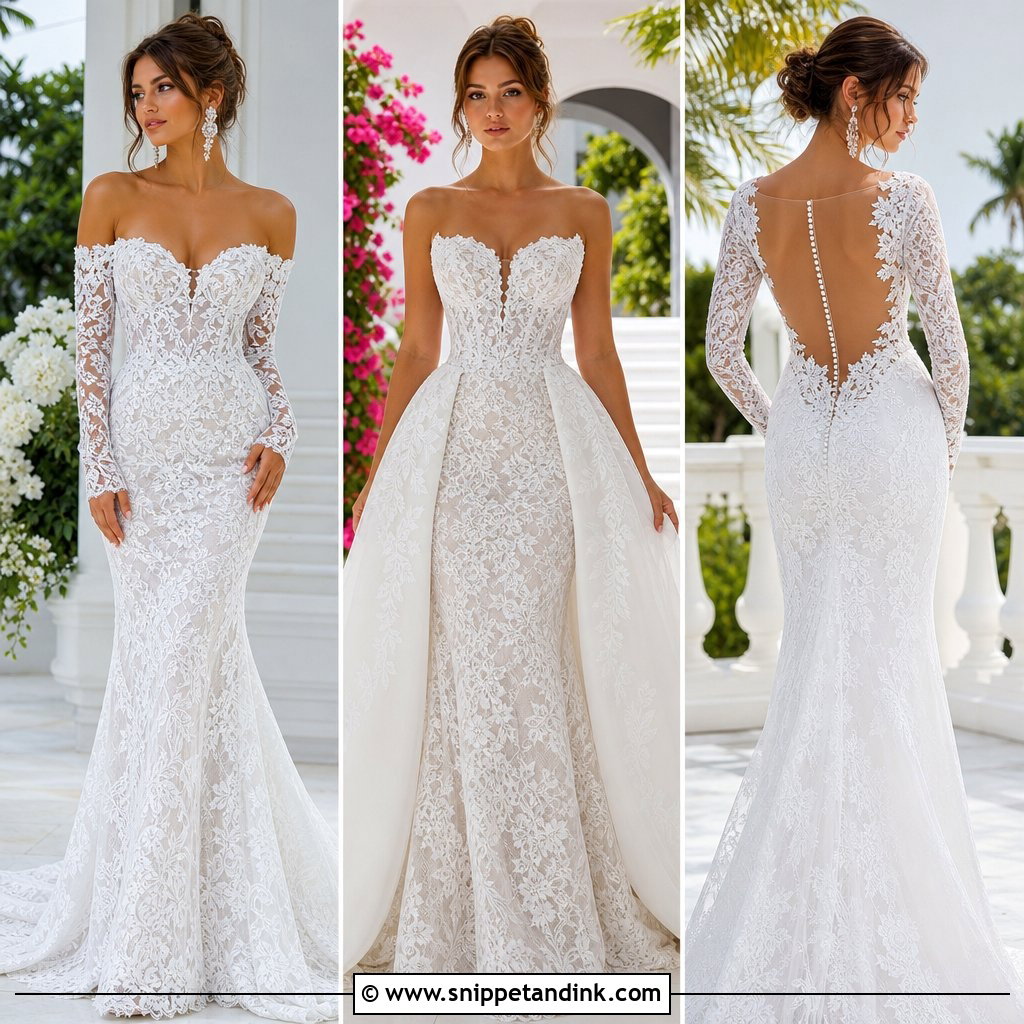

15. Pearl Muslimah Wedding Dress
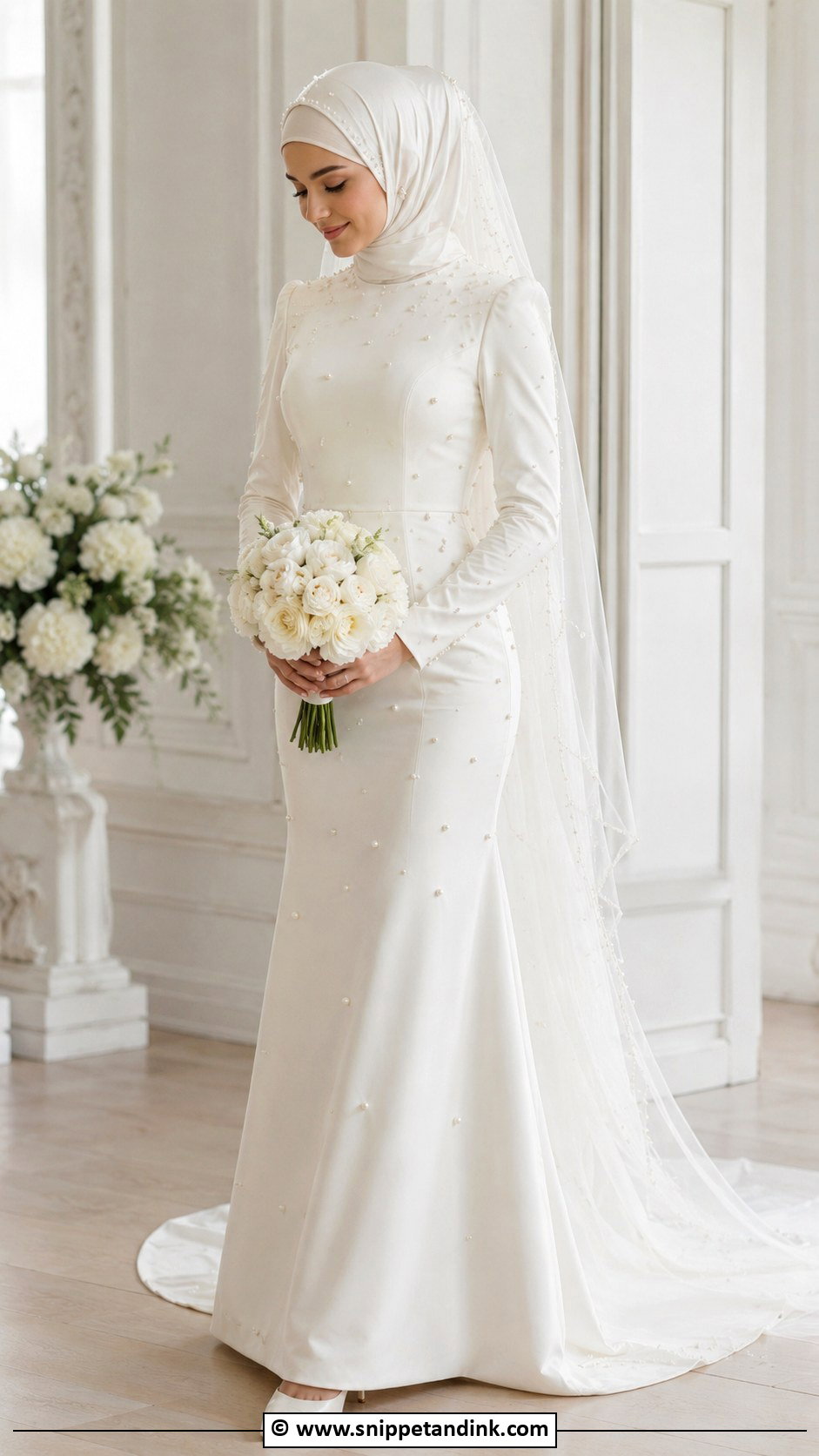
Pearls add dimension without the hard sparkle of crystals. They can sit on the sleeves, bodice, cuffs, veil or hijab edge. A clean satin or crepe gown with scattered pearls reads modern; lace with pearl accents reads romantic. A pearl-trimmed hijab suits a simple dress. Keep shoes and jewelry understated, such as ivory pumps. I’d always check whether the pearls are sewn or glued; glued pearls pop off in hugs, and there will be a lot of hugs.
16. Floral Applique Muslimah Wedding Dress
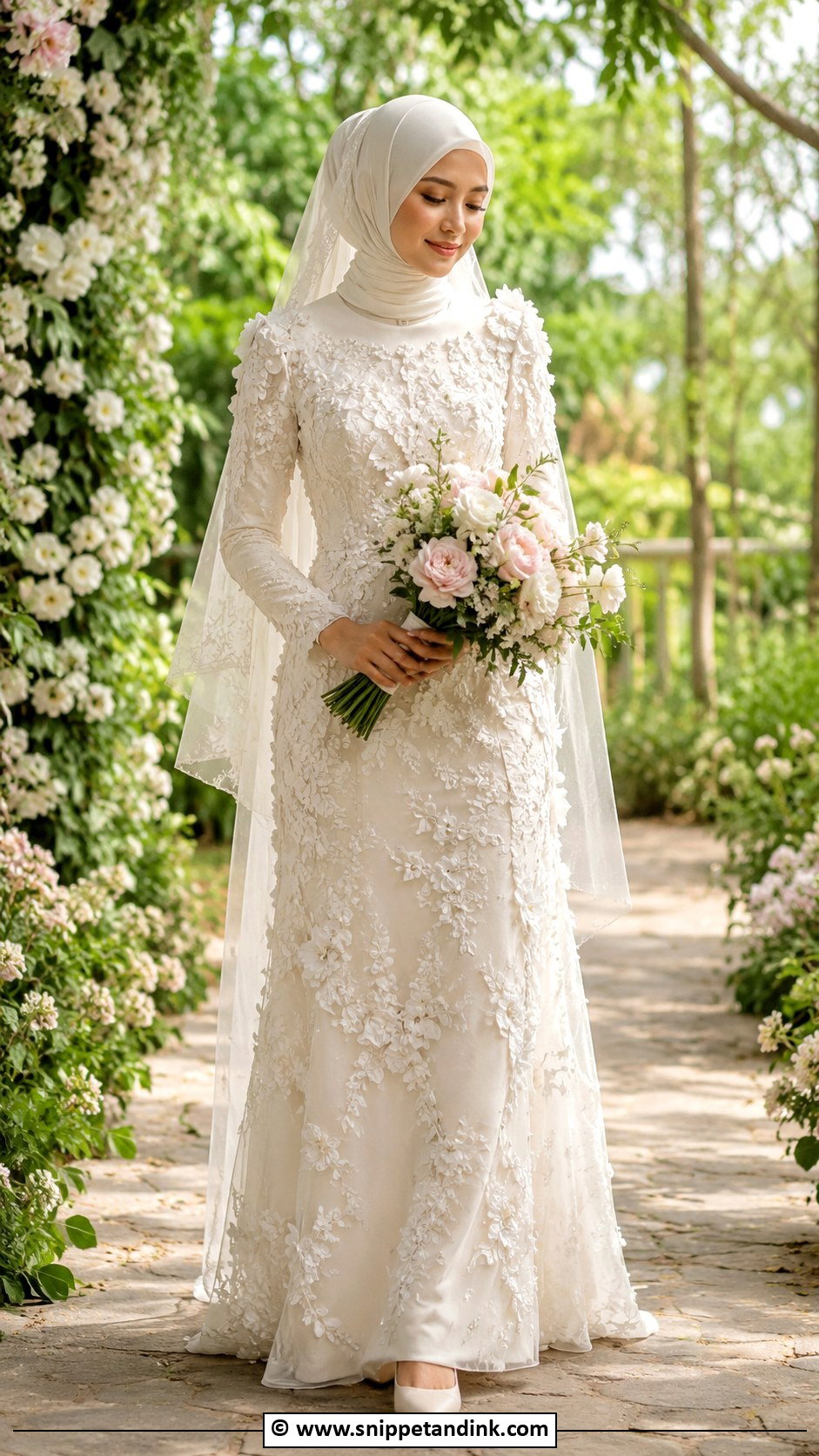
Three-dimensional flowers can sit across the bodice, sleeves, skirt or train, and placement decides whether it looks balanced. With large florals, keep the hijab and veil plain; with subtle ones, a softly embroidered hijab edge works. Ivory heels and a fresh bouquet complete the theme. Raised appliqué flattens if it’s crushed, so I store these gowns hanging with tissue padding rather than folded in a bag. Spring weddings, garden receptions and bright indoor venues suit it.
17. Chiffon Muslimah Wedding Dress
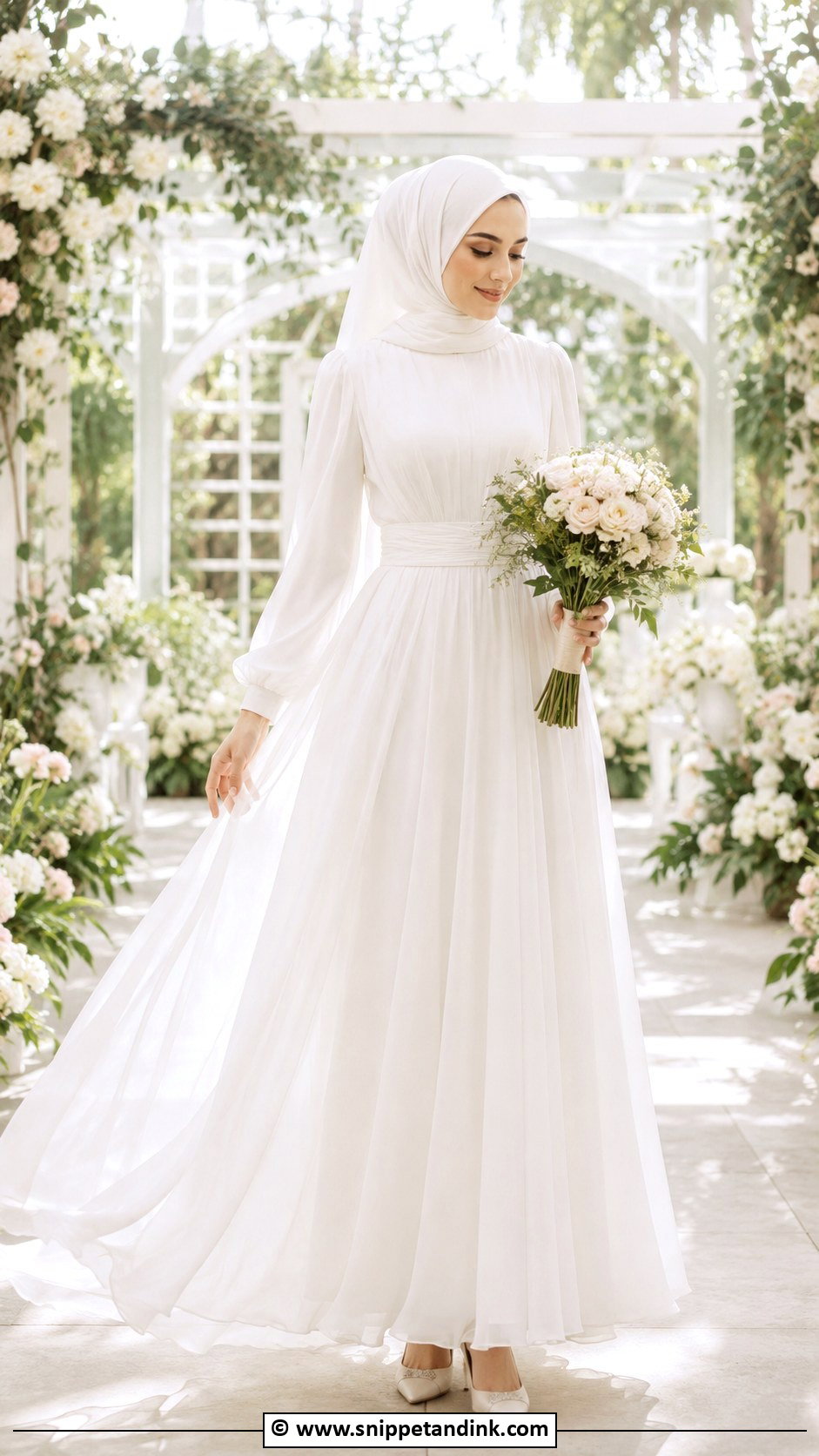
Chiffon is light and flowing, and it drapes well in A-line gowns, layered skirts and soft sleeves. It feels airy in warm weather without looking casual. Choose a fully lined dress with a high neck and long sleeves for real coverage, because a single layer of chiffon is see-through in daylight. A chiffon hijab in the same shade carries the line from head to toe. Delicate heels, a soft bouquet and minimal jewelry finish it for beach venues, gardens and simple nikah ceremonies.
18. Crepe Muslimah Wedding Dress
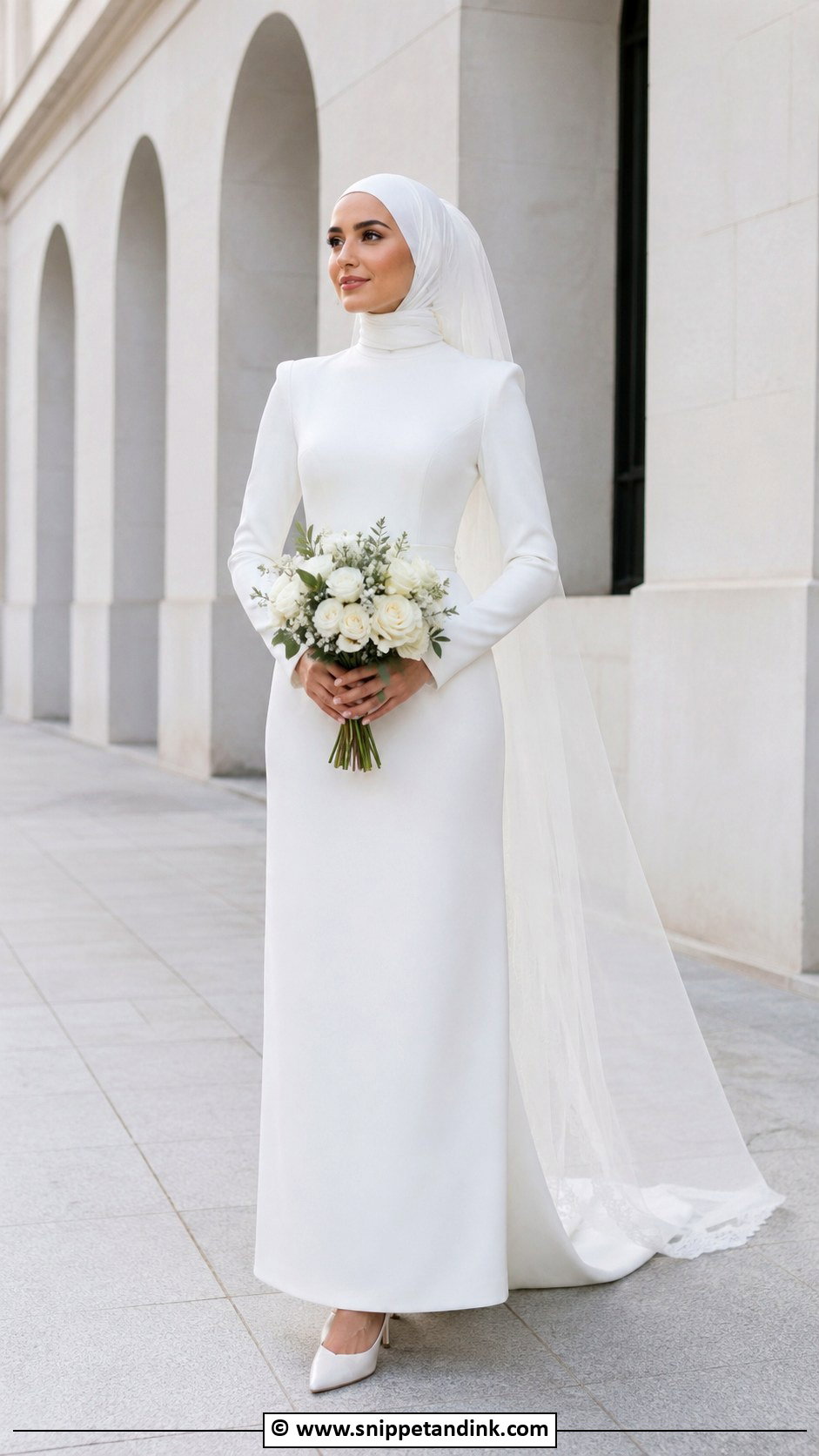
Crepe has a smooth finish and enough weight to make a sleek shape without volume, which is why I reach for it with brides who like tailoring. A long-sleeve gown with a high neck, fitted waist and straight or A-line skirt is the base. A long veil or cape adds drama if the dress is plain. Pair it with a matte hijab, pointed heels and a structured bouquet. Crepe holds up well to a long day without creasing much, which suits city weddings and minimalist receptions.
19. Tulle Muslimah Wedding Dress
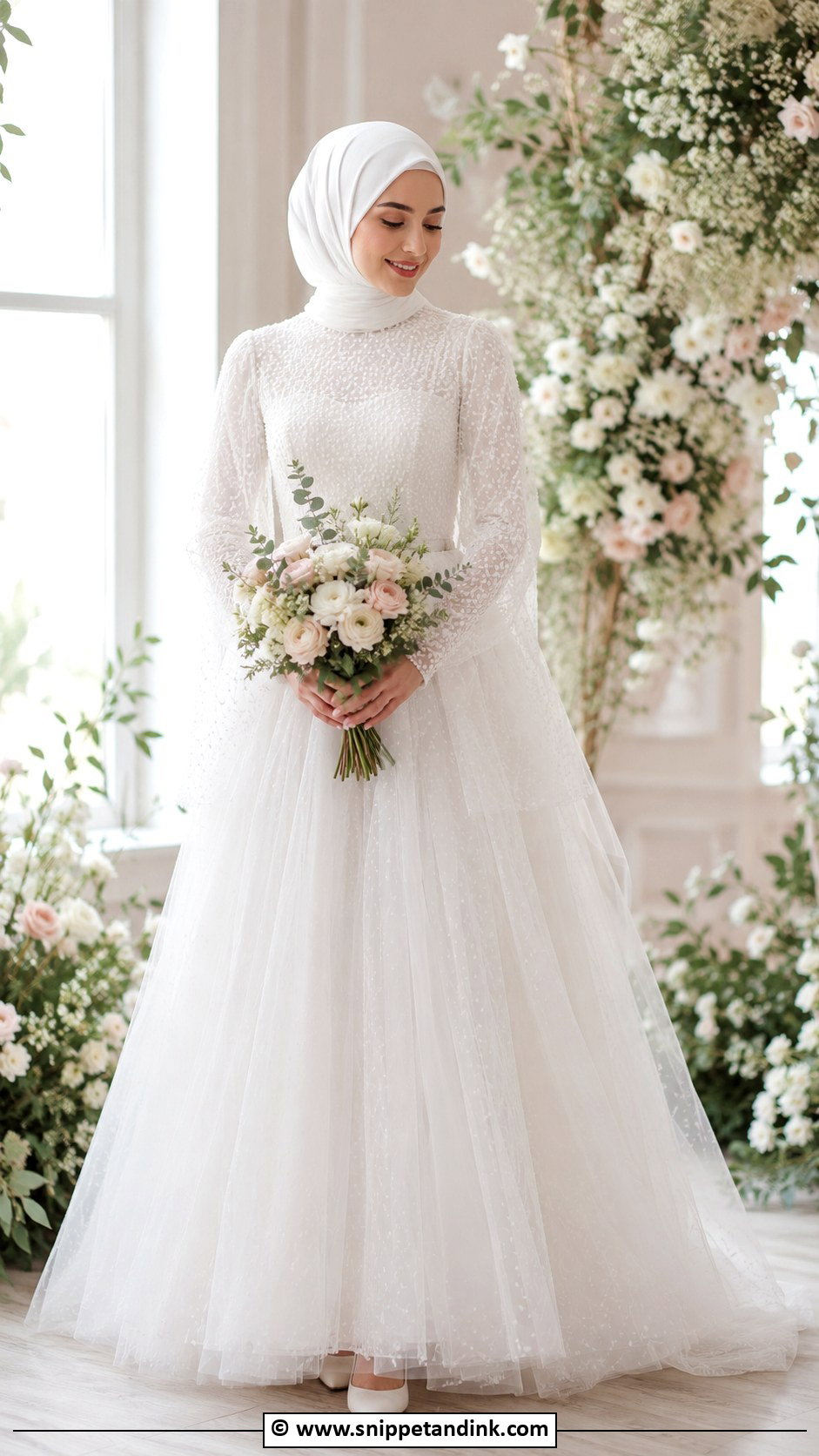
Tulle layers add volume without stiffness, especially in A-line and ball gown shapes. For modesty, choose lined long sleeves, a high neck and a secure bodice. Embroidered or dotted tulle adds interest while keeping it light. A simple hijab stops the look getting crowded, and a veil blends into the skirt. Low heels or elegant flats are sensible under a very full skirt, since nobody sees them and you’ll stand for hours. Romantic indoor ceremonies and garden venues suit it.


20. Champagne Muslimah Wedding Dress
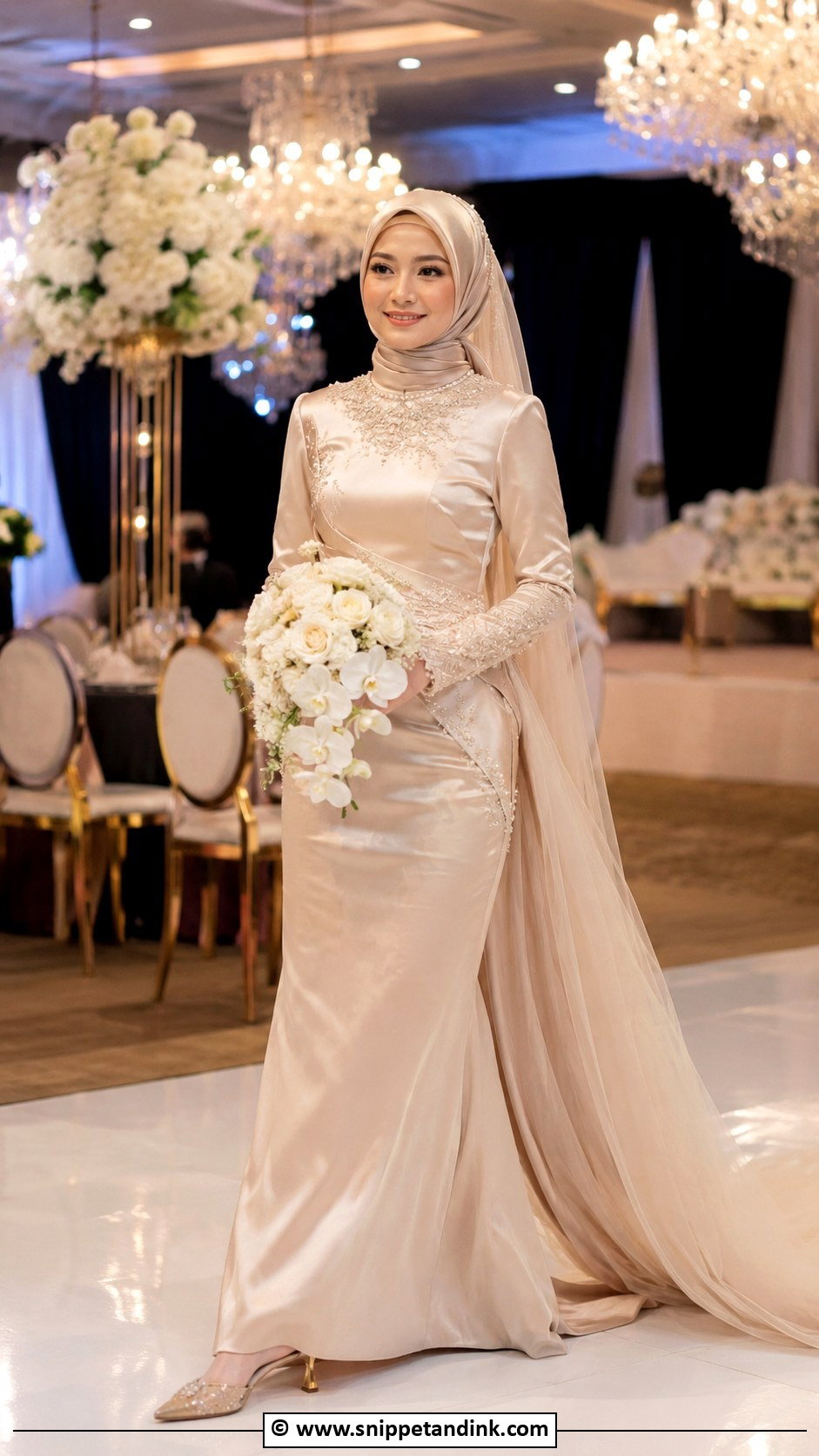
Champagne is a warm alternative to white or ivory and flatters many skin tones. Satin, tulle or embroidered lace in champagne, with the hijab matched closely, gives a soft, cohesive look. Gold or pearl accessories suit it. For a modest but rich outfit, choose long sleeves, a high neck and a flowing skirt with subtle beadwork. Champagne glows under warm evening lighting, so it’s a strong pick for formal receptions. Ask for a fabric swatch to match the hijab, because champagnes vary widely between suppliers.
21. Ivory Muslimah Wedding Dress
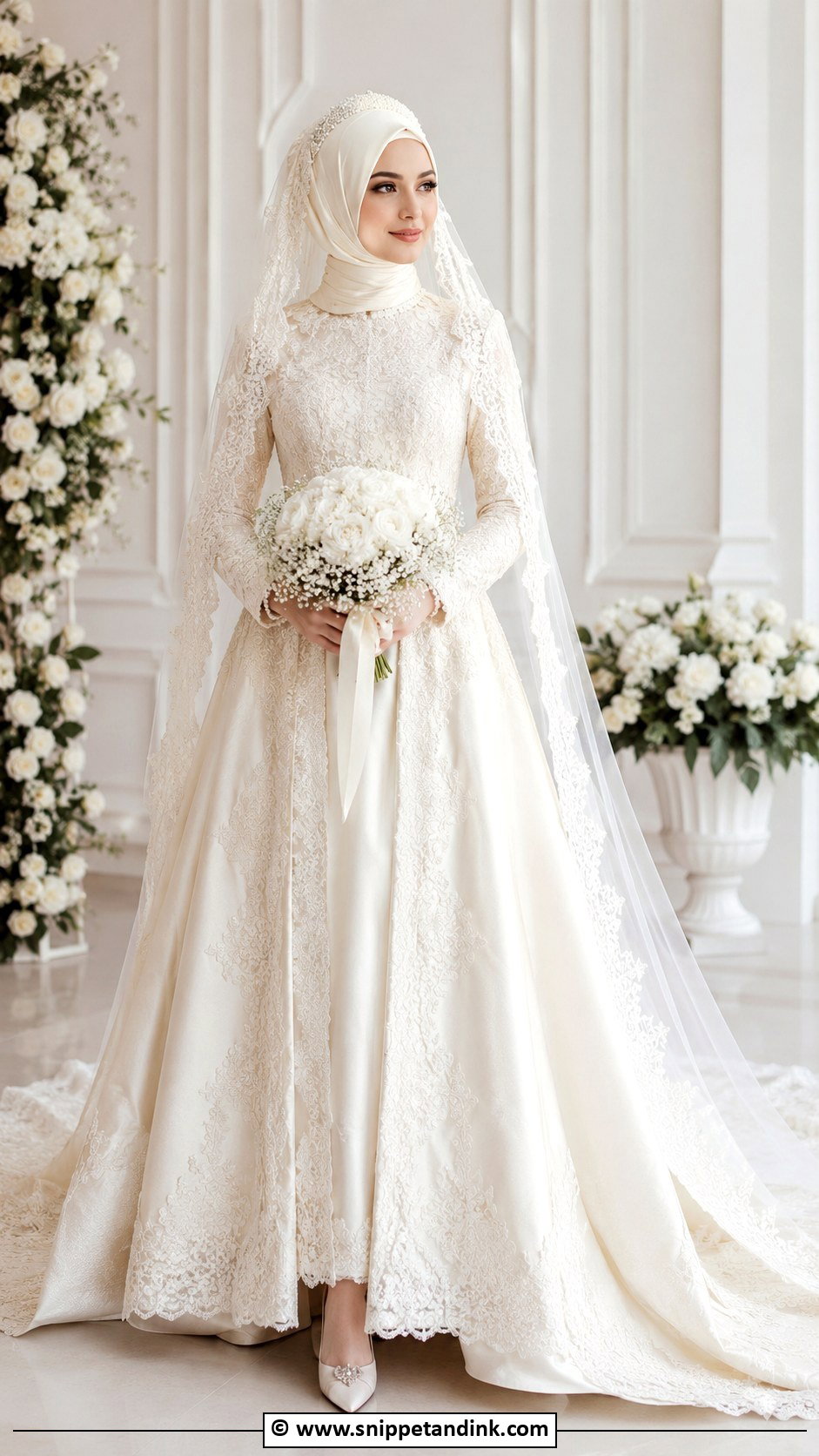
Ivory is softer than bright white and easier on most complexions. A long-sleeve ivory gown in lace, satin, crepe or mikado suits most wedding themes. A matching ivory hijab keeps it cohesive and pearl accessories add a classic note. If the gown is simple, add a lace veil or pearl belt; if it’s ornate, keep everything else minimal. It works in almost any venue and season, which makes it the safest shade if you’re unsure.
22. Blush Muslimah Wedding Dress
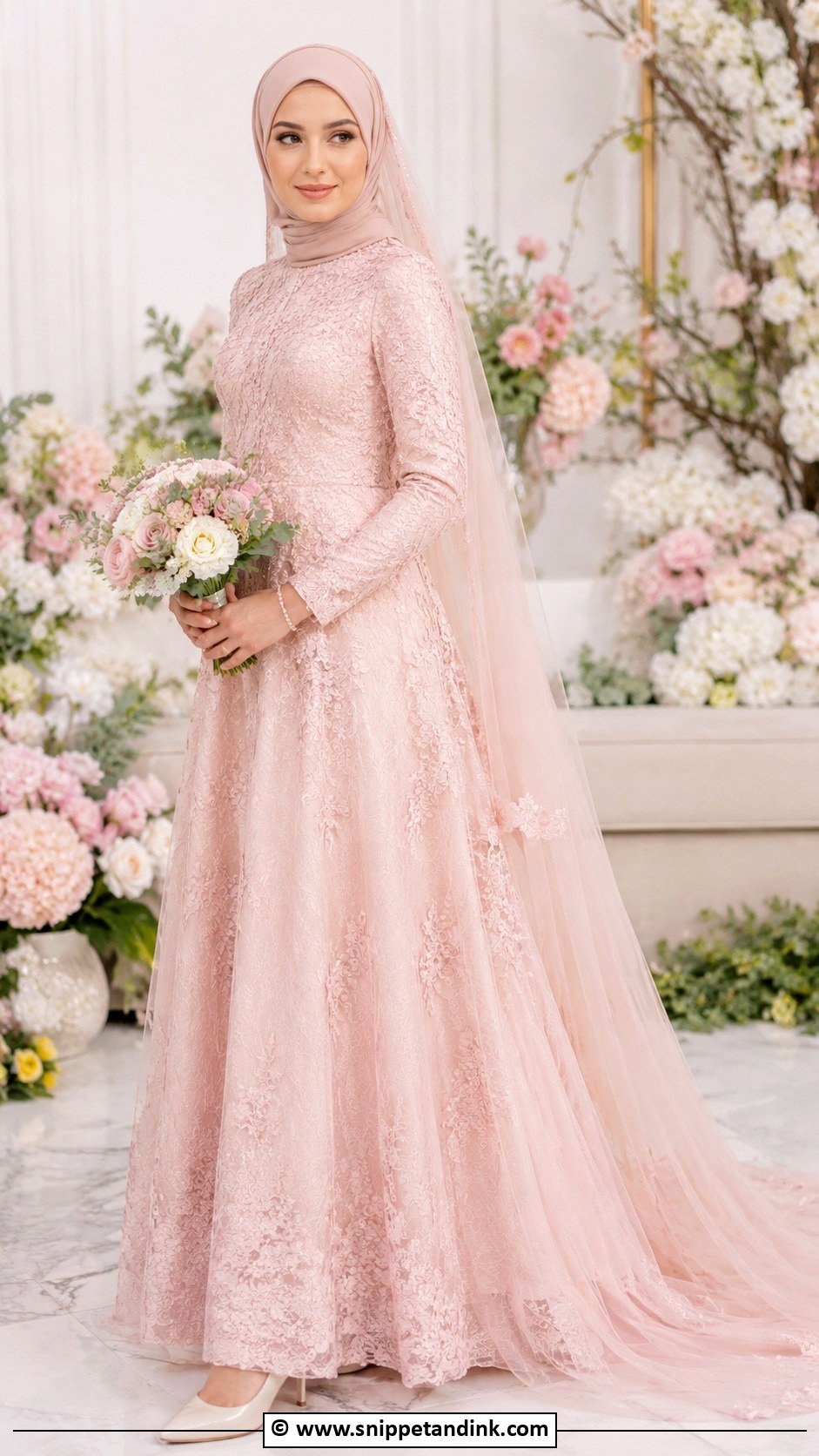
Blush brings warmth while staying formal. Choose an A-line gown with long sleeves, a high neck and delicate lace or beadwork. A matching blush hijab gives a gentle monochrome look, and ivory accessories keep it bridal. If you’d like only a hint of color, an ivory dress with blush embroidery or a blush underlayer is a good middle ground; it’s also easier to match a hijab to. It feels fresh for spring weddings and daytime receptions.
23. Gold Muslimah Wedding Dress
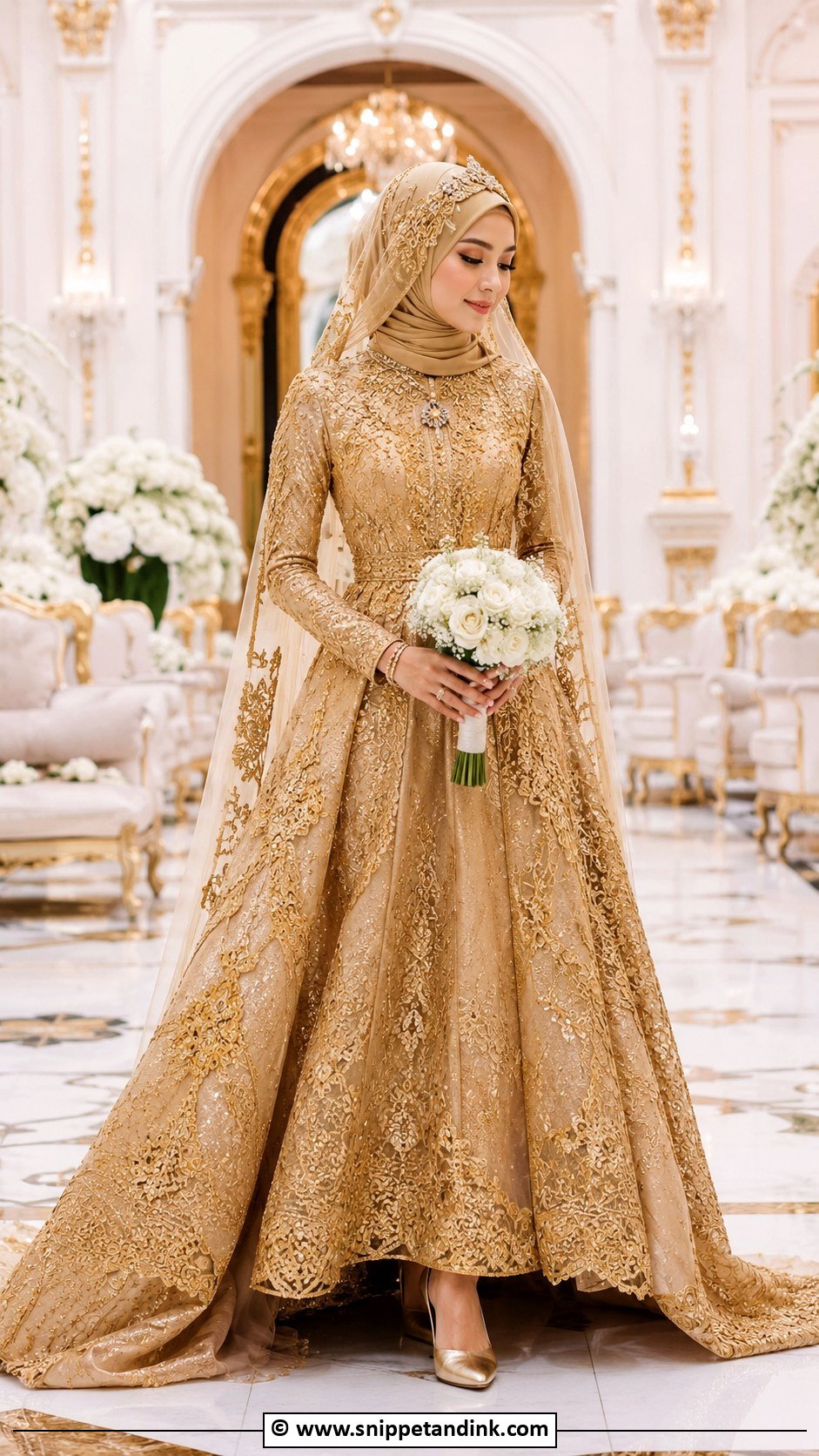
Gold makes a celebratory statement, and the shade matters: soft gold, antique gold or champagne gold rather than anything bright. Long sleeves, a high neck and a flowing skirt keep it elegant and modest. Embroidery, beadwork or brocade add depth for cultural weddings. Pair it with a matching or ivory hijab, gold-toned heels and a simple bouquet. Gold is already eye-catching, so I keep jewelry controlled. It suits grand receptions and walima celebrations.
24. Pakistani Muslimah Wedding Dress
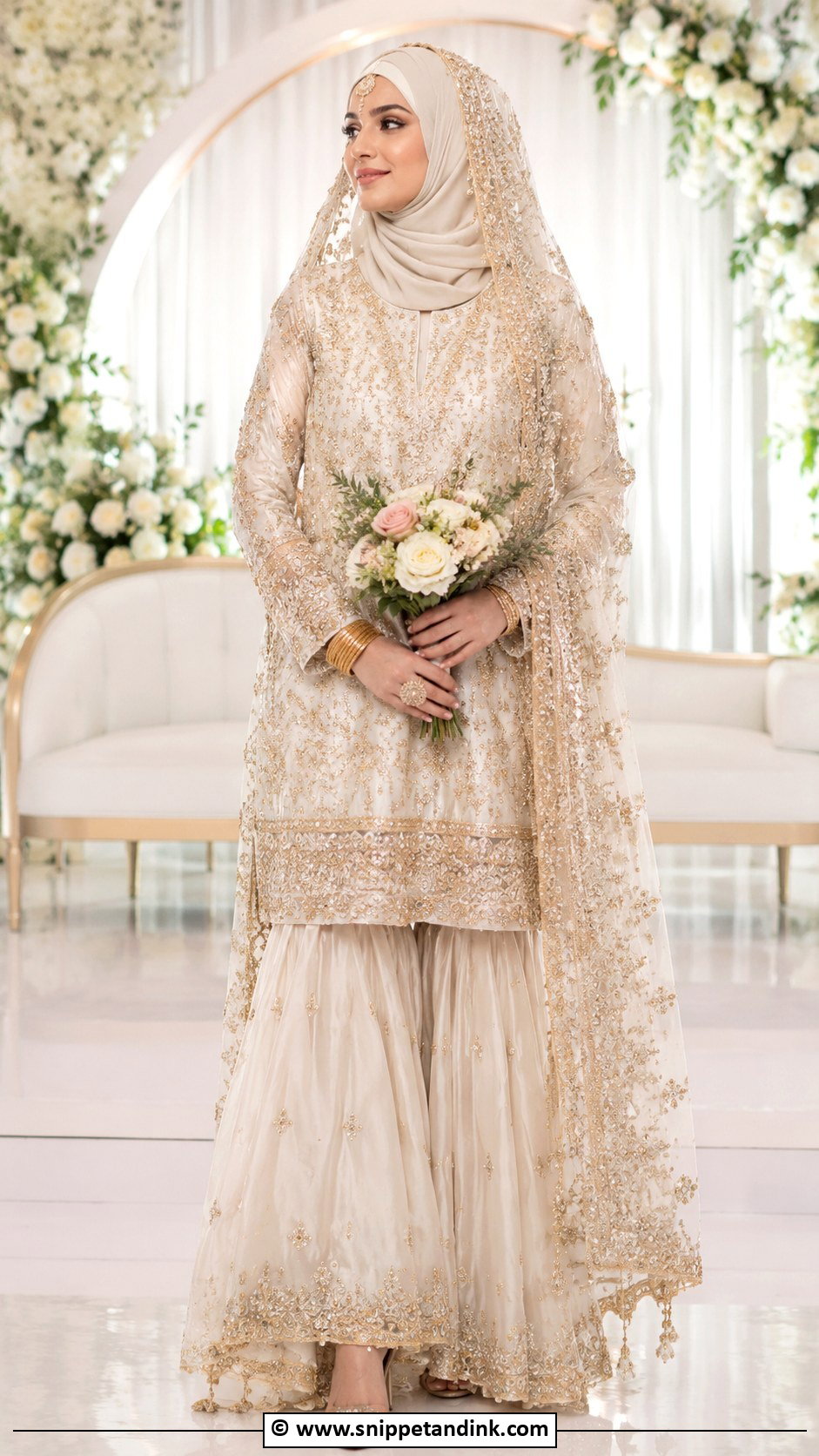
A Pakistani Muslimah wedding dress often includes rich embroidery, a long kameez or gown, a sharara or lehenga skirt and a graceful dupatta. For modesty, choose full sleeves, a higher neck and a hijab that sits smoothly under or beside the dupatta. Ivory, blush, mint, champagne, red and gold all suit different events. Heeled sandals, bangles and a statement ring complete it. Pin the dupatta securely at the crown and shoulder; heavily worked dupattas slide with their own weight. It suits nikah, mehndi, baraat or walima.


25. Turkish Muslimah Wedding Dress
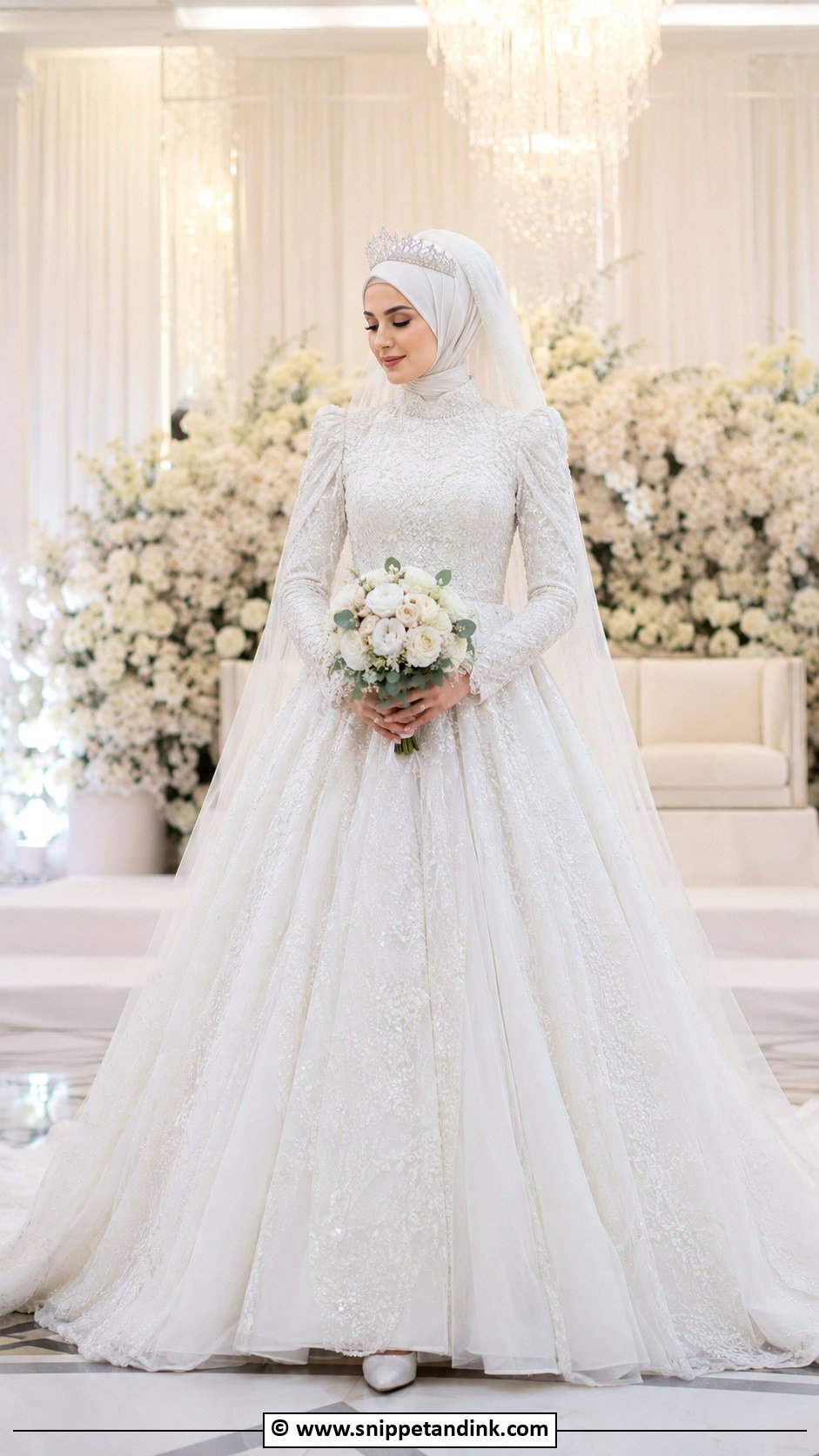
Turkish-style bridal dresses tend to be regal and structured: high necks, long sleeves, fitted bodices and full skirts with refined embroidery or lace. A neatly wrapped hijab, often with a tiara or headpiece, completes the traditional look. Satin, tulle or lace sets the level of formality. A long veil adds height and drama. I anchor the tiara through a grippy underscarf so it stays level through the entrance. Closed-toe heels and a white or soft pink bouquet keep it polished for formal halls.
26. Moroccan Muslimah Wedding Dress
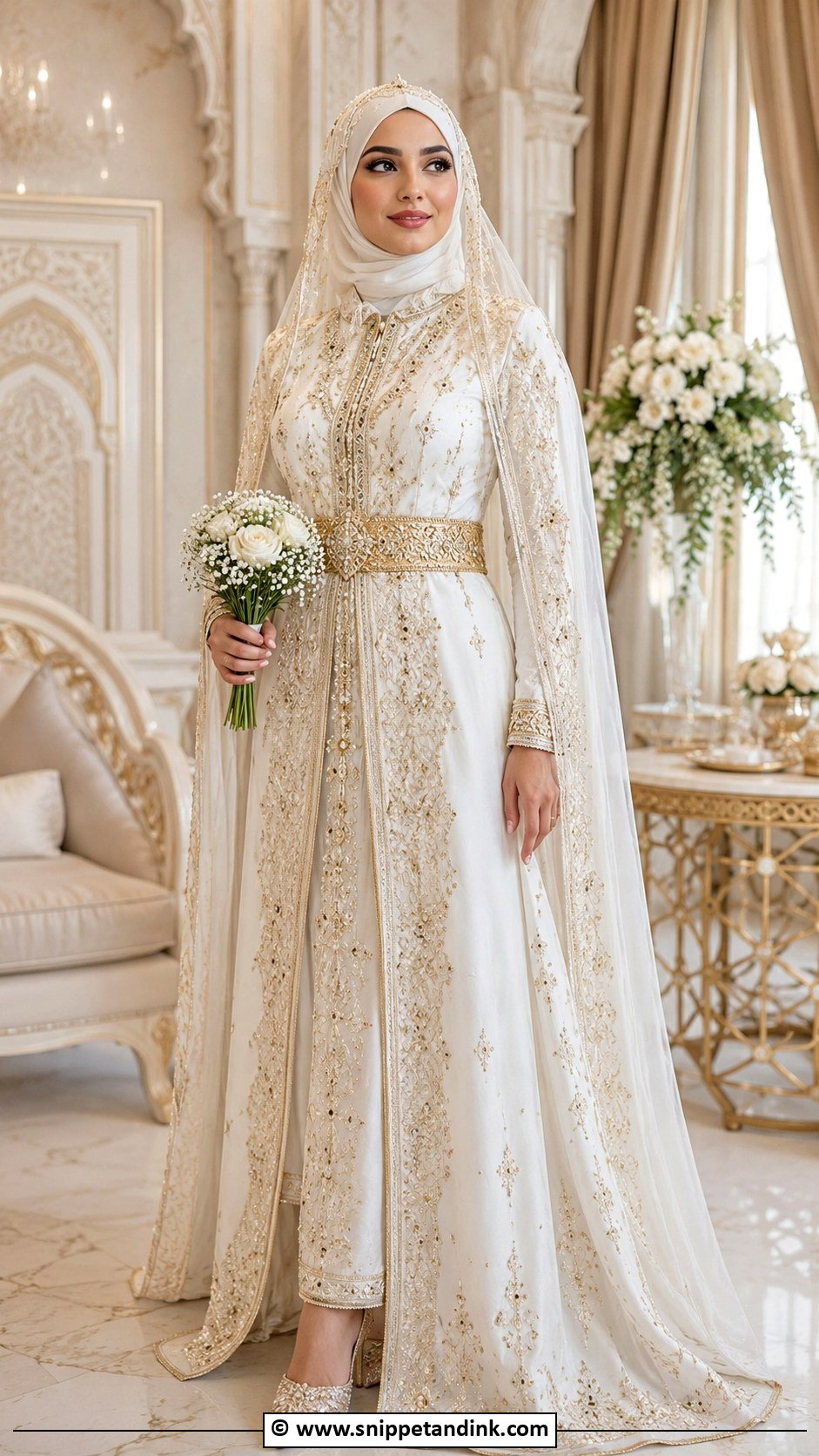
Moroccan bridal dress is built on ornate detail. A bridal kaftan or takchita with long sleeves, a high neck and a defined belt creates a modest silhouette. White, ivory, gold, emerald and soft champagne all suit bridal styling. Pair it with a matching hijab, embellished heels and refined jewelry. The belt is central: it shapes the waist and carries much of the decoration, and rigid ones need testing seated. It suits henna celebrations, nikah events or a reception with strong cultural identity.
27. Arab Muslimah Wedding Dress
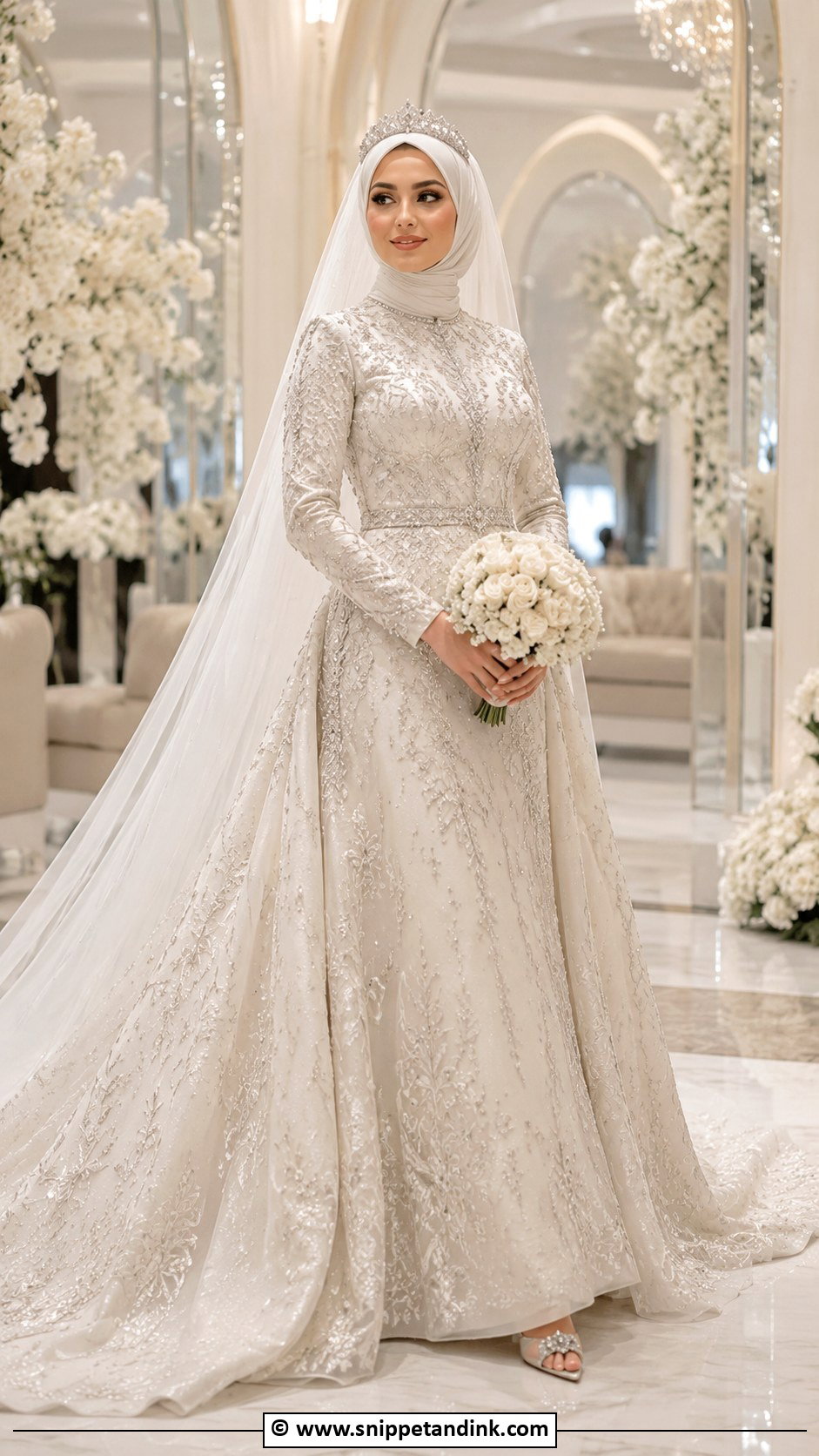
Arab bridal dresses combine modest coverage with luxurious fabric and striking detail: long sleeves, high necks, flowing skirts, ornate beadwork and long veils. Soft white or ivory with silver embroidery reads classic; champagne or gold adds warmth. Choose a hijab style that frames the face neatly and works with the neckline. A tiara, long veil and jeweled heels make it more formal. With heavy embellishment, keep the bouquet simple. Large receptions and family-centered celebrations suit it.
28. Modern Muslimah Wedding Dress
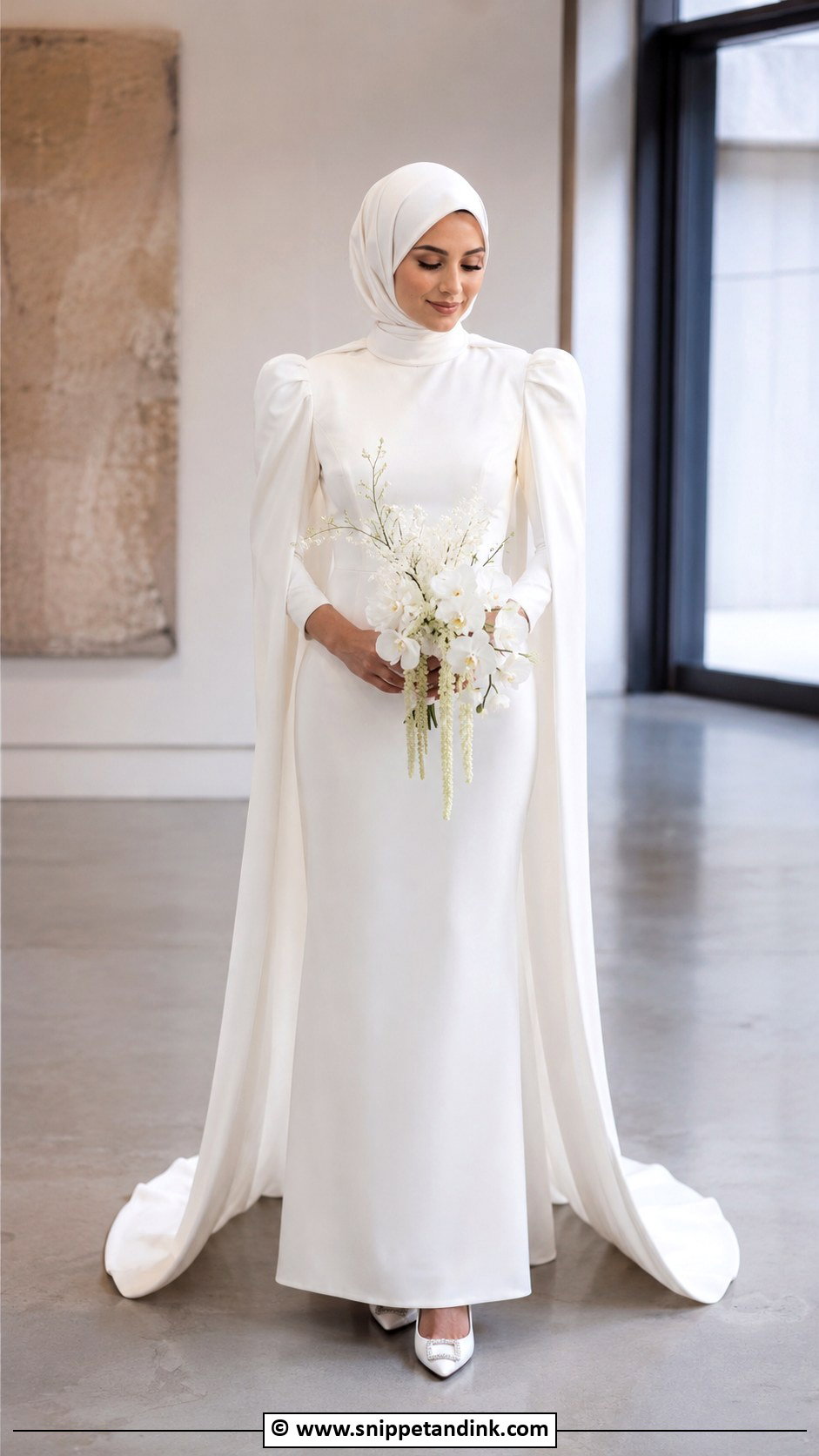
Modern modest dresses rely on shape rather than decoration: a structured crepe gown, a satin column or an A-line with sculptural sleeves. A high neck and long sleeves keep it modest, while a cape, bow or detachable overskirt adds a fashion-forward touch. Pair it with a smooth hijab, simple heels and a clean-lined bouquet. I steer brides toward one strong modern detail rather than three, because that’s what keeps it from looking dated in ten years. City weddings and gallery venues suit it.
29. Vintage Muslimah Wedding Dress
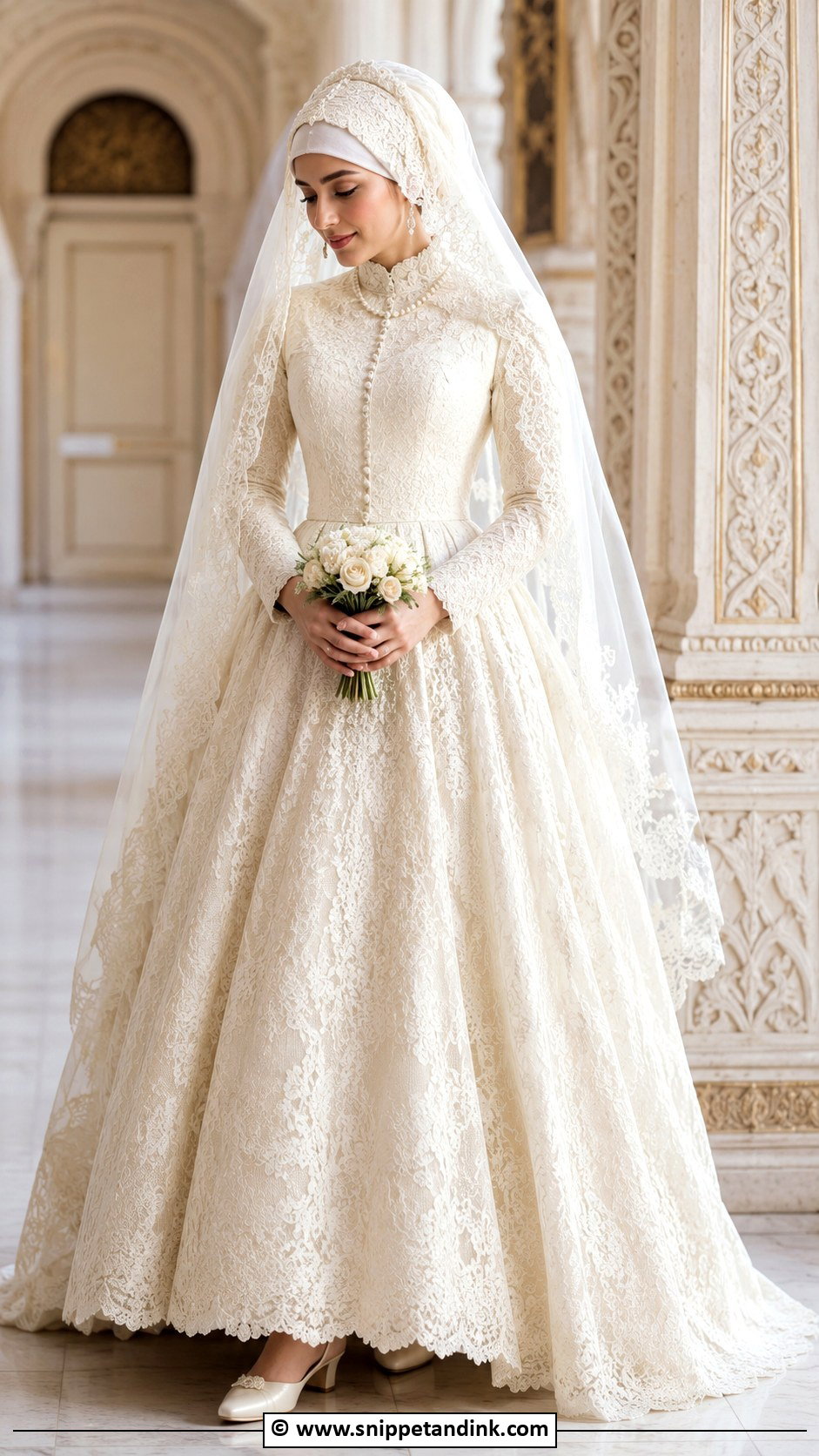
Vintage details such as lace sleeves, covered buttons, a high collar, a basque waist or a full skirt suit modest bridal dressing naturally, because many older bridal styles were covered to begin with. Ivory works better than bright white here for softness. A lace-edged hijab or a Juliet-inspired veil completes the mood without showing the hair. Covered buttons down the back look lovely but take time to fasten, so plan an extra ten minutes and a patient helper. Pearl jewelry, low heels and a small bouquet finish it.
30. Reception Muslimah Wedding Dress
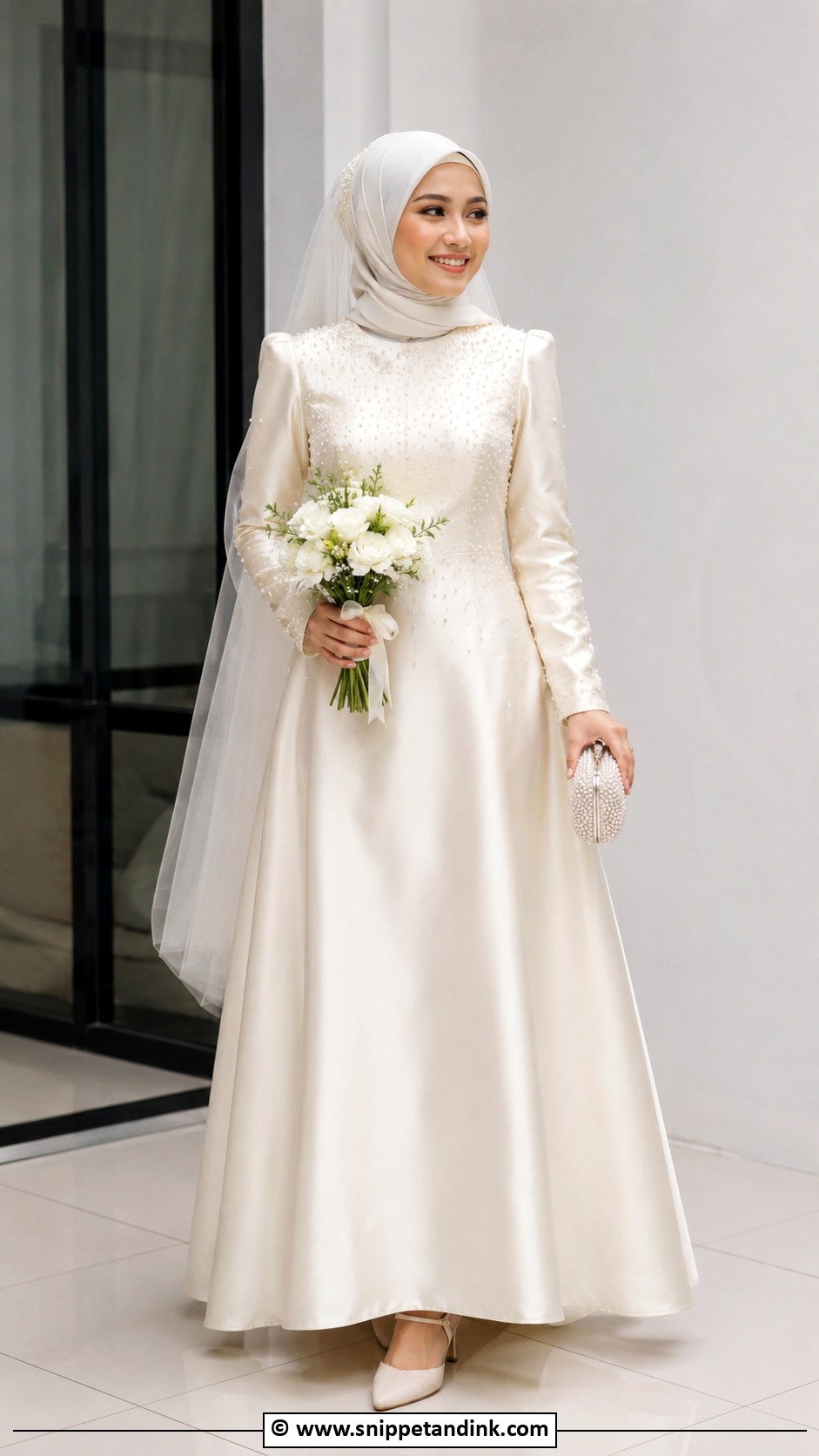
A reception dress should move more easily than a heavy ceremony gown. Choose a modest A-line, crepe or satin dress with long sleeves and a high neck. If you wore a large ball gown earlier, switch to something lighter with pearl details, beading or a soft detachable cape. A comfortable hijab wrap, supportive heels and a smaller bouquet make greeting guests easier. Champagne, ivory or blush gives a fresh second look, and choosing one that works with the same hijab saves a full re-style.
Planning the Change Into a Second Look
Many brides now wear one outfit for the nikah and another for the reception or walima, and the change is where timelines slip. I plan it like a small event of its own.
Keep the hijab or restyle it
If the second outfit works with the same hijab, you can often change in fifteen to twenty minutes. A new hijab style, new pins and a different veil or dupatta can easily take three times as long. Decide which it’ll be when you choose the second dress, not on the day.
Who helps and where
- Ask the venue for a private room with a mirror and a lock, close to the reception space.
- Name one person who has practised the hijab style with you, rather than whoever happens to be nearby.
- Hang the second outfit, steamed, in that room before the ceremony starts, with shoes, pins and jewelry in one labeled bag.
Tell your photographer when the change happens. A short break in the timeline is fine, but an unannounced one usually costs you the entrance shots.
Faith, Fit and the Last Farewell Photo
The right dress lets you feel covered, comfortable and like yourself from the first photo to the final farewell. Lace, satin, tulle, embroidery, pearls, capes and cultural bridal wear all offer a way there. Settle fit, lining, sleeve comfort, hijab styling and ease of movement first, then add details. The right veil, shoes, bouquet and jewelry make the outfit feel intentional. Keep the ideas you’ve saved here close while you plan a look that reflects your faith, personality and celebration.
You'll Like These Ideas:





Leave a Reply