
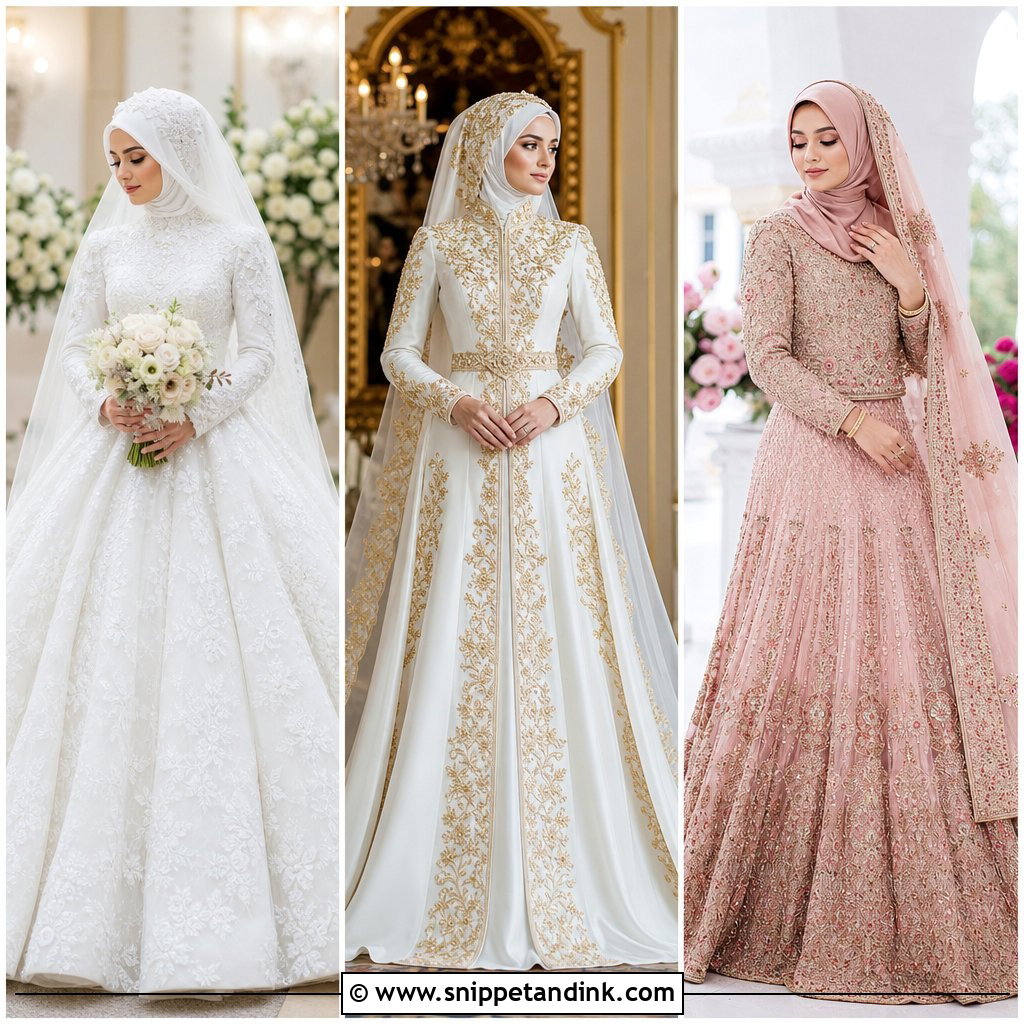
A Malaysian bridal outfit has to do three things at once: cover modestly, carry some heritage, and stay comfortable from the akad nikah through photos, the reception and hours of salam with relatives. Below are twenty complete looks, from traditional baju kurung and songket to modern gowns, flowing jubah and softer colors, each with the hijab, shoes and accessories worked out. When I dress a bride, I plan the hijab together with the dress, never after it, because the neckline, sleeve and fabric weight all change how a scarf sits. Think about the heat, your venue and how many outfit changes you want before falling for heavy fabric or dense beading.
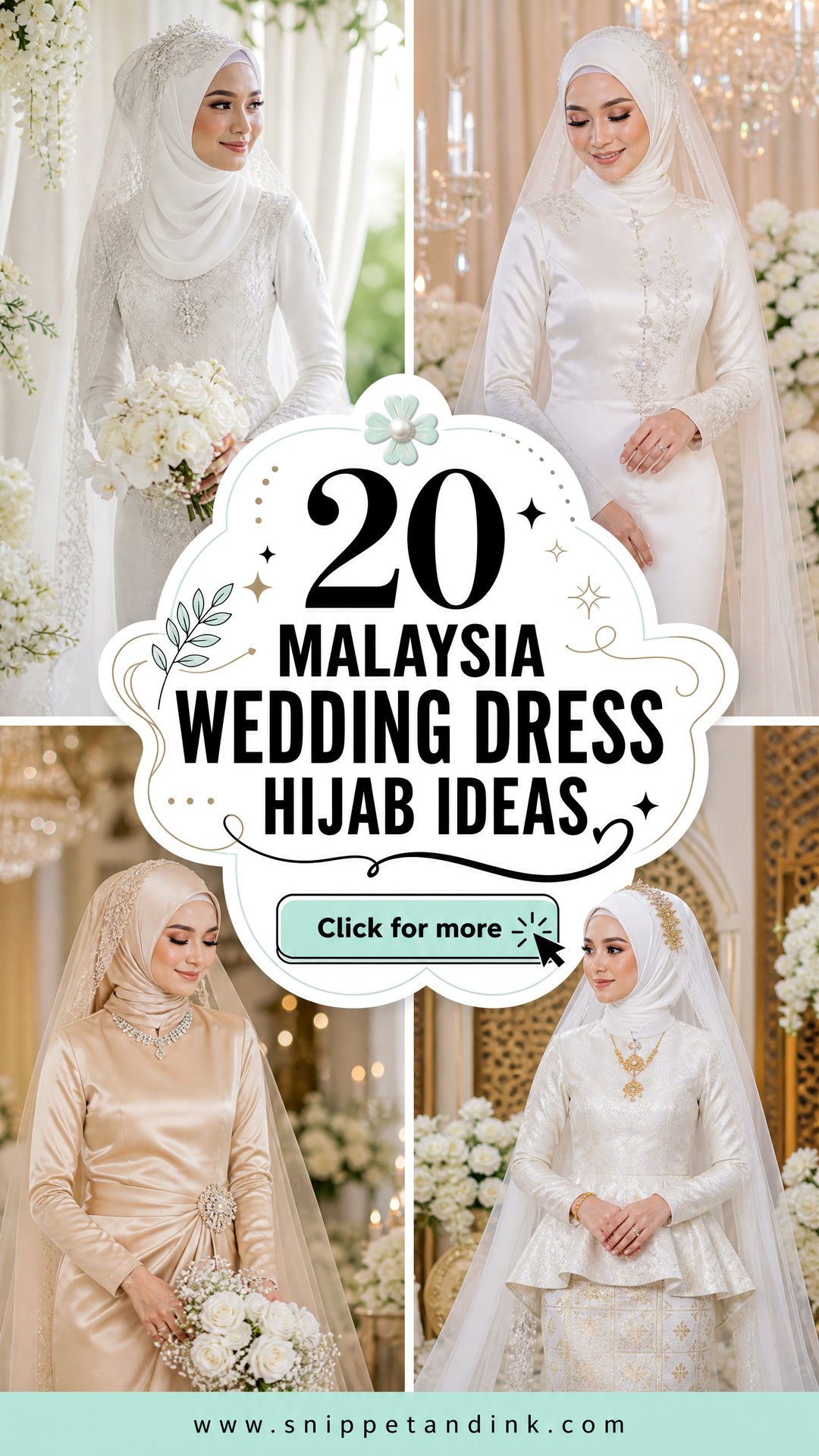
Satin or Chiffon? Building the Bridal Hijab Layer by Layer
A bridal hijab has to hold for ten hours or more, carry a veil and sometimes a tiara, and survive heat and hugging. It is built in layers, and each layer has a job.
- The inner cap. A cotton or jersey inner grips the hair and gives pins something to hold. A tie-back or ninja-style inner is the most secure under a heavy veil. Match its color to the scarf, not to your hair.
- The scarf. Satin looks smooth and formal but slides, so it needs more pins. Chiffon is lighter and cooler and holds folds better, but shows creases from storage. Crepe sits between the two.
- The fixings. Use plain pins where nothing shows and decorative pins only where they are part of the design. Magnet pins are gentle on delicate fabric but can shift under a heavy veil.
- The veil or crown. Anchor it to the inner cap with combs or pins, never to the outer scarf alone.
Foundation on the scarf edge is the most common problem I fix on the day. Ask your makeup artist to finish the face before the hijab goes on, set the jawline well, and keep a spare scarf or at least a spare inner in your bag.
1. White Baju Kurung Wedding Dress Hijab
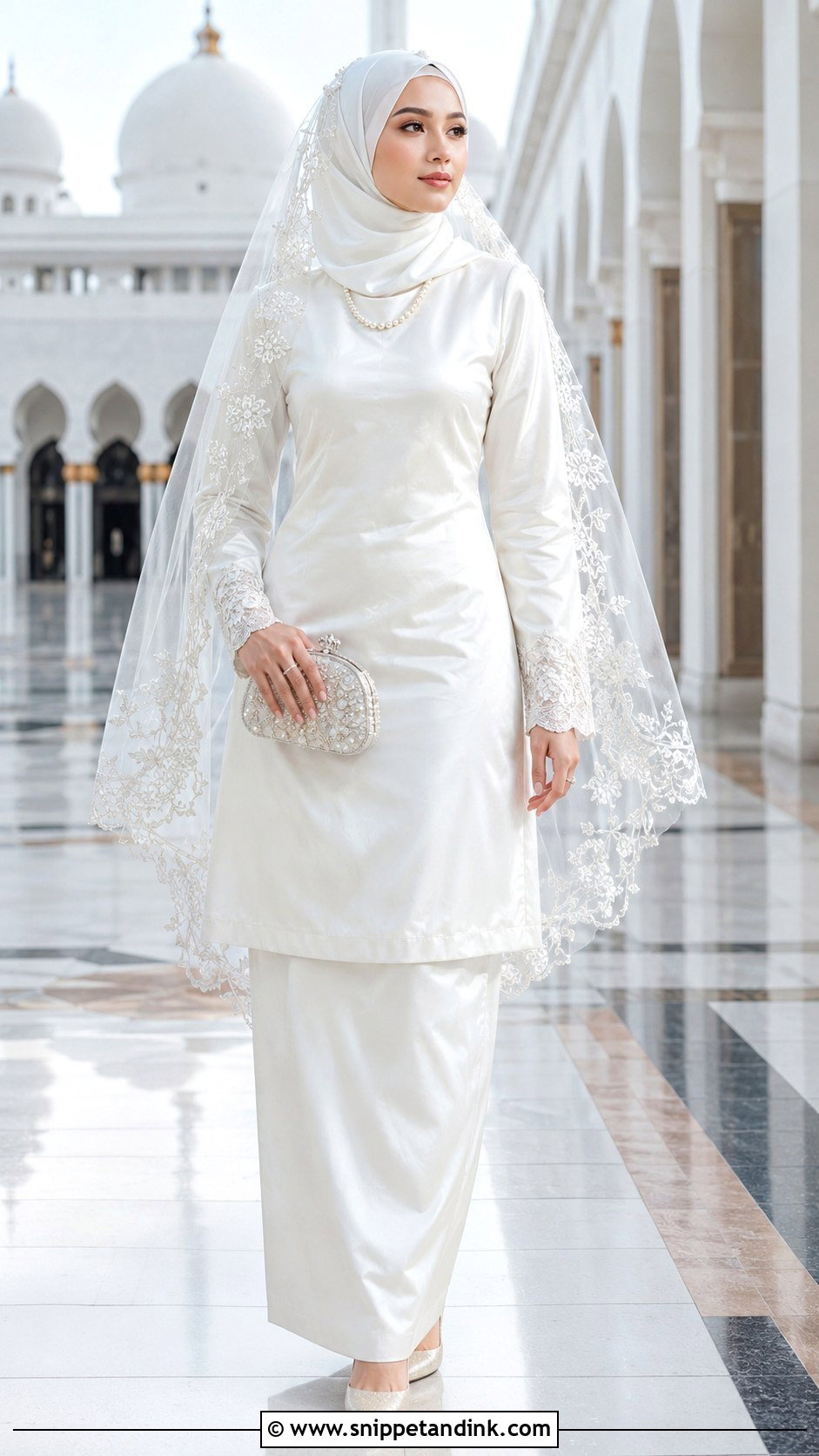
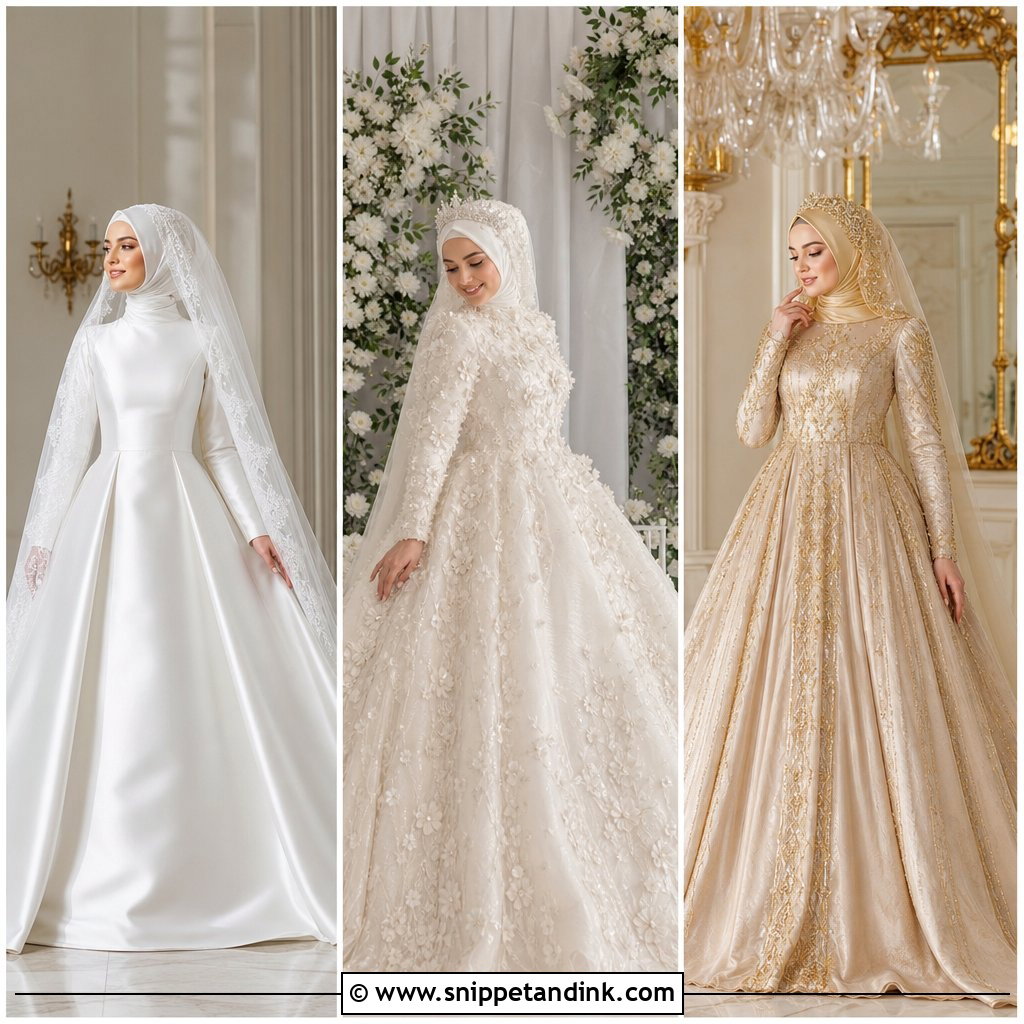
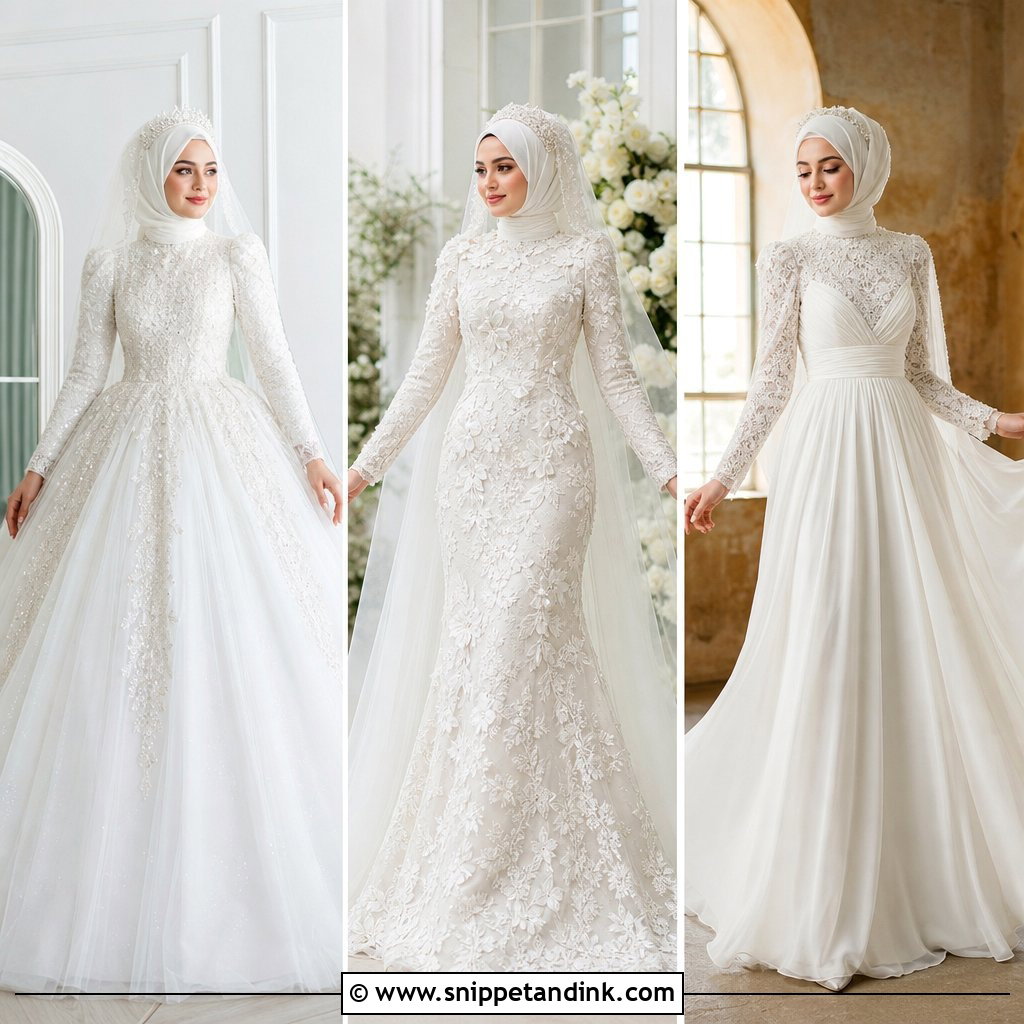
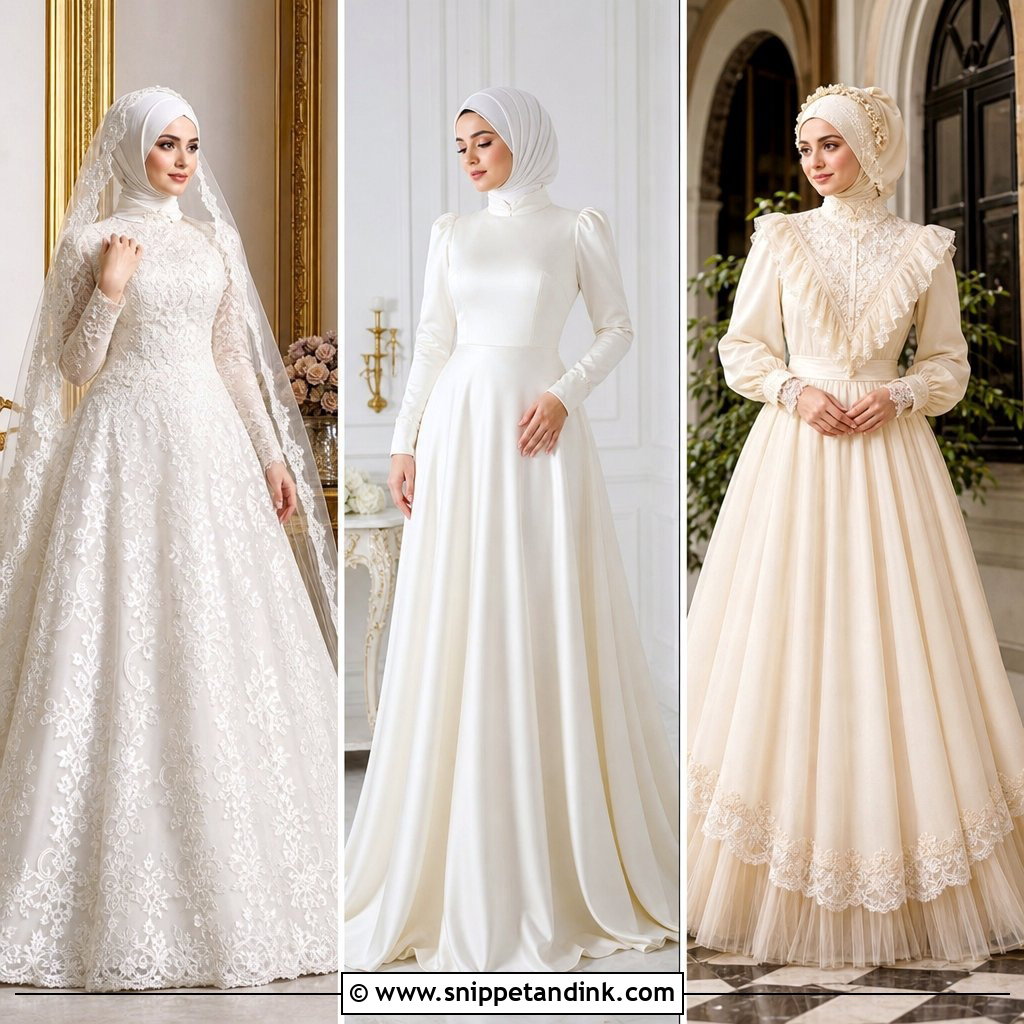
White baju kurung is the look most families picture for the akad nikah, and it is hard to improve on. Choose an opaque satin or crepe base, with lace only at the neckline, cuffs and hem so the scarf has a clean frame. A little shaping at the bodice is fine; anything tight shows the inner lining once you sit on the floor for the ceremony. A white satin hijab drapes smoothly over the chest, and a light embroidered veil can come off for the reception. Ivory pointed pumps, pearl earrings pinned outside the scarf and a small crystal clutch finish it for a mosque nikah or a quiet hotel ceremony.
2. Ivory Songket Wedding Dress Hijab
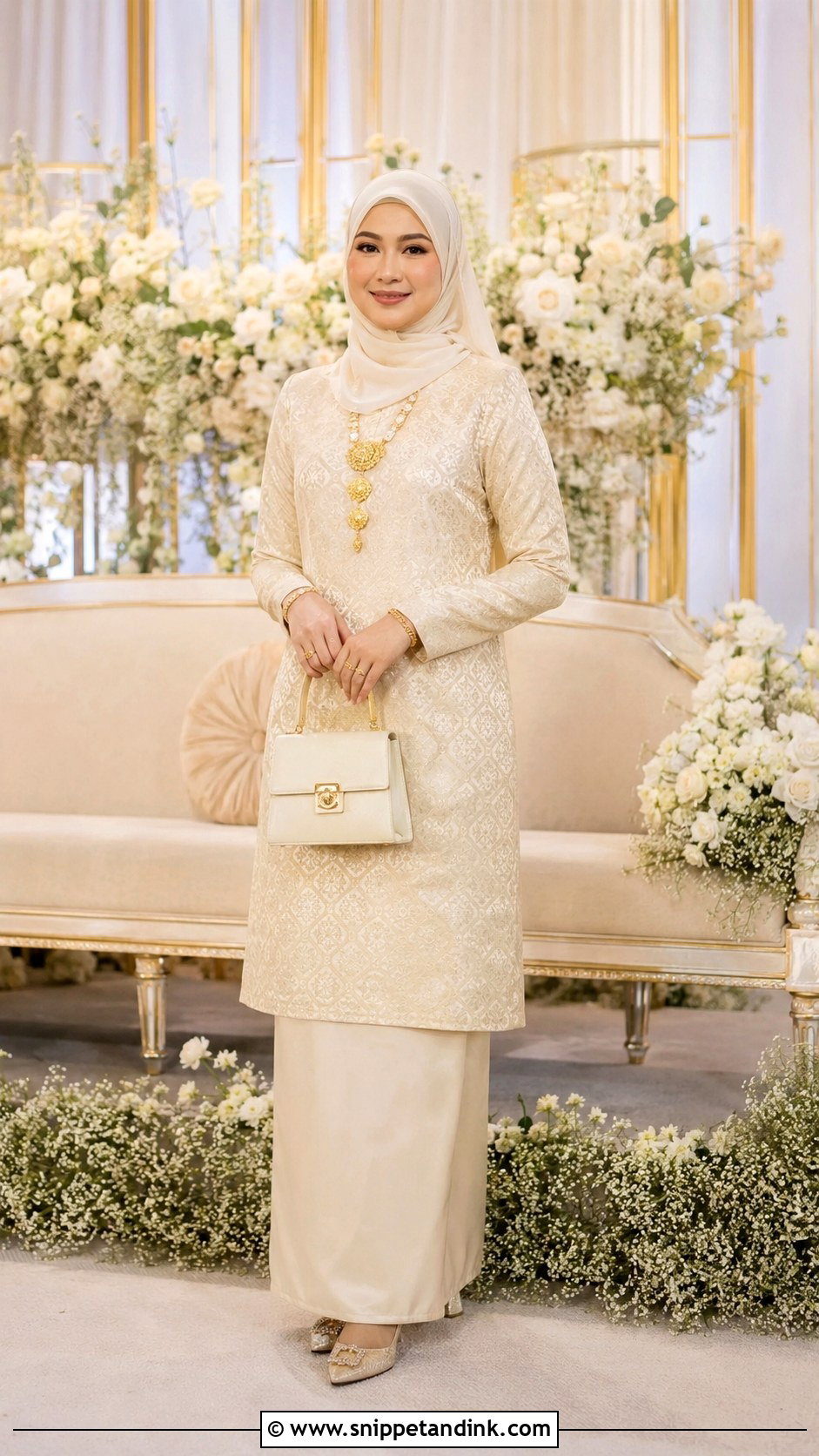
Ivory songket gives texture and heritage without needing any extra decoration. I’d use it for the baju or a long tunic with gold songket motifs and keep the skirt plain ivory, because songket on both halves is heavy and stiff to sit in. Insist on a soft lining: the metallic weft feels scratchy on bare skin by the third hour. A matte chiffon hijab keeps the face soft beside all that shine. A gold dokoh over the covered chest suits it, or a smaller brooch if you want it simpler. Closed-toe gold heels and an ivory bag finish an outfit that sits well on a pelamin dressed in cream flowers and gold.
3. Lace Baju Kurung Pahang Wedding Dress Hijab
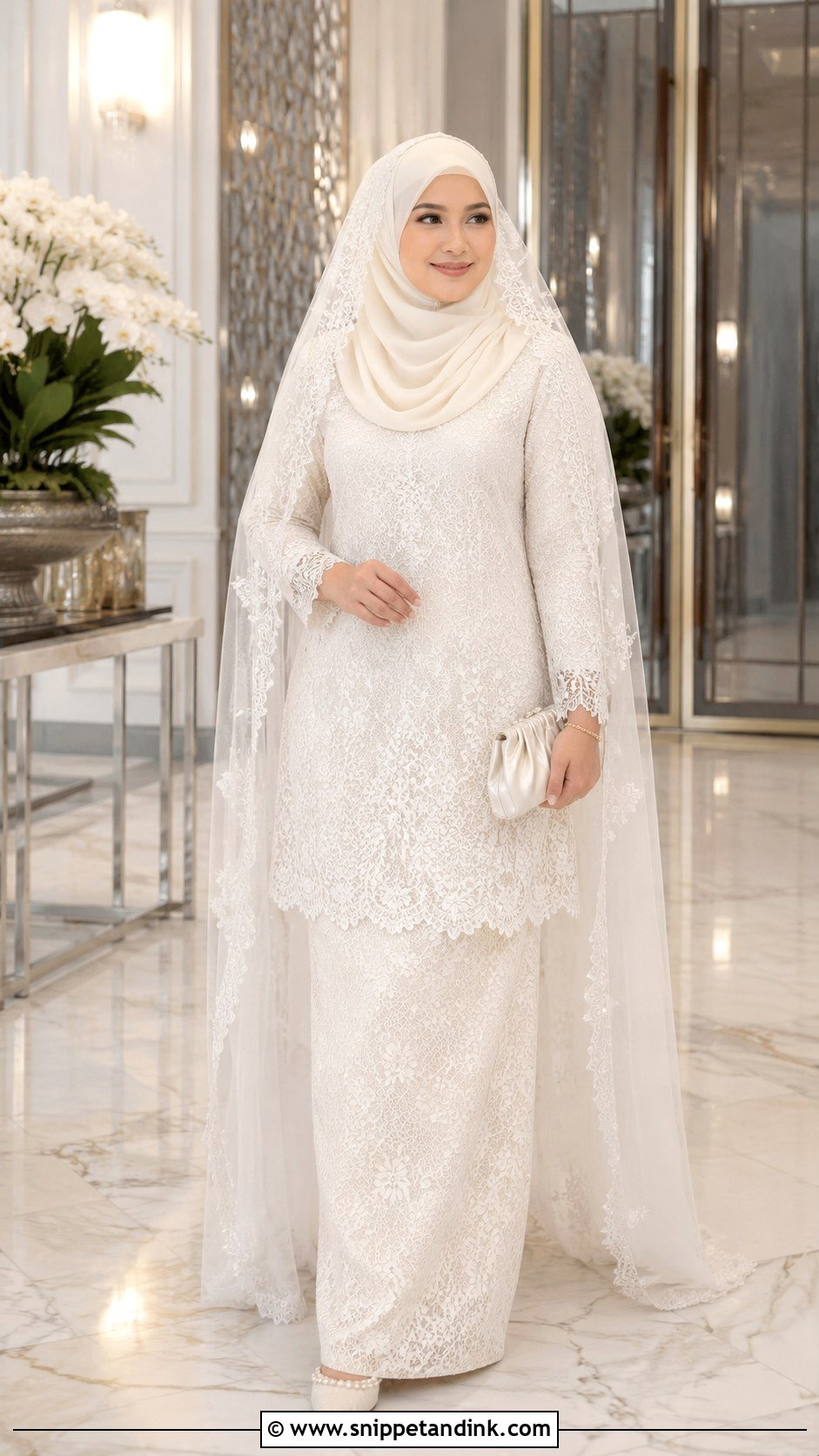
The baju kurung Pahang silhouette is loose and long, and lace turns it bridal. Look for a top that skims the body and falls well over the matching skirt. Full lining is not optional here; unlined lace shows skin and the pattern looks muddy instead of crisp. Choose a chiffon hijab in the same undertone as the off-white, since a stark white scarf against warm off-white makes the dress look dirty in photos. Pearl-trimmed heels, a slim bracelet and a small satin clutch are plenty. The roomy cut through the waist and hips is a gift during a long day of eating and greeting.
4. Modern Baju Kurung Wedding Dress Hijab
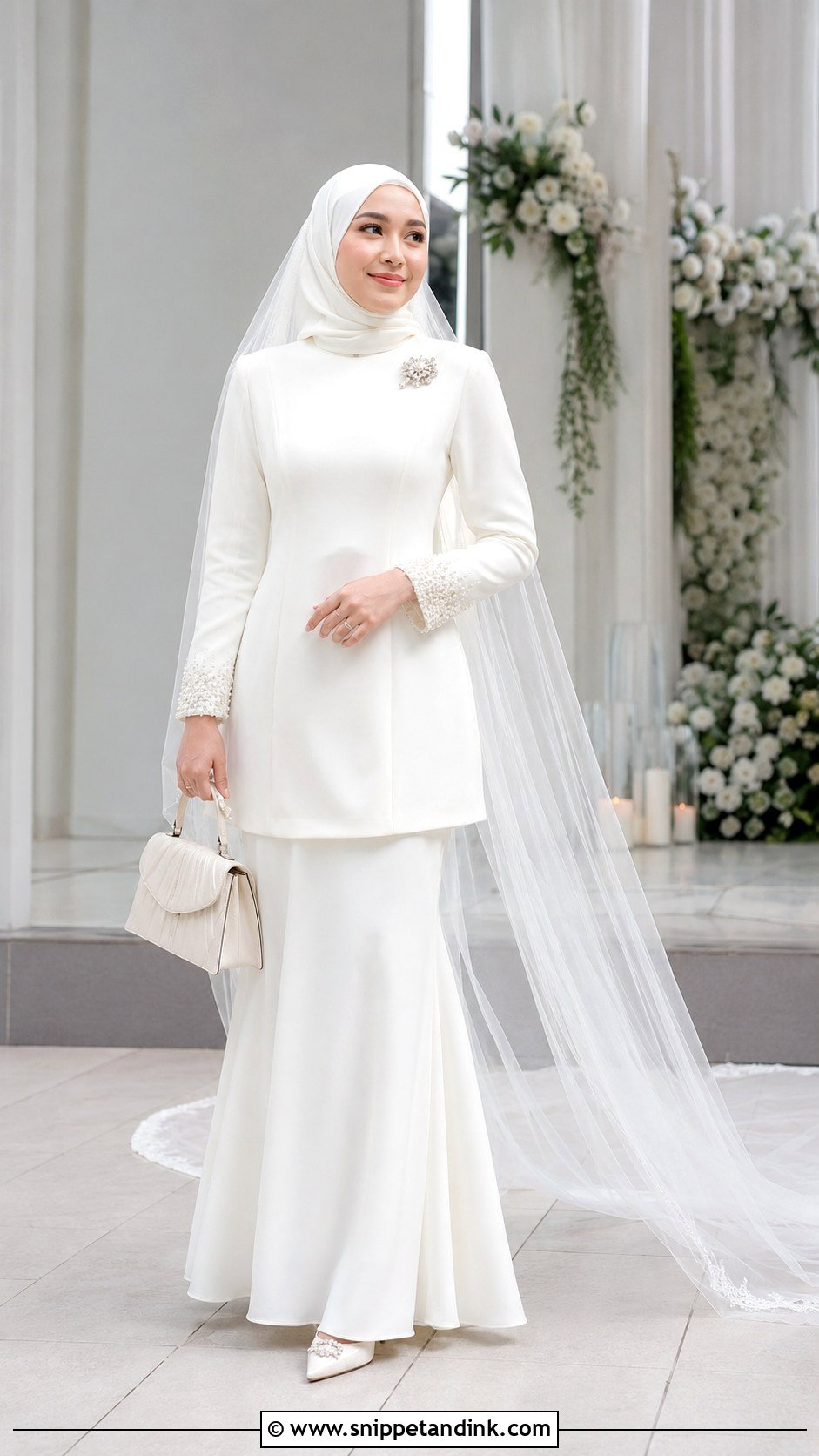
Clean tailoring and almost no decoration: that is the modern baju kurung. A long-sleeved top with a high neck, slight waist shaping and a straight or softly flared skirt in pearl-white crepe is lighter than layered bridal fabrics, which matters in a warm hall. Keep the beading to the cuffs and shoulders, where it frames the face in close-ups. A neatly wrapped satin hijab and a sheer cathedral veil add ceremony. Pointed ivory pumps, a pearl brooch and a small structured bag finish it. Crepe shows every seam, so plan a final fitting no more than two weeks before the day, after any last weight change.
5. White Baju Kurung Riau Wedding Dress Hijab
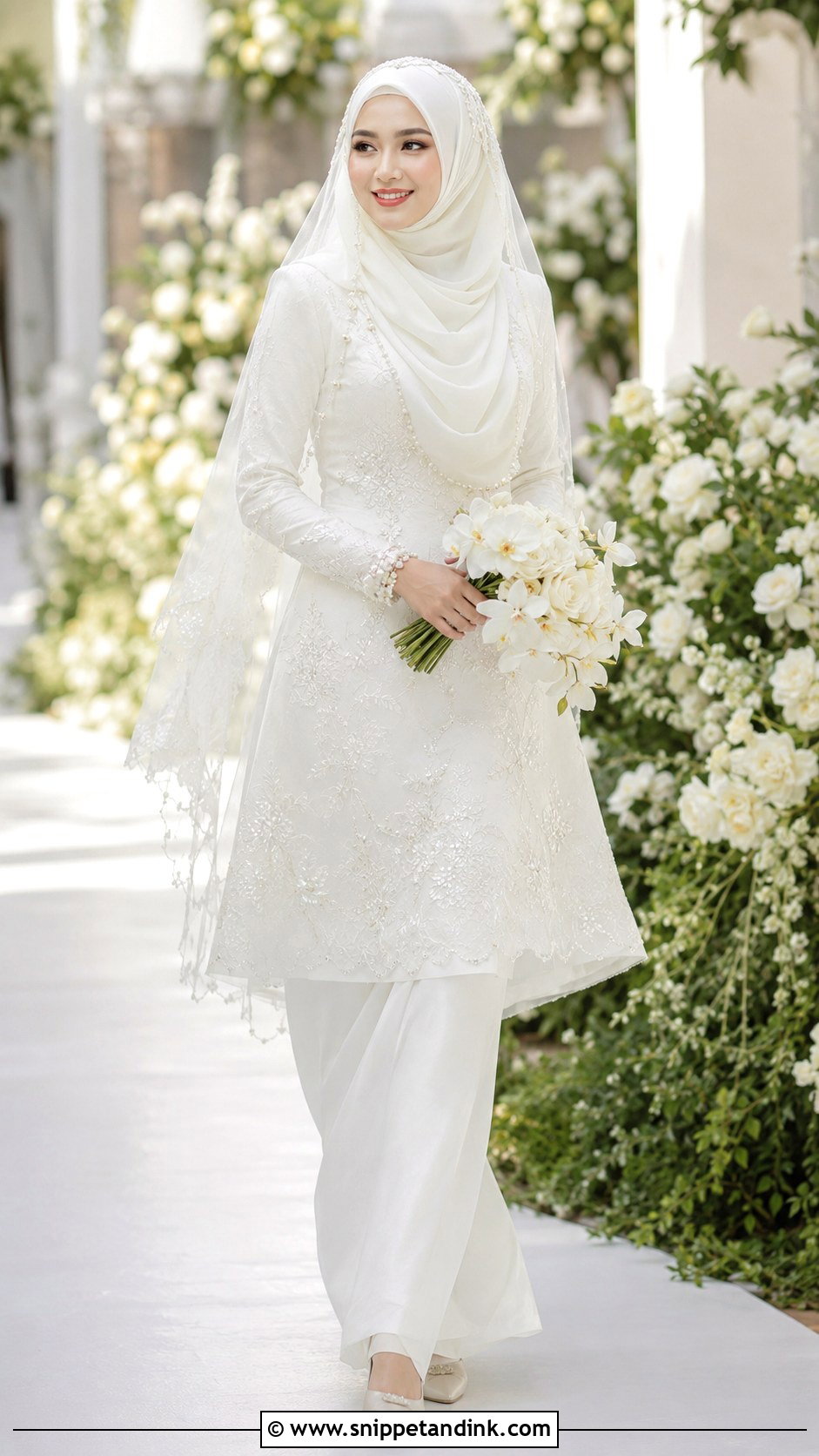
Baju kurung Riau is longer in the tunic and slightly flared, which gives very graceful coverage. Choose white or soft ivory with a high neck and gently fitted sleeves, and keep any embroidery tonal so it doesn’t fight the hijab. The skirt needs enough width to take a normal stride and to fold under you when you sit for the ceremony. A chiffon hijab over the chest moves with the tunic, and a fine tulle veil adds motion in full-length shots. Low block heels are worth it if part of the event is outdoors on grass or paving. Pearl drops, a silver brooch and white flowers finish it.
6. White Lace Jubah Wedding Dress Hijab
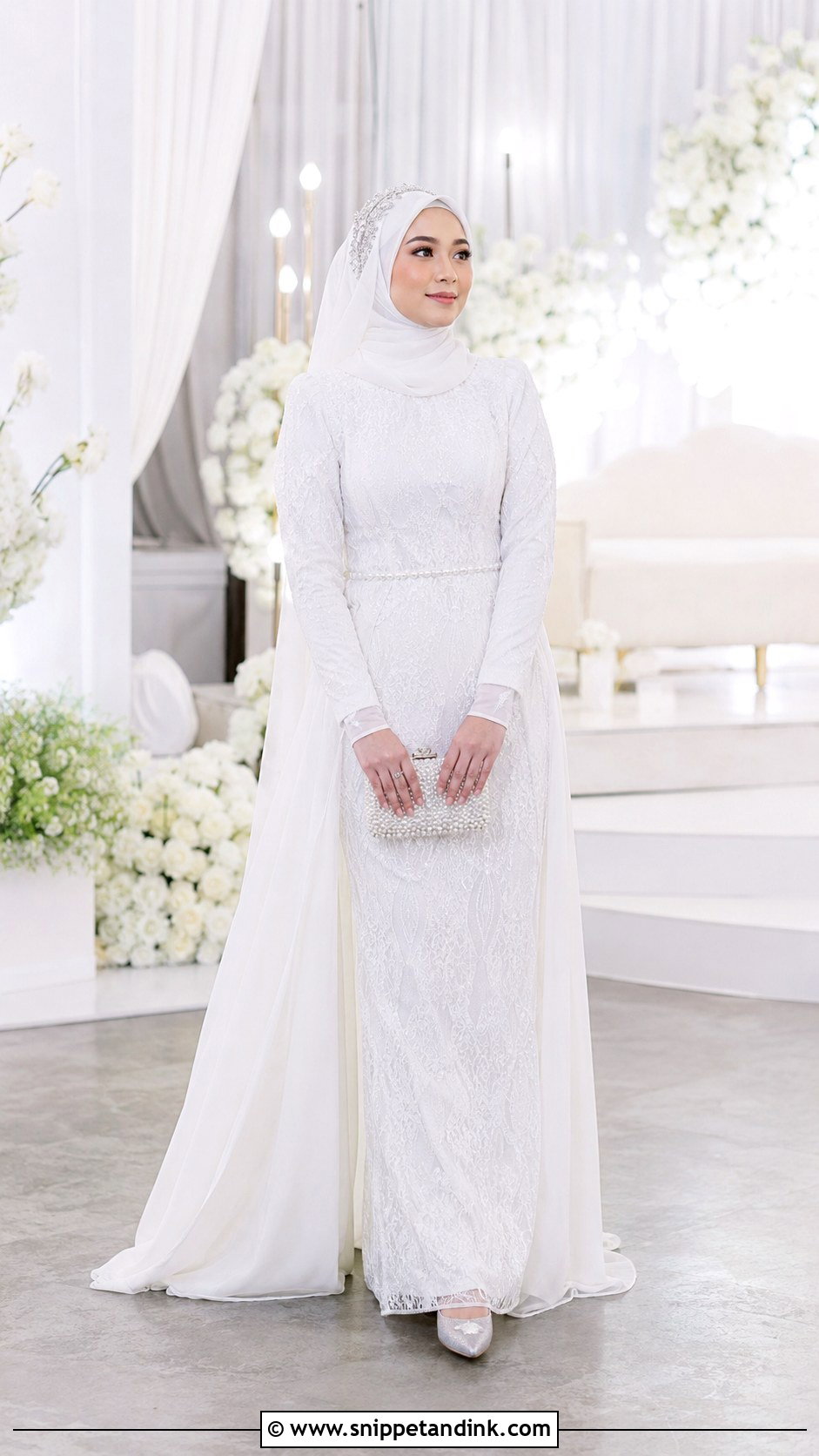
A lace jubah gives the most coverage of any shape here, with a long, lean line. Look for light shaping at the upper body and a wide, fluid skirt. In Malaysian humidity, the lining decides how comfortable you’ll be: cotton or a breathable blend under the lace, never polyester satin. Fitted inner sleeves keep the wrist covered when you raise your hands. A plain white chiffon hijab won’t compete with the lace. A narrow pearl belt adds a little structure, though the jubah looks complete without it. Silver low heels, a crystal headpiece secured over the scarf and a beaded clutch take it from nikah to reception.
7. Champagne Satin Wedding Dress Hijab
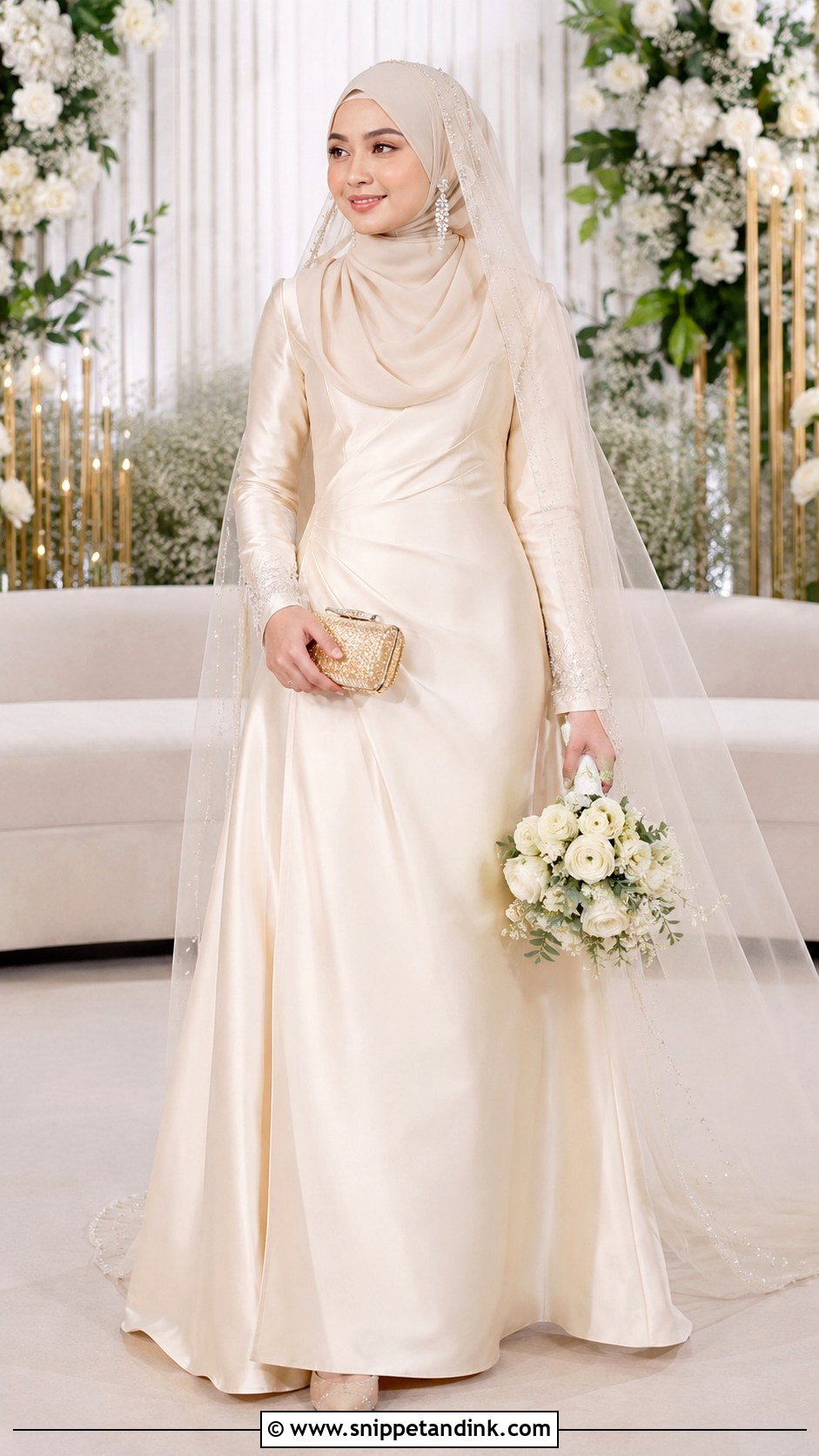
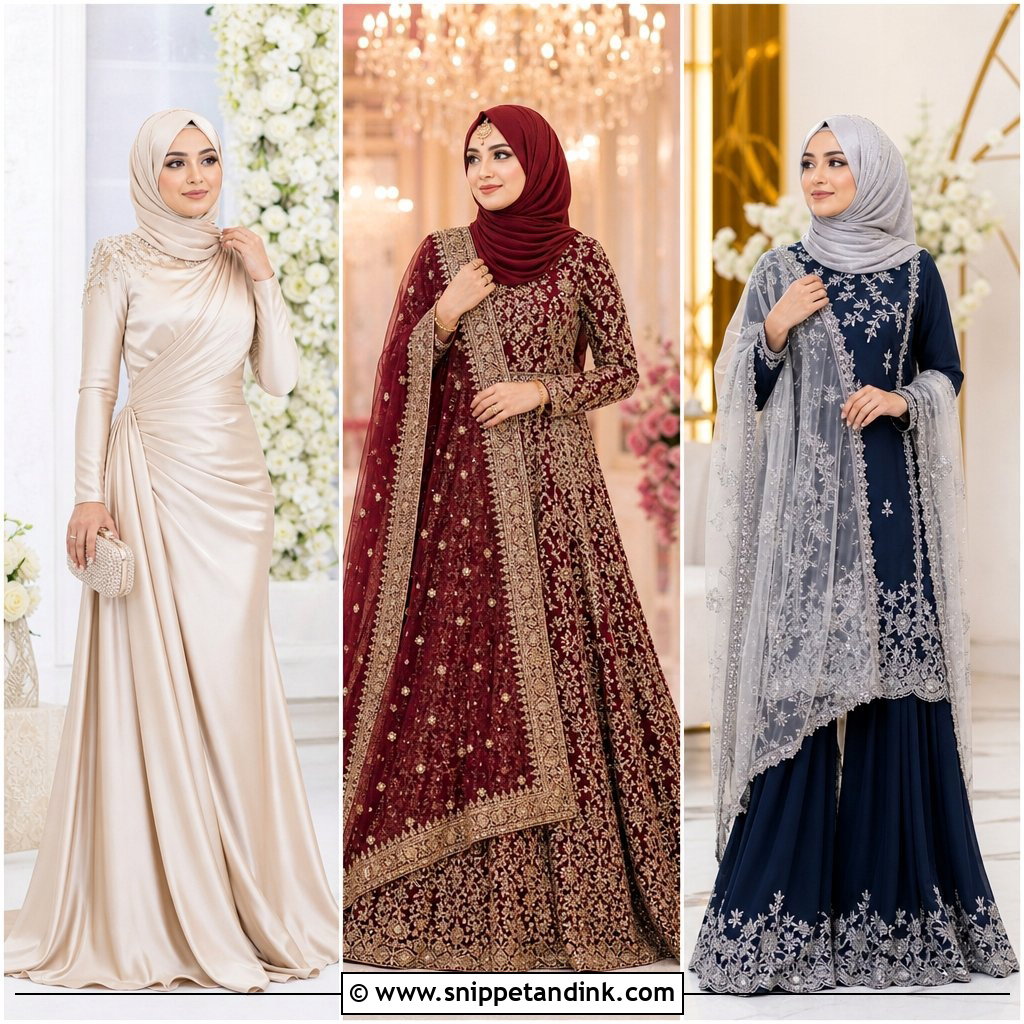
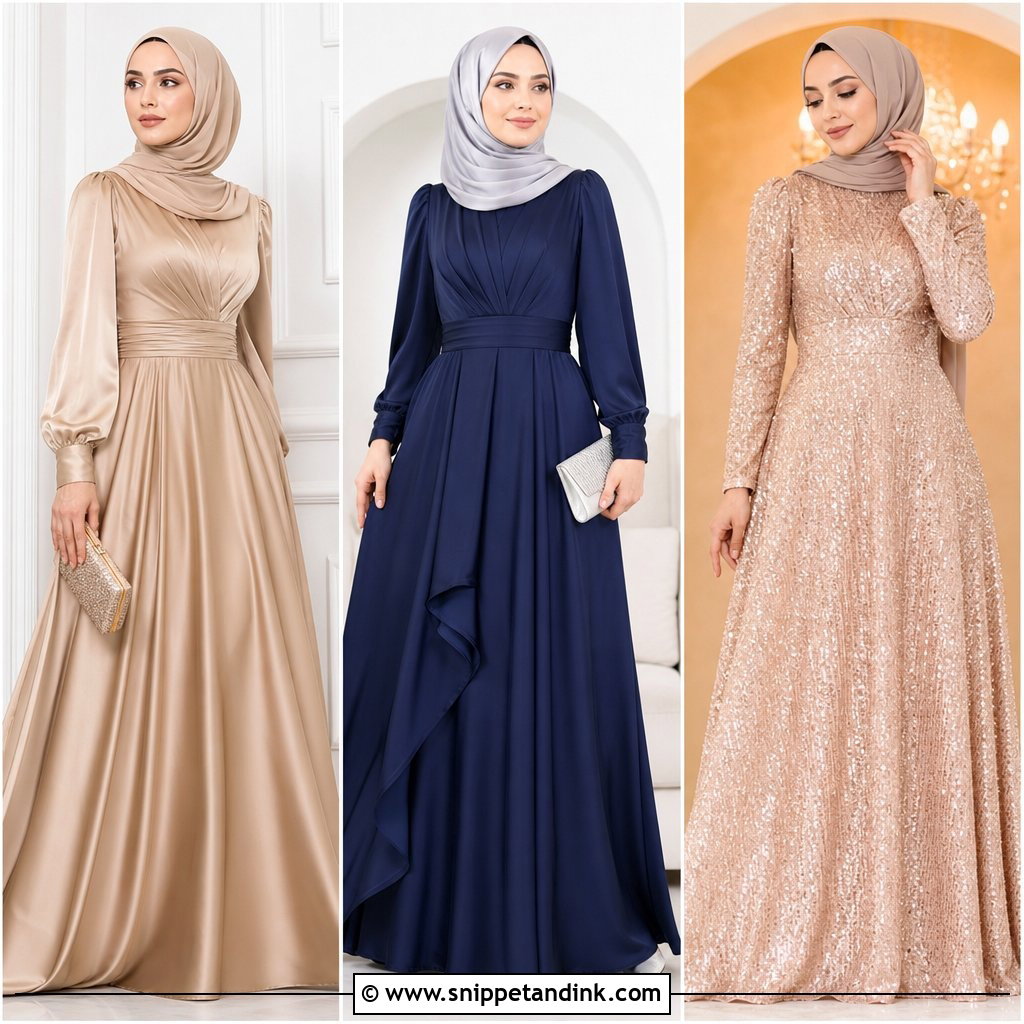
Champagne satin is warmer than white and kinder to many Malaysian skin tones. An A-line gown with long sleeves, a high neck and a softly gathered waist covers without bulk. Pick a satin with a low sheen. High-shine satin bounces flash back into the lens and shows every crease from sitting. A matte chiffon hijab in champagne, beige or soft ivory balances the sheen, and a sheer veil with a narrow beaded edge adds definition. Nude pointed pumps, crystal earrings attached outside the hijab and a gold clutch suit hotel ballrooms and evening receptions with neutral flowers.
8. Pearl Beaded A-Line Wedding Dress Hijab
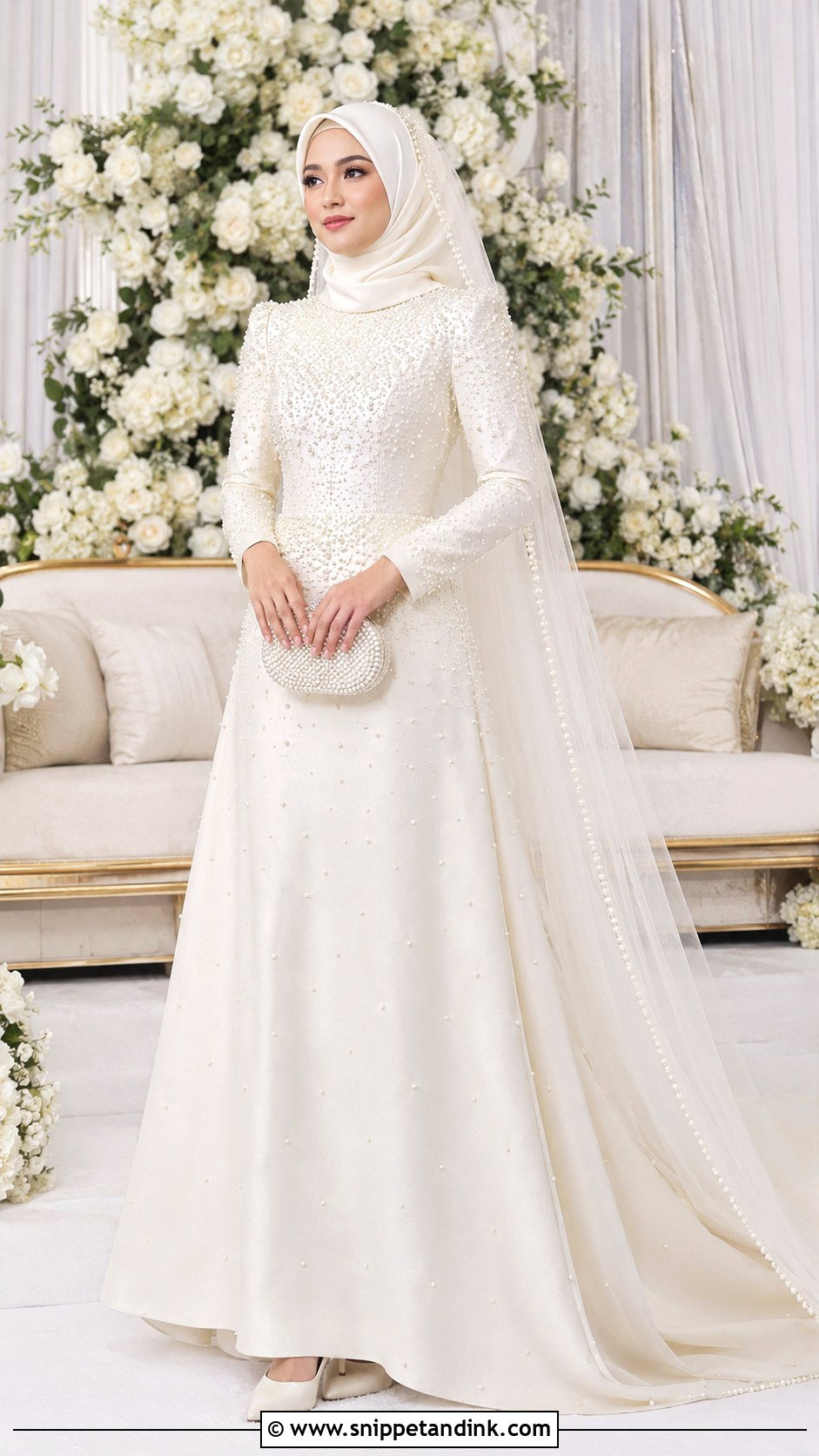
Pearls on a plain A-line make it bridal without weighing it down, as long as they stay on the bodice, shoulders and cuffs. A skirt loaded with pearls drags the hem and snags on chairs. The A-line moves easily and looks balanced from every side. Wear a plain satin hijab pinned smooth, with a floor-length pearl-edged veil over it. I check how pearl beading sits under the veil at a fitting; sewn pearls along the shoulder can catch tulle and pull it sideways. Closed-toe ivory heels, a pearl clutch and a small brooch keep everything in one color, for a formal reception or a small nikah.
9. Floral Embroidered Wedding Dress Hijab
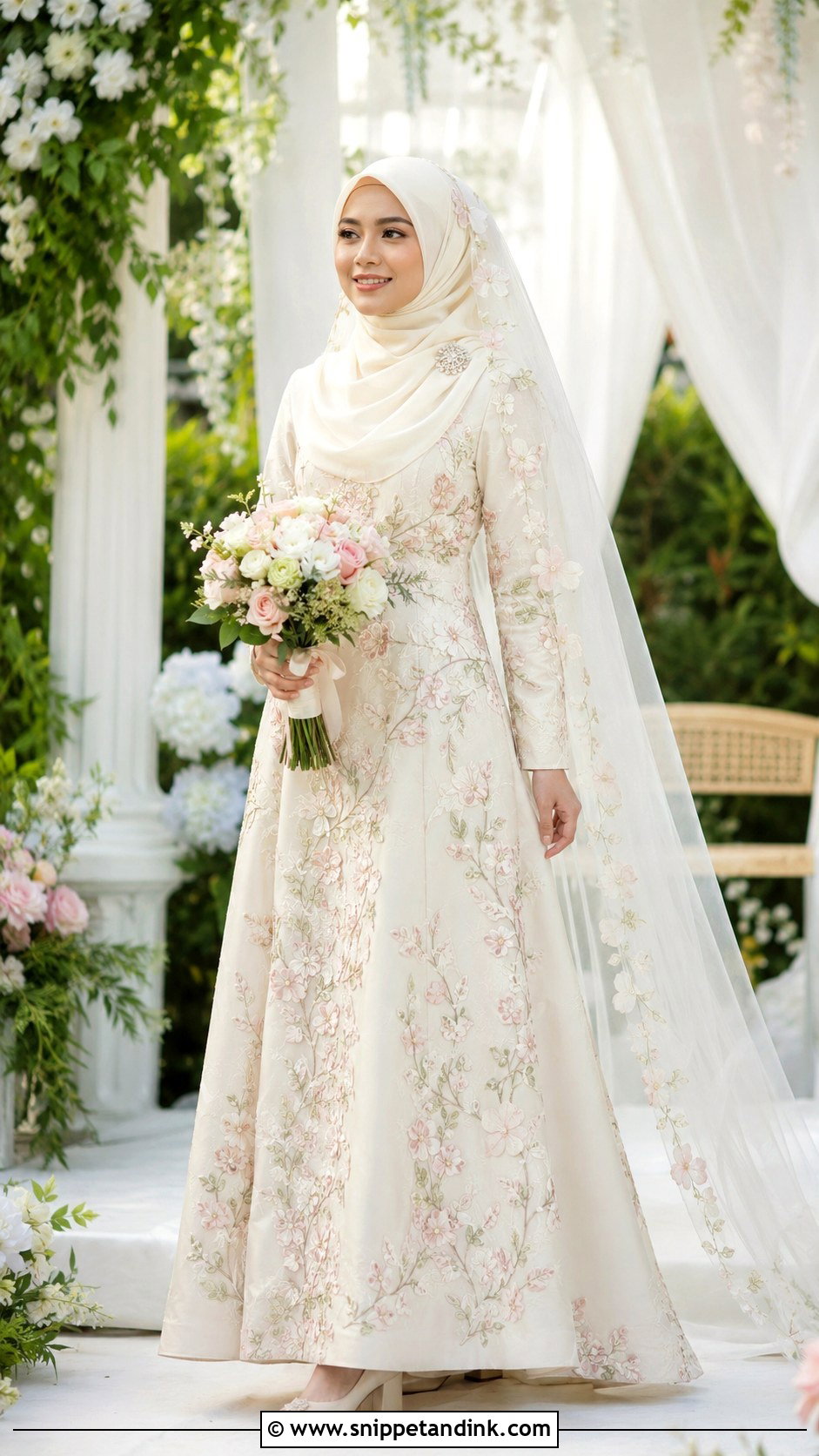
Embroidered vines across the bodice, sleeves and lower skirt of an ivory A-line or princess gown bring in a little color. Blush, sage or pale blue thread is enough; three colors start to look like a print. Keep the face clear with a plain ivory chiffon hijab, then add a tulle veil with a few matching appliqués near the edge. Ivory block heels help with standing and walking, and a pastel bouquet ties the thread colors together. A single crystal brooch or a few pearl pins is all the jewelry it needs. It suits a garden, a floral pelamin or a bright daytime event.
10. Cape Wedding Dress Hijab
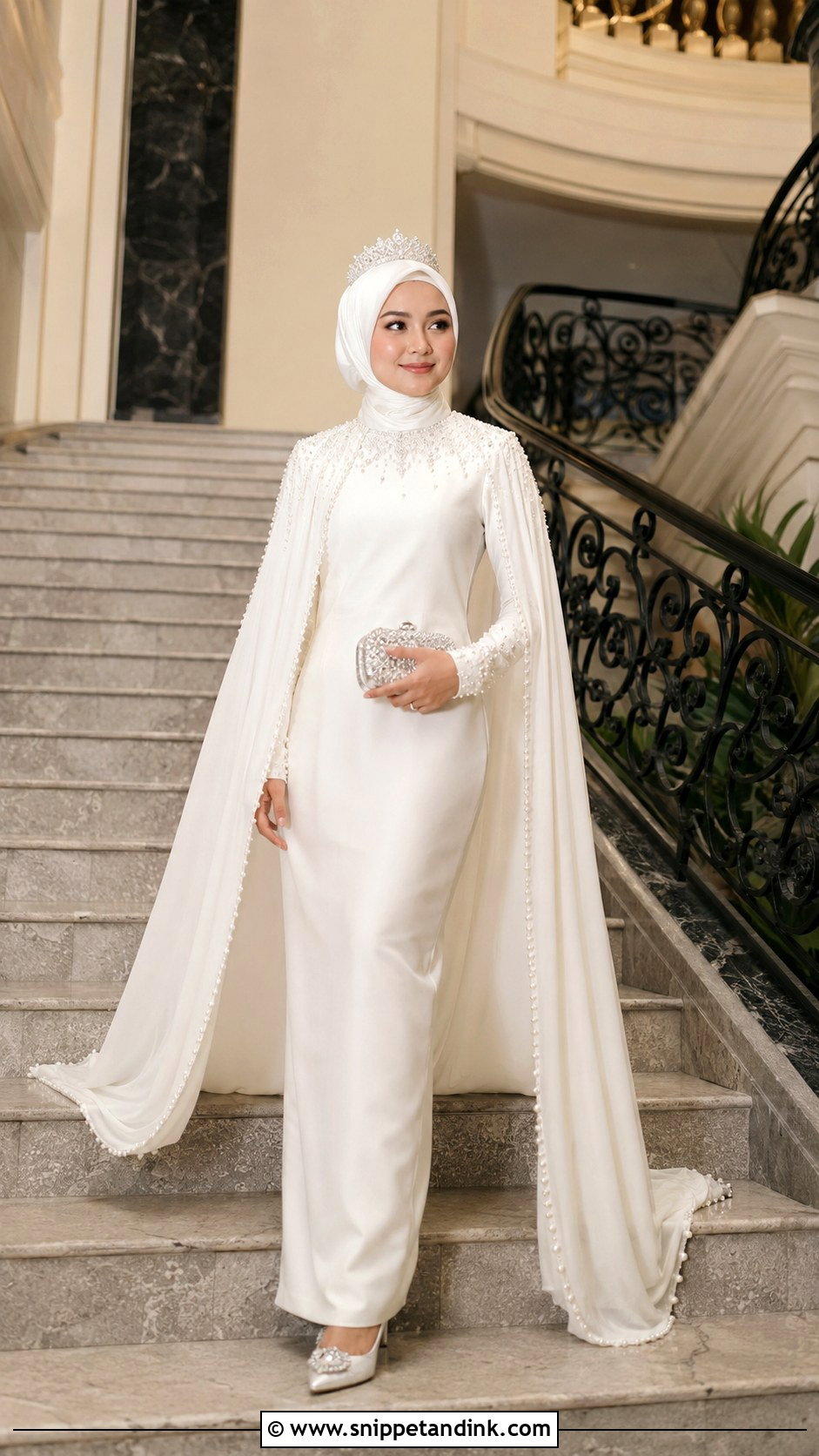
A cape adds movement and covers the shoulders and chest a second time, which some brides find reassuring. Start with a plain ivory column or A-line with long sleeves and a high neck, and layer a light chiffon or tulle cape that falls to the floor. Pearl edging or a little embroidery is enough decoration. Keep the satin hijab underneath compact: thick folds at the shoulder push the cape out of line. Silver pumps, a crystal clutch and a slim tiara over the hijab finish it. Walk in it before the day; a floor-length cape needs someone to straighten it after you step onto a pelamin or a staircase.
11. White Peplum Songket Wedding Dress Hijab
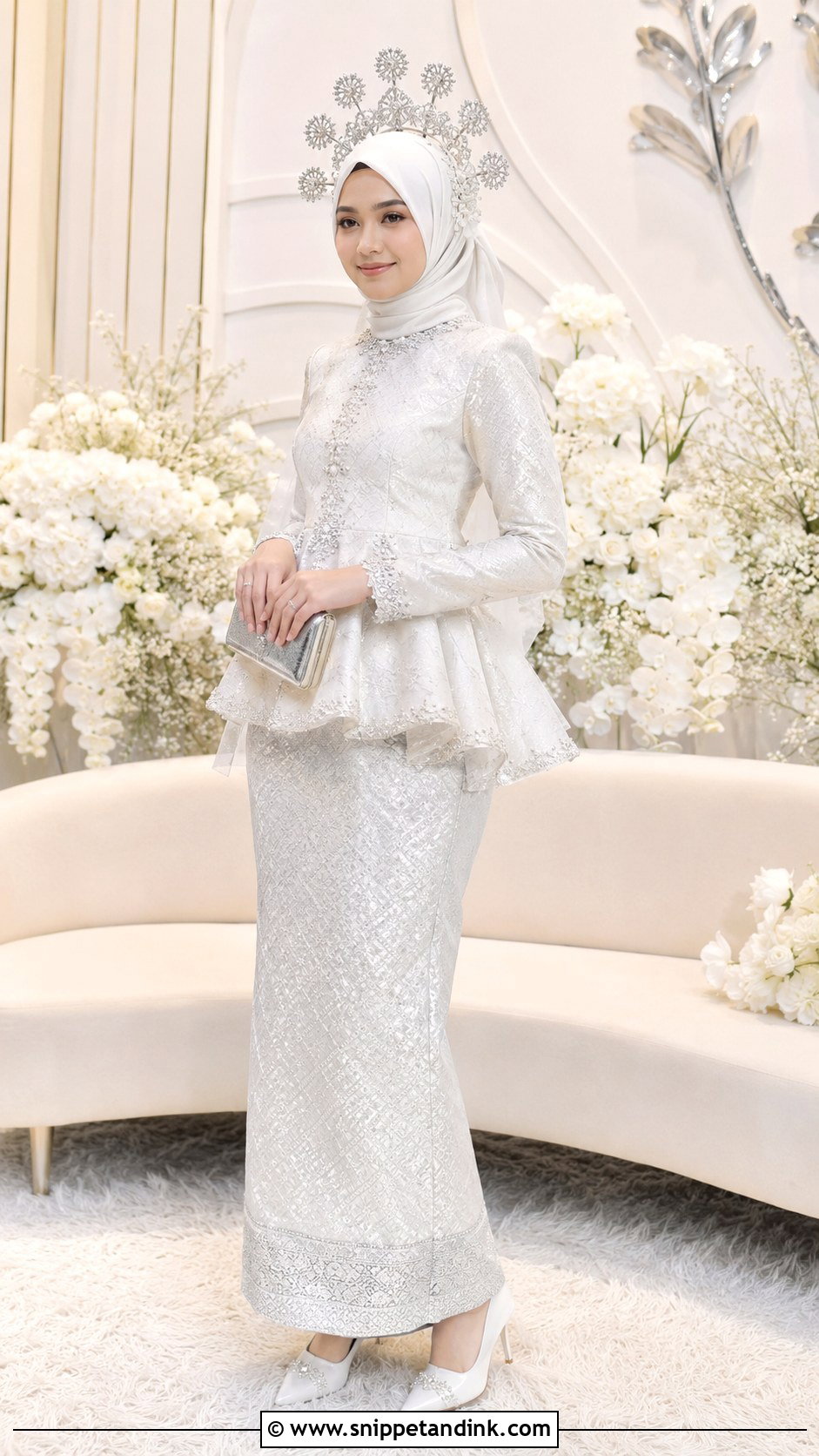
A white peplum top over a songket skirt gives a structured, more fitted shape. Choose long sleeves, a high neck and a peplum that ends below the hip, so the line covers well when you bend. A silver or ivory songket skirt keeps the palette light. Songket barely stretches, so ask for a back pleat or a short slit lined underneath, or you’ll be taking tiny steps all evening. A white satin hijab in a clean wrap suits the sharper cut. Add a silver dokoh, a pearl vine over the scarf and pointed white pumps, with a small metallic clutch, for a formal reception.
12. Dusty Pink Wedding Dress Hijab
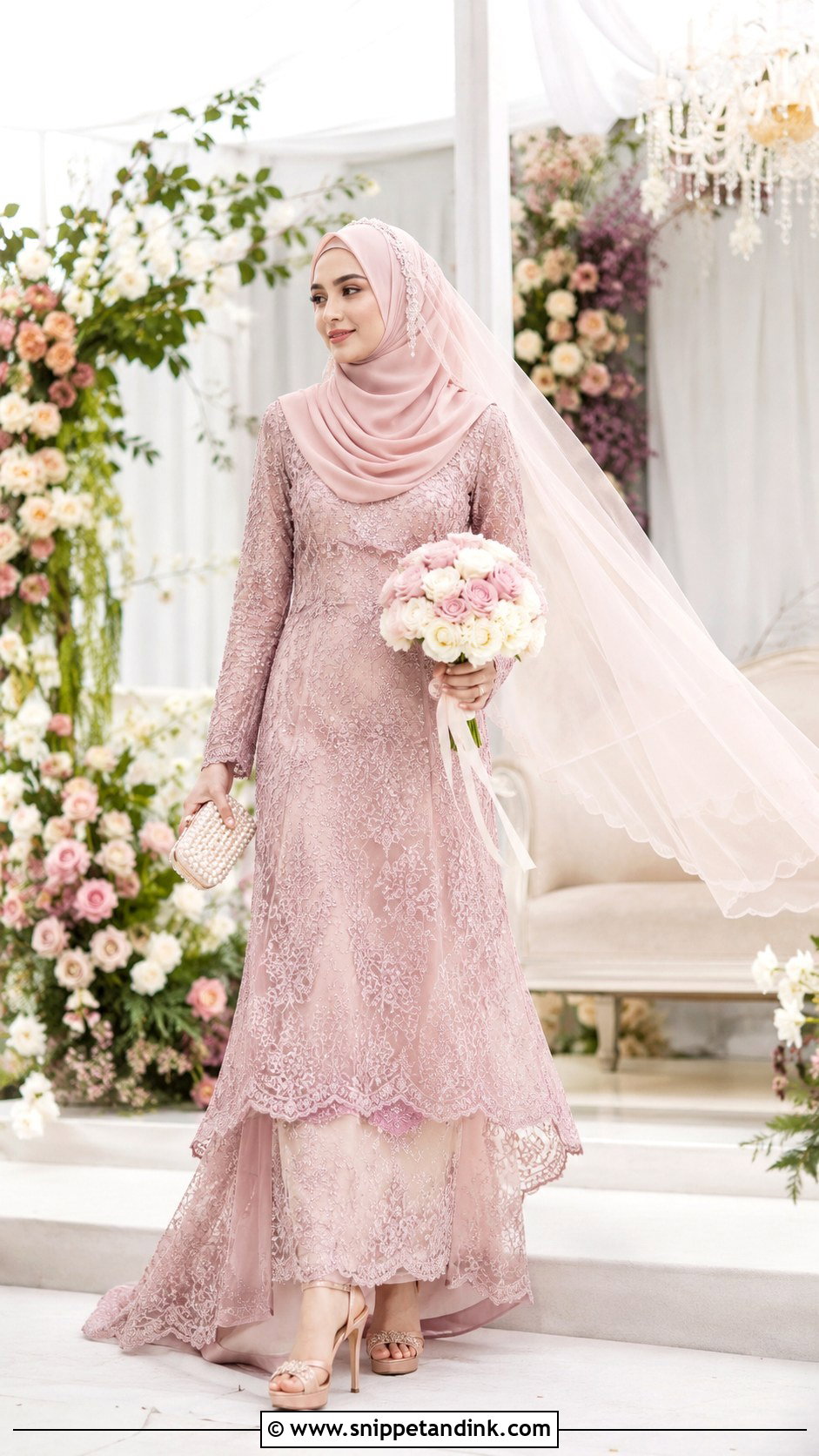
When a bride tells me she wants to feel bridal but not in white, I bring out dusty pink. A long-sleeved A-line with a high neck and tonal lace over the bodice, a matching chiffon hijab and an ivory veil for a little contrast. Rose-gold heels, a small pearl clutch and crystal accessories keep the pink grown-up, and ivory and blush flowers tie it together. Check the lining by a window before you buy. Pale pink fabric goes sheer in strong daylight, and a nikah in a bright mosque or a garden reception will show it.
13. Emerald Green Songket Wedding Dress Hijab
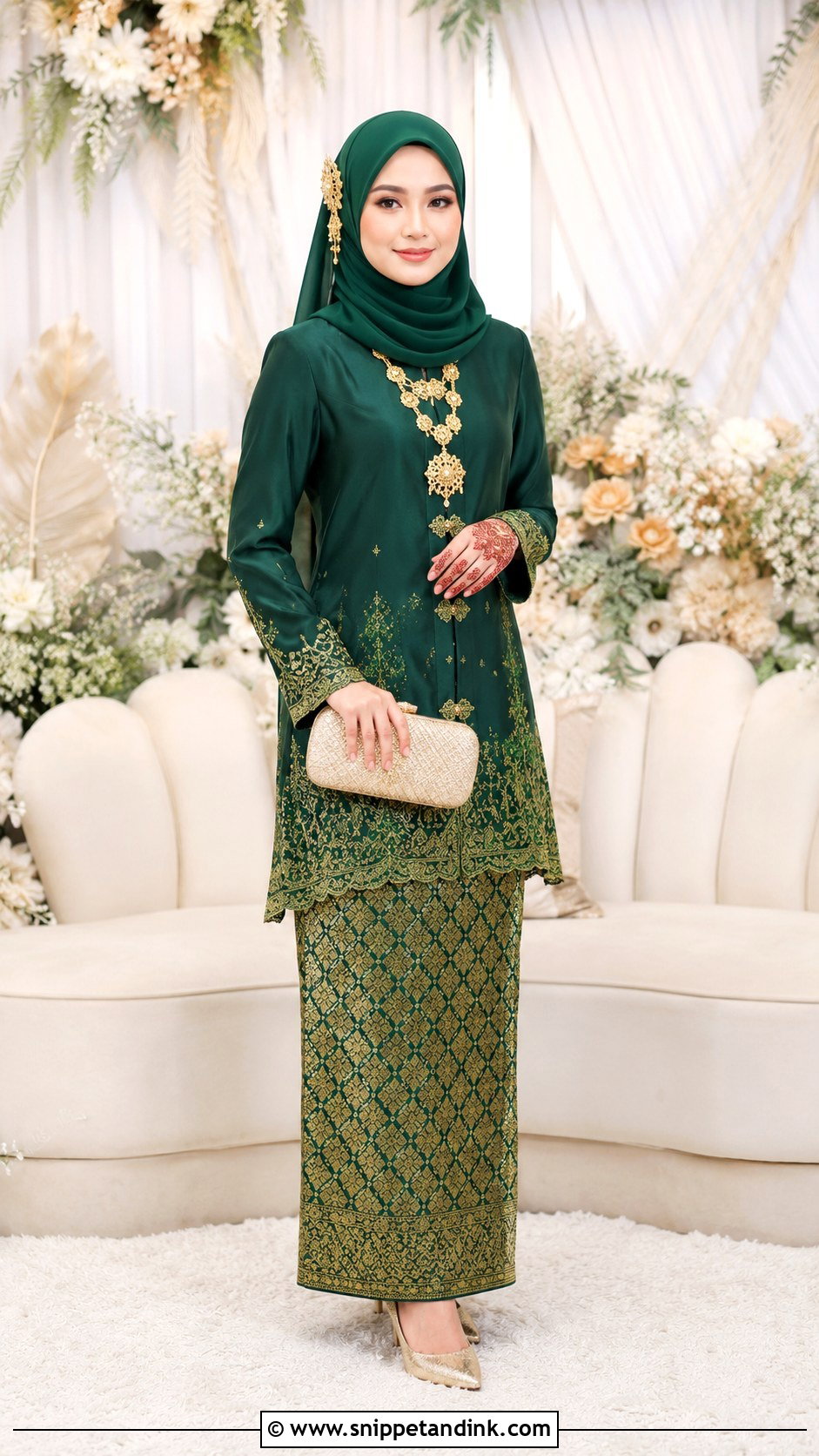
Emerald is a common choice for the bersanding after a white nikah, and it holds its own on a busy pelamin. Pair a modest baju kurung top with long sleeves, a high neck and gold cuff embroidery with an emerald songket skirt woven with restrained metallic motifs. A matte chiffon hijab in the same green softens the songket shine. Add a gold dokoh, a decorative hijab brooch and closed-toe gold heels, with a green or gold clutch for essentials. Dyed green chiffon can mark a white inner cap if you sweat, so wear a matching inner rather than a white one.
14. Silver Gray Wedding Dress Hijab
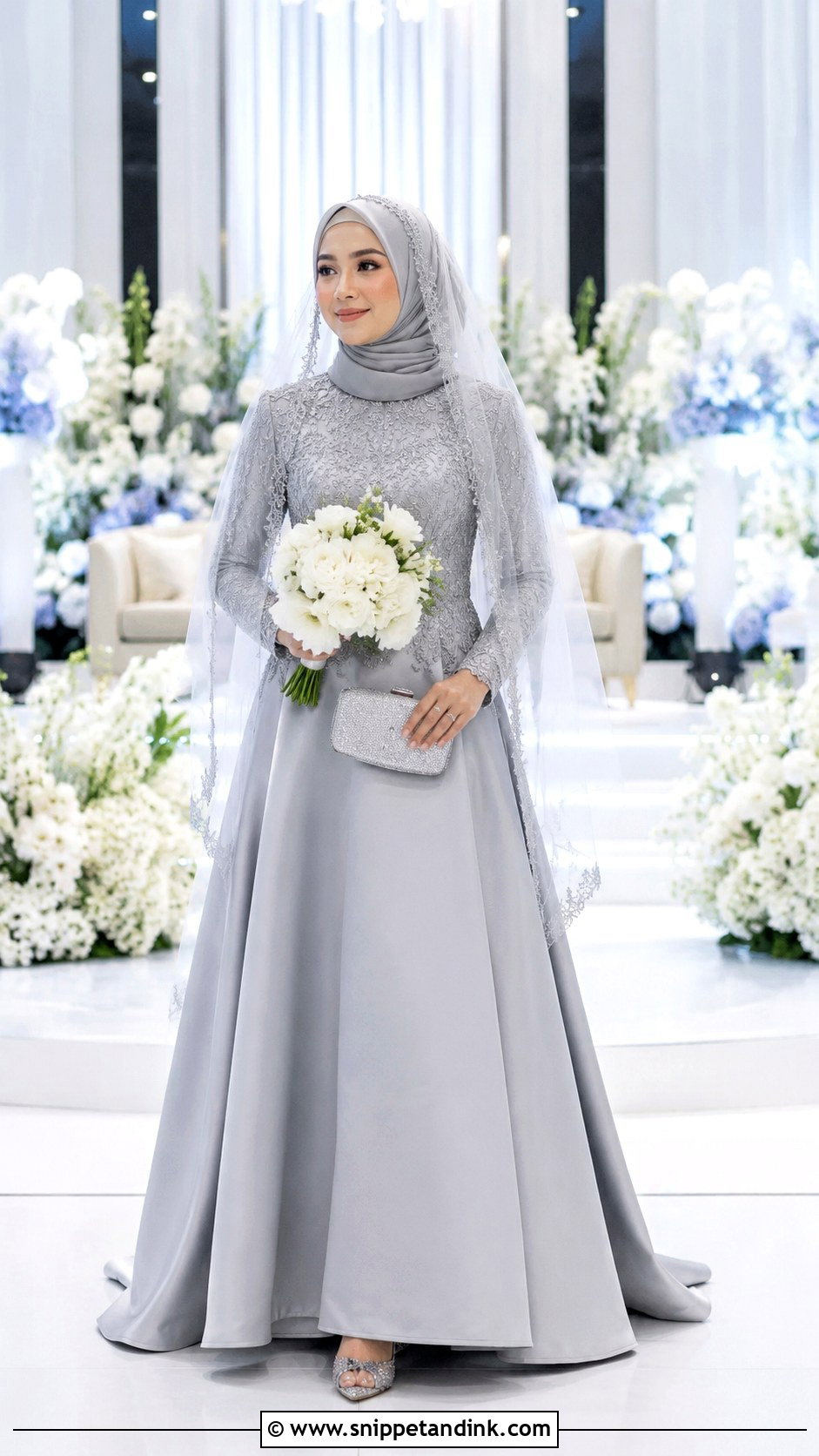
Silver gray suits brides who find bright white too stark. A long A-line in matte satin or crepe, with silver lace at the bodice and sleeves and a softly pleated skirt, looks modern and still formal. The high neck makes hijab styling simple. Pair a light gray chiffon hijab with a sheer silver-edged veil. Crystal pumps or low metallic heels and a small rhinestone clutch add sparkle; keep the jewelry light, since the lace already reflects plenty. Gray can drain warm skin in daylight, so test it near your face in natural light and bring a warmer lipstick to the trial. It shines at an evening reception or a monochrome pelamin.

15. Minimalist Crepe Wedding Dress Hijab
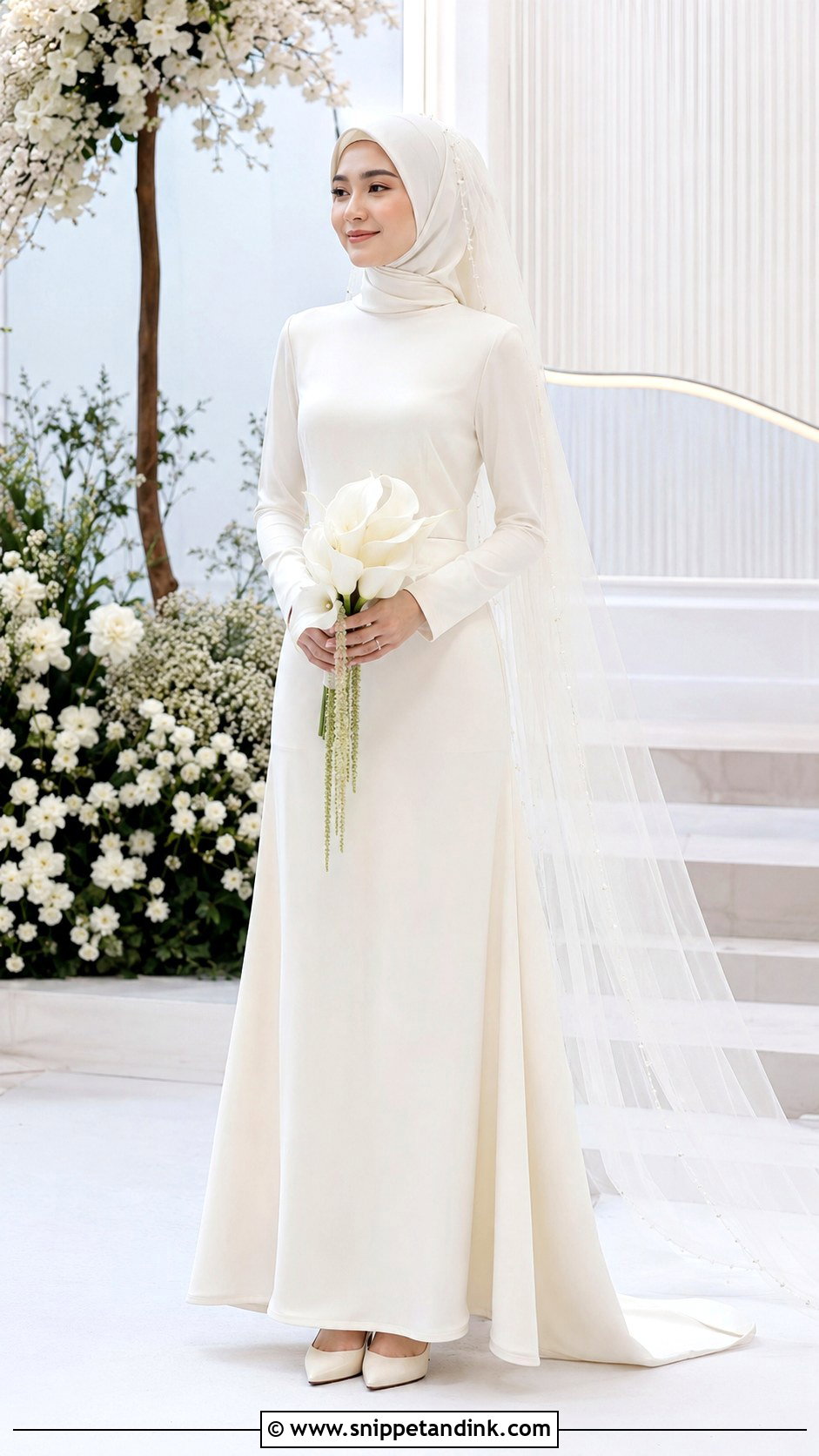
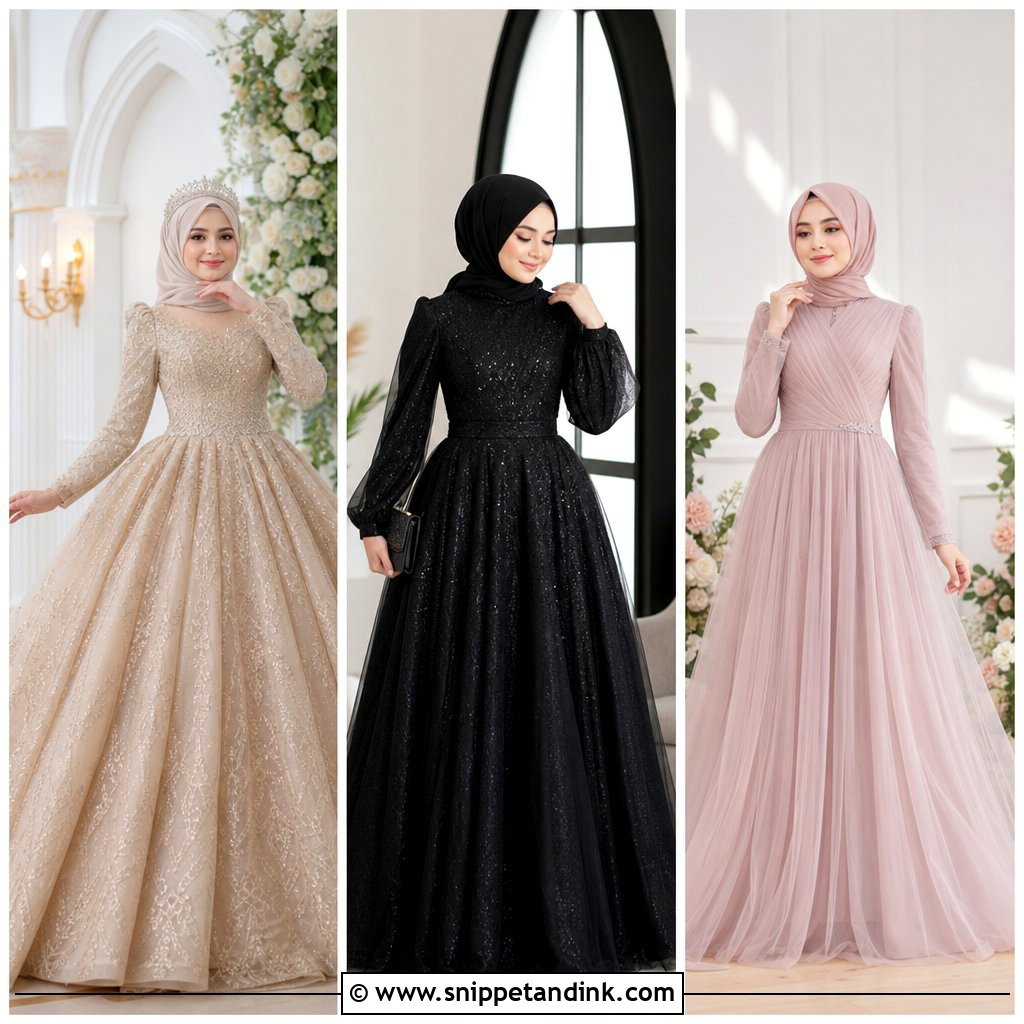
Crepe is for the bride who wants clean lines and easy movement. A floor-length gown with a boat neck, full sleeves and a gently flared skirt gets its shape from tailoring, not beads. Pair it with a crepe or matte satin hijab wrapped neatly, and a long plain veil you can take off for the reception. Pointed ivory heels, pearl pins on the scarf and a sculptural white bouquet are all it needs. A plain gown hides nothing, so alterations matter more here than anywhere else: a puckered side seam or a sleeve a little too long shows in every photo.
16. Lace Ball Gown Wedding Dress Hijab
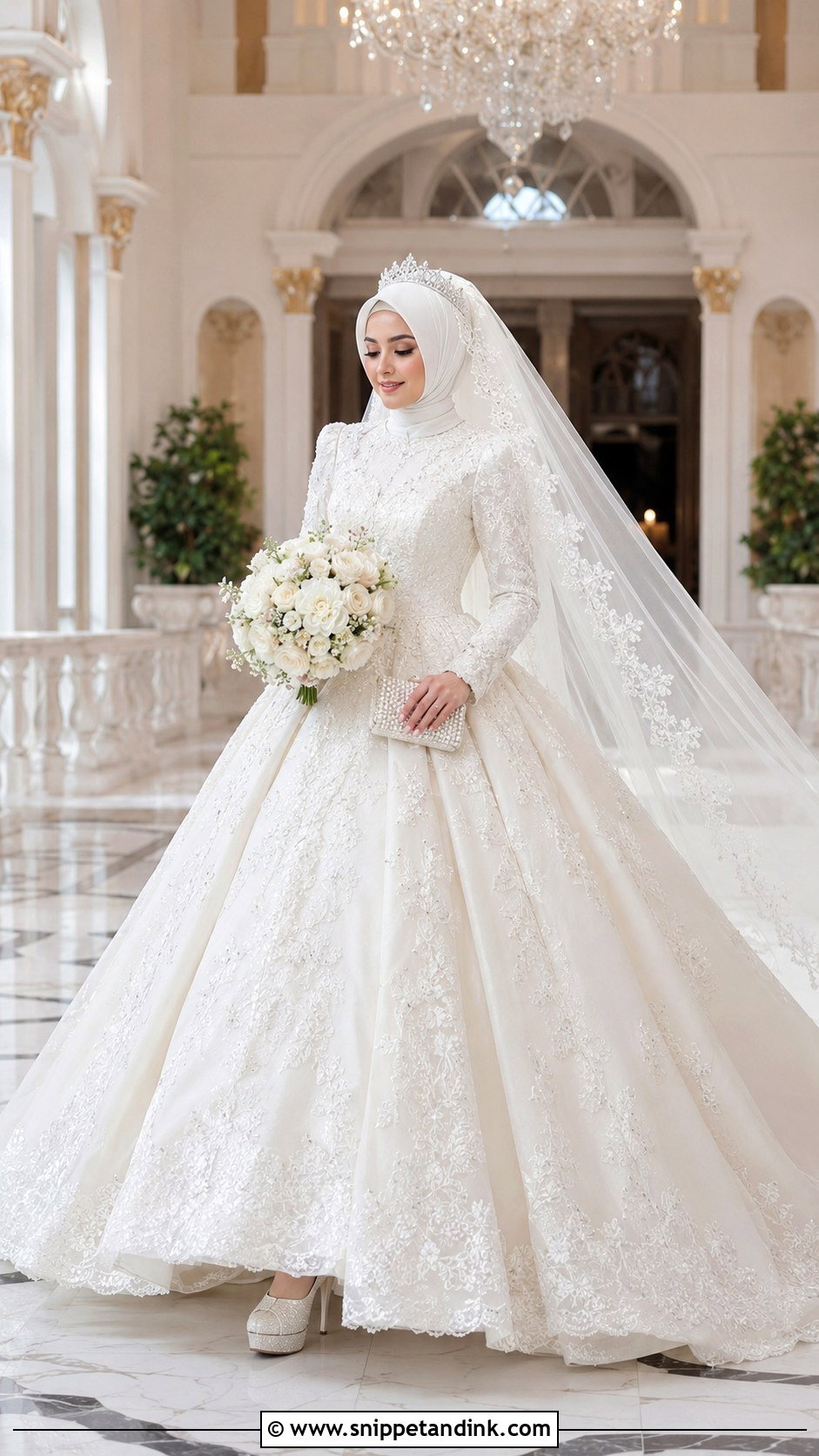
A lace ball gown is for a big ballroom and a formal stage. Choose a high illusion neckline over an opaque inner bodice, long lined sleeves and a structured skirt, with appliqués that flow from bodice into skirt instead of stopping at the waist. A plain satin hijab keeps the head smooth under a lace-trimmed cathedral veil. Cushioned platform heels let the hem fall at the right length without tipping you forward. Add a small crystal tiara, a pearl clutch and a rounded bouquet. Measure the space between tables at the venue; a wide skirt in a crowded hall means turning sideways all night.
17. Modest Kebaya Wedding Dress Hijab
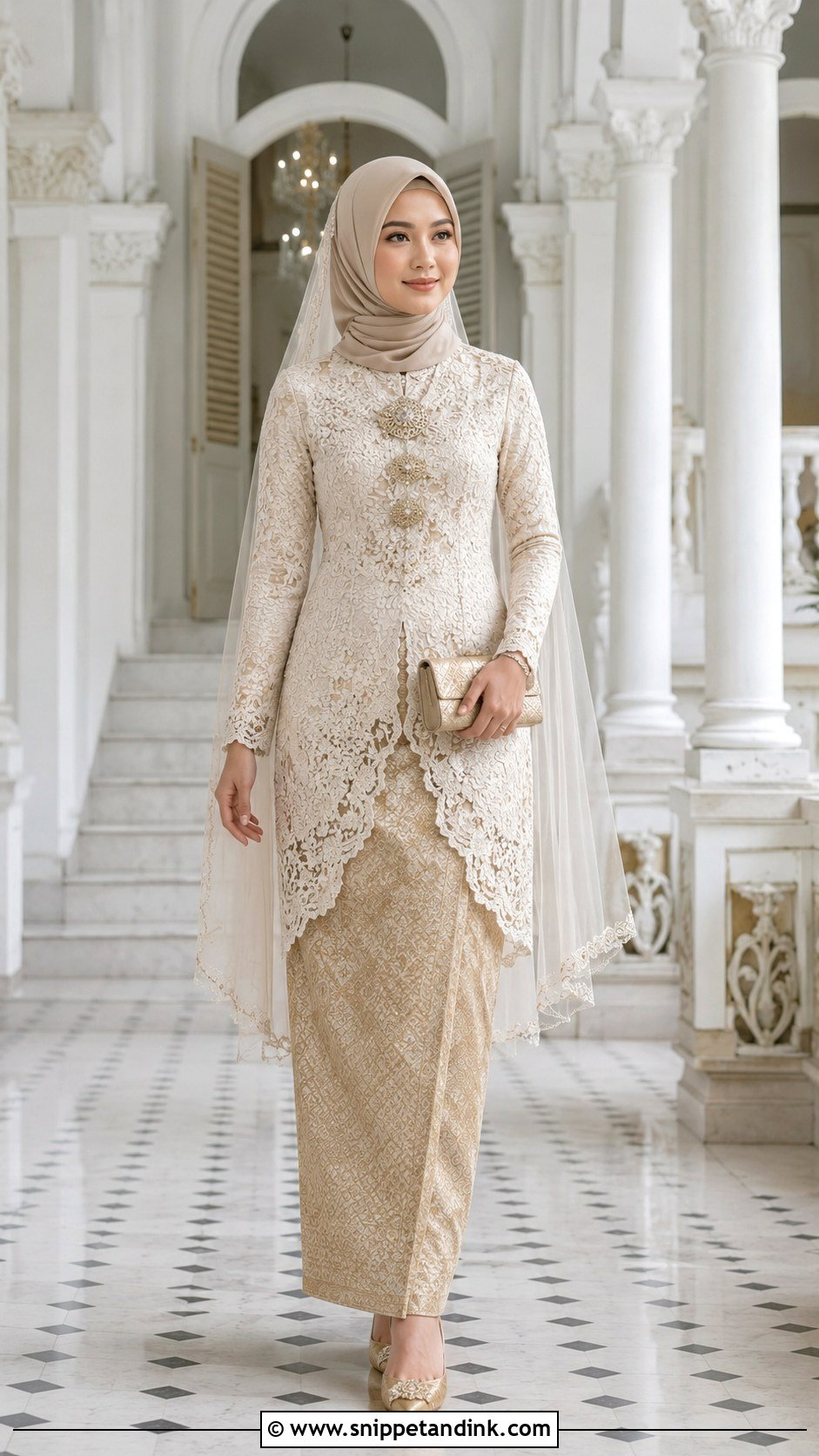
A modest kebaya brings Malaysian heritage with full coverage when the top is long and the inner neckline is high. Ask for full-length sleeves and enough room through the torso to breathe and eat. The traditional kebaya is cut close, so in a modest version I’d ease it at the side seams rather than the bust, which keeps the shape. Pair the lace or beadwork with a songket or batik skirt, and choose a chiffon hijab in ivory, champagne or a color from the skirt. A traditional brooch set, low metallic heels and a structured clutch finish it. If the kebaya is busy, keep the veil plain and sheer.
18. Batik Wedding Dress Hijab
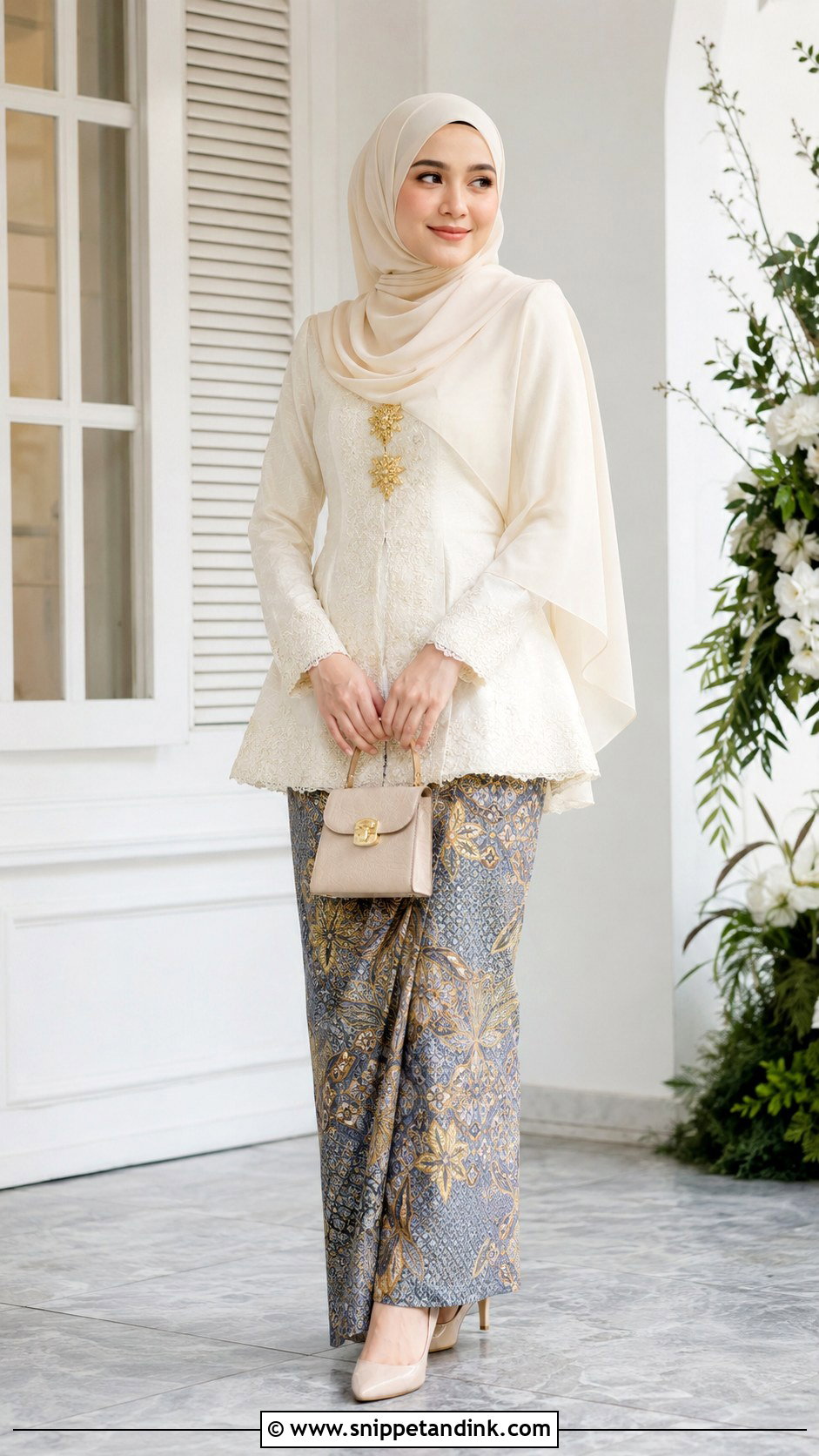
Batik gives the outfit an artist’s hand. Choose an elegant batik skirt in ivory, muted gold, blue or blush, with a plain long-sleeved baju kurung top. A peplum or a longer tunic adds shape. Match the chiffon hijab to the lightest shade in the print; matching the darkest shade makes the face look heavy. Neutral closed-toe heels, a small gold bag and one traditional brooch are enough, and no second pattern anywhere. Hand-drawn batik can bleed when wet, so dry clean it and keep it away from rain. It suits a daytime reception or a second entrance, and you can wear it again.
19. Blue Baju Kurung Wedding Dress Hijab
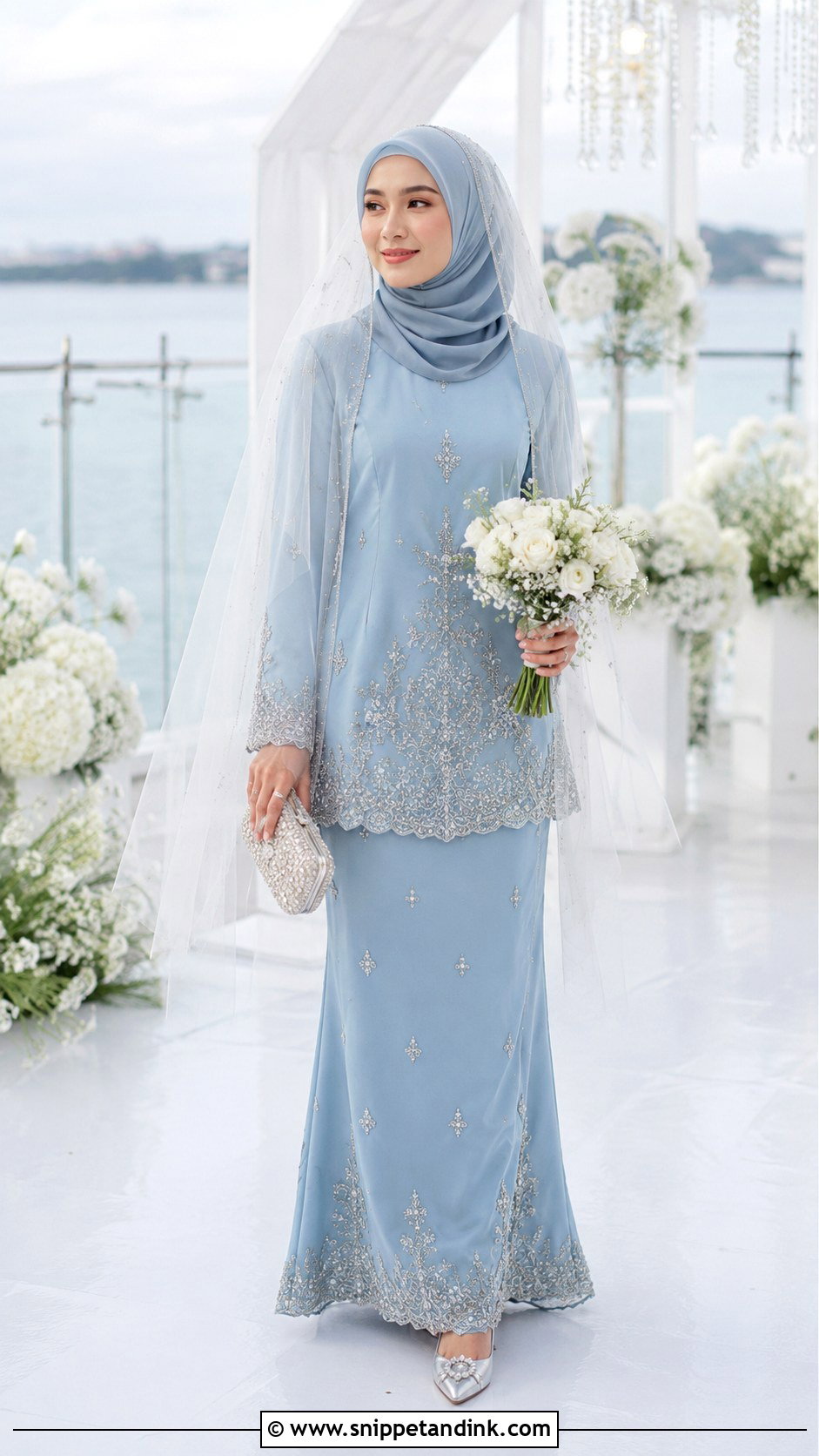
Powder blue or muted blue looks calm and fresh, especially at a morning ceremony or by the water. Choose a baju kurung with a flowing tunic, long sleeves and a skirt with tonal lace or silver embroidery. A gray-blue chiffon hijab blends into the dress and photographs cleanly against white flowers. Add an ivory veil for the ceremony or a silver headpiece over the scarf for the reception. Closed-toe silver heels, a beaded clutch and white flowers finish the palette. The undertone decides whether it flatters: warmer skin usually suits a slightly gray or teal-leaning blue better than icy blue.
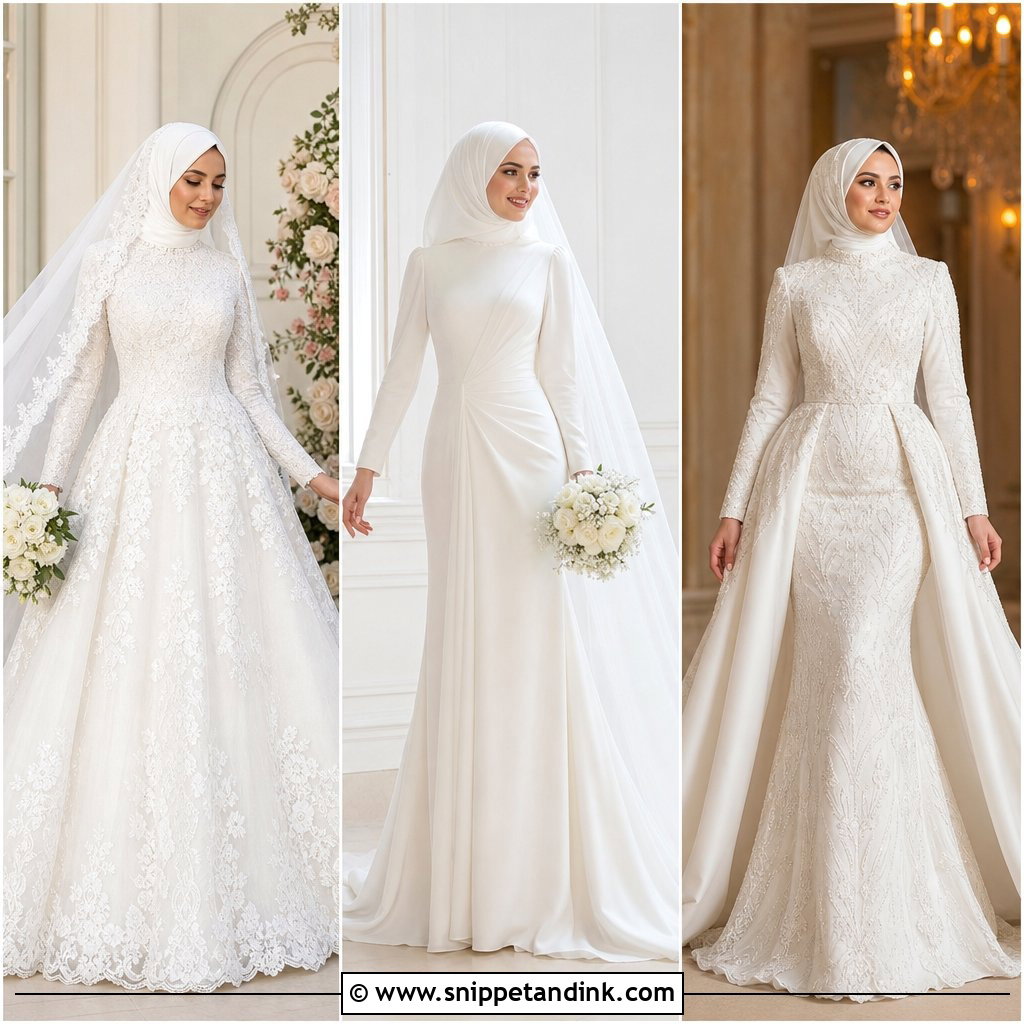
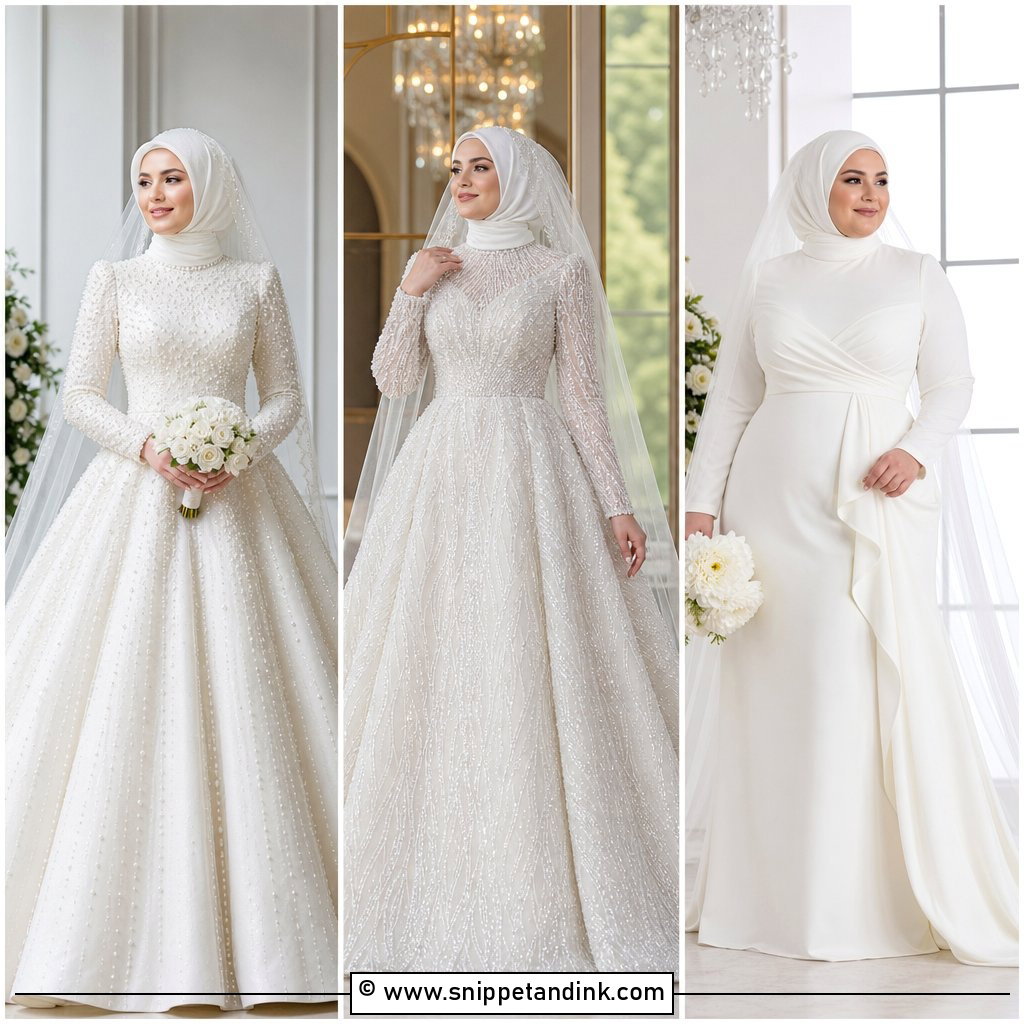

20. Royal White Wedding Dress Hijab
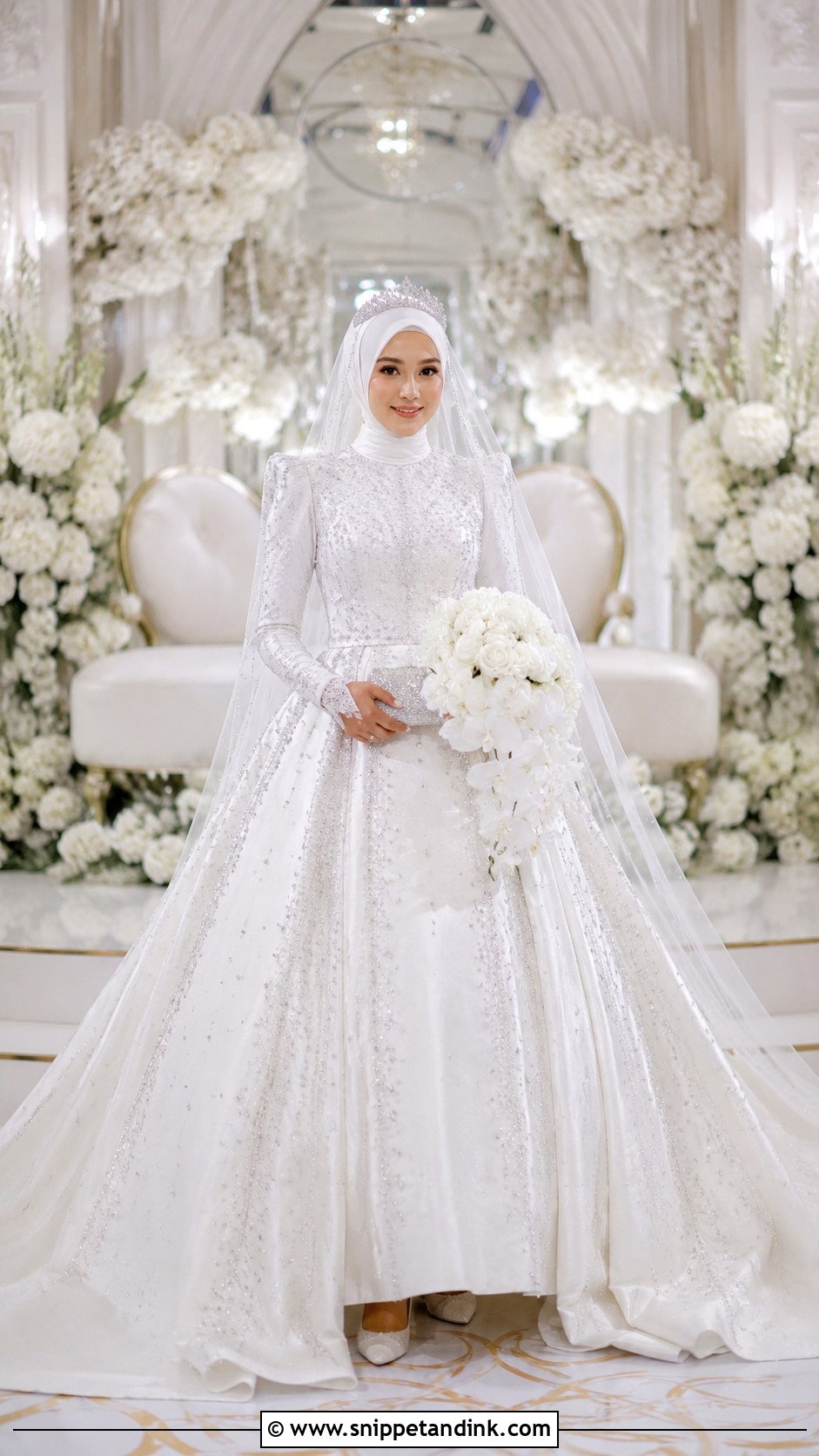
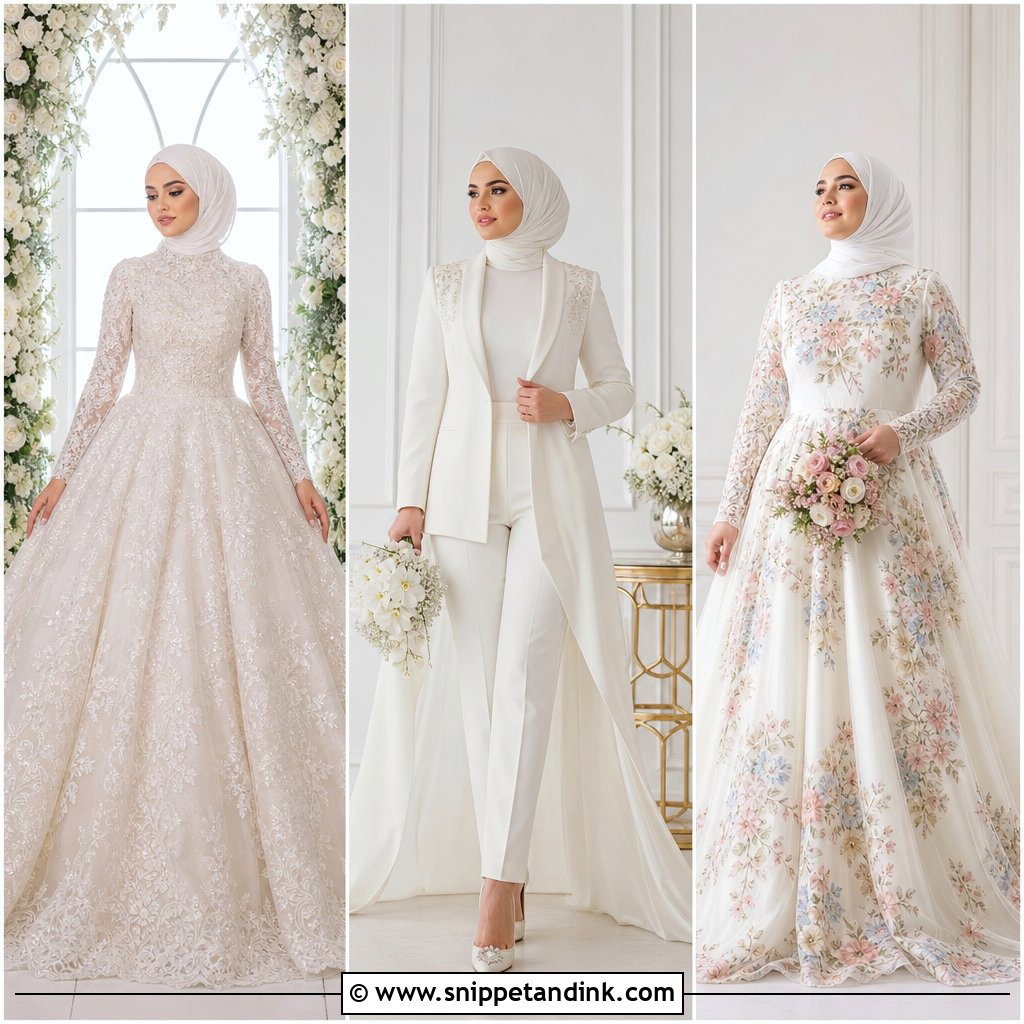
The royal white look pairs a structured gown with statement pieces for a big reception. Start with a long-sleeved princess-cut dress, an opaque high neck, a defined waist and crystal embroidery spread evenly. Wrap a white satin hijab cleanly, then attach a long veil with combs or pins anchored to the inner cap, not to the scarf, so the weight doesn’t drag the hijab back. A tiara or jeweled band over the hijab adds height. Sparkling closed-toe heels, a crystal clutch and a formal white bouquet complete it. Keep every metal in one tone, gold or silver, and it looks regal rather than crowded.
How Many Outfits Does a Malaysian Wedding Need?
Many brides end up with two or three looks, because the events ask different things. The akad nikah is usually the quietest and the most covered, often in white or ivory. The bersanding on the pelamin is where songket, color and heavier accessories come out. Some couples add a third, lighter outfit for a later reception or a family event on the groom’s side.
- Plan the changes on the schedule, and allow time for the hijab to be restyled as well as the dress. A change with a new hijab style rarely takes less than 30 minutes.
- Choose one jewelry metal for the whole day so pieces can move between outfits.
- If you are renting, check the deposit terms on stains. Turmeric, lipstick and food on white fabric are hard to remove, and rental houses know it.
- Keep one outfit simple. After hours of standing on a pelamin, a lighter look for the last event is a relief.
If you only want one outfit, choose a white or soft-colored baju kurung with a detachable veil and change only the headpiece. It is simpler, cheaper and still looks finished in every photo.
Wearing It Through the Nikah, the Pelamin and the Salam Line
A Malaysian bridal outfit is right when it suits your taste, your modesty and the feel of the celebration, whether that is baju kurung, songket, a ball gown or batik. Before you commit, wear the dress with the hijab for a few hours: walk, sit on the floor, raise your arms, hug someone taller. Look at the fabric in daylight and under flash, and bring your shoes, inner cap and underlayers to every fitting. Settling the gown, hijab, veil, jewelry and shoes together and early is what spares you the last-minute mismatches.
You'll Like These Ideas:








Leave a Reply