
A traditional wedding outfit carries more than fabric. It holds a family’s history, a region’s weaving or embroidery, and usually a set of rules about color and coverage that nobody writes down until you get them wrong. The twenty ensembles below come from cultures across South Asia, Africa, East and Southeast Asia, Latin America and Europe, and I’ve described each one as a full look: garment, jewelry, footwear and the ceremonial details I’d check at a fitting. Customs shift between regions, religions and individual families, so treat every look as a starting point. Before you commit to an important garment or symbol, talk to the relatives who wore it before you and to a dressmaker who works in that tradition every day.
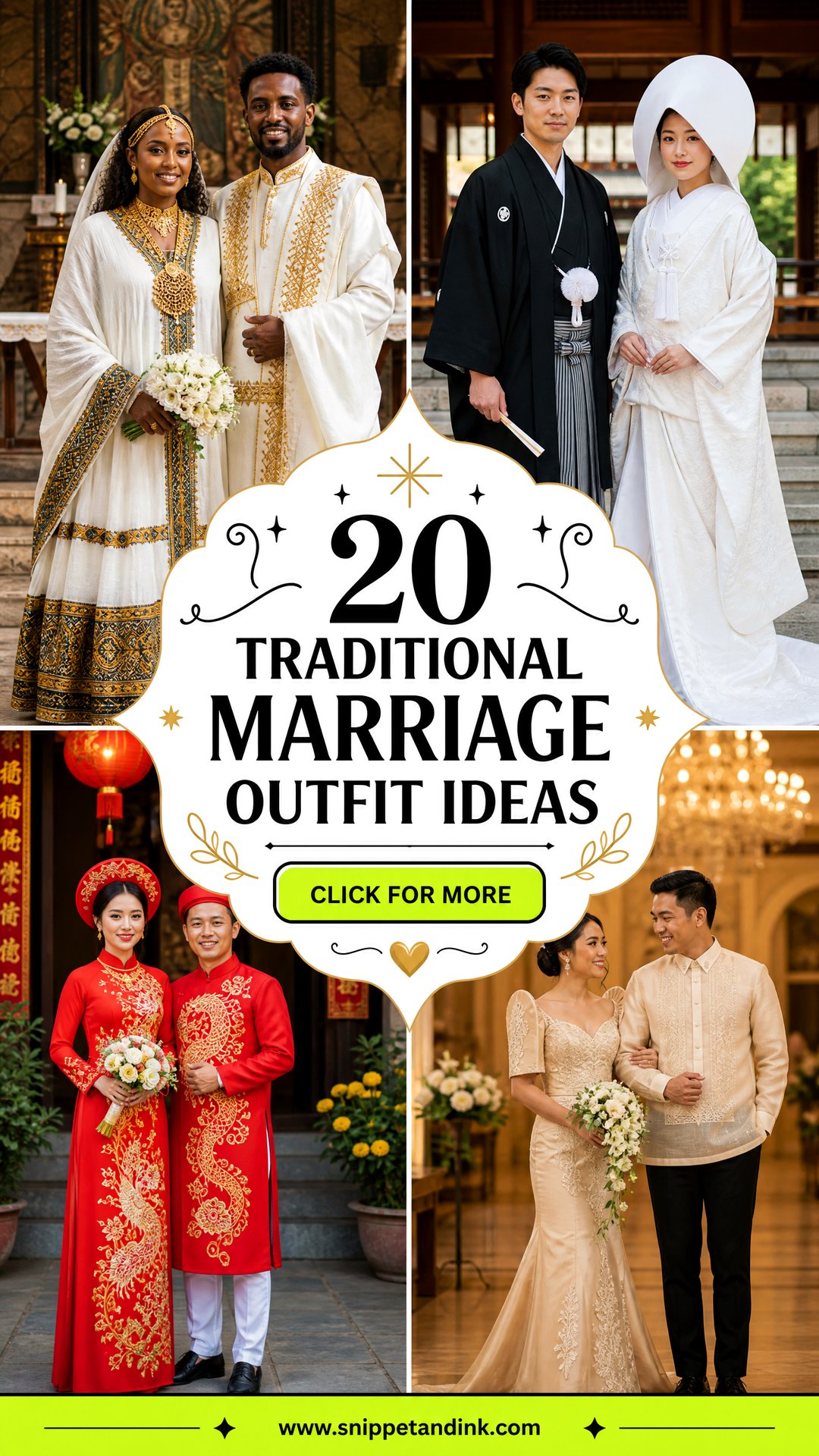
Fitting a Garment Around the Rituals It Has to Perform
A mirror fitting tells you almost nothing about a ceremonial outfit. The real test is the ceremony itself: walking circles around a fire, kneeling for a tea ceremony, sitting cross-legged on a mandap, bowing to elders, being lifted on a chair. So the first thing I do at a fitting is ask the bride to walk me through every movement she’ll make, in order, and then she does them in the garment.
- Kneel and stand up again without using your hands. If the hem catches or the waist digs in, it needs ease.
- Sit for ten minutes. Stiff silk and brocade crease across the lap, and you’ll see where.
- Raise both arms as if receiving a gift. Blouses and jackets that are too tight in the armhole pull the whole front up.
- Turn quickly. Heavy dupattas, ipele sashes and netela shawls shift with momentum, so pinning points get decided here.
- Wear the real shoes and real jewelry. Heel height changes hem length, and necklaces change how a neckline lies.
Bring the person who will dress you on the day to the final fitting. Draping a saree, tying a gele or dressing a shiromuku is a skill, and they need to see your body in that garment before the morning of the wedding.
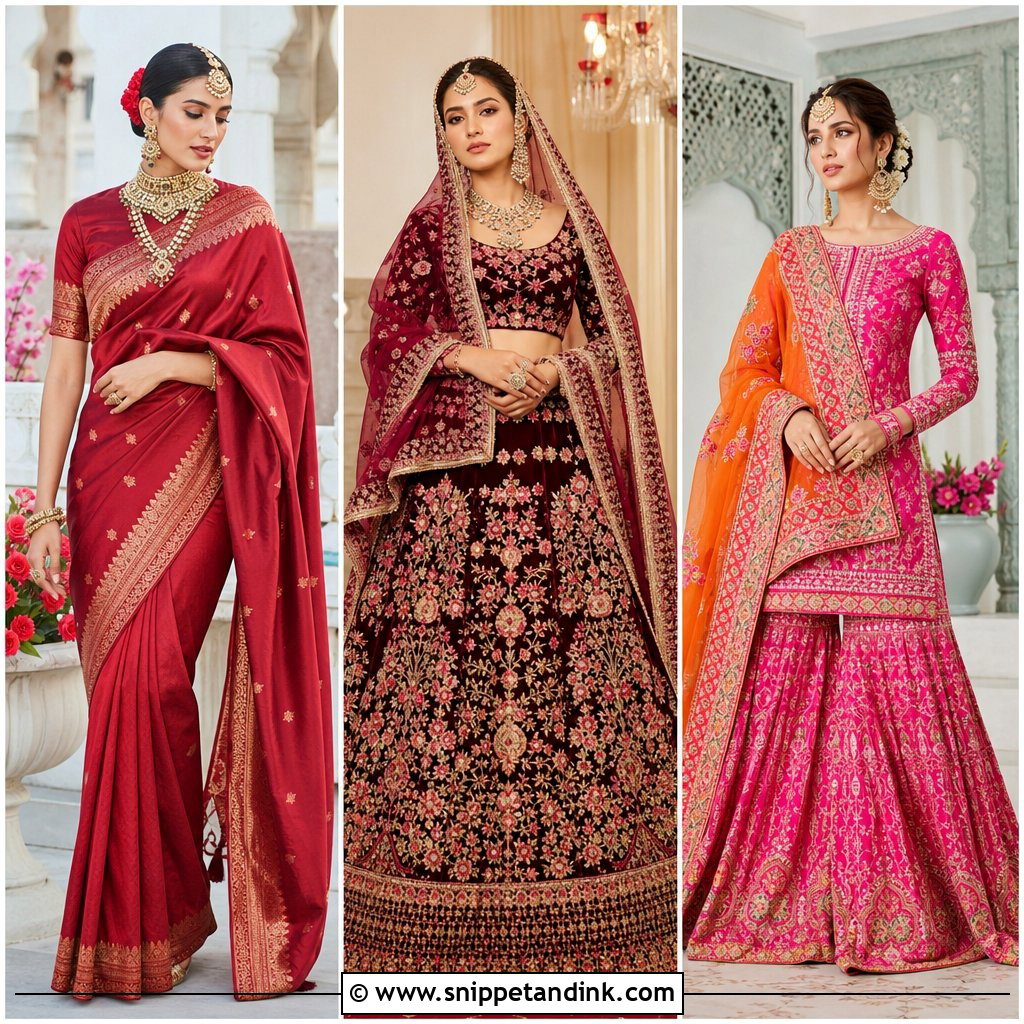
1. Indian Traditional Marriage Red Lehenga Outfit
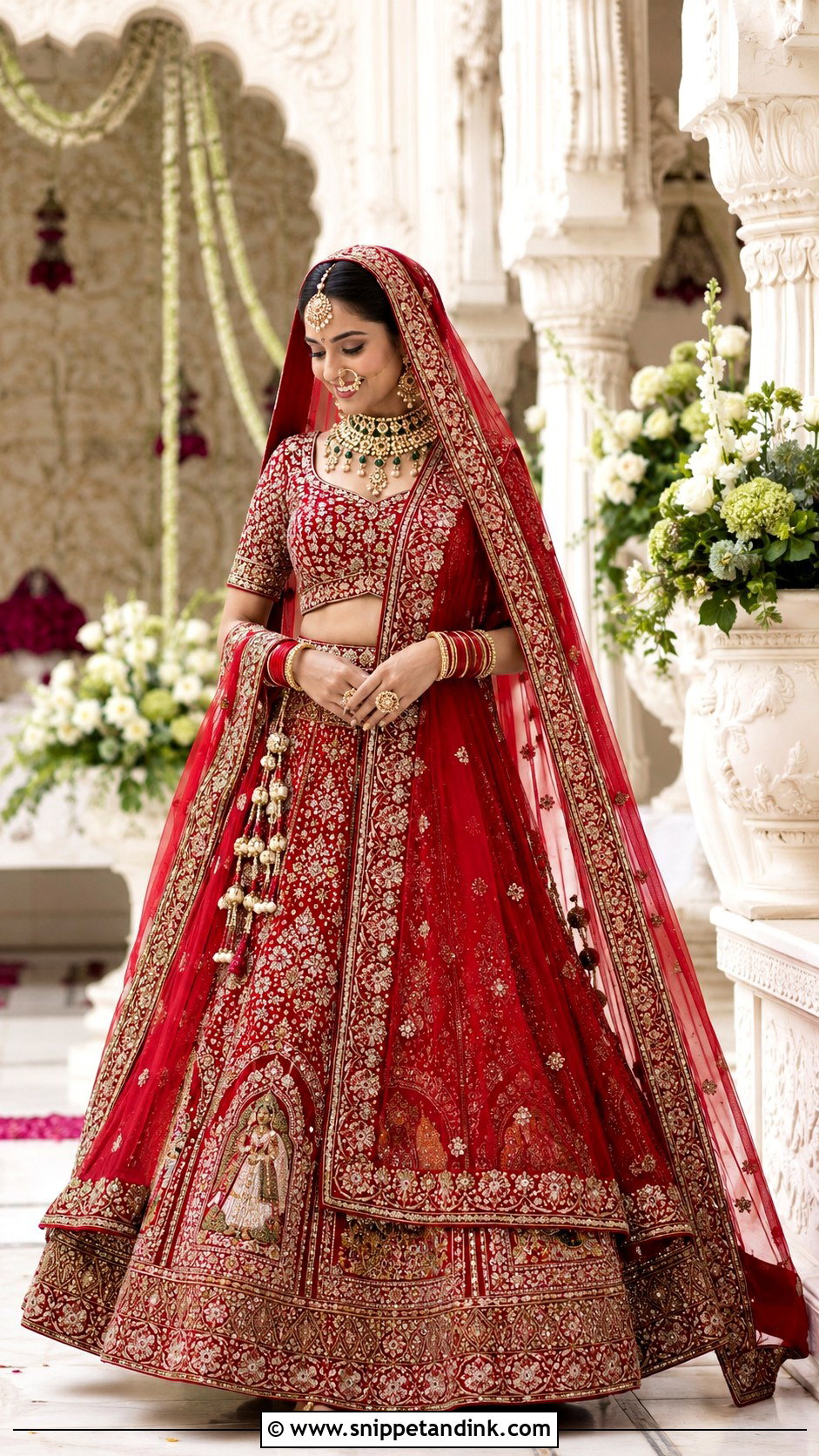
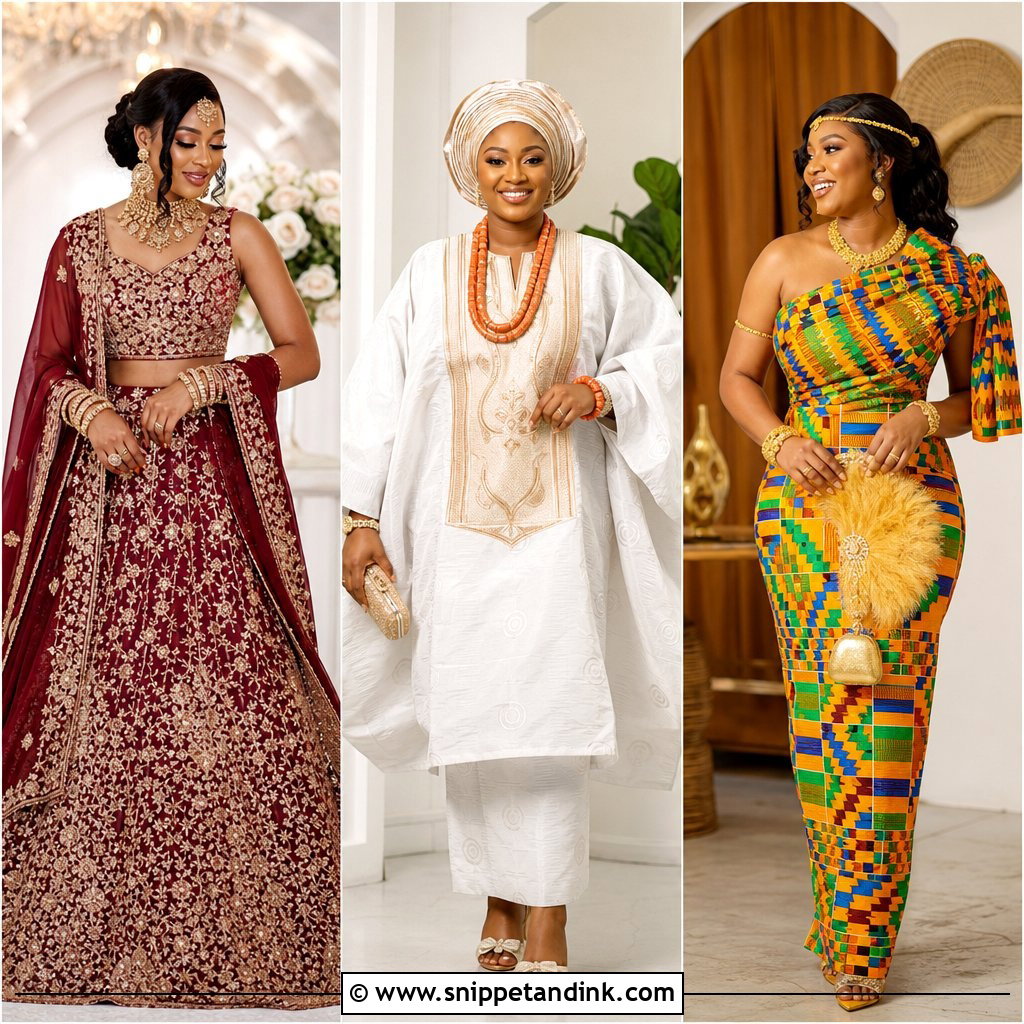
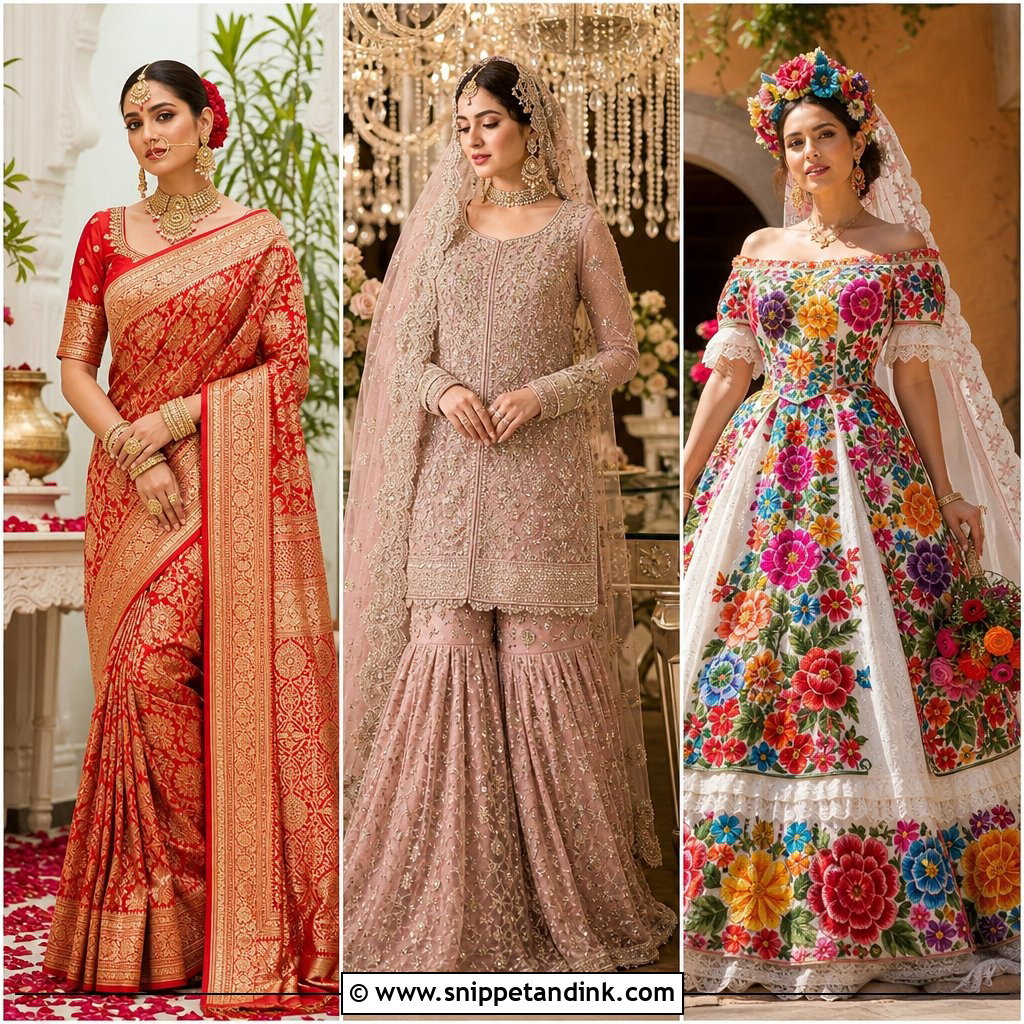
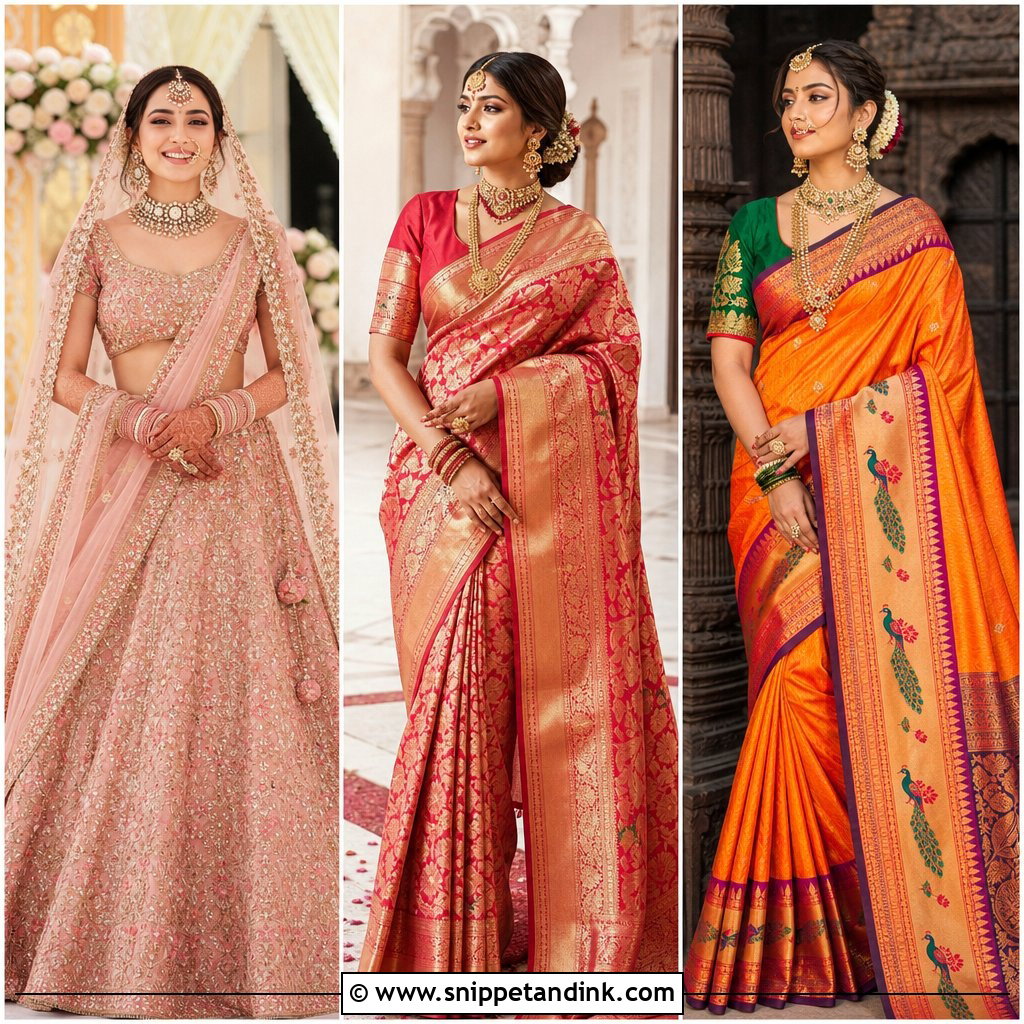
Red lehengas are heavy. A fully worked zari and sequin skirt can weigh several kilos, and most of that load sits on the waistband, so I always ask for a broad, well-padded waist and a can-can layer that’s light rather than stiff. Pair the skirt with a fitted choli and two dupattas: a heavier one pinned over the head and a lighter one falling over one shoulder. Kundan necklace, earrings, bangles, maang tikka and embroidered juttis finish it. A low bun or braid gives the head dupatta something to grip. Crimson, vermilion and maroon all sit well against antique gold, but the exact shade is often a family decision, as is the draping, so settle both before the embroidery is cut.
2. South Indian Traditional Marriage Kanjeevaram Saree Outfit
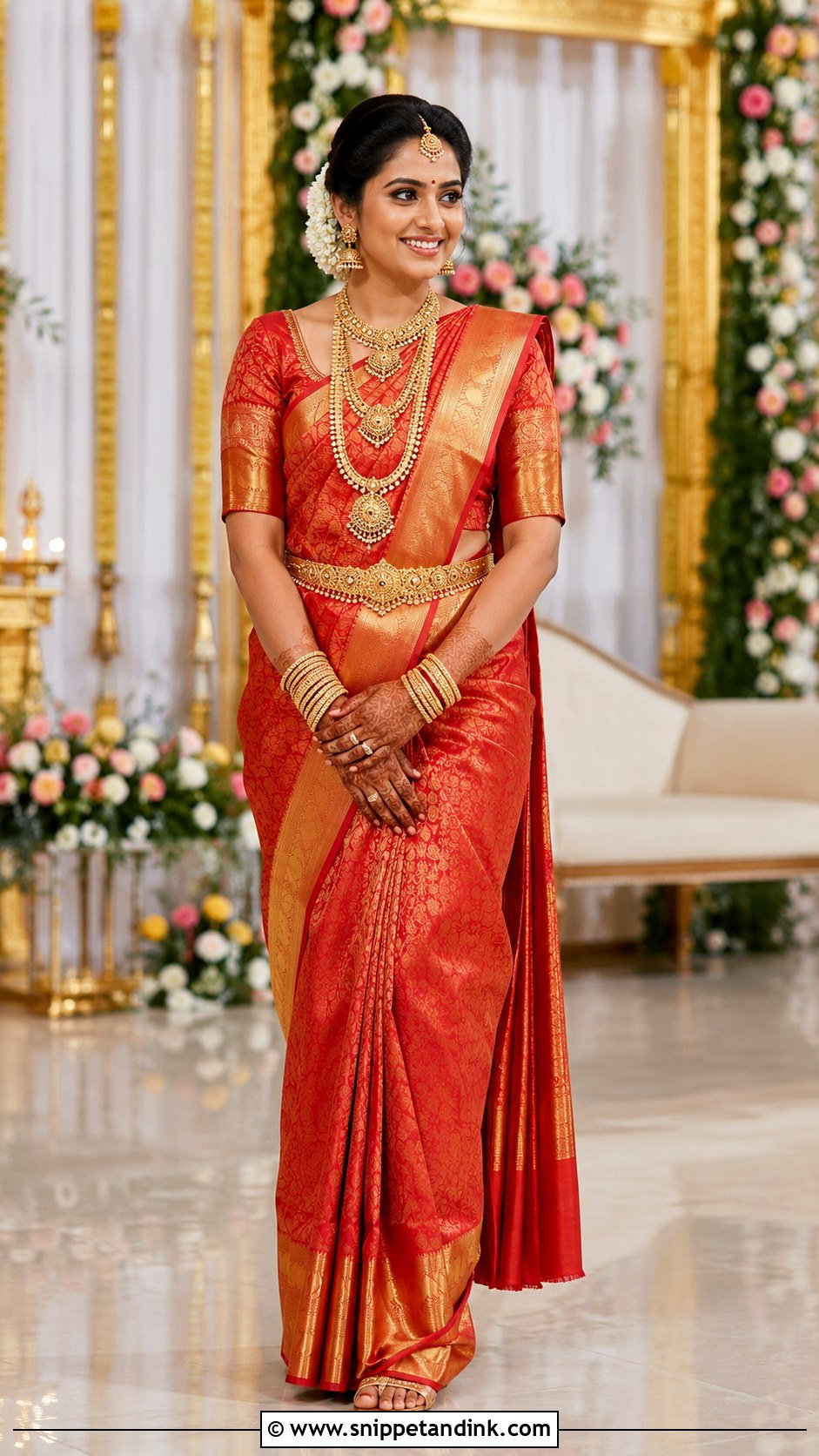
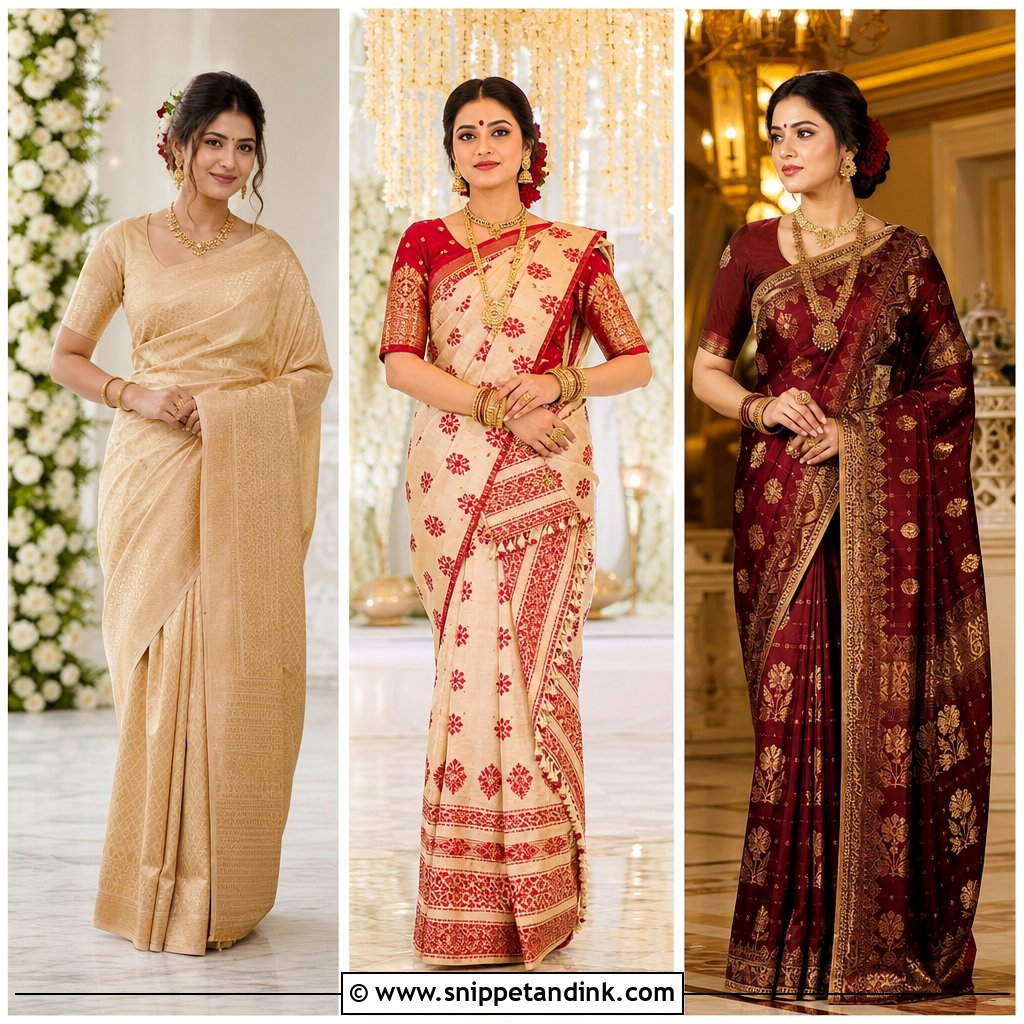
A Kanjeevaram saree has a weight and crispness no machine-woven silk copies, and the contrasting border is the part guests actually see. Red, green and deep jewel tones with a gold border are the classic choices. The blouse needs to be cut close through the shoulders, because a gap there lets the pallu slide every time you raise your arms for a ritual. I layer gold necklaces at different lengths, add jhumkas, bangles and an oddiyanam waist belt, and set a long braid or low bun wrapped in jasmine. Fresh jasmine wilts and browns by the afternoon, so plan a second string for the reception. Hire a draper. Even pleats on stiff silk are hard to achieve on yourself, and the pallu should open flat to show its woven motif.
3. Pakistani Traditional Marriage Gharara Outfit
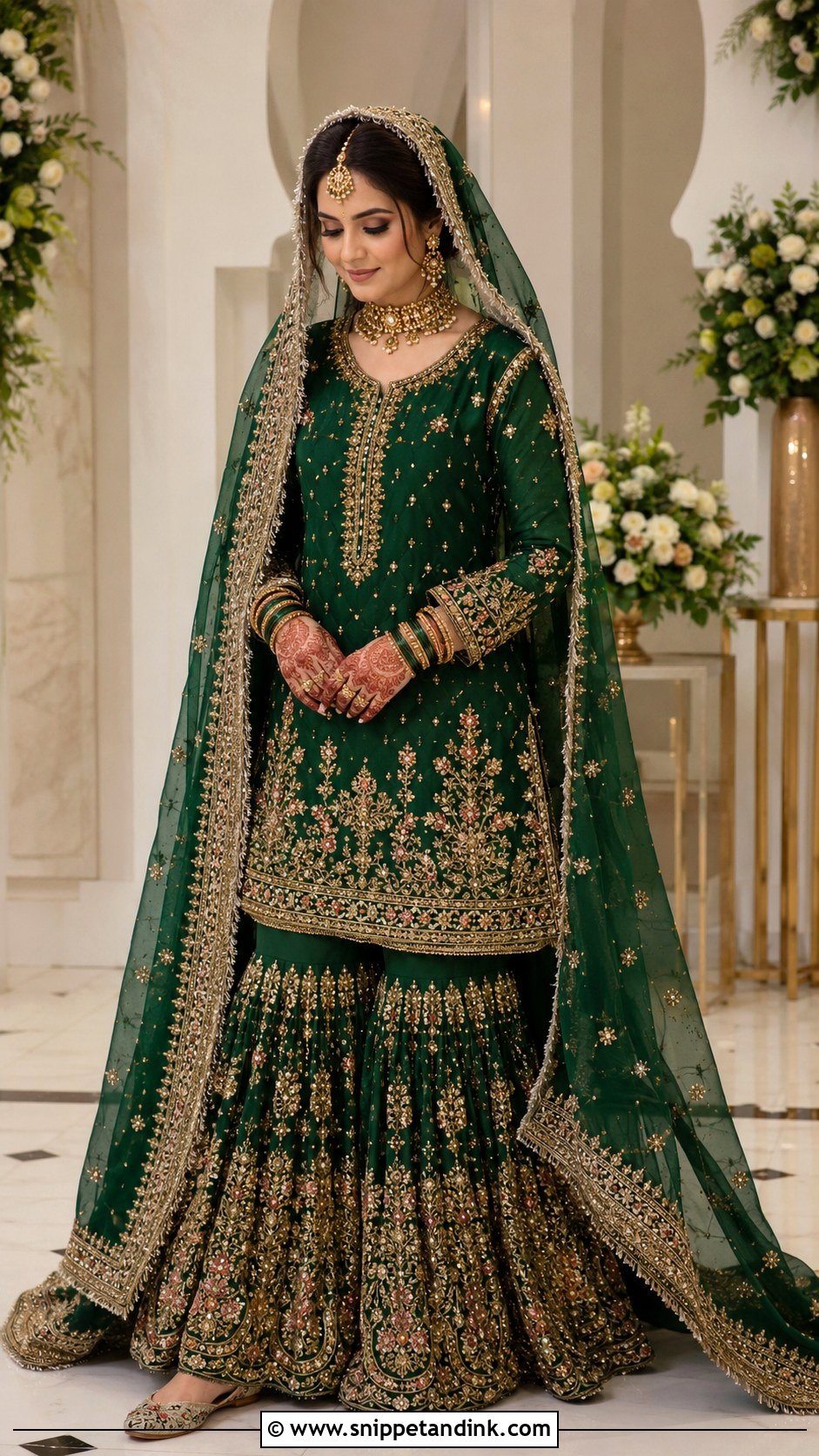
The gharara’s flare starts at the knee, which is what gives it that swinging walk, and it’s also why the knee joint has to be fitted with you standing and sitting. The full look is a kurti, the wide gharara and a heavily worked dupatta, in red, deep pink, emerald, ivory or antique gold. Gota, zardozi and dense thread embroidery are the traditional finishes, and real zardozi adds noticeable weight to the dupatta edge. I keep jewelry to a choker with one longer layer so the neckline isn’t crowded, then earrings, bangles, a tikka and khussas. Pin the dupatta at three points rather than one. A single pin drags the fabric off the head within an hour.
4. Bangladeshi Traditional Marriage Red Saree Outfit
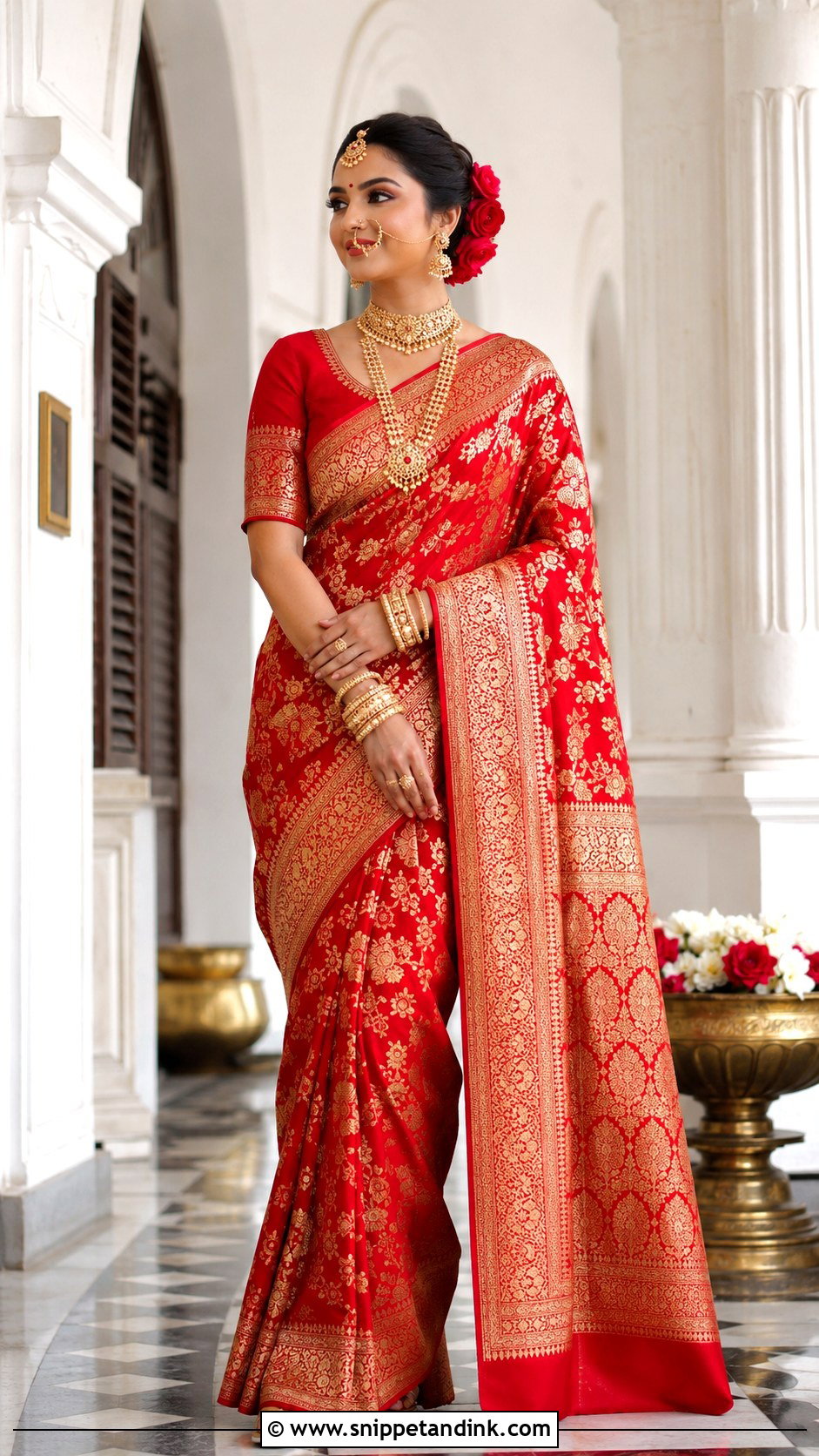
Bangladeshi bridal sarees are often red Banarasi silk, though jamdani gives a lighter, almost translucent finish that suits a hot day far better. The blouse should leave enough neckline for layered gold, and the sleeves need a little ease if you’ll be lifting your arms during the ceremony. Necklace, earrings, bangles, a tikli on the forehead and a fine nath complete it where the family follows that custom. I’d set the pleats with a couple of hidden safety pins and arrange the pallu so the border stays on show. A flower-wrapped bun, low gold sandals and a matching shawl for an air-conditioned hall round it off. Check every symbolic piece with the women in the family; their memory is better than any lookbook.
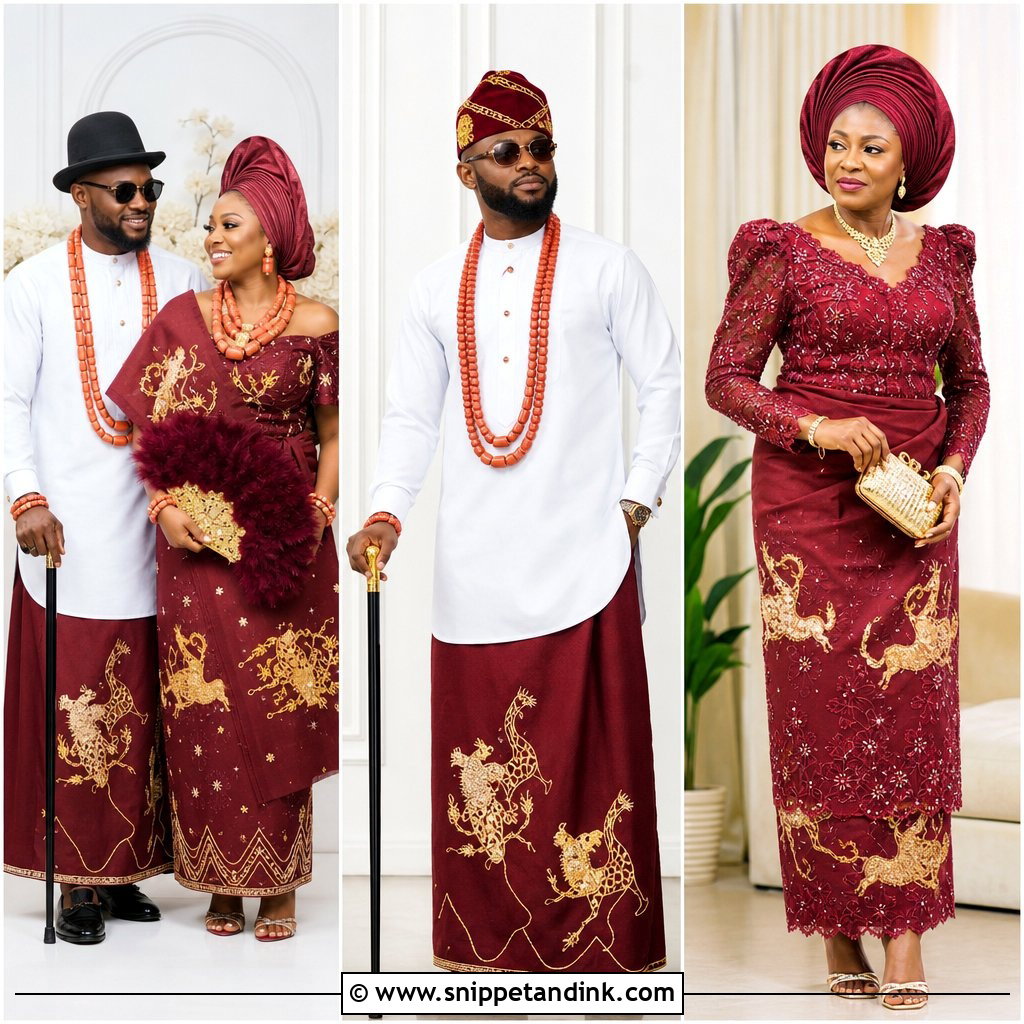
5. Yoruba Traditional Marriage Aso Oke Outfit
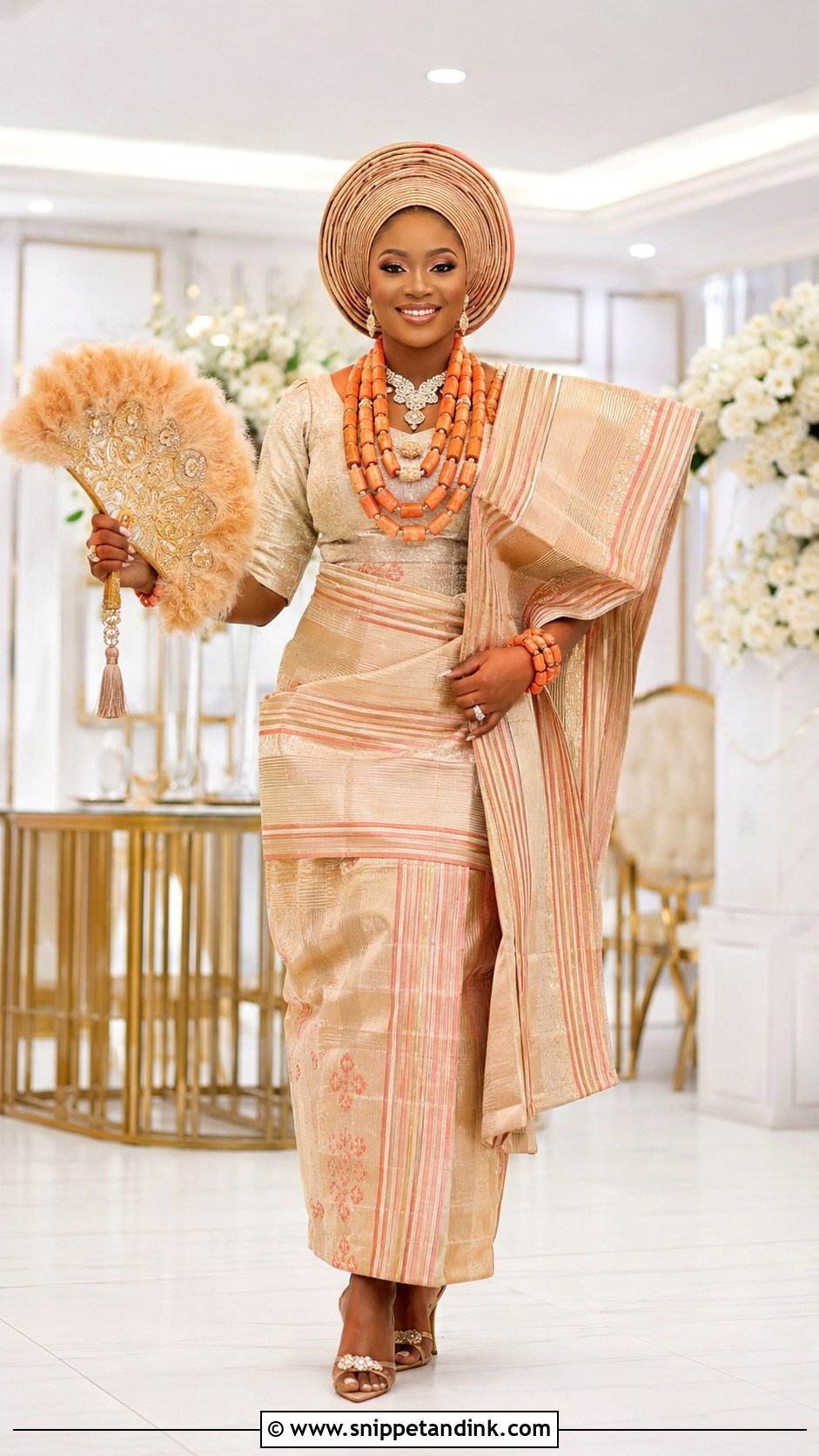
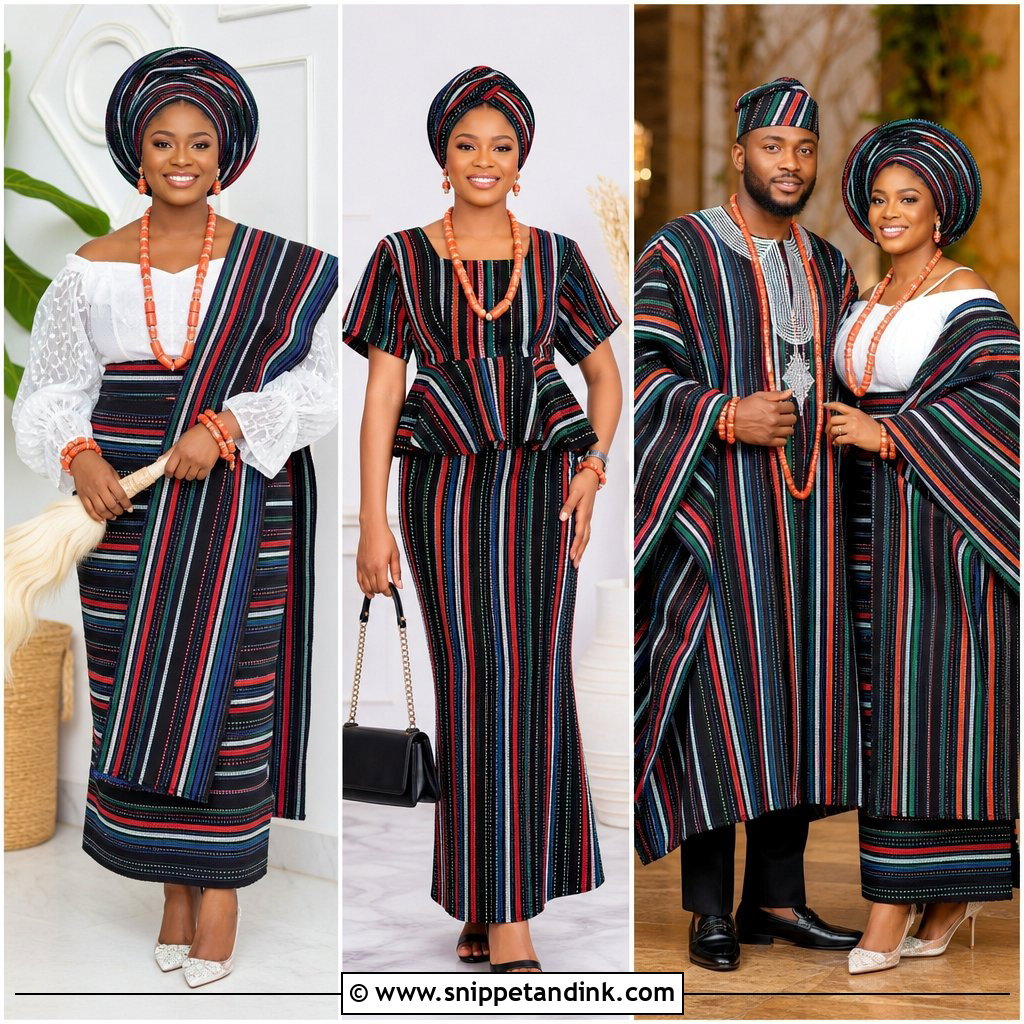
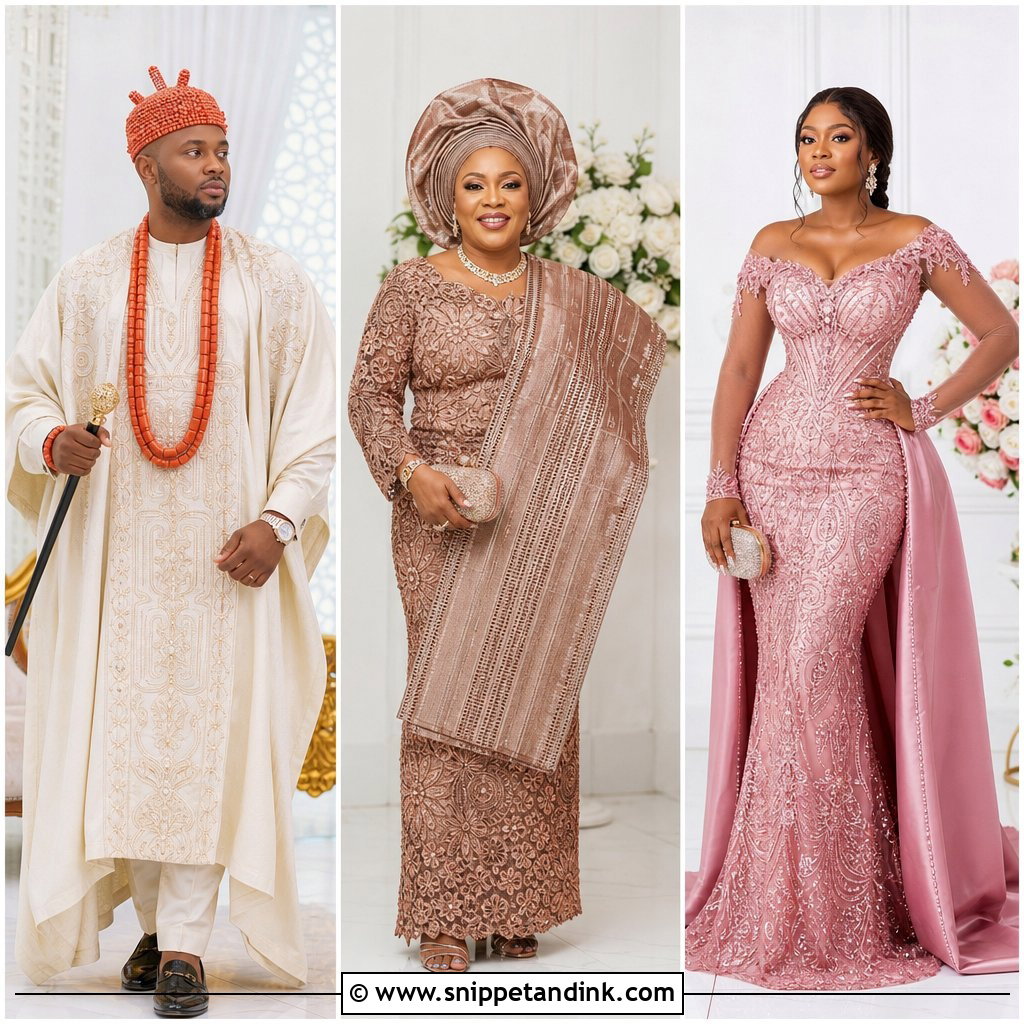
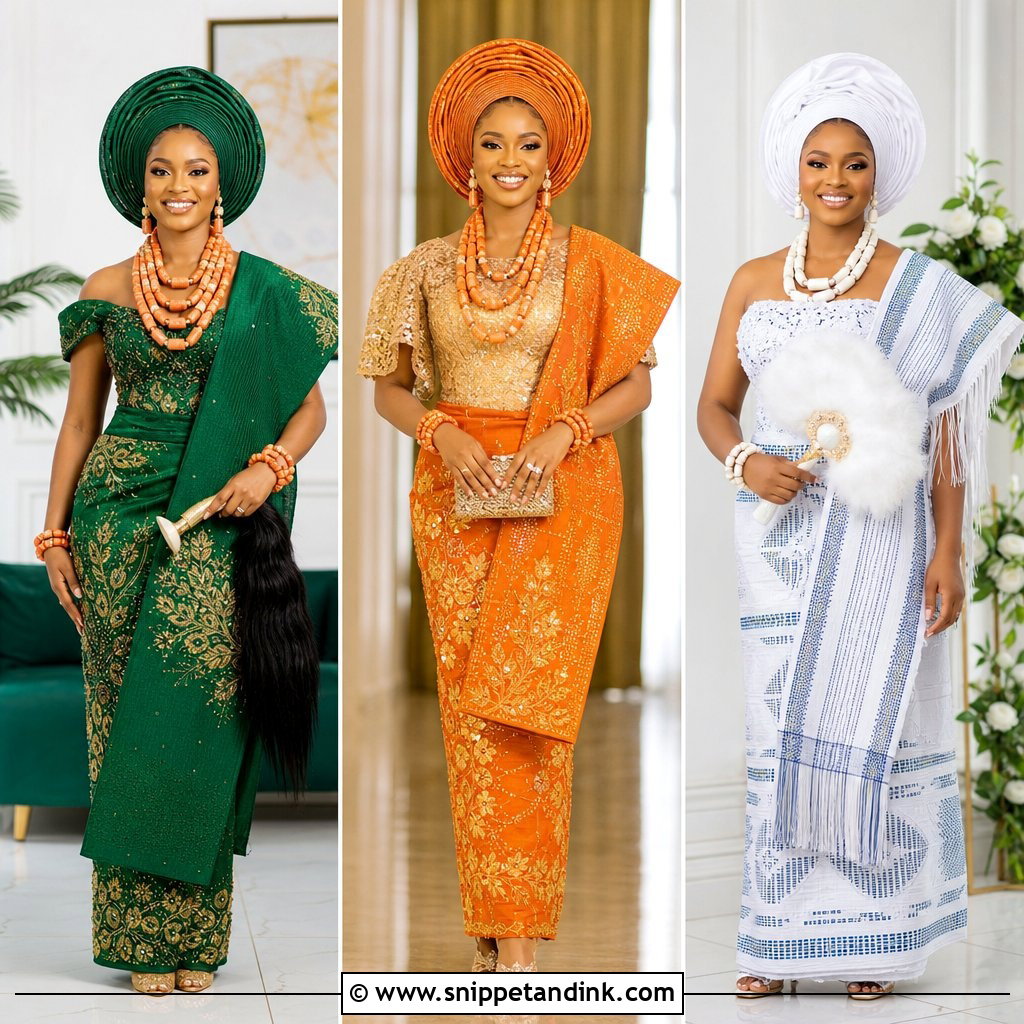
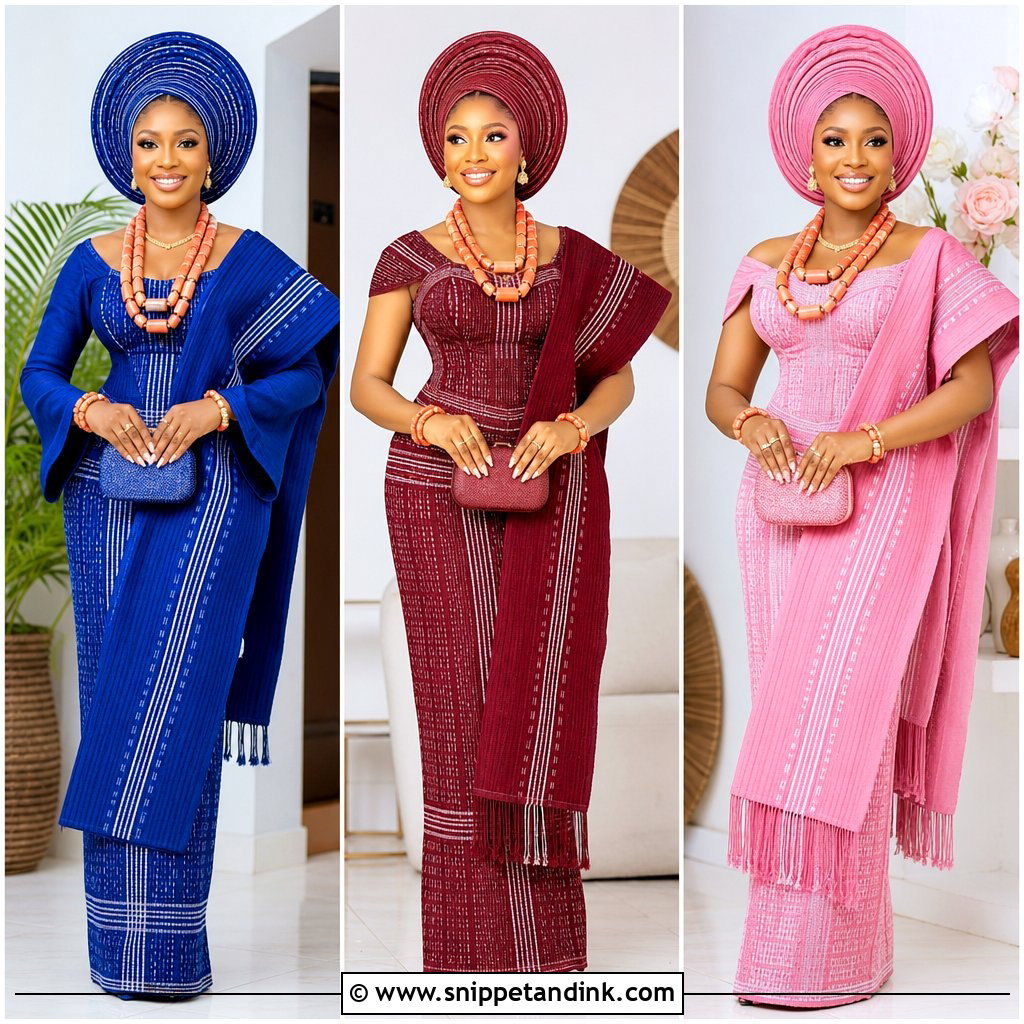
The gele is the piece that decides whether a Yoruba traditional marriage aso oke outfit looks finished. Aso oke is stiff hand-loomed cloth, which is why it holds those sculptural folds, but it also means the tie must be done by someone who ties gele for a living. The rest of the look is the iro wrapper, buba blouse and ipele sash over the shoulder. One color story keeps the strip-woven texture readable: coral, champagne, royal blue, emerald or burgundy. Coral beads, statement earrings and a ceremonial fan carry the accessories. I always ask brides to sit for twenty minutes in the tied gele at the fitting, because a headache from a tight tie by midday is a common complaint. Families often choose the cloth, so order nothing until they’ve agreed.
6. Igbo Traditional Marriage Wrapper And Blouse Outfit
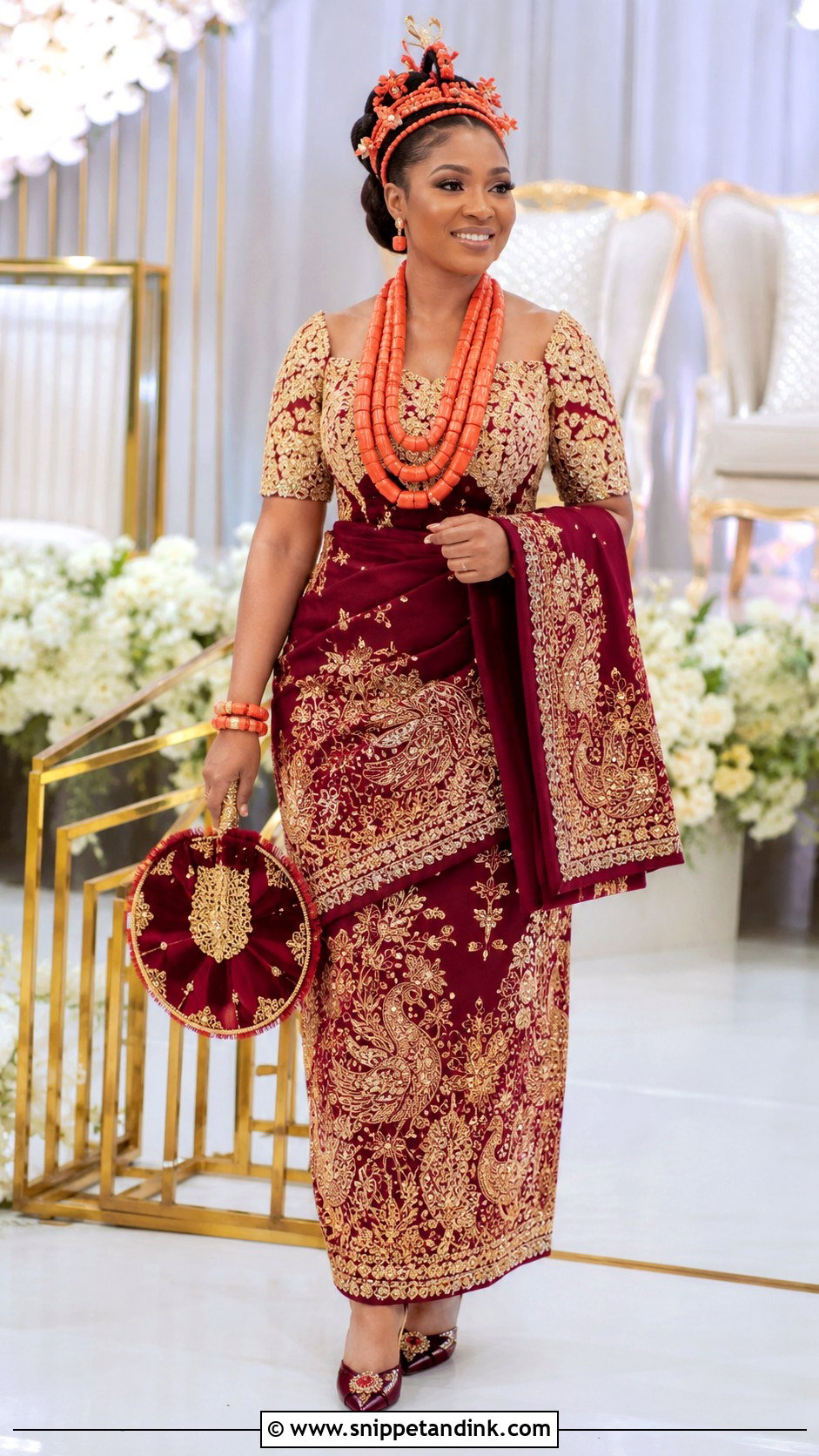
George fabric is heavy, embroidered and quite stiff, which helps an Igbo traditional marriage wrapper and blouse hold its shape. Lace gives a softer drape. Over the wrapper goes a fitted blouse with a structured sleeve; some brides tie one wrapper, others layer two for more volume and ceremony. Coral bead necklaces, bracelets and a beaded or coral headpiece complete it, with a hand fan and low embellished heels for the dancing and greeting that fill the day. I’d test how the wrapper is secured, because a double wrapper loosens as you dance. Family colors come first. Do a complete fitting with every accessory on at once, since coral layers change how the blouse neckline sits.
7. Ghanaian Traditional Marriage Kente Outfit
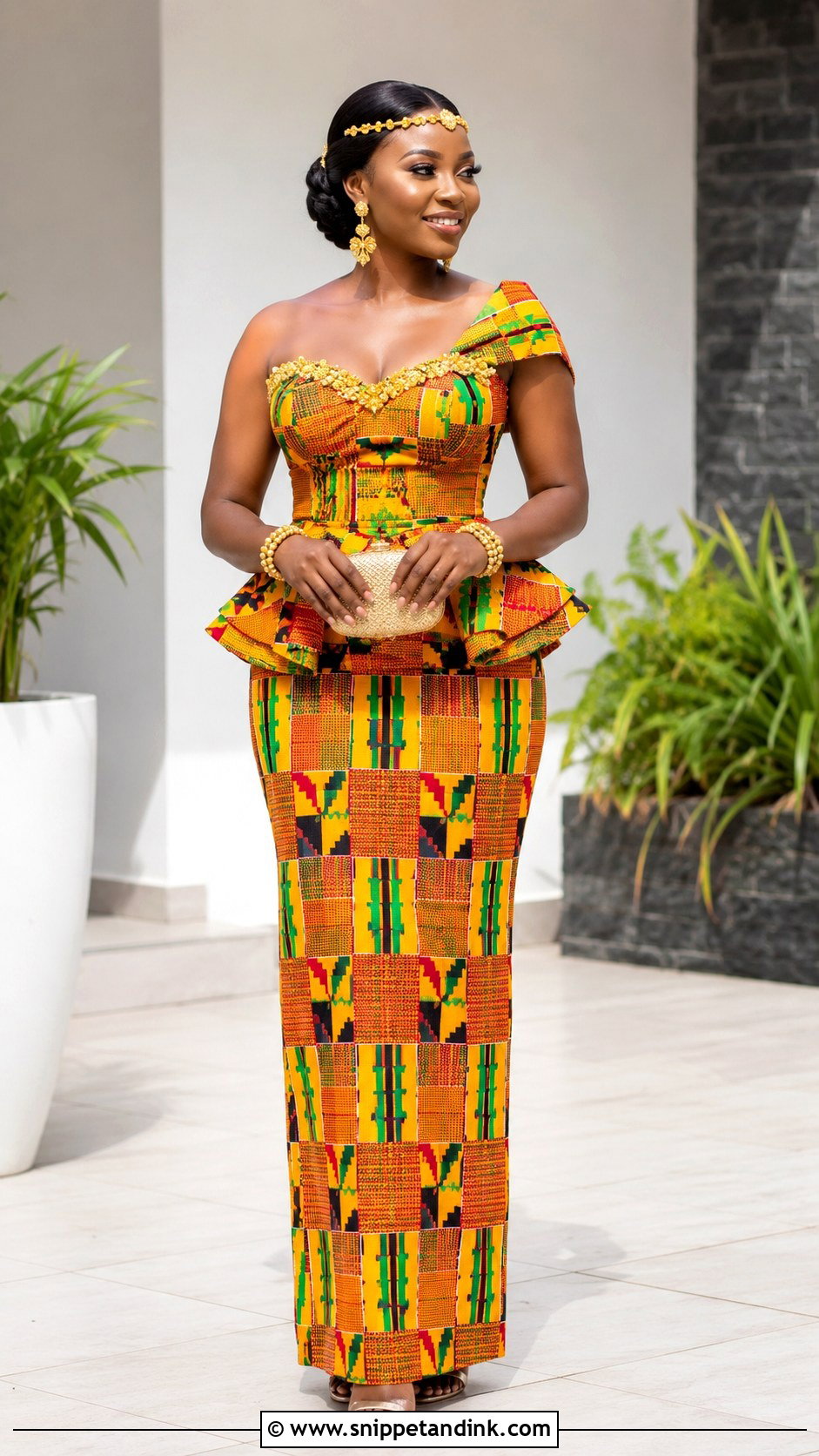
Kente is woven in narrow strips that are stitched together, so the pattern runs in bands, and a good tailor will line those bands up across seams. That makes a Ghanaian traditional marriage kente outfit slower to cut than you’d expect. The cloth can become a fitted gown, a peplum top over a long skirt or a wrapped ensemble. Keep the construction plain; the weave already supplies all the color and movement. Gold jewelry, a simple headpiece, a structured clutch and metallic heels are enough, with a sleek bun or braided updo. Patterns can carry names and meanings tied to families or occasions, so ask a Ghanaian designer and your relatives which cloth is right before you buy.
8. Ethiopian Traditional Marriage Habesha Kemis Outfit
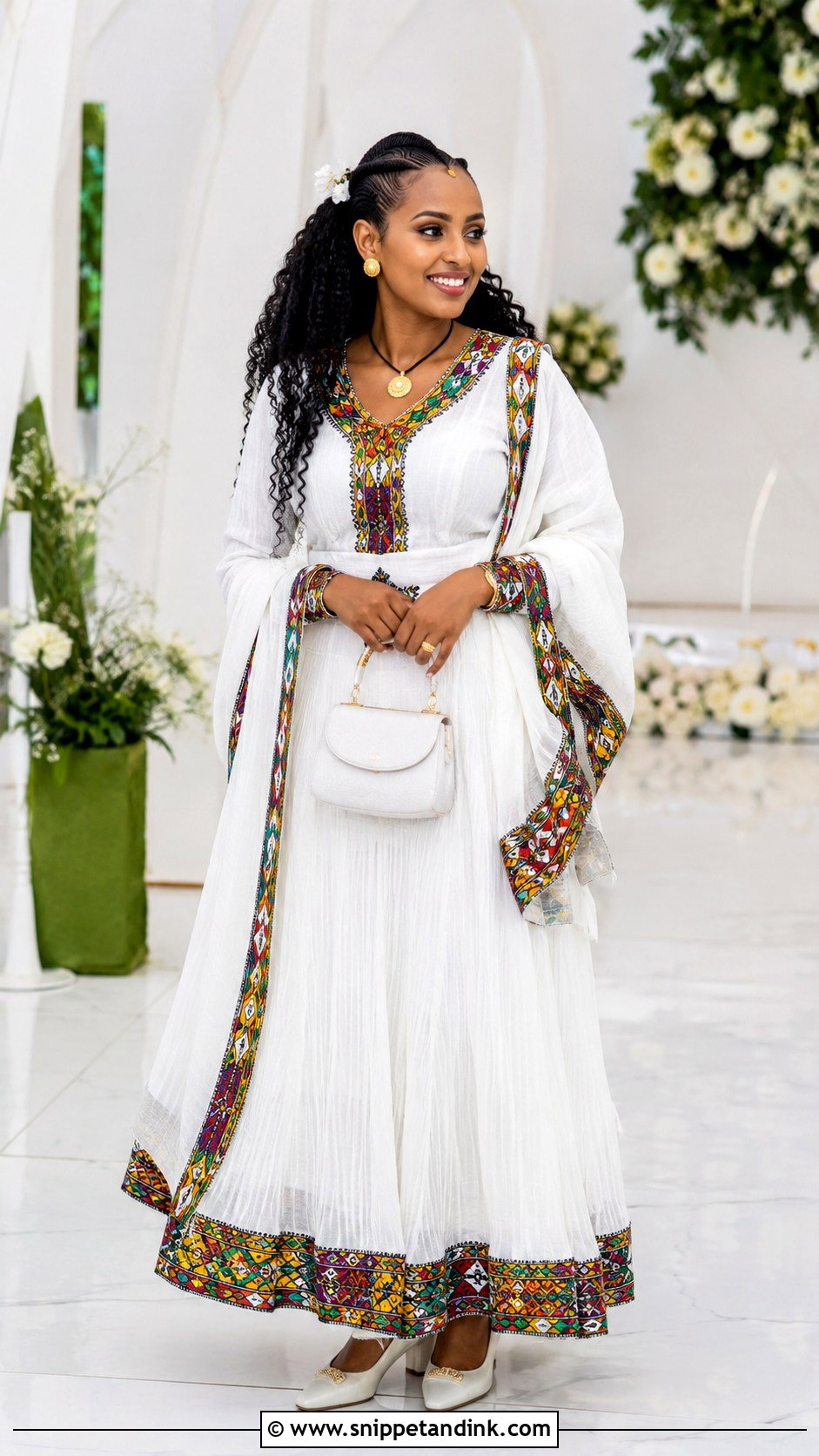
The Habesha kemis is made from handwoven cotton, often shemma, with tibeb borders at the neckline, cuffs, hem and sometimes down the front. It’s light and breathable, which matters for a long ceremony, but the white shows every mark, so I keep a stain pen and a dresser close. The netela shawl drapes over the shoulders or head depending on the moment in the ceremony. Gold jewelry, a small bag and white or gold shoes are all it needs, with braids or a neat updo that leave the embroidered neckline clear. The dress should skim, not cling. Commission it from an Ethiopian weaver who knows the bride’s regional patterns, because tibeb motifs vary by area.
9. Moroccan Traditional Marriage Caftan Outfit
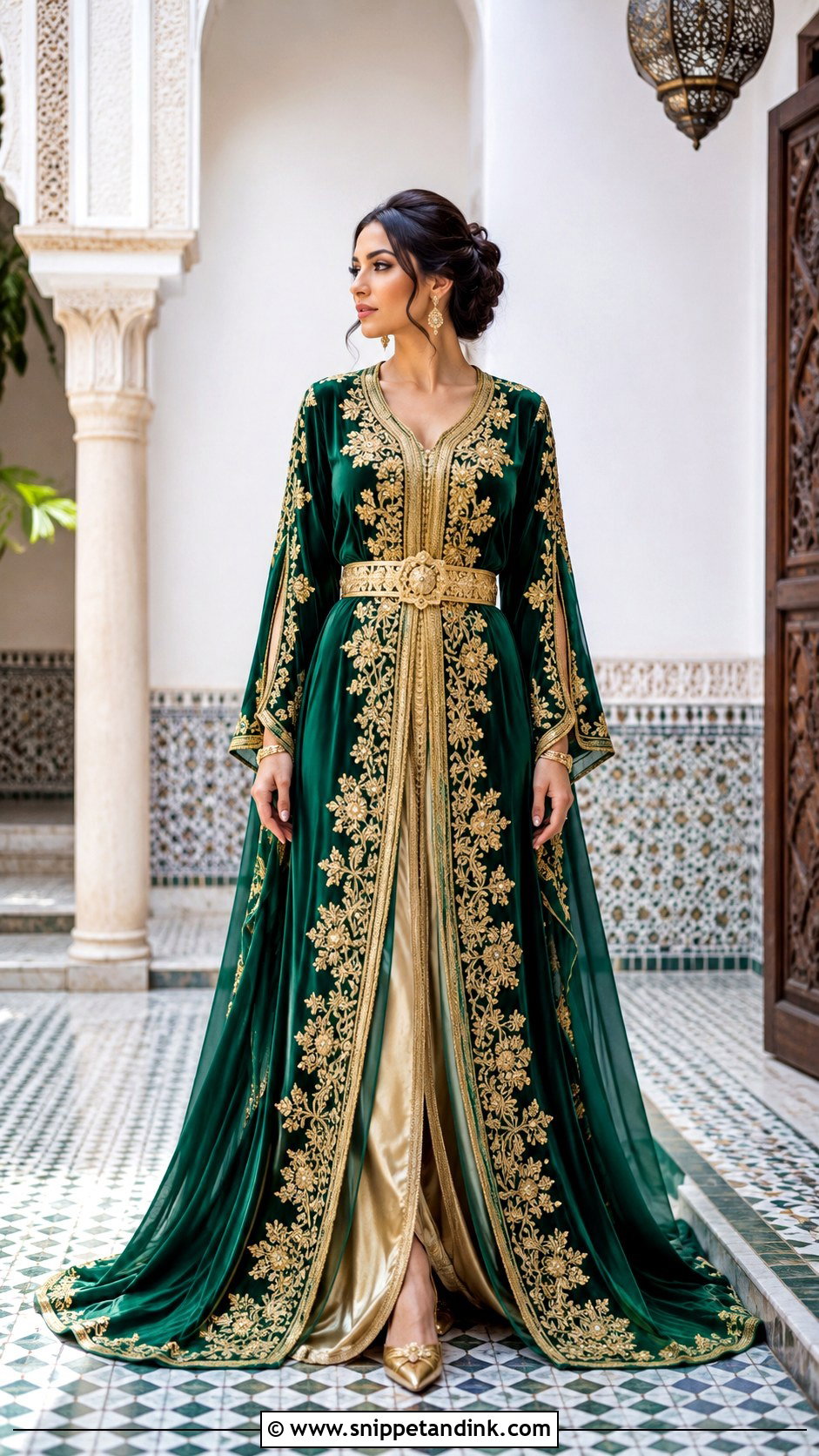
A Moroccan bridal takchita is two layers: a plain underdress, the tahtiya, beneath a more decorated outer dress, cinched with a mdamma belt. The belt is the anchor of the whole outfit and it should echo the embroidery rather than compete with it. Emerald, ruby, ivory, royal blue and soft gold carry metallic threadwork well. Drop earrings, a bracelet, an optional headpiece and pointed embroidered slippers finish it, with sleek hair so the neckline and belt stay visible. Many Moroccan weddings include several outfit changes, so the dresser’s speed matters as much as the fit. Choose a dressmaker who builds takchitas regularly; button placement and sfifa trim are where inexperience shows.
10. Chinese Traditional Marriage Qun Kwa Outfit
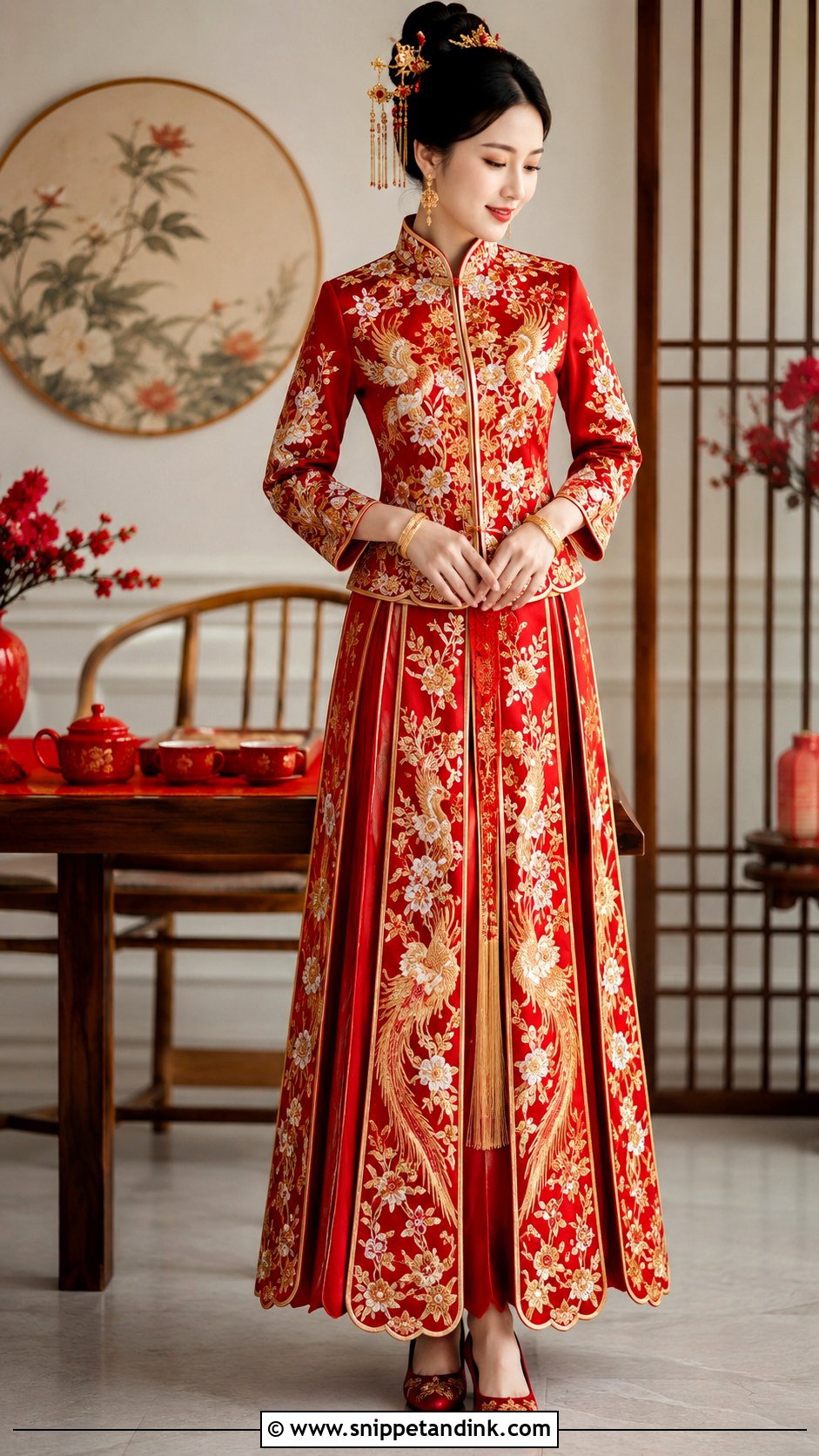
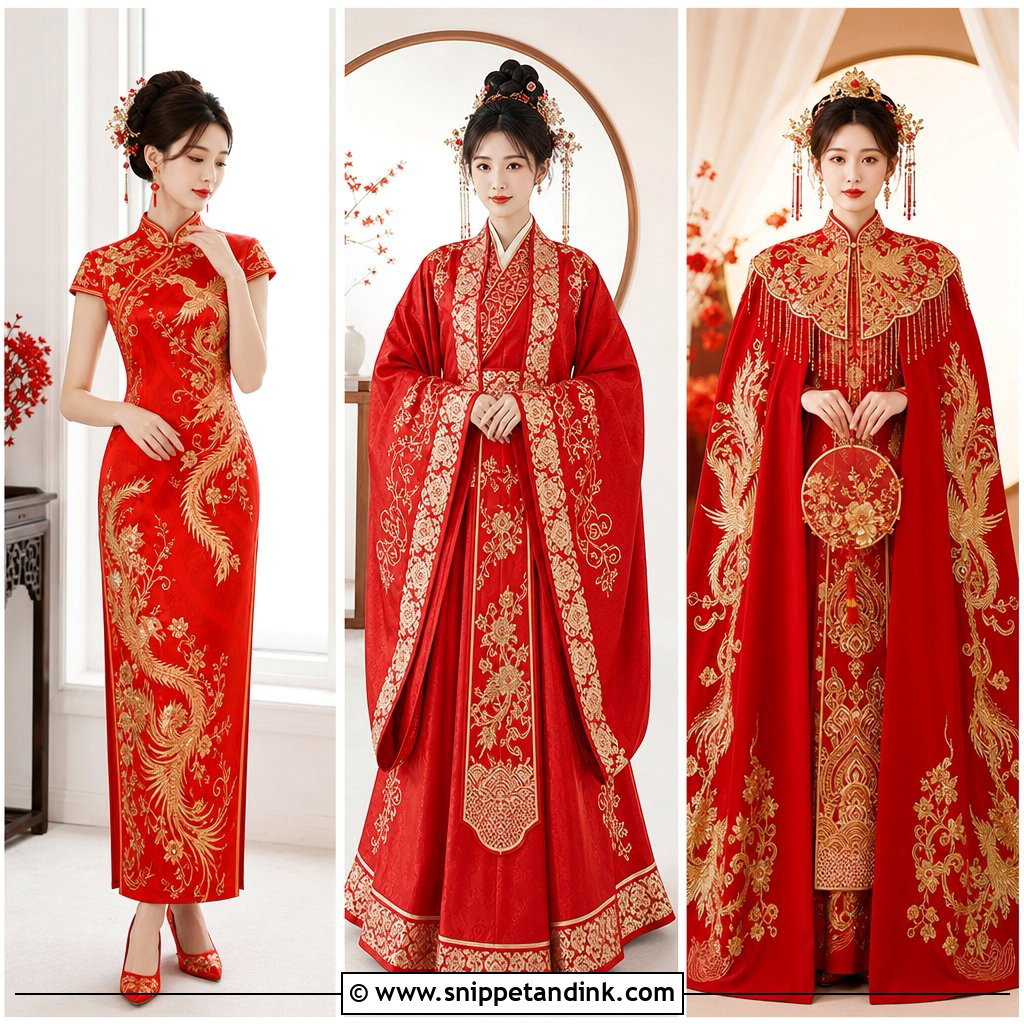
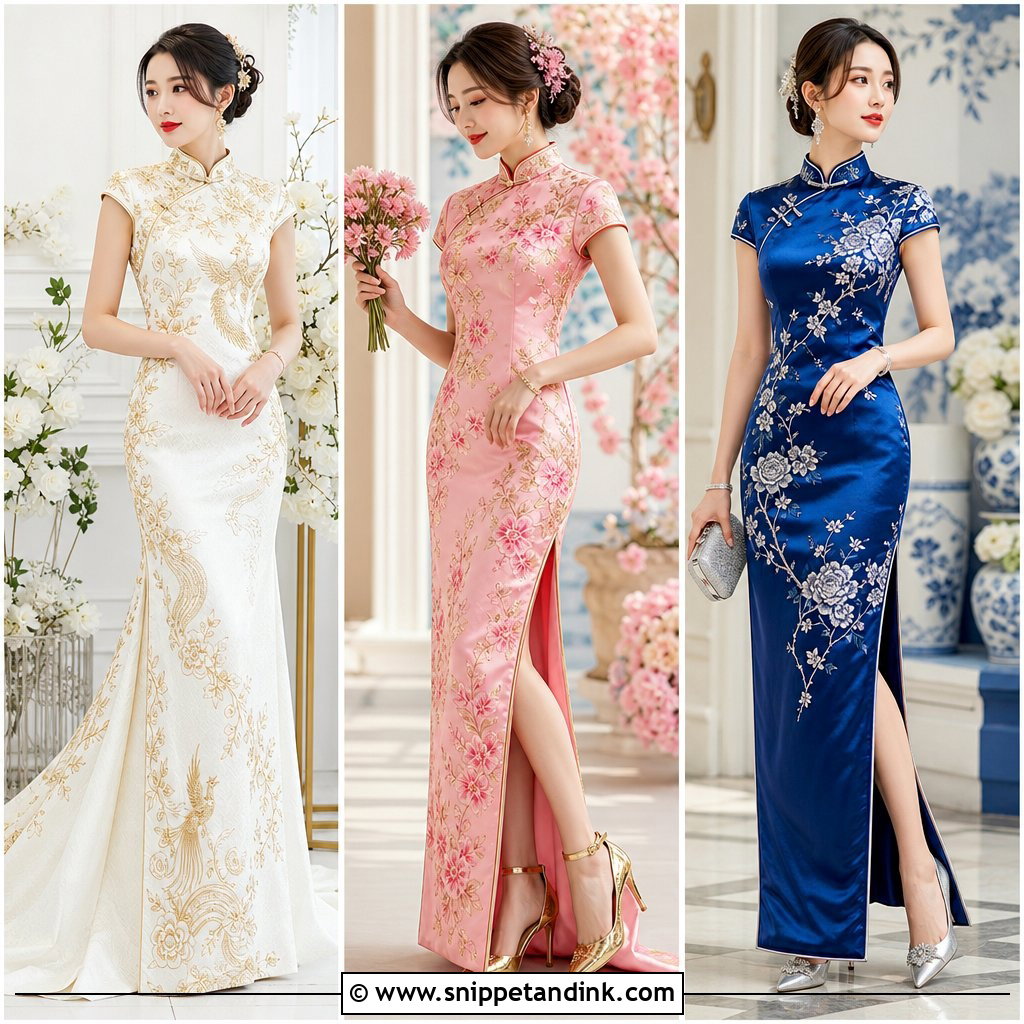
The qun kwa’s embroidery, often dragons and phoenixes, is so dense that the jacket stands almost rigid. For a tea ceremony you’ll be kneeling, bowing and handing cups, so I check sleeve length with the arms extended and skirt length while kneeling, not just standing. Let the embroidery lead. Gold earrings, bracelets (the dragon and phoenix bangles are often a family gift) and red or gold shoes are plenty. A polished bun holds decorative hairpins or a headpiece chosen with family guidance. Chinese communities keep distinct clothing traditions, and a Cantonese qun kwa differs from other regional bridal dress, so ask relatives what is expected.
11. Korean Traditional Marriage Hanbok Outfit
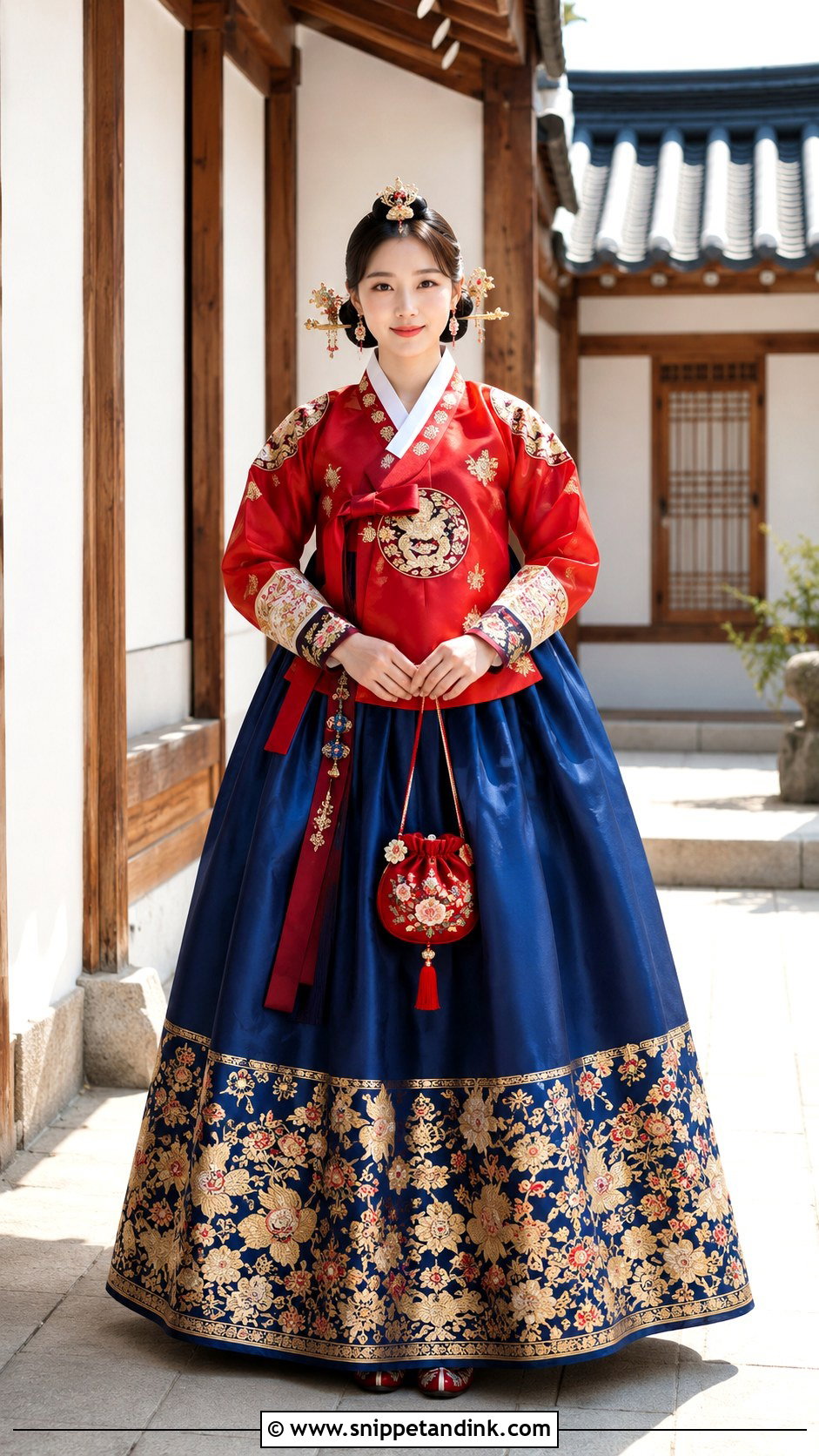
Hanbok’s beauty is in the line from the short jeogori to the wide chima, and it’s a garment that should be worn rather than styled. Bridal hanbok can involve extra ceremonial layers, such as a wonsam robe for a traditional pyebaek, and which ones apply depends on the ceremony, so book a hanbok specialist instead of assembling pieces by eye. The goreum ties on the jacket should sit flat and even; a crooked bow is the first thing I notice in photos. Traditional shoes, a small embroidered pouch and hair ornaments complete it. Check the chima length on the stairs you’ll actually use. Colors and accessories often carry meaning, so family guidance matters here more than taste.
12. Japanese Traditional Marriage Shiromuku Outfit
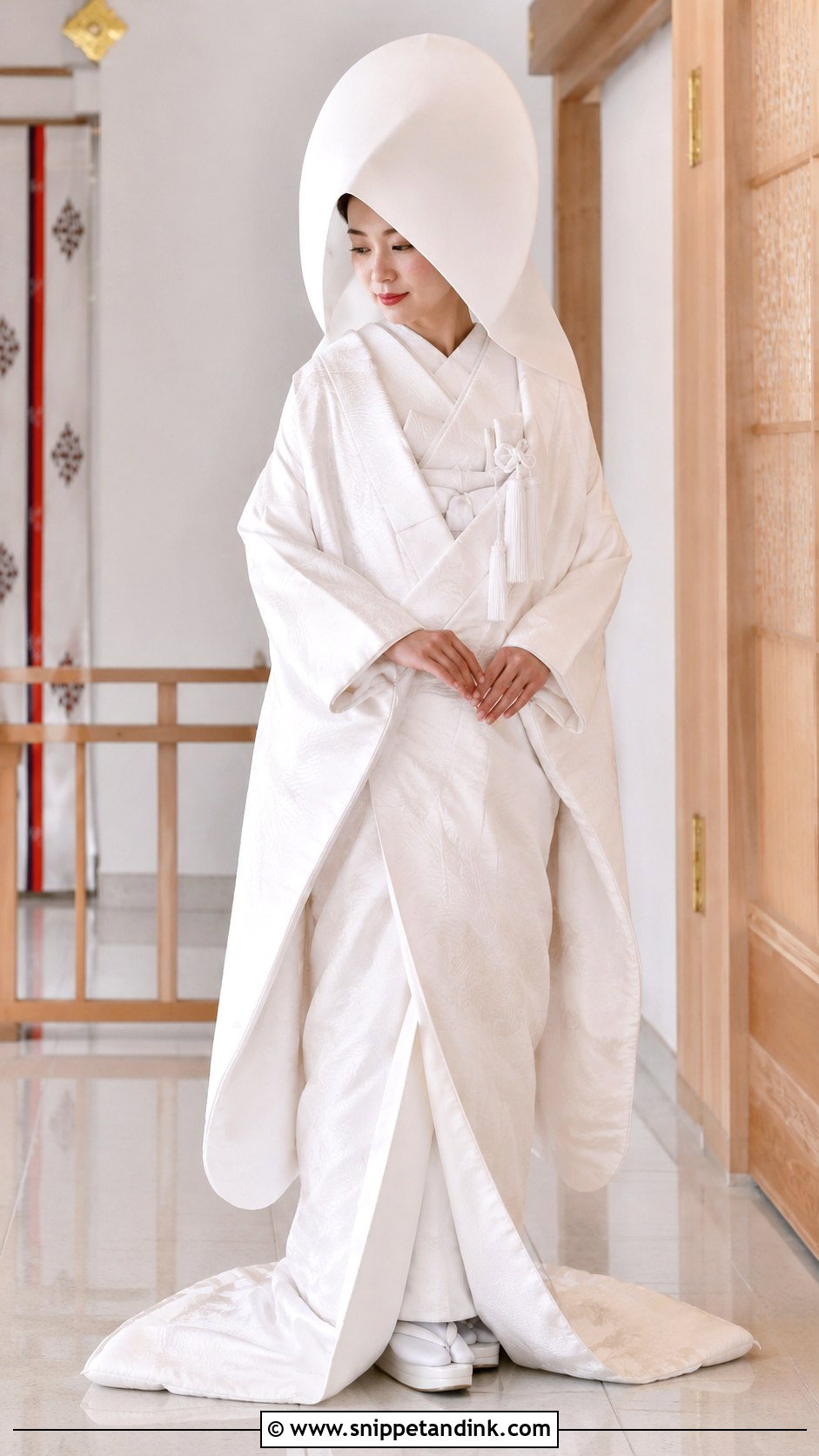
Shiromuku is entirely white, and the pattern only appears when light rakes across the woven or embroidered surface. That’s why it looks flat in harsh midday sun and lovely in softer light. The layers are heavy and must be dressed by a trained kitsuke specialist; I wouldn’t attempt it without one. Pair it with white tabi, formal zori and either a wataboshi hood or a tsunokakushi over the hair, depending on the ceremony. Allow at least an hour or two for dressing, and practice walking, because the long hem and the weight change your stride. Makeup should be balanced against bright white fabric. Ceremonies differ, so take advice on which garments and headwear suit yours.
13. Vietnamese Traditional Marriage Red Ao Dai Outfit
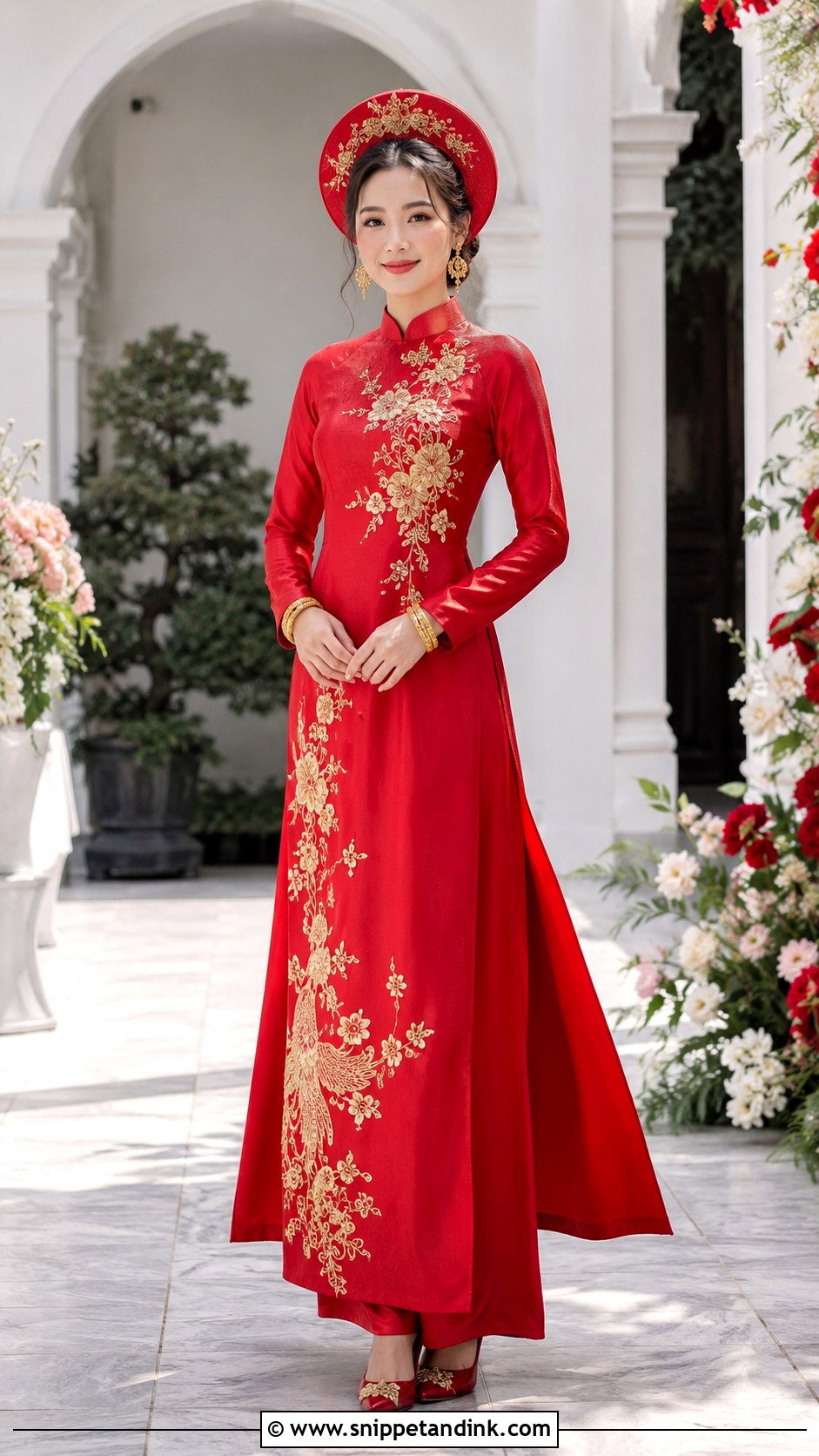
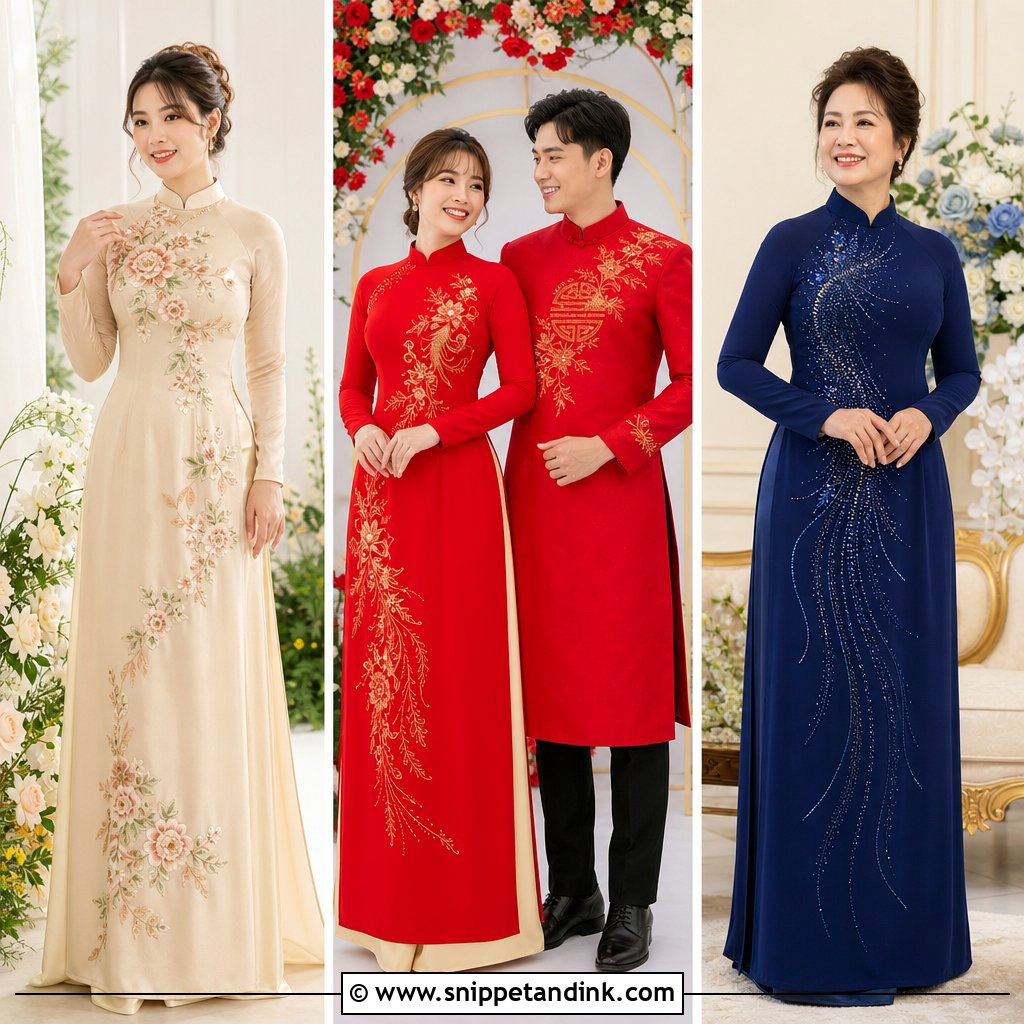
Red and gold dominate the bridal ao dai, and a Vietnamese traditional marriage ao dai outfit lives or dies on fit. The tunic is cut close through the bust and waist, with side slits above the hip, and if those slits sit even a little too high or low the panels flap rather than fall. I’d choose silk or brocade with gold embroidery or woven motifs, and add a matching khăn đóng headpiece where the family wants a ceremonial finish. Gold earrings and bracelets, plus heels hidden under the trousers, complete it. Have the hem measured in the shoes you’ll wear. Some brides prefer white or pastel now; check colors, motifs and headwear with family or an ao dai maker.
14. Filipino Traditional Marriage Terno Outfit
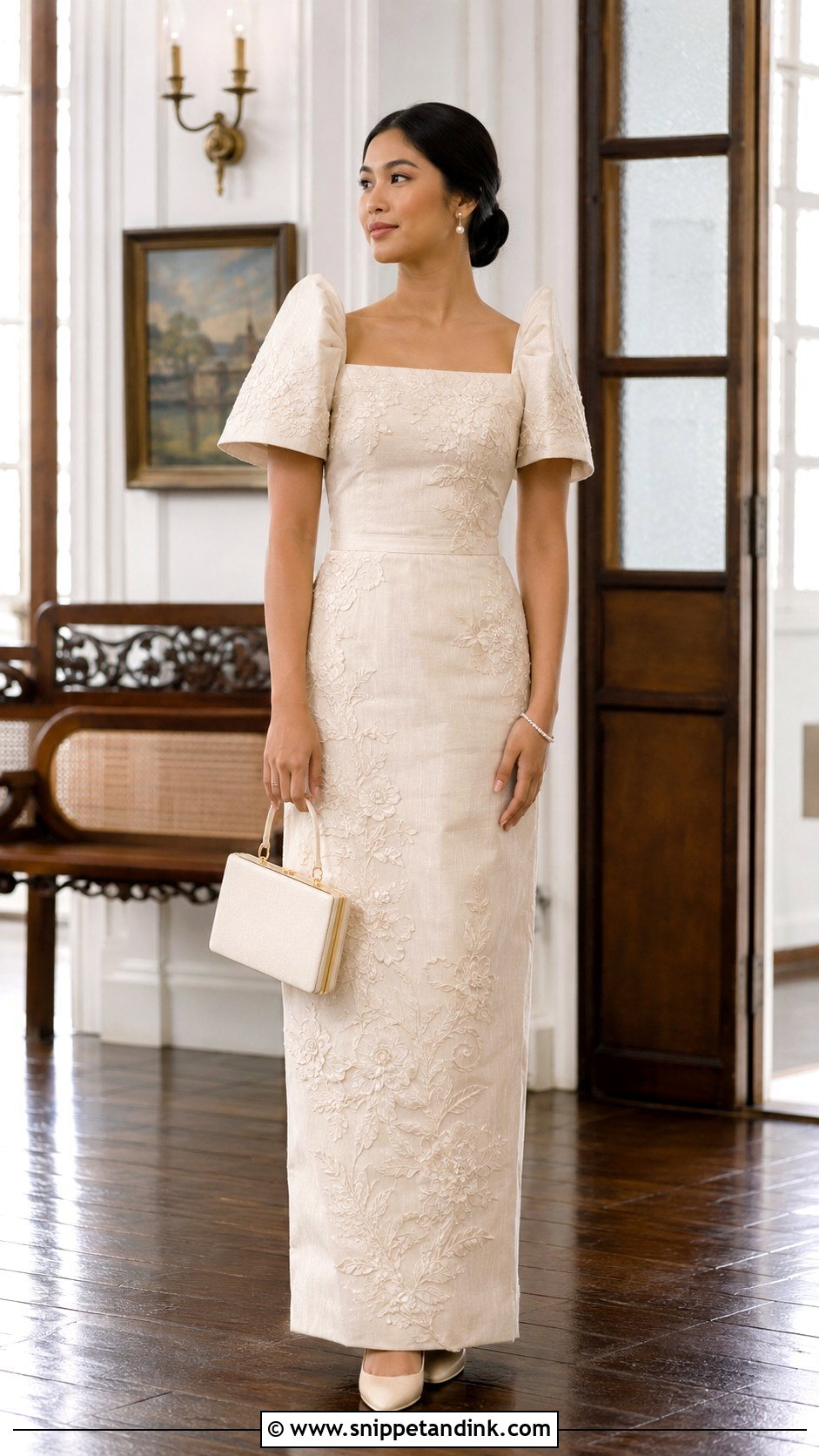
Terno sleeves are stiffened so they stand up like wings, and they need structure built into the shoulder, not just starch. That’s the detail I’d quiz a dressmaker on first. A full-length gown with a fitted bodice and walkable skirt is the base. Piña or piña-blend fabric, hand embroidery and fine beadwork add texture without weight. Pearl earrings, a simple bracelet, a small structured bag and neutral shoes are enough, and a smooth bun keeps the sleeves from fighting with the hair. Ivory is classic; champagne and blush suit warmer skin tones. Ask a Filipino designer to incorporate family textiles if you have them, since piña is fragile and needs careful handling.
15. Indonesian Traditional Marriage Kebaya Outfit
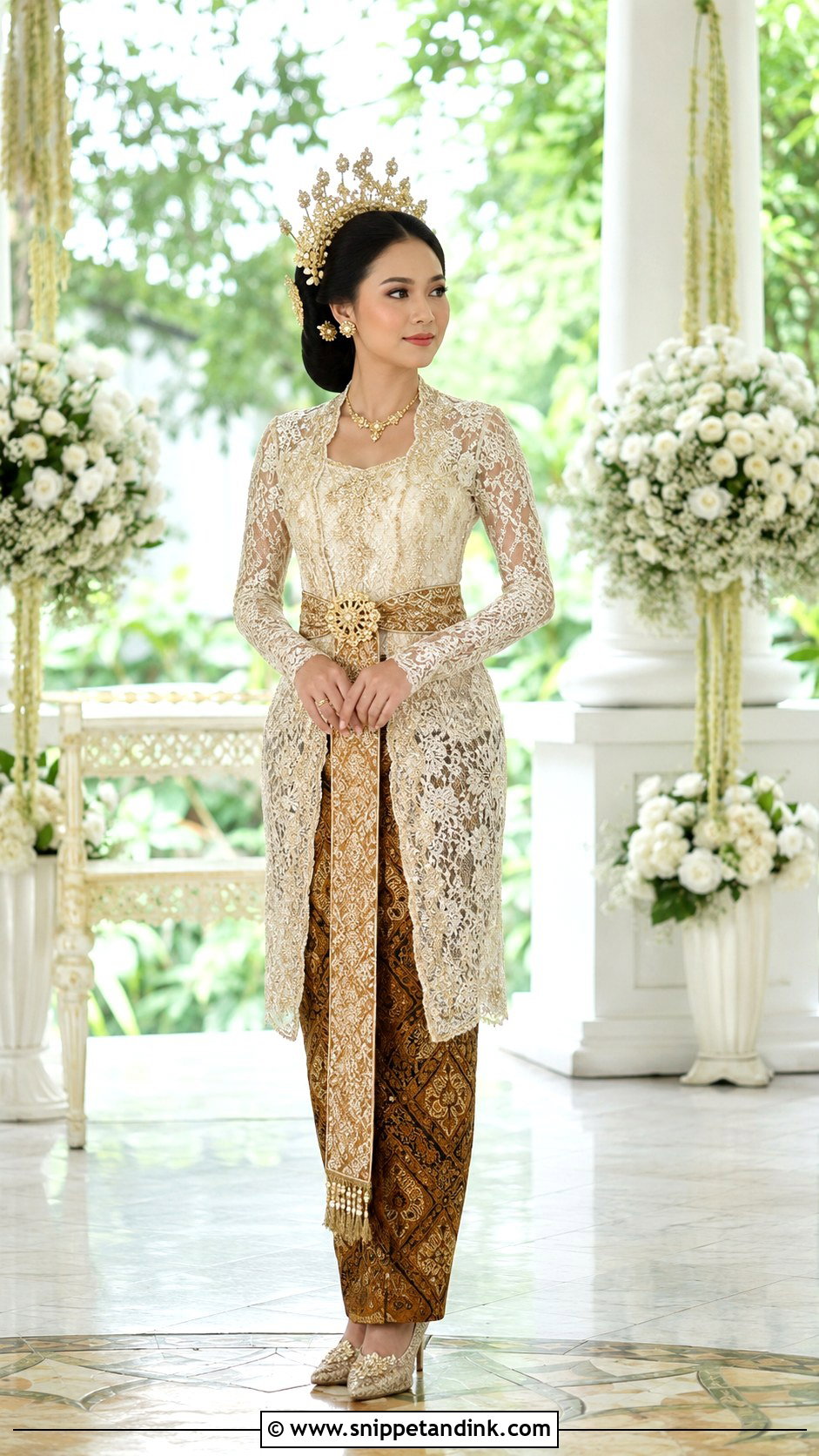
A bridal kebaya is usually sheer lace or embroidered voile worn over a camisole, fitted close through the waist, with batik or songket as the lower cloth. The waist sash or belt should sit at the natural waist so the kebaya’s front points fall straight. Regional heritage decides a lot: a Javanese bride may wear a paes ageng with an elaborate hair arrangement, while other regions use very different headpieces. Choose jewelry that frames the lace rather than hiding it, and closed heels. A wrapped sarong skirt shortens your step, so have it tailored with enough ease for sitting or kneeling. Indonesian traditions vary island to island, and a specialist in yours is worth seeking out.
16. Malaysian Traditional Marriage Baju Kurung Outfit
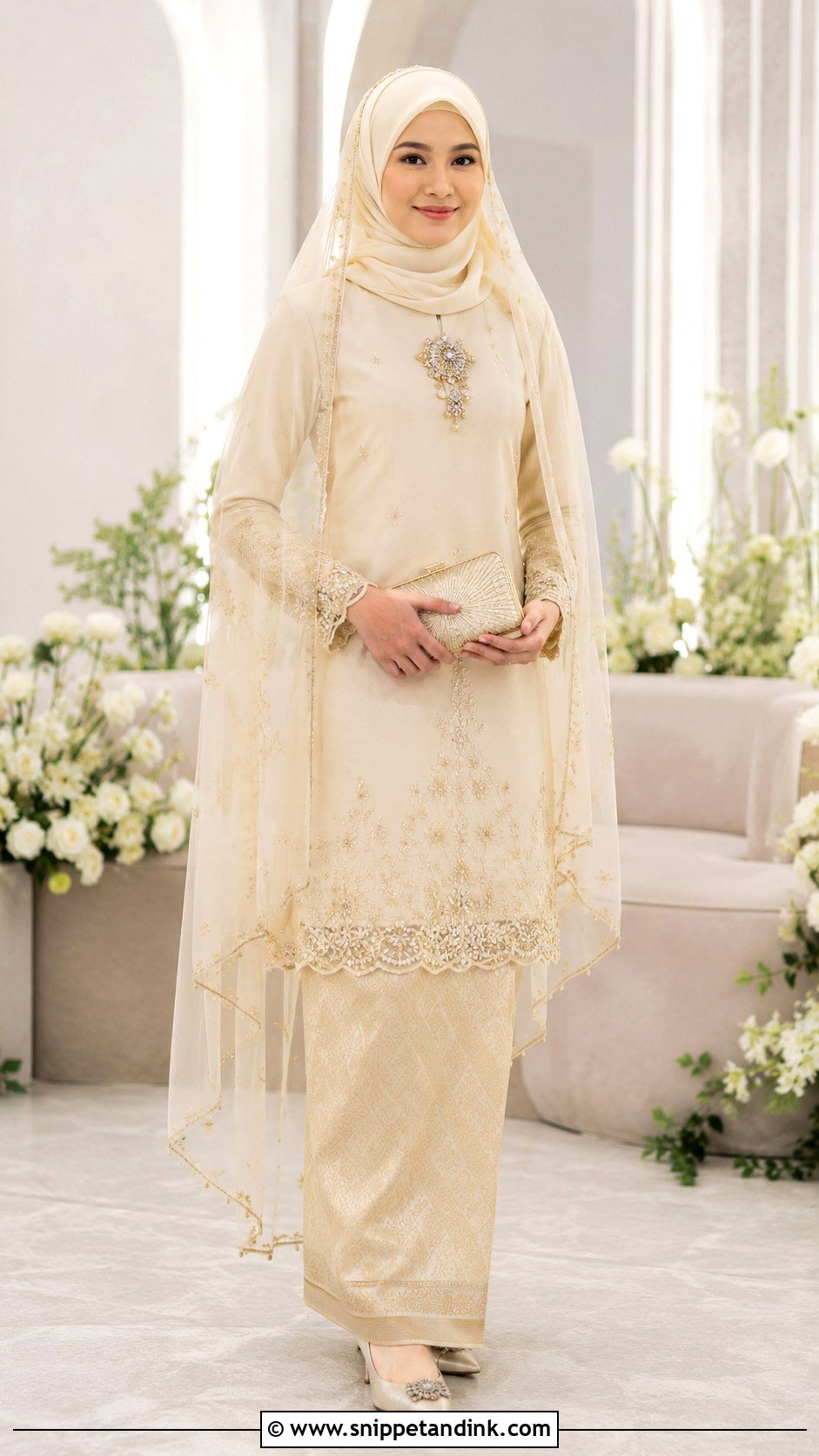
Baju kurung is loose by design, so a Malaysian traditional marriage baju kurung outfit relies on fabric and shoulder fit rather than shaping. Silk, songket and brocade all work, with the tunic falling over a matching floor-length skirt. I tailor the shoulders closely and leave ease through the body so the bride can sit on the pelamin dais comfortably. If she wears a hijab, I drape it before the veil or headpiece goes on and check the pins don’t pull at the forehead. A brooch, earrings if visible, a small clutch and low pointed heels finish the look. Ivory, gold, blush and jewel tones are common. Ask family and a Malay bridal stylist about any ceremonial accessories you’re expected to wear.
17. Thai Traditional Marriage Silk Outfit
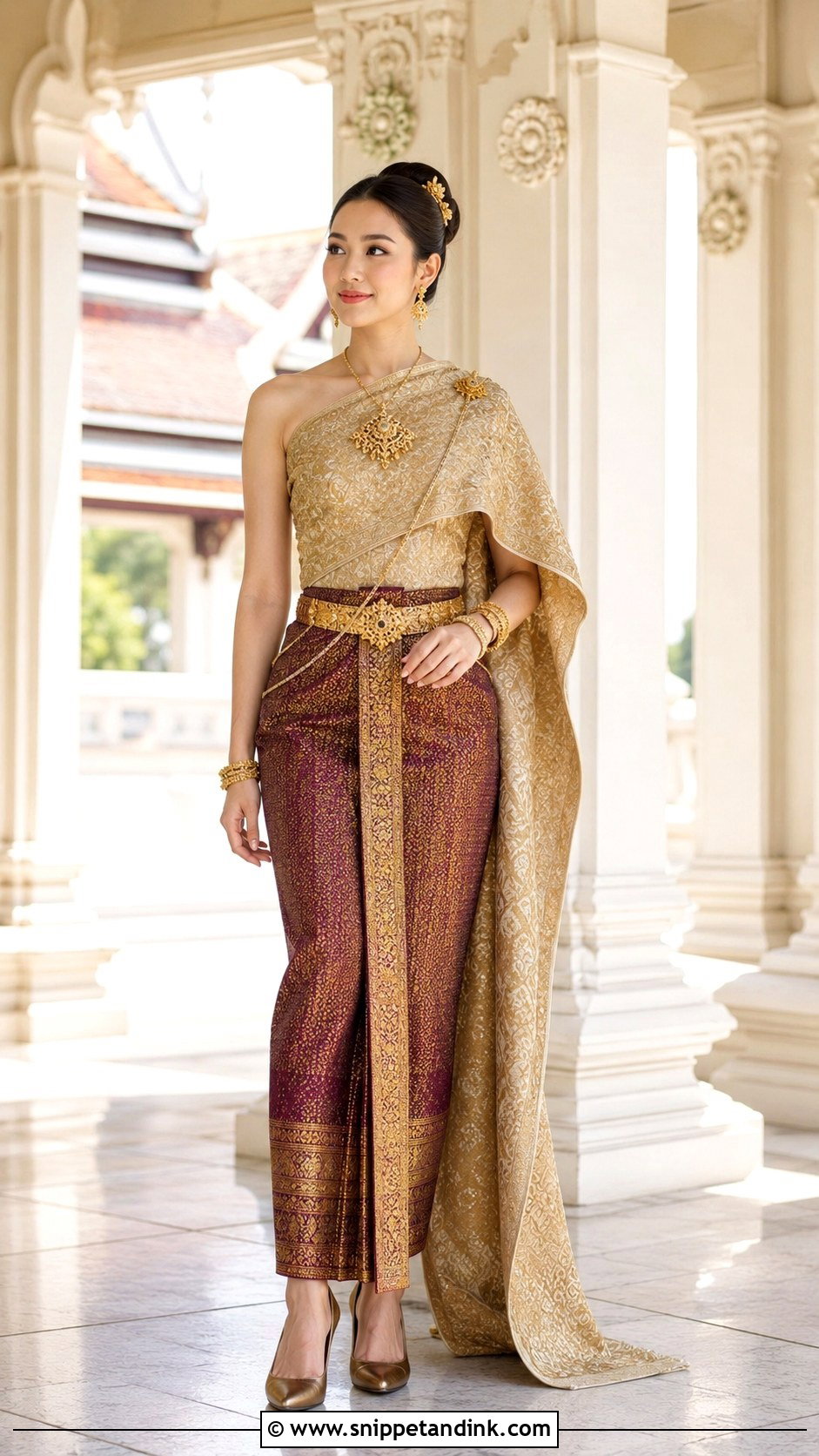
Thai silk is crisp and catches light with a slight shimmer, which is why draping it badly shows instantly. A bride might wear a fitted top with a wrapped pha nung skirt, or a one-shoulder sabai drape over a fitted bodice, depending on the formality and the family. Gold embroidery and woven borders define the shape. A gold belt, gold jewelry, heels and a smooth bun with an ornament complete it. I always test the wrapped skirt for stride length; it should be tight enough to look clean and loose enough to walk up temple steps. Thailand has several recognised forms of traditional dress for different settings, so ask a Thai dresser which one suits your ceremony.
18. Mexican Traditional Marriage Embroidered Dress Outfit
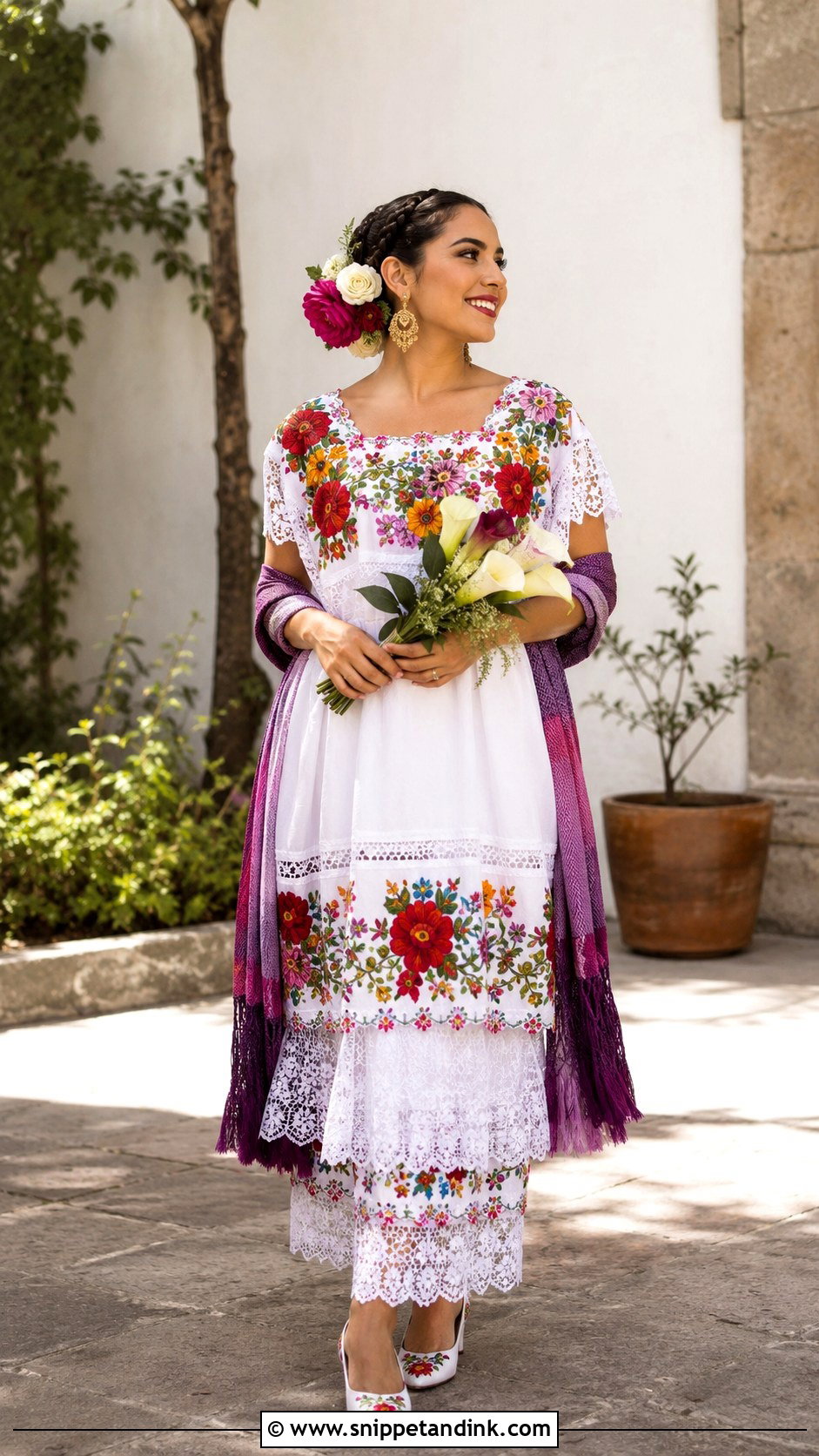
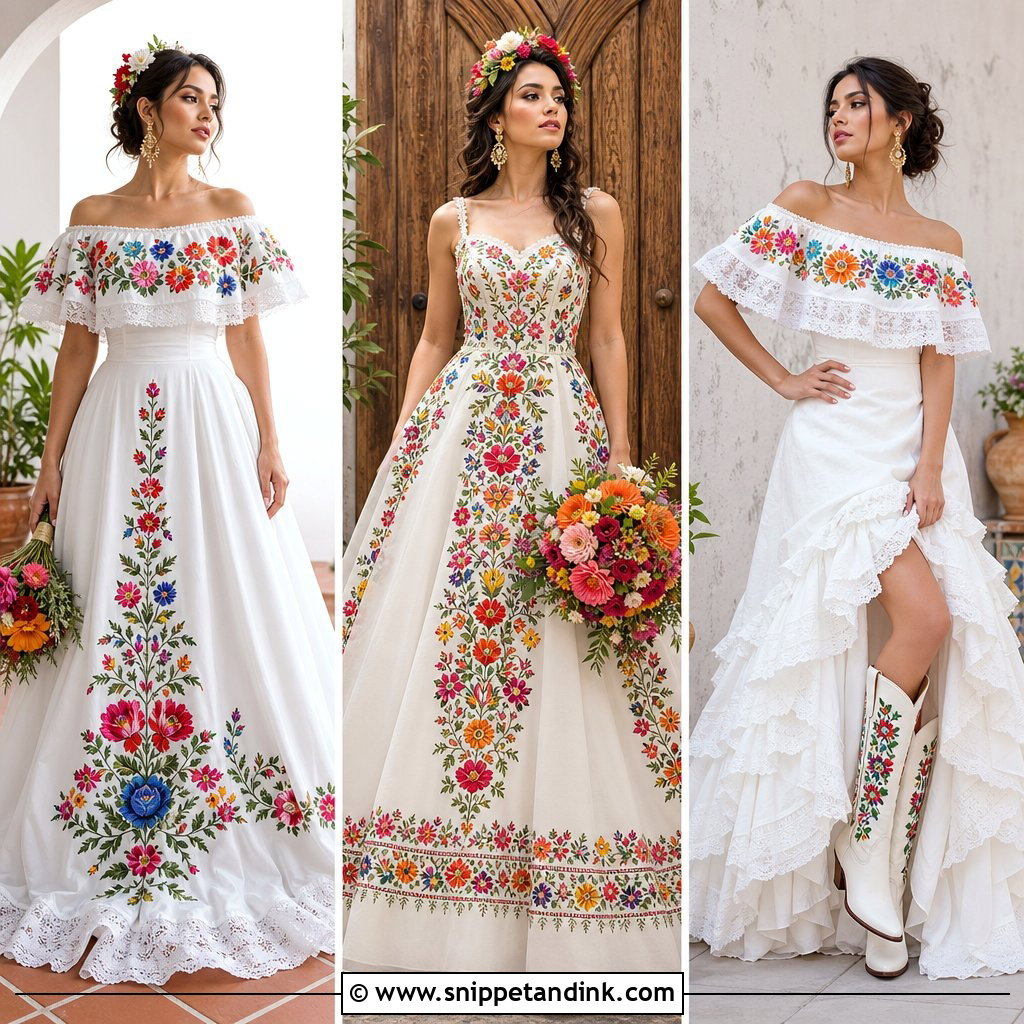
Mexican regional dress is not one thing. An Oaxacan huipil, a Yucatecan terno and a Chiapas embroidered blouse come from different communities, each with its own techniques and meanings. Choose a floor- or ankle-length dress with floral needlework, lace panels or locally meaningful textile details, and drape a rebozo over the shoulders or carry it over one arm as your family does. Earrings, flowers in the hair and leather heels or embroidered flats complete it. My one firm rule: keep everything within a single regional direction so it doesn’t read as costume. Buy from the artisan where you can, and ask family how textile, colors and headwear should be worn.
19. Scottish Traditional Marriage Tartan Dress Outfit
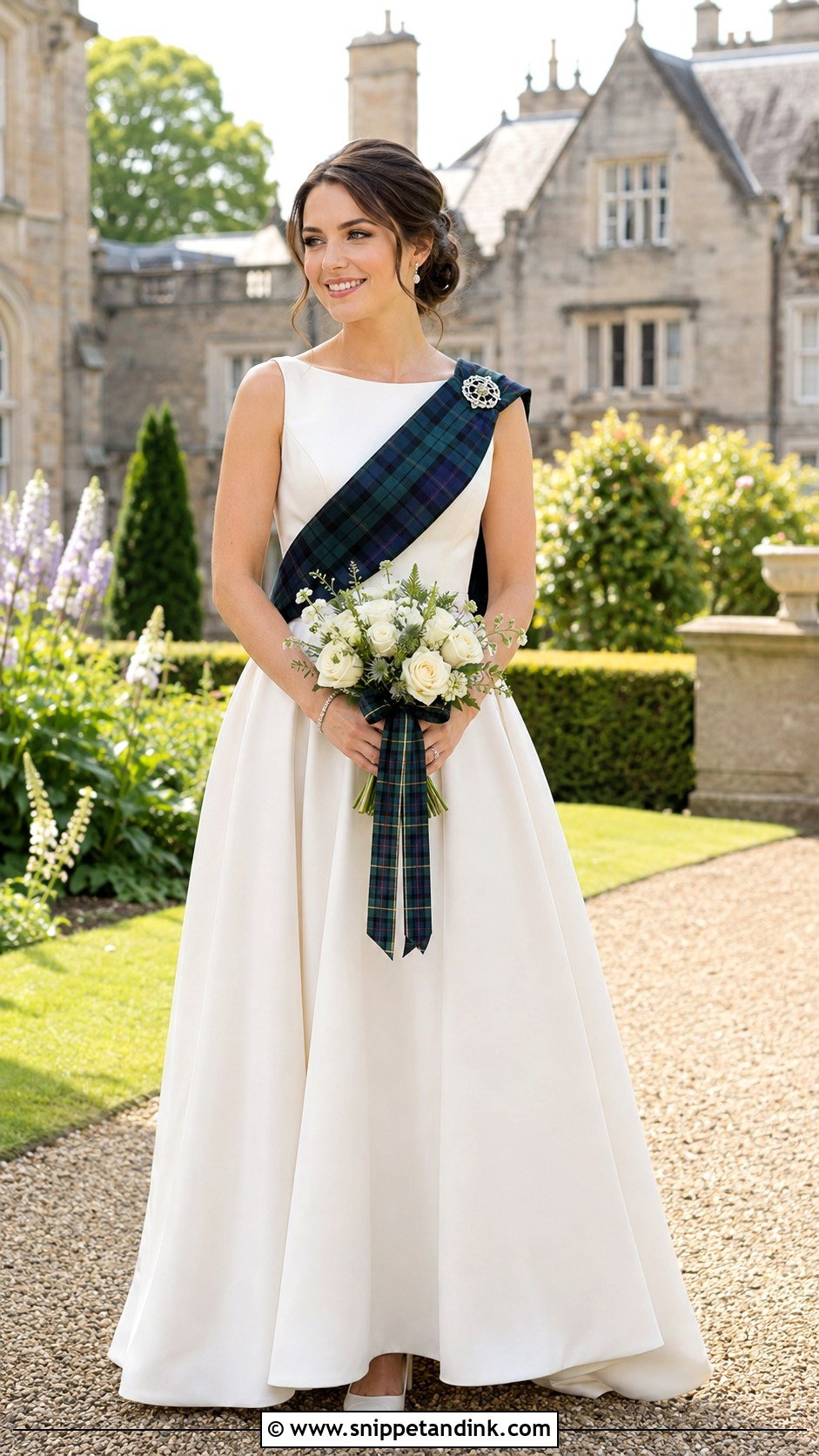
Tartan works best on a wedding dress in small doses. With a Scottish traditional marriage tartan dress outfit, I keep the gown ivory or softly colored and bring the tartan in through one element: a sash, a shawl, a bodice panel or an overskirt. Pin a sash with a brooch, add simple jewelry and closed-toe heels, and wrap the bouquet stems in a strip of the same cloth. Soft waves or a low updo keep the overall impression polished. Before you order, confirm the tartan has a real connection to the family or district; some are restricted to clan members. A kiltmaker will know, and will also cut the sett so it matches at the seams.
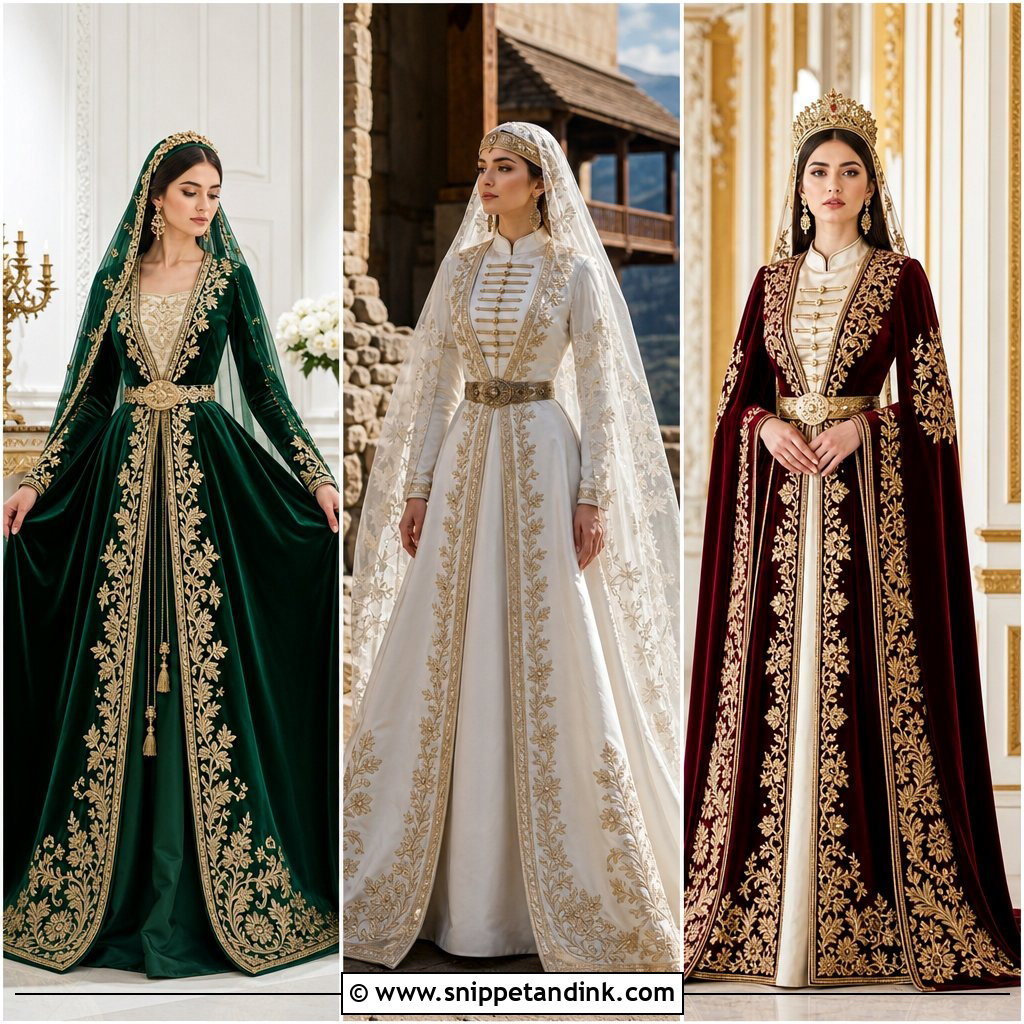
20. Norwegian Traditional Marriage Bunad Outfit
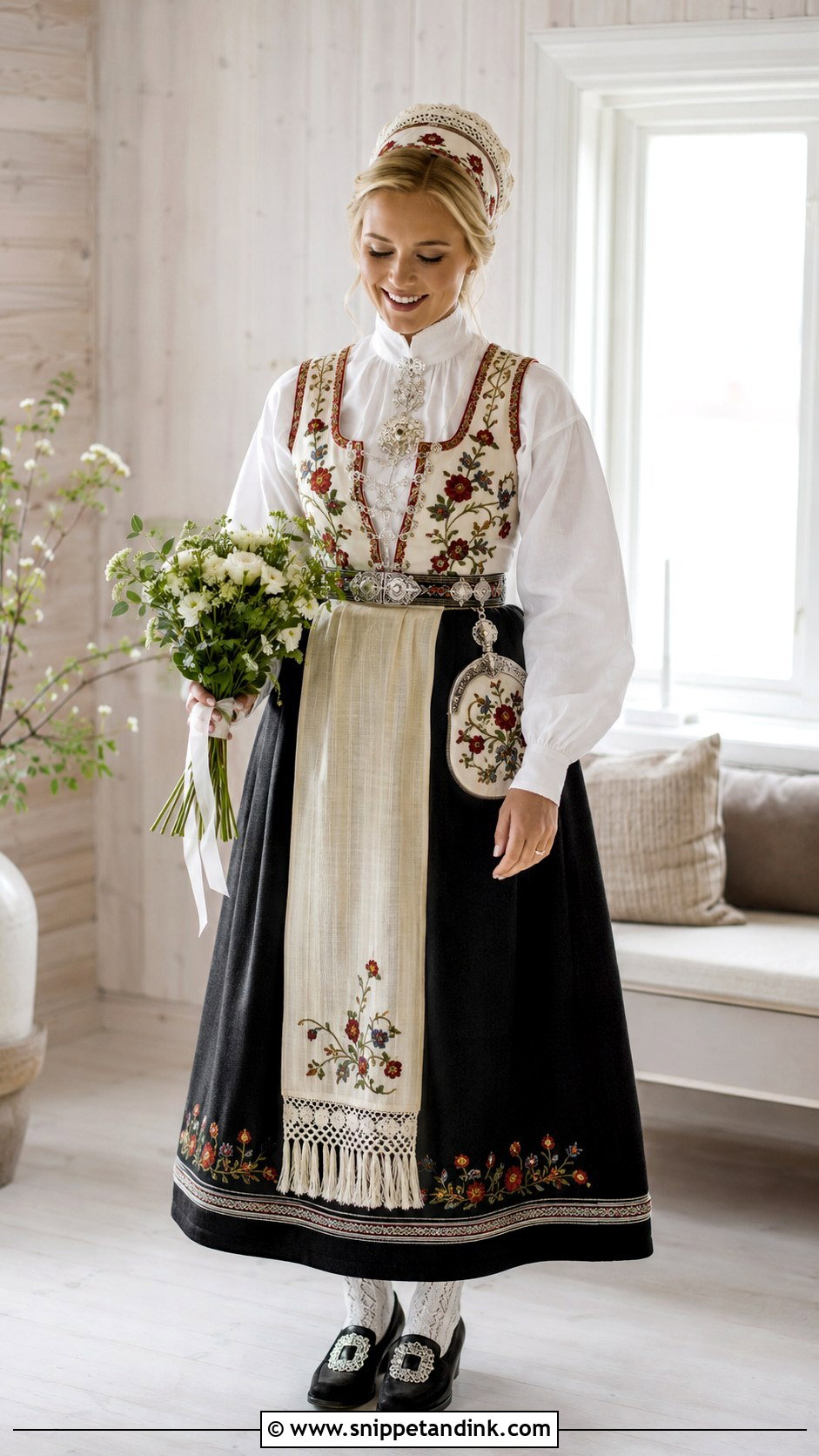
A bunad belongs to a specific district, and its embroidery, colors and silver are set by that area’s tradition rather than by the wedding palette. That’s the first point I’d make to any bride. The ensemble is a wool skirt and bodice, a white embroidered blouse, an apron, stockings and buckled shoes, often with sølje silver brooches that may be family heirlooms. Bridal versions in some regions include a crown. Every visible layer has to agree, from cuff embroidery to apron placement. Wool is warm, so a summer ceremony needs thought. Buy from a qualified maker, have the bodice fitted so it supports without restricting, and sit, walk and dance in it before the day.
Reworking an Heirloom Without Cutting Into It
Many brides want to wear their mother’s saree, a grandmother’s kebaya or a family bunad. I love that, but older textiles need a gentler approach than new cloth. Silk weakens along old fold lines and can split when pulled tight, and metallic zari thread tarnishes and turns brittle over decades.
My approach is to alter by adding rather than removing. Let a blouse out at the seams instead of trimming it, add a new lining to support thin silk, and stitch hooks or panels rather than cutting the original fabric. A saree can usually be worn as it is, with only a new blouse made to fit. If a piece is too fragile to wear for a whole day, consider carrying it as a dupatta, sash or bouquet wrap for one part of the ceremony instead. Always ask a specialist to look at heirloom fabric in person before you plan around it.
Storing Zari, Silk and Wool So They Outlast the Wedding
These garments are often passed down, so how you put them away after the wedding matters. Get any food, makeup or henna marks cleaned by someone who handles ceremonial textiles, and do it soon, before stains set. Never machine wash embroidered or handwoven pieces.
- Wrap silk and zari in clean, undyed muslin or cotton, never plastic, which traps moisture.
- Refold silk sarees every few months along different lines, so the creases don’t become permanent splits.
- Keep wool bunads and woollen pieces with cedar or lavender and check them for moths each season.
- Store jewelry separately so metal and stones don’t snag or stain fabric.
- Keep everything somewhere dark, dry and cool, away from direct sunlight that fades dyes.
Start With the Elders Who Wore It First
The right traditional outfit is one your family recognises, made by hands that know the craft, that you can kneel, sit and dance in for an entire day. From embroidered lehengas and strip-woven kente to hanbok and district bunads, each look carries its own rules. Ask relatives and makers about regional customs before mixing colors, symbols or garments, since that care is what separates a heritage outfit from a costume. Then make it personal with a family textile, a grandmother’s jewelry or a local craftsperson’s work.
You'll Like These Ideas:


Leave a Reply