
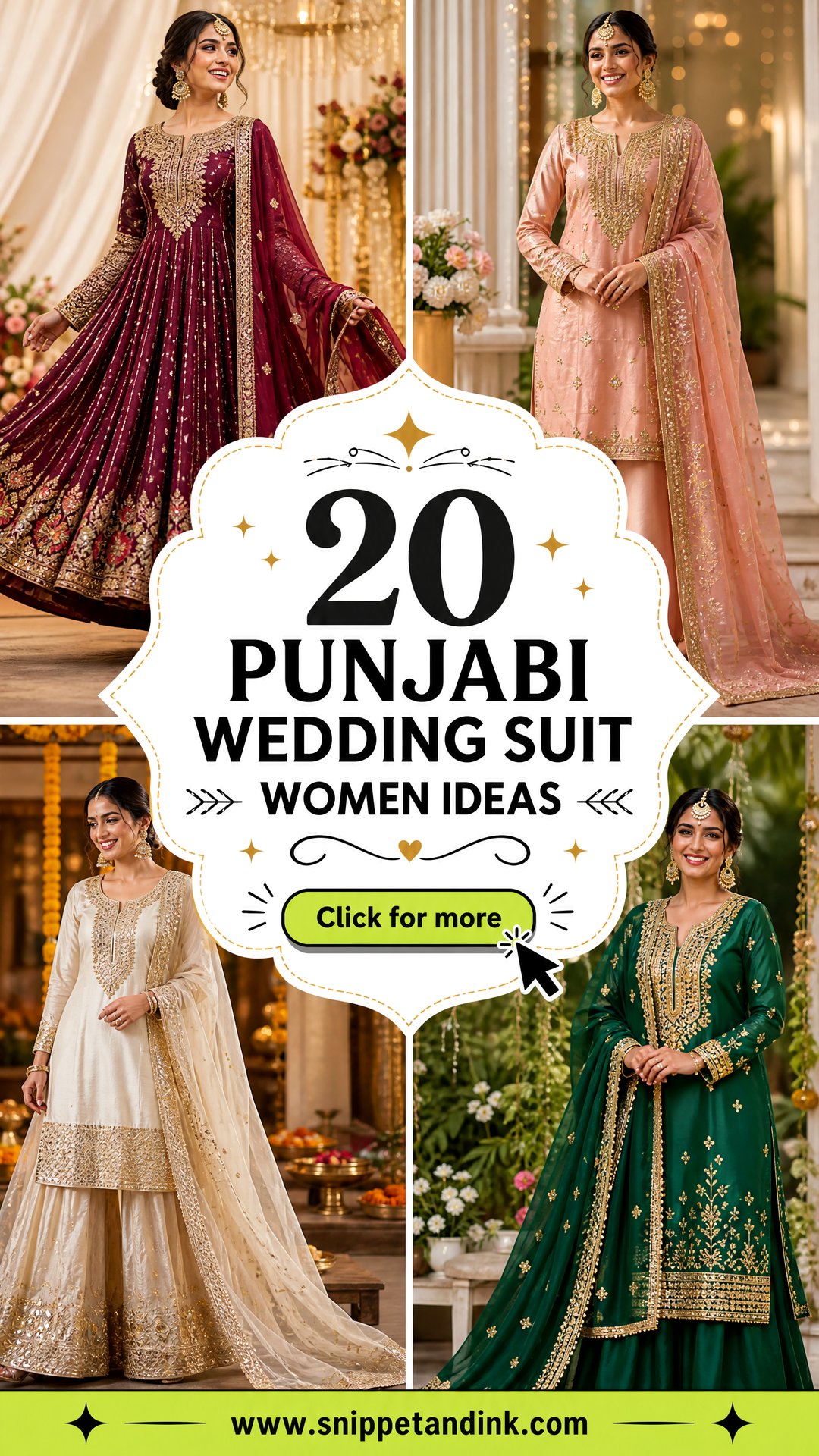
A Punjabi suit is the outfit I reach for when a client says she wants to look dressed up and still eat, dance and sit on the floor without thinking about her clothes. The twenty below cover the main shapes: Patiala, Anarkali, sharara, gharara, palazzo and straight cuts, plus jackets and capes, in fabrics from velvet to Chanderi. Lighter textiles, softer colors and statement dupattas are where suits have been heading for a while, and they make long days easier. Before you choose, think about the event, the weather and how formal the family is. Pastels and breathable cloth suit daytime; deeper color and shimmer suit evening. Then add jewelry, shoes and a dupatta you can keep in place.
Handing Unstitched Suit Fabric to a Tailor
Many Punjabi suits are still sold as unstitched sets: a length of kameez fabric, bottom fabric and a finished dupatta. That gives you complete control over the fit, but only if you brief the tailor clearly. Vague instructions are how a kameez comes back with the wrong neckline two days before the wedding.
- Bring a kameez that already fits you well. A good tailor will copy its shoulders and armholes more accurately than fresh measurements.
- Decide the neckline shape and depth, front and back, and show a photo.
- Specify kameez length, sleeve length and how high the side slits should start.
- Ask for lining in any sheer fabric, and name the color you want.
- Request a little seam allowance at the sides so the suit can be let out later.
- Book a trial fitting rather than collecting it finished.
Tailors are busiest in wedding season, so hand over the fabric several weeks ahead and expect longer queues around peak dates. Check that the set includes enough fabric for the bottom you want; a full Patiala salwar takes considerably more cloth than straight pants, and some sets are cut short.
1. Red Patiala Punjabi Wedding Suit
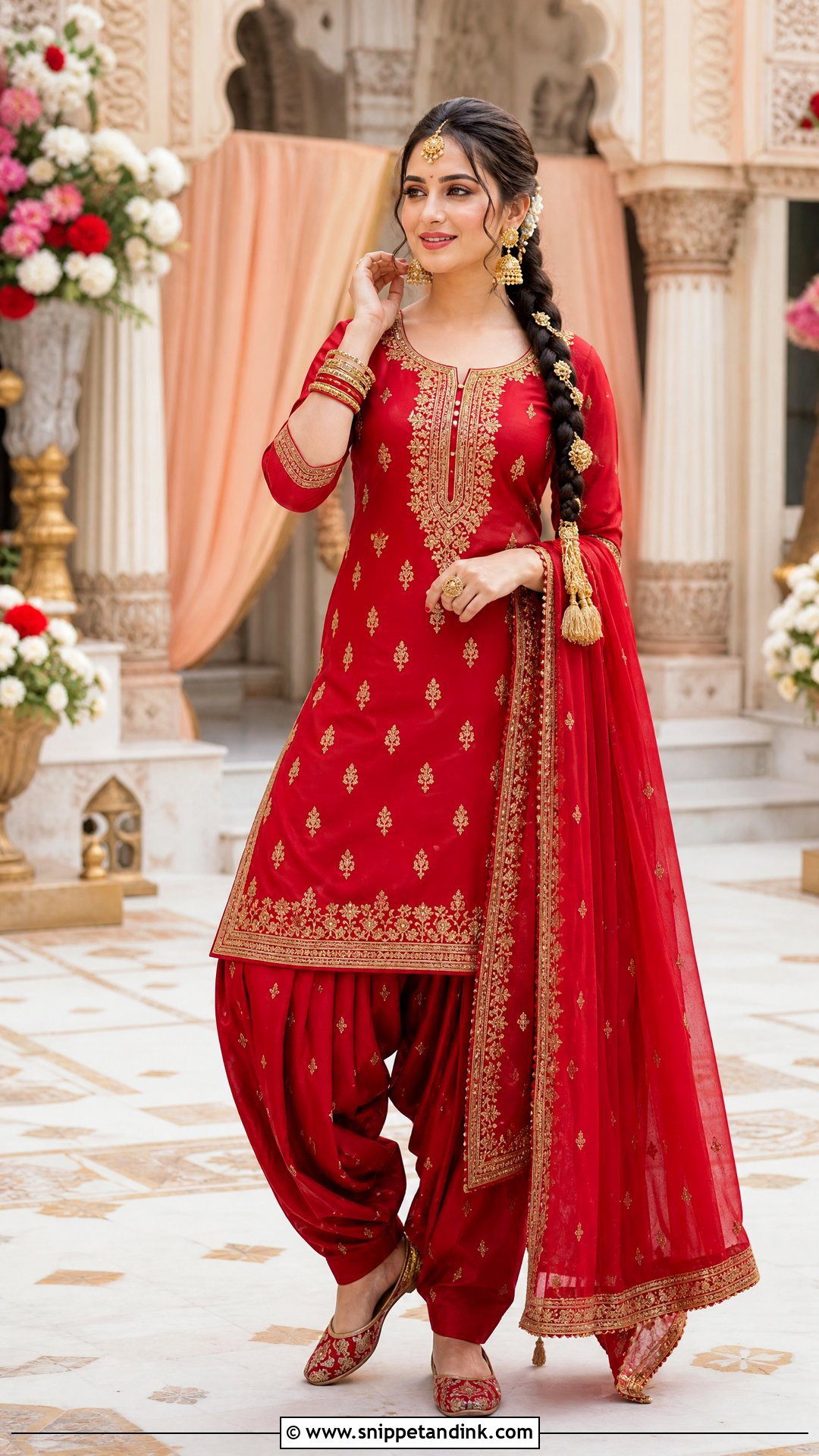
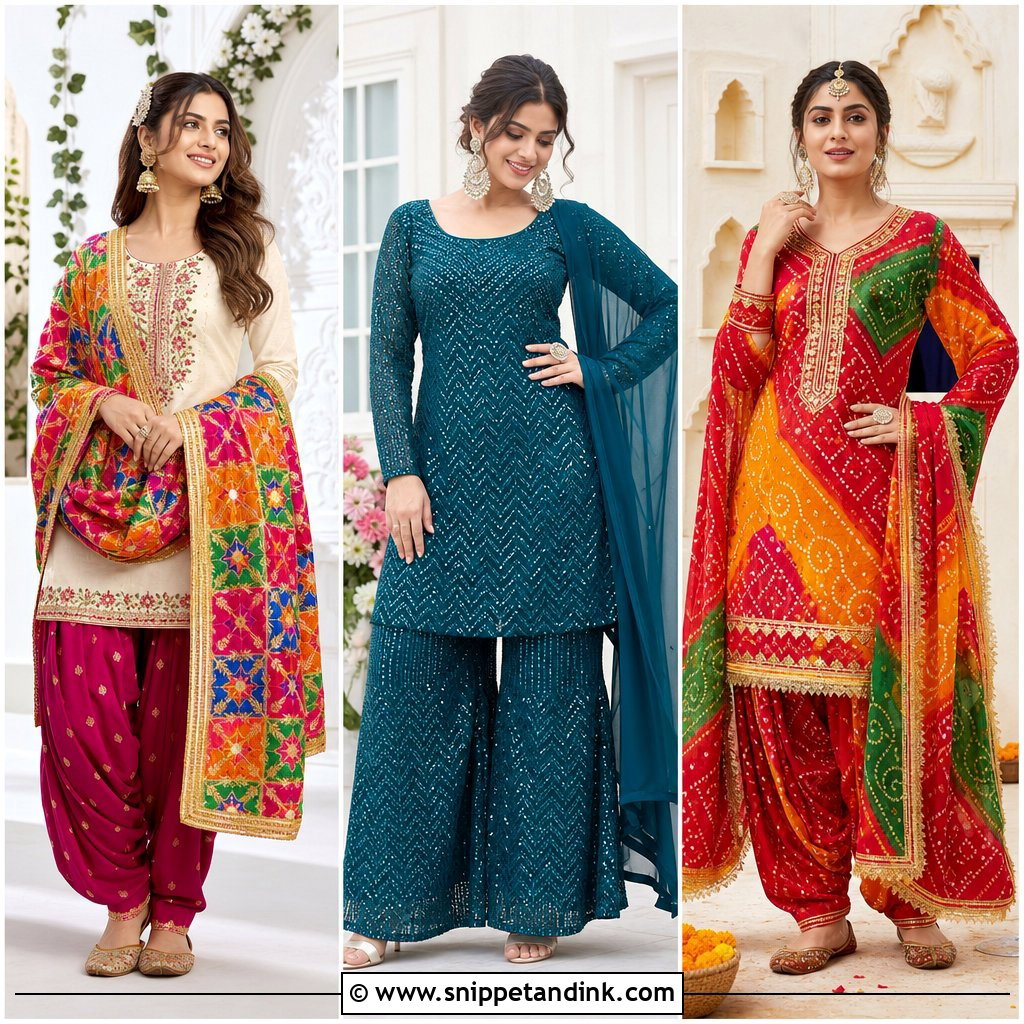
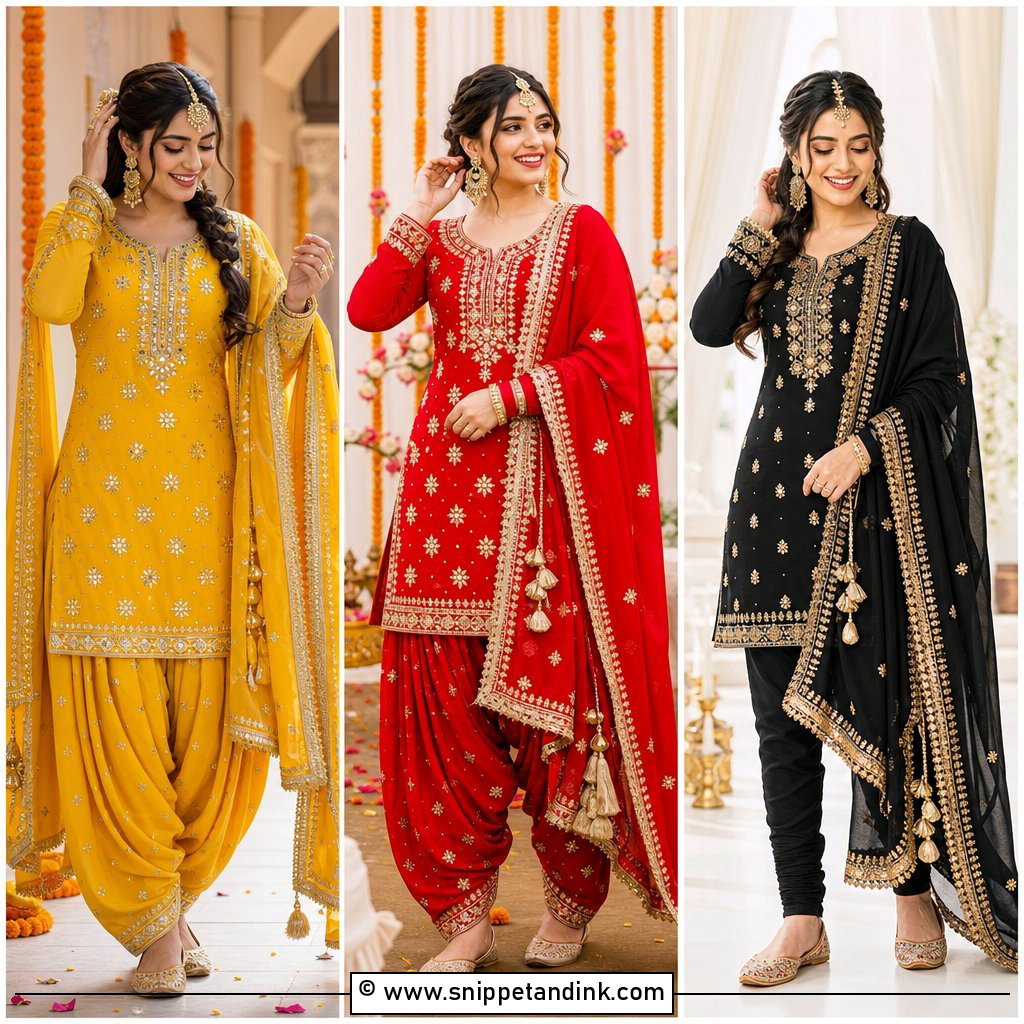
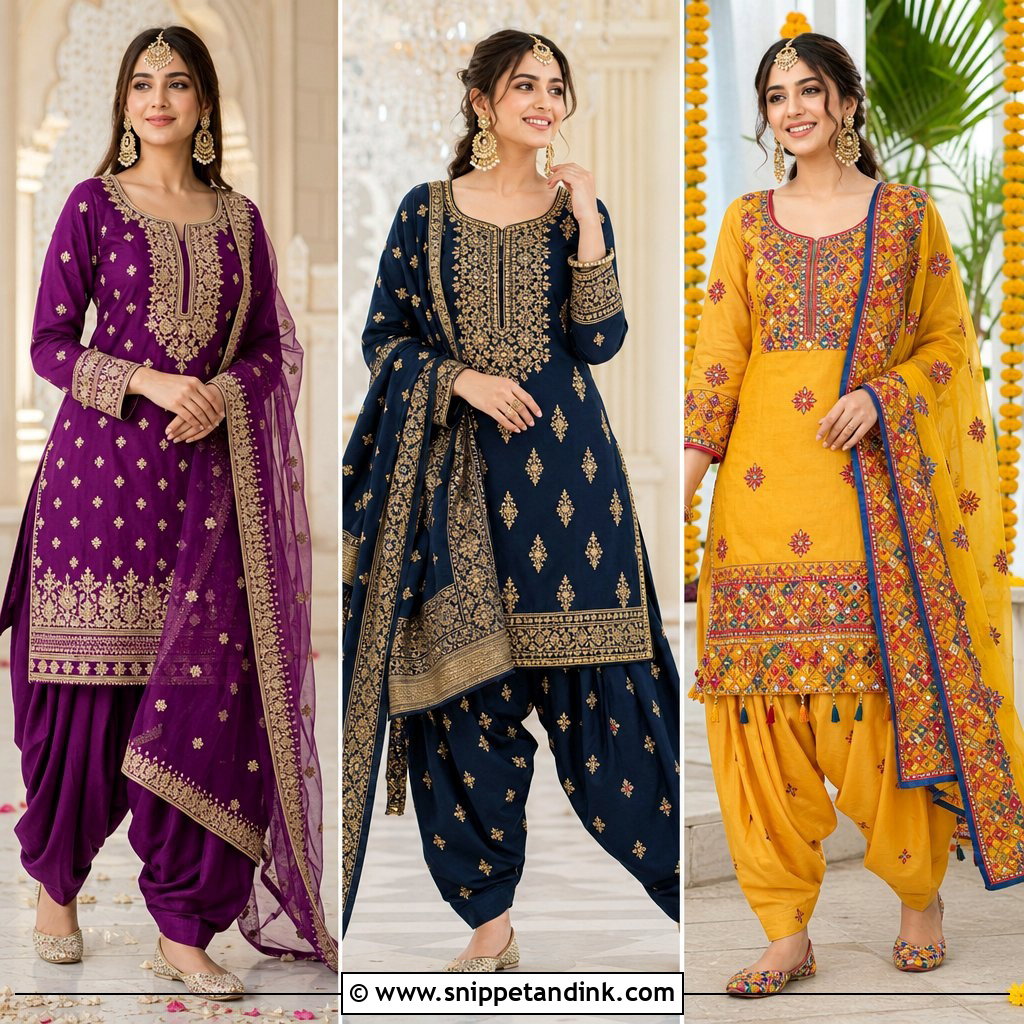
Red Patiala is the classic, and there is a reason it never leaves. A knee-length kameez with gold zari, dabka or fine thread at the neck and sleeves sits over a full Patiala salwar, which lets you walk, sit and dance with no effort at all. Drape a gold-bordered dupatta over one shoulder, or over the head when the ceremony calls for it. Jhumkas, bangles and embroidered juttis complete it, with a sleek braid and paranda. Brides can go deeper crimson with heavier work; guests are better in tomato red or coral with lighter detail. Red dyes vary a lot, so compare the kameez and salwar side by side in daylight before stitching.
2. Pastel Sharara Punjabi Wedding Suit
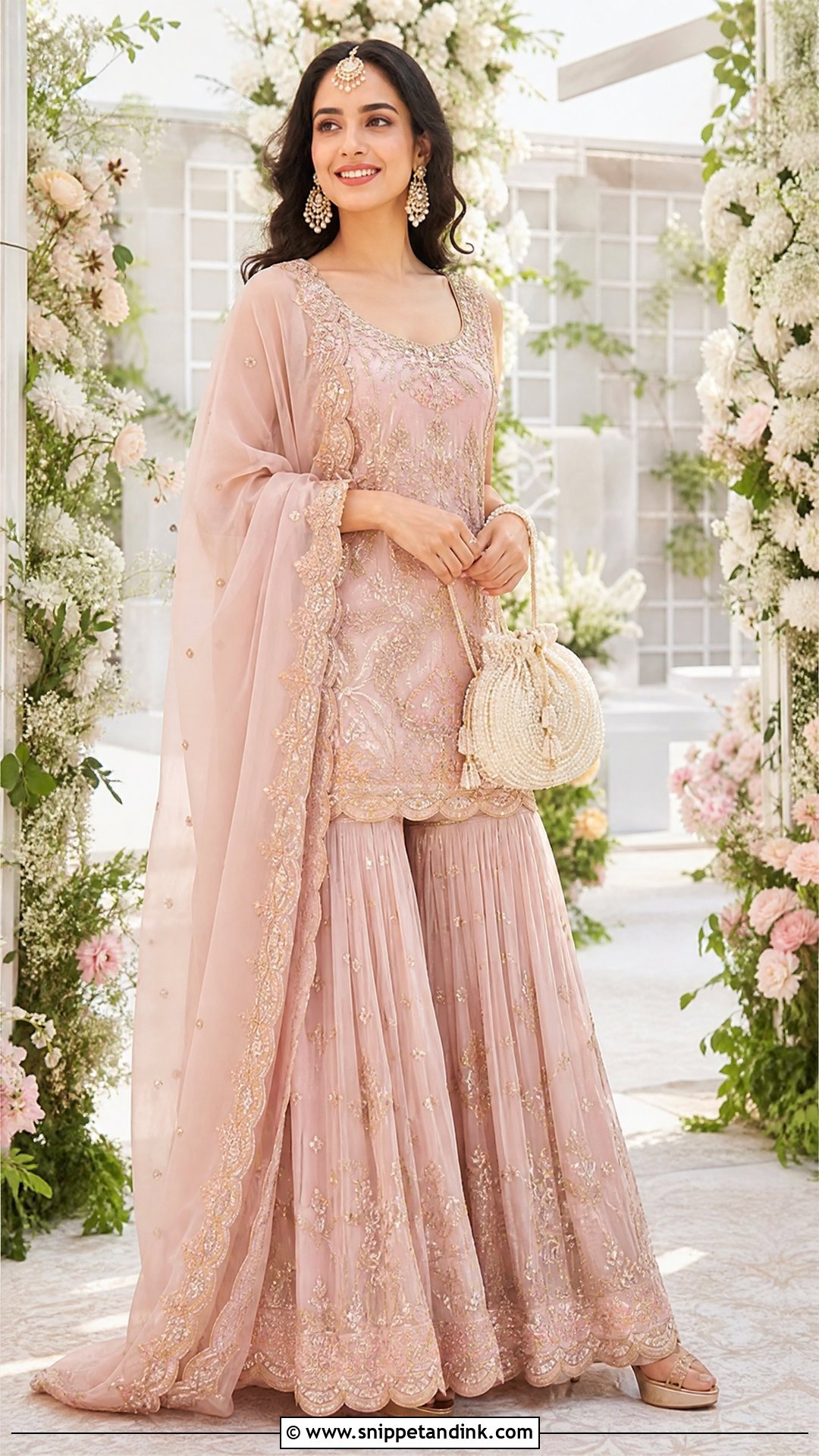
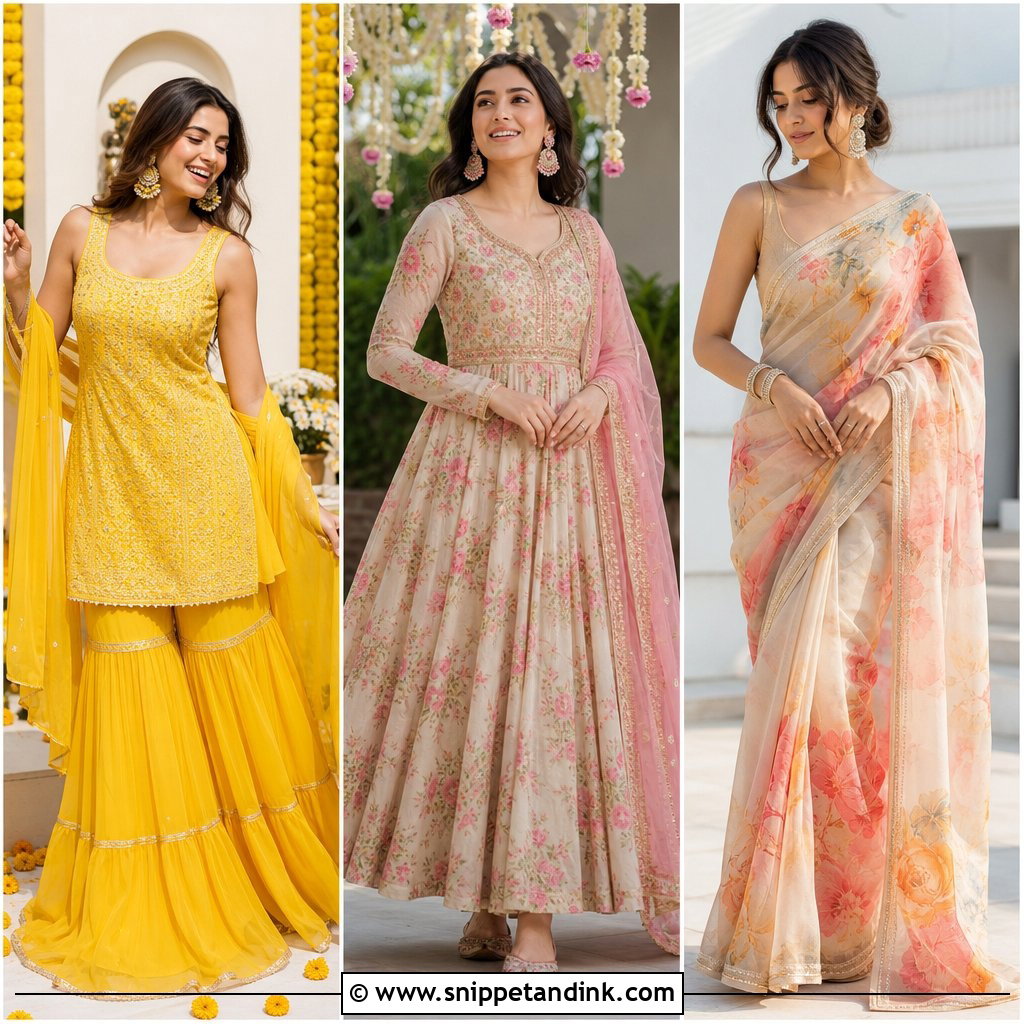
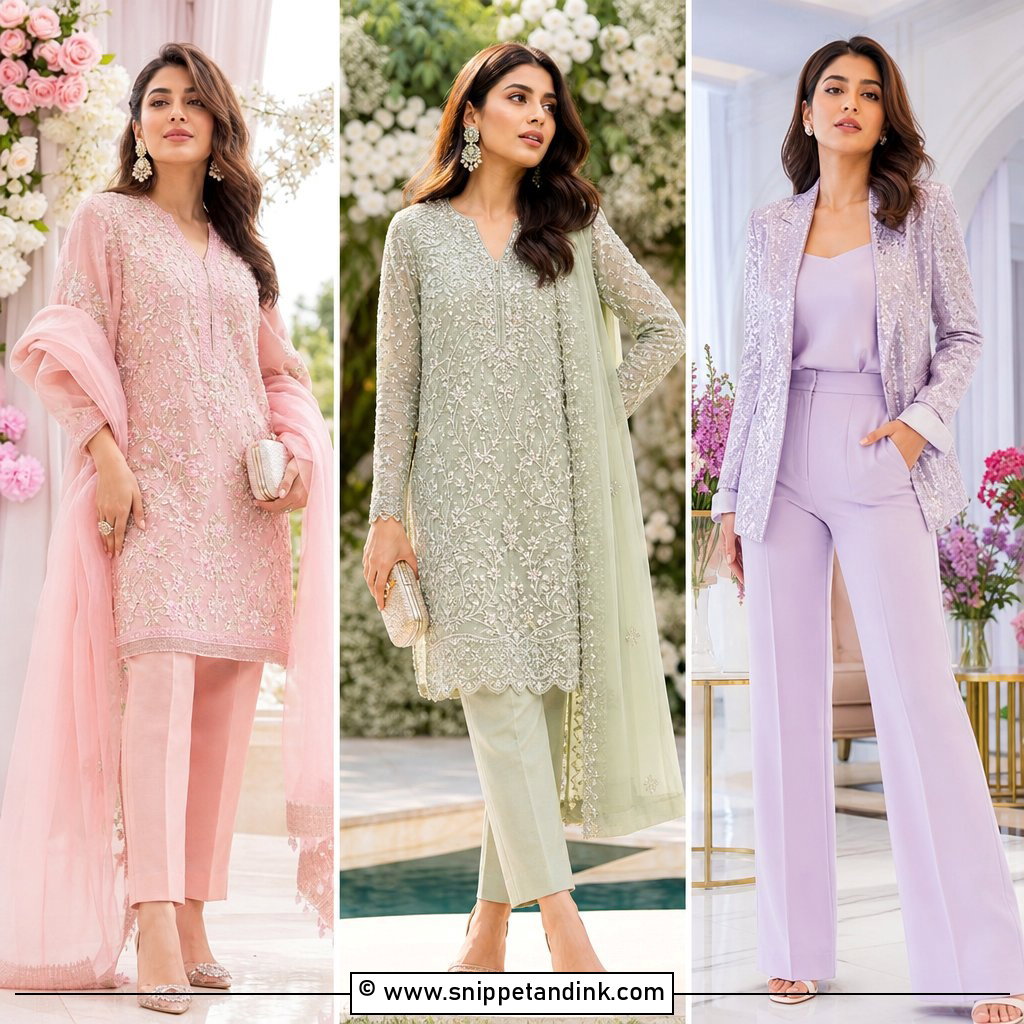
Pastel shararas are the prettiest way to do a daytime wedding. A short fitted kameez in blush, powder blue, mint or peach sits over a wide flared sharara with soft embroidery near the knees and hem. The organza dupatta gives it shape without weight. Pearl earrings, a small maang tikka, metallic block heels and an ivory or champagne beaded potli finish it. Proportion is everything with a sharara: petite women look best in a controlled flare, while taller women can carry a really full one. If you are unsure, stand in front of a mirror with the hem at shoe height and see where your eye goes.
3. Phulkari Punjabi Wedding Suit
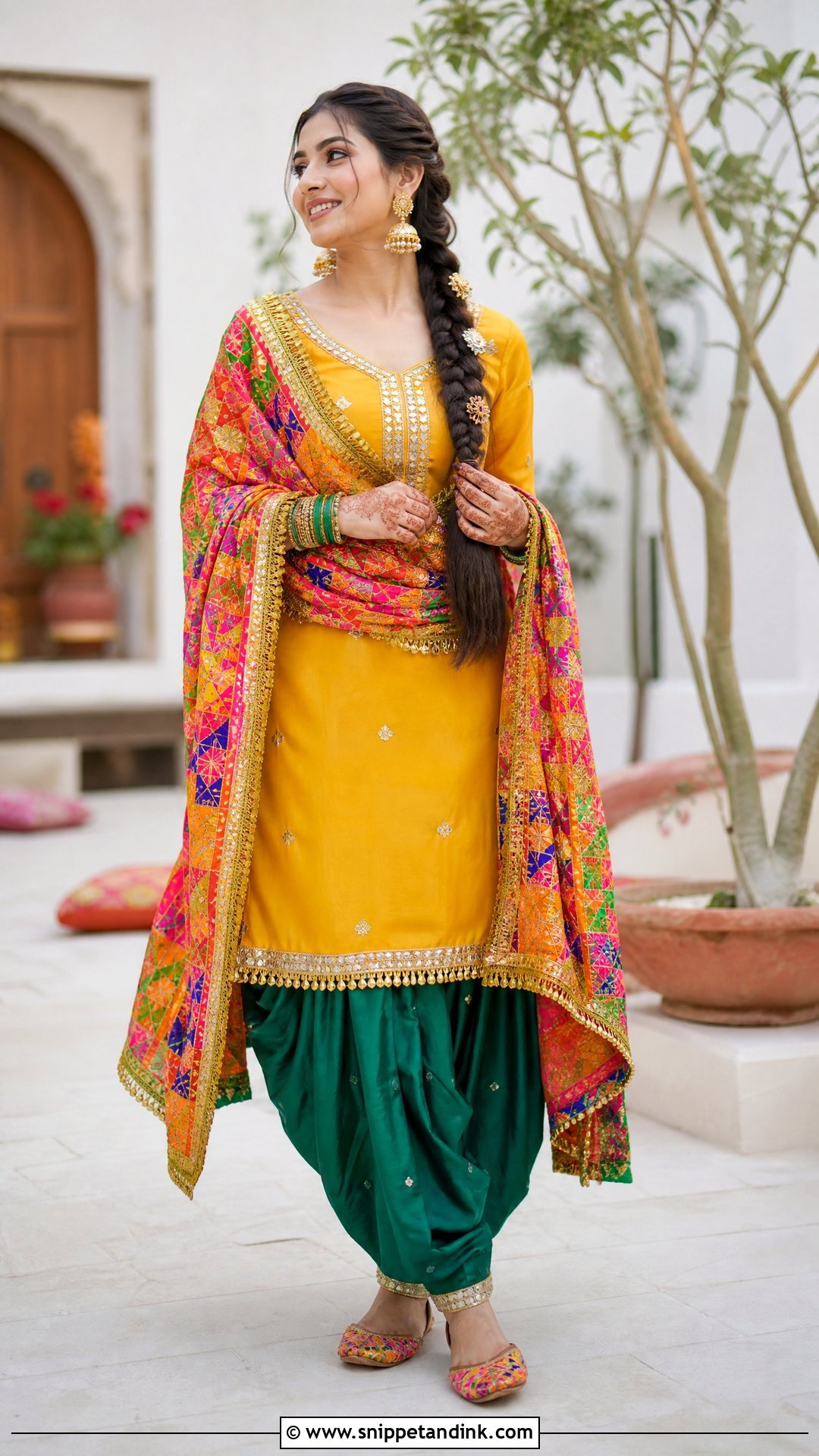
Phulkari literally means flower work, and a good phulkari dupatta is dense enough that the base cloth almost disappears under the floss. Build around a plain silk or cotton-silk kameez in mustard, hot pink, green or deep blue with a comfortably pleated salwar, and let the embroidered phulkari dupatta take over. Keep kameez embroidery to the neckline, cuffs or hem. Juttis, gold hoops or jhumkas and glass bangles finish it, with a low bun or long braid. Hand-stitched phulkari is heavier than machine copies, so pin it rather than letting it hang from one shoulder all night.
4. Velvet Punjabi Wedding Suit
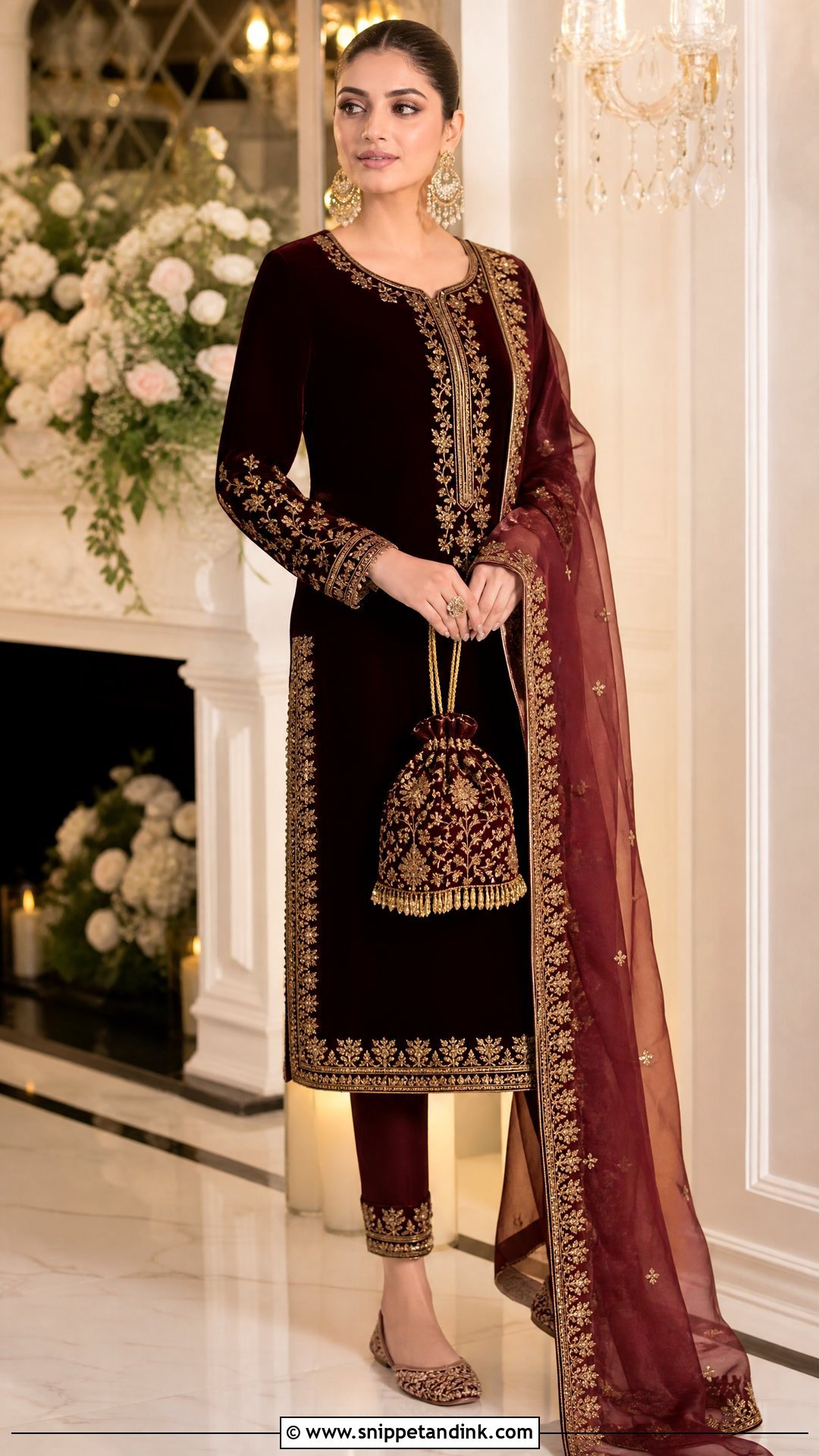
Velvet only makes sense in cold weather, and in cold weather nothing beats it. A long straight kameez in maroon, emerald, navy or plum with antique gold at the neckline and borders is plenty. Pair it with cigarette pants or a gently gathered salwar, ideally in a lighter silk so the bottom half is not bulky. A net or organza dupatta keeps the overall weight manageable. Kundan earrings, a structured potli and low block heels or embellished juttis complete it. Do not cover velvet in heavy work; the pile already has depth, and heavy embroidery on velvet tends to pucker.
5. Anarkali Punjabi Wedding Suit
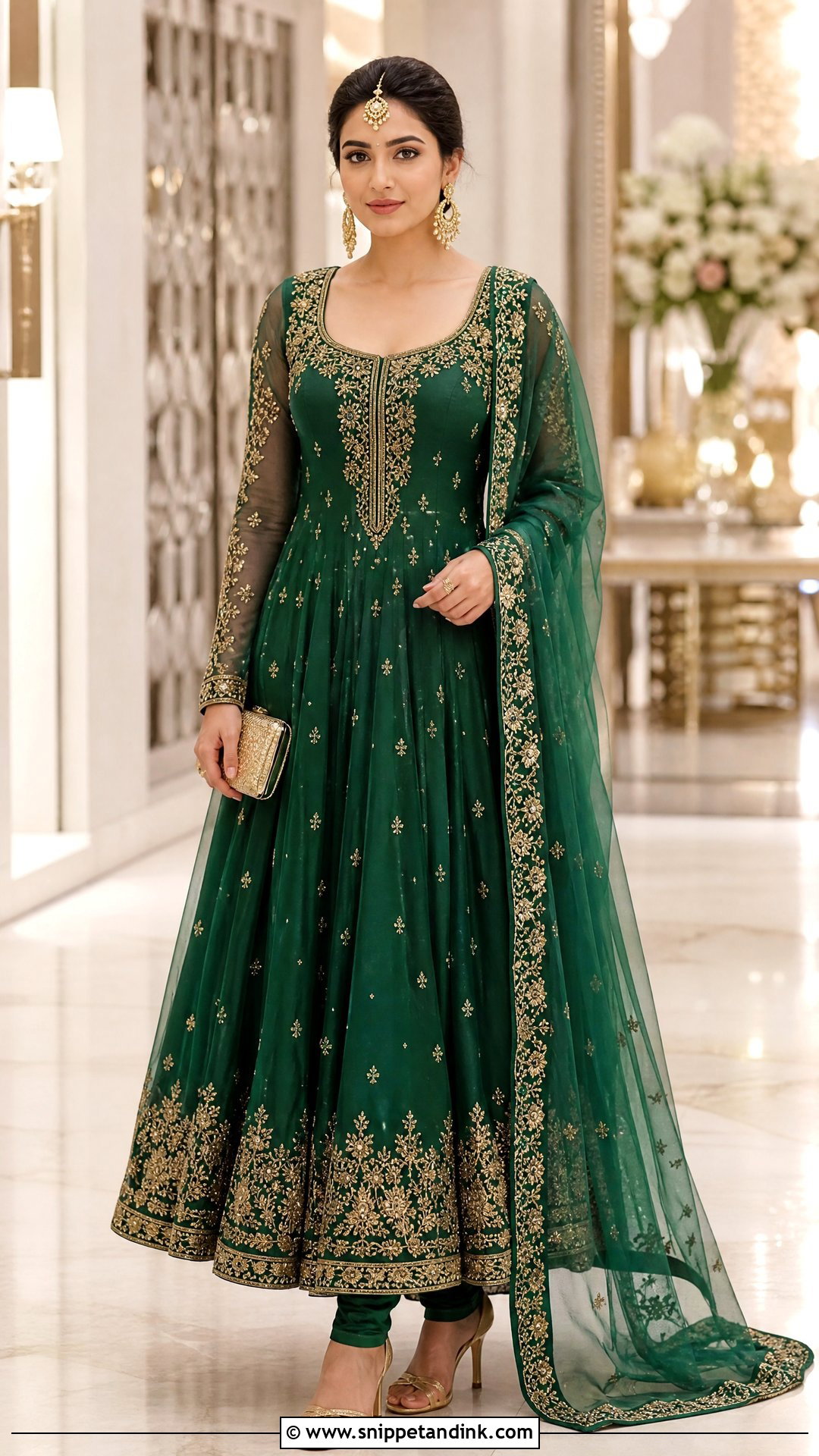
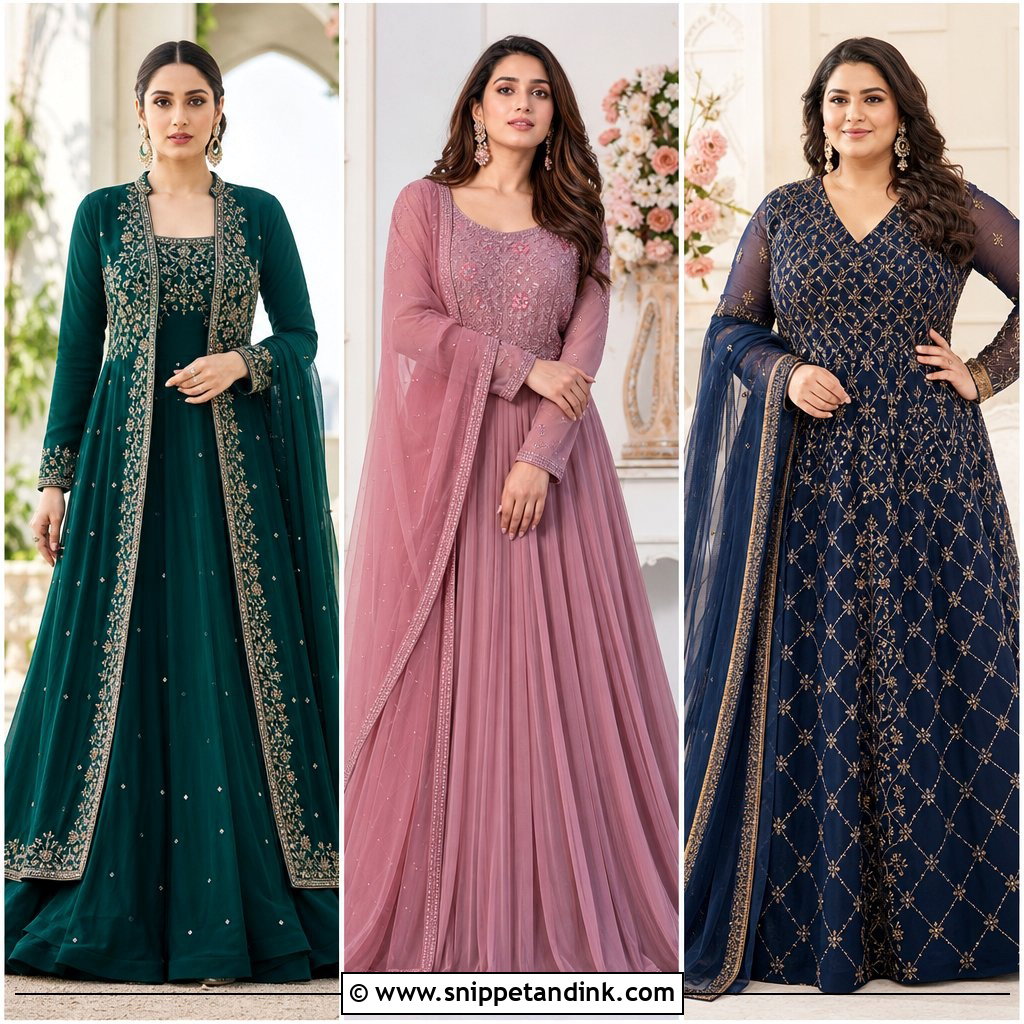
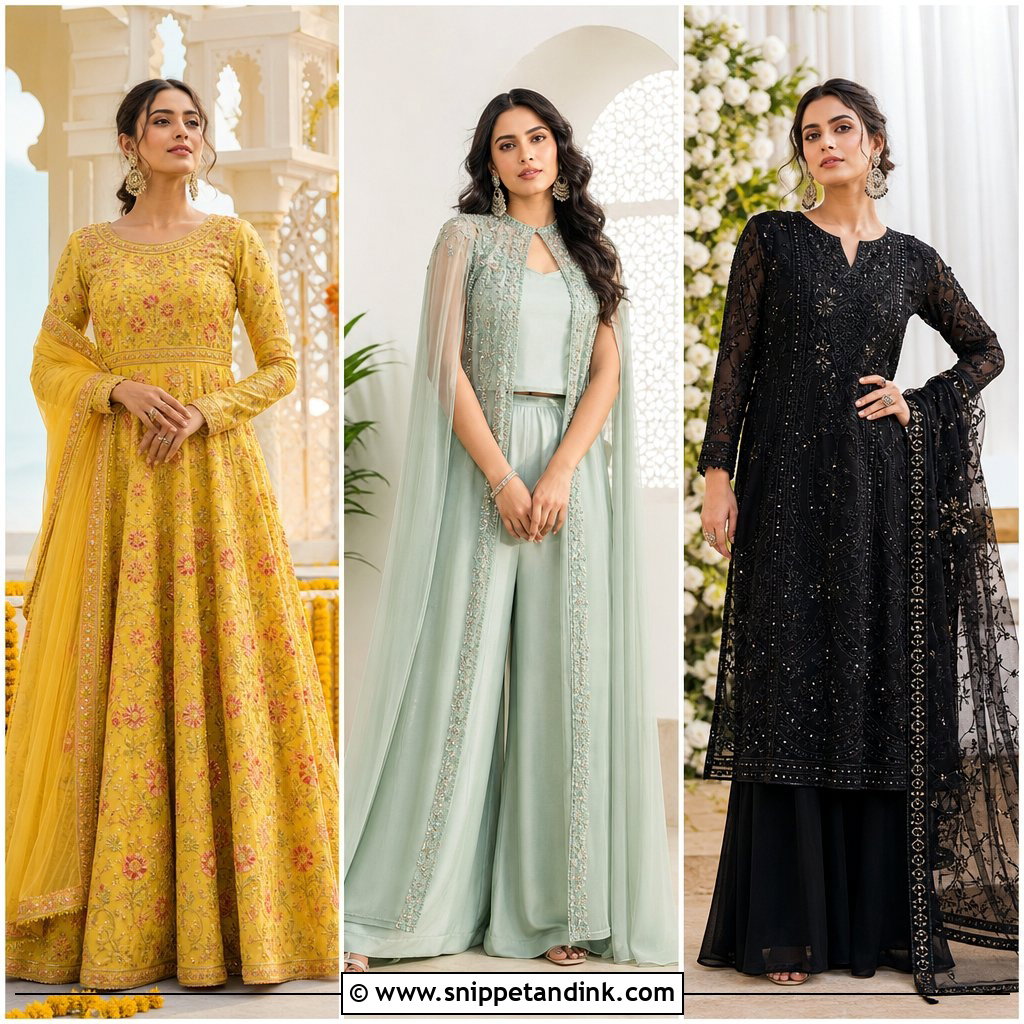
An Anarkali suit works best with a controlled flare, not layer after layer of heavy fabric. The bodice should fit closely and the waist should be cut exactly at your natural waistline; the flare starts there. Emerald, ruby, sapphire and teal glow at evening functions, while rose, sage and lavender suit daytime. Wear narrow churidar and a sheer dupatta with a matching embroidered border. A maang tikka, drop earrings, a small clutch and heels hidden under the hem finish it. Churidar needs extra length to gather at the ankle, so measure it while wearing your shoes.
6. Straight Cut Punjabi Wedding Suit
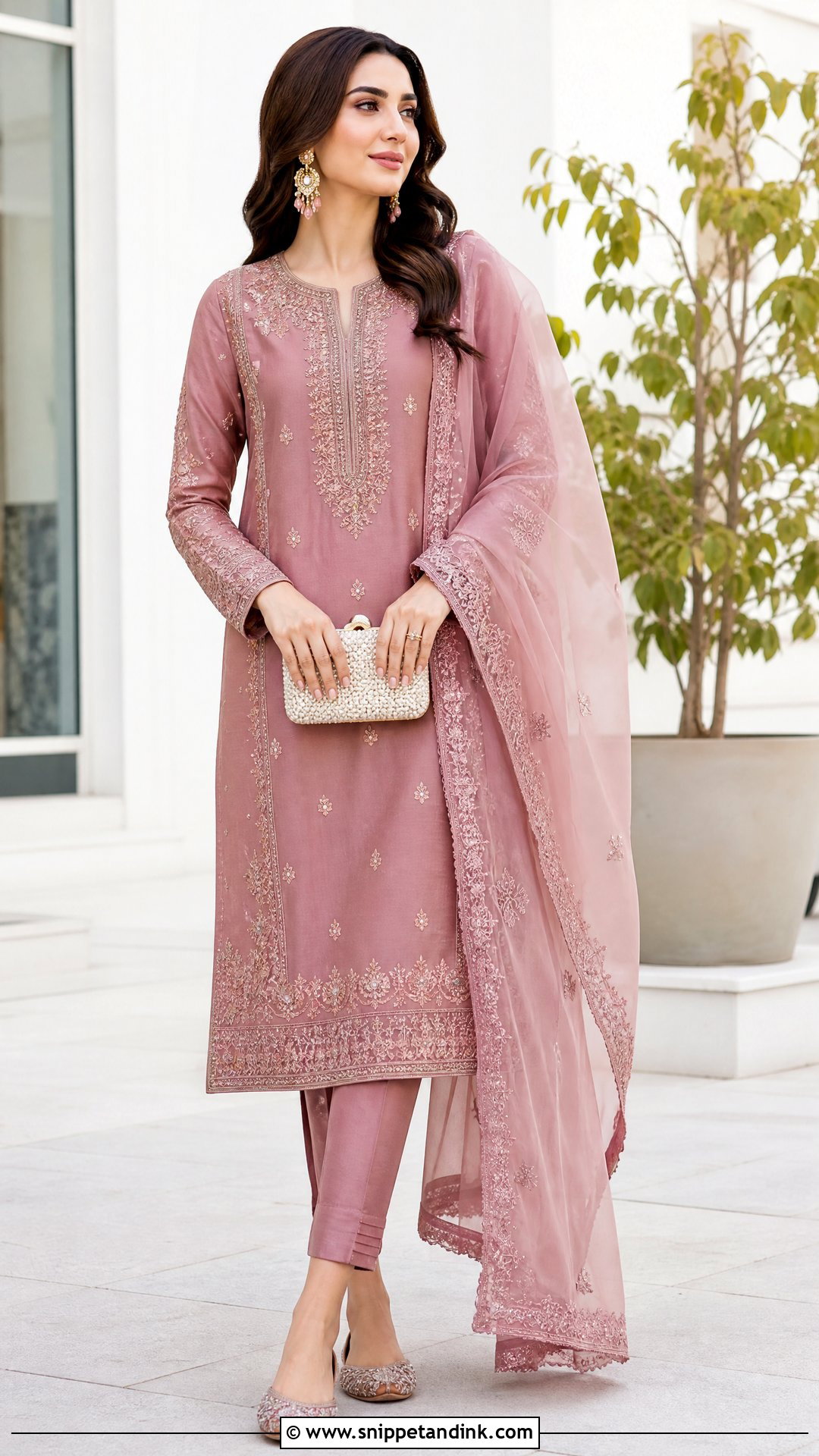
Straight cuts suit women who like their clothes to stay out of the way. A knee- or calf-length kameez with side slits and embroidery at the neckline, cuffs and lower border is the base; cigarette pants make it modern, a salwar makes it traditional. An embroidered organza dupatta adds just enough ceremony. Pointed juttis, statement earrings and a box clutch finish it. Matching top and bottom in one shade makes you look taller; a contrasting bottom feels more playful. This shape flatters most ages and builds when the shoulders and side seams are tailored, which is why I recommend it for an engagement or reception dinner.
7. Peplum Sharara Punjabi Wedding Suit
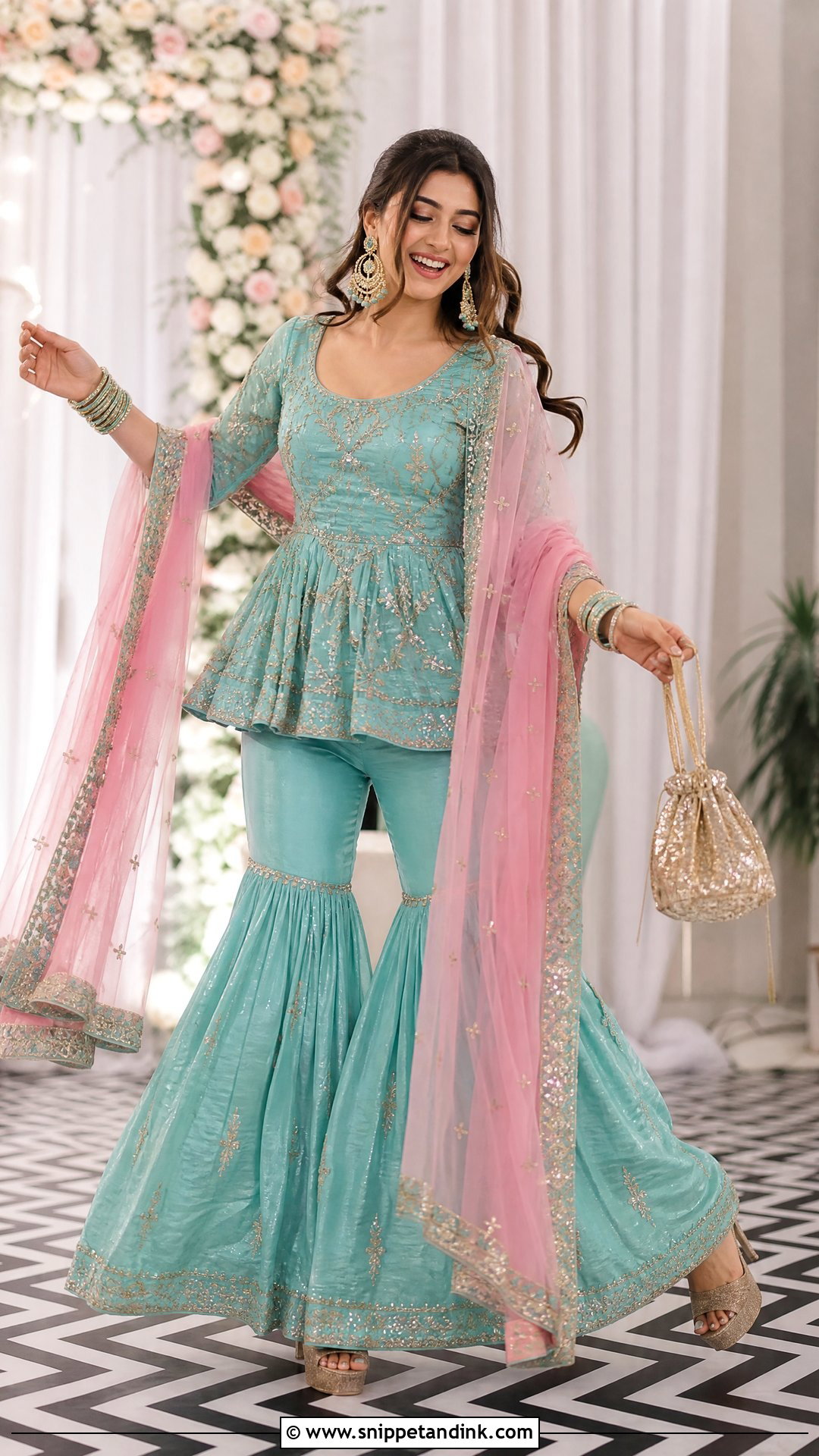
A peplum sharara suit gives you a waist and swing in the same outfit. The peplum top should sit at the natural waist and flare just over the hips; a high-waisted sharara in the same color keeps the line unbroken. Embroidery along the peplum hem links top and bottom. Pin a light dupatta at one shoulder and add chandbalis, metallic bangles and platform heels. Bright pink, turquoise, orange or lime suits a mehndi; champagne and dusty rose feel more formal. The peplum hides the sharara waistband, so you can ask for a softer, comfier waist without it showing.
8. Gharara Punjabi Wedding Suit
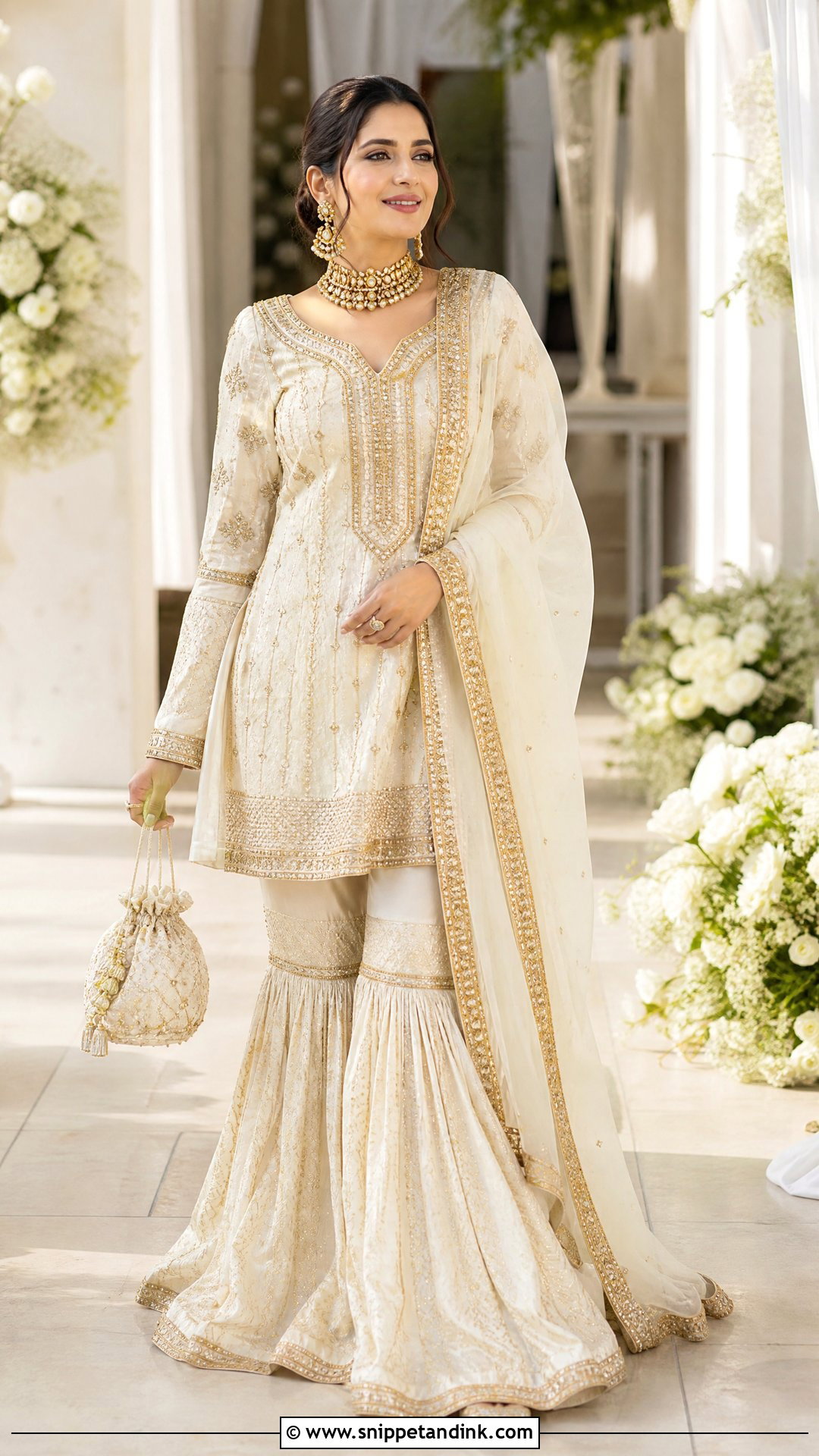
Ghararas are recognizable by the gathered band at the knee, where the fitted upper leg breaks into a wide flare. A short kameez keeps that construction on show. Gold gota, zari borders or fine floral embroidery can trace the knee band and hem. Drape a soft chiffon dupatta over both arms or pin it to one shoulder, and add a choker, earrings, juttis and a beaded potli. Ivory and gold suit daytime; burgundy, bottle green and midnight blue suit evening. Get the length exactly right. A gharara hem should just kiss the top of the foot so it swings freely without dragging on the floor.
9. Palazzo Punjabi Wedding Suit
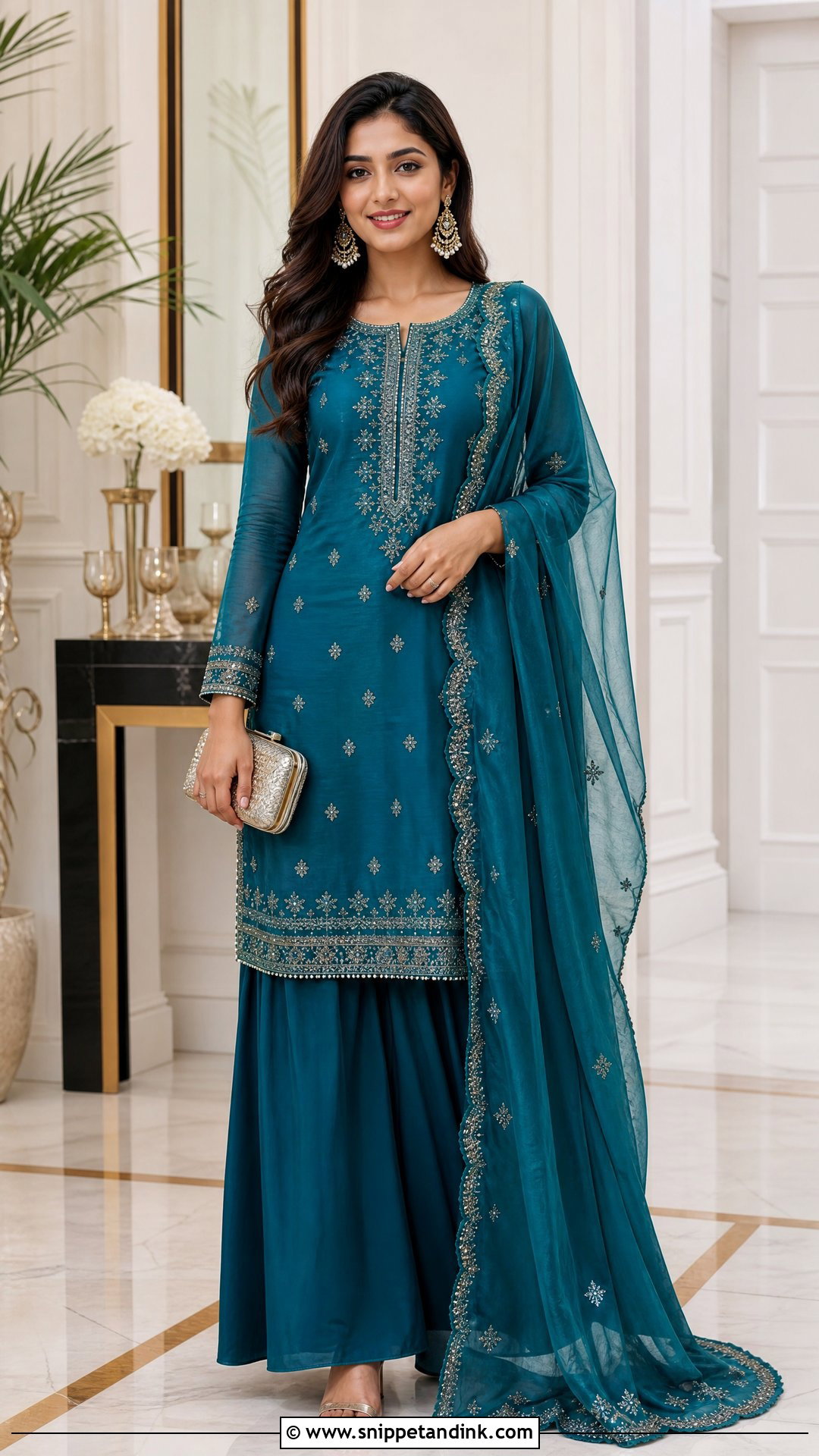
Palazzo suits are what I suggest when the day is long and comfort matters most. A straight or slightly flared kameez over wide palazzos in silk blend, georgette or crepe moves fluidly and still looks dressy. Vertical embroidery on the kameez balances the width below. A sheer dupatta with a narrow border, block heels, statement earrings and a small bag complete it. A tonal palette looks sophisticated; a contrast dupatta adds color. The trouser width should fall from the hip, not balloon from the waist, which is the difference between elegant and pyjama-like. Good for curvy figures and older relatives at a long reception.
10. Jacket Punjabi Wedding Suit
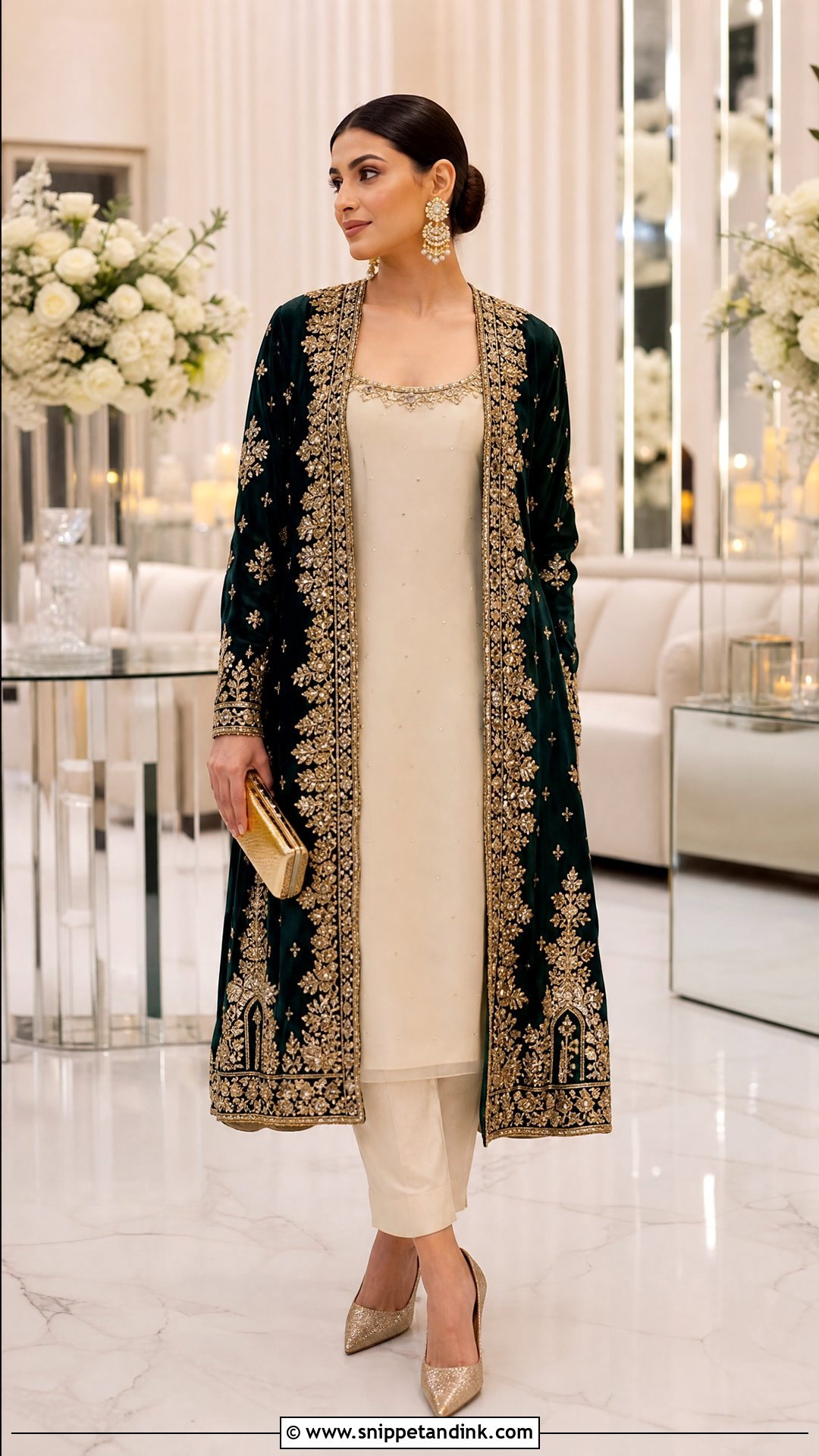
Jacket suits give you a layered look while the outfit underneath stays simple. Start with a sleeveless or short-sleeved kameez and straight pants, then add a long embroidered jacket open at the front. Calf length suits formal functions; a shorter cut suits playful ones. With the jacket as the statement, a dupatta is optional. Large earrings, a sleek clutch and pointed heels or juttis finish it. Jewel-toned embroidery over a neutral base gives contrast; tonal layering looks more refined. A long jacket over a sleeveless kameez also solves the coverage question for a gurdwara ceremony and a party in one outfit.
11. Cape Punjabi Wedding Suit
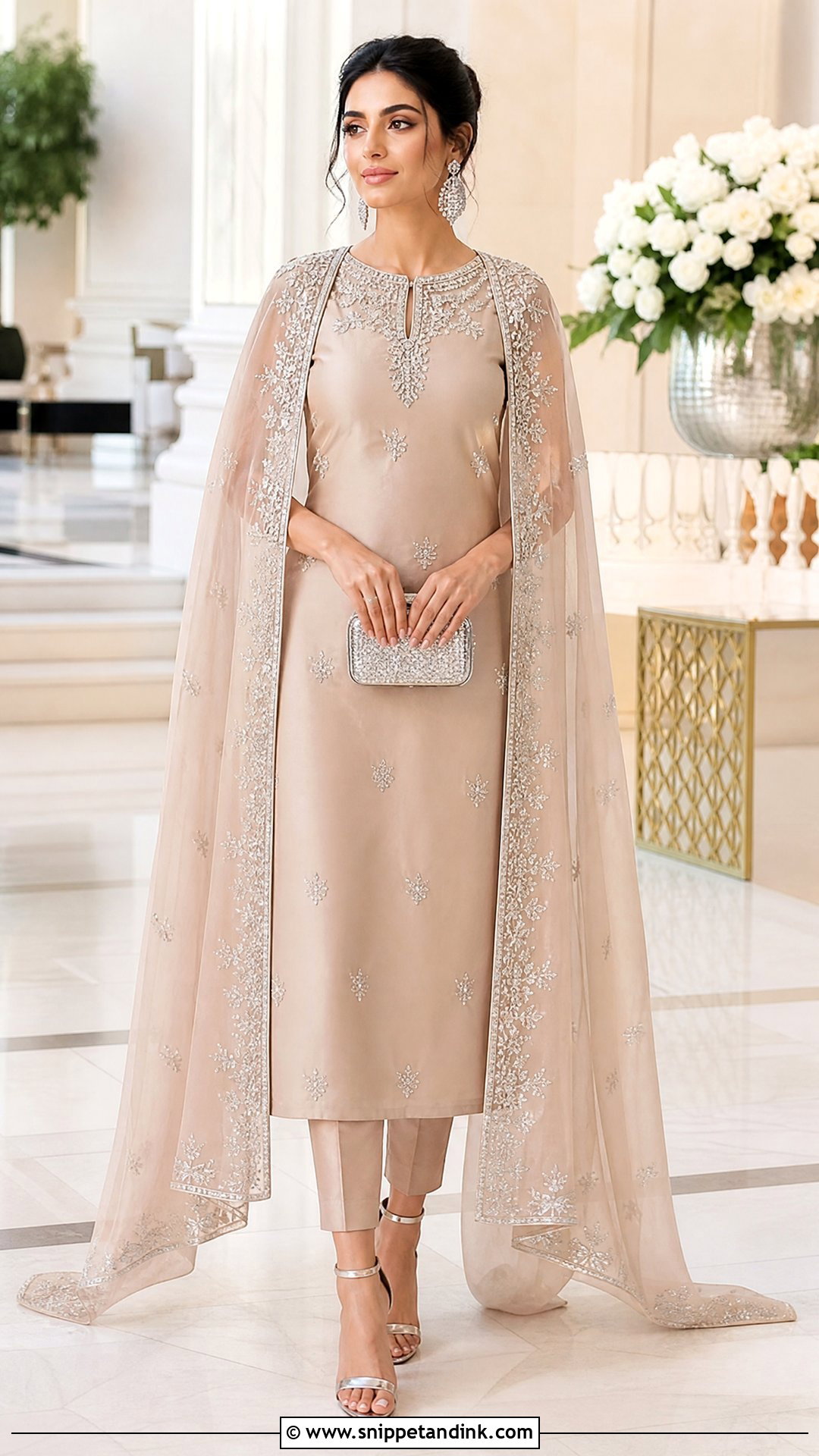
Can you look dramatic without any draping at all? A cape suit says yes. Wear a fitted kameez with straight pants, a sharara or a flowing salwar, and add a sheer embroidered cape from the shoulders. Lift your arms in the fitting room; a well-cut cape moves with you rather than pulling. Its length should suit the bottom: shorter over a sharara, longer over straight pants. Skip the necklace, since the neckline already has an extra layer, and choose sparkling earrings, a jeweled clutch and simple metallic heels. Soft grey, icy blue, mauve or champagne suits a reception or cocktail evening.
12. Ivory Punjabi Wedding Suit
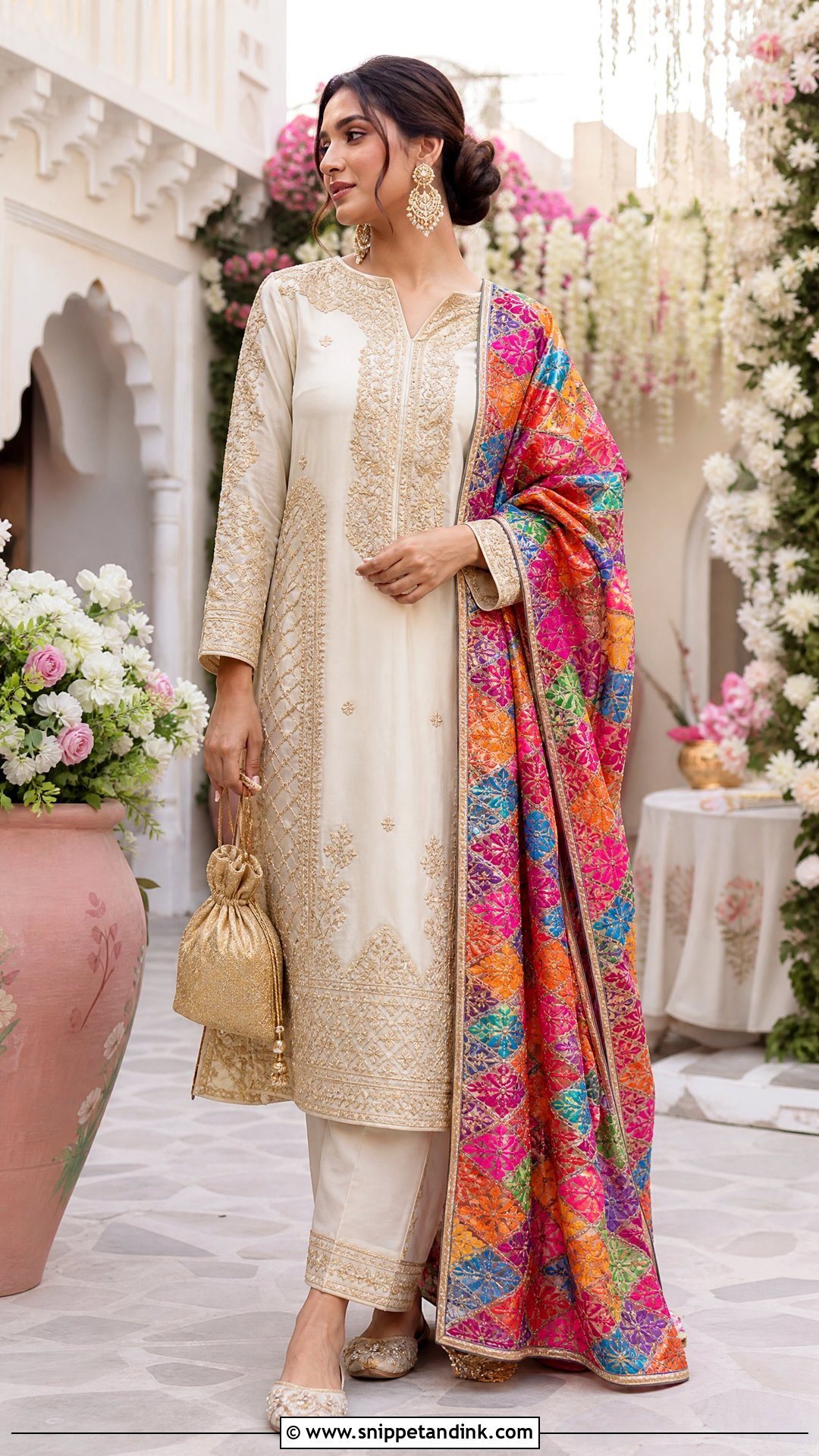
An ivory Punjabi wedding suit looks fresh in daylight, but a plain ivory can look flat in photos, so it needs gold, pearl or multicolor threadwork. Pair it with a salwar, churidar or straight trousers depending on how formal the event is. A phulkari dupatta makes it bright and Punjabi; a gold organza one keeps it soft. Kundan earrings, ivory juttis and a gold potli finish it. In some families pale colors are associated with mourning or reserved for the bride, so guests should check first. Where it is welcome, it is a versatile base for colorful accessories.
13. Green Punjabi Wedding Suit
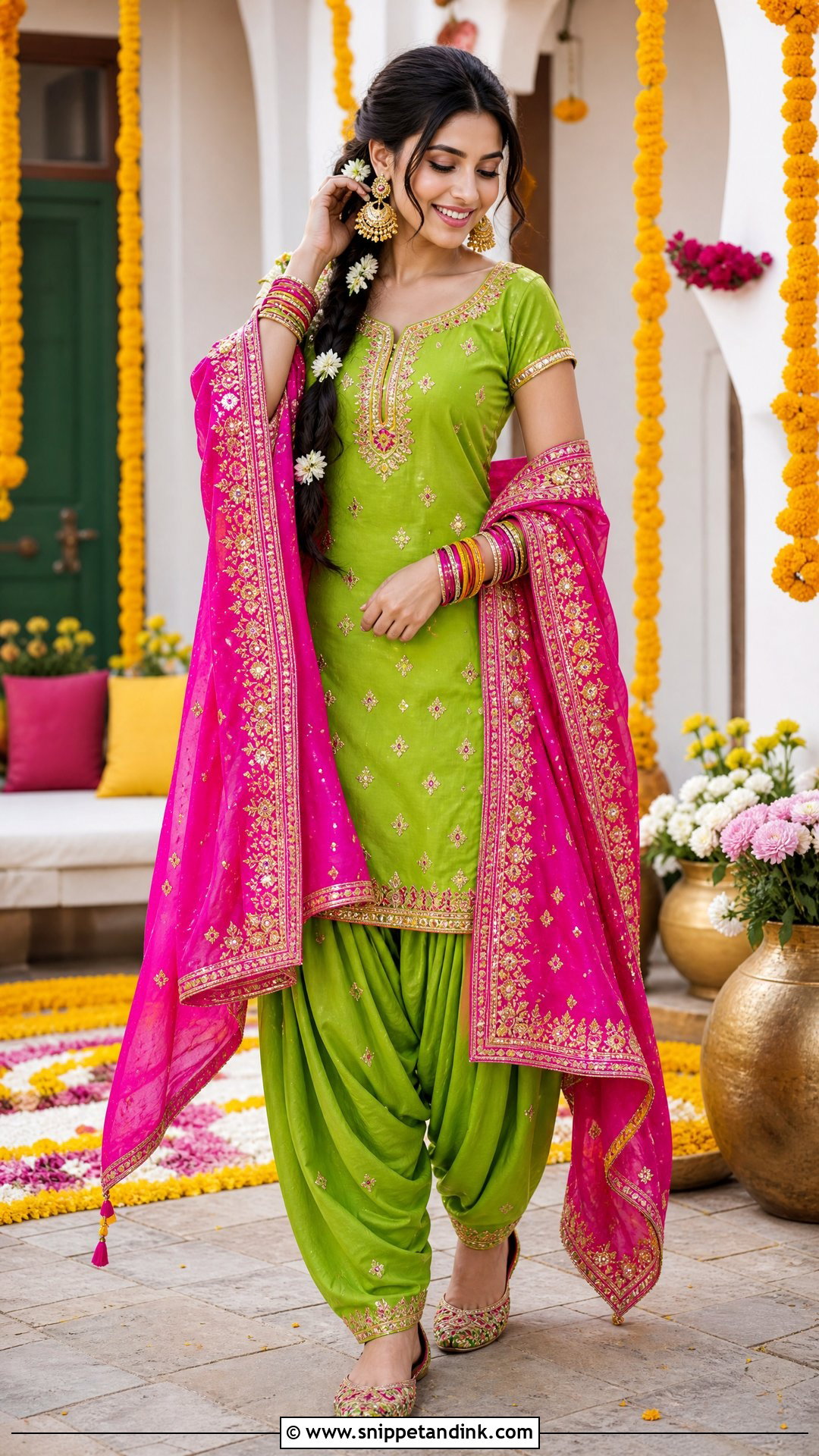
Green is one of the most versatile wedding colors in a Punjabi wardrobe. For a mehndi, a parrot-green short kameez with a full Patiala and a pink embroidered dupatta is pure fun. For evening, a bottle-green straight suit with antique gold zari and a sheer matching dupatta looks formal. Emerald looks richest in velvet, silk and georgette; pistachio is the gentle daytime shade. Jhumkas, stacked bangles and juttis or low block heels suit any of them. When you add contrast, repeat one accent color in the dupatta, jewelry or bag rather than introducing several. A pink lip is often all the contrast green needs.
14. Mustard Punjabi Wedding Suit
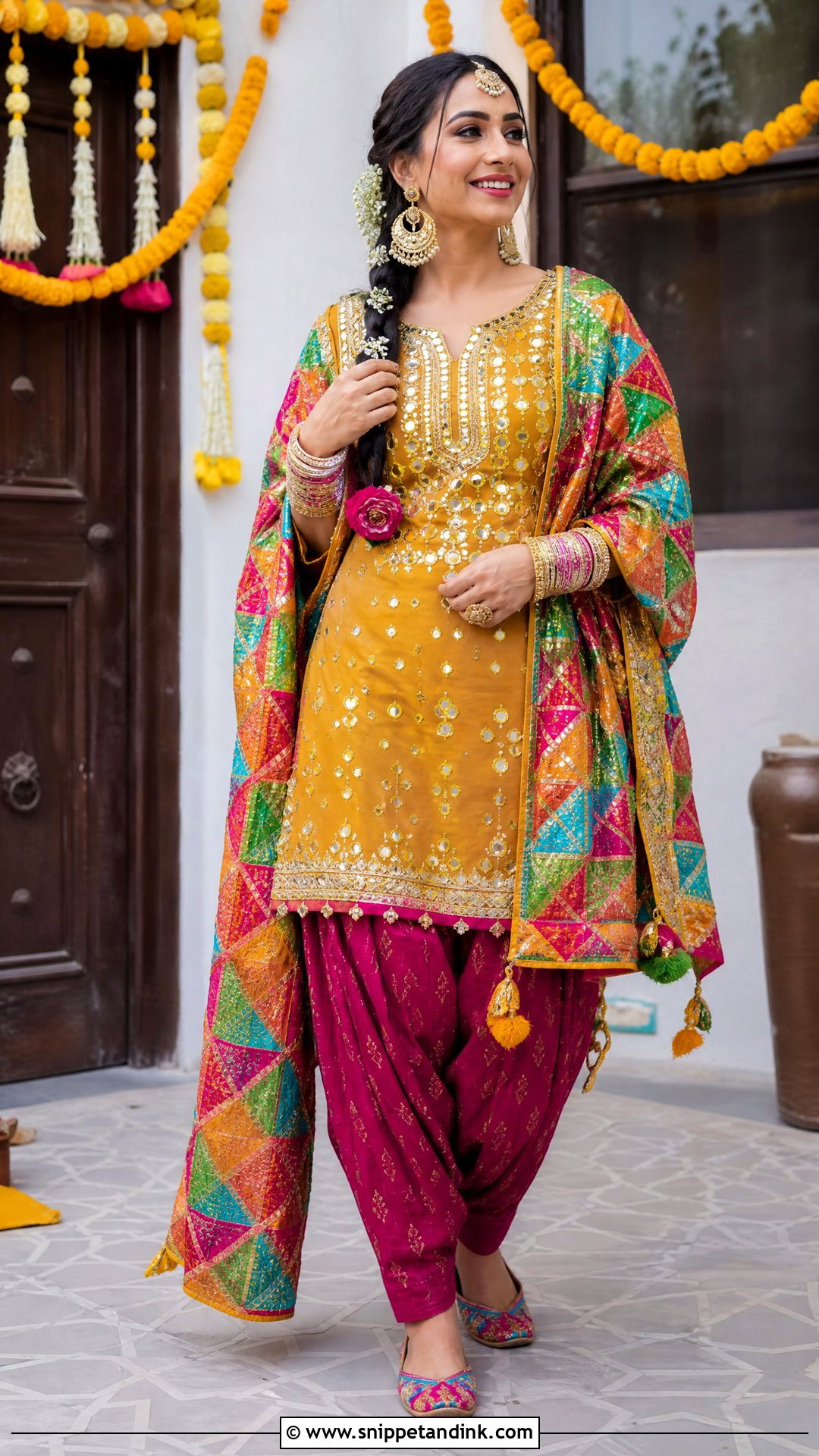
Mustard is cheerful under bright daylight and can look muddy under yellow indoor lighting, so I keep it for mehndi and jaggo rather than evening receptions. A short or medium kameez with delicate mirror work, gota or colorful thread can go over a deep magenta Patiala for contrast or matching pants for a calmer look. A phulkari dupatta in pink, orange, green and mustard makes it celebration-ready. Oxidized gold jhumkas, bright bangles and flat embroidered juttis suit it, with fresh flowers in a braid. Keep makeup fresh and avoid very dark accessories, which drag the color down.
15. Blue Punjabi Wedding Suit
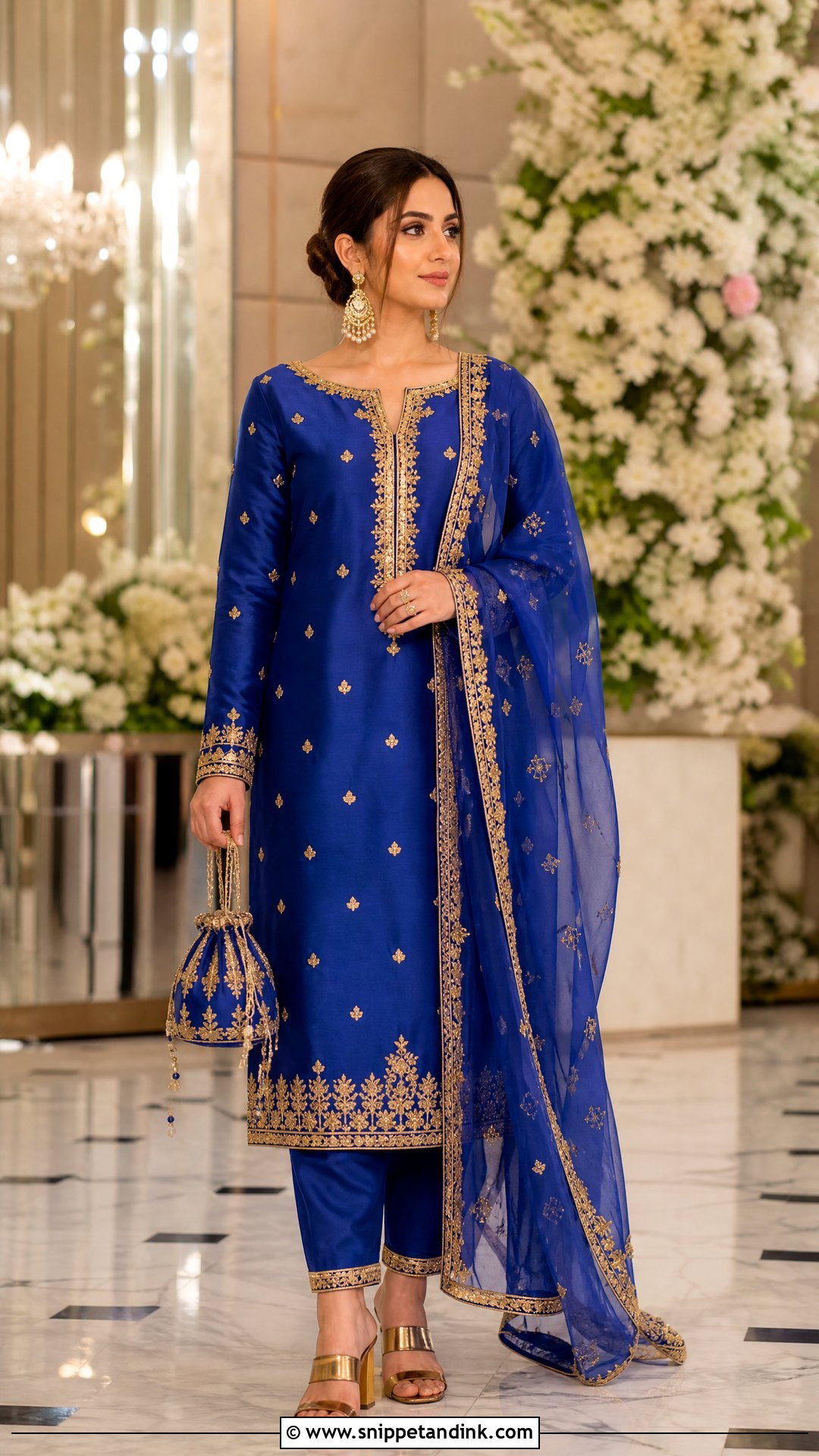
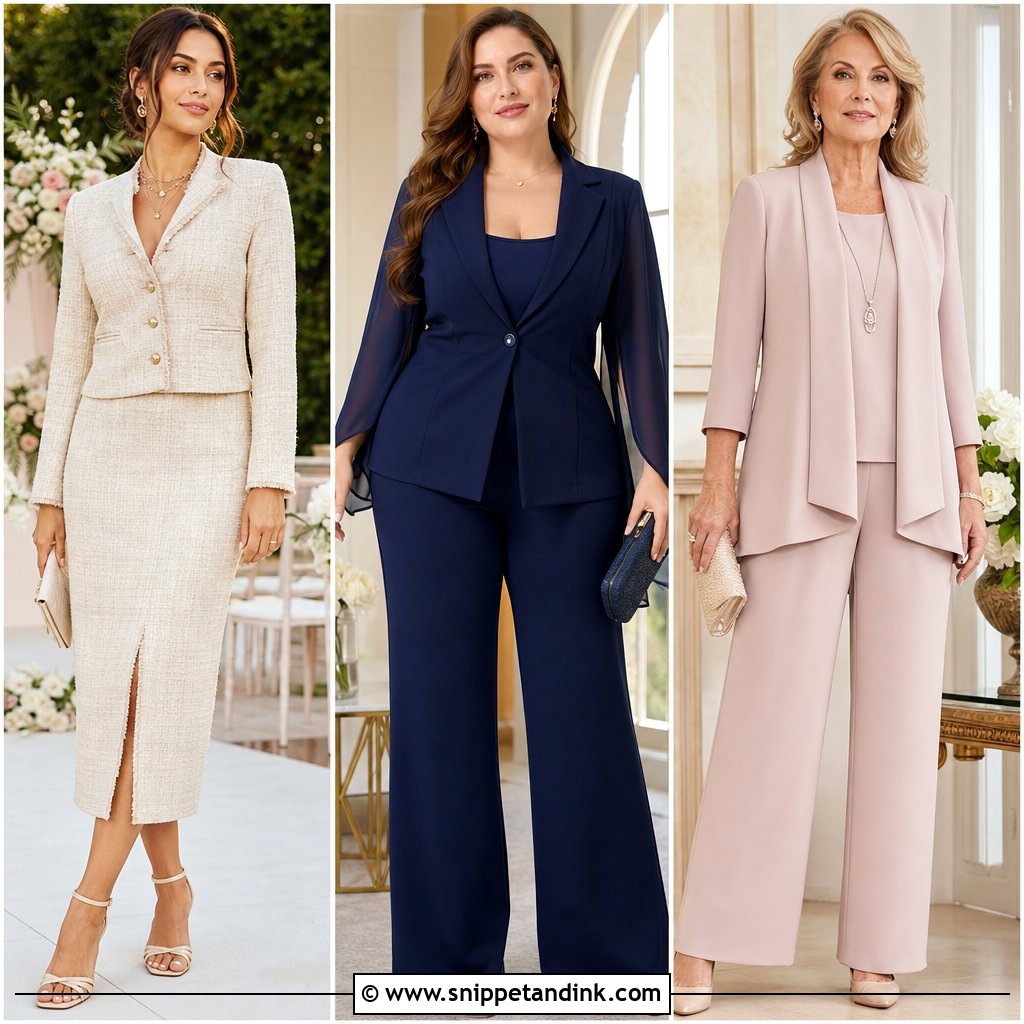
Blue runs from the softest powder to deepest navy, and the bottom you choose should follow the kameez. Fitted pants go with a long straight top, a Patiala with a short kurti, a sharara with a peplum. Powder blue with silver embroidery suits a daytime engagement; royal blue silk carries an evening wedding; navy velvet with antique gold feels rich in winter. Match the jewelry to the embroidery, silver or kundan. My one firm rule with blue is consistency in metal: repeat the same finish across embroidery, earrings, shoes and bag rather than mixing gold and silver.
16. Pink Punjabi Wedding Suit
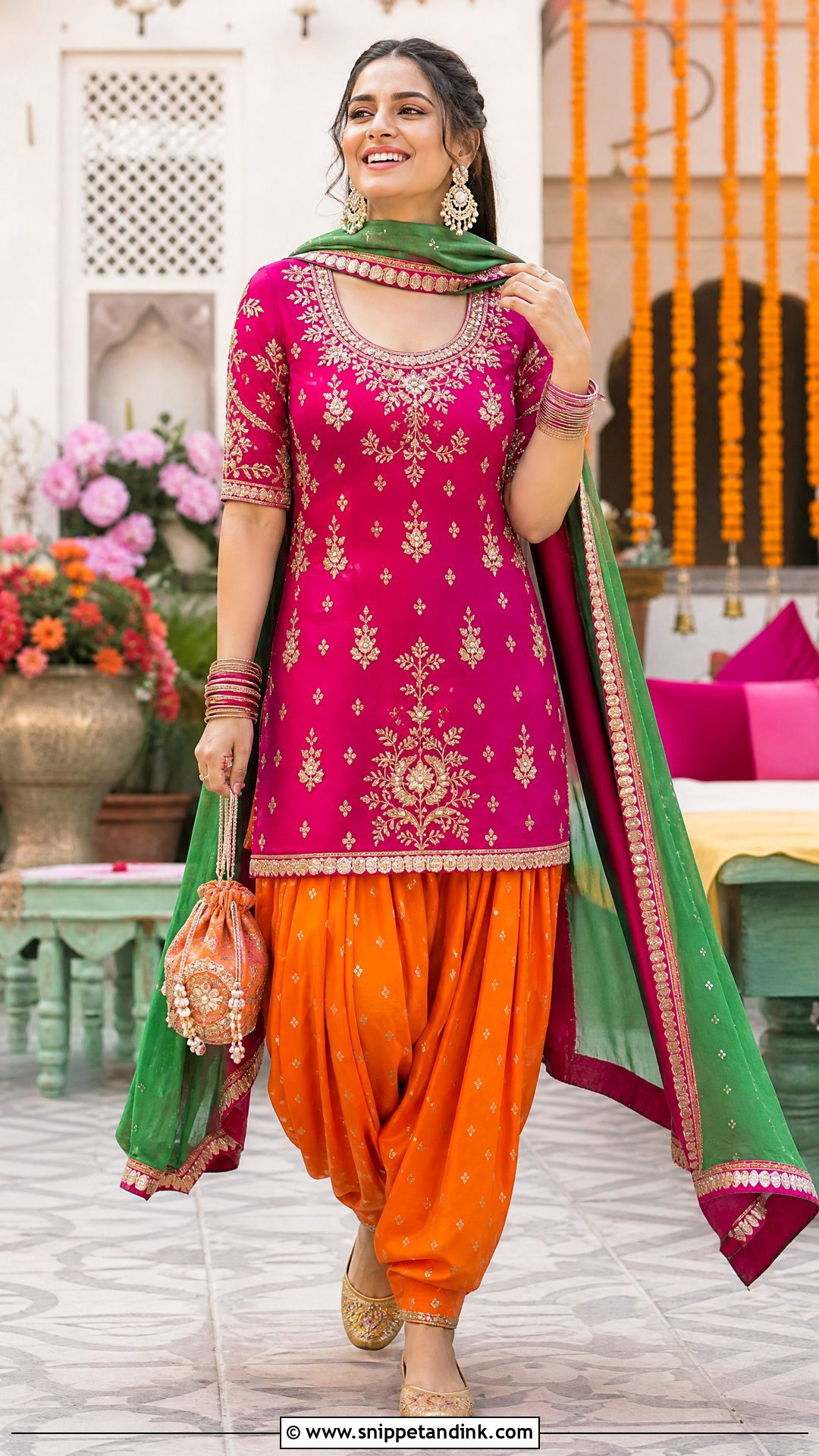
Pink spans soft blush to vivid fuchsia, and it suits nearly every Punjabi function. A bride at a pre-wedding event can wear a heavily embroidered magenta Patiala; a guest might choose a rose straight-cut set with lighter work. A short pink kameez with an orange or green salwar is energetic and traditional. For something quieter, keep kameez, trousers and dupatta in one tonal family. Pearl or kundan earrings, matching bangles, a small potli and gold juttis complete it. If the neckline carries dense embroidery, leave off the necklace. Rose-toned makeup sits well with it.
17. Purple Punjabi Wedding Suit
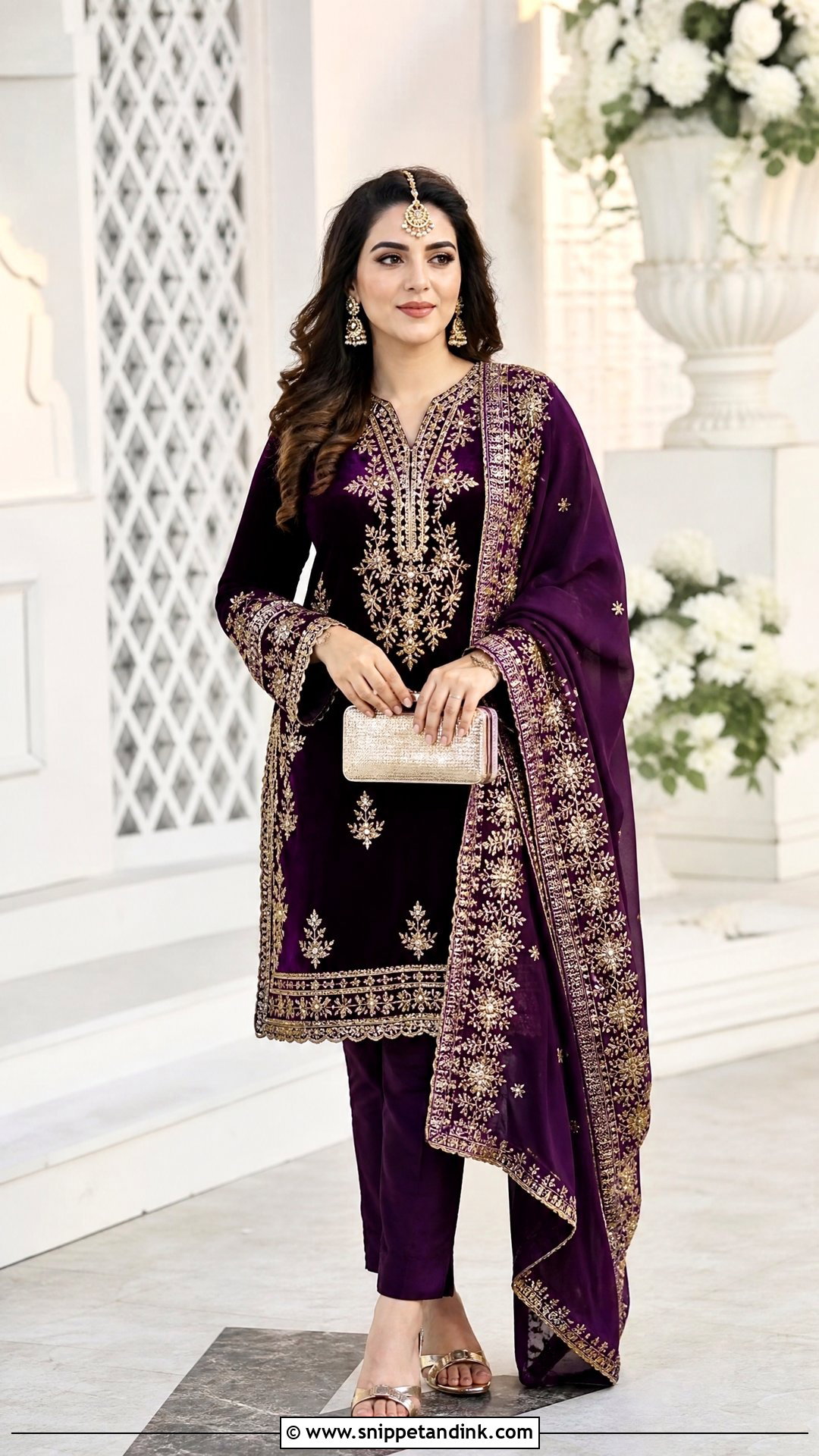
Purple is a confident alternative to the usual red and pink. Deep plum velvet suits a winter reception, rich violet silk an evening ceremony, and dusty lavender georgette a daytime event. A long kameez with cigarette pants looks sleek; a short top with a sharara adds movement. Gold embroidery warms dark purples, while silver or pearl suits lavender. Matching earrings, a fine maang tikka, metallic heels and a structured clutch complete it. Keep the dupatta light and pin it so it does not spoil the line. Lavender with ivory is soft; plum with an emerald or fuchsia border is bold.
18. Mirror Work Punjabi Wedding Suit
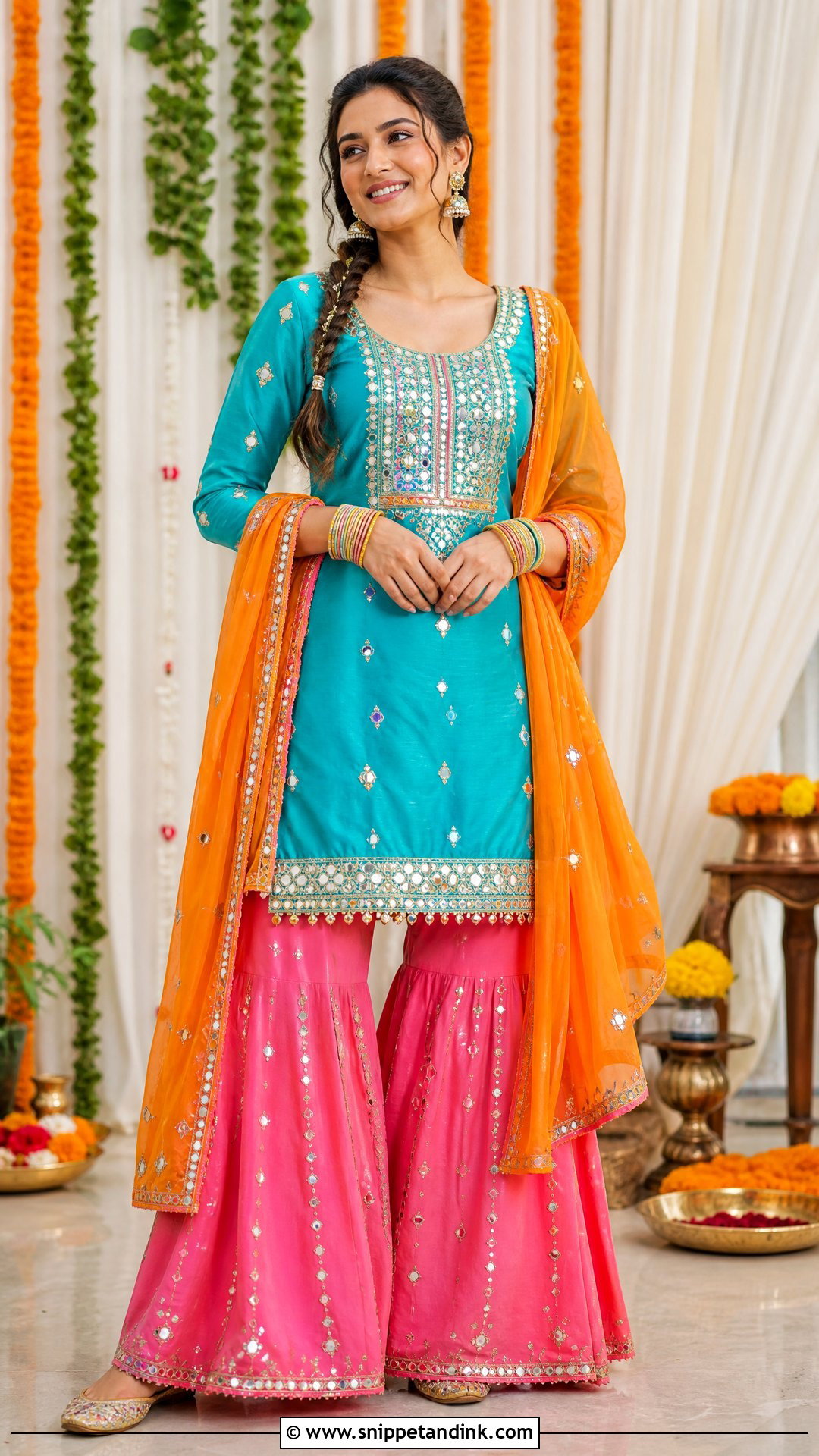
Mirror work has been part of Punjabi and Gujarati festive clothing for generations, and it is at its best at a mehndi or sangeet. Look for mirrors held by a tight ring of embroidery, not glued on; glued mirrors pop off, and loose ones catch the dupatta. Pair the kameez with a Patiala, sharara or straight trousers depending on how much volume you want. Turquoise, rani pink, orange and lime suit the mood, though a neutral base makes multicolor mirrors stand out more. Simple jhumkas, stacked bangles and plain juttis are enough. A braid keeps hair out of the embellishment.
19. Chanderi Punjabi Wedding Suit
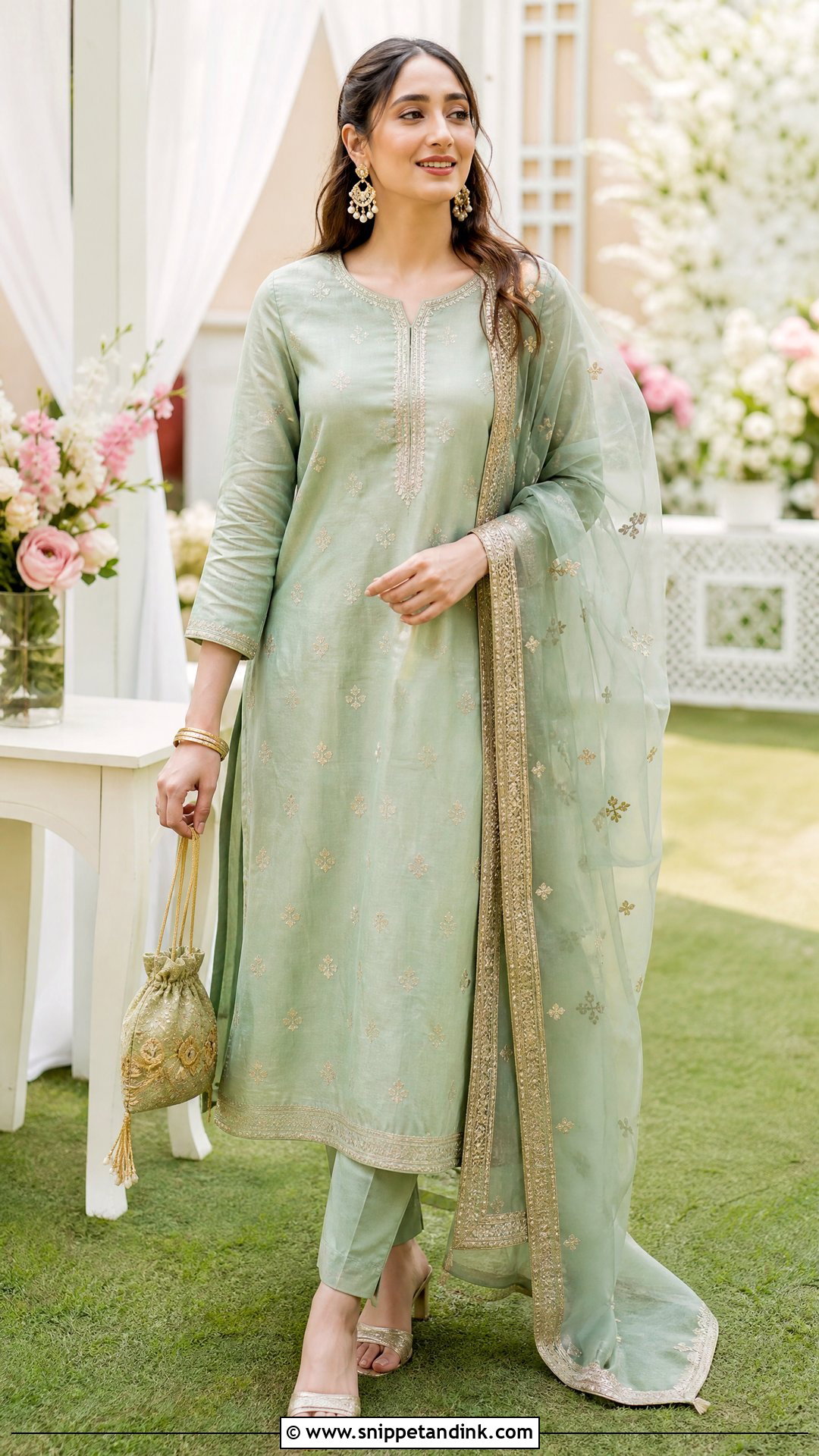
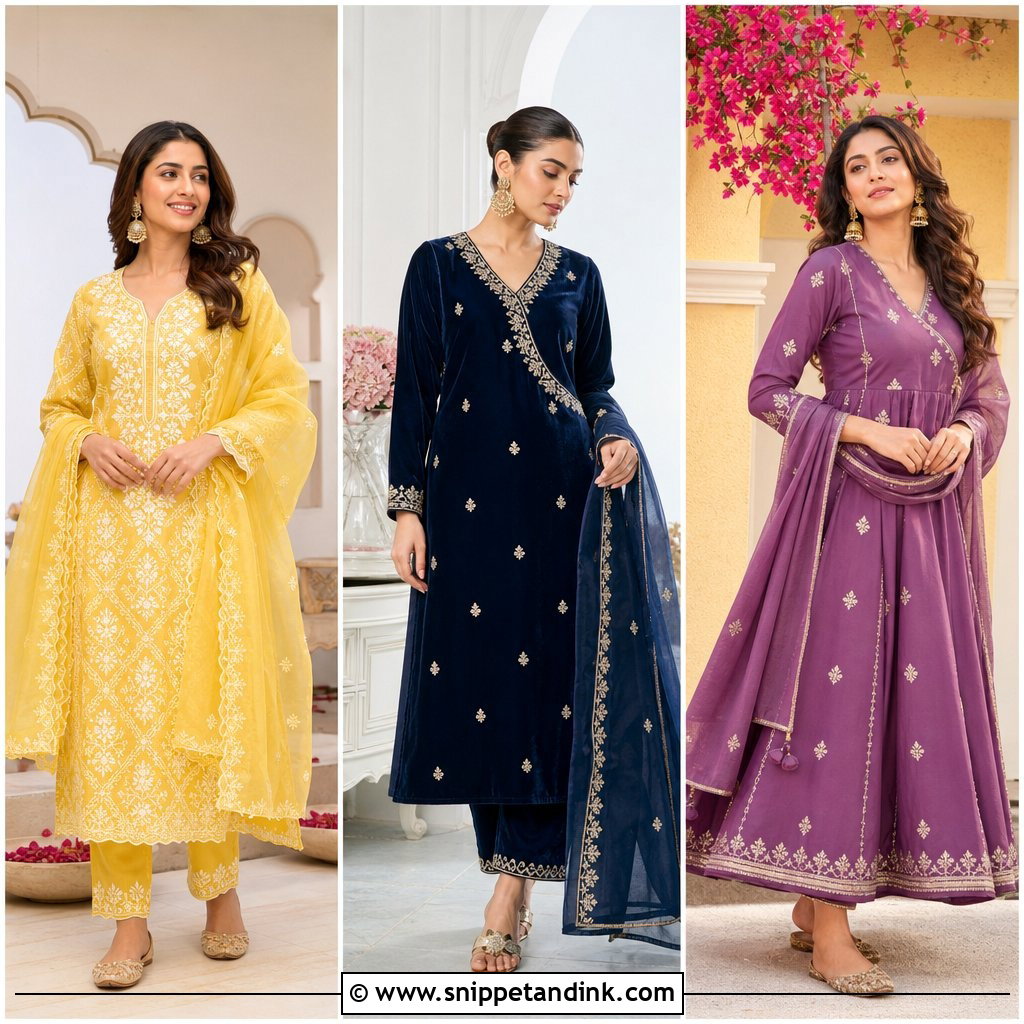
Chanderi is a light, slightly sheer weave from Madhya Pradesh, often silk and cotton together, with a soft sheen. A Chanderi suit feels cool and polished at a daytime wedding. Choose a straight or gently flared kameez with a smooth lining, and pair it with cigarette pants, churidar or a lightly pleated salwar. The sheen suits delicate zari borders, woven motifs and restrained embroidery. Add an organza or Chanderi dupatta with a matching border. Pearl drops, slim bangles, block heels and a small potli finish it. Chanderi creases easily, so steam it on the morning and hang it, never fold it.
20. Silk Salwar Punjabi Wedding Suit
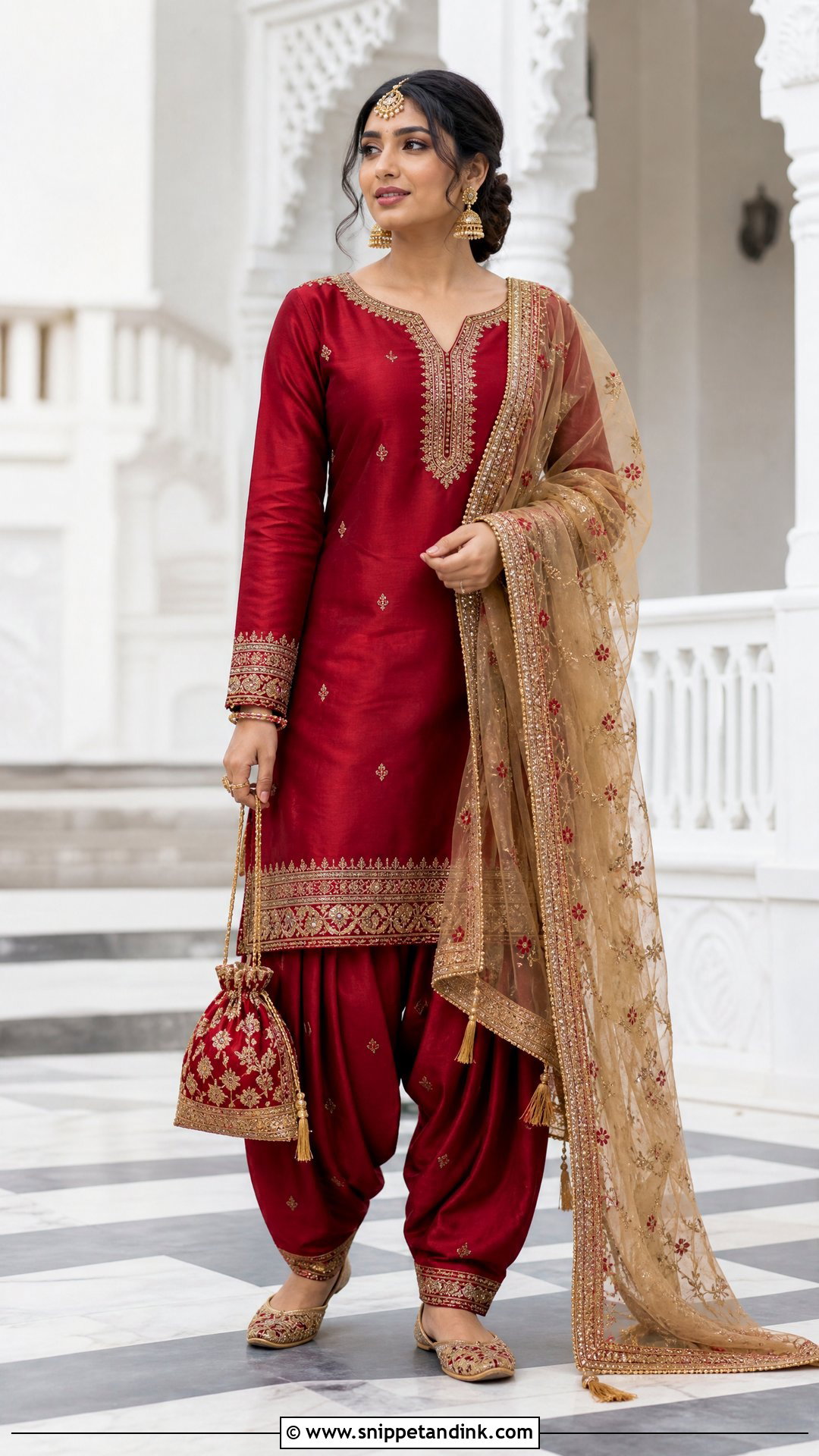
Silk salwar suits are dressy and wearable, and they move from ceremony to reception without a change. Choose a structured kameez with side slits and a smooth lining, with a traditional salwar or a fuller Patiala. Ruby, emerald, peacock blue and deep coral show off silk’s natural luster. Add zari at the neckline, sleeves and hem, but leave plenty of plain silk showing so it does not look heavy. A contrasting organza dupatta, gold jhumkas, juttis and a drawstring potli finish it. Silk has little stretch, so check the underarms and shoulders while you raise and cross your arms in the trial.
Hold the Dupatta Under Your Chin by a Window
The fastest color test I know needs nothing but daylight. Stand by a window, hold the dupatta or kameez fabric just under your chin and look at your face, not the cloth. A good shade makes your skin look even and your eyes brighter. A wrong one shows up straight away as shadows under the eyes or a grey cast around the mouth.
Do the same test with the metal. Hold a gold piece and a silver piece against your neck in turn; one will almost always look more natural. That tells you whether to lean toward zari and antique gold or toward silver thread and pearls, and it is often a better guide than the color charts sold in shops.
Finally, check the shade under the light you will actually wear it in. Mustards, olives and some pinks change noticeably between daylight and warm indoor bulbs. If the wedding is in an evening hall, look at the fabric under a warm lamp at home before you buy.
Start With the Function, Then Let the Fabric Follow
The best Punjabi outfit honors tradition and still lets you move through ceremonies, meals, photos and the dance floor. Start with a silhouette that feels comfortable and fits the occasion, then coordinate fabric, color, embroidery, dupatta, jewelry, shoes and bag as one look. Tailoring matters more than decoration, especially at the shoulders, waist and trouser length. Classic Patiala, a modern cape set, a flowing Anarkali or a festive sharara can all work for you, as long as the fit is right and you can wear it from the first ritual to the last song.
You'll Like These Ideas:


Leave a Reply