
A marriage outfit has to do several jobs at once: respect the family’s traditions, suit the function, and still let you breathe through hours of rituals. The looks below are versatile Indian and South Asian looks for brides, sisters, bridesmaids, relatives and guests, from classic sarees and statement lehengas to suit sets and fusion gowns. Occasion wear has relaxed a lot. Pre-draped sarees, coordinated sets and Indo-Western gowns now sit comfortably next to handwoven silk. When I dress someone, I start with three questions: which ceremony, how hot the venue will be, and how close she is to the bride. The closer the relationship, the more embroidery and jewelry she can carry without overshadowing anyone.
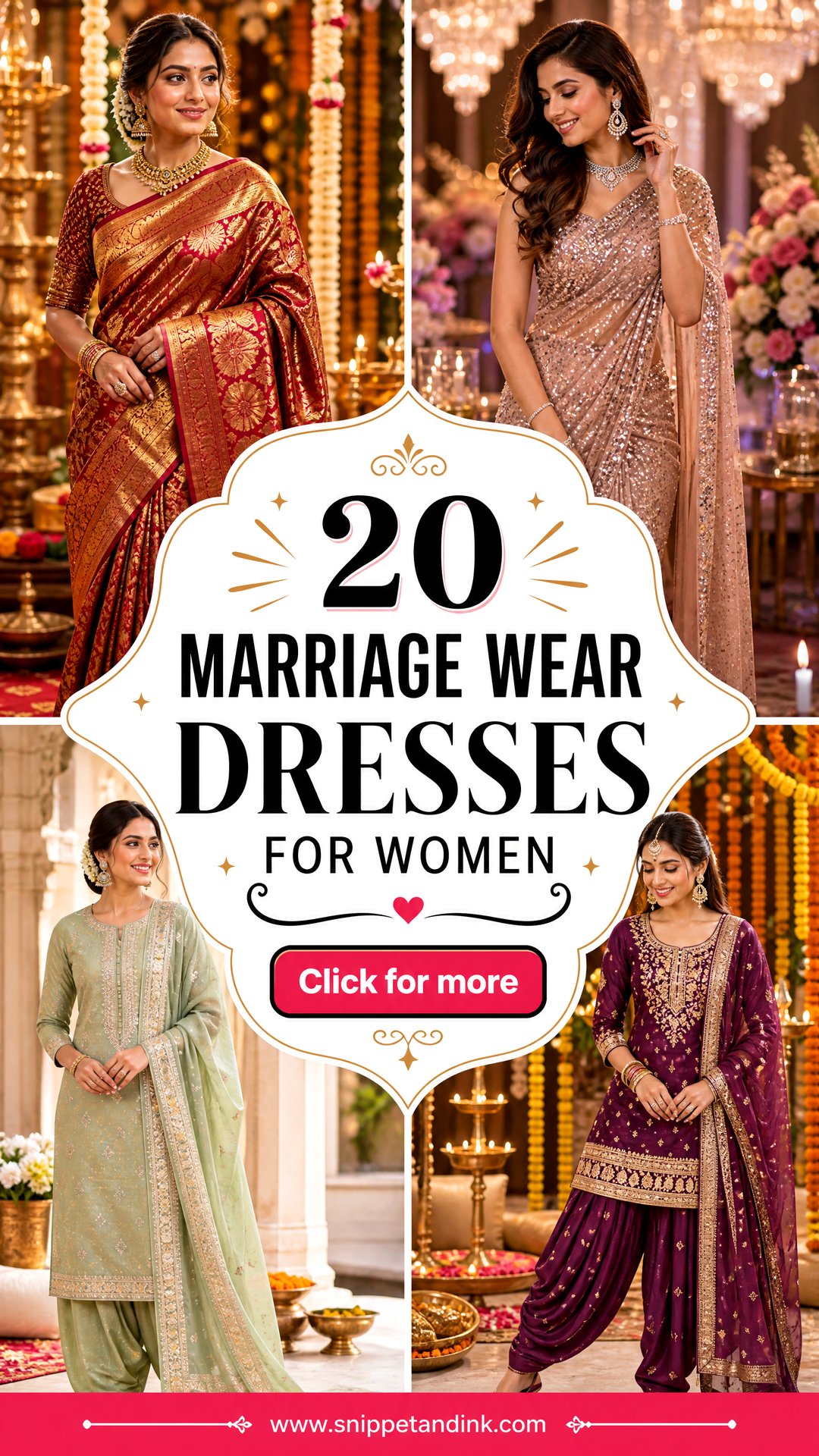
Dressing for Your Role in the Family, Not Just the Event
Most of the trouble I see at Indian weddings isn’t a bad outfit. It’s the right outfit worn by the wrong person or at the wrong function. A sister in a heavily worked red lehenga at the pheras sits awkwardly in the photos; a bride’s mother in a breezy cotton suit at the reception looks underdressed. Before choosing, I map the outfit to two things: the function and your closeness to the couple.
- The bride owns the heaviest embroidery and, in many families, red or deep bridal shades at the main ceremony. Everyone else steps down a level.
- Sisters and close cousins can wear lehengas and rich colour, but should check the bride’s colours first so nobody clashes or matches by accident.
- Mothers and aunts usually look best in silk sarees or structured suits with real jewelry, rather than trend-led pieces.
- Guests should avoid red and heavy gold at the ceremony unless the family says otherwise, and keep white and black for when the hosts approve them.
Then match weight to the time of day. Morning rituals such as haldi or the pheras outdoors want cotton, Chanderi or light silk. Evening receptions can take velvet, sequins and heavier work. A quick question to the family about any colour customs saves a lot of awkwardness, because these vary between communities.
1. Red Bridal Lehenga for Marriage
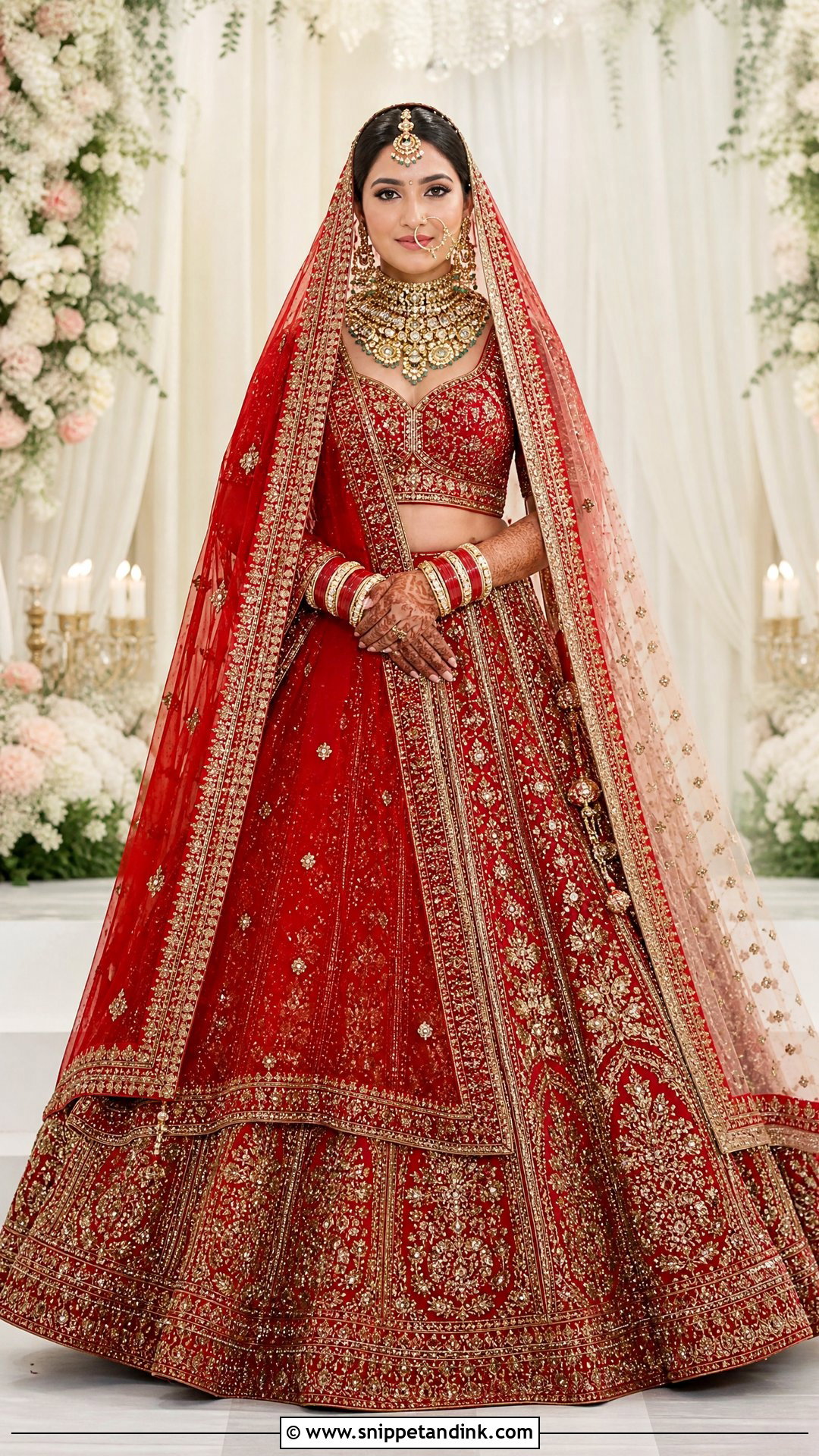
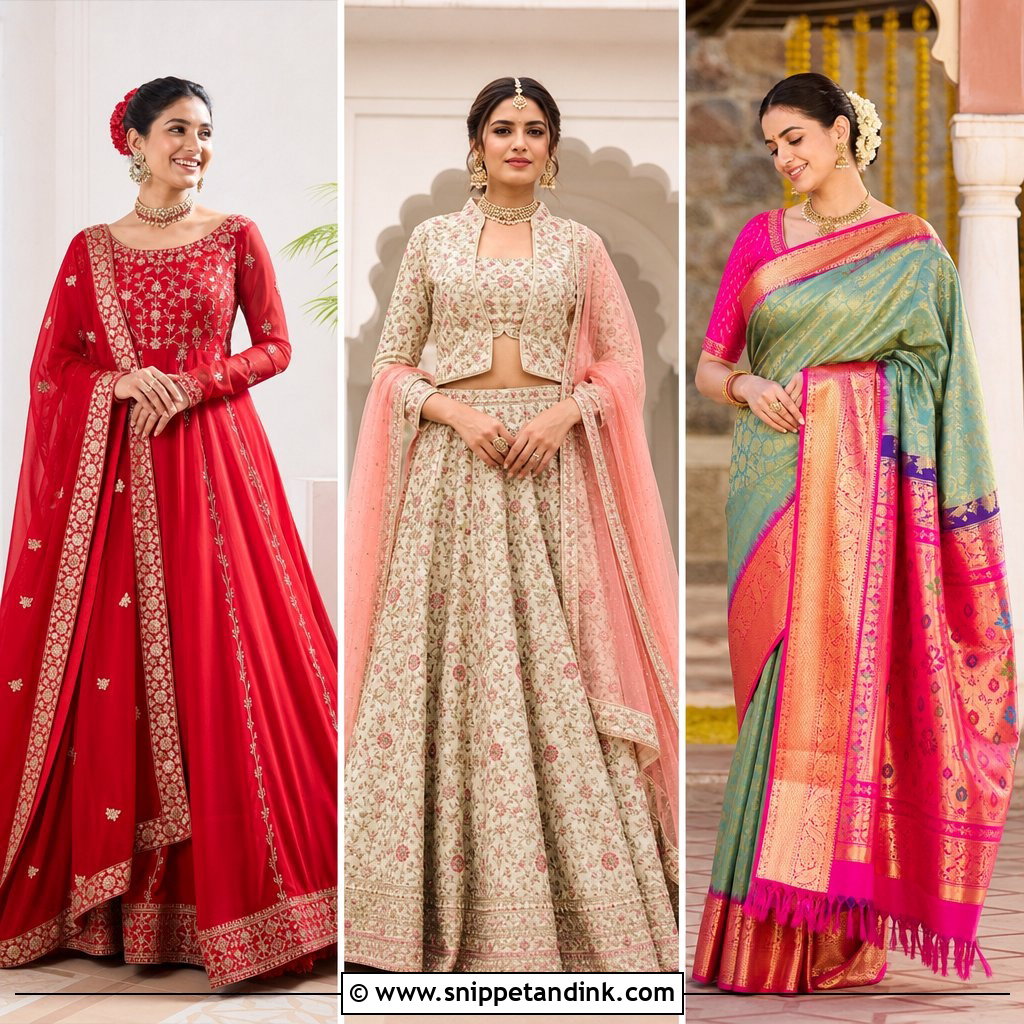
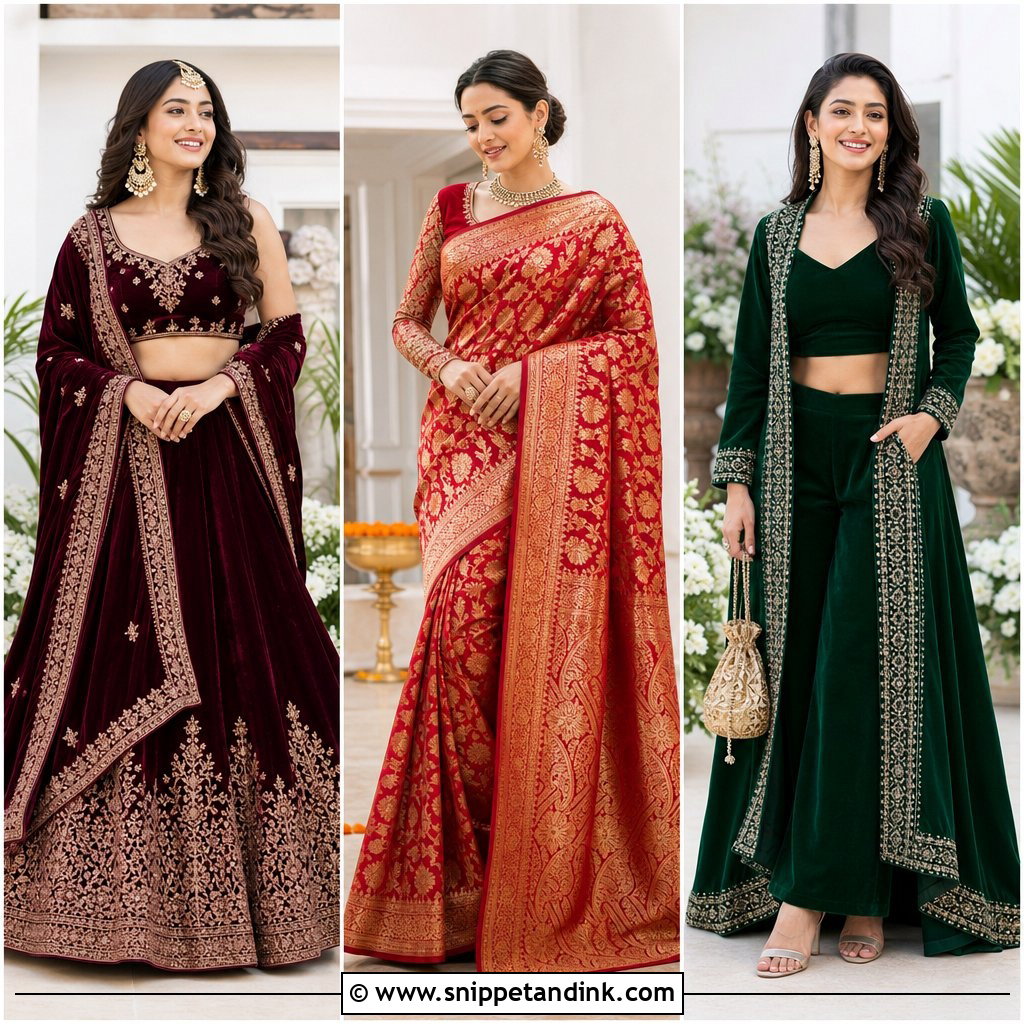
Red is still the colour most families picture for the pheras, and a red lehenga carries that weight. A structured blouse, full skirt and dupatta worked in zari, zardozi, resham or sequins is the classic build. Crimson, vermilion and ruby flatter a wide range of skin tones, but I hold each against the bride’s face in daylight, because a blue-based red and an orange-based red read very differently next to warm undertones. Spread the embroidery evenly so the skirt doesn’t look bottom-heavy. A high waist defines the figure; a longer blouse or a second dupatta across the torso adds coverage. Choker, long necklace, bangles and juttis under the hem finish it, with a neat bun or centre parting and flowers. Ask how much the skirt weighs before you buy. Some heavily worked bridal lehengas are genuinely tiring to stand in for a long ceremony.
2. Pastel Embroidered Lehenga for Marriage
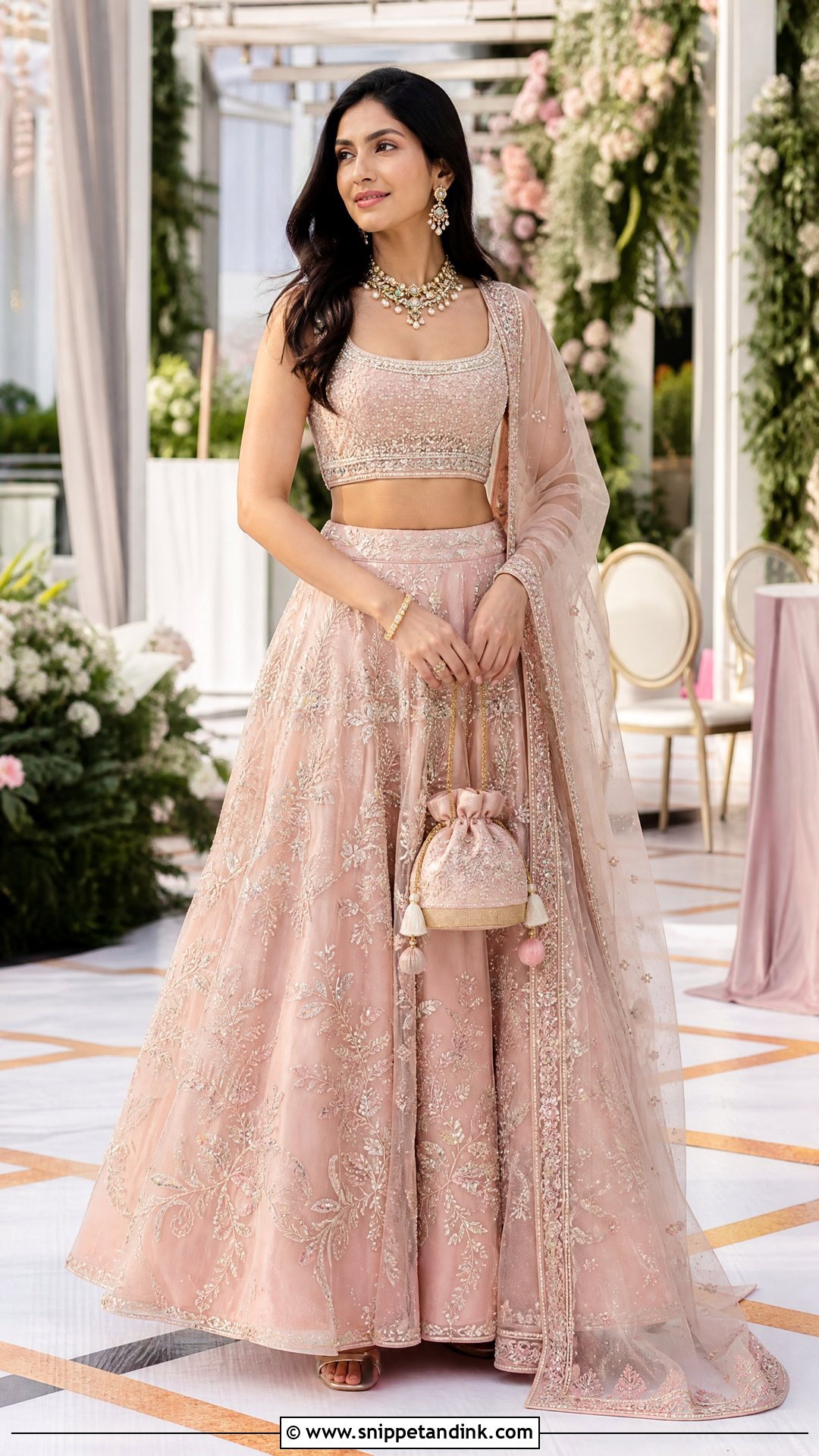
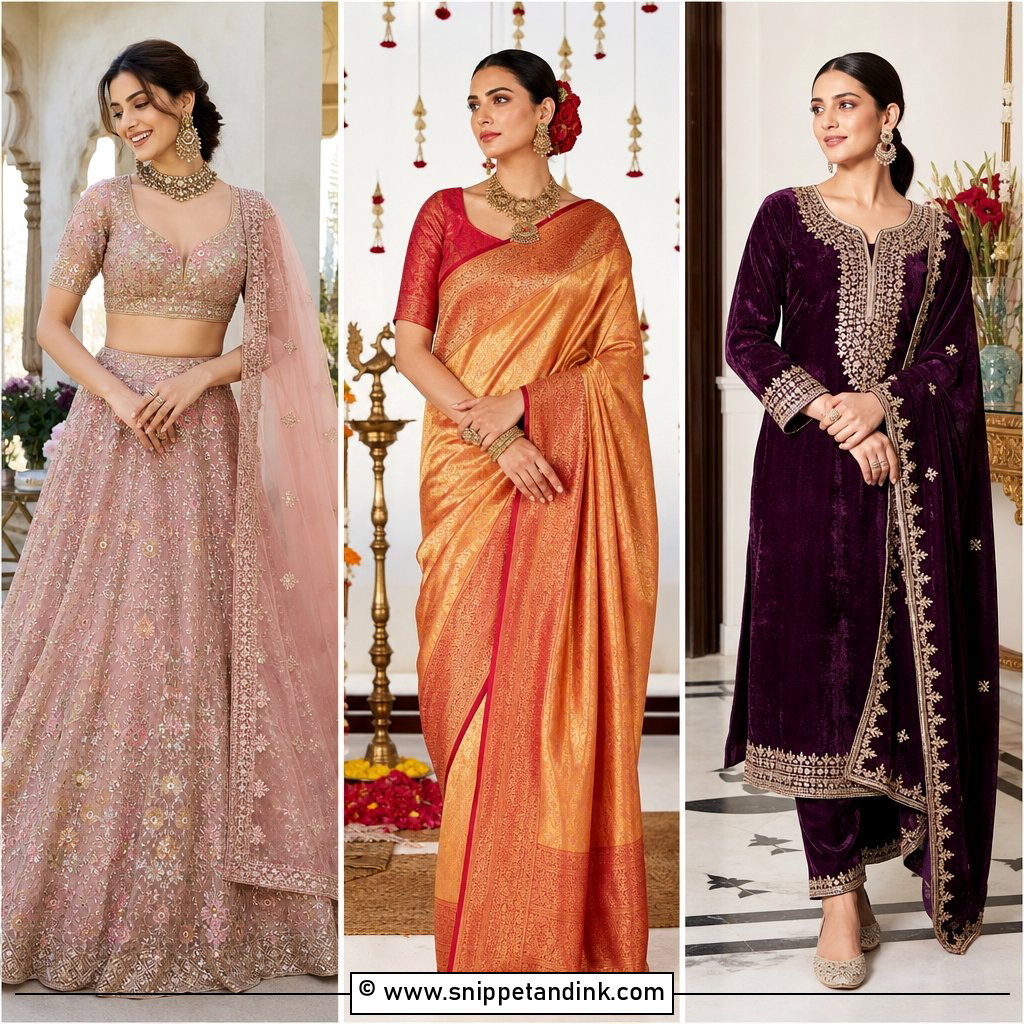
Pastels let a bride or bridesmaid feel dressed up without the visual weight of deep bridal colours. Blush, powder blue, pistachio, lavender and peach take pearl, thread and fine sequin work well. I’d pair the skirt with a supportive blouse and a net or organza dupatta. Tonal embroidery looks refined; a contrasting border helps the outfit hold its shape in photos, since pale-on-pale can flatten under bright sun. A kundan necklace, drop earrings, potli and metallic block heels suit it, with a braided bun or loose waves. Daytime ceremonies, engagements and bridesmaid lineups are where pastels shine. If the day involves stairs or dancing, choose a skirt volume you can lift with one hand.
3. Banarasi Silk Saree for Marriage
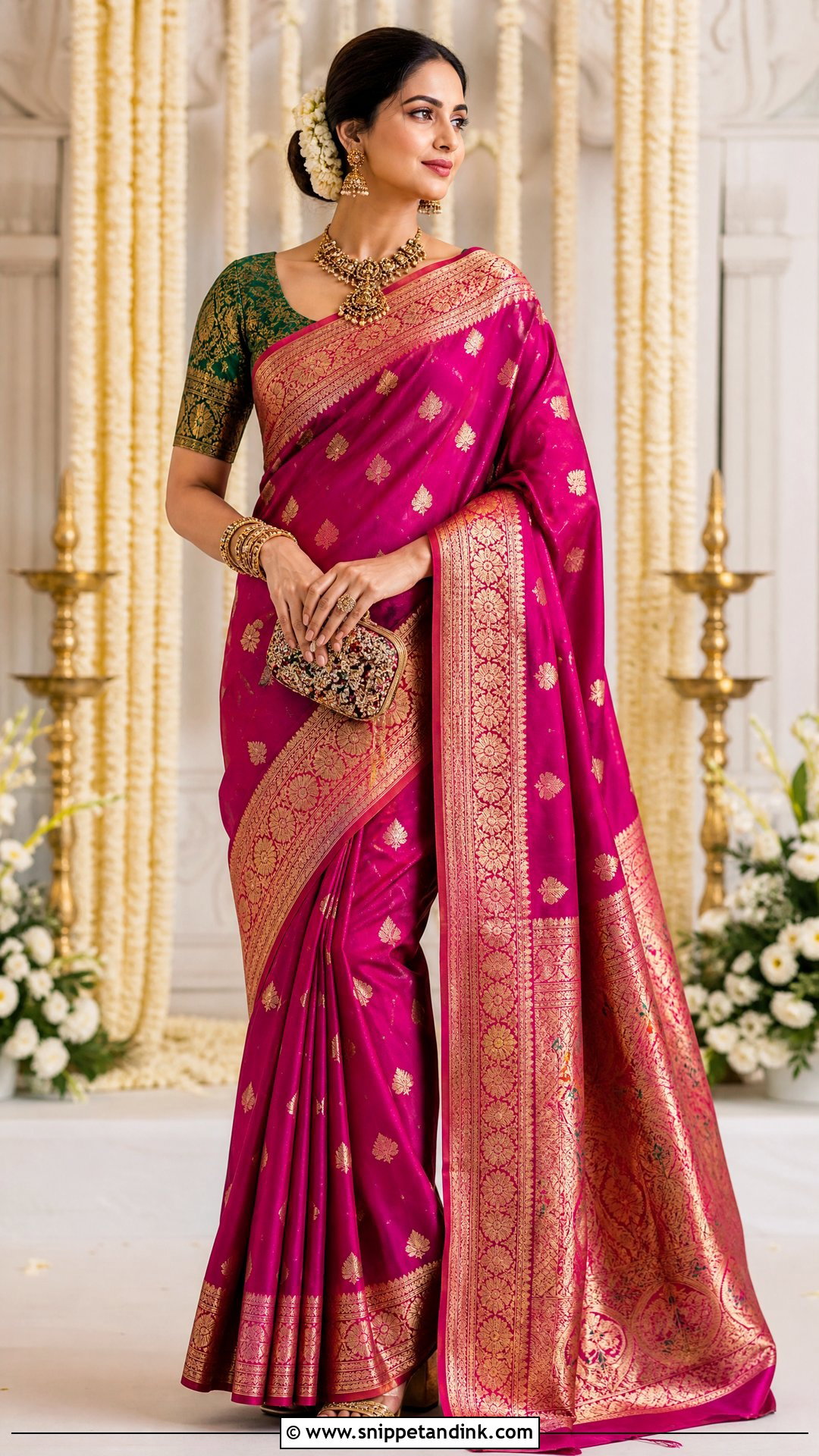
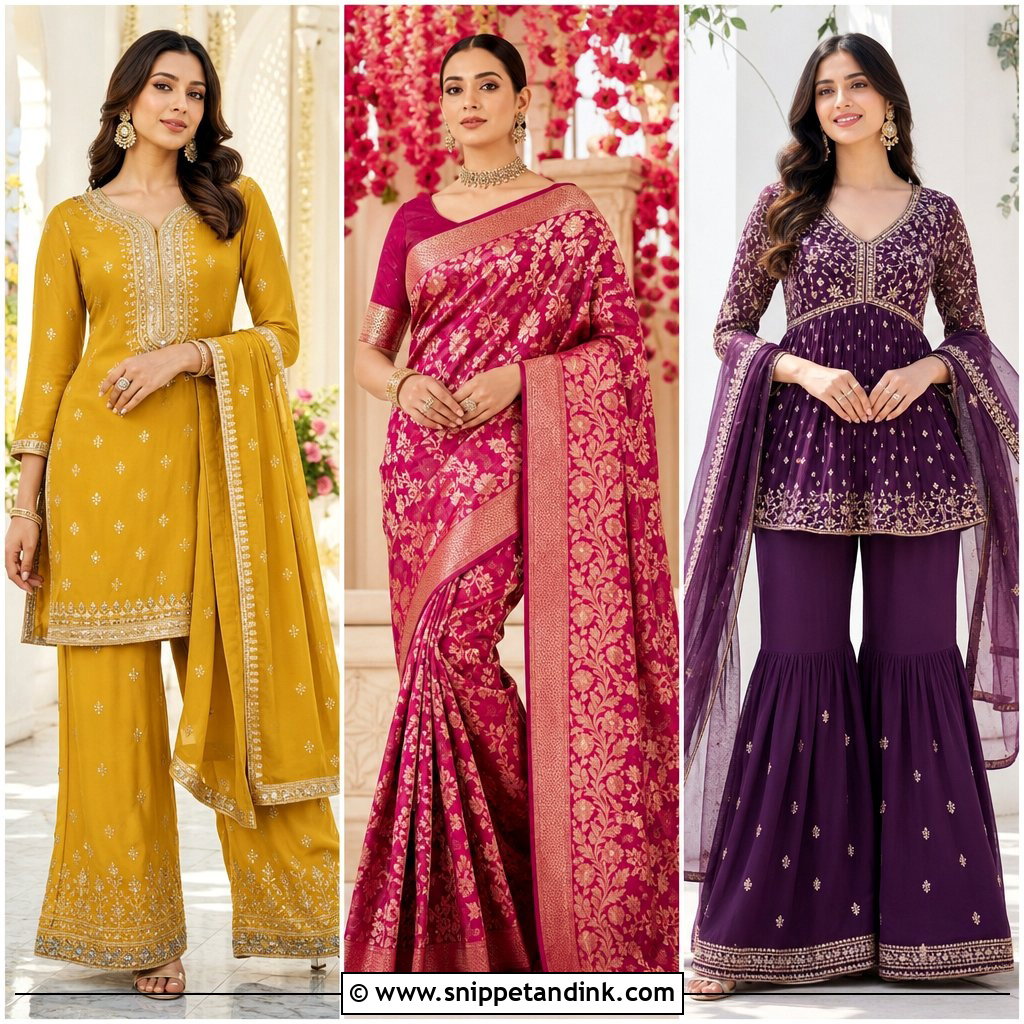
Banarasi silk has a woven richness that embroidery can’t imitate, and jewel tones show the metallic motifs best: magenta, emerald, maroon, royal blue, purple. Wear it with a fitted brocade blouse and a petticoat that grips well. Banarasi is heavier than it looks, so I pin the pleats at the waist and the pallu at the shoulder; a loose drape slides every time you bend to touch an elder’s feet. Temple or antique gold jewelry, bangles, a small clutch and cushioned heels suit the mood, with a low flowered bun. A bride can take the pallu over her head and go heavier on jewelry; a guest should go lighter. It’s also one of the few pieces you’ll wear again for decades with new blouses.
4. Kanjeevaram Silk Saree for Marriage
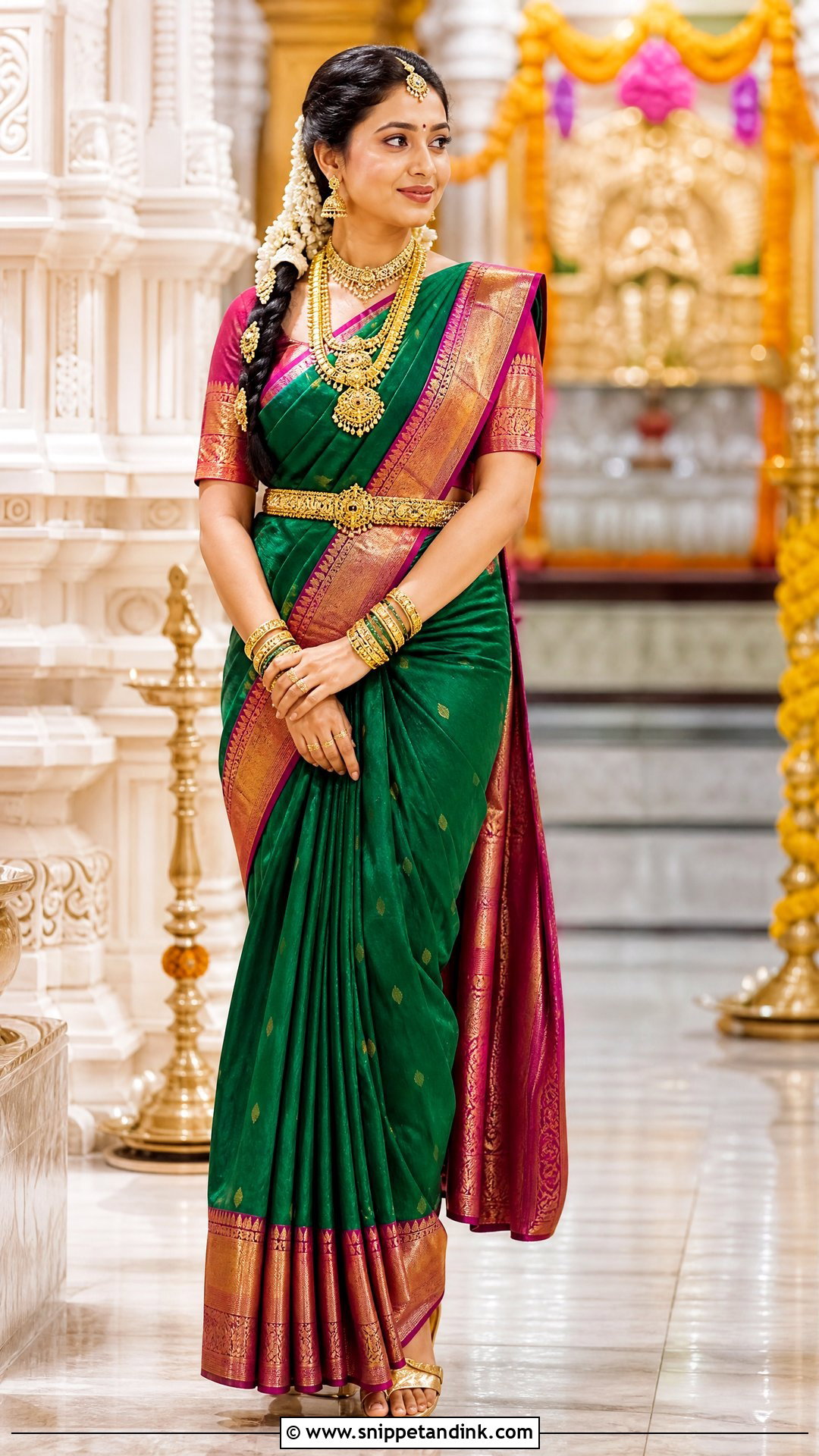
A Kanjeevaram silk saree has presence because of its weight, its border and the way it holds a crisp pleat. It is a natural fit for traditional ceremonies, especially South Indian weddings where silk is expected. Contrast combinations such as mustard with pink, green with red, or turquoise with purple are part of the tradition. A short-sleeve blouse in the border colour frames it well. Add layered gold necklaces, jhumkas, bangles, an oddiyanam waist belt and comfortable sandals or low heels, with a long braid or flowered bun. That stiff silk won’t fall into pleats on its own; I iron the pleats beforehand or have them pre-folded, then pin. Brides wear the heavily woven pieces; guests usually choose a lighter weave and simpler jewelry.
5. Sequin Saree for Marriage Reception
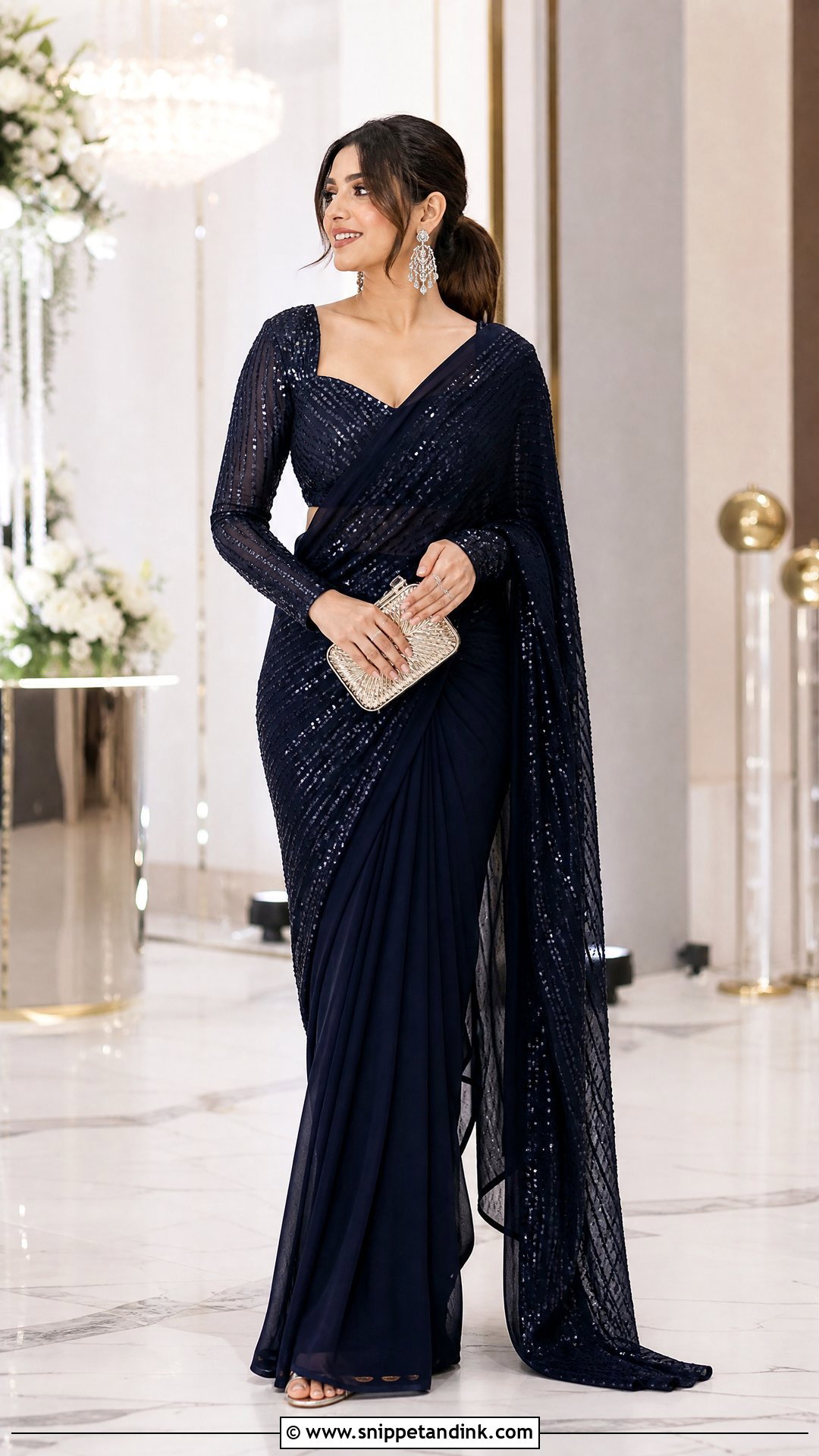
Sequin sarees belong to the reception, once the lights go down. Fluid georgette or net in navy, wine, emerald, rose gold or charcoal drapes well; I’d choose evenly spaced, smaller sequins over bulky ones if you’ll be sitting and dancing for hours. Check the lining before anything else. Unlined sequin seams scratch the waist and underarm within an hour. A fitted blouse with secure straps, a sleek drape, statement earrings with a minimal necklace, a metallic clutch and slim heels keep it modern, with a low ponytail or smooth bun. Brides can go heavier on the sparkle. Guests should keep the shine moderate and avoid pale designs that could be mistaken for bridal.
6. Floor-Length Anarkali for Marriage
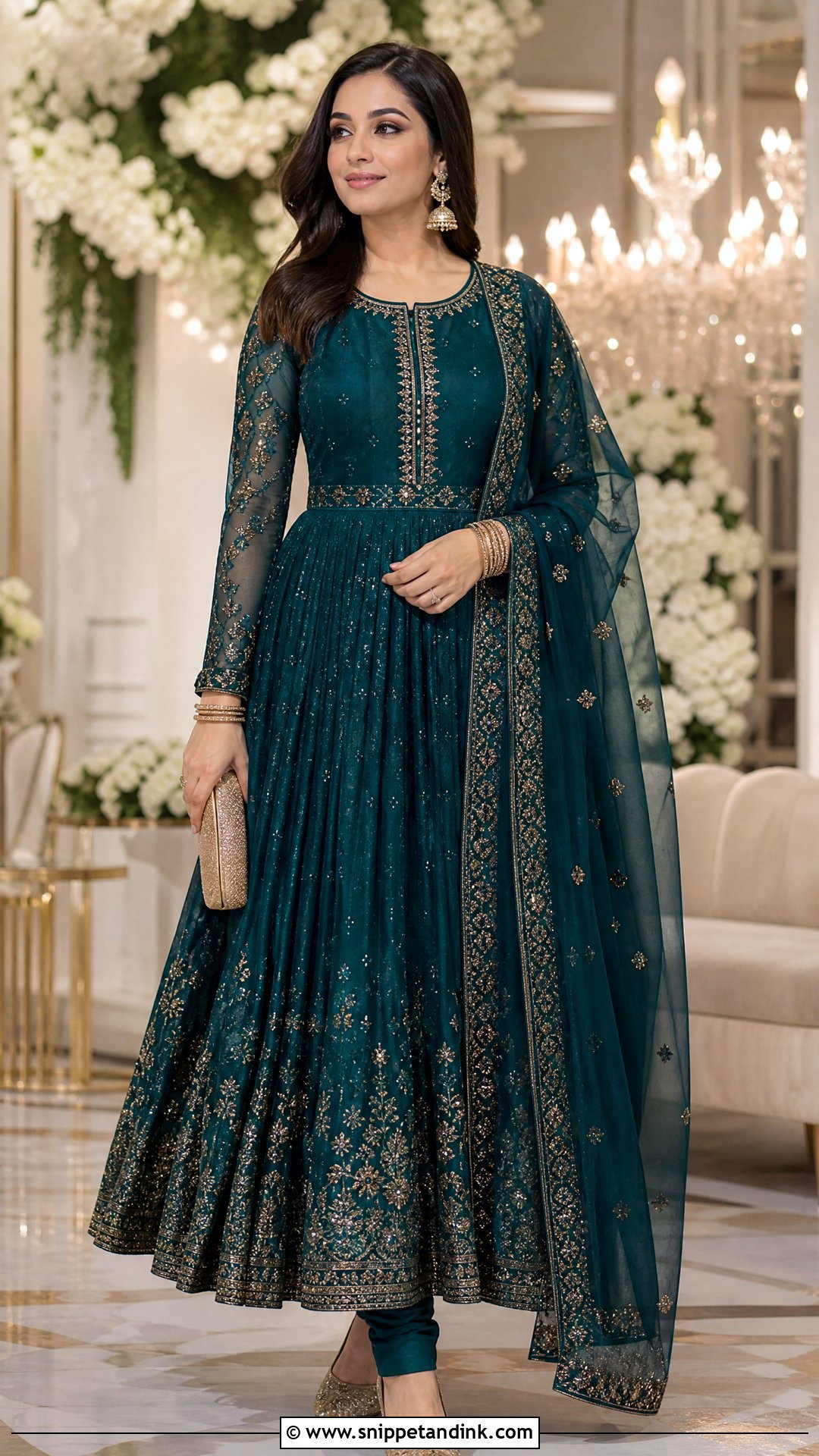
An Anarkali gives you the movement of a gown with the character of traditional wear. The fitted bodice flows into one long flared skirt, which reads as a single vertical line and is far easier to manage than a separate skirt and blouse. Silk, georgette and chiffon in teal, plum, rust, deep pink or midnight blue all work. Keep embroidery at the neckline and hem so the dress stays light. Churidar, a matching dupatta, jhumkas, bangles and embroidered heels complete it; a side-swept style or low bun suits the neckline. With less embellishment it’s a sangeet outfit, with more it goes to the ceremony or reception. On petite women I’d choose a softer flare; a wide circular skirt can swallow a small frame.
7. Embroidered Sharara Suit for Marriage
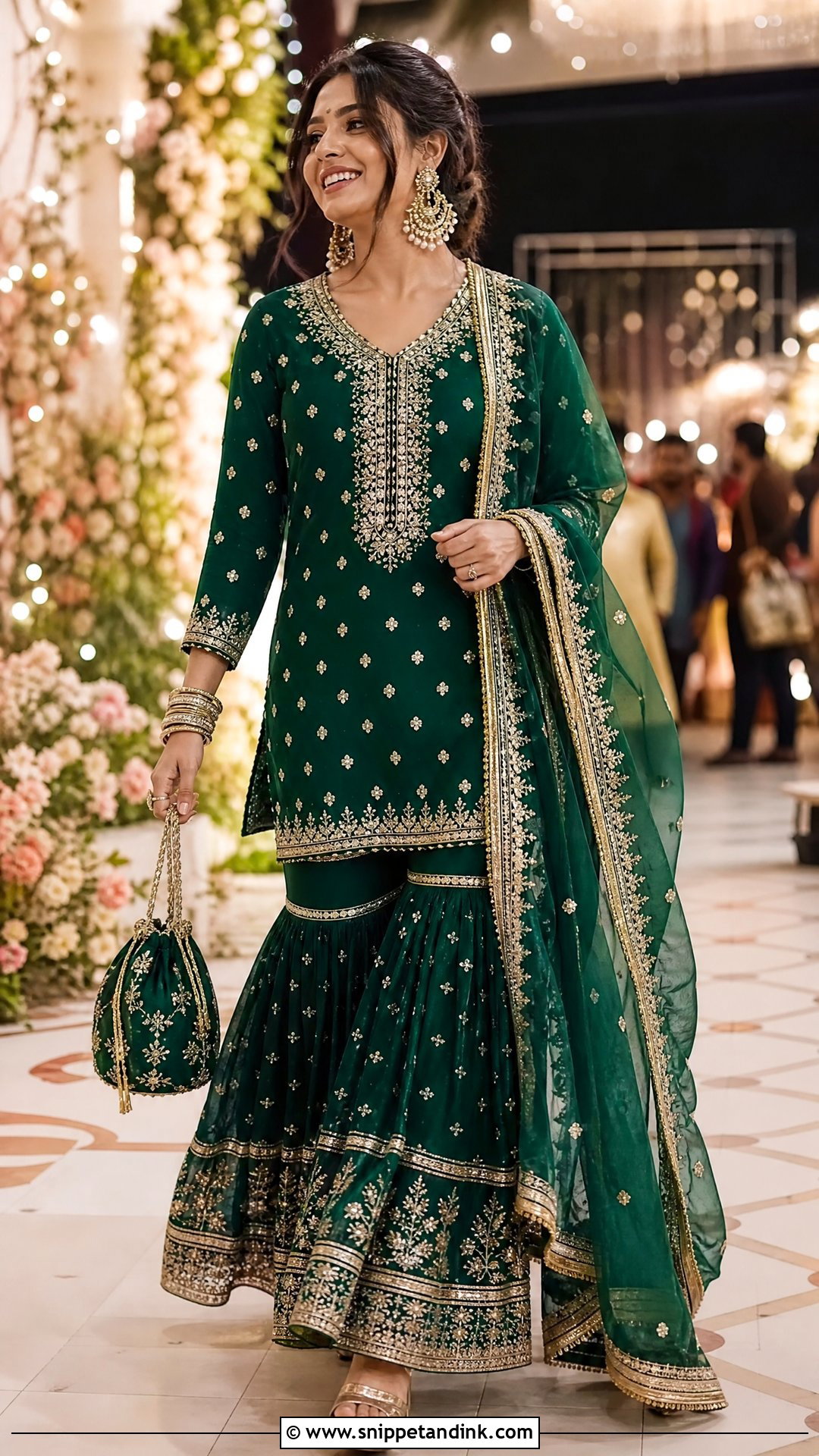
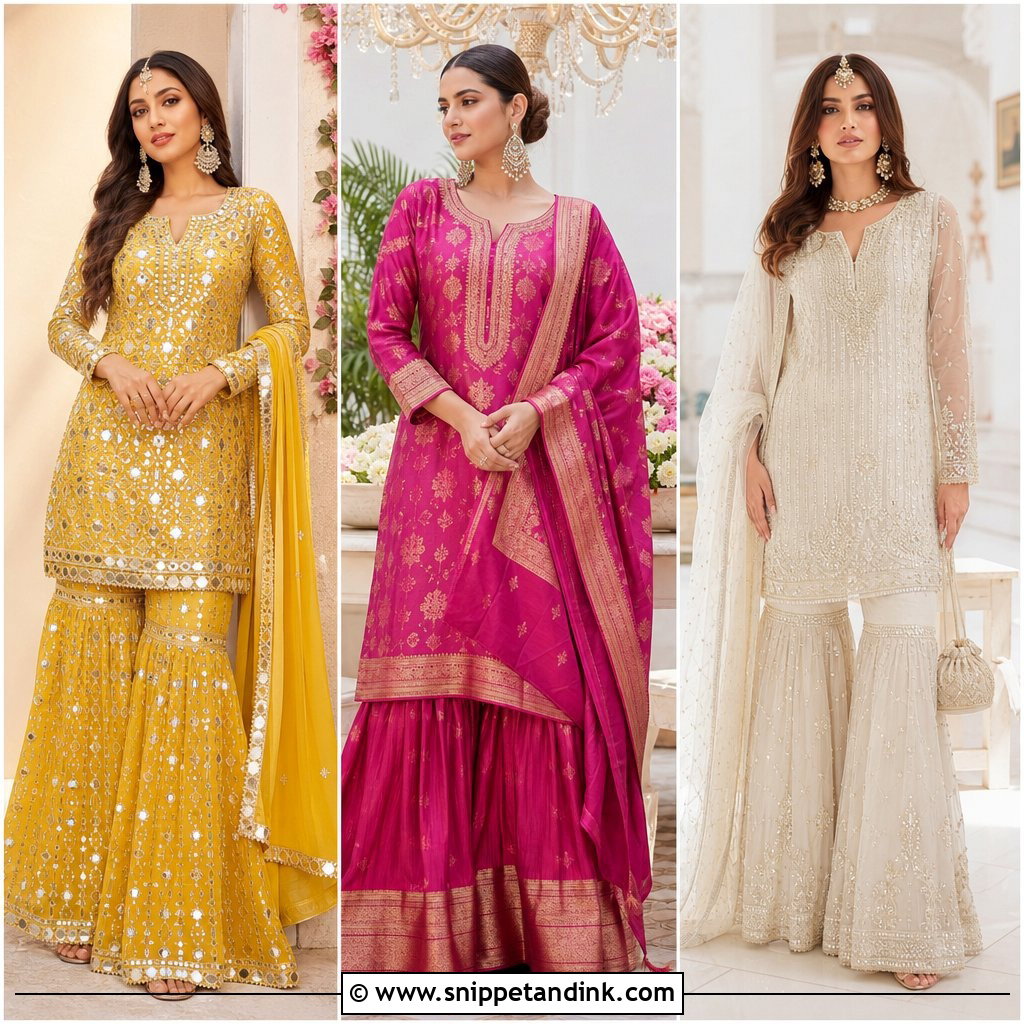
A sharara suit gives you festive volume with legs free to move. It comes as a short or mid-length kurta, wide flared pants and a dupatta, often in emerald, fuchsia, mustard, turquoise or deep purple with gota, mirror or thread work. The kurta must fit closely through the shoulders, or the flare of the pants takes over and the whole outfit looks shapeless. Chandbalis, stacked bangles, a potli and stable block heels go with it. For dancing, pin the dupatta over one shoulder; for photos, drape it over both arms. It suits mehndi, sangeet and daytime events, and it’s my usual suggestion for guests who want something festive without pleats or a heavy skirt.
8. Traditional Gharara Suit for Marriage
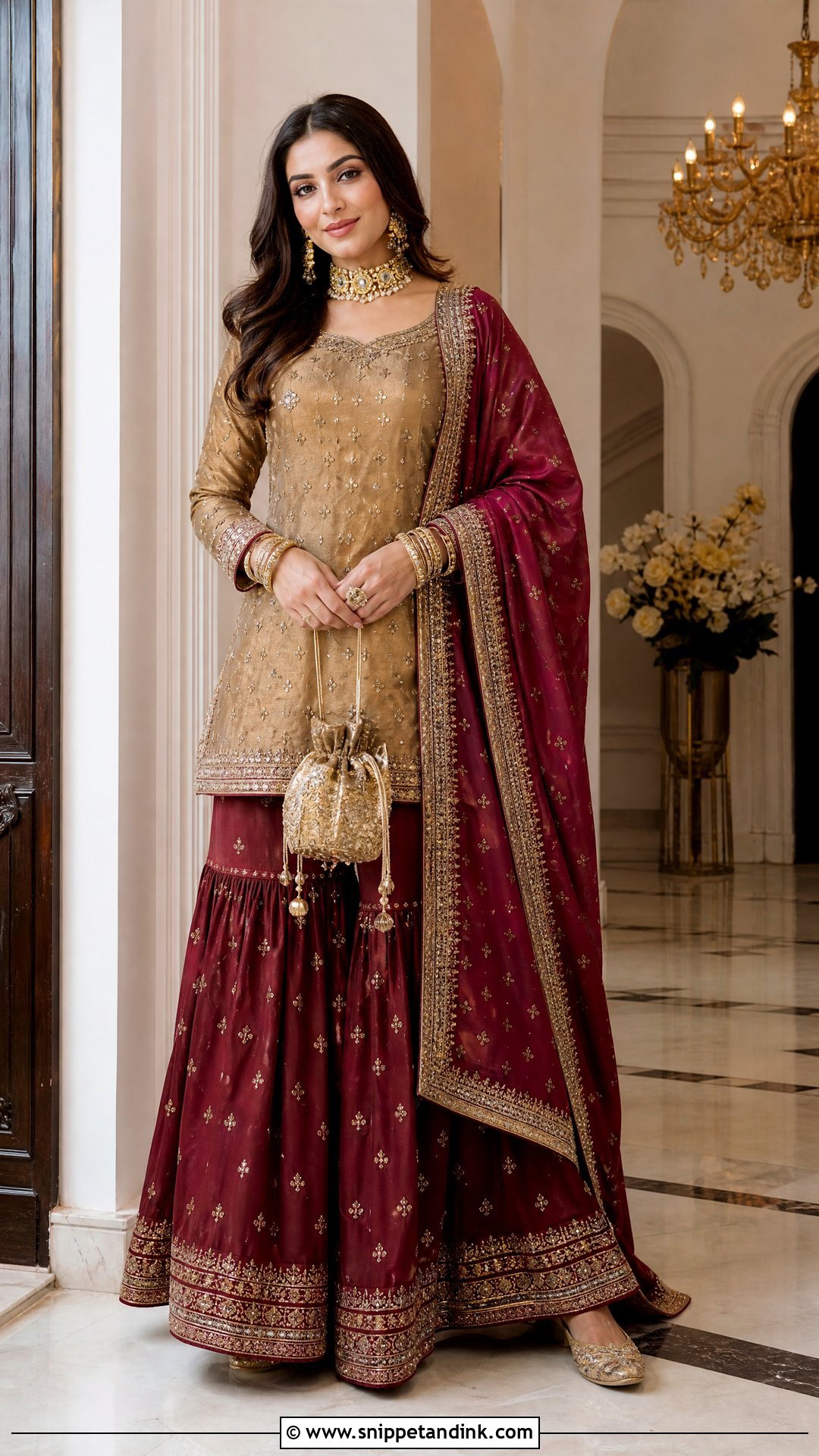
A gharara is fitted to the knee and then bursts into pleats, often with a gota band at the joint. That flare is the whole point, so pair it with a short embroidered kurti and a bordered dupatta that leaves the shape visible. Brocade, silk, organza and georgette suit formal events, in maroon, olive, antique gold, dusty rose or navy. A kundan choker, earrings, bangles, juttis and a compact potli keep it traditional. I’d keep the hair sleek or in a soft braided bun. Two common mistakes: a kurti so long it hides the knee flare, and jewelry big enough to compete with it. It’s a natural choice for a nikah, engagement or family wedding.
9. Palazzo Suit for Marriage Guest
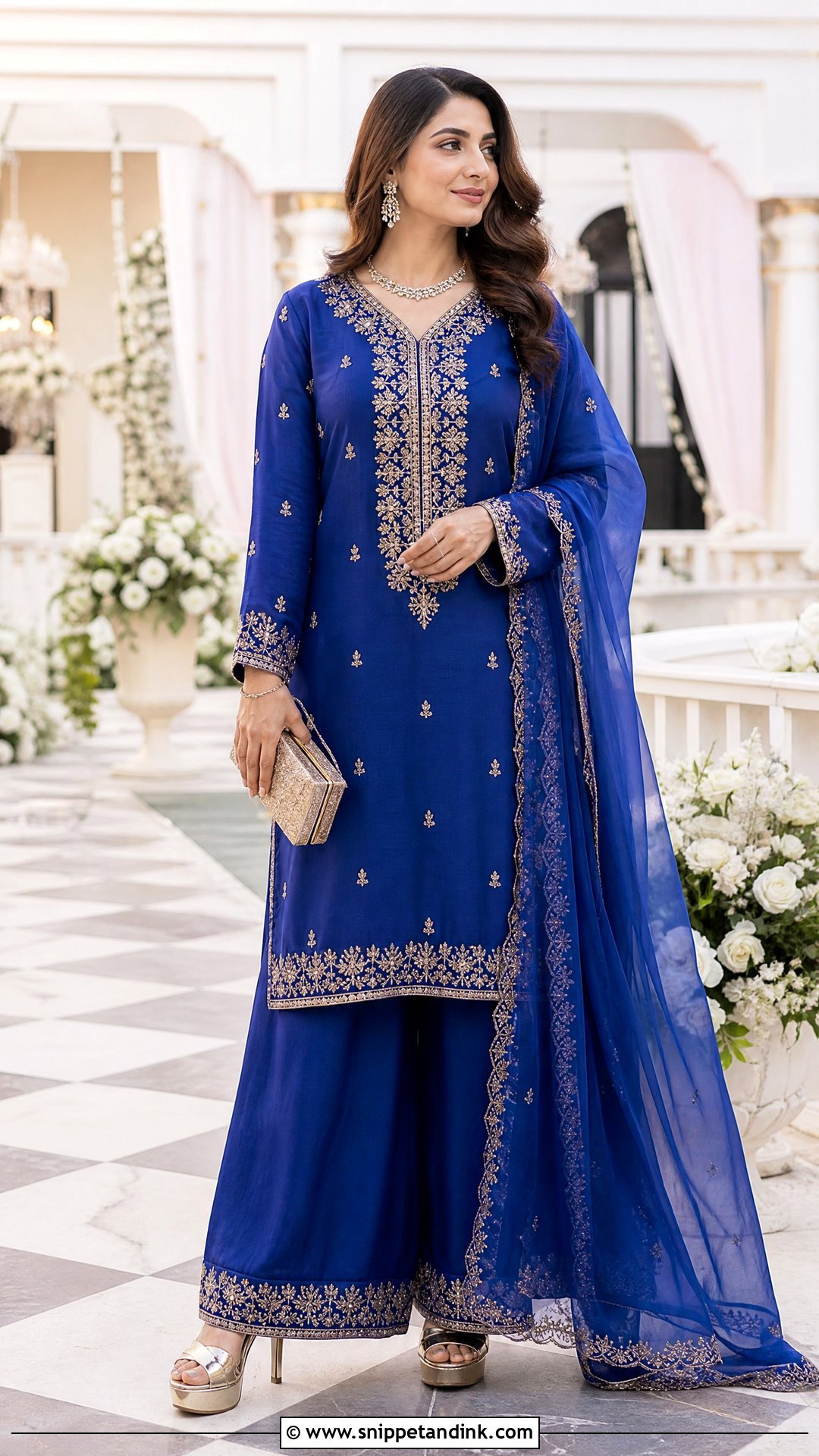
A dressy palazzo suit is what I suggest when someone tells me her feet and back can’t take a heavy outfit all day. Wide-leg pants, a fitted kurta and a dupatta in silk, crepe or georgette give polish with almost no effort. Cobalt, berry, coral, green and soft gold all suit it. A straight kurta with side slits keeps the lines clean, while embroidered cuffs and borders make it feel like an occasion. Drop earrings, a fine necklace, a structured clutch and platform sandals or block heels finish it. Secure the dupatta at the shoulder if there’s dancing. The trousers skim rather than cling, so it suits most bodies and is a good choice for older relatives.
10. Jacket Lehenga for Marriage
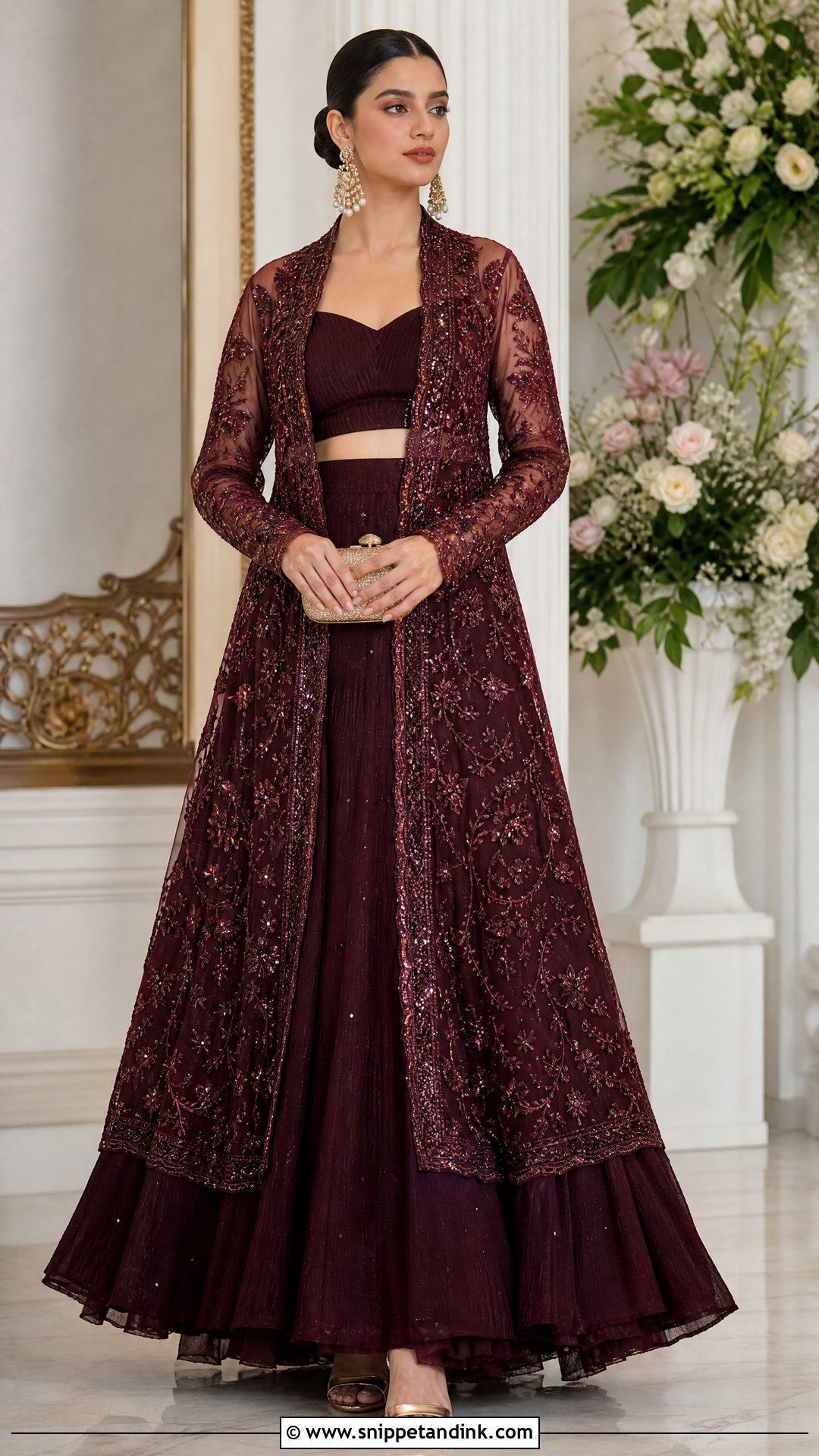
A jacket lehenga solves the dupatta problem by replacing it. Start with a high-waisted skirt and fitted blouse, then add a sheer embroidered jacket to the knee or ankle. Burgundy, emerald, navy and aubergine look rich at night; sage, peach and dusty blue suit daytime. When the jacket is densely worked, the blouse underneath should be plain and the necklace skipped altogether, because a decorated jacket neckline already frames the face. Statement earrings, a ring, a small clutch and streamlined heels are enough, with a sleek bun or centre-parted waves. Sisters, bridesmaids and reception guests like it for the coverage. Try it on with your arms raised; a jacket cut too narrow through the sleeve restricts everything.
11. Cape Lehenga for Marriage
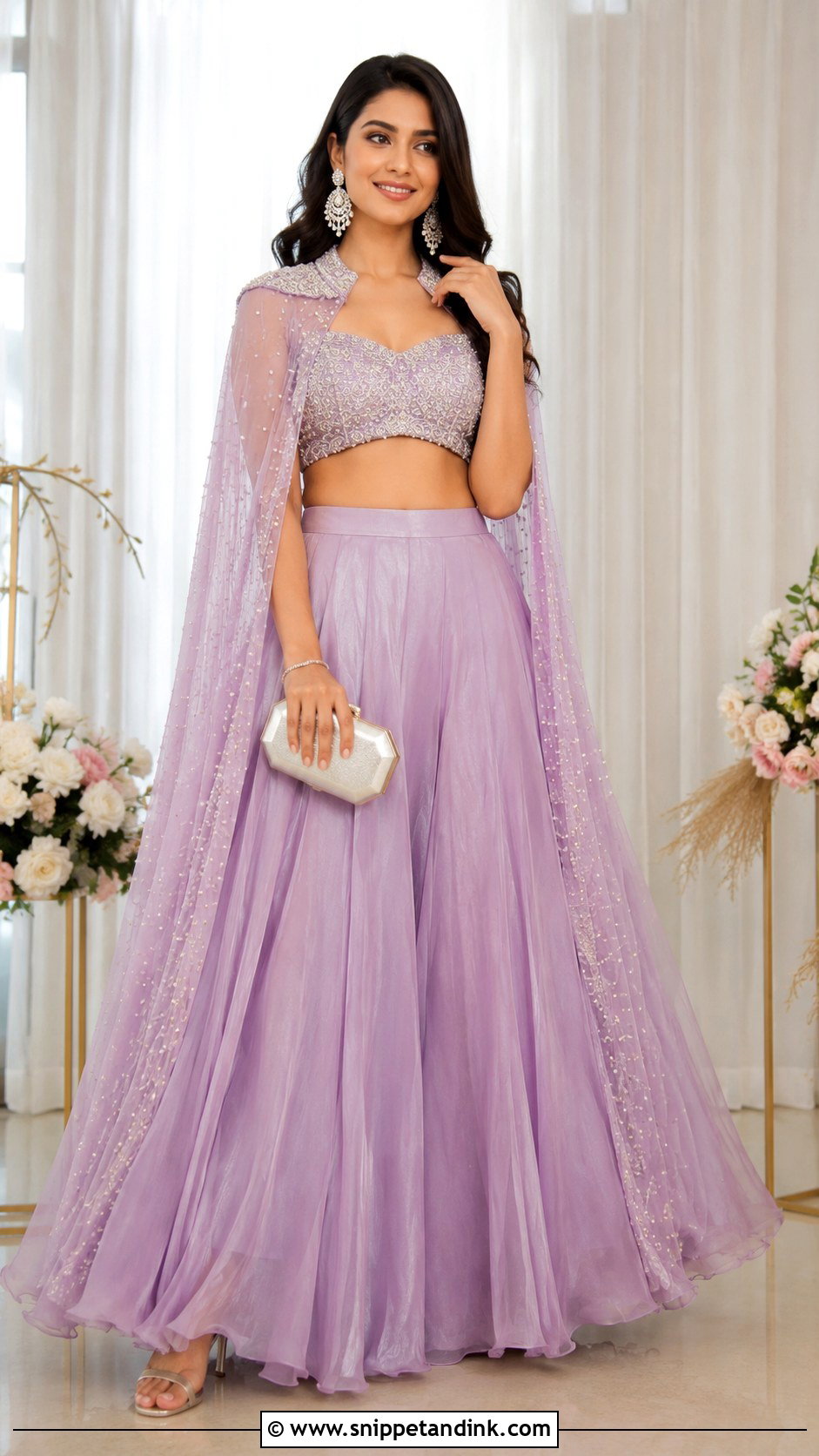
Cape lehengas feel modern while staying firmly festive. A flowing skirt, fitted blouse and a sheer cape over the shoulders and upper arms make up the set. If the cape carries beadwork, sequins or pearls, I’d keep the skirt quieter so the two don’t fight. Lilac, teal, wine, rose and midnight blue work well at receptions and sangeets. Because the cape takes the place of the dupatta, your hands stay free for greeting guests and dancing, which is the real reason many women pick it. Chandelier earrings, a slim bracelet, a metallic clutch and block heels finish it. Wear the hair sleek or in loose waves so it doesn’t catch on the cape edge, and check the cape length on stairs.
12. Indo-Western Saree Gown for Marriage
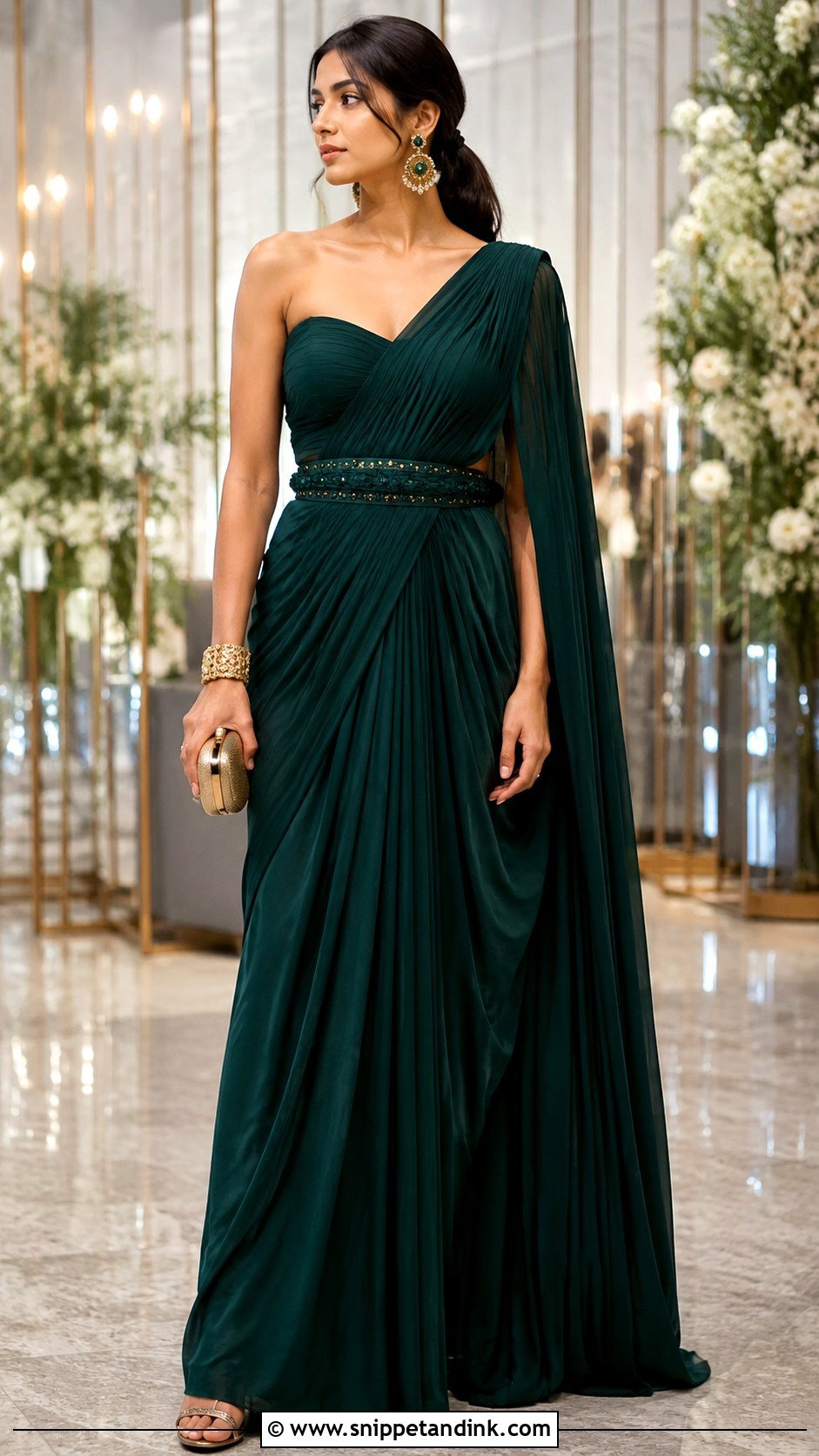
The saree gown gives you the drape without the pleating. A fitted bodice, defined waist, flowing skirt and attached pallu in crepe, georgette or satin is the standard build, in deep green, cobalt, plum, copper or muted rose for evening. A belt can mark the waist and anchor the drape, but match its finish to the existing embellishment or it looks like an afterthought. Sculptural earrings, a cuff, a compact clutch and sleek heels suit it, with a low ponytail, side-parted waves or a polished bun. I recommend it most to bridesmaids and reception guests who have never draped a saree; you get the asymmetric line and none of the mid-party re-pinning.
13. Velvet Lehenga for Winter Marriage
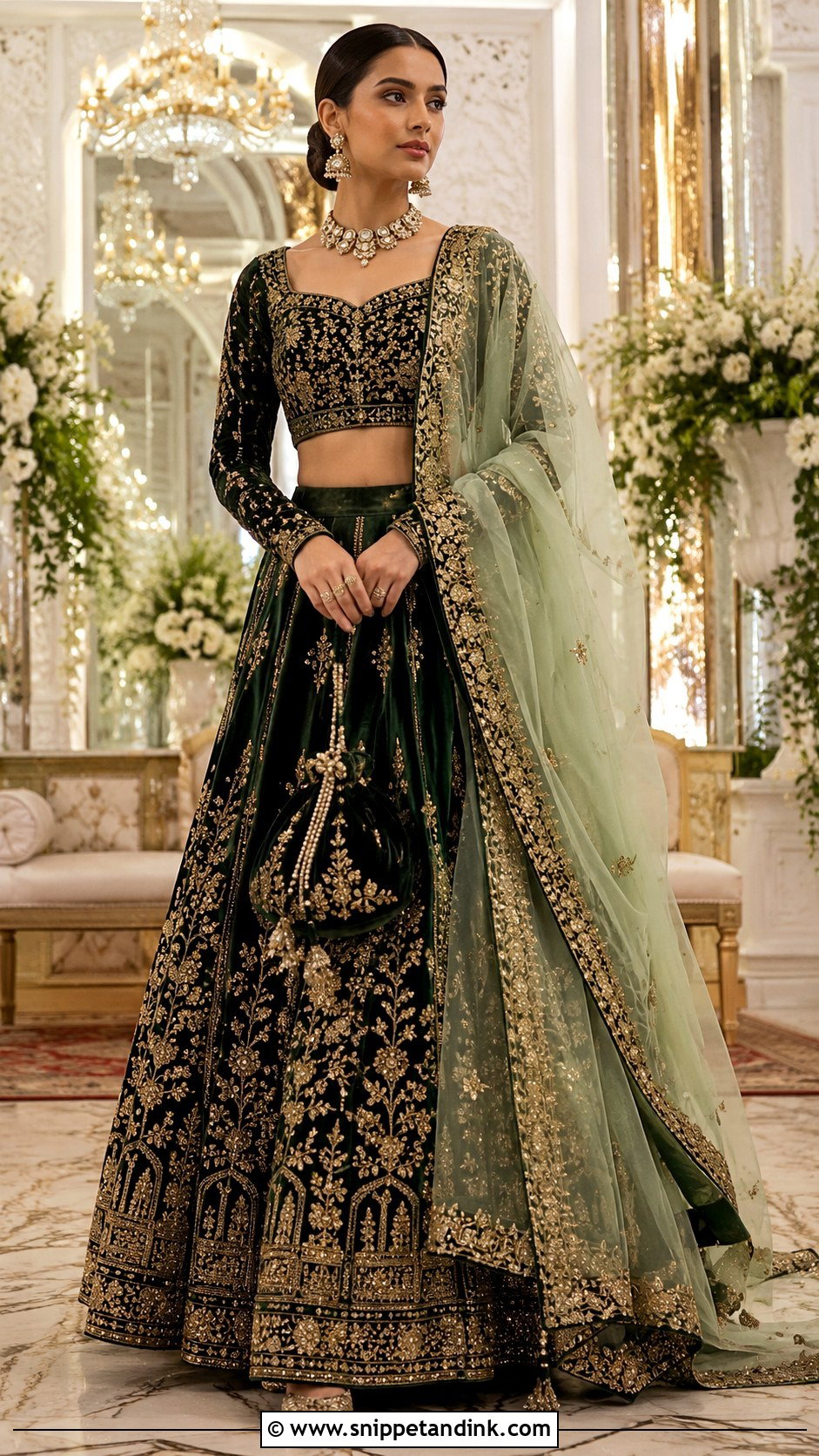
Velvet earns its place at winter weddings because it looks rich even with modest embroidery. Deep maroon, forest green, navy, plum and blackened blue with antique gold work are the classic palette. I always pair a velvet skirt and blouse with a lighter net or organza dupatta; a velvet dupatta on top of a velvet lehenga is simply too heavy to carry for hours. Polki jewelry, jhumkas, a velvet potli and closed-toe embroidered shoes suit it, with a neat bun and defined makeup. Keep it for evening and cool venues. In a warm, crowded hall velvet traps heat fast, and I’d choose silk instead. Guests can keep embroidery to the border; brides can go fuller.
14. Chanderi Silk Suit for Marriage
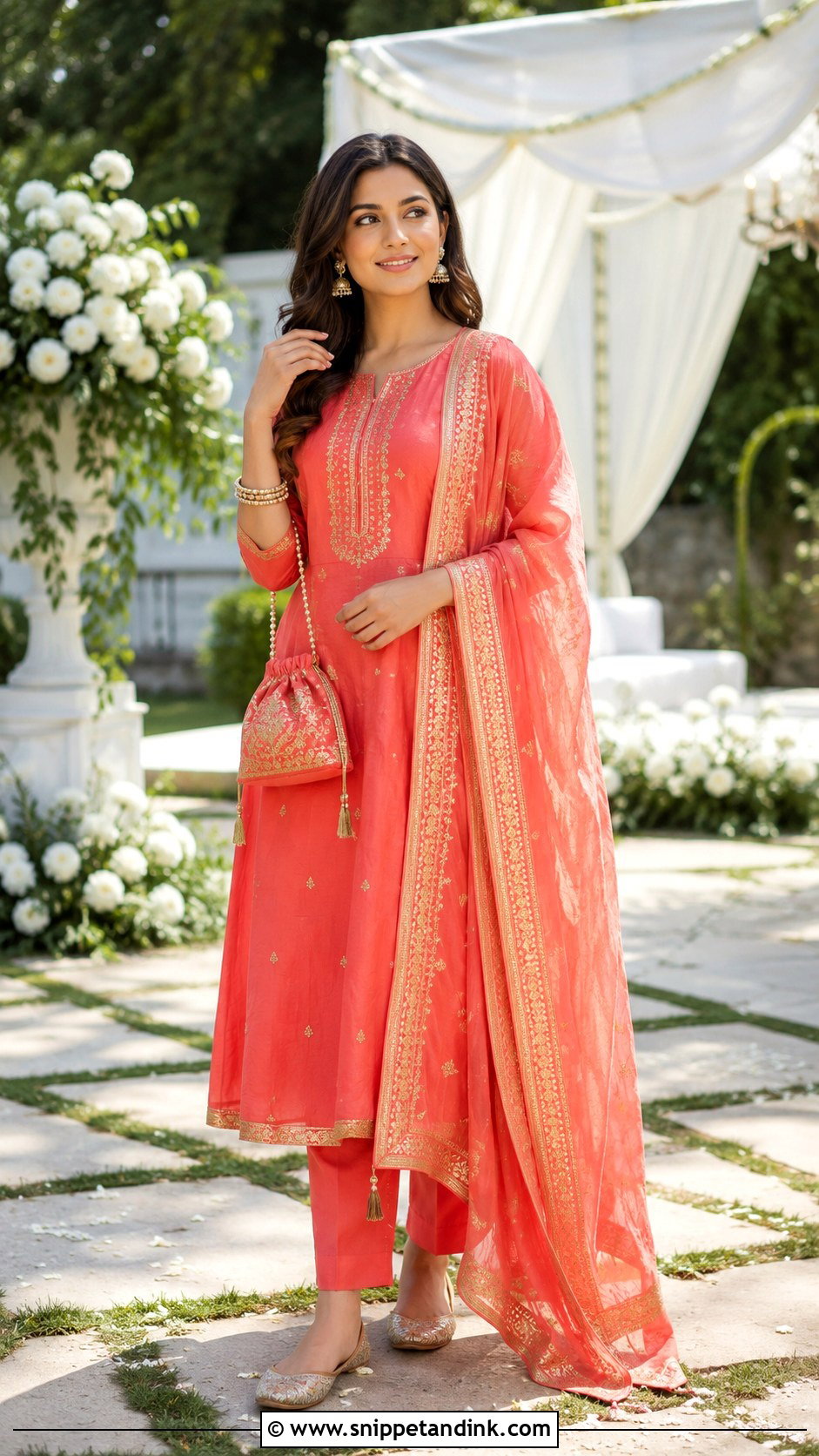
Chanderi has a soft sheen that daylight brings out, which makes it a favourite for daytime events. An A-line or straight kurta with slim pants and a light dupatta is the easiest build. Marigold, mint, coral, lavender, turquoise and rani pink feel cheerful without being overdressed. Woven motifs, zari borders or fine embroidery are enough for a haldi or family ceremony. Small jhumkas, bangles, a potli and embroidered flats keep it relaxed, as does a braid or soft bun. Chanderi is slightly sheer, so I check the lining against a window before anything else; an unlined kurta can show more than you expect in outdoor photos. It breathes well and is easy to wear again after the season.
15. Floral Organza Saree for Marriage
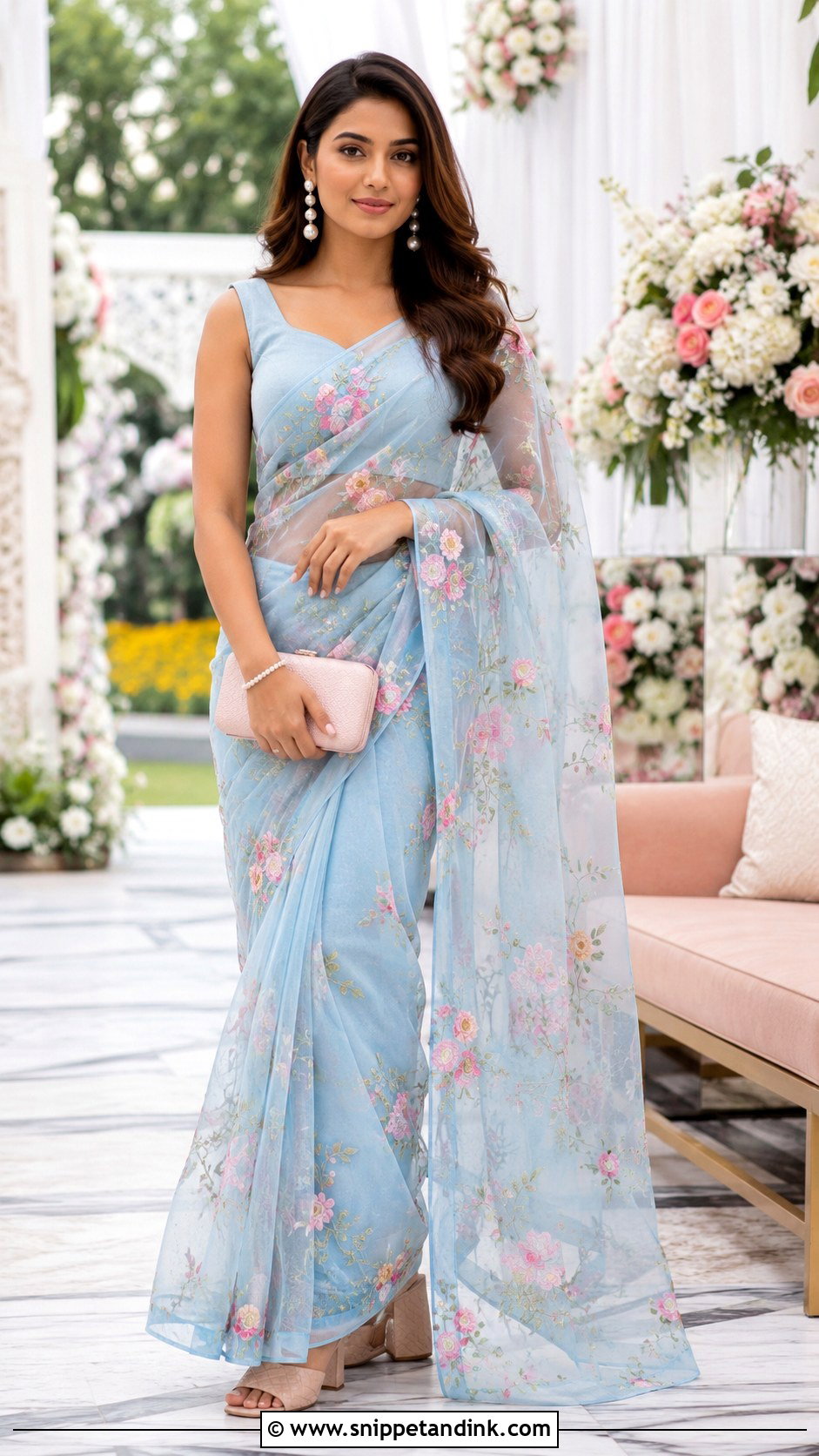
Organza with florals suits a garden or daytime celebration. Choose a saree printed or embroidered with flowers in pink, peach, blue, green or lilac, and a plain blouse that repeats one colour from the pattern. Organza holds its shape, which is lovely in the pleats and a nuisance at the pallu, where it can stand away from the body. I pin the pallu flat at the shoulder and again lower on the back so it falls properly. Pearl earrings, a delicate bracelet, a pastel clutch and neutral block heels are plenty, since the fabric and print already draw the eye. Soft waves or a low bun with a small flower finish it. A narrow border keeps petite women from looking swamped.
16. Peplum Lehenga for Marriage
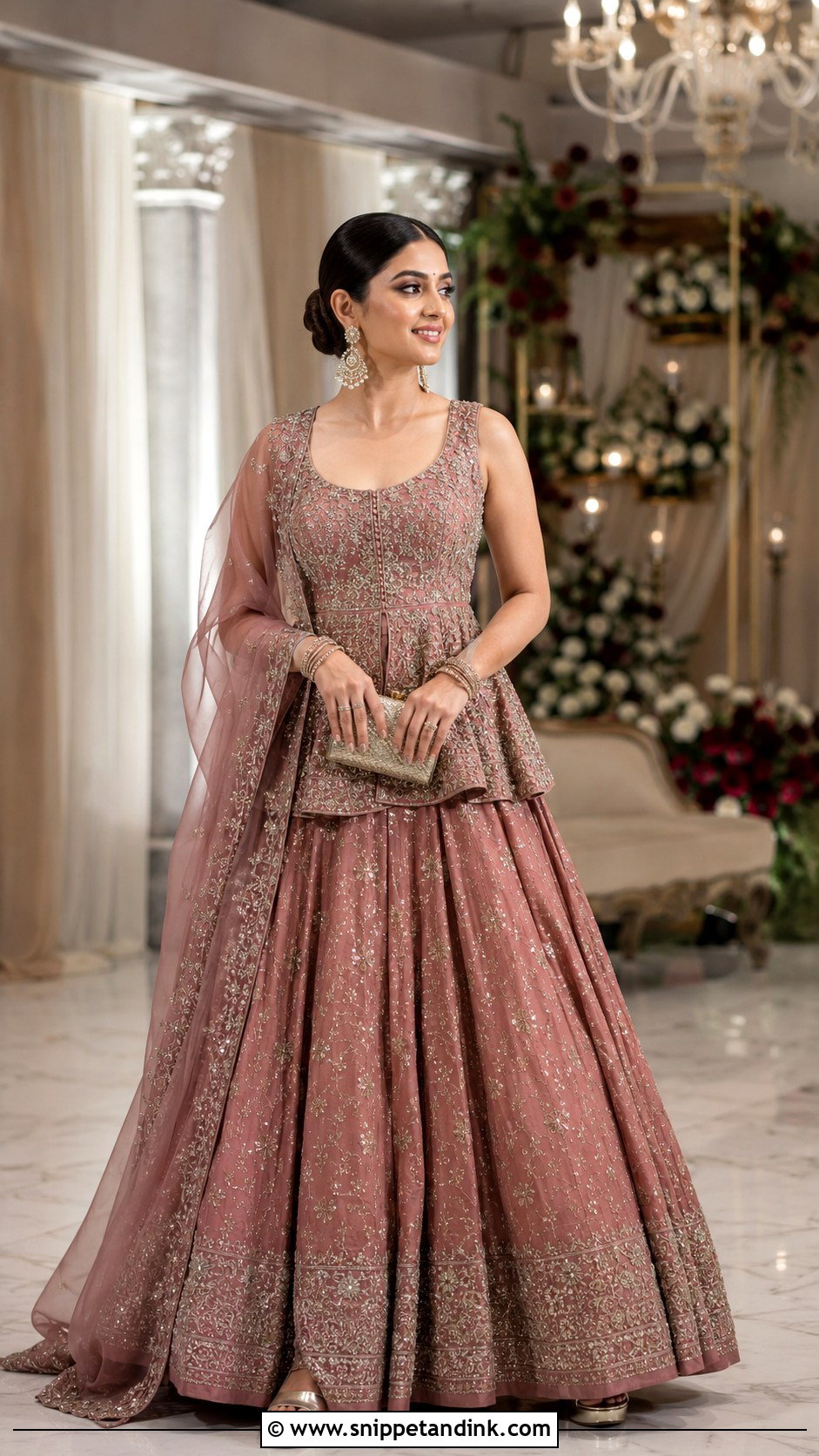
A peplum top over a lehenga skirt gives waist definition and more coverage than a cropped blouse. The peplum should end around the upper hip. Proportion matters: on a shorter woman, a long peplum cuts the body in half, so I’d keep it shorter and let the skirt do the work. Jewel tones, pastels and metallic neutrals all work. Add a light dupatta, statement earrings, bangles, a hard-case clutch and platform heels, with a centre-parted bun or smooth waves. It suits engagements, sangeets and receptions, and women who prefer midsection coverage find it especially comfortable. Let the embroidery continue subtly from top to skirt so the pieces read as one outfit.
17. Mirror Work Lehenga for Marriage
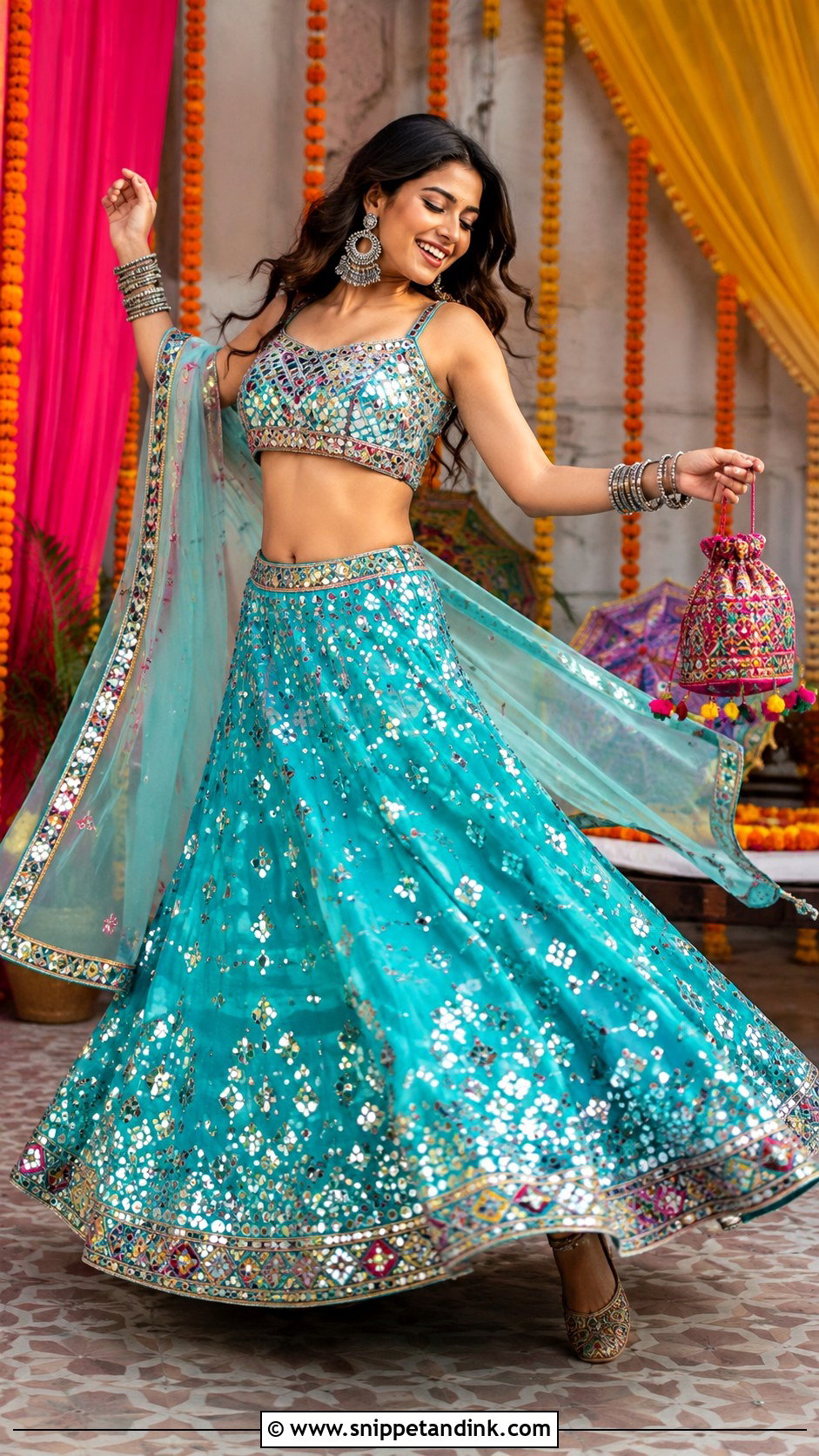
Mirror work catches every light in the room, which is why it belongs at pre-wedding functions with music and movement. Turquoise, orange, fuchsia, yellow, green and royal blue suit a colorful sangeet or mehndi outfit. Pair the skirt with a fitted choli and a light dupatta with a smaller mirror border. Since the lehenga already sparkles, oxidized silver earrings, stacked bangles and a simple potli are the right accessories. Embroidered juttis or low block heels keep you steady while dancing, and a braid, ponytail or secure half-up style keeps hair from snagging on the blouse. Run your fingers over the mirrors before buying; rough edges catch on dupattas and lace. Guests should choose open, lighter patterns.
18. Embroidered Gown for Marriage Reception
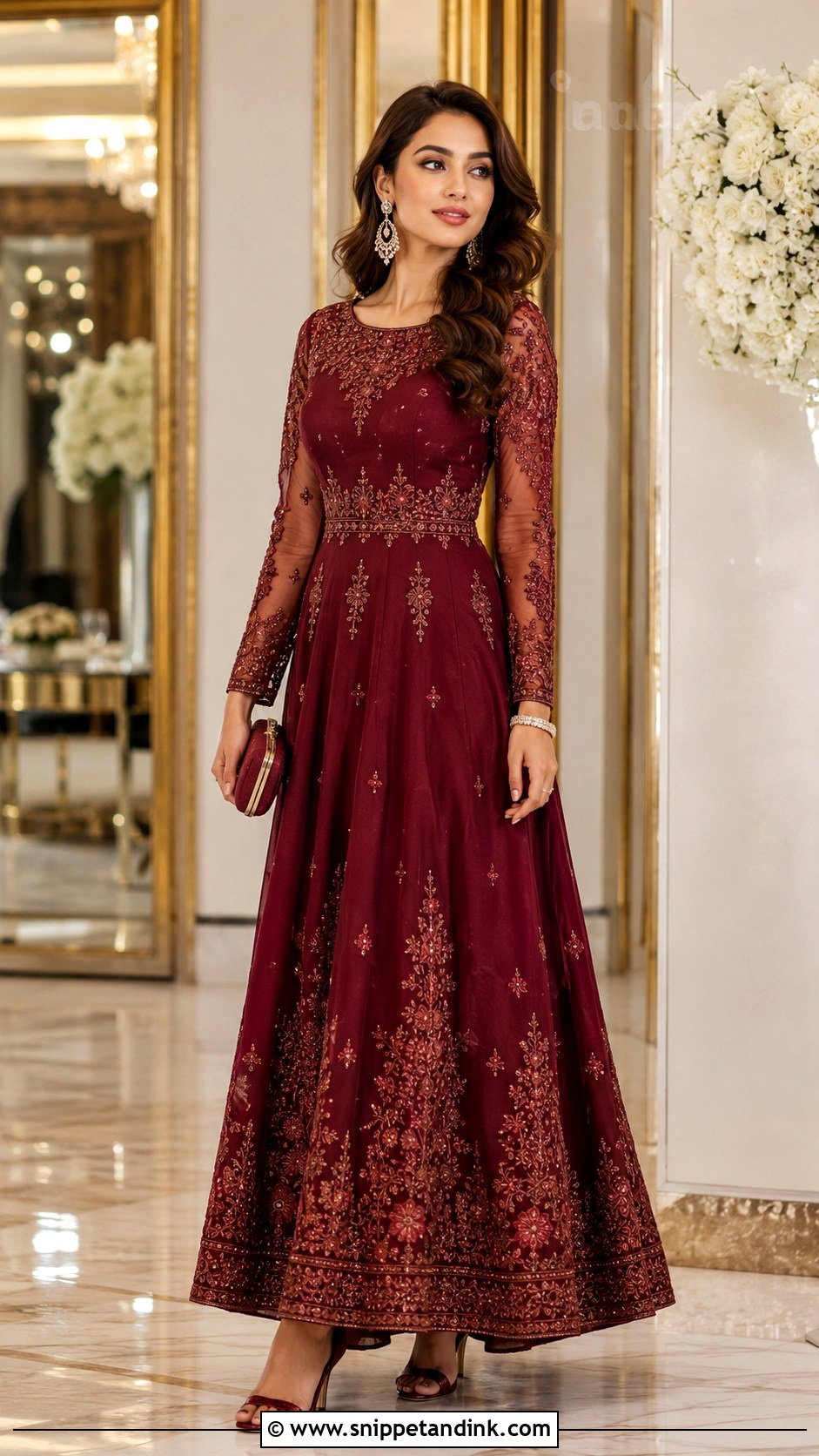
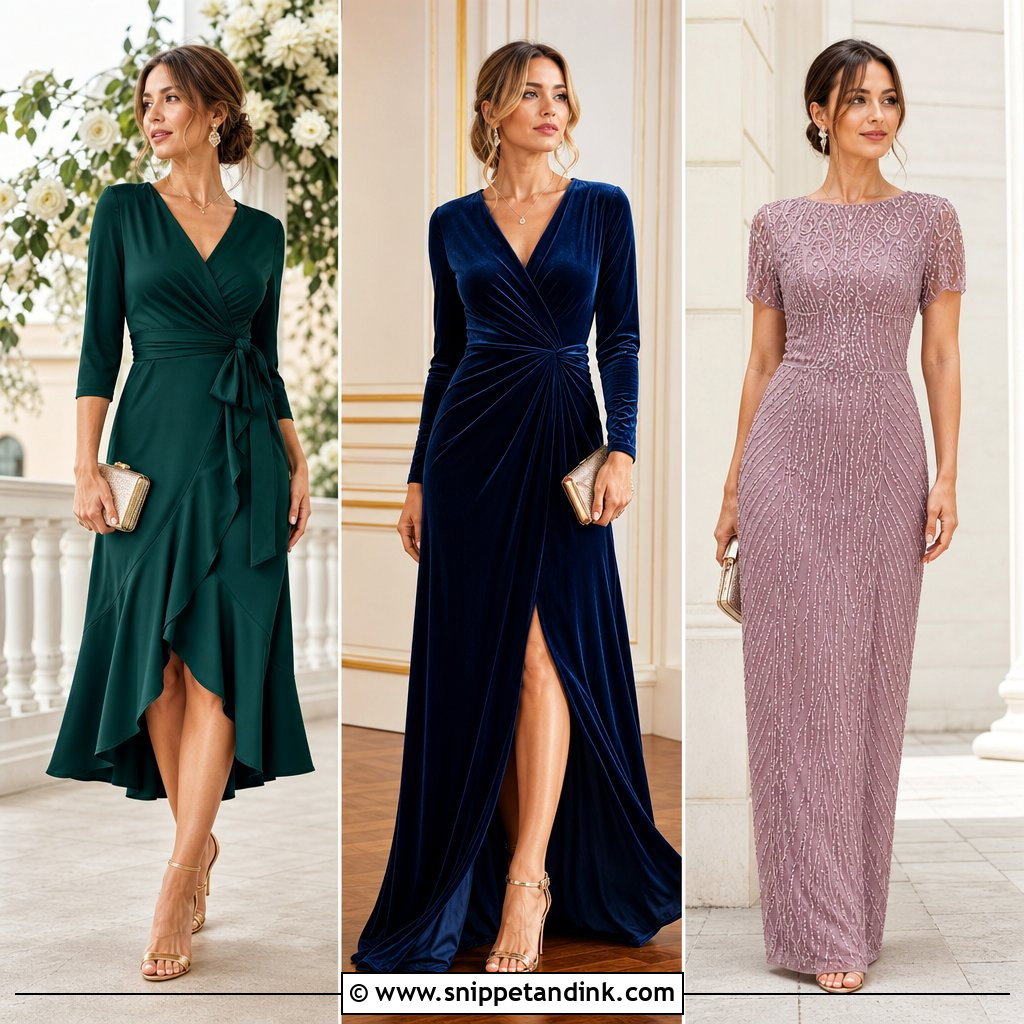
An embroidered gown is the lowest-effort reception look I know. A-line, fit-and-flare or soft drape in navy, burgundy, emerald, mauve or deep teal all work, with embroidery at the neckline, waist and skirt and enough plain fabric between to keep it calm. If the neckline is high, skip the necklace and let the earrings do it. A bracelet, box clutch and heels matched to the finished hem length complete it, plus a light cape or stole for coverage. Soft waves, a low bun or a polished ponytail keep it formal. Brides changing after the ceremony, bridesmaids and guests all wear it well. Check that the skirt is wide enough to walk normally and the lining breathes.
19. Embellished Patiala Suit for Marriage
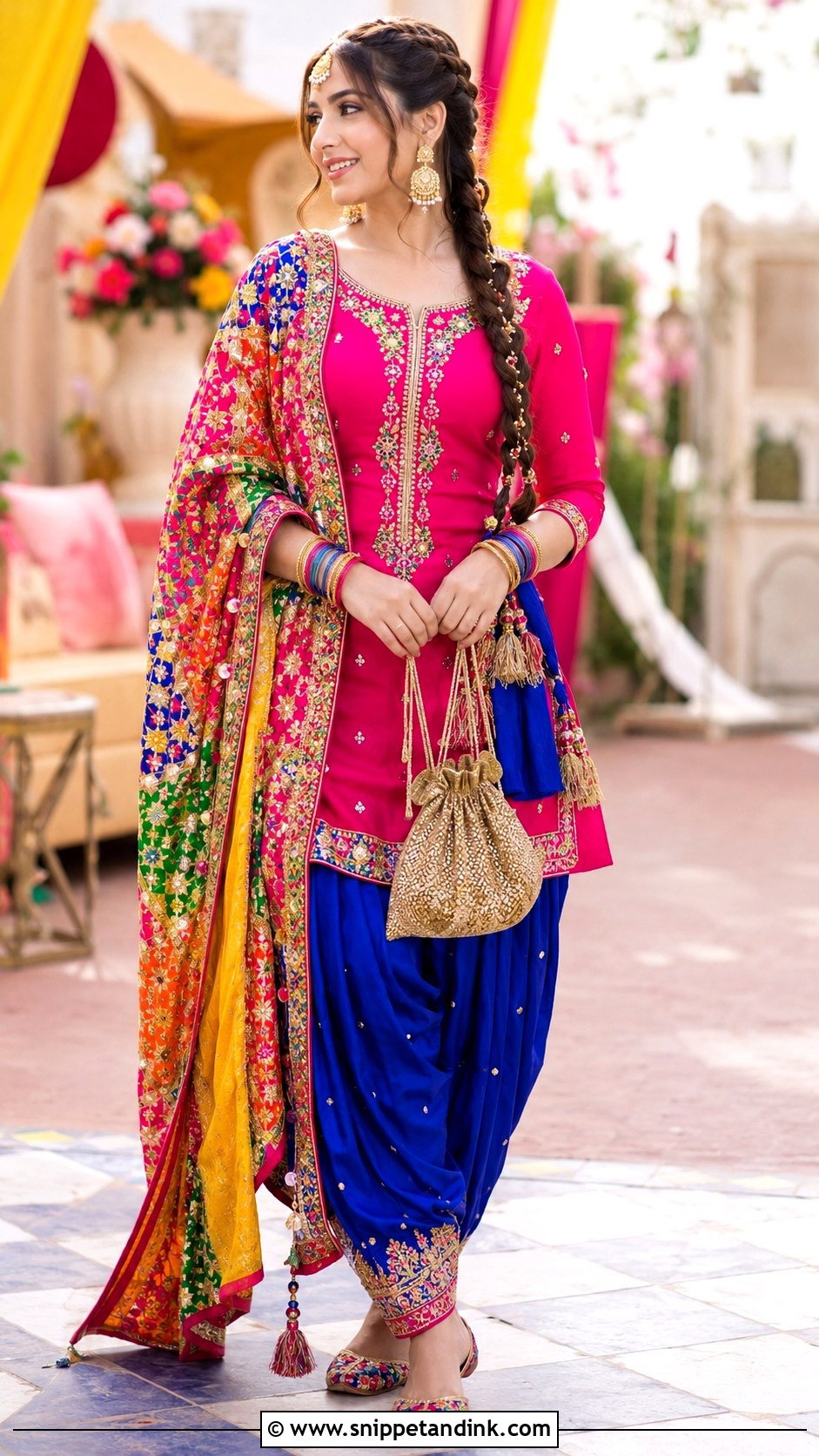
A Patiala suit is made for a lively Punjabi function. Pleated Patiala salwar with a fitted short kameez and a phulkari or embroidered dupatta is the traditional build, in magenta, mustard, green, orange or royal blue. The salwar holds a lot of fabric, so the kameez must be structured through the shoulders and waist, or the bottom half takes over. Jhumkas, colourful bangles, a small potli and Punjabi juttis complete it, with a braid finished in a paranda. Wear it to mehndi, haldi, jaggo or daytime gatherings. For dancing, pin the dupatta firmly; a loose phulkari ends up on the floor during the first bhangra.

20. Pre-Draped Saree for Marriage
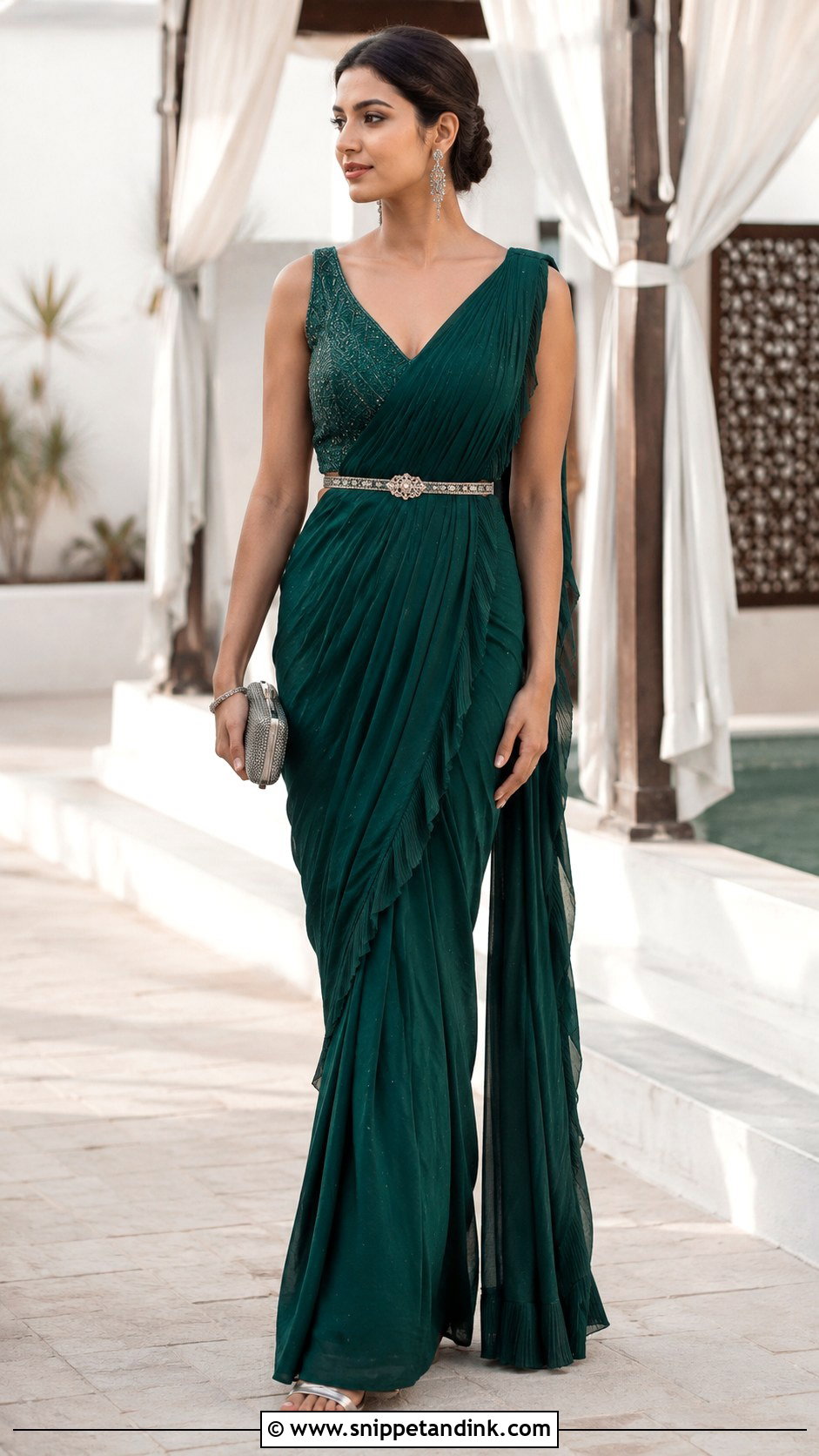
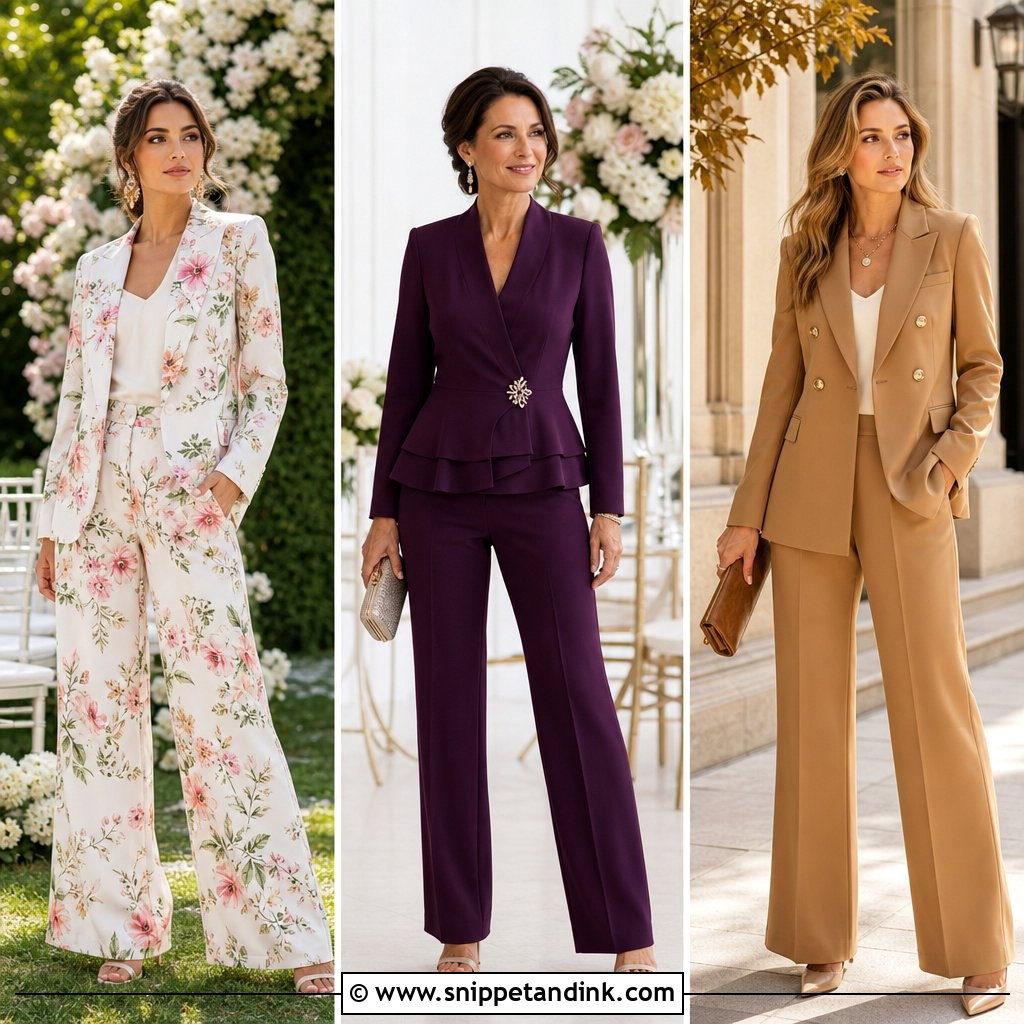
Pre-draped sarees give you the saree silhouette without the pleating. The pleats are stitched, the waist is secure, and the pallu is attached or simplified, so you can move freely and dress in minutes. Georgette, crepe or satin in wine, teal, cobalt, rose or emerald all drape well. Pair it with a fitted embroidered blouse and, if you like, a matching belt. Long earrings, a slim bracelet, a structured clutch and comfortable heels finish it, with a sleek ponytail or low bun. It suits receptions, cocktail evenings and destination weddings. Give your tailor your exact waist and the heel height you’ll wear, because stitched pleats leave very little room for adjustment later.
How Heavy Indian Wear Behaves Over a Long Day
Fittings happen standing in a mirror. Weddings happen sitting cross-legged at the mandap, climbing onto stages and dancing. A few things I test or prepare for every client:
- Wear the lehenga for twenty minutes at home before the day. If the waistband digs in or the skirt drags the hips down, a tailor can add a wider band or shoulder support straps.
- Use a can-can or flared petticoat only if the skirt needs volume; it adds heat and noticeably more weight.
- Pin a saree in at least four places: pleats at the waist, the pallu at the shoulder, the pallu again at the back, and the blouse to the pallu if you’ll raise your arms.
- Sit on the floor in your outfit during a trial. Zardozi and heavy borders can press painfully into the legs.
- Carry a small kit with safety pins, fashion tape, a mini sewing kit and blotting paper. A dropped hook is common on heavy blouses.
Refolding Silk and Velvet Between Weddings
Many of these pieces are bought to be worn for years, and the way they are put away decides whether that happens. Air the outfit for a few hours before packing so perspiration dries out. Wrap Banarasi and Kanjeevaram sarees in soft muslin rather than plastic, which traps moisture, and refold them along different lines every few months so the zari doesn’t crack at the creases. Hang velvet and heavy lehengas by their inner loops, never by the waistband alone. Stains on silk, sequins or zari should go to a dry cleaner who handles heirloom textiles; home spot-cleaning often leaves a ring that is harder to remove than the original mark.
An Outfit You Can Still Dance in After the Pheras
The right outfit lets you walk, sit, greet relatives and enjoy every function without counting the hours. These twenty options run from traditional to contemporary and from feather-light to heavily worked, for every role in the family. I’d start with the dress code, family customs, season and venue, then pick a silhouette that suits your body and the coverage you want. Tailoring does more than extra embroidery ever will, and stable shoes and secure draping change how the whole day feels. Choose colours and details that feel like you, and wear jewelry and a hairstyle you can forget about once you’re dressed.
You'll Like These Ideas:



Leave a Reply