
More brides now walk into my fittings asking for a jacket and trousers instead of a gown, and they usually arrive worried it won’t feel bridal enough. It will, provided the fit is right and you add one or two unmistakably wedding details. A suit can be sharp or soft depending almost entirely on fabric: crepe holds a crisp edge, satin catches light, lace reads romantic before you’ve added a single accessory. Suits suit courthouse ceremonies, city elopements and reception changes especially well, but I’ve dressed brides in them for full formal weddings too. Below are the suit shapes I reach for most, with what I check on each one before a bride commits.
Fittings for a Wedding Suit Run Differently Than for a Gown
A gown is mostly about the bodice. A suit has more moving parts: shoulders, sleeves, waistband, rise and hem, and each one shows in photos. I’d plan two or three fittings and leave around eight to ten weeks between buying the suit and the wedding, longer if you’re ordering made to measure.
- Shoulders first. A tailor can take in a waist easily, but rebuilding a shoulder is expensive and rarely perfect, so buy for the shoulder and alter the rest.
- Bring the real shoes and the real top. Trouser breaks and jacket closures are set around them, and swapping either later undoes the work.
- Do the seated test. Sit as you would at a signing table. Watch for the jacket button pulling and the trouser waist cutting in at the front.
- Raise your arms. If the whole jacket lifts when you reach for a hug, the armholes are cut too low.
- Check the ring hand. Sleeves should end at the wrist bone so the ring is visible when your hands are together.
One thing I tell every suit bride: off-the-rack suiting is cut for an average shape, so plan alterations into the budget from the start rather than treating them as an extra.
1. White Bridal Pantsuit
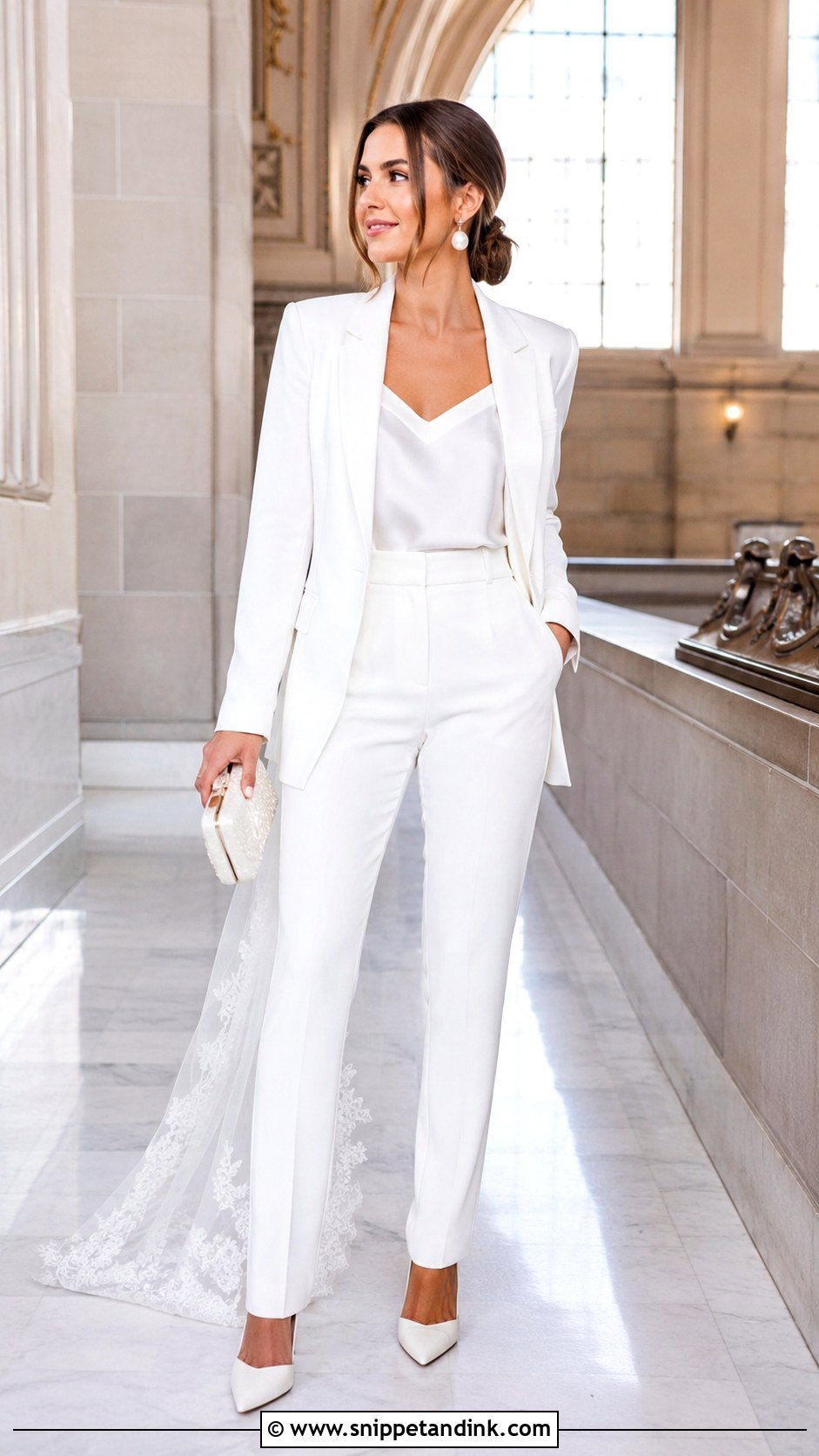
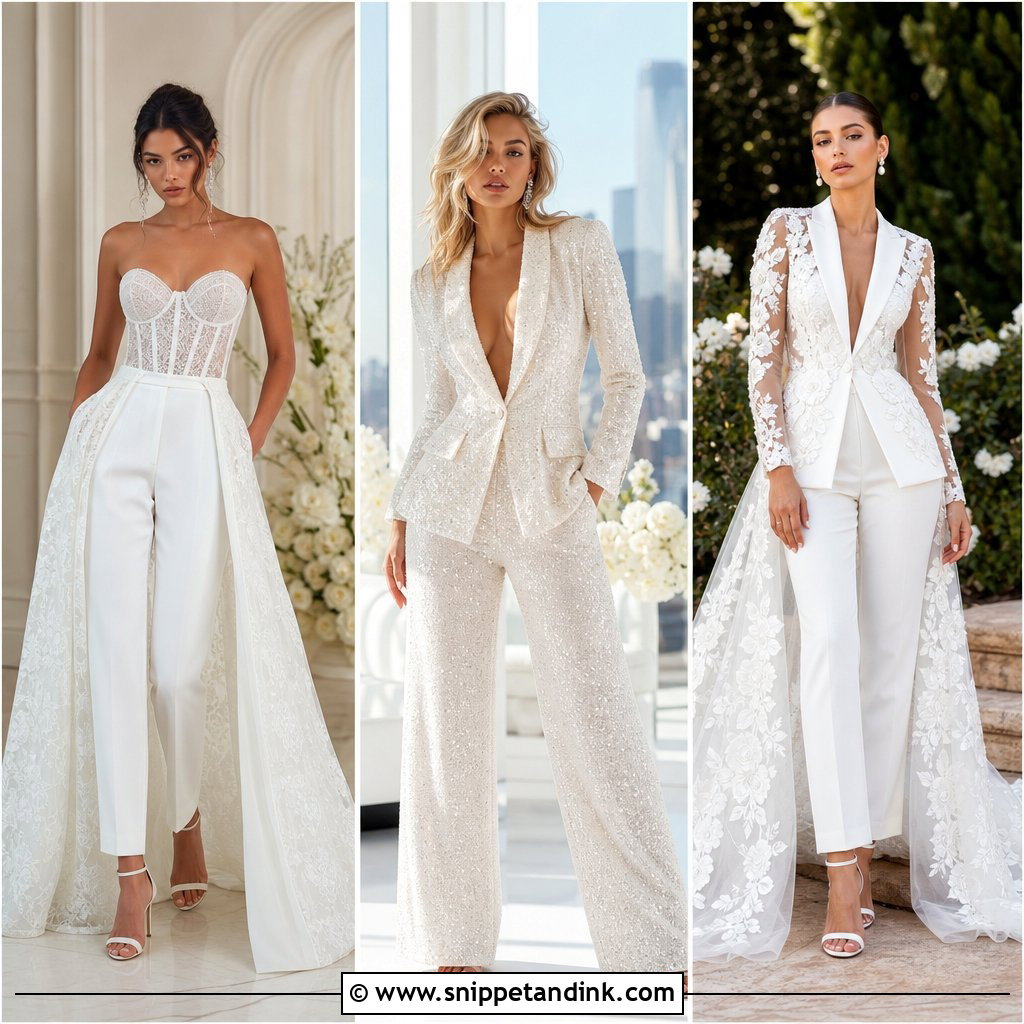
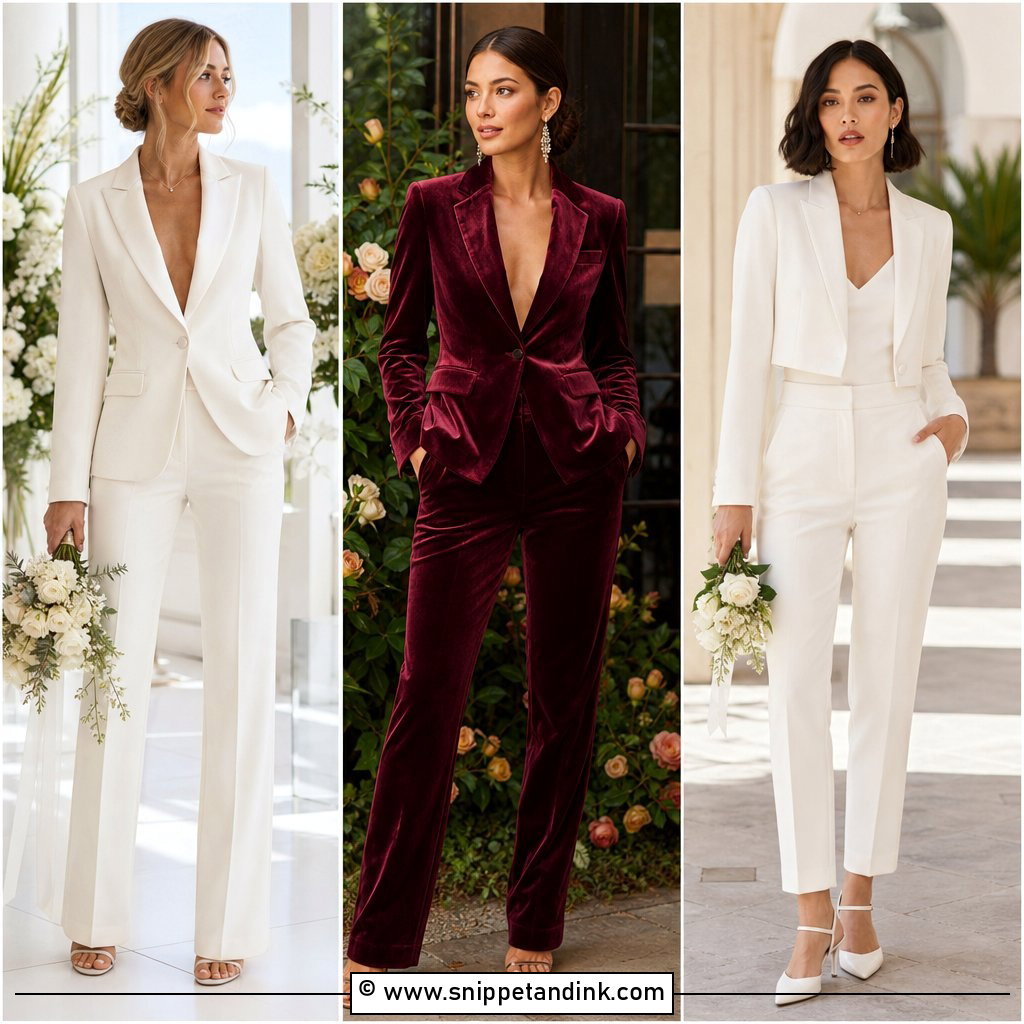
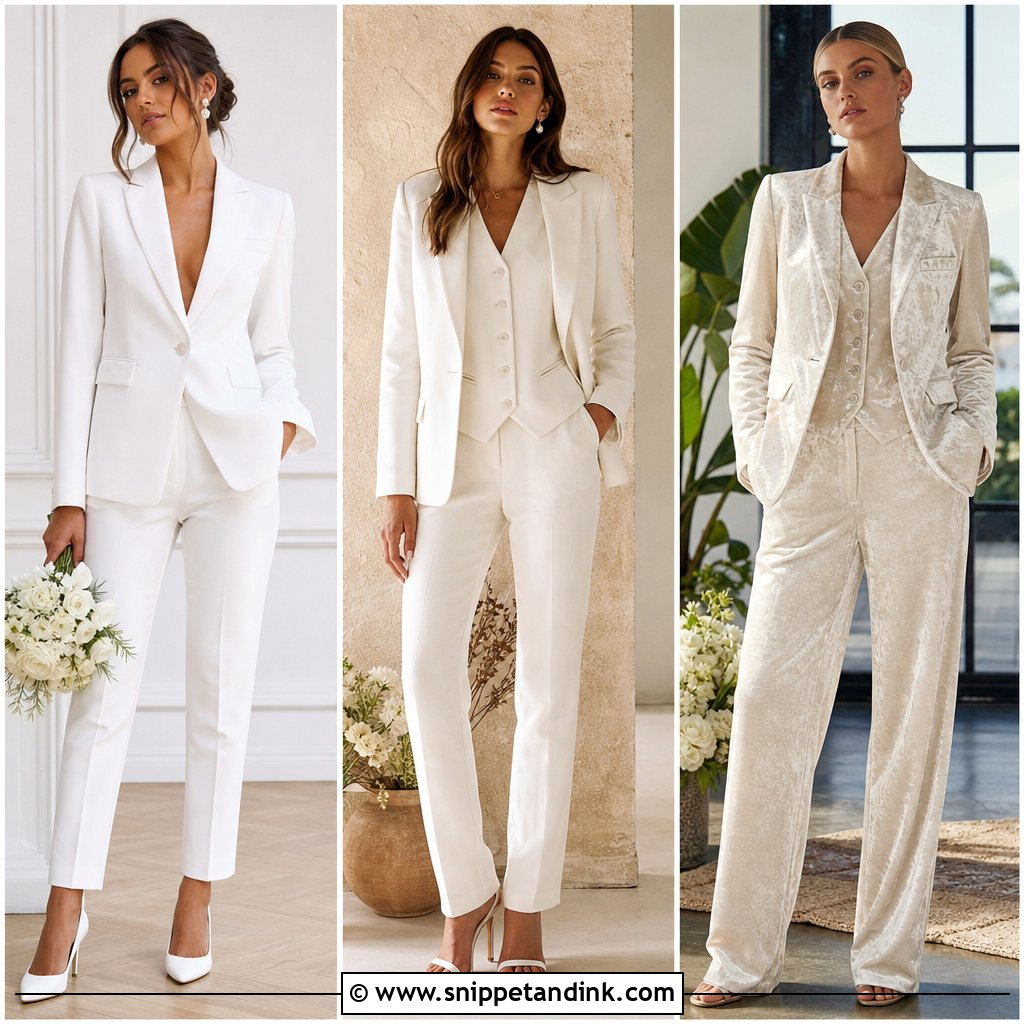
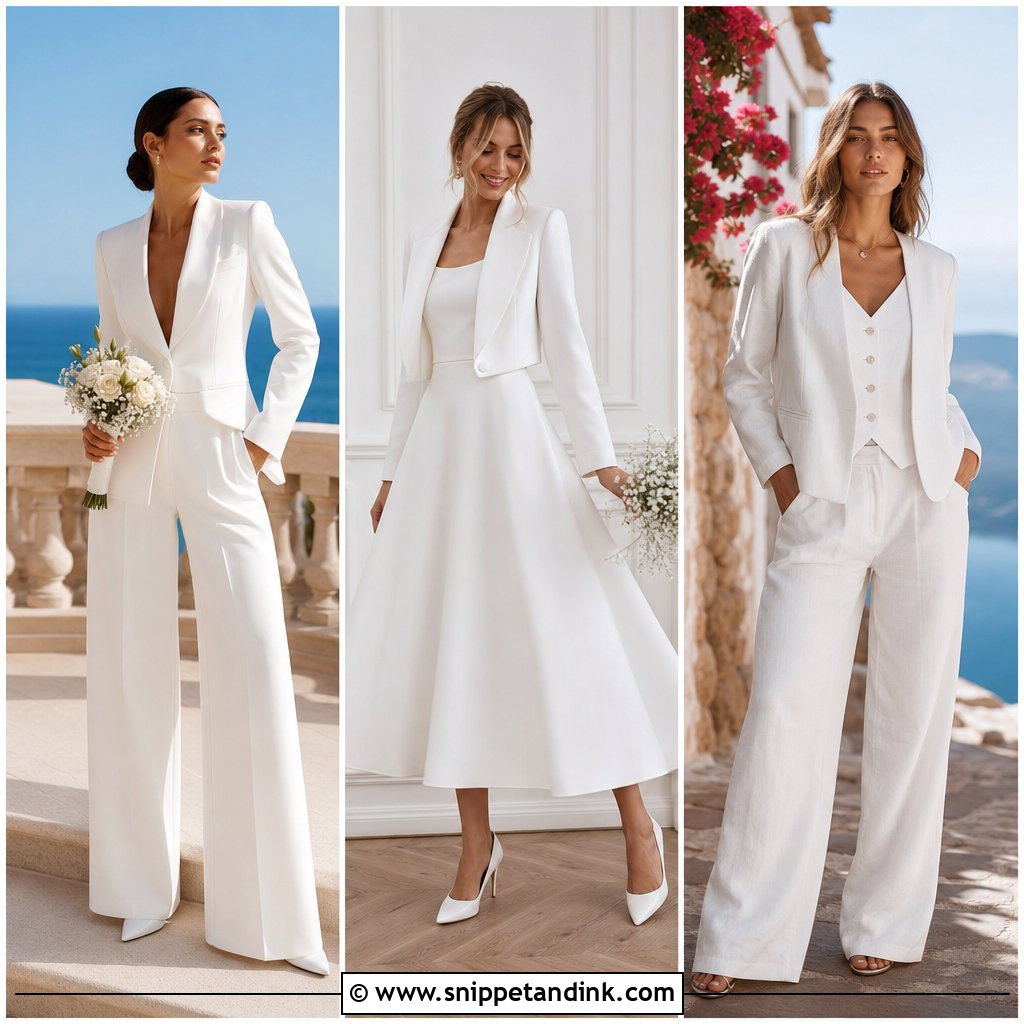
Start here if you’ve never worn tailoring on a big day. A fitted blazer over high-waisted trousers is the shape I trust most because it flatters standing and seated, and that matters more than people expect once you’re signing a register or sitting through dinner. What goes underneath decides whether it reads bridal or boardroom: a satin camisole or lace bustier does that job, a cotton shirt does not. When I pin one of these, the sleeve length gets my attention first. A sleeve that covers the knuckles looks borrowed in every ring shot. A crisp white bridal pantsuit needs that small precision more than any other look here.
2. Ivory Bridal Suit With Wide Leg Pants
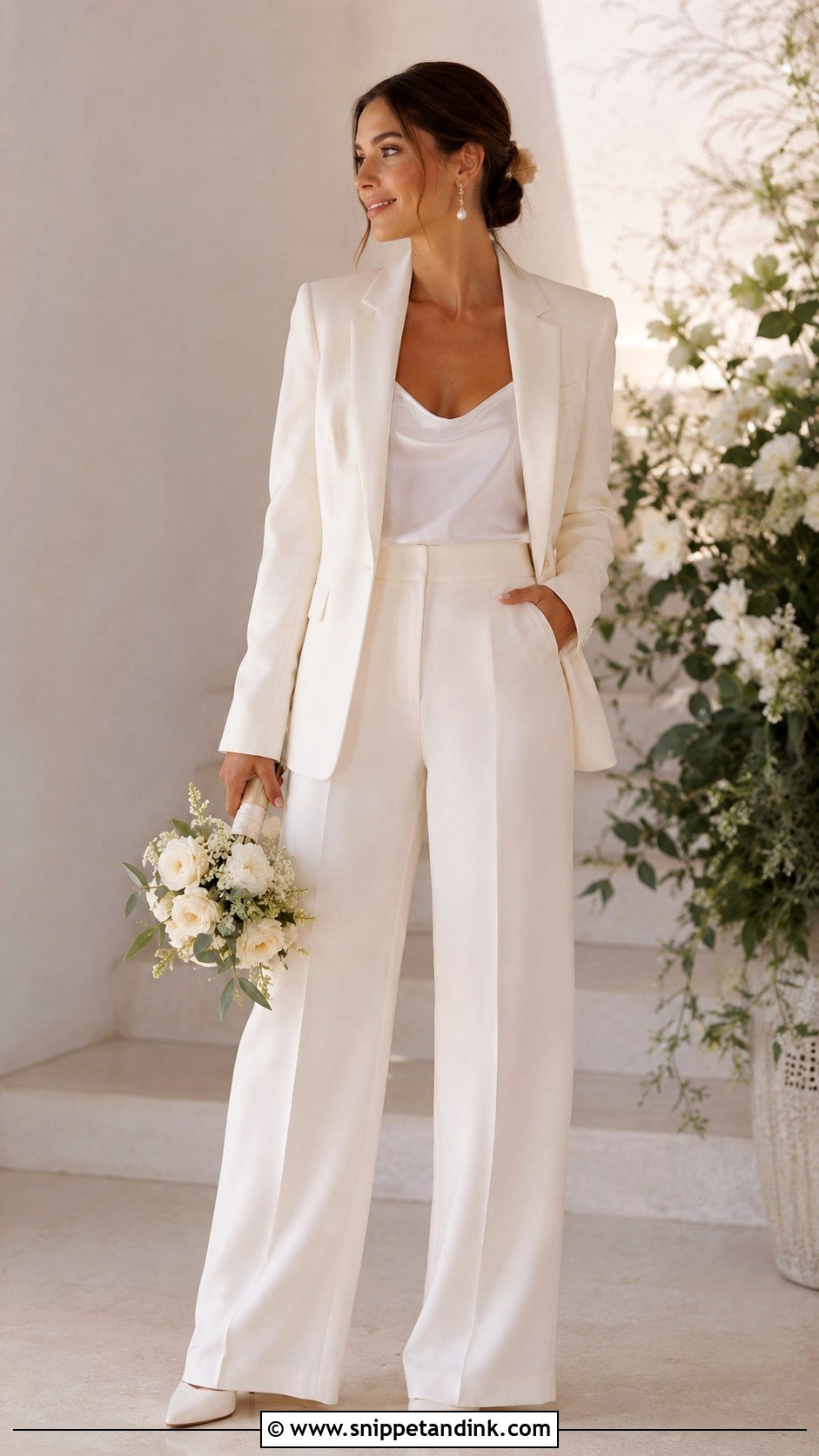
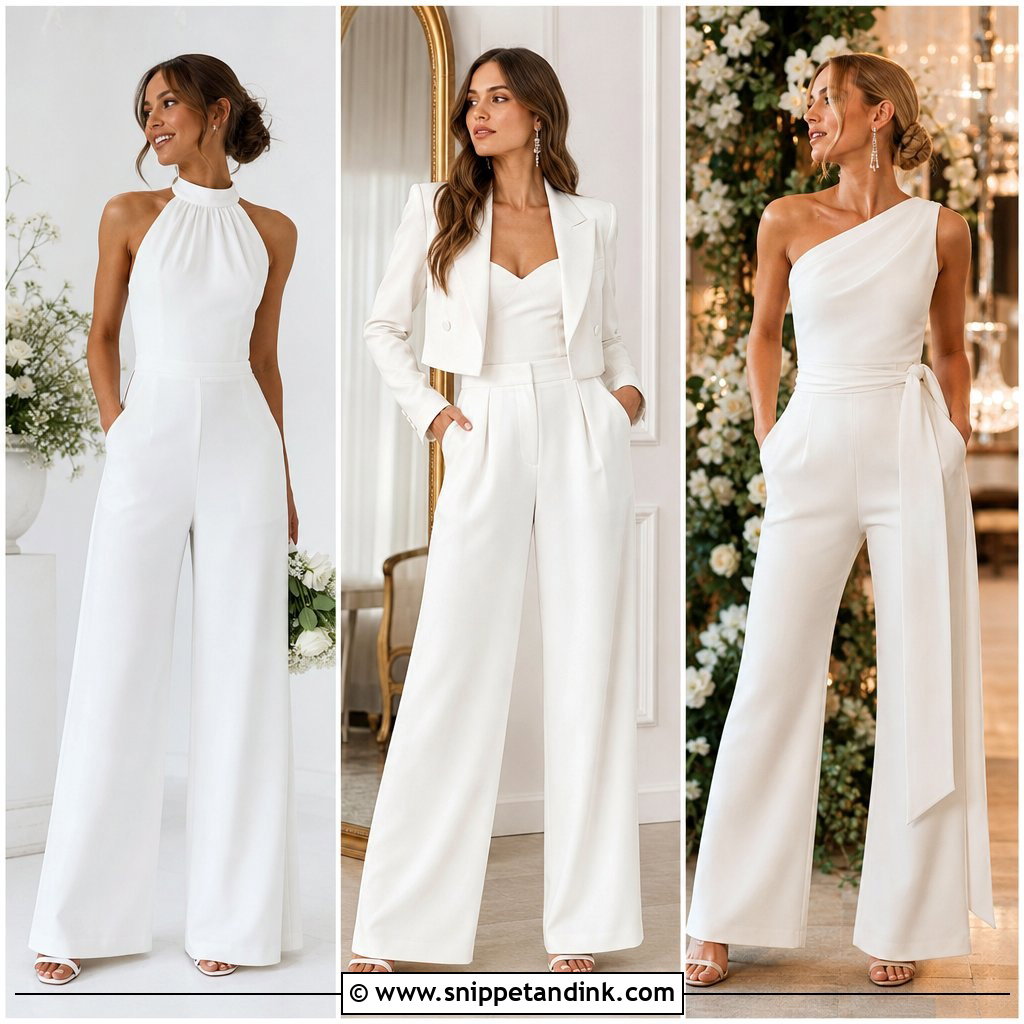
Ivory is my usual answer for brides who find optical white harsh next to their skin, and wide trousers add movement that a slim leg can’t. Fabric weight is the thing to test. A fluid crepe drapes and swings as you walk; a thin polyester version clings to the shin and shows every pocket line. Hem wide legs so they just kiss the top of the shoe at the front, with the back about a centimetre longer. Too long and you’ll be stepping on them by the first dance.
3. Bridal Tuxedo Suit
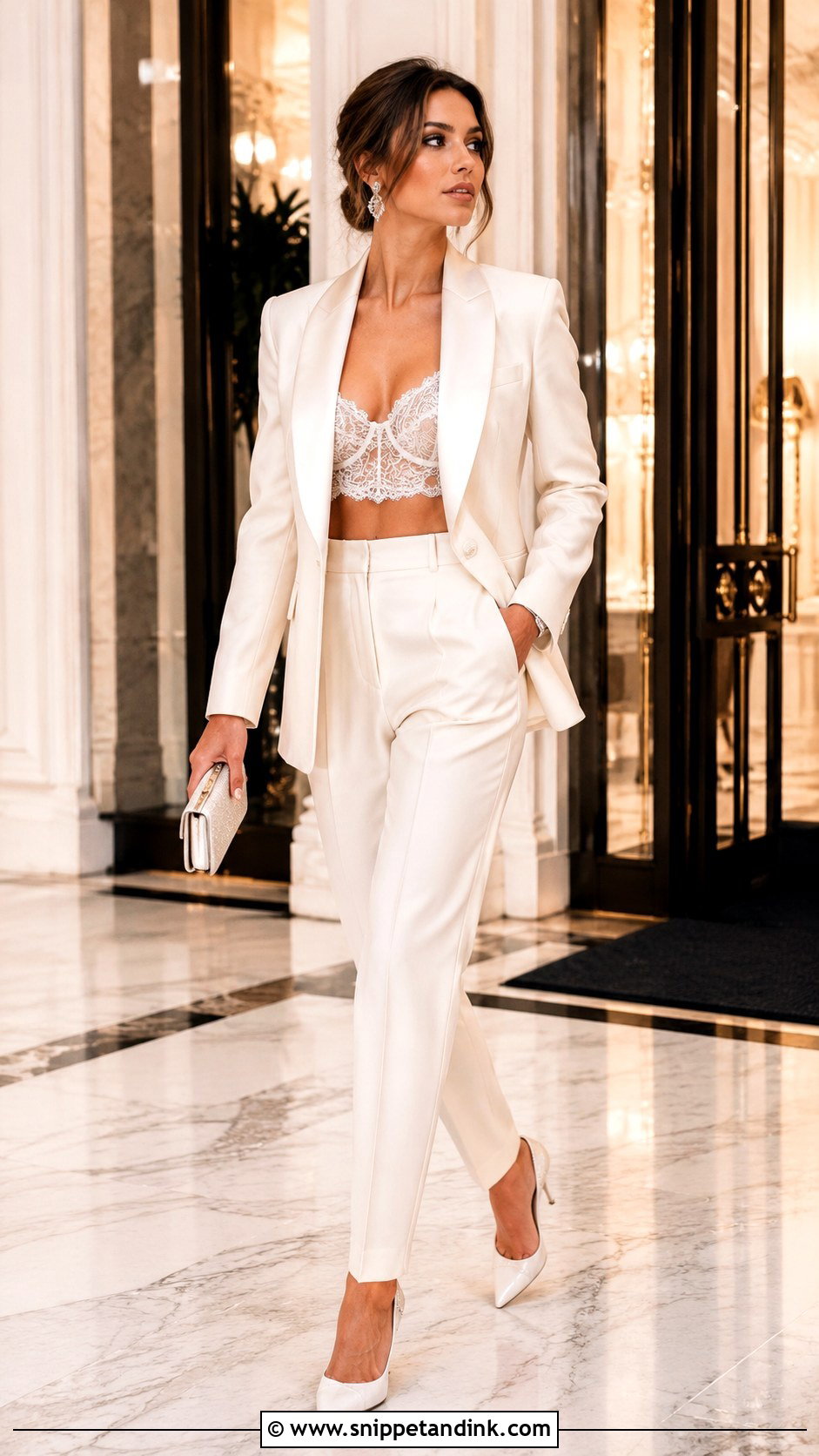
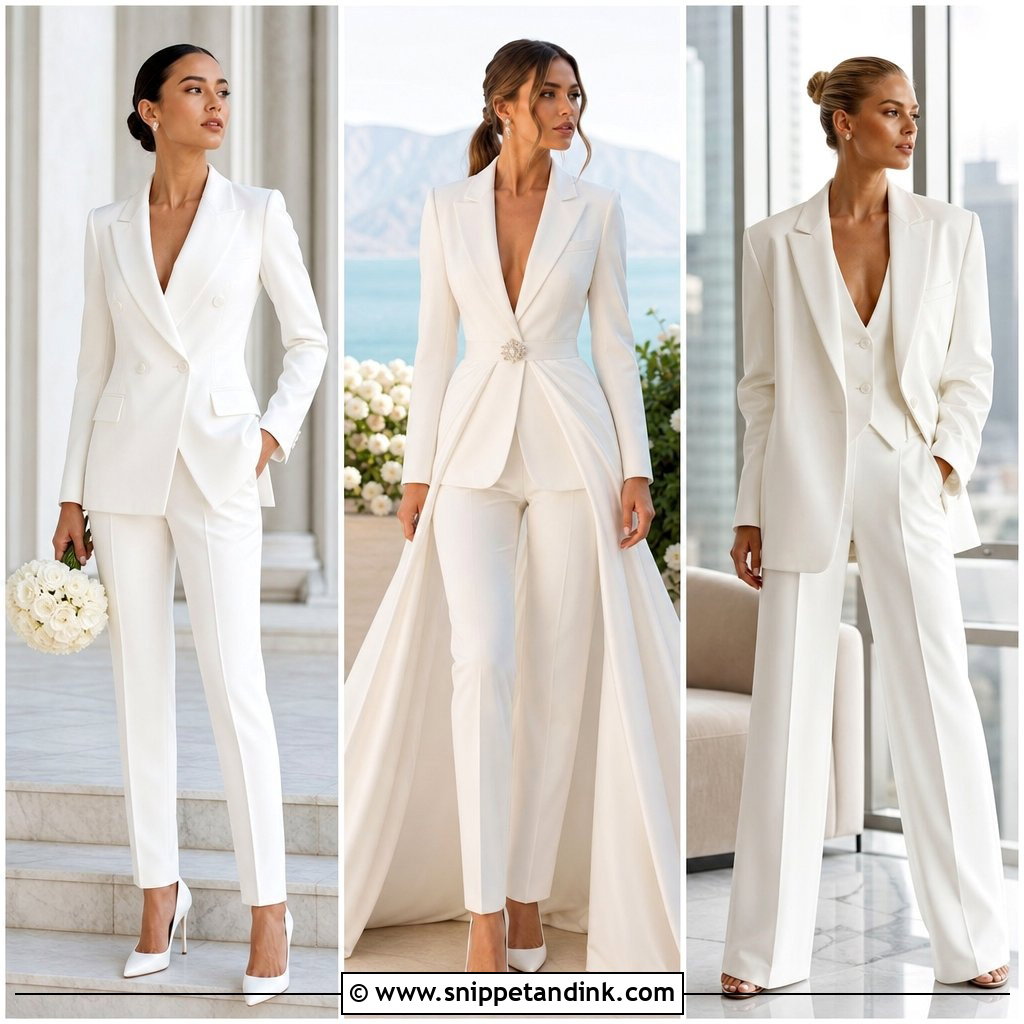
Satin lapels and a strong shoulder give a tuxedo its evening weight, so I keep everything else quiet: crystal studs, slingbacks, a small clutch. If you plan to wear the jacket with nothing visible underneath, test the closure seriously. Sit, raise both arms, hug someone. A single button under strain gapes in profile photos, and a discreet hook or a strip of fashion tape at the lapel fixes it. White and ivory read most bridal, while champagne pushes it toward fashion.
4. Lace Bridal Suit
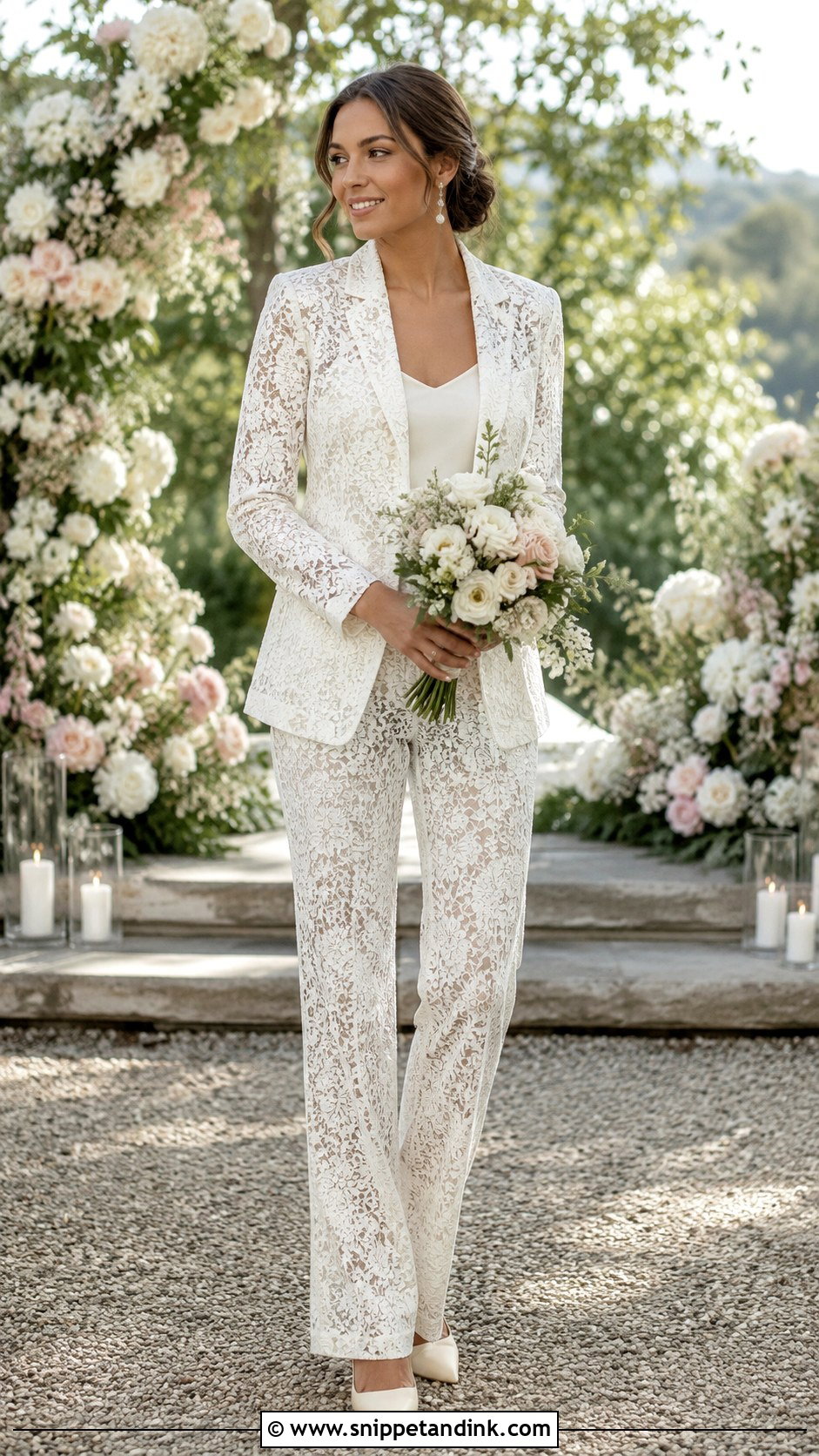
Lace gives tailoring the romance most people associate with a gown. You’ll see it as a full lace overlay, embroidered panels or sheer sleeves, and each behaves differently. Lace trousers need a proper lining, or they bag at the knee within an hour. With all that texture, I keep shoes and jewellery plain so the pattern stays the point. A fitted lace jacket over straight trousers holds its shape for a garden ceremony; a looser jacket over wide legs feels more relaxed for a shower or reception change.
5. Satin Bridal Suit
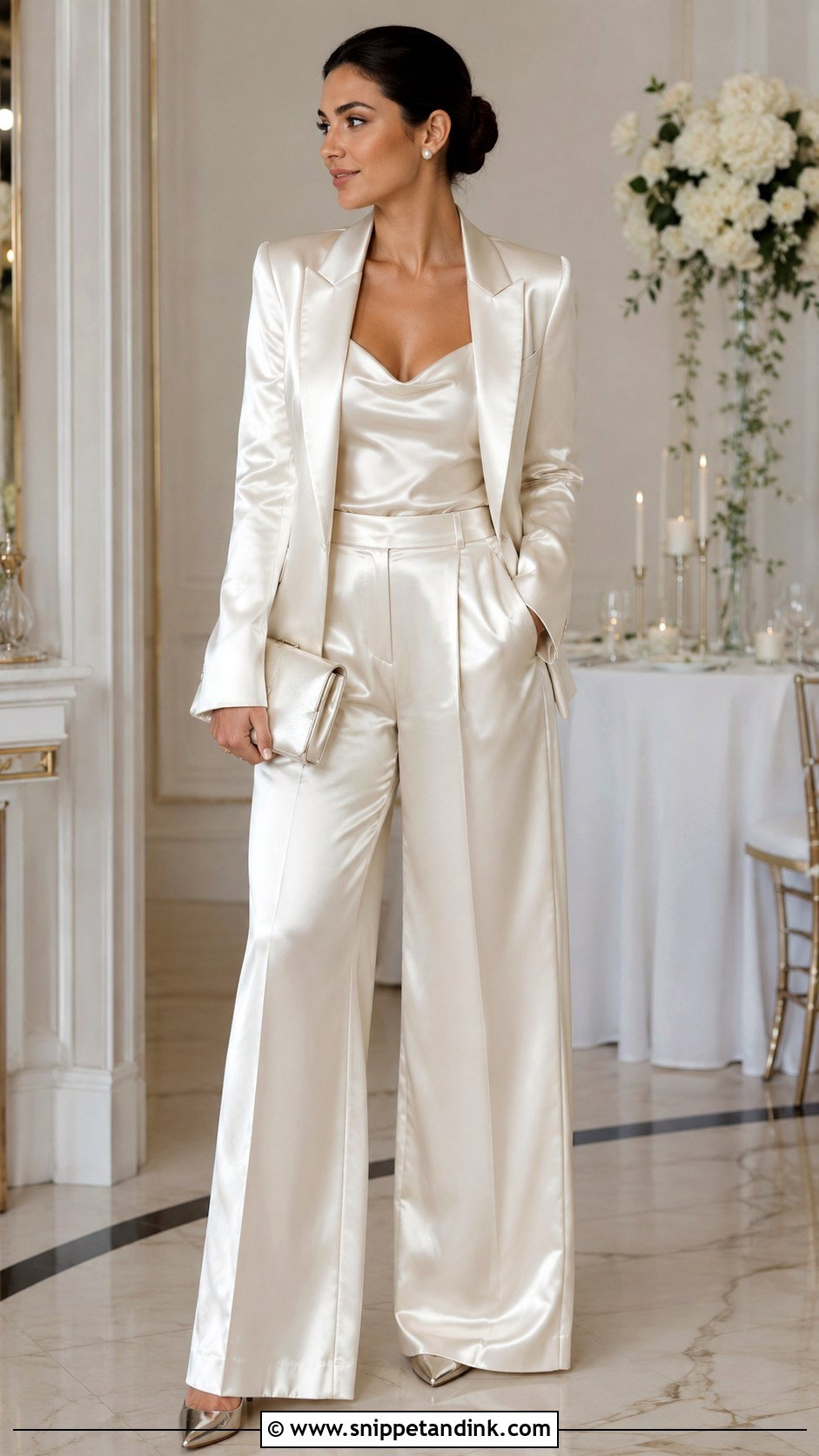
Satin is the fabric I warn people about. It looks rich, but it marks easily, creases at the hip and elbow, and shows every pull at a tight seam. So the cut has to be generous enough not to strain. Pair a satin blazer with straight or wide trousers, metallic heels and pearl studs, and stop there. If head-to-toe shine feels like too much, a satin-lapel blazer over matte crepe trousers gives the glow without the creasing problem. Evening hotel and ballroom settings are where satin looks most at home.
6. Bridal Suit With Cape Blazer
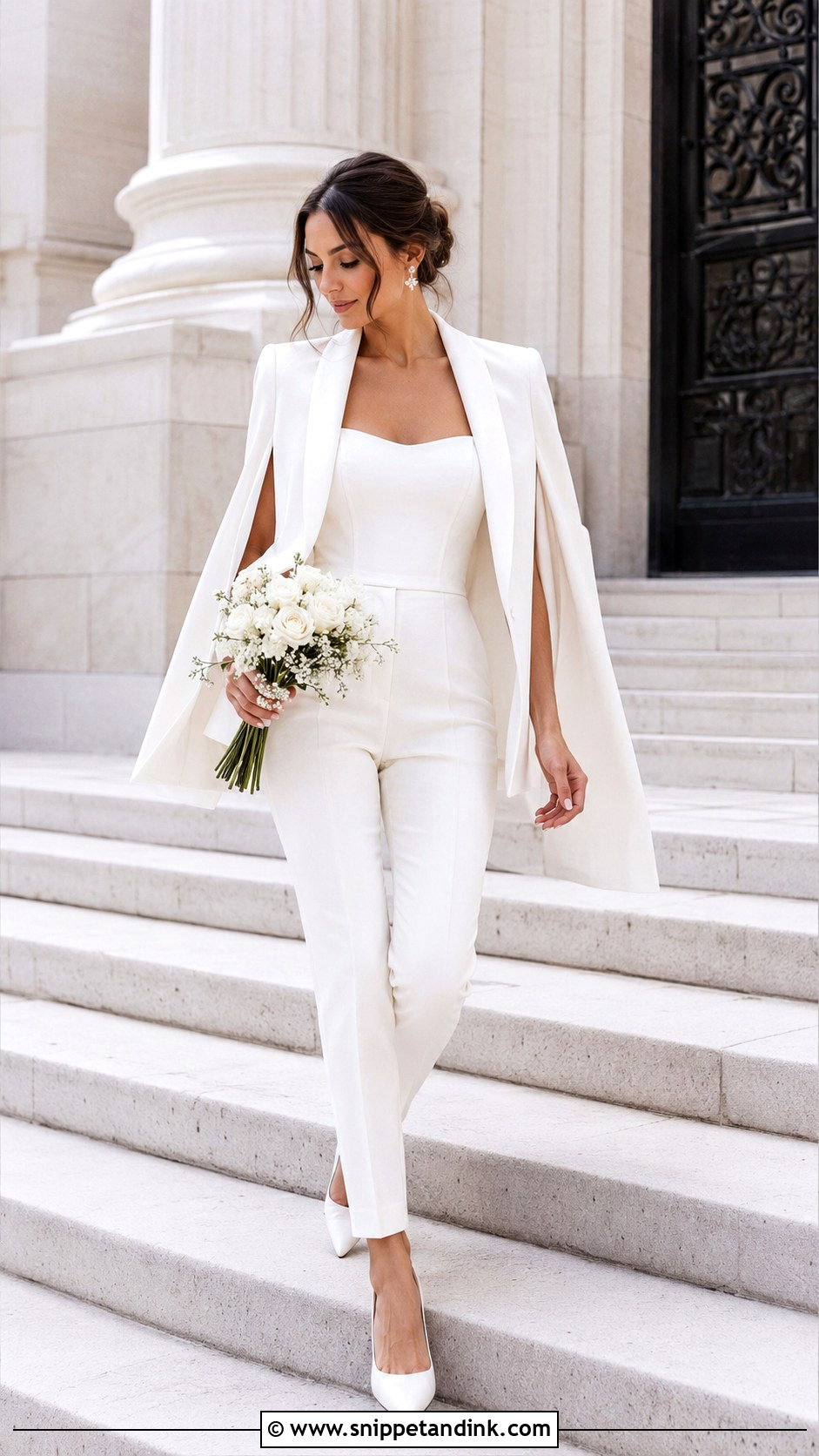
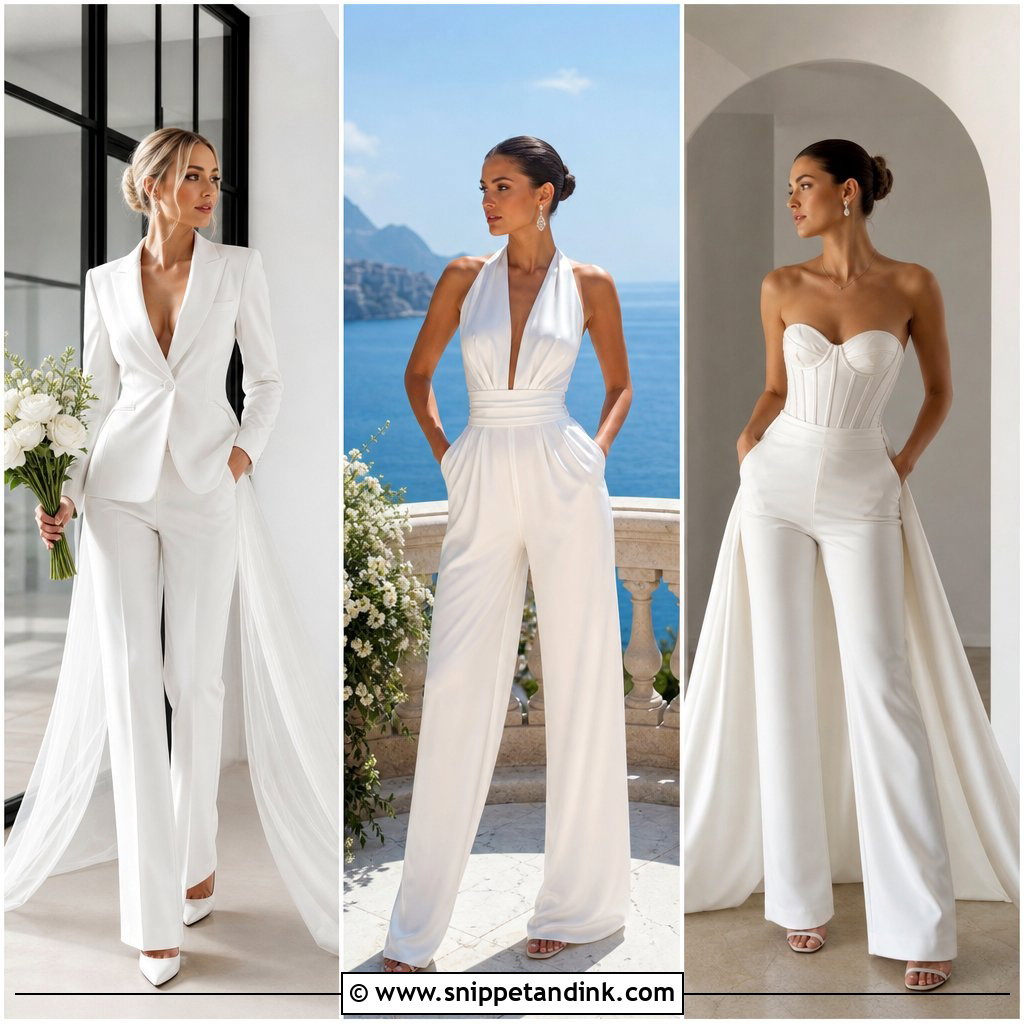
The cape blazer gives you the movement of a veil or train with none of the weight. In photos, it’s at its best in motion, so plan a few walking shots. My main check is the shoulder seam: a cape attached to a badly fitted shoulder drags the whole jacket backwards. Keep the trousers slim and the top underneath plain so the cape stays the focal point. Courthouse steps and rooftops suit it well, though a strong wind can turn it into a sail.
7. Bridal Suit With Corset Top
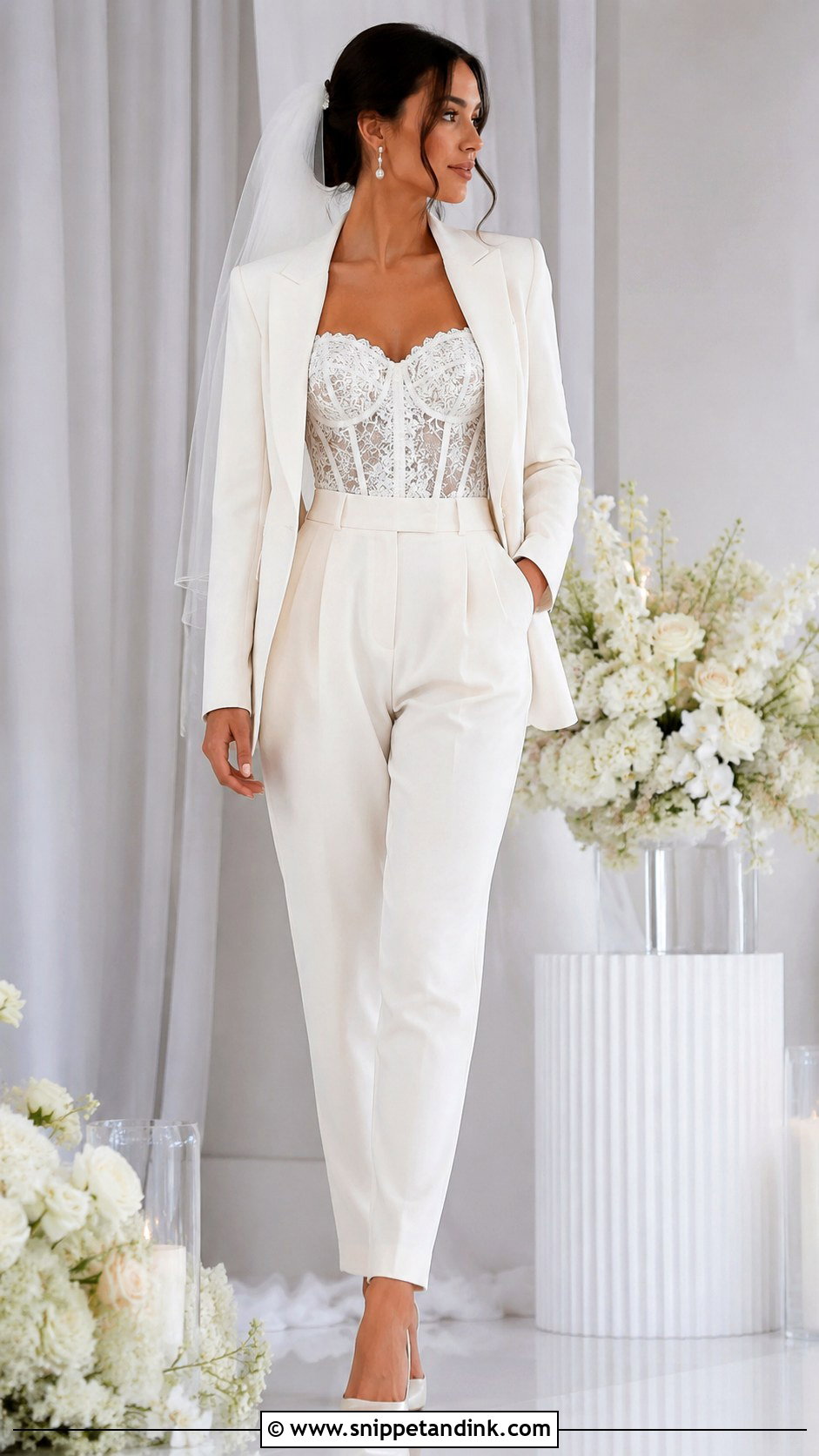
A corset changes the whole suit because it gives the waist a shape a blouse never will. I’d pair it with a sharp blazer and high-waisted trousers so it reads as tailoring rather than lingerie. Lace corsets feel romantic, while satin or crepe ones look cleaner. The fitting issue is boning length: if it digs into your hip when you sit, it will be painful by the speeches. Add pointed pumps, a short veil and pearl drops, and it works for a civil ceremony or as a change after a formal gown.
8. Bridal Suit With Vest
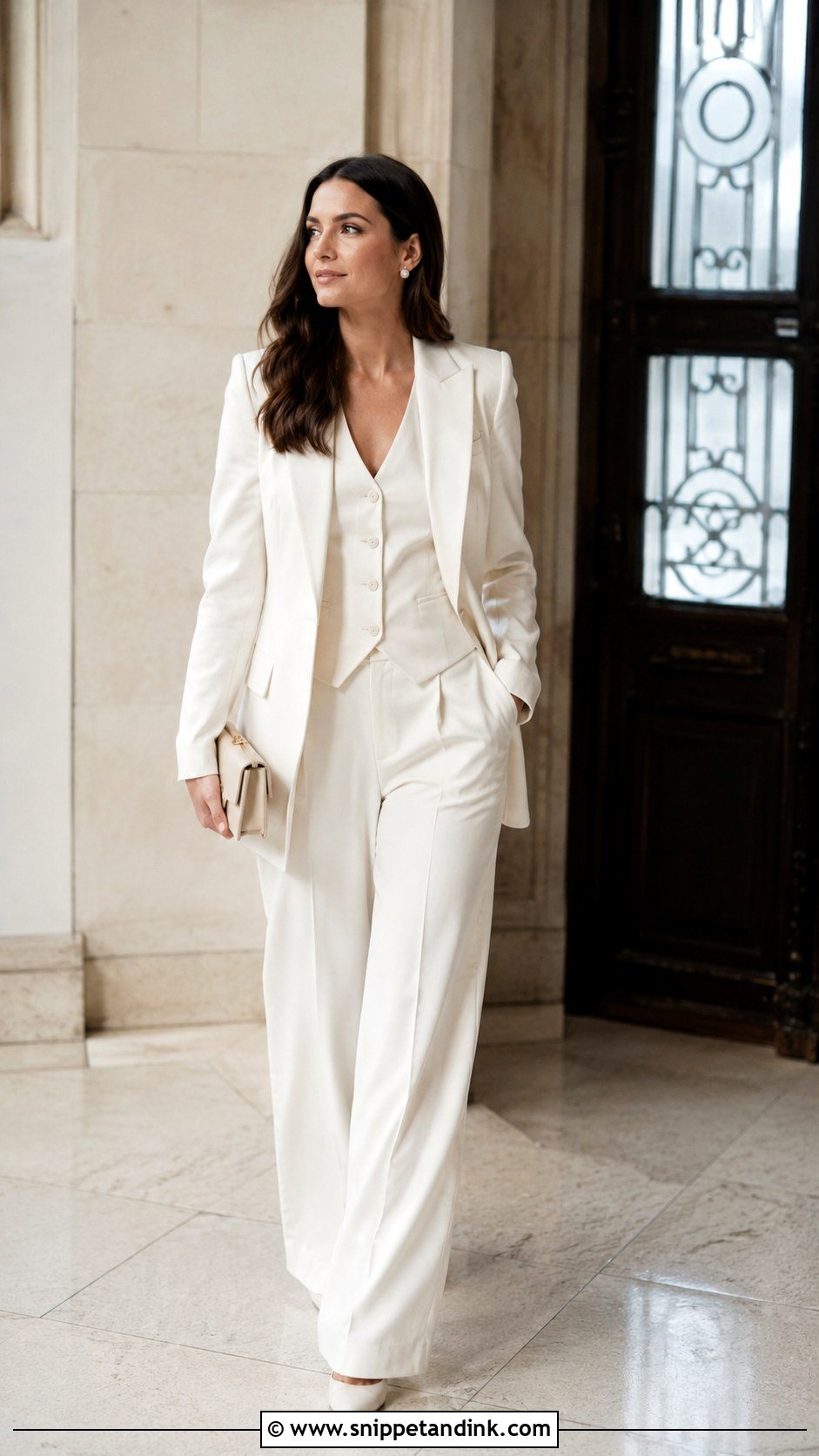
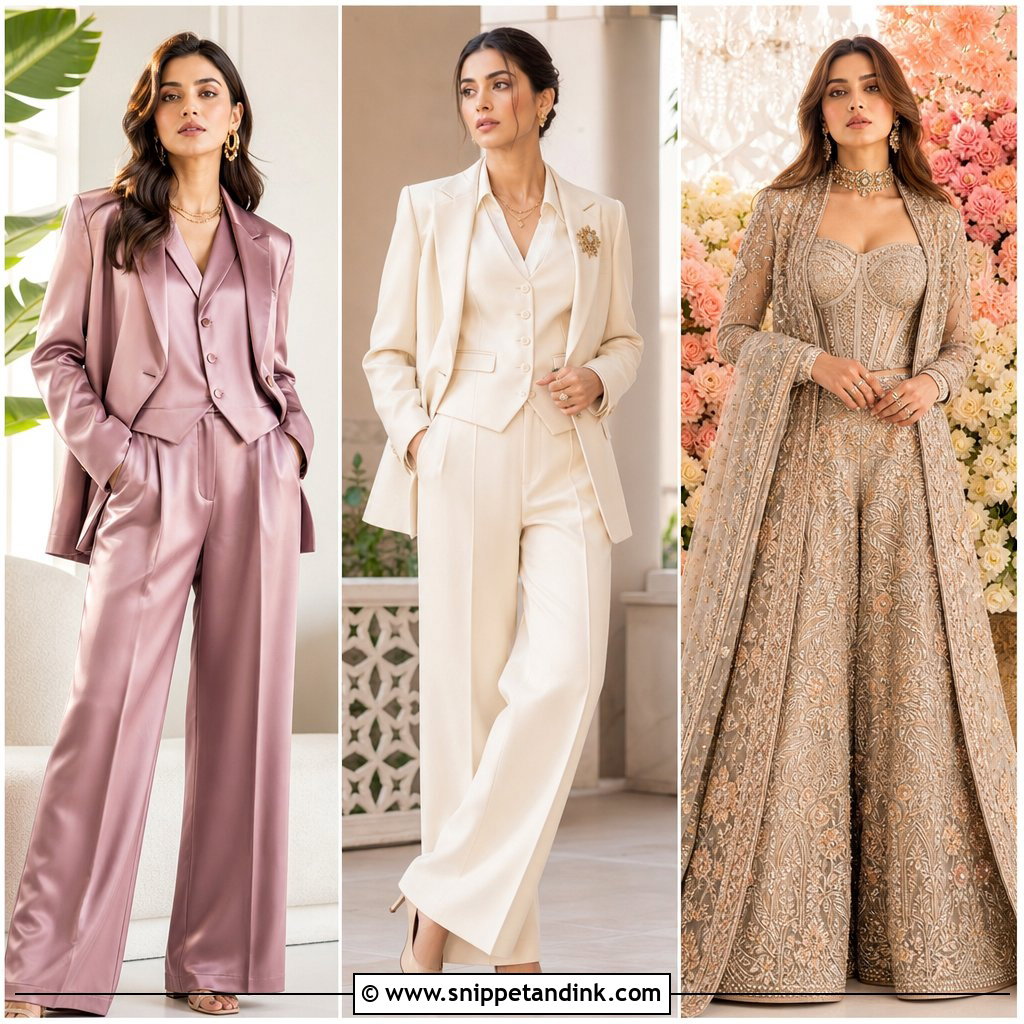
Two outfits for the price of one is the honest appeal of a three-piece. Wear the blazer for the ceremony, then take it off for the reception and you still look finished. The waistcoat has to fit close to the body, with no gap at the back belt and no pull across the buttons. If you’re between sizes, I’d fit the waistcoat first and alter the jacket around it. A bridal suit with vest styling looks relaxed with loafers and more formal with heels.
9. Bridal Suit With Skirt
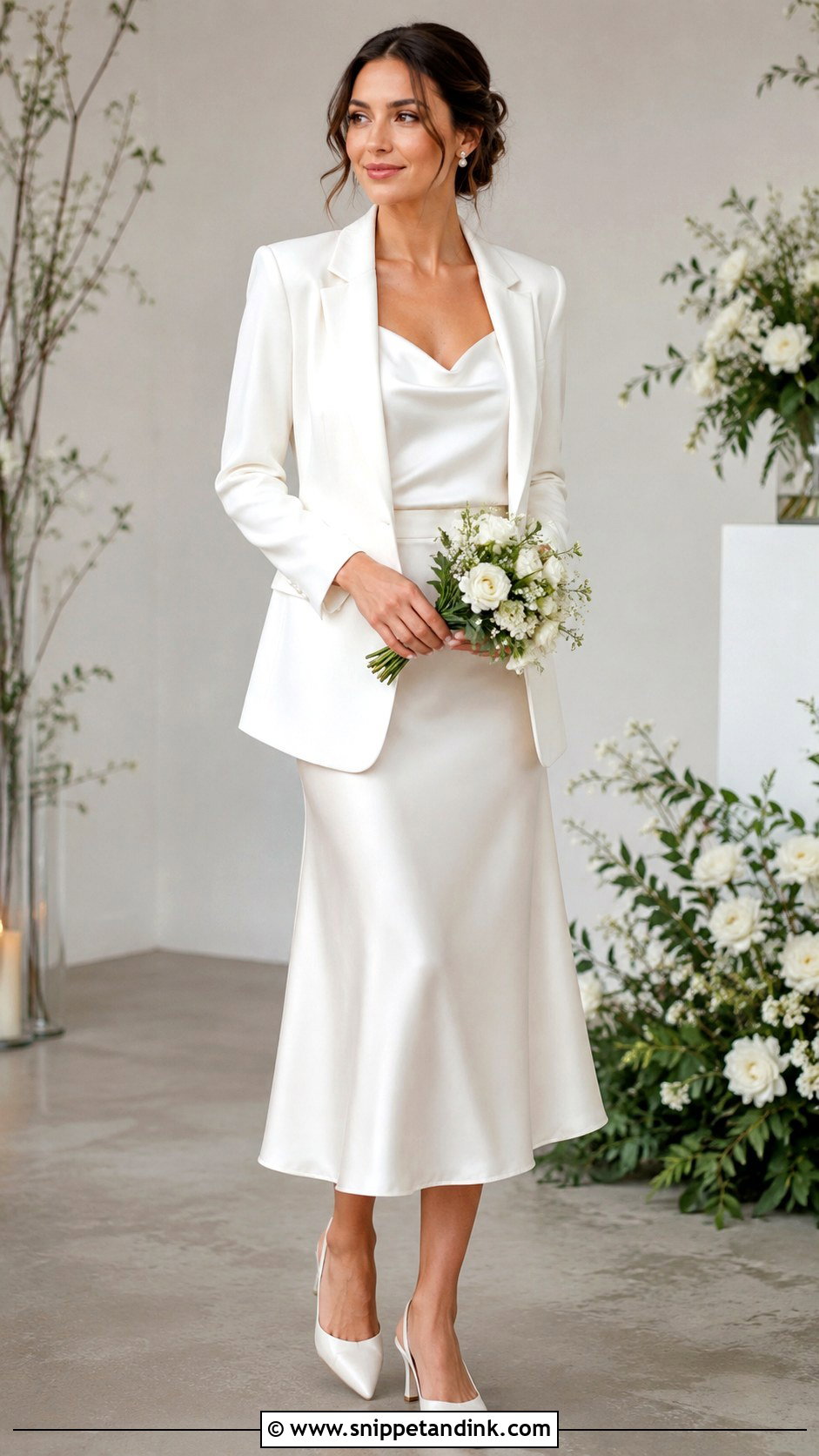
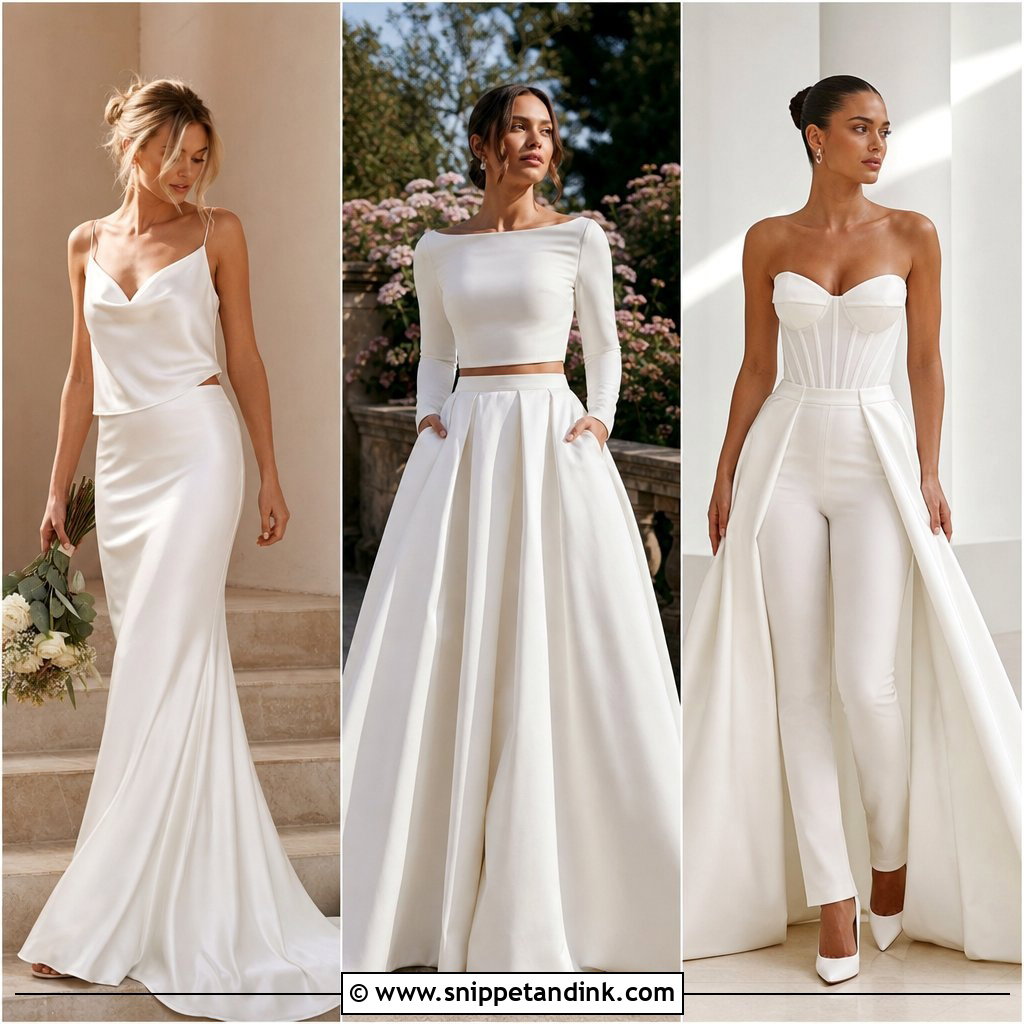
Some brides love tailoring on top but miss the movement of a skirt below. A structured blazer over a pencil, A-line midi or satin maxi skirt gives you both, and it often covers more than a trouser suit does. Match the shoe to the hem: slingbacks with a midi, pointed pumps with a pencil skirt. When fitting a pencil skirt, I always ask the bride to climb a step. If she can’t, we add a back vent or choose a softer line.
10. Bridal Short Suit
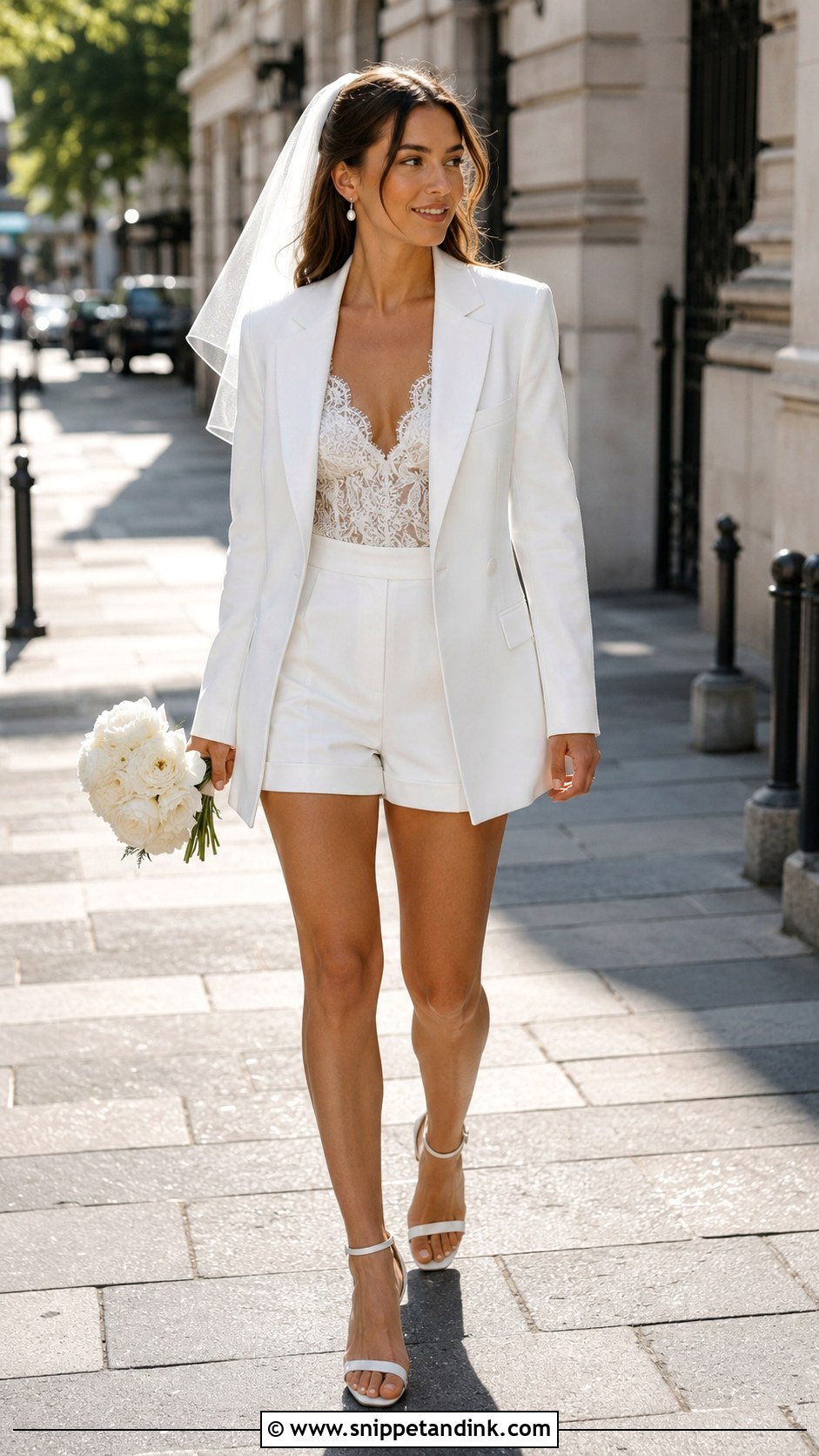
Shorts read playful, which is exactly why the jacket has to be longer and more structured than you’d think. A blazer that ends below the hem of the shorts keeps it bridal. Crepe and linen-blend shorts hold a crease better than soft satin. As for length, I aim for a few fingers above the knee and a leg opening that doesn’t cling. It’s a warm-weather look, and a natural second outfit for dancing after the ceremony.
11. Plus Size Bridal Suit
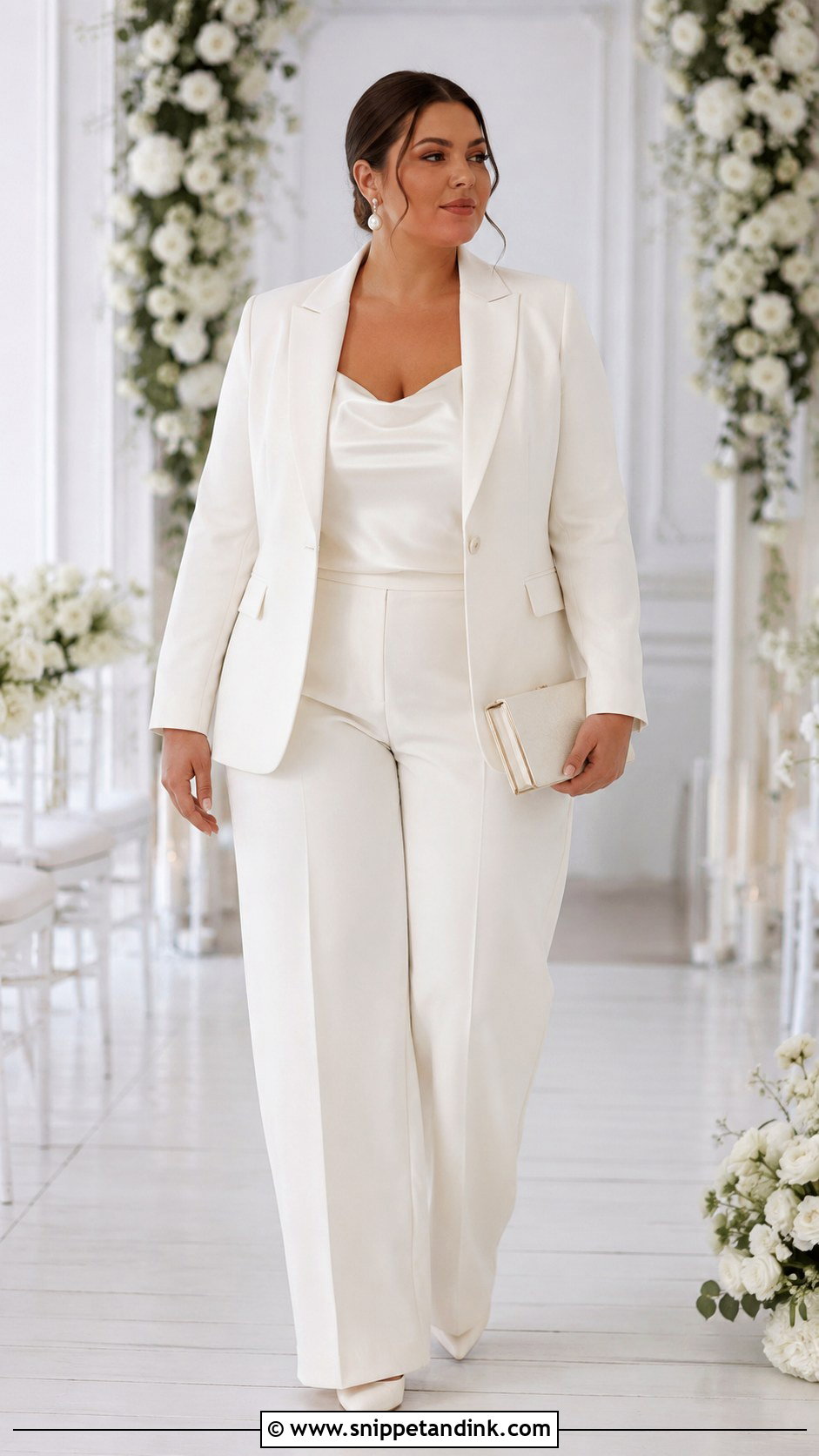
Tailoring for a fuller figure is about support and line, not volume. I look for strong seams, a defined waist and a smooth lining that lets the jacket move over the body instead of catching on it. Stretch crepe is my usual first choice because it holds structure while giving you room to breathe and sit. A single-breasted jacket gives a long vertical line, and wide trousers balance the hip. Alterations at the shoulder, sleeve, waistband and hem do most of the work, which is why a well-fitted plus size bridal suit looks custom even when it started off the rack.
12. Petite Bridal Suit
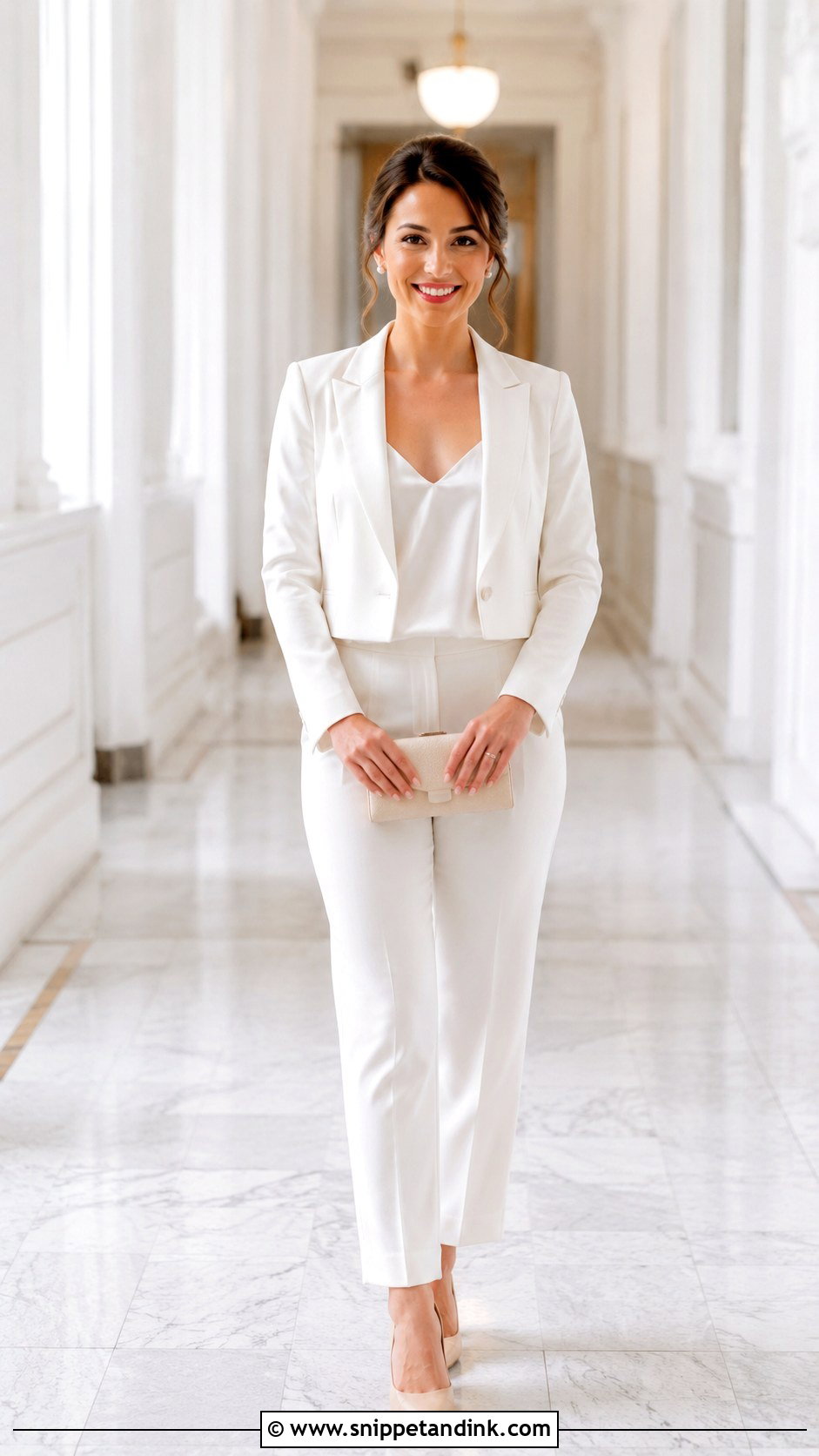
On a petite frame, proportion is everything, and an oversized blazer is the quickest way to lose it. I’d keep the jacket hem at or just above the hip and show the shoe with an ankle-length or cropped trouser, ideally with a pointed toe. Head-to-toe white or ivory makes one unbroken line from shoulder to shoe. Heavy wool overwhelms a small frame. Lightweight crepe with clean seams looks sharper, and small pearl earrings stay in scale.
13. Bridal Suit For Courthouse Wedding
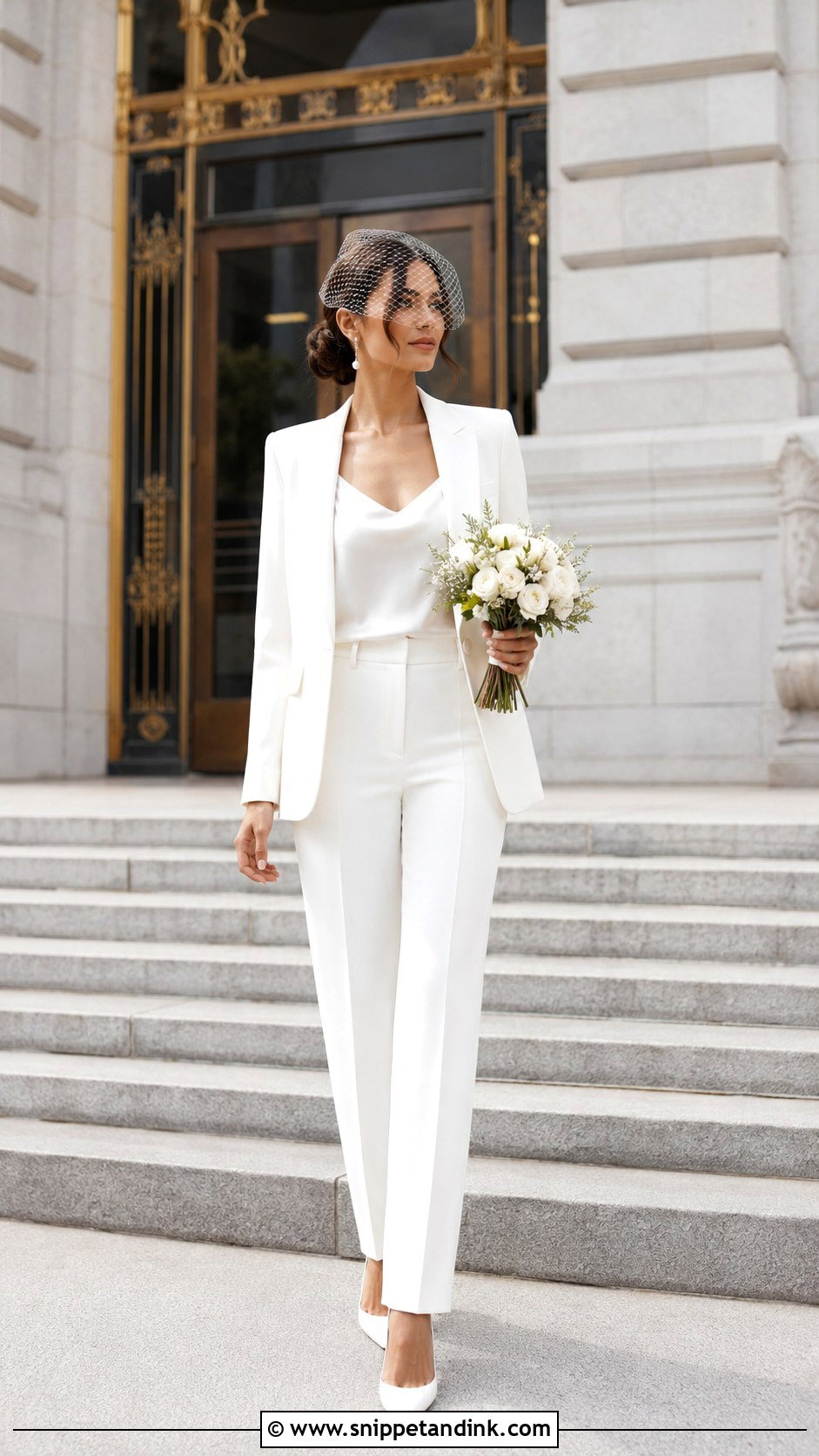
City hall days involve more walking and waiting than people plan for, often in queues and on stone steps. That’s why I steer courthouse brides toward fabrics that recover from creasing, like a wool blend or stretch crepe, rather than linen or pure satin. A white blazer, straight trousers and a lower heel handle the day well. Then add one detail that says bride: a birdcage veil, a pearl headband or a compact bouquet. One is enough on a suit this clean.
14. Bridal Suit For Beach Wedding
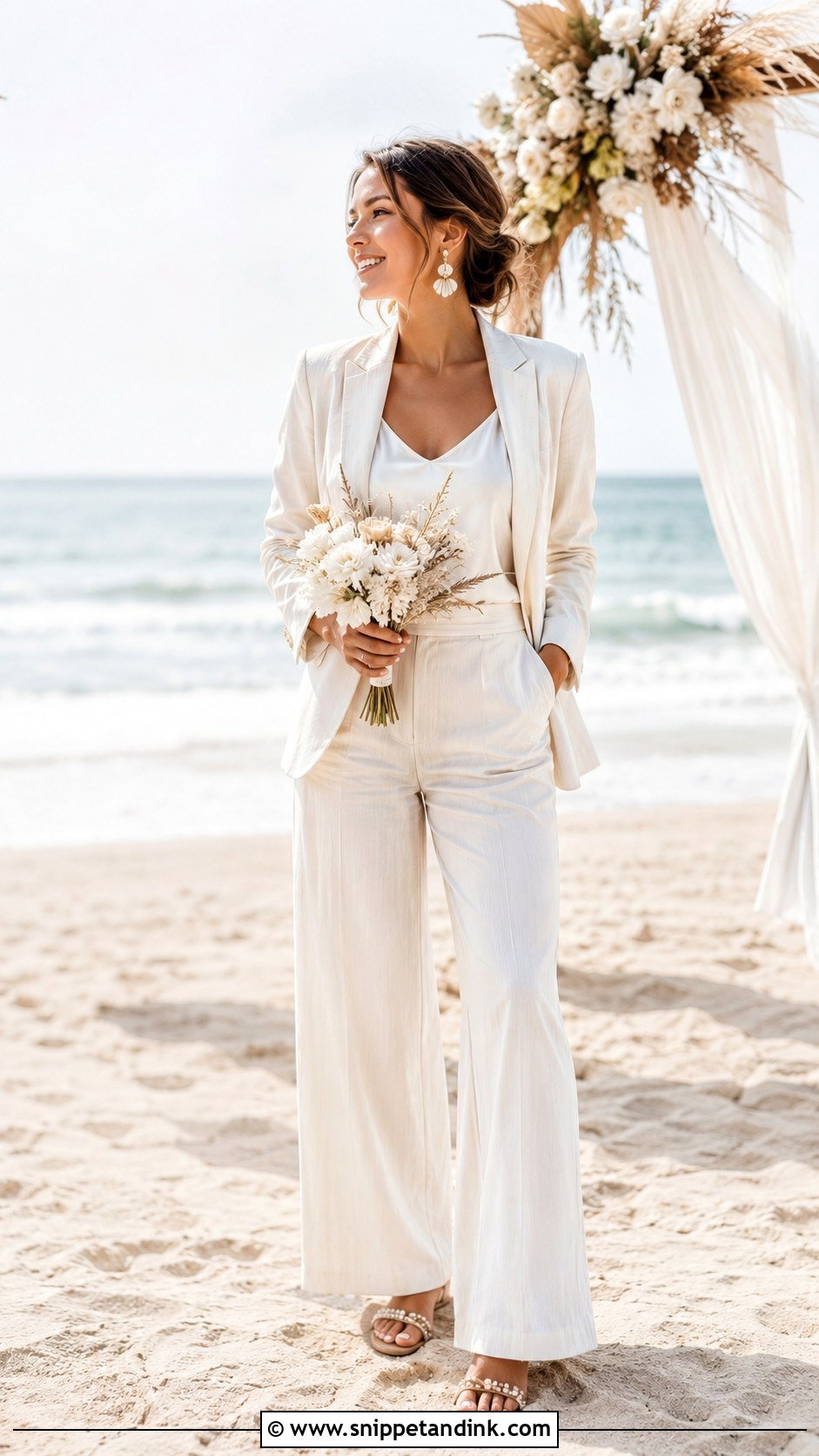
Sand and salt air are hard on tailoring. Choose a linen blend or soft crepe in ivory, sand or soft white, and accept that linen will wrinkle; it’s part of the look on a beach, not a flaw. A loose blazer over a silk tank stays polished in warm weather, and wide trousers move with the wind instead of flattening against the leg. I’d skip a structured, lined jacket entirely here. Flat sandals are non-negotiable, because heels sink.
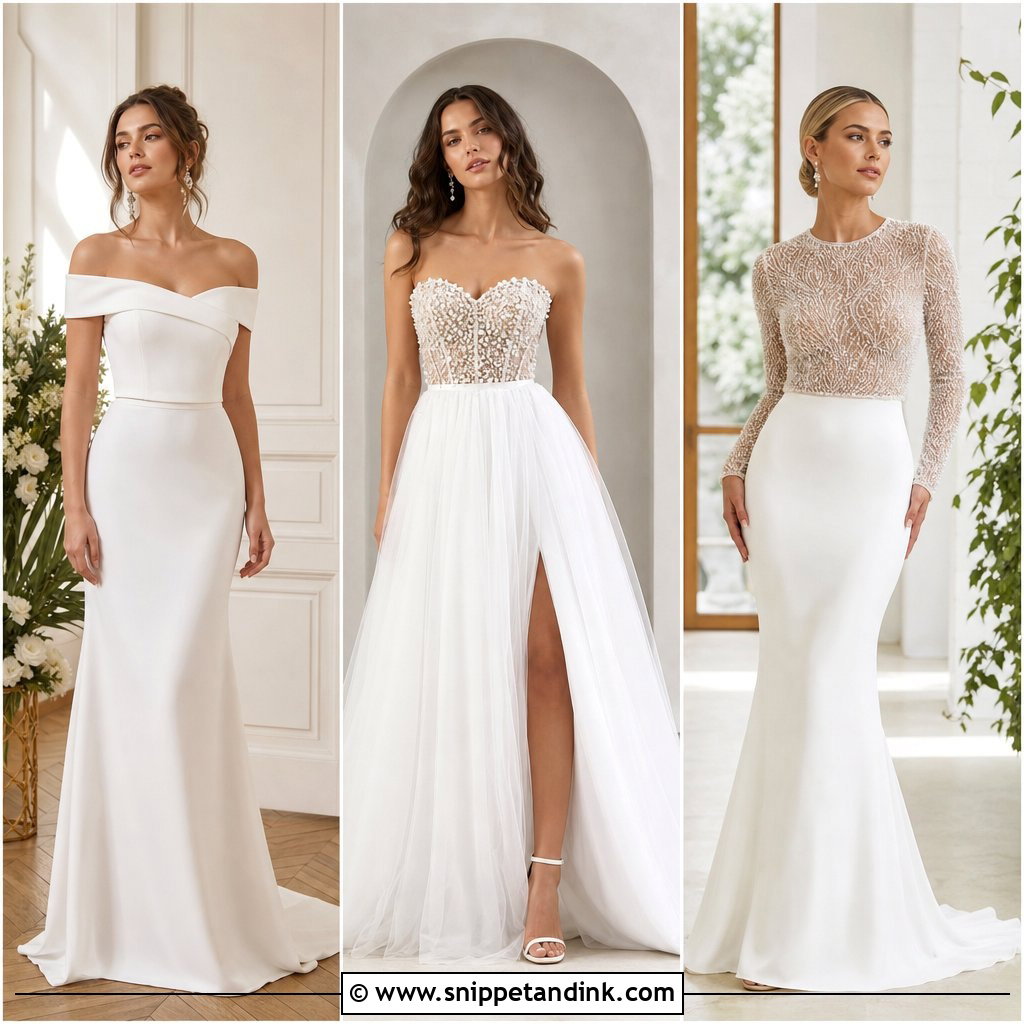


15. Bridal Suit For Winter Wedding
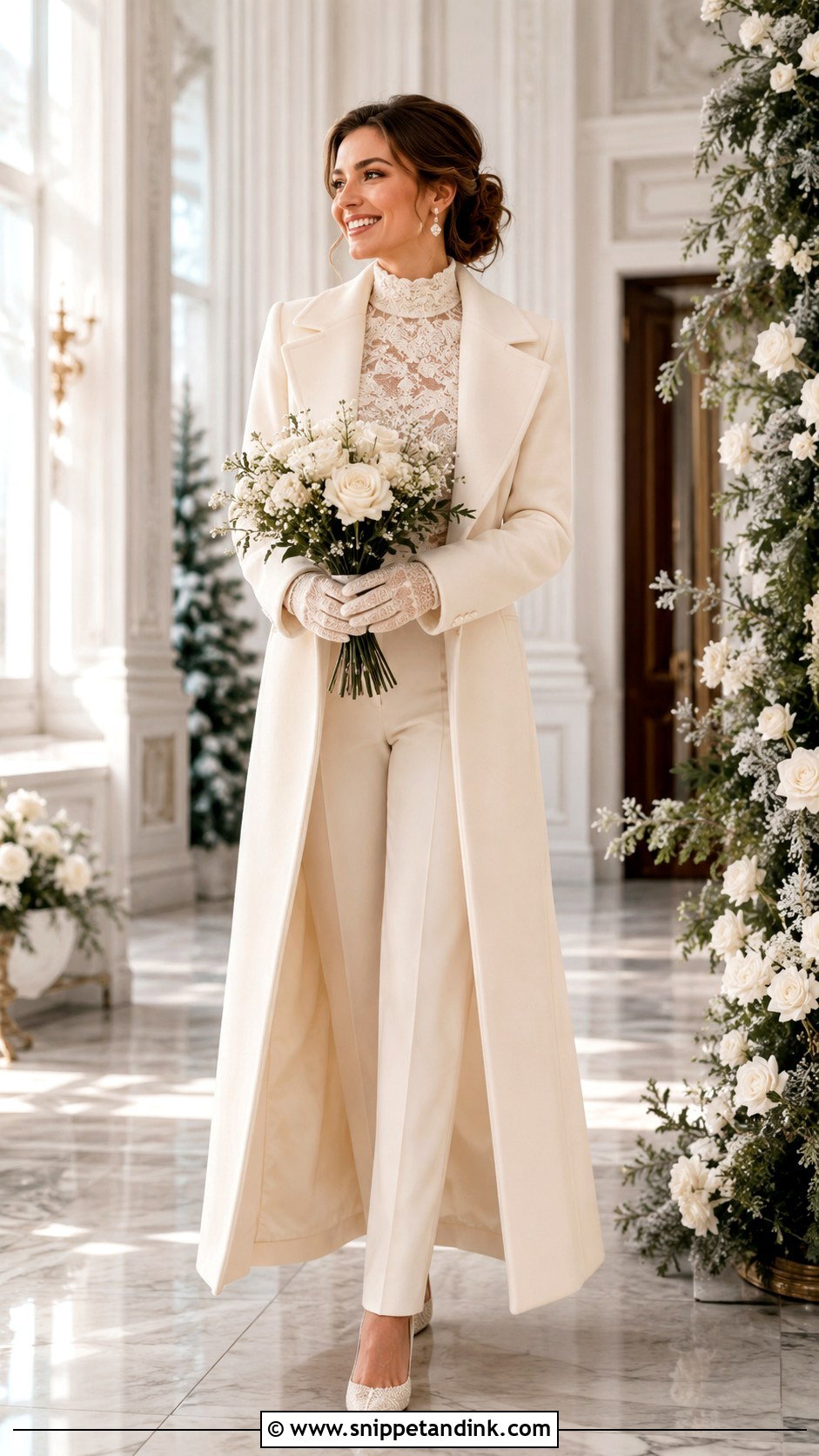
Winter is the one season where a suit can outdo a gown for comfort. Heavier crepe, wool blends, velvet or satin-lined tailoring give real warmth, and a longline coat over the top looks deliberate in outdoor photos. Ivory and cream sit better in low winter light than bright white, which can look slightly blue. I always try a winter suit on with the actual layer underneath. A high-neck lace top adds bulk, and a jacket fitted over a camisole may not close over it.
16. Bridal Suit For Summer Wedding
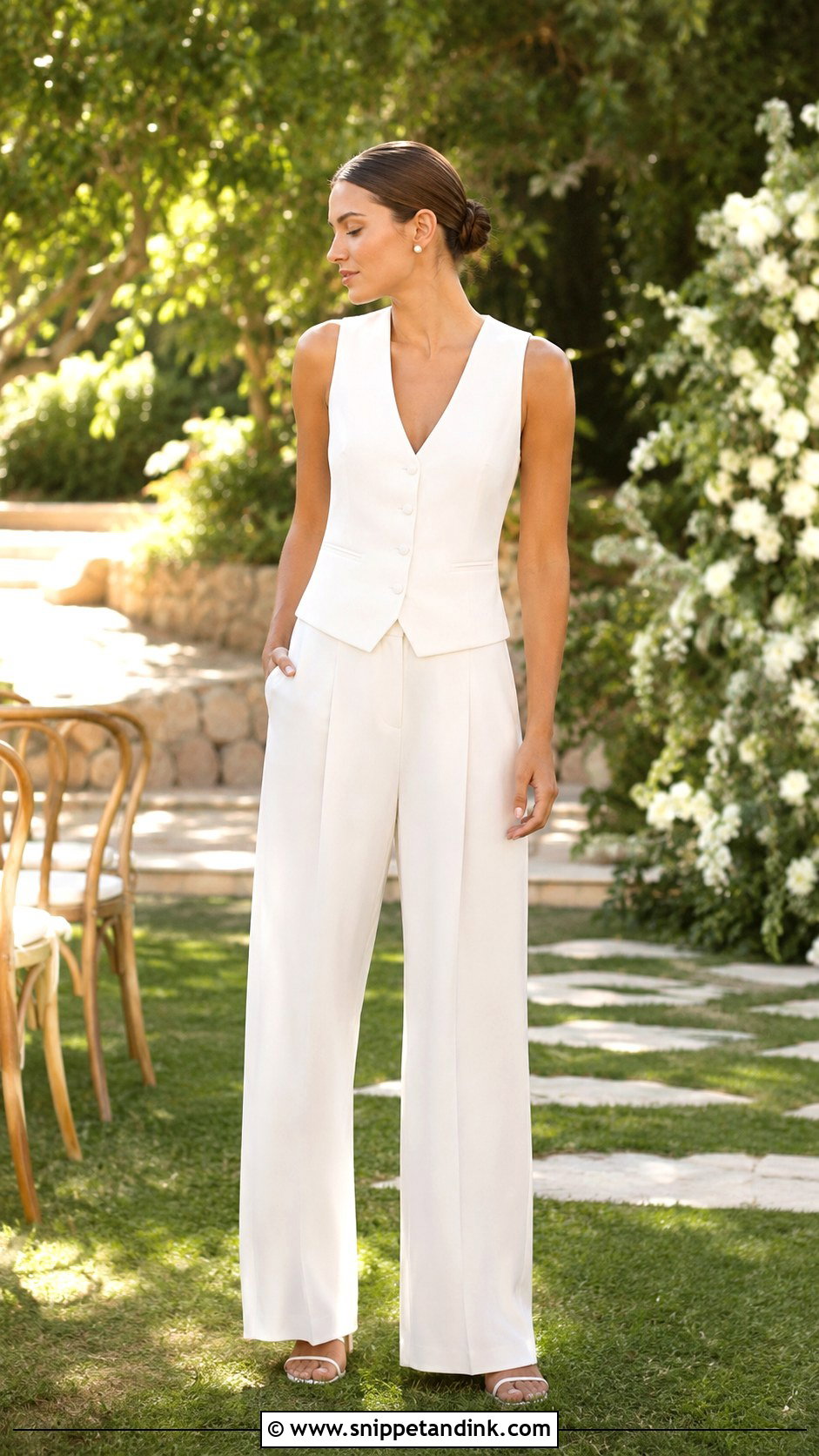
In heat, the question I ask first is whether you’ll keep the jacket on. If not, build the outfit so it stands alone: a sleeveless waistcoat with matching trousers looks finished by itself. If you want sleeves, an unlined or half-lined blazer breathes far better than a fully lined one. Lightweight crepe, linen blends and silk separates in soft white or pale champagne all handle summer well. A low bun keeps hair off your neck during outdoor photos.
17. Bridal Suit For Reception
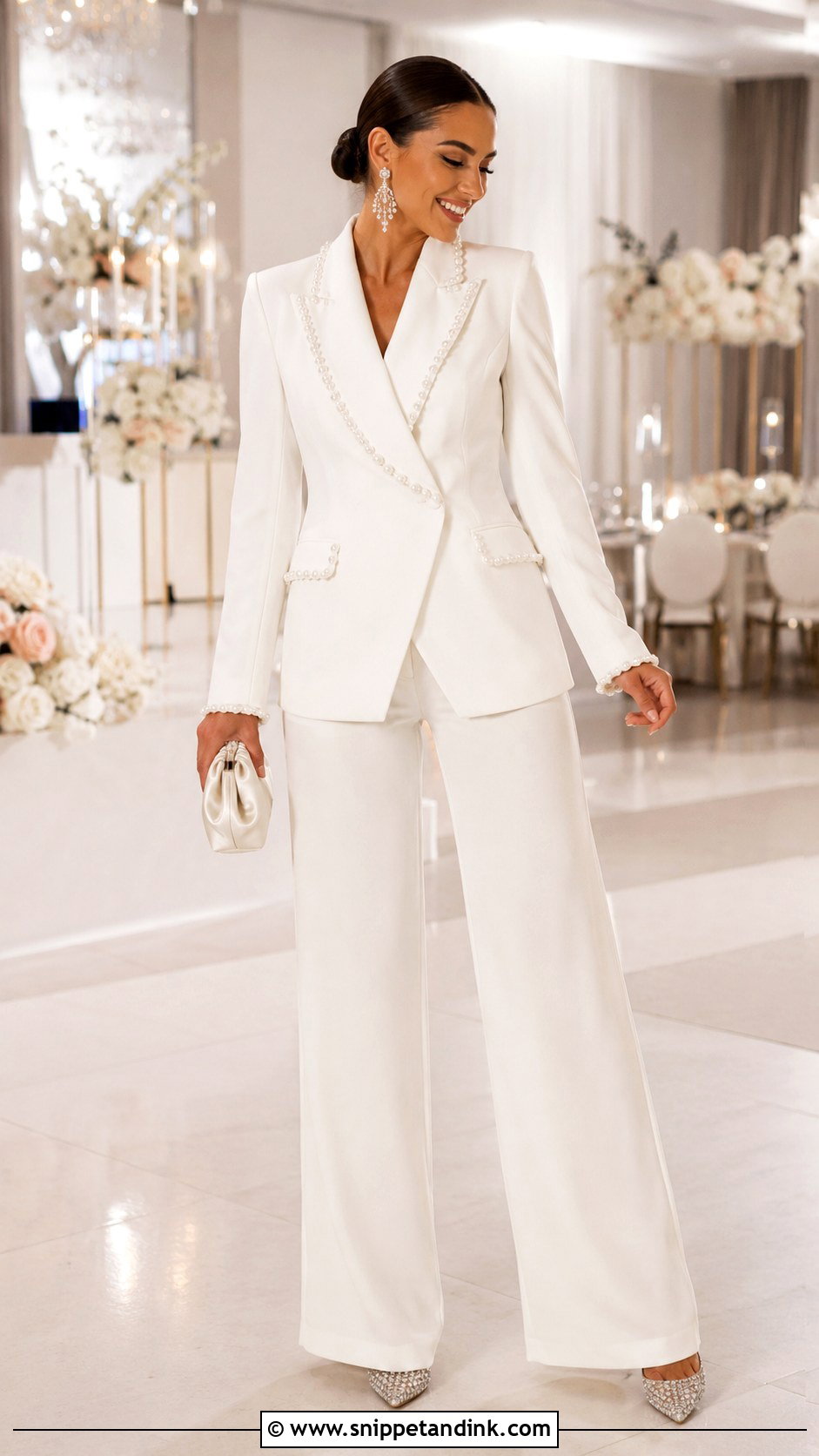
Reception suits can be louder than ceremony ones. This is where sparkle, feathers or satin earn their place. The practical test is dancing: raise your arms, spin, and check that the jacket doesn’t ride up and the trousers don’t drop. Have trousers hemmed for the exact shoes you’ll dance in, because many brides swap to a lower heel later. A change from gown to suit also gives you a fresh reveal partway through the night.
18. Bridal Suit With Pearl Details
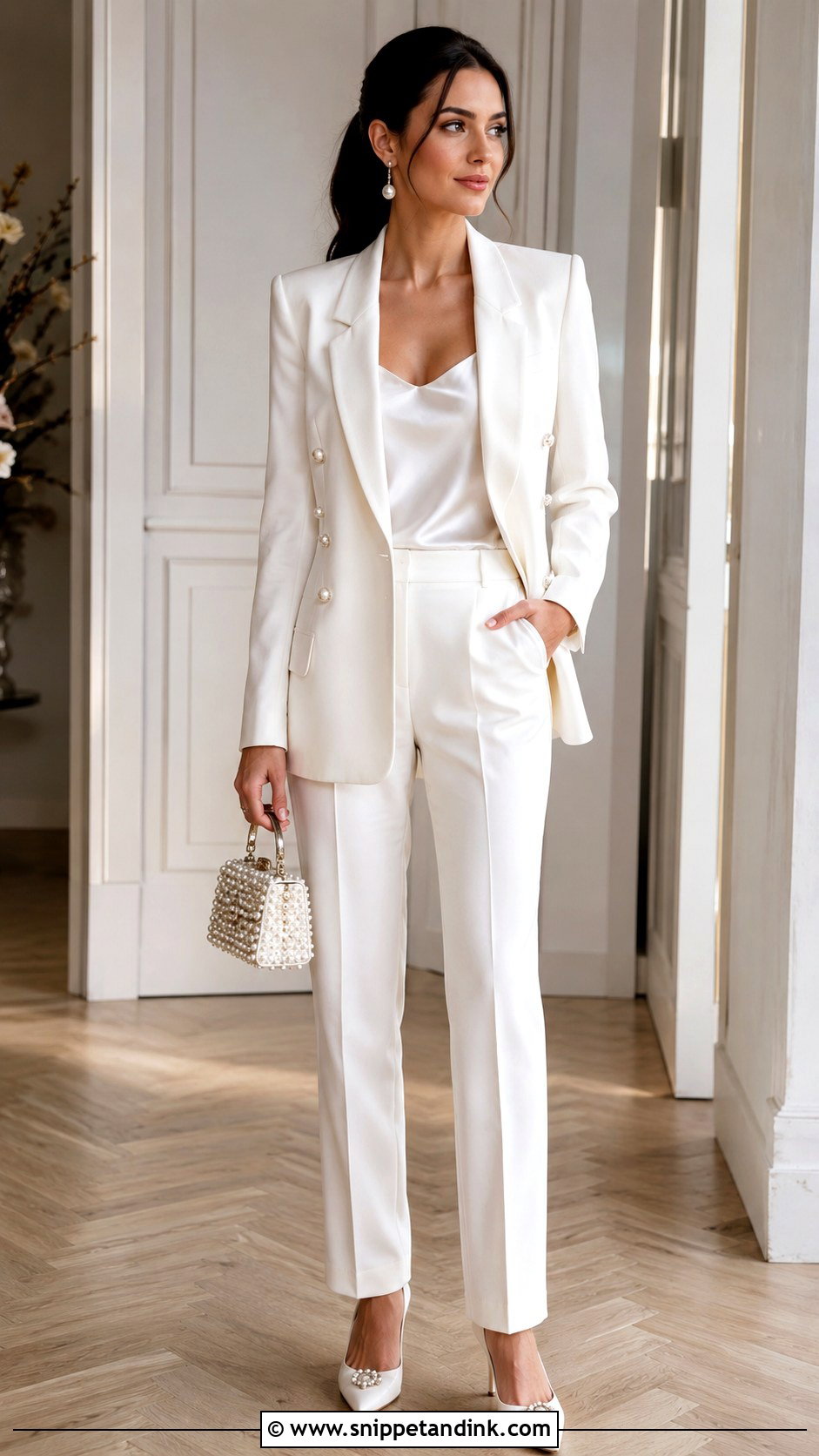
Pearls can sit almost anywhere on a suit: buttons, lapels, cuffs, trouser seams, bag or shoes. I limit it to one or two places. A plain white suit with pearl buttons and matching earrings reads refined; a pearl-trimmed lapel over straight trousers and satin pumps is more dramatic. Check how the pearls are attached. Glued pearls pop off in a crowd, while hand-stitched ones survive a day of hugs. Pearls also soften the look for brides who don’t want lace or sparkle.
19. Bridal Suit With Bow Blouse
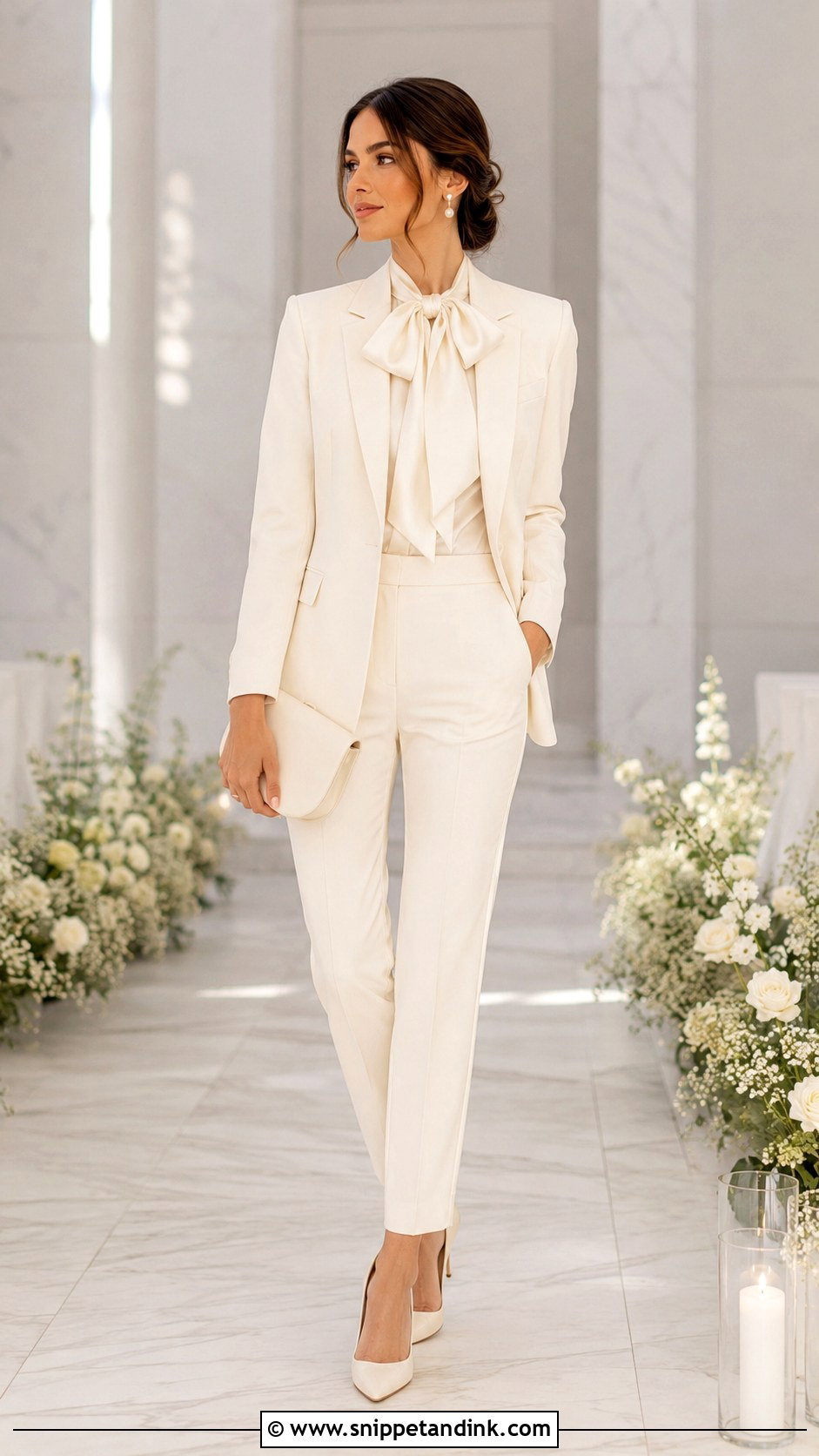
A bow at the neck puts softness right beside the face, which is exactly where portraits focus. Choose silk or chiffon so the bow drapes rather than sticks out stiffly, and keep the suit plain so the two don’t compete. I tie the bow at the fitting and pin it in place underneath; untied bows slip by mid-afternoon. It gives coverage without weight, and it suits daytime civil ceremonies and brunches.

20. Bridal Suit With Train
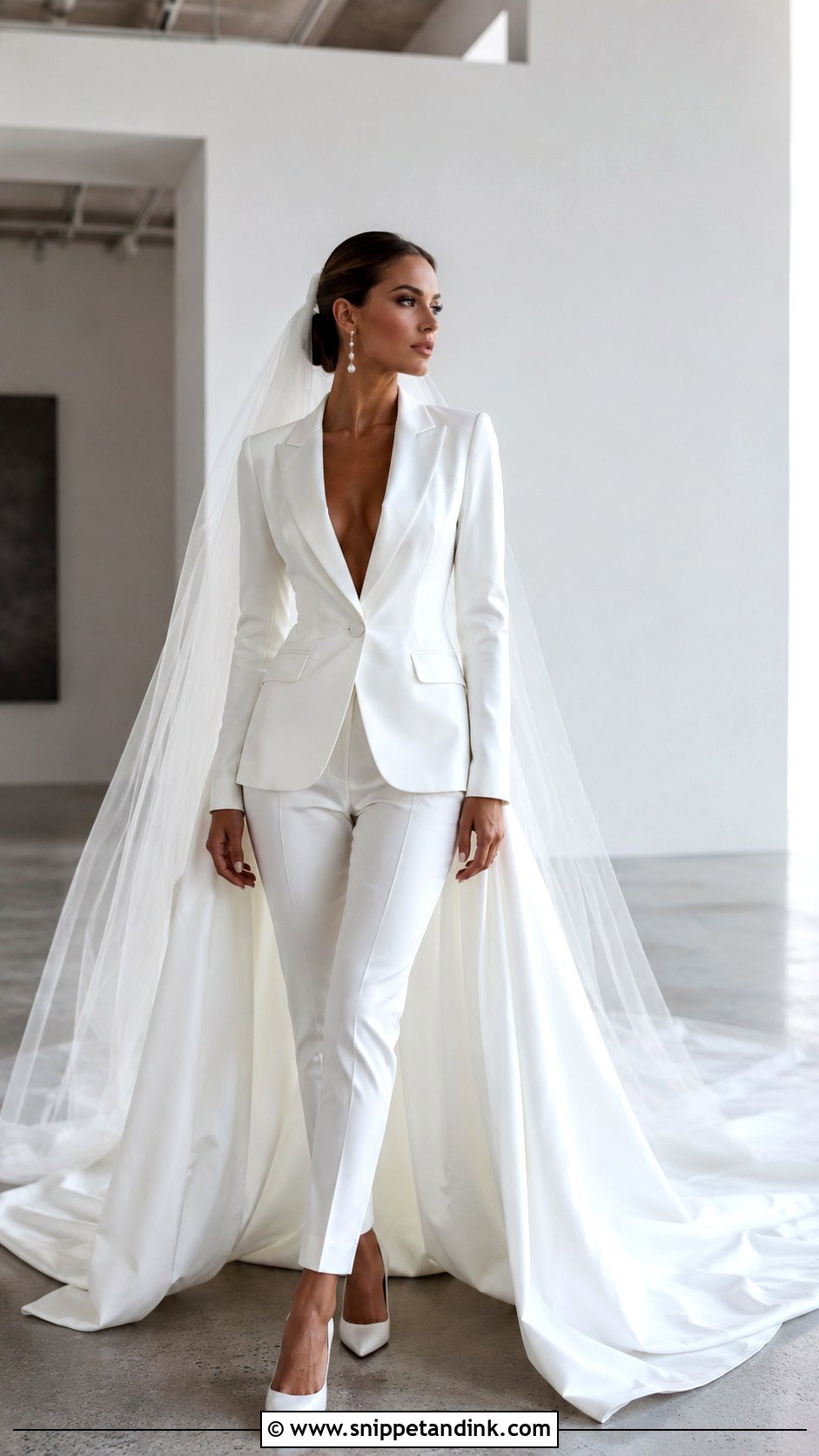
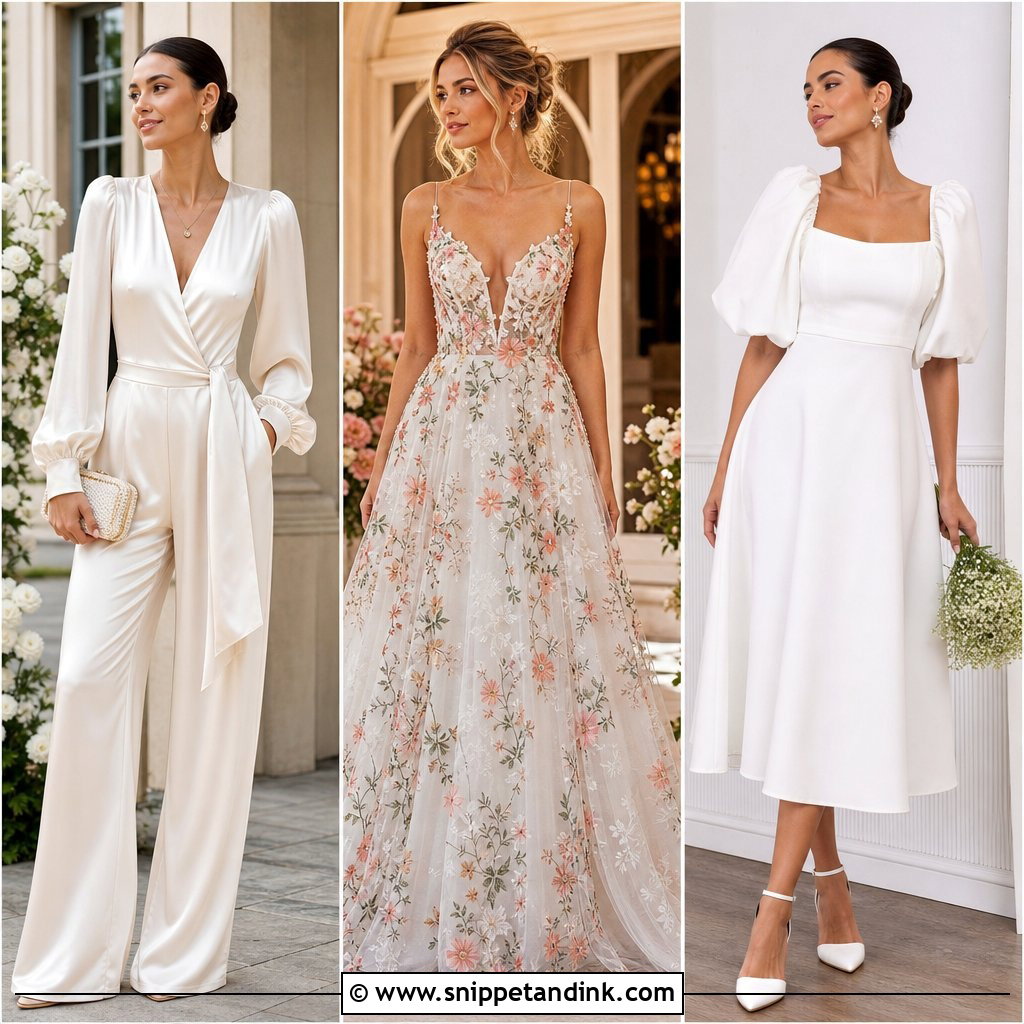
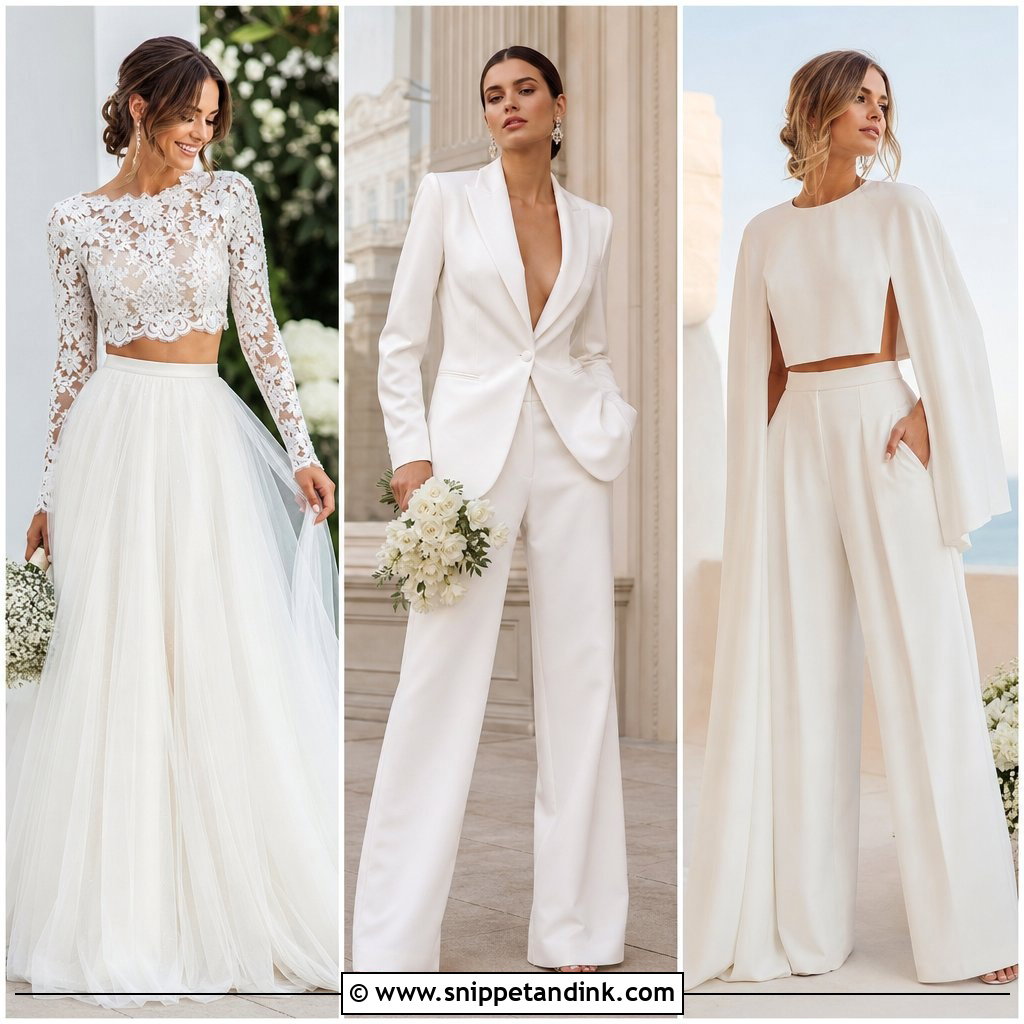
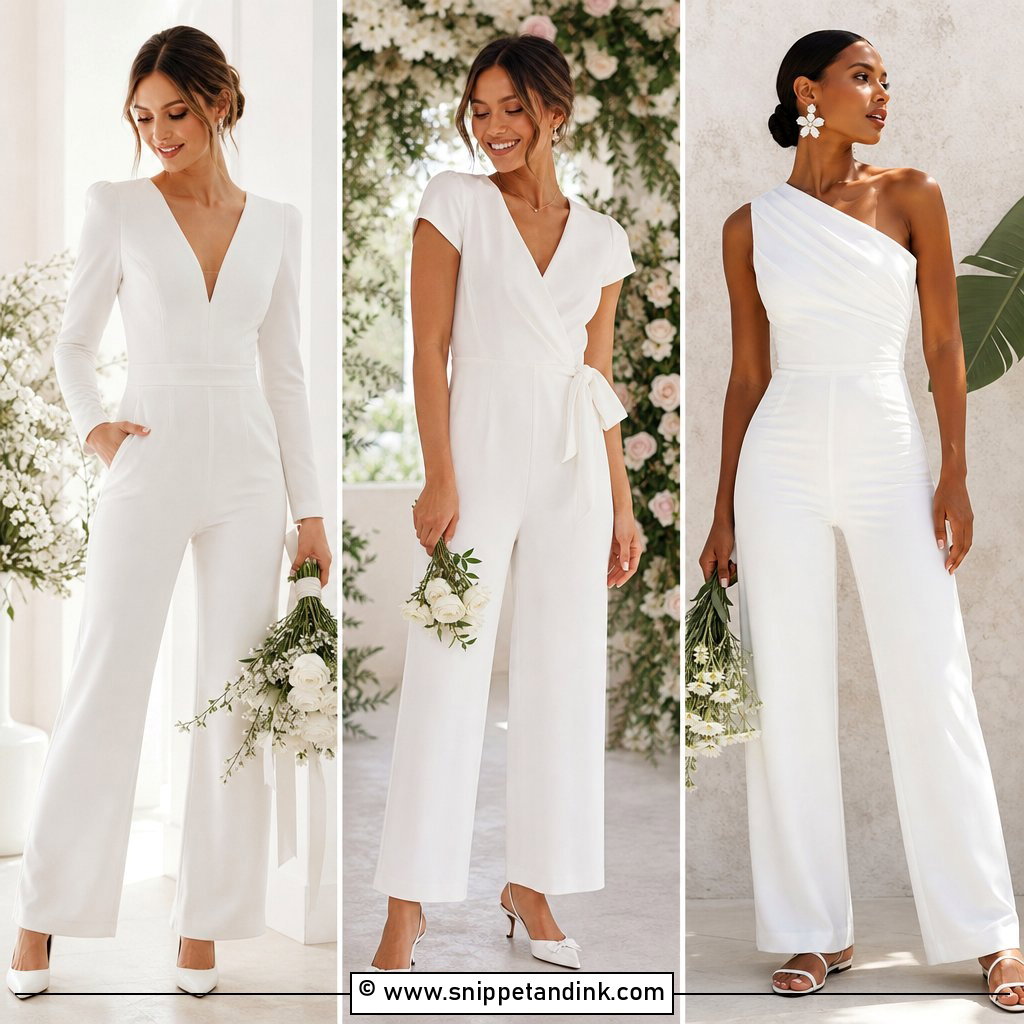
A train turns tailoring into a ceremony outfit. It can hang from the back of the blazer, sit on a detachable overskirt or fall as a removable panel. Ask how it attaches before you buy, because snaps and hooks behave very differently once someone treads on them. I keep the suit underneath clean, with slim trousers and simple heels, so the train does the talking. A low bun and long veil finish it, and removing the train afterwards frees you for dancing.
21. Bridal Suit With Veil
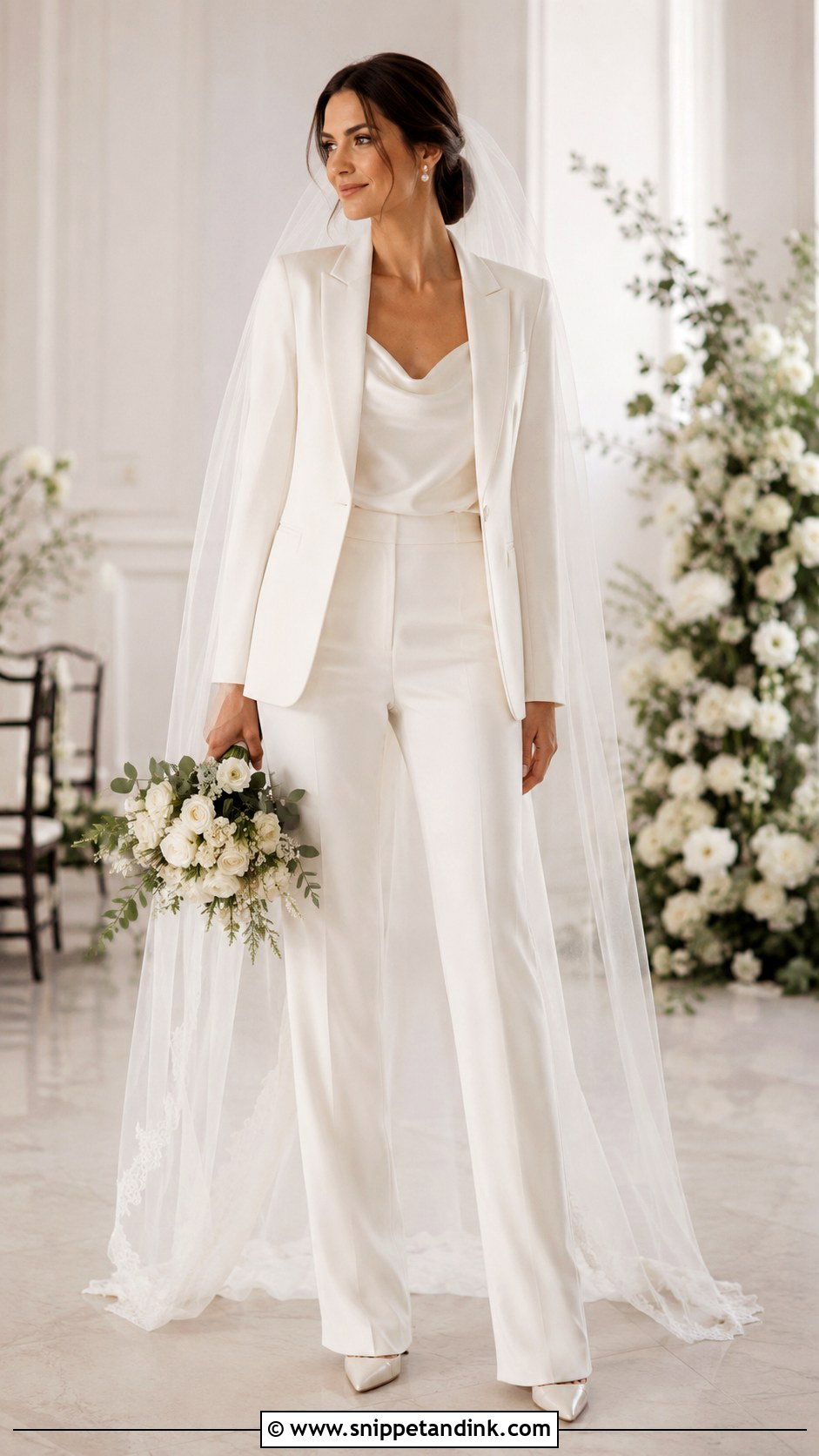
A veil is the fastest way to make a suit unmistakably bridal. The contrast between sharp tailoring and sheer tulle does the work for you. A fingertip length suits most pantsuits, while a birdcage suits courthouse and vintage shapes. Match detail to detail: a simple suit can carry a pearl or lace-edged veil, but an embellished jacket wants plain tulle. Where the comb sits matters with a high collar, so I place it slightly higher than usual so it doesn’t catch on the lapel.
22. Bridal Suit With Sneakers
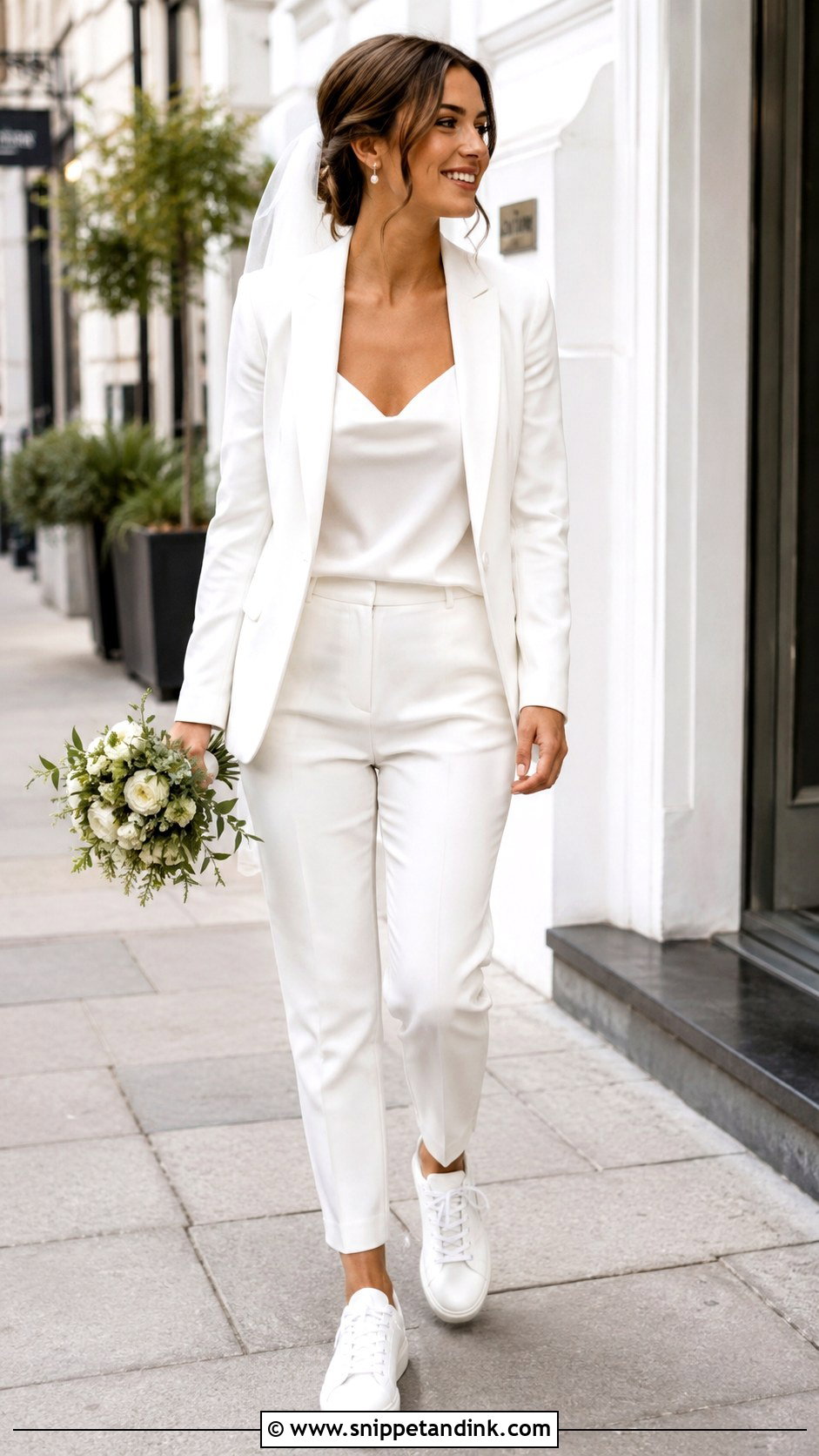
Sneakers make sense if you’ll be on your feet all day, but they need to look chosen rather than convenient. White leather, satin or pearl-trimmed pairs work; scuffed everyday trainers don’t. Have the trousers cropped or hemmed for flat shoes, because a hem cut for heels pools badly over a sneaker. A fitted blazer and silk camisole keep the rest polished for courthouse weddings, city elopements or a day of walking between photo spots. Add a short veil or small bouquet so nobody mistakes it for a lunch outfit.
23. Bridal Suit With Heels
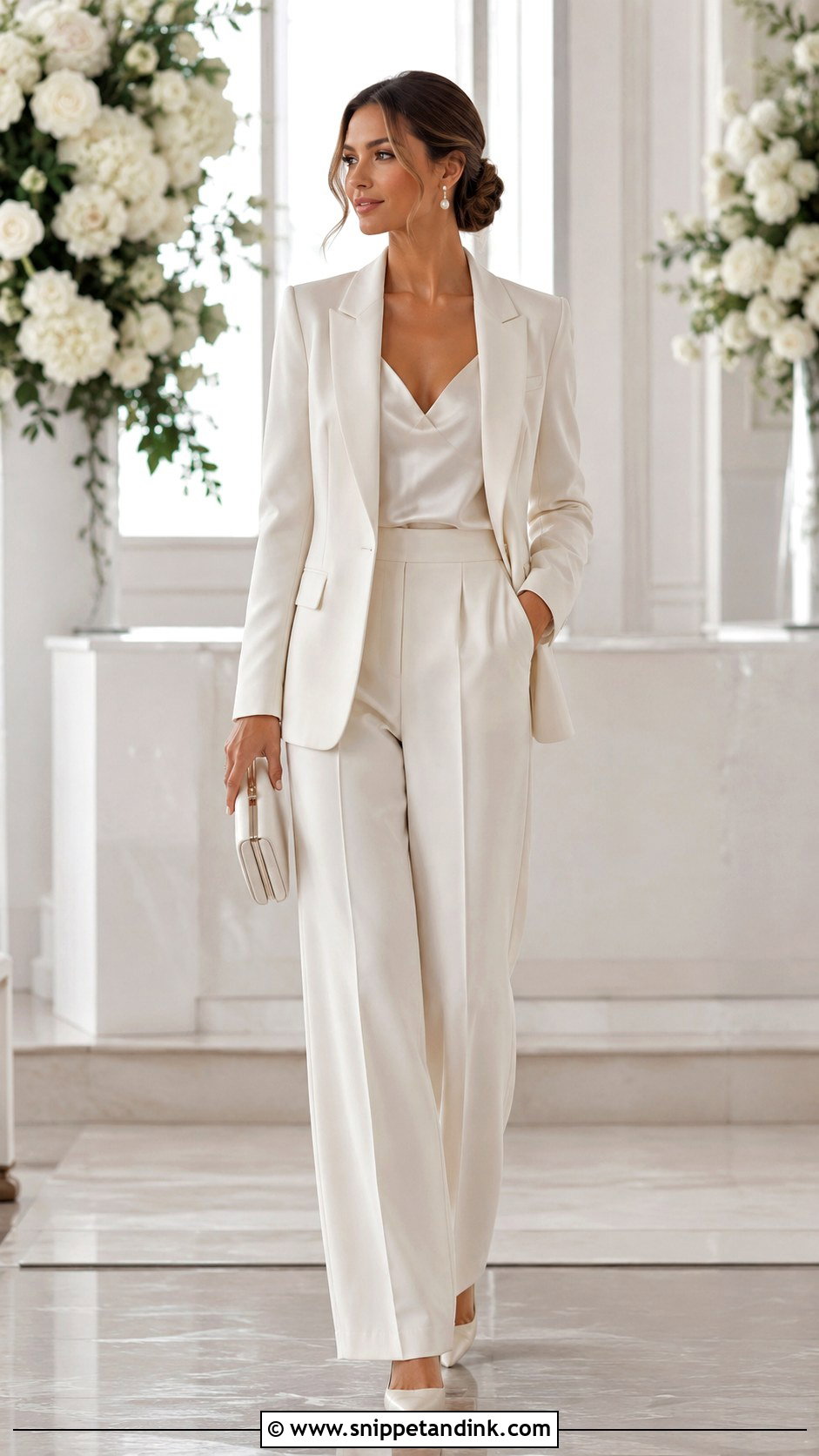
Heels change how a suit hangs more than any other accessory. Pointed pumps lengthen the leg, strappy sandals feel lighter in warm weather, and platforms keep wide trousers off the floor. The one rule I never bend: bring the exact shoes to every fitting. A two-centimetre difference in heel height turns a clean break into a puddle or a flood. Matching the shoe to the suit gives one long line, and a metallic pair adds a little shine.
24. Minimalist Bridal Suit
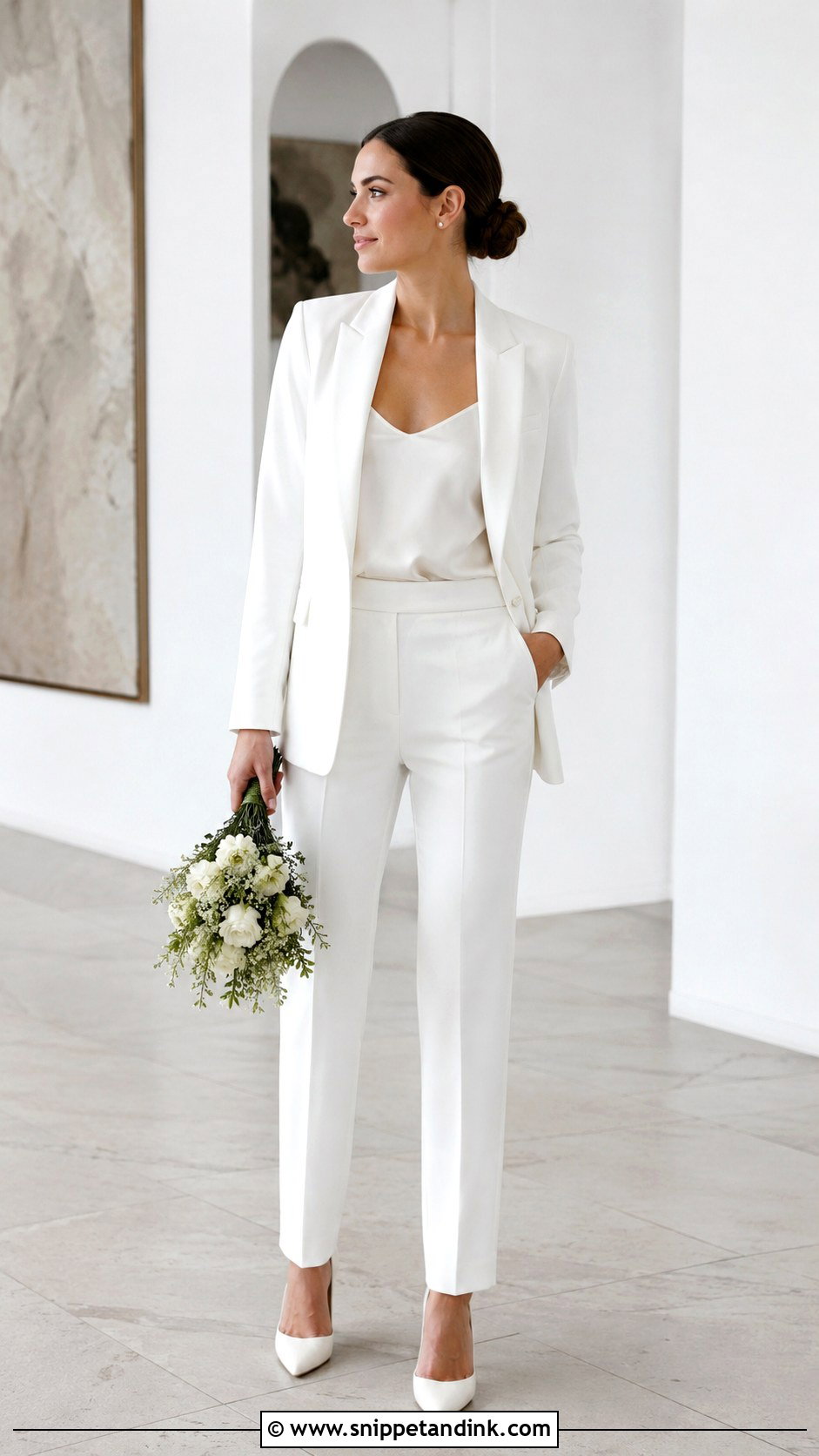
Minimal suits are the hardest to get right, because nothing distracts from a pulled seam or a sleeve that’s slightly long. I’d spend on smooth crepe, matte satin or a fine wool blend in white, ivory or cream, then on tailoring. Skip embellishment entirely. A silk camisole, a fine chain and pointed pumps are enough, with soft hair and skin to match. It suits city halls, galleries and restaurants, and it dates very slowly in photos.

25. Champagne Bridal Suit
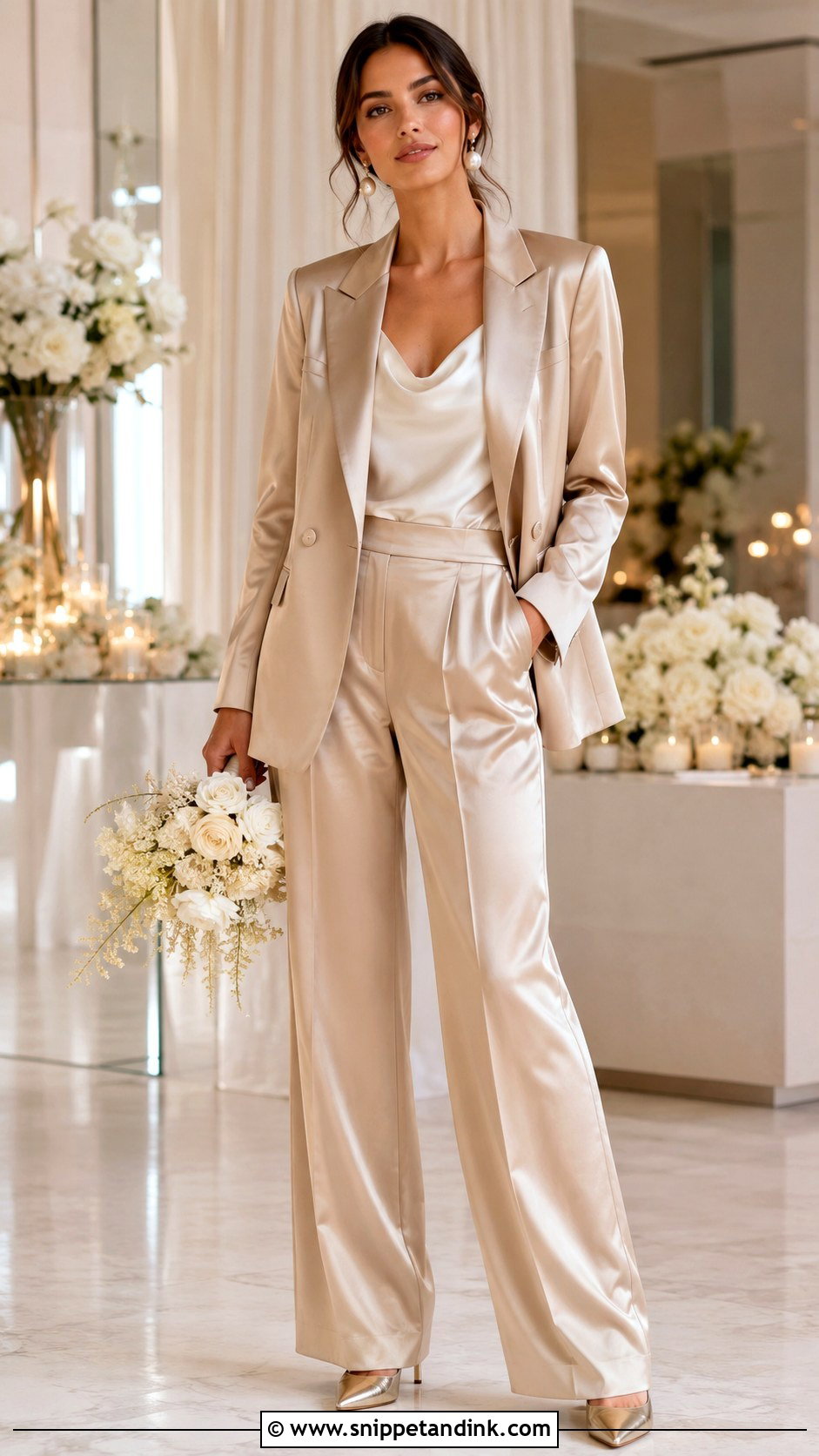
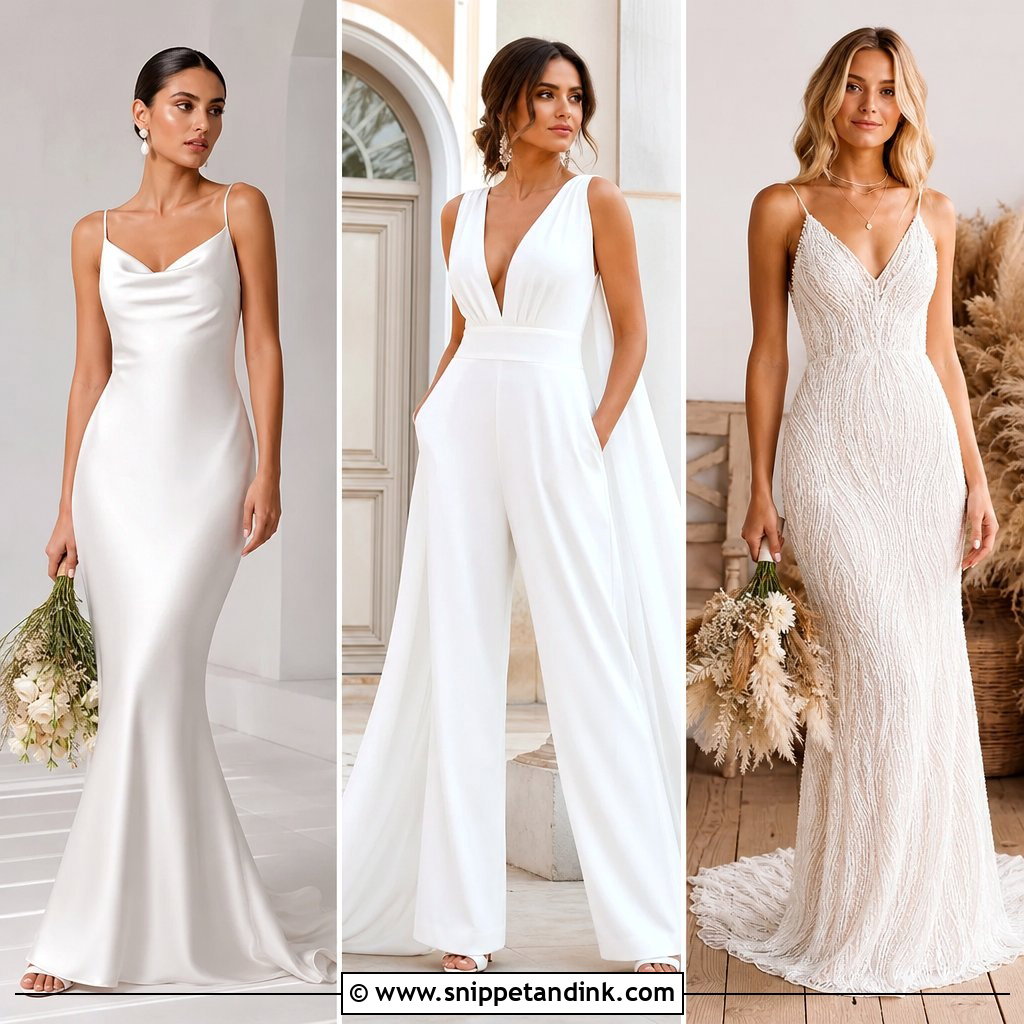
Champagne is what I suggest to a bride after warmth without leaving bridal territory. It flatters a wide range of skin tones, but test it in daylight before you buy. Some champagnes turn grey outdoors, while others go pink under warm reception lighting. It works in satin, crepe, silk and lightweight suiting. A wide-leg version feels romantic, a tuxedo cut feels more glamorous, and both sit naturally beside gold, blush or ivory in a wedding palette.
Pale Tailoring Shows Every Crease, So Plan the Morning Around It
A white or ivory suit shows what a gown hides. Creases behind the knee, makeup on a lapel, a coffee splash on a cuff. Most of it can be prevented with a bit of planning on the wedding morning.
Steaming and transport
Steam the suit the day before, never iron satin directly, and hang it in a breathable cotton or fabric bag rather than plastic, which can trap moisture. Travel with it hung full length, trousers on a clip hanger by the hem so the crease falls naturally. Get dressed as late as you can, and stand rather than sit in the car if the ride is short.
Makeup and the collar
Foundation transfers onto a white lapel almost instantly. I have brides put the top and jacket on before the final setting spray, with a scarf over the face, and I keep a makeup-removing wipe and a white chalk stick in my kit for small marks. Drink red wine from the side of the glass away from the jacket, and keep a stain pen in your clutch.
After the wedding
Take the suit to a cleaner who handles bridal or eveningwear within a couple of weeks. Sugar from champagne is invisible at first and yellows later. A good suit can then be re-cut or simply worn again, which is one of the real advantages over a gown.
A Suit Only Looks Bridal When the Fit Is Finished
A suit lets you decide what bridal means to you. It can be minimal, laced, pearled or dramatic with a cape or train. The ones I’m proudest of always come down to fit: shoulders that sit right, sleeves that show the ring, trousers hemmed for the real shoes. Spend your effort on tailoring before accessories, and choose fabric for the venue and season rather than the photo on your phone. Courthouse, beach or ballroom, a well-cut suit gives you a wedding outfit you can move, sit and celebrate in.
You'll Like These Ideas:


Leave a Reply