
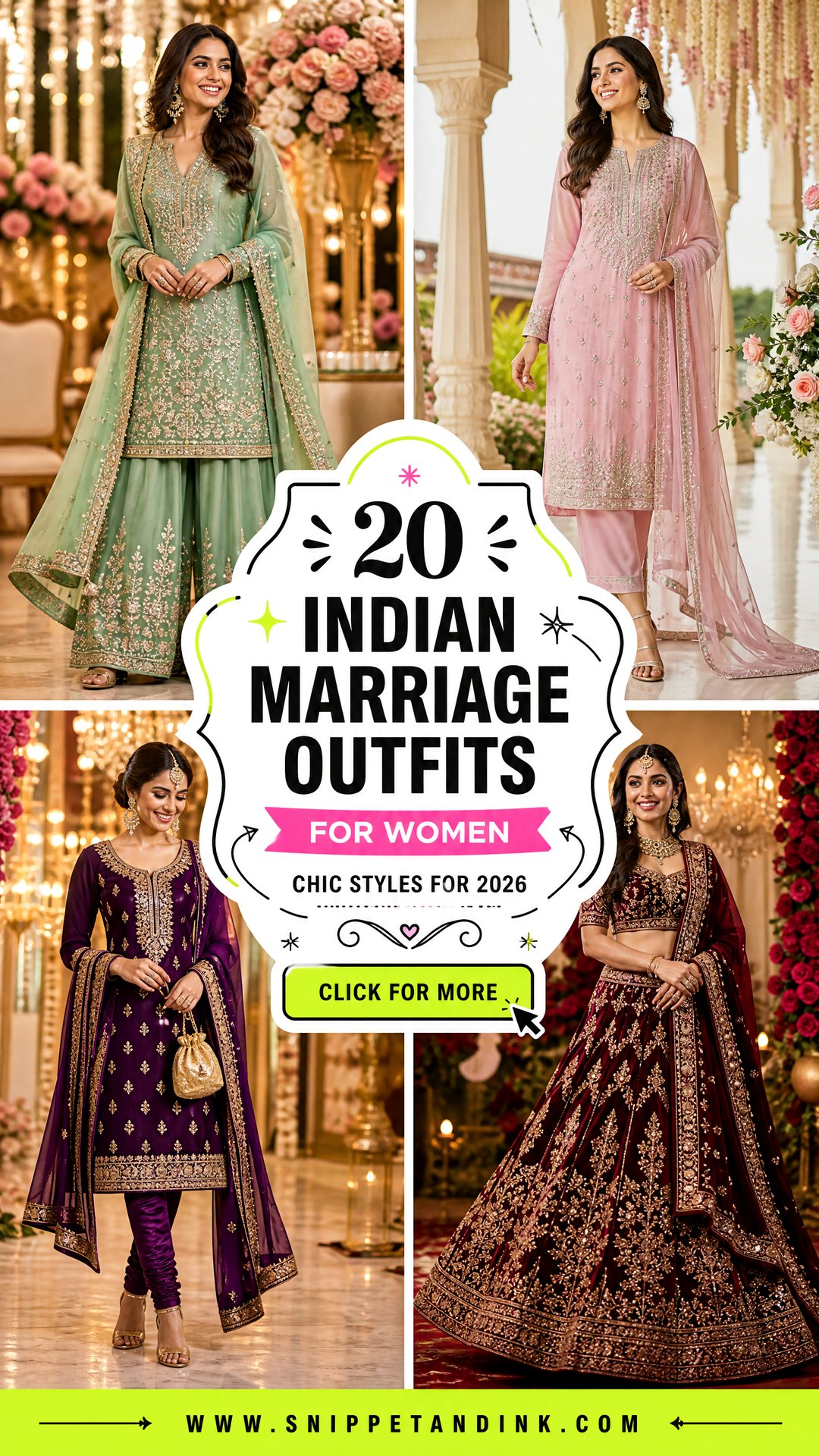
An Indian wedding is rarely one outfit. It is usually four or five, spread across haldi, mehndi, sangeet, the ceremony and the reception, and each one asks something different of the fabric. When I dress a client for the full run, I start with two questions: what is your role, and how many hours will you be sitting on the floor, dancing or standing for photos? A lehenga carries a grand ceremony, a sharara survives a sangeet, and sarees, Anarkali suits, palazzo sets and modern fusion ensembles each have a function where they make the most sense. The pieces below are grouped loosely from the most traditional to the most relaxed, with notes on fit, fabric and the small fixes that keep each one wearable all evening.
Sort the Events by How Much You Will Move
Before anyone picks a colour, I sort the events by how physical they are. Haldi is messy and usually hot. Mehndi means hours sitting still with wet paste on your hands. Sangeet is dancing. The ceremony is long, often seated on the floor, and the reception is where people stand for photographs. Each of these suits a different weight of fabric.
- Haldi and daytime mehndi: cotton-silk, georgette or chanderi. Light, breathable and cheap enough to stain.
- Sangeet: anything with a split leg or flared pant, like a sharara, palazzo or dhoti set, so you can move.
- Ceremony: your heaviest silk or lehenga, because you’ll be mostly still and it needs to hold its shape in photos.
- Reception: structured pieces that stand up to flash photography, such as a saree gown, cape lehenga or sequinned gown.
If you’re a guest attending only one or two events, you can bend these rules. If you’re the bride or a sister of the bride, planning the order this way stops you from wearing your heaviest outfit on the day you’re least able to manage it.
1. Red Bridal Lehenga Outfit
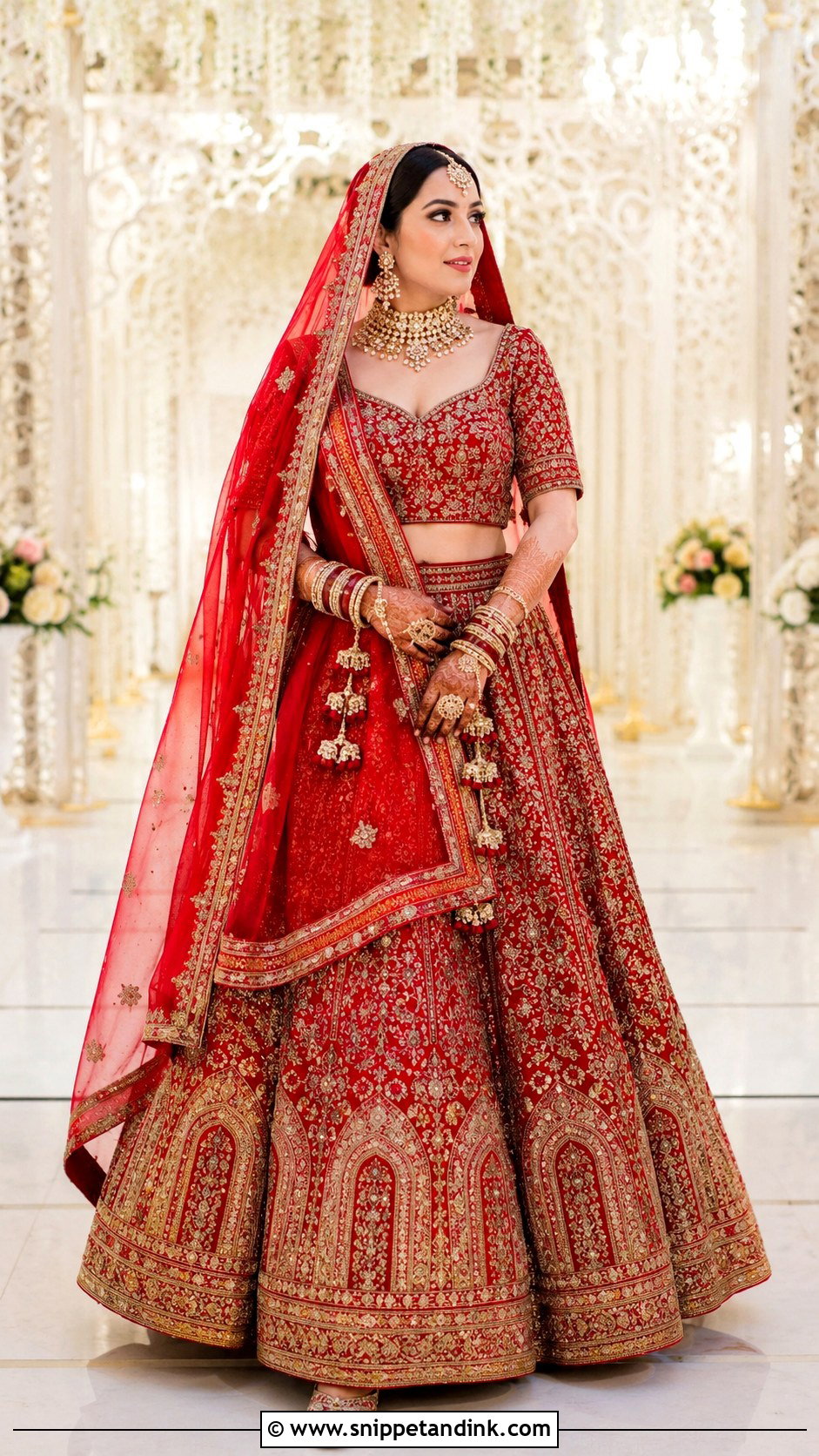
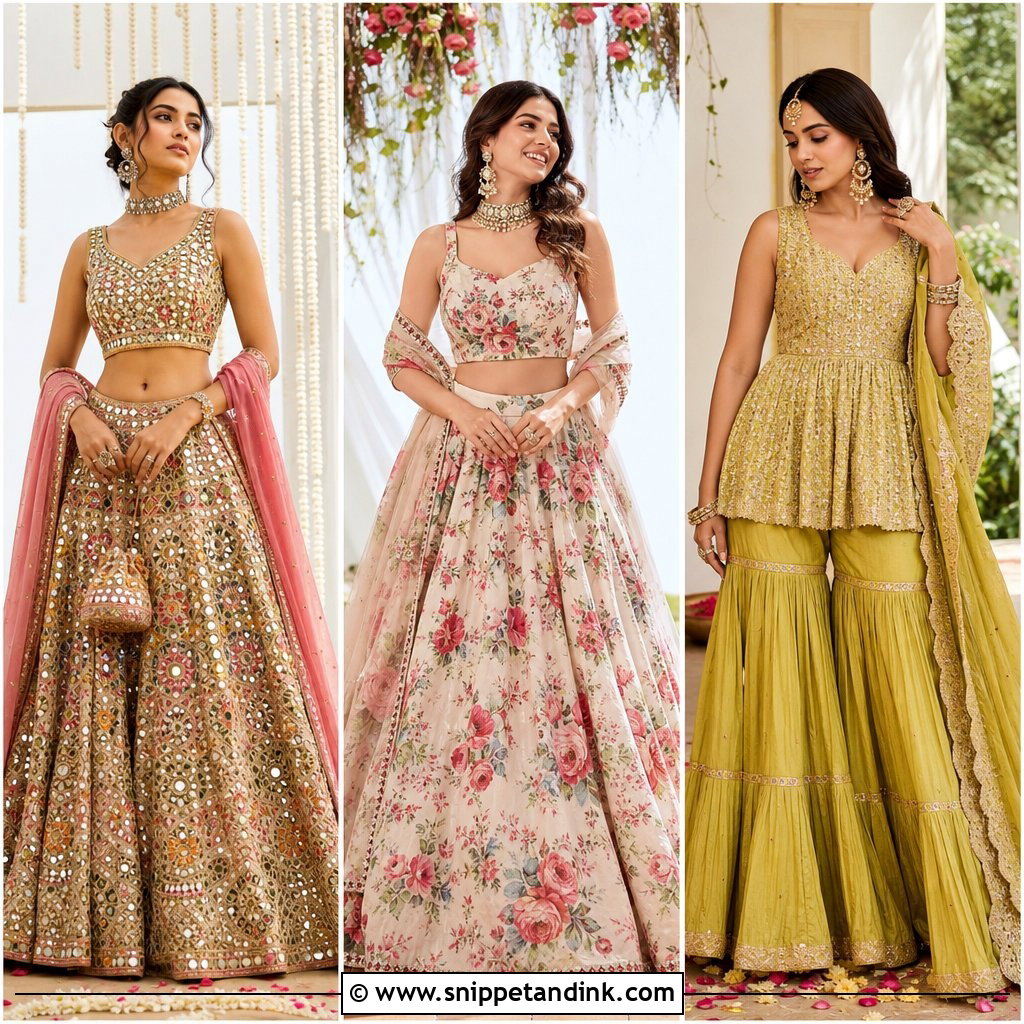
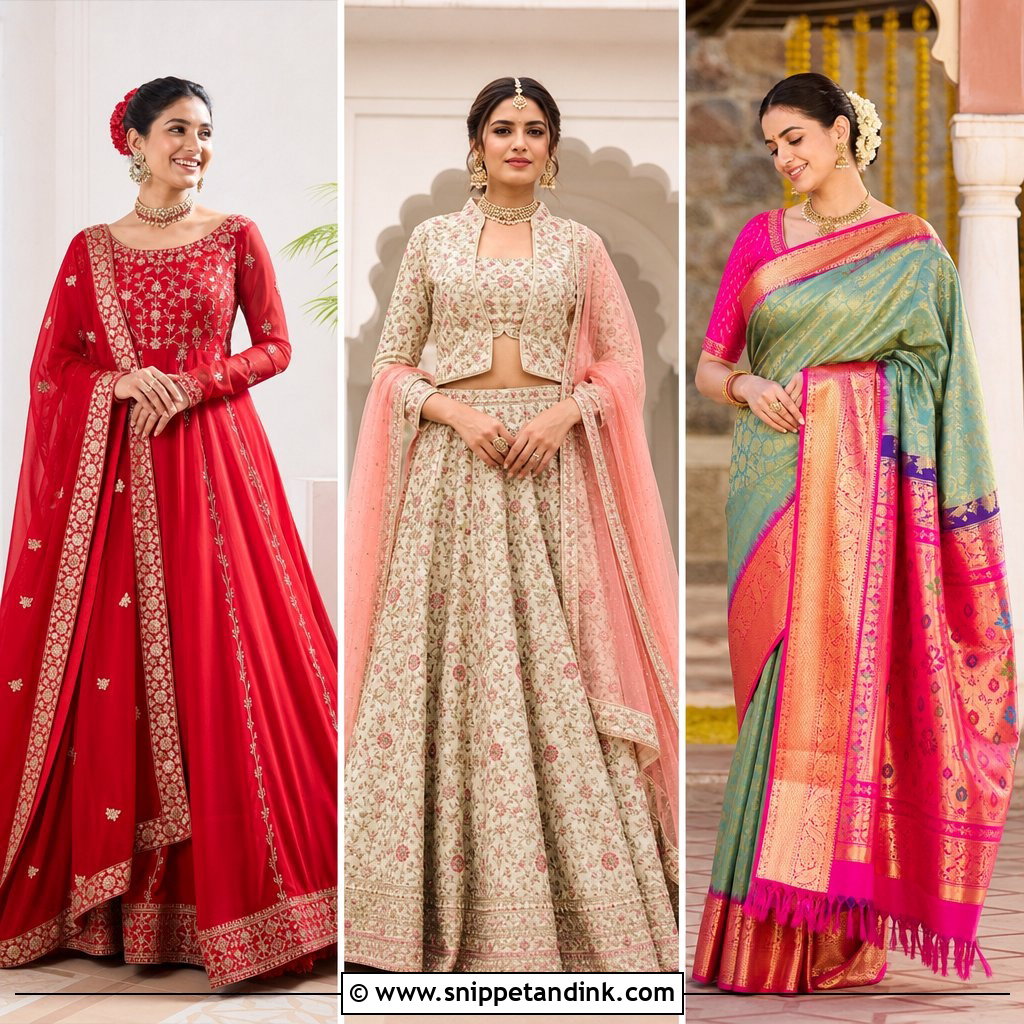
Red is still the colour I see most brides come back to, and for good reason: it holds its depth under both daylight and stage lights. Zardozi, zari, sequin and thread embroidery all work, but heavy zardozi on a full skirt adds real weight to the waistband, so I ask for a wide, firm waist casing and a hook rather than a drawstring alone. The double dupatta, one over the head and one across the shoulder, needs more pins than you think; I place them through the blouse strap, never just the fabric. Kundan sets, a maang tikka, bangles and embroidered juttis finish it. Guests should leave red to the bride unless the couple says otherwise.
2. Pastel Floral Lehenga Outfit
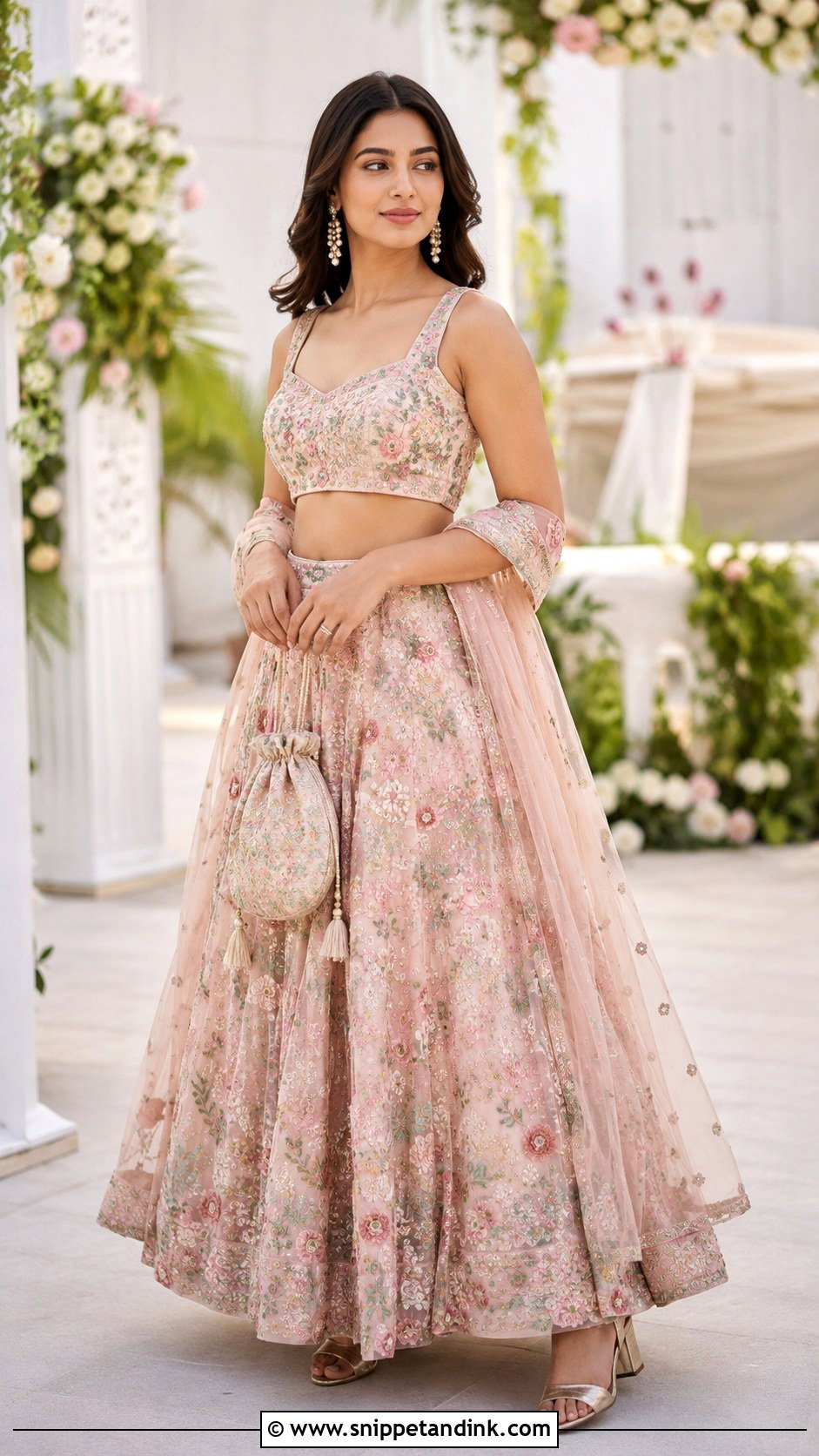
Pastels are the daytime answer, and they ask more of the light than red does. Blush, powder blue, pistachio, peach and lavender can wash out in harsh noon sun, so I like scattered floral embroidery that gives the skirt some texture to catch shadow. Organza, georgette and lightweight silk keep you cool outdoors. A sheer dupatta with a narrow border stops the look from getting heavy, and pearl earrings with metallic block heels add just enough shine. My one caution: very pale lehengas show every grass mark and drink spill, so the hem should clear the ground by a finger’s width.
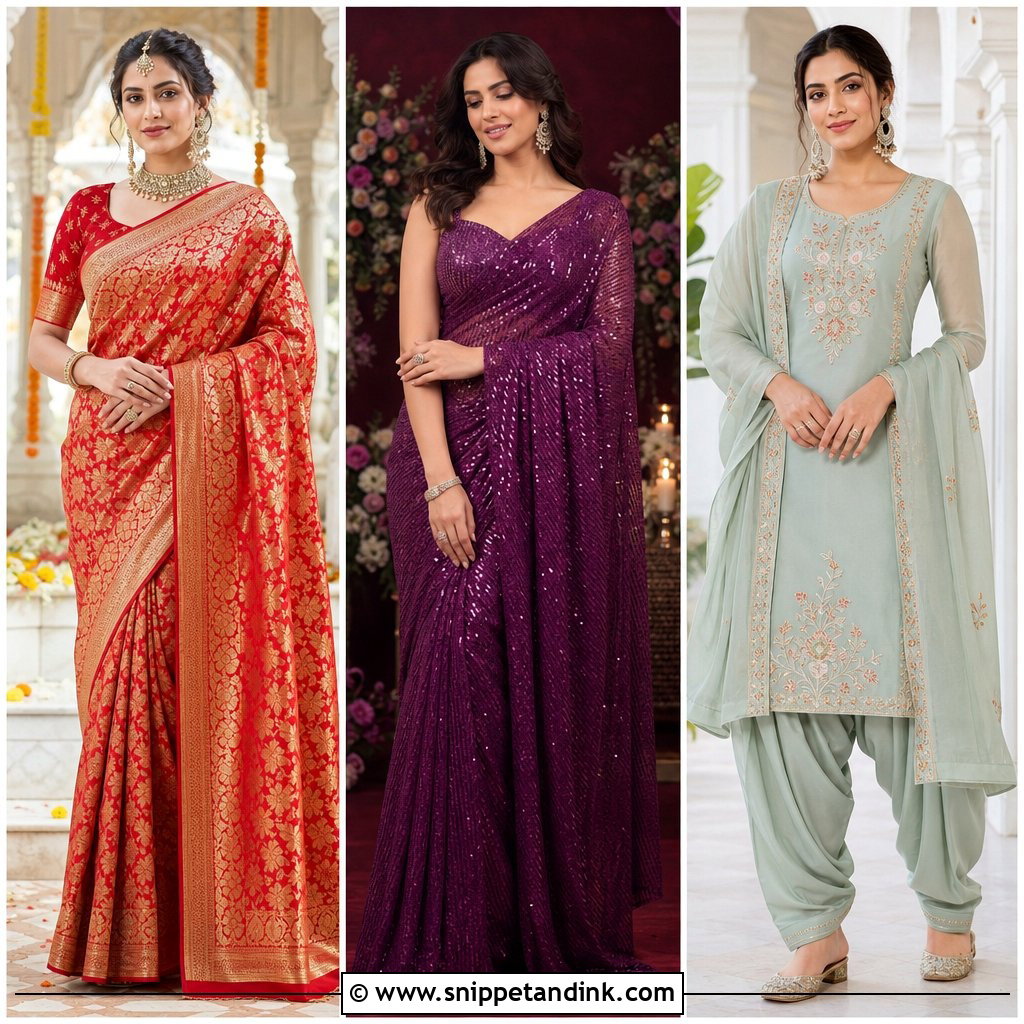
3. Banarasi Silk Saree Outfit
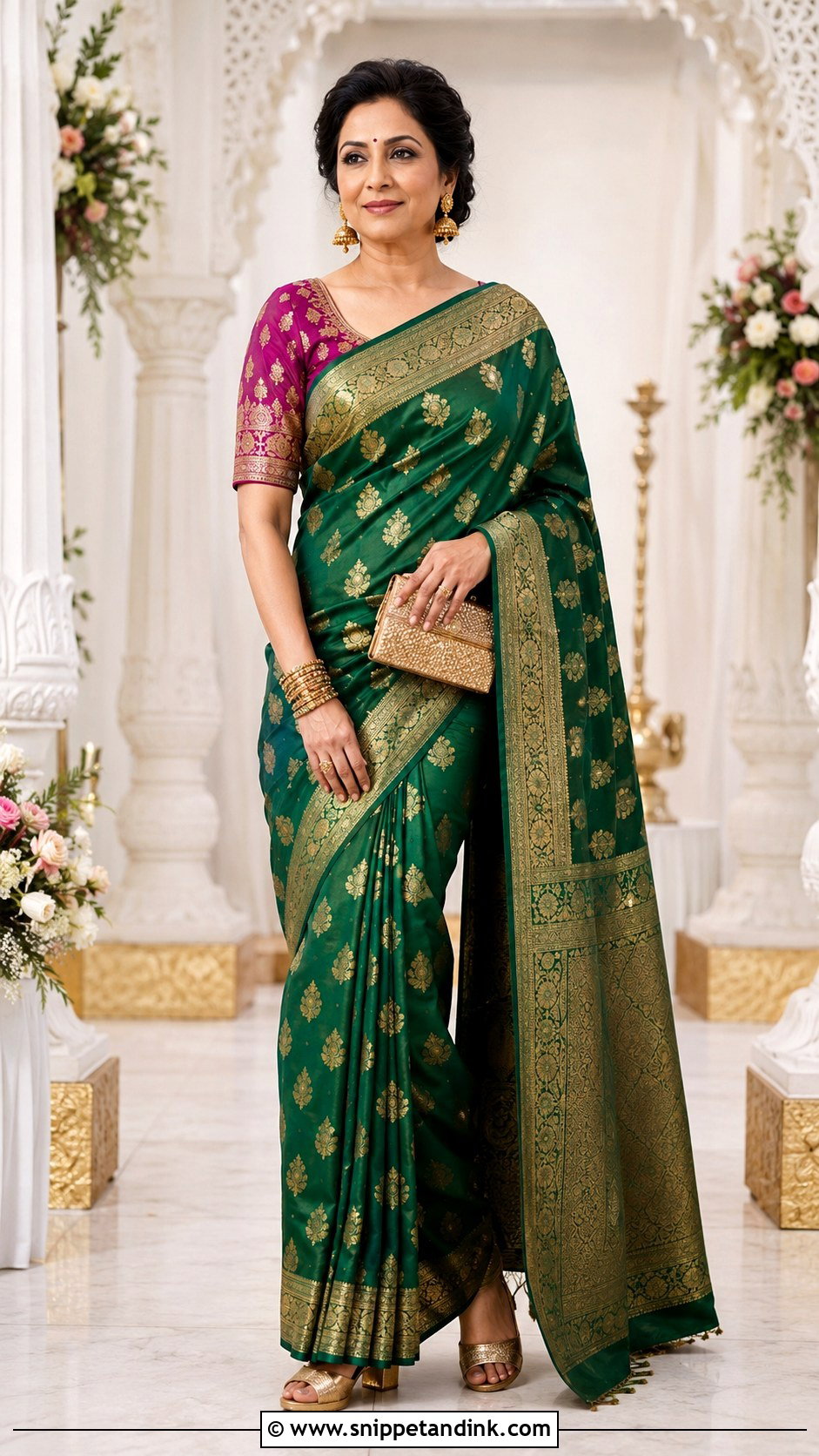
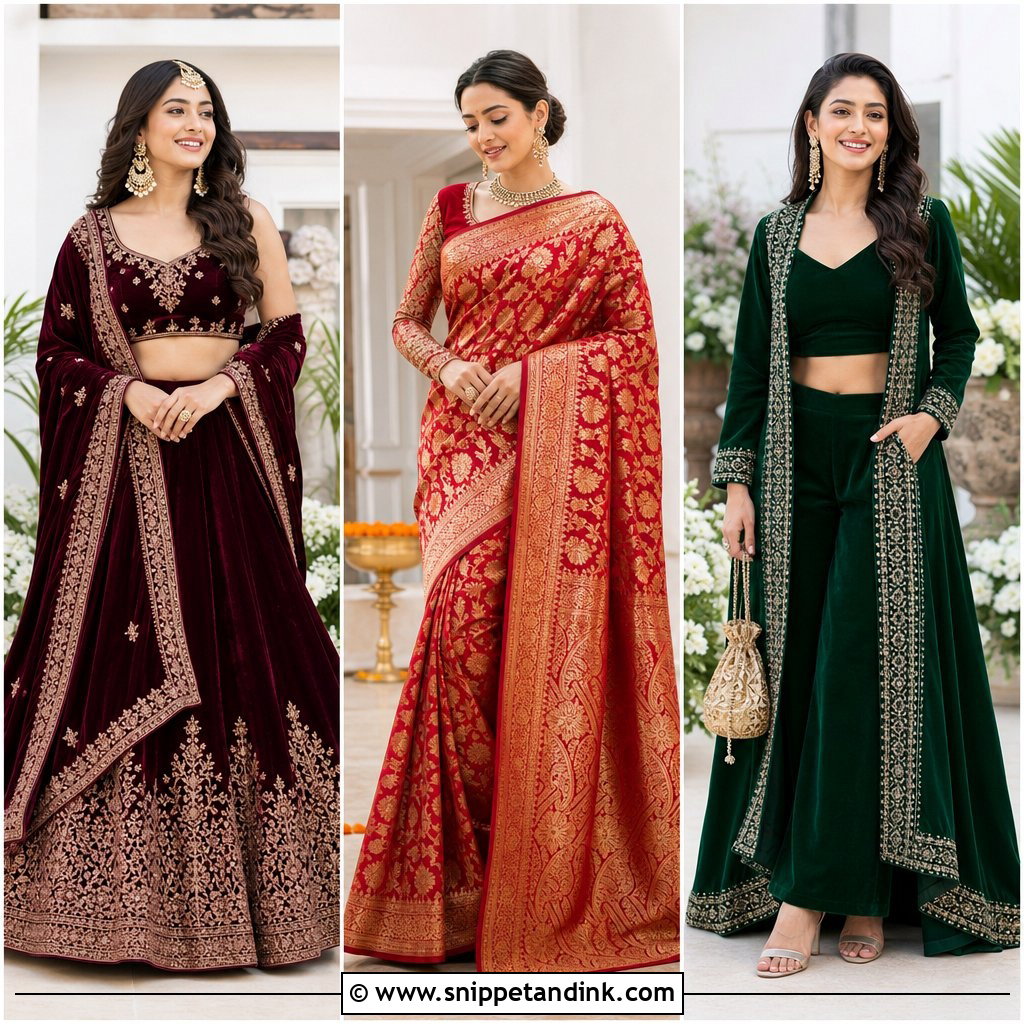
A Banarasi silk saree has a woven weight that photographs as richness without any added embellishment. Emerald, royal blue, magenta and deep purple show off the metallic motifs best. I’d pair it with a tailored silk blouse, either matched or in a contrast like antique gold, ruby or bottle green. Jhumkas and stacked bangles are plenty; the weave is the jewellery. Low block heels help the pleats fall straight. Pin the pleats at the waist and the pallu at the shoulder before you leave the house, because Banarasi silk is slippery and the pallu tends to creep off within the first hour.
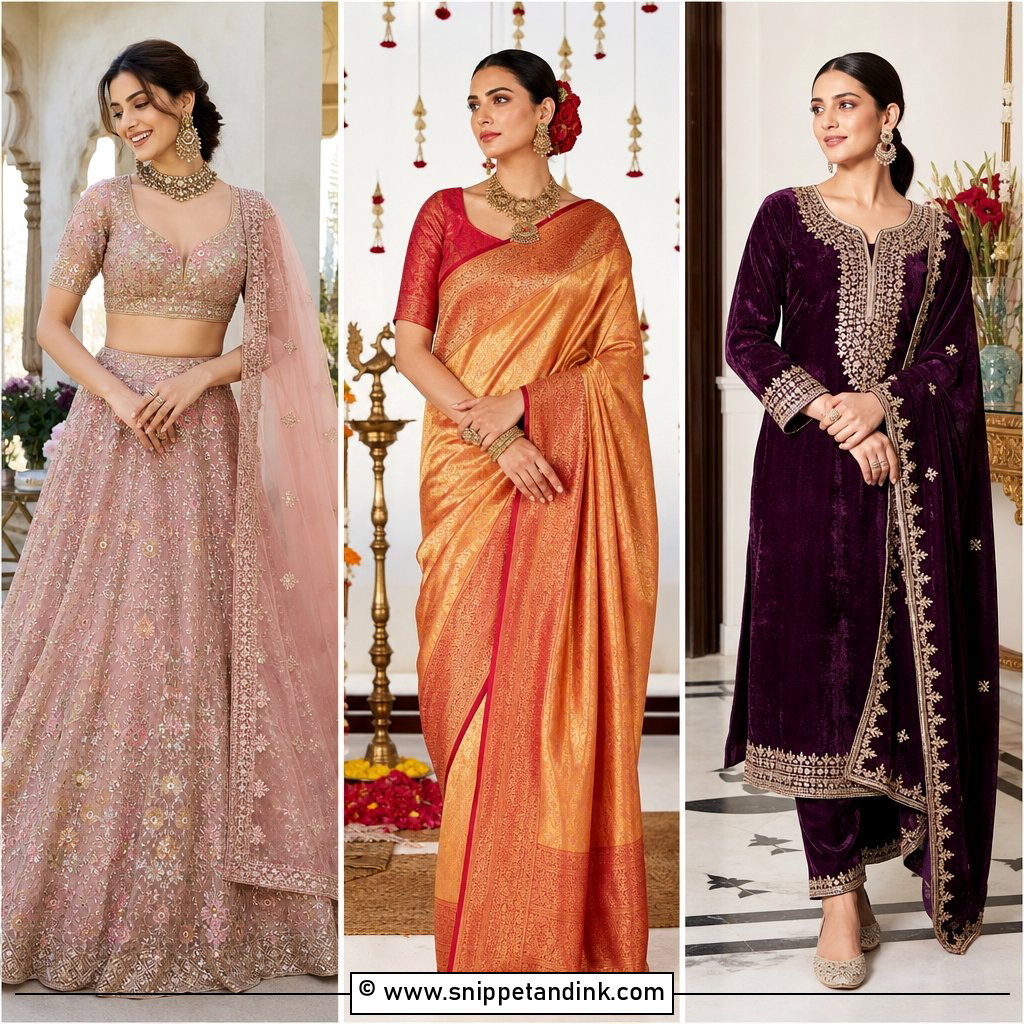
4. Kanjivaram Silk Saree Outfit
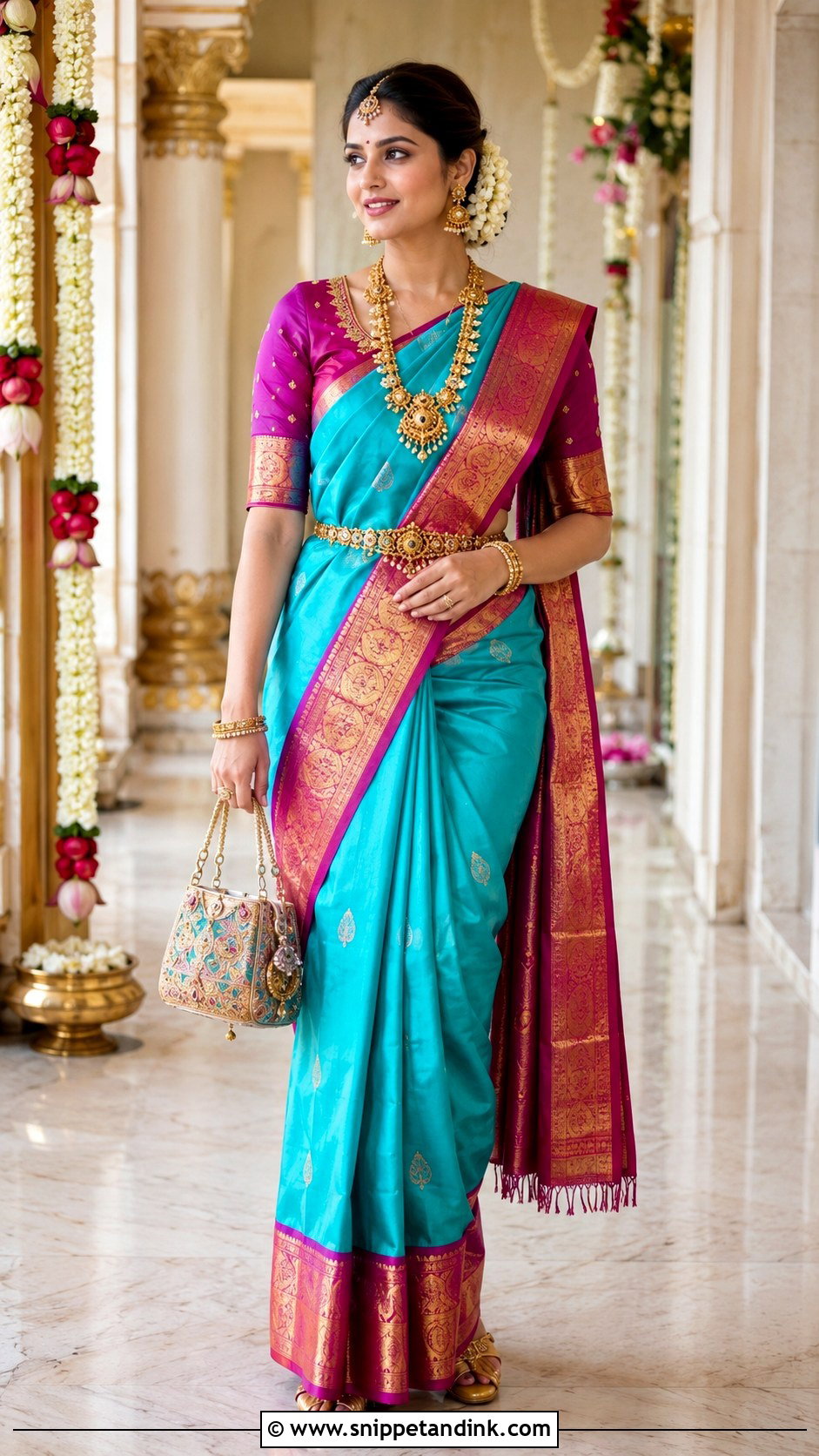
Kanjivaram is one of the heaviest silks you can drape, and that weight is both its appeal and its main problem. Five or six pleats of thick silk stacked at the navel get bulky fast, so I fold them narrower than usual and tuck them firmly into a well-fitted petticoat. Saturated green, orange, turquoise, pink or maroon with a contrasting zari border is the classic look. An elbow-sleeve blouse balances the fabric, and temple jewellery, gold bangles and a waist belt (the belt also holds the pleats) complete it. A centre-parted bun with jasmine suits it. Brides can layer necklaces; guests usually look better with one.
5. Organza Saree Outfit
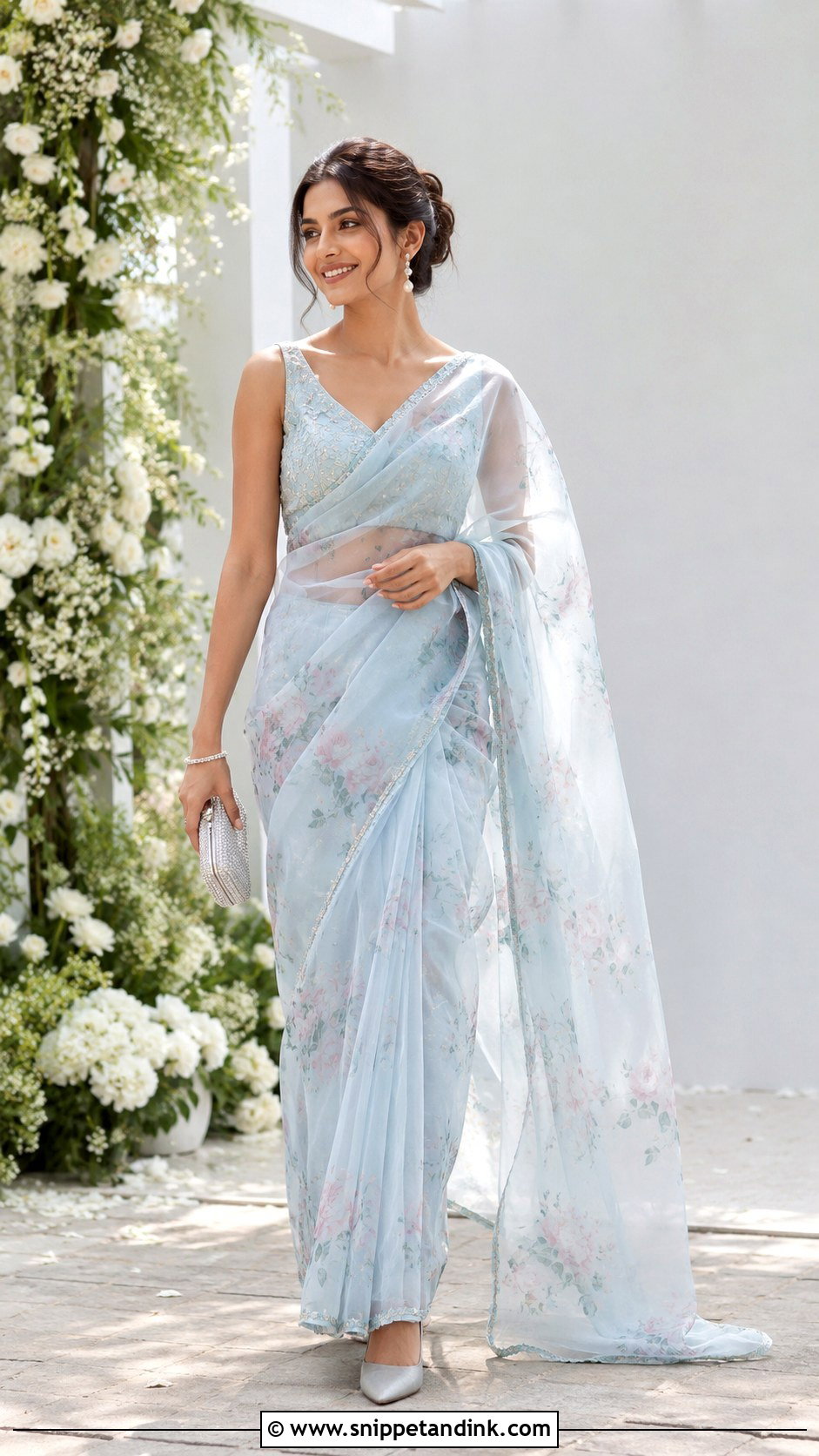
Organza is what I suggest when someone wants a saree but dreads the weight of silk. The catch is that organza is crisp and holds air, so it stands away from the body instead of falling. Fewer pleats, pressed flat, and a fitted petticoat in a matching colour keep it from looking puffy at the hips. Pastel or bright bases with floral print, fine embroidery or a slim border all suit engagements and wedding lunches. A clean-neck fitted blouse, pearl drops and pointed block heels are all it needs. A sleek bun or soft curls keep the mood modern.
6. Pre-Draped Saree Outfit
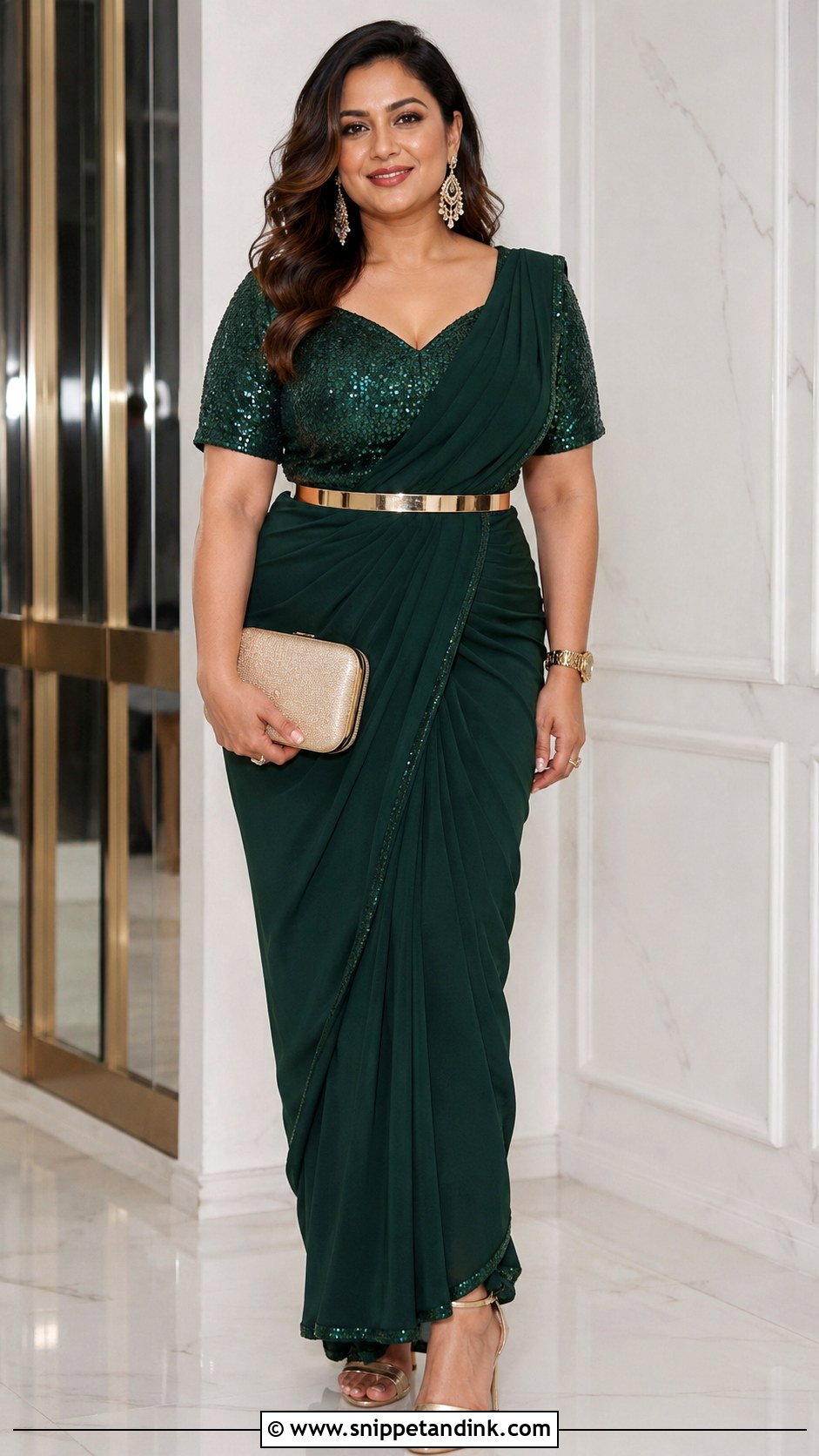
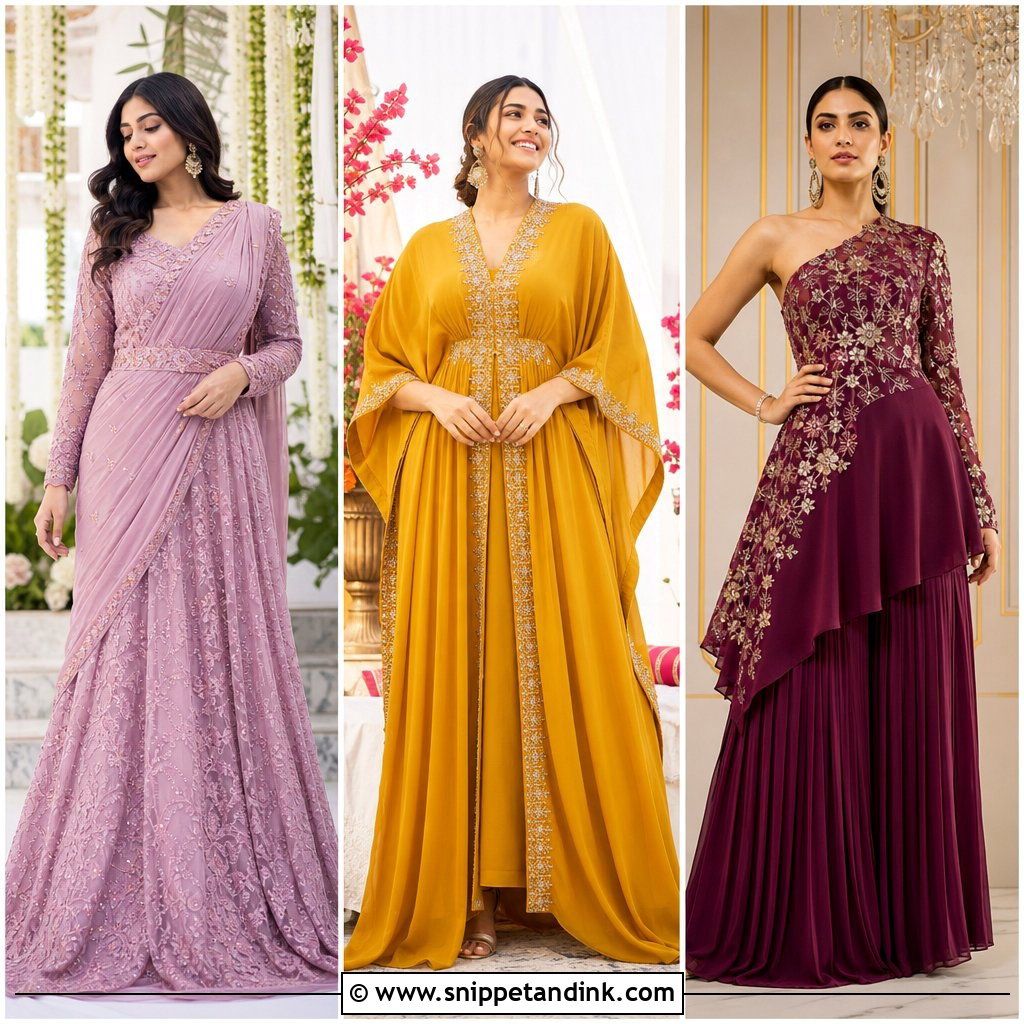
A pre-draped saree is the outfit I recommend to anyone who has never worn a saree for six hours straight. The pleats and pallu are stitched in place, so nothing slips while you dance. Wear it with a sequined blouse, a structured crop top or a long-sleeve bodice. Jewel tones suit evening receptions and pastels suit daytime. A slim belt keeps the drape anchored. Petite women look best with a narrower border; a long, dramatic pallu needs height to carry it. If the blouse is heavily worked, keep the necklace simple or skip it entirely.
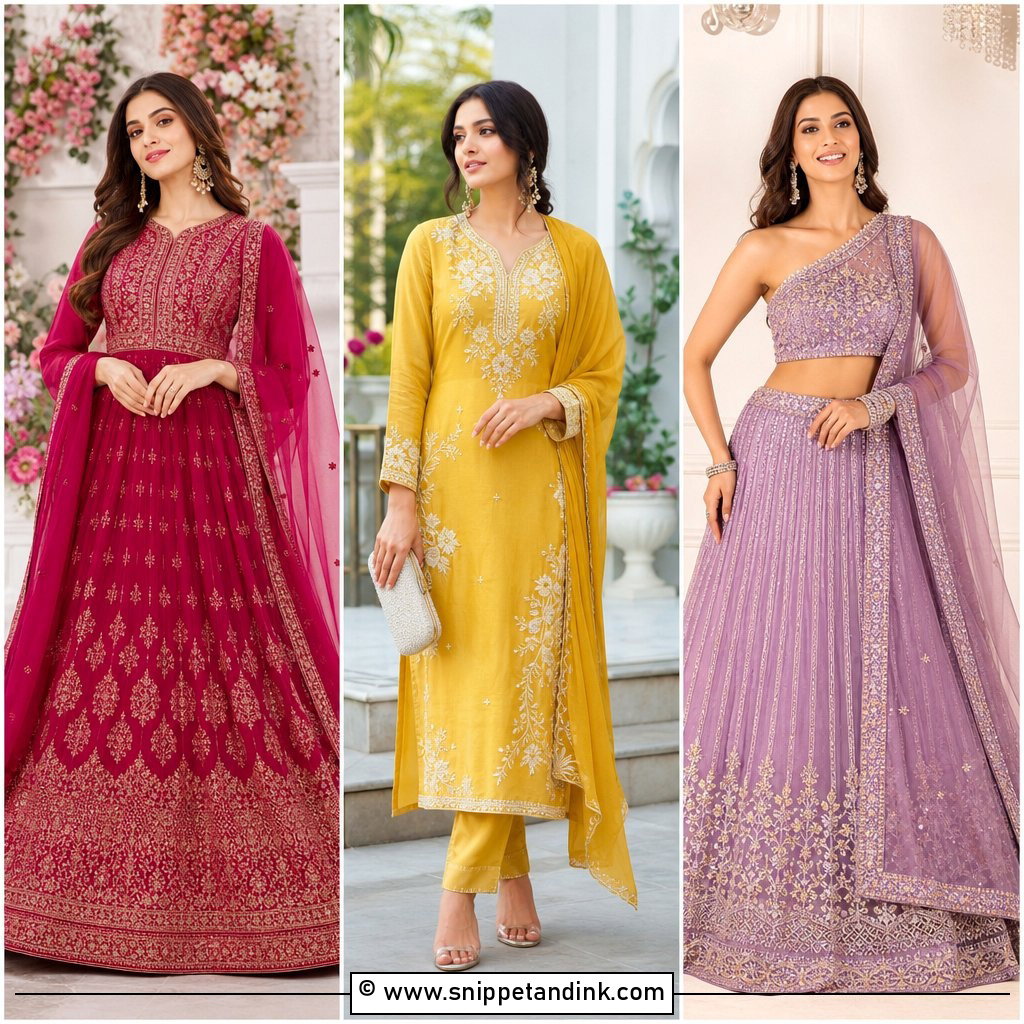
7. Embroidered Anarkali Suit Outfit
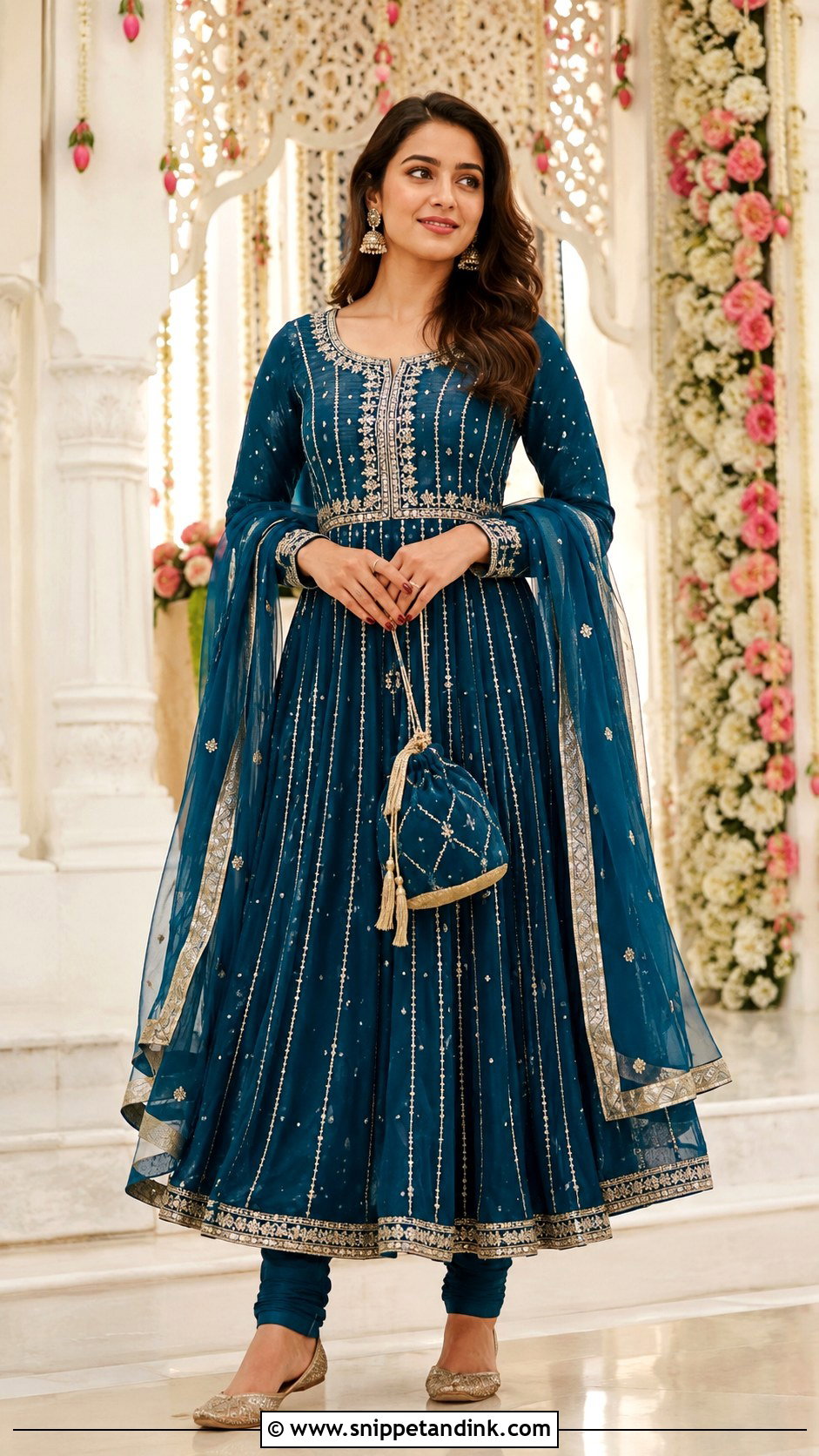
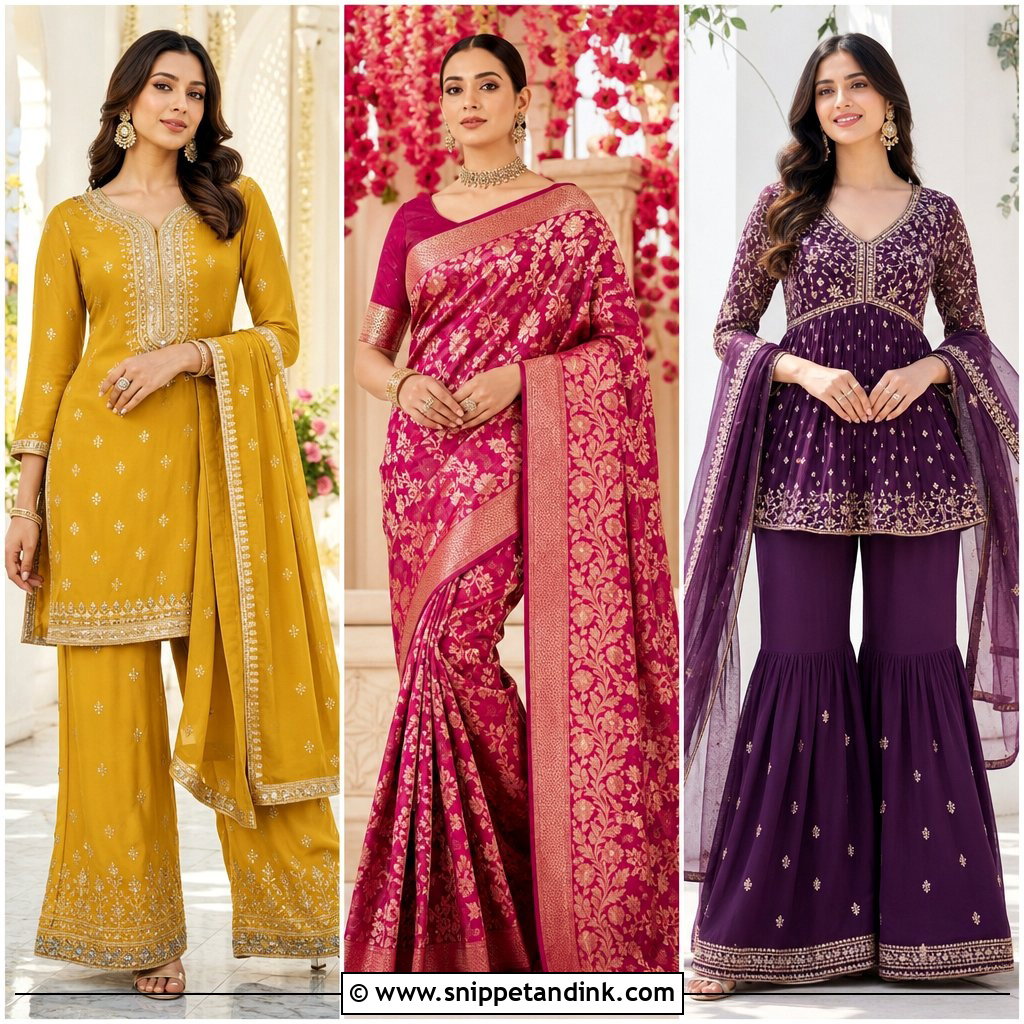
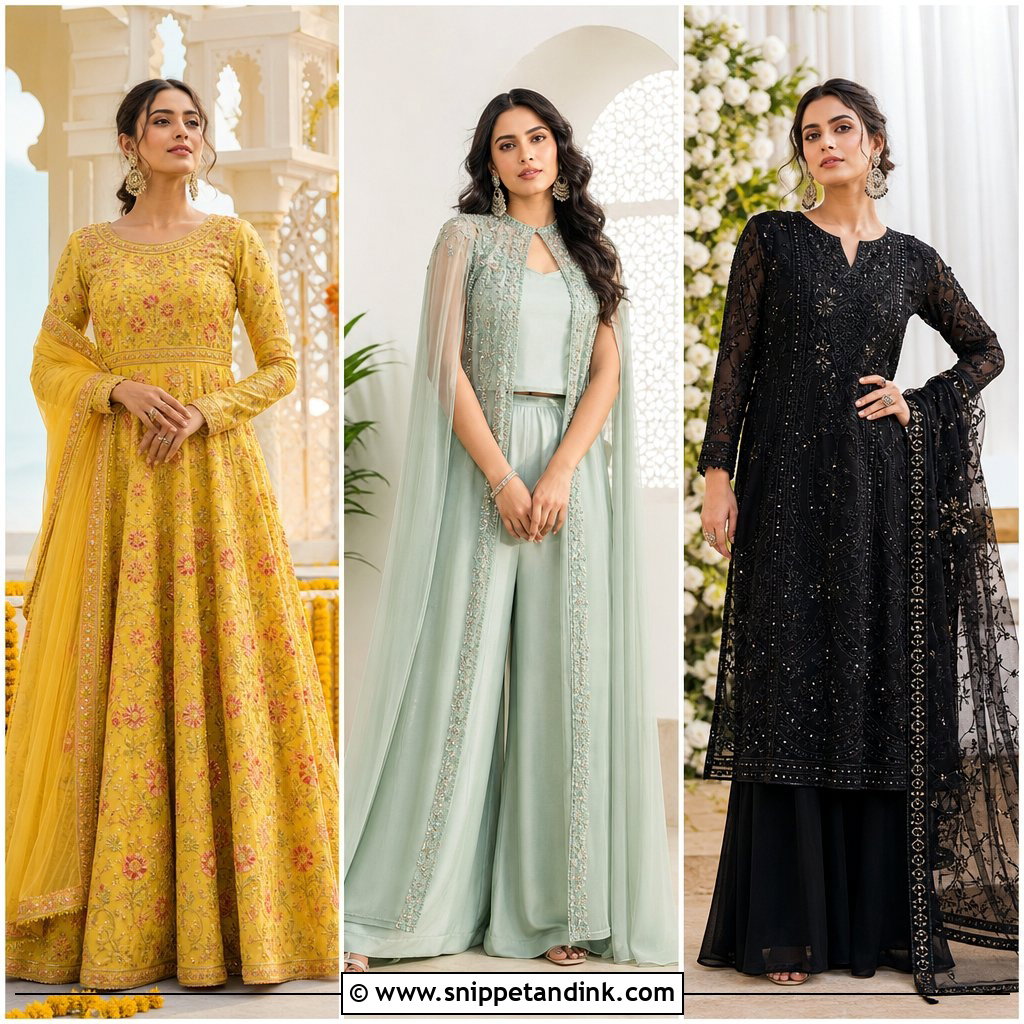
An embroidered Anarkali flatters more body types than almost anything else here, because the fitted bodice ends high and the flare does the rest. Vertical embroidery lengthens the line, which helps shorter frames. Georgette, silk and chiffon all drape well; heavy silk Anarkalis can feel like a tent in summer. Churidar pants and a dupatta over one shoulder are the standard pairing. Deep teal, plum, navy and fuchsia read well at night; mint, peach and sky blue for daytime. Do a test in your shoes: an Anarkali that grazes the floor barefoot will catch under a heel on the stairs.
8. Sharara Suit Outfit
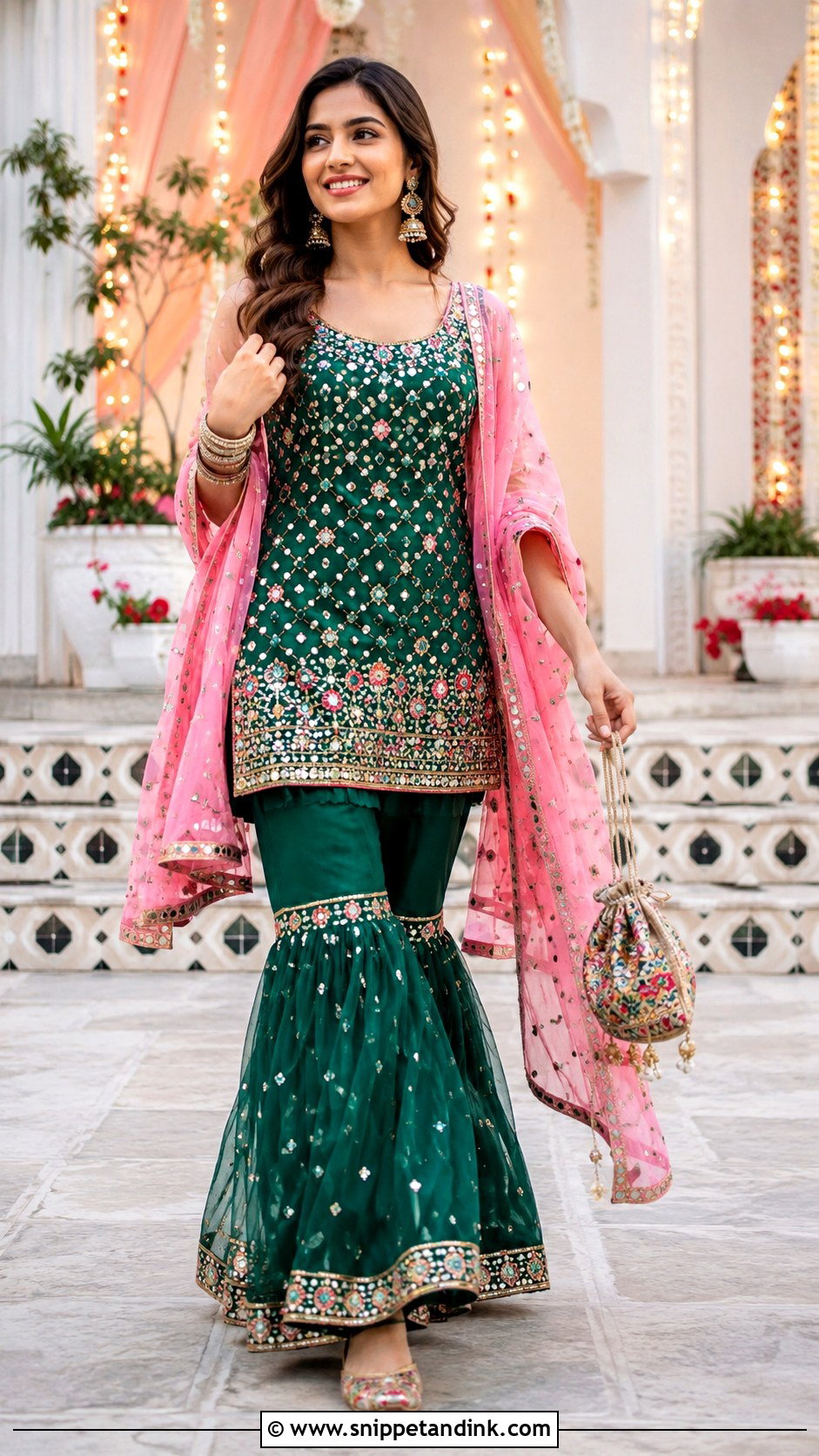
For a long sangeet, a sharara suit is my default. The flared pants move with you and there’s no skirt to step on. A short or mid-length kurta with mirror work, gota patti or thread embroidery keeps it festive. Pin the dupatta at one shoulder, through the kurta seam, so it doesn’t fly off mid-dance. Proportion is everything: the kurta should end right where the flare begins. Curvy women usually prefer a slightly longer, straighter kurta, while petite women look taller with the flare starting higher. A braided ponytail stays put through hours of movement.
9. Gharara Suit Outfit
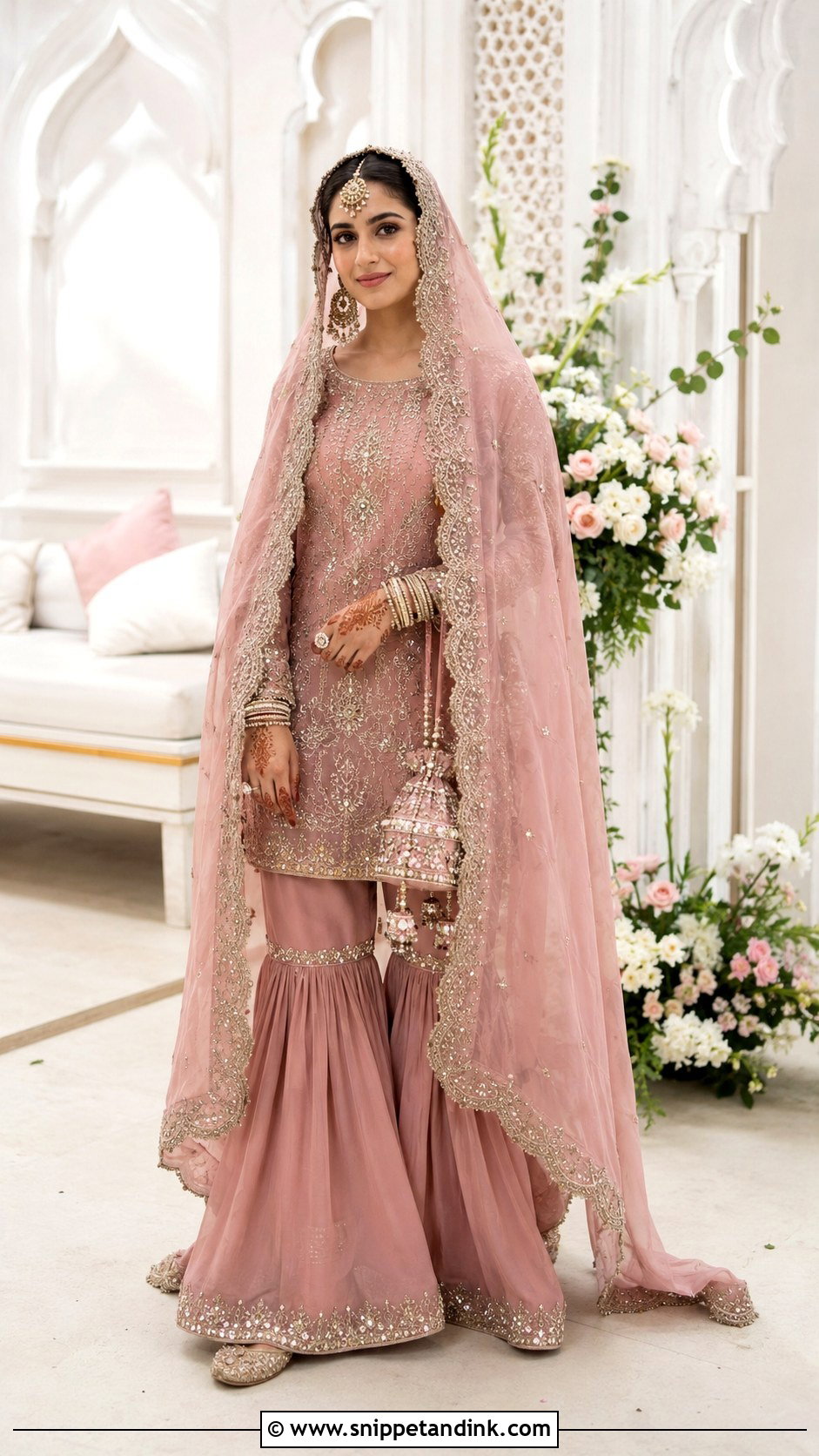
People mix up the gharara and the sharara all the time. A gharara is fitted down to the knee and flares sharply below it, usually with a decorative band at the joint, so the short kurta matters: it has to stop high enough to show that construction. It suits a nikah, mehndi, engagement or any family wedding function. Ivory with gold, sage, dusty rose and deep maroon are refined combinations, though some families have colour expectations for certain ceremonies, so ask first. Keep the kurta comfortably fitted; the lower half already carries all the volume. A passa, drop earrings and embellished flats finish it.
10. Palazzo Suit Outfit
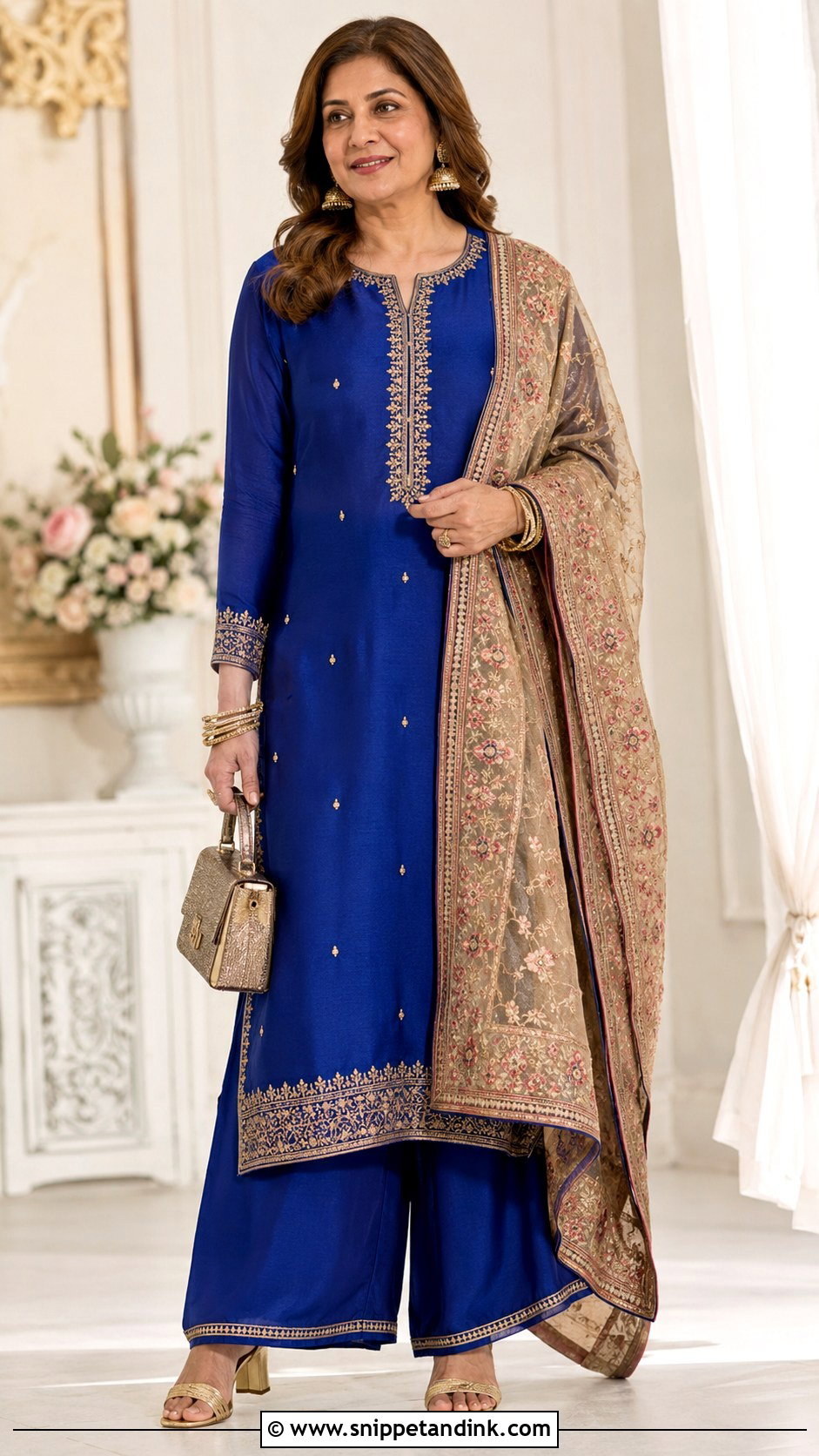
Travel days, long rituals and hours of socialising are where a palazzo suit earns its place. Wide-leg pants, a straight or flared kurta and an easy dupatta, nothing to manage. Silk blends dress it up for a formal event; lightweight georgette keeps it cool outside. Embroidery at the neckline, cuffs and hem is enough detail and makes the set easy to rewear later. A monochrome set makes you look taller. My only rule: hem the palazzos to the exact shoes you’ll wear, because wide legs that drag under a heel fray within one evening.
11. Straight-Cut Salwar Suit Outfit
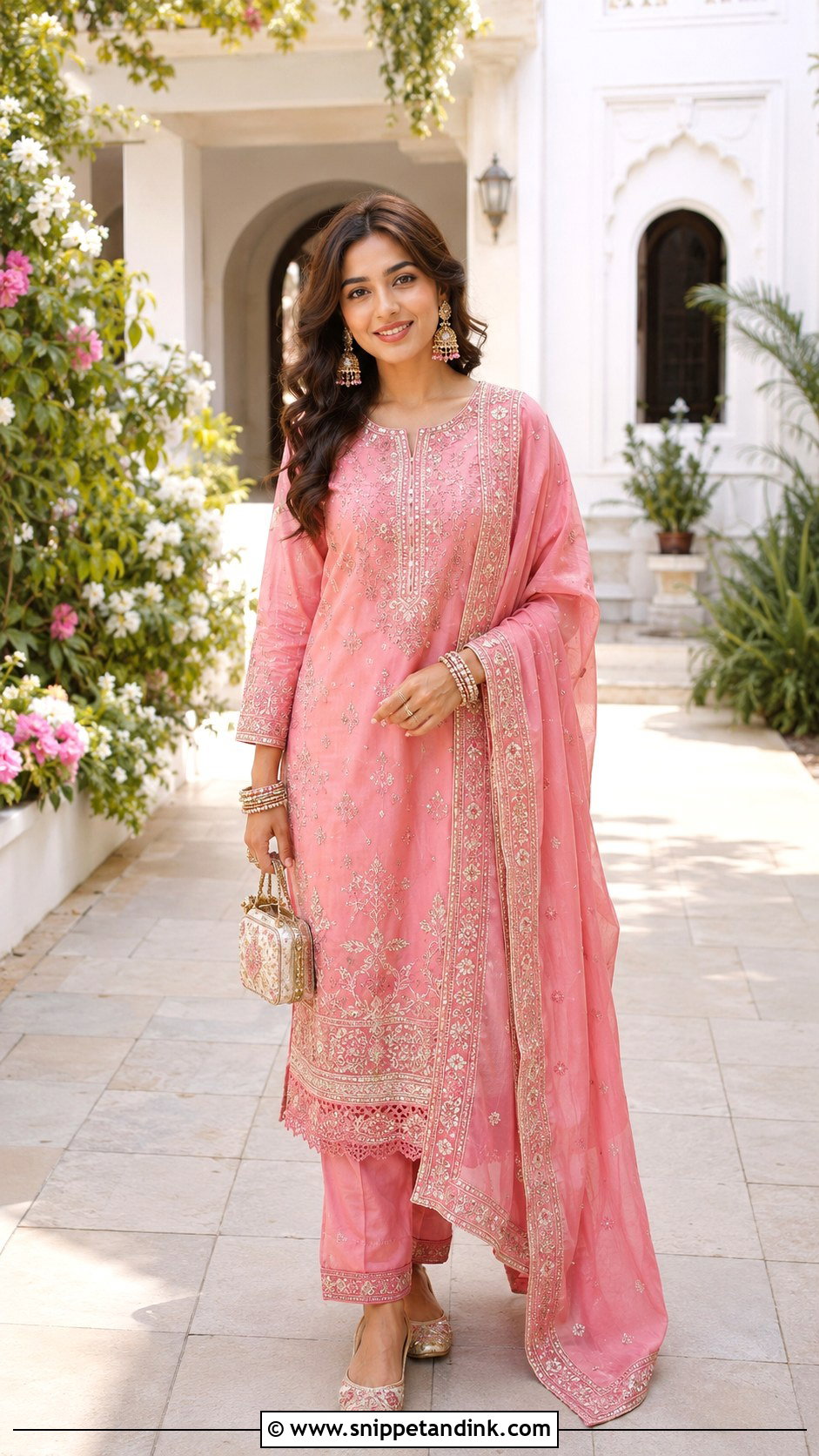
A straight-cut salwar suit is the quiet option, and I say that as a compliment. It suits a small ceremony, a daytime wedding or a pre-wedding dinner where a lehenga would feel like too much. A knee or calf-length kurta with embroidered panels and side slits, worn with tapered pants or a classic salwar and a bordered dupatta, covers it. Bright blue, rose pink, mustard and emerald all feel festive. Three-quarter sleeves and a higher neck give extra coverage, and the straight shape slides easily under a long embroidered jacket if the evening turns cold.
12. Churidar Suit Outfit
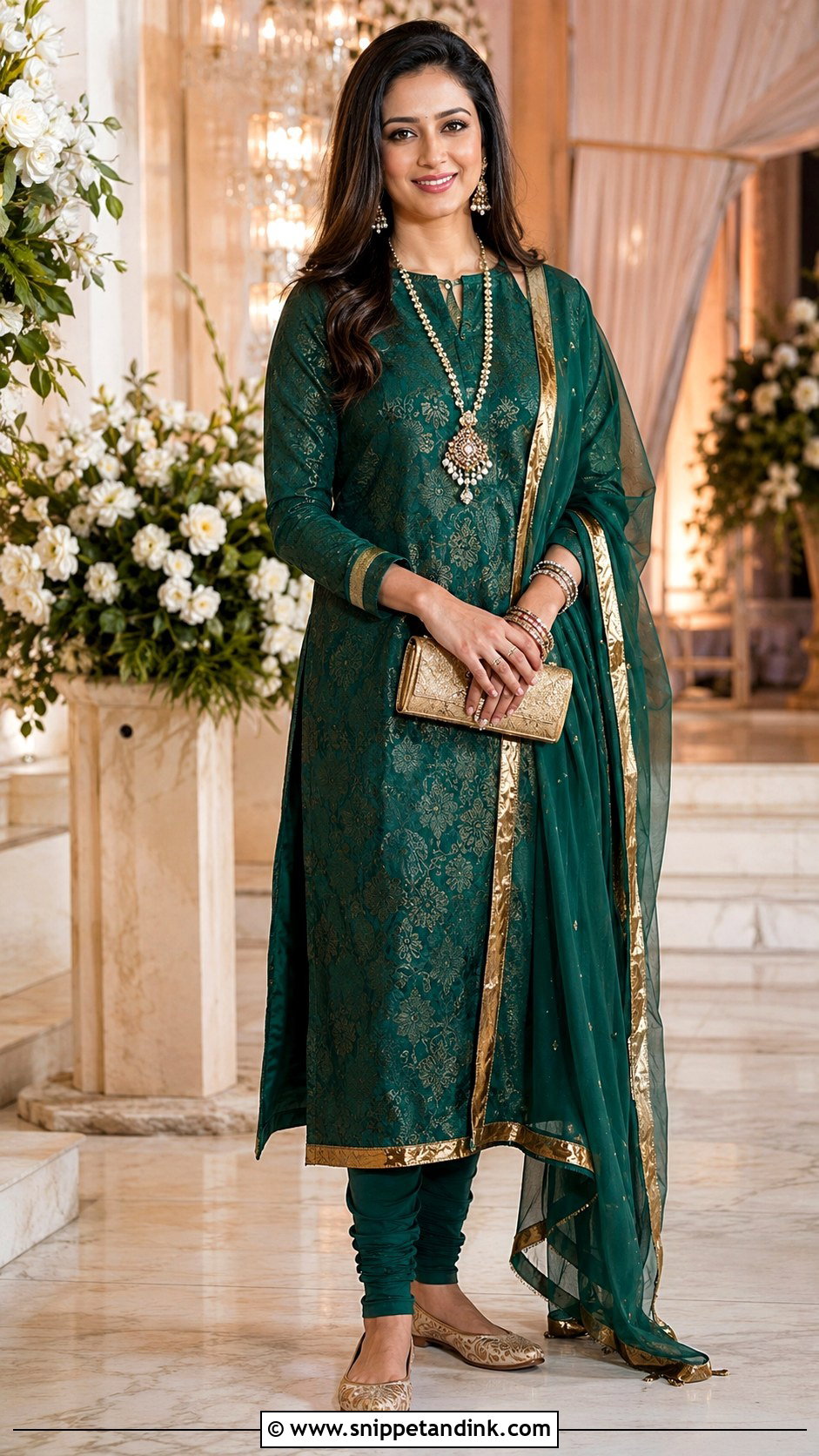
Churidar fit is where most suits go wrong. The leg gathers at the ankle, which looks neat standing, but if the fabric has no stretch at the knee and hip, sitting cross-legged during rituals pulls the seams. I always have clients sit on the floor during the fitting. Paired with a silk or brocade kurta with side slits and a sheer bordered dupatta, it’s a refined evening look in wine, navy, peacock green or magenta. The kurta should skim the body without pulling across the bust. A long necklace and a low bun suit women of almost any age.
13. Indo-Western Dhoti Pant Outfit
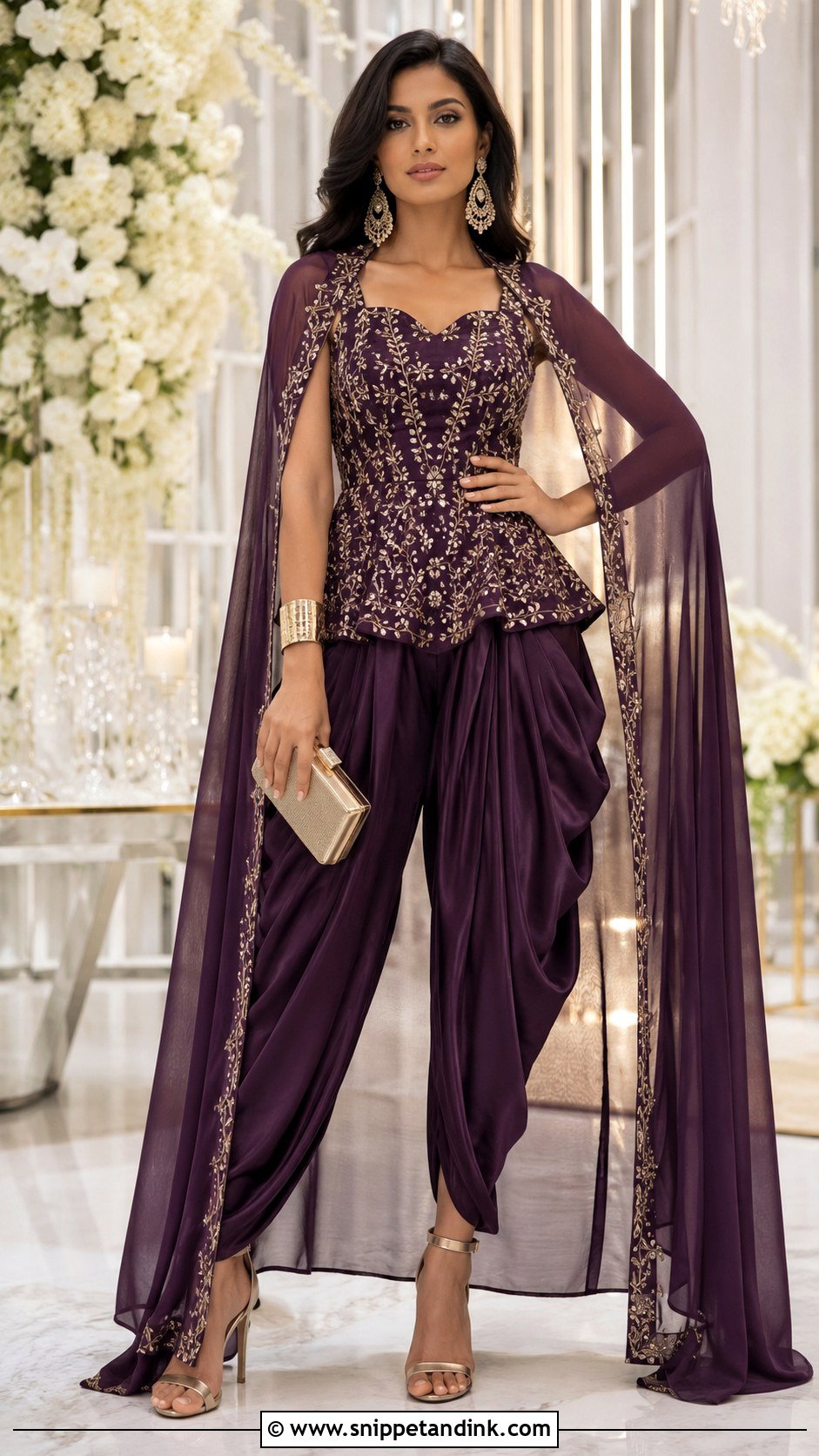
An Indo-Western dhoti pant outfit is for the woman who would rather not wear a skirt at all. Fluid dhoti pants with an embroidered crop top, peplum blouse or fitted tunic, then a long cape or asymmetrical jacket instead of a dupatta. The top needs real structure; soft folds on the bottom plus a soft top just looks like loungewear. Metallics, navy, emerald and plum work well for cocktail nights and receptions. Choose heels with ankle straps, since dhoti pants hide your feet and you won’t see where you’re stepping. Petite frames suit a cropped jacket; a floor-length cape needs height.
14. Cape Lehenga Outfit
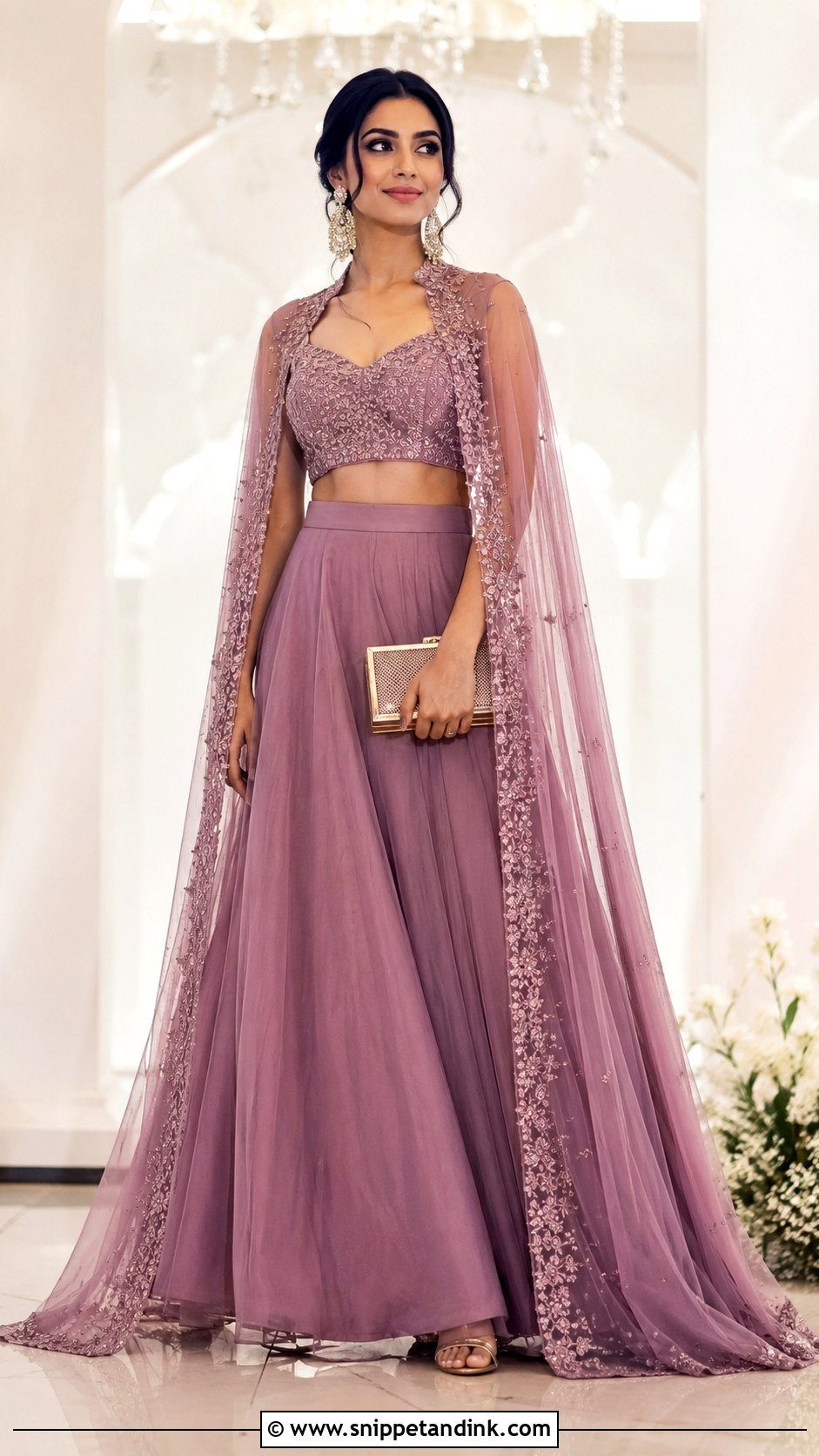
A cape lehenga solves the dupatta problem entirely: no slipping, no constant adjusting, both hands free. The cape falls from the shoulders and can be waist-length for a lighter feel or floor-length for more coverage. Powder blue, mauve, emerald and champagne suit receptions and engagements. If the cape is embroidered around the neck, skip the necklace; the two compete. Guests should keep the skirt volume moderate so it doesn’t read as bridal. A soft updo stops hair from tangling in the cape fabric, which happens more than people expect with net or tulle.
15. Jacket Lehenga Outfit
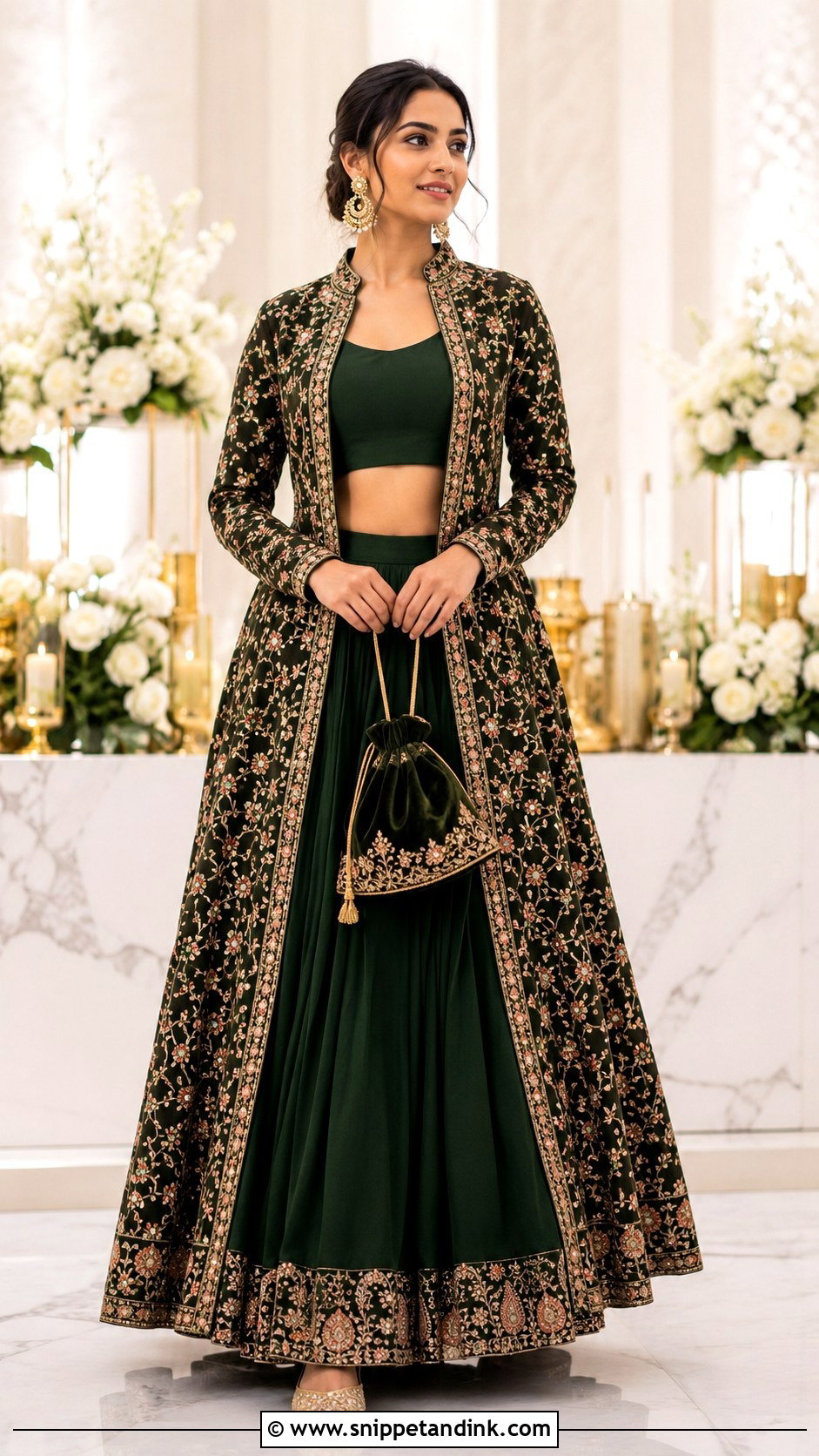
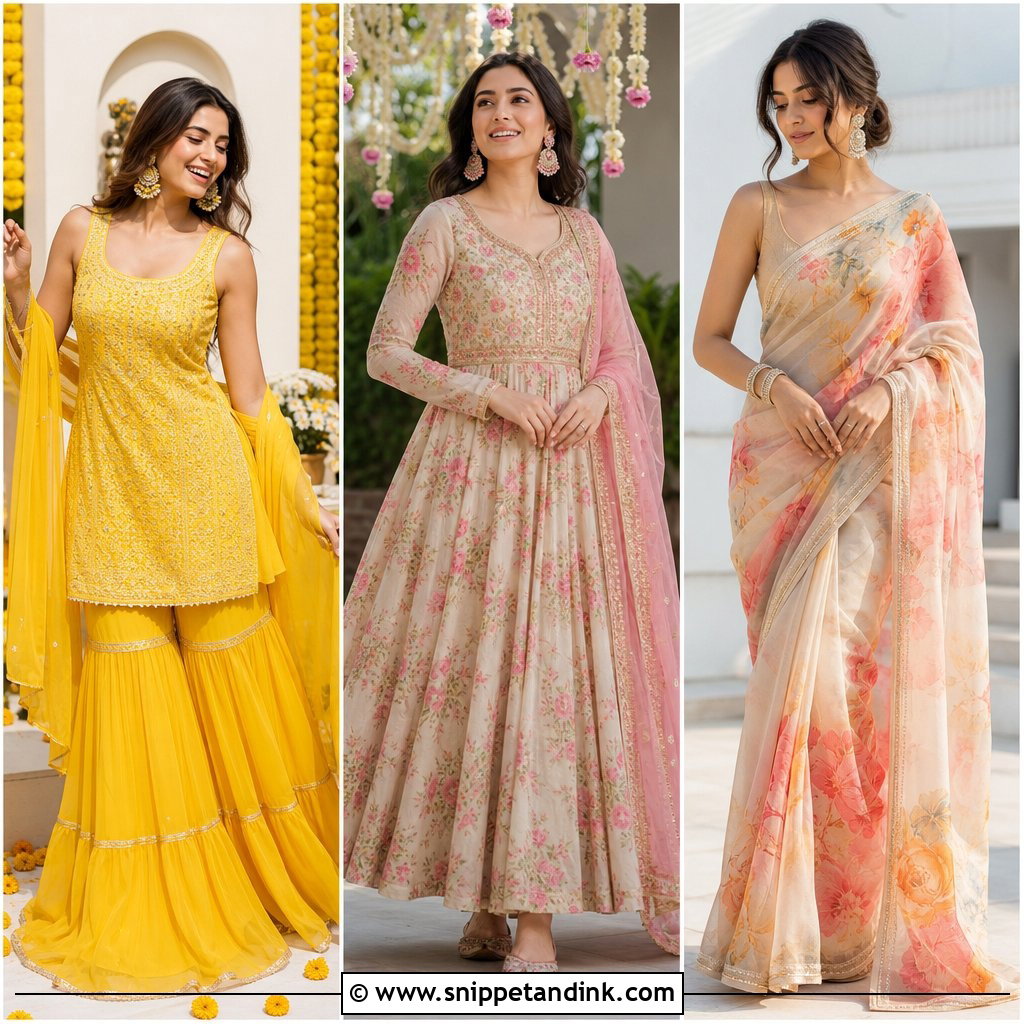
A long embroidered jacket turns a plain lehenga into a winter outfit, and it’s my favourite fix for over-cooled banquet halls. Threadwork, mirror accents or metallic embroidery on an open-front jacket, with a simpler skirt and blouse underneath so the jacket stays the focus. Burgundy, navy, forest green and deep purple suit the season. A fitted waist with a slight flare gives shape without restricting your arms. Full sleeves and a high neck give coverage if you want it. Chandbali earrings and closed-toe embroidered shoes keep your feet warm too.
16. Saree Gown Outfit
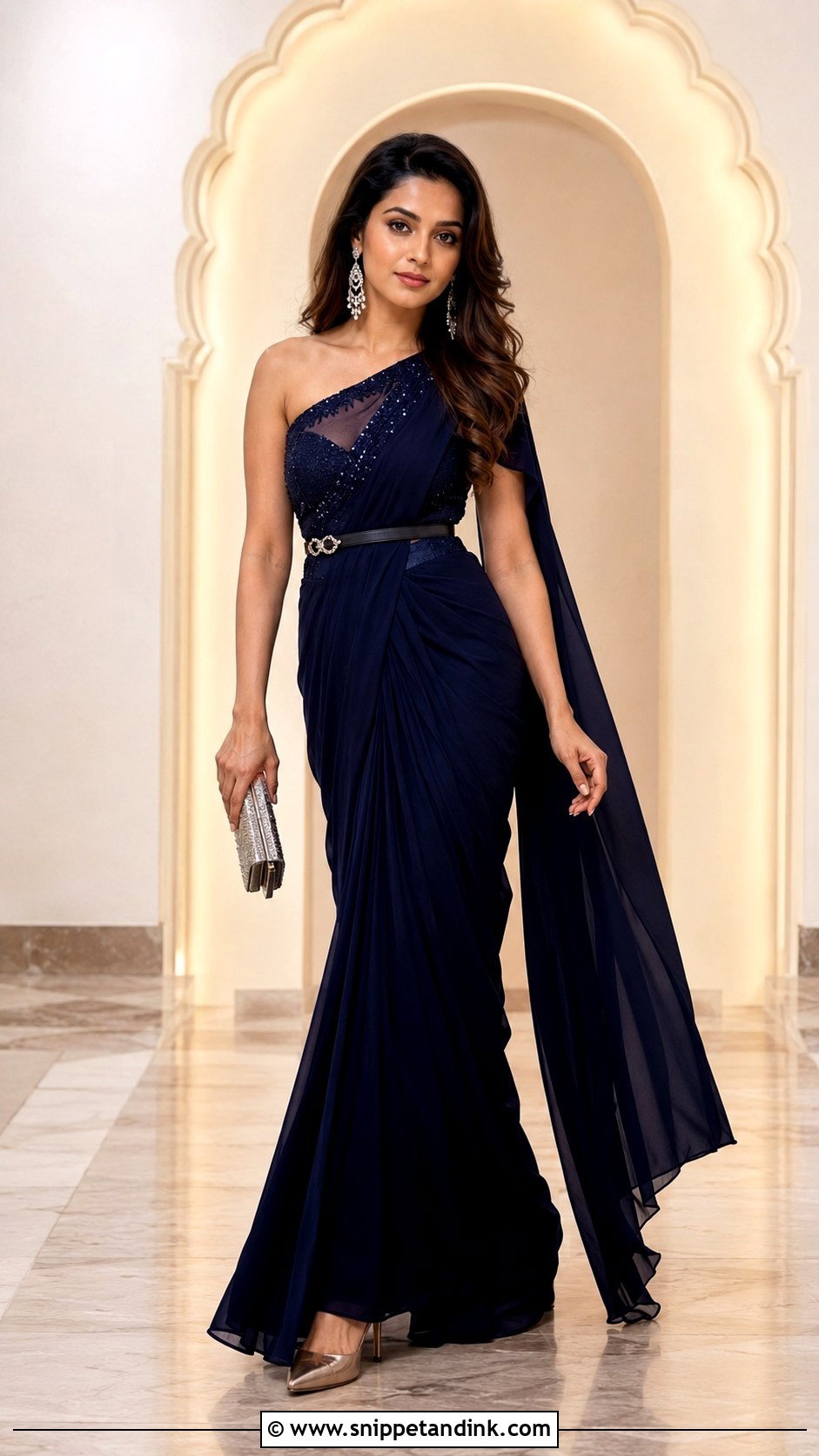
A saree gown gives the line of a draped saree with the security of a single piece. The bodice is fitted, the skirt softly gathered and the pallu attached, so nothing unravels. The trade-off is tailoring: a regular saree adjusts to your body every time you drape it, while a saree gown is fixed at the waist, bust and hem. Order it with enough seam allowance to take in or let out. Subtle sequins on a jewel tone work for evening; a floral pastel for a daytime engagement. Keep accessories light around a decorated neckline. It’s the fastest outfit here to get dressed in.
17. Velvet Lehenga Outfit
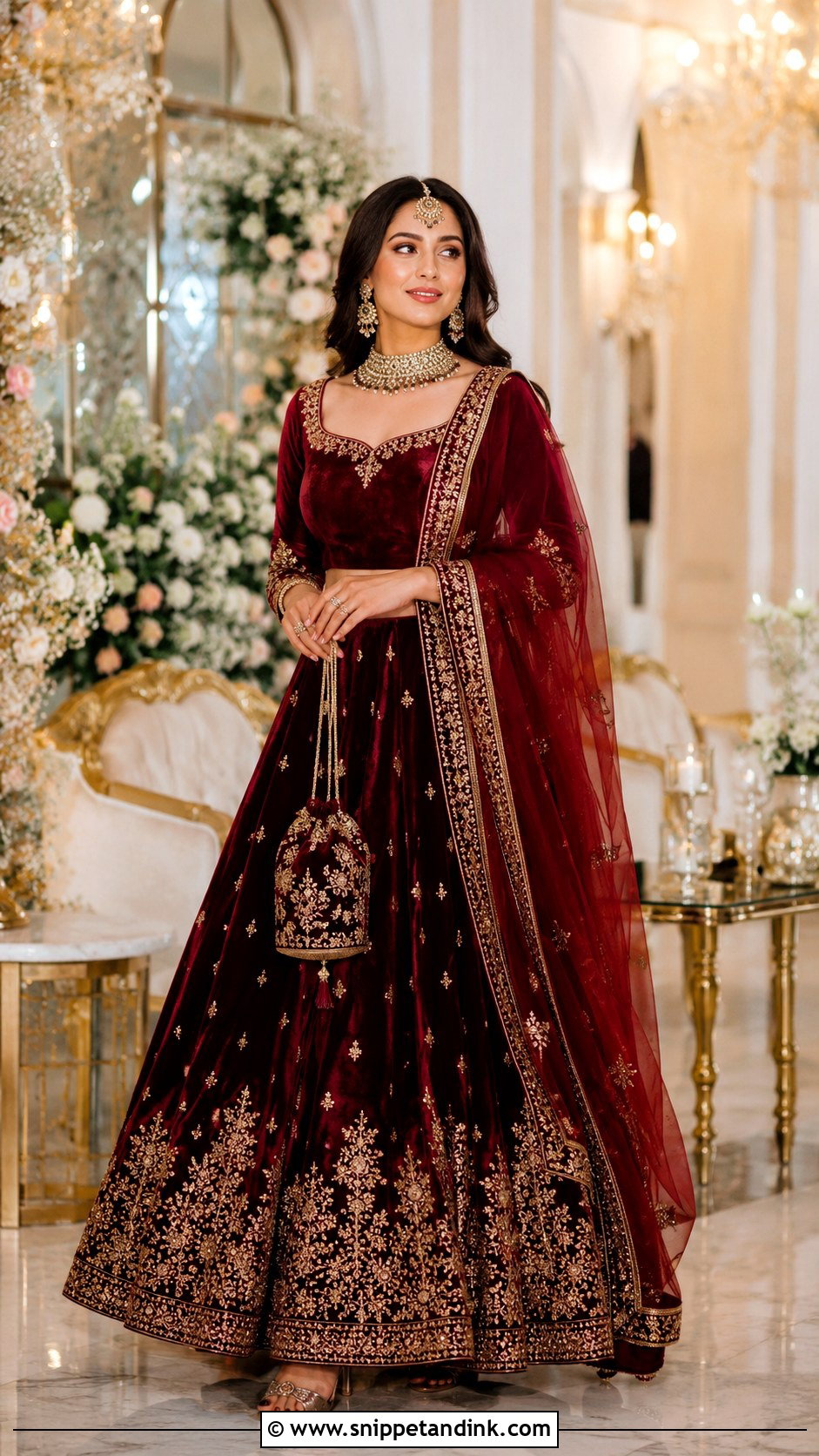
Velvet only works in cold weather; I’ve seen guests wilt in it at an outdoor afternoon function. For a winter evening, though, a deep green, navy, wine or plum velvet lehenga is hard to beat. The fabric already has visual weight, so keep the embroidery to the hem and neckline and avoid a stiff can-can underneath, which makes velvet look boxy. A lighter net or organza dupatta stops the outfit from becoming heavy. A blouse with sleeves adds warmth. Antique-finish jewellery suits velvet better than shiny gold. Pin the dupatta over one shoulder so the hem embroidery stays visible.
18. Yellow Haldi Outfit
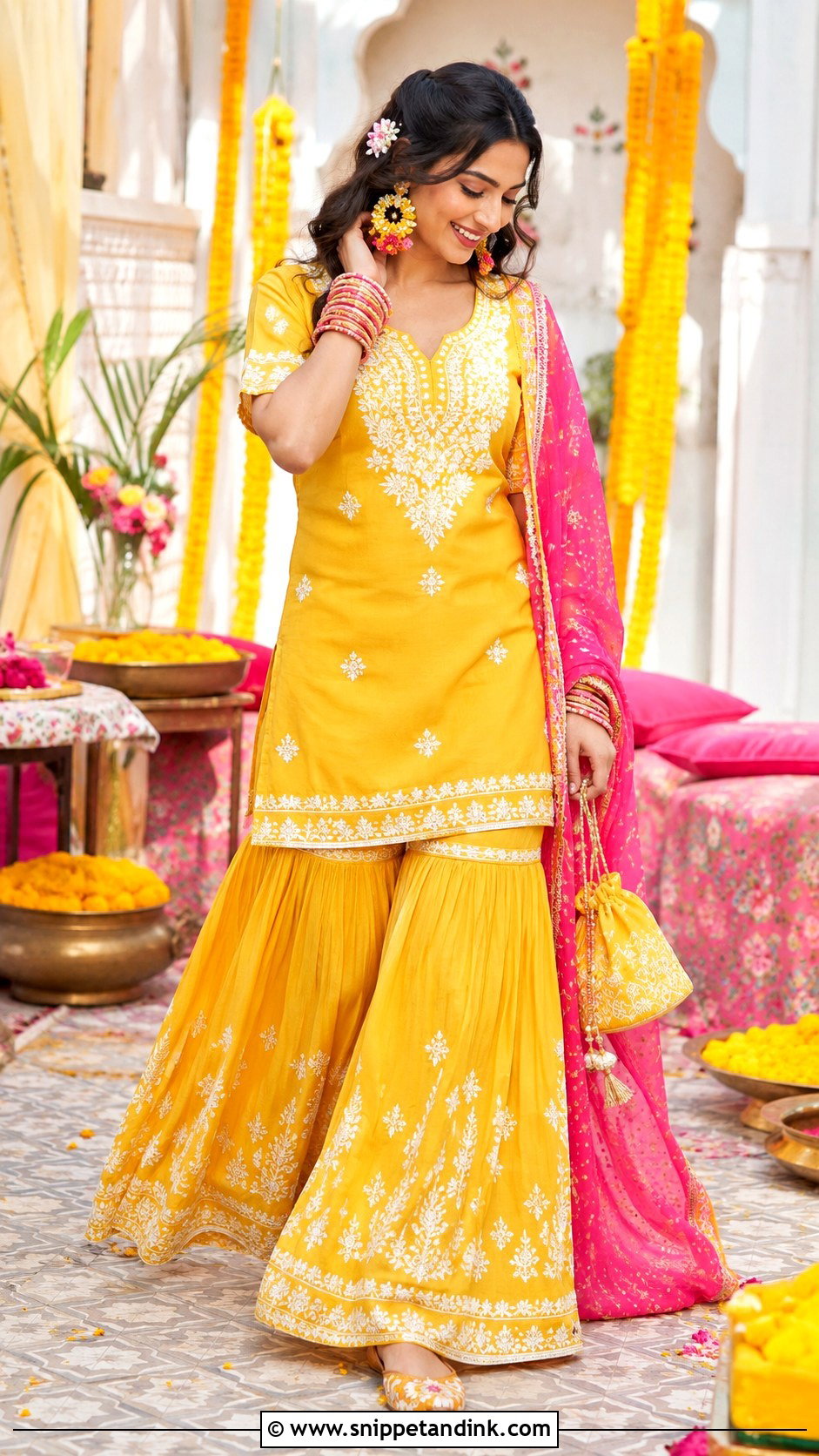
Wear something to the haldi that you can sacrifice. Turmeric paste stains fabric a deep yellow that rarely washes out completely, which is part of why yellow became the traditional colour. A lightweight sharara, simple lehenga or flared kurta set in cotton-silk or georgette is ideal for a warm morning. White embroidery, mirror work or a pink dupatta keep it from looking flat. Floral earrings, colourful bangles and flat juttis suit the mood. Avoid trailing hems: the floor is often wet with paste and water. A braid with small flowers keeps hair out of the mess.
19. Green Mehndi Outfit
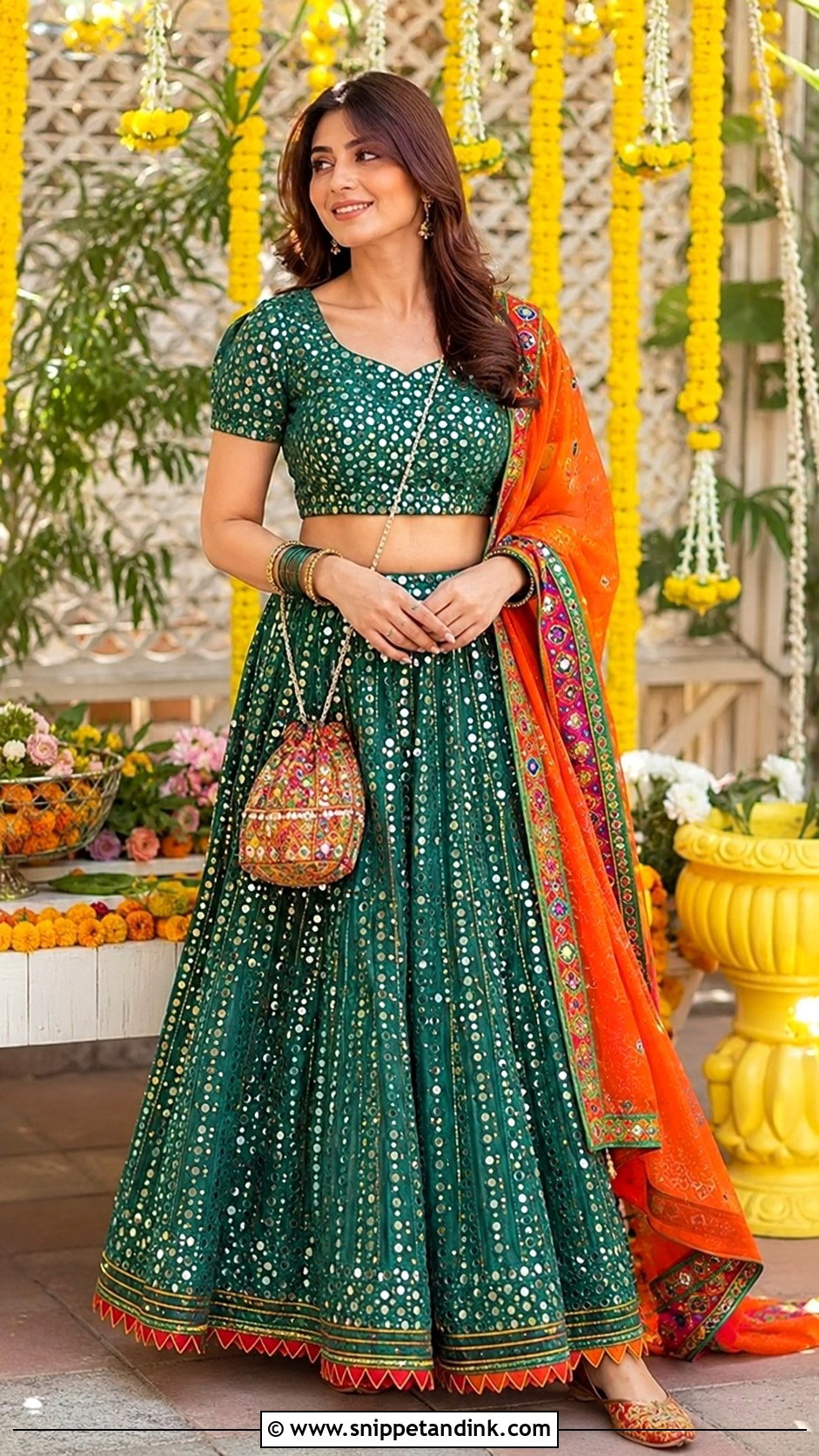
Green is the traditional choice for a mehndi outfit, in a lehenga, sharara set or embroidered Anarkali. Lime and mint suit daytime; emerald and bottle green suit evening. Mirror work, gota patti and colourful borders fit the festive mood. Sleeve length matters more here than anywhere else in the wedding. If you’re having henna applied up the arms, you’ll sit still for hours with wet paste, so sleeveless or short sleeves save you from smudges. Comfortable juttis and a crossbody potli keep your hands free while the design dries.
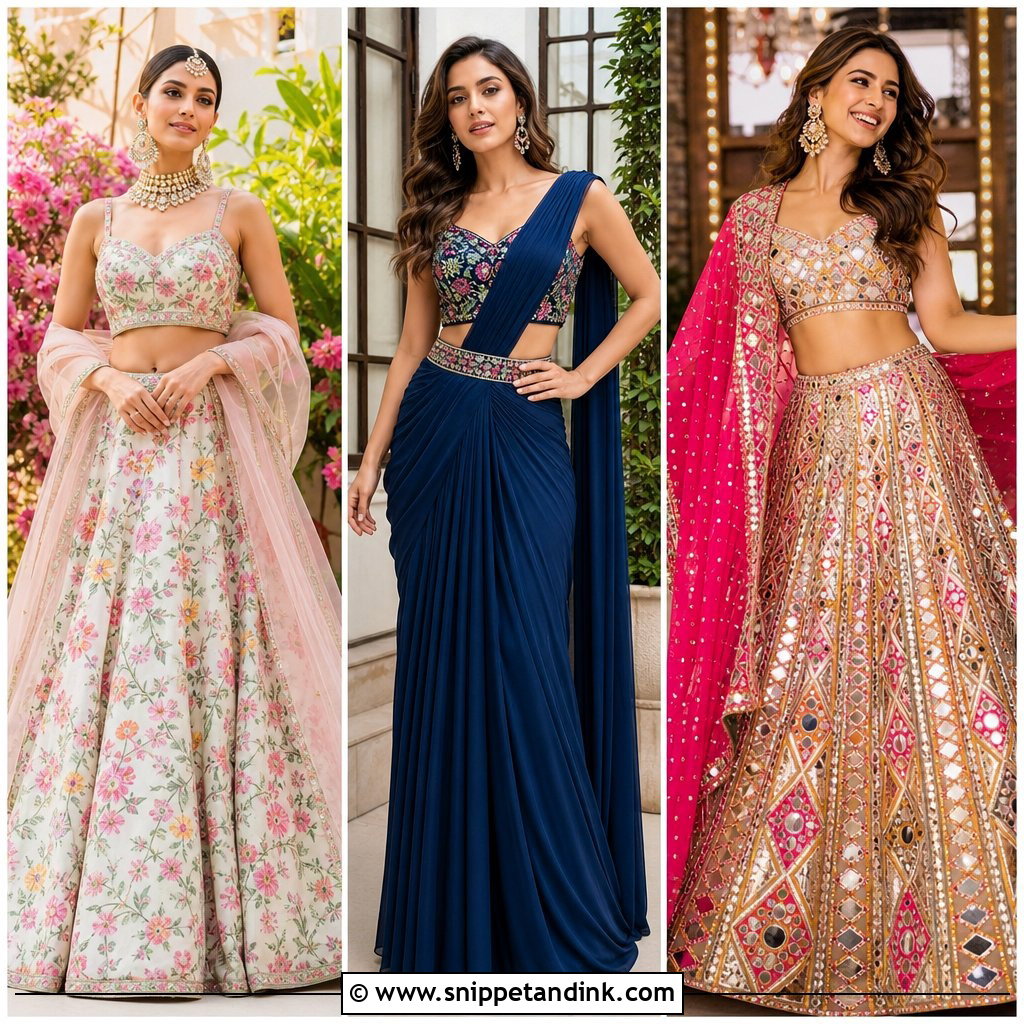

20. Sequin Reception Gown Outfit
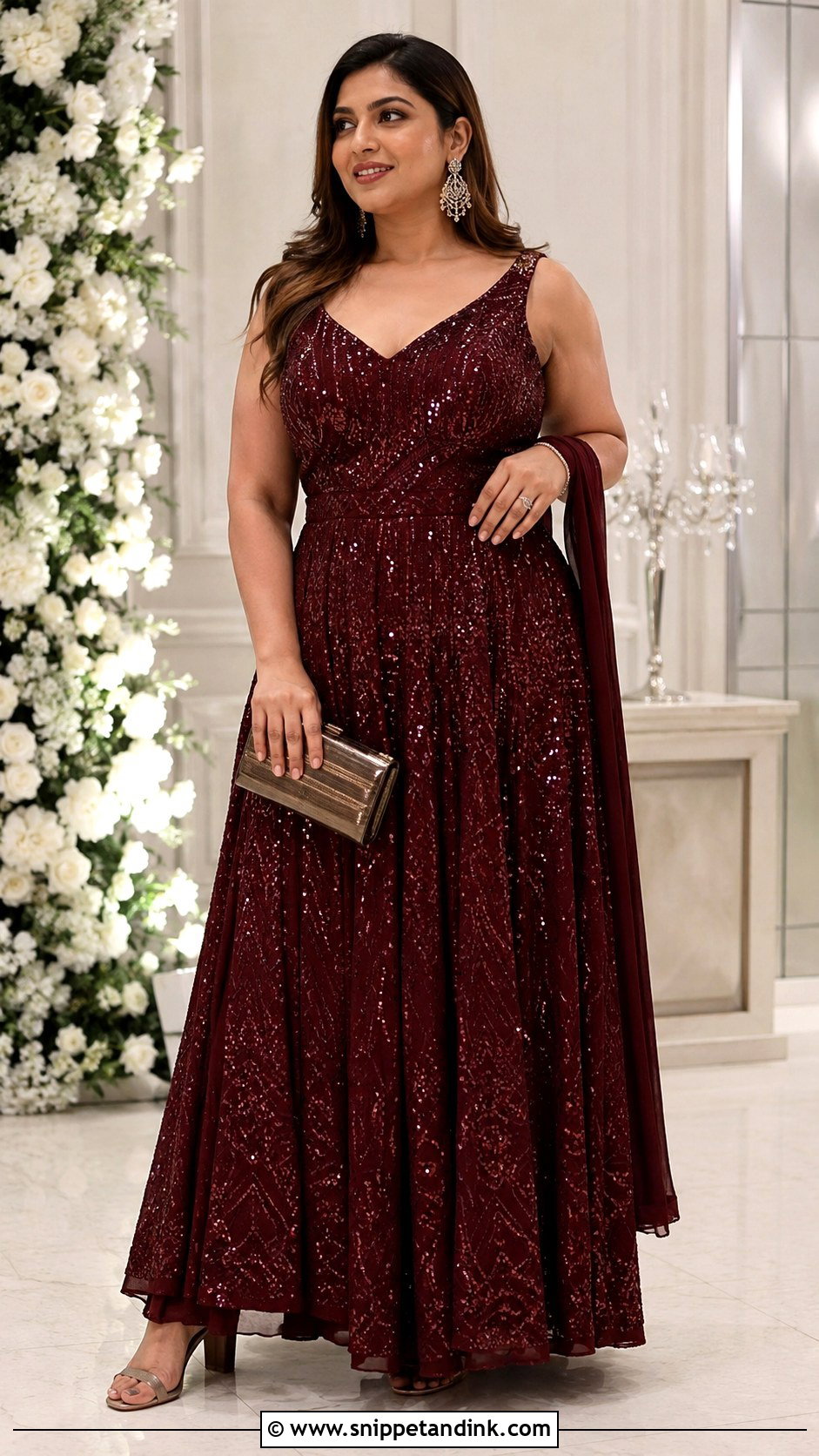
A sequin reception gown comes alive under evening lights, which is exactly why I don’t recommend it for daytime. An Indian-inspired floor-length gown with a fitted bodice and a defined waist works for brides, close relatives and formal guests. Midnight blue, emerald, silver, mauve and burgundy all hold up under flash. Sequins scratch, so check the inner arm seams and the underarm lining; that’s where irritation starts after an hour of dancing. Skip the necklace if the neckline is decorated. Try sitting down in your shoes before the event. A sleek ponytail or bun keeps the focus on the gown.
Why the Blouse Decides Whether the Outfit Works
A ready-made lehenga or saree almost never comes with a blouse that fits well off the hanger. The blouse carries the weight of the dupatta pins, holds the neckline in place for photos and decides whether you can raise your arms to dance. That’s why I build the timeline around it.
- Order the outfit early enough to allow at least two fittings. Heavily embroidered blouses take longer to alter because the work sits on the seams.
- Bring the actual bra you’ll wear to every fitting. A different bra changes the bust measurement and the neckline.
- At the second fitting, sit down, lift both arms above your head and hug someone. If the blouse rides up or digs into your underarm, have it fixed now.
- Ask for extra seam allowance on the side seams so the blouse can be let out later if your weight changes before the wedding.
Skirts and pants can usually be hemmed within a few days. Blouses can’t be rushed, especially when the embroidery has to be unpicked and re-stitched around a new seam line.
Folding Away Silk, Zari and Velvet After the Last Function
These outfits are often worn once and passed down, so how you store them matters. The zari and metallic threads in Banarasi and Kanjivaram silks tarnish when they sit in damp air or sealed plastic, and sharp fold lines in old silk can eventually split.
- Air every outfit for a day after wearing so sweat and perfume can evaporate before packing.
- Wrap silk sarees and lehengas in plain cotton or muslin, never plastic garment bags.
- Refold heavy silks along different lines every few months so the same crease doesn’t weaken.
- Hang or roll velvet rather than folding it; velvet pile crushes and the marks can be permanent.
- Spot-clean haldi stains as soon as possible and send embellished pieces to a dry cleaner who handles bridal work.
Planning the Whole Wardrobe, Not Just One Outfit
Most of the problems I fix on the day come from outfits chosen one at a time. Look at the whole run of functions together: what you’ll wear, where you’ll sit, how hot it will be and what the family expects. A tailored blouse matters more than heavier embroidery. Pin your dupattas properly, wear shoes you’ve already walked in, and start your fittings early. Get those basics right and every outfit on this list will last the full celebration.
You'll Like These Ideas:


Leave a Reply