
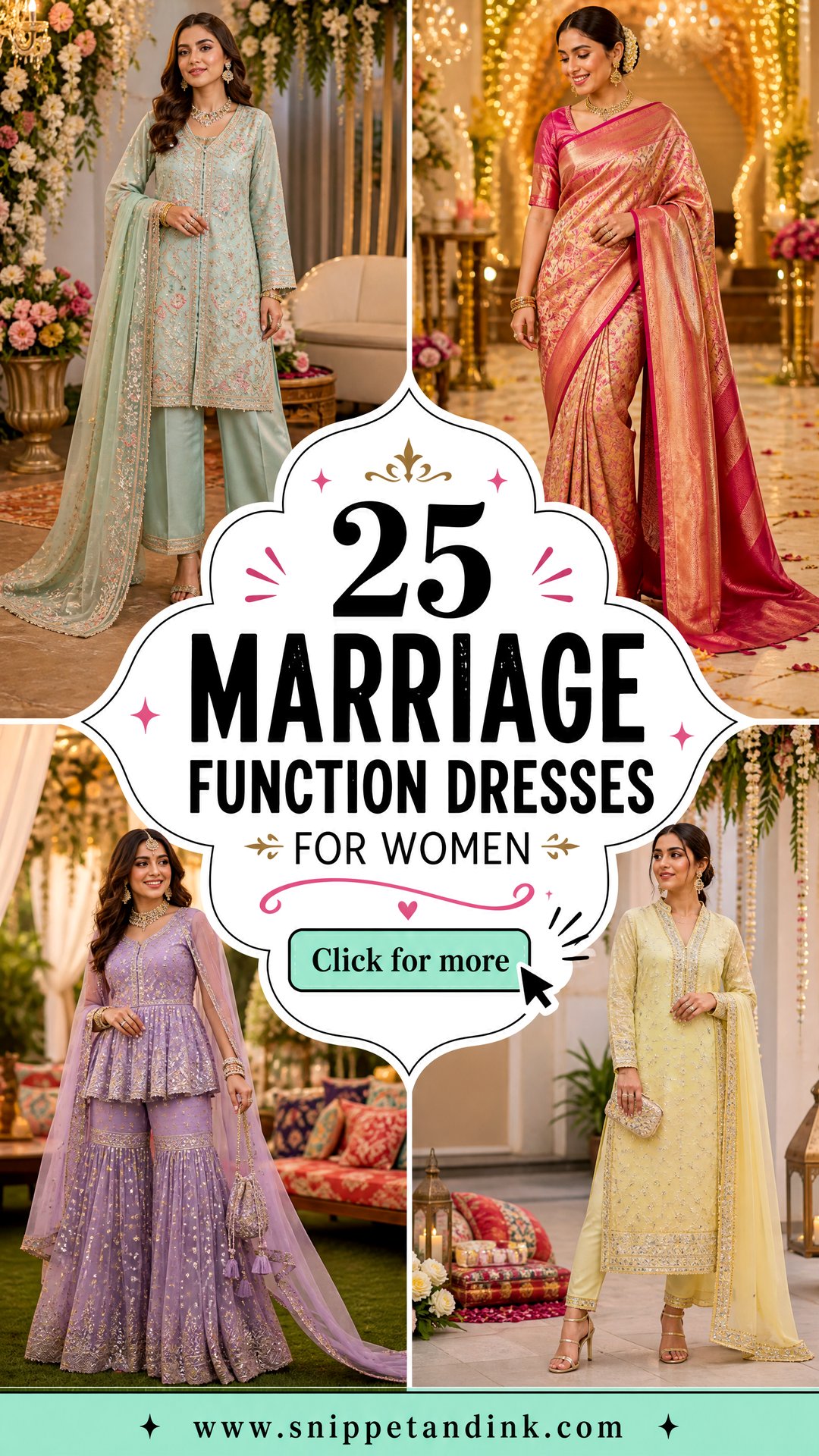
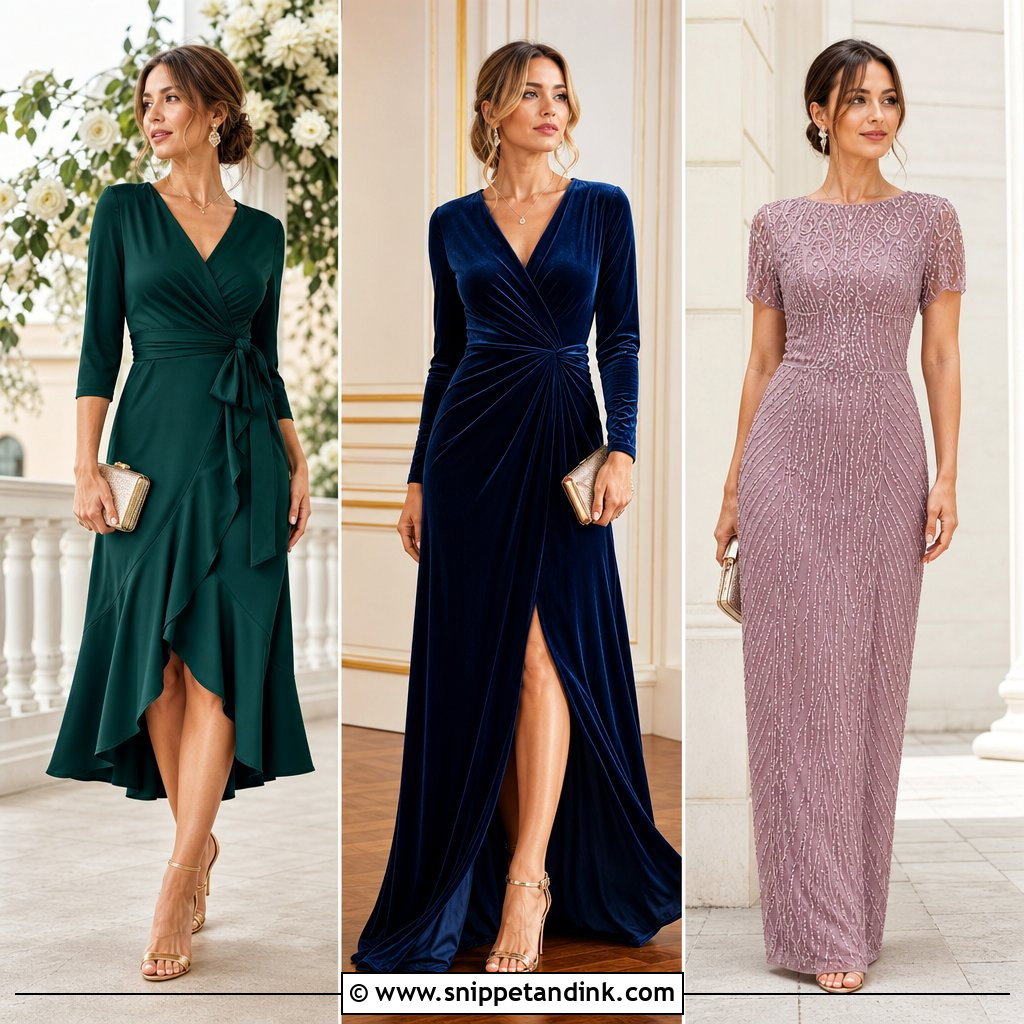
A wedding with five functions asks a guest to dress five different ways, and the outfits I’d put together for Marriage function dresses for women all start from one question: what will you actually be doing in it? Sitting cross-legged through a long ceremony, dancing at a sangeet and standing in a receiving line at a reception put very different demands on fabric and fit. The heaviest piece in your wardrobe is rarely the right answer. Below are 25 looks, from anarkalis and silk sarees to co-ords, shararas and Indo-Western cuts, each with my notes on where it shines and where it struggles.
Haldi Splashes, Floor Cushions and a Crowded Dance Floor
When I plan a guest’s wardrobe for a wedding week, I map each function by what happens at it, not by how grand it sounds. The same lehenga that works at a reception can be miserable at a mehndi where everyone sits on the floor for three hours.
- Haldi: turmeric paste stains silk and light fabrics permanently, so wear yellow or a washable cotton you would not mind marking. This is not the day for a new chikankari kurta.
- Mehndi: expect floor seating and, if you get henna yourself, wet hands for an hour or more. Elbow-length or short sleeves and a skirt you can tuck under you sitting cross-legged work best.
- Sangeet: you will dance, so the hem should clear your shoes and the blouse should let you raise your arms. Shararas, ghararas, co-ords and lighter lehengas earn their place here.
- Ceremony: rituals can run for hours in heat, often with long stretches of sitting. Silk sarees and anarkalis feel right, but breathable fabric matters more than embellishment.
- Reception: mostly standing, greeting and photographs under strong lighting. Sequins, gowns, jacket lehengas and structured sarees come into their own.
If the invitation gives a color theme for a function, follow it loosely rather than literally. A tone close to the theme looks gracious; an exact match can make you blend into the decor.
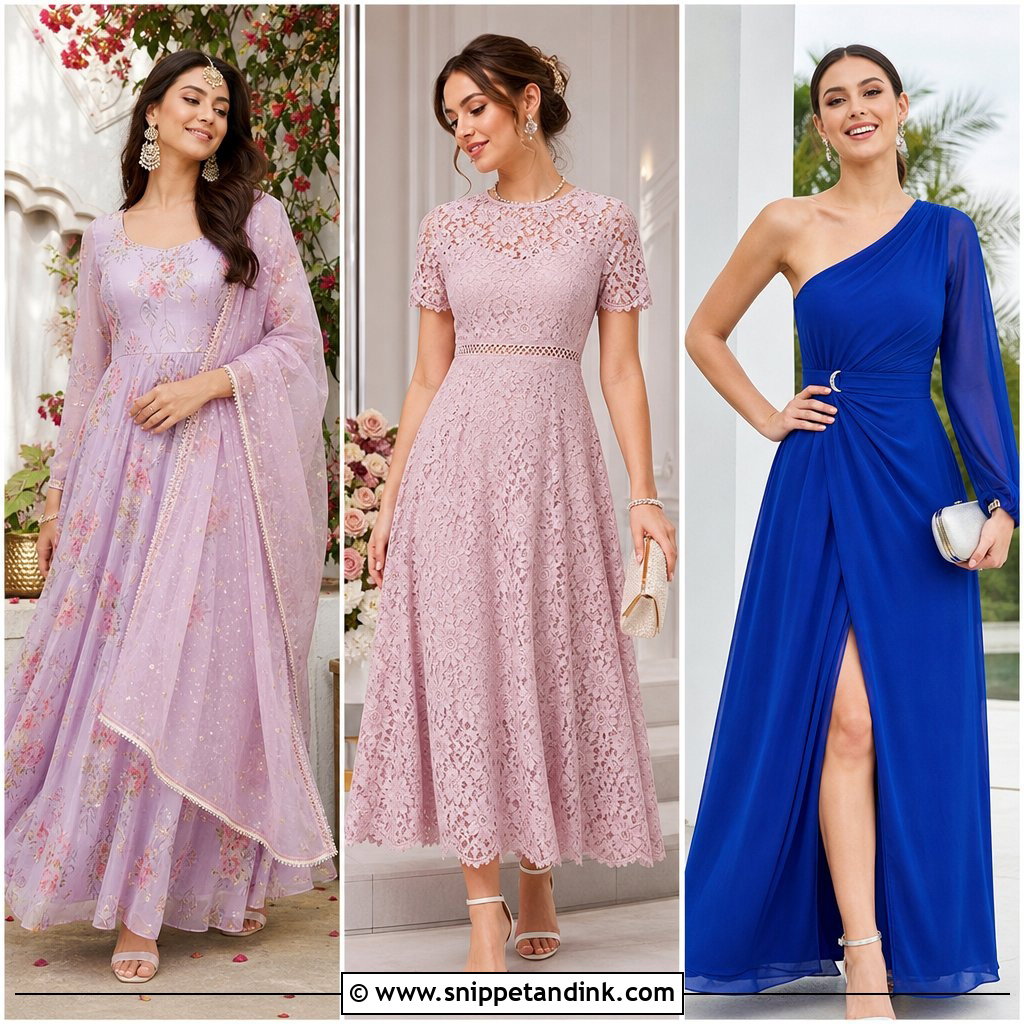
1. Anarkali Suit for Marriage Function
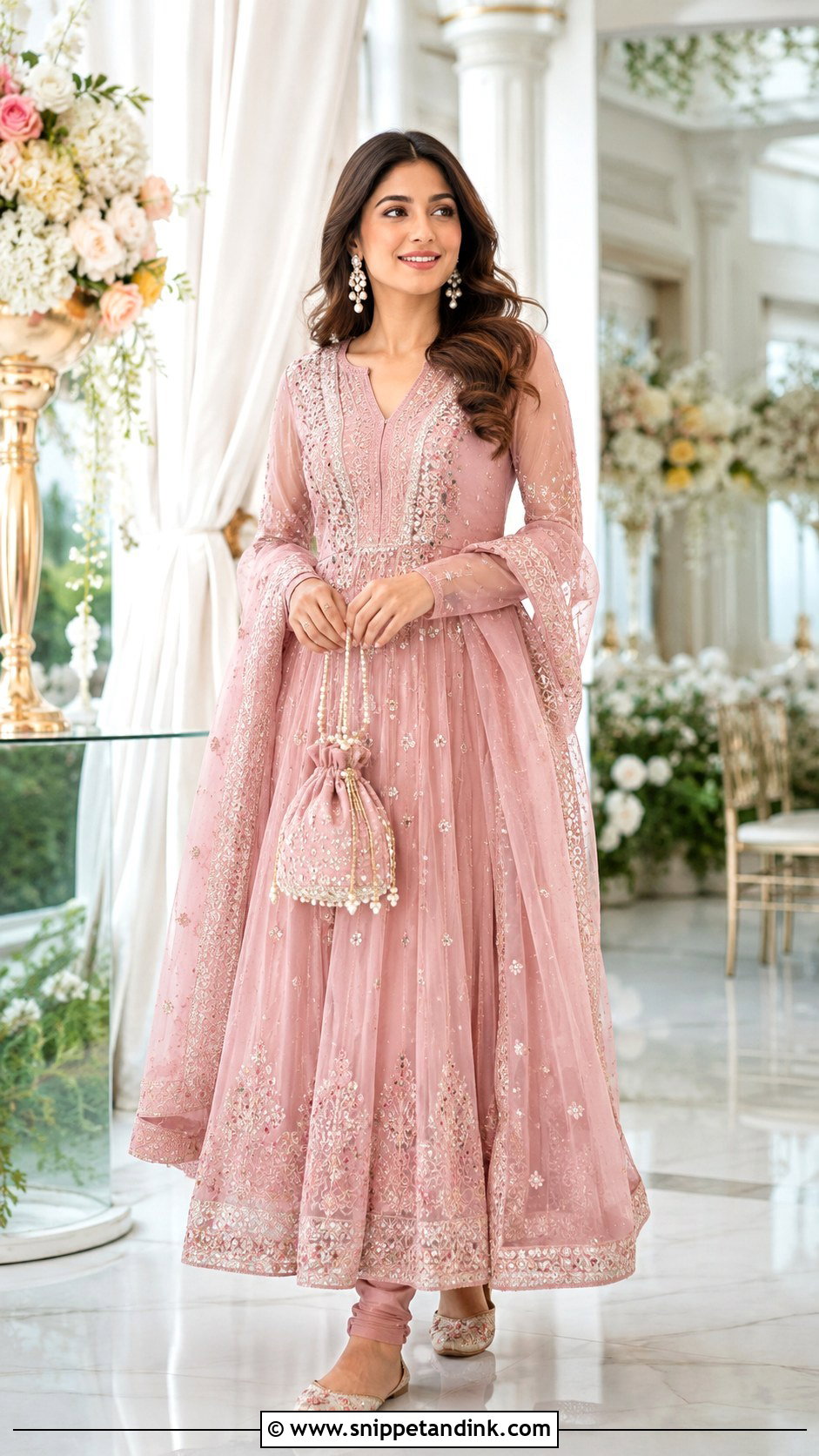
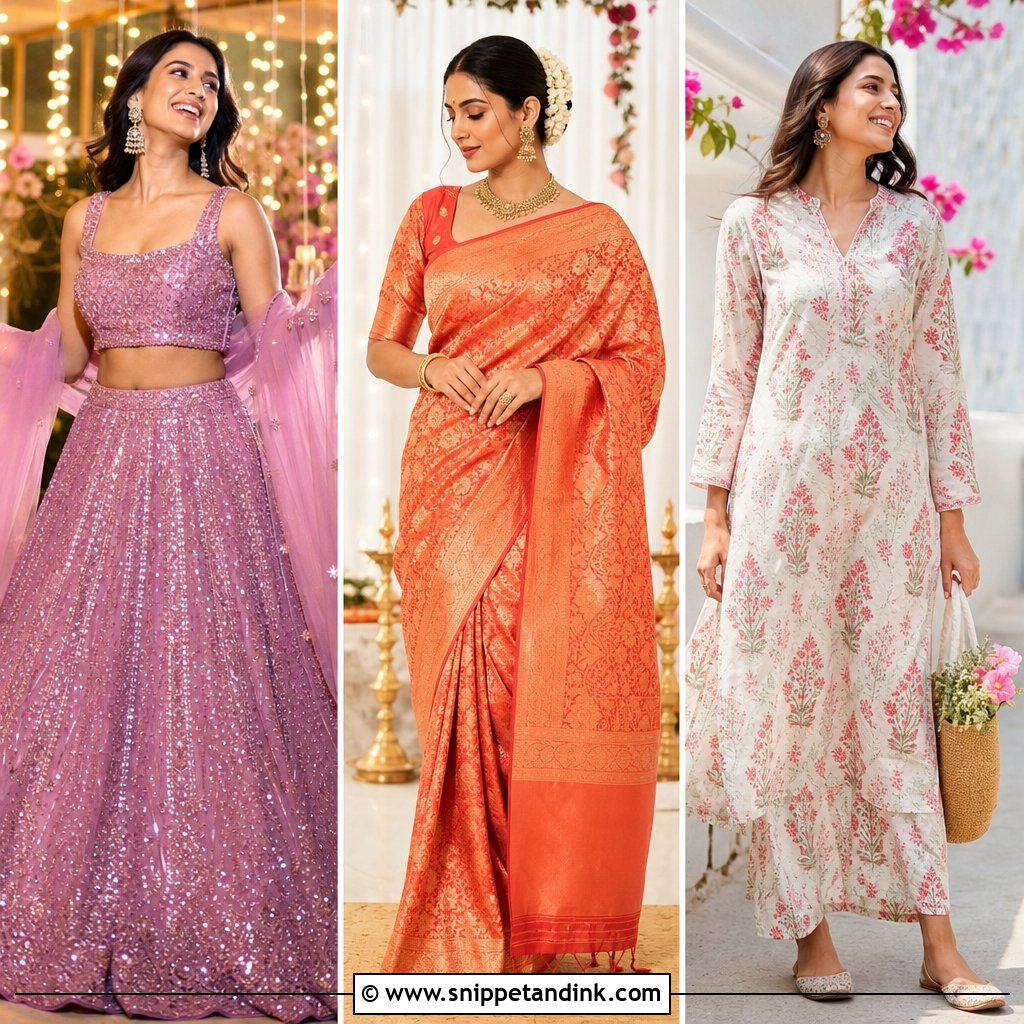
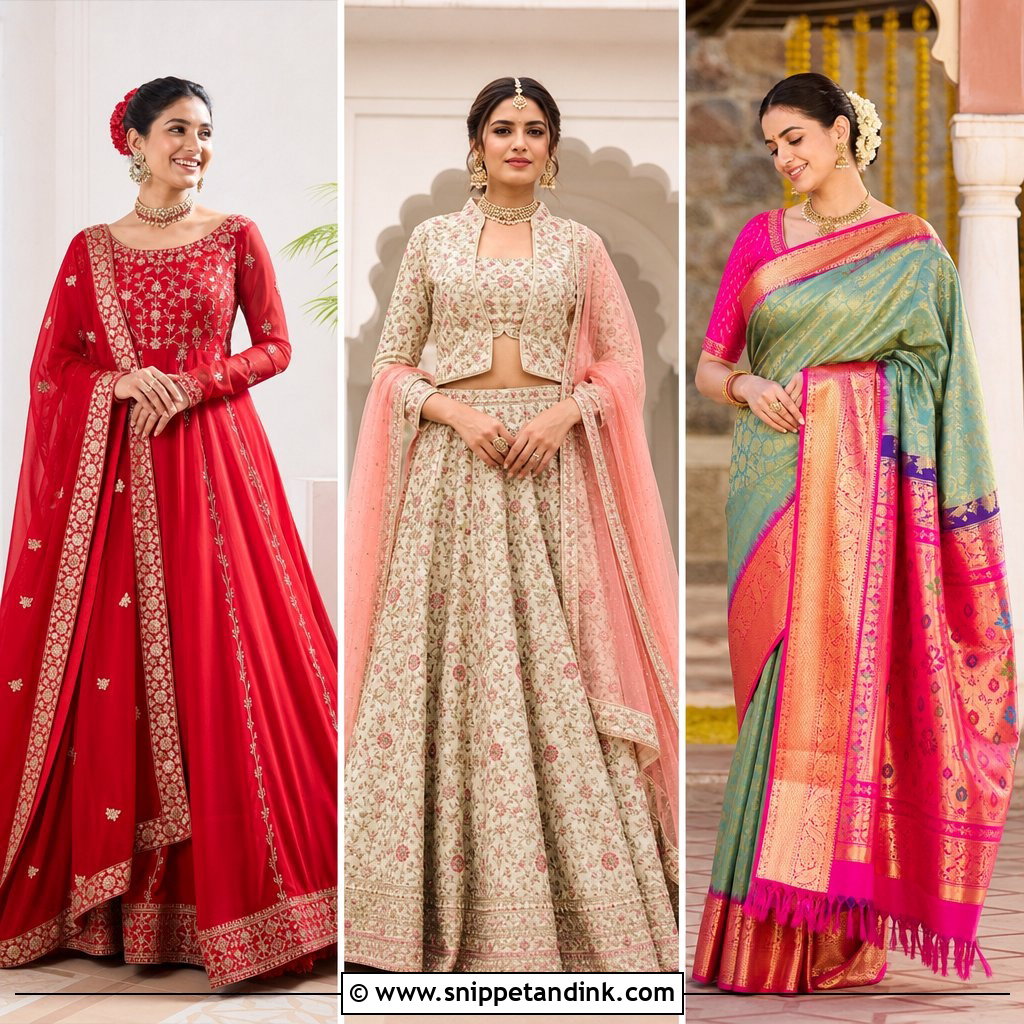
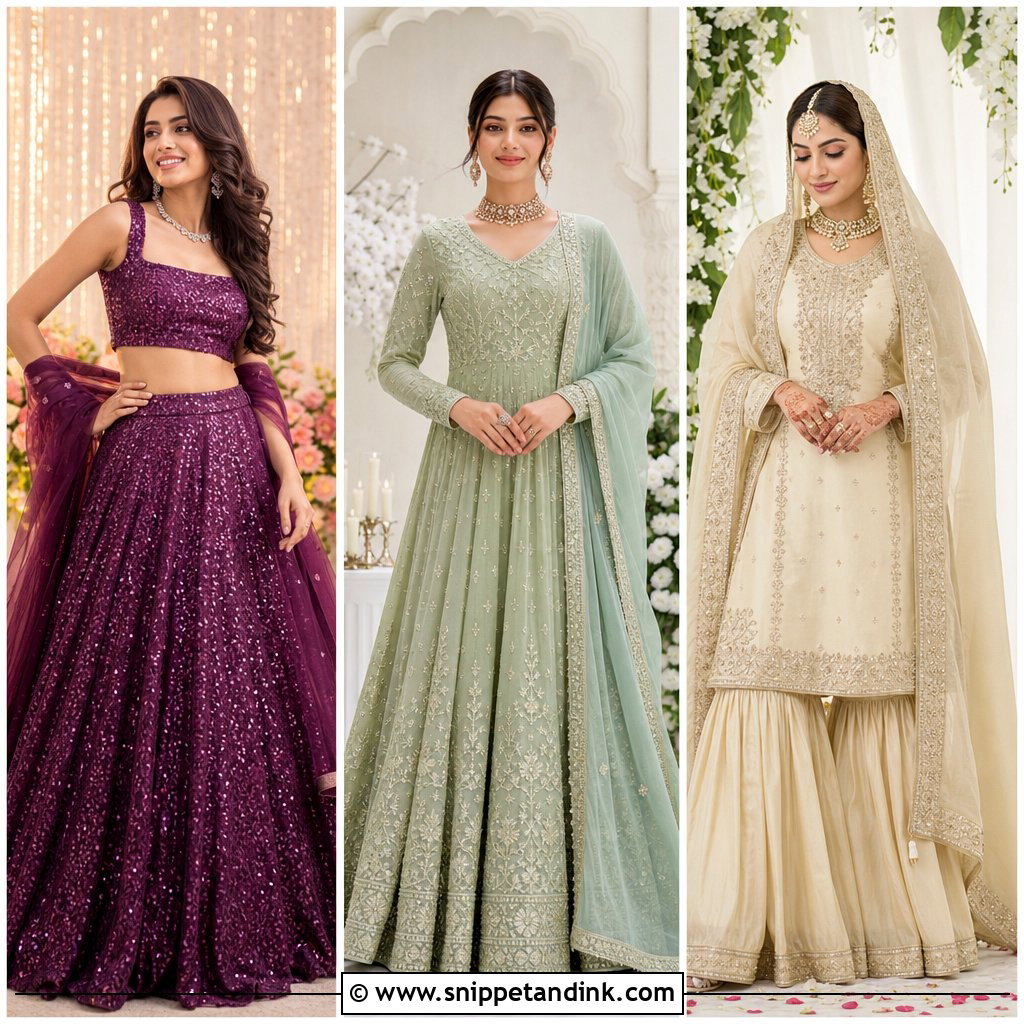
I reach for an Anarkali when someone wants to look dressed without managing pleats or a heavy skirt all evening. A floor-length Anarkali in georgette or soft silk swings when you walk, while a stiff fabric makes the flare stand out like a lampshade, so I always check how the panels fall before anything else. Pastels such as peach and powder blue read well in daylight; for evening I’d go to emerald, navy or a deep berry. Have the length hemmed with your actual shoes on, because an Anarkali that grazes the floor in flats becomes a trip hazard on stairs. Churidar or slim trousers, juttis and kundan earrings finish it.
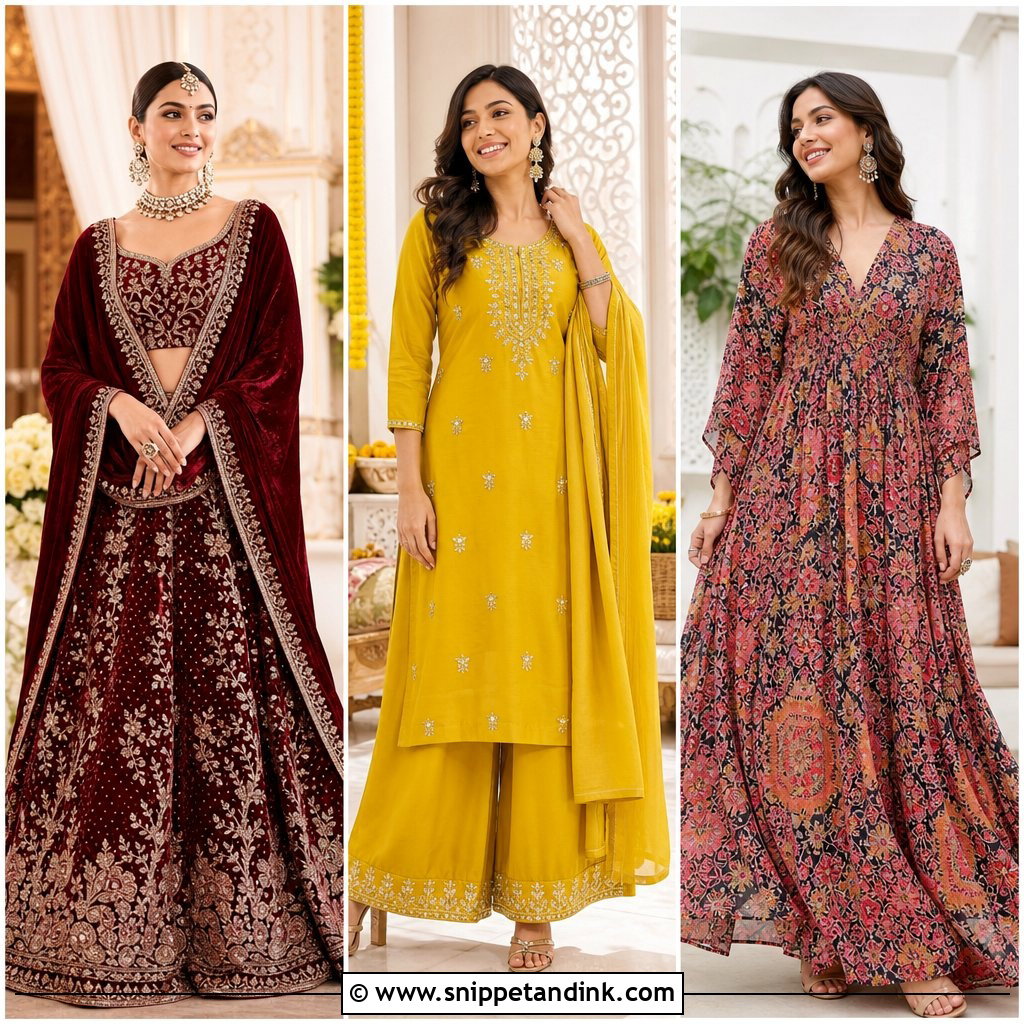
2. Lehenga Choli for Marriage Function
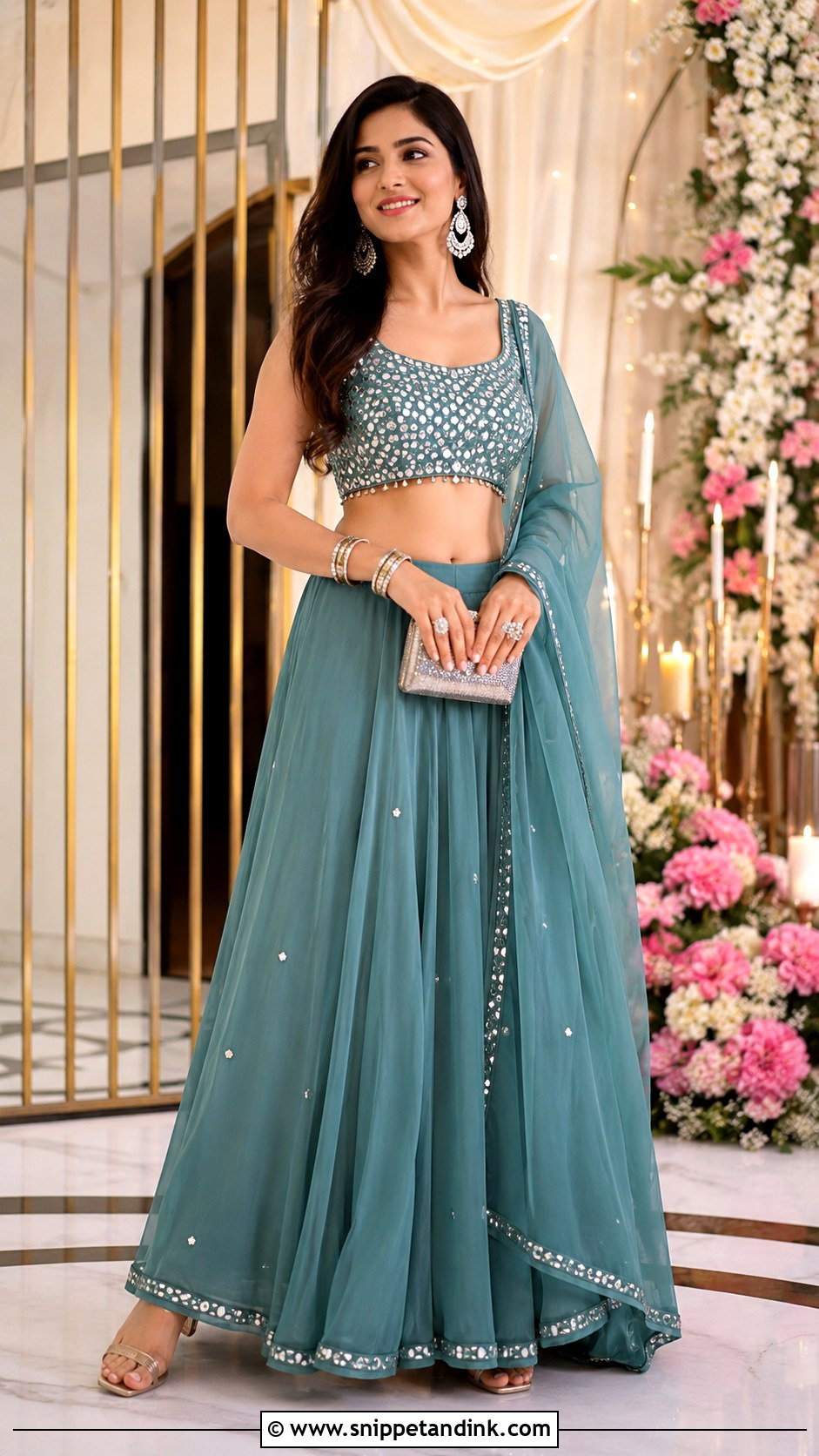
The real decision with a lehenga is weight. A guest does not need a bridal-weight skirt, and a lightweight silk, organza, or georgette lehenga with mirror work or thread embroidery will still look festive at hour six. I lift a skirt during fittings to judge it: if it drags on your hips after a minute, it will be unbearable by dinner. Keep the jewelry to statement earrings and a few bangles, and choose block heels over stilettos, since lawns and marble floors both punish thin heels. Save it for the sangeet, ceremony or reception, where the volume is welcome.
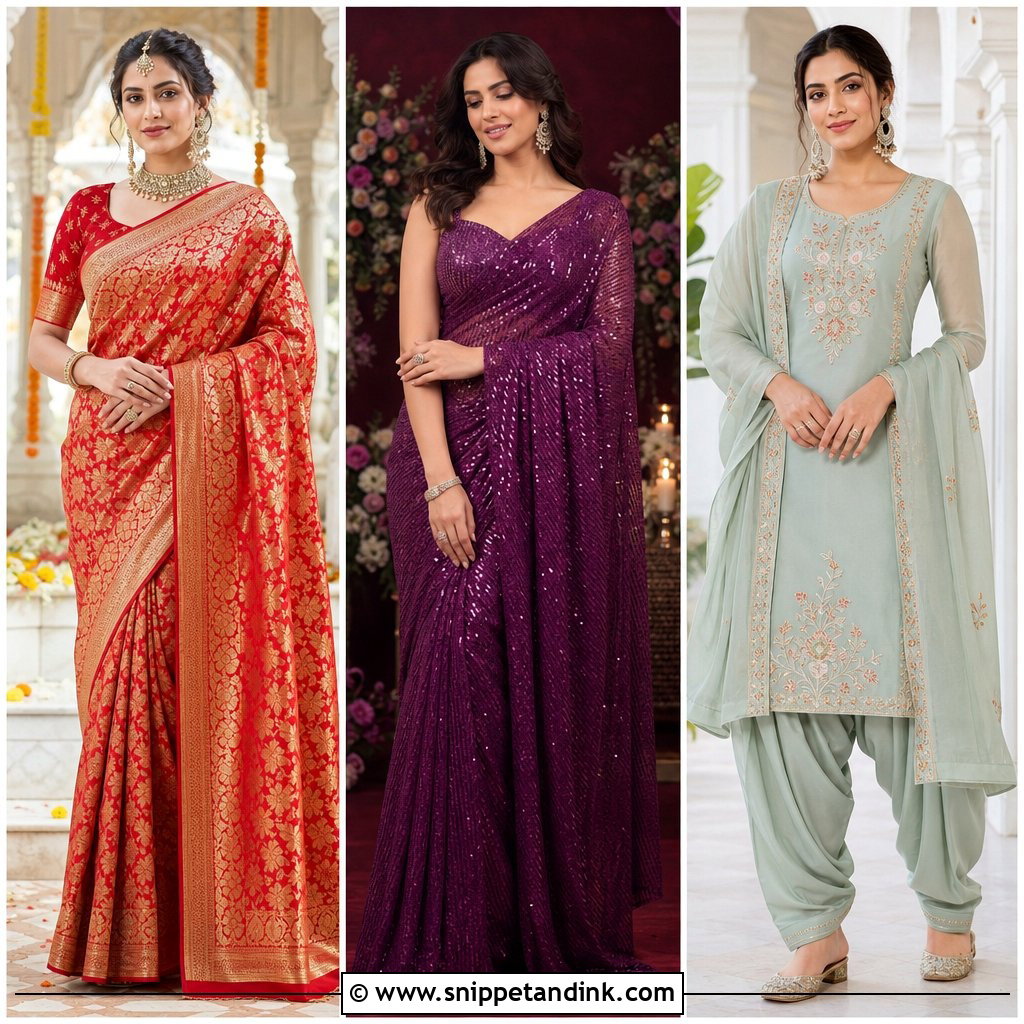
3. Saree for Marriage Function
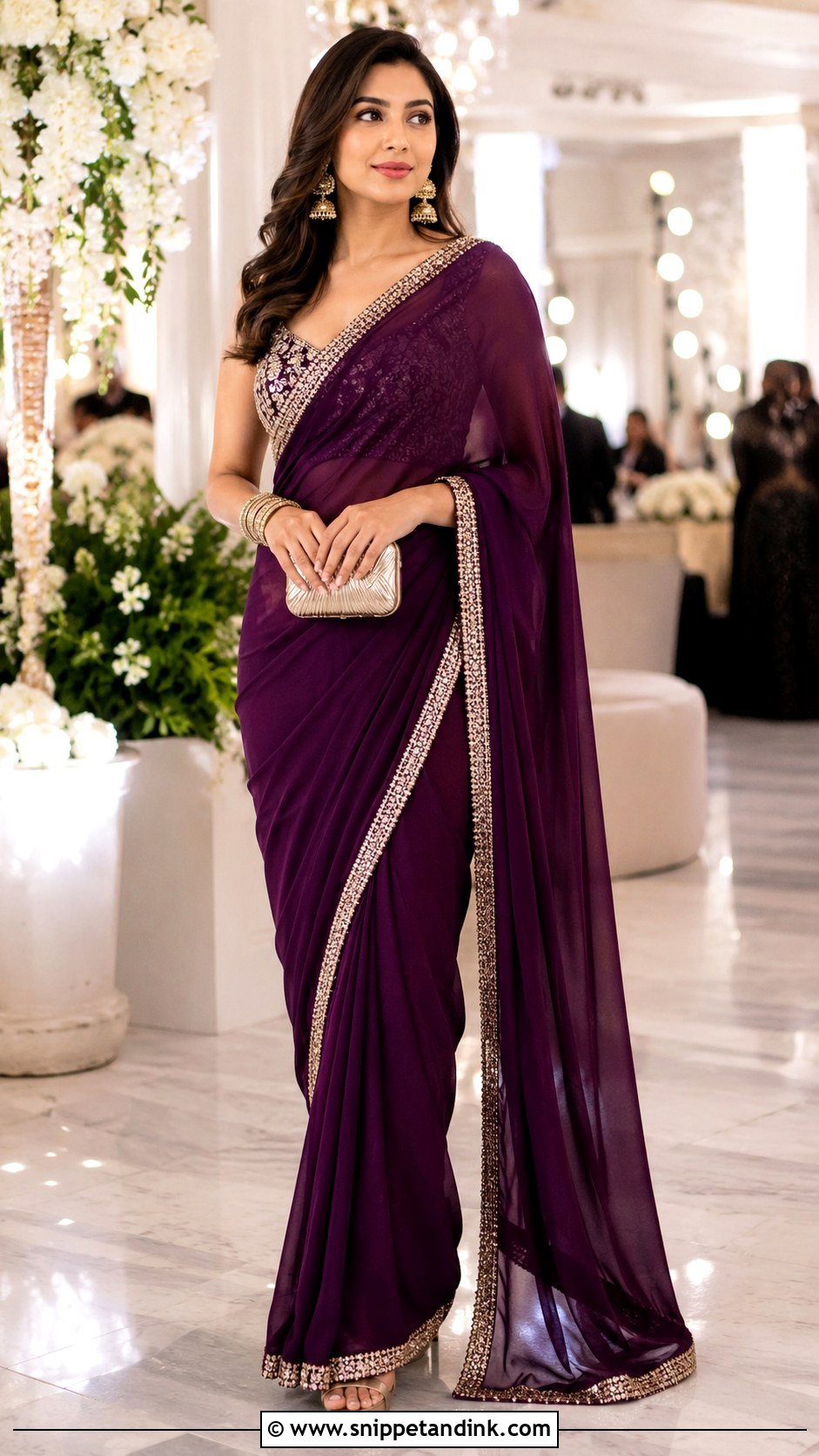
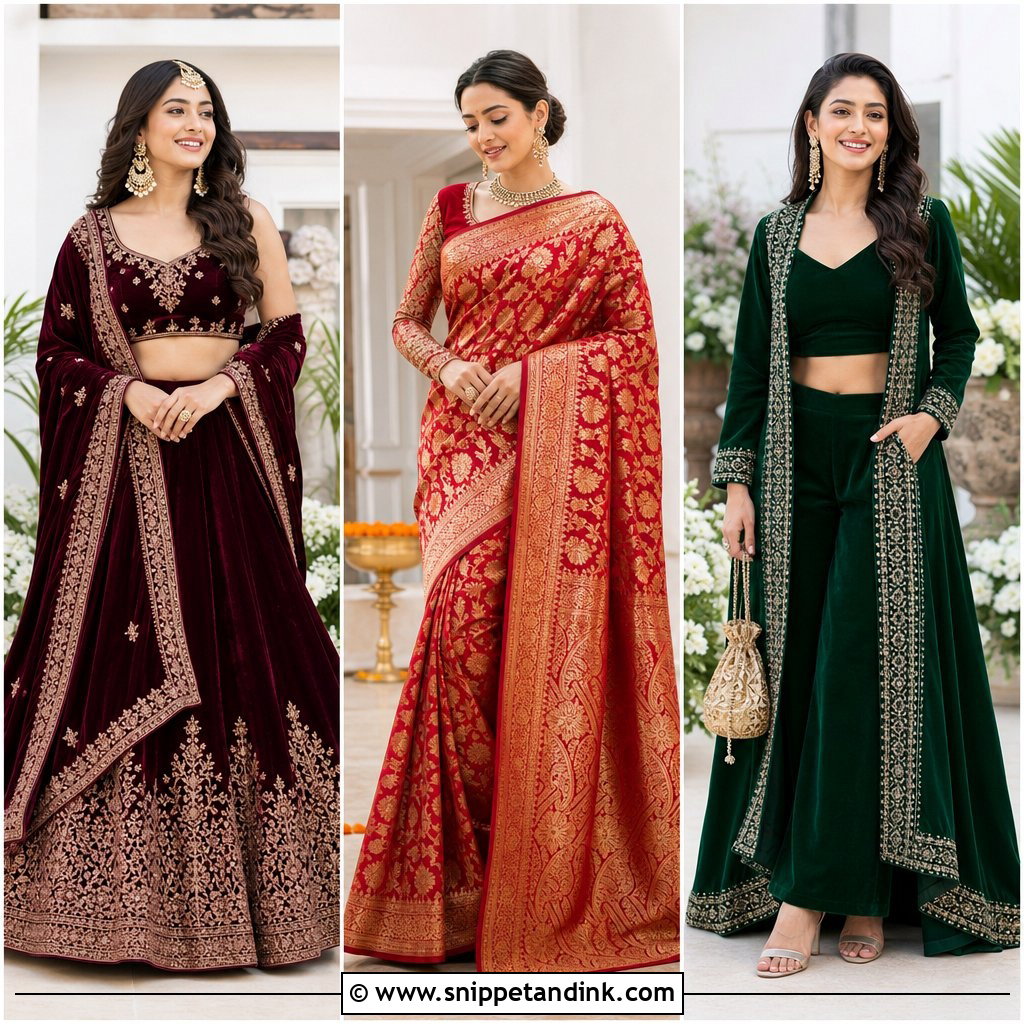
Silk for the ceremony, lighter weaves for the evening: that is my starting rule with sarees. Chiffon, satin, organza and georgette move better at a reception and are kinder in a warm hall. Daylight flatters pastels and florals, while jewel tones and metallic borders hold their color under evening lighting. The blouse makes or breaks the whole look, so I spend more fitting time on it than on anything else; a gaping armhole shows in every photo where you raise a hand. Match earrings to the border rather than the body of the saree, and if you want a modern edge, a boat-neck or sleeveless blouse does it quietly.
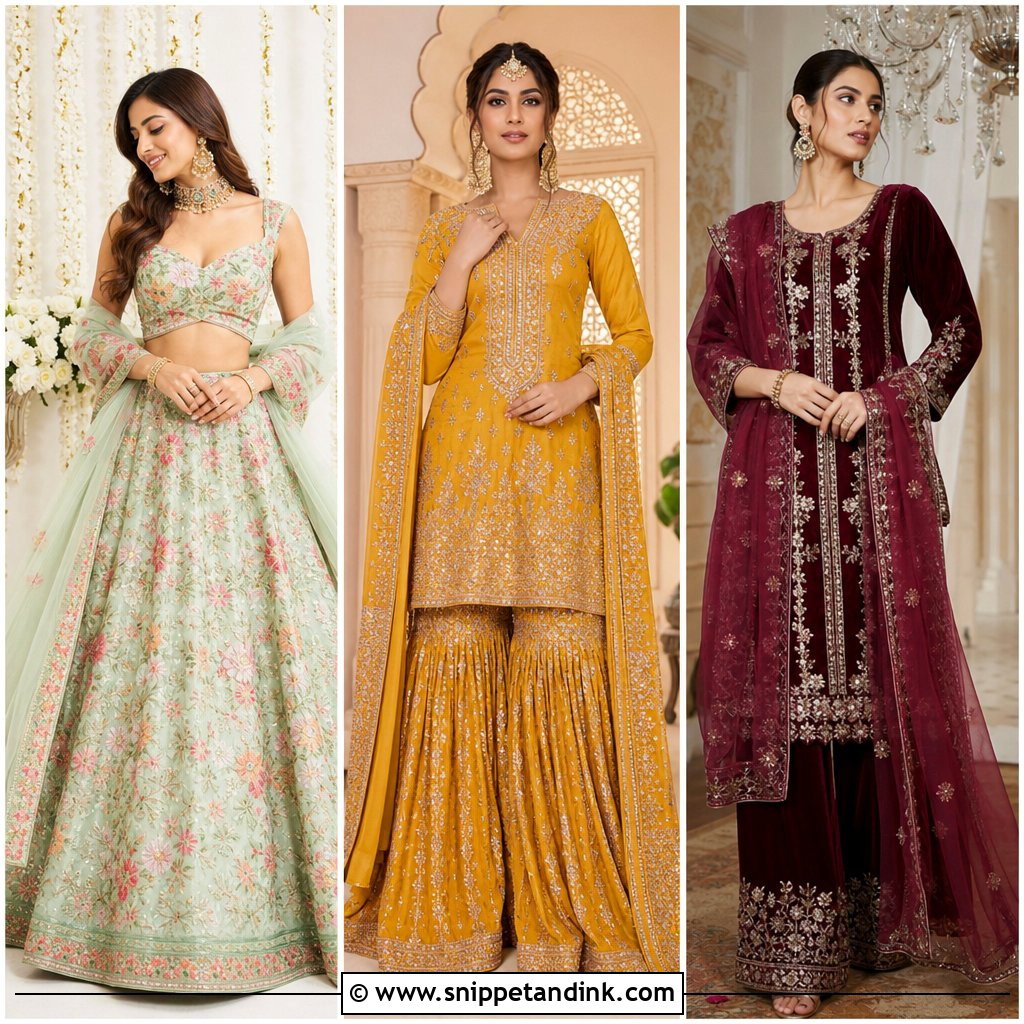
4. Sharara Suit for Marriage Function
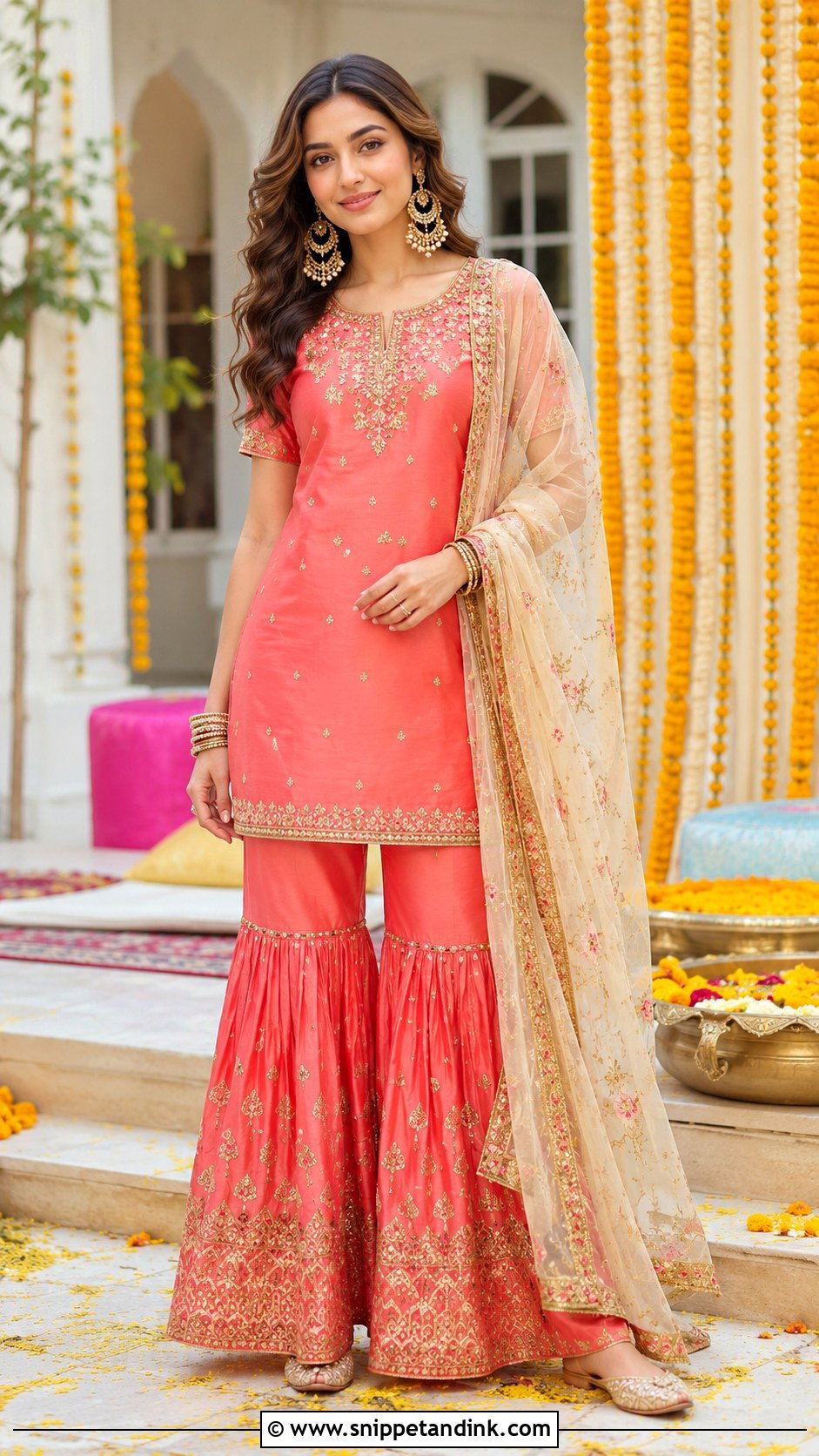
Shararas give you movement without the weight of a lehenga, which is why I suggest them to anyone who plans to dance. The flare starts at the hip, so the pants swing with each step. Mustard, coral, rani pink and cobalt suit a mehndi or sangeet; lavender or sage with gold embroidery tones it down for a formal family dinner. Pair it with a short kurti so the flare stays visible, chandbalis and embellished juttis. One caution I give everyone: wide sharara hems catch on heels, so try the full length while walking down steps before the day.
5. Gharara Suit for Marriage Function
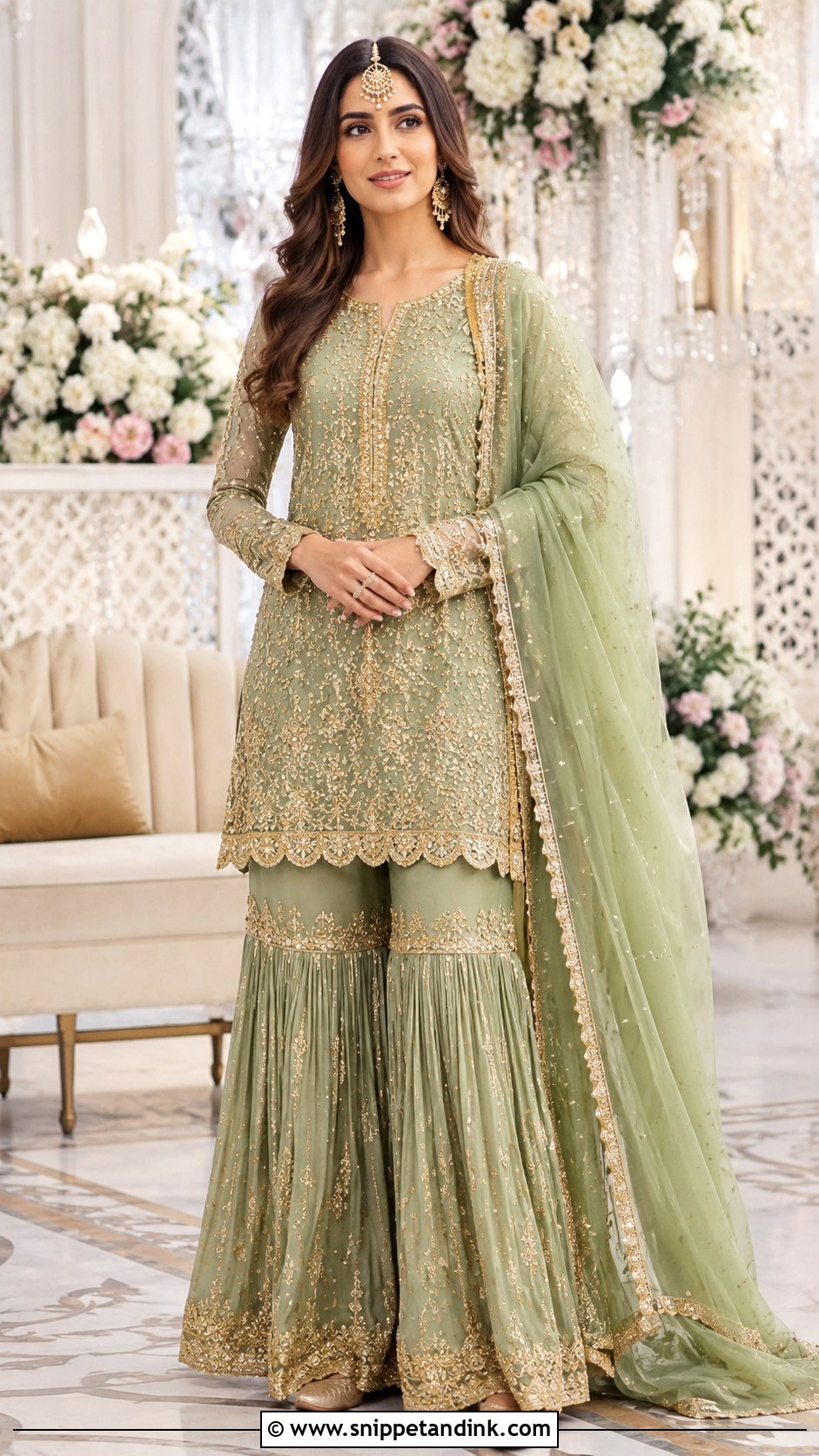
A gharara is cut differently from a sharara: it is fitted to the knee, gathered at a seam there, and flares below, which gives it a more structured, vintage line. I like it for engagements and close family ceremonies where a slightly formal shape fits the mood. Brocade, silk and crepe hold that knee seam crisply, while very soft georgette can make it look limp. A short zari or gota kurta, a dupatta over one shoulder and pointed juttis keep it traditional. Softer colors and lighter embellishment stop it from reading as bridal.
6. Salwar Kameez for Marriage Function
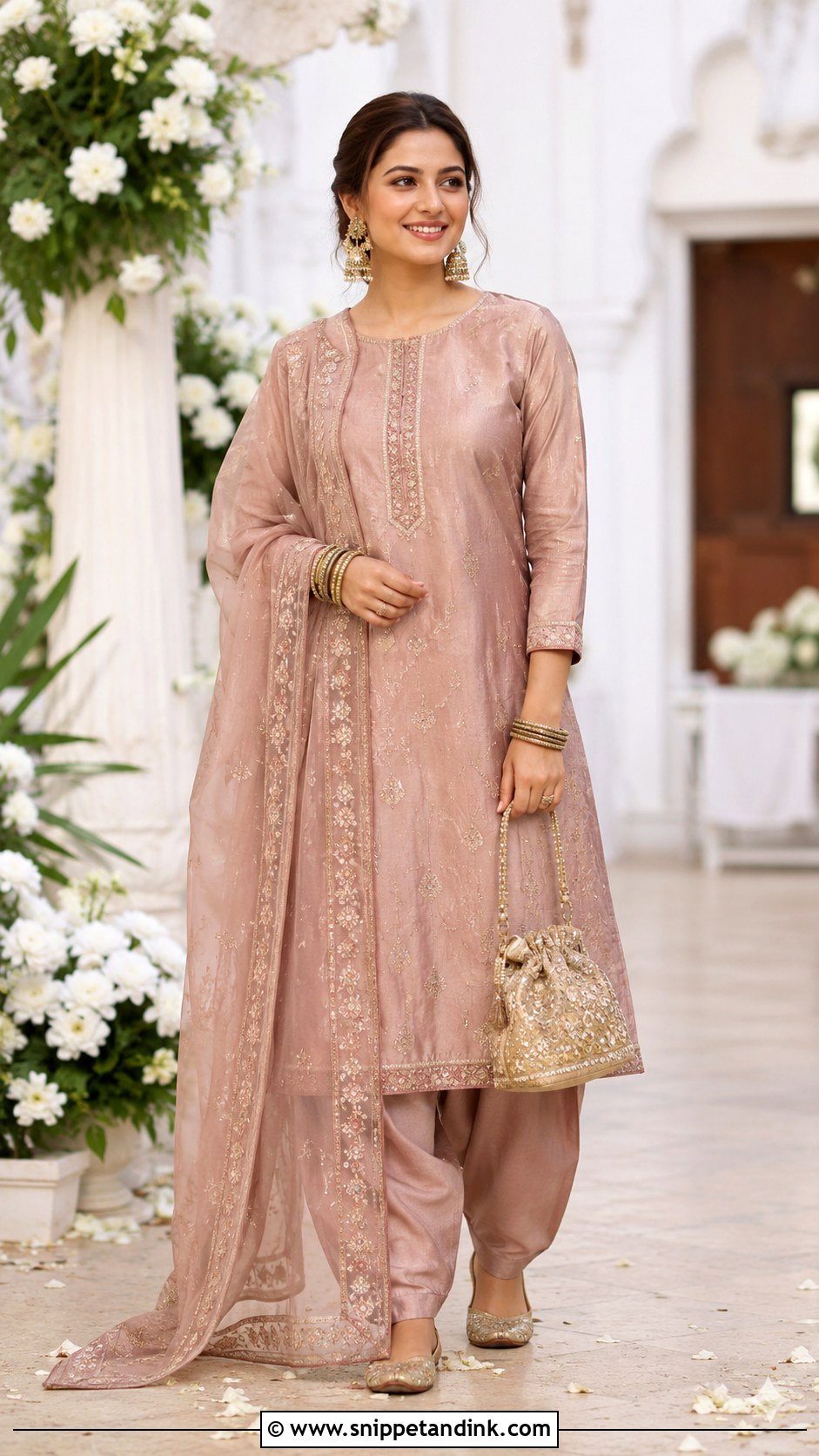
Not everyone wants to perform in their clothes all day, and a salwar kameez lets you sit through rituals, walk between rooms and hug relatives without adjusting anything. Chanderi and cotton silk breathe in summer; velvet carries a winter evening. I check the kameez side slits at fittings, because slits cut too high open up when you sit on a floor cushion. A matching dupatta, jhumkas, bangles and embroidered flats complete it. To dress it up, put the effort into the neckline handwork or a dupatta with a decorative border.
7. Palazzo Suit for Marriage Function
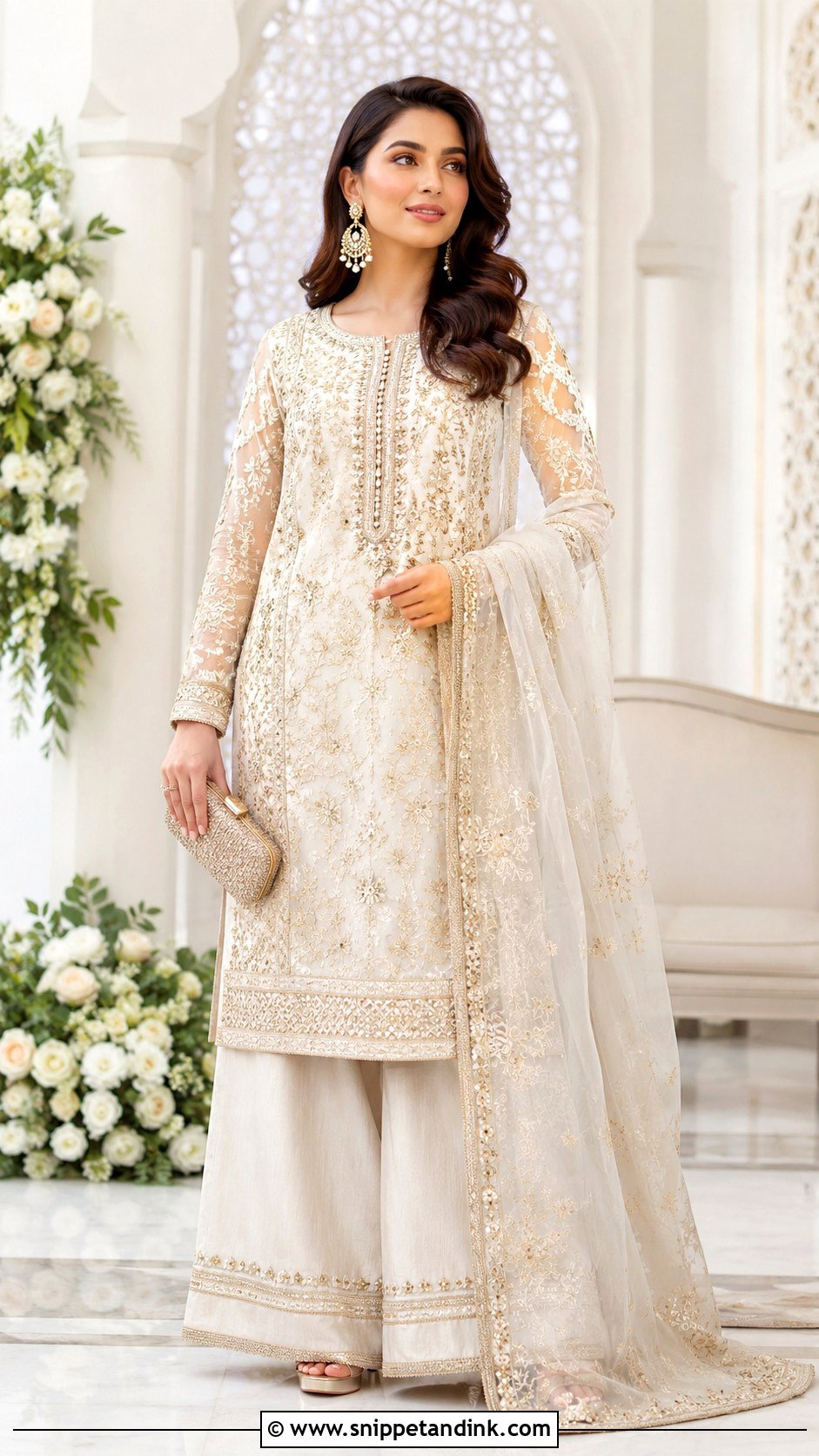
The wide legs of a palazzo suit hide a lot of sins and keep you cool through long events. An embroidered straight kurta over high-waisted palazzos is the cleanest version, and a soft georgette, silk or organza dupatta adds the festive layer. My one rule is to wear palazzos with platform heels or wedges if you are under average height, because flat shoes let the hems pool and swallow your proportions. Vertical embroidery or a longer kurta lengthens the frame, and it gives ease around the waist and hips without the outfit looking shapeless.
8. Indo Western Gown for Marriage Function
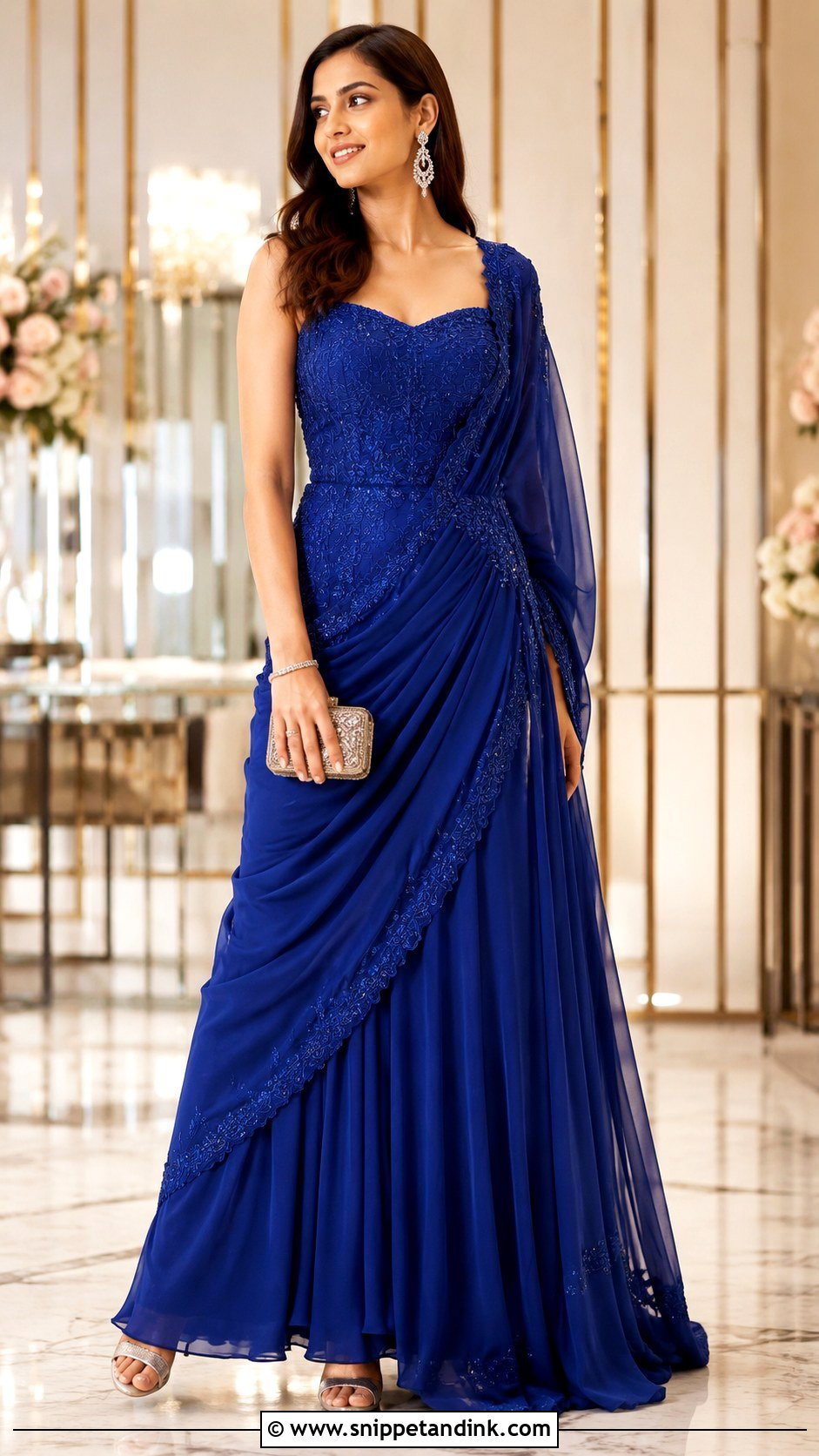
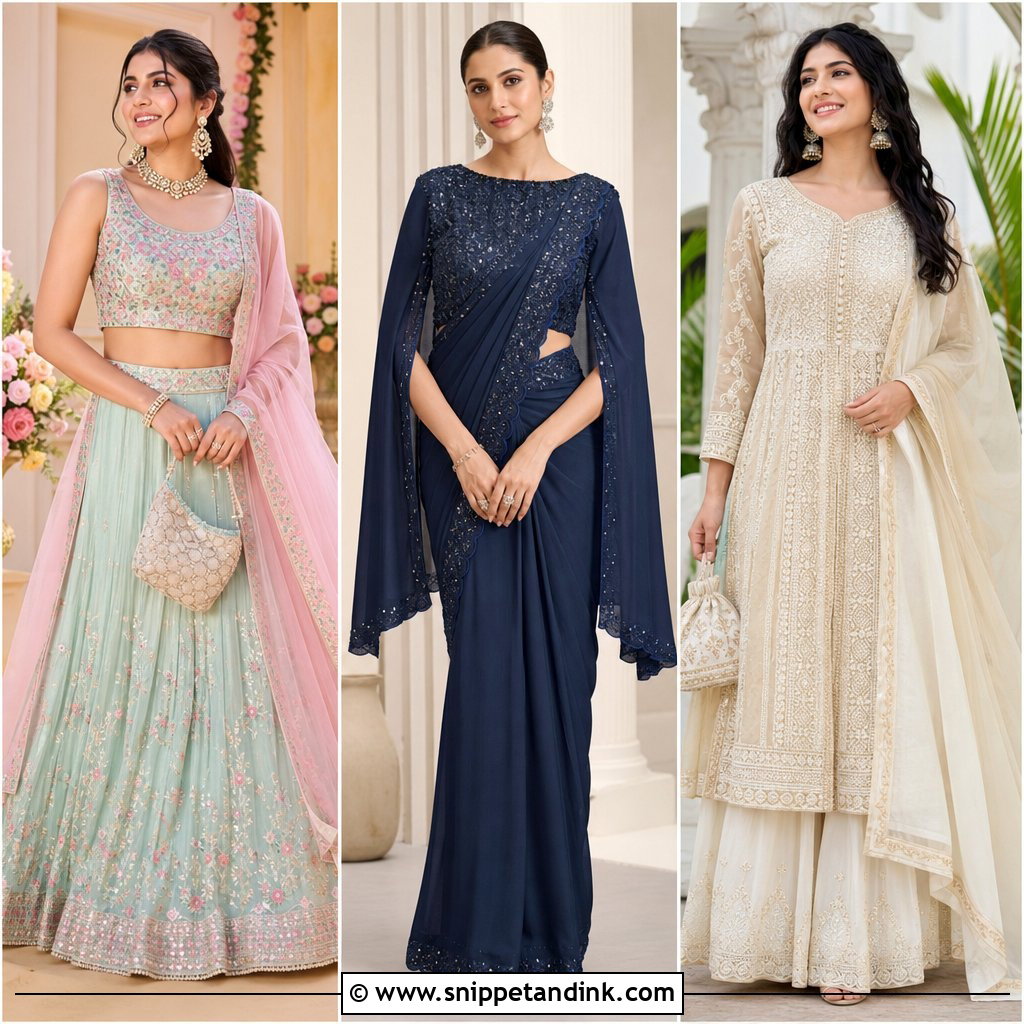
An Indo-Western gown solves the dupatta problem entirely, which matters more than people expect at a crowded reception. Draped panels, cape sleeves and embroidered bodices give it the ethnic cue, and jewel tones or cobalt look fresh under evening lights. When I fit these, I make sure the bodice is snug enough that you are not hitching it up between photos. Drop earrings, a bracelet and a sleek clutch are plenty. Keep the hair off the neckline so the embroidery stays the focus.
9. Kurta Set for Marriage Function
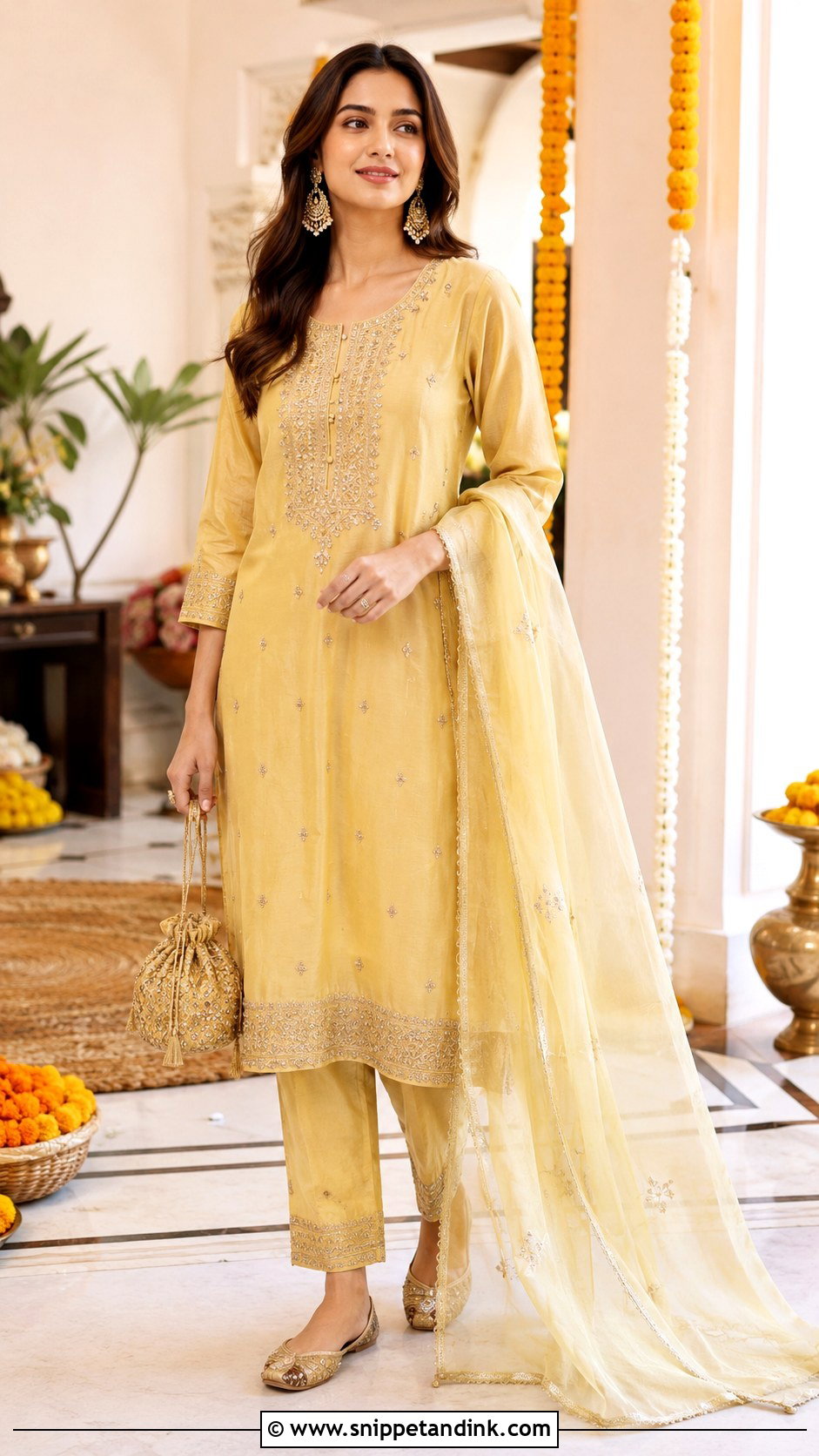
A kurta set only looks festive when the fabric is doing the work. I’d skip anything that looks like office cotton and choose silk texture, mirror work, zari borders or lace panels instead. Straight pants suit a daytime puja, while flared bottoms feel livelier at a pre-wedding lunch. An organza or net dupatta, gold-toned earrings, juttis and a potli bag lift it quickly. It is the outfit I suggest for smaller functions at home, where a heavy lehenga would feel out of place in a living room.
10. Ethnic Co Ord Set for Marriage Function
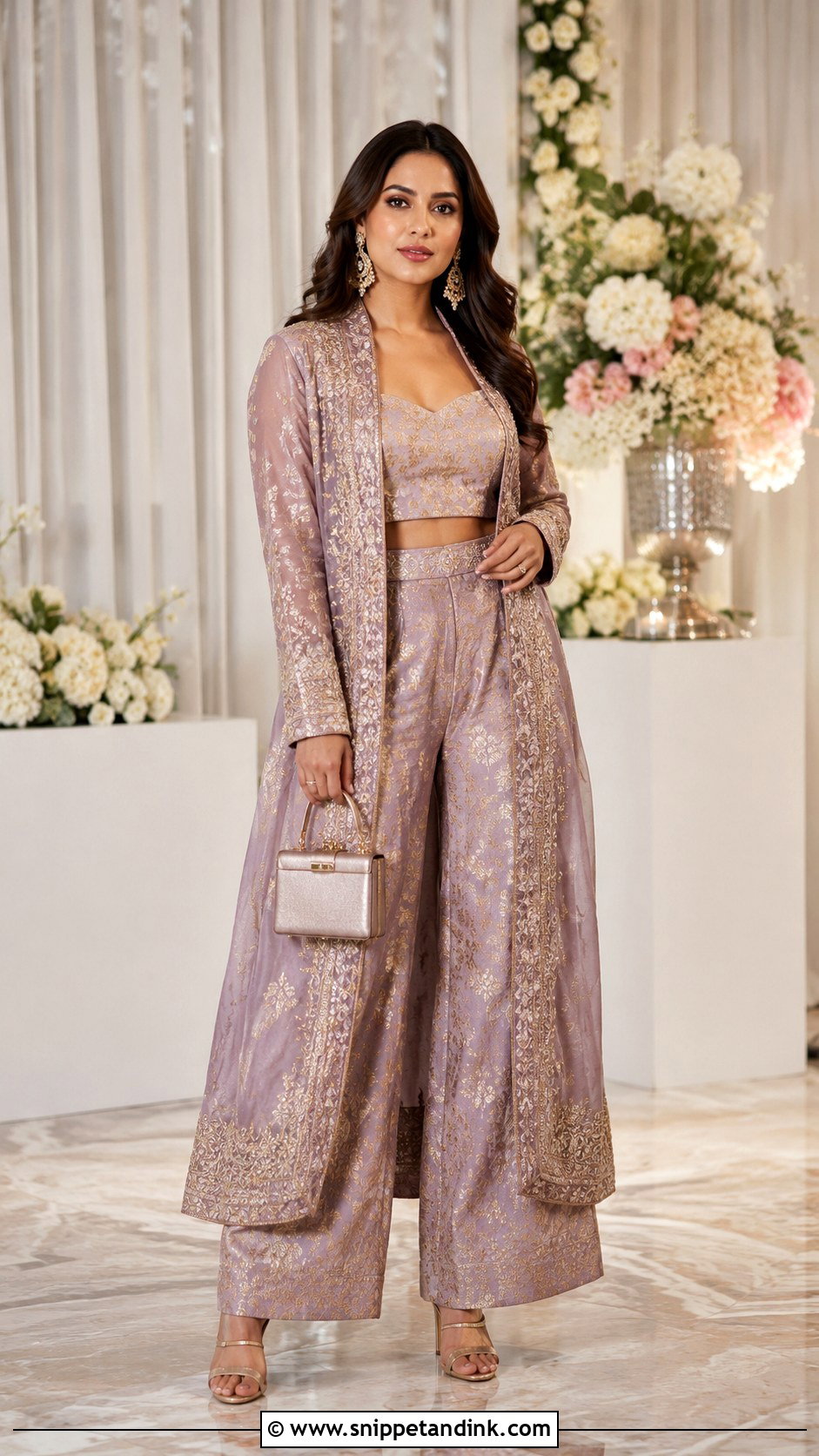
Co-ords are the pieces you will actually wear again, which is the main reason I like them. An embroidered top and pants, a jacket set or a skirt co-ord in silk, brocade or jacquard looks put together with almost no styling. Add a long jacket or cape when the function is formal. The weak spot is wrinkling: crepe and silk co-ords crease across the lap after a car ride, so steam them at the venue if you can. Matching pieces give a strong single color block, which suits younger guests and bridesmaids looking for an alternative to sarees.
11. Pre Draped Saree for Marriage Function
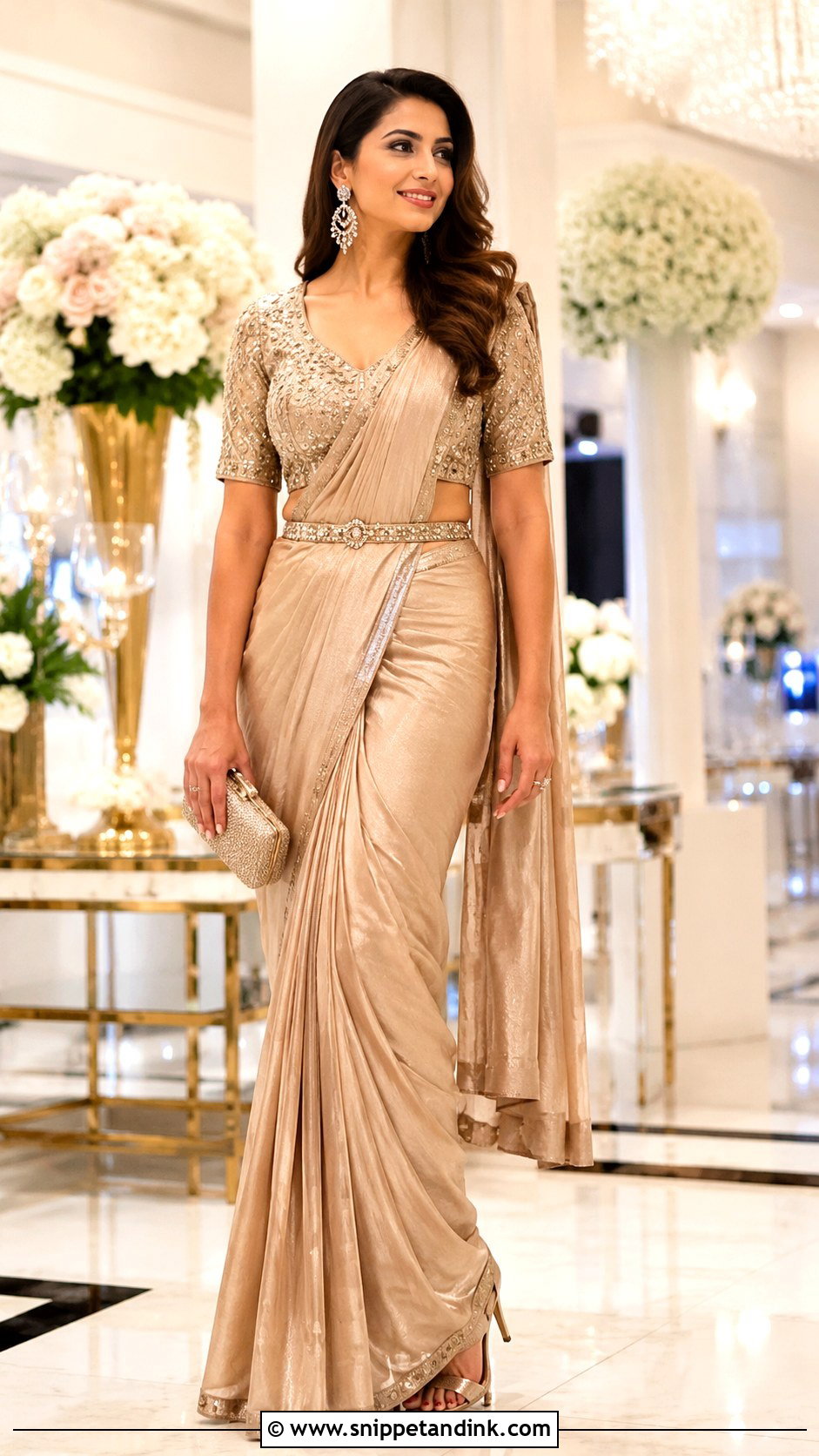
If you love sarees but dread re-pinning pleats in a restroom halfway through the night, a pre-draped saree is the honest fix. Most come with stitched pleats and an attached pallu, and some add belts or ruffled edges. I always ask clients to sit and stand several times in one before buying, because the stitched pleats sit at a fixed height and can’t be adjusted for your heels on the day. Satin, crepe and shimmer fabrics suit a reception or sangeet. A waist belt defines your shape and keeps the drape from shifting while you dance.
12. Jacket Lehenga for Marriage Function
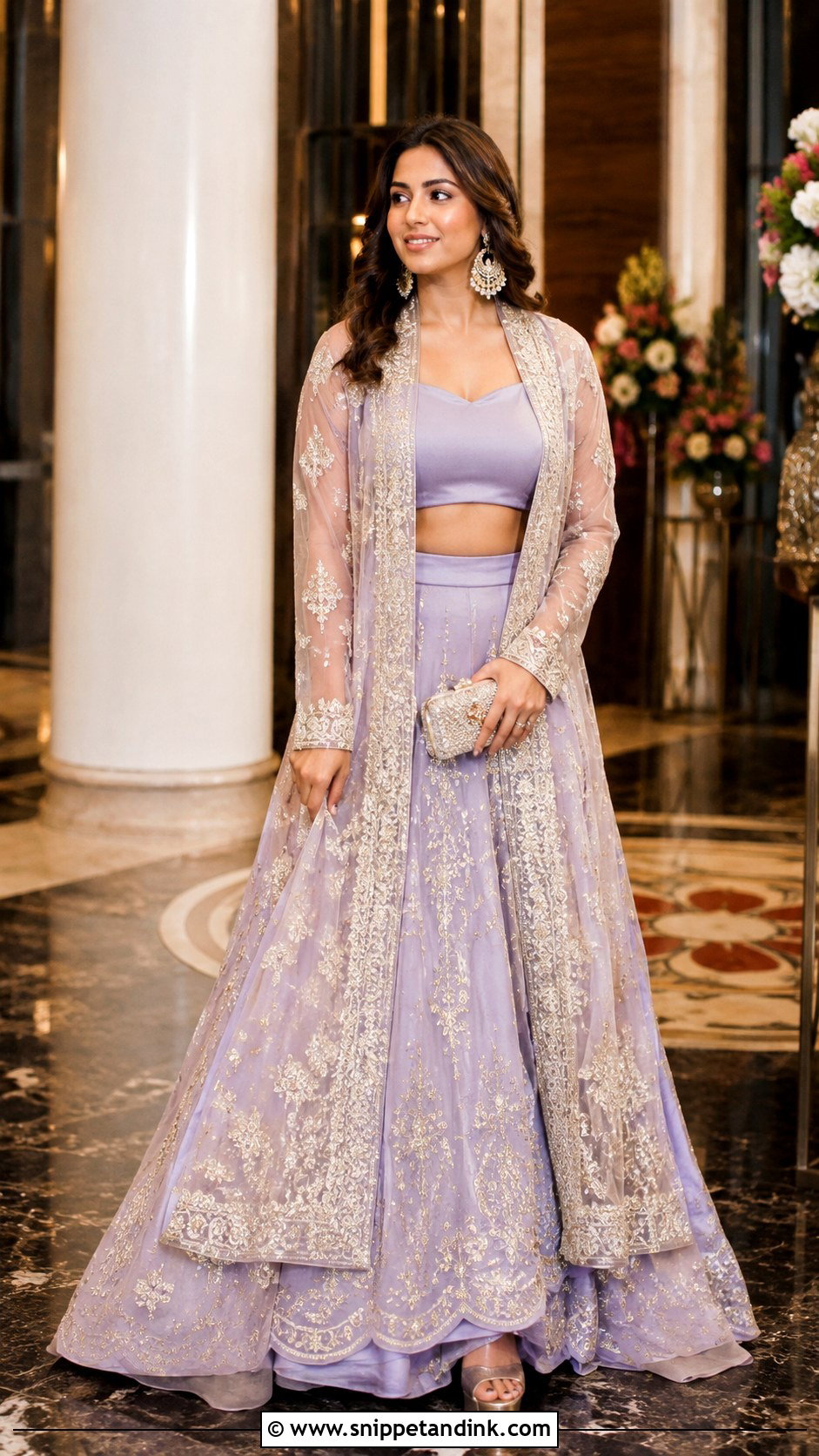
A jacket lehenga swaps the dupatta for a long embroidered jacket, so you get coverage and drama with one less thing to hold. Long jackets lengthen the body; cropped ones feel playful and suit shorter frames better. In winter this is the outfit I steer people to, since the jacket keeps you warm at an outdoor reception without hiding the look under a shawl. The jacket is already the jewelry, so keep the necklace minimal or leave it off and let statement earrings carry the rest.
13. Cape Dress for Marriage Function
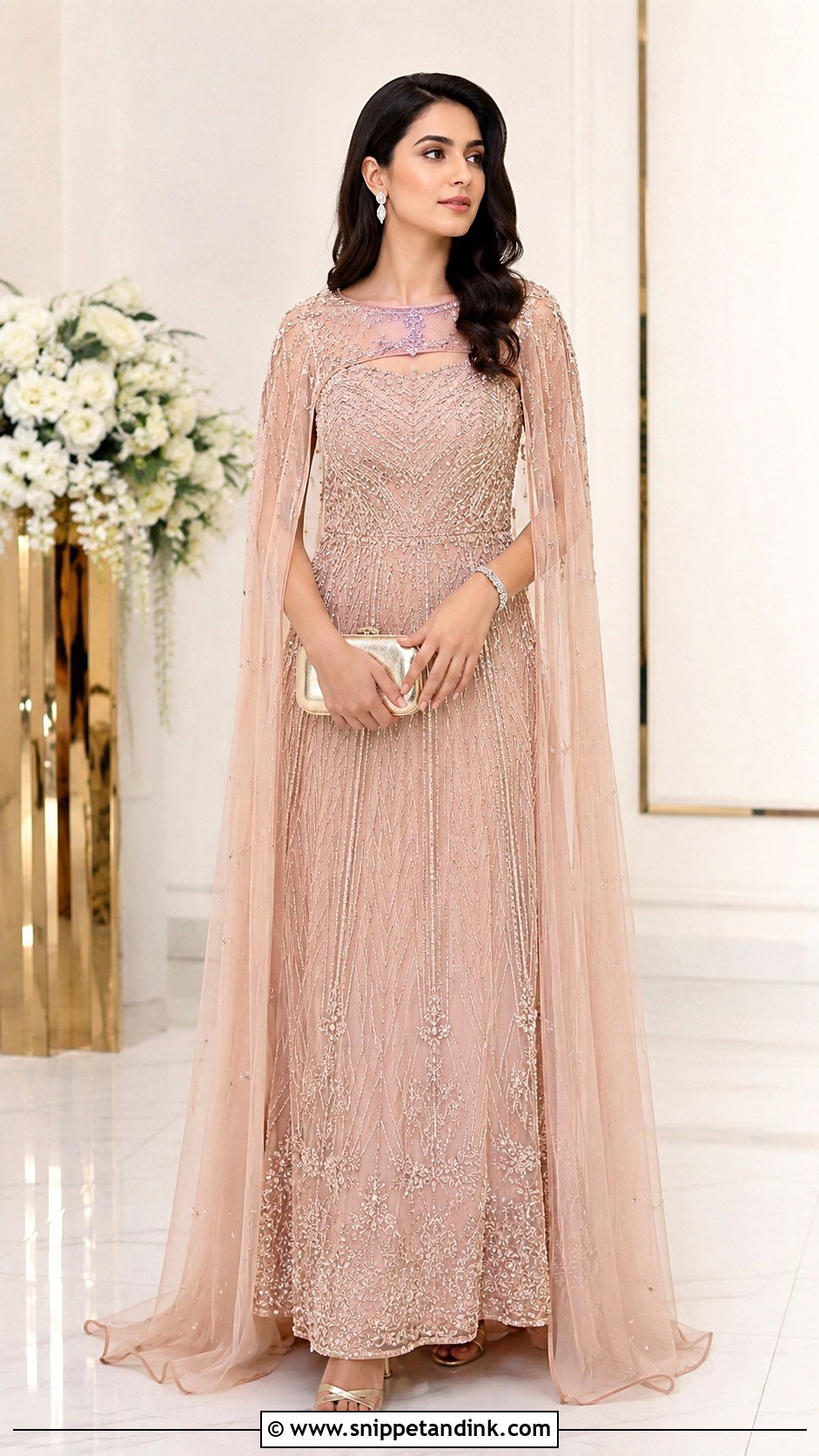
Cape dresses suit women who like fusion dressing but want a little coverage on the arms. The sheer or embroidered cape over a fitted or flared dress adds movement without a dupatta. Choose midi, maxi or floor-length cuts with beadwork, sequins or mirror details. I check the cape’s neckline attachment at fittings because heavy beadwork can drag a lightweight cape backward and pull the dress neckline up against your throat. Simple earrings and a clutch are enough when the cape is heavily decorated.
14. Silk Saree for Marriage Function
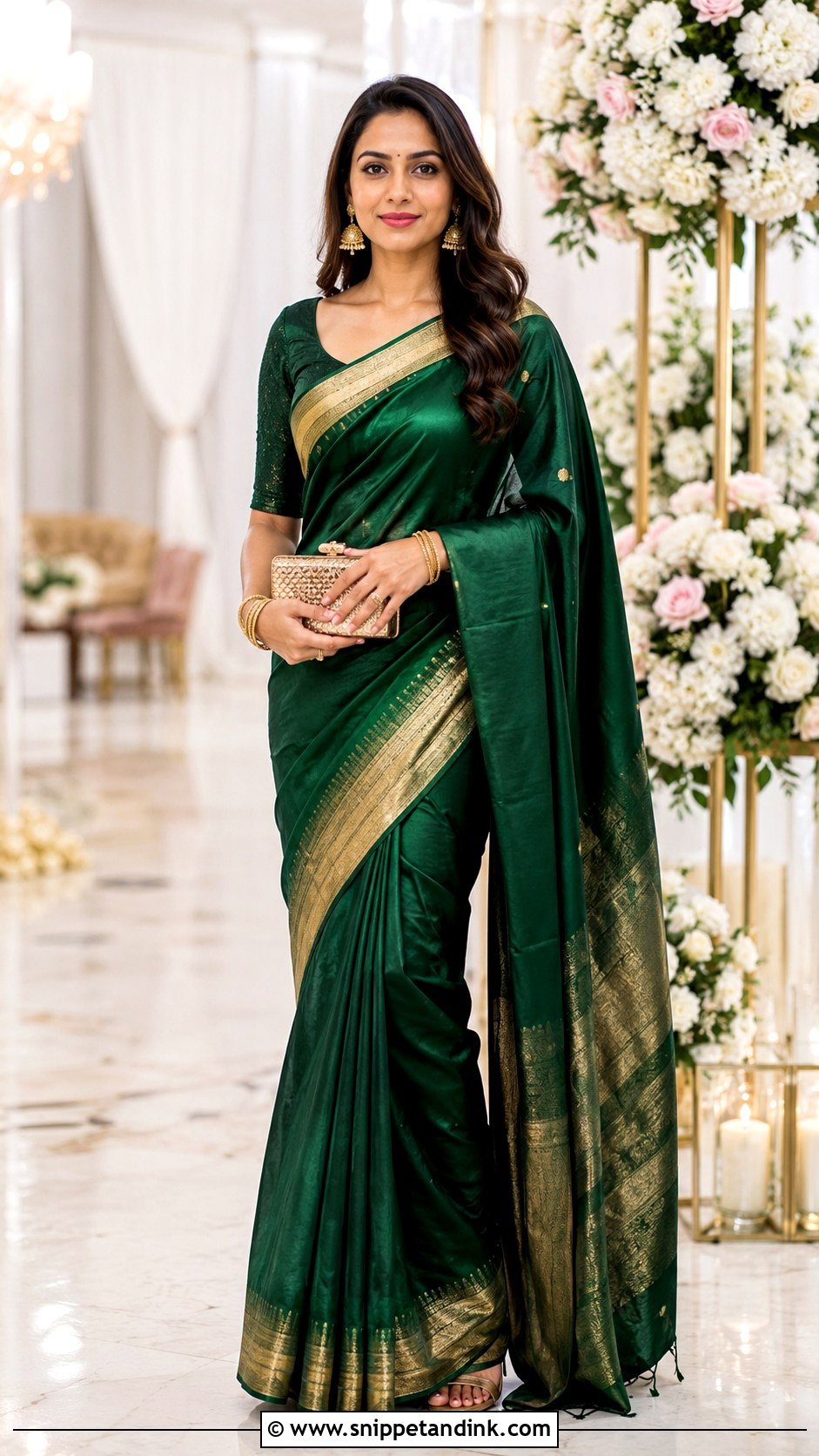
For the main ceremony I still trust a silk saree over almost anything else. Banarasi, Kanjivaram, Paithani, tussar and soft silk each have a different weight; Kanjivaram is stiff and sculptural, soft silk drapes close to the body, so pick by how much structure you want. Emerald, magenta, mustard and rust feel festive, while pastel silk suits a morning ceremony. Comfortable heels help the pleats fall properly. It is also the one piece that pays for itself, since a good silk saree comes back out for festivals for years.
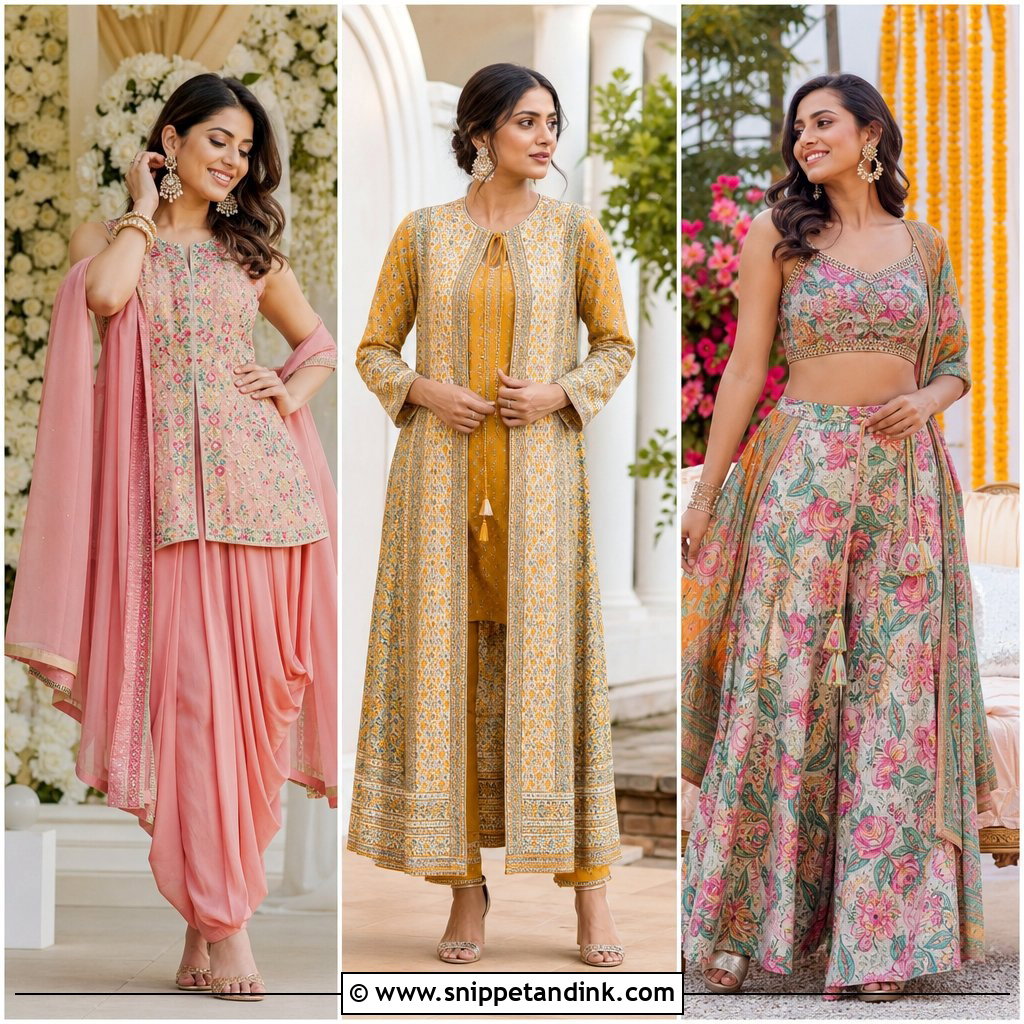
15. Floral Lehenga for Marriage Function
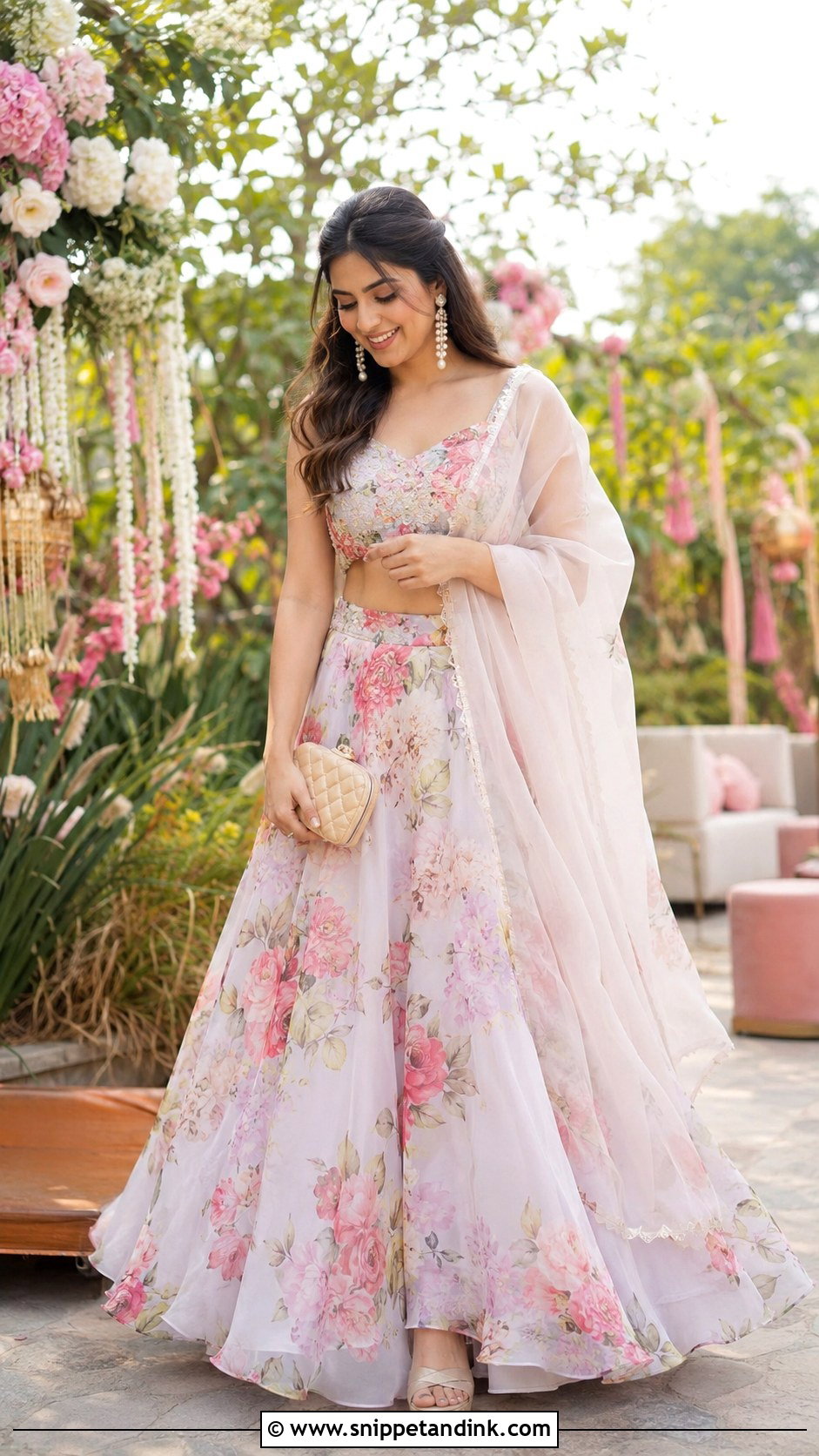
Floral lehengas belong outdoors and in daylight: haldi, mehndi, garden venues and spring weddings. Organza, chiffon and cotton silk keep them airy; printed florals look casual, while embroidered florals hold up at a more formal lunch. I’d avoid a heavily flared floral lehenga on grass, since the hem collects damp and petals within an hour. A simple blouse, a light dupatta, pearl earrings and wedges or juttis are all it needs. Keep the makeup in peach and soft pink so the print stays the main color.
16. Sequin Saree for Marriage Function
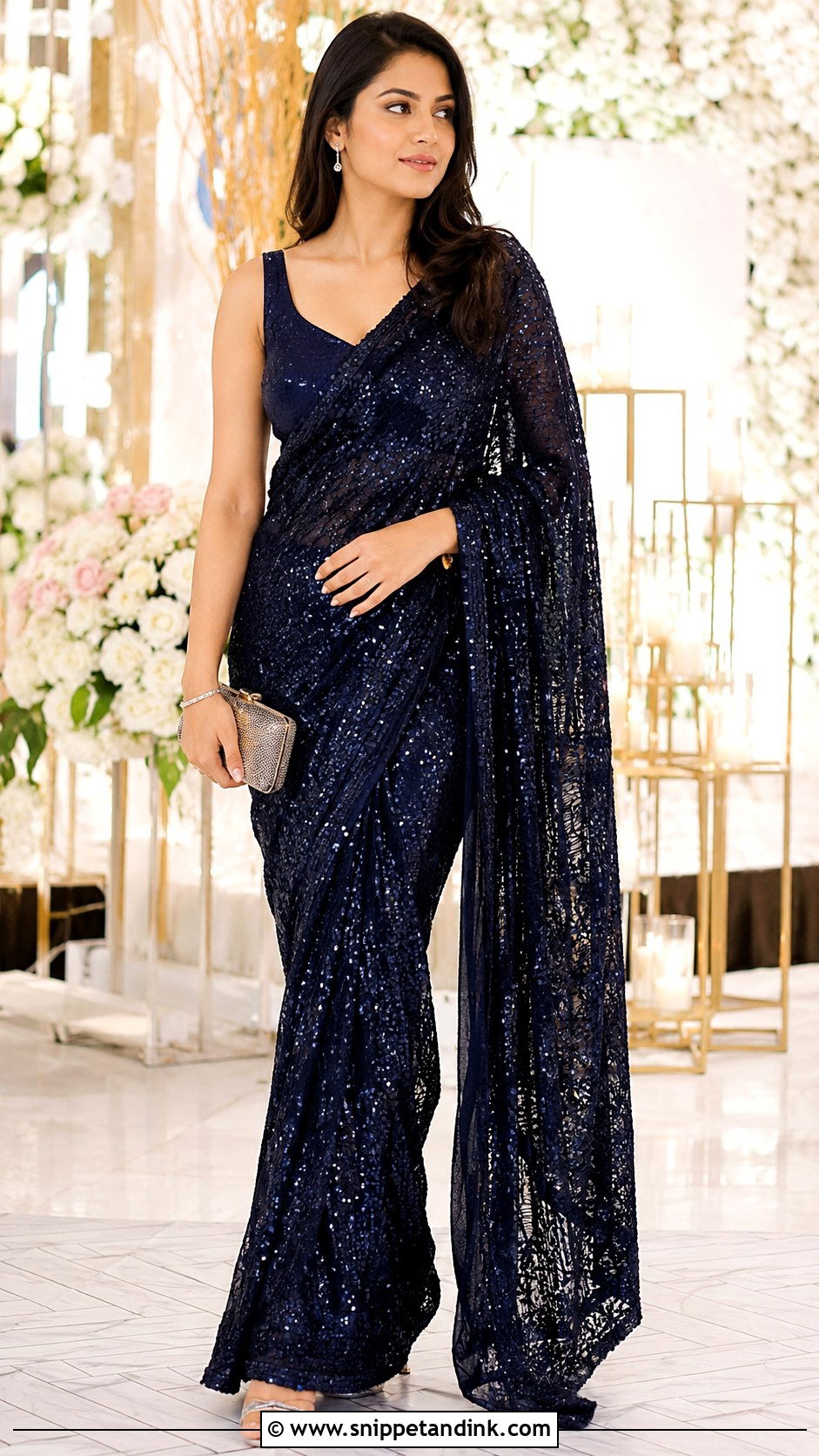
Sequins carry the outfit on their own, so a sequin saree needs very little help. Champagne, silver, blush, navy and emerald all photograph evenly under reception lighting. Studs or small drops are enough for jewelry. The thing I check first is the lining: cheap sequin sarees have rough backing that scratches your arms and waist after a few hours, and a soft lining makes the difference between enjoying the night and counting the minutes. Smooth hair or soft waves keep it refined.
17. Chikankari Suit for Marriage Function
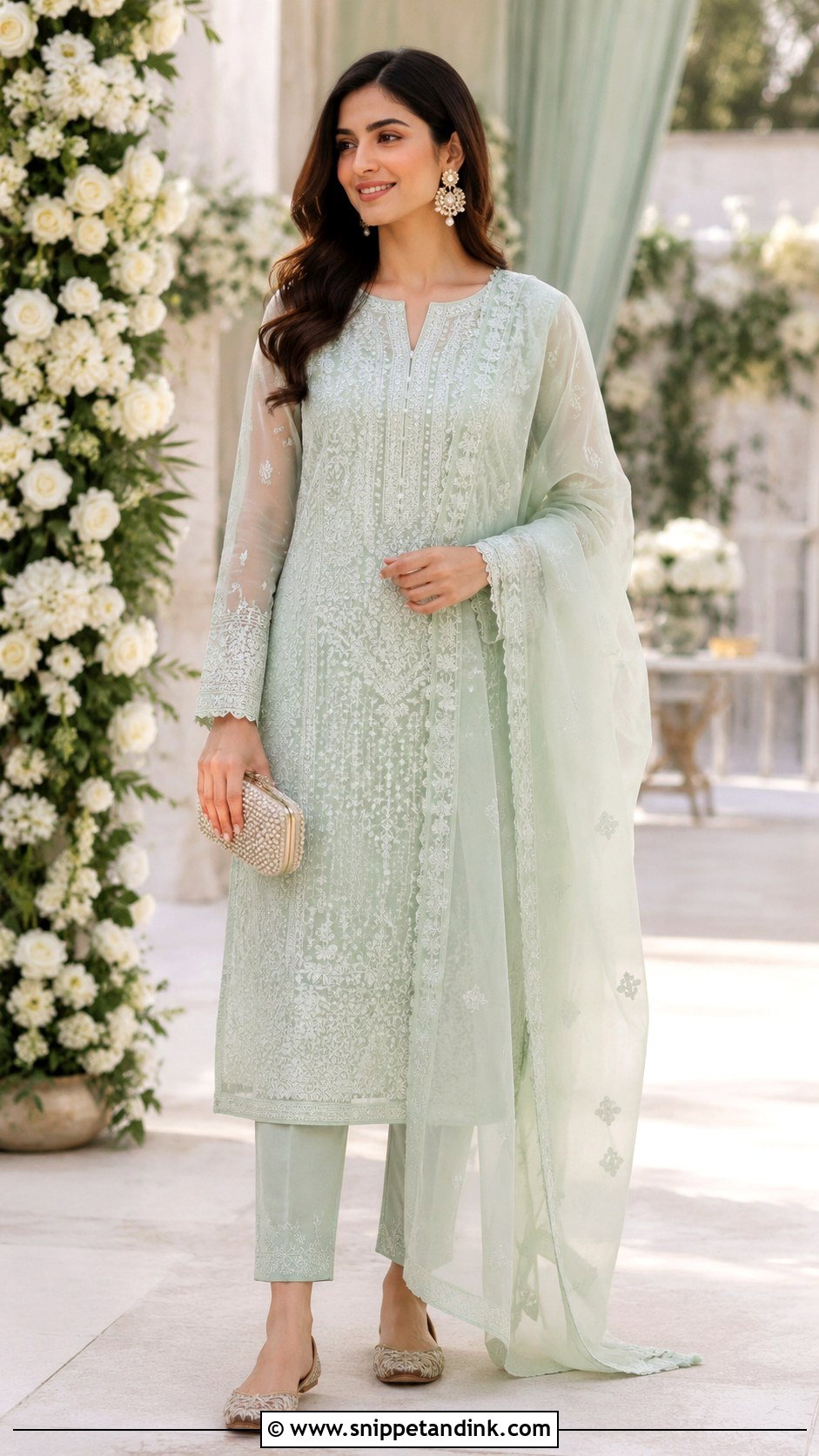
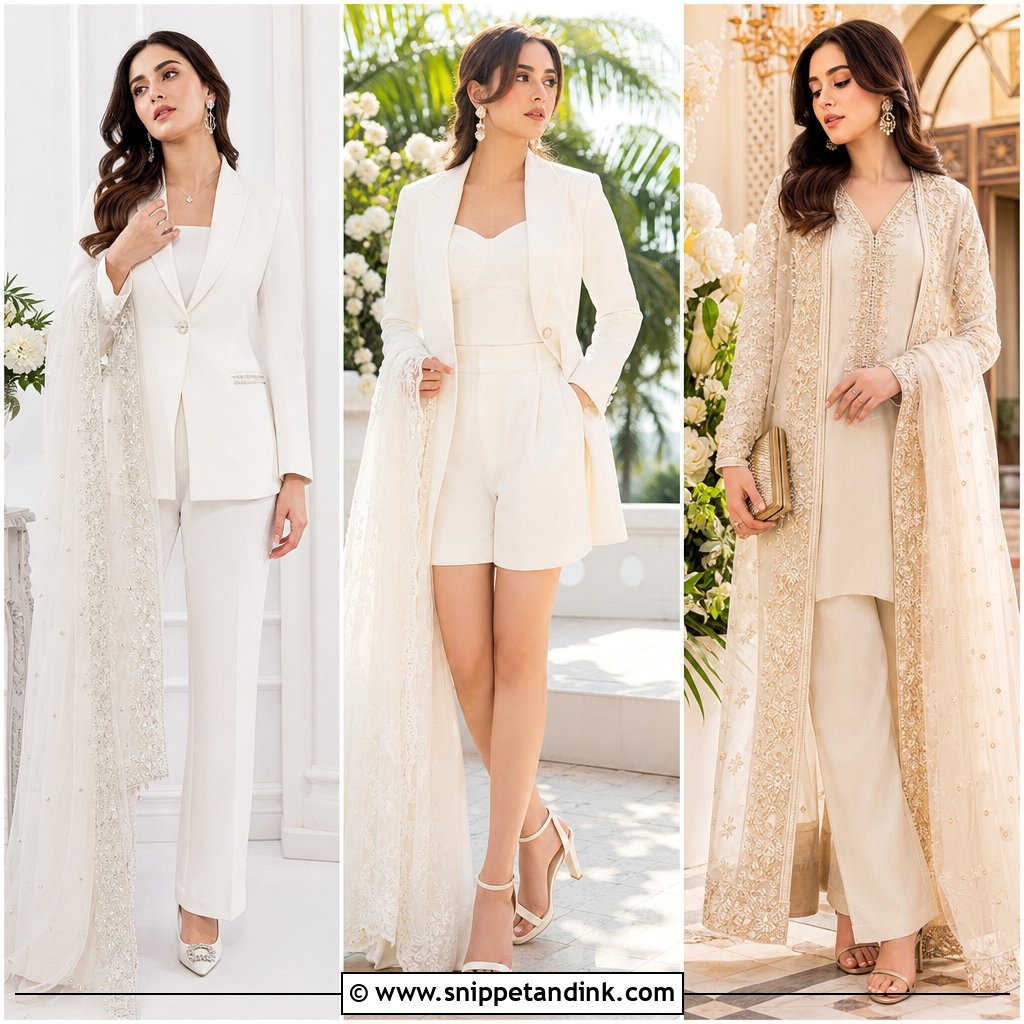
Chikankari is the shadow-work embroidery from Lucknow, and it suits people who prefer understated work over heavy embellishment. In a long kurta with straight pants and an organza dupatta, it is cool enough for a hot afternoon ceremony. Pastels are traditional, but an all-ivory chikankari outfit can look a little bridal, so I add colored juttis or a bright clutch to keep it firmly in guest territory. Mukaish or light sequin highlights give it more presence at an evening event. Pearl earrings finish it.
18. Velvet Suit for Marriage Function
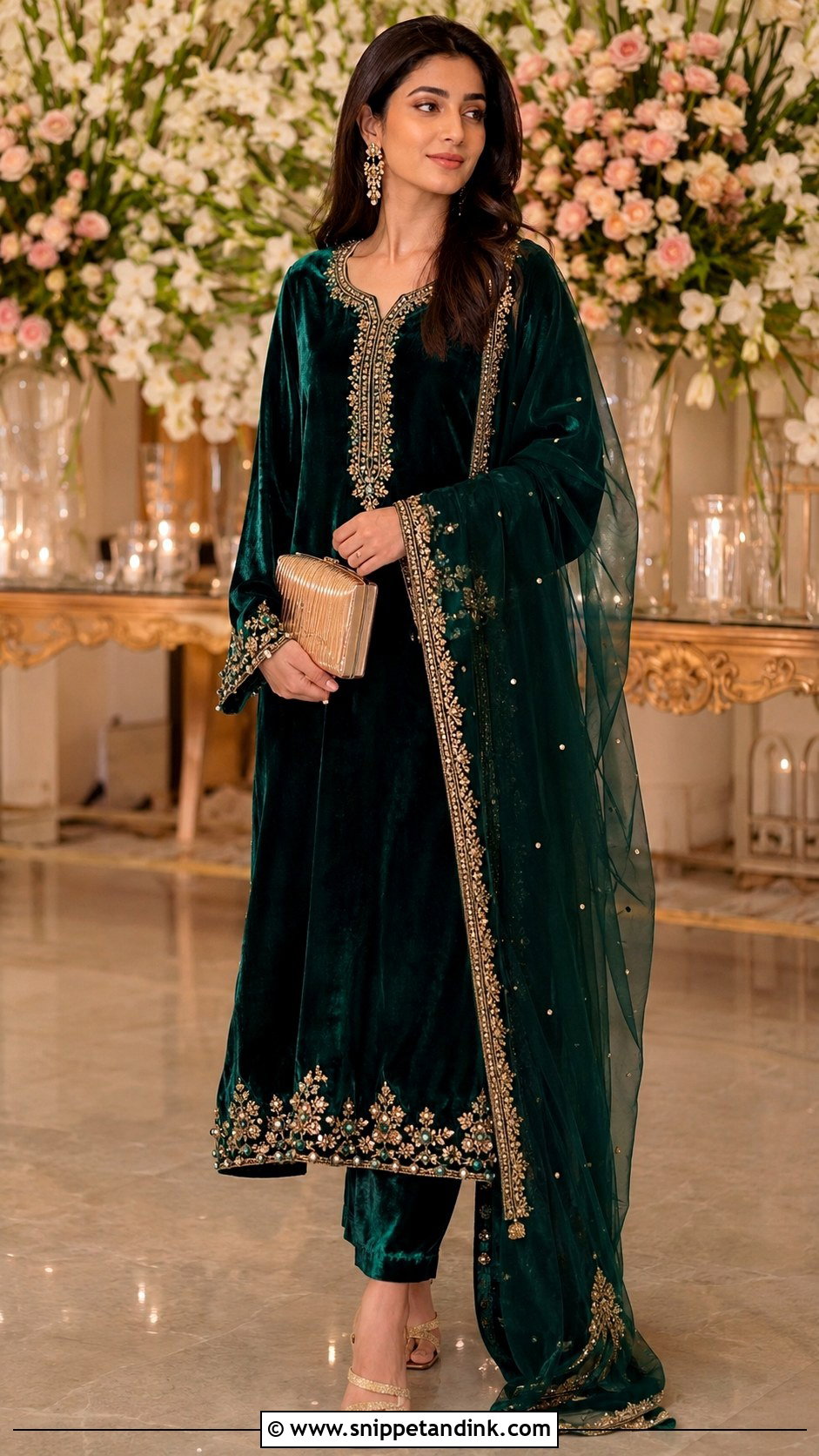
Velvet is my winter answer for evening functions: it is warm, rich and holds deep colors like emerald, plum, navy and berry beautifully. Choose a straight kurta, an Anarkali or a short kurti with a sharara. Velvet adds bulk, so I keep the silhouette clean and pair it with an organza or net dupatta rather than another heavy layer. It also shows crush marks where you sit, so brush the pile upward with your hand when you stand. Gold earrings and embroidered juttis complete it.
19. Organza Saree for Marriage Function
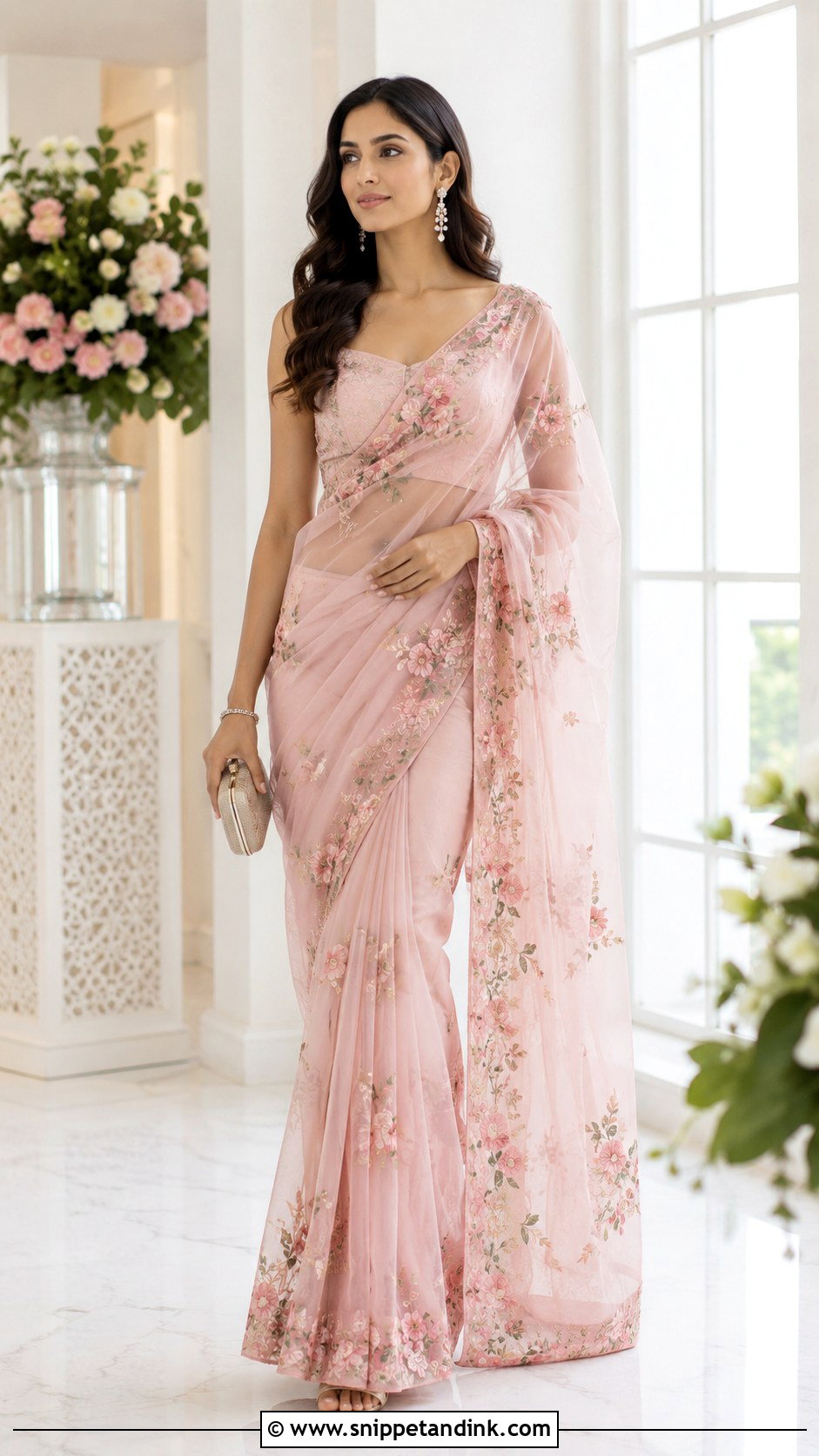
Organza is crisp, which means it holds volume on its own. That is why I pair an organza saree with a structured blouse; a soft blouse looks limp next to all that body. Floral prints, embroidered borders and pearl details suit it, with pastels for daytime and darker shades or metallic thread for evening. Be aware that organza creases sharply and shows every fold, so drape it at the venue rather than wearing it for a long car ride. Delicate earrings, a bracelet and heels keep it clean.
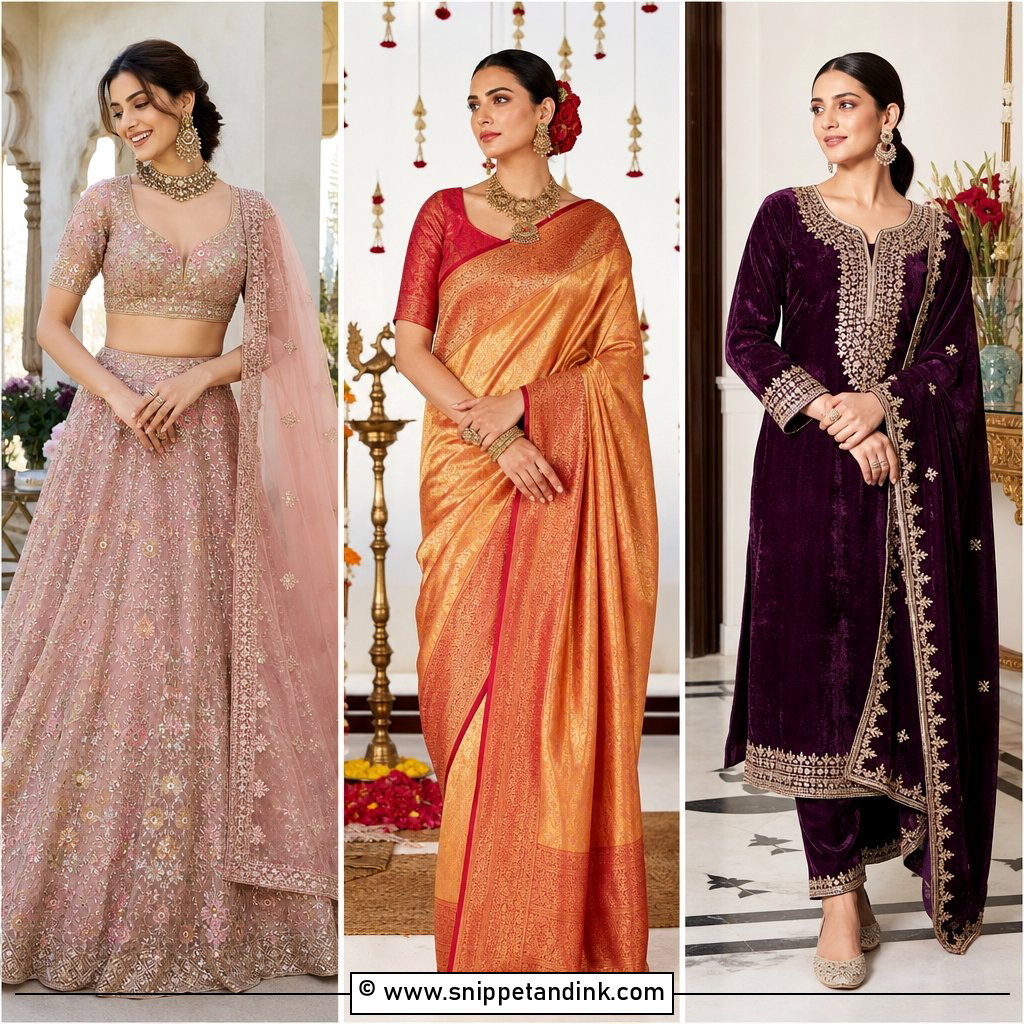

20. Peplum Sharara for Marriage Function
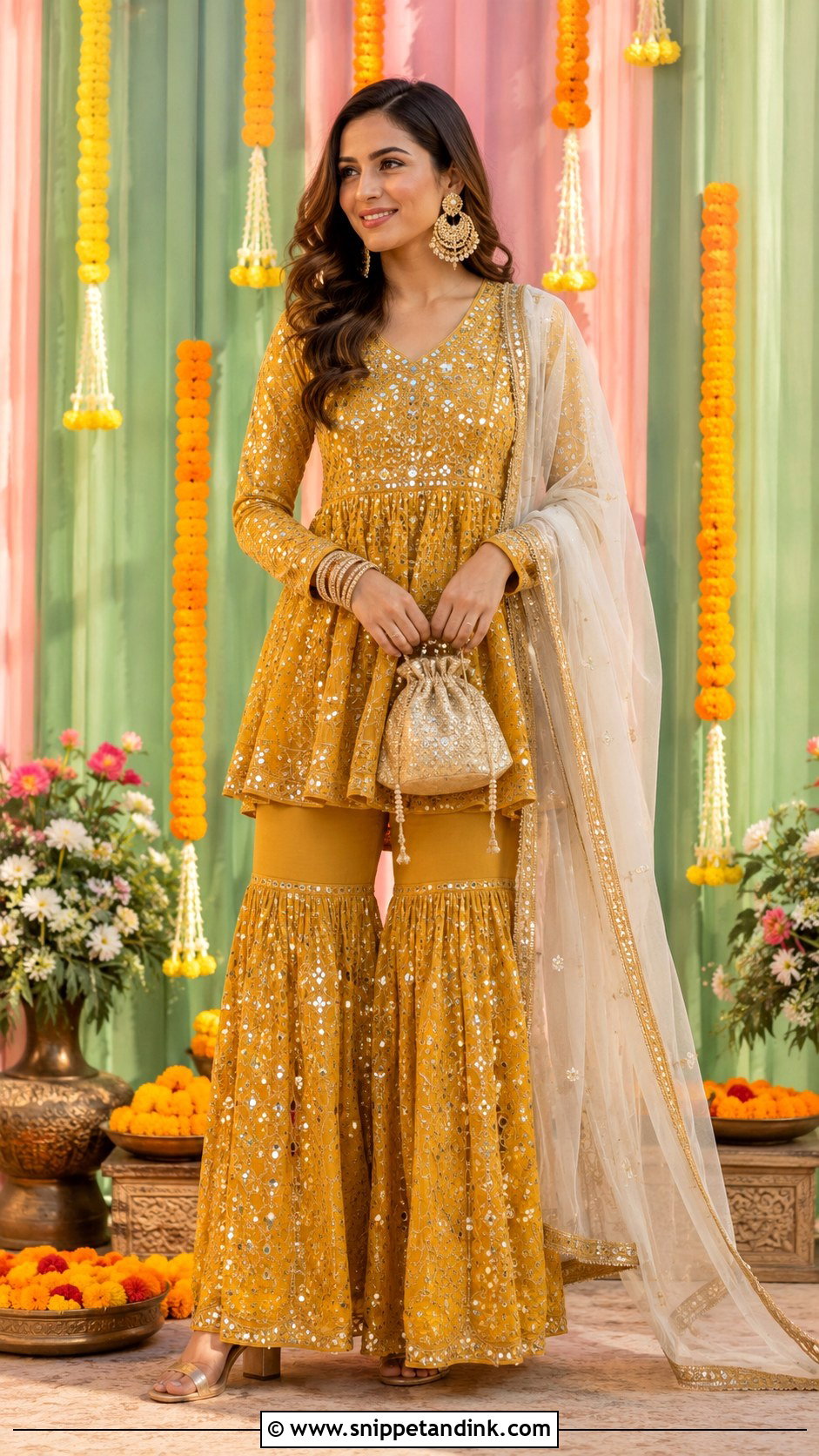
A peplum top flares from the waist, so it gives definition to almost any frame, and the sharara below adds swing. Mirror work fits a mehndi, sequins a sangeet, thread embroidery a quieter family evening. The proportion to watch is peplum length: if it ends at your widest point it adds width, so I mark the hem a few inches above or below that line at fittings. Chandbalis, stacked bangles and block heels make it dance-ready. Keep the accessories simple when the top is heavy.
21. Straight Suit for Marriage Function
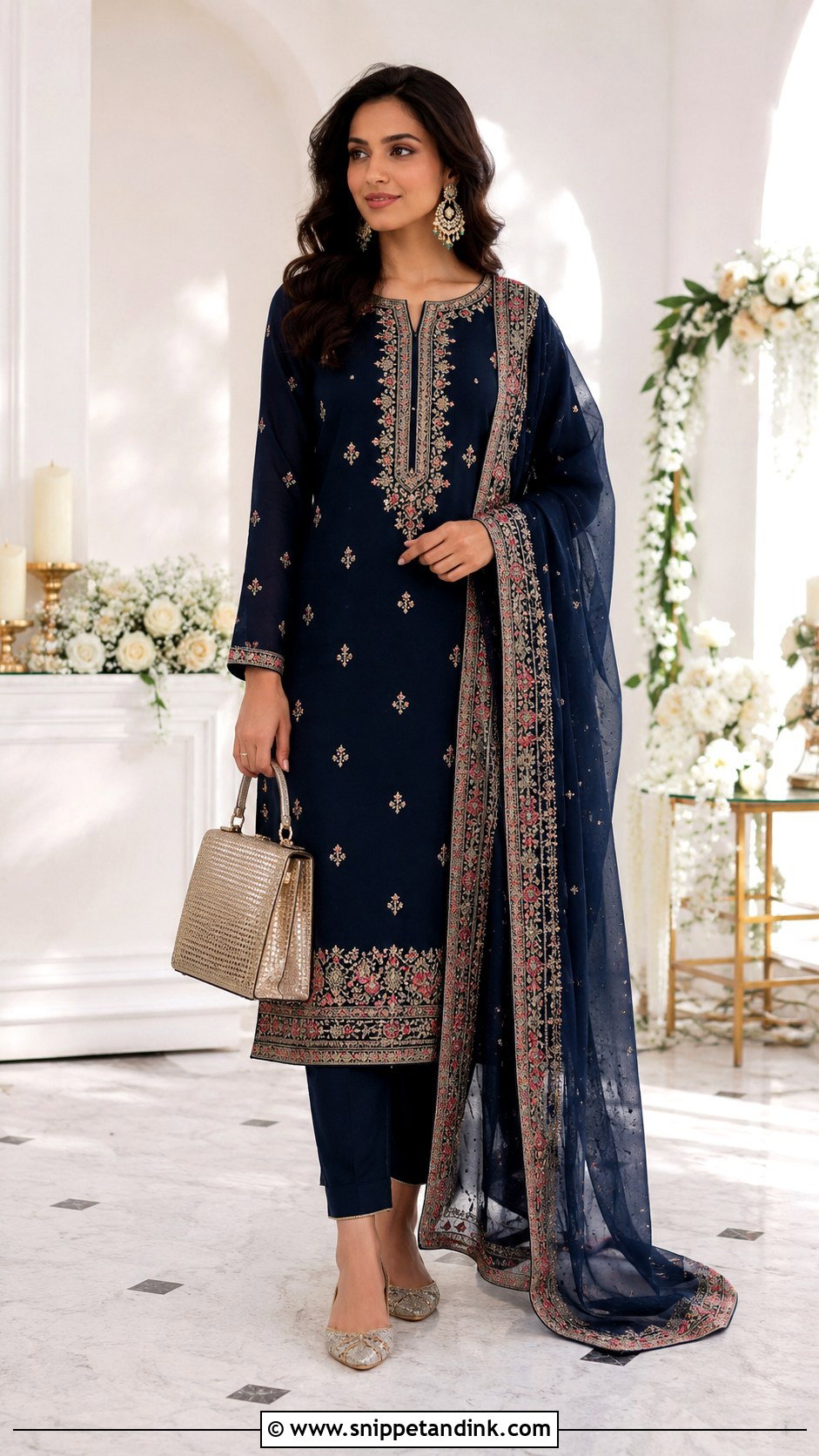
Straight suits are the quiet option I suggest to women who want to look appropriate without extra volume. Clean lines with slim pants or cigarette trousers flatter most heights. The fabric has to carry it, so pick silk, brocade, chanderi or embroidered georgette rather than plain cotton. Side slits and a detailed neckline make the cut feel considered, and a border dupatta adds the festive note. Pointed juttis, statement earrings and a structured bag are all you need.
22. Ruffle Saree for Marriage Function
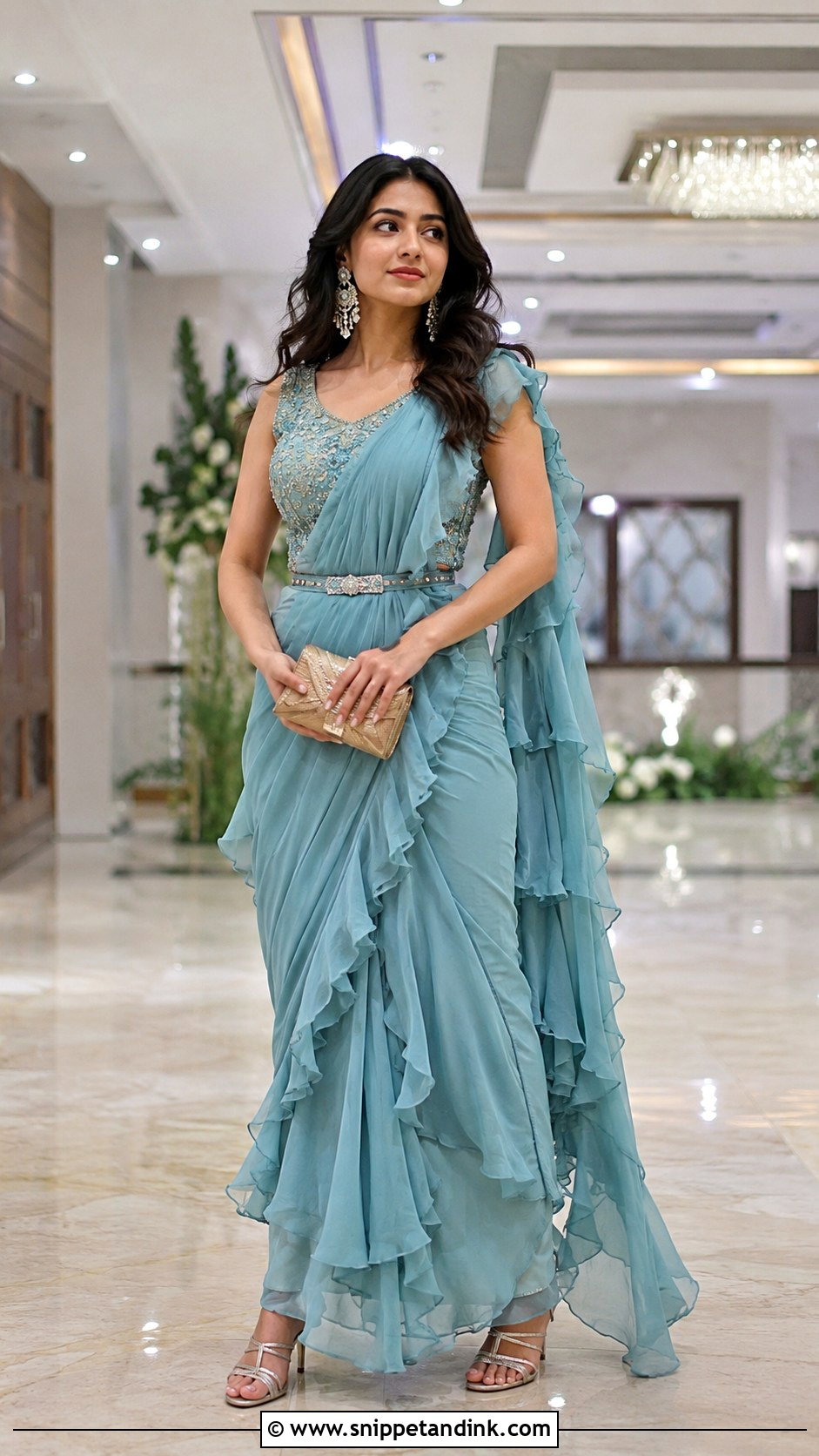
Ruffles bring movement without embroidery, which keeps a ruffle saree lighter than most party sarees. Georgette, chiffon and crepe let the ruffles fall softly; stiffer fabrics make them stick out like a tiered skirt. The trick I use is keeping everything else plain, because the ruffles already add drama. A belt or embellished blouse gives it a festive touch for a sangeet or engagement party. Strappy heels, a compact clutch and soft waves complete it.
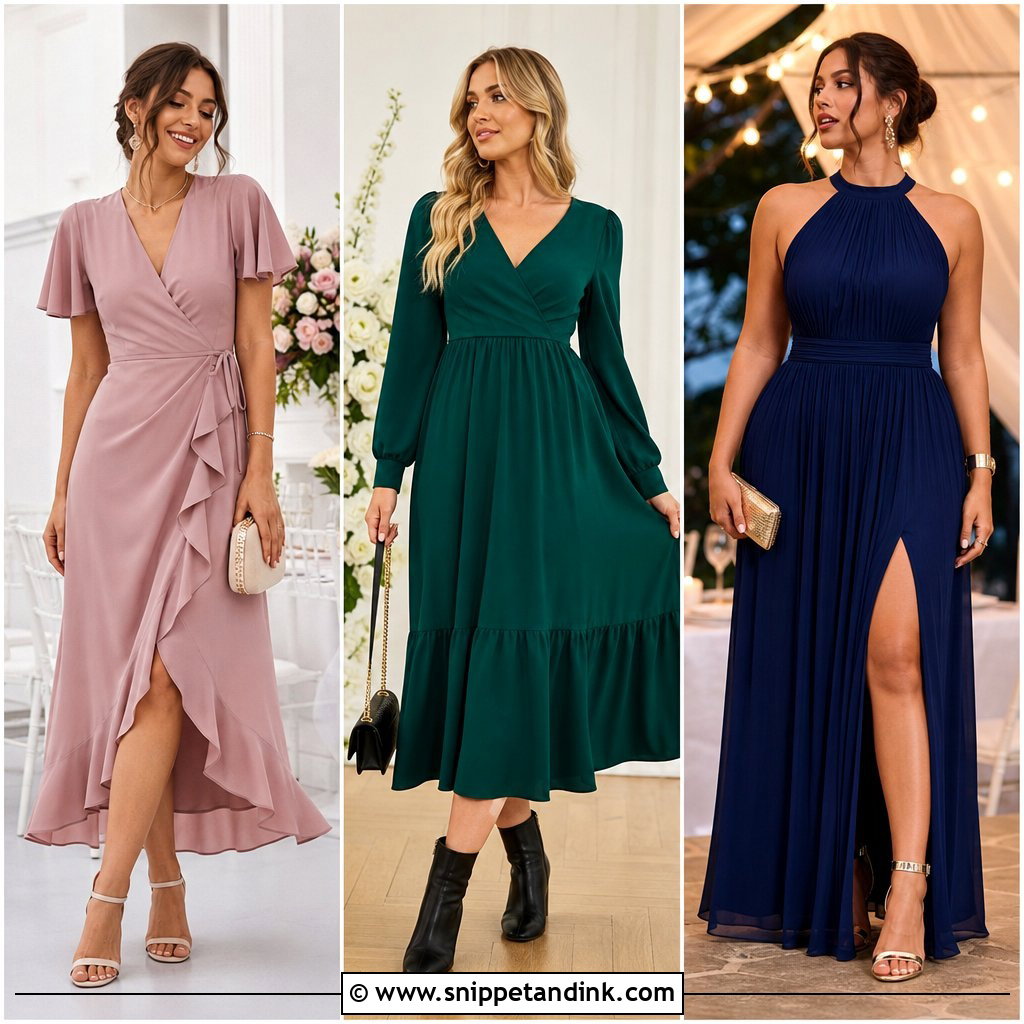
23. Maxi Dress for Marriage Function
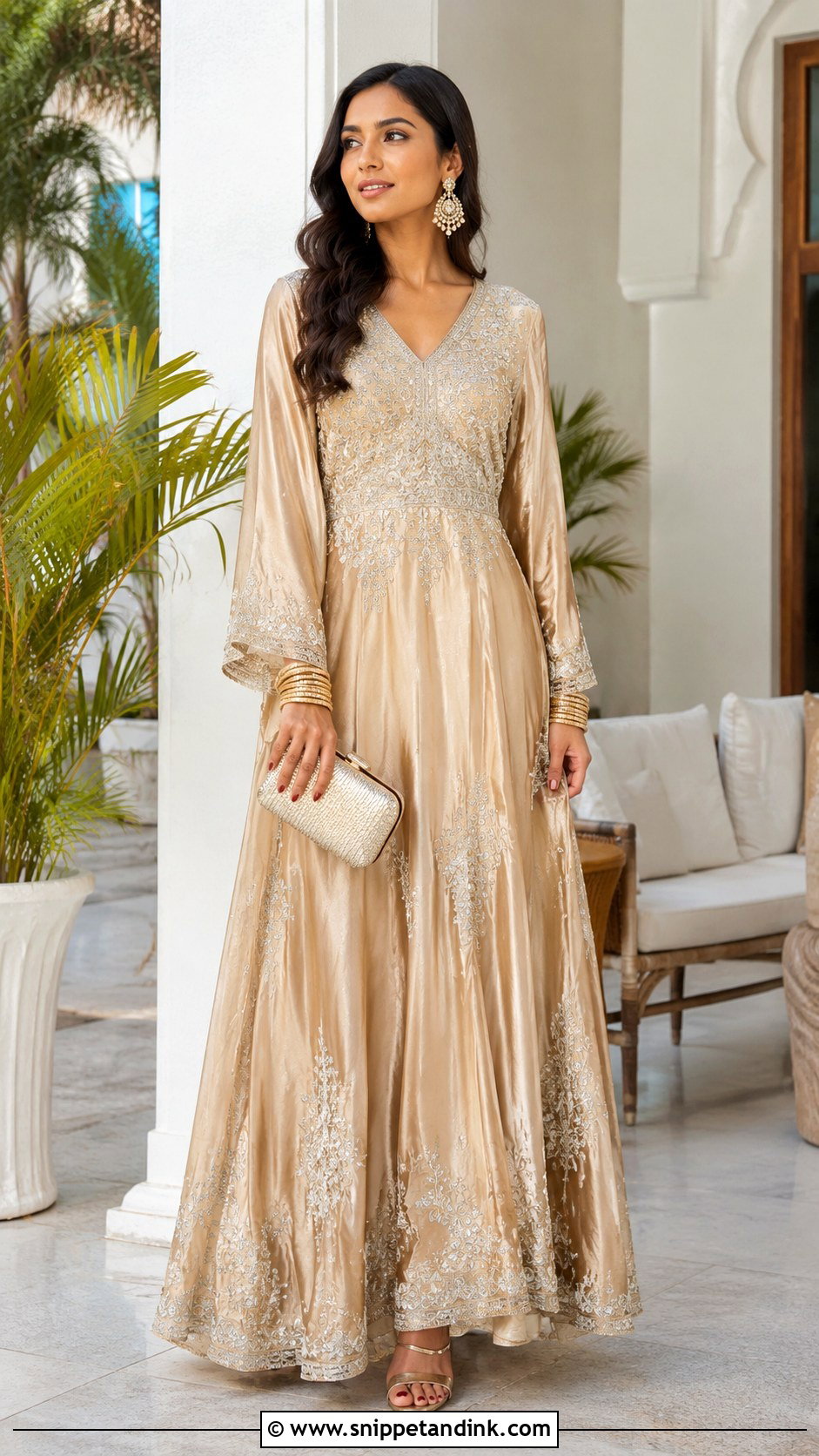
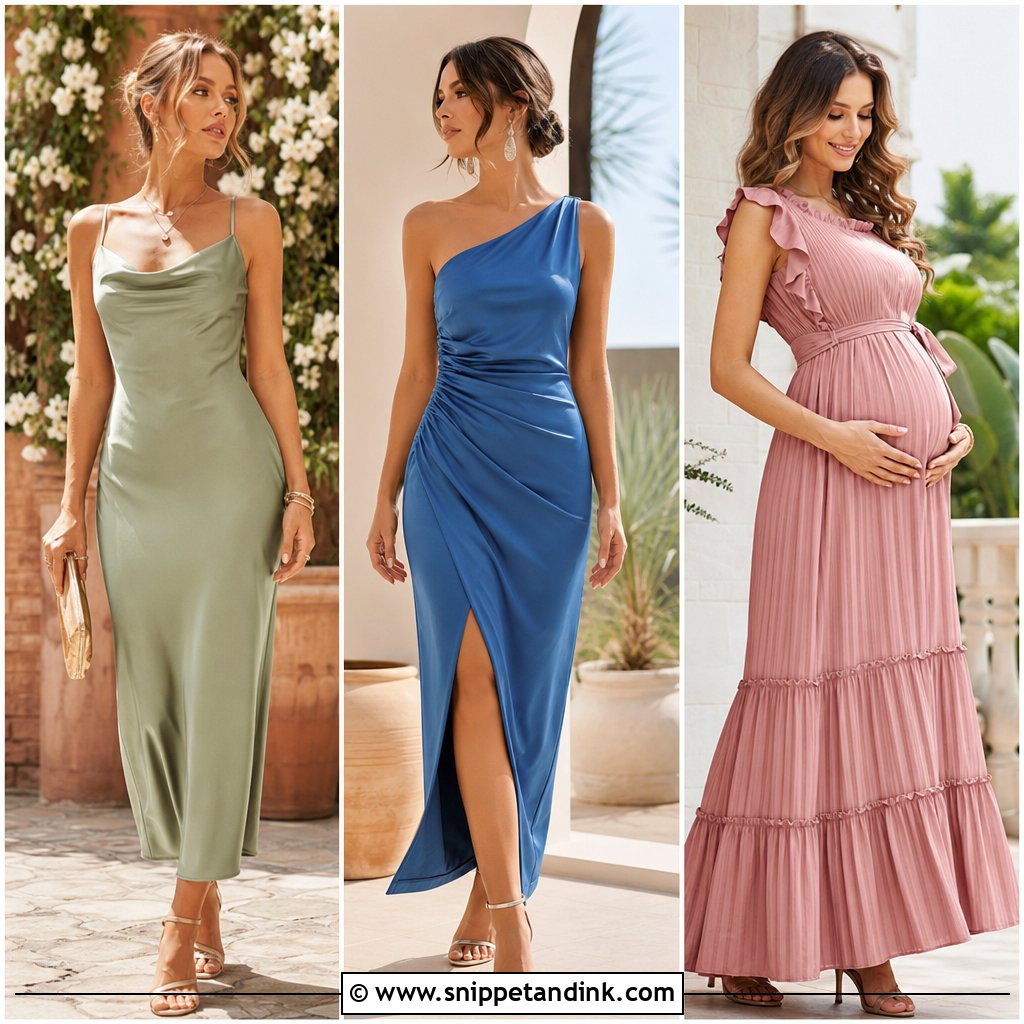
A maxi dress only works at a marriage function when the details make it festive: embroidery, metallic accents, draping or ethnic prints. Satin, chiffon and silk blend in a floor-length cut look dressy without leaning traditional. I’d keep it for destination weddings, receptions and semi-formal functions, and I’d skip it for a traditional ceremony unless you add an embroidered jacket or dupatta-style stole. Statement earrings, bangles and heels make it feel like a celebration outfit rather than holiday wear.
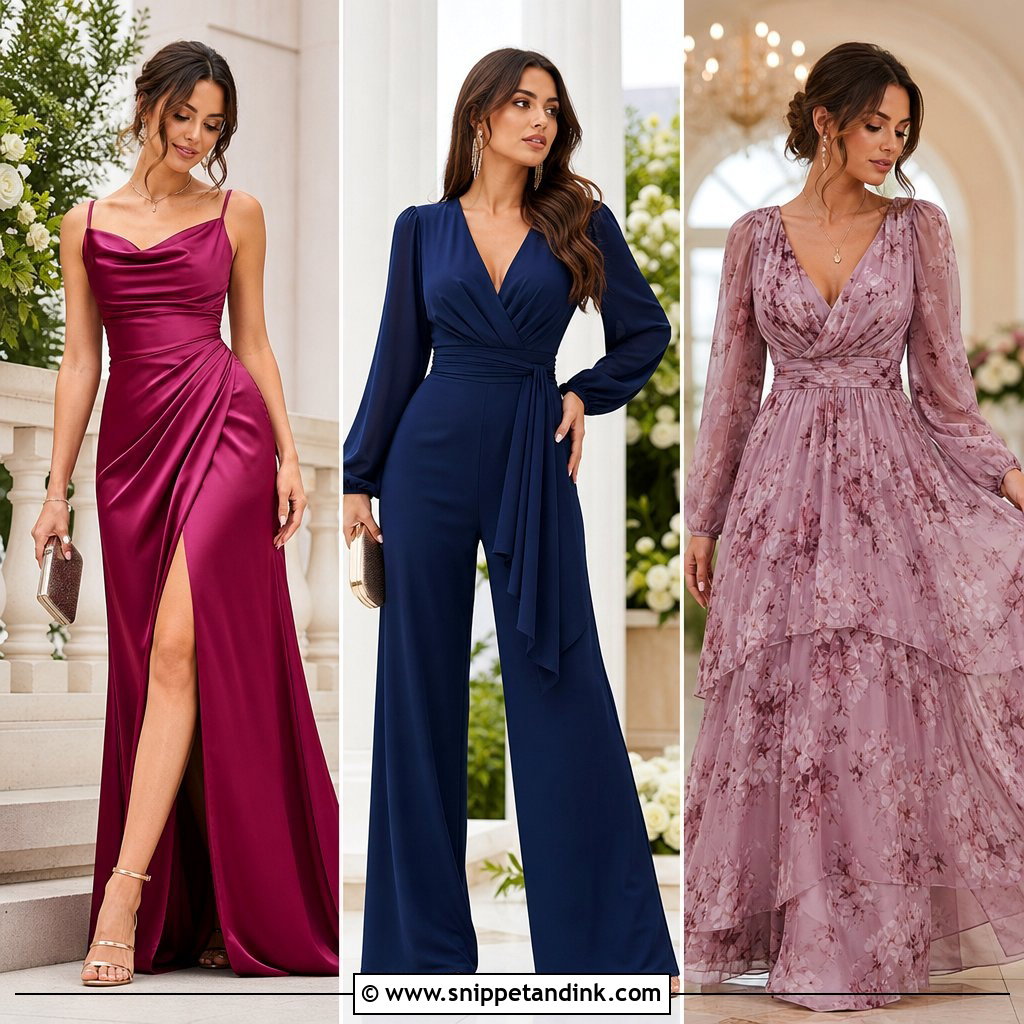
24. Jumpsuit for Marriage Function
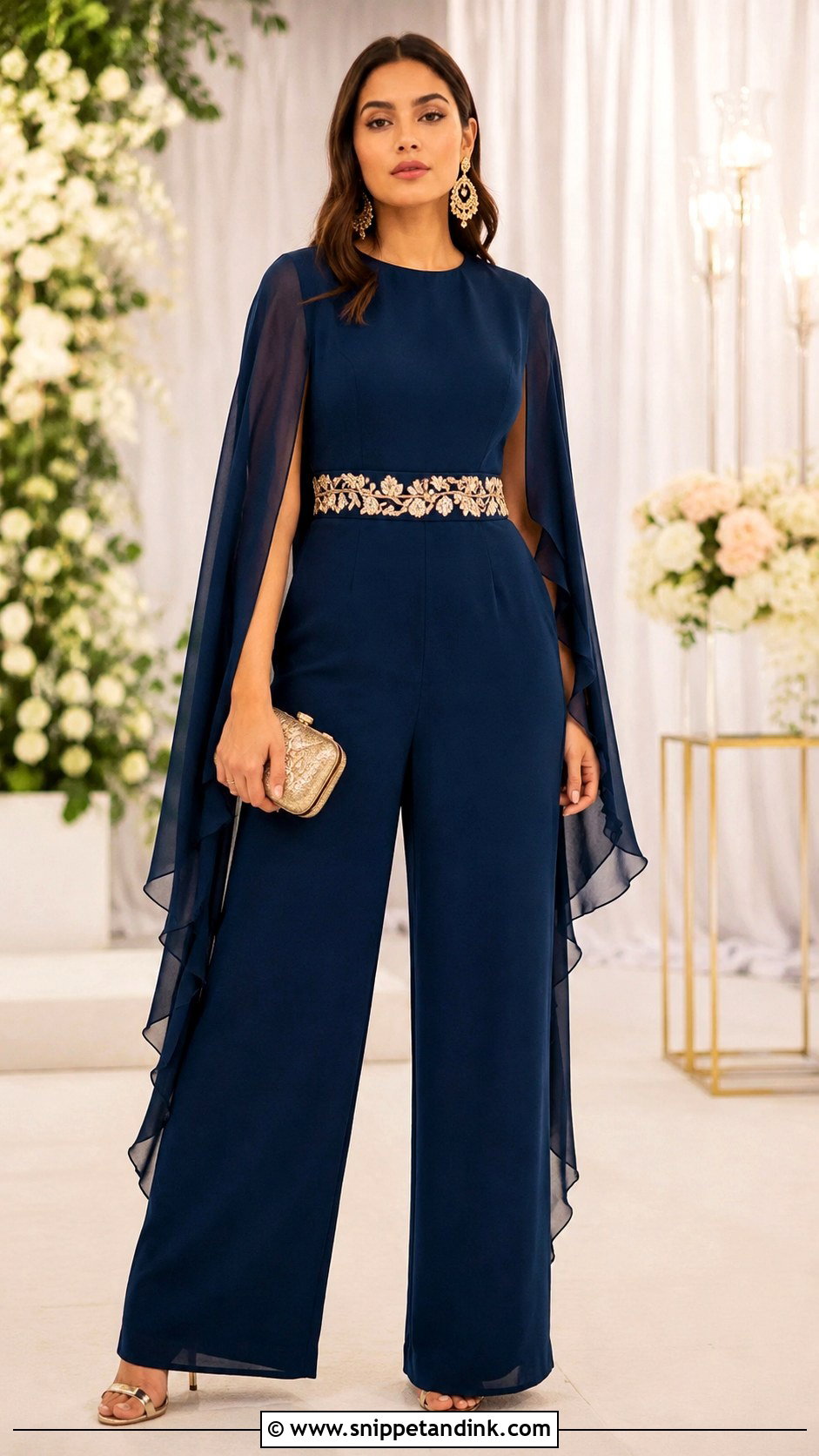
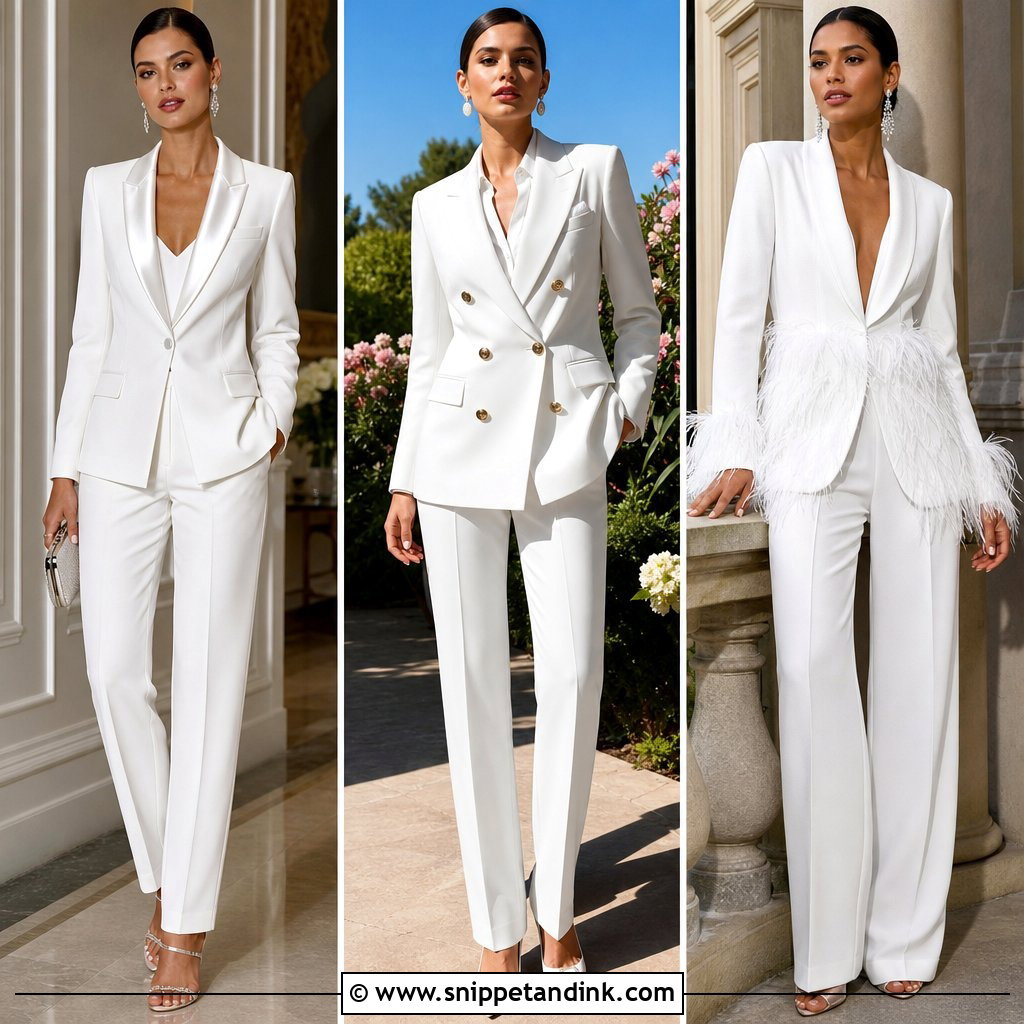
Jumpsuits are for women who like clean lines and hate managing fabric. Wide-leg cuts, draped bodices, cape overlays and embroidered belts make them event-worthy; a solid jewel-tone jumpsuit with gold accessories looks polished at a reception. Fit is everything here, and I always have clients sit down during the fitting, since a jumpsuit that fits standing can pull at the shoulders and cut into the waist once seated. Brighter shades or mirror work suit mehndi and sangeet.
25. Skirt Top Set for Marriage Function
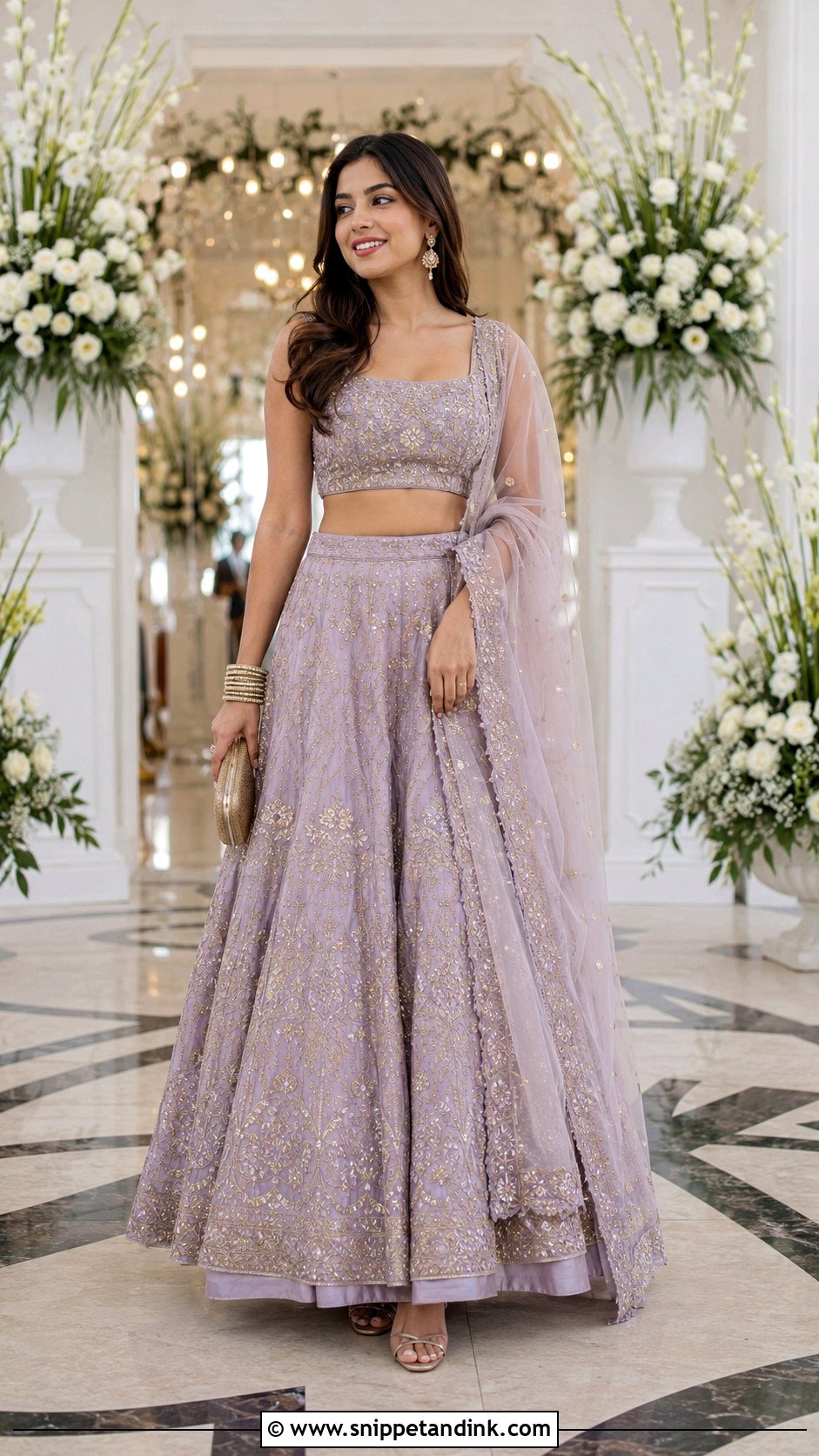
Separates are the smartest buy in this list because each piece goes on working after the wedding. A flared embroidered skirt can take a crop top, a peplum top, a silk blouse or a long jacket, and a dupatta turns it more traditional. Printed florals and soft mirror work suit daytime; satin, brocade and metallic thread suit evening. I plan these so the skirt can be worn twice in one wedding week with a different top, which saves money and suitcase space. It sits a step below a lehenga in formality.
Blouse Fittings Take Longer Than the Outfit Hunt
The most common panic I see in wedding week has nothing to do with choosing an outfit. It is a blouse that came back from the tailor too tight, or a lehenga that was never tried with the shoes. Ethnic pieces nearly always need alteration, and tailors are at their busiest in wedding season, so I build in time.
- Buy or order outfits early enough to allow at least two fittings, since custom blouses and sharara hems rarely sit right on the first try.
- Bring the shoes, the bra and any padding you plan to wear to every fitting. Hem lengths change by inches with heel height.
- At the final fitting, sit on a low chair, raise both arms and walk down a few steps. Anything that pulls or catches now will be worse at hour five.
- Ask for extra seam allowance in blouses, so they can be let out if you change size before the wedding.
Making Fewer Pieces Cover More Functions
You do not need five new outfits. I usually build a week around one silk saree for the ceremony, one statement piece for the reception, and separates that mix: a skirt worn with two different tops, or a co-ord jacket thrown over a plain kurta. Guests photograph you function by function, and a changed dupatta, blouse and jewelry set makes a repeated skirt look like a new outfit.
One Wedding Week, Five Very Different Dress Codes
Most guest outfits go wrong for practical reasons, not style ones: a hem that catches, a blouse that pinches, a fabric too heavy for the heat. Heavy lehengas and silk sarees belong at the formal ceremony, while shararas, co-ord sets, kurta sets and pre-draped sarees handle lighter events. For evening, sequin sarees, Indo Western gowns, cape dresses and jumpsuits bring a modern finish. Pick colors that suit your skin, shoes you can stand in for hours, and accessories that support the outfit instead of competing with it.
You'll Like These Ideas:



Leave a Reply