
A suit is what I suggest to most women who are guests, sisters or aunts at an Indian wedding, because it gives you embroidery and colour without the weight of a lehenga. The twenty looks below cover daytime ceremonies, sangeet nights, formal receptions and the smaller family functions in between. Each one pairs a suit shape with its bottoms, a dupatta, jewelry and shoes: regal Anarkalis, easy shararas, modern cape sets and plain silk suits that suit very different ages and figures. Treat my colour and accessory notes as a starting point, not a rulebook. The fit and the event matter more than the embroidery count.
Will Your Suit Compete With the Bride?
It’s the question I get most from guests, and the answer depends on the family. Bridal red and heavy gold are usually left to the bride, so I steer guests toward jewel tones, pastels or a red with a different undertone. Customs around black and white vary between communities; some families avoid them at a wedding, others don’t mind at all. If you’re unsure, ask someone in the family. Nobody minds being asked.
Your role changes how much you can wear
- Mother or sister of the couple: you can carry heavier work, but coordinate colours with the bride so photos hang together.
- Bridesmaid or close friend: there may be a colour theme for the sangeet or mehndi, so check before you buy.
- Guest: aim one step below the family in embroidery and jewelry, especially at the main ceremony.
1. Designer Anarkali Suit for Indian Wedding
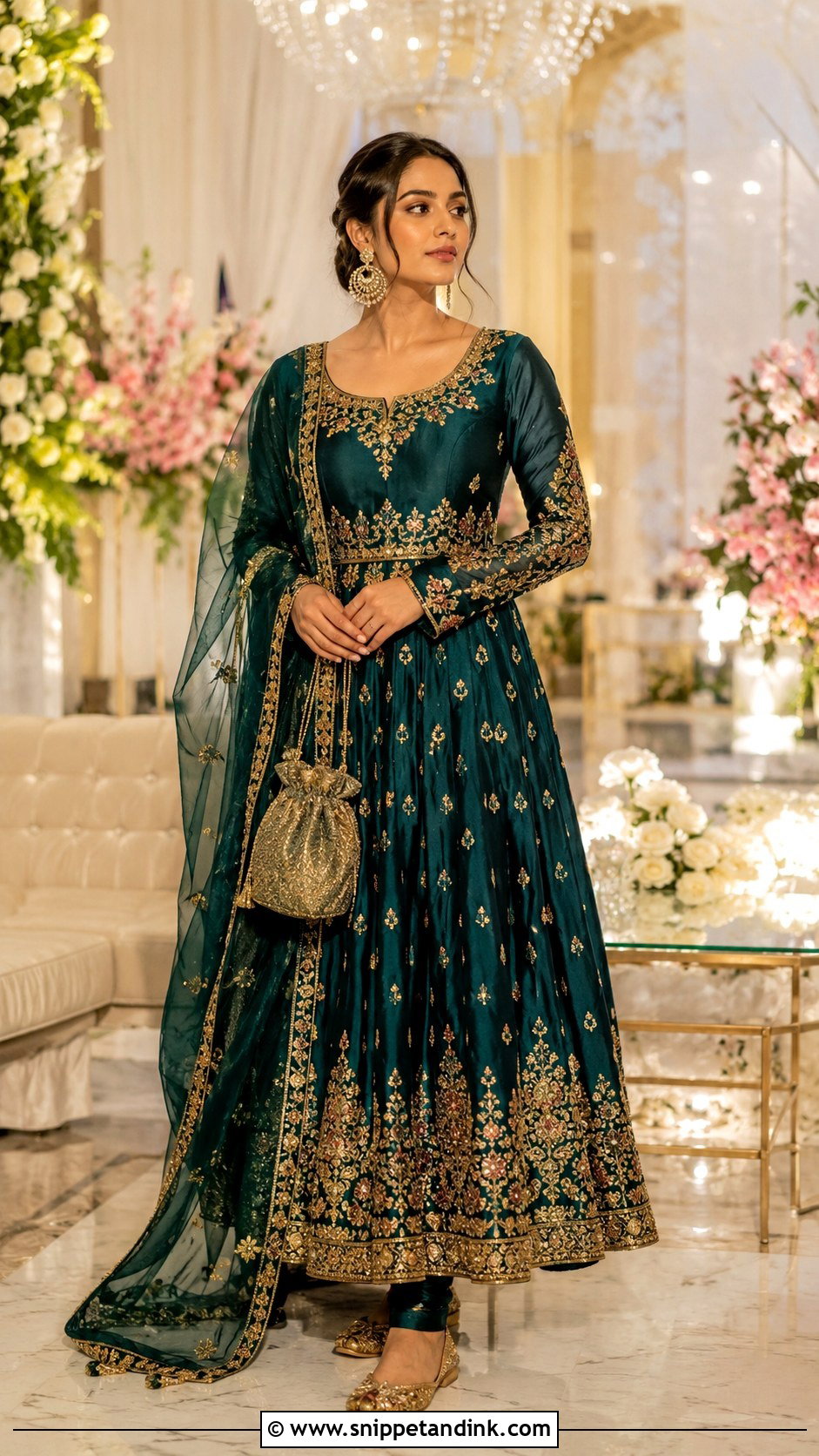
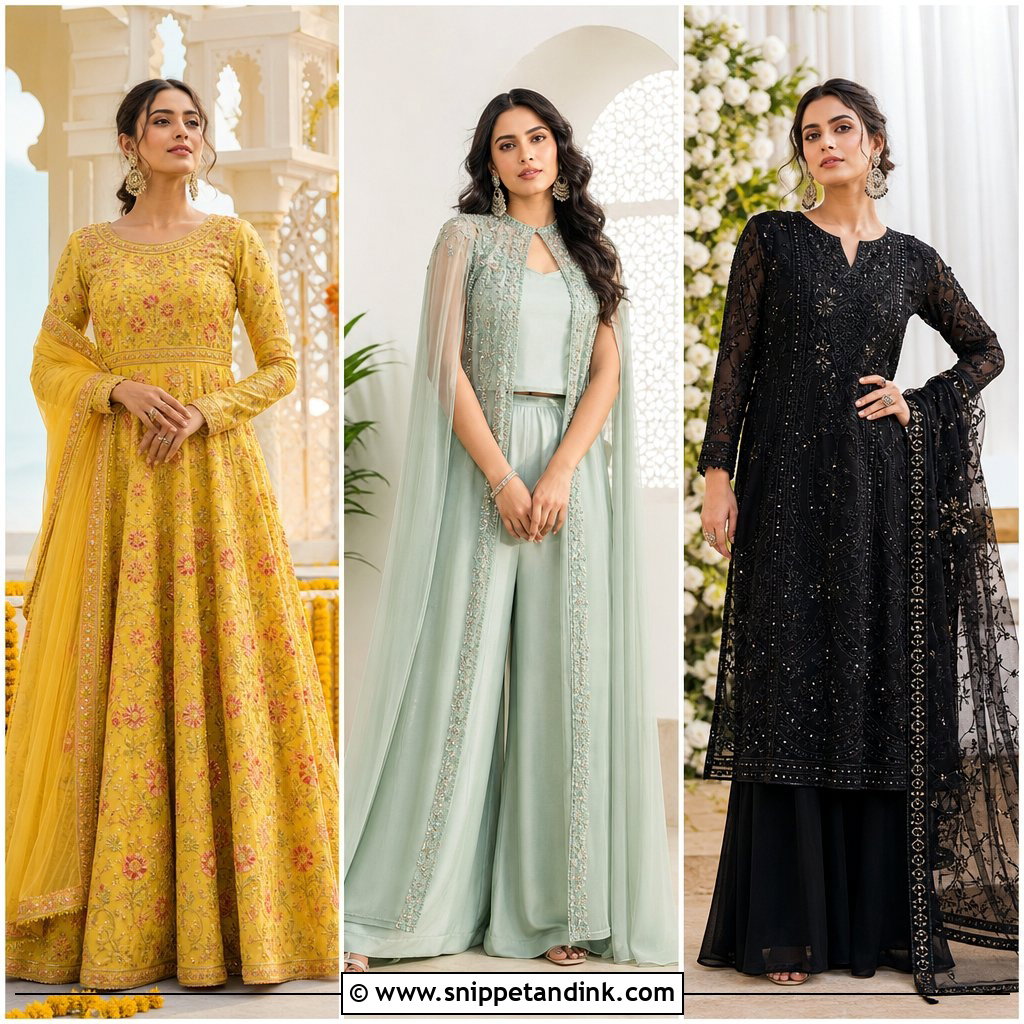
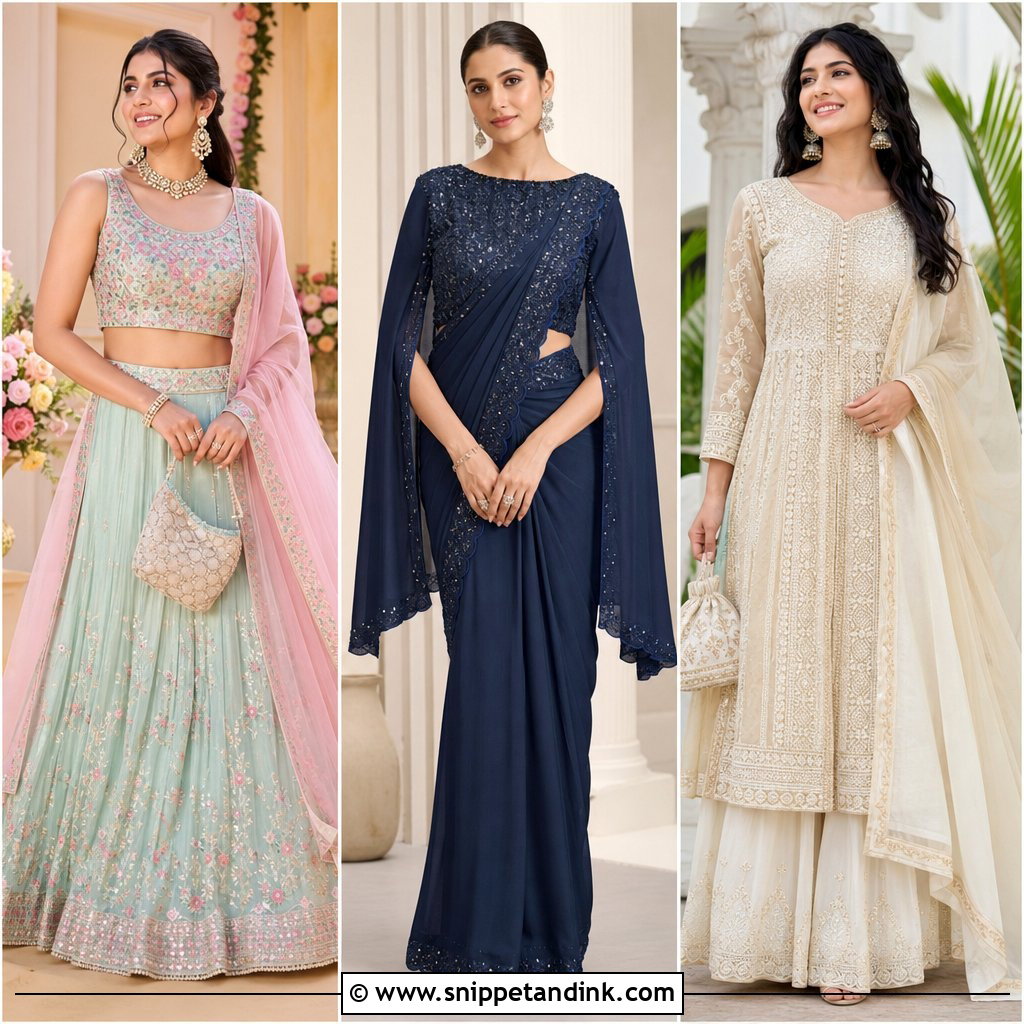
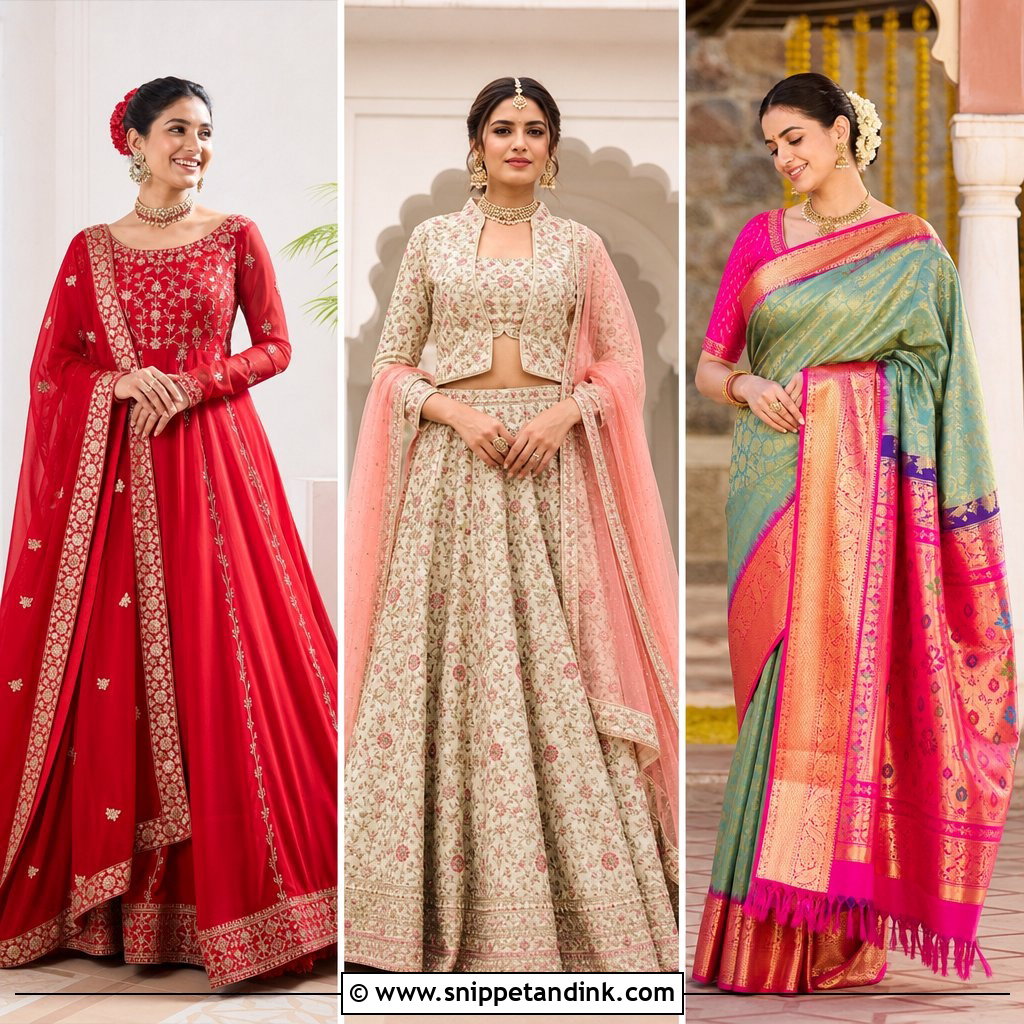
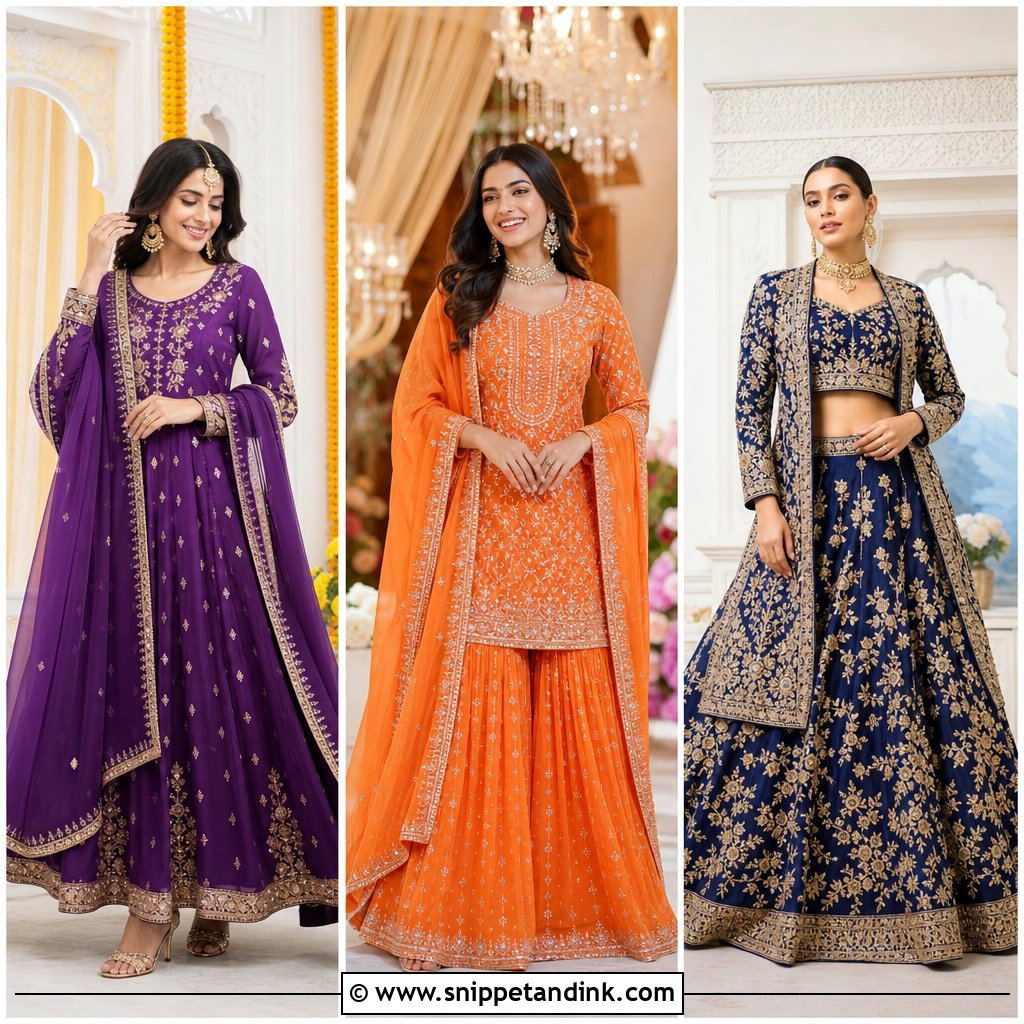
Floor-length Anarkalis move well with almost no styling effort, which is why I put so many wedding guests in one. A jewel-toned silk or georgette with a fitted bodice and a moderate flare is the safest version; zari borders, resham thread or a few sequins add enough shine for a wedding. Slim churidar, a light net or organza dupatta over one shoulder and pointed embroidered juttis finish it, with chandbali earrings and a small potli. The thing I adjust most is the waistline. On petite women I raise it and keep the flare narrower so the skirt doesn’t swallow them, while taller women can carry a fuller skirt with a wide decorated hem.
2. Designer Sharara Suit for Indian Wedding
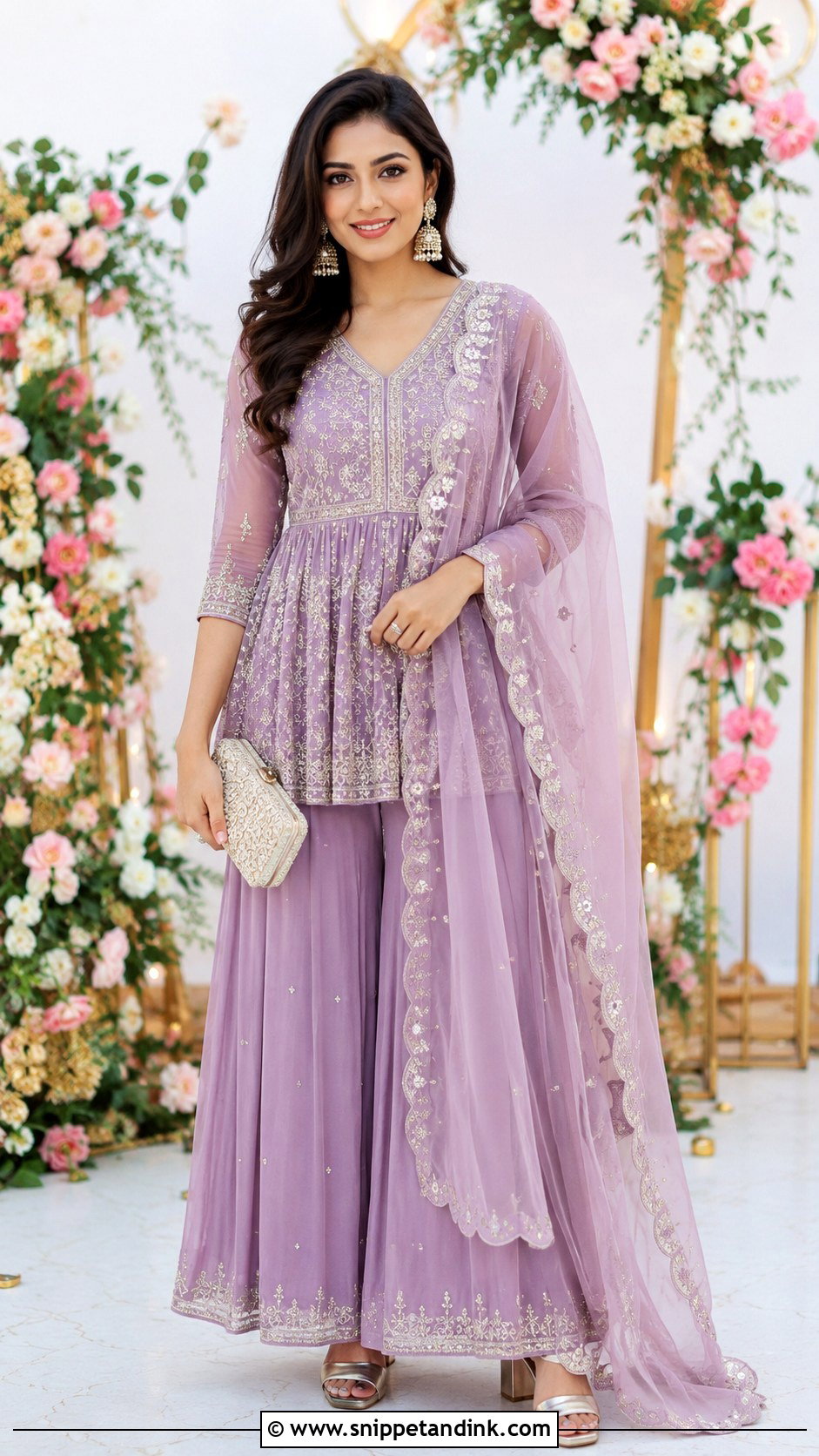
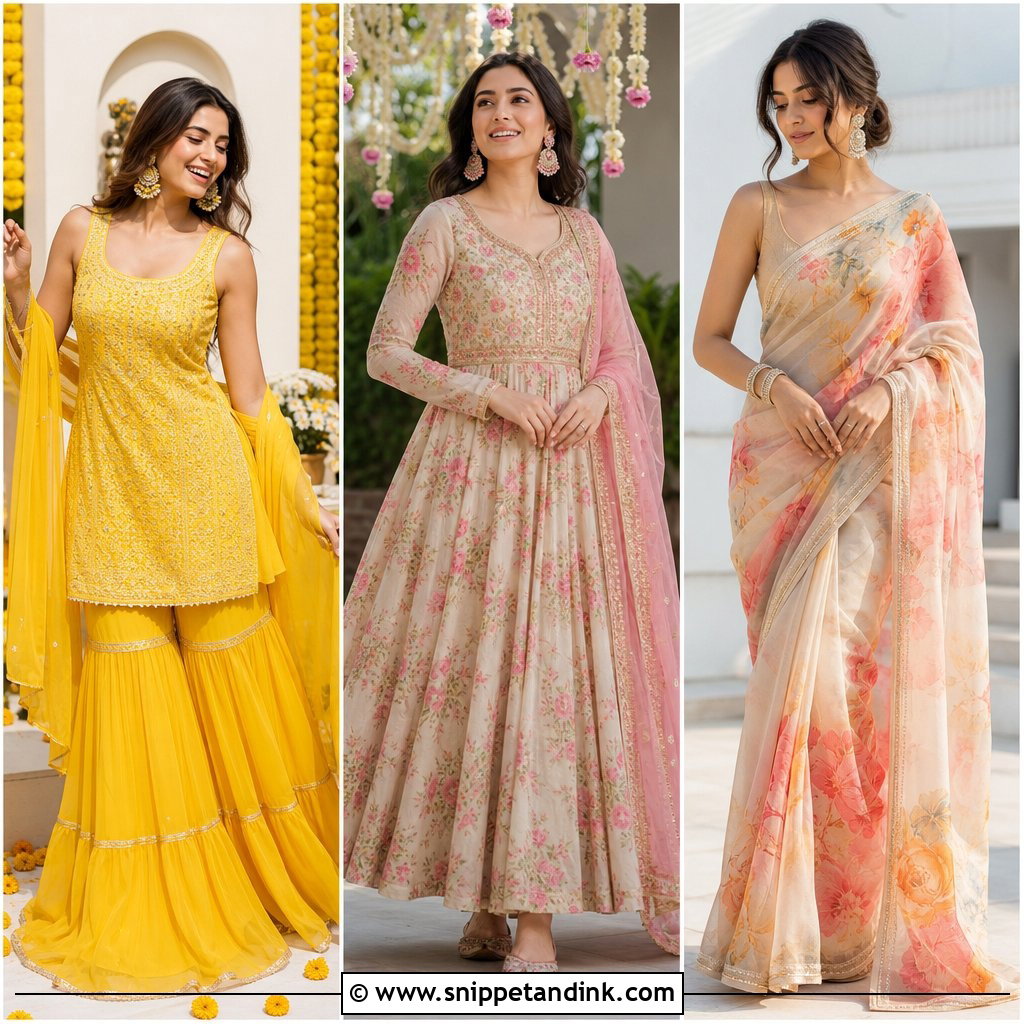
Shararas give you a celebratory shape that’s still comfortable to sit and dance in. A short, structured kurti over high-waisted sharara pants that flare from the upper leg is the classic cut, and raw silk, georgette or crepe give movement without bulk. I keep the embroidery to the neckline, cuffs and lower kurti border. A sheer dupatta with a scalloped edge completes it without hiding the shape, then metallic block heels, statement jhumkas and a small embroidered clutch. If the pants are heavily worked, choose a plainer kurti. Two busy halves fight each other and the outfit reads as cluttered from across a room.
3. Designer Gharara Suit for Indian Wedding
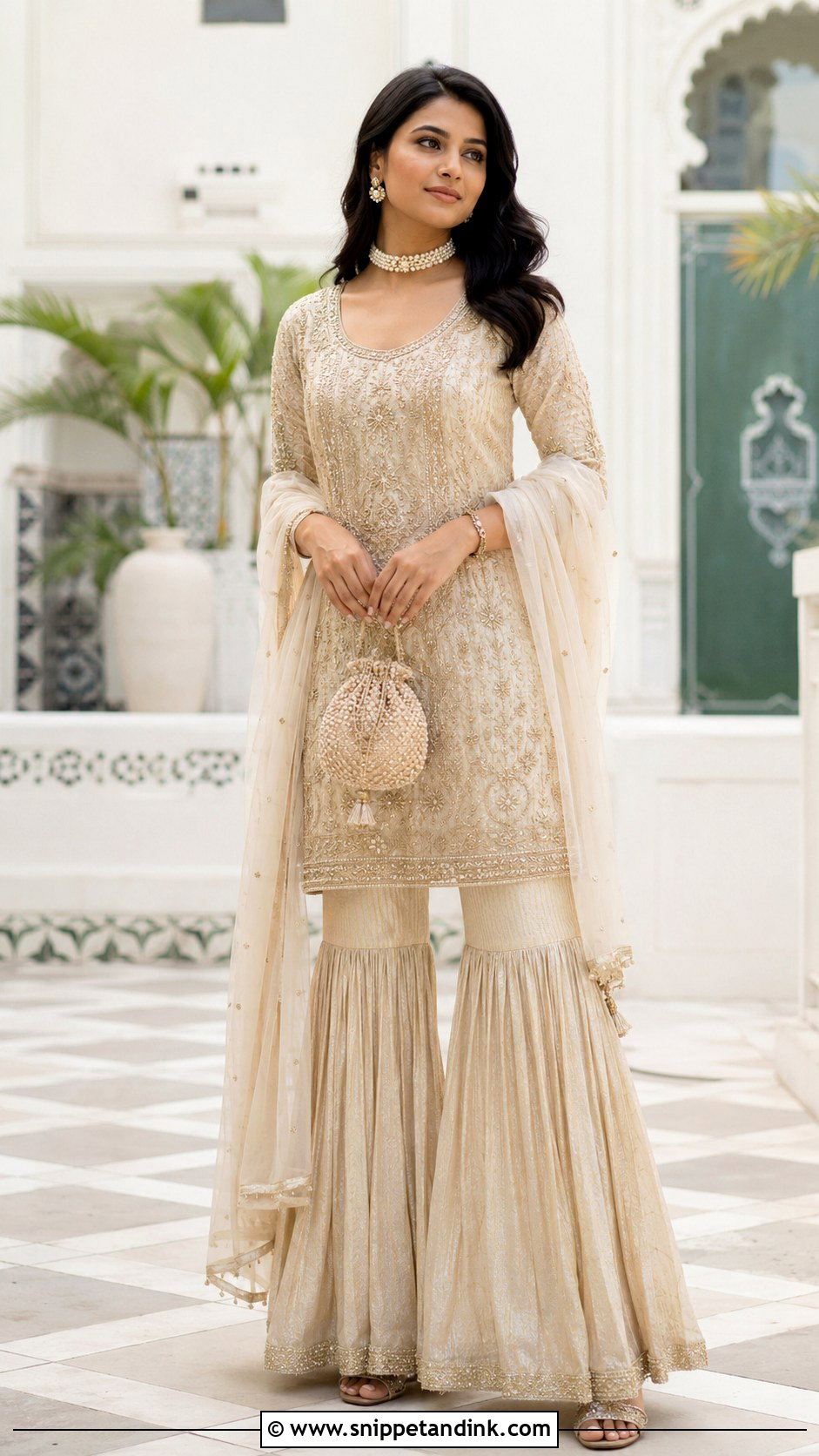
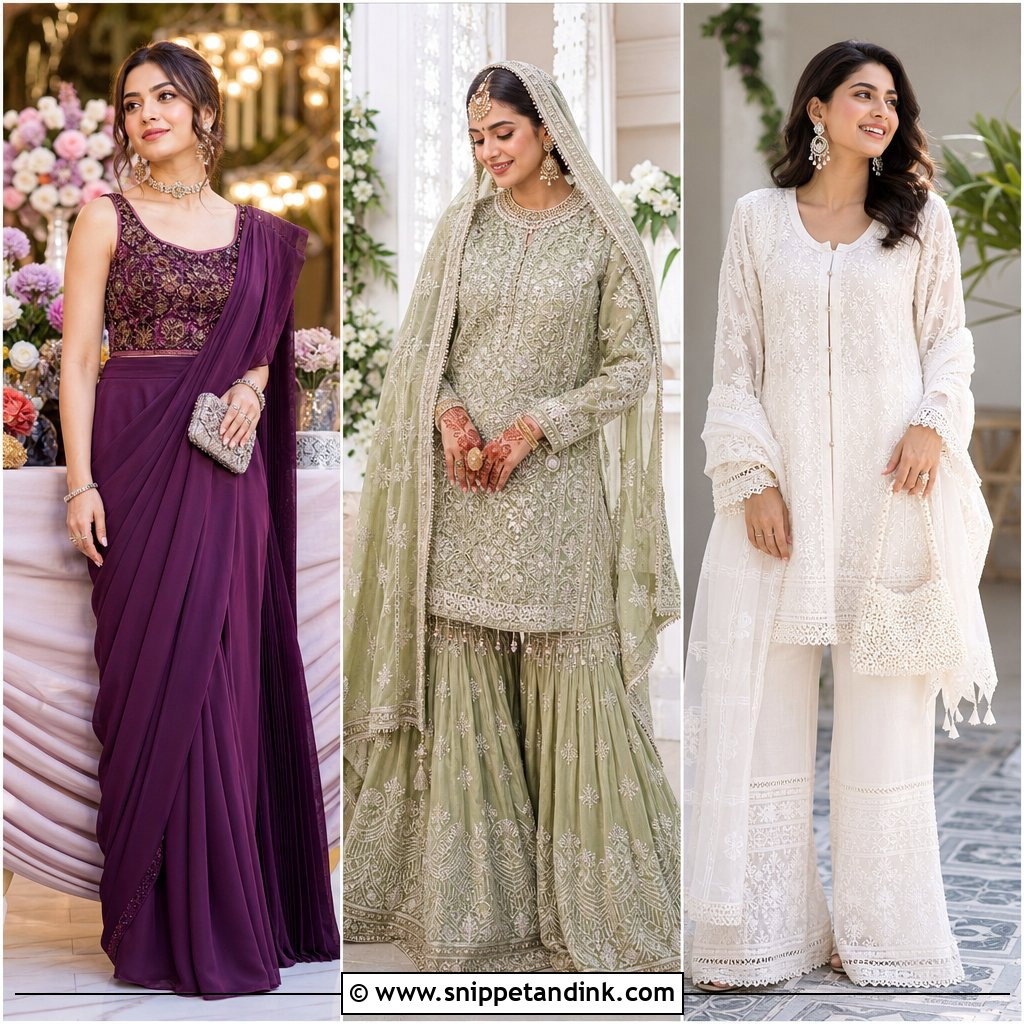
A traditional gharara suit is more structured than a sharara: fitted through the upper leg, then flaring from a joint at the knee. That joint, usually covered with a decorated band, is the whole point, so the kurti has to stop around mid-thigh to show it. Ivory, sage, rose or deep maroon with gota patti, zardozi or fine pearl work suits a daytime ceremony. Drape a chiffon dupatta over both arms or pin it on one shoulder if you’ll be moving around. Low embellished heels, a pearl choker, matching earrings and a beaded potli complete it. I like this for family functions where you want to look traditional without looking like a second bride.
4. Designer Palazzo Suit for Indian Wedding
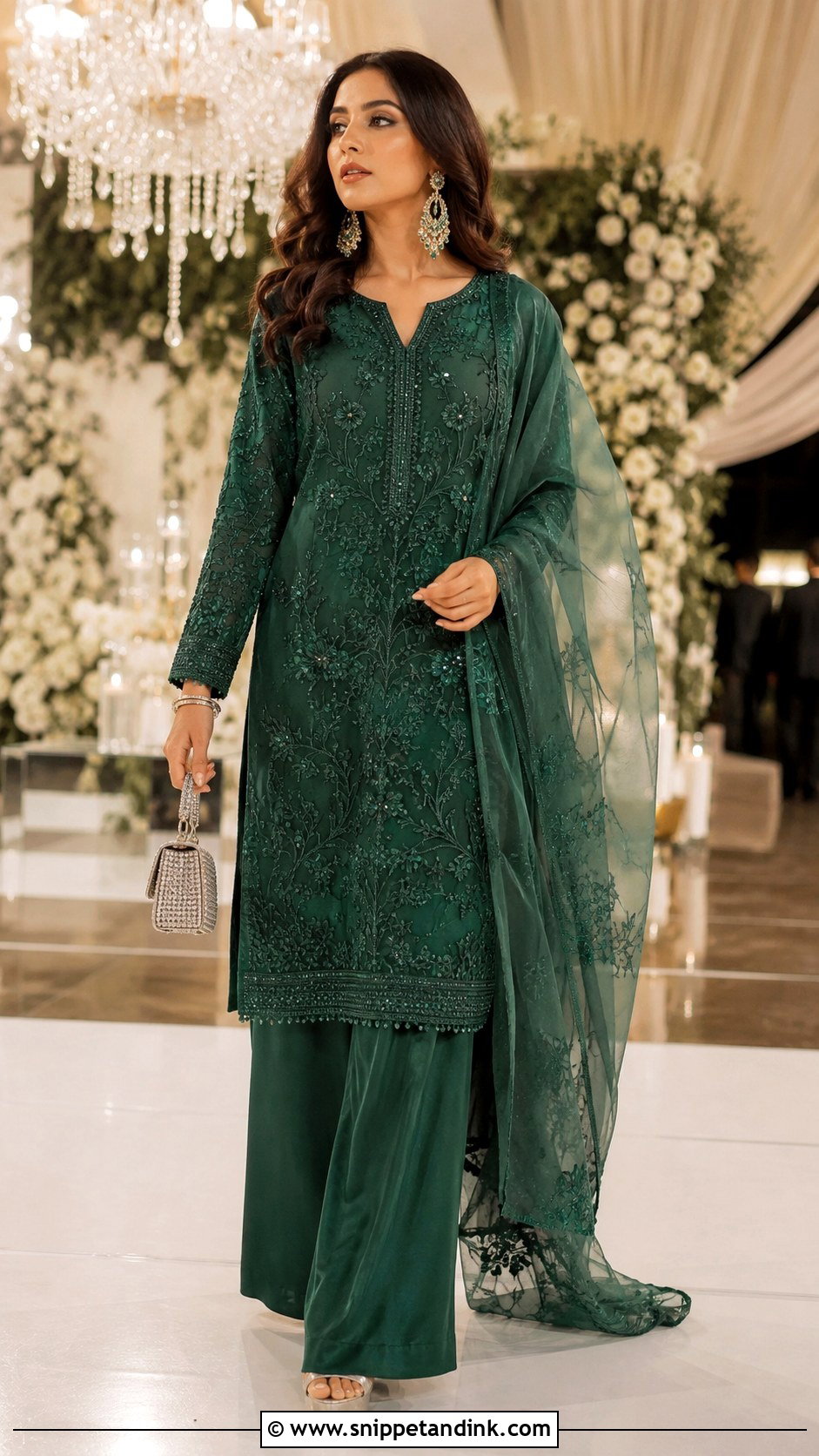
Palazzo suits are the most relaxed option here, and I don’t think that’s a drawback. A straight or slightly flared kurta over wide palazzos in a silk blend, crepe or fluid georgette looks polished at a reception in a rich solid shade with tonal embroidery, or softer in a light print for a morning function. Hem the palazzos so they skim the floor in your shoes. A tissue, organza or embroidered chiffon dupatta adds texture, with platform heels, long drop earrings, slim bangles and a small structured bag. A loose rectangular kurta can look shapeless over wide pants, so if you want a waist, ask for princess seams or gentle side shaping.
5. Designer Silk Straight Suit for Indian Wedding
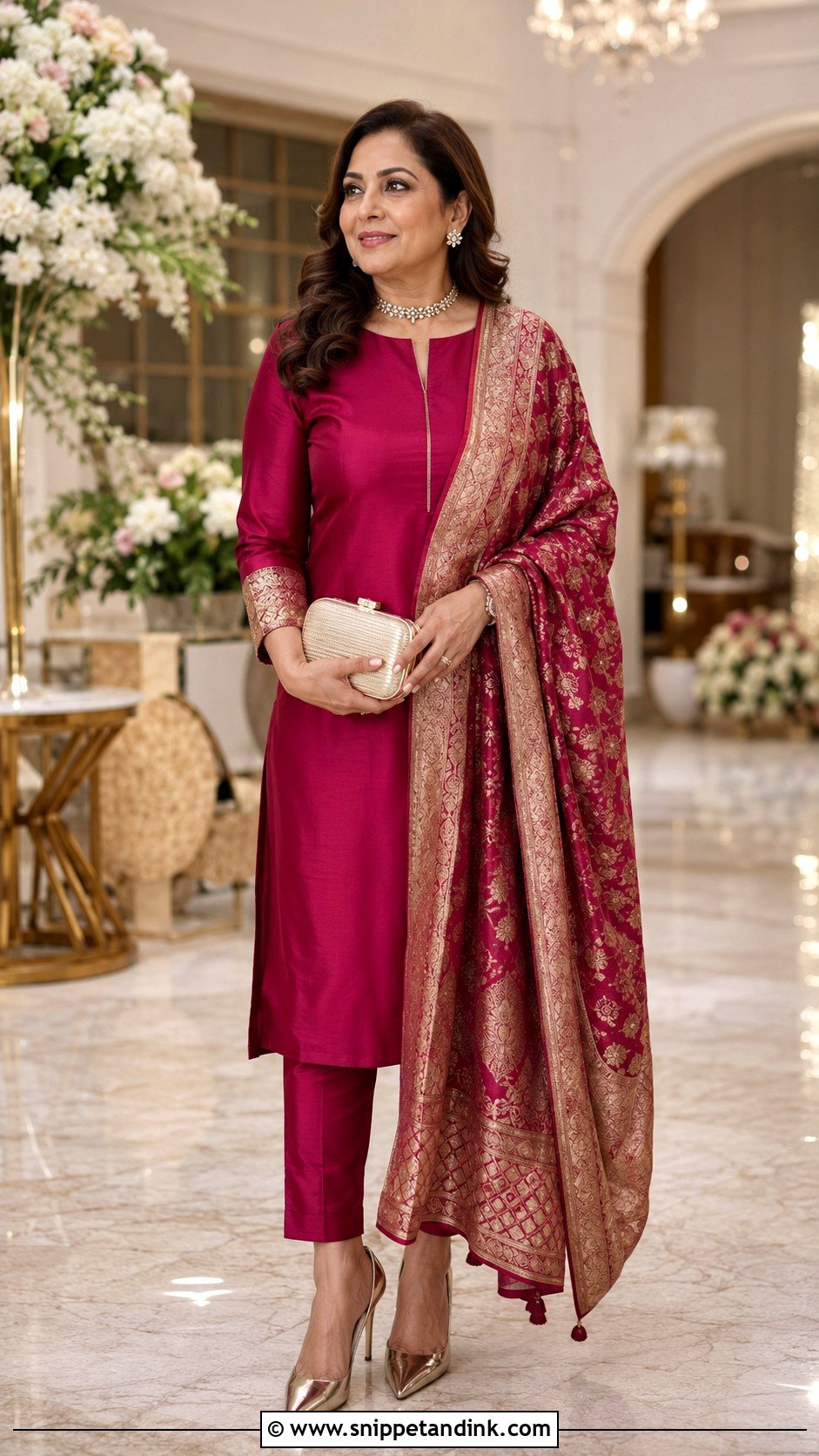
A straight silk suit has nowhere to hide, so the tailoring is the outfit. A knee-length kurta in emerald, ruby, navy, plum or antique gold with matching cigarette pants is the base, and brocade panels, zari motifs or hand-embroidered cuffs give it richness without breaking the line. A contrasting Banarasi or tissue silk dupatta adds the ceremonial colour. Pointed pumps or embellished mules, a choker and stud earrings balance it. I fit this one on the shoulders and bust first; if the kurta pulls across the chest or the shoulder seam drops, no amount of embroidery will save it. It’s a quietly confident choice for mothers, aunts and formal family dinners.
6. Designer Angrakha Suit for Indian Wedding
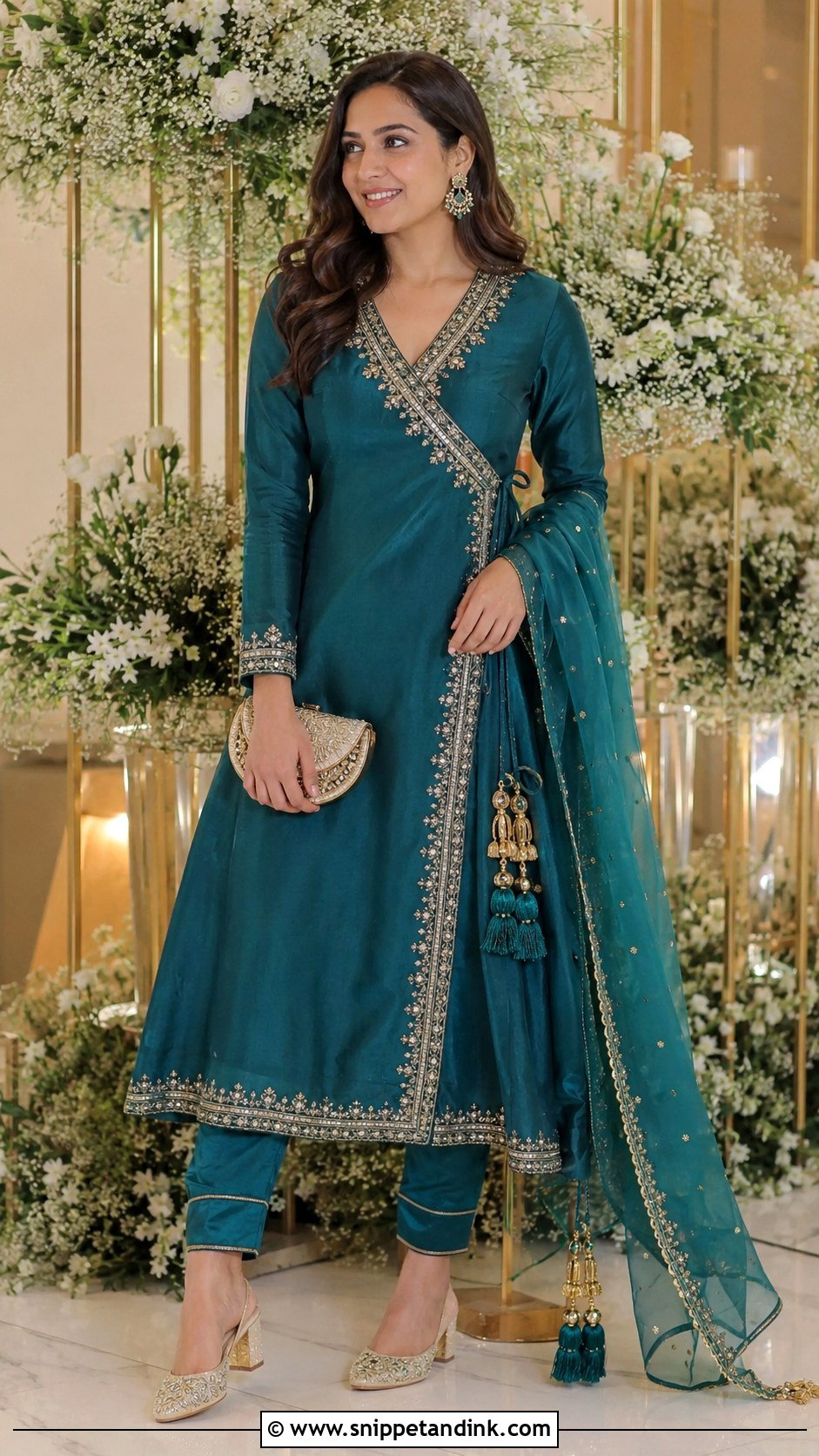
The angrakha closes with an overlapping wrap across the bodice, and those diagonal lines are what make it so flattering at the waist. A calf-length or floor-length version in silk, chiffon or light jacquard, tied at the side with tassels, works best when the wrap edge has an embroidered border so the construction shows. Wear churidar under a full flare, narrow trousers under a slimmer one. Add a lightly embellished dupatta, heeled juttis and a crescent clutch. The wrap is also the weak point. Without a secure inner tie or hook, it opens when you dance, so I always check that inner fastening before anything else.
7. Designer Velvet Suit for Winter Indian Wedding
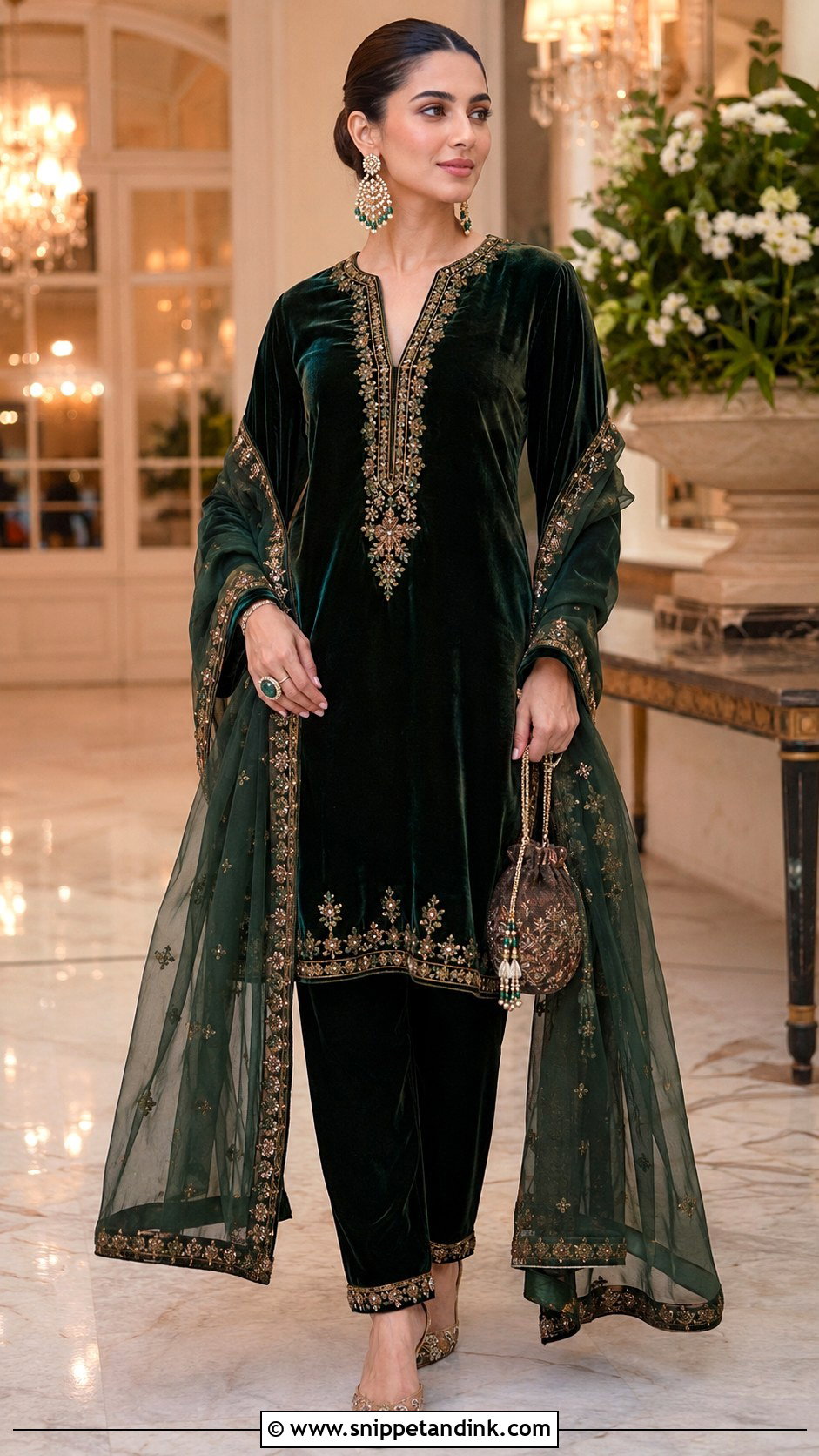
Velvet is only worth wearing when it’s properly cold, and then nothing else looks as rich. Burgundy, forest green, midnight blue and aubergine show the pile best. A straight velvet kurta with antique zardozi, dabka or metallic thread at the neckline and borders is plenty; pair it with silk cigarette pants or a lightly flared sharara rather than velvet bottoms, which turns the whole thing heavy. A sheer net dupatta softens it. Closed-toe embellished heels, kundan earrings, a statement ring and a structured potli complete it. Velvet crushes wherever you sit, so I tell clients to steam it from the inside, never press the face.
8. Designer Chikankari Suit for Indian Wedding
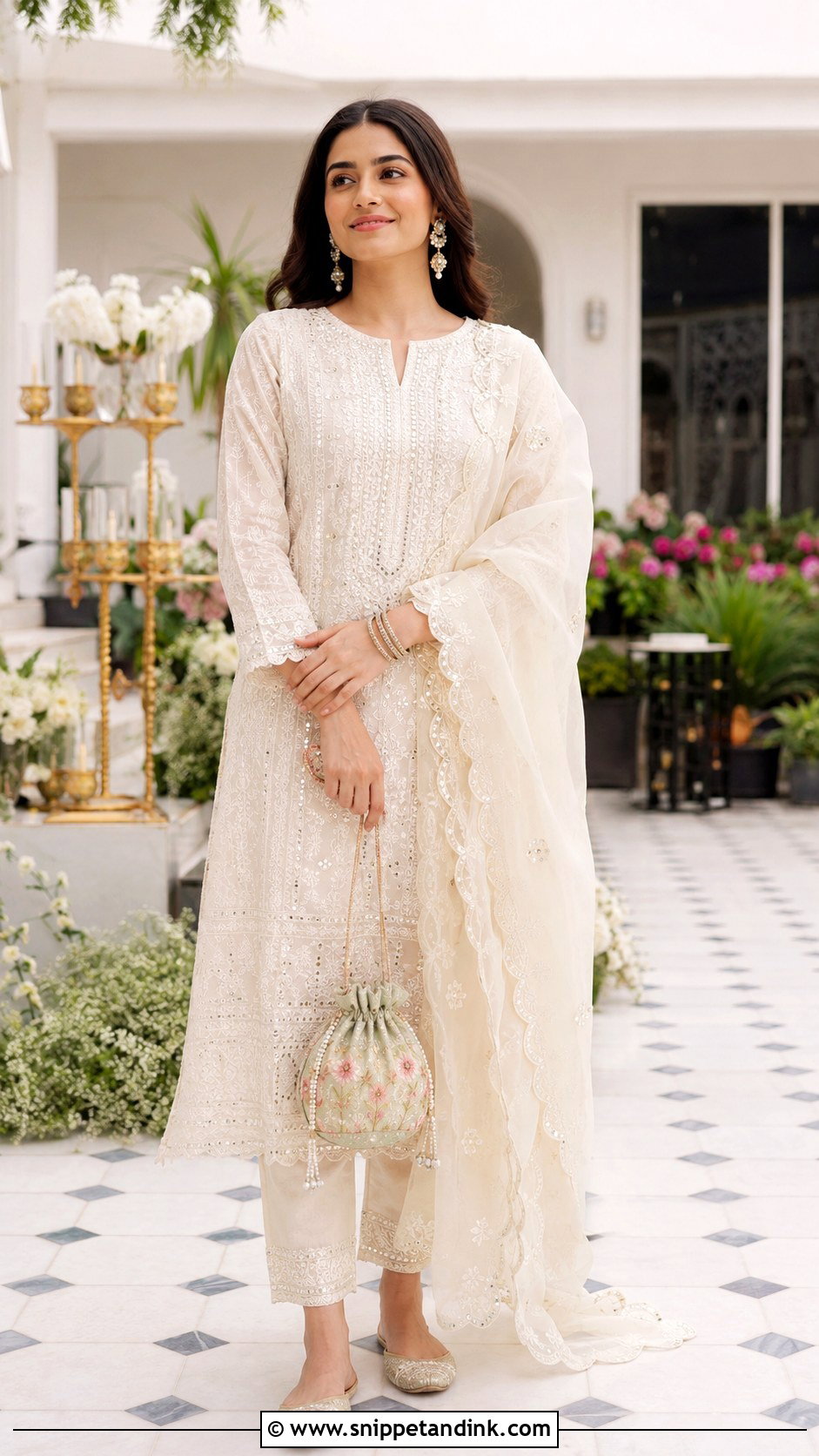
Chikankari is hand embroidery in fine white or tonal thread on light cotton, georgette or chiffon, and I suggest it for daytime events above anything else. Ivory, blush, powder blue, pistachio or soft yellow show the work best, and a little mukaish, pearls or sequins add sparkle without hiding the stitches. A long straight kurta with slim pants is clean; a flared kurta with a sharara moves more. An organza dupatta with a narrow border, pearl earrings, metallic juttis, stacked bangles and a small pastel potli finish it. Most chikankari is sheer, so ask whether a matching slip or lining is included, and sweep the hair back so the neckline work shows.
9. Designer Bandhani Suit for Indian Wedding
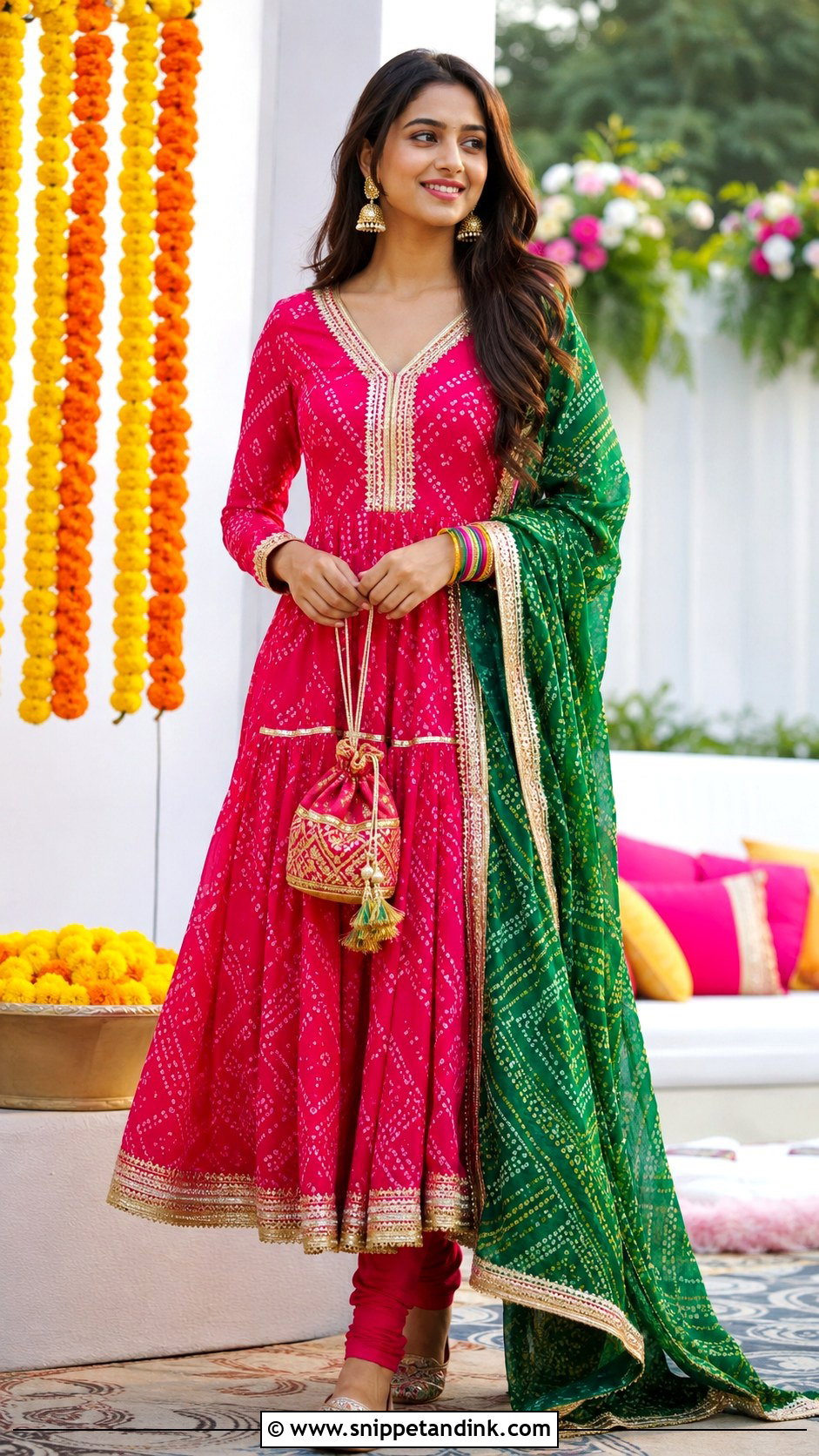
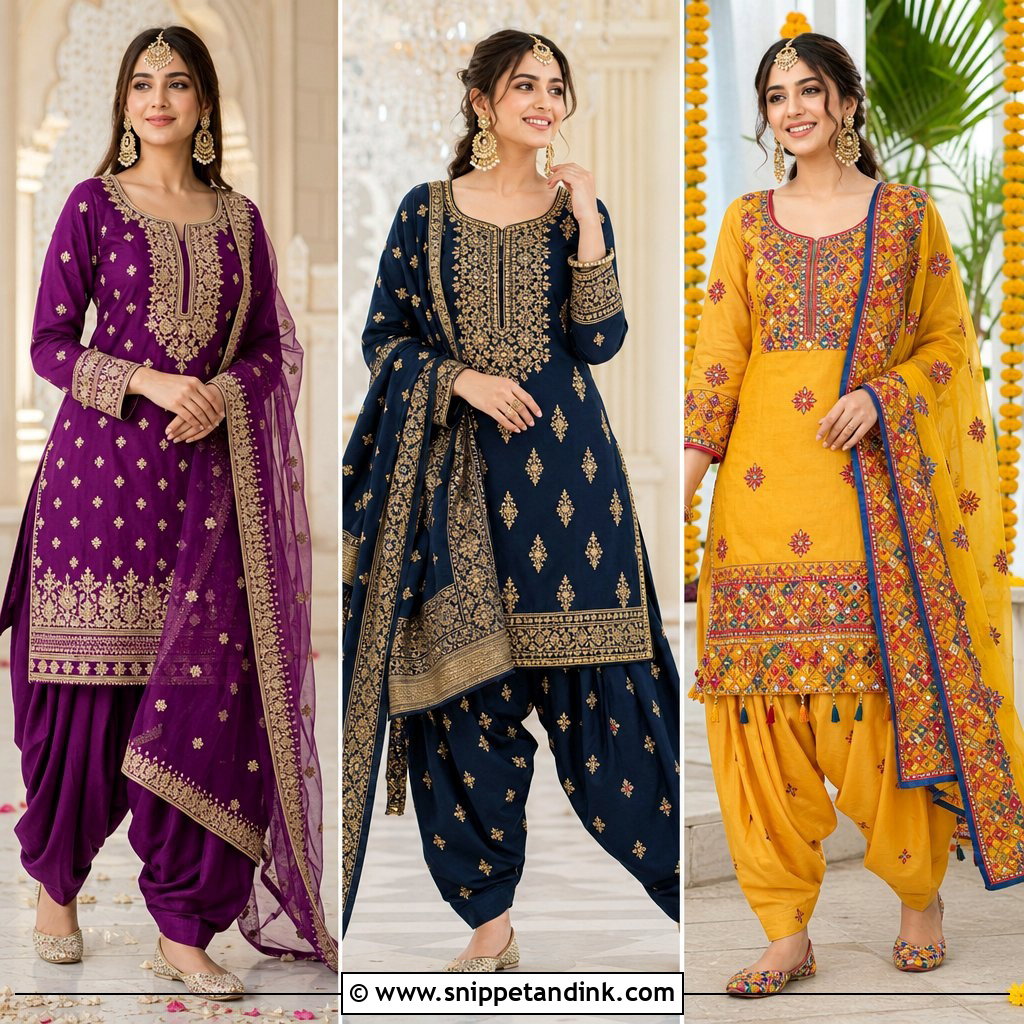
Bandhani is tie-dye, each tiny dot pinched and bound by hand before dyeing, and it has a joyful, festive feel. Red, fuchsia, orange, green or royal blue suit it. A plain silk kurta with a Bandhani dupatta is the understated way in; a fully patterned Anarkali makes a louder point. Keep the bottoms solid, churidar or a simple sharara, so prints don’t compete. A gota border adds shine, then gold jhumkas, embroidered juttis, a drawstring potli and a neat braid. It’s my go-to for mehndi and daytime gatherings. One practical warning: new Bandhani can bleed dye, so don’t let it get wet against a pale fabric.
10. Designer Mirror Work Suit for Indian Wedding
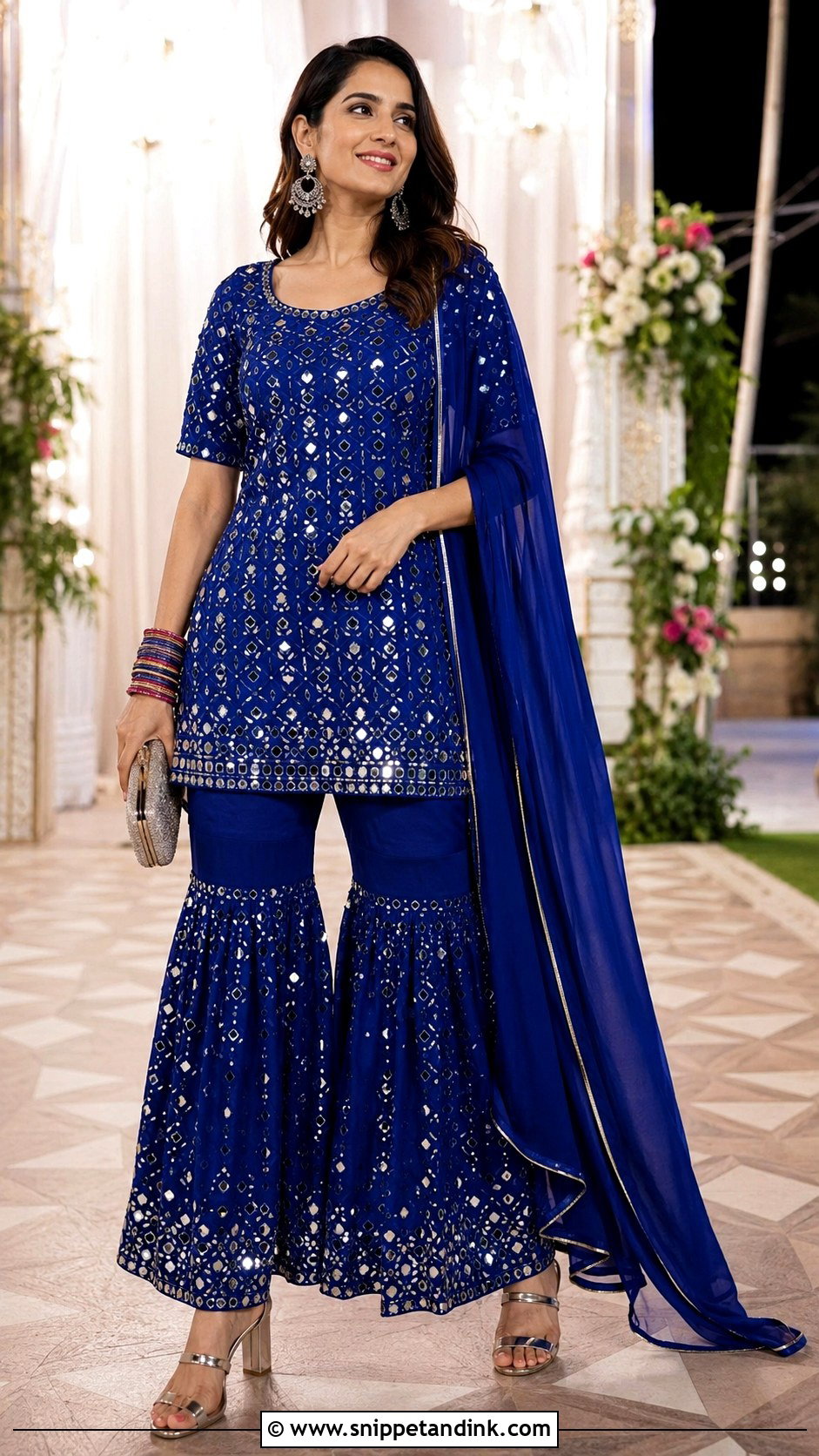
Mirror work is made for a sangeet: every turn on the dance floor throws light. A fitted short kurti with a flared sharara, or a longer straight kurta with clean palazzos, both work. Saturated colours make the mirrors look crisp, while pastels give a softer daytime effect. Because the embroidery is so strong, I pair it with a plain chiffon dupatta with only a narrow border. Stable block heels, sculptural earrings, coloured bangles and a simple clutch are enough, and skip the necklace over a busy bodice. Run your hand over the mirrors before buying. Rough edges catch the dupatta and scratch skin, and a smooth backing on the inside is what stops that.
11. Designer Jacket Suit for Indian Wedding
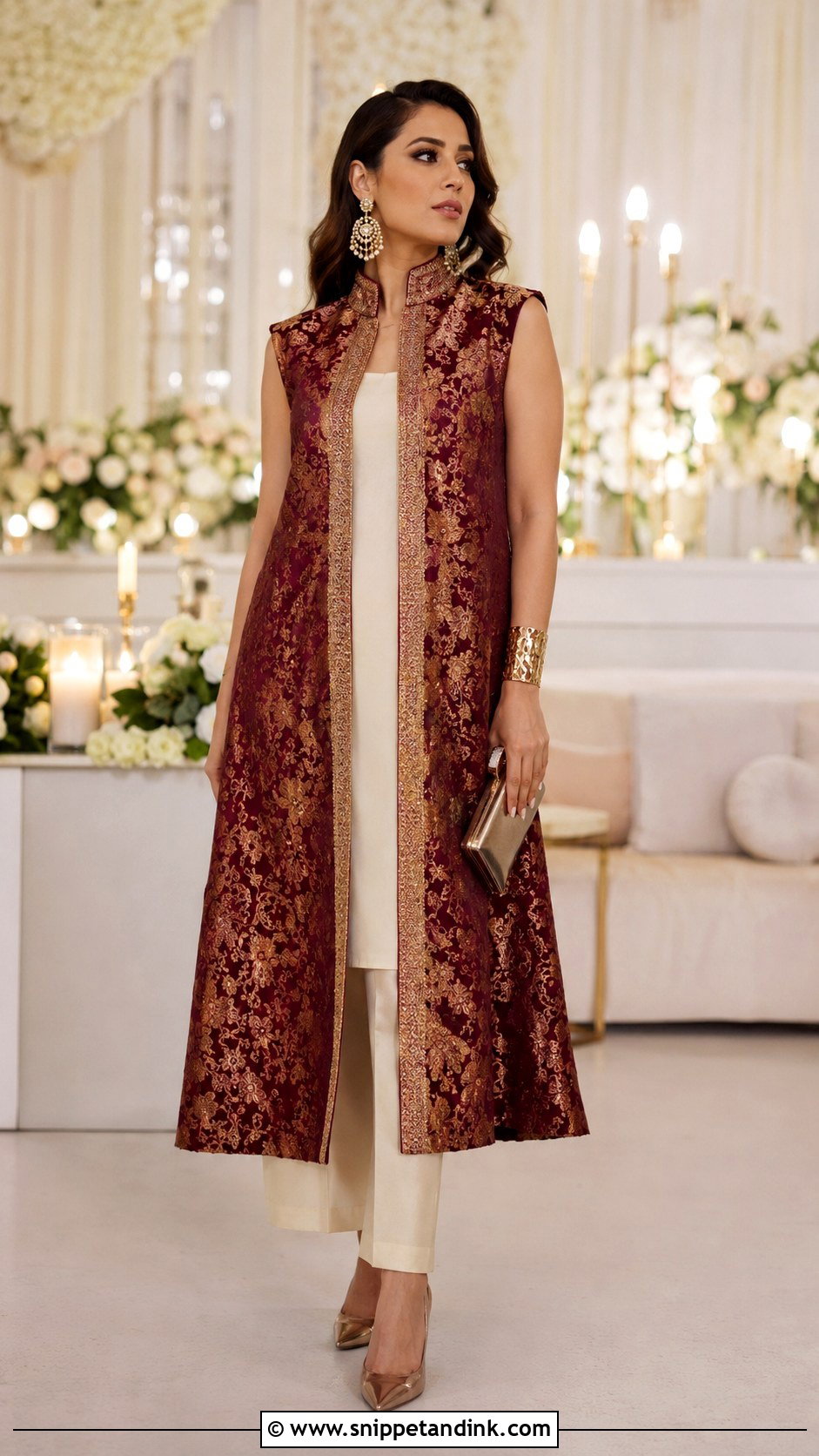
Women who like layering tend to love a jacket suit, and it’s the easiest outfit to tone down for dinner afterward. Start with a simple sleeveless or short-sleeved kurta and straight pants, then add a long embroidered jacket that falls below the knee. Brocade, organza, velvet or raw silk turns that plain base into proper wedding wear. Keep the inner pieces tonal. An open front adds length; a belt adds a waist. Pointed heels, a sleek clutch, statement earrings and one bold cuff complete it, with a narrow chiffon dupatta for the more traditional ceremonies. Check the jacket sleeves over your bangles before you buy, because a narrow cuff and a stack of kadas don’t mix.
12. Designer Cape Suit for Indian Wedding
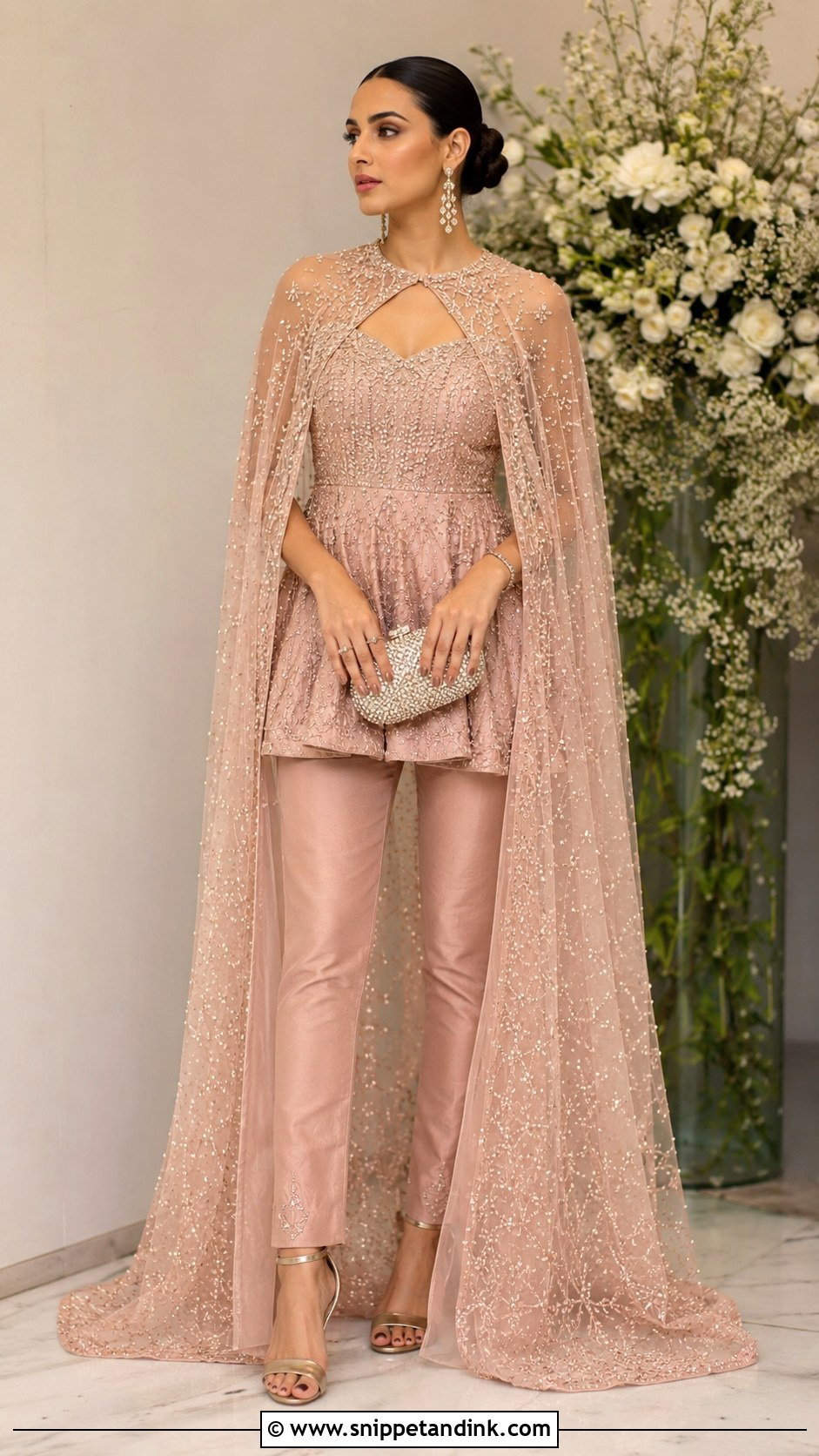
The cape replaces the dupatta, so there’s nothing to pin, rearrange or trail on the floor at a reception. Wear a fitted kurta or structured peplum under a sheer embroidered cape, with slim pants or softly flared palazzos. The cape can stop at the elbow, the waist or the ankle, as long as some of the base outfit still shows. Beadwork, pearls or thread at the shoulders frames the face. Metallic heels, drop earrings, a crystal clutch and a low bun finish it. For petite women I usually suggest a shorter cape; a long one can drown a small frame, while it lengthens a taller one.
13. Designer Peplum Suit for Indian Wedding
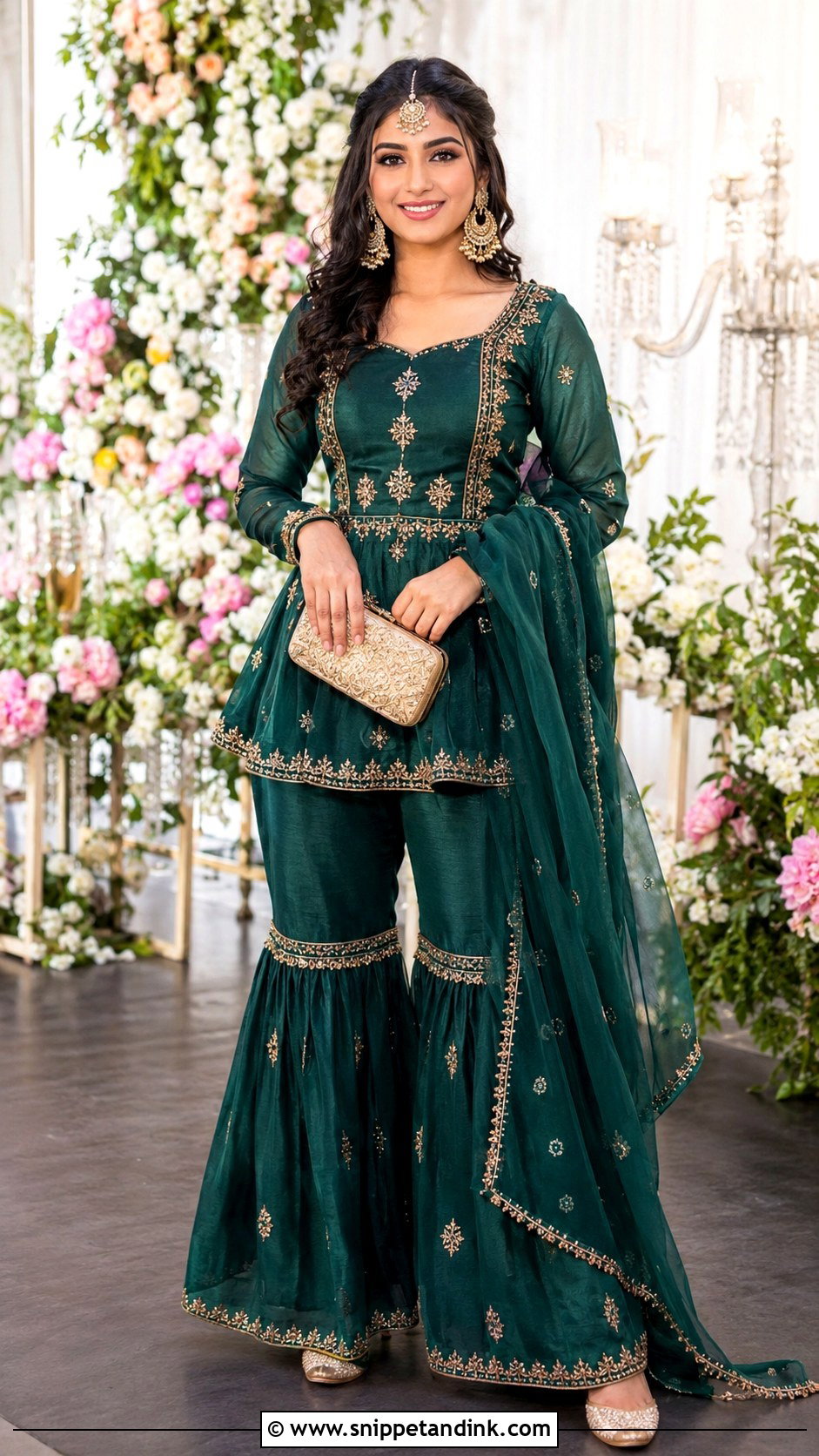
A designer peplum suit works only when the waist seam lands on your actual waist. A fitted peplum kurti ending at the upper hip over sharara or gharara pants keeps the decorated bottoms visible and creates an hourglass outline. Raw silk, brocade or embroidered georgette hold the flare of the peplum neatly. A V-neck or gently curved neckline opens the upper body, and a light dupatta goes over one arm. Heeled juttis, medium chandbalis, a maang tikka and an embroidered clutch finish it. If you want it quieter, keep the top detailed and the pants tonal. Off-the-rack peplums often sit too high or too low, so I nearly always have the waist adjusted.
14. Designer Dhoti Suit for Indian Wedding
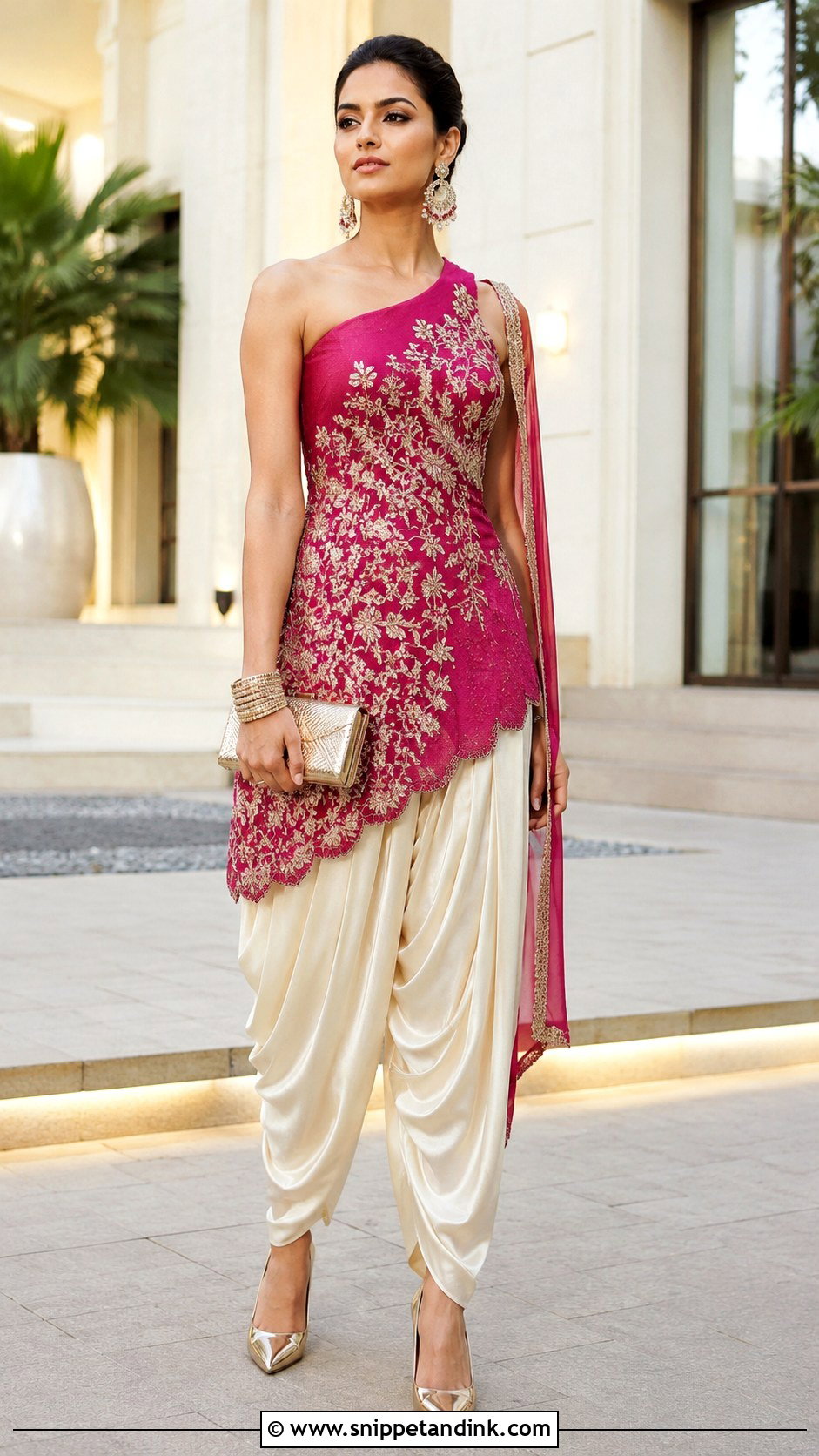
A dhoti suit is for the guest who enjoys fusion dressing and wants to be comfortable all night. Draped dhoti pants carry plenty of shape on their own, so the top should stay streamlined: a fitted short kurta, an asymmetric tunic or a cropped embroidered jacket. Crepe and soft silk let the folds fall cleanly; stiff fabric makes them look bulky. A narrow dupatta over one shoulder is optional. Pointed metallic heels, bold earrings, stacked cuffs and a box clutch suit it, with a high ponytail or smooth bun. The drape should finish above the shoe. If it bunches at the ankle, the whole silhouette sags.
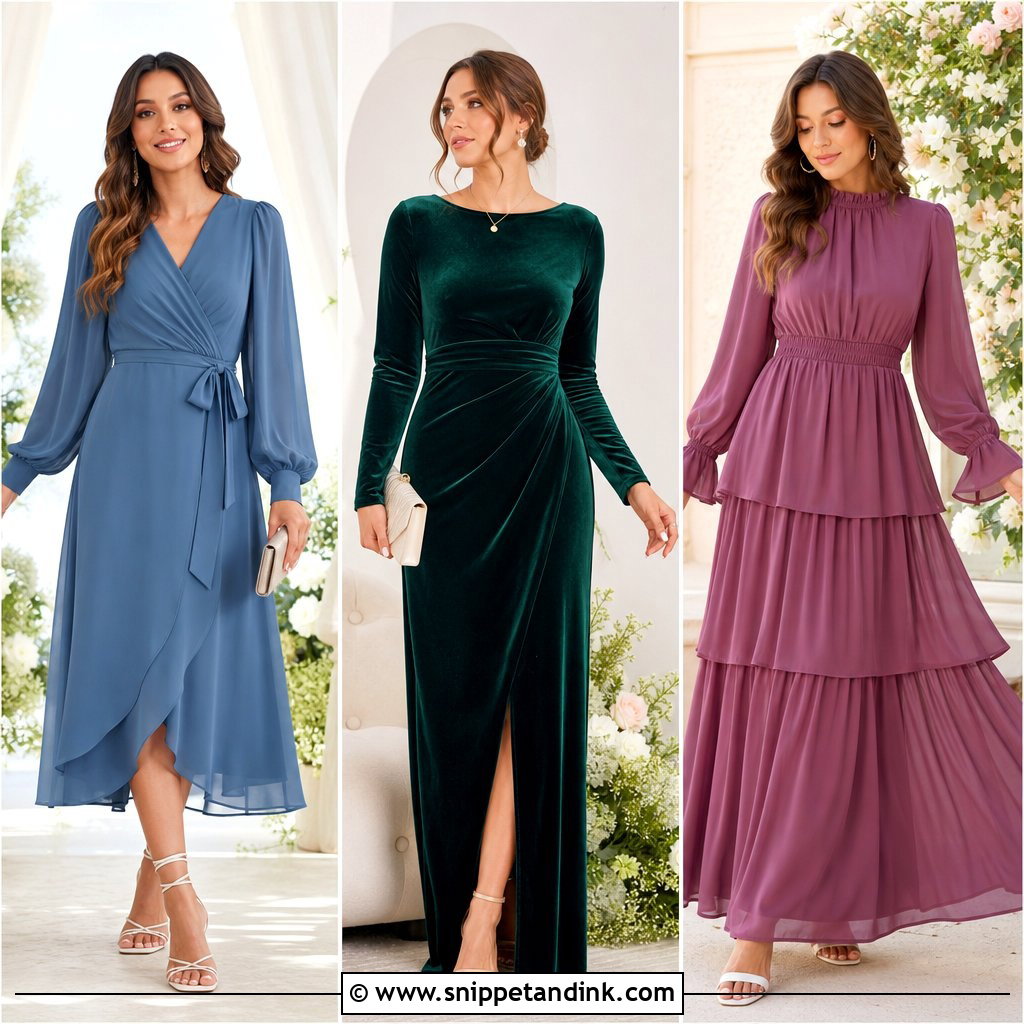
15. Designer Pakistani Suit for Indian Wedding
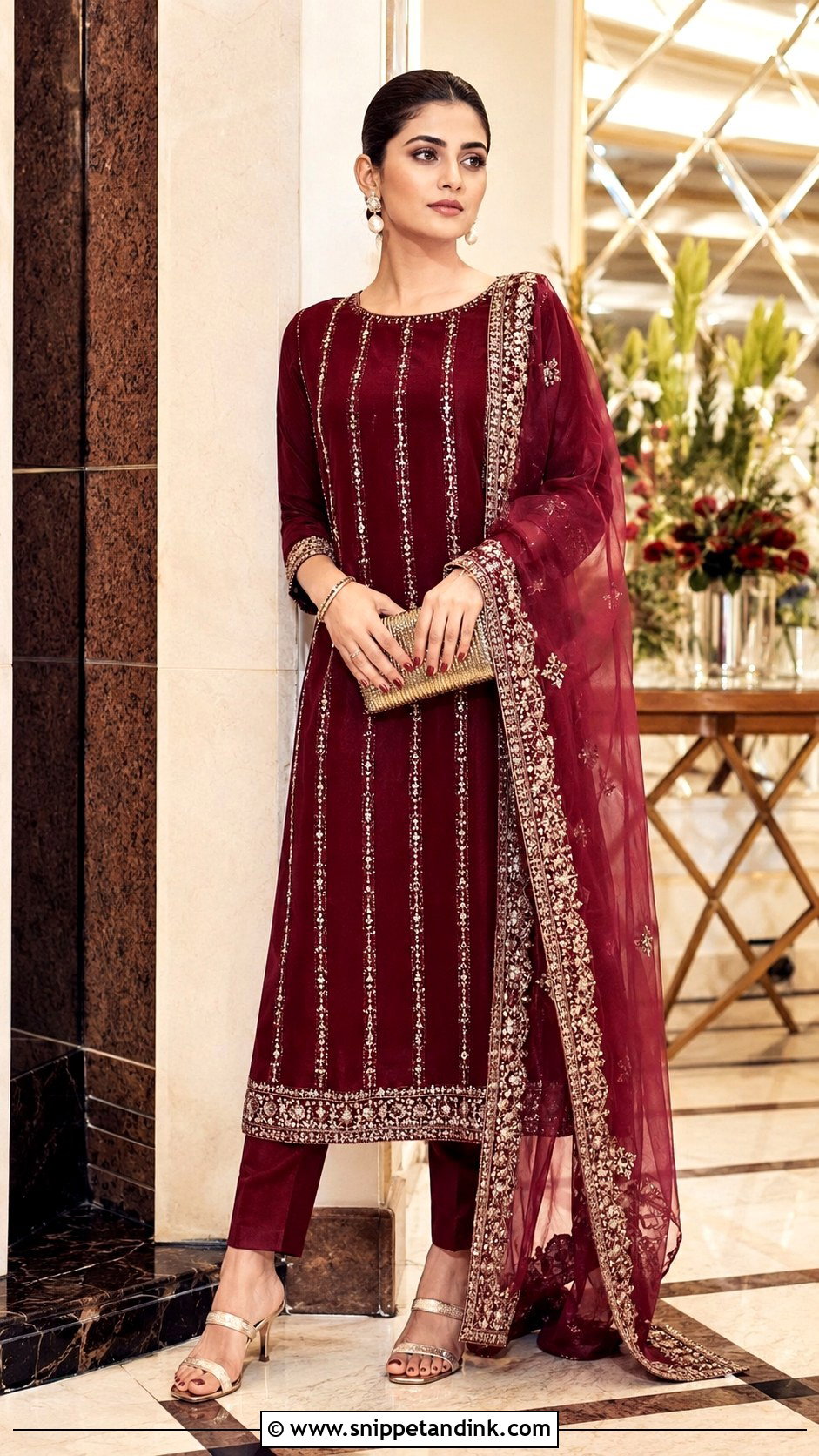
A Pakistani-style suit gives you full coverage and a long, fluid line. The usual cut is a long straight kameez with side slits, narrow pants and an embroidered chiffon or organza dupatta. I look for embroidery arranged in vertical panels, because it draws the eye up and down and makes the wearer look taller. Teal, wine, charcoal, dusty rose and ivory suit evening functions. The kameez should be long but still show a little of the trouser, so you can walk without kicking the hem. Low heels, pearl or polki earrings, delicate bangles and a rectangular clutch finish it. These necklines and sleeve borders are usually detailed, so go easy on extra jewelry.
16. Designer Patiala Suit for Indian Wedding
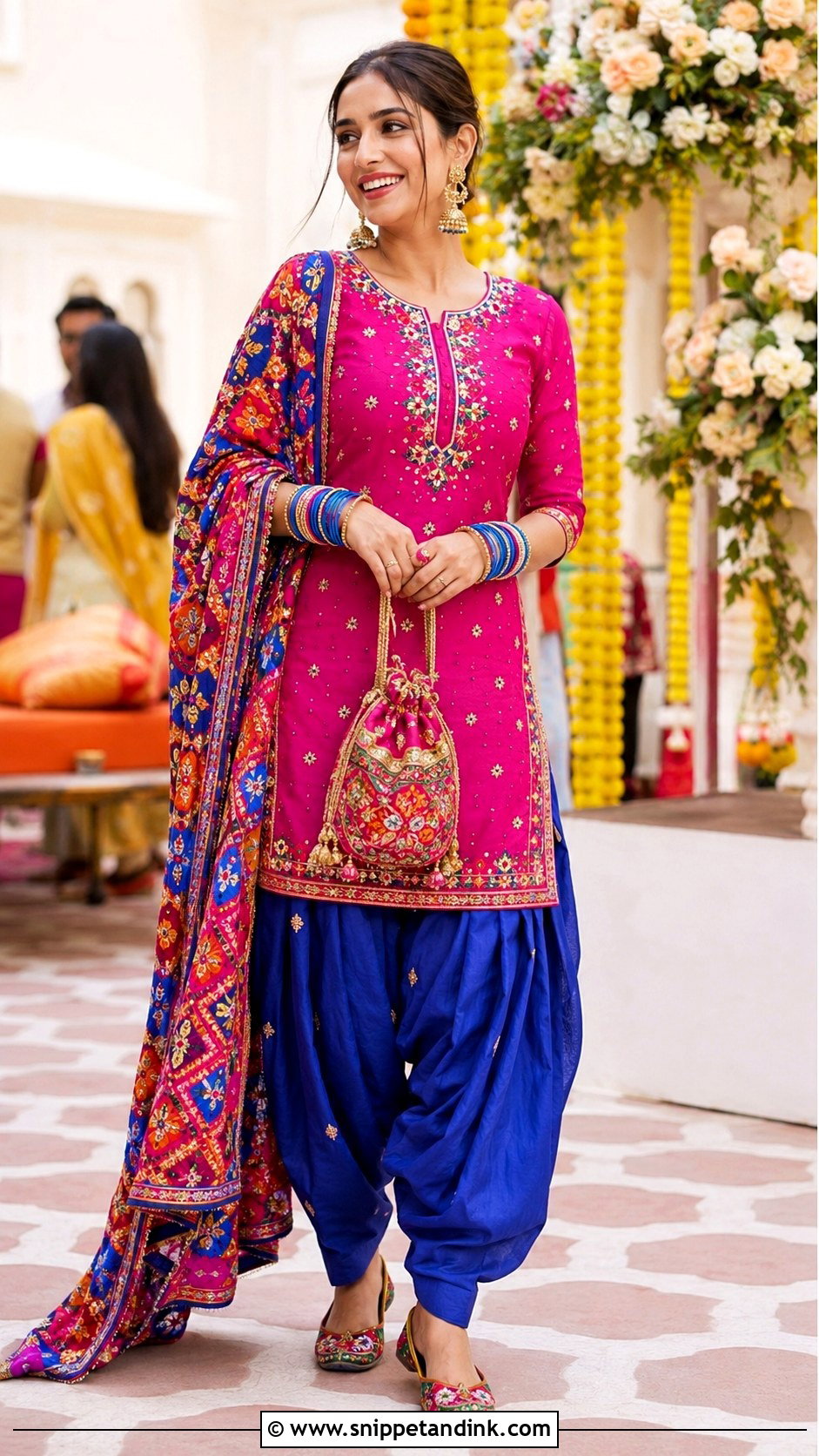
The Patiala suit brings Punjabi energy to a lively function, and it’s built for bhangra. Deeply pleated Patiala pants in silk blend or soft crepe pair with a fitted, mid-thigh kurti so the pleats stay visible. Phulkari-style embroidery, gota or bright threadwork on the kurti adds colour, and a contrasting dupatta brings in one more festive shade. Embroidered juttis, bold jhumkas, glass bangles and a compact potli finish it, with a decorated braid or loose waves. My one firm rule: no oversized kurti. Volume on top and volume below hides exactly the proportions that make a Patiala work.
17. Designer Asymmetrical Suit for Indian Wedding
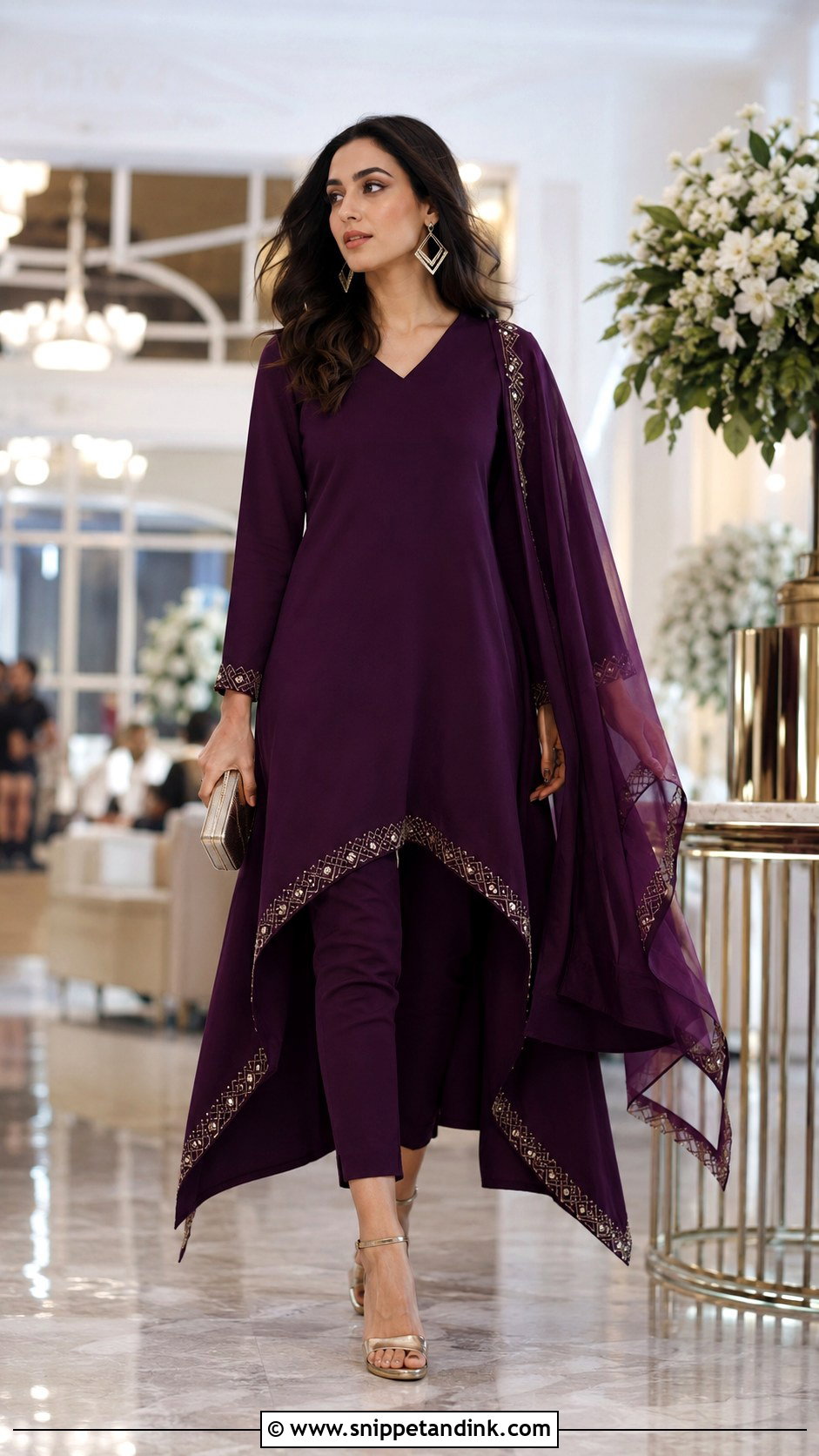
An asymmetric suit looks modern without leaving Indian wedding wear behind. Pick a kurta with a high-low hem, a diagonal front panel or a one-sided drape, over cigarette pants or narrow palazzos. A solid jewel tone keeps the unusual cut readable, and embroidered edging traces the shape. The fabric matters: crepe, silk or georgette fall smoothly, while anything stiff makes an uneven hem look like a mistake. A light dupatta draped away from the main detail, or none at a reception, plus sleek heels, geometric earrings and a metallic clutch, completes it. Sit down in it at the trial. The shortest point still has to cover you when you’re seated.
18. Designer Floor Length Suit for Indian Wedding
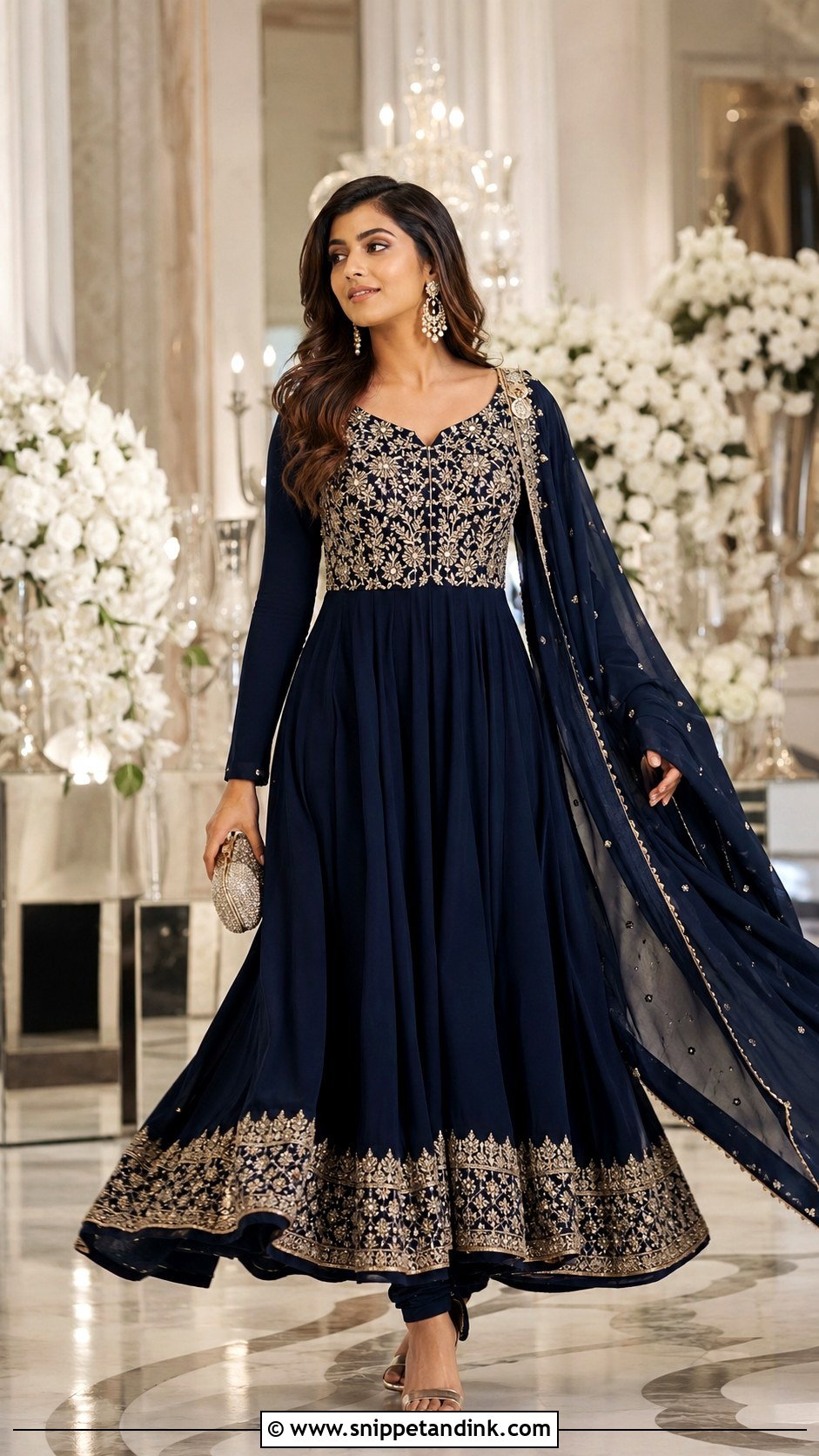
A floor-length suit gives you the drama of a gown with the familiar structure of a kurta and churidar. A panelled Anarkali or kalidar kurta should have enough flare to swing as you walk, but not so much that you’re gathering fabric to climb stairs. Embroidery at the bodice, waist and hem shows up well in photos. Fitted churidar, a sheer dupatta pinned at one shoulder and heeled sandals help the skirt fall properly, with a statement necklace or chandelier earrings. Carry a small clutch; a shoulder bag drags the drape sideways. I hem these in the exact shoes, so the skirt just clears the floor.
19. Designer Organza Suit for Indian Wedding
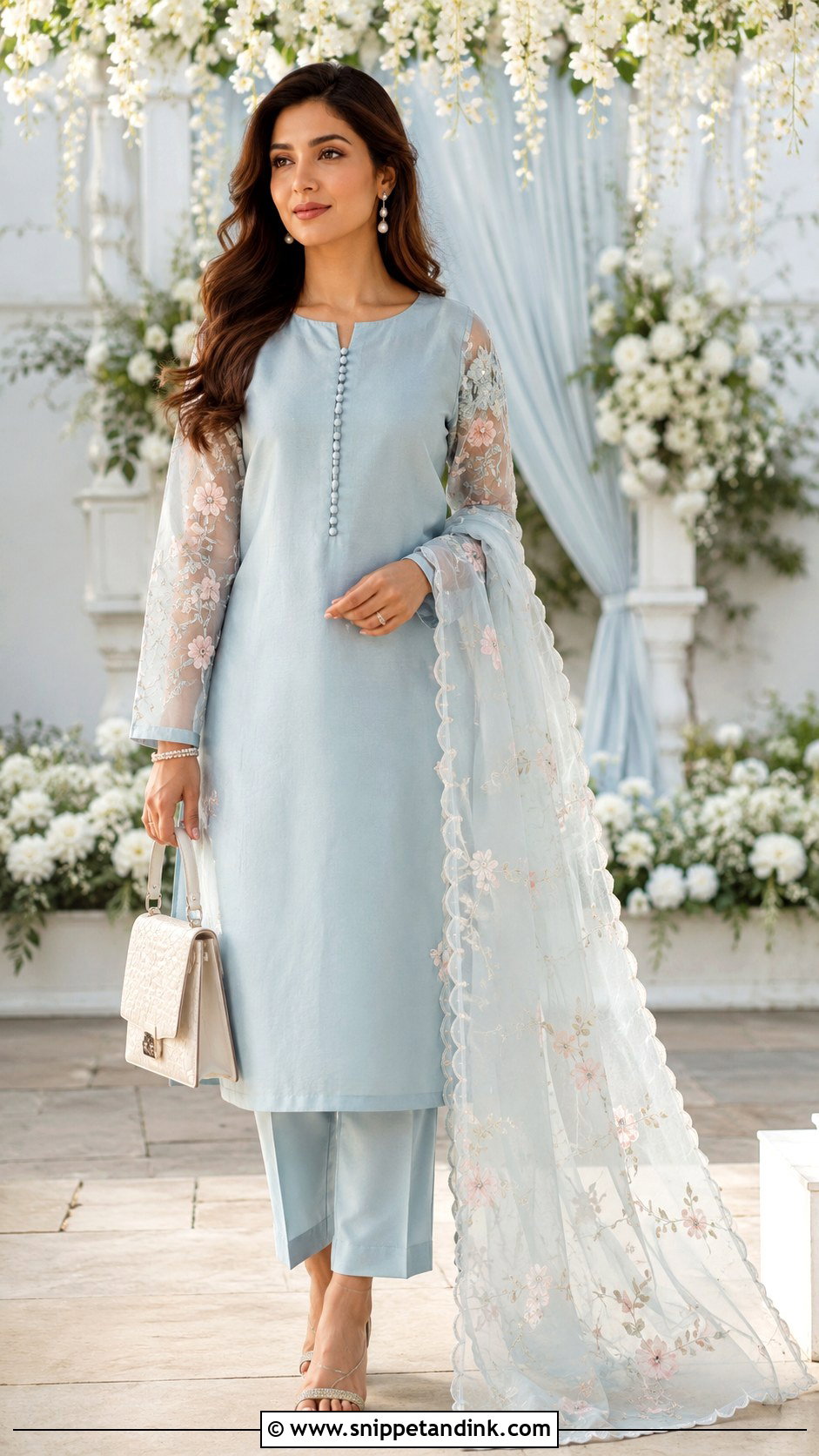
Organza is crisp and sheer, so it suits a bright daytime wedding but can look just as smart at night in black, navy or deep green. A silk-blend kurta with organza sleeves, floral embroidery or layered translucent panels pairs best with straight pants in an opaque matching fabric. An organza dupatta with scalloped edges adds volume without weight. Pearl earrings, slim heels, a structured handbag and a simple bracelet finish it. Organza holds every fold, good and bad: steam it carefully before you dress and pin the dupatta discreetly, or its crisp edges will stick out at odd angles by the end of the evening.
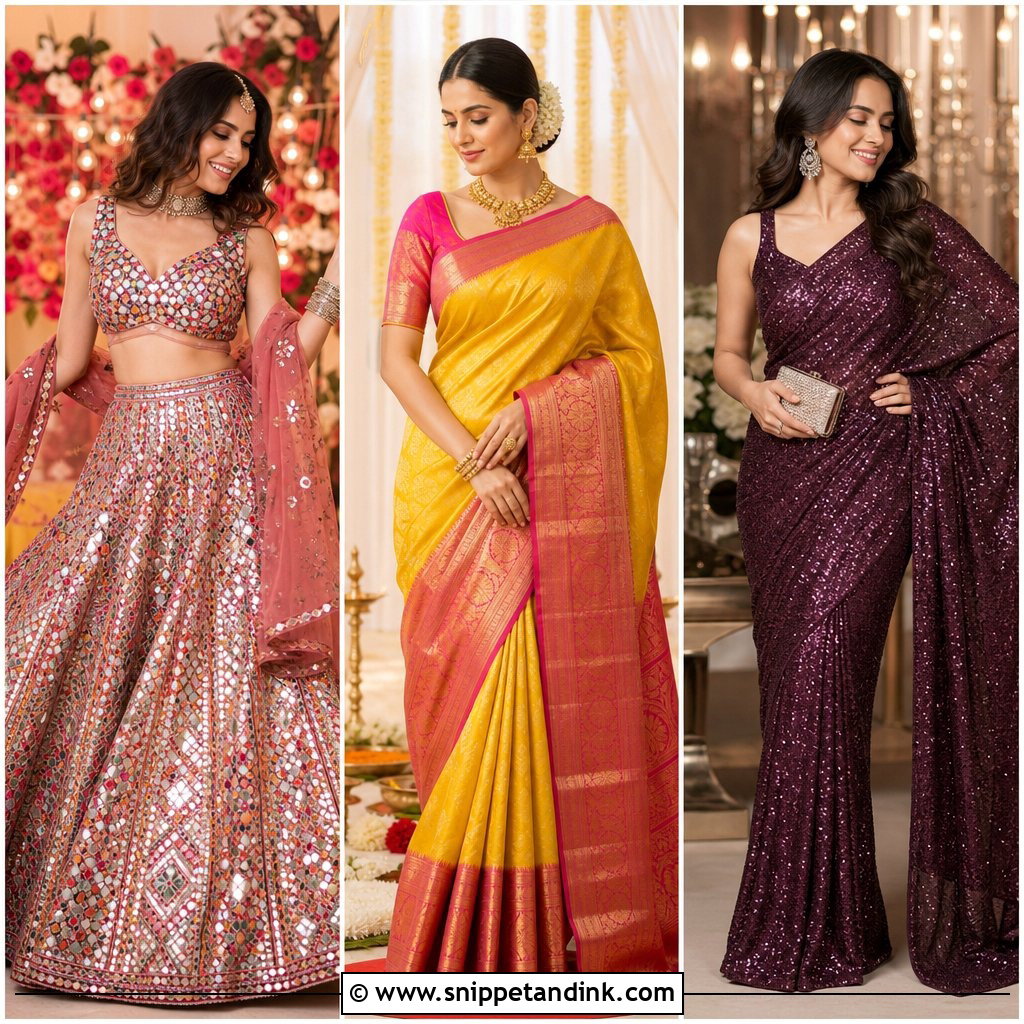
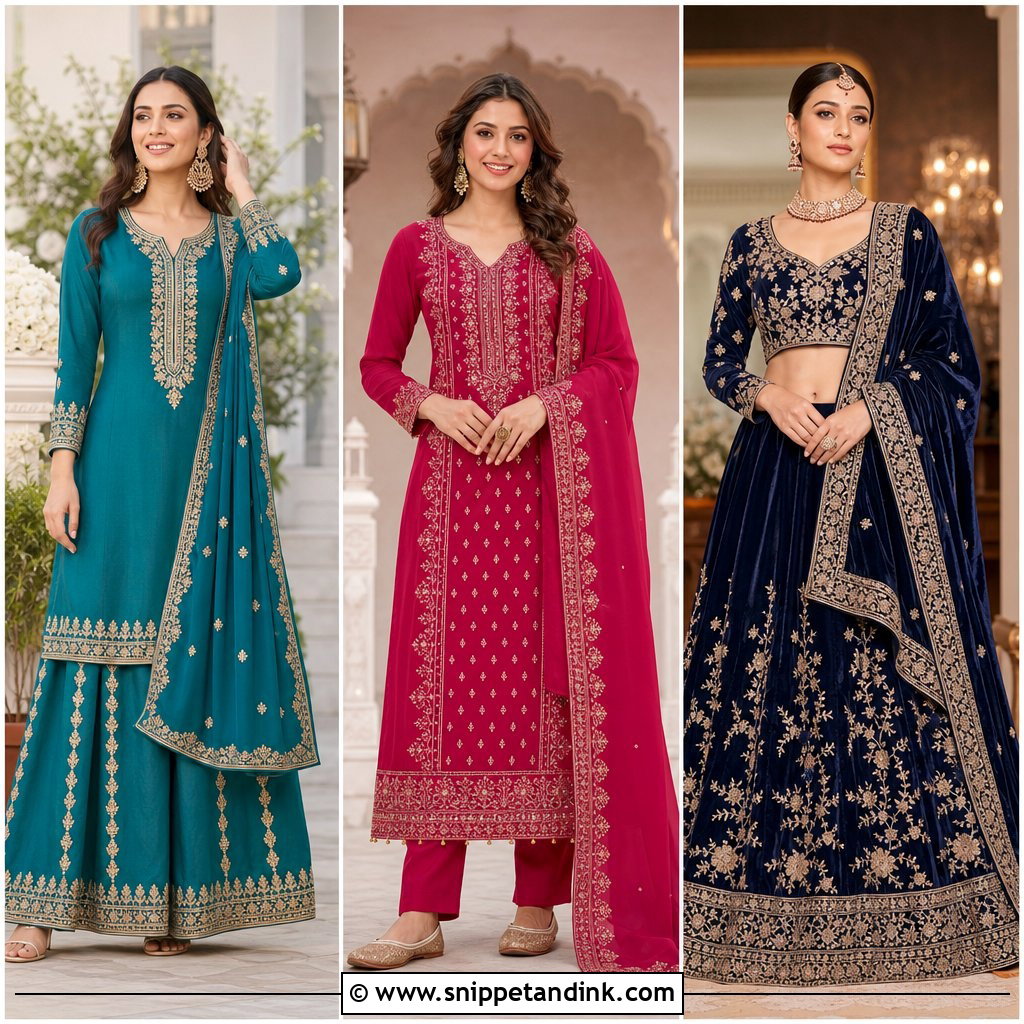
20. Designer Brocade Suit for Indian Wedding
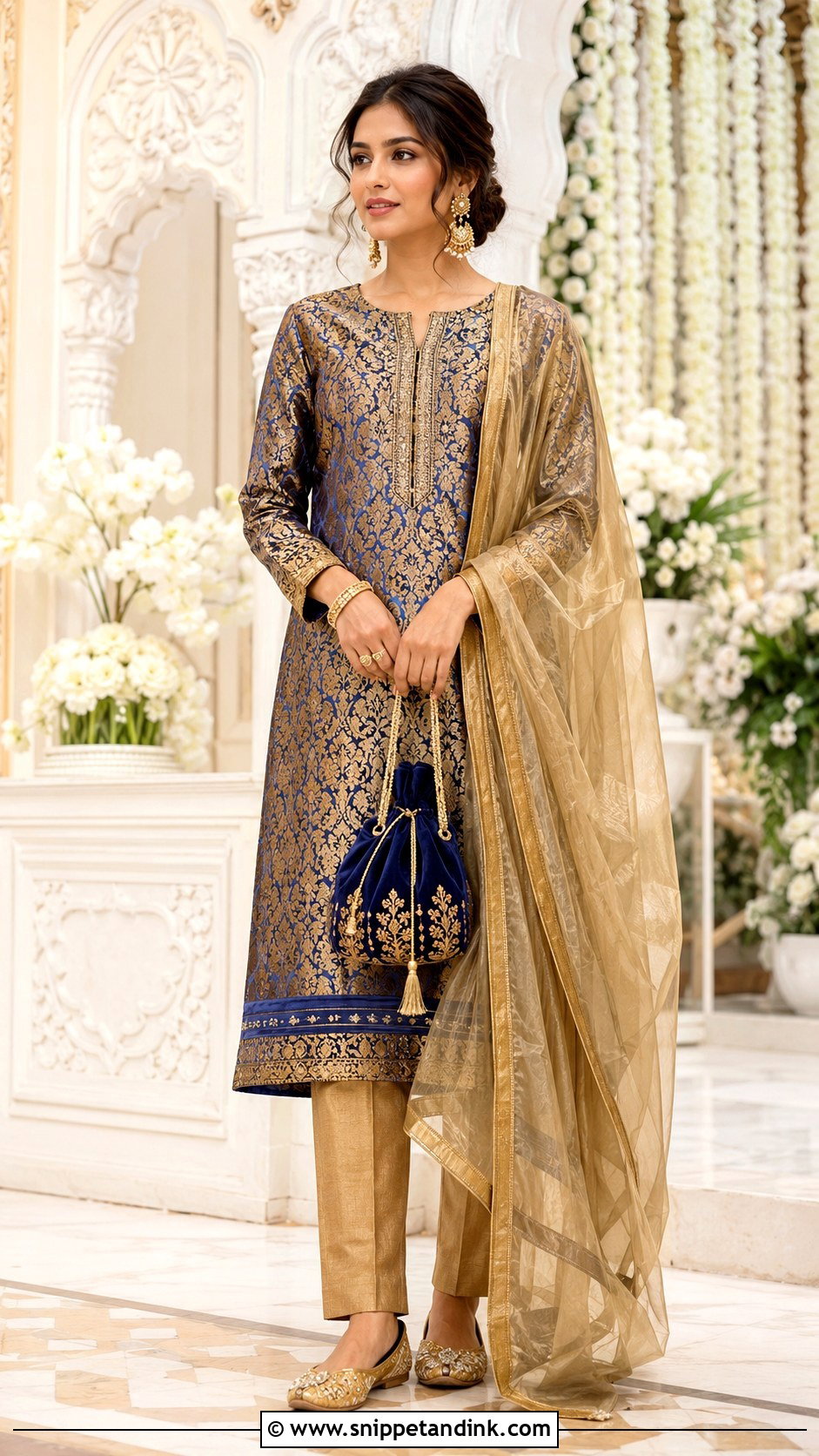
Brocade has its pattern woven into the cloth, so it looks rich without any surface embellishment. A brocade kurta in antique gold, jewel green, deep red or royal blue sits best over plain silk pants. A knee-length straight cut looks formal; a short brocade top with a flared sharara looks younger. Choose a tissue silk or chiffon dupatta with a narrow zari border rather than another bold pattern. Traditional juttis, kundan earrings, one matching bangle and a velvet potli complete it. Brocade has almost no give, so I fit it smooth rather than snug and check that you can lift your arms and sit without the side seams straining.
What a Tailor Can Fix in a Week and What Needs a Month
Most designer suits are bought ready-made or semi-stitched, and almost all of them need some alteration. Plan for it. Simple changes like taking in kurta side seams, shortening sleeves, adjusting the churidar length or adding dress shields are usually quick. Anything that touches embroidery takes longer, because the tailor has to unpick and reattach work rather than cut through it.
- Quick: side seams, sleeve length, trouser hems on plain fabric, adding hooks or a dupatta loop at the shoulder.
- Slower: shortening an embroidered hem, moving a peplum waist seam, narrowing shoulders.
- Rarely worth it: letting out a fitted kurta with no seam allowance, or reshaping a heavily worked neckline.
I tell clients to take the suit to the tailor at least three to four weeks before the first function, along with the shoes they’ll wear and the bra they’ll wear under it. Both change how the kurta sits more than people expect.
Three Functions, One Suitcase and a Hotel Steamer
For a destination wedding, I fold each suit with tissue between the embroidered layers, kurta face-in, and pack it flat on top so nothing heavy presses the work. Dupattas roll better than they fold. Hang everything the night you arrive and steam from the inside of the garment, holding the steamer away from zari and sequins, which can tarnish or dull with heat. Keep a few safety pins, a mini sewing kit and spare dupatta pins in your clutch for the day itself.
Your Role at the Wedding Should Pick the Suit
Start with who you are at this wedding, then the event, and only then the embroidery. A suit should let you move easily, suit the time of day, the venue and the weather, and match how formal the function is. Anarkalis and floor-length suits bring grandeur; palazzo, sharara and jacket sets are more flexible. Silk and brocade read traditional, organza reads light, and velvet belongs to winter. Tailoring matters as much as handwork, especially at the shoulders, waist, trouser length and hem. Use the twenty above as a starting point, then build a complete outfit around the one that fits your role.
You'll Like These Ideas:


Leave a Reply