
An Indian wedding is really four or five events, and each one asks something different of your clothes. Haldi means turmeric on everything, mehndi means hours sitting still with wet hands, sangeet means dancing, the ceremony means long rituals, and the reception means evening light and sparkle. So I dress clients function by function. Washable, light fabrics for haldi. Silhouettes you can dance in for the sangeet. Richer fabric and modern drapes for the reception. Before choosing anything, think about the venue, the weather, the family’s customs and your own place in the wedding, since a sister and a colleague dress at different levels. Keep accessories to what you can move in. Below are twenty complete outfits, grouped roughly in the order the functions happen.
One Suitcase for Five Functions
A three-day wedding can mean five outfits, and that is where budgets and luggage both break. I plan them as a set rather than five separate purchases. Pick one jewelry family, gold or oxidized silver, and build every outfit around it, so a single set of earrings and bangles does the work of five. A neutral dupatta in gold or ivory tissue can sit on two different suits. Juttis and one pair of block heels cover nearly every function.
- Haldi: the cheapest, most washable piece you own.
- Mehndi: short sleeves or sleeveless, nothing tight at the wrist.
- Sangeet: whatever you can dance in, tested at home first.
- Ceremony: your best traditional outfit, at the level your relationship to the couple allows.
- Reception: the sparkle, the gown or the pre-draped saree.
Pack each outfit in its own garment bag with its blouse, dupatta, pins and the jewelry it needs. Searching for one earring between functions, with a car waiting, is the most common stress I see on wedding weekends.
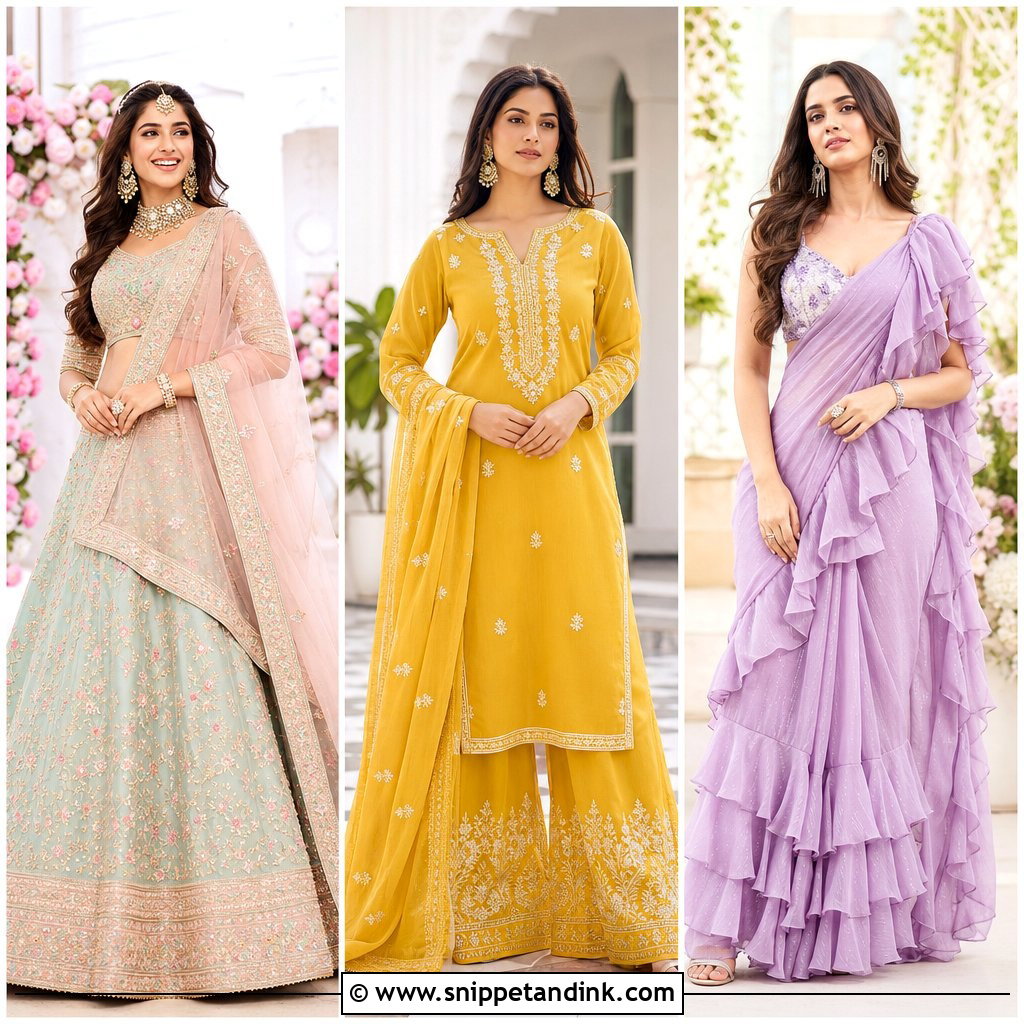
1. Yellow Anarkali Suit For Haldi Function
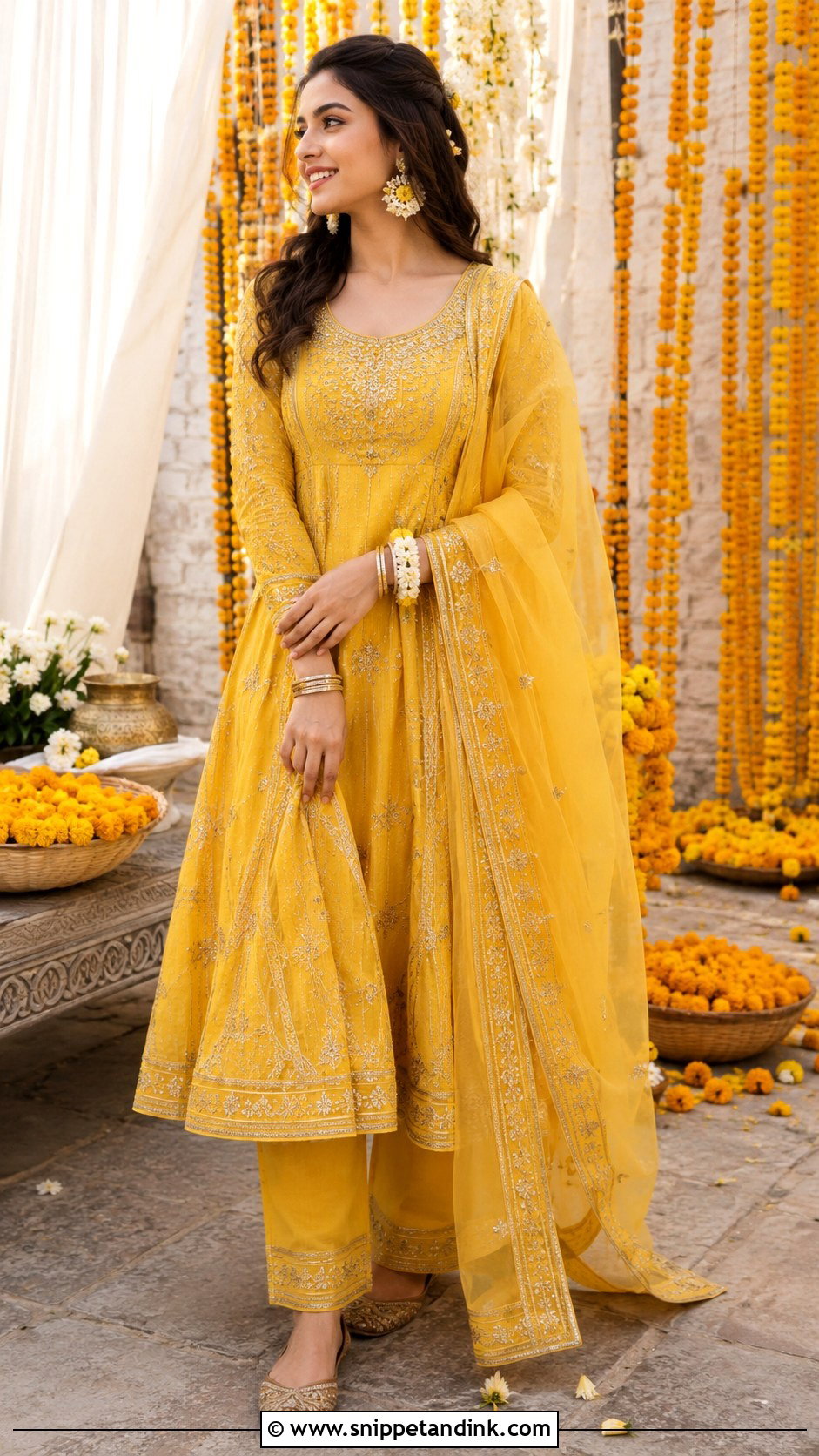
A yellow Anarkali suit is the classic haldi choice, and I’d keep it simple for a reason: it will get turmeric on it. Breathable cotton, Chanderi or light georgette lets you sit on the floor and join the rituals comfortably, and a calf or ankle length stays out of the paste bowls. Minimal embroidery is easier to clean. Straight pants and a soft organza dupatta with a floral border finish it, with flower earrings, bangles and juttis. Keep hair in a low braid or flowered bun. Marigold, mango and mustard suit haldi décor, though a guest might pick a shade lighter than the bride’s so the two don’t merge in group photos. Brides can take bolder gota patti.
2. Floral Lehenga For Haldi Function
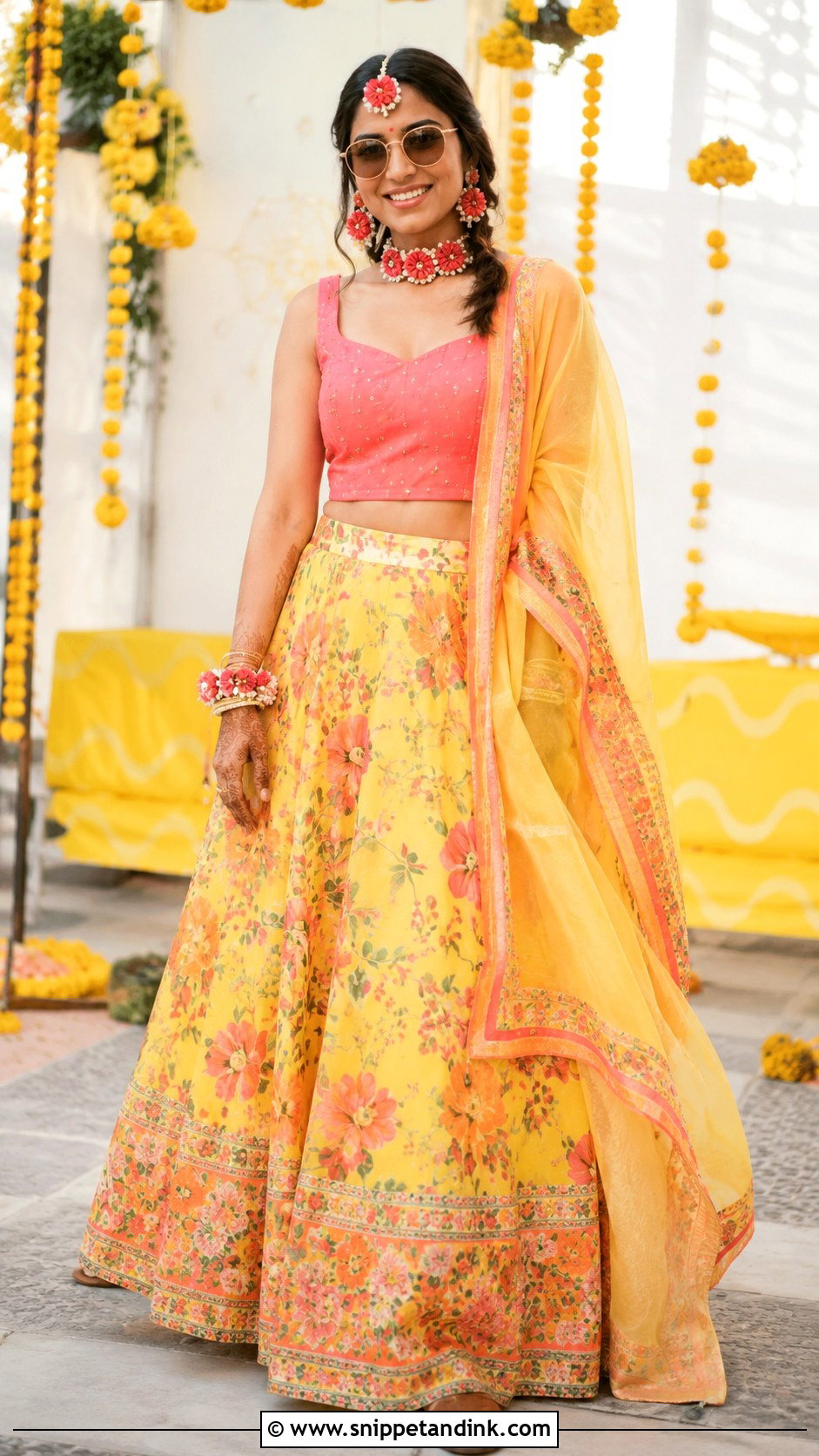
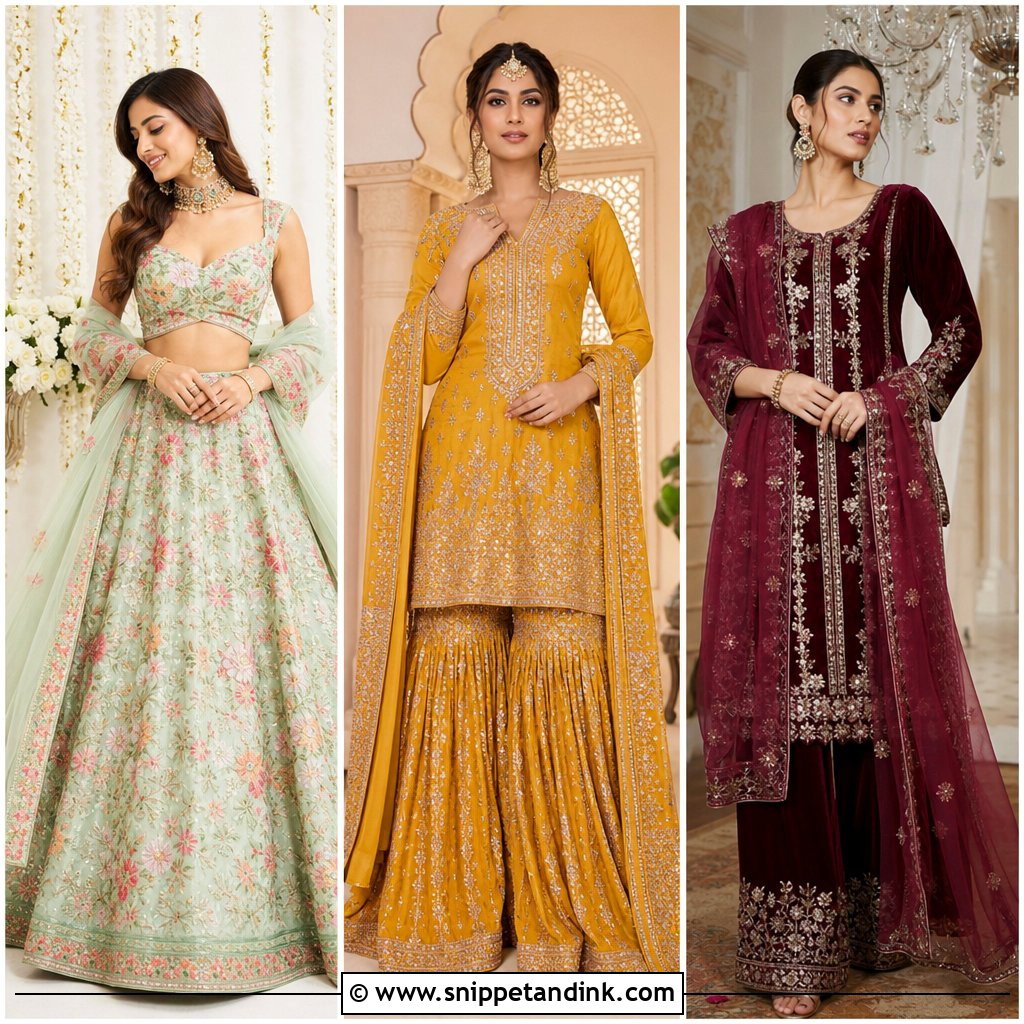
Printed floral lehengas are playful and, more importantly, cheap to replace if turmeric wins. For an outdoor haldi I’d choose a light printed skirt over dense embroidery, which traps paste in the threads. A fitted short-sleeve blouse keeps your arms free for the rituals, and the dupatta should be pinned at one shoulder so it doesn’t trail into the bowls. Yellow, coral, pink, mint and orange all suit the mood. Floral jewelry, small hoops and slim bangles are enough. Kolhapuris or juttis are comfortable for games and photos, with a loose braid and fresh flowers. Don’t wear anything here you’d be heartbroken to stain.
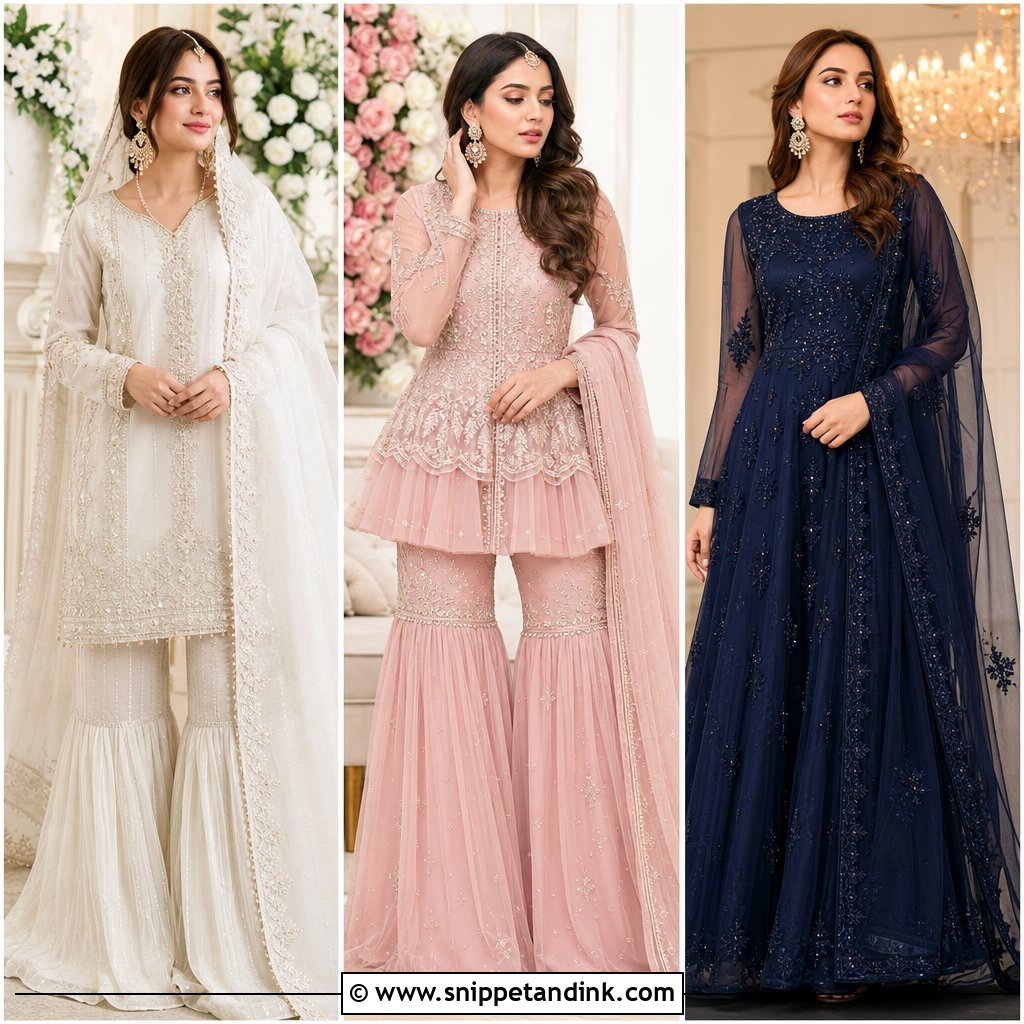
3. Green Sharara Set For Mehndi Function
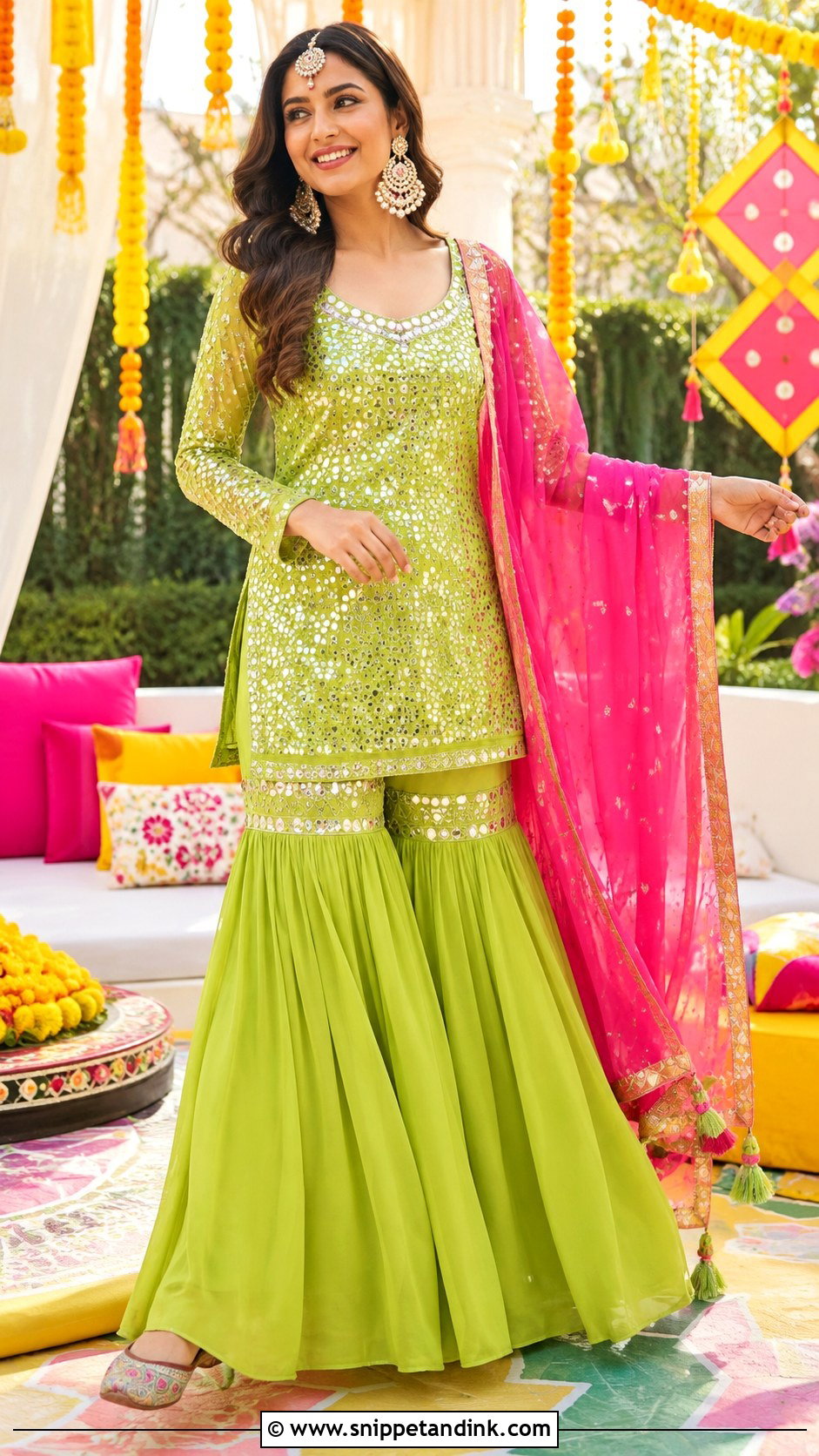
A green sharara set handles a long mehndi well, because you’ll spend a lot of it sitting with your hands held out. A short embroidered kurti that leaves the arms free matters more than anything else; tight or long sleeves get smudged with paste and stain. Light georgette, cotton silk and chiffon sit comfortably for hours. Emerald, lime, mint and parrot green are traditional, and pink or orange can come in through the dupatta. Statement earrings, a maang tikka and flat juttis finish it. Skip rings and bracelets entirely if you’re having henna applied, and tie your hair back in a side braid or ponytail so it doesn’t fall into wet designs. Mirror or gota work adds sparkle without weight.
4. Chikankari Palazzo Suit For Mehndi Function
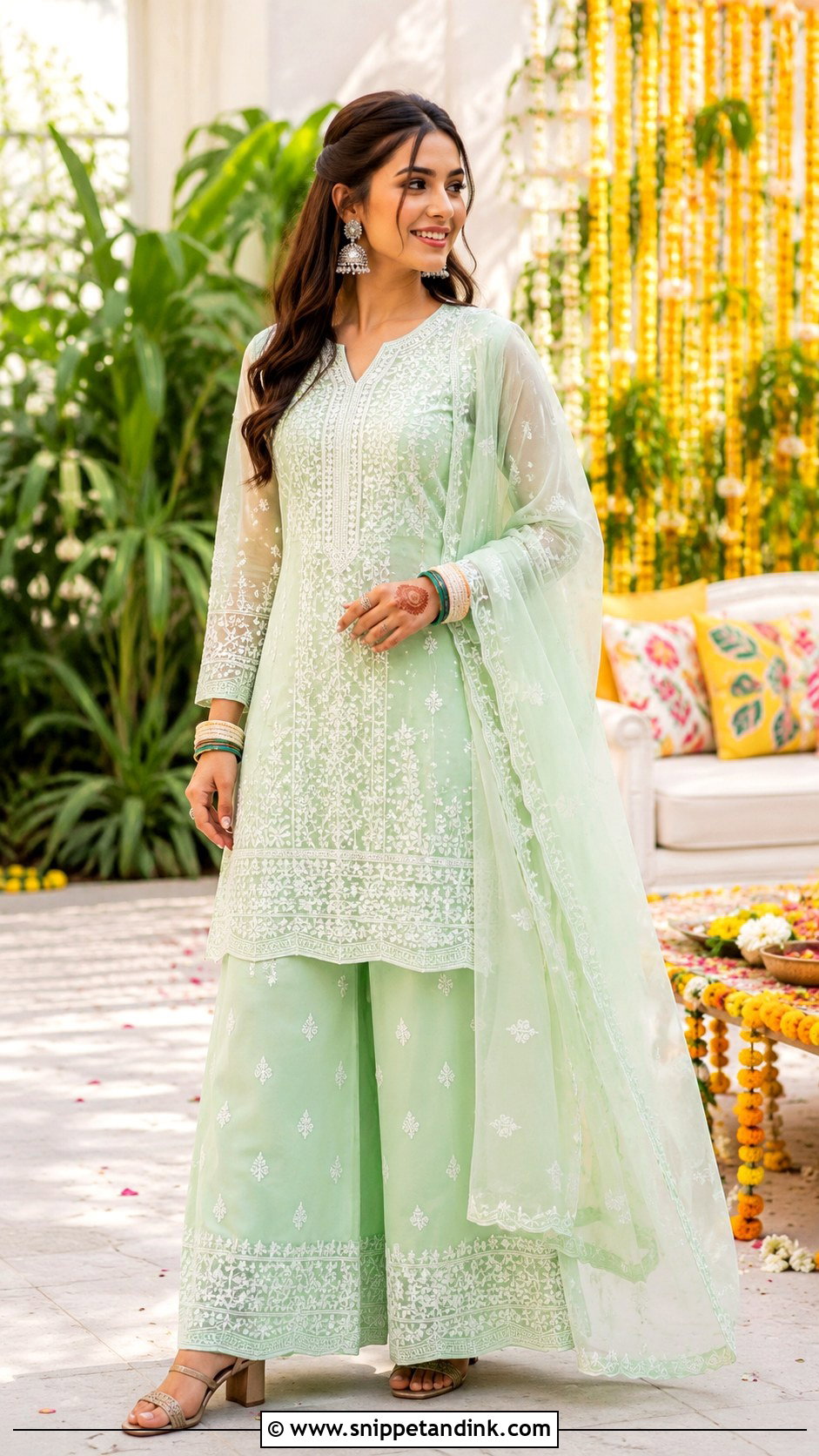
A chikankari palazzo suit is my go-to for a relaxed daytime mehndi. The hand-embroidered cotton or georgette is light, and a knee-length kurta with wide palazzos and a sheer dupatta over one shoulder is easy to sit in for hours. Green feels traditional, but peach, lilac, yellow and powder blue all work if they suit the event palette. Oxidized silver or colourful meenakari jewelry adds contrast; juttis or low block heels finish it. Avoid tight sleeves, stiff fabric and dupattas that need constant fixing while your hands are wet. One caution: chikankari on fine fabric can be sheer, so check it in daylight before you commit. Bridesmaids can repeat the fabric in different pastels.
5. Mirror Work Lehenga For Sangeet Function
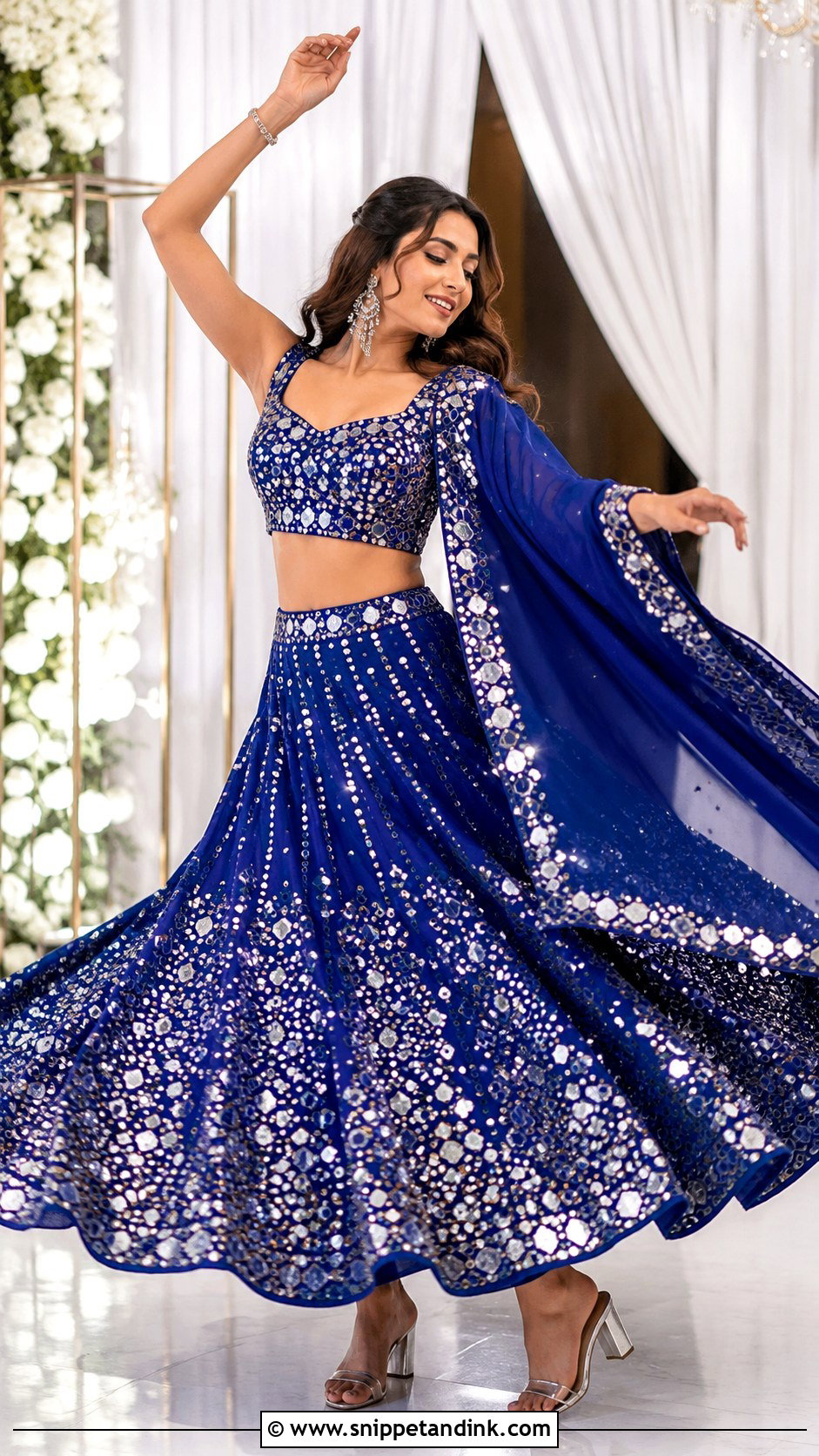
Mirror work catches the stage lights and moves with you, which is exactly what a sangeet wants. I’d pick a light skirt with mirrors spread evenly rather than heavy panels that swing and drag when you spin. The blouse needs real support, straps or sleeves, and a small dupatta pinned across the body. Royal blue, emerald, magenta and deep purple look strong at night. Wear statement earrings and a single bracelet; loose bangles fly off during choreography. Cushioned block heels, wedges or dressy flats beat stilettos on a stage. Rehearse at least once in the full outfit. That’s when you discover the dupatta slips or the hem catches your heel, not on the night.
6. Sequin Saree For Sangeet Function
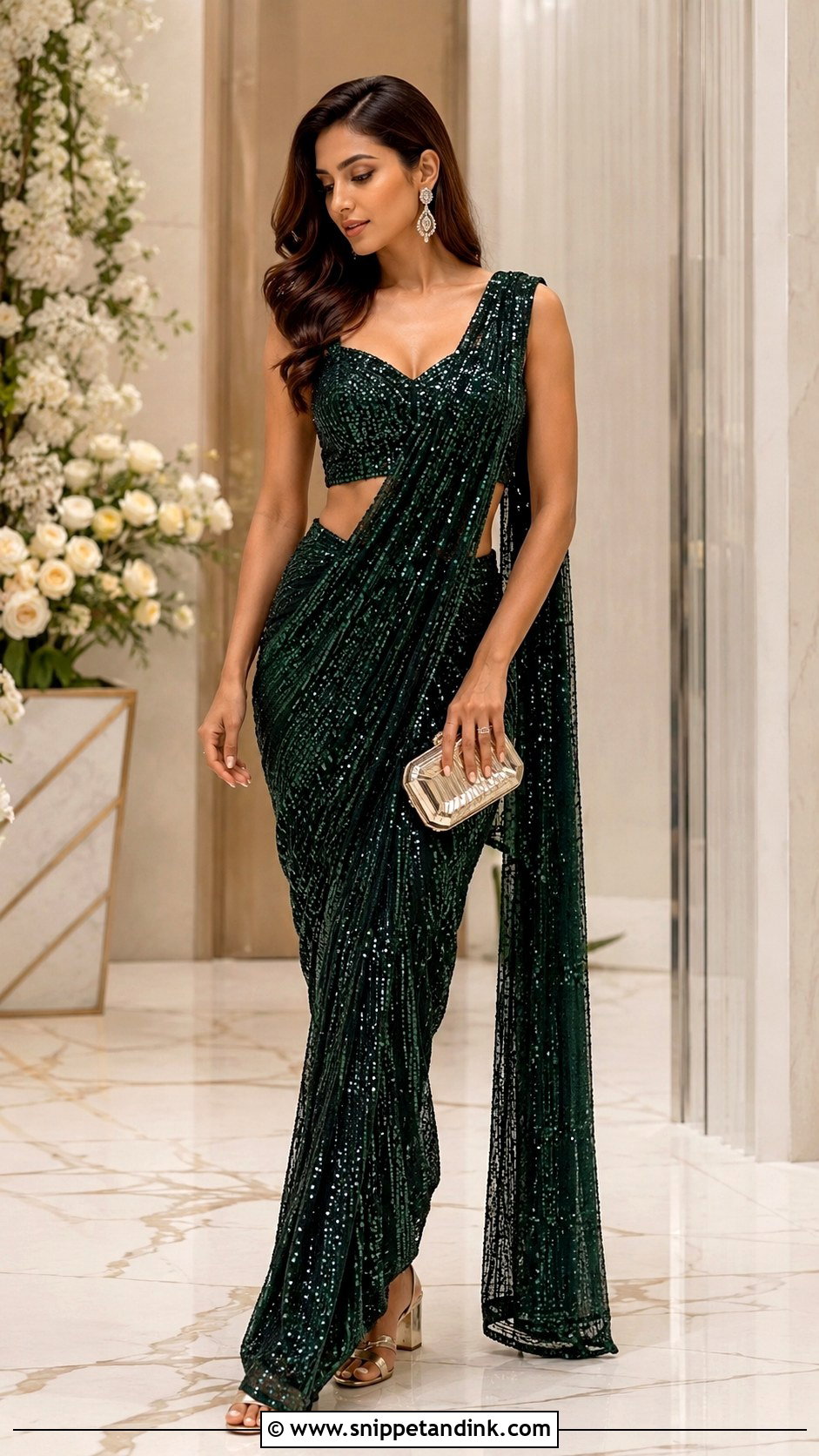
A sequin saree is the sleek alternative to a sangeet lehenga. Choose light georgette with scattered sequins and a structured blouse that lets your arms move. If you’ll be performing, I’d go pre-stitched; a hand-draped saree loosens with every turn. Black, navy, plum, silver and deep green look good under coloured stage lights, but check the family is happy with darker colours first. Crystal earrings, a slim clutch and metallic block heels are enough, and the necklace can stay home. A sleek ponytail or side-parted waves keep it balanced. Pin the pleats and pallu in several places with small hidden pins, and the drape will survive the group photos.
7. Indo Western Gown For Sangeet Function
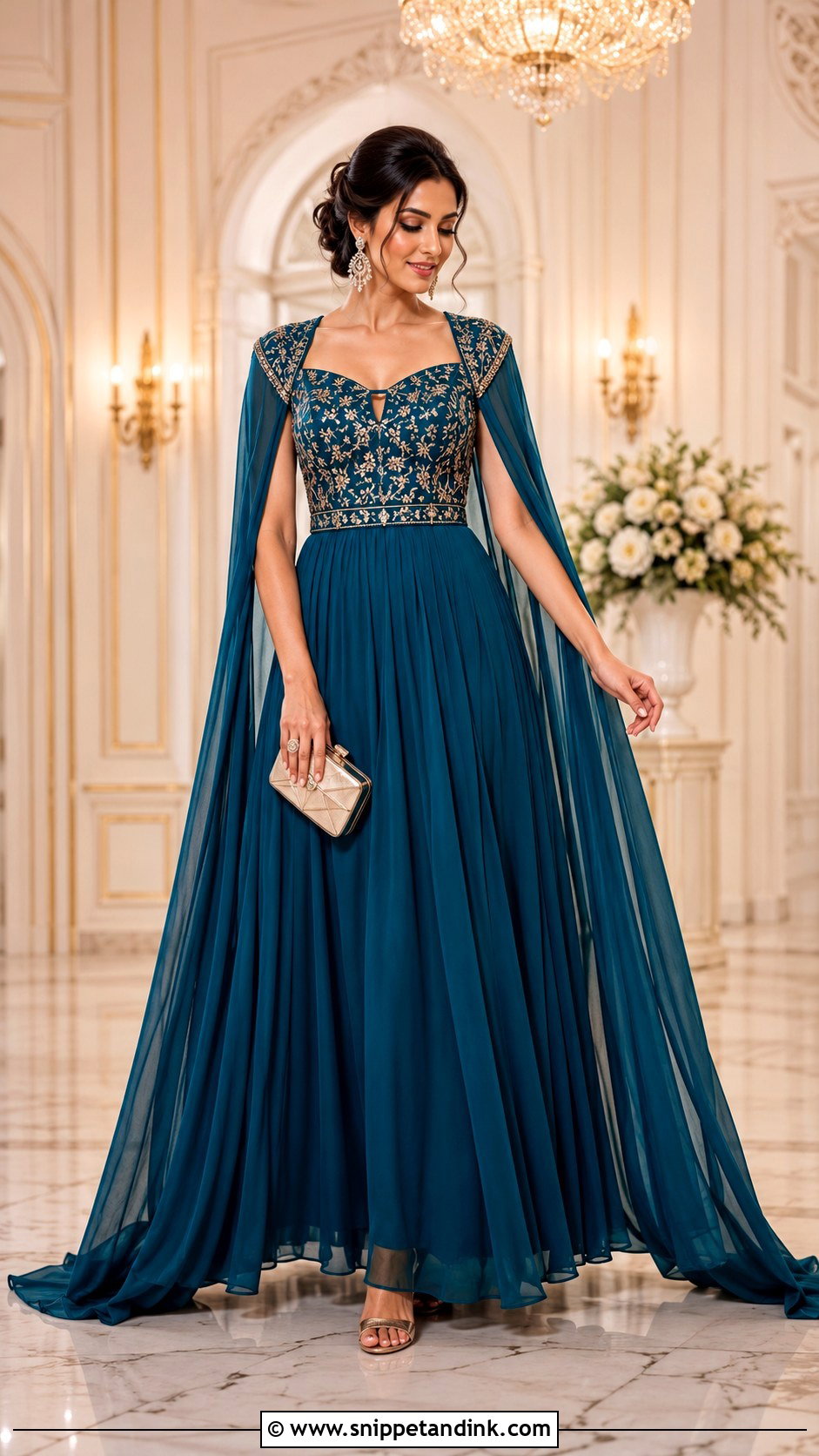
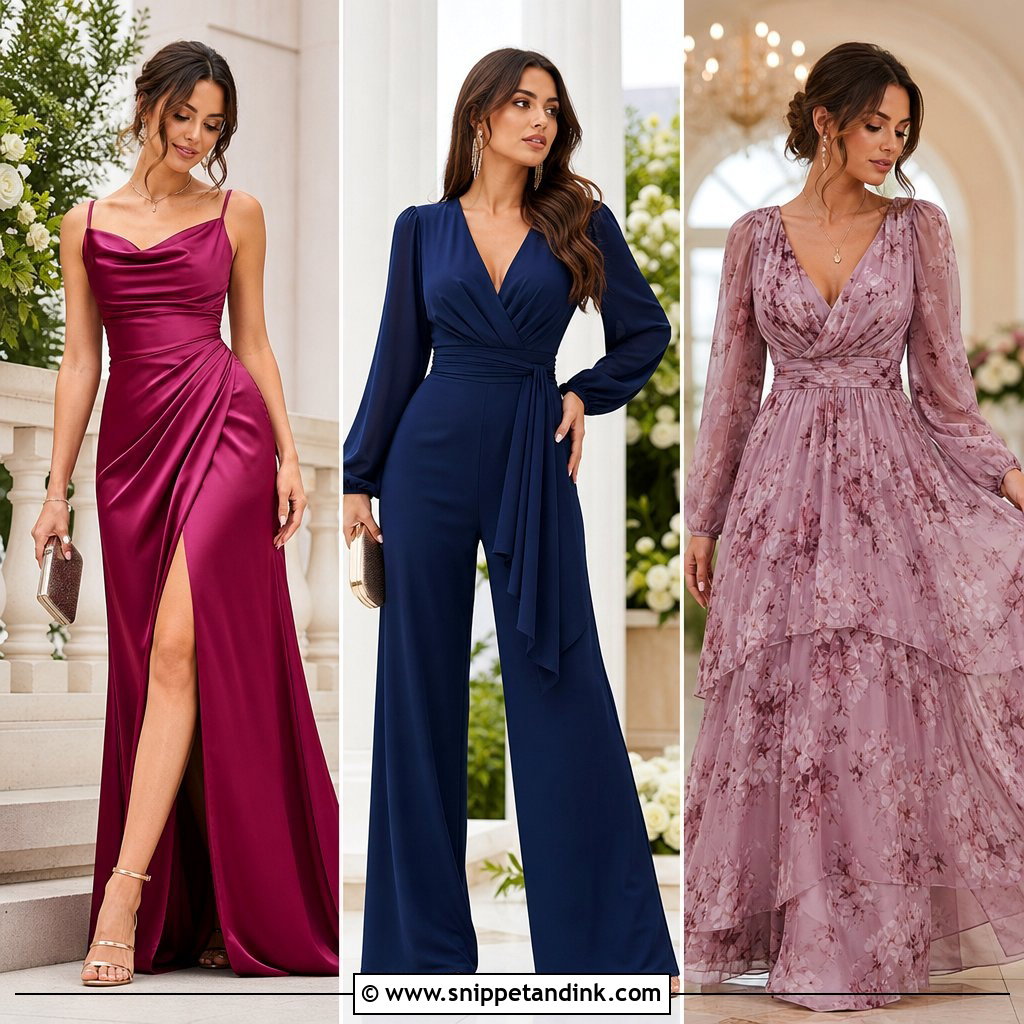
Indo-Western gowns suit a sangeet held in a ballroom, especially if there’s a choreographed performance. Look for an embroidered bodice, a flowing skirt and a built-in cape or draped panel. It should skim the body and never tighten across the hips or shoulders, because you’ll be lifting your arms all night. Teal, berry, midnight blue and wine look rich at night. Chandelier earrings, a metallic clutch and supportive heels complete it, with a low bun or brushed-out waves. Brides can go heavier on beadwork; guests should keep the embroidery softer. If you’re dancing, test the skirt in a twirl before the night; some panels wrap around the legs.
8. Pastel Lehenga For Engagement Function
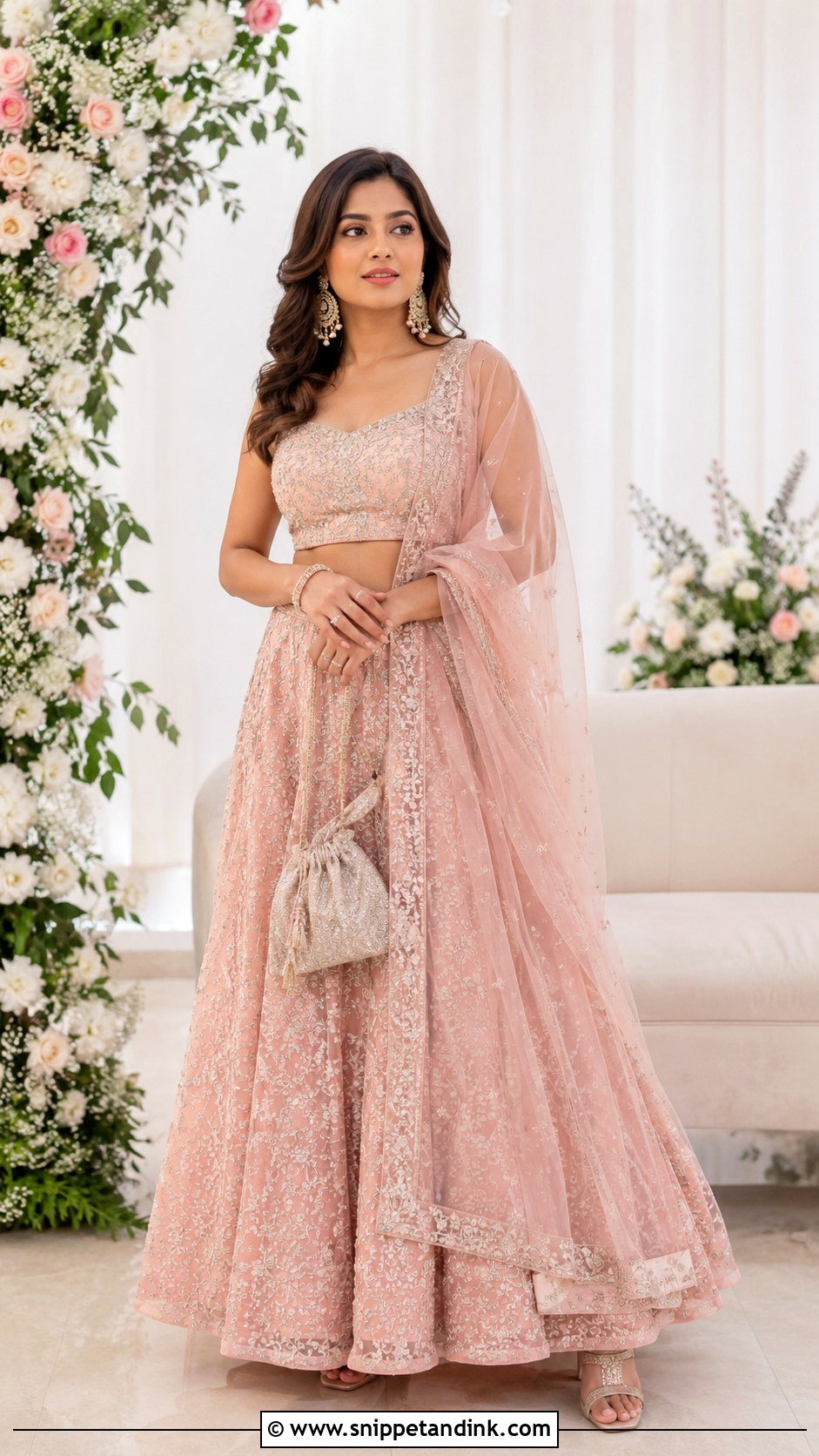
Pastel lehengas suit a daytime or early-evening engagement. Blush, sage, powder blue, peach and lavender with fine threadwork and a little beading look refined. A well-fitted blouse and a sheer dupatta over one shoulder complete the set; brides can add a second dupatta and heavier jewelry. Kundan earrings, a small potli and neutral block heels suit it, with soft curls or a floral bun. The one thing I always check is the backdrop. A pale lehenga against cream drapes and white flowers can vanish in photos, so a contrasting border or coloured jewelry gives you some definition.
9. Silk Saree For Engagement Function
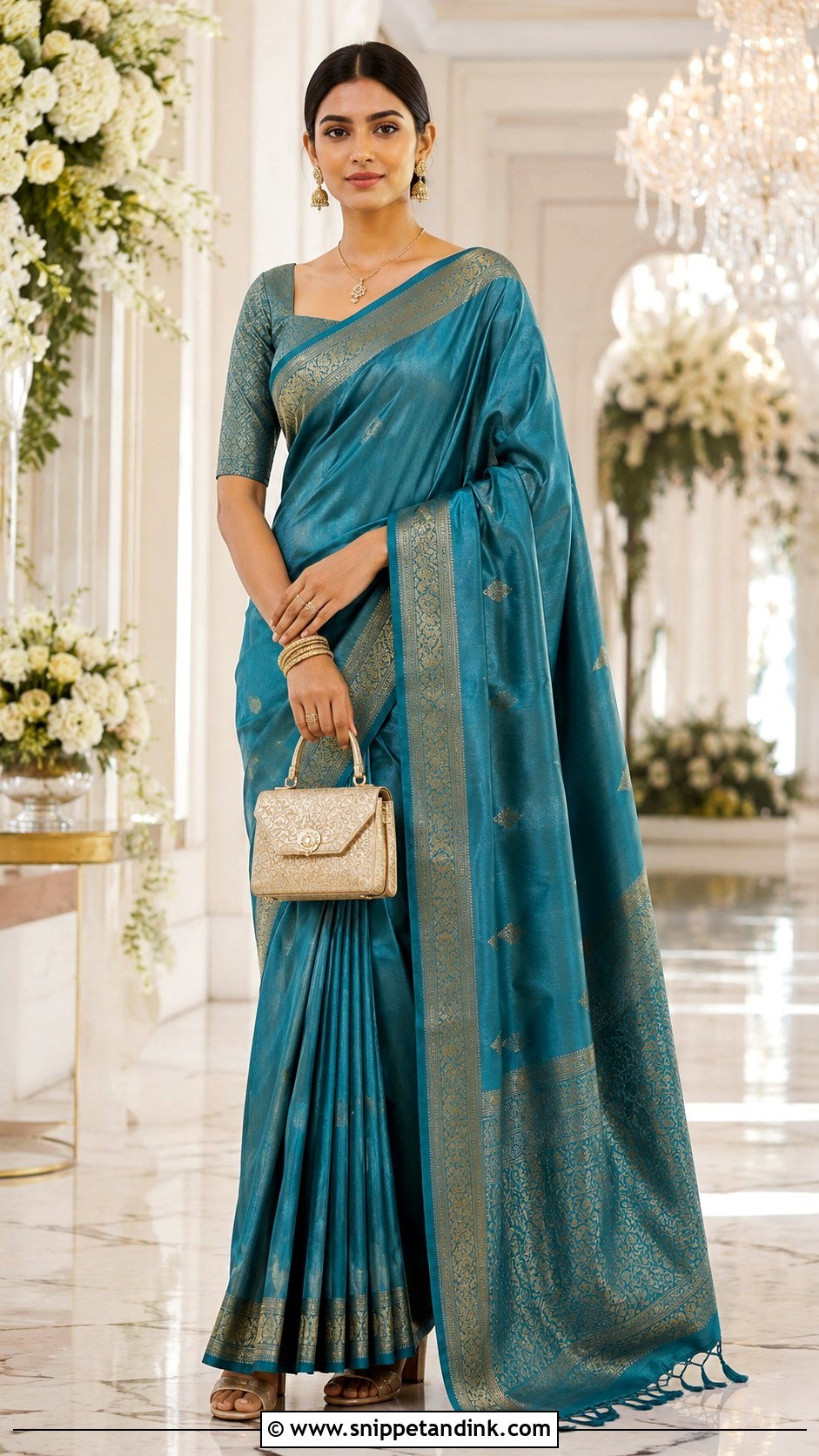
A silk saree at an engagement never dates. Choose a light silk or silk blend in rose, teal, rust, violet or deep green, with a blouse that has elbow sleeves, a square neck or a little embroidery. The engagement involves a lot of standing, greeting and bending to touch elders’ feet, so I’d pin the pleats and the pallu before you leave the house. Gold-toned earrings, a delicate necklace, bangles and a small structured bag are enough. Juttis suit a home gathering; block-heel sandals suit a formal venue. A centre-parted bun, soft curls or a low ponytail finish it. The bride can wear a broader border and layered jewelry.
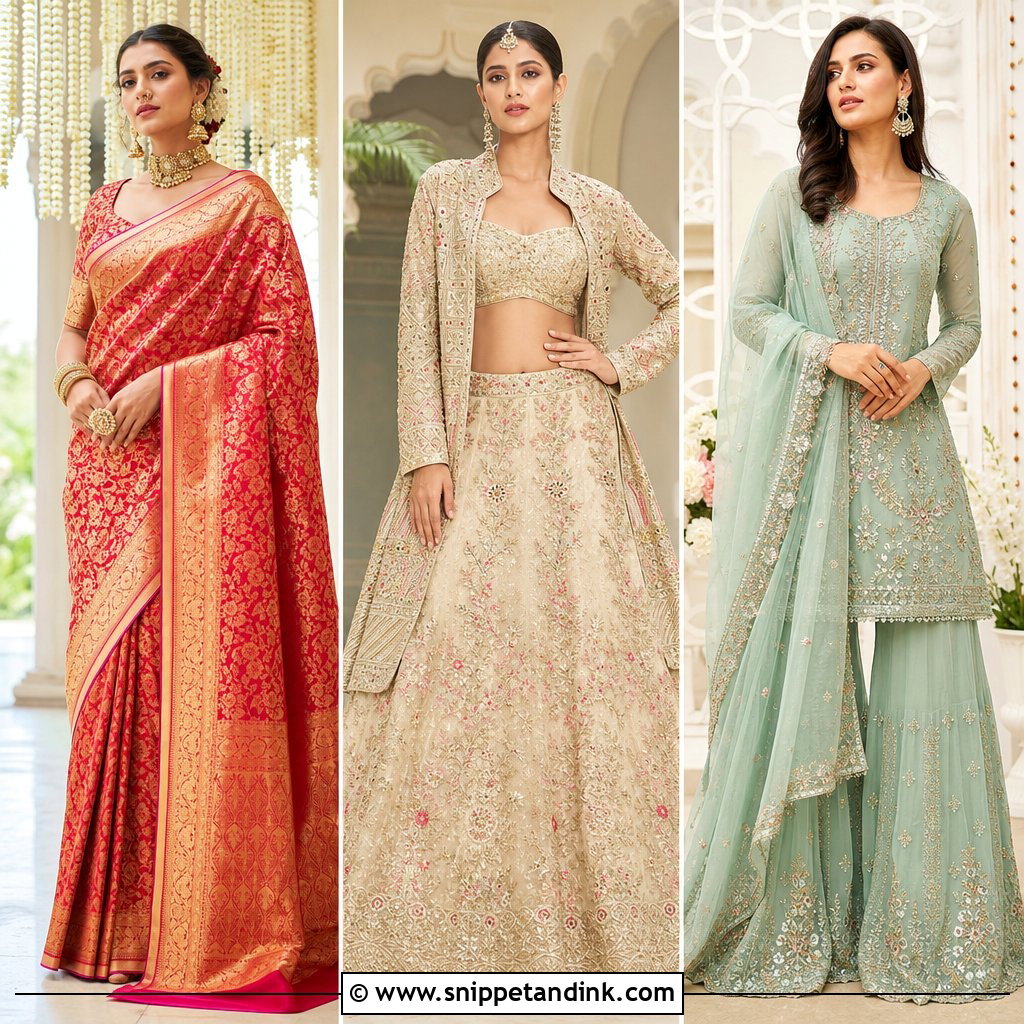
10. Banarasi Saree For Wedding Ceremony
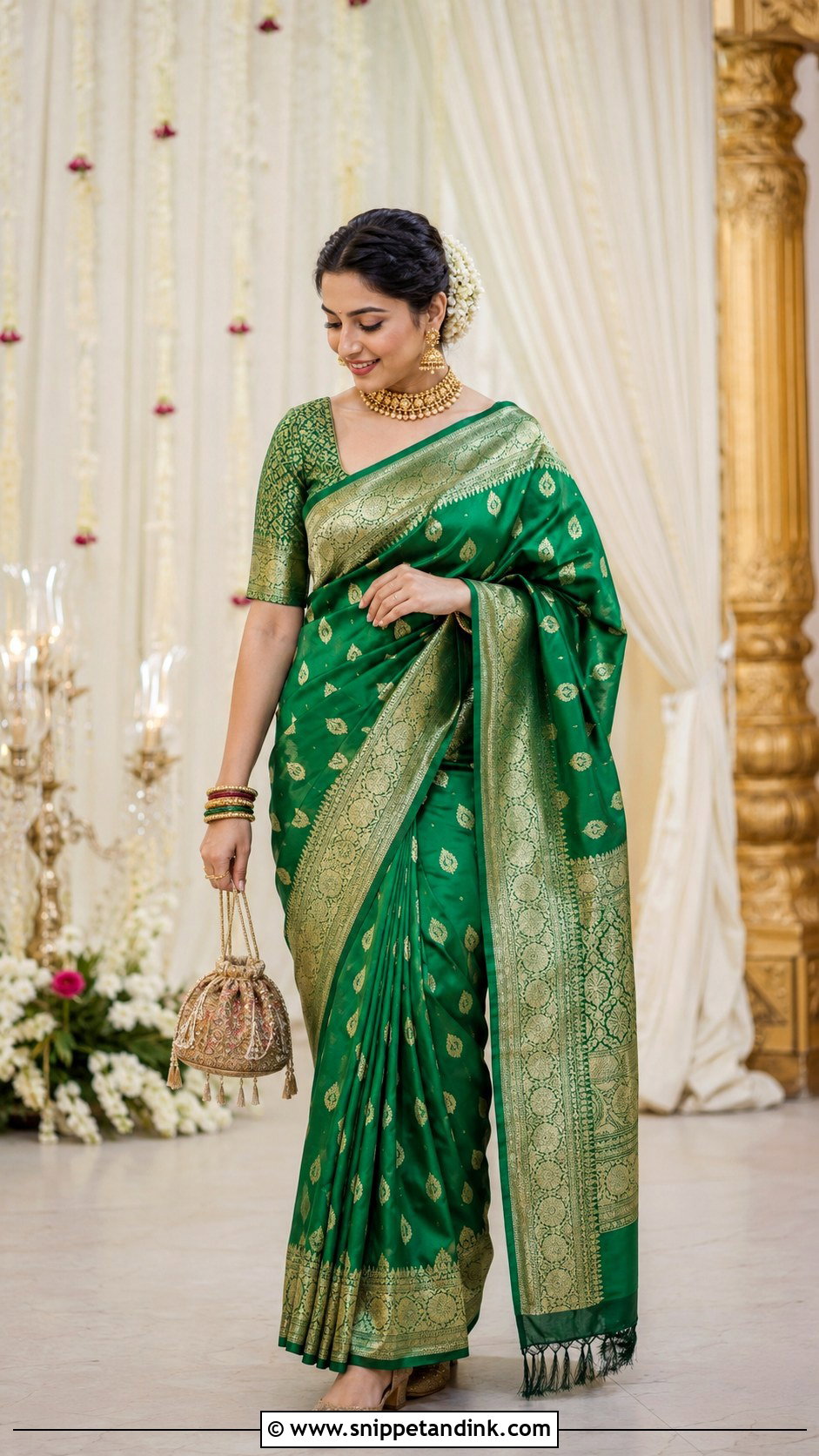
Banarasi silk already looks rich and formal before you add anything, which is why it suits the main ceremony. Choose a shade that suits the family’s customs and the time of day: red, magenta, emerald, royal blue and mustard feel traditional, while muted jewel tones are softer. A fitted brocade or plain blouse, the pallu arranged neatly over the shoulder, jhumkas, bangles, a classic necklace and a potli complete it. Banarasi is heavy, and that weight adds up over a ceremony that can run for hours, so I’d keep the blouse and jewelry lighter than you think. Low block heels or dressy flats help through long rituals. A flowered braided bun suits the mood.
11. Embroidered Lehenga For Wedding Ceremony
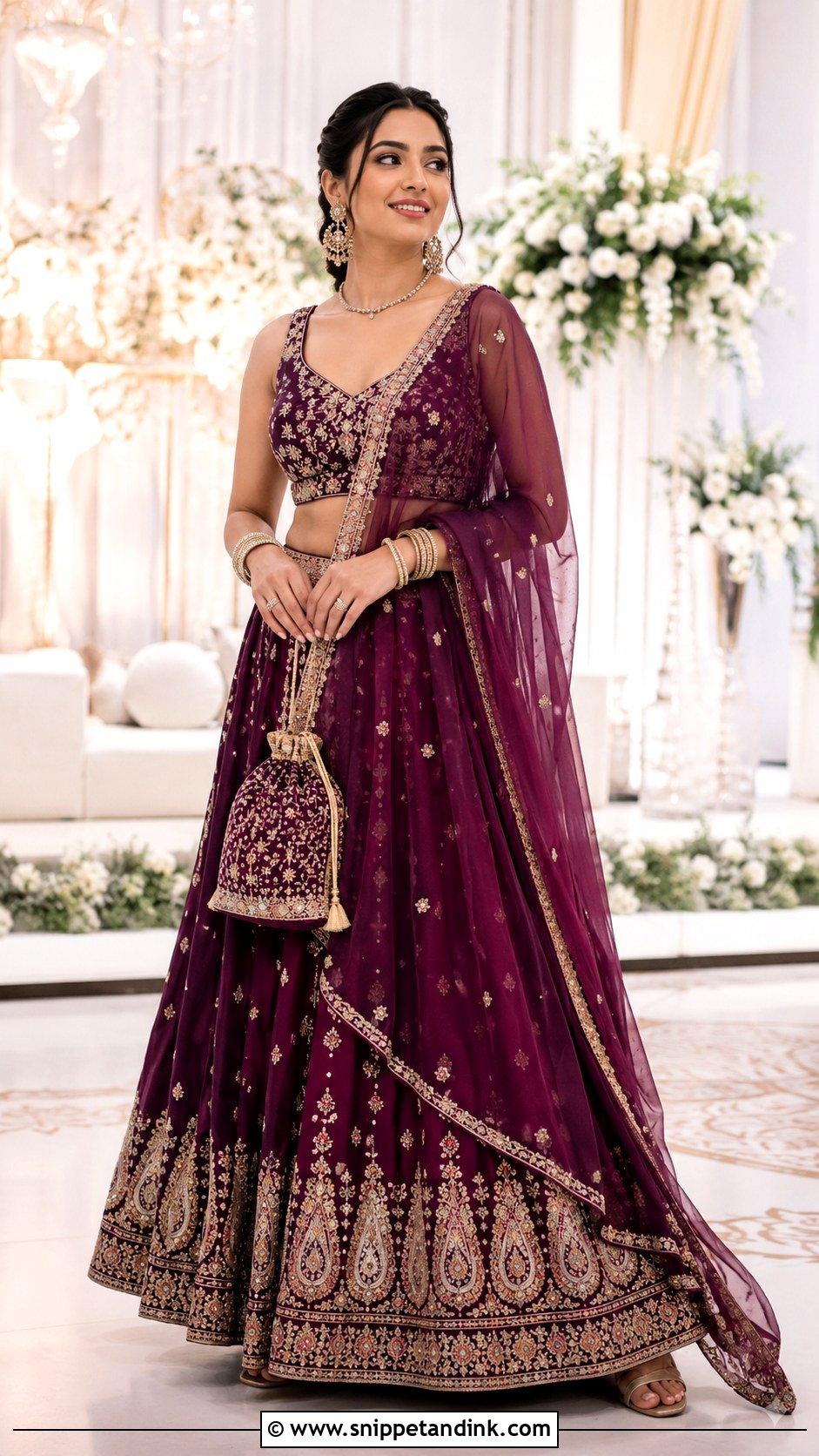
An embroidered lehenga gives guests the formality of the ceremony with more freedom than a saree. A balanced design keeps the embroidery at the hem, blouse and dupatta border. Jewel tones, pastels or earthy shades all work for guests, depending on any palette the family has asked for, but avoid red and heavy gold if those are the bride’s. The blouse must stay secure when you sit and walk. I drape one light dupatta diagonally across the body and pin it at the shoulder and waist so it doesn’t slide. Traditional earrings, a small necklace, bangles and block heels finish it. Weigh the lehenga in your hands before buying; ceremonies, receiving lines and meals can run for hours.
12. Floor Length Anarkali For Wedding Ceremony
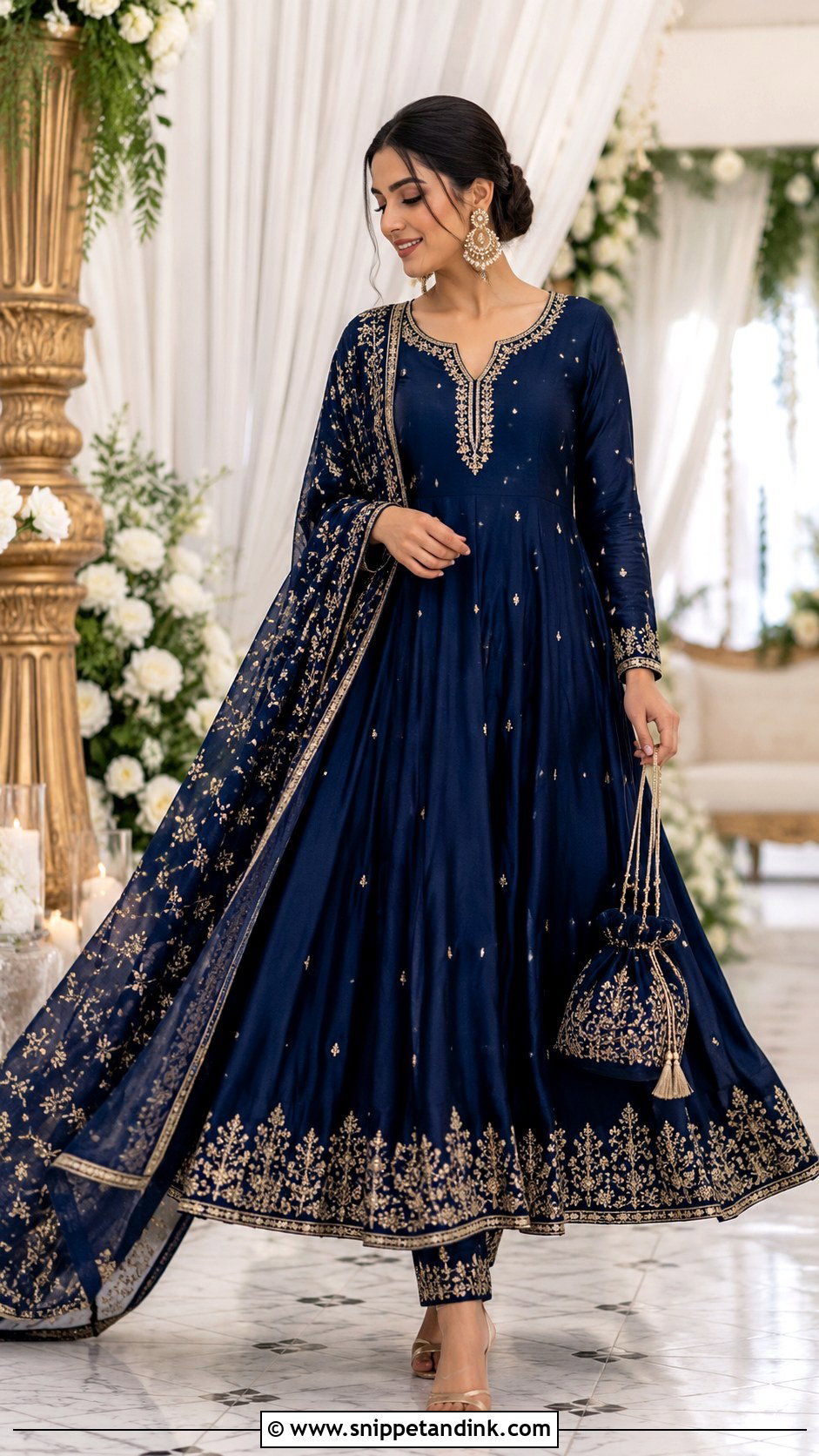
A floor-length Anarkali moves gracefully and covers well, which suits traditional rituals. Silk blend, georgette or light velvet work depending on the season. An empire or natural waist defines the figure without pinching. Wear it with fitted pants and a dupatta over both arms or pinned at one shoulder. Deep green, maroon, navy, plum and muted gold suit evening ceremonies, while coral and pastel blue feel lighter by day. Chandbalis, a small potli and comfortable heels finish it. On petite women I’d choose fewer skirt panels; on taller women, more volume works. Have the hem set with your exact shoes, because a floor-length skirt is easy to trip on when climbing a mandap step.
13. Palazzo Suit For Daytime Wedding
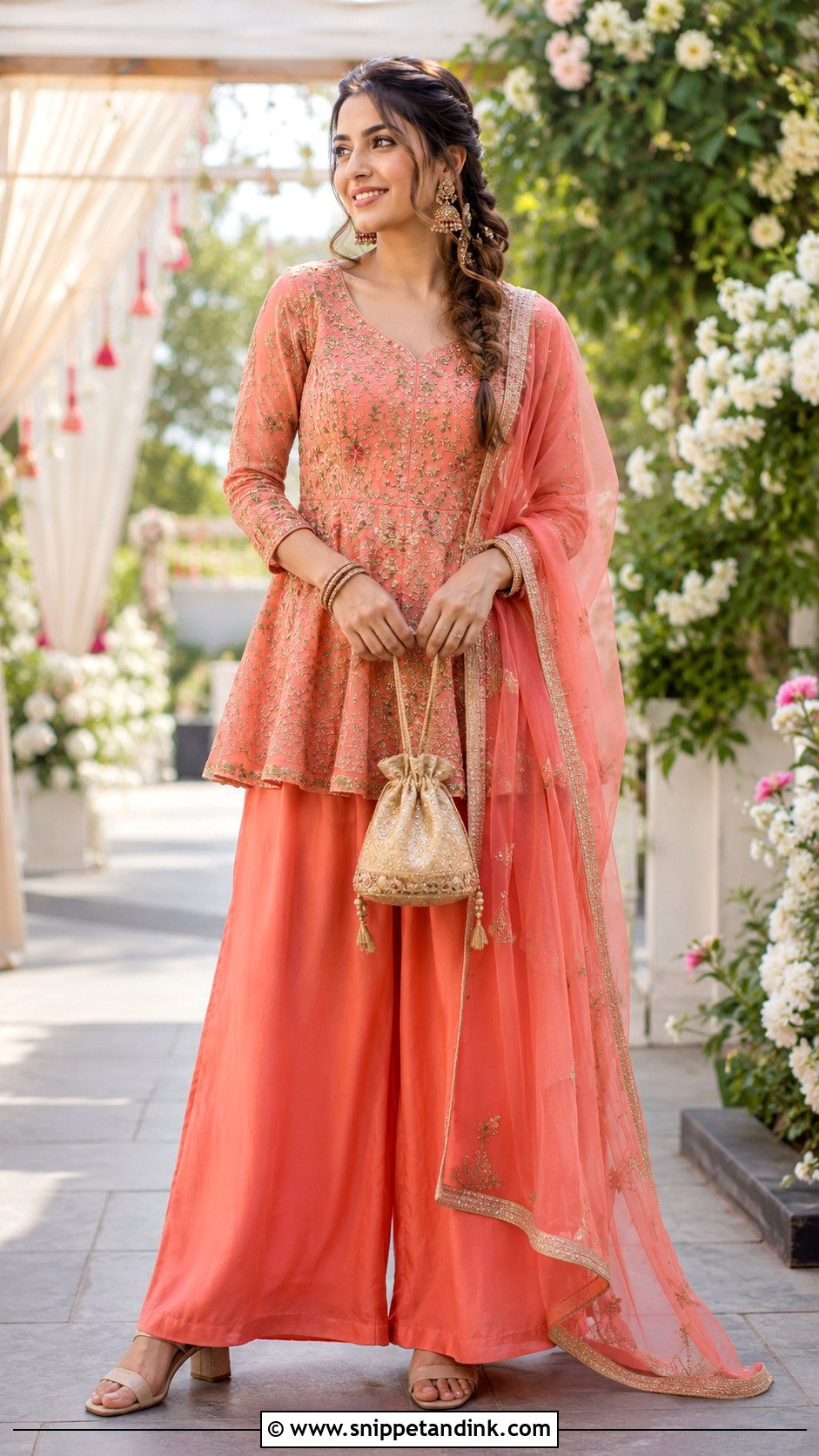
For a daytime wedding, a tailored palazzo suit looks refined and feels like nothing. Wide-leg palazzos with a straight kurta or peplum top and a sheer bordered dupatta make it feel formal enough. Coral, mint, sky blue, mustard and rose suit sunny gardens. Jhumkas, slim bangles, a structured potli and low block heels complete it, with a sleek ponytail or soft braid. Strong daylight is unforgiving with thin fabric, so hold the kurta up to a window; if you can see your hand through it, add a slip. I suggest this to anyone who doesn’t want to manage a long skirt or pleats, and the pieces rewear separately afterwards.
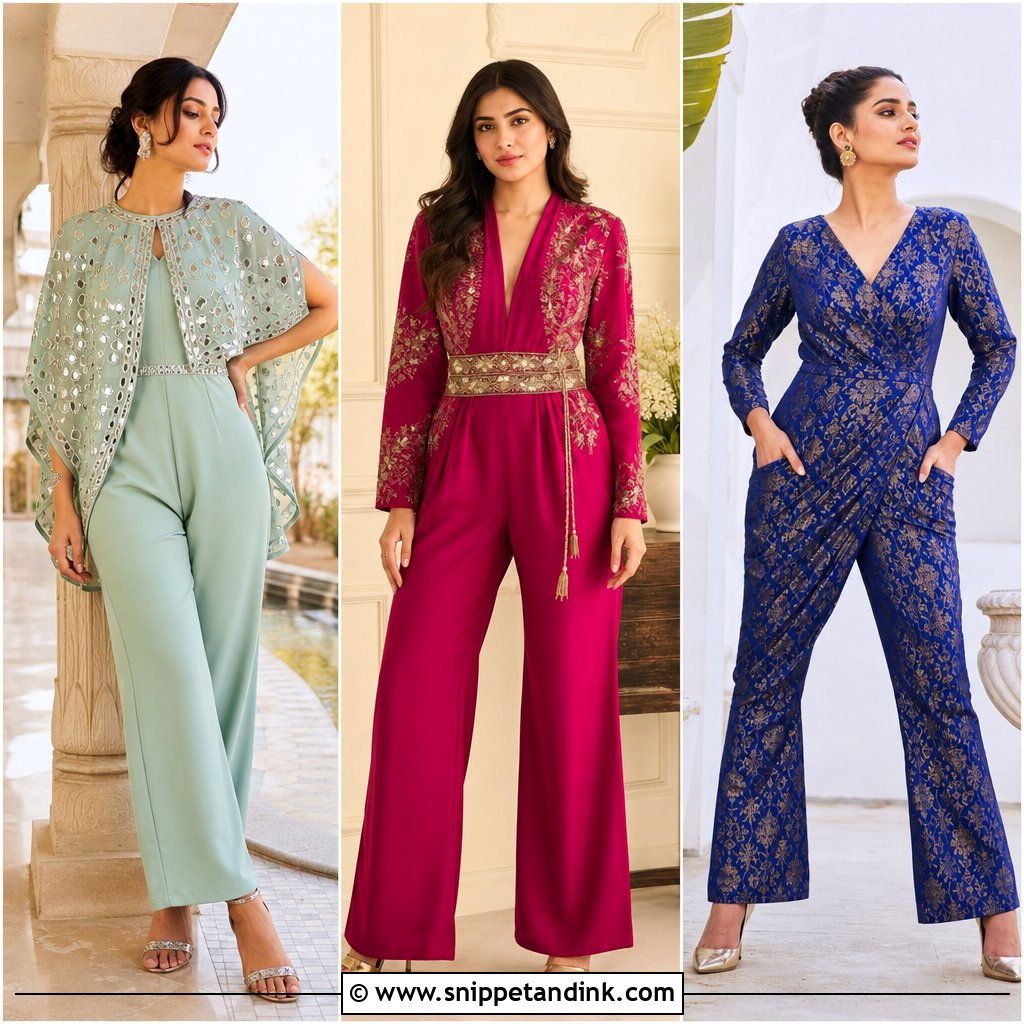
14. Cape Lehenga For Cocktail Function
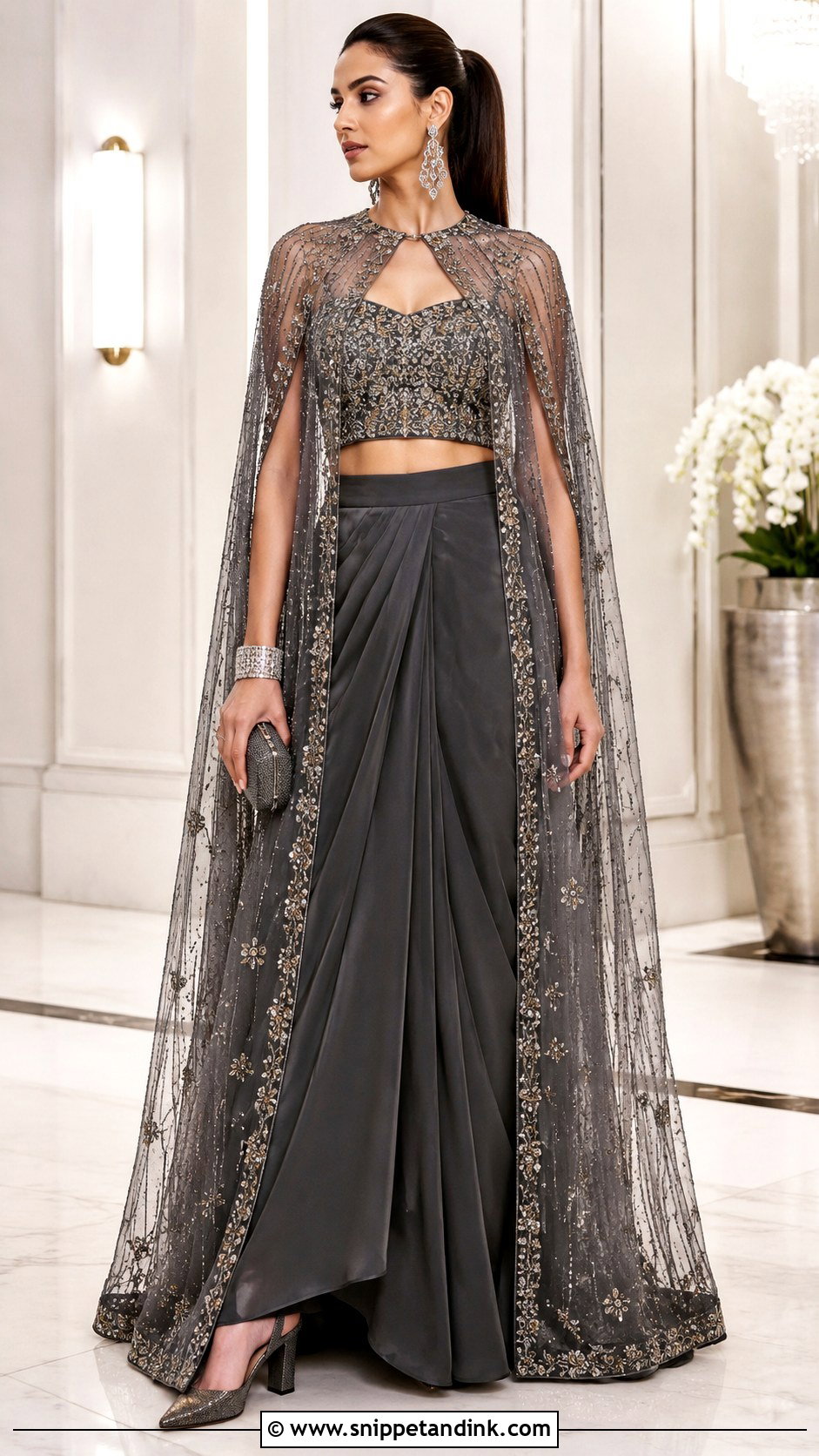
A cape lehenga fits a formal cocktail evening. A streamlined skirt and fitted blouse sit under a sheer embroidered cape that replaces the dupatta, which leaves your hands free for a glass and a clutch. Charcoal, navy, emerald, burgundy and metallic grey look sharp if the hosts allow darker colours. Long earrings, a cuff, pointed block heels and a compact evening bag are enough. Keep the blouse neckline plain so it doesn’t fight the cape. A sleek ponytail or low bun shows the shoulder detail. The cape should end clear of the floor, or you’ll step on it the first time you turn around.
15. Pre Draped Saree For Reception
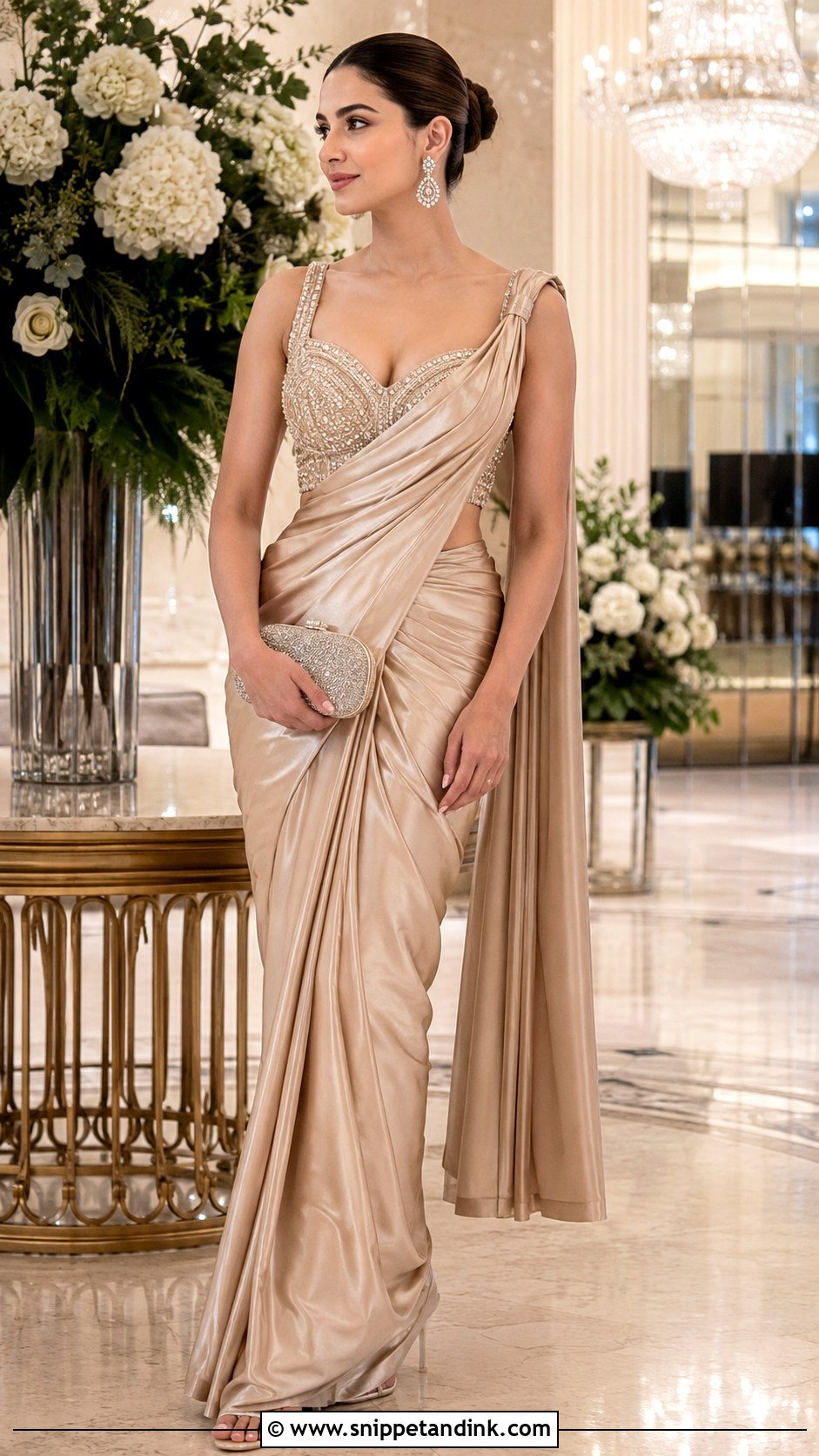
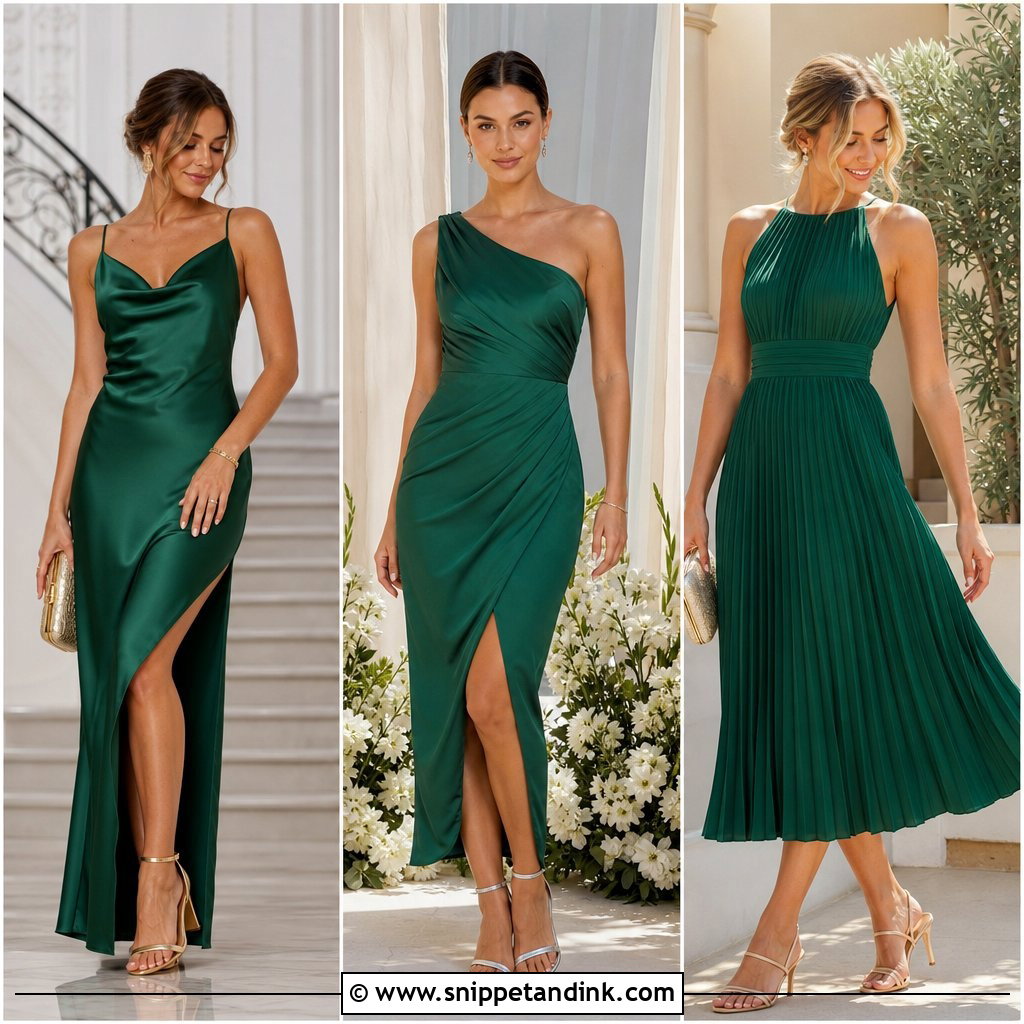
A pre-draped saree gives you the traditional silhouette at the reception with the security of a stitched outfit. Stitched pleats and an attached or easy-to-secure pallu are what to look for. Satin, crepe, georgette and tissue all drape fluidly without bulk, and silver, champagne, mauve, deep blue and emerald look sophisticated under reception lighting. Pair it with a structured blouse: some beadwork, an asymmetric neck or elbow sleeves. Crystal earrings, a small clutch and metallic heels finish it; skip the necklace if the blouse neckline is busy. Wear hair in a sleek bun or smooth waves. Before you leave, sit down in it. Stitched pleats can pull at the waist when you’re seated if the sizing is off.
16. Velvet Lehenga For Winter Reception
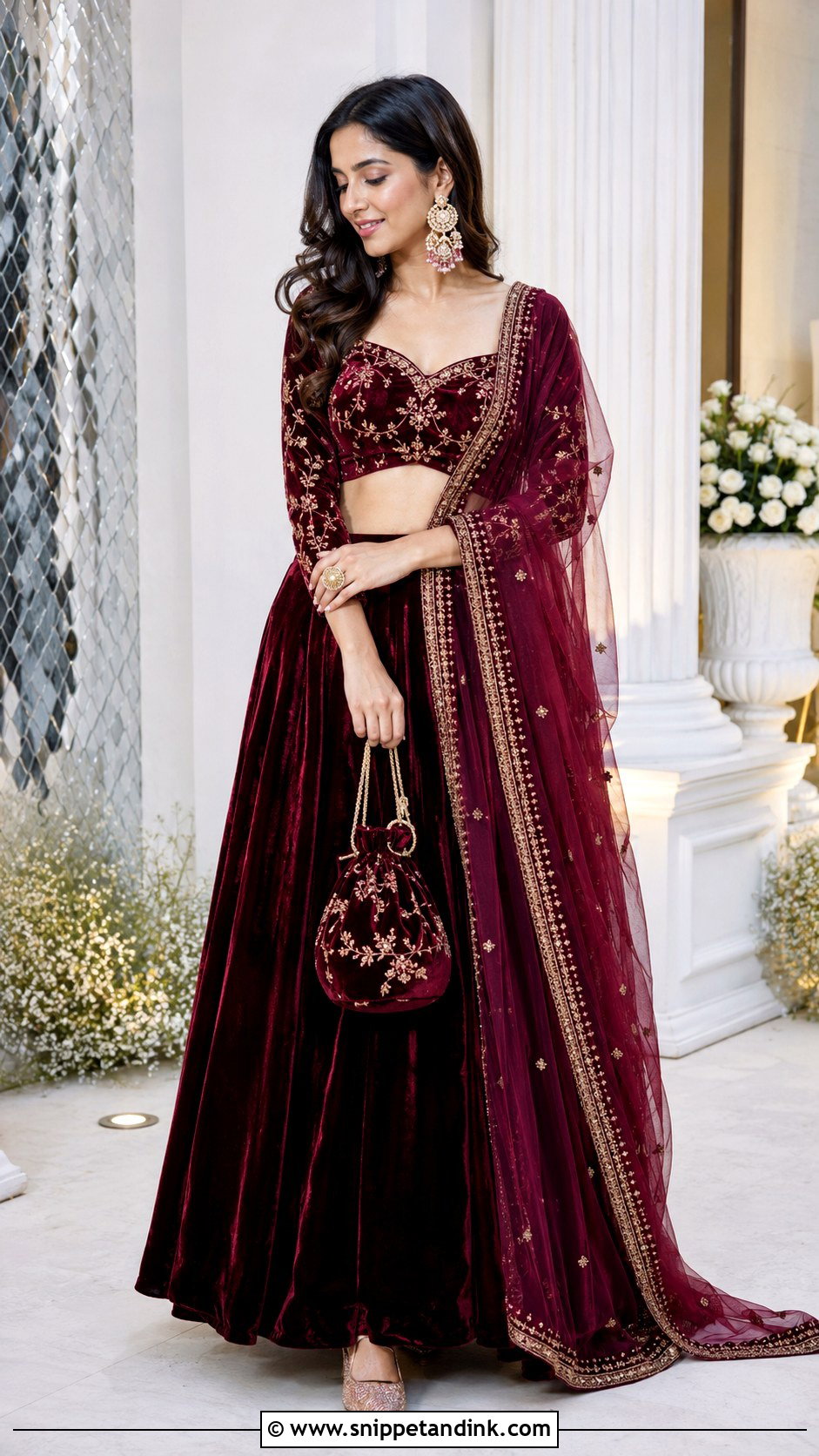
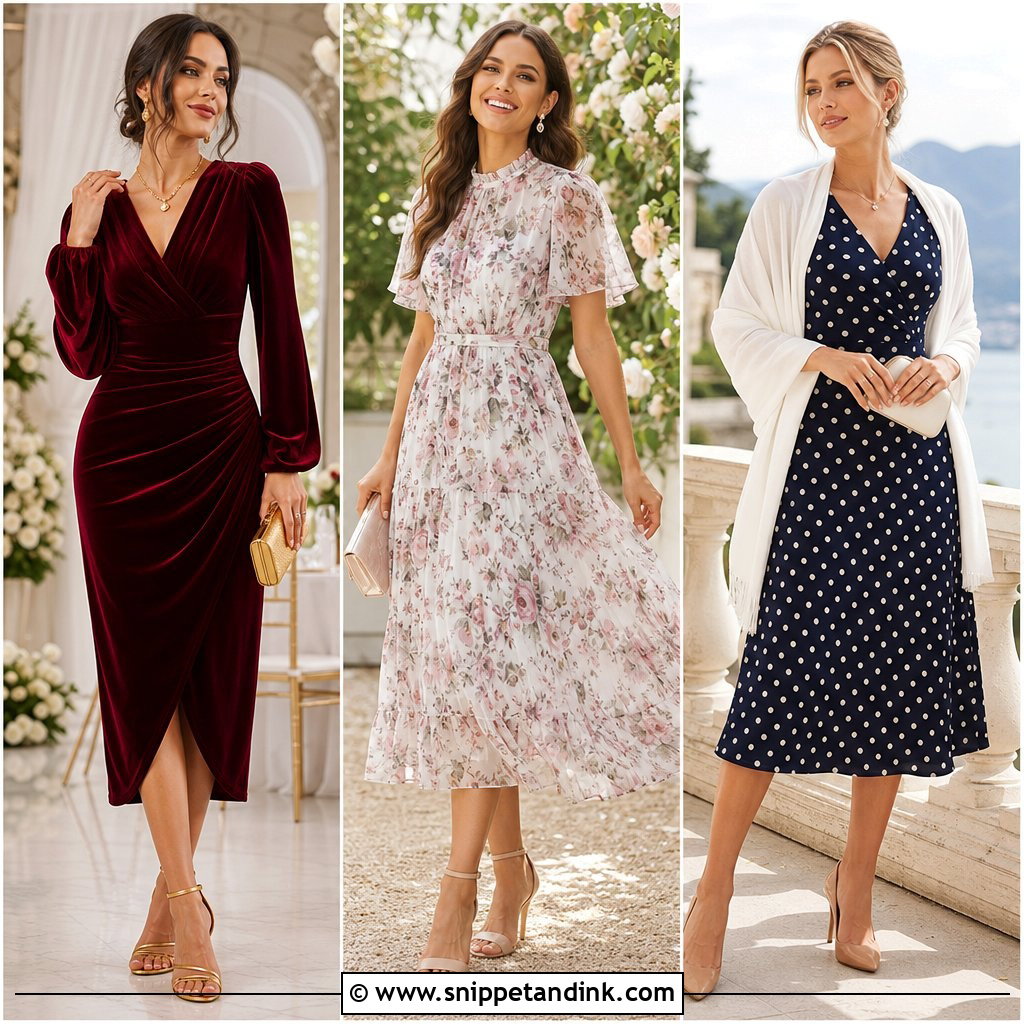
Velvet belongs at a winter reception, and only a properly cold one. Choose a skirt in emerald, navy, burgundy, plum or maroon, ideally with embroidery at the border rather than all over, which keeps the weight down. A matching velvet blouse is classic; a silk blouse is lighter. Always pair it with a sheer net dupatta rather than a heavy one. Kundan earrings, a statement ring, a structured potli and closed-toe block heels complete it, with a low bun or glossy waves. Heated banquet halls get warm fast once they fill up, and velvet holds that heat, so I’d skip it for warm climates and crowded outdoor venues.
17. Satin Gown For Reception
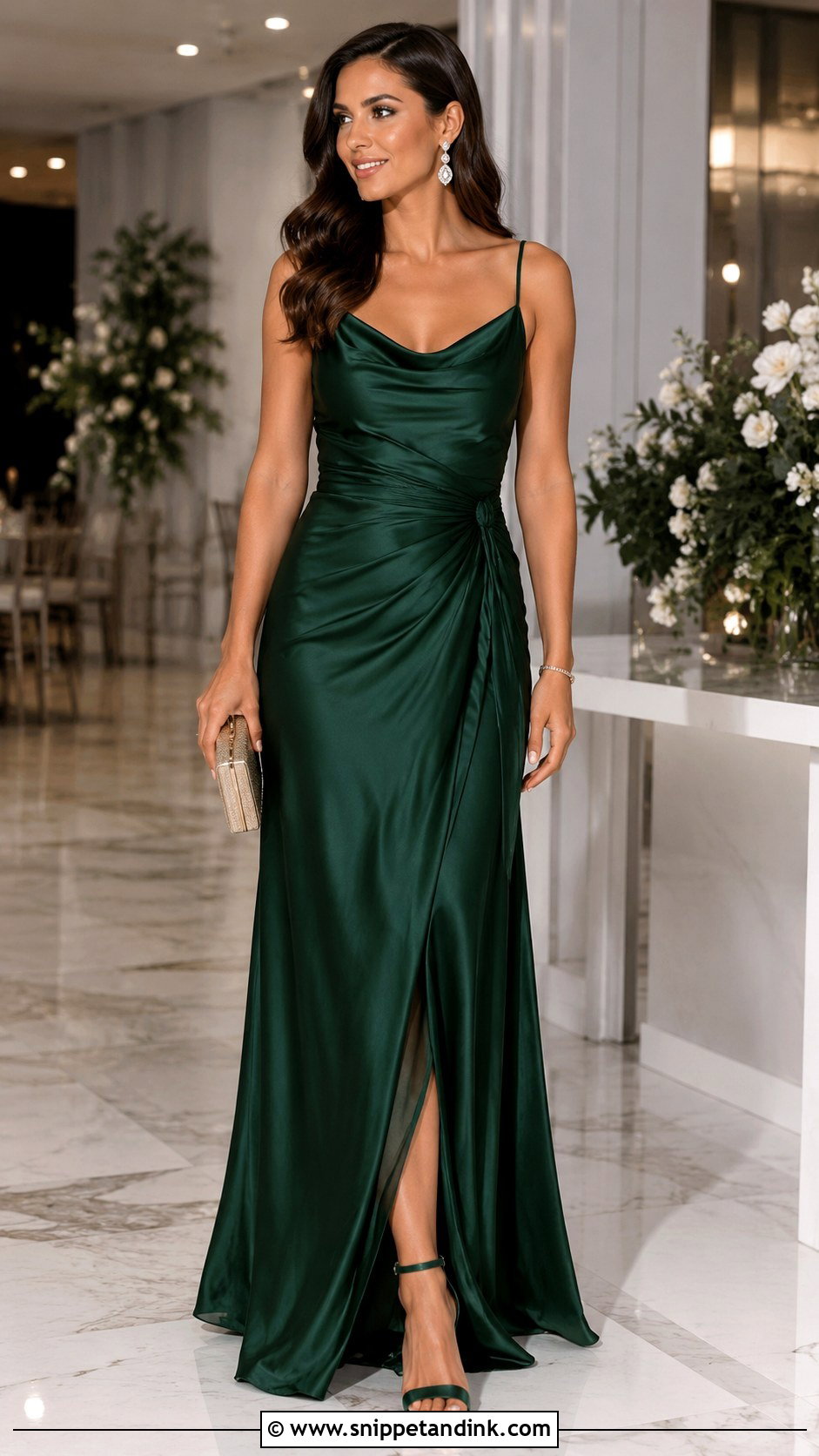
A satin gown suits a reception with a contemporary or Western-formal dress code. Floor length, a defined waist and a supportive bodice with room to walk are the essentials, in jewel tones, dusty rose, midnight blue or forest green. Satin shows every crease and every bit of strain, so the fit across the hips must be easy rather than tight, or it wrinkles horizontally the moment you sit. Brides can go more elaborate; guests do well with clean tailoring. Crystal drops, a slim bracelet, a box clutch and block heels finish it. Hem it for your exact shoes. With a dramatic neckline, leave the necklace off.
18. Jacket And Palazzo Set For Reception
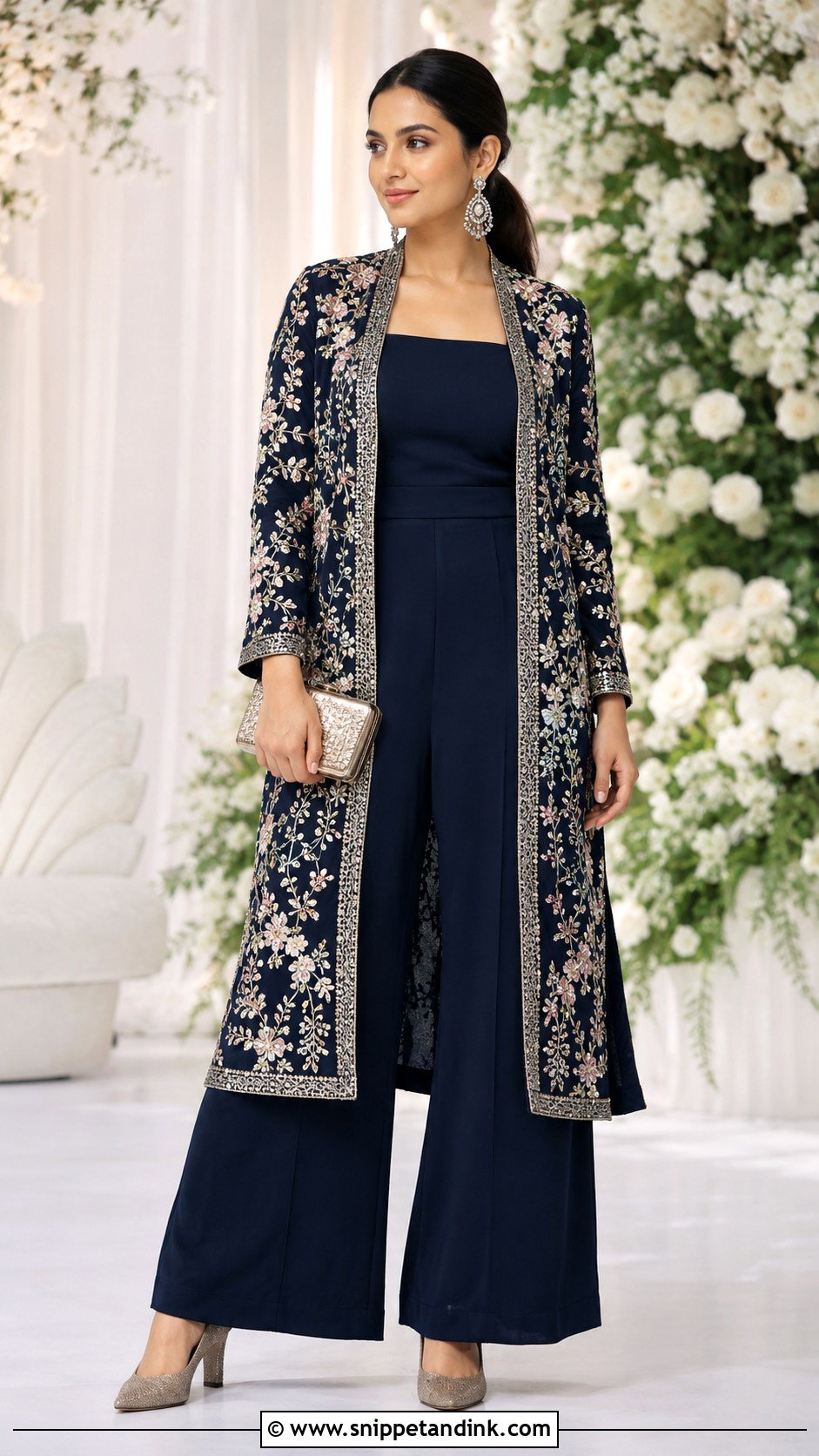
A long embroidered jacket over palazzos is sophisticated, covers well and lets you move. Start with high-waisted wide-leg pants and a fitted sleeveless or short-sleeve top, then add an open jacket falling between knee and ankle. Embroidery along the neckline, cuffs and front edges is enough decoration. Navy, teal, aubergine, black or soft metallics work if the hosts allow them. Drop earrings, a ring, a structured clutch and pointed block heels finish it. Hem the pants so they’re fluid but clear the floor; wide legs that drag pick up dirt at every venue. A sleek ponytail shows off the jacket neckline. Each piece rewears easily on its own.
19. Kurta And Skirt Set For Wedding Puja
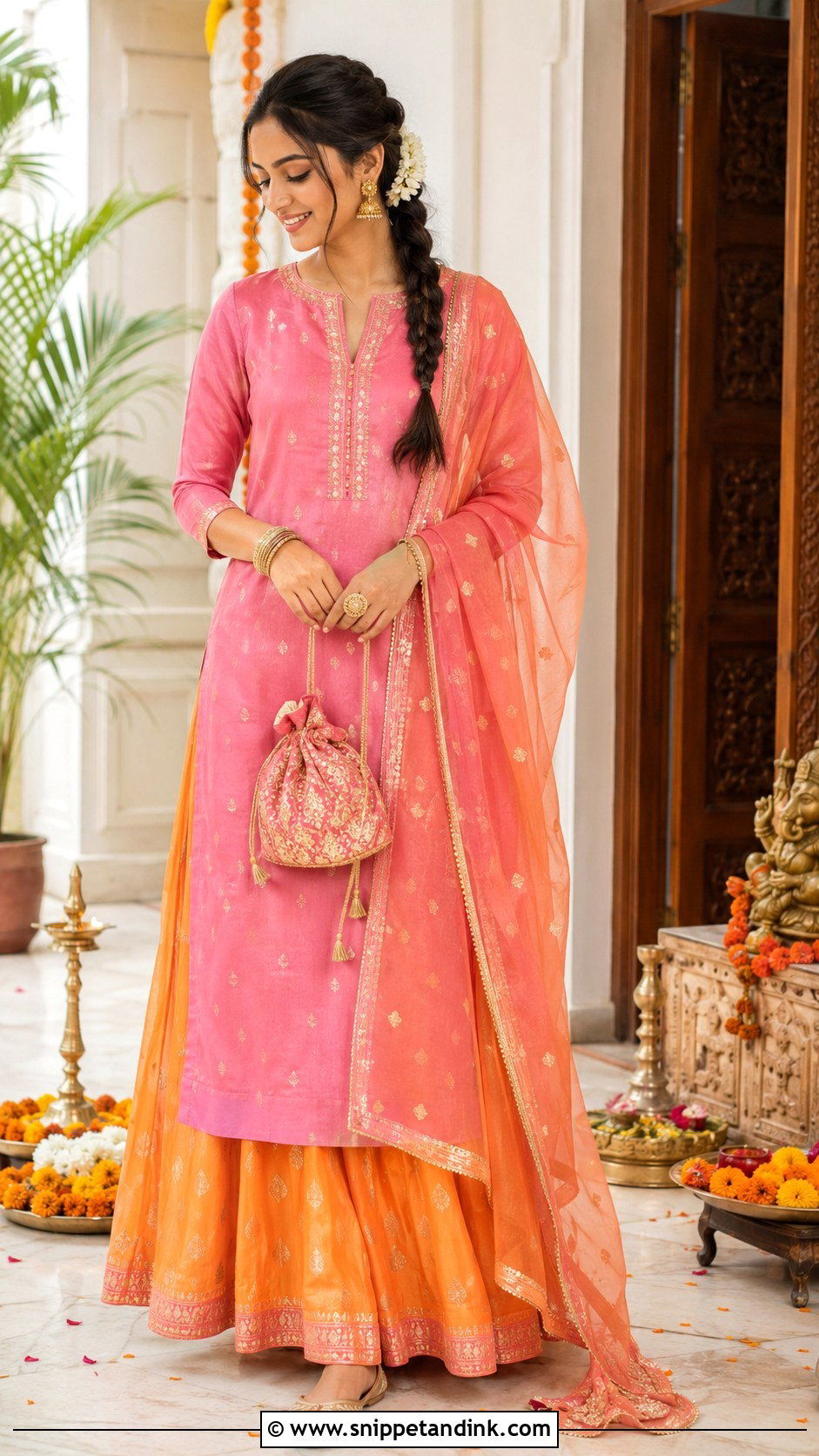
For a wedding puja or a small family ritual, a kurta and skirt set gives comfort and modest movement. A short or mid-length kurta with an ankle-length skirt in cotton silk, Chanderi or light brocade, in complementary colours such as pink with orange or cream with maroon, looks festive without fuss. Bring a light dupatta to cover your shoulders or head if the family’s tradition asks for it. Small jhumkas, bangles, a potli and flat juttis are enough. Pujas mean sitting near lamps and a sacred fire, so I’d keep hair braided or in a low bun and avoid trailing hems and flowing sleeves. Synthetic fabrics also melt quickly near a flame, which is one more reason to choose cotton silk.
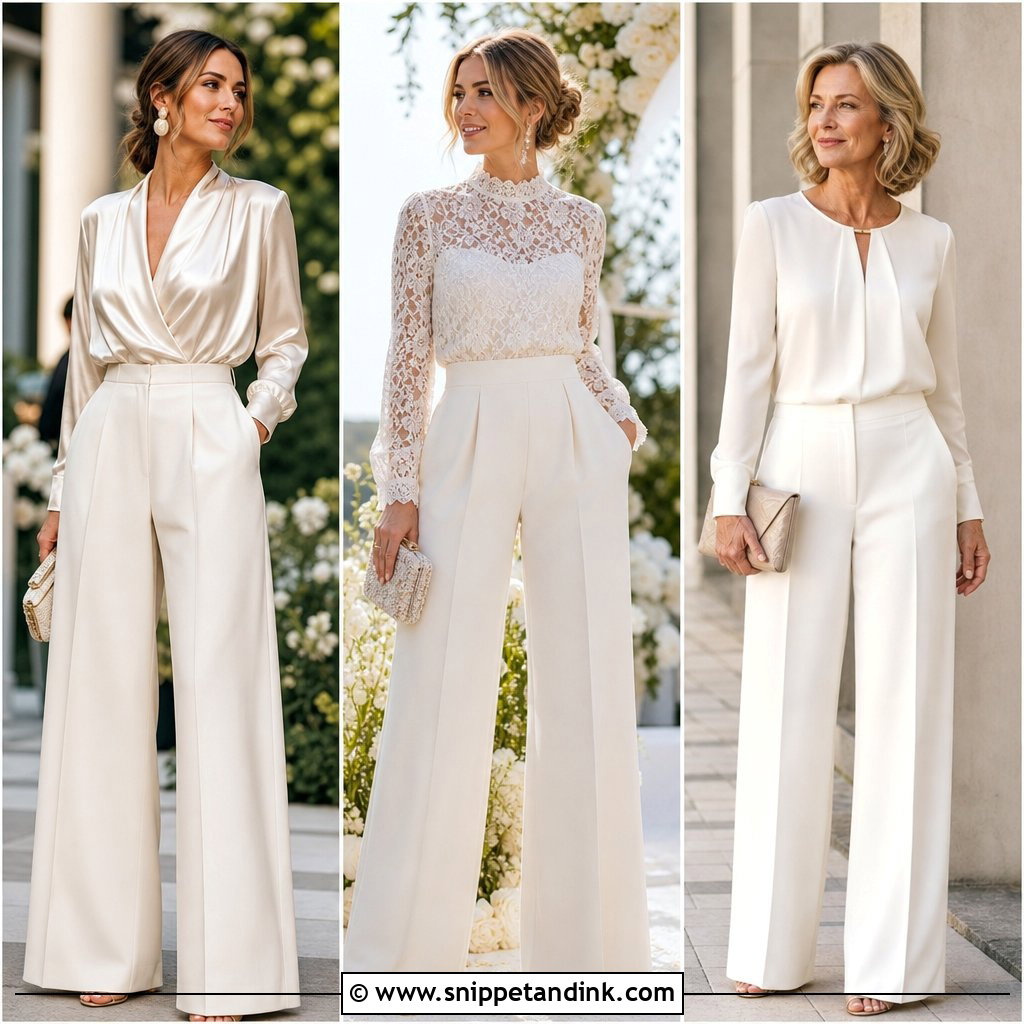
20. Printed Salwar Suit For Daytime Function
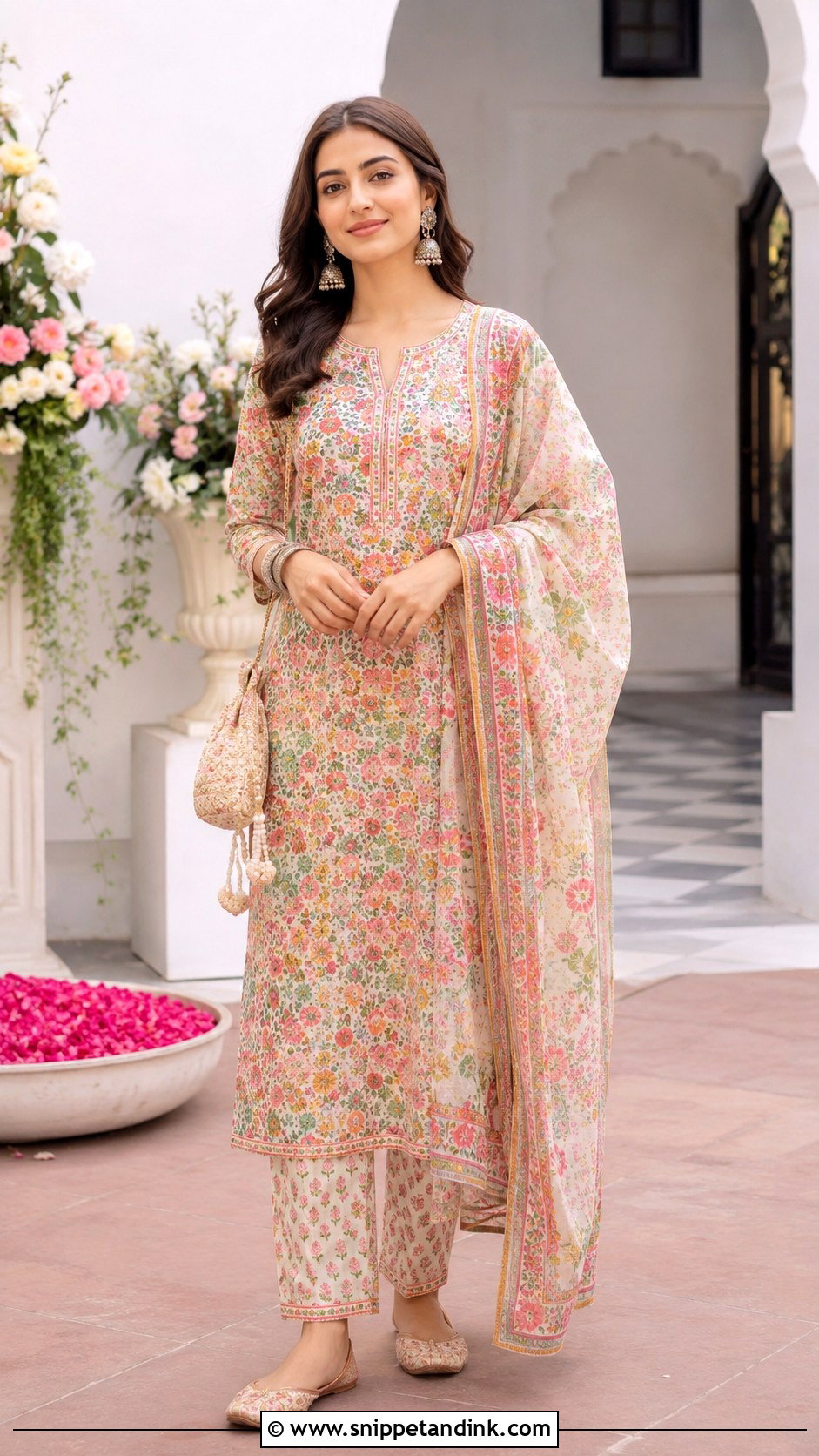
A printed salwar suit suits a casual daytime function. A floral, block-printed or paisley kurta with straight pants or a relaxed salwar, and a dupatta with a contrasting border, looks finished. Cotton silk, muslin and soft Chanderi keep you cool at smaller gatherings. Medium earrings, a few bangles, a crossbody potli and embroidered flats are enough, with fresh makeup and a braid or simple blow-dry. A word of caution I give every guest: “casual” means different things in different families. Ask before you go minimal, because some daytime functions are quite formal. Add jewelry and the same set dresses up.
Turmeric on Silk? What to Do in the First Hour
Turmeric and henna both stain, and both are much easier to deal with fast. A few things I’ve learned from cleaning up after haldis and mehndis:
- Scrape off haldi paste with a blunt edge before it dries. Don’t rub; rubbing pushes the pigment deeper into the weave.
- On washable cotton, rinse from the back with cold water and a drop of dish soap. Hot water sets turmeric.
- Turmeric yellow fades in sunlight, so drying a washed cotton piece in the sun often lifts the last of the mark.
- Leave silk, zari and embroidered pieces alone apart from blotting, and take them to a dry cleaner quickly, saying exactly what the stain is.
- Wet henna on fabric should be lifted with a tissue, not wiped. Once henna stains cloth, it usually stays, so this is where short sleeves earn their place.
A tiny emergency pouch for the weekend
Safety pins in two sizes, fashion tape, a mini sewing kit with gold and black thread, stain wipes, blotting papers and a spare blouse hook. It fits in a potli and has rescued more outfits than any amount of planning.
Which Outfit Goes to Which Function
Dressing for a multi-day wedding gets easier once every outfit is matched to the activity, venue, weather and dress code. Here you have breathable haldi sets, mehndi outfits that leave your hands free, sangeet looks built for dancing, traditional ceremony wear and polished reception pieces. Start with a silhouette you can move in, then choose the fabric, colour, shoes, jewelry and a hairstyle that stays put. The bride can carry the most embroidery and jewelry; guests look best a level lighter. You don’t need the heaviest outfit to look festive. Respect the family’s customs and wear what lets you enjoy every ritual, meal and photograph.
You'll Like These Ideas:


Leave a Reply