
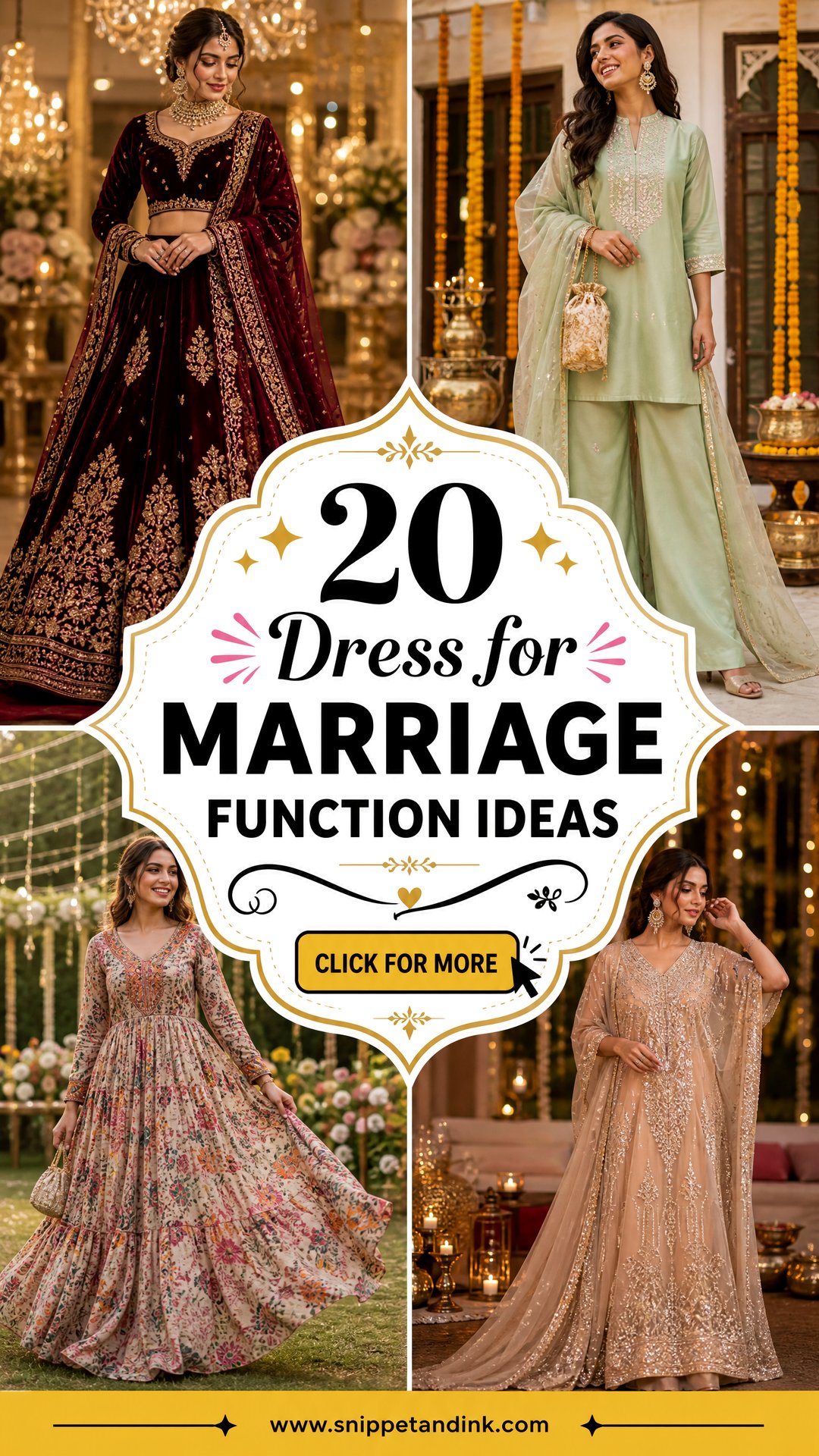
Most guests I dress for a marriage function aren’t going to one event. They’re going to a haldi, a sangeet, the ceremony and a reception, sometimes within three days, often with Western and Indian dress codes mixed together. So my first question is never about color. It’s what the invitation asks for, where you’ll be sitting, and how many hours you’ll be on your feet. Below are twenty outfits I’d put together for different functions, from silk sarees and shararas to satin midis and floor-length gowns, with notes on fabric, drape and the small fit checks that save a long evening.
Planning Outfits for a Wedding That Runs Several Days
When a guest brings me an invitation with four or five functions, I lay the events out in order and work from the most formal one backwards. The wedding ceremony and reception usually call for your richest pieces. The haldi and mehndi suit lighter, washable fabrics you won’t mind marking. The sangeet needs something you can dance in.
- Daytime events: lighter fabrics and brighter colors, such as cotton silk, chiffon or organza.
- Evening events: heavier weaves, velvet, sequins and deeper jewel tones.
- Dancing: shararas, anarkalis and lehengas with a manageable flare. Avoid a narrow saree drape if you plan to be on the floor all night.
- Rewear across events: one good lehenga skirt with two blouses and two dupattas can look like two different outfits.
1. Floral Lehenga for Marriage Function
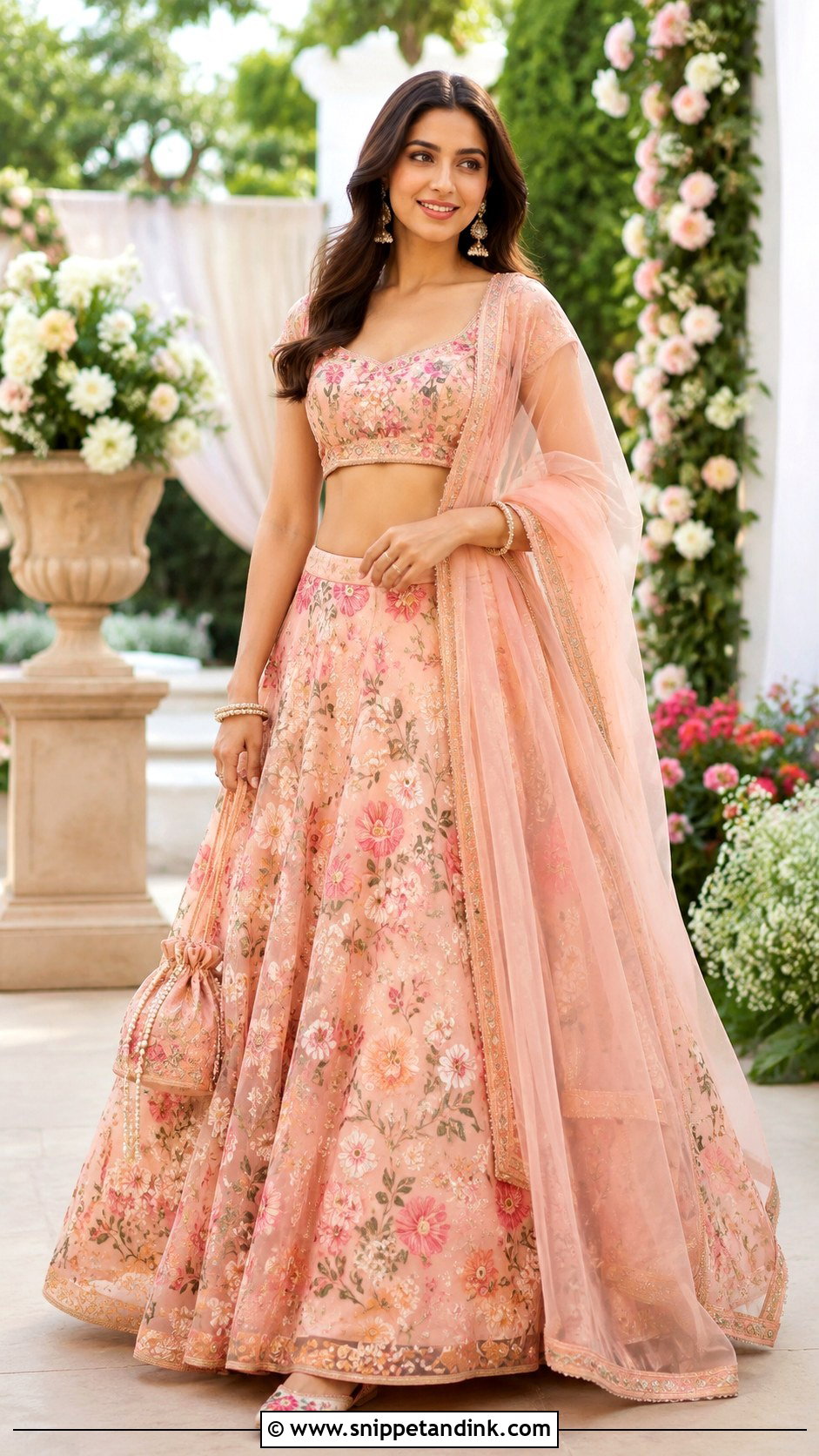
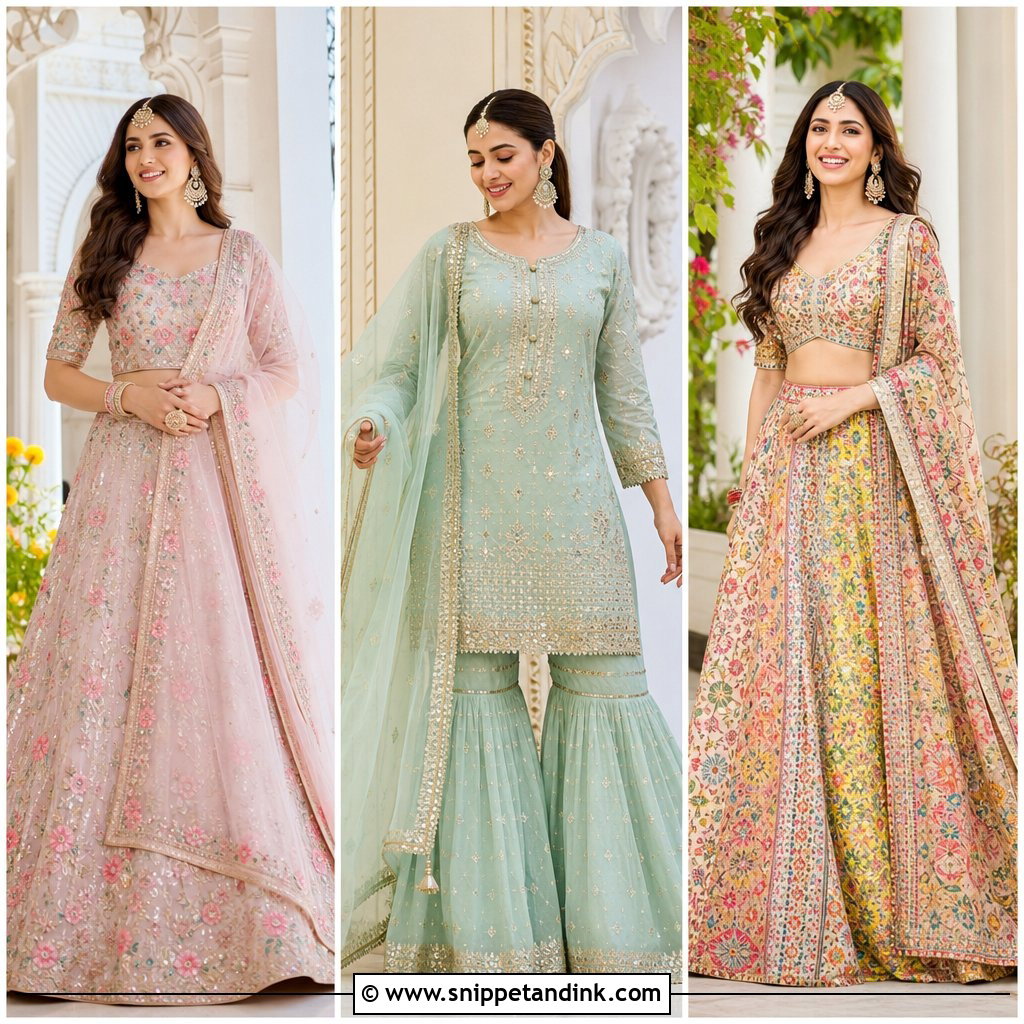
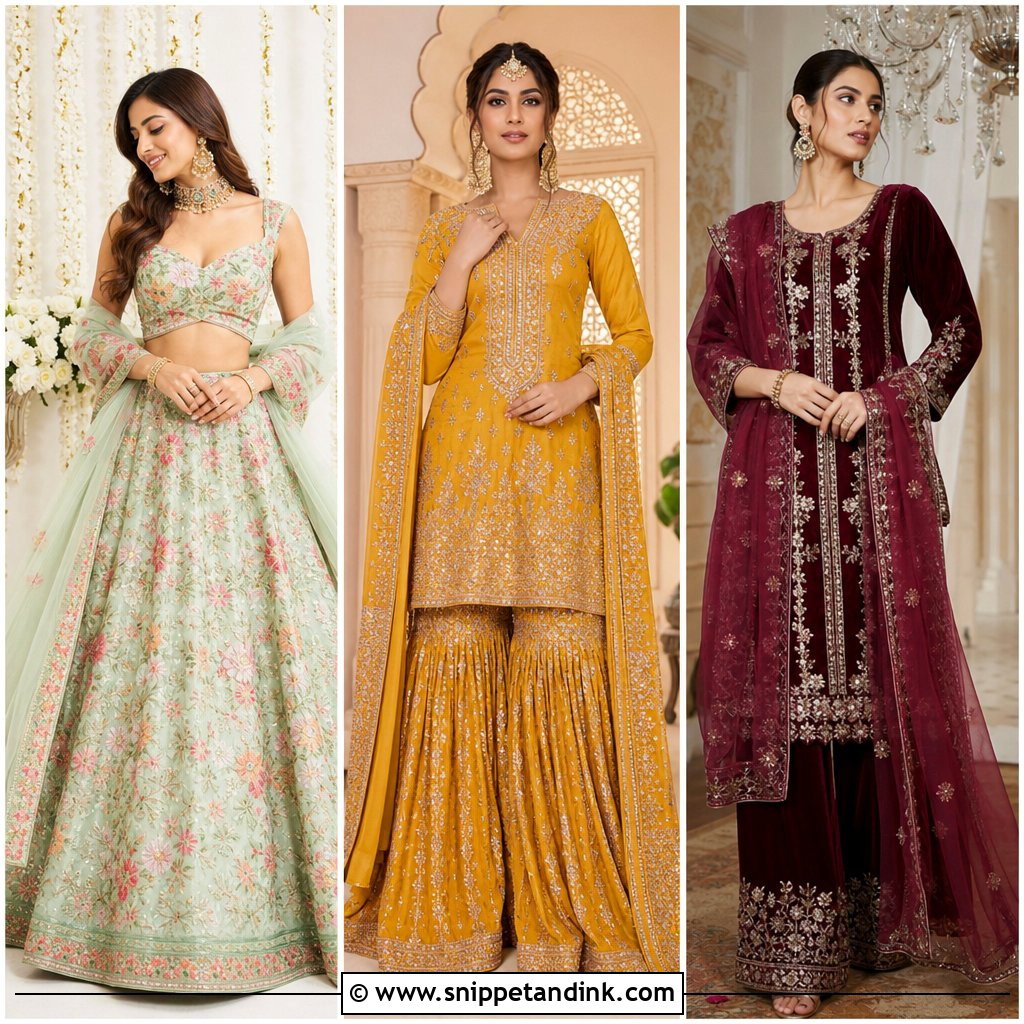
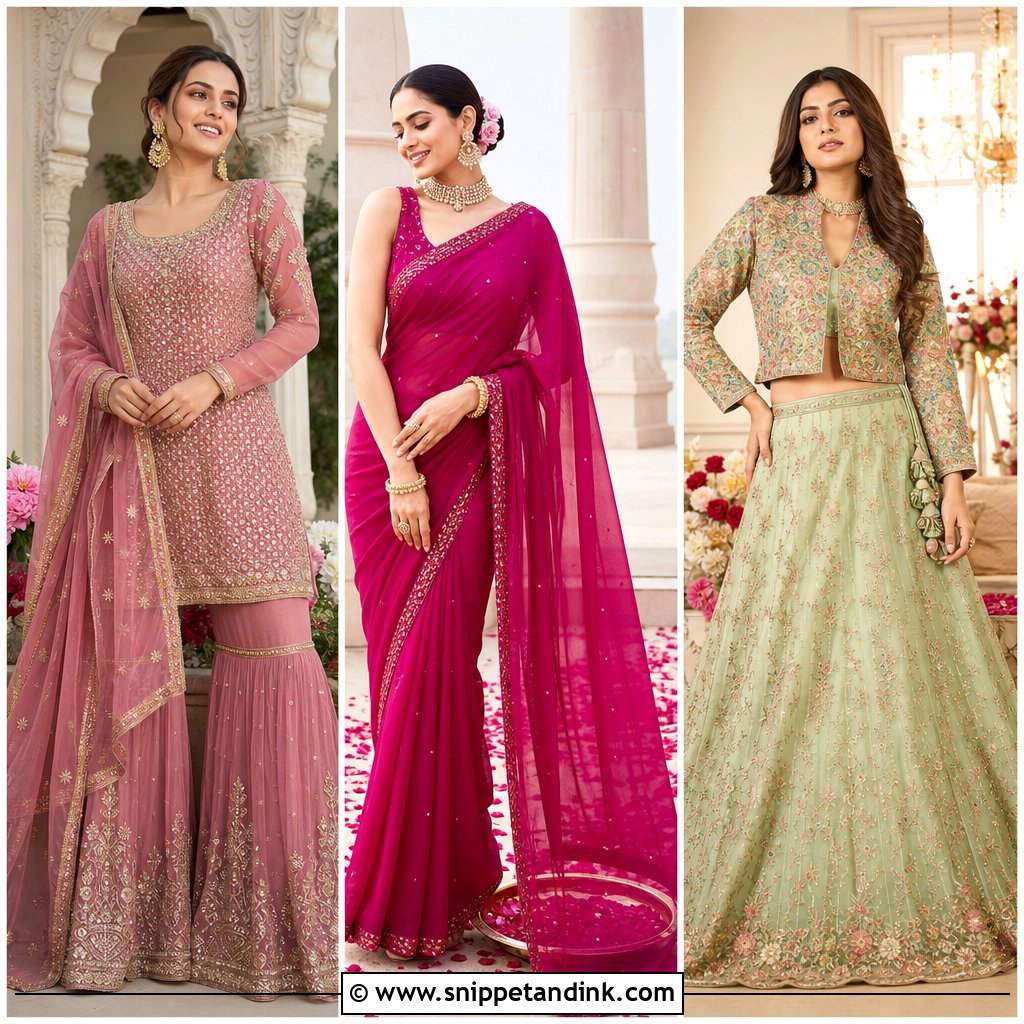
For a daytime function, a floral lehenga in georgette or organza is light enough to wear for hours. Medium-scale prints read clearly in photos; tiny florals blur and very large ones overwhelm a petite frame. I keep the blouse simple, short sleeves or a square neck, and choose a solid dupatta so the print has room. Block heels suit lawns; juttis suit indoor floors. Pearl drops, slim bangles and a small potli finish it. Peach, mint or powder blue all sit well in a garden.
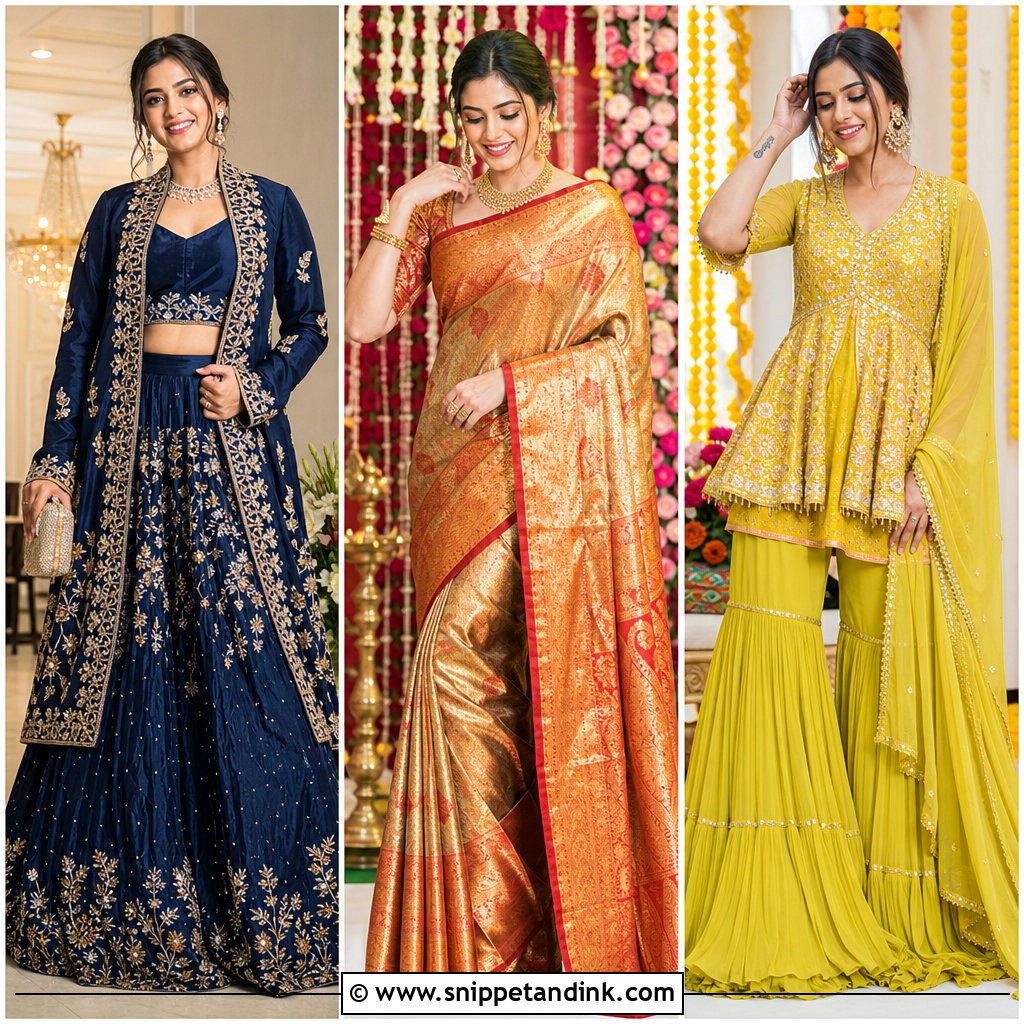
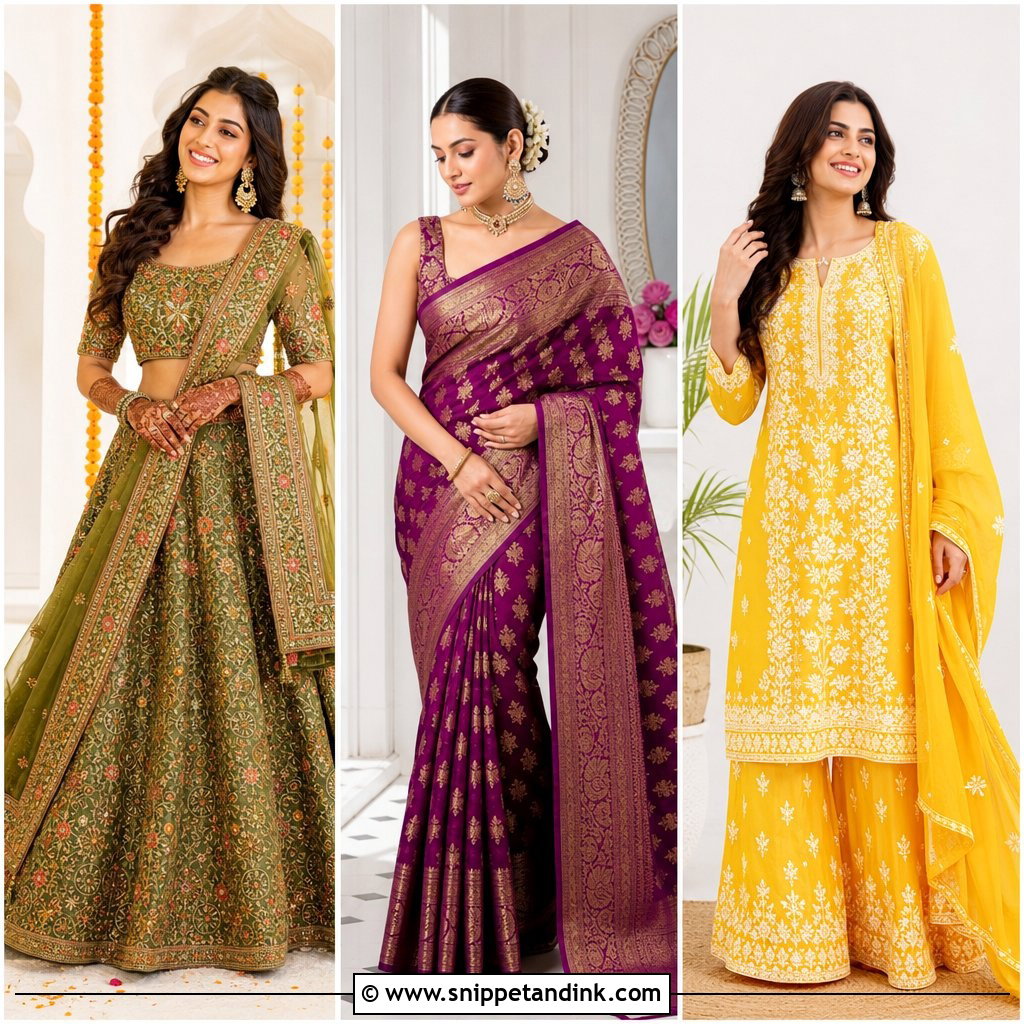
2. Silk Saree for Marriage Function
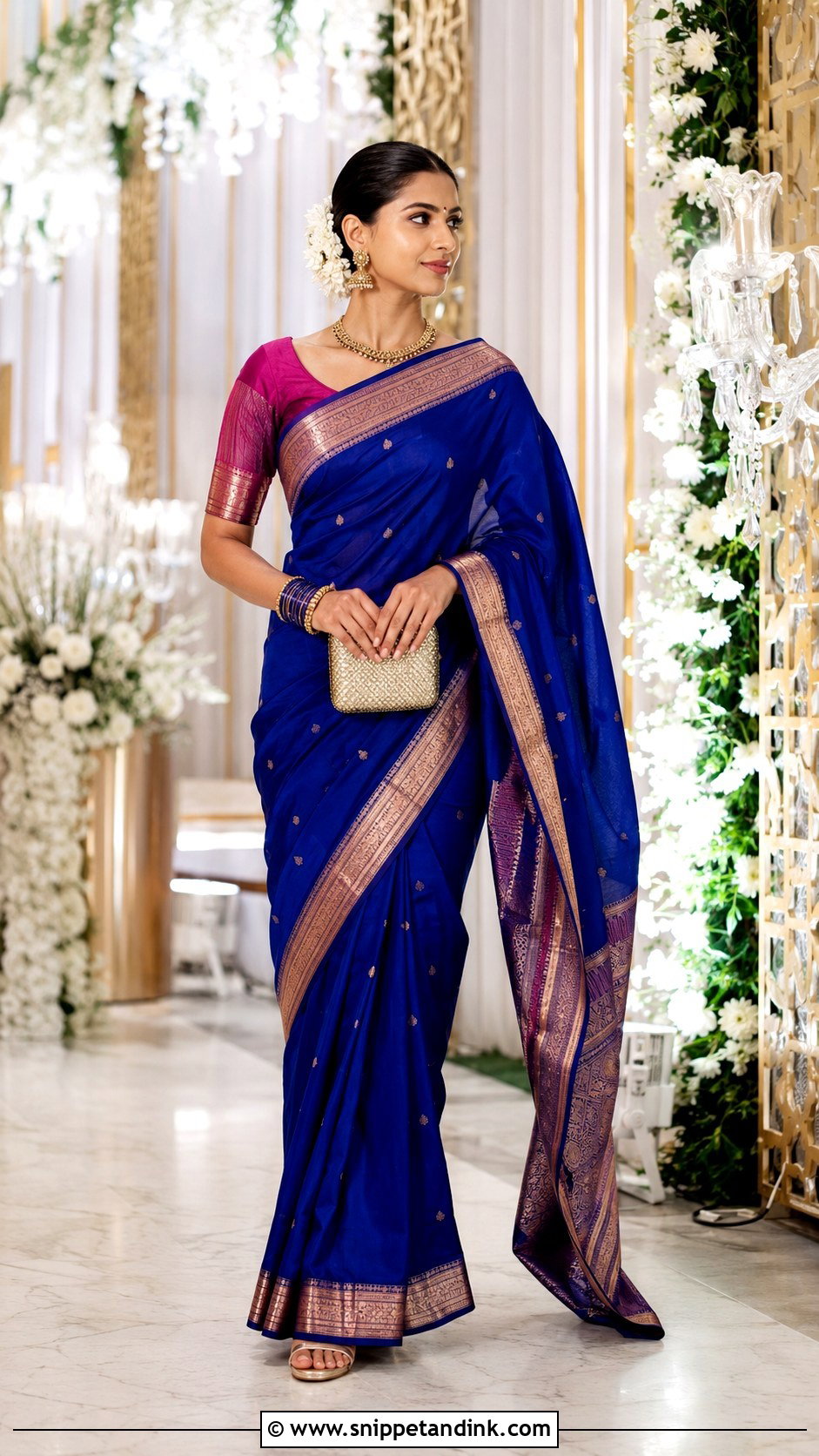
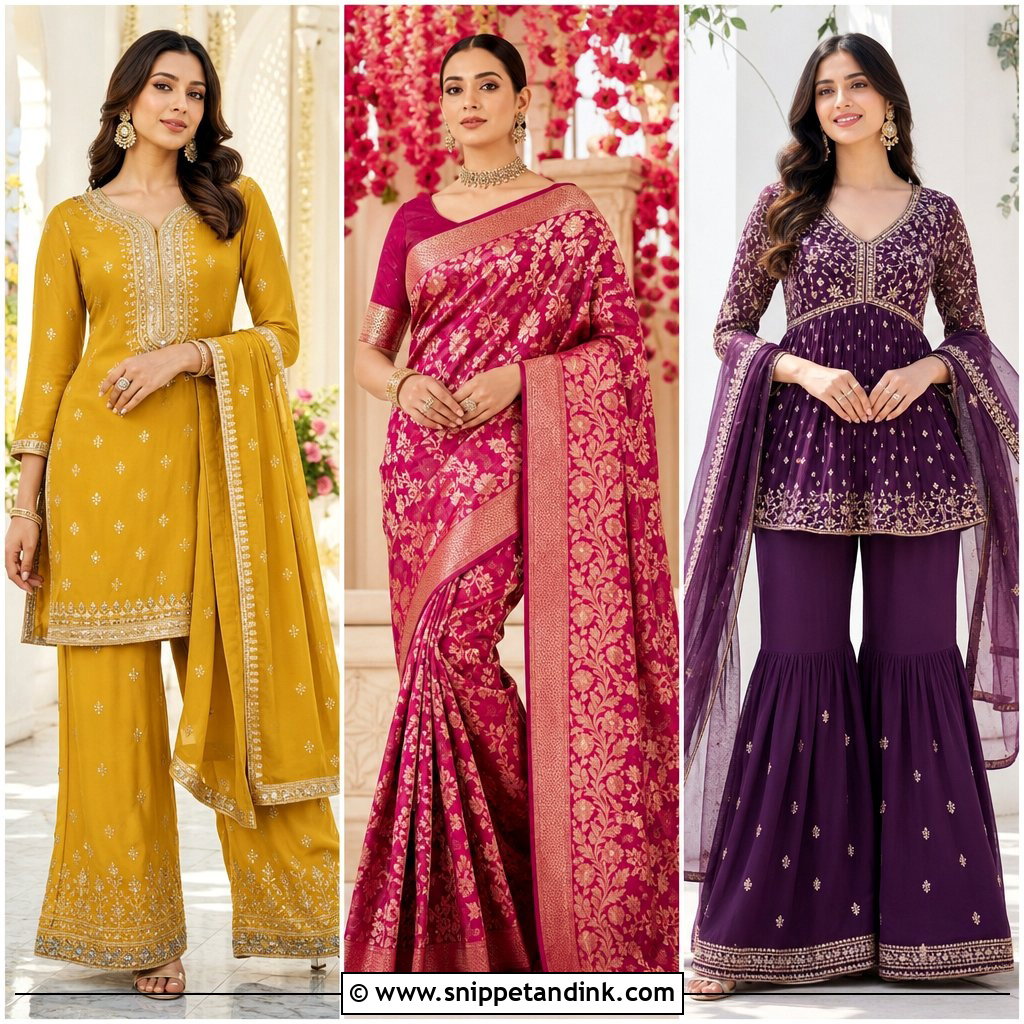
Silk sarees carry real weight, both in meaning and on the shoulder. A Kanjeevaram, Banarasi, or art silk saree suits a traditional ceremony where family will be dressed formally. Kanjeevaram silk is heavy and holds pleats crisply, which is why it’s worth having it pre-pleated and pressed the night before. Emerald, ruby or teal with a contrasting blouse looks classic. Wear sandals or low heels the hem can cover, and set the saree height with those exact shoes. Jhumkas, stacked bangles and a sleek bun with a single flower are enough.
3. Sequin Saree for Marriage Function
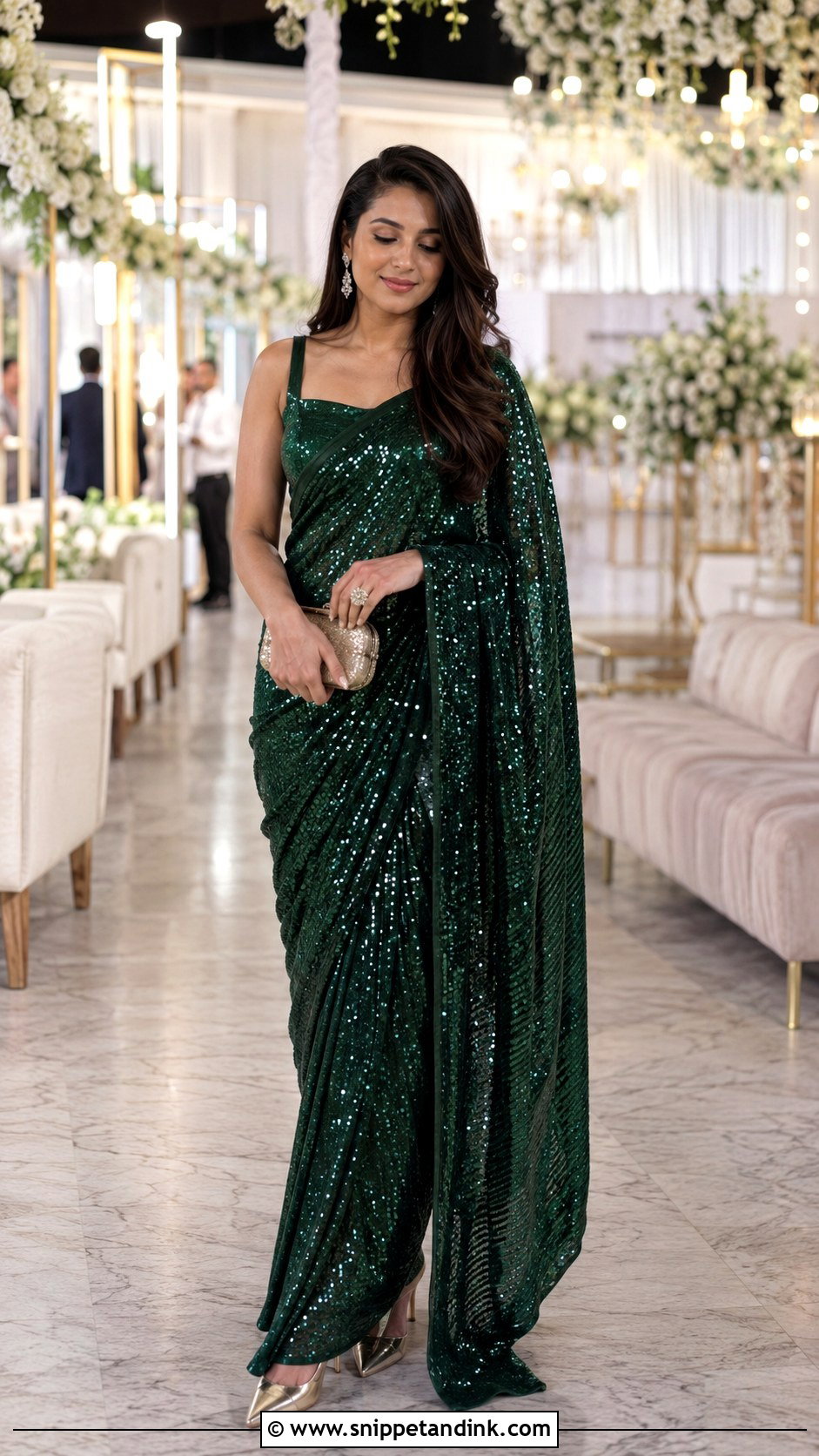
Sequins belong to evening, and a sequin saree gives sparkle without the bulk of a lehenga. Even shimmer in navy, plum or charcoal looks expensive; patchy sequin placement looks cheap under flash. Pair it with a plain blouse in the same color family. I check the inside of the pallu and pleats before anything else, because exposed sequin edges scratch the forearm all night. Keep jewelry minimal: delicate earrings and one ring. Pointed heels lengthen the line. With this much shine, a defined eye and a muted lip are plenty.
4. Anarkali Dress for Marriage Function
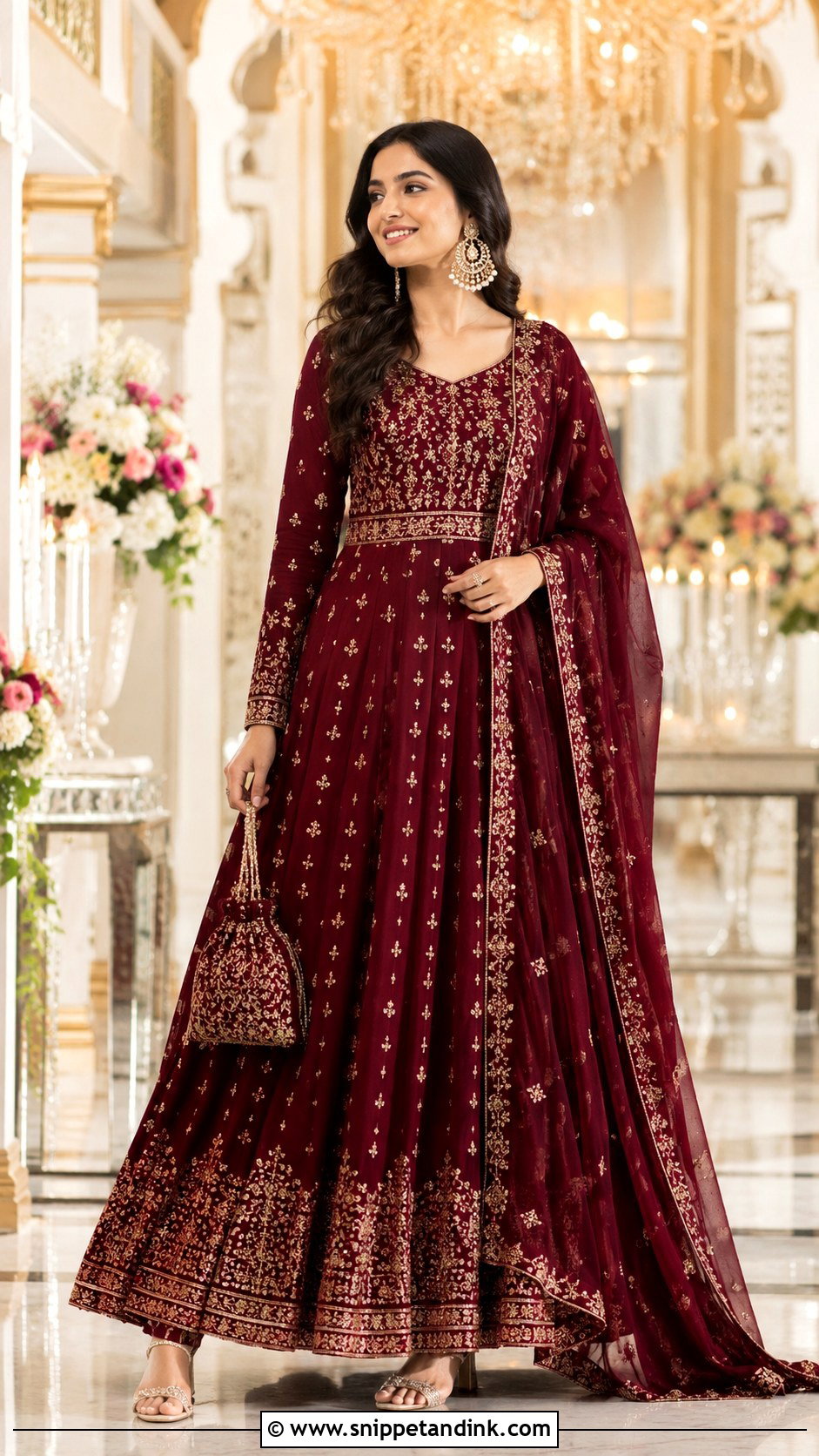
Anarkalis flatter more body types than almost anything else I style, because the flare starts high and falls cleanly over the hips. Look for floor or ankle length with embroidery at the neckline, cuffs or hem, not everywhere at once. Place the dupatta over one shoulder so the flare stays visible. The length should be set in your actual footwear; a floor-length Anarkali in flats will drag if you hemmed it for heels. Chandbalis and a small embroidered bag complete it. Wine, sapphire and dusty rose are versatile colors.
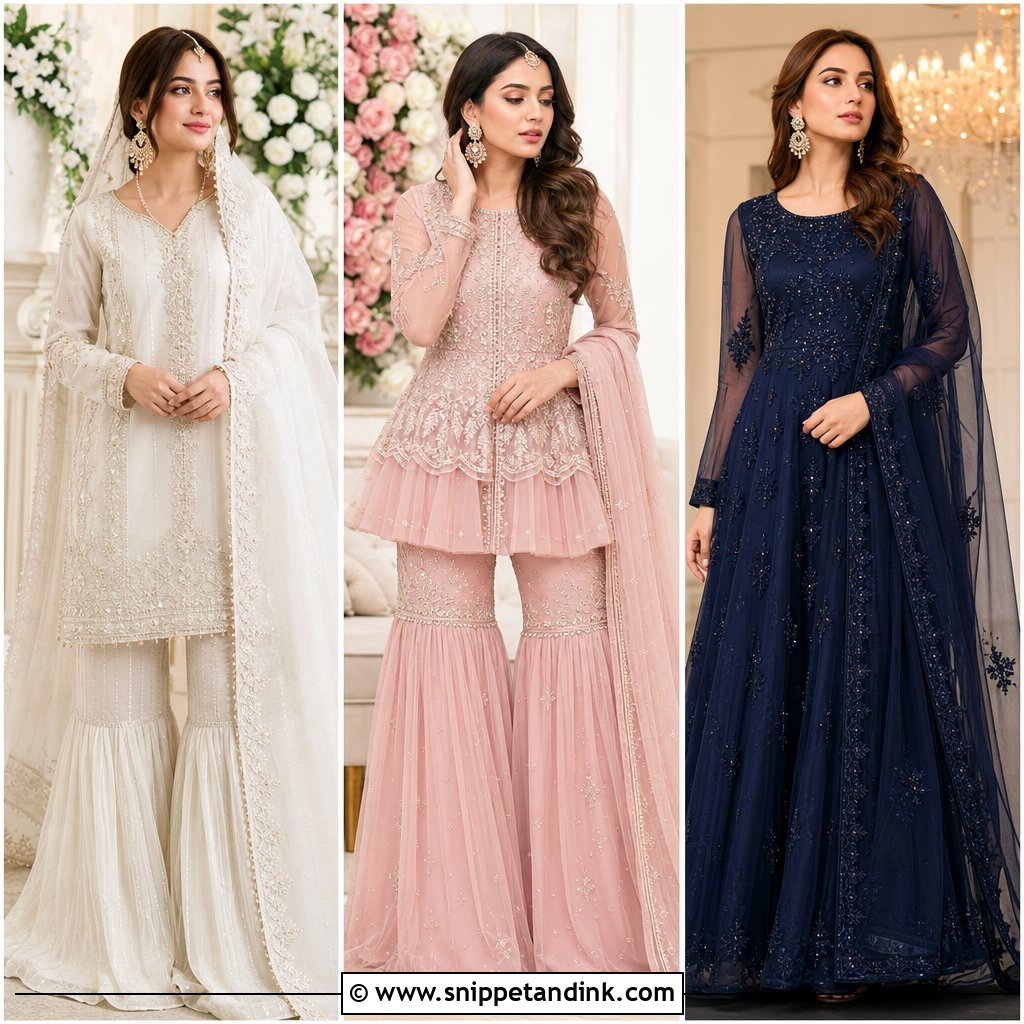
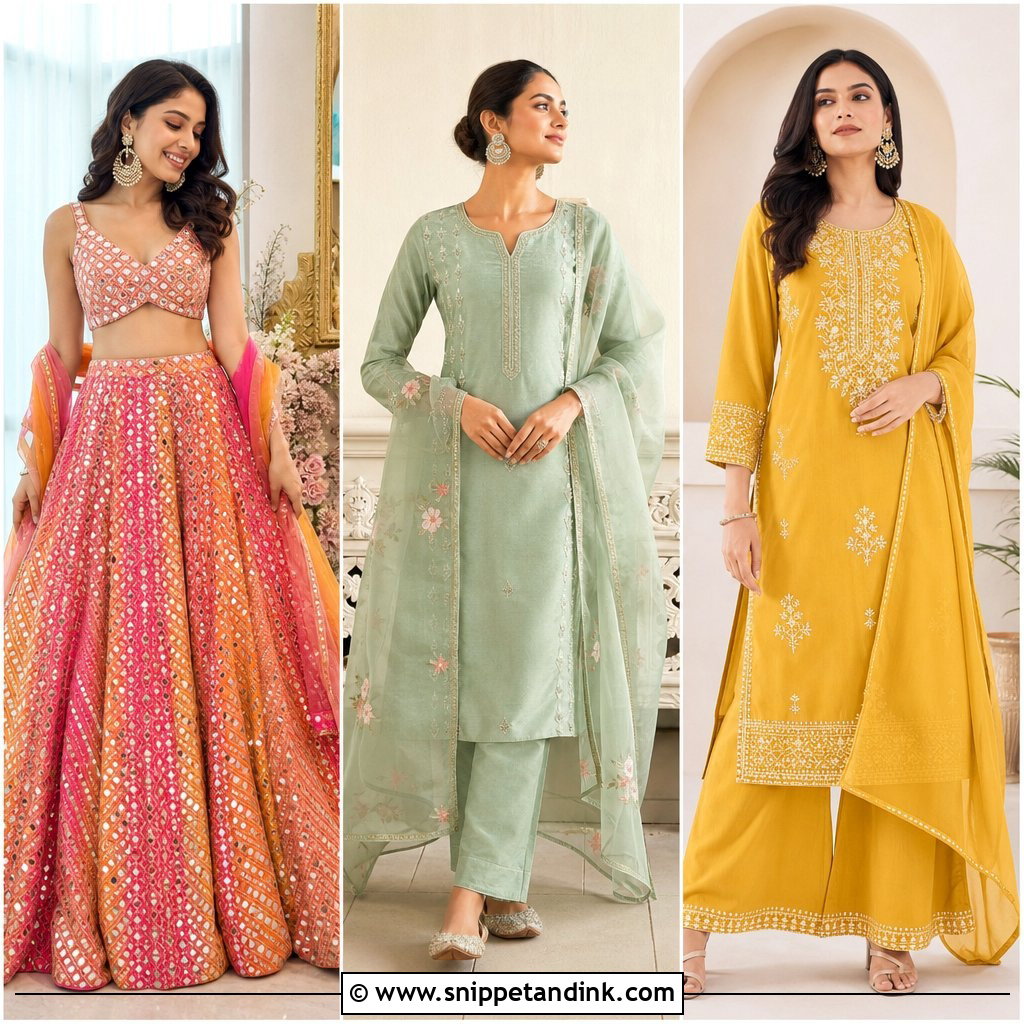
5. Sharara Suit for Marriage Function
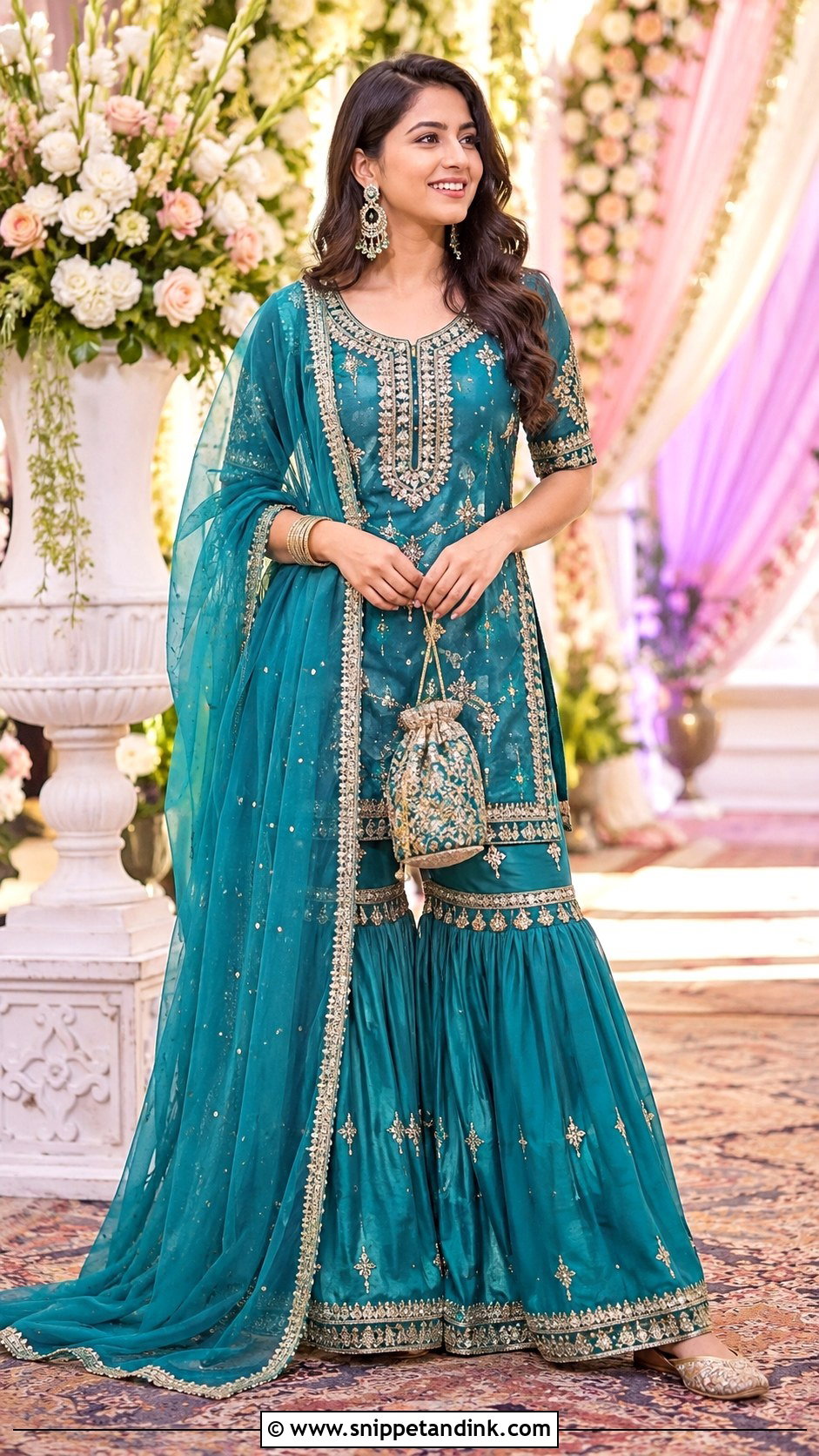
If there’s dancing, I’ll usually suggest a sharara. The wide flared legs move like a skirt but don’t wrap around your ankles on turns. A short embroidered kurti keeps the proportions right, and a soft net or chiffon dupatta adds a traditional layer without weight. Matching colors look streamlined, while a contrasting dupatta adds interest. Juttis sit neatly under the wide hem. Statement earrings and a compact potli are enough. A braided ponytail survives a sangeet far better than open curls.
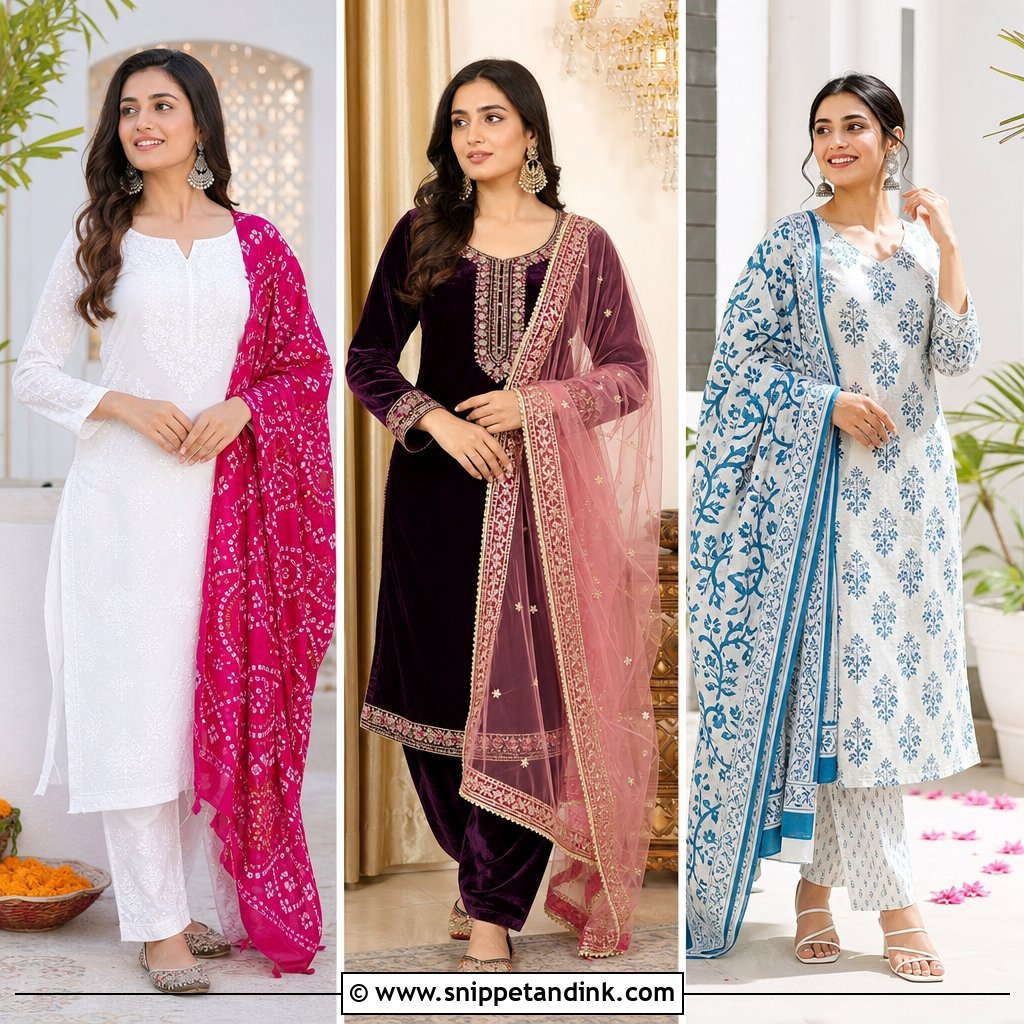
6. Pastel Salwar Suit for Marriage Function
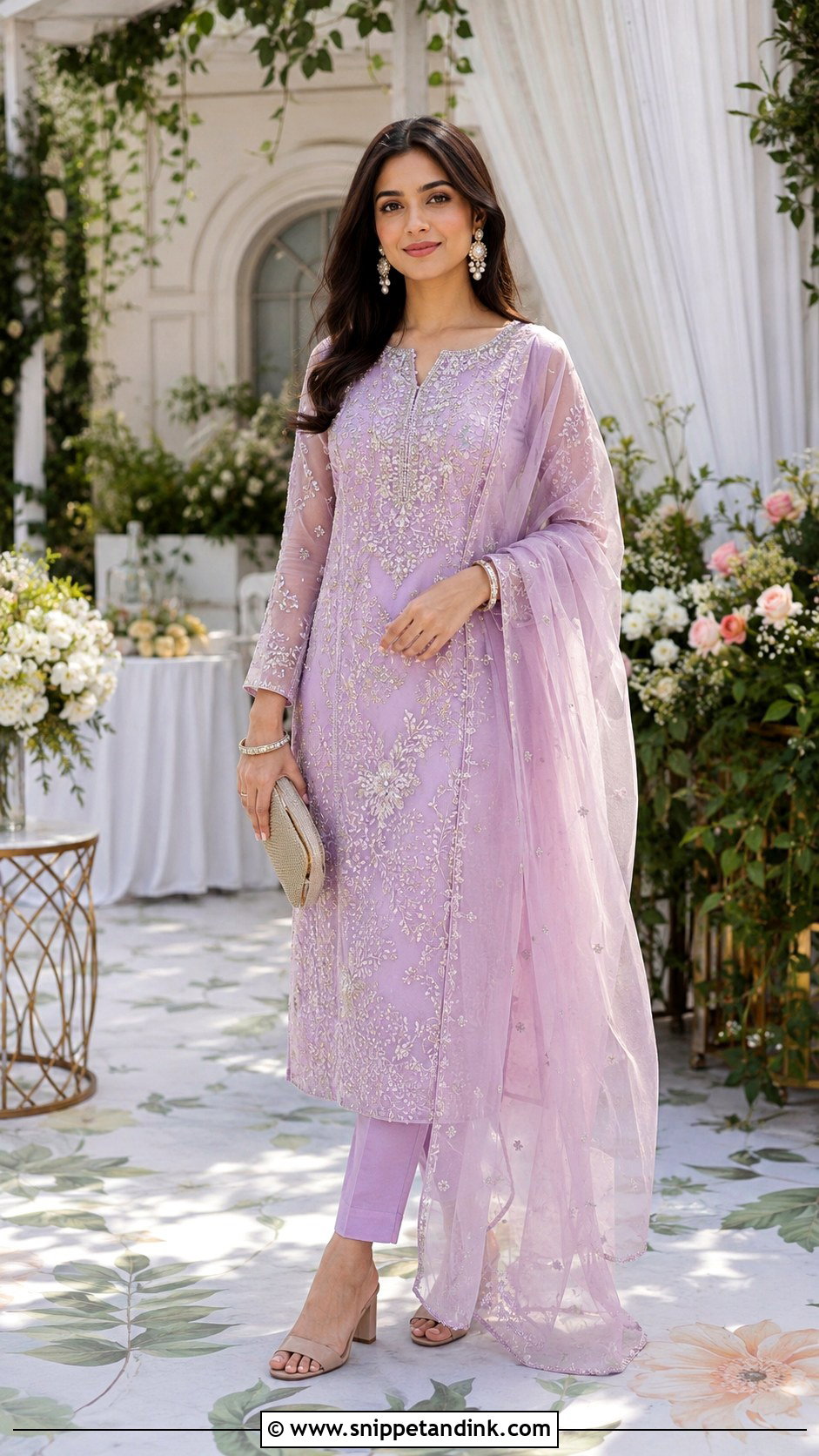
Morning functions call for color that suits daylight, and a pastel salwar suit does that gently. Powder blue, pistachio and lilac look fresh in natural light, though very pale pastels can wash out fair skin; one shade deeper usually helps. A straight or slightly flared kurta with narrow pants and an organza dupatta keeps it light. Choose threadwork or small pearls over heavy metallic detail. Nude block heels and pearl earrings suit it. It’s festive without needing to look formal.
7. Embroidered Gown for Marriage Function
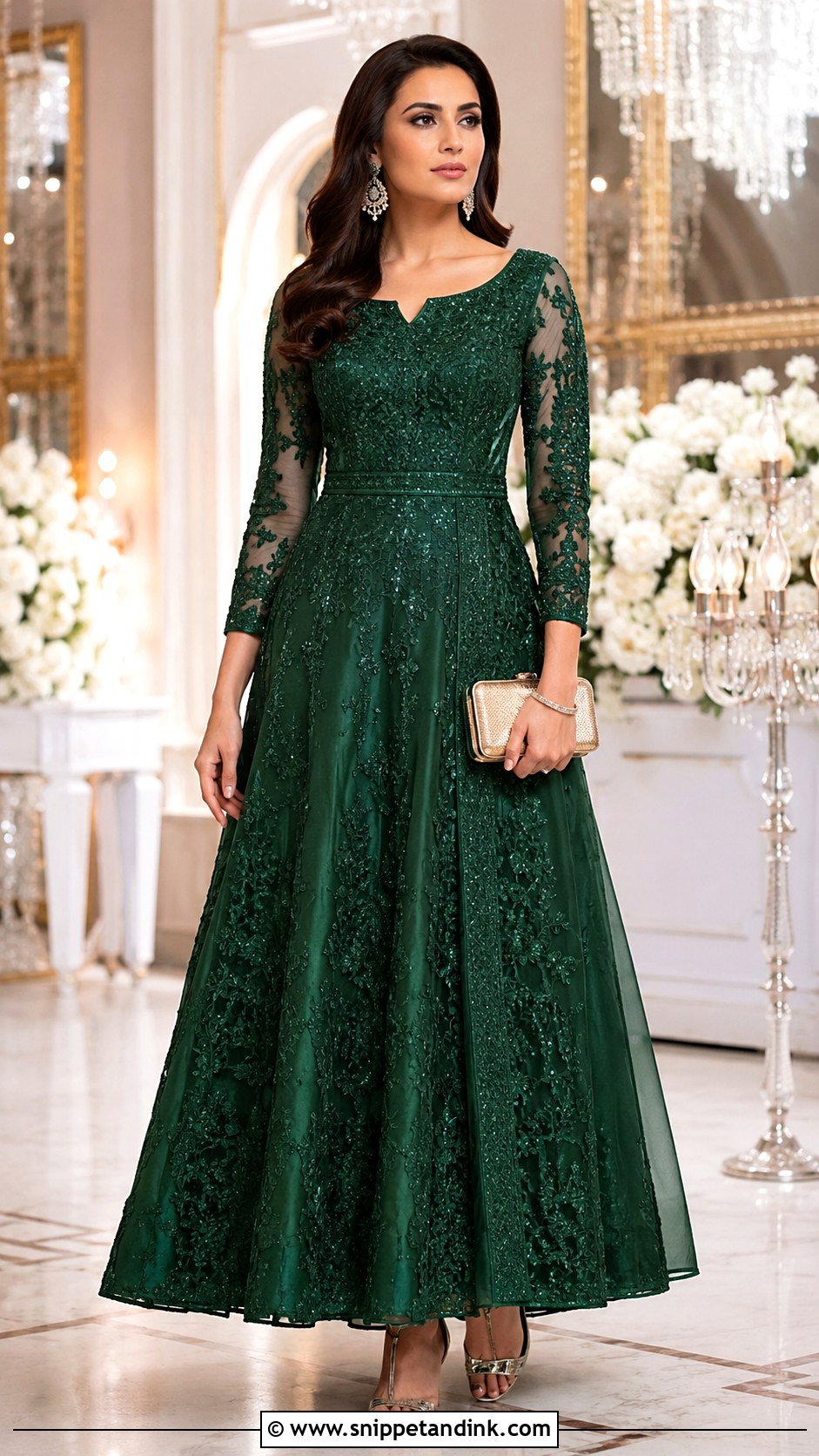
An embroidered gown is a full look in one piece, with no dupatta to manage, which many guests love for a reception. A defined waist and supportive bodice matter most. Vertical embroidered panels lengthen the body; a heavy horizontal border at the hip does the opposite. Deep blue, burgundy and bronze suit evening; pastels suit day. Sit down in it at the trial. Beading across the back of the skirt digs in on a hard chair, and you’ll notice it by dinner. Drop earrings and a metallic clutch complete it.
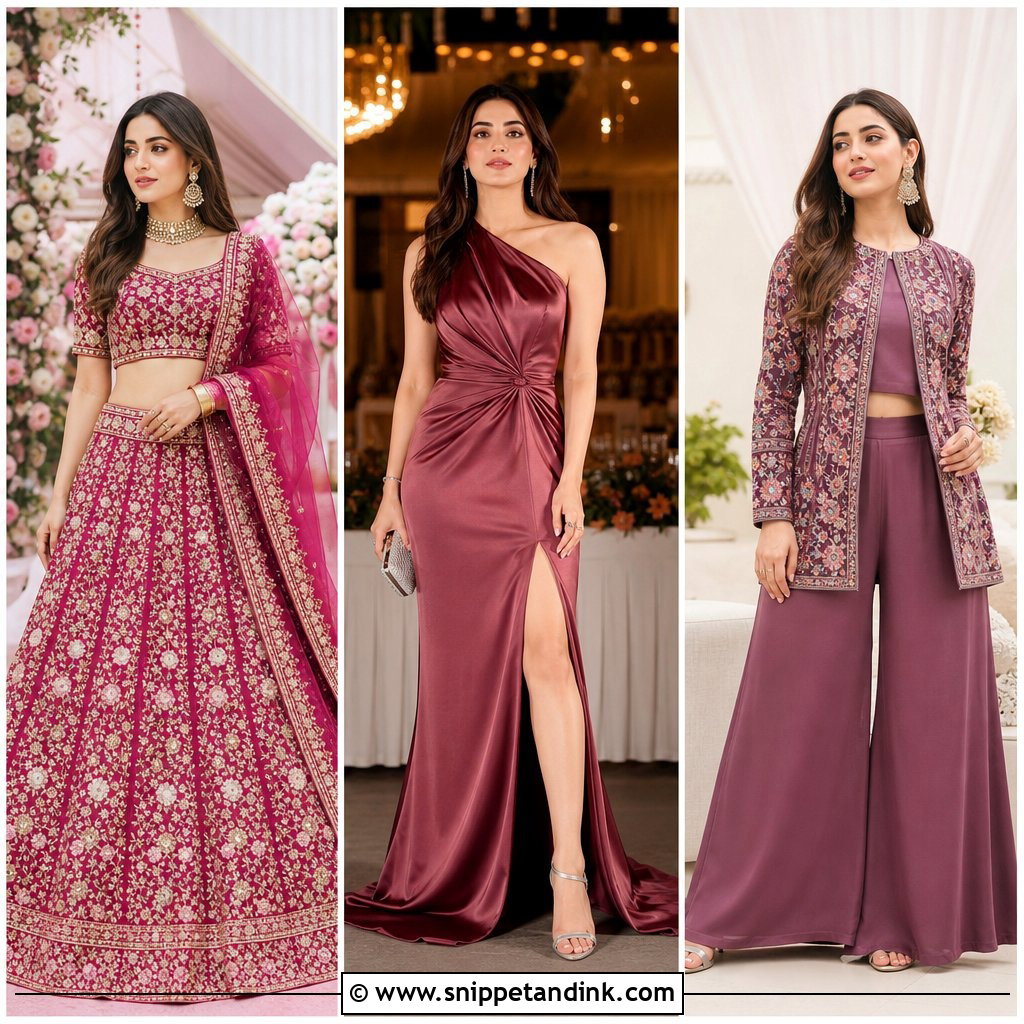
8. Draped Indo-Western Dress for Marriage Function
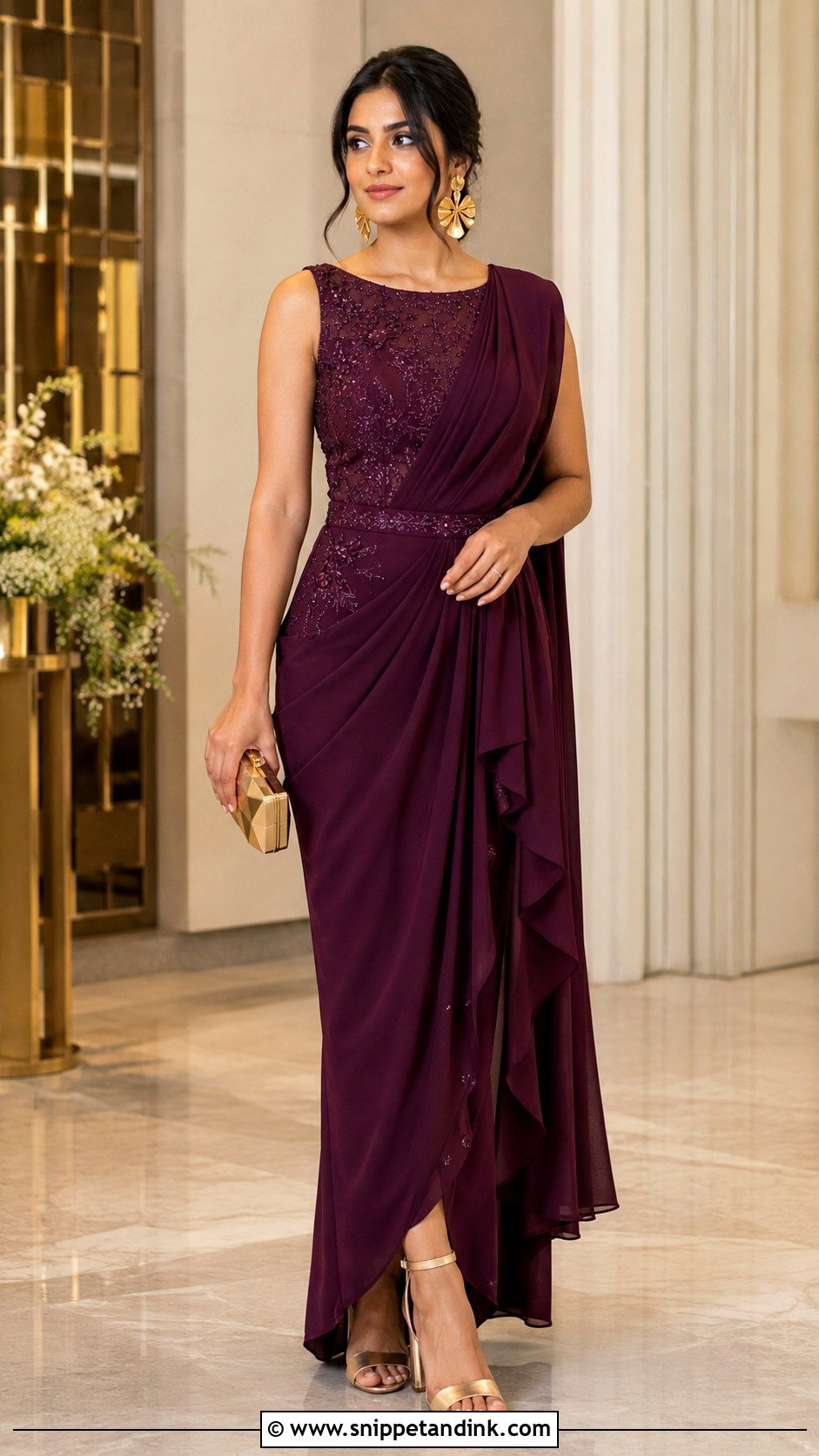
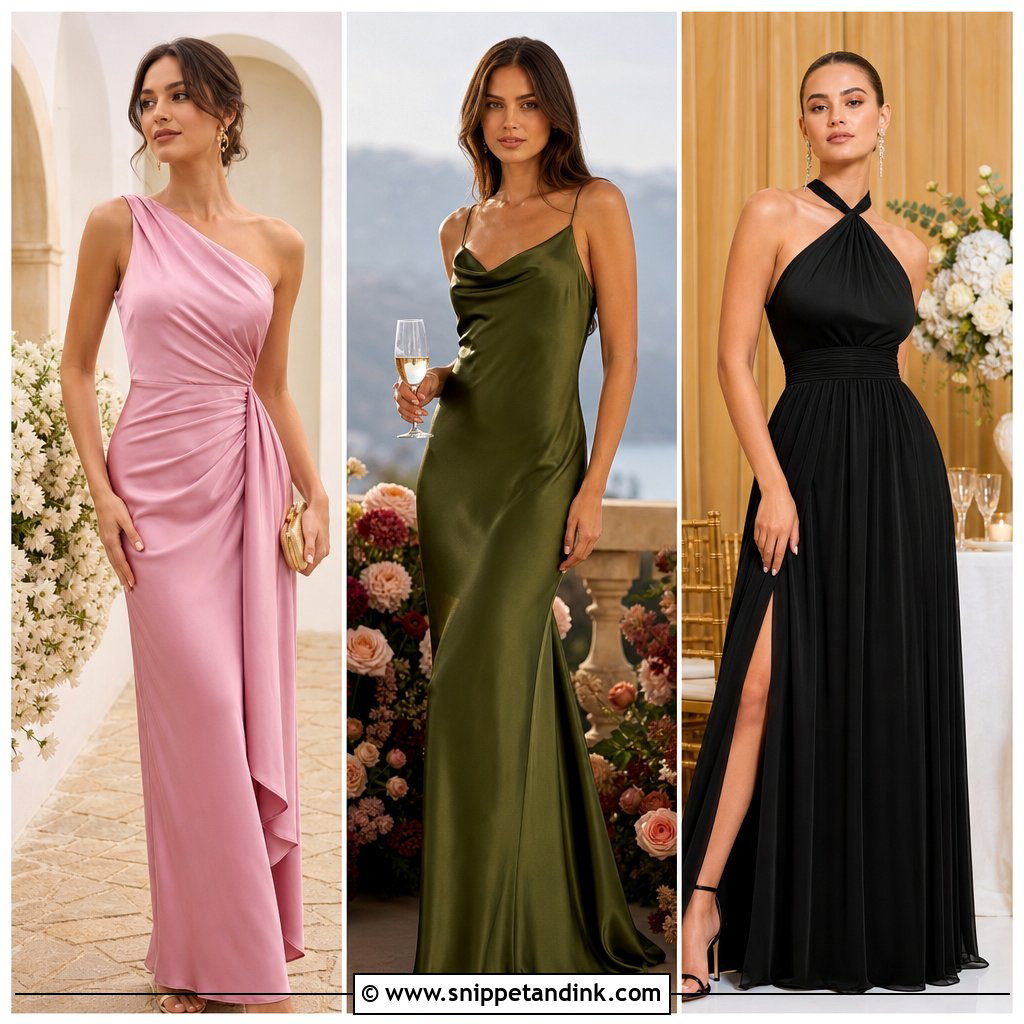
A draped Indo-Western dress gives you the shape of a saree without the pleating and pinning. The drape should be stitched in place and fall smoothly; if it’s loose, it bunches at the waist when you sit. I look for an asymmetric line with a structured or embroidered bodice. Jewel tones and muted metallics feel right for the occasion. Sleek block heels or pointed pumps suit it, depending on the hem. Sculptural earrings and a box clutch keep the mood modern. It’s a sensible pick for guests who love the look of a saree but haven’t worn one before.
9. Velvet Lehenga for Winter Marriage Function
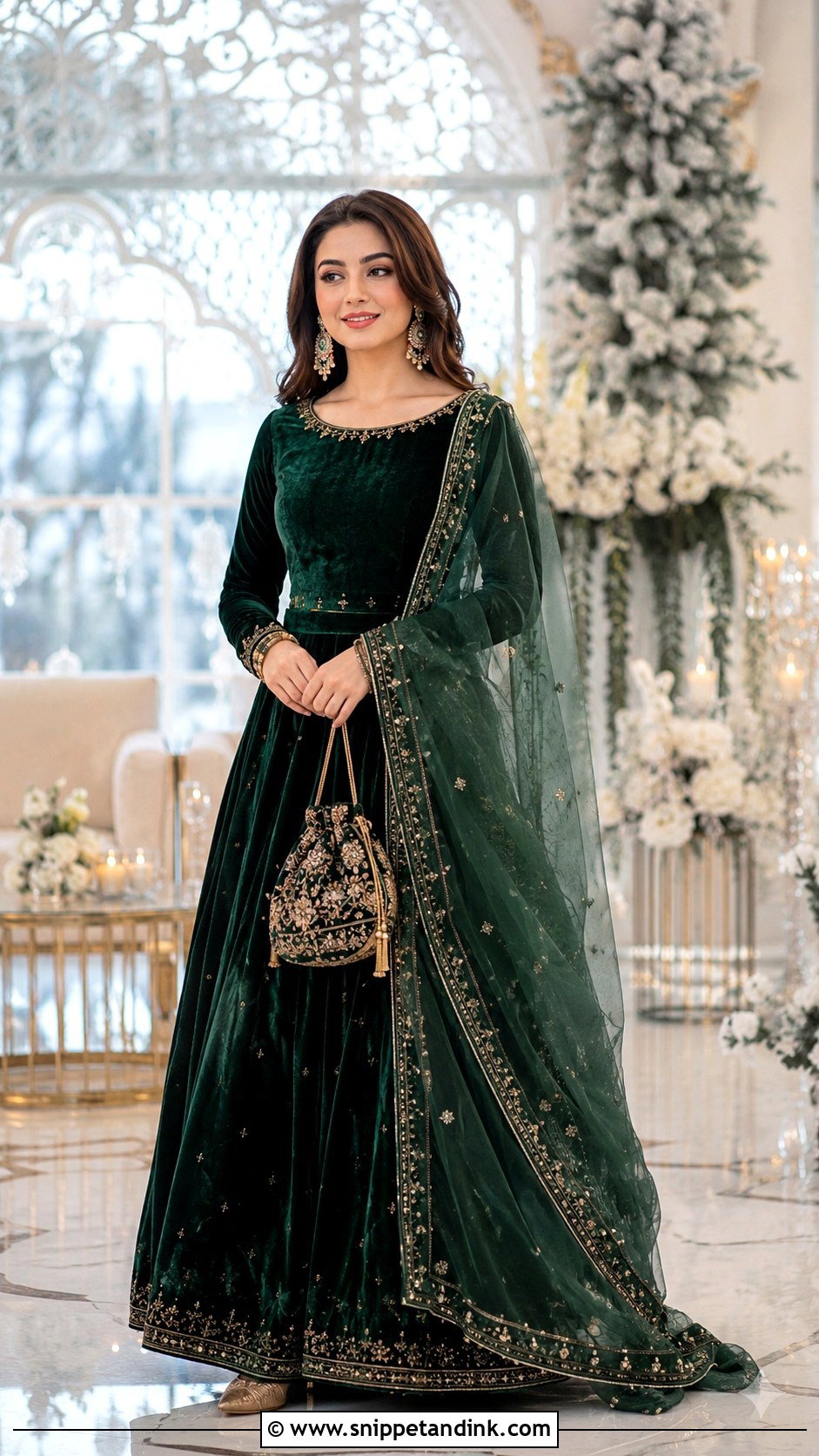
Velvet is warm, rich and made for winter weddings. It also adds weight quickly, so I keep the embroidery restrained on a velvet lehenga; heavy zardozi on velvet can make the skirt very heavy by the end of the evening. Maroon, bottle green or midnight blue pair well with a fitted blouse and a lighter net dupatta. Long sleeves add warmth and balance the skirt. Velvet crushes where you sit, so carry it to the venue on a hanger rather than folding it. Antique-finish earrings and a carried shawl complete the look.
10. Chiffon Saree for Summer Marriage Function
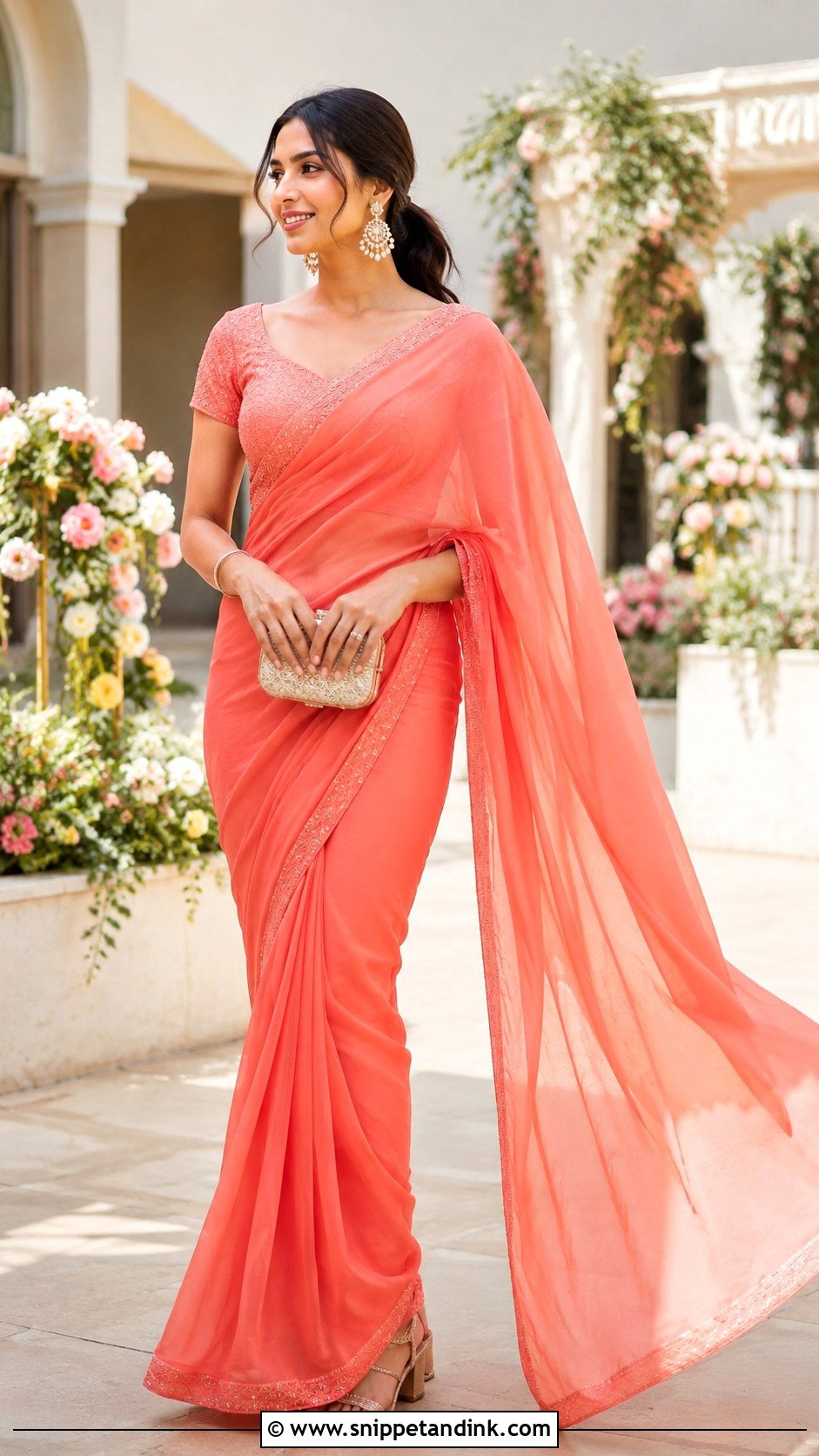
In heat, chiffon is the saree I recommend most. It’s light, it breathes, and it doesn’t hold sweat marks the way silk does. Coral, turquoise or a floral print all suit summer. Chiffon is slippery, though, so the pleats need two or three safety pins inside the waistband and the pallu should be pinned at the shoulder. A short-sleeve blouse keeps you cool. Block heels or wedges handle outdoor ground. Statement earrings and a few slim bangles are enough sparkle. Keep makeup light so it doesn’t slide in the heat.
11. Kurta and Palazzo Set for Marriage Function
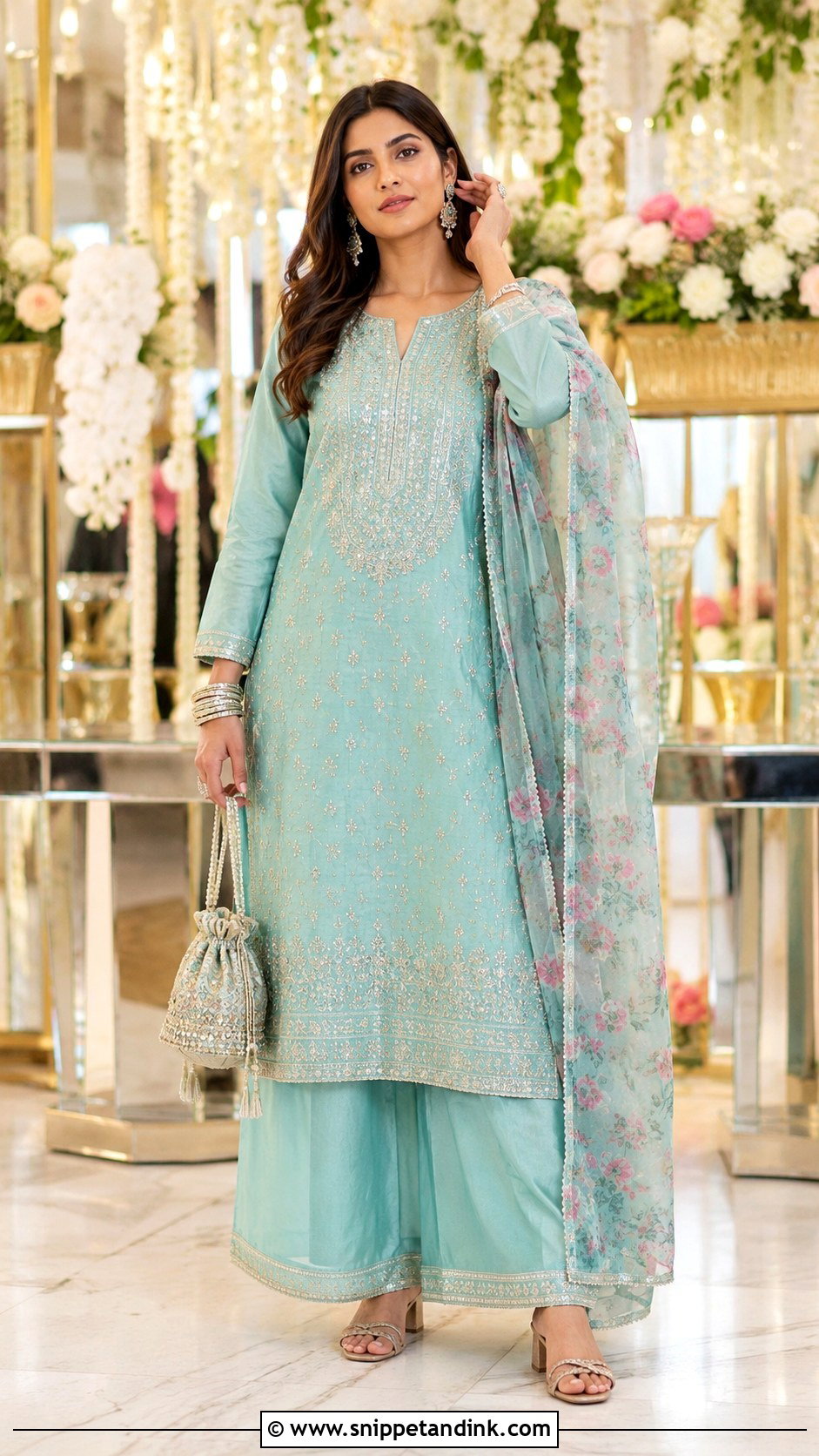
For a relaxed function, a kurta and palazzo set is comfortable from start to finish. A knee- or calf-length kurta with embroidery around the neckline looks polished, and side slits let the palazzos move. A sheer dupatta adds traditional character. One color throughout looks refined; a printed dupatta adds contrast. Block heels keep you steady. I like this set for practical reasons too: the kurta works later with jeans, and the palazzos with a simple top, so it earns its cost back.
12. Cape Lehenga for Marriage Function
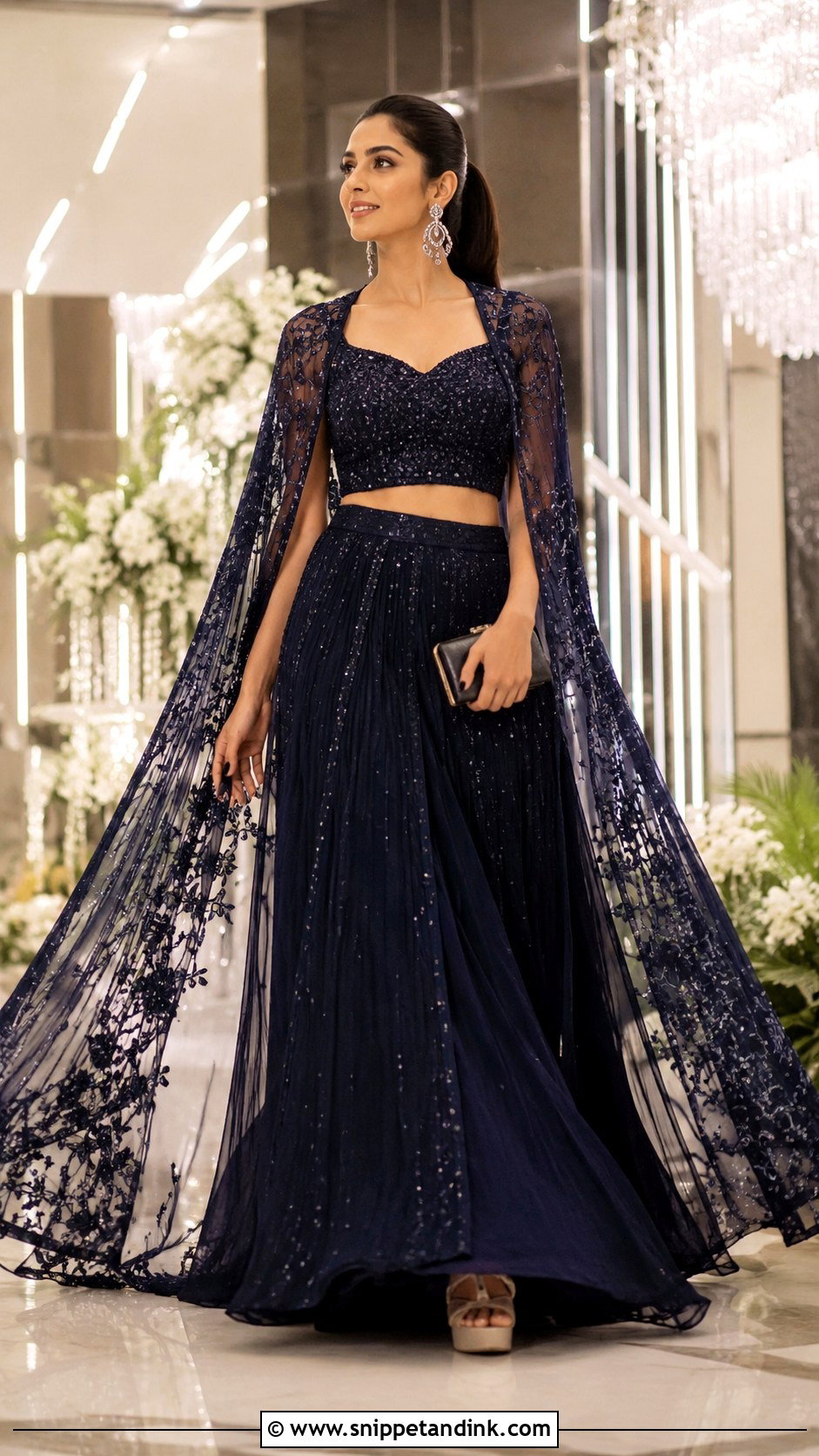
A cape lehenga replaces the dupatta with an embroidered cape, and that alone makes it easier to wear at a busy reception. Nothing slides off your shoulder when you hug someone or hold a plate. The cape can stop at the waist, hip or floor; floor-length capes need care on stairs. If the cape is heavily beaded, keep the skirt plain. High block heels or platforms balance the volume. A sleek ponytail or low bun keeps the shoulders visible. It suits evening receptions at indoor venues.
13. Banarasi Saree for Marriage Function
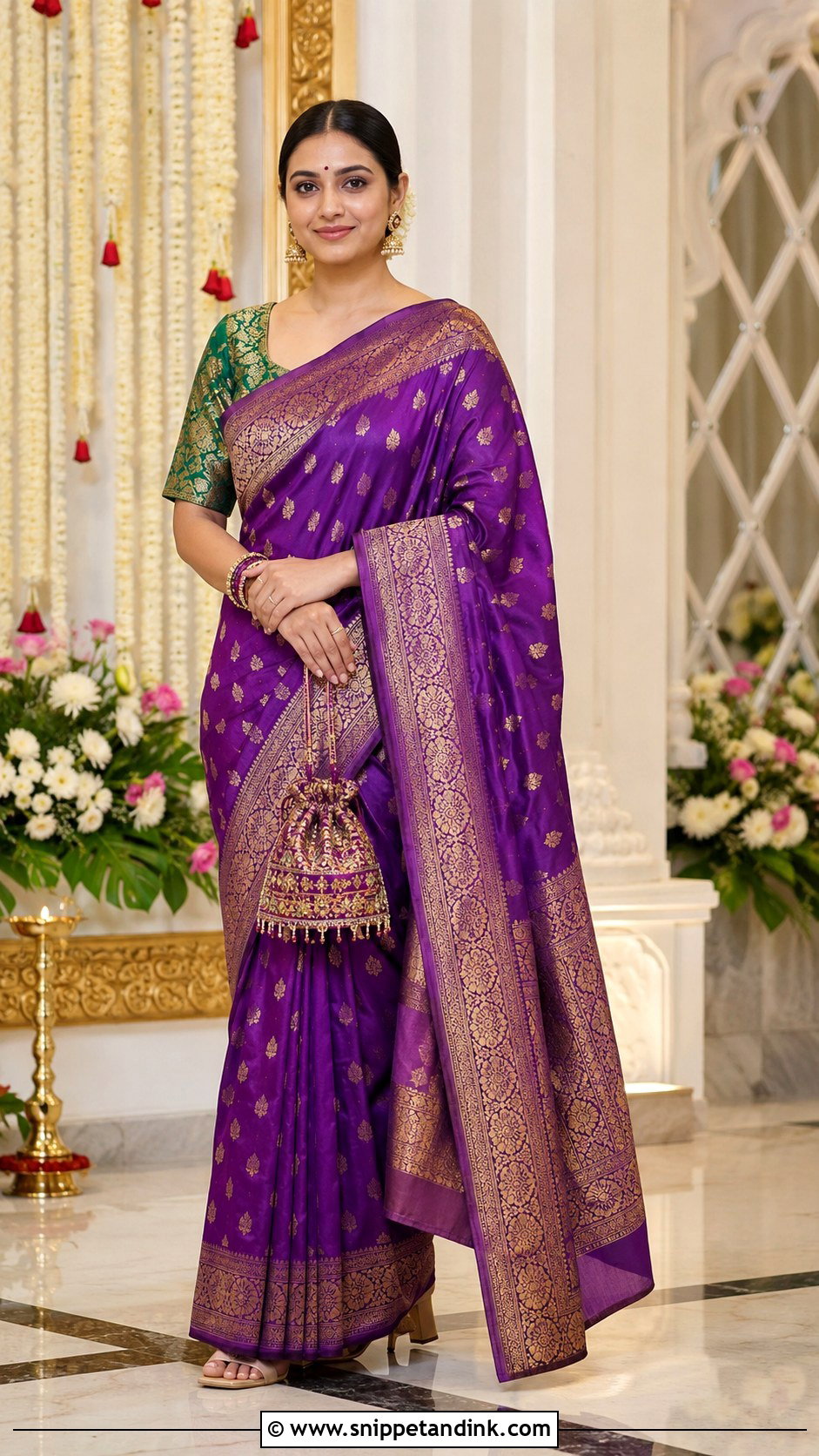
Banarasi weaves are so detailed that they need very little added to them. Red, green, purple and royal blue with a contrasting border are the classics. Because a Banarasi is heavier than most silks, I secure the drape with extra pins at the waist and shoulder and keep the pleats a little narrower so they don’t bulk out. A silk or brocade blouse that picks up a color from the weave looks considered. Low heels or dressy flats are practical. Traditional earrings, coordinated bangles and a center-parted bun suit it.
14. Jacket Dress for Marriage Function
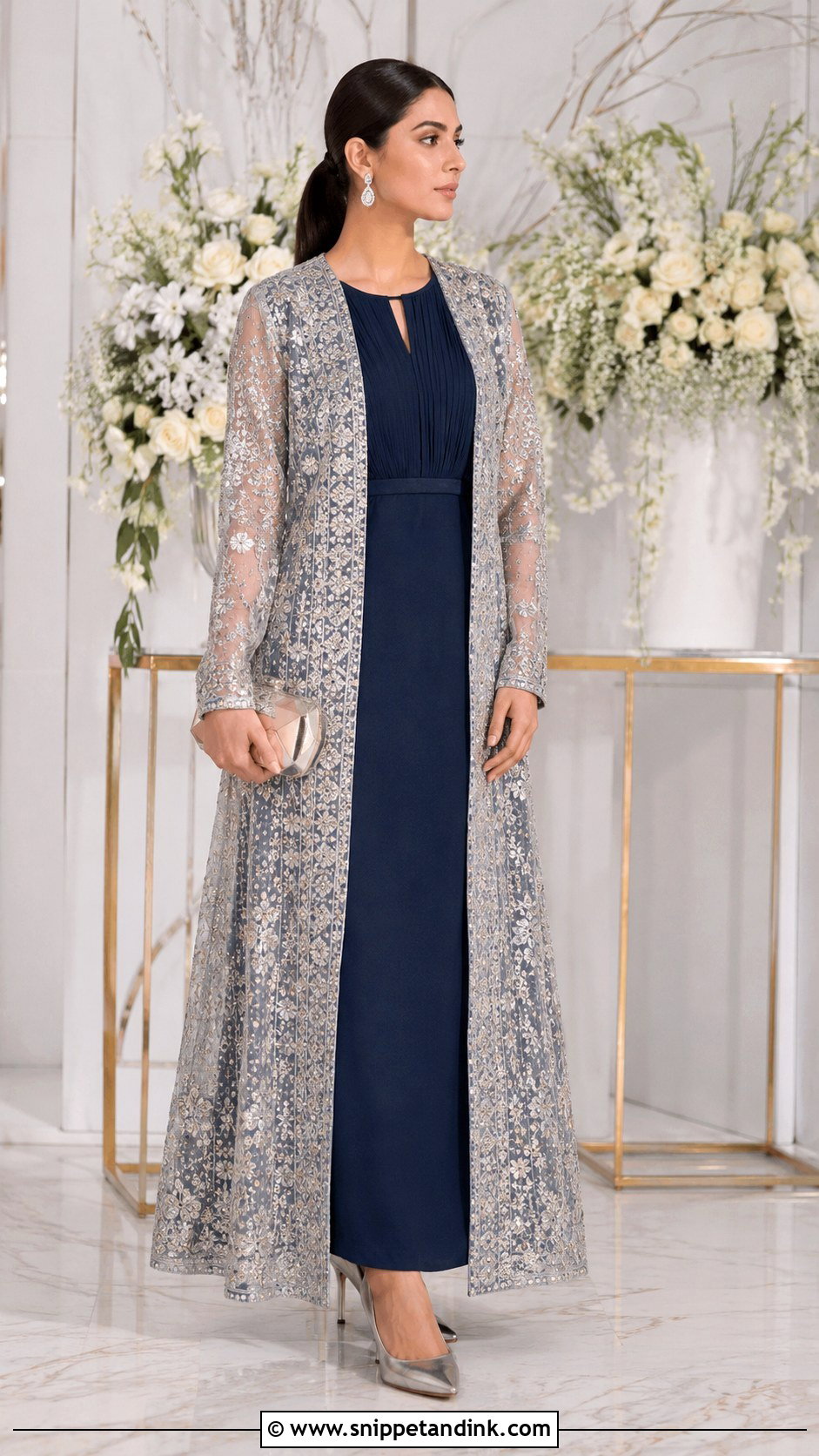
A long jacket layered over a column dress or a straight kurta dress gives you a fusion look that adapts to temperature. The jacket can come off once the dancing starts. Knee length feels relaxed; floor length looks formal. Choose pairings like navy and silver or blush and gold. Pointed heels keep the long vertical line. The jacket should sit squarely on your shoulders; if it slides back, it pulls the whole outfit off balance. Medium earrings and a simple clutch finish it.
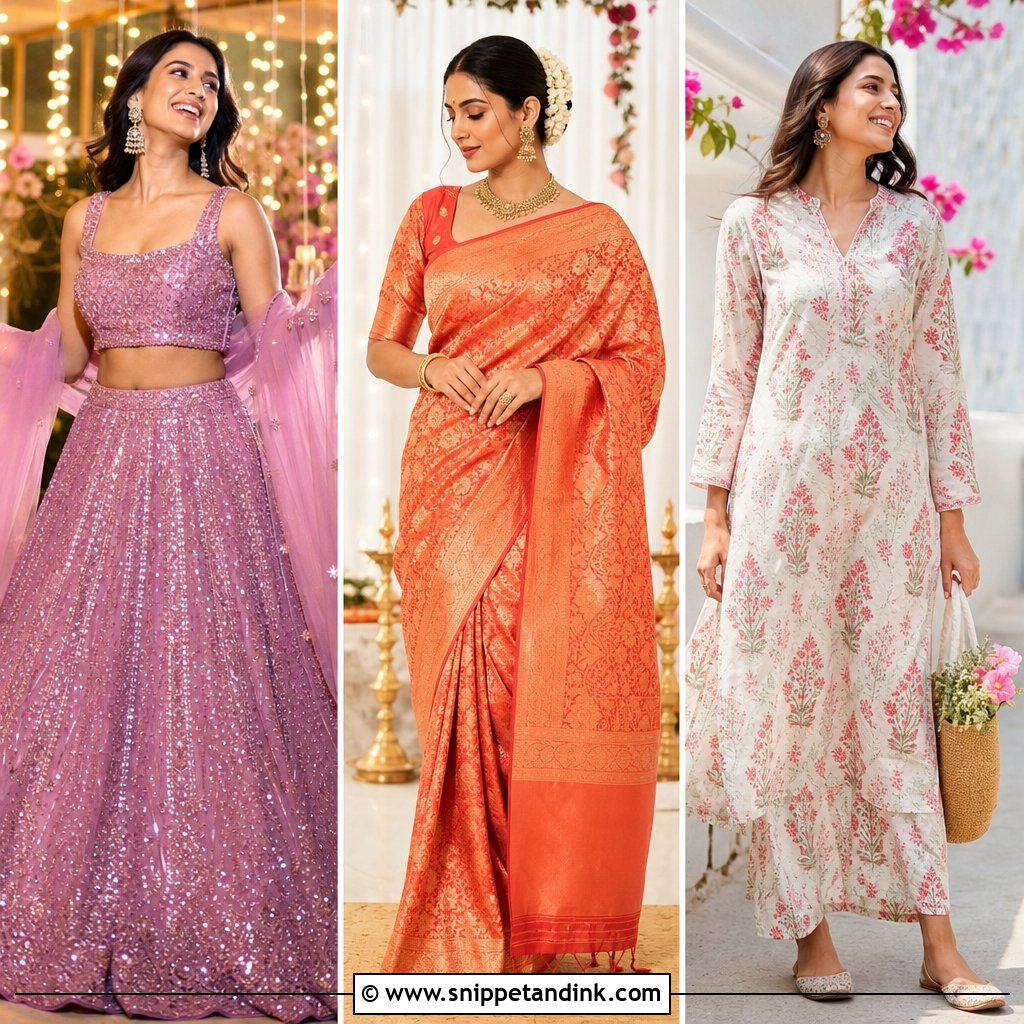
15. Ruffle Saree for Marriage Function
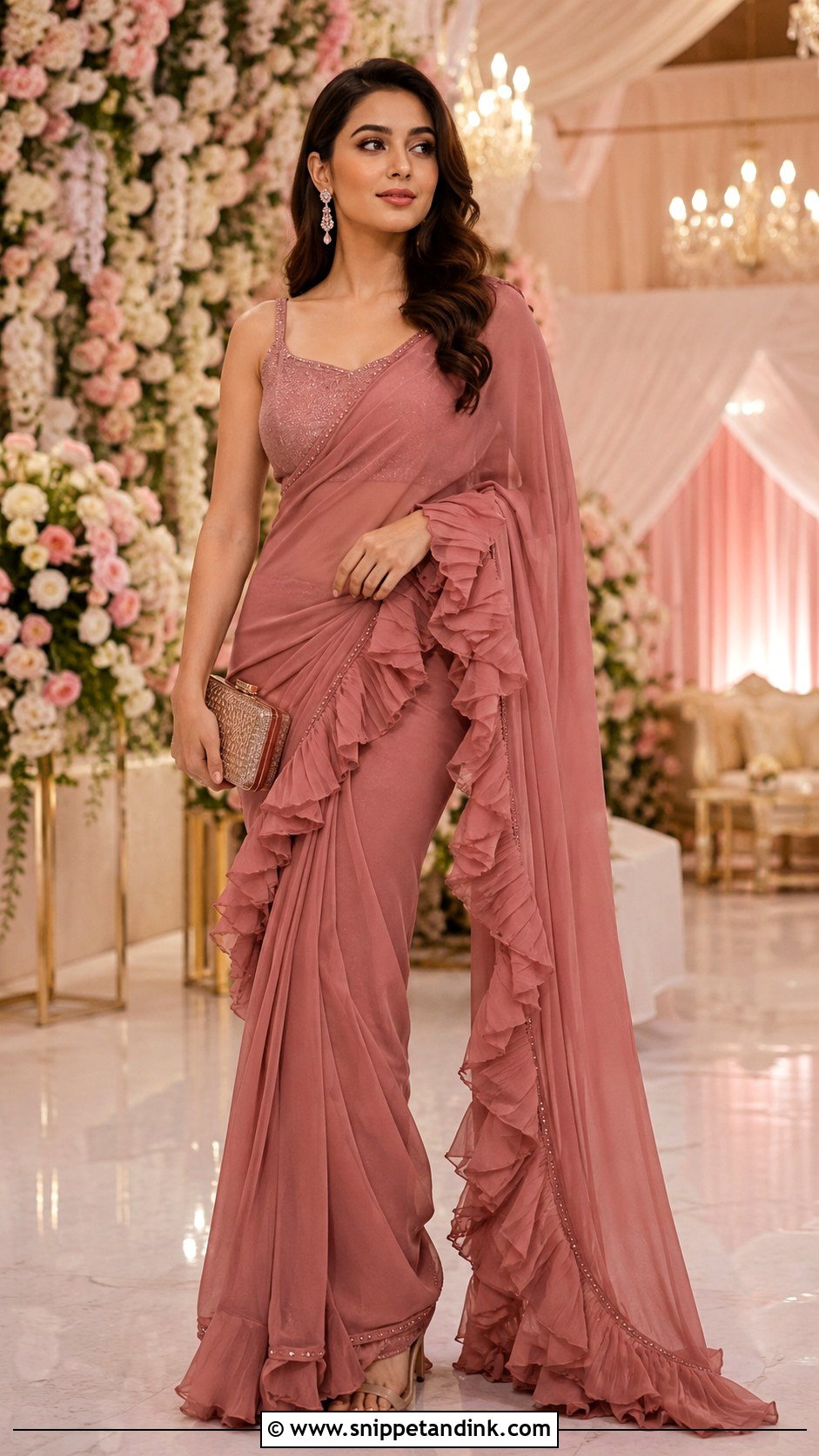
Ruffle sarees move beautifully, but they’re the hardest to drape well. Choose controlled ruffles along the border, not layers across the whole saree. A fitted blouse balances the volume. Solid teal, magenta or dusty rose let the shape stand out. Practice the pallu at home before the event. Ruffled edges are bulkier than a plain border and need careful pinning at the shoulder to sit flat in photos. Sleek heels, drop earrings and a box clutch complete it. Skip the large necklace.
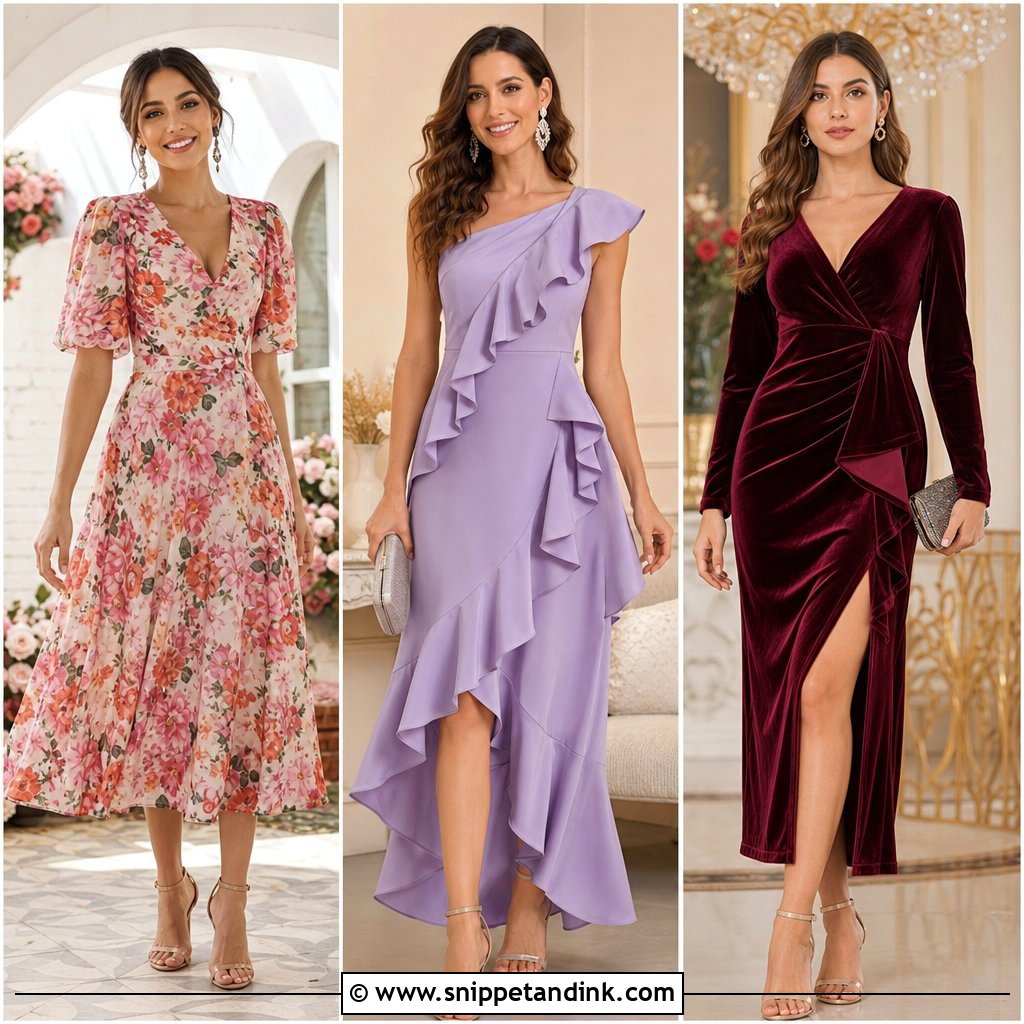
16. Printed Maxi Dress for Marriage Function
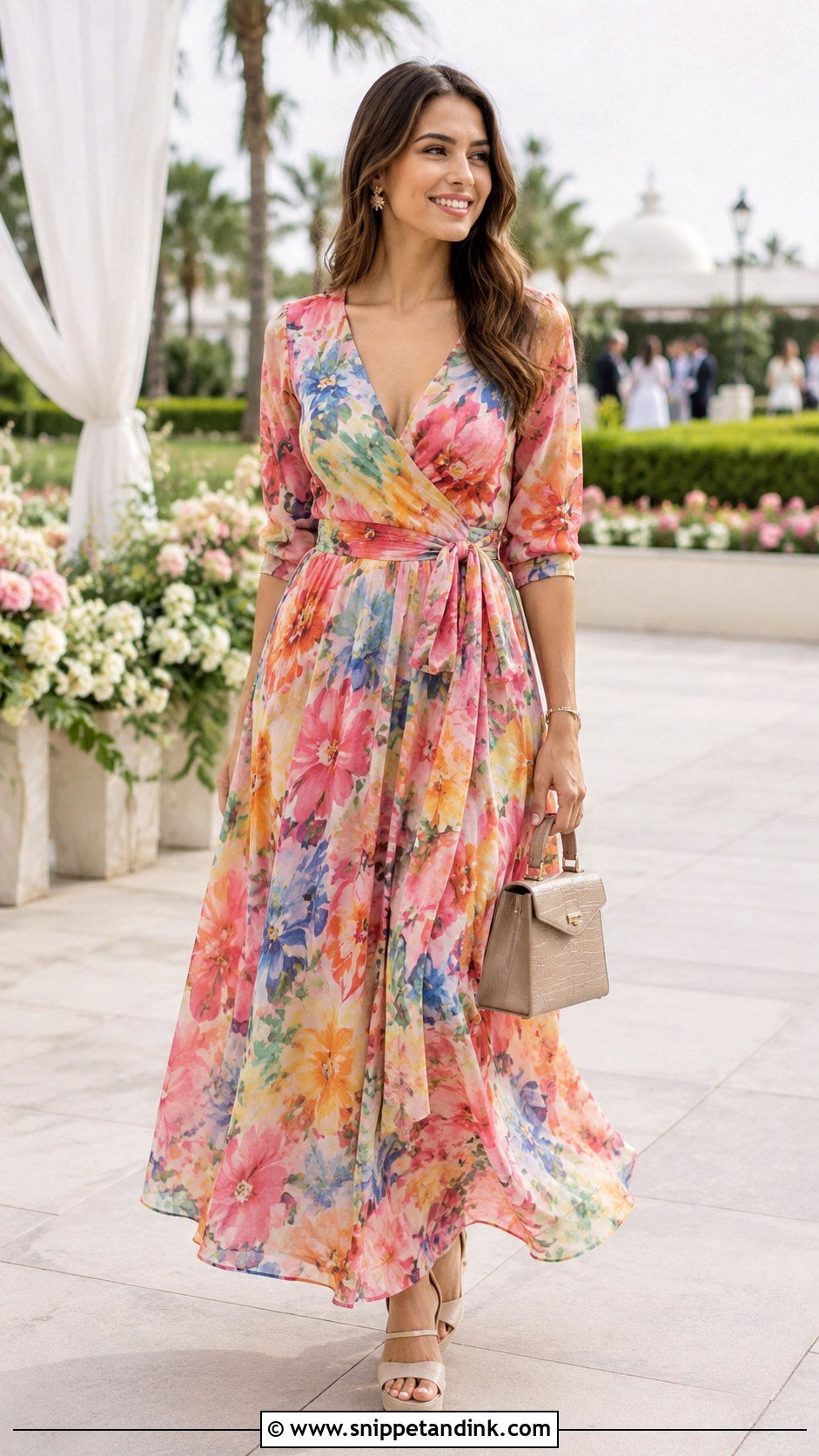
Printed maxi dresses work at outdoor and destination functions where Western wear is welcome. The print decides whether it looks dressy or casual: a rich paisley or a fine floral reads formal, while a large tropical print reads beachwear. A wrap bodice and defined waist give it shape. Add a light shawl or cropped jacket for coverage. Choose shoes for the surface: block heels on grass, wedges or flats on sand. Check the print for large white areas, and for colors reserved for the wedding party.
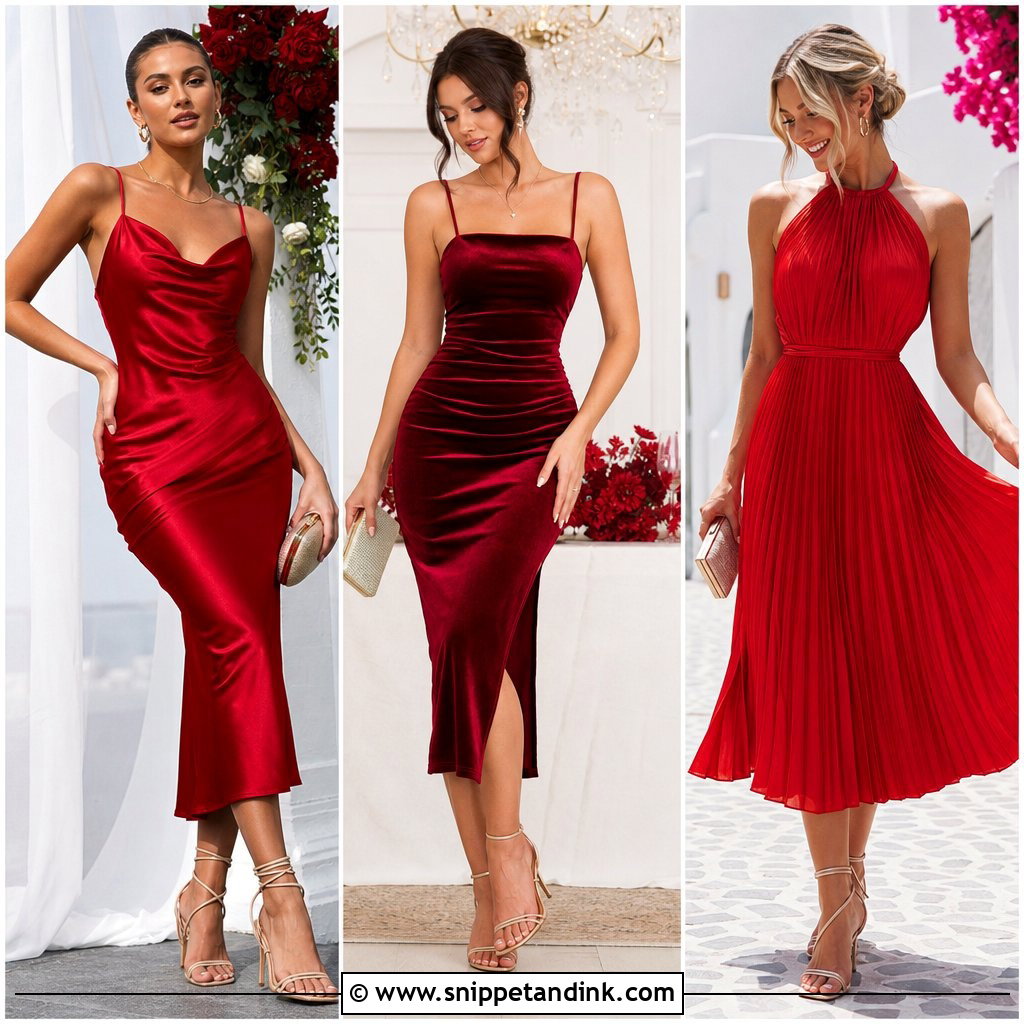
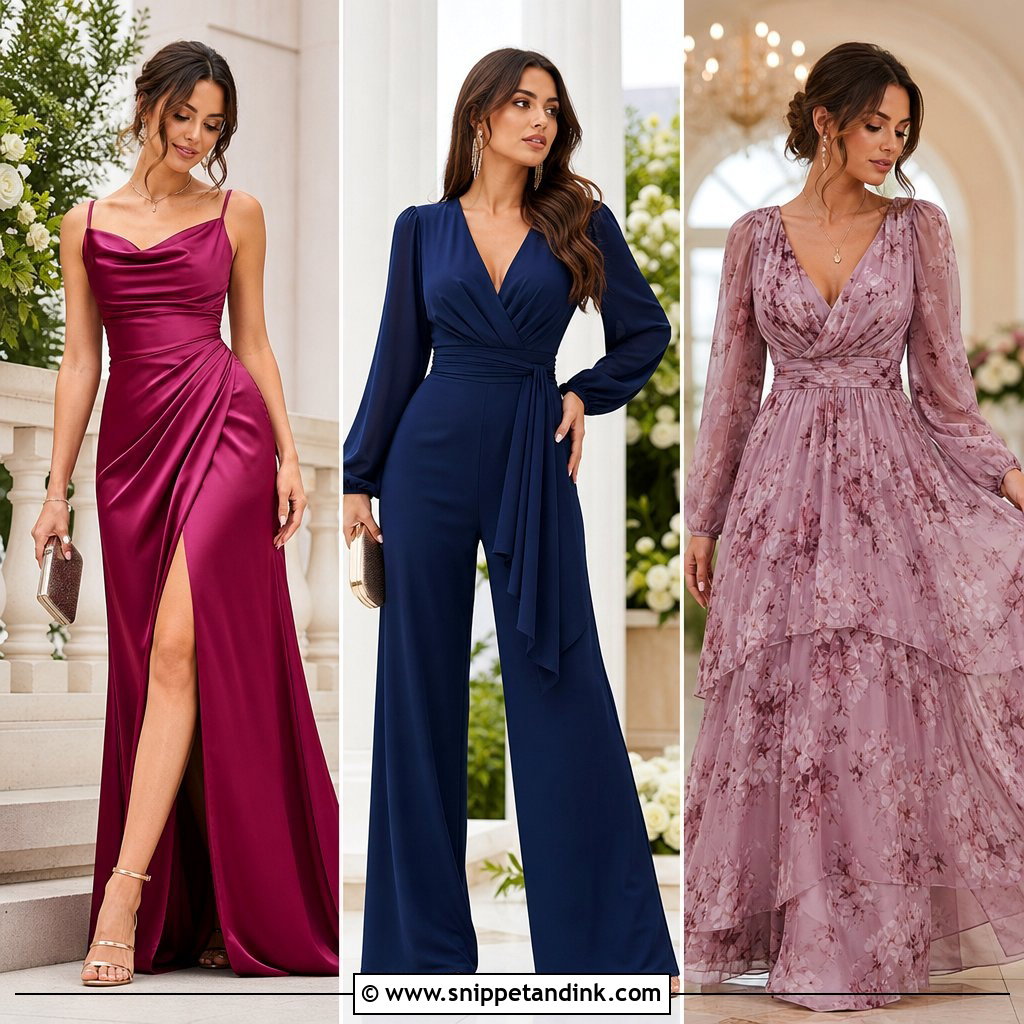
17. Satin Midi Dress for Marriage Function
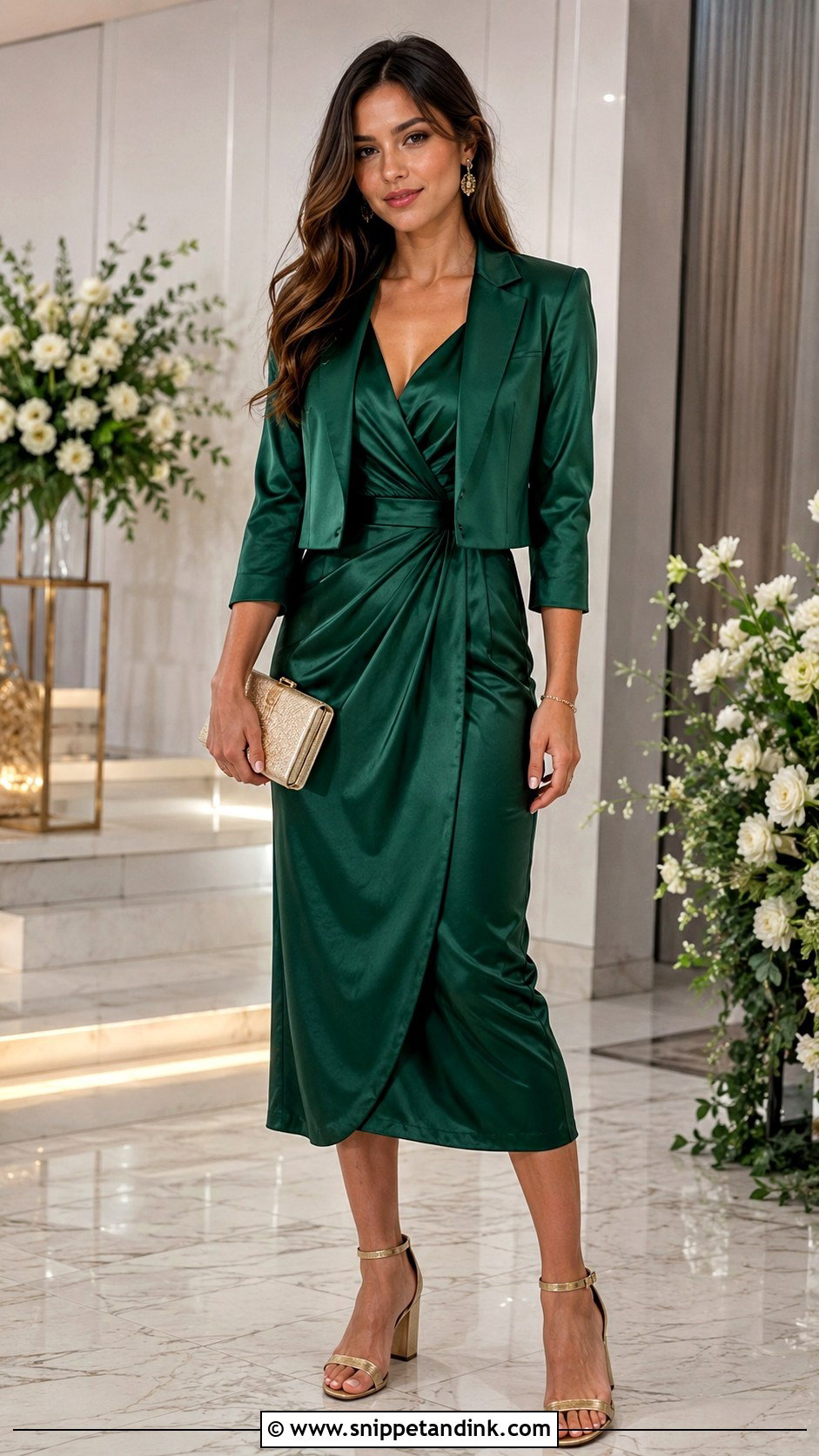
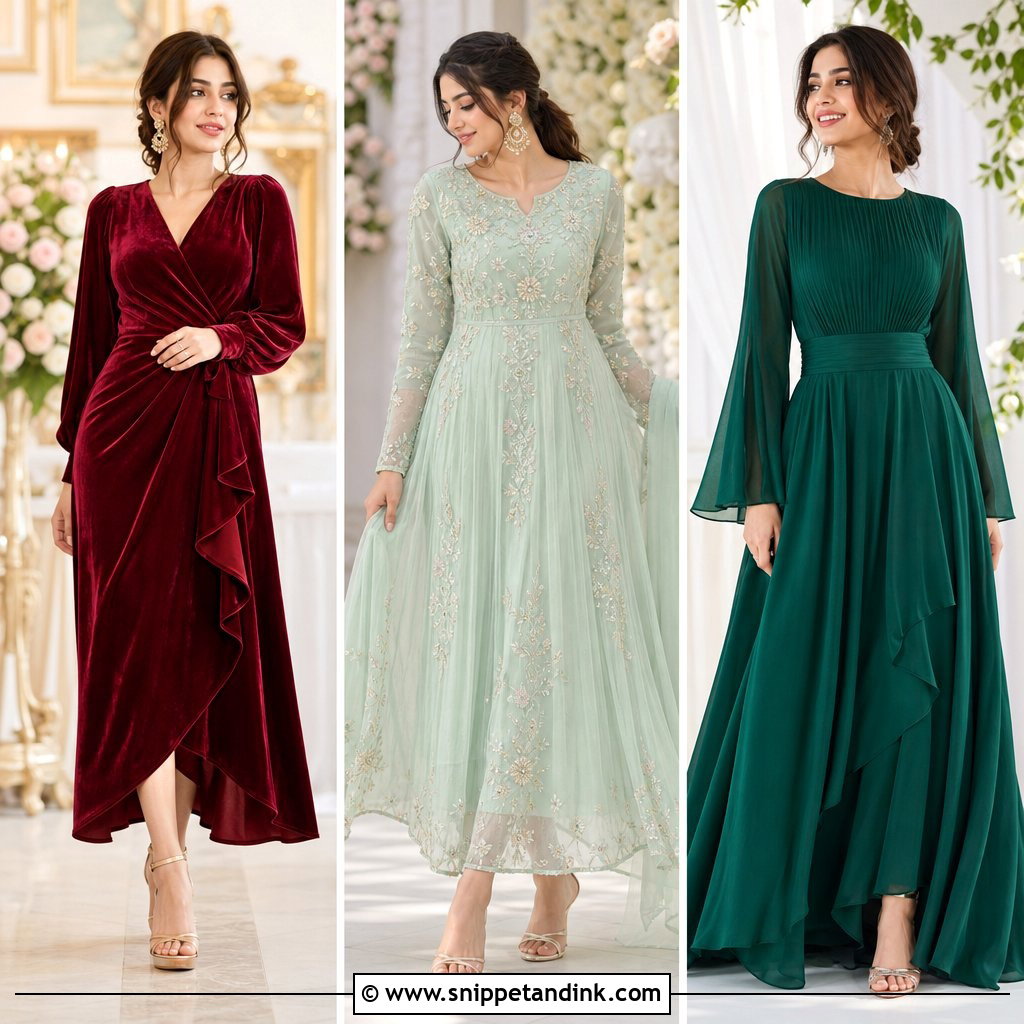
Satin is unforgiving, which is why it’s worth choosing carefully for a cocktail or semi-formal marriage function. A bias-cut or softly pleated midi in emerald, copper or navy looks polished, but thin satin shows every crease, sweat mark and undergarment line. A heavier weight or crepe-back satin is safer. The dress should skim rather than pull across hips or bust. Add a blazer or wrap for coverage. Steam it just before you leave, and check it in daylight as well as indoor lighting.
18. Polka Dot Dress for Marriage Function
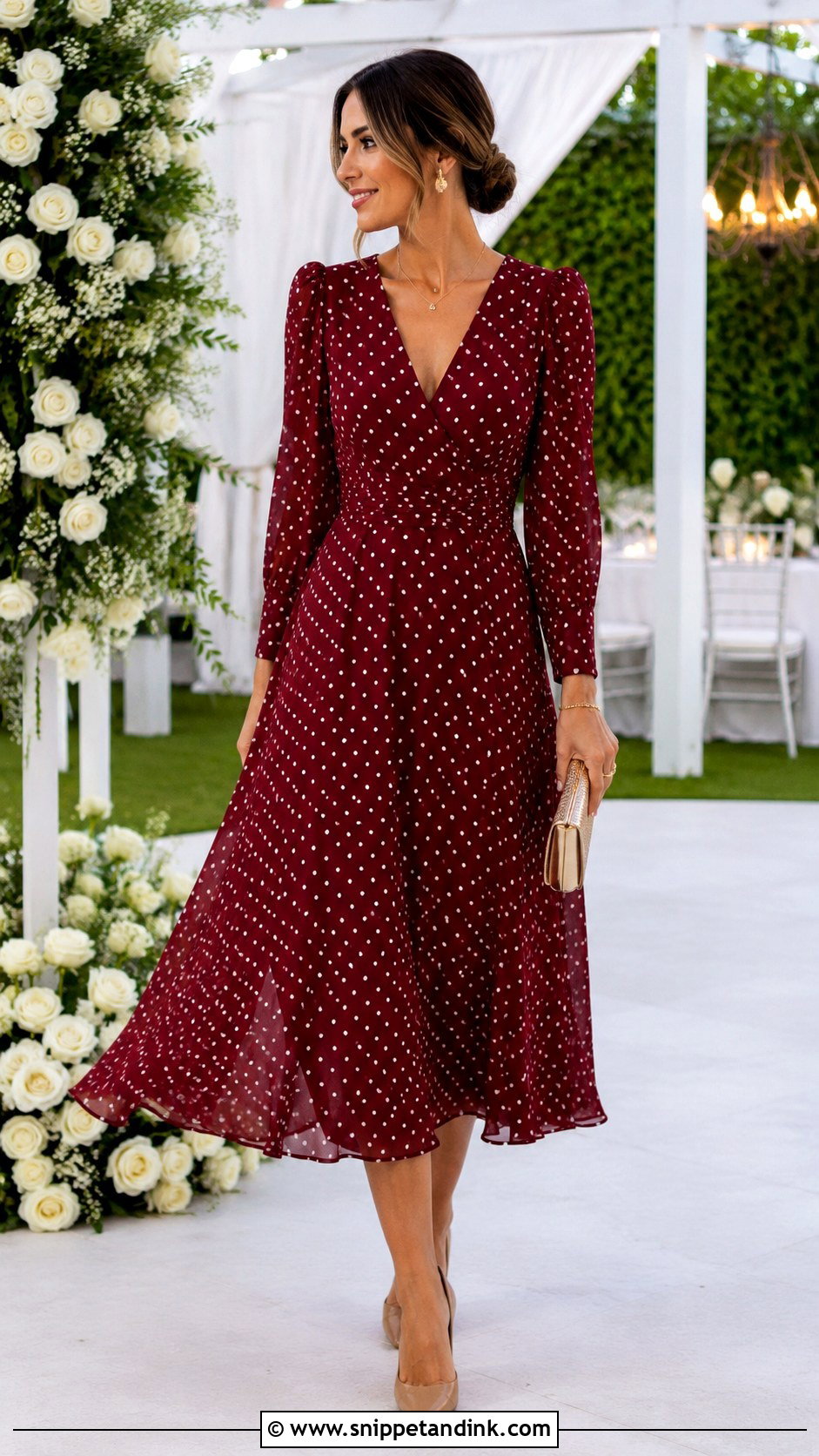
A polka dot dress can look smart at a wedding when the background color is rich, such as navy, burgundy or green, and the cut is long. The print has staying power precisely because it moves from ceremony to reception with just a change of shoes. A white background with black dots can look a little bridal or stark, so I usually avoid it. Choose a flowing midi or maxi. A slim belt defines a loose shape. Pointed pumps, a structured clutch and fine metallic jewelry complete it.
19. Floor-Length Gown for Marriage Function
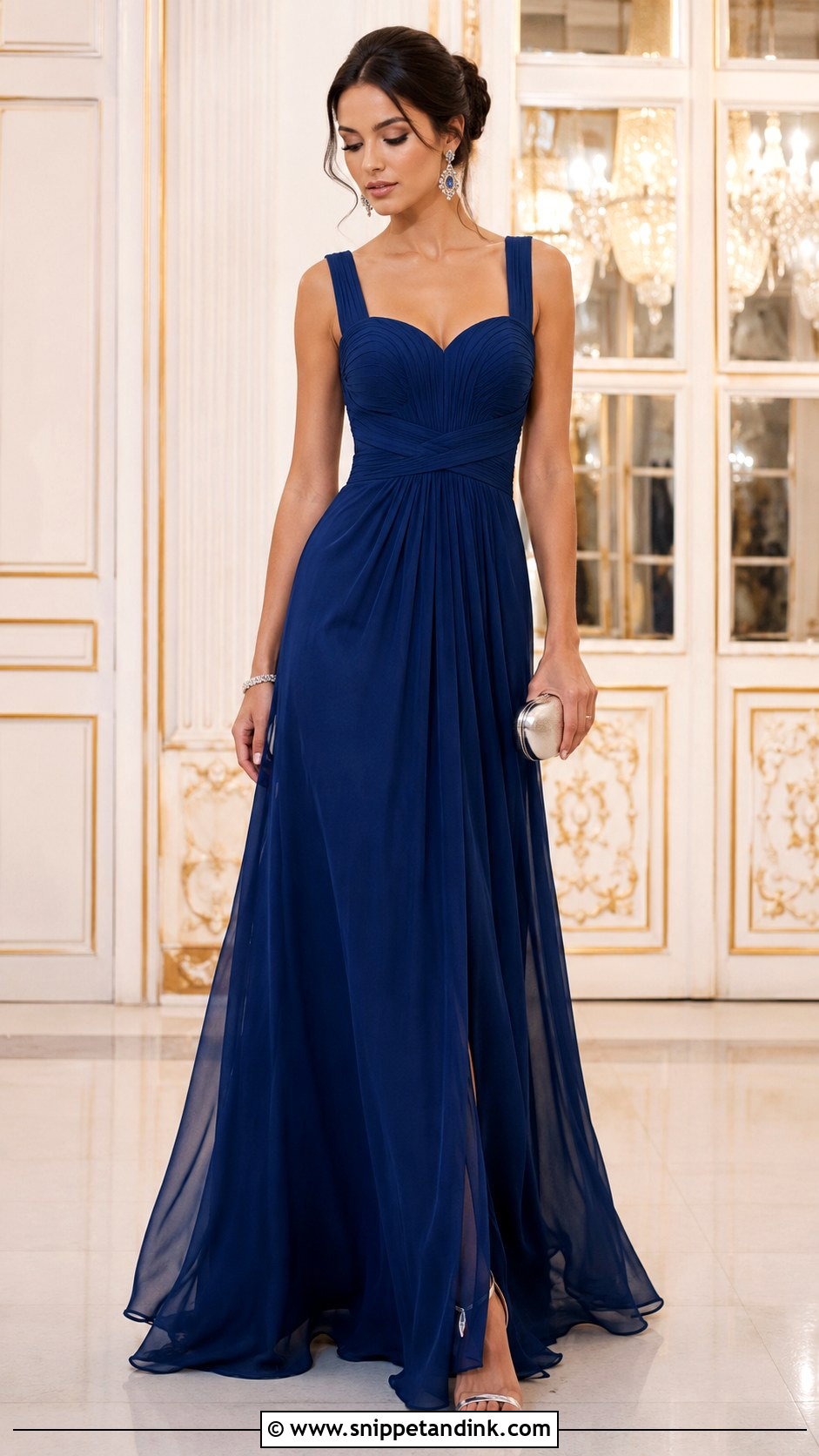
When the invitation says formal or black tie, a floor-length gown is the safest choice. Crepe, chiffon, satin and velvet all work, provided the bodice is structured and the skirt lets you walk. Midi lengths can pass at formal events, but full length is never wrong after sunset. Jewel tones, metallics and rich neutrals suit evening. If the neckline is detailed, skip the necklace. Book alterations early: hemming a gown to the exact heel height takes time, and a hem that’s even half an inch too long will catch on every step.
20. Embellished Kaftan Dress for Marriage Function
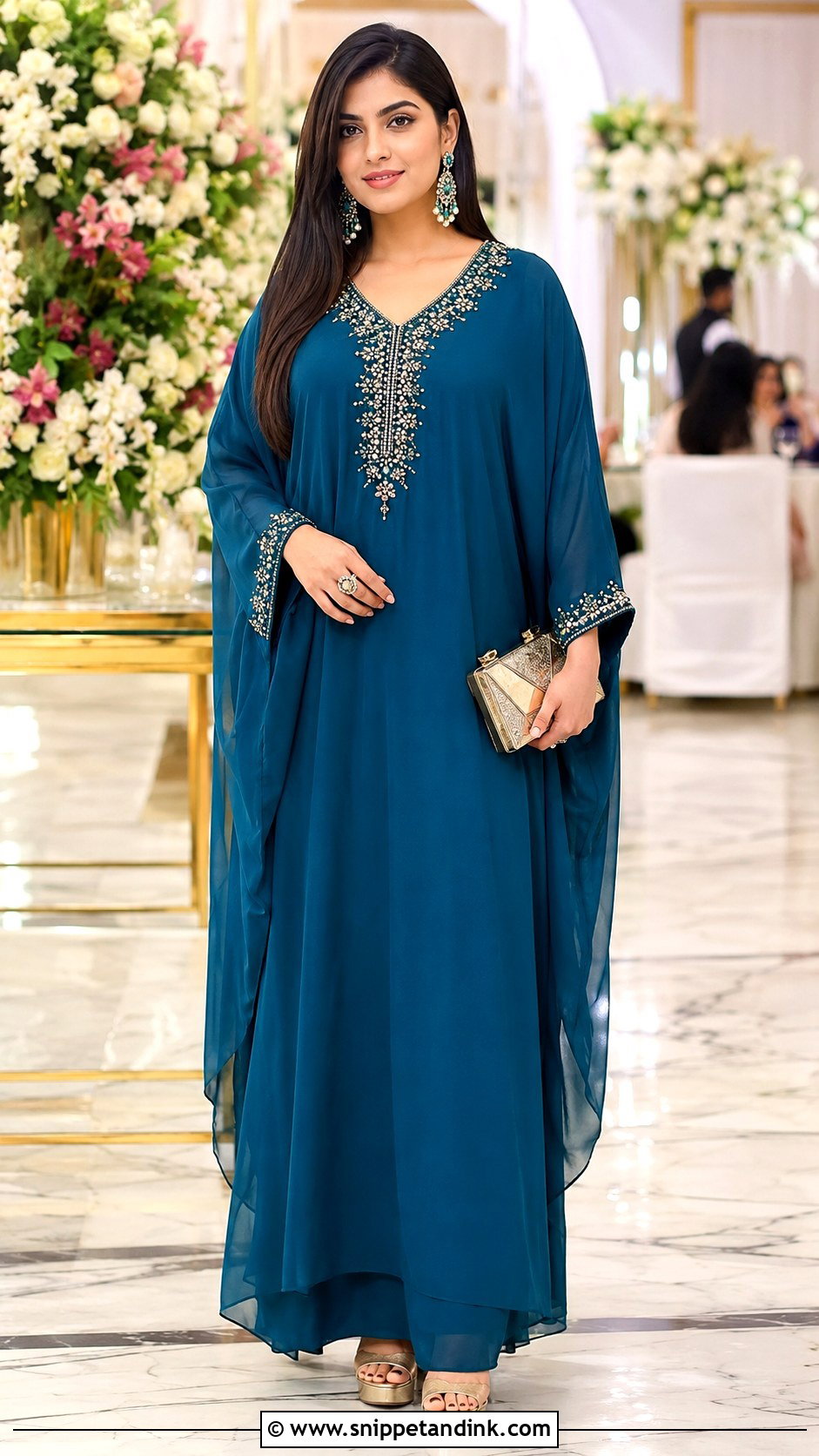
An embellished kaftan gives coverage, comfort and enough sparkle for a long formal evening. The fit at the shoulders is the detail I look at first. A kaftan that’s too wide there drops off the shoulder line and looks oversized, no matter how good the beading is. Choose a fluid ankle or floor length with a lining. Beading at the neckline or cuffs means you need very little jewelry. Teal, plum and sapphire suit it. Platform sandals or block heels stay stable under the wide hem.
Colors and Coverage That Mean Something to the Families
Red is the traditional bridal color in many North Indian communities, so I usually steer guests away from a full red outfit at the main ceremony unless the family has said otherwise. White and black carry associations with mourning in some traditions, though younger families often don’t mind them at a reception. If you’re unsure, ask the couple or a close relative. Nobody minds being asked.
Venue matters as much as color. At a gurdwara, everyone covers their head and removes their shoes, so bring a dupatta or scarf and wear shoes you can slip off easily. Many temples expect covered shoulders and knees. A dupatta or a light stole solves both in seconds.
Give Your Blouse Tailor Weeks, Not Days
The saree blouse is the piece that most often goes wrong. Tailors get very busy during wedding season, and stitching plus one fitting can easily take two to three weeks. Take an old blouse that fits you well as a reference, wear the bra you’ll wear on the day to the fitting, and try the finished blouse with the saree draped before you collect it. A blouse that gapes at the back or pulls at the armhole will show in every photo.
Comfort, Respect and a Good Tailor Do Most of the Work
A marriage function asks you to sit, eat, pose and dance, often in the same outfit, so comfort has to be built in from the start. Begin with the invitation and the venue, then choose a silhouette you can move in. Match your shoes to the ground. Let one element lead, whether that’s the weave, the embroidery or the jewelry. A good tailor will improve almost any lehenga, saree blouse, gown or suit. And dress with respect for the families’ traditions; that matters more to them than any trend.
You'll Like These Ideas:



Leave a Reply