
Indian wedding wardrobes have changed a lot. Heavy lehengas and classic silk sarees still have their place, but Guests, bridesmaids, sisters, cousins and close family now ask me for outfits they can actually move in across a whole wedding week. Organza sarees, pastel lehengas, shararas, cape sets, pre-draped sarees and Indo-western co-ords all earn a place, as long as each one suits the function it’s worn to. When I style a guest, I plan from the feet up: what she’ll stand in, sit in and dance in for five hours, then the fabric, then the jewelry. These are the 25 looks I keep coming back to for guests in 2026, with notes on where each one works and where it struggles.
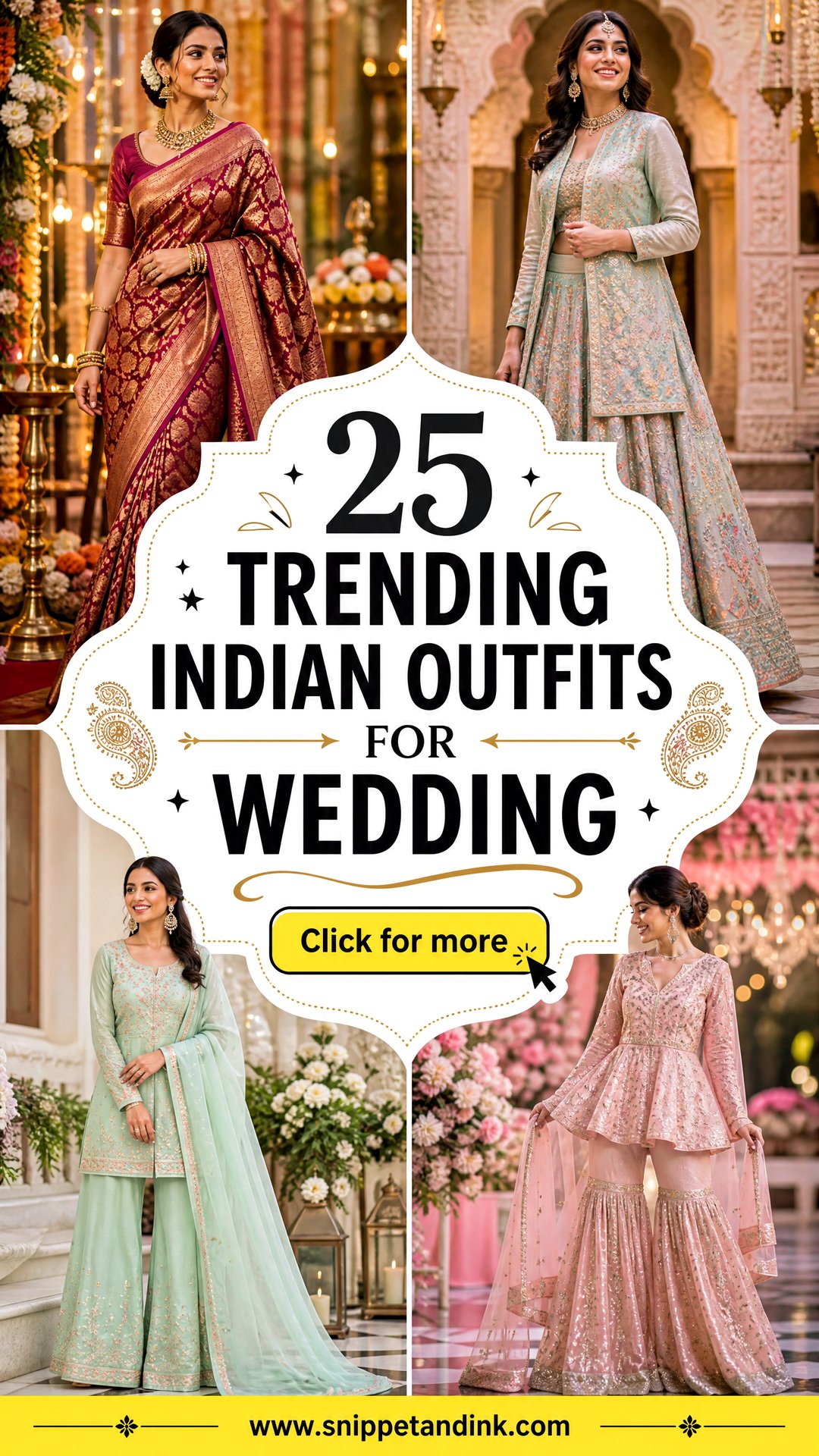
Which Function Gets the Heavy Outfit?
Most Indian weddings I dress guests for have three to five functions, and each one asks something different of your clothes. I sort them before anyone starts shopping, because the mistake I see most is one heavy outfit bought for a day it can’t handle.
- Mehendi: light fabric, short sleeves and colors that won’t mind a henna smudge. Seating is often on the floor.
- Haldi: yellow is traditional, and whatever you wear may meet turmeric. Treat this outfit as washable.
- Sangeet: you’ll dance, so pick a flare that lets your knees move and shoes you can stand in for hours.
- Wedding ceremony: your most traditional piece, usually silk, since the rituals can run long and seated.
- Reception: the place for sequins, saree gowns and darker evening shades.
Color etiquette varies from family to family. Red is often kept for the bride at North Indian weddings, and white or black can carry associations with mourning in some communities, so I quietly ask the hosts or a relative instead of guessing. Ivory chikankari at a daytime function is usually fine; head-to-toe white silk at the main ceremony usually isn’t.
1. Pastel Lehenga For Indian Wedding
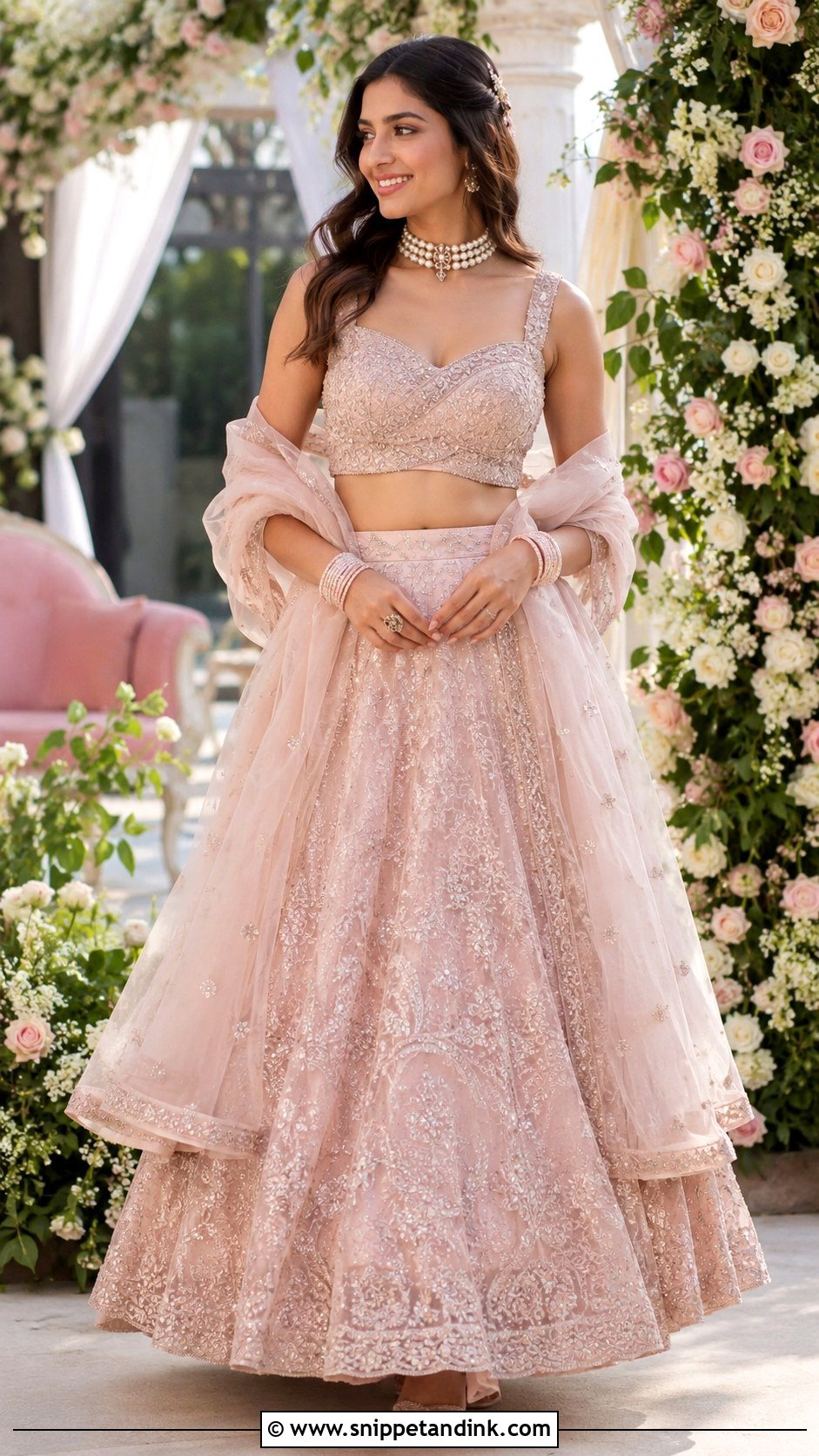
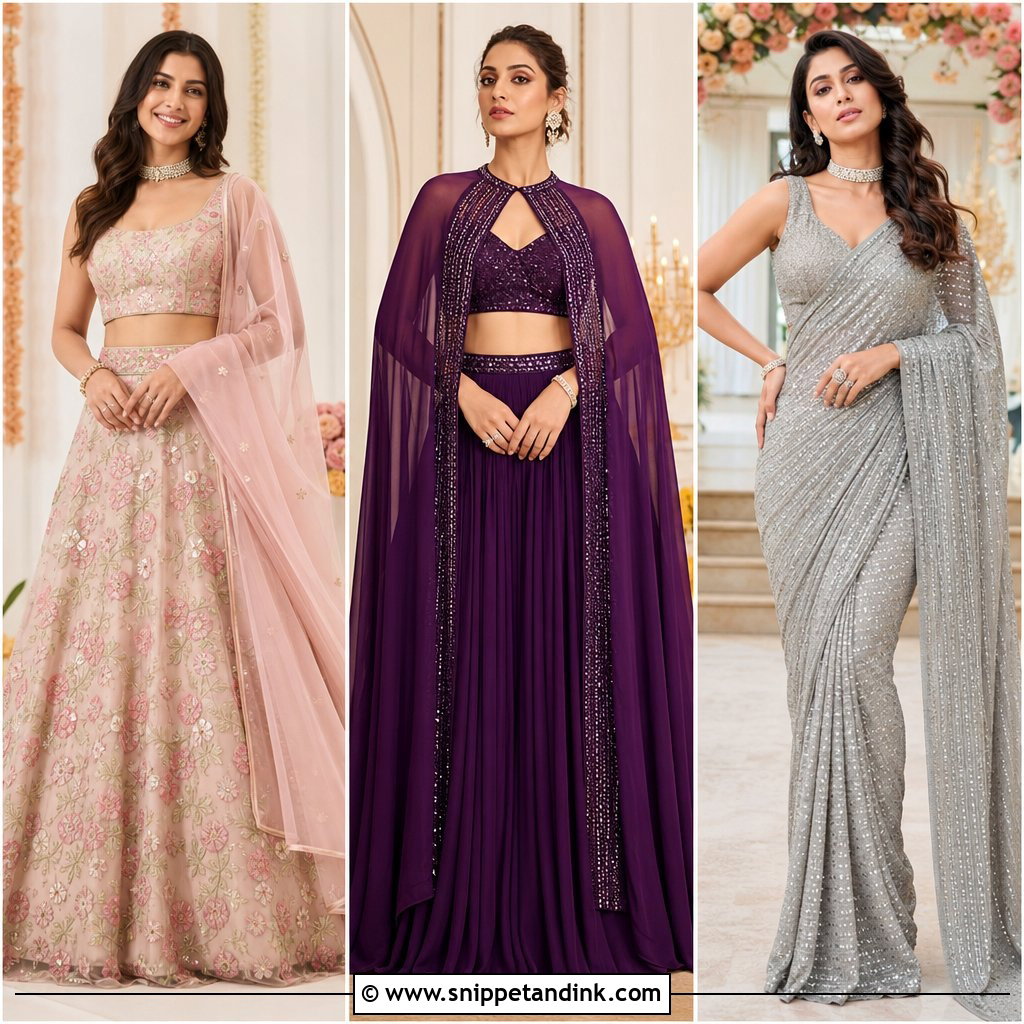
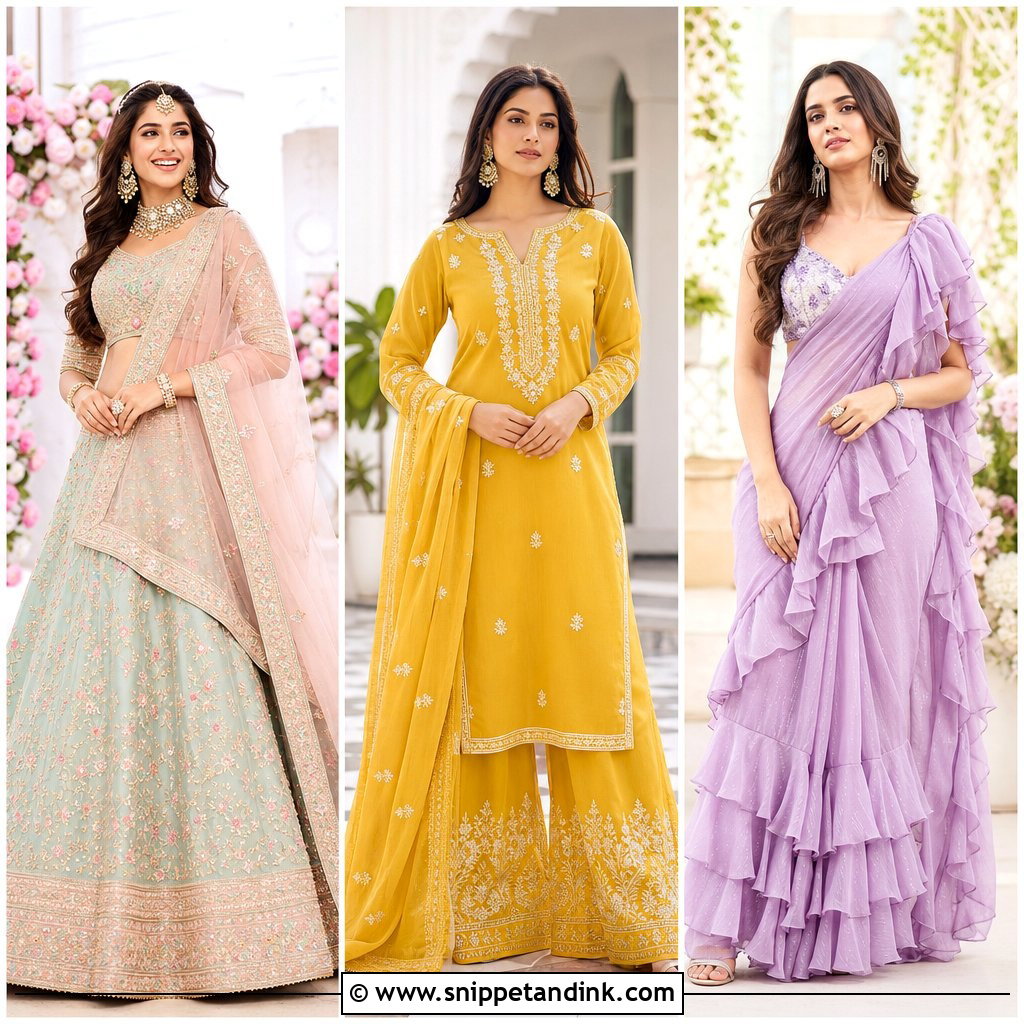
Pastel lehengas are made for daytime. Blush, powder blue, mint and lilac read clean in natural light and garden settings, but under warm evening lighting they can flatten into a dull beige, so I save them for lunch ceremonies and outdoor functions. Keep the embellishment light, threadwork or a scatter of pearls, because a heavily sequined pastel starts to look bridal. A fitted blouse, a net or organza dupatta, kundan earrings and block heels finish it. Block heels matter on a lawn; stilettos sink.
2. Banarasi Saree For Indian Wedding
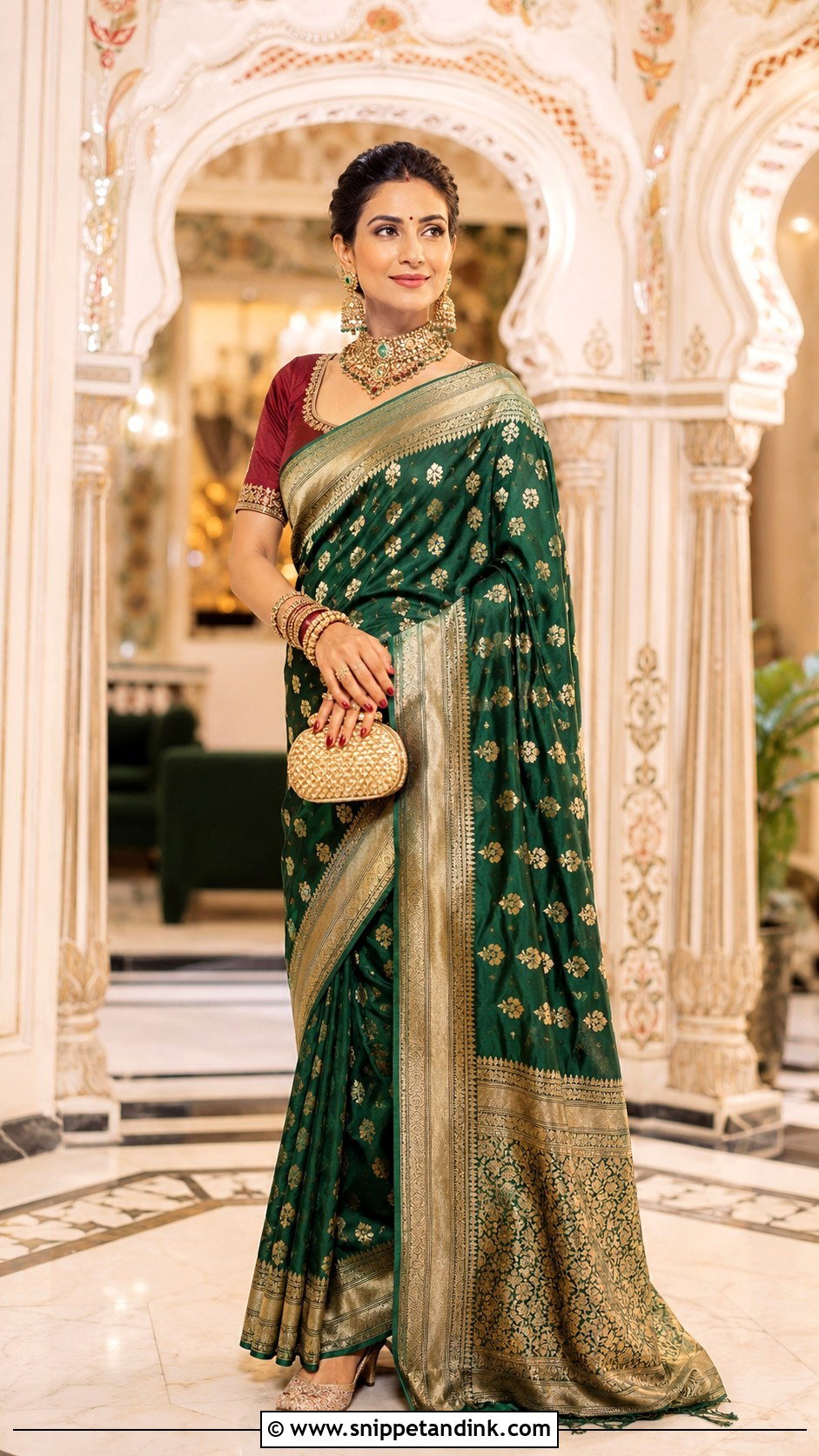
Banarasi silk carries weight, literally. A handloom zari Banarasi is heavier than most guests expect, and that weight is what makes the pleats fall straight and stay put through a long ceremony. Wine, emerald, royal blue and mustard hold up at evening functions, while softer gold weaves suit daytime. I usually pair it with a silk or brocade blouse, temple jewelry and jhumkas. One thing I check first: metallic zari can snag a fine net dupatta or lace, so keep the textures around it smooth.
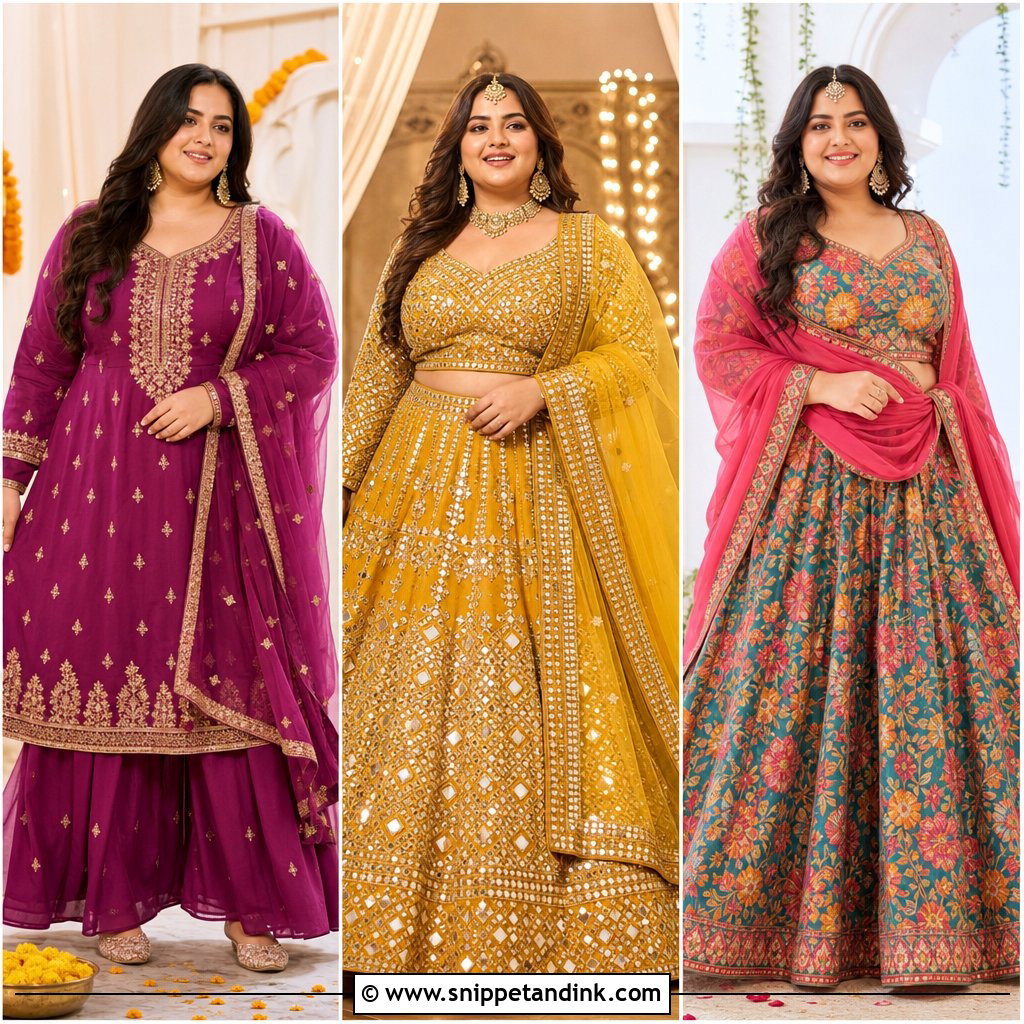
3. Sharara Set For Wedding Guest
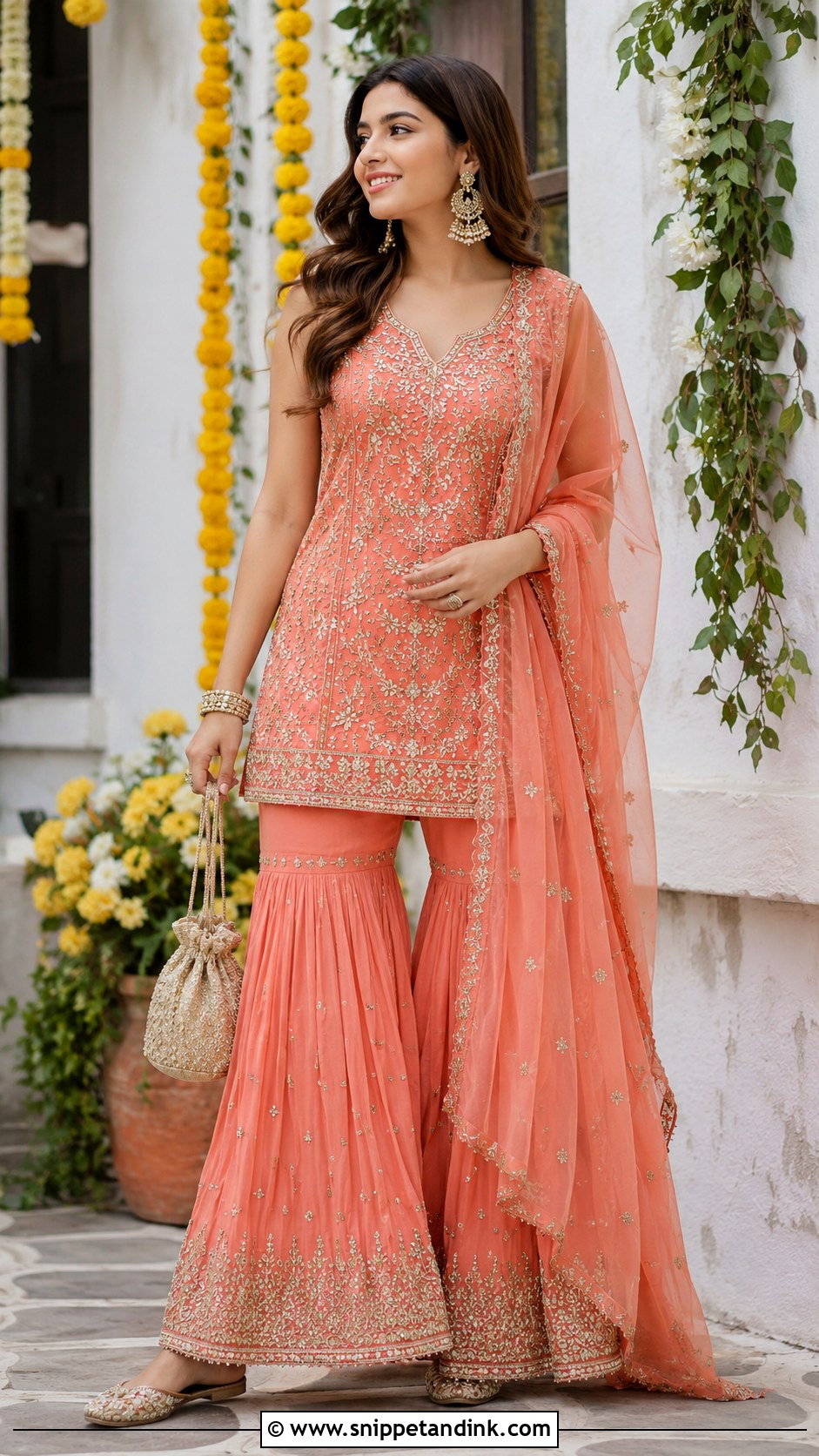
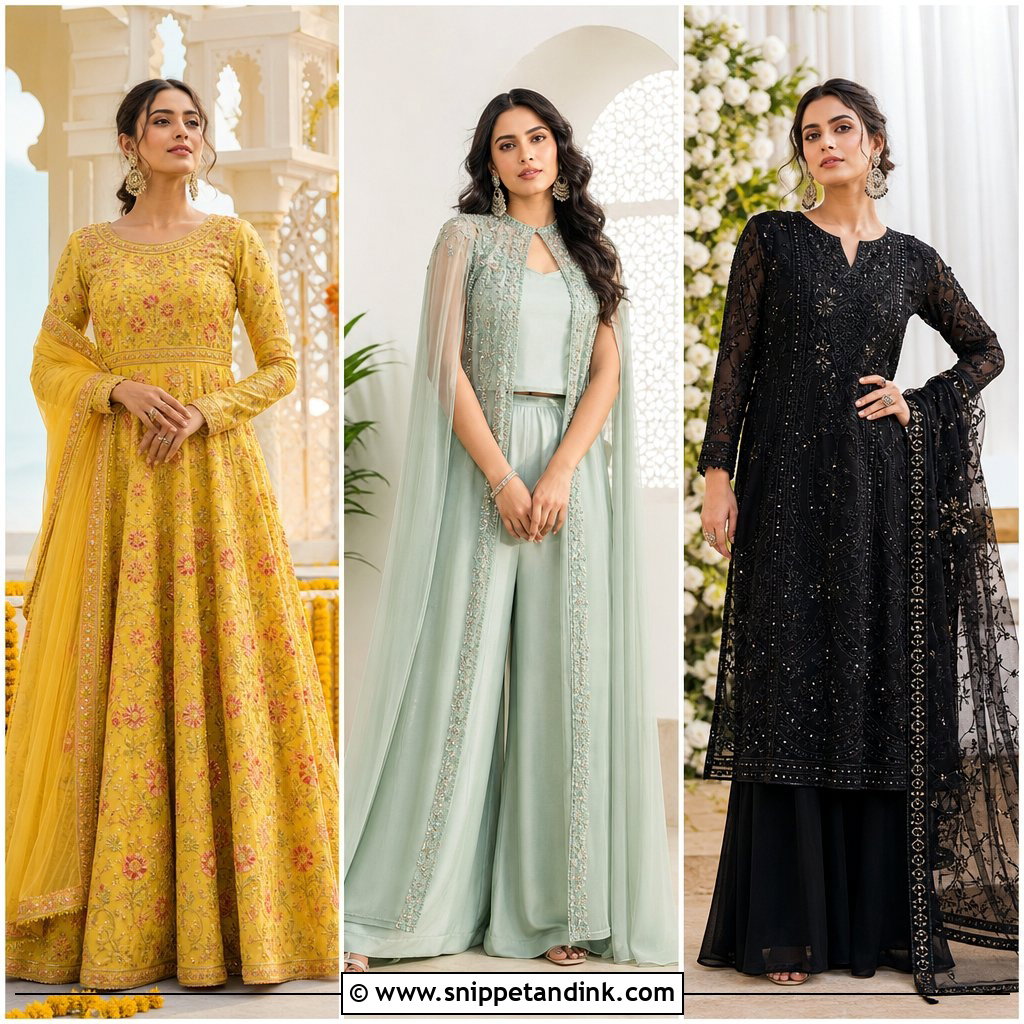
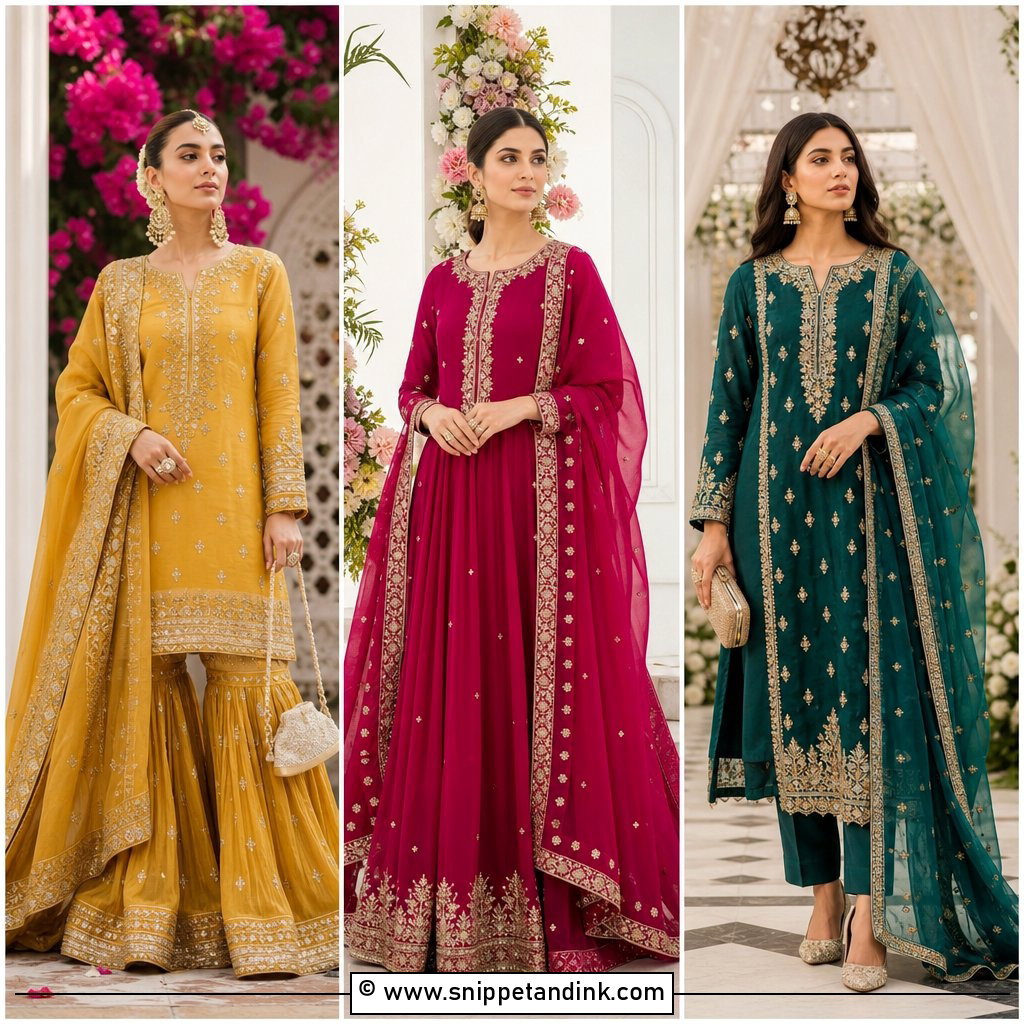
A sharara set is my default suggestion for anyone who plans to dance at the sangeet. The flared pants let you take full steps and sit cross-legged at the mehendi without hitching anything up. Look for a short kurti with gota patti, chikankari or mirror work. Yellow, fuchsia and teal suit the louder functions; ivory and dusty rose feel quieter. One fitting note: get the sharara hemmed while wearing the exact shoes you’ll dance in. An inch too long and you’ll be stepping on it all night.
4. Anarkali Suit For Indian Wedding
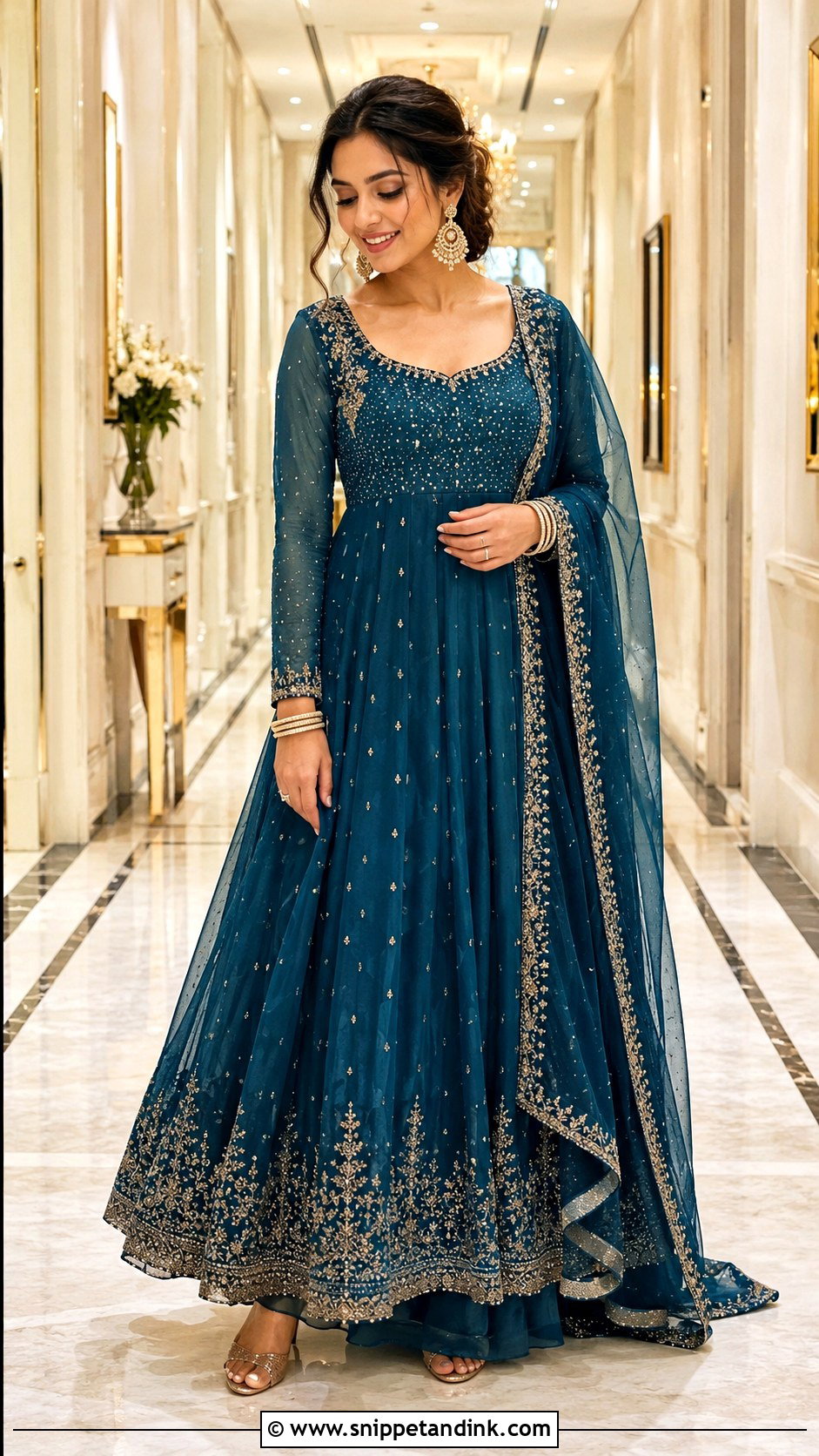
If someone tells me she doesn’t want to manage pleats or a heavy skirt all day, I hand her an Anarkali. The fitted bodice and long flare suit most figures, and a floor-length georgette or silk version looks formal enough for the main ceremony, while calf-length ones are easier for daytime. Watch the number of kalis, the flared panels. Too many in a thin fabric and the hem flips and clings when you walk, so I prefer fewer panels in a fabric with some body. A churidar, a soft dupatta, statement earrings and embellished sandals are all it needs.
5. Organza Saree For Wedding
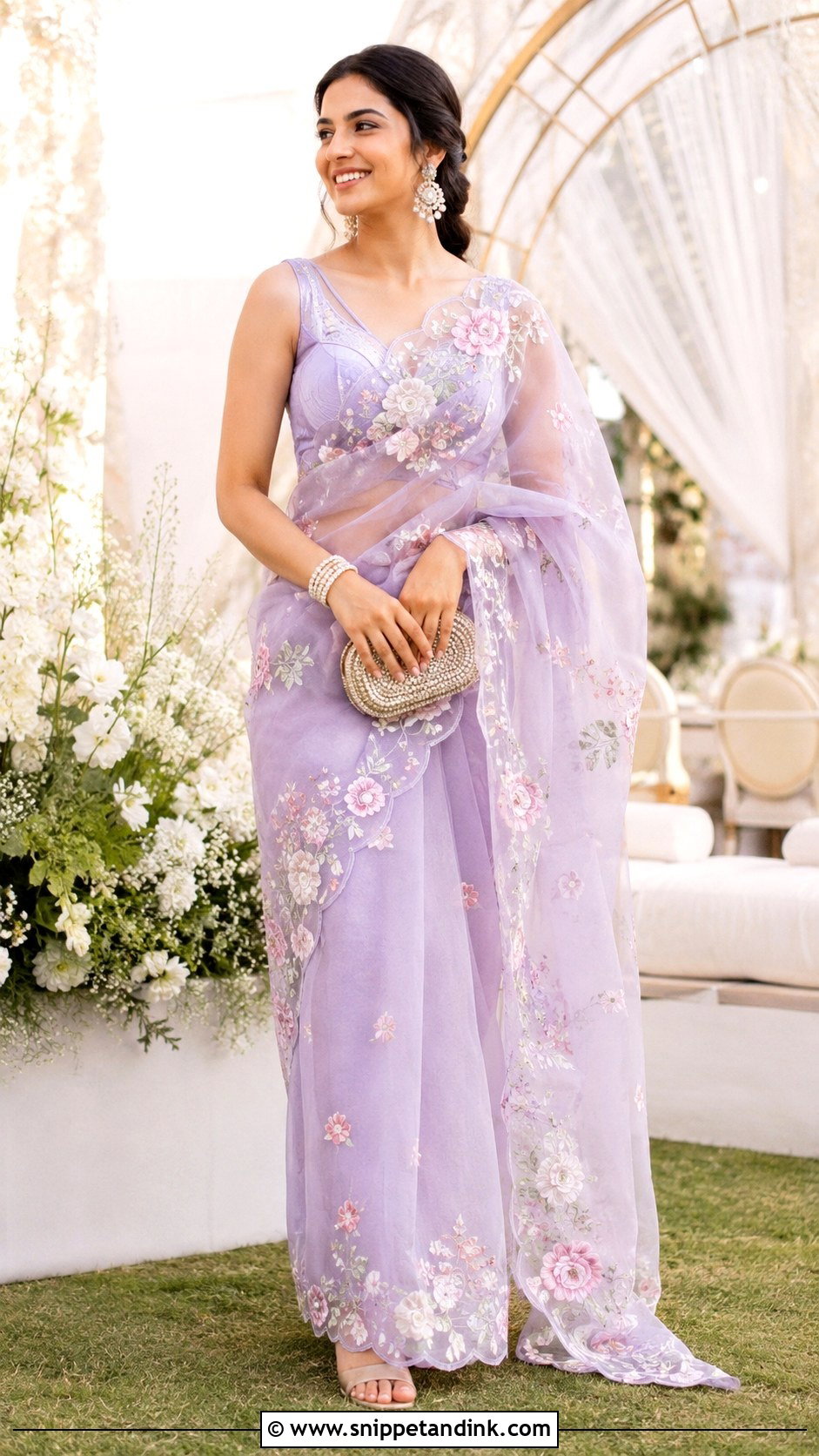
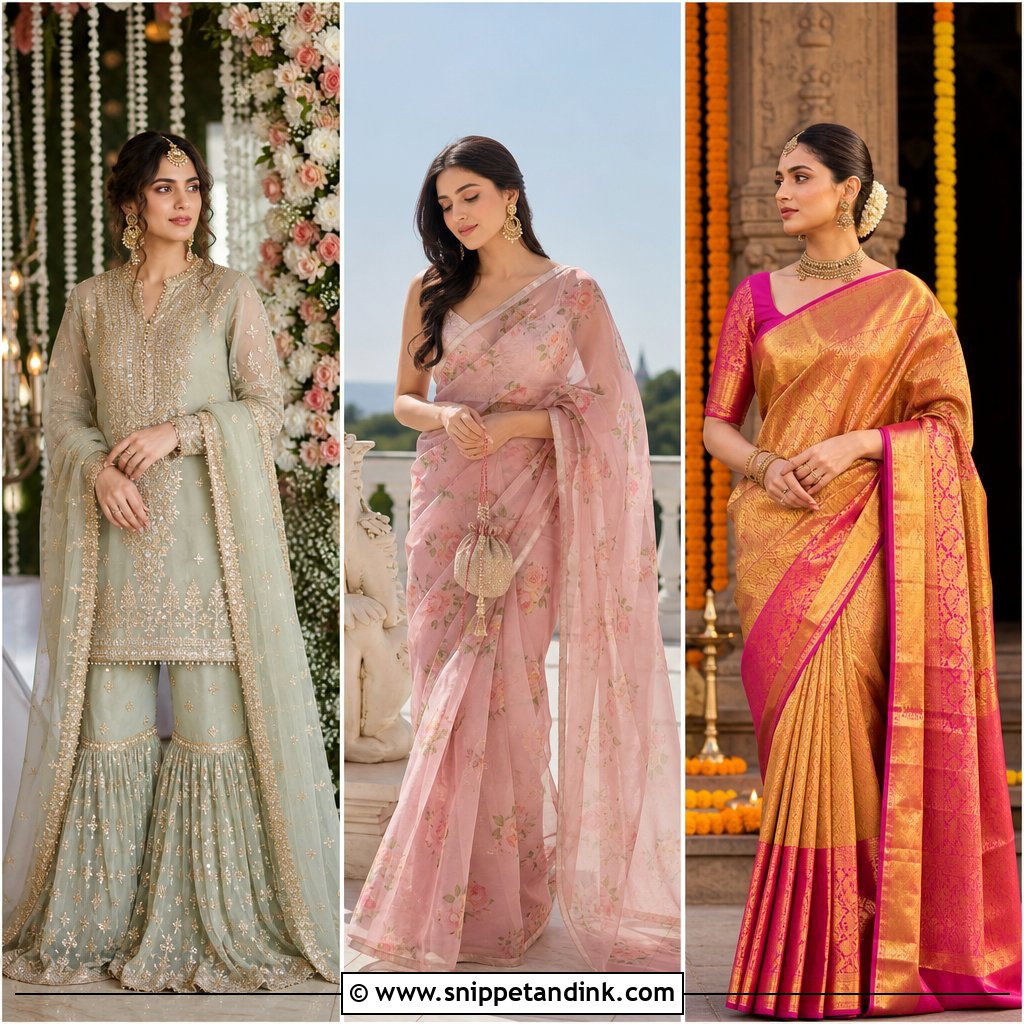
Organza is crisp, not floppy, and that’s what people misjudge. It holds a sharp pleat but creases at the knees after a long seated ceremony, so I steam it right before leaving and tell guests not to sit on the pallu. Pastel organza with floral print or scalloped borders suits daytime; deeper metallic shades can carry an evening reception if the hosts are relaxed about dark colors. A structured blouse gives the sheer drape a frame. Pearl earrings and strappy heels keep it light, and it weighs far less than a silk saree.
6. Pre Draped Saree For Wedding
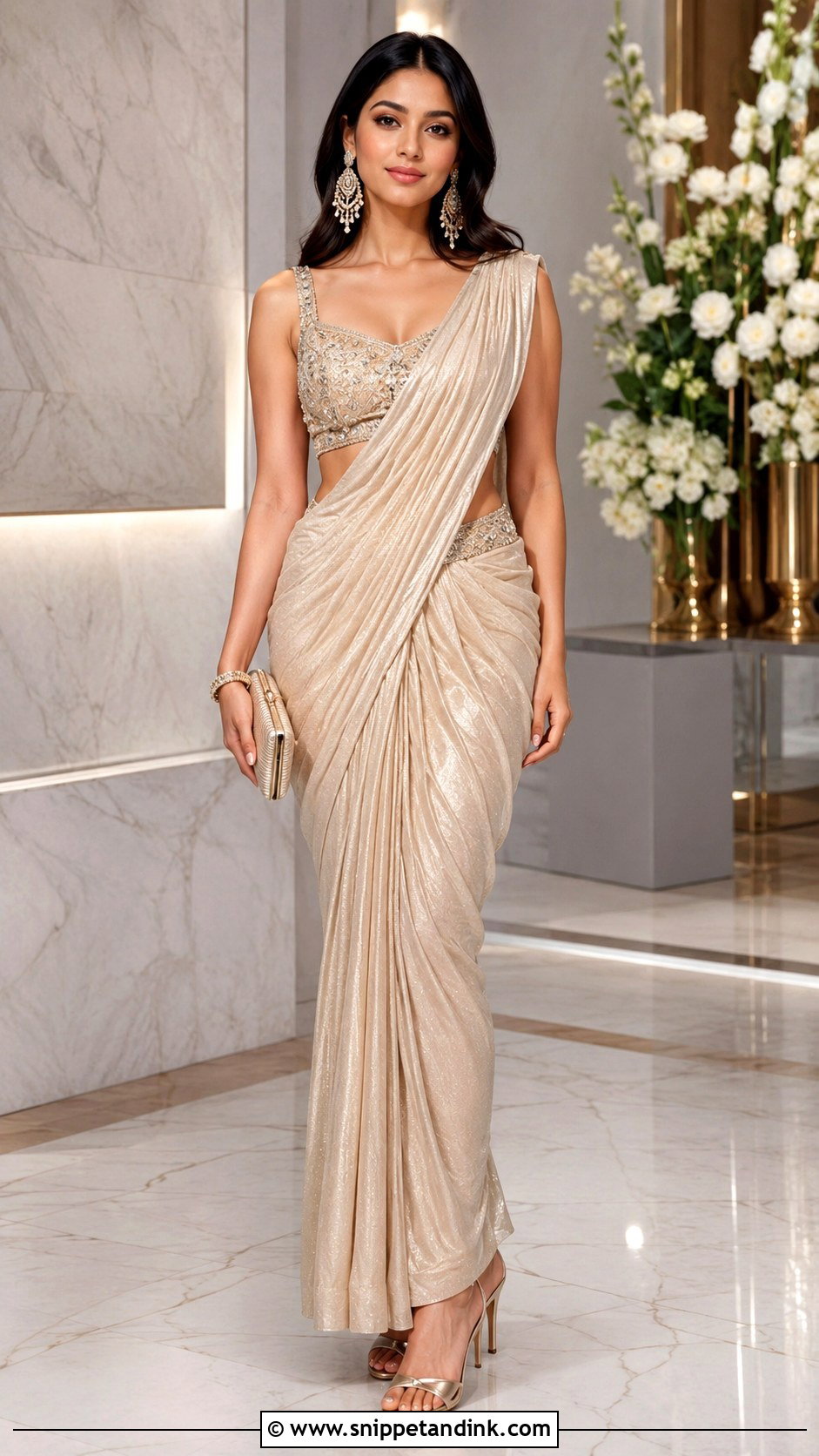
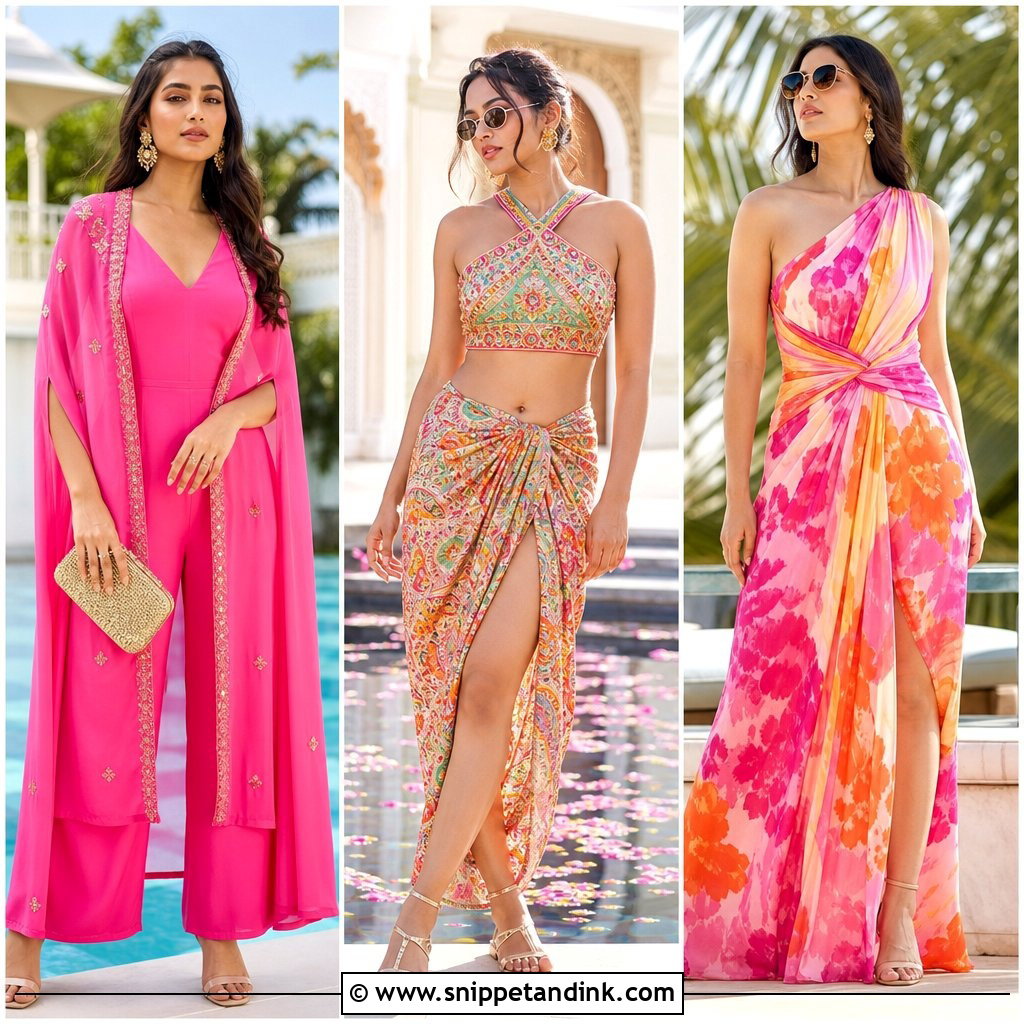
Pre-draped sarees solve the biggest guest problem I see on wedding mornings: nobody at the hotel knows how to pleat. Stitched pleats and a fixed pallu mean you’re dressed in minutes, with no dozen pins. Ruffled or metallic-bordered versions suit cocktail and sangeet nights, and a one-shoulder or halter blouse gives a modern line. Try it sitting down before the day, though. Some gown-style bases are cut so slim that stairs and car doors become harder than in a regular saree.
7. Indo Western Lehenga For Wedding
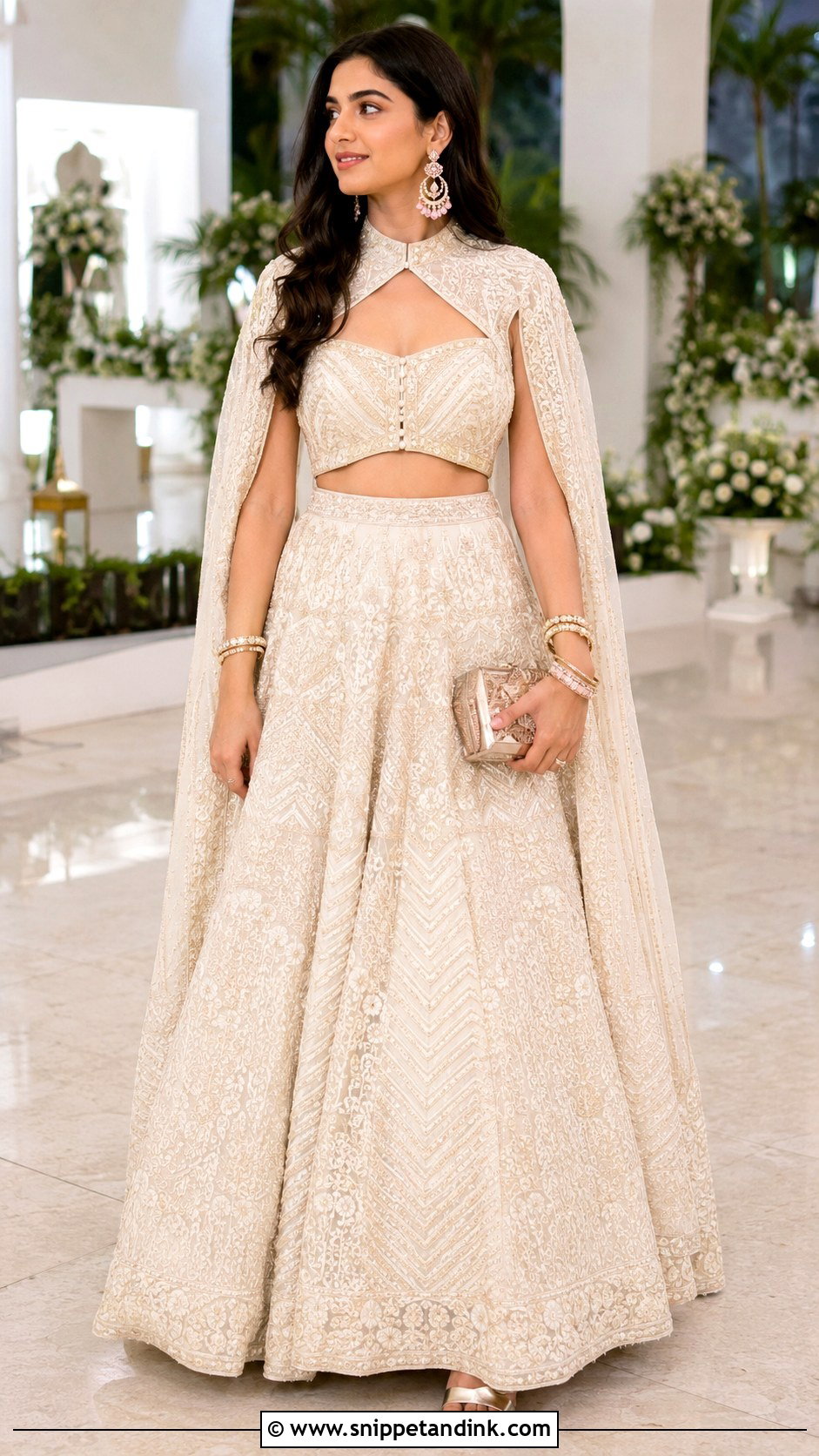
An Indo western lehenga swaps the choli and dupatta for a cape blouse, corset top, peplum or structured jacket over the skirt. It feels current without looking out of place at a family wedding. With a corset top, I always ask for a fitting with the boning in place, because a corset fitted while standing can dig in hard once you sit down to eat. Tonal sequins or mirror work keep it festive without tipping into bridal. Lighter fabrics are the sensible pick if there’s travel or a lot of dancing.
8. Silk Saree For South Indian Wedding
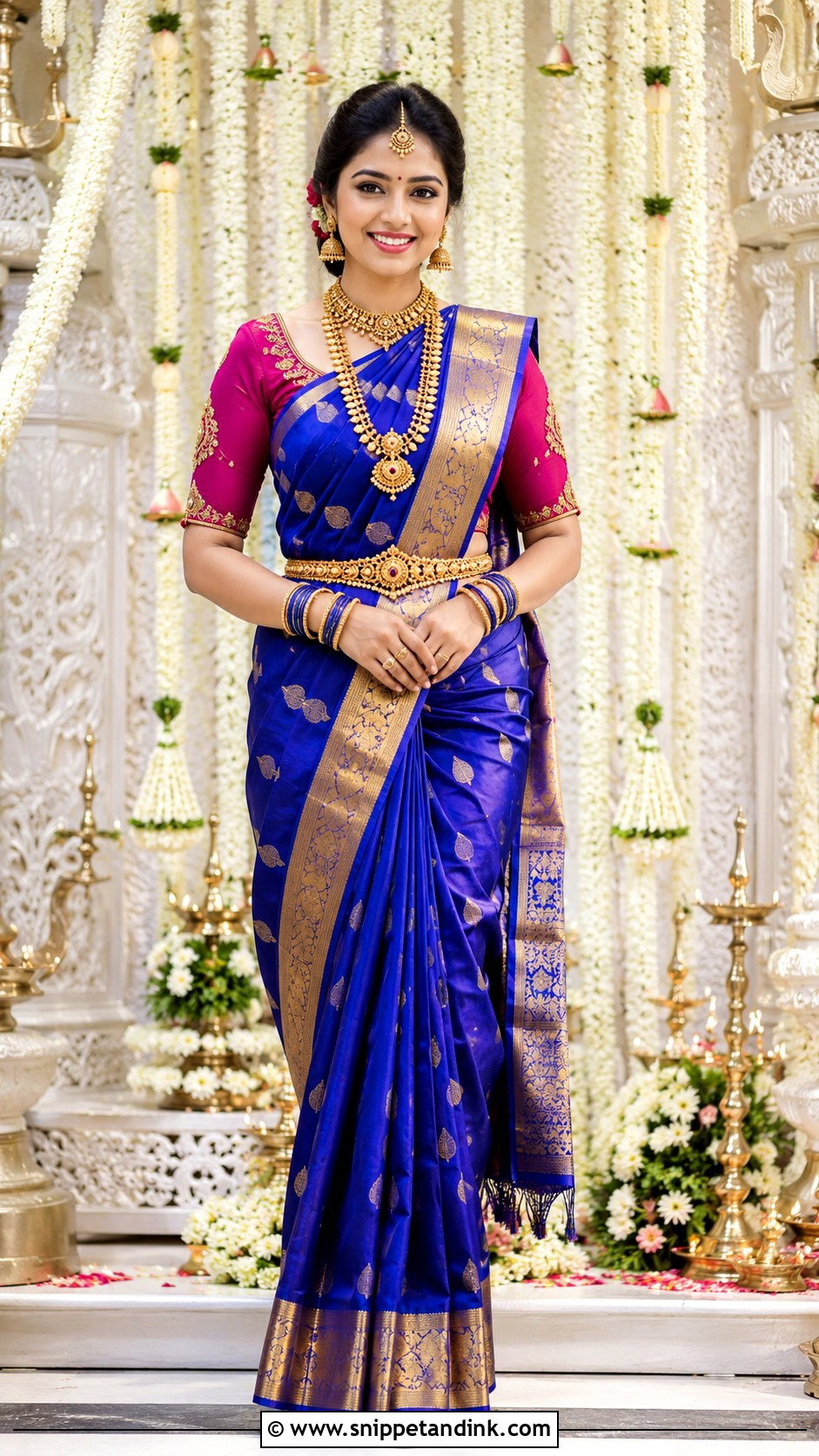
For a South Indian temple ceremony, I steer guests toward Kanjivaram or Mysore silk. Kanjivaram is heavier, with a stiff woven border that holds its shape away from the body; Mysore silk is softer and drapes closer, which some people find easier through a long seated ritual. Maroon, mustard, green and royal blue are traditional, often with a contrast blouse. Temple jewelry and bangles finish it, with jasmine in the hair if the family’s custom welcomes it. Wear sandals you can slip off quickly, since many temples ask everyone to go barefoot.
9. Velvet Lehenga For Winter Wedding
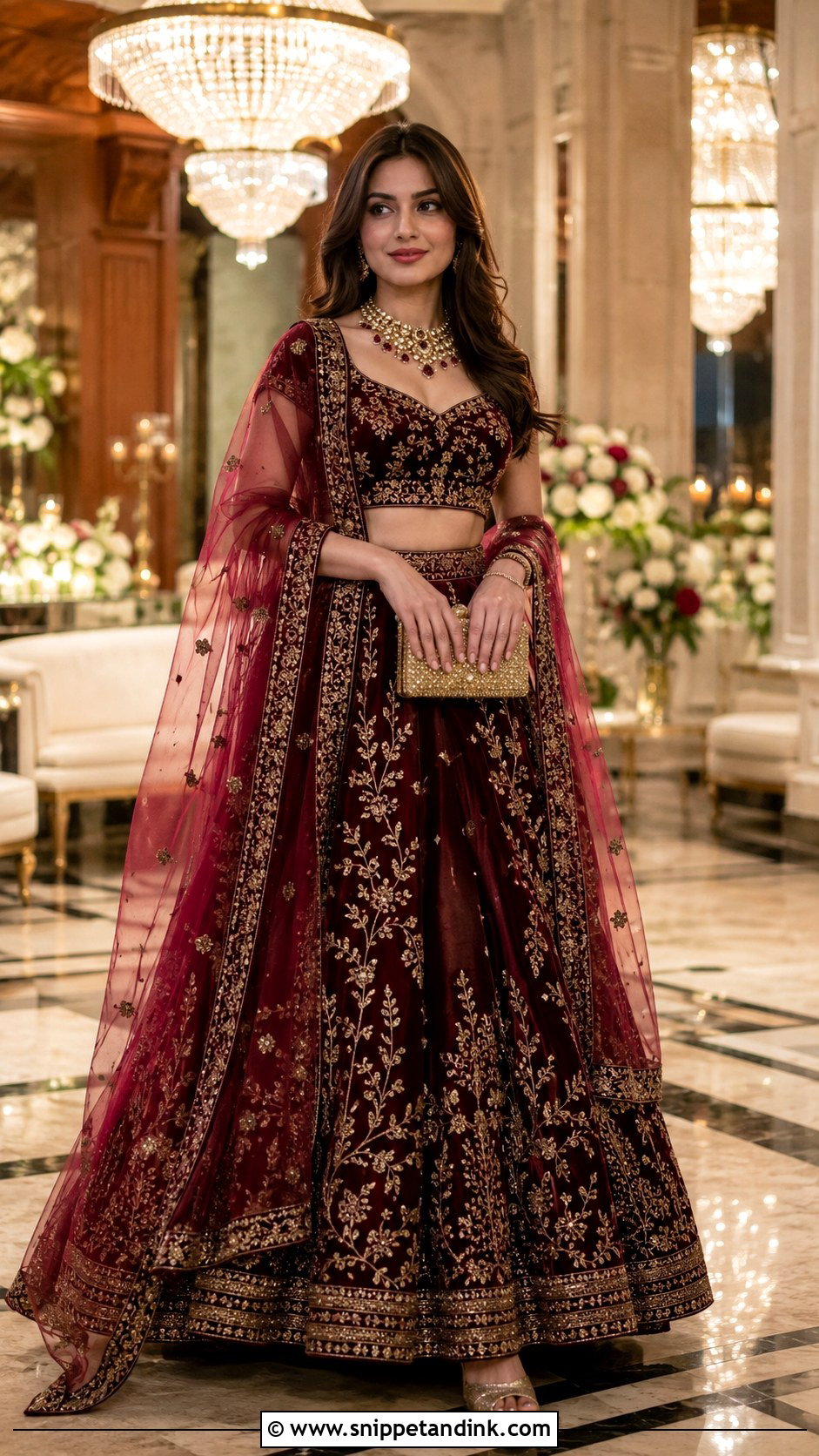
Velvet keeps you warm and holds color with real depth, but it’s heavy and gets hot indoors. Wine, navy, emerald and plum look richest in its pile. I balance a velvet lehenga with a lighter net dupatta so the whole look doesn’t drag at the shoulders. Velvet crushes wherever it’s pressed, so carry it on a padded hanger and don’t sit on the skirt for a long car ride. Kundan jewelry, a structured clutch and block heels suit it at evening functions and cold outdoor venues.
10. Floral Lehenga For Mehendi
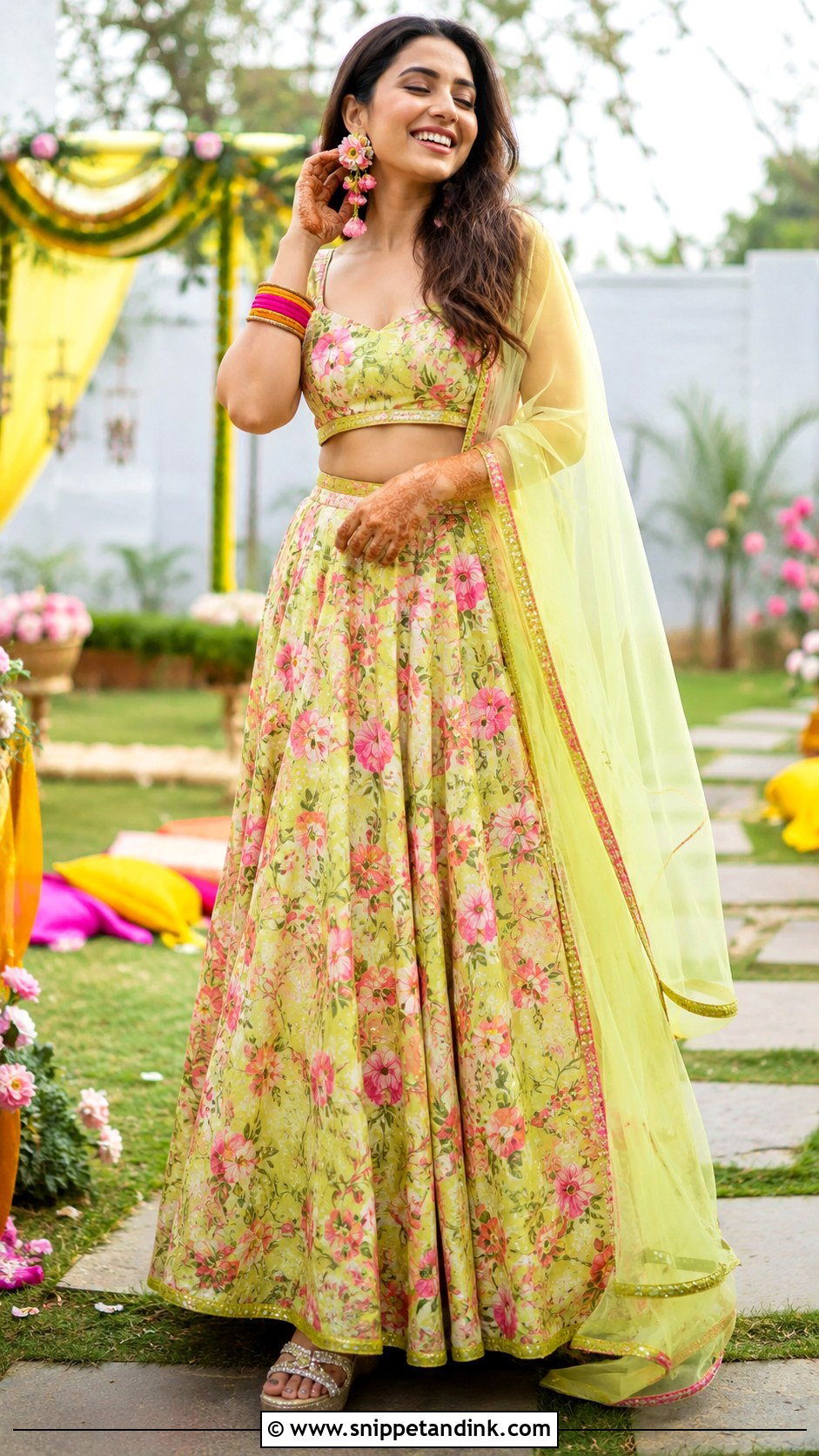
Mehendi is the function where practicality wins. Guests often get henna too, and long sleeves smudge wet paste, so I suggest sleeveless or short sleeves and a dupatta you can pin out of the way. Georgette, cotton silk or chiffon in printed florals suit the mood, and lime, coral or turquoise feel cheerful. Skip pale, dry-clean-only fabric if you’ll be near the henna table, because fresh paste transfers easily. Juttis or wedges work better than heels on floor seating.
11. Yellow Kurta Palazzo For Haldi
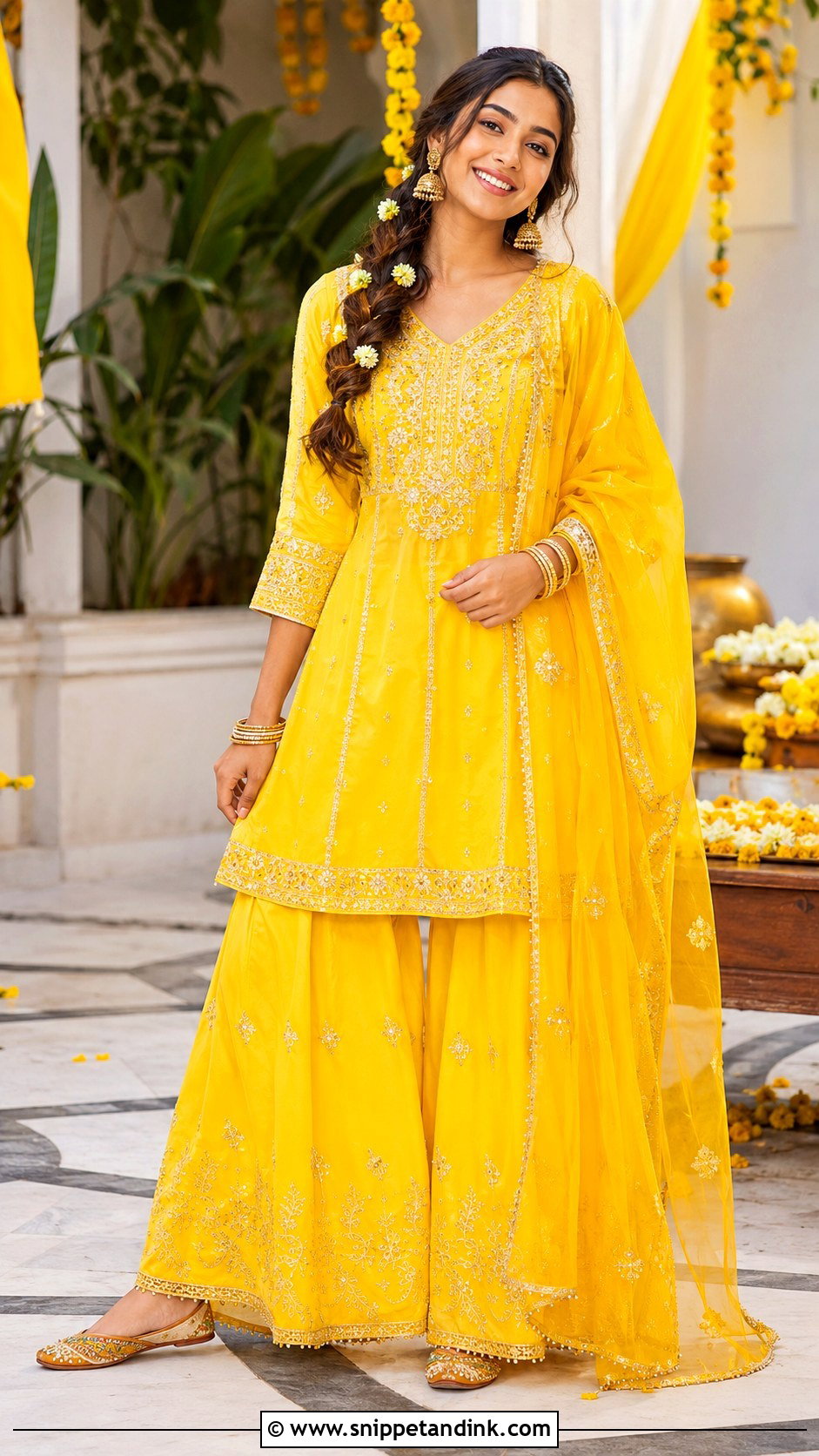
A yellow kurta palazzo outfit is the safest guest choice for haldi. The practical side: turmeric paste stains, and on white or pastel cotton it may never fully come out, so wear something you’re happy to sacrifice, or at least something already yellow. Cotton silk, muslin or chanderi breathe well in morning heat, and wide palazzos make low seating comfortable. Keep the jewelry to jhumkas and a few bangles, and leave your good shoes at home.
12. Cape Lehenga For Sangeet
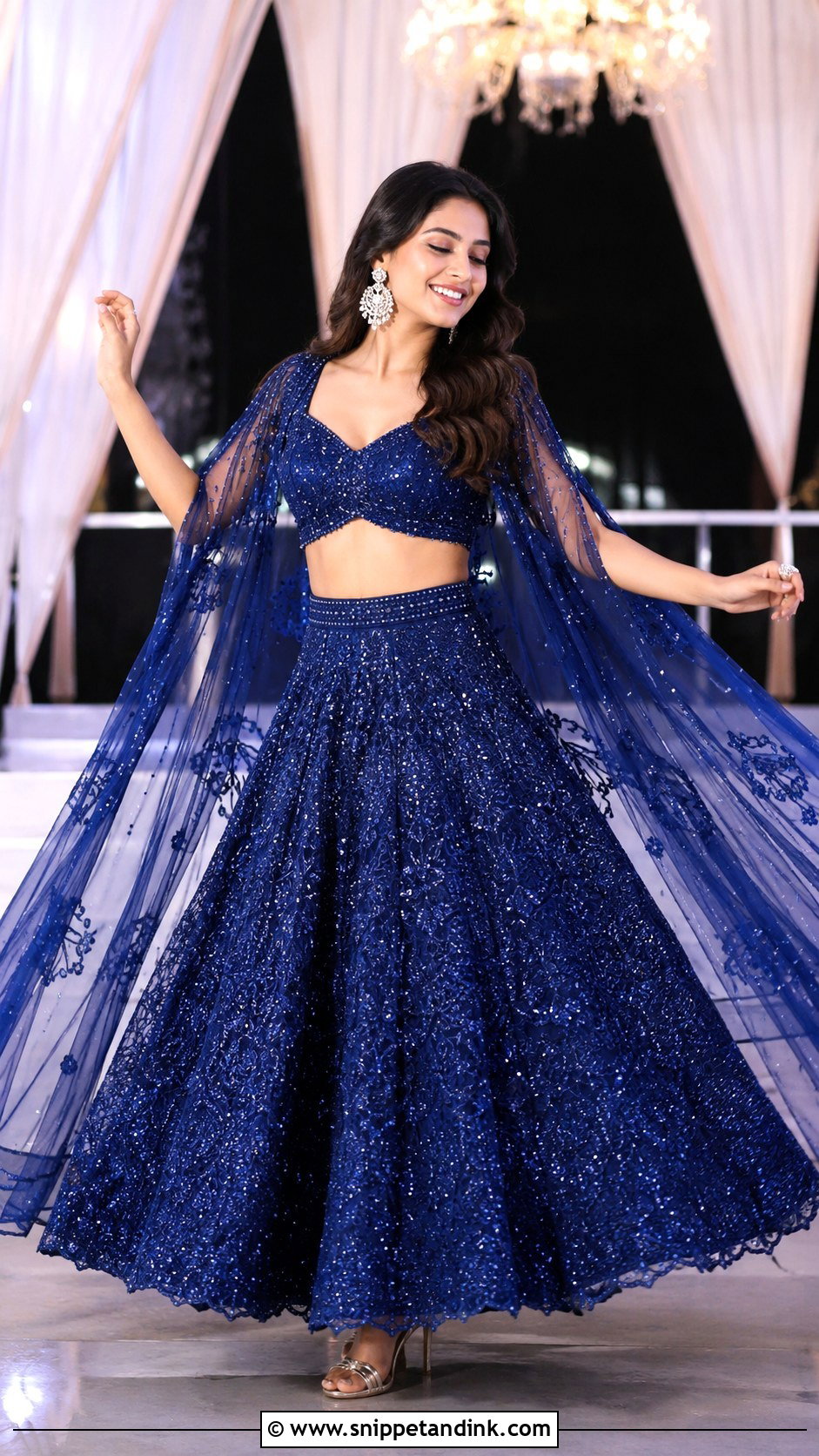
A cape lehenga gives you the drama of a dupatta without one sliding off mid-dance. The cape is usually stitched to the blouse, so it stays put. I check two things at the fitting: that the cape ends clear of the floor so nobody steps on it, and that you can lift your arms all the way. Jewel tones and metallics read well under sangeet lighting. Keep the hair sleek here, because big curls tangle in a sheer cape, especially one edged with sequins.
13. Gharara Set For Indian Wedding
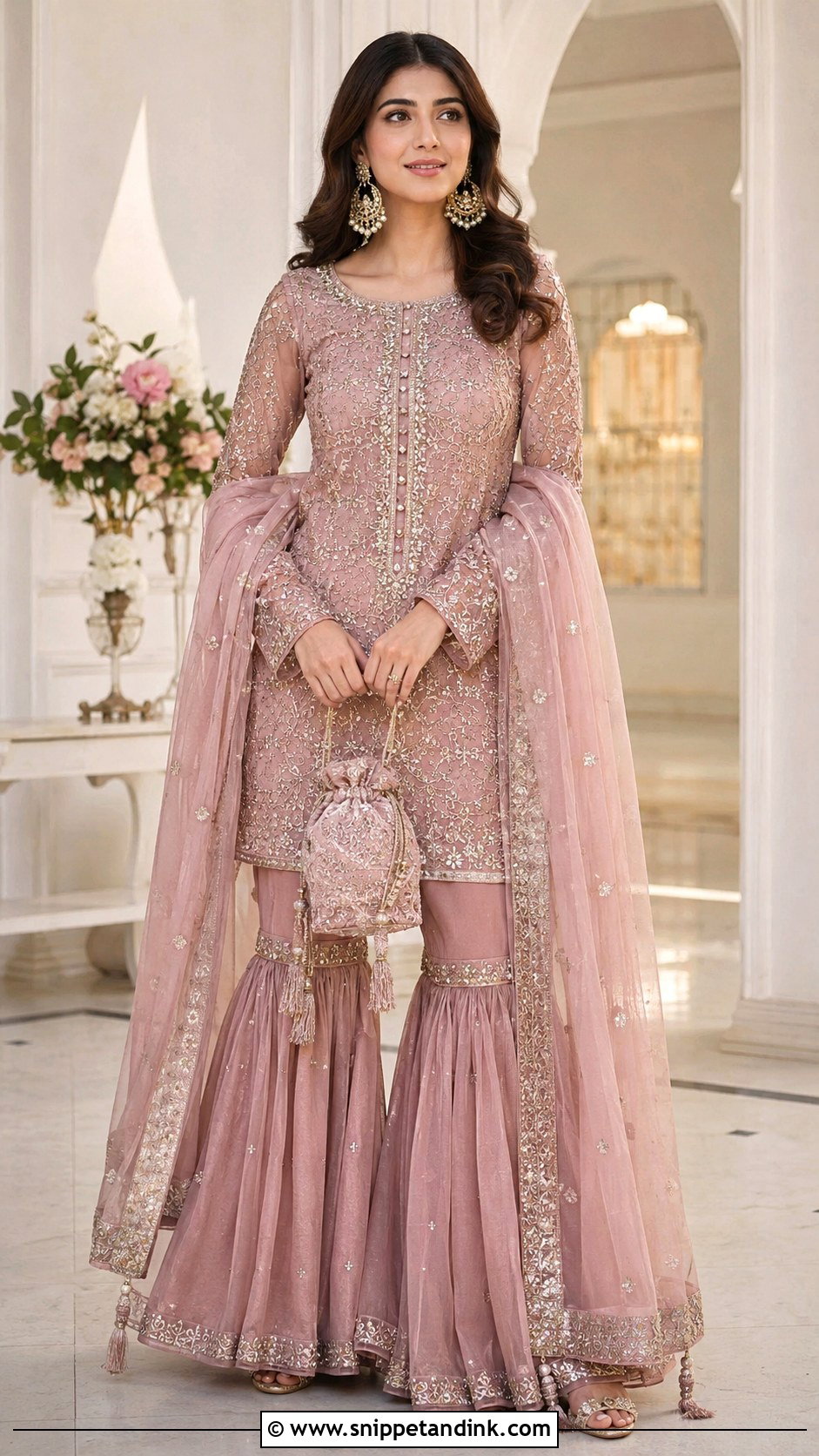
Ghararas and shararas get mixed up constantly. A gharara is fitted down to the knee, where a gathered joint (often trimmed with gota) releases the flare; a sharara flares from much higher up. That fitted upper leg means a gharara needs careful measuring at the thigh and knee, or it pulls when you sit. Pair it with a short kurti in zari or chikankari, a matching dupatta and chandbalis. It suits nikah ceremonies especially well, with pastels for daytime and jewel tones at night.
14. Jacket Lehenga For Wedding
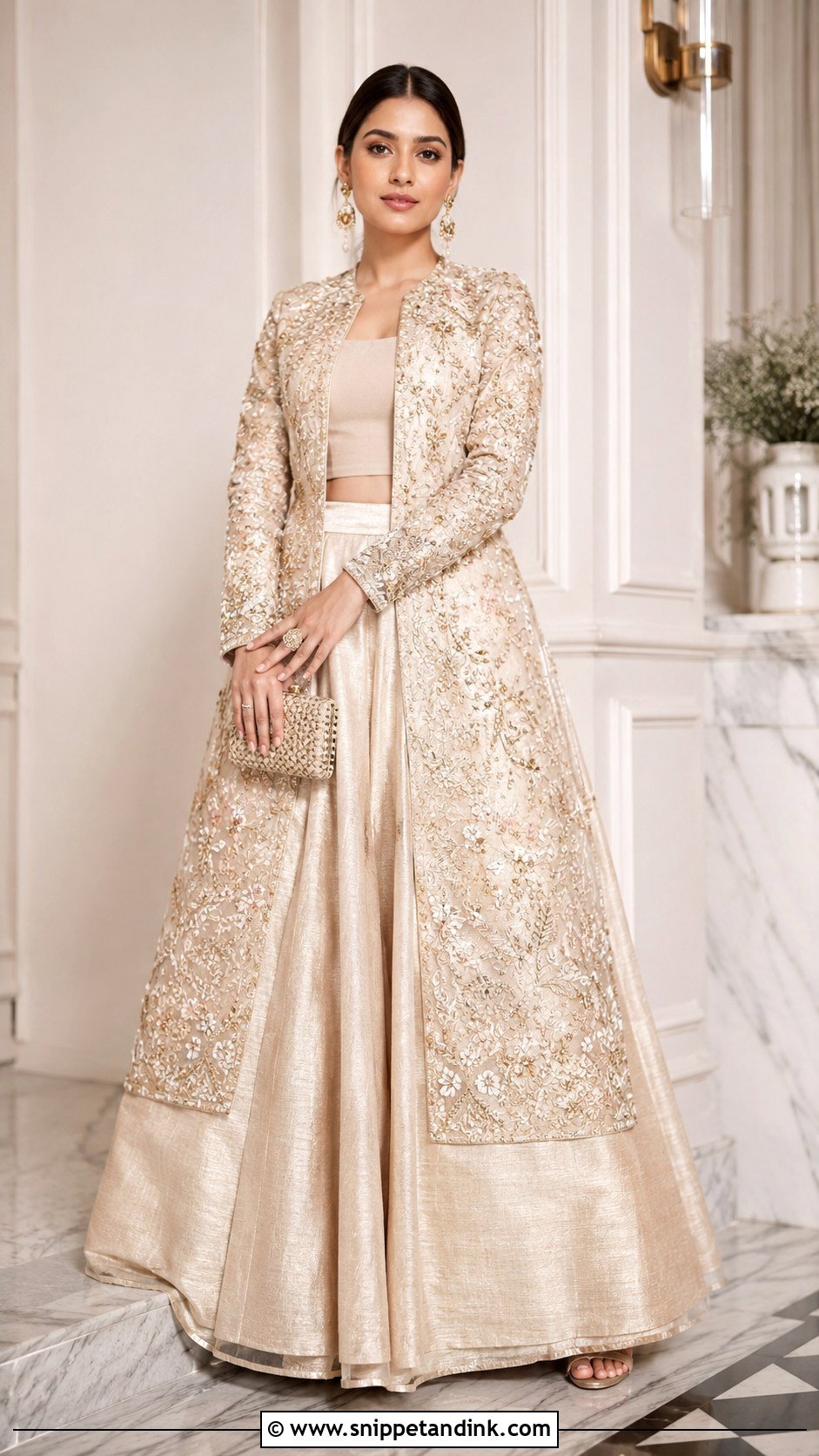
I recommend a jacket lehenga when a guest wants more coverage, or knows the hall will be freezing under heavy air conditioning. A long embroidered jacket over a plain lehenga looks formal enough for a reception; a cropped one feels younger for sangeet or mehendi. My rule is one focal point. If the jacket is heavily worked, the jewelry stays minimal, and if the neckline is plain, a statement necklace can carry it. Ask your tailor to line the jacket so it slides on easily over the blouse.
15. Saree Gown For Wedding Reception
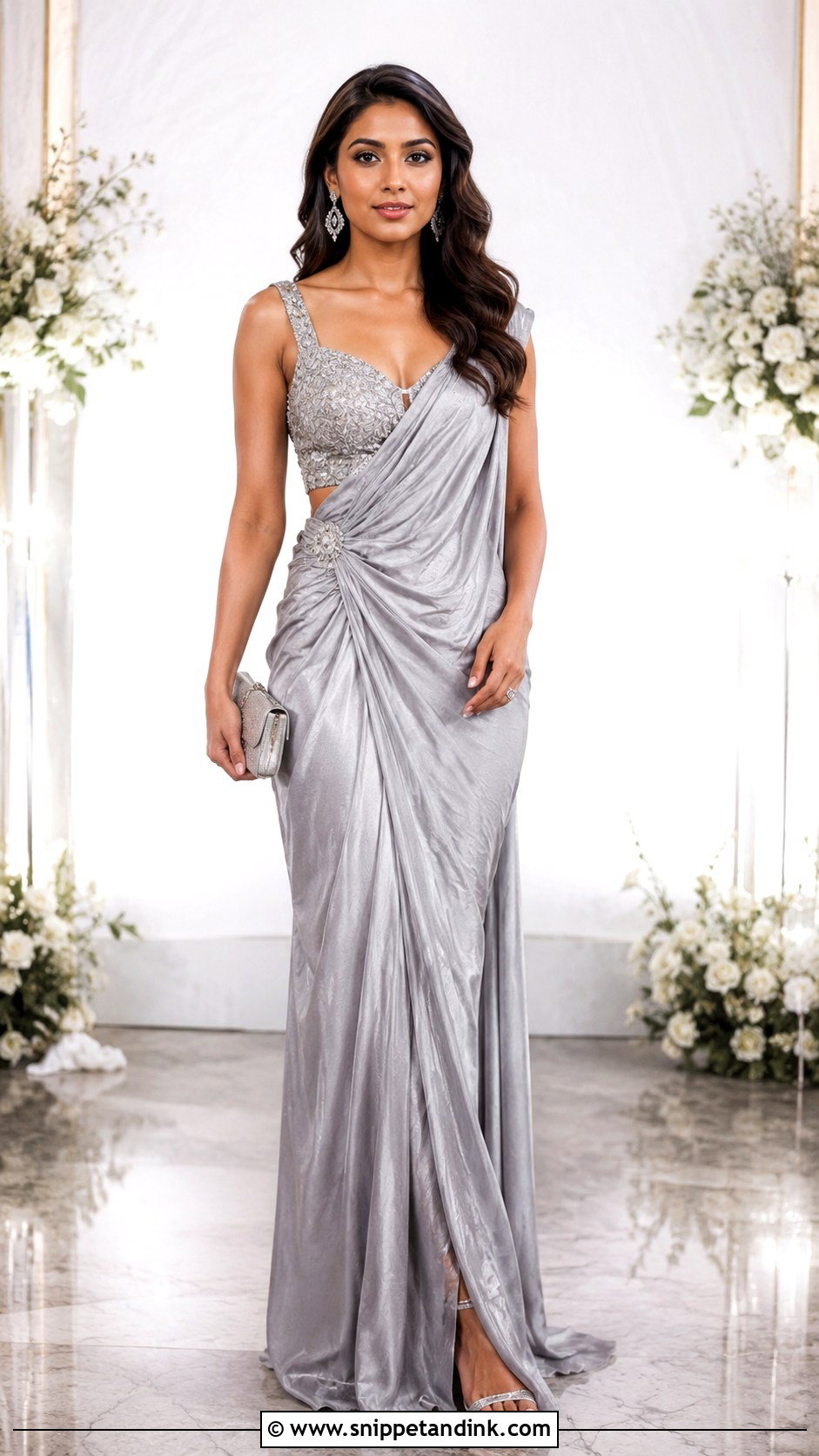
A saree gown is a gown with the drape already built in, so there’s nothing to pin or adjust through a reception. I look for a defined waist and a drape anchored into a seam rather than floating loose, because loose drapes shift every time you hug someone. Sequins or metallic threadwork add shimmer without bulk. A low bun or side-parted waves keeps the shoulder line clean. It works well for bridesmaids who want one cut in different colors.
16. Chikankari Sharara For Wedding
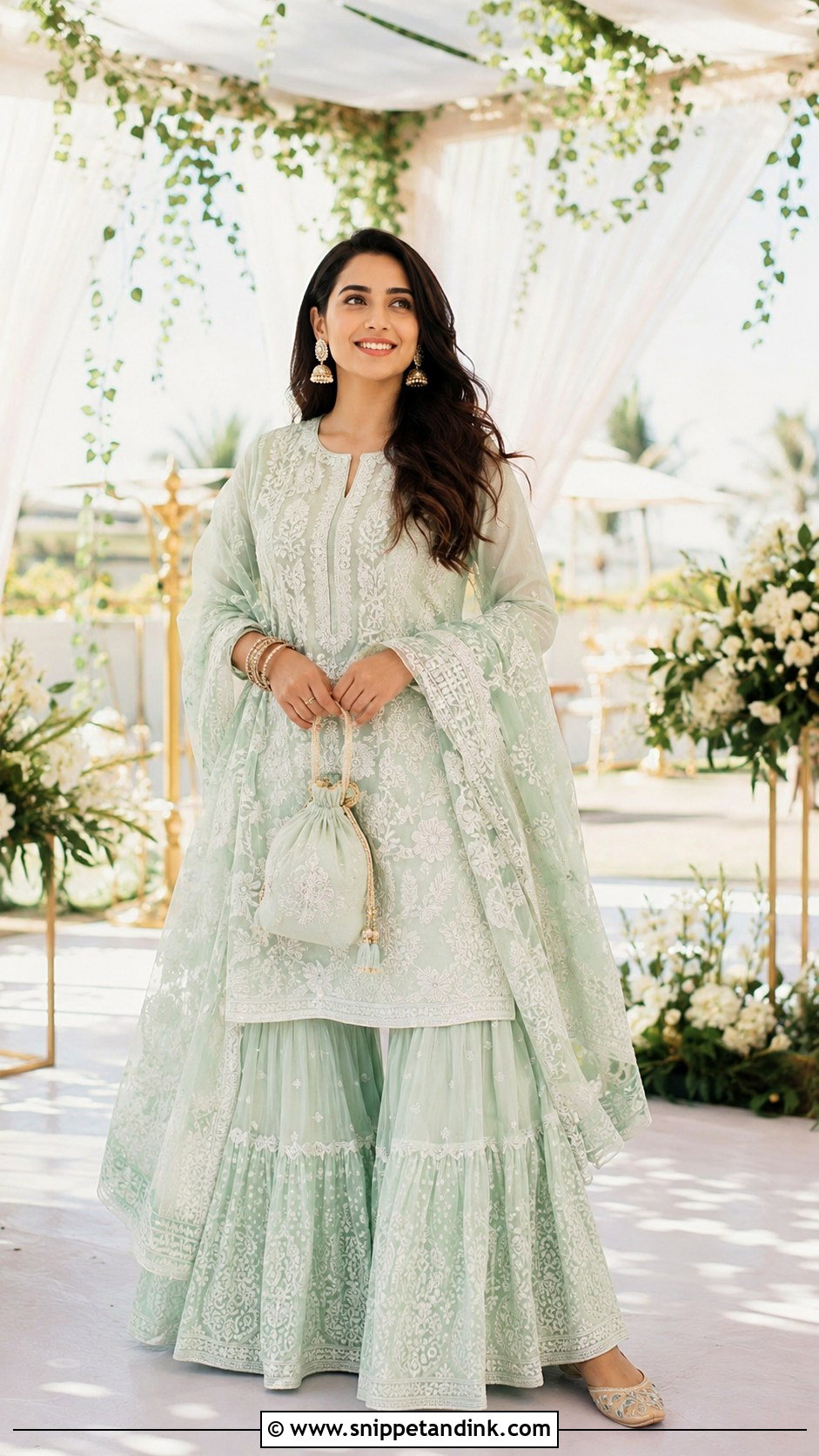
Chikankari is hand embroidery on fine cotton or georgette, and it breathes better than almost anything else on this list, which makes it my pick for summer day weddings. The risk is color. Ivory, blush or mint chikankari can read close to bridal, so I balance it with a bright potli or a contrast dupatta. Pearl earrings and embroidered juttis keep it delicate. Cotton chikankari wrinkles quickly, so it’s happiest at functions where you’re standing more than sitting.
17. Mirror Work Lehenga For Sangeet
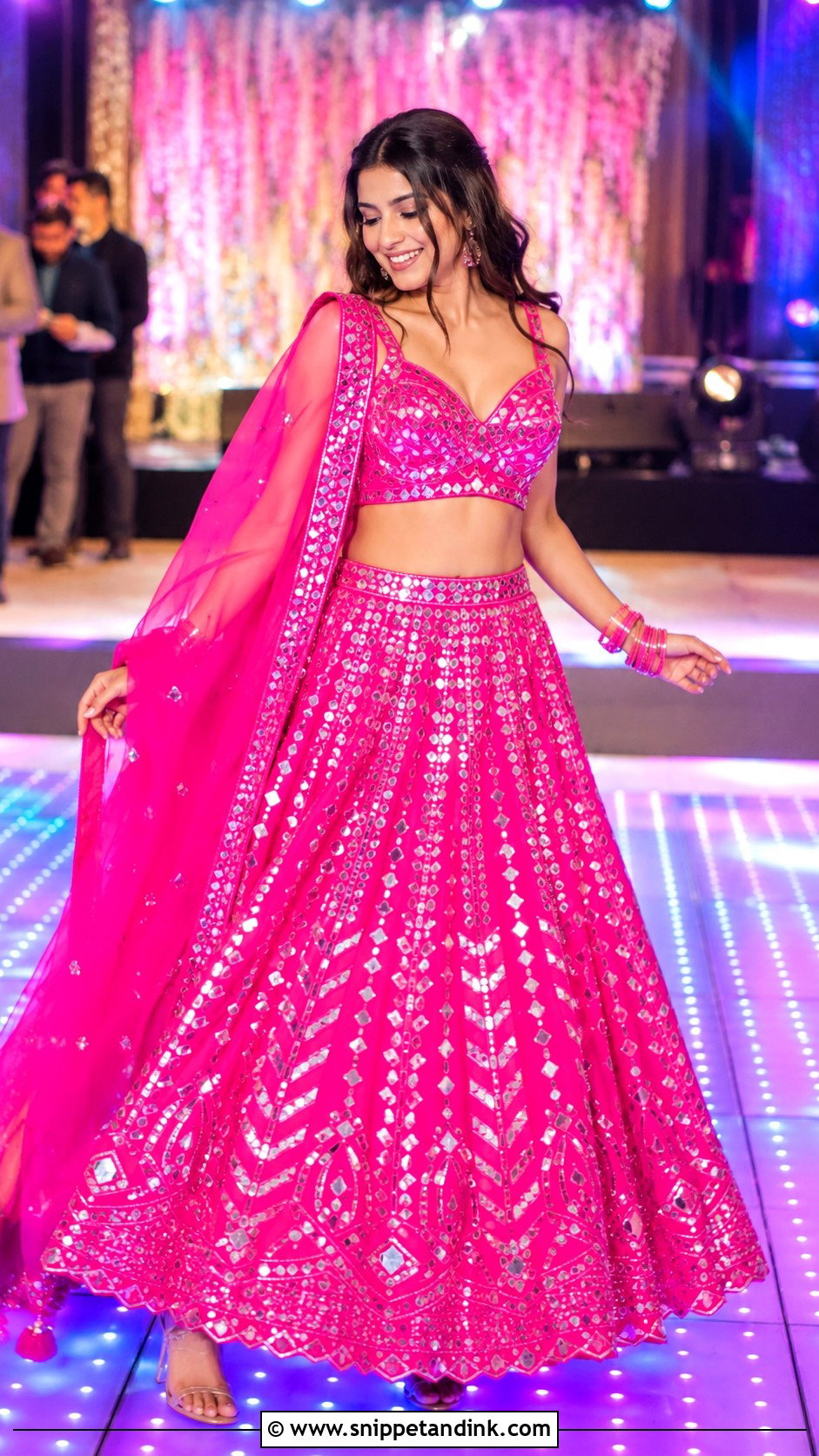
Mirror work catches light as you move, which is exactly why it belongs on the sangeet dance floor. Hot pink, cobalt or teal feel festive; pastel mirror work is gentler. What nobody warns you about: the little mirrors are stitched-on weight, and their edges can scratch the inner arms, so I check where the sleeves sit against the bodice. Pin the dupatta securely before the dancing starts. Keep jewelry small since the mirrors already sparkle, and wear wedges or low heels if you’ll be dancing for hours.
18. Kurta Skirt Set For Wedding
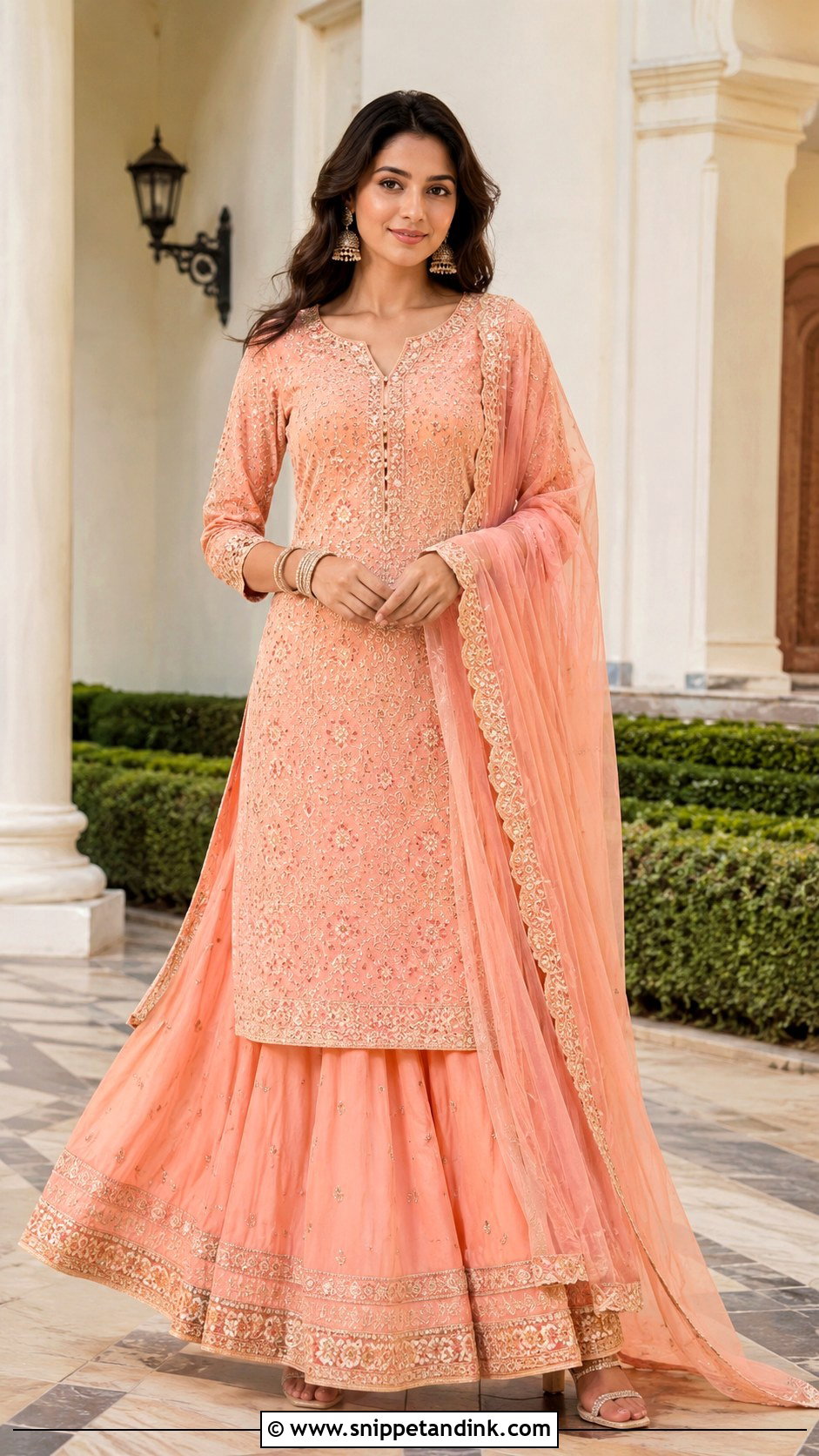
A kurta skirt set gives you the swing of a lehenga with more coverage and much less weight. Usually a long kurta sits over a flared skirt, with a dupatta on top. Silk, chanderi or cotton silk with embroidered borders suit wedding functions. I suggest this to guests who’d rather not show a midriff, and to older relatives who want something festive but easy to sit in. Jhumkas and embellished flats suit it at daytime ceremonies and family lunches.
19. Palazzo Suit For Indian Wedding
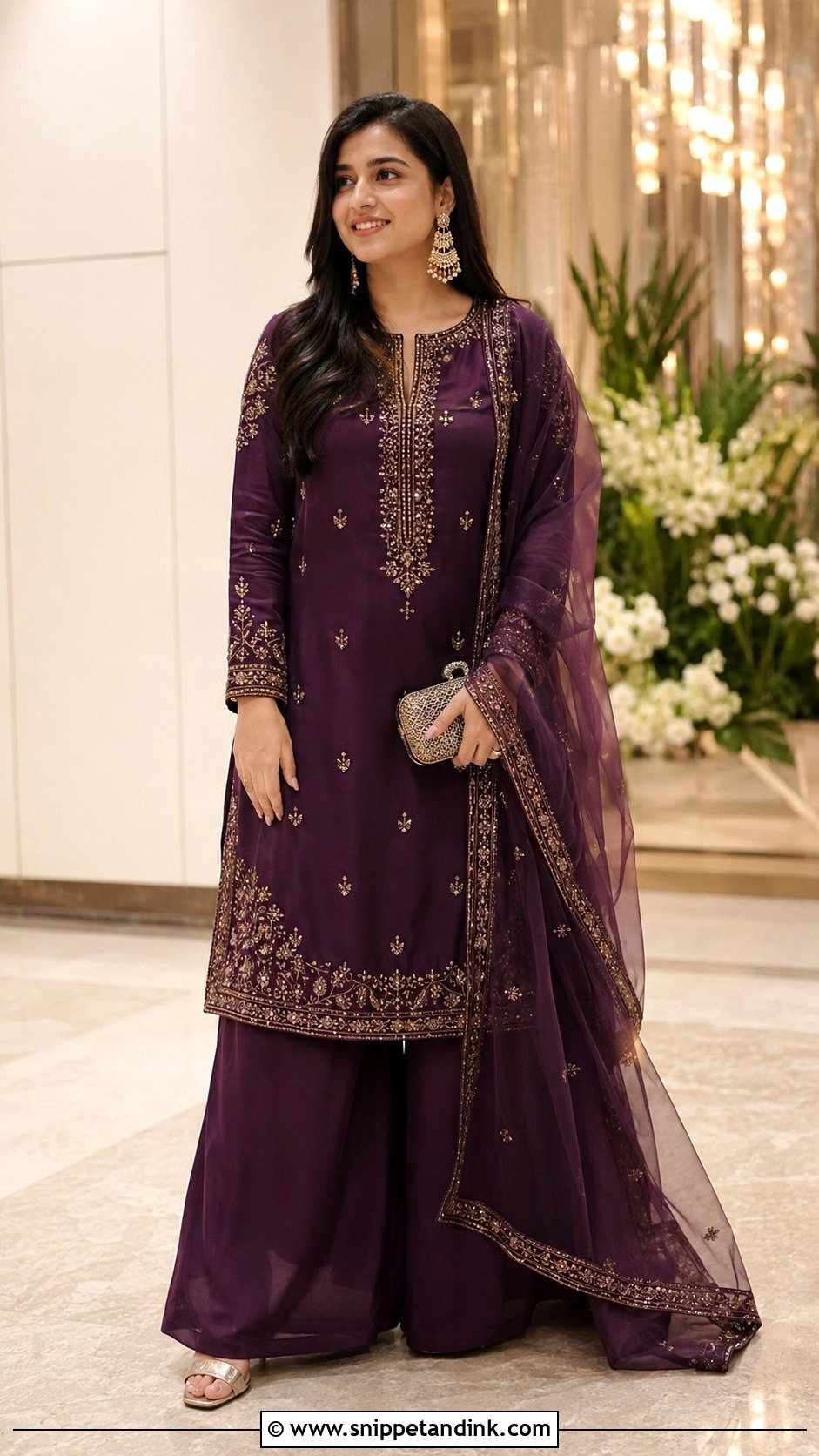
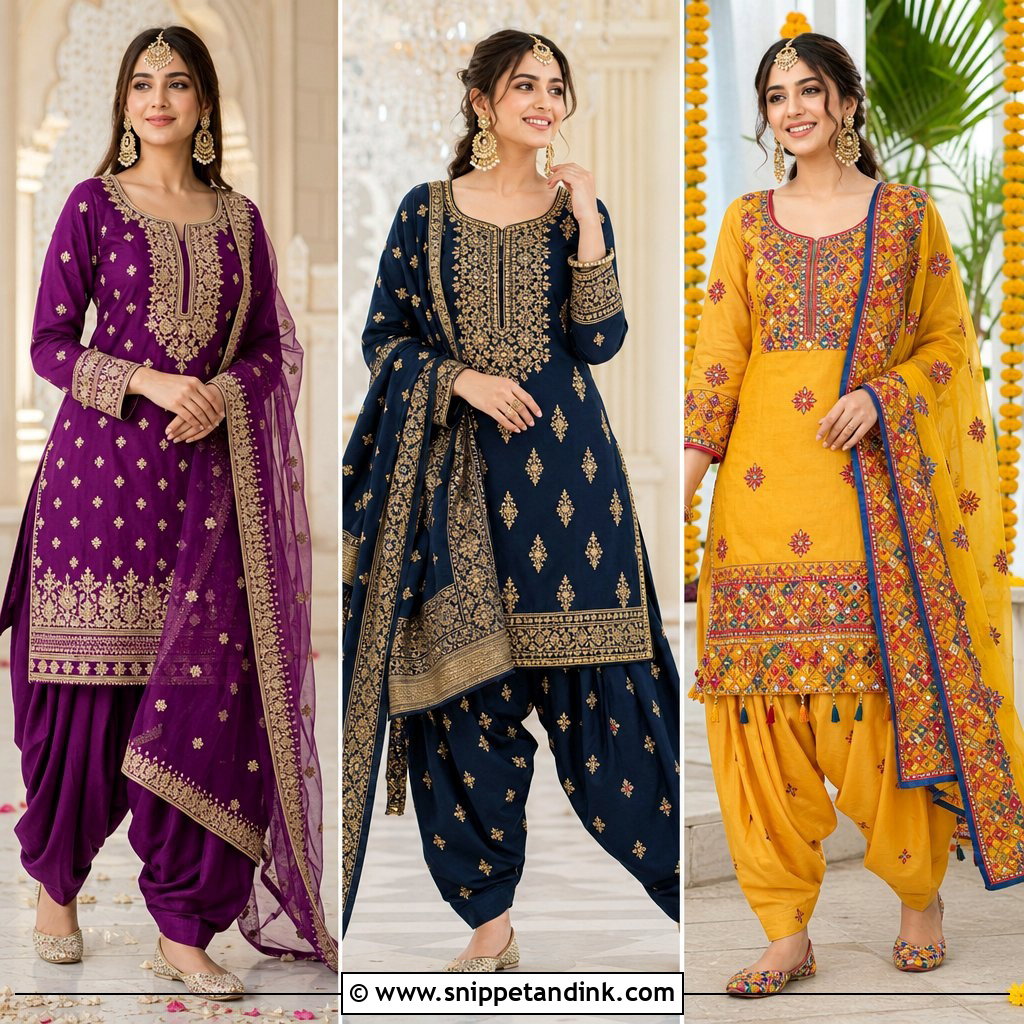
For mothers and aunts who’ll be on their feet hosting all day, a palazzo suit is usually my answer. Wide legs don’t cling in heat, and a long straight kurta in silk or chanderi stays polished from the first greeting to the last photo, while an A-line kurta adds a little more flare. I keep the dupatta light so it isn’t constantly slipping while she carries plates or hugs relatives. Jewel tones at night, brighter shades by day, with statement earrings and embellished sandals.

20. Sequin Saree For Cocktail
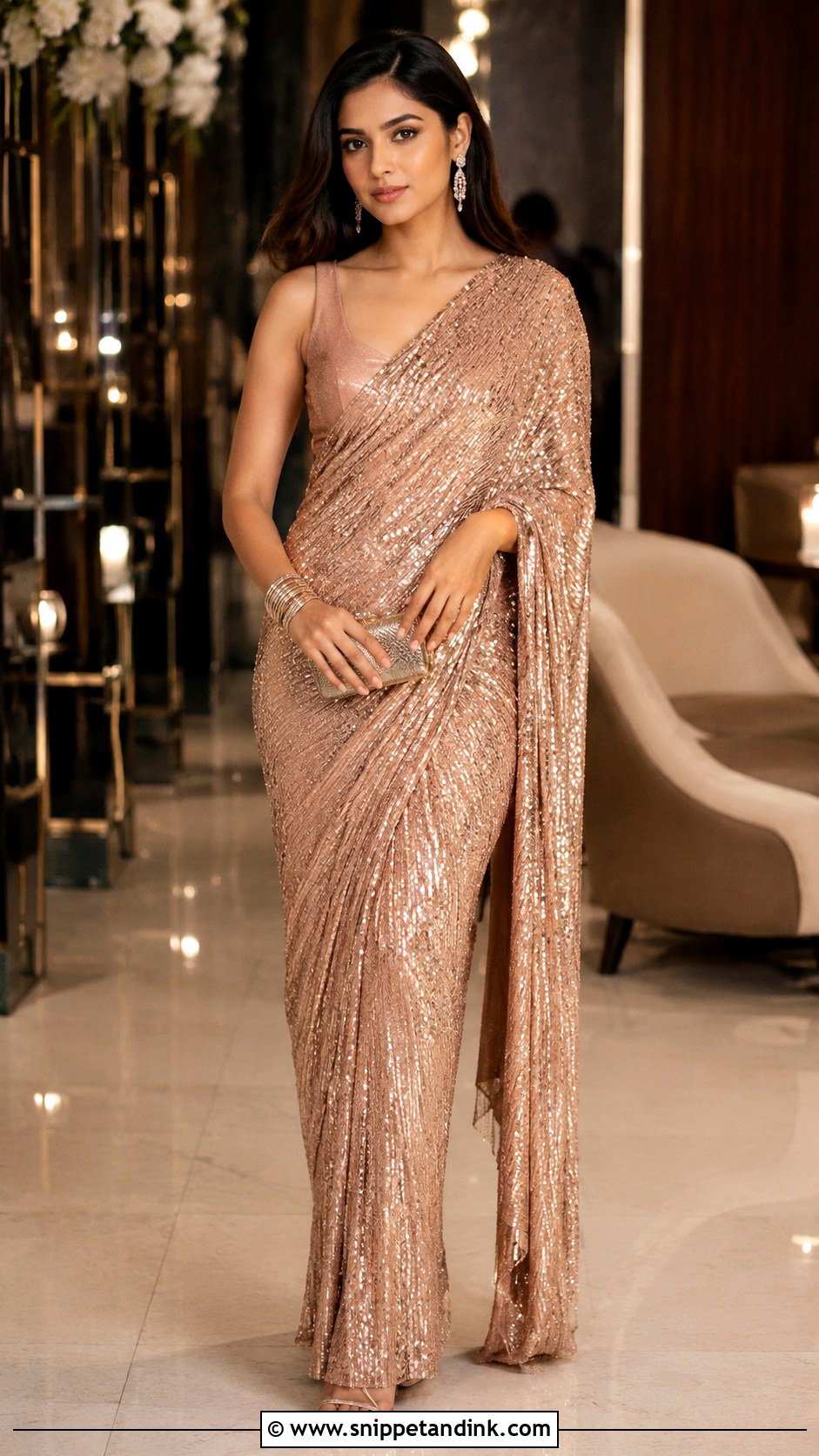
Sequin sarees bring cocktail-night glamour, and champagne, silver, emerald or navy look polished at any reception. The trade-off is comfort. Sequins scratch where the pallu rests on bare skin, and a lot of sequinned georgette doesn’t breathe, so for a long evening I suggest a lined blouse with sleeves. Keep that blouse plain and the earrings small; the saree is already doing the work. A sleek ponytail or low bun stops hair catching on the sequins.
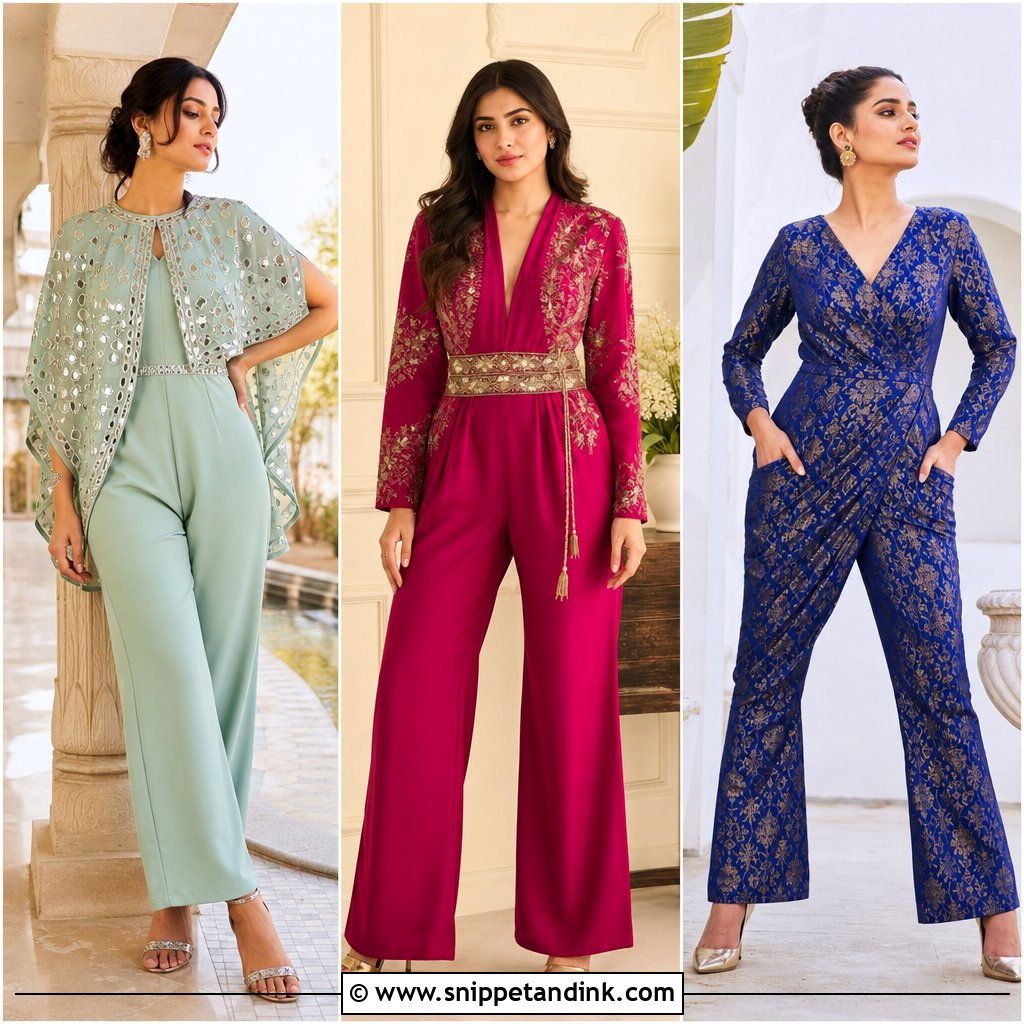
21. Dhoti Pants With Crop Top For Wedding
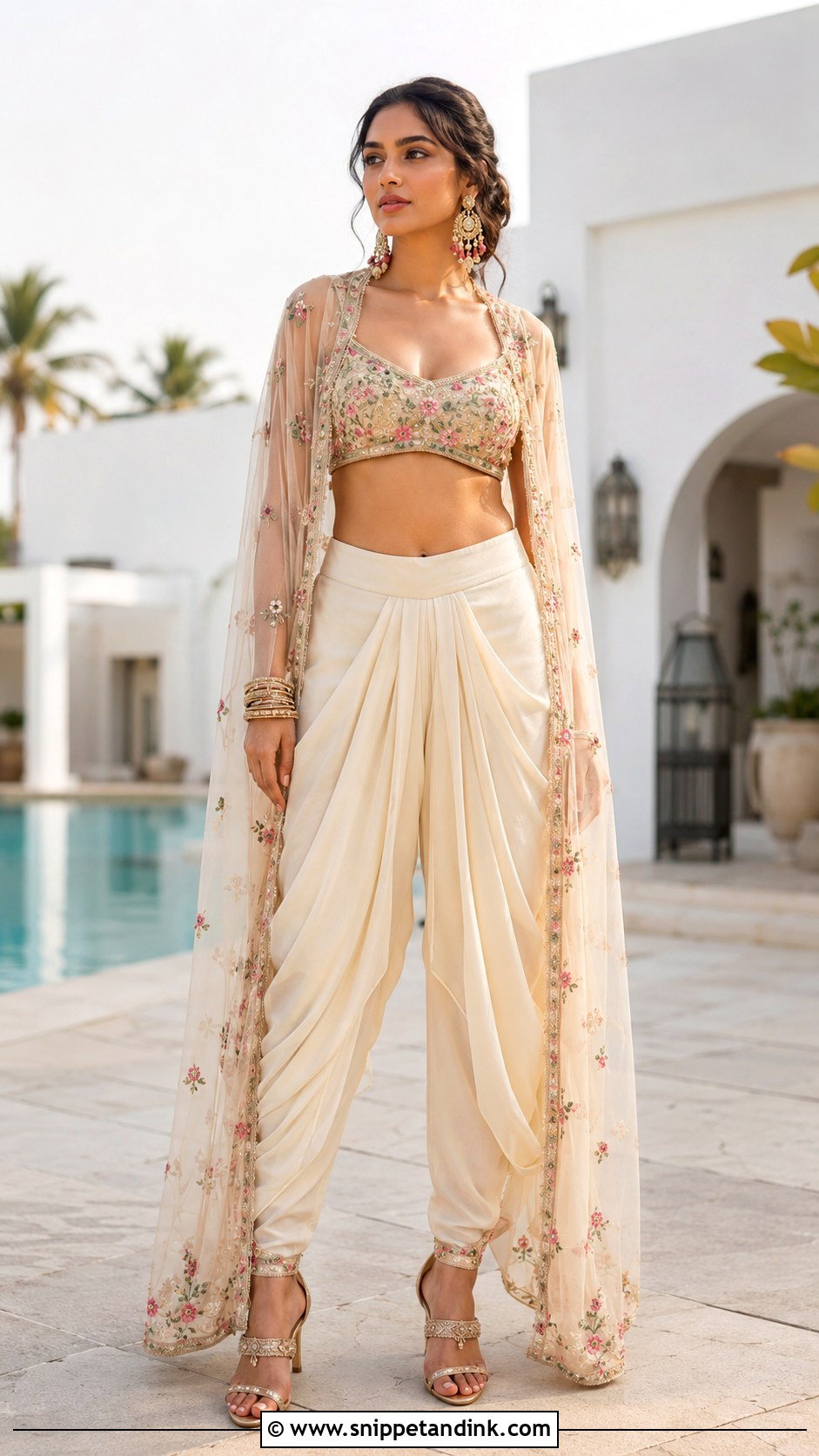
Dhoti pants with a crop top are about as comfortable as wedding wear gets, and they suit mehendi, sangeet and destination events. Satin or crepe dhoti pants hold their folds better than limp fabrics, and a cape or jacket adds coverage. One caution from fittings: low-slung dhoti pants plus a very short crop top can show more than you expect when your arms go up on the dance floor, so I often lengthen the top an inch or raise the waistband. Statement earrings and stacked bangles finish it.
22. Peplum Sharara For Wedding
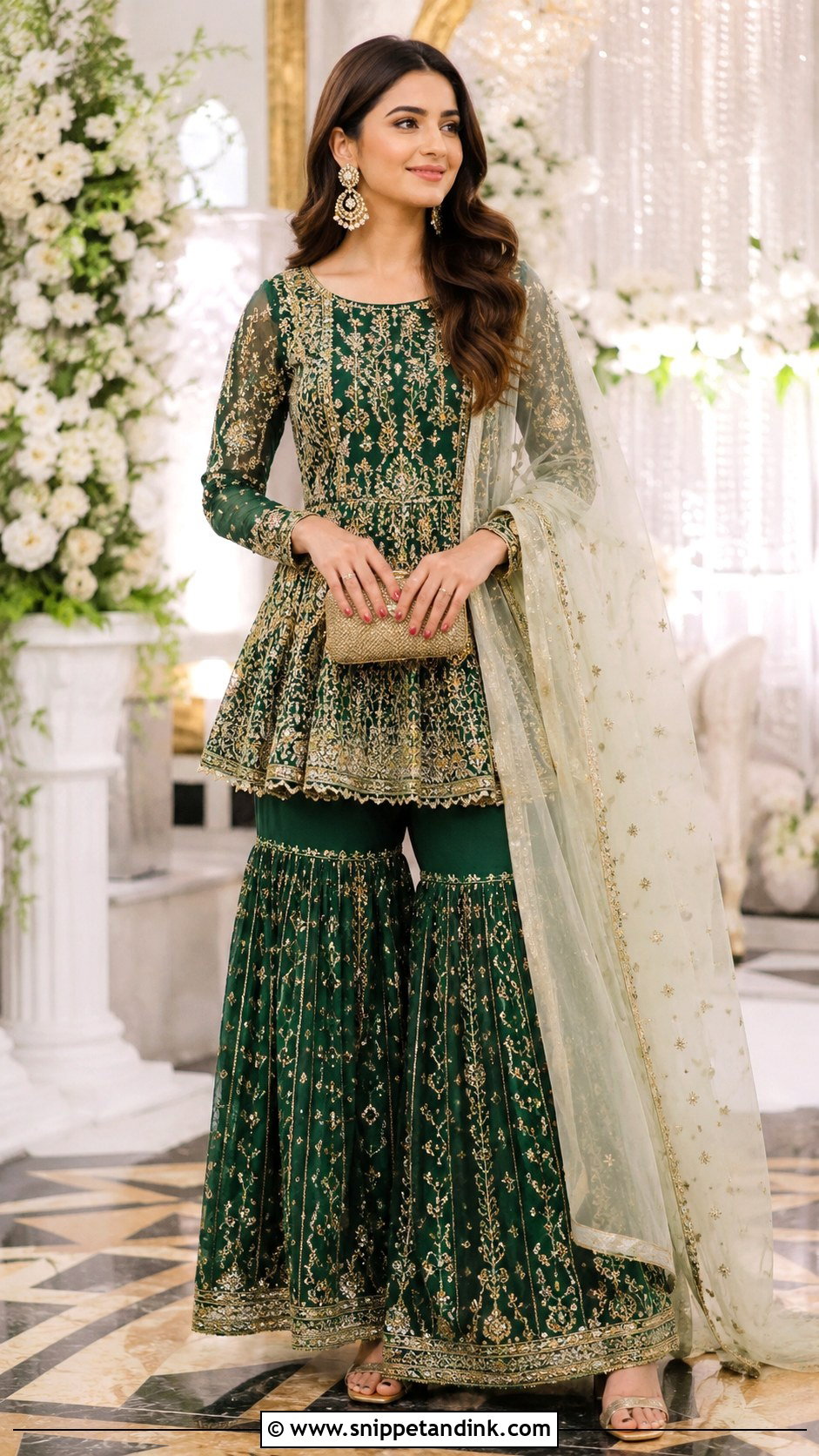
The peplum nips in at the waist and flares over the hips, which flatters a lot of shapes and pairs naturally with sharara pants. I avoid stiff peplums on very petite frames, though, because the flare can swallow them; a softer georgette peplum sits better. Embroidery at the neckline and hem is enough decoration. Add chandbalis and a clutch, and wear the dupatta on one shoulder or skip it if the top is detailed.
23. Ruffle Saree For Wedding Party
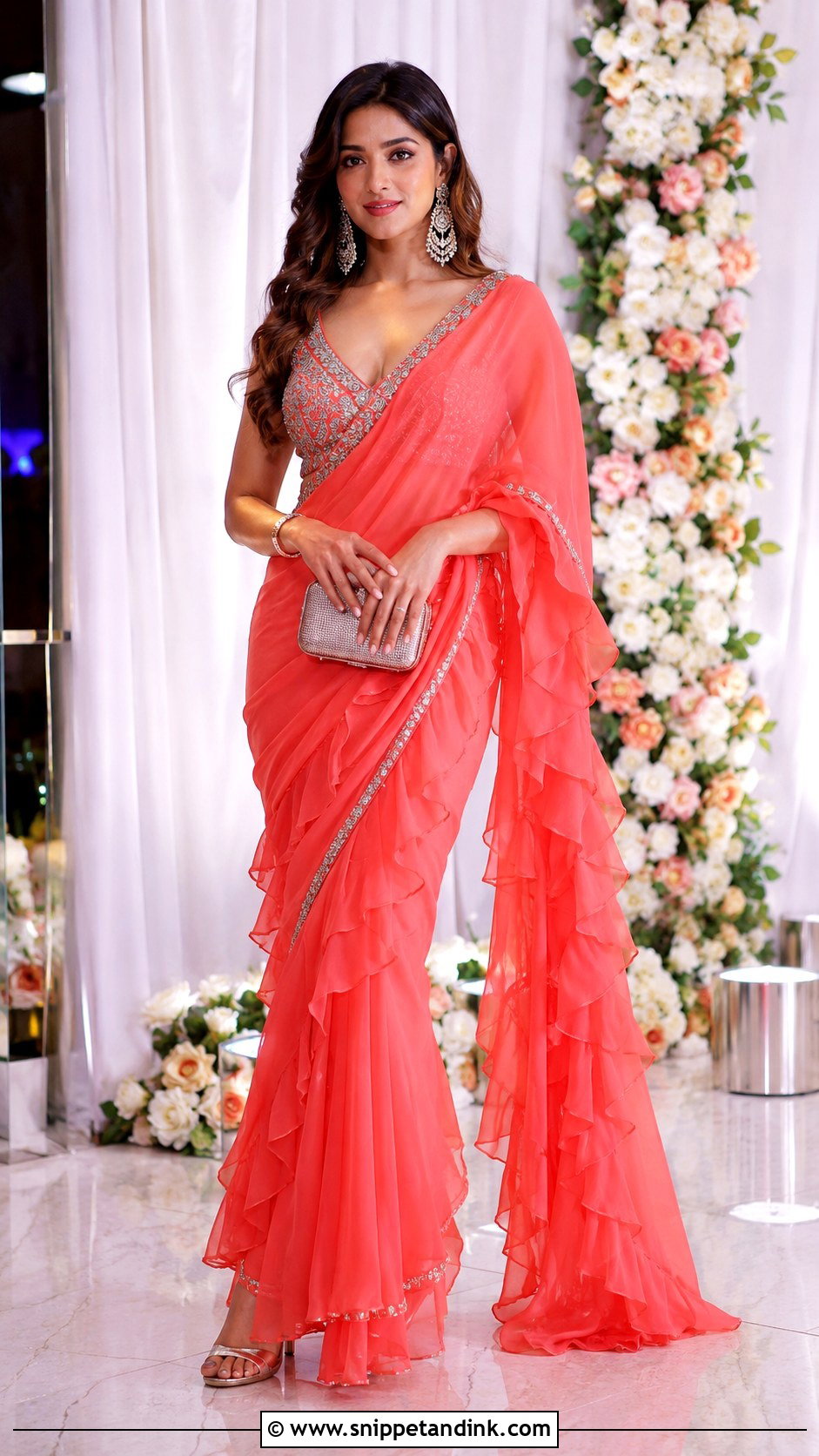
Ruffle sarees feel young and less formal, which suits sangeet nights and parties. The ruffles add volume, so I choose light georgette or chiffon, or a pre-stitched style, and let them carry the look. A structured or sequinned blouse balances all that softness. Ruffles also add bulk at the hem, so take stairs and car doors slowly. Teal, coral and metallic shades work well; keep accessories to earrings and a clutch.
24. Co Ord Set For Indian Wedding
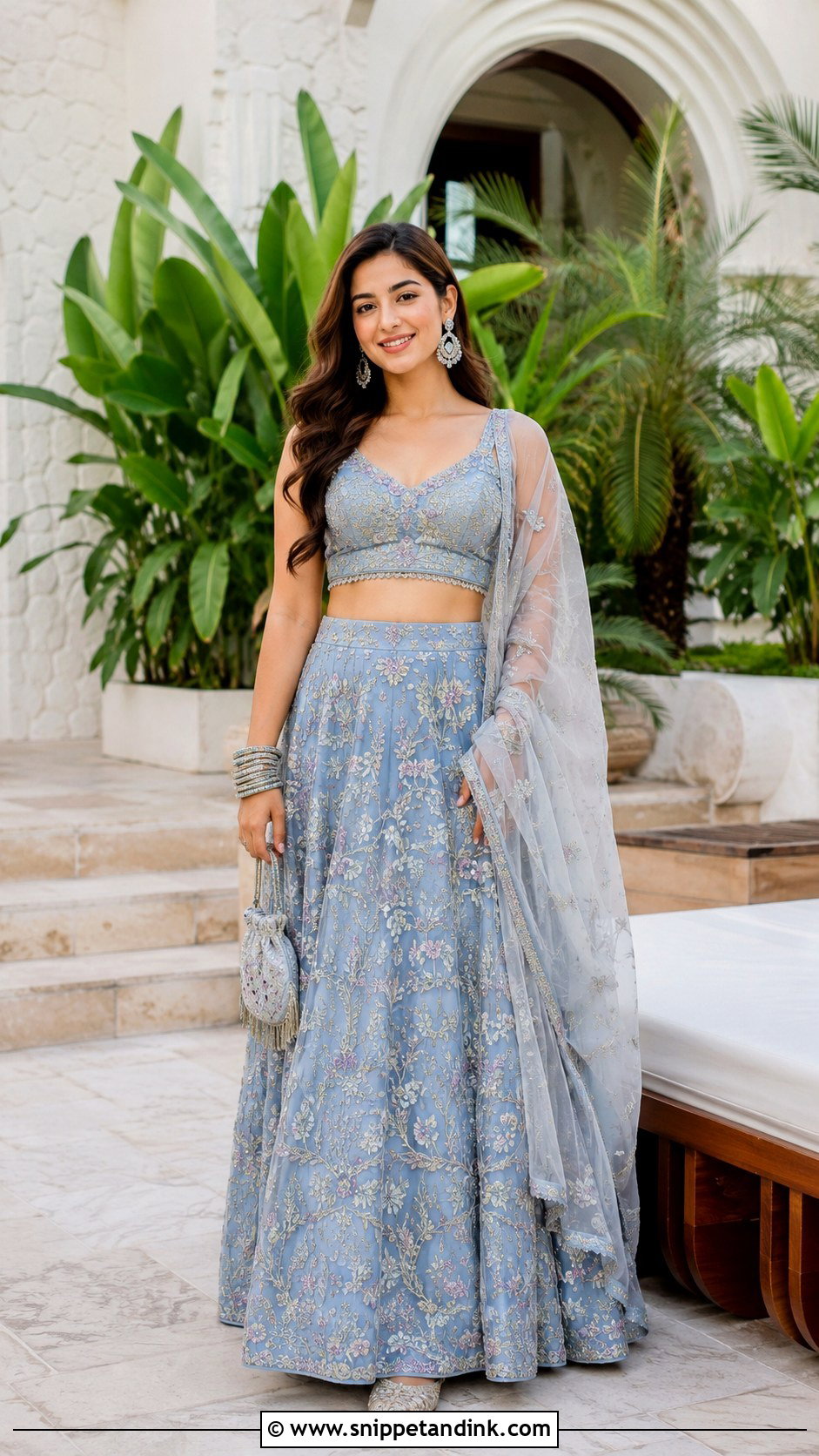
Co ord sets are the easiest outfit on this list to plan, because the pieces already match. Look for a crop top and skirt, kurta and pants, or a tunic and sharara with mirror work or zari. Lighter sets suit haldi and mehendi; embellished ones go to the sangeet. The real bonus is rewear, since the top and bottom work separately afterwards. I recommend them often for destination weddings, where suitcase space is tight.


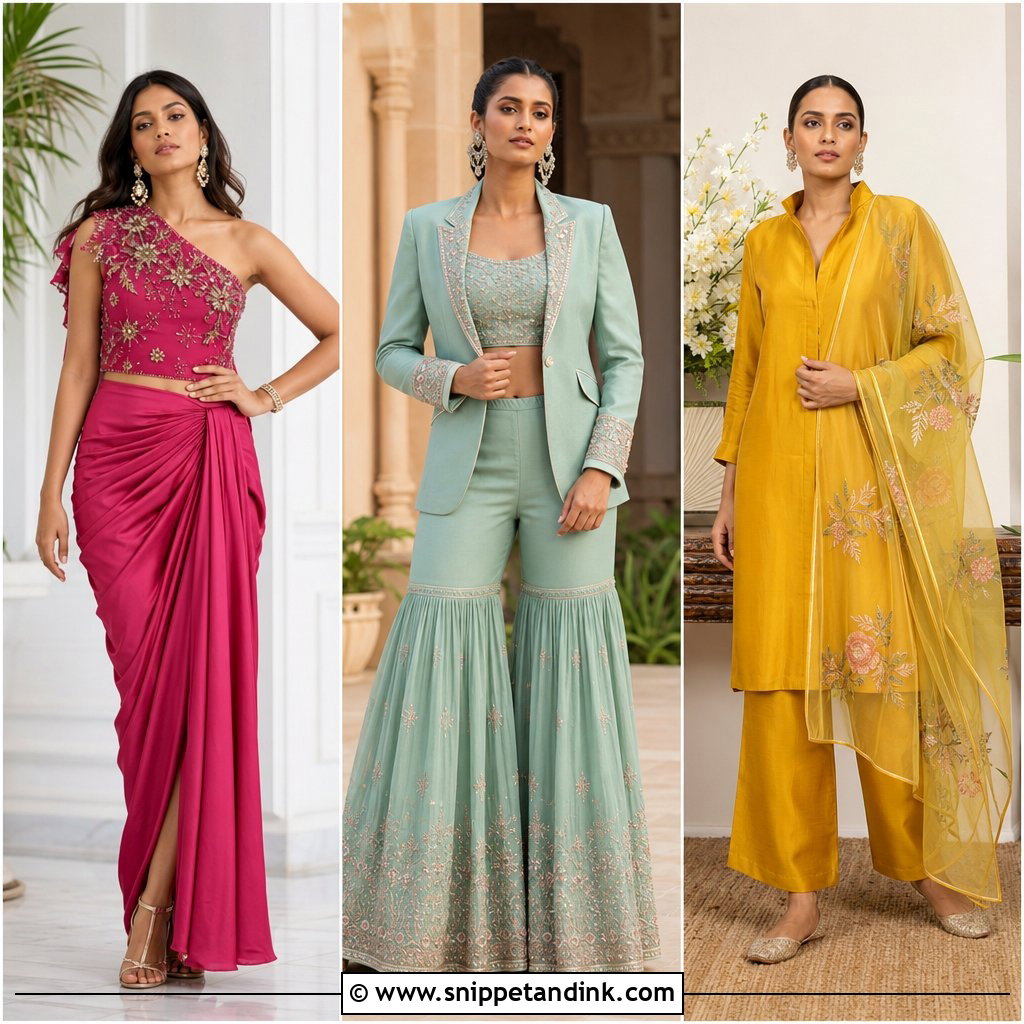
25. Heavy Dupatta Suit For Wedding
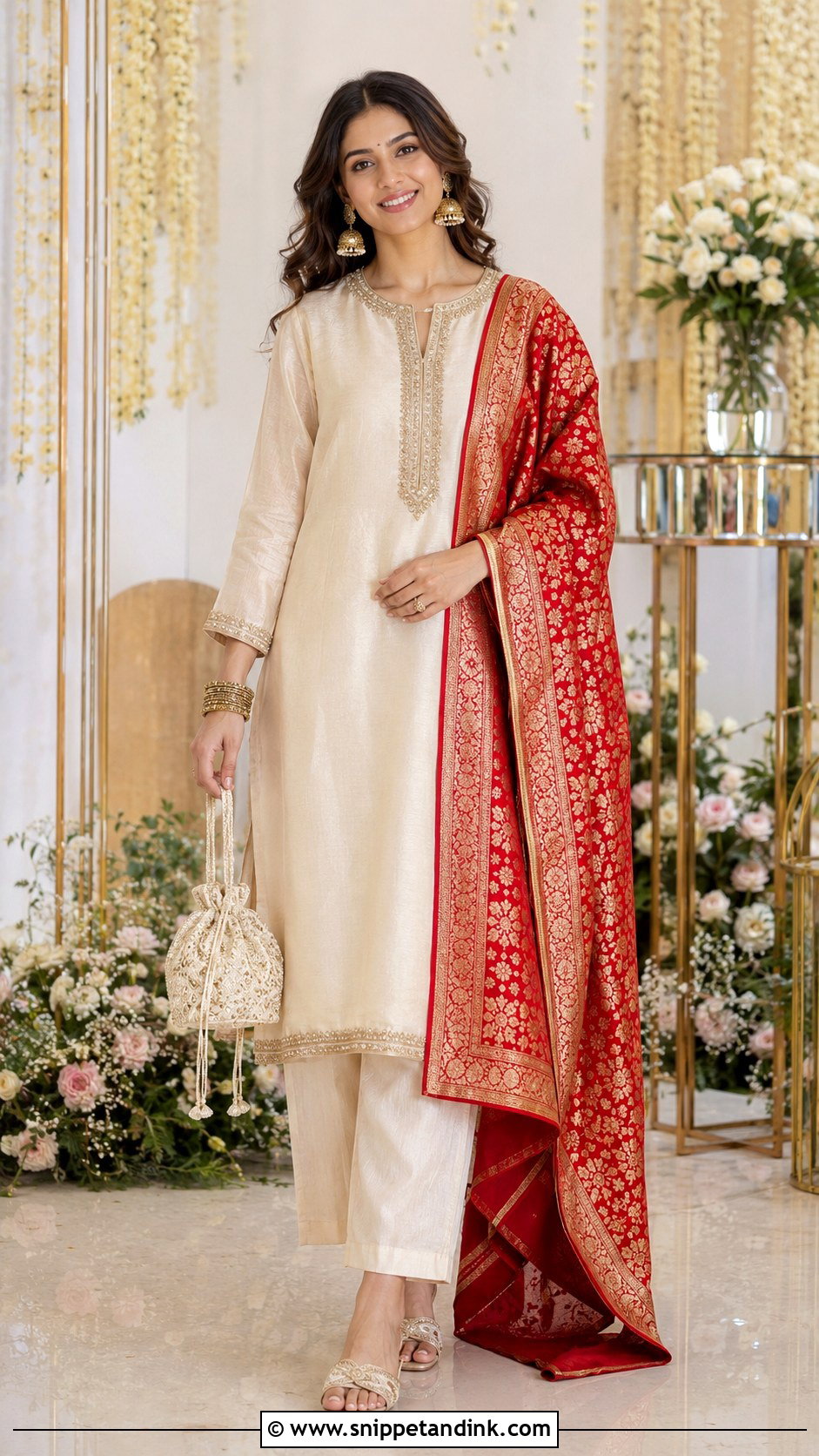
A heavy dupatta suit is the most adaptable outfit in my kit. Start with a simple silk or chanderi kurta and straight pants, then let one dupatta carry the look: phulkari, bandhani, a Banarasi weave or gota patti. A heavy dupatta needs pinning at the shoulder, with a decorative brooch or a hidden safety pin, or it slides off all evening. Jhumkas, bangles and a potli bag finish it, and that same dupatta will lift plain outfits for years.
Blouse Stitching Takes Longer Than the Shopping
Most lehengas and sarees arrive with unstitched blouse fabric, and good tailors book up quickly in wedding season. I tell guests to allow at least three to four weeks for stitching plus one trial, and longer during the winter peak. Bring the bra you’ll actually wear and your real heels to that fitting, or the length and neckline will be off on the day.
What I check at the trial
- Arms raised overhead: the blouse should barely ride up.
- Sitting on a low chair or cross-legged: the skirt waistband shouldn’t dig in.
- Hem length in your event shoes, with a little clearance so you never step on it.
- Hooks or a zip you can close alone, or a plan for who will help you dress.
Suitcase Rules for Zari, Sequins and Velvet
Travel is where wedding clothes get damaged. Fold a heavy lehenga skirt inside out so the embroidery faces inward, and lay tissue or a soft cotton cloth between the folds so sequins don’t snag the fabric beside them. Velvet travels best flat on top of the case or on a padded hanger in a garment bag.
Never put a hot iron straight onto zari or metallic embroidery. Steam from a short distance, or press from the reverse through a cotton cloth. And pack a small kit: safety pins in two sizes, double-sided fashion tape, spare blouse hooks and a needle threaded in a neutral color. Somebody at every wedding needs it.
Plan for Every Function on the Card
Most Indian weddings run across several functions, and the best guest wardrobes treat them as a set. The lehenga goes to the sangeet, the silk saree to the ceremony, and a sharara, palazzo suit or co ord earns its place at the long daytime events where you’ll sit, travel and dance. Before you buy, think about fabric weight, footwear and how many hours you’ll be wearing it. Then pull the pieces from this list that cover each function on your invitation, and stop shopping there.
You'll Like These Ideas:


Leave a Reply