
A center part is the most honest parting there is. It splits the face down the middle, so every style built on it, from a slicked bun to a milkmaid braid, reads balanced and modern, and every wobble in the line shows. That’s why I spend longer on the part than on almost anything else at a trial. Veils, combs and flowers sit easily on either side of it. Here are 20 middle part bridal hair ideas, mostly up or half up, with notes on how I build each one and when I’d suggest something else.
Cowlicks, Widow’s Peaks and a Part Down the Middle
Pulling hair straight back or down from the very front of the hairline exposes whatever lives there. Side parts hide a lot; a middle part hides nothing. This is what I look for at the start of a trial and how I handle each.
- A cowlick at the front: I blow-dry the root against its growth first, then back into place, and clip it flat while the style sets.
- A widow’s peak: the part can run into the point or just beside it. I test both, because one usually looks clearly better.
- Baby hairs and short broken pieces: a clean toothbrush with a little gel lays them flat, or we leave them soft if the style is relaxed.
- Growing-out bangs: pinned flat on each side under the top layer, so they don’t spring out by lunchtime.
None of these rule out a center part. They just change how long the prep takes, so mention them when you book.
1. Middle Part Low Bun for Brides
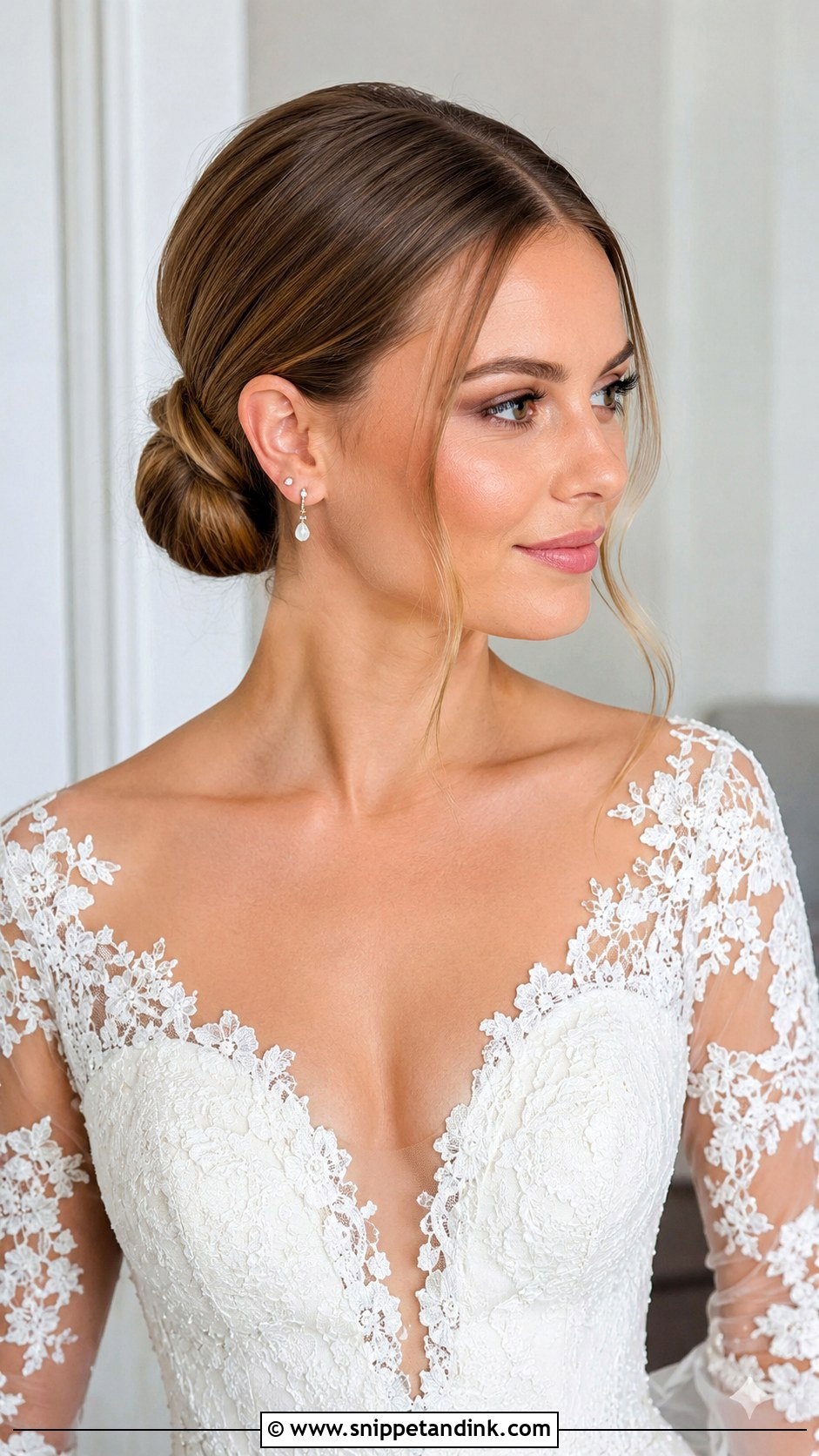
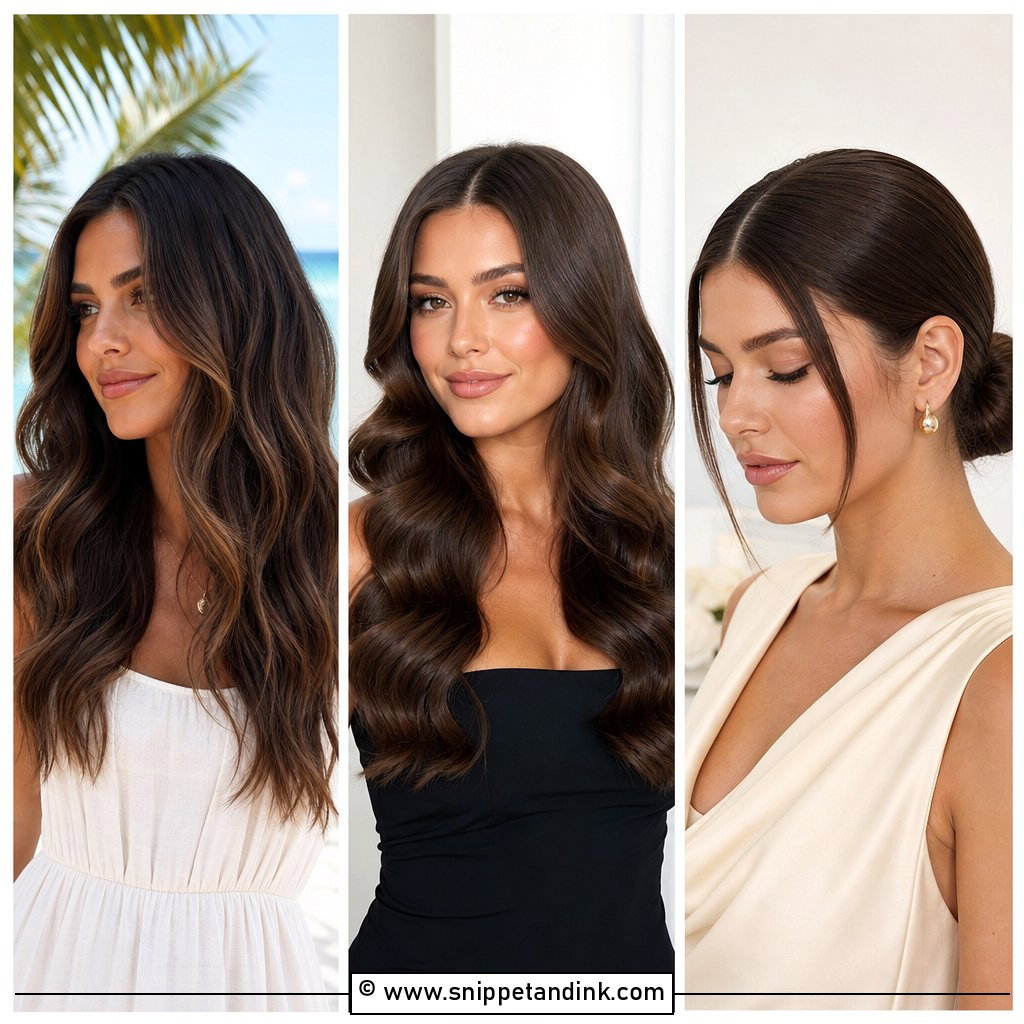
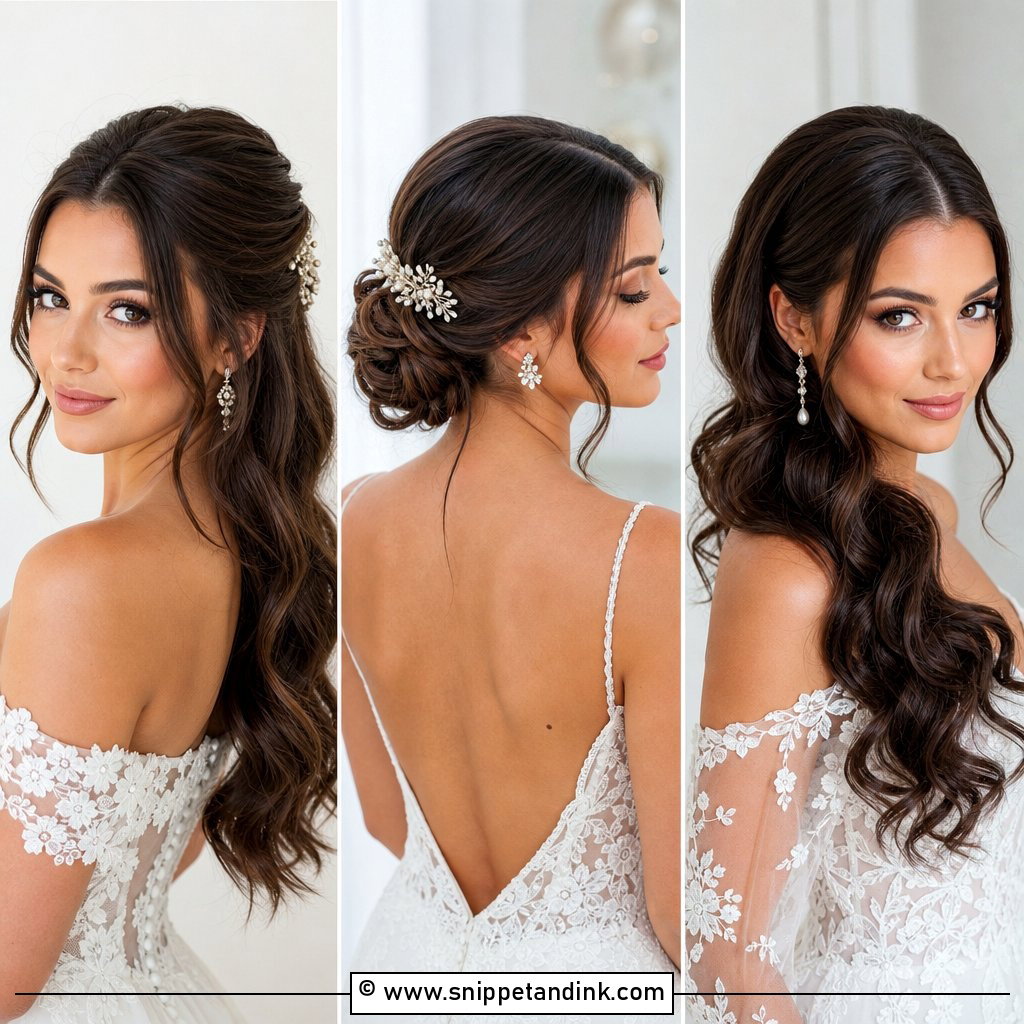
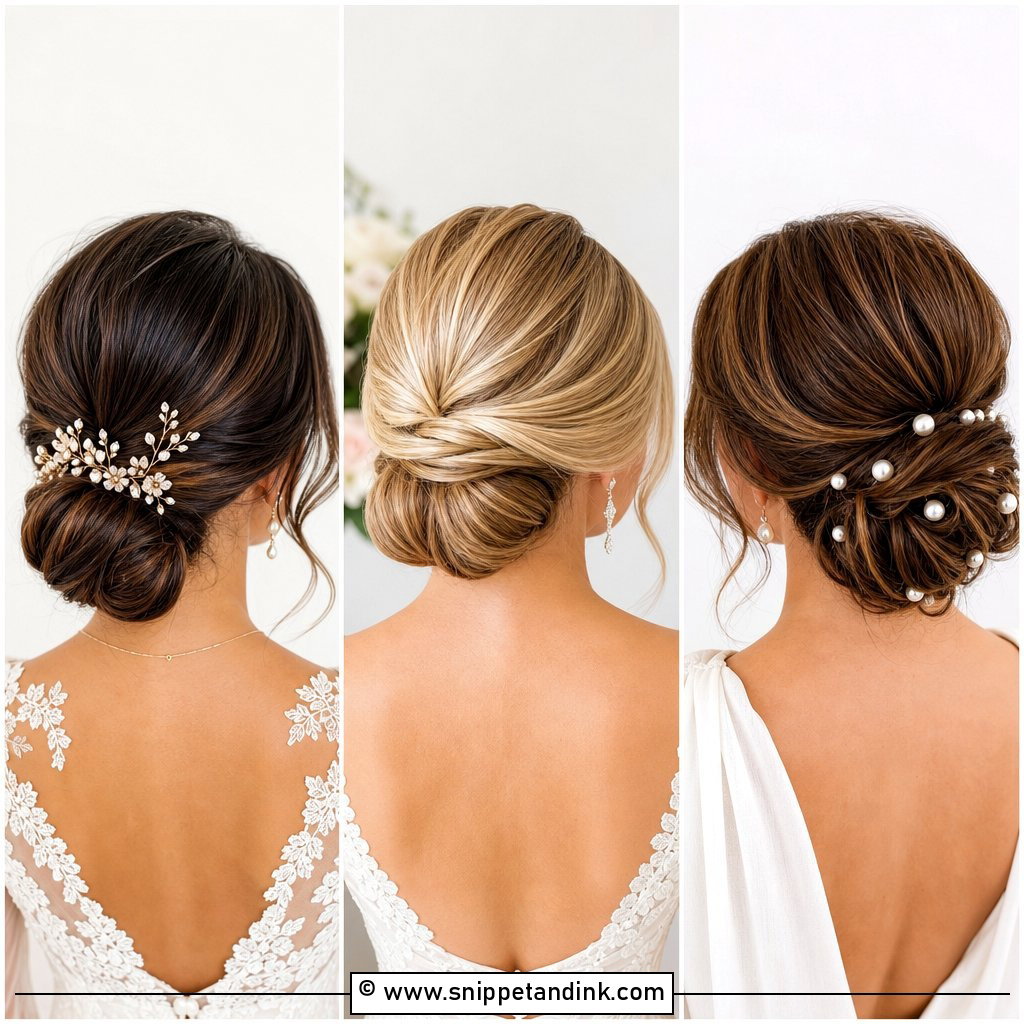
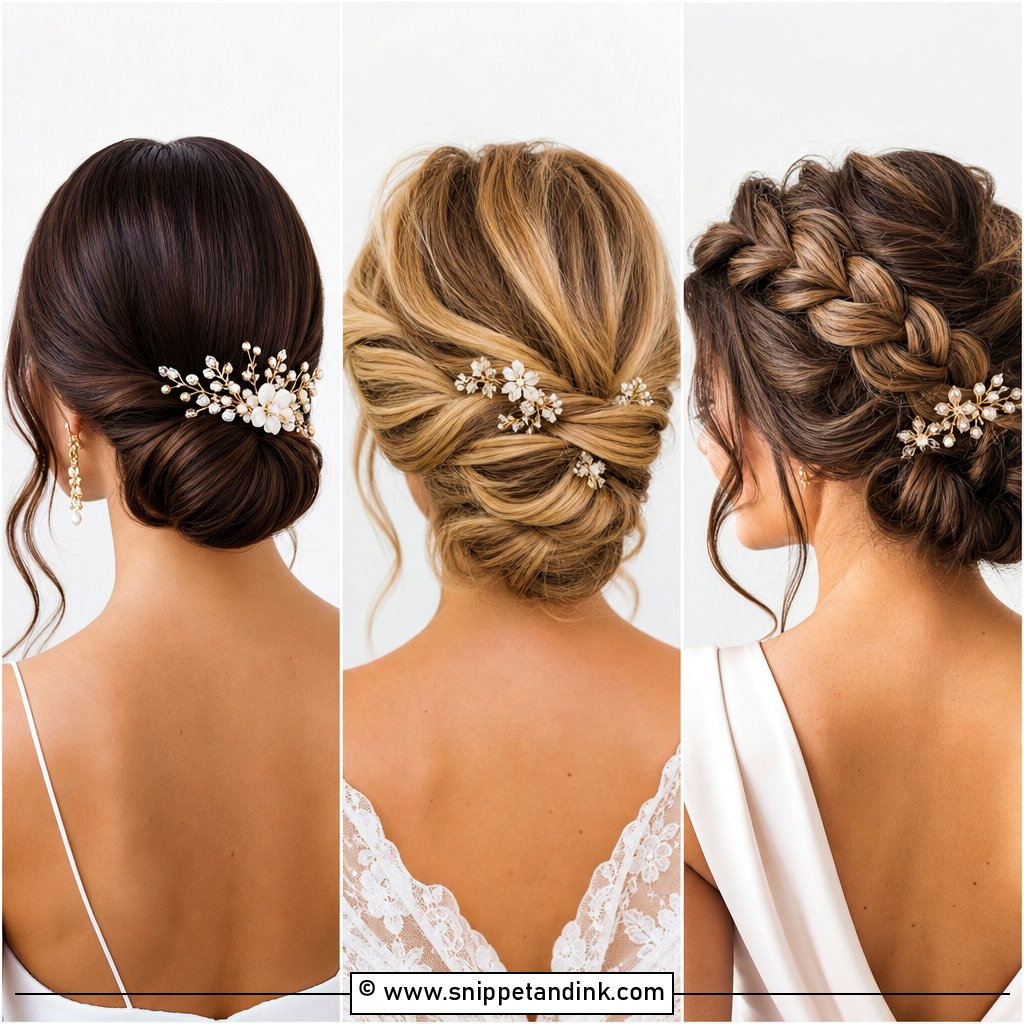
Ten minutes of smoothing before the bun is what makes this style. I comb the hair straight back from the part to the nape, secure a low ponytail, then wrap it into a polished knot at the nape and pin it flat. Tendrils near the cheeks are optional; if you want them, have them curled so they don’t hang limp. Built that way it survives hugging, dancing and crying without a touch-up. Statement earrings or a delicate veil both suit it.
2. Middle Part Beachy Waves Wedding Hair
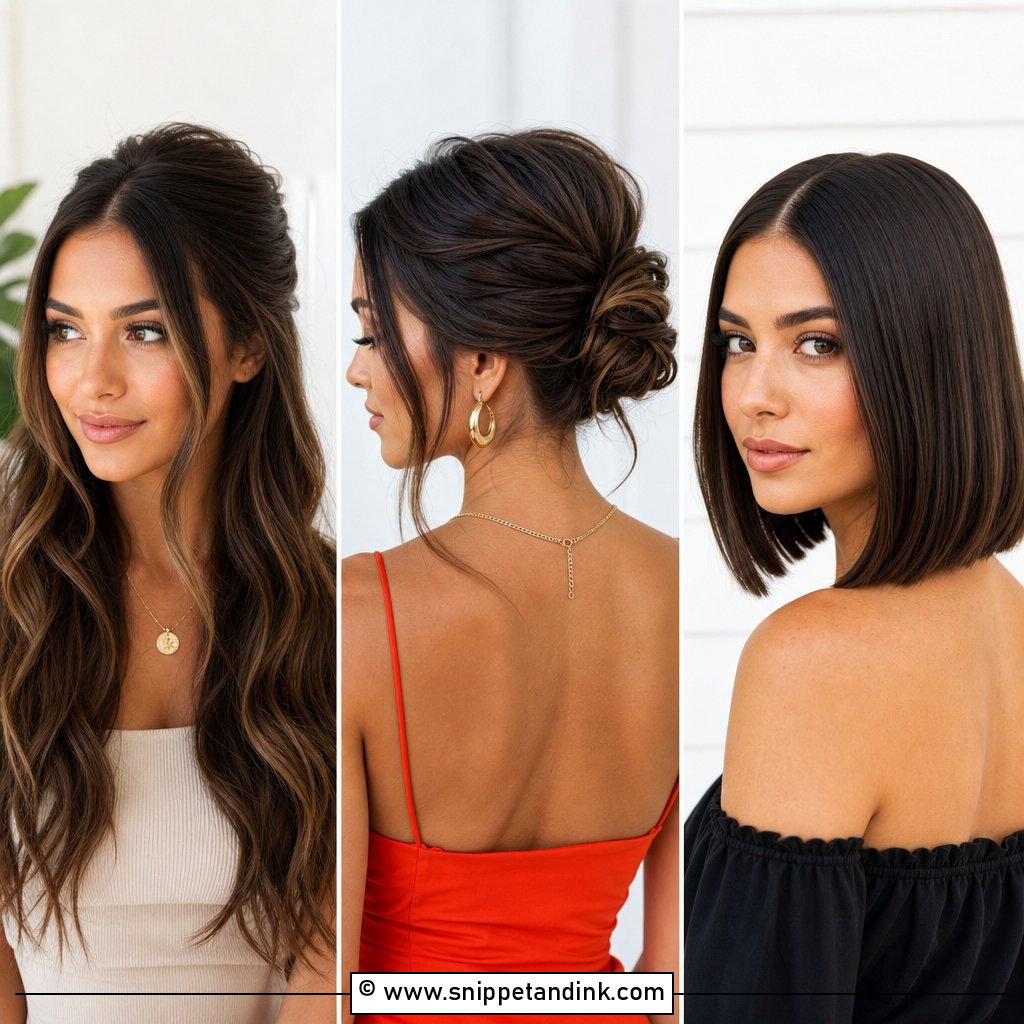
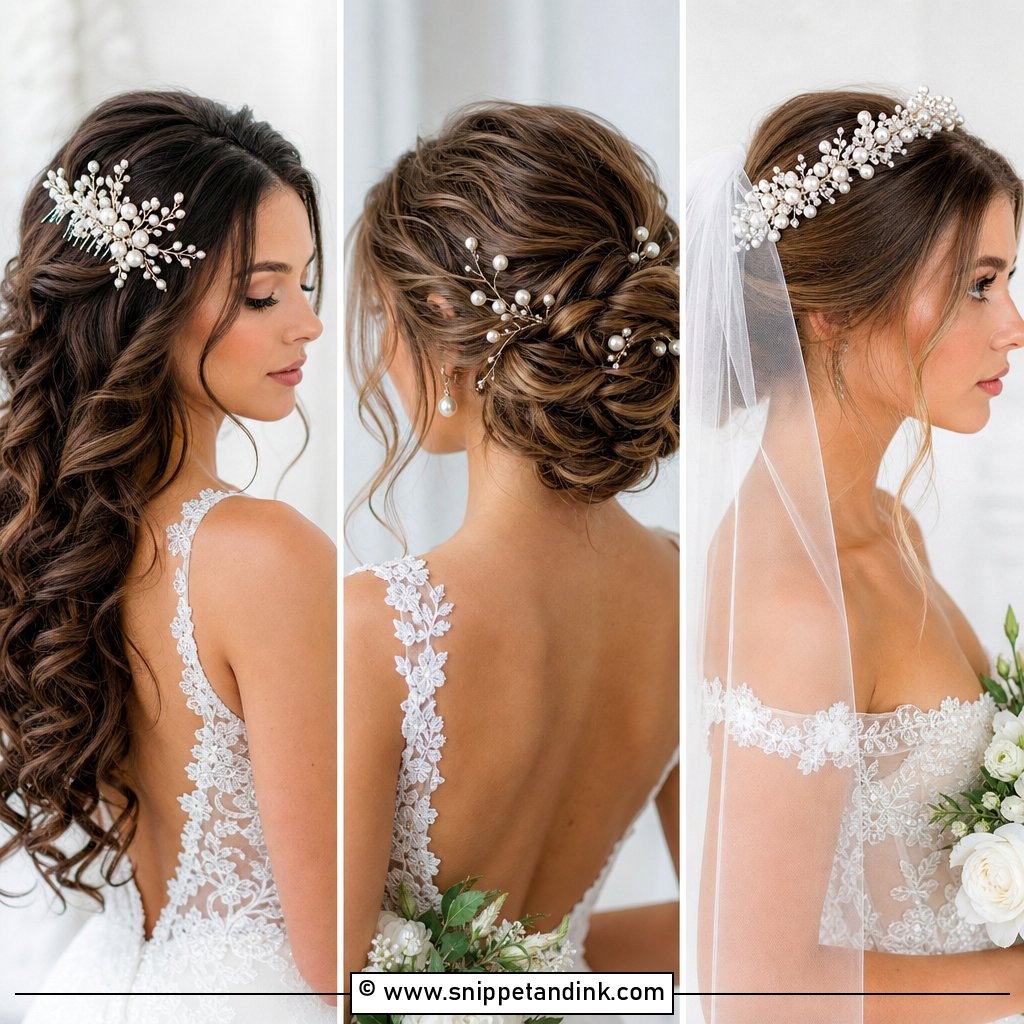
Down and wavy, with the part dead center and the waves starting around the cheekbone. I keep the roots flat so the part stays clean and leave the ends slightly straight so they look relaxed rather than curled. One side tucked and pinned behind the ear keeps it practical in a breeze. A veil at the back of the crown needs a small pinned base to sit on. Beach and garden venues suit it, but humid air loosens waves, so on those days I set them tighter.
3. Middle Part Sleek Bun With Tucked Hair
This one is for minimalists, and it’s unforgiving. The part has to be razor straight, every strand glossy, and the sides pulled behind the ears without bumps above them. I work in a firm gel with a fine comb, then go over it with a soft brush to blur the comb lines. The bun can sit small at the nape or a little higher, depending on your profile. It suits structured gowns and hands the attention to your earrings. Because the tucked sides show the jaw and neck completely, make sure you like that view at your trial.
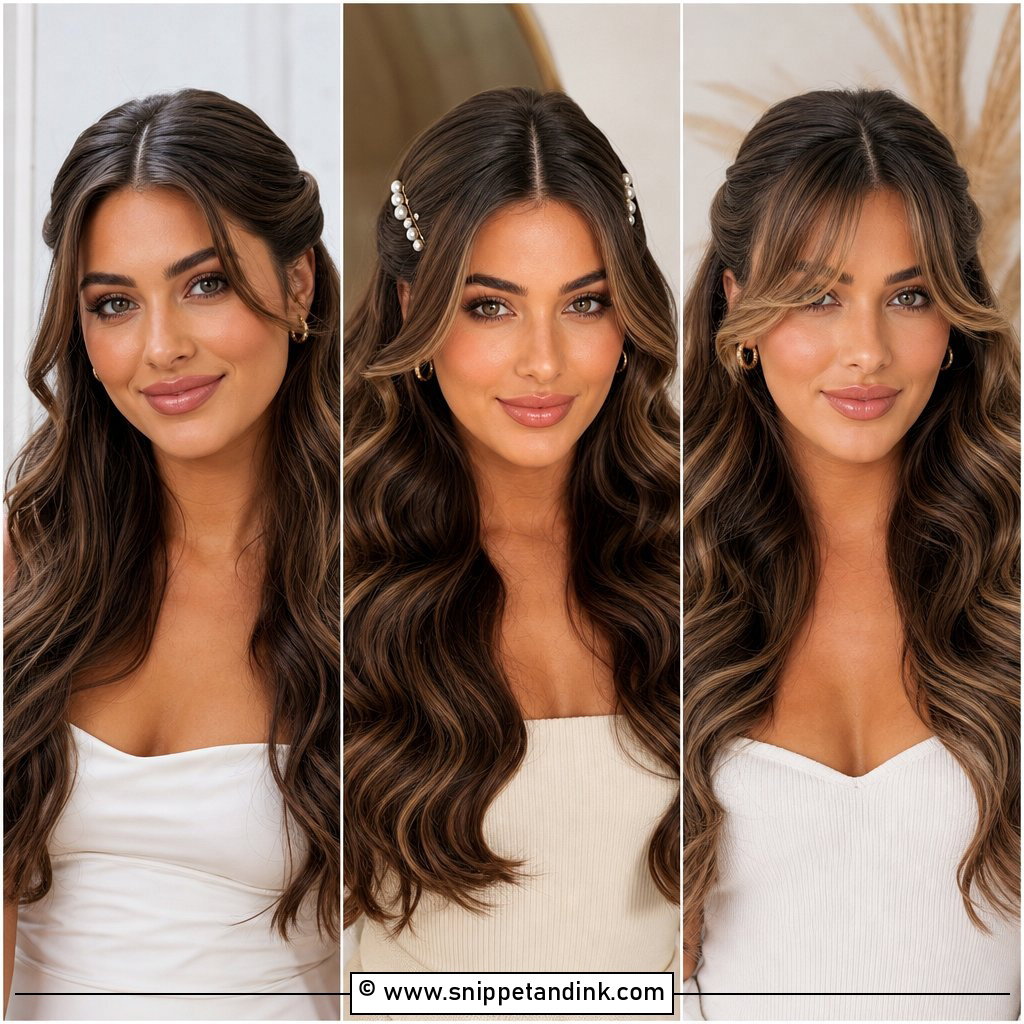
4. Middle Part Half Up Half Down Bridal Style
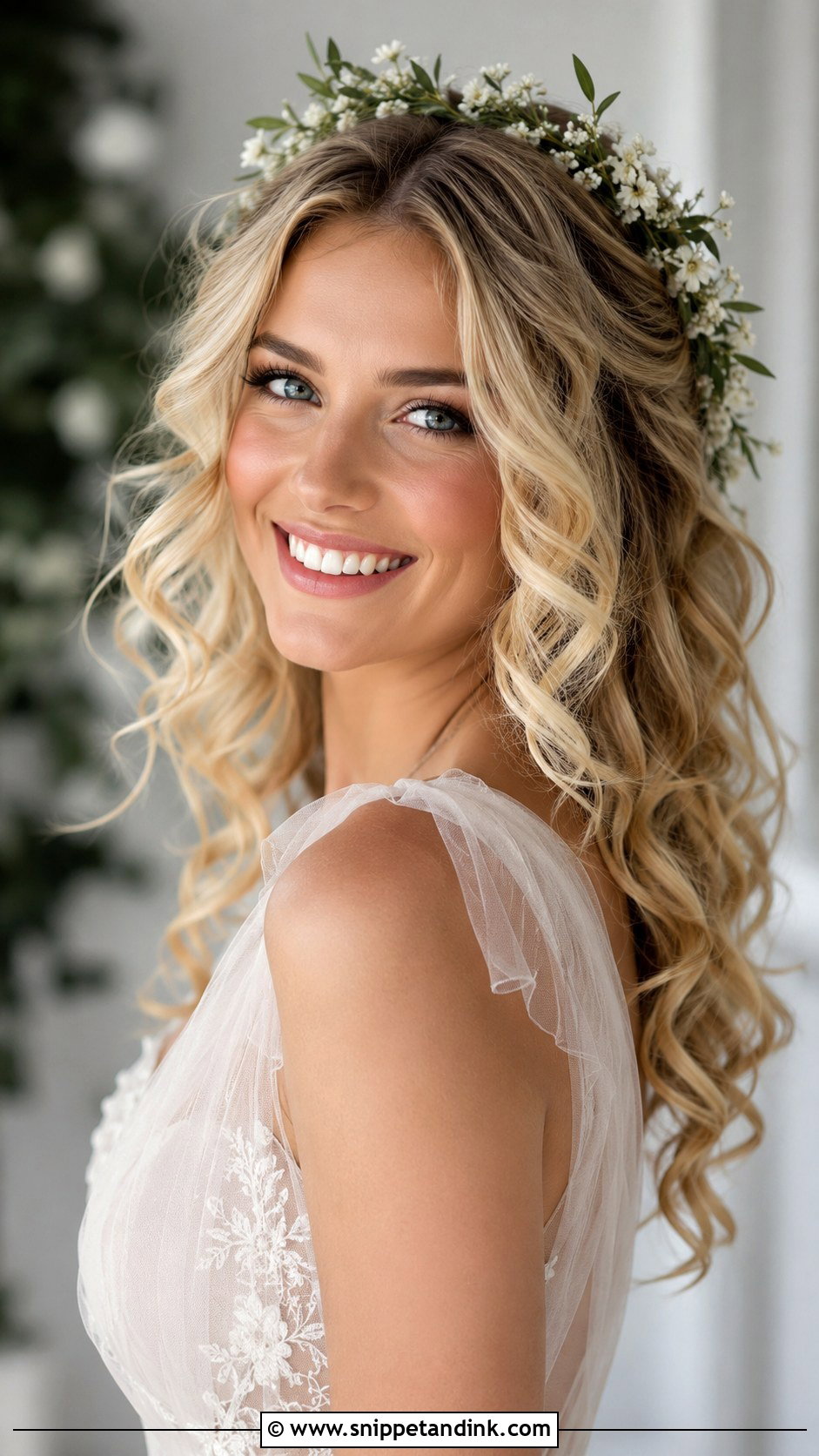
Half up with a center part is where I’d steer an undecided bride. I pull the top section back from both temples to meet exactly behind the crown and pin it with crossed pins so the join disappears. The lengths can be curled, waved or straight, and pearls or fresh flowers cover the pinning point. Medium to long hair suits it best. On heavily layered hair the top section can look thin, and a small twist on each side bulks it up.
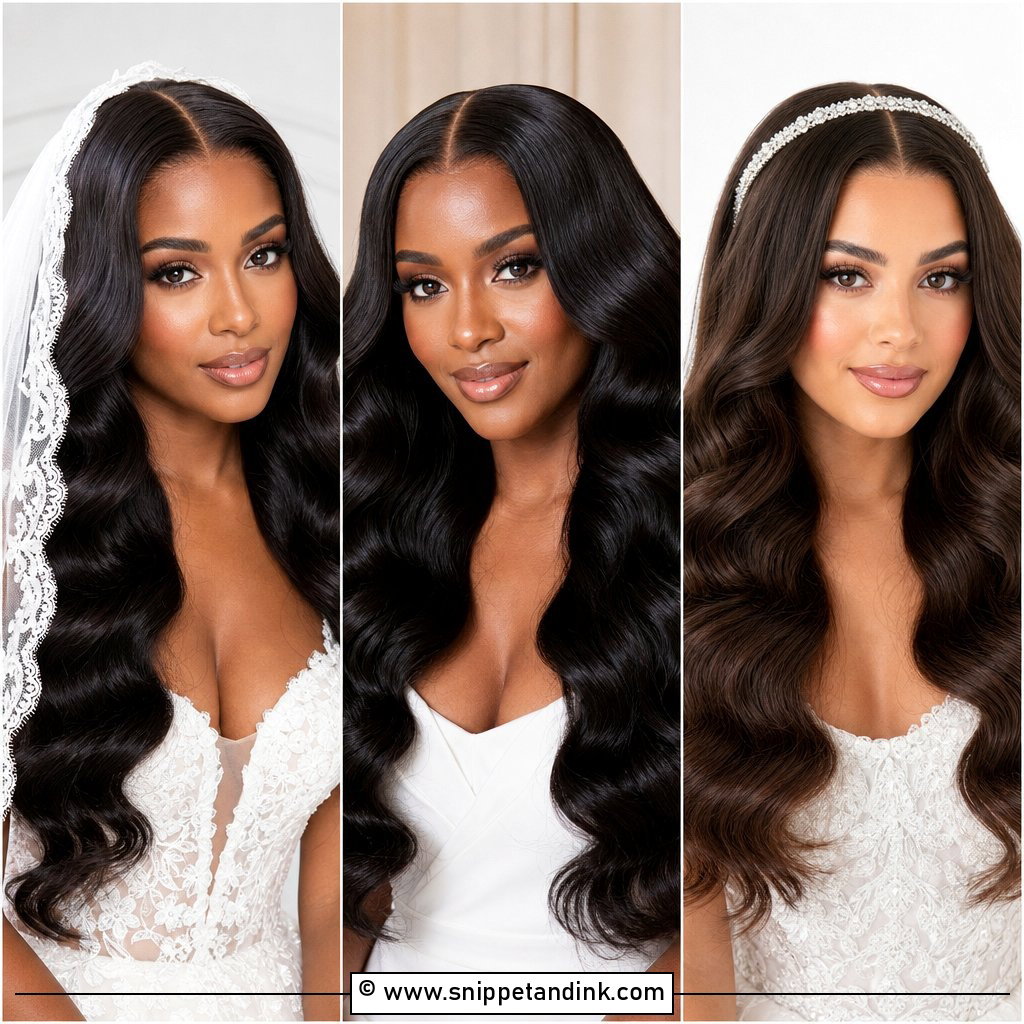
5. Middle Part Hollywood Waves for the Bride
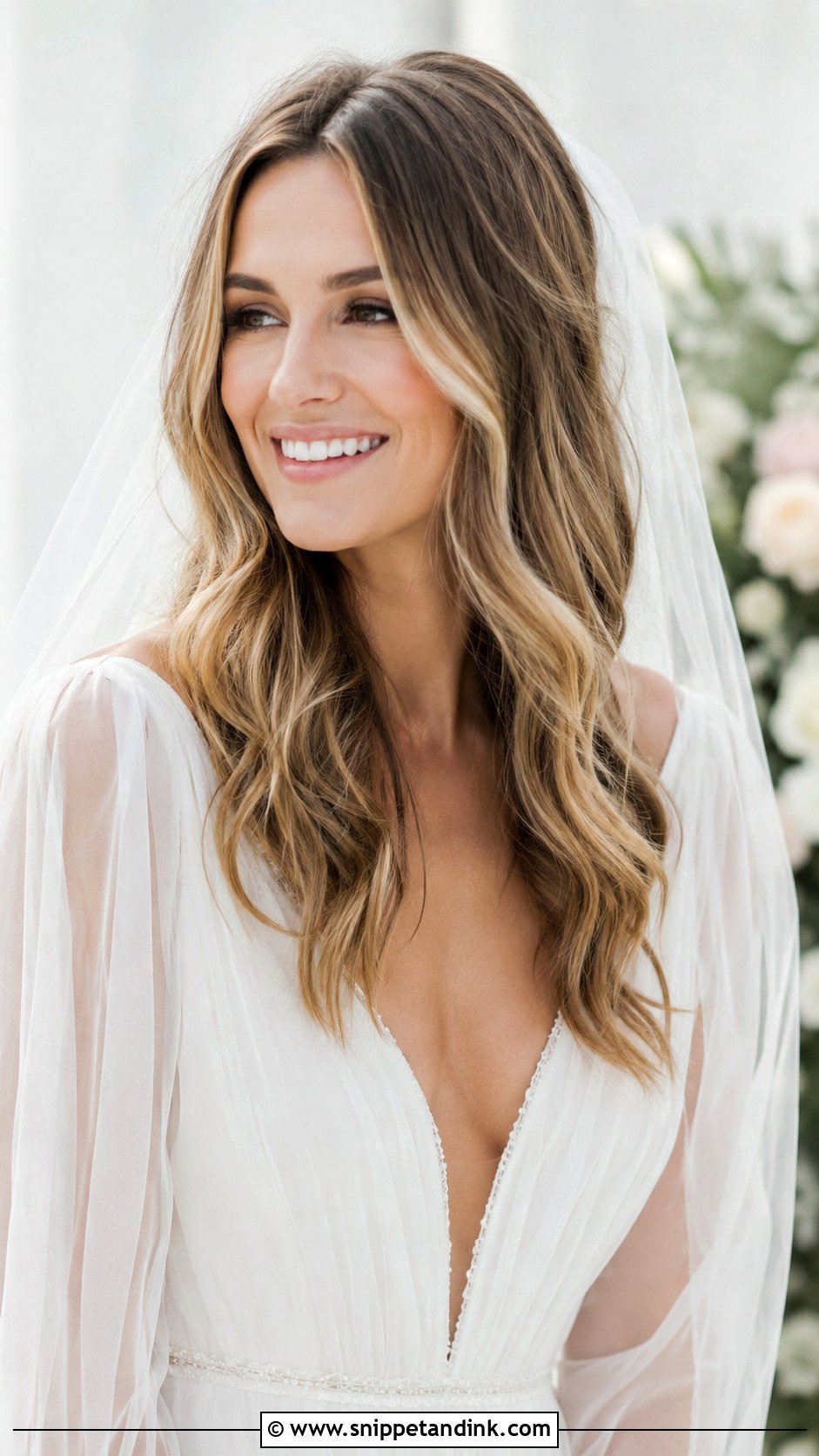
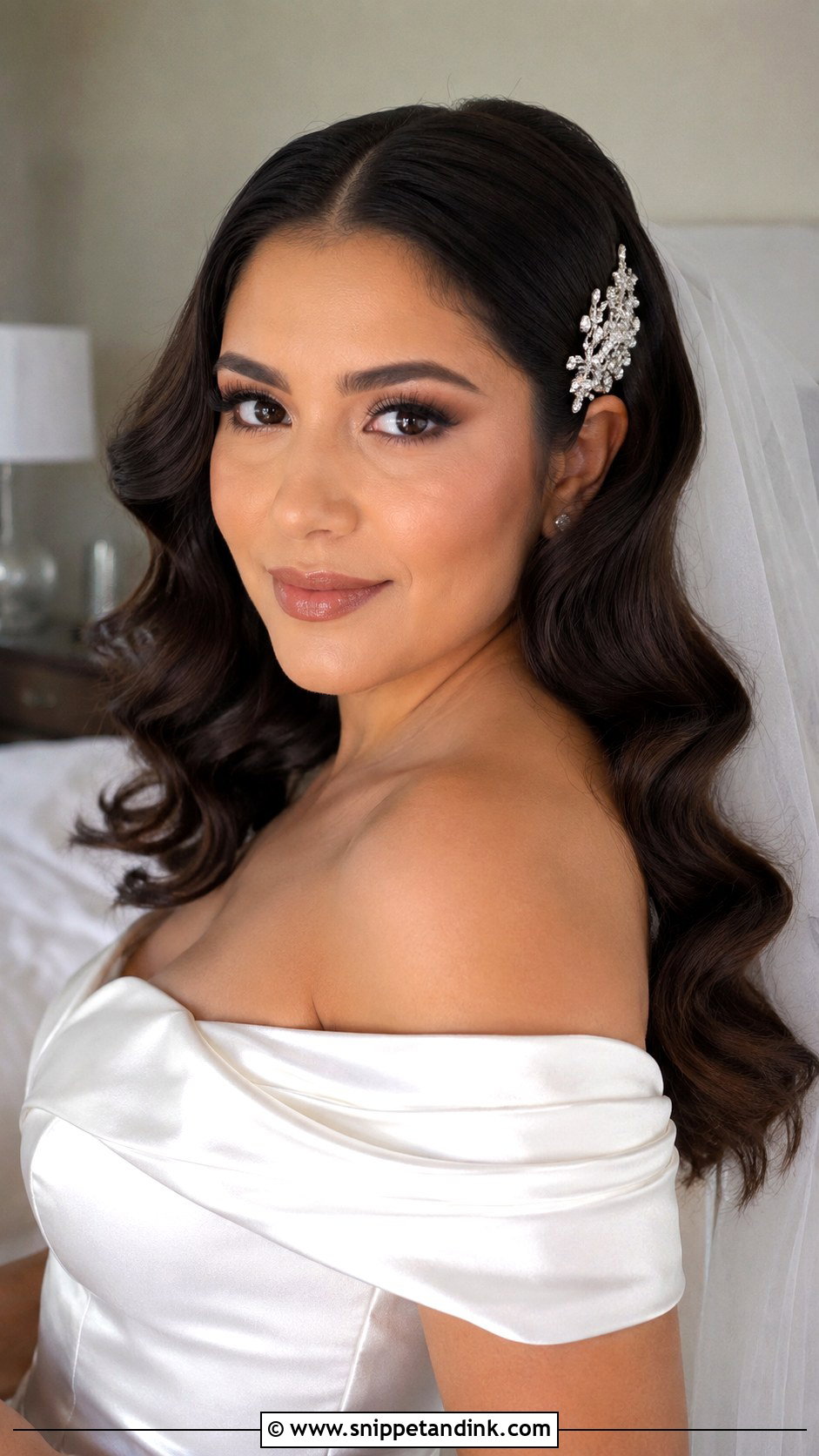
Vintage waves with a center part are a newer take on an old set. I curl each side away from the face, pin the curls to cool, brush them into ripples from the cheekbones down, then press the ridges with clips while the spray dries. Getting the two sides to mirror each other is the hard part, and it’s why this takes longer than you’d guess. Ballrooms, satin gowns and dramatic makeup suit it. A sparkling clip on one side adds shine without breaking the symmetry much.
6. Middle Part Boho Braid Bridal Hair
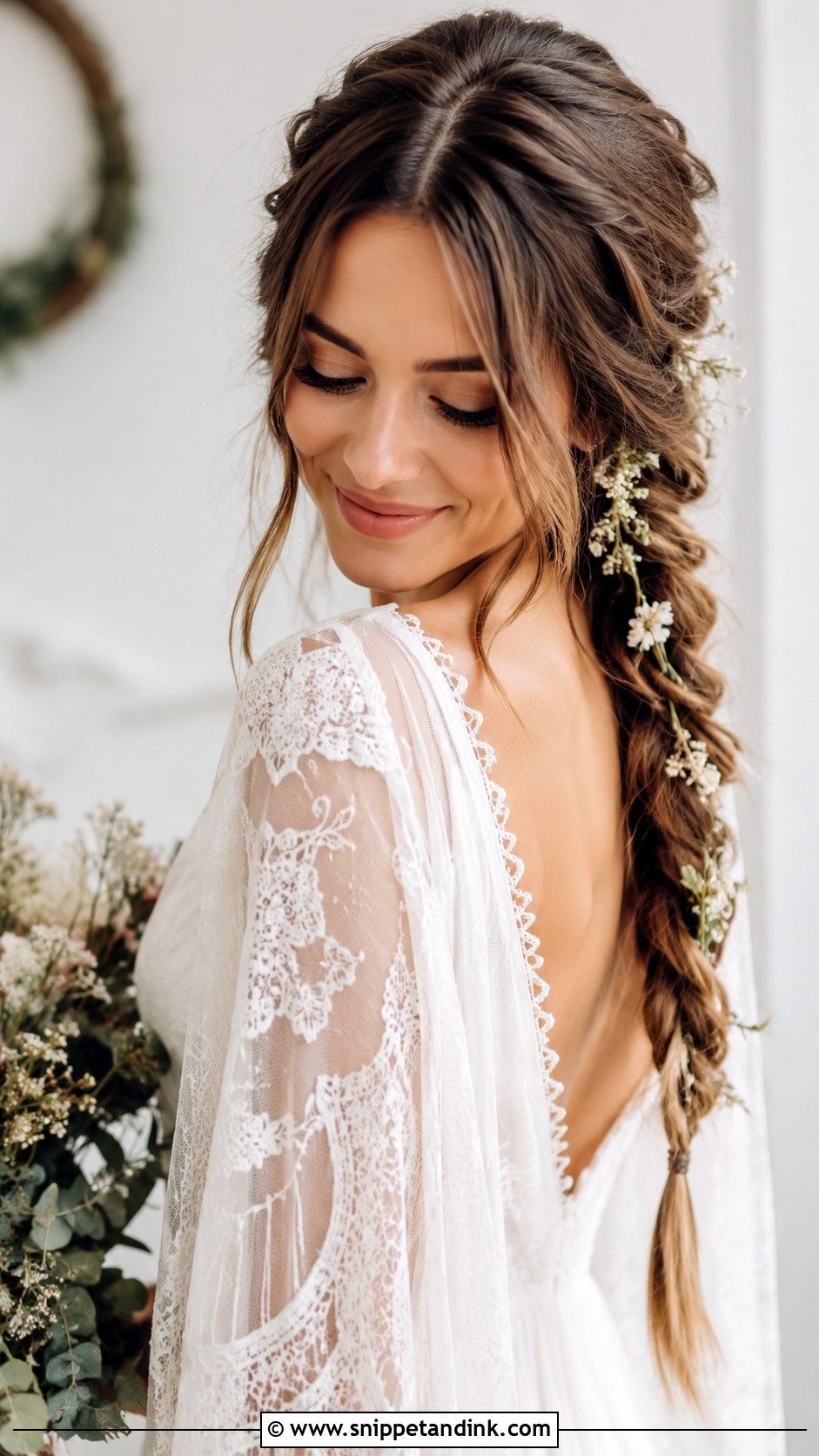
Loose braids running back from each side of the part give this its shape. I braid with some tension, then pull the braids apart so they look soft and wide, leaving a few strands out around the face. Tiny flowers or greenery tuck into the braid. Woodland and outdoor weddings suit it, with flowing gowns. Fine hair is the weak spot, because it looks thin once the braid is pulled open; a little texture spray before braiding gives it more to work with.
7. Middle Part Slicked Back Bridal Bun
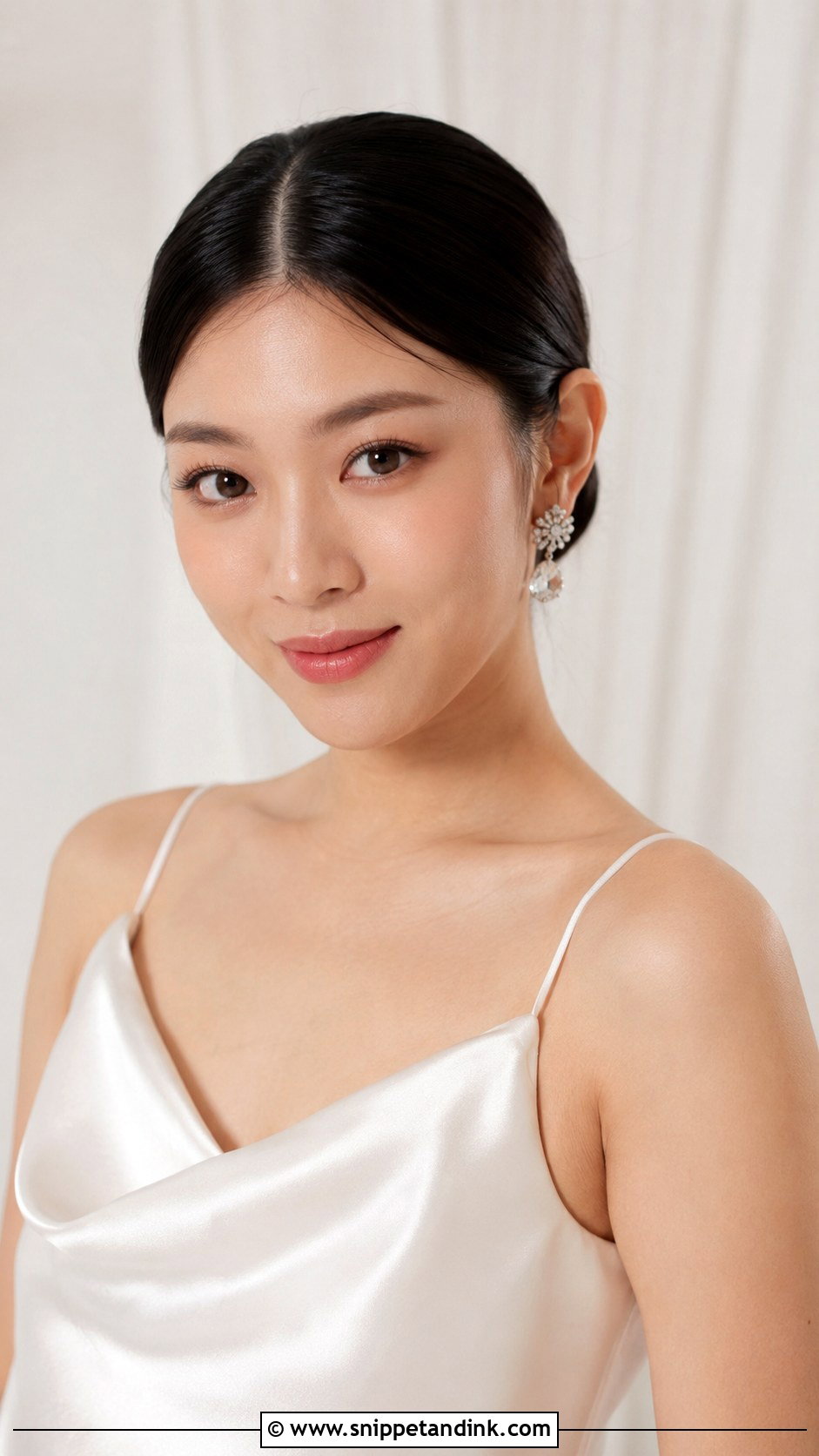
A slicked-back bun with a center start is pure structure. Every strand is pulled smoothly away from the face, which puts your bone structure and makeup on full display. I apply gel section by section and brush it through with a boar bristle brush so no lines show. Grecian-inspired hairpieces or a sparkling comb suit it, and once set it stays neat from the ceremony to the last dance. The trade-off: it reveals an uneven or receding hairline, so try it before you commit.
8. Middle Part Soft Curls Wedding Hairstyle
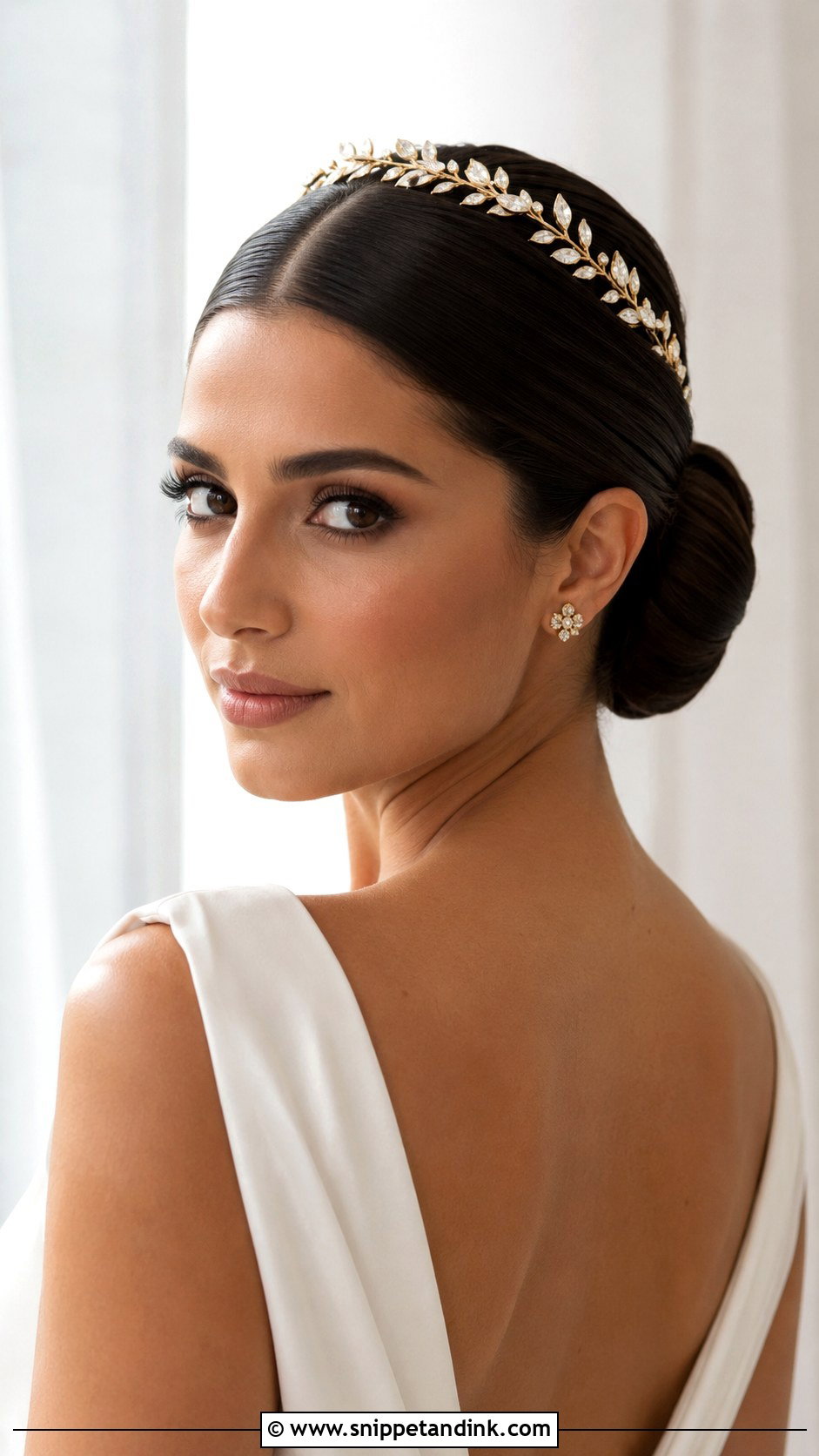
Curls with a center part look fresh and a little relaxed. I let them fall free or pin the top half back, and a delicate tiara or floral crown sits right along the part line. To get properly bouncy, voluminous hair, I add root lift on both sides of the part so the crown doesn’t collapse. Set the curls a little tighter than the look you want, since they always relax. Formal and casual weddings both suit it.
9. Middle Part Long Straight Bridal Hair
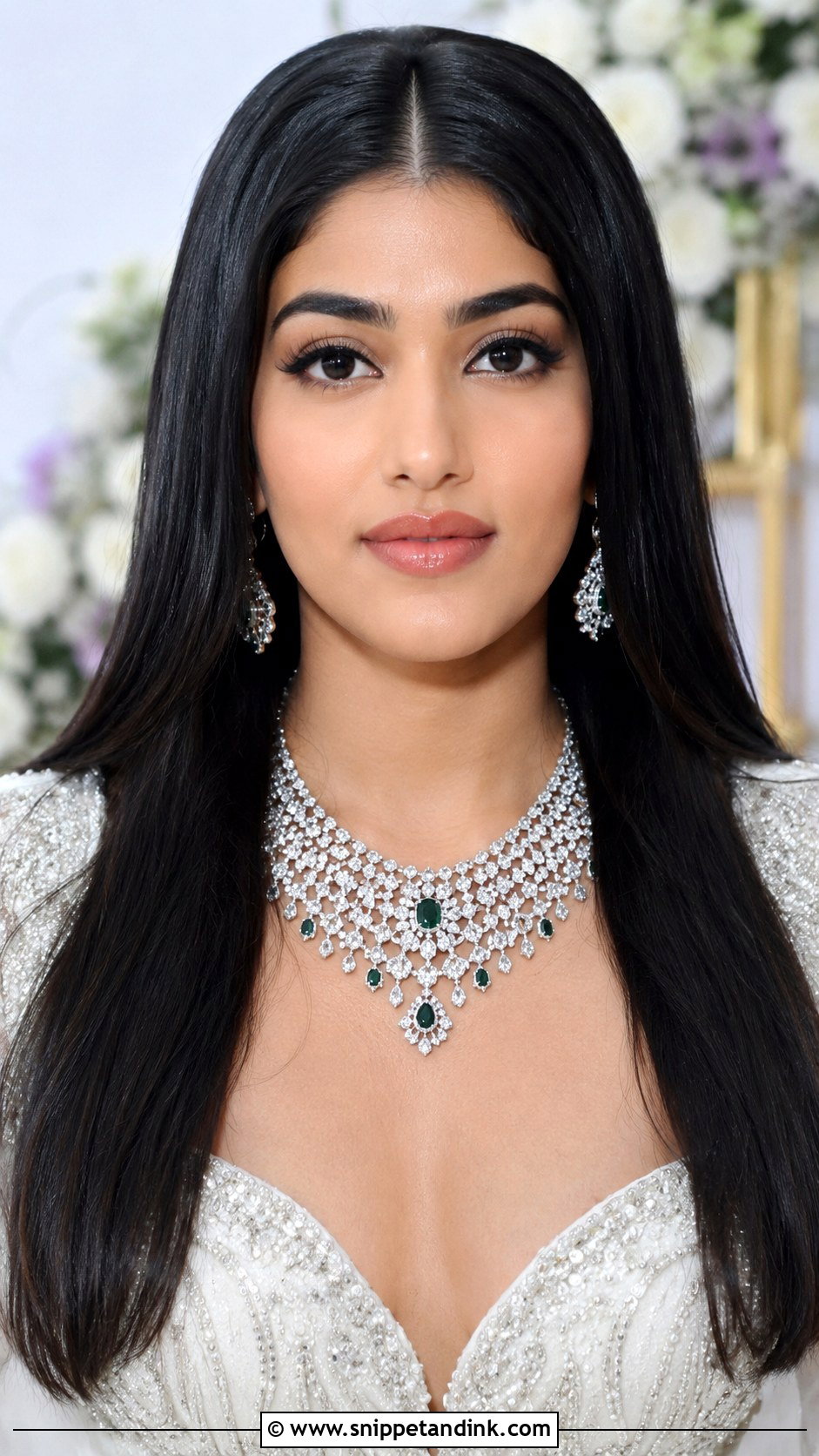
The simplest style here needs the healthiest hair. A trim two weeks before, a smoothing blow-dry and a flat iron in thin sections give that silky drop. Structured gowns and bold jewelry pair well, with a sleek veil or nothing at all. Static and flyaways are its weakness, and a light anti-static spray or a smear of smoothing balm along the lengths calms them. Straight hair also kinks first in humidity, so plan a quick touch-up for summer.
10. Middle Part Milkmaid Braid for Brides
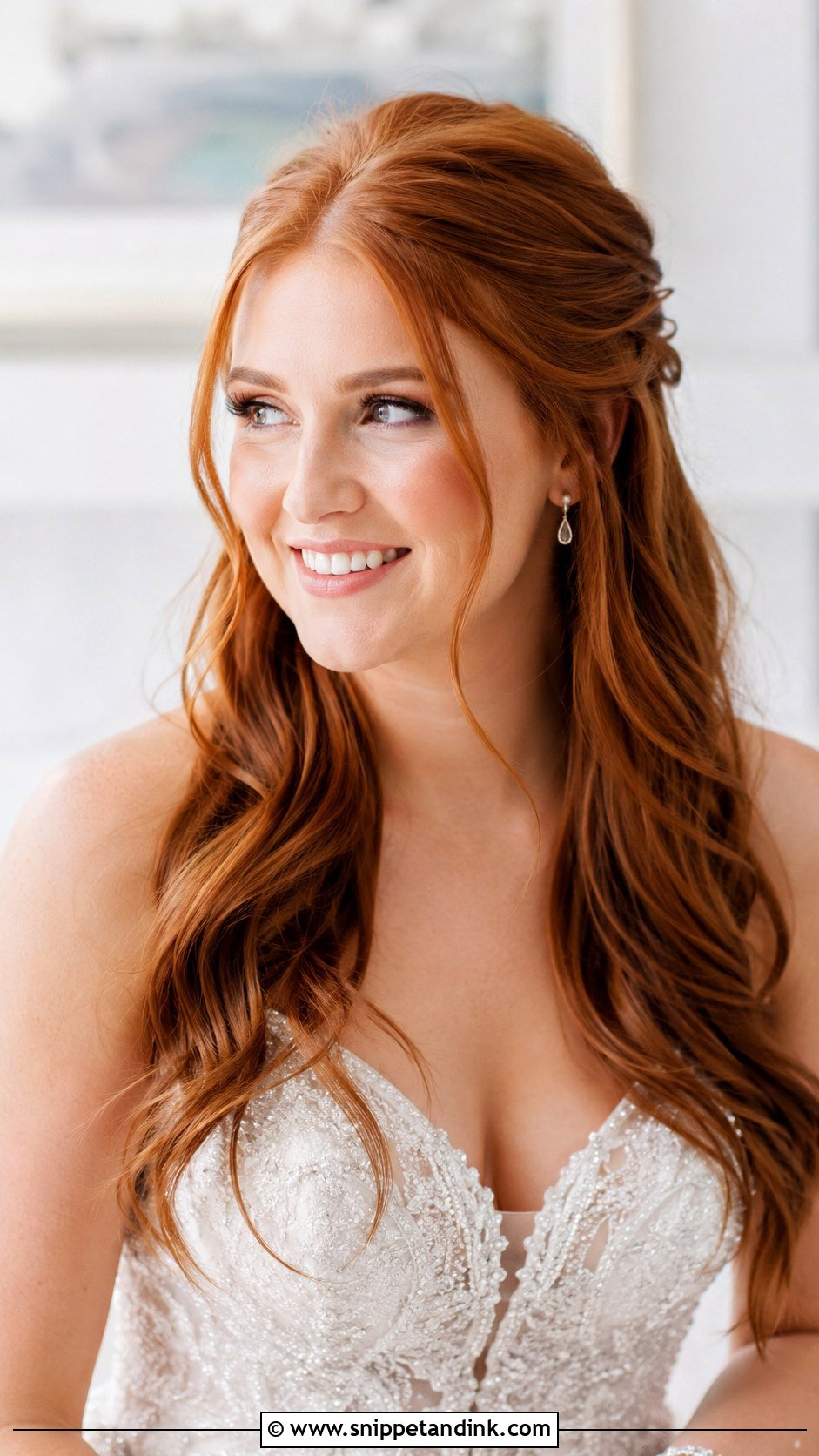
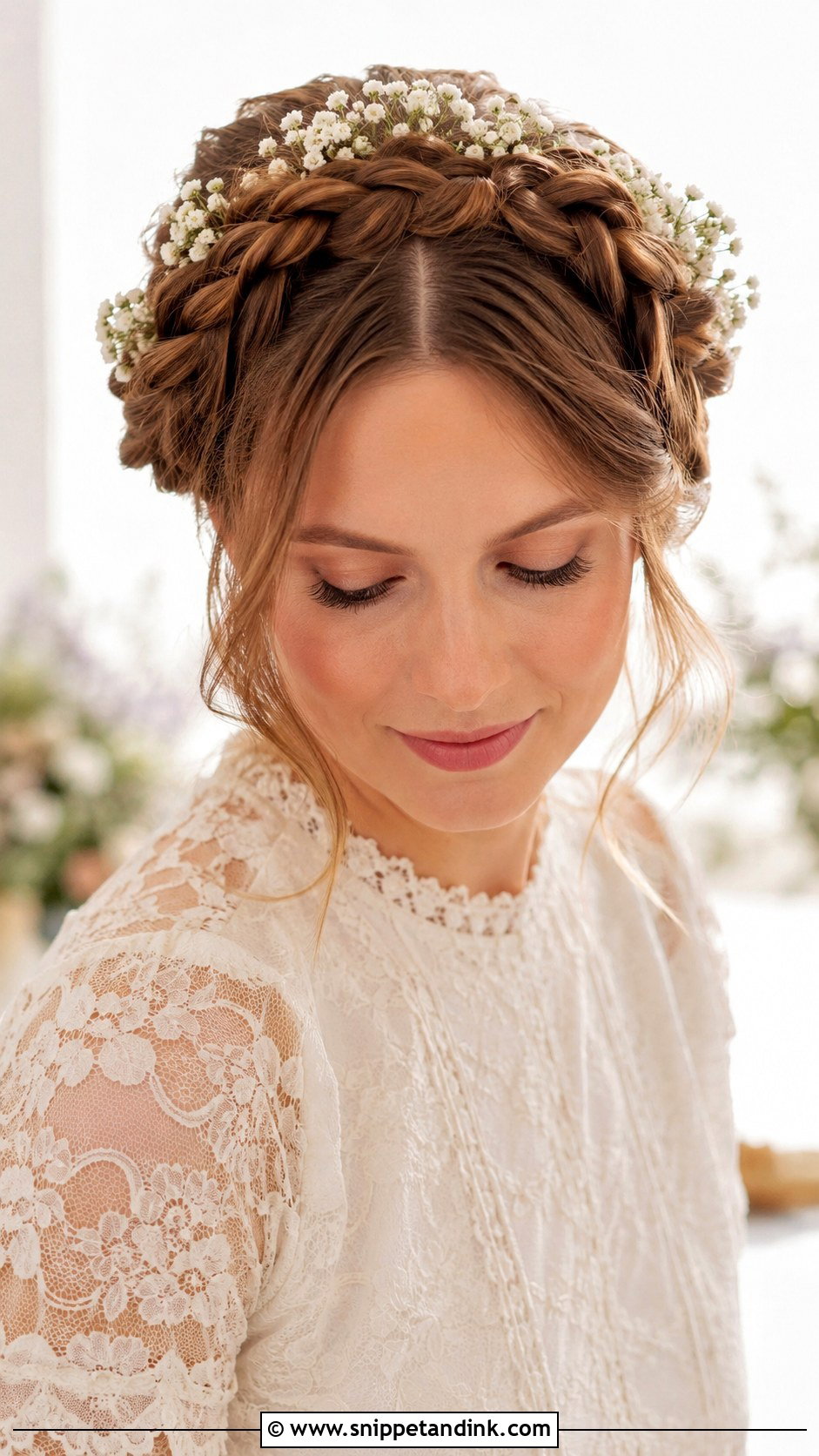
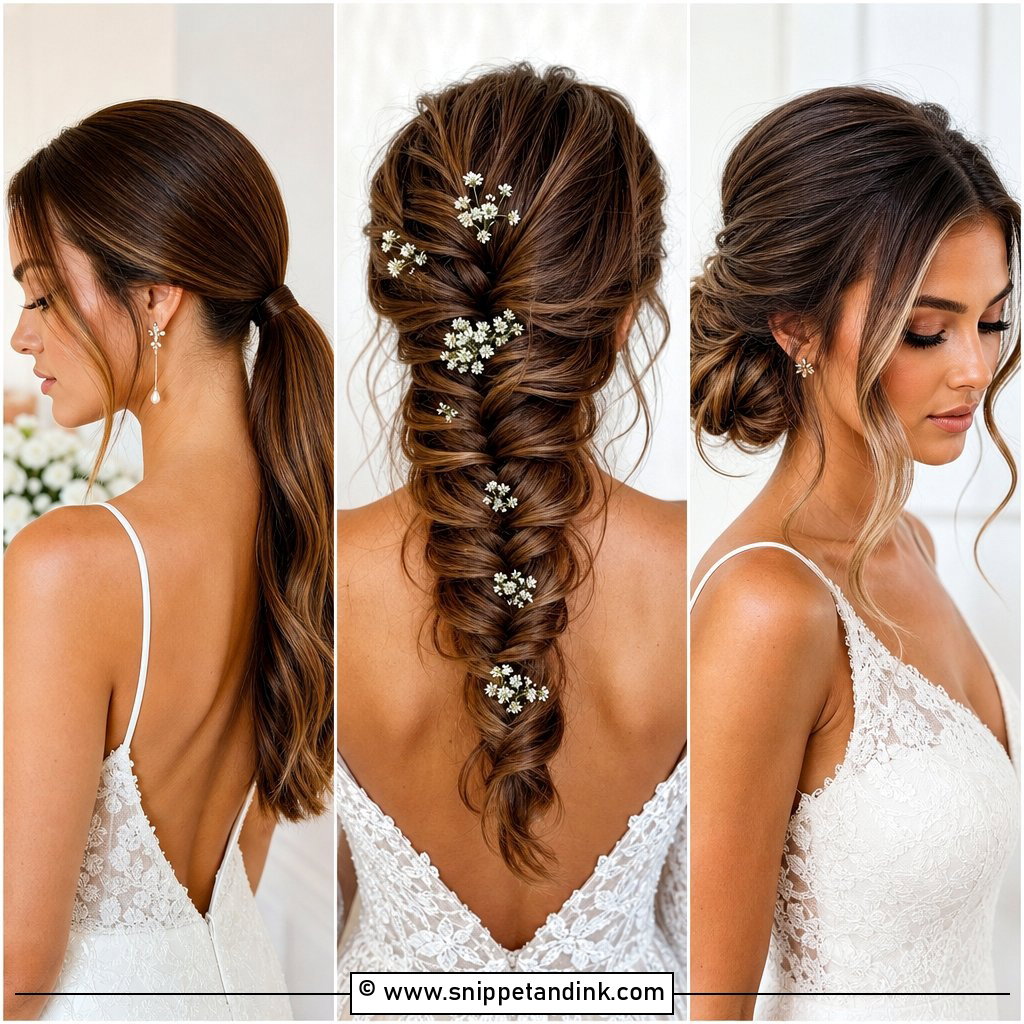
A milkmaid braid depends on the center part: two braids start on either side of it and cross over the top of the head. That’s why it needs hair past the shoulders. I braid each side, bring them over the crown and pin each end under the opposite braid. Baby’s breath or small blooms tuck right in. It keeps hair off your neck on warm days and suits garden and rustic venues. On heavy hair I add extra pins along the top, because the braids can slide backward.
11. Middle Part Low Ponytail Bridal Hair
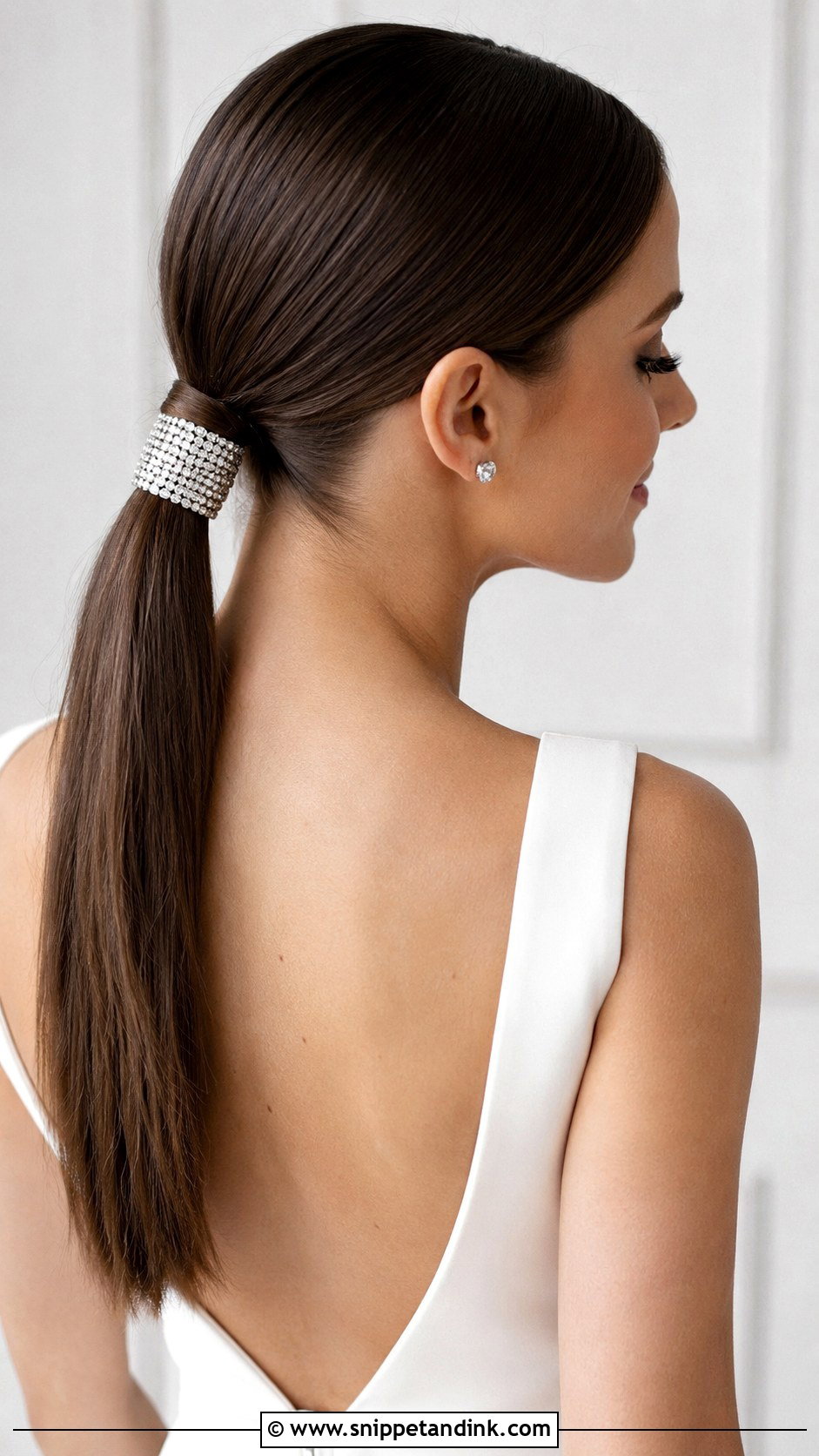
Smoothing from the part down to the band is everything here, so no bumps show above the tail. I gel the front, tie the pony at the nape and wrap a strand around the elastic with its end pinned beneath. A cuff or bow adds a finish. It’s easy to dance in and suits minimalist gowns. If your ends are thin, curl the tail slightly so it doesn’t look sparse.
12. Middle Part Tousled Updo Wedding Style
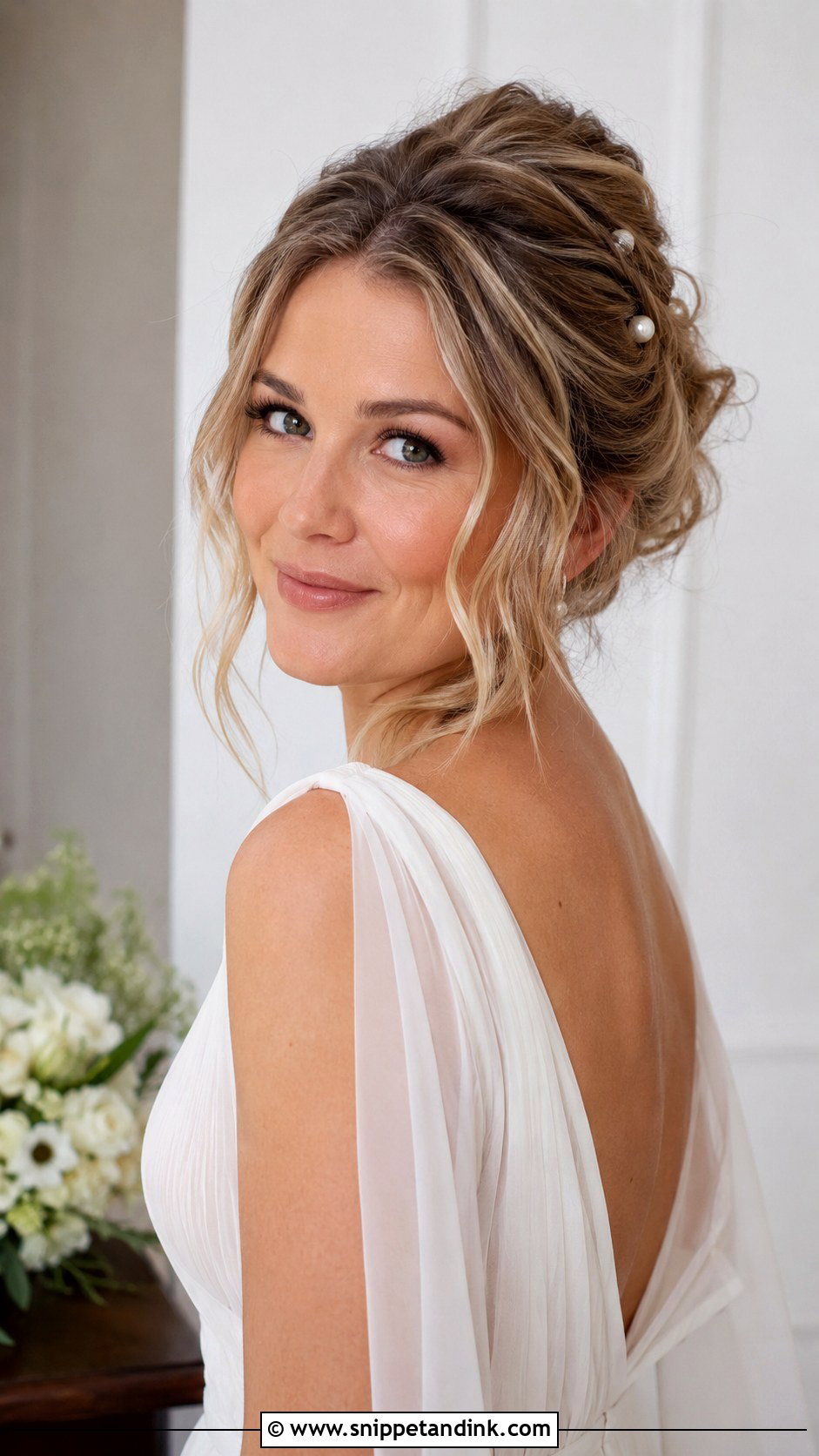
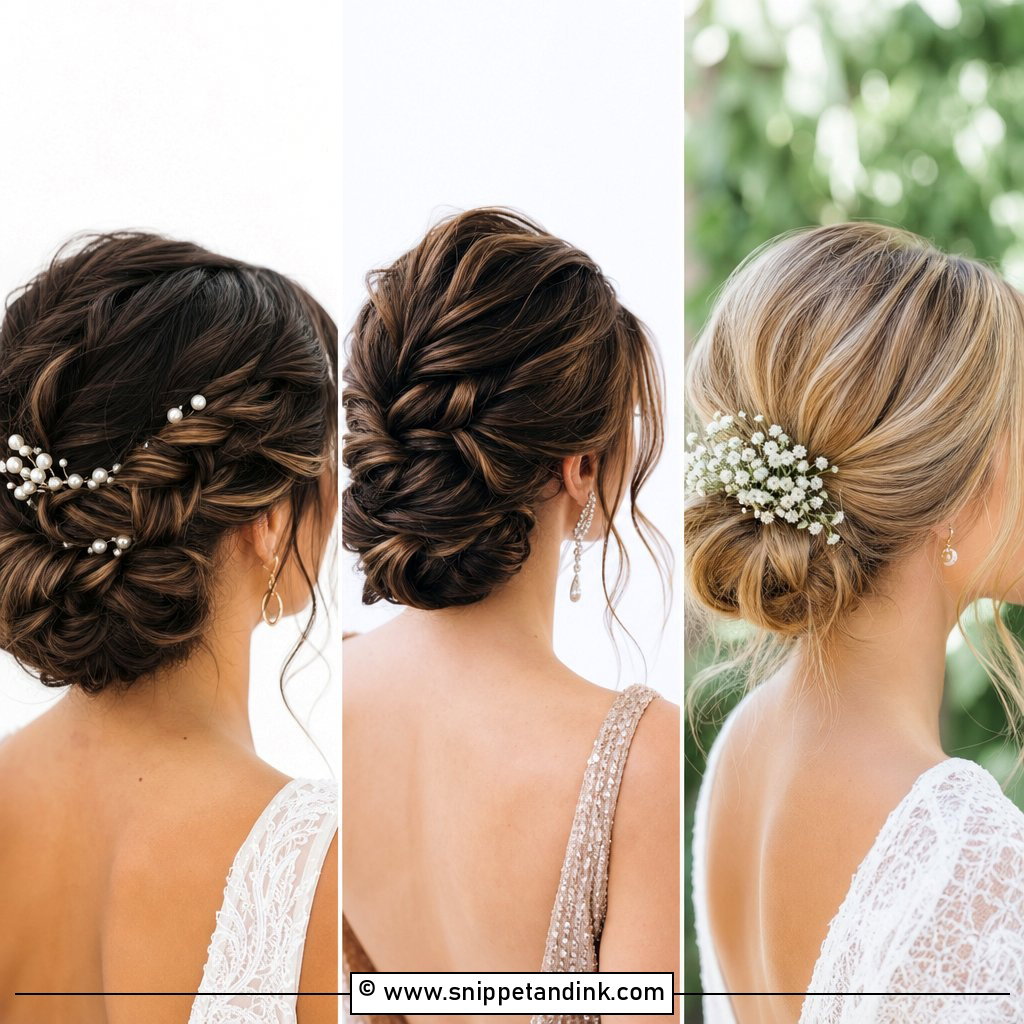
An undone updo needs the most deliberate placement of anything on this list. I curl, pin the hair loosely at the back and pull out pieces around the face, while the center part stops it from reading as messy. Small flowers or pearl pins add charm. It suits brides who hate stiffness, though it does loosen through the day, so I slip a hidden pin under each loose piece to keep it from drifting into an actual mess.
13. Middle Part Dutch Halo Braid Bridal Hair
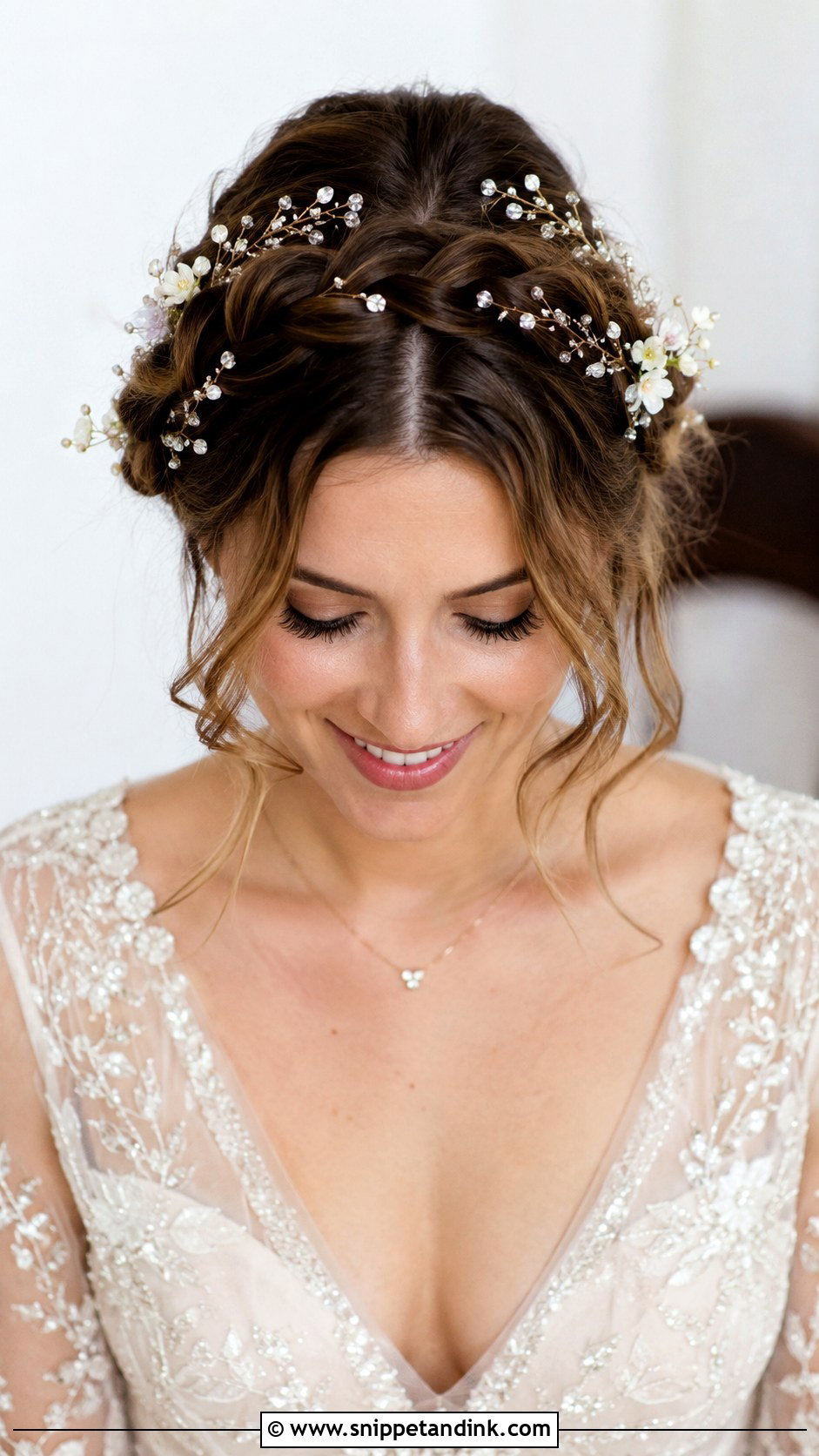
A Dutch halo braid is braided underhand, so it sits on top of the hair instead of lying flat into it. It starts at the part and travels around the head, and on shoulder-length hair it often needs a second braid to close the circle. Every strand stays off your face. Tiny flowers or crystal pins along the braid add sparkle. It’s slow, careful work, so it suits a morning with time to spare.
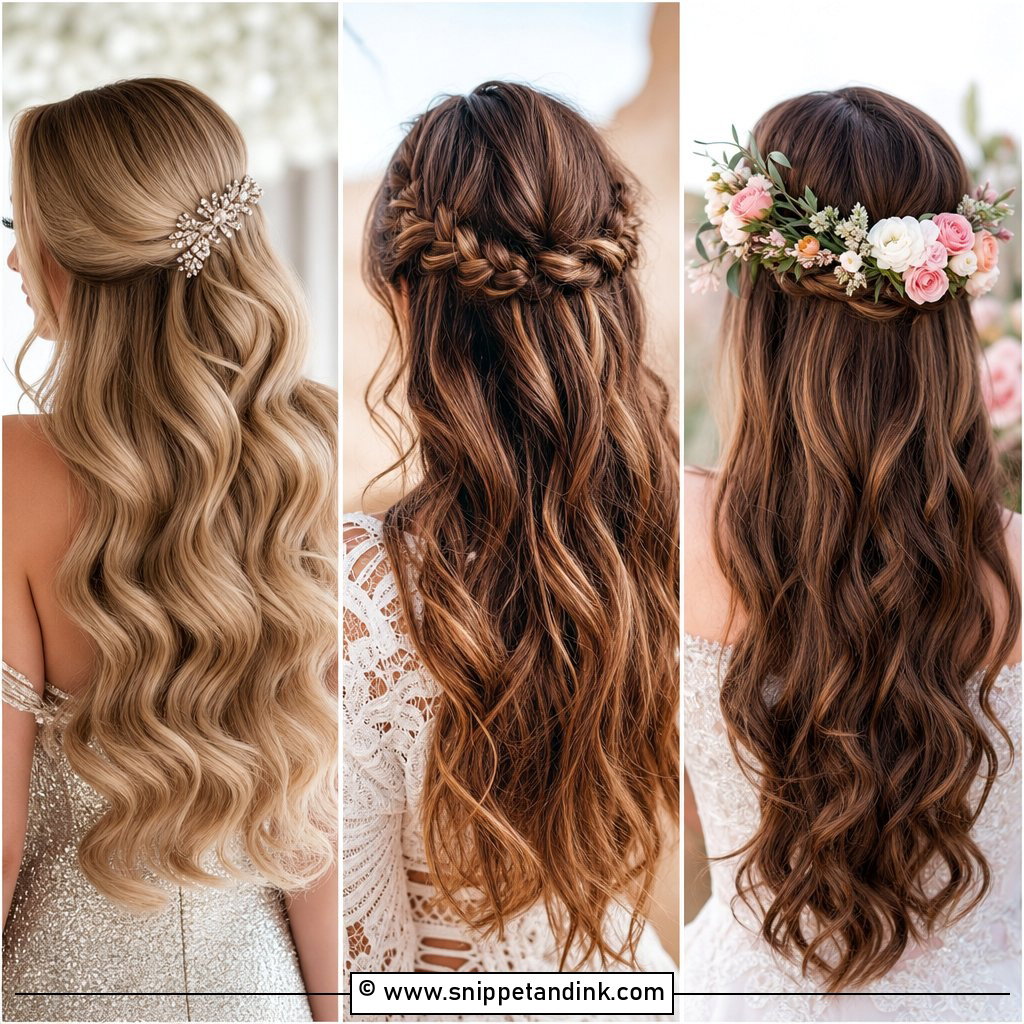
14. Middle Part Wavy Half Up With Veil
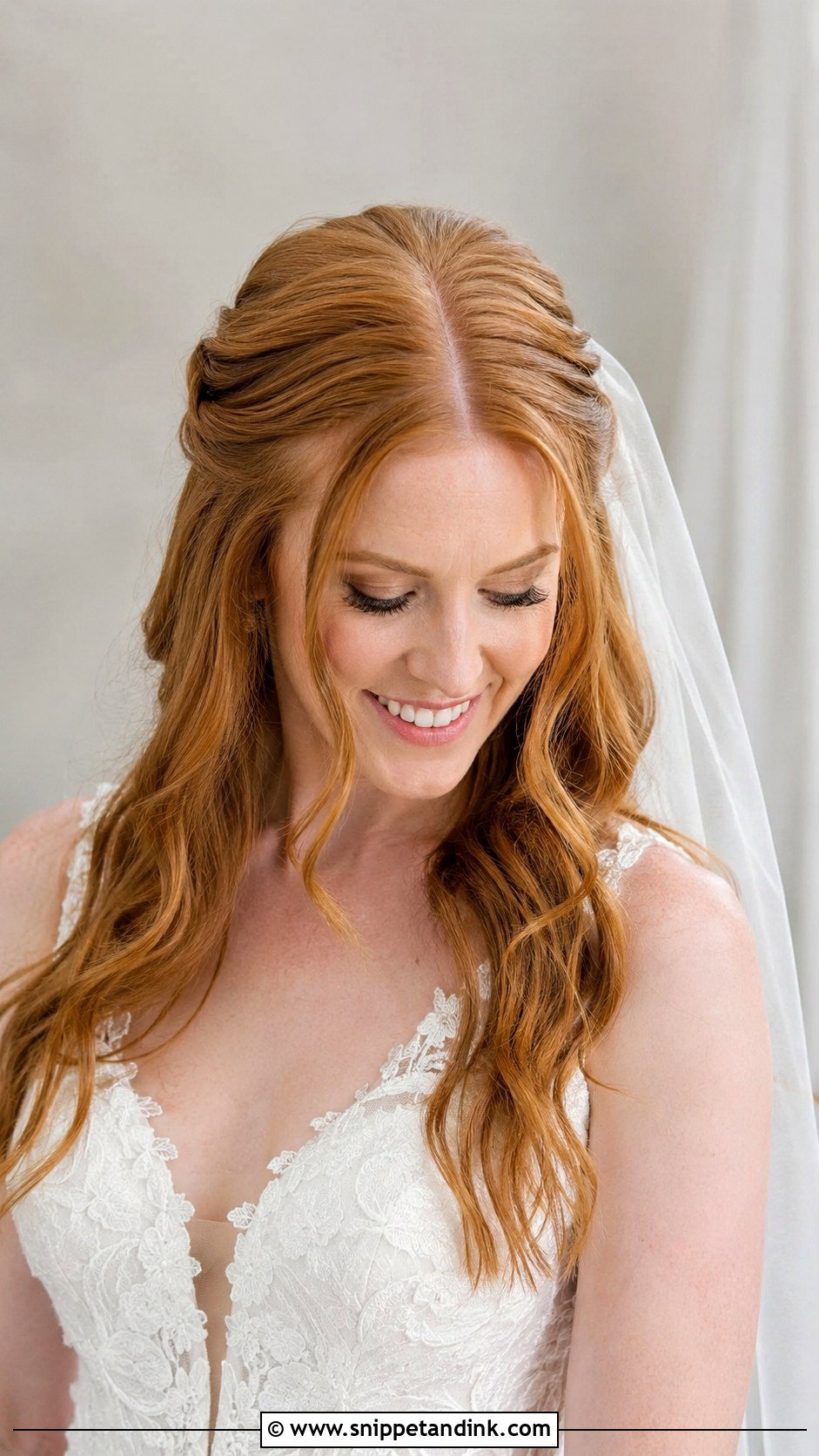
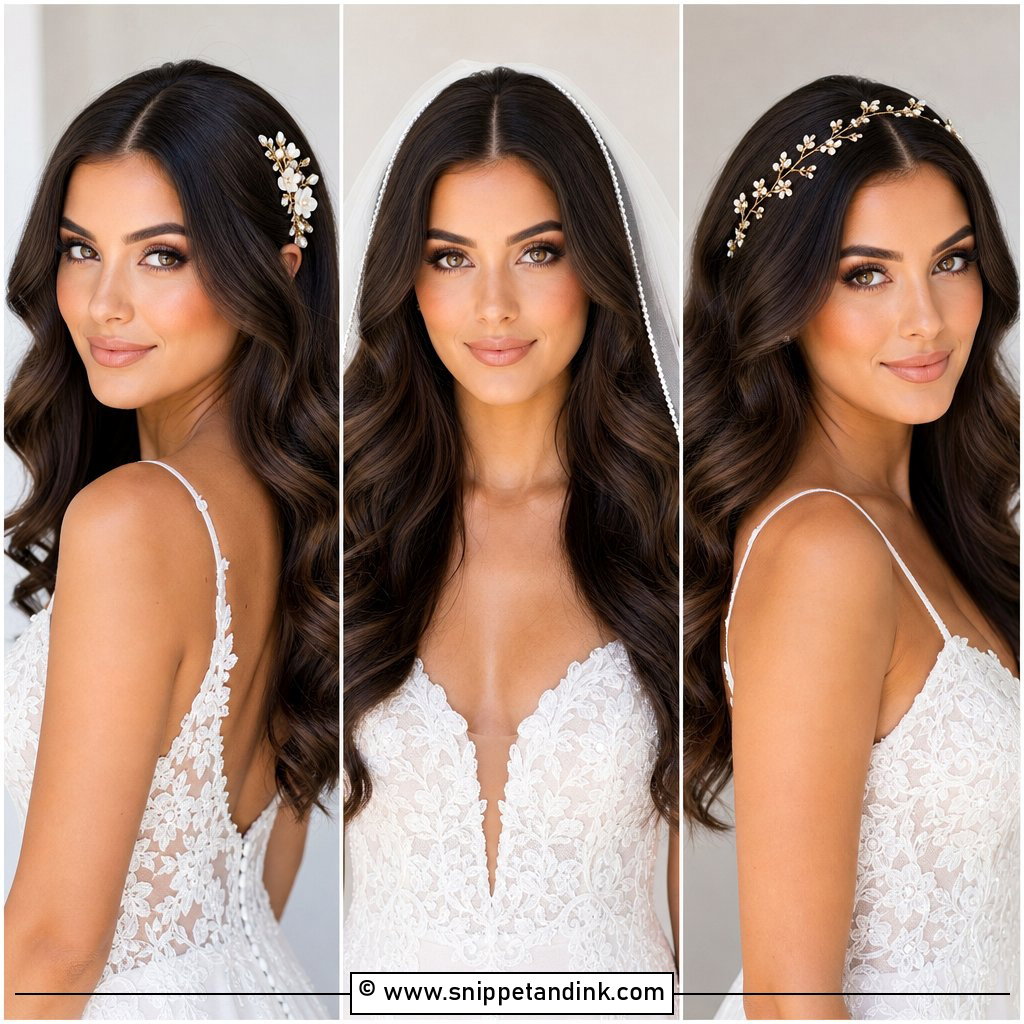
The pinned section of a half-up is the veil’s anchor. I set the comb directly under the join with the teeth facing up, then flip it down so the teeth grip the pinned hair. Waves fall below and around the face, and the center part keeps the look current. It holds through the ceremony for classic and modern brides alike. If the veil is heavy, I tease a small base under the join first.
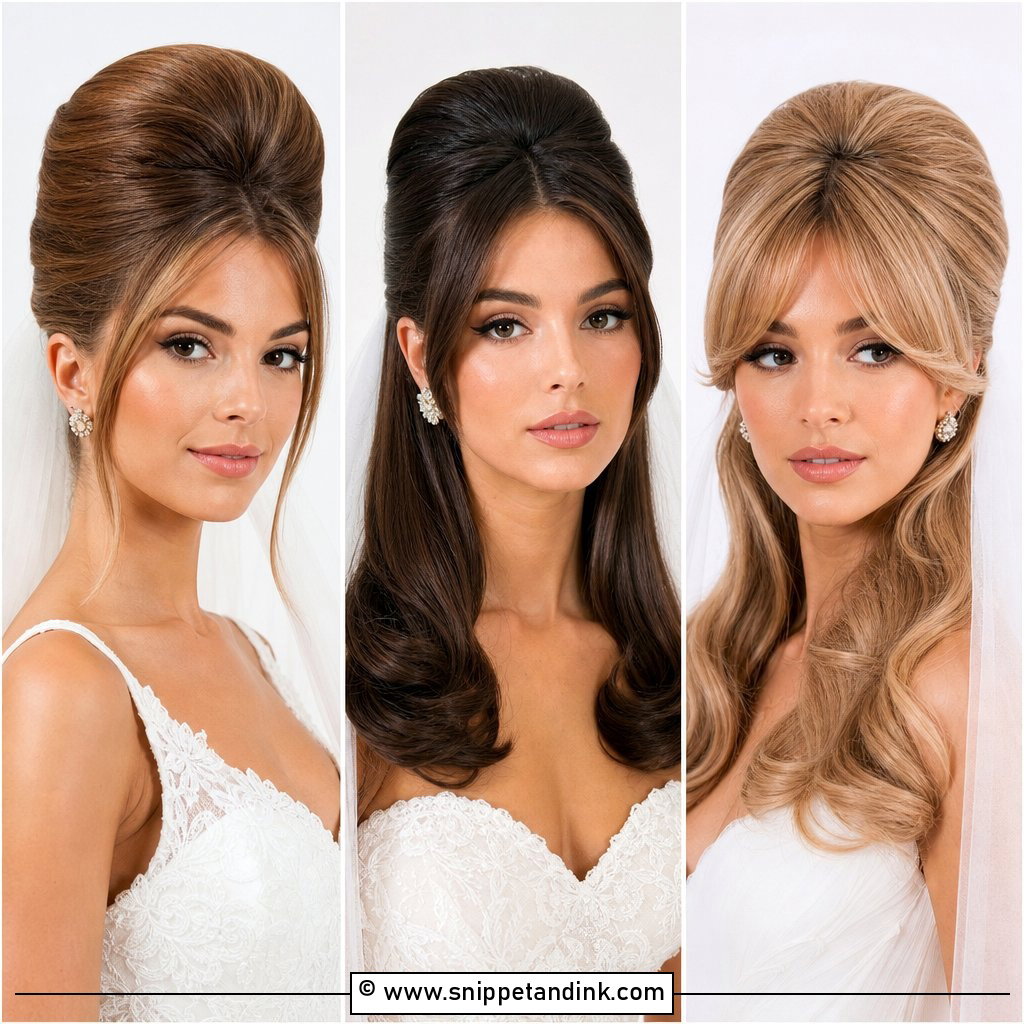
15. Middle Part Twisted Updo for Brides
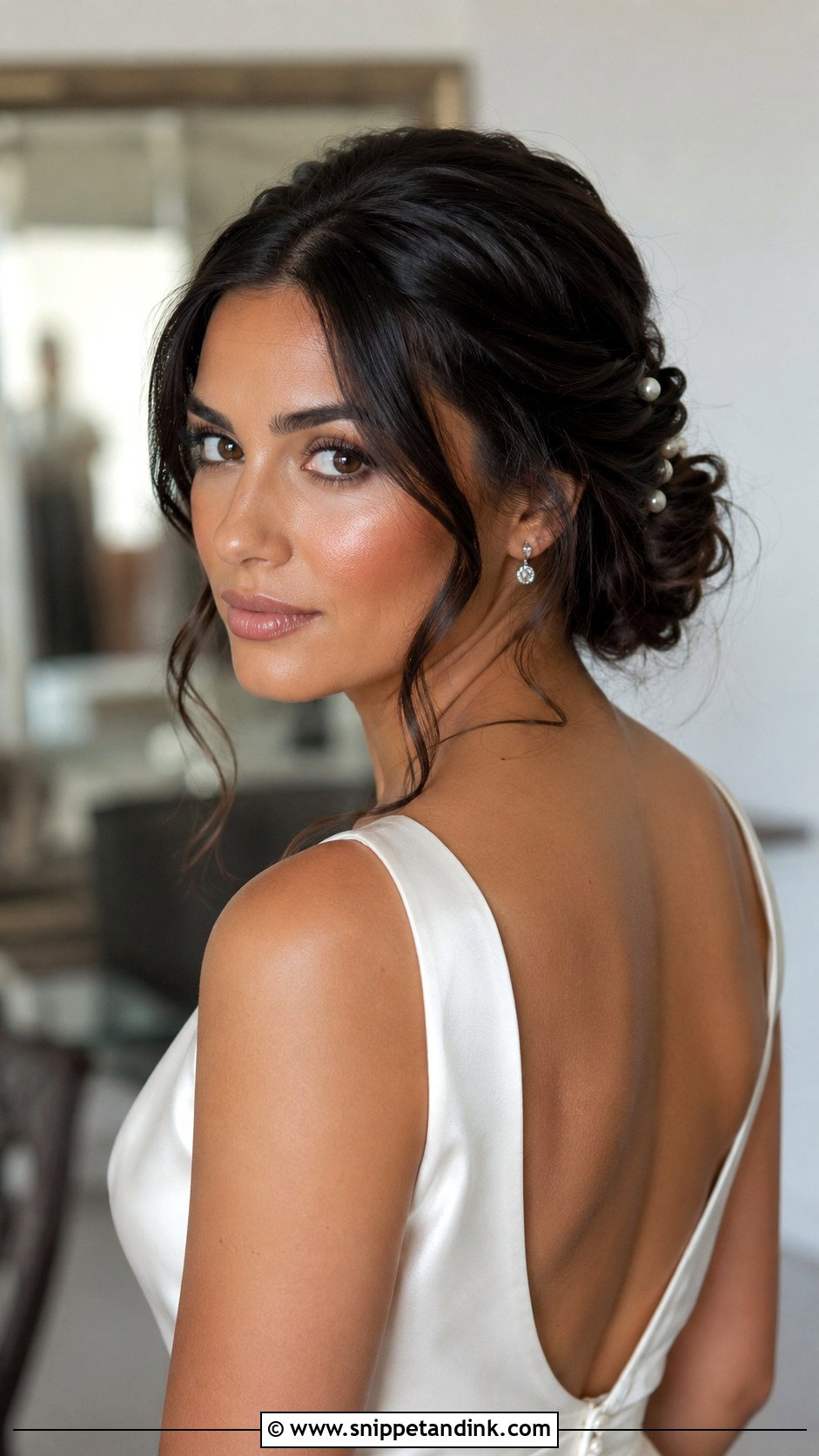
Twists gathered into a low bun give texture without stiffness. I twist from each side of the part toward the back, coil the lengths into a bun and pin. Loose face-framing pieces soften it, and pearl pins or a delicate comb add shine. Formal venues suit it. The twists look best from behind, which makes it a smart pick for ceremonies where guests mostly see the back of your head.
16. Middle Part Flower Crown Bridal Hairstyle
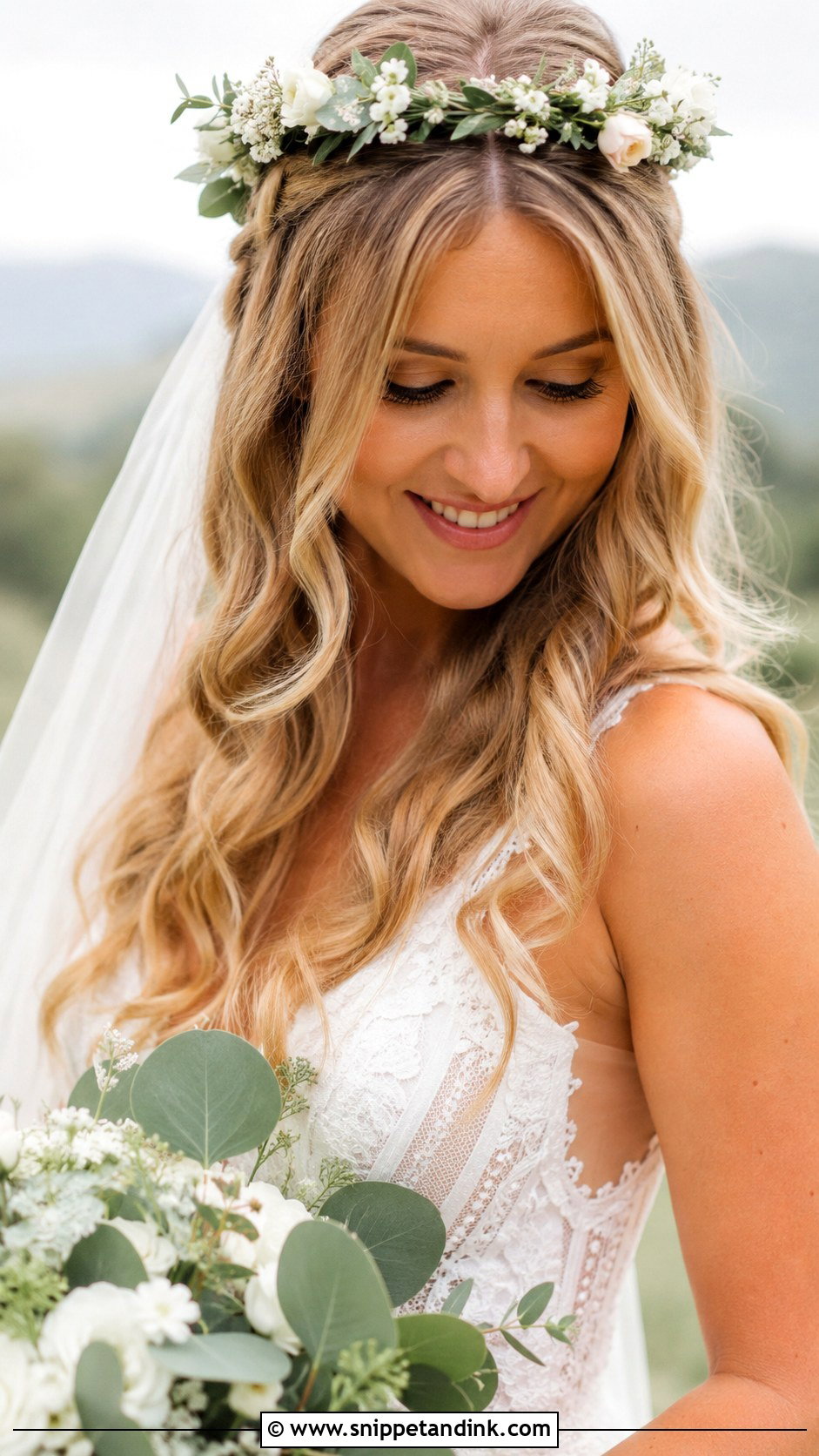
A center part gives a flower crown a clear line to sit on. Waves or a soft updo both work underneath, and I pin the crown with crossed pins at each side and the back. Boho and outdoor weddings suit it, and matching the blooms to the bouquet ties the look together. Fresh flowers wilt in heat, so the crown goes on last, after the dress and the photos of you getting ready.
17. Middle Part Glossy Low Bun With Tendrils
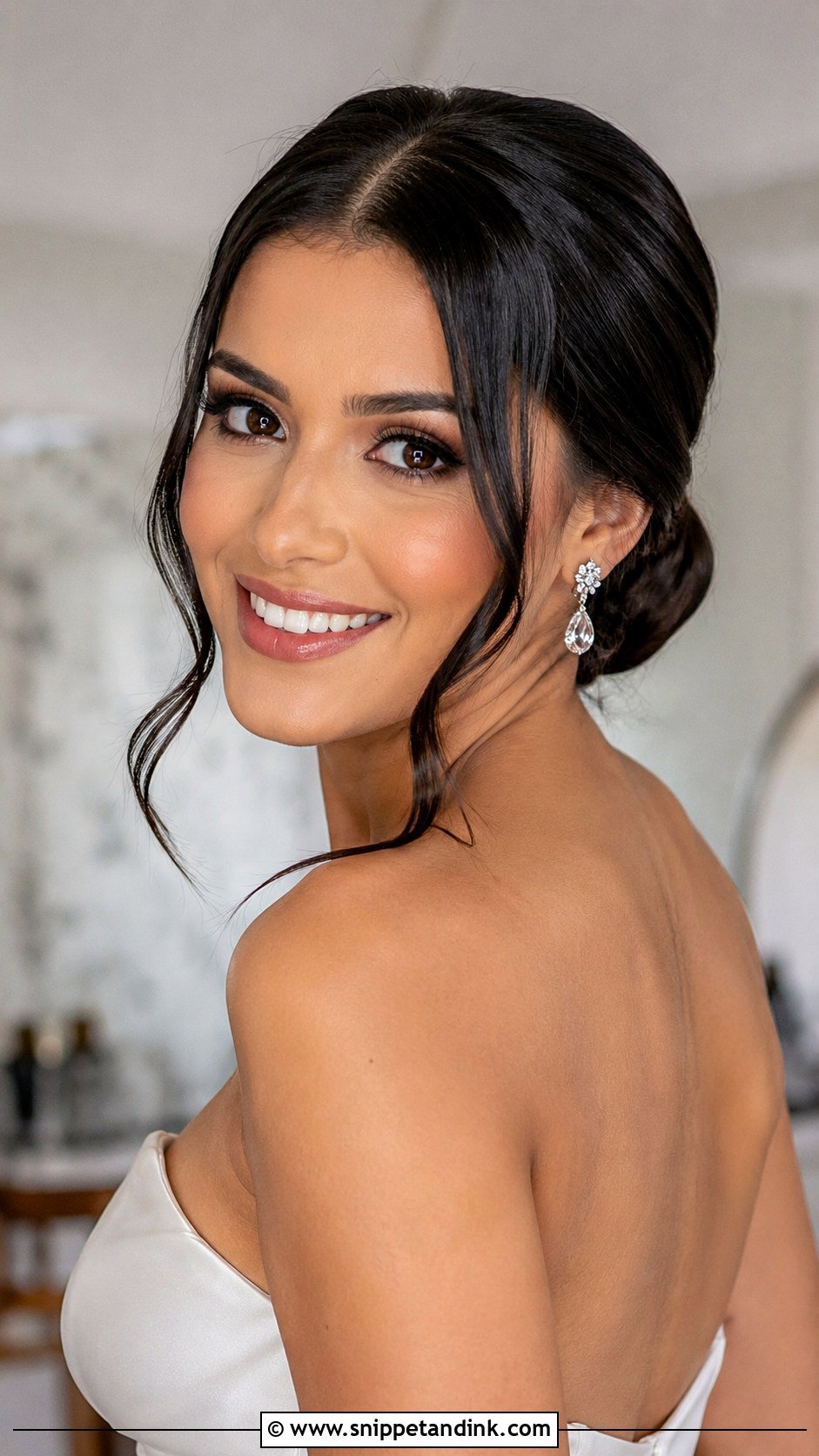
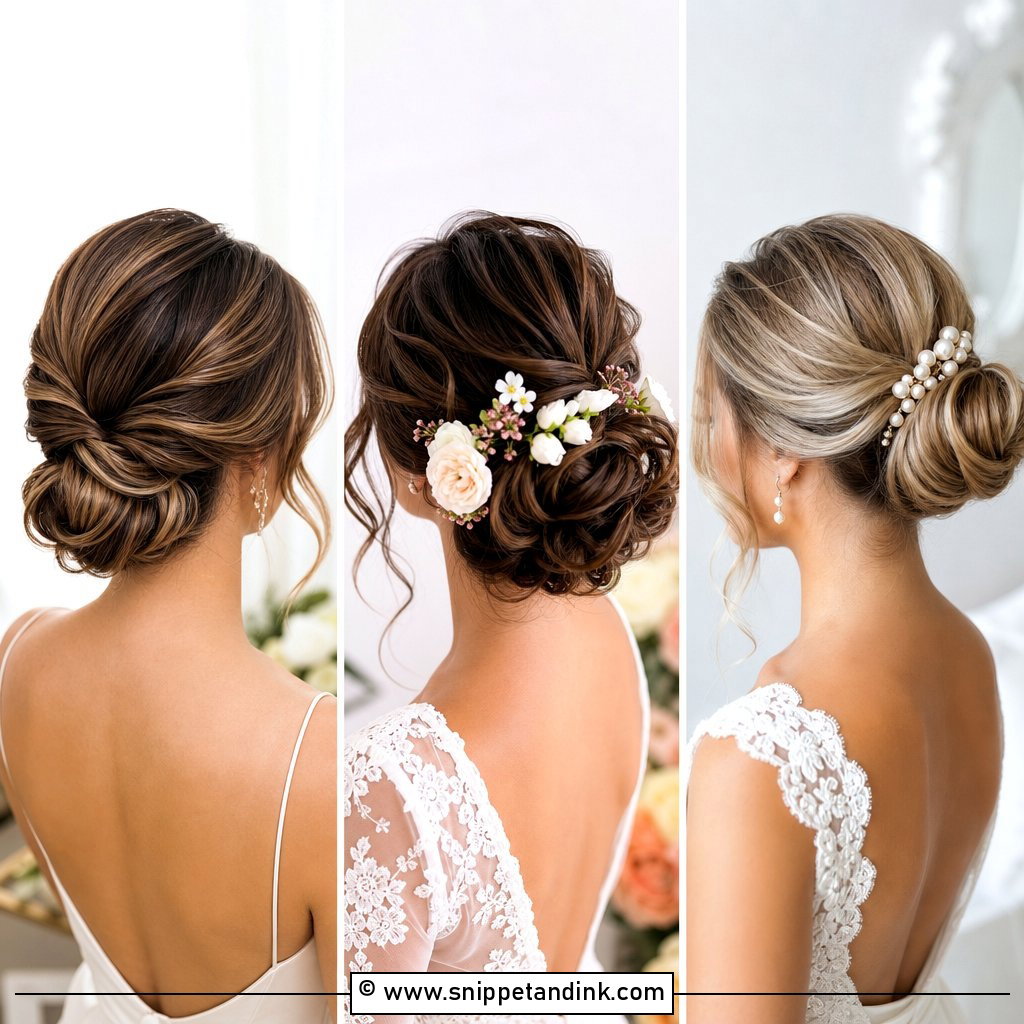
Gloss comes from smoothing and a little shine spray at the end, not from so much product that it looks wet. I smooth from the part to the nape, pin the bun low and pull out two or three tendrils at the cheeks, curling them away from the face. Statement earrings and elegant gowns suit it. Tendrils love to stick to lip gloss, so I place them just behind the corners of the mouth.
18. Middle Part Voluminous Blowout Bridal Hair
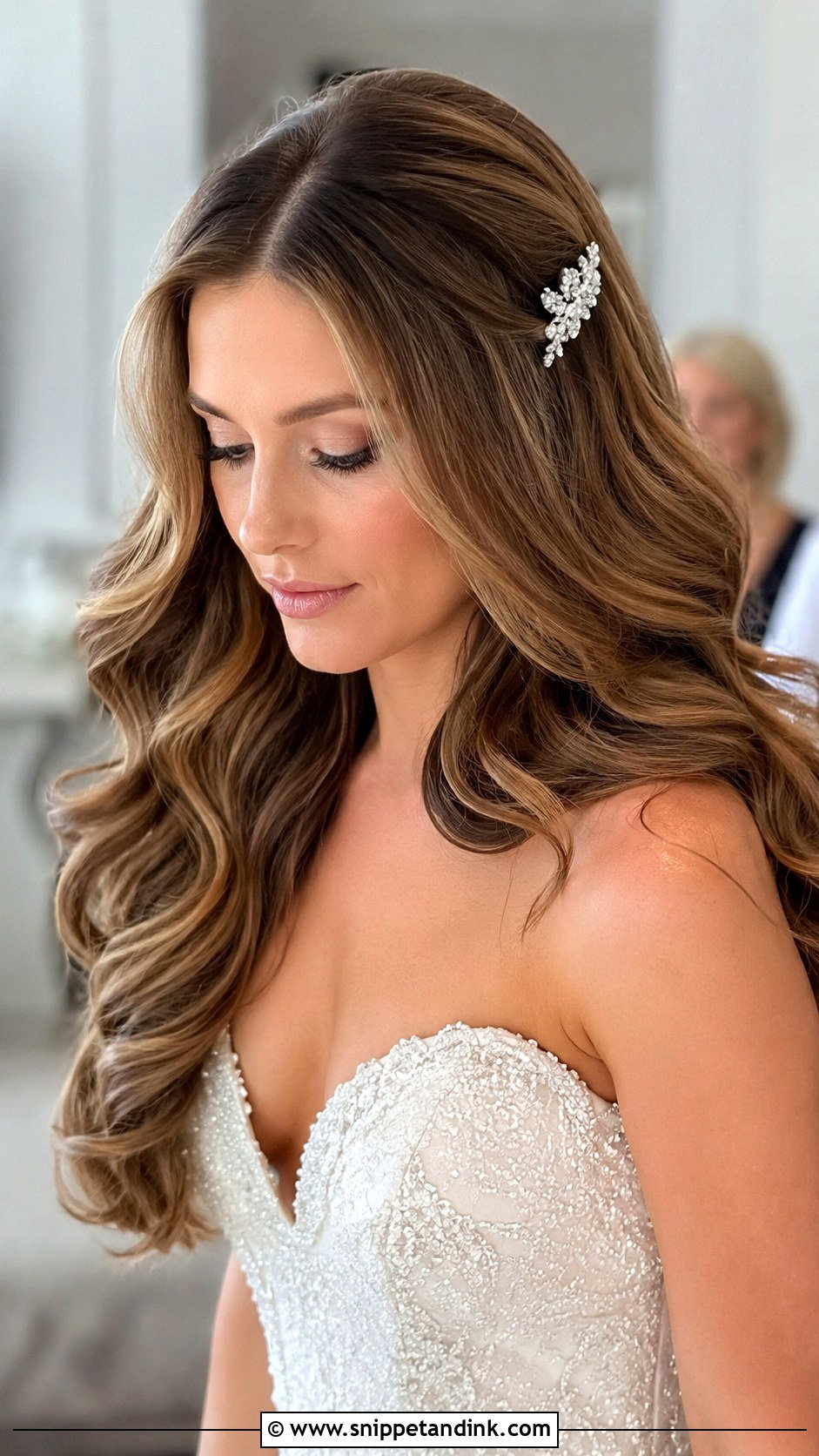
A voluminous blowout is round-brush work: lift at the roots and rounded ends. The part frames your face while the body adds movement. Thick, healthy hair suits it best; fine hair loses volume fast. A sparkling clip on one side adds polish. Velcro rollers left in during makeup make the volume last longer, and it pairs with simple or detailed gowns.
19. Middle Part Boho Hair Chain Wedding Style
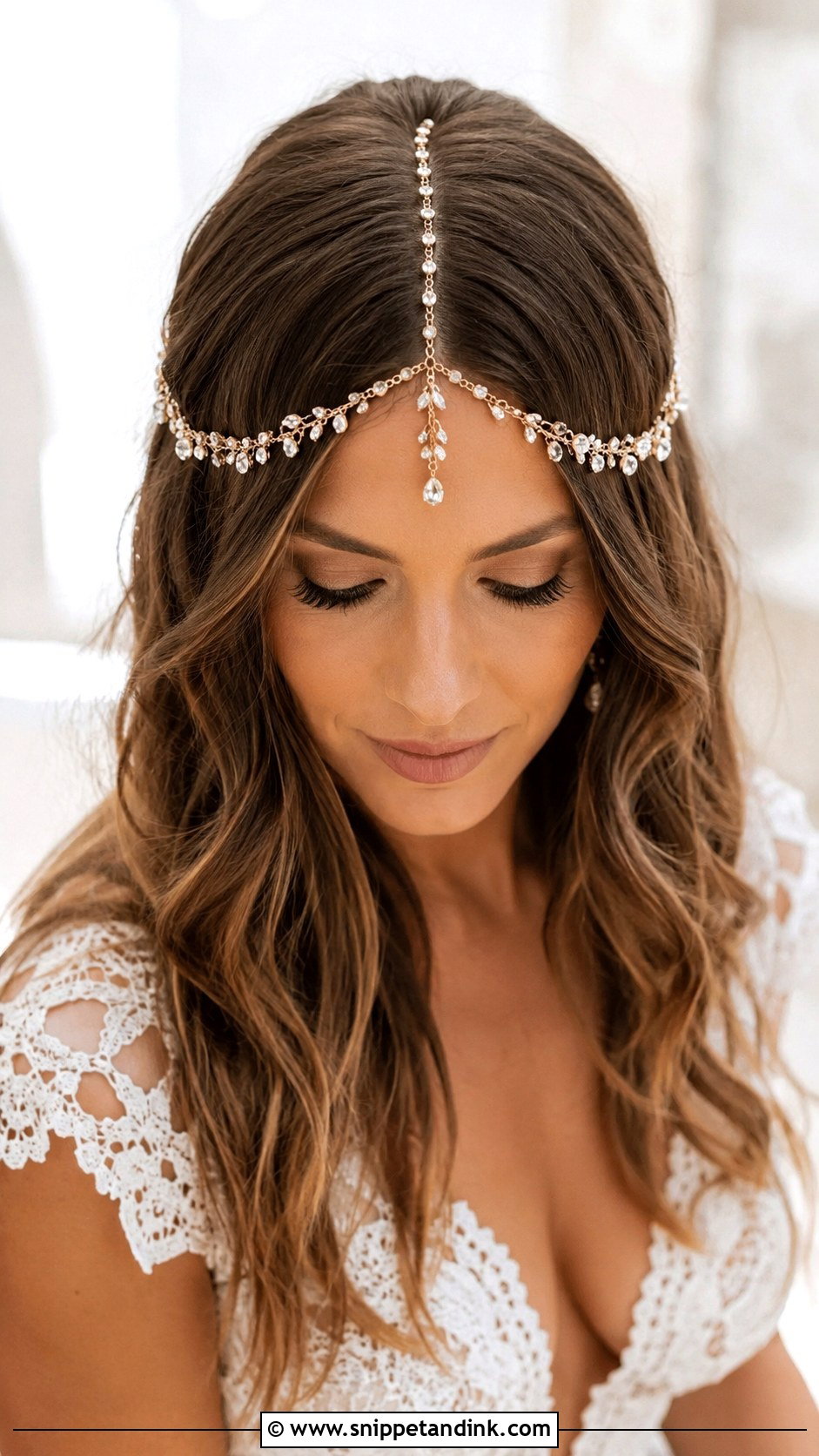
Hair chains look best when they follow the part exactly. I center the chain along it, then pin each side behind the ears and at the back so it can’t slide. The crystals trace the hairline and catch light in photos. Waves or a soft updo both work underneath. It suits brides who want something a little unexpected. Wear it for an hour before the wedding, because a chain fitted too tight starts to pull.
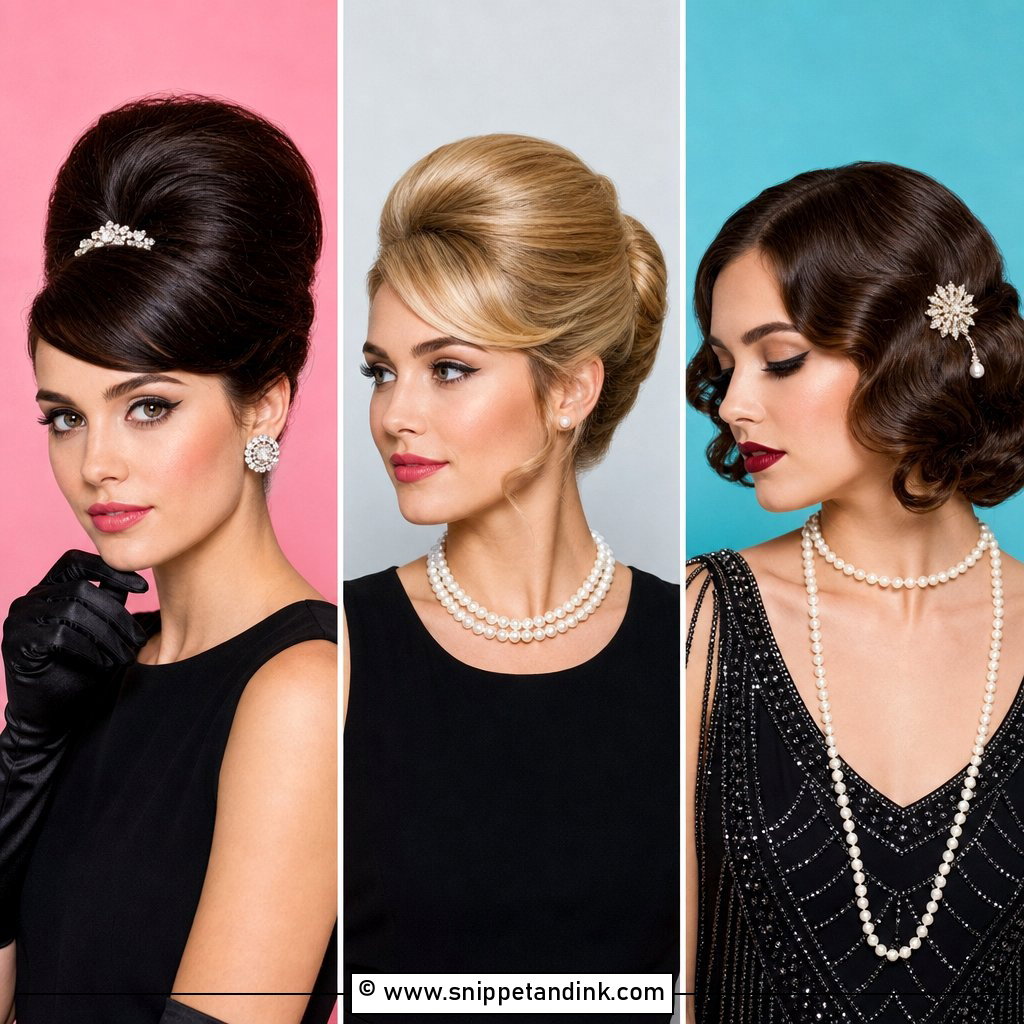
20. Middle Part Low Chignon Bridal Hairstyle
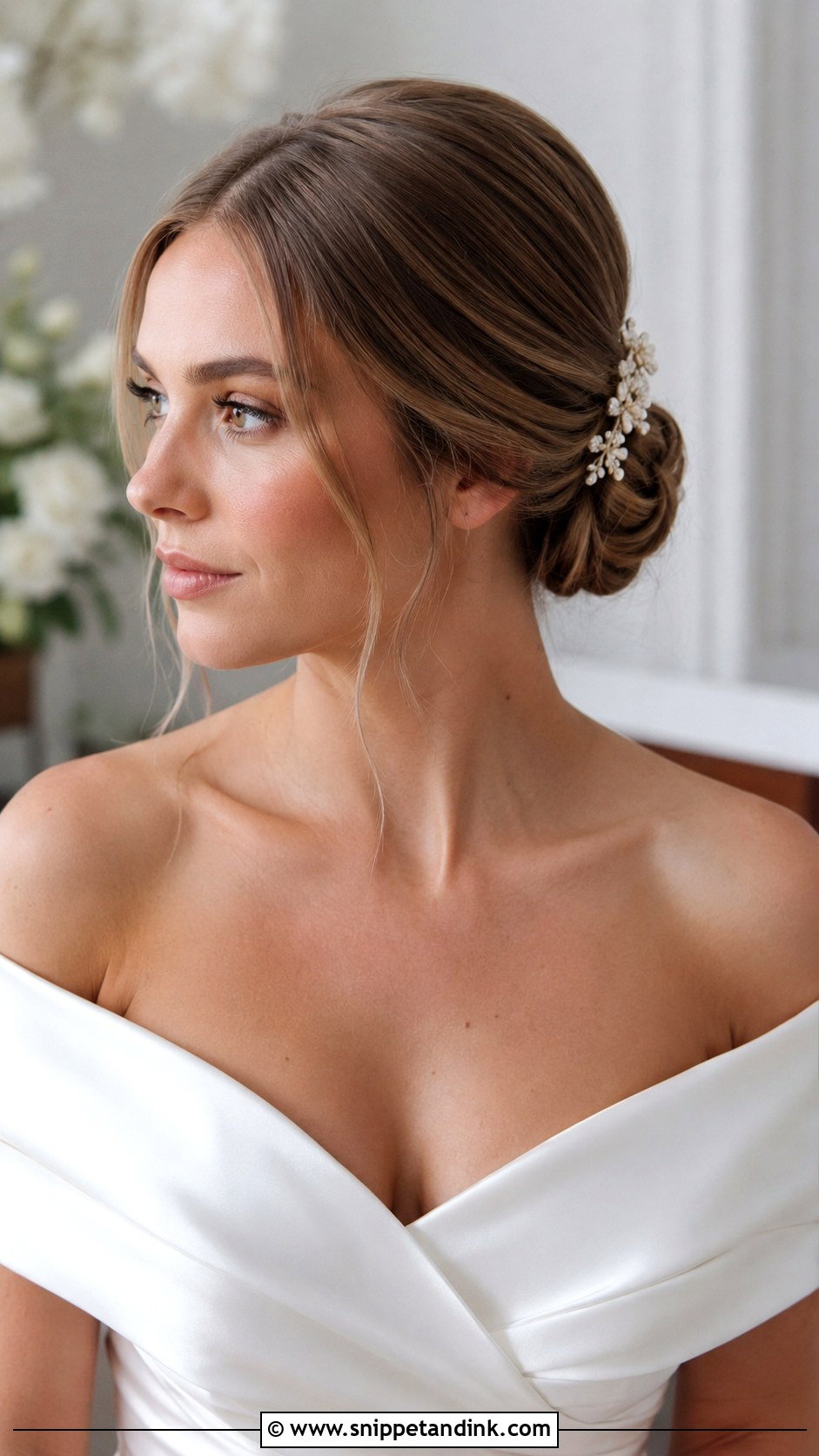
The most classic style here, and the lowest maintenance. The hair gathers smoothly into a knot at the nape, pinned flat so it sits close to the neck. Veils, combs and statement earrings all suit it at formal and traditional weddings, and tendrils can soften it if you like. Once it’s in, it lasts from ceremony to last dance with almost no attention.
A Slick Bun Shouldn’t Hurt by the Speeches
Sleek center-part styles are pulled tight by nature, and tension on the scalp for eight or ten hours can turn into a real headache. I avoid that by tying the base just firm enough to hold, spreading heavy hair across two smaller anchors instead of one, and sliding pins in flat against the head rather than pushing them in at steep angles.
Use the trial as your test. If the style aches after an hour in the chair, it will be much worse by the reception, so say so before we finish. At the end of the night, loosen the elastic first and then remove the pins; your scalp will thank you.
Lining Up Veils, Combs and Chains With the Part
A middle part turns your head into a mirror image, so accessories either respect that line or deliberately break it. A veil comb sits centered above a bun. A tiara or headband should have its middle point right over the part, checked from straight ahead. A single comb or flower can go to one side on purpose, but then I balance it with a tendril or a slightly fuller wave on the other side so the look doesn’t tip.
Symmetry Starts With One Straight Line
A middle part is balanced and modern, and it carries almost every style here, from sleek buns to braids and hair chains. Think about your venue, your gown and how much you’ll move, then bring your favorites to your stylist. Test the part placement at the trial, since that one small line decides how symmetrical the whole look feels.
You'll Like These Ideas:


Leave a Reply