
A dark blue tuxedo is still black tie. It just reads softer and more personal than black, and it suits far more wedding palettes. When I dress a groom in one, I plan the whole outfit at once: jacket, shirt, neckwear, trousers, shoes, pocket square and boutonniere, because a rich blue changes how every one of those looks beside it. Below are twenty head-to-toe combinations for grooms, groomsmen and anyone else in the wedding party, from classic midnight tailoring and modern double-breasted cuts to velvet jackets and lighter options for summer. With each one I’ve noted what I check at the fitting and where it can go wrong.
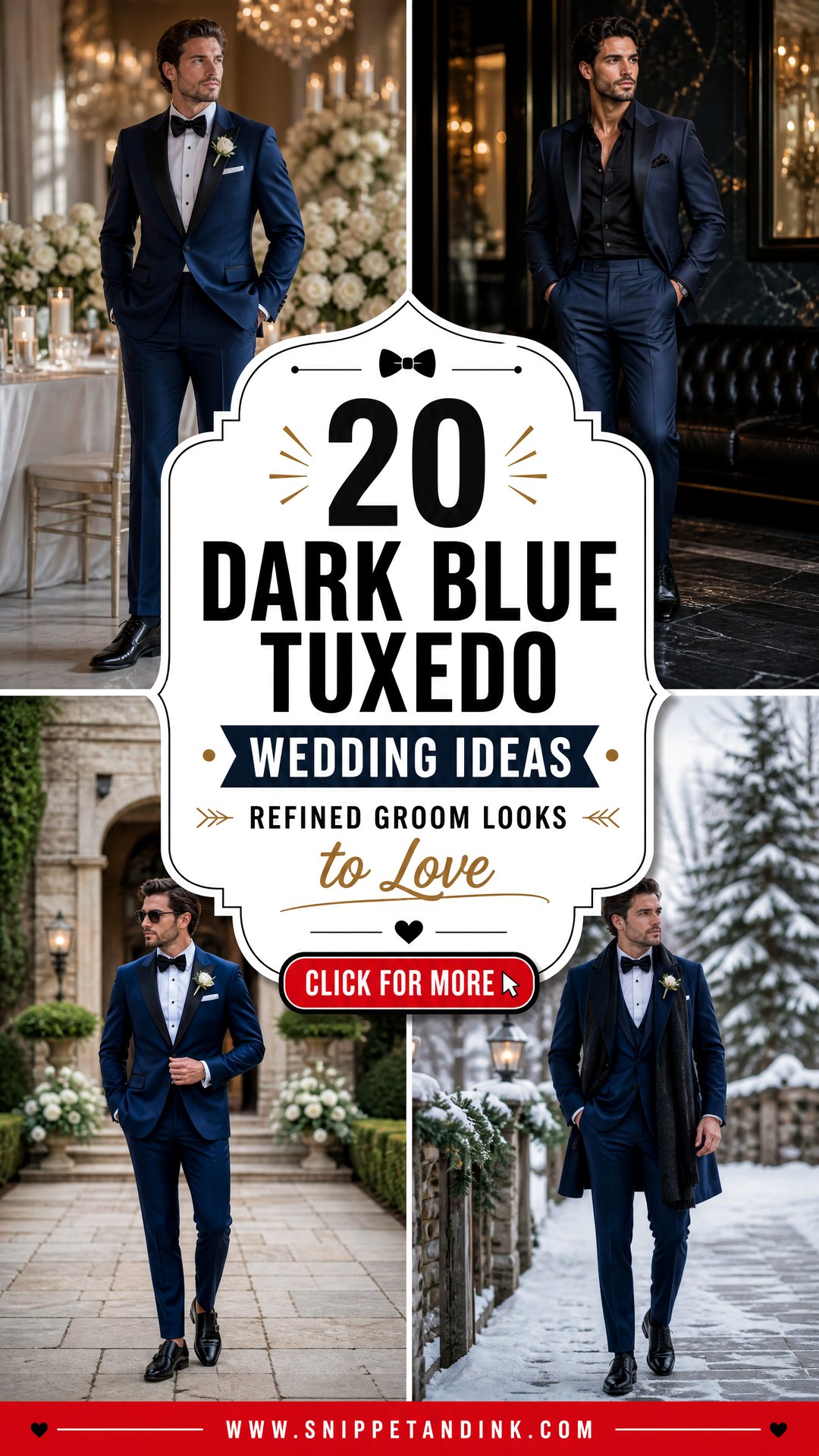
Telling Midnight Blue From Navy Under Ballroom Lights
Dark blue covers a wide range, and the difference matters more than people expect. I sort it into three for grooms:
- Midnight blue is so deep it looks almost black in a dim room. Under warm artificial light it can actually look richer and darker than black, and in daylight the blue shows. This is the traditional evening option.
- Deep navy is clearly blue in any light. It works for day and evening, and suits garden and coastal weddings better than midnight.
- Bright or royal navy is the one I’m cautious with. Paired with satin lapels it can look like costume, and without them it looks like a business suit.
Always judge the cloth in more than one light. I take swatches to a window and then under a warm lamp, because a blue that looks perfect in a shop’s bright white lighting can turn grey-purple at night. If the reception is mostly candlelit, lean darker. If you’re marrying outdoors in the afternoon, lean toward deep navy so the colour actually shows in the photos.
Lapel and trim
Black satin or grosgrain facings make a blue tux unmistakably formal. Self-coloured blue satin is softer and more modern. Whichever you choose, match the trouser stripe to the lapel so the two pieces belong together.
1. Dark Blue Tuxedo With Black Bow Tie
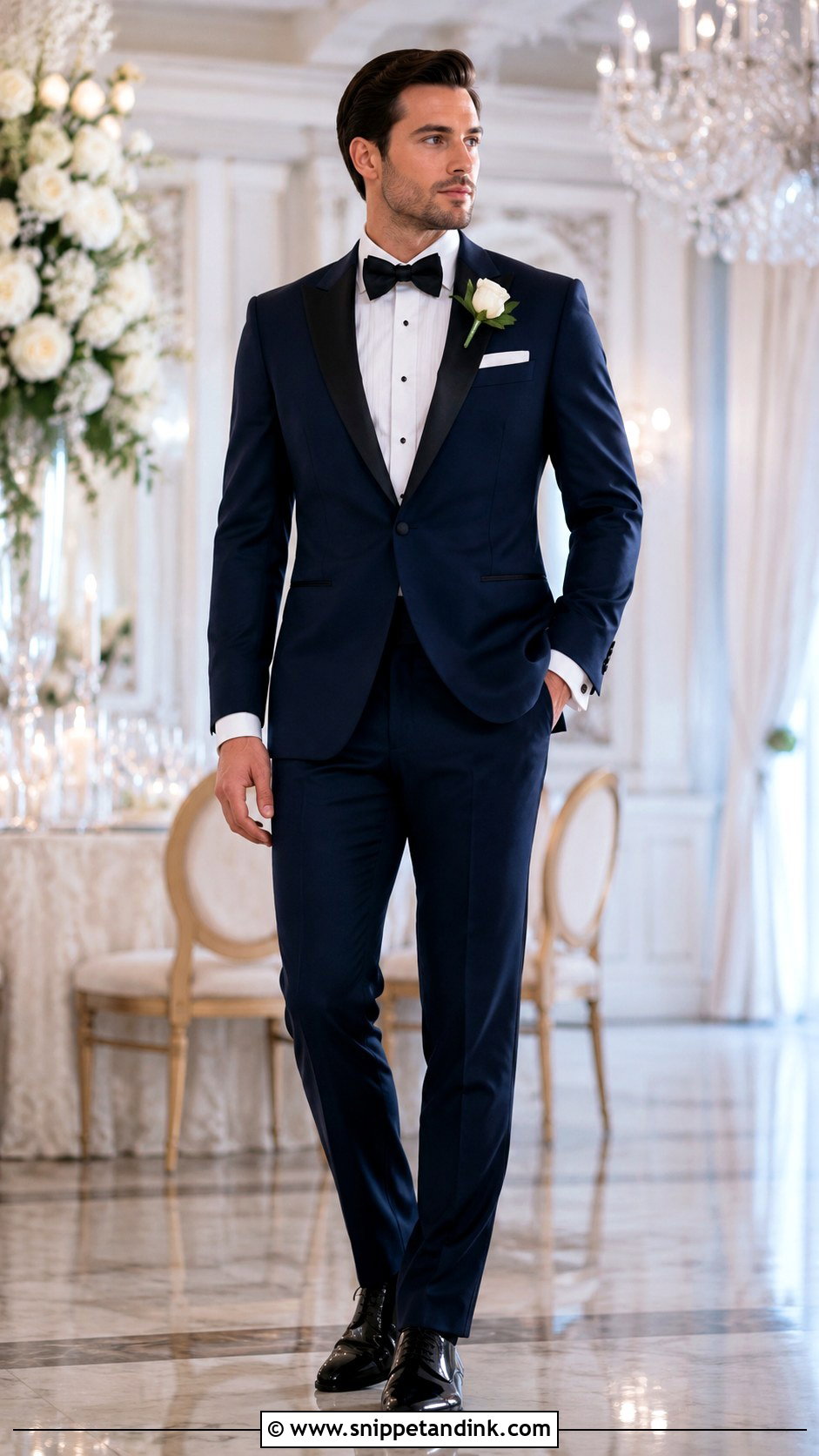
This is the version I’d hand to a groom who wants black tie but not black. A white formal shirt, a black silk bow tie and black satin peak lapels give clear contrast against the blue, and matching trousers with a satin side stripe keep it traditional. Patent Oxfords, plain silver cuff links, a white pocket square and a white rose or calla lily on the lapel finish it. Pick the shade carefully. Midnight or a very deep navy holds its colour under warm indoor light and still looks noticeably different from black, whereas a brighter navy can drift toward business suit.
2. Dark Blue Peak Lapel Tuxedo
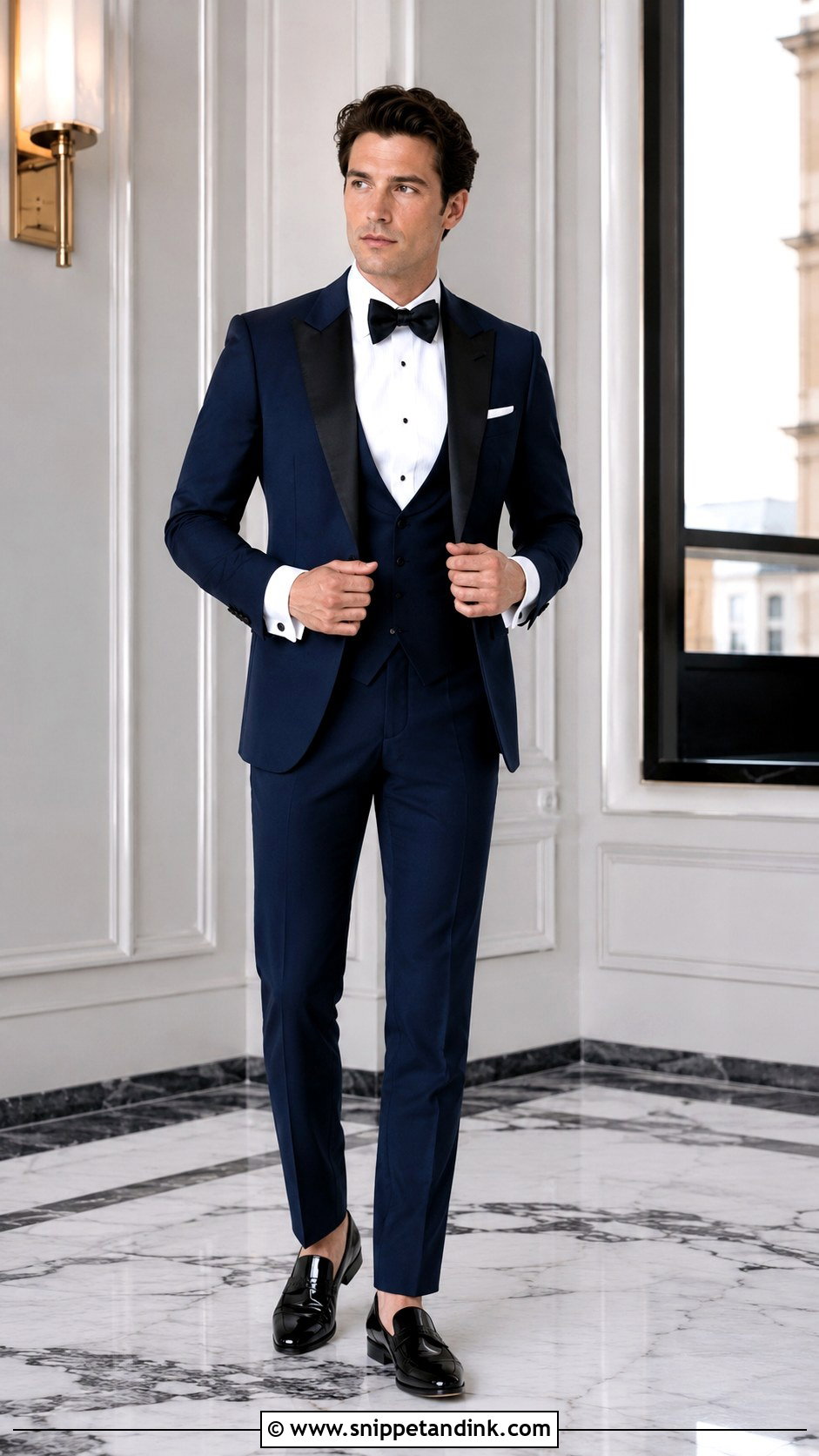
Peak lapels point up toward the shoulders and broaden the frame, which is why I suggest them to slimmer grooms who want more presence. On a dark blue tuxedo, choose black satin peaks of moderate width; very narrow ones date quickly. A white French-cuff shirt, a self-tie black bow tie and matching trousers form the base, and a low-cut black waistcoat keeps the shirt front covered when the jacket is open. Patent loafers, silver links and a straight-fold white linen square finish it. Ask the tailor to check the lapel roll. It should curve softly from the collar to the button, not press flat.
3. Dark Blue Shawl Lapel Tuxedo
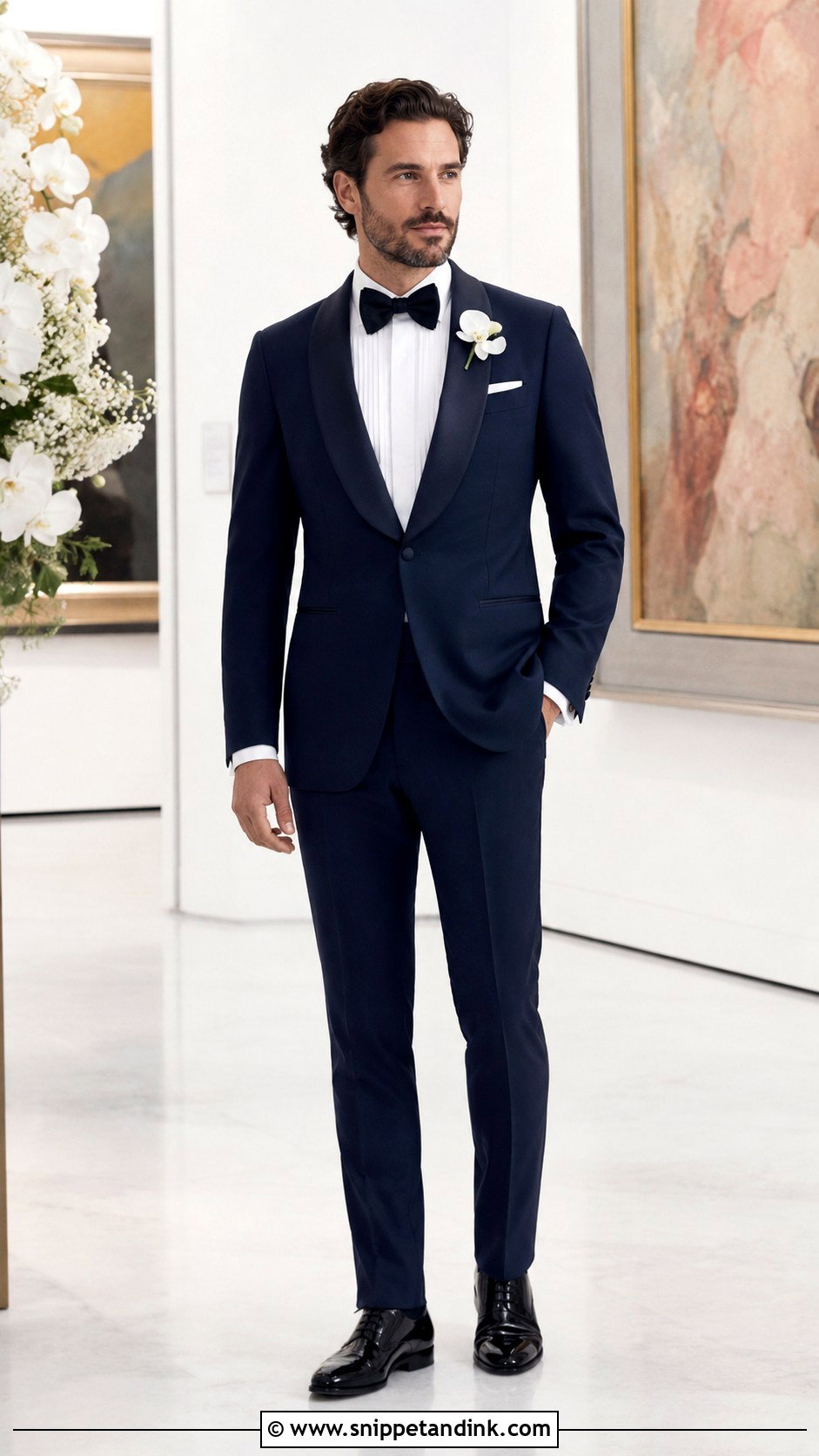
Shawl lapels have no notch or point, just one smooth curve, so the jacket feels softer and a little more relaxed. Look for a curved black satin collar, a single button and nothing else on the front. A white pleated tuxedo shirt with a velvet or silk bow tie, matching trousers over black wholecuts, mother-of-pearl links, a white pocket square and a small orchid on the lapel complete it. It suits a gallery, a good restaurant or an evening garden. Shawl collars are flattering on rounder faces, which is something I mention to grooms who feel peaks look severe on them.
4. Dark Blue Three-Piece Tuxedo
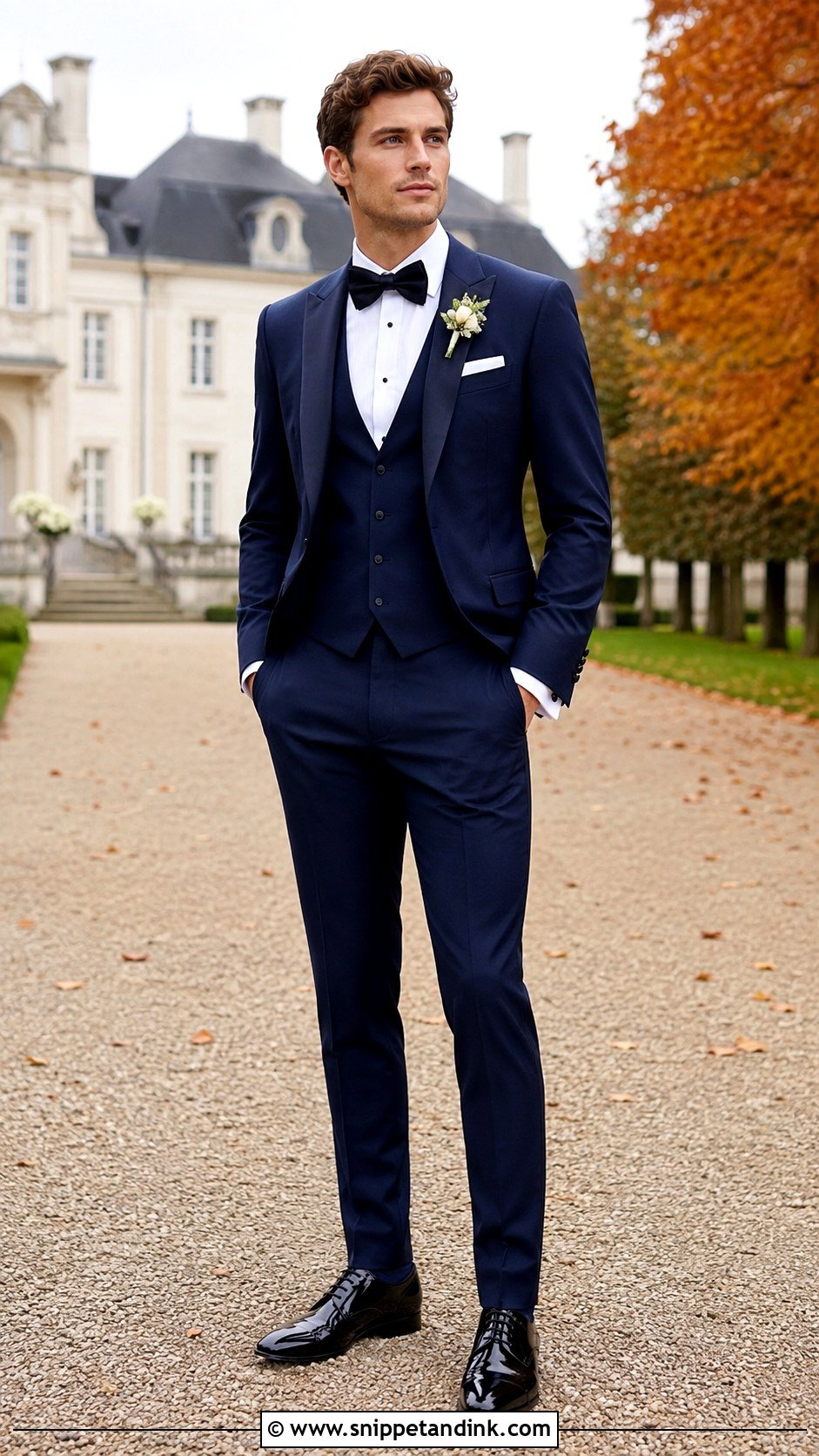
The waistcoat is what makes three pieces worth it. When the jacket comes off at the reception, you still look finished. Choose a single-breasted jacket, matching trousers and a low-cut waistcoat in the same blue; a high-cut vest drifts toward business suit. A white shirt, black bow tie, polished Oxfords, silver links, a white pocket square and a boutonniere picked from the bouquet keep accessories controlled. I like this for autumn and winter, and it separates the groom nicely if the groomsmen wear two-piece suits. Make sure the waistcoat covers the trouser waistband with no shirt showing between them.
5. Dark Blue Velvet Tuxedo Jacket With Black Trousers
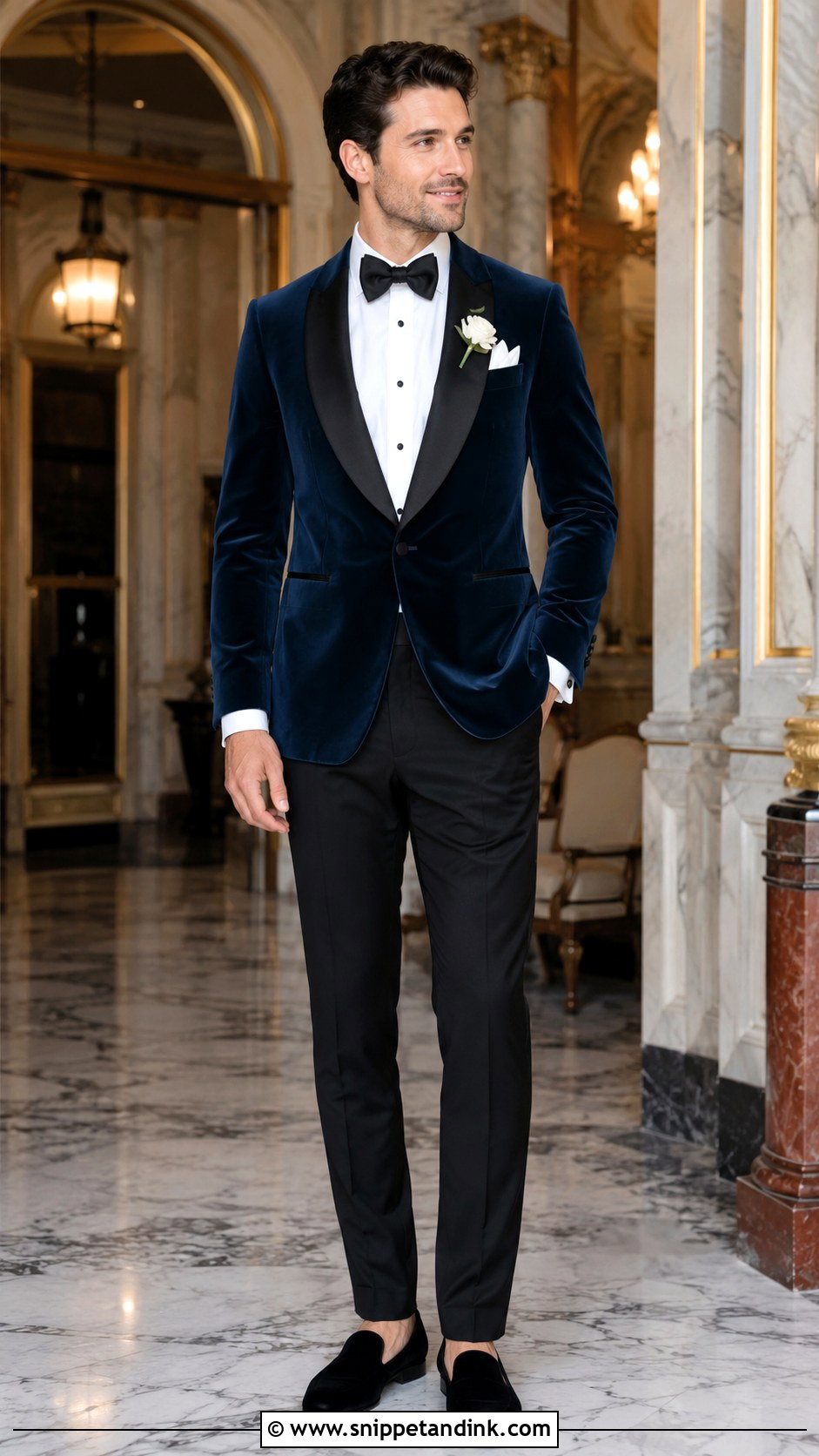
Velvet has a depth that wool can’t match, but I’d keep it for evening or genuinely cold weather; in a warm room it’s hot. A dark blue velvet dinner jacket with black satin shawl lapels over black tuxedo trousers, with a smooth white shirt so the look doesn’t turn heavy, works best. A black silk bow tie, black velvet loafers and silver or onyx links are enough; a white pocket square and a compact white boutonniere add contrast. No patterns. Many grooms wear wool for the ceremony and change into velvet for the evening, which is a good compromise. Never iron velvet. Steam it from the inside or it crushes.
6. Dark Blue Double-Breasted Tuxedo
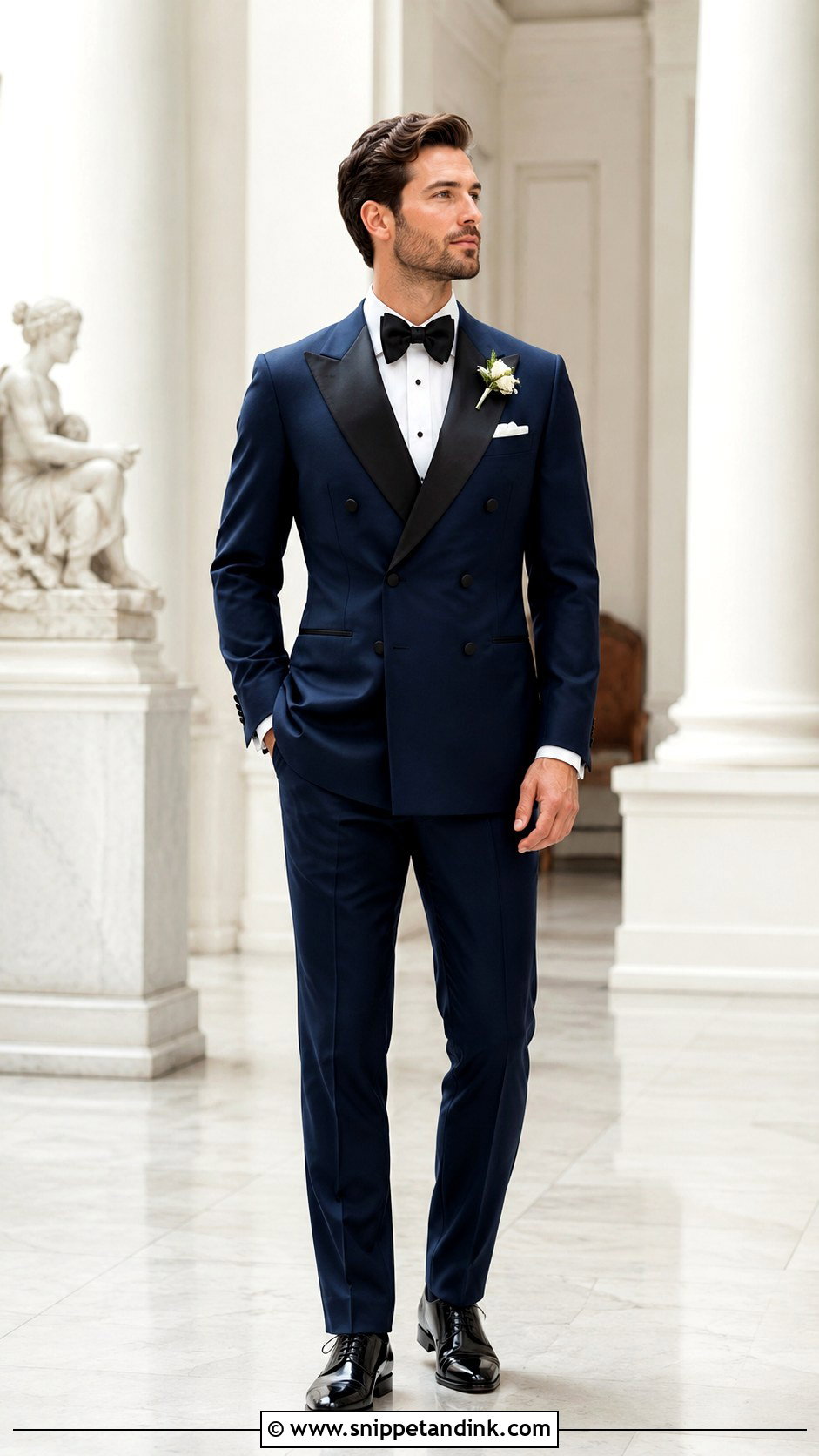
Double-breasted jackets are meant to stay buttoned when you stand, which is why they look so composed in ceremony photos. A six-button dark blue jacket with black satin peak lapels needs to fit close at the shoulder and close without pulling at the waist. Pair it with matching trousers, a white spread-collar shirt and a hand-tied black bow tie, then highly polished Oxfords and a white linen pocket square. Keep the boutonniere small; the wide lapels are the feature. I’d only choose this if it fits you well off the peg in the chest, because altering the overlap is difficult.
7. Dark Blue Tuxedo With Navy Bow Tie
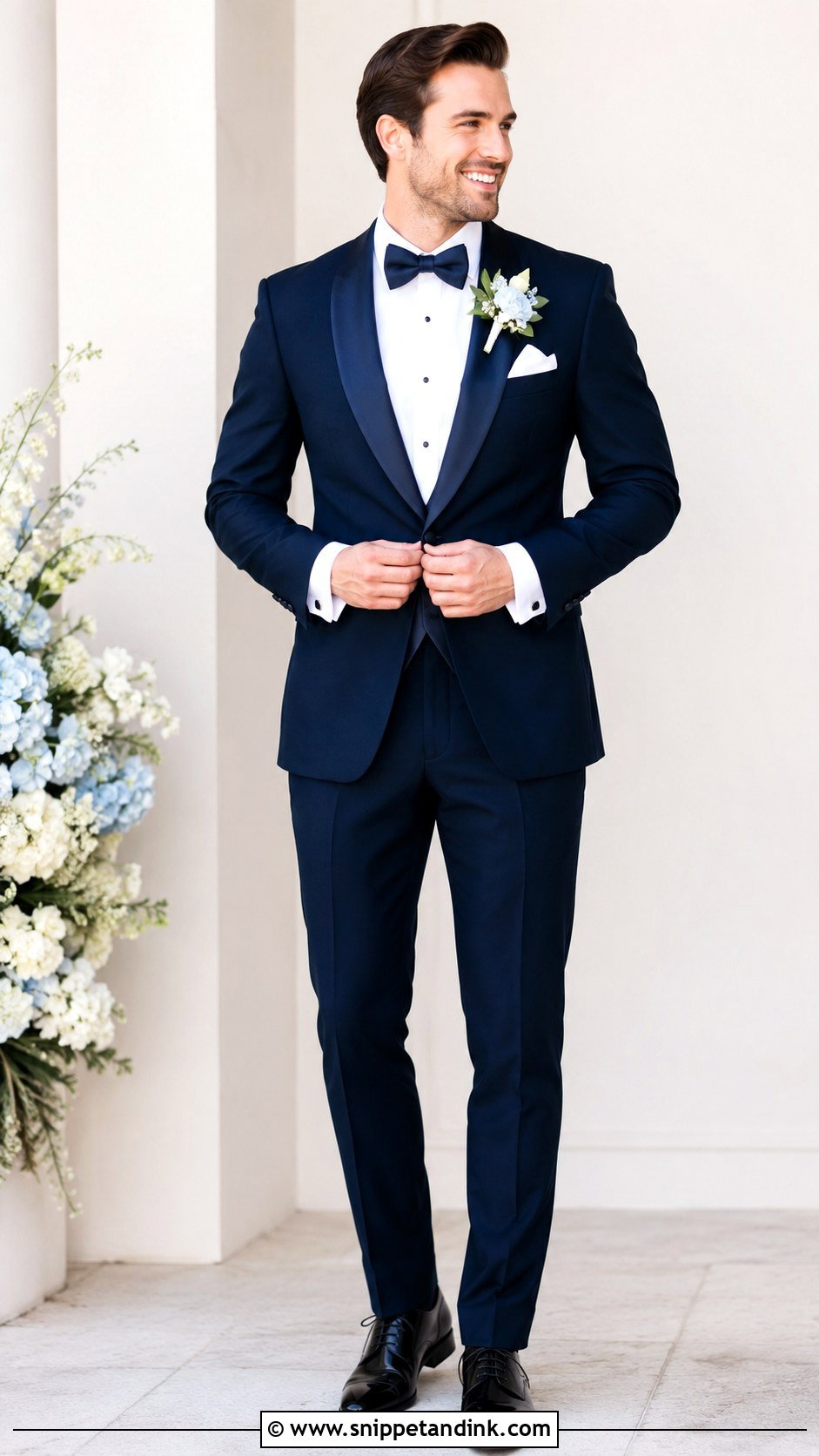
A navy bow tie on a dark blue tuxedo gives a quiet tonal look that’s softer than black and blue. Start with self-coloured satin lapels or a slightly deeper navy, and use a bright white shirt to separate the two blues. The tie should be close to the jacket colour but doesn’t need to match exactly. In fact a slight difference looks better. Matching trousers, black Oxfords, silver links, a white pocket square and a pale blue or white boutonniere complete it. Tonal outfits go flat if every surface is the same, so I look for a different texture in the tie, a grosgrain or a faille, to give it some life.
8. Dark Blue Tuxedo With Burgundy Bow Tie
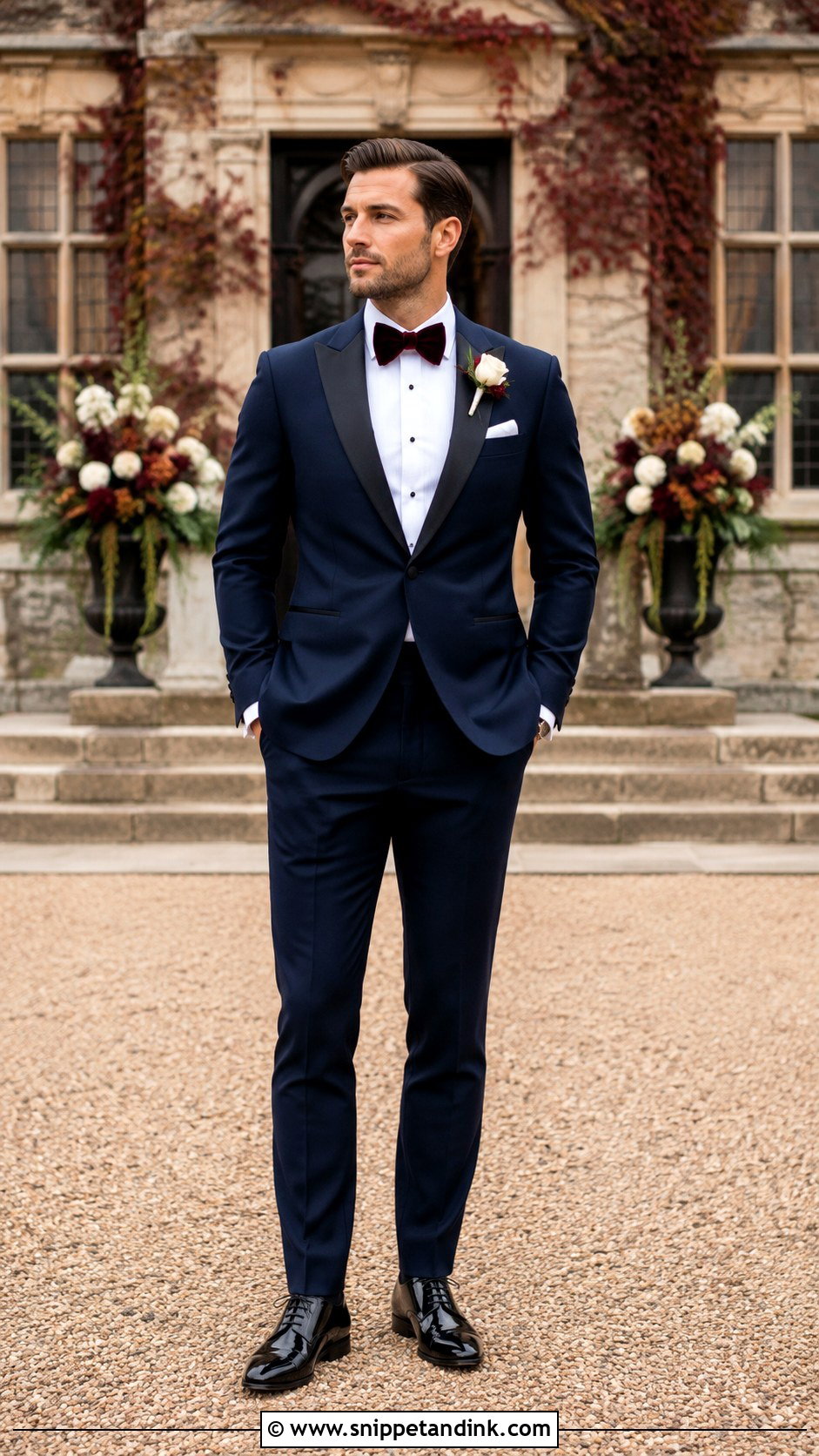
Burgundy warms up dark blue without breaking the formality. A slim burgundy silk or velvet bow tie with a plain white shirt, black satin peak lapels, matching trousers and black Oxfords does it. Resist a burgundy pocket square too; a white one keeps it from looking like a matched gift set. A boutonniere with one small burgundy bloom, a cream flower and a little greenery links the neckwear to the flowers. I’d use this for autumn ceremonies and historic venues. One burgundy accent reads deliberate, while three start to feel like a theme.
9. Dark Blue Tuxedo With Ivory Shirt
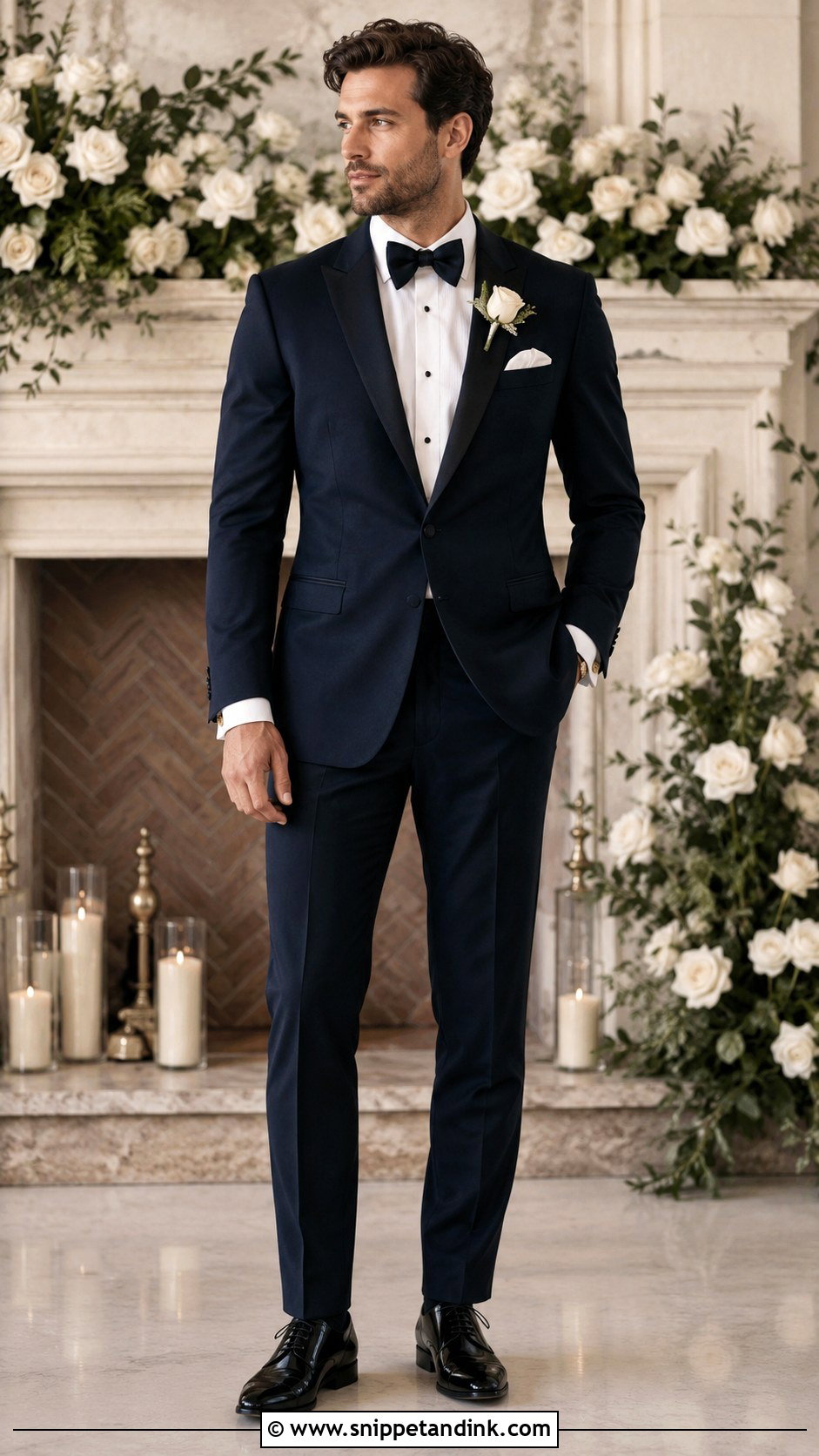
An ivory shirt softens the contrast and stops the groom’s shirt looking stark beside an ivory gown. Choose a very light cream, not beige or yellow. Pair it with the dark blue jacket and trousers, a black satin bow tie, black Oxfords, a cream pocket square and gold-toned links, with an ivory rose on the lapel. It suits estates and venues with champagne or gold decor. I always hold the shirt against the jacket and the bride’s dress swatch in daylight. Ivory that’s slightly too warm turns yellowish in flash photos.
10. Dark Blue Tuxedo With White Waistcoat
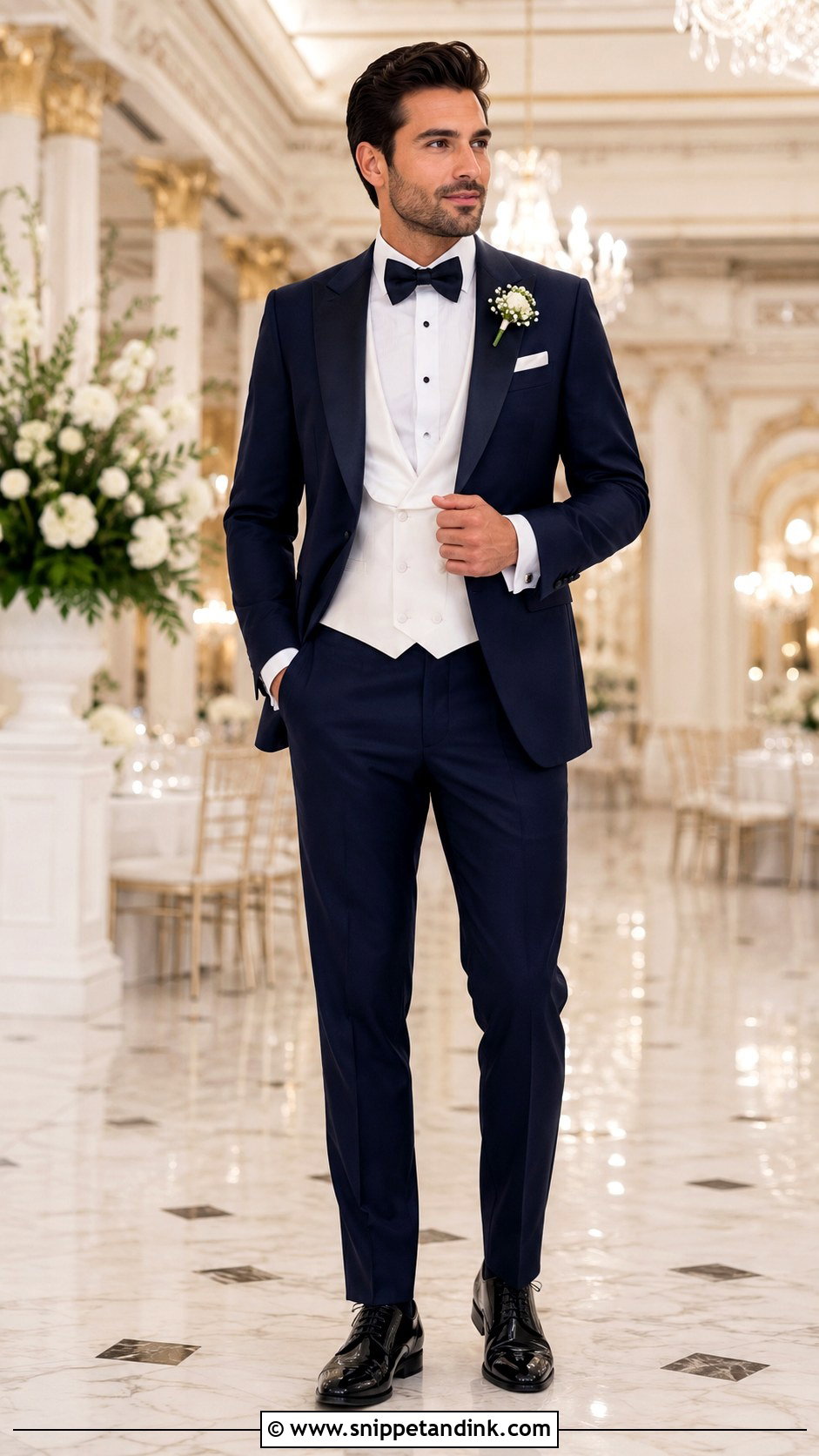
A white waistcoat is the most formal touch here, and it instantly sets the groom apart. Wear it under a single-breasted or tailcoat-style dark blue jacket with black satin peaks, over a white formal shirt with a white or black bow tie and matching trousers. Black patent Oxfords, mother-of-pearl studs, silver links and a plain white pocket square continue the clean palette, with a compact white boutonniere. It belongs at strict black-tie evenings. The fit point is non-negotiable for me: the waistcoat must not show below the front of the closed jacket, so it’s fitted with the jacket on.
11. Dark Blue Tuxedo With Black Shirt
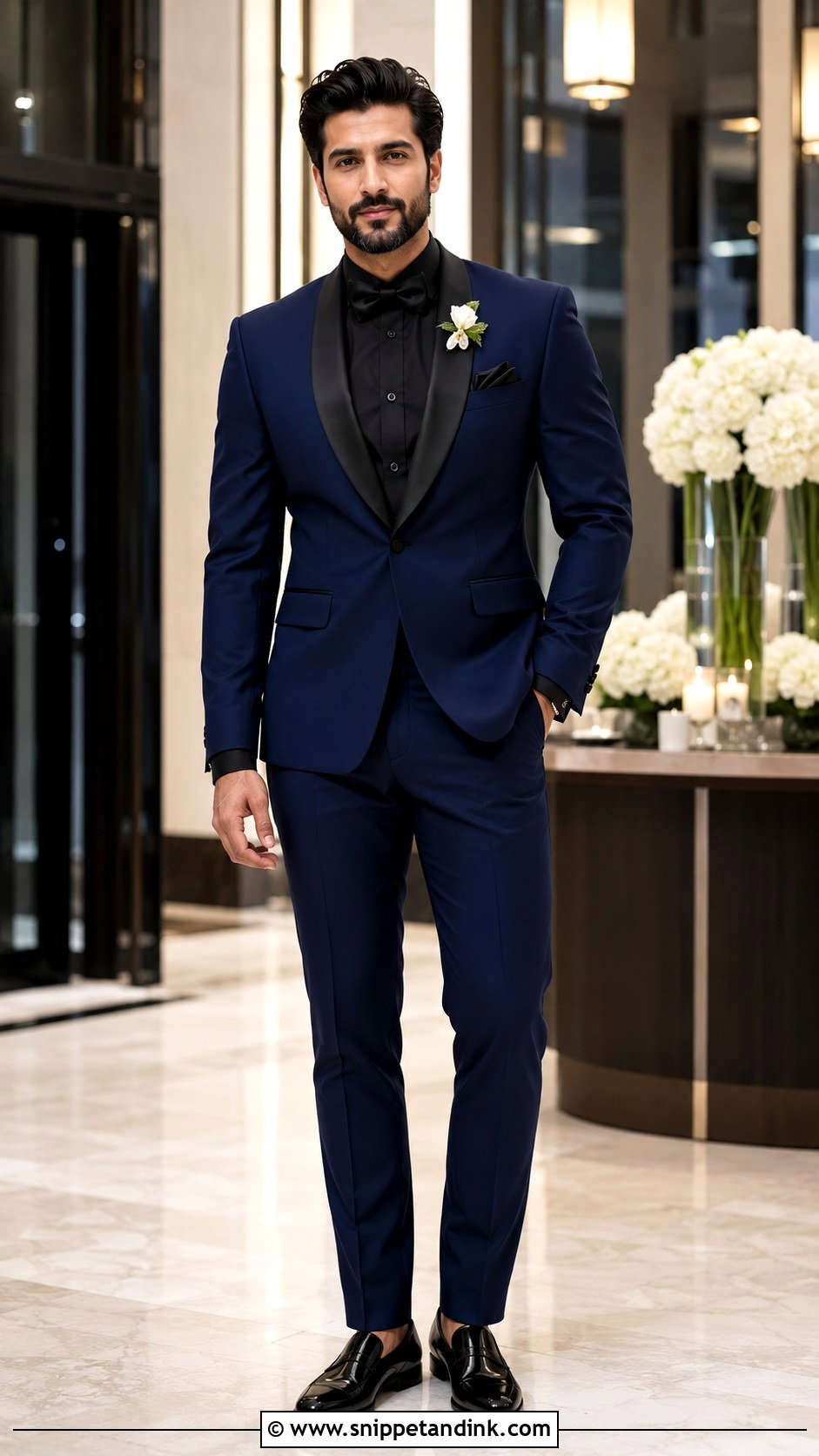
A black shirt makes a dark blue tux sleek and modern, and I see it as an evening option rather than a ceremony one. Pair a dark navy jacket with black satin lapels and a fitted black shirt, with or without a black bow tie; an open collar works as a relaxed reception change. Matching trousers, black loafers or Oxfords, onyx links and a dark pocket square keep it streamlined. Skip the boutonniere or use one small white flower. Very dark outfits lose their shape in photos when the fit is loose, so the tailoring needs to be precise, and good lighting helps.
12. Dark Blue Tuxedo With Floral Bow Tie
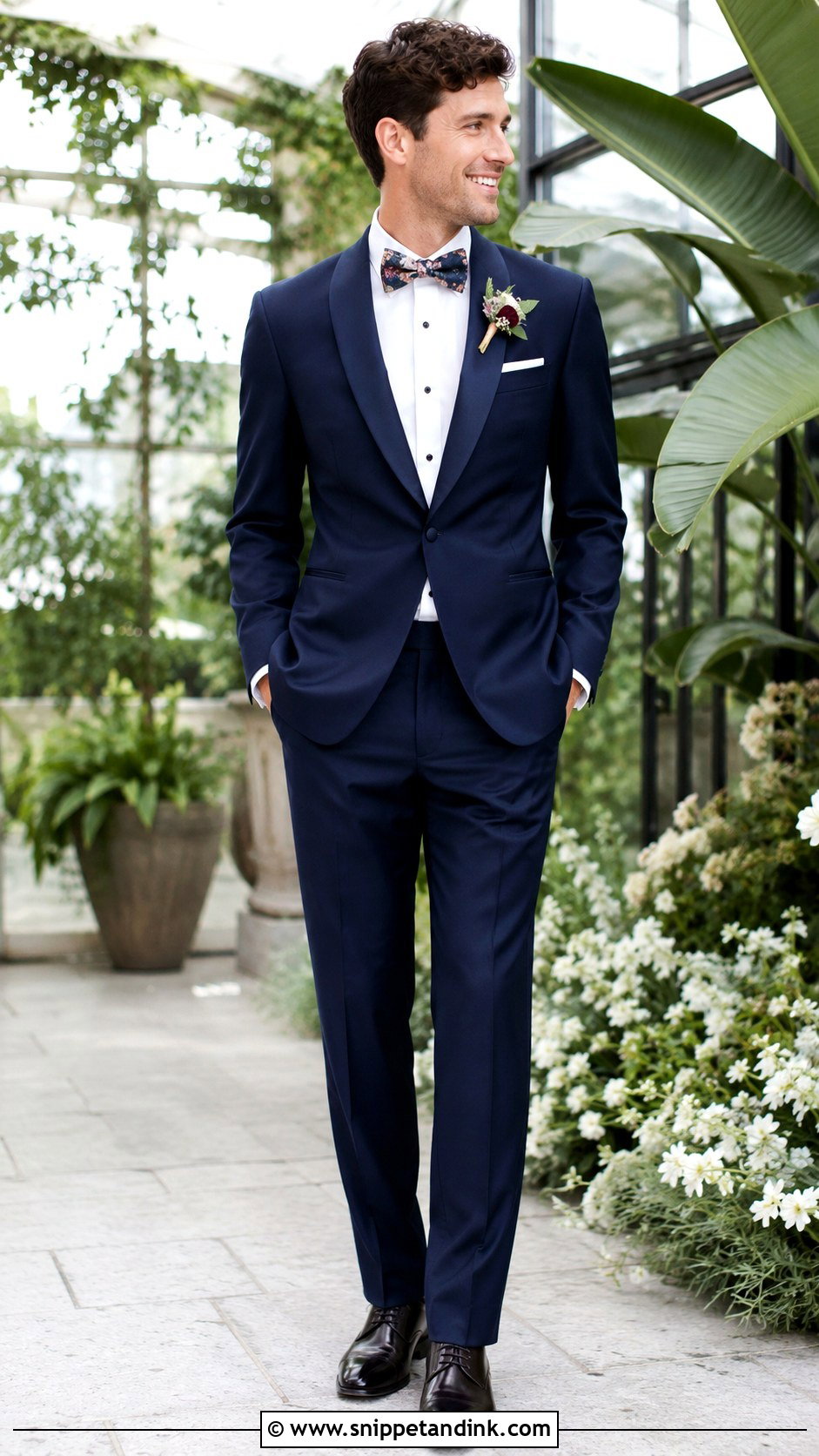
A floral bow tie makes the tux feel personal and seasonal for a garden wedding. Keep the print small, in blue, white, sage or muted burgundy, rather than bright oversized flowers. Pair it with a white shirt, simple satin lapels, matching trousers and black or dark brown shoes, plus a plain white pocket square so there’s only one pattern. The boutonniere can pick up one colour from the tie and should stay compact. Silk or a matte woven fabric looks right; a cotton print reads casual next to satin lapels, and that mismatch is what I notice first.
13. Dark Blue Tuxedo With Sage Green Tie
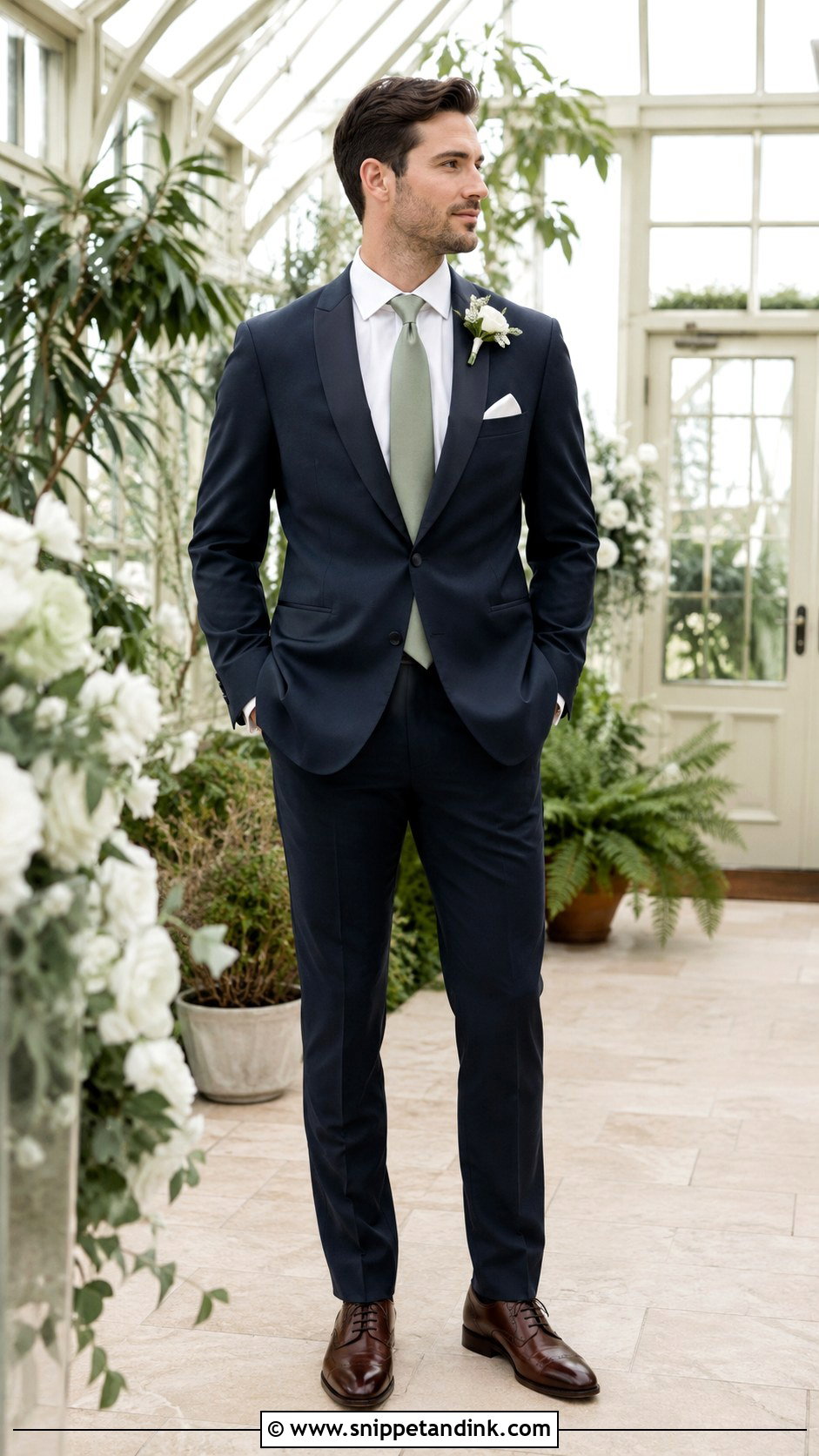
Sage is a fresh contrast against dark blue, and it ties easily to greenery-heavy flowers. Choose a slim sage silk tie or bow tie depending on formality, with a white shirt and the dark blue jacket and trousers. Dark brown Oxfords suit a semi-formal outdoor ceremony; black is better for evening. A white pocket square and a white flower with eucalyptus-style leaves on the lapel finish it. Keep the green pale and muted. Saturated green fights the blue, while a dusty sage sits with it and matches sage bridesmaids without looking like a uniform.
14. Dark Blue Tuxedo With Silver Accessories
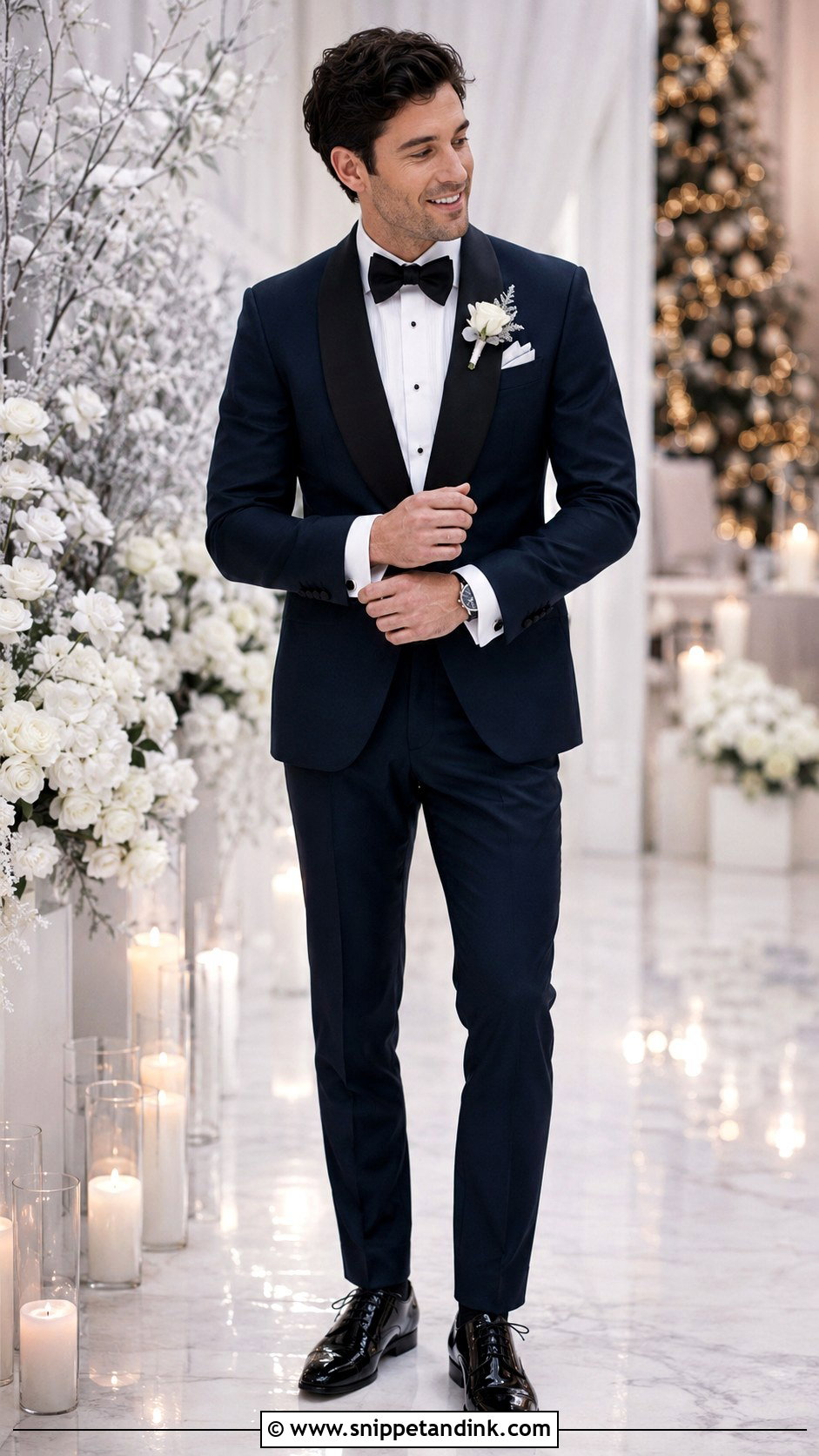
Silver keeps everything cool-toned and crisp. Start with a midnight tuxedo, a white French-cuff shirt and a black silk bow tie, then add silver links, matching studs, a slim silver watch and a white pocket square with a fine grey edge, with matching trousers and patent Oxfords. A white or pale grey boutonniere continues the palette. Stop there. Satin lapels and patent shoes already reflect light, and too many shiny pieces start to look busy in close-ups. It suits a modern ballroom or a winter venue in blue, white and silver.
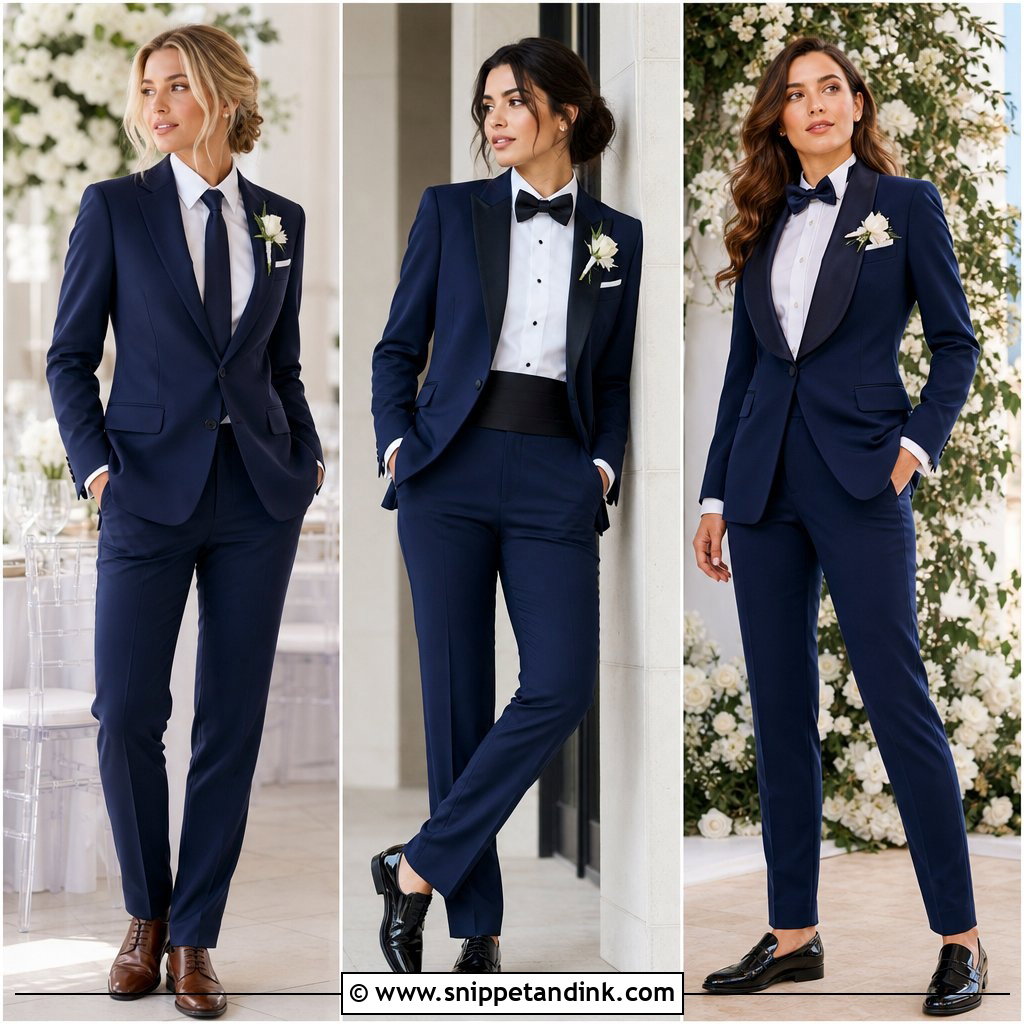
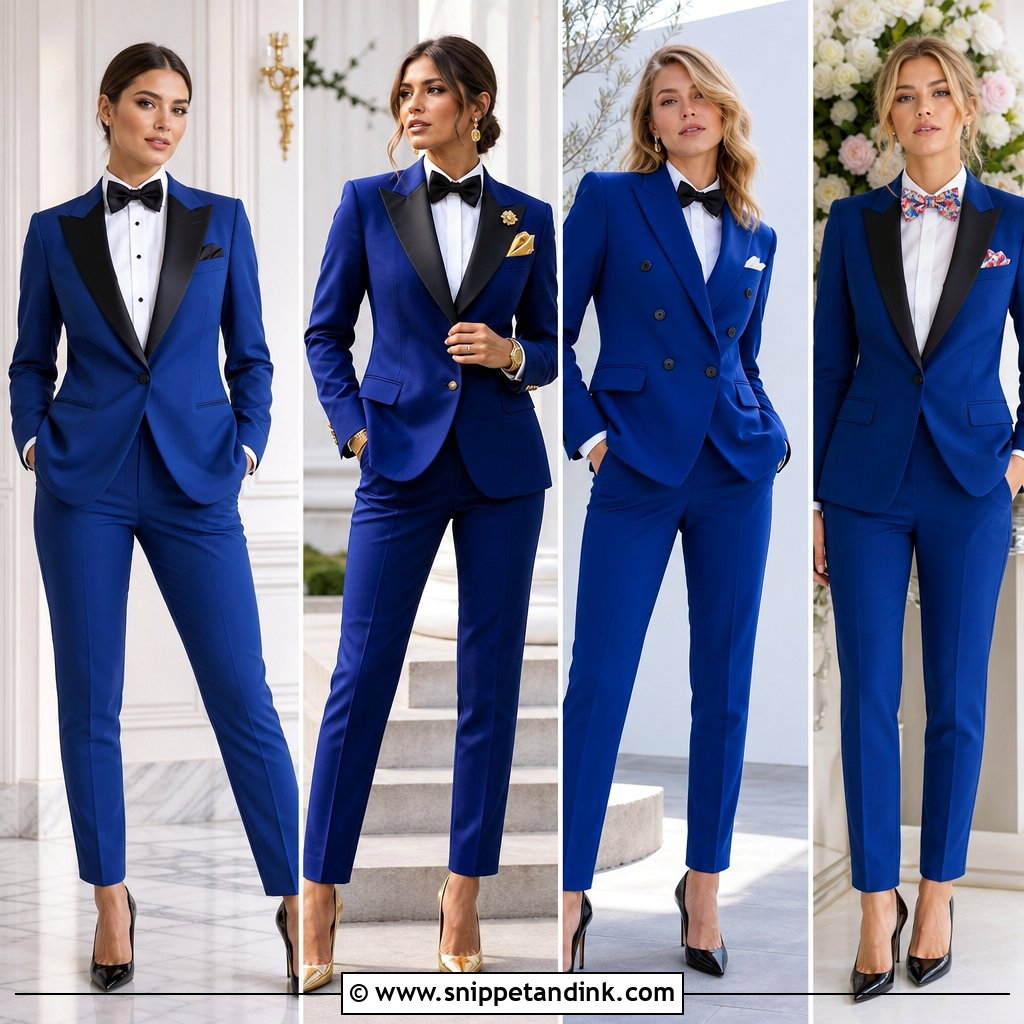
15. Dark Blue Tuxedo With Gold Accessories
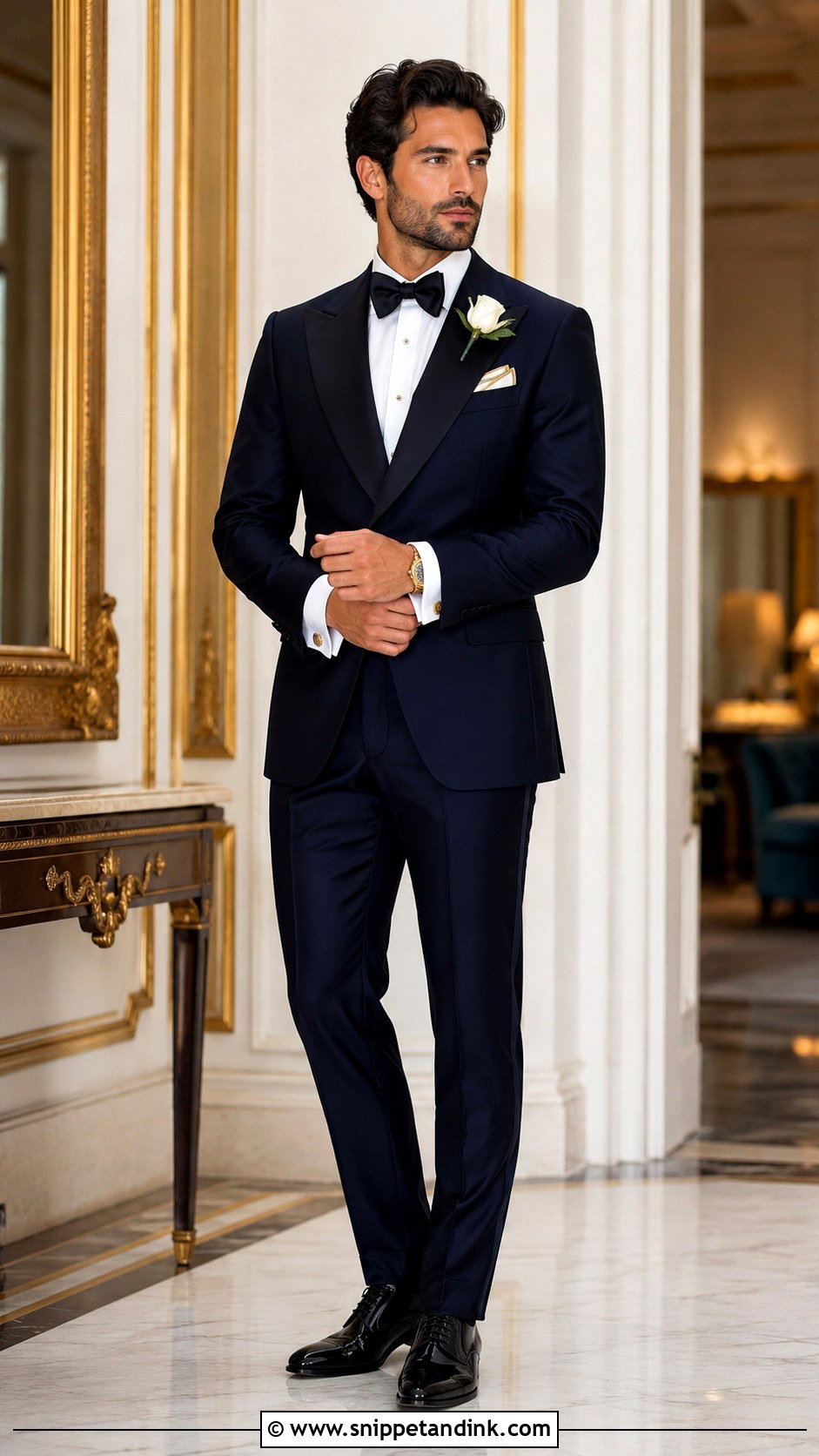
Gold warms dark blue and sits well with champagne or cream decor. Style a peak-lapel jacket with a white formal shirt and black bow tie, then brushed gold links, plain gold studs and a slim gold-toned watch. A white pocket square with a narrow champagne edge echoes the metal quietly. Matching trousers, black shoes and an ivory boutonniere finish it. I always choose brushed over high-polish gold here, because a mirror finish flares in flash photography and looks cheap even when it isn’t. It suits historic hotels and venues with gilded details.
16. Dark Blue Tuxedo With Patent Leather Loafers
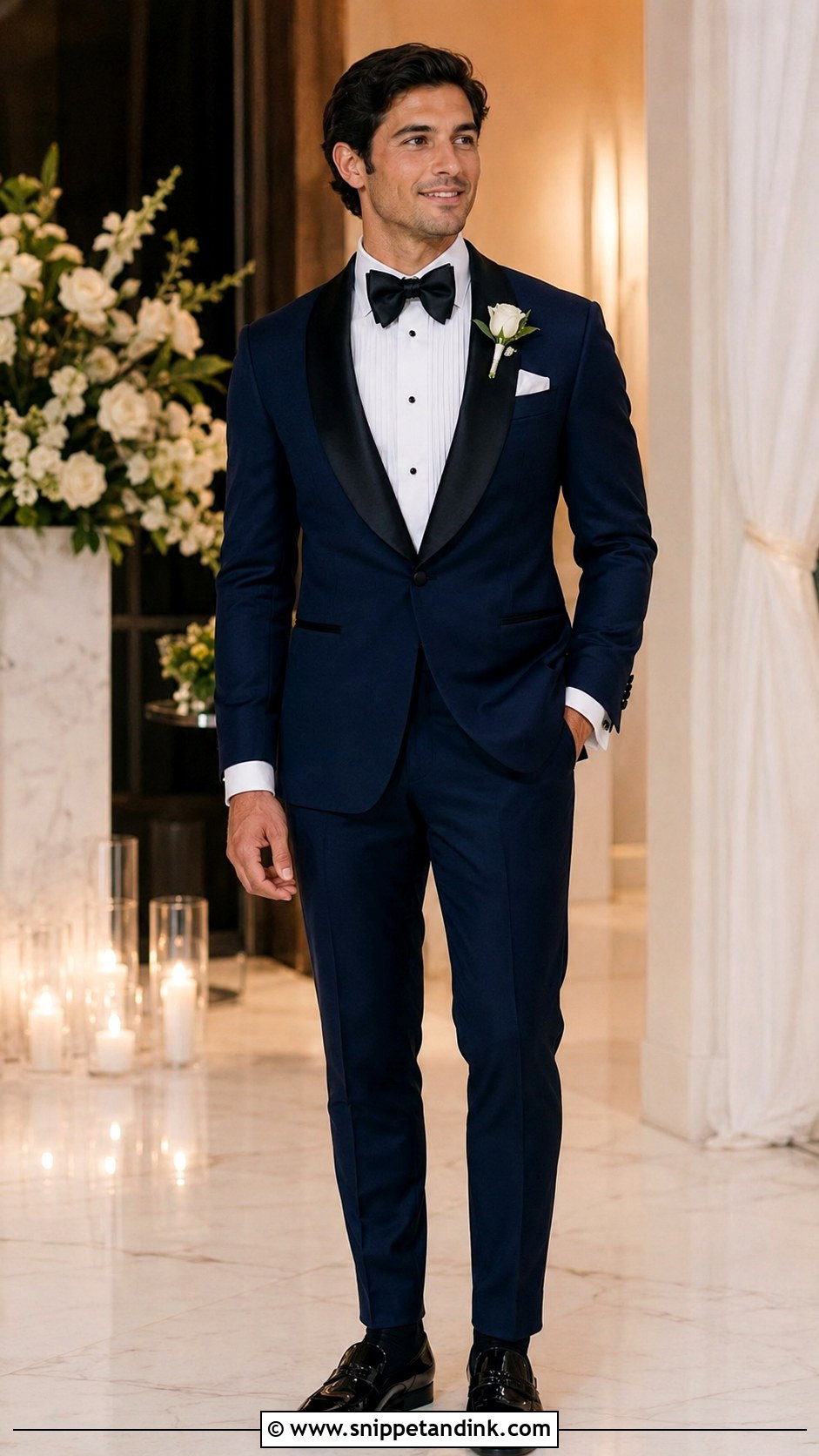
Patent loafers are a sleek alternative to lace-ups, but only the right kind. Choose a low-profile black pair with a leather sole and almost no decoration; chunky soles and driving loafers undermine a tuxedo. Cut the trousers with little or no break so the shoe line stays clean. Above, a matching shawl-lapel jacket, a white pleated shirt and a self-tie bow tie, with silver links, a straight-fold white pocket square and a small white boutonniere. Wear black silk socks long enough that no skin shows when you sit. Patent creases across the toe over time, so break the shoes in for an evening at home first.
17. Dark Blue Tuxedo With Monk-Strap Shoes
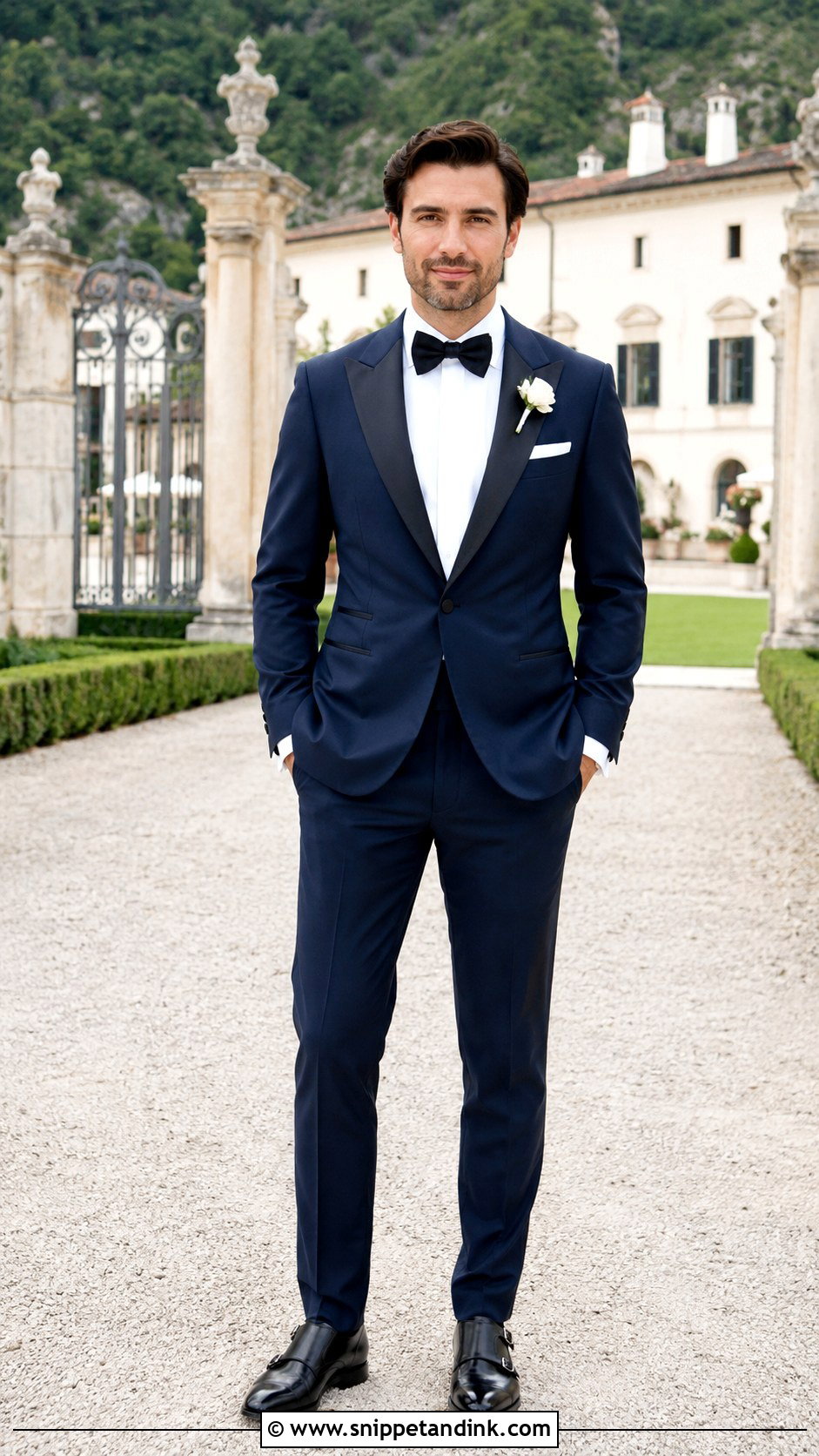
Monk straps give the outfit a small point of difference without making it loud. Pick a streamlined single or double buckle in highly polished black leather, with plain buckles rather than big ones. Wear them with tailored dark blue trousers, a matching satin-lapel jacket, a bright white tuxedo shirt, a black bow tie, silver links, a white pocket square and a small white rose or seasonal flower. They suit an estate, an elegant garden or a destination wedding. Strictly speaking, black tie calls for patent or plain lace-ups, so if your invitation is very formal I’d save monks for a slightly relaxed dress code.
18. Dark Blue Tuxedo for a Summer Wedding
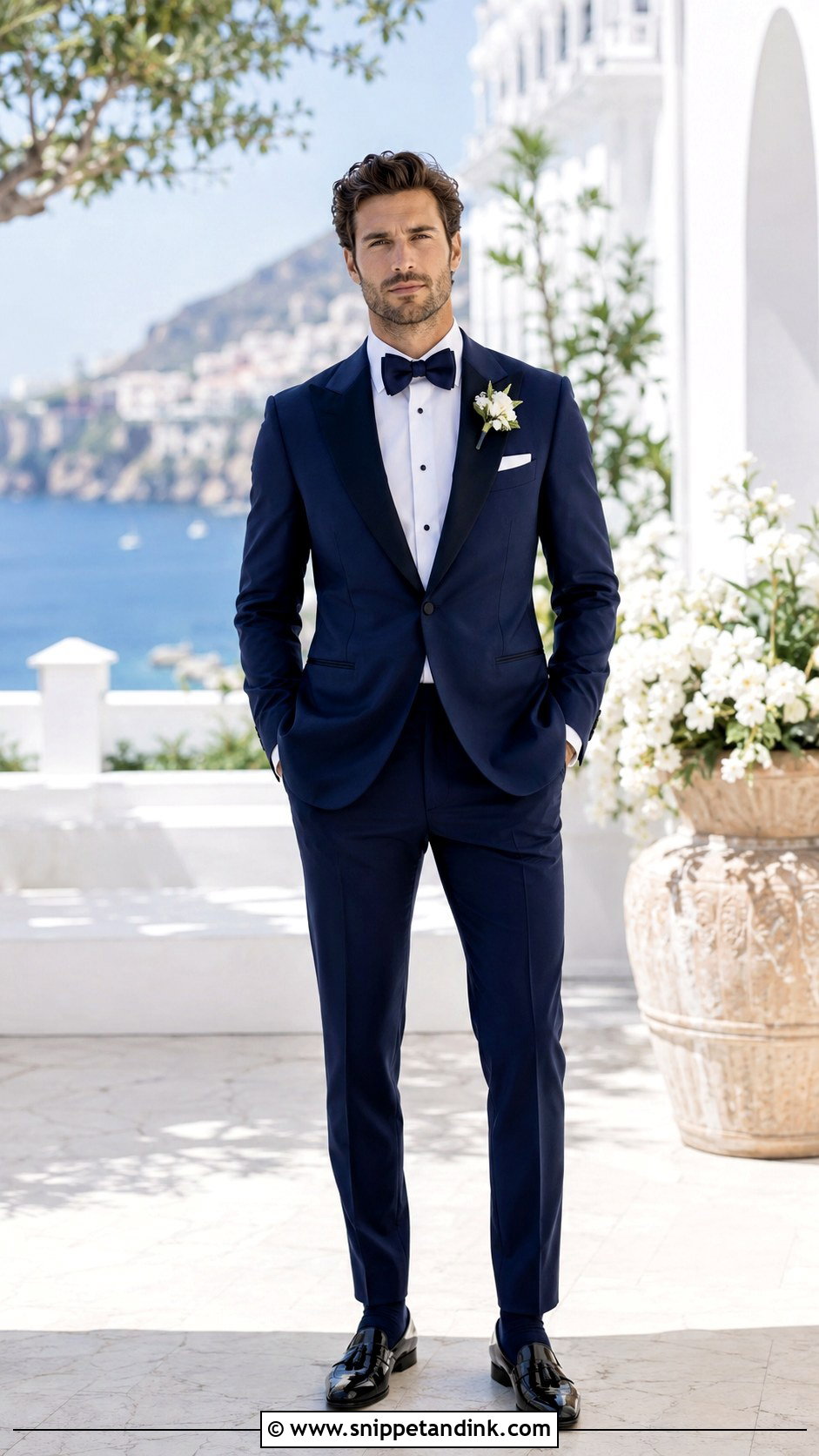
A dark tux in summer works if the construction is light. Look for tropical wool or a lightweight wool blend in deep navy, and a jacket that’s only partly lined, which lets heat out through the back. Satin peaks, matching trousers and a breathable cotton shirt with a black or navy silk bow tie keep it formal. Polished loafers, thin dress socks, a white pocket square and a small seasonal flower finish it. Leave velvet and thick waistcoats for another season. Schedule the final fitting close to the date, since summer heat and a few weeks of wedding stress can change how trousers sit at the waist.
19. Dark Blue Tuxedo for a Winter Wedding
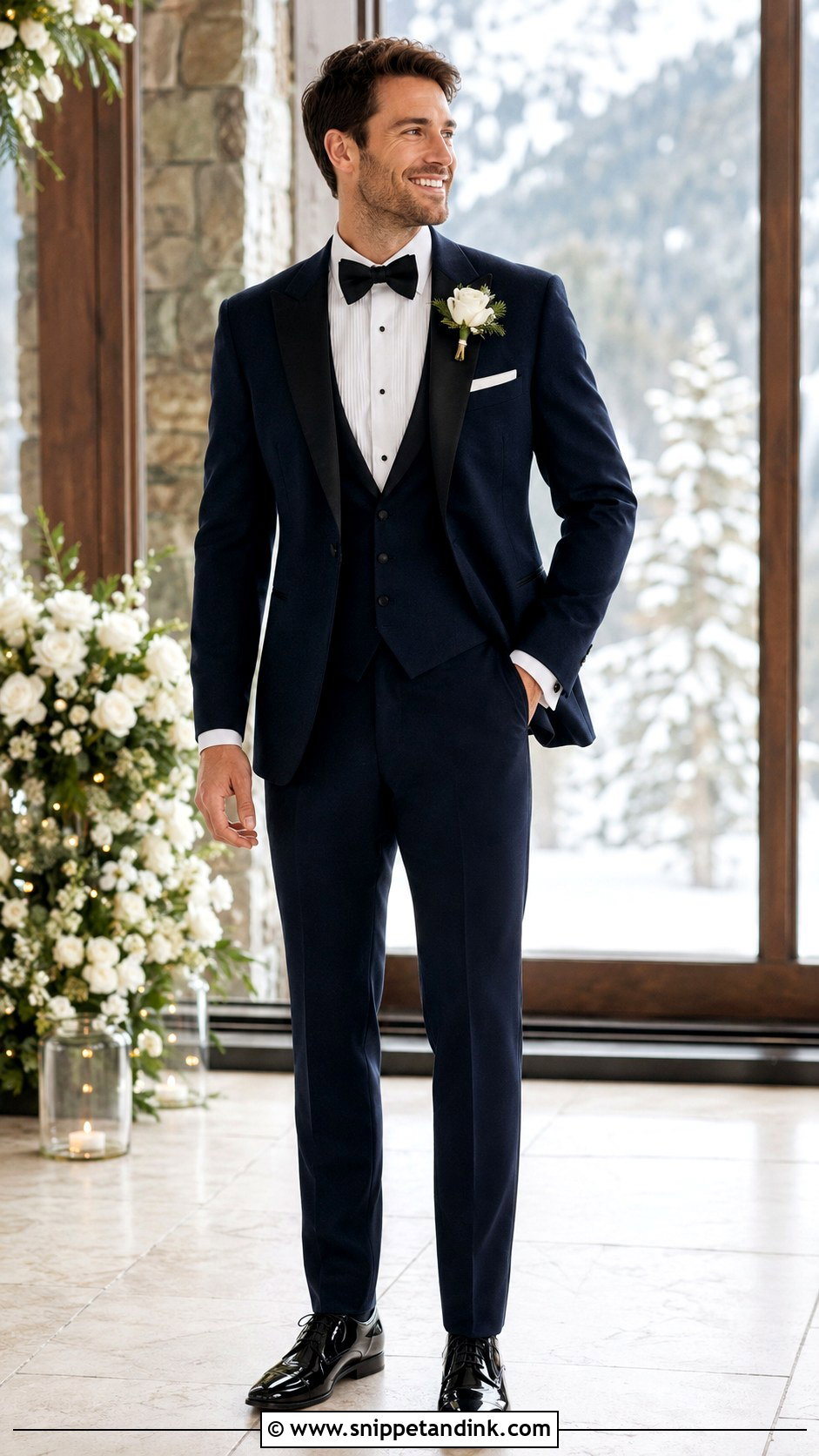
Winter is when a dark blue tuxedo can be its richest. Choose a saturated midnight jacket in substantial wool or velvet, black satin lapels, matching trousers and, if you like, a low-cut waistcoat. A white pleated shirt and black velvet bow tie add texture. Patent Oxfords, fine wool socks, silver links and a white linen pocket square complete it, with a white flower and a sprig of evergreen on the lapel. For outdoor portraits, add a tailored black or charcoal overcoat, never a puffer. I’d make sure the coat sleeves are long enough to cover the jacket cuffs completely.
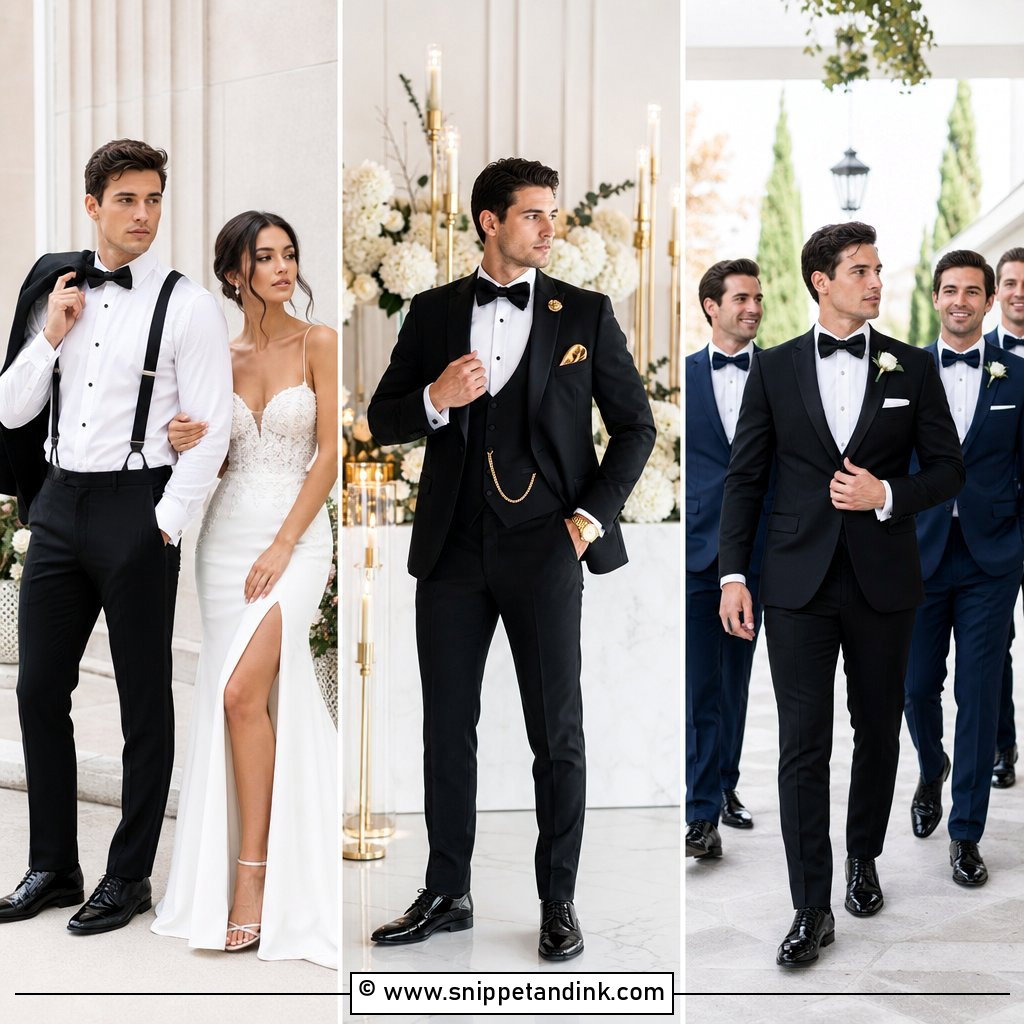
20. Dark Blue Groom Tuxedo With Black Groomsmen Tuxedos
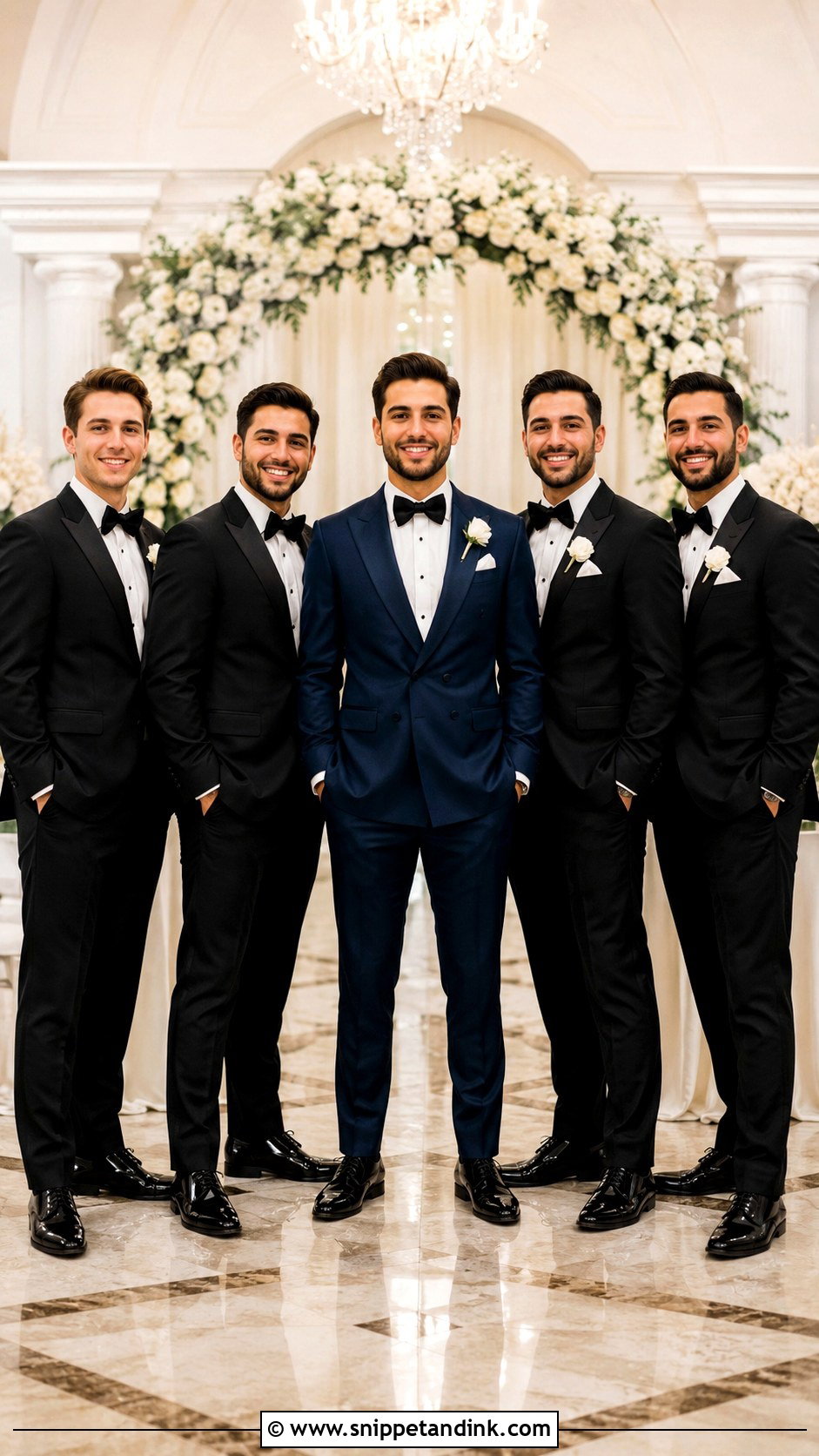
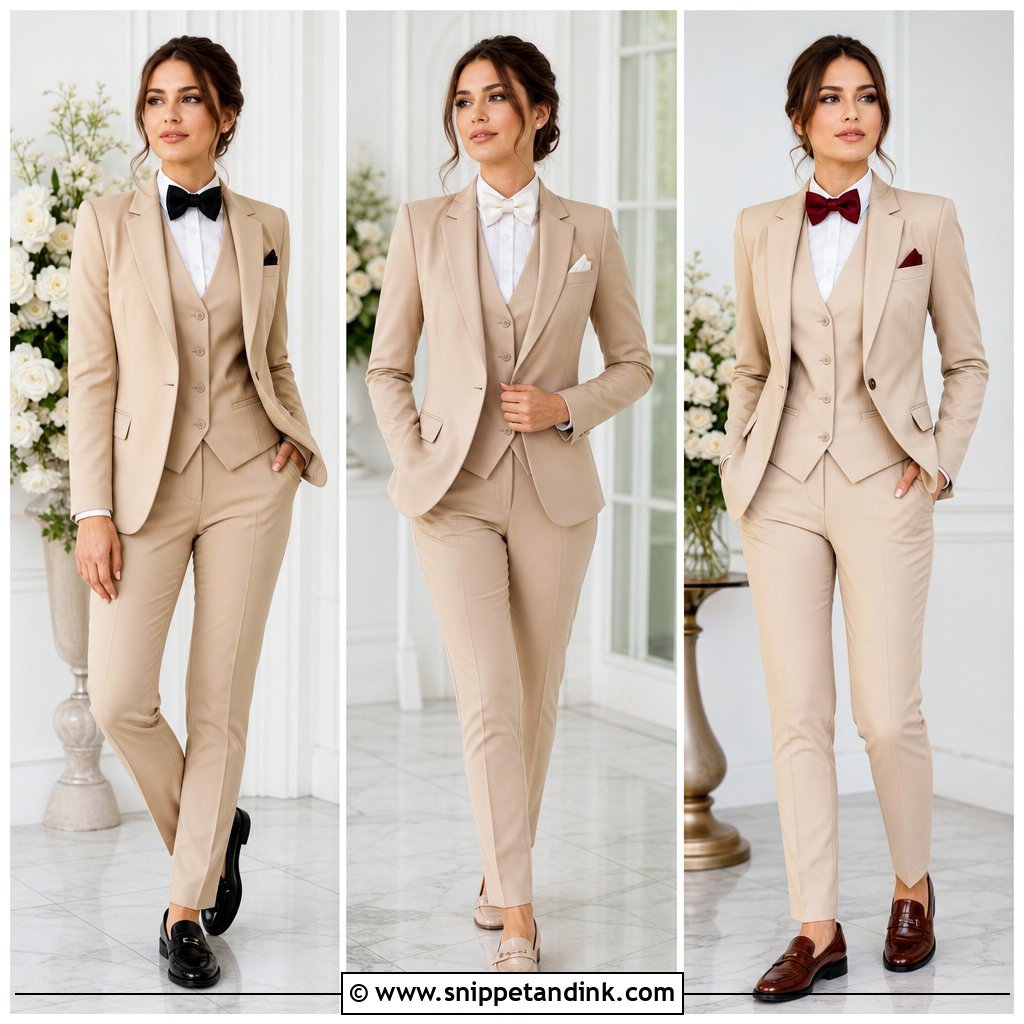
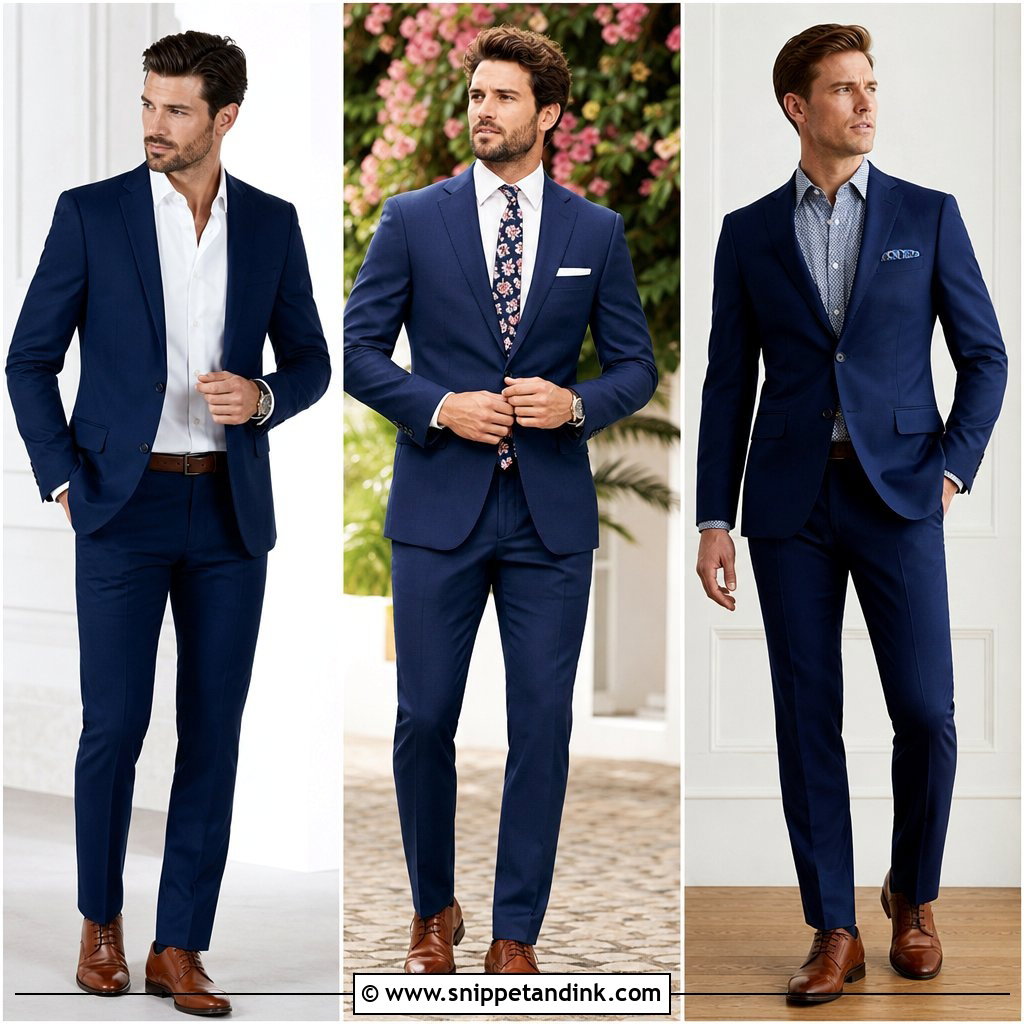
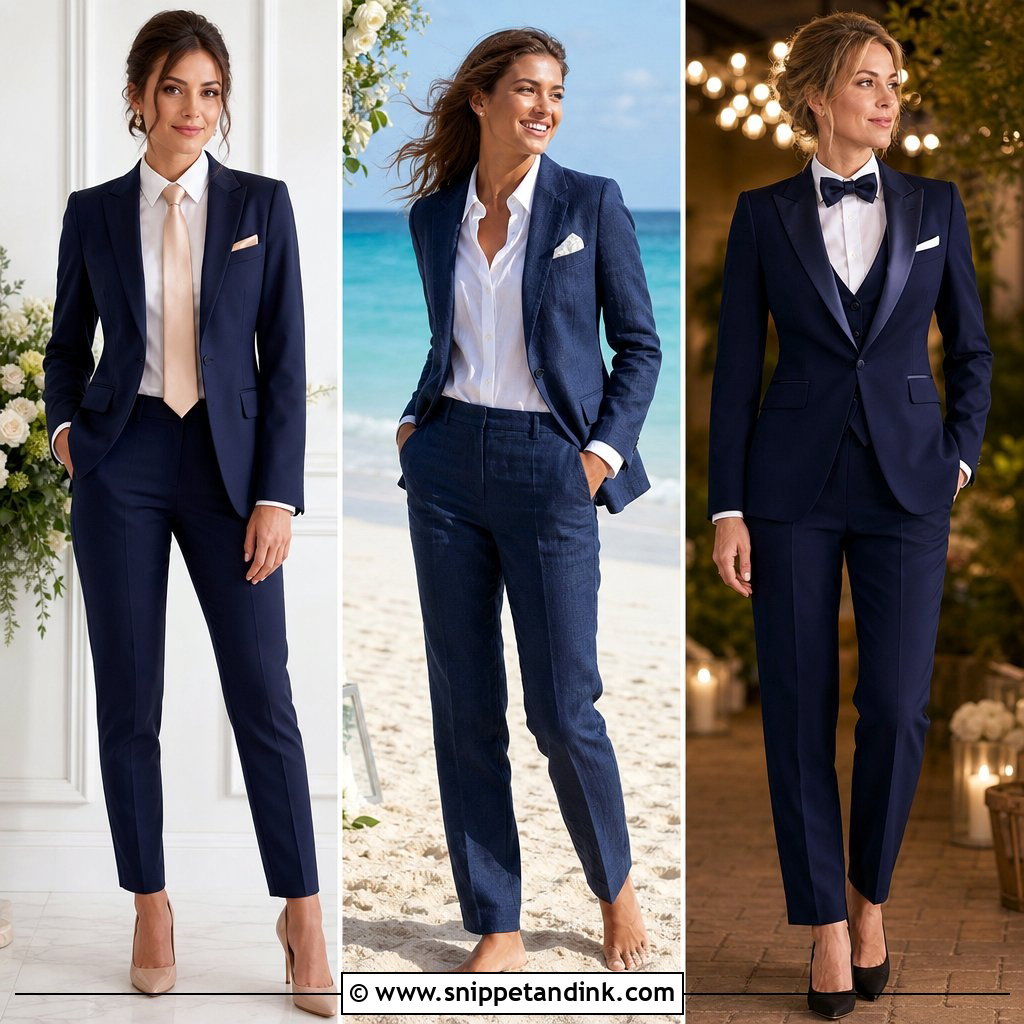
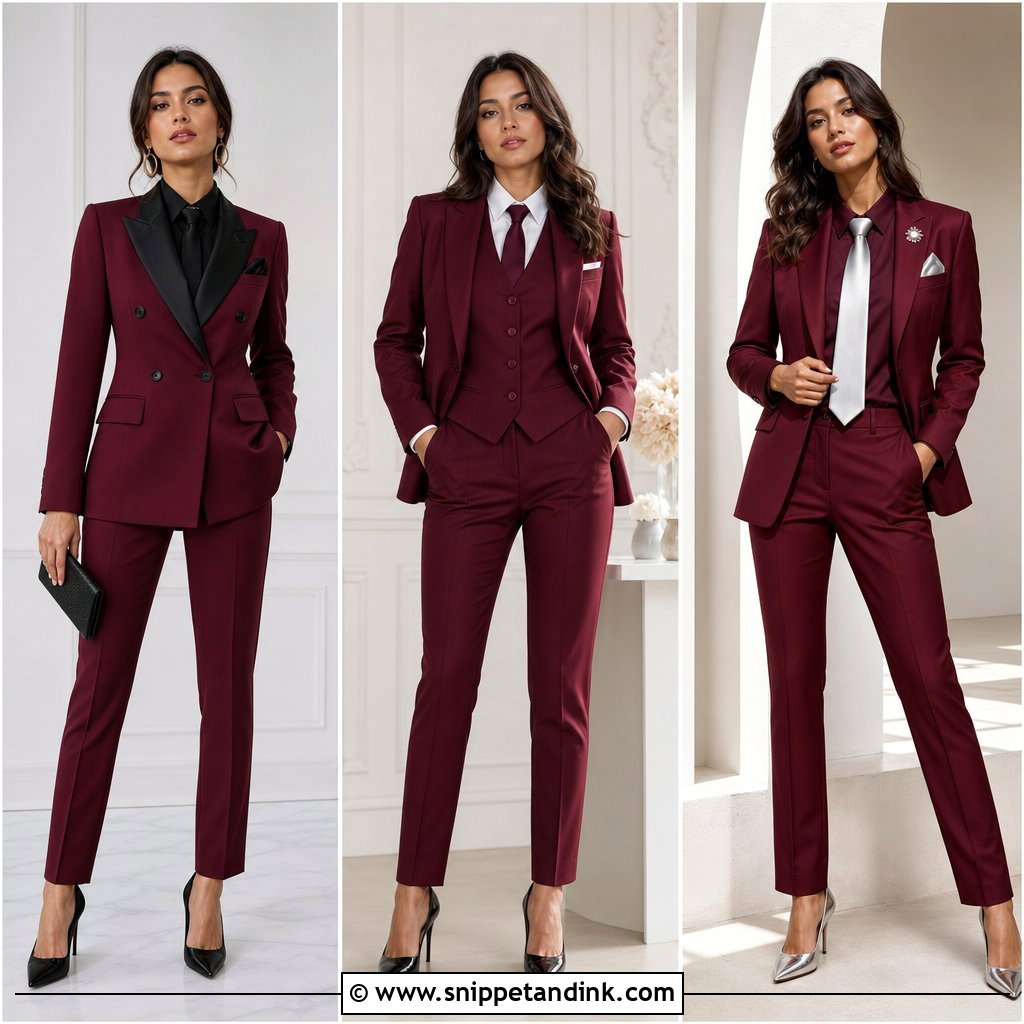
Putting the groom in dark blue and the groomsmen in black gives clear distinction while keeping the whole party formal. The groom wears midnight blue with black satin peaks, a white shirt, a black bow tie and patent Oxfords; the attendants wear classic black tuxedos with the same shirts, ties, shoes and pocket squares. Matching accessories hold the group together, and a slightly fuller boutonniere on the groom adds a second marker. I like this when a groom wants something distinctive without bringing a new colour into the wedding party. Check that the black and blue are clearly different in daylight, or the photos just look mismatched.
Getting Six Blue Tuxedos to Match
Black is forgiving across a line of groomsmen. Dark blue isn’t, because shades vary between makers, cloth batches and even rental stock that’s been cleaned many times. A few habits avoid a mismatched row at the altar.
- Order every jacket and pair of trousers from one source, at the same time, so they come from the same cloth.
- Get each person measured properly by the shop rather than sending sizes by text. Out-of-town groomsmen can usually be measured at a branch near them.
- Have the tuxedos arrive several days before the wedding, not the evening before, so there’s time to swap a size.
- Line everyone up in daylight for a quick check of shade and fit. One jacket that’s a touch brighter stands out in group photos.
- Decide whether the groom’s tuxedo is the same blue or deliberately different, and make that difference obvious, such as velvet or a different lapel.
Renting suits most groomsmen. If the groom plans to wear his again, buying and tailoring makes sense, and dark blue is easier to rewear at other formal events than an all-black wedding tux.
Will the Blue Still Read as Blue in Your Venue?
A dark blue tuxedo suits almost any wedding, as long as the blue survives the lighting. Start with the tailoring and a fabric weight that suits the season, then pick a shade that stays visibly blue in the room you’re marrying in. Build the rest around it: a formal shirt, neckwear that has a reason to be there, polished shoes and only a few accessories. Black and white keep it classic; burgundy, sage, silver or gold link it to the wider palette. And take a photo of yourself in it under the venue’s evening lights if you can. That one picture tells you more than any swatch.
You'll Like These Ideas:


Leave a Reply