
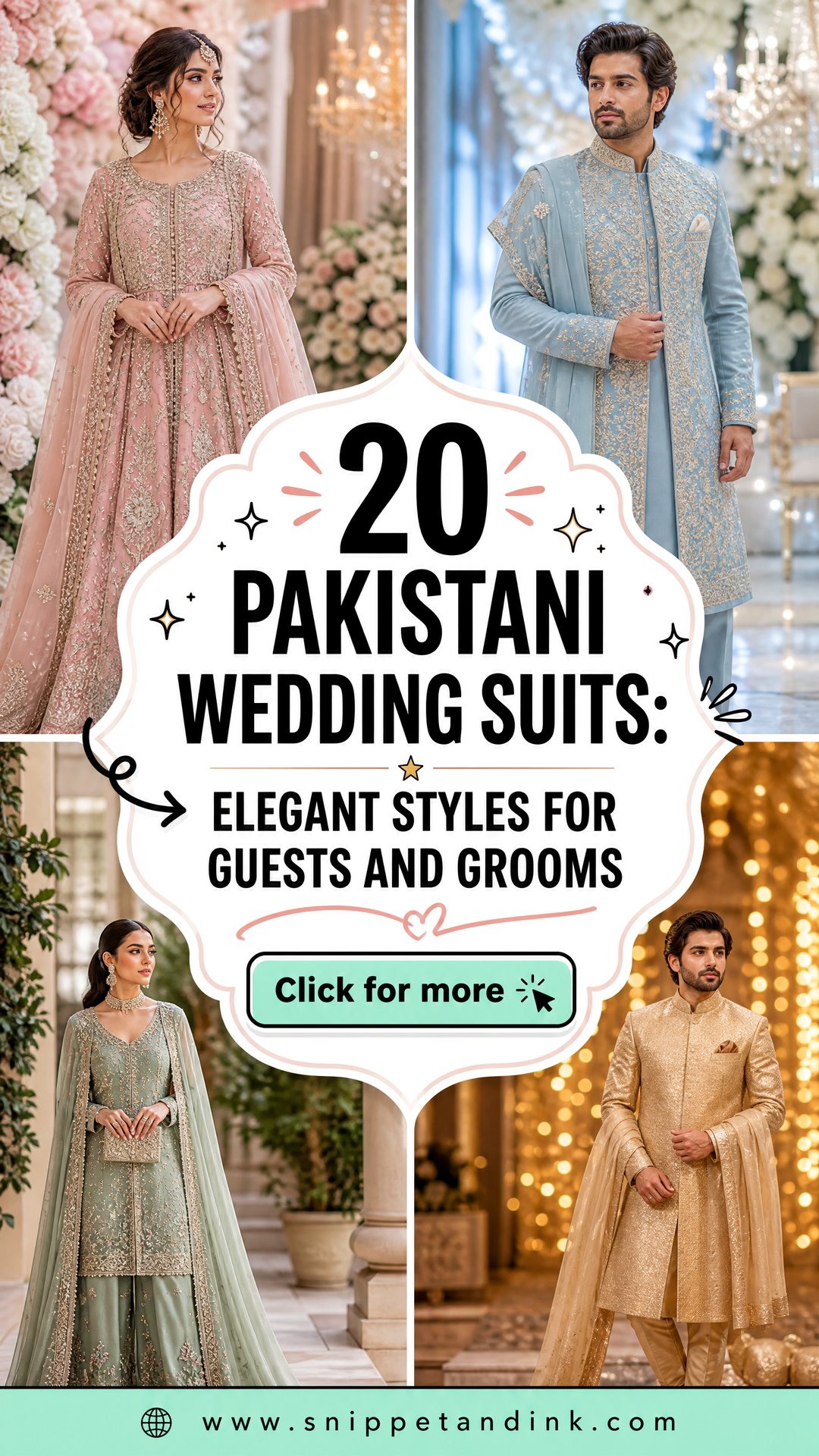
A Pakistani wedding rarely asks for one outfit. It asks for four or five, spread across the nikah, mehndi, baraat and walima, and each event has its own mood, lighting and level of formality. When I style a family for a wedding week, I start with the cut (gharara, sharara, peshwas, straight shirt, cape) and only then talk about color, because the silhouette decides how comfortable you’ll be sitting on a stage or dancing at midnight. Below are twenty complete looks with the jewelry, shoes and bag I’d put with each, plus notes on where the fabric or fit tends to cause trouble. Treat the embroidery level as a dial you turn up or down depending on your place in the wedding: bride, close family or guest.
Which Silhouette Suits Each Wedding Function
When a family hands me the event schedule, I sort outfits by function before anyone looks at colors. Each event asks something different of the clothes, and the wrong cut at the wrong function is the most common mistake I see.
- Nikah: often daytime and seated, sometimes in a mosque or a home. Lighter colors, a modest neckline and a dupatta that stays on the head without constant re-pinning. Ivory, white chikankari and pastels belong here.
- Mehndi: hot, crowded and full of dancing. Short kurtis, ghararas and shararas in light fabric, mirror work and gota. Flat khussas, because heels sink into lawns and rugs.
- Baraat: the most formal night. Velvet, raw silk, heavy zardozi and deeper colors. Guests should stay a step below the bride in color and weight.
- Walima: calmer and often more modern. Peshwas, capes, jackets and pastel or metallic tones read well under reception lighting.
Your role matters as much as the event. A sister of the bride can wear heavier work than a colleague, and nobody but the bride should arrive in bridal red at the baraat. If you’re unsure, ask the family what colors they’re wearing; many families coordinate the bride’s sisters and leave guests free.
1. Ivory Gharara Pakistani Wedding Suit
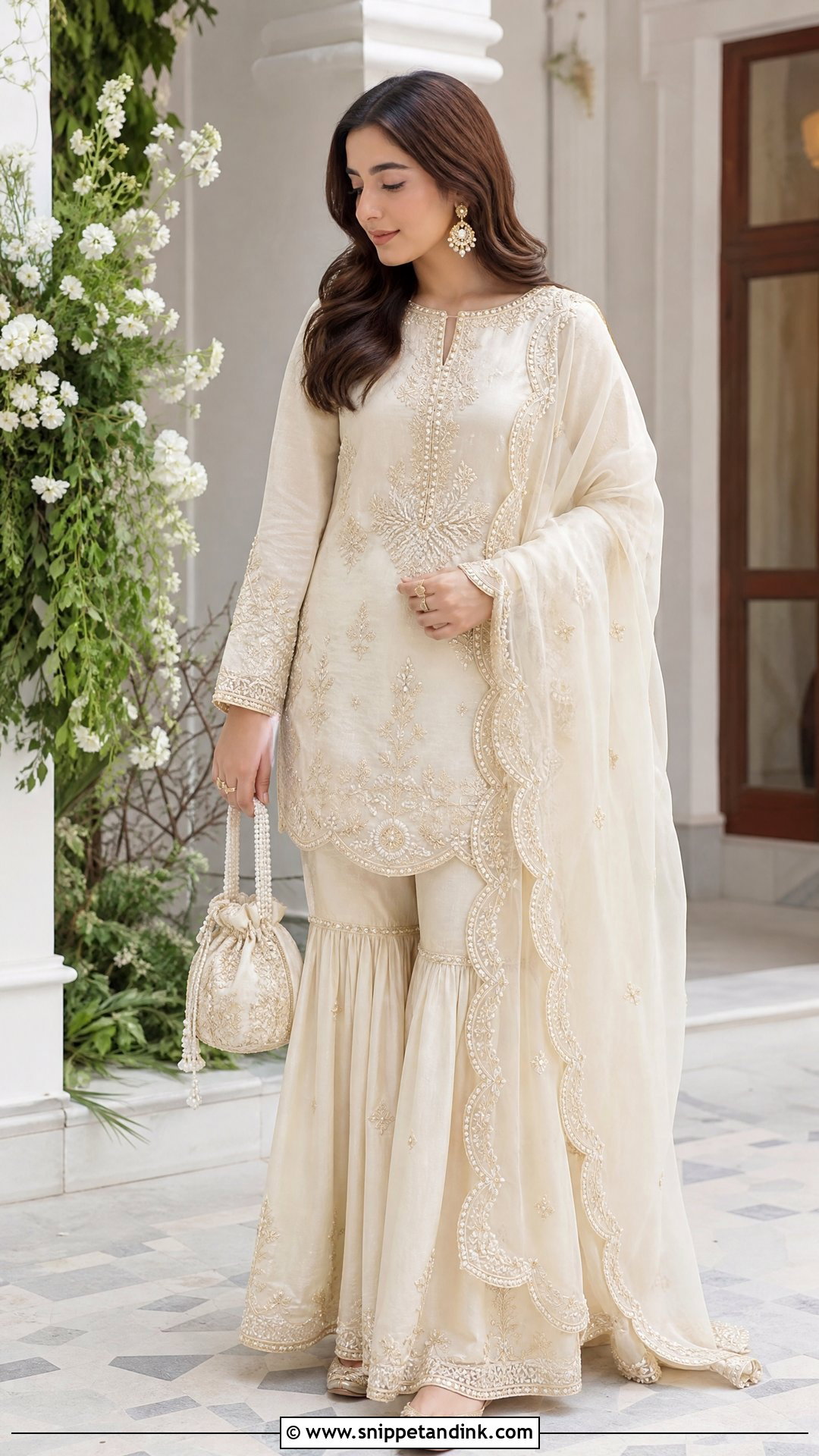
Ivory is my first suggestion for a daytime nikah, but it needs texture or it goes flat on camera. I’d pick a short raw silk kameez with pearl or pale gold work at the neckline and cuffs, over a traditional gharara that stays fitted to the knee and then breaks into a structured flare. Check that knee joint at your fitting: if the gather sits too high, the gharara swings oddly when you walk. A sheer organza dupatta with a scalloped edge, pearl drops, an embroidered potli and metallic khussas finish it. Tonal thread or small sequins catch daylight far better than plain silk.
2. Emerald Sharara Pakistani Wedding Suit
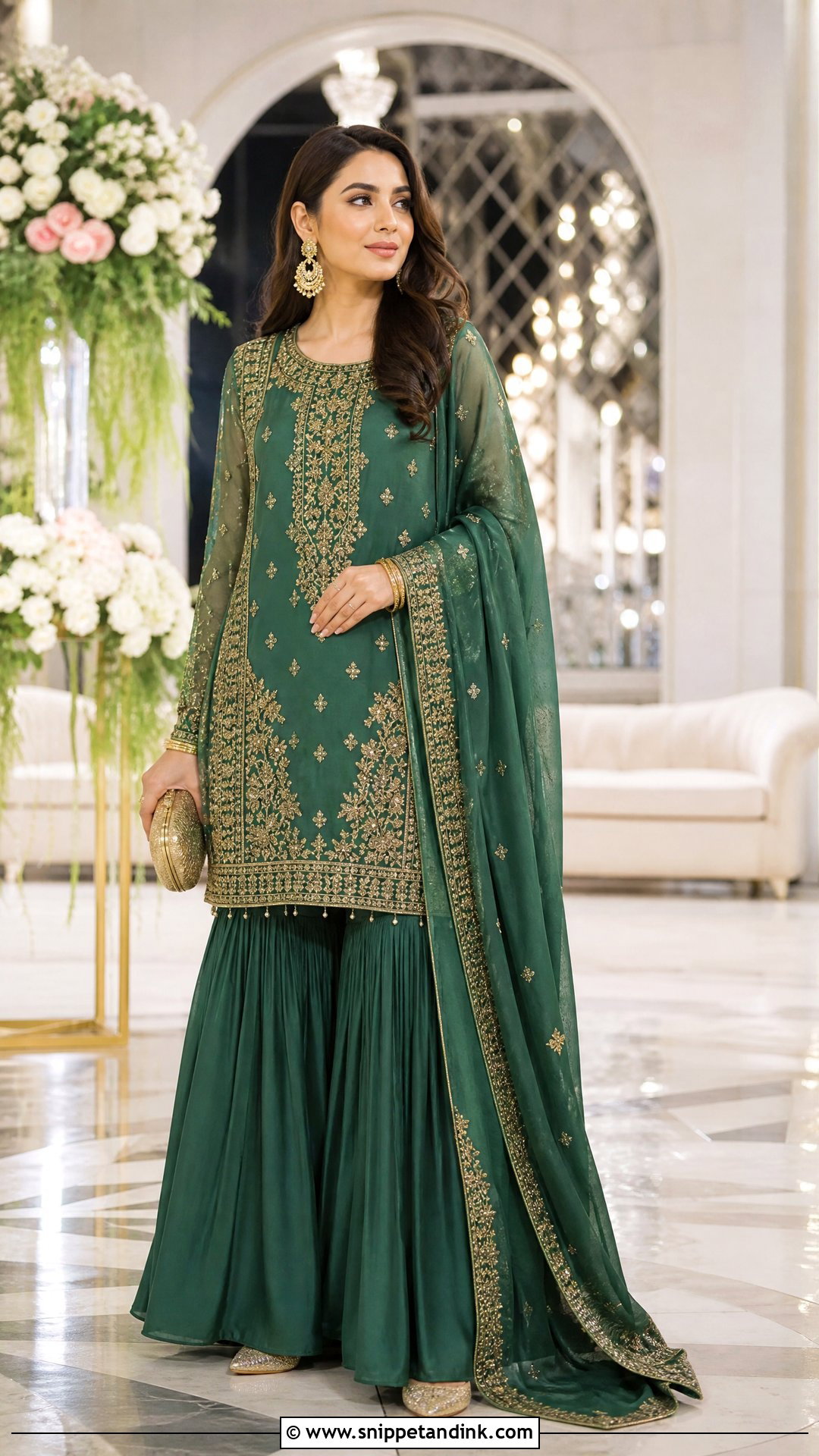
Deep emerald green is at its strongest under warm evening light, which is why I save it for receptions rather than garden lunches. Pair a mid-length kameez with a sharara in chiffon, silk or lightweight jamawar, and let gold zardozi carry the warmth. One rule I hold to: if the shirt is heavily worked, the sharara gets embroidery only near the hem, otherwise the whole outfit reads as one green block. Antique gold earrings, slim bangles and a structured clutch are enough. Wear pointed flats or a low block heel, since a wide sharara leg hides your feet and you’ll want stable footing on stairs.
3. Maroon Anarkali Pakistani Wedding Suit
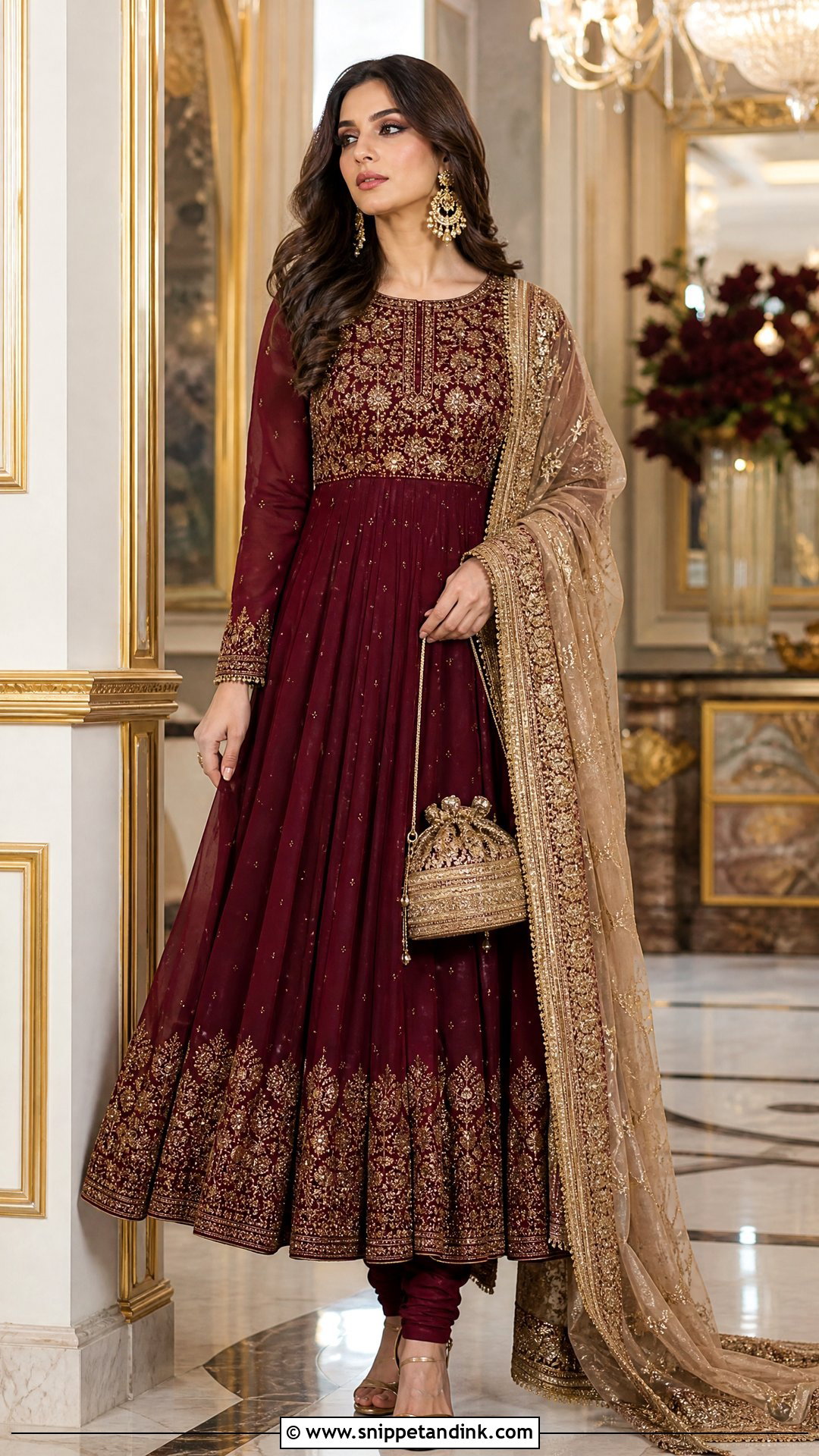
A maroon Anarkali is one of the easiest long-event outfits I know, because all the volume hangs from the bodice and nothing pulls at the waist when you sit. Look for chiffon, silk or velvet-trimmed net, with gold work kept to the yoke and hem. Slim churidar underneath, a lighter maroon or antique gold dupatta over one shoulder, chandelier earrings and heeled sandals. Fit is about panel count. On a petite frame I reduce the flare so the dress doesn’t swallow you; taller women can carry a twenty-plus-panel skirt without it looking like a costume.
4. Blush Pink Peshwas Pakistani Wedding Suit
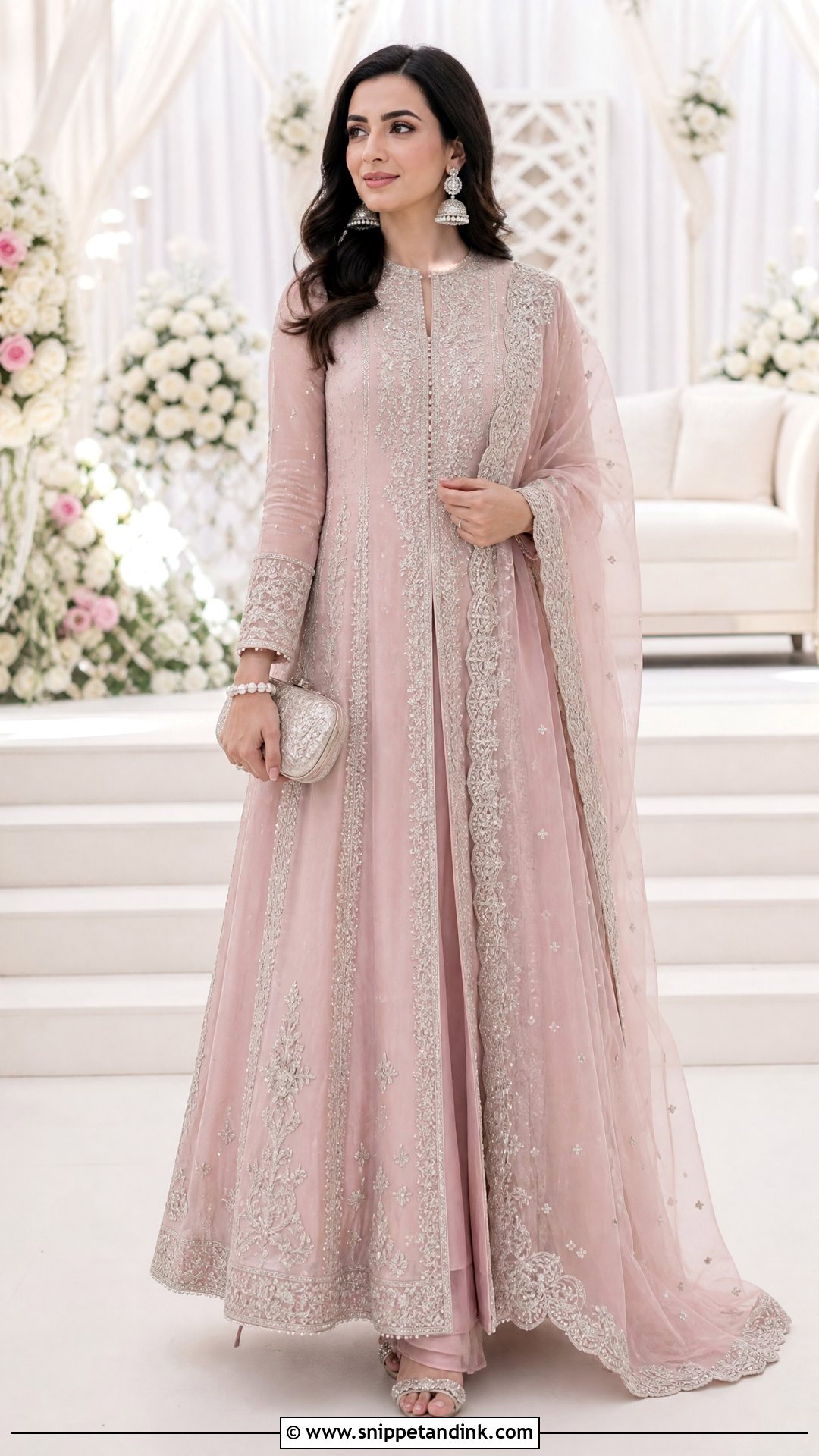
Blush peshwas outfits have one weak point: the dupatta. A heavy embroidered border drags on a lightweight organza or net dress and distorts the panels, so I keep the border narrow and put the detail in the corners instead. Choose a long paneled dress with a defined waist and fine silver embroidery, with straight silk trousers underneath. Silver jhumkas and a pale metallic clutch suit the cooler thread. Pale pink can wash you out in bright daylight, so go one shade deeper on the lip or define the eyes a little more than usual.
5. Navy Straight-Cut Pakistani Wedding Suit
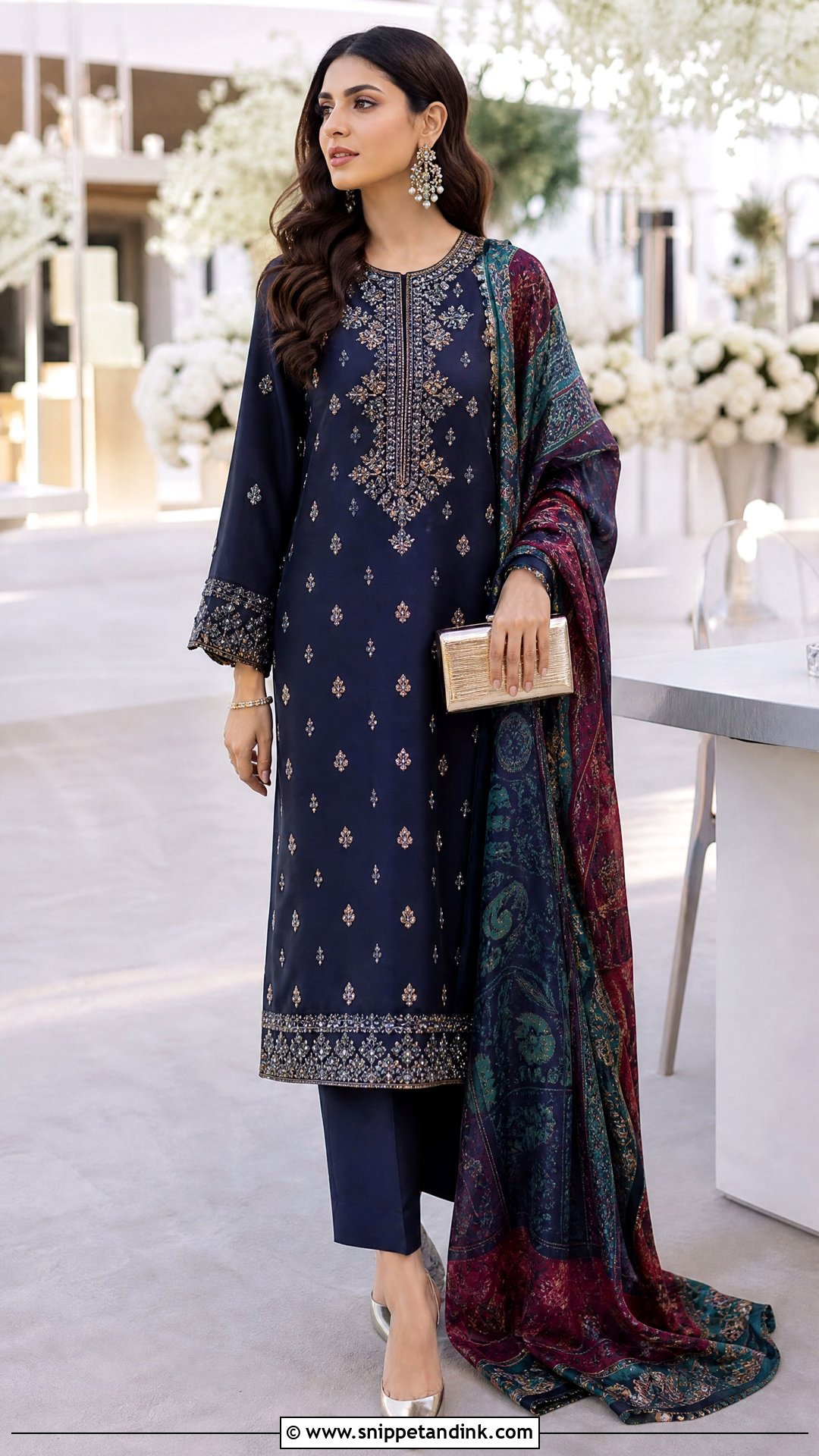
Not everyone wants a flare. A navy straight-cut suit is what I suggest to guests who like a clean line and still want formal detail. Go for a long raw silk shirt with a structured neckline, side slits and gold work concentrated on the borders, over straight trousers that break neatly on pointed metallic shoes. A printed silk dupatta can bring in maroon or teal; a sheer embroidered one keeps everything tonal. The fit point I watch here is the hip: if the shirt pulls across it when you sit, the side slits gape open, and no amount of embroidery hides that.
6. Mustard Mehndi Pakistani Wedding Suit
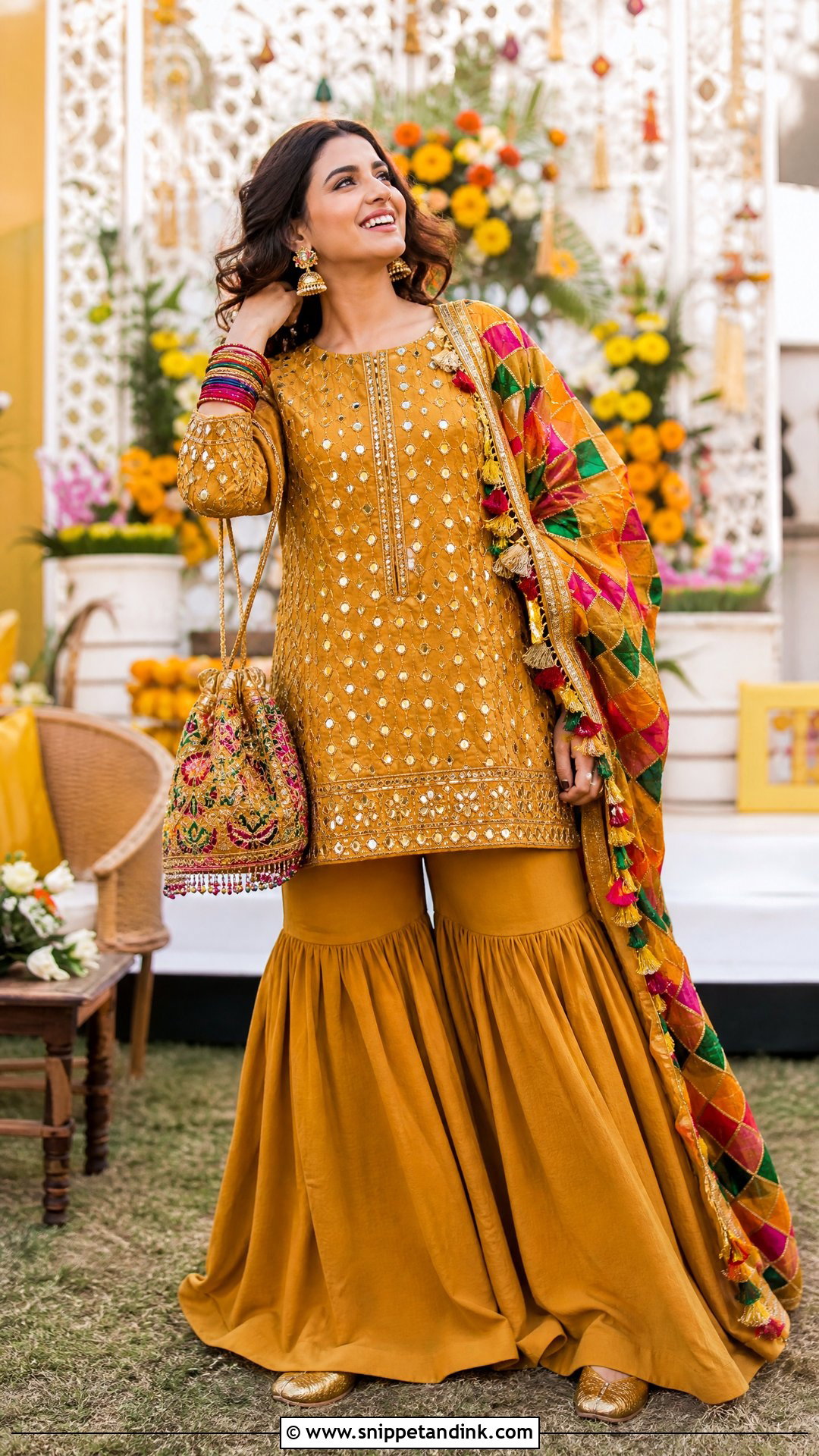
Mustard belongs at a mehndi. Start with a short kurti carrying mirror work or gota, and wear it with a wide sharara in the same shade or a green base for contrast. A tasseled dupatta in pink, orange or turquoise ties the palette together, and colorful bangles, jhumkas, a potli and gold khussas do the rest. Keep the fabric light. Mehndis are often outdoors and involve a lot of dancing, and a heavy sharara in summer heat becomes miserable within an hour. A loose braid holds up to that far better than open curls.
7. Red Bridal Pakistani Wedding Suit
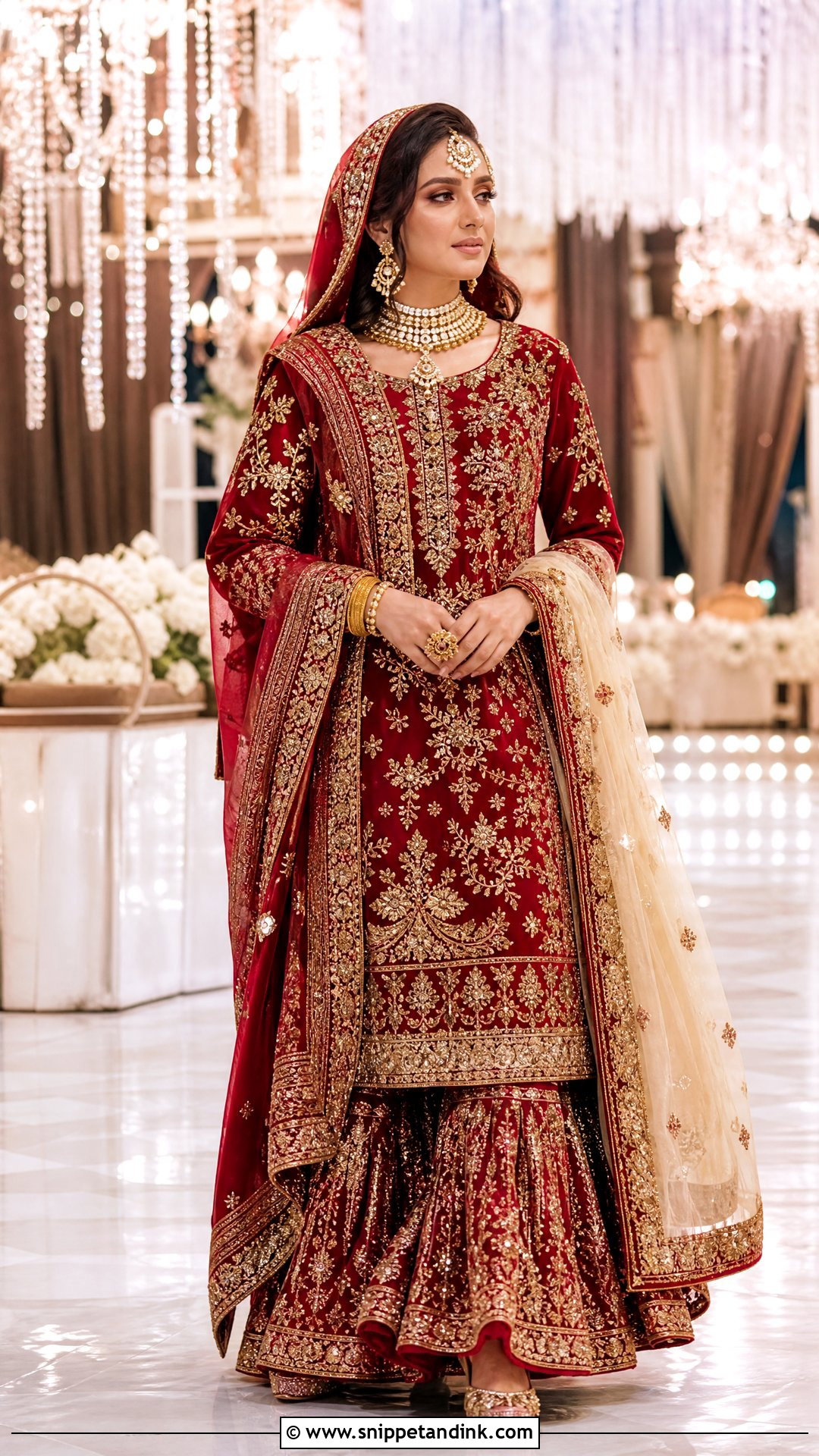
For brides who find a full lehenga too heavy, a red kameez with gharara or sharara gives the same traditional weight with much easier movement. Velvet or raw silk carries zardozi, dabka and sequin work well, and the lower border of the trousers can be as ornate as you like. I often use two dupattas: the main one over the head, a lighter one across the shoulder. Pin the head dupatta at several points, not one, so it doesn’t slide each time you turn. With this much surface detail, the bag stays small, and the trouser length has to clear your heels by a finger’s width so you can walk down a stage without stepping on the hem.
8. Powder Blue Walima Pakistani Wedding Suit
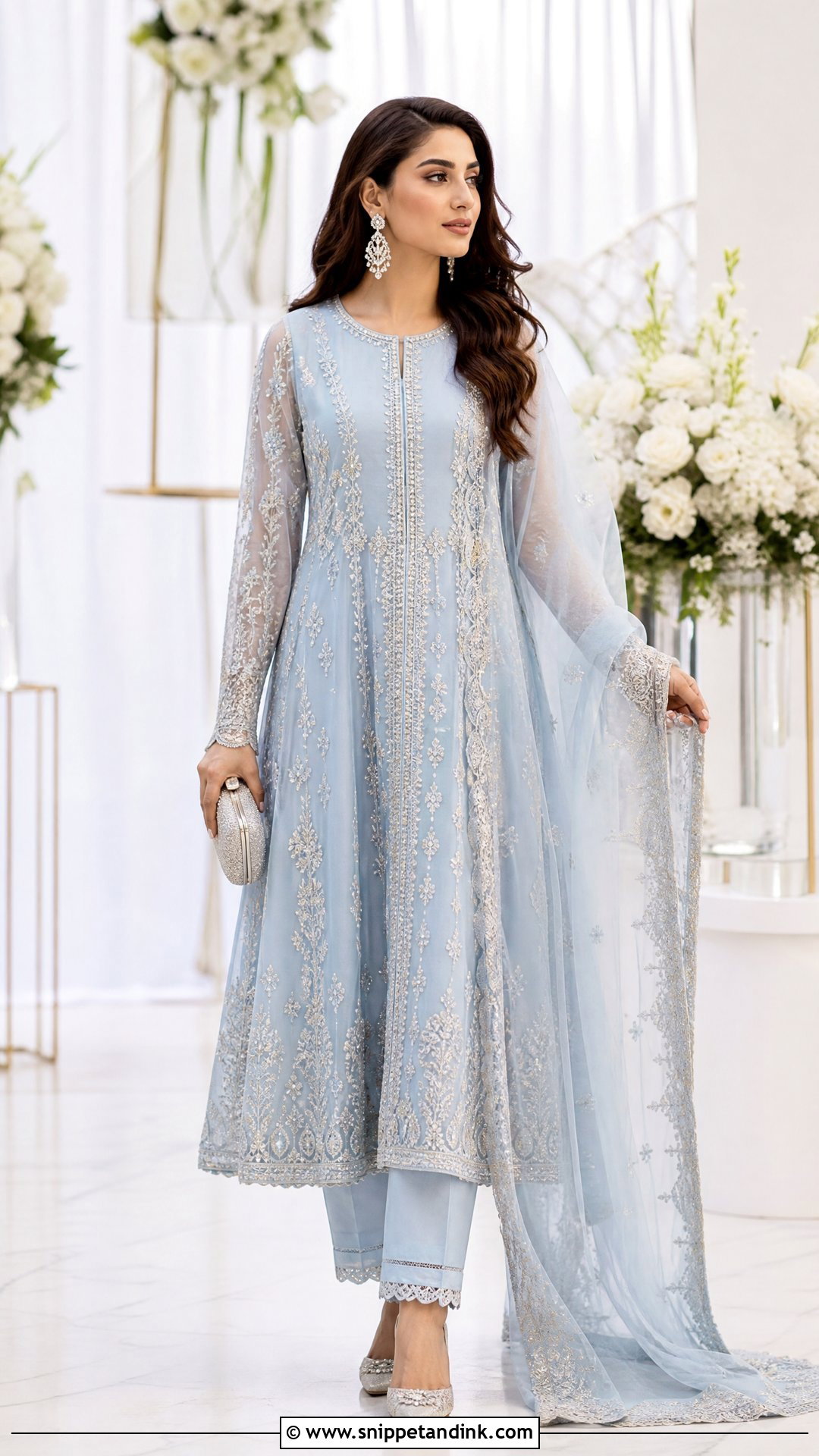
Pastels and strong venue lighting don’t always get along. Powder blue loses its edges under bright overhead light, which is why I look for a walima peshwas with visible panel seams, silver threadwork or crystal edging that gives the eye something to follow. Wear it over matching straight trousers with a sheer dupatta bordered in silver. Crystal earrings and pointed embellished heels keep the palette cool. If you don’t want the volume, swap the peshwas for a long straight shirt and cigarette pants in the same blue.
9. Black Velvet Pakistani Wedding Suit
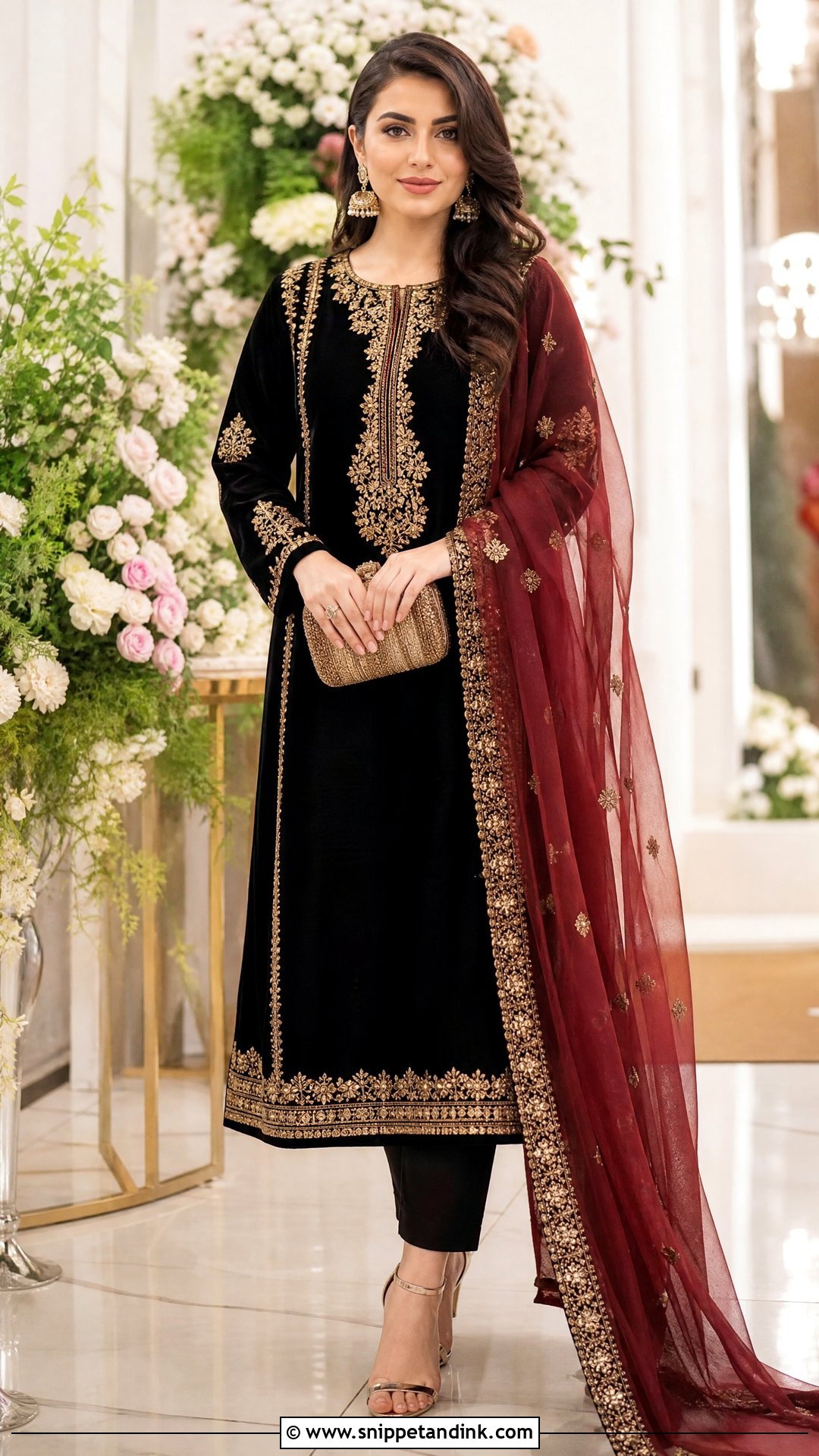
Black velvet is a winter fabric, full stop. In a heated hall it’s fine; at a summer outdoor event you’ll be uncomfortable within the first hour. Choose a knee or calf-length velvet kameez with antique gold work at the neckline, sleeves and hem, and leave plenty of plain pile showing, since velvet already has a rich surface and full coverage embroidery just looks heavy. Straight raw silk trousers or a light gharara both suit it. An organza dupatta in black, deep red or muted gold lifts the density. Velvet crushes where you sit, so ask the tailor for a little ease through the seat and steam it on the day rather than pressing it.
10. Sage Cape Pakistani Wedding Suit
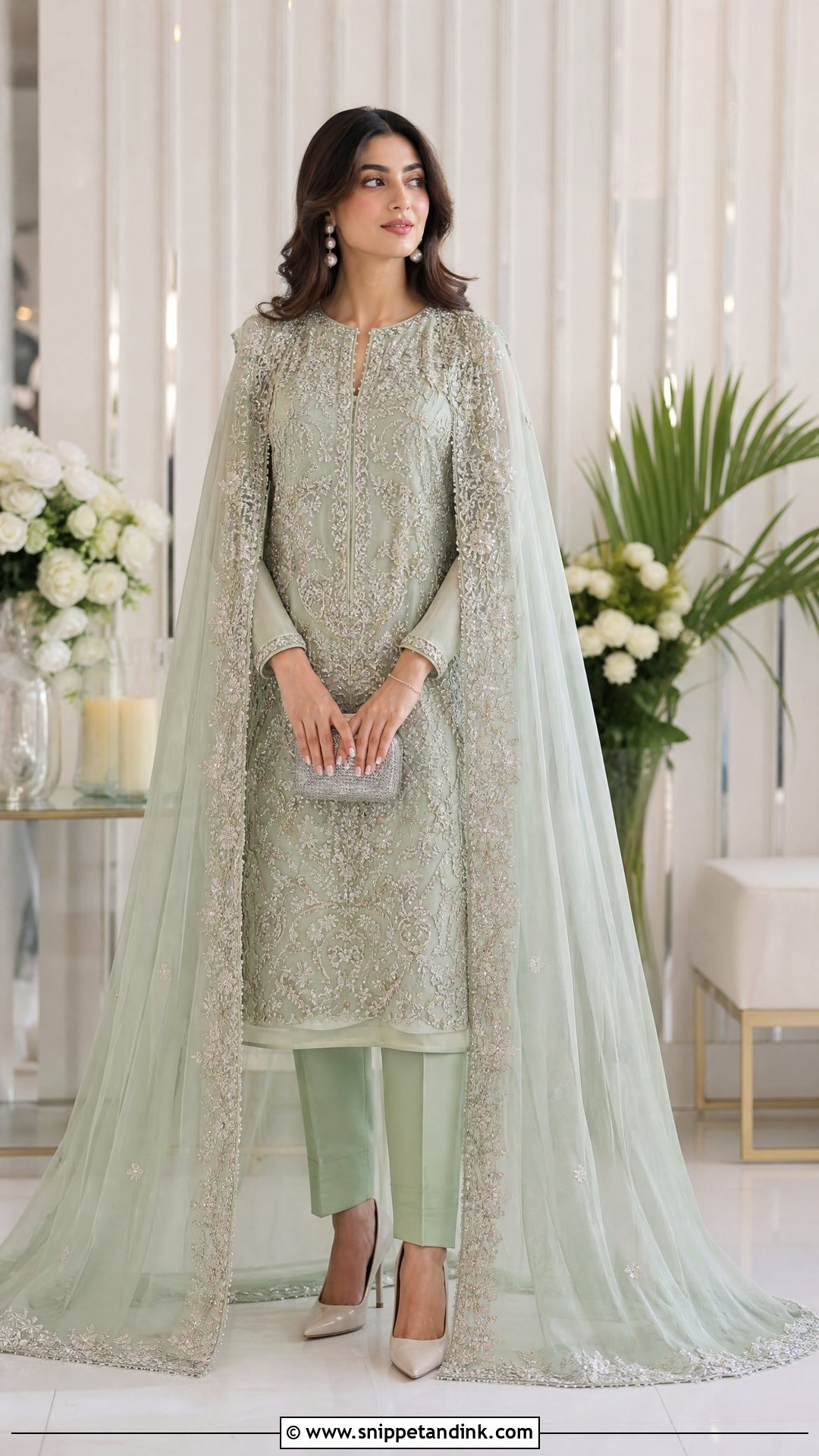
A sage cape suit gives modest coverage without the bulk of a dupatta. The tunic underneath can be sleeveless or short-sleeved, worn with straight silk trousers, while the sheer organza cape carries the silver embroidery or beadwork across the shoulders. Because the cape moves, everything beneath it has to be fitted and plain. I always check the cape’s shoulder seam: if it sits even slightly off the shoulder point, it slides backward all evening. Pearl earrings and a silver minaudiere are plenty. Keep the hair low or in soft waves so the neckline stays visible.
11. Plum Angrakha Pakistani Wedding Suit
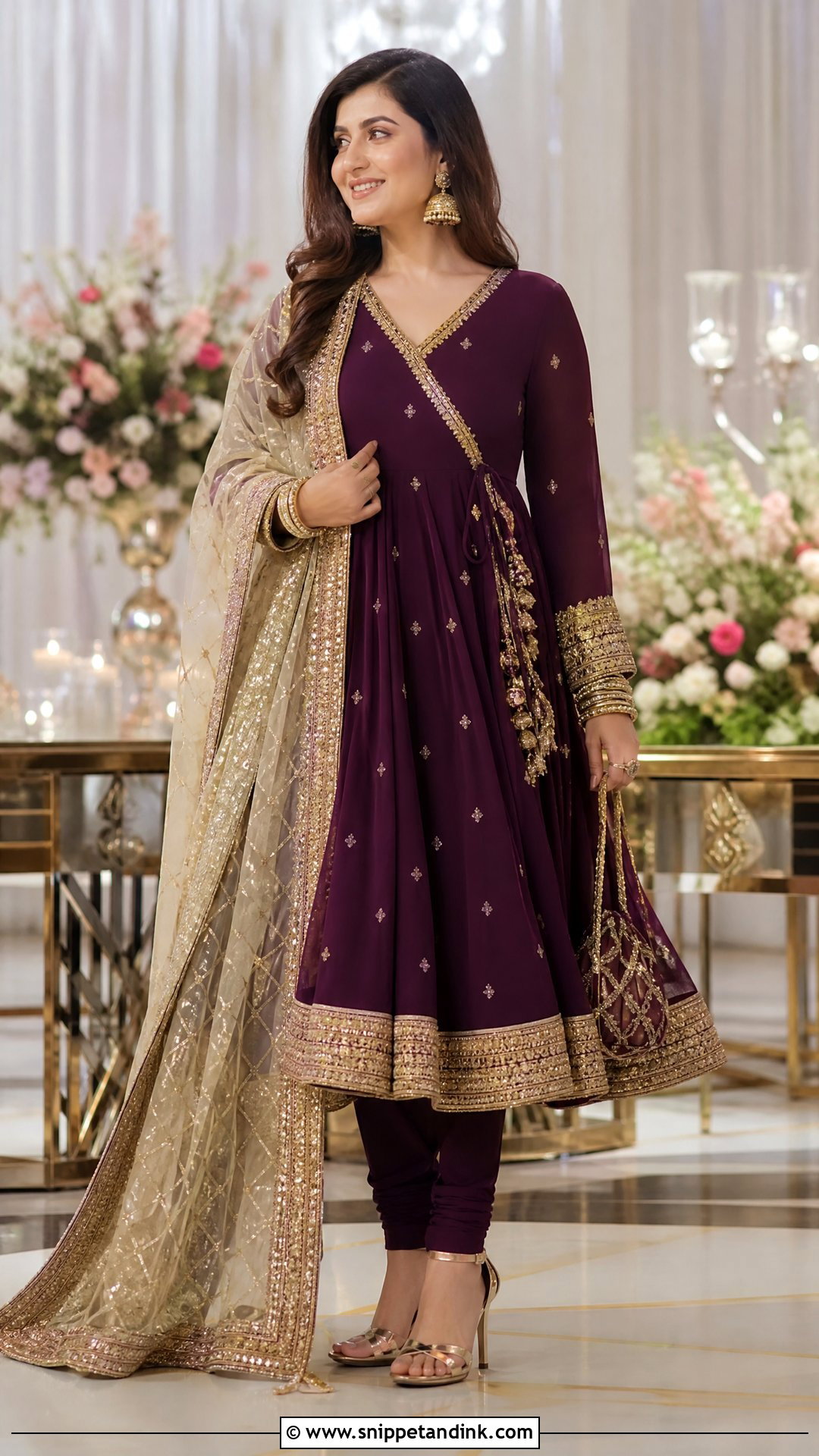
The angrakha’s wrap bodice is what makes it flattering, and also what makes it fussy. Where the ties sit decides everything: tie them at the natural waist and the crossover defines your shape, tie them low and you get a bunched pocket of fabric over the stomach. Choose plum with gold piping and embroidered borders, in knee length or longer. Churidar keeps it classic; a sharara adds drama for a big reception. A dupatta in dusty pink or muted gold softens the depth of the plum, with jhumkas, stacked bangles and a small embroidered bag.
12. Teal Palazzo Pakistani Wedding Suit
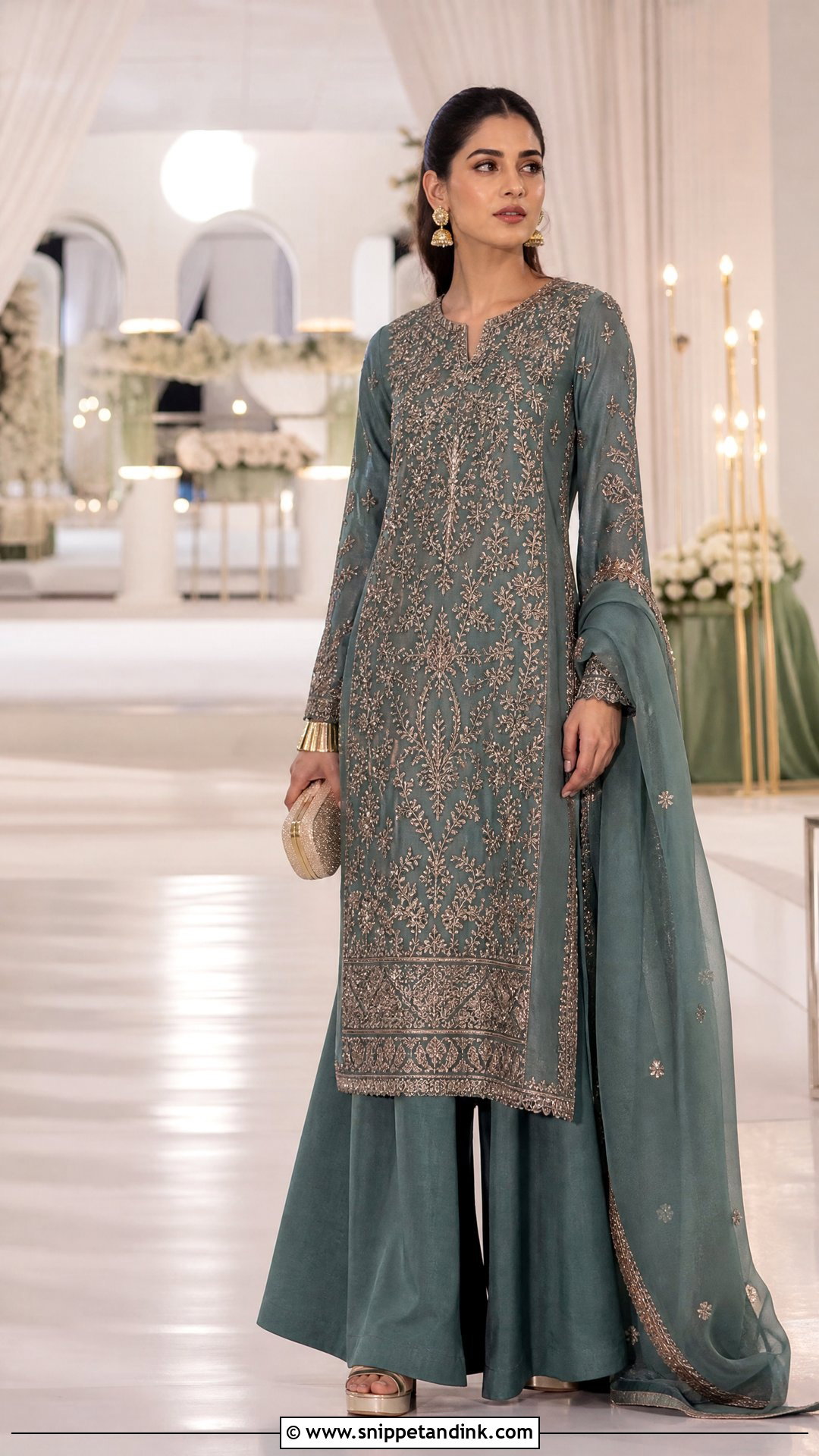
A teal palazzo suit is the outfit I recommend most often to guests who’ll be on their feet hosting or chasing children. A long kameez with side slits shows the wide palazzo legs as you move; raw silk gives structure, chiffon gives flow. Hem length is the risk. Palazzos cut to touch the floor in bare feet will drag once the evening wears on, so have them hemmed with your actual shoes on, and platform heels help. The kameez should skim the hips, not grip them. A gold or bronze bordered organza dupatta and bronze-toned makeup suit the color.
13. Peach Peplum Sharara Pakistani Wedding Suit
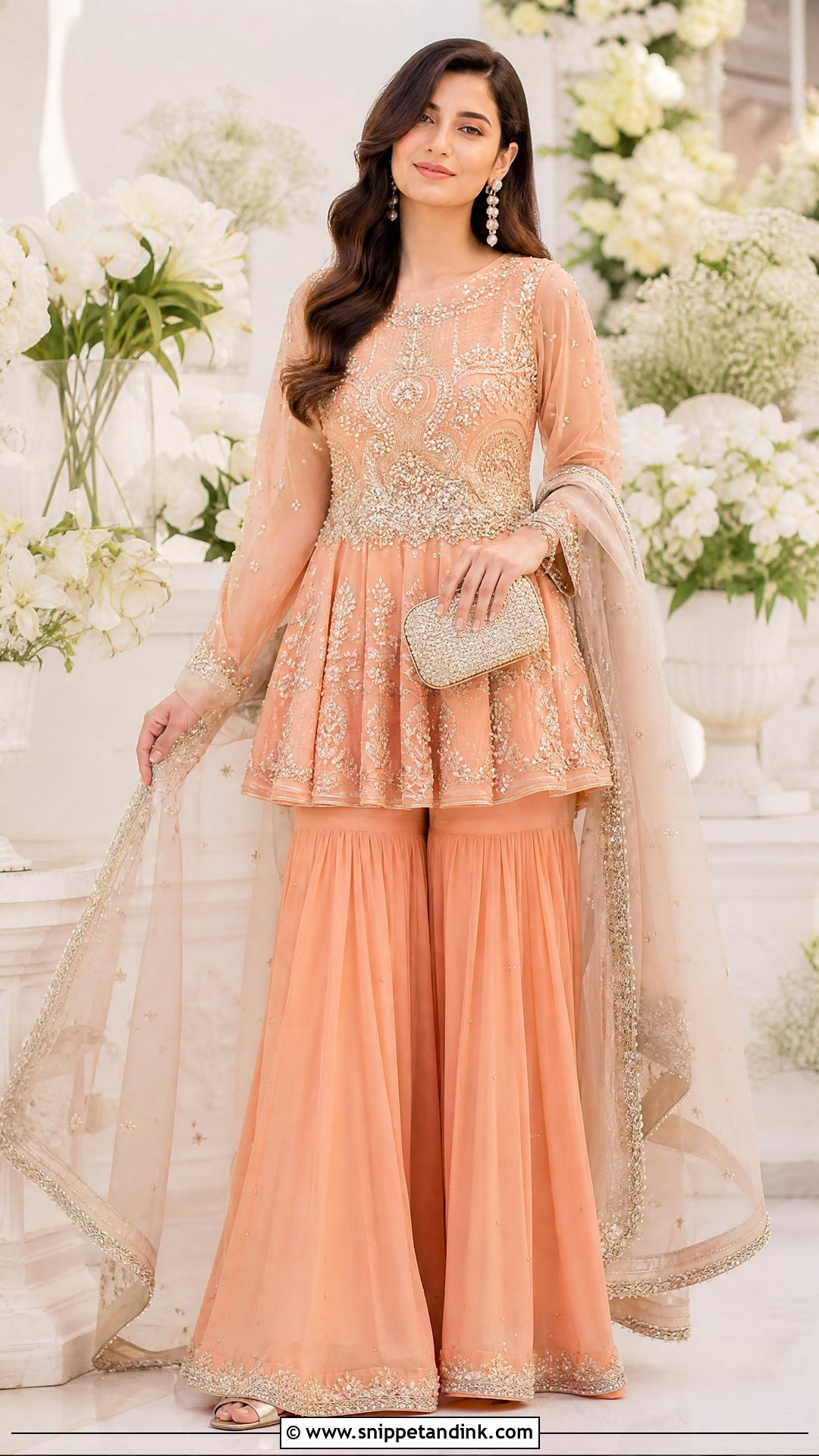
With a peplum over a sharara, proportion is the whole job. Both pieces carry volume, so the peplum must end near the upper hip; any lower and the top and trousers merge into one shapeless mass. Fit it closely at the waist before the flare. Champagne gold, pearl or subtle silver embroidery keeps the peach soft. I’d pin the sheer dupatta to one shoulder for a bridesmaid who’ll be moving around, and drape it across both arms for the formal family photographs. Pearl earrings, a beaded clutch and nude or metallic sandals. It suits a bridesmaid, close relative or daytime guest.
14. White Chikankari Nikah Pakistani Wedding Suit
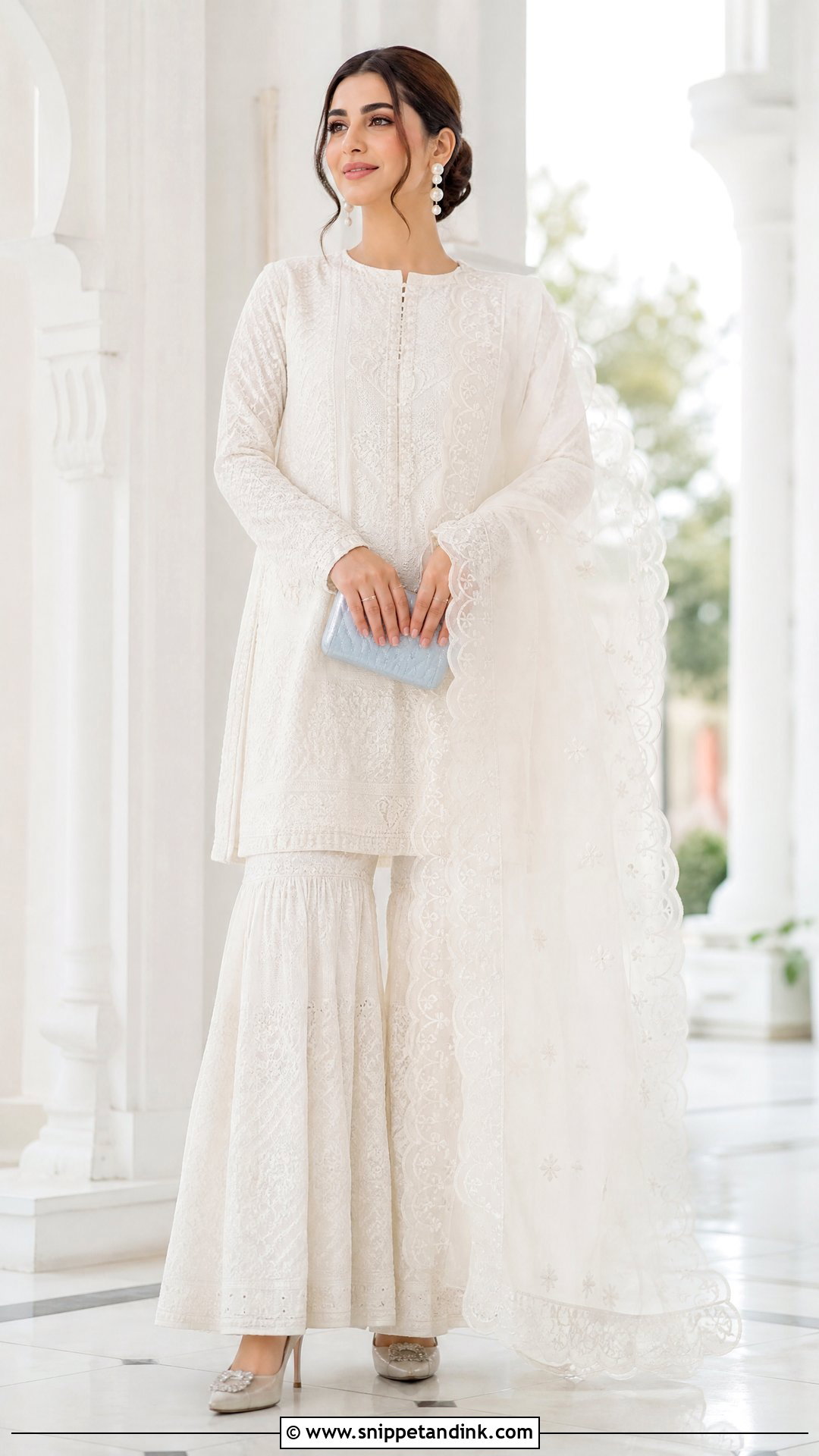
Chikankari is shadow embroidery worked on fine fabric, so the first thing I check on a white nikah suit is the lining. Without a full, opaque lining the kameez turns see-through in daylight and the delicate work disappears against your skin. Choose a long kameez with tonal embroidery and pearl details, a modest neckline, and a gharara, straight trousers or light sharara depending on how formal the nikah is. An organza dupatta with a scalloped edge adds softness. Bring contrast through accessories only: a pale blue clutch or champagne shoes. As a guest, keep the embellishment delicate; heavier work is for the bride.
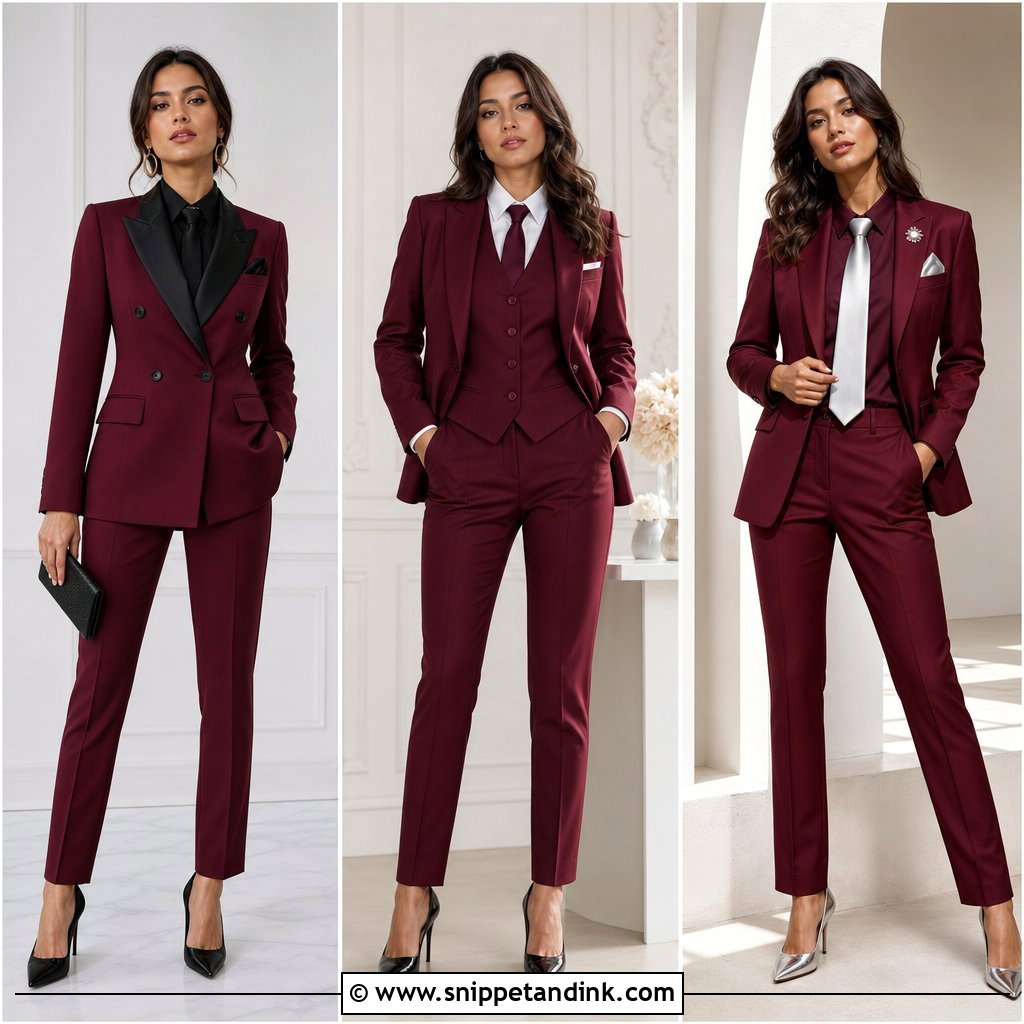
15. Rust Long Shirt Pakistani Wedding Suit
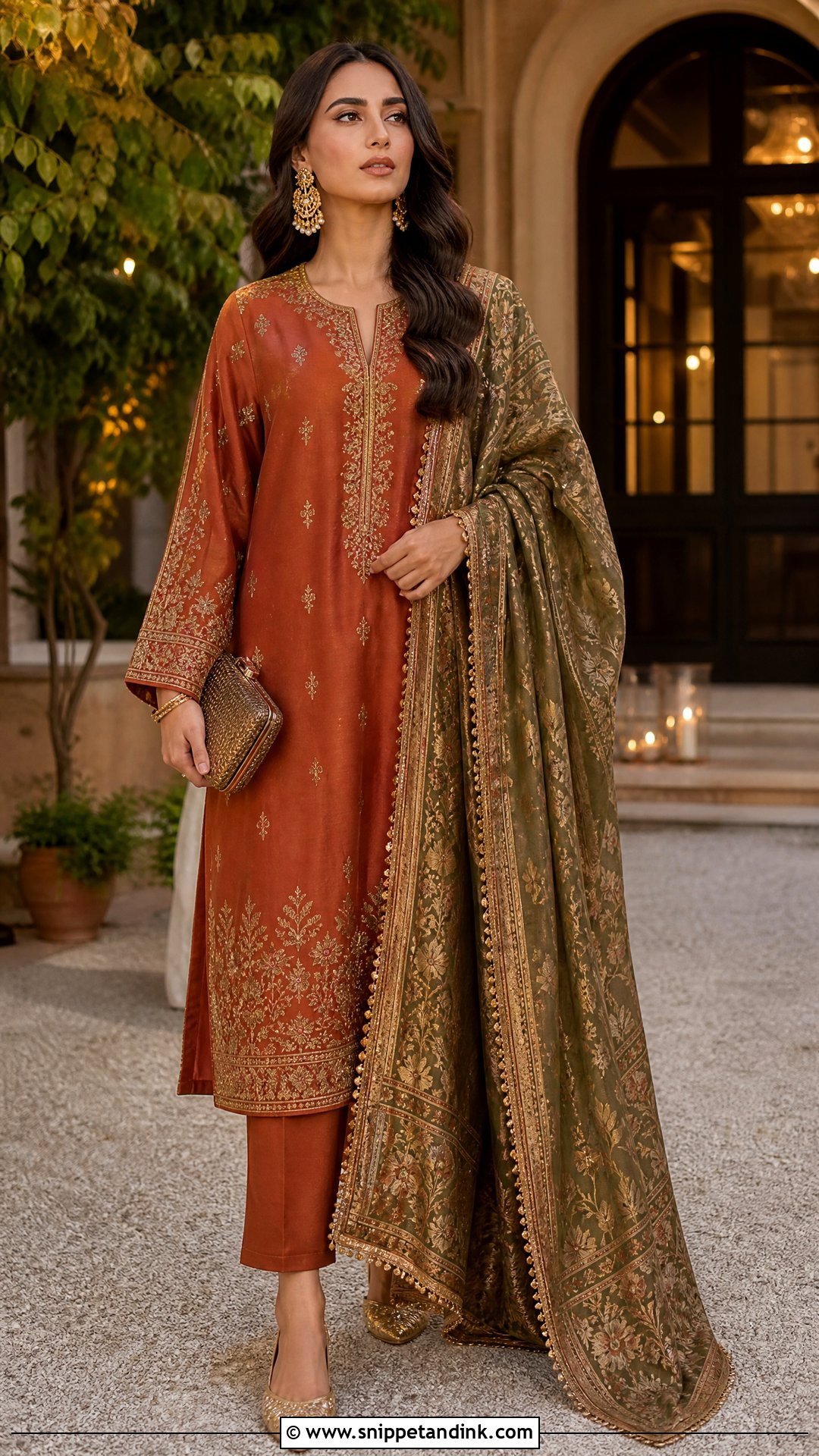
Rust is the color I suggest to someone tired of red and maroon who still wants warmth. A long raw silk shirt with antique gold work at the neckline, cuffs and slits, over straight trousers in the same shade, gives a monochrome line. The shirt length matters more than people expect: it should end below the knee but above the ankle so the trousers and shoes still show, otherwise the outfit looks unfinished. Bring depth with an olive or plum dupatta. Autumn evening events suit it best, with a soft braid and bronze makeup.
16. Lavender Jacket Pakistani Wedding Suit
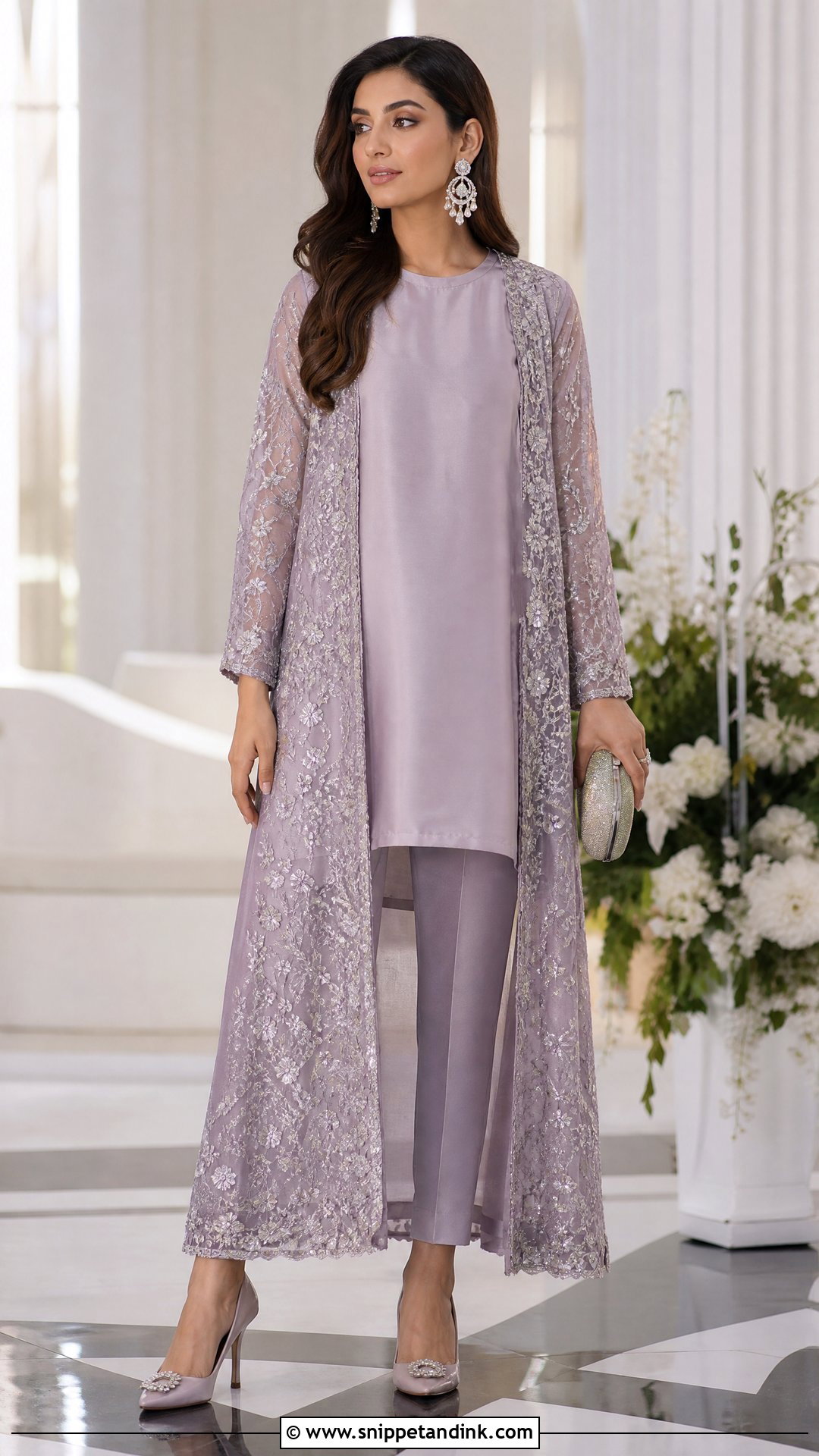
Lavender with a long open jacket is a modern walima look, and it relies on restraint underneath. Wear a plain silk tunic and straight trousers, then layer a sheer ankle-length jacket with silver floral embroidery or crystal detail. If the jacket is detailed enough, I’d skip the dupatta altogether; the long open front already draws a vertical line and a dupatta just competes with it. Crystal earrings, a silver clutch and pale lavender or metallic heels. Soft waves and a cool-toned lip suit the palette.
17. Gold Tissue Pakistani Wedding Suit
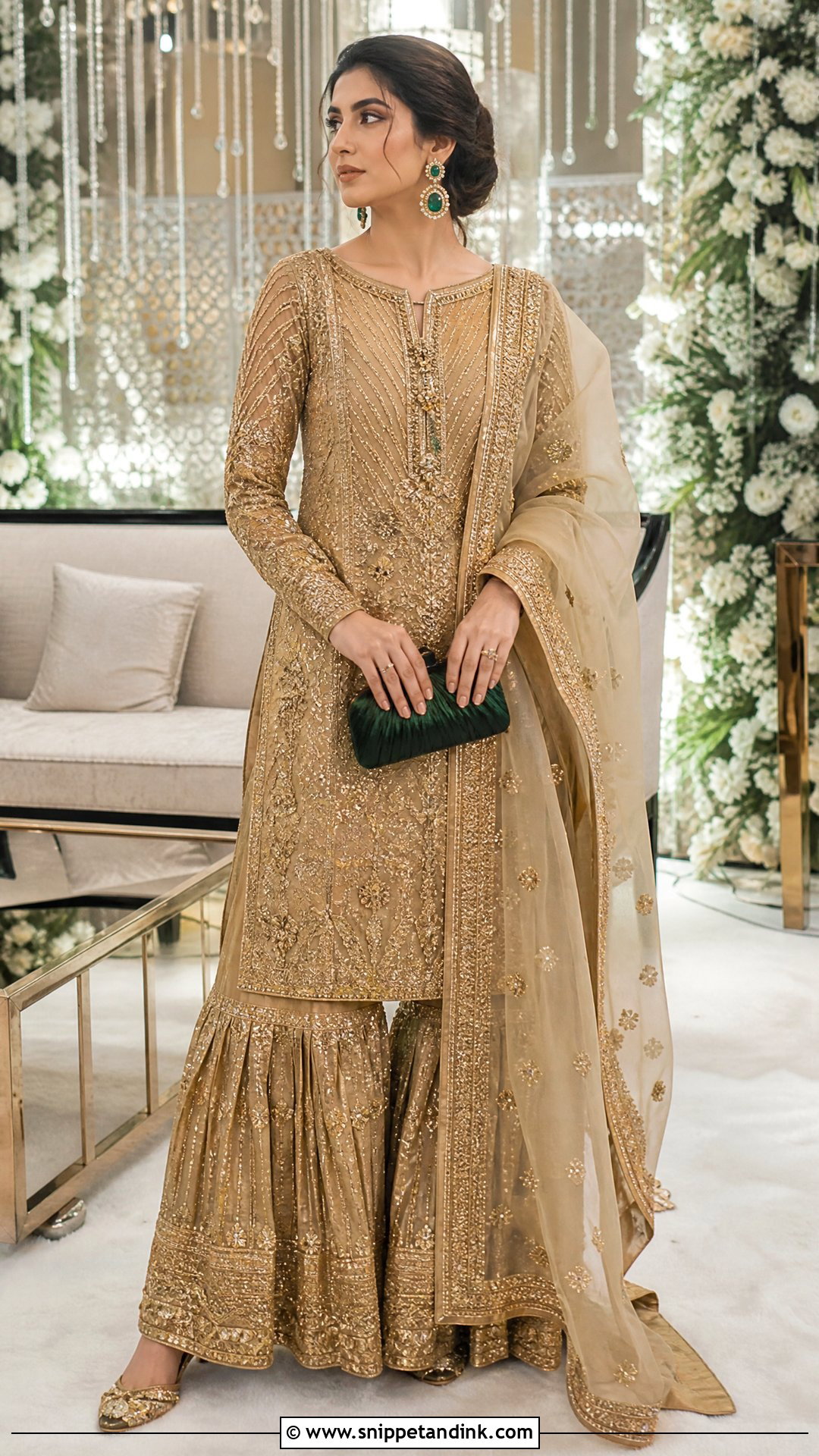
Gold tissue reflects so much light that it needs very little help. Pick a structured knee-length kameez with restrained embroidery and a matching gharara or wide trousers with a worked border. Tissue is stiff and can be scratchy, so I won’t sign off on one without a proper soft lining, particularly at the underarms and neckline. A net or organza dupatta softens the stiffness and adds movement. Emerald earrings and a deep green clutch give contrast; pearls and champagne keep it neutral. Avoid stacked layers at the waist, since tissue adds visual bulk wherever it gathers.
18. Fuchsia Gharara Pakistani Wedding Suit
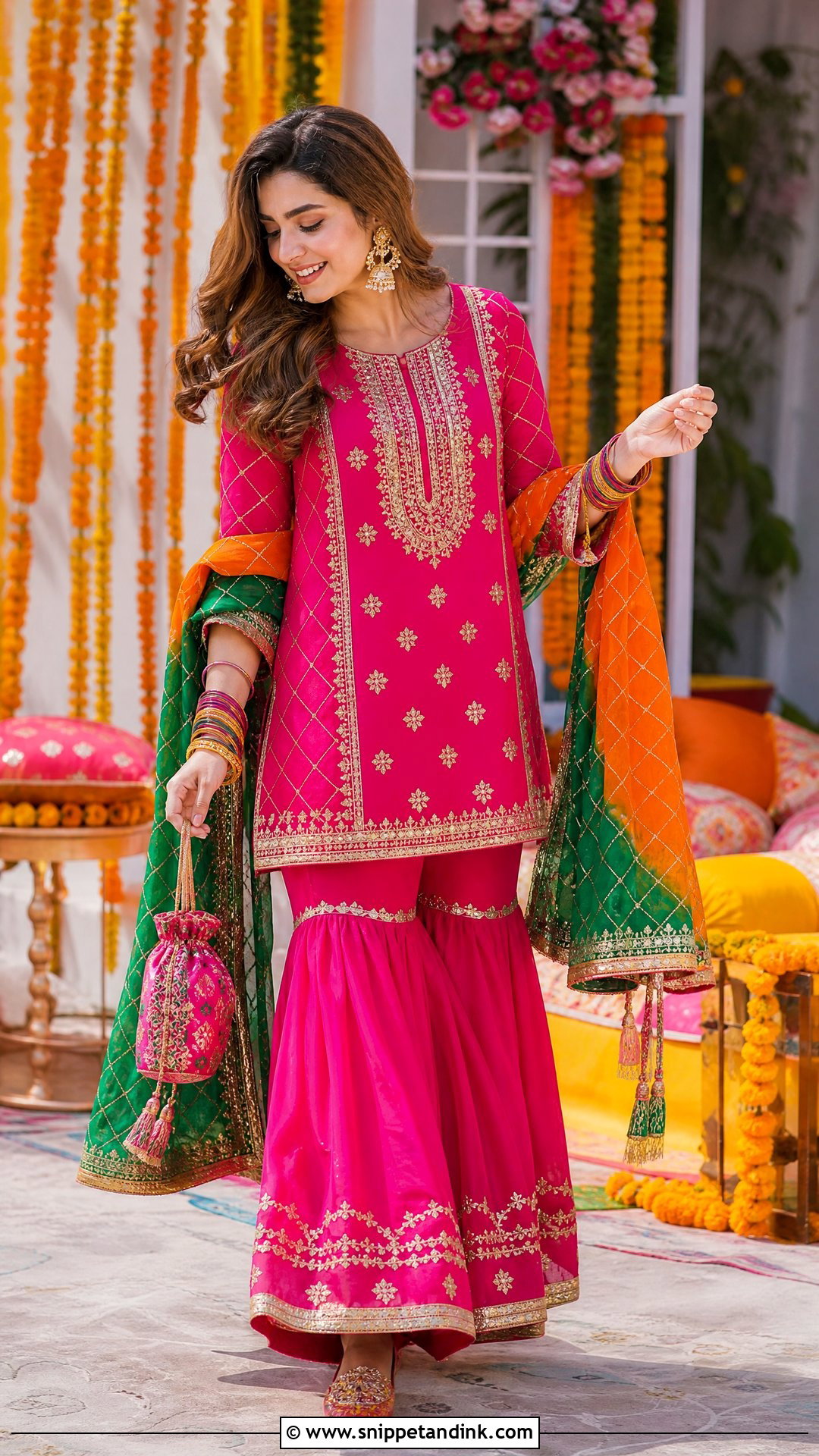
Fuchsia is loud on its own, so the decision is how much more color to add. A structured kurti with gold gota, mirror work or multicolored thread sits over a matching gharara with defined knee gathers and a worked lower flare. An orange, purple or green dupatta makes it a mehndi palette; a tonal fuchsia one feels more formal. Fit the kurti through the shoulders but leave it easy at the waist so it sits cleanly over the full trousers. Comfortable khussas, gold jhumkas and a low ponytail or braid let you dance without adjusting anything.
19. Silver Gray Maxi Pakistani Wedding Suit
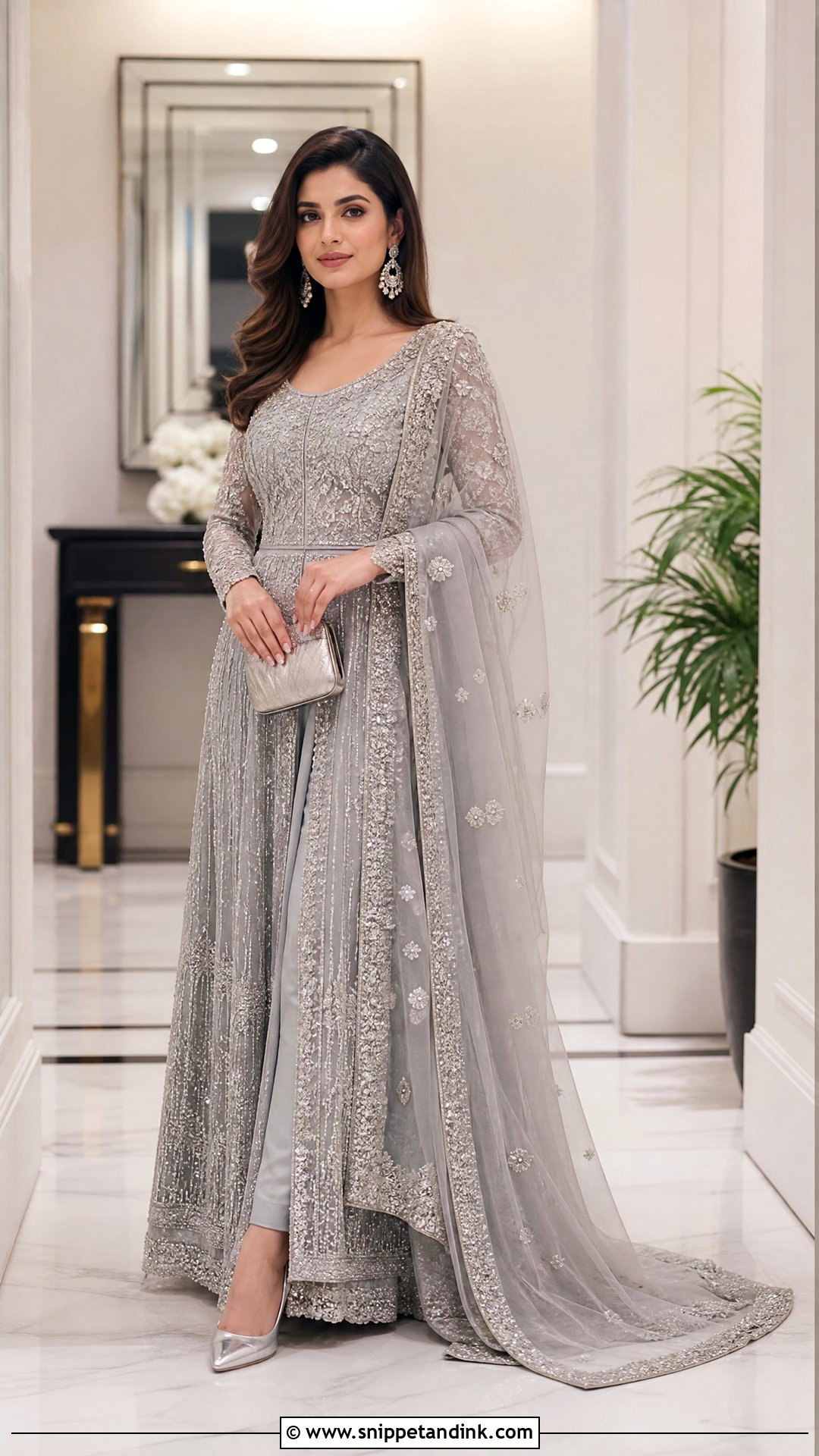
Silver gray reads as quiet glamour for a walima or evening reception, but a single flat gray fabric can look dull in photos. I mix textures instead of colors: silk with net, organza with beadwork. Choose a floor-length maxi with a fitted bodice and fluid skirt, crystals or tonal embroidery, over straight trousers, with a sheer gray dupatta. The hem should skim the shoe, not drag. If you want more waist definition, a paneled bodice or a slim embroidered belt does it. A berry lip gives the cool neutral a little contrast.
20. Multicolor Mirror Work Pakistani Wedding Suit
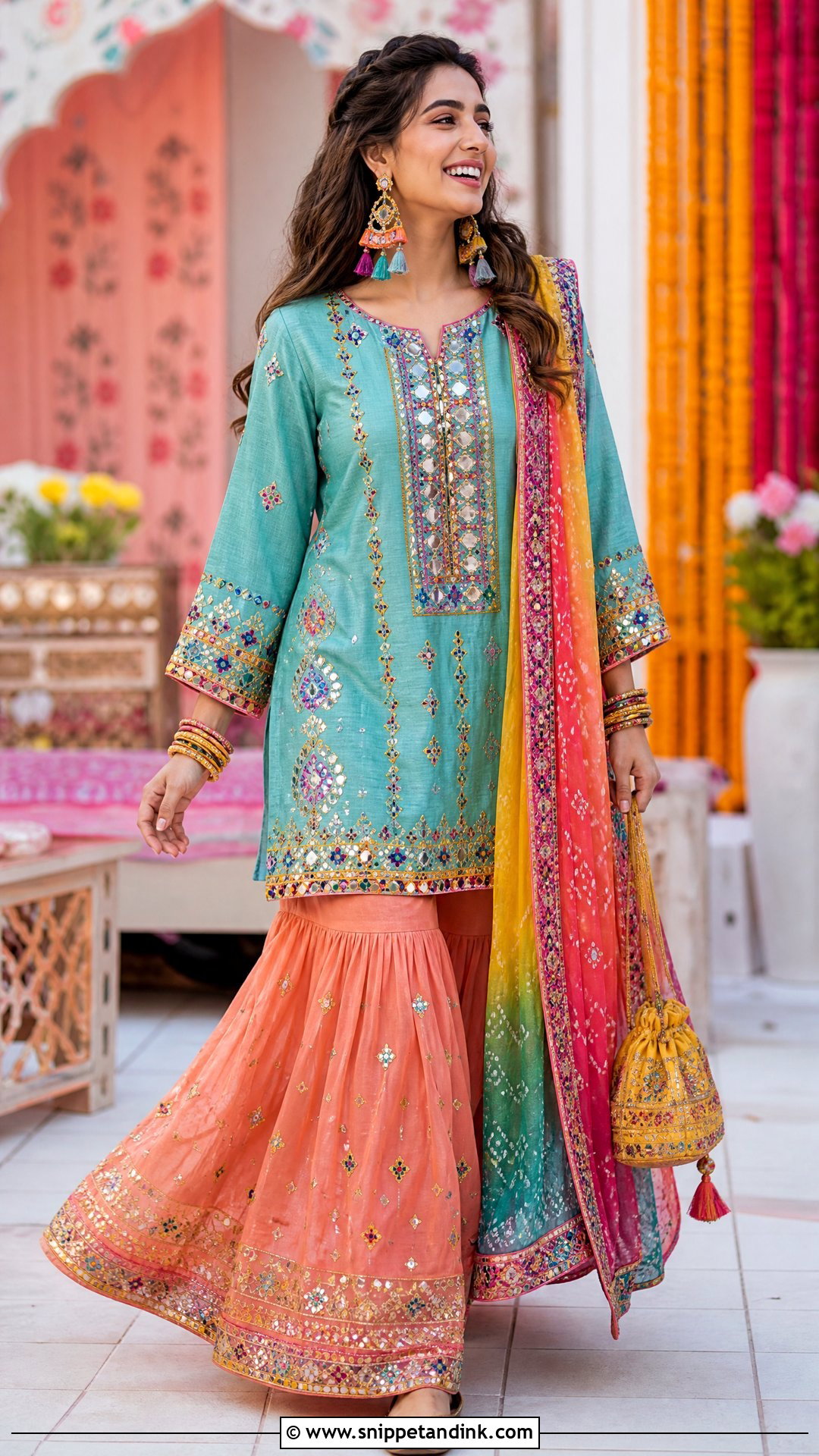
A multicolor mirror-work suit gives you all the festivity of a mehndi without a complicated silhouette. Start with a bright green, turquoise or coral short kameez with small mirrors and thread embroidery, and a coordinating sharara with a simpler hem border. Mirrors are heavier than they look, so I check that the kameez and trouser waistband fit securely; a loose waistband on a mirror-worked suit slips during dancing. Drape the dupatta over one shoulder so the front embroidery stays visible, and skip extra sparkle in the jewelry. Tassel earrings, stacked bangles and flat khussas.
Tailor Timelines and the Fittings That Matter
Formal Pakistani suits are usually stitched to order or altered from a ready-to-wear piece, and both take longer than people plan for. In peak wedding season, tailors get booked up, so I’d hand over unstitched fabric at least six to eight weeks ahead for a heavily embroidered outfit and leave room for a second fitting. Timings vary a lot by tailor and city, so ask yours directly.
What I check at the trial
- Sit down, raise both arms and turn. The armhole and shoulder should not pull, and a kameez should not ride up over the hips.
- Bring the exact shoes. Trouser, gharara and maxi hems are measured with them on, never barefoot.
- On a gharara, check where the knee joint sits; it should land just above the knee for a clean flare.
- Feel the inside. Zardozi, tissue and mirror work need a soft lining so they don’t scratch over a long evening.
- Pin the dupatta the way you’ll wear it and walk around for a few minutes.
Storing Zardozi, Velvet and Mirror Work After the Wedding
Heavy embroidery outlives the wedding if you store it properly. Metallic thread tarnishes in damp air, and the weight of the work stretches fabric on a hanger, so I fold embroidered pieces flat with acid-free tissue between the layers and keep them in a breathable cotton or muslin bag rather than plastic, which traps moisture. Velvet is the exception: hang it on a padded hanger so the pile doesn’t crush.
Refold along different lines every few months to stop permanent creases cutting through the thread. For cleaning, take embroidered pieces to a dry cleaner who handles bridal wear, and point out any stains, especially makeup on the neckline, before they set.
Fit Before Embroidery, Every Single Time
A good Pakistani wedding outfit respects the event first and your comfort a close second. Work out which functions you’re attending and in what role, then match the fabric weight to the season and venue and the embroidery level to your place in the family. Spend your money on tailoring before embellishment: shoulders, waist, trouser length and sleeves make more difference in photos than an extra row of dabka. Pin the dupatta so you can forget about it, and you’ll actually enjoy the night.
You'll Like These Ideas:


Leave a Reply