
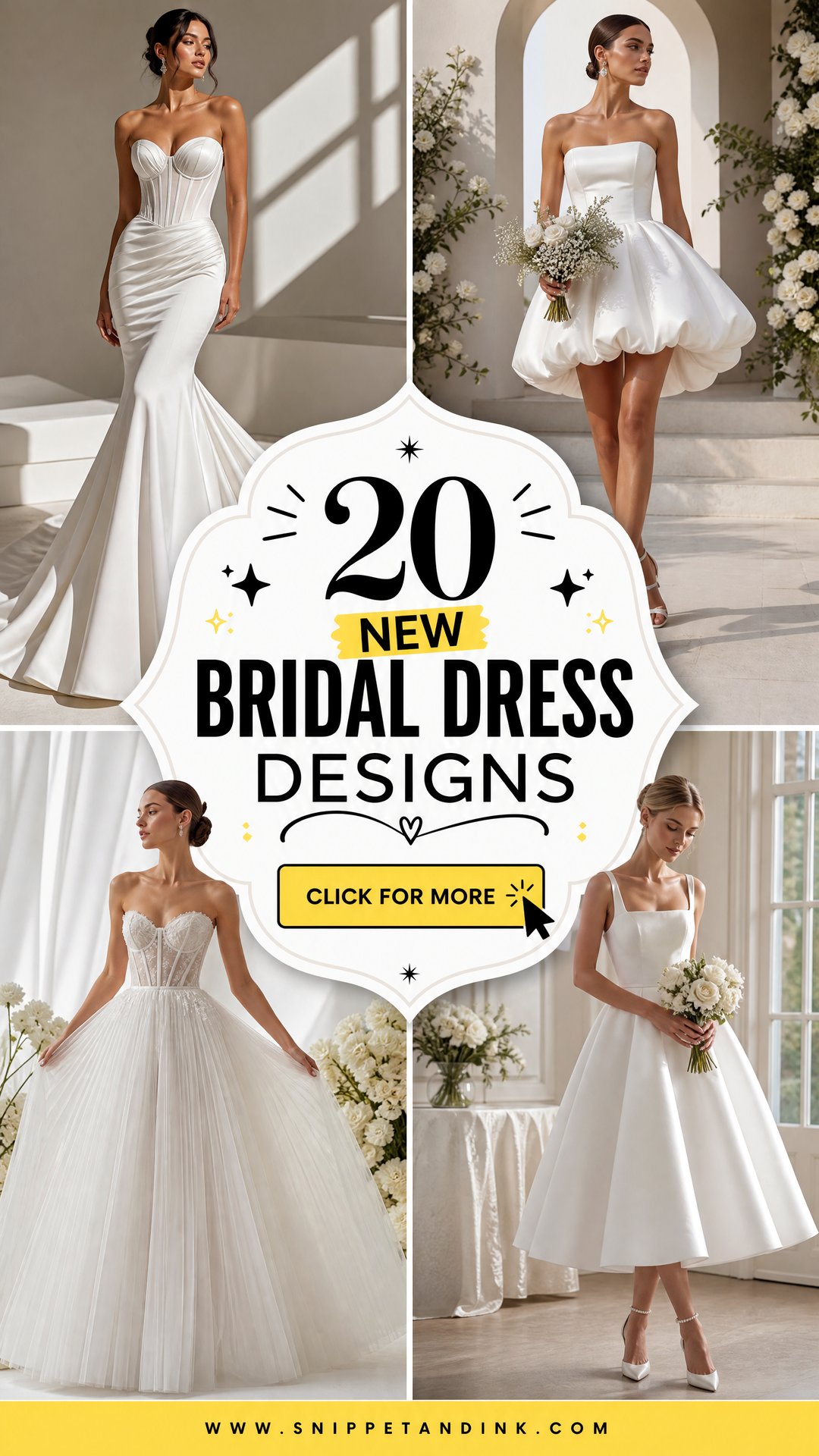
Most brides I dress can tell me what they like on a hanger, but very few know what a waistline or a fabric will do once it’s on their body. That’s why I prefer to show complete looks rather than isolated details. The gowns below range from structured Basque waists and full ball gowns to sleek satin columns, short reception dresses and pieces that convert halfway through the night. Designers have leaned hard into volume, sculpted waists, draping, dimensional flowers, bows and texture lately, and each of those trends comes with its own fitting quirks. For every dress I’ve added my notes on veils, shoes, jewelry, bouquets, and hairstyles, plus what I’d check before you commit.
How a Waistline Decides Where a Gown Pulls, Gapes and Creases
When a bride tries on twenty dresses and says they all feel wrong, the problem is usually the waistline, not the style. Where the bodice seam sits controls where the dress grips, where it gapes when you sit and where it creases after the ceremony.
- Natural waist seams are the most forgiving for long days, because they sit where your body bends.
- Basque and dropped waists look sharp standing but press into the hips when seated, so test them in a chair.
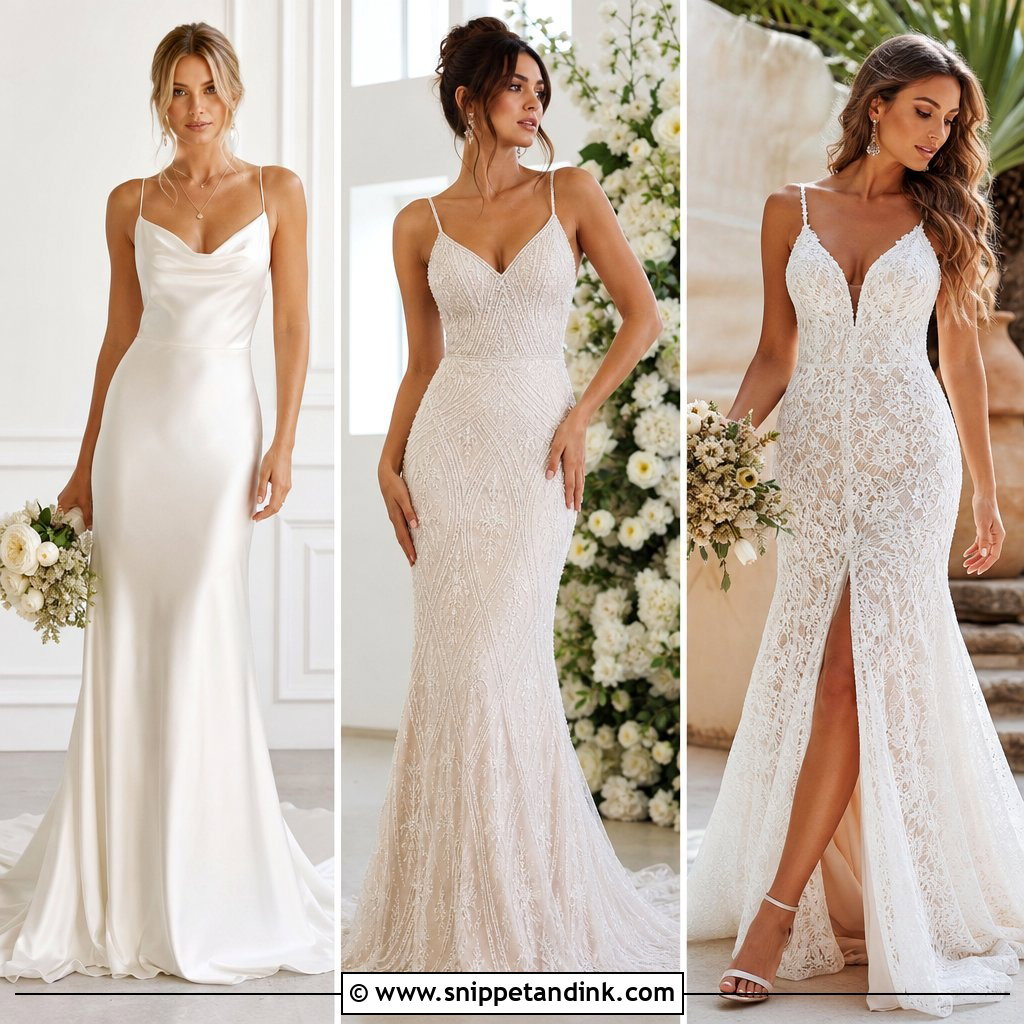
- Columns and mermaids grip from waist to knee, which means the hips and seat need extra room built in for walking stairs.
- Strapless and one-shoulder bodices hold themselves up with boning and a waist stay, so ask whether the gown has one before you fall for it.
I also ask brides to bring the bra or shapewear they plan to wear, even to the first appointment. A corset bodice that fits over a padded bra will fit very differently over a bare back, and that difference shows up later as extra alteration work.
1. Basque Waist Bridal Dress
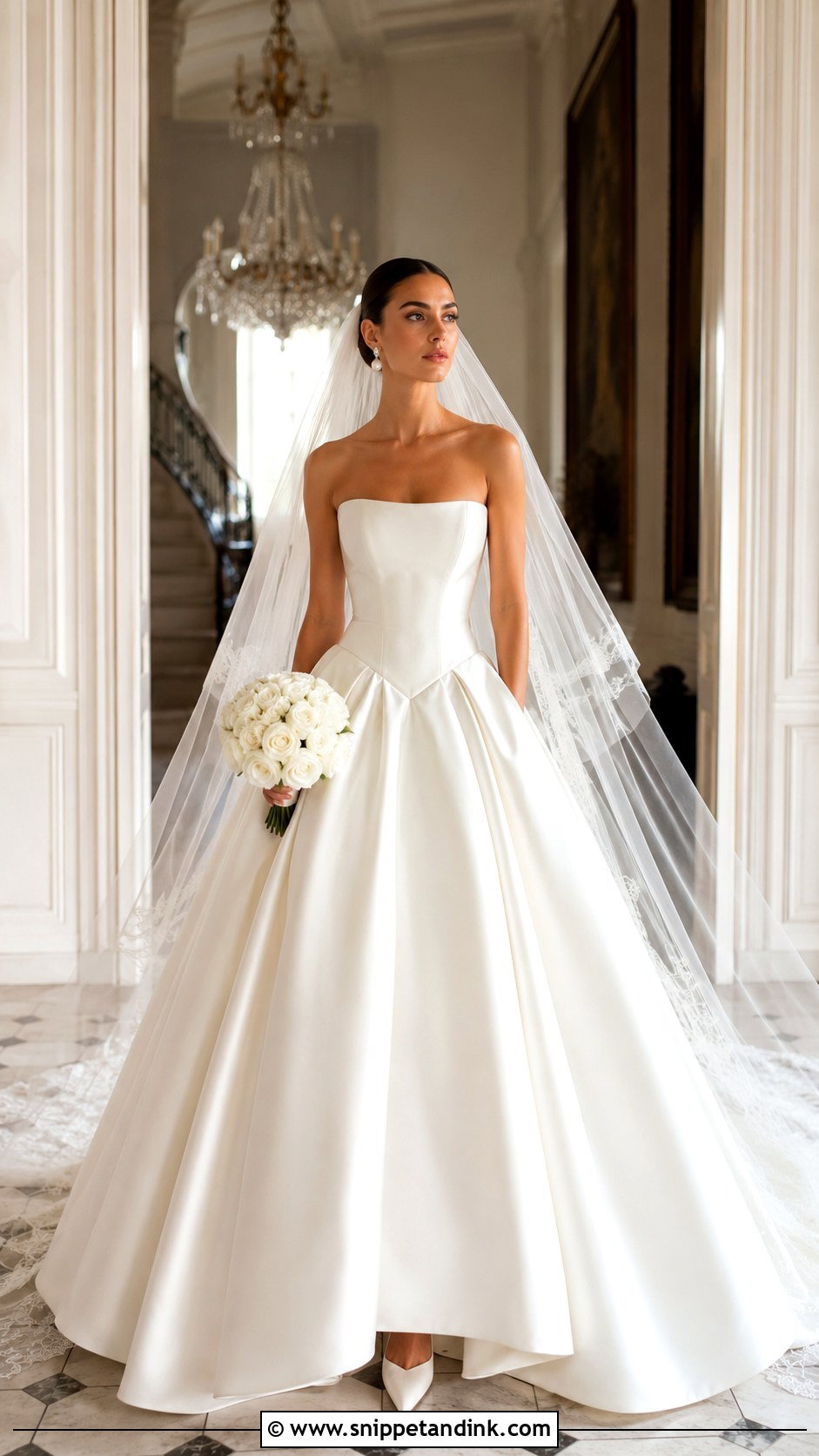
The point of a Basque waist is the dip below the natural waistline, and that dip only reads cleanly if the bodice is properly boned. In structured ivory satin it looks formal and crisp; in embroidered fabric it softens. The full skirt balances the fitted top, so the gown needs very little embellishment. I’d pair it with a cathedral veil, pearl drop earrings and pointed satin pumps, and keep the hair in a smooth low bun so nothing covers the seam work at the waist. A rounded bouquet of white roses and greenery suits the shape. One honest caution: a deep V at the waist sits on your hip bones when you sit, so do a seated test at your first fitting. Ballrooms and grand estates give that skirt the room it needs.
2. Drop Waist Bridal Dress
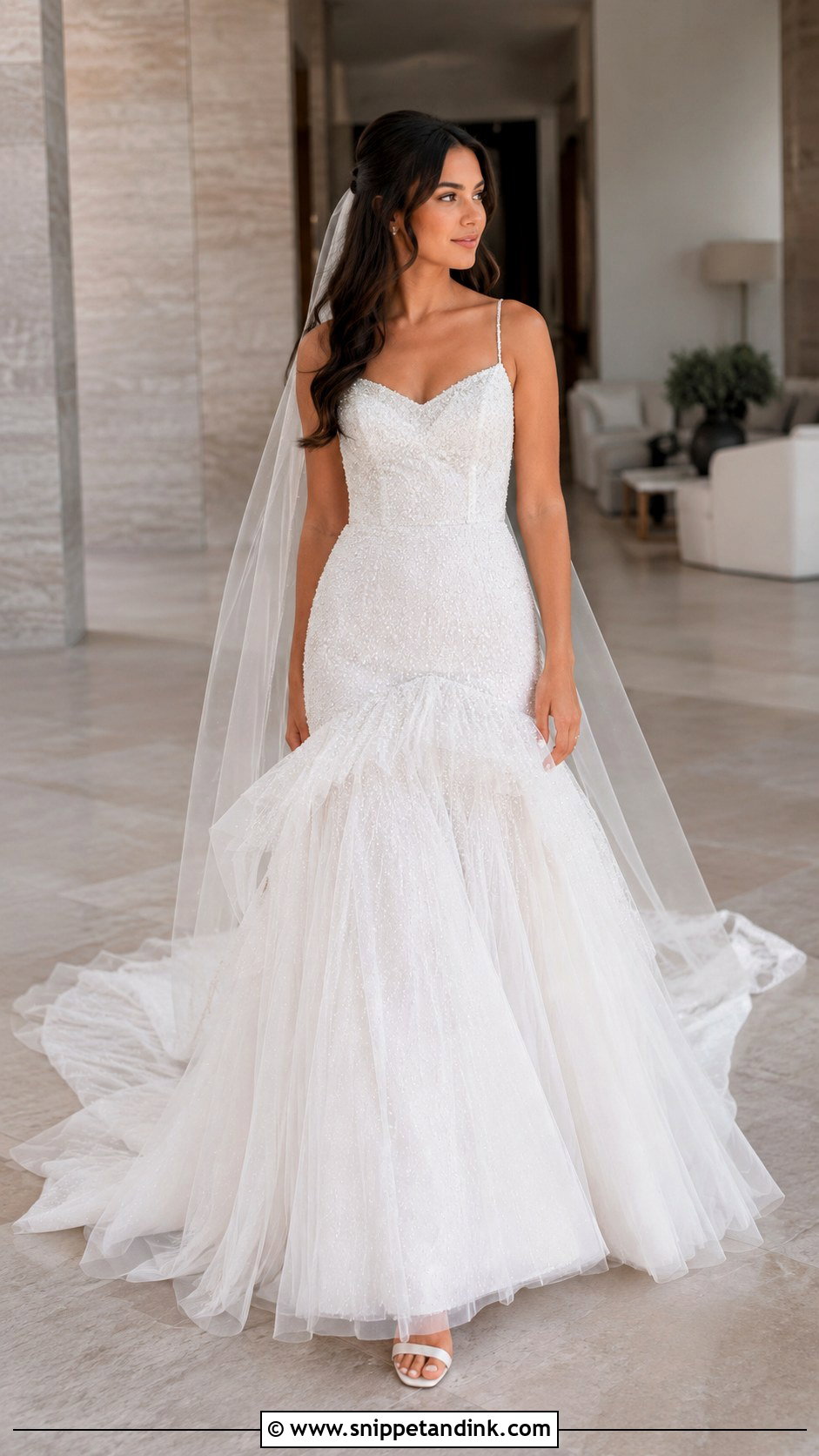
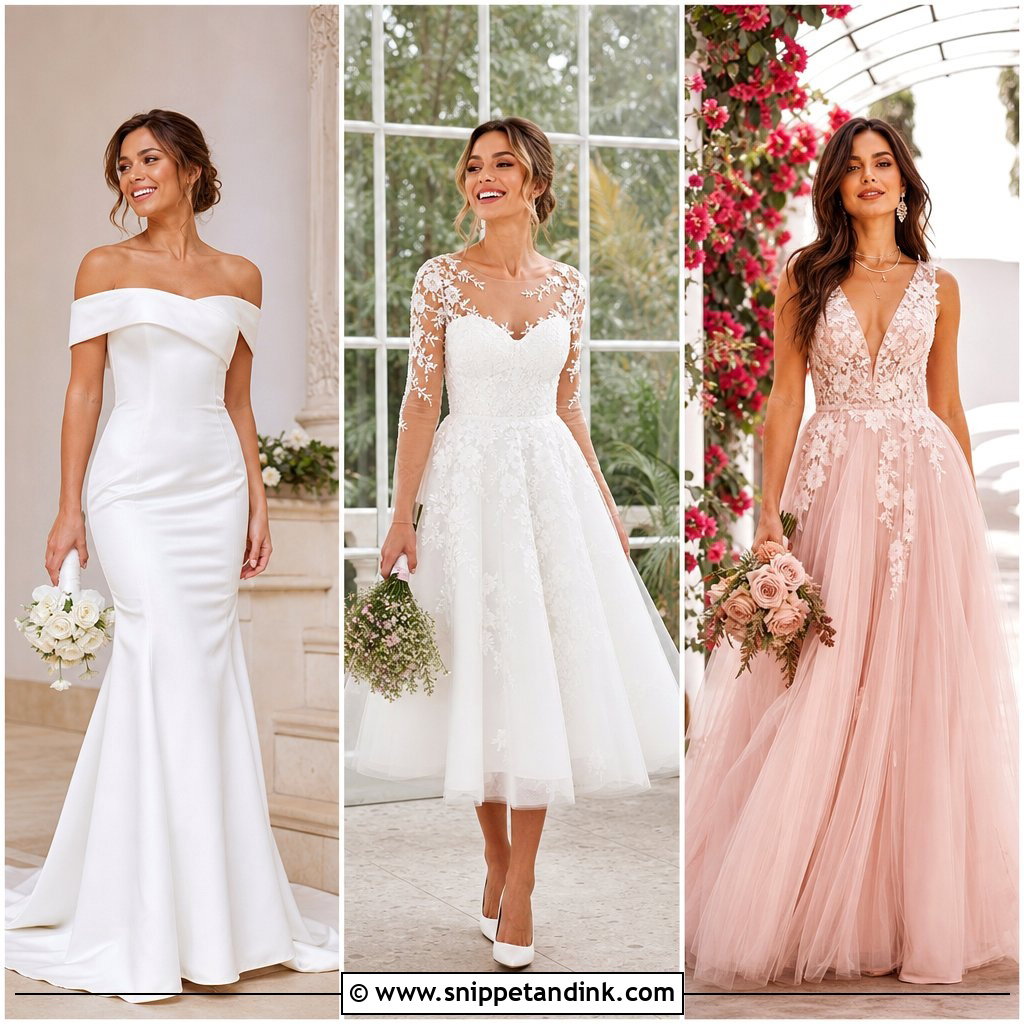
A drop waist moves the skirt seam lower and lengthens the torso, which gives the old princess shape a more modern line. The bodice runs fitted and long, then opens into soft tulle or organza, and spaghetti straps keep the top half light while a chapel train adds ceremony drama. Here’s what I watch for: on a shorter torso, a seam placed too low can make the legs look short, so we usually adjust its height by an inch or so during alterations. Style it with a sheer fingertip veil, crystal studs, simple ivory heels and loose waves or a sleek half-up style. A small calla lily bouquet stops it from getting busy. It sits naturally in hotels, lofts and formal gardens.
3. 3D Floral Bridal Dress
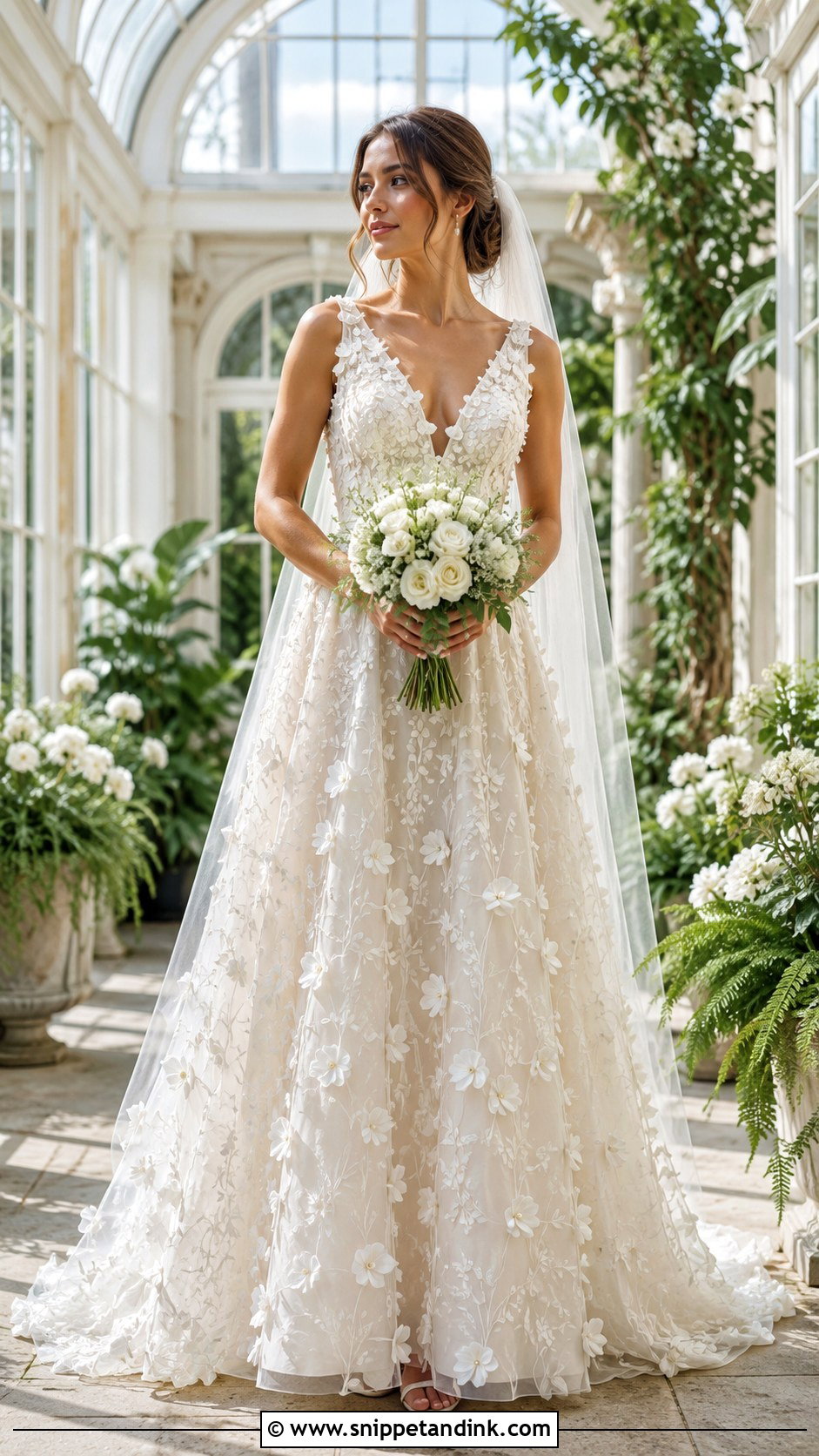
Dimensional flowers are the part of a gown I handle most carefully. Petals, embroidered vines and small raised blossoms on an A-line shape need a soft ivory lining underneath so the work shows rather than blending into skin. Keep the veil plain tulle, because a lace edge fighting with 3D petals looks cluttered and the petals can snag the netting. Pearl earrings, barely there sandals and one fine bracelet give enough shine. I’d wear a loose chignon with a few face-framing pieces and carry sweet peas, ranunculus and leafy stems. Spring gardens and conservatories suit it best, and plan to steam around the flowers by hand, not press them.
4. High Neck Lace Bridal Dress
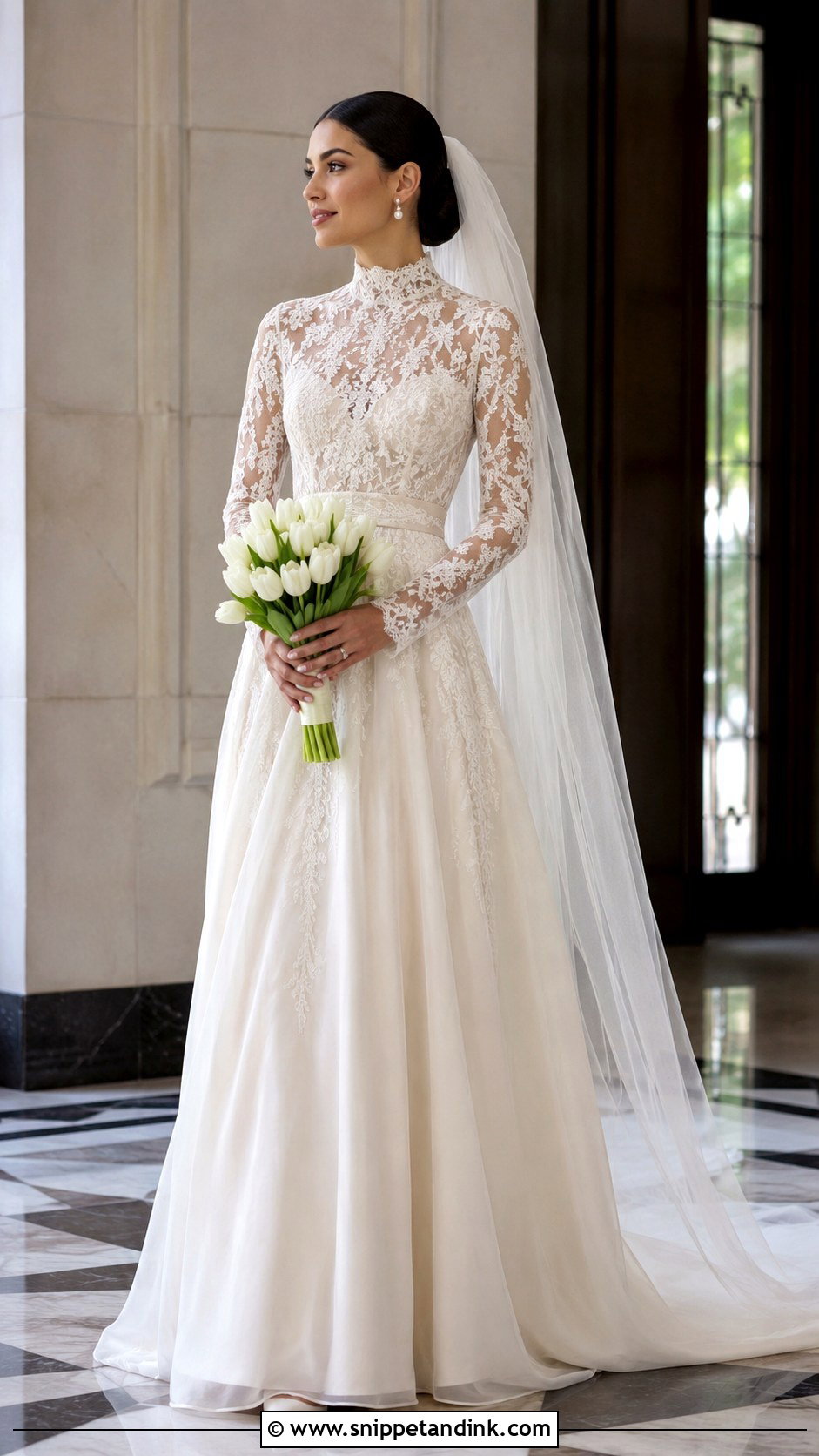
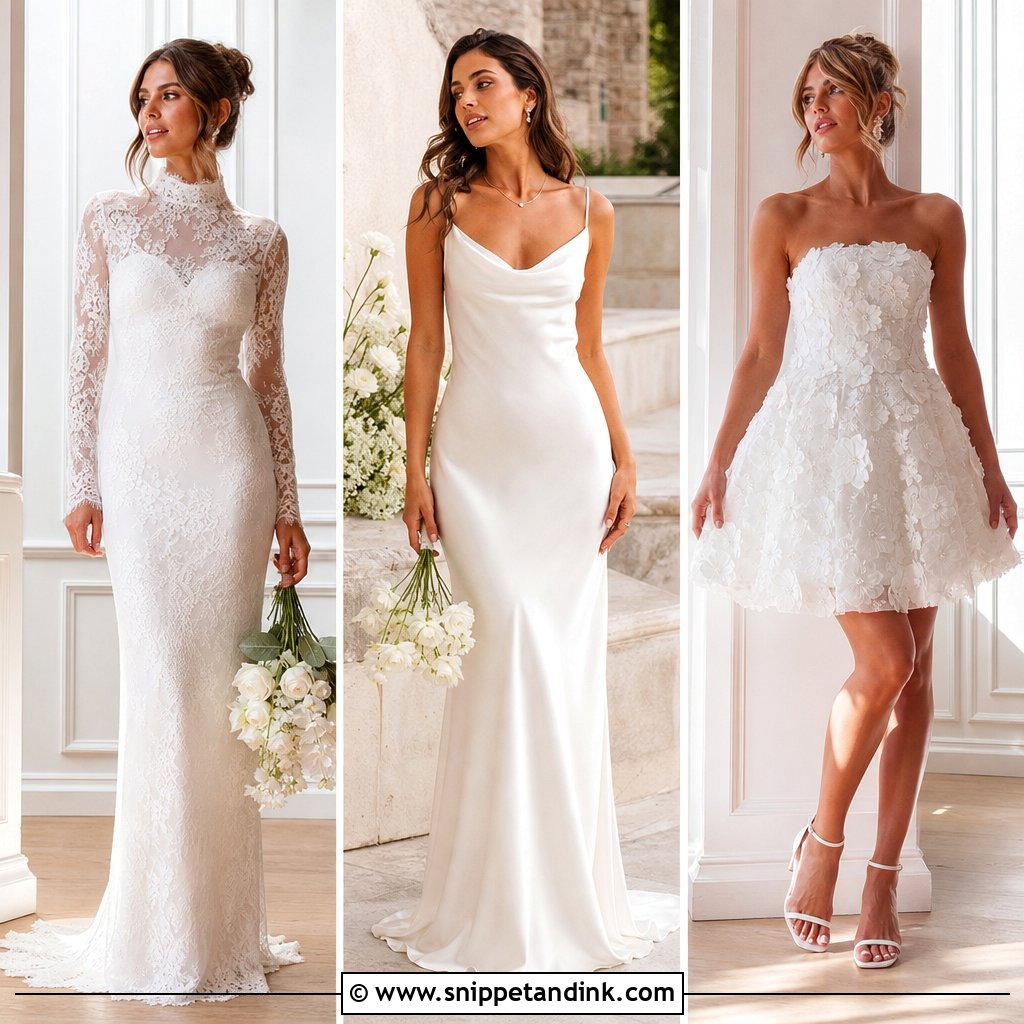
A high lace neckline frames the face so completely that I almost always take the necklace away. Choose a fitted lace bodice with long sleeves over a flowing chiffon or crepe skirt, and make sure the bodice is lightly lined so the pattern stays visible without feeling exposed. The fit across the throat matters more than people expect; if the neckline is even slightly tight, you’ll feel it every time you swallow during the vows. Small pearl or diamond earrings, closed-toe pumps and a long plain veil anchored beneath a neat bun finish it. Tulips or garden roses keep the styling uncomplicated. It’s a strong pick for cool-weather and formal indoor ceremonies.
5. Corset Mermaid Bridal Dress
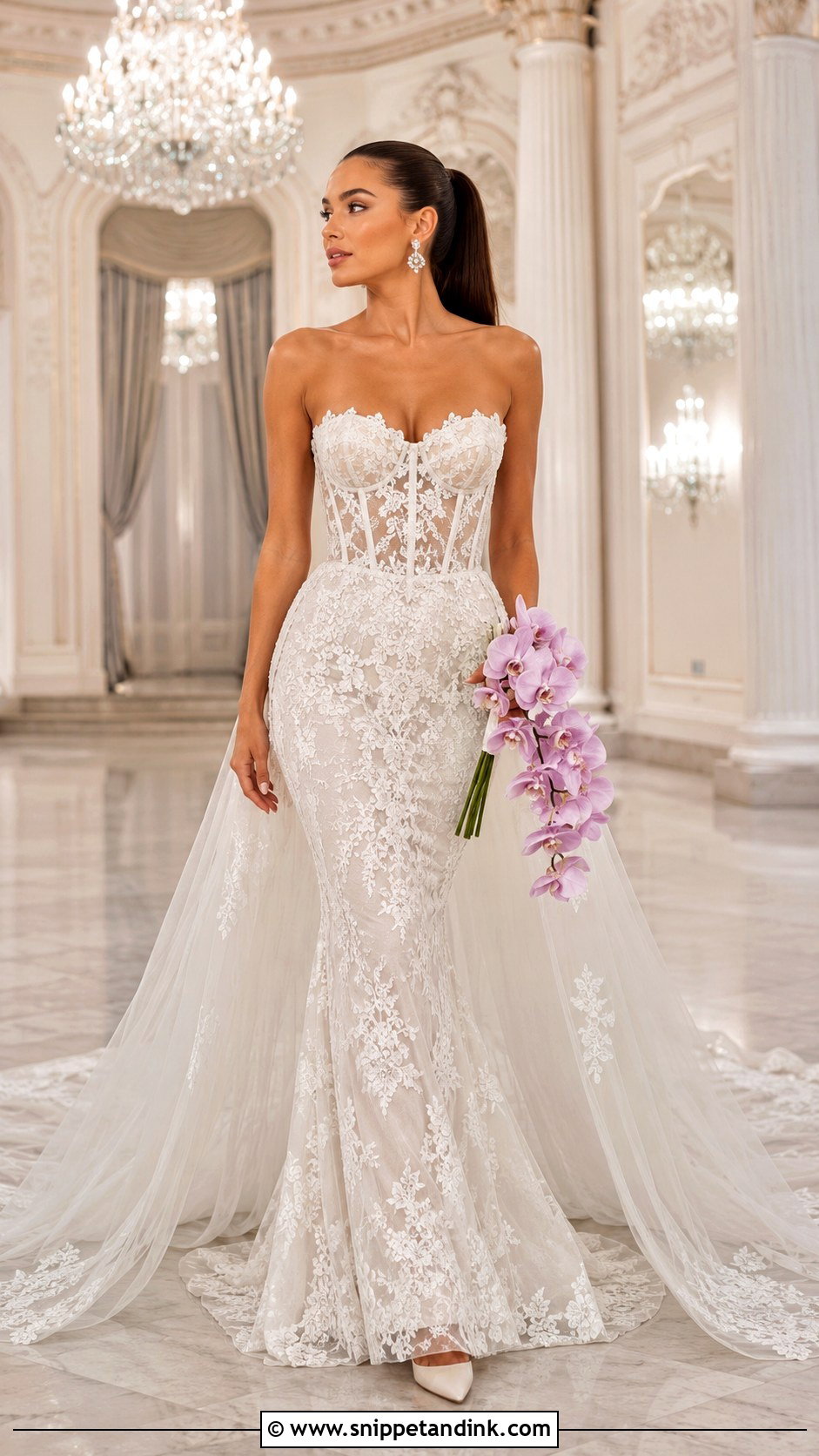
With a corset mermaid, the inside of the dress matters more than the outside. I check the internal boning, the cups and the lining before I even look at the lace, because a corset that only looks structured will slide by the first dance. Floral lace over an ivory or neutral base adds depth, and a detachable tulle train adds ceremony drama you can unclip later. The flare starts near the knee, so practise walking and climbing a step in it. Add a single-layer veil, crystal earrings and pointed pumps, with a sleek ponytail or sculpted bun to show the shoulders. A narrow orchid bouquet suits it, and so do ballrooms with wide aisles.
6. Draped Satin Bridal Dress
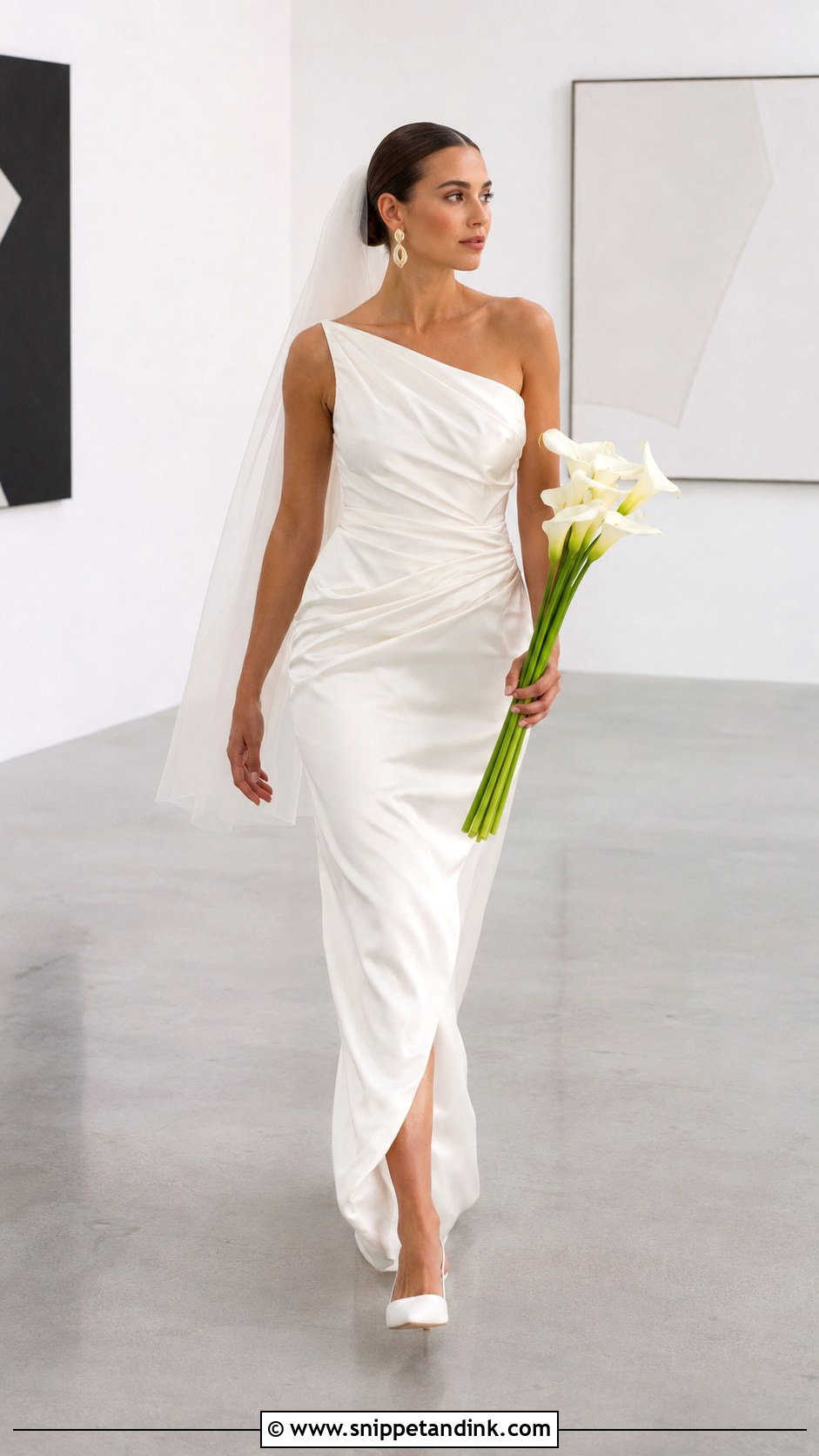
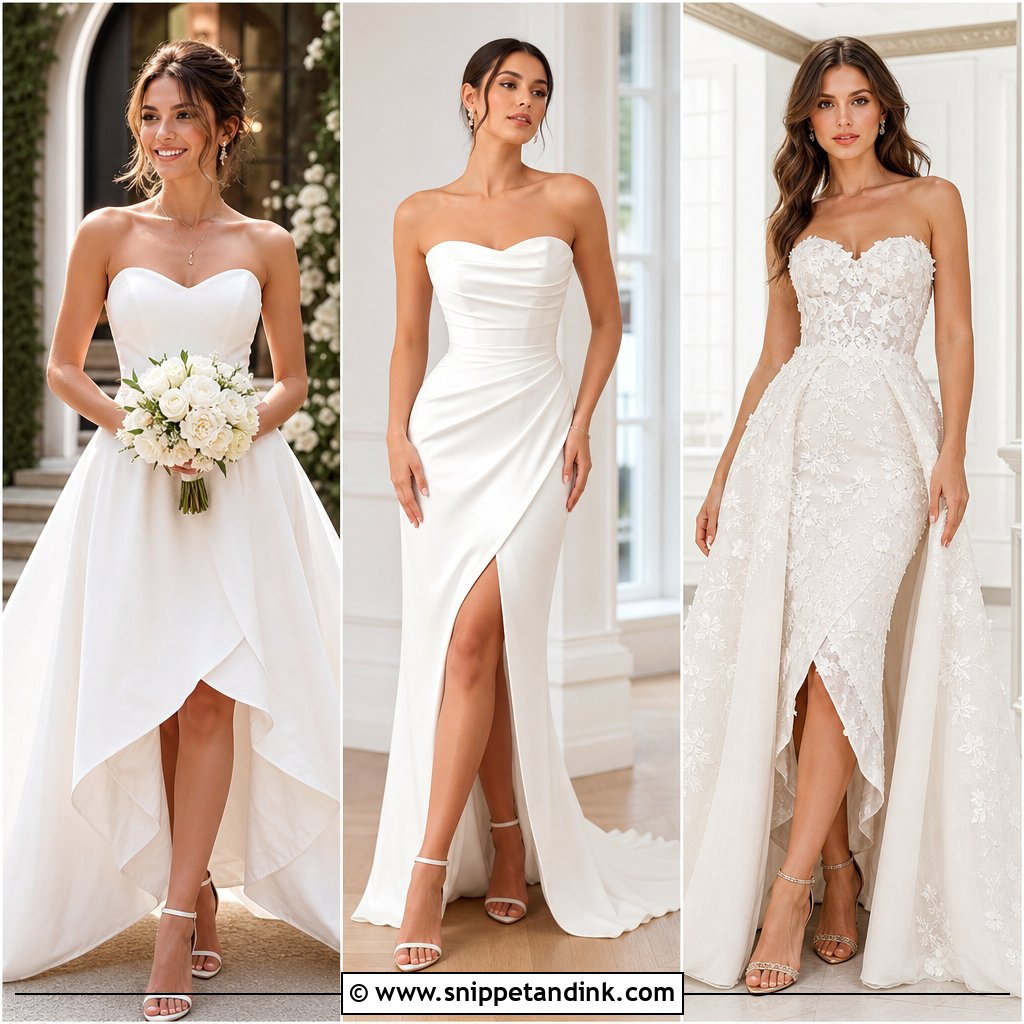
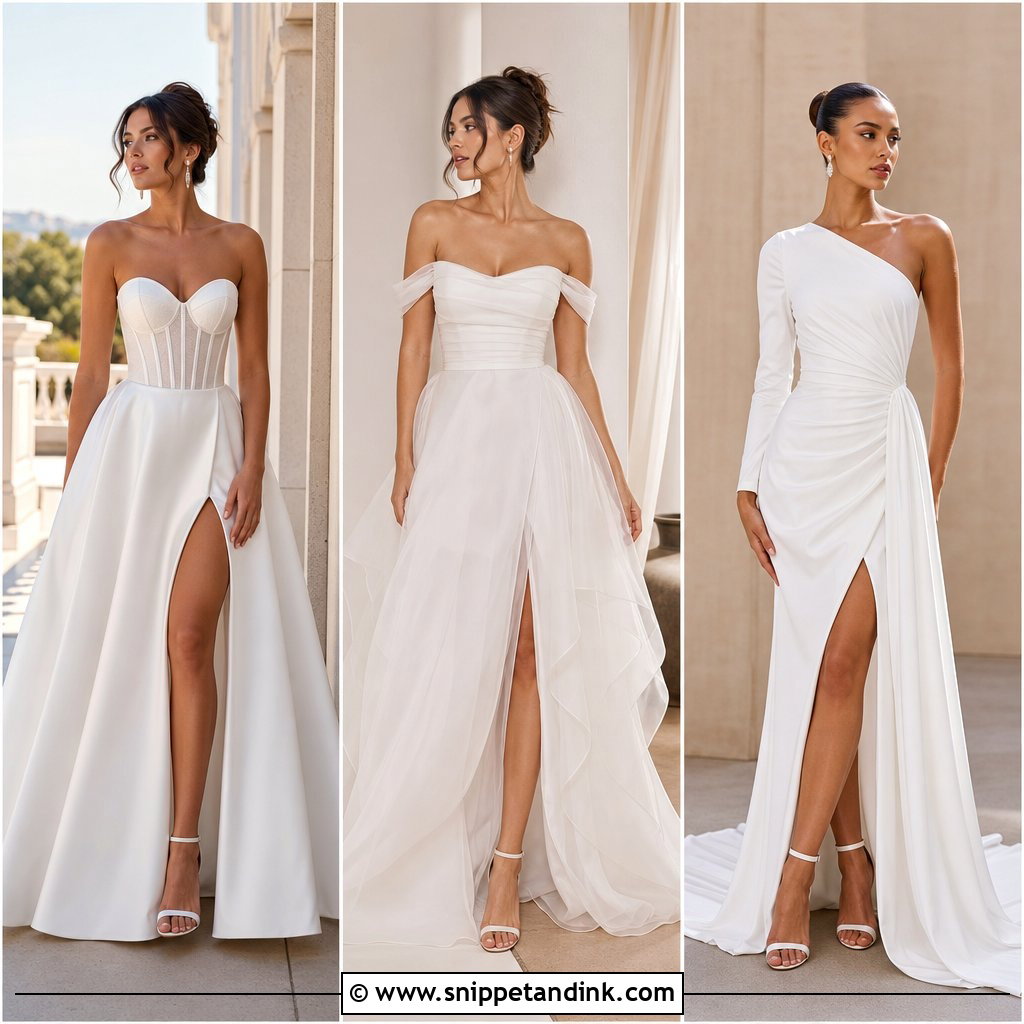
Draped satin is all about placement. An asymmetrical neckline, a wrapped waist and a column skirt with a small side slit give the fabric somewhere to fold, and satin’s natural shine means you need very little jewelry. Sculptural earrings, a clean-edged veil and ivory slingbacks are enough. A brushed-back bun keeps the neckline in view. Satin does have a weakness: it creases where you sit, and drapes show creases more than flat panels do, so ask your seamstress which way the folds should fall and keep a handheld steamer at the venue. Long-stemmed callas or anthuriums echo the clean lines, and the whole look suits galleries, city hotels and small ceremonies.
7. Bubble Hem Bridal Dress
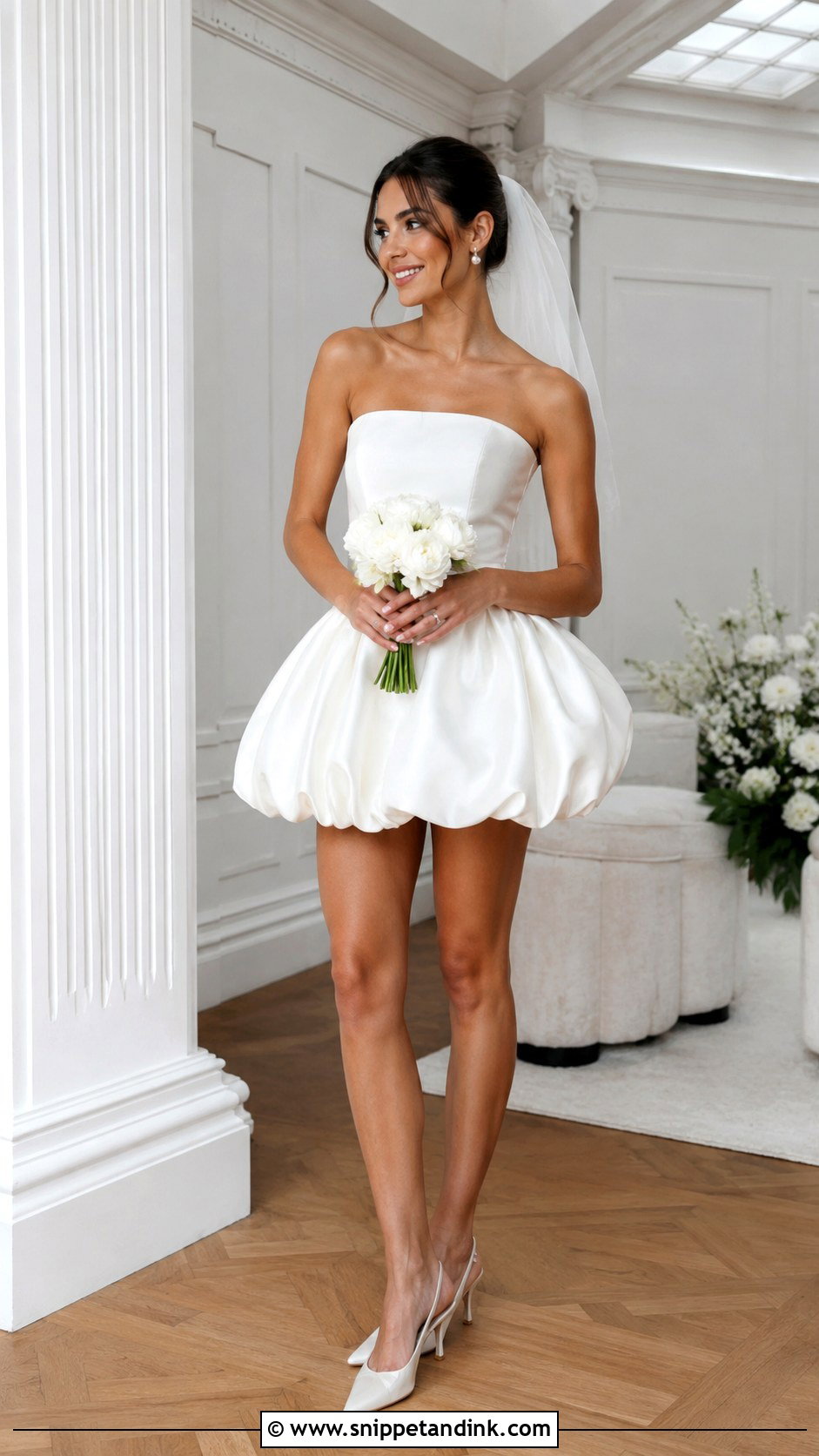
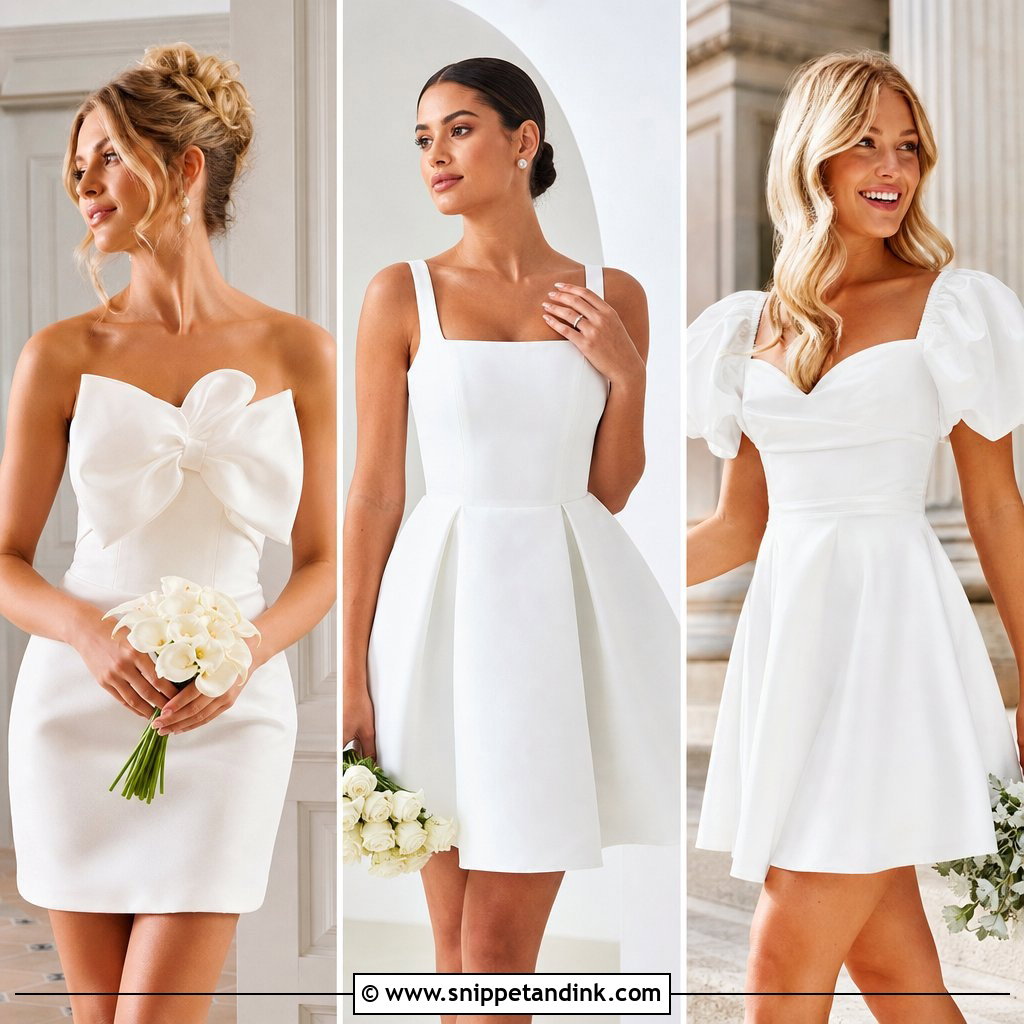
A bubble hem bridal dress is playful, and I see it most for civil ceremonies or a reception change. Mini or tea-length, it relies on a structured bodice and a rounded hem that’s tacked inside so it keeps its puff. A strapless neckline gives a clean base and light pleating helps the skirt hold shape. Pearl drops, a short veil and pointed slingbacks or polished flats work well, with a high ponytail or smooth bob. Keep the bouquet compact so it doesn’t hide the hem. If you’ll be in a church or a chilly hall, a fitted cropped jacket solves coverage. Expect to dance in it easily.
8. Bow Back Bridal Dress
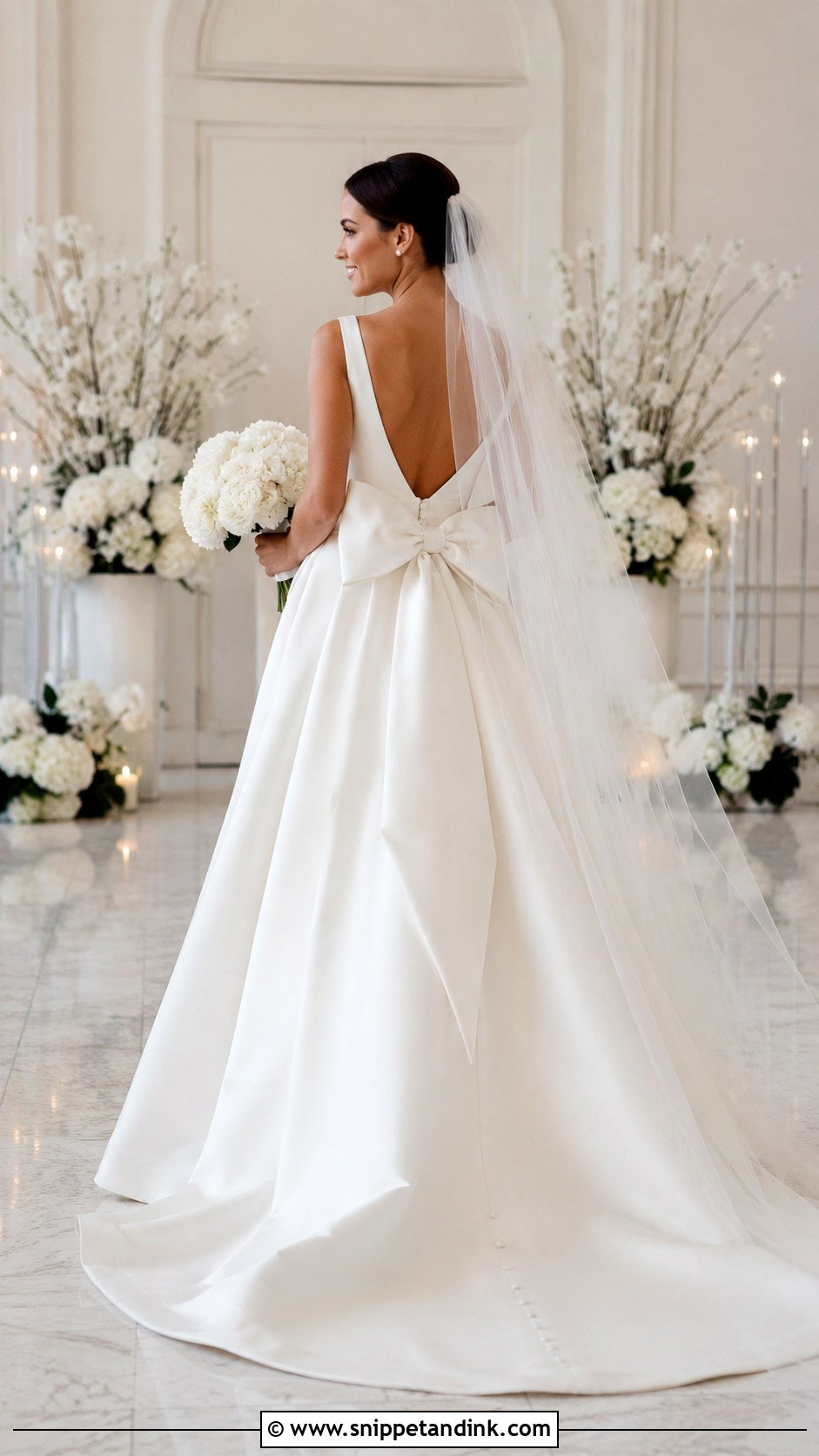
A bow on the back gives your guests something to look at for the whole ceremony, since that’s the view they have. Put it on a clean A-line or column gown, ideally detachable, at the waist or upper back. Crisp mikado, satin and faille hold a bow’s loops; softer fabrics collapse within an hour. Keep the front simple so the bow reads as intentional. I’d add pearl studs, pointed ivory heels and a sheer veil you can take off after the ceremony to show the bow fully, plus an updo or side-swept waves and white peonies or roses. Size is where it goes wrong: an oversized bow on a petite frame swallows the back, so pin a paper template at your fitting first.
9. Lace Peplum Bridal Dress
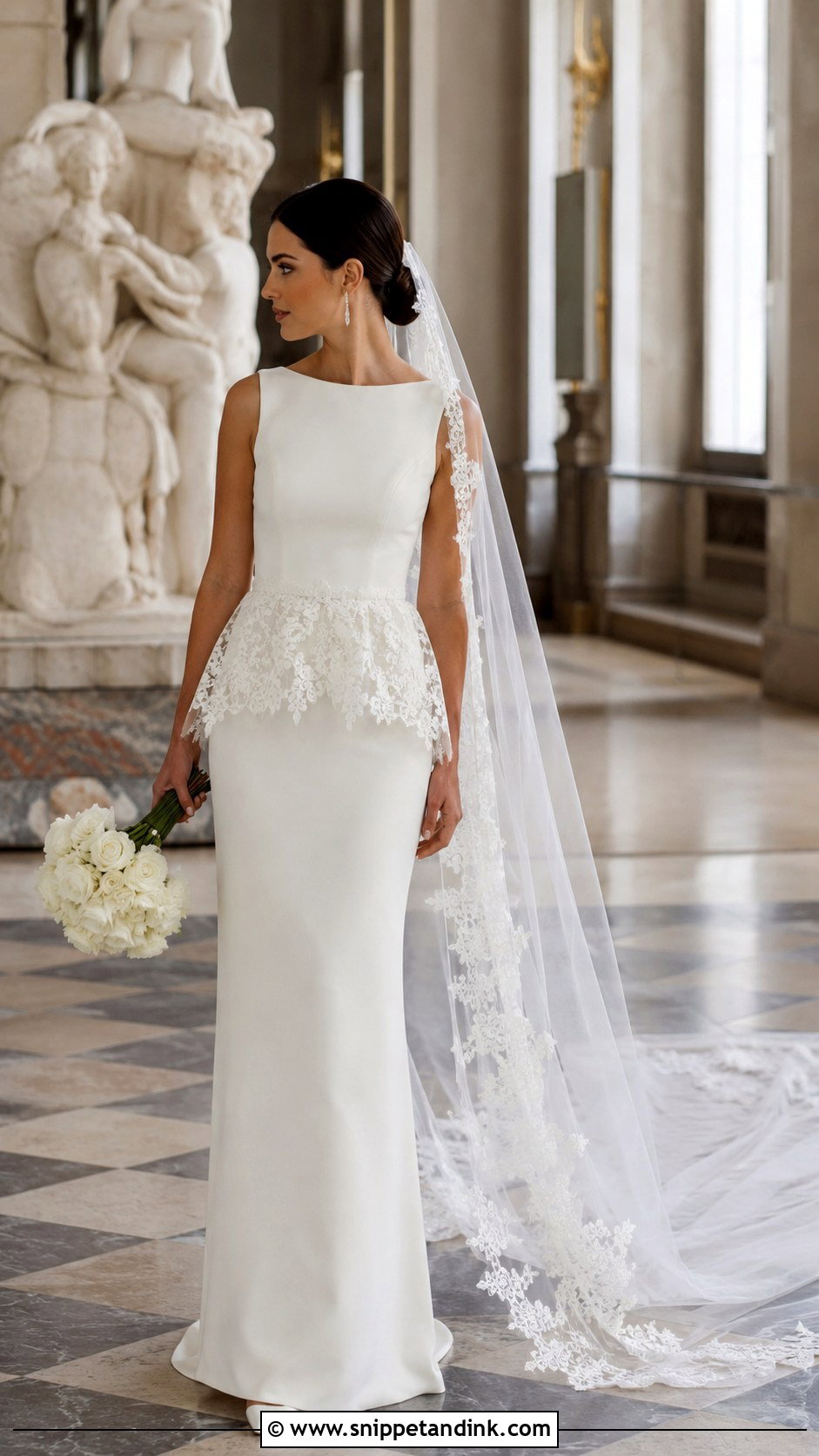
A lace peplum bridal dress gives a classic column some definition at the waist. The best versions use a removable lace overskirt or a softly flared peplum over smooth crepe, and the key check is bulk: if the peplum adds width at the hip when you sit, it needs a lighter lace or a shorter flare. Pair it with a narrow cathedral veil, small diamond earrings and pointed pumps, and a center-parted low bun with a loose bunch of white roses. Take the peplum off after dinner and you have a streamlined reception dress. Restaurants, estates and museums suit it, since guests see the tailoring up close.
10. Bridal Dress With Cape
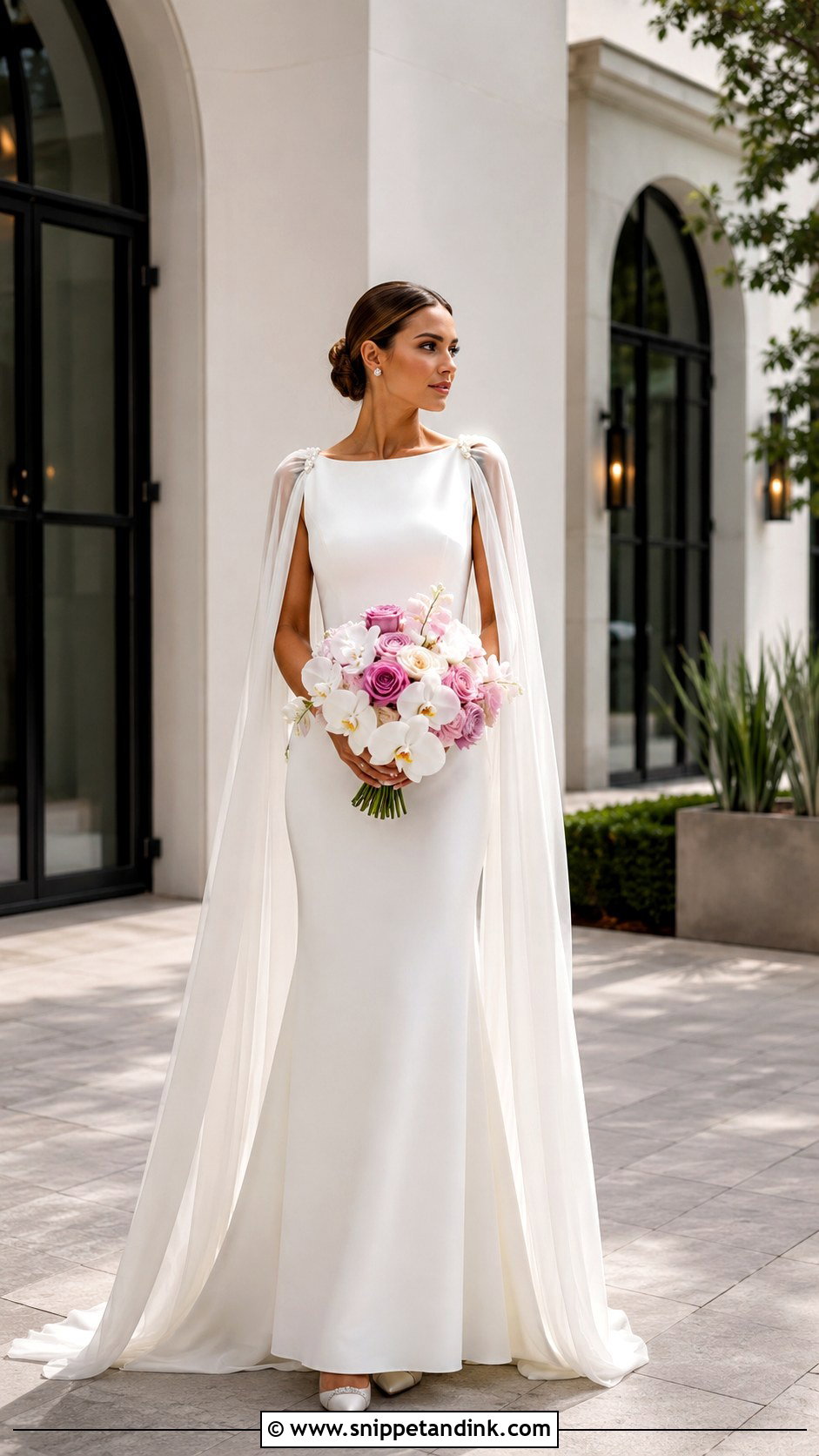
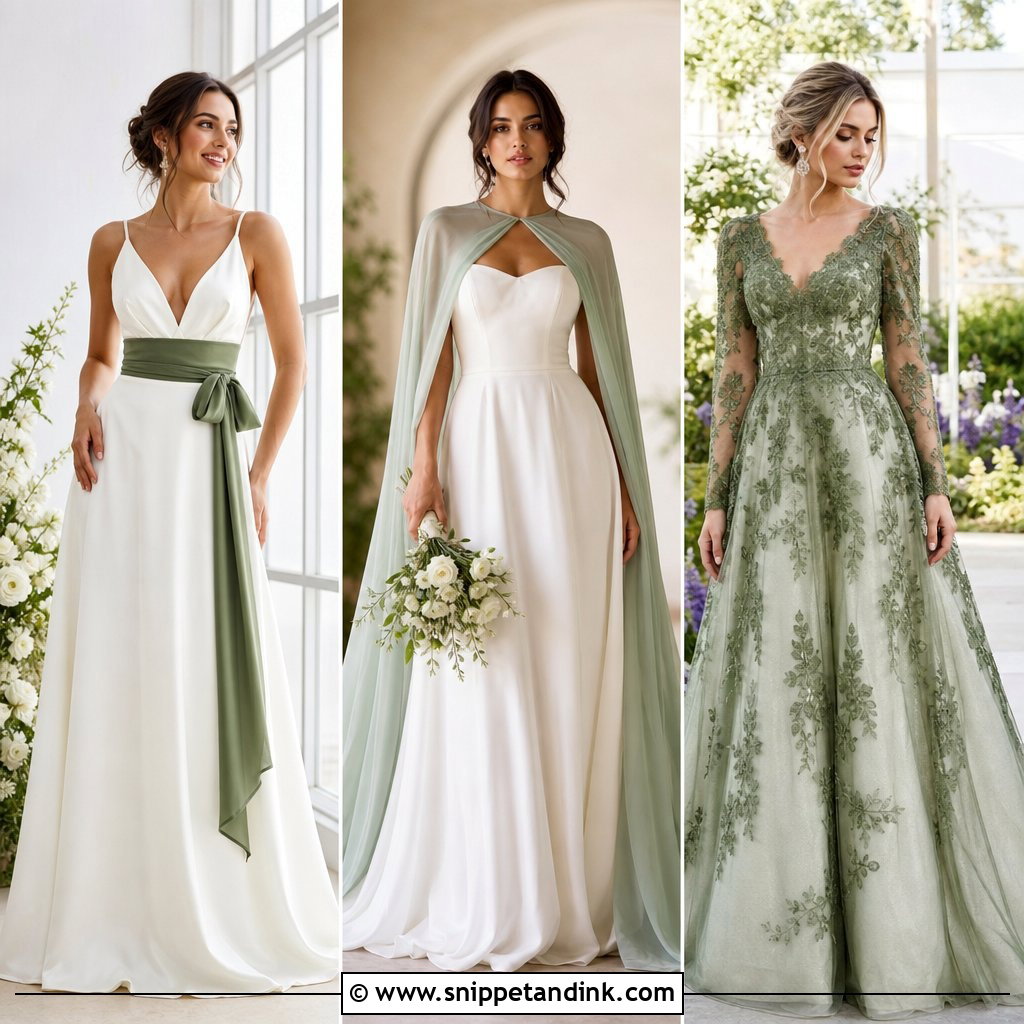
Brides who want coverage but don’t love veils often end up in a cape. It goes over a sleek crepe gown, fitted satin or a simple A-line, secured at the shoulders with pearls, covered buttons or a little floral appliqué. I always check two things: that the cape moves freely when you lift your arms to hug someone, and that it finishes close to the train length, because a cape stopping mid-calf on a long gown looks unfinished. Crystal studs, closed-toe heels and a polished low bun suit it; skip the large necklace. Carry white roses and orchids in a structured shape. For outdoor or cool-season ceremonies it’s practical, and it comes off for dinner.
11. One Shoulder Bridal Dress
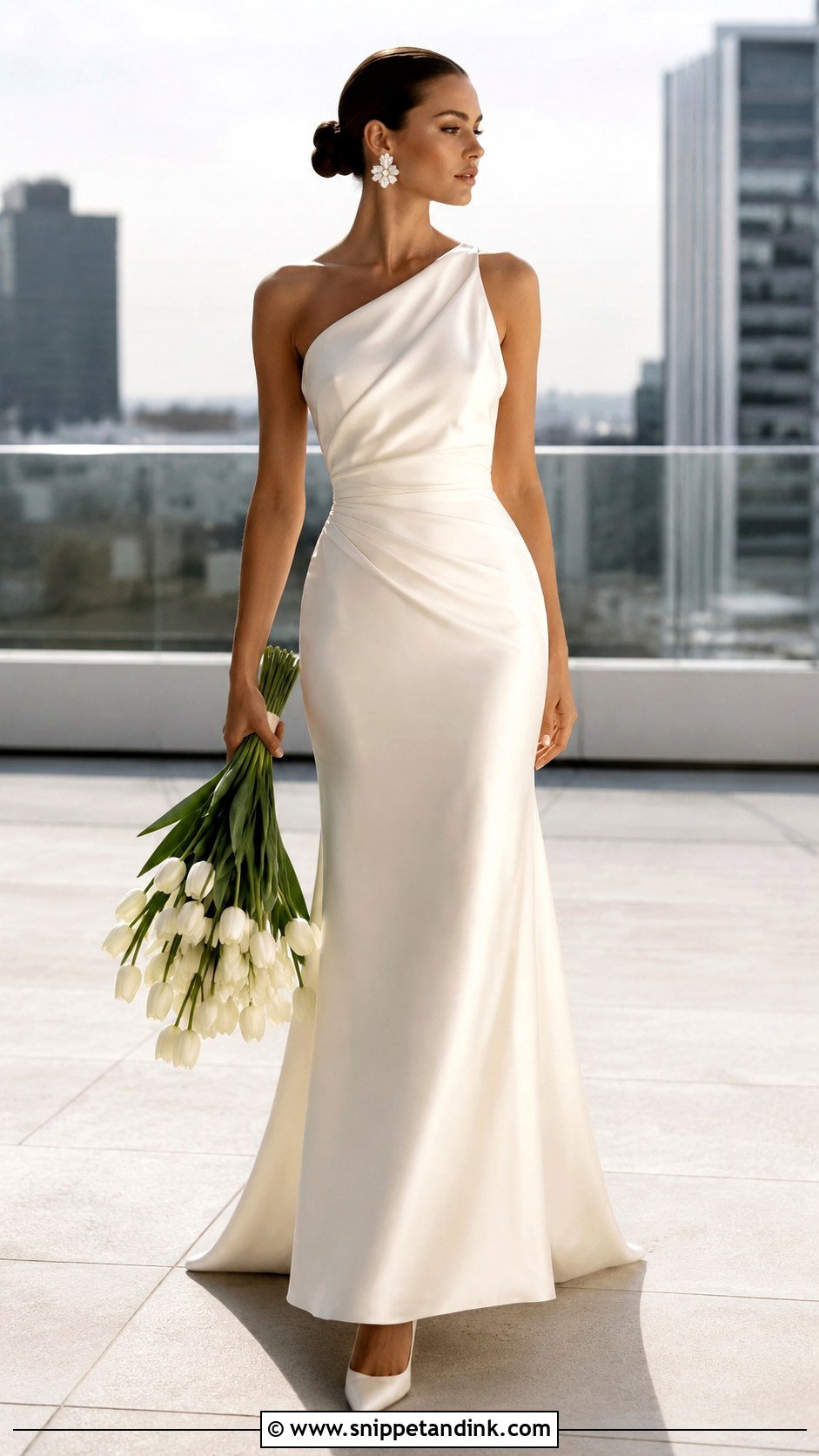
An architectural one shoulder neckline feels modern and still formal. In smooth satin or structured crepe, the soft folds cross the bodice and a fitted waist with a gently flared skirt balances the asymmetry. Put a statement earring on the bare side and leave the other side quiet. A veil is optional here, and I often suggest a minimal comb instead. Fit is the risk: a single strap carries the weight of the bodice, so the internal structure needs to grip at the waist or the shoulder will slip all evening. A low side bun or brushed-back waves keep the line clear, and an elongated bunch of white tulips matches it. Rooftops and modern buildings suit it.
12. Long Sleeve Illusion Bridal Dress
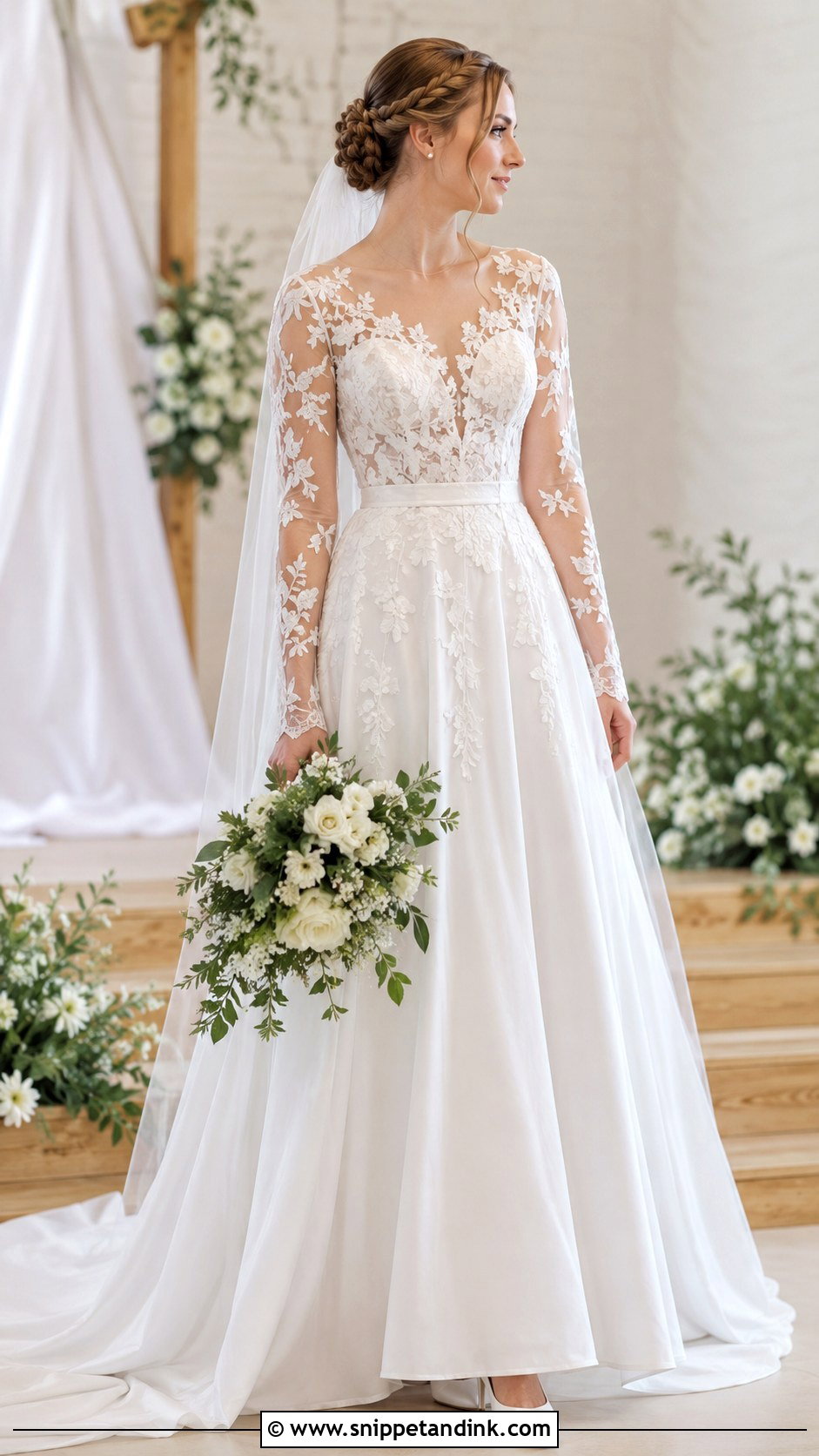
Illusion sleeves only work if the mesh disappears. Ask to see swatches against your skin, because a mesh that’s a shade too pink or too grey shows up as a band in flash photos. Lace motifs then sit on the neckline, arms and bodice as if floating. An A-line skirt gives comfortable movement and a fitted waist stops the detailed top half from overwhelming the figure. A plain chapel veil, pearl studs and closed-toe satin pumps are all it needs, with a braided low bun for texture and a loose bouquet of white roses, lisianthus and greenery. I’d check the mesh in daylight and indoor light before final alterations.
13. Square Neck Mikado Bridal Dress
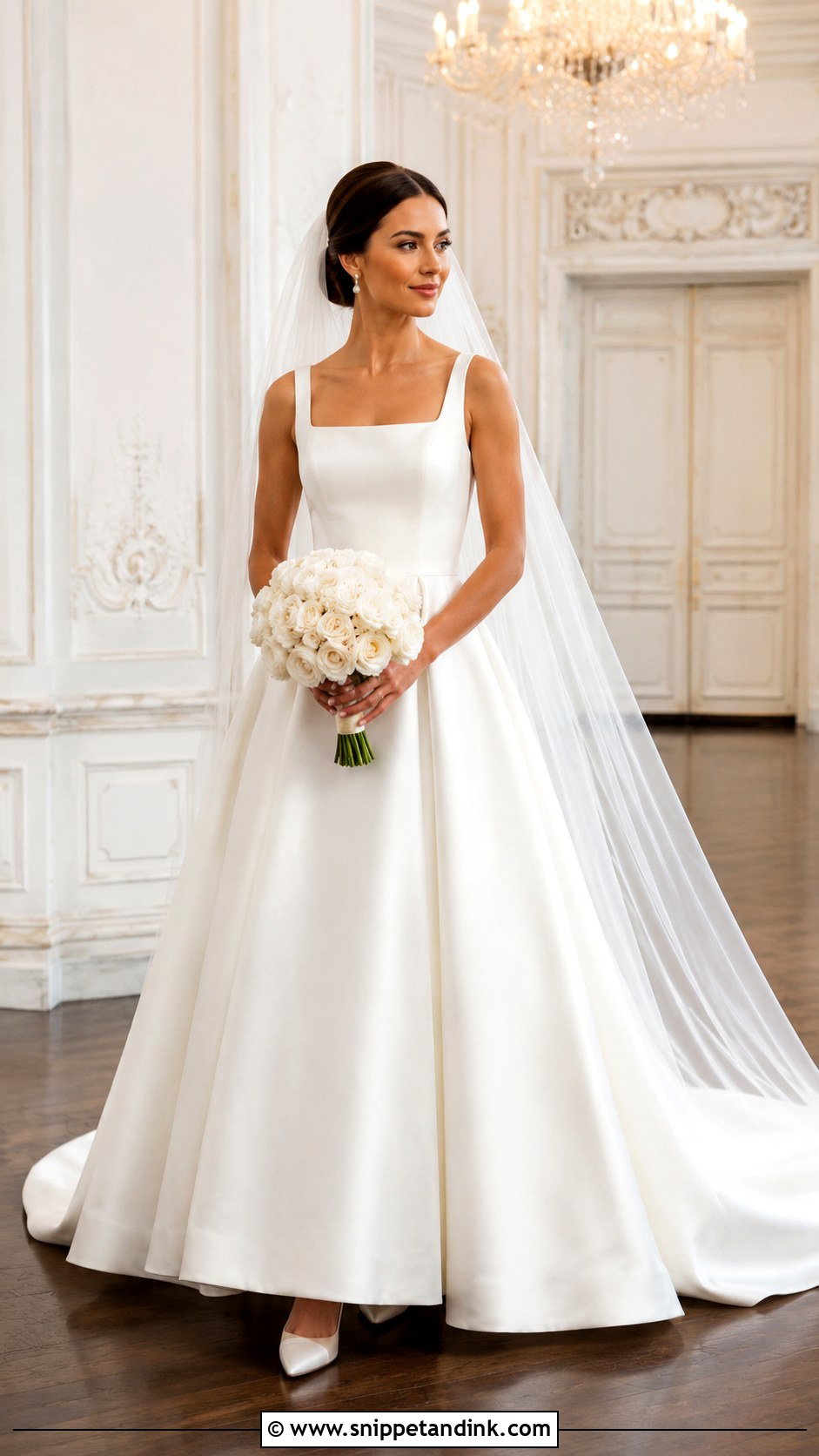
Mikado is one of the fabrics I trust most for a clean square neckline, because its weight holds a straight edge without gaping. The fitted bodice and full A-line skirt look polished, and the square neck frames the collarbone without showing much. Wide straps give dependable support. Add a long plain veil, pearl earrings and classic ivory pumps, plus a neat chignon. White garden roses bring texture against the crisp fabric. Do ask for hidden pockets; mikado supports them well and you’ll use them all day. One downside: mikado can water-spot, so don’t let anyone dab a spill with a wet napkin. It suits ballrooms, country clubs and historic hotels.
14. Off Shoulder Ball Gown Bridal Dress
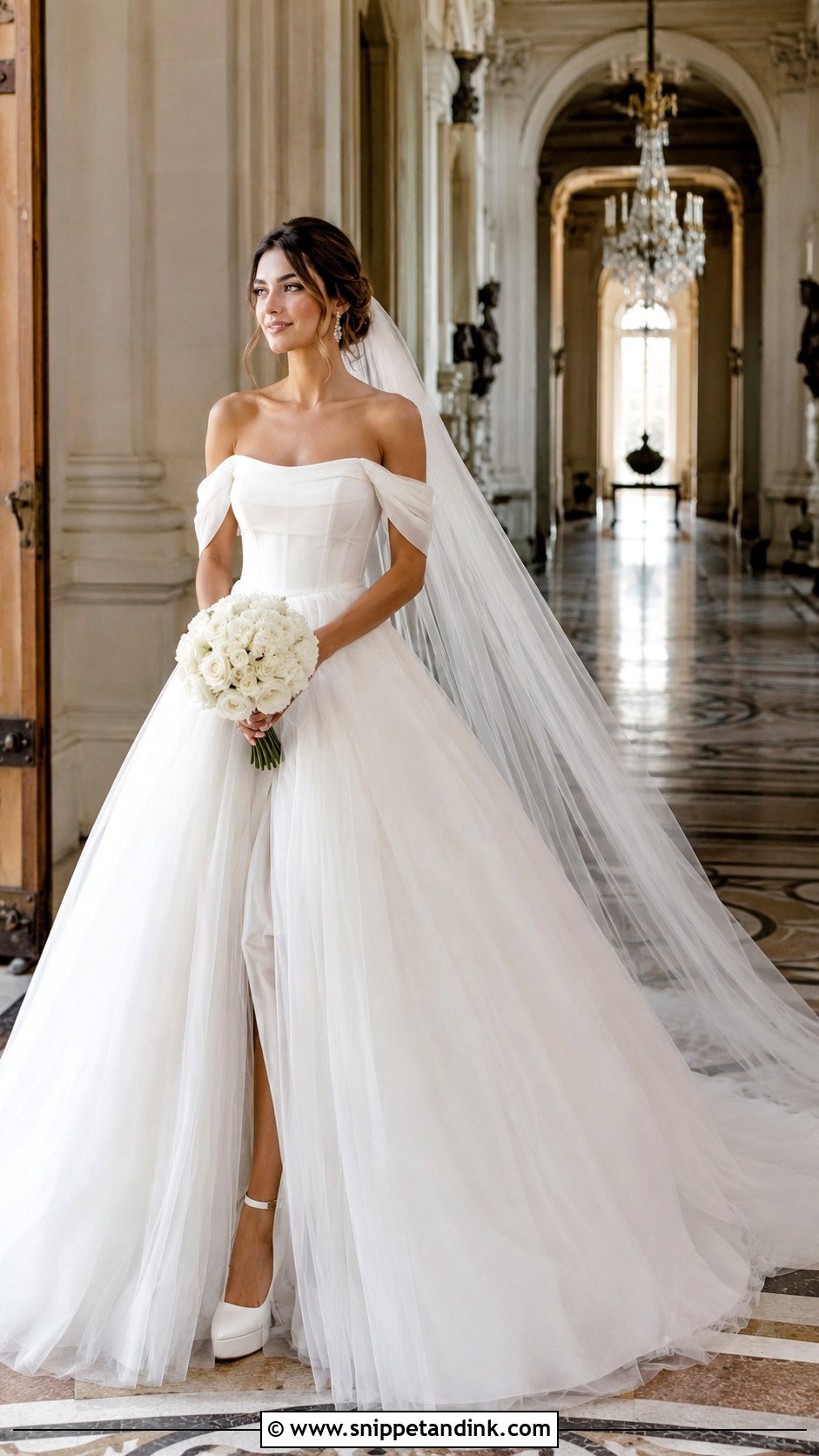
Off-shoulder ball gowns are only comfortable if the bodice is doing the work. The structured top should sit securely on its own before any draped sleeves or folded fabric are added, otherwise the sleeves pull the whole bodice down when you raise your arms. Tulle layers keep the skirt airy, while satin or mikado gives a stronger shape. A cathedral veil, delicate drops and block-heel pumps balance the volume. A soft updo stops hair catching on the sleeves. At fittings I ask brides to raise both arms, hug me and sit, because if it passes those three it’ll pass a dance floor. Carry white roses with some trailing greenery.

15. Feather Trim Halter Bridal Dress
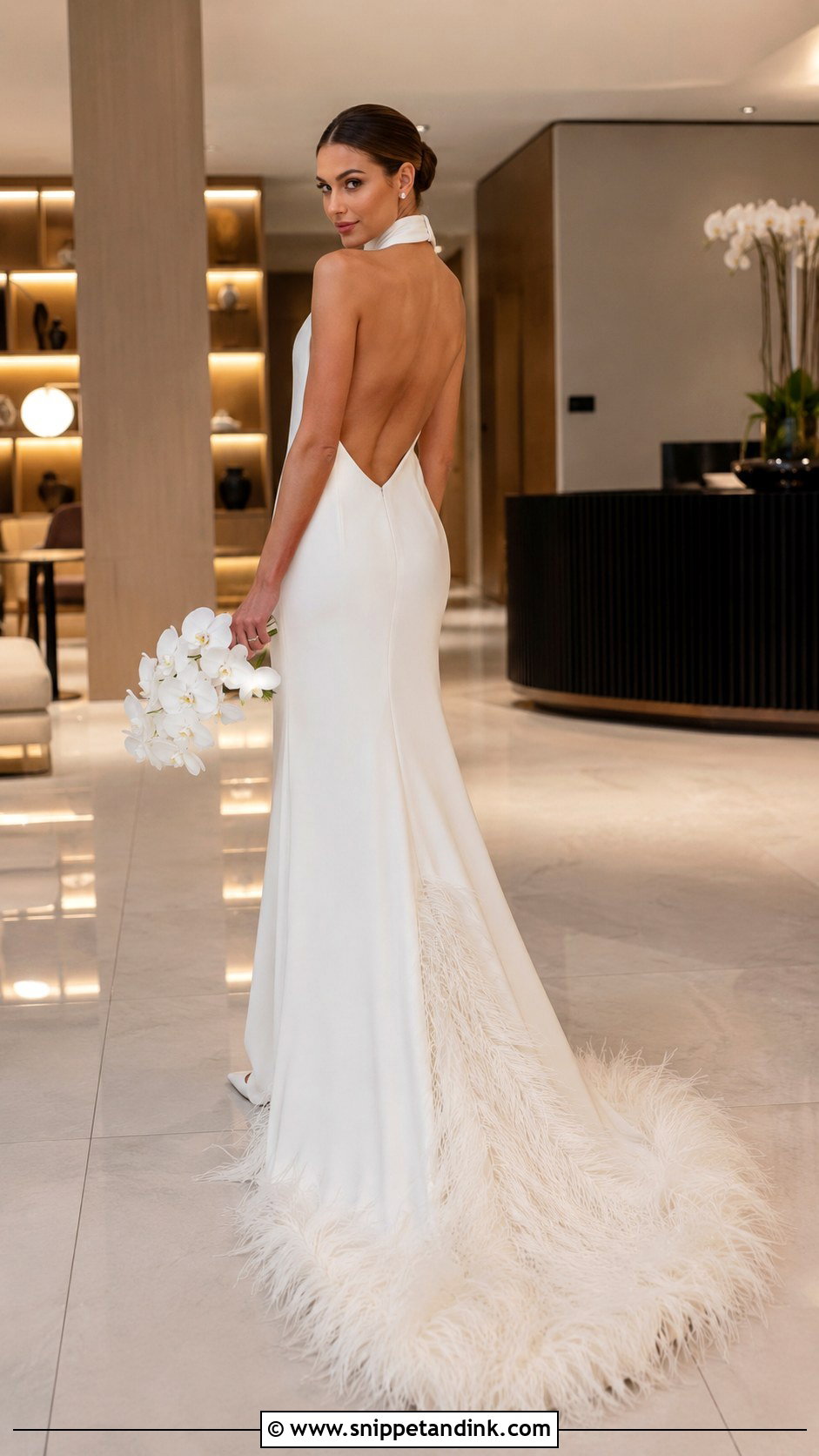
Feathers are fragile, so I like them used in one place. A feather trim halter bridal dress in fitted satin or crepe, with a high halter, open back and feathers along the hem or train, has plenty of impact without looking like a costume. Add pearl studs, a slim cuff and pointed slingbacks, and keep the hair in a smooth bun to show the neckline and back. Most veils will flatten or hide feather trim, so I’d use a minimal hair accessory instead. A small white orchid bouquet suits it. Feathers move with every step, which is why they shine on modern hotel entrances, but keep them away from candles and sparklers.
16. Convertible Overskirt Bridal Dress
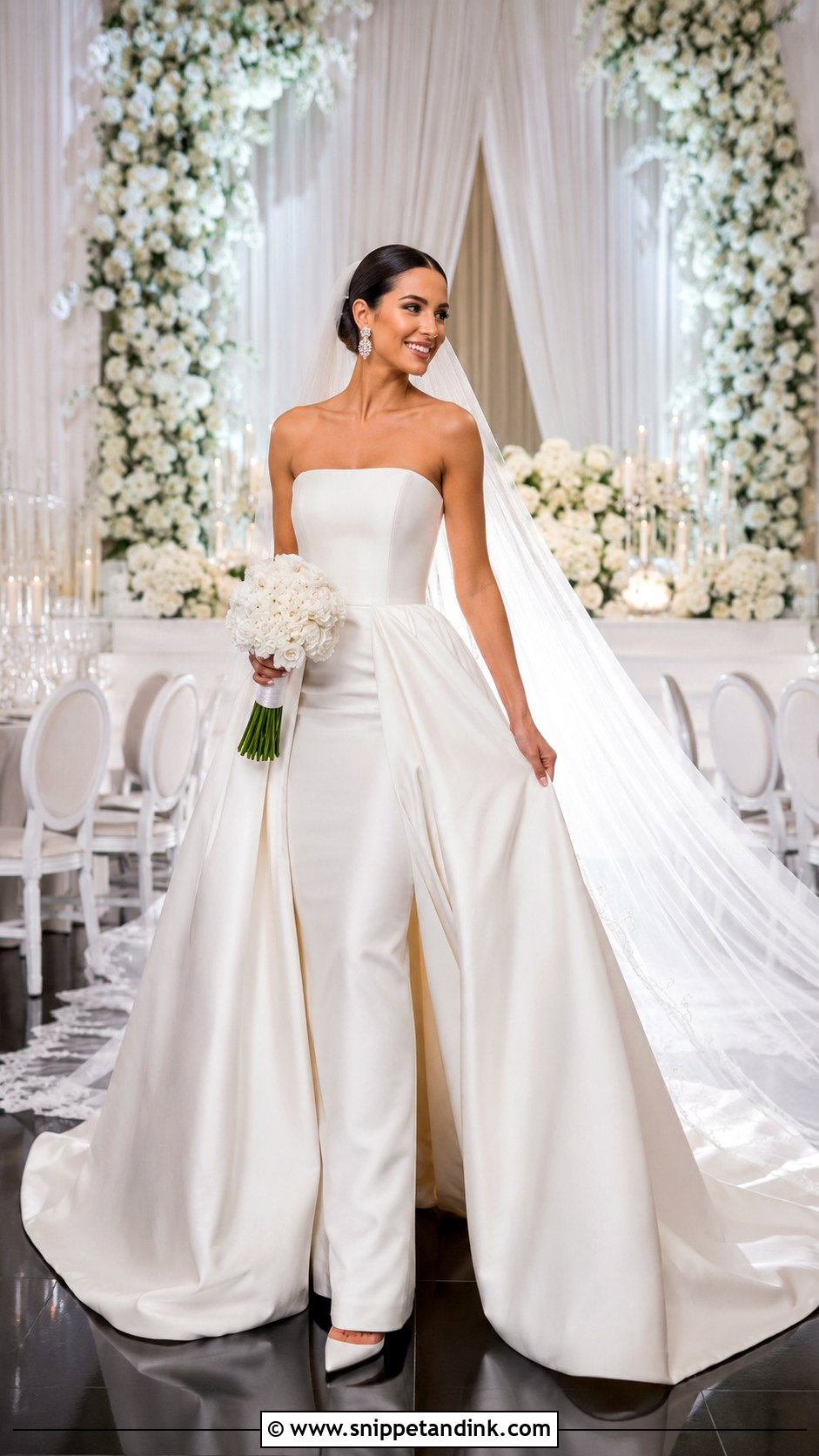
A convertible overskirt bridal dress gives you two looks for one alteration budget. Start with a fitted column, mermaid or mini in crepe or satin, then add a full detachable overskirt for the ceremony in matching fabric or airy tulle. The attachment is what I inspect: it should sit flat at the waist and hide under a belt, bow or clean seam, and hooks hold better than snaps under a heavy skirt. Wear a cathedral veil and classic pumps for the vows. Later, take off the skirt and veil and add statement earrings and comfortable slingbacks. A sleek bun works for both. Practise the change once with whoever will help you.
17. Pleated Tulle Bridal Dress
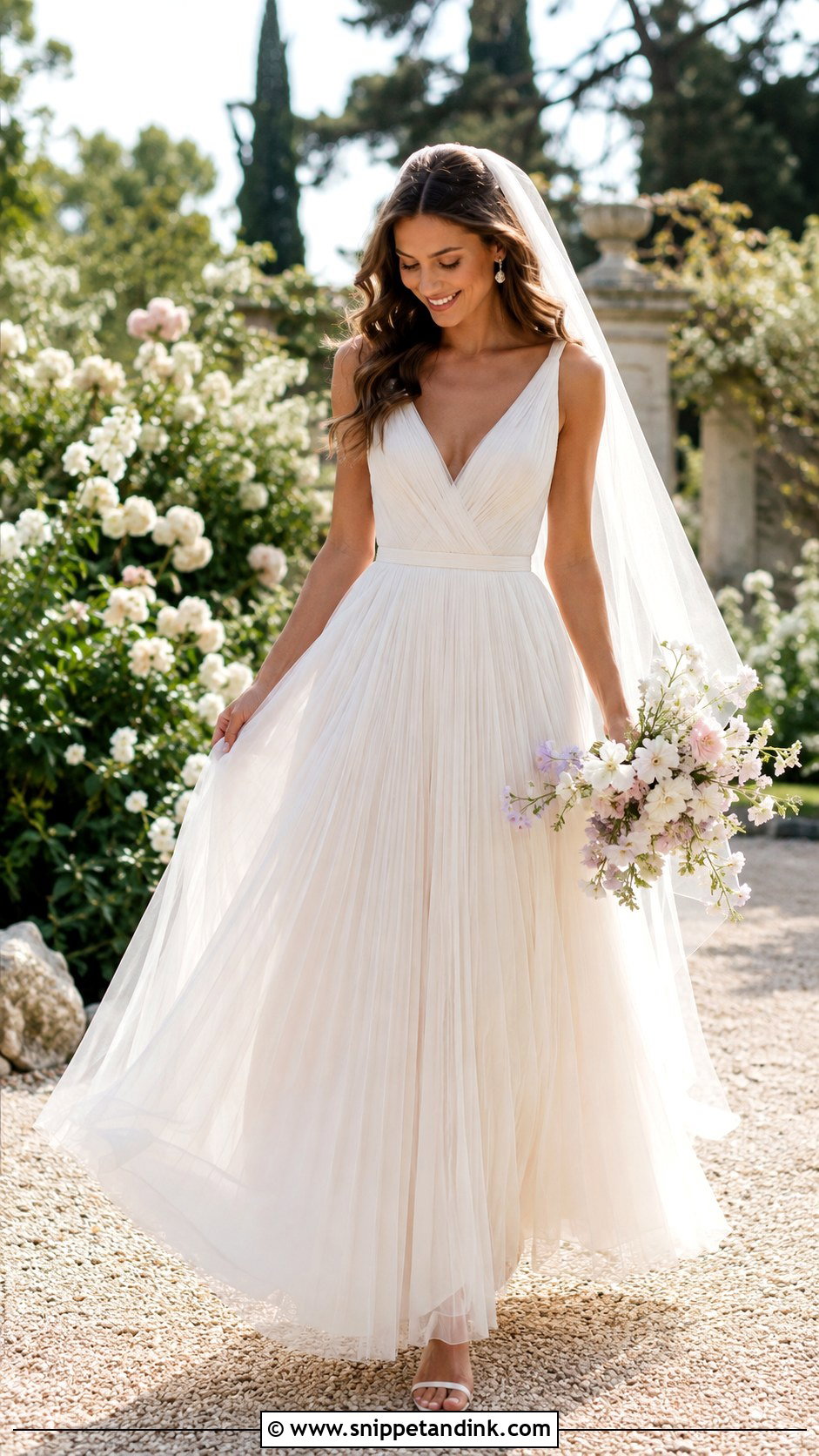
Accordion pleats give tulle movement without the weight of layers. A softly structured bodice with pleated tulle falling straight from the waist looks clean, and a V-neck or scoop with narrow straps keeps it light. Style it with a fingertip veil, pearl drops and simple sandals, plus soft waves or a relaxed bun and a loose bouquet of sweet peas, ranunculus or anemones. The pleats are the fussy part. They need a professional steam before the day and should hang, never fold, until you dress, because a crushed pleat rarely sets back properly with a home steamer. Gardens, coastal venues and warm-weather weddings suit it best.
18. Mixed Fabric Bridal Dress
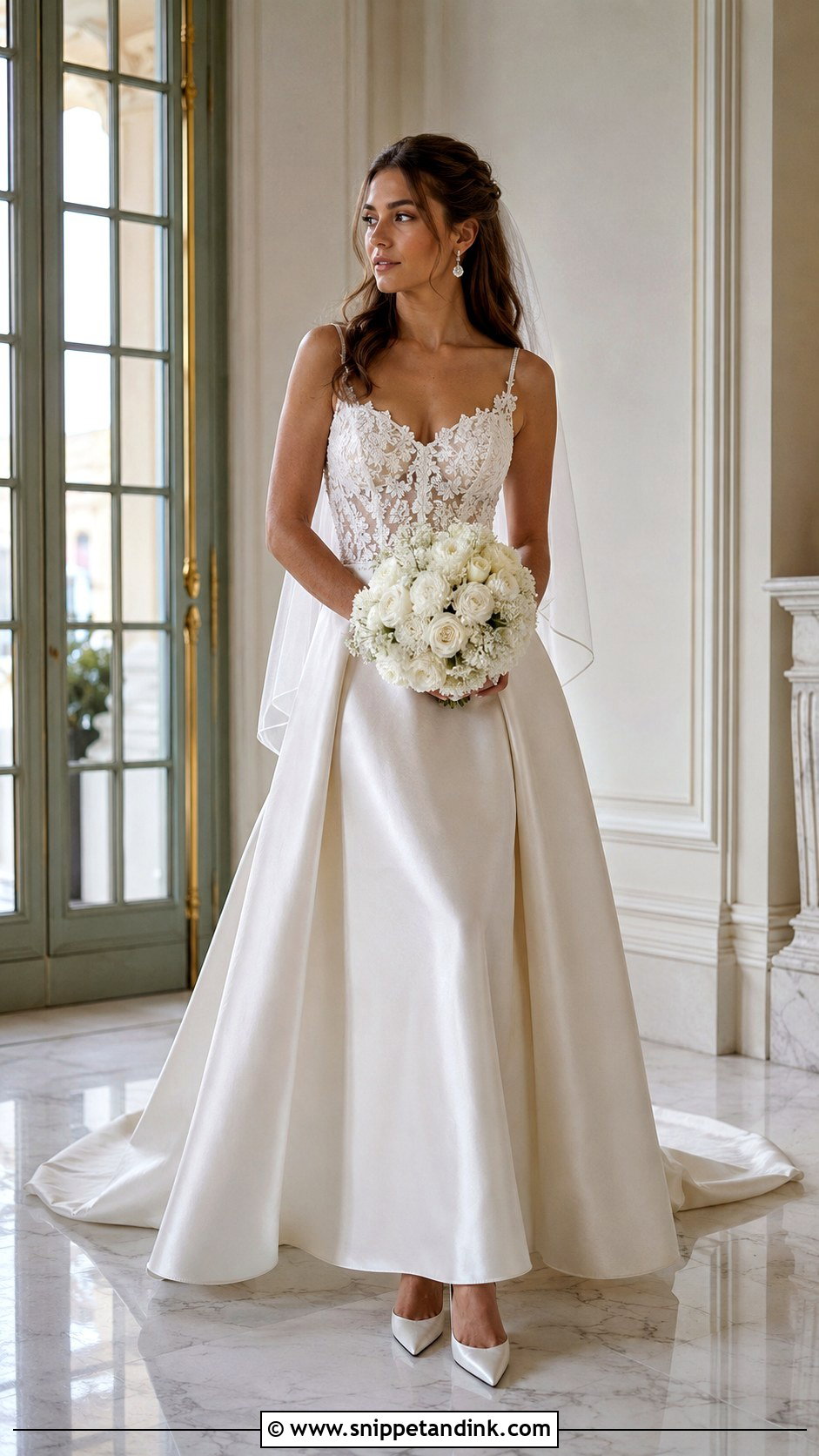
Mixing fabrics lets texture do the decorating. A lace corset bodice with a smooth satin skirt, or a crisp mikado gown with organza sleeves, gives contrast without beading. The catch is color: two ivories from different mills rarely match, so I hold the swatches together in daylight before anything is cut. Accessories stay simple with pearl earrings, a plain veil and pointed pumps, and a low bun or half-up style keeps the neckline and the fabric change in view. A bouquet with white flowers of varied shapes echoes the contrast. It’s a good route if you love lace but don’t want to be covered in it.
19. Tea Length Bridal Dress
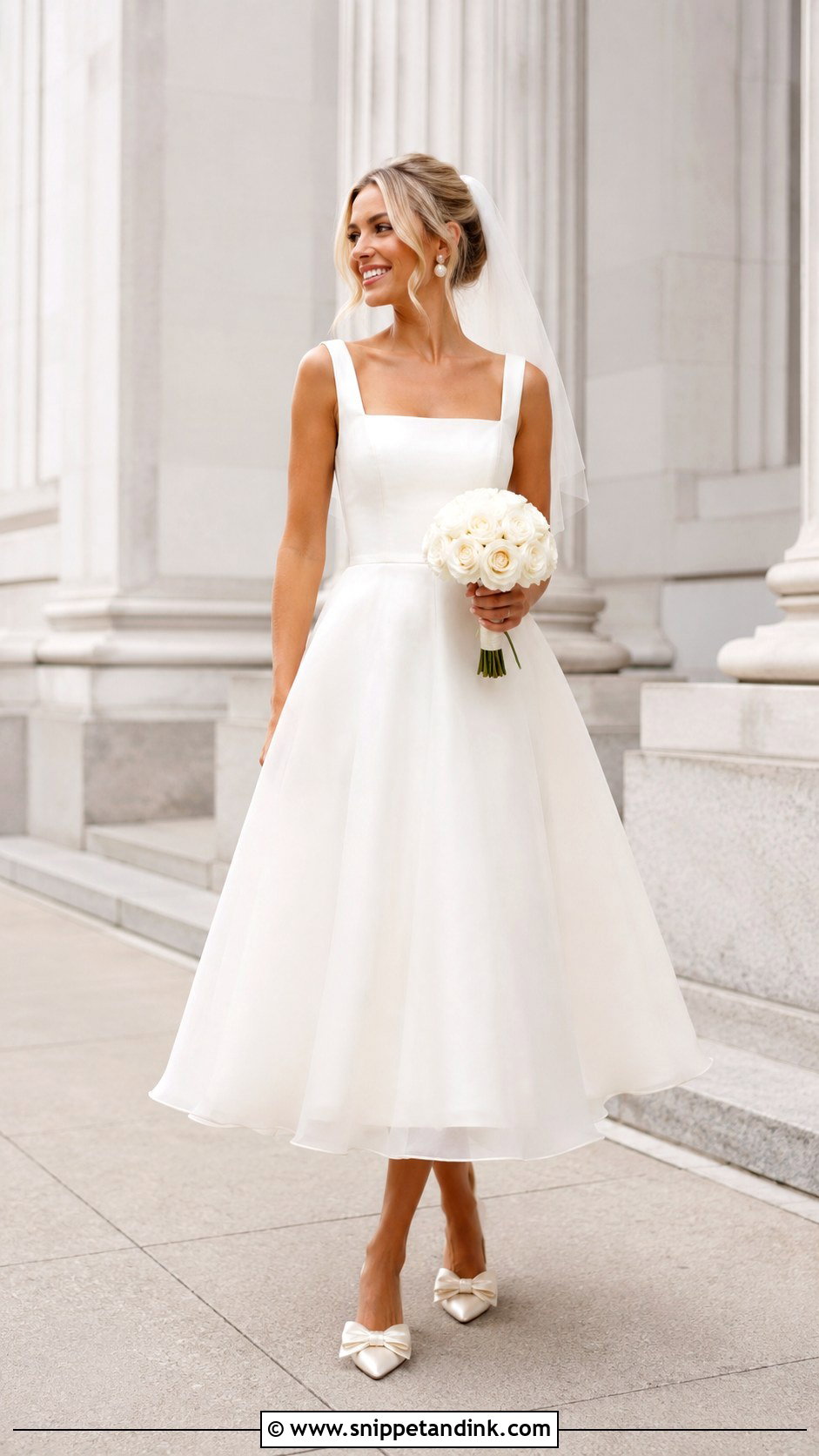
Tea length is my usual suggestion for courthouse ceremonies and daytime parties. The fitted bodice and a skirt ending between knee and ankle look classic with a bateau, scoop or square neckline, and satin or embroidered organza gives the skirt body. Your shoes are on show, so this is where ivory pumps, bow slingbacks or good bridal flats earn their place. Add a short veil, pearl earrings, a compact rose bouquet and soft waves or a tidy bun, and a cropped jacket for cooler weather. Hem length makes or breaks it. I mark the hem wearing the actual wedding shoes, since half an inch changes the proportions completely.
20. Floral Embroidered Bridal Dress
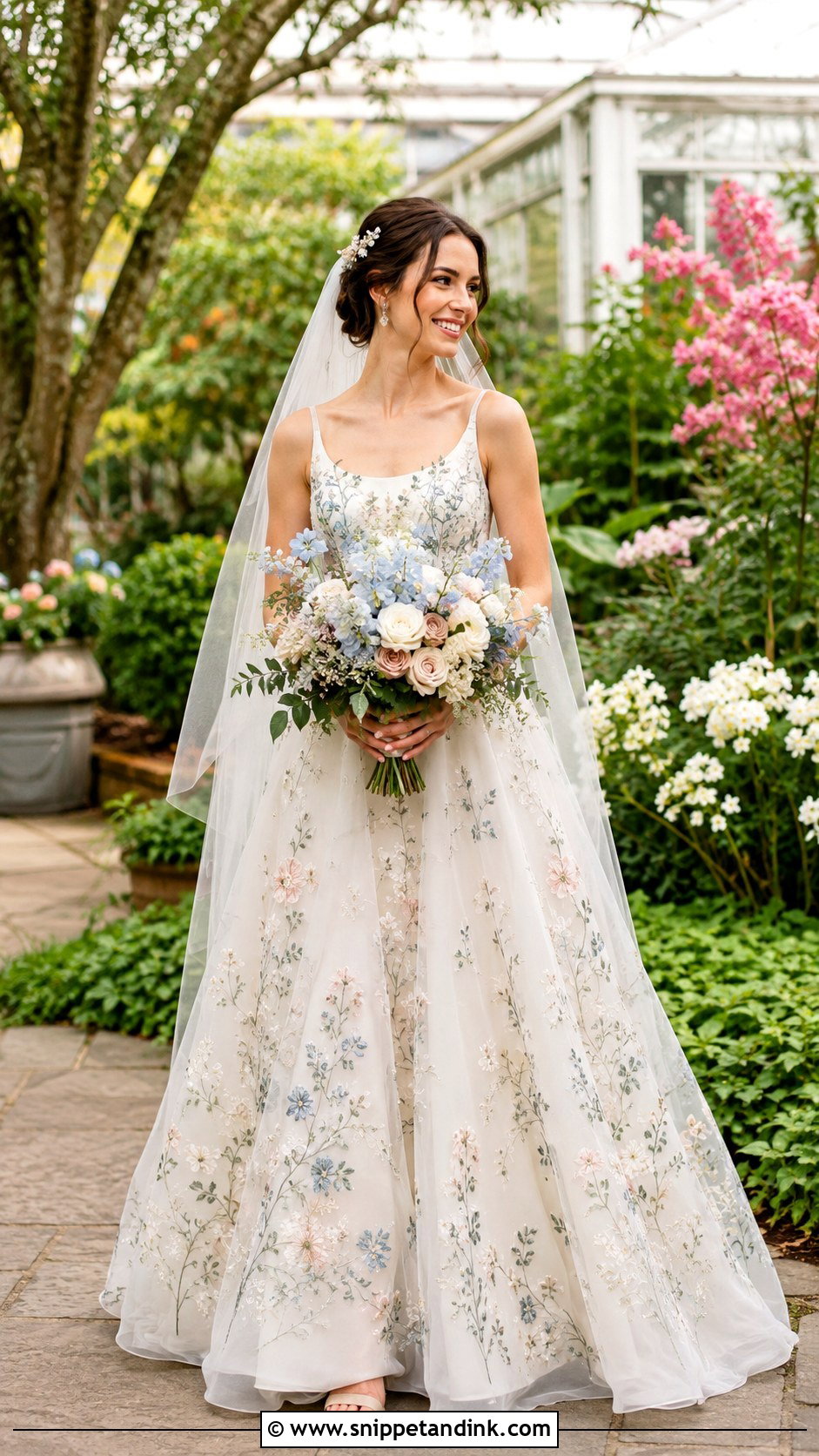
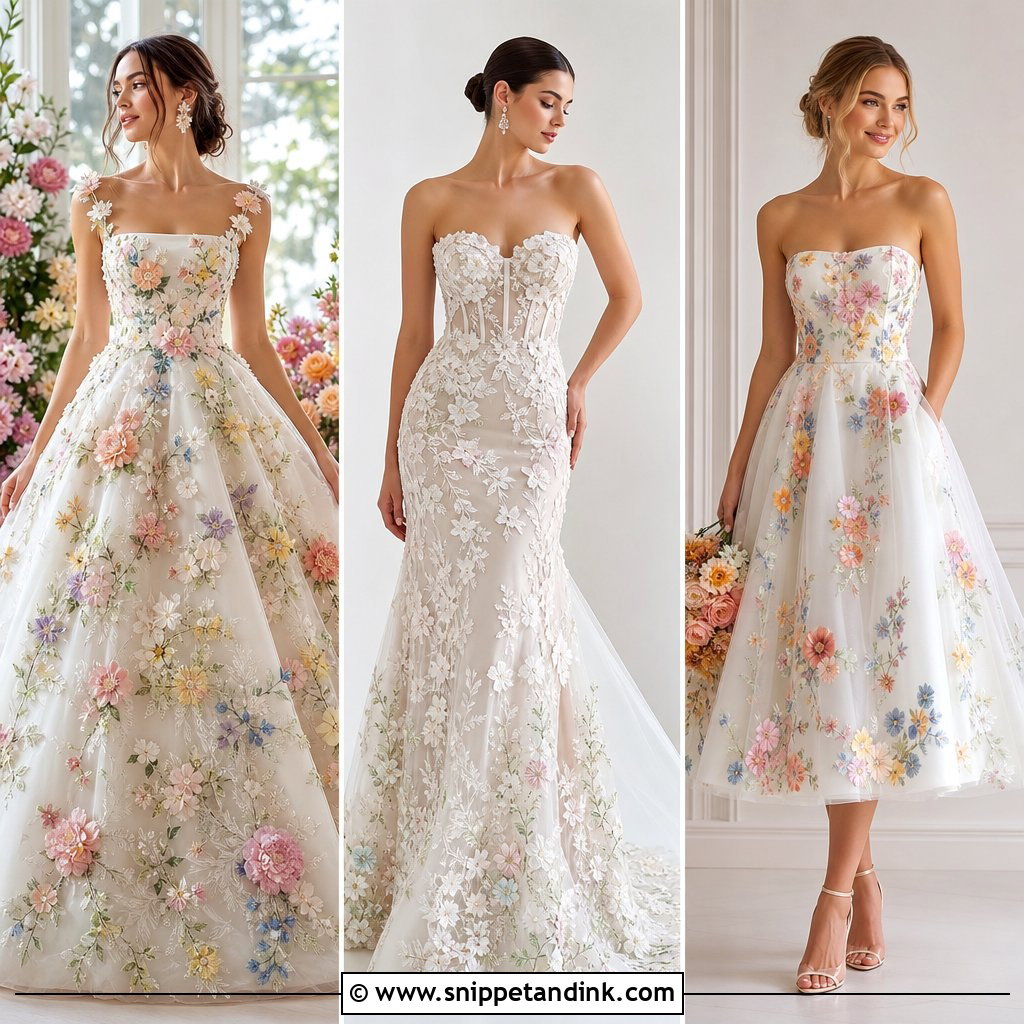
Colored embroidery brings color in while the silhouette still says bride. An ivory A-line with blue, blush, sage or pastel stitching across the bodice and skirt works best when the palette is held to two or three shades, otherwise it starts to look like a print. A sheer plain veil lets the color show through. Choose understated earrings and ivory heels, a relaxed updo with a small floral comb, and a bouquet that repeats one or two of the thread colors. Botanical venues and outdoor ceremonies suit it. For a quieter take, ask for the embroidery only near the hem, train or sleeves.
Order Dates, Fittings and the Alteration Calendar
Most made-to-order gowns take somewhere between four and eight months to arrive, and some designers quote longer, so the calendar starts earlier than people think. Lead times vary by brand and season, so get the ship date in writing when you order.
- Order roughly nine to twelve months out if you can, which leaves a cushion for shipping delays.
- Book your first fitting about two to three months before the date, once your shoes and undergarments are bought.
- Plan for two or three fittings in total; structured bodices and corsets often need the extra one.
- Pick the gown up a week or two before the wedding and try it on once more at home.
Bring someone to your last fitting who will actually be there on the morning, and have the seamstress show them the bustle. An over-bustle lifts the train up and hooks it onto the outside of the skirt, while a French bustle tucks it underneath with ribbon ties. Neither is hard, but nobody figures it out for the first time in a dark corridor during the reception.
Steaming and Storing Satin, Tulle and Mikado
Each fabric in this list reacts to heat and water differently. Tulle relaxes quickly under a steamer held a few inches away. Satin and mikado can water-spot if the steamer spits, so I steam them from the inside where possible and never iron them directly, because an iron leaves a shine you can’t remove. After the wedding, have the gown cleaned soon rather than waiting a year, since sugar and wine stains turn yellow with time. Store it in acid-free tissue in a breathable cotton bag or box, away from plastic, and hang heavy skirts by the inner hanging loops rather than the shoulder straps.
What I’d Check in the Mirror Before Saying Yes
A gown has to suit your personality and also survive the comfort, movement and formality your wedding will ask of it. The designs here run from structured Basque waists and full ball gowns to satin columns, embroidered dresses and convertible pieces. In the fitting room, sit, walk, raise your arms and turn, and look at the fabric in daylight as well as under the shop lights. Take photos from the side and the back, since that’s how most guests will see you. Keep accessories behind the dress’s strongest detail rather than competing with it. Then go with the one you still feel like yourself in after twenty minutes, not just the first two.
You'll Like These Ideas:





Leave a Reply