
Ruffles add movement and texture to a wedding dress, and they are also the detail I see go wrong most often in a fitting room, usually because they start in the wrong place on the body. The gowns below run from soft chiffon tiers to sculpted organza ball gowns, with corsetry, lace and detachable volume in between, which leaves a lot of room to make the look your own. What decides success is how the ruffles sit on your proportions, your venue and how much you need to move. I’ve styled each dress as a full outfit with shoes, jewellery, veil and the right foundation underneath, from classic to minimal to relaxed boho.
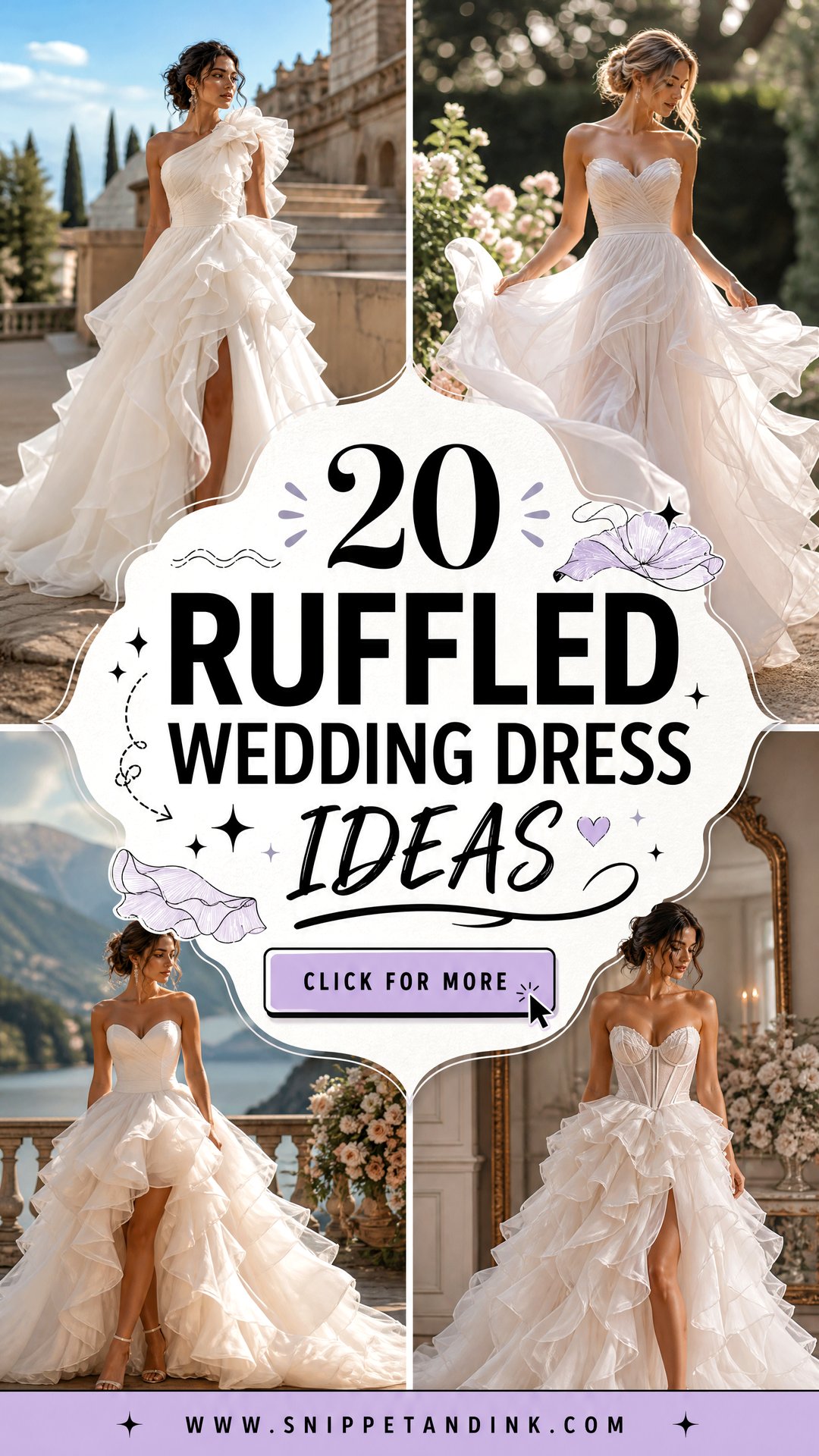
Where the First Ruffle Starts Changes Your Whole Shape
Before I look at fabric, I look at where a dress puts its volume, because ruffles add width wherever they begin. Get that line right and almost any style works.
- At the waist: maximum volume and a strong hourglass, good on most figures but heavy on a petite bride if the tiers are deep.
- At the hip or below: a longer torso and a lighter feel; it suits taller brides and anyone who wants a slimmer line on top.
- At the knee: the mermaid effect, which depends on a very good fit through the hip and thigh.
- At the shoulder or neckline only: draws attention up to the face, with a calm skirt below.
Then look at the depth of each tier. Several shallow ruffles read as texture; two or three deep ones read as volume. If you are unsure, try both in the same fabric back to back and look at a photo of yourself, not the mirror, since photos flatten volume differently.
1. Tiered Tulle Ruffled Wedding Dress
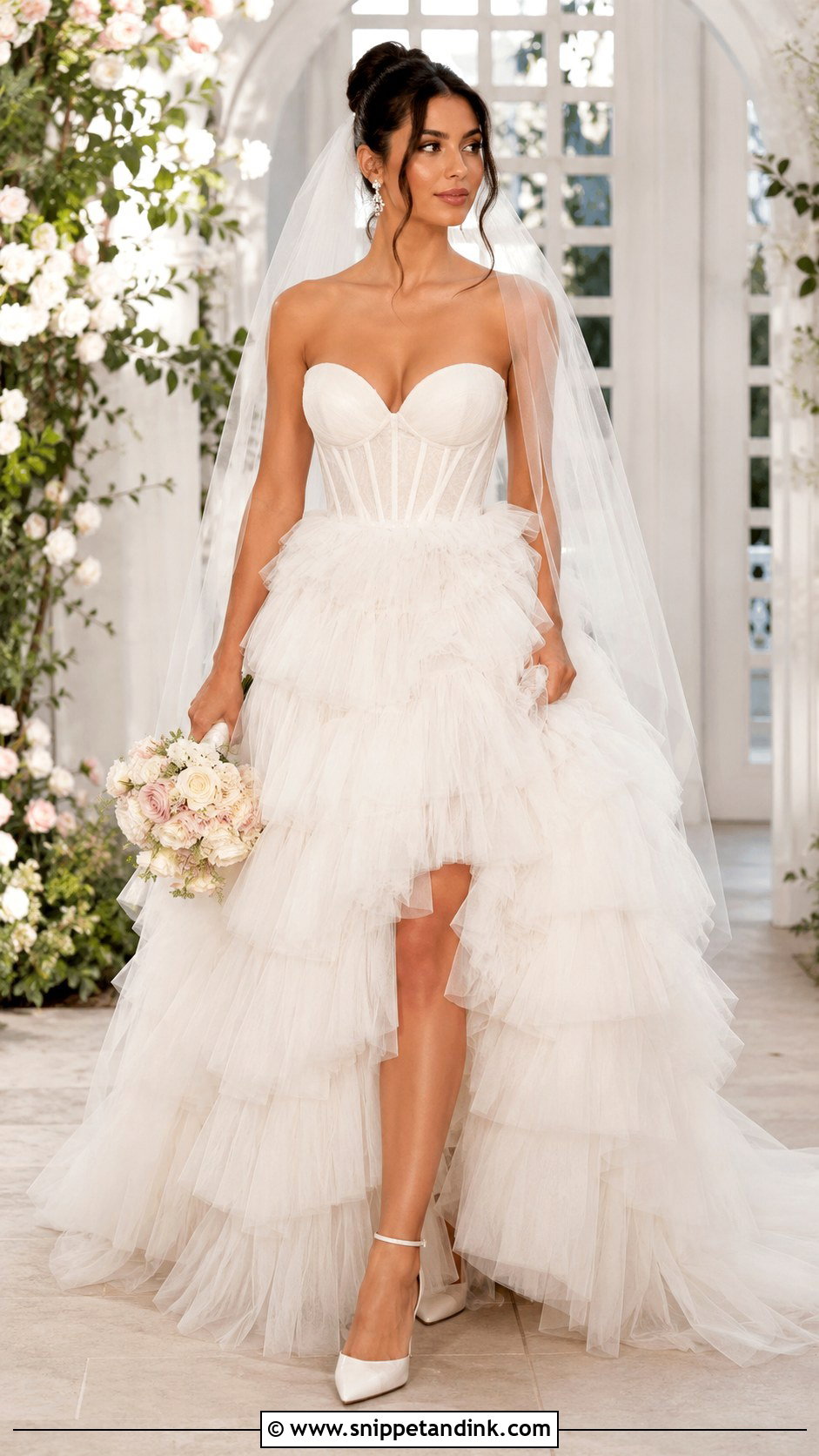
Tulle tiers give volume without weight, which is why this is the ruffle I suggest to brides who have never worn a full skirt before. Start the layers below the waist so the bodice stays clean, and choose an A-line or ball gown with a strapless sweetheart neckline held by an internal corset. This ruffled wedding dress needs little else: crystal drops, pointed satin pumps and a raw-edge fingertip veil. Hemming is the catch. Cutting straight through stacked tiers changes their proportions, so I ask the shop up front whether each tier can be taken up separately, or shortened from the waist instead. A narrow satin waistband adds definition.
2. Strapless Ruffled Ball Gown Wedding Dress
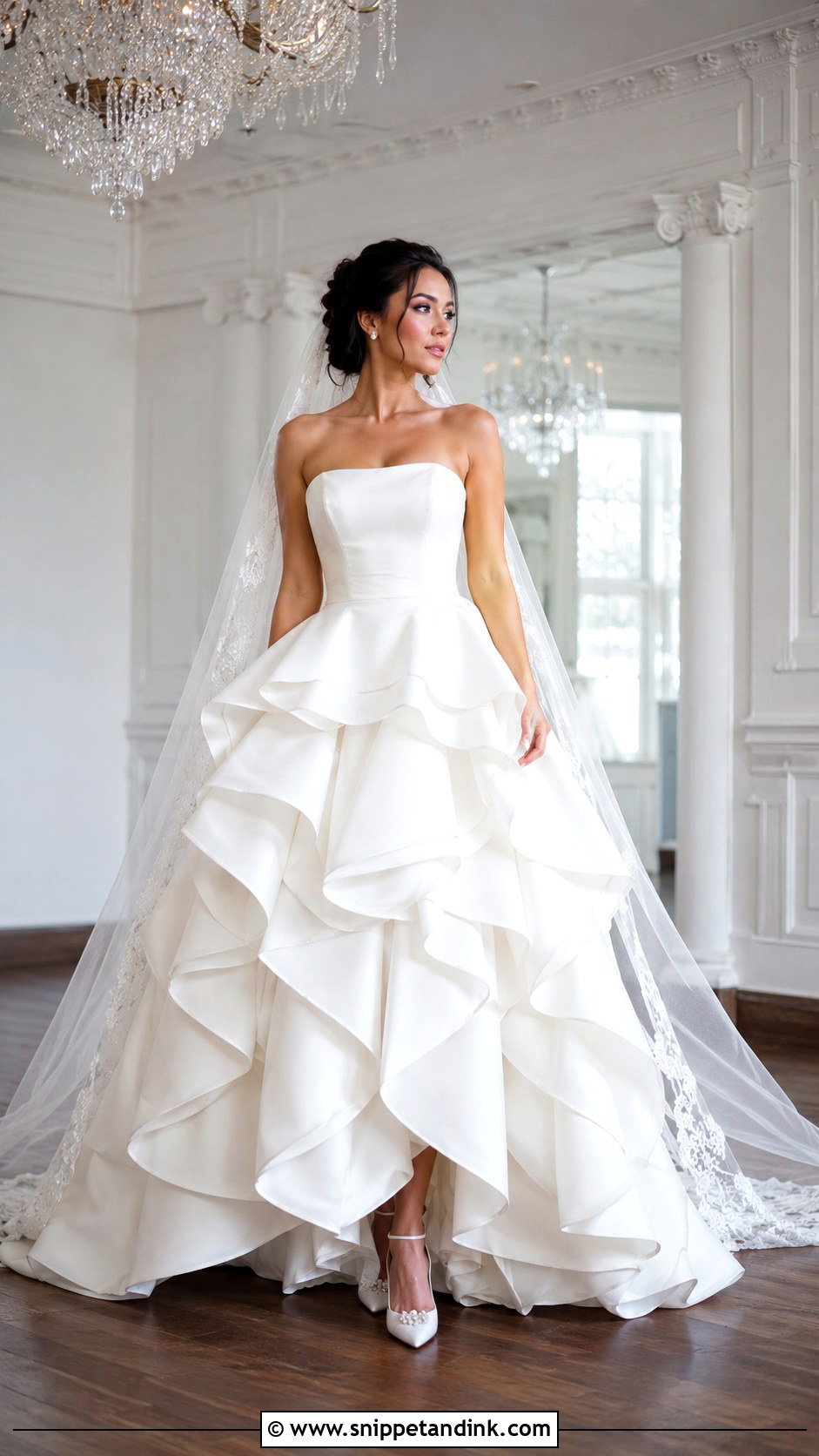
A strapless ruffled ball gown makes the biggest entrance on this list, and it also carries the most weight on the smallest support. That weight hangs from the bodice, so the boning and waist seam have to be firm enough that you never tug at the top. An organza skirt against a smooth satin or mikado bodice looks crisp; check that the ruffles look even from the back and sides, not just the mirror view. Pair it with a cathedral veil, pearl studs, closed-toe ivory heels and a sleek bun that keeps hair off the neckline. Wear your real shoes at every fitting, because two centimetres of heel changes where the skirt breaks.
3. Mermaid Ruffled Wedding Dress
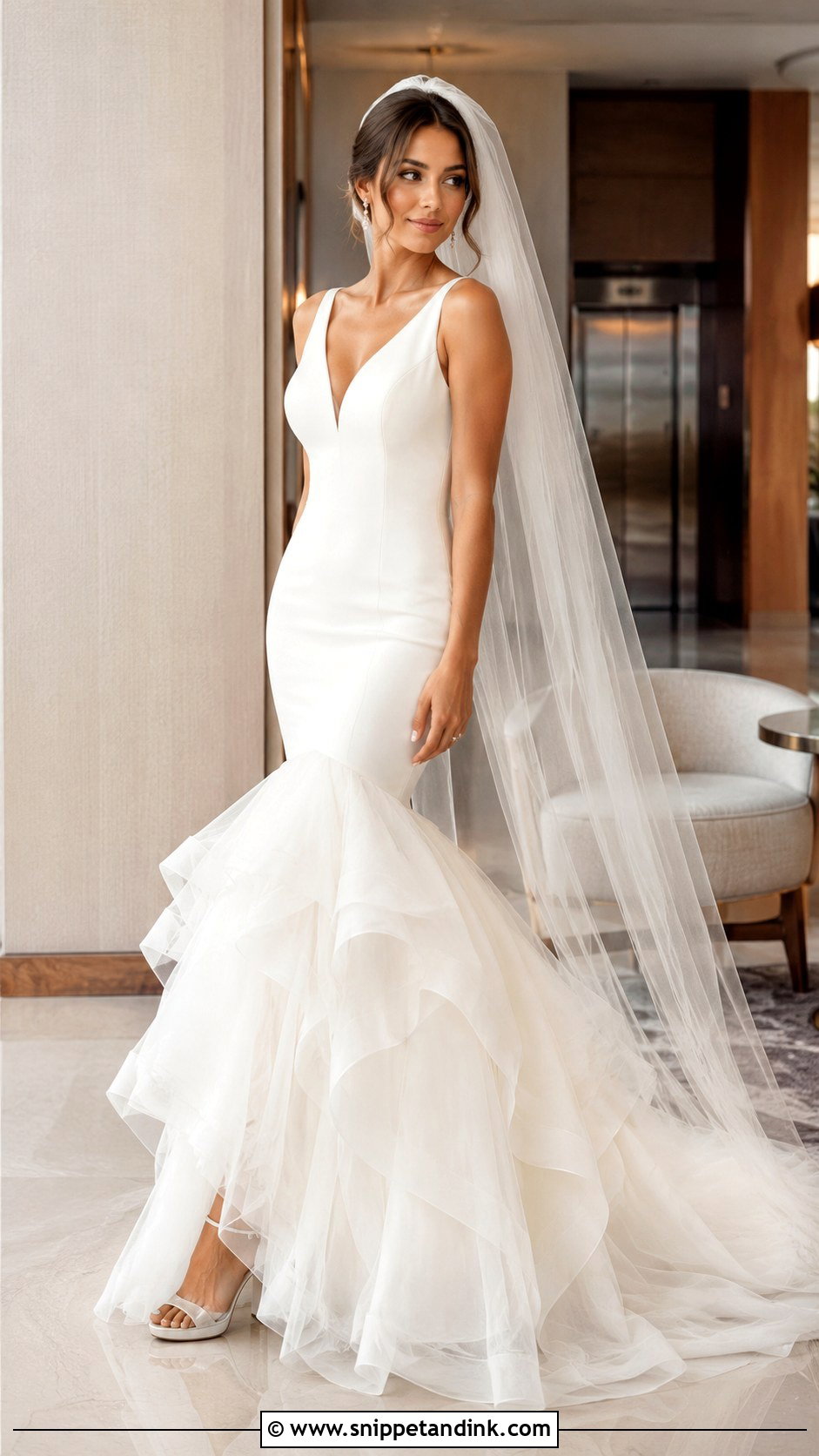
Mermaid ruffles put all the drama below the knee, so the fit through hip and thigh does the work. Stretch crepe under the ruffles is my first choice for comfort, since a rigid fabric there makes sitting and stairs difficult. Cascading tulle or organza then flares into the train. Seamless shapewear or built-in support smooths the fitted section; underwear lines are very visible here. Flare height varies a lot between designers, so try several and walk in each one. A chapel veil, shoulder-grazing earrings and stable platform sandals finish it, with a low bun or polished waves.
4. One Shoulder Cascading Ruffled Wedding Dress
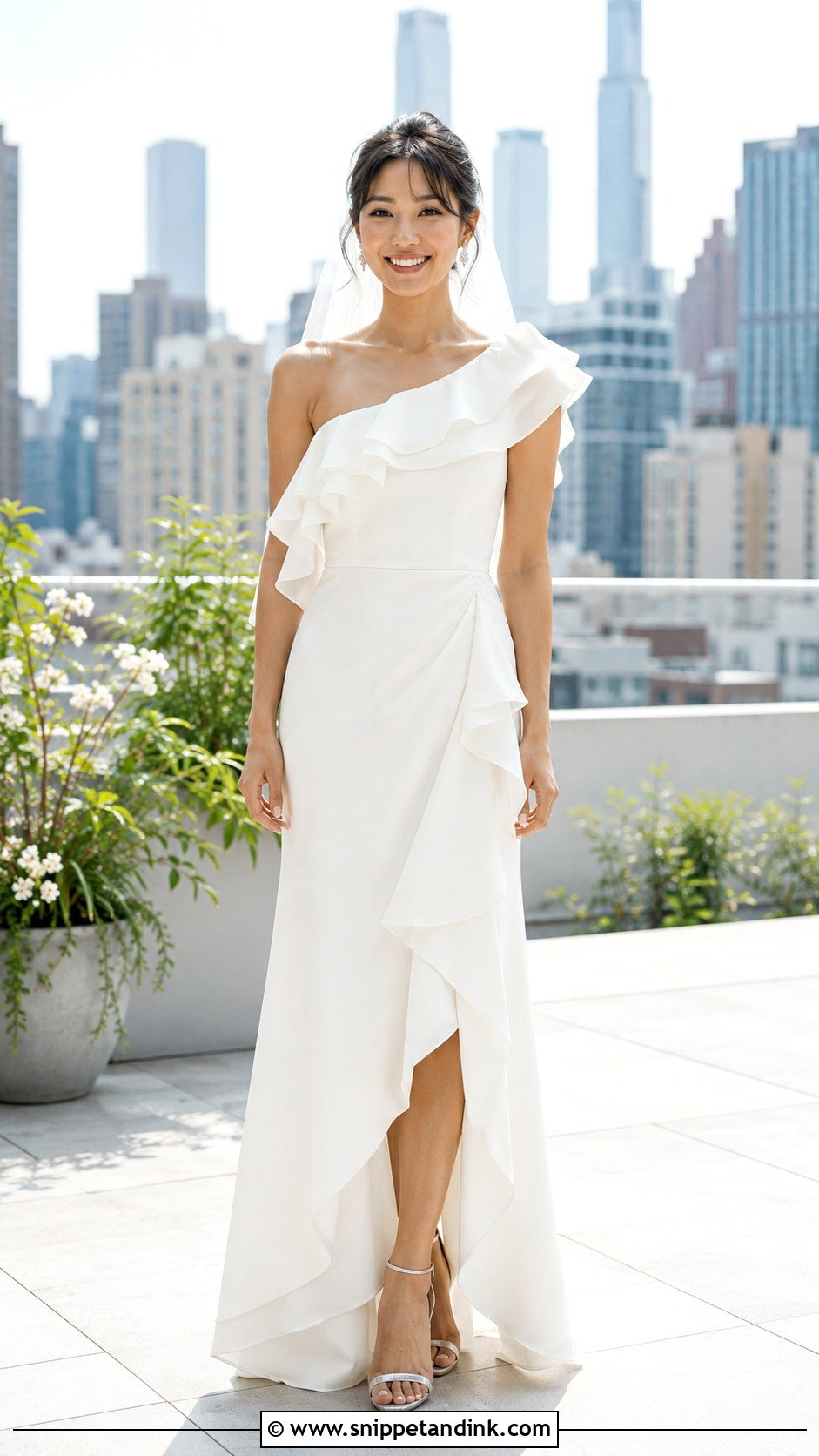
A one-shoulder cascade draws the eye up to the face and across the body on a diagonal, which lengthens a shorter torso nicely. I check two things before anything else: that the ruffle at the shoulder doesn’t brush the chin when you turn your head, and that it doesn’t stop you raising that arm. Skip the necklace and wear small diamond or crystal studs instead. Silver sandals, a slim bracelet and a low side-parted bun, with the part on the bare side, finish it. Keep the veil short or plain so the shoulder detail shows. Rooftops and city venues suit it.
5. Off Shoulder Ruffled Wedding Dress
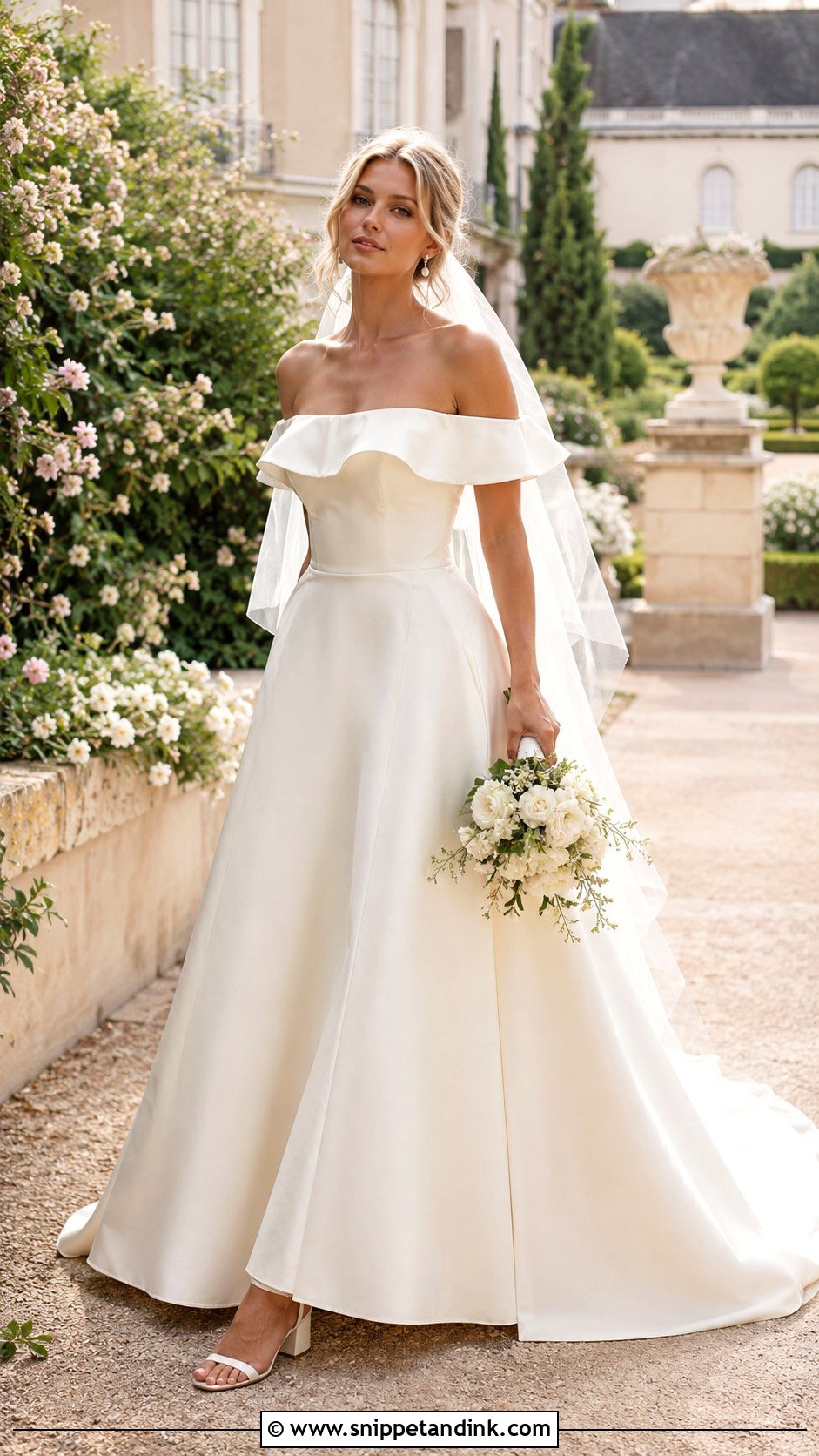
Off-shoulder ruffles look romantic in photographs and can be awkward to live in. The bodice must hold the dress up by itself; if the decorative sleeves are carrying weight, they will slide down your arms all evening. A fitted waist and flowing A-line skirt balance the soft neckline. Pearl drops, a fine bracelet and block-heel sandals complete it, and a loose low chignon with a medium veil tucked under it shows off the shoulders. In the shop, raise your arms as if hugging someone taller. If the neckline fights you, ask about removable straps. It suits estates and gardens.
6. Lace Ruffled Wedding Dress
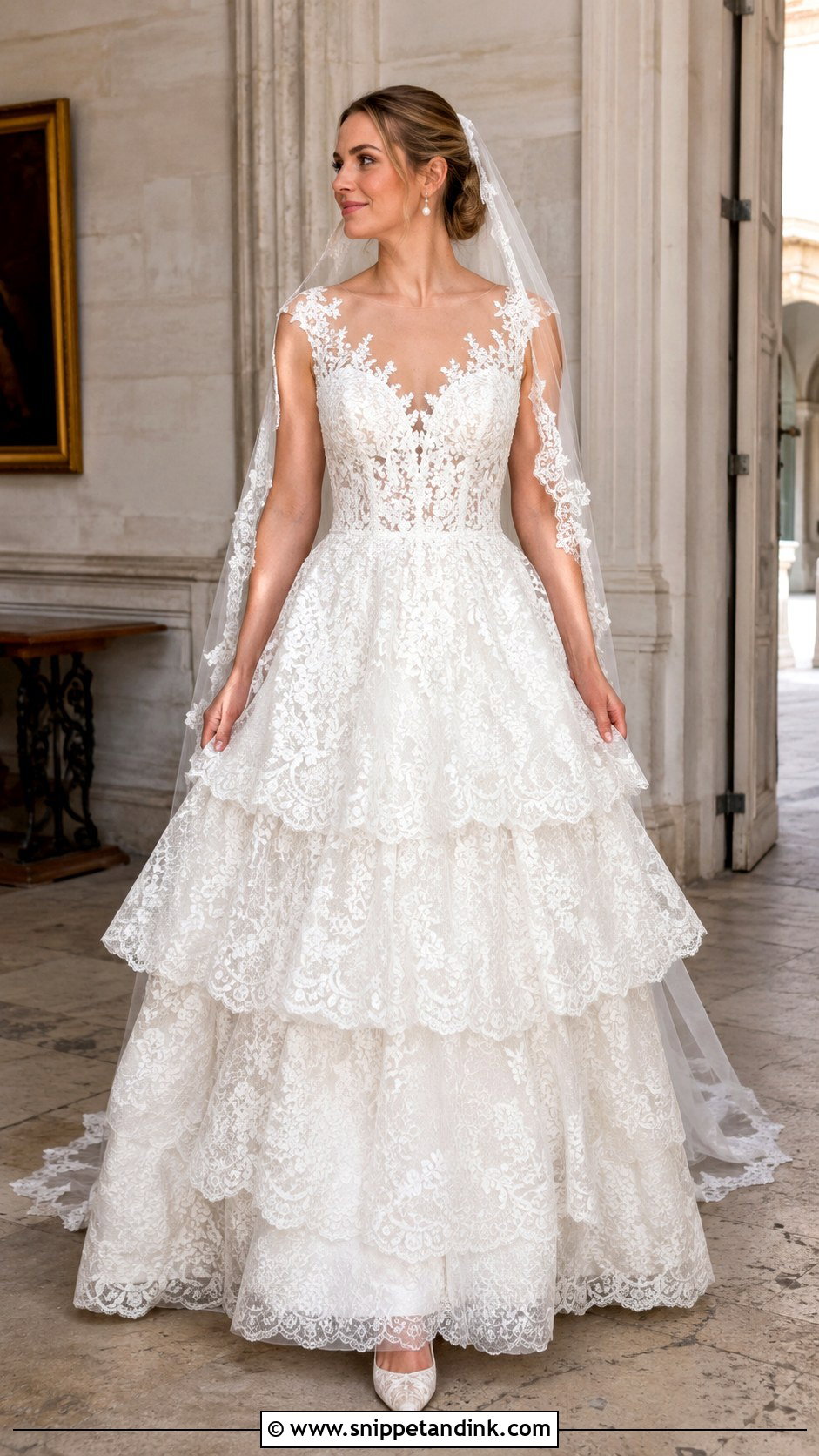
Could a gown feel both detailed and light? It can when lace sits on the bodice and only along the edges of soft tiers, rather than covering everything. Tonal lace looks refined; a defined scalloped edge adds more texture. An illusion neckline gives coverage while keeping the upper body open. Pearl earrings, lace pumps and a sheer chapel veil with a narrow matching trim are plenty, and a soft updo keeps the lace visible across the back. Alterations on lace are slower and costlier than on plain tulle because a good seamstress unpicks and re-laps the appliqués at the seams so the pattern still lines up.
7. Organza Ruffled Wedding Dress
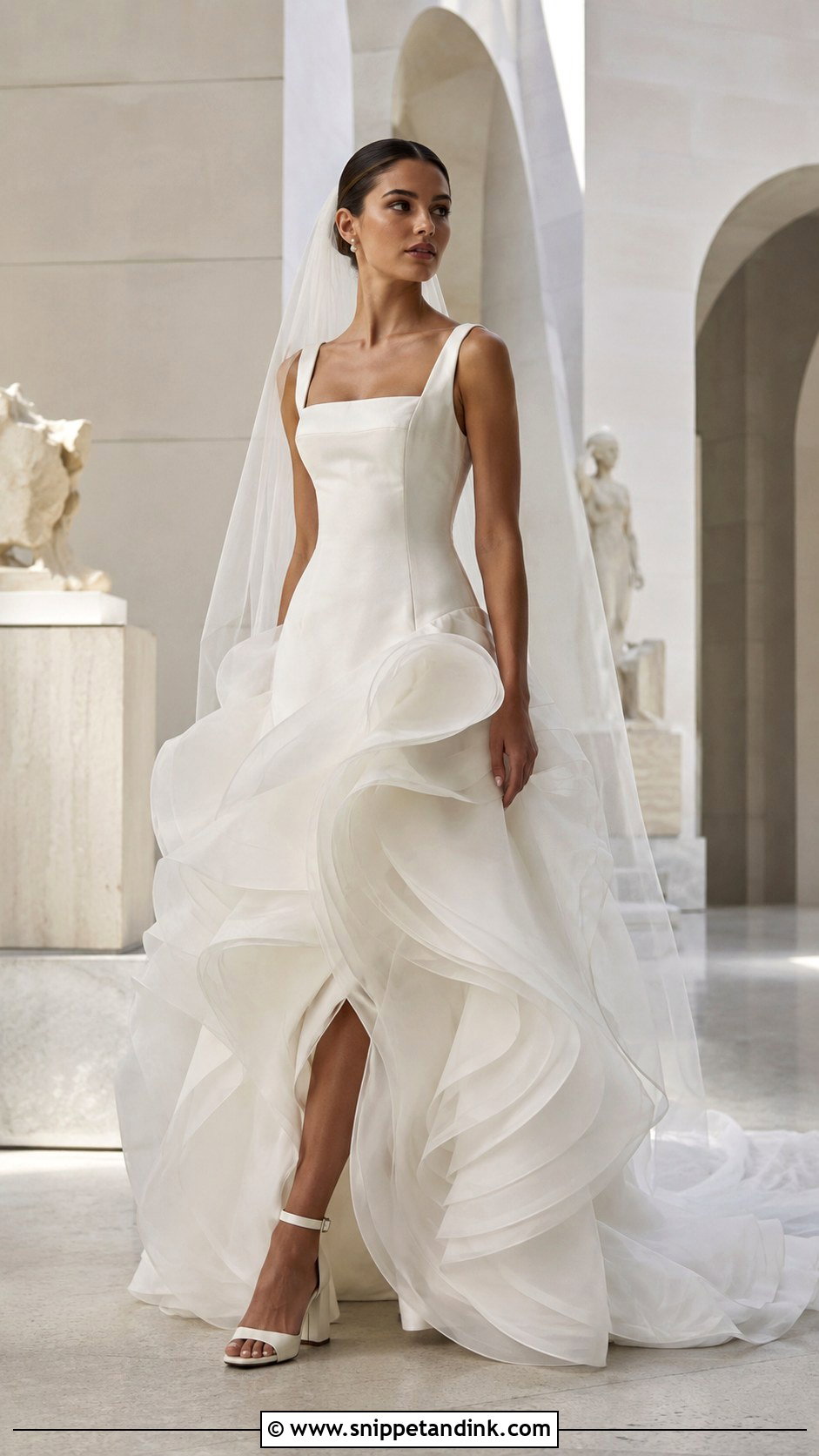
Organza is the ruffle for architecture. It is crisp, so tiers and waves keep their shape where tulle and chiffon soften, which makes it right for a sculpted skirt. Balance the volume with a clean fitted bodice and a square, sweetheart or straight neckline. Walk around the shop in it: organza rustles audibly, and some brides love that and some don’t. It also creases sharply if crushed in a car, so I travel with the skirt laid over the seat, not sat on. Pearl studs, satin block heels and a simple cathedral veil finish it. Have each section of the train bustled firmly.
8. Chiffon Ruffled Wedding Dress
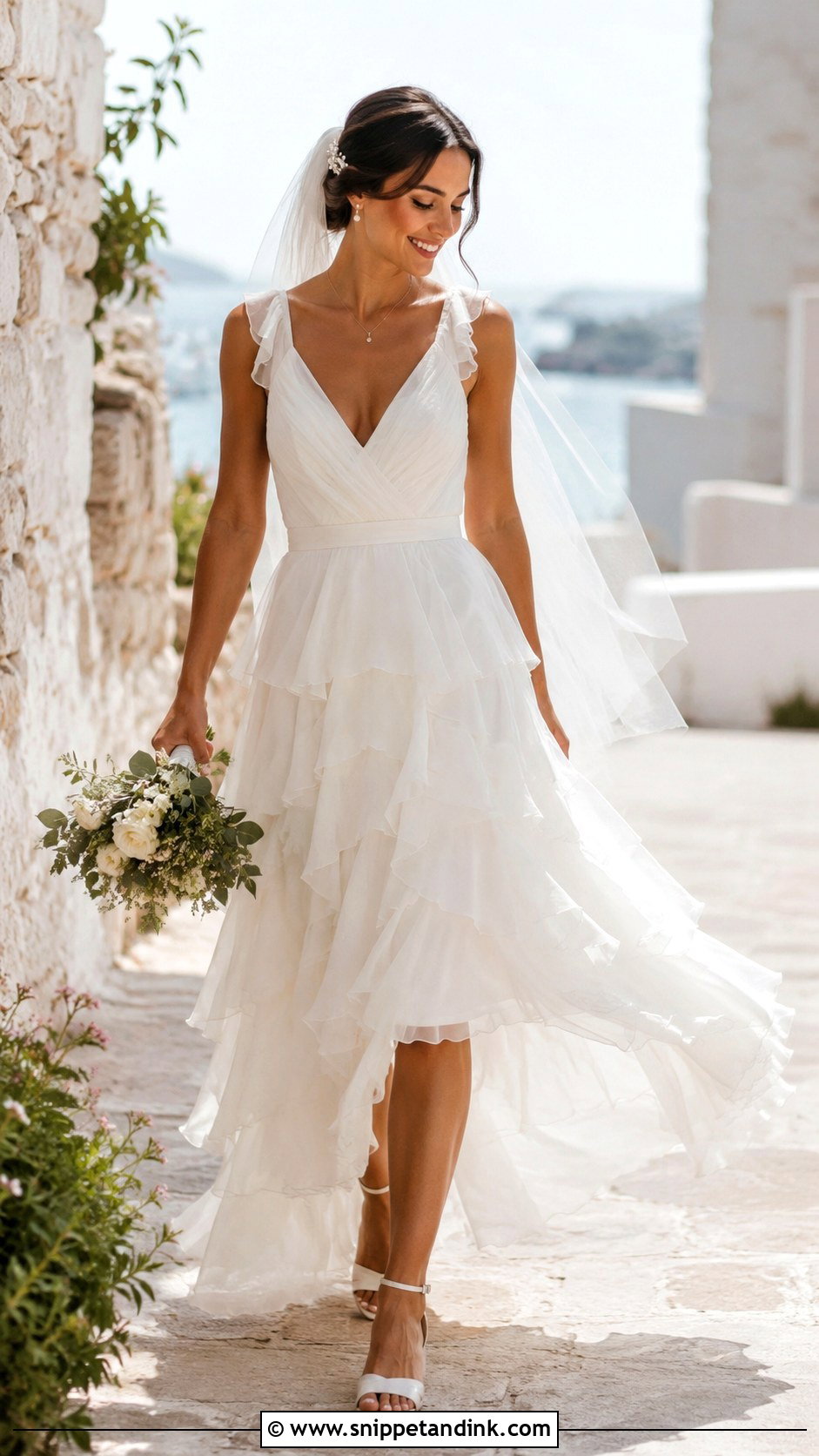
Chiffon tiers float and move with every step, which suits relaxed ceremonies and warm weather. A V-neck or wrap bodice with fluttering layers from the natural waist is my favourite version, and the skirt must be lined because chiffon alone is see-through in sunlight. Pearl hairpins, fine drop earrings and low block heels finish it. Outdoors, keep the veil fingertip length or shorter; long chiffon and tulle catch every breeze. Loose waves or a soft braided updo suit the mood. Look closely at the ruffle edges, as chiffon frays and should be rolled or overlocked neatly. Beaches and gardens are its natural home.
9. High Low Ruffled Wedding Dress
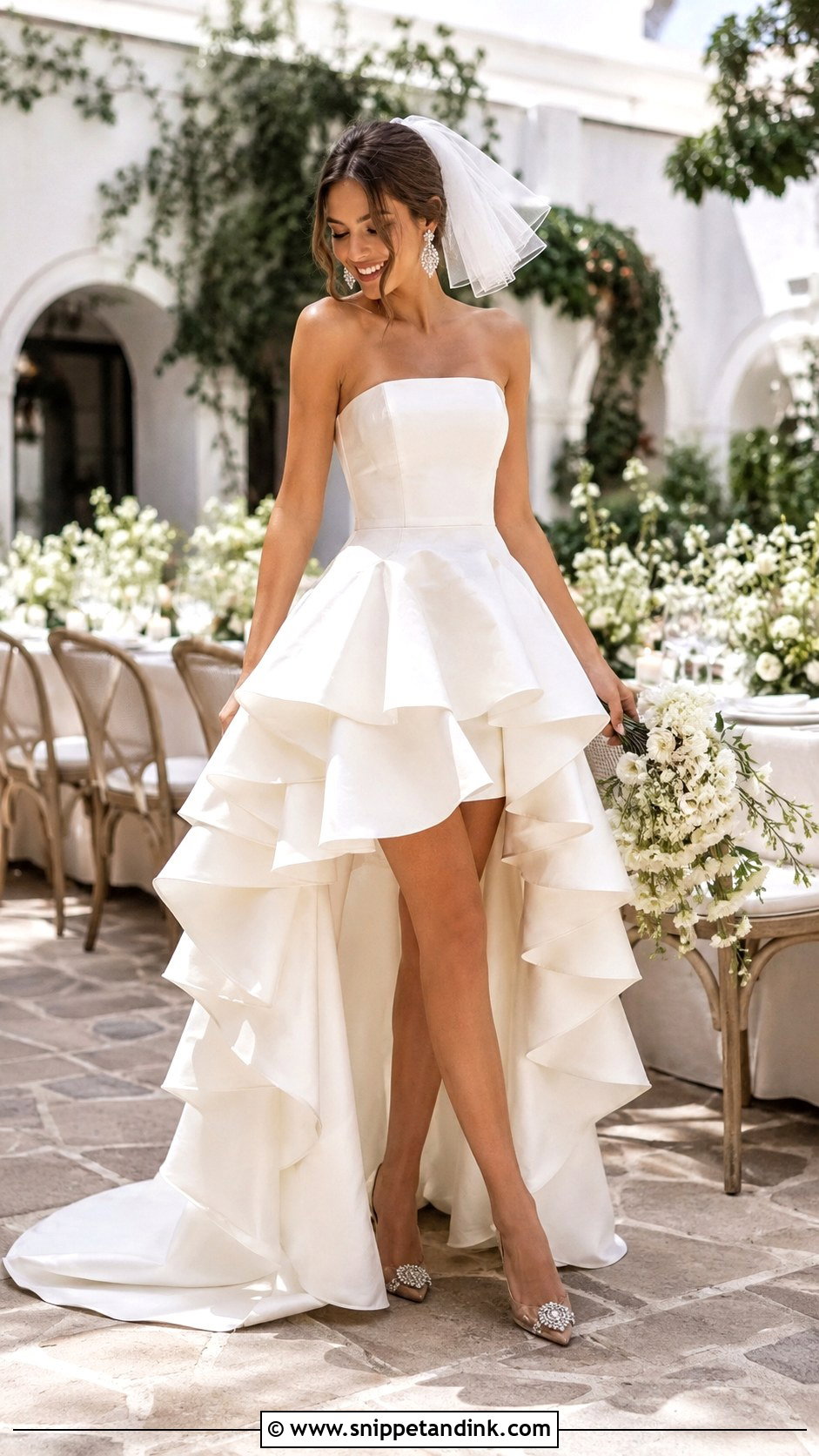
A high-low hem shows off the shoes and frees you to walk, while the back keeps a proper train. I prefer a structured tea-length front to a very short one; it looks more deliberate and behaves better when you sit. Because your shoes are on view all day, they need to be both comfortable and good-looking from the side, since that is how most guests see them. Embellished pointed pumps, crystal earrings and a short veil or sculptural bow work well. Keep the bodice fitted. It suits courthouse ceremonies, outdoor receptions and second looks.
10. Long Sleeve Ruffled Wedding Dress
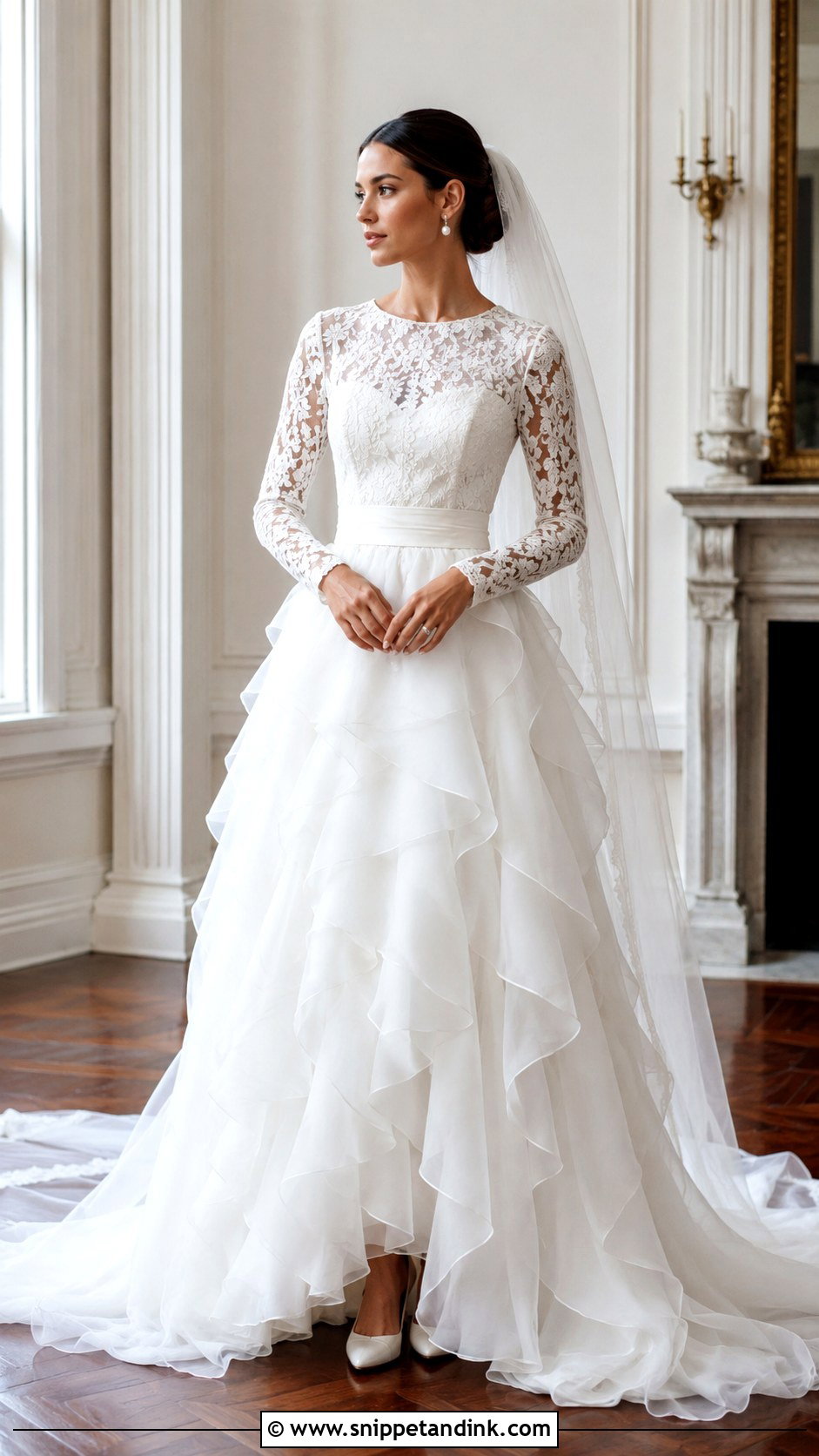
Long sleeves and ruffles together can quickly become a lot of fabric, so a defined waist is non-negotiable. Fitted lace sleeves over a softly layered skirt, or chiffon sleeves finished with a controlled ruffle at the cuff, both work. Have the armholes cut high enough to lift your arms; a low armhole on a fitted sleeve pulls the whole bodice up when you reach. Wrist loops and cuffs need a little ease too. A low bun, small pearl earrings and closed-toe satin pumps finish it. A chapel veil adds ceremony drama, while a shorter one keeps the sleeves on show. Autumn, winter and traditional venues suit it best.
11. Corset Ruffled Wedding Dress
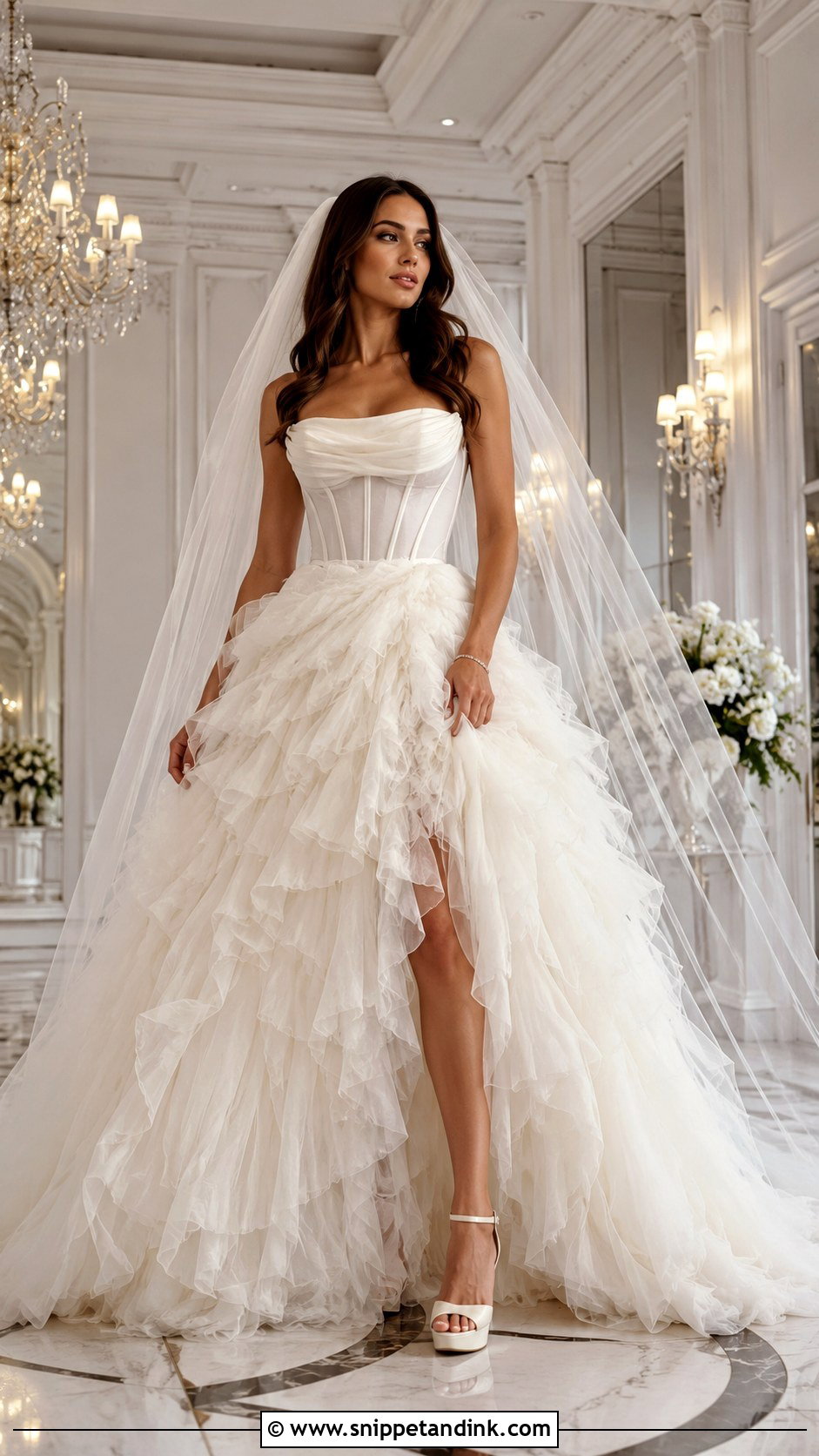
Here the corset is the sculpture and the tiered tulle skirt is the softness. Boning should sit flat against the ribs and the waistline should rest, not bite; if you can’t take a full breath at the fitting, it will be worse after dinner. A lightly draped neckline softens the structure. Ask how it closes. Lace-up backs can be adjusted on the day if your body changes, while zips are faster but give no leeway, and buttons take a patient helper ten minutes. A sheer cathedral veil, a slim tennis bracelet and platform sandals keep the focus on the bodice. Ballrooms and evening receptions suit it.
12. Basque Waist Ruffled Wedding Dress
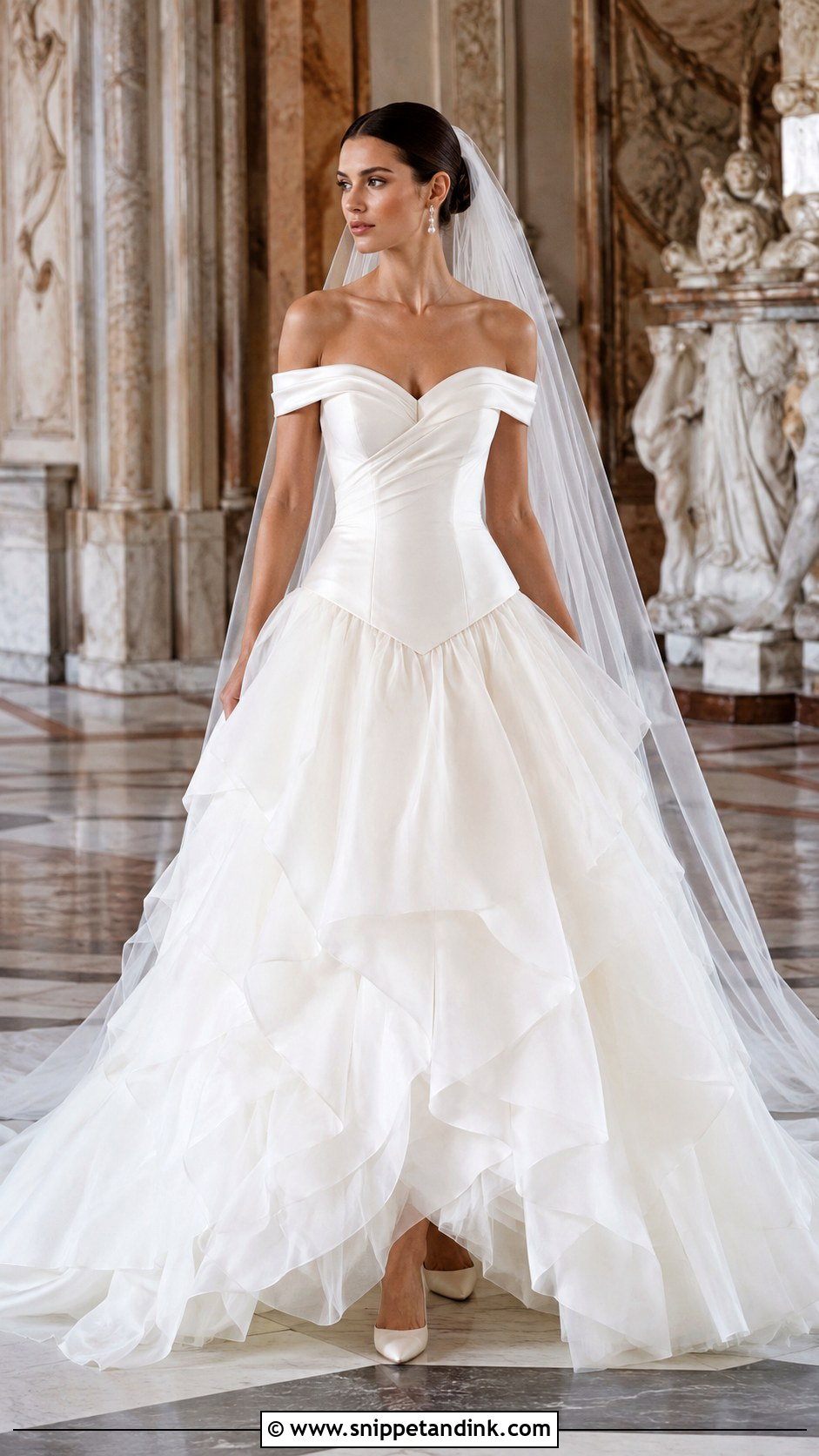
A basque waist dips into a soft point at the front, and that downward line is what makes a big ruffled skirt look intentional rather than bulky. It flatters a shorter waist especially well. Strapless and off-the-shoulder necklines balance it best. Never add a belt, which cuts straight across the point. During alterations, I watch the point as the bride walks and sits, since an uneven waist makes it twist off centre. A long plain veil, pearl-and-crystal earrings, satin pumps with an ankle strap and a neat updo complete it. Grand halls and evening ceremonies are its setting.
13. Drop Waist Ruffled Wedding Dress
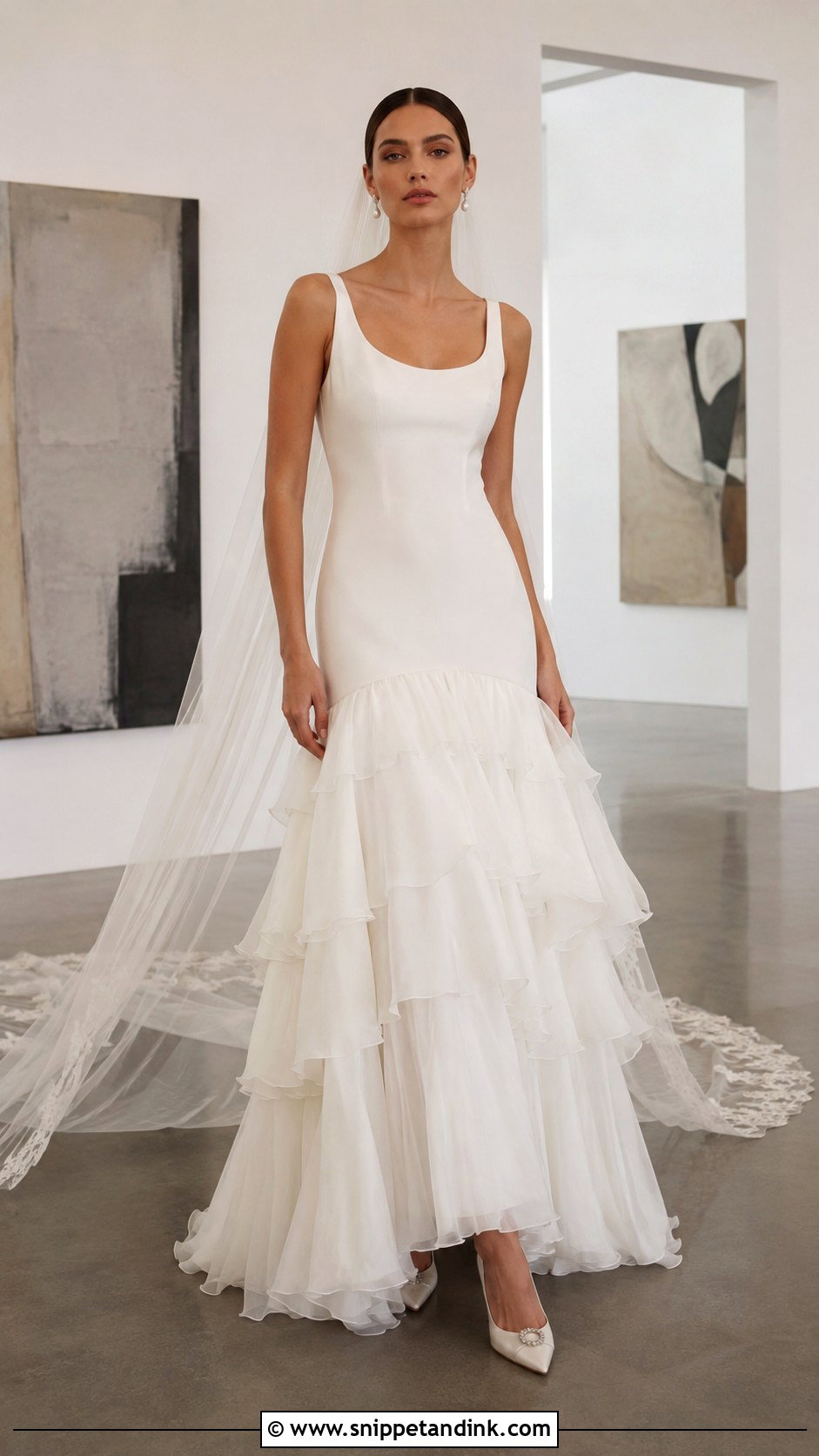
Drop waists make a long, sleek line before the tiers burst out, and they work best when the ruffles start around the upper hip rather than right at the waist. A clean scoop or straight neckline echoes that length. Sitting is the test: a dropped seam has to bend at your hip, and if it is placed a fraction too low it buckles. I have the seamstress check the fit front and back, because pulling at the back drags the skirt line up unevenly. A narrow cathedral veil, drop earrings, pointed heels and a polished bun or smooth waves finish it. Galleries and modern venues suit it.
14. Floral Ruffled Wedding Dress
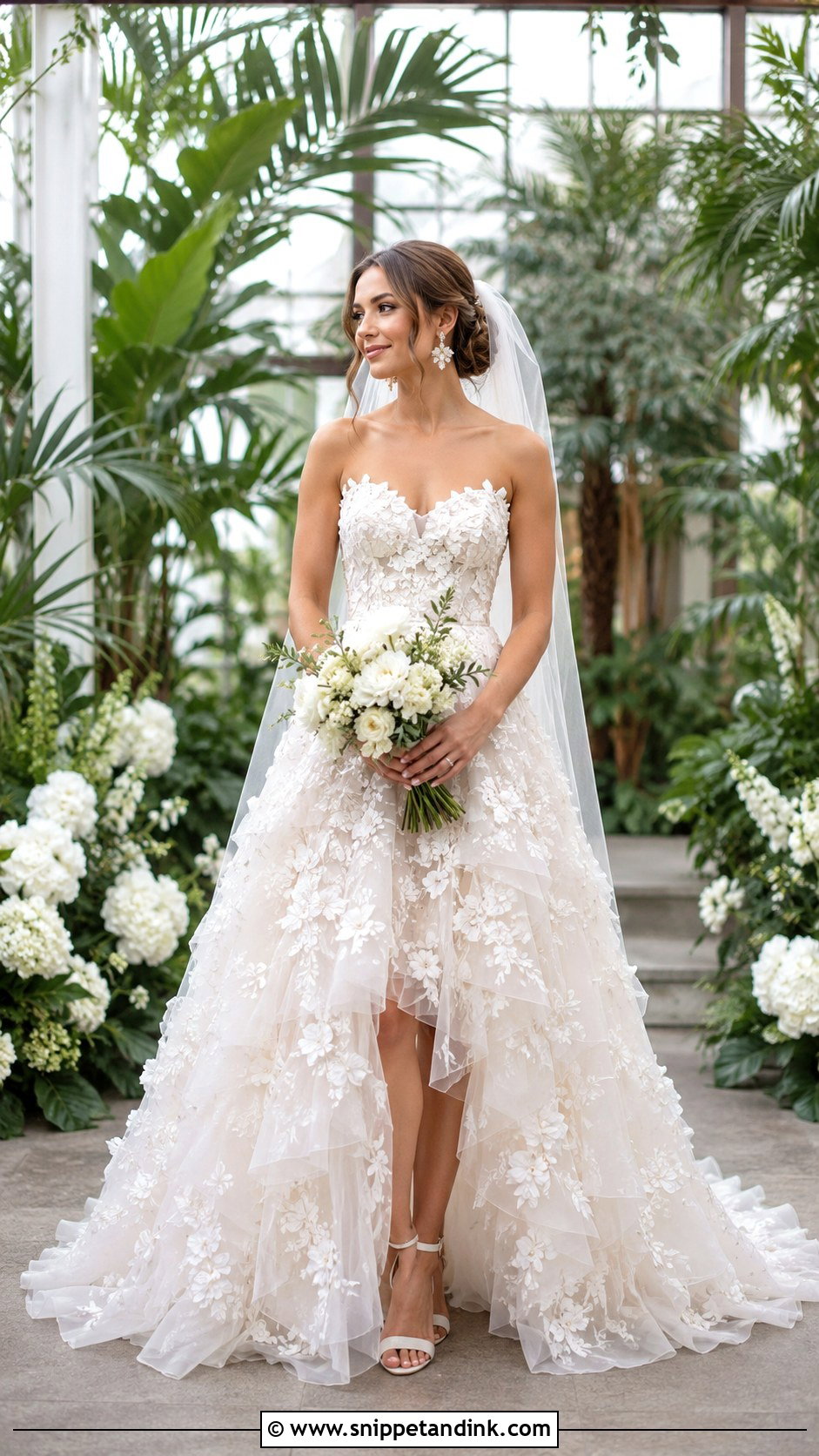
Three-dimensional flowers on a ruffled gown give it real presence. I prefer them across a fitted bodice and repeated lightly down the skirt, in the same tone as the dress so it never looks crowded. Look hard at flowers near the waist, side seams and bustle points, because they get crushed and caught first; any that are loosely attached should be stitched down before the day. Floral studs, plain ivory sandals and a plain tulle veil let the appliqués show. A soft braided bun or loose waves suit the garden mood. Skip the statement necklace. Conservatories and spring gardens are where this dress looks most at home.

15. Minimalist Ruffled Wedding Dress
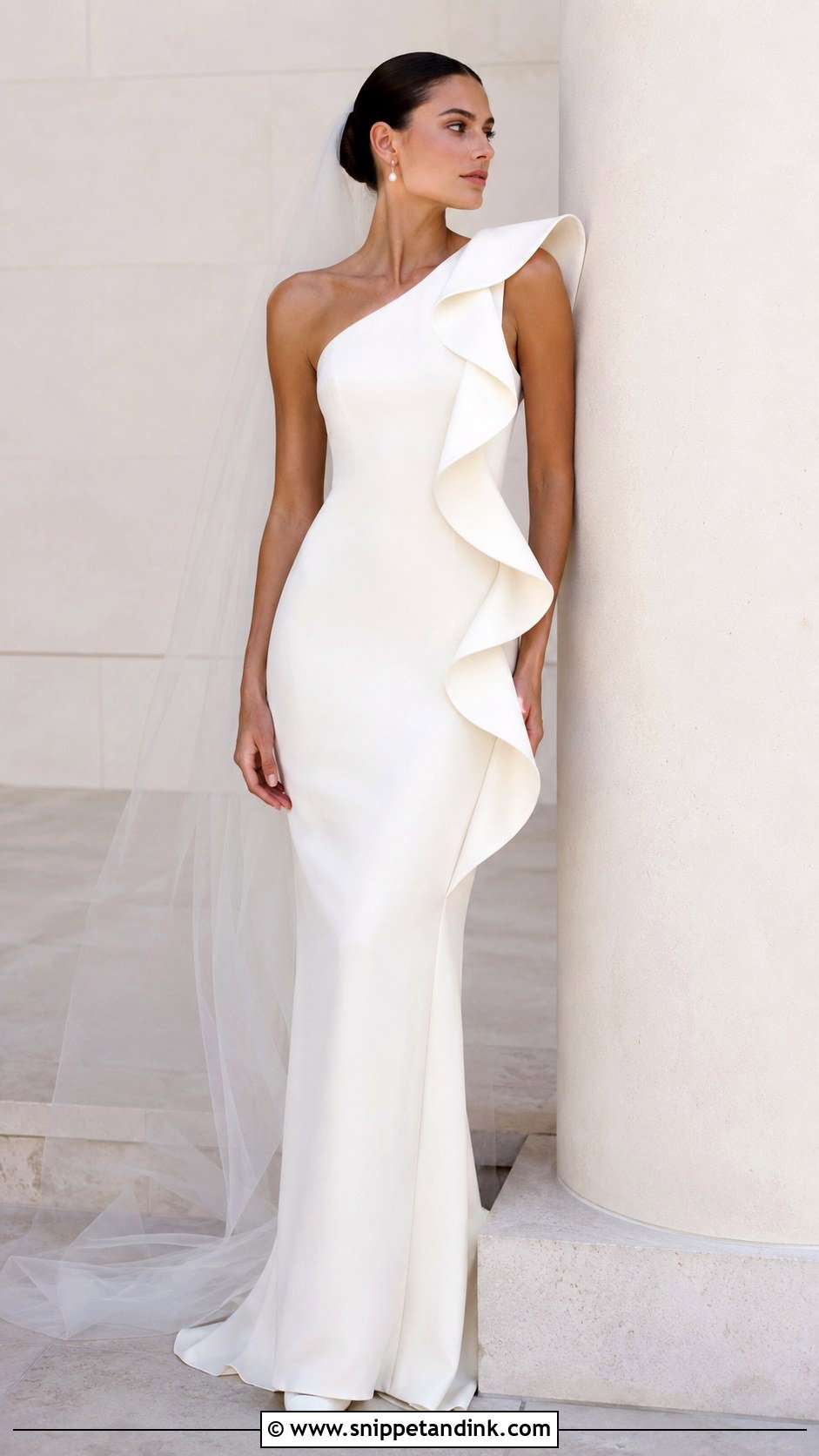
One ruffle can do more than twenty. Start with a smooth crepe or satin column and add a single controlled ruffle at the neckline, hip, hem or train. Placement is everything with a minimal design: put the ruffle where you want people to look, and never across the widest point of your body, which simply adds width there. Sculptural pearl earrings, sleek pointed pumps, a plain single-layer veil and a centre-parted low bun complete it. Check the fall of the fabric from the side and back, because a plain gown shows every pull. City venues and modern hotels suit it.
16. Boho Ruffled Wedding Dress
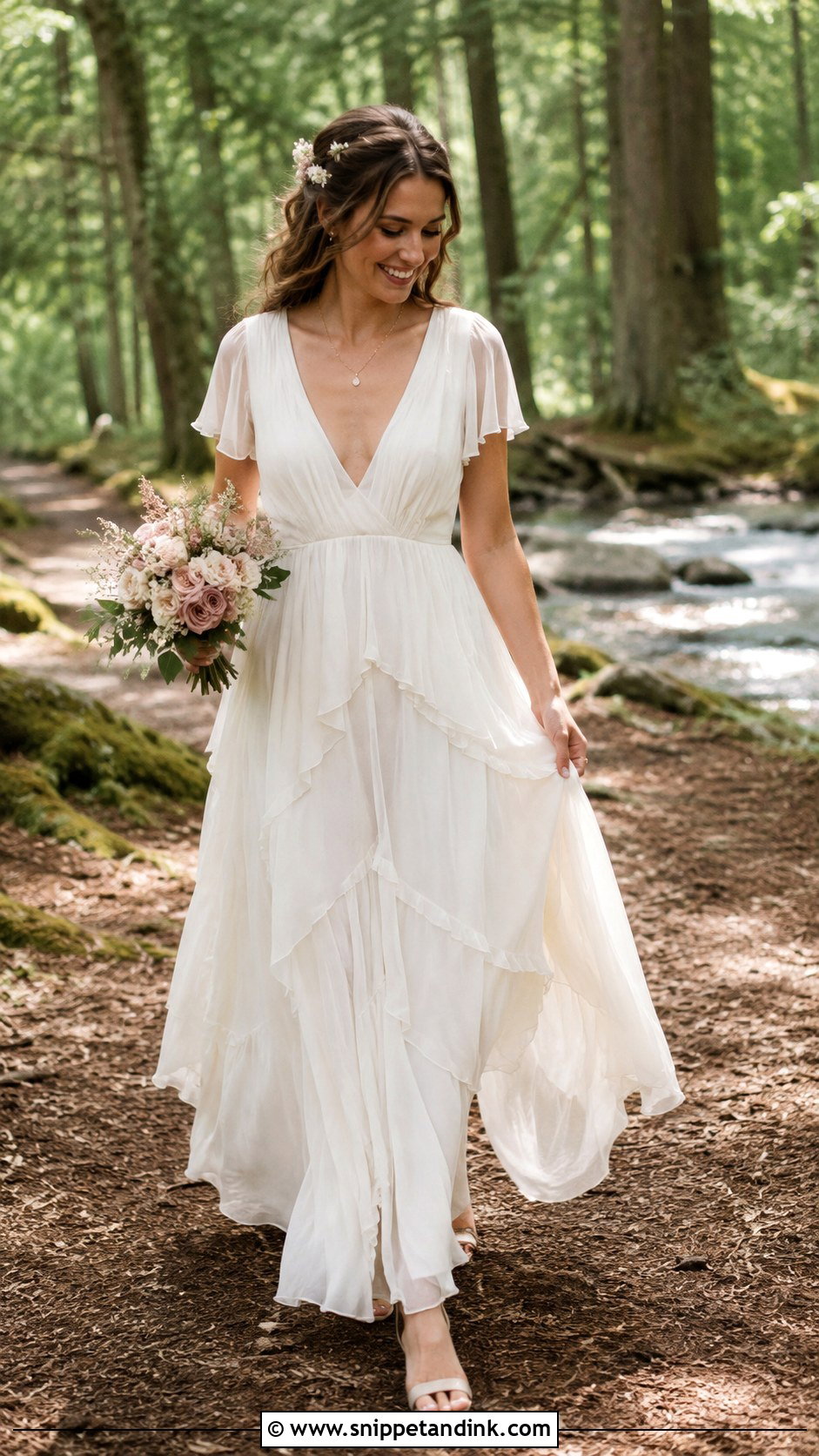
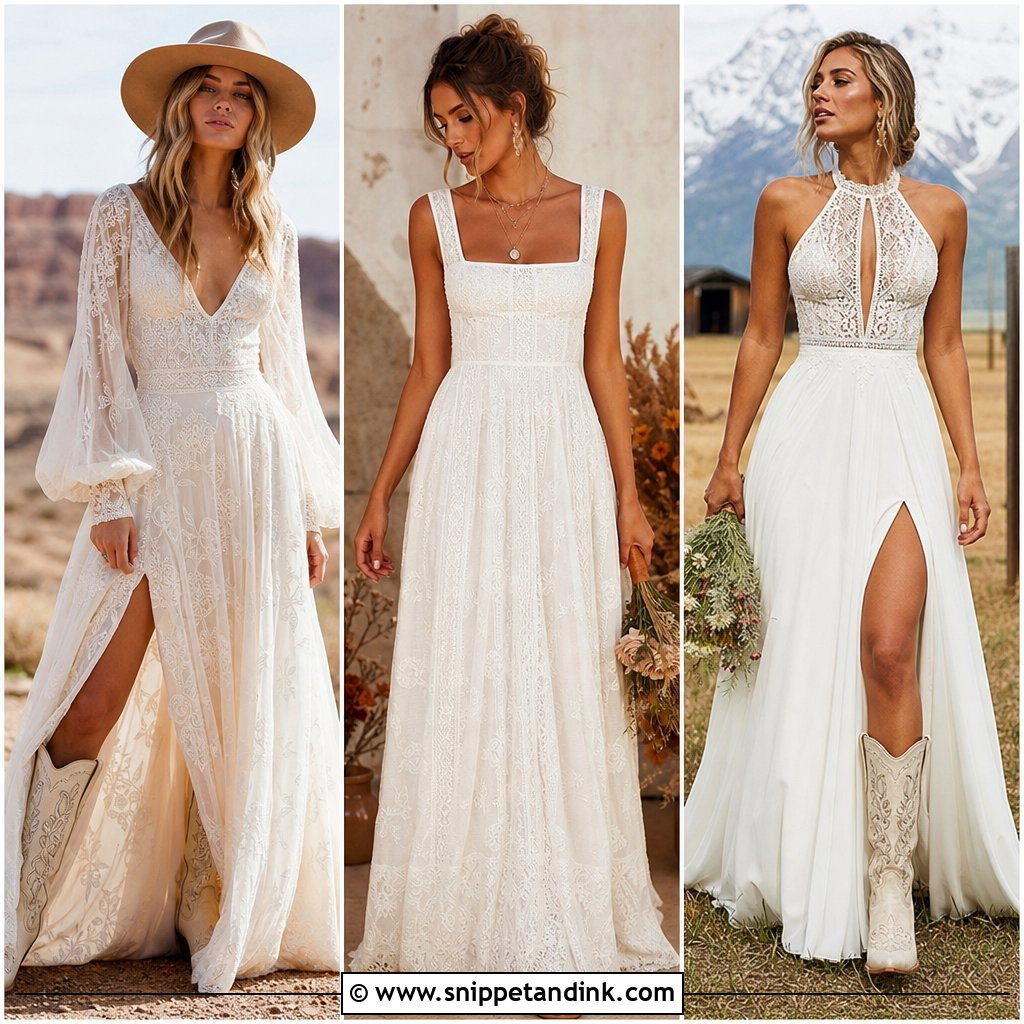
Boho ruffles should move freely, so soft chiffon, dotted tulle or light lace are the fabrics to look at, never stiff organza. An easy A-line with flutter sleeves, a defined waist and loose tiers is the shape. Low block-heel sandals sink less on grass than stilettos. A delicate pendant, small floral hairpins and a soft cape veil keep the relaxed feel, with loose waves or a textured low braid. If the shop allows it, step outside in the sample to see how the skirt behaves in the wind. Woodland, desert and rustic venues suit it.
17. Vintage Ruffled Wedding Dress
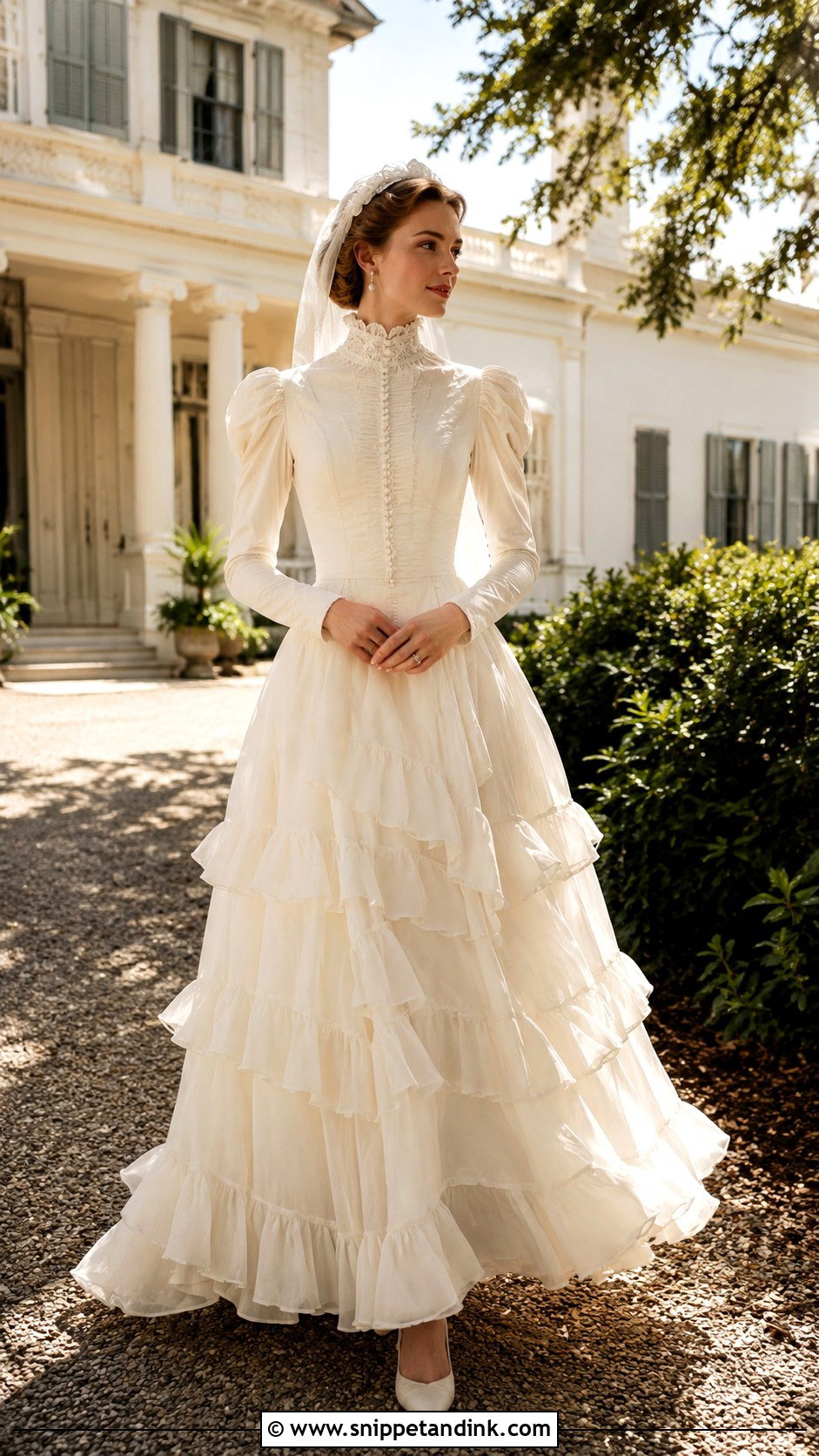
Vintage ruffles come with a high neck, gathered sleeves, covered buttons and a layered skirt, and the trick is keeping them from looking like a costume. Lightweight fabric and precise tailoring on the bodice do that. Pearl earrings, a Juliet cap veil, closed-toe pumps with a sensible heel and a low waved bun complete the period feel. A genuinely old gown needs its seams, closures, lining and fabric strength checked by a specialist before any alterations start, since aged silk can split at the stitching. A new dress with vintage details is easier to adjust. Old houses and intimate dining rooms suit it.
18. Plus Size Ruffled Wedding Dress
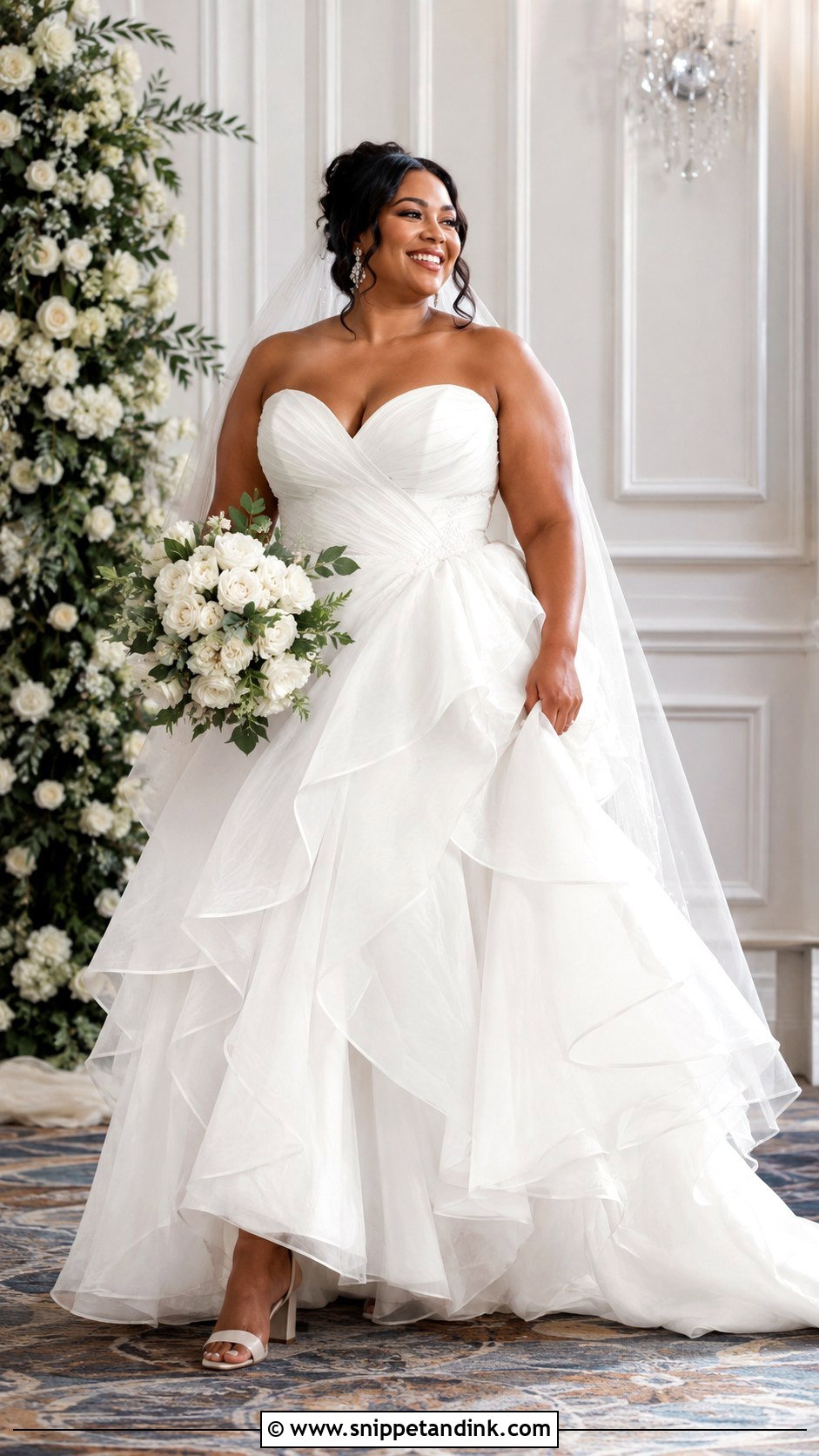
On a plus-size bride, I judge a ruffled gown by its insides first: wide waist support, quality boning and properly secure cups. Then the ruffles should follow the body’s lines, and diagonal or cascading layers move better than horizontal bands, which can add width. An A-line gives room through hips and legs. Many well-built gowns need no extra shapewear, so I decide on undergarments only after seeing how the dress is constructed. Supportive block heels, statement earrings and a simple fingertip veil finish it. Sit, walk, lift your arms and dance at every fitting.
19. Short Ruffled Wedding Dress
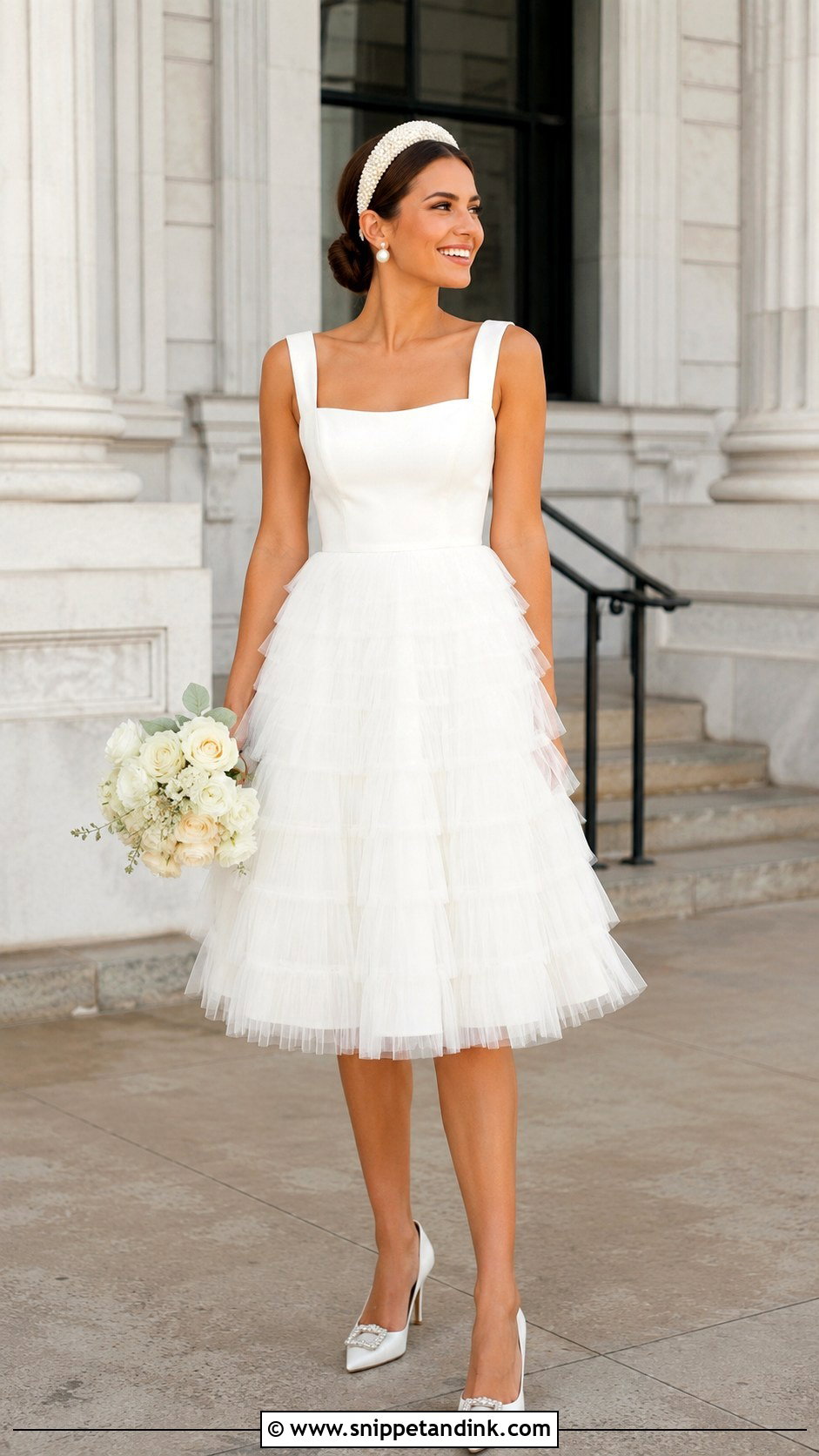
Short ruffled dresses are cheerful and practical for small ceremonies, hot weather or a reception change. A mini or tea-length skirt with controlled layers and a secure fitted bodice, under a square or straight neckline, keeps proportions clean. Sit down in it at the shop: a full short skirt rides up more than you expect, so built-in shorts or a smooth lining help. Shoes are on full view, so statement pumps make sense, with pearl earrings and a short veil or polished headband. Keep accessories small. Courthouses, restaurants and the dancing part of the evening suit it.
20. Detachable Ruffled Overskirt Wedding Dress
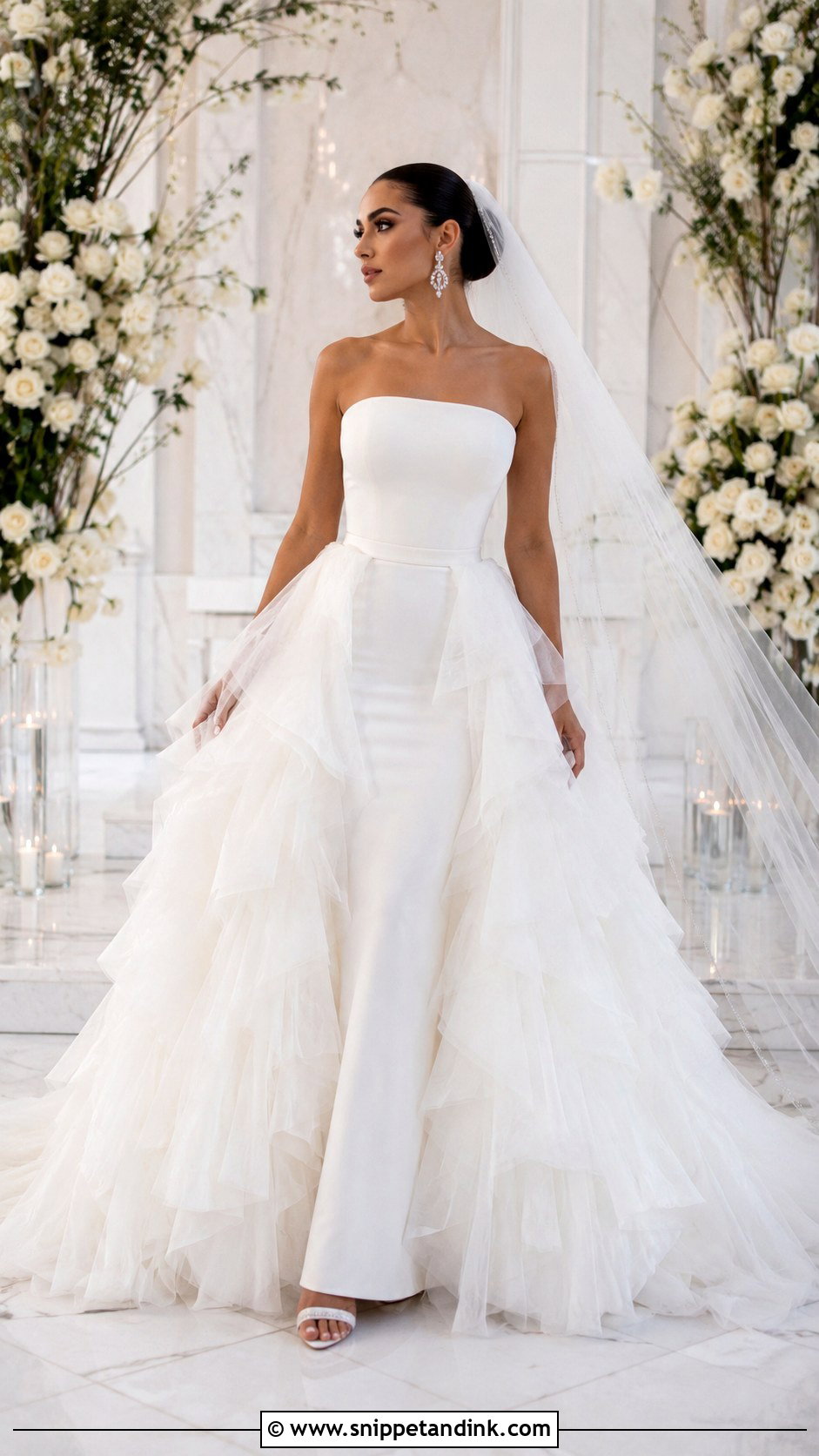
A detachable overskirt gives you two silhouettes from one dress. The base is a sleek fitted gown or simple A-line, and a voluminous tiered overskirt goes on for the ceremony and comes off at the reception. Wear a cathedral veil, crystal earrings and satin heels for the first look; change to comfortable sandals and a shorter veil or hair accessory for the second. Make sure the fastenings disappear in both versions. Rehearse removing it with the person who will help you, and decide in advance where it goes afterwards, ideally a garment bag in a safe room rather than a chair.
Can a Tiered Skirt Be Hemmed?
Yes, but it is one of the trickier alterations, and brides are often surprised by the time and cost. A plain skirt is shortened at the hem in one pass. A tiered skirt usually has to be shortened from the waist, or tier by tier, so the ruffles keep their proportions.
I ask the seamstress three questions at the first fitting: can it be taken up from the top, how will the train be bustled with ruffles in the way, and how many fittings does she expect. Ruffled trains often need more bustle points than plain ones, because the layers hang at different lengths. Plan for alterations to begin a couple of months before the wedding, and bring the real shoes every time.
Storing All That Volume After the Wedding
Ruffles are the first thing to crush and yellow if a dress is put away carelessly. My routine after the wedding:
- Get it to a specialist wedding dress cleaner within a few weeks; sugary drinks and sweat can be invisible at first and brown with time.
- Never store it in the plastic bag from the cleaner or the shop. Use a breathable cotton bag or an acid-free box.
- Pad each tier with acid-free tissue rather than folding it flat, so organza and tulle do not set into hard creases.
- Avoid hanging a heavy gown by its straps for months, since the weight stretches the bodice. Use the hanging loops sewn inside the waist, or store it boxed.
- Keep it somewhere cool, dark and dry, not an attic or a damp cellar.
Ruffles Should Move With You, Not Against You
A ruffled gown works when the movement looks good and the fit feels secure. Decide how much volume you want first, then compare tulle, organza, chiffon, lace and structured satin in person. Pay attention to where the ruffles begin and how they look from behind and from the side. Let shoes, jewellery, veil, hair and undergarments support the dress, not compete with it. Then move at every fitting: sit, walk, turn and dance before you sign off the alterations. A tiered ball gown, a fitted mermaid or a detachable overskirt will all come together once the fit is right.
You'll Like These Ideas:






Leave a Reply