
A dress that looks right in a showroom can fight you on a beach. Sand drags at the hem, wind lifts anything loose, heat makes lining cling, and the gown has usually traveled a long way before you put it on. That’s why I steer coastal brides toward fabrics that float: chiffon, crepe, organza, light lace, soft satin, linen blends and fine tulle. The ceremony might be barefoot on the sand, on a seaside deck or at a tropical resort, and the dress should be chosen for that ground. Here are 35 options, from slip gowns and boho lace to minis and capes, with what I’d watch for on each.

Flying With the Dress and Unpacking It Uncreased
Most beach gowns travel, and the journey is where I’ve seen more damage than on the beach itself. Plan this part before you choose the fabric.
- Ask your airline early whether a garment bag can go in the cabin or a closet onboard. Policies vary, and some will help if you ask at the gate. I’d never check a wedding dress in the hold.
- Pack it folded in a breathable garment bag with acid-free tissue in each fold, not in a sealed plastic sleeve, which traps humidity.
- Unpack the moment you arrive and hang it from the loops sewn inside the waist, not the shoulder straps, so the skirt weight doesn’t stretch the bodice.
- Steam it, don’t iron it. Confirm the resort has a steamer, or bring a travel one. Hold it a hand’s width away from beading and never touch it to satin.
Fabric decides how much work this is. Crepe and chiffon shrug off creases; satin, organza and pure linen show every fold. If the dress is in one of the creasing fabrics, budget a full hour of steaming the day before.
1. Chiffon Beach Wedding Dress
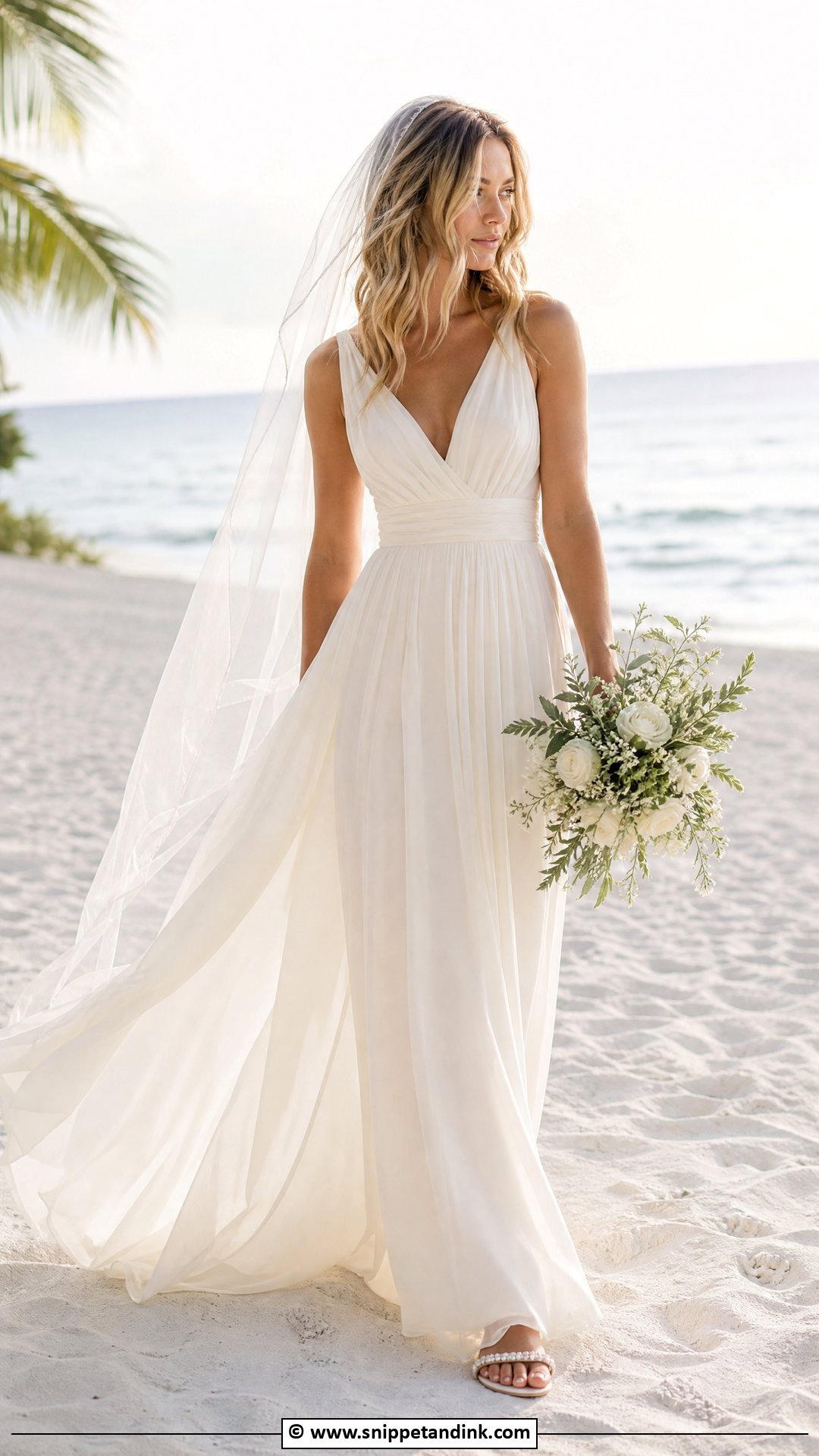
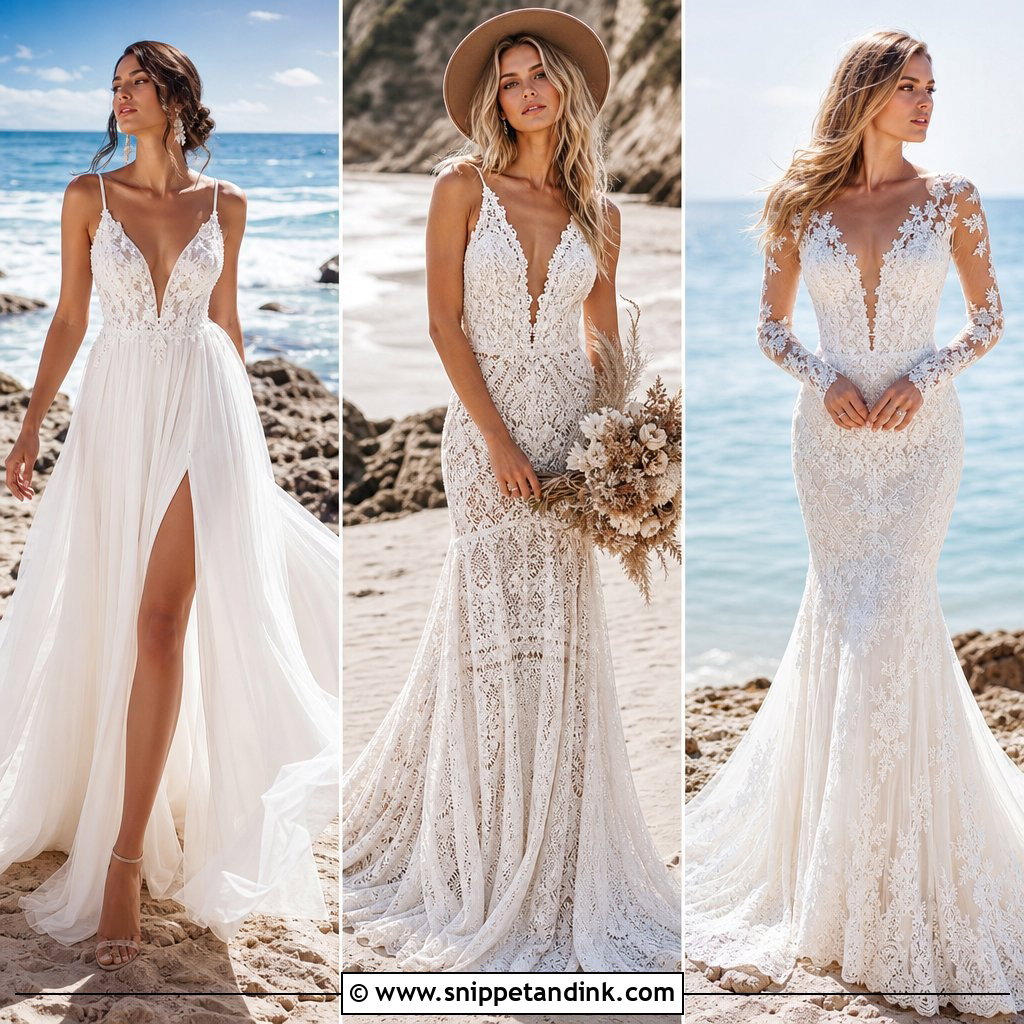
Chiffon is the easiest fabric I know for a seaside ceremony. It weighs almost nothing, so the skirt lifts and settles in the breeze rather than flapping, and it stays cool through long outdoor photos. An A-line or empire waist keeps the shape forgiving on uneven sand. The one weakness is static and cling in dry wind, which a slip underneath solves. Flat pearl sandals, loose waves and a short, plain veil suit it.
2. Lace Beach Wedding Dress
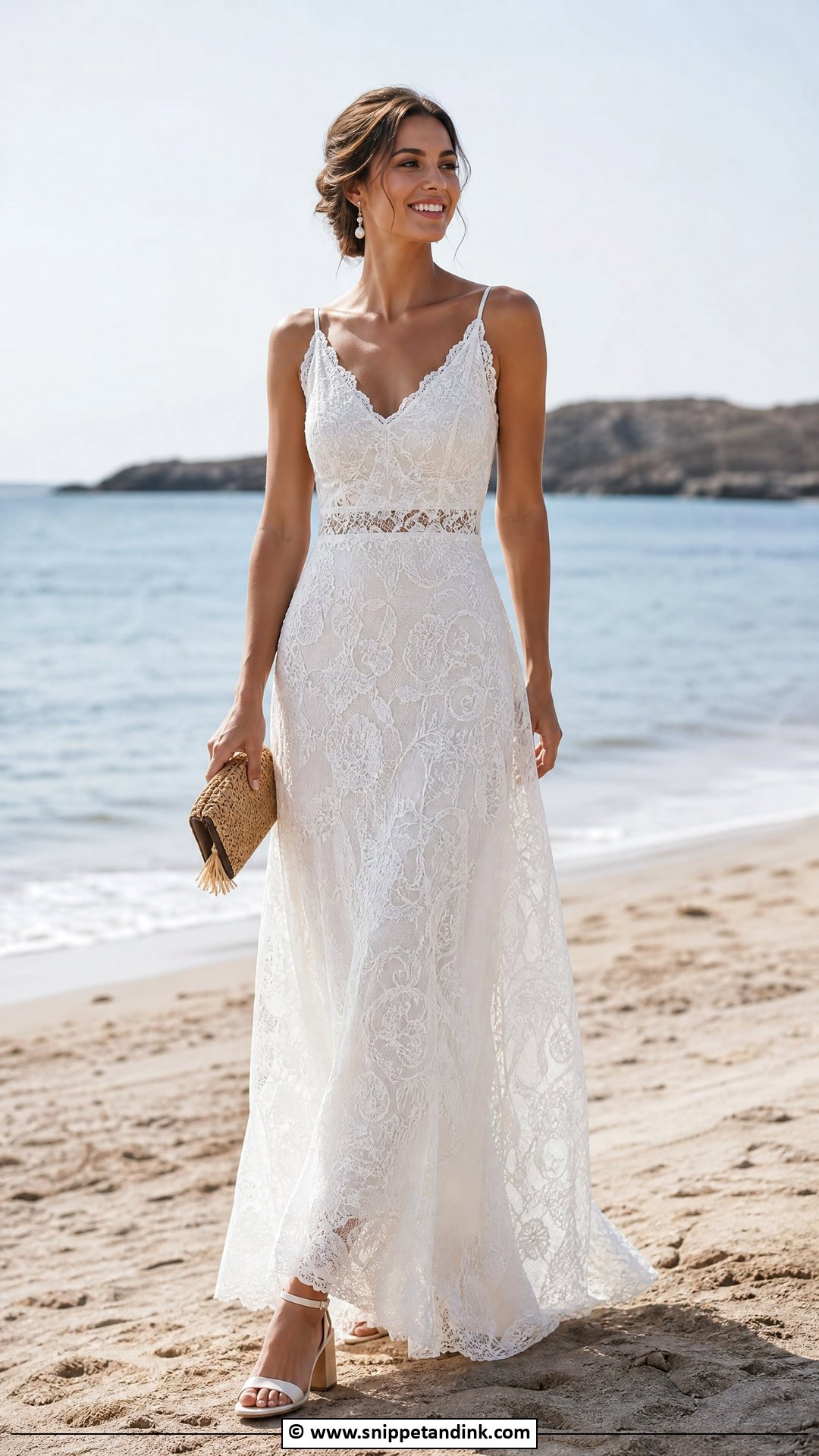
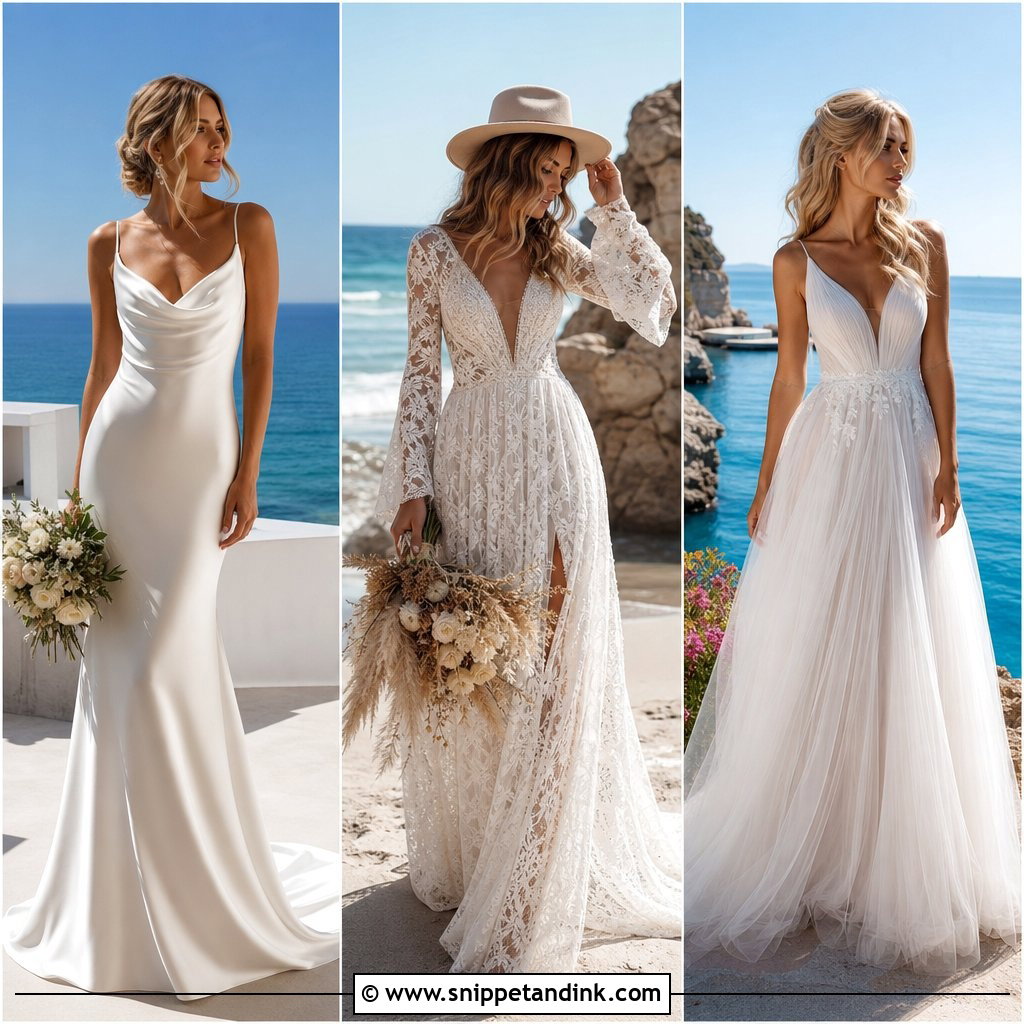
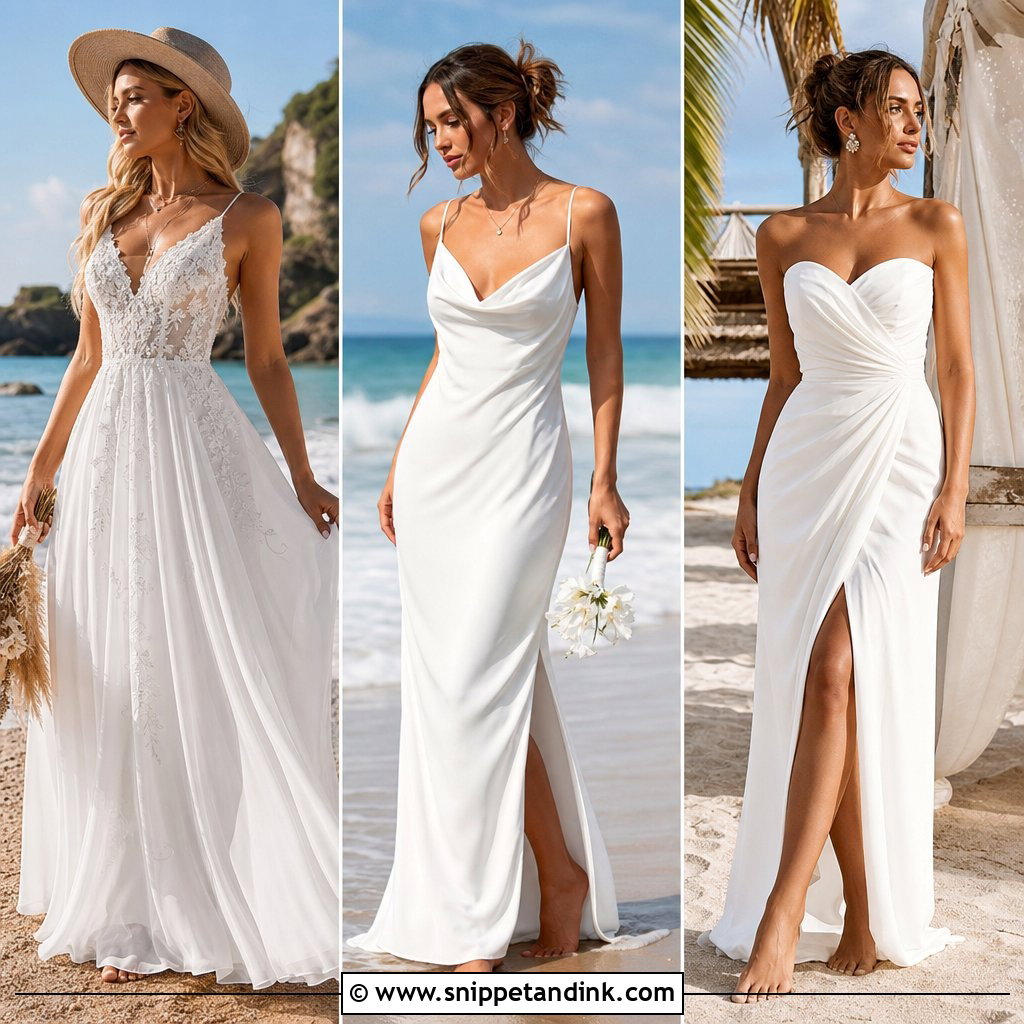
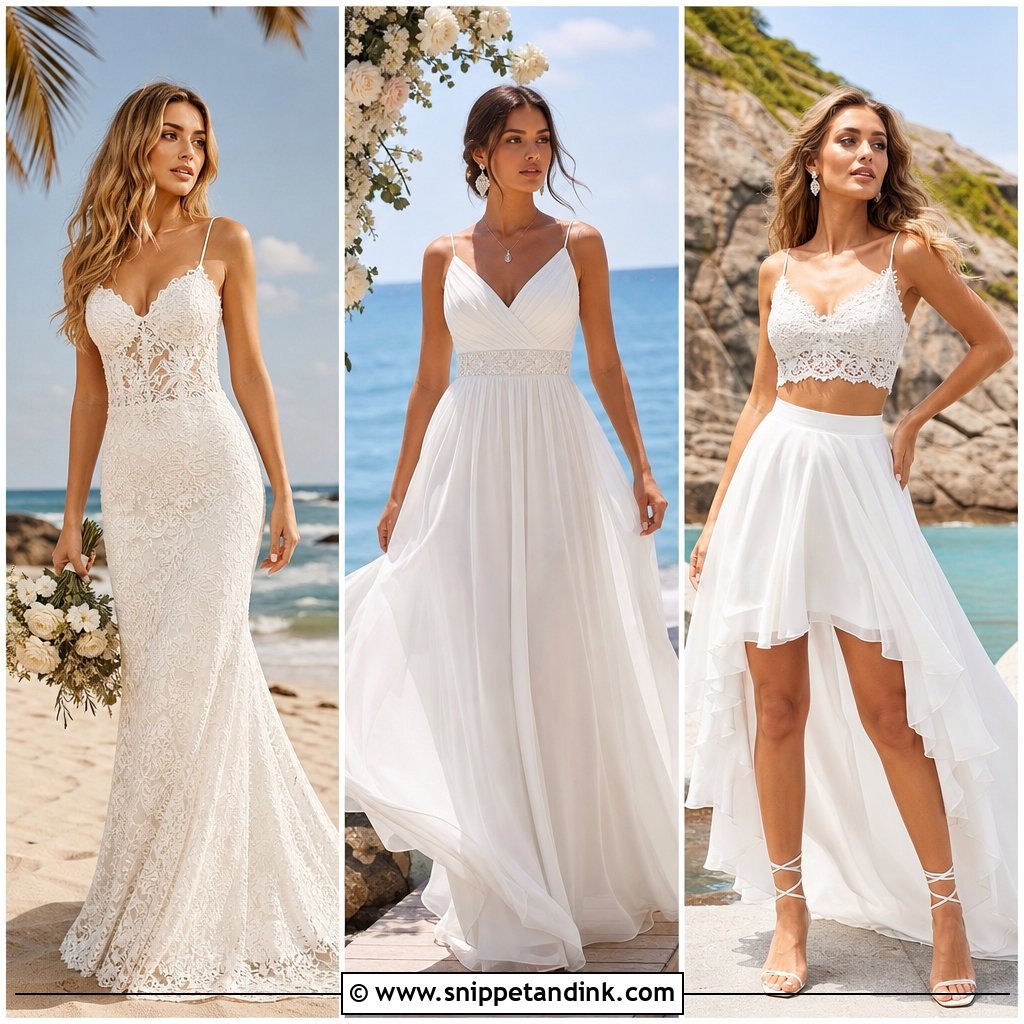
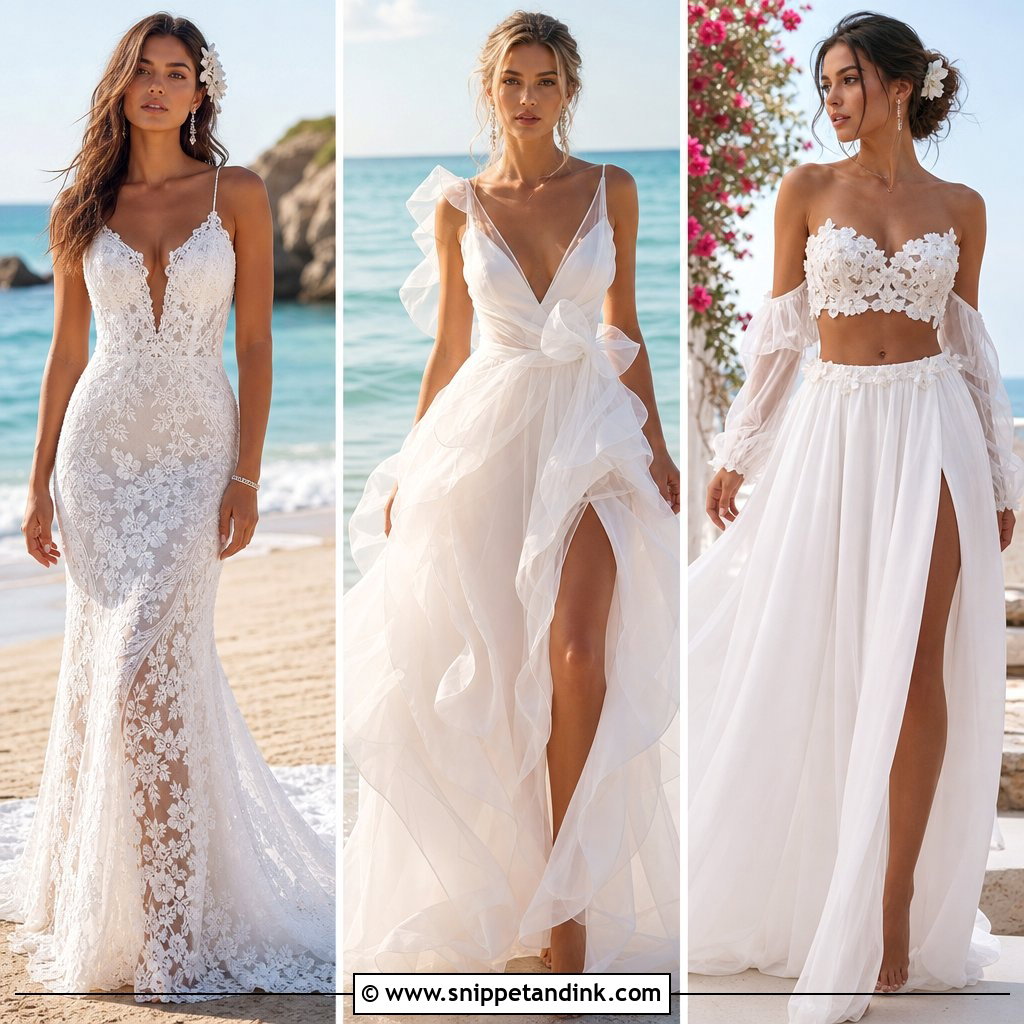
Lace gives a coastal ceremony a handmade feel, but the weight of the lace decides whether you’ll be comfortable. Heavy corded lace on a full lining gets hot quickly in sun. I’d look for fine floral lace, cotton lace or illusion lace over a breathable lining instead. Keep the train short or removable, because lace hems collect sand in their open work and it’s hard to shake out. Low block heels and pearl earrings keep it grounded.
3. Simple Beach Wedding Dress
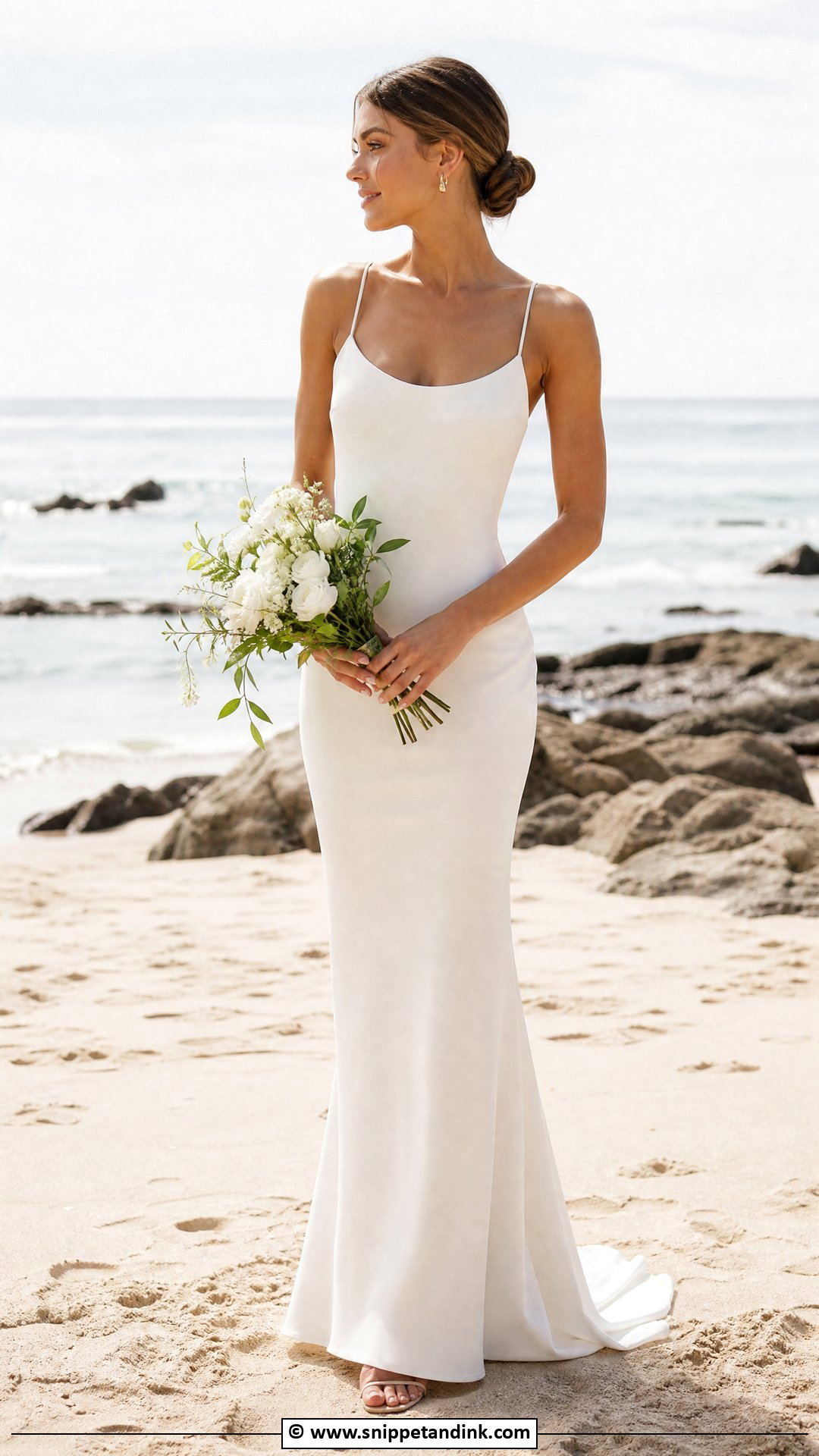
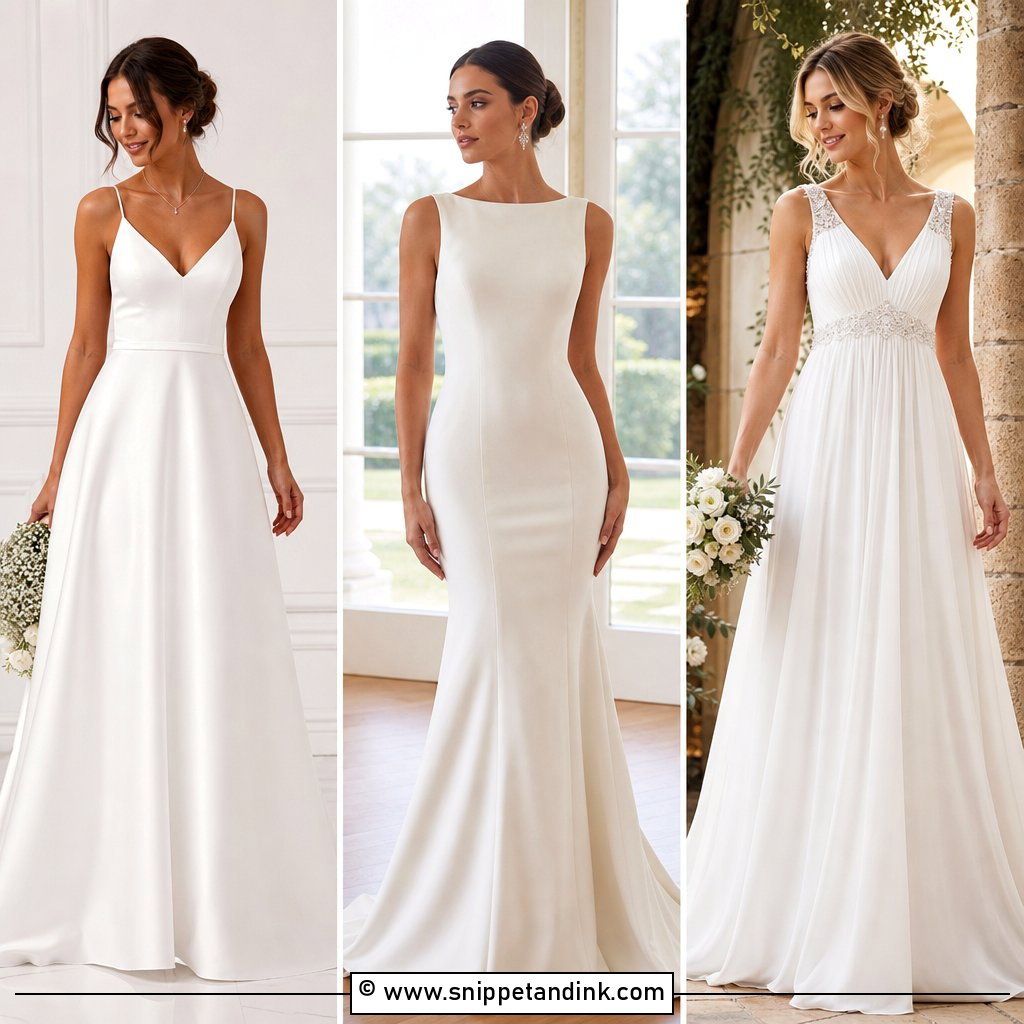
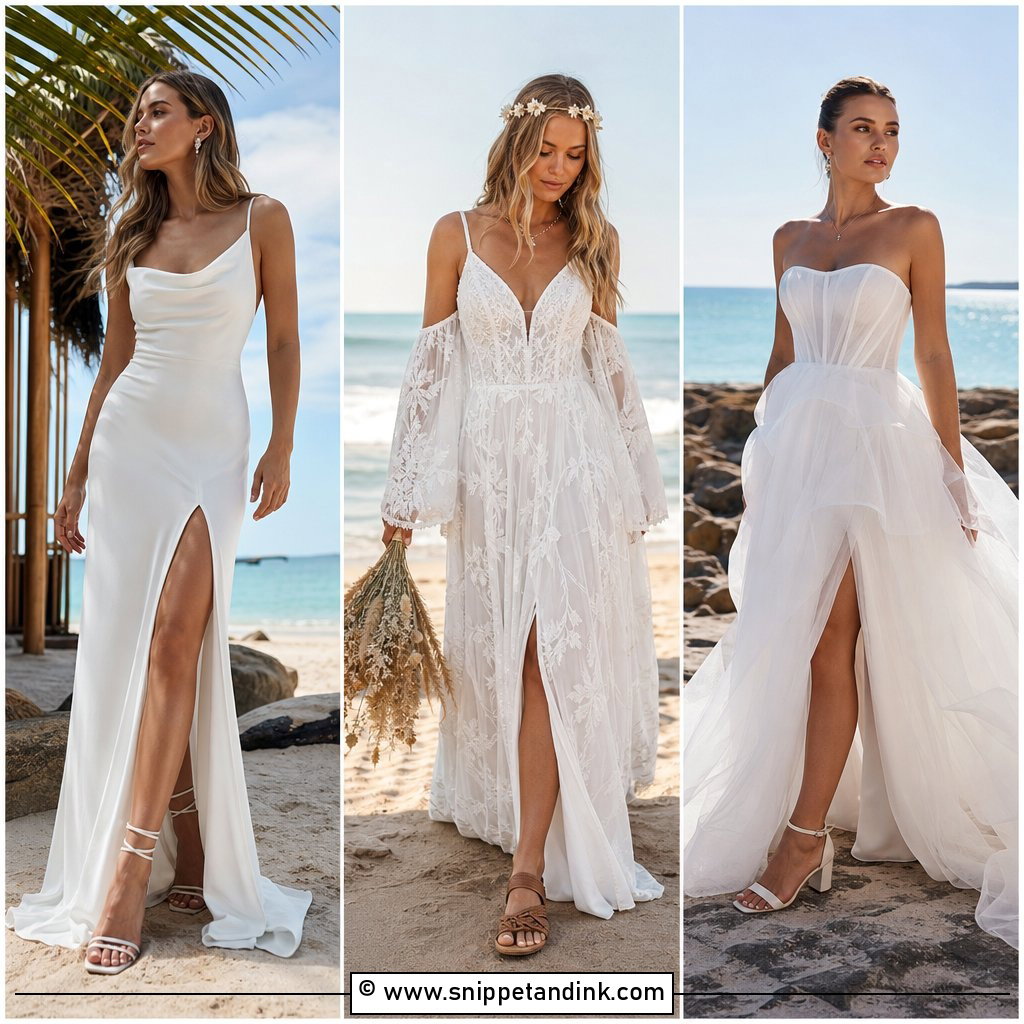
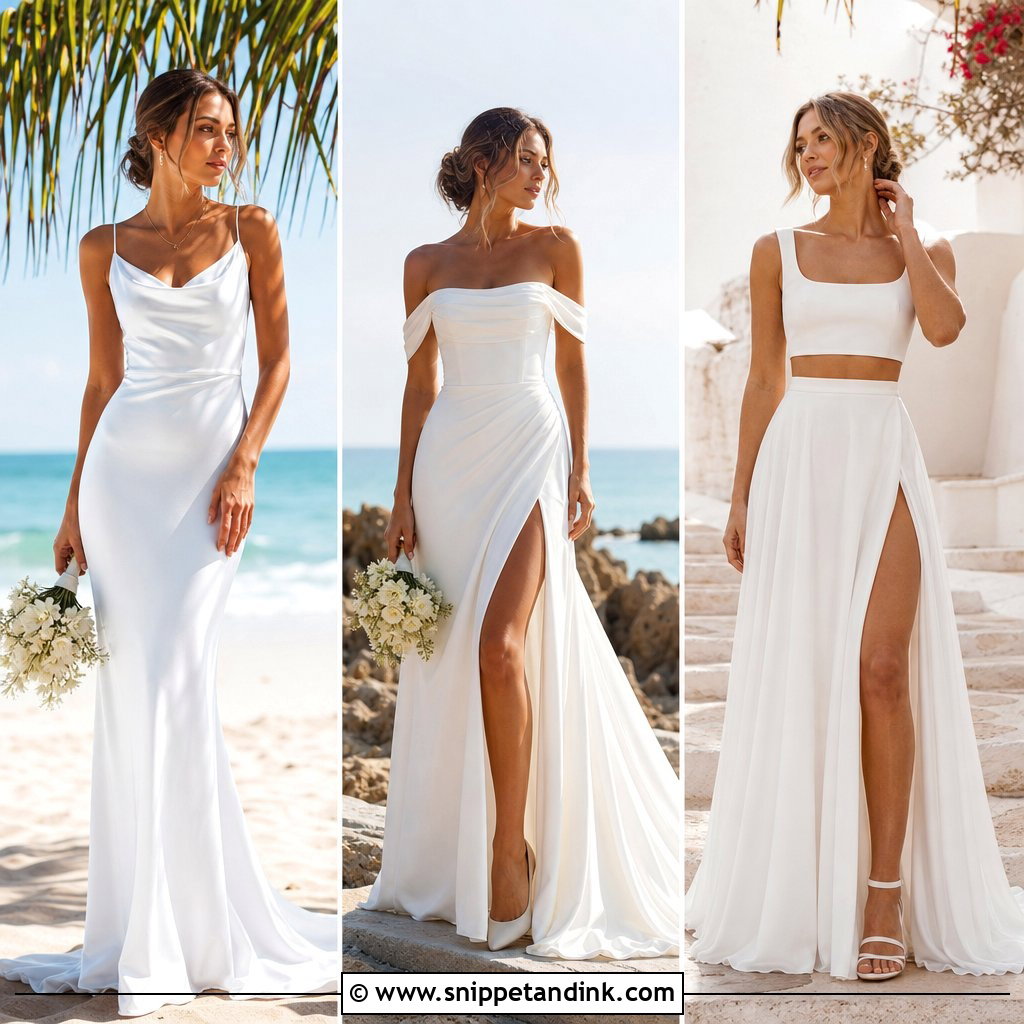
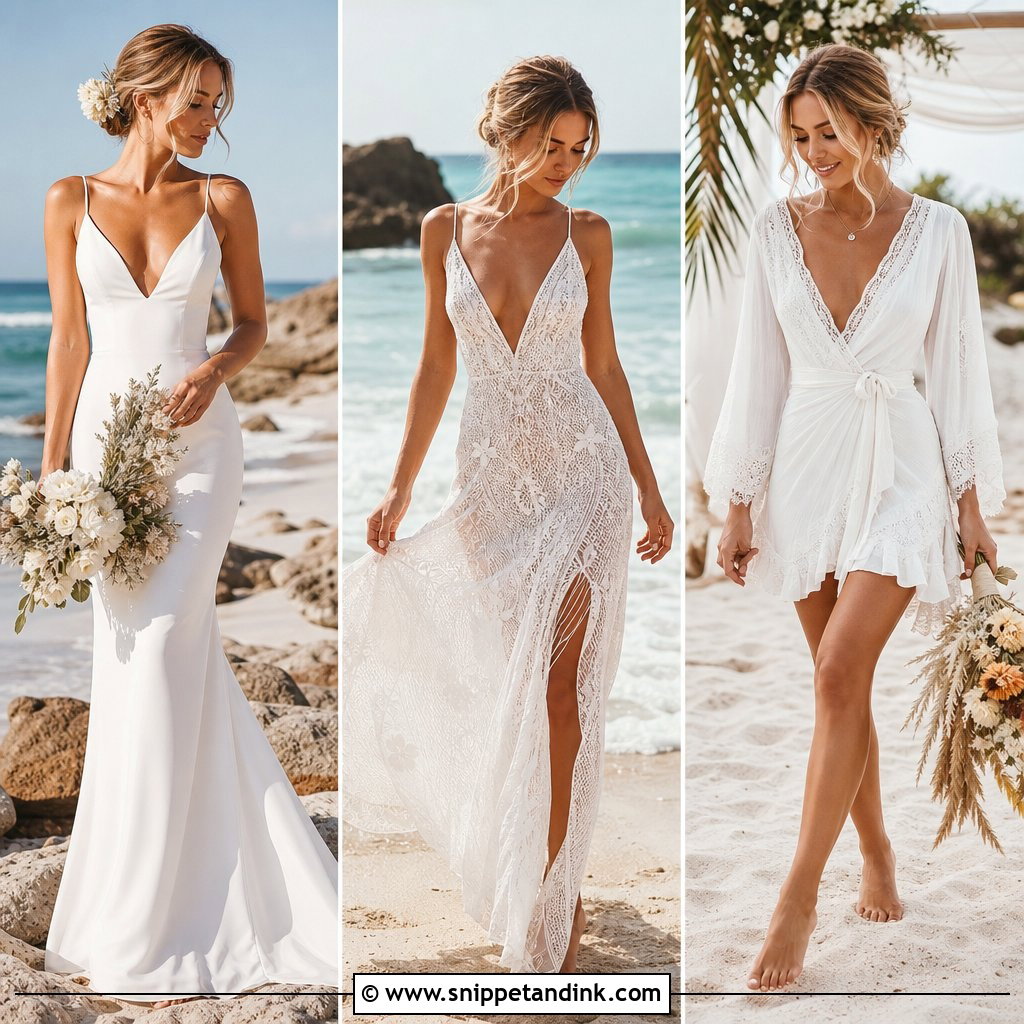
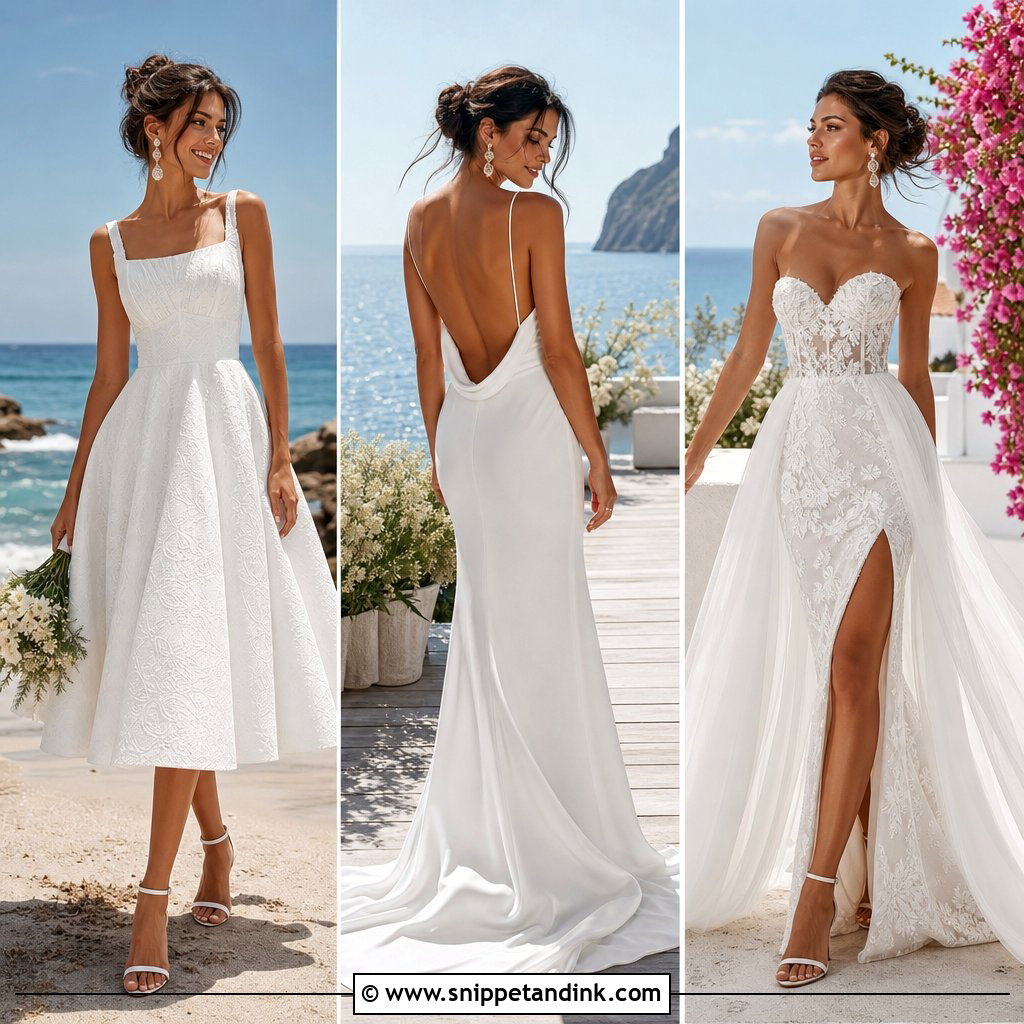
With the ocean behind you, a plain gown doesn’t need help. Smooth crepe, satin or a silky blend in a sheath, column or soft A-line keeps attention on your face and the view. A square neckline, thin straps or a low back adds interest. Simple dresses travel better too, with fewer layers to crush and nothing to snag in a suitcase. Sleek sandals and small gold or pearl jewelry suit intimate ceremonies and elopements.
4. Boho Beach Wedding Dress
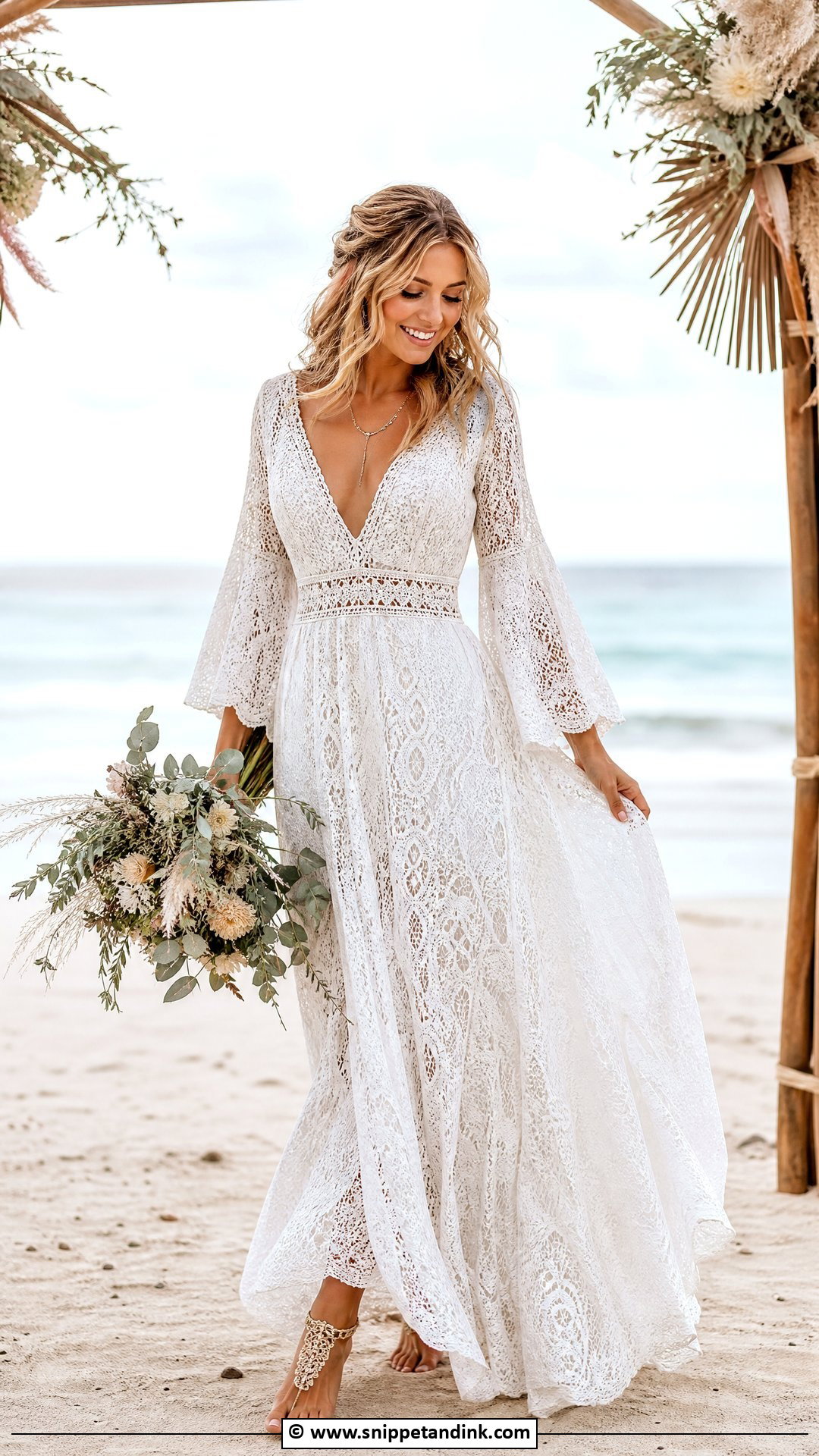
A boho beach wedding dress belongs on the shoreline, with crochet lace, bell sleeves, tiered skirts or tassels in a soft off-white. The trap is costume. Too many textures at once and it reads like a festival outfit, so I balance one textured element with a clean shape and a defined waist. Barefoot sandals, a flower comb and a bouquet with pampas or tropical greenery finish it on a cliff or a casual beach.
5. Satin Slip Beach Wedding Dress
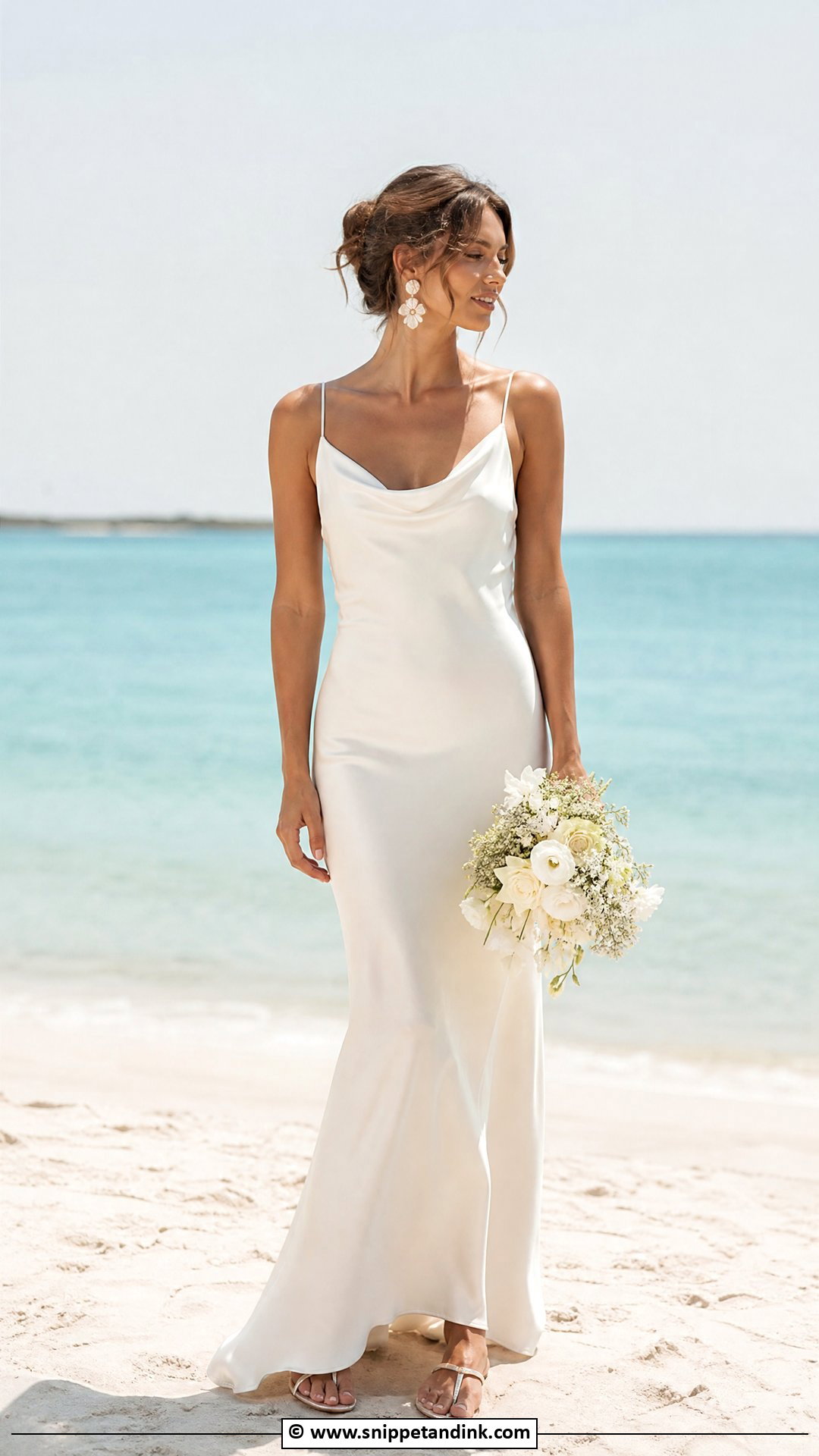
Satin slips glow at golden hour in a way few fabrics can match. Bias-cut satin skims the body, and a cowl neck, thin straps or open back keep it minimal. Satin also shows every mark: water spots, sweat and creases from sitting. I choose medium-weight satin for a beach because thin satin clings in humidity and shows the outline of underwear. Skip the train if you’ll walk on sand, and wear strappy flats.
6. Off Shoulder Beach Wedding Dress
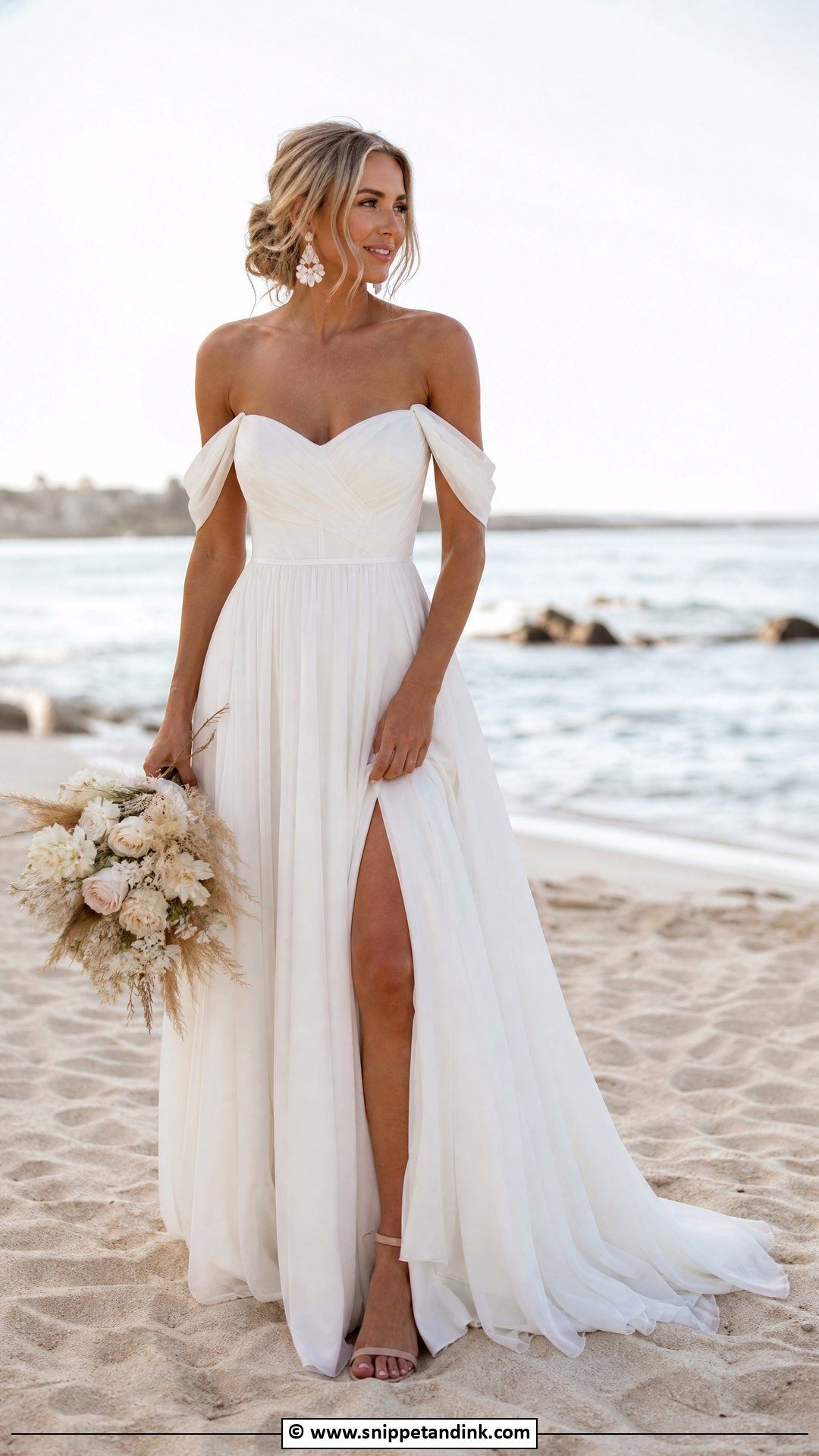
Off-shoulder bands look soft against the sea, but wind is the test. When you lift your arms to hold a veil or hug someone, poorly anchored bands slide, and on a breezy beach you’ll do that constantly. I’d ask for a silicone grip edge inside the bands. Chiffon, organza or soft crepe keep it light. Low sandals or wedges, which won’t sink like stilettos, and a relaxed bouquet.
7. Short Beach Wedding Dress
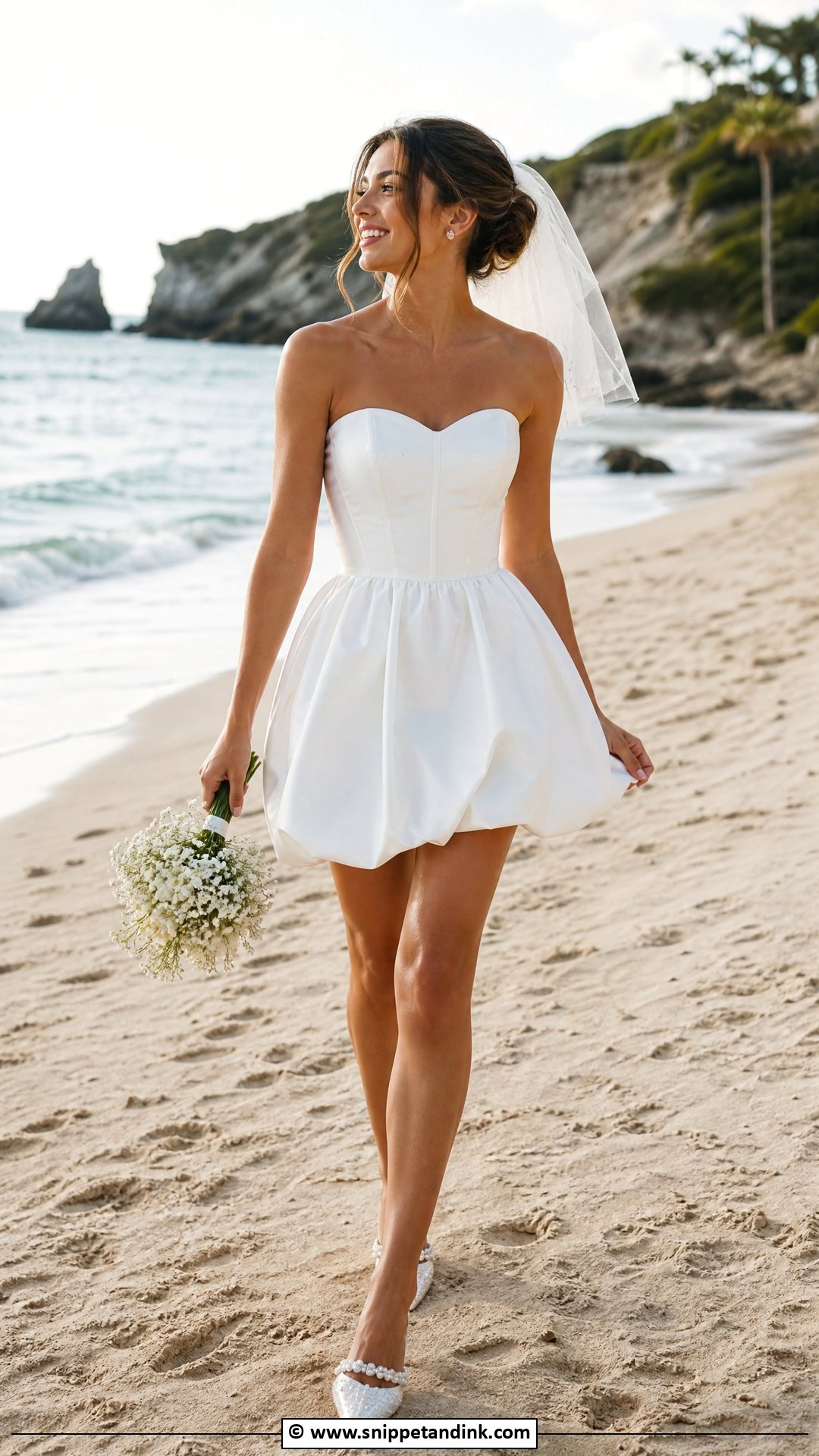
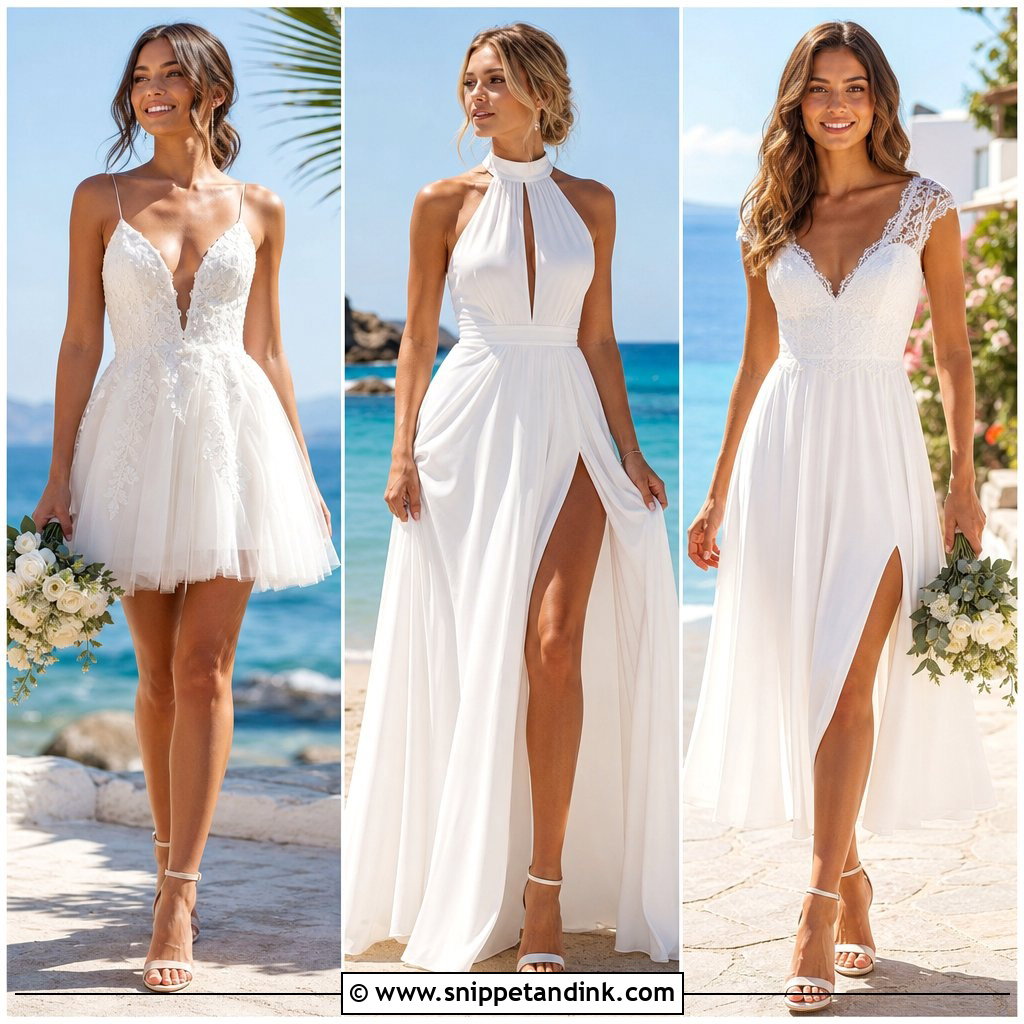
Short is the most practical hem on sand. It stays clean, shows your shoes and keeps you cool. Mini, knee or tea length depends on how formal the ceremony is. A structured mini with a bow looks modern; short lace looks sweet. Add a short veil or hair bow to make it bridal. If you plan to dance barefoot at the reception, this is the one I’d suggest without hesitation.
8. A Line Beach Wedding Dress
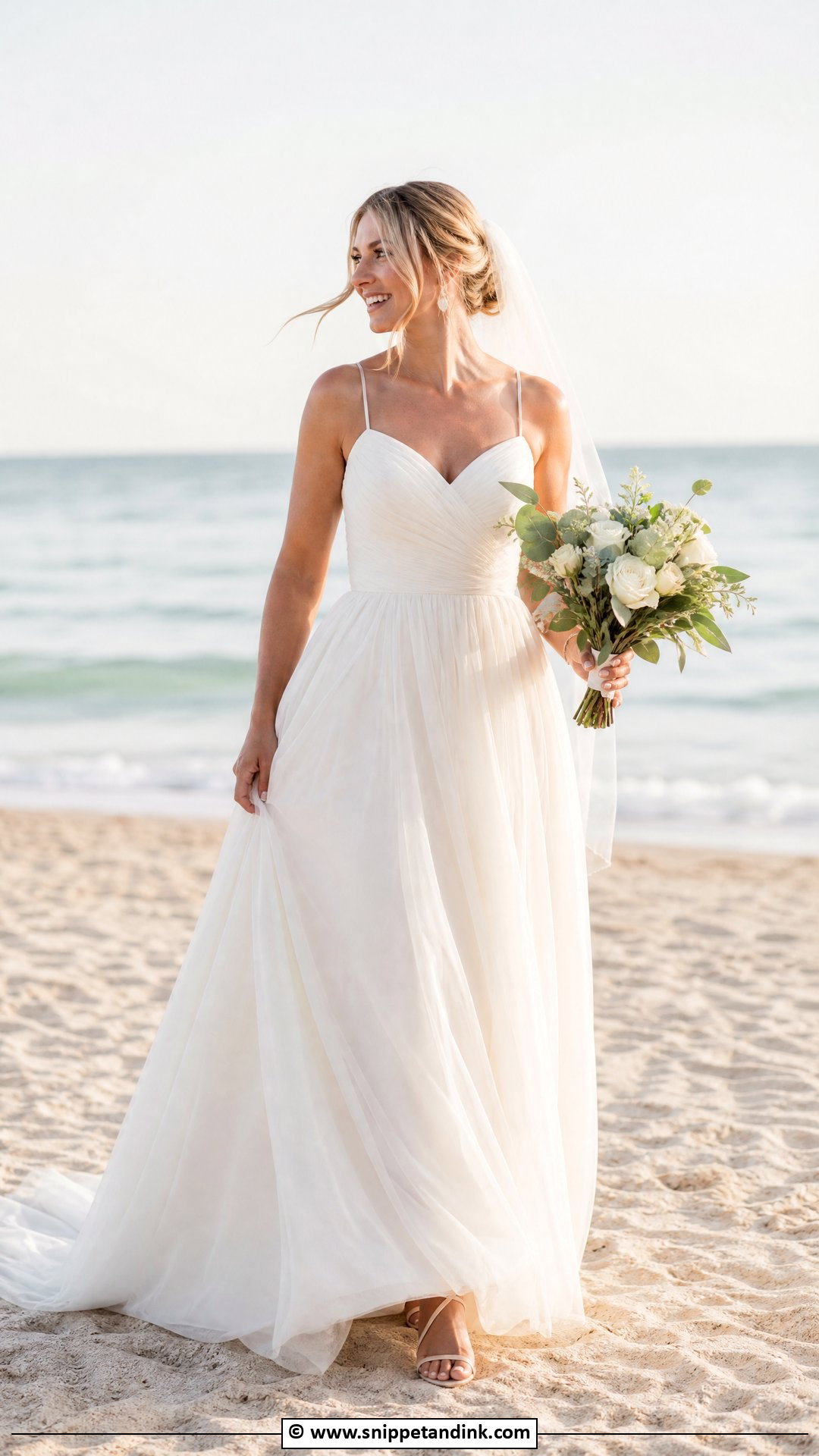
A fitted top and a skirt that floats away from the body make the A-line comfortable on almost anyone. On a beach, the underskirt matters more than the outer fabric. Many A-lines come with a stiff crinoline layer, and I usually have it removed or swapped for a single soft petticoat so the skirt moves and you don’t overheat. Chiffon, organza, soft tulle or light crepe on top. Comfortable sandals and natural makeup.
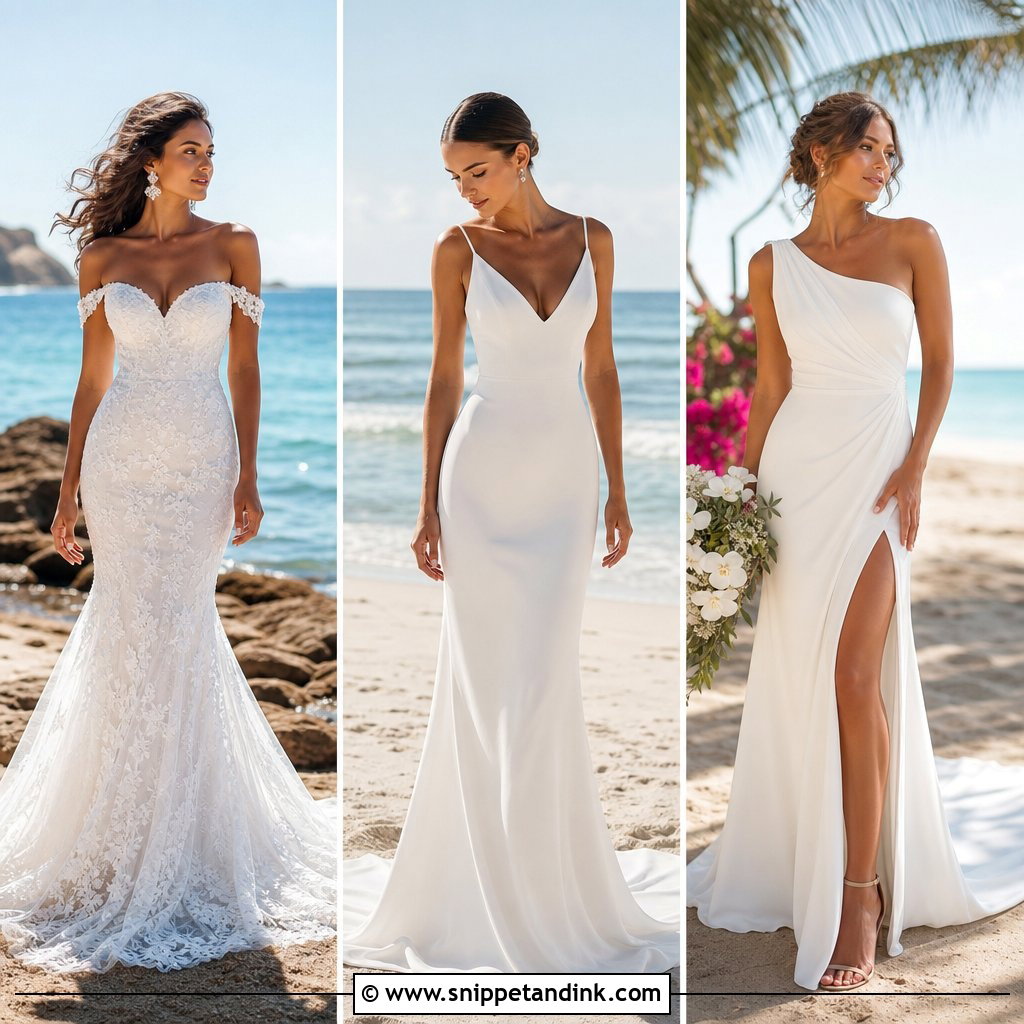
9. Mermaid Beach Wedding Dress
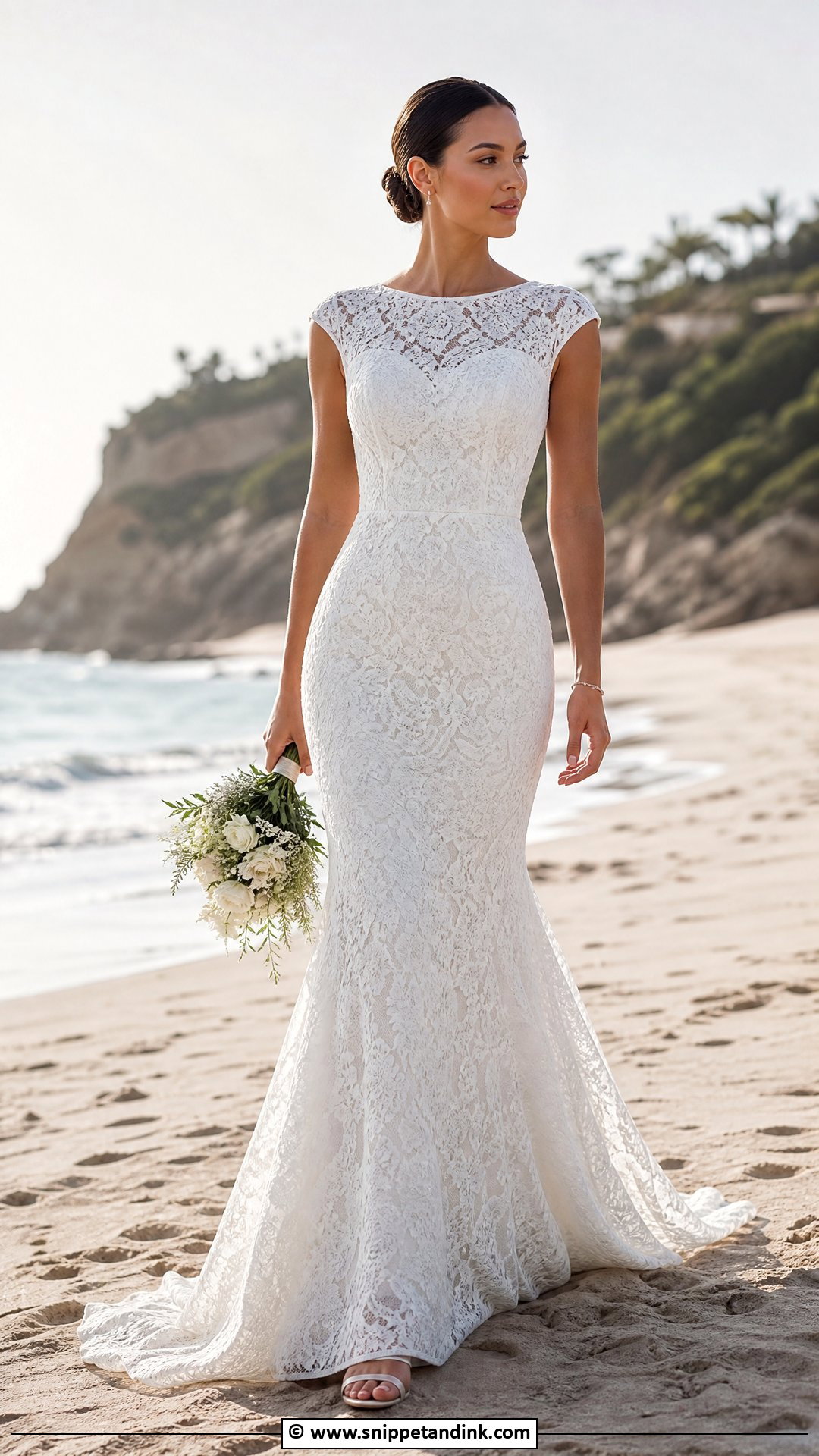
Mermaids can look striking by the ocean, but sand makes them work harder than anywhere else. The flare near the knee limits your stride, and on soft sand you need room to step high. I’d choose stretch crepe or light lace over heavy beading, and set the flare a little lower than usual for easier walking. A chapel train looks lovely in photos; a bustle or shorter train is kinder for the rest of the day. Sturdy sandals and sleek hair balance it.
10. Sheath Beach Wedding Dress
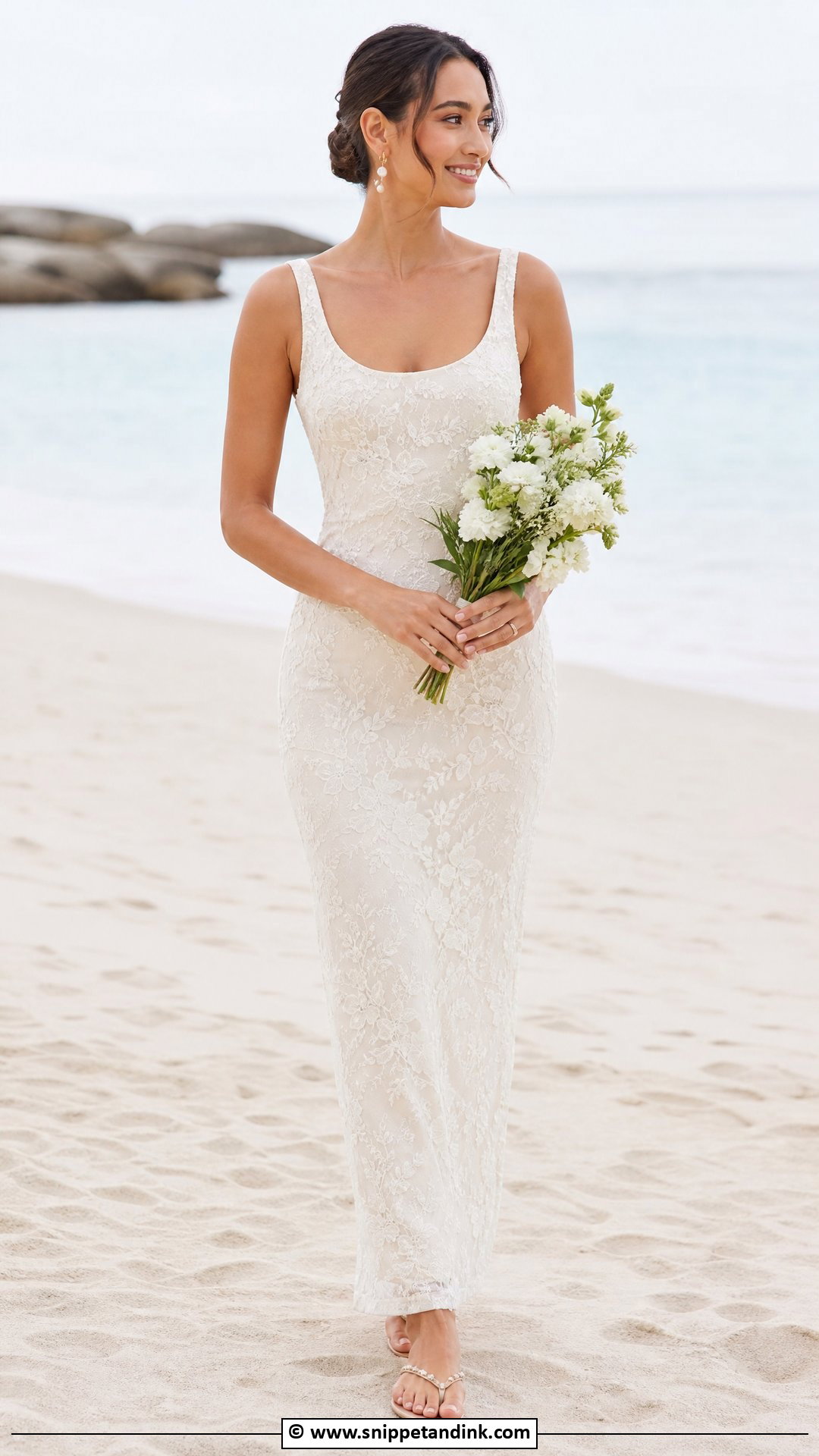
A sheath is the easiest gown to pack for a destination wedding. It follows the body without volume and folds small. Crepe, soft lace, satin or chiffon with a light lining all suit it, and a scoop neck, halter or open back keeps it fresh. It flatters petite brides because it lengthens the frame without swamping it. Check the hem width, though: a narrow sheath needs a small slit or kick pleat so you can walk on sand.
11. Halter Beach Wedding Dress
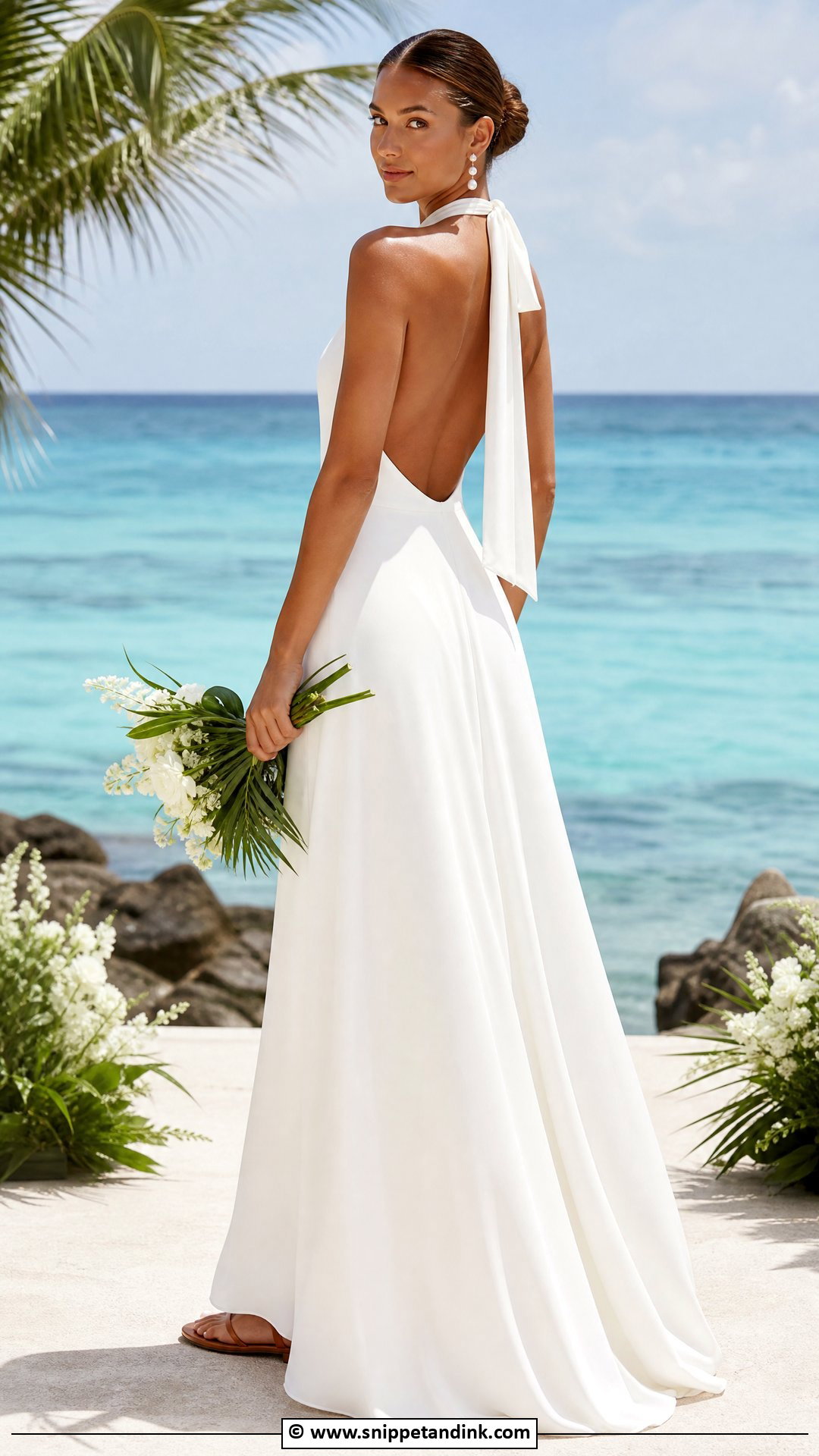
Of all the necklines here, a halter stays put best in wind. It hangs from the neck, so there’s nothing to slide off the shoulders when you move. Soft crepe, chiffon or satin with a flowing skirt works, and a low back adds drama. If the skirt is heavy, the neck strap carries its weight, so I check for a wide or padded strap on longer gowns. A sleek bun keeps the neckline clear.
12. Open Back Beach Wedding Dress
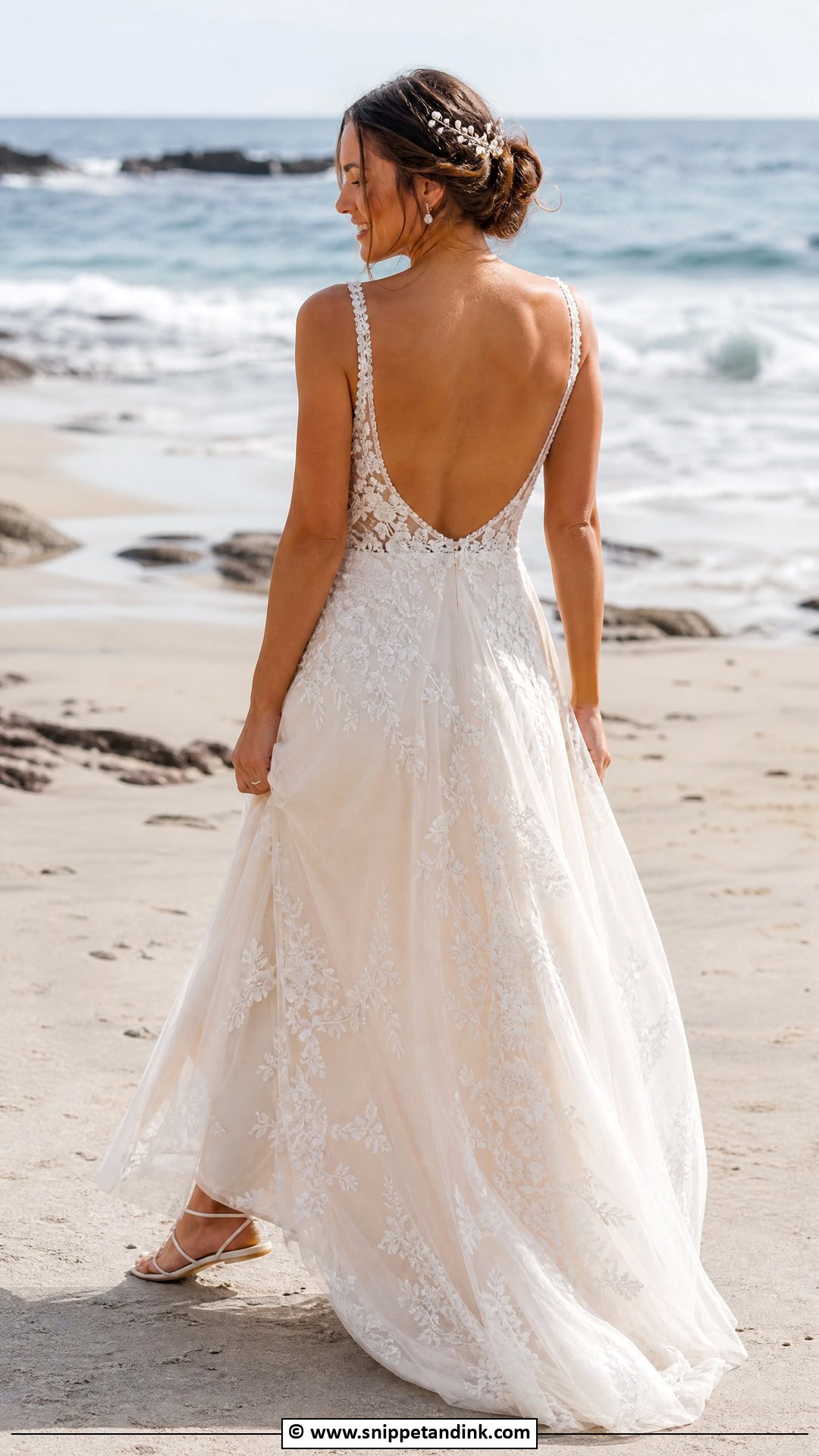
An open back is cool in the heat and gives the aisle walk a reveal. Support has to come from somewhere else, though, through a structured bodice, supportive straps or a tie-back. One beach-specific note: an open back means sun on your back for an outdoor ceremony, so plan your sunscreen and any tan lines in the weeks before. An updo or pearl pins frame it at sunset.
13. Long Sleeve Beach Wedding Dress
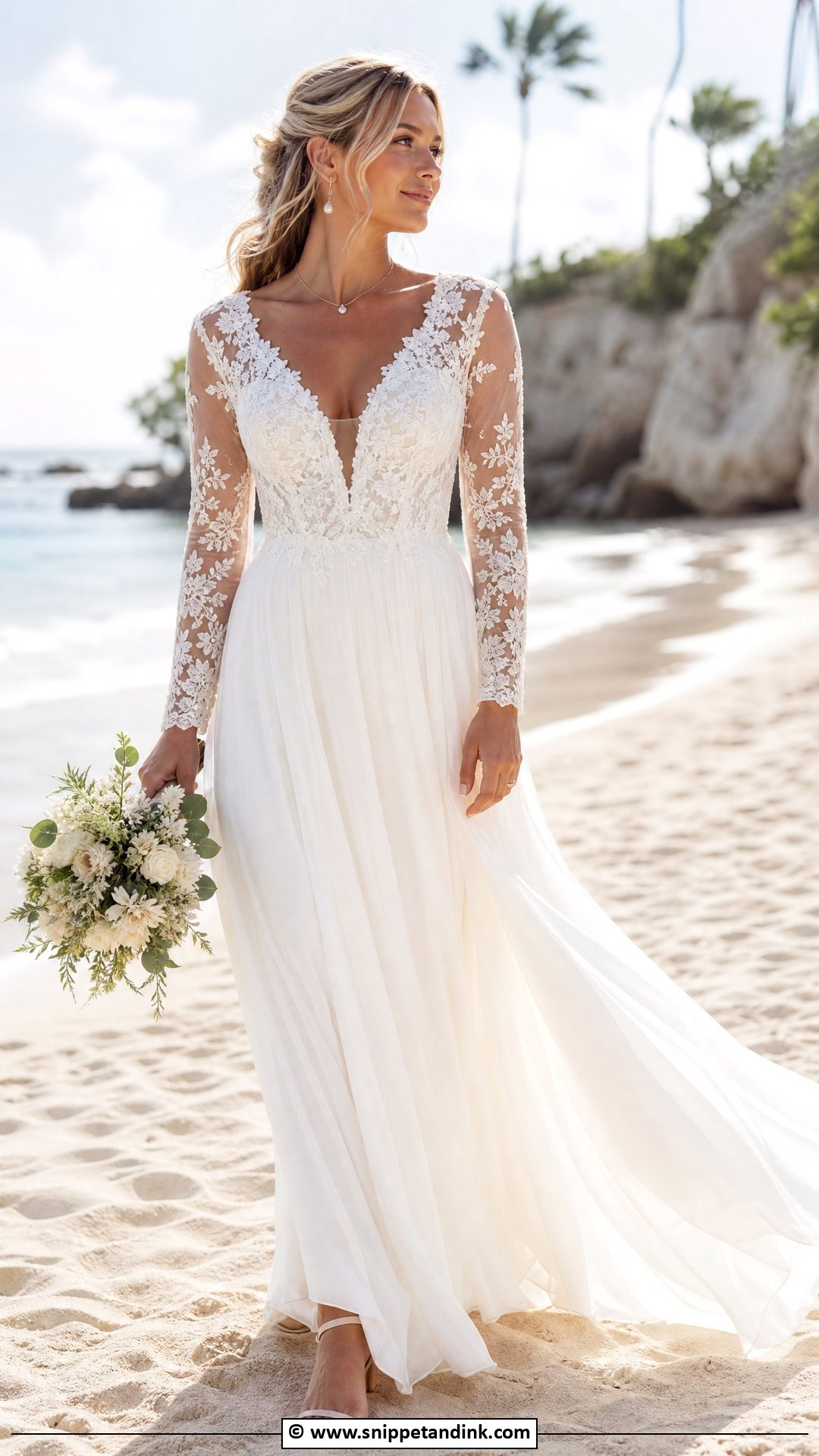
Sleeves work at the coast when they breathe. Illusion lace, sheer chiffon or loose bishop sleeves give coverage without trapping heat, while fitted thick sleeves will feel like a jacket by noon. They’re useful on breezy coastlines, at cooler evening ceremonies and anywhere a modest dress code applies. Balance them with an open neckline or low back. Early spring and autumn ceremonies suit them best.
14. Strapless Beach Wedding Dress
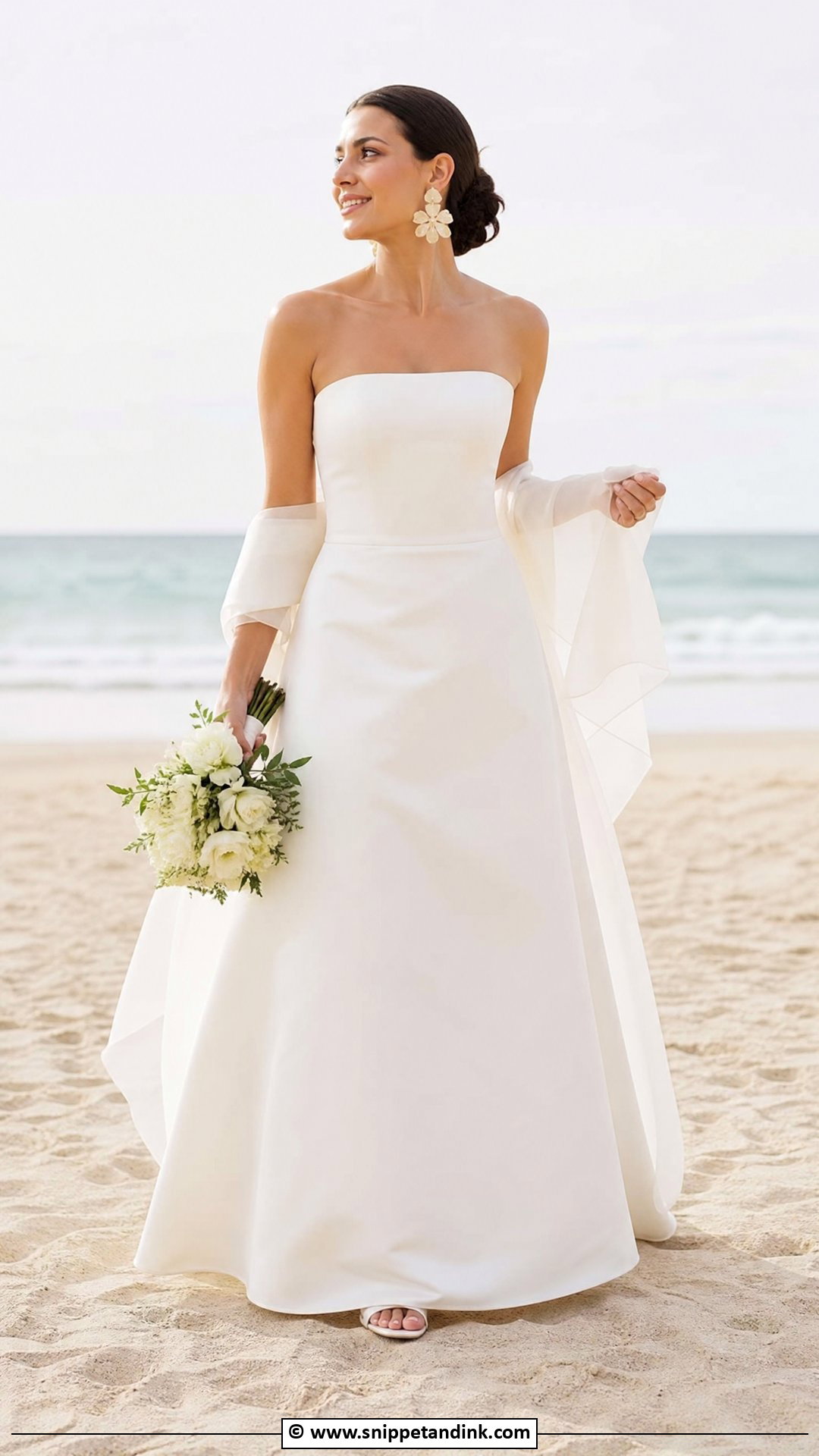
Strapless shows off shoulders and keeps a clean line, but on a beach you need a bodice that stays up without tugging. I check that with a quick jump at fittings; if it slips, it needs more boning or a grip band. Lightweight crepe, organza, chiffon or soft satin all suit it. A strapless A-line is romantic and a strapless column is sleek. Bring a sheer wrap for the evening, when sea air cools quickly.

15. Tea Length Beach Wedding Dress
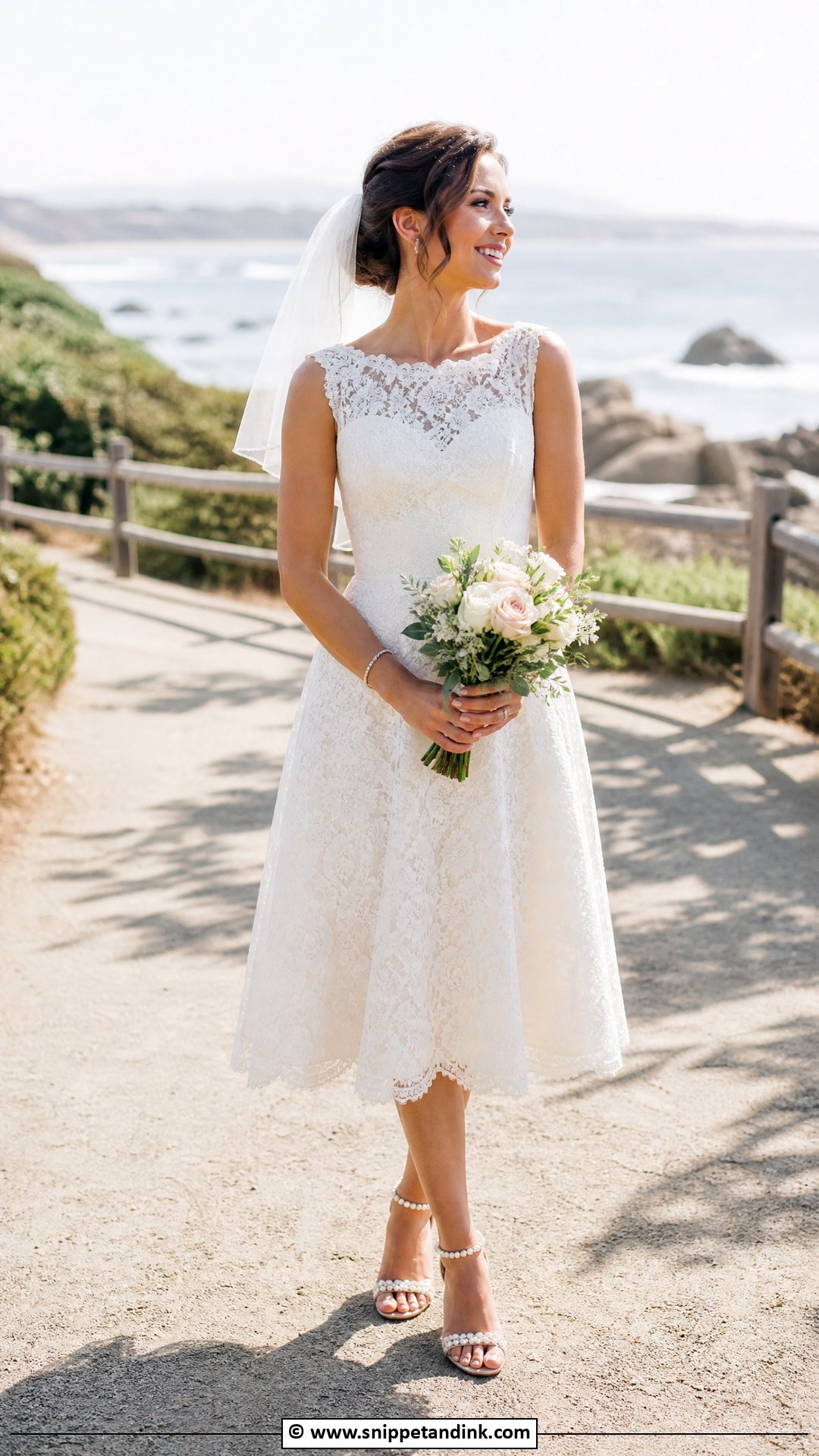
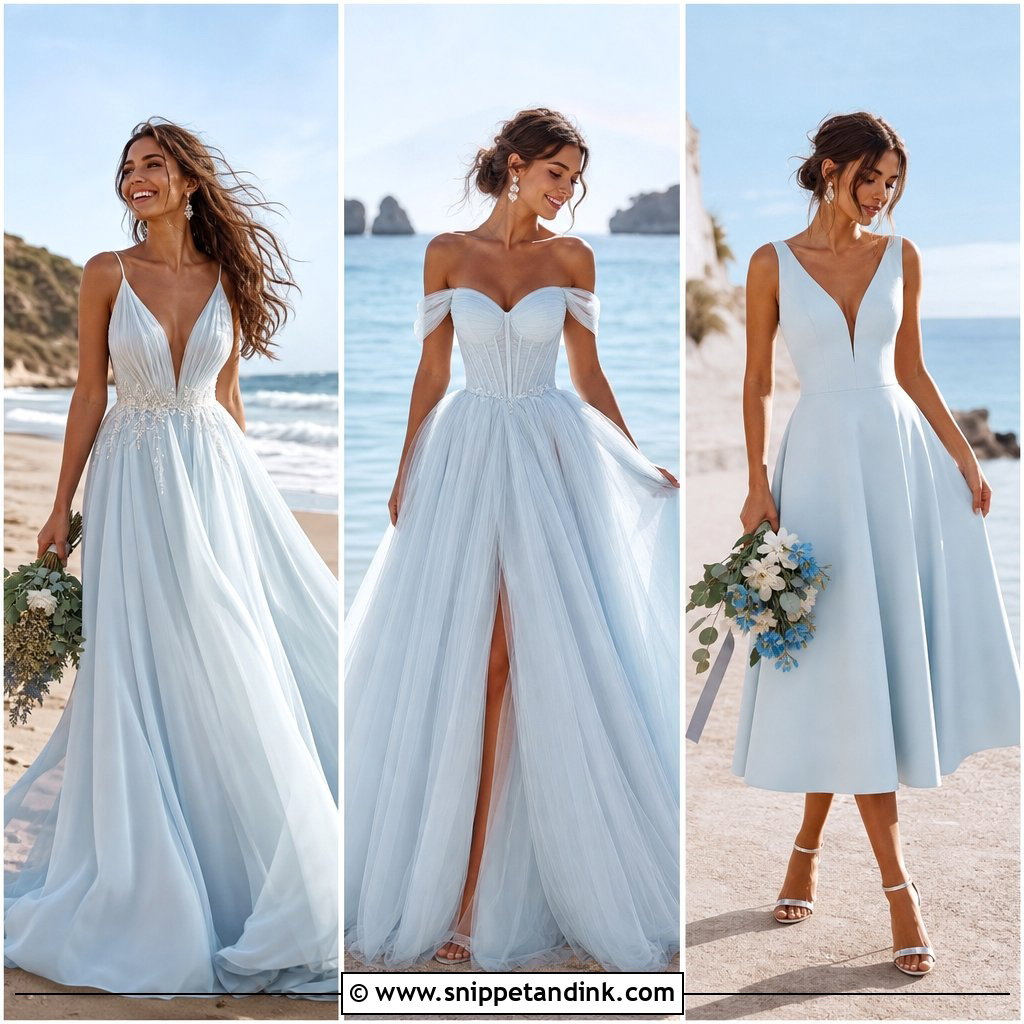
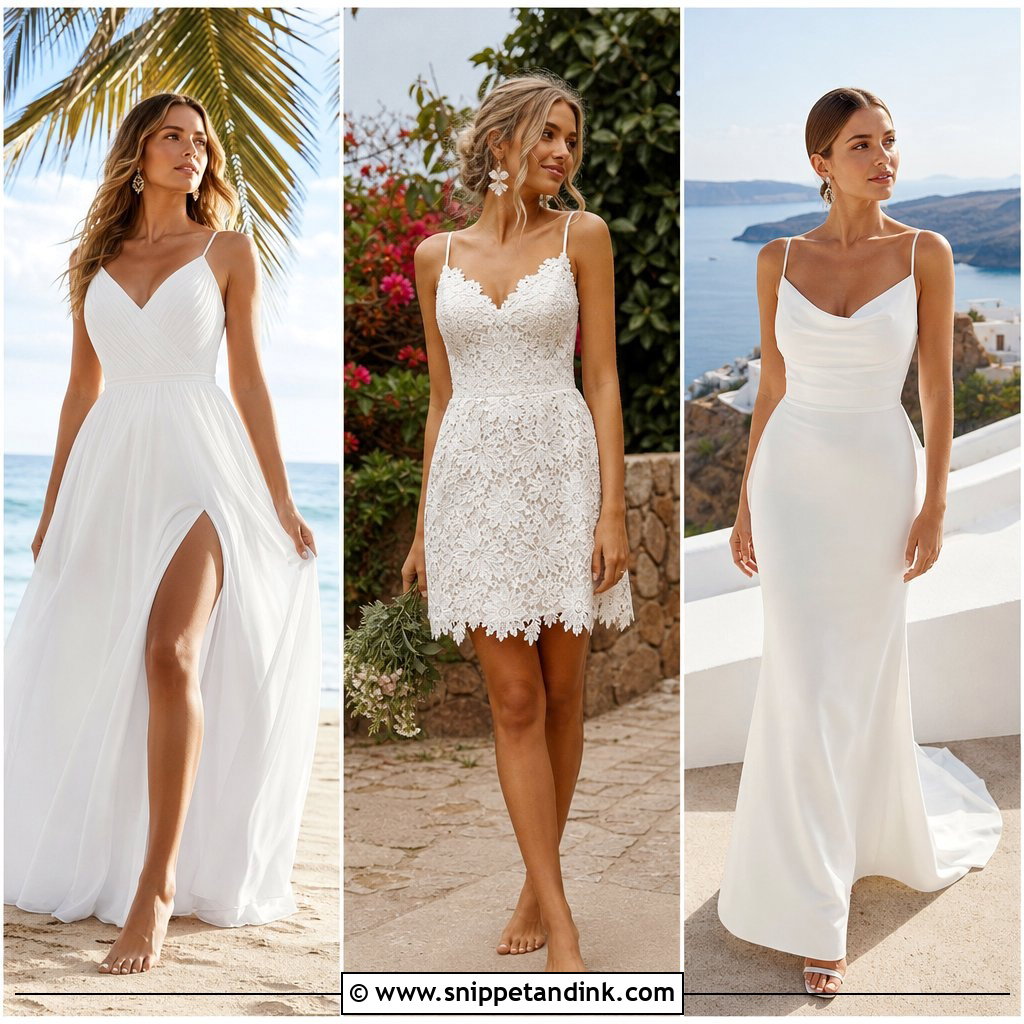
Tea length falls between knee and ankle, which keeps it out of the sand while still feeling dressed up. It also lets bridal flats or pearl sandals show. Lace leans vintage, satin looks polished, tulle reads soft. A fitted bodice and full skirt give a retro shape. Mind the hem height on a windy day; a full tulle tea-length skirt can lift more than you’d like, and a weighted hem lining helps.
16. High Low Beach Wedding Dress
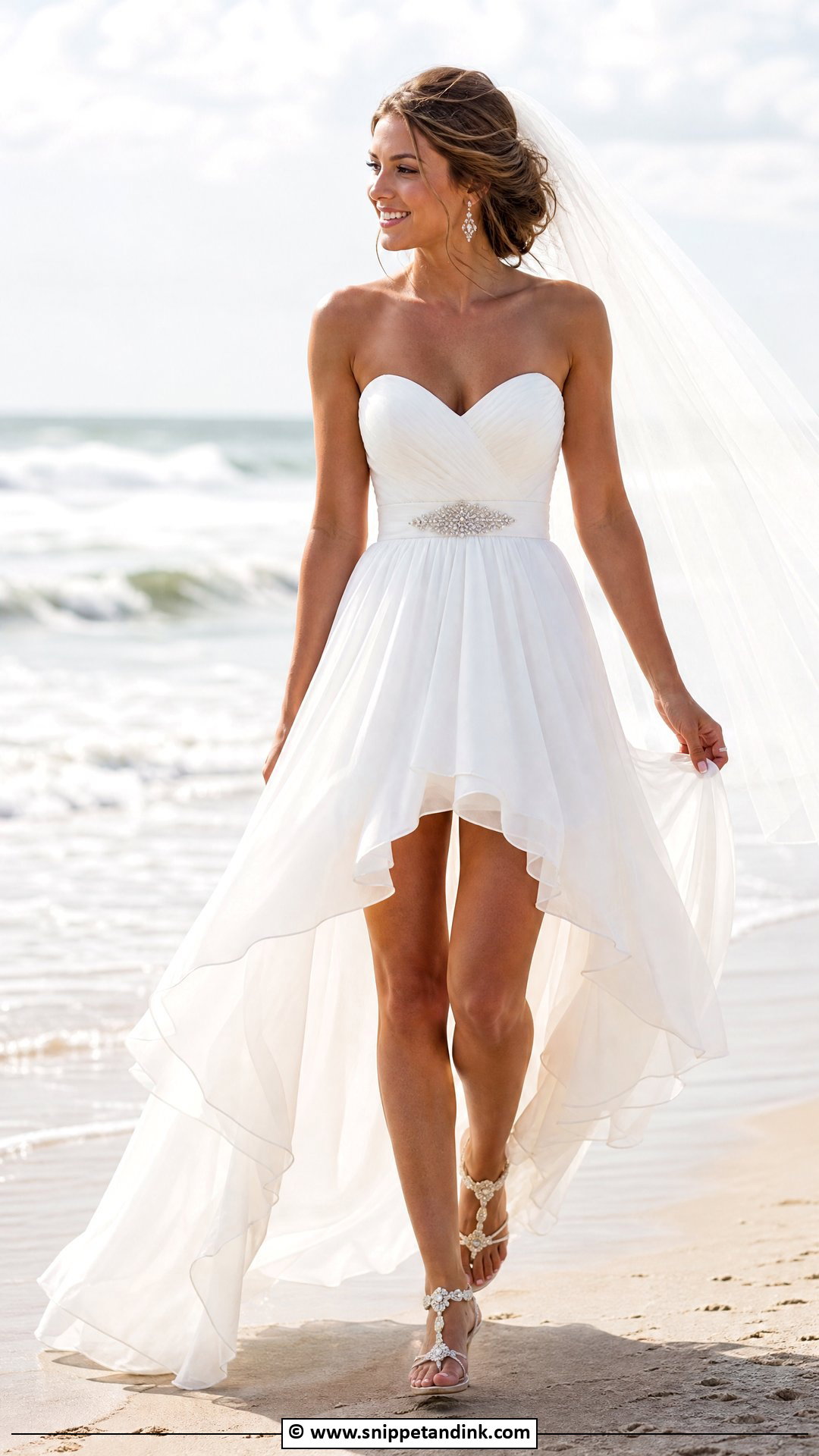
A high-low hem gives you a clean front for walking on sand and a longer back that moves in photos. Chiffon, organza or soft tulle floats best. The back will still touch the sand, so ask for the long section to be cut just to the floor rather than trailing. Embellished sandals show at the front. Choose a hairstyle that will survive salt air, because the hem draws the eye to movement.
17. Tulle Beach Wedding Dress
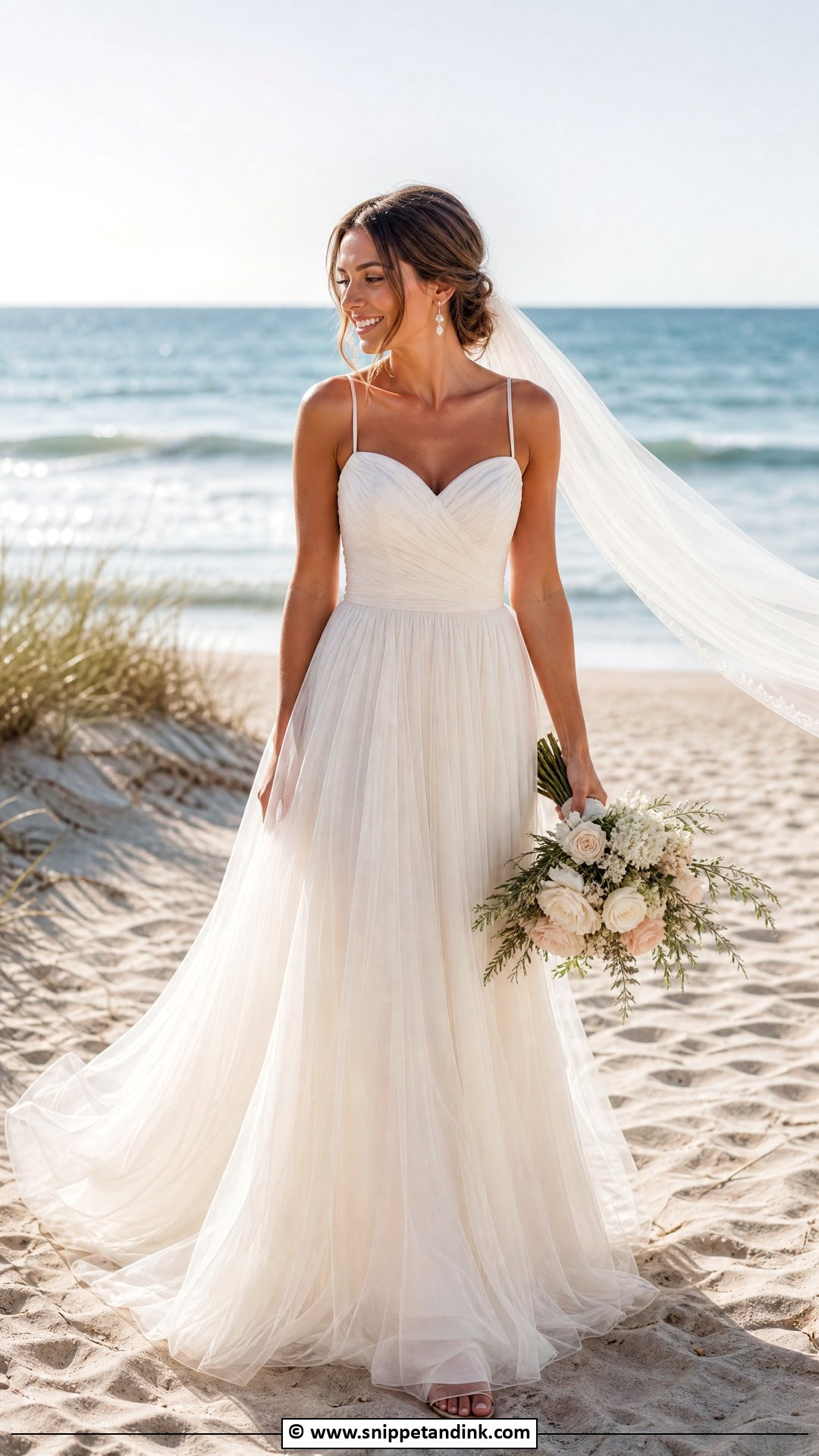
Tulle at the beach needs editing. Fine, lightweight tulle with only a few layers moves with the breeze; a skirt with ten layers turns bulky, hot and sandy at the hem. I’d keep it to an A-line rather than a ball gown and pair it with a simple bodice. Tulle snags on rough boardwalk wood and shells, so watch where you sit. Flat sandals and a soft veil complete it.
18. Crepe Beach Wedding Dress
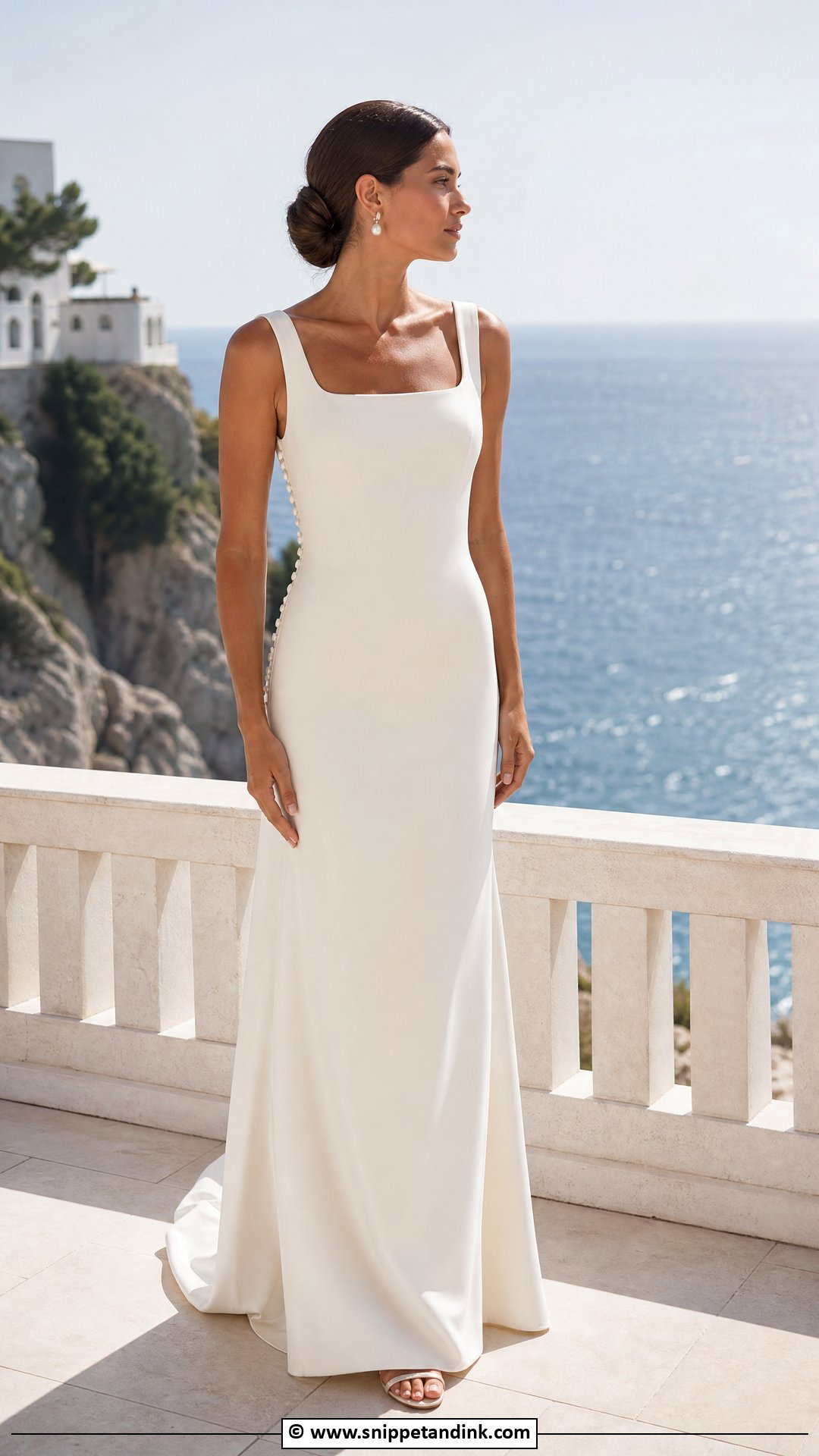
Crepe has enough weight to drape smoothly and hide a little wrinkling, which makes it a reliable choice for travel. A crepe sheath, column or fit-and-flare looks polished with no sparkle at all. Details like a square neck, open back, side slit or a row of buttons make it personal. Check the lining is breathable; a heavy crepe with polyester lining can feel warm in direct sun. Sleek sandals and a low chignon suit resort terraces.
19. Organza Beach Wedding Dress
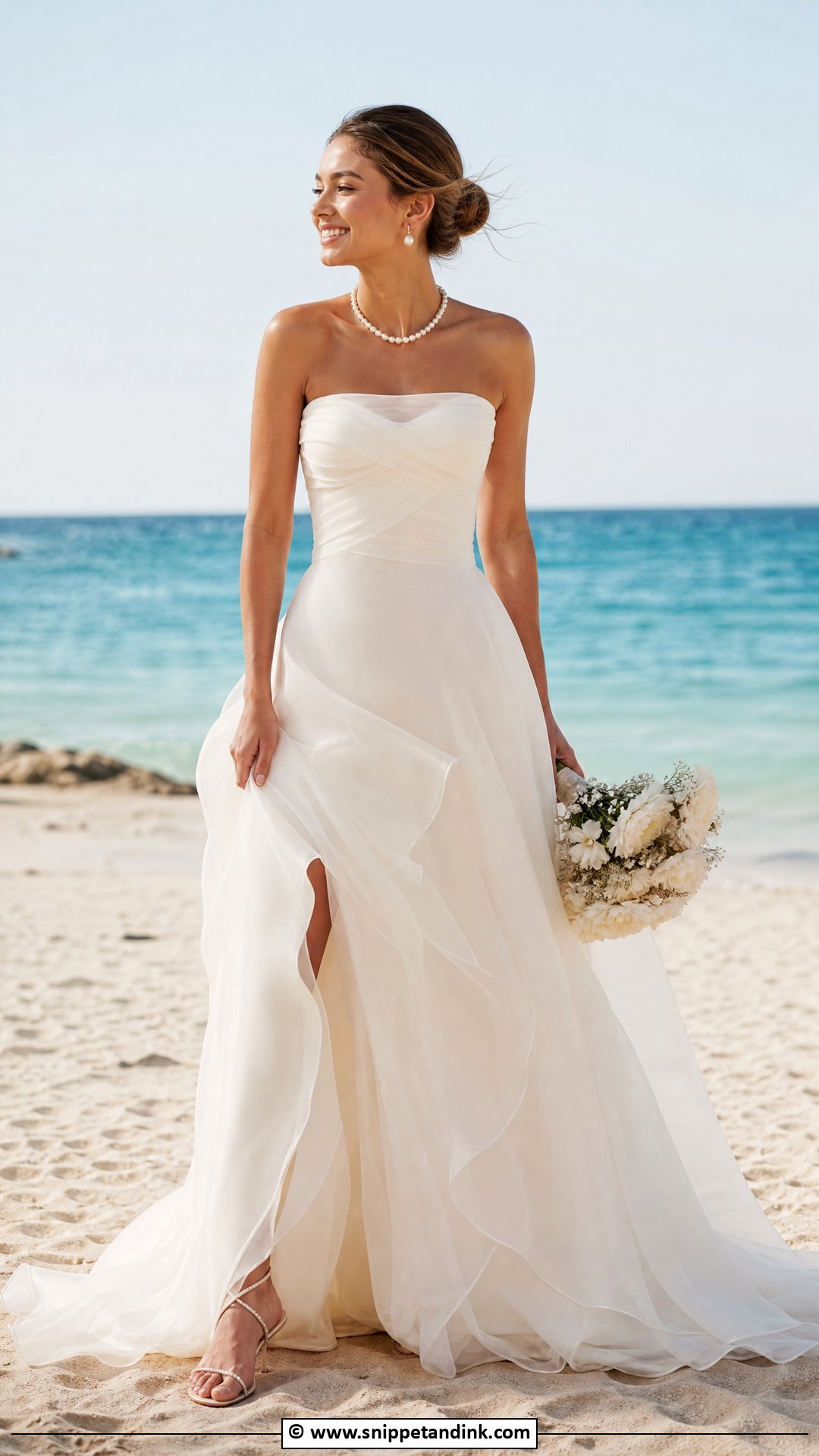
Organza gives structure while staying light. The catch is that its crisp body catches wind like a sail. Directly on the sand, I’d avoid oversized organza layers and keep it to a slim A-line, a strapless gown or a single overlay. It also creases sharply in a suitcase, so plan a steamer at the venue. Pearl accessories and a clean hairstyle keep it fresh.


20. Linen Beach Wedding Dress
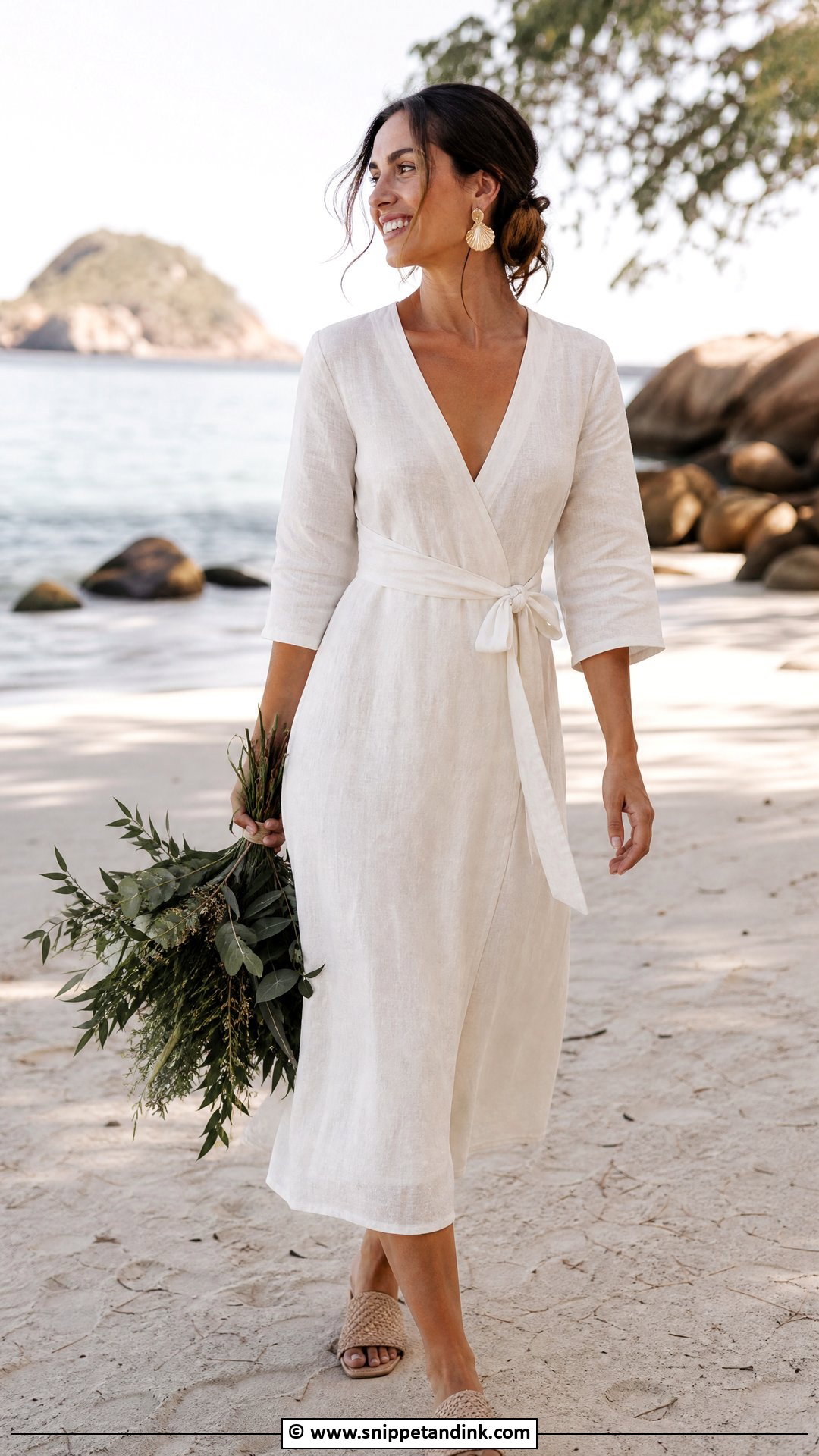
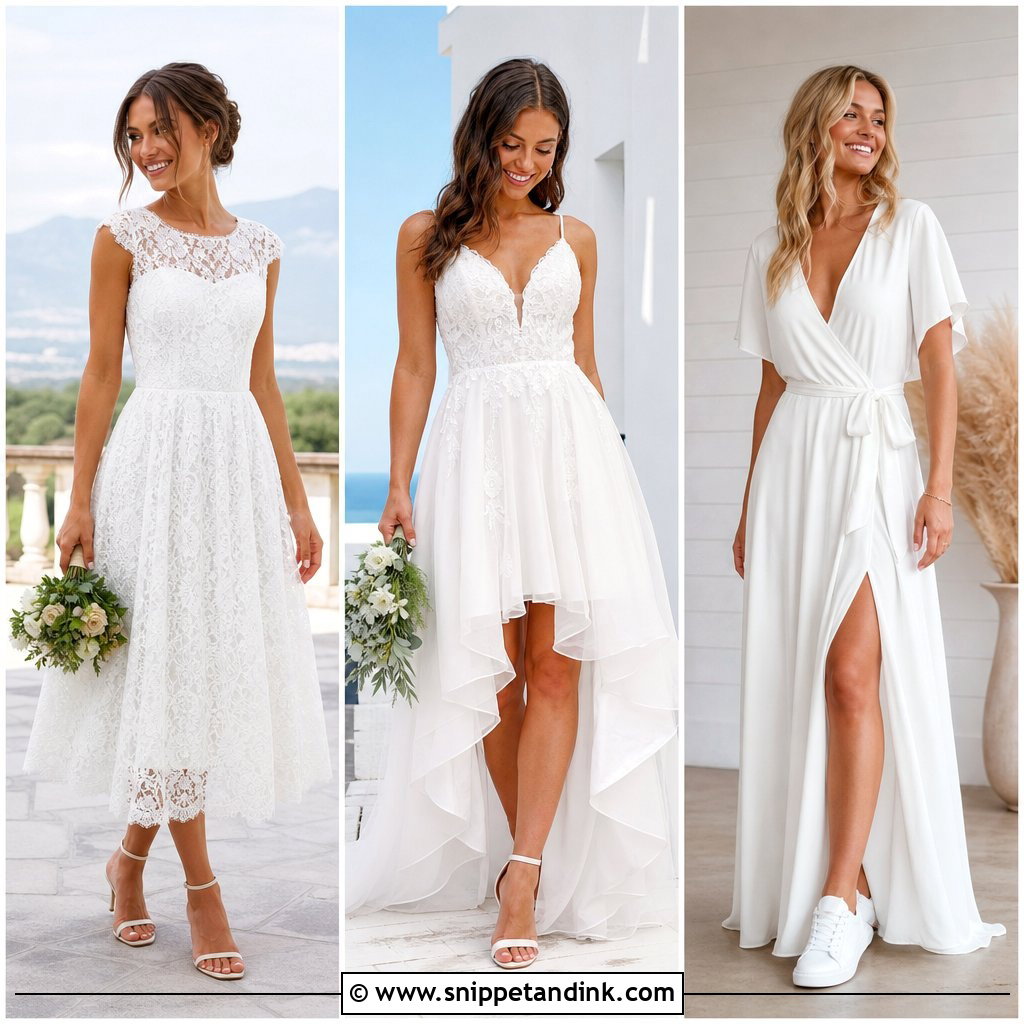
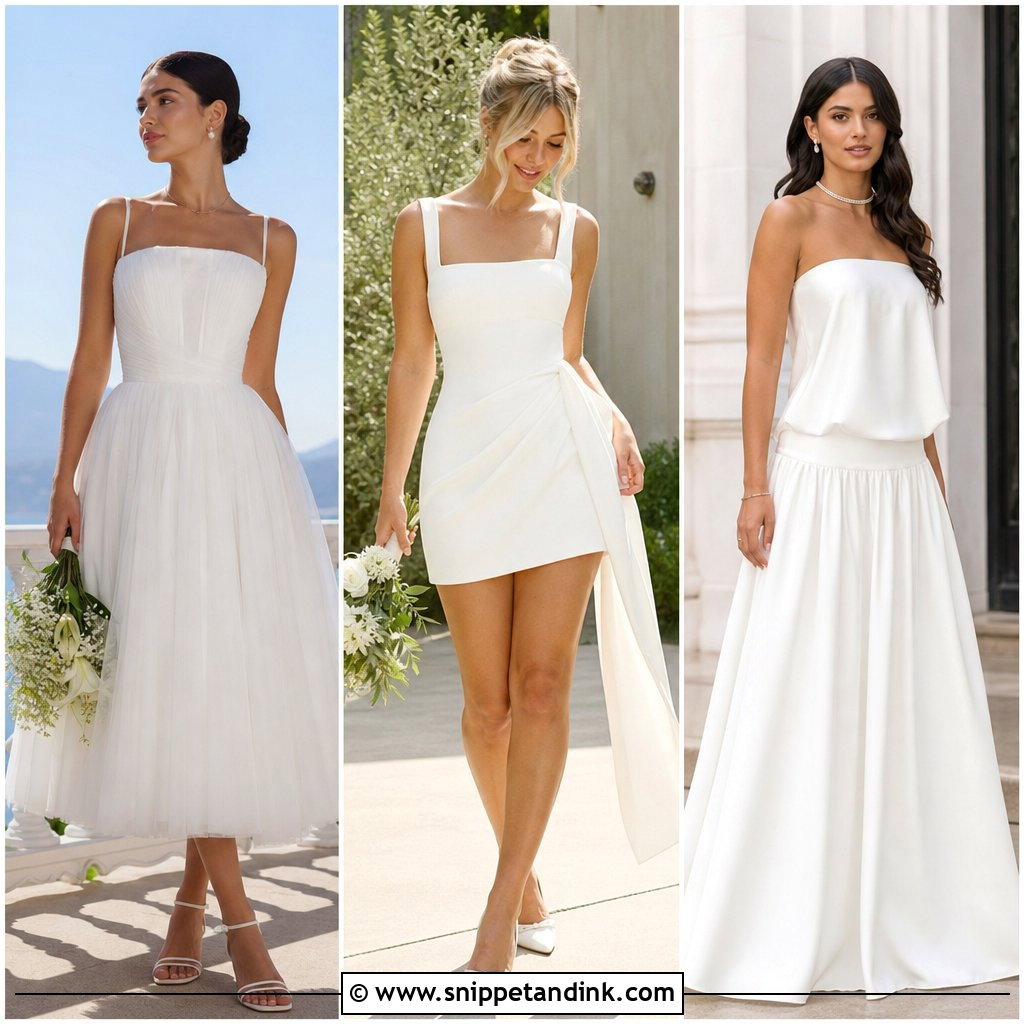
Linen feels the most natural against a coastal backdrop and breathes better than anything here. Pure linen creases within minutes of sitting, so I steer brides toward linen blends, which keep the texture but wrinkle less. A simple midi, wrap dress, column or soft A-line in ivory or natural white suits it. Linen reads casual, so polished accessories and a neat hairstyle keep it bridal. Woven sandals and a loose green bouquet finish it.
21. Two Piece Beach Wedding Dress
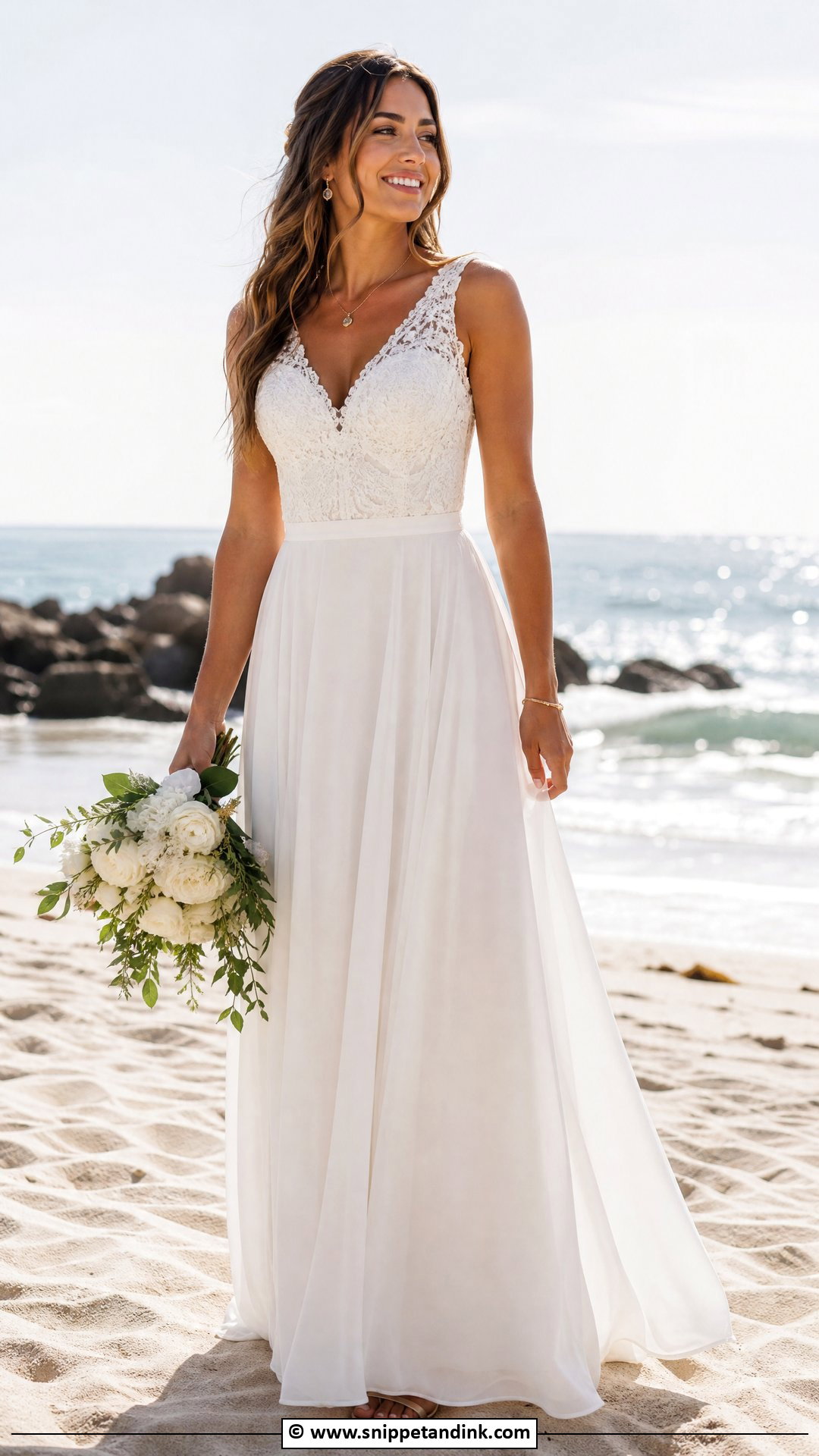
Two-piece sets let you pair a lace crop top with a chiffon skirt, or a satin bandeau with a high-waisted column skirt. They’re easier to size because top and bottom are fitted separately. On a windy beach, make sure the skirt waistband sits snugly and the top won’t rise when you lift your arms, since a gap of skin can appear in every photo. Simple sandals, gold jewelry and loose waves keep it relaxed.
22. Floral Beach Wedding Dress
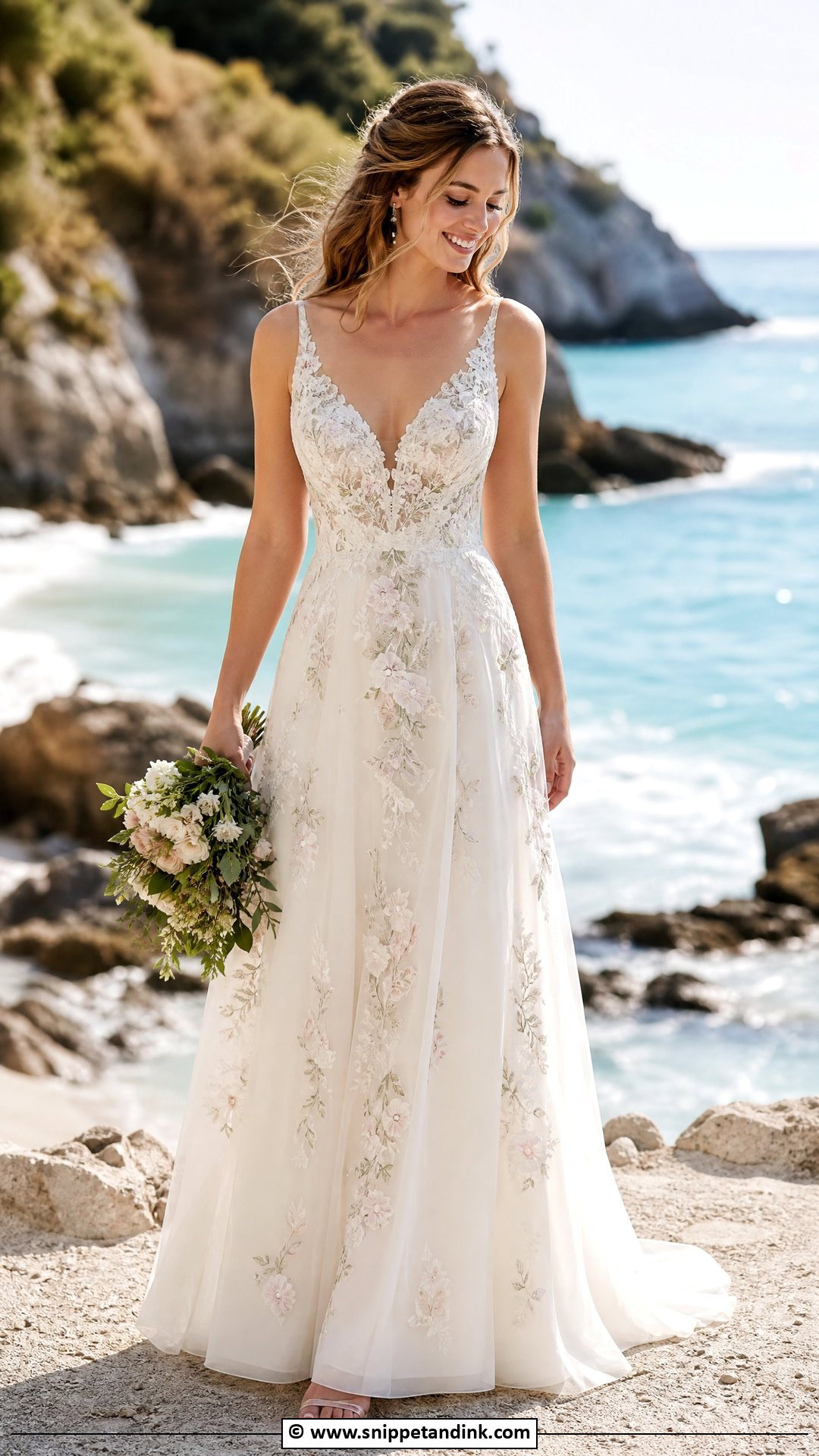
Embroidered flowers, three-dimensional appliqués, watercolor prints or floral lace all connect a dress to a tropical setting. Keep the palette soft: ivory, blush, champagne, pale blue or light pastels still read as bridal. An A-line or sheath carries the pattern without extra accessories. I’d test a printed fabric in direct sun before buying, because pale prints can wash out completely in strong light.
23. Embroidered Beach Wedding Dress
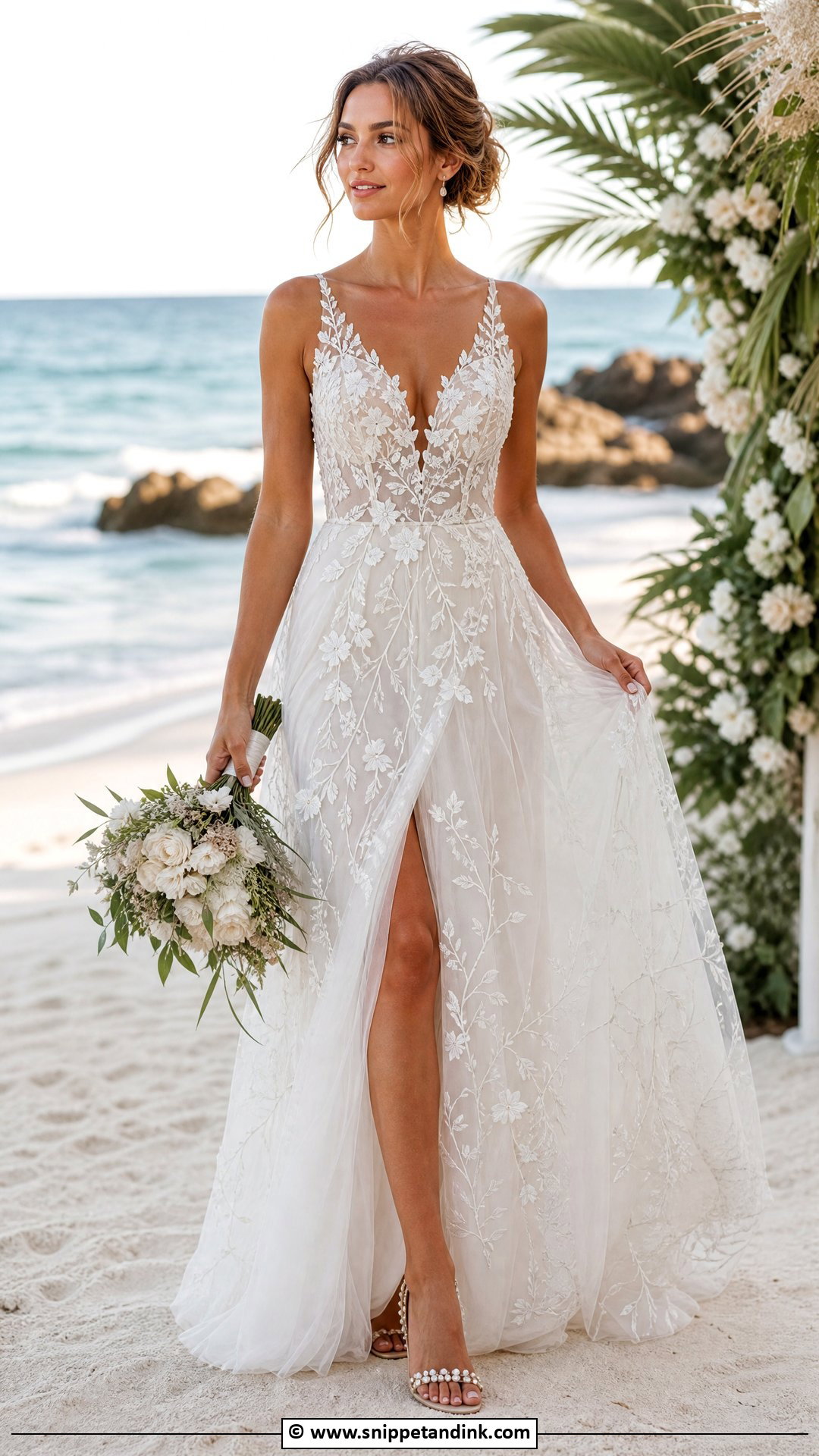
Embroidery adds texture without the weight of beading, as long as it’s worked on a light base like tulle, organza, chiffon or soft lace. Leaf, vine, floral or wave patterns suit the coast. A simple silhouette lets the stitching stand out. If the thread has subtle color, keep accessories neutral. Dense embroidery on a fine base can pucker in humidity, so ask to see how the seams sit after a steam.
24. Pearl Beach Wedding Dress
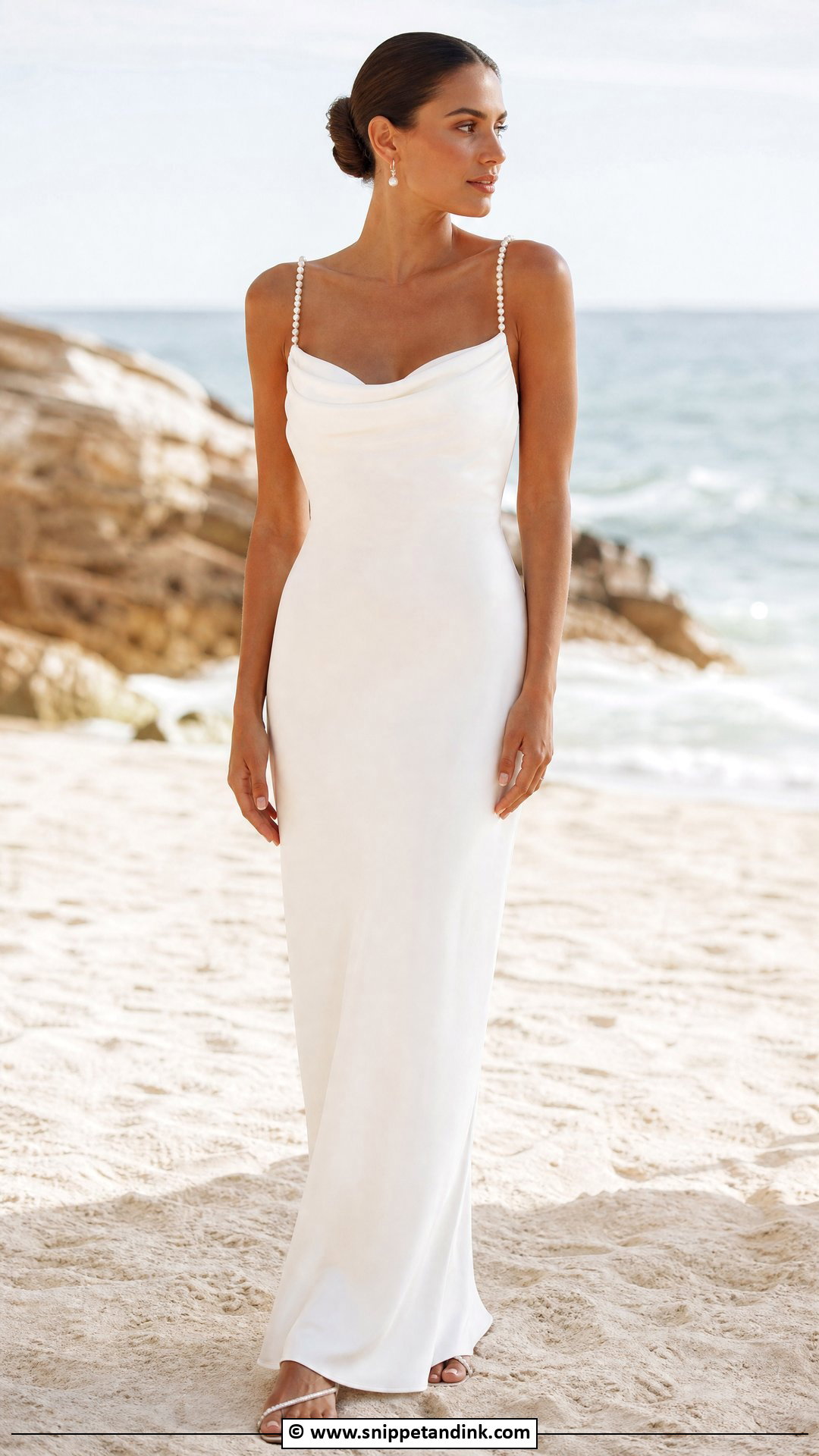
Pearls nod to the sea without turning into a theme. Small pearls on straps, a bodice, sleeves or a veil, or scattered over a plain gown, keep it light. I’d avoid heavy all-over pearl beading for a hot outdoor ceremony, as the weight adds up. A crepe sheath with pearl straps or a tulle gown with fine pearl details feels current. Pearls hold their glow in soft sunset light especially well.
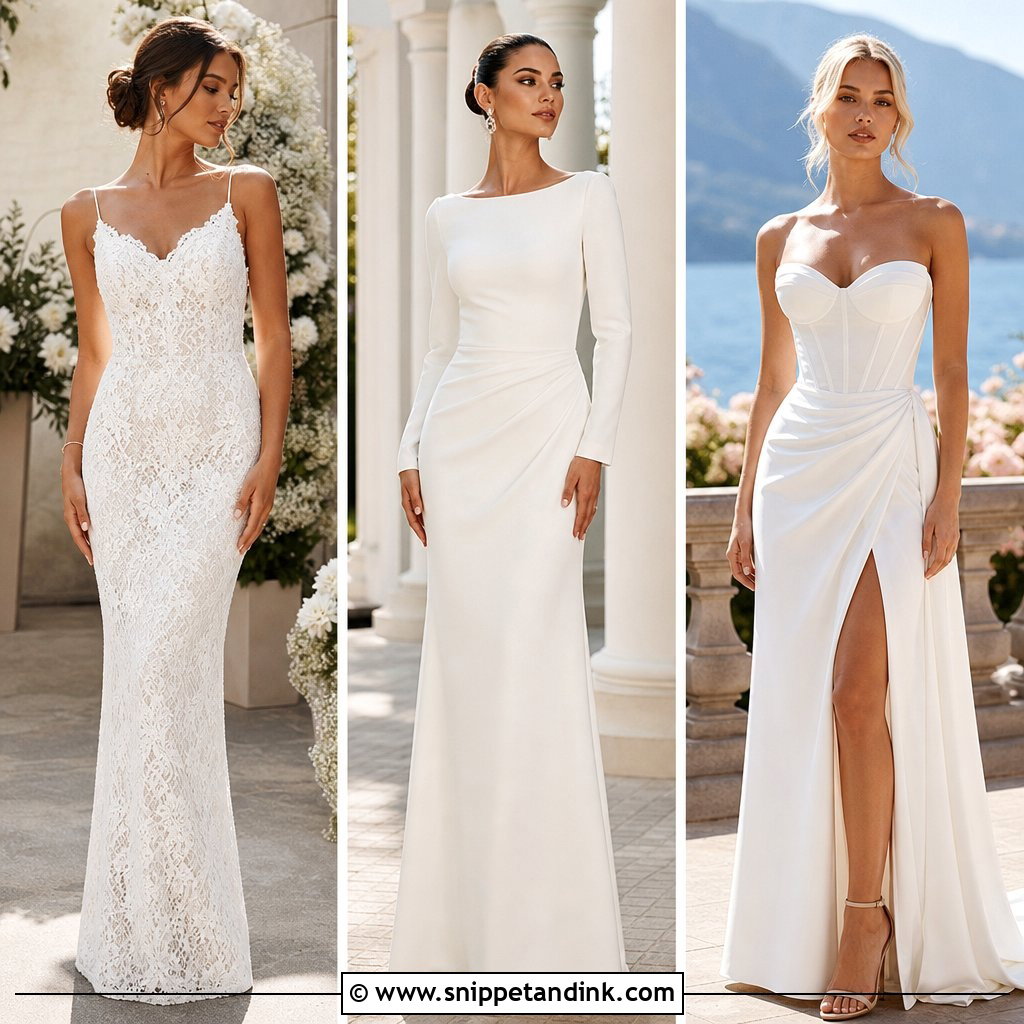
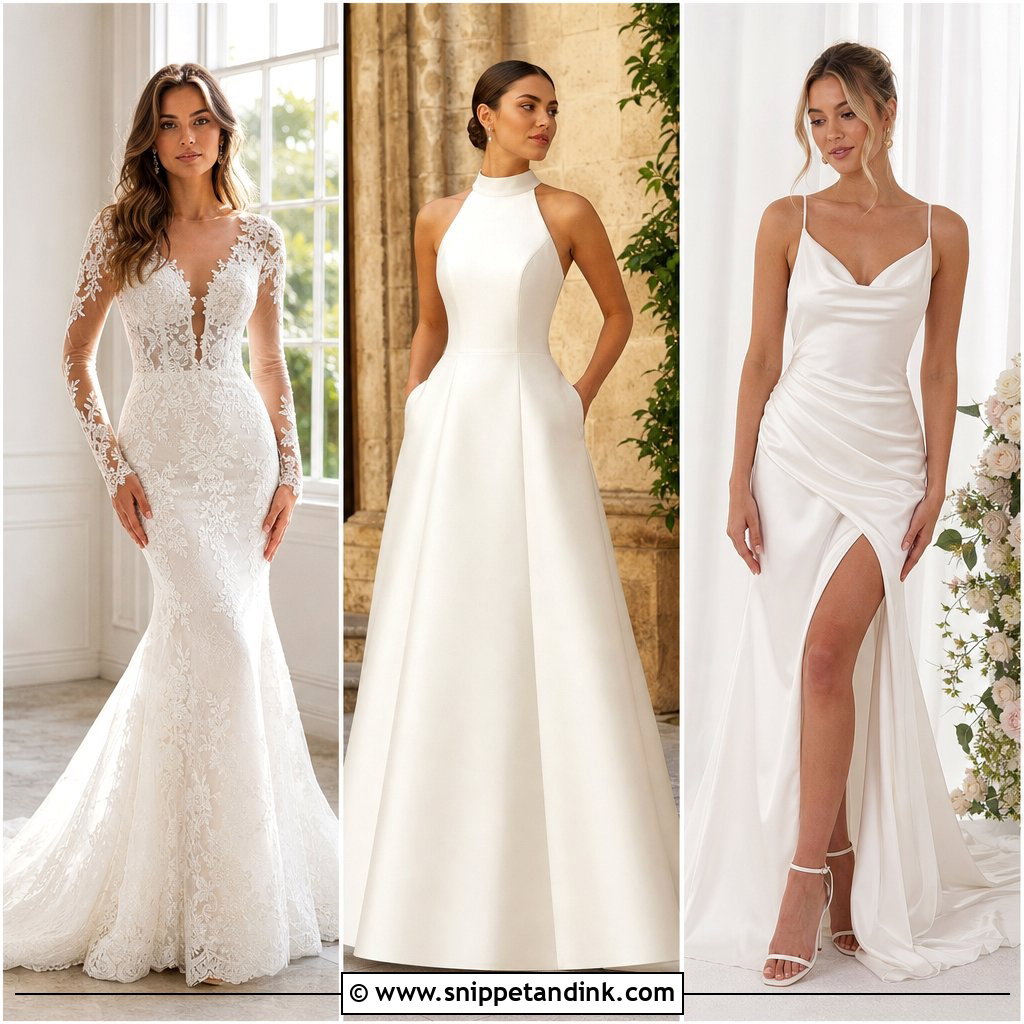
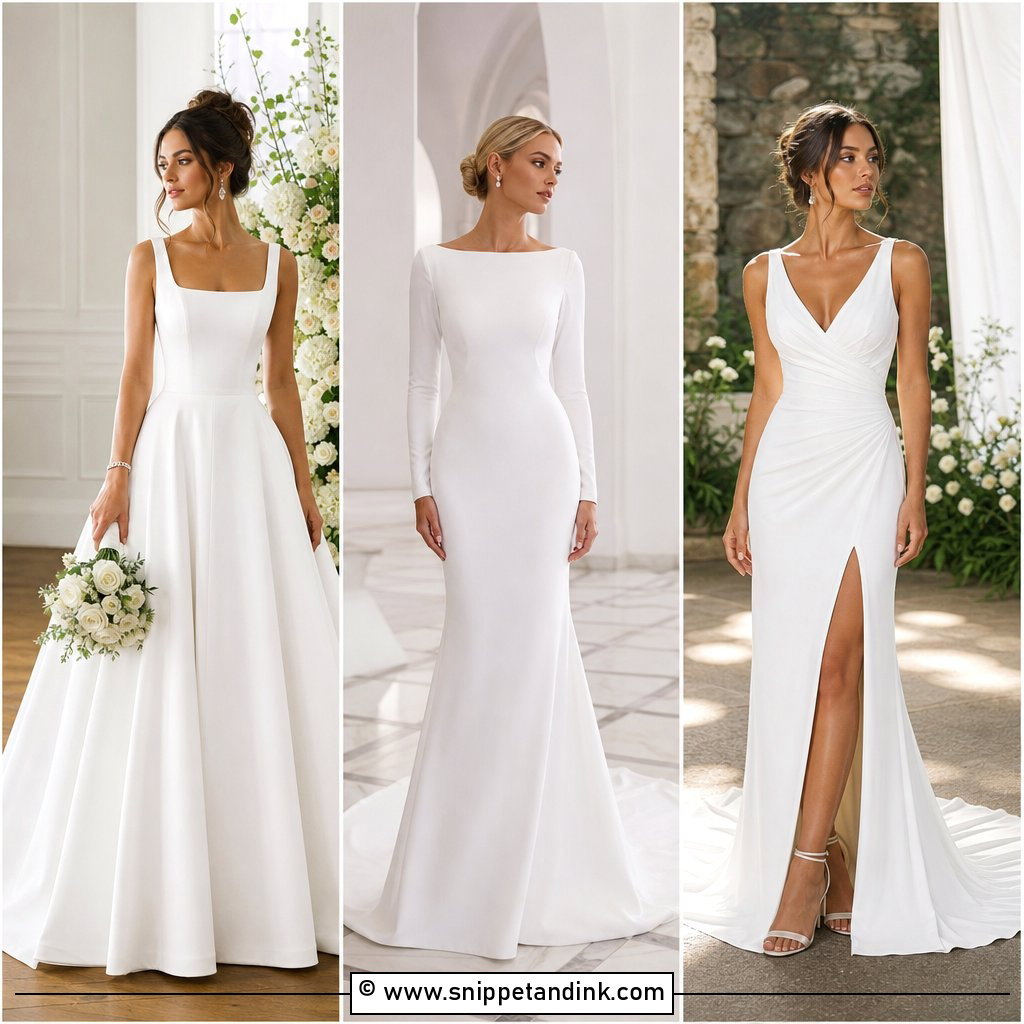
25. Beaded Beach Wedding Dress
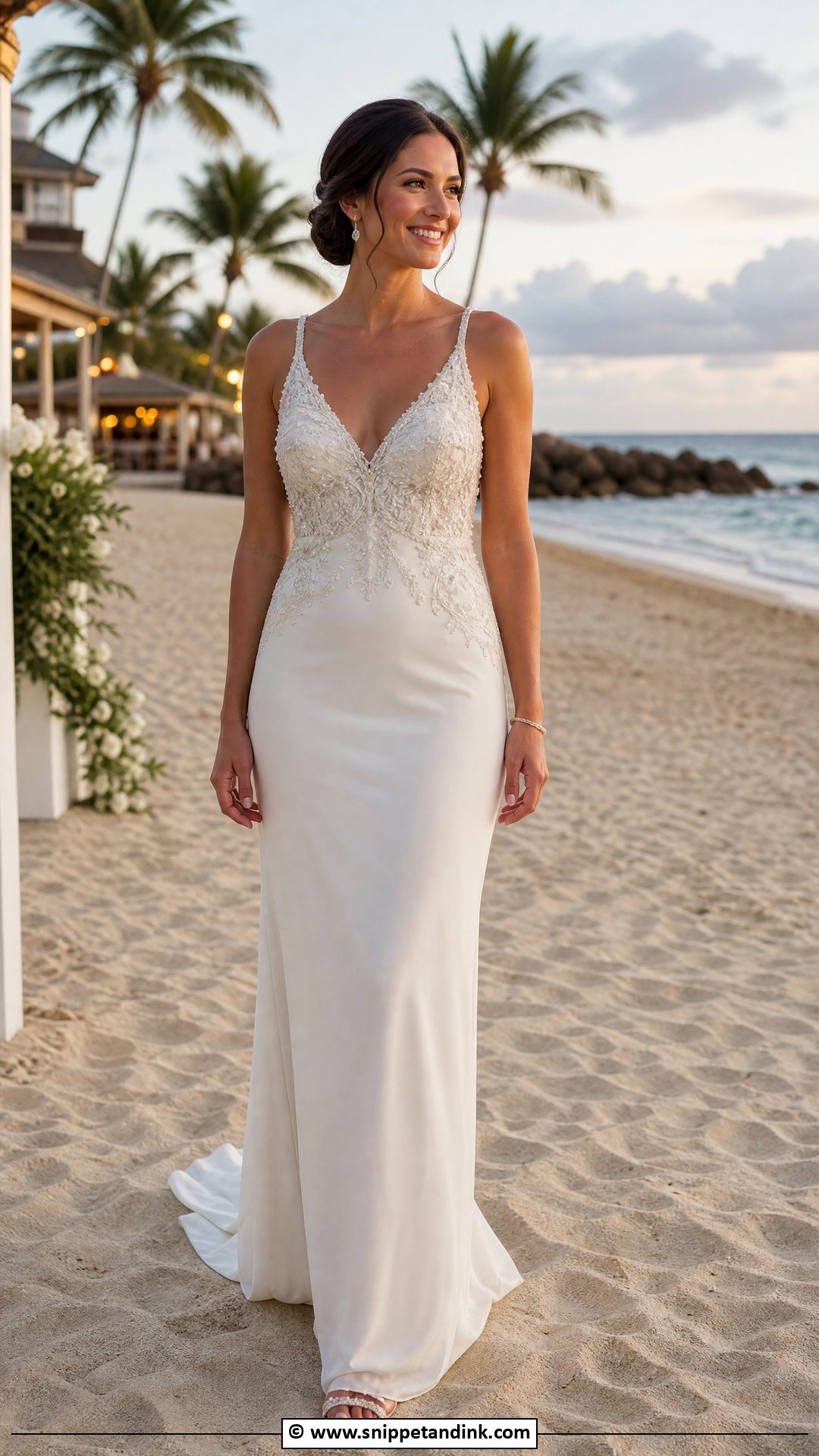
Sparkle on a beach should be targeted. Delicate beading on the bodice, neckline, sleeves or waist catches sunlight; a fully beaded gown is heavy and warm. Champagne, ivory or pearl beads keep it quiet. A beaded sheath or light A-line moves best. One warning from fittings: beaded hems pick up sand and fine grit that scratches the beads, so keep the sparkle above the knee. Evening and resort ceremonies suit it.
26. Ruffle Beach Wedding Dress
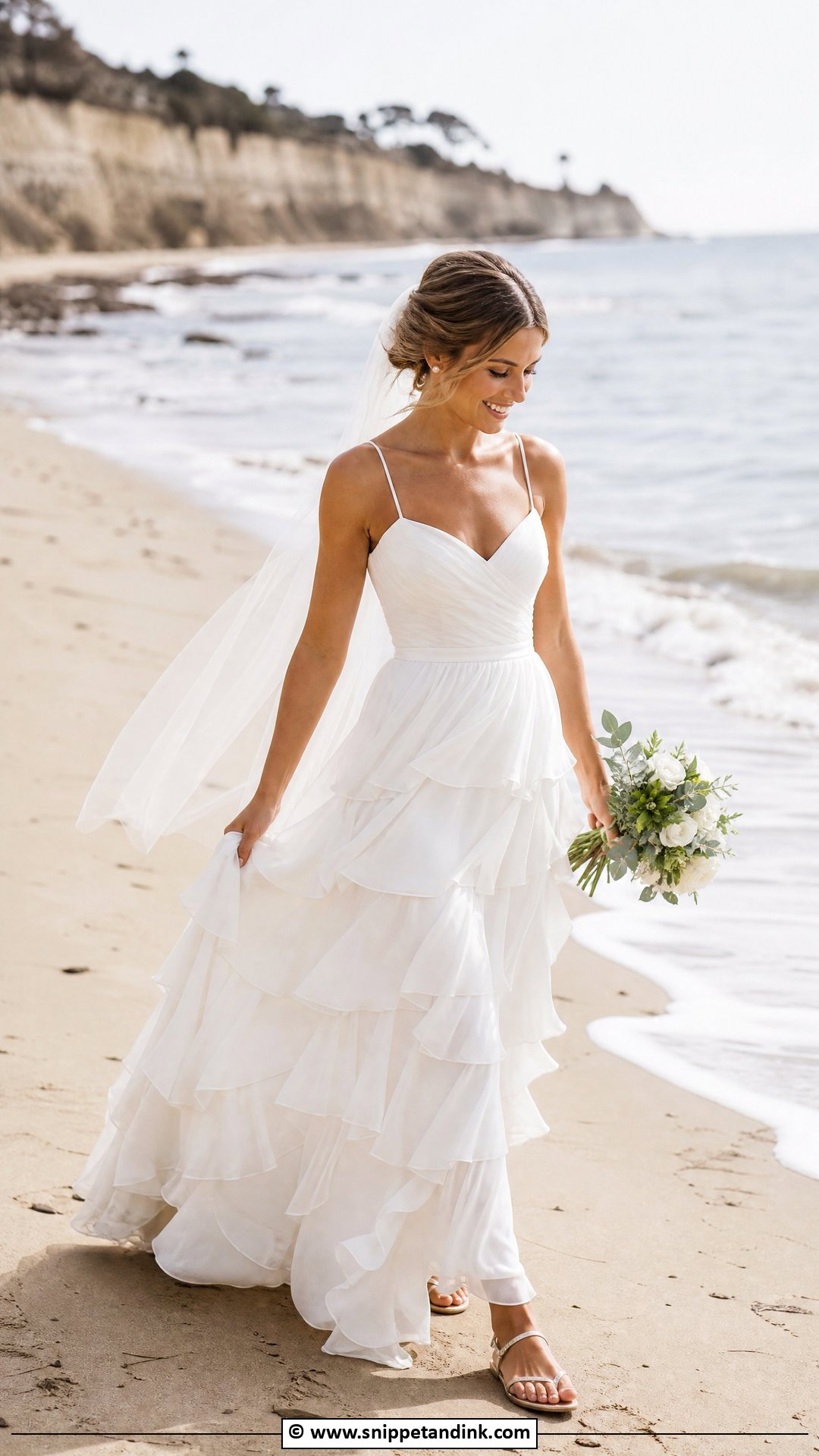
A ruffle beach wedding dress brings movement and a playful mood. Soft chiffon, organza or tulle ruffles float; stiff ones look heavy against water. Try a ruffled hem, a tiered skirt, a one-shoulder ruffle or a cascade down one side. Ruffles really come alive in walking shots along the shore. Keep accessories to flat sandals, pearl studs and a light veil.
27. One Shoulder Beach Wedding Dress
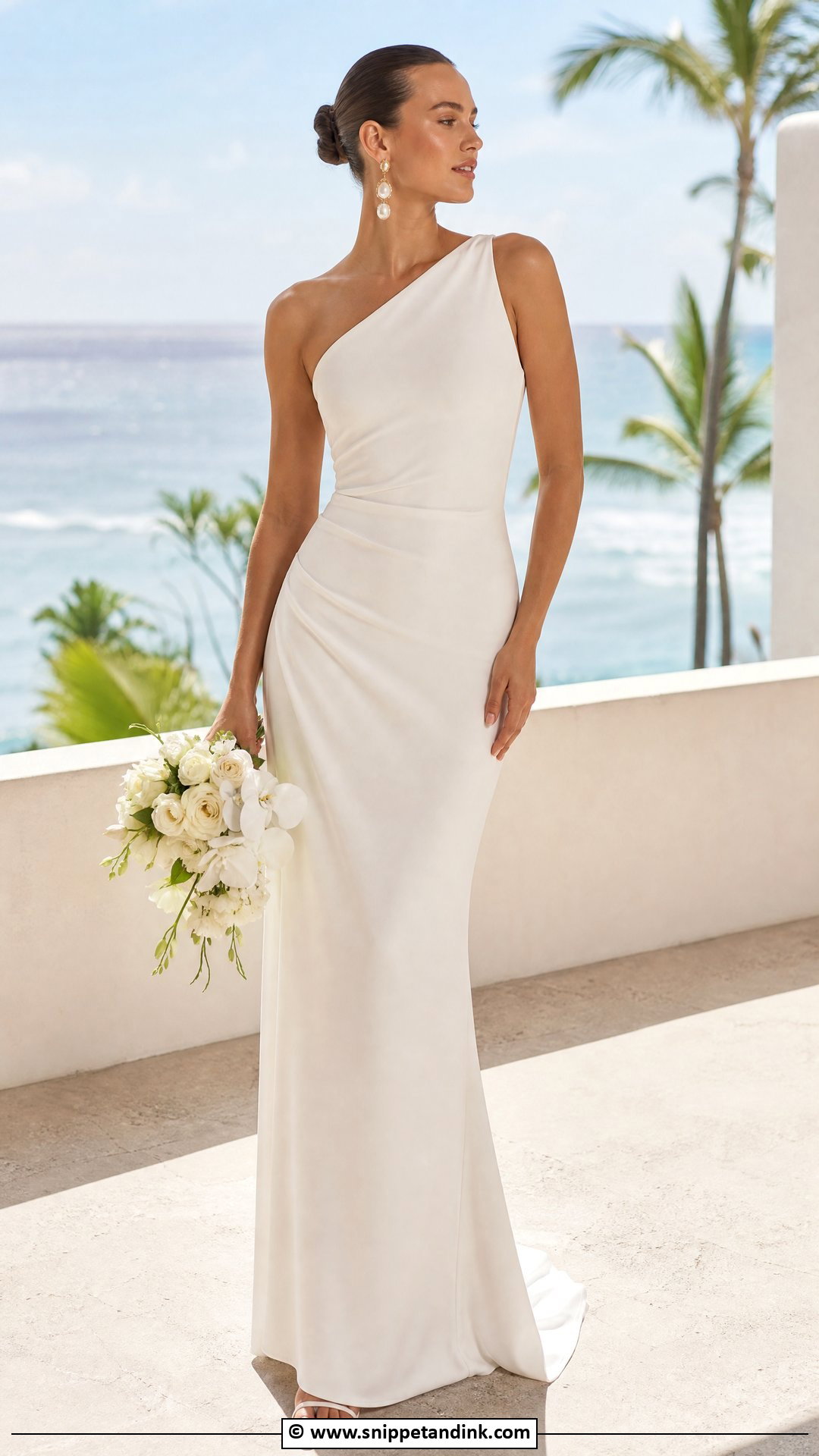
The asymmetric line gives a gown shape without any embellishment. Soft crepe, chiffon, satin or organza keep it comfortable. A one-shoulder sheath is sleek; a one-shoulder A-line is softer. Wear statement earrings on the bare side only, and pull your hair back or to the covered side so the line stays clear. I check that the strap doesn’t cut into the shoulder after a few hours, because the dress is held from one side.
28. V Neck Beach Wedding Dress
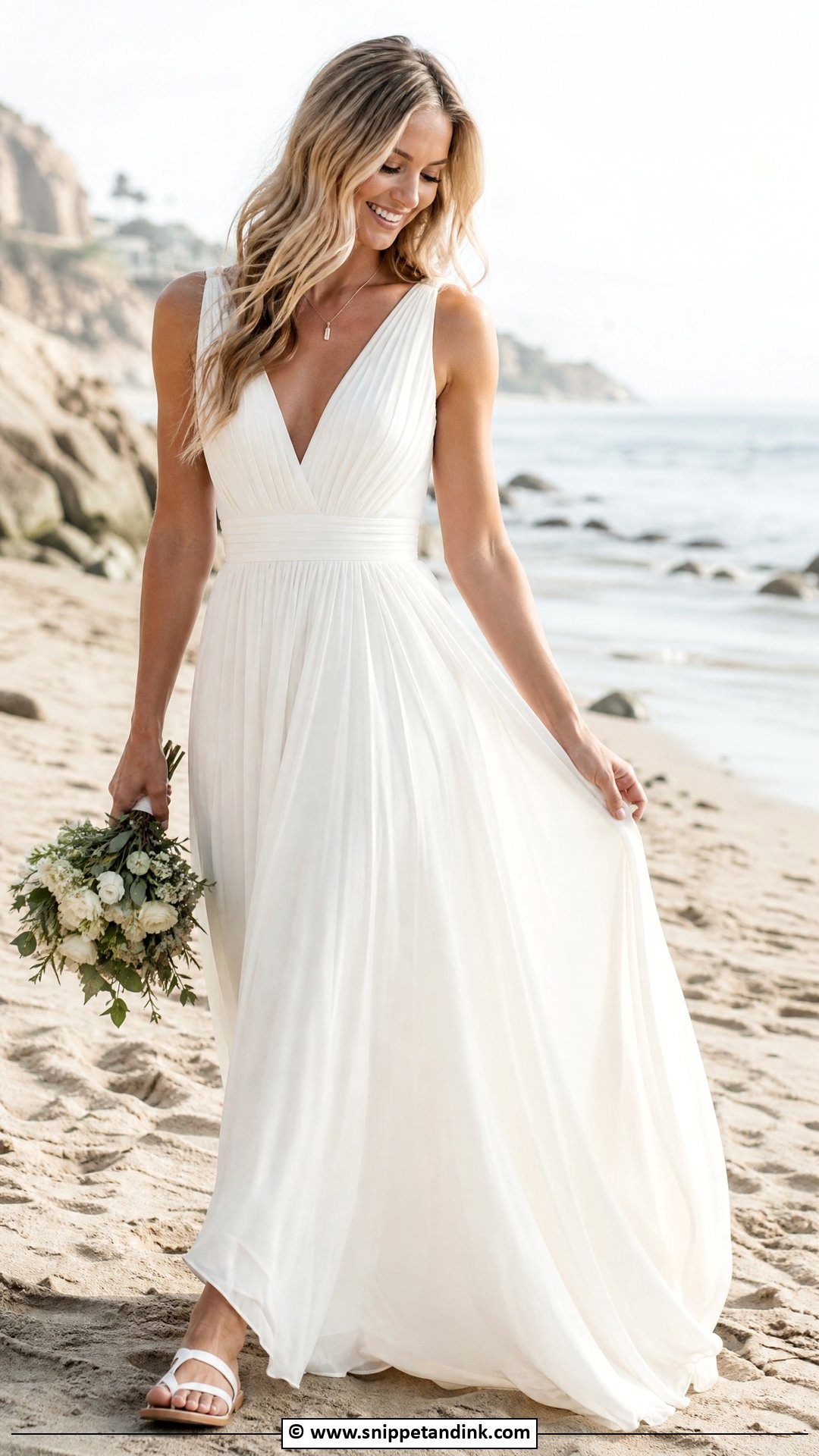
A soft V lengthens the body and balances a flowing skirt. Wider straps or a structured bodice give support; thin straps, lace trim or a wrap front feel softer. Chiffon, crepe, lace and satin all suit it. On a windy beach, a deep V can blow open, so I’d plan fashion tape or a modesty panel. A fine pendant fills the neckline nicely.
29. Square Neck Beach Wedding Dress
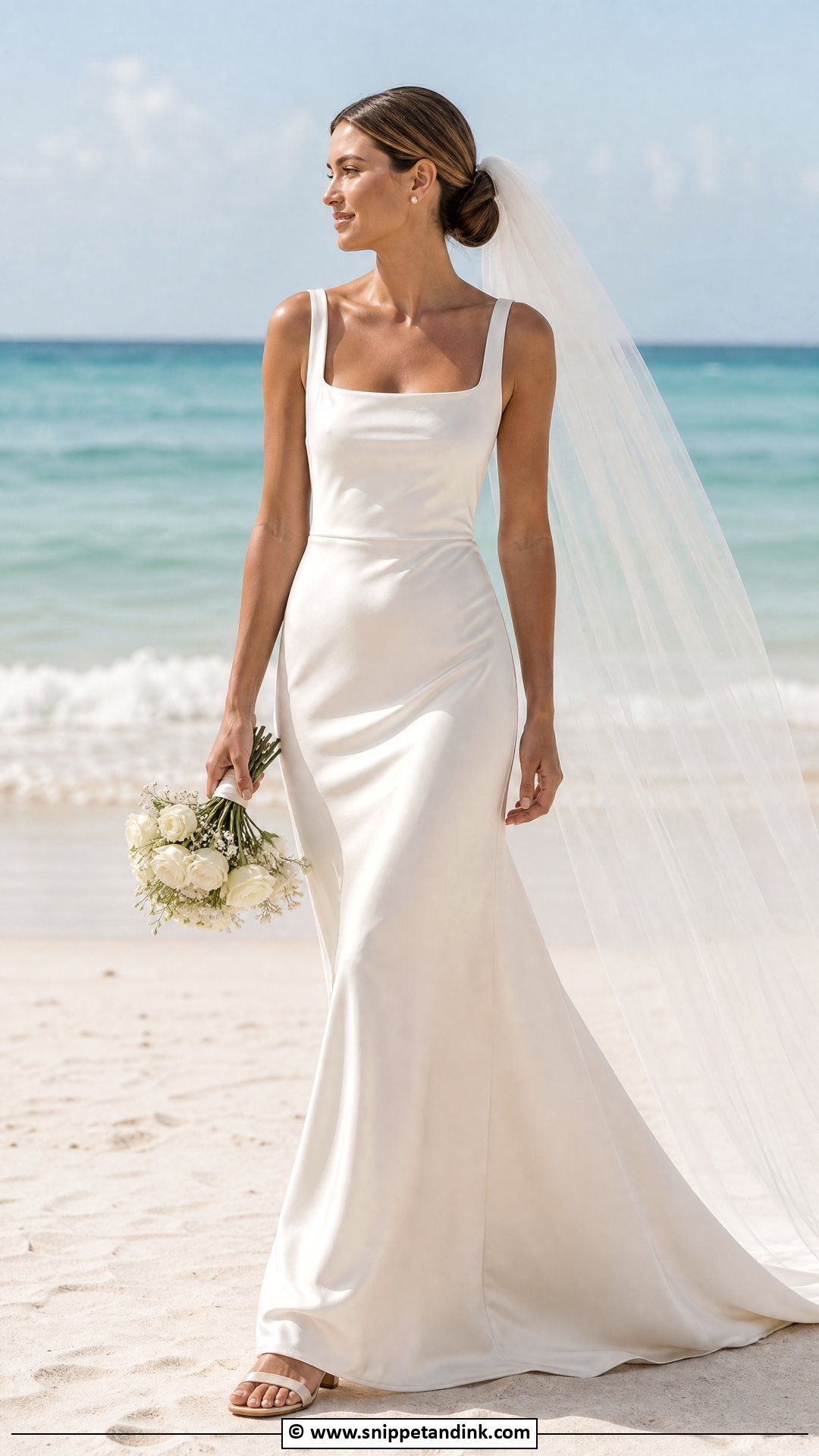
Square necklines frame the collarbone cleanly on fitted or flowing shapes. A square-neck slip is minimal, a square-neck A-line softer. Lightweight crepe, satin and linen blends hold the straight edge well. A low bun and pearl studs keep it simple. The corners must sit close to the body; in wind, a loose square neck lifts and loses its line.
30. Side Slit Beach Wedding Dress
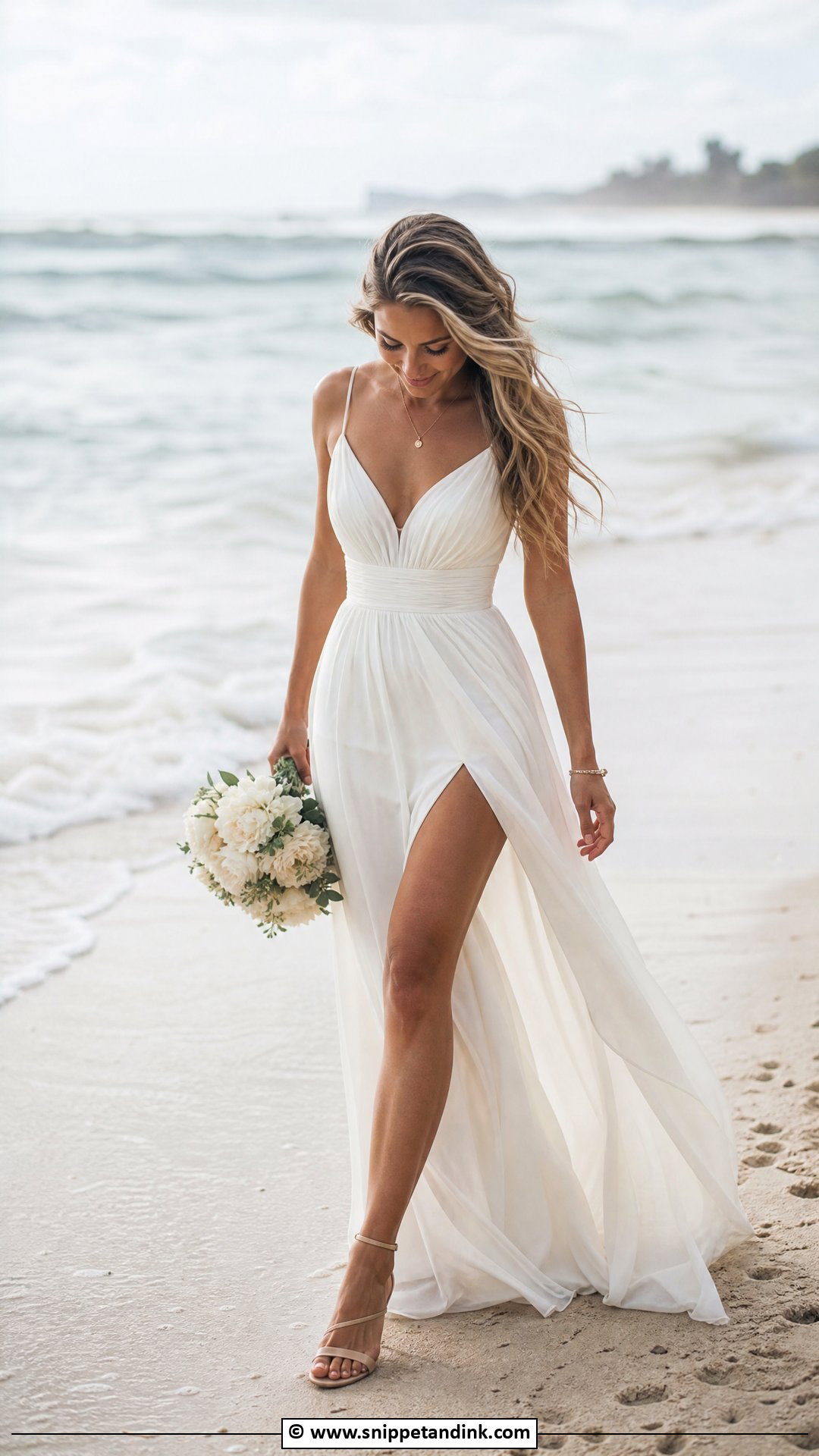
A side slit is the trick I use most often to make a long dress walkable on sand. It frees your stride without shortening the hem, and it shows off your sandals. Chiffon, satin, crepe and soft tulle move naturally around the legs. Have the slit height set with you sitting down, not standing, since it opens much further when you sit. A simple bodice or halter keeps the top balanced.
31. Cape Beach Wedding Dress
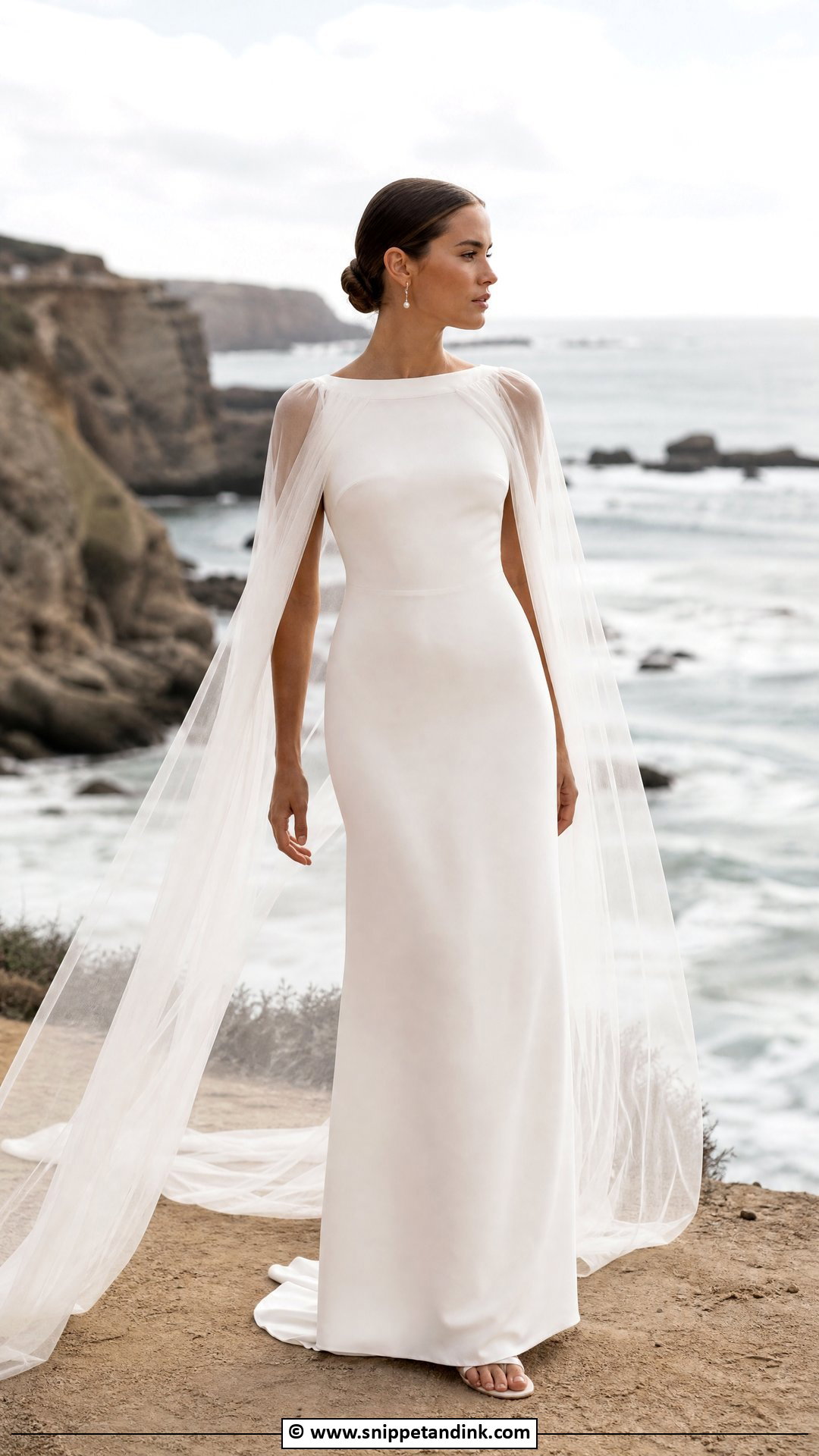
A cape beach wedding dress gives the floating effect of a veil without the fight of a long veil in the wind. A sheer cape, shoulder cape or detachable capelet in chiffon, tulle or organza adds movement. Pair it with a simple sheath, slip or crepe gown so the cape is the one detail. Make sure it fastens securely at the shoulders; a cape that clips only at the neck pulls backward in a strong breeze.
32. Detachable Skirt Beach Wedding Dress
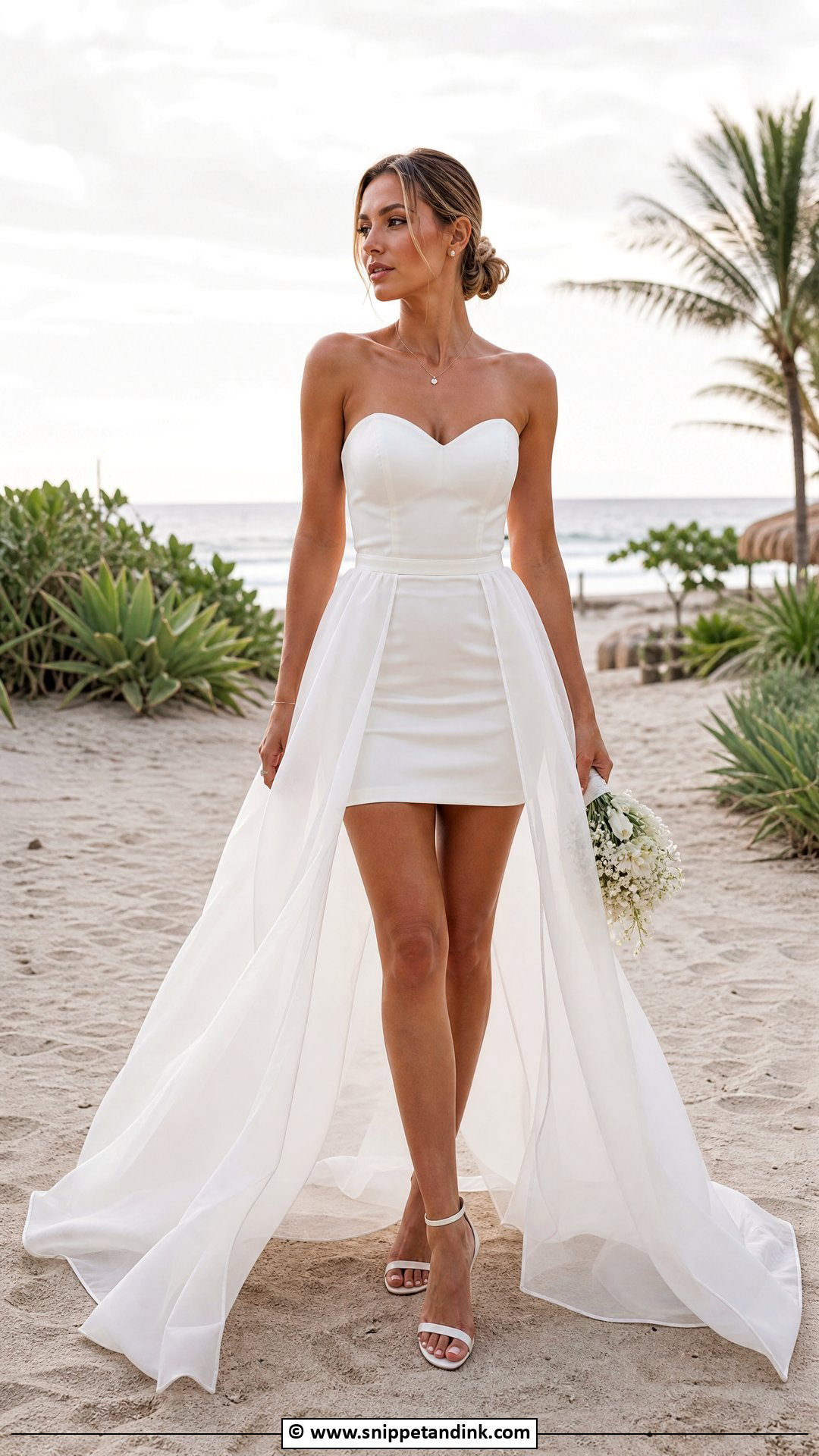
A detachable overskirt gives you volume for the aisle and a lighter dress for dinner. At a beach wedding this is especially useful, because you only manage the skirt for an hour or two. A fitted mini, sheath or column underneath works best. Lightweight tulle, organza or chiffon overskirts move nicely near the water. Practice removing it with the person who will help you before the day.
33. Bridal Jumpsuit Beach Wedding Dress
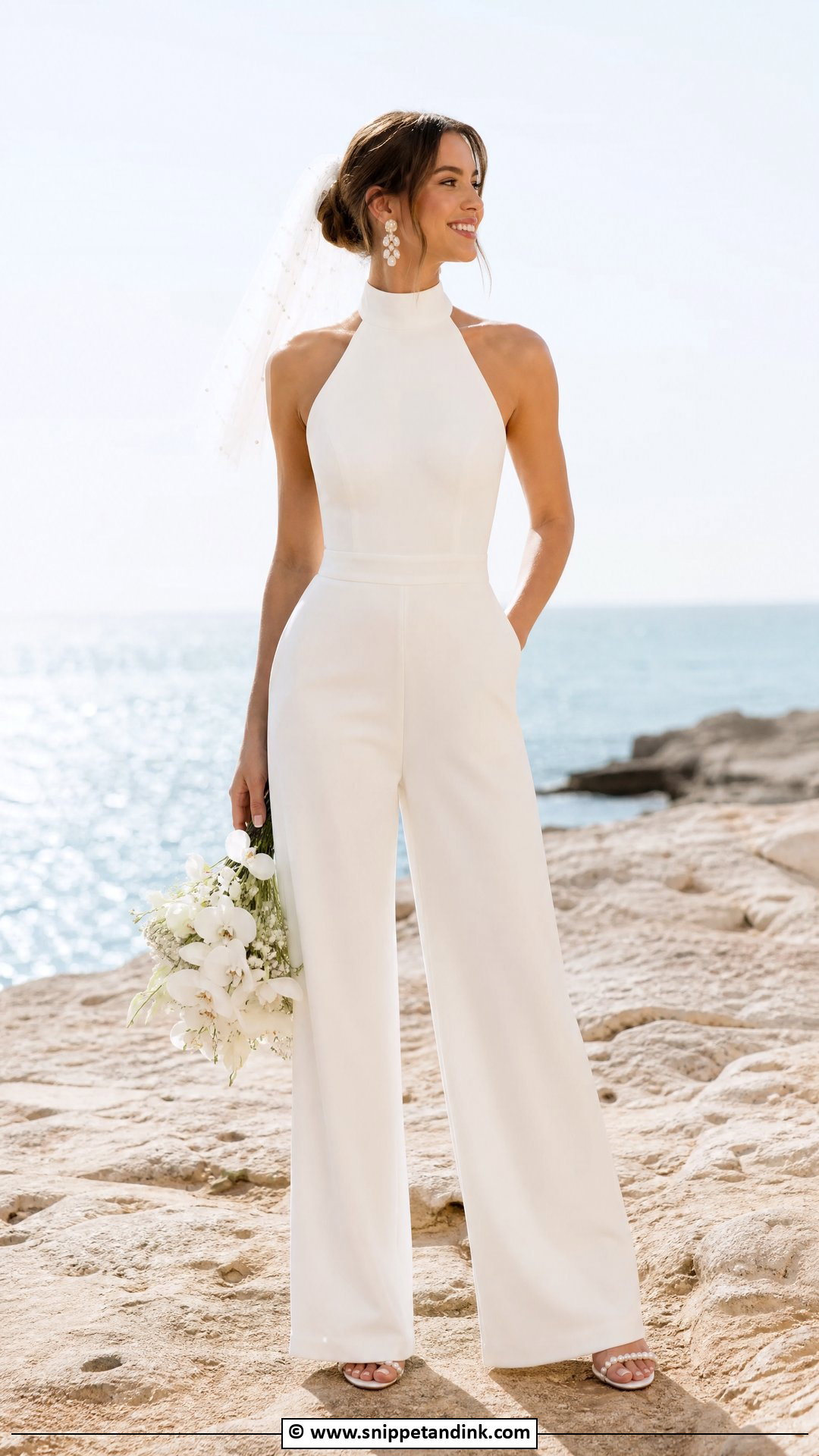
A bridal jumpsuit is a comfortable alternative to a gown and very practical on sand. White crepe, satin, linen blend or lace with a defined waist and wide leg looks sharp. A halter, off-shoulder or square neck still reads bridal with the right accessories. Have the leg length hemmed for flats or low sandals, otherwise wide legs drag. It travels well and is less delicate than a full gown.
34. Plus Size Beach Wedding Dress
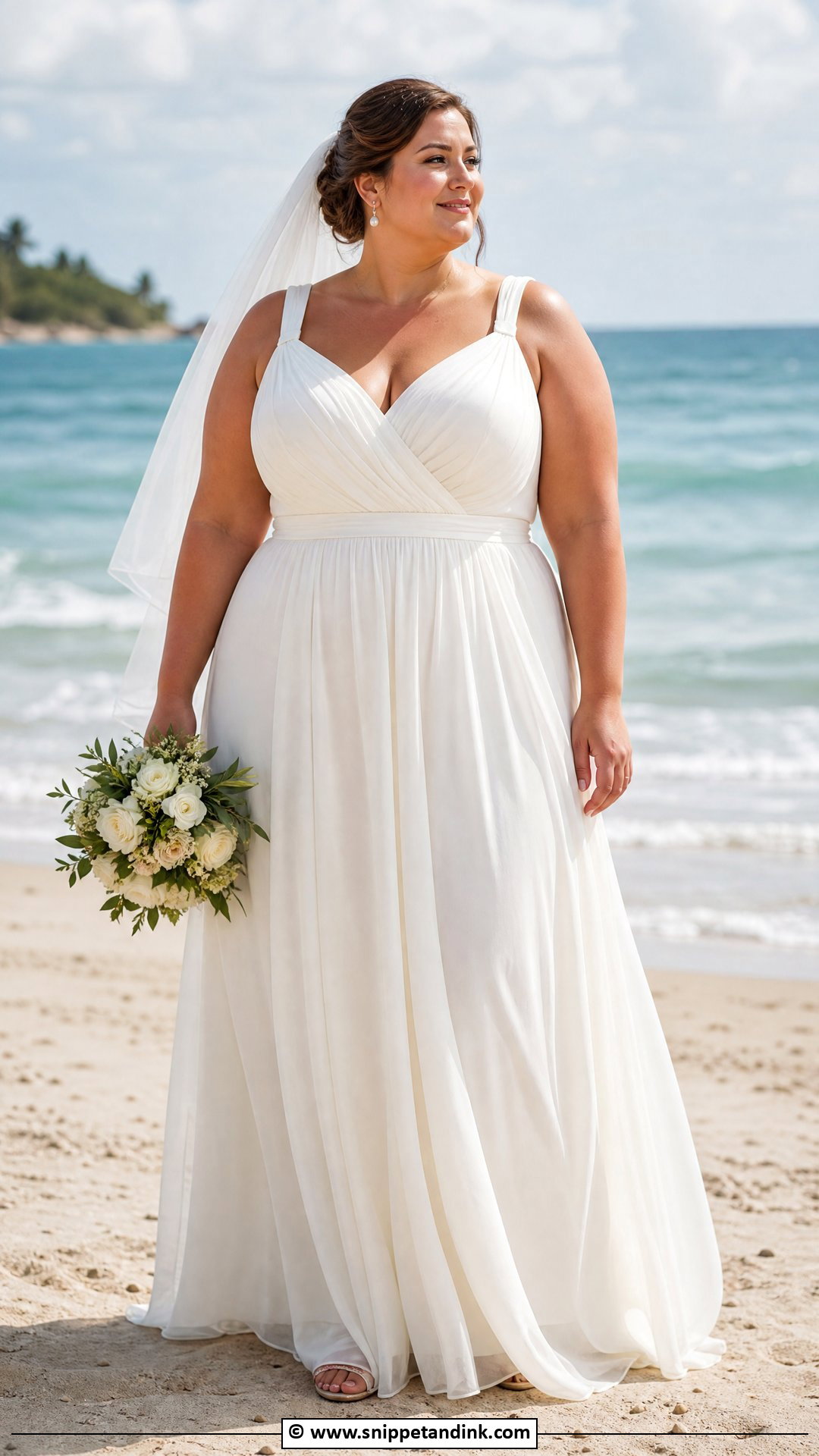
Support and breathability come first. Wider straps, a structured bodice, a lace-up back, a soft lining or a defined waist add comfort. A-line, empire, wrap, sheath and fit-and-flare can all work depending on your taste. Chiffon, crepe, lace and tulle stay cooler than heavy satin. I’d ask about anti-chafe options too, such as a light slip or shorts underneath, because heat and long walks on sand make thighs rub. Choose accessories that suit the dress rather than hide you.
35. Maternity Beach Wedding Dress
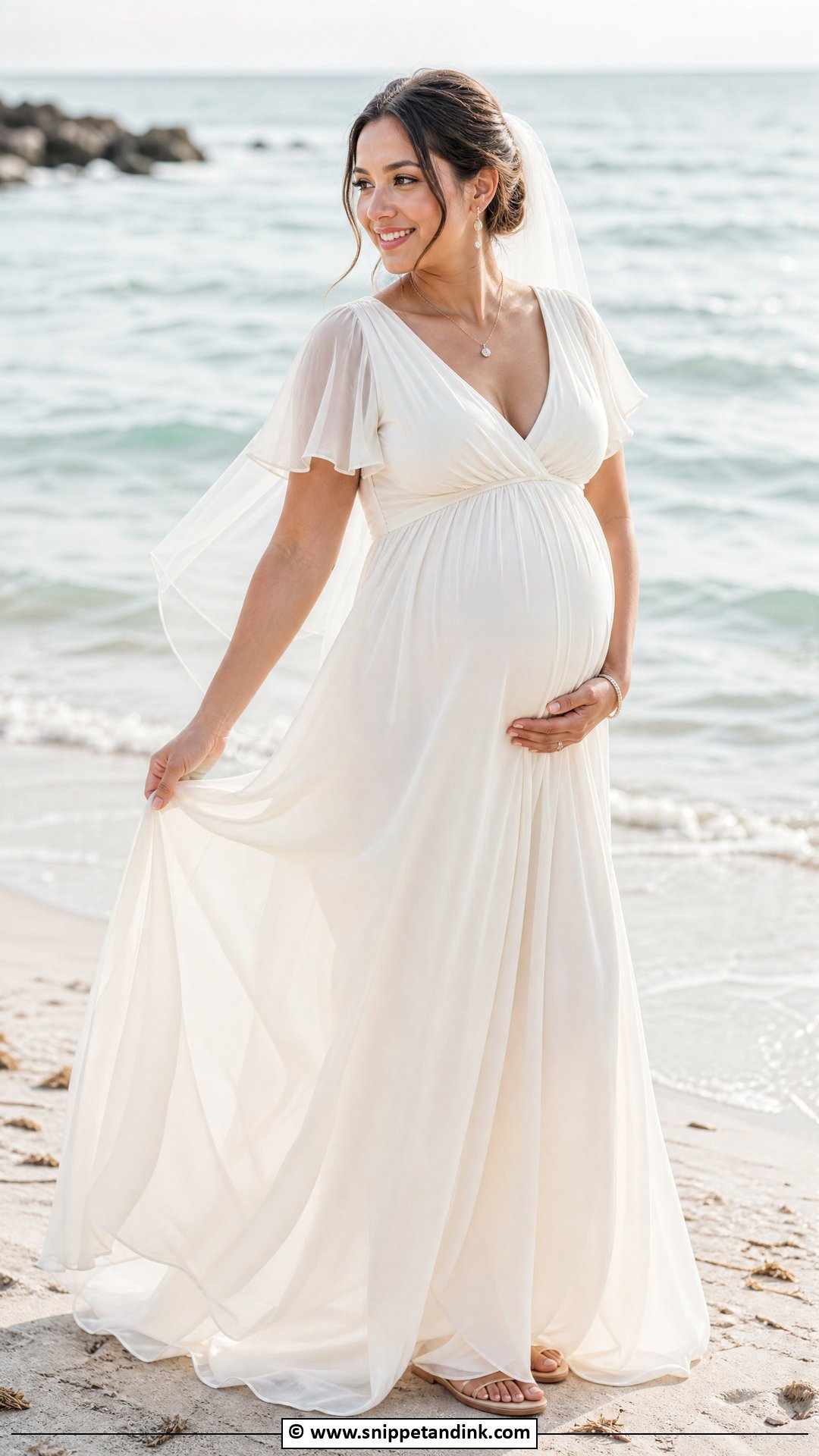
A maternity beach wedding dress needs room and softness. Empire waists, wrap dresses, stretch lace and flowing chiffon give space through the belly while still showing shape. Avoid tight boning and heavy layers. I’d leave alterations as late as safely possible and keep some stretch in the fit, since the body can change quickly in the final weeks. Cushioned sandals and a light veil or hair accessory keep you comfortable.
Salt, Sunscreen and Sand on the Hem by Sunset
The beach leaves marks a ballroom never would. Most can be prevented or fixed if you know what’s coming.
Skin products
Sunscreen and fake tan are the two things I see on necklines most often. Apply any spray tan at least a day ahead and shower it off fully, and let sunscreen sink in for twenty minutes before you dress. Mineral sunscreens with zinc can leave a white smear on ivory fabric, so test yours on an inside seam.
Sea water and sand
If you wade in for photos, expect salt to dry into a white tide line on the hem. Don’t scrub it on the day. Let the dress dry flat, brush loose sand off gently, and get it to a specialist cleaner within a few weeks, telling them it went in salt water.
A Small Bag for the Wind
Hand a bridesmaid a pouch with a few things that solve most beach problems: fashion tape for necklines that lift, clear hairpins for the veil, a soft clothes brush for sand on the skirt, and a pair of flat sandals for the walk back. If you’re wearing a veil, ask about small hem weights sewn into the edge; they keep tulle from wrapping around your face in a gust.
Dress for the Wind, Not Just the View
A good beach dress suits your setting, your comfort and your style in that order. Light fabric, an easy silhouette, a neckline that stays put and a hem that clears the sand do more for your day than any trim. Simple gowns, lace, slips, short dresses, jumpsuits and chiffon all look right by the sea. The test I’d leave you with: walk across sand in it, then lift your arms into the wind. If you still feel like yourself, that’s your dress.
You'll Like These Ideas:


Leave a Reply