
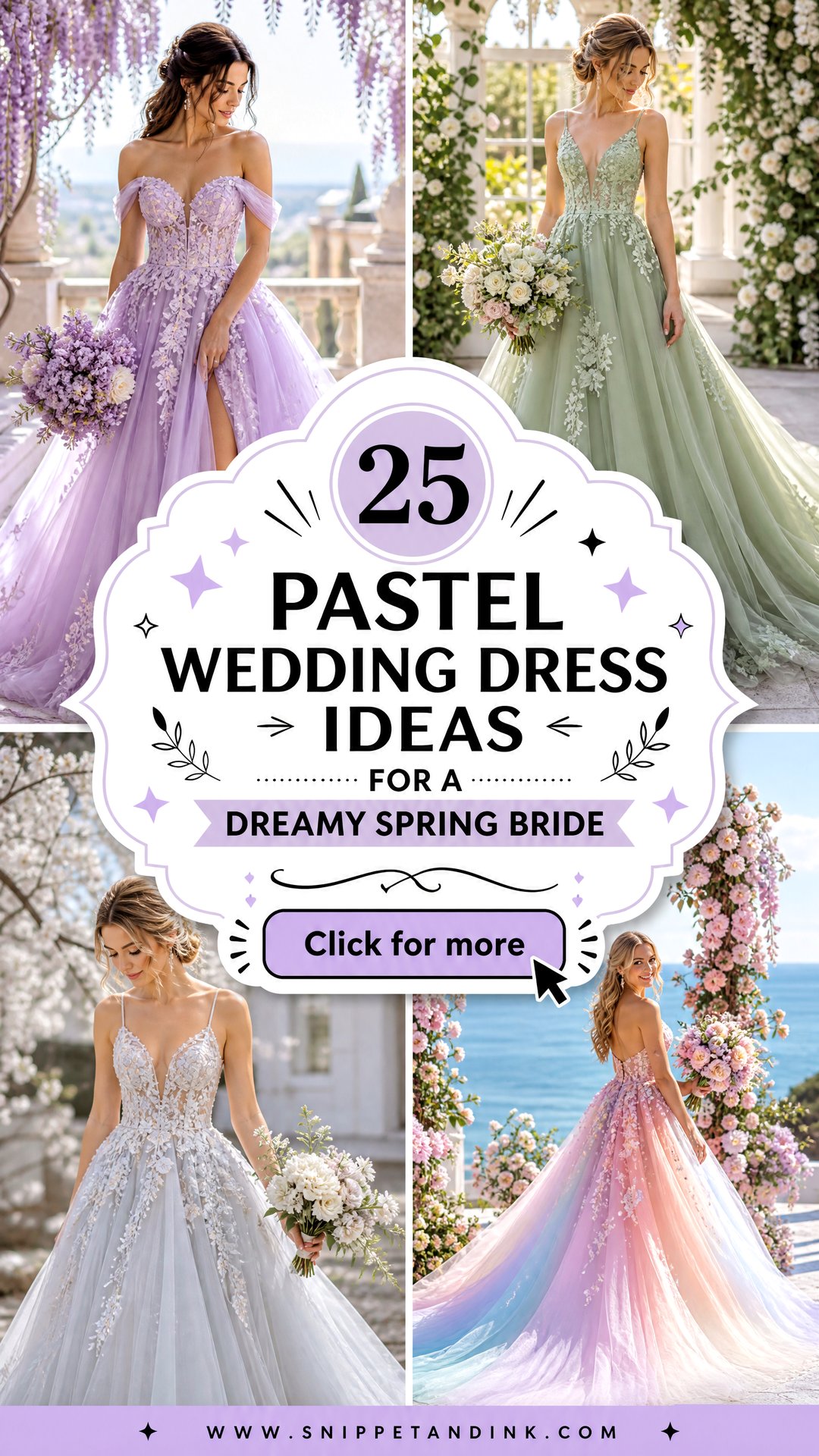
More brides now come to appointments asking for color, and pastels are where most of them land. A tinted gown still reads as bridal, but it carries some of your personality down the aisle: blush, lavender, powder blue, mint, peach, butter yellow, champagne or a gown scattered with soft flowers. These shades suit a garden, a beach, a courthouse or a ballroom, provided the fabric and silhouette are right for the setting. Below are the colored gowns I’d actually show a bride, with notes on which skin tones each flatters, which fabrics hold the shade best, and what to pair with it so the whole look feels like a wedding dress rather than a party dress.
Holding a Swatch Under Your Chin Before You Commit
The first thing I do with a bride considering color is hold fabric swatches right under her face in natural light. A pastel that looks dreamy on the hanger can make one person glow and another look tired. Warm skin usually lights up next to peach, butter yellow and champagne. Cooler skin tends to suit powder blue, lavender and ice blue. Blush and sage are the most forgiving across both.
Then there’s timing. Many colored gowns are made to order, sometimes dyed specially, and that takes longer than a sample-size ivory dress off the rack. Plan for these steps:
- Look at swatches in daylight near a window, then again under warm indoor light, since evening receptions change how pastels read.
- Ask whether the color comes from the fabric itself or from a tinted lining, because a lining-only tint looks much softer in person.
- Order with plenty of time; made-to-order and custom-colored gowns often take many months, and the timeline varies by designer.
- Keep a swatch from your order so your florist, shoe shop and veil maker can match to the actual fabric, not a photo.
- Book alterations knowing that some tinted fabrics show needle marks more than ivory does, so let-outs can be harder.
1. Blush Pink Ball Gown Wedding Dress
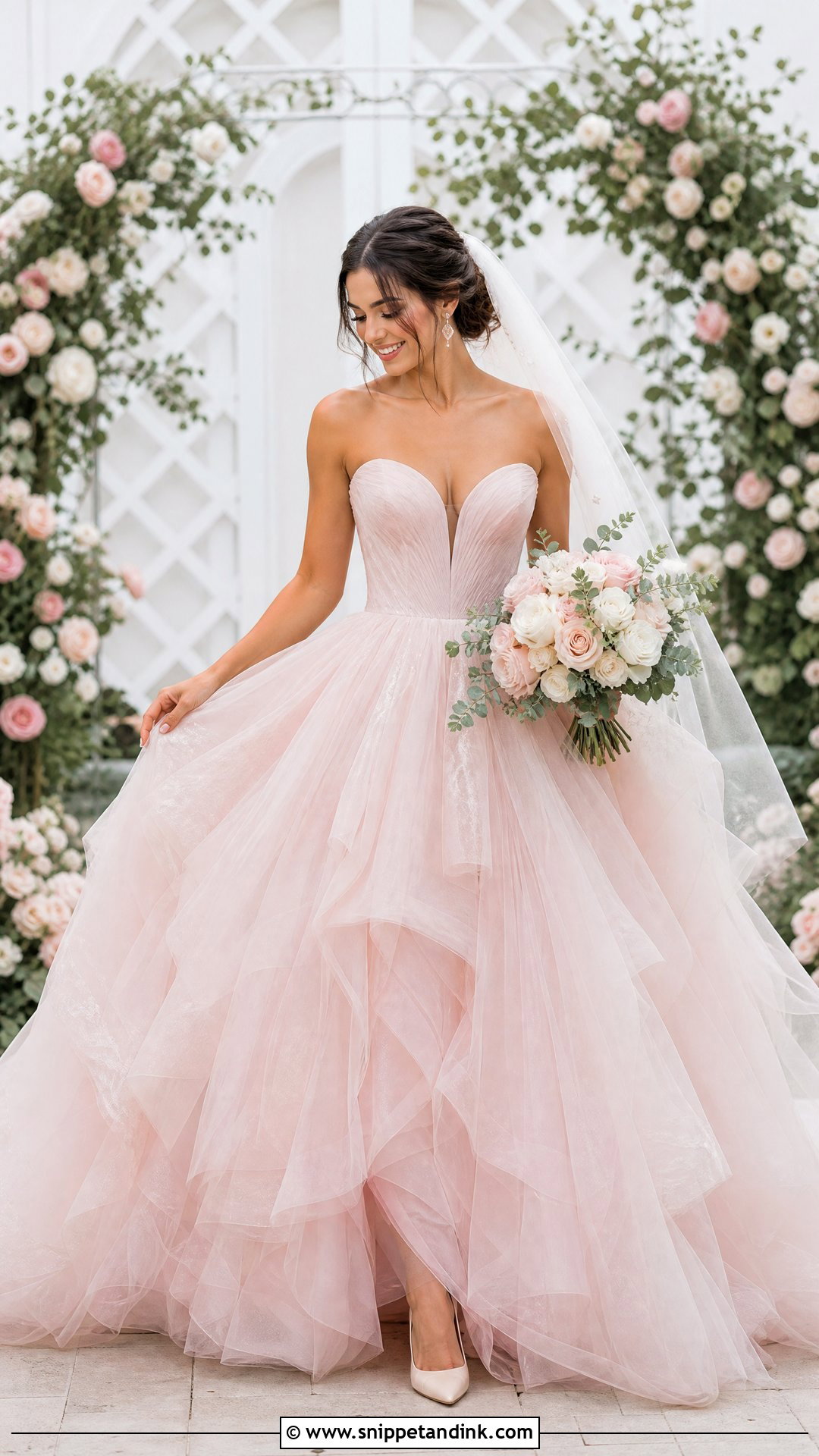
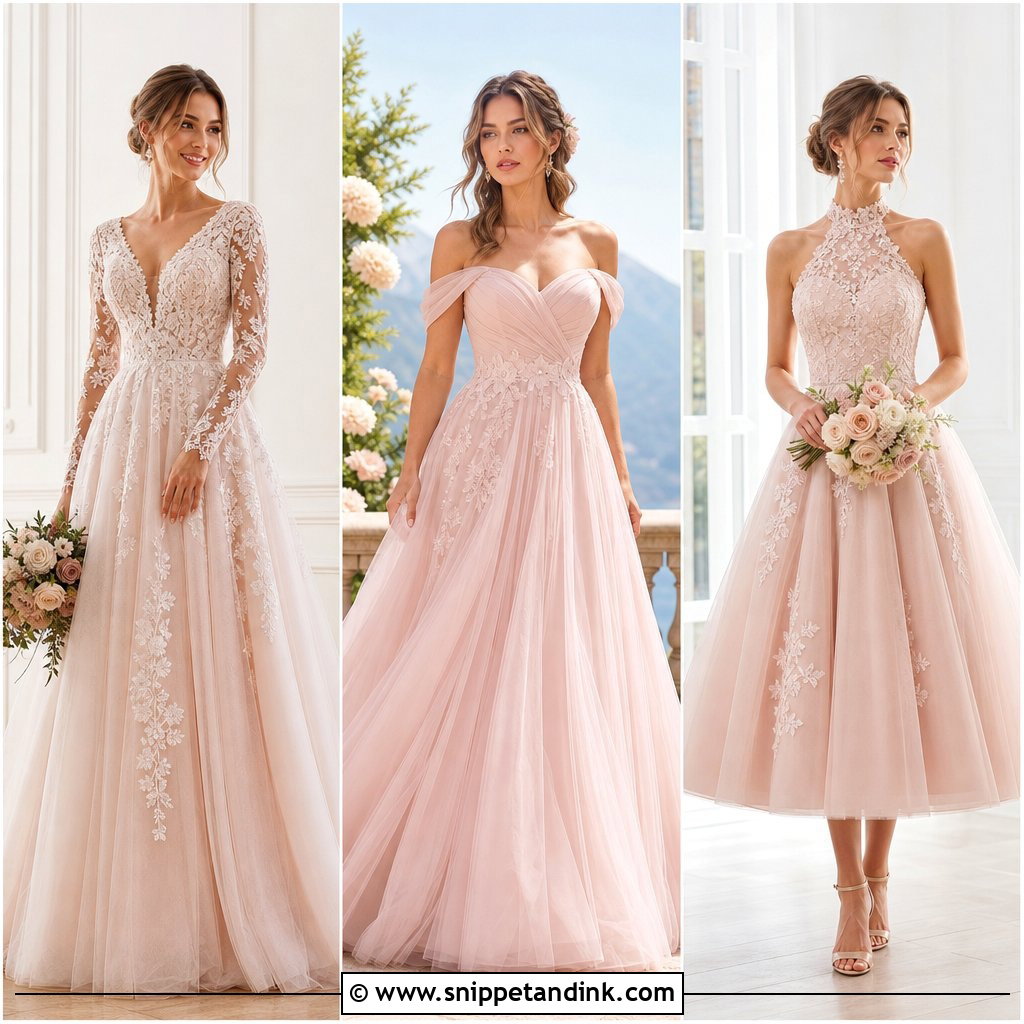
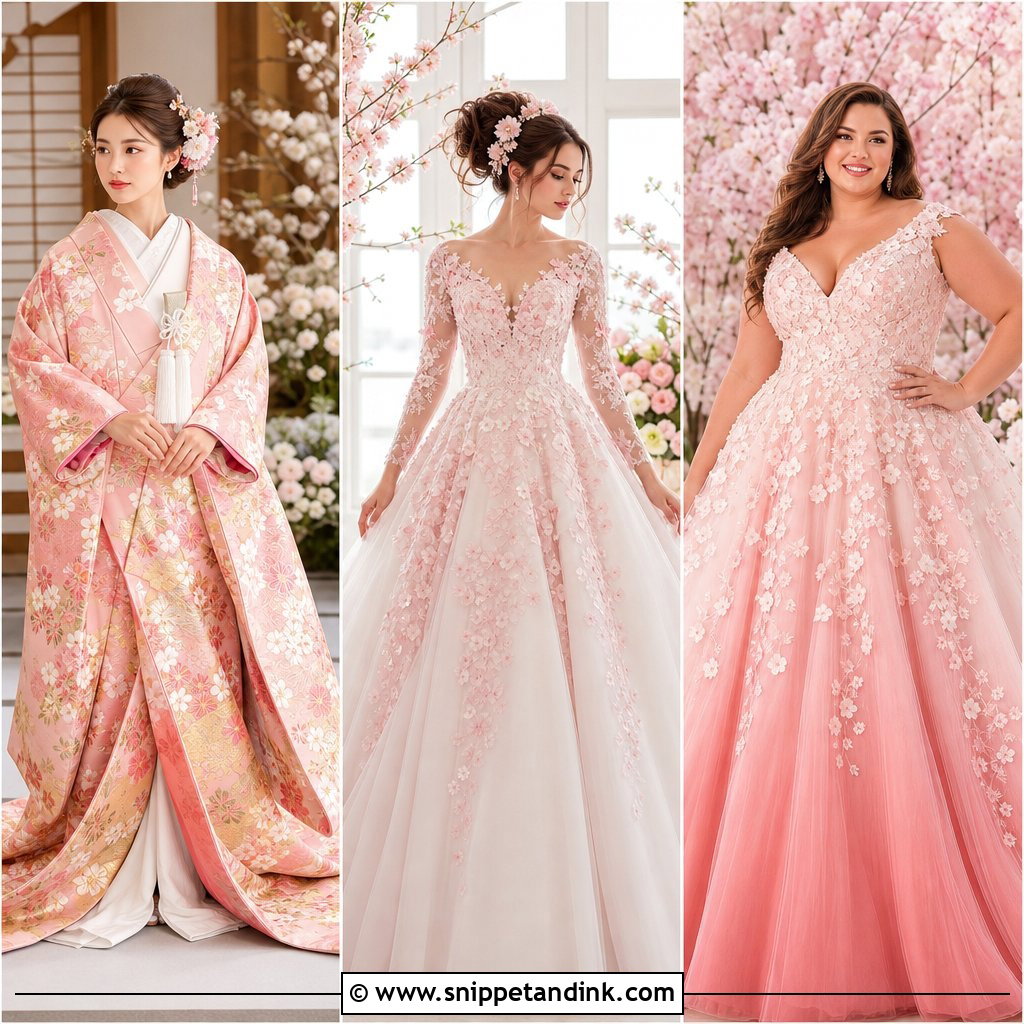
Blush is the gentlest way into color, which is why it’s the pastel I see brides choose most. In a ball gown, the tint usually comes from a pink lining under ivory tulle, so the shade shifts as the layers move. A fitted bodice keeps all that skirt from swallowing a smaller frame. Sweetheart necklines and fine straps suit it; heavy off-shoulder sleeves can tip it into costume. Pearl earrings, a sheer veil and ivory or pale pink shoes, with cream and peach flowers in the bouquet so nothing clashes with the skirt.
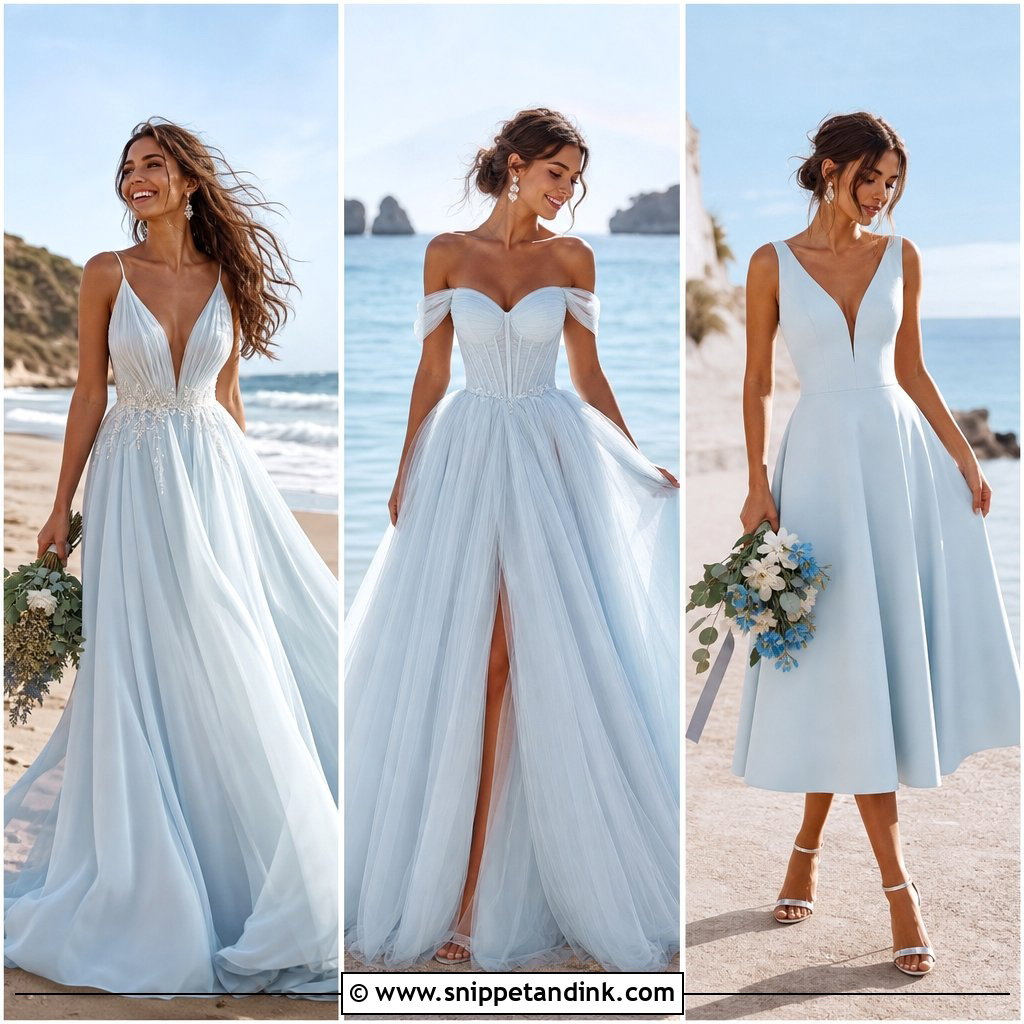
2. Powder Blue A Line Wedding Dress
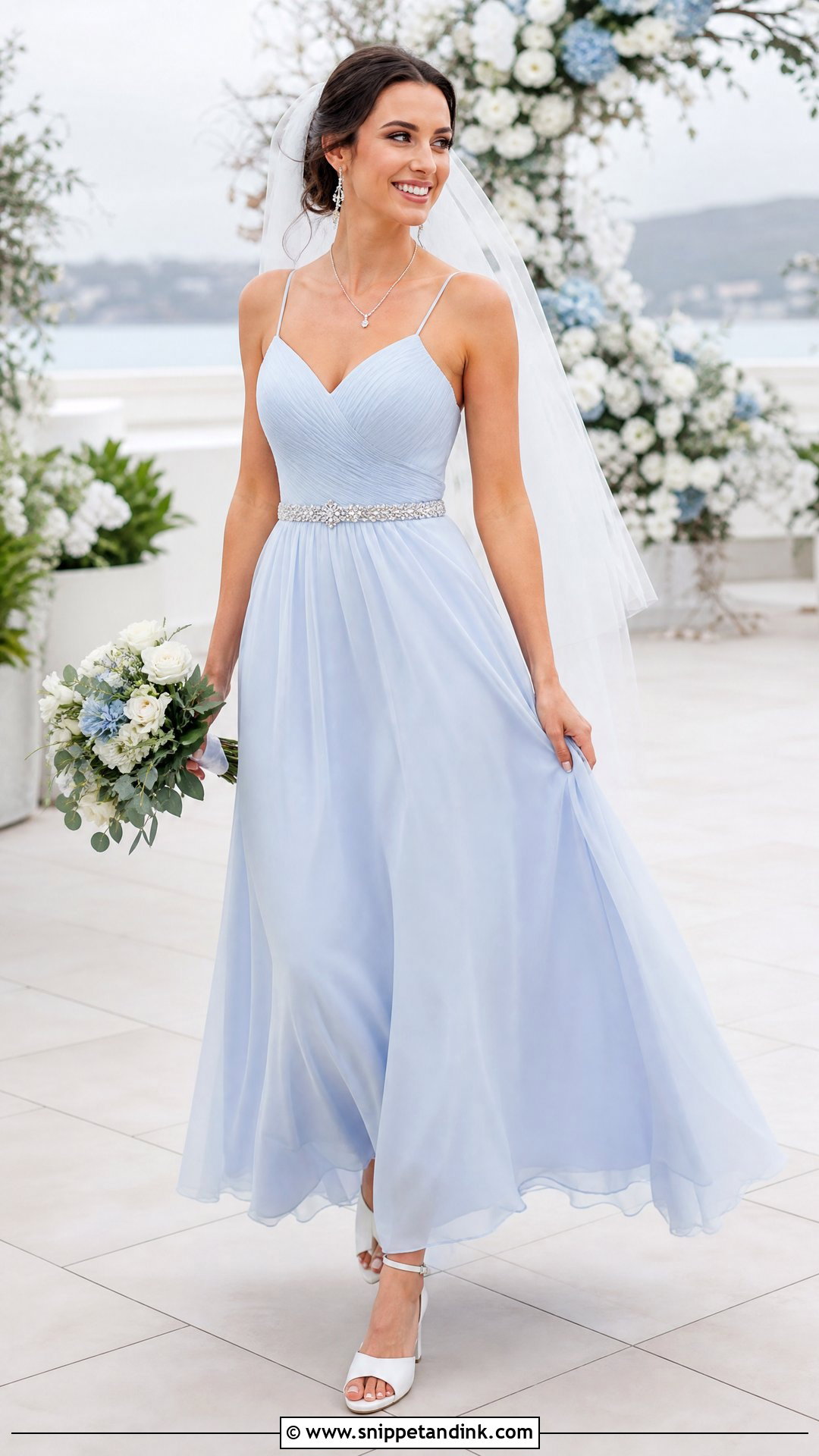
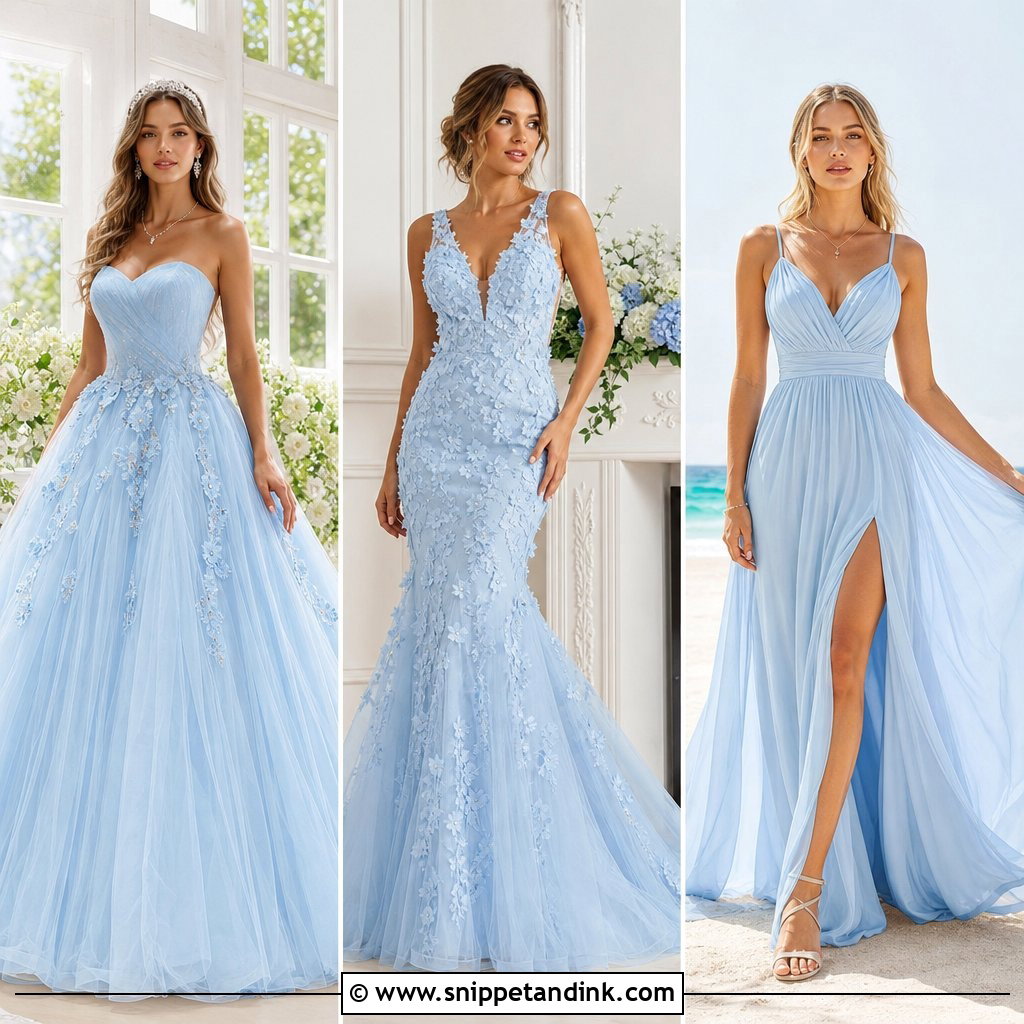
Powder blue is quietly unexpected, and it’s more flattering than brides expect on fair and olive skin alike. Chiffon, tulle and satin all carry it well. An A-line defines the waist and skims the hips, which makes it the easiest silhouette for most body types to sit, walk and dance in. Silver jewelry, satin heels and a veil with a plain cut edge keep it clean. For flowers, white with a little hydrangea or delphinium repeats the blue without matching it exactly.
3. Lavender Tulle Wedding Dress
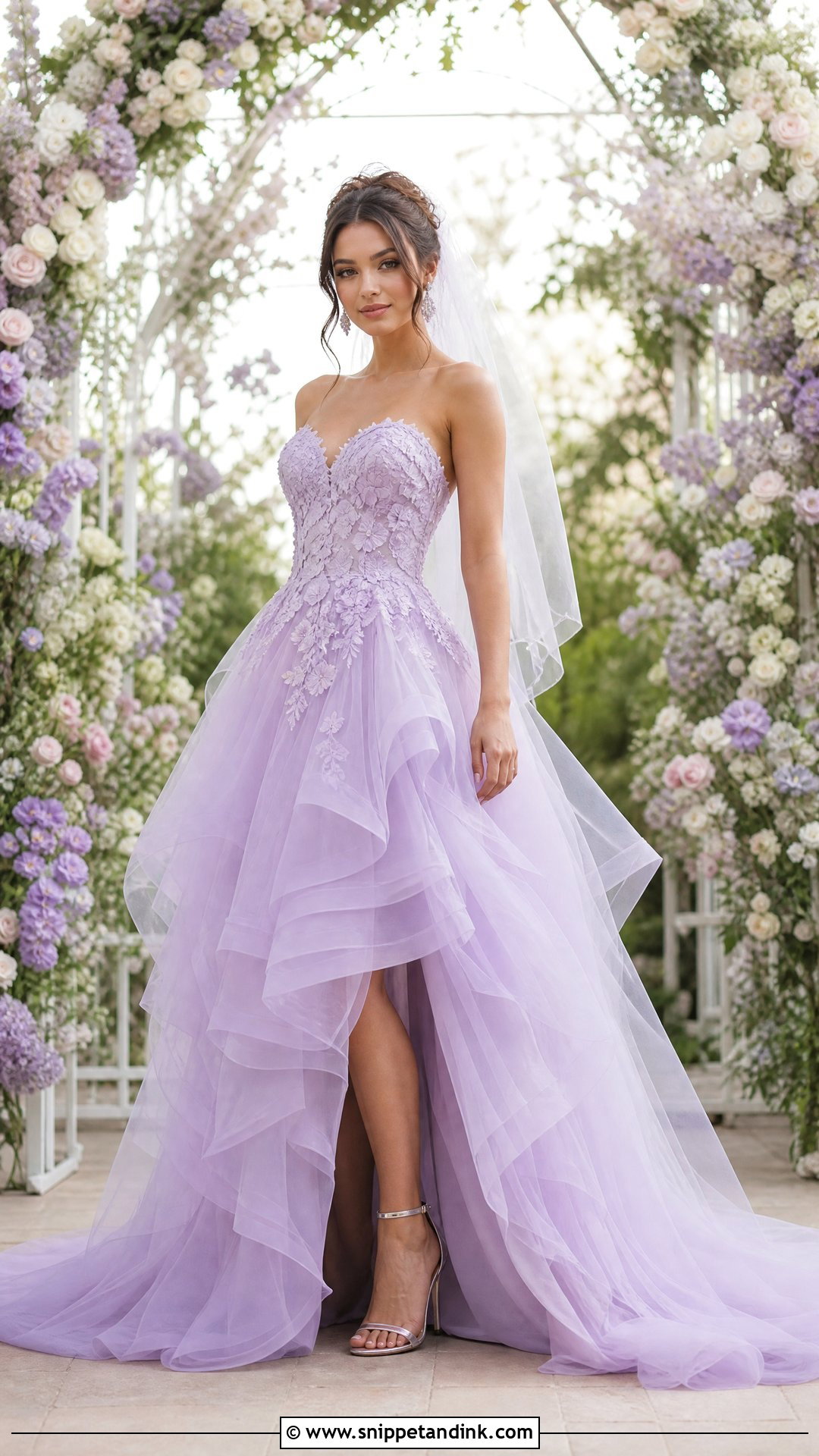
Lavender changes with the light: cool and silvery in shade, pinker in late sun. That makes a lavender tulle wedding dress look different in every photo, which most brides love. Layered tulle gives movement; a fitted bodice keeps it from looking like a costume. Floral appliqué or fine beading adds detail without heavy sparkle. I pair it with silver or crystal, soft curls and barely-there heels, and a bouquet with white roses, lilac and pale greenery so the purple looks deliberate.
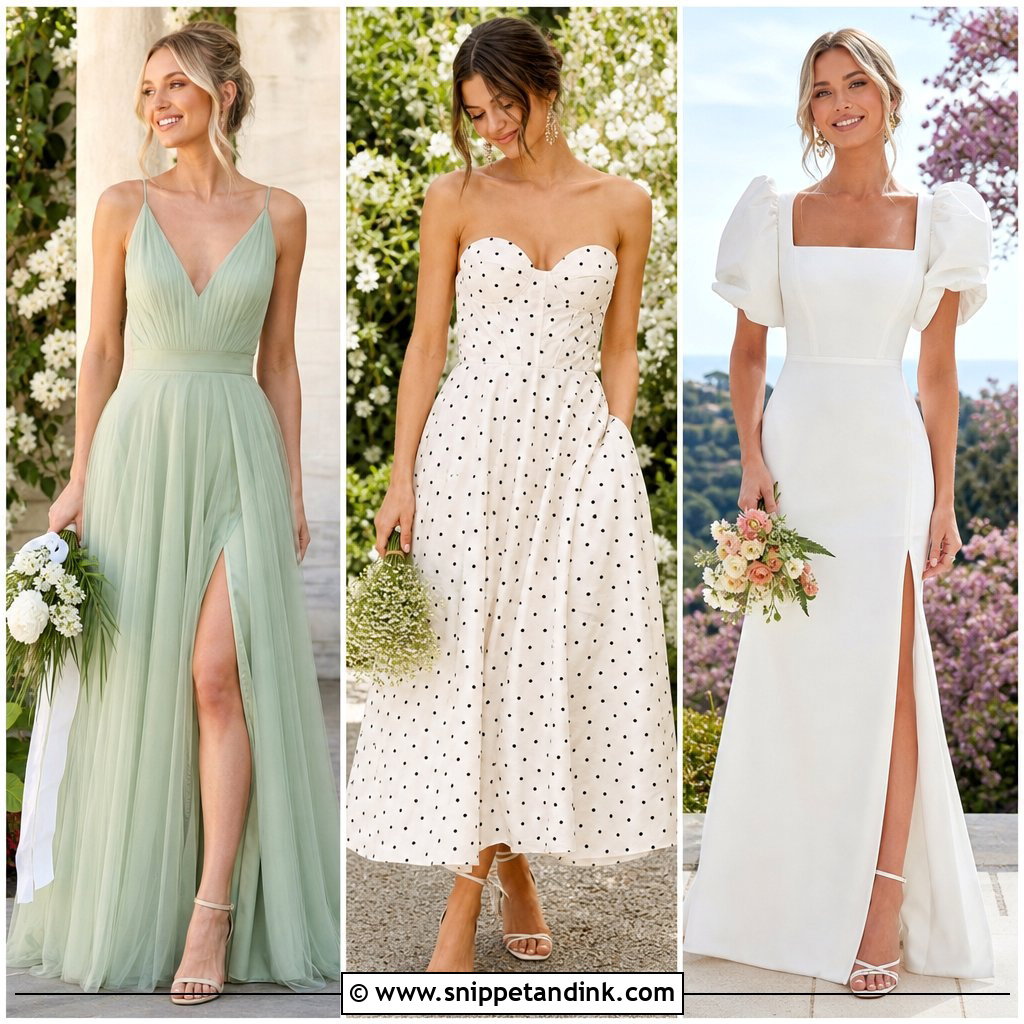
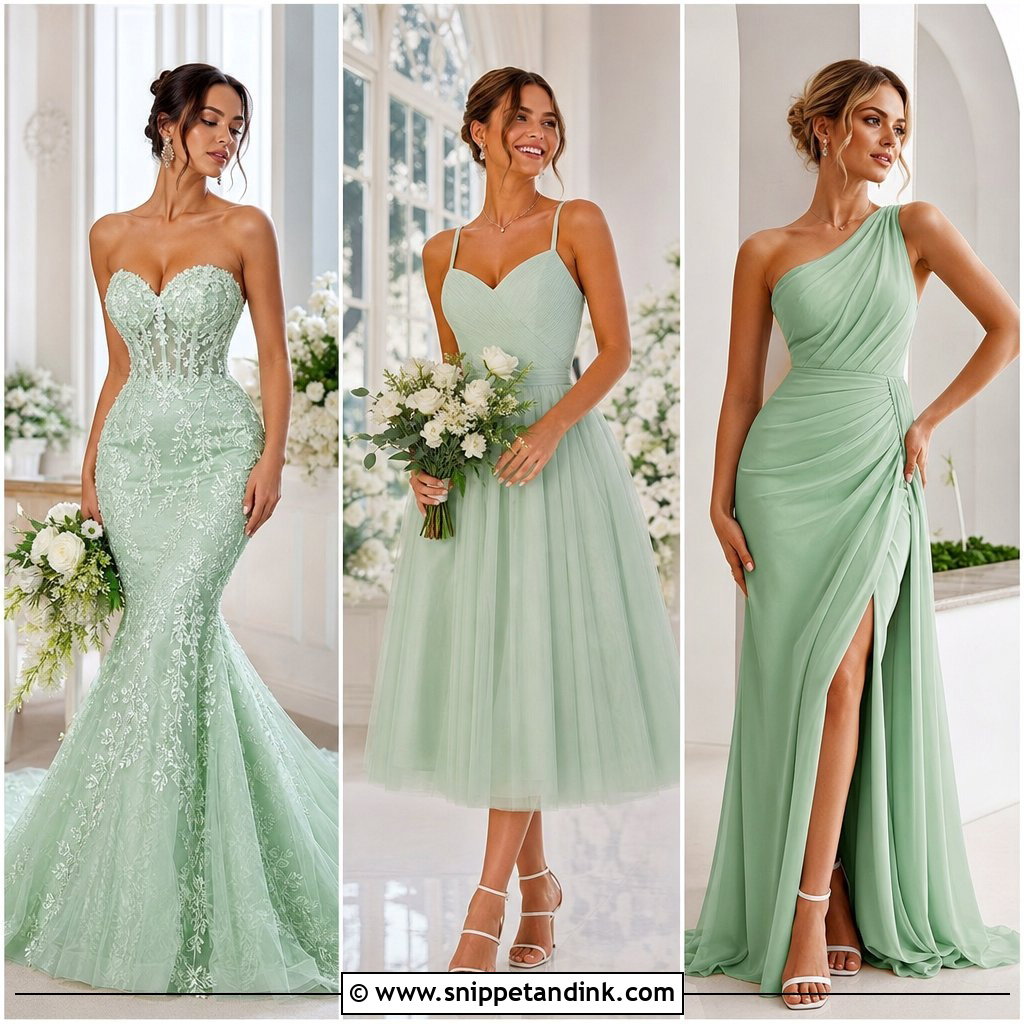
4. Mint Green Wedding Dress
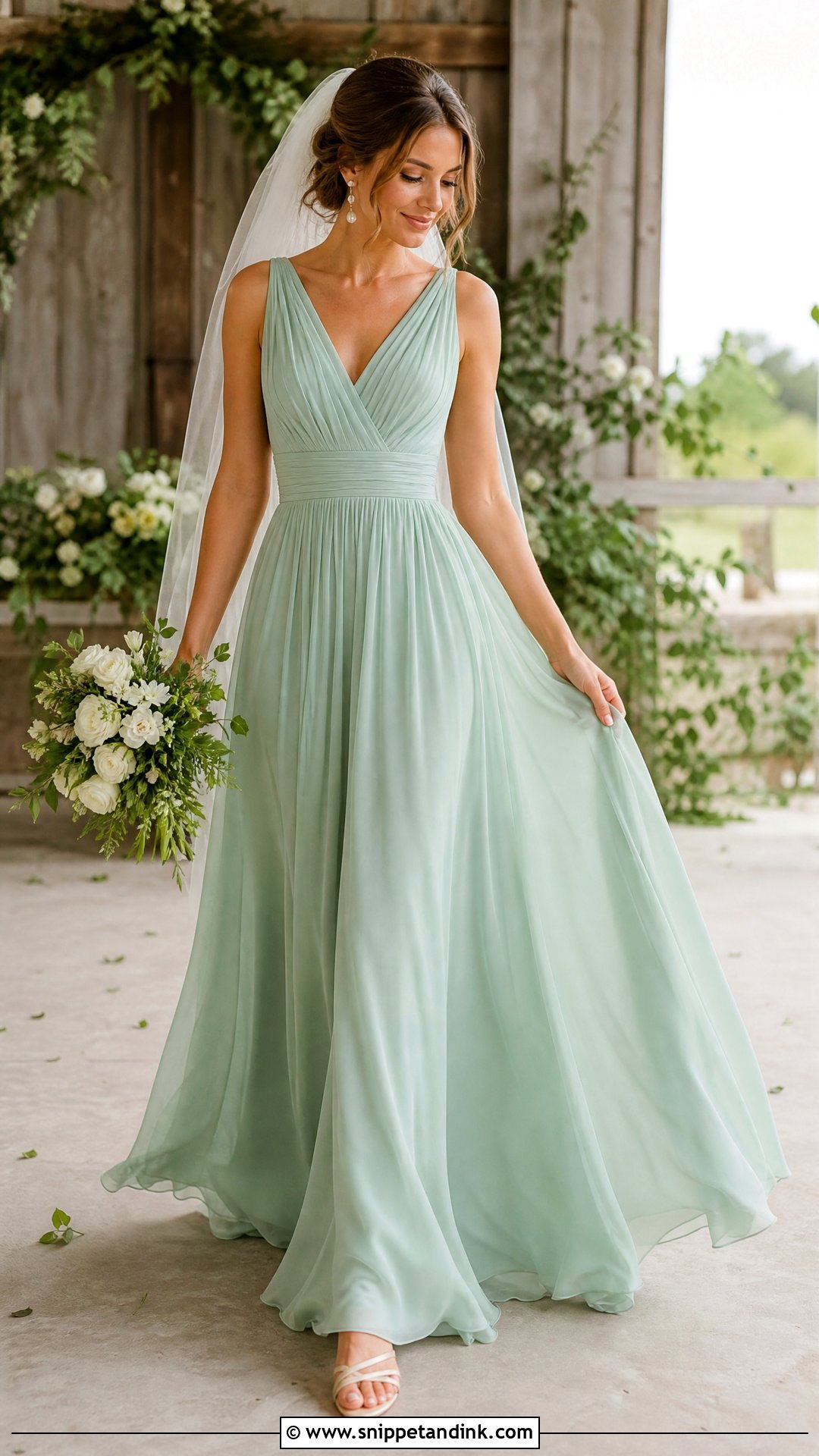
Mint is the shade I’m most careful about. It’s fresh in daylight and lovely against a garden, but it can turn slightly gray on very pale skin, so I always hold the fabric under a bride’s face before she commits. Keep it in airy fabrics like chiffon, organza or soft tulle; heavy satin in mint looks institutional. A fitted waist and flowing skirt suit most figures. Pair ivory sandals and pearl drops, and avoid dark accessories, which make the green look washed out. White ranunculus, pale foliage and a hint of blush finish it.
5. Peach Chiffon Wedding Dress
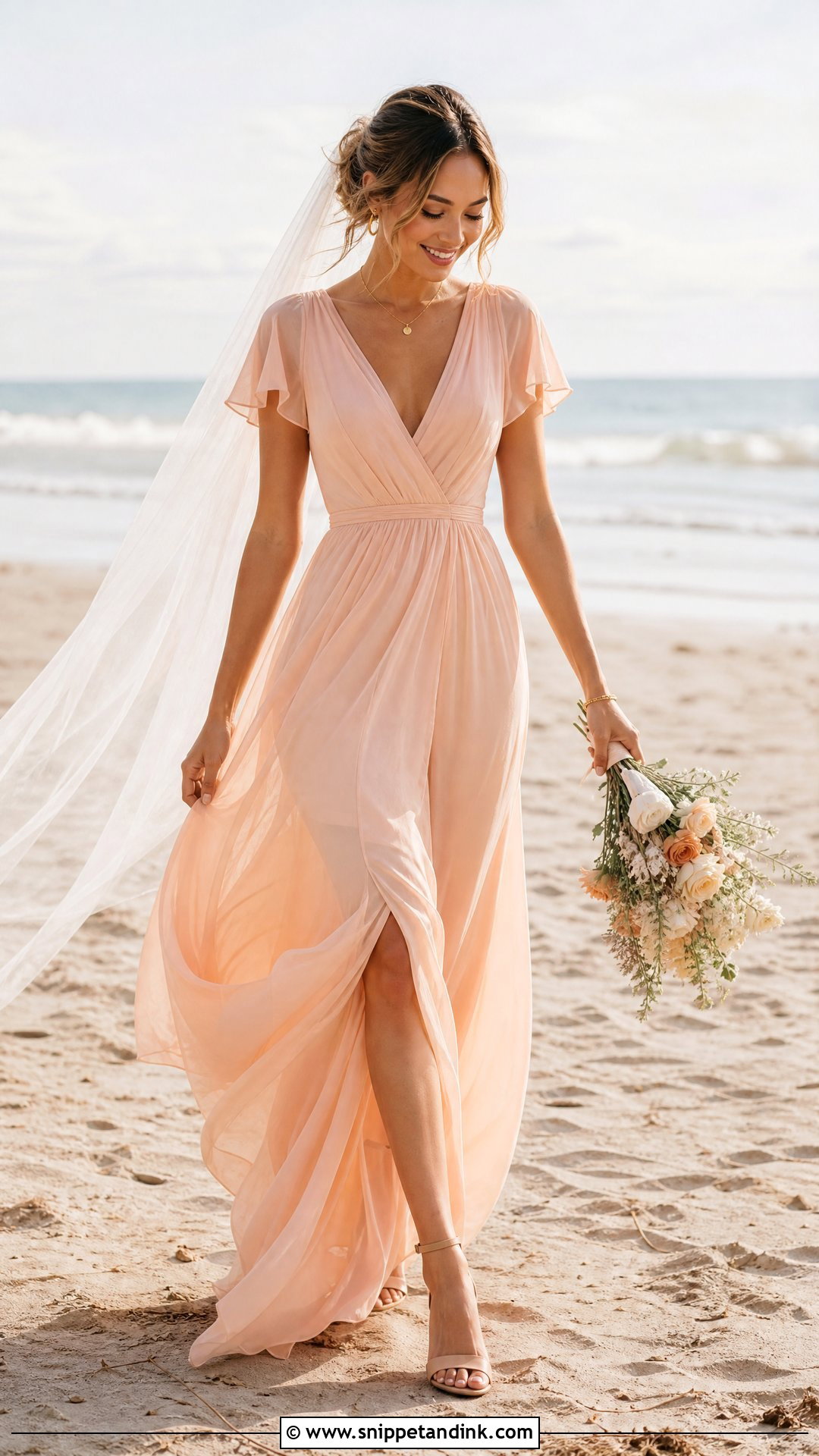
Peach adds warmth to the skin, which is why it photographs so well at sunset. Chiffon lets it move and gives the gown a relaxed shape for a beach or destination ceremony. A V-neck, flutter sleeves or a wrap bodice keeps it comfortable through a long, warm day. Gold jewelry suits peach better than silver, and a soft ivory veil and nude heels let the color stand on its own. Cream roses and peach ranunculus in the bouquet keep the palette close.
6. Butter Yellow Wedding Dress
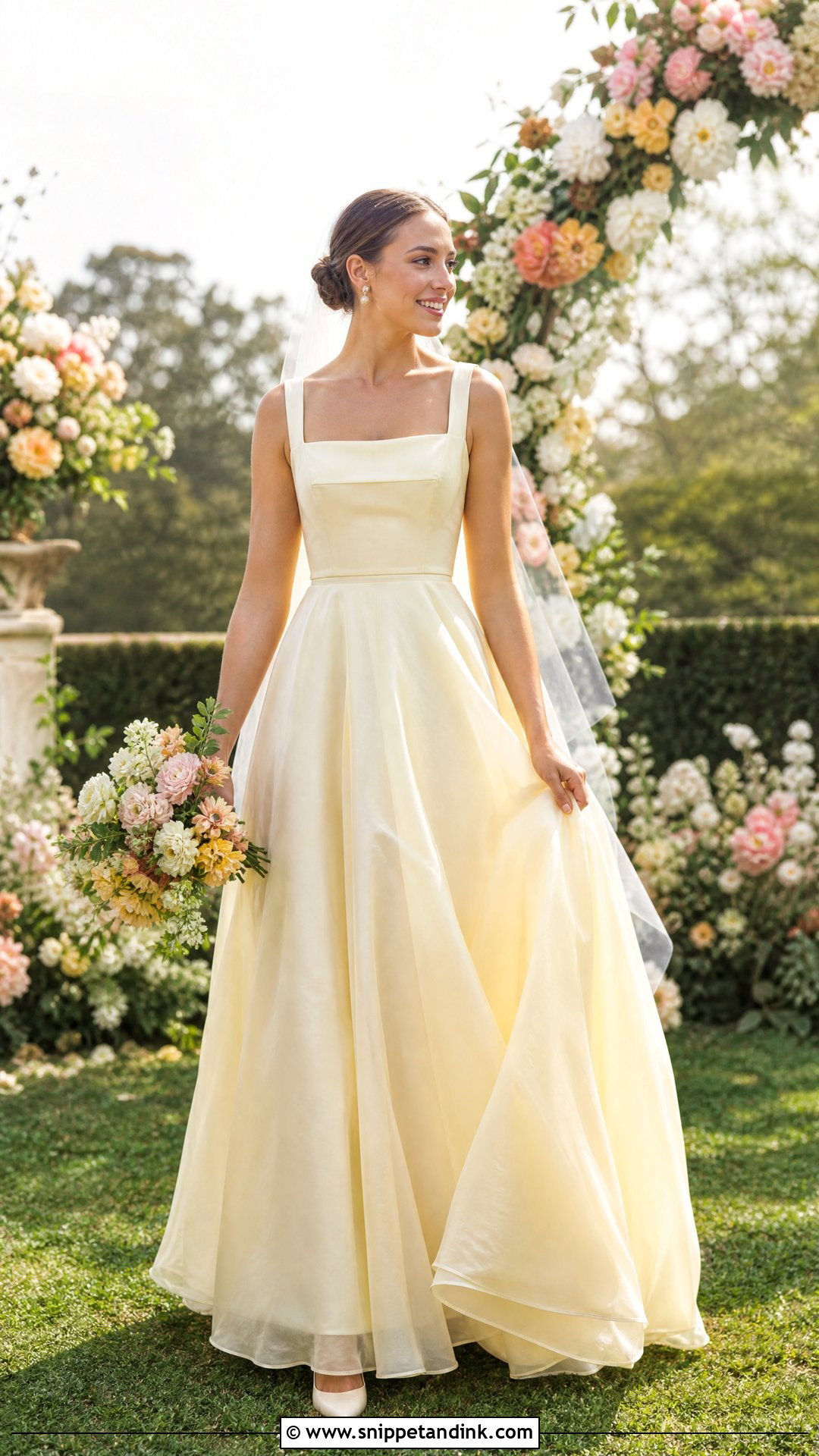
Butter yellow sits between lemon and ivory, and the difference matters. Too bright and it looks like a bridesmaid dress; this softer tone reads as bridal. A butter yellow wedding dress looks most refined in satin, organza or layered tulle. A square neckline or strapless bodice gives it a crisp line. Pearls, ivory heels and a simple updo keep it from feeling too casual. I’d save it for daytime: under warm evening light, yellow can drift toward cream and lose its point.
7. Champagne Pastel Wedding Dress
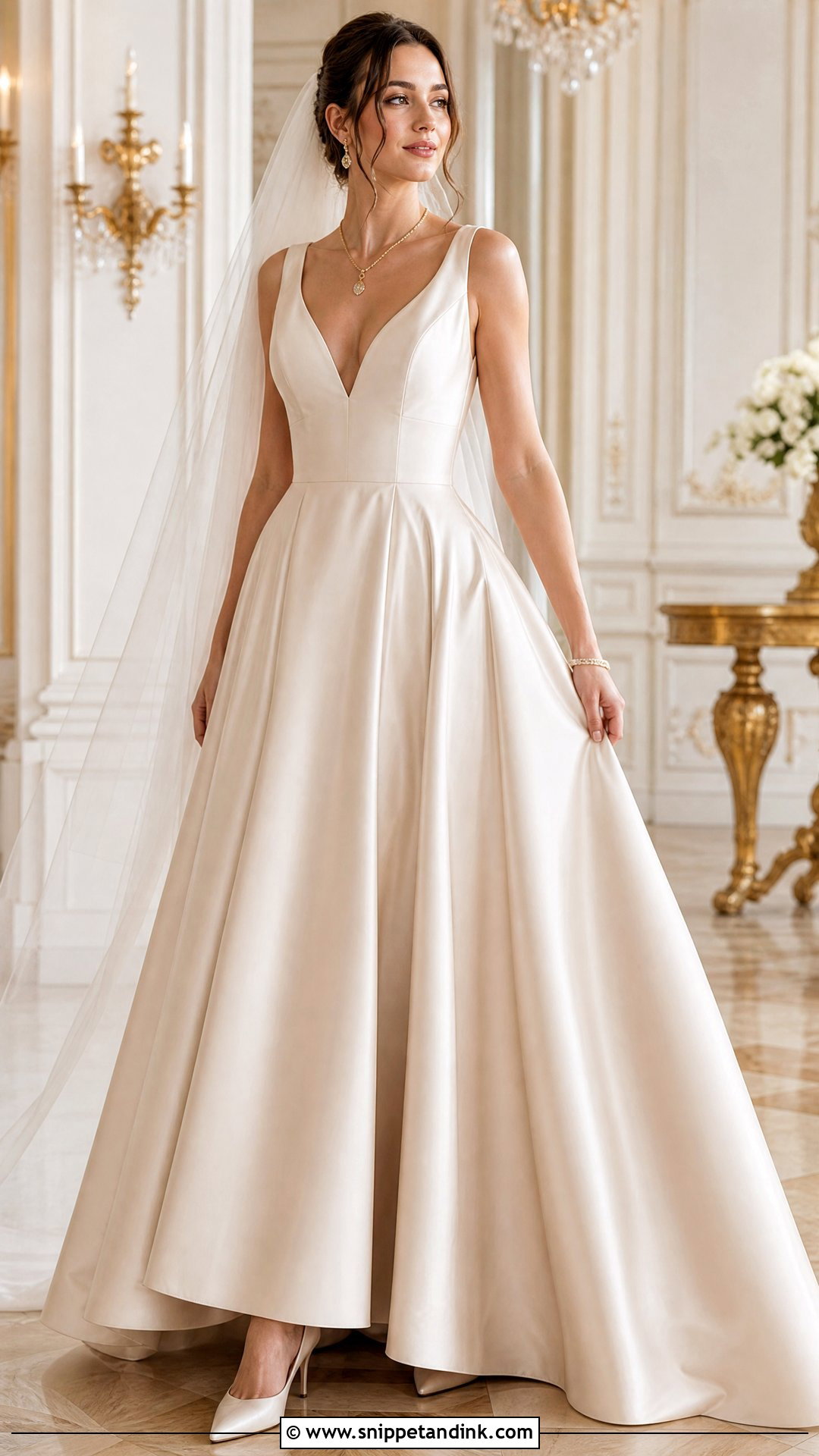
Champagne is the colored gown that most guests won’t even notice is colored. Its warmth flatters a wide range of skin tones, especially warmer ones that ivory can drain. The silhouette sets the mood: satin column for sleek, lace A-line for romantic. Gold jewelry and a veil with a little shimmer suit it. One warning: champagne varies a lot between designers, from nearly ivory to almost beige, so compare swatches side by side before ordering.
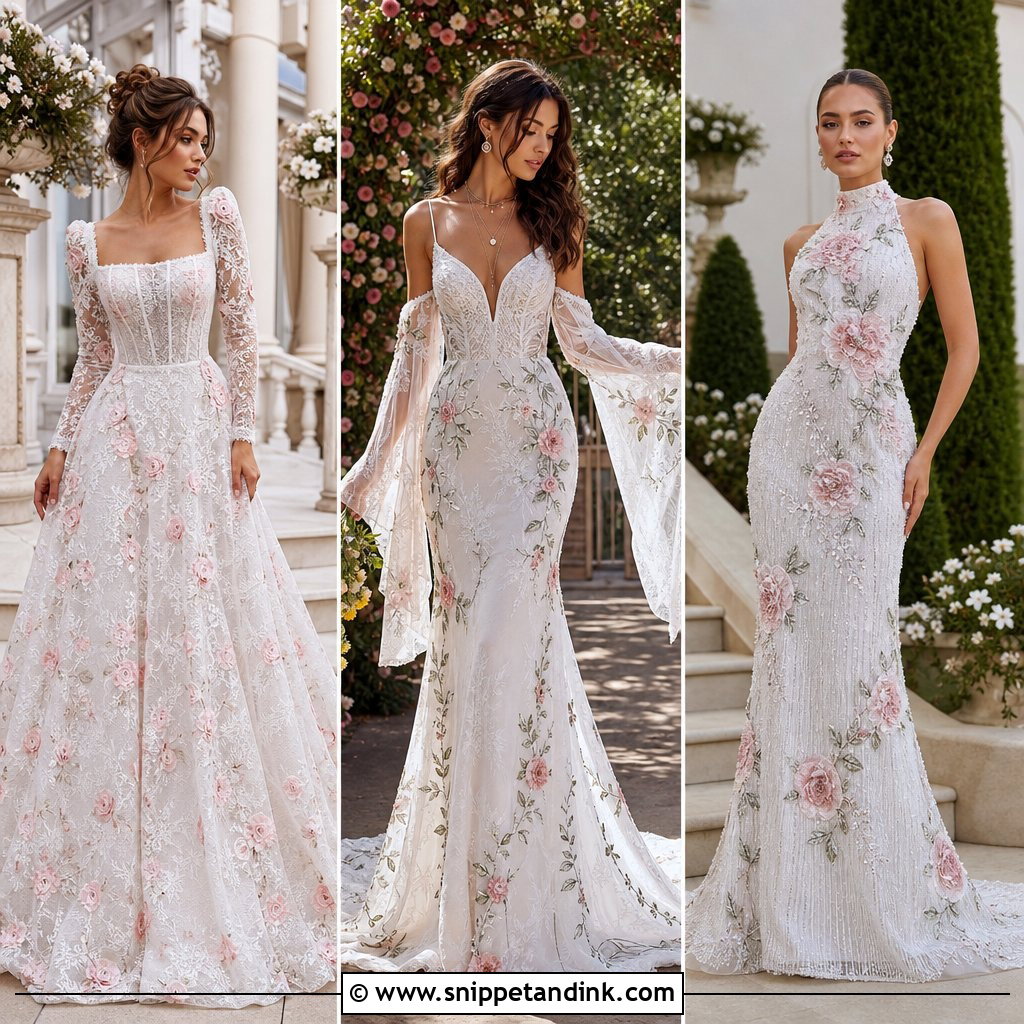
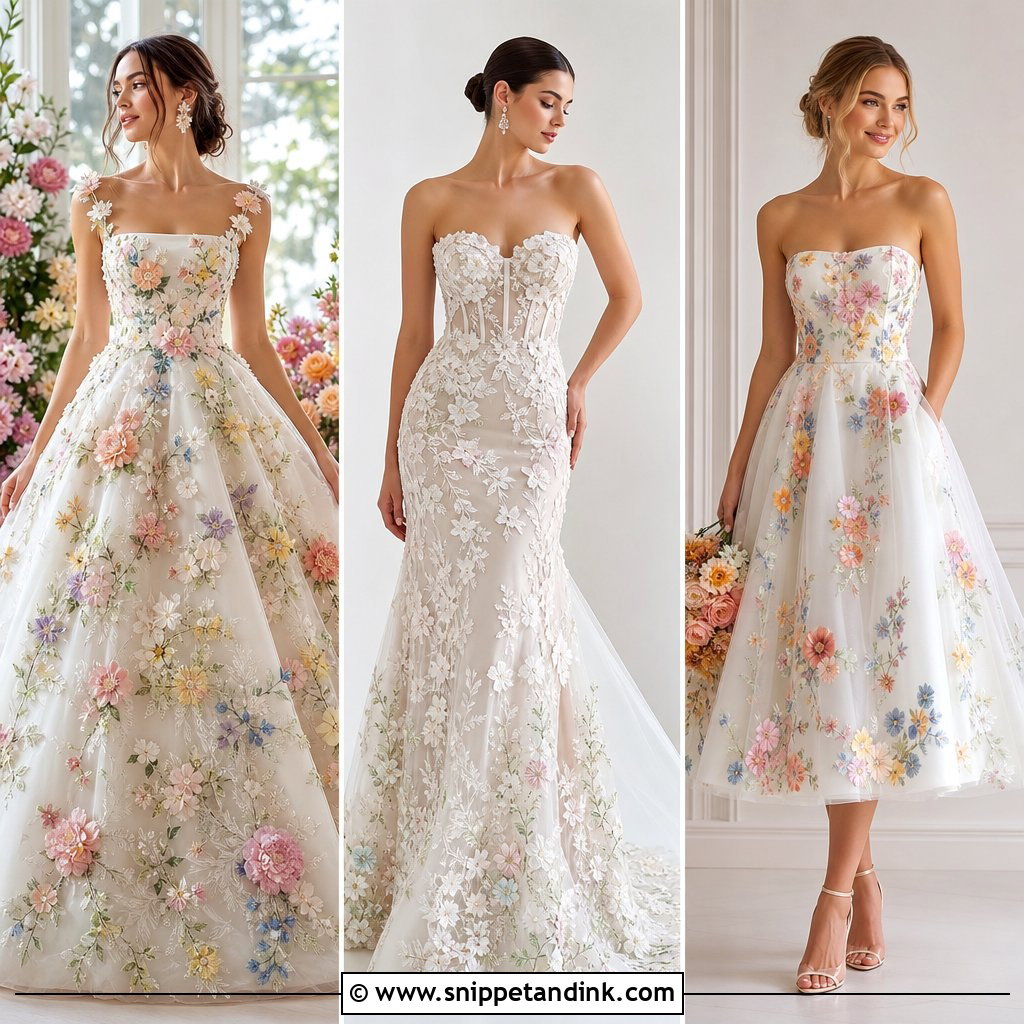
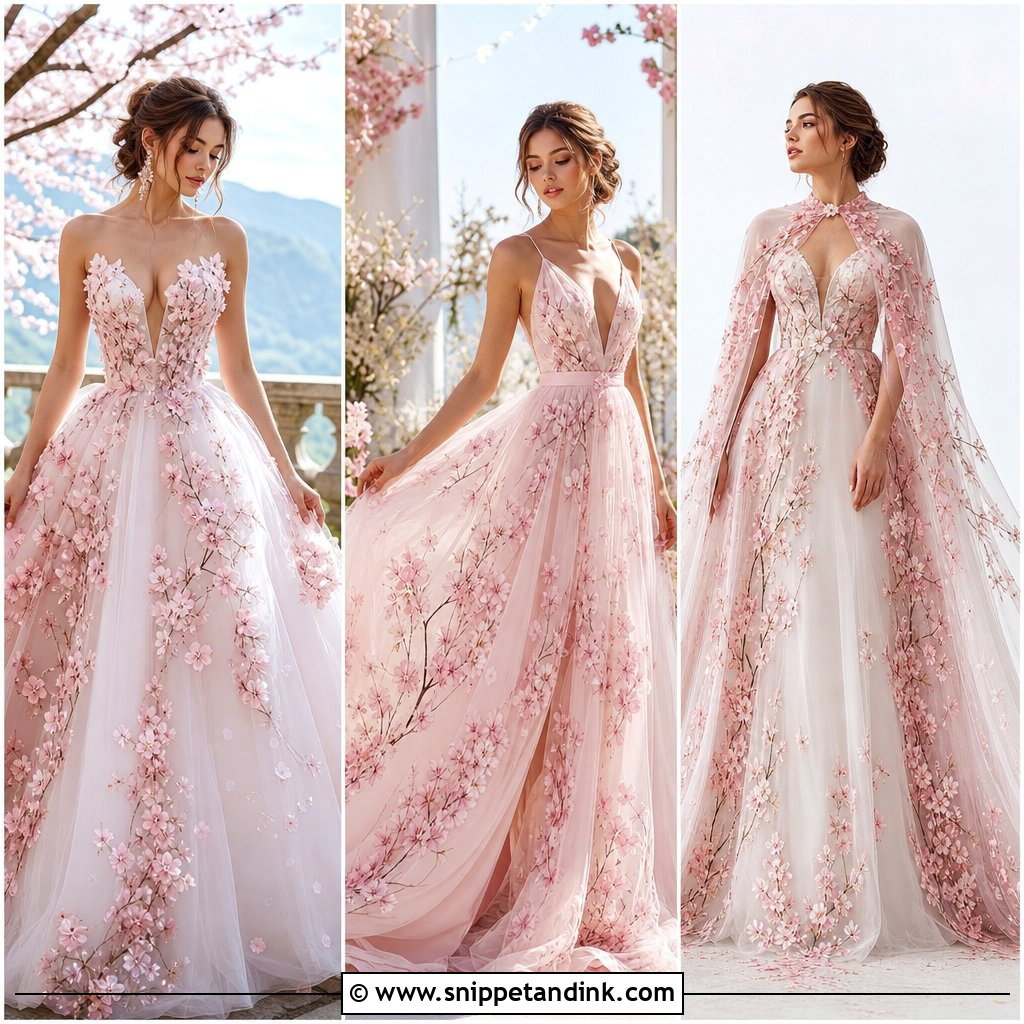
8. Pastel Floral Wedding Dress
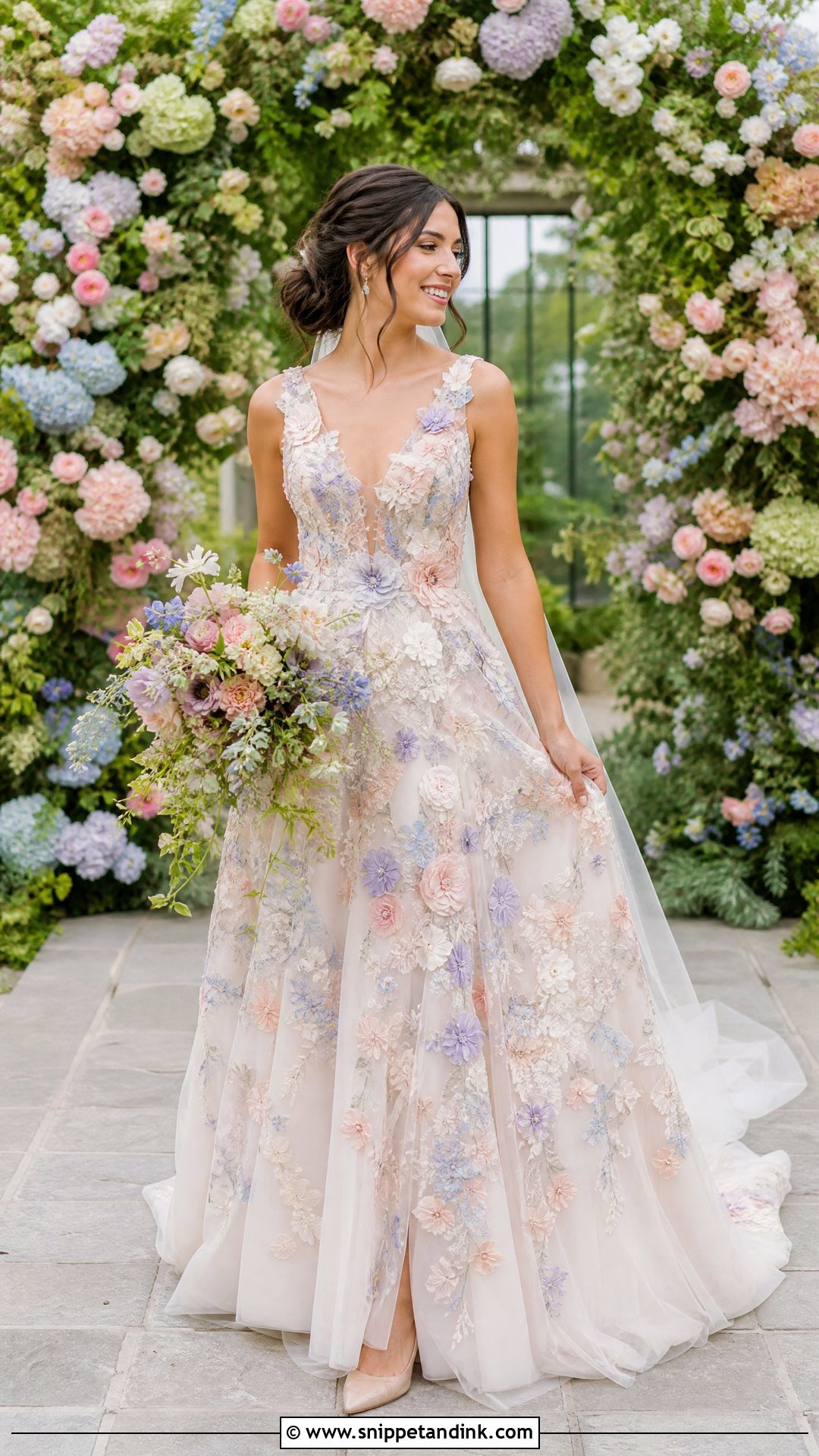
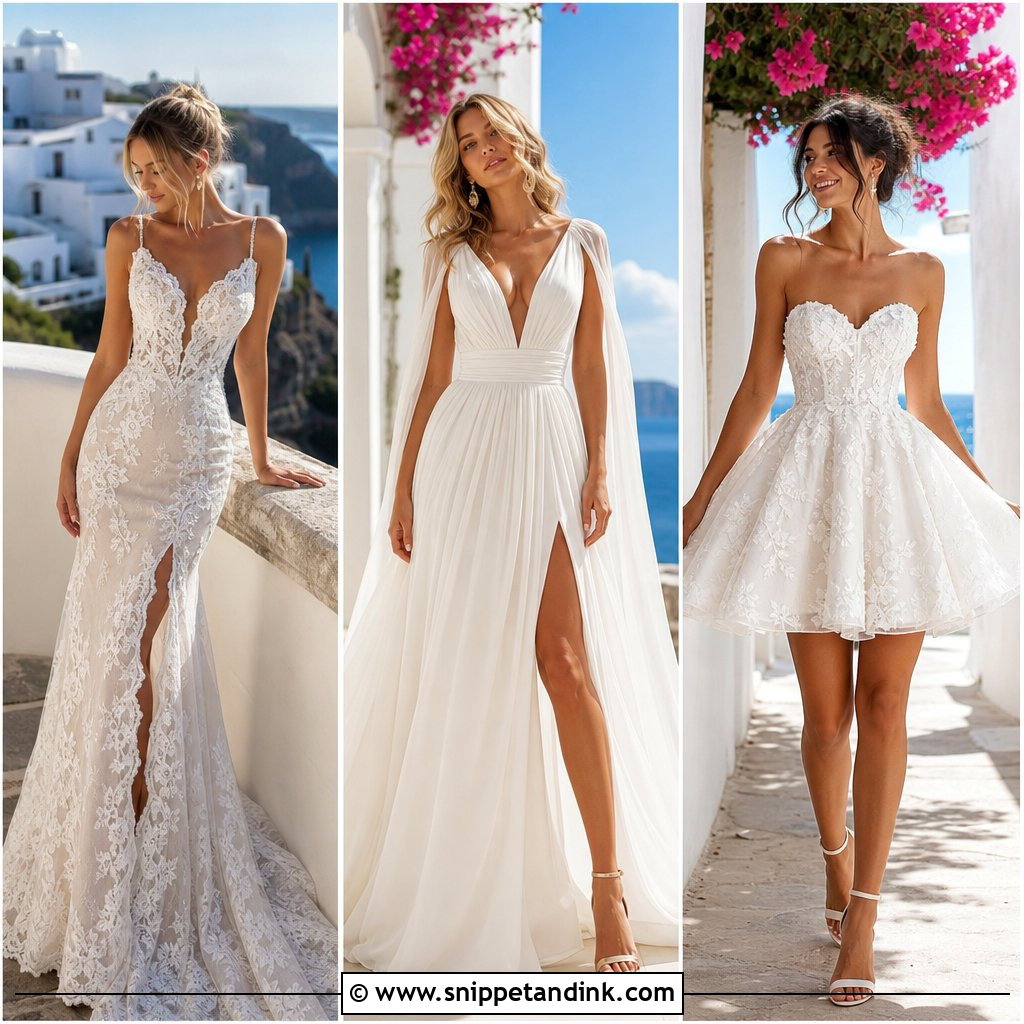
Florals give you color in small doses, which suits brides who aren’t ready for a fully tinted gown. Look for embroidered flowers, watercolor prints or 3D appliqué in blush, lavender, blue, yellow or peach on an ivory, nude or pale base. A fitted bodice and flowing skirt let the flowers carry the dress. With so much happening in the fabric, I keep accessories plain: simple earrings, neutral heels, soft waves. The bouquet should be smaller and simpler than usual so it doesn’t fight the gown.
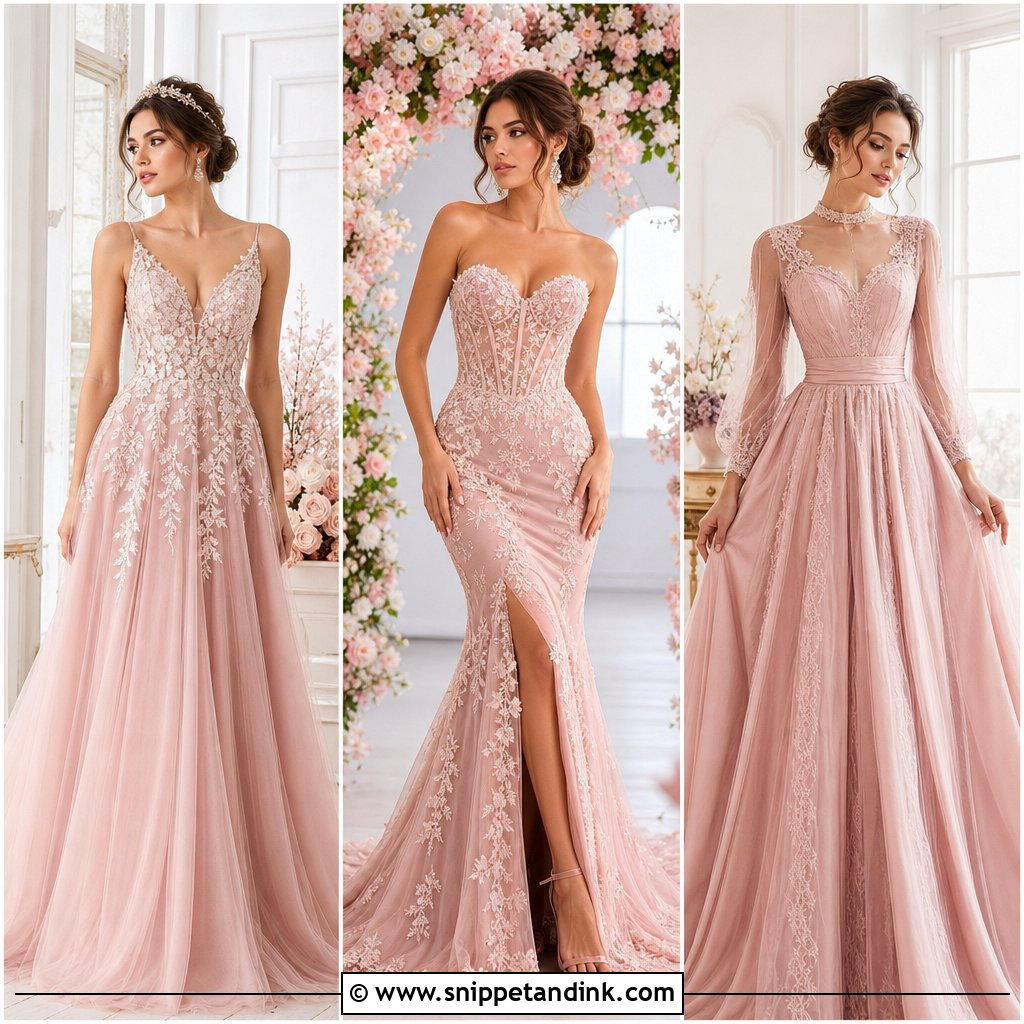
9. Pale Pink Lace Wedding Dress
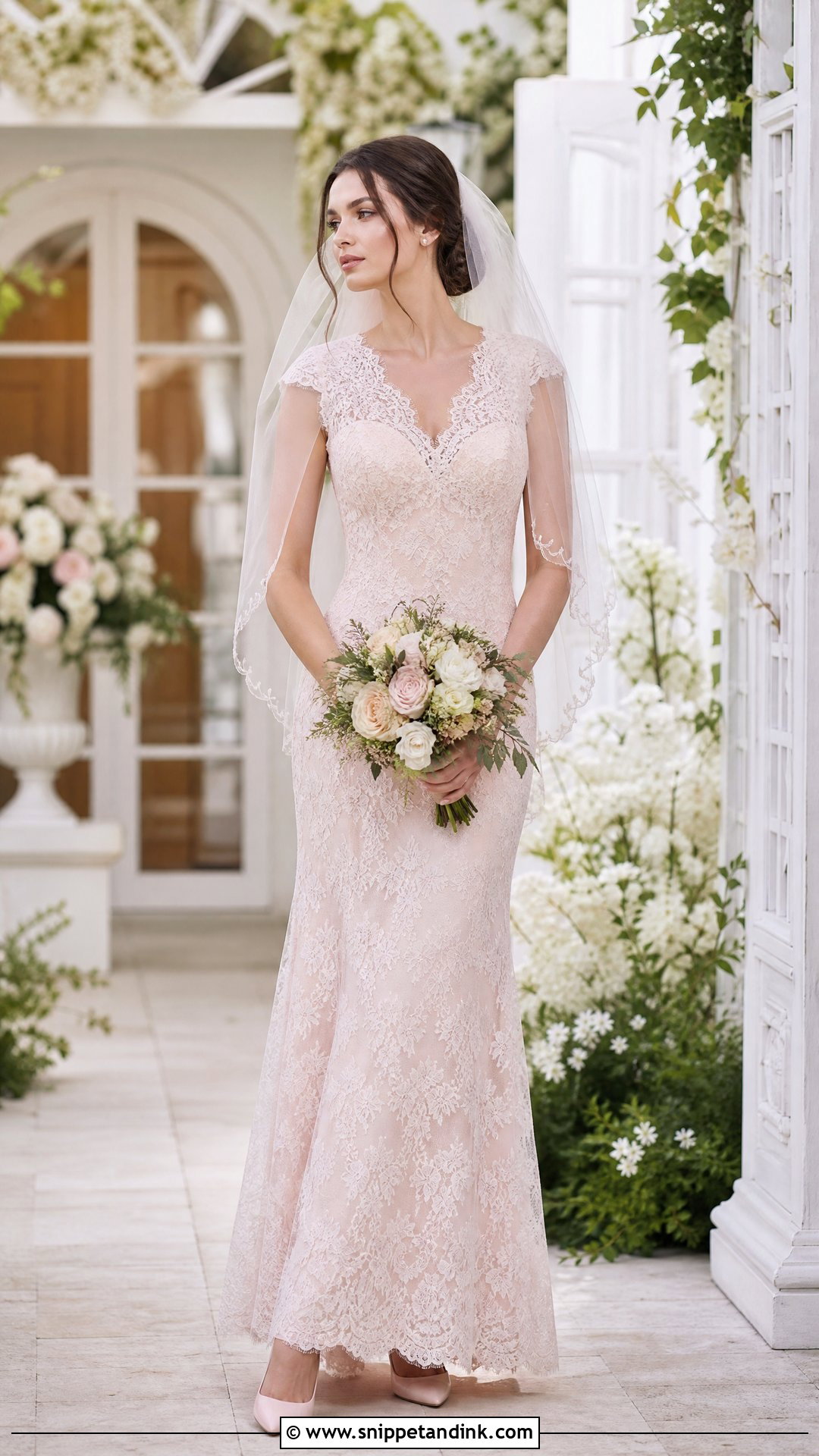
Pale pink lace is often ivory lace laid over a blush lining, which gives depth without committing to a full color. It works in fitted, mermaid, sheath and A-line shapes. I check how the lace sits against the lining in daylight: some laces let a lot of pink through, others mute it to a faint glow. Pearl studs, a fingertip veil and soft pink heels finish the classic version; a sleek bun and minimal jewelry make it modern. Ivory roses and blush peonies complete it.
10. Dusty Blue Satin Wedding Dress
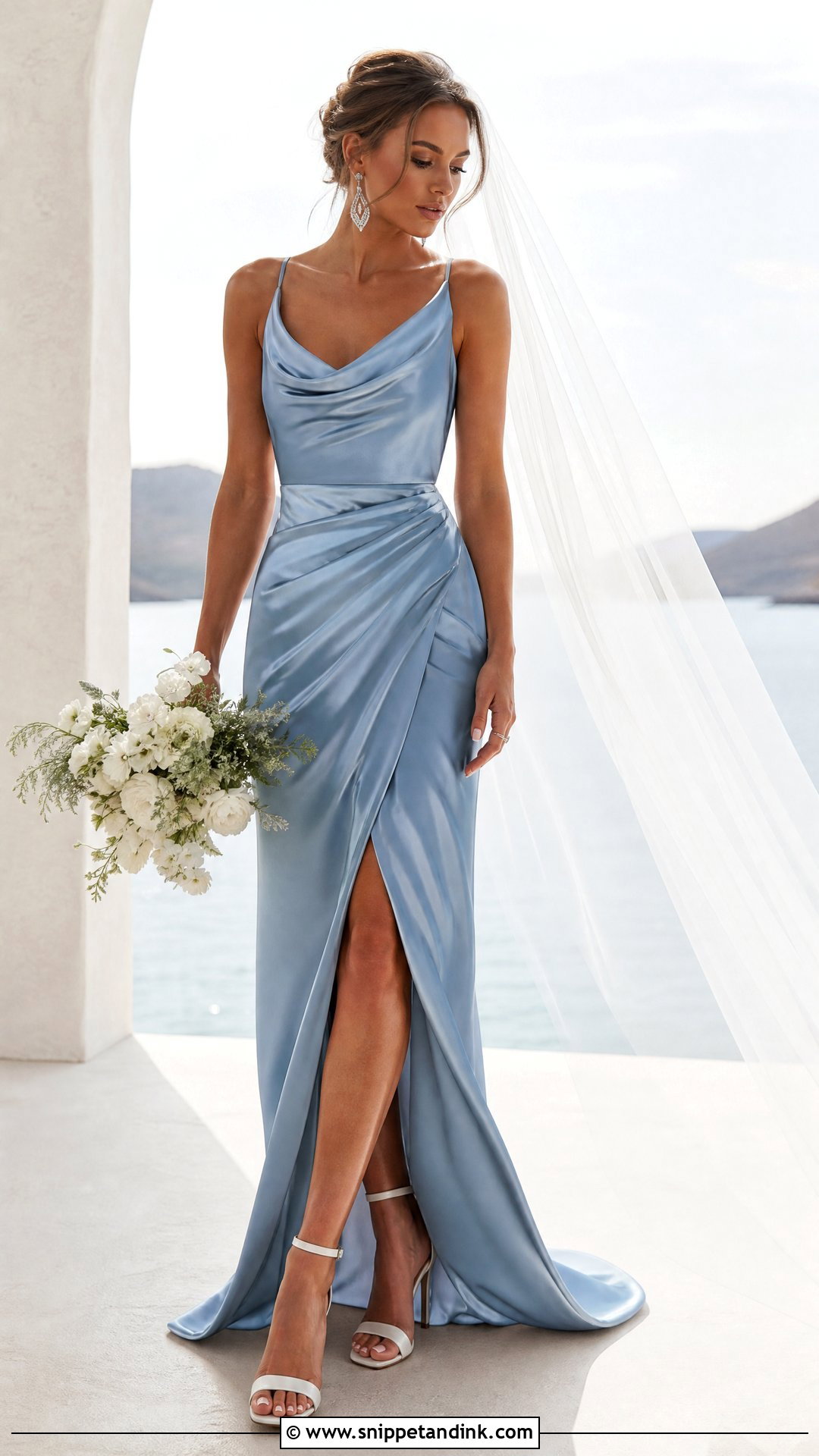
Satin gives dusty blue a depth that tulle can’t, so the shade looks grown-up rather than sweet. A slip, a draped bodice or a structured A-line all suit it. Satin also reflects light and shows every wrinkle and seam, so fit has to be precise; I’d budget for more than one alteration fitting. Silver earrings, white heels and a plain veil are enough. Evening and coastal weddings suit it, with a bouquet of white flowers, pale blue accents and gray-green foliage.
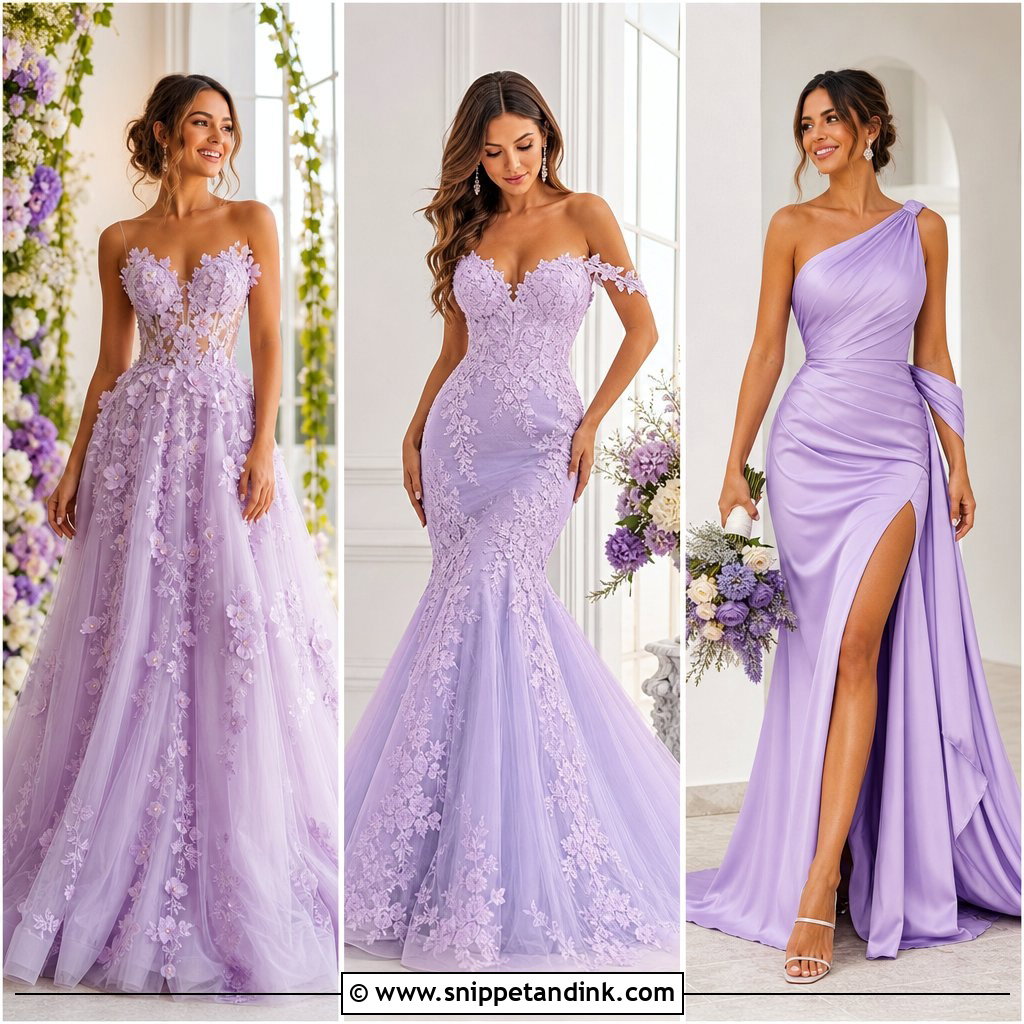
11. Lilac Off Shoulder Wedding Dress
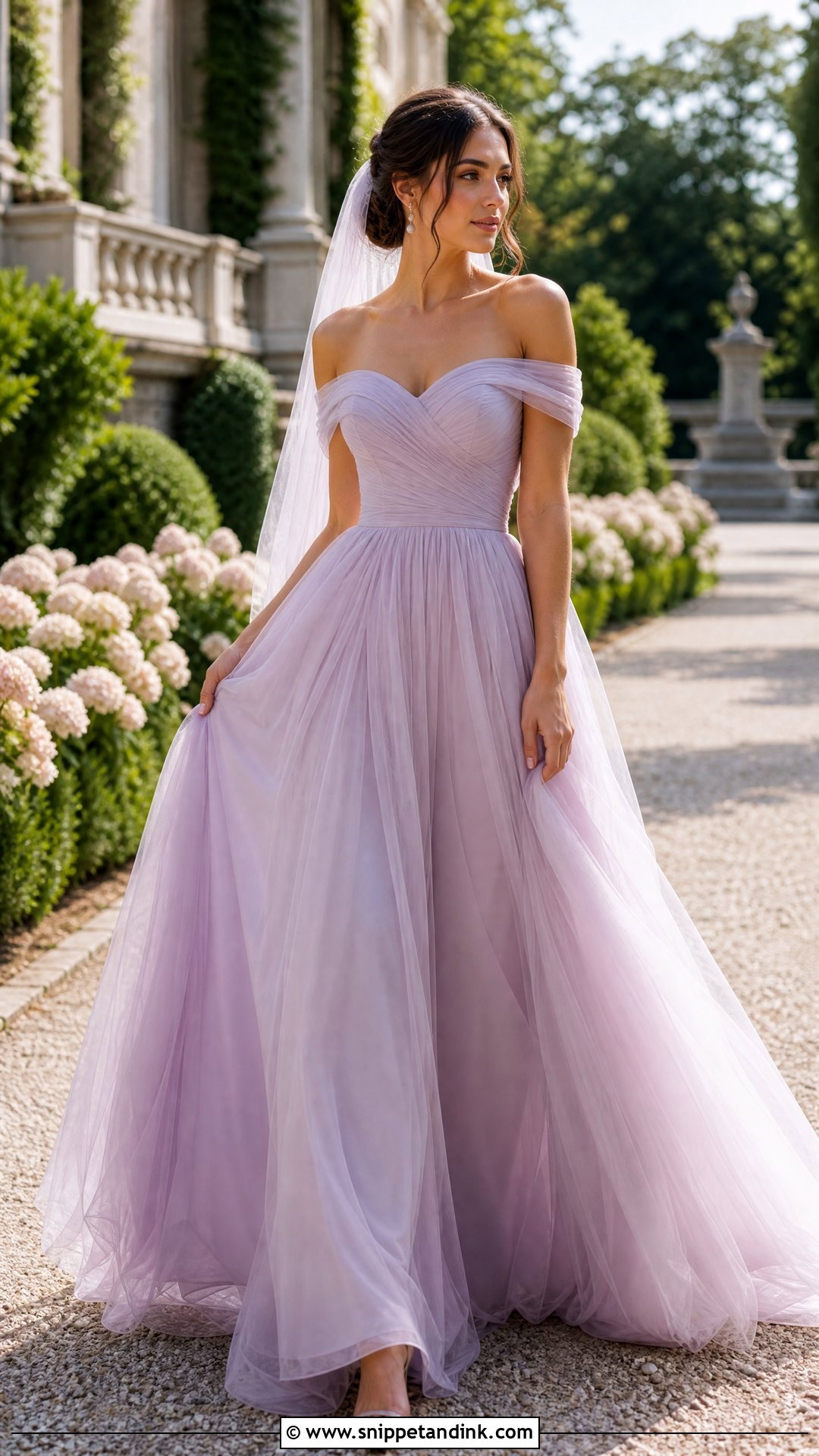
The neckline of a lilac off-shoulder wedding dress frames the collarbones and works with full skirts or fitted shapes. Lilac changes with the fabric: tulle softens it, satin makes it cooler, lace makes it more traditional. The fit of the off-shoulder band is everything here, since it needs to hold while you hug and dance without digging into your arms. Delicate pearl or crystal earrings, a low bun or soft waves, ivory heels and a bouquet of white, lilac and pale pink.
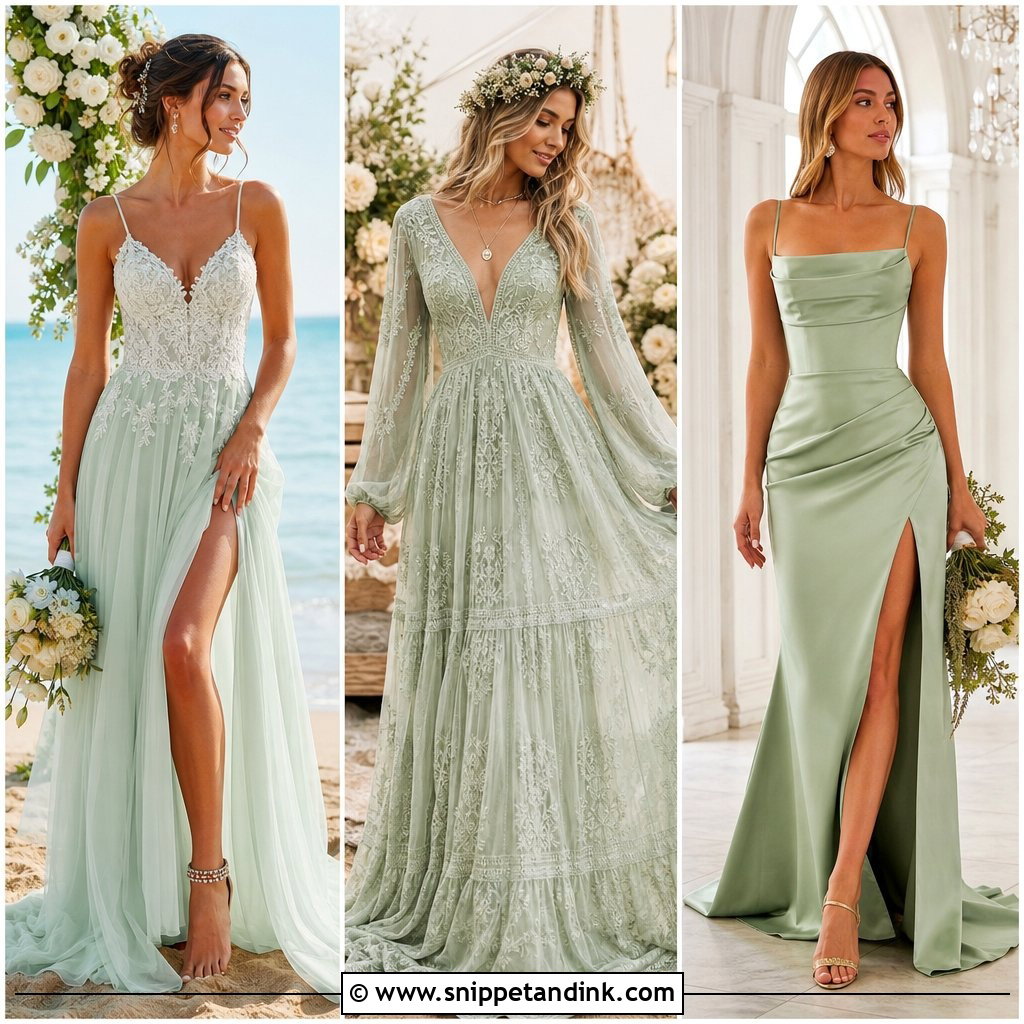
12. Sage Green Wedding Dress
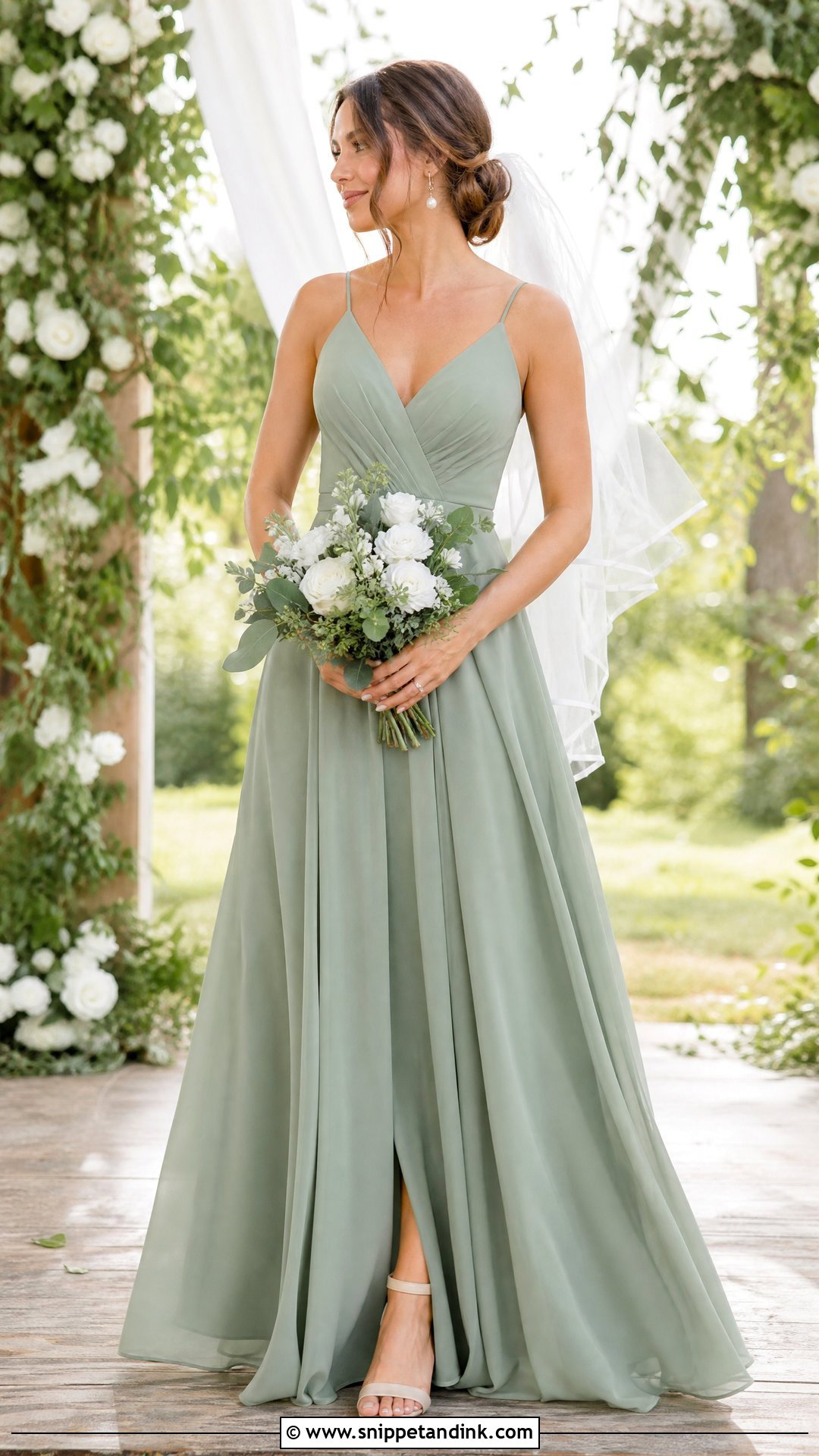
Sage is more muted than mint, and that’s exactly why it works for brides who find pastels too sweet. It suits outdoor and rustic venues because it echoes the greenery around it. Chiffon gives a relaxed feel, satin a polished one, tulle a romantic one. A simple A-line keeps the color the focus. Style it with ivory heels, pearl earrings and a loose low bun. White roses, eucalyptus and cream flowers complement it without making the whole picture too green.
13. Pastel Blue Organza Wedding Dress
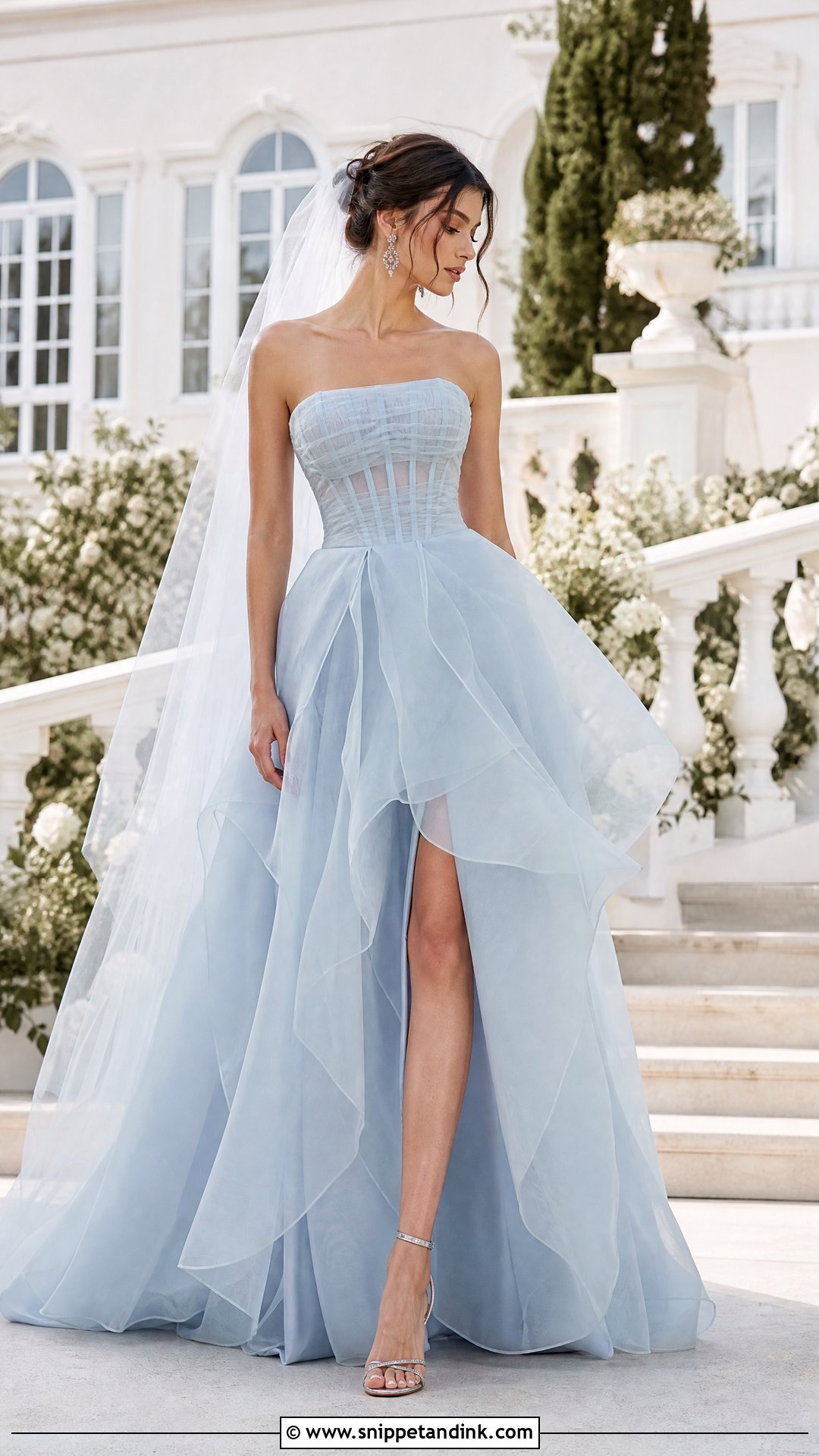
Organza has a crisp hand that holds a shape on its own, so a pastel blue gown in it can be full and sculptural without being heavy. It suits ball gowns, A-lines and more architectural designs. The fabric catches light and shows the color clearly outdoors. Silver heels, crystal earrings and a sheer veil keep it light; rosy cheeks and a natural lip keep the face fresh. Organza wrinkles more than you’d think, so steam it on the morning and avoid sitting for long before photos.
14. Blush Satin Slip Wedding Dress
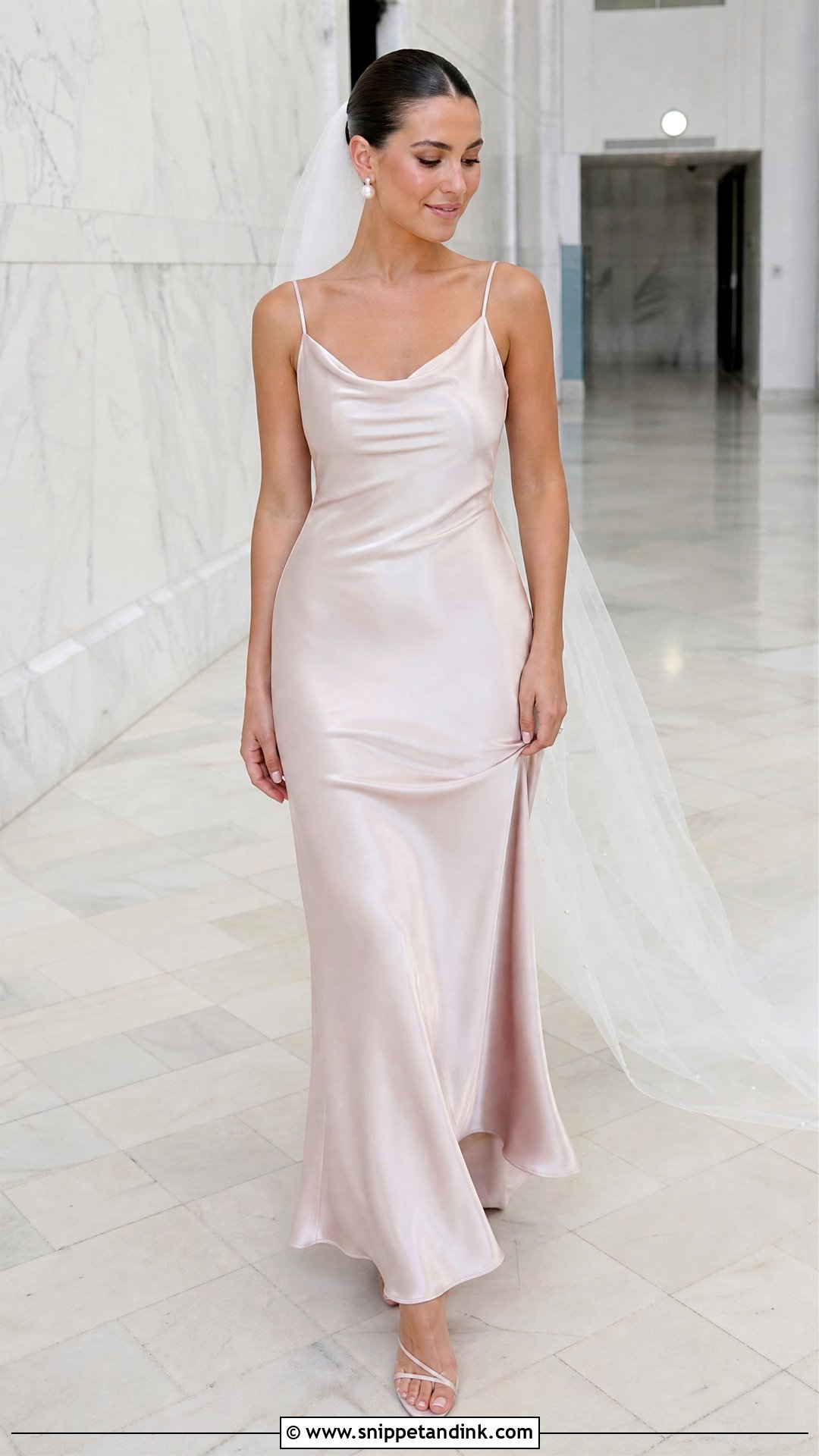
A bias-cut slip in blush satin is simple to look at and hard to get right. The bias cut gives it that smooth drape, but it also shows everything underneath, so I fit these with the exact undergarments a bride will wear on the day. It suits courthouse, city and destination weddings. Strappy ivory heels, pearl earrings and a sleek veil keep it minimal; a sheer cape or tailored bridal jacket adds coverage for a ceremony. White orchids, roses or calla lilies keep the bouquet as refined as the dress.
15. Pastel Rainbow Wedding Dress
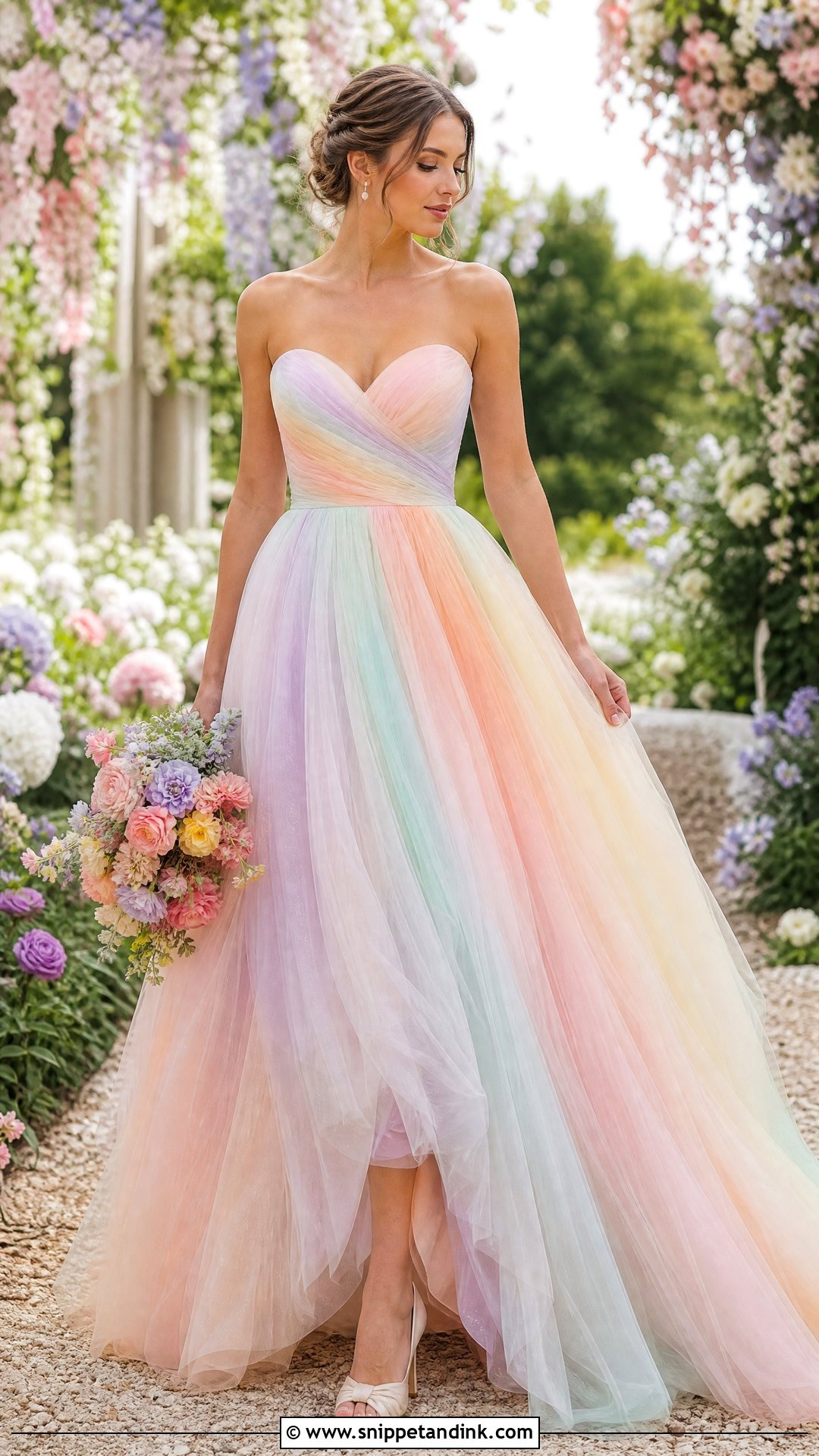
A pastel rainbow wedding dress is for the bride who wants guests talking about the gown. The best versions blend soft layers of blush, lavender, mint, blue, peach and pale yellow in tulle or organza, so the colors melt into each other rather than forming stripes. Keep the bodice simple to balance the skirt. Clear, silver or ivory heels and very little jewelry. A white bouquet is the right call here, since anything colored competes with the gradient.
16. Pale Peach Tulle Wedding Dress
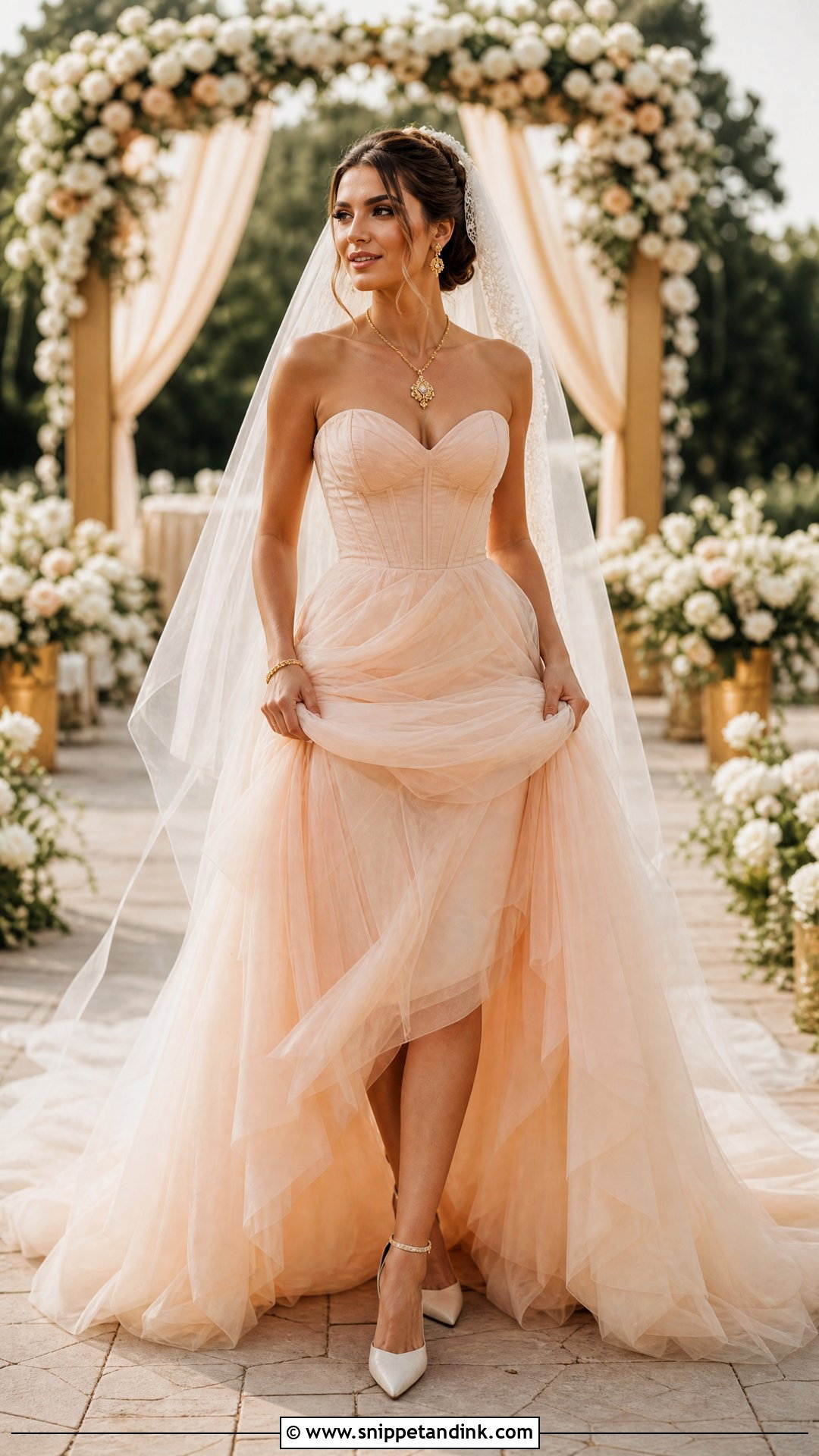
Peach in tulle has a glow that suits golden hour almost better than any other pastel. It’s warmer than blush and softer than coral, and it flatters warm and deep skin tones particularly well. Layered tulle gives the skirt movement, while a corset bodice or fitted waist gives shape. Gold jewelry, ivory heels and a sheer veil; soft waves or a textured updo. A bouquet of cream, peach and pale pink keeps it cohesive.
17. Pale Gray Wedding Dress
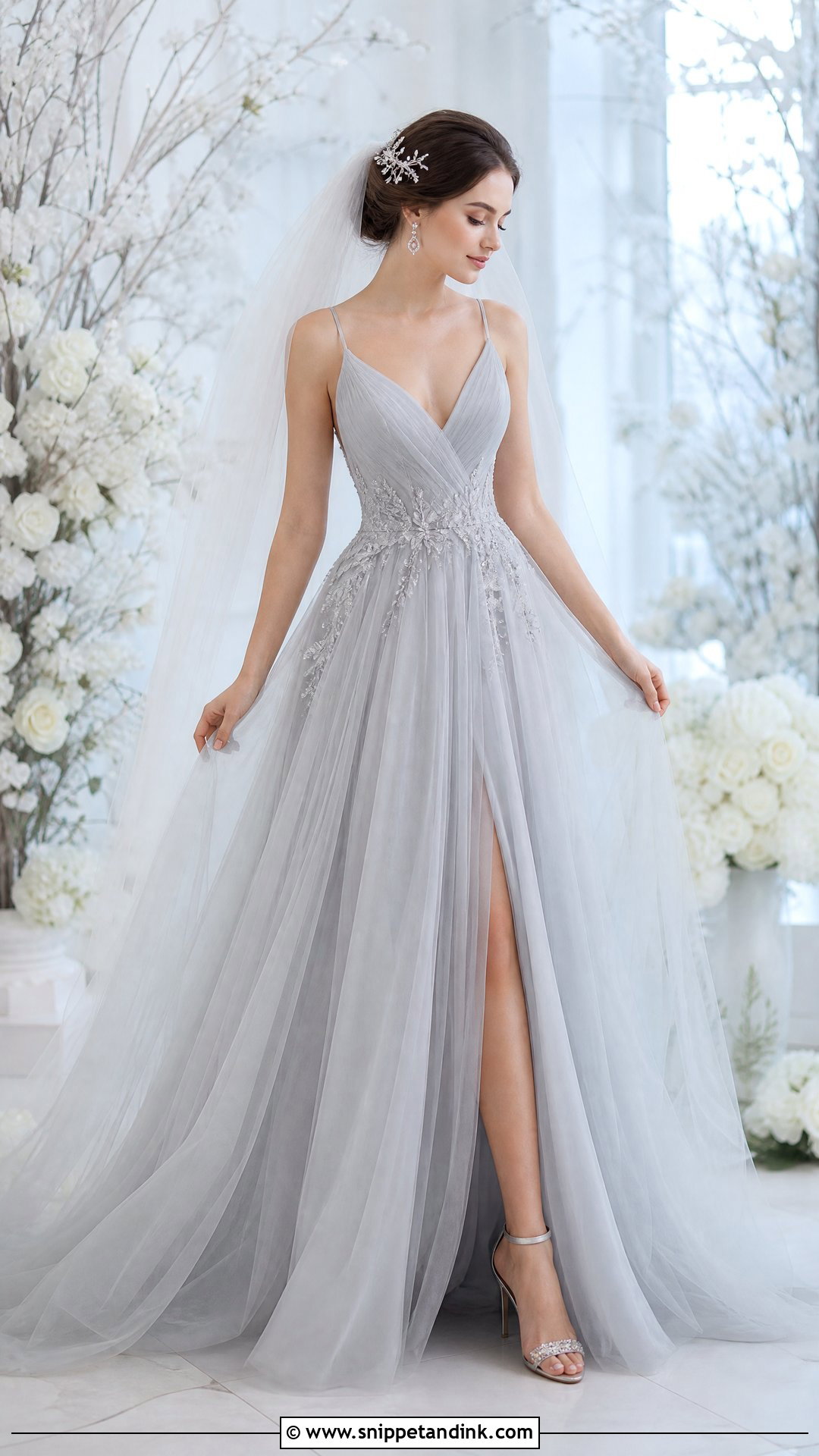
Pale gray is the most understated pastel and, to my eye, one of the most modern. In tulle it looks misty and soft; in satin it looks sleek. It flatters cool skin tones and looks right at winter weddings and city venues where ivory can feel too warm. Silver jewelry, crystal hair pins and white or silver heels suit it. Be aware that gray reads very differently on different screens and in different lights, so see the actual fabric before ordering.
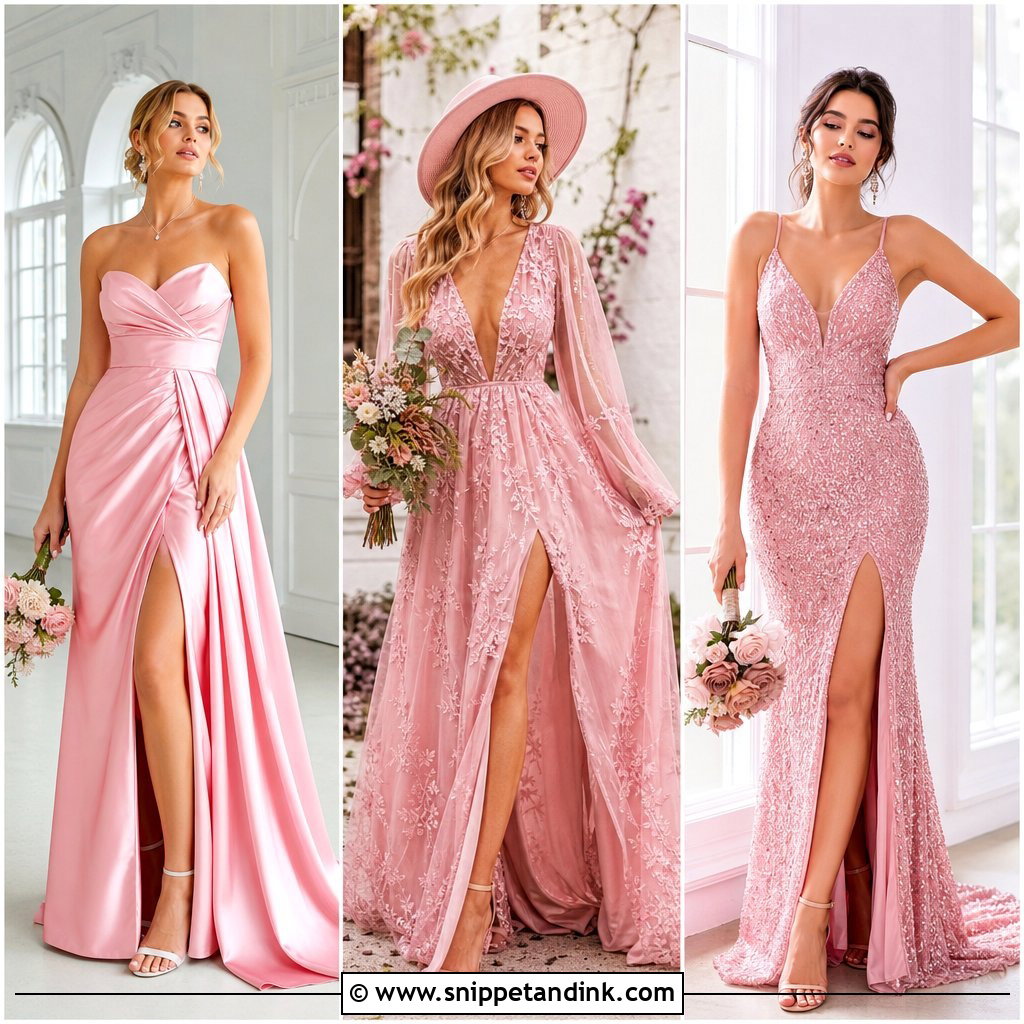
18. Pastel Pink Mermaid Wedding Dress
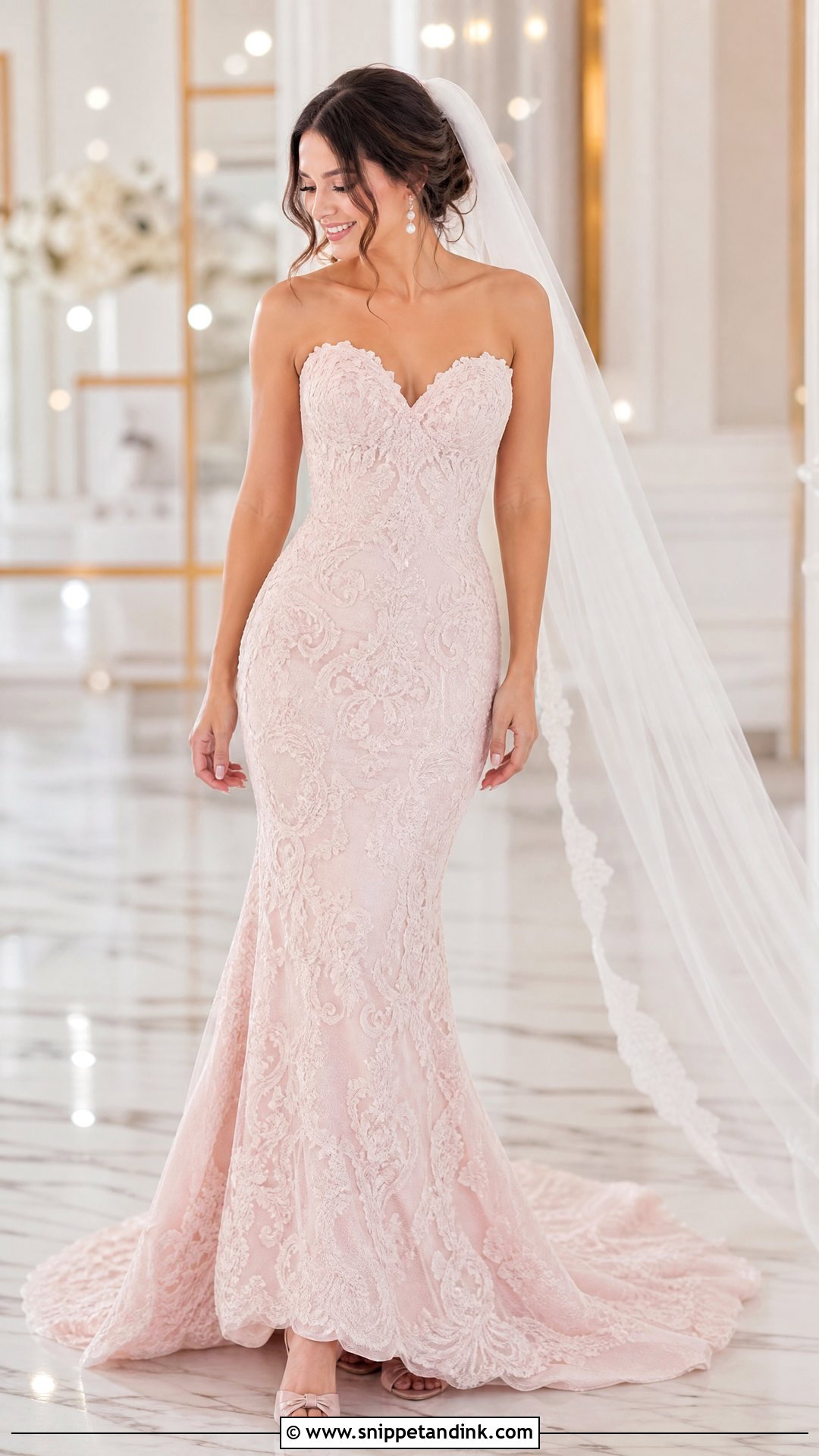
Mermaid gowns are fitted through the hips and knees, which gives a glamorous shape but asks a lot of the fit. In pastel pink, the color softens what is quite a dramatic silhouette. Lace, satin and crepe all work. Practice walking, sitting and climbing a step in it, because the flare point decides how freely you can move; a flare set too low makes dancing hard. Pearl earrings, blush heels and a long veil balance the shape, and a simple ivory and pink bouquet keeps attention on the dress.
19. Ice Blue Wedding Dress
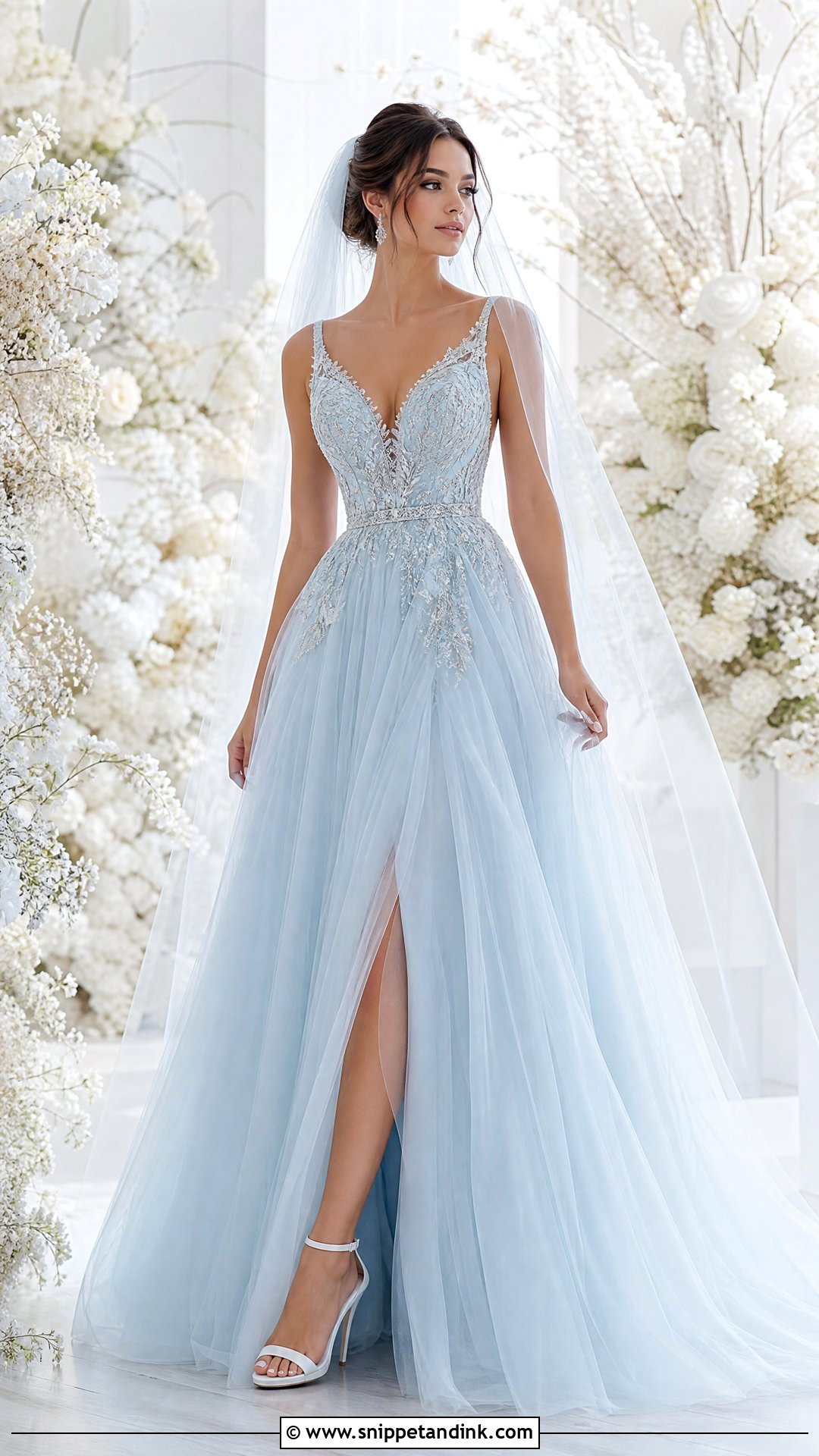
Ice blue is lighter and cooler than dusty blue, almost frosted. It suits tulle, chiffon and shimmering organza, and it photographs well at winter weddings, where it picks up the cool tones of the light. A high neckline looks regal; strapless or square looks modern. Silver accessories, white heels and a sheer veil are all it needs. Ice blue can look nearly white in strong flash, which some brides see as a bonus and others as a problem, so decide which you are.
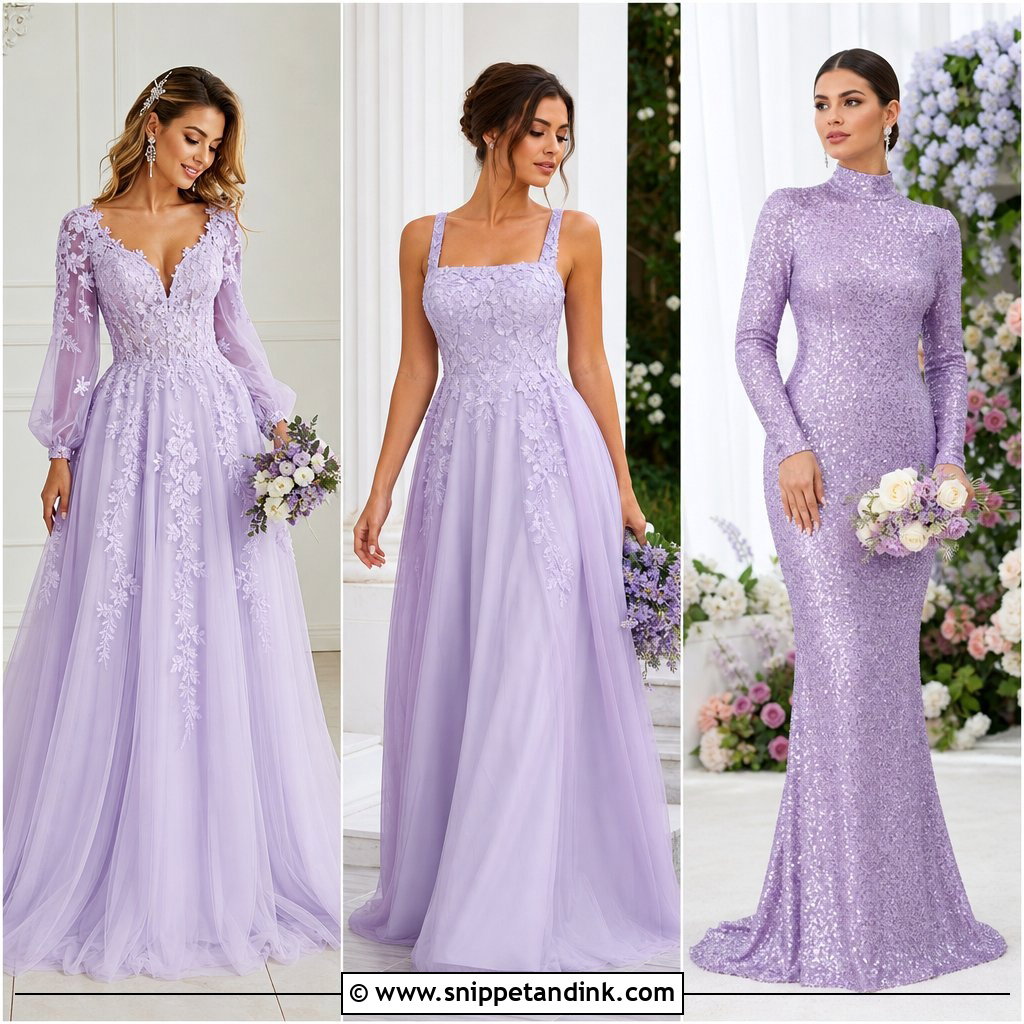
20. Soft Mauve Wedding Dress
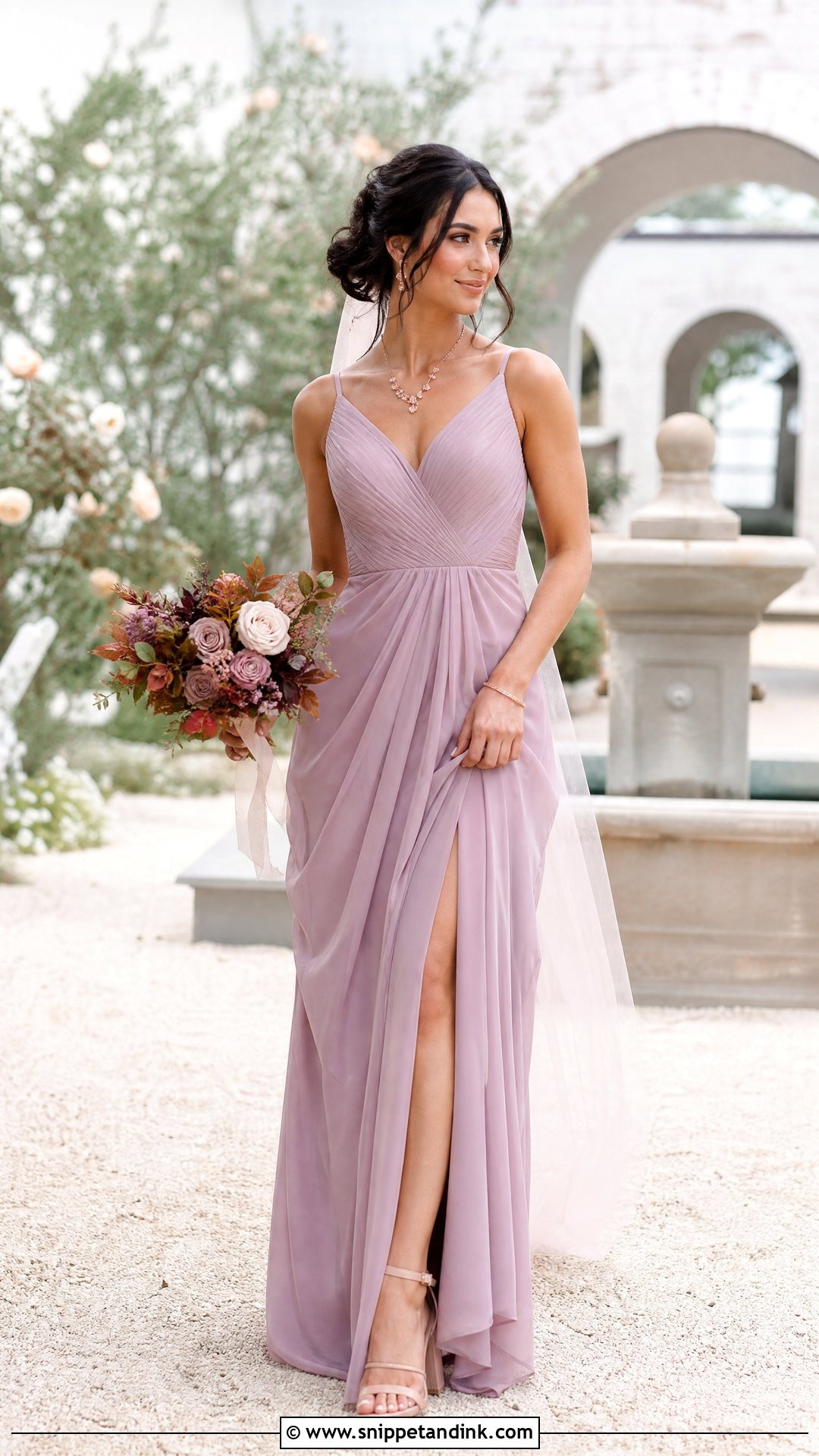
Mauve sits between pink and purple and has more depth than the other shades here, which makes it a good pastel for autumn. It’s flattering on most skin tones, especially olive and deeper complexions where lighter pastels can look chalky. Chiffon, satin, lace and tulle all suit it. A draped bodice or a wrap silhouette keeps it comfortable. Rose gold jewelry, neutral heels and a veil with minimal trim; ivory, dusty rose and pale lavender in the bouquet.
21. Pastel Green Floral Wedding Dress
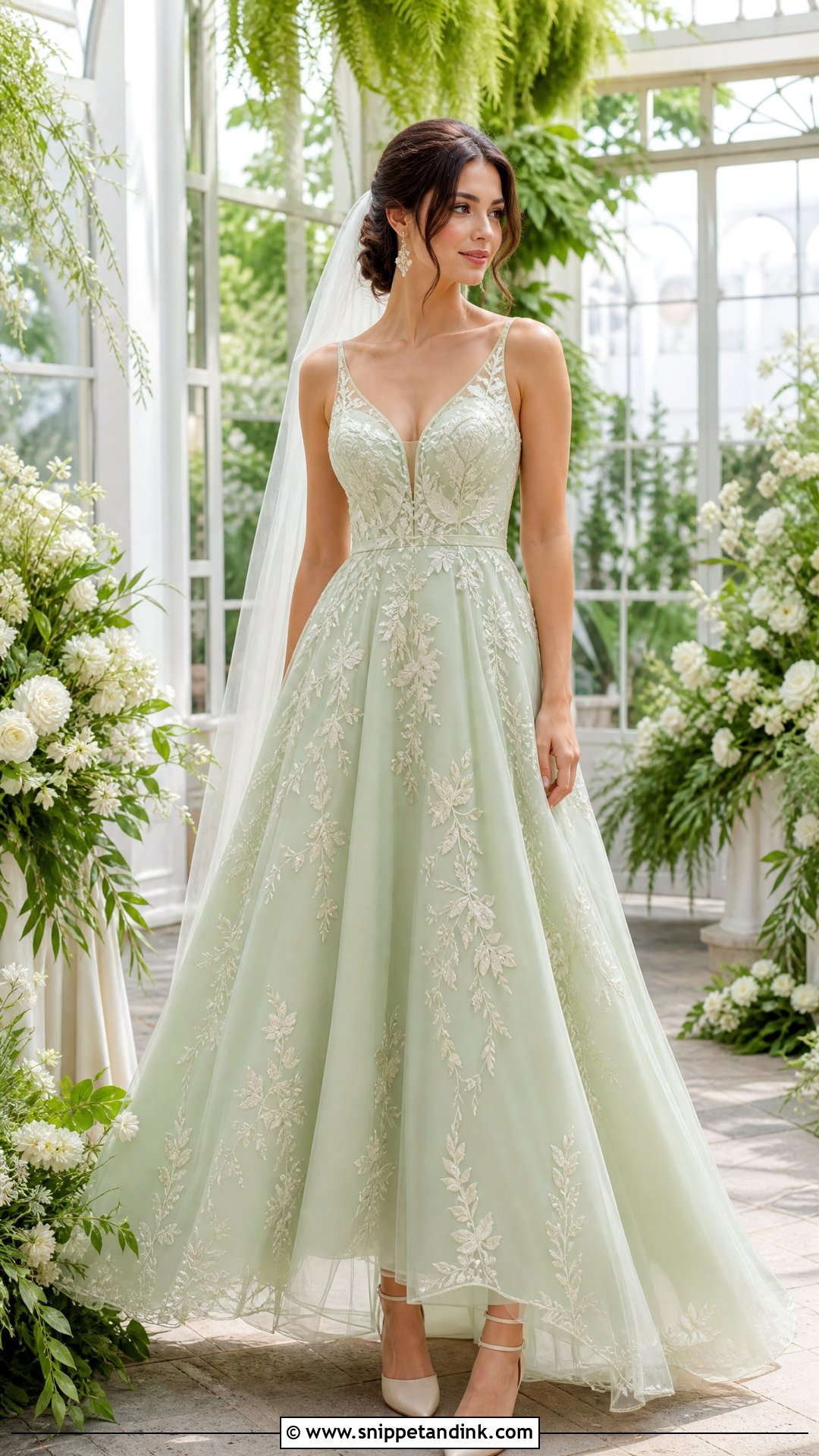
A green base with flowers on top gives a botanical feel that suits greenhouse and countryside weddings. Look for ivory embroidery, pastel appliqué or fine printed blooms. An A-line silhouette lets the pattern move without looking crowded. Ivory heels, pearl earrings and a simple veil keep it bridal. Hold the bouquet back to white flowers with soft pink and fresh greenery, because a big mixed bouquet against a floral dress becomes noise.
22. Pastel Yellow Lace Wedding Dress
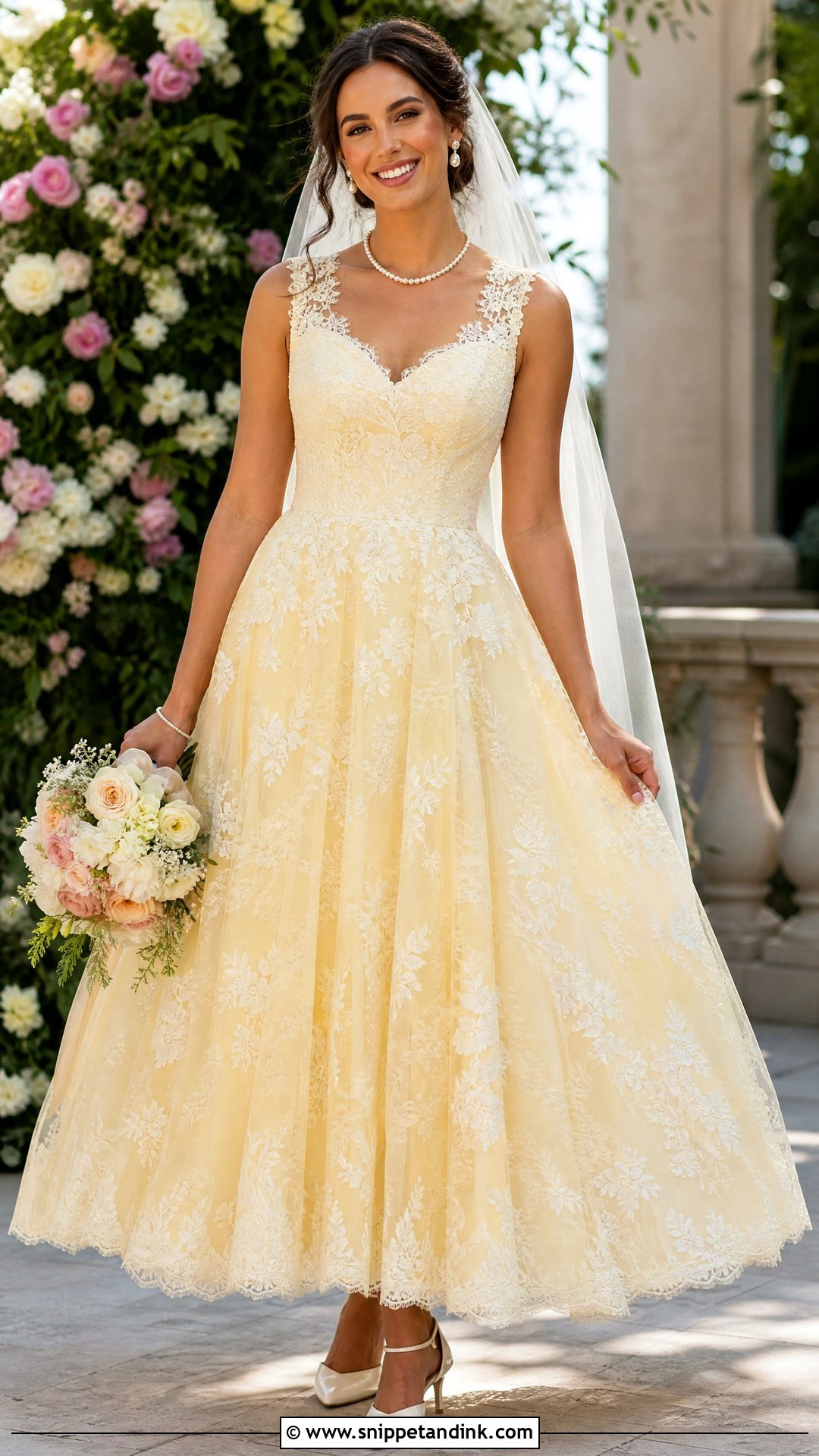
Yellow lace only stays bridal when the yellow is very gentle, like buttercream or pale primrose. Anything brighter and it tips toward a bridesmaid look. The lace gives the dress structure and the color gives it warmth. An A-line or fit-and-flare shape suits it. Pearls, ivory heels and a simple veil, with a bouquet of white daisies, cream roses and a few pale yellow blooms. It’s a daytime dress; spring and outdoor ceremonies suit it best.
23. Pastel Ombre Wedding Dress
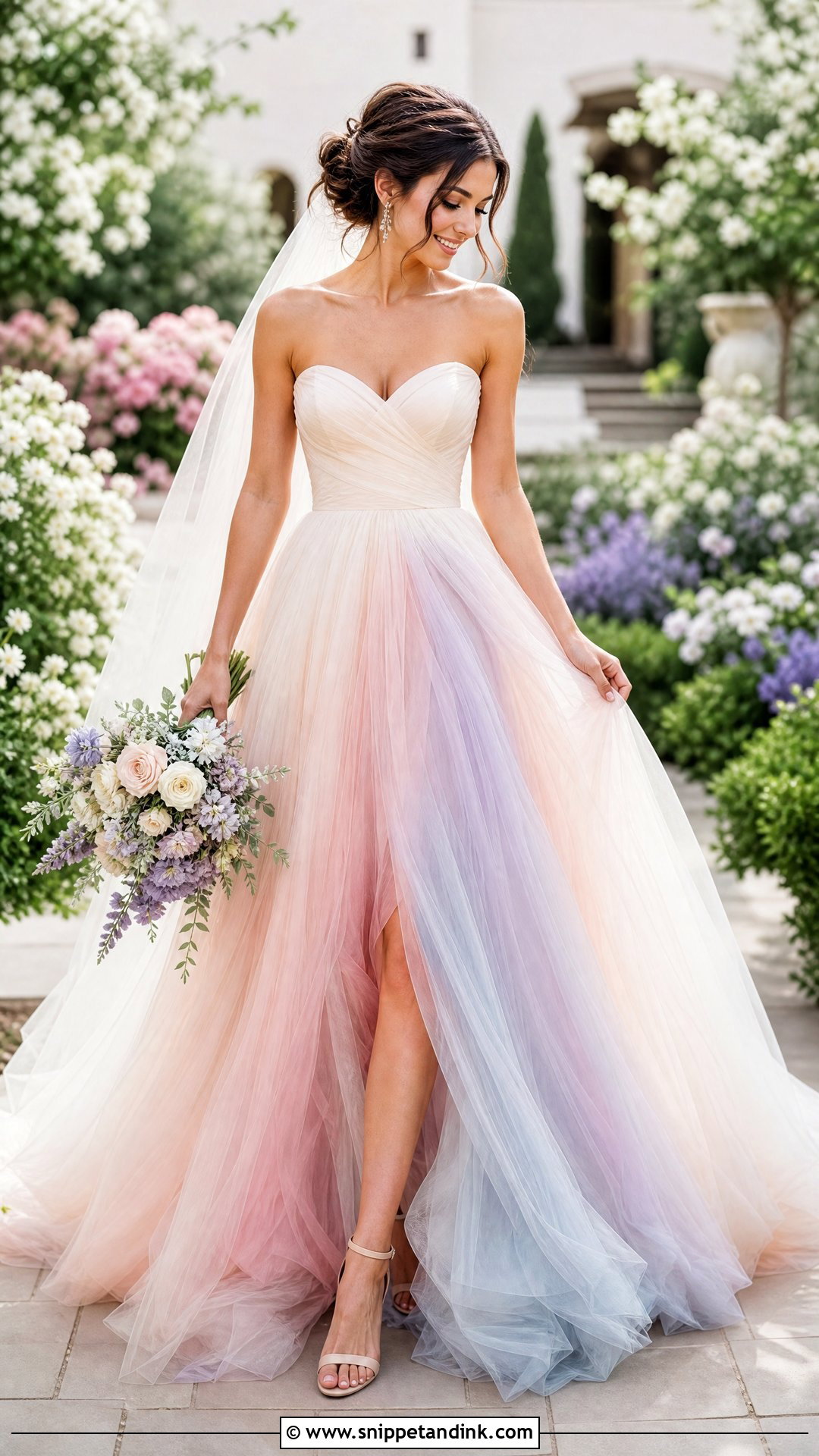
Ombre gowns usually fade from ivory at the bodice into blush, blue, lavender, peach or mint at the hem, so the color pools where it moves most. Layered tulle gives the fade depth because each layer adds a little more tint. A simple bodice keeps it from looking busy. Neutral heels, delicate jewelry and a clean veil. I like a bouquet that repeats just one or two of the colors from the skirt, which makes the whole look feel considered.
24. Blush And Ivory Wedding Dress
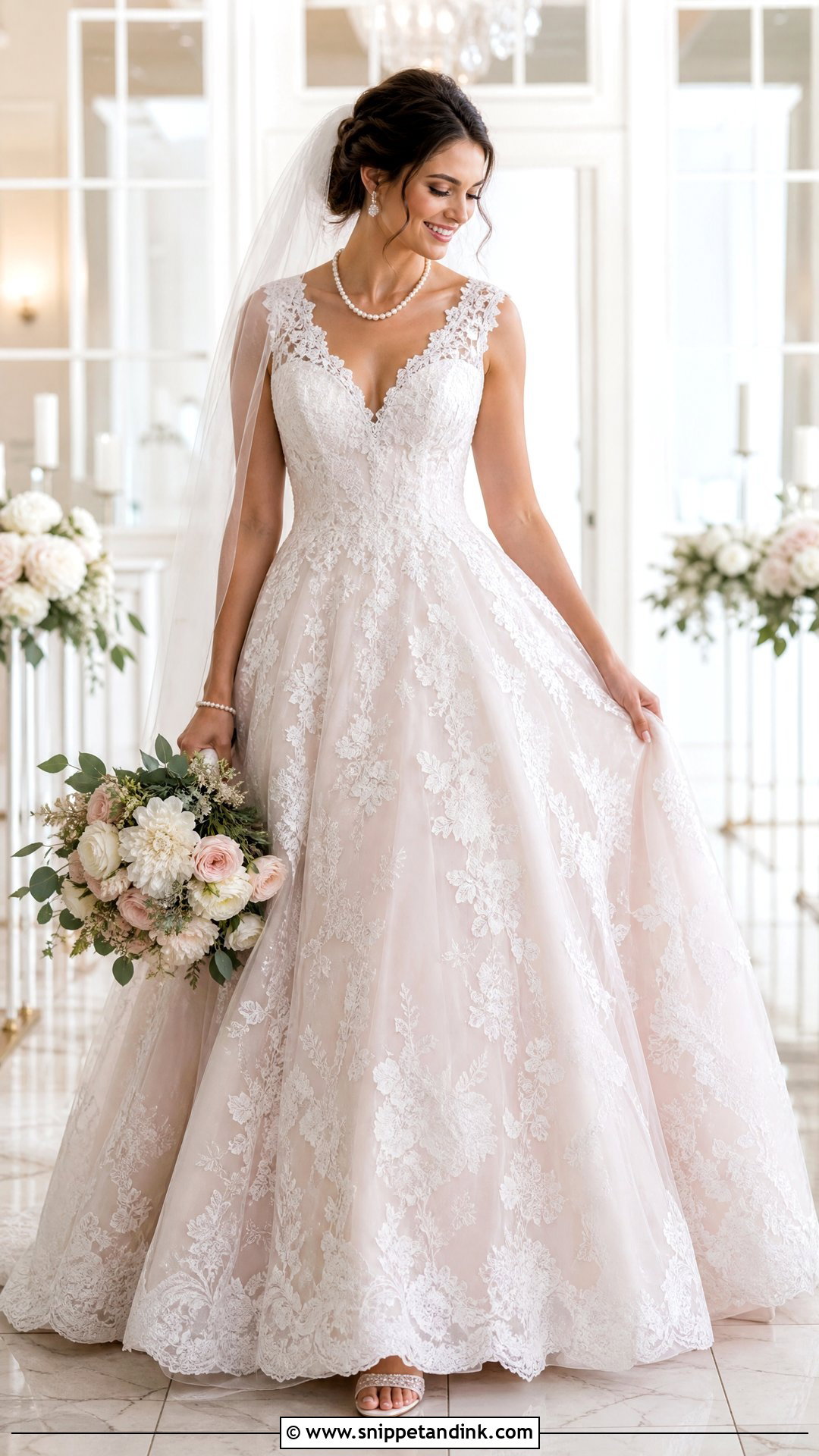
Blush under ivory is the most traditional way to wear a pastel, and it’s what I recommend to brides who want warmth without anyone calling it a colored dress. The lining shows through lace or tulle as a faint glow. It works in ball gowns, mermaids, A-lines and sheaths. Match the veil to the lace tone, not to the lining, or the veil can look gray beside the dress. Ivory heels, pearls and a bouquet of ivory roses and blush peonies.
25. Pastel Corset Wedding Dress
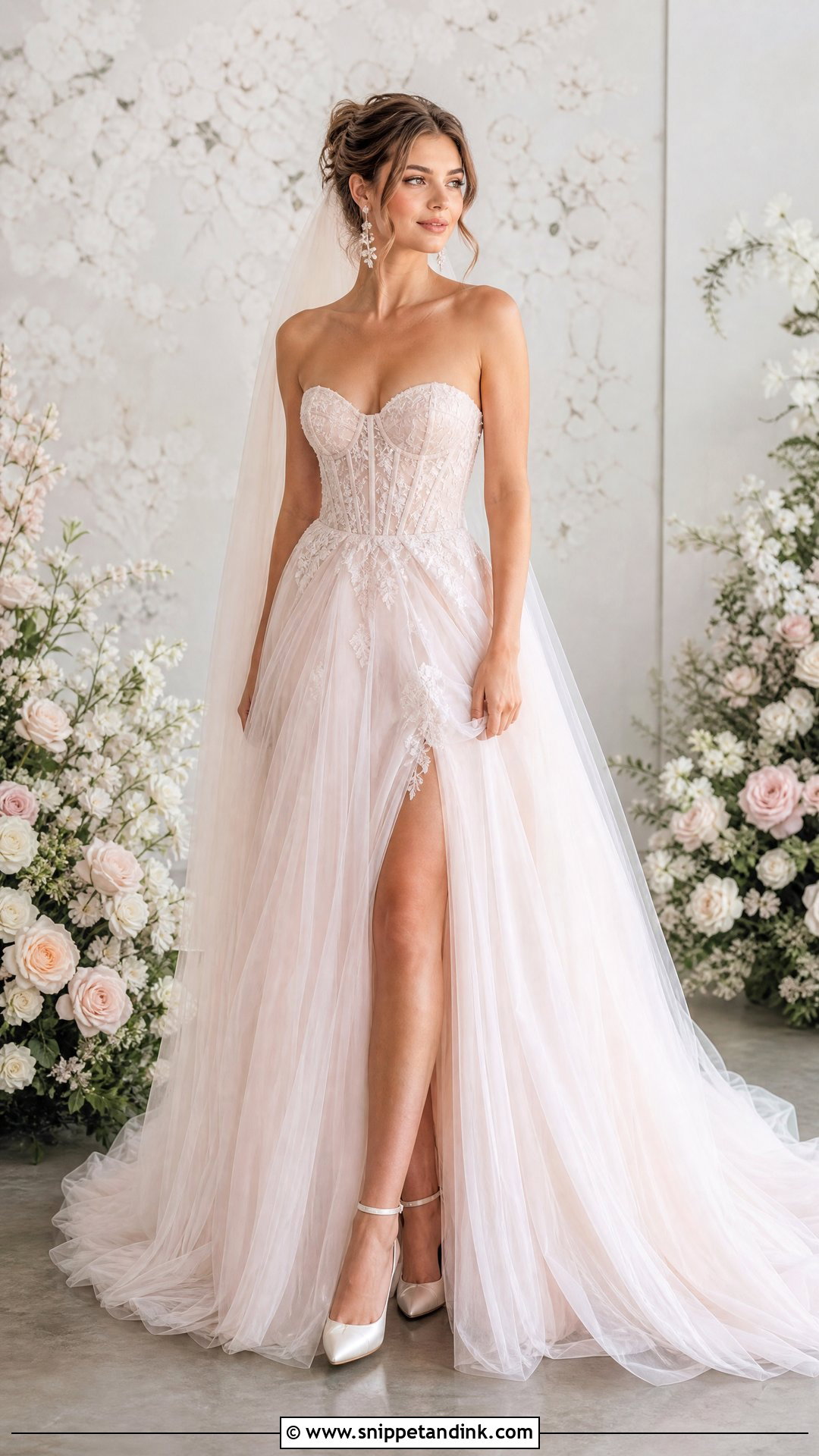
A corset bodice gives shape and support, and when it’s built properly with boning and a waist tape, it holds the gown up all day without straps. In blush, lavender, powder blue or champagne, the color softens what is a structured silhouette. A flowing tulle, satin or organza skirt balances it. Strapless feels classic; sheer straps or off-shoulder sleeves soften it. I’d sit and eat in the corset at your final fitting to make sure it’s comfortable through dinner. Delicate earrings, a long veil and a soft bouquet in ivory and matching pastels.
Which White Goes With a Colored Dress?
This is the detail brides forget. Your veil, shoes and any lace jacket are also some shade of white, and next to a tinted gown, the wrong white looks dingy or stark. A bright diamond white veil over blush can make the gown look muddy. An ivory veil over ice blue can look yellow.
My rule is to match accessories to the warmth of the gown. Warm pastels like peach, butter yellow, champagne and blush sit best with ivory or soft cream. Cool pastels like powder blue, lavender, ice blue and gray sit better with a softer white or a tulle tinted to match. Some veil makers will dye tulle to the exact shade of your gown, which is worth asking about.
After the wedding
Pastel dyes fade in sunlight more readily than you’d expect, especially on silk. Store the gown away from windows in a breathable garment bag, and tell your cleaner it’s a colored gown so they test the dye before treating any stains. Spot-cleaning a tinted dress at home can leave a lighter patch that’s impossible to fix.
Is a Pastel Gown Right for You?
A pastel gown gives you softness and personality without giving up the sense that you’re the bride. Whether you love blush pink, powder blue, lavender, mint, peach, champagne or soft florals, start with the shade that flatters your skin in daylight, then choose the silhouette you can move in, and keep the veil, shoes and jewelry quiet enough that the color does the talking. Ball gowns and satin slips alike can carry color well once those three things are settled.
You'll Like These Ideas:


Leave a Reply