
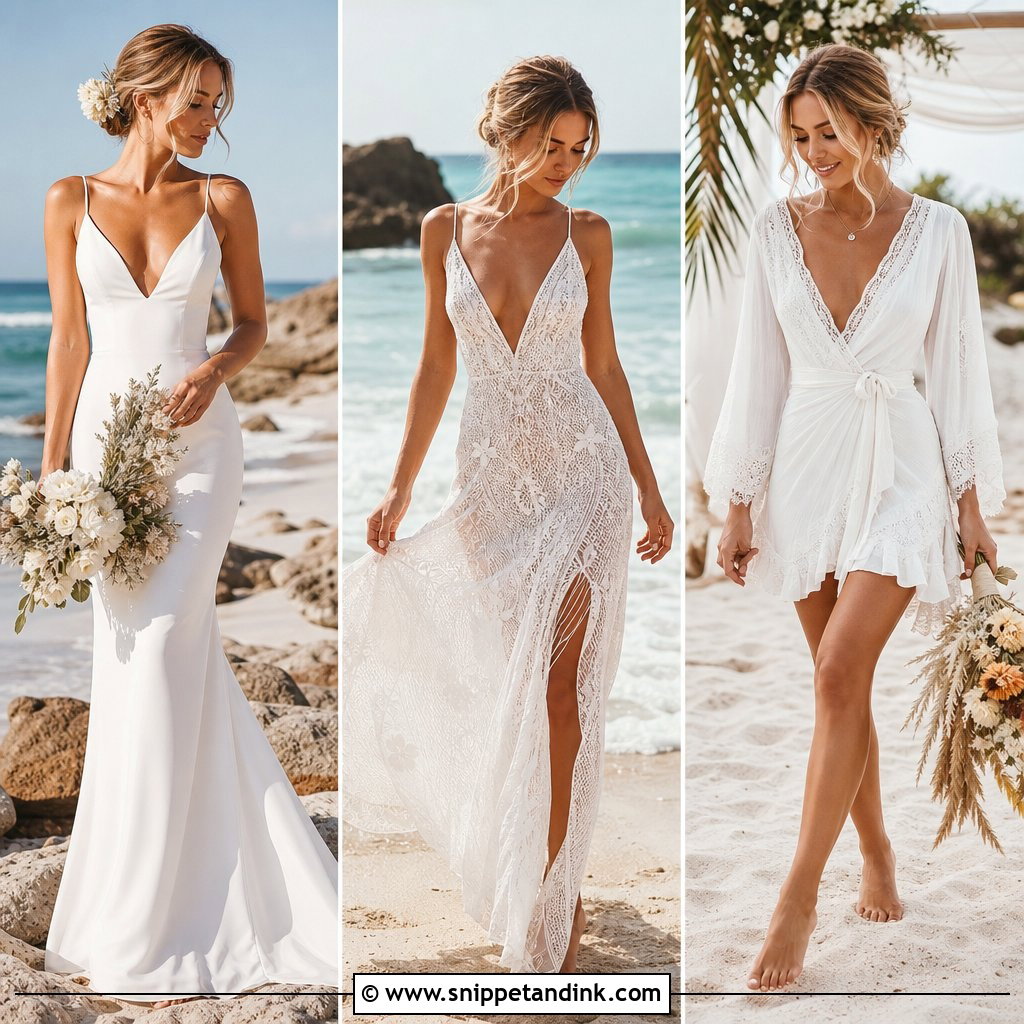
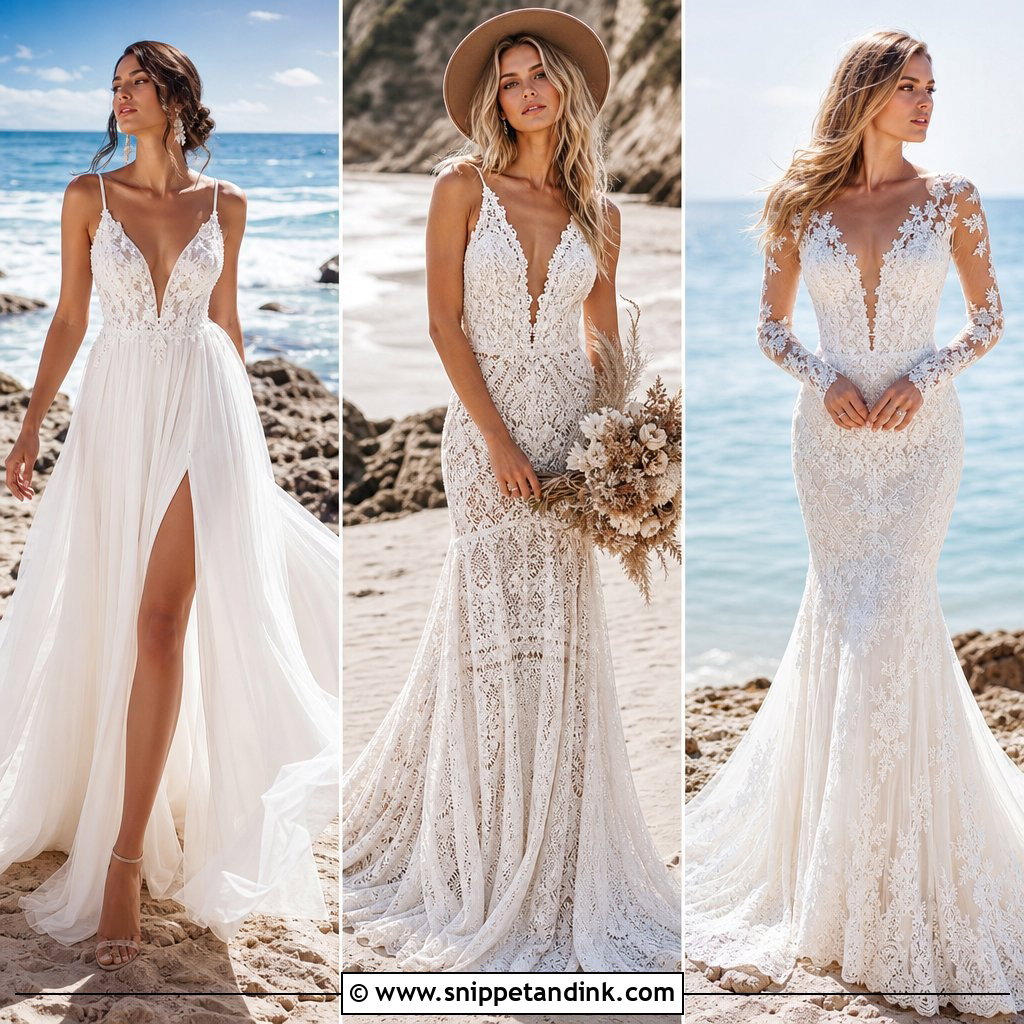
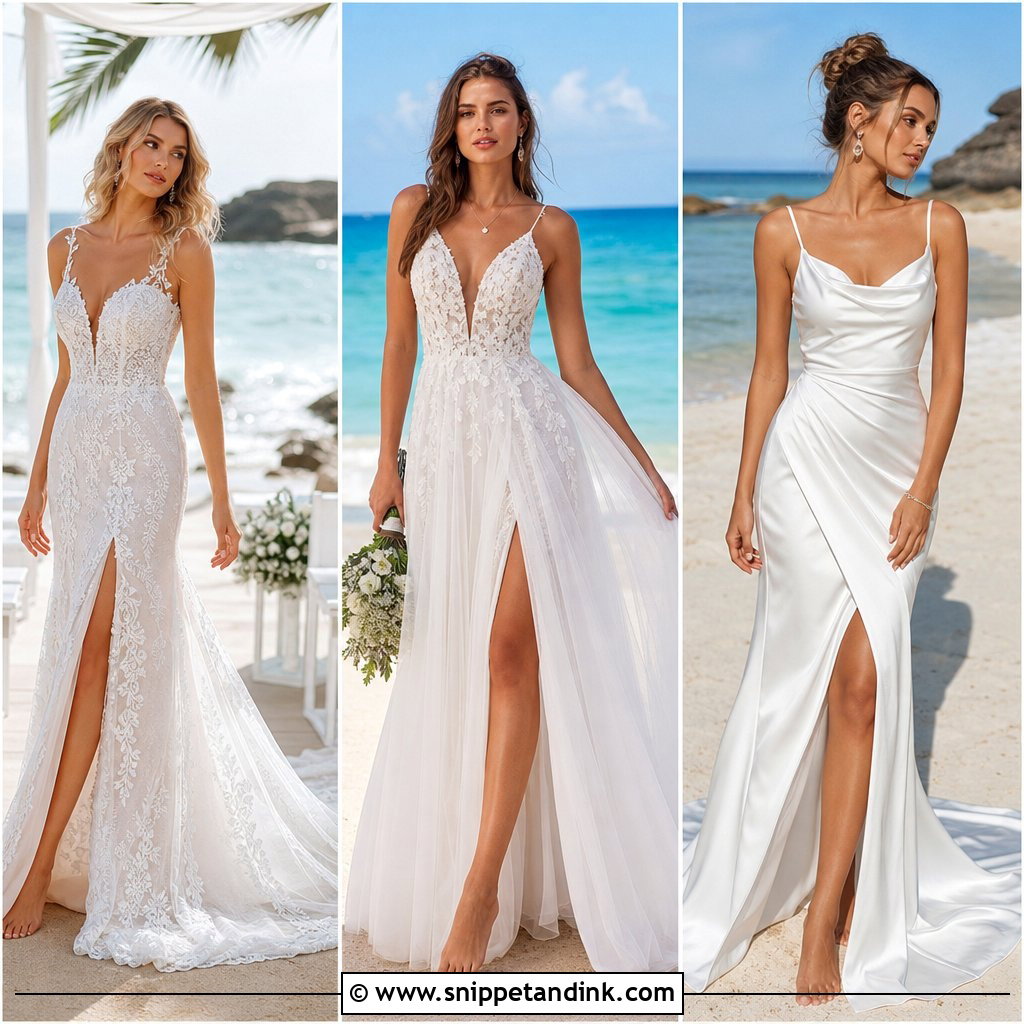
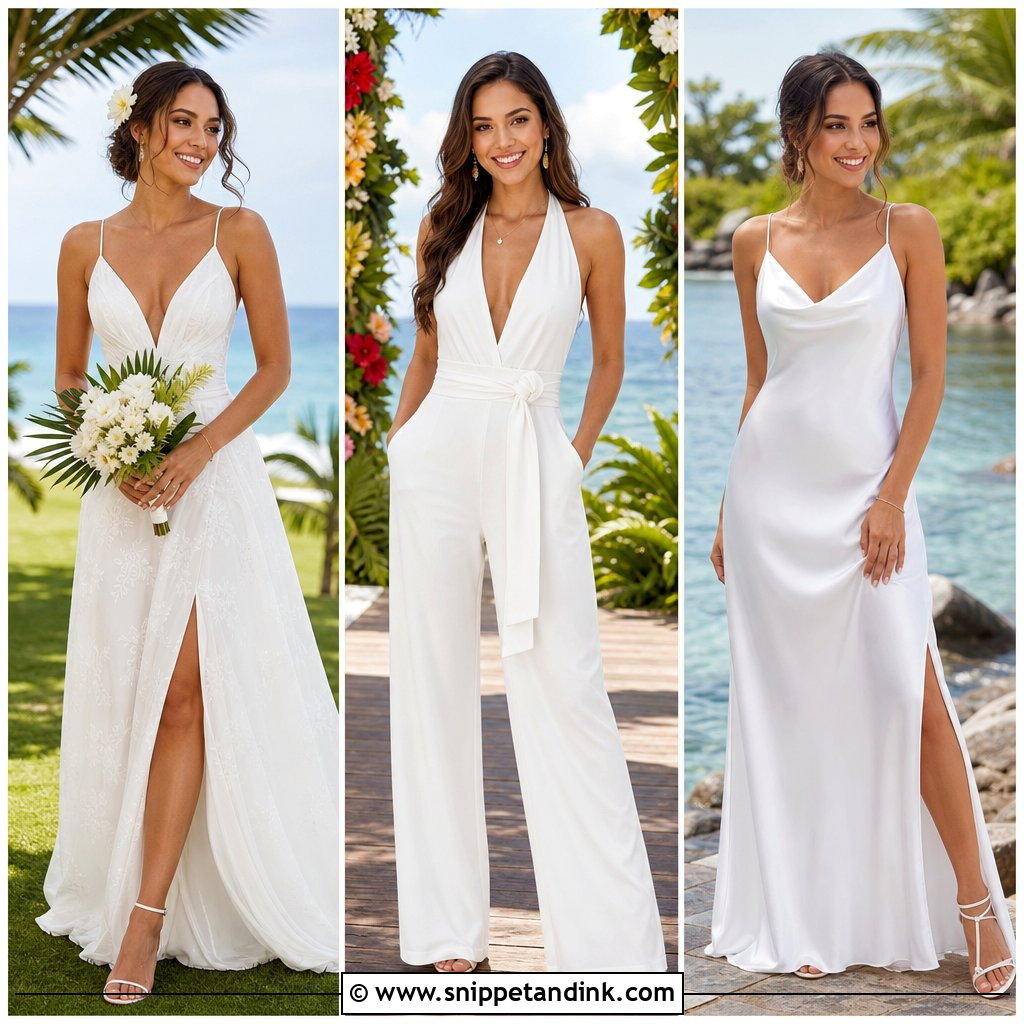
A wedding dress on the shoreline has to cope with things a ballroom never throws at it: wind that lifts a veil sideways, sand that grabs every inch of train, heat that makes a heavy lining feel like a duvet. So when I dress a beach bride, I start with fabric and hem, and only then talk about style. Chiffon, crepe, organza and silk blends move with the air instead of fighting it. Shoes and accessories need the same thinking: flat sandals, pearl earrings, a small hairpiece and a veil you can actually control. The twenty looks below run from minimalist to bohemian, or modern bridal fashion, each with my notes on where it holds up by the water and where it struggles.

What Sand, Wind and Salt Air Do to Bridal Fabric
Every fabric behaves differently once it leaves the bridal salon. I talk brides through this before we look at a single silhouette, because the same neckline in two fabrics can give you two very different days.
- Chiffon and georgette: they float and breathe, and wind makes them look alive. They also wrap around your legs in a gust, so a slightly fuller skirt or a lining with some weight helps.
- Crepe: it holds a clean line, resists creasing and has enough weight not to blow around. It’s my favorite all-rounder for the coast.
- Satin: smooth and luminous in late sun, but it shows water spots, sweat marks and creases from sitting. Silk satin breathes better than polyester satin.
- Organza and tulle: light but crisp, so they hold volume. Tulle snags on driftwood and rough boardwalk planks.
- Lace: the open weave catches fine sand. Shake it out rather than brushing it, which pushes grains deeper.
Humidity is the other factor. Natural fibers absorb moisture and relax, so a silk bodice fitted snugly at home may feel looser by the sea; polyester stays the same but feels warmer. I tell brides to plan the final fitting around what they’ll wear underneath on the day, sandals included, since a hem pinned in heels will drag in flats.
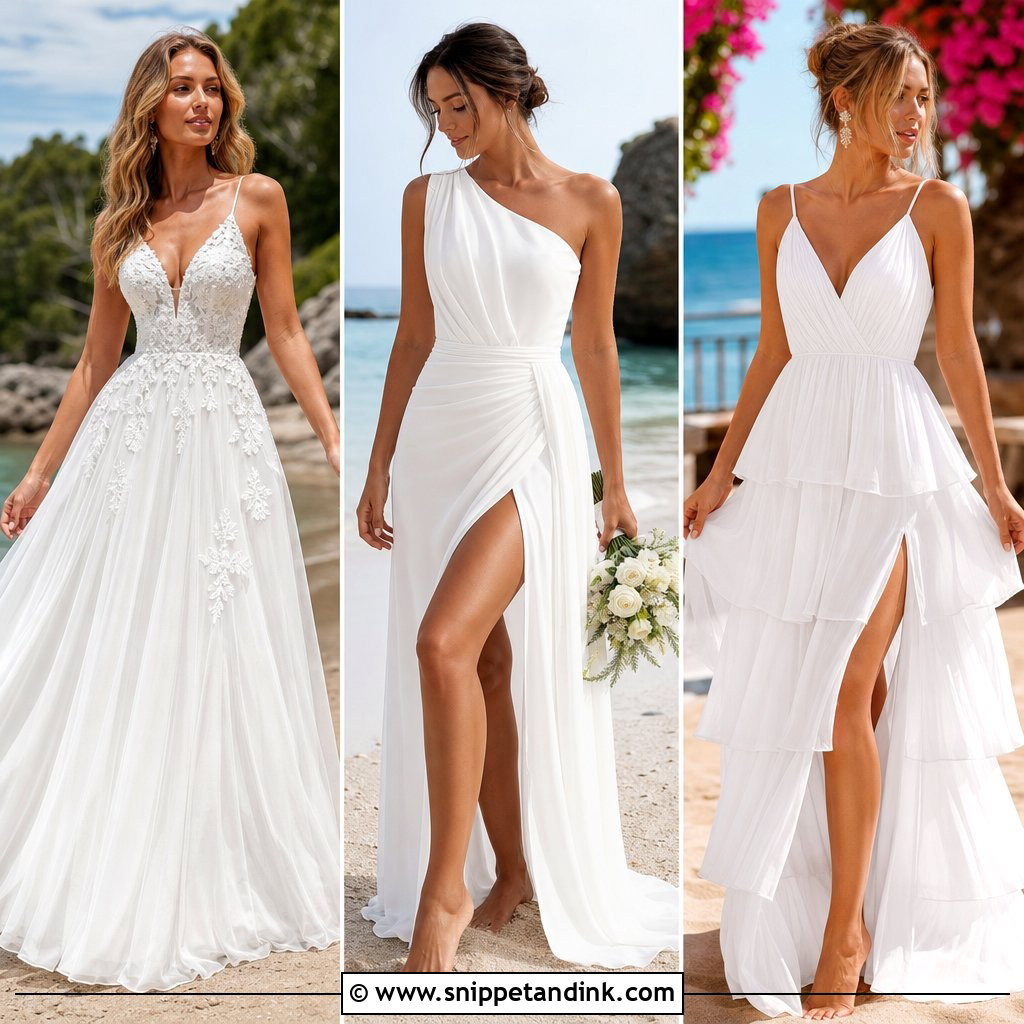
1. Chiffon A-Line Beach Wedding Dress
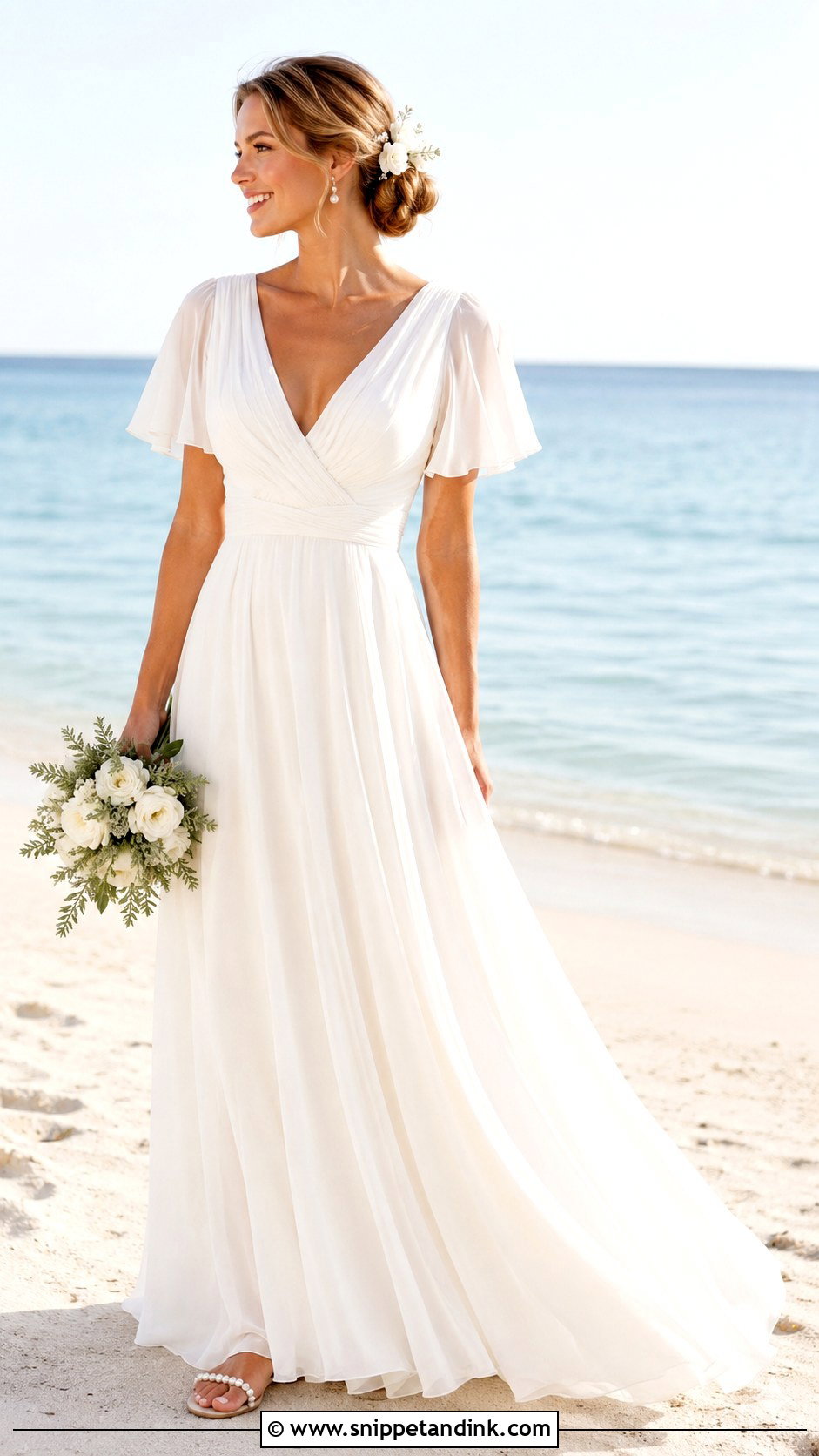
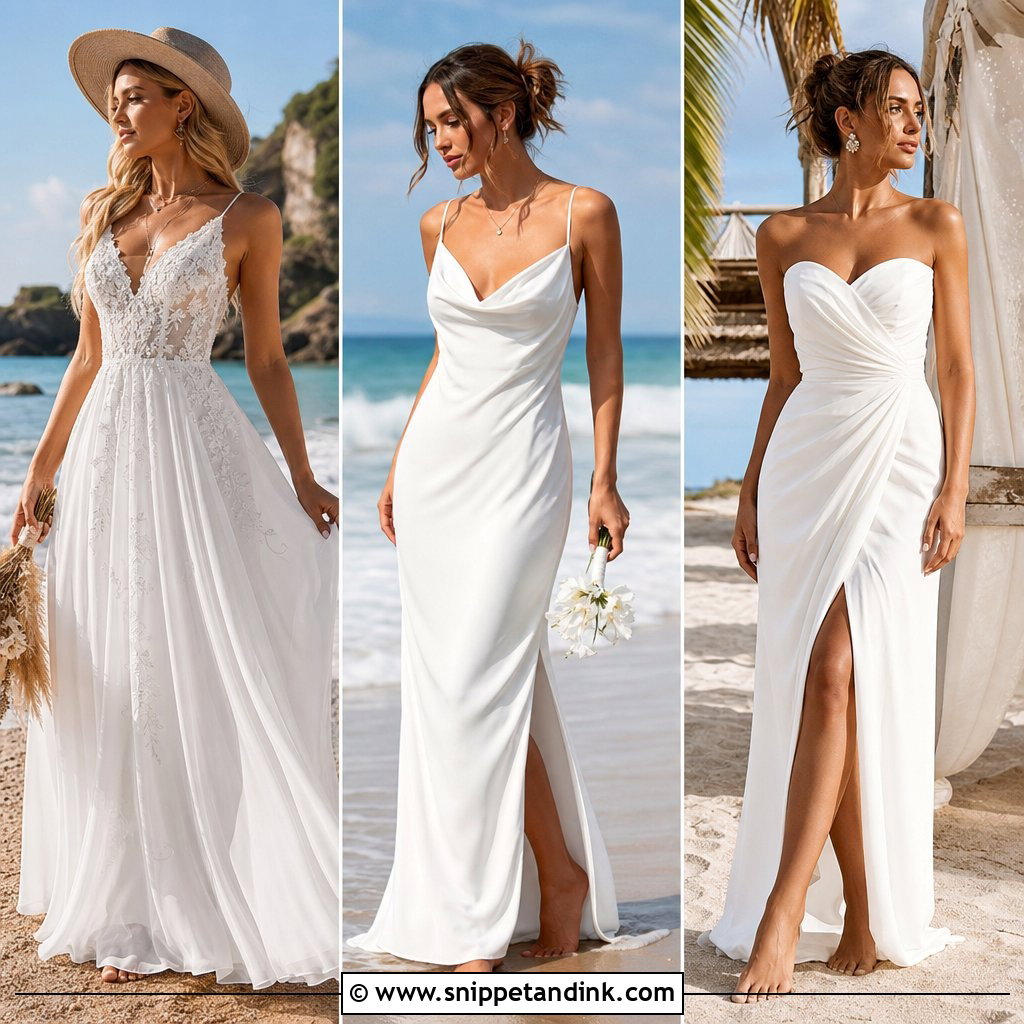
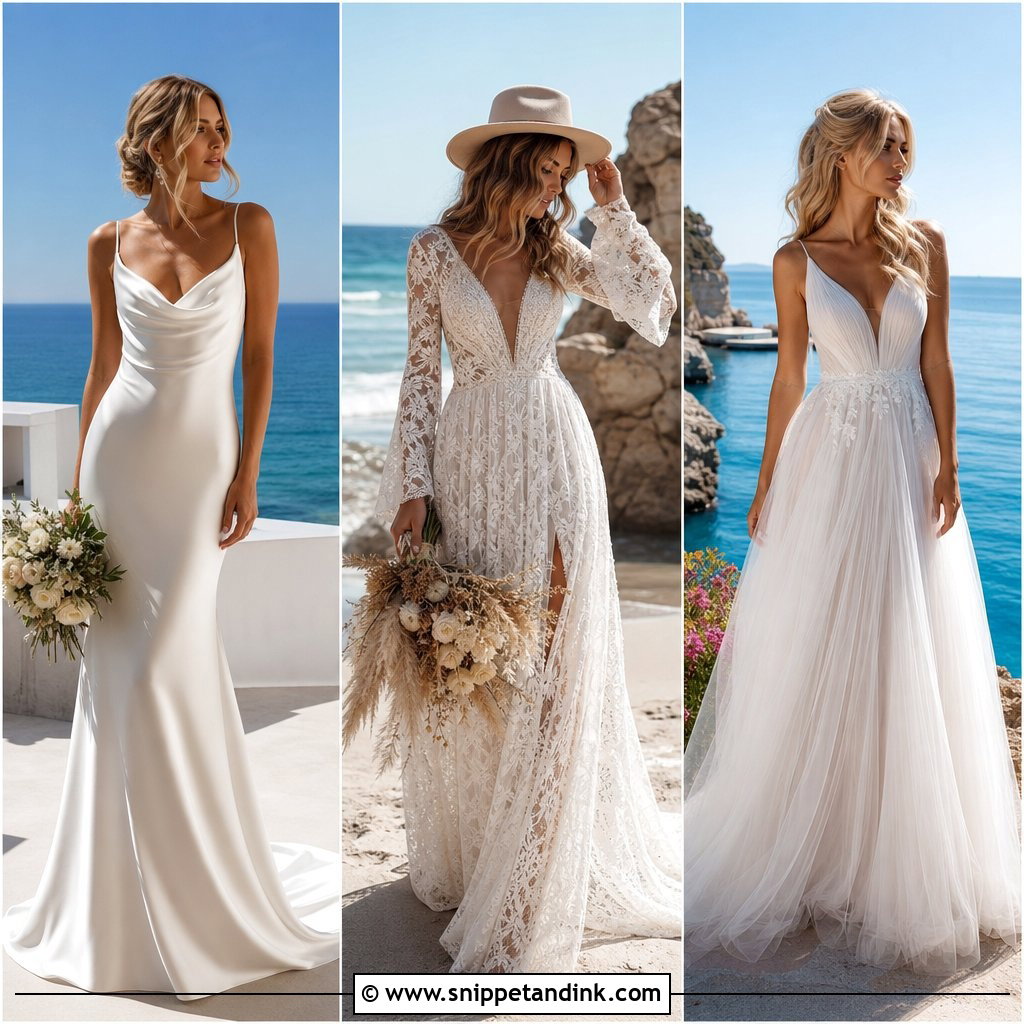
Chiffon A-lines are the dress I’d hand to a nervous beach bride first. A fitted bodice and defined waist hold the shape, and a lightly layered skirt floats away from the body instead of clinging when the wind presses it against your legs. A V-neck lengthens the upper body; flutter sleeves cover the arms without weight. Keep the train short, because chiffon soaks up damp sand and drags. Flat pearl sandals, small drop earrings and a loose low bun with fresh white flowers complete it. A fingertip veil suits a formal ceremony, but in steady coastal wind I’d swap it for a floral comb.
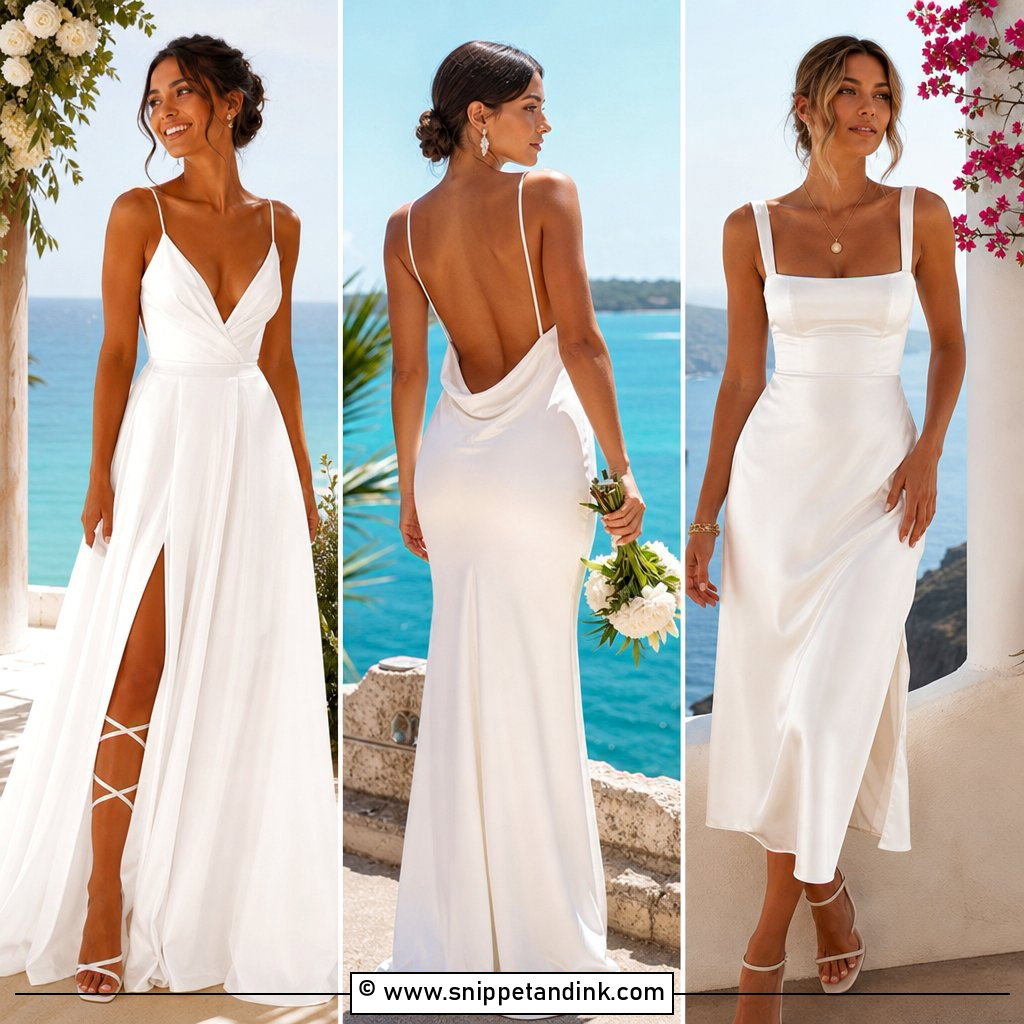
2. Satin Slip Beach Wedding Dress
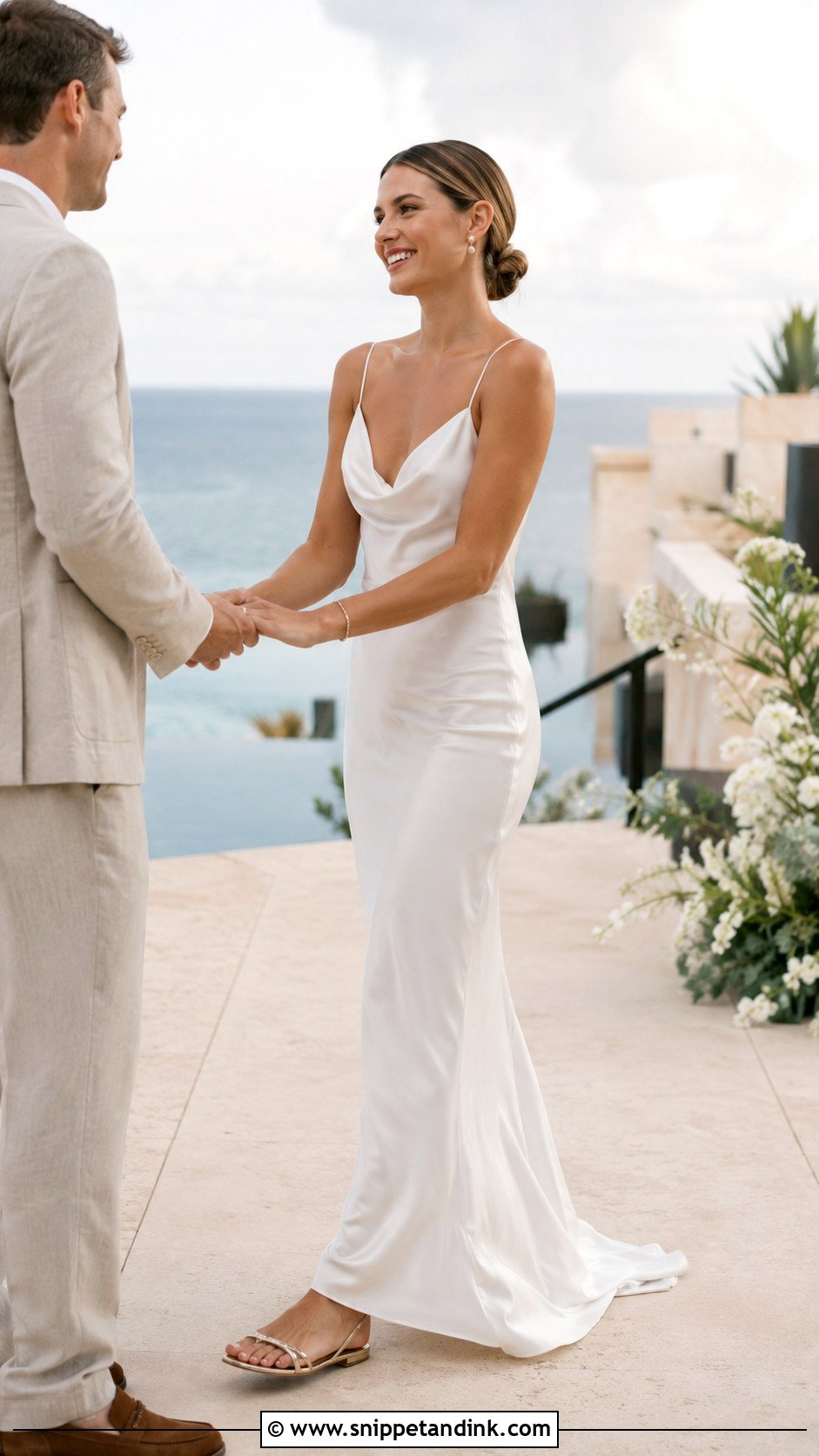
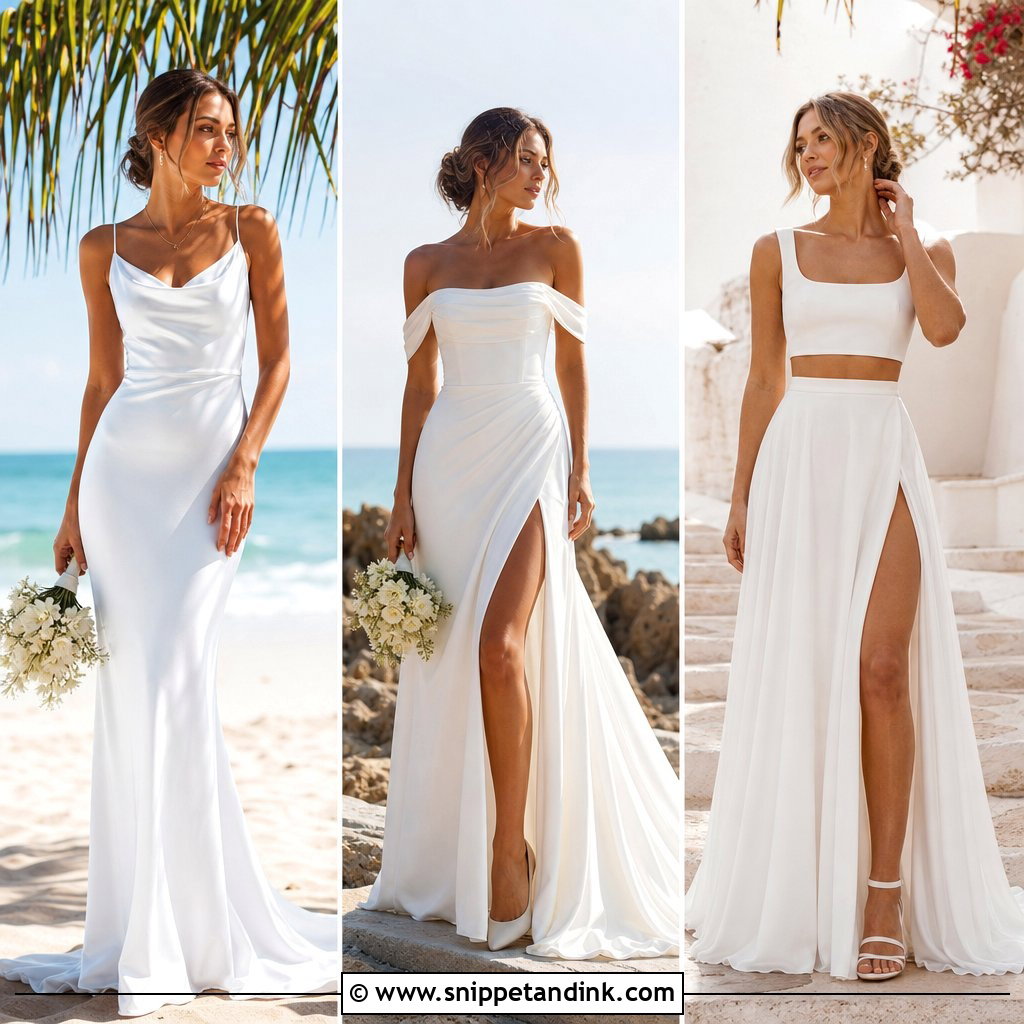
A satin slip against open water is about as clean as bridal styling gets. Bias cut is the key: the fabric is cut on the diagonal so it skims the body and stretches slightly as you move. Silk satin or satin-backed crepe are the ones to look for. Be aware that bias satin shows every seam and line underneath, so I fit the underwear before the dress. Thin straps, a draped neckline and a low back give the shape; flat metallic sandals or ivory ankle-strap flats handle the sand. Pearl studs, a fine bracelet and a sleek bun keep it quiet. A sheer chiffon wrap covers you before sunset and comes off for portraits.
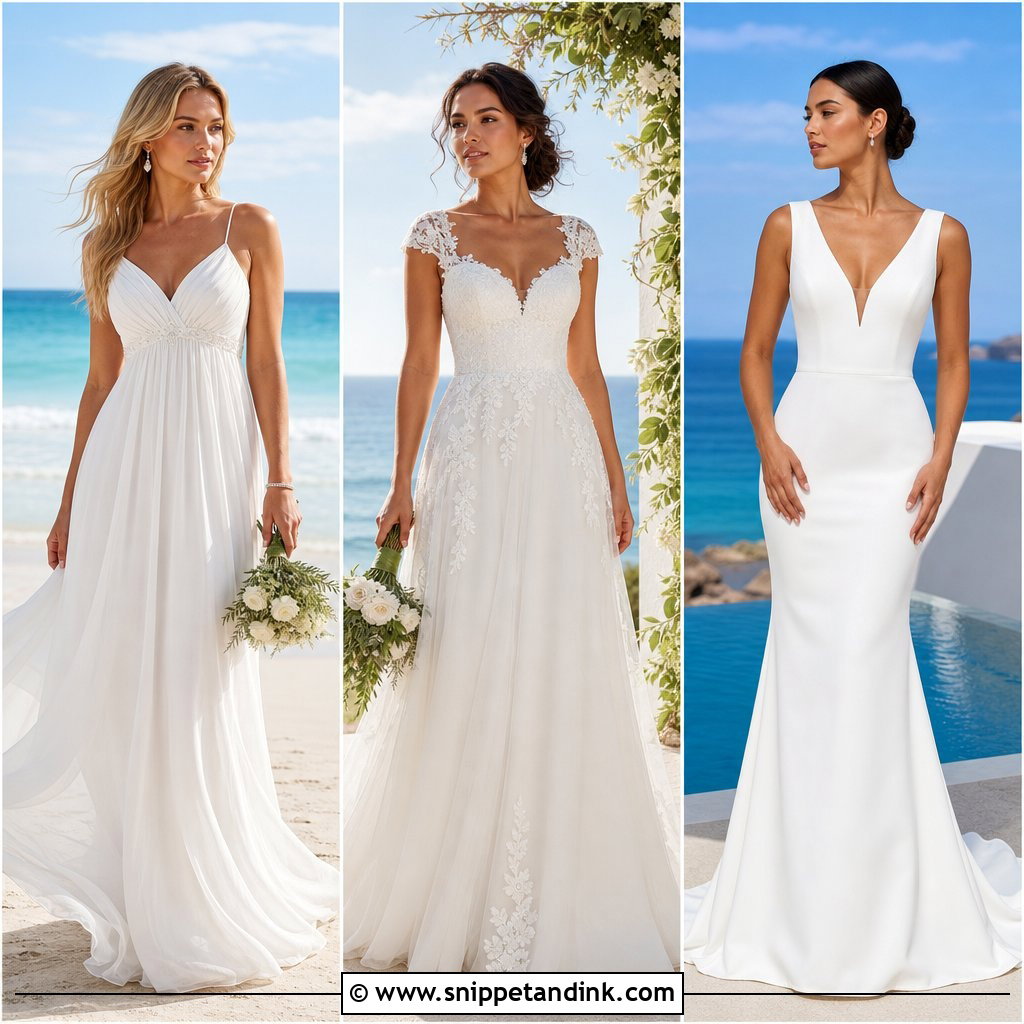
3. Lace Sheath Beach Wedding Dress
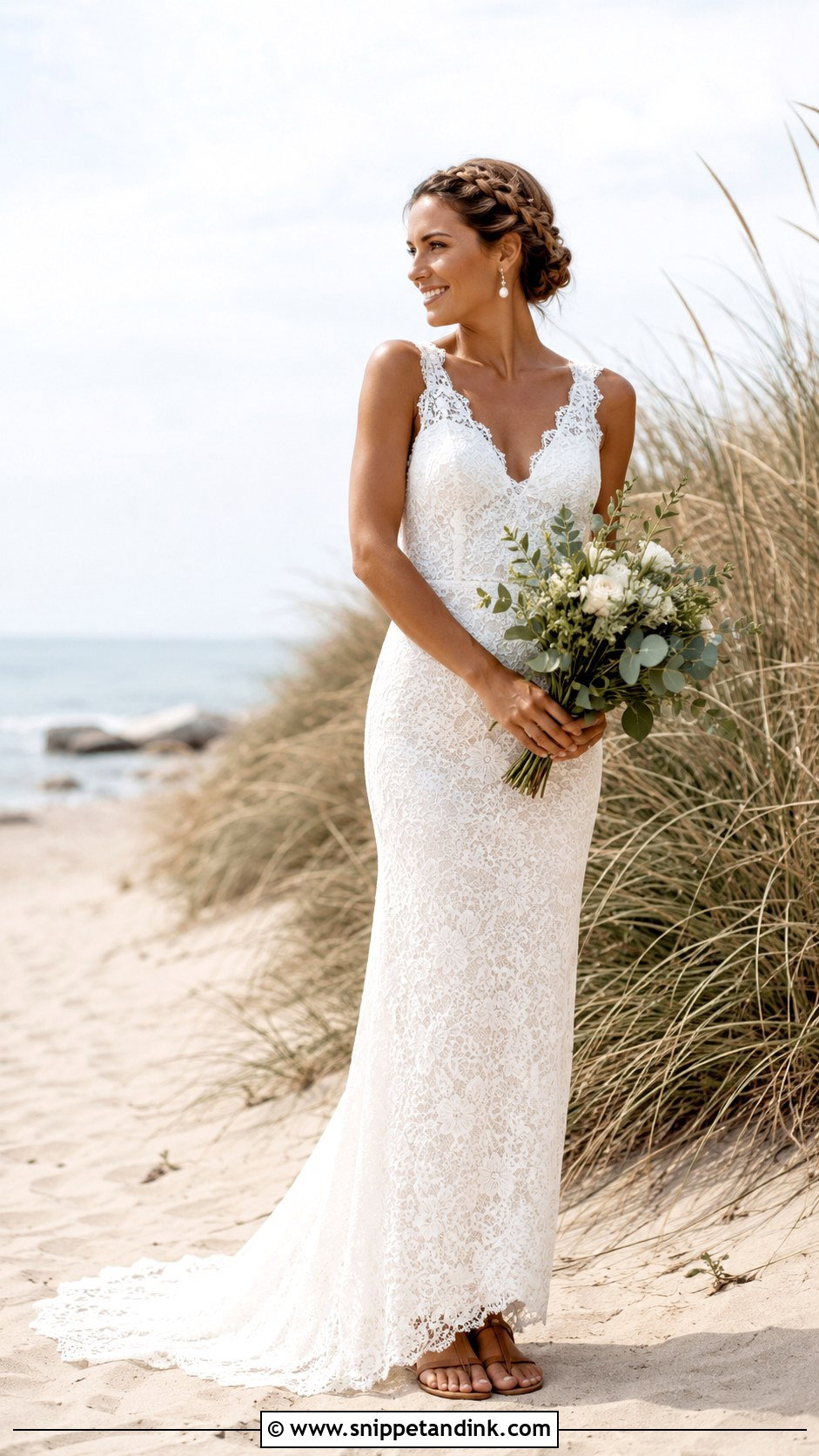
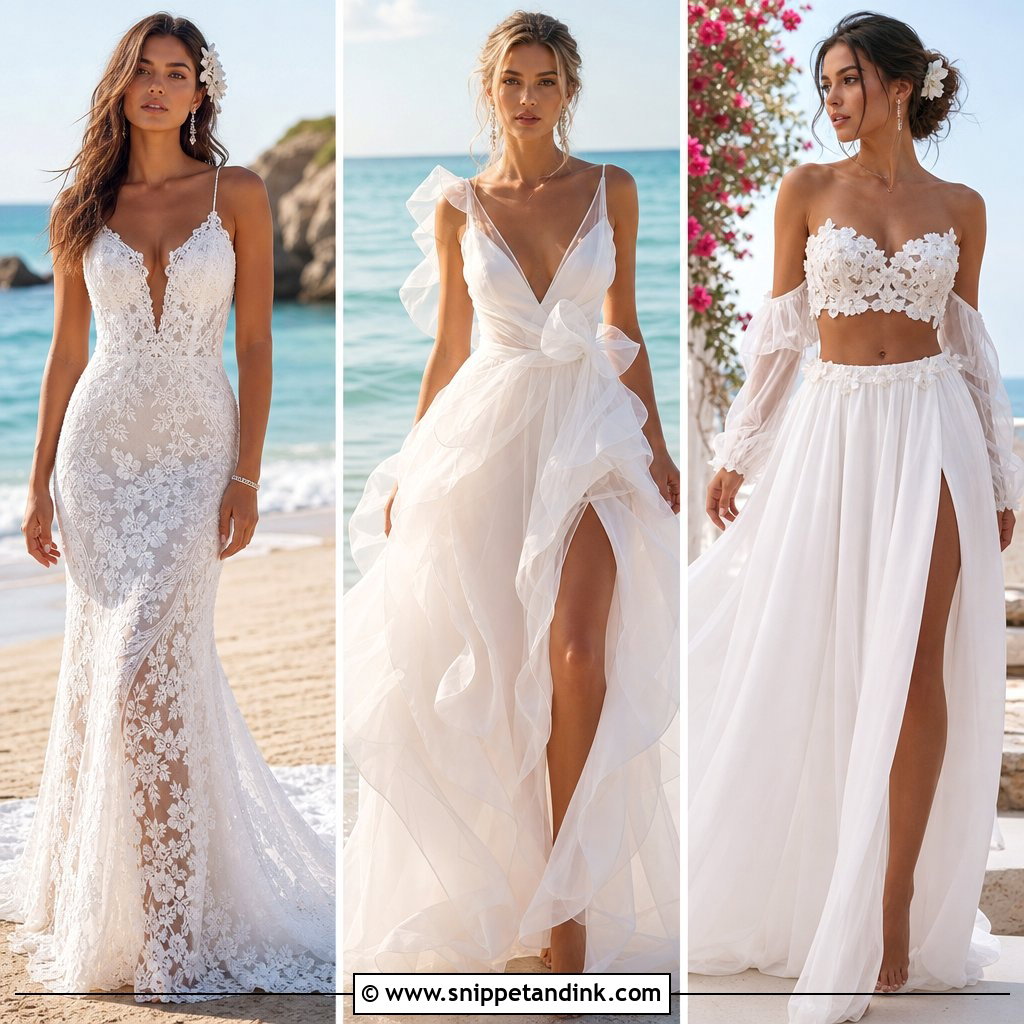
Lace can work at the beach, but only the light kind. I look for soft stretch lace over a breathable lining; thick corded lace with heavy beading traps heat and holds sand in its texture. A scoop neck with wider straps supports comfortably, and a close-falling skirt gives a long line. A short sweep train adds a bridal finish without dragging half the beach behind you. Simple leather sandals, pearl drops and a small shell hairpin suit the texture, and a loose braided updo stays put in the breeze. Brides who want shape without a rigid corset tend to love this one.
4. Off-the-Shoulder Beach Wedding Dress
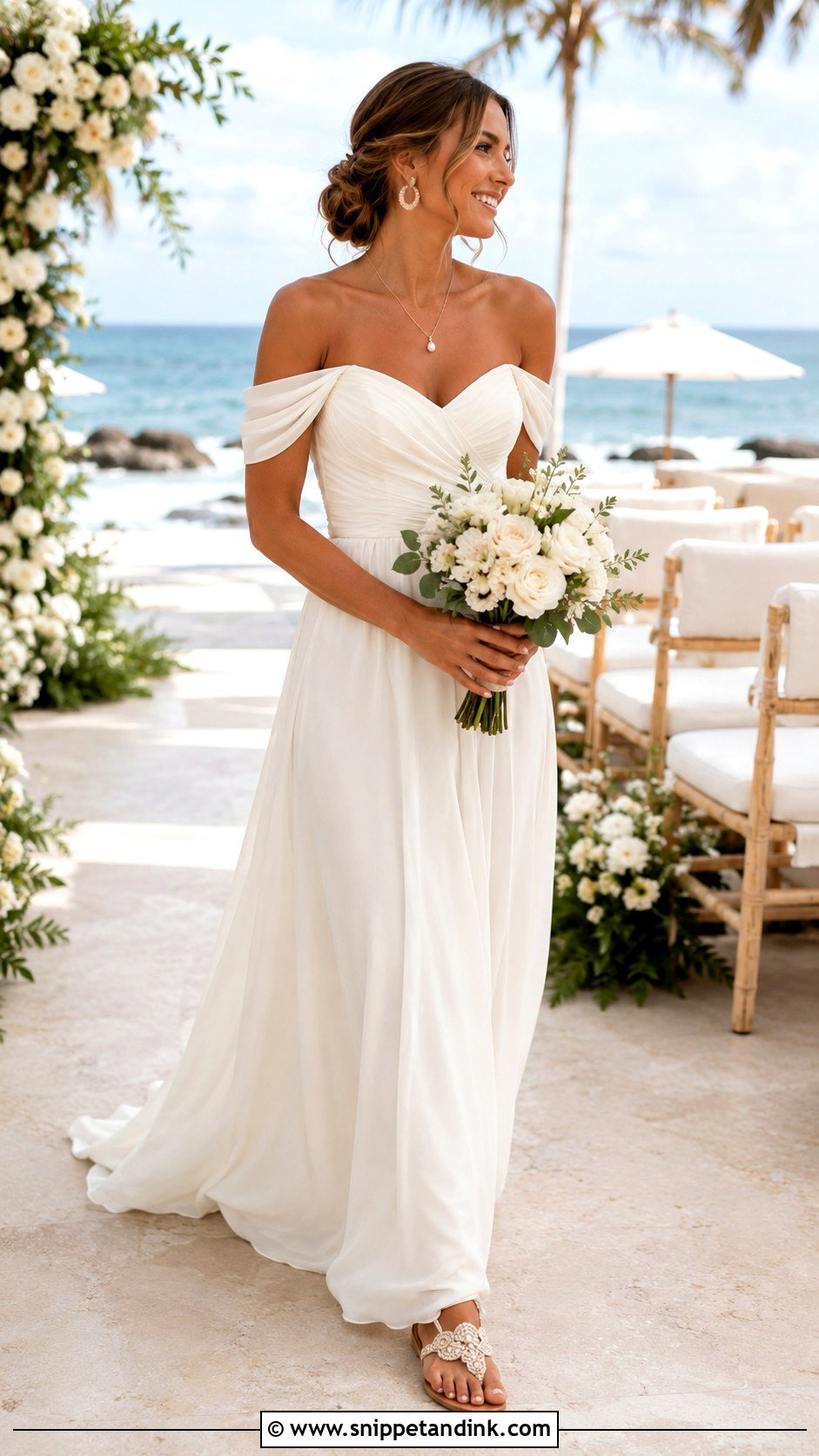
Off-the-shoulder necklines show the collarbones off in the way few cuts do, but the bodice must be built to stay up on its own. I check for internal boning or a silicone grip strip along the top edge; without it, you’ll be tugging the neckline up all day. Lightweight crepe or chiffon with soft draping keeps it airy, and a relaxed A-line skirt balances the fitted top. Block heels suit a boardwalk ceremony, embellished flats suit sand. Small pearl hoops, a fine pendant and a low textured chignon finish it. Long veils and bare shoulders in wind are a tangle waiting to happen, so a short tulle veil or a bridal bow is the smarter choice.
5. Boho Lace Beach Wedding Dress
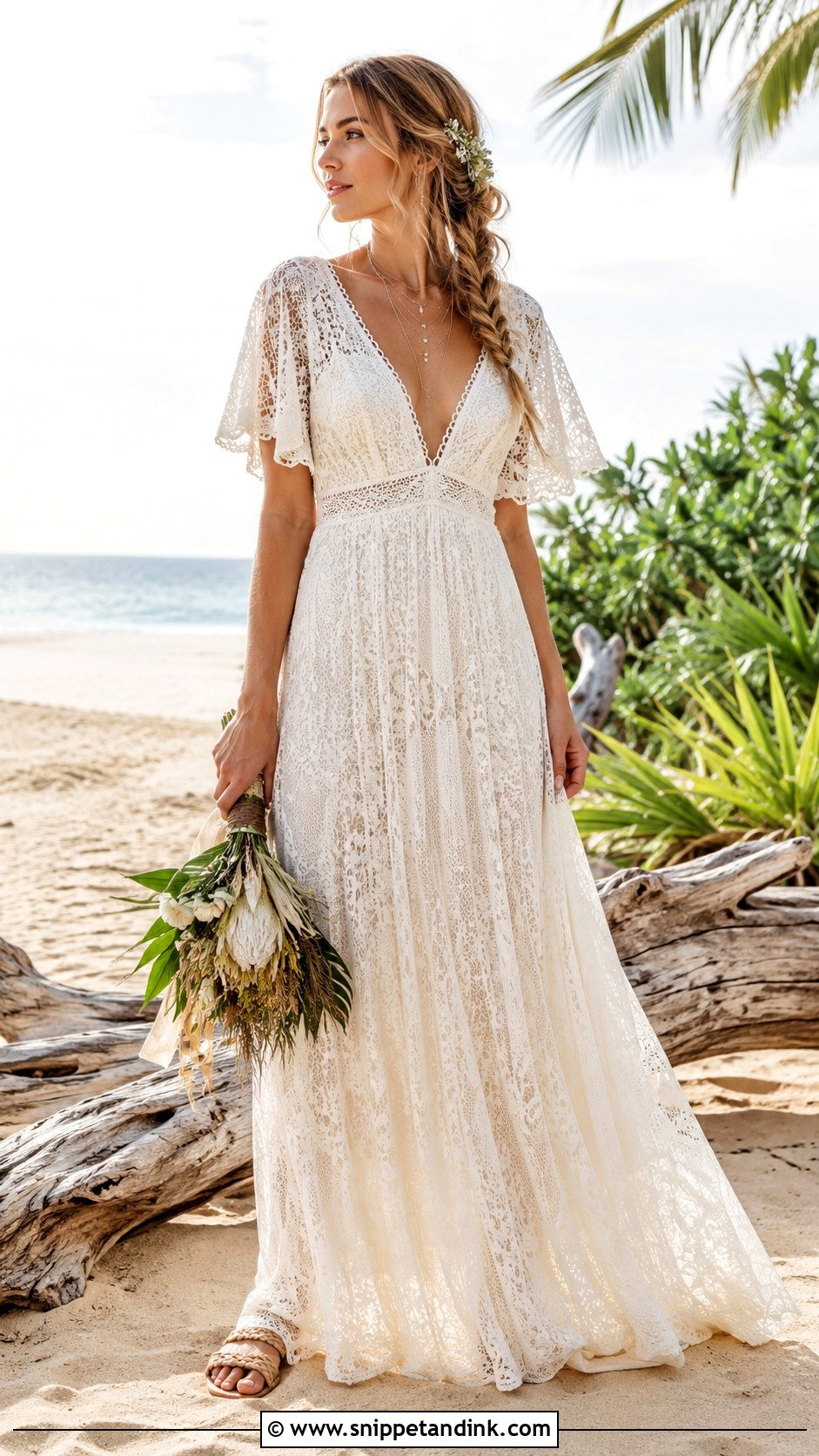
Boho lace belongs among dunes and driftwood. Look for an ivory gown with a comfortable lining, an open back and a softly fitted waist. Crochet-inspired patterns and scalloped edges give texture without crystals. Bell sleeves are dramatic, but in tropical heat I’d usually talk a bride into elbow-length flutter sleeves instead; they’re cooler and they stay out of the bouquet. Barefoot sandals or flat woven leather, a few fine layered necklaces and a loose braid suit the mood. Only wear a flower crown if the florist builds it from the bouquet; a mismatched crown looks bought separately, and a small botanical comb is tidier.
6. One-Shoulder Beach Wedding Dress
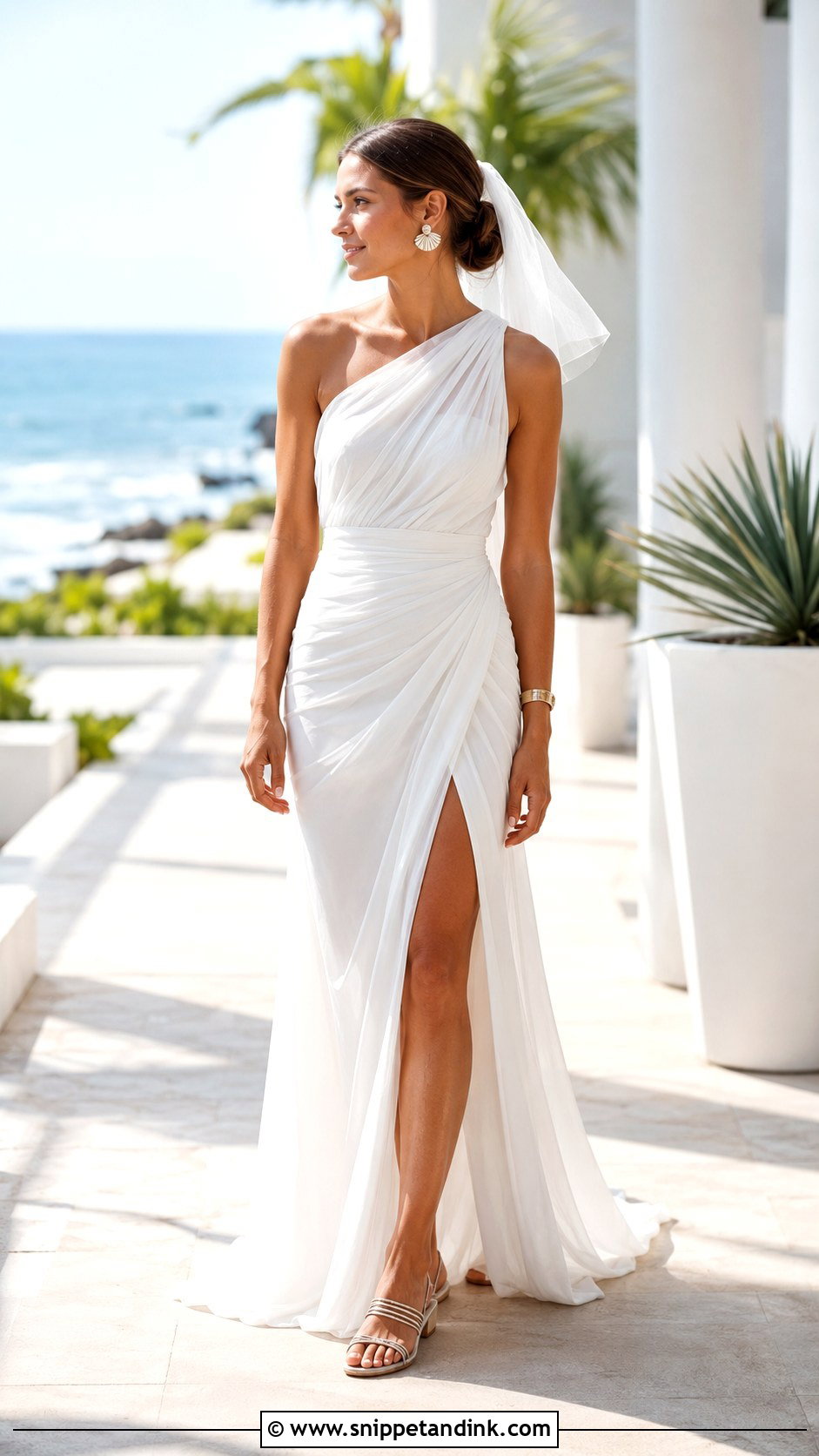
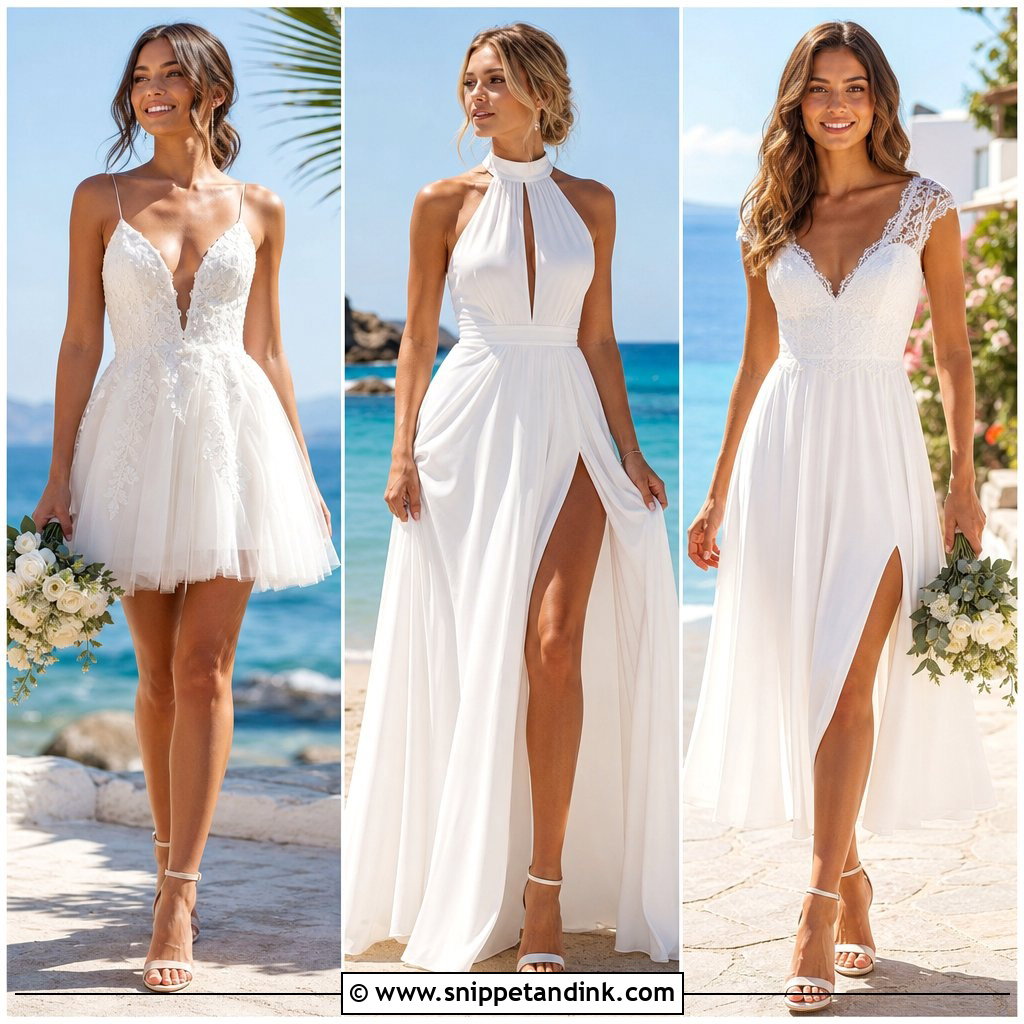
One shoulder, one strong line. The asymmetry does the decorating, so I never add a necklace here, only sculptural earrings. Draped chiffon or light crepe with a secure fitted bodice is essential, because a single strap carries more of the dress’s weight than two would. Strappy flat sandals, a slim cuff and a smooth low bun keep attention on the shoulder. A side slit helps you walk on sand, but sit down in the fitting room first; some slits open far higher seated than standing. Finish with a compact bouquet and a short veil tucked beneath the bun. It suits an upscale resort and still feels relaxed enough for the beach.
7. Halter Neck Beach Wedding Dress
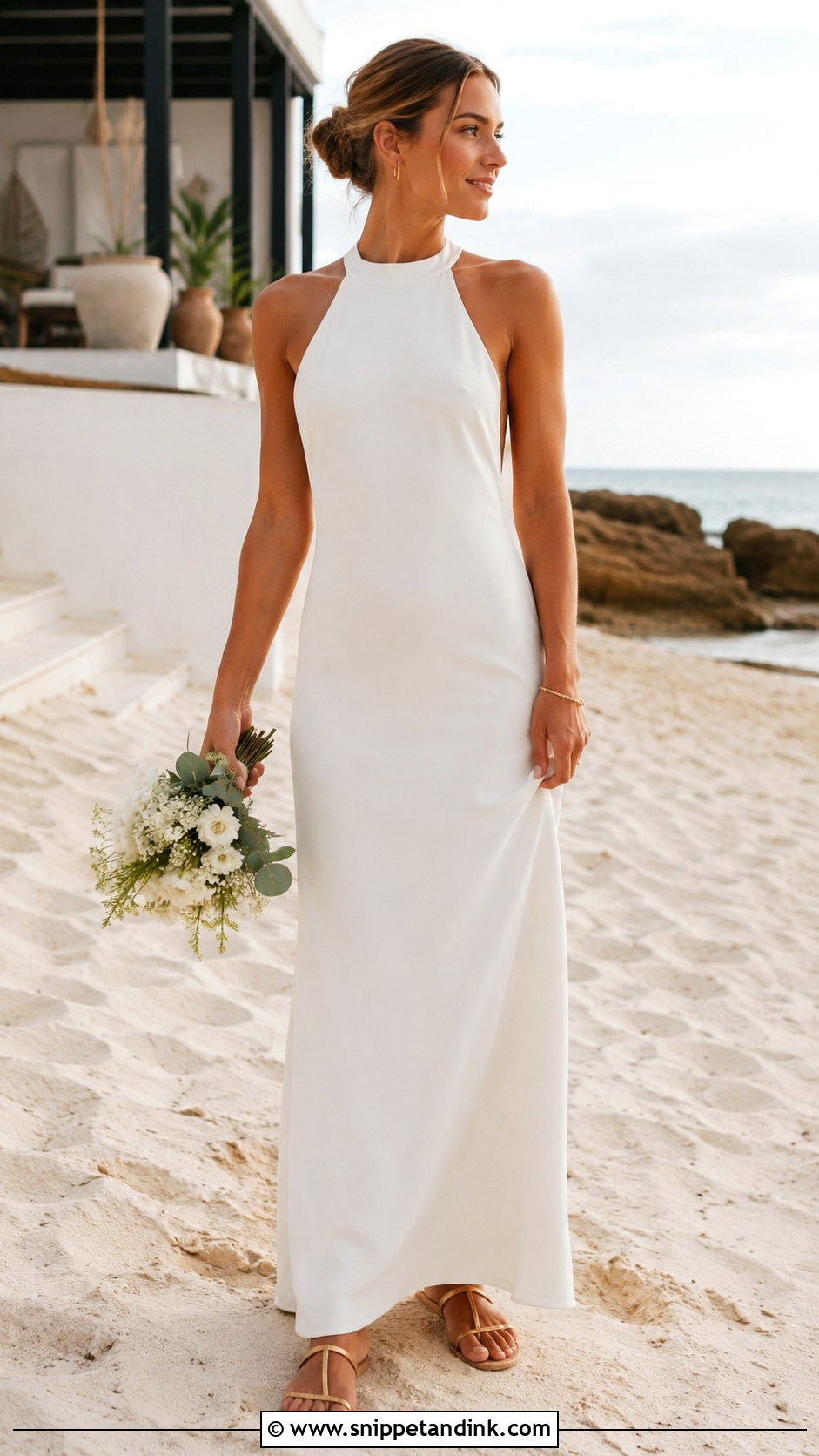
Spaghetti straps slip; a halter doesn’t. That security is the main reason I suggest this neckline to brides who’ll be hugging guests and dancing barefoot. Soft crepe or chiffon with a high neck, fitted waist and an open or keyhole back looks modern, and a column or gentle A-line skirt keeps it streamlined. Flat gold sandals, small hoops and a polished ponytail or twisted updo work with the line; a big necklace fights it. A slim bracelet and one small hair accessory are enough. It moves from a barefoot ceremony on the shoreline to dinner on a resort terrace without any change at all.
8. Empire Waist Beach Wedding Dress
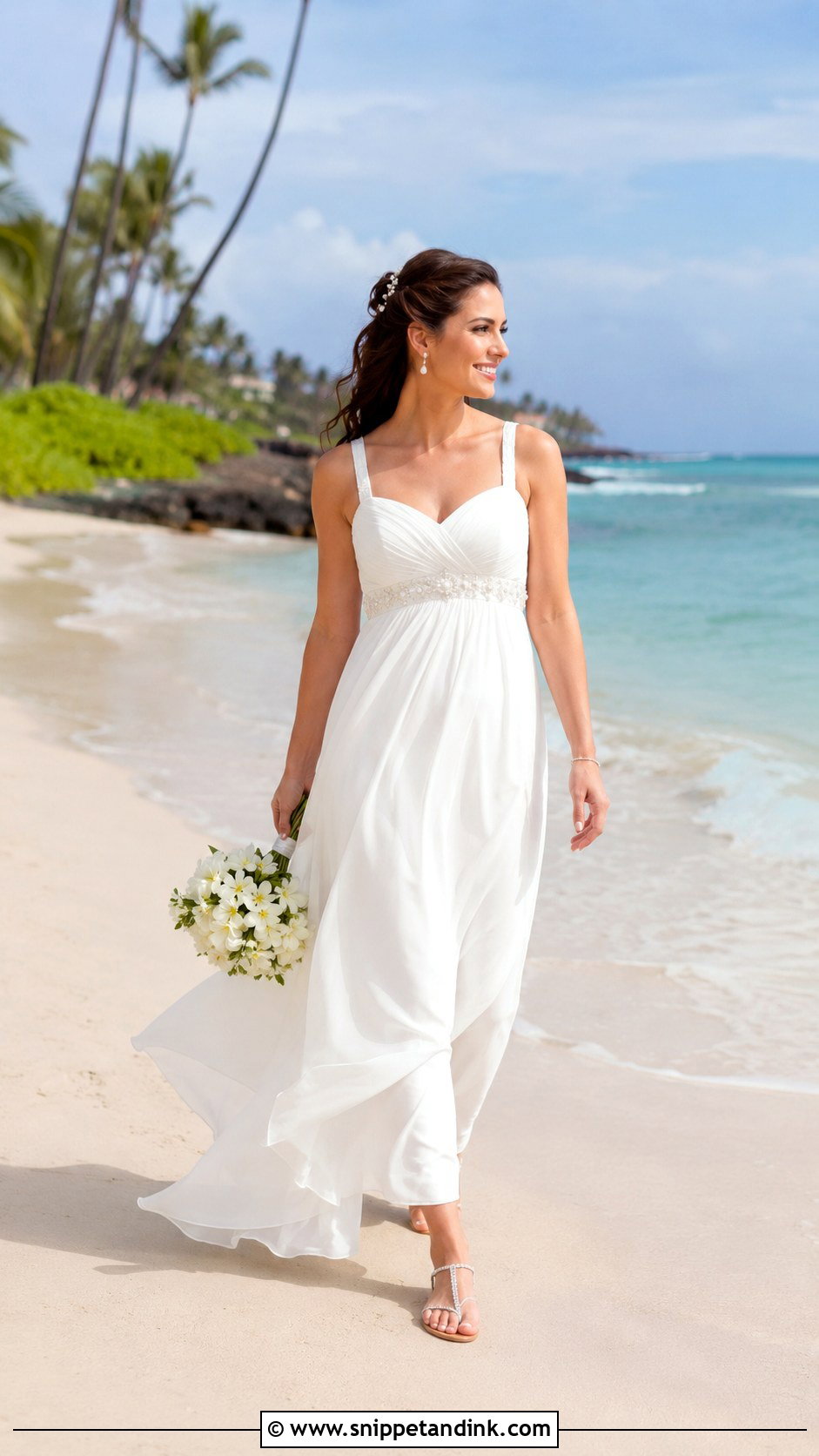
With the seam sitting just under the bust, an empire waist lets the skirt fall straight from there, so nothing presses on the midsection in heat. I recommend it to brides who want comfort above all, and it’s the cut I reach for with pregnant brides because it adapts as the body changes between fittings. Choose chiffon with soft gathers, supportive straps and a breathable lining. Flat crystal sandals, fine drop earrings and a chain bracelet suit it, and a half-up style with small pearl pins keeps hair off the face. Go for a floor-length hem with no train, or a short sweep at most. In a breeze, the unstructured skirt moves on its own.
9. Short Beach Wedding Dress
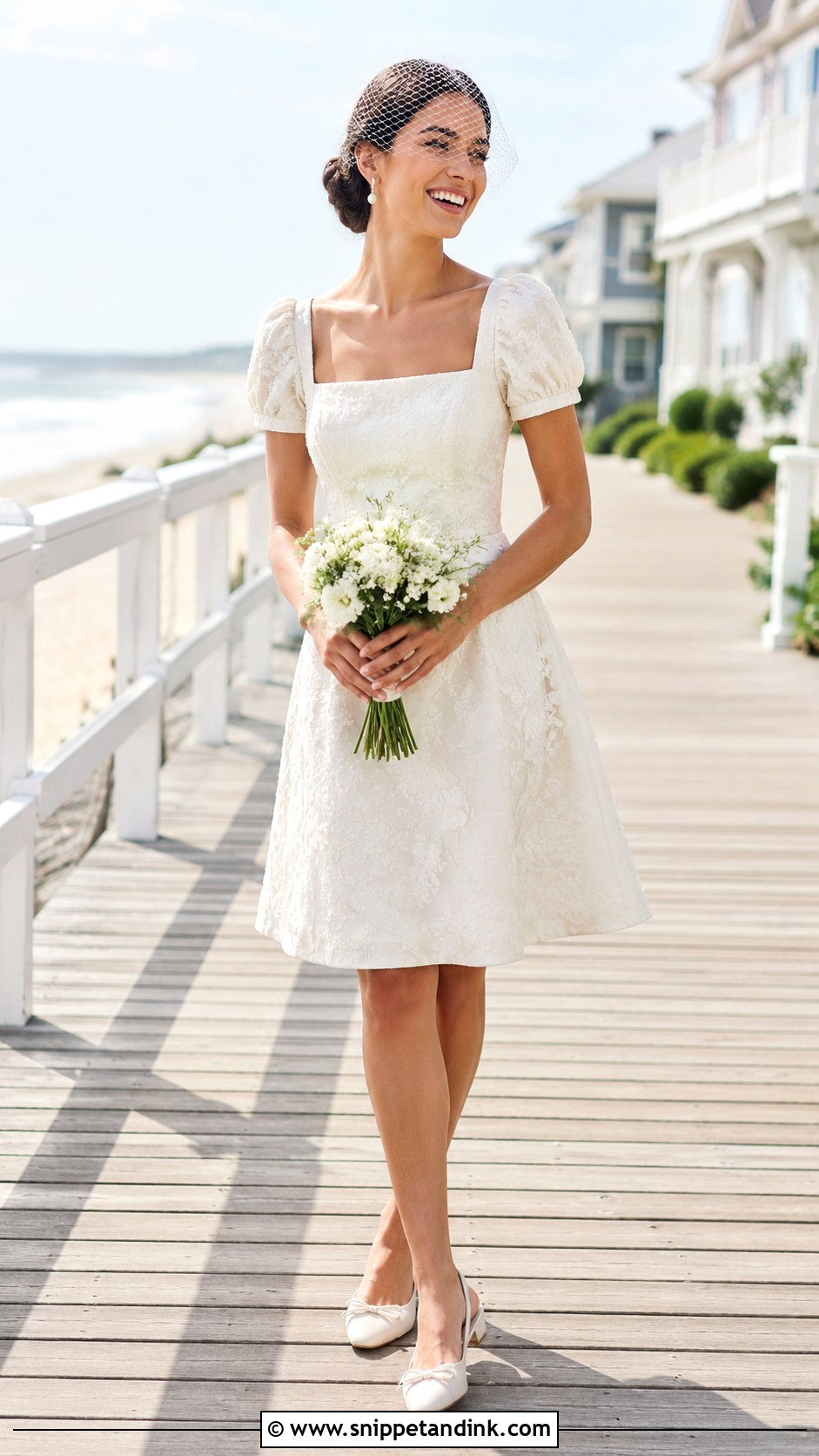
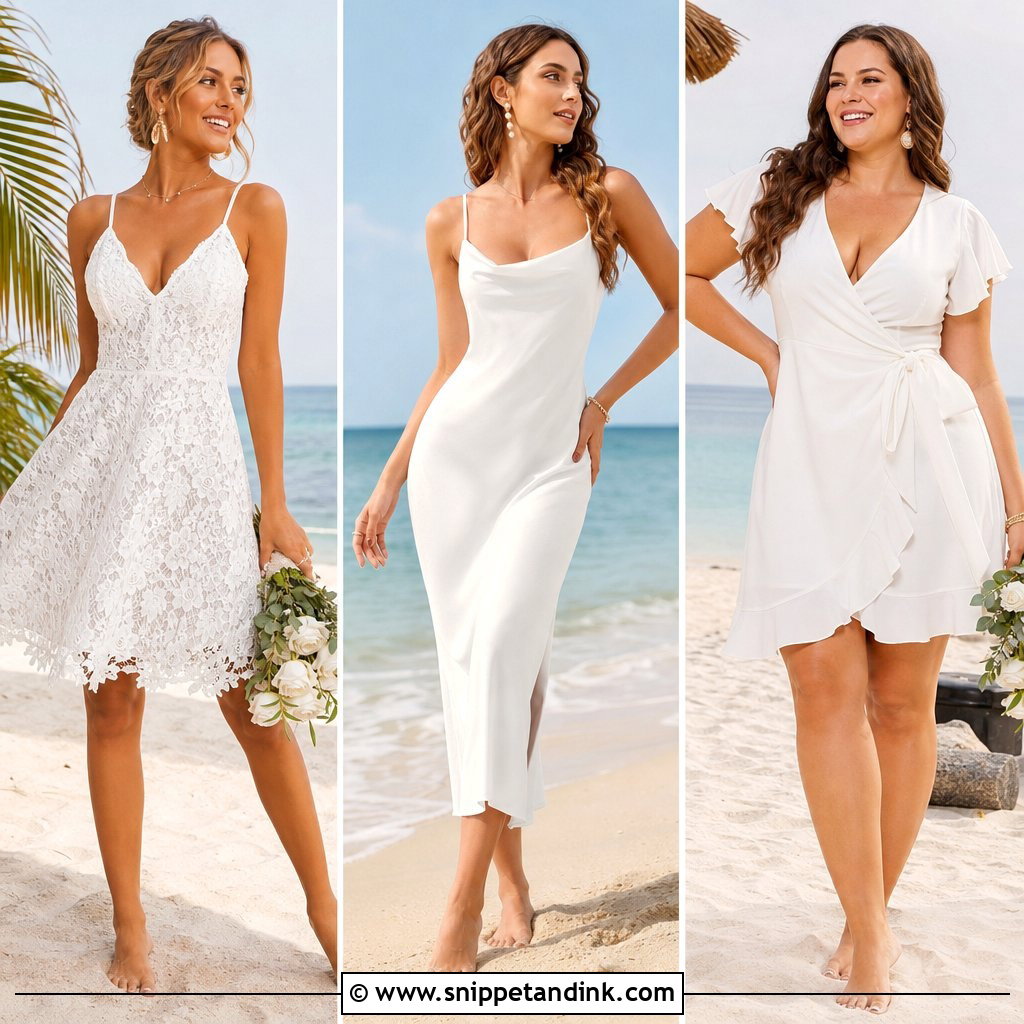
Short dresses solve the sand problem outright: nothing to drag. A knee-length or tea-length A-line with a defined waist and some lace or embroidery reads bridal rather than casual. A square neckline gives structure, and short puff sleeves or wide straps balance it. Your shoes are on show the whole time, so I treat them as a real accessory: flat slingbacks, low block-heel sandals or embellished flats. Pearl earrings, a mini bouquet and a birdcage veil or headband finish it. Avoid very full skirts on a windy beach; they flip. It suits courthouse-then-coast weddings, elopements and anyone planning an informal reception.
10. High-Low Beach Wedding Dress
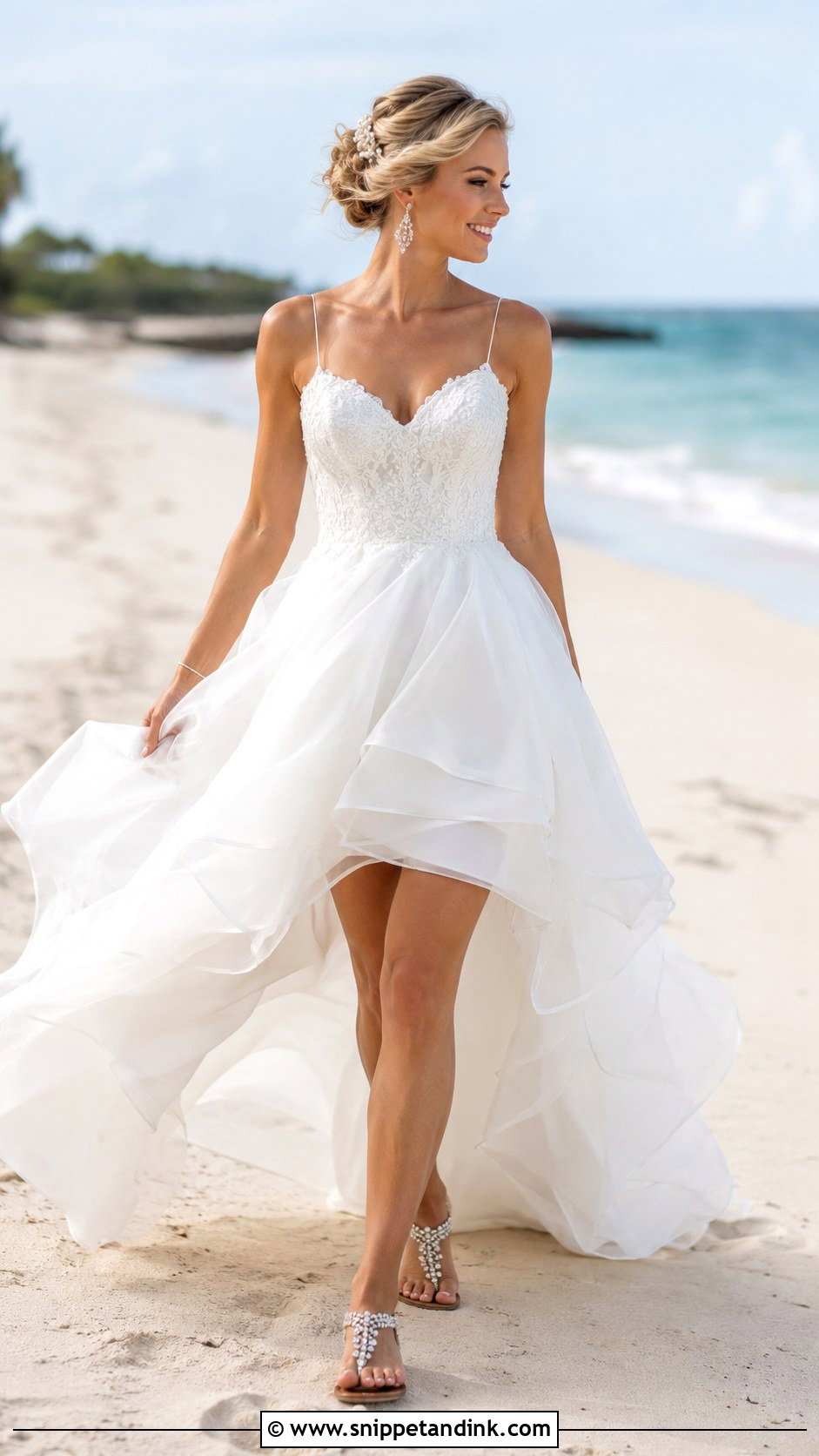
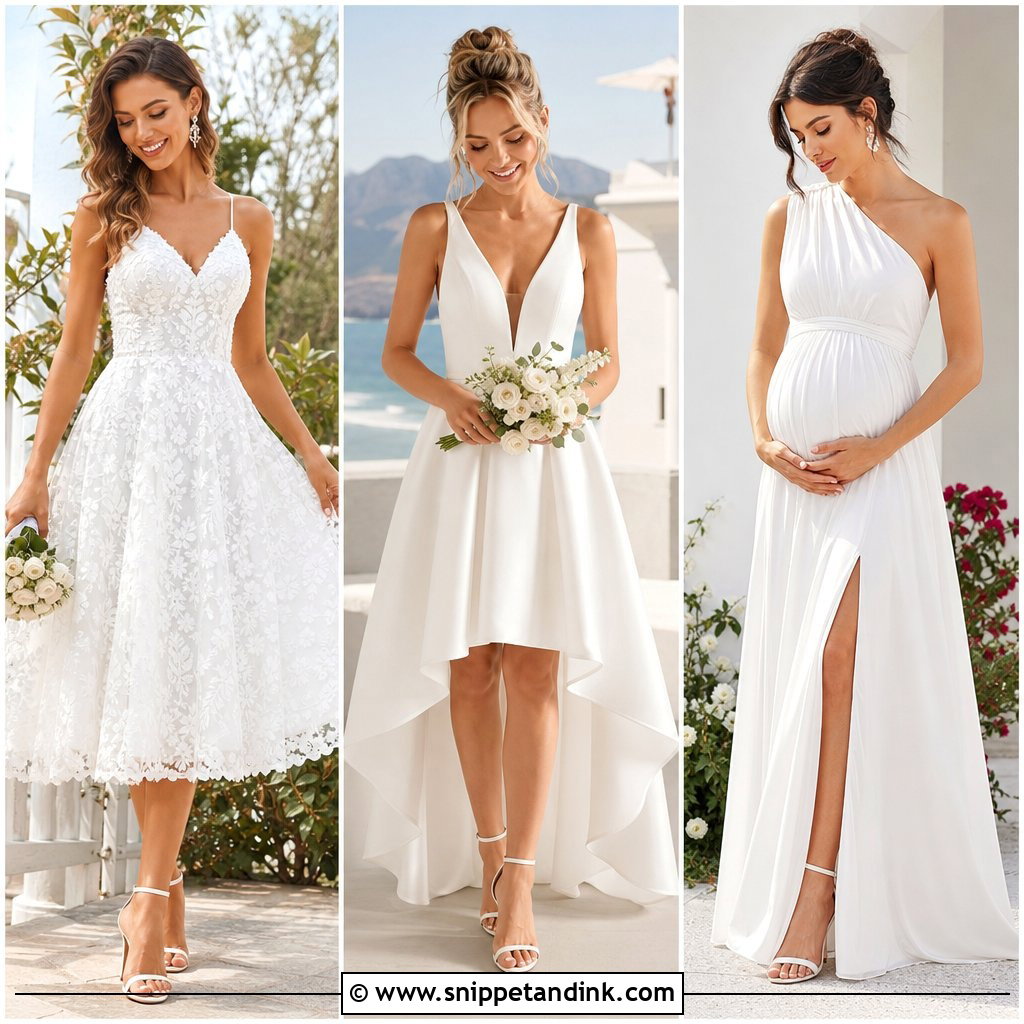
A high-low hem gives you the movement of a long skirt while keeping the front clear of the sand. The front should land at the ankle or mid-calf, with the back flowing longer. Pair a softly structured bodice with chiffon, organza or light tulle. Because the shoes show from every angle, I make sure they’re finished properly, embellished flats, never plain flip-flops. Small chandelier earrings, a sleek bracelet and a softly pinned updo keep it bright, and a pearl comb is better than a dramatic veil here. Brides who plan to dance for hours usually end up choosing this shape after trying it on.
11. Long-Sleeve Lace Beach Wedding Dress
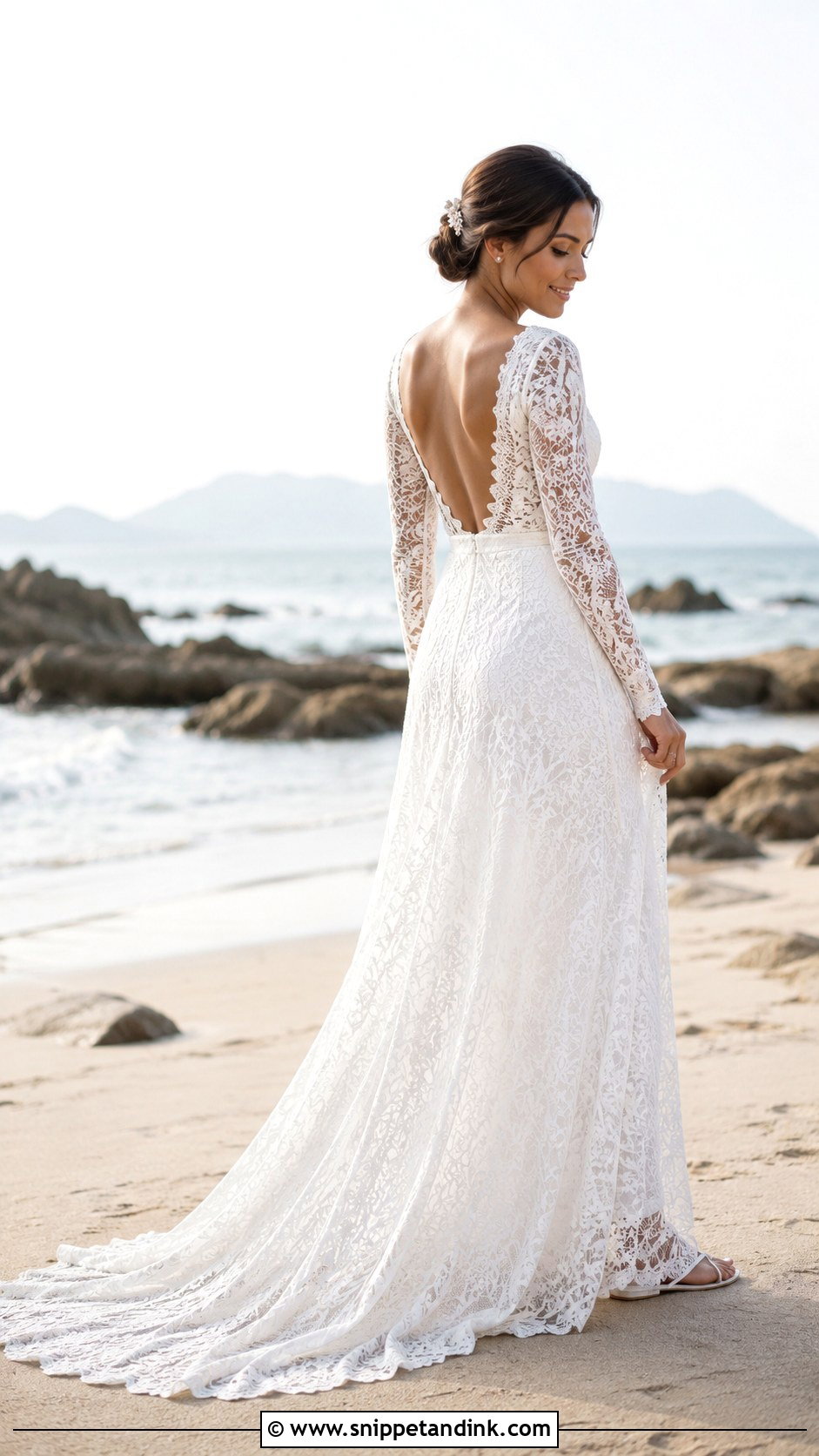
Sleeves at the beach sound hot, and in dense fabric they are. Sheer, unlined lace is different: it breathes and gives sun protection to the arms. A fitted sheath or soft A-line with a plain bodice and little embellishment keeps the overall weight down, and an open back or V-neck stops the coverage feeling heavy. Flat ivory sandals, pearl studs and a low bun with a fine comb suit it. Add a short tulle veil for the ceremony, then take it off for waterfront portraits. I suggest this for early morning ceremonies, cooler coastal destinations and sunset vows when the temperature drops, so you won’t need a wrap over the dress.
12. Backless Beach Wedding Dress
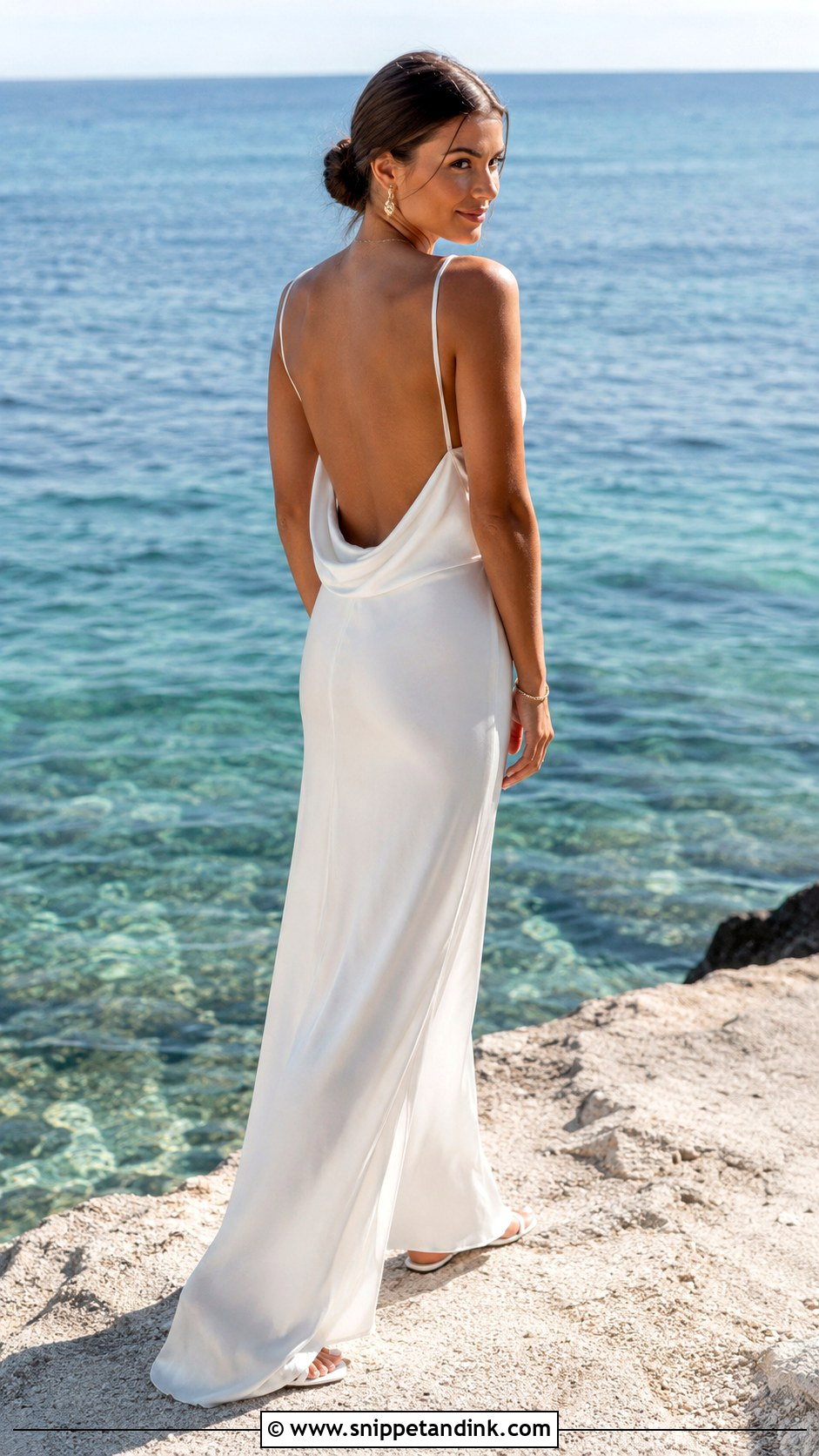
A backless gown is mostly seen from behind, which is exactly the view guests have during the vows. The engineering matters: secure straps and proper internal support, often a built-in bra cup anchored to the side seams. Crepe or satin skirts hang well with an open back. A draped cowl back reads relaxed; lace edging reads romantic. Keep the front simple so the dress doesn’t feel exposed from both sides. Flat strappy sandals, understated earrings and a slim bracelet are enough. Wear a low side bun or polished updo so the back stays visible, and attach the veil beneath it.
13. Strapless Beach Wedding Dress
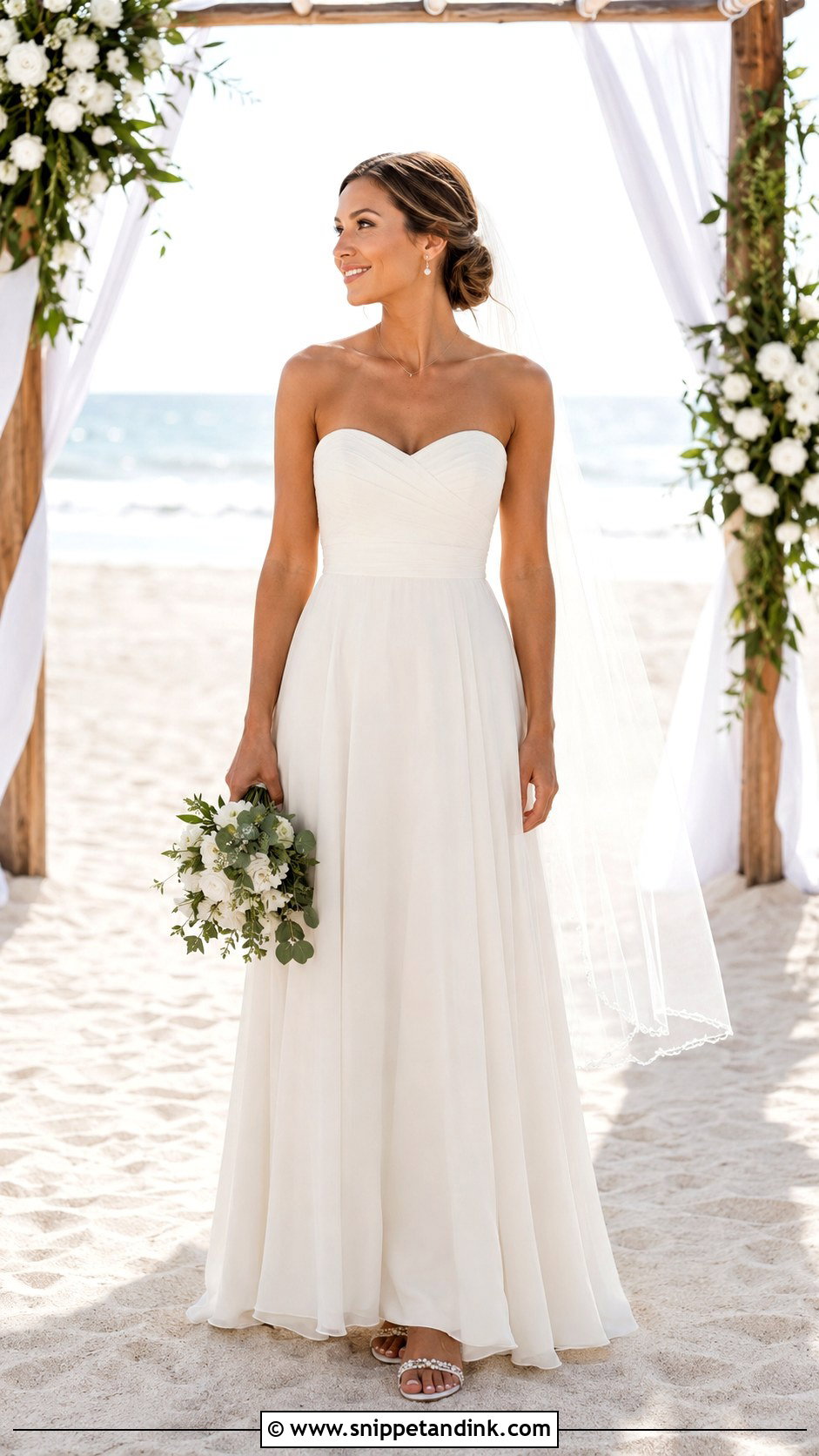
Strapless gowns only look crisp if the bodice fits like it was built for you, and at the beach a loose bodice slides further every time you lift your arms. Internal boning in lightweight crepe, organza or chiffon gives support without bulk. A straight or softly curved neckline sits well over an A-line skirt with a short train. A sheer wrap that comes off for the ceremony covers the shoulders before and after. Flat pearl sandals, a fine necklace, studs and a low chignon finish it. A narrow veil adds movement, though in strong wind a pearl headband stays where you put it.
14. Square Neck Beach Wedding Dress
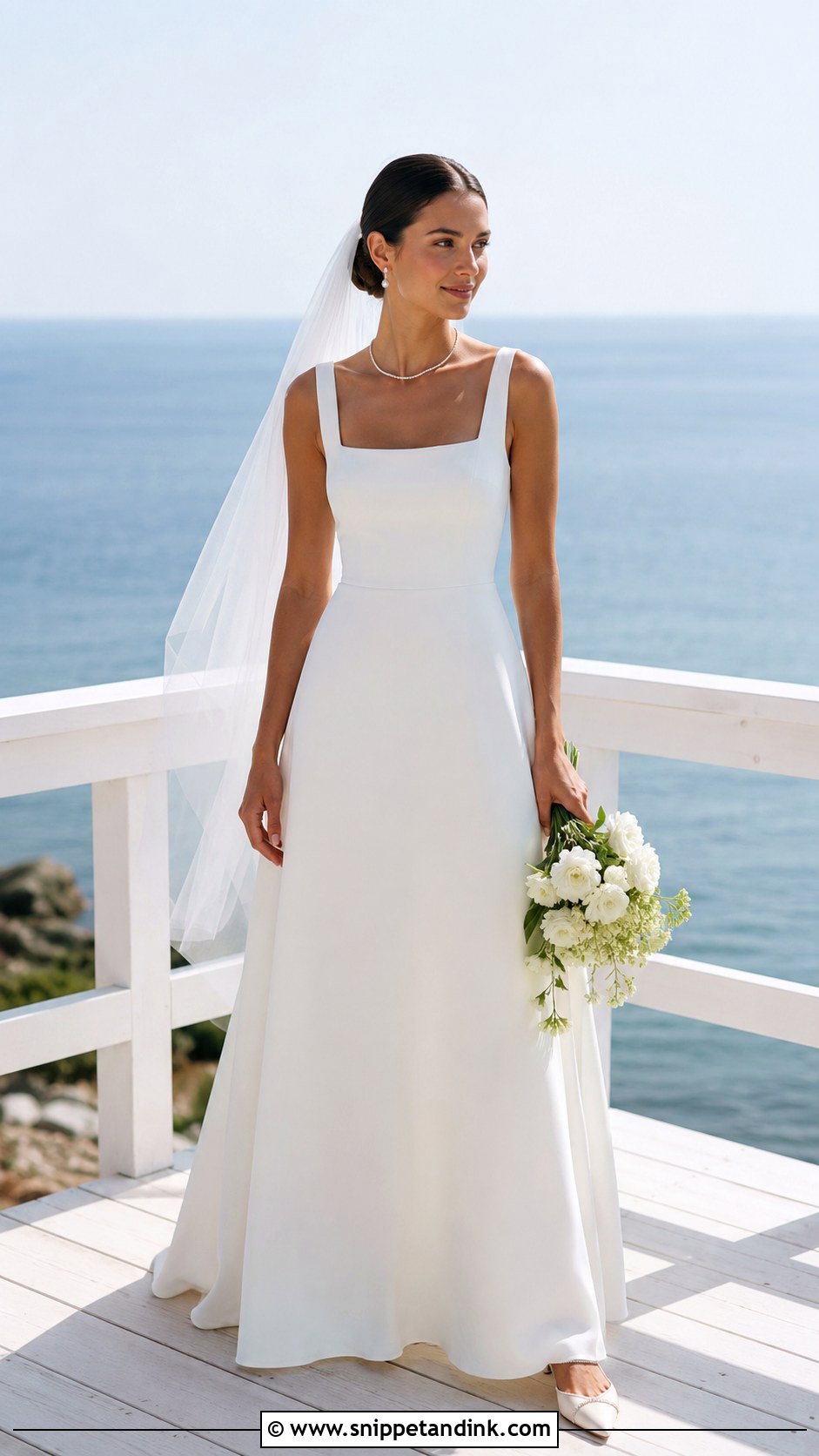
Square necks give a clean frame to the collarbones and usually come with wider straps, so they support better than thin ones. A fitted crepe or satin bodice with a relaxed column or A-line skirt keeps the shape tidy. I’d keep the fabric smooth or with understated seaming; heavy appliqué on a square neck looks crowded. Pearl drops, a short necklace and pointed-toe slingbacks suit a deck ceremony. If the vows are directly on sand, switch to flat sandals. A center-parted low bun and a short veil finish it. Classic and contemporary brides both settle on this one because it feels structured without needing a big skirt.
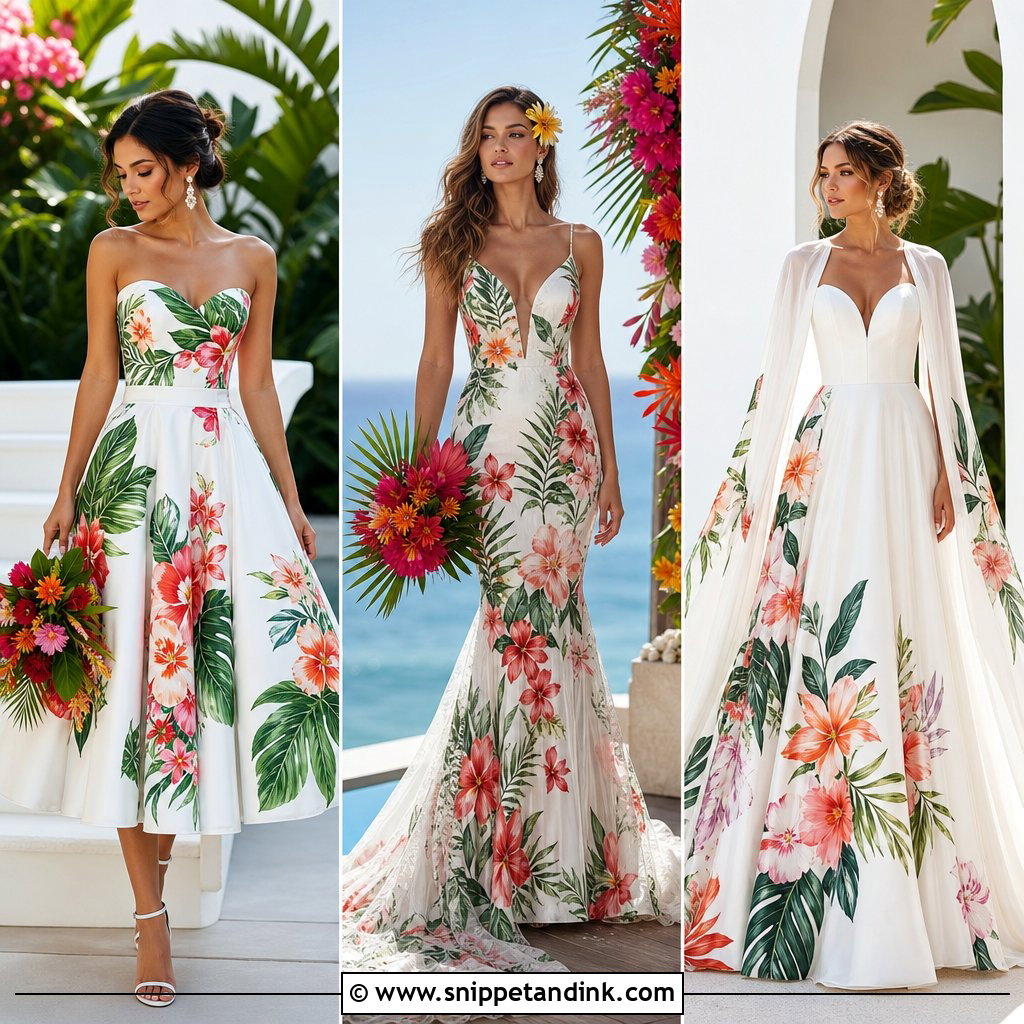
15. Floral Appliqué Beach Wedding Dress
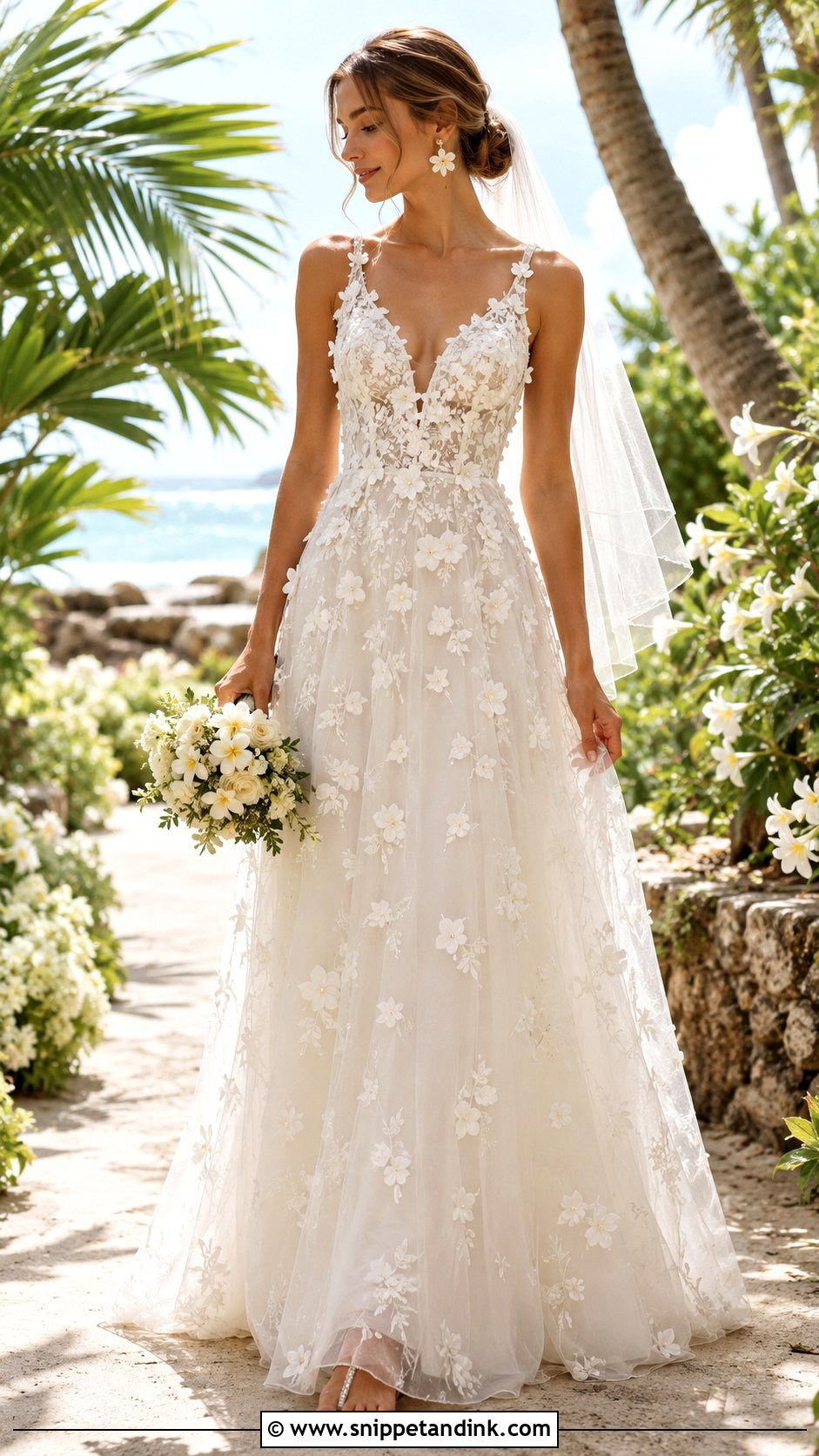
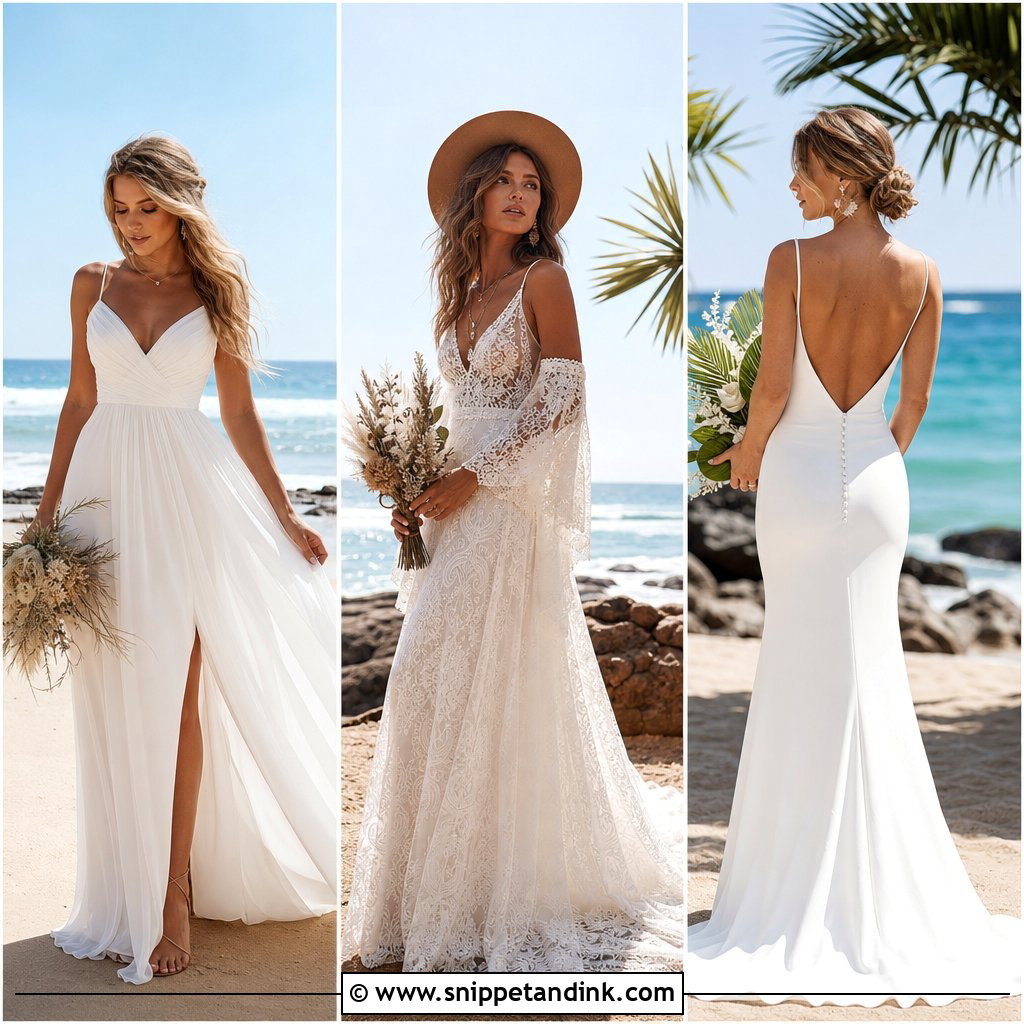
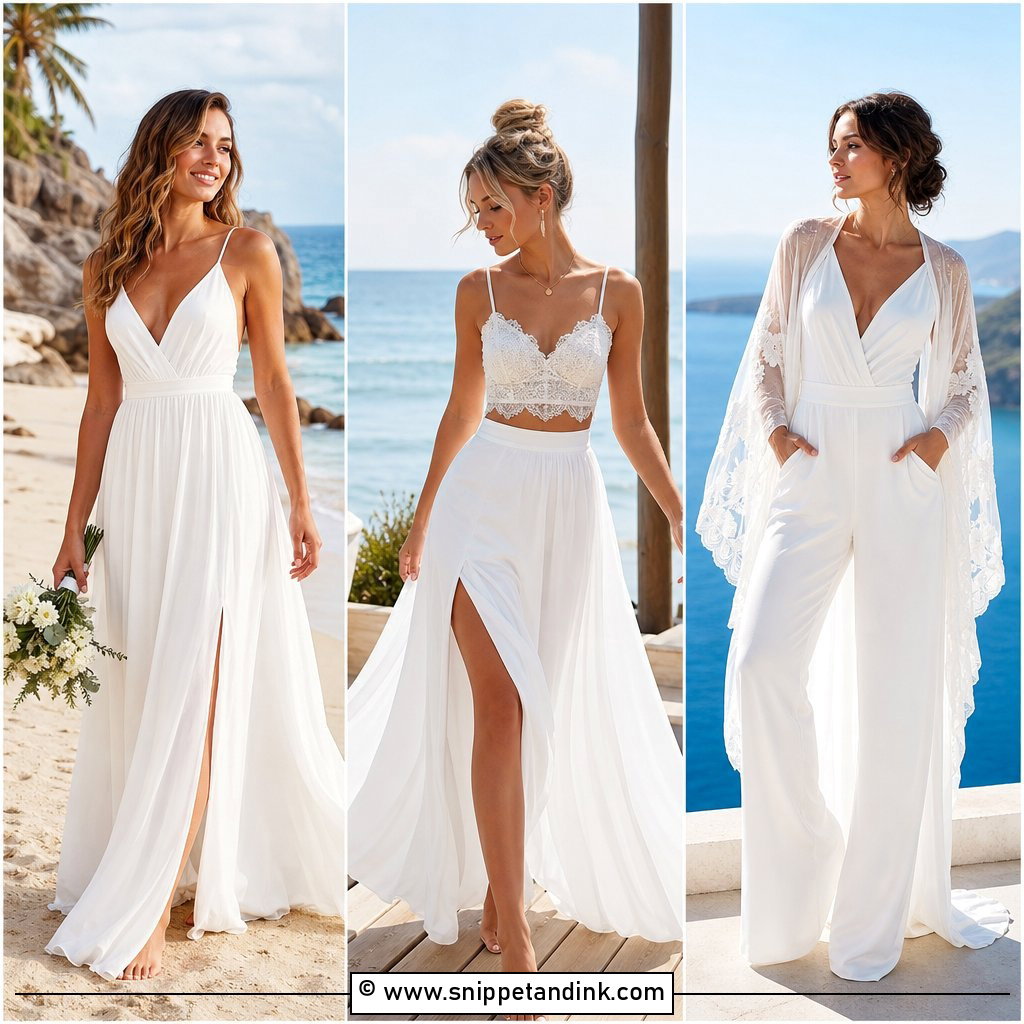
Three-dimensional flowers placed lightly across the bodice and fading down the skirt echo the planting at a coastal venue without making the dress heavy. Choose an A-line or sheath with a sheer tulle overlay and a light lining. The thing I check with appliqué is how securely each piece is stitched; loose petals catch on sandal straps and bouquet stems. Simple flat sandals, small floral earrings and a bouquet in matching tones work with it. One or two blossoms in a loose low bun look better than a full crown, and a plain fingertip veil keeps the detail visible. It suits garden-to-beach venues and tropical resorts.
16. Two-Piece Beach Wedding Dress
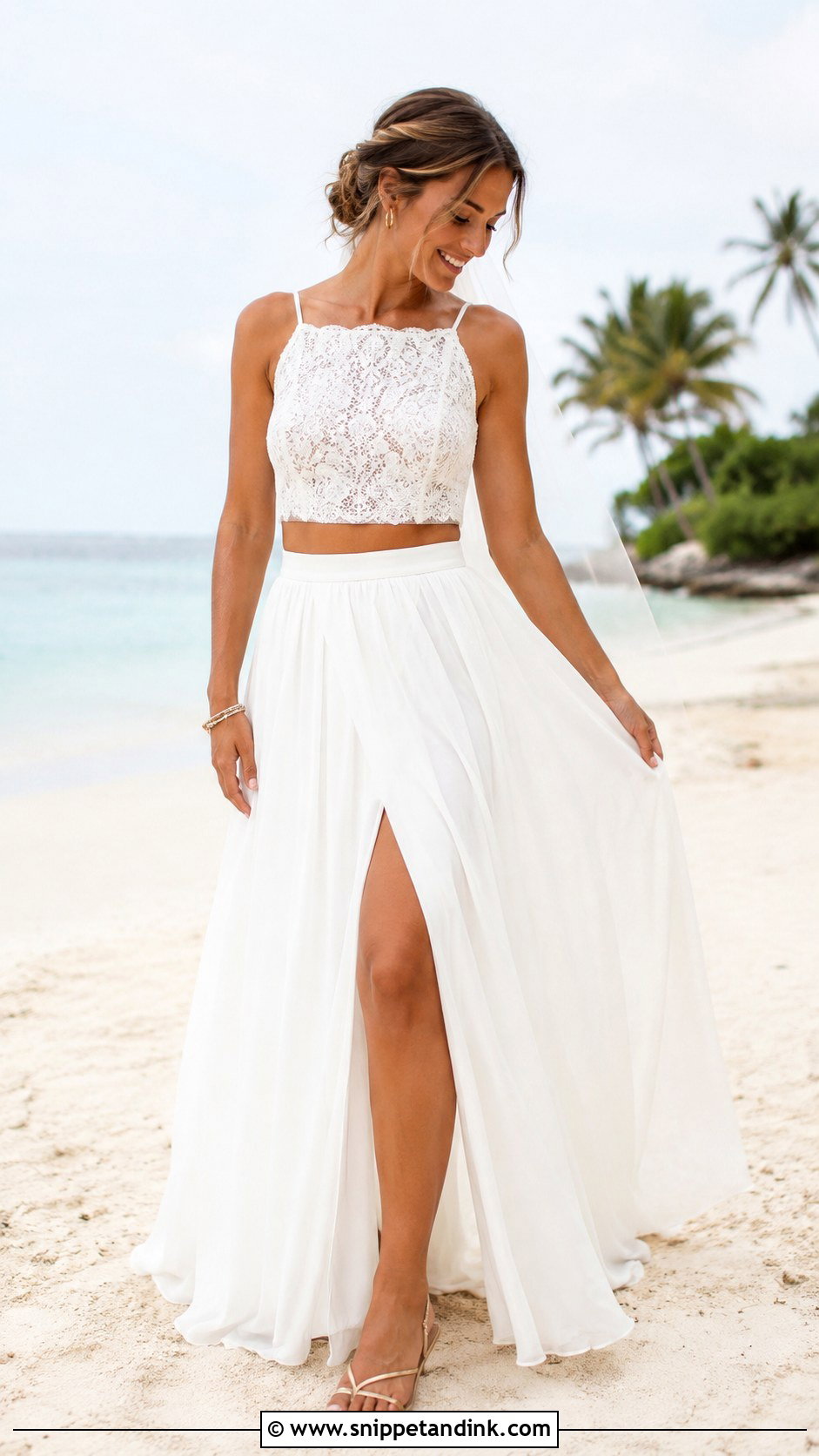
Two-piece bridal is the most practical outfit here for travel, since a top and skirt pack separately and either can be altered on its own. Pair a fitted lace or crepe top with a high-waisted chiffon skirt; the pieces can meet at the waist or show a narrow strip of skin, depending on the coverage you want. A skirt with gentle movement and a short train beats one with volume. Flat metallic sandals, small hoops and a layered bracelet suit the modern mood, and a textured ponytail or relaxed bun keeps it easy. A simple veil goes on for the ceremony and off for the reception. Afterwards, you can wear both pieces again.
17. Convertible Beach Wedding Dress
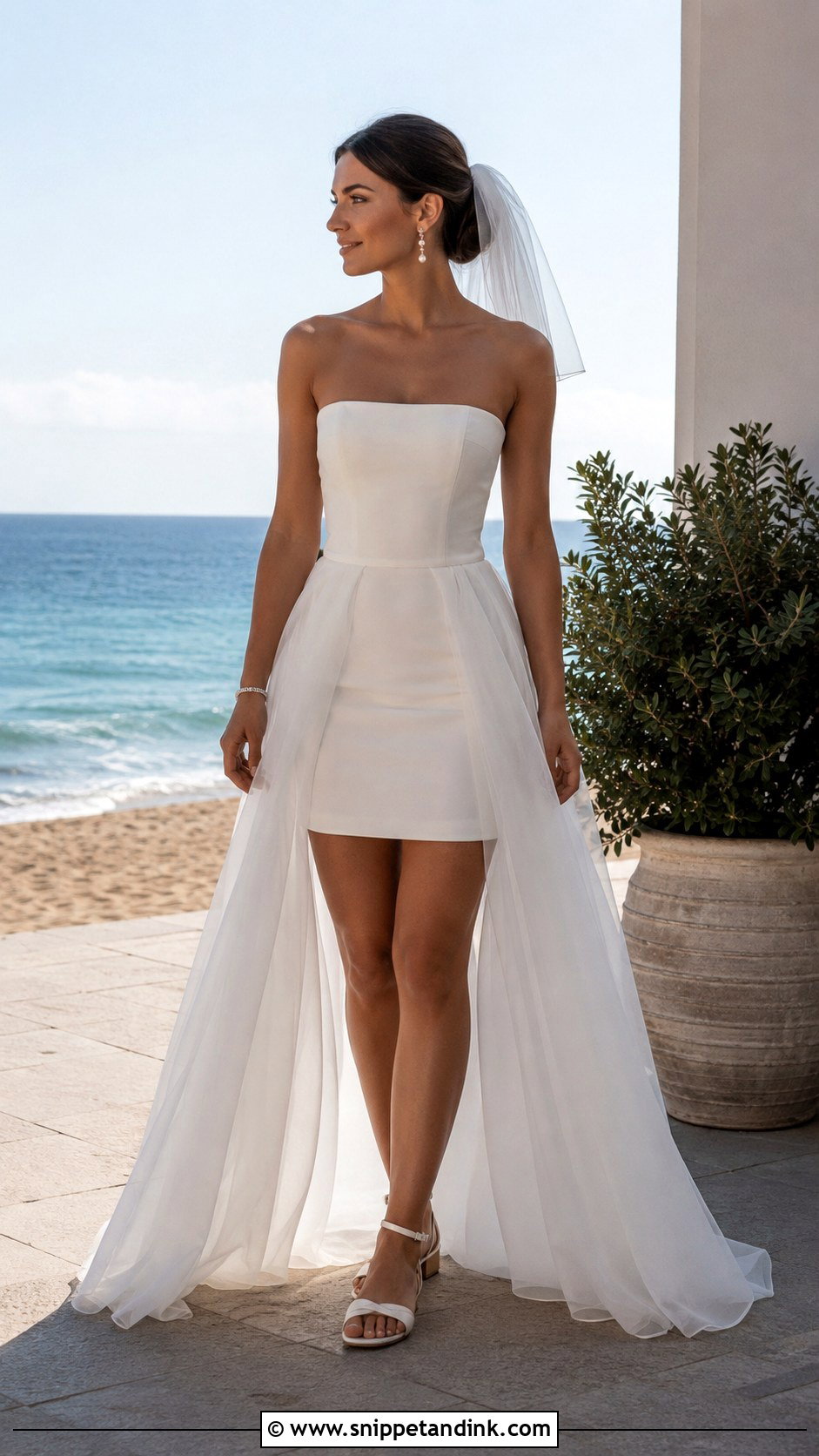
A convertible wedding dress gives you two looks from one garment bag. Start with a fitted crepe sheath or mini, then add a detachable chiffon or organza overskirt for the ceremony. I always practice the change with the bride before the day, because overskirt fastenings (hooks, snaps or a hidden waistband) are fiddly with nervous hands. Low block-heel sandals suit a firm platform, flat ones suit open sand. Add drop earrings, a fine bracelet, a sleek updo and a short veil. Once the formal moments are over, the overskirt comes off and you can dance and walk the waterfront freely.
18. Cape Sleeve Beach Wedding Dress
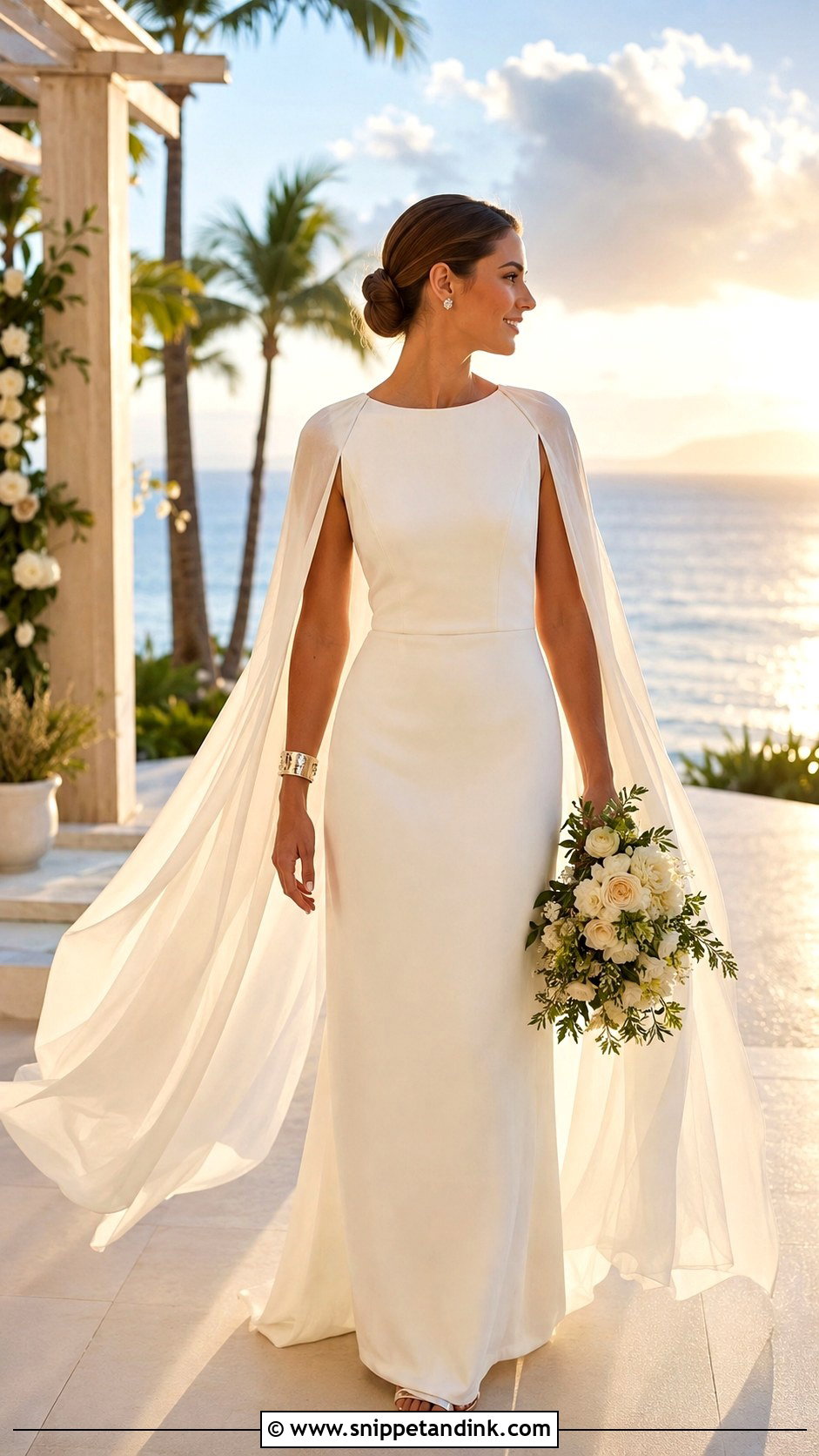
Cape sleeves add movement at the shoulders and real coverage without a jacket. Choose a simple crepe column with an attached chiffon cape, or split cape sleeves that move independently. Keep the skirt narrow and the train short so the whole outline stays balanced. Understated flat sandals, crystal studs and a slim metallic cuff are enough. Hair needs to be a smooth low bun; loose waves tangle with cape fabric in wind and pull at the scalp. Skip the veil, since the cape is already providing the drama. For a sunset ceremony at a polished resort, it gives presence without beadwork or a big ball gown.
19. Pleated Chiffon Beach Wedding Dress
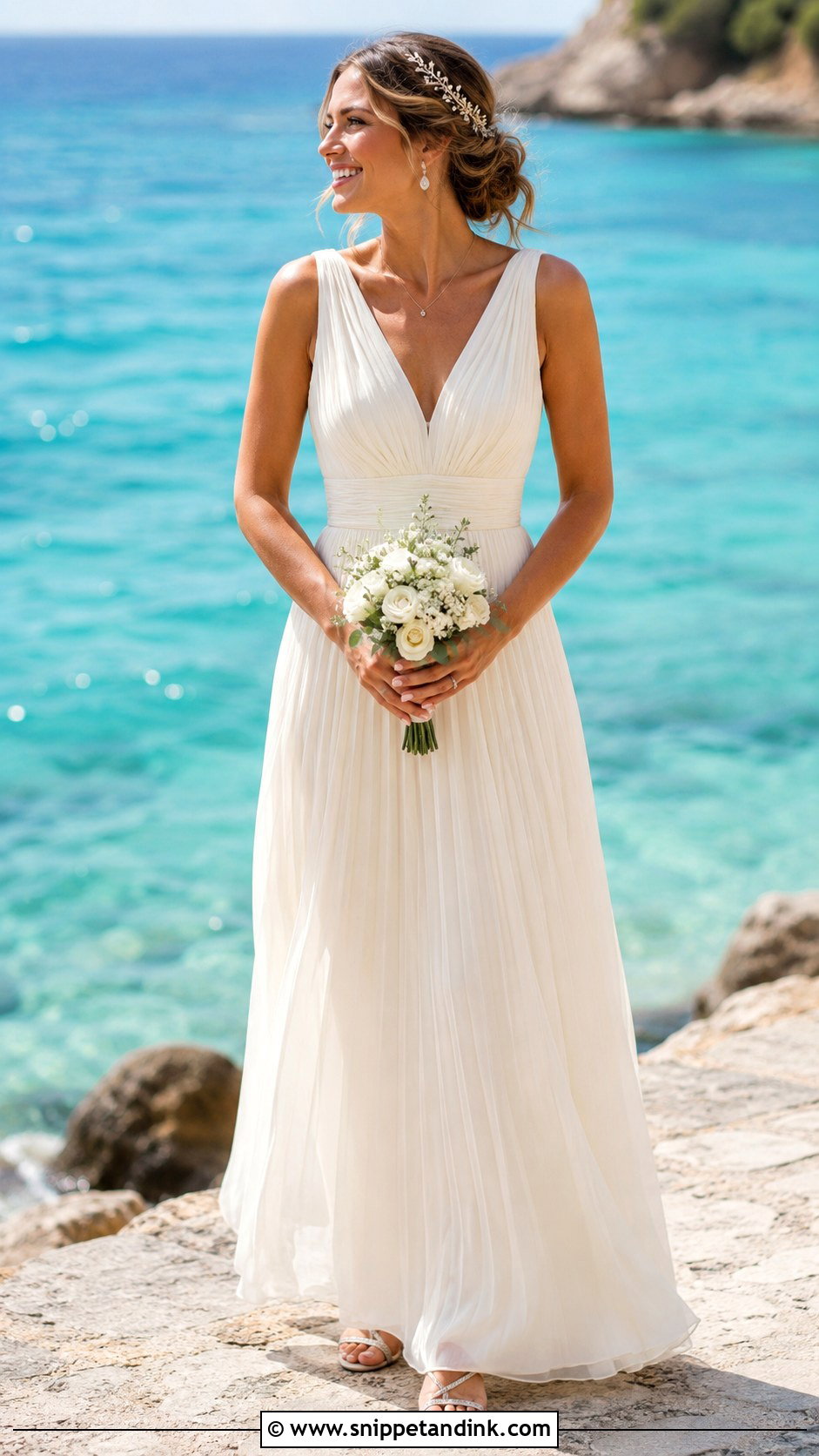
Fine pleats give chiffon texture and structure while it stays light. A pleated skirt, fitted waistband and simple V-neck or crossover bodice is the combination I like; vertical pleats lengthen the body and fan open as you walk. Pleats are set with heat, so steam gently from a distance and never press them flat. Flat silver sandals, teardrop earrings and a delicate hair vine suit it, with a loose updo and a compact bouquet so nothing crowds the skirt. Check the lining in sunlight before you commit, since thin chiffon reveals more than you’d expect. Brides who want detail without lace or crystals tend to choose this.
20. Crepe Mermaid Beach Wedding Dress
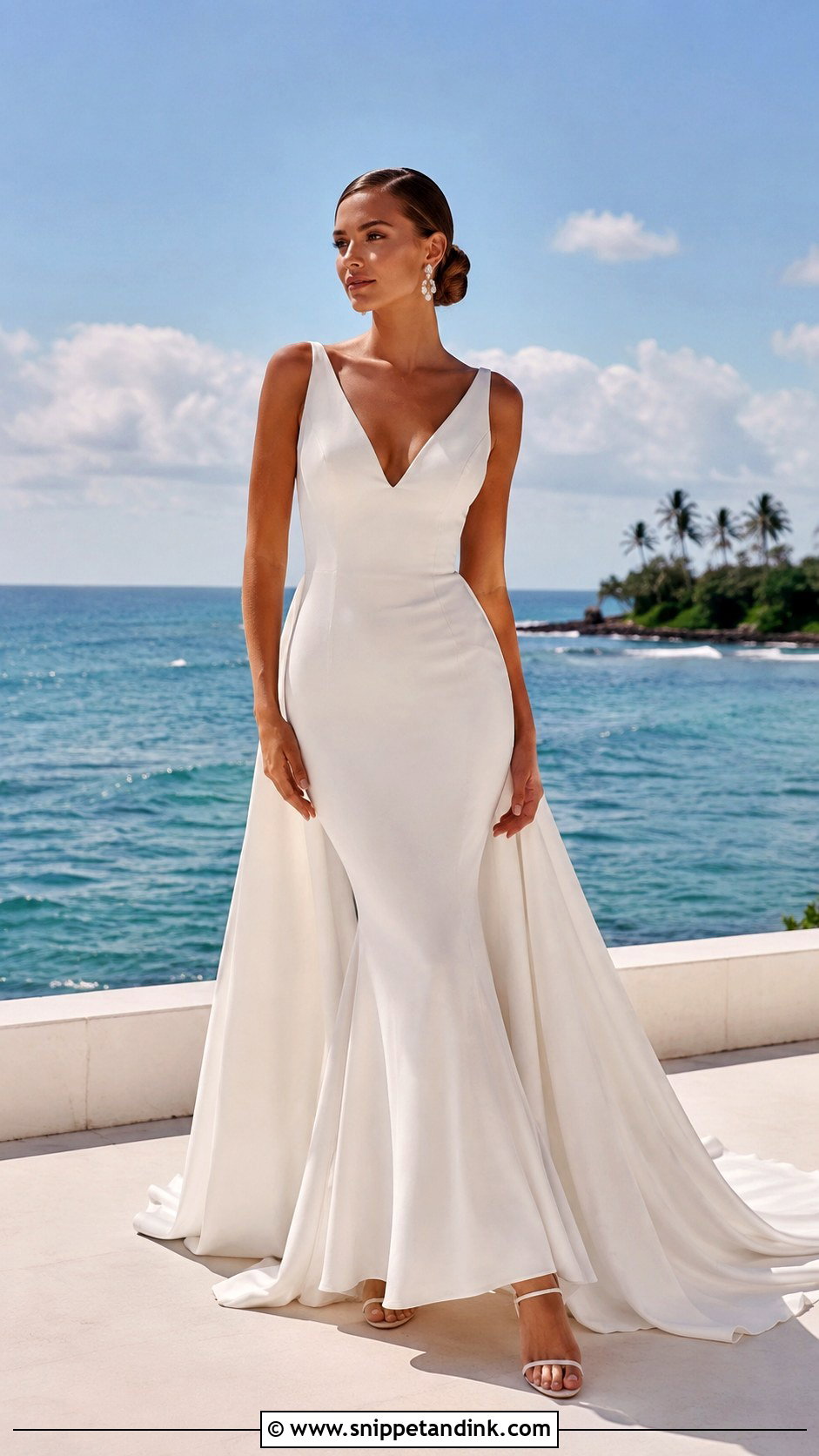
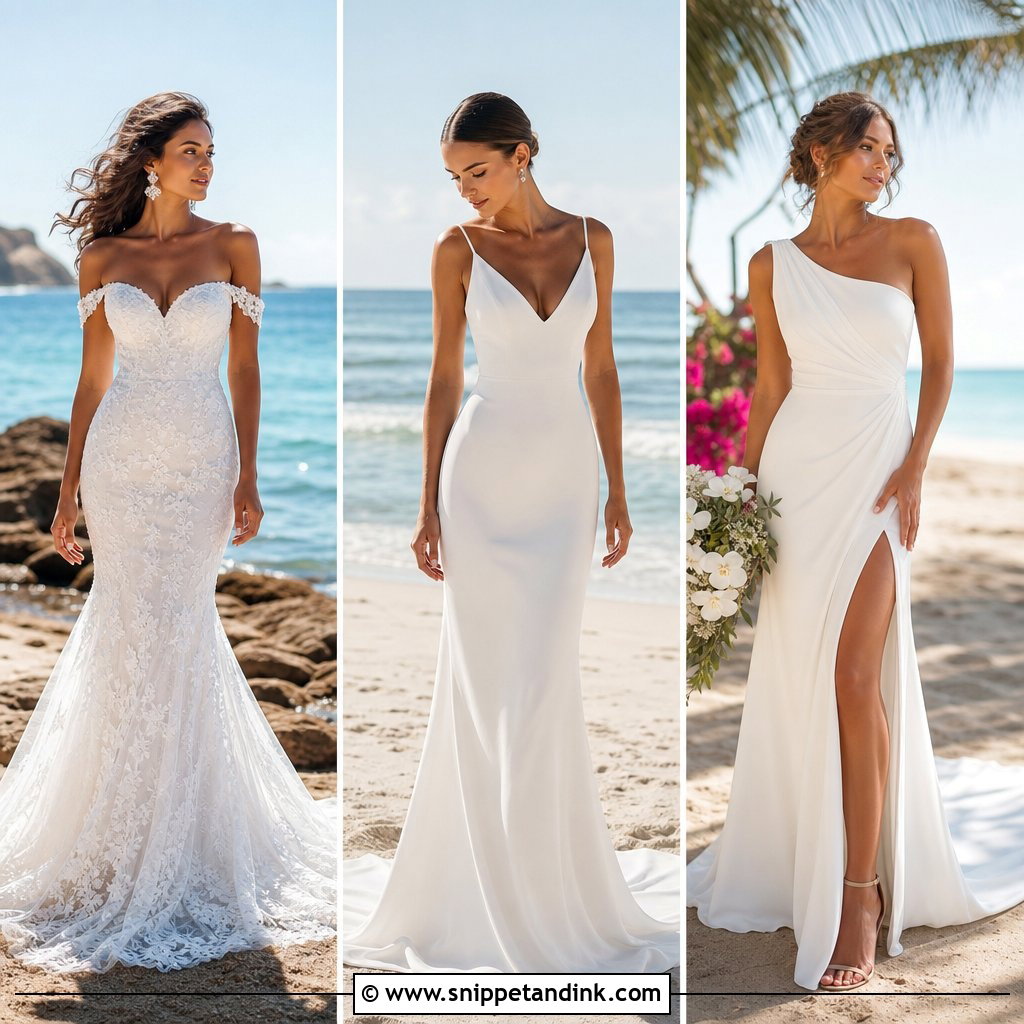
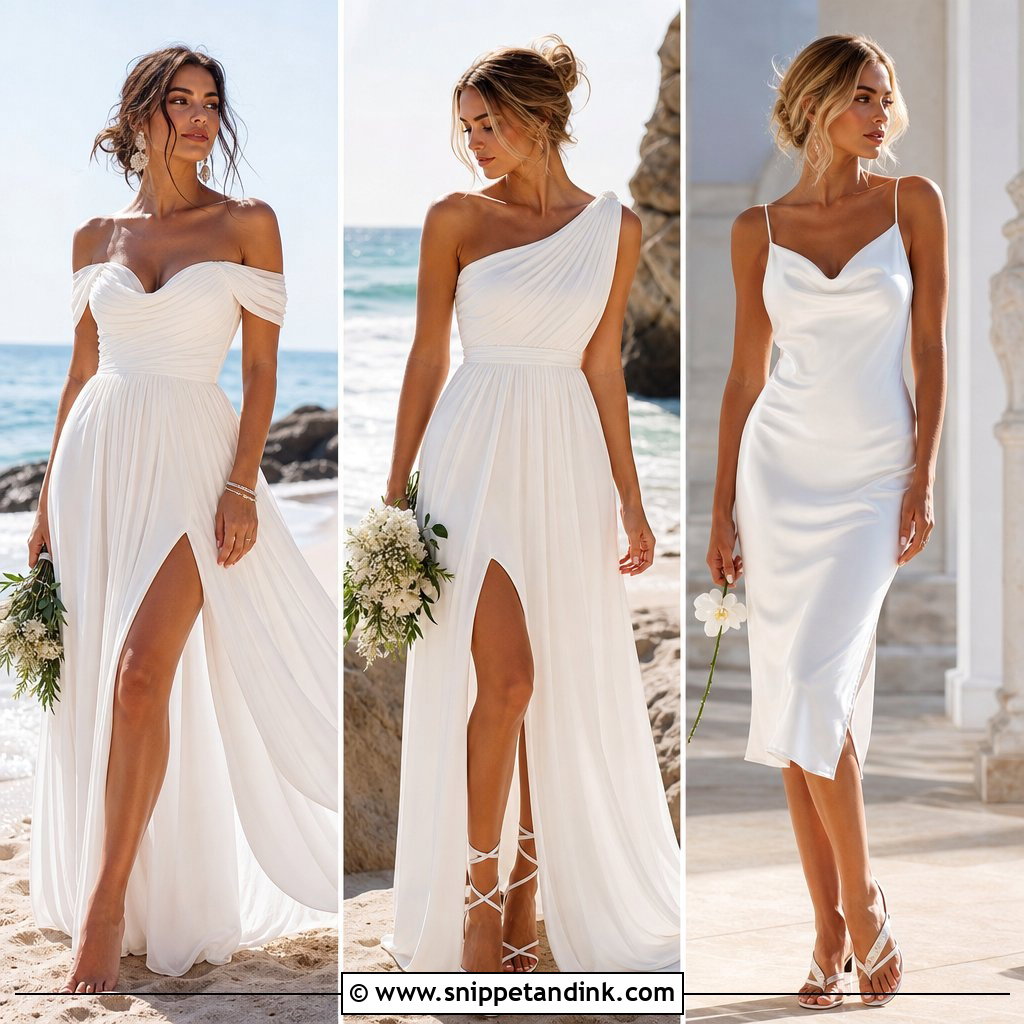
A mermaid shape can work by the ocean if it’s made in flexible crepe and the flare is gentle. Look for a design that follows the body through the hips and opens softly around the knees; a dramatic layered fishtail is hard to walk in on sand, and I’d warn any bride against it for that reason alone. Flat ankle-strap sandals keep you steady. Statement earrings and a sleek bun or side-parted waves suit the glamour, with little or no necklace if the neckline plunges or sits off the shoulder. A detachable train adds ceremony drama and comes off before you walk onto wet sand.
Getting the Dress There and Back in One Piece
Ordering and fittings
Made-to-order bridal gowns commonly take several months to arrive, and alterations need their own window on top, so I’d start shopping eight to ten months before a destination date if you can. Schedule the final fitting a few weeks before you fly, close enough that your body won’t change much and far enough out that a seam can still be adjusted.
The flight and the first day
Carry the dress on rather than checking it. Ask the airline ahead about hanging space; when there’s none, fold the gown loosely with tissue paper in the creases and lay it in the overhead bin in a breathable garment bag. On arrival, hang it straight away in the bathroom and run a hot shower to let the steam relax the creases, then steam any stubborn areas from the inside of the skirt. Never iron chiffon or pleats directly.
Sand and salt after the ceremony
Let a damp hem dry fully before you try to remove sand; wet grains smear, dry ones shake out. Hang the dress upside down and tap the skirt gently over a towel. Salt water can leave pale tide marks as it dries, so don’t scrub them. Take the gown to a cleaner experienced with bridal fabrics soon after the trip, and tell them it’s been near the sea, since salt and sunscreen both need specific treatment.
Which of These Dresses Will Cope With Your Beach?
Every dress here can be right for someone; the question is whether it suits your particular beach. Think about the temperature, the wind, the surface you’ll walk on, how formal the ceremony is and how far you’ll travel in the gown. Lightweight fabric, dependable support, a hem that clears the sand and shoes you can stand in for hours make the whole day easier. Then accessorize lightly: pearl jewelry, flat sandals, a small hairpiece and a short veil usually finish a beach look better than anything heavier. Walk in your choice before buying and make sure you can move in it freely.
You'll Like These Ideas:


Leave a Reply