
In a fitting room, the veil is usually the last thing a bride tries on and the first thing that changes how the gown looks. A cathedral veil makes a plain dress feel ceremonial; a heavy lace border can bury a busy bodice. I treat the two as one outfit and judge them together, from the back as much as the front. The pairings below range from dramatic cathedral lengths to easy fingertip veils and ornate mantilla designs, and each one includes the shoes, jewelry and hair that hold it together. Use your venue, the detail already on your gown and how much fabric you’re happy to manage as your starting point.
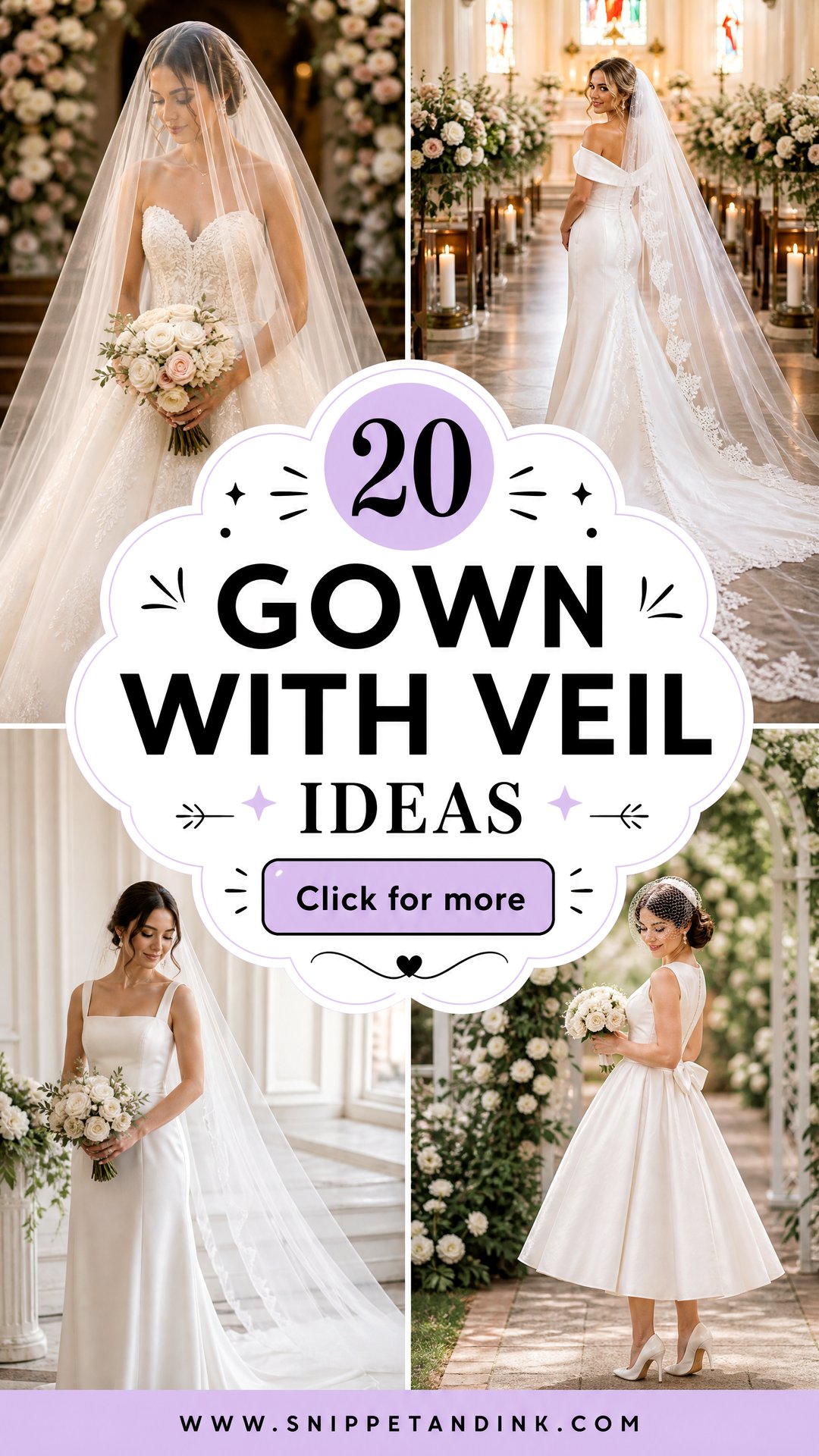
Where Each Veil Length Actually Lands on Your Body
Veil names describe where the tulle ends, measured from the comb at the back of the head. Makers cut them slightly differently, and your height changes everything, so treat these as rough guides and measure from where your comb will sit:
- Blusher: the short front layer, roughly 25 to 30 inches, covering the face to about the chin or collarbone.
- Elbow: ends near the elbow or waist, about 30 to 32 inches. Good with full skirts whose detail starts at the waist.
- Fingertip: around 36 to 40 inches, ending where your fingertips fall with arms relaxed. The most forgiving length to wear all day.
- Waltz: somewhere between knee and ankle, usually 50 to 60 inches. Long enough to move, short enough to dance in.
- Floor: just brushes the ground, about 70 to 72 inches.
- Chapel: trails a little past the floor, often around 90 inches.
- Cathedral and royal: 108 inches and well beyond. These need a long aisle and a helper.
In fittings, I place the veil where it will really sit on the day. A comb set high on the crown makes the veil end several inches higher than one tucked under a low bun, and that shift can push a fingertip veil up to the waist. Bring your hairpiece or have your stylist’s plan in mind before deciding on length.
1. Ball Gown with Cathedral Veil
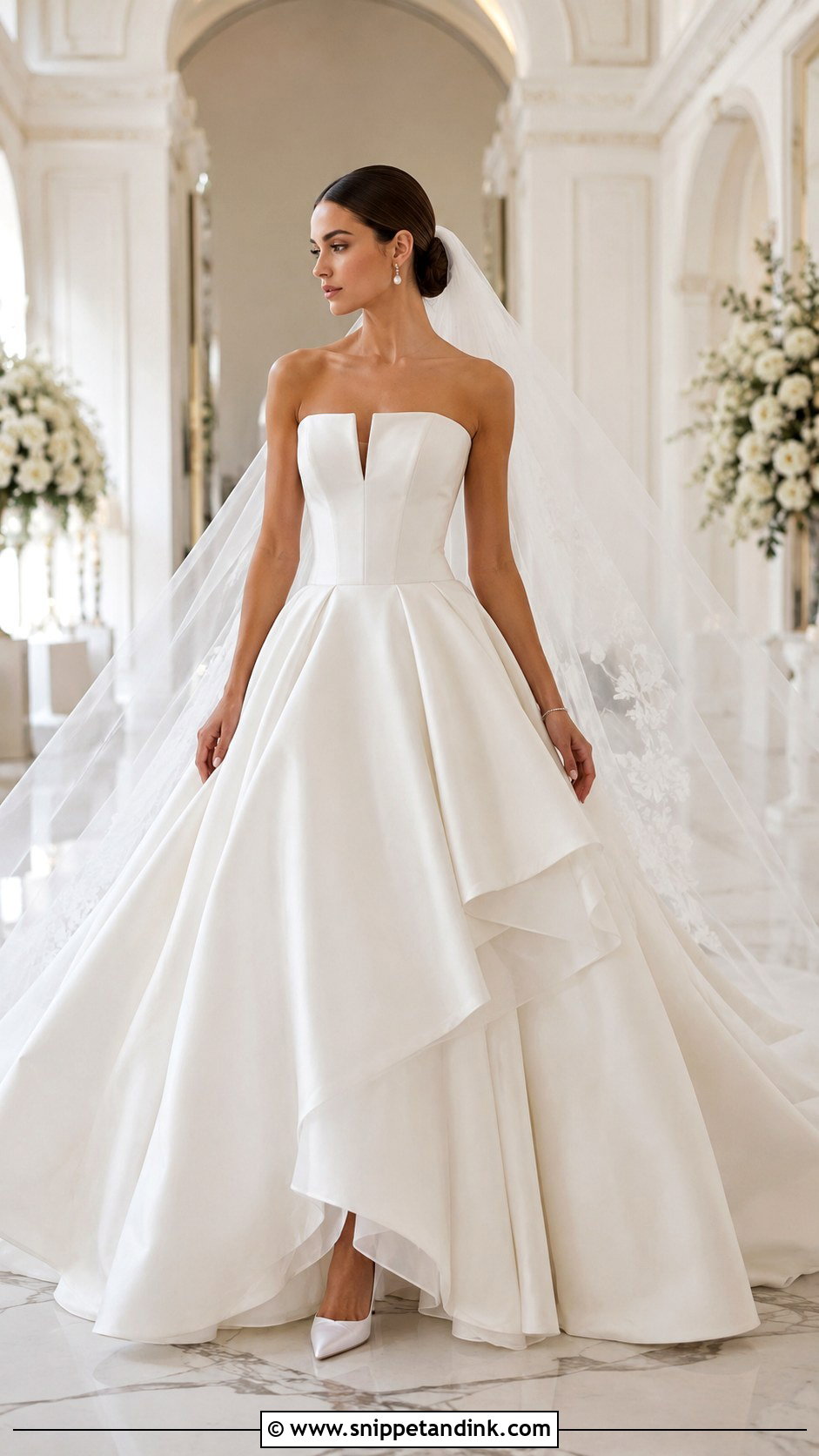
A structured bodice and a layered tulle or satin skirt can carry a lot of veil, and a sheer cathedral length that reaches past the train keeps all that volume from looking heavy. The thing I check first is the gown’s embroidery. If the dress is heavily worked, I go for a simple raw-edge veil, because two decorated layers stacked over a full skirt blur together from more than a few feet away. Pearl drop earrings, a fine bracelet and pointed ivory heels finish it. A low bun gives the comb something solid to grip and keeps the neckline in view. Save this one for a venue with a long aisle; in a small room, the veil ends up piled on the floor before you’ve taken three steps.
2. Lace Mermaid Gown with Mantilla Veil
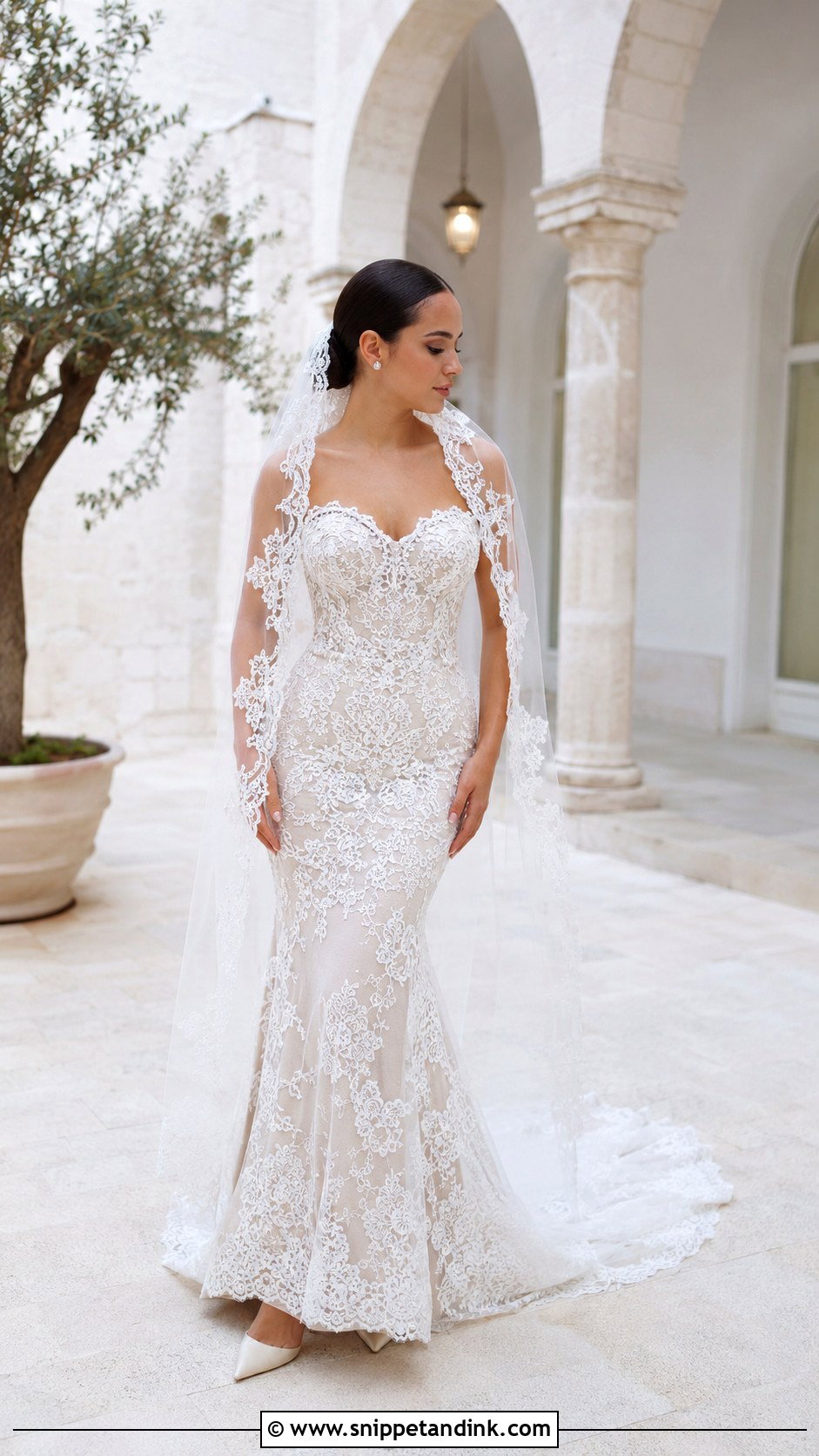
Lace on lace works only when the two don’t try to match perfectly. With a fitted mermaid gown and a mantilla veil, I look for a border that repeats one motif from the dress, a leaf shape or a scallop, rather than an exact copy, which tends to look like the veil was cut from leftover gown fabric. Set the comb near the crown so the edge frames the face before flowing over the shoulders and train. A nude lining under the gown lace lets the pattern show, and ivory pointed pumps keep the line long. With a detailed neckline, small diamond or crystal studs replace any necklace. Soft waves or a smooth low chignon both sit well under mantilla lace.
3. Satin A-Line Gown with Fingertip Veil
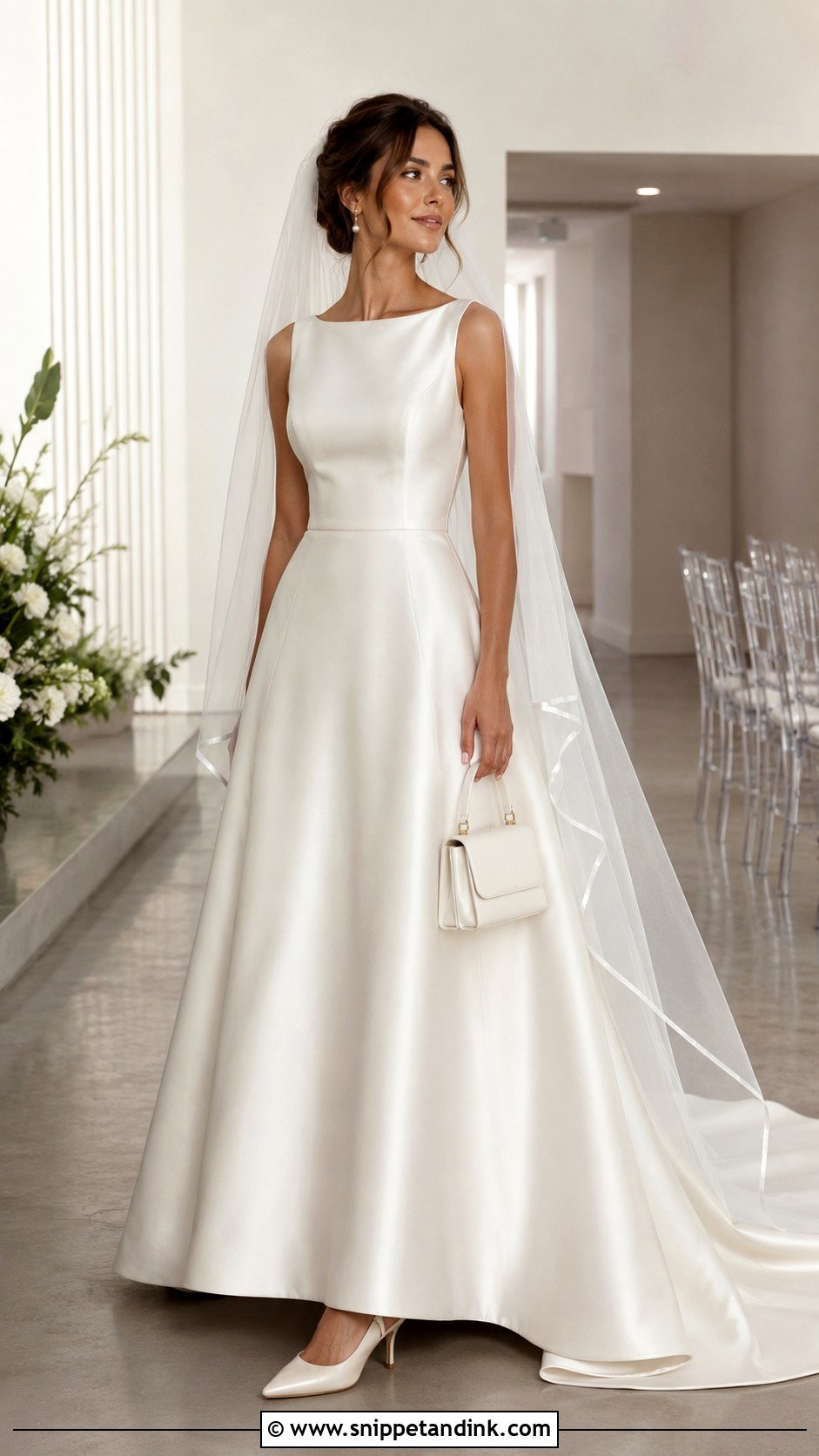
Satin A-line is the gown I’d hand a bride who wants clean and luminous without heavy decoration. A sheer fingertip veil keeps it easy to move in. A narrow satin edge on the veil quietly ties the two pieces together, as long as the satin tones match, which I check under the shop’s window light, not the overhead bulbs. Because the veil ends near the hands, it frames the bouquet and any bracelet. Pearl earrings, a structured mini bag for portraits and ivory slingbacks complete the look, with a neat bun, center part or softly curled ponytail. It flatters most figures and works indoors or out.
4. Strapless Gown with Pearl Veil
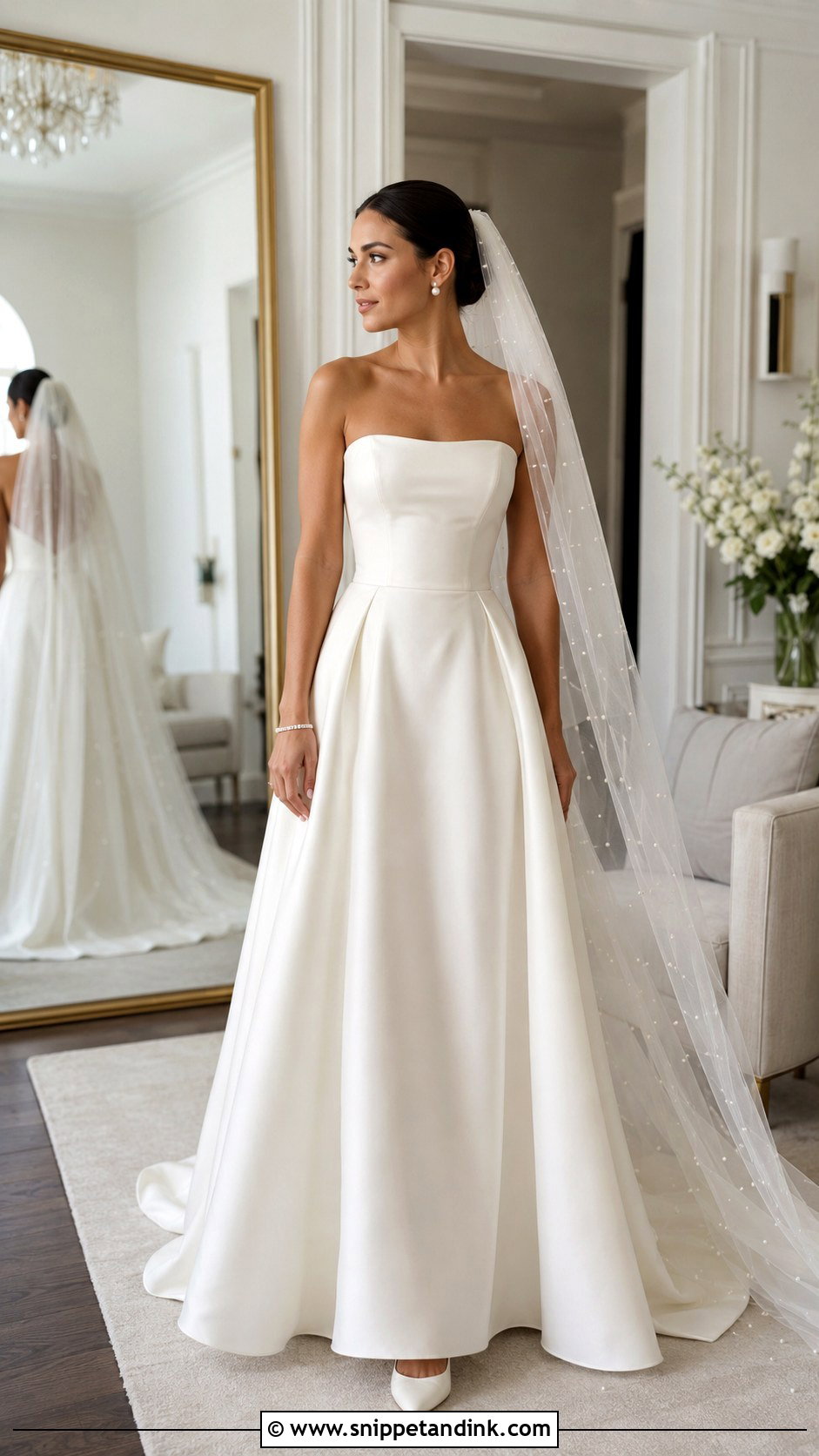
Pearl veils are heavier than plain tulle, and that matters on a strapless gown, where nothing holds the dress to your shoulders except the bodice. I pick a fingertip or chapel length with small, widely spaced pearls so the weight doesn’t drag the comb backward. The bodice can have a straight or softly curved top, and the skirt can be as full or as plain as you like. Pearl studs, a single tennis bracelet and closed-toe satin heels are enough; skip an elaborate necklace unless the bodice is very plain, or the upper half gets crowded. A sleek updo keeps the shoulders visible and gives the comb a firm anchor.
5. Long Sleeve Gown with Lace Veil
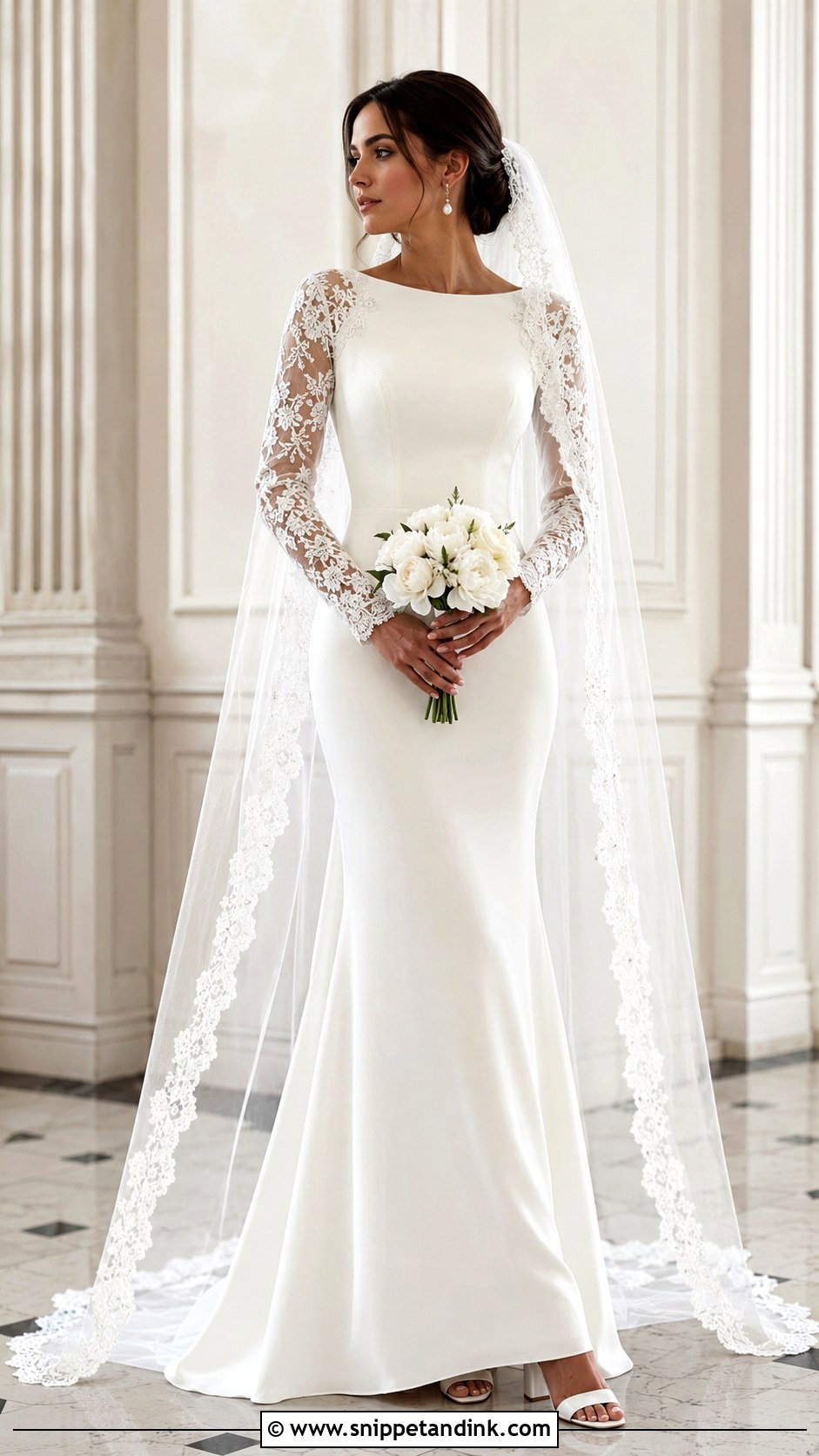
Sleeves change where a veil needs to be quiet. With sheer lace sleeves or smooth crepe ones, I choose a chapel-length veil whose lace sits along the lower edge, so the shoulders and arms stay readable in photos. If the gown already has dense lace, the veil should have wider gaps between its appliqués; otherwise the whole back turns into one solid patterned block on camera. Pearl or crystal drop earrings, comfortable block heels and a bouquet with a simple shape keep things calm. A low bun at the nape holds the comb securely and suits the covered neckline.
6. Minimalist Column Gown with Drop Veil
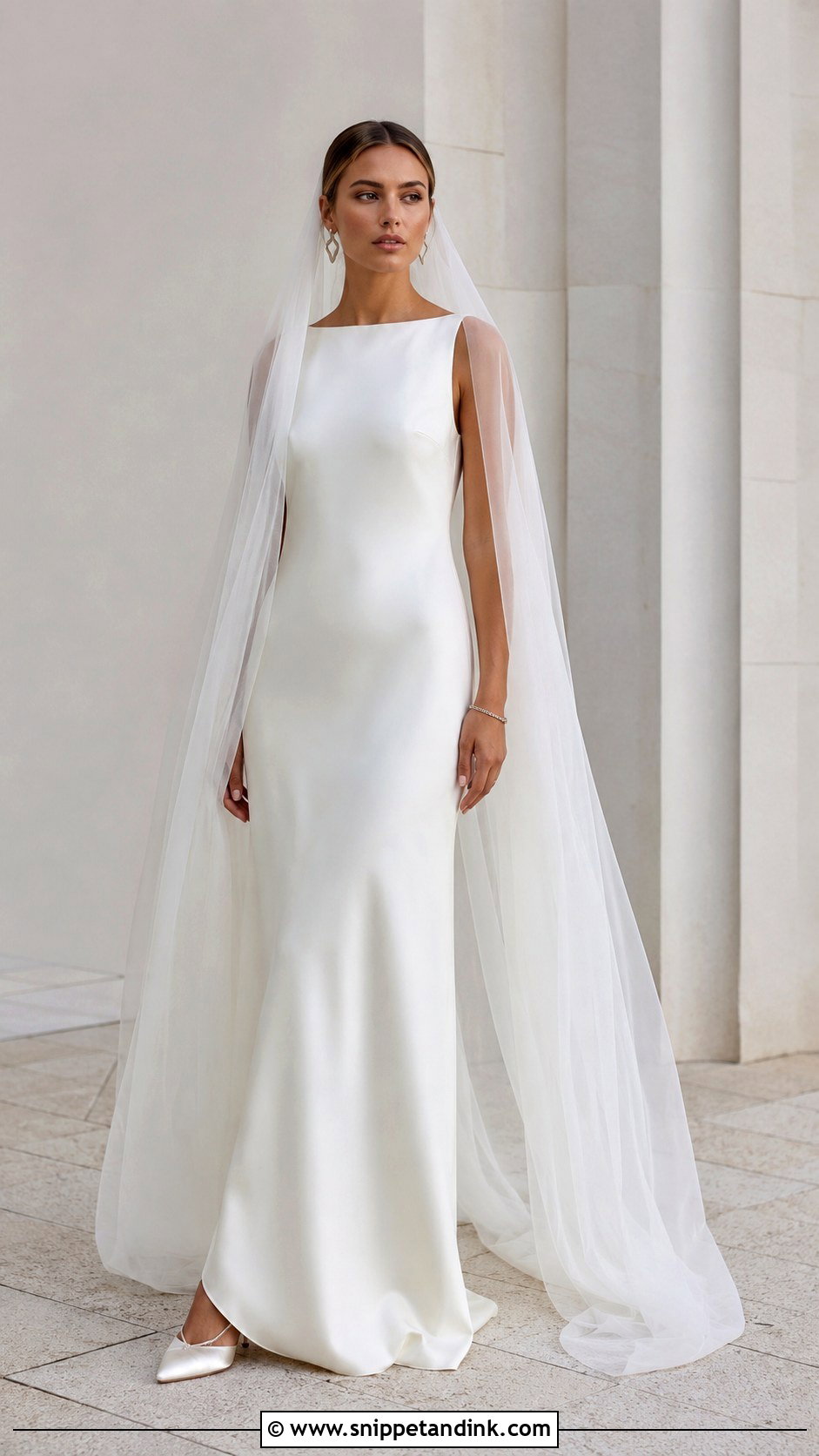
A drop veil has no gathers at the comb. It’s a single circle of tulle laid over the head, so it falls straight down the shoulders and keeps a column gown’s line uninterrupted. That plainness is also its weakness: without gathers it slides more easily, so I anchor it with a comb sewn underneath plus a pair of hidden pins. Choose silk crepe or satin with few seams and a gently shaped neckline, then a floor or chapel length for movement. Sculptural earrings, pointed slingbacks and a slim metallic bracelet finish it, with a center-parted bun or smooth waves tucked behind the ears. Keep the bouquet compact.
7. Sweetheart Gown with Blusher Veil
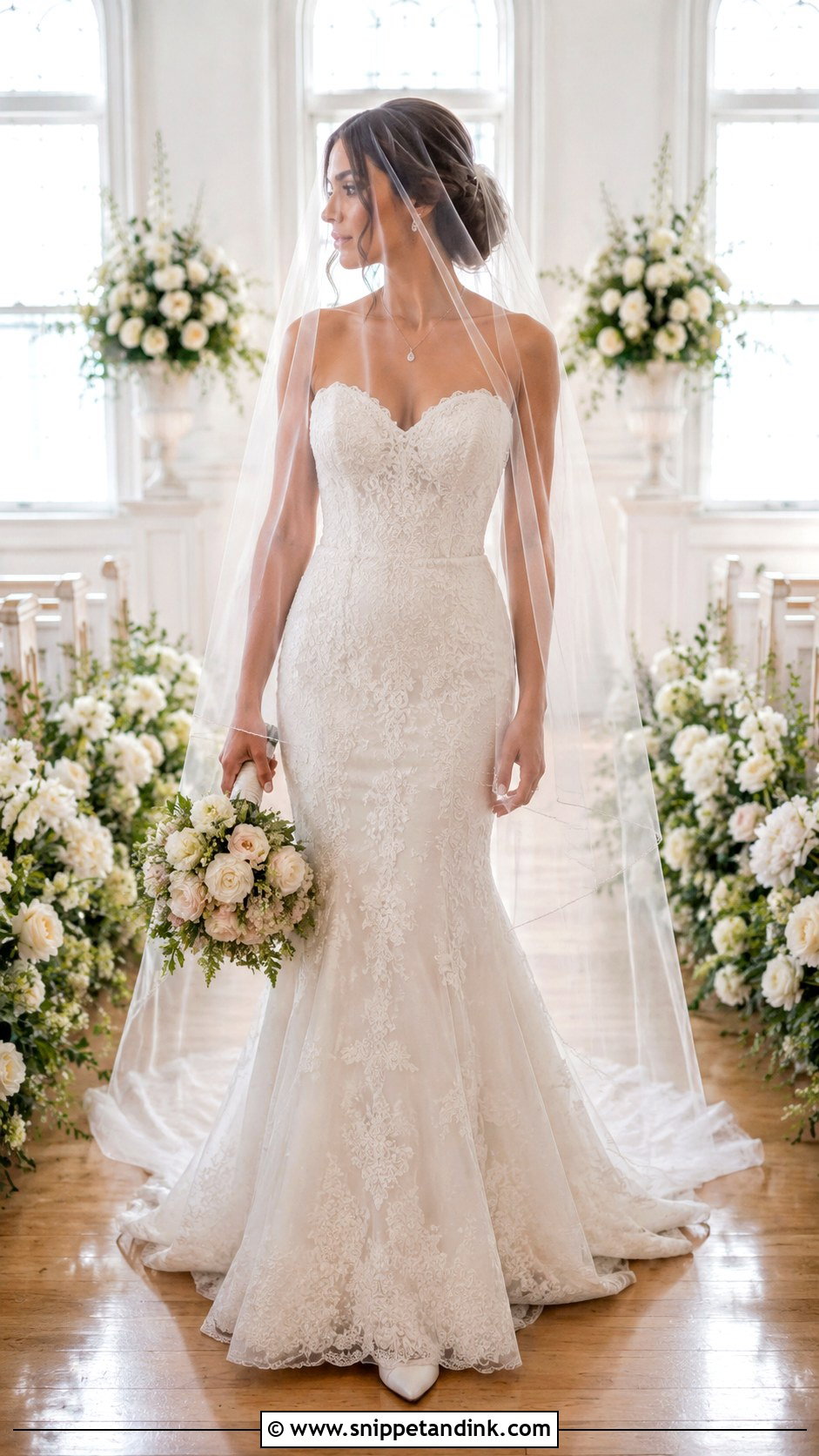
The blusher veil is the short front layer worn over the face for the walk, and it suits a sweetheart neckline because both draw the eye to the face and collarbone. I attach it to a longer fingertip, chapel or cathedral layer depending on the train. Practice the lift before the wedding: whoever turns it back needs to lift both edges together and lay it flat behind your head, or it catches on the comb and sits crooked for the vows. A low textured bun makes that move easier. A small pendant, subtle earrings and satin pumps are plenty, and a crystal or lace bodice calls for a mostly sheer veil.
8. Off Shoulder Gown with Chapel Veil
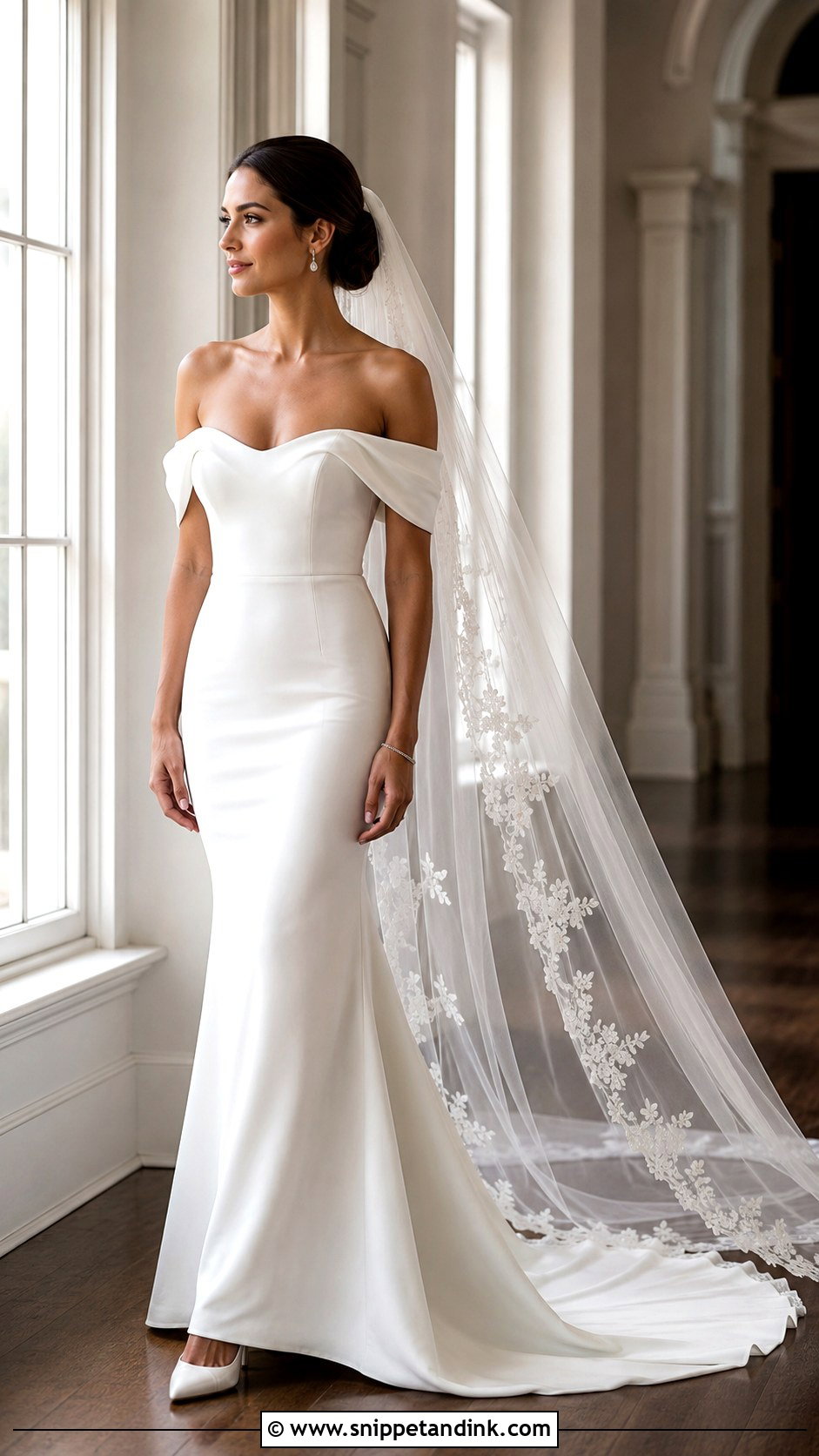
An off-shoulder neckline is the reason you bought the gown, so the chapel veil should start behind the hairstyle and fall away from the shoulders, not over them. I set the comb slightly lower than usual for this neckline. A fitted crepe skirt gives a sleek line; a softly gathered one is more romantic. Light lace appliqués near the veil’s hem add interest around the train without touching the bodice. Teardrop earrings, a fine bracelet and ivory pumps with a stable heel finish it, along with a low chignon or softly pinned waves. A big necklace would cut straight across the line you’re trying to show.
9. High Neck Gown with Tulle Veil
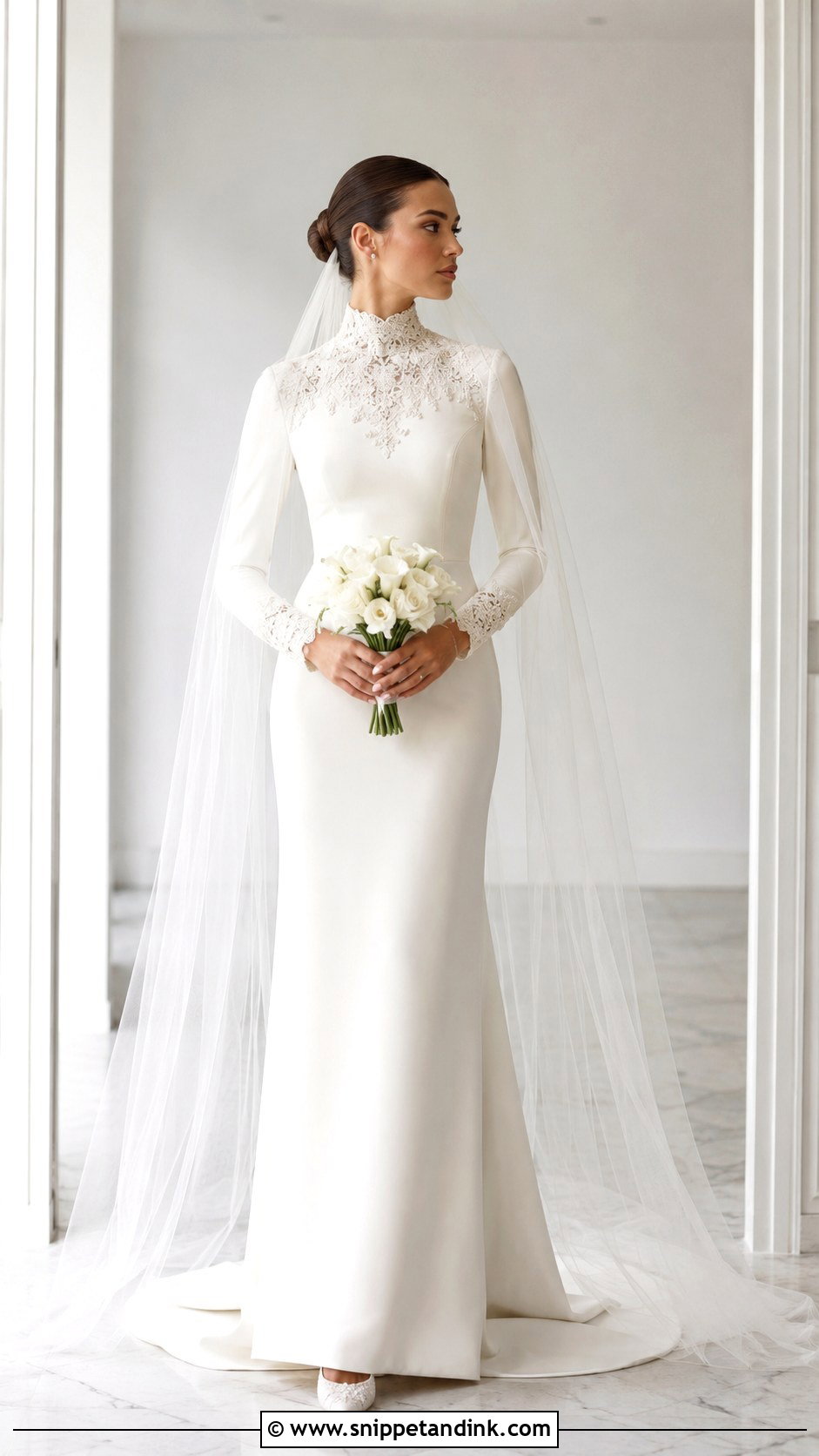
High necks put the interest right under the chin, so I keep the veil plain: one layer of tulle, no heavy border, so covered buttons or lace at the collar stay visible. Fingertip and floor lengths both work depending on the train and the ceremony space. One fitting-room habit: turn your head side to side with the veil on. On a high collar, a veil that sits too low bunches against the neckline every time you move. A smooth bun prevents it. Small pearl earrings, pointed heels and a slim ring or bracelet replace a necklace, and with long sleeves the veil should be as sheer as you can find.
10. Corset Gown with Floral Veil
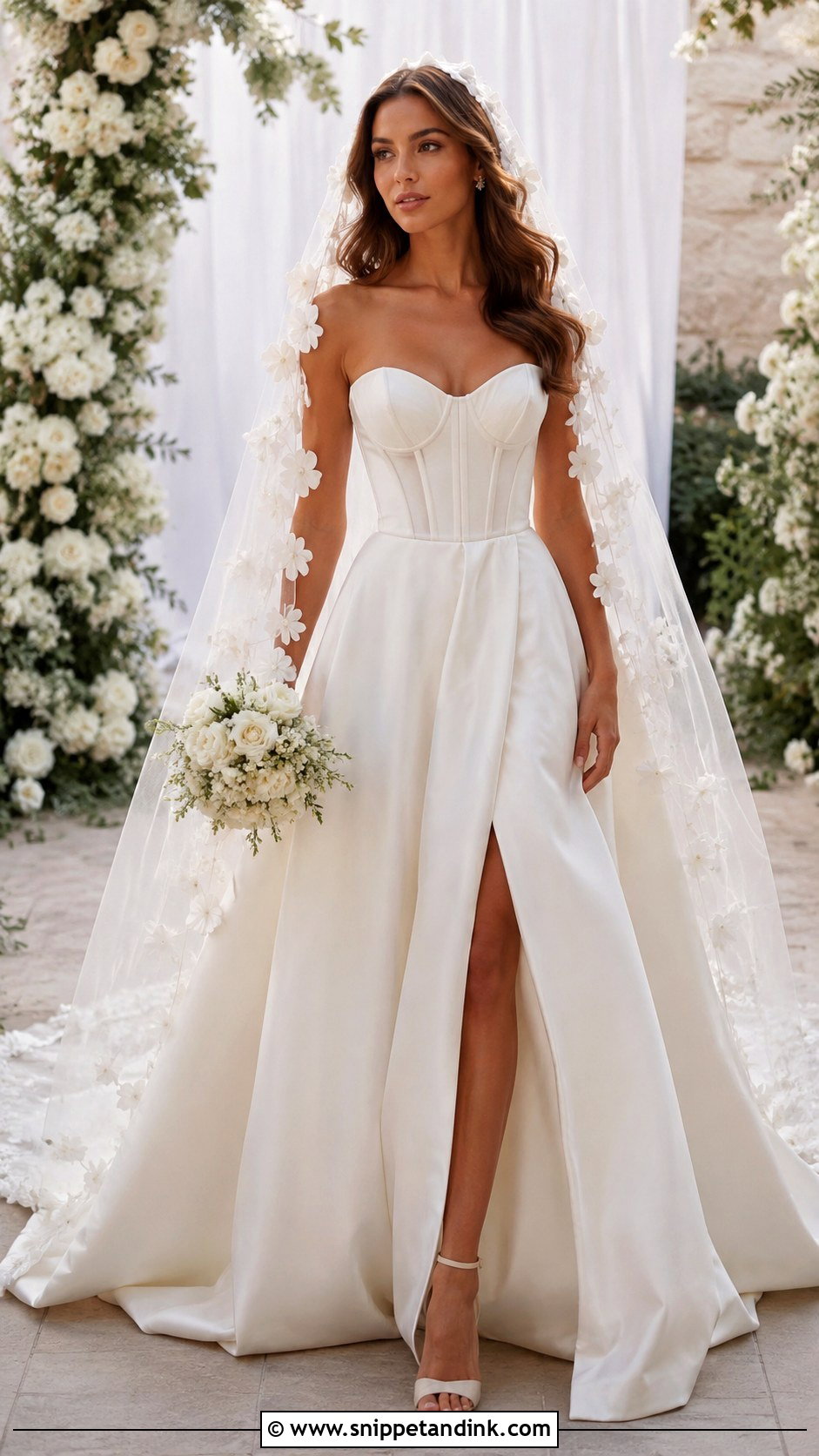
Visible seaming, fine boning and a curved neckline make a corset bodice the main event, so the floral appliqués belong on the veil’s edges and train, not near the top where they’d cover that shaping. Three-dimensional flowers look best from behind, which is exactly where guests spend the ceremony looking. If the gown already has floral embellishment, I repeat one flower shape or fabric on the veil and nothing more; matching everything starts to look like a costume. Small floral earrings, neutral satin heels and a bouquet that complements rather than copies the veil finish it. Loose waves or a relaxed bun keep it young.
11. Square Neck Gown with Raw Edge Veil
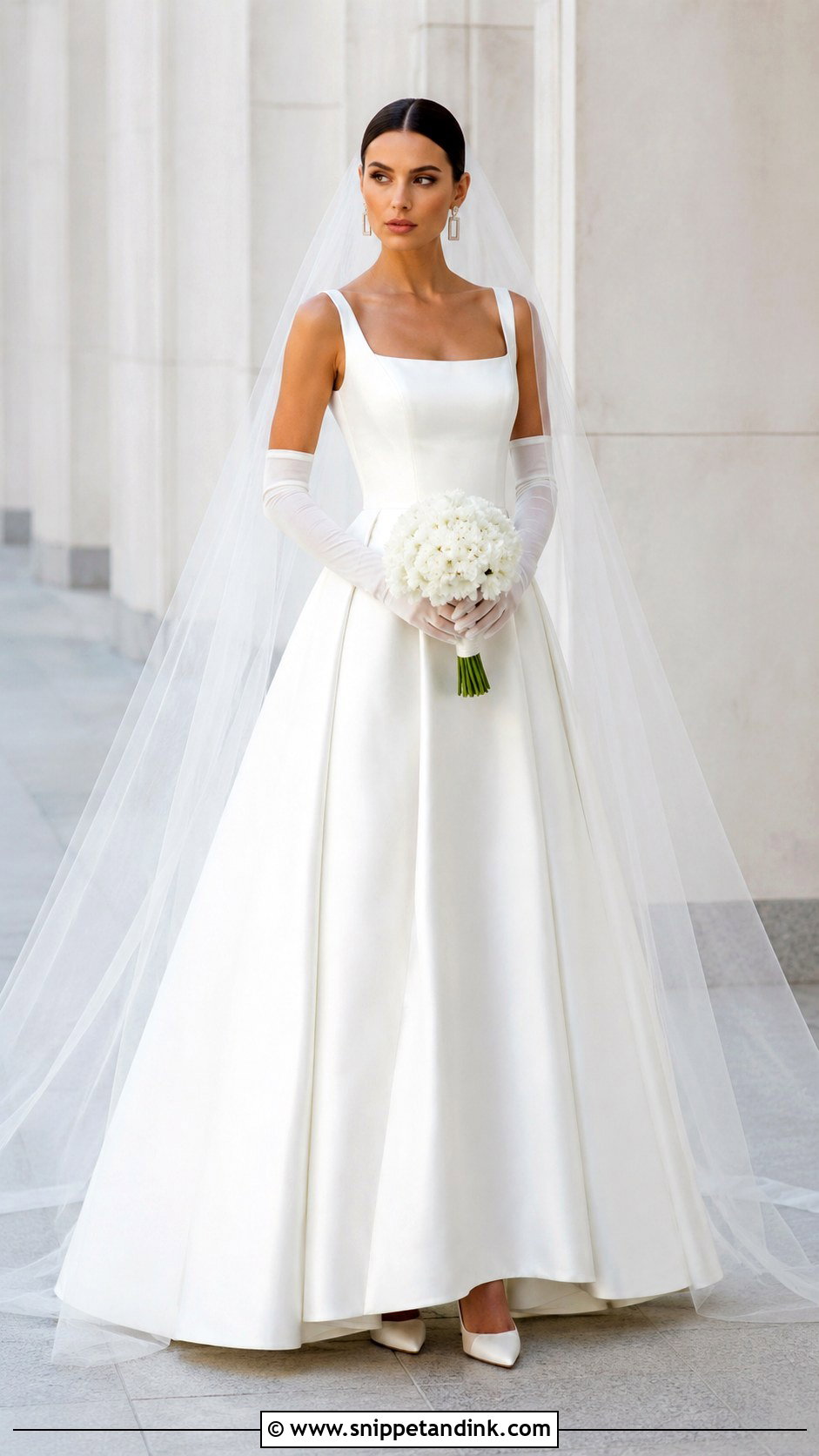
A raw-edge veil has no binding at all, just cut tulle, so it practically disappears against a square neckline in satin, mikado or crepe. That’s the appeal: softness without another decorative line. A sheer cathedral or chapel length works, and if the gown has a long train, make the veil slightly longer so the two layers can be arranged separately for photos. Geometric earrings, a smooth low bun, pointed pumps and a compact white bouquet keep the architecture clean. Long gloves add formality, but only in a plain fabric. Raw-edge tulle can fray on rough ground, so I’d keep it for indoor venues or smooth aisles.
12. Beaded Gown with Simple Veil
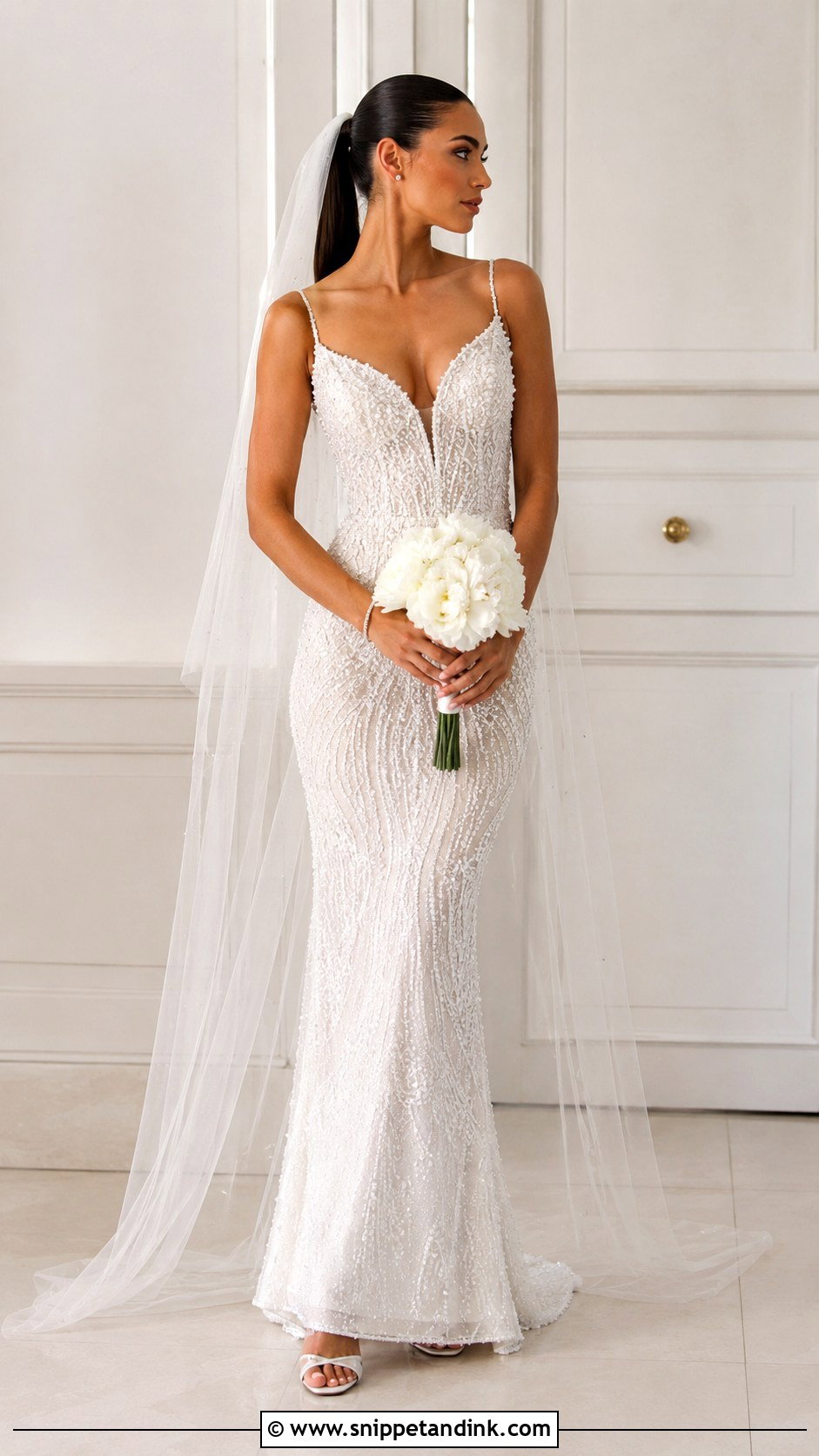
When a gown sparkles from neckline to hem, the veil should be plain soft tulle: no crystals, pearls, lace or thick edging. Fingertip length is easy to move in; a sheer cathedral adds drama without more decoration. The check I never skip is laying the veil over the dress near a window. Ivory tulle and ivory beading fabric can be different shades, and the mismatch shows in daylight portraits even when it looked fine under shop lighting. Small studs, a plain bracelet and matching ivory satin heels keep things restrained, and a sleek bun or polished ponytail contrasts nicely with the ornate gown. Carry flowers in a limited palette with little greenery.
13. Princess Gown with Royal Veil
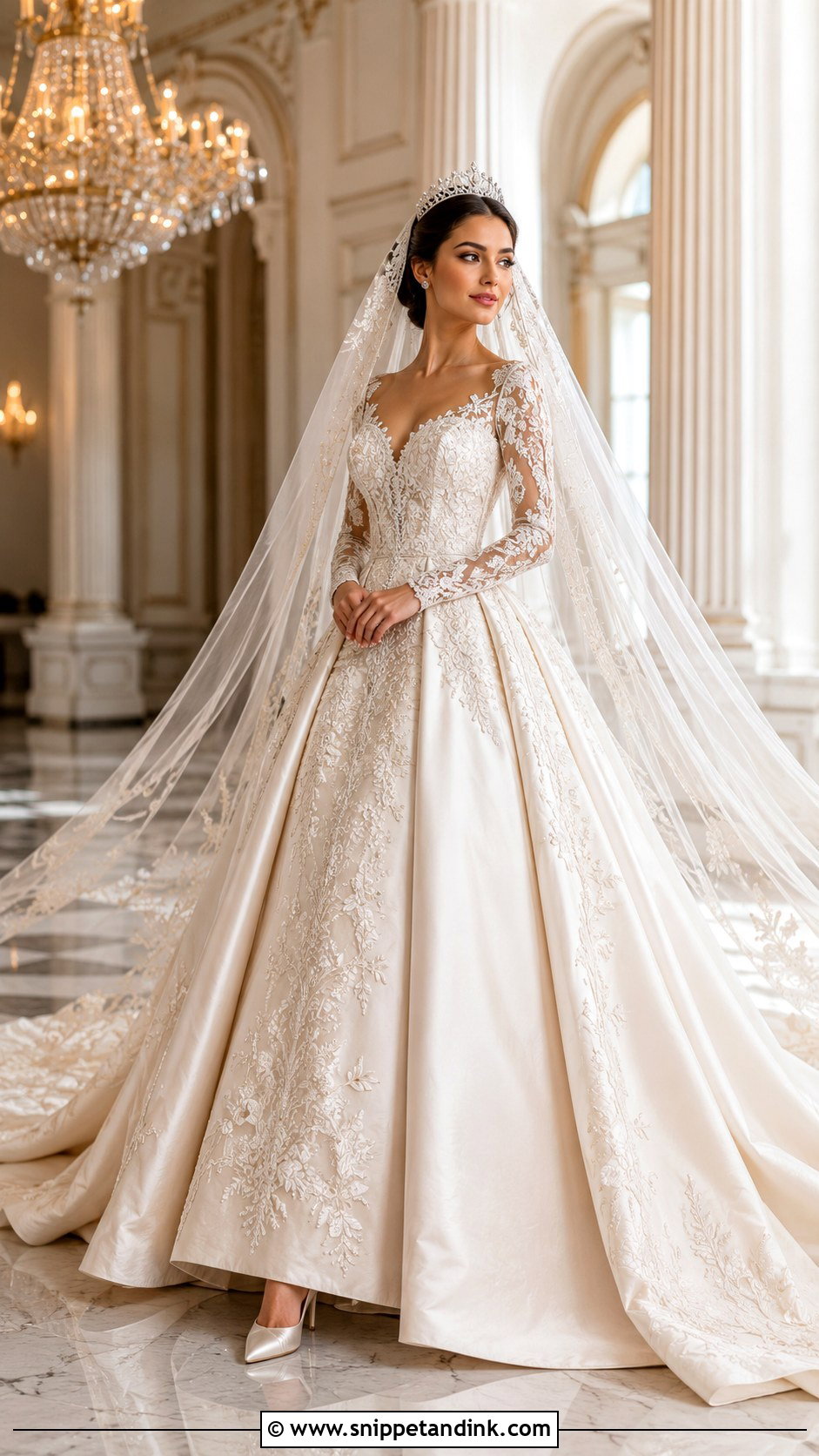
An extra-long royal veil runs well past the train, and it is heavy. A fitted bodice and voluminous skirt give it the right proportions, but the hair has to take the weight, so I build a smooth bun or structured half-up style with the comb pinned into it from both sides. Choose sheer tulle if the gown is embroidered, or a lace border if the dress is plain. A small tiara, classic studs and comfortable satin heels hidden under the skirt complete it; the necklace stays delicate or is skipped. You’ll need a wide aisle and someone assigned to arrange the veil at the altar.
14. Boho Gown with Embroidered Veil
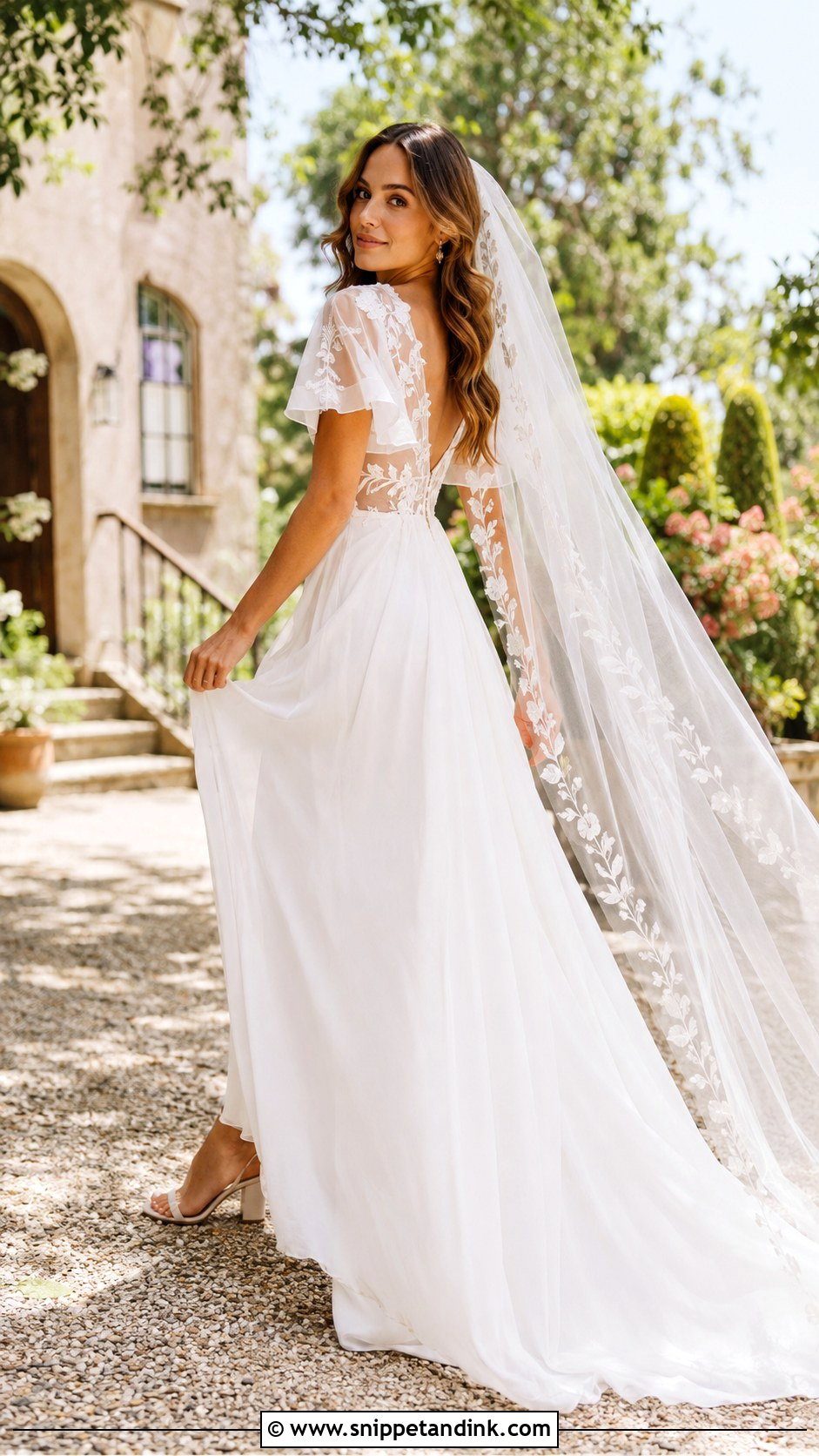
An embroidered veil suits a boho gown because vines and leaves stitched into the tulle continue the botanical lace without adding sparkle. Pick a flowing A-line or sheath with botanical lace, flutter sleeves or a lightly fitted waist, and a chapel-length veil. Outdoors, ground matters: low block heels, bridal sandals or pointed flats depending on grass, sand or stone. Small gold earrings and loose waves or a relaxed braided updo go with it. Fresh flowers can be tucked near the comb, but only a few, and choose sturdy blooms; delicate petals wilt against warm hair within a couple of hours.


15. Tea Length Gown with Birdcage Veil
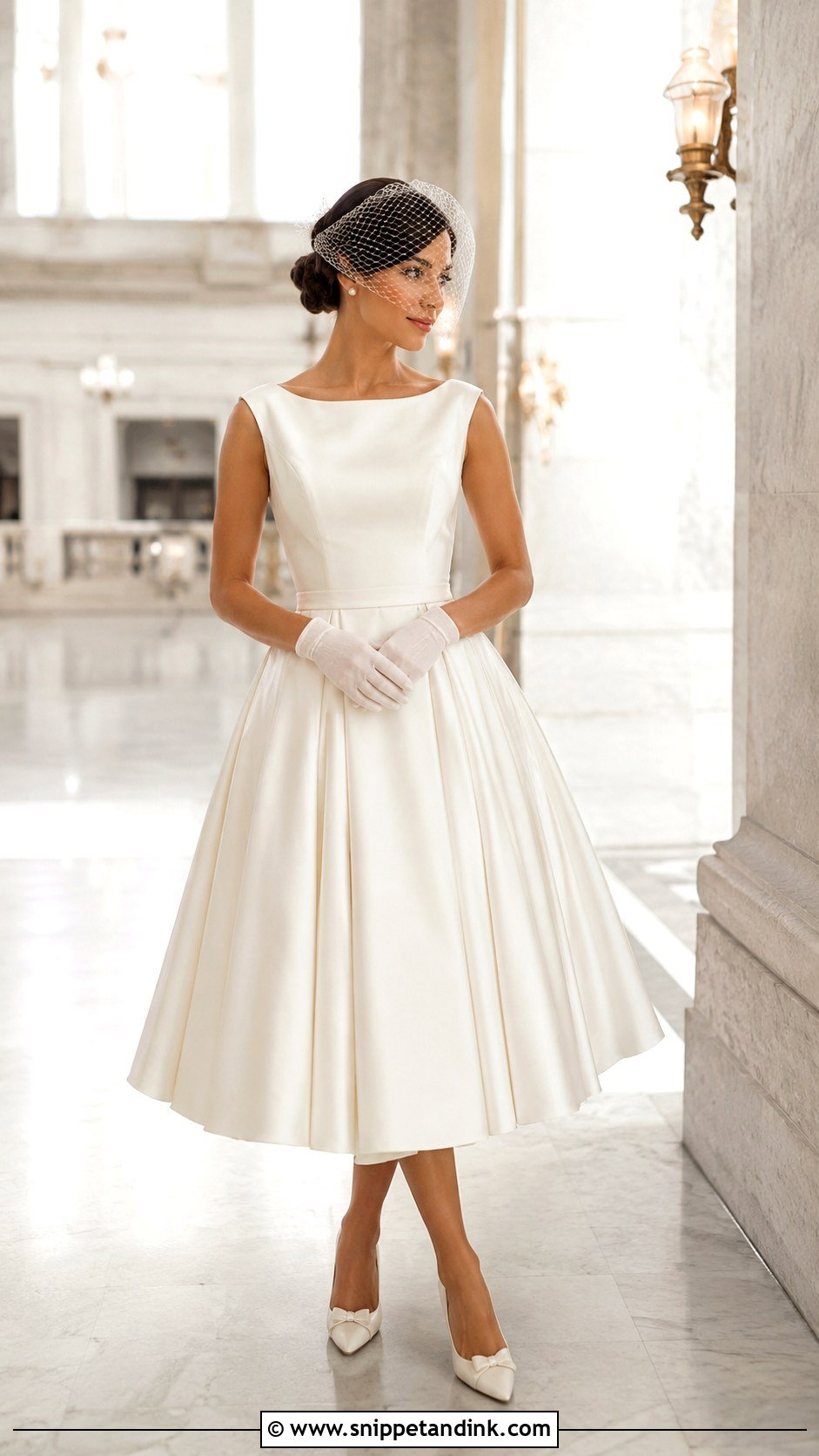
A birdcage veil is short netting that covers part of the face, and with a tea-length gown ending between knee and ankle it gives a confident vintage feel. A structured bodice and full skirt read classic; a fitted tea-length sheath is sleeker. Pin the birdcage at a slight angle so it frames the eyes without covering the whole face. Since your shoes are fully on show, they become part of the outfit: pointed pumps or bow-detailed heels, with pearl studs and short gloves. A smooth bun, rolled updo or chin-length bob suits the shorter veil. Every accessory is visible at this length, so I compare all the ivory shades side by side.
16. Plus Size A-Line Gown with Floor Veil
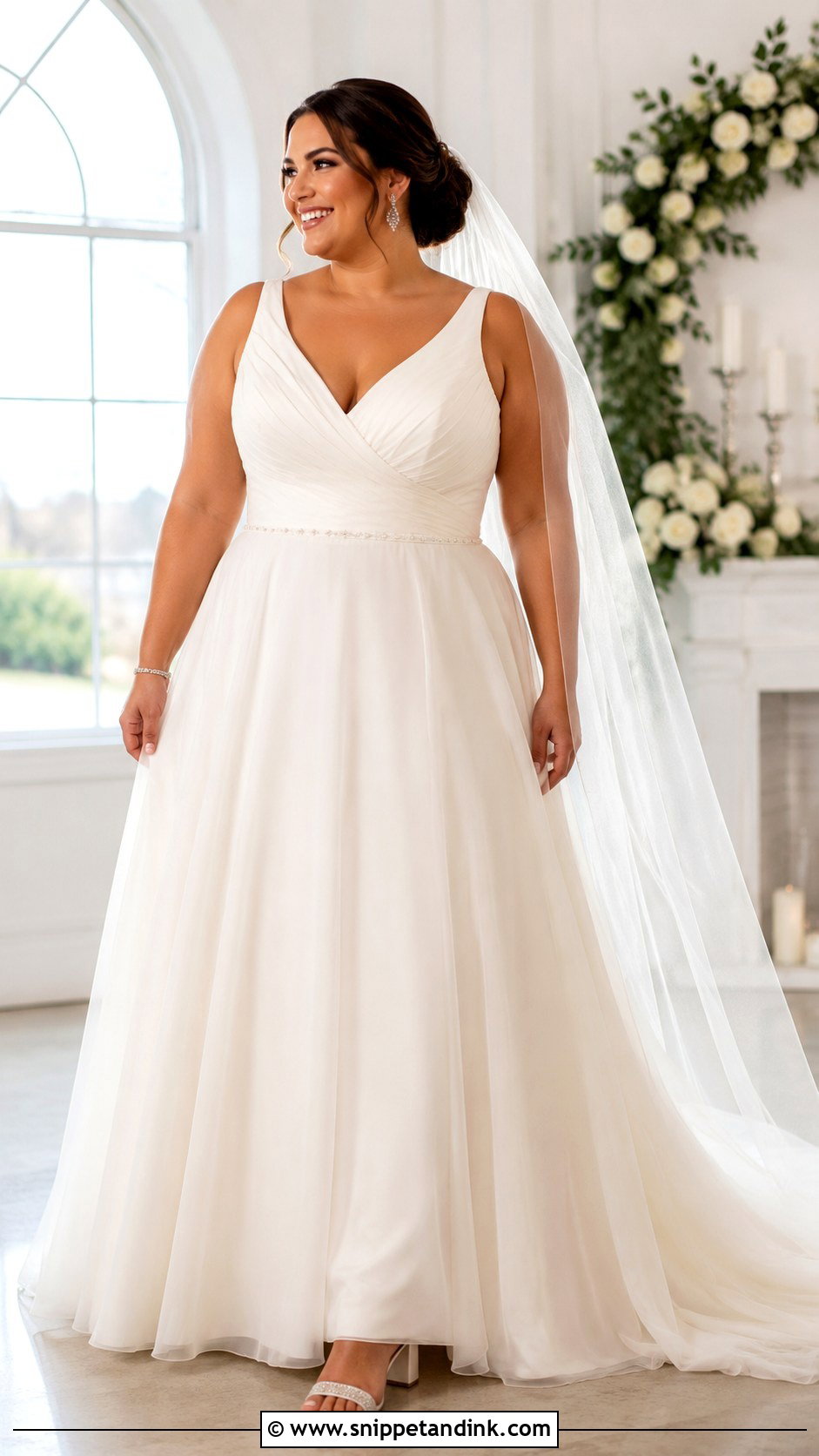
For plus-size brides, the gown’s inner structure matters more than any styling trick. I look for a defined waist, supportive boning and a skirt that falls smoothly without extra layers at the hip. V-neck, scoop, square and off-shoulder bodices all work, so choose on comfort and how well you can move. A floor-length veil follows the gown’s vertical line and is far easier to manage than a train-length one. Supportive block heels, sparkling earrings and a bracelet smooth enough not to snag the tulle complete it. A lifted low bun lets the veil sit securely without pulling. Place it above an updo for volume, or below the bun to keep buttons and lace on the back visible.
17. Modest Gown with Mantilla Veil
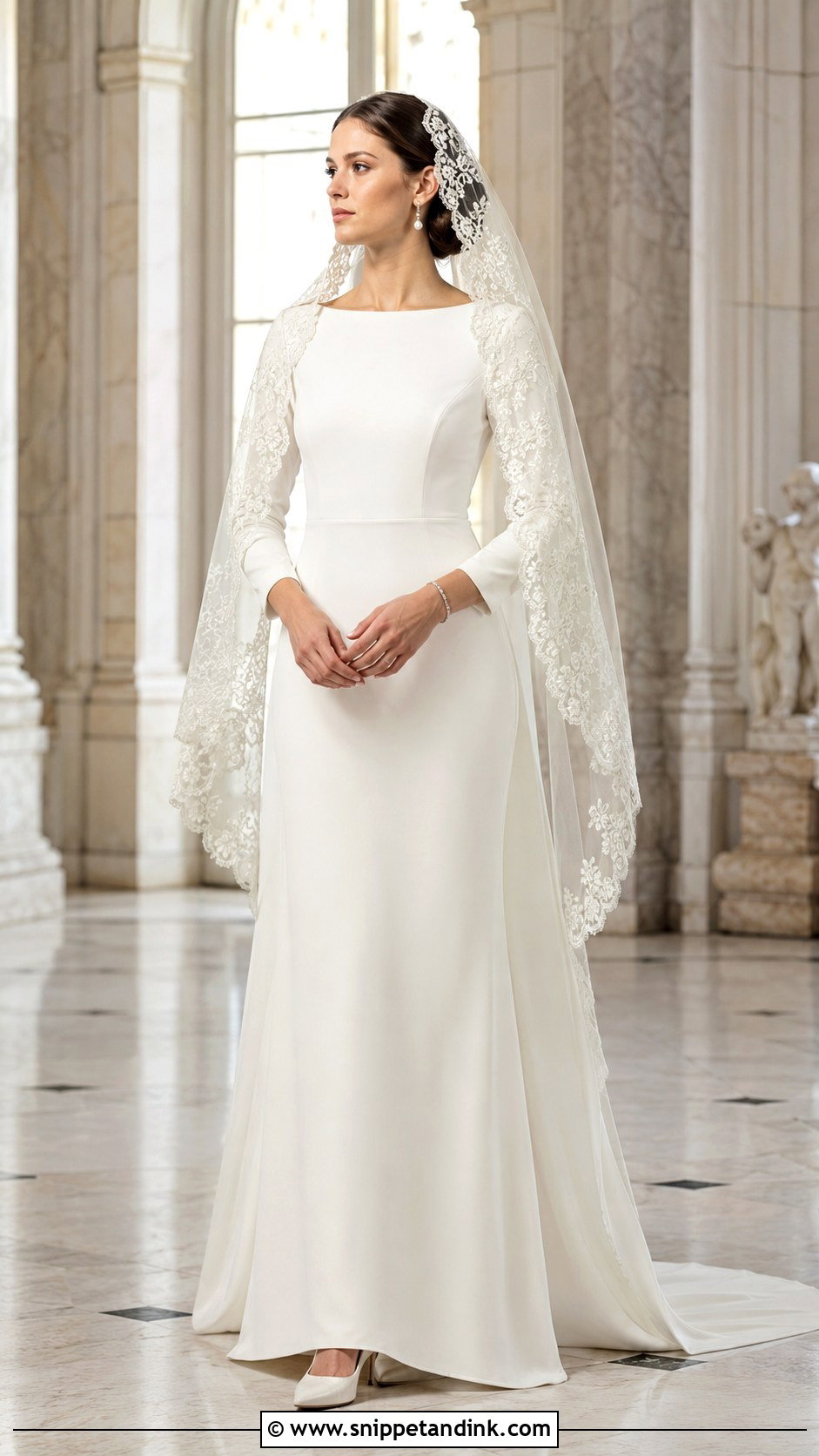
For a modest gown paired with a mantilla veil, I start with a floor-length gown with long sleeves, a high or bateau neckline and a comfortably fitted bodice. Plain crepe can take an ornate lace veil; a lace gown needs a lighter mantilla border. Place the veil over the crown so it frames the face and drapes across the shoulders, and pin it into a secure low bun so it doesn’t shift when you bow your head or sit for a long ceremony. Closed-toe pumps, pearl earrings and a slim bracelet keep the shine low. Matching undertone is critical here, since soft ivory, bright white and champagne look clearly different once layered.
18. Black Gown with Black Veil
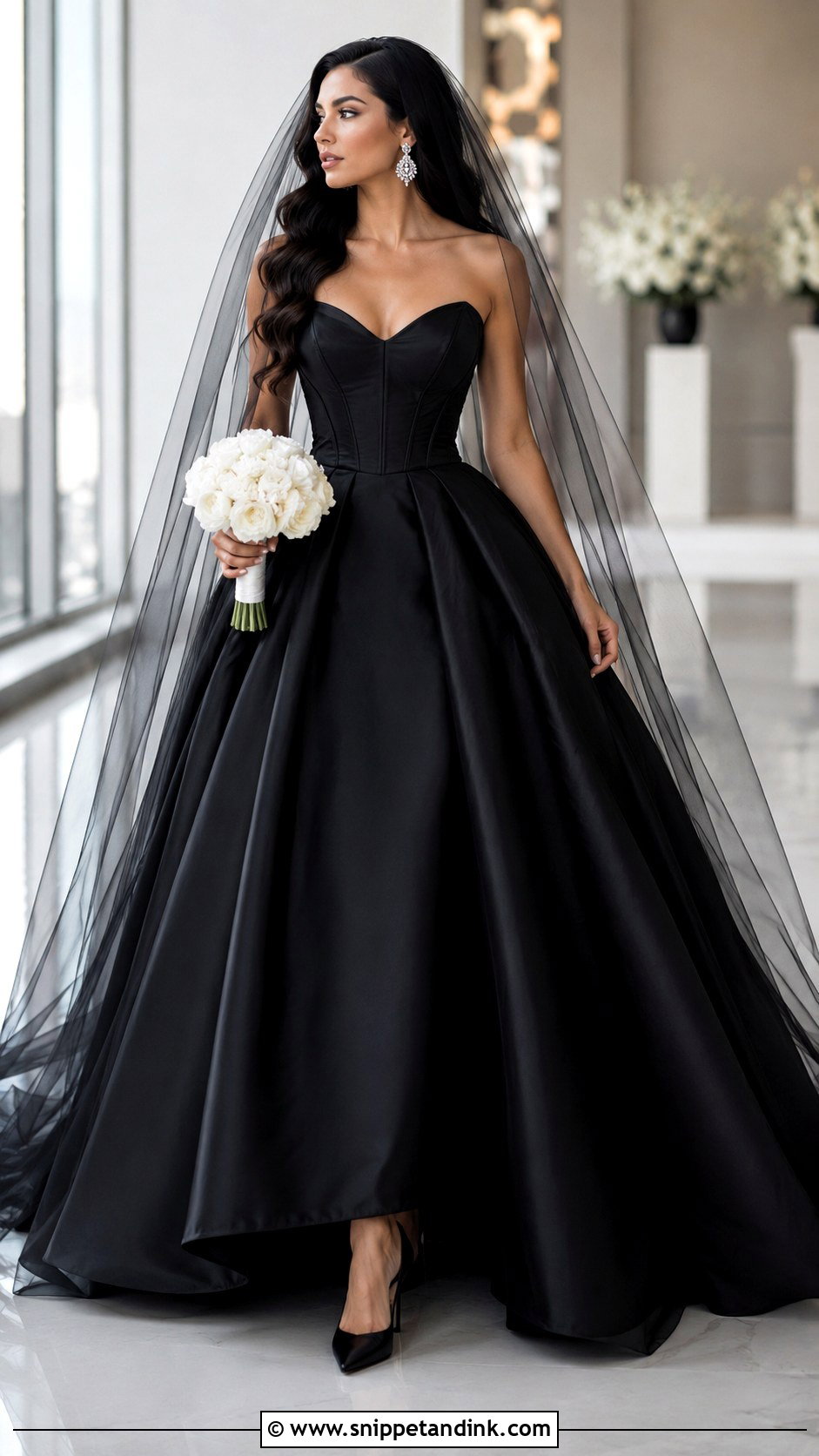
Black is a deliberate choice, and the risk is losing all shape in photos. A structured ball gown, fitted mermaid or sleek column can work depending on the venue; a sheer black cathedral veil keeps the neckline and outline visible. For softer contrast, use black lace edging on fine smoky tulle. Then bring light back in: crystal earrings, silver accents and a bouquet in white, green or muted blush. Black satin pumps and a polished bun or sculpted waves strengthen the formal finish. I’d steer away from heavy black embellishment plus dark accessories, which photograph as one flat mass.
19. Blush Gown with Sparkle Veil
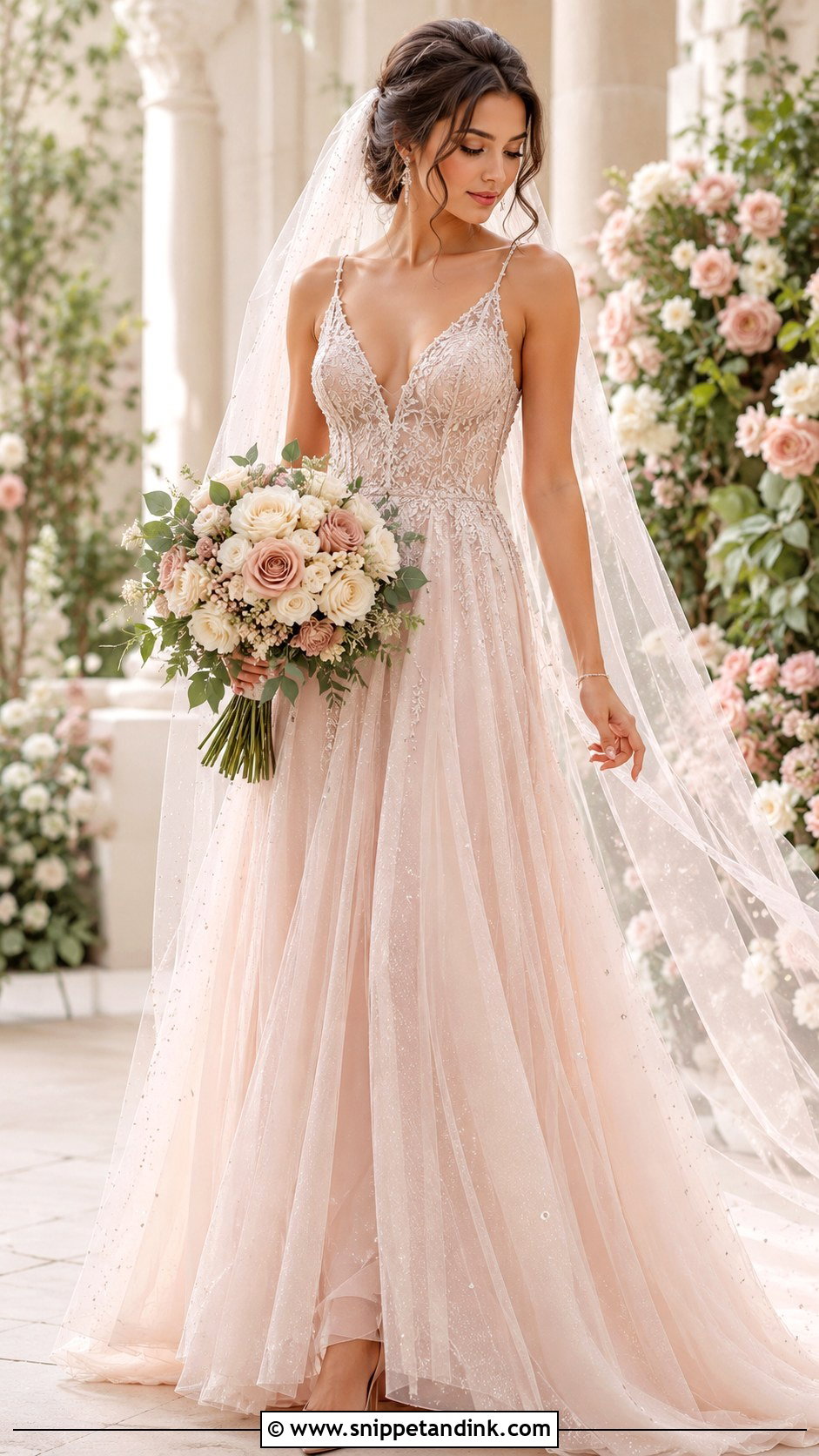
Blush works under a sparkle veil only if the undertones agree. A pale rose, nude blush or soft champagne gown needs a veil with a warm cast; a bright white veil over blush makes the dress look faded. An A-line or ball gown leans dreamy, a fitted shape more modern. I keep the crystals small and spaced apart so they catch light without veiling the color underneath. Rose gold earrings, neutral heels and a small bracelet with clear stones go with it, plus a low textured bun or softly pinned curls. Flowers in cream, dusty pink or muted green support the palette, and the result still reads unmistakably bridal.
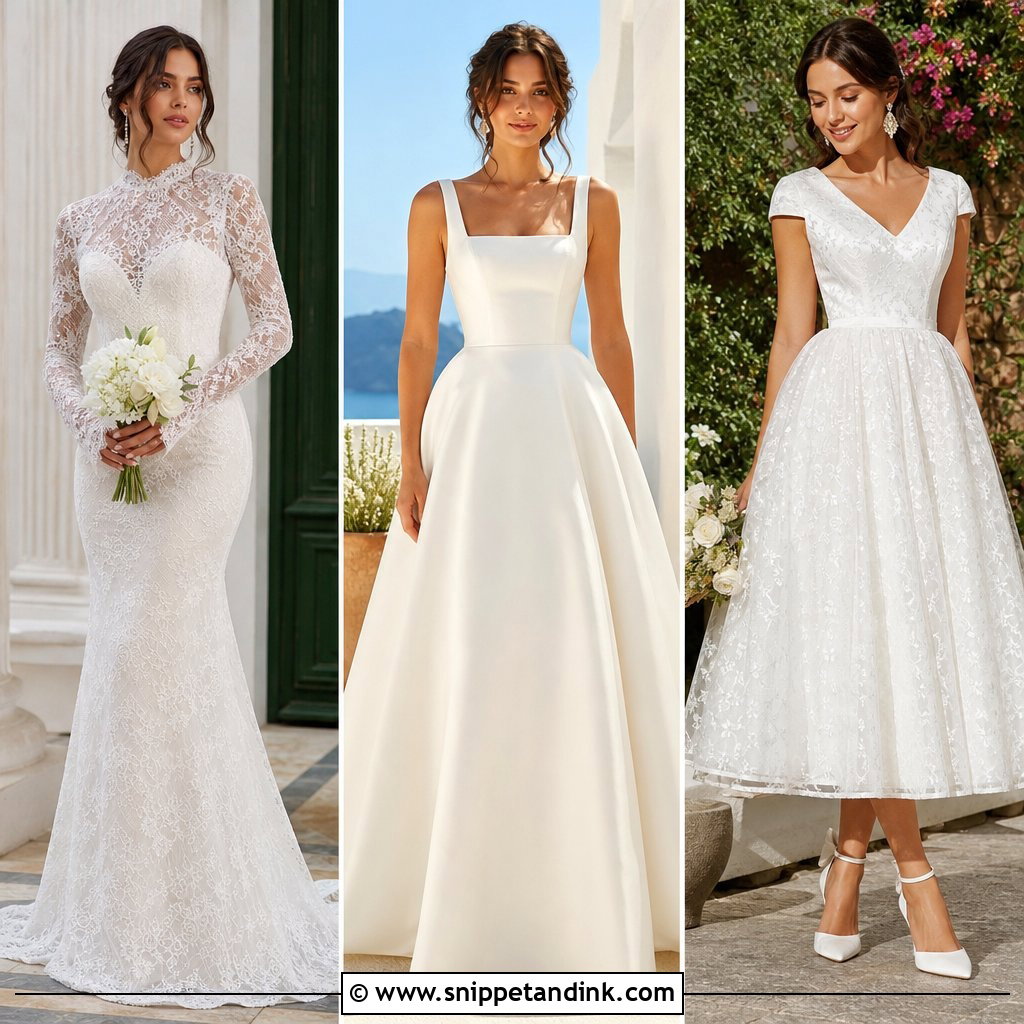

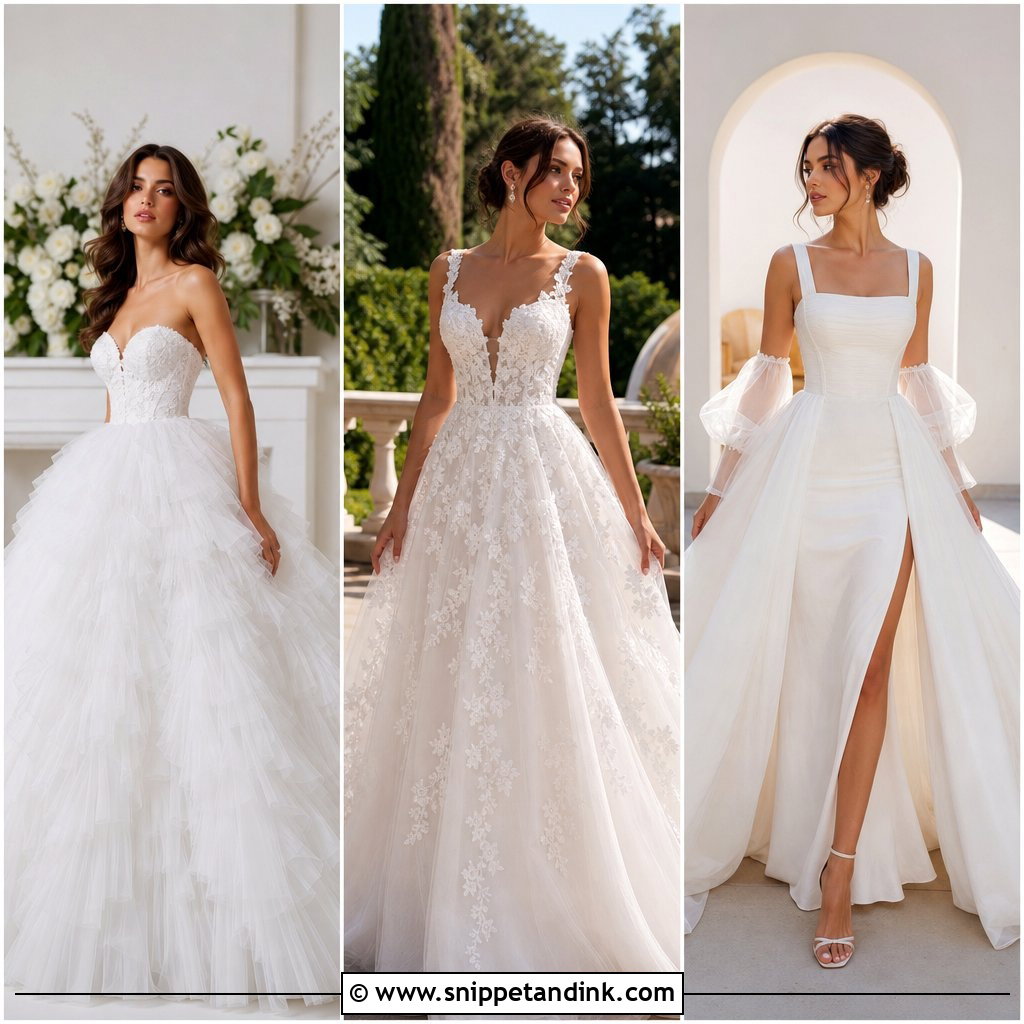
20. Detachable Sleeve Gown with Waltz Veil
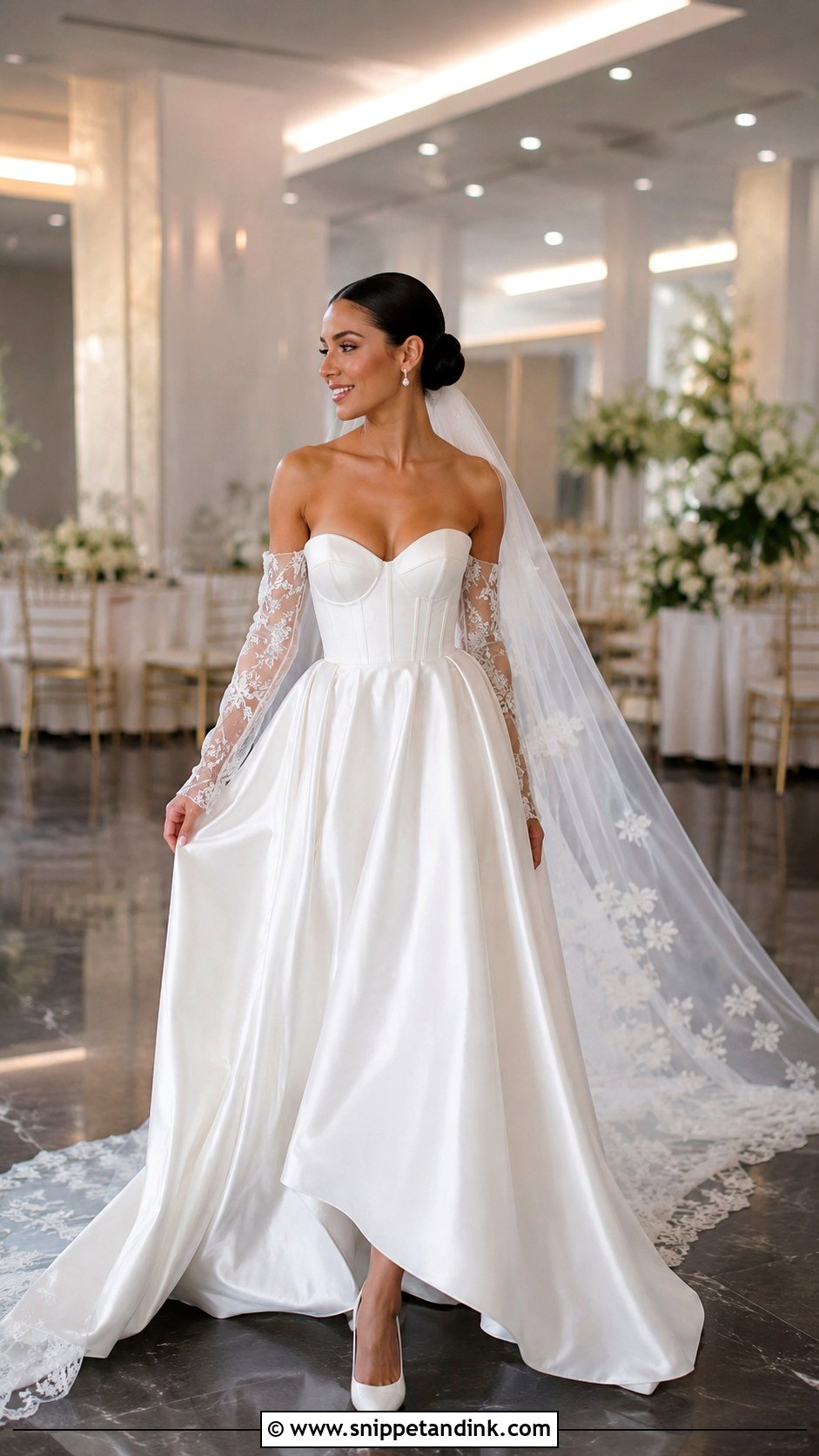
Detachable sleeves give two outfits in one: sheer puffs, lace or fitted satin for the ceremony, removed later for a cleaner reception look. A waltz-length veil falls between knee and floor, giving movement without a train to manage. With embroidered or pearled sleeves, keep the veil’s edge simple. Drop earrings, a smooth bun and comfortable pointed heels finish it. The detail people forget is the order of removal: the veil comb should come out without disturbing the hair, and the sleeves usually fasten at the bodice, so plan who helps and where. At your last fitting, wear the gown with and without its sleeves, veil on, and check that both versions look finished.
Wind, Steps and Kneelers Can Catch Out a Long Veil
A long veil behaves very differently on the day than it does in the salon mirror. These are the spots where I see brides struggle with it.
Outdoors
Tulle is light enough to lift in the slightest breeze. For a garden or beach ceremony, I sew two small dressmaker’s weights or a few clear beads into the hem corners of anything longer than fingertip length, and I add a second comb or crossed bobby pins so a gust can’t pull the first one out of the hair.
Steps and kneeling
Going down stairs, a cathedral veil drags behind and can tug your head backward. Gather it loosely over one arm for the steps, then let it fall once you’re on the aisle. If your ceremony includes kneeling, practice it in the veil; kneeling on the tulle pulls the comb hard and can tear fine netting.
Creases from the box
Veils arrive folded, and the creases show in close-ups. Hang it a day or two ahead and use a handheld steamer from a distance, or hang it in a steamy bathroom. Never put an iron directly on polyester tulle, which melts at surprisingly low heat.
When it comes off
Most brides keep a long veil on through the ceremony and portraits, then remove it before the reception. Decide in advance who takes it out, and ask your hairstylist to show them which pins hold the comb, so your hair survives the change.
Test the Gown and Veil as One Outfit Before the Final Fitting
The pairings that work best are the ones where gown, veil, shoes, jewelry and hair are all telling the same story. A plain gown can carry an ornate veil; a heavily decorated dress almost always looks better under sheer, understated tulle. Comfort counts as much as looks, so wear the veil for a full fitting and pay attention to its weight on the comb and how it moves when you turn. Compare fabric colors in daylight and have someone photograph you from the back and sides. Go with the combination that still looks like you.
You'll Like These Ideas:







Leave a Reply