
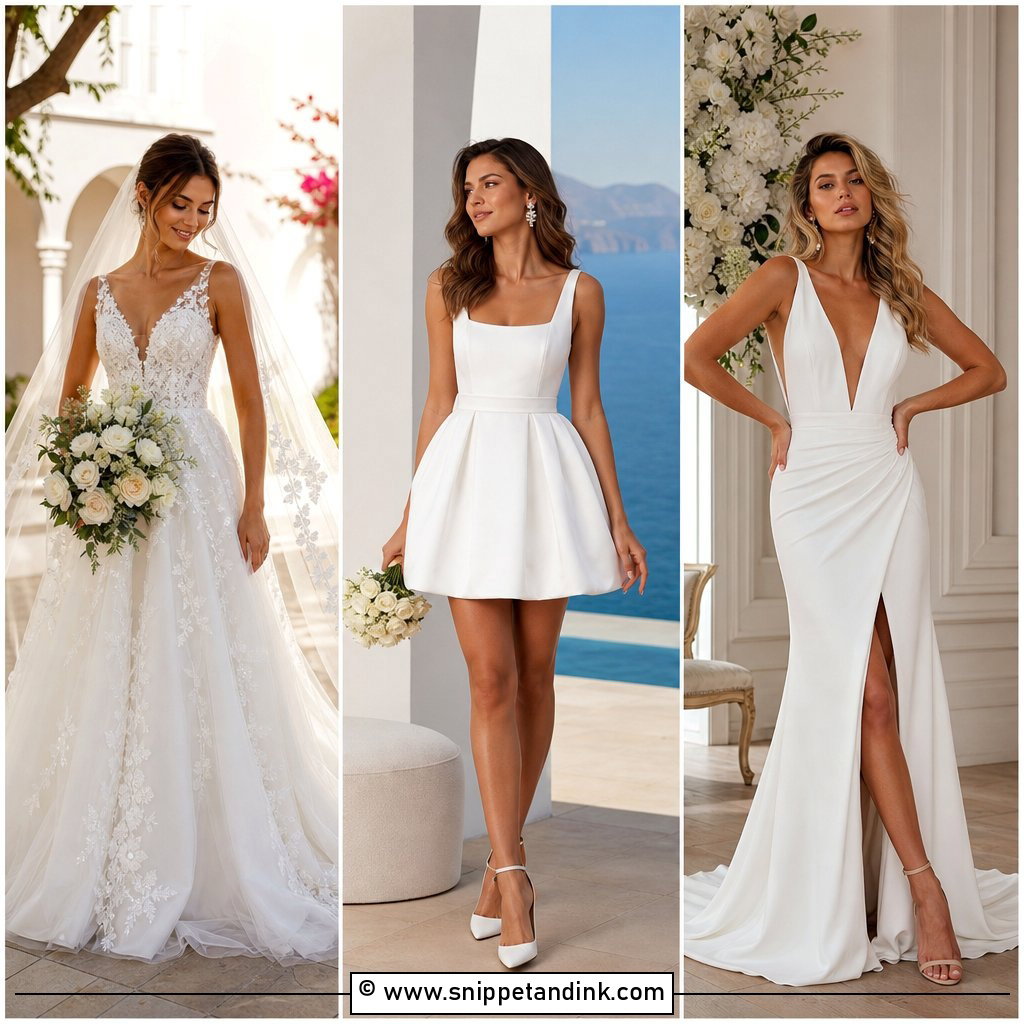
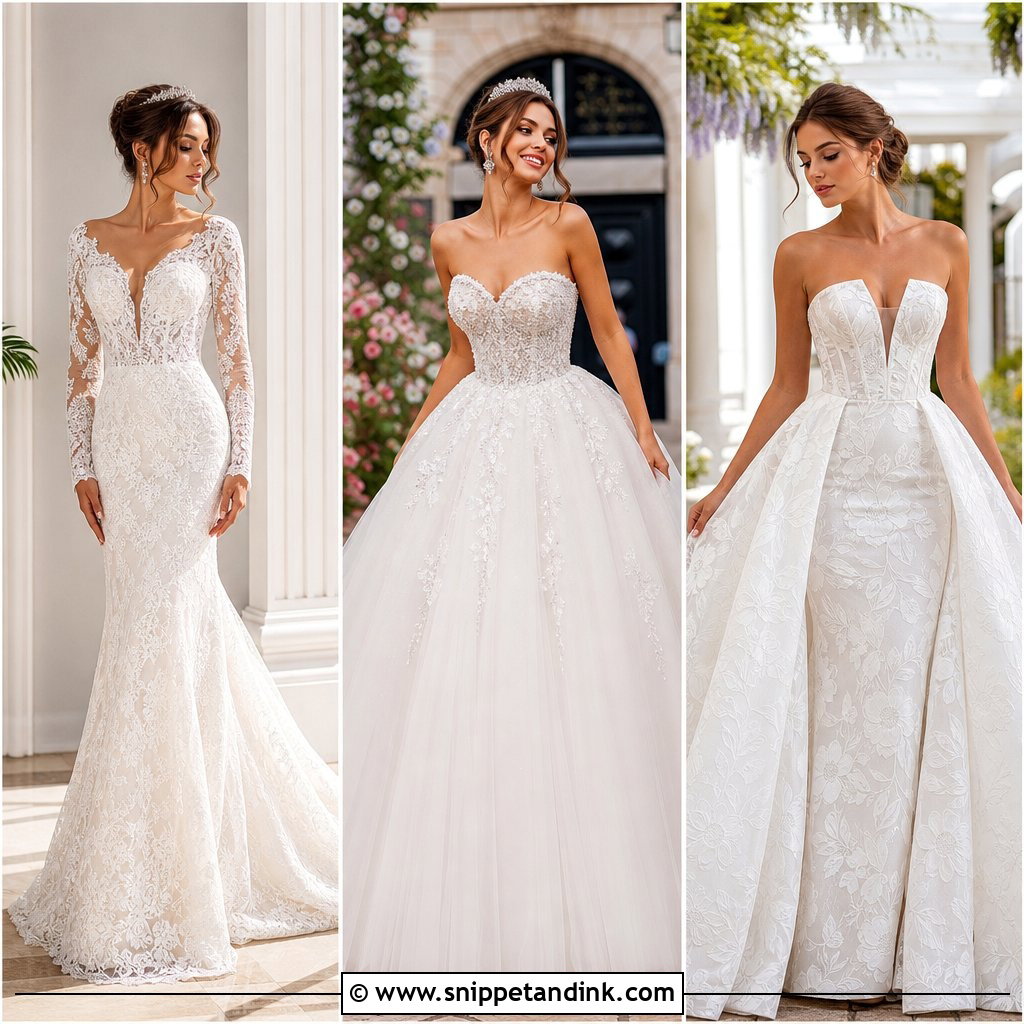
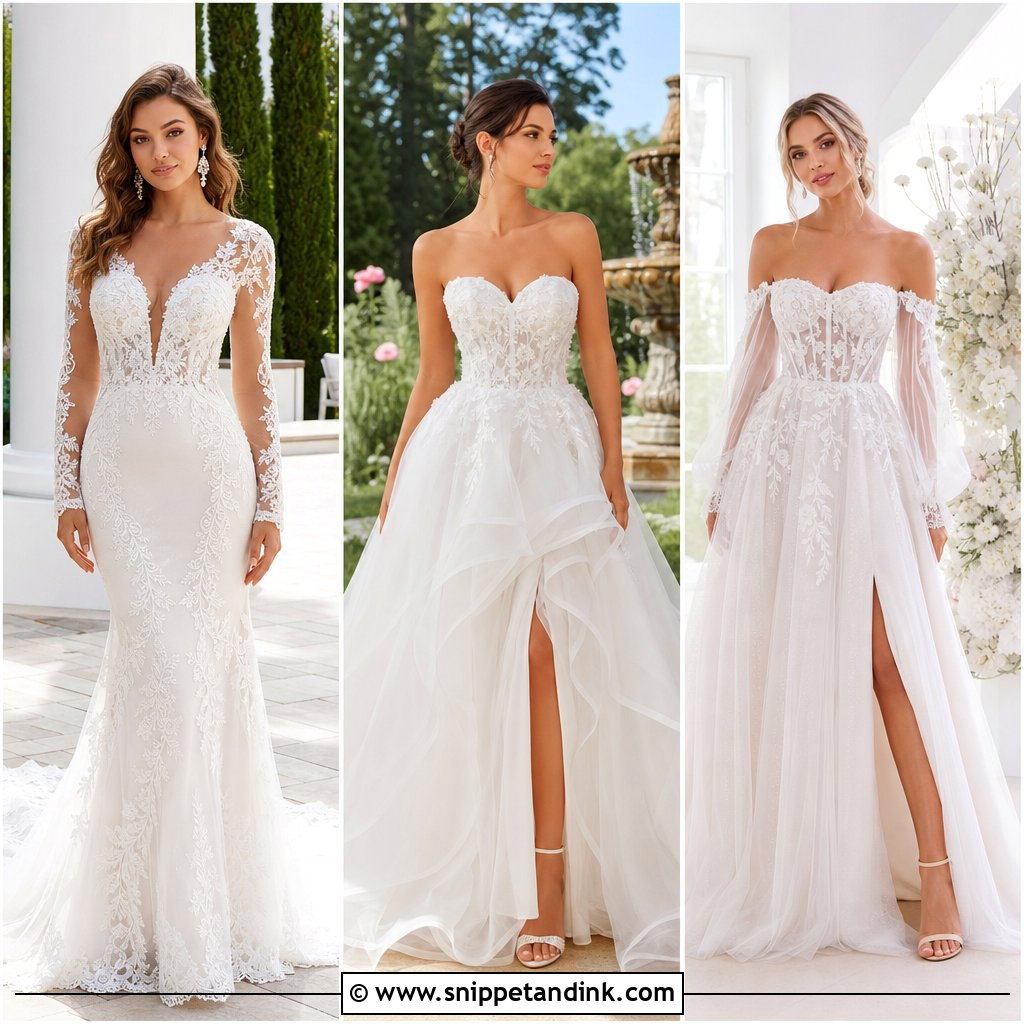
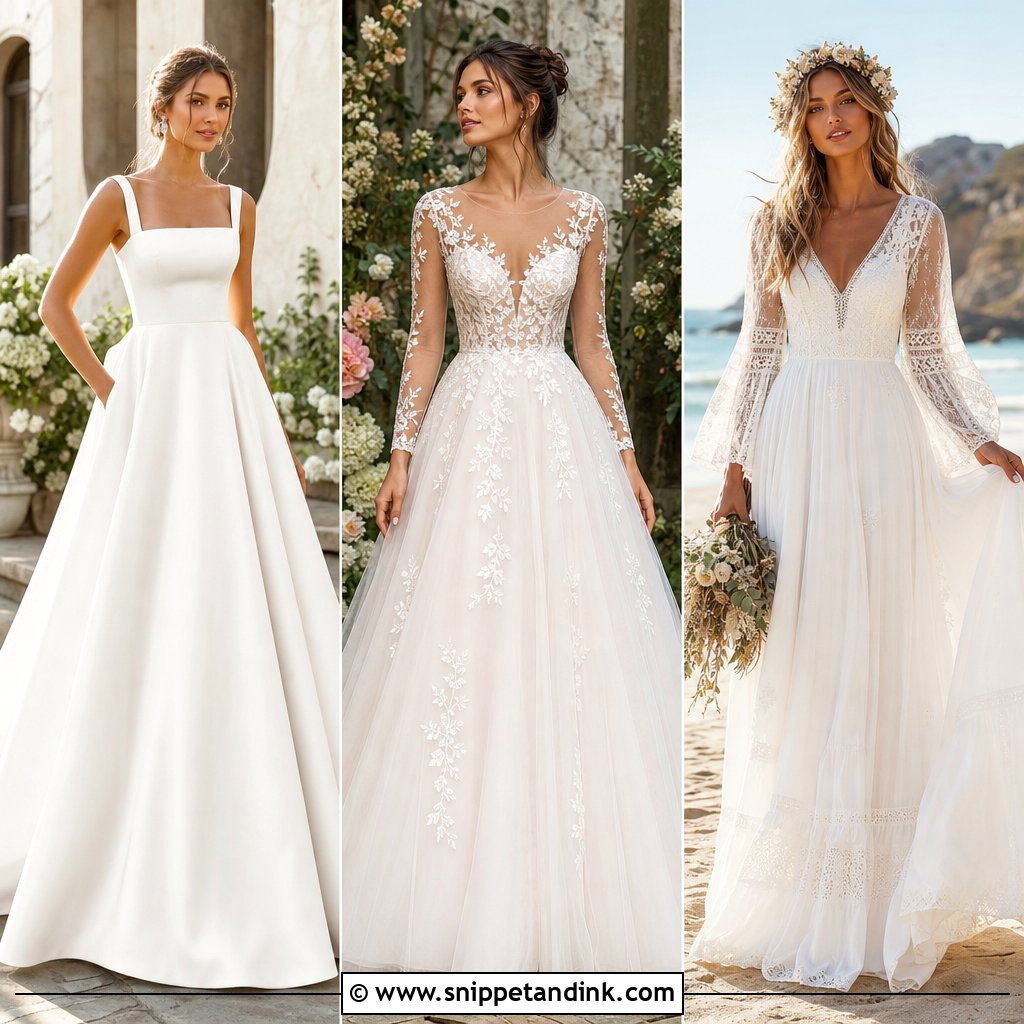
Romantic is the word brides use most in my fitting room, and it means something different to almost every one of them. For some it’s lace and a full skirt; for others it’s bias-cut silk that barely touches the body. Bridal collections right now lean on three-dimensional flowers, basque waists, light fabrics, big bows and lace that has been reworked to feel less fussy. Underneath the trend, the gown still has to suit your venue, your season and how long you’ll be on your feet. Below are twenty romantic directions, each with the shoes, jewelry, veil and hair I’d put with it, plus what I check at the fitting.
Lace, Tulle, Satin or Chiffon: How Each Behaves by Hour Eight
Romantic gowns are mostly made from four fabrics, and each one has habits you only notice after a full day in it. I talk brides through this before they fall for a sample, because the fabric decides how the dress will look in the late photos, not just the first ones.
- Lace: very forgiving. It hides creases and small marks, but delicate edges snag on bracelets, bouquet wire and rough stone walls.
- Tulle: light and full, though it flattens when sat on for long and can catch on Velcro or jewelry. A quick steam revives it.
- Satin: the smoothest surface for photos and the quickest to show lap creases. Heavier satins hold up better than thin ones.
- Chiffon: breathes and moves well in heat, but it frays if snagged and blows around outdoors. I reach for it first at beach and summer garden weddings.
Ask to sit down in the sample for five minutes before you decide. Standing in a mirror tells you almost nothing about how the skirt will look after dinner.
1. Romantic Lace A-Line Bride Dress
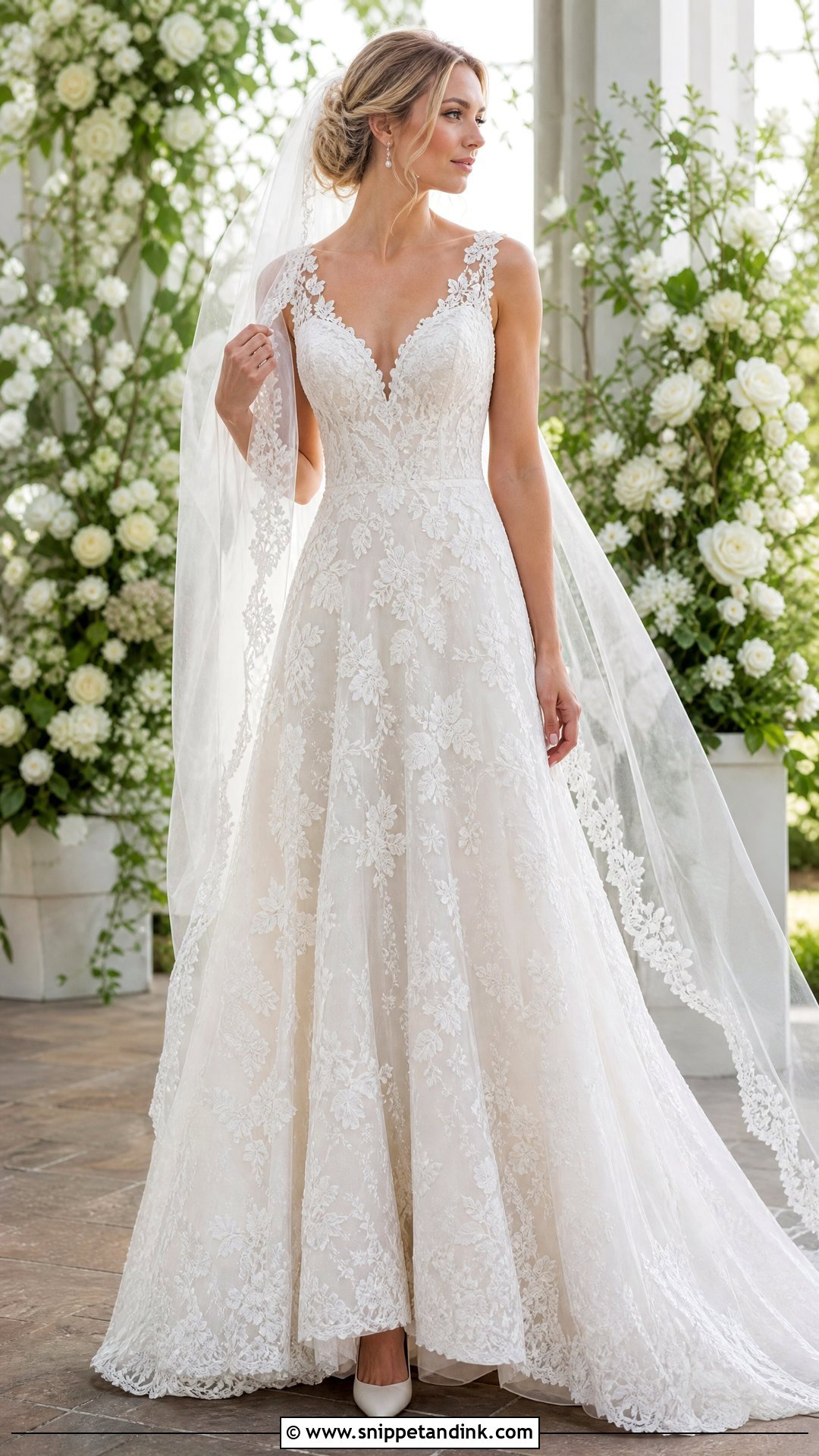
Lace A-line is where I start most first appointments, because it suits more bodies than any other shape and it’s forgiving to move in. The bodice should fit closely and the skirt should break away from the hip, not cling to it. Floral lace laid over light tulle gives texture without weight. A modest V or a gentle sweetheart neckline keeps it soft. Pearl drops, ivory pointed pumps and a fingertip veil with a narrow lace edge finish it. Put the hair in a loose chignon or half-up so the neckline stays visible. It moves comfortably between a garden ceremony and a ballroom dinner.
2. Floral Appliqué Ball Gown Bride Dress
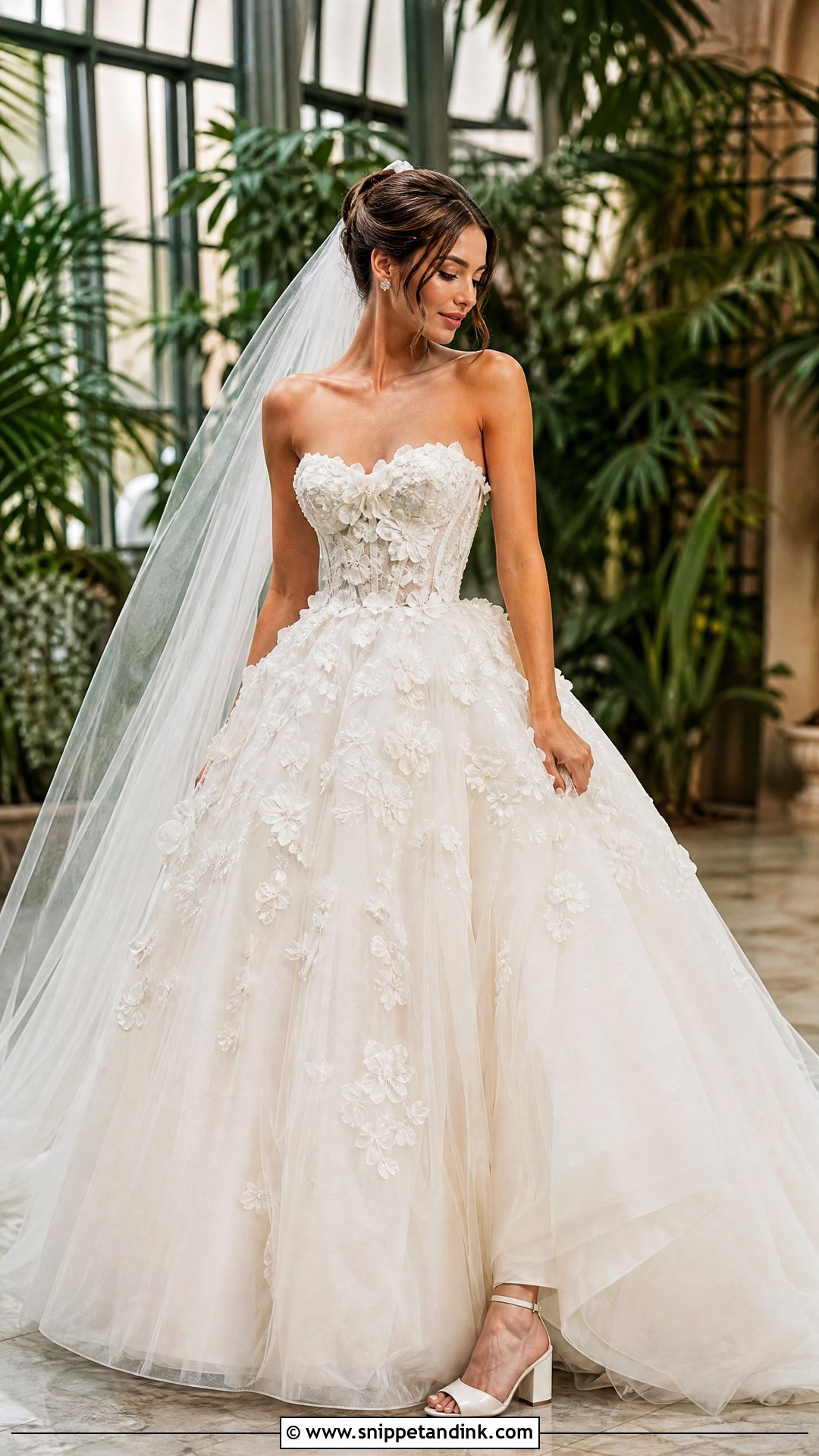
Flowers scattered across a cloud of skirt make an entrance, and an appliqué ball gown is built for exactly that. The structured bodice is doing the heavy lifting here, holding up several layers of tulle, so make sure it fits snugly at the waist at the final fitting or the skirt will pull it down by evening. The best versions scatter appliqués more thickly at the bodice and thin them toward the hem. Crystal studs, a simple bracelet and satin block heels are enough. A plain cathedral veil adds length without another pattern on top. Keep the hair low with two loose pieces at the face.
3. Off Shoulder Tulle Bride Dress
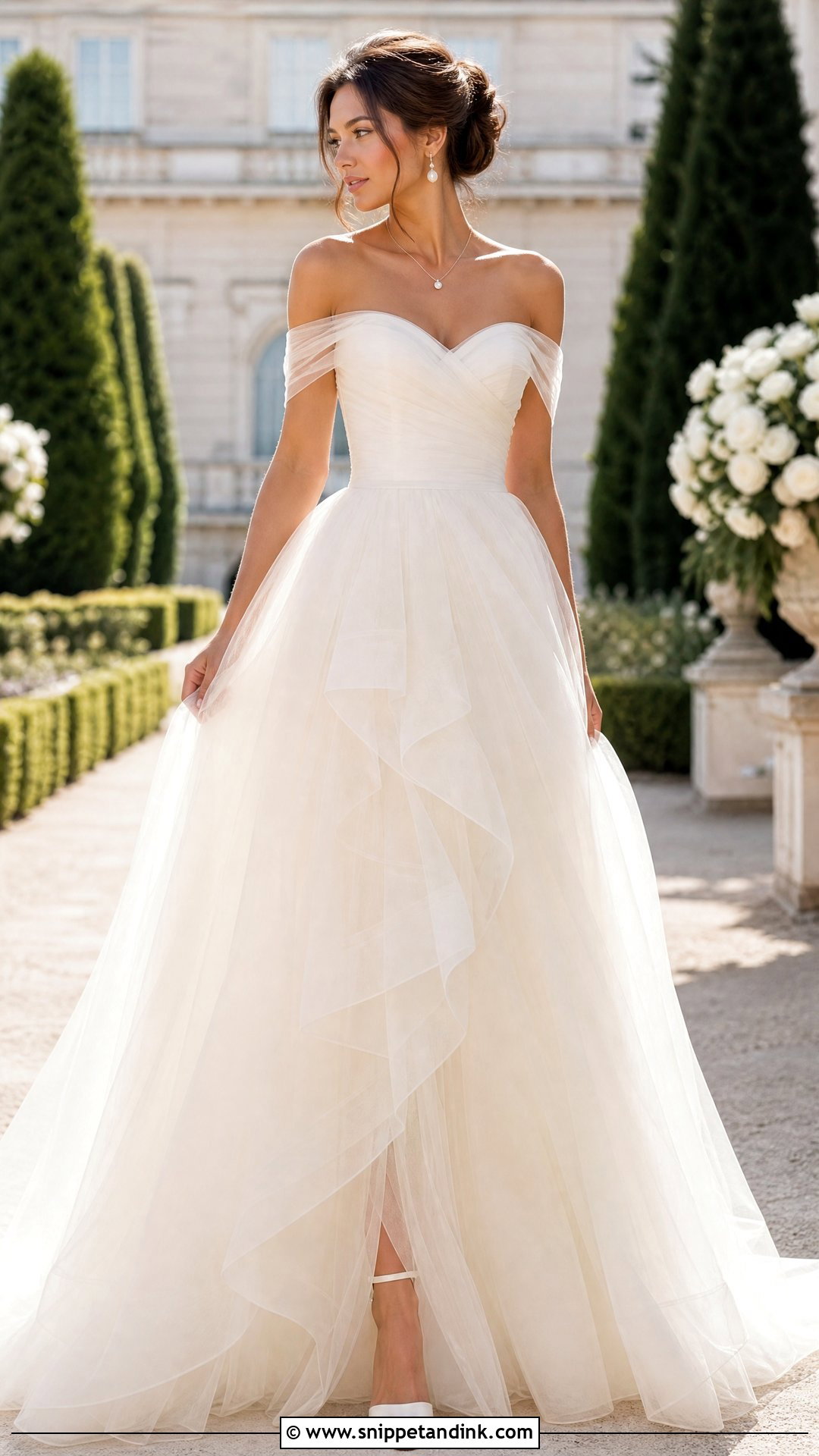
An off-shoulder tulle neckline frames the collarbones, but only if it’s anchored properly. I check that the bodice has firm inner boning and a grip strip at the top, because draped sleeves sitting on the upper arm will slowly drag the neckline down when you hug people or lift your arms. Several fine layers of tulle give volume while still moving. A short pendant, small pearl earrings and comfortable ivory heels pair well. A sheer chapel veil keeps things airy. Hair goes up or swept to one side so the shoulders stay clear.
4. Long Sleeve Chantilly Lace Bride Dress
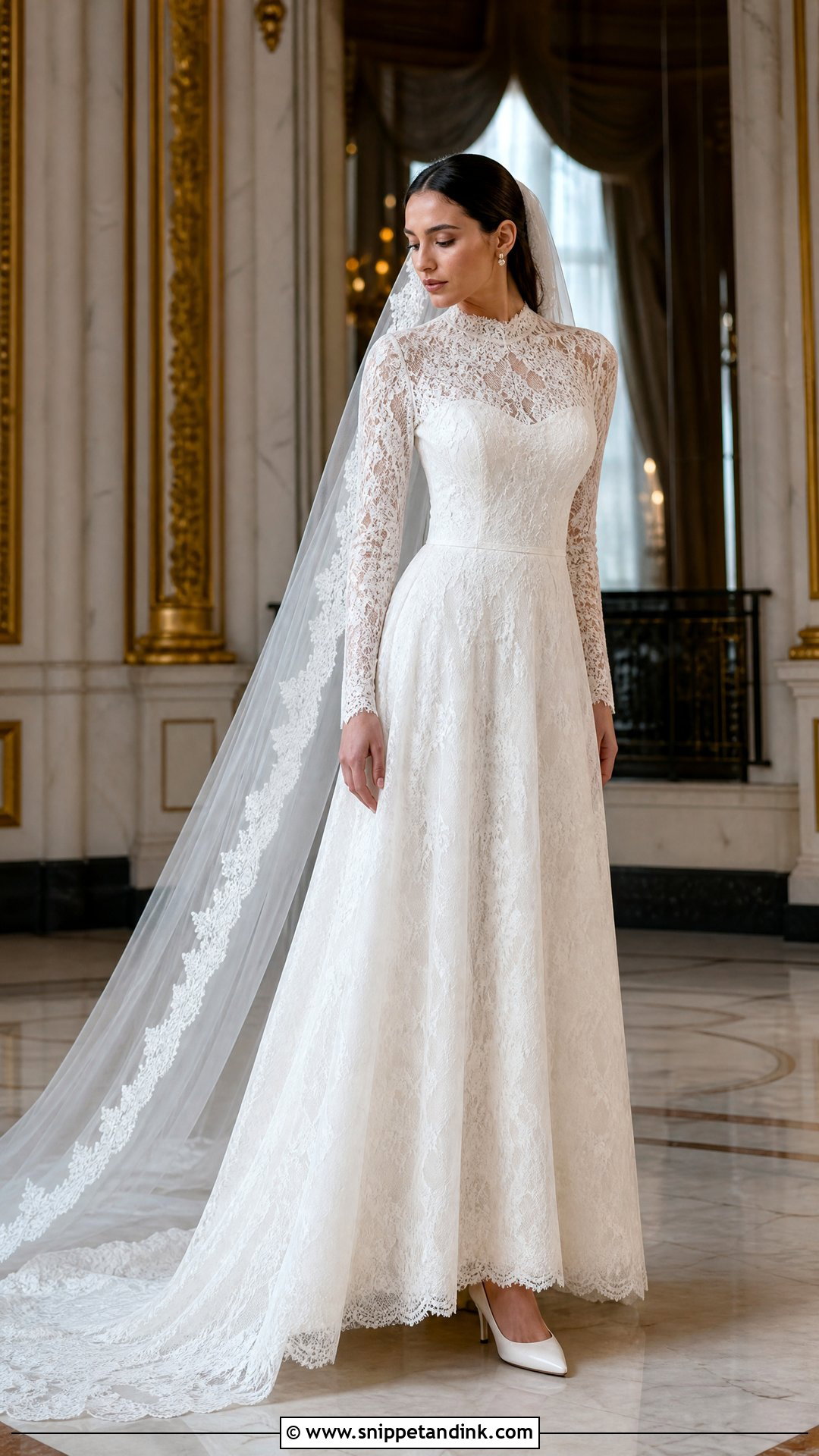
Chantilly lace is very fine, with a soft outlined floral pattern on a sheer net ground, which is why it gives long sleeves without bulk. Fitted sleeves finished with covered buttons at the wrist look traditional and neat. Ask for a little ease at the elbow and armhole, as tight lace sleeves tear at the seam when you raise your arms to dance. A lined bodice, a slim satin belt, pearl studs and closed-toe kitten heels suit it. Choose a cathedral veil for formality or a lace-edged fingertip for a quieter finish. It’s the gown I’d point to for an autumn or winter ceremony in a hotel or old house.
5. Sweetheart Corset Bride Dress
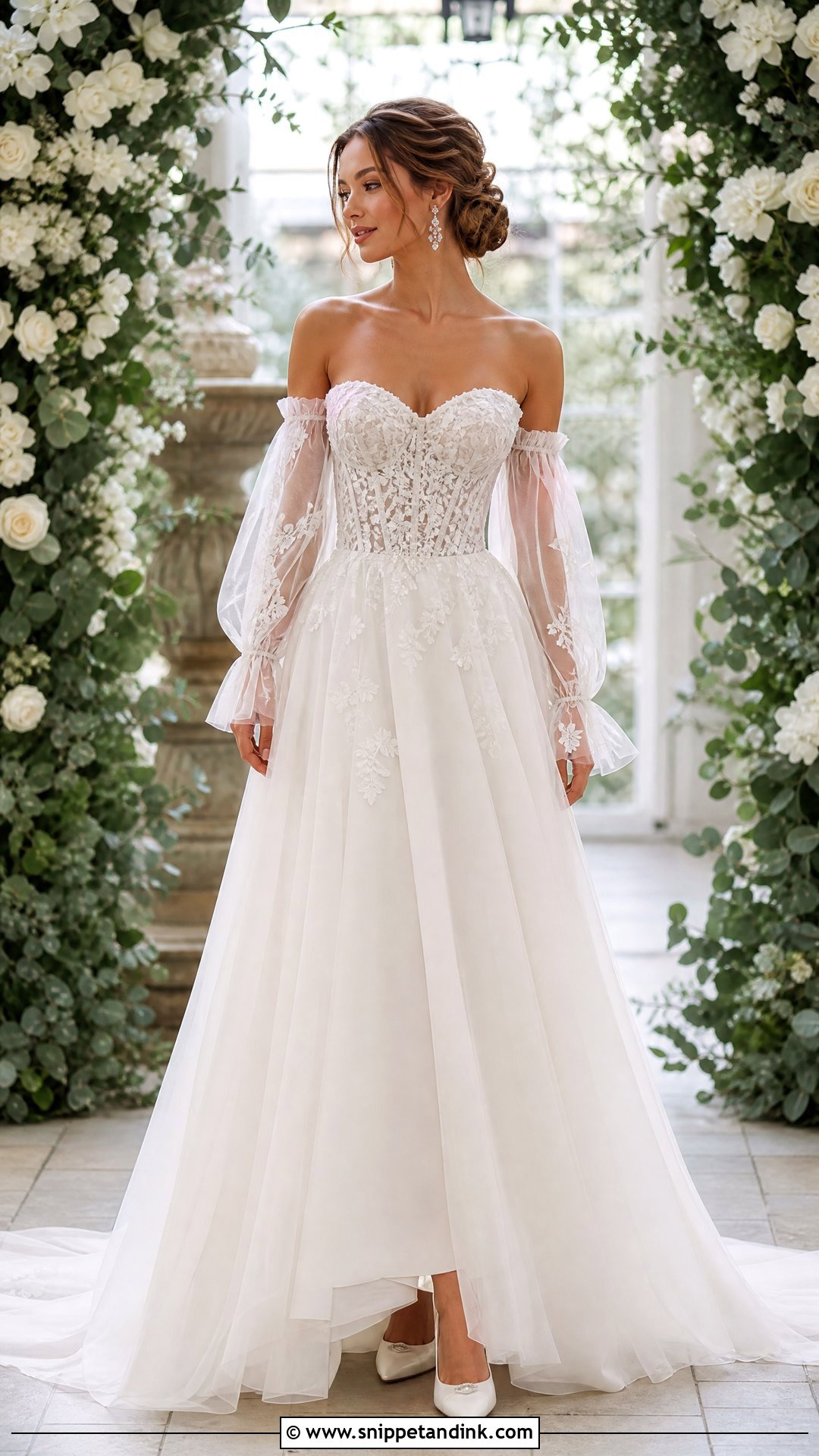
A sweetheart corset gives sculpted shape, and lace, embroidery or draped tulle over the boning stop it from looking like costume. Fit is everything. A corset should be snug but you must be able to breathe deeply and sit, so I always have brides sit down and eat something at the last fitting. Balance it with an A-line or full skirt. Add a delicate pendant, tiny crystal earrings and satin pumps with cushioned insoles. Detachable tulle sleeves cover the shoulders for a religious ceremony and come off for the party. Loose waves or a low textured bun finish it.
6. Square Neck Satin Bride Dress
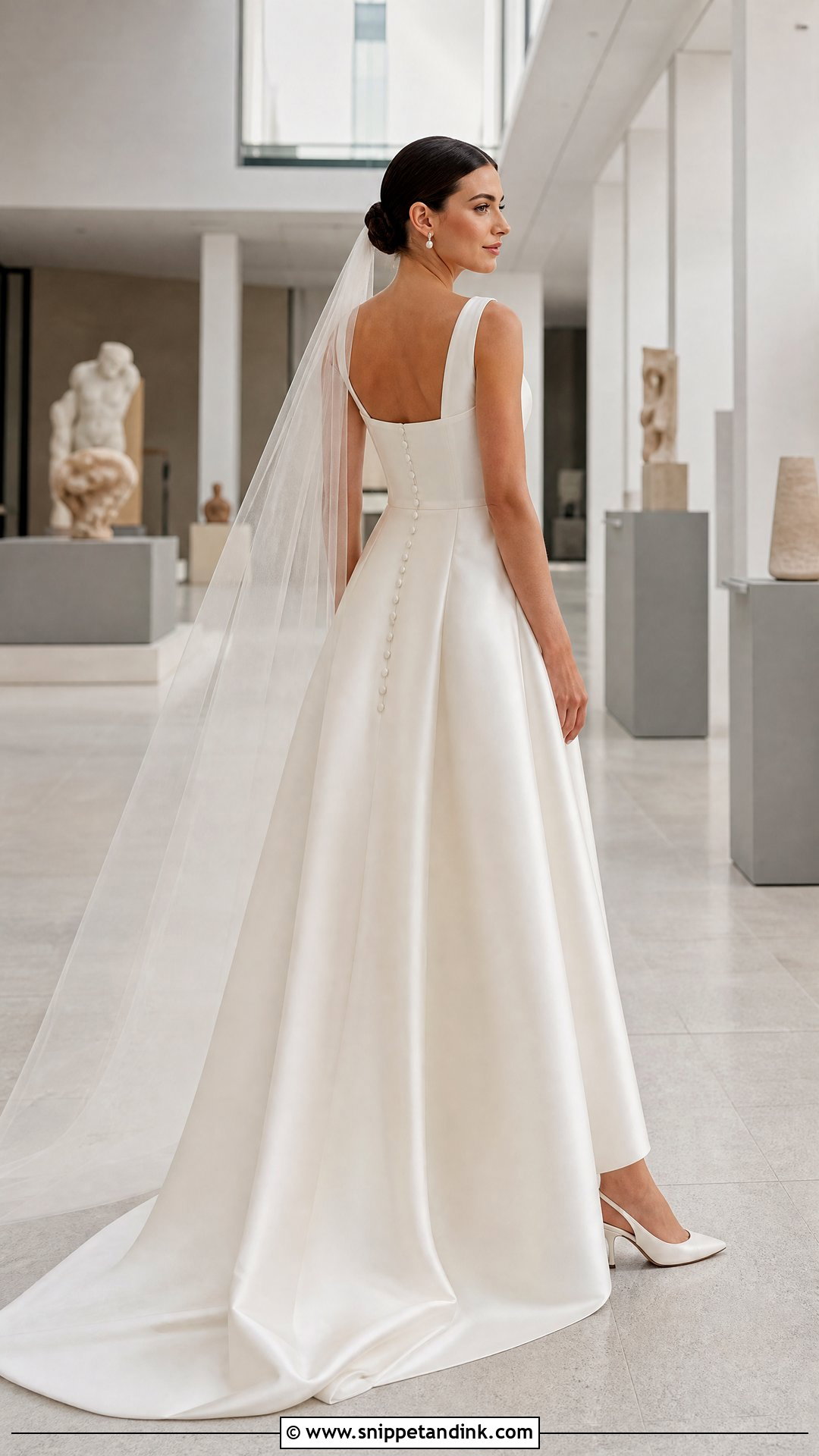
Satin with a square neckline is quiet structure: it frames the face and lets the fabric’s surface do the work. Choose an A-line with wide straps for support, or a soft column for something more modern, and a line of covered buttons down the back. A practical warning: heavy satin creases across the lap the moment you sit, and those lines show in afternoon photos. Heavier duchess satin recovers better than thin polyester satin. Pearl earrings, slingback heels and a long sheer veil complete it, with a neat bun or soft Hollywood-inspired waves. It suits museums, city venues and minimal ceremonies.
7. Basque Waist Bride Dress
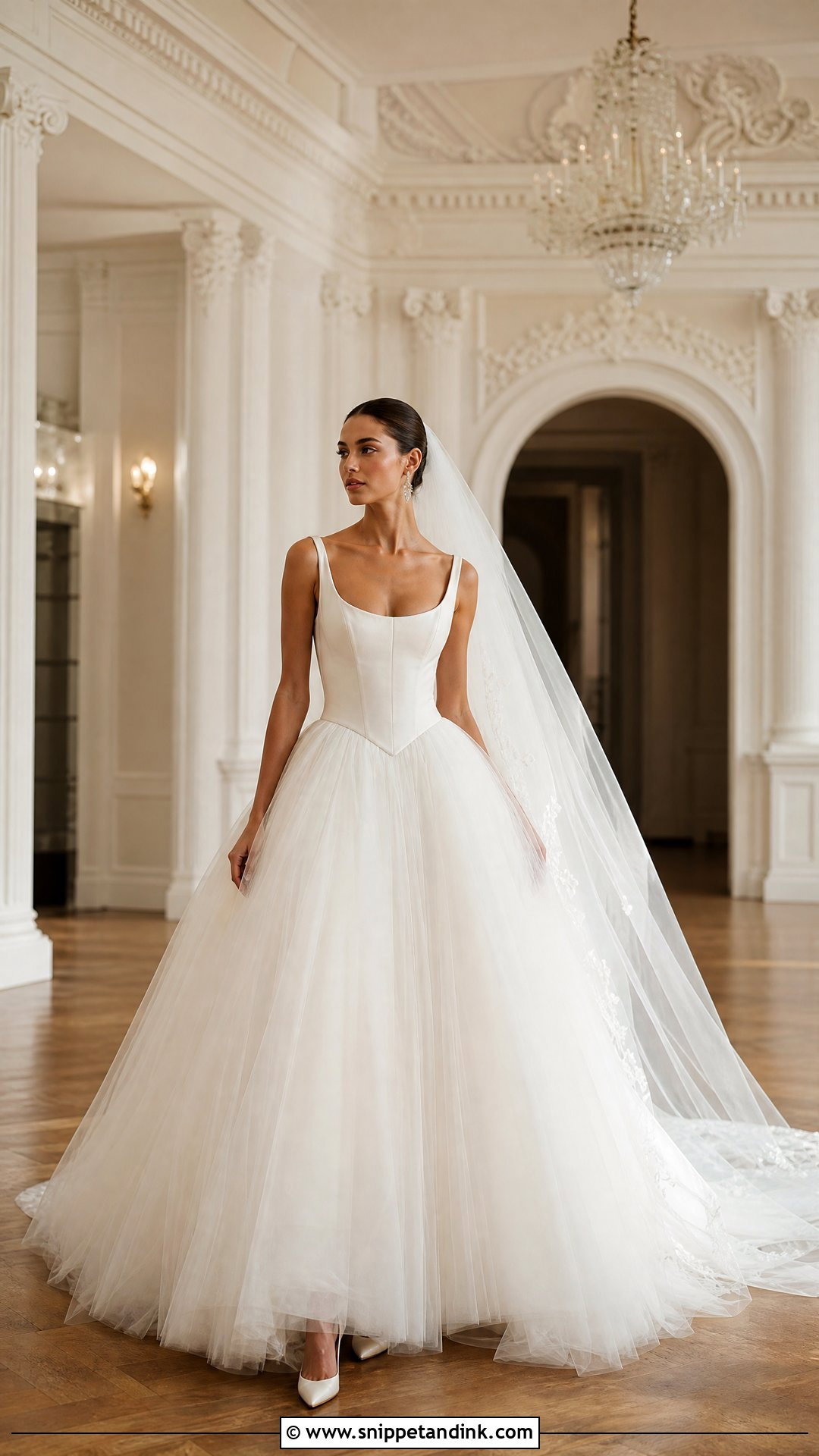
A basque waist bride dress drops the bodice into a V or U point below the natural waist, which lengthens the torso and lets the skirt flare from a lower point. Short-waisted brides often love it. Very long-waisted brides sometimes find it makes the torso look stretched, so try it before ruling it in. Tulle, organza or soft satin keep the shape from looking severe. Pick a scoop, sweetheart or off-shoulder neckline based on support needs. Drop earrings, a cathedral veil and ivory pumps finish it; skip the necklace if the neckline is already busy.
8. Blush Pink Tulle Bride Dress
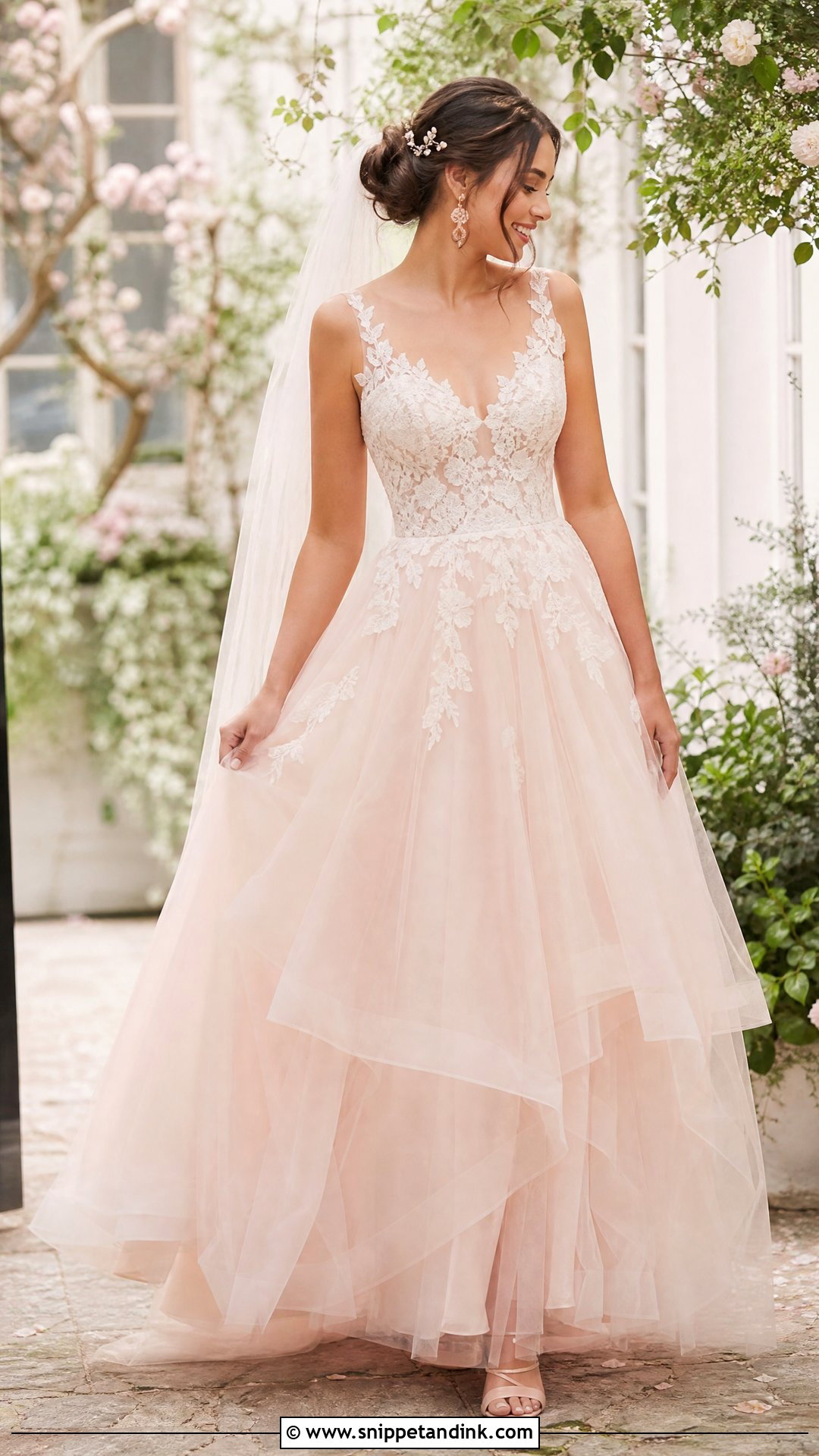
Blush is the gentlest way to step off white. It can sit under an ivory lace overlay or run through the whole gown, and layered tulle deepens the shade. Hold the fabric up to your face in daylight. Some blush tones read beige on olive and deeper skin, while a pinker blush tends to flatter more people. Rose gold earrings, blush heels and a sheer ivory veil that lets the color through work well. Keep the bouquet ivory, cream or pale pink so it doesn’t fight the dress. A loose bun with pearl pins finishes it.
9. Chiffon Empire Waist Bride Dress
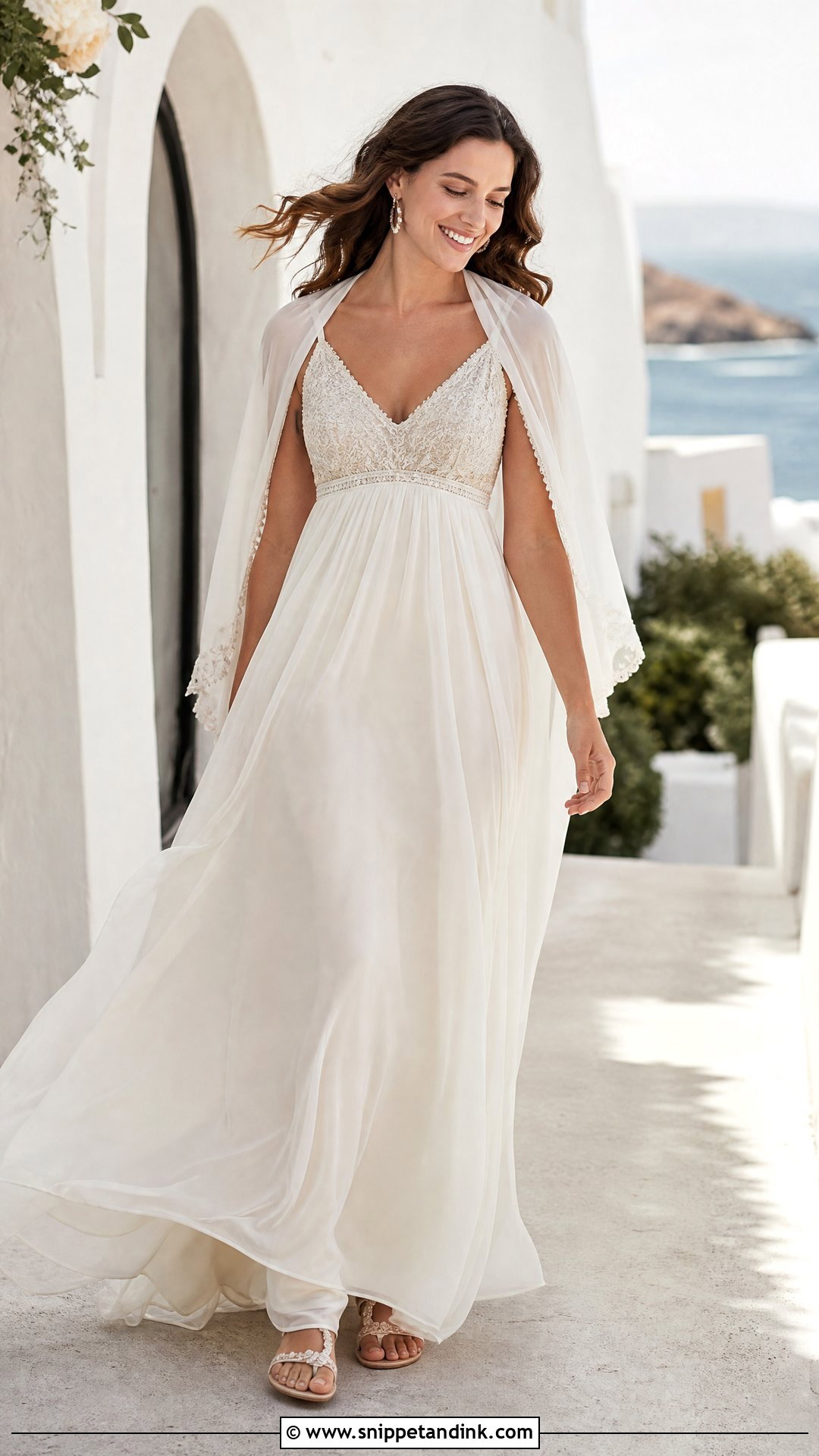
Empire waists sit just under the bust and drop into a fluid skirt, which makes them the most comfortable gown here for a long, hot day. Chiffon is the natural fabric. Gathering, lace trim or a beaded bodice add interest without weighing it down. Pair it with flat sandals, small pearl hoops and either a fingertip veil or a short sheer cape. On a beach, chiffon and tulle catch every breeze, so I pin the veil with combs on both sides of the bun, not just one. Soft waves or a braided low bun suit it.
10. Pearl Embellished Bride Dress
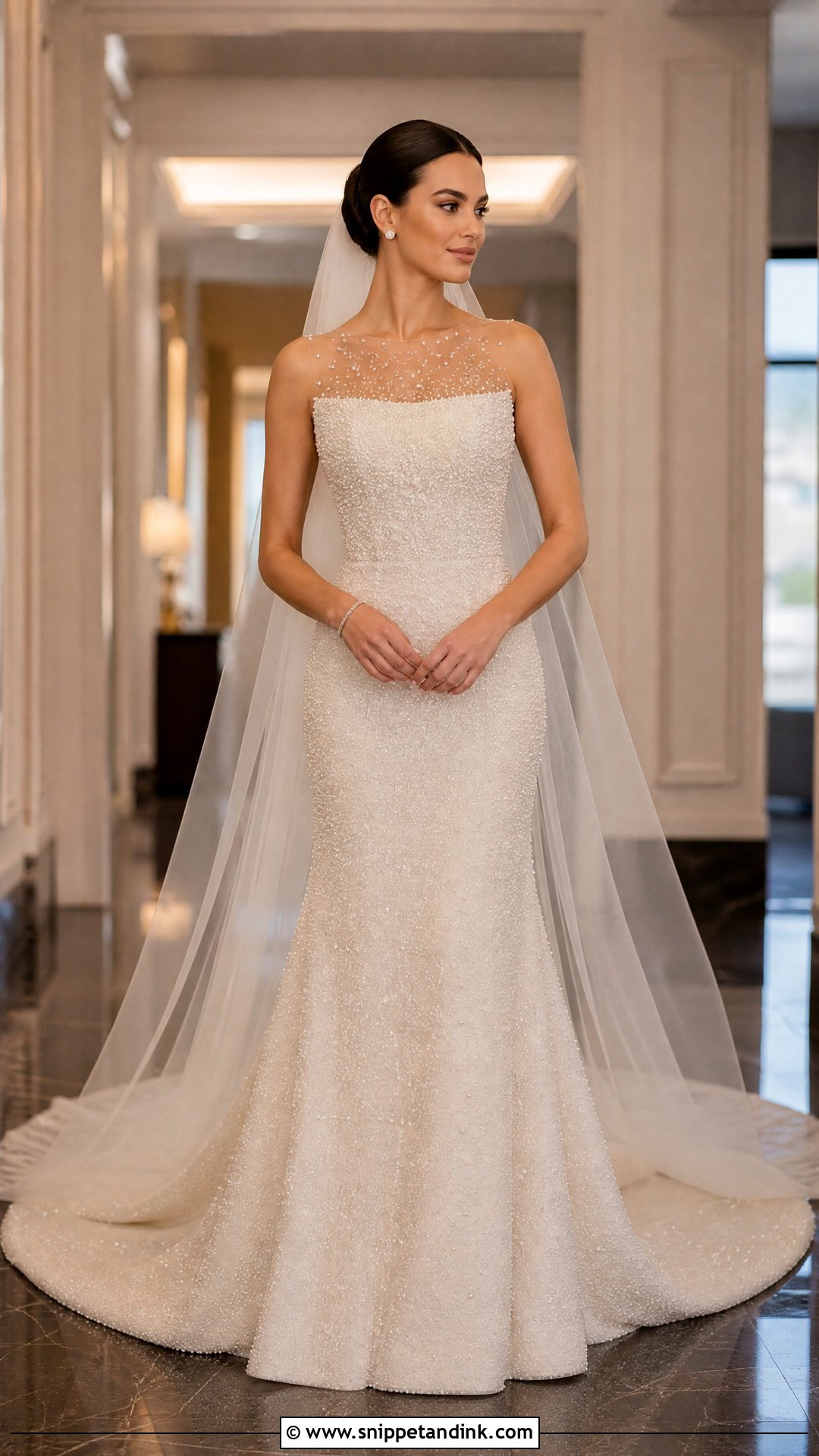
Pearls turn a plain gown into a detailed one, but placement decides whether it looks refined or busy. Clustered at the neckline and bodice, or scattered lightly over sheer tulle, both work. Covered head to toe usually doesn’t. Ask how they’re attached, since glued pearls can pop off when the dress is bustled. An A-line, a column or a ball gown all carry this finish. Pearl studs, satin heels and a veil with no beading keep it balanced. Choose one pearl accessory and let the rest go plain.
11. Organza Ruffle Bride Dress
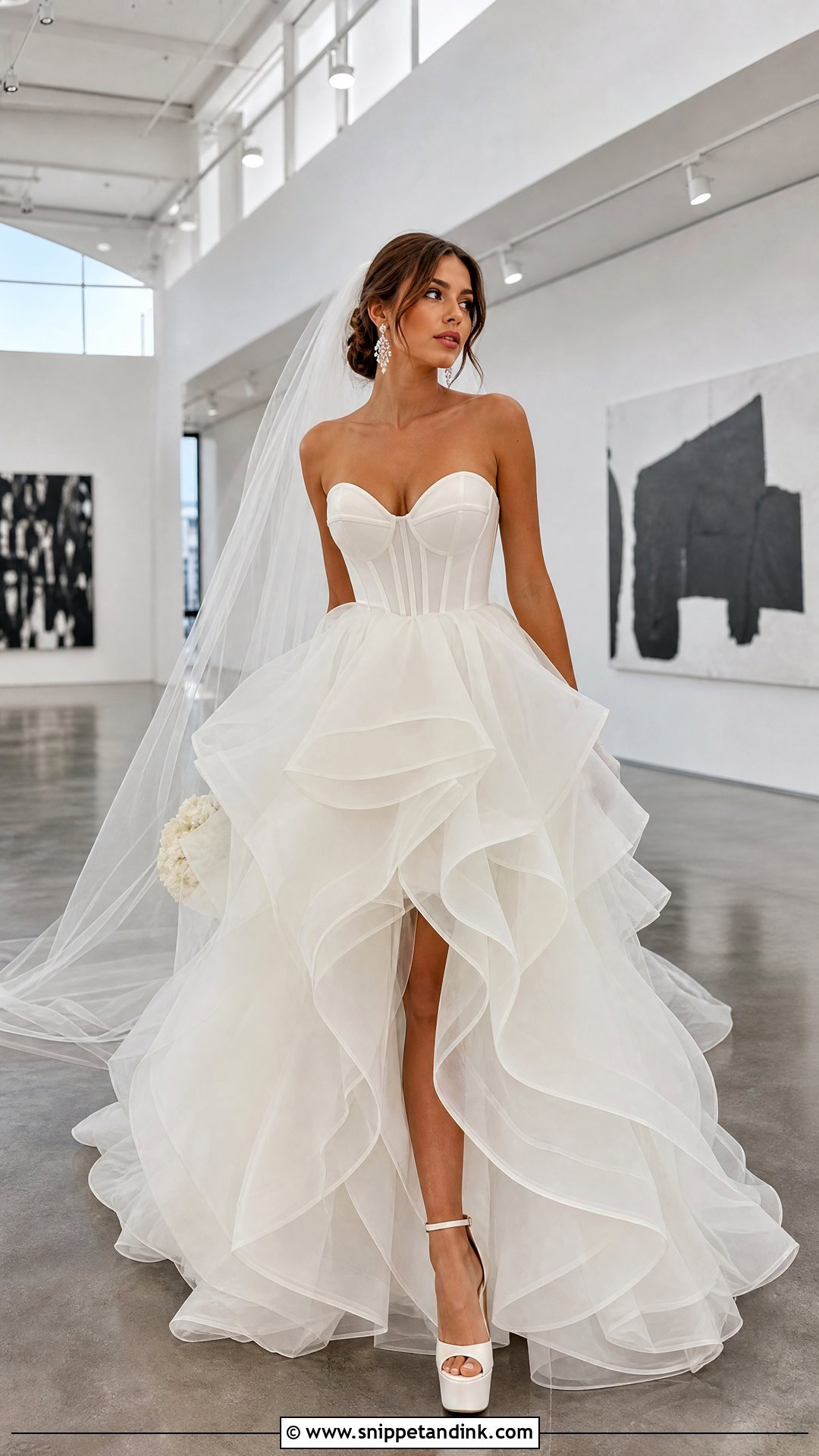
Organza ruffles give volume that floats. I prefer ruffles placed in one zone, along the hem, the neckline or one shoulder, rather than everywhere, which can swamp a petite frame. A structured bodice anchors the full skirt. Organza is crisp and holds a crease, so the dress must travel flat or hung, never folded into a car boot. Simple crystal earrings, satin platforms and a plain chapel veil let the ruffles lead. A sleek bun or ponytail keeps the hair quiet. Walk and sit in it before the day, because big organza skirts take practice.
12. Vintage Tea Length Bride Dress
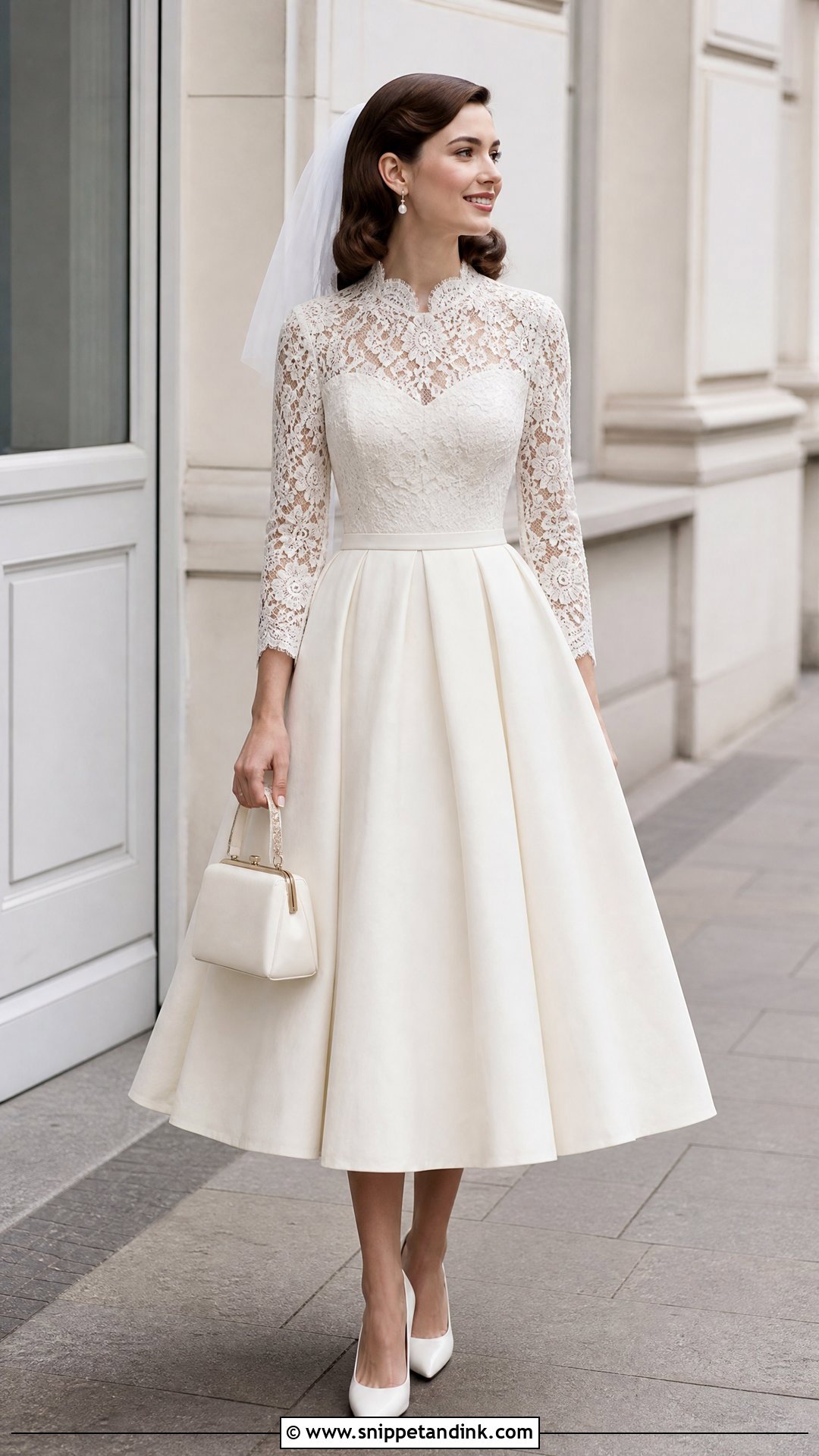
Tea length falls between knee and ankle, which makes your shoes part of the outfit. A fitted lace bodice over a full skirt is the classic fifties shape; pleated satin is the cleaner version. Pointed pumps, pearl earrings and a short veil or a headband suit it, plus a small structured bag. I’d check the hem length with your actual shoes on, because an inch in either direction changes the proportion completely. It suits a courthouse ceremony, a restaurant reception or a second outfit for the evening.
13. Cape Sleeve Bride Dress
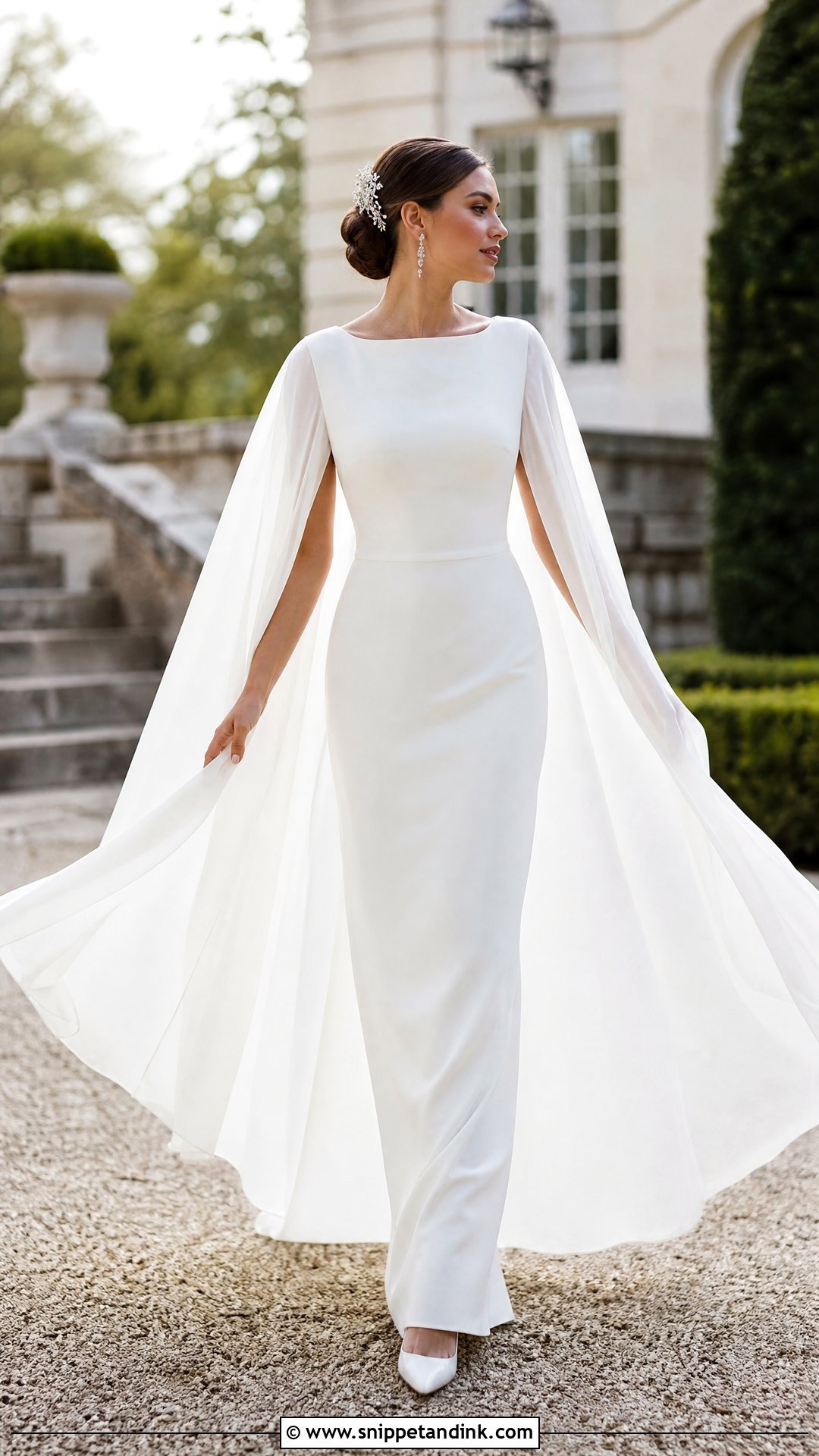
A cape sleeve covers the shoulders and arms with movement rather than fabric hugging the skin. Attached at the neckline or removable, it gives two looks in one day. Keep the gown underneath simple: A-line, sheath or column. Chiffon, tulle and lace drape best. If the cape runs down the back, skip a traditional veil; two long sheer layers tangle. A small hair comb, drop earrings and pointed pumps are enough. Capes catch the wind outdoors, so check whether yours has a discreet wrist loop.
14. Detachable Overskirt Bride Dress
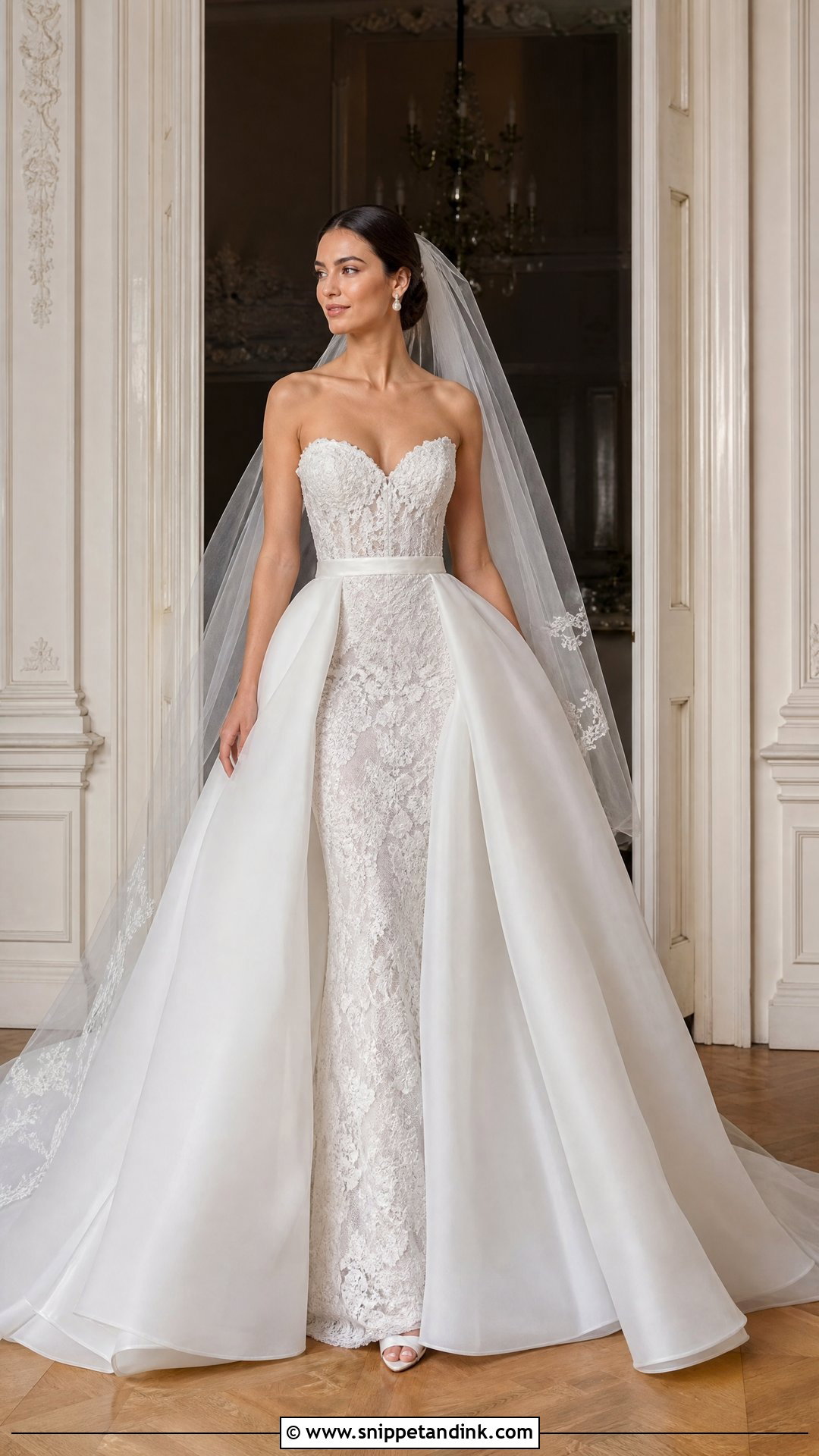
A detachable overskirt is the most practical idea on this list for a bride who wants a big ceremony and a dance floor. Start with a fitted lace, crepe or satin base, then add a tulle or organza overskirt with a chapel or cathedral train. The join is where these succeed or fail. Hooks or snaps should sit flat at the waistband and be invisible from the side, so test it during alterations and have someone practise removing it. Wear a long veil and pearl earrings for the ceremony, then switch to statement earrings or a bow for the reception.
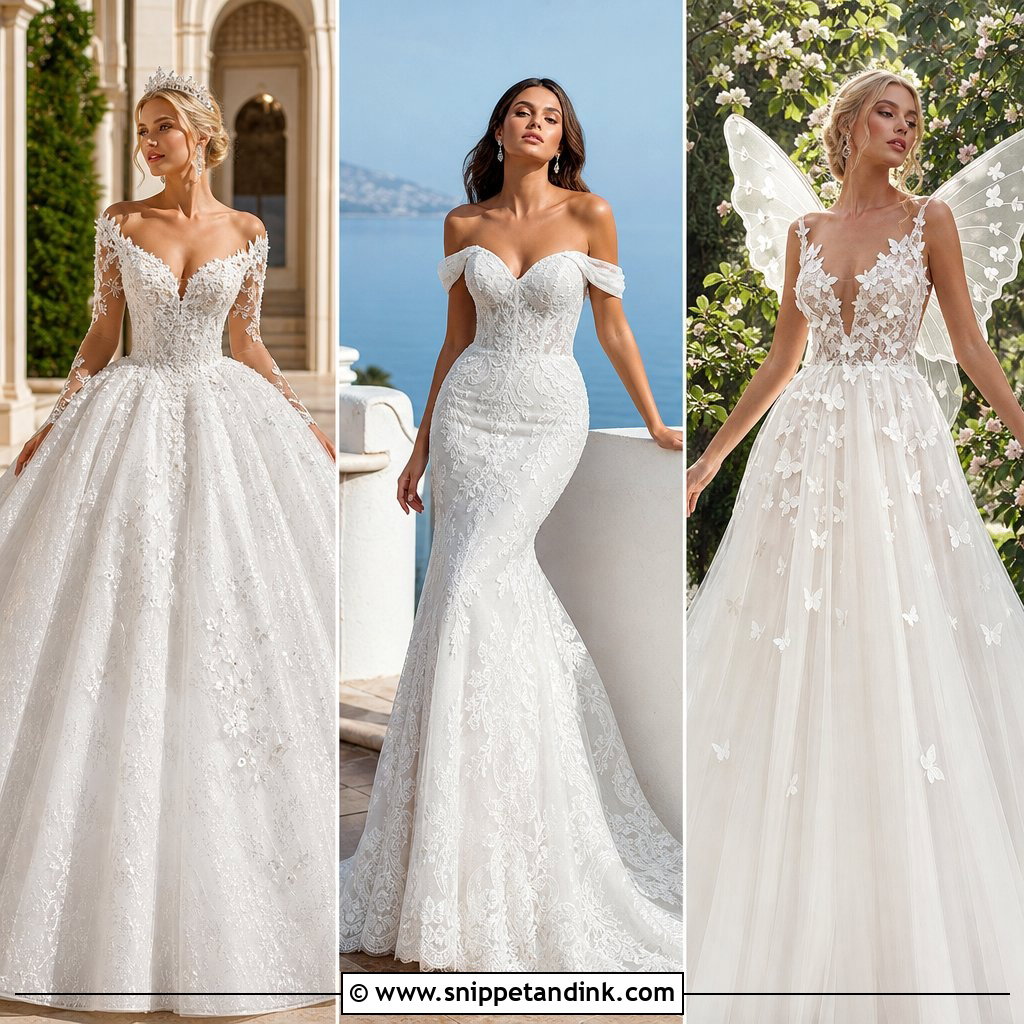

15. Boho Floral Lace Bride Dress
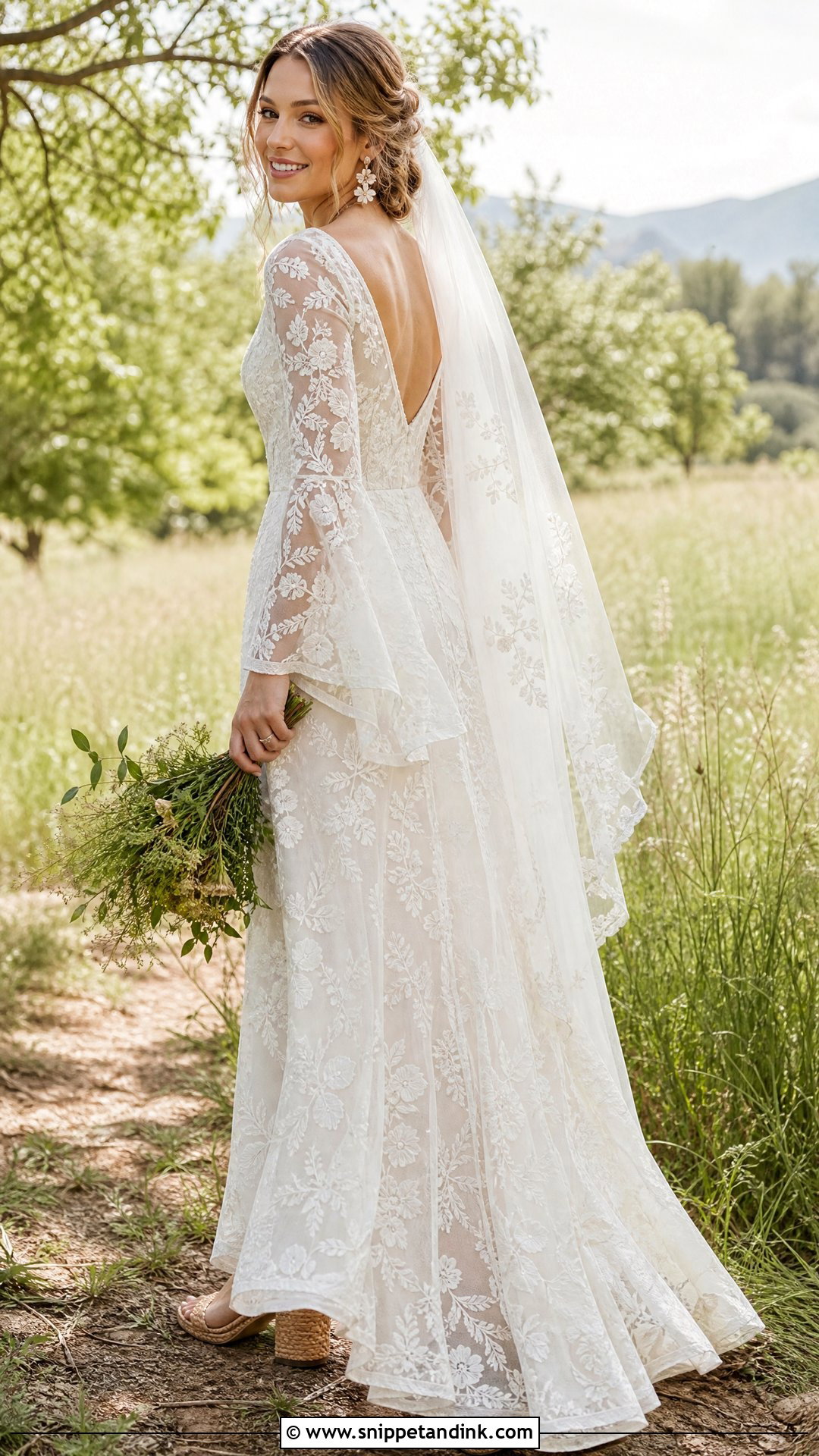
Boho lace with wildflower motifs feels relaxed rather than formal. Choose an A-line or sheath with botanical embroidery, bell sleeves or an open back. A nude lining shows the lace pattern; an ivory lining gives more coverage, and it’s worth seeing both in daylight. Woven block heels, small floral earrings and a light veil or embroidered cape suit it. Lace hems pick up grass stains and mud fast at meadow or ranch venues, so have the hem taken up a touch for an outdoor day. Loose braids or textured waves finish it.
16. Minimalist Silk Slip Bride Dress
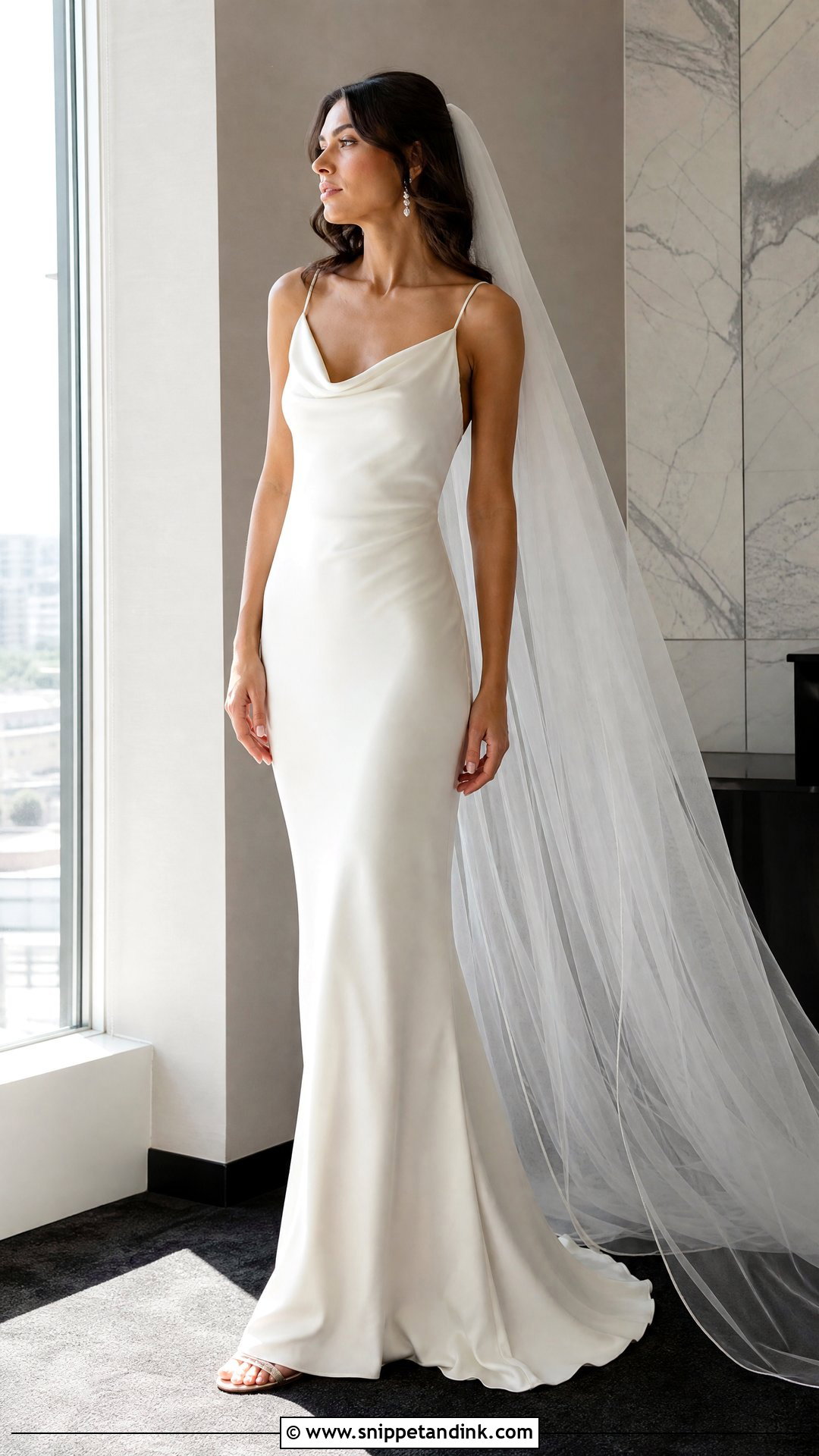
A slip gown looks simple and is actually the hardest dress here to get right. A bias-cut design skims the body because the fabric is cut on the diagonal, which also means it shows every line underneath. Double-lined silk or heavy satin helps, and smooth, line-free underwear is non-negotiable. A cowl or scoop neckline keeps it soft. Crystal drops, slim heels and a long sheer veil give contrast; a lace topper adds ceremony coverage. With nothing to hide behind, tailoring makes or breaks it.
17. High Neck Lace Bride Dress
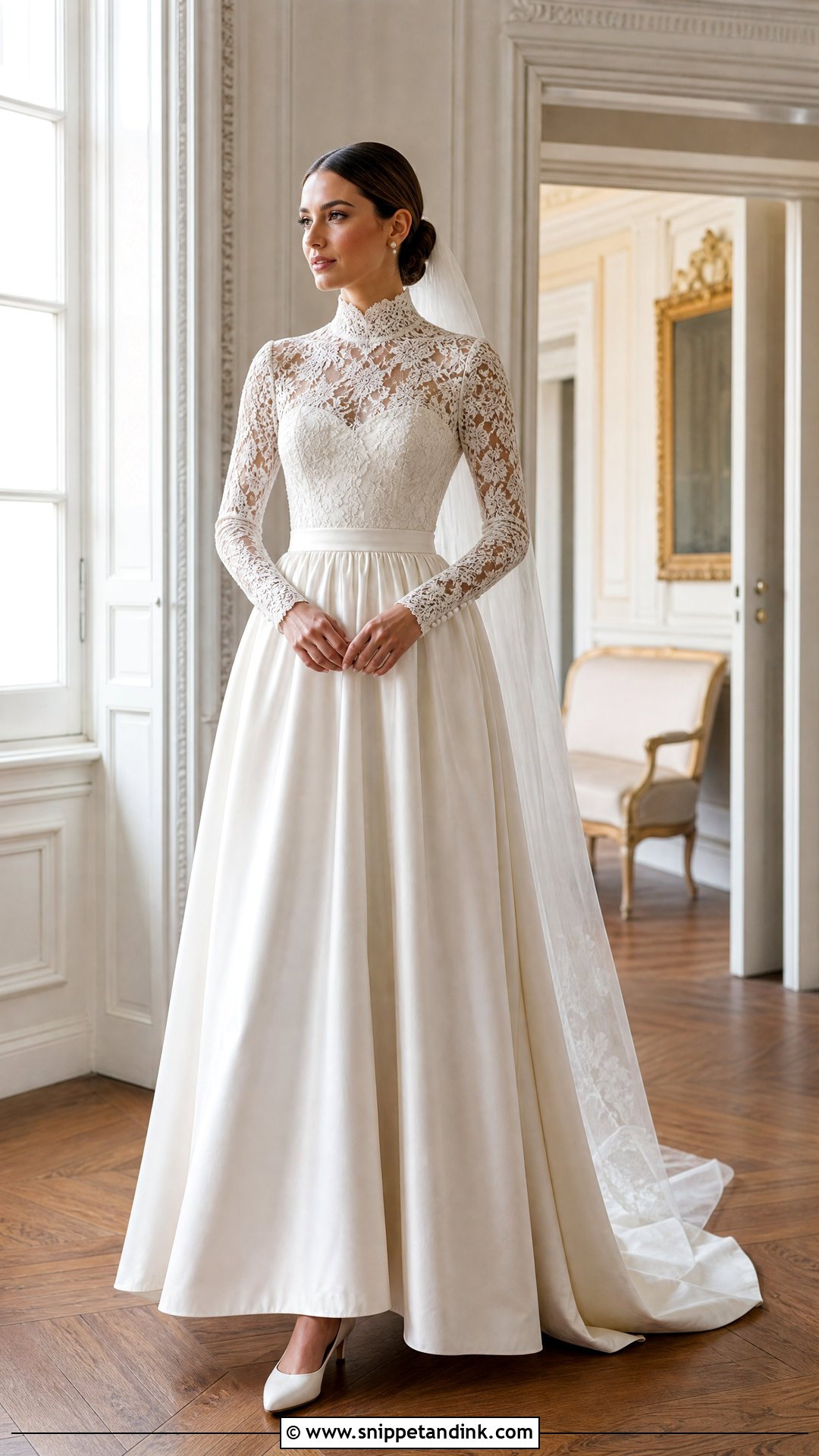
High-neck lace draws all the attention to the face. Fine floral lace over a lined bodice, with sheer net at the neck and sleeves, keeps it light. A defined waist and flowing skirt stop the covered top looking heavy. Skip the necklace and wear pearl studs or slim drops. I’d test the neckline with your hairstyle, since a high collar with hair down can feel hot and crowded, which is why a low bun with the veil fixed beneath it works so well. Covered buttons at the back or wrists finish it. It suits cooler months and brides wanting modest coverage.
18. Drop Waist Bride Dress
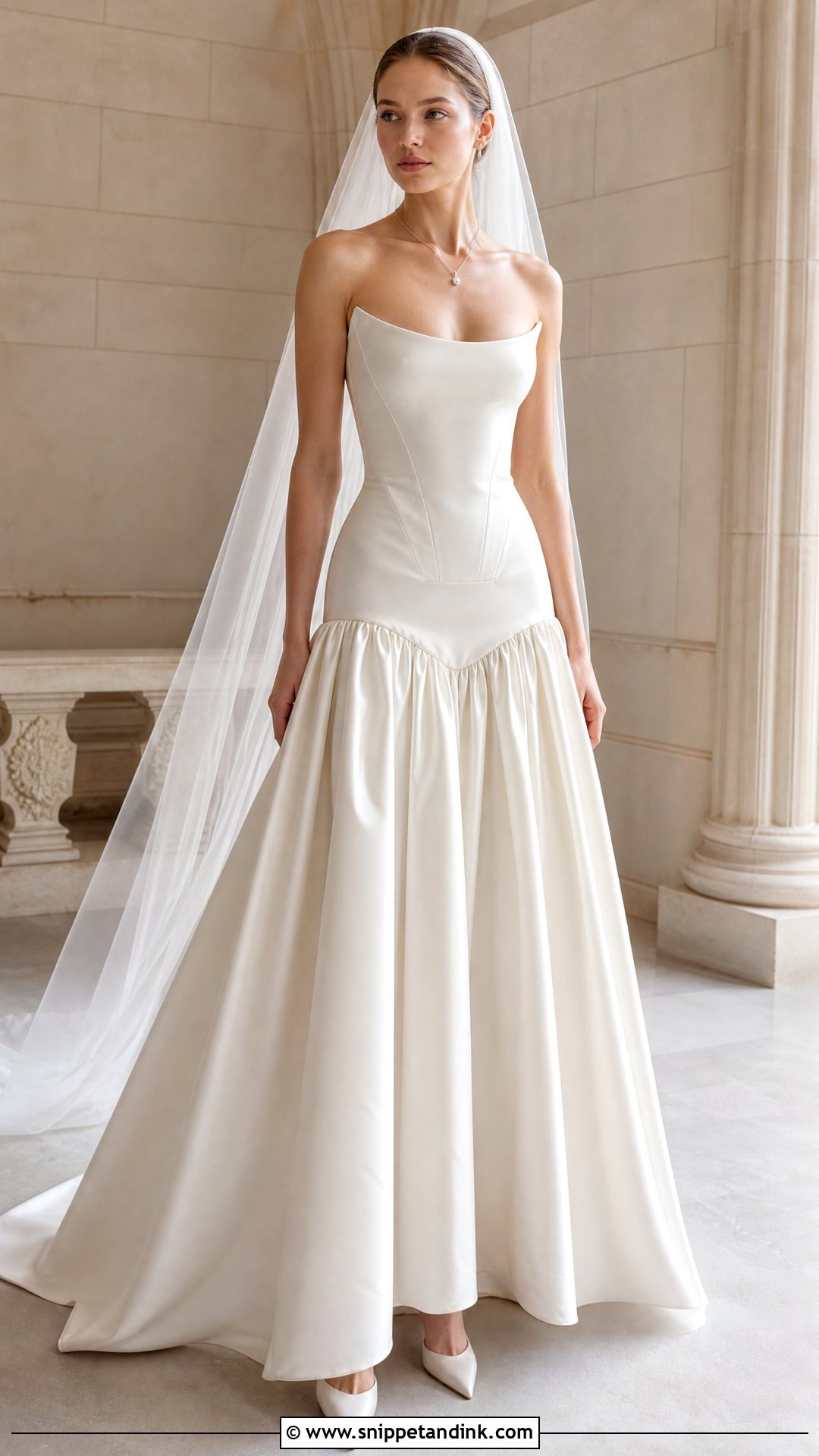
Drop waists move the seam down toward the hips before the skirt opens out, giving a long, sculptural torso. Draped or gathered satin, or lace panels, ease the change from bodice to skirt. Strapless, scoop or off-shoulder necklines all complement the long line. The seam has to sit at exactly the right height on your body, and an inch too low makes sitting awkward, so allow for proper alterations. A short pendant, satin pumps and a plain veil running past the train complete it, with a smooth updo.
19. Bow Back Bride Dress
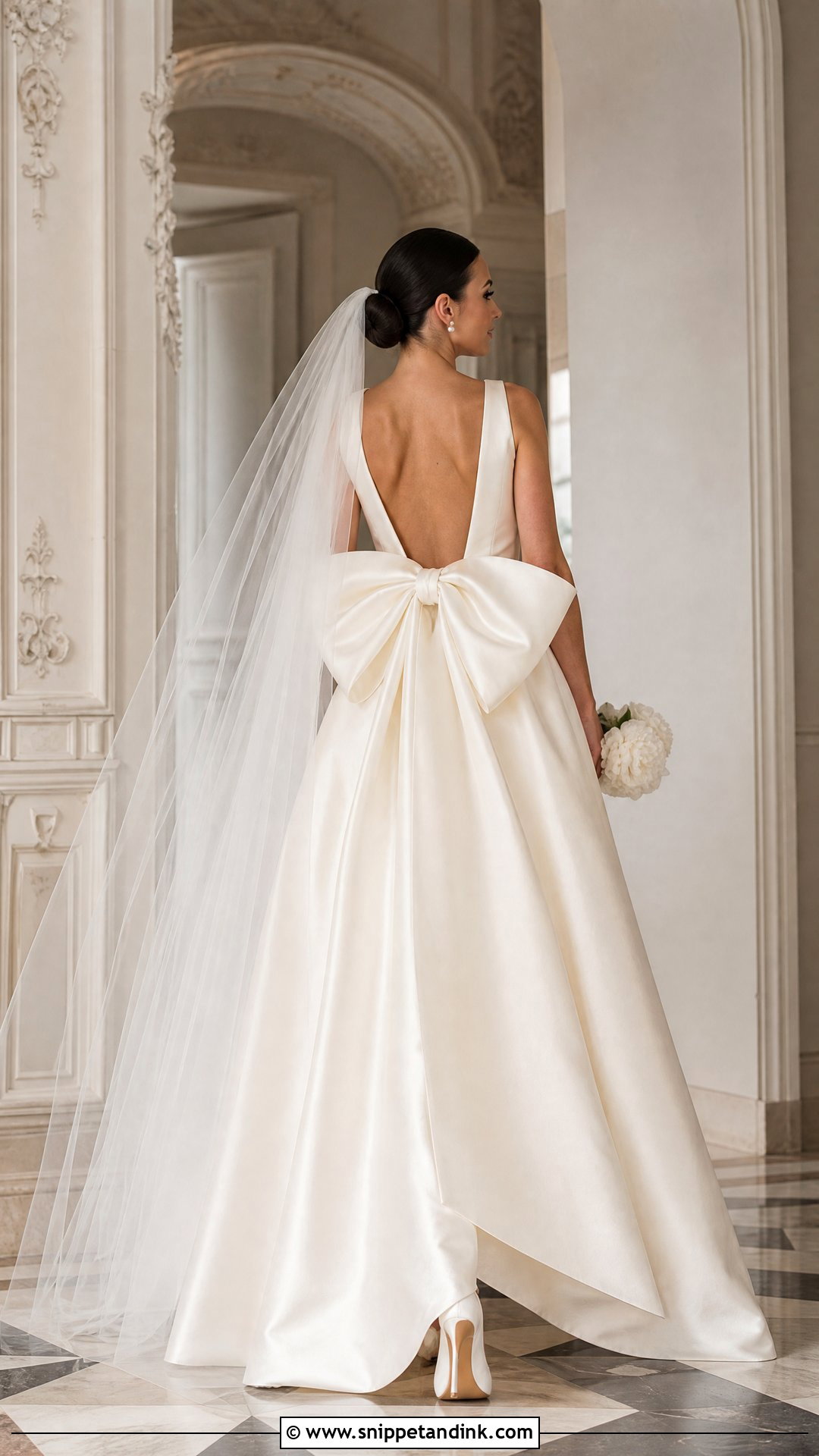
A bow at the back gives guests something to see when you walk up the aisle, which is the view most of them get. A structured satin bow is the crisp version; tulle tails are softer. The gown itself can be a column, A-line or ball gown. Keep the front plain so the design balances. Large bows crush when you sit at dinner, so ask whether yours is detachable or has internal structure. Pearl studs, pointed heels and a veil you remove after the ceremony reveal the bow properly. A low bun or side-parted waves suit it.


20. 3D Flower Bride Dress
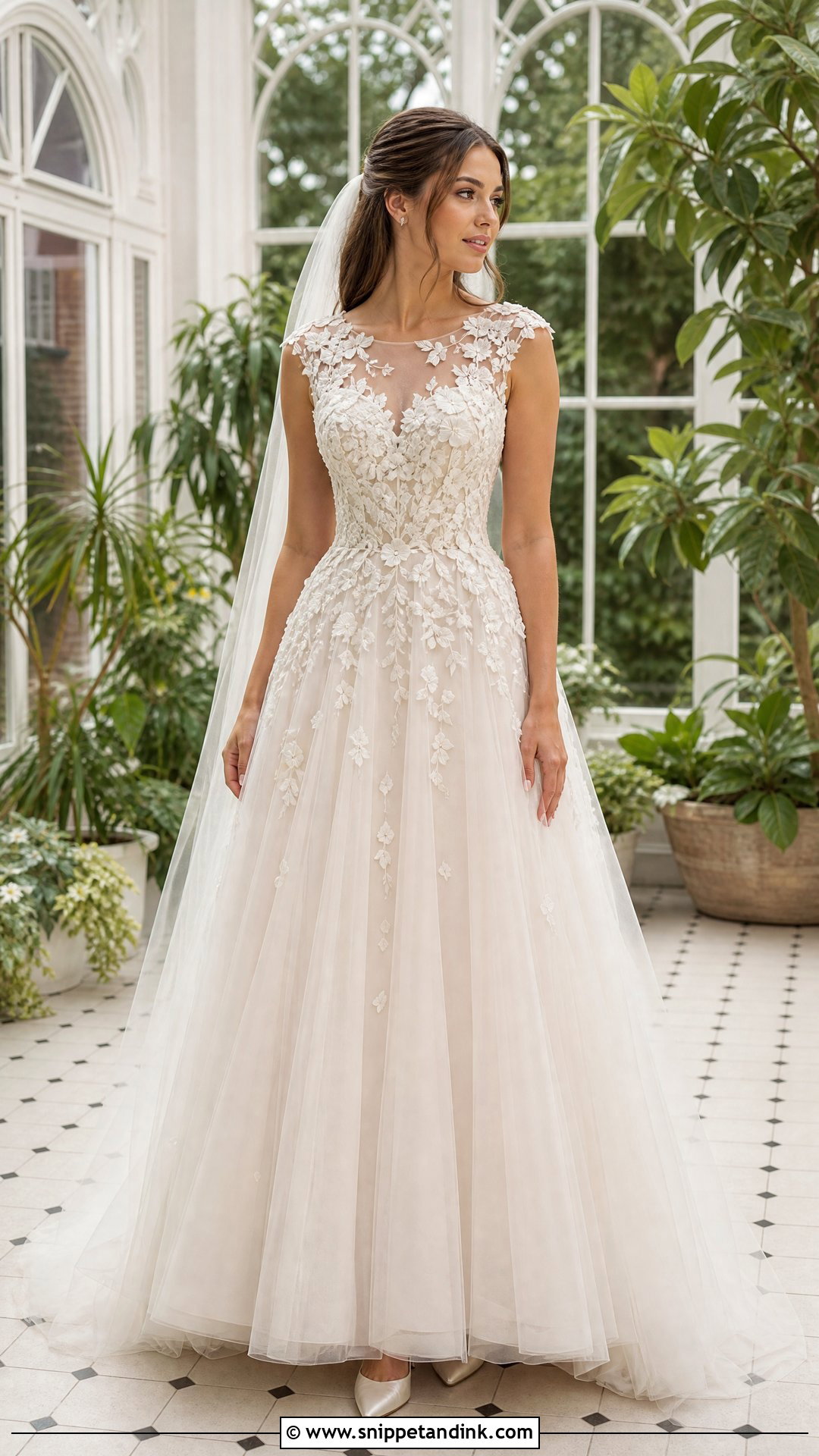
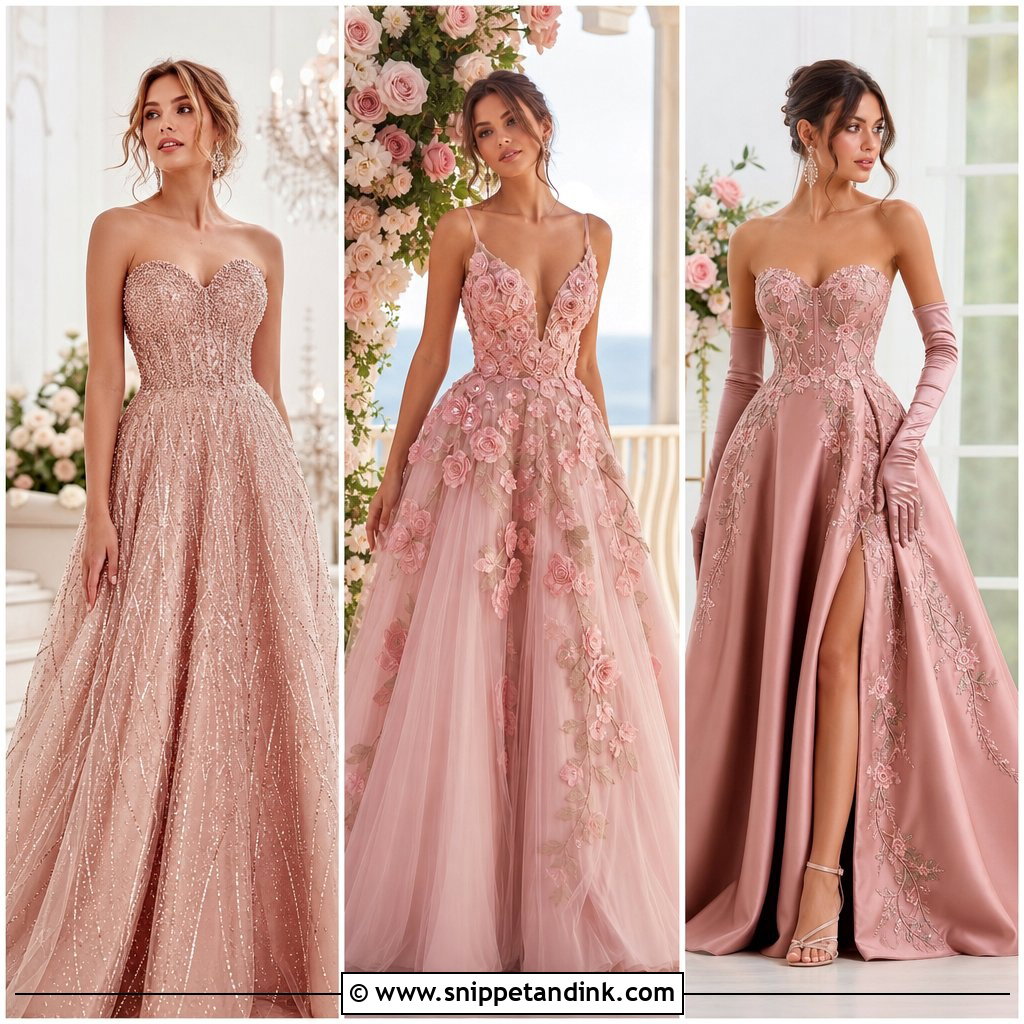
Three-dimensional flowers lift petals, rosettes, and botanical appliqués off the fabric so they catch light. I’d keep them to the bodice, sleeves or upper skirt. On an illusion neckline they appear to float on the skin, which photographs well close up. Keep the silhouette simple underneath, an A-line or soft fitted shape, and the veil plain tulle. Raised petals flatten under a tight bustle or a long hug, so a steamer at the venue is worth packing. Small studs, satin heels and a clean bun or half-up style keep the flowers visible.
Ten Months Is a Comfortable Lead Time for a Made-to-Order Gown
Most bridal gowns are cut to order after you buy them, not pulled off a rail. Production usually takes several months, and alterations need another two or three months with two or three fittings. That’s why I suggest shopping about ten to twelve months out, and no later than eight if the gown has heavy beading or appliqué. Off-the-rack and sample gowns are the faster route if your date is close.
Bring your real wedding shoes and underwear to the first fitting. The hem is set to the shoe height, and a different bra changes how a bodice sits.
Ask Which Bustle Your Train Needs
Any gown with a train needs a bustle for the reception, and the style changes how the back looks all evening. An over bustle hooks the train up onto the outside of the skirt, which suits lighter fabrics and creates soft drapes. A French or under bustle tucks the train underneath with ribbon ties, which is neater on satin. A ballroom bustle hides the train completely to make the hem one length all round, which is the best choice if you plan to dance a lot.
Bustling is fiddly, so pick one bridesmaid to learn it at your last fitting and take a short video of the steps on her phone.
Silhouette, Fabric, Then the Small Details
When a bride can’t decide, I take her back to the full picture rather than one detail: silhouette, fabric, neckline, then shoes, jewelry, veil and hair working together. Then I ask her to walk, sit and lift her arms in it. Lace A-lines stay the classic choice, while appliqué flowers, basque waists, pearls and detachable layers feel newer. Plain silk, chiffon and tea length can be just as romantic in the right room. The gown that wins is usually the one she stops thinking about ten minutes after putting it on.
You'll Like These Ideas:







Leave a Reply