
A Sangjit dress has a harder job than most bridal outfits. You will stand to greet the groom’s family, sit through the exchange of gift trays, bend to serve tea and pose for a lot of family photos, often in a living room rather than a ballroom. The ideas below mix traditional Chinese details with modern cuts, and most of them start from the cheongsam or qipao and then change the neckline, sleeve, colour or embroidery. Red and gold are still the safest colours with older relatives, though maroon, blush, champagne and sage can work when the family is relaxed about it. With each dress I’ve noted the shoes, jewellery, bag, hair and makeup I would put with it, plus the fitting detail I’d check first.
Rehearse the Tea Pour at Your Qipao Fitting
Most Sangjit dress problems only show up when you move the way the ceremony asks you to. A qipao that looks perfect standing in front of a mirror can ride up at the slit, gape between the pankou buttons or pull tight across the hips the moment you sit. So at every fitting I have the bride do the real choreography, not a catwalk.
- Sit on a low sofa and stand up again without using your hands. The slit should open enough to let you do it, and no higher.
- Bend forward as if offering a cup of tea with both hands. Watch the collar and the gap between the front buttons.
- Kneel on one knee if your family’s ceremony includes kneeling. Satin and brocade with no stretch will tell you right away.
- Lift a heavy tray to chest height. Tight armholes and fitted sleeves bind here first.
- Walk up three or four stairs in the shoes you’ll actually wear.
Bring those shoes to the fitting, too. Hem and slit height both depend on heel height, and a tailor can’t set them properly against bare feet. If a stitch pulls or a button strains during any of these moves, it will be worse after six hours, so ask for the change then rather than hoping it settles.
1. Red Satin Sangjit Dress
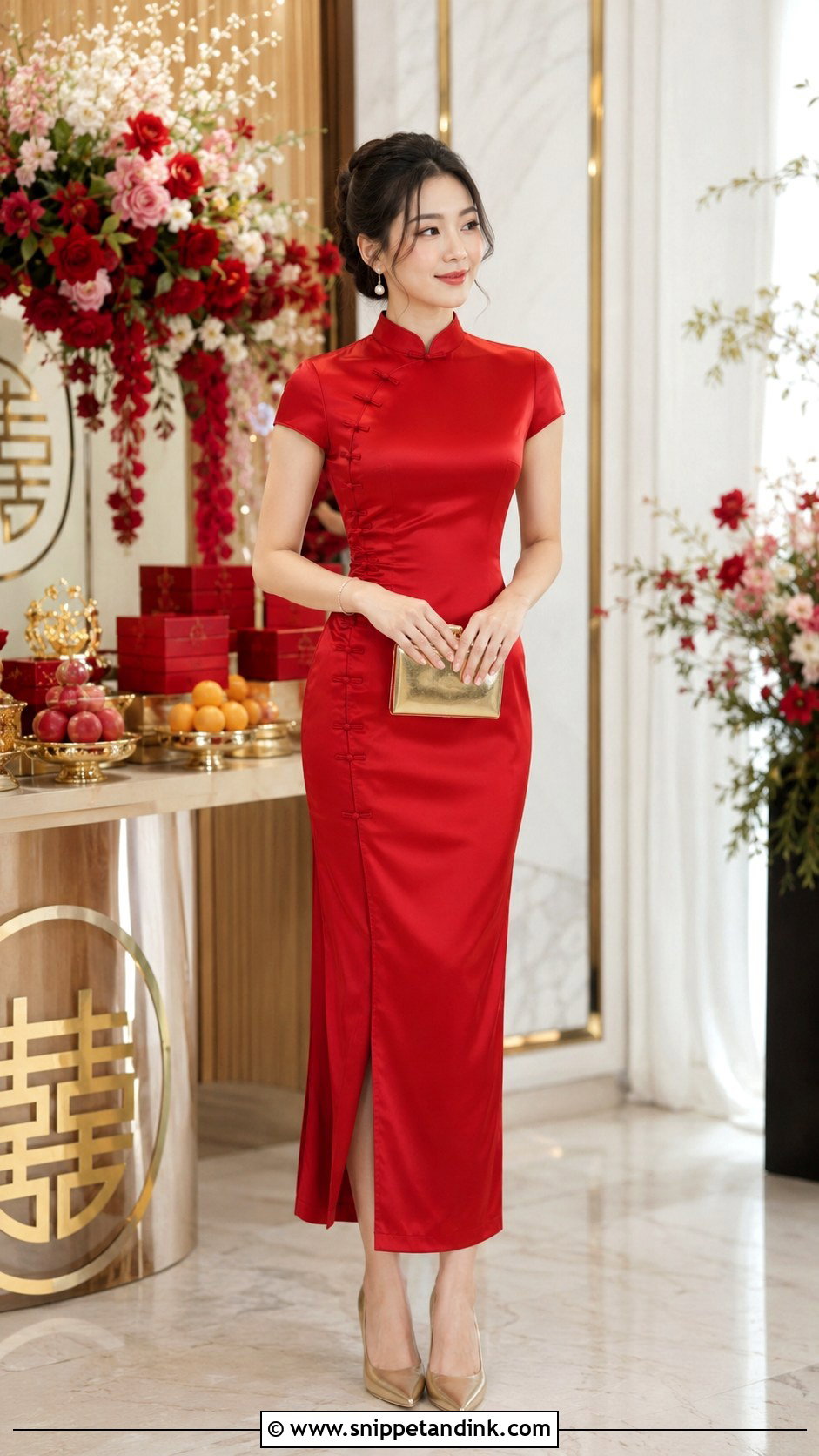
Satin is the fabric I reach for when a bride wants a red satin qipao that looks finished with almost no decoration. A Mandarin collar, fabric-covered pankou buttons and a side slit are enough. The catch is that satin shows every pull across the hips and every crease from sitting, so I ask for a stretch-backed satin and a slightly softer cut through the seat than a cocktail qipao would have. Champagne pointed pumps, a small gold box clutch and pearl drops keep the collar the hero. A low bun or sleek ponytail stops hair from hiding it, and a classic red lip with light liner does the rest.
2. Maroon Velvet Sangjit Dress
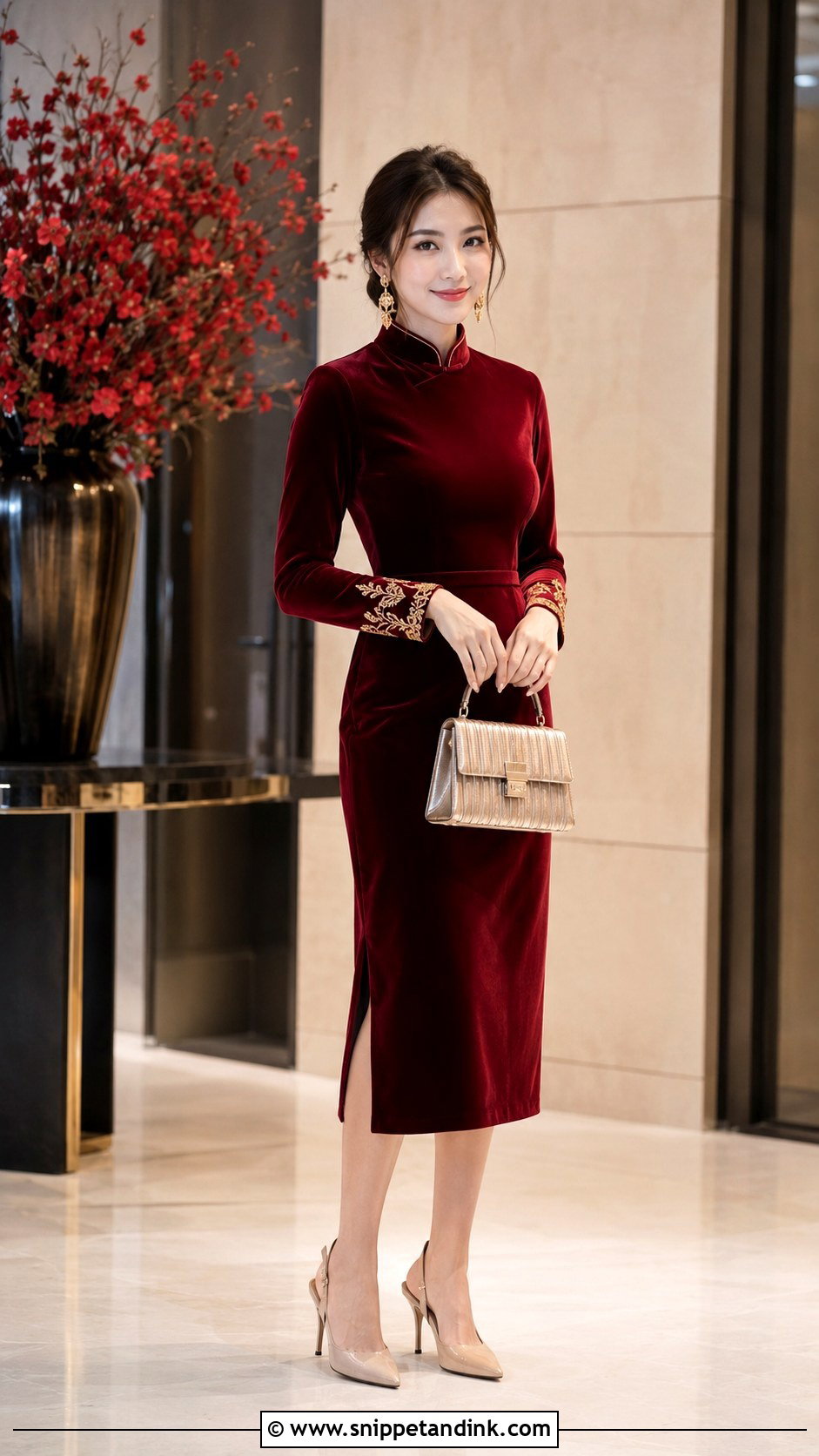
Velvet suits an evening or air-conditioned Sangjit; in a warm flat full of guests it gets hot fast. Ask for a lightweight velvet with some drape, cut as a midi with a Mandarin neck, shaped waist and straight skirt. Heavy velvet adds bulk at the waist that no tailoring hides. Gold embroidery at the collar or cuffs brings in tradition without crowding the pile. Velvet drinks light in photos, so I lift it with nude slingbacks, a metallic structured bag and fine gold earrings rather than dark shoes. Soft waves or a side-parted bun, matte skin and a muted berry lip finish it.
3. Phoenix Embroidered Sangjit Dress
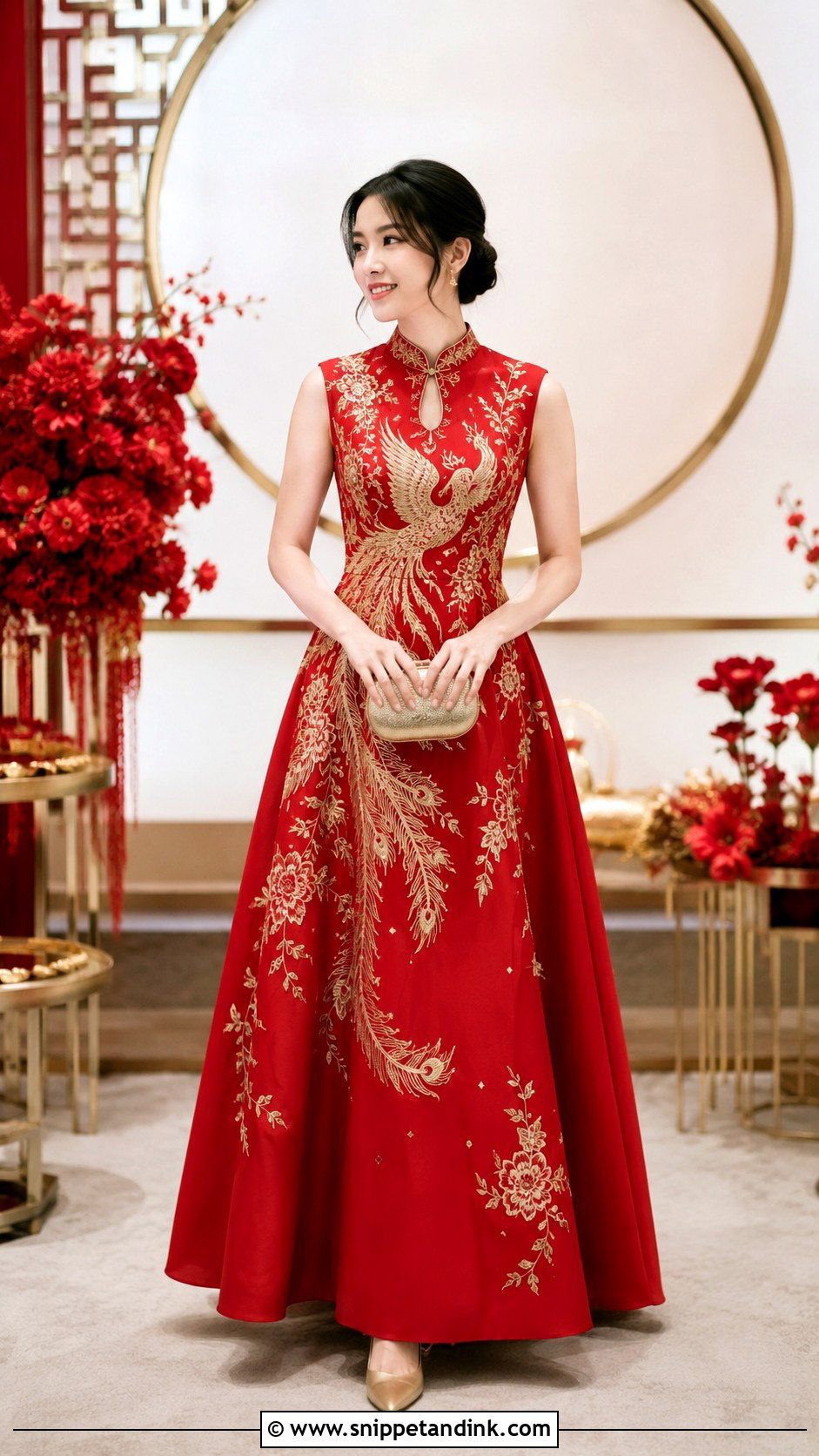
A single phoenix placed on the bodice, one shoulder or sweeping down the skirt reads as intentional; an all-over print of the same motif just reads busy. I like it on a fitted bodice with an A-line skirt, which forgives a lot of body shapes and lets you sit on a low sofa without strain. Because the embroidery carries the look, keep jewellery to small studs and choose understated gold heels with a plain red or metallic clutch. Before you commit, ask the maker for photos of the dress from the front, side and back. Family portraits are often shot from an angle, and a phoenix that disappears into a side seam is a waste of the work.
4. Gold Brocade Sangjit Dress
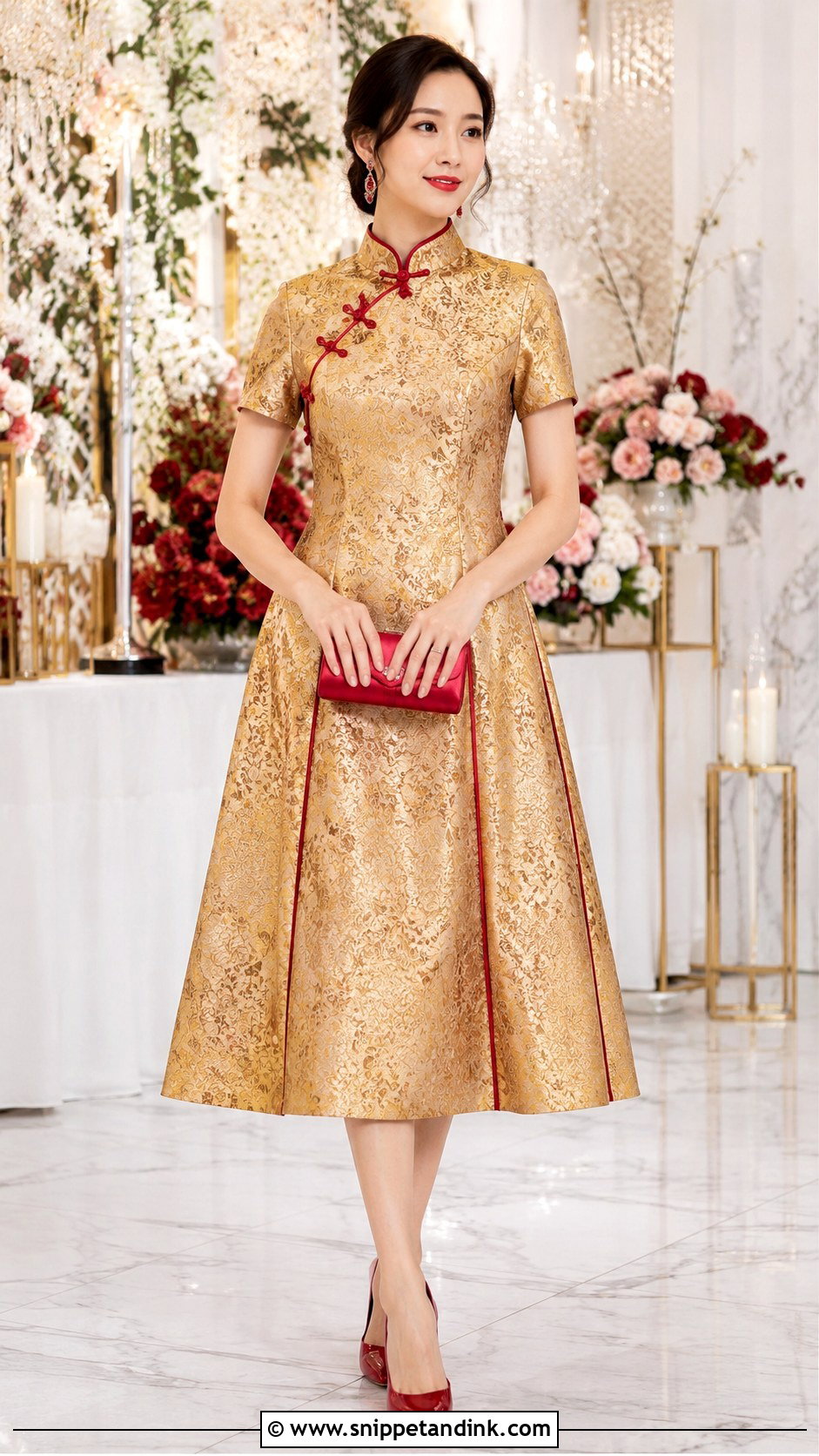
Gold brocade gives you a festive alternative to plain red, and red piping, frog closures or embroidered borders keep the link to Sangjit colours. I’d cut it tea length and structured, because brocade holds a shape well but looks stiff and heavy in a long skirt. Red suede pumps, a simple satin clutch and small ruby-toned earrings balance the pattern, with a smooth chignon and one gold pin. Brocade has almost no give, so the shoulders and waist must be fitted precisely, and a concealed back vent is not optional. Without one, every step on a stair pulls at the seams.
5. Red Lace A-Line Sangjit Dress
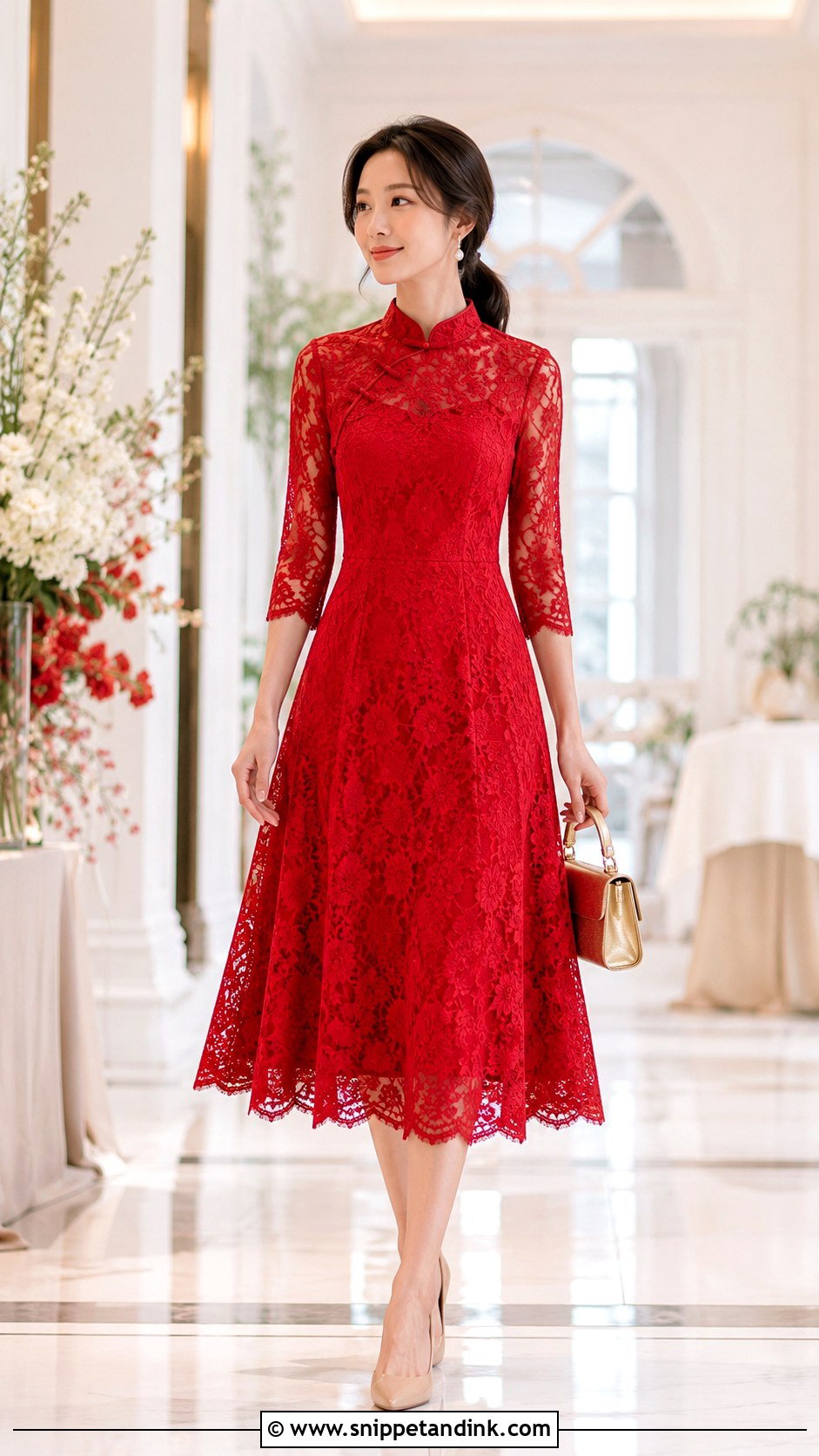
Red lace needs a matching opaque lining under it; a nude lining under red lace looks patchy in flash photos. With three-quarter sleeves, a high Mandarin-inspired neck and a natural waist, an A-line lace dress gives you coverage that still looks current. A midi or ankle length moves well while you greet relatives. Nude pointed pumps, a compact gold bag and pearl-and-gold earrings are plenty. Lace is already detailed, so I take sparkle off the shoes and bag. A low ponytail with a few face-framing pieces, rosy blush and a satin lip keeps it fresh.
6. Modern Kebaya Sangjit Dress
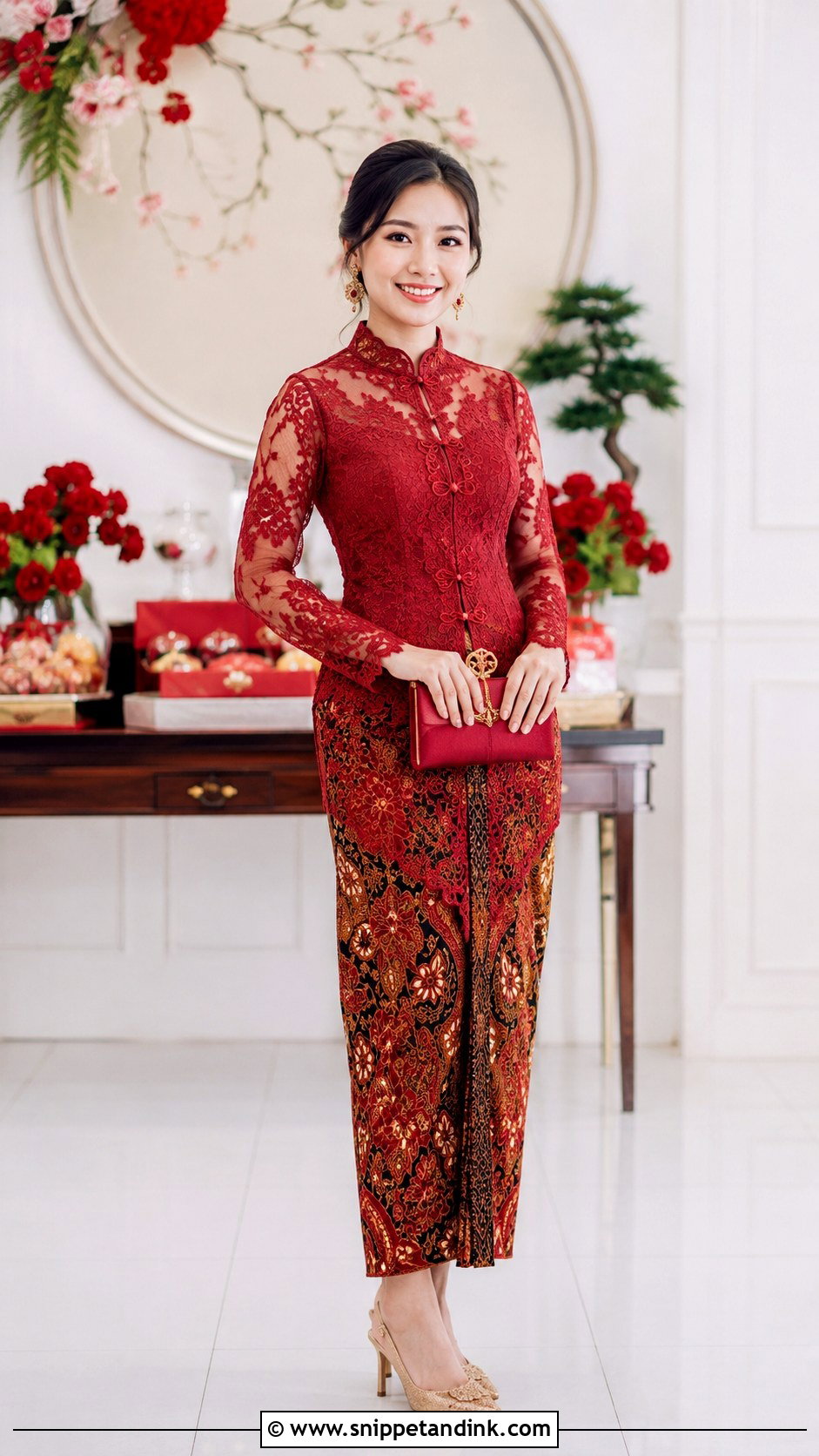
For Peranakan and Chinese-Indonesian families, a modern kebaya Sangjit dress can honour both sides in one outfit, and kebaya shapes now sit comfortably next to cheongsam designs at these ceremonies. A red lace kebaya-style bodice with a Mandarin collar, fitted sleeves and Chinese knot buttons, joined to a batik or embroidered straight skirt, looks like one considered dress instead of a top and a sarong. I ask the tailor to attach the two at the waist if possible so nothing shifts when you bend. Gold slingbacks, a structured red clutch and small heritage-style earrings suit it, with a polished bun to keep the buttons visible. The straight skirt needs a back slit and a secure lining, or you will shuffle all day.
7. Peplum Sangjit Dress
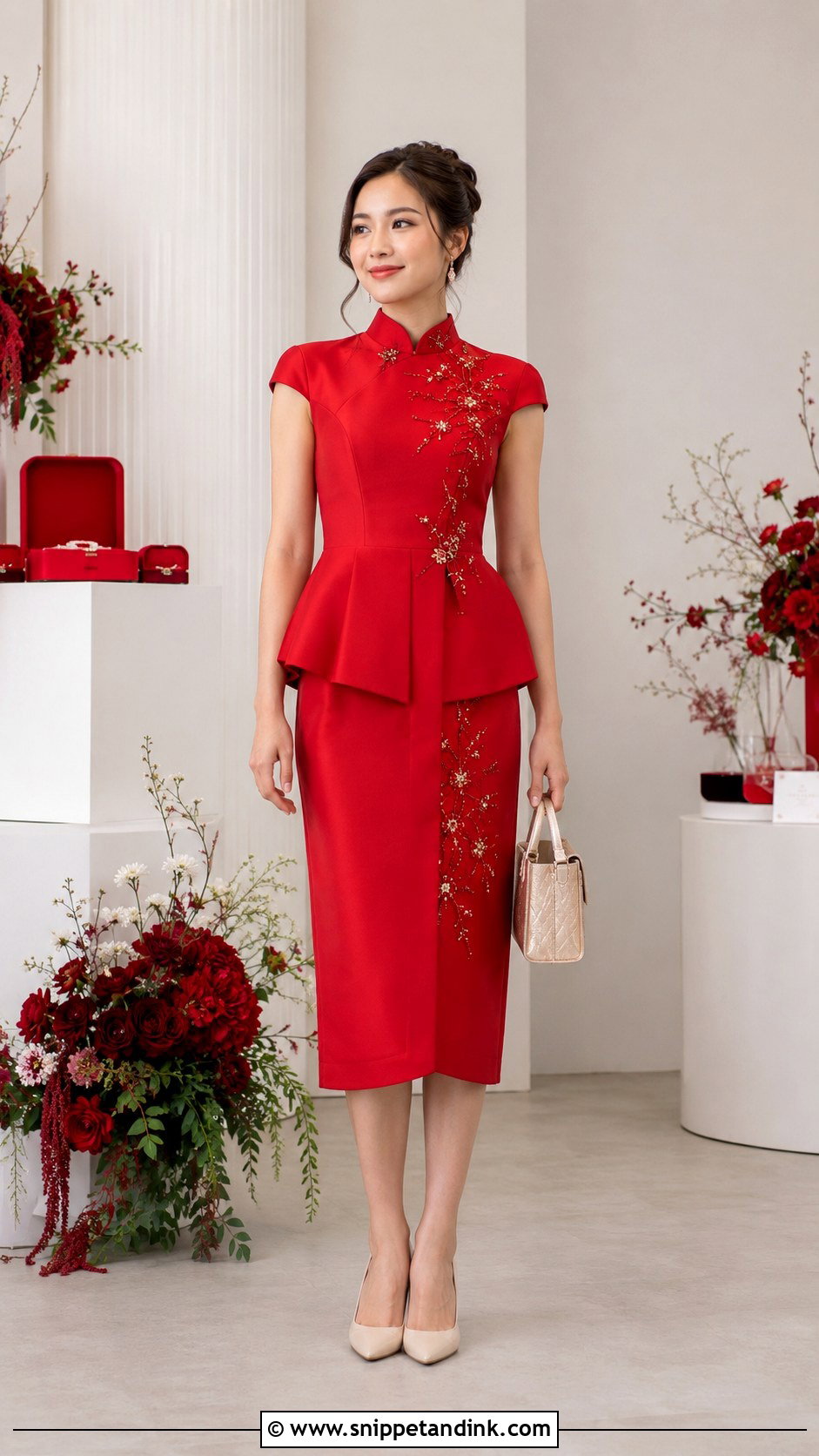
A peplum gives the waist shape without asking for a tight skirt, which is why I suggest it to brides who want coverage over the tummy. Pick red or deep crimson with a Mandarin collar, a sculpted peplum and a straight midi skirt, and maybe a little gold beading at the neck. Keep the peplum flat and lightly interfaced. A full, flared peplum swallows a petite frame and crumples when you sit for photos. Pointed nude heels, a small metallic top-handle bag, short drops and a sleek low ponytail keep the lines clean. Matte skin and a warm red lip photograph well against crimson.
8. Cape Sleeve Sangjit Dress
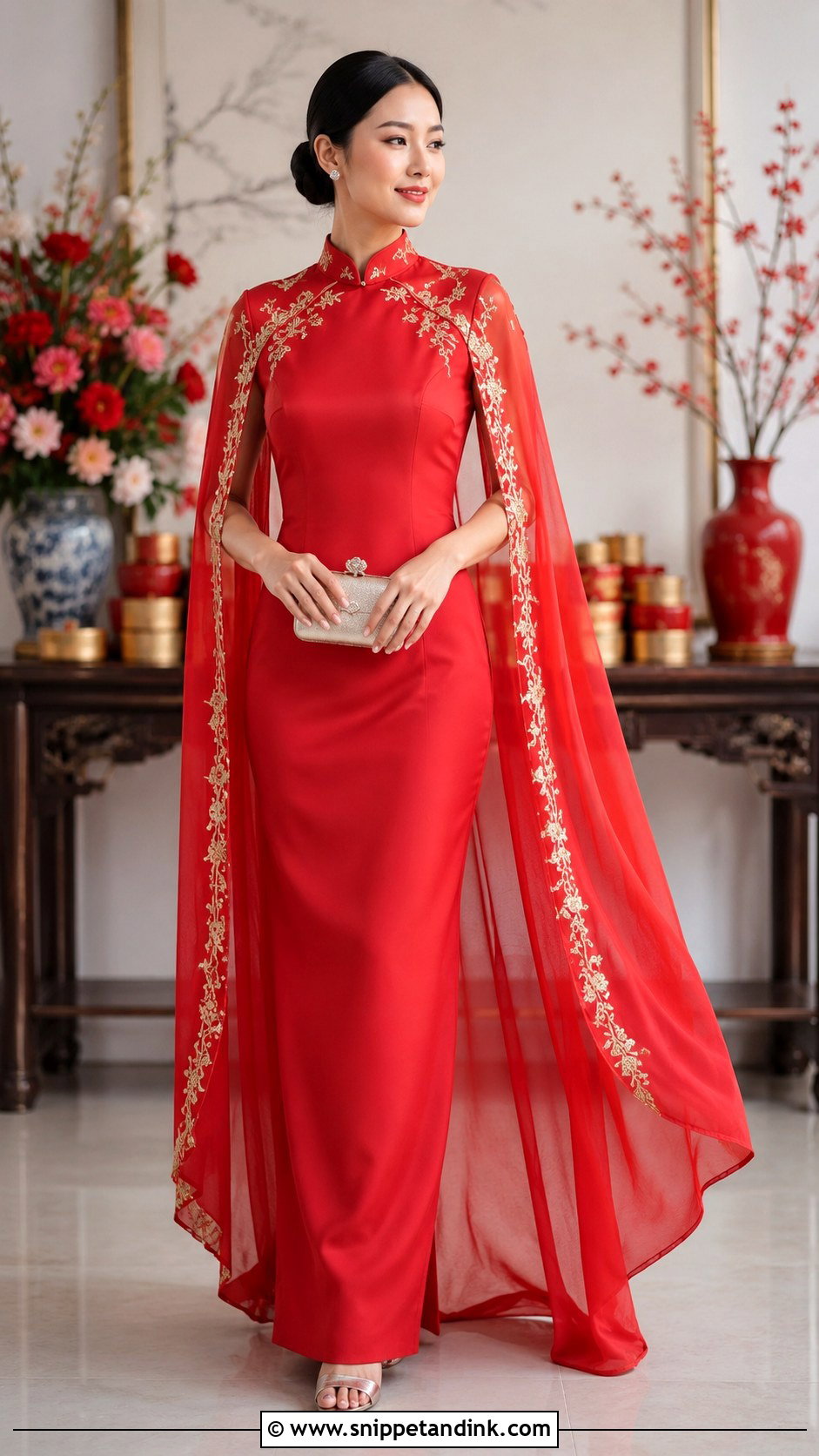
Cape sleeves give you upper-arm coverage with some movement, and they look best on a fitted red column with a high neck and a light chiffon cape fixed at the shoulders. Gold embroidery on the cape edge catches the light as you turn. The practical problem is hands: when you pass tea or accept a tray, a long cape can drape over your wrists or brush the table. I always have the bride mime both at the fitting and shorten the cape if needed. Skip long earrings that snag the chiffon, wear slim metallic heels and a small hard-case clutch, and centre a low bun so the cape falls evenly.
9. Off-Shoulder Sangjit Dress
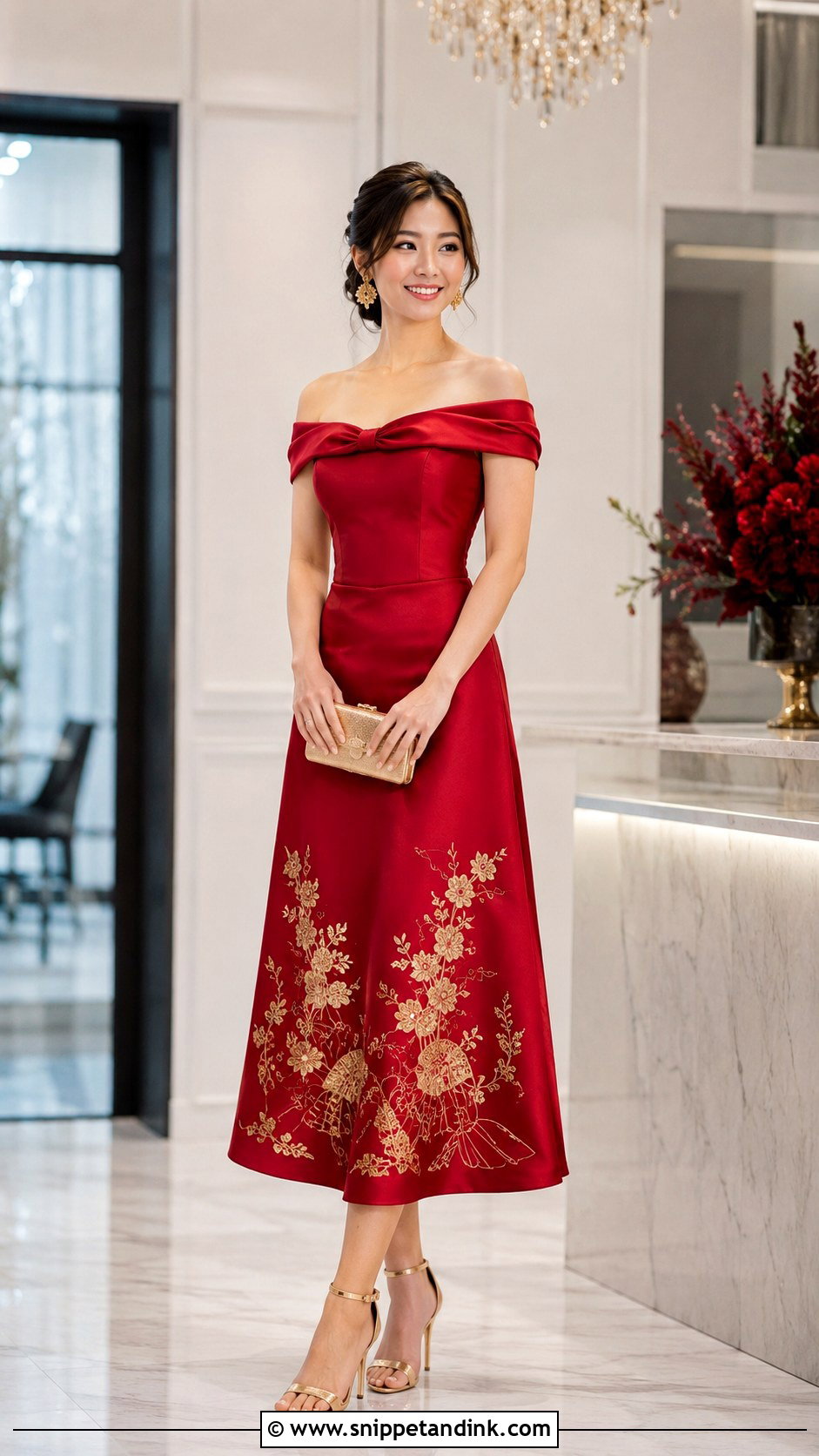
An off-shoulder neckline is the one I’d clear with family first, since some households expect shoulders covered when elders are present. Where it’s welcome, a red satin or mikado gown with a folded neckline, fitted waist and modest A-line skirt is a clean modern choice, and embroidery near the hem or pankou buttons at the waist keep the cultural link. Leave the necklace off and let statement earrings and gold ankle-strap heels do the work. The neckline must be held by an internal corset and boning, not by hope. I add fashion tape as a backup because bowing and reaching are exactly the moves that make it slide.
10. One-Shoulder Sangjit Dress
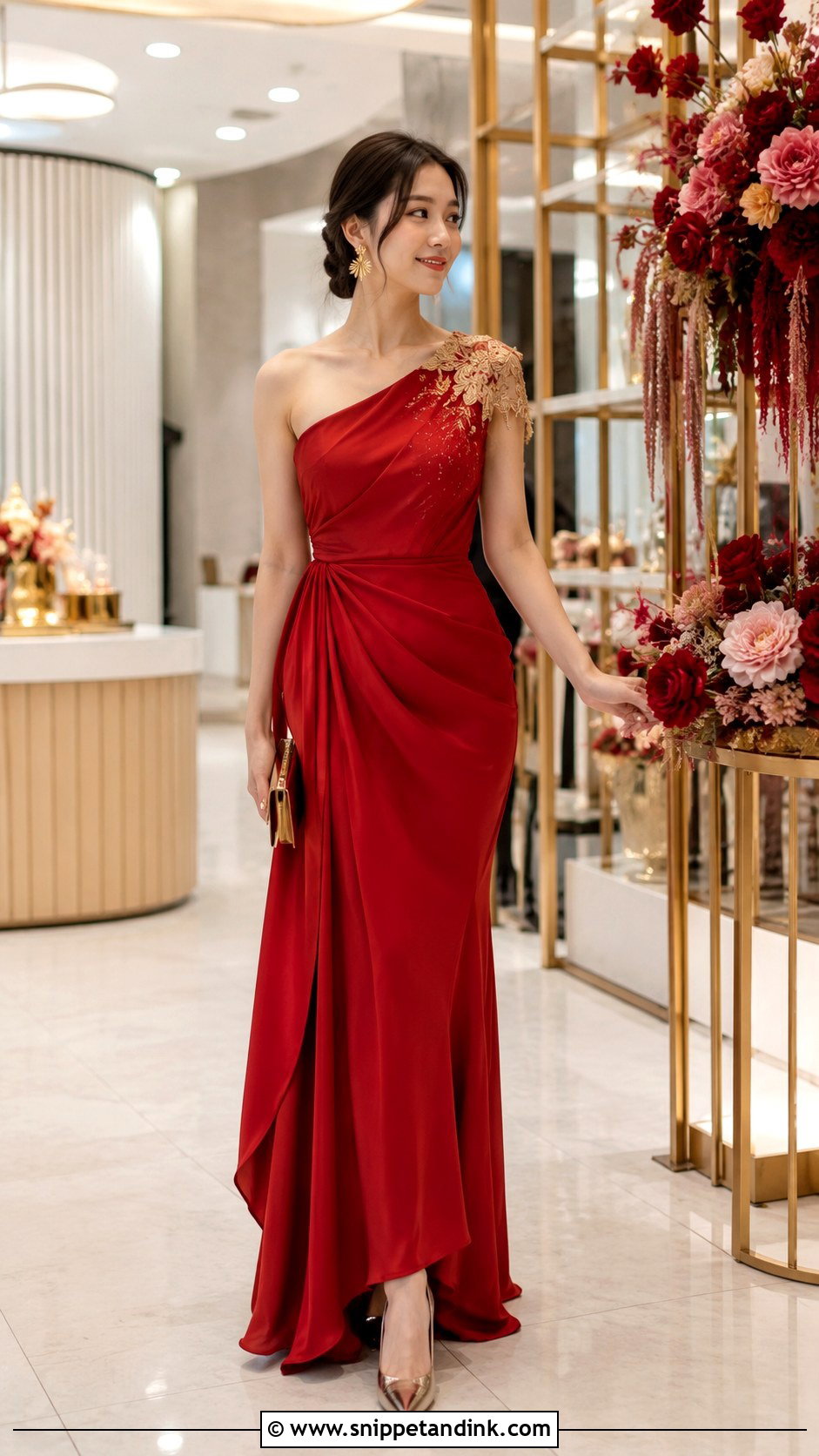
Asymmetry looks fashion-led without needing much embellishment. A one-shoulder gown with soft draping and a gently flared skirt moves well, and a touch of gold embroidery at the shoulder or waist ties it to tradition. Wear one sculptural earring on the bare side and put a low side bun on the opposite side to balance the line. Pointed metallic pumps and a minimal gold clutch are enough. The test is simple: lift both arms at the fitting. If the strap shifts, it will need adjusting all day, and a design with one full sleeve and a higher diagonal neck is the better pick for more coverage.
11. Blush Pink Sangjit Dress
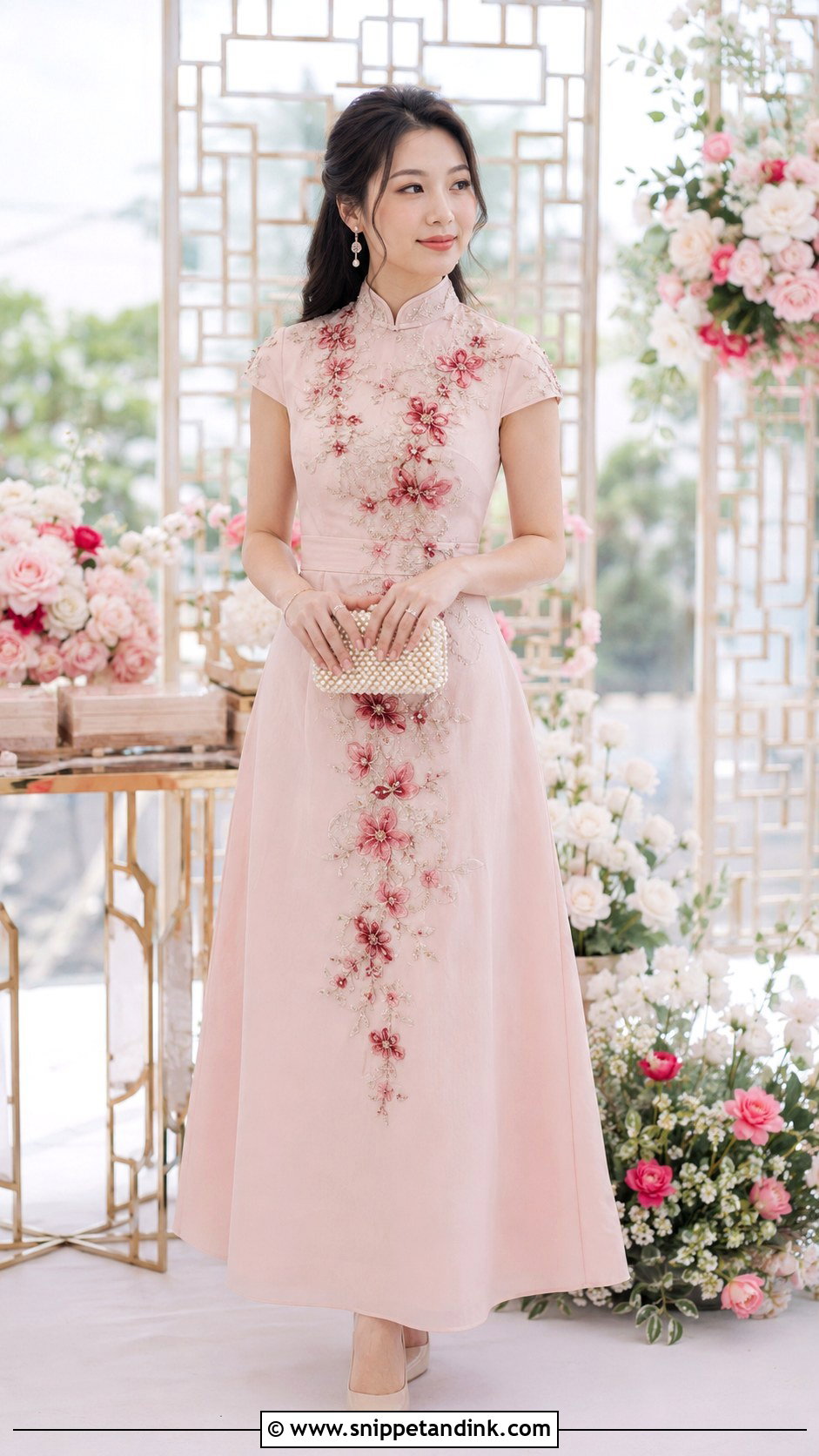
Blush works best in daylight, where it looks fresh; under warm indoor bulbs it can go a little beige. I’d choose an ankle-length qipao-inspired dress with a Mandarin collar, fitted bodice and airy A-line skirt, and add red floral embroidery or burgundy piping so it still belongs to the occasion. Champagne pumps, a pearl clutch and rose-gold earrings suit it, with loose waves pulled half up. Ask close family about colour before you order. If red matters to them, a removable red cape or embroidered overlay for the tray exchange solves it without giving up the pink.
12. Sage Green Sangjit Dress
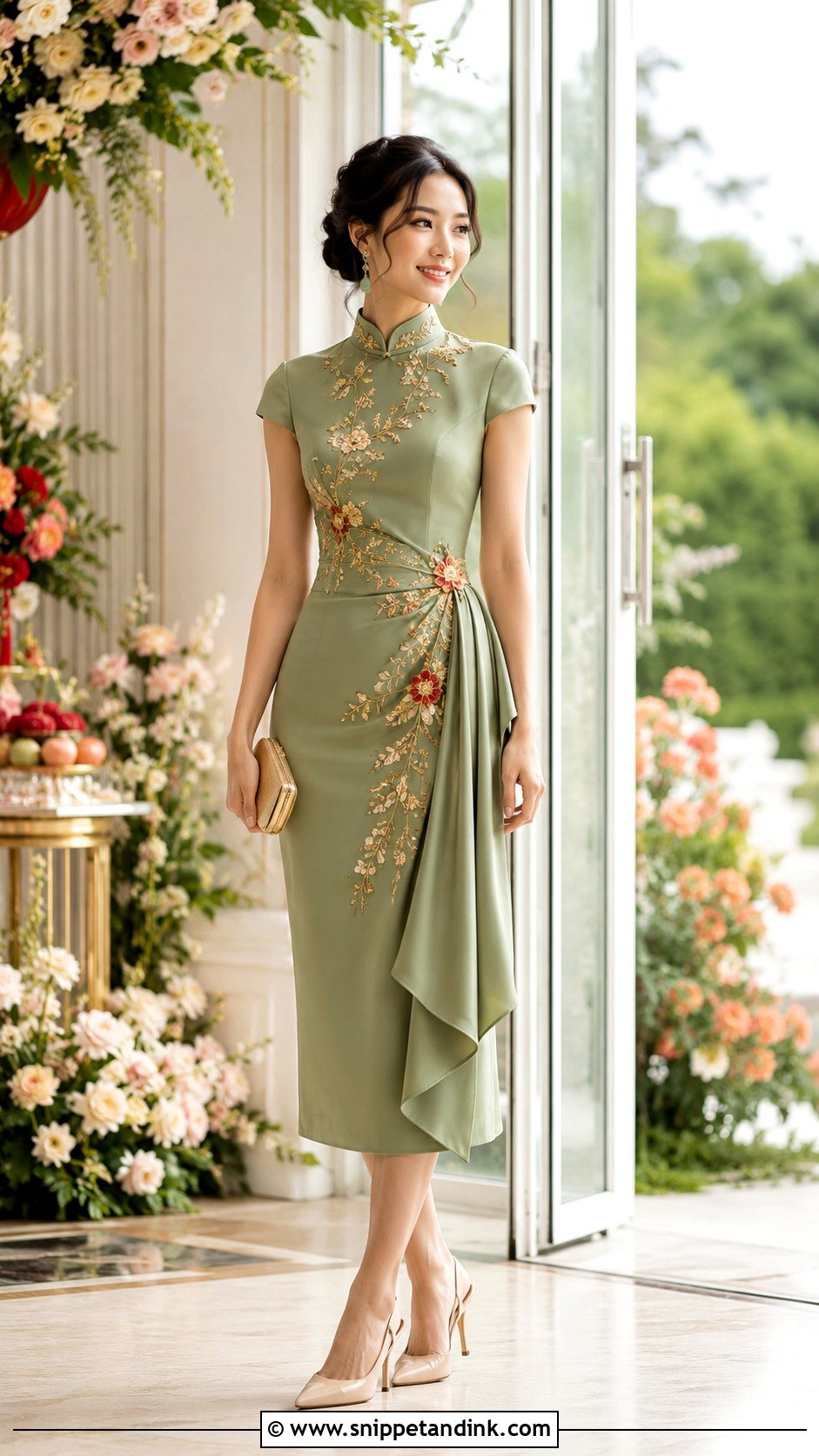
Sage is calm and modern, and it’s a good fit for a bride who doesn’t love wearing strong red. A slim midi with a Mandarin neck, cap sleeves and a draped side panel nods to the qipao without copying it. Gold-and-red floral embroidery at the shoulder or waist makes it festive. Pale green flattens in photos, so pick a fabric with slight sheen and keep grey out of the accessories entirely. Nude slingbacks, a brushed-gold clutch and jade-style earrings work, along with peach makeup and a coral-red lip for warmth. A red bag or small red bouquet brings back the ceremonial colour.
13. Champagne Tulle Sangjit Dress
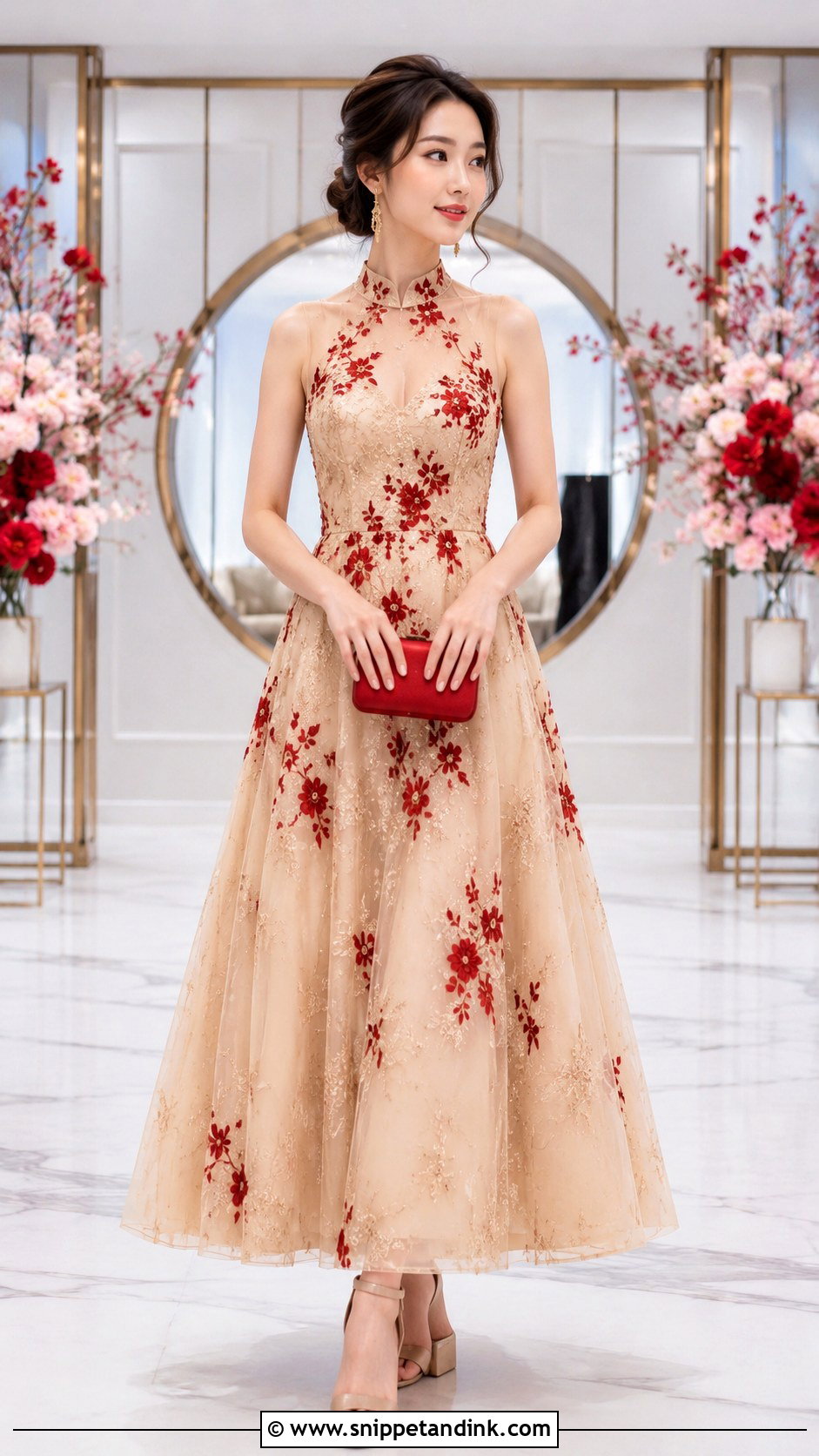
Champagne tulle feels bridal without looking like a white gown, which matters because white carries mourning associations for many Chinese families. A lined A-line with a high illusion neck and red floral appliqués concentrated on the bodice, thinning toward the skirt, lengthens the body. Champagne block heels are kinder on tiled floors than stilettos, and a red satin clutch adds the colour. A loose low bun, warm shimmer on the eyes and a clear red lip complete it. Tulle catches on everything, so in a home with stairs or narrow hallways, keep to ankle length and ask for a discreet wrist loop.
14. Red Tea-Length Sangjit Dress
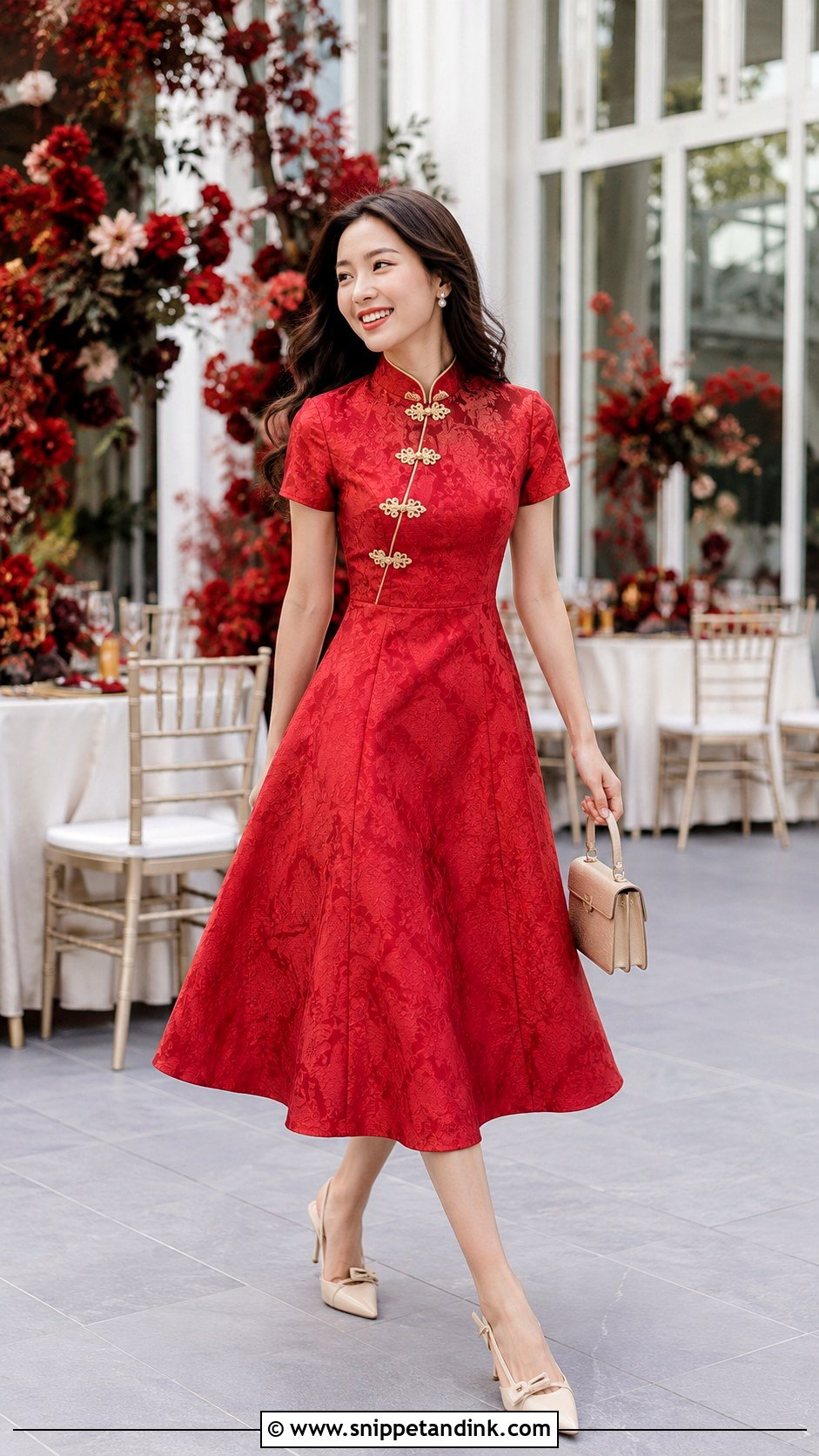
Tea length is my practical favourite for a daytime Sangjit at home, because nothing drags and you can kneel without gathering a skirt. A structured red design with a Mandarin collar, fitted waist and a skirt that flares just below the knee looks ready for the occasion with gold knot buttons or a floral jacquard. Your shoes are on show the whole time, so choose a refined pointed slingback at a heel you can stand in for hours. A miniature top-handle bag, pearl studs and a smooth ponytail or curled bob suit the shorter shape. Add a petticoat only if you want more volume in photos; it makes sitting fussier.
15. Long-Sleeve Sangjit Dress
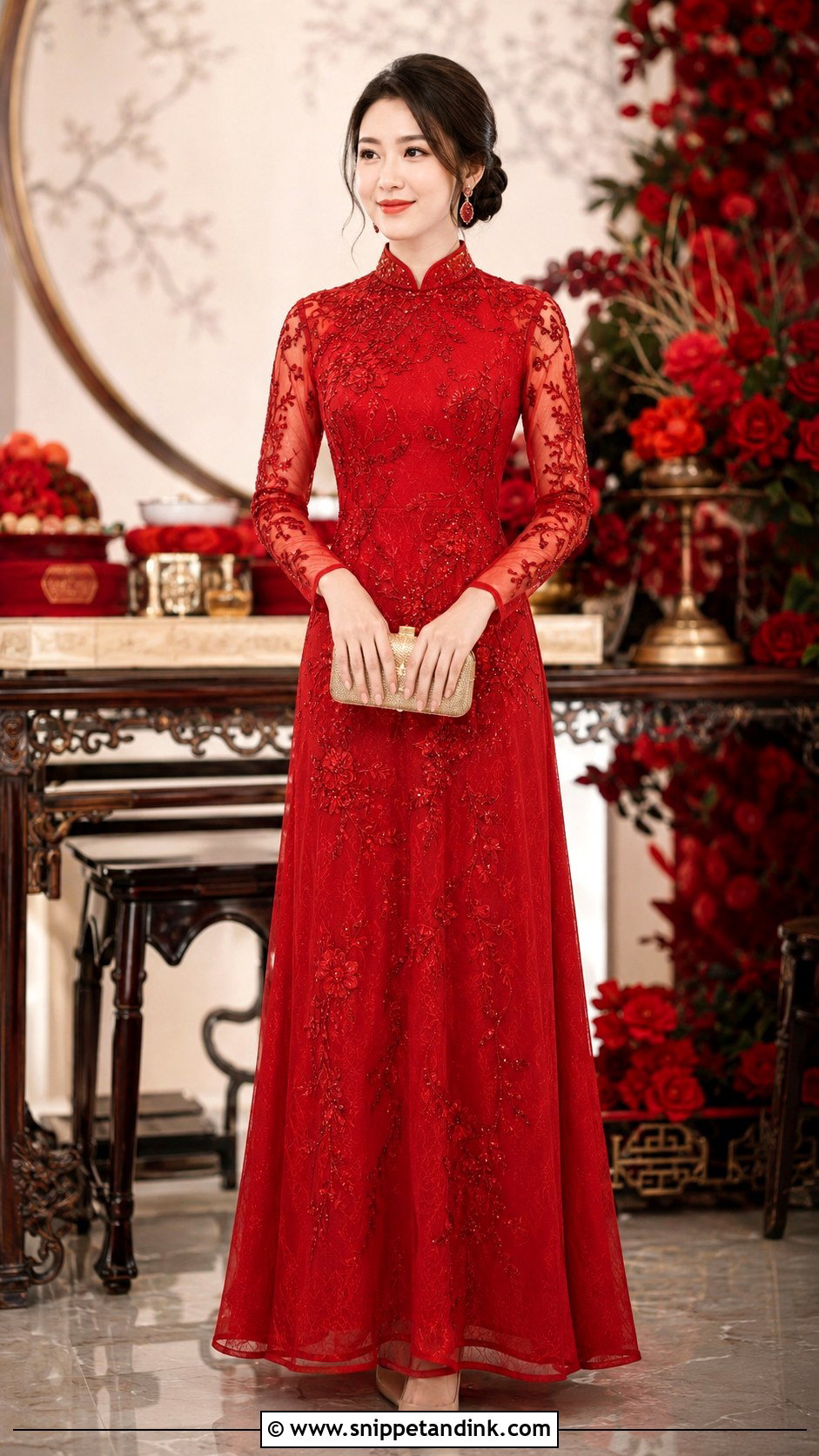
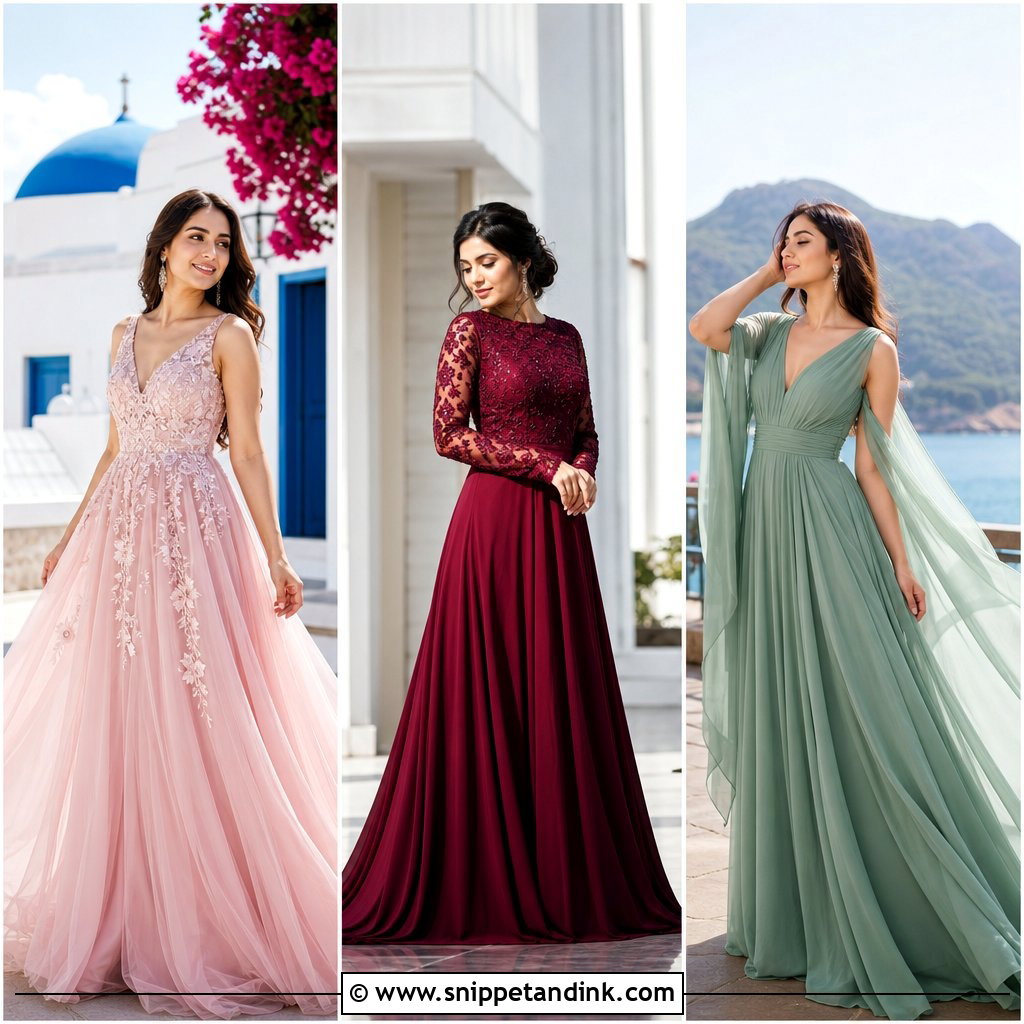
Long sleeves suit cooler weather, strong air conditioning or a formal family, and sheer embroidered sleeves over an opaque bodice keep the dress from feeling heavy. A fitted red gown with a Mandarin collar, covered buttons and a gently flared skirt is the shape I’d start from. Nude pumps, a gold clutch, small red gemstone earrings and a neat low bun leave the sleeves room to show. At the fitting, reach forward as if you’re passing a teacup. Tight sleeves bind at the elbow, and scratchy embroidery at the cuff gets irritating after a few hours, so ask for soft mesh and finished cuffs.
16. Minimalist Column Sangjit Dress
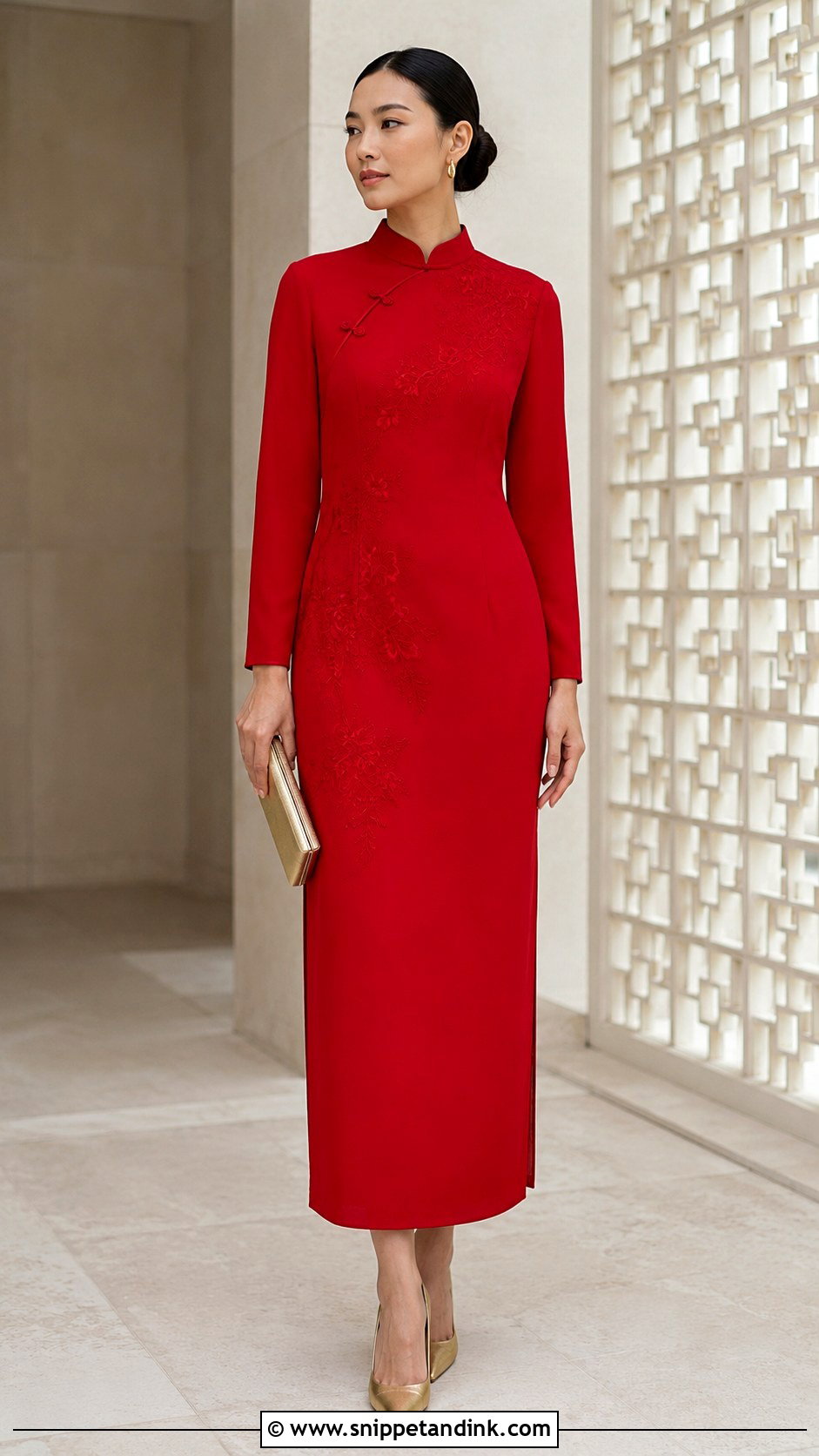
A minimalist column relies on fit and colour, which means it should skim the body, not cling to it. Cling shows every seam and every crease from sitting. Bring in the culture through a narrow Mandarin collar, one diagonal pankou closure or tonal embroidery you only notice up close. Gold pointed pumps, a rectangular clutch and slim hoops keep it modern, with straight hair tucked behind the ears or a sleek bun. A column has no spare room in the skirt, so a back vent or side slit is essential, and seam-free underwear keeps the line clean.
17. Floral Appliqué Sangjit Dress
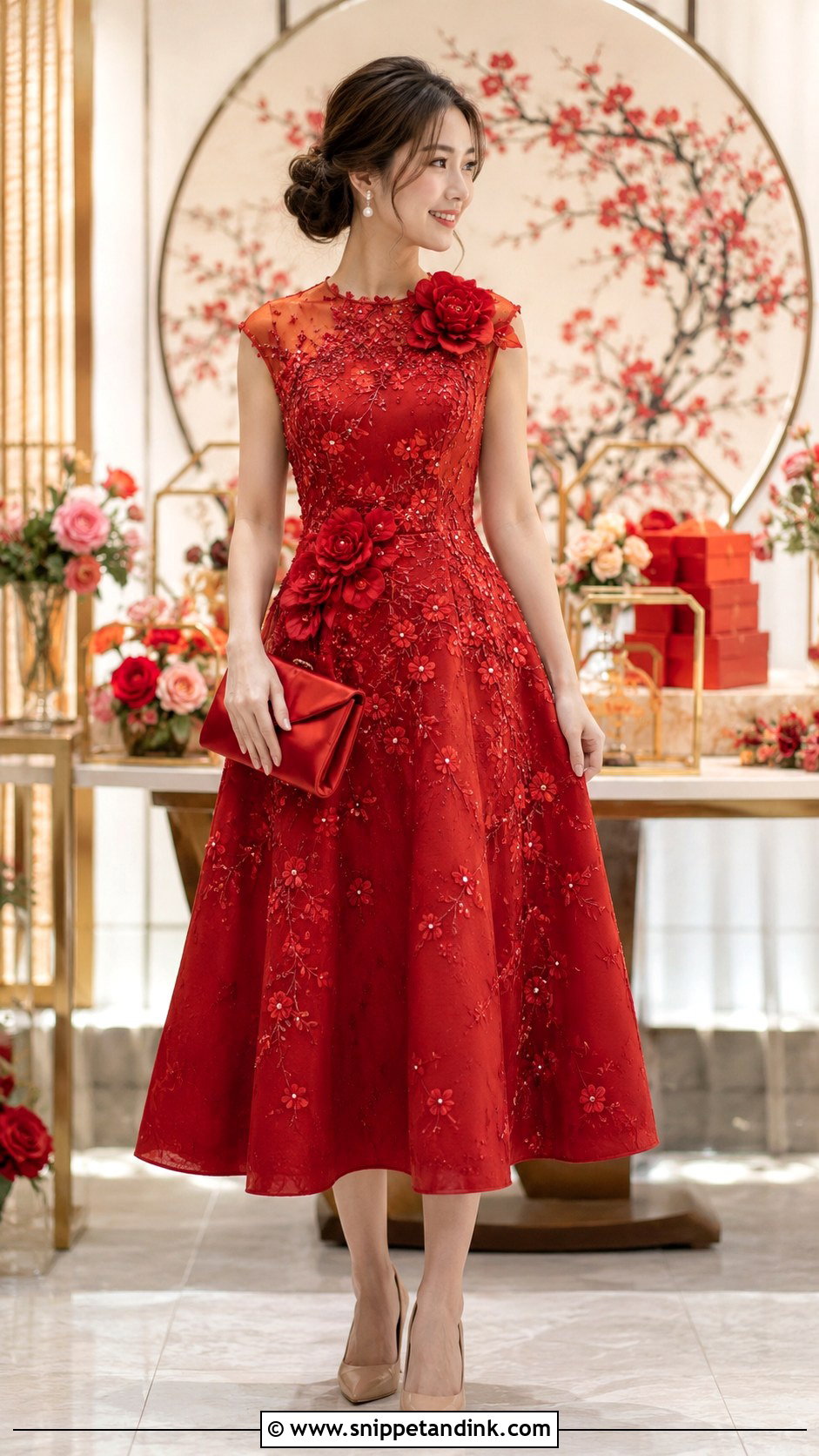
Floral appliqués add texture without the weight of full beading. I place them around one shoulder, the waist and the upper skirt of a red A-line or fit-and-flare, with gold centres or embroidered leaves for contrast. Check how they’re attached before you buy: glued flowers lift at the edges where you rest against a chair or hold a bag, while hand-sewn ones stay put. Nude heels, a red satin clutch and small pearl earrings are enough with all that texture. A low bun with soft face-framing strands, rosy cheeks and a clear red lip suit the floral mood.
18. Red Sequin Sangjit Dress
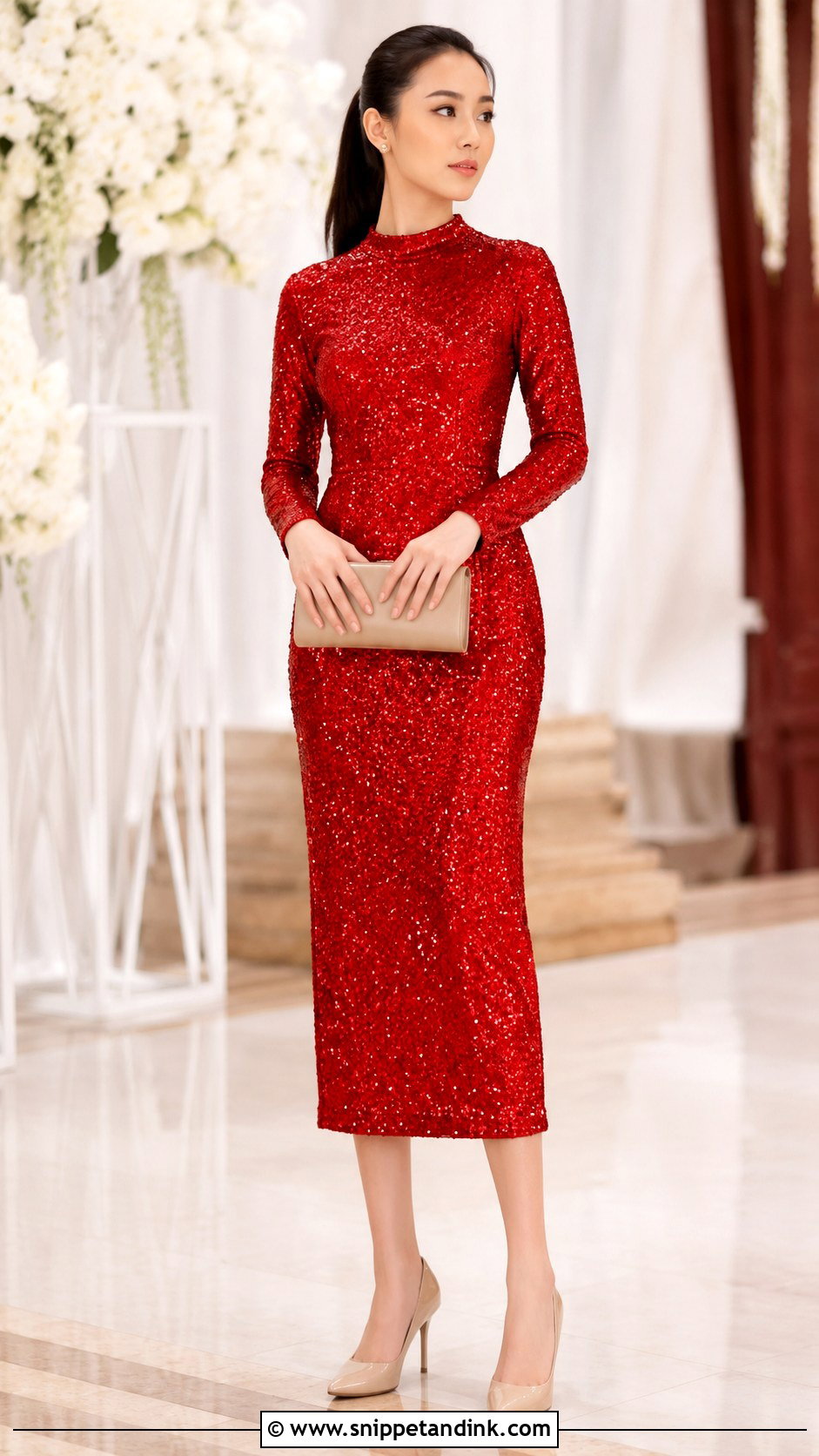
Sequins are for an evening Sangjit, and even then I steer brides toward matte sequins, tonal beading or a patterned embellished fabric rather than mirror-bright glitter. Highly reflective sequins bounce camera flash straight back and can blow out in photos, so take a phone flash picture of the fabric before ordering. A high-neck midi with fitted sleeves and a straight skirt keeps it formal. Go plain everywhere else: nude pumps, a non-embellished clutch, tiny gold studs and a sleek bun or low ponytail. Insist on a soft lining at the neck, sleeves and underarms, since sequin backing scratches.
19. Two-Piece Sangjit Dress Set
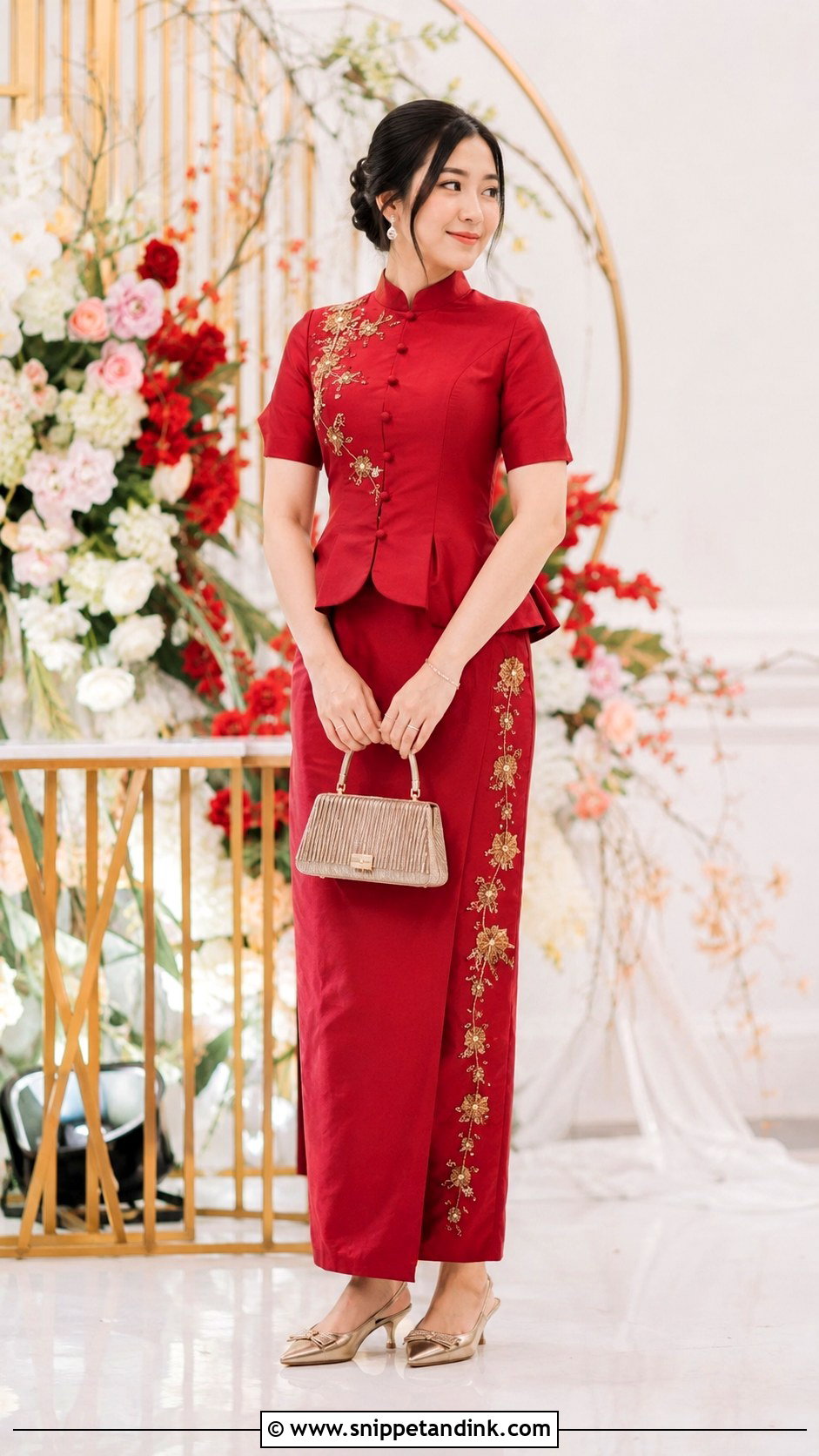
A two-piece set looks like a dress and wears like separates, which is useful when you’ll be sitting, reaching and standing all day. A red Mandarin-collar peplum top with covered buttons over a high-waisted ankle-length skirt, joined by a strip of gold embroidery, reads as one outfit. Make sure the top overlaps the waistband by a few centimetres so nothing shows when you lift your arms. Gold kitten heels, a small structured bag, delicate drops and a low textured bun keep it polished. The pieces can be worn separately later, which is the best re-wear case of any dress here.
20. Red Mermaid Sangjit Dress
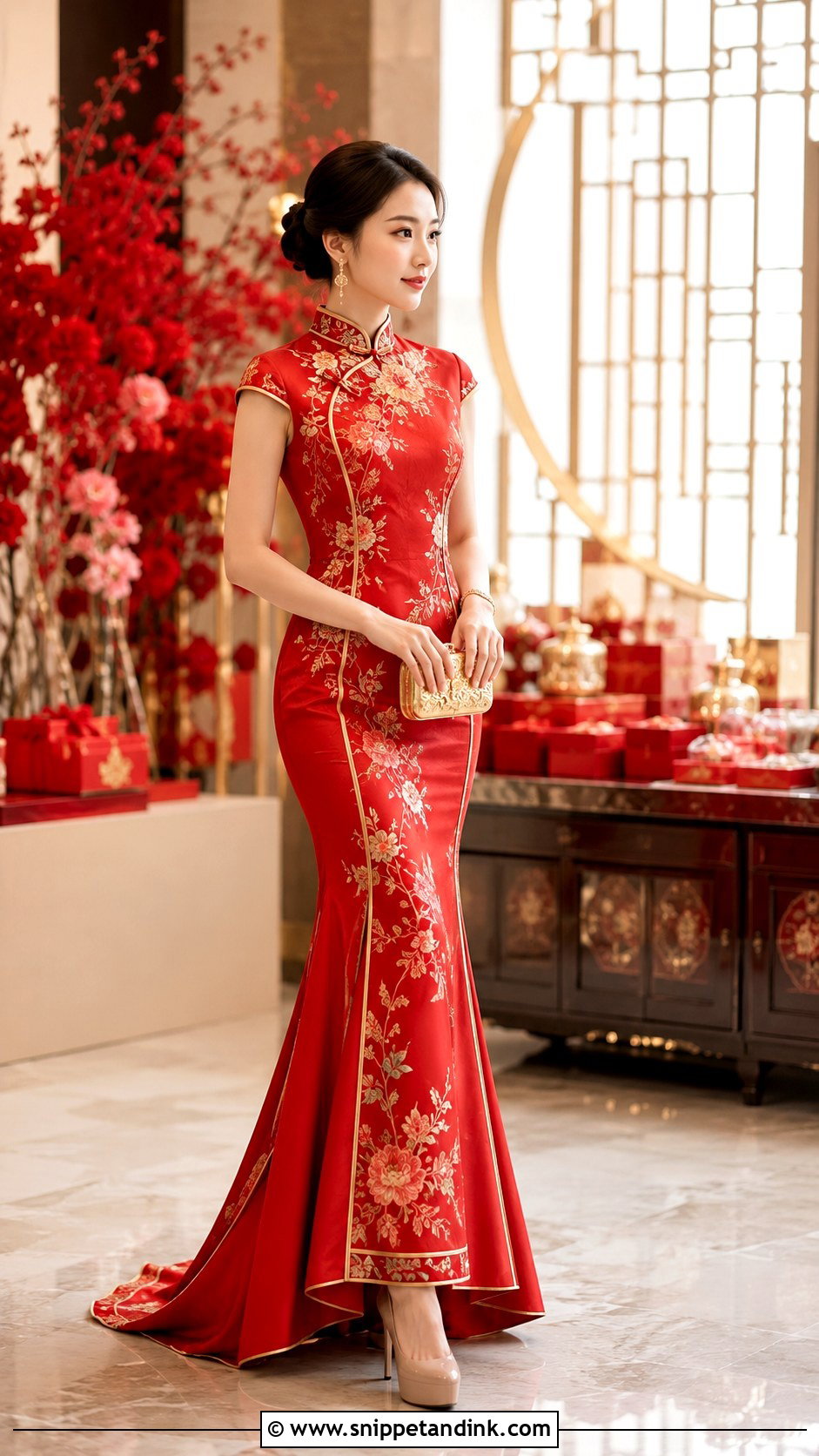
A mermaid shape is the most glamorous option here and the hardest to move in. Choose one fitted through the bodice and hips with the flare starting above the knee, not below it; a low flare makes kneeling to serve tea nearly impossible. A Mandarin collar, gold piping and embroidered floral panels keep the tradition in view. Nude platform heels, a compact gold clutch, simple drops and a smooth side-parted bun finish it with a rich red lip. At the fitting, walk, sit and climb stairs. If you can’t do all three comfortably, the knee needs letting out and a long train should go.
Red, Pink or Sage? Settle It With Both Mothers First
Colour causes more Sangjit arguments than cut. Red stands for luck and joy, gold for prosperity, and pink is widely accepted as a softer festive shade. White, black and very dark blue are the colours I’d avoid for the bride unless your families have told you plainly they don’t mind, because older relatives often link them with funerals.
Show both mothers a fabric swatch rather than a screen photo, since phone screens push pinks toward peach and greens toward grey. If one side wants red and you want sage, a red element worn during the tray exchange and taken off afterwards usually keeps everyone happy. A cape, sash, embroidered jacket or simple red bag all do the job.
How Far Ahead a Made-to-Measure Qipao Needs Ordering
A ready-made qipao rarely fits well off the rack, because the cut is close at the bust, waist and hips all at once. Made-to-measure is worth it, but it takes time. Timing varies a lot by maker and season, so ask yours directly; as a rough guide, I’d plan on two to four months for a custom piece with embroidery, and longer if the work is done by hand or the dress is shipped from overseas.
- Order before Chinese New Year rather than around it, when many workshops slow down or close for a few weeks.
- Book at least two fittings, the last one about two weeks before the Sangjit, so there’s room for a final adjustment.
- Ask for a little extra seam allowance at the waist and hips; it lets a tailor let the dress out later without visible lines.
- Steam satin and velvet on the morning, never iron them directly, and hang the dress by its inner loops so the collar keeps its shape.
A Dress Your Grandmother Approves of and You Can Kneel In
The right Sangjit outfit is the one that honours your families and still lets you move through a long day. Red satin, embroidery, a kebaya, a clean column or a softer pastel can all look appropriate when the fit is secure and the details mean something to you. Wear shoes you can stand in for hours, keep hair and jewellery from hiding the neckline, and talk about colour and coverage with close relatives before anything is ordered. Use these Modern Sangjit Dress Ideas as a starting point, then make your favourite yours through the embroidery and proportions, and through accessories you’ll happily wear again.
You'll Like These Ideas:


Leave a Reply