
An outdoor wedding asks more of a dress than a ballroom does. The ground moves under you, the light is harsher, and the weather has an opinion. Below are twenty gowns I’d consider for gardens, beaches, forests, mountains, vineyards, ranches and back gardens, each with the practical notes I give brides at fittings: how the fabric handles heat, what the train does on grass, which shoes will actually hold you up. Start with your venue and your season, then fall in love. Doing it the other way round is how brides end up carrying a cathedral train across wet gravel.
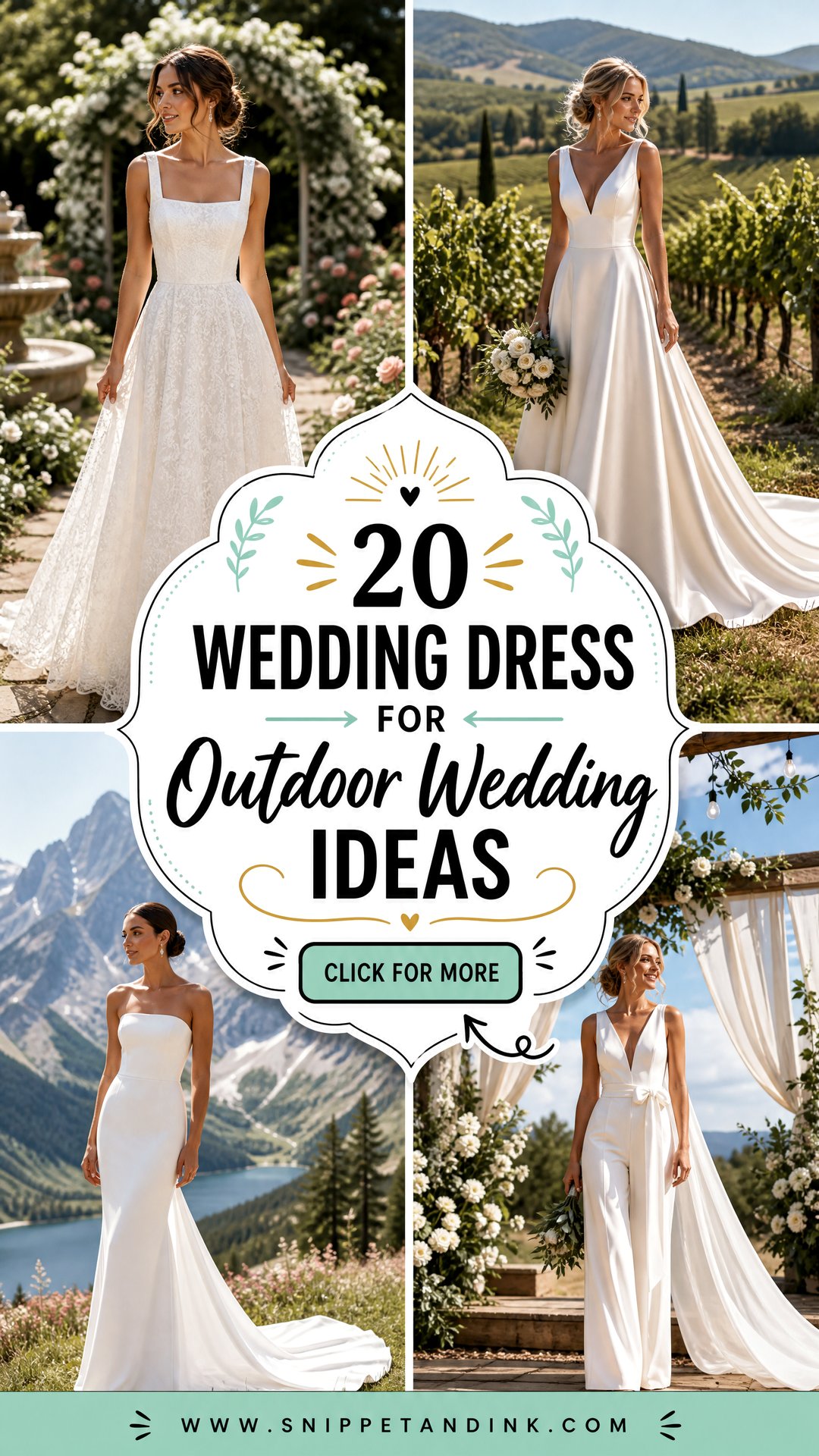
Grass, Sand, Gravel and Stone Each Treat a Hem Differently
Visit the venue in flat shoes and walk the exact route you’ll take: getting-ready room to aisle, aisle to photo spot, photo spot to dinner. I ask brides to notice four things, because each one changes what I’d recommend.
- Grass is soft and often damp. Stiletto heels sink, and long trains pick up moisture that darkens the hem. Block heels or heel protectors help.
- Sand sticks to anything it touches. Go without a train, or with one short enough to carry over your arm.
- Gravel scuffs satin shoes and catches narrow heels. Wide heels and a hem that clears the ground are safest.
- Stone and decking can have gaps that swallow a heel. Check the boards and choose a heel wider than the gap.
Slopes matter as much as surfaces. A long train going downhill pulls at your shoulders, and one going uphill wants to slide under your feet. If the aisle runs on an incline, a shorter train or a bustled ceremony entrance is worth discussing with your seamstress.
1. Chiffon A-Line Wedding Dress
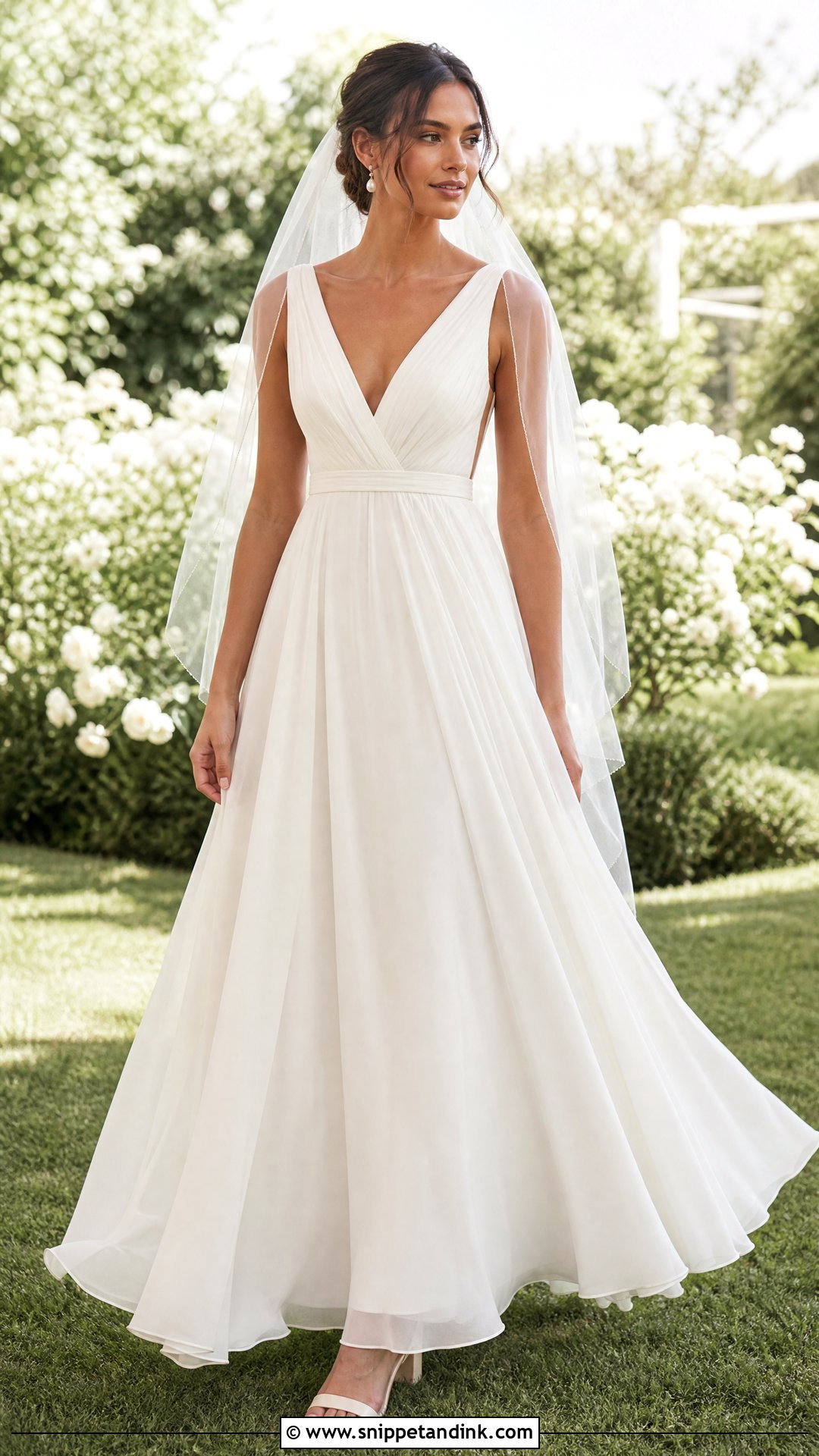
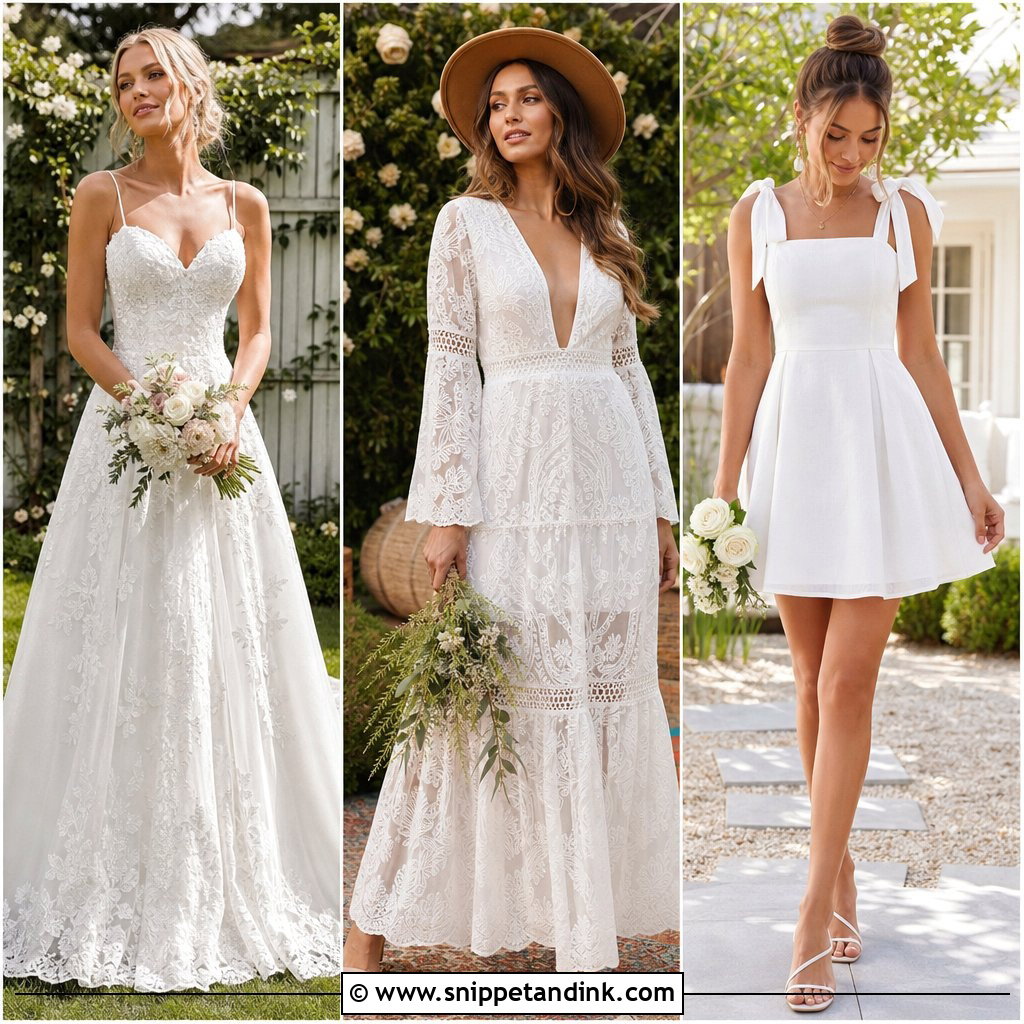
Chiffon is the fabric I reach for first when a bride tells me she’ll be outside in summer. It’s light, it breathes, and a layered A-line skirt catches the breeze rather than fighting it. The trade-off is that chiffon snags and frays easily, so keep the train short or make sure the bustle is sewn with proper hooks. A V or soft scoop neck with wide straps gives support without boning. Pearl drops, a loose low bun and a fingertip veil keep it light. On lawns, block-heel sandals or flats; a narrow heel sinks the moment you step off the path.
2. Lace Garden Wedding Dress
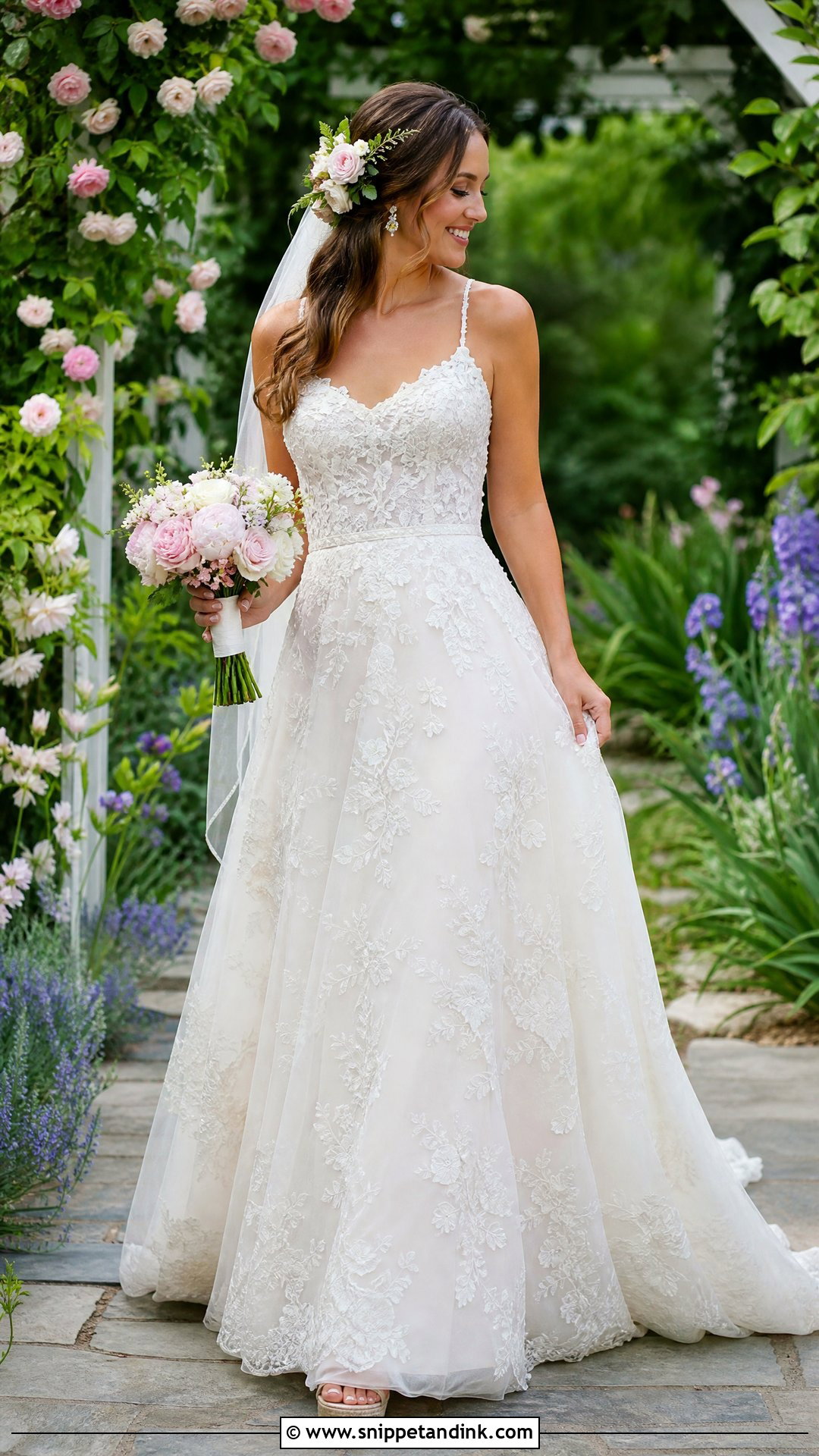
Lace with a botanical pattern sits naturally among flowers. I’d look for an A-line or soft fit-and-flare with a lined bodice and a lighter skirt, and scattered appliqués rather than lace covering every inch, which can get hot by mid-afternoon. A vine hairpiece, small earrings and a plain tulle veil are enough decoration. Grass is hard on lace hems; the scallops act like little hooks for seeds and twigs. If paths are narrow or damp, choose a chapel train with a wrist loop so you can lift it between photos. Ivory block heels, wedges or dressy flats will keep you upright.
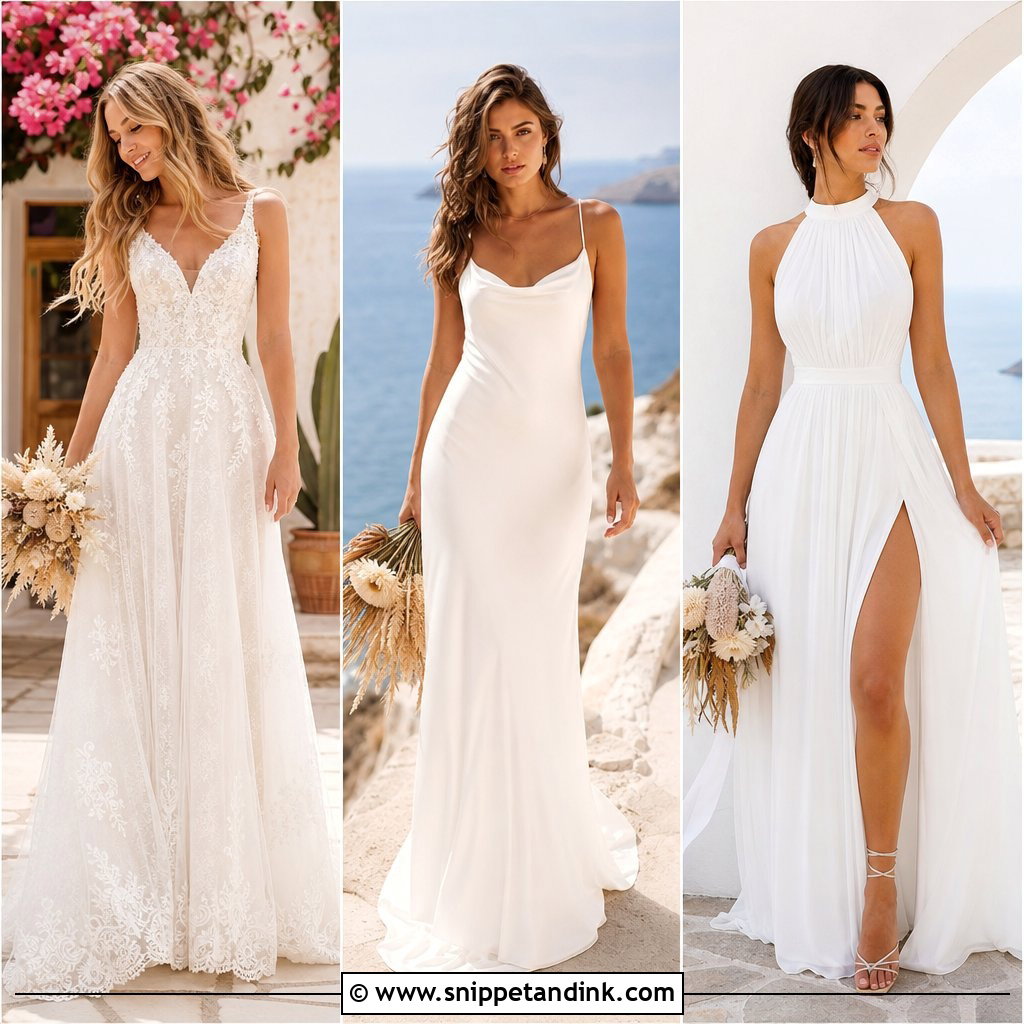
3. Beach Wedding Slip Dress
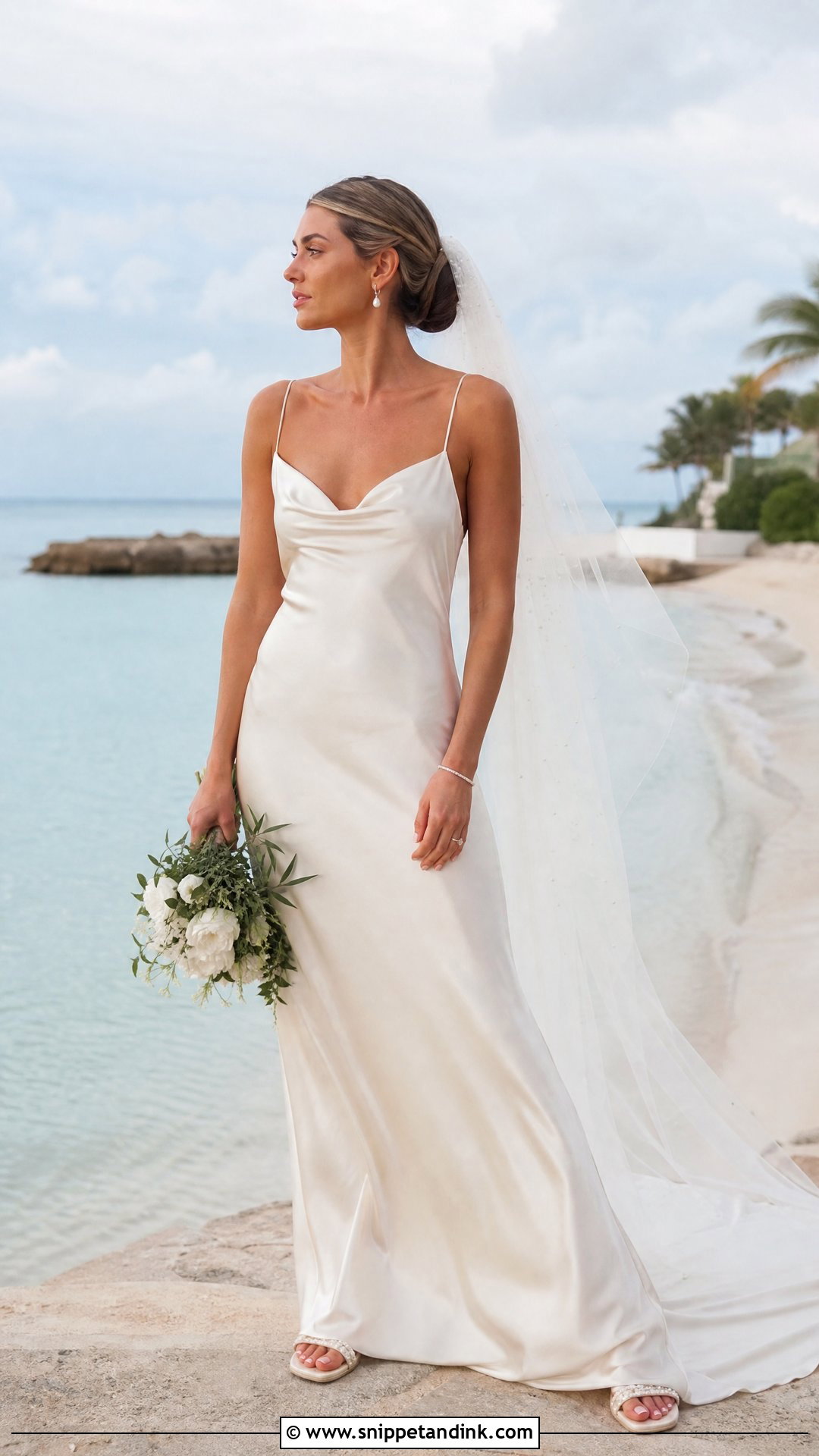
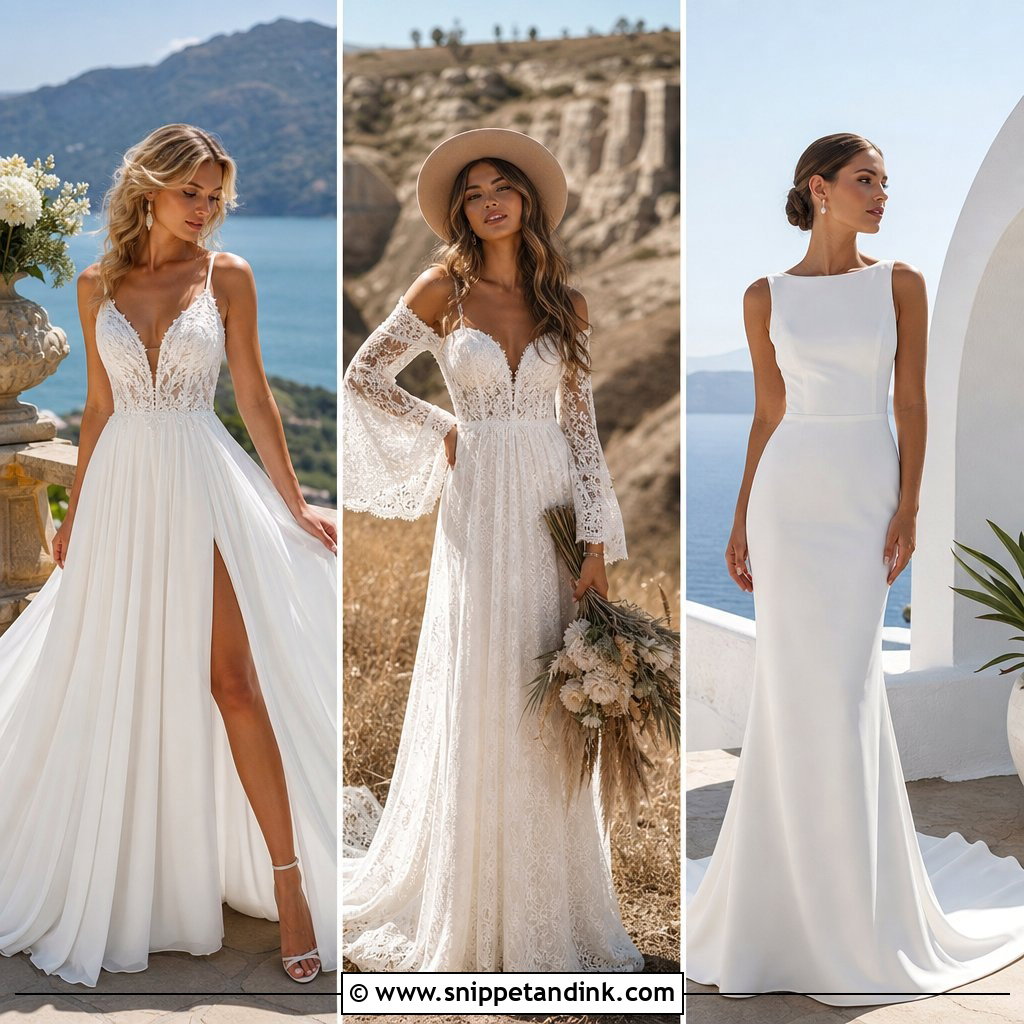
A slip dress is about as little fabric as a bride can wear, which is the point on a hot coast. Silk charmeuse looks wonderful but marks with sweat and water, so I usually steer beach brides to satin-back crepe, which hides damp patches far better. Adjustable straps and a draped neckline help the fit; a low back or side slit lets air in. Flat embellished sandals, or bare feet where it’s allowed. Keep the veil short near water, because wind turns a long one into a sail. Sand clings to any train, so go floor-length without one and bring a wrap for after sunset.
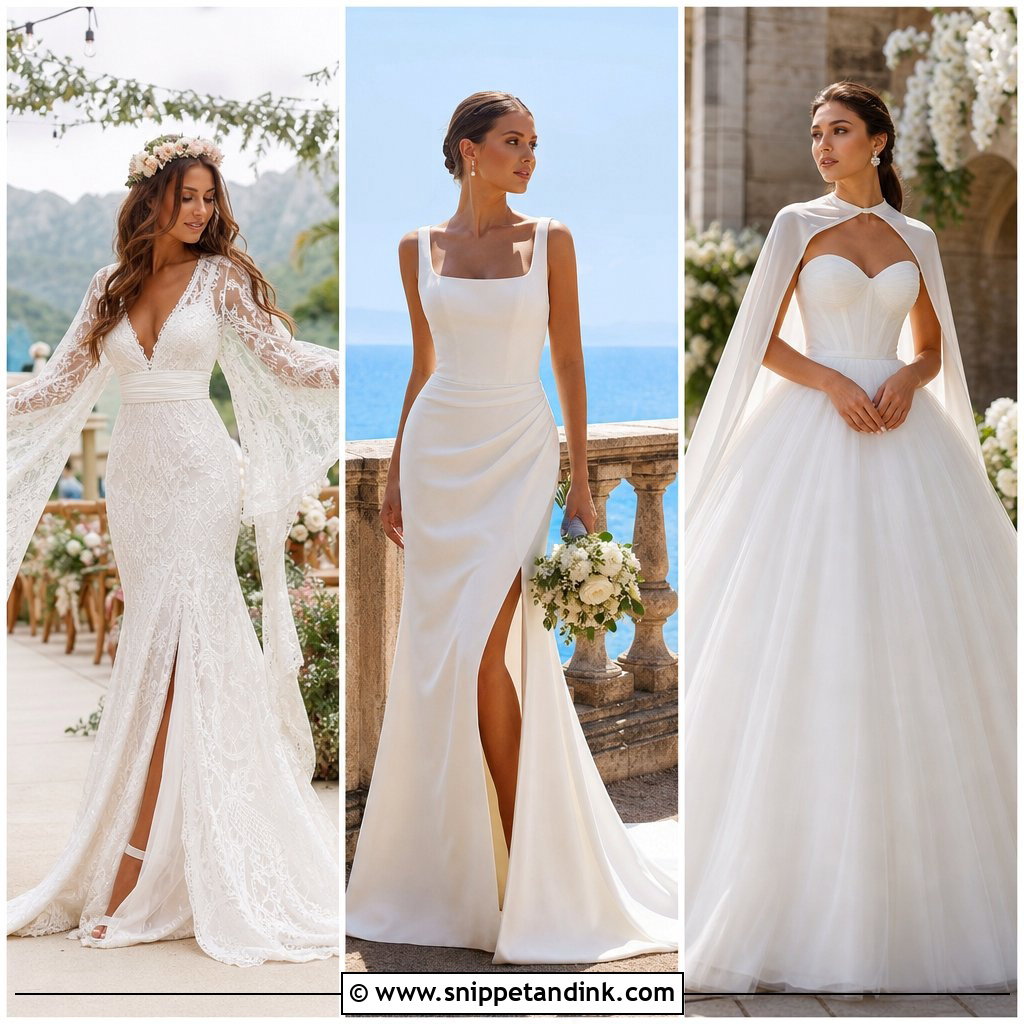
4. Boho Bell Sleeve Wedding Dress
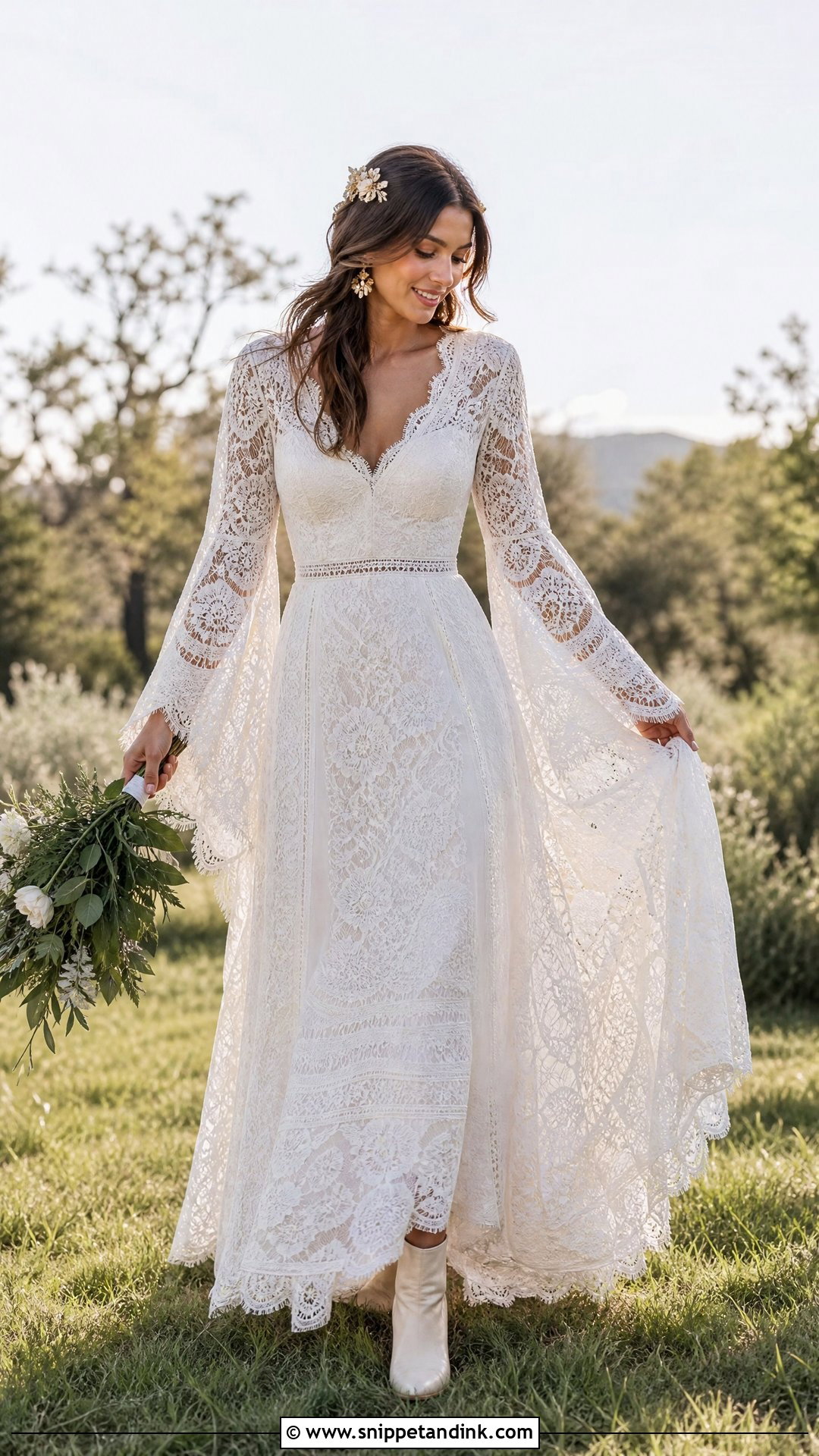
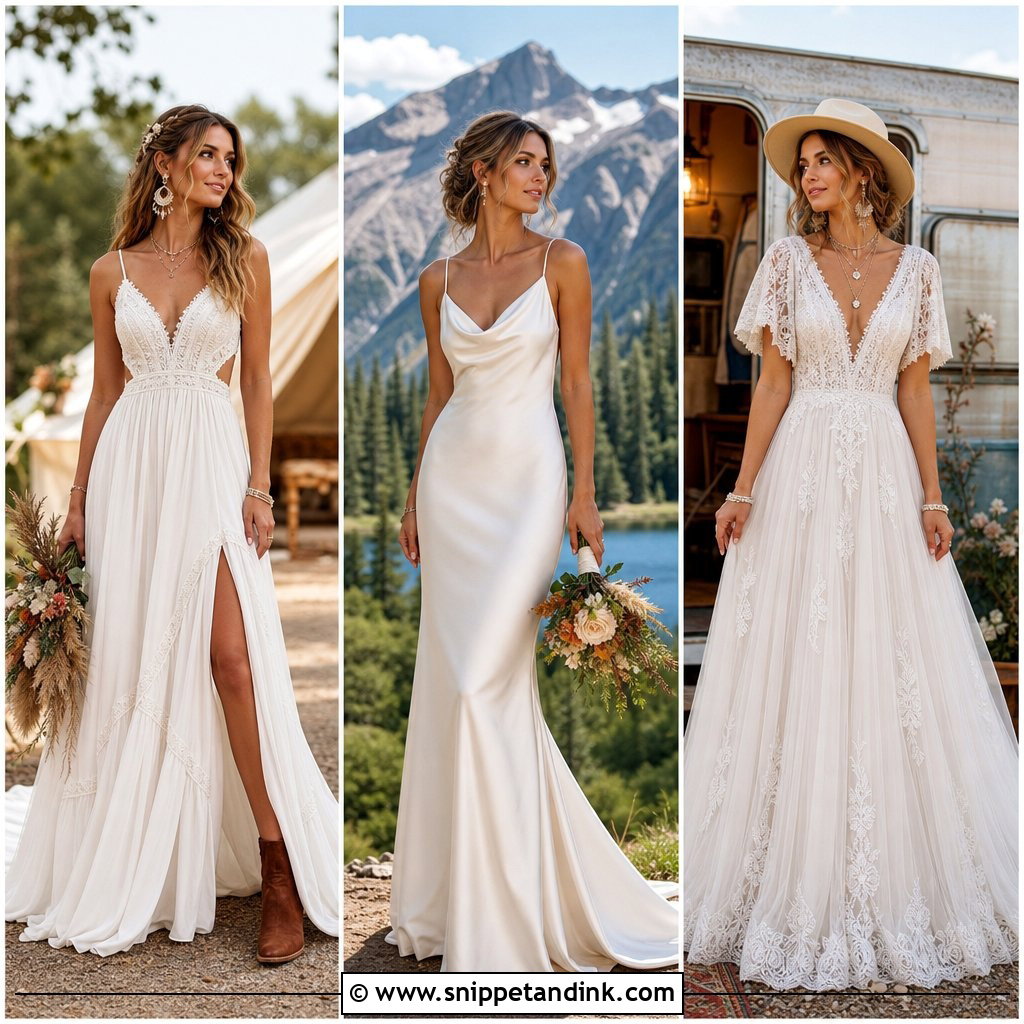
For meadows, woodland and ranches, a boho gown with airy bell sleeves gives movement and a little coverage without heavy structure. Lightweight lace, soft tulle or embroidered mesh over a gently fitted bodice suits it. Bell sleeves have one habit worth knowing: they drag through food at dinner and catch on bouquet stems, so practise holding the flowers with the sleeve falling back. Pair it with a floral comb, loose waves, simple gold and suede ankle boots or sturdy flats. A detachable lining helps under very open lace, and a sweep train is easy to gather.
5. Off-Shoulder Outdoor Wedding Dress
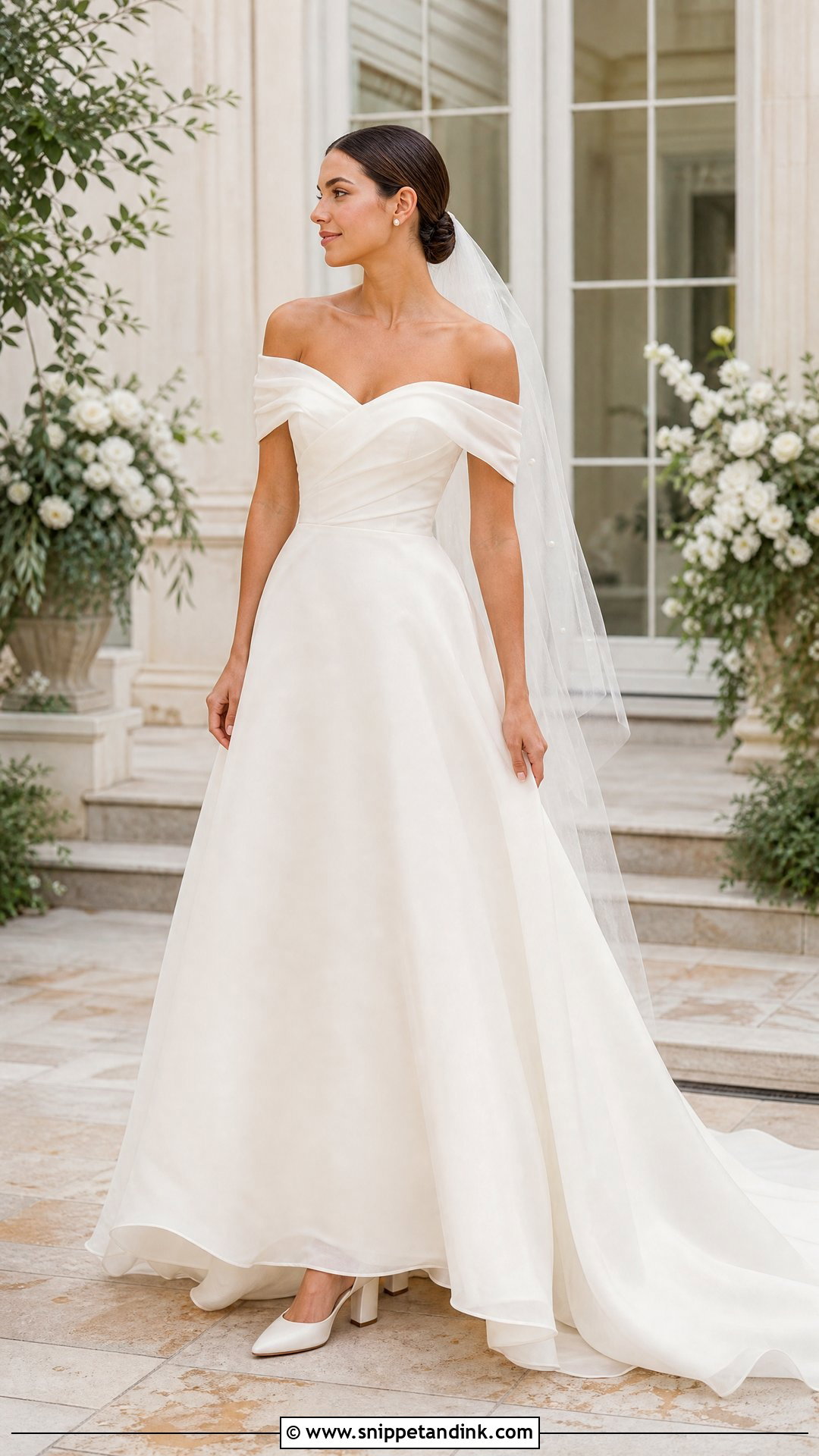
Off-shoulder gowns frame the collarbones well against open sky, but only if the bodice is built to hold itself up. Ask to see the inside: you want boning and a firm waist stay so the neckline doesn’t creep down when you hug people. Then raise your arms at the fitting. Some off-shoulder bands pin the arms and make dancing awkward. An A-line in organza, tulle or light satin keeps the weight reasonable. A low bun, studs and a delicate necklace keep focus at the shoulders, and a removable cape covers you on a cool evening.
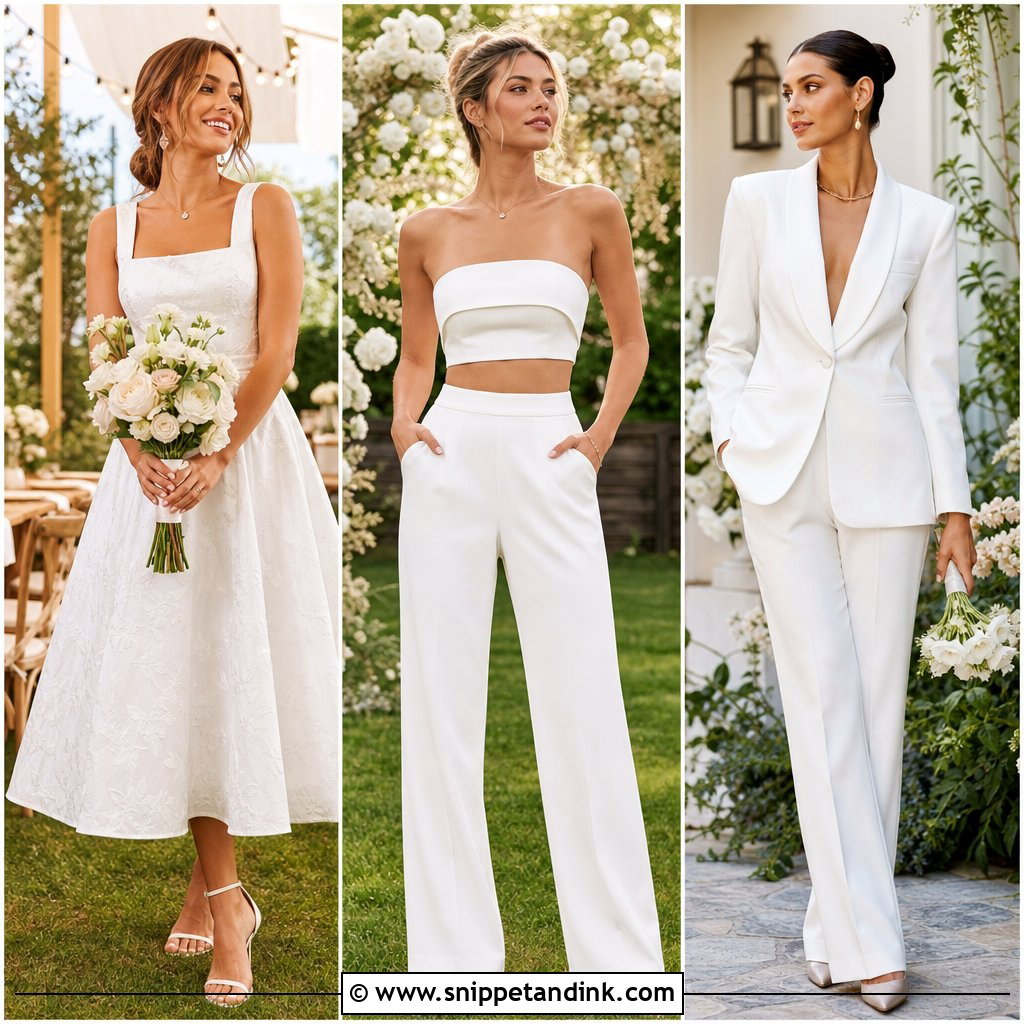
6. Tea-Length Outdoor Wedding Dress
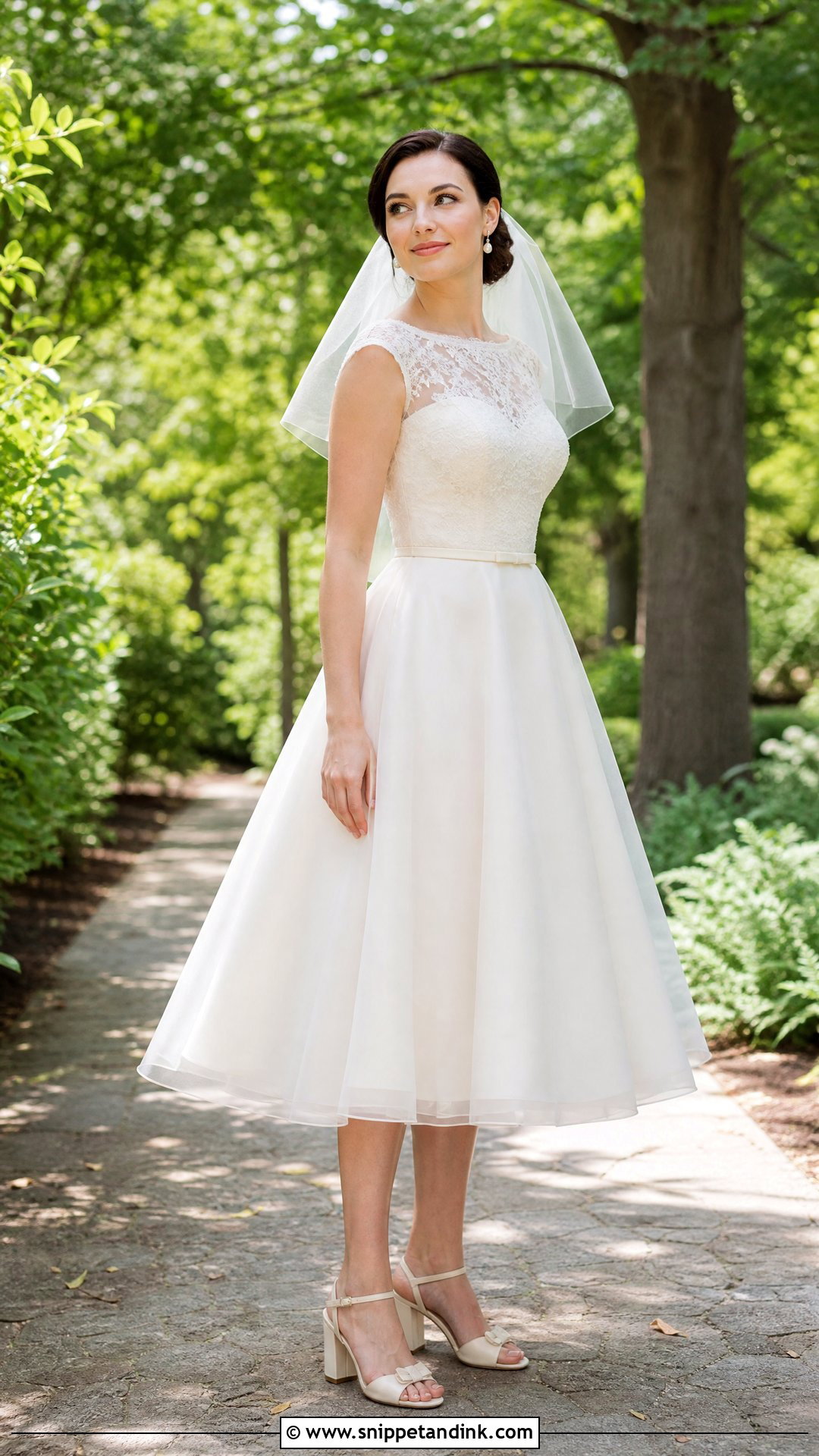
Tea length solves the hem problem outright. Nothing touches grass, soil or mud, and you can walk, mingle and dance without anyone holding your skirt. Mikado, organza, lace or a structured cotton hold the flared shape outdoors. Because your shoes are on show, they become part of the design: comfortable block heels, embellished flats or classic pumps. Pearl earrings, a short veil and a neat updo match the vintage feel. Ask for pockets. On an outdoor day they hold lip balm and tissues better than any clutch.
7. Crepe Sheath Wedding Dress
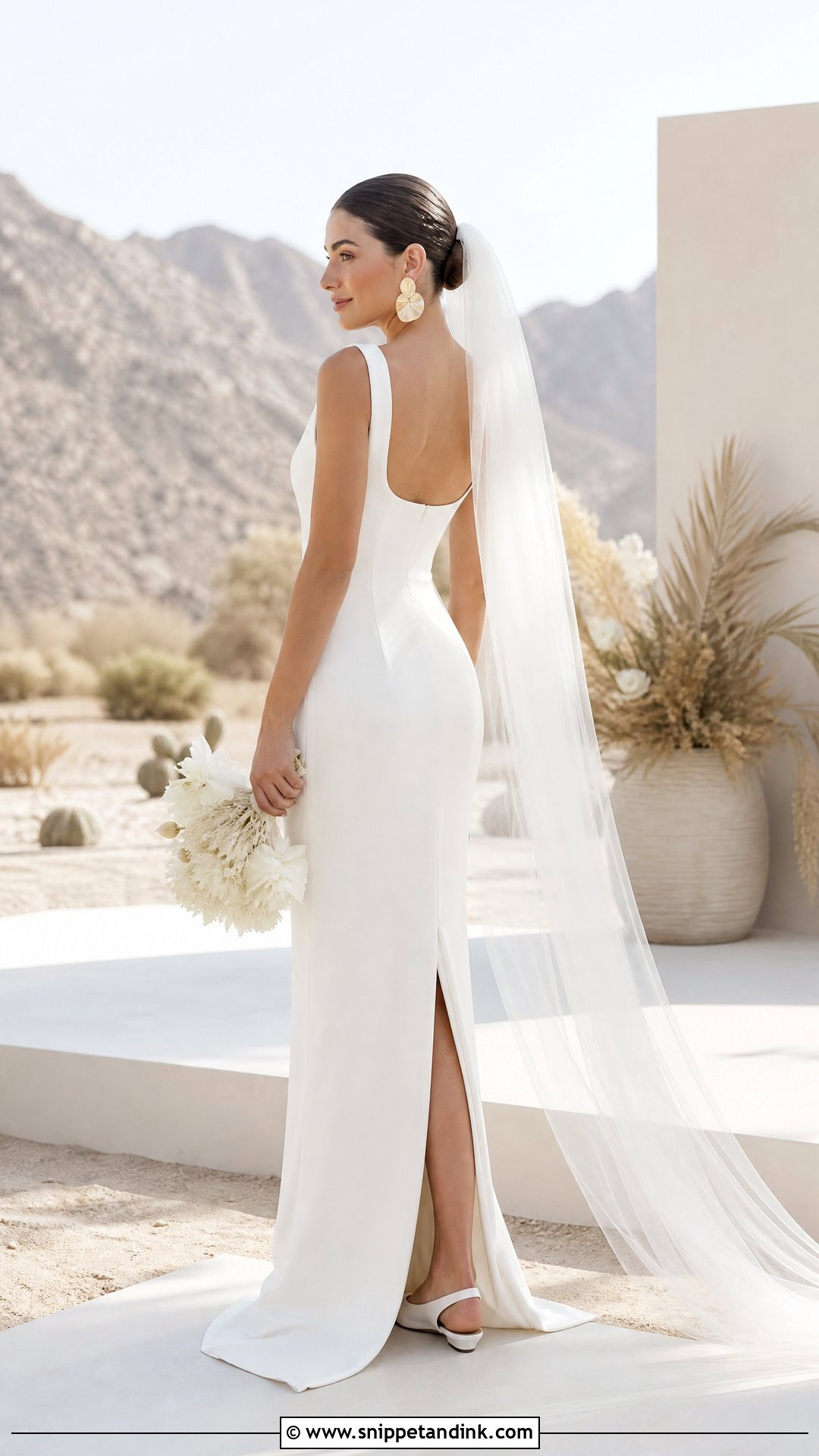
Stretch crepe moves with you and photographs as a clean line against a busy landscape, which is why sheaths work so well at desert and mountain venues. The fit is unforgiving, though. Crepe shows every seam and fold, so it needs good tailoring and smooth underwear. Wide straps, a supportive bodice and a back slit give you room to walk. Sculptural earrings and a sleek bun suit it; choose a fingertip veil on uneven ground and save a cathedral length for a smooth aisle. A detachable overskirt adds drama for the ceremony and comes off before the reception walk.
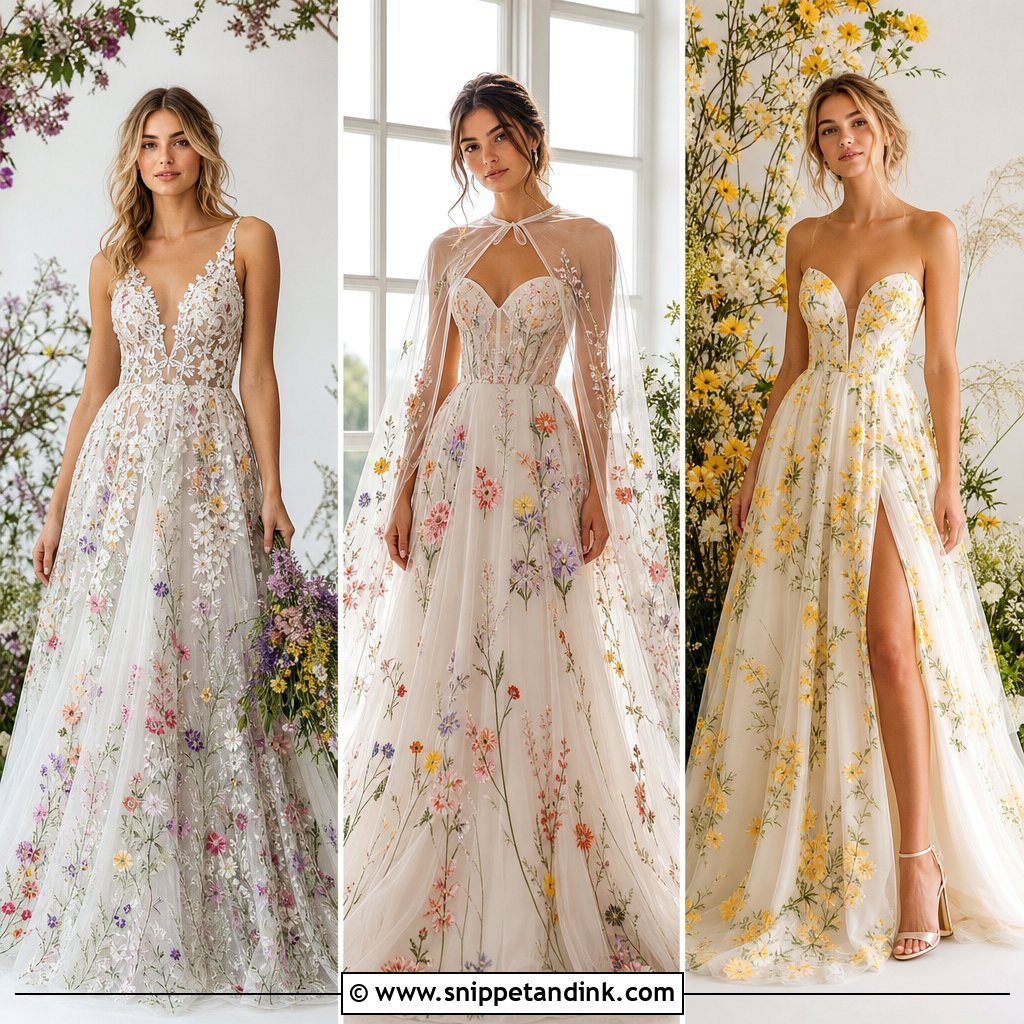
8. Floral Appliqué Wedding Dress
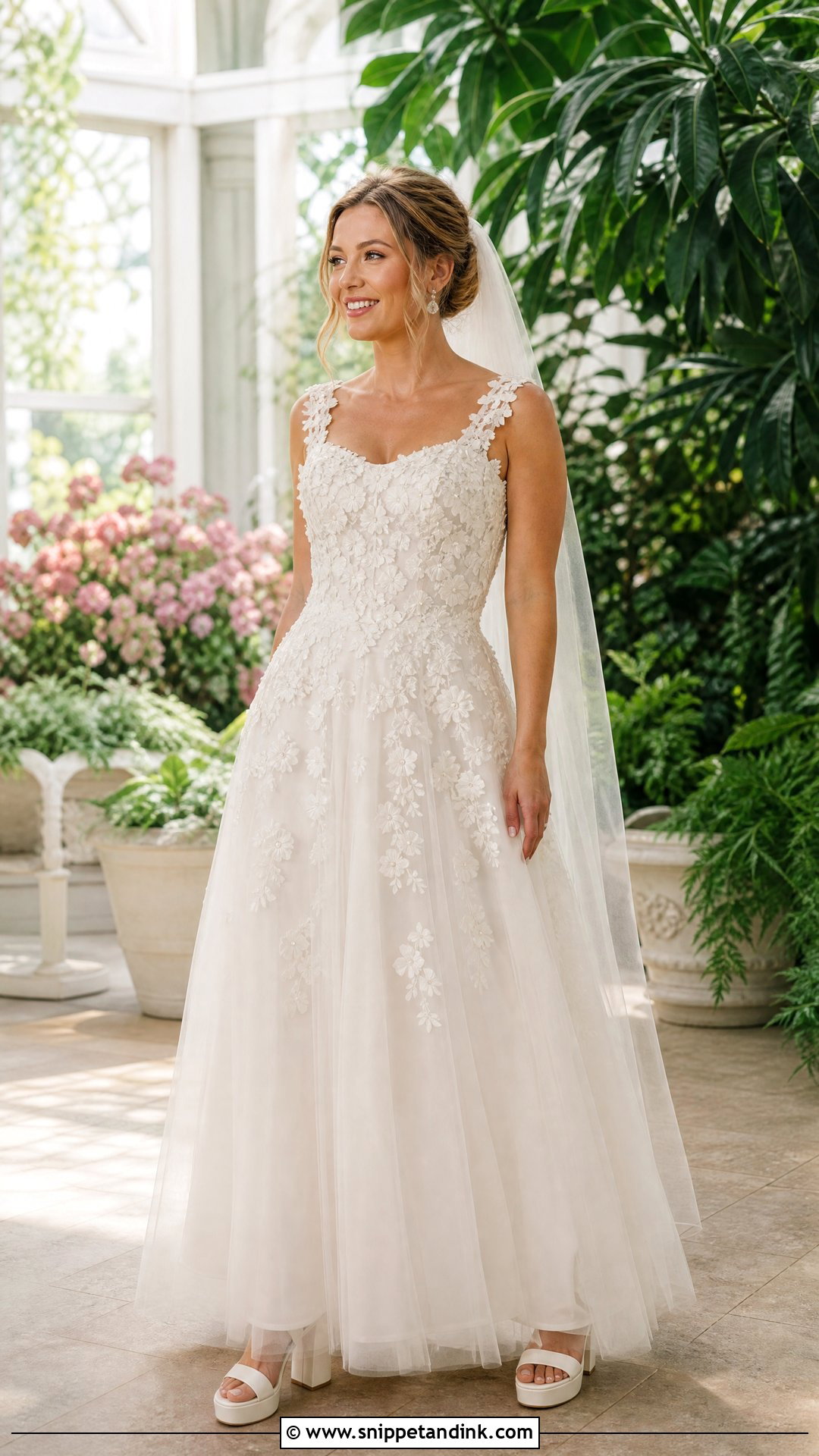
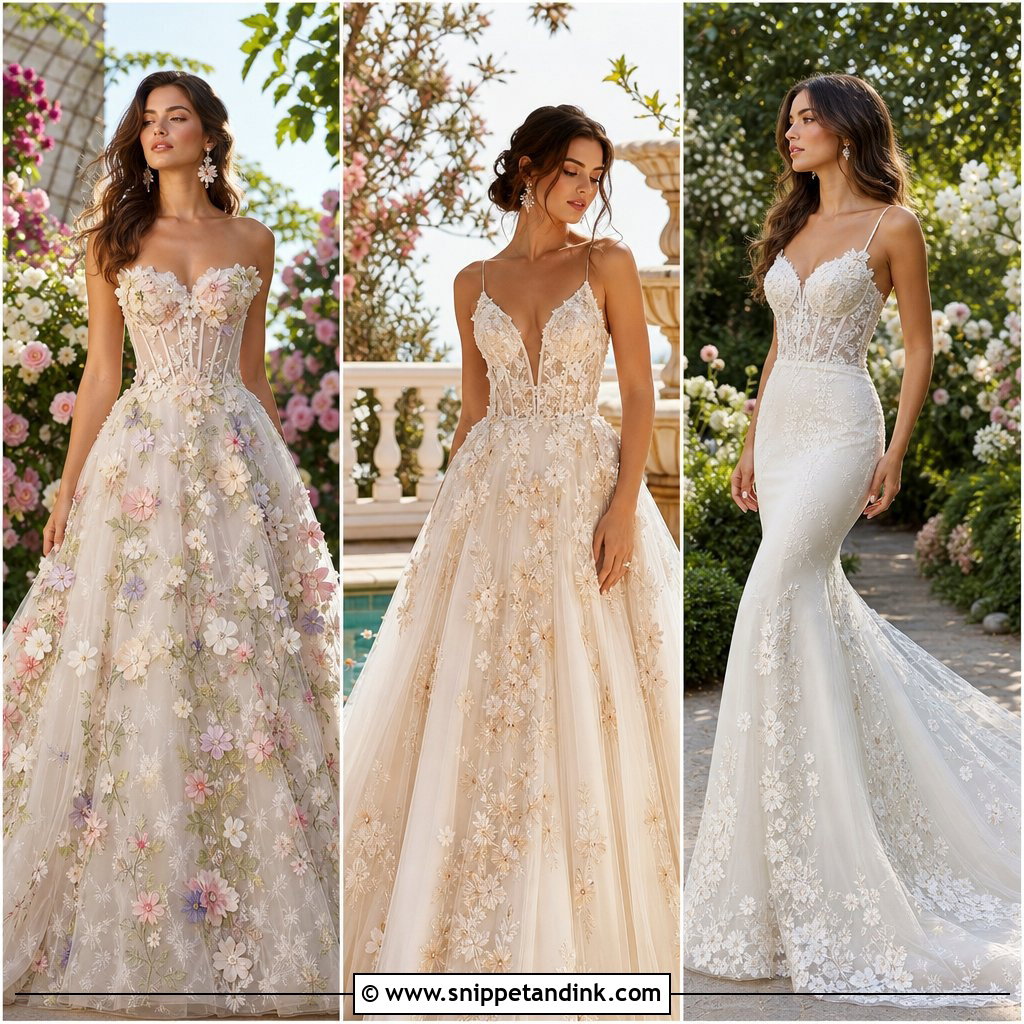
Raised floral appliqués echo a garden in fabric. The best versions cluster flowers on the bodice and scatter them down a tulle or organza skirt over a nude or ivory lining, so the shapes read clearly rather than looking sheer. Dimensional flowers catch on branches, bark and rough stone, and once a petal snags it can pull threads in the tulle around it. That’s why I keep the hem manageable and skip extra skirt layers. Small pearls, a thin bracelet and a plain veil are enough. Wide block heels on firm lawns, decorative flats on soft ground.
9. Square Neck Outdoor Wedding Dress
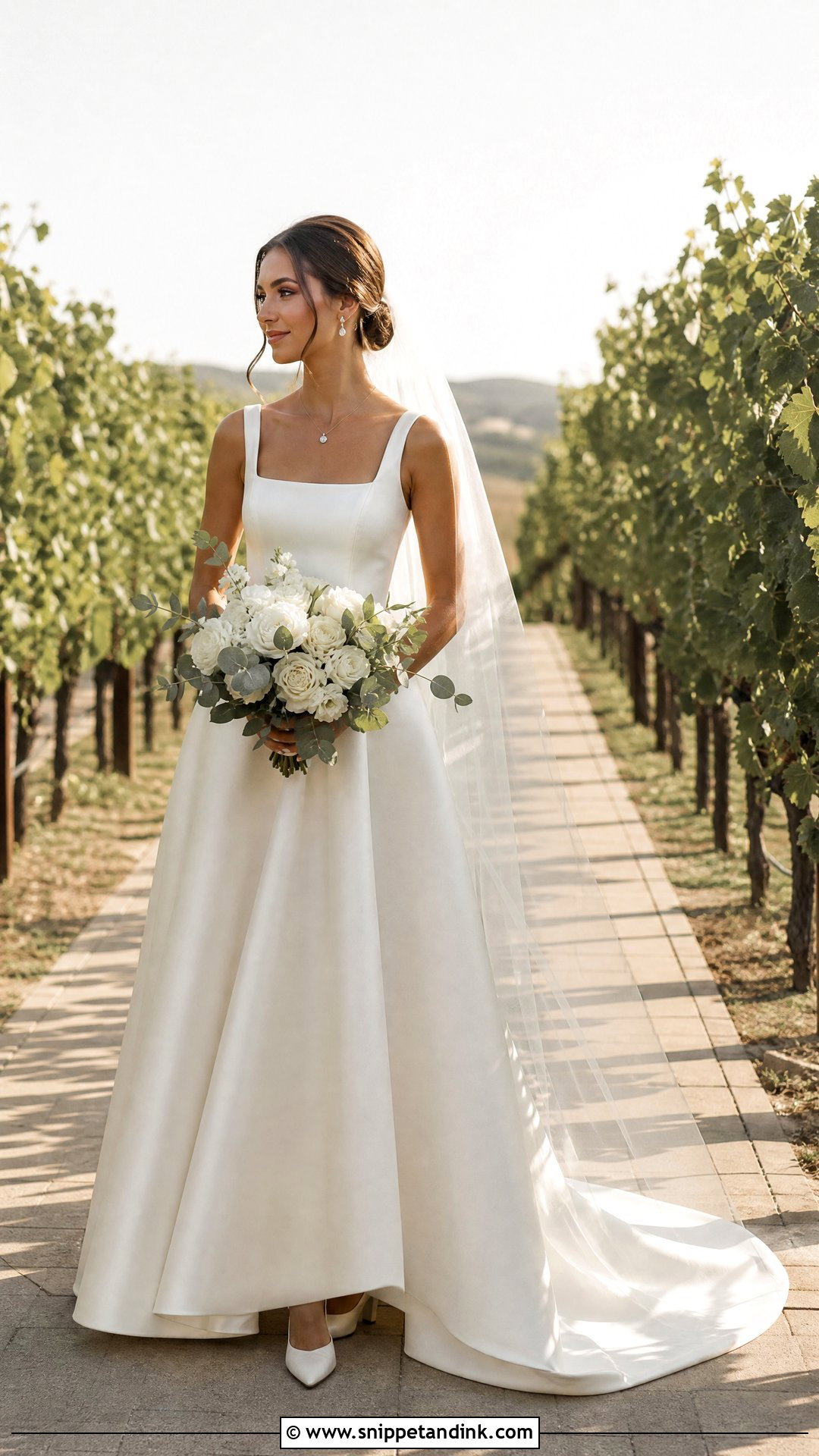
A square neckline gives structure without stiffness, and it frames a short pendant, pearl studs or a bare neck equally well. Wide straps and a fitted bodice over an A-line or column skirt in crepe, satin or mikado keep it balanced. I like a fingertip veil with it and a compact bouquet, because a big cascade overpowers the clean neckline. Block-heel pumps give you stability on terrace stone. For evening coverage, detachable sheer sleeves or a light cape. A short chapel train adds formality and still bustles neatly for vineyards, courtyards and garden ceremonies.
10. Empire Waist Beach Wedding Dress
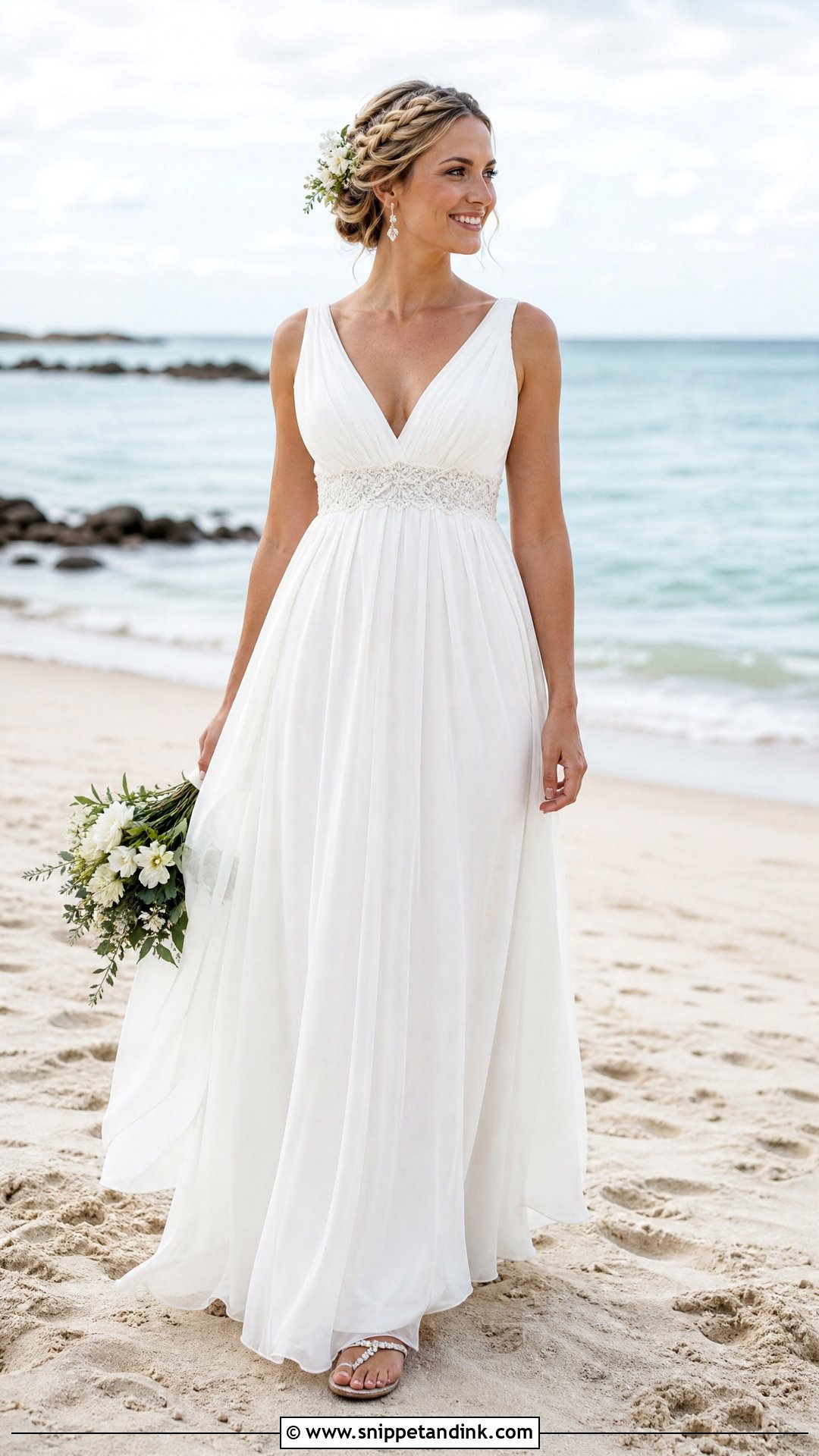
In real heat, an empire waist is the most comfortable silhouette I know. The skirt falls from under the bust and never touches the waist, so air moves through it. Chiffon, georgette or soft tulle with a supportive bodice and adjustable straps are ideal, and a modest V keeps the proportions right. Braids hold far better than loose curls in coastal humidity, so a braided updo is worth considering. Pair flat sandals with pearl drops and a short veil or floral comb. Skip the train entirely and choose a hem that just skims the floor.
11. Long Sleeve Forest Wedding Dress
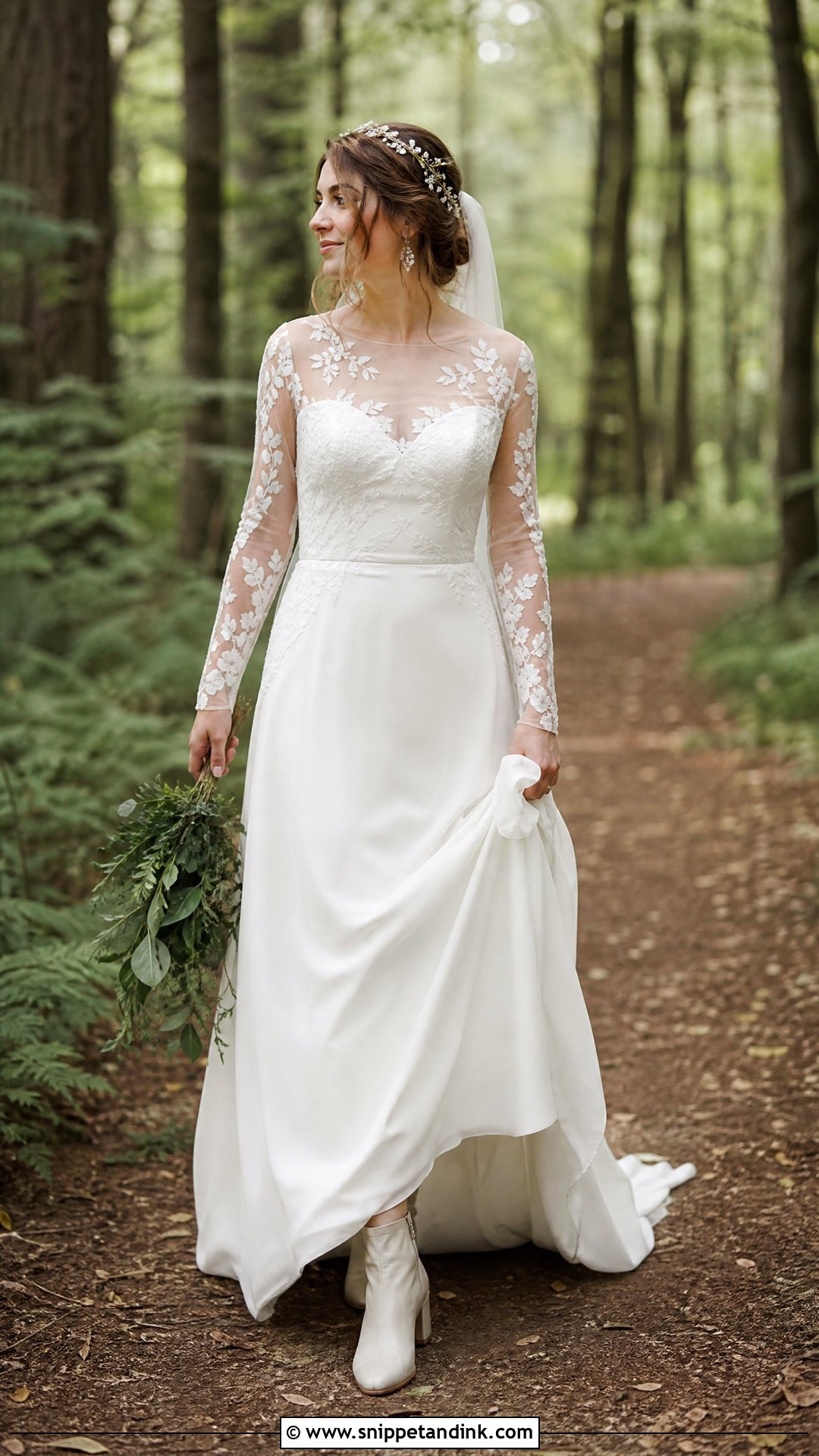
Long illusion-lace sleeves are made for shaded forest venues where the air stays cool even in summer. Over a lined bodice and a flowing crepe or chiffon skirt, they give coverage without bulk. A hair vine, drop earrings and a low textured bun suit the setting. On woodland paths, I’d wear bridal ankle boots or closed-toe block heels, both for stability and to keep pine needles out of your shoes. Keep the train at sweep or chapel length; anything longer gathers leaves and damp soil. A detachable cape is useful in early spring or autumn.
12. Satin A-Line Vineyard Wedding Dress
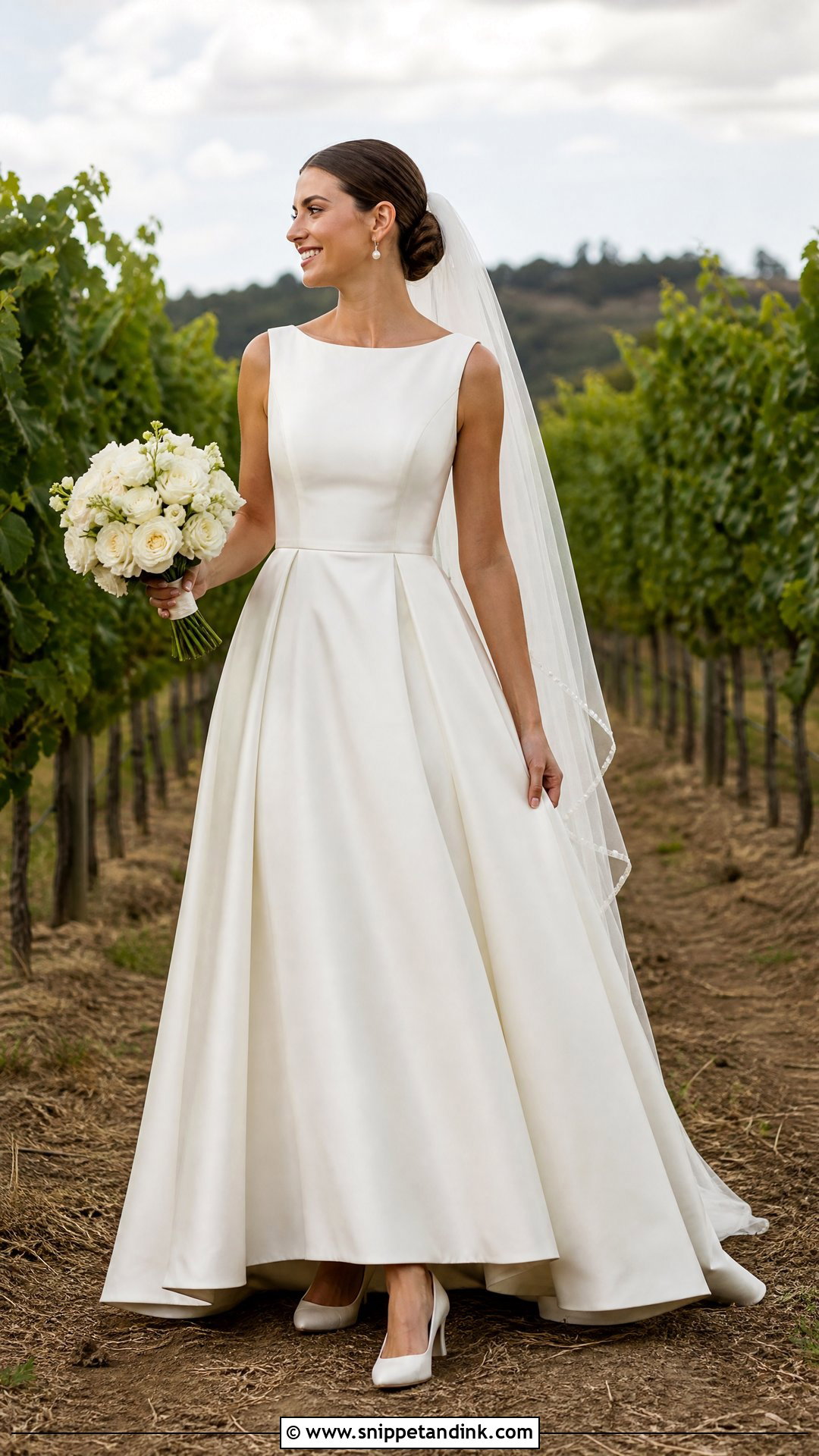
Vineyards tend to mean gravel, slopes and a cool evening, and a medium-weight satin A-line handles all three. Satin-back crepe gives the same smooth line with a little less bulk. A softly pleated skirt and a supportive neckline hold their shape in photos. Gravel is the real enemy here: thin heels wobble and scuff, so wear block-heel pumps. Pearl earrings, a neat bun and a veil just past the train finish it. A strong bustle for dinner, plus a fitted jacket or clean wrap once the sun drops, covers the practical needs of an open-air vineyard or estate.
13. Tiered Tulle Outdoor Wedding Dress
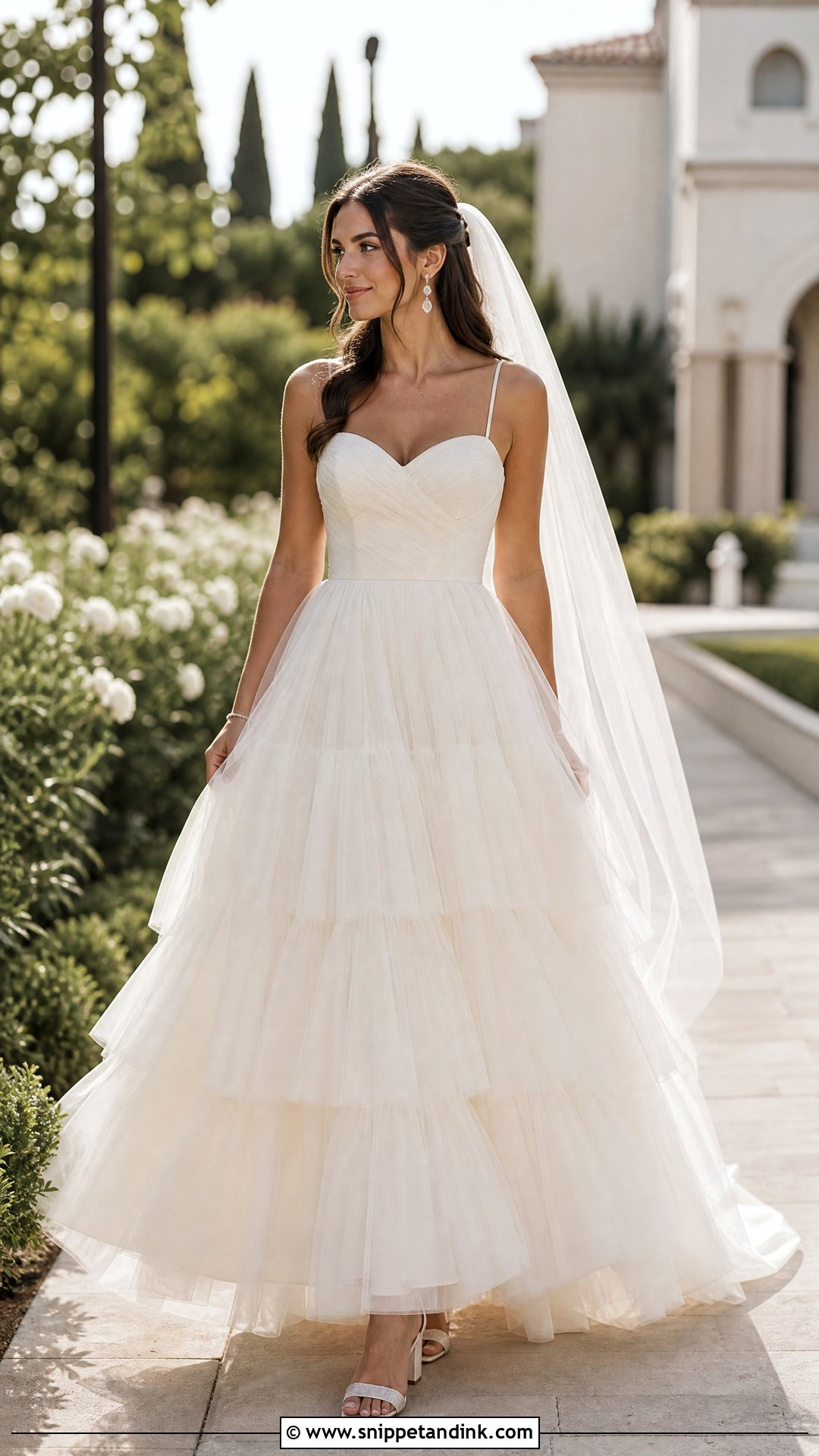
Tiered tulle brings volume without the weight of a full petticoat. Look for tiers that start below the hip, so the bodice and waist stay long and clean; tiers that begin at the waist make most figures look shorter. A simple veil, small crystal earrings and a half-up style balance it. Tulle snags on rough ground and on itself, so I keep the train short and ask the seamstress for a reinforced bustle. Supportive block heels or bridal trainers hidden under the skirt make walking easier. It works best where there are smooth paths.
14. Bridal Dress With Detachable Sleeves
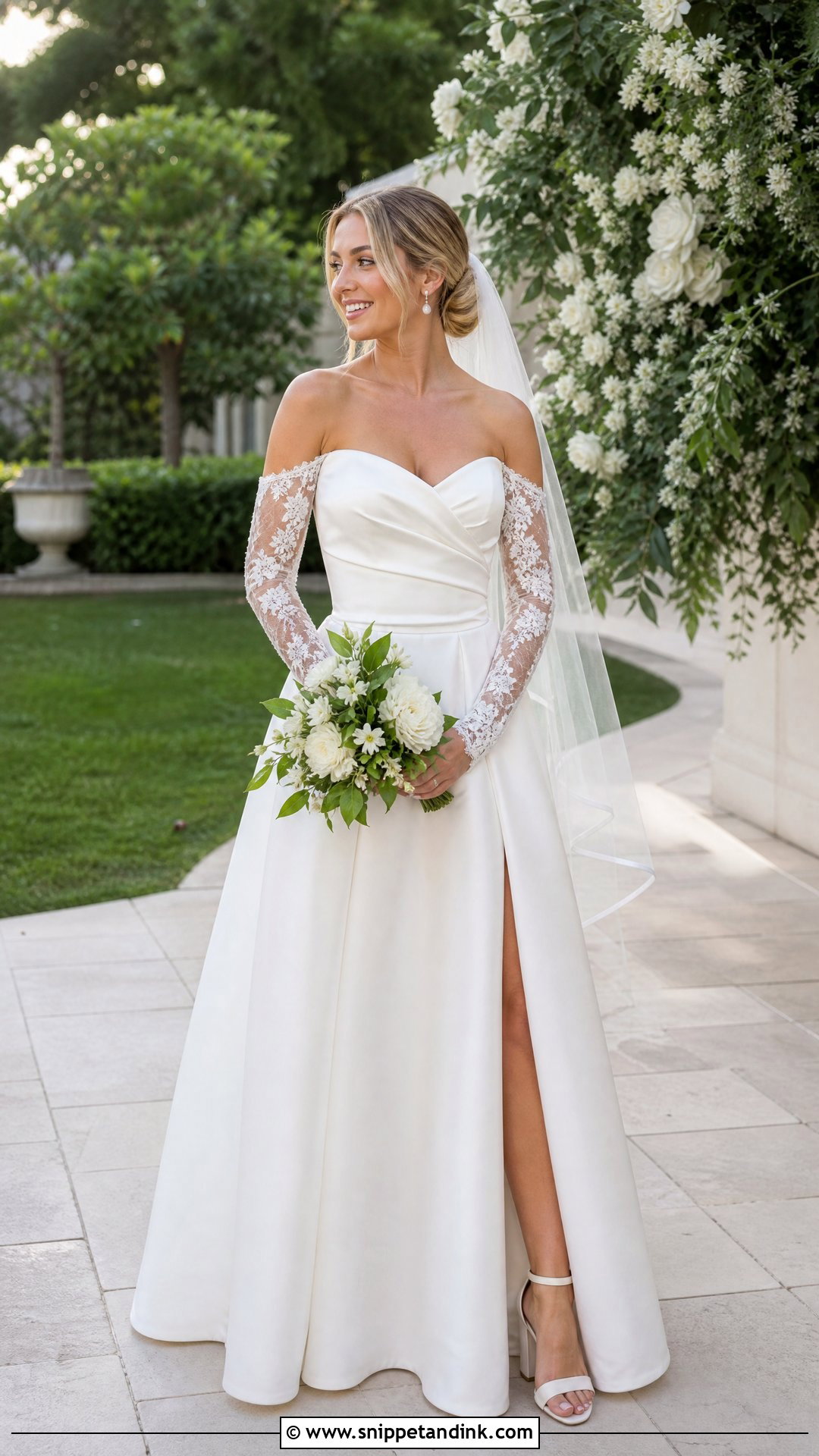
Outdoor temperatures swing between a shaded ceremony and a sunny afternoon, and detachable sleeves let your dress swing with them. Start with a strapless, square-neck or thin-strap gown in crepe, satin or organza, and add lace or tulle sleeves for the vows. Check how they attach. Snaps or small hooks at the strap are more secure than elastic, which slides down your arm by the second hour. Pearl earrings, a low bun and a light veil keep it cohesive. Block-heel sandals on firm lawns, pointed flats on soft ground, and a short train with a simple bustle.
15. High Neck Lace Wedding Dress
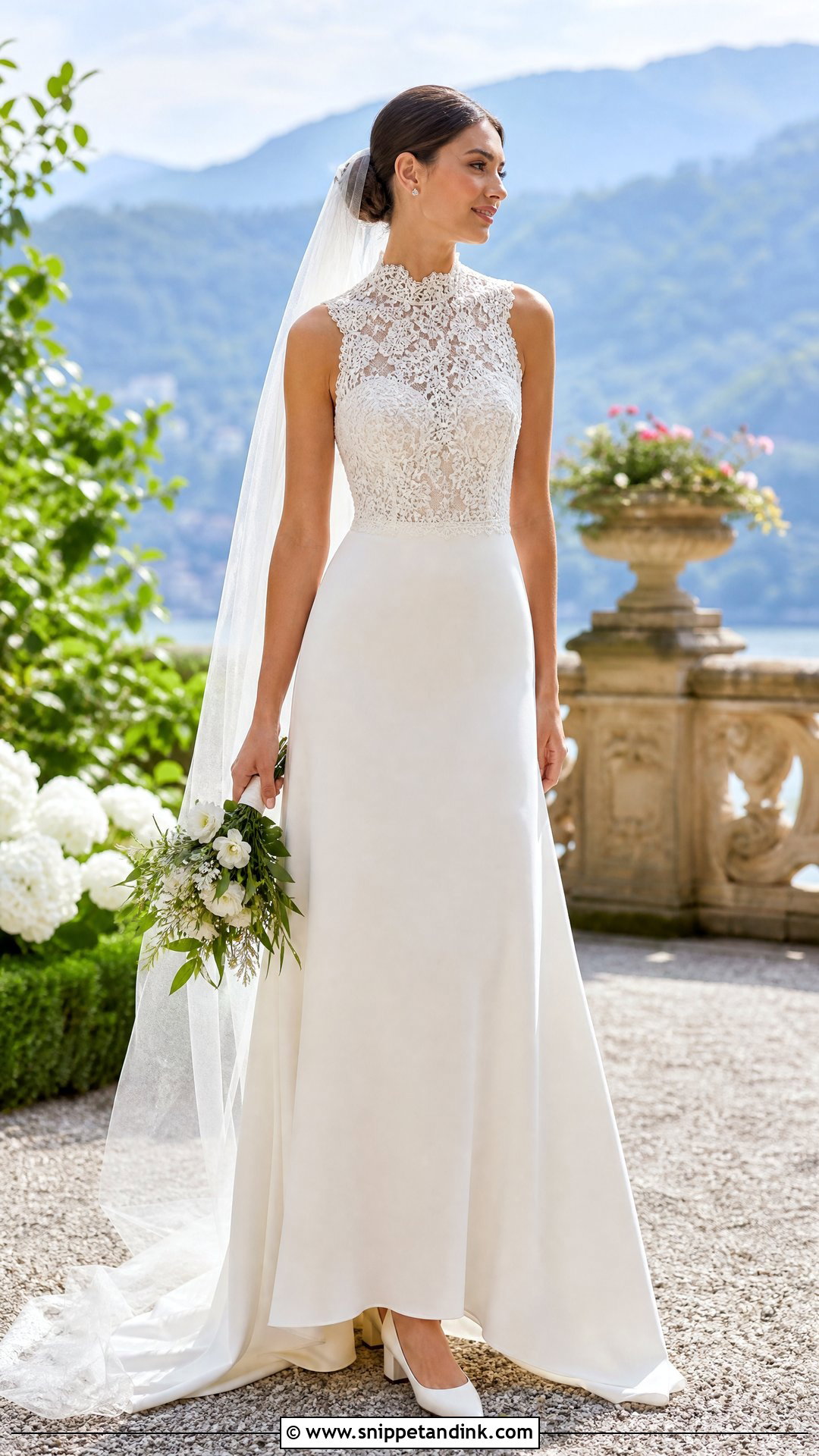
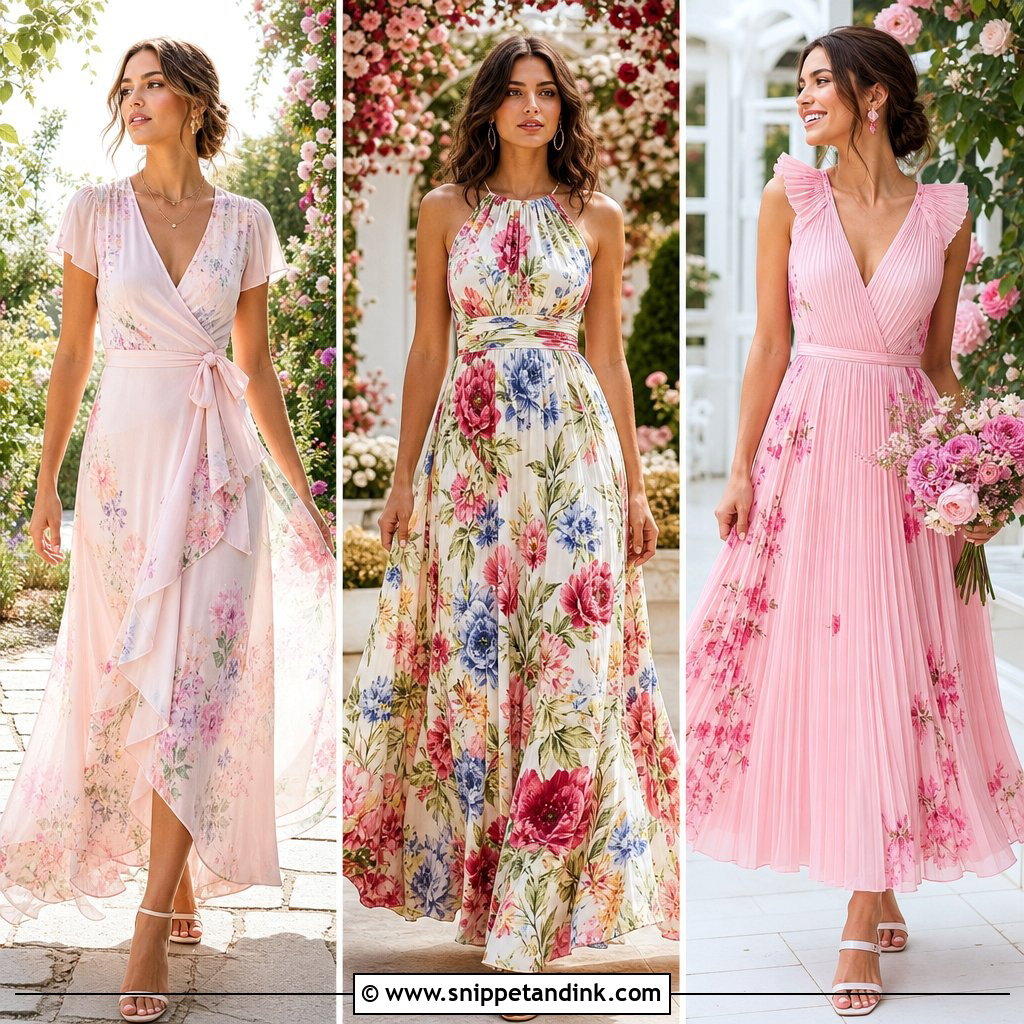
A high lace neck gives coverage and a lot of detail right where the camera looks first. I always ask brides to sit down at the fitting in this style, because a high neckline that’s comfortable standing can press on the throat when you lean forward to eat. Lightweight lace over a smooth lining keeps it breathable, and a sleeveless bodice stops it feeling too covered. A clean updo, small studs and no necklace let the neckline lead. Low block heels, closed flats or sleek ankle boots, depending on the ground. Attach the veil beneath the bun so it doesn’t hide the lace.
16. Minimalist Strapless Wedding Dress
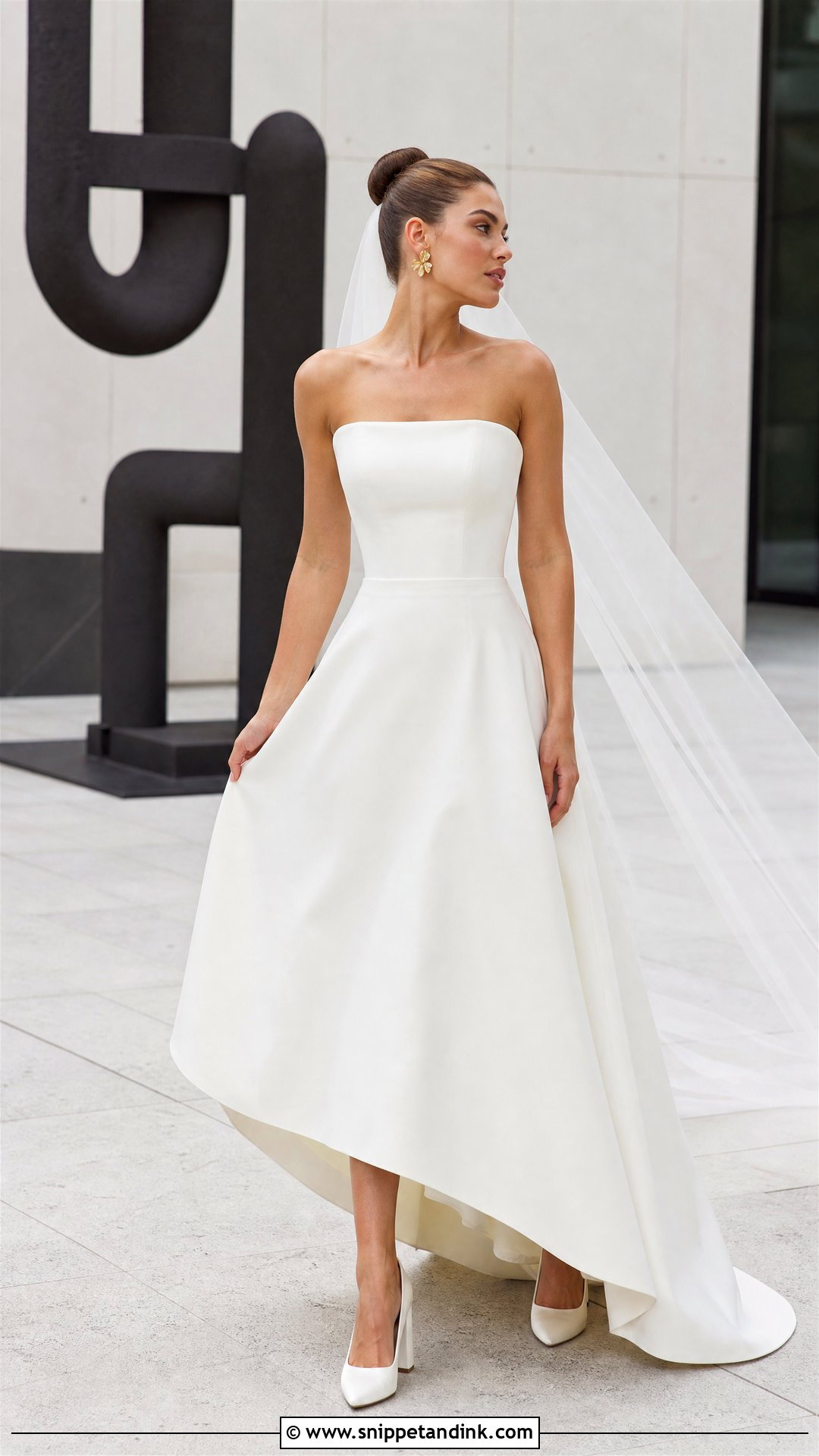
With no straps and no decoration, the fit has to be perfect. A strapless bodice should stay put when you lift your arms and twist, without you tugging it up; if it slips at the fitting, it will slip all day. Matte satin, crepe or light mikado in an A-line or gently flared skirt keeps it modern, and a detachable overskirt adds ceremony volume. Bold earrings, a sleek bun and a narrow veil suit it. Bring flats to swap in for the reception and a light wrap or removable bolero for after sunset. Keep the train moderate.
17. Rustic Wedding Dress With Boots
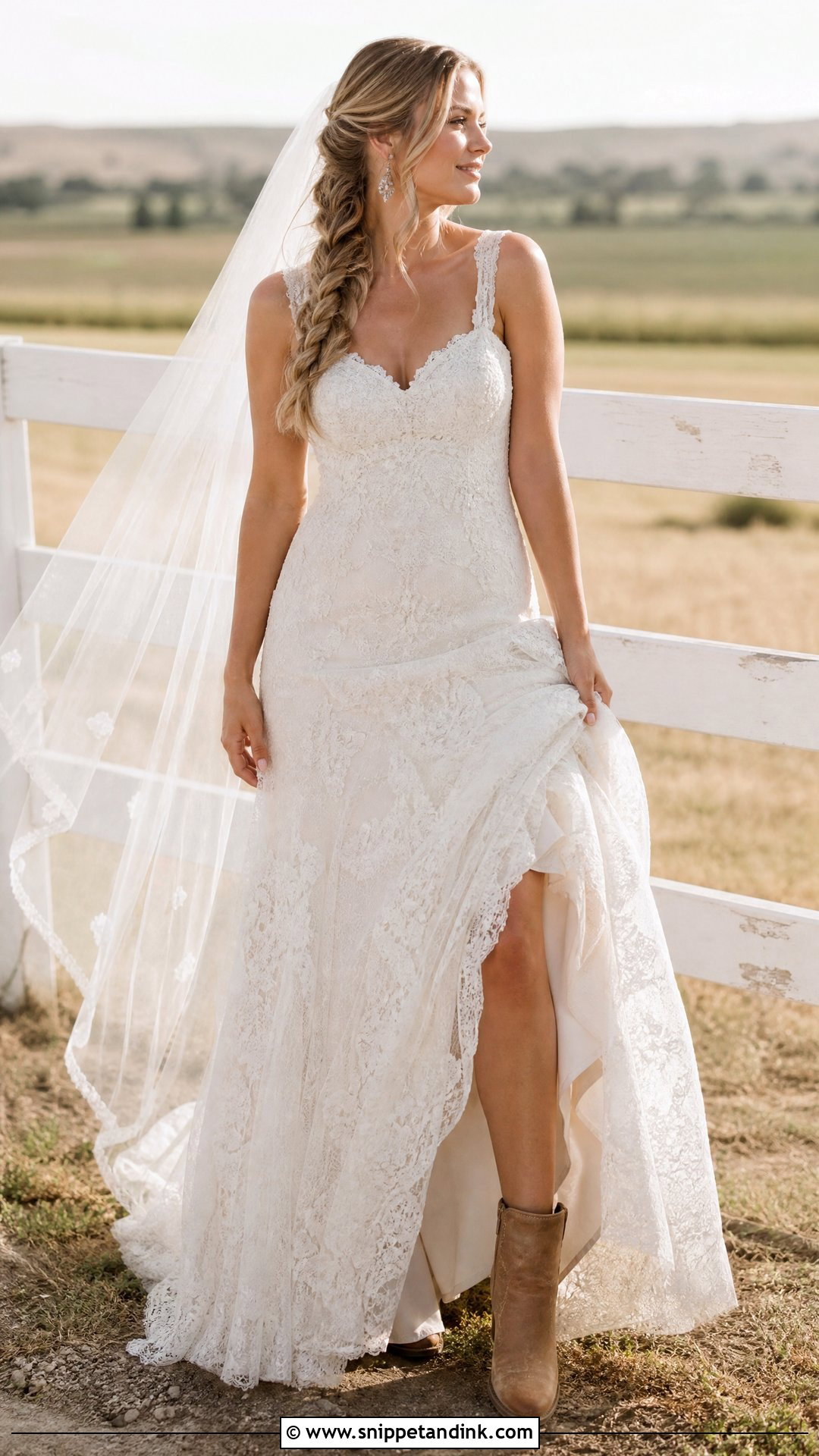
On a ranch, a lace or chiffon gown paired with boots is practical rather than a gimmick. Boots handle dirt, gravel and uneven ground in a way no sandal can. Choose a soft A-line with a defined waist, comfortable straps and a sweep train, with embroidered lace for texture. Ivory, tan or light brown ankle boots with a stable heel and cushioned sole suit it, and the hem should be tailored to show them a little. A loose braid, delicate earrings and a fingertip veil or floral comb keep it relaxed. Save the denim jacket for after the formal photos.
18. Organza Ball Gown For Outdoor Wedding
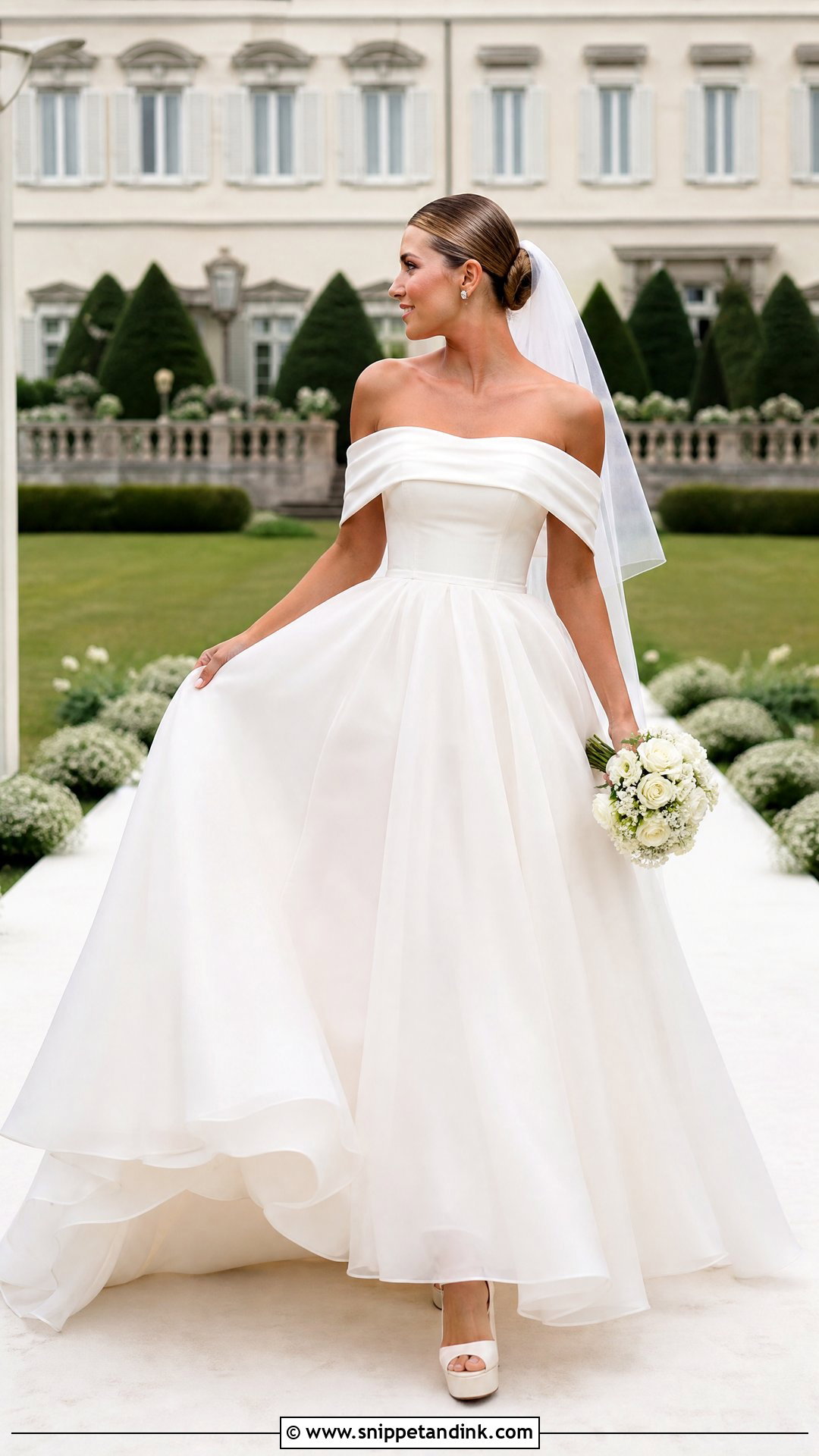
Ball gowns can work outside, but only if the fabric is light. Organza gives volume with far less weight than satin or layered tulle, and a skirt with fewer underskirts lets air through. A structured bodice, defined waist and a scoop, square or off-shoulder neckline keep the proportions balanced. On grass, a full skirt acts like a brush and collects whatever is on the ground, so I’d ask the venue about an aisle runner and plan a strong bustle for the reception. Classic studs, a smooth bun and a plain veil. Platform block heels help on solid walkways.
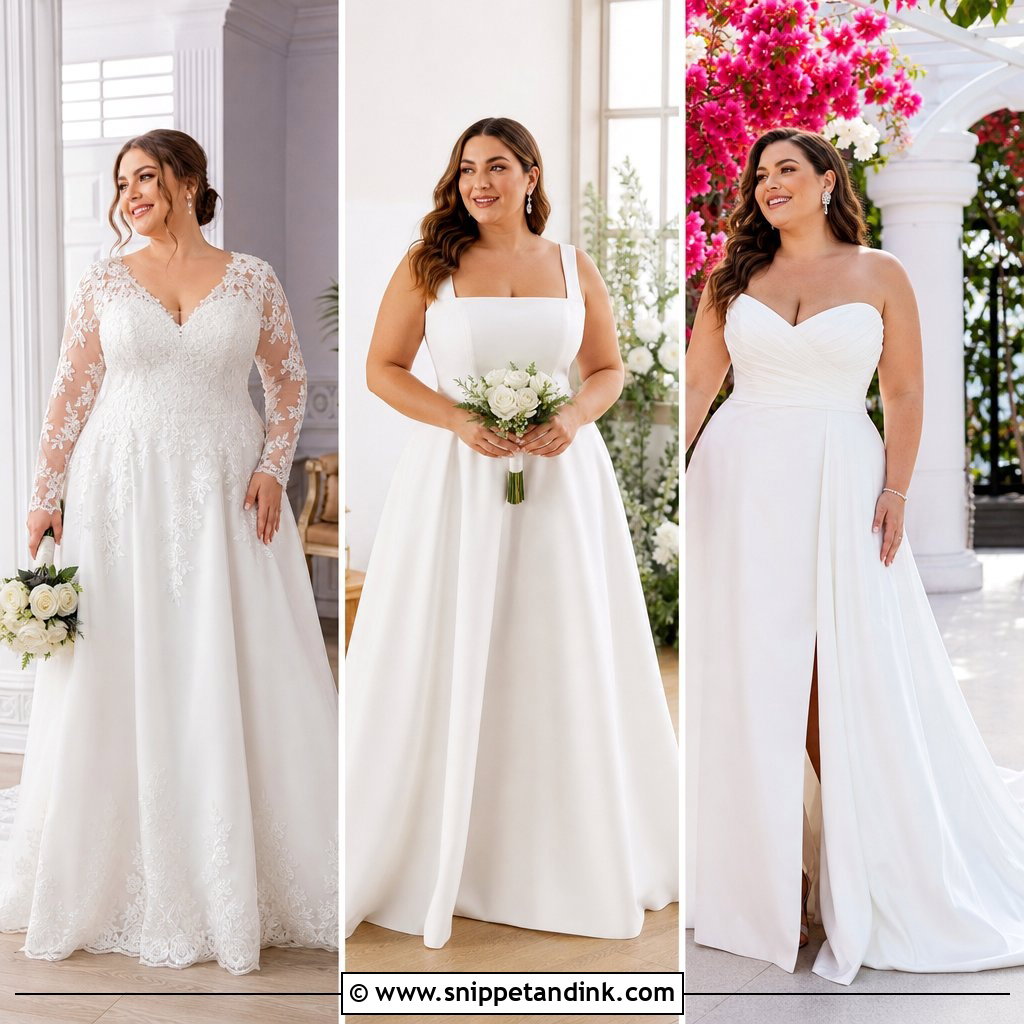
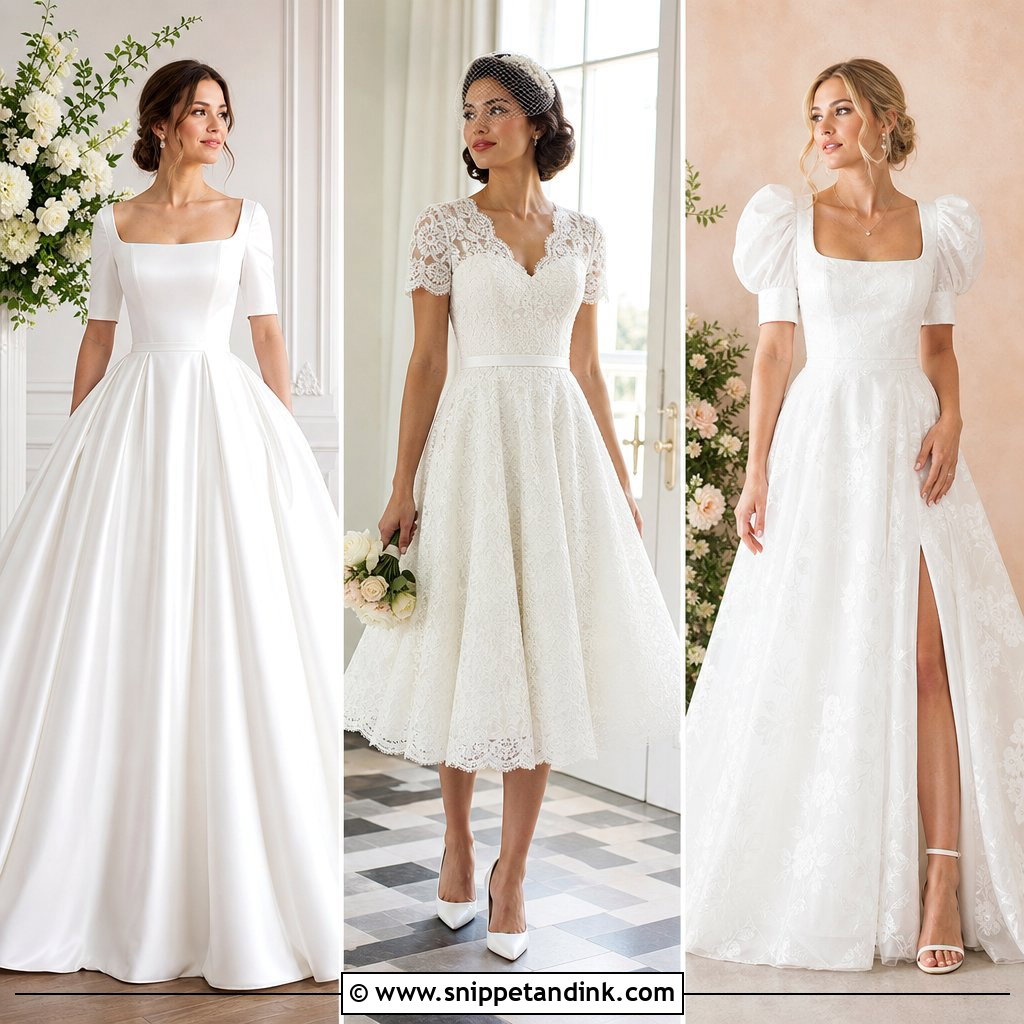
19. Short Wedding Dress For Backyard Wedding
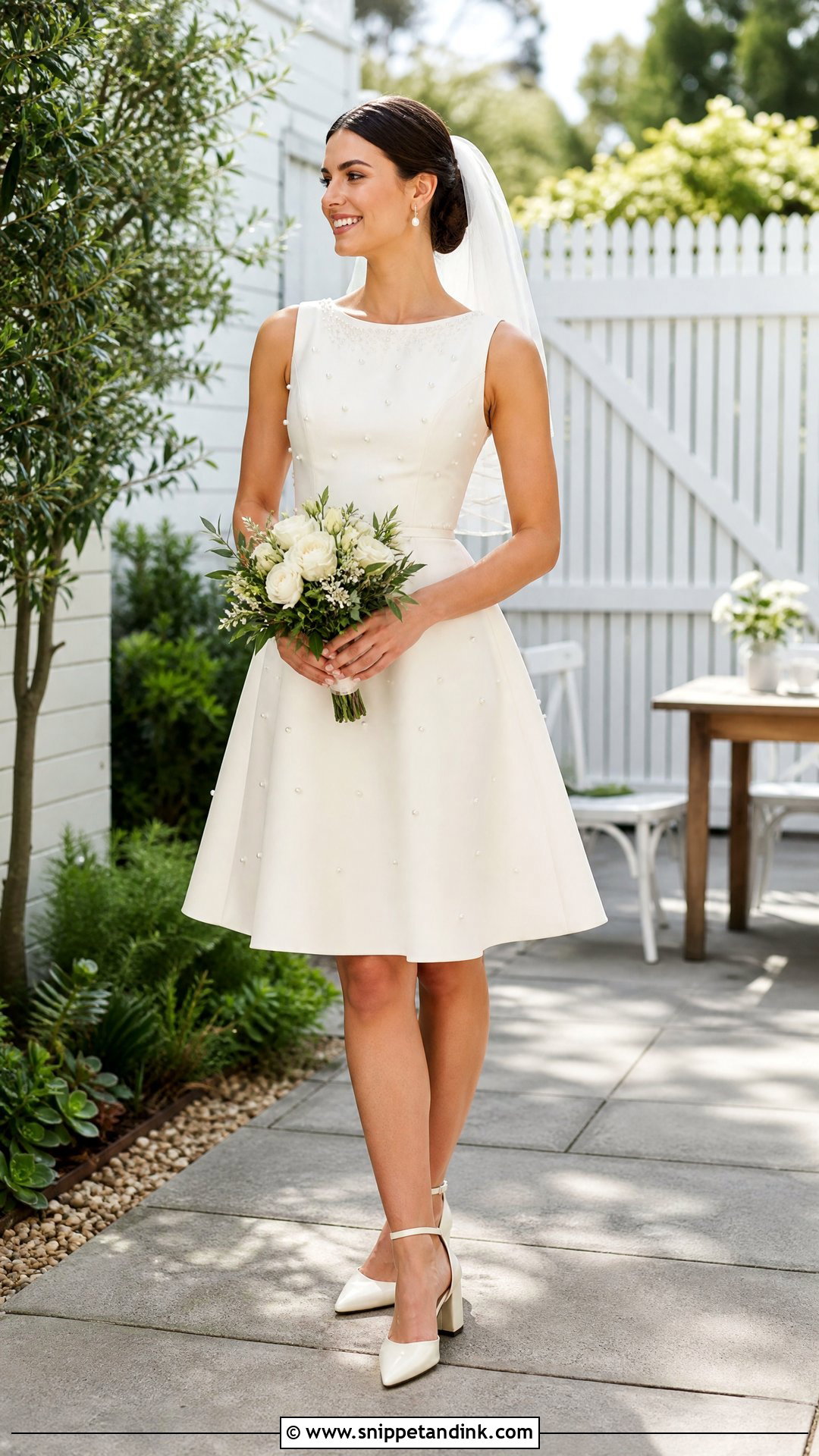
For an intimate backyard celebration, a short dress fits the mood and frees you completely. Knee-length or mini A-line with a structured bodice, a clean lining and lace, bow or pearl details. Proportion matters more with a short hem, because your legs and shoes are part of the look, so get the length tailored to your frame rather than accepting the stock length. Pointed pumps, block-heel sandals or embellished flats all work. Add a short veil, pearl earrings and a polished ponytail or low bun. A removable overskirt gives a longer ceremony silhouette.
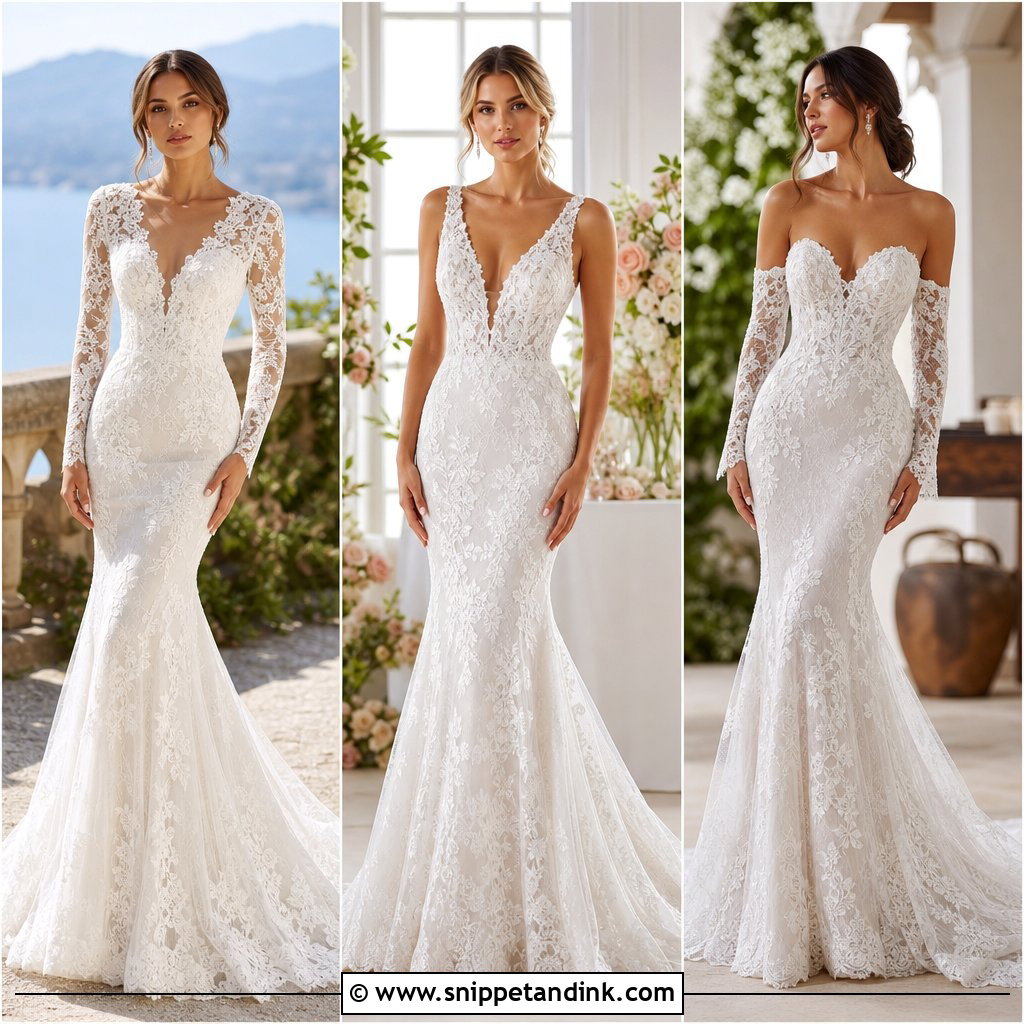
20. Bridal Jumpsuit For Outdoor Wedding
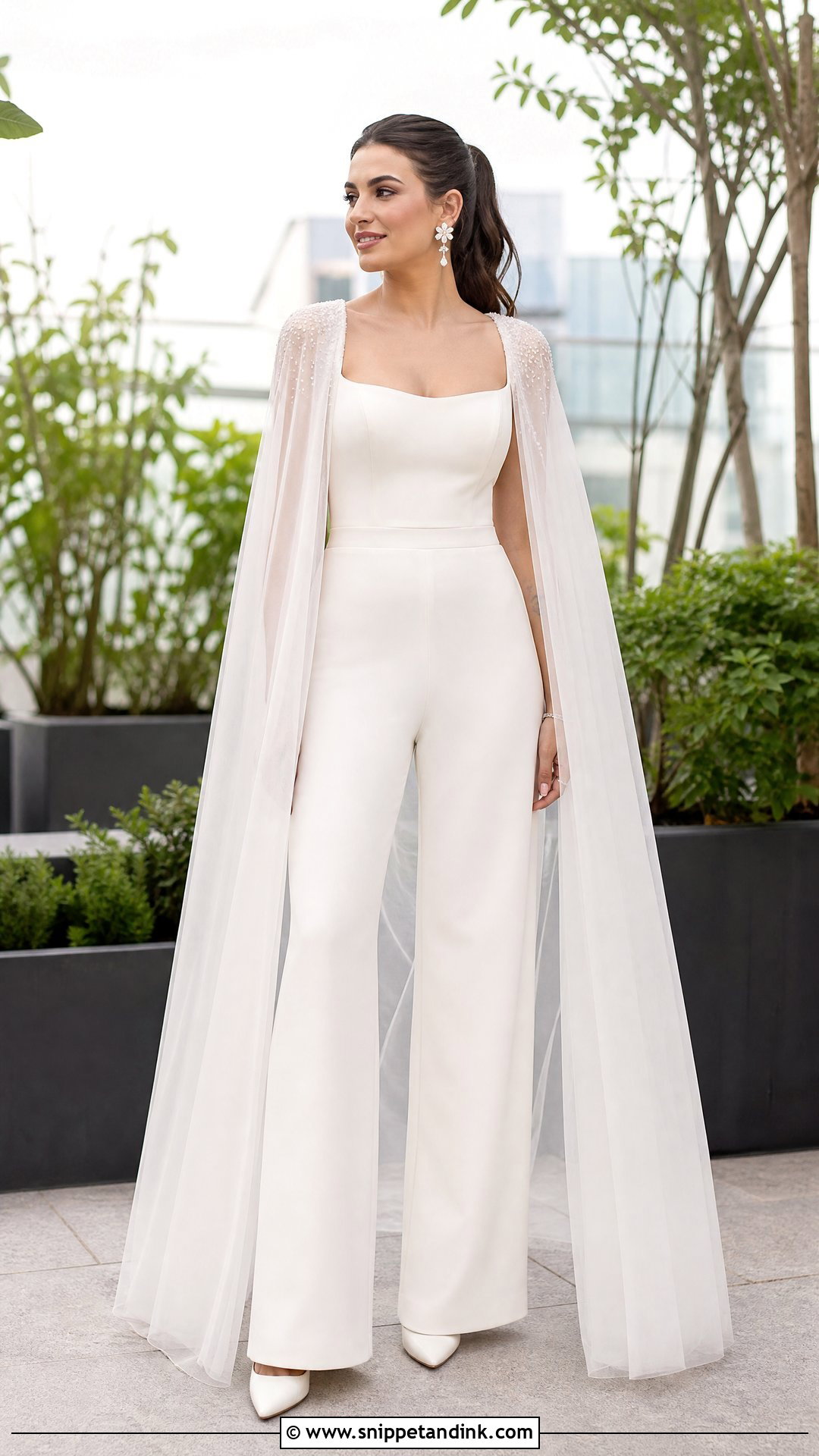
A tailored jumpsuit is the most mobile bridal outfit there is: wide-leg crepe trousers, a fitted bodice and supportive straps or sleeves. A removable tulle overskirt or cape brings ceremony drama on top. The hem is where it goes right or wrong. Have it tailored in the exact shoes you’ll wear, so it nearly reaches the ground without touching; wide legs that pool will drag through grass and gravel within the hour. Pointed block heels, statement earrings and a sleek ponytail or bun suit it, and a fitted blazer covers a cool evening on rooftops, desert elopements and back gardens.
When the Wind Picks Up or the Sky Opens
Wind is the outdoor problem brides underestimate. A long veil can wrap around your face or your partner during the vows, so I either anchor it with extra pins under the bun or bring a second, shorter veil for breezy spots. Weights sewn discreetly into the veil hem help a little, but a shorter length helps more.
Heat shows on fabric. Silk and charmeuse mark with sweat and rain, while crepe, mikado and lace hide it far better. Have a cool, shaded place to wait before the ceremony and carry blotting papers rather than tissues, which leave fluff on the face.
Mud on the hem
Don’t scrub a wet hem on the day; that grinds the soil into the fibres. Let it dry, then brush it off gently once the dress is off. Tell your cleaner exactly what the stain is, mud, grass or red wine, when you take the dress in, and do it within a few weeks so marks don’t set.
Dress for the Ground You’ll Actually Stand On
The right outdoor gown is the one you stop thinking about once you’ve put it on. Light beach gowns, lace garden dresses, structured estate looks, short hemlines and jumpsuits all have a place here. What decides it is your season, the temperature, the terrain, the wind and how formal the day is. Put supportive construction, breathable fabric, a manageable train and stable shoes ahead of anything trend-driven. Removable layers and a properly sewn bustle make the rest easier. Then pick the dress that feels like you, because that’s the one you’ll relax in.
You'll Like These Ideas:



Leave a Reply