
Sangjit is the betrothal day when the groom’s family arrives with gift trays and the bride’s family receives them, keeps some and returns some. It is a family occasion first, so the dress has to satisfy grandparents as well as the bride. I style it in a different register from the wedding: still clearly the bride, but closer to the floor, lighter on drama and easy to stand, bow and sit in. Below are thirty options, from the classic red cheongsam and gold qipao to kebaya sets, a minimal satin cut, a jumpsuit and a mother-of-the-bride look, each with notes on fit and fabric that only show up once you are wearing it.
Colours the Elders Will Notice First
Before we talk silhouettes, I ask every Sangjit bride one question: what will the grandparents think of the colour? Colour carries meaning at a betrothal, and getting it wrong is the one mistake people remember.
- Red, pink and gold are read as luck, joy and prosperity, so they are always safe.
- Plain white and black are associated with mourning in many Chinese families. If you love white, add clear red details.
- Some elders also feel uneasy with very dark blue or grey. Lighter blues usually pass without comment.
- If the groom’s family will wear a coordinated colour, ask early so the two families look connected in the group photo.
These customs vary between families and regions, so treat this as a starting point for the conversation with your mother, not a rulebook.
1. Sangjit Red Cheongsam Dress
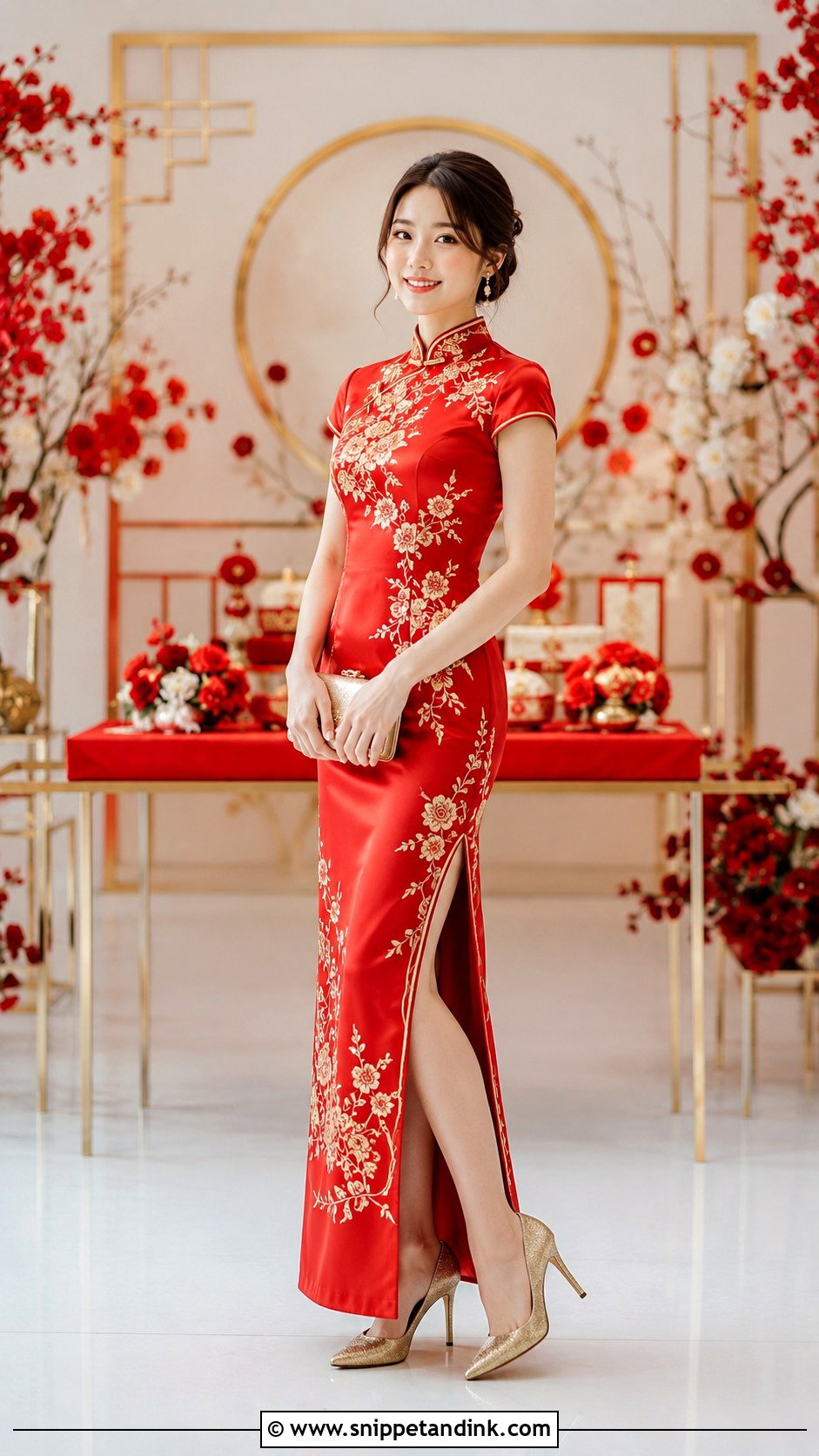
Red is still the colour that tells everyone in the room what the day is about. A fitted midi or ankle-length cheongsam with a mandarin collar, side slit and fine gold embroidery is the traditional answer, and clean satin with a small floral motif is the modern one. Gold heels, pearl or jade earrings and a structured clutch are all it needs. At the fitting I check the collar first: it should close without pressing on the throat when you look down, because you’ll spend much of the day looking down at trays.
2. Sangjit Gold Qipao Dress
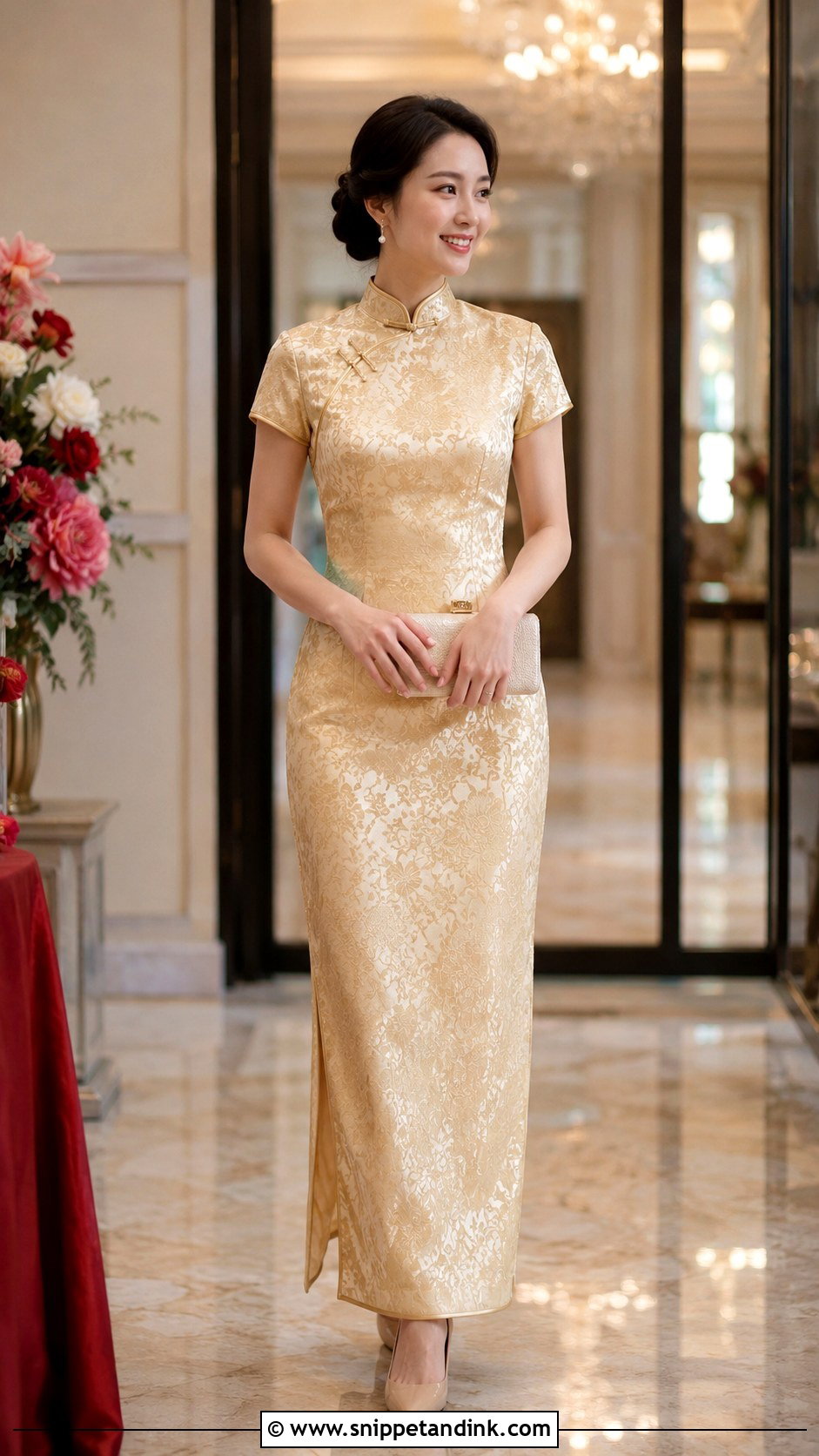
Gold says prosperity without leaning fully on red, and it glows under the warm lights of hotel function rooms. Brocade and jacquard give it body; satin gives it sheen. Because the fabric is already bright, I’d keep jewellery small, with pearl studs, and choose nude or champagne heels so the leg line continues the dress. A fitted, A-line or slightly flared qipao all work. Too much gold head to toe tips toward costume, so let one element stay plain.
3. Sangjit Champagne Cheongsam Dress
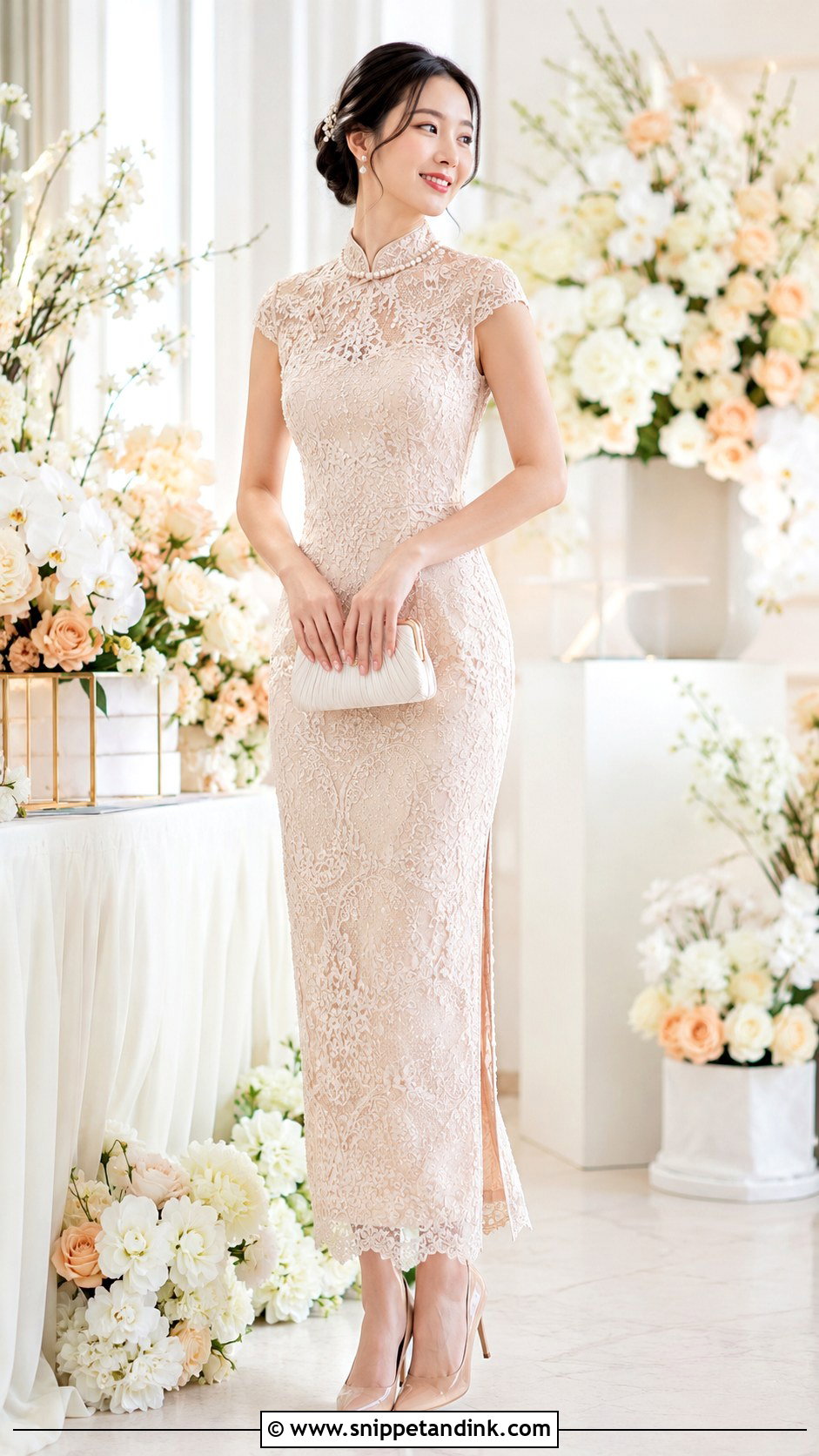
Champagne is the colour I suggest when a bride wants something soft but worries about wearing anything close to white at a family ceremony. It has enough warmth to read as celebratory. A lace overlay or fine beading keeps it bridal; a midi length looks neat and a floor-length version makes more of an entrance. Gold jewellery, cream heels and glowing makeup suit it. Under very yellow lighting it can look beige, so check it in the room if you can.
4. Sangjit Pink Qipao Dress
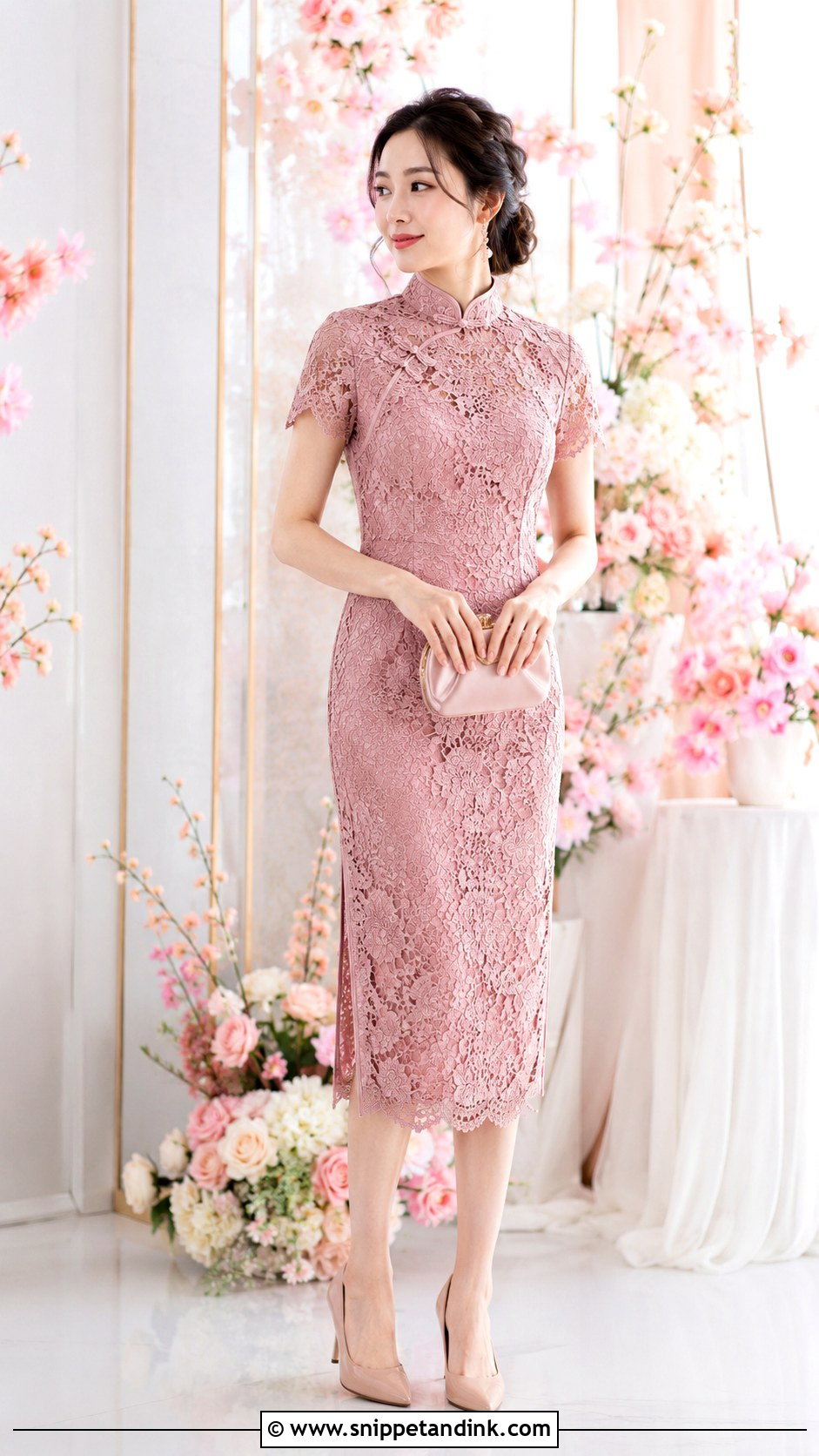
Pink belongs to the auspicious family of colours, so it is an easy sell to elders. Dusty rose, blush and soft mauve flatter more skin tones in portraits than bright fuchsia does. Lace sleeves, floral embroidery or a slight A-line cut give room to sit and walk. With nude heels and rose-gold jewellery, I keep blush and lip in the same pink family so the face and dress look planned together. It suits morning and afternoon events best.
5. Sangjit Emerald Green Cheongsam Dress
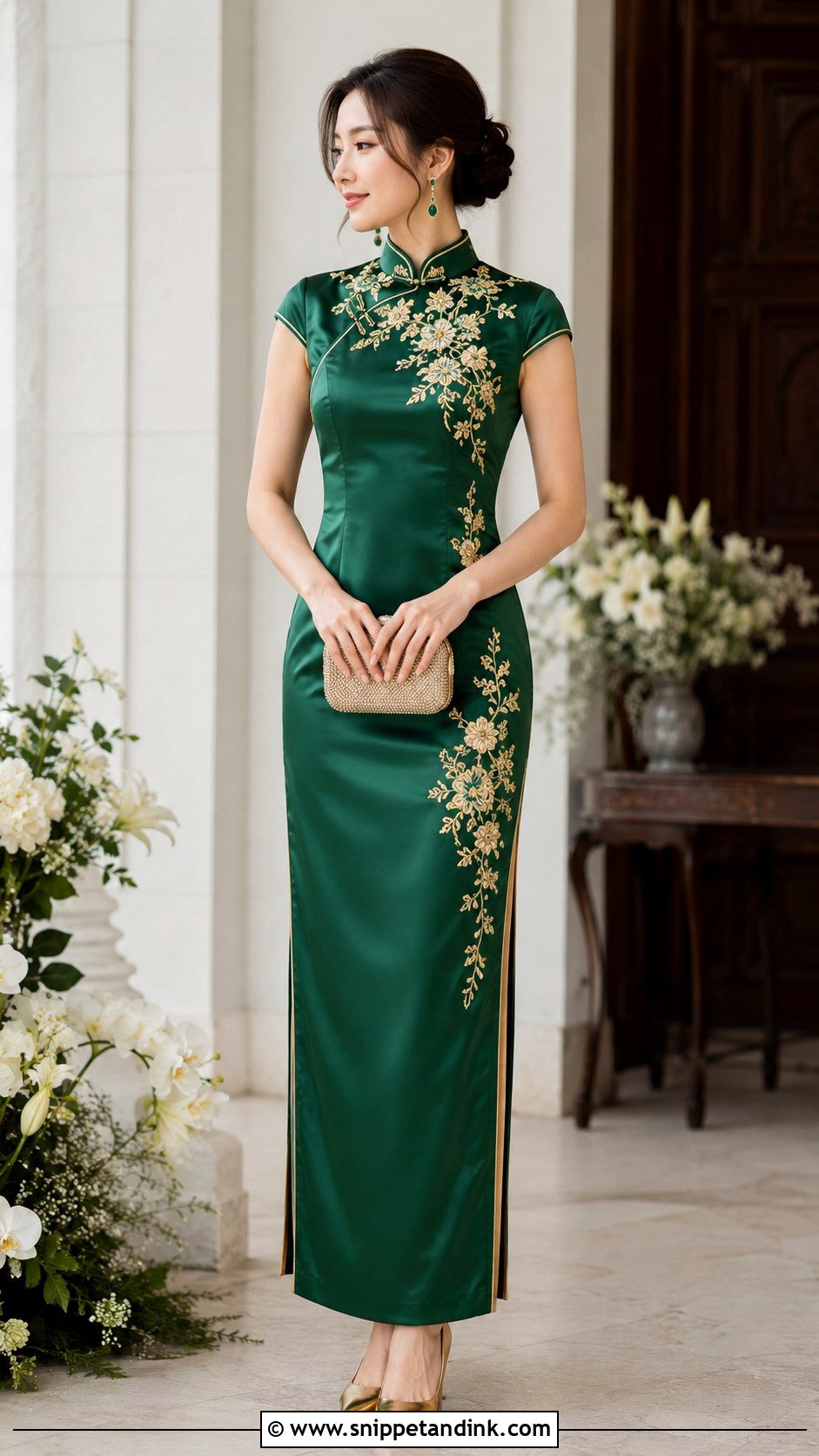
Emerald is rich, confident and less expected than red. In satin or velvet with gold embroidery and gold heels, it looks expensive straight away. Choose a lighter satin for daytime and save velvet or brocade for evening hotel settings. Jade-inspired earrings echo the colour well. If your family is very traditional, I’d add red somewhere, in the embroidery, a clutch or the lip, so the auspicious colour is still present.
6. Sangjit Blue Cheongsam Dress
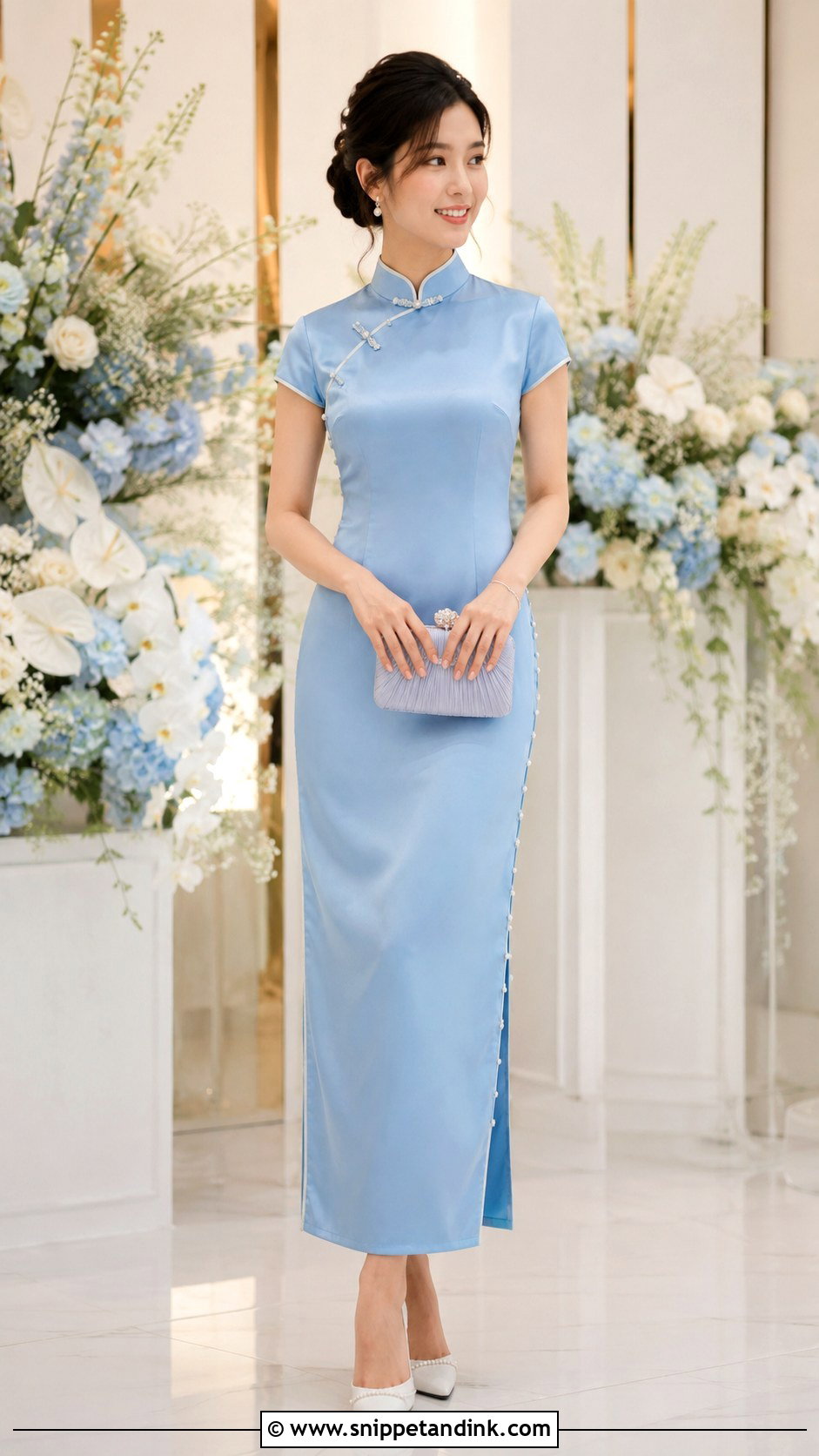
Blue is the colour I raise with families before the bride commits. Sky and powder blue look fresh at daytime events, especially with silver or pearl details and white or nude heels. Deeper navy and royal blue suit evening better. Some older relatives associate dark blue with mourning, though, so a quick conversation with your mother first saves an awkward moment. If it’s welcome, gold jewellery warms the deeper shades nicely.
7. Sangjit White And Red Qipao Dress
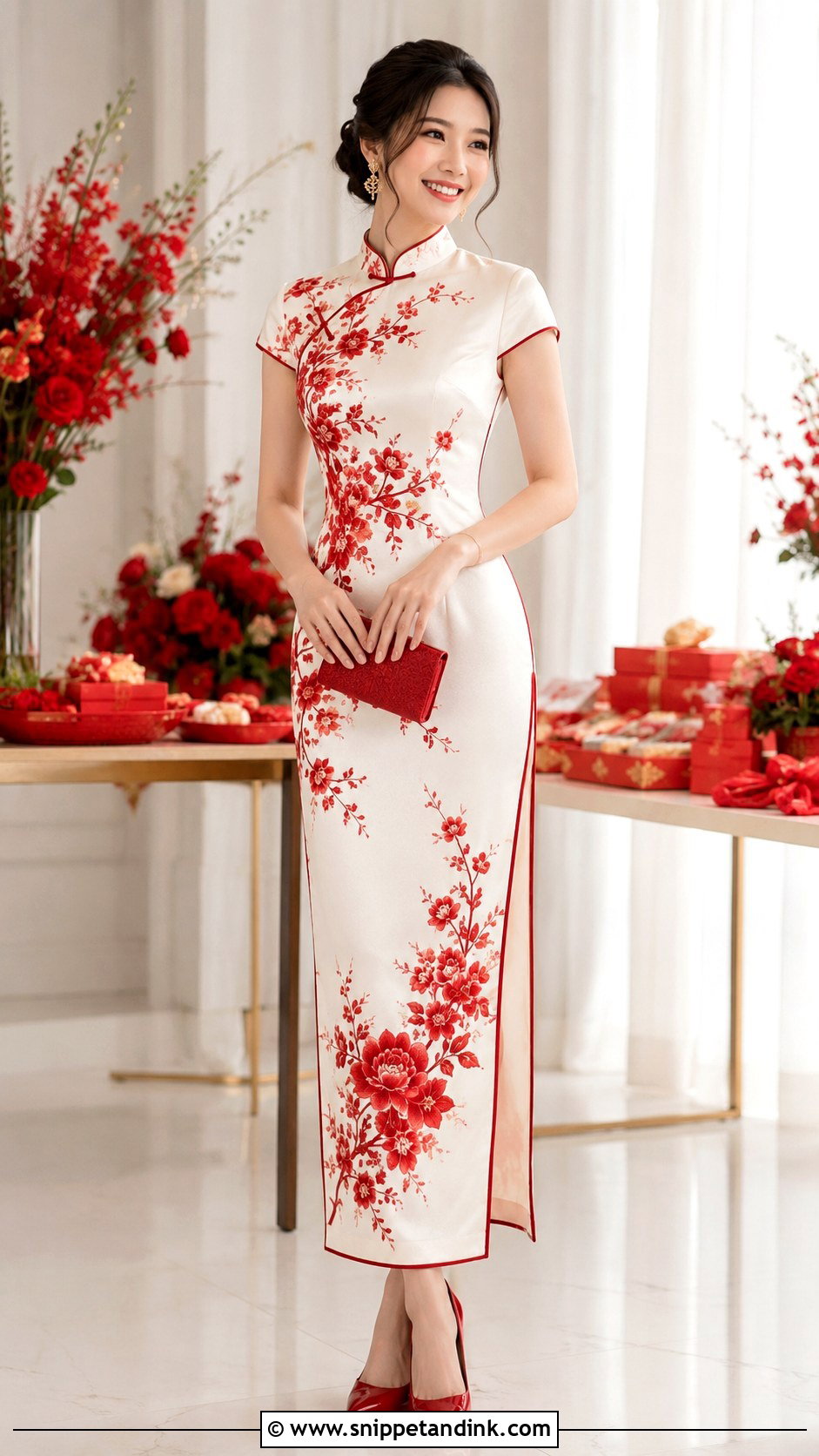
White with red is about balance. A plain white dress can read as mourning to elders, so the red needs to be obvious: piping on the collar and slit, embroidered florals or appliqué across the bodice. Red heels or a red clutch then pull it together, and gold jewellery fits naturally. I like this for brides whose wedding gown will be very different, because the Sangjit look stays distinct in the album.
8. Sangjit Lace Cheongsam Dress
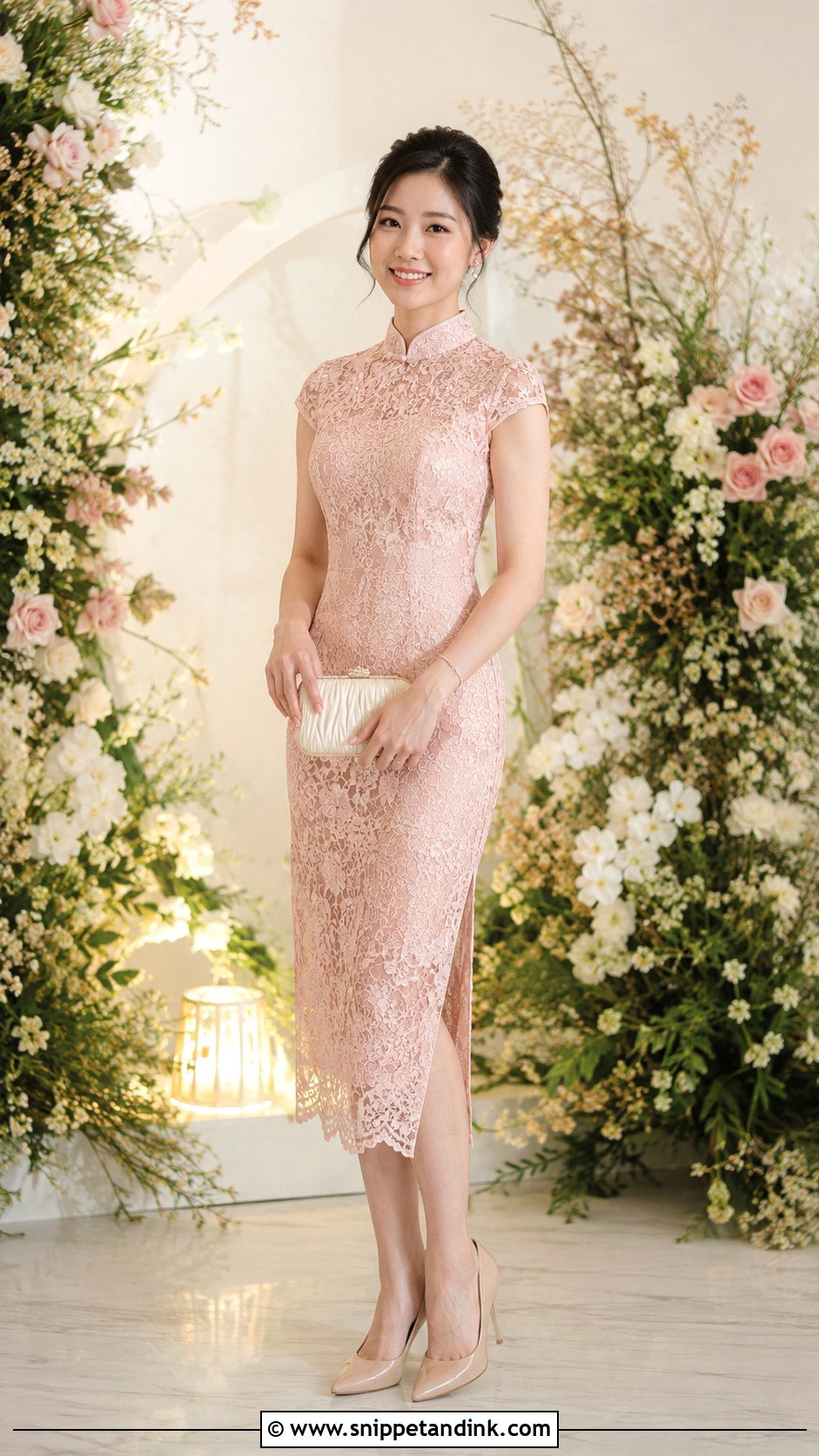
Lace adds texture and comes in almost every shade, from red to blush to dusty blue. For a family ceremony it should always be properly lined; unlined lace looks fine in the shop and too sheer under camera flash. Short, cap or three-quarter sleeves give light coverage. Pointed heels, pearl earrings and a simple clutch let the lace lead. Lace also catches on rings and tray edges, so be gentle receiving gifts.
9. Sangjit Satin Qipao Dress
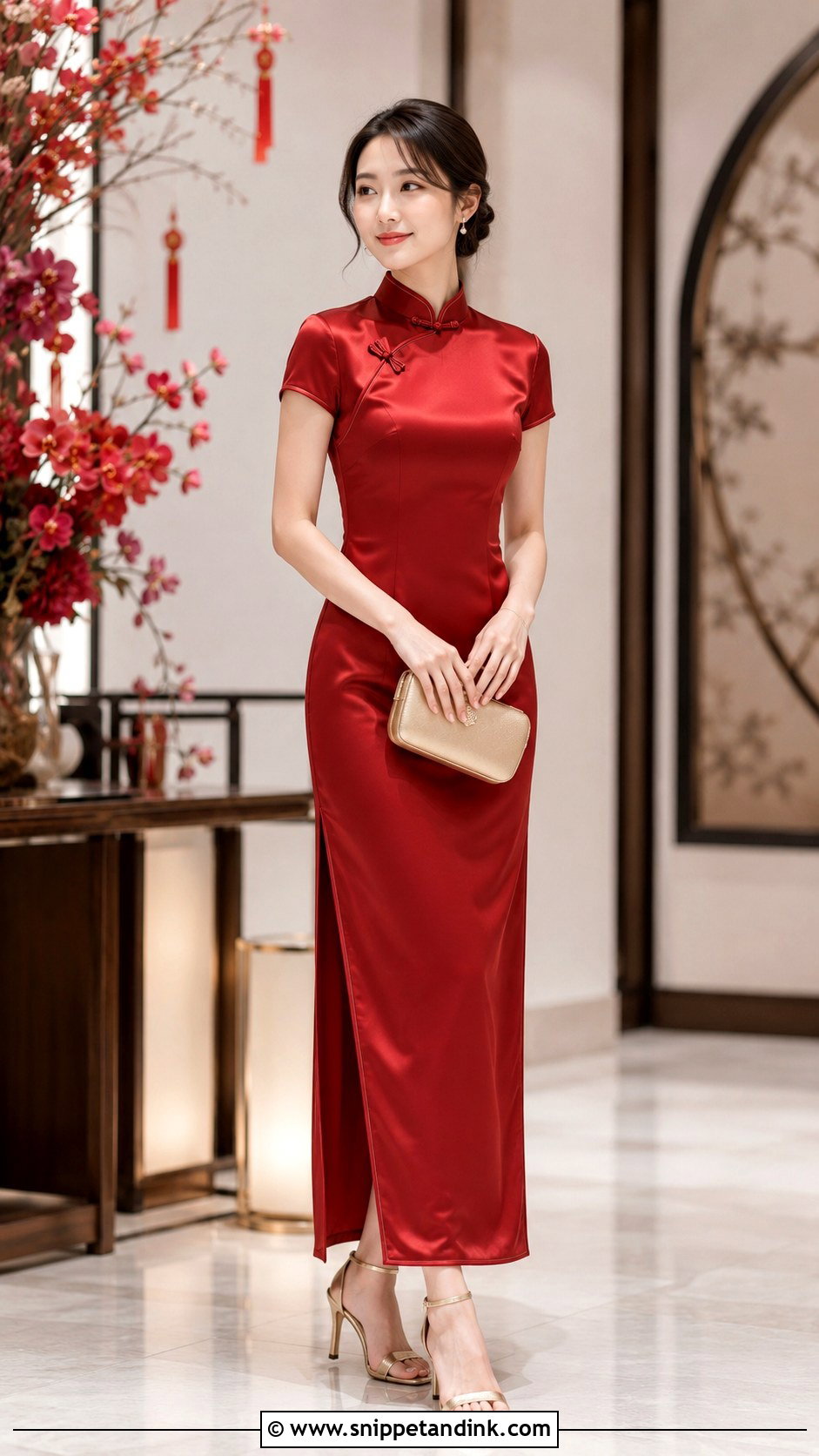
Choose satin when you’d like the fabric to do the talking with no embroidery at all. Red is classic; champagne, blush, emerald and navy feel modern. Satin shows every pull, so the fit must skim, not grip. I fit satin cheongsams with the wearer sitting down, because that’s when the side seams strain and the fabric creases across the lap. Slim heels, a sleek clutch, small earrings and a low bun keep it timeless.
10. Sangjit Brocade Cheongsam Dress
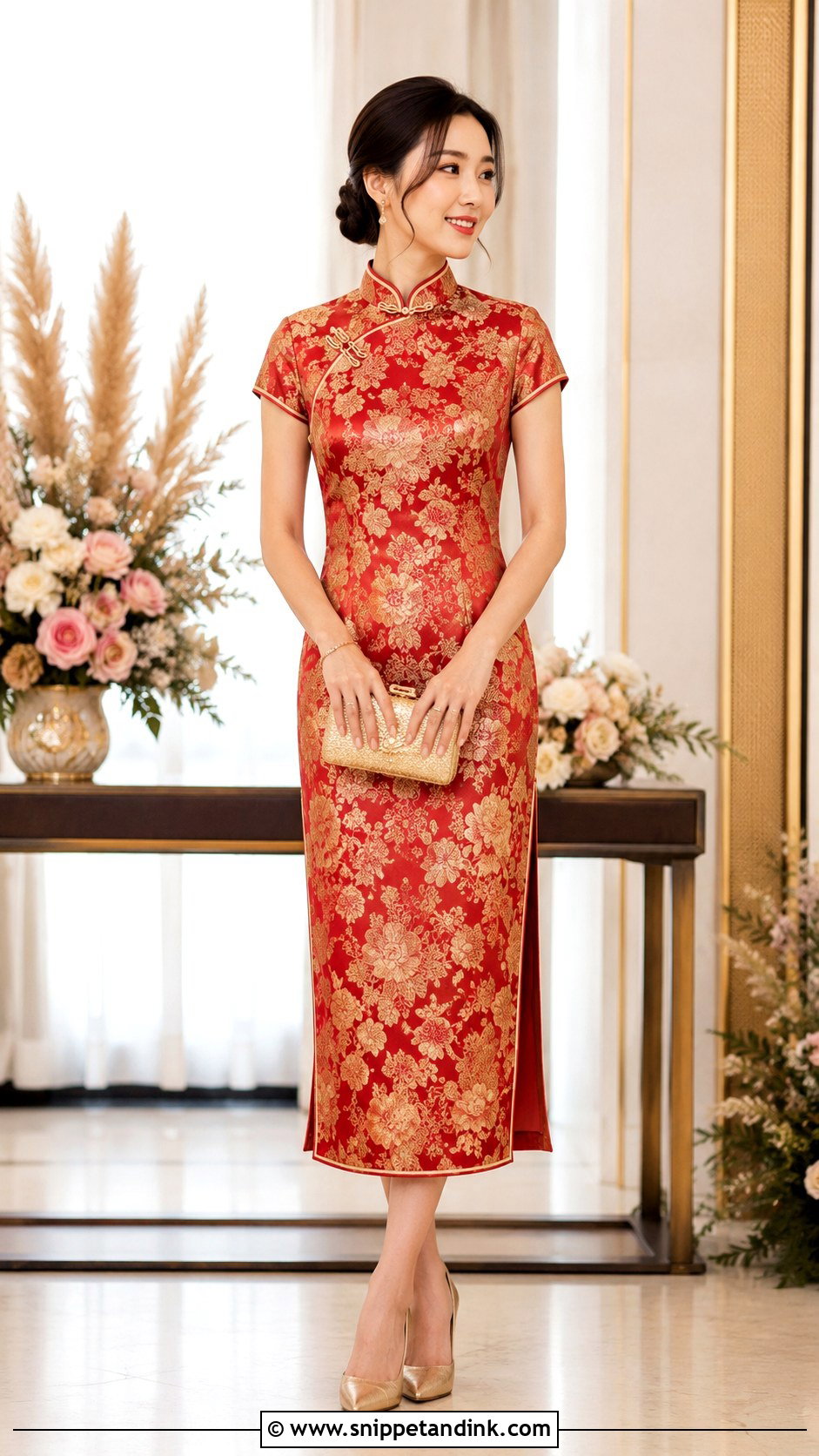
Brocade has a woven pattern and real body, so it holds a smooth cheongsam shape better than soft fabrics. Red-gold, champagne-gold, jade and navy-gold combinations look rich in photos. A fitted midi is traditional, and a slightly flared cut moves more. Because brocade is stiff, it has very little give; I’d leave a touch more ease at the hip than with satin. Gold pumps, small drop earrings and a neat clutch are plenty.
11. Sangjit Velvet Qipao Dress
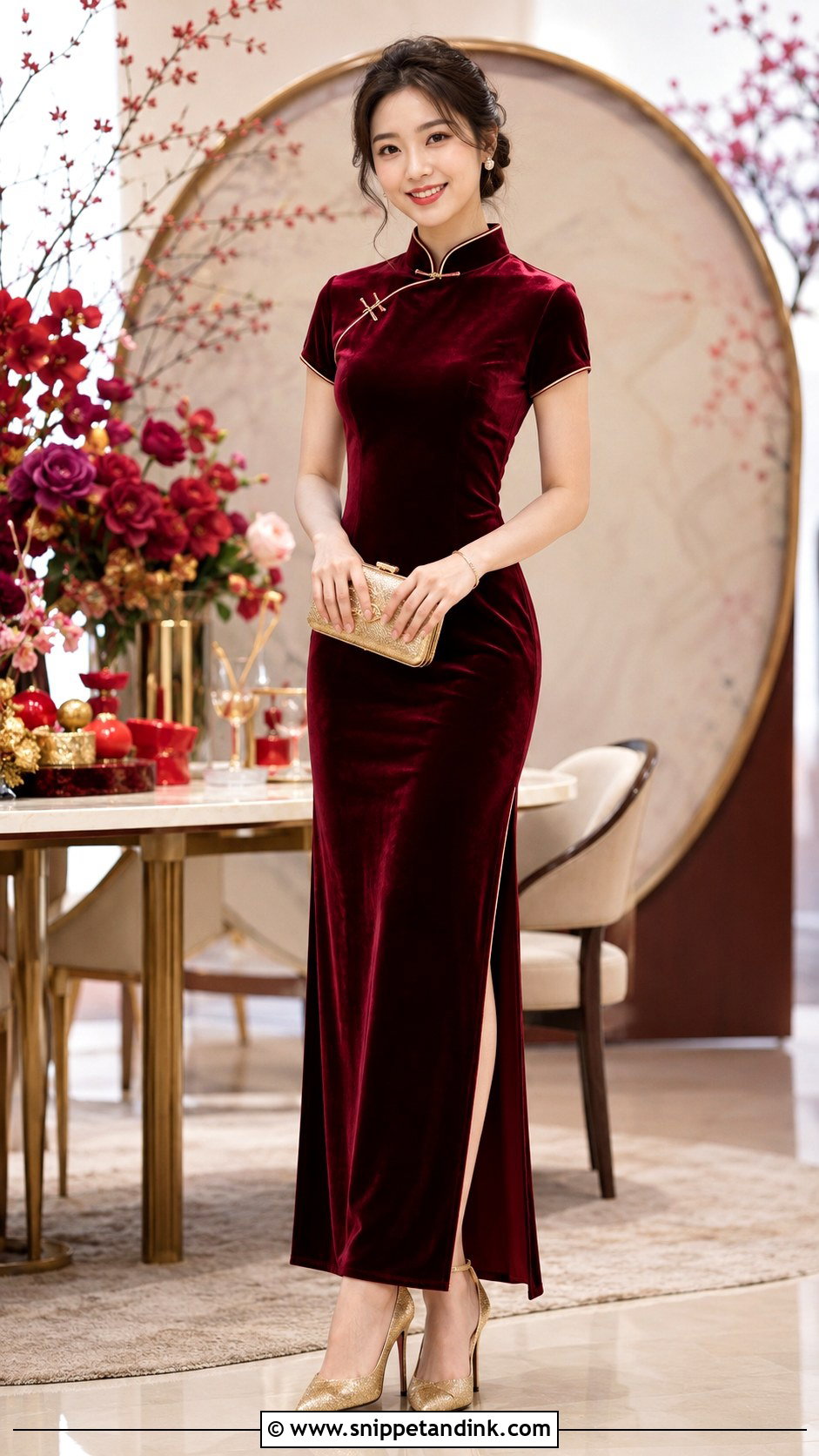
Velvet makes deep colours deeper, so burgundy, red, emerald, navy and plum all look luxurious in it. It is a cool-season and indoor fabric; in a warm, crowded house it gets hot quickly. A tailored silhouette with a mandarin collar and modest slit keeps it graceful. Velvet is heavy, so balance it with sleek heels and minimal jewellery, perhaps a gold hairpin and pearl studs.
12. Sangjit Burgundy Cheongsam Dress
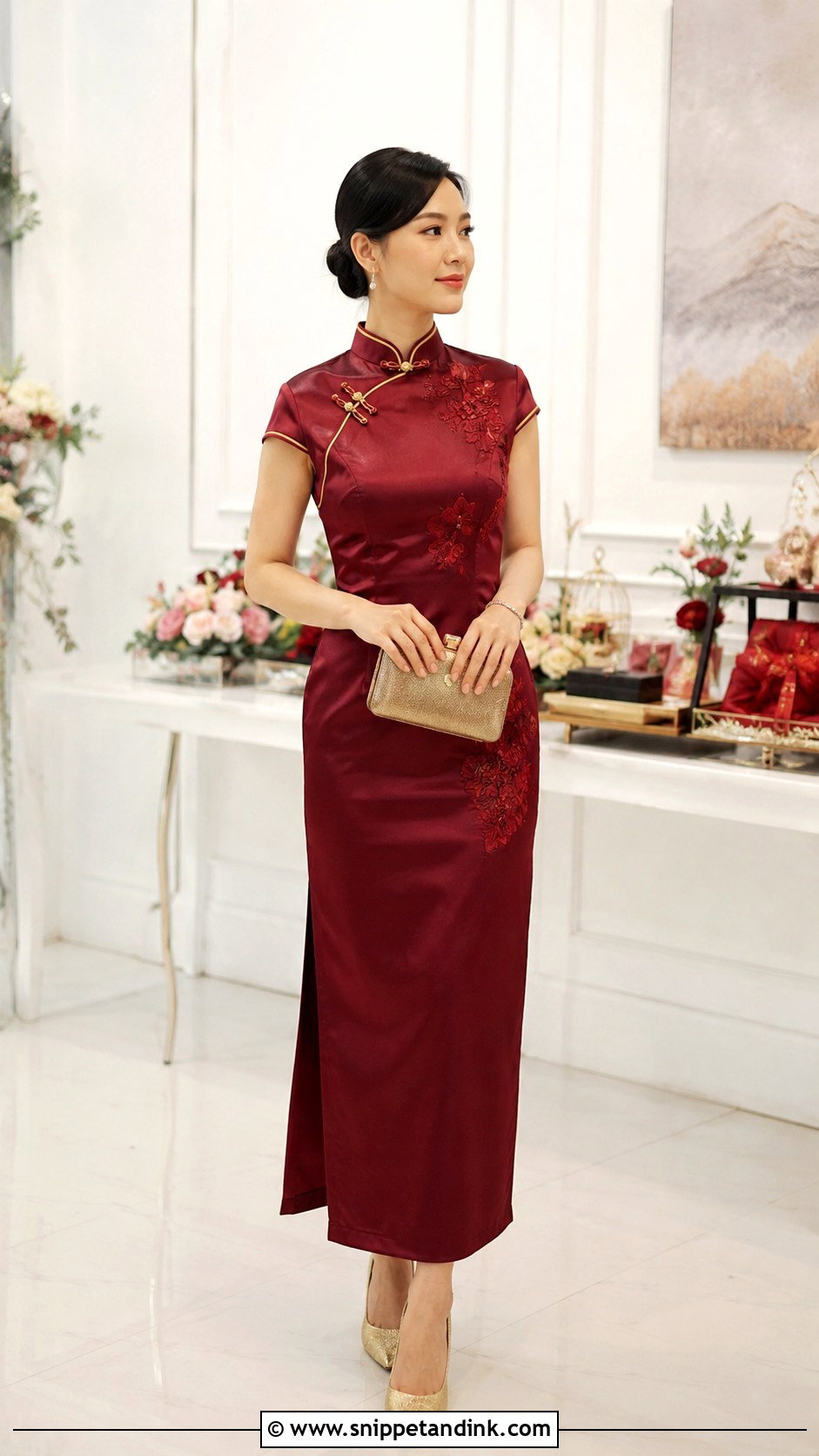
Burgundy keeps the warmth of red but in a quieter, more mature key. In satin, lace or velvet it suits most venues and seasons. Gold heels and a gold clutch give a classic finish, and nude accessories soften it. A sleek updo shows off the collar. I often suggest burgundy to brides who feel bright red is a lot on their skin but still want the family to see a red dress.
13. Sangjit Maroon Kebaya Dress
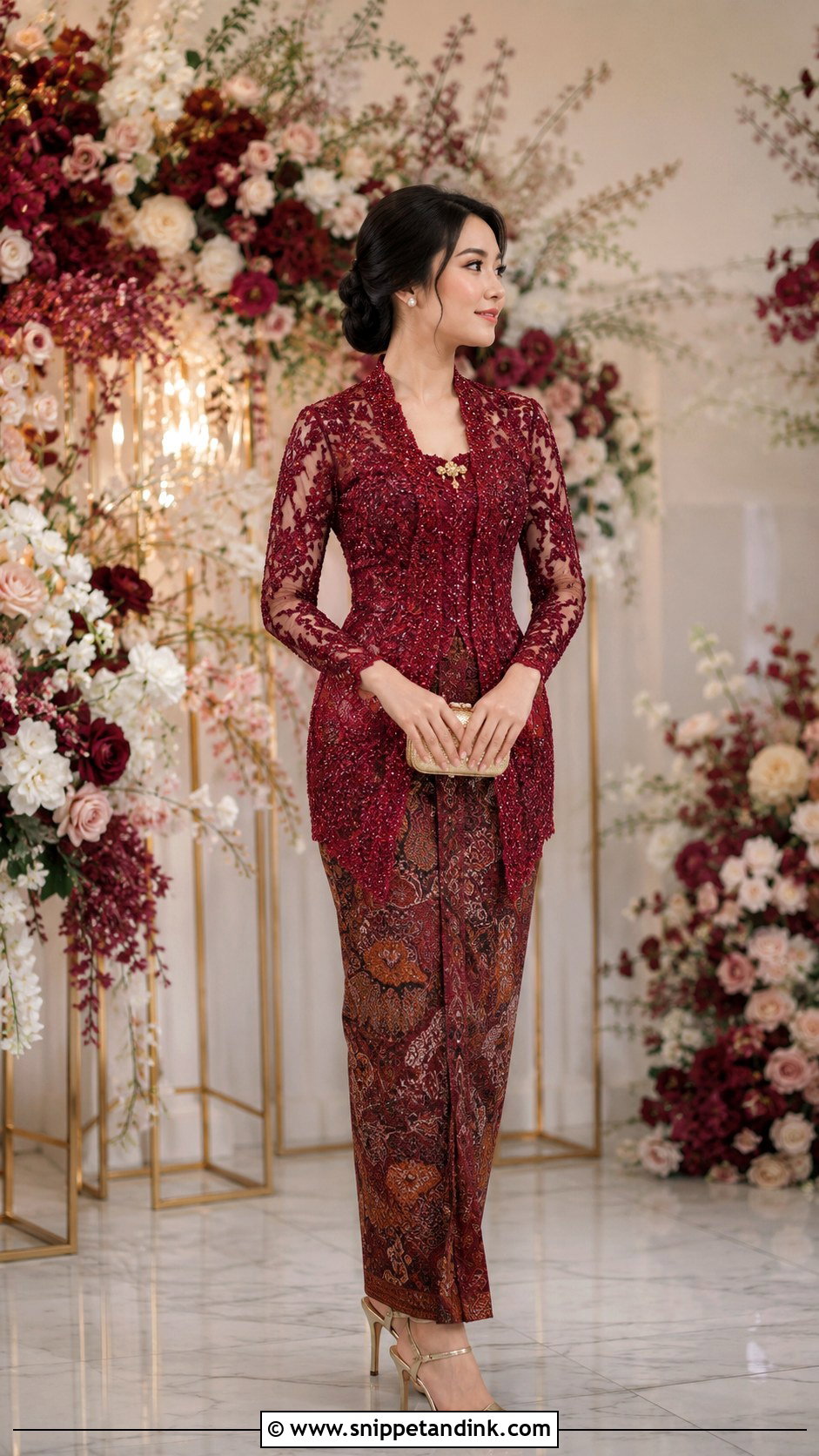
For Chinese-Indonesian families, a kebaya is a natural Sangjit choice that honours both sides of the heritage. A fitted maroon lace kebaya top with a matching batik or satin skirt looks formal without shouting, and gold accessories suit it well. Kebaya tops are fitted close to the body, so a tailor who knows the cut makes a real difference at the waist and sleeves. If the top is beaded, keep jewellery small. Pointed heels and a little clutch finish it.
14. Sangjit Pastel Kebaya Dress
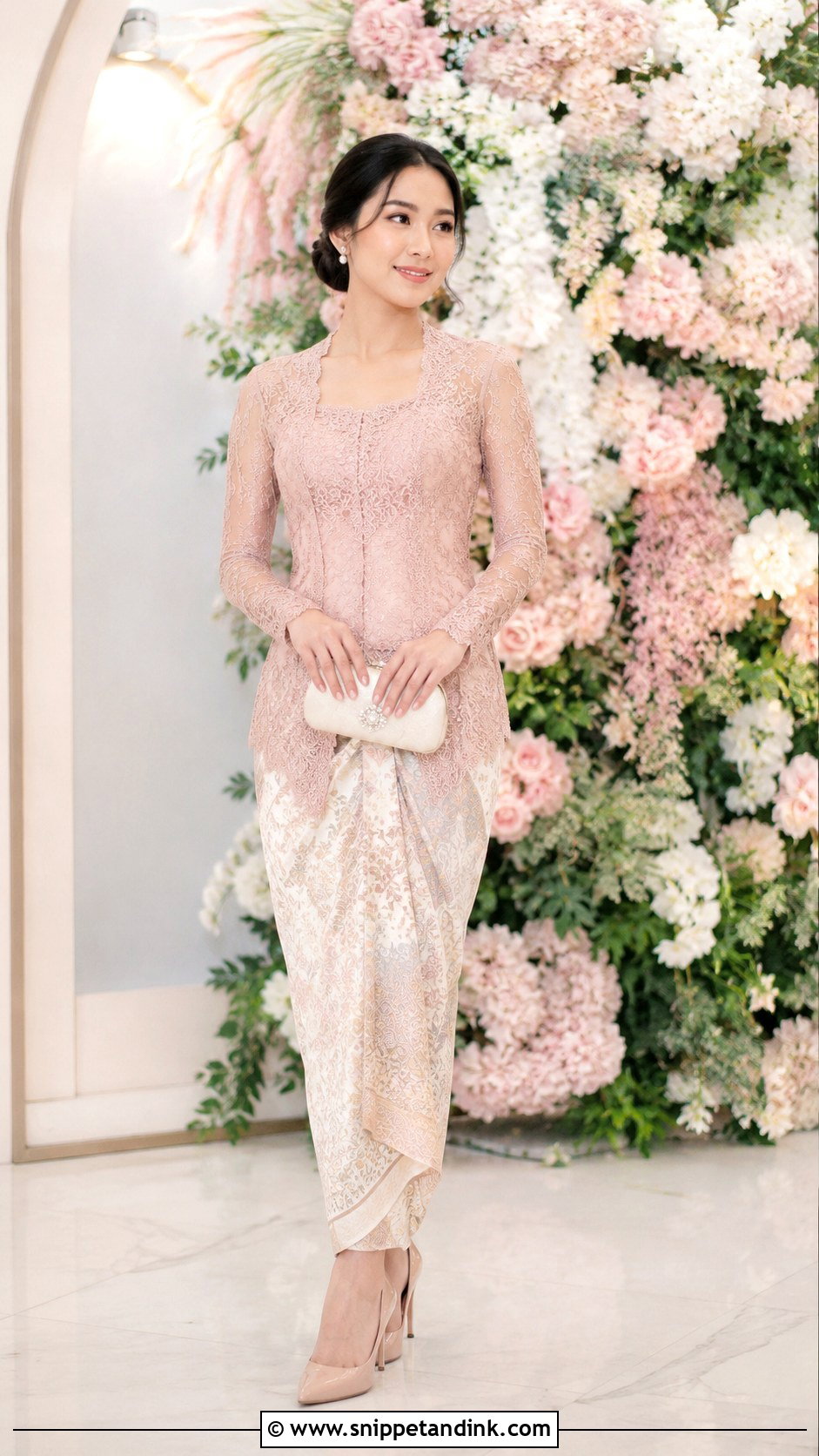
A pastel kebaya dress in blush, powder blue, lilac or champagne suits daytime ceremonies and soft floral decor. Pair a lace kebaya top with a fitted batik, satin or songket-inspired skirt, depending on formality. Batik skirts are often cut quite narrow, so check that you can step up onto a raised platform or kneel comfortably before the day. Nude heels and pearl earrings keep it classic for long family photo sessions.
15. Sangjit Modern Qipao Mini Dress
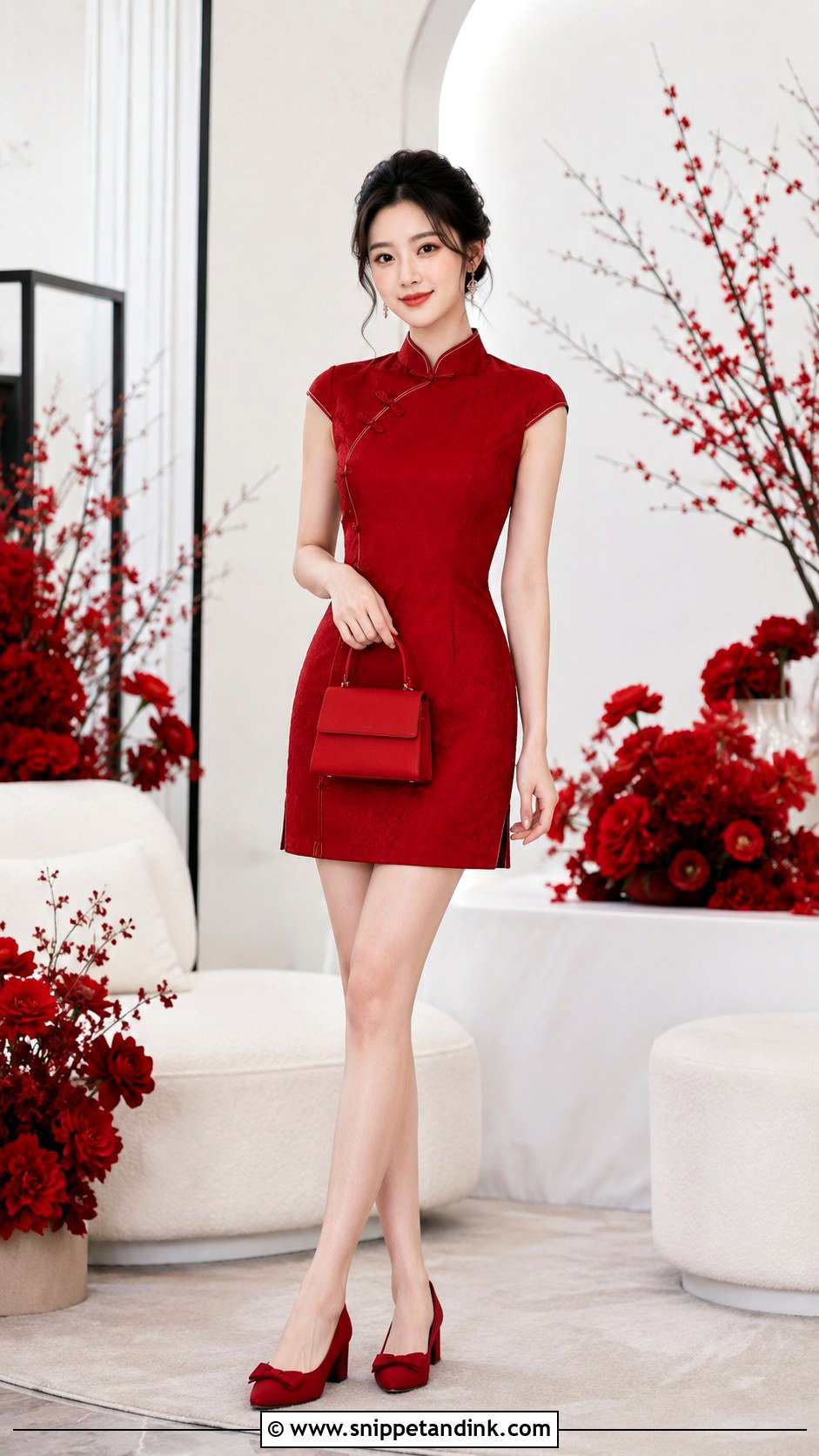
A qipao mini works for intimate or semi-formal Sangjit celebrations, but I’d only suggest it once you have read the room. Structure keeps it appropriate: a firm fabric, neat mandarin collar, covered buttons or subtle embroidery. A hem just above the knee is enough. Block heels or pointed pumps, a mini top-handle bag and soft waves complete it. If grandparents are traditional, keep this for the after-party instead.
16. Sangjit Midi Cheongsam Dress
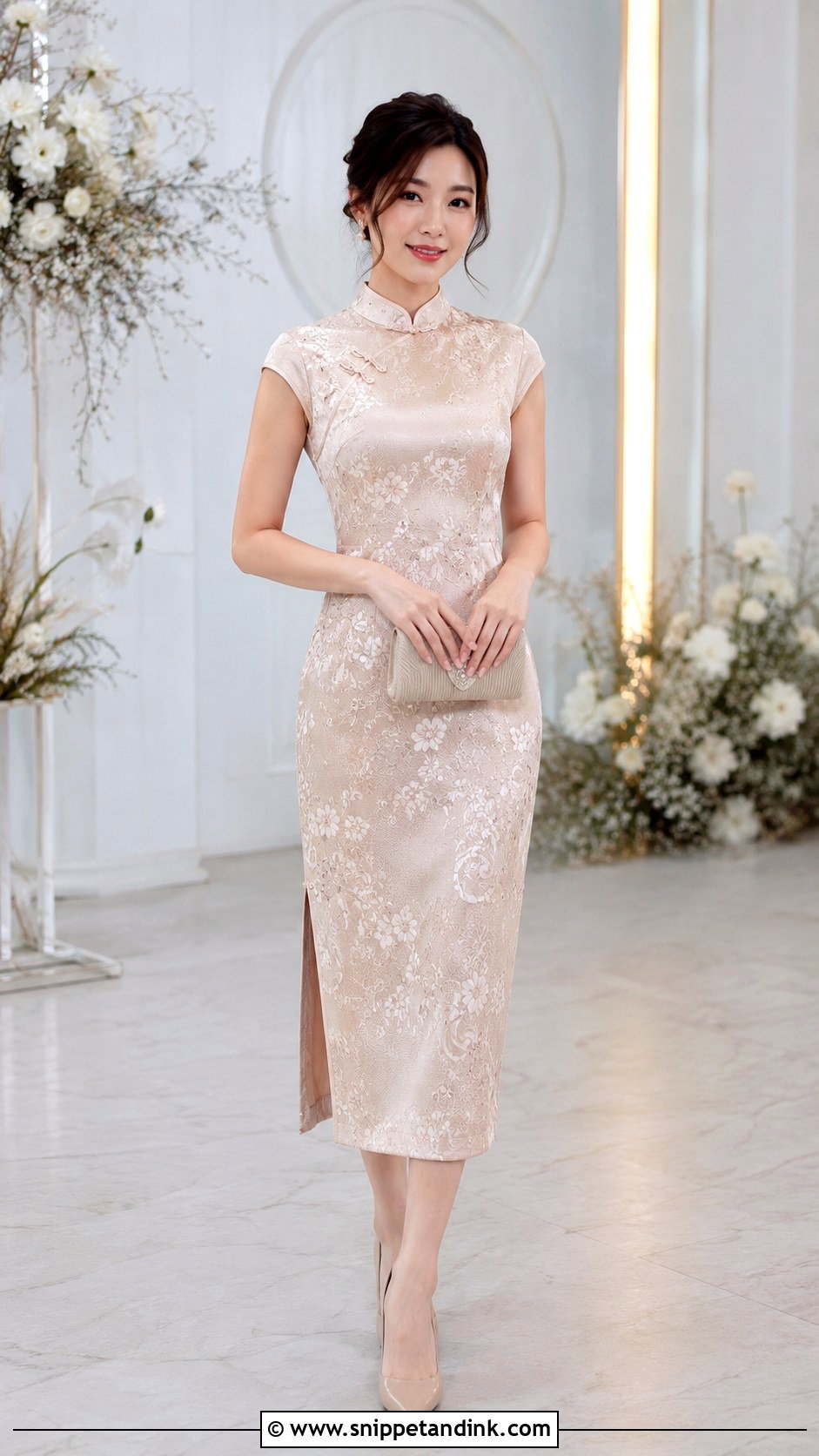
Midi is the length I land on most often. It looks formal enough for elders, keeps you off the hem when stepping over thresholds and around tray tables, and suits most figures. A fitted midi with a side slit gives a long line; an A-line midi adds room at the hip. Choose the colour by your theme. Pointed heels, a small clutch and neat jewellery are enough.
17. Sangjit Long Cheongsam Dress
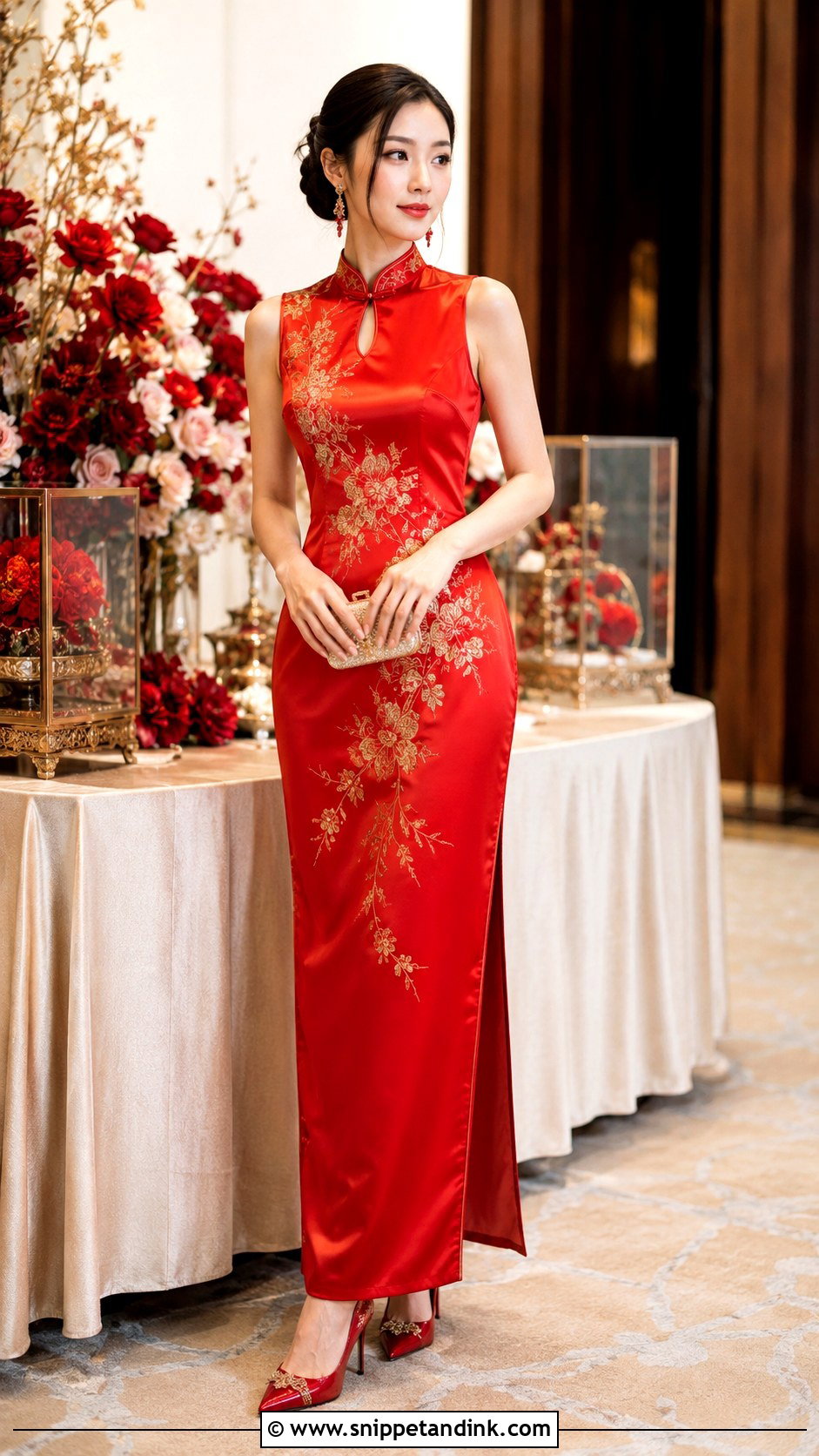
A floor-length cheongsam gives the most ceremonial feel, so it suits hotel venues, larger gatherings and styled photo sessions. Choose fabric that moves, like satin, a silk blend or soft brocade, or you’ll walk like you’re in a tube. A side slit is functional here as well as pretty; it should reach just high enough that you can climb steps without hitching the skirt. Slim heels and earrings that echo the dress detail finish it.
18. Sangjit A Line Qipao Dress
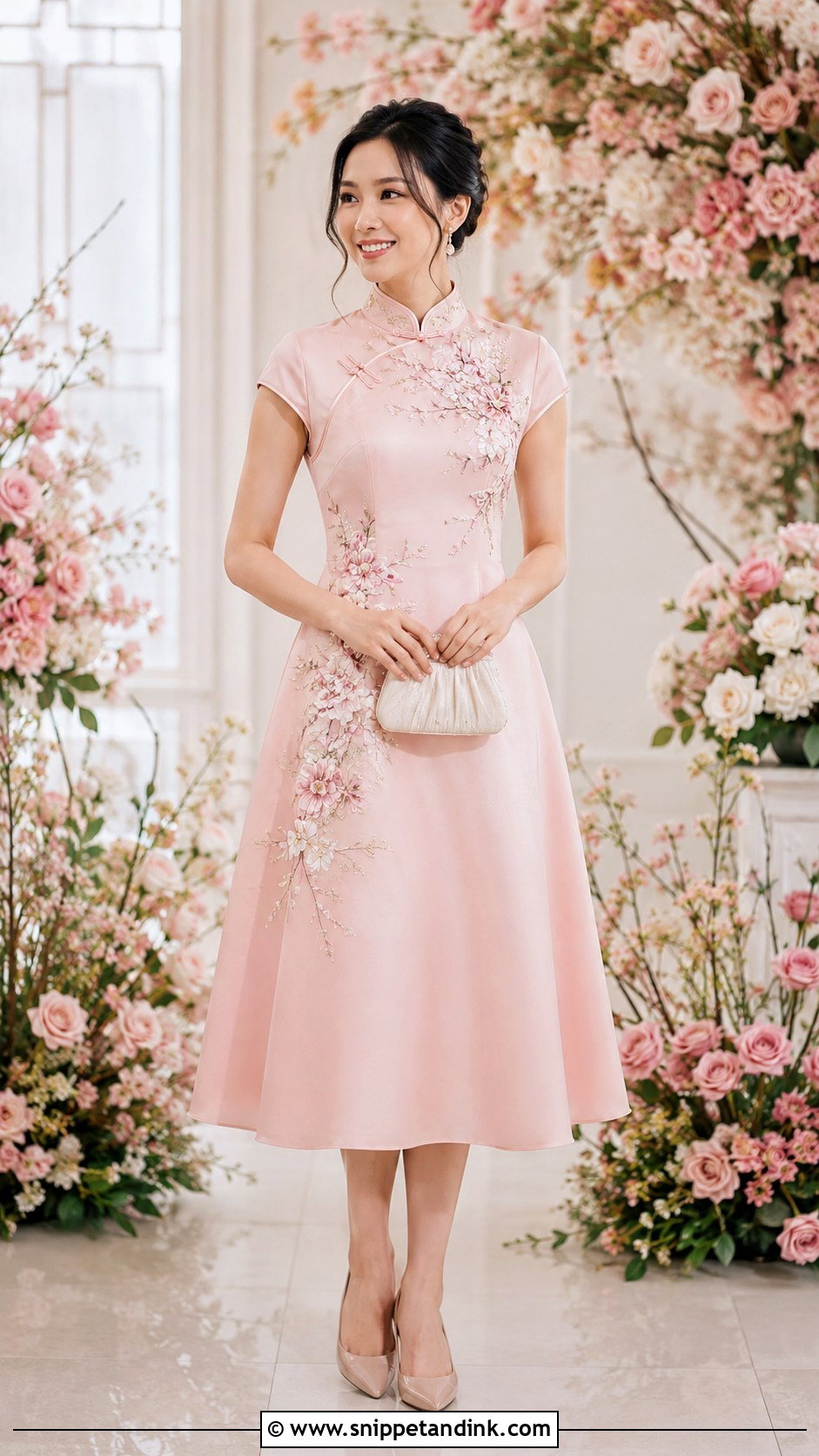
An A-line qipao dress keeps the mandarin collar and traditional buttons but releases the body below the waist. That makes sitting, standing, greeting guests and bending far easier, and it suits brides who want more room at the hips or thighs. Midi or tea length in lace, satin or jacquard looks best. Mid-height heels and pearl earrings keep it balanced.
19. Sangjit Mermaid Cheongsam Dress
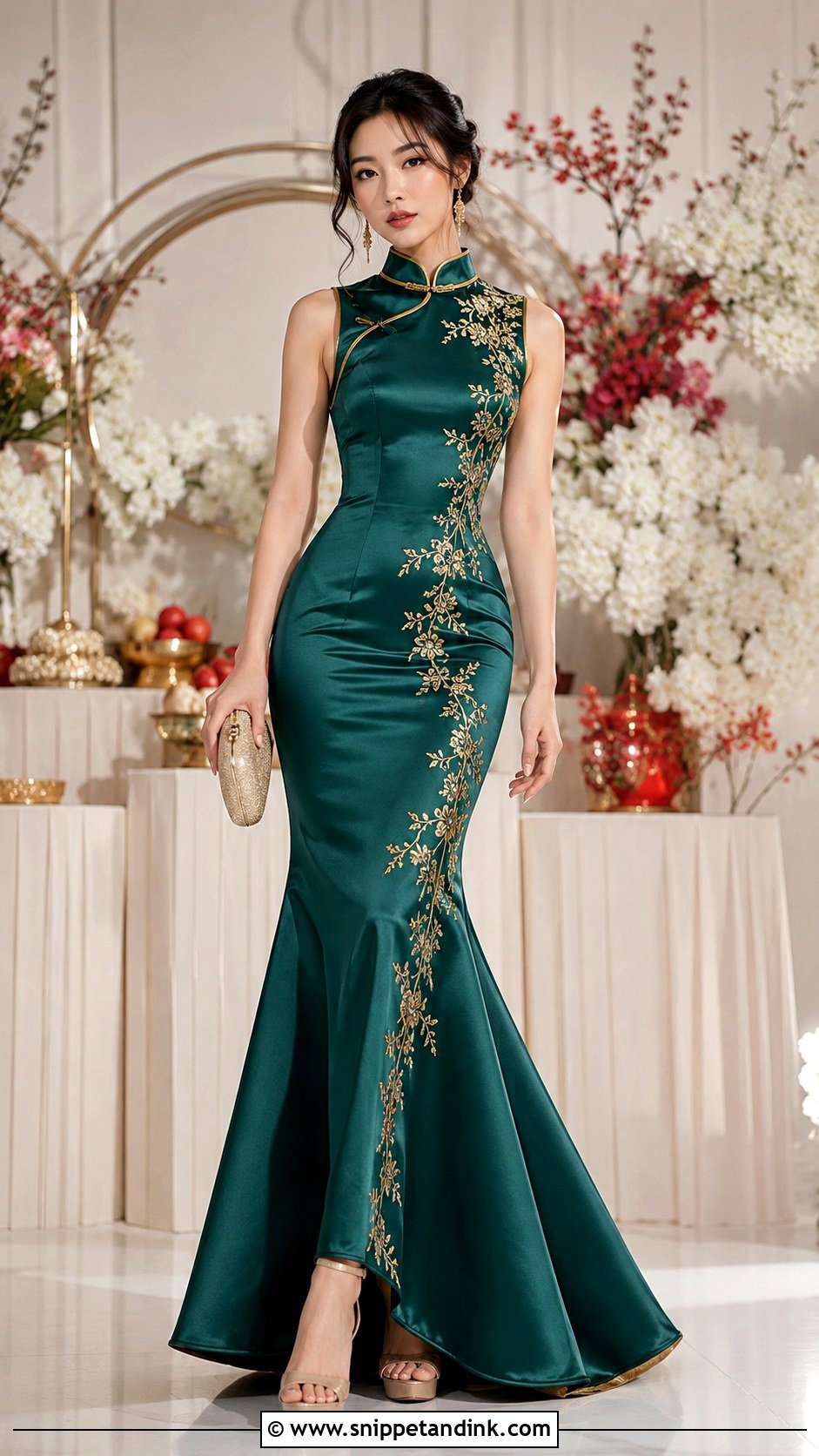
The mermaid cut is glamorous and suits formal venues, but it is the hardest to live in for a ceremony that involves a lot of bowing and receiving. I ask for the flare to start just at or slightly above the knee rather than lower, so you can actually walk. A structured satin, lace or brocade supports the shape. Tall heels, drop earrings and polished hair and makeup make it intentional. I’d suggest it more for a formal evening dinner than a morning tray ceremony.
20. Sangjit Off Shoulder Qipao Dress
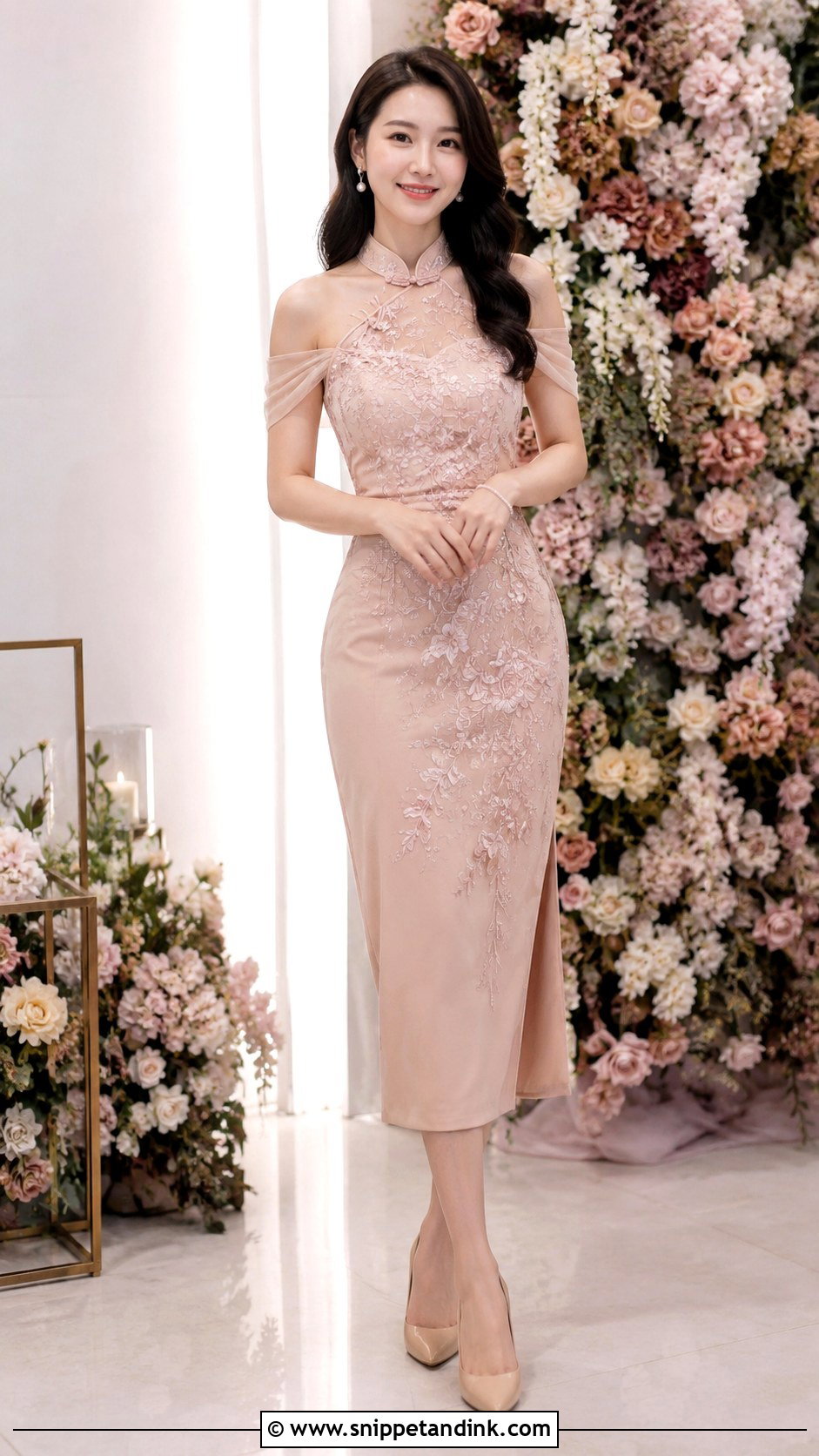
An off-shoulder qipao is a modern twist, and it only reads as Sangjit when other traditional details stay: a qipao bodice, frog buttons, embroidery or a side slit. Soft red, blush, champagne and emerald suit it. Leave the neck bare and let delicate earrings and a clean bracelet do the work. Check with family first; bare shoulders feel too casual to some elders at a formal betrothal.
21. Sangjit Sleeveless Cheongsam Dress
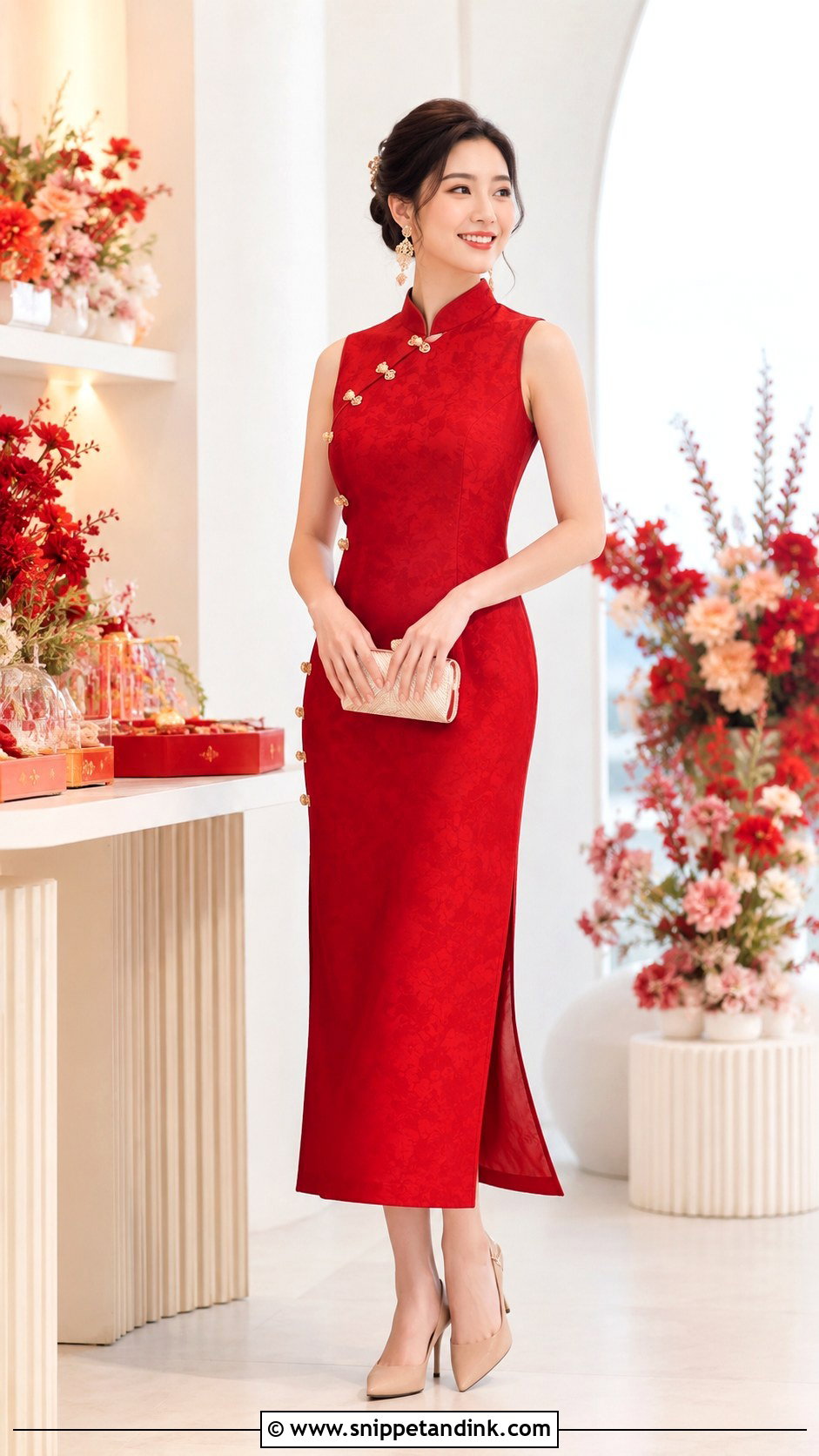
Sleeveless cheongsams suit warm weather and daytime ceremonies in houses without much air conditioning. The mandarin collar keeps them formal. Satin, lace and brocade change the formality; red and gold feel classic, blush and sky blue softer. Fit the armholes carefully: too large and they gape when you reach forward, too tight and they cut in. Statement earrings work if the dress is plain.
22. Sangjit Long Sleeve Qipao Dress
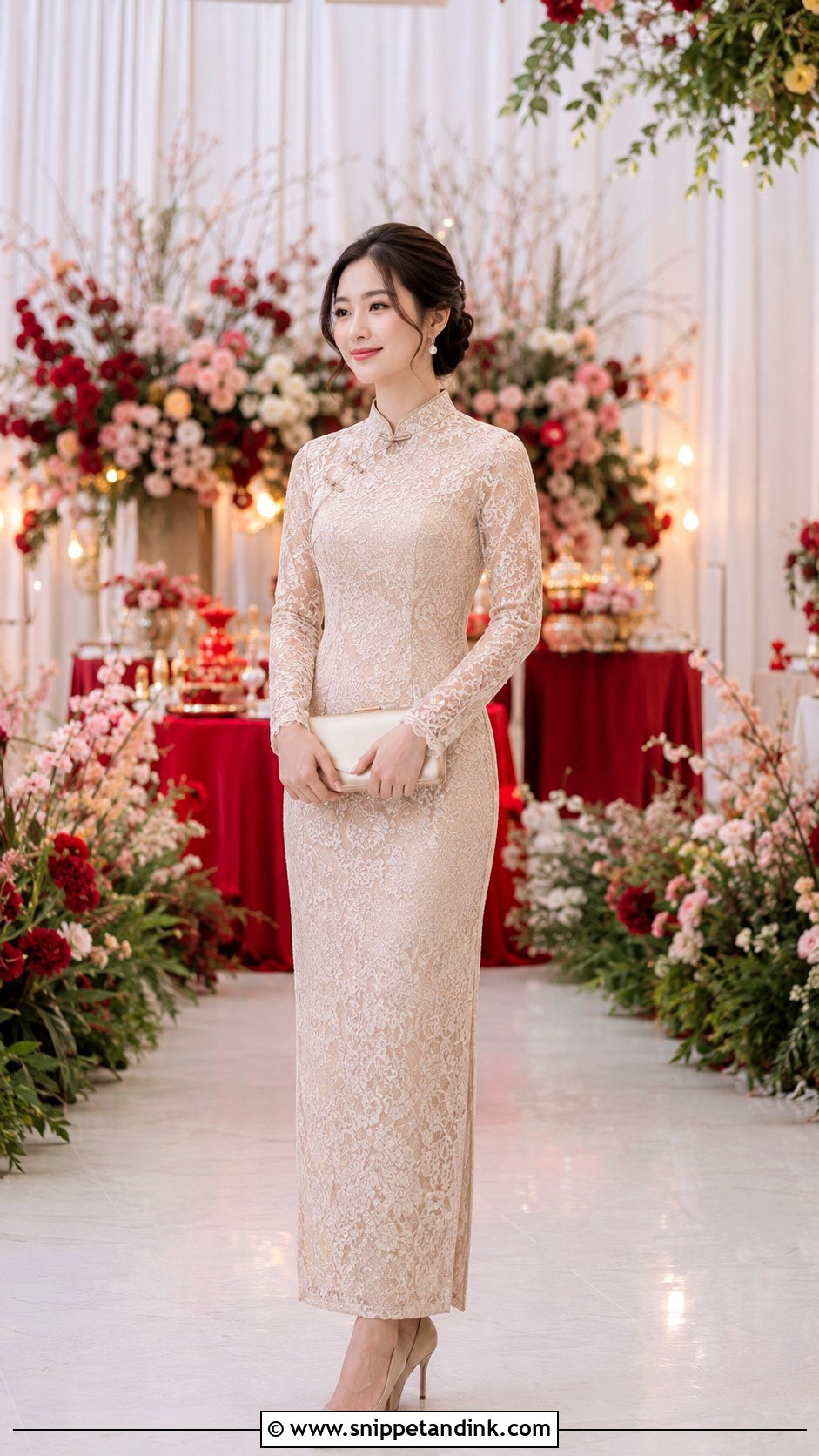
Long sleeves give modest coverage and stay comfortable in cool venues. Lace sleeves are lighter and more detailed; satin or brocade sleeves feel more structured. Choose a fitted midi or long gown length, then pair covered heels, pearl earrings and a sleek clutch. I always have the bride reach out with both arms during the fitting, as if receiving a tray, because fitted sleeves can pull the whole bodice up.
23. Sangjit High Neck Cheongsam Dress
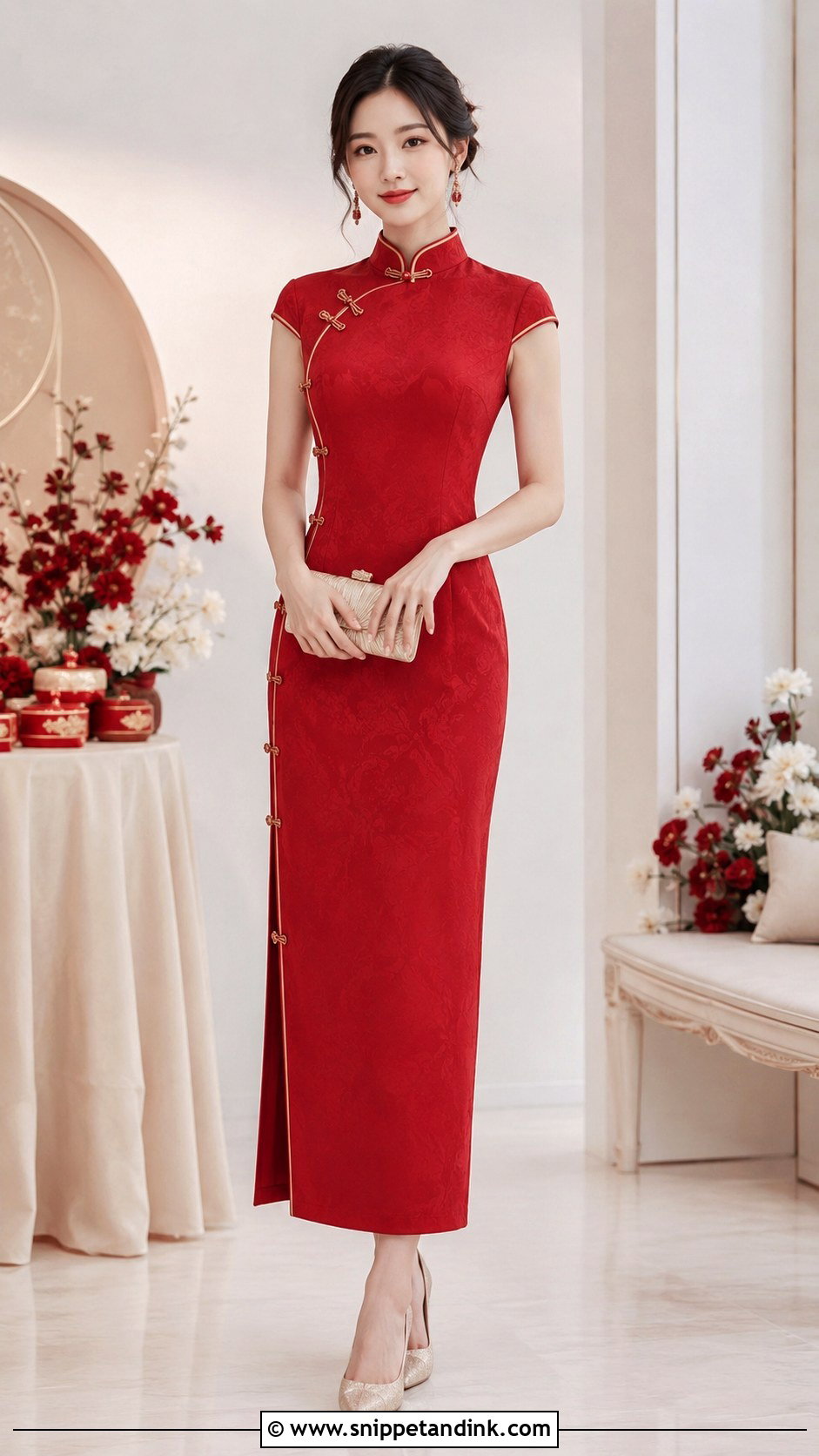
The high collar frames the face, which is why I love it with an updo, a soft bun or tucked-back waves. Frog buttons, subtle embroidery or lace details make the collar the focal point, so skip the necklace and wear drop earrings. Red satin, champagne brocade, emerald jacquard and blush lace all suit it. Collar height should match your neck length; a long neck carries a tall collar, while a shorter neck looks better with a lower one.
24. Sangjit Floral Qipao Dress
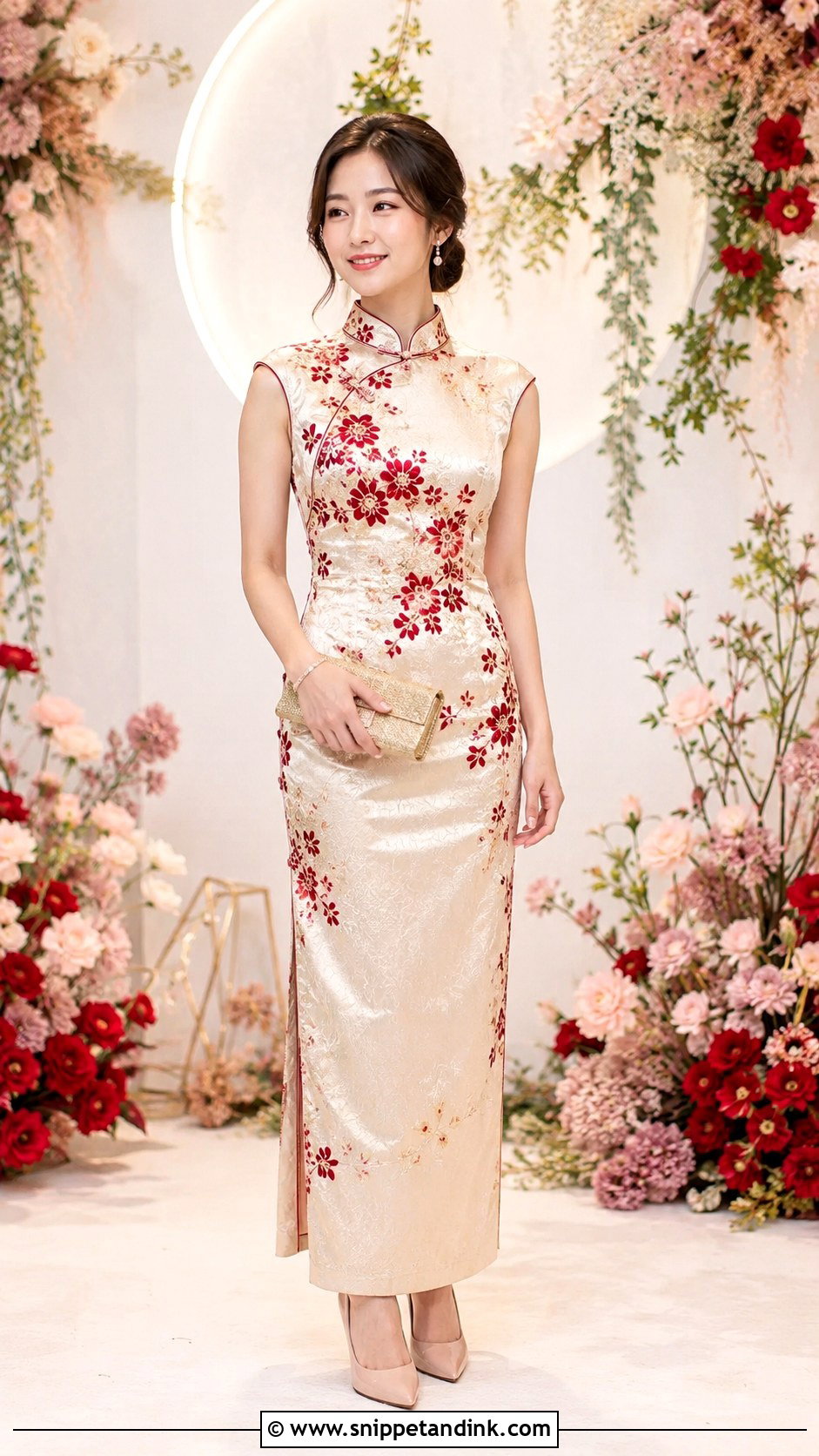
Florals soften the cheongsam shape. Embroidered or jacquard florals and silk-style prints keep it formal, while casual cotton prints do not. Red on champagne, pink on blush and gold on emerald all photograph well. I match the heels to one colour in the pattern and pick earrings that stay out of the way. A nude, gold or pearl clutch keeps it cohesive, and it suits daytime venues and garden-style decor.
25. Sangjit Embroidered Cheongsam Dress
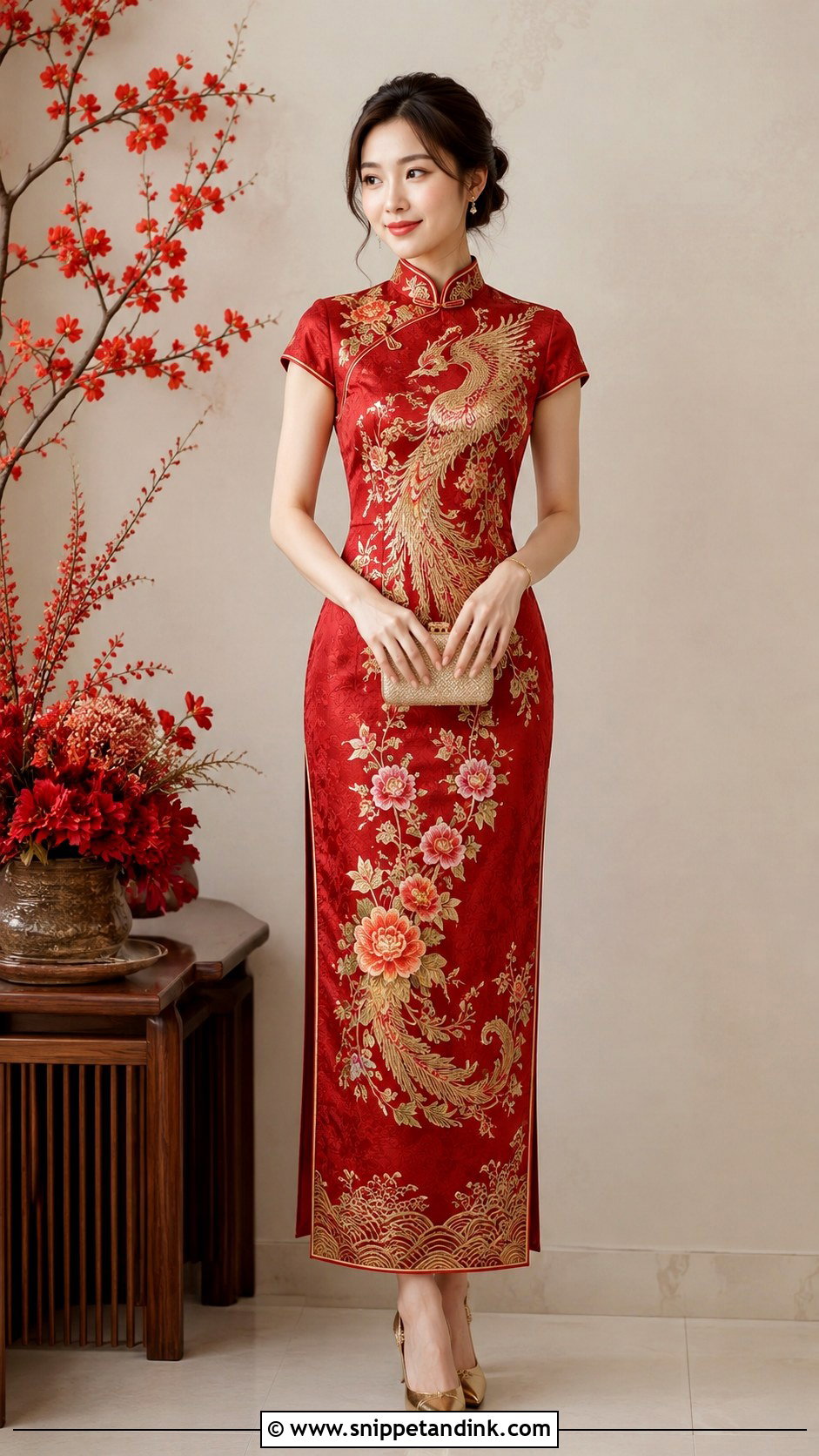
Embroidery carries meaning in Chinese dress. Peonies stand for prosperity, phoenixes for the bride, and paired motifs for the couple, so it’s worth asking what the pattern on your dress represents. The best placement follows the shape of the dress: around the collar, bodice, hem or slit. Red and gold is classic; tone-on-tone champagne or blush is quieter. Clean heels and a simple clutch let the stitching stay the highlight.
26. Sangjit Beaded Qipao Dress
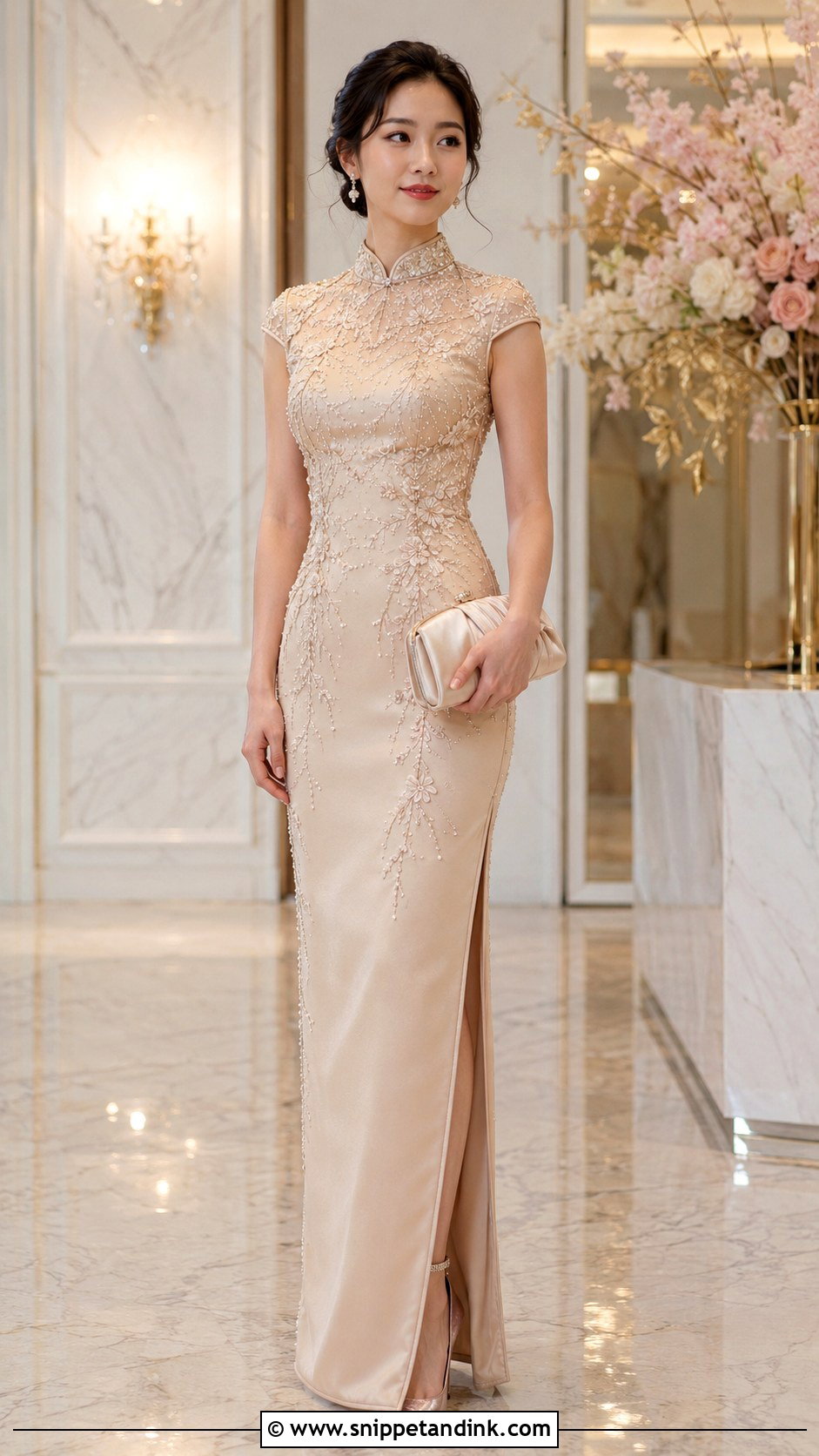
Beading adds sparkle best when it is placed, around the collar, waist, sleeves or along a floral motif, rather than covering the whole dress. Champagne, gold, blush and deep red all suit it. Simple metallic heels and small earrings keep it from looking busy, and smooth hair lets the beading look expensive. Beaded qipaos are heavier than they look, so check the shoulder seams can carry the weight for several hours.
27. Sangjit Two Piece Cheongsam Set
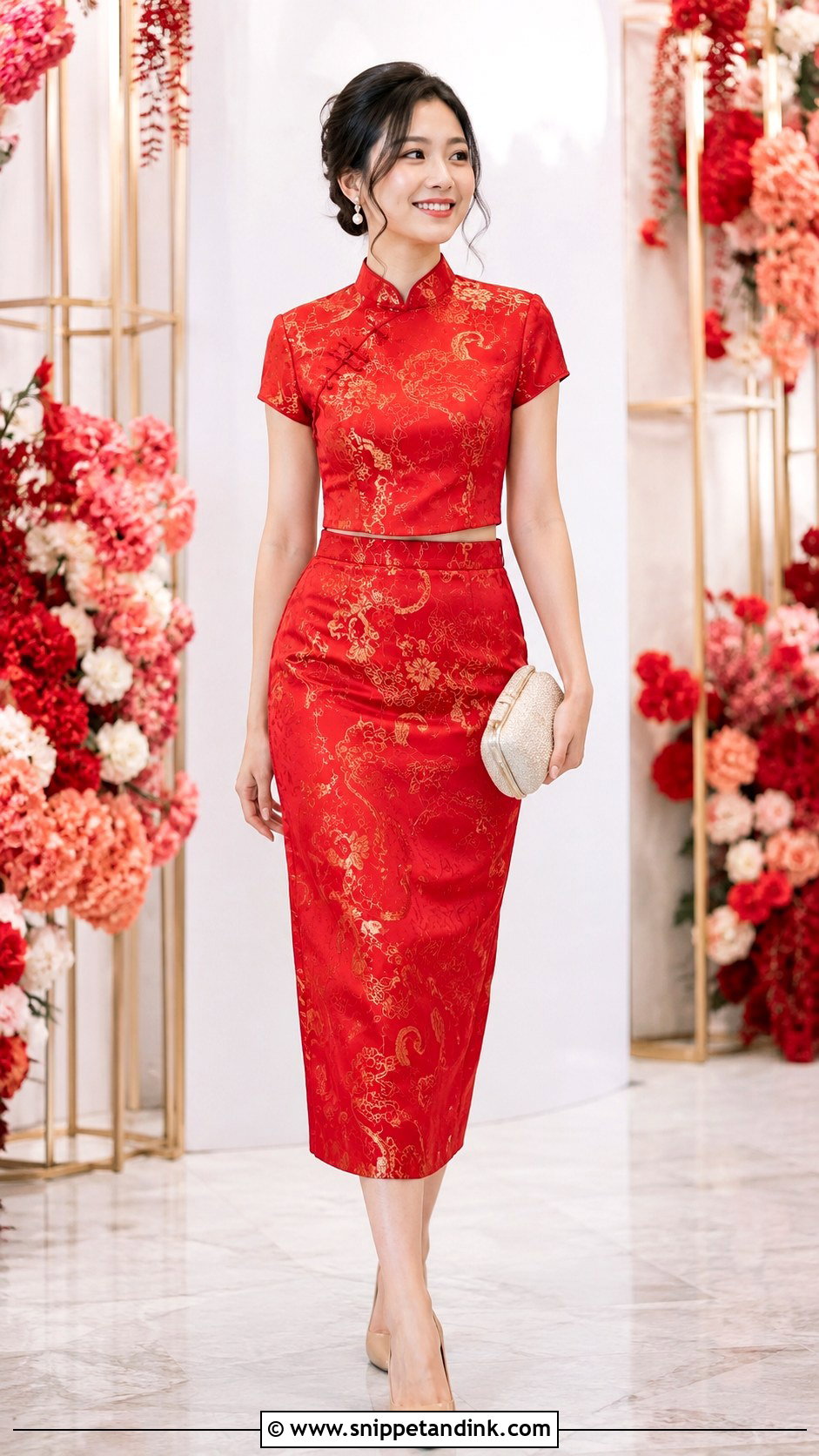
A two-piece set, usually a mandarin-collar top with a matching skirt, gives structure up top and freedom below. A fitted top with an A-line skirt is balanced; a cropped top with a high-waisted midi skirt is more modern. Buying separates also lets you size top and bottom independently, which helps if your measurements differ. Red, champagne, pink and emerald all suit it.
28. Sangjit Qipao Dress With Robe
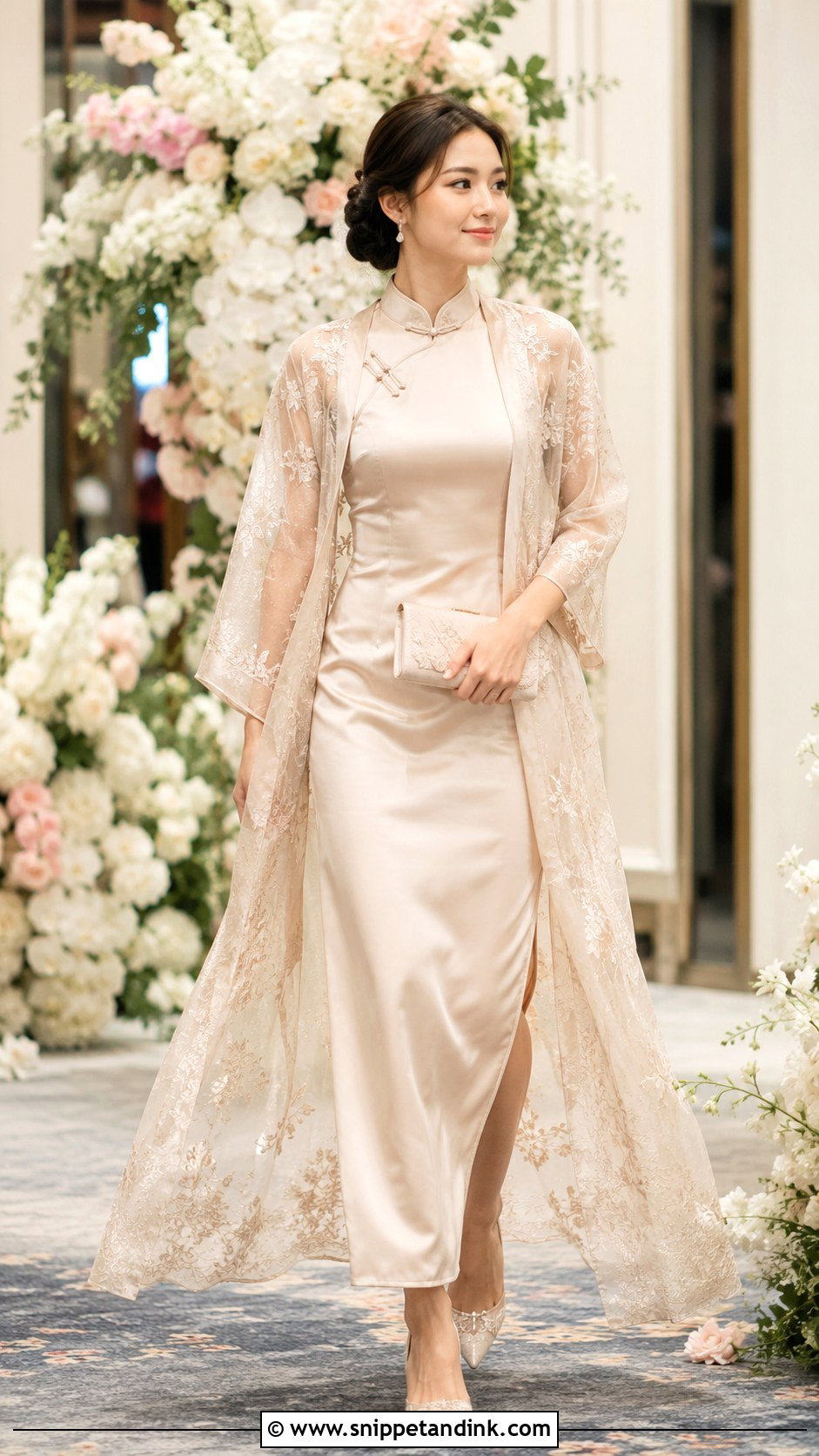
Adding a robe turns a simple qipao into something more ceremonial. A sheer embroidered robe, a light organza layer or a hanfu-inspired outer piece over a satin or lace dress gives movement for entrances and photos. Keep colours related: red on red, champagne with gold, blush with rose embroidery. The robe can come off once the formal part ends, which is a practical bonus in a warm room.
29. Sangjit Jumpsuit With Qipao Collar
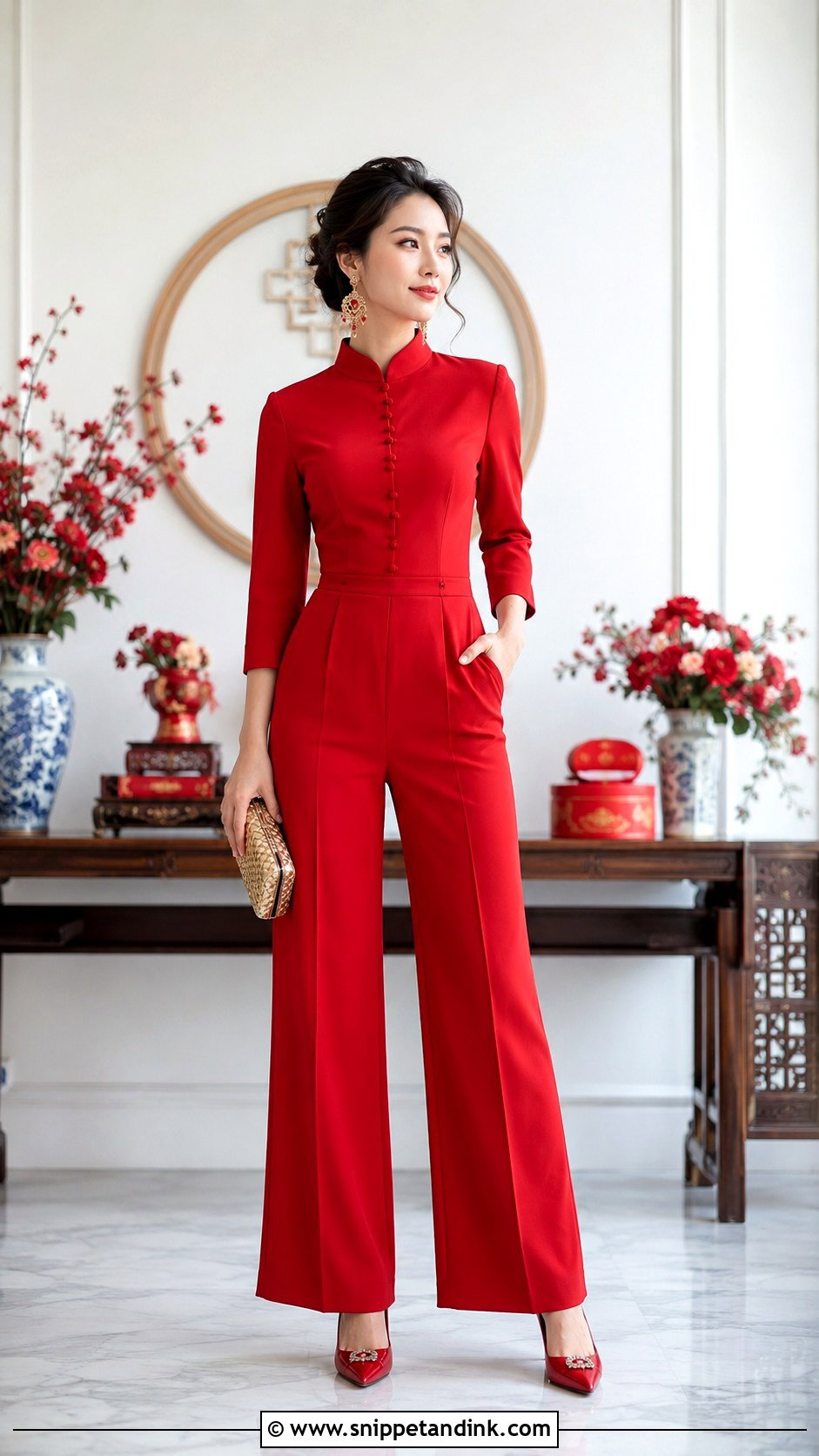
For brides who prefer trousers, a tailored jumpsuit with a qipao collar keeps the cultural detail while letting you move freely. Satin, crepe or jacquard keep it formal, and a fitted bodice, covered buttons and wide-leg pants give a strong line. Red, ivory-red, champagne or emerald suit the day. Pointed heels and statement earrings sharpen it. I’d choose a side zip if possible so you don’t need help every time you leave the room.
30. Sangjit Mother Of The Bride Cheongsam Dress
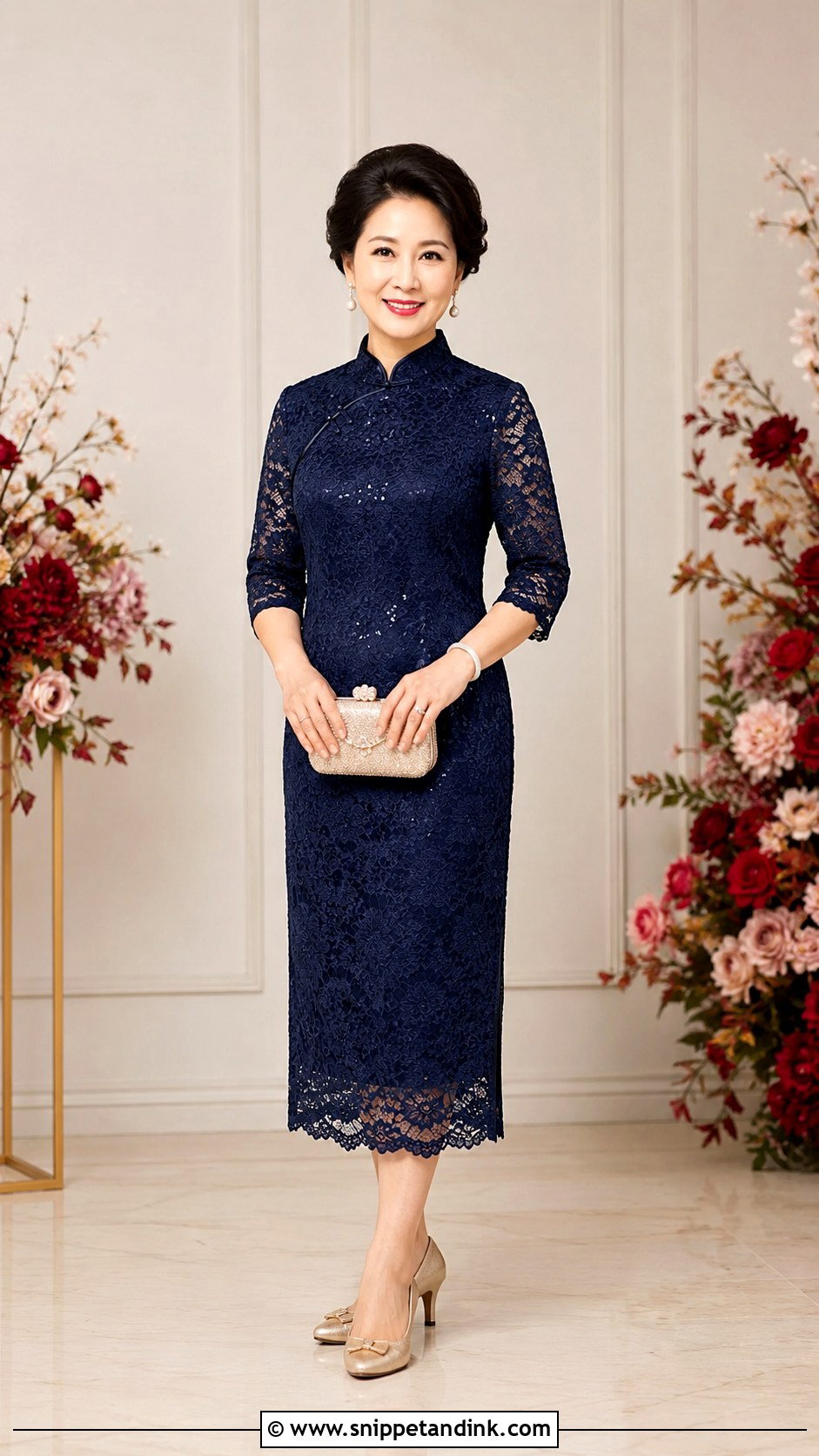
The mother of the bride cheongsam should feel respectful and comfortable, and it should leave the bride as the focus. Navy, burgundy, emerald, champagne, plum and dusty rose all work. A midi or ankle-length cut with sleeves looks refined. In lace, brocade or satin, with low to mid heels, pearl earrings and a classic clutch, it carries her through hours of hosting. I usually coordinate the mother’s shade with the bride’s so they look related in portraits without matching.
How a Cheongsam Should Fit for a Morning of Bowing and Trays
A cheongsam is cut close to the body, and the Sangjit itself is surprisingly physical: you’ll greet arrivals at the door, bend to receive and inspect trays, sit for tea and photos, and stand again many times. A dress that fits perfectly standing still can fail at all of those moments.
My fitting checklist
I have the bride sit down, lean forward with arms extended as if accepting a tray, and climb a step. While she does that I watch three places. The side seams at the hip shouldn’t pull into horizontal creases. The frog buttons at the bust shouldn’t gap. And the slit should open just enough to step without riding up when seated.
Leave time for tailoring
Made-to-measure cheongsams usually take several weeks, and even a ready-made one often needs taking in at the waist or adjusting at the collar. I’d buy at least a month ahead and plan one final try-on a few days before, wearing the exact shoes and undergarments, so the hem and slit sit where they should on the day.
On the morning itself, I keep a small kit in my bag: a needle already threaded in the dress colour, a few spare snaps for the frog buttons, clear nail polish for a run in lace, and a lint roller for dark velvet. Frog buttons are the part most likely to loosen, usually at the bust after the first round of hugs.
Red Still Leads, but It Is Not the Only Answer
A Sangjit dress has to suit the venue, satisfy the family and let you move through a long morning of greetings and trays. A red cheongsam will always carry the meaning, yet champagne, pastel kebaya sets, emerald, embroidered cuts and tailored jumpsuits can feel just as right when they include an auspicious touch. Prioritise fit, then fabric, then accessories, and keep the look polished rather than busy when the dress already has lace, beading or brocade. Talk to your family about colour early, and you’ll arrive at a dress that feels like you and pleases the elders too.
You'll Like These Ideas:


Leave a Reply