
A regal wedding dress has very little to do with tiaras and almost everything to do with structure. What makes a gown look royal in a church aisle or a ballroom is a bodice that holds its line, a fabric heavy enough to fall cleanly, and one dramatic feature that the rest of the outfit supports instead of fights. You do not need a palace or a twenty-foot train. A satin ball gown, a lace sleeve dress, a pearl-detailed bodice or a sleek sheath can all get there with the right tailoring and finishing pieces. I’ve written each idea below the way I’d explain it at a fitting: what it does well, and where it tends to go wrong.
What Makes a Gown Read as Royal in Person
When a bride tells me she wants something regal, I start by asking her to describe a photo she loves. Usually what she is responding to is not ornament but control: the line of the bodice, the way the skirt falls, the absence of anything fussy. Three things create that effect more than any other.
- Structure in the bodice. Boning, a waist stay and a properly fitted torso stop the dress from shifting as you move. A bodice that has to be tugged up never looks regal.
- Fabric with weight. Satin, mikado, heavier crepe and lined lace drop in clean lines. Lightweight chiffon and unlined lace move beautifully, but they read as romantic, not formal.
- Coverage that matches the venue. Cathedrals and historic houses suit covered shoulders or sleeves; a modern ballroom can take a strapless bodice with gloves.
If a gown has these three, a simple veil and pearl earrings will finish it. If it lacks them, no tiara will fix it.
1. Royal Ball Gown Wedding Dress
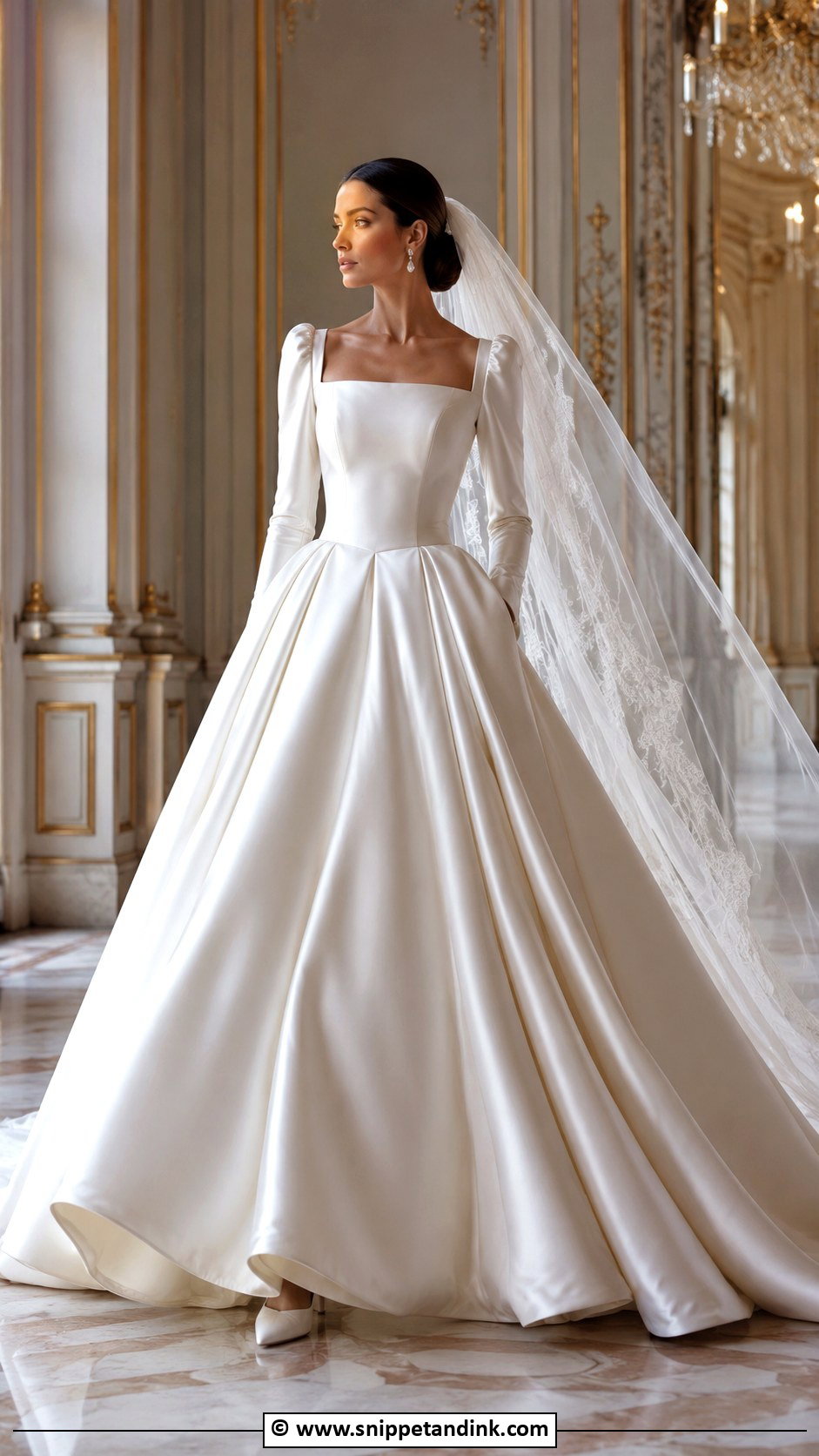
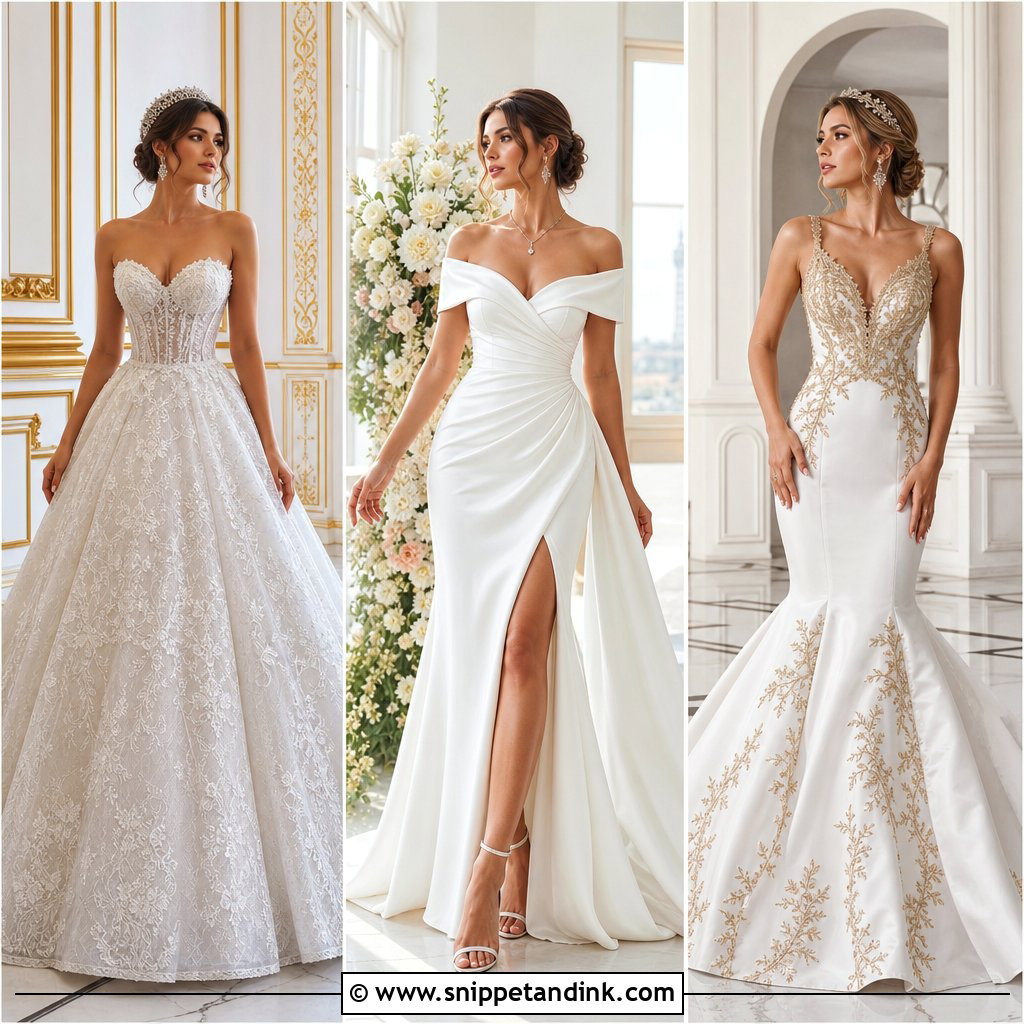
A royal ball gown wedding dress is the grand-entrance option, and the full skirt does most of the work. What makes or breaks it is the waist: the bodice has to be boned and fitted closely enough that the weight of the skirt hangs from your waist, not your shoulders. Satin, mikado and organza hold volume; tulle gives a softer cloud. A cathedral veil and pointed satin pumps finish it. I’d always ask about doorway widths and car space before ordering one, because a full crinoline is wider than most brides expect.
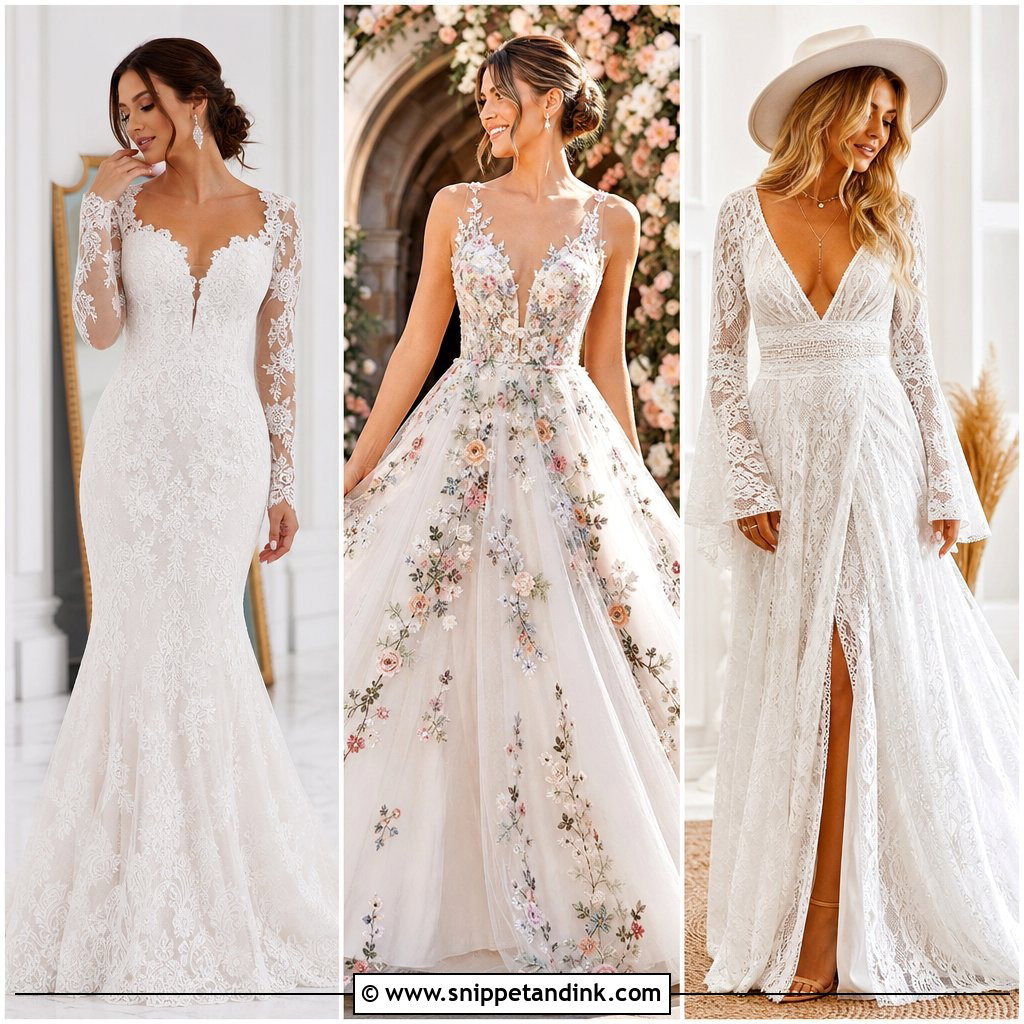
2. Long Sleeve Lace Royal Wedding Dress
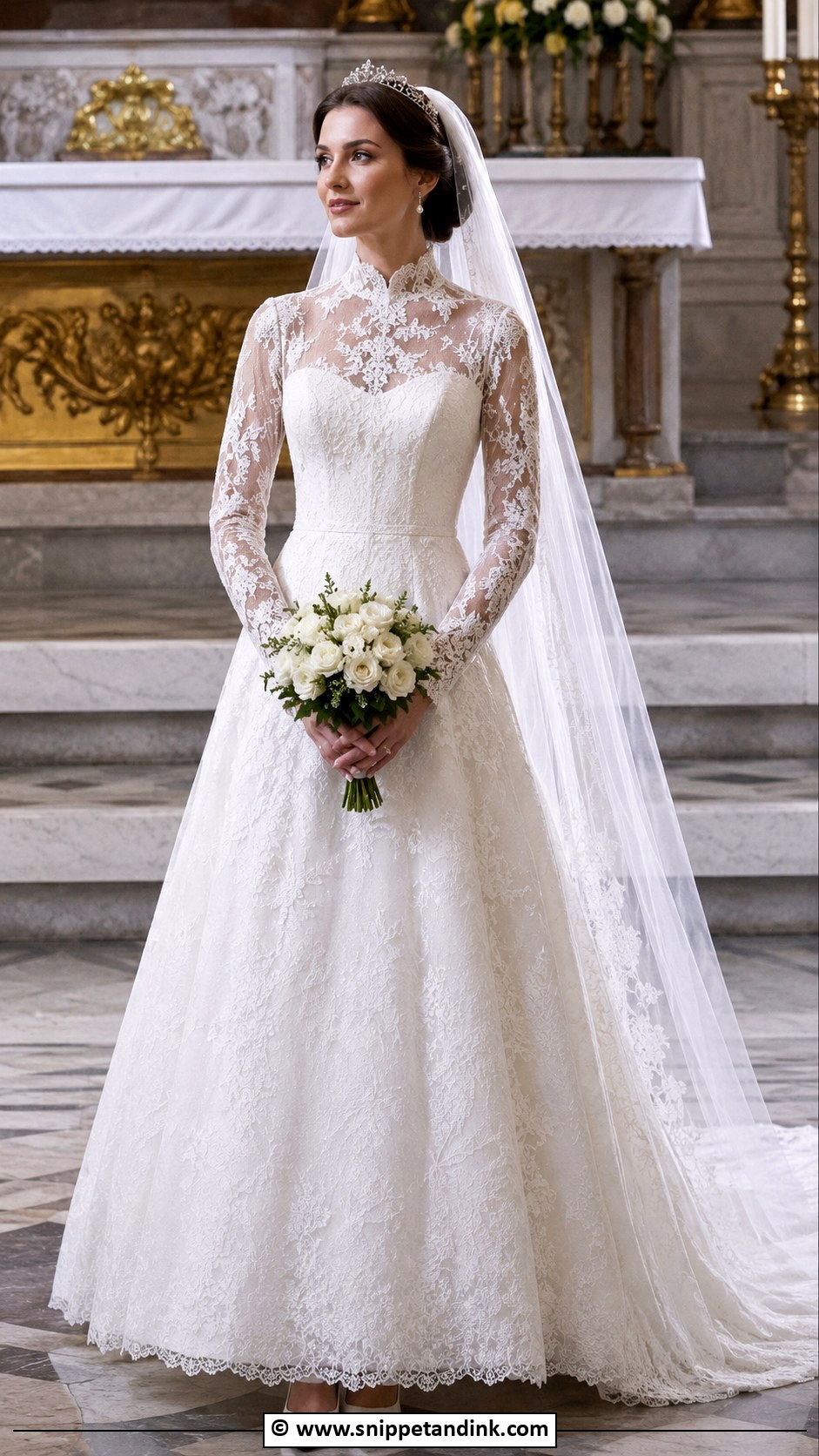
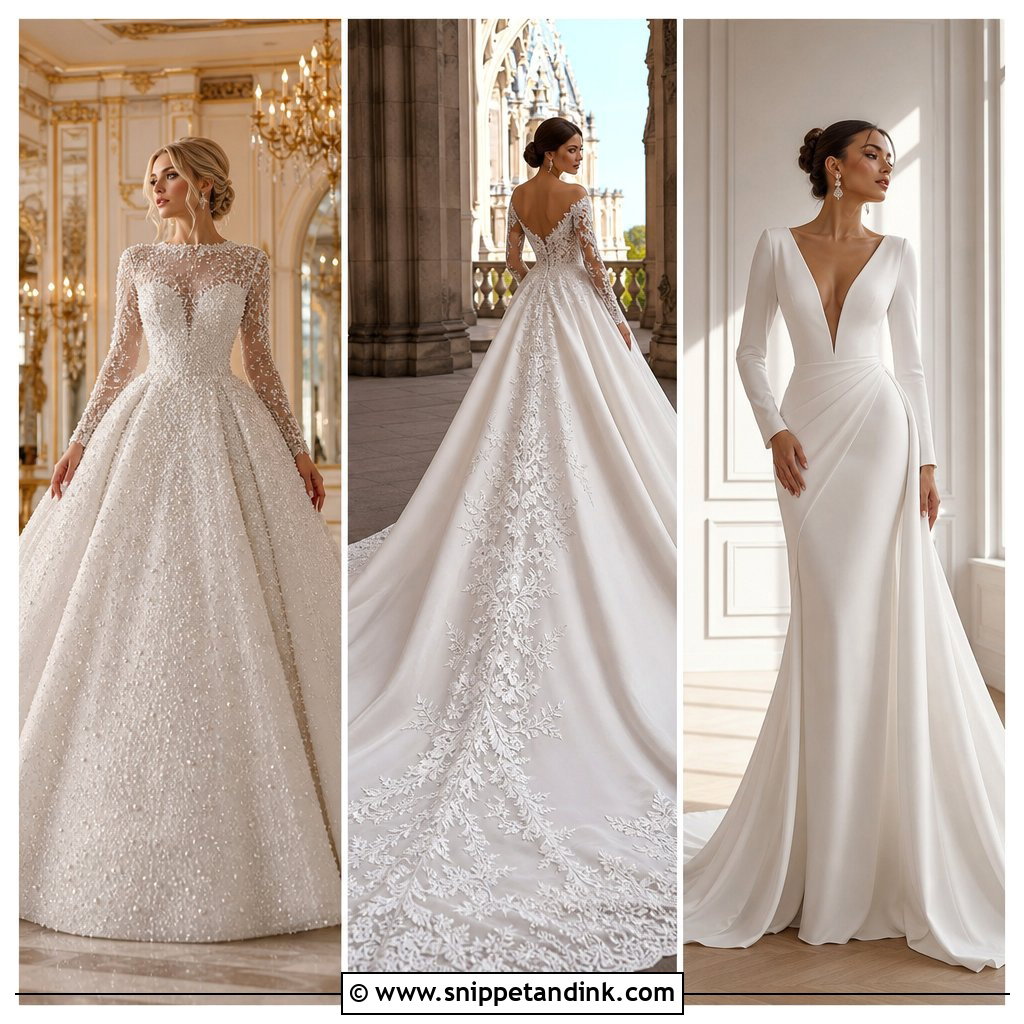
Long lace sleeves give coverage and still look delicate, especially with scalloped or vine-pattern lace. I prefer lace laid over satin lining, which gives the pattern depth in photos instead of letting it disappear against skin. The sleeves are the tricky part of the fitting. Lace has little stretch, so I check that you can lift your arms to hug and to hold a bouquet at chest height without the shoulder seam pulling. A low bun keeps the neckline and sleeves visible.
3. Satin Royal Wedding Dress
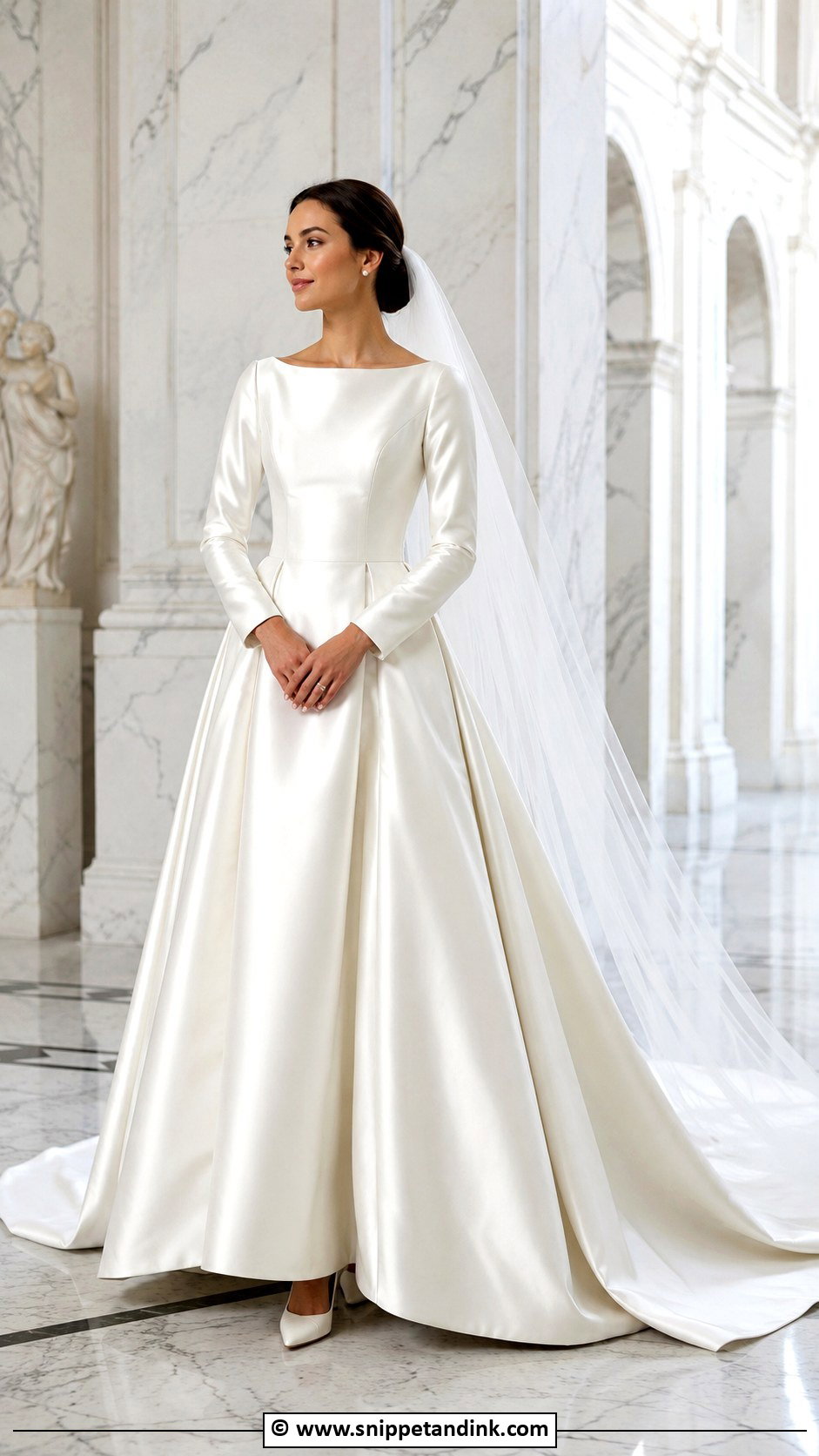
Satin is the fabric I reach for when a bride wants grandeur without embellishment. It reflects light, so the cut becomes the statement, and every seam shows. That is also its weakness: satin highlights any wrinkle or pulled seam, and heavier satins crease when you sit in the car. A square, portrait or strapless neckline with built-in support all suit it. Keep the veil edge clean and the bouquet soft so nothing competes with the sheen.
4. Off Shoulder Royal Wedding Dress
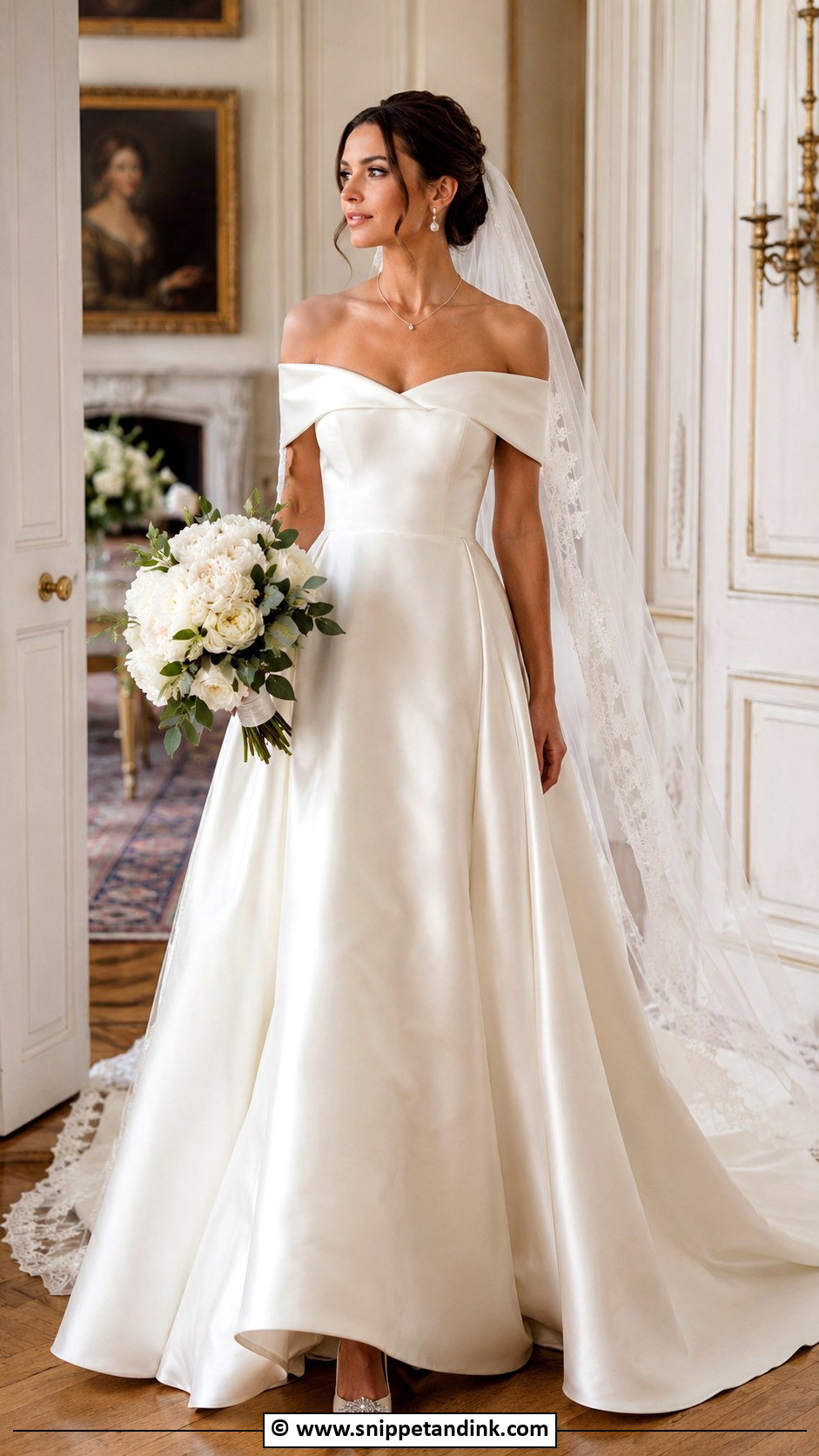
An off-shoulder neckline frames the collarbone the way a portrait does, which is why it feels formal and romantic at once. The engineering matters more than people think. The bodice needs internal boning and a grip band, otherwise the sleeves slowly creep up the arm and you spend the evening pushing them down. Satin and mikado hold the line better than soft lace. Wear hair up or swept to one side to show the shoulders.
5. High Neck Royal Wedding Dress
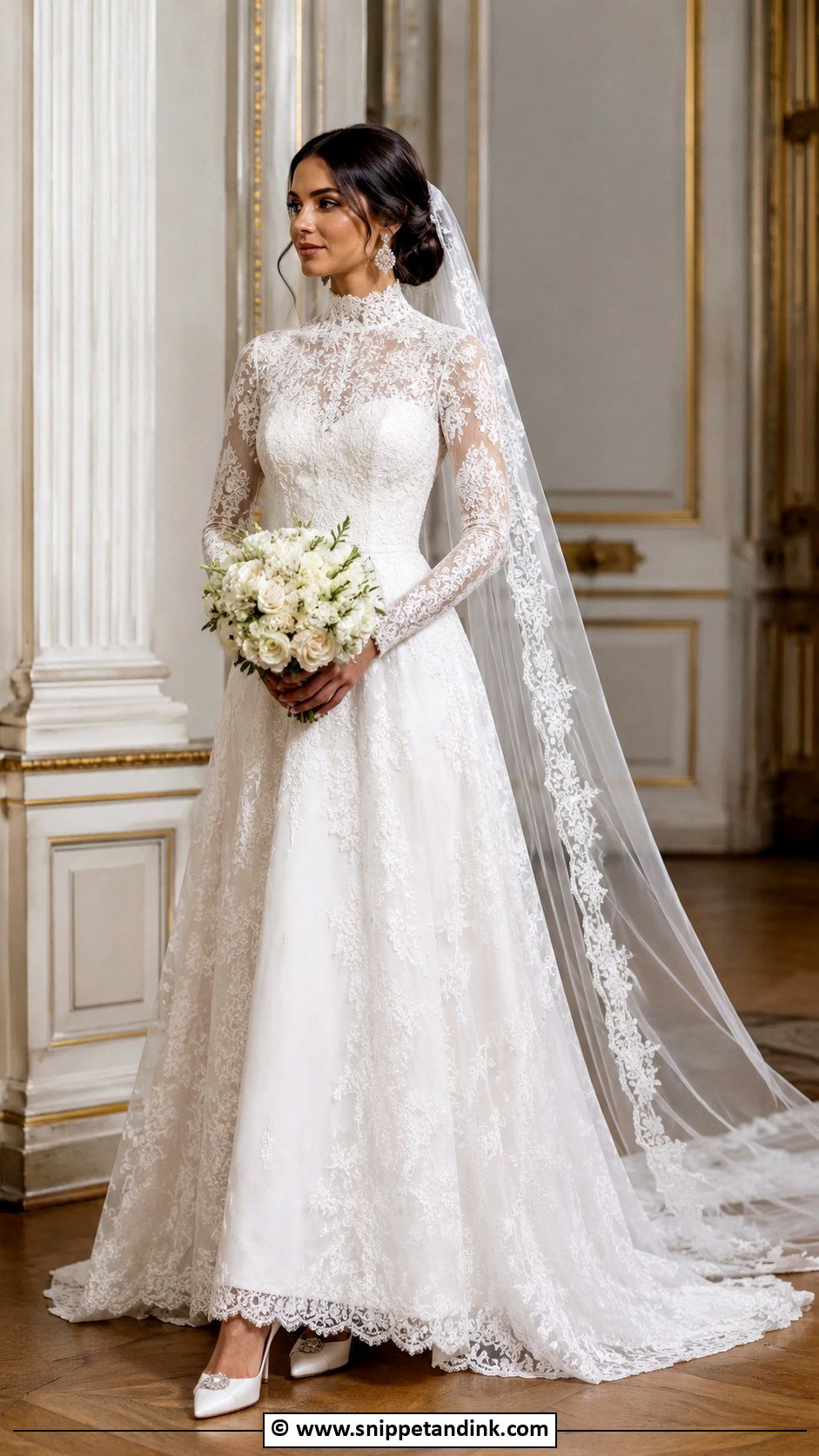
A high neck adds a quiet kind of drama, and it suits brides who want coverage with presence. Lace, crepe and illusion tulle all work. I tell brides to skip necklaces entirely here and use earrings, because anything at the throat fights the neckline. The fit at the neck must be precise: too tight feels like a collar all day, too loose gapes when you turn your head. A sleek bun keeps the line clean.
6. Royal A Line Wedding Dress
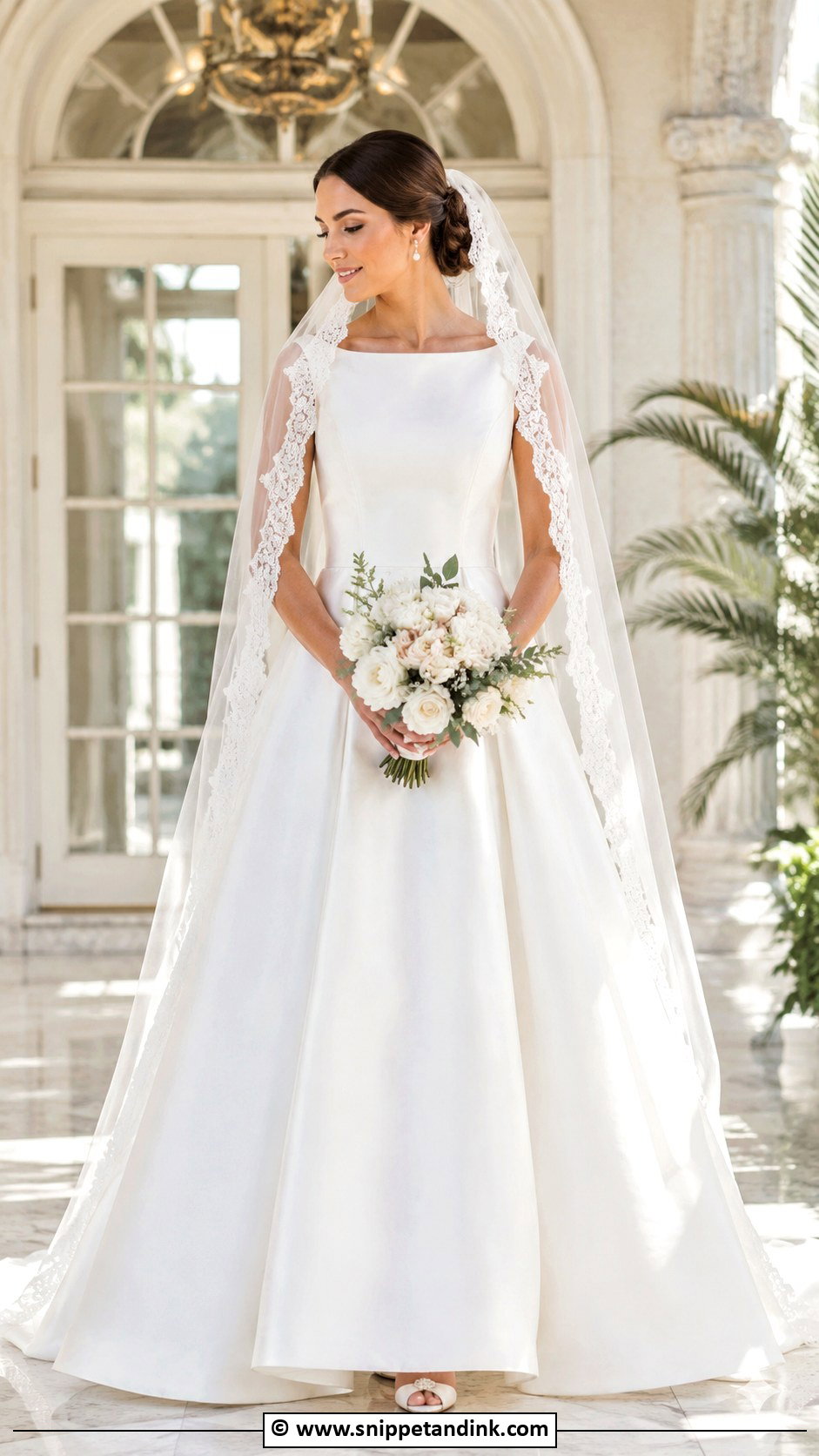
A-line is the shape I suggest most often, because it flatters almost every figure and moves easily. It fits through the bodice and widens gently from the waist, so you get presence without the weight of a full ball gown. To make it read regal, add one detail: a beaded belt, a pearl-edged veil or a lace-trimmed train. It suits formal and semi-formal venues equally well.
7. Royal Cathedral Train Wedding Dress
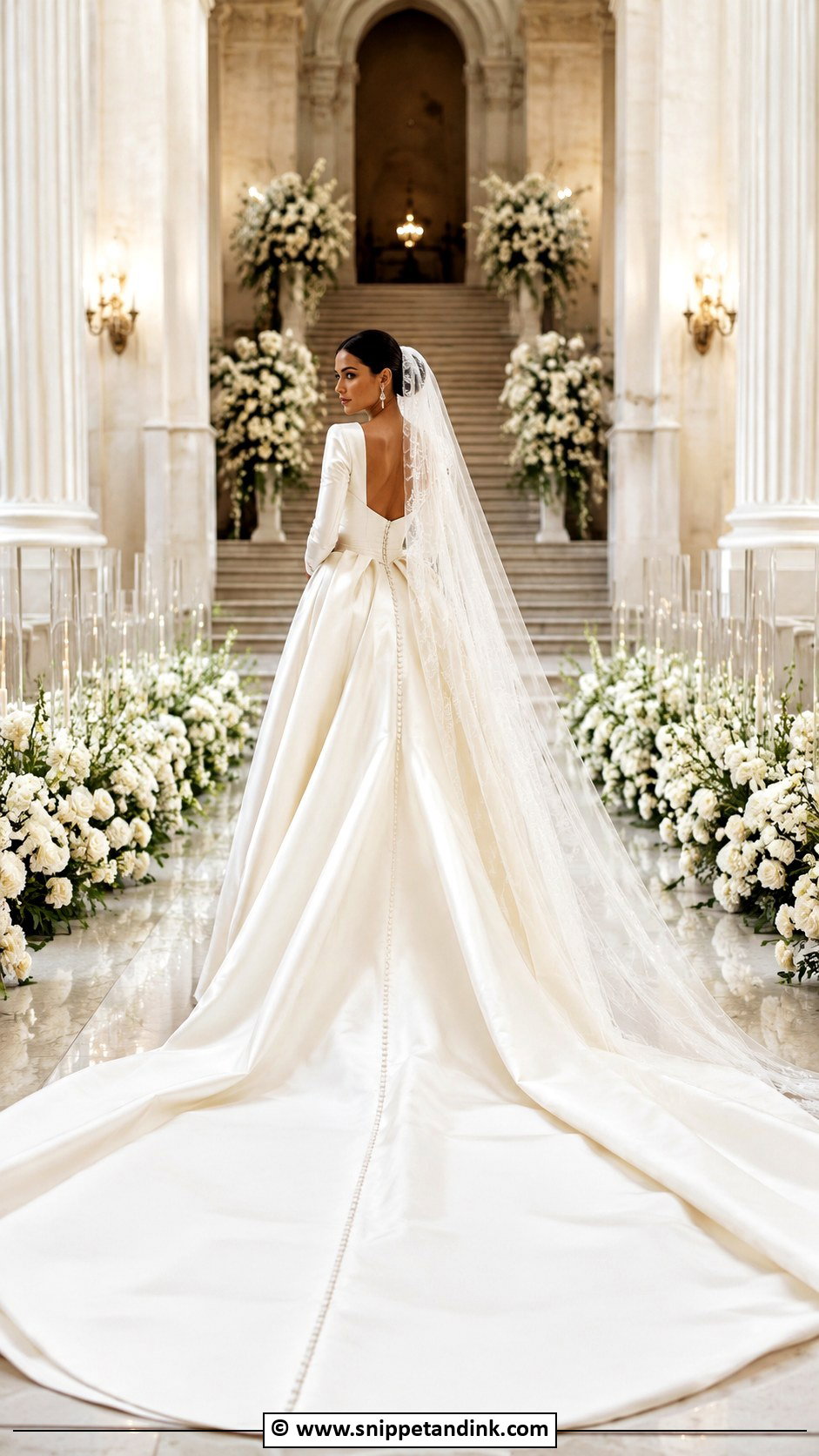
A royal cathedral train wedding dress is made for a long aisle and a slow walk. The longer the train, the more structure the bodice needs to stay anchored as the fabric drags behind you. Satin, mikado, lace and tulle all trail well, though tulle catches on rough floors and gravel. Plan the bustle at your second fitting, not the last, and have someone practice it with you. Keep jewelry and shoes plain so the train stays the focus.
8. Royal Wedding Dress With Veil
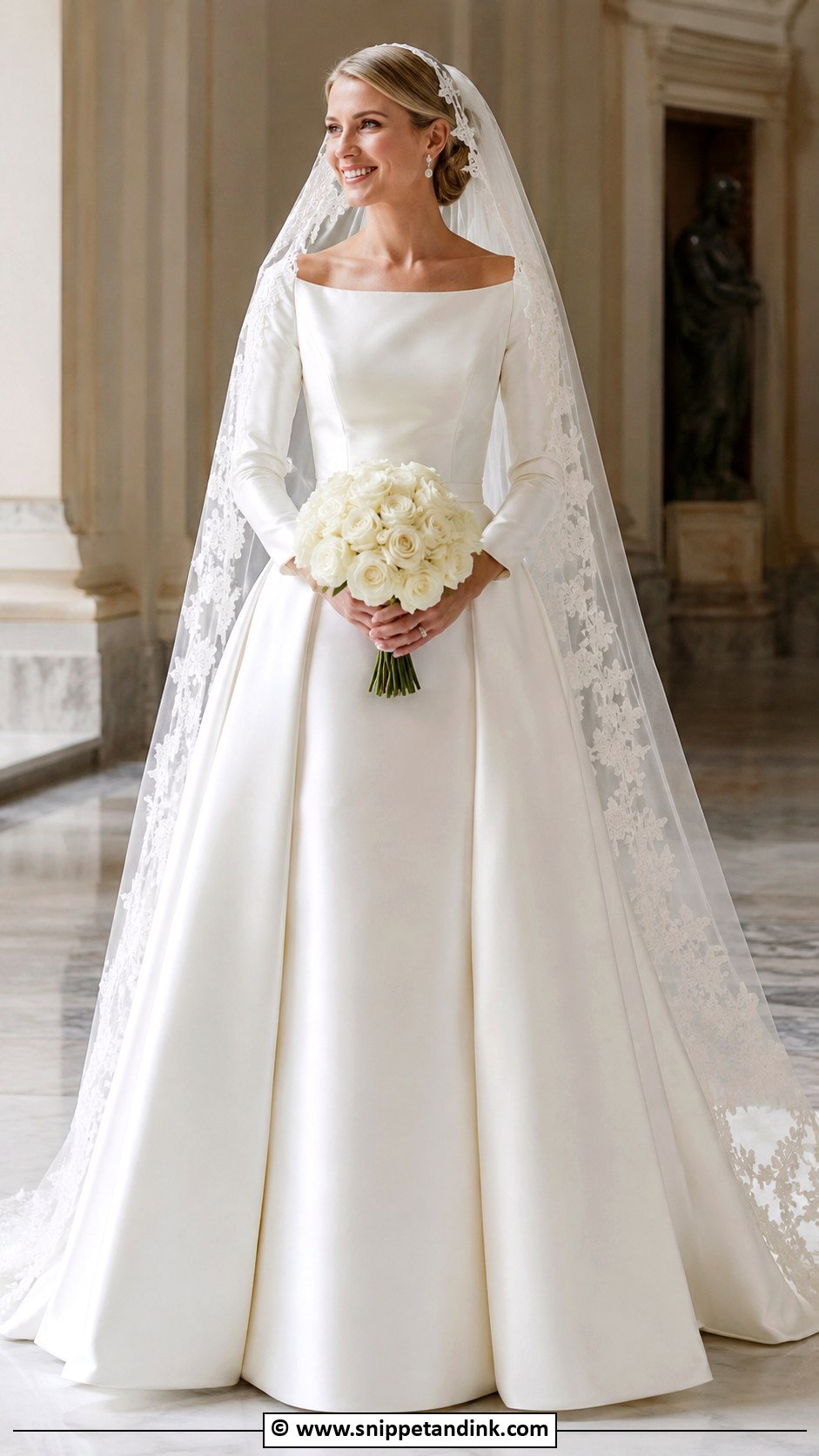
The veil changes the mood of a dress more than any other accessory, so I match its detail level to the gown in reverse. A plain satin dress can carry an embroidered or lace-edged veil, while a heavily worked gown looks cleaner with a raw-edge or simple cathedral veil. The comb placement matters too: a veil set at the crown frames the face, while one set under a low bun lets the back of the dress show. Pearl earrings and a soft bouquet are all the rest needs.
9. Pearl Royal Wedding Dress
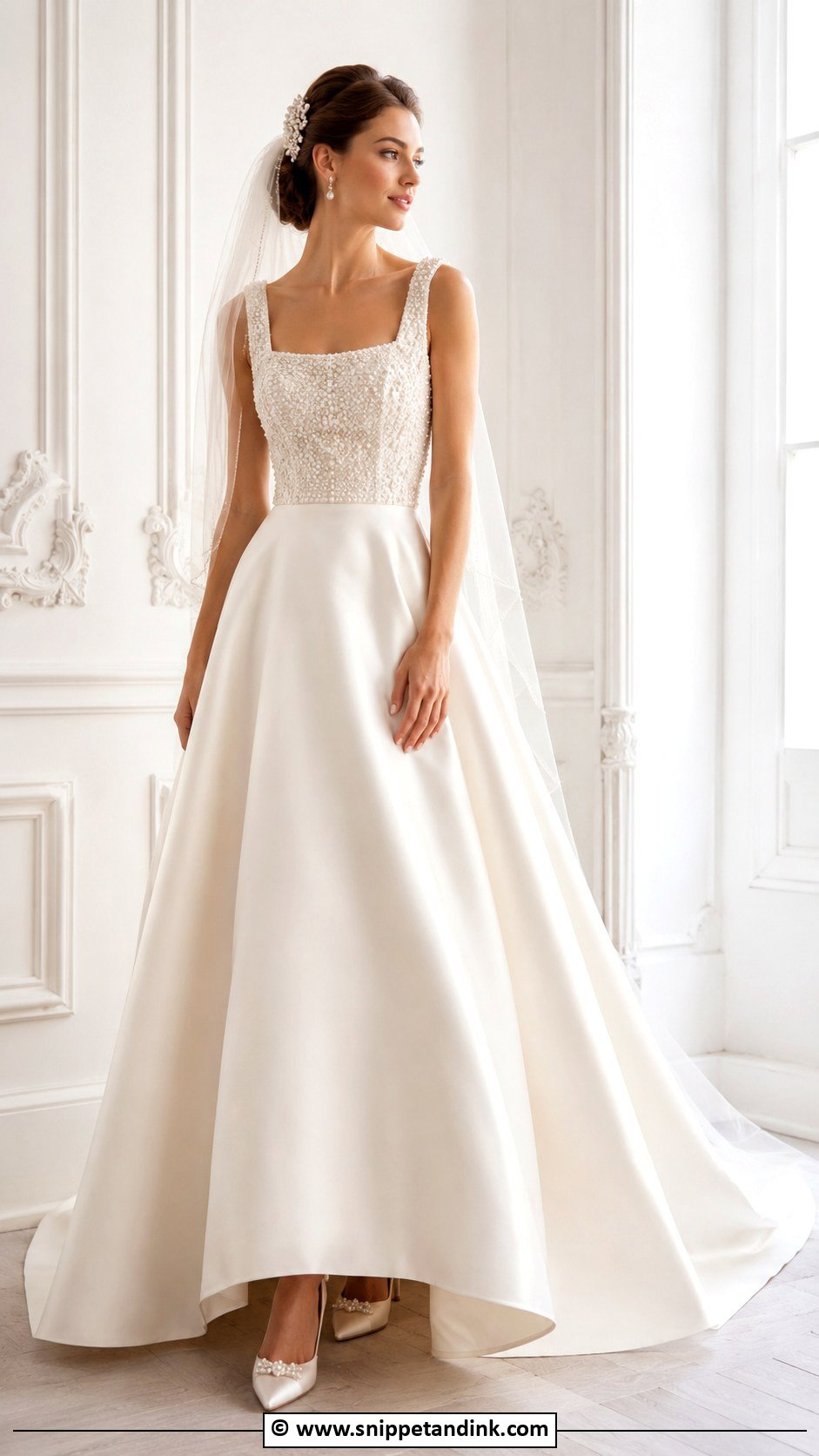
Pearls give a soft, luminous texture that reads heirloom rather than flashy. Pearl details can sit on the bodice, sleeves, belt or veil, but I’d pick one focus and keep the rest quiet. A pearl-scattered bodice over a plain satin skirt is the most balanced version. Sewn pearls add weight, so a fully pearled gown is heavier than it looks and needs reinforced seams. Fresh, glowing makeup suits it far better than heavy matte.
10. Beaded Royal Wedding Dress
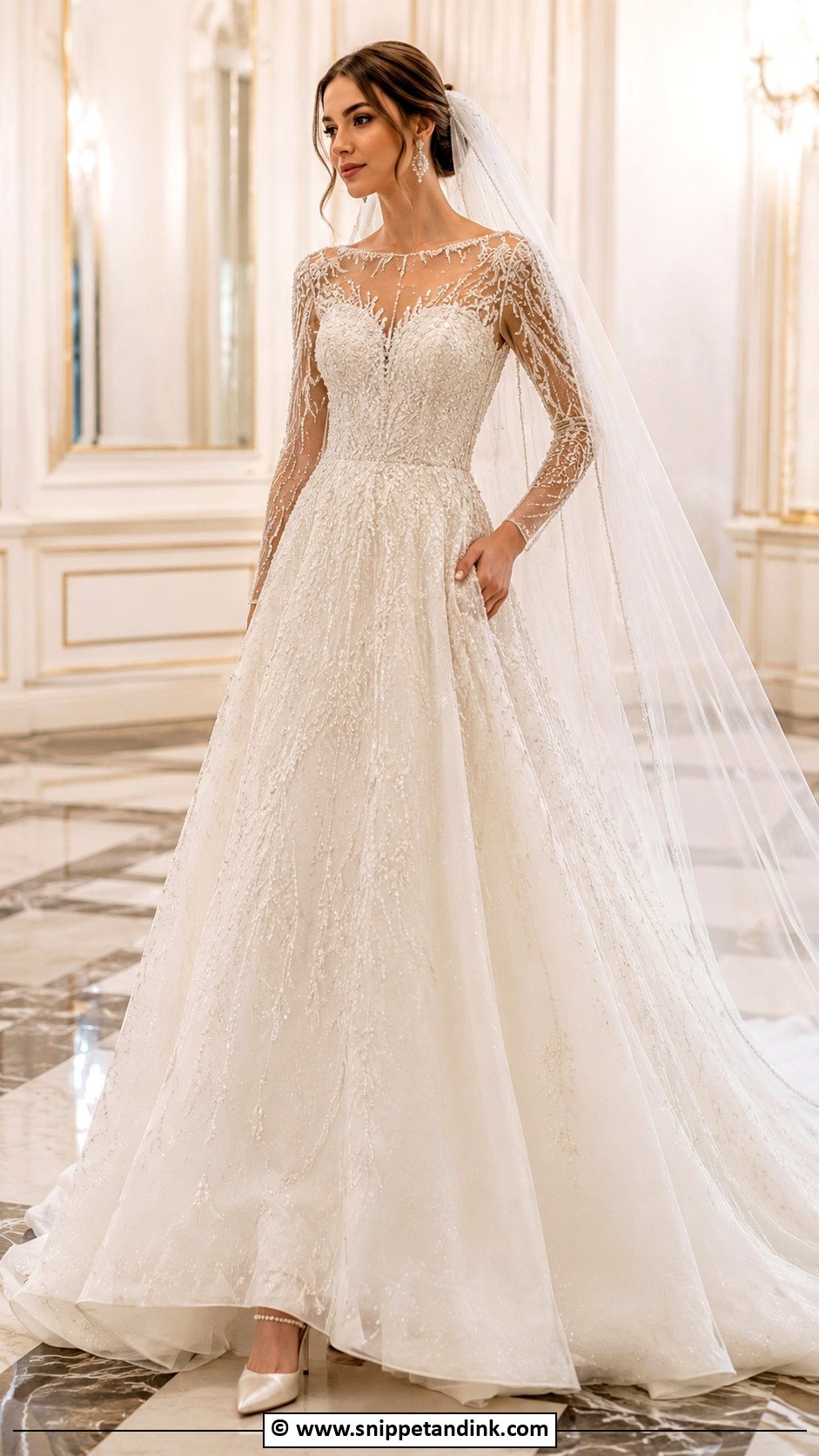
Beading adds sparkle in a formal way when it is fine and placed with intent. I look closely at how the beads are attached: hand-sewn beading lies flat and holds, while glued or loosely chained beading can shed on the dance floor. A beaded lace bodice with an A-line skirt is especially good under candlelight. Keep accessories minimal, crystal studs and a soft veil, and choose a sleek hairstyle so the work shows in photos.
11. Royal Wedding Dress With Cape
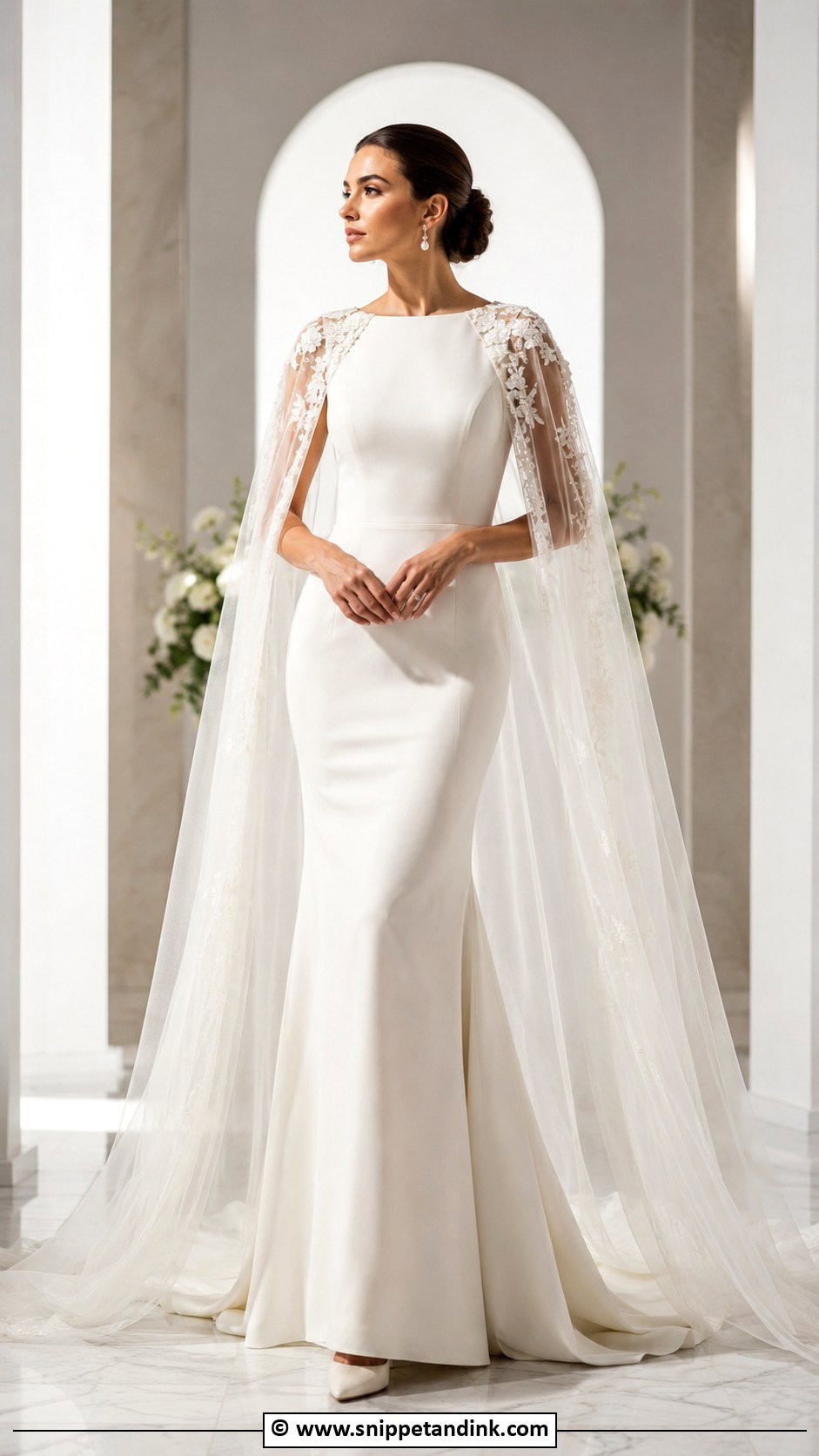
A cape can replace a veil or sit over one, and it brings a modern kind of drama. Sheer tulle is soft, lace is romantic, and a satin cape is architectural. The dress under it should be clean. Check how the cape attaches: shoulder buttons or hooks are more secure than ties, and a cape that slips mid-aisle is a common annoyance. It suits brides who want grandeur without a long train.
12. Royal Wedding Dress With Tiara
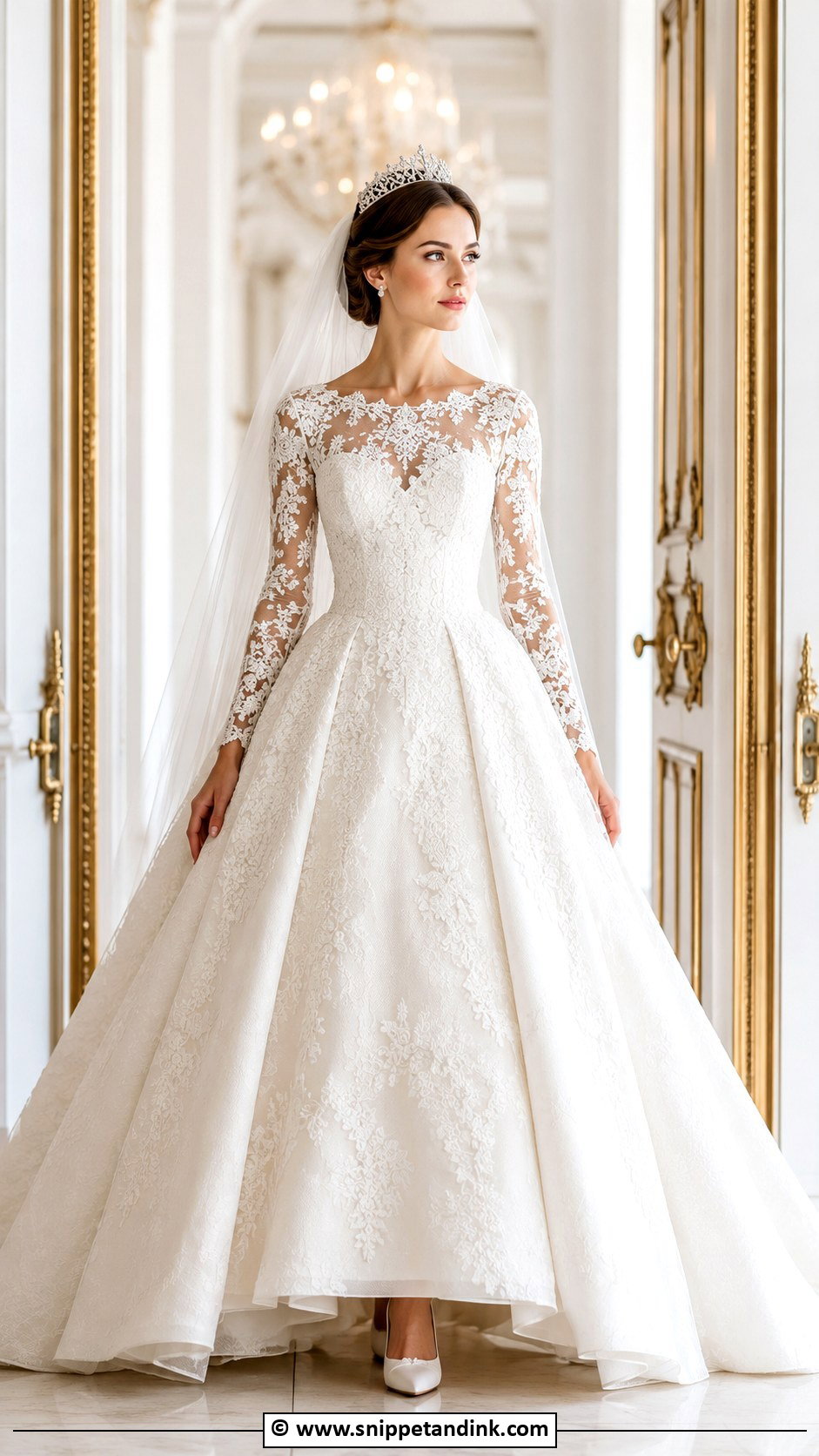
A tiara is the most traditional royal reference, and the rule I follow is that the tiara answers the dress rather than competing with it. A delicate band suits lace sleeves; a satin ball gown can carry something taller and more structured. Hair has to be built to hold it, usually with a firm base and pins anchored into a section of backcombed hair at the crown. Keep everything else simple: pearl studs and a soft veil.
13. Royal Wedding Dress With Bow
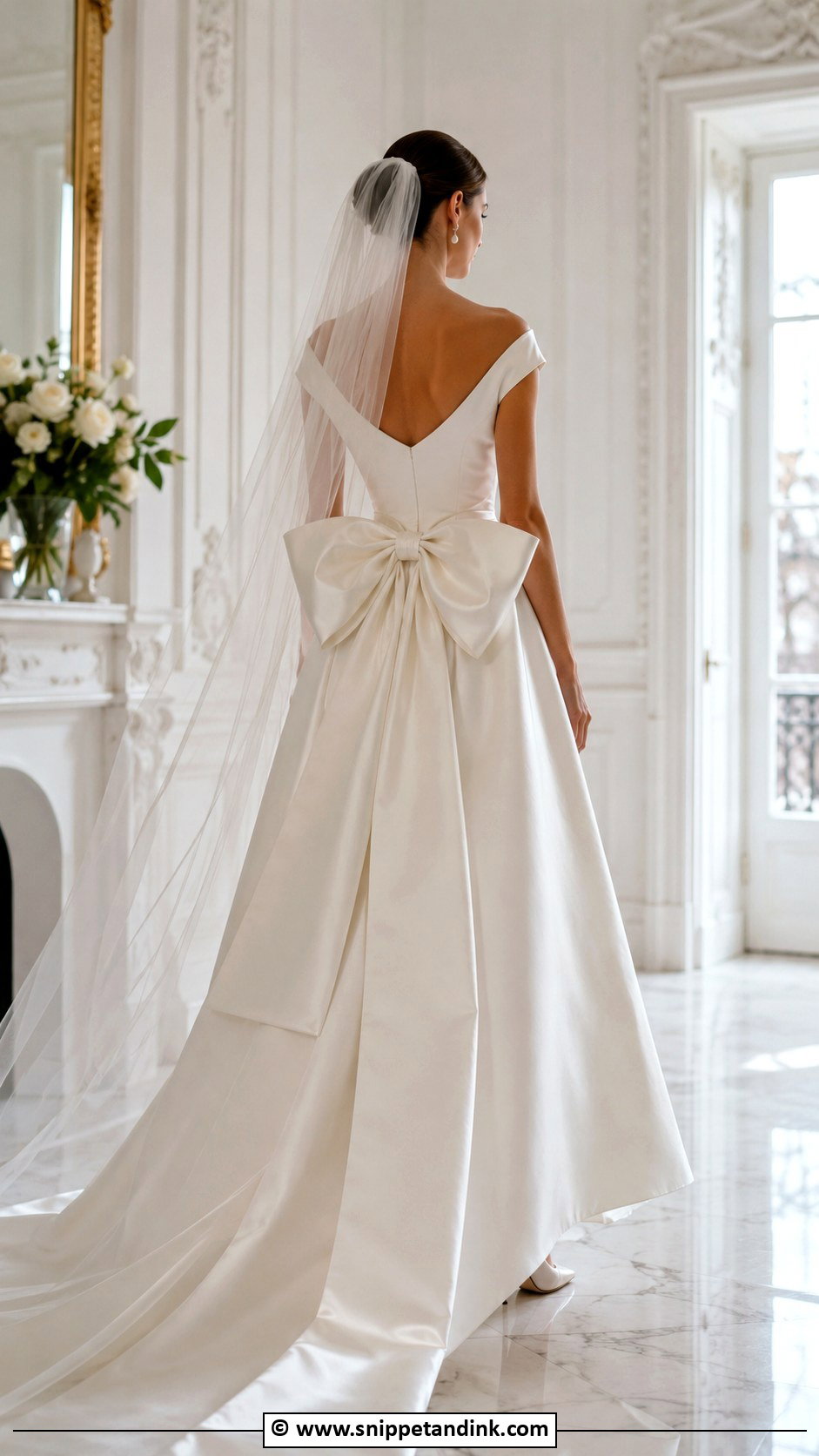
A bow gives one confident statement, and a big satin bow at the back of a plain gown photographs well as you walk away down the aisle. If the bow is large, the rest of the dress needs to be quiet, satin, mikado or crepe with no extra detail. Large bows need internal support, or they droop after a few hours of sitting. A plain veil and satin pumps keep it from looking fussy.
14. Royal Basque Waist Wedding Dress
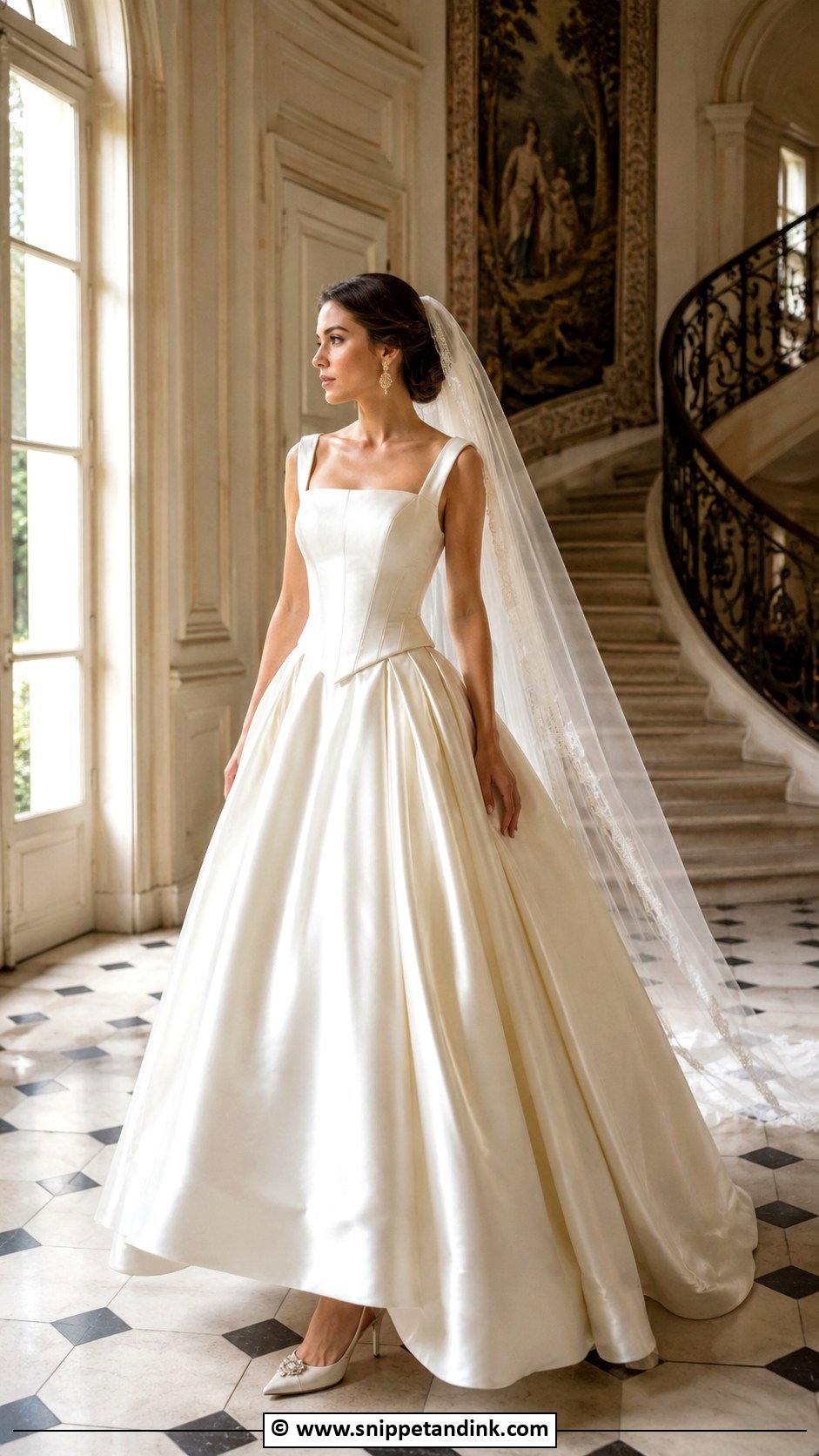
A basque waist dips into a V or curve below the natural waist, which lengthens the torso and makes a full skirt look dramatic. It has a historic, formal look. Satin, lace, brocade and mikado suit it well. The point of the basque must sit exactly centered and lie flat, so this is a silhouette where alterations are not optional. A full skirt reads grand; an A-line under it is softer.

15. Royal Corset Wedding Dress
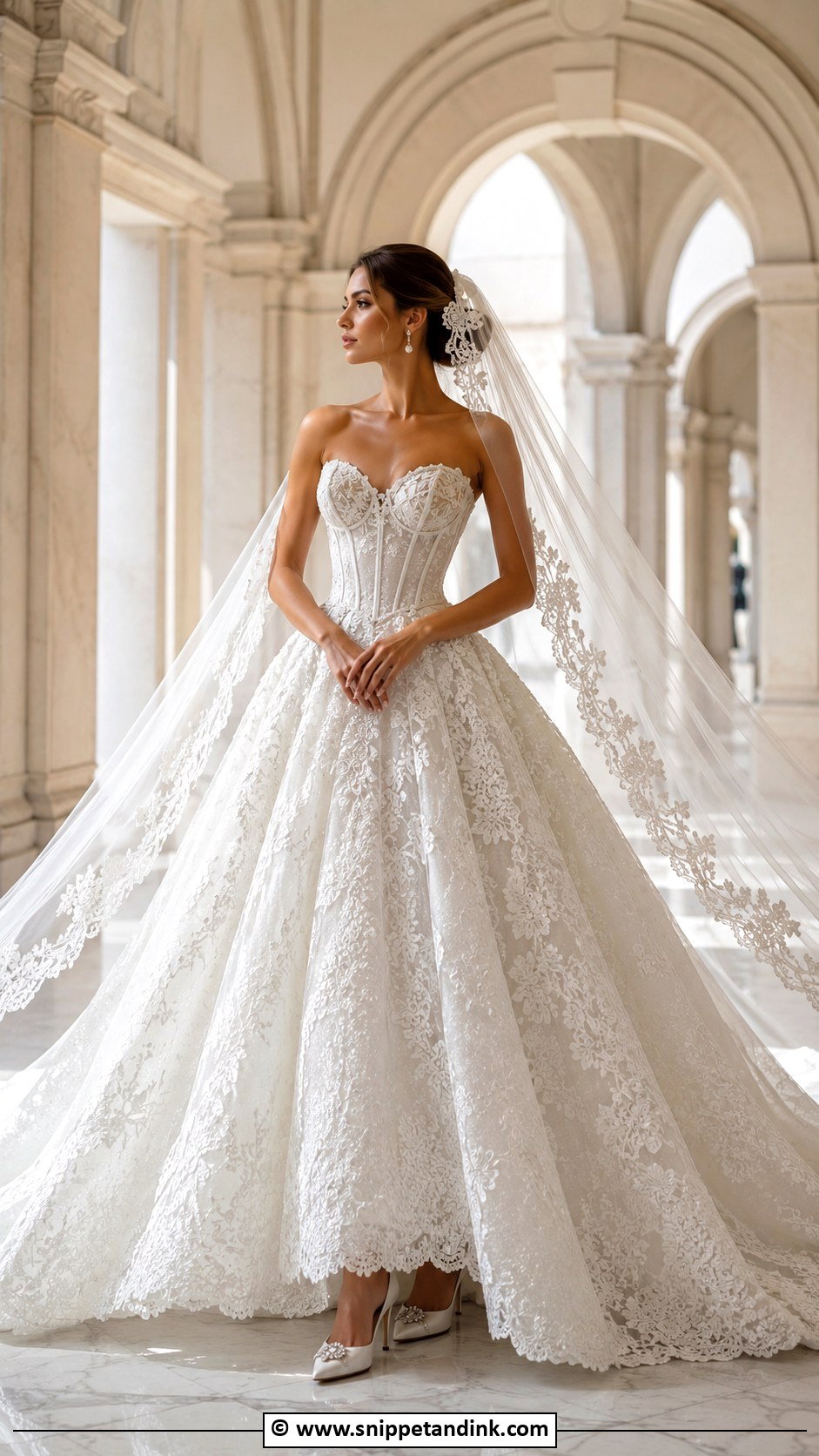
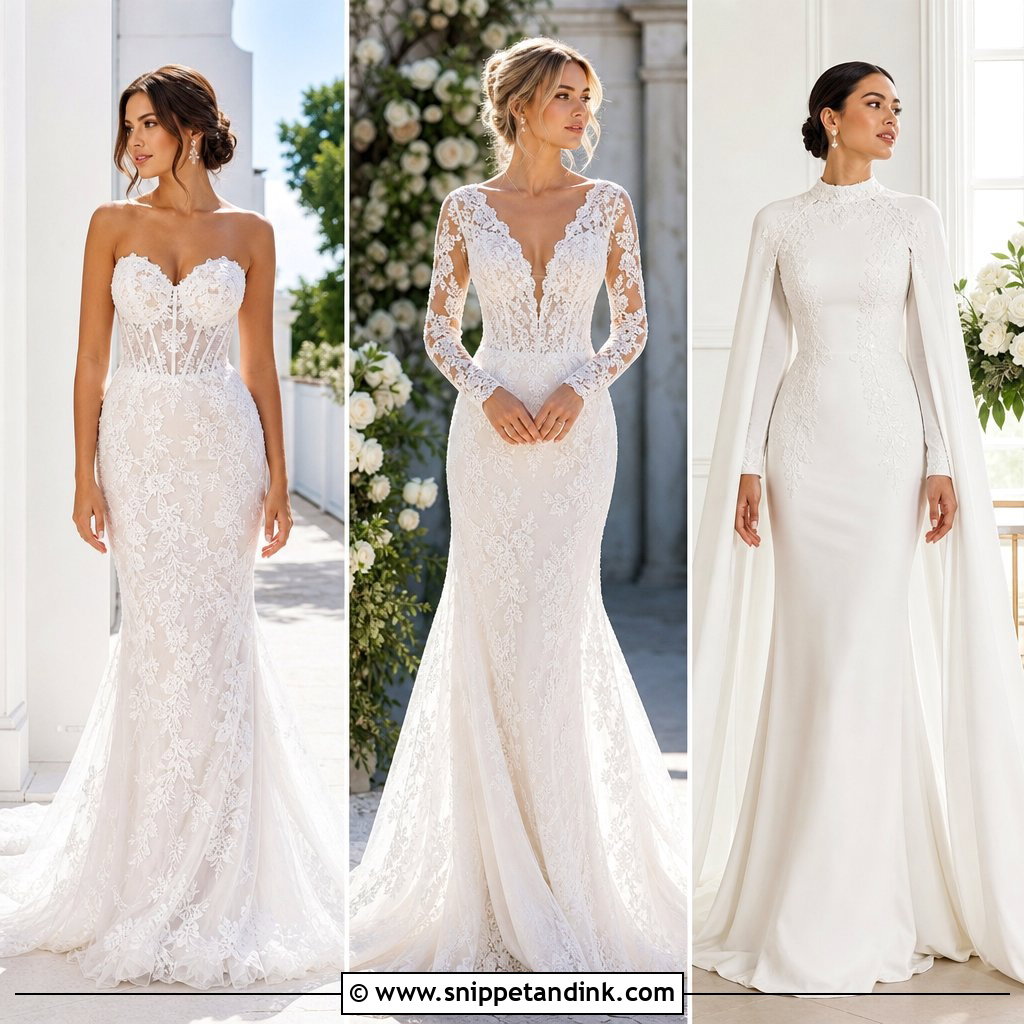
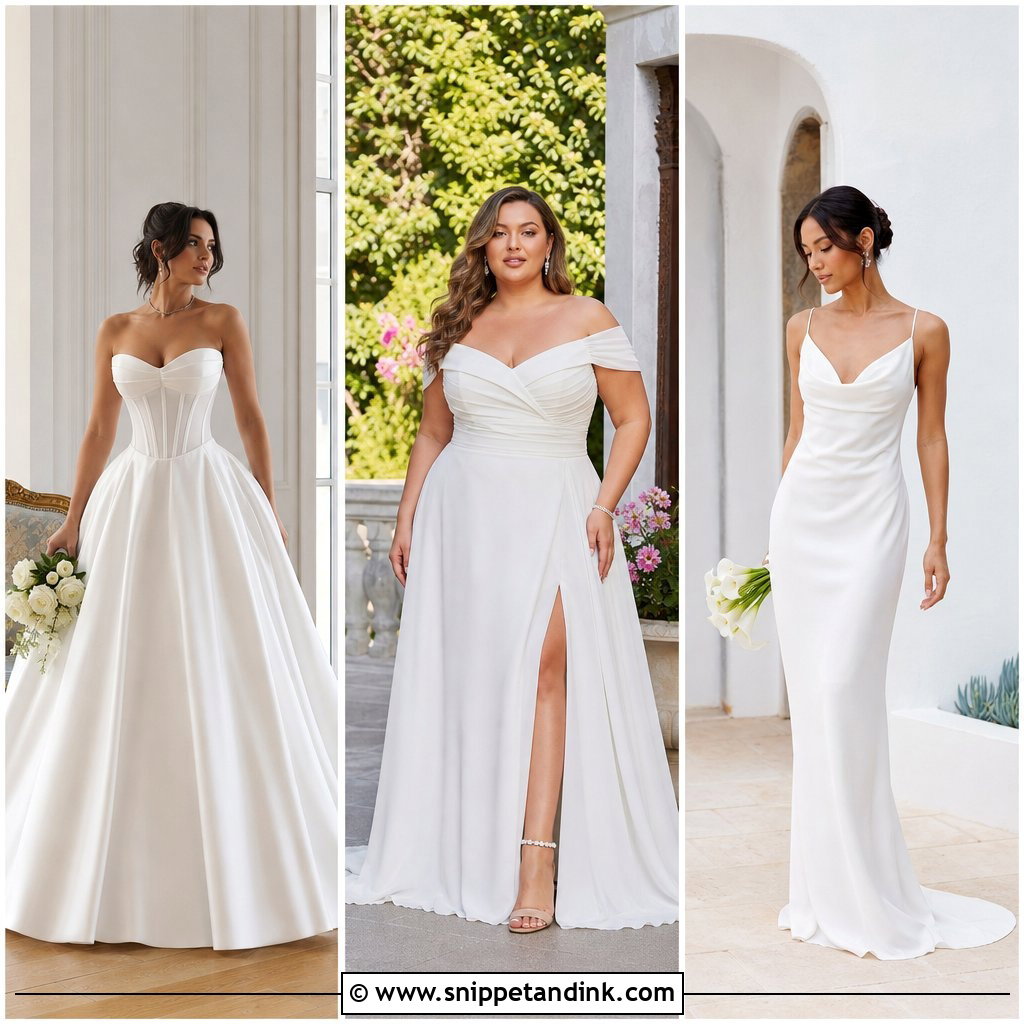
A corset bodice gives a sculpted waist and real support, especially for brides who don’t want to wear a separate bra. Boning can be visible as a design feature or hidden under smooth fabric. The trap is lacing it too tight for the photos and then struggling to eat or sit. I fit corsets so that you can breathe deeply and lift your arms. Pair it with a full skirt or satin train; add a necklace only if the neckline is plain.
16. Royal Square Neck Wedding Dress
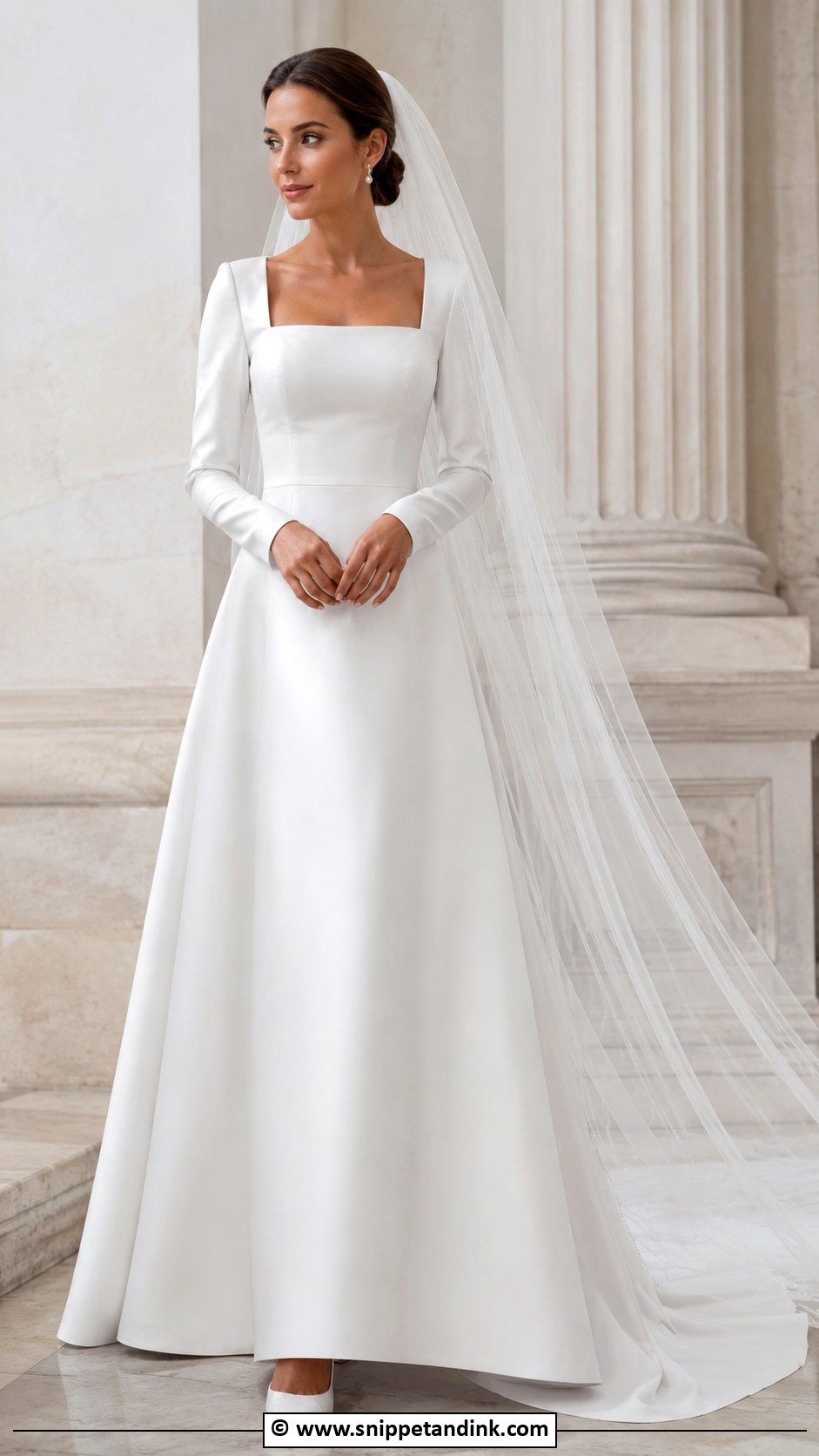
A square neckline frames the face and collarbone with more structure than a plunging V. It has a slightly vintage feel and suits satin and lace gowns as well as simple A-lines. Wide straps or long sleeves both work with it, depending on the season. The corners must sit sharp and flat, which takes careful fitting on fuller busts. A bun or half-up style keeps the shape visible.
17. Royal Bateau Neck Wedding Dress
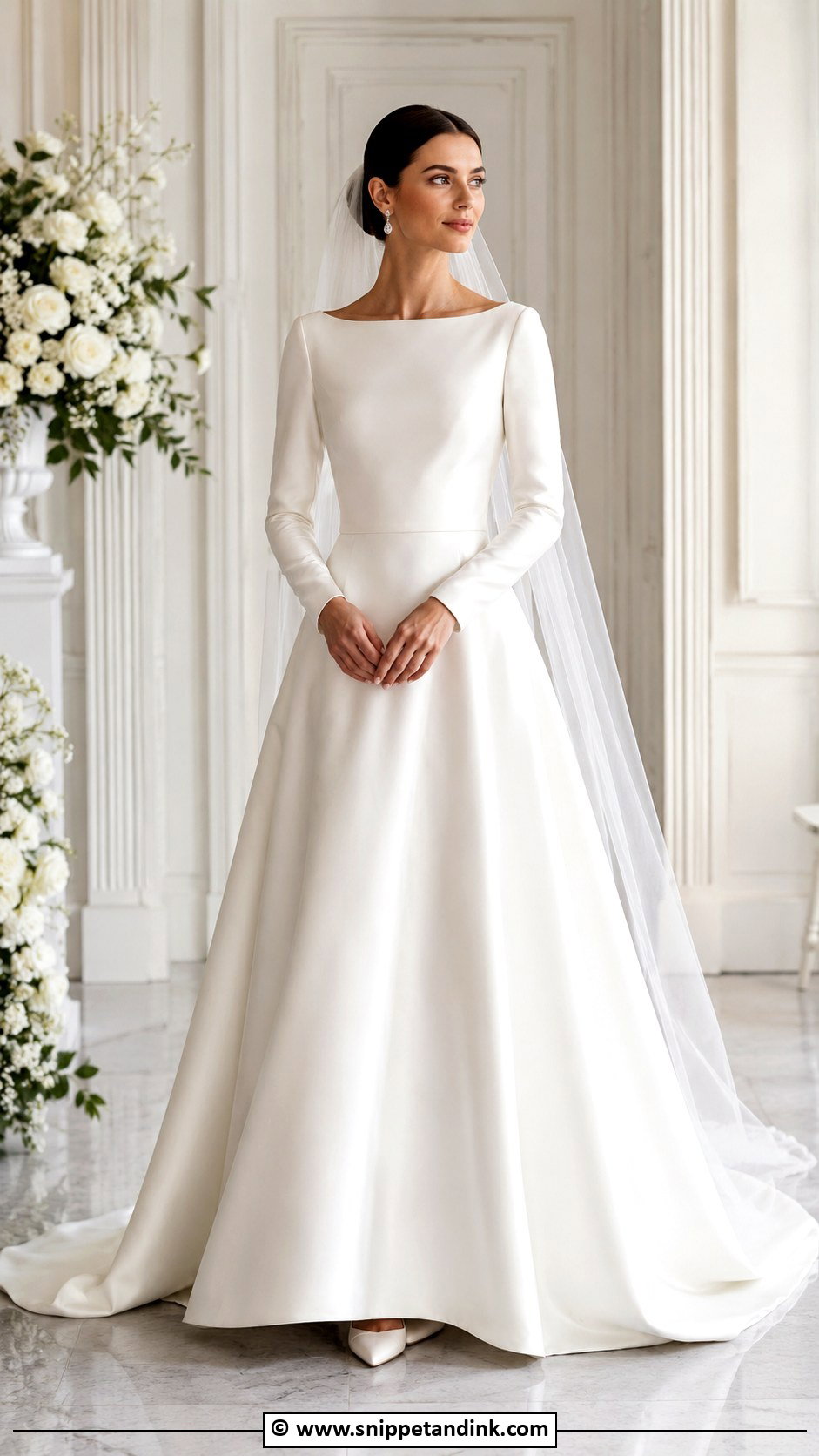
A bateau neckline runs straight across from shoulder to shoulder, close to the collarbone. It looks modest and quietly confident. Because it sits so close to the neck, it only works when the bodice fits precisely, and it can make a short neck look shorter, so I try it on before I recommend it. Long sleeves or lace suit it. Skip necklaces and finish with drop earrings and a low chignon.
18. Royal Mikado Wedding Dress
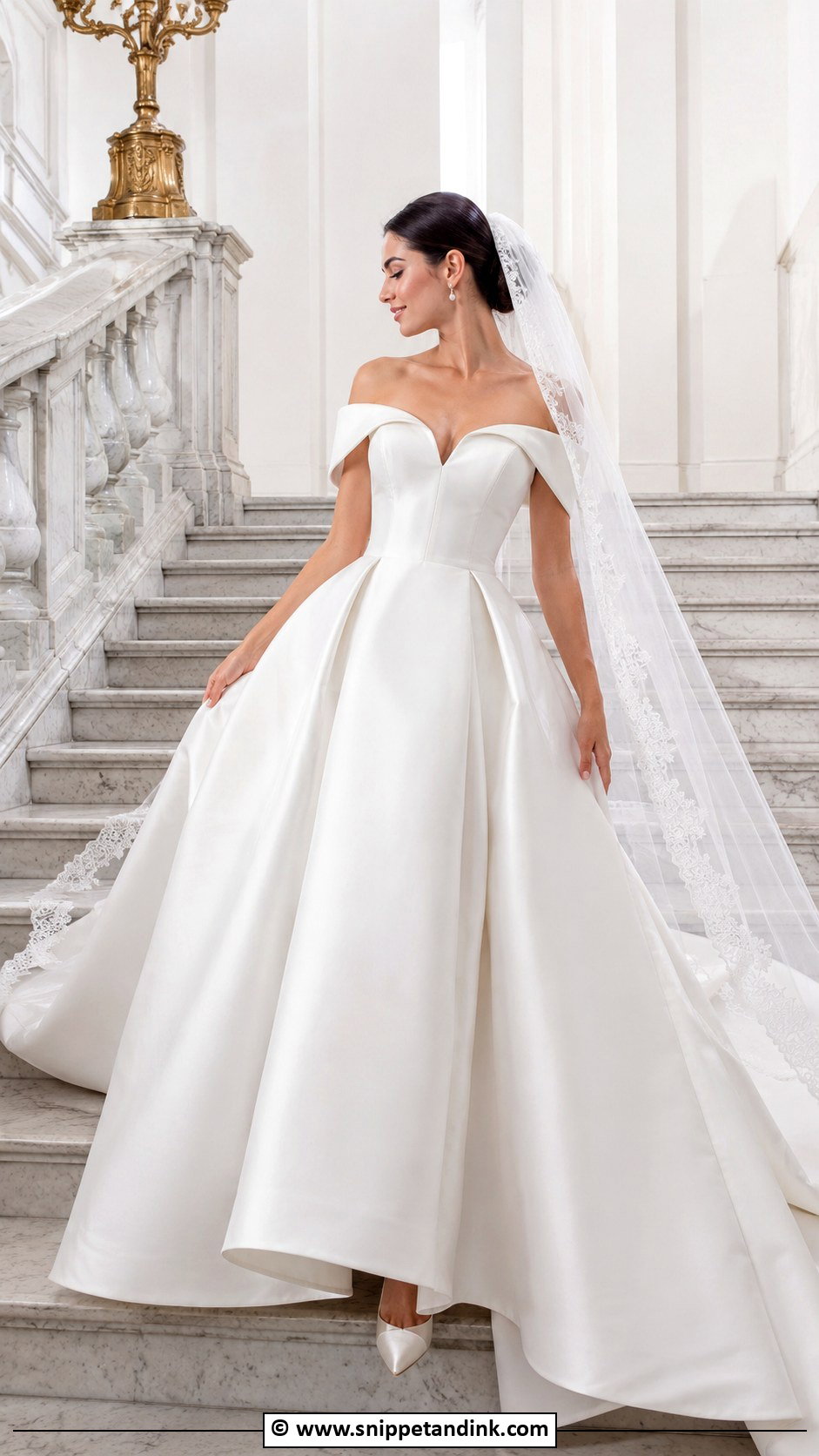
Mikado is a heavy silk or silk-blend with a slight sheen, and it holds pleats, full skirts and architectural lines better than almost anything else. That weight also means it is warm, so I’d think twice about it for a summer outdoor ceremony. It suits ball gowns and clean modern shapes. A cathedral veil and plain satin heels are enough, and a simple bouquet stops the look from tipping into heavy.
19. Royal Tulle Wedding Dress
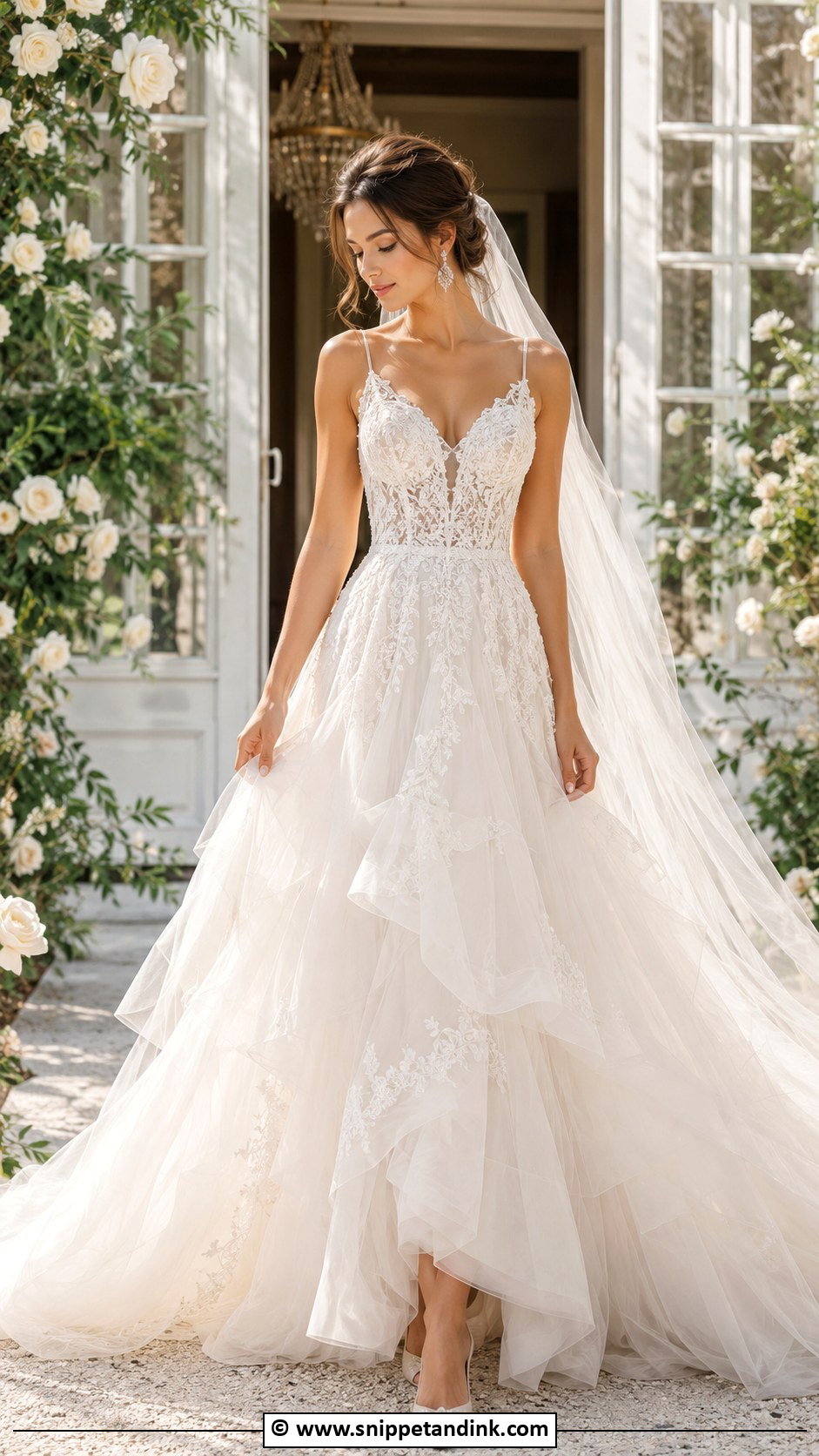
Tulle builds volume through layers rather than weight, so a tulle skirt can be full and still light to wear. A structured bodice keeps it from looking like a costume. Lace appliques or pearl details add depth without killing the airy effect. Tulle snags on jewelry, rough floors and rose thorns, so a garden venue with gravel paths needs a hem guard or a short bustle. Romantic waves suit it.
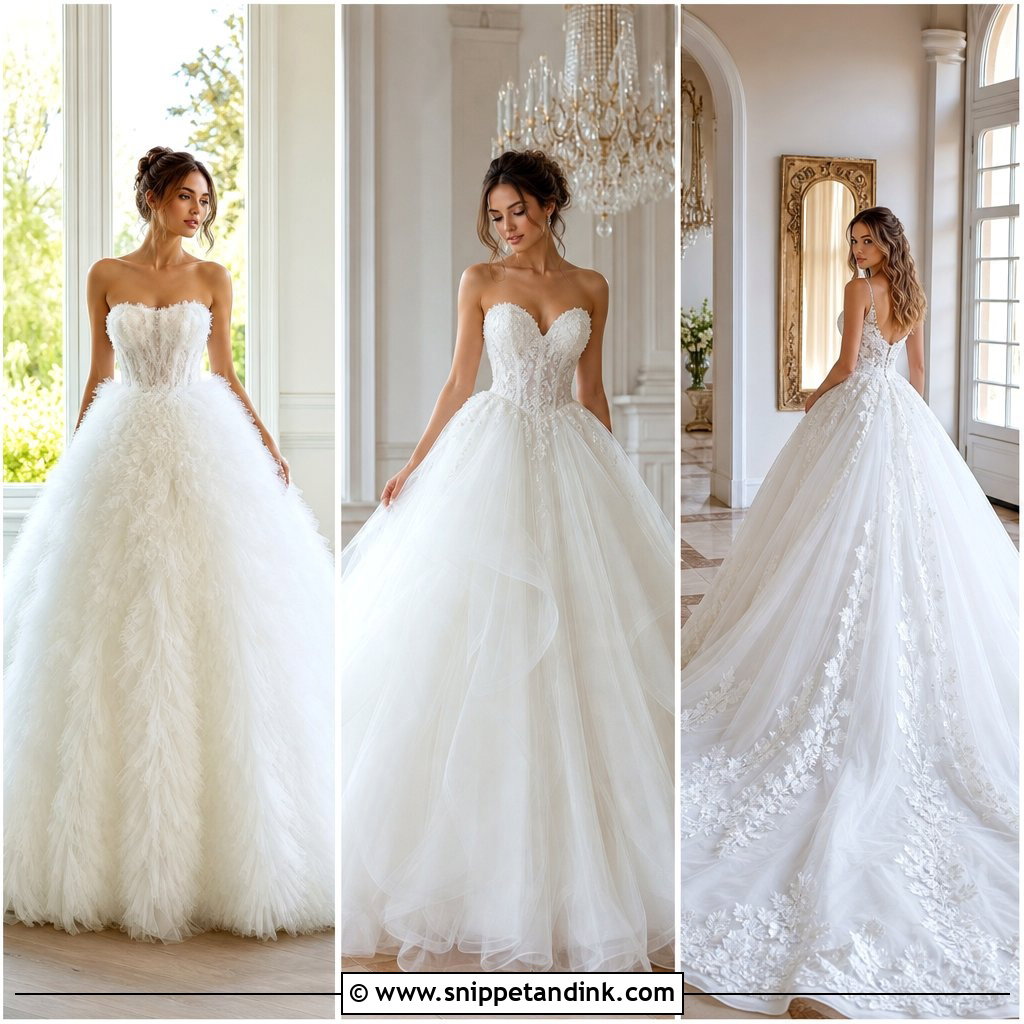
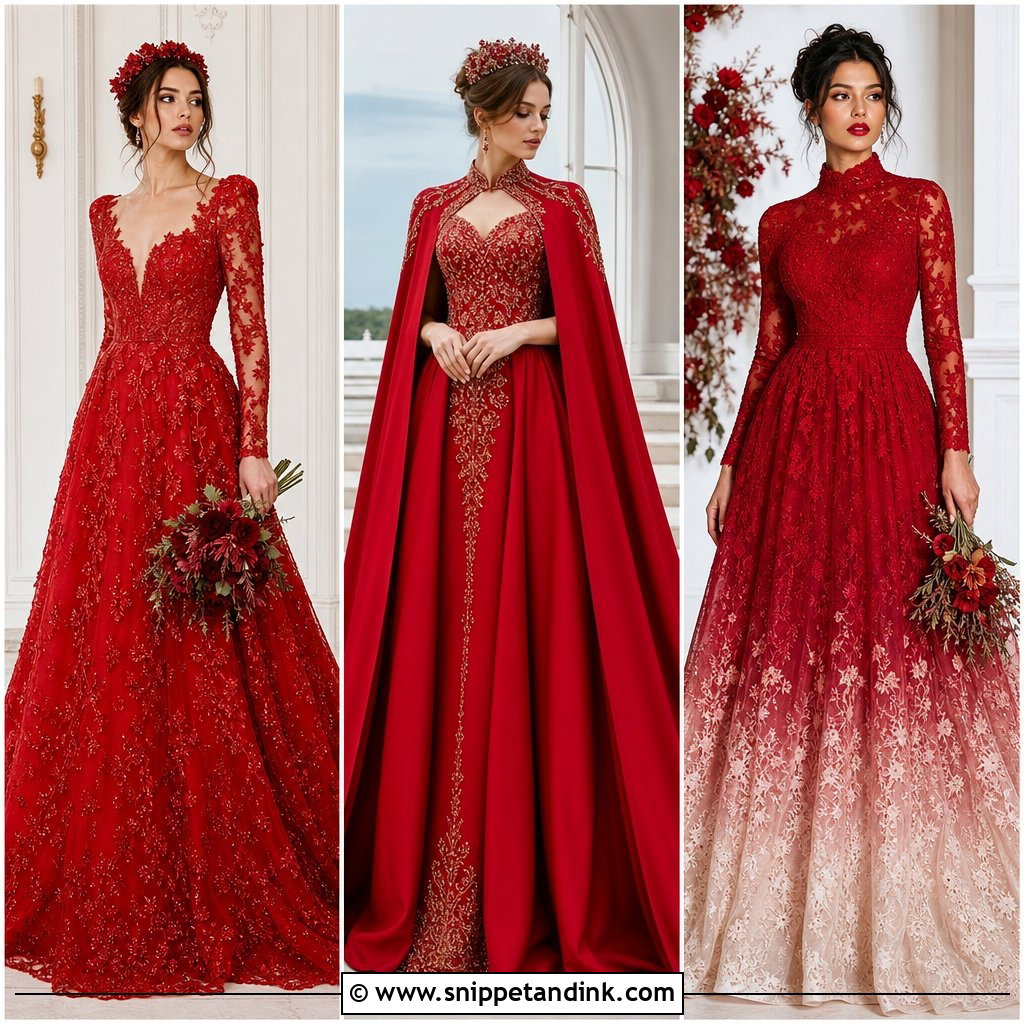
20. Royal Organza Wedding Dress
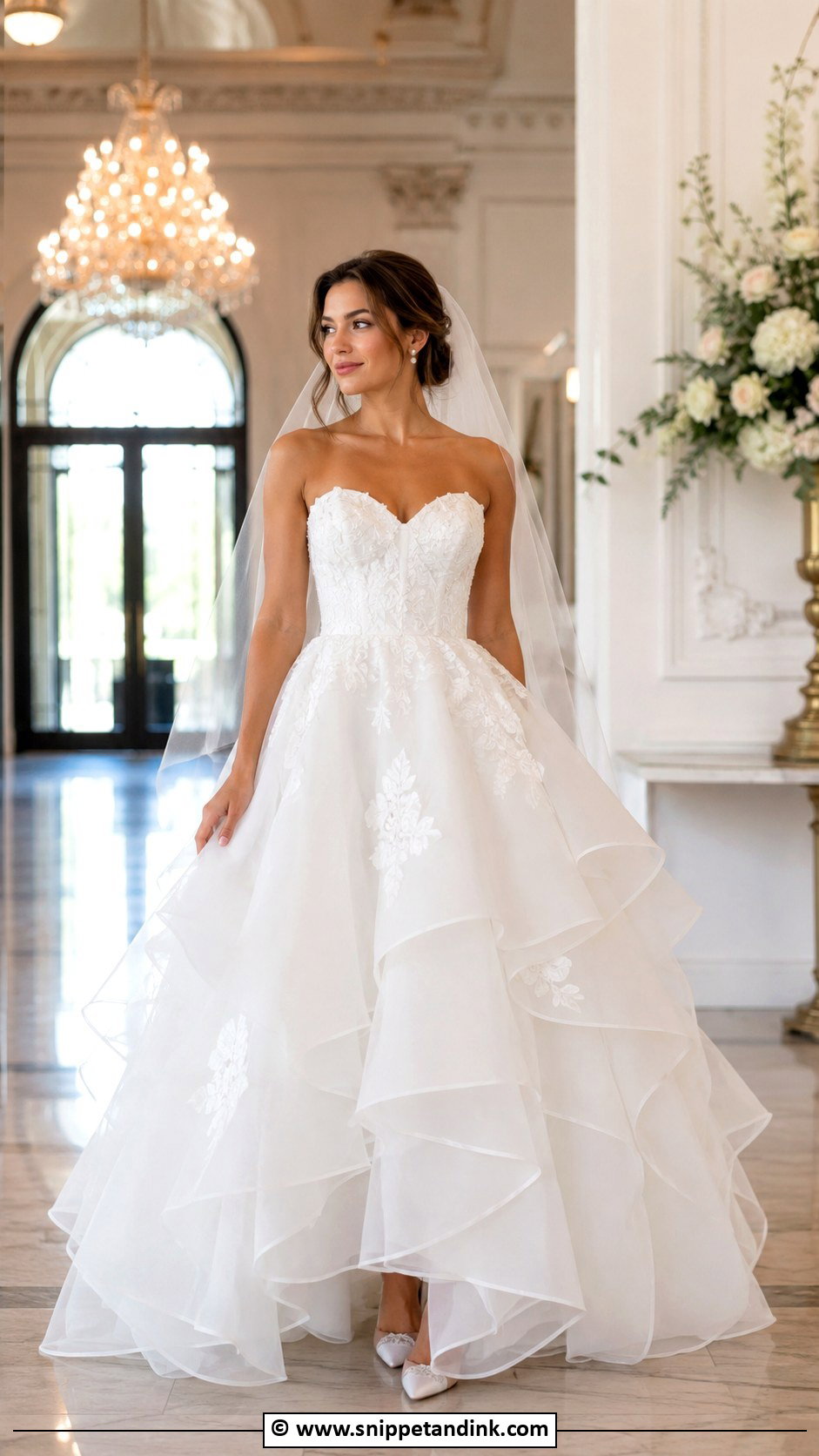
Organza is crisper than tulle and holds a shape better, so it suits structured skirts and statement trains. It gives volume with a translucent glow. The catch is that it creases more than tulle, and those creases show in close photos, so the dress needs steaming on the morning. Keep the bouquet small enough that it does not crush the skirt when you hold it low.
21. Royal Embroidered Wedding Dress
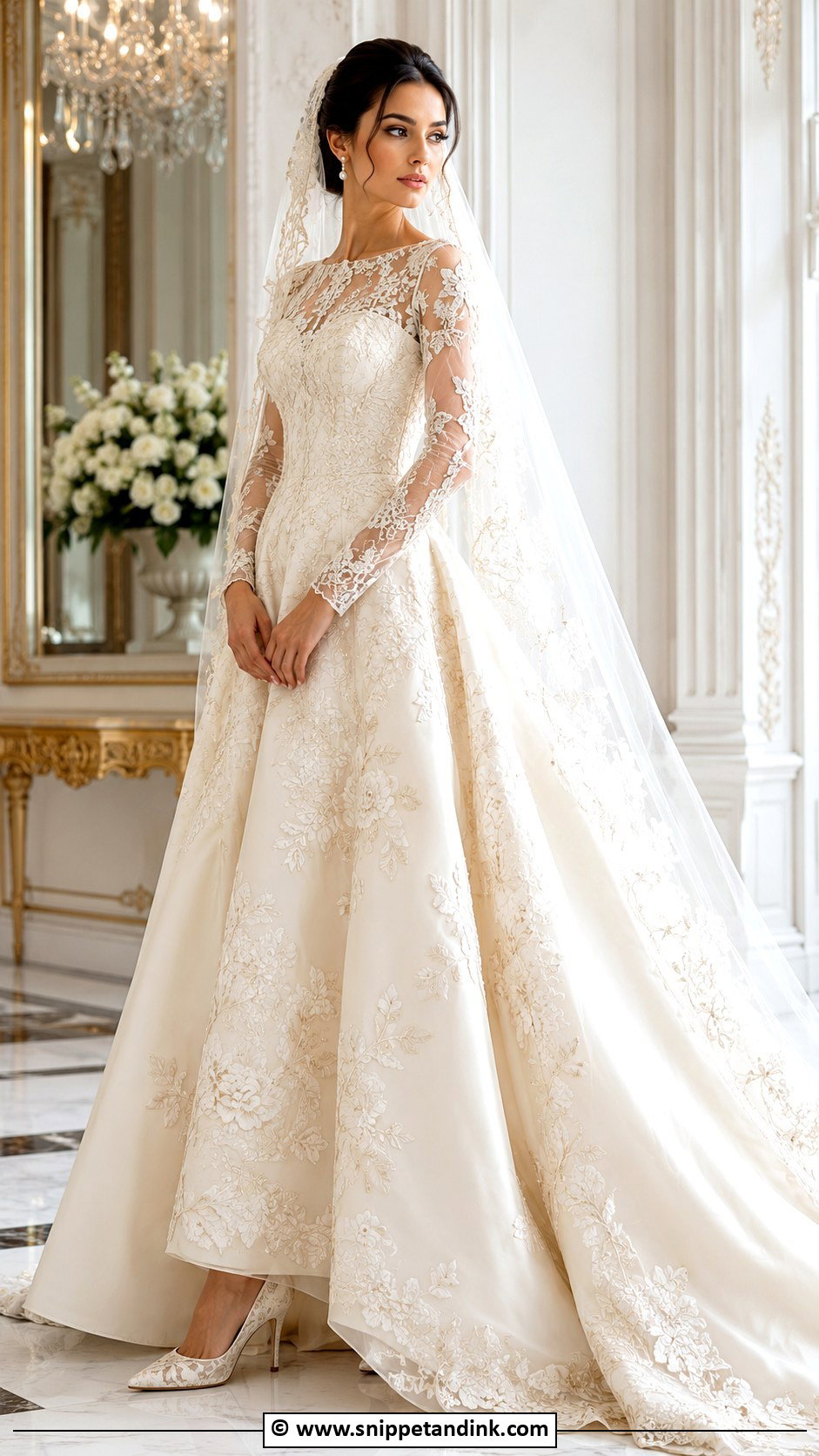
Embroidery makes a dress feel personal, especially when it includes florals, vines or metallic thread. I like it placed with intent, along the bodice, sleeves, hem or train, rather than spread evenly. Close-up portraits are where it shines, so your photographer should know to get detail shots. Simple pearl earrings and classic heels are enough. A sheer embroidered veil can echo the motif.
22. Royal Modest Wedding Dress
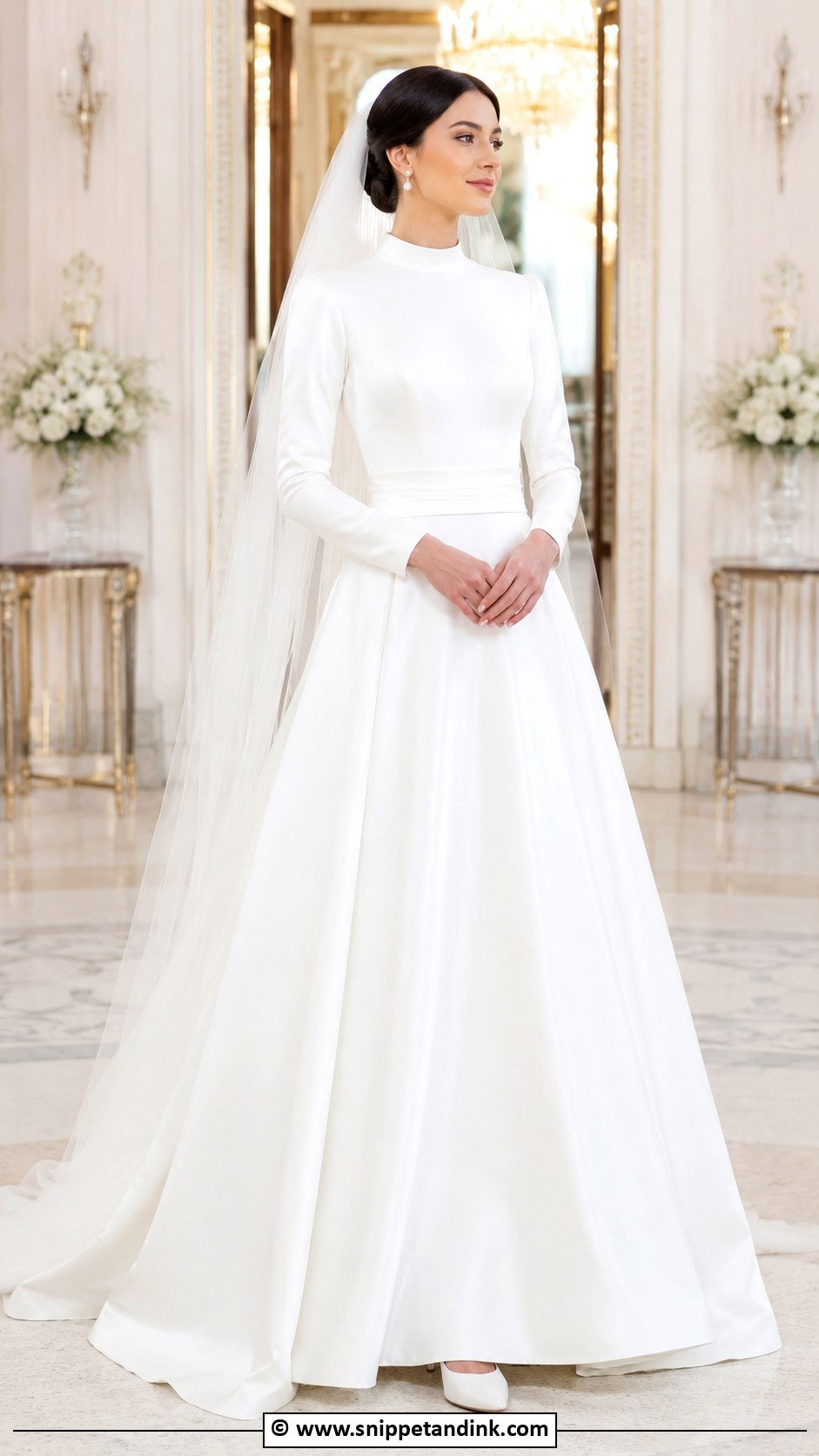
Modest gowns can be just as grand as any other style. Covered shoulders, higher necklines, long sleeves and lined bodices are the basics. Lace, satin, pleating and pearl buttons keep it from looking plain. I always add a little ease across the back of a long-sleeved bodice so the bride can hug and raise her arms. It suits traditional ceremonies and cooler seasons particularly well.
23. Royal Minimalist Wedding Dress
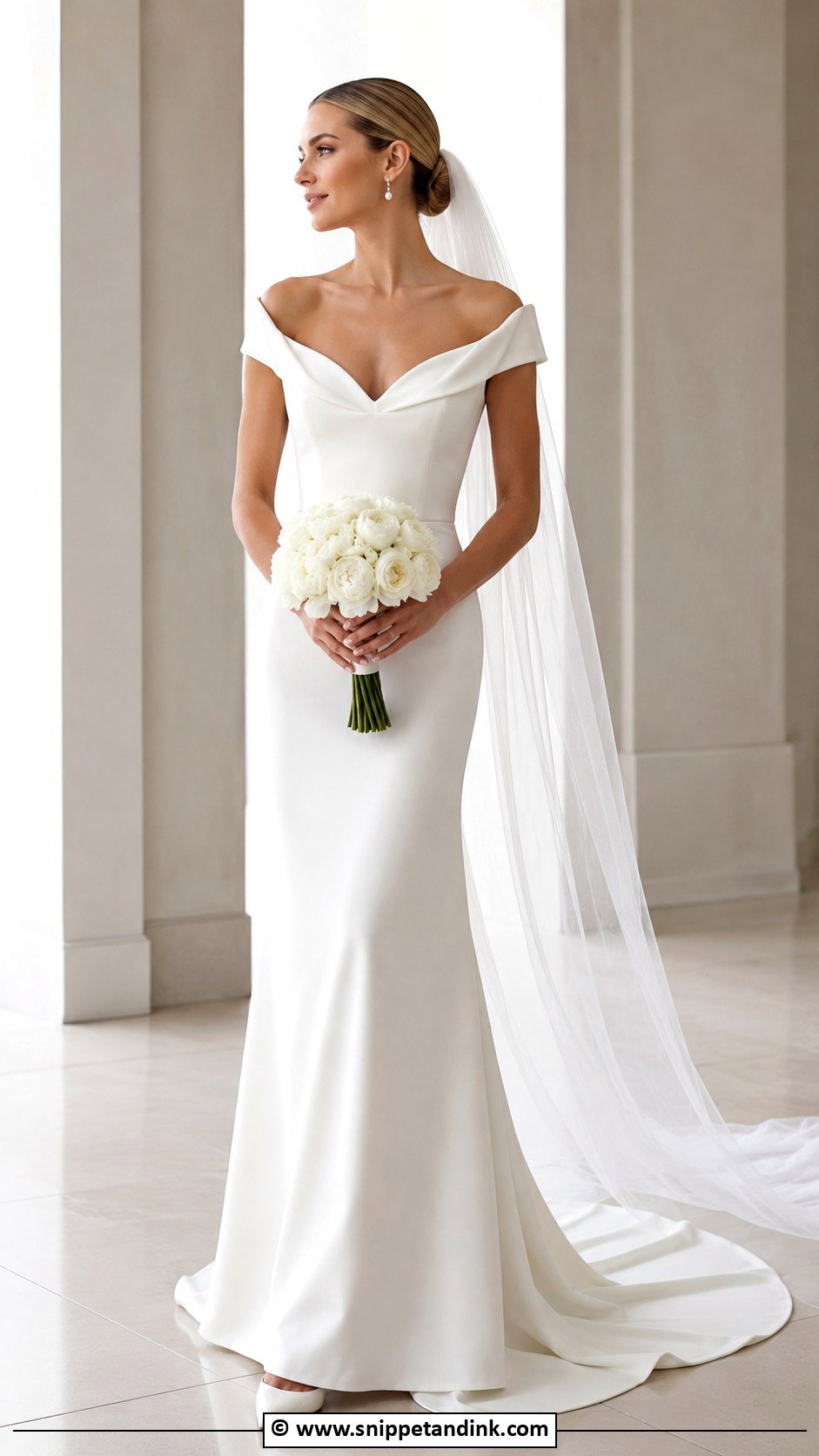
A minimalist gown depends entirely on fabric and fit, which makes it less forgiving than a beaded one. Satin, crepe or mikado in a strong silhouette, with a long train or sculpted neckline, is enough. Any pull or pucker shows, so budget for good tailoring. Pearl earrings, a sleek veil and pointed pumps finish it. It ages well in photos because nothing about it is tied to a trend.
24. Royal Vintage Wedding Dress
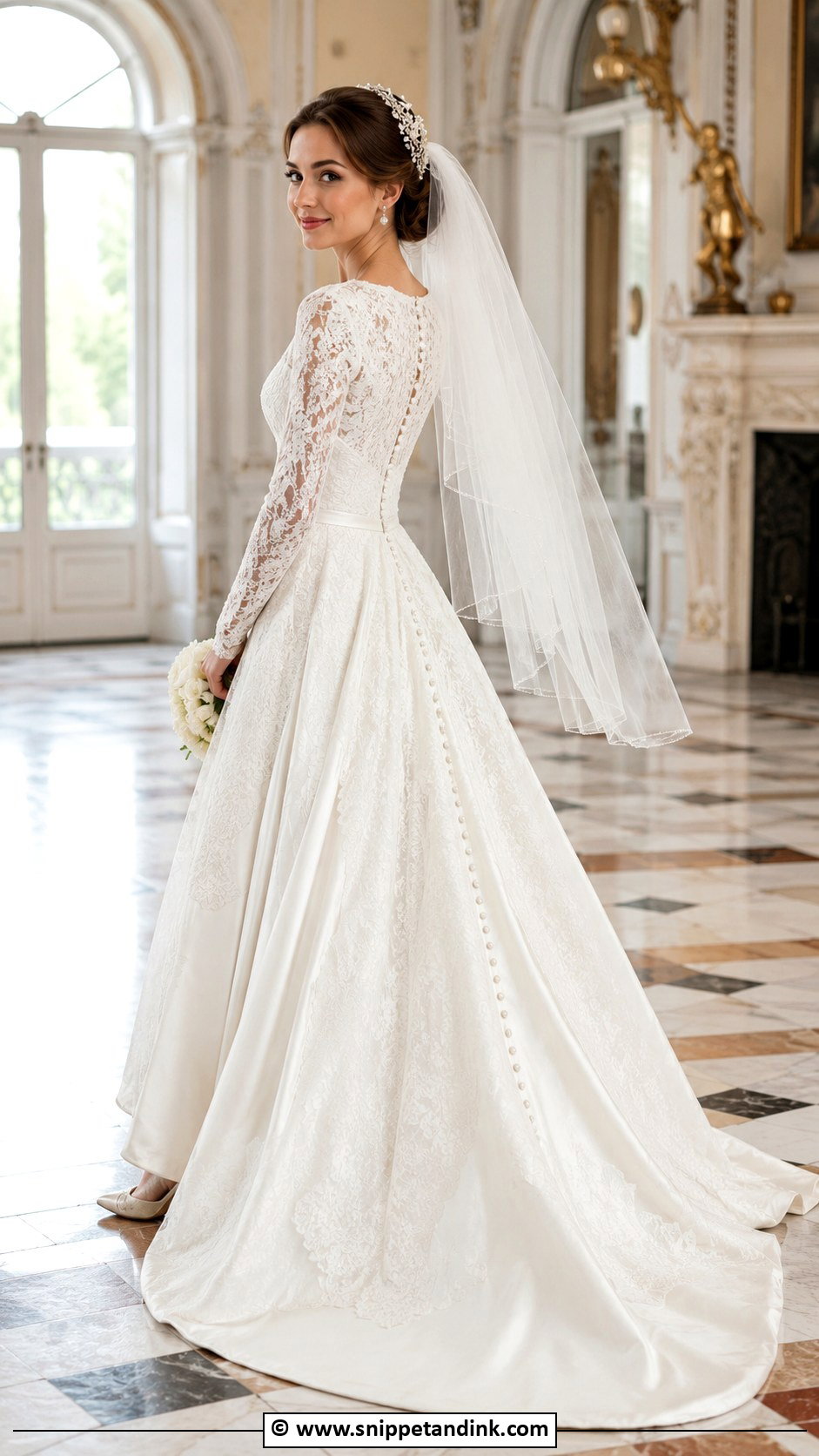
Vintage styling borrows from older eras: lace sleeves, covered buttons, high necks and basque waists. The aim is to borrow the details, not to look like a costume. I’d pair one strong vintage element with modern makeup and a clean veil. A pearl comb or small tiara suits it. If you are wearing a real vintage gown, have a specialist check the seams and fabric before any alterations.
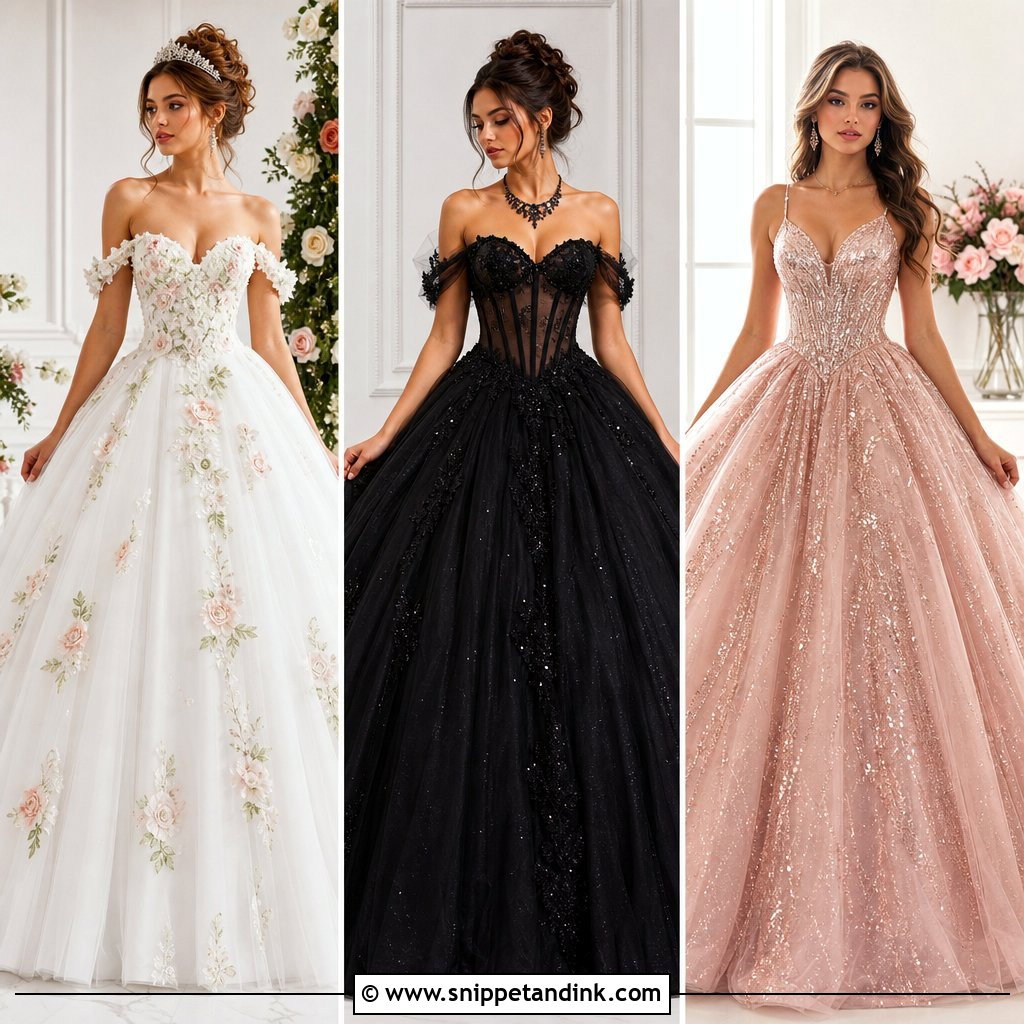
25. Royal Princess Wedding Dress
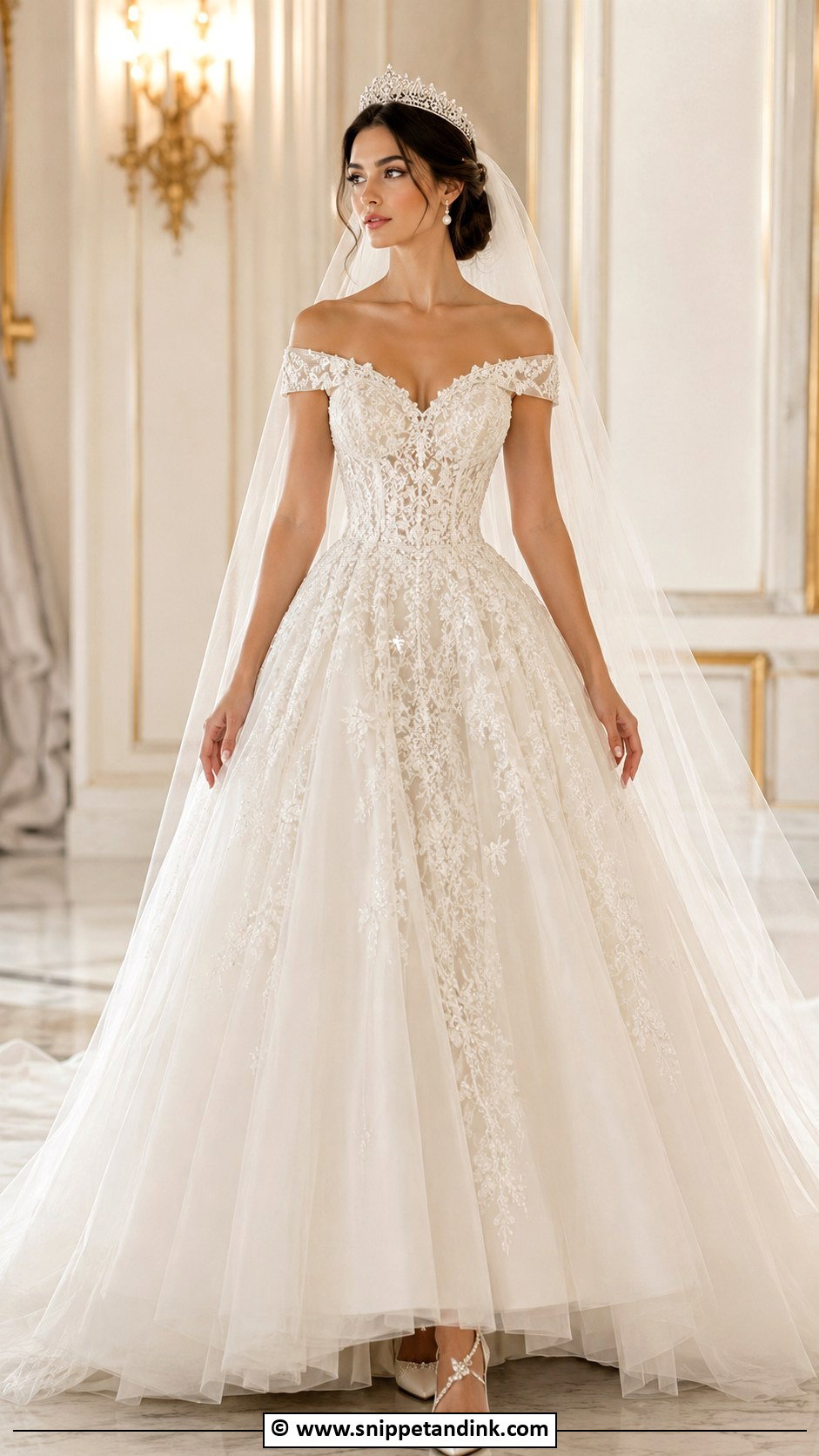
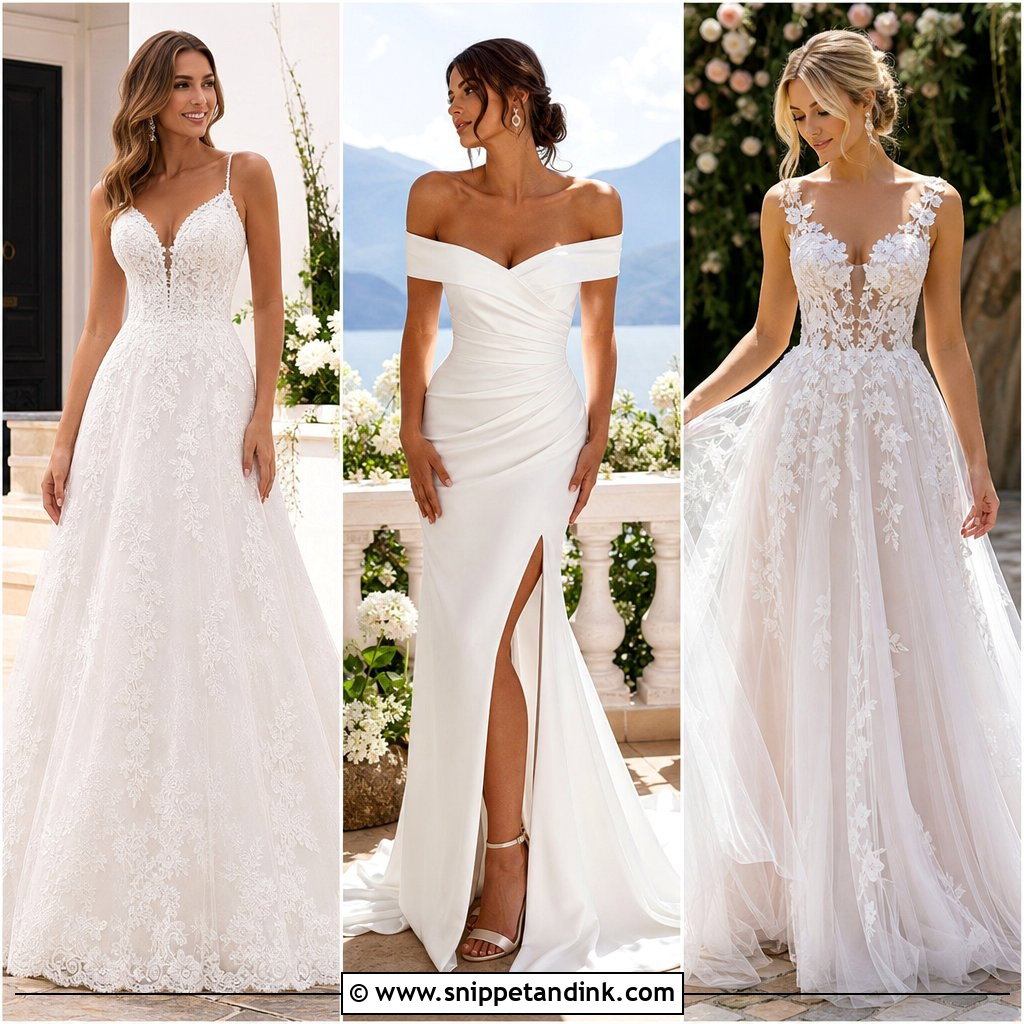
A royal princess wedding dress leans into the fairytale side: fitted bodice, full skirt and a dramatic veil. To keep it grown-up, choose one main feature, beading, a bow, lace sleeves or a long train, instead of all of them. Tulle and satin are the classic choices. A tiara or pearl hairpiece suits it. Grand staircases and ballrooms are where it looks most at home.
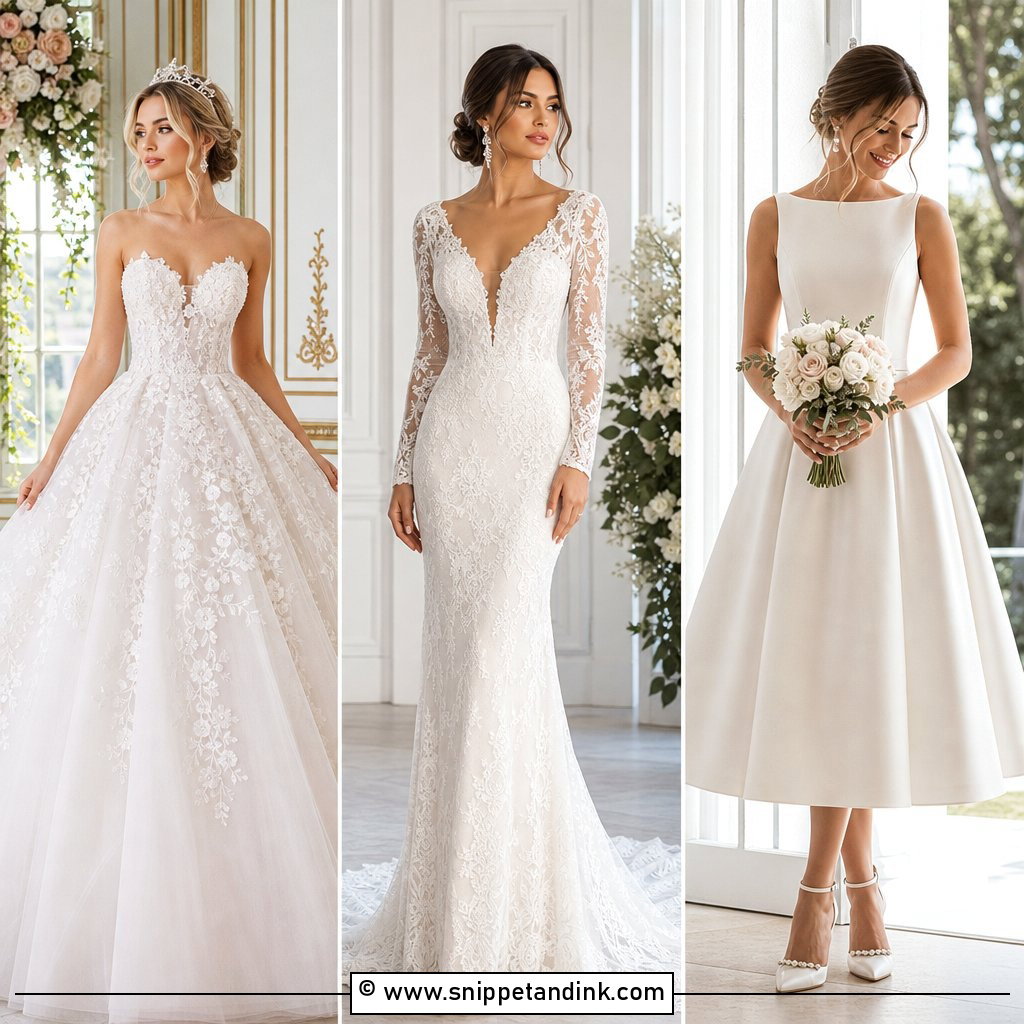
26. Royal Mermaid Wedding Dress
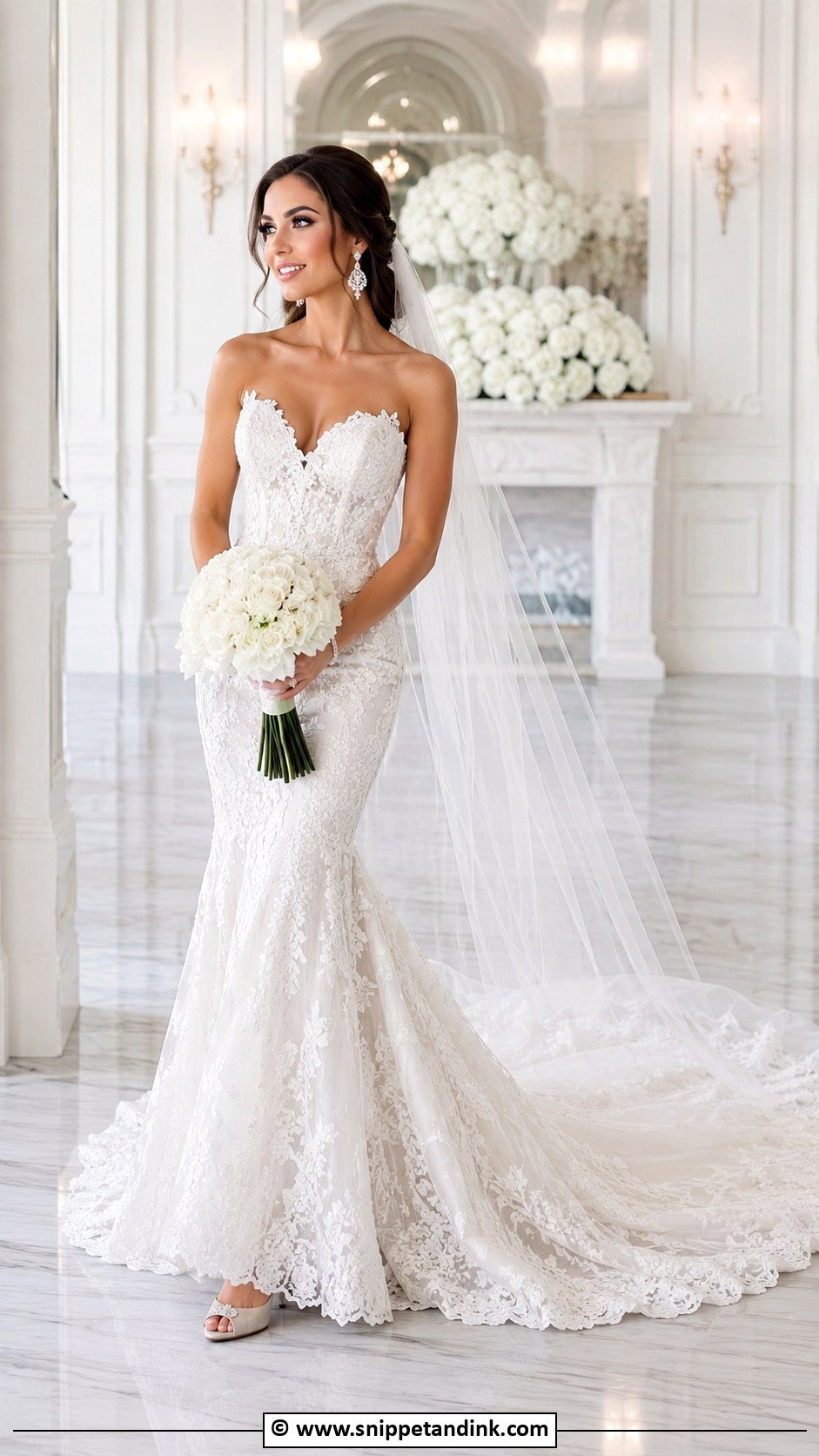
A royal mermaid wedding dress fits through the bodice and hips, then flares near the knee or lower. It is a confident silhouette. The flare point matters: set too high, it restricts your stride; too low, you will struggle with stairs. I check that a bride can climb a step and sit down in it at every fitting. Lace, satin or crepe with a long train make it formal.
27. Royal Sheath Wedding Dress
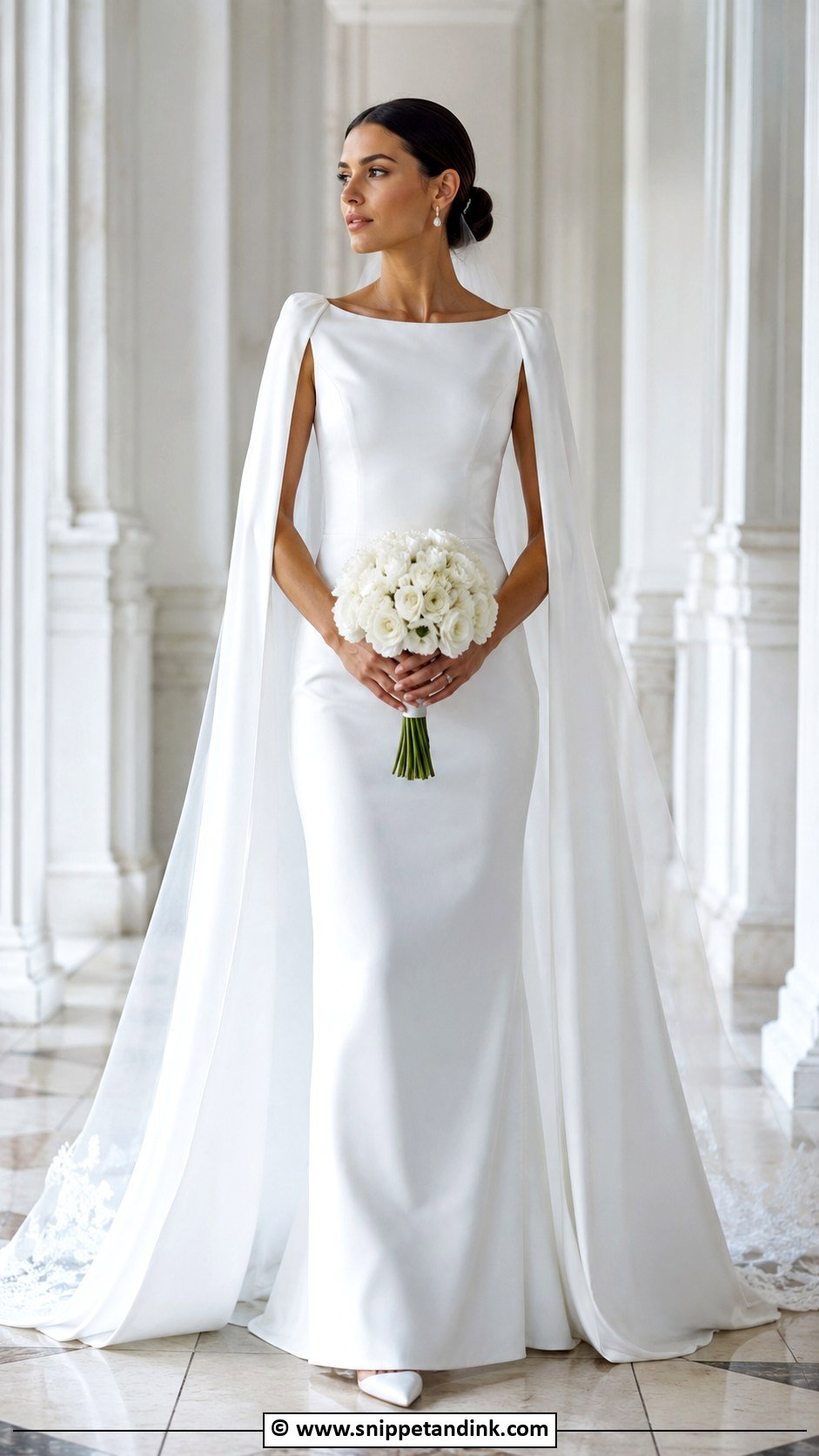
A sheath follows the body without a full skirt, so it is light and easy to move in. To make it feel regal, the fabric and neckline have to be excellent, or add a cape veil for drama. Satin or crepe sheaths show every line underneath, so undergarments need planning. It suits smaller formal weddings and modern venues, and it doubles well as a second look for the reception.
28. Royal Wedding Dress With Detachable Skirt
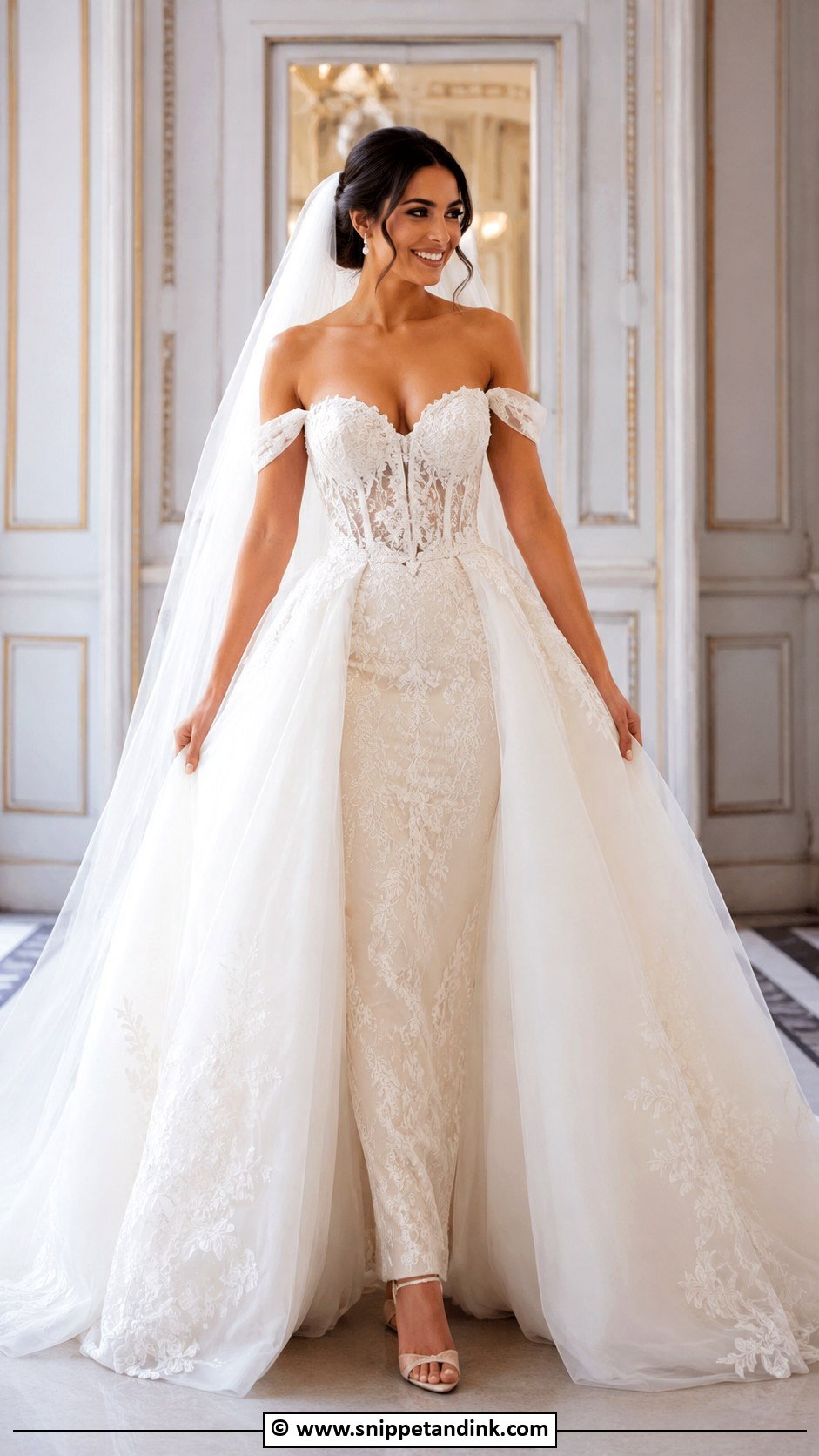
A detachable overskirt gives you two silhouettes from one dress: the full skirt for the ceremony and a slimmer gown for dancing. The changeover needs a plan. Practice removing it at the final fitting, and assign someone who knows where the hooks or snaps are. Satin, tulle or organza can all be used, depending on how much volume you want for the ceremony.
29. Royal Wedding Dress With Puff Sleeves
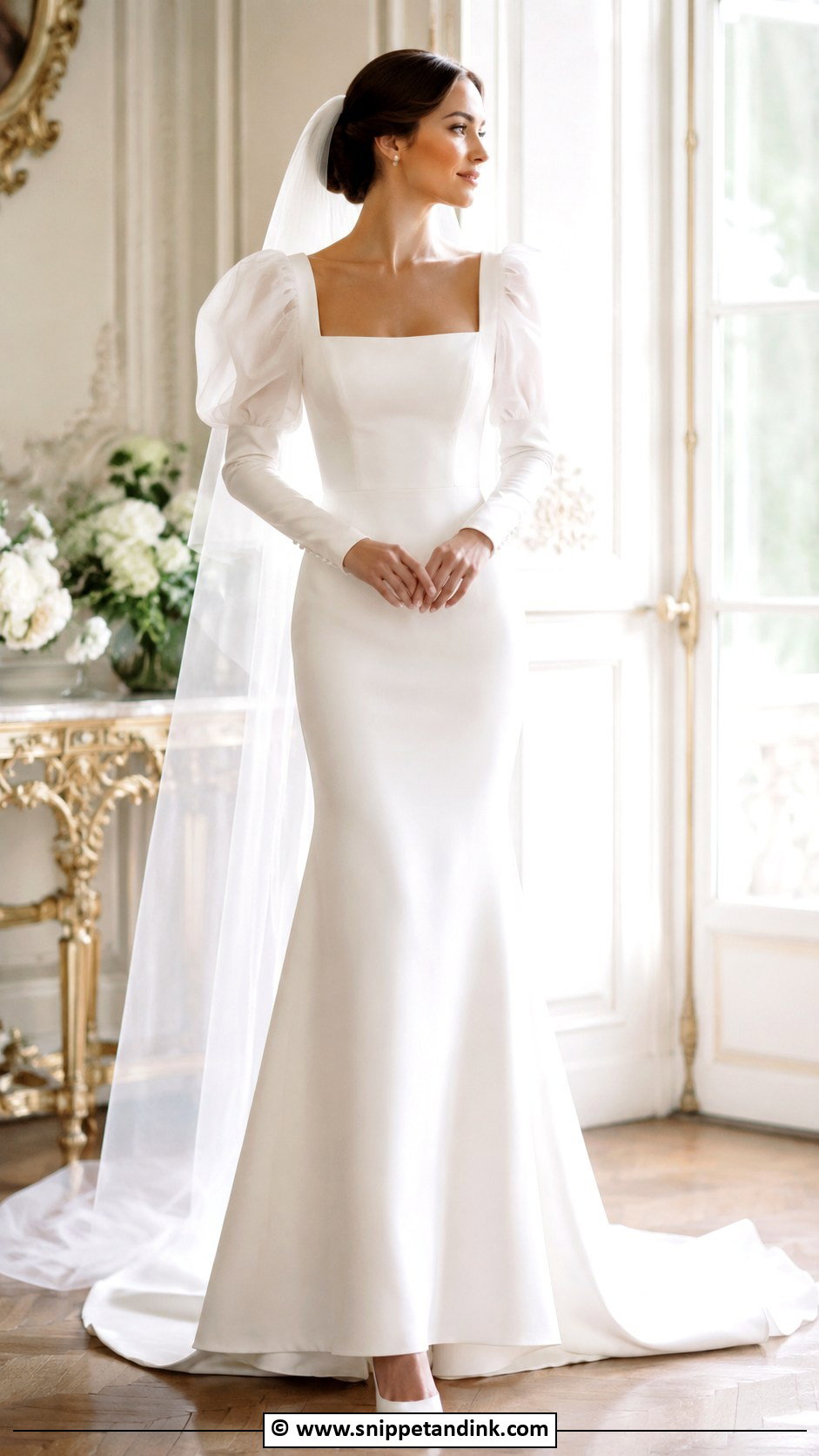
A royal wedding dress with puff sleeves is a strong statement with a vintage edge. Sleeves can be sheer and soft or structured and dramatic. I keep the bodice fitted and the skirt clean to balance the volume at the shoulder. Very large puffed sleeves need internal netting to hold their shape, and they can crush under a coat or a fitted veil. Hair worn back shows the sleeve shape best.
30. Royal Wedding Dress With Button Back
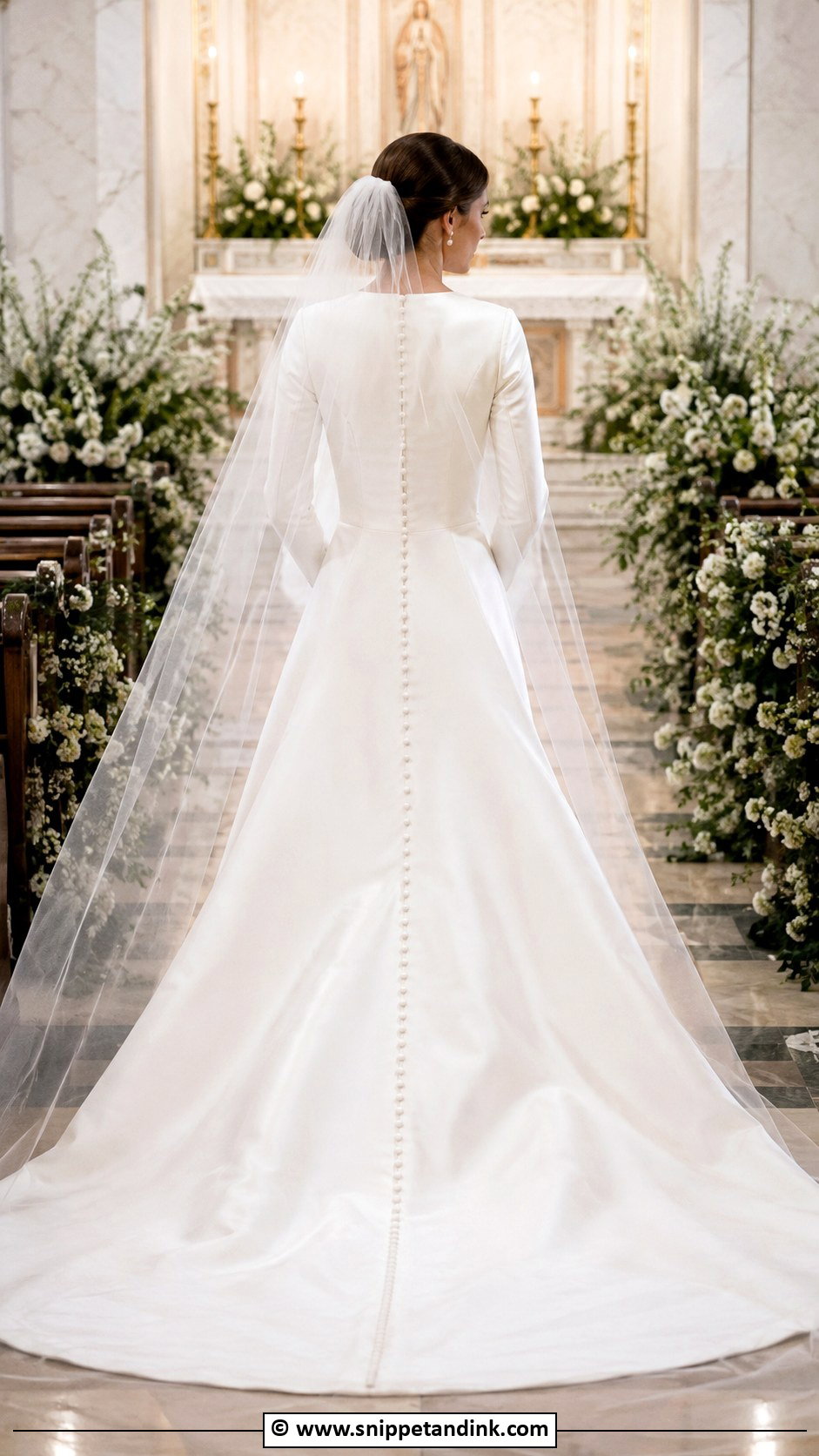
A royal wedding dress with button back looks polished from every angle, which matters because guests spend the whole ceremony looking at your back. Covered buttons suit satin, lace, crepe and mikado. Most button backs actually close with a hidden zip or loops, so ask how it fastens; dozens of real buttons take a long time to do up. At fittings, check that the buttons lie smoothly and do not pull apart.
31. Royal Wedding Dress With Lace Train
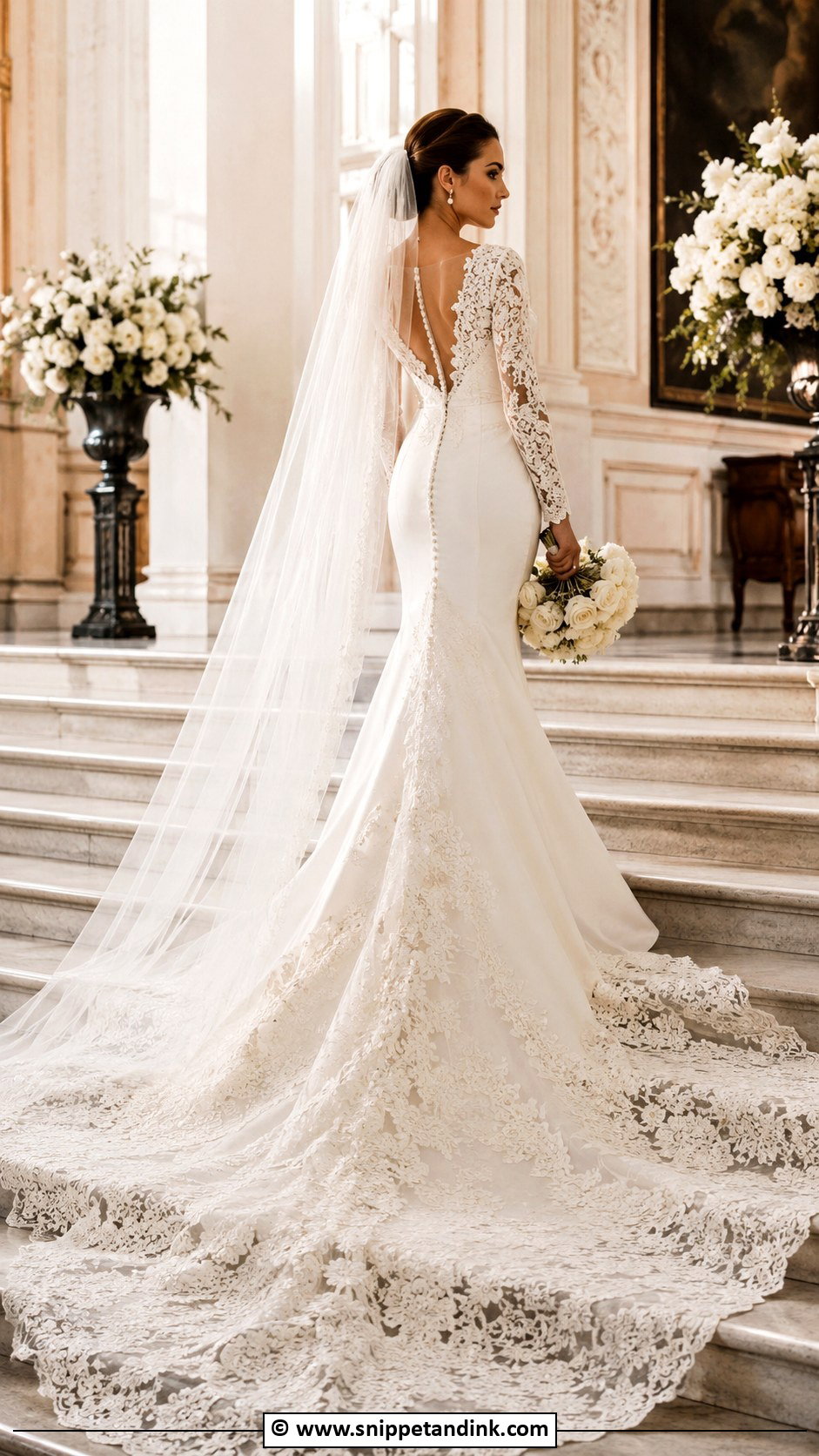
A lace train adds romance where guests see it most: behind you as you walk. The lace can cover the entire train or appear as a border. A clean front lets the train be the main feature. Lace trains catch on gravel and rough flooring, so outdoor venues need a plan for keeping it lifted between photos. A fitted bodice or A-line shape balances it.
32. Royal Wedding Dress With Gloves
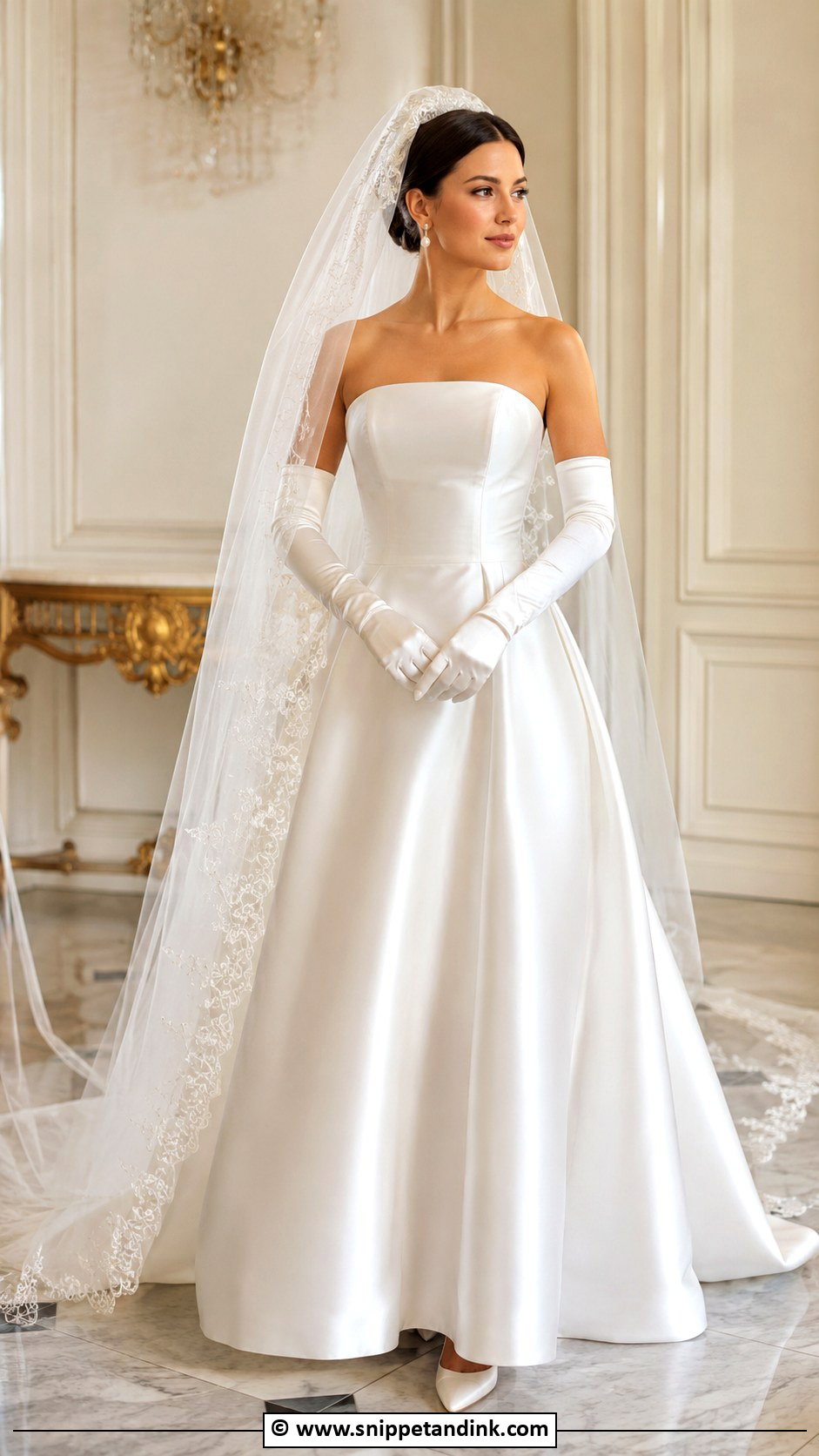
Gloves bring formality, and the length should match the dress. Opera gloves suit a strapless satin gown; wrist-length lace softens a vintage style. Match the color to the gown closely, since ivory and white side by side look wrong. Long gloves are awkward for the ring exchange, so most brides either remove the left one or choose a glove with a finger opening. Keep the rest of the accessories simple.
33. Royal Wedding Dress With Floral Appliques
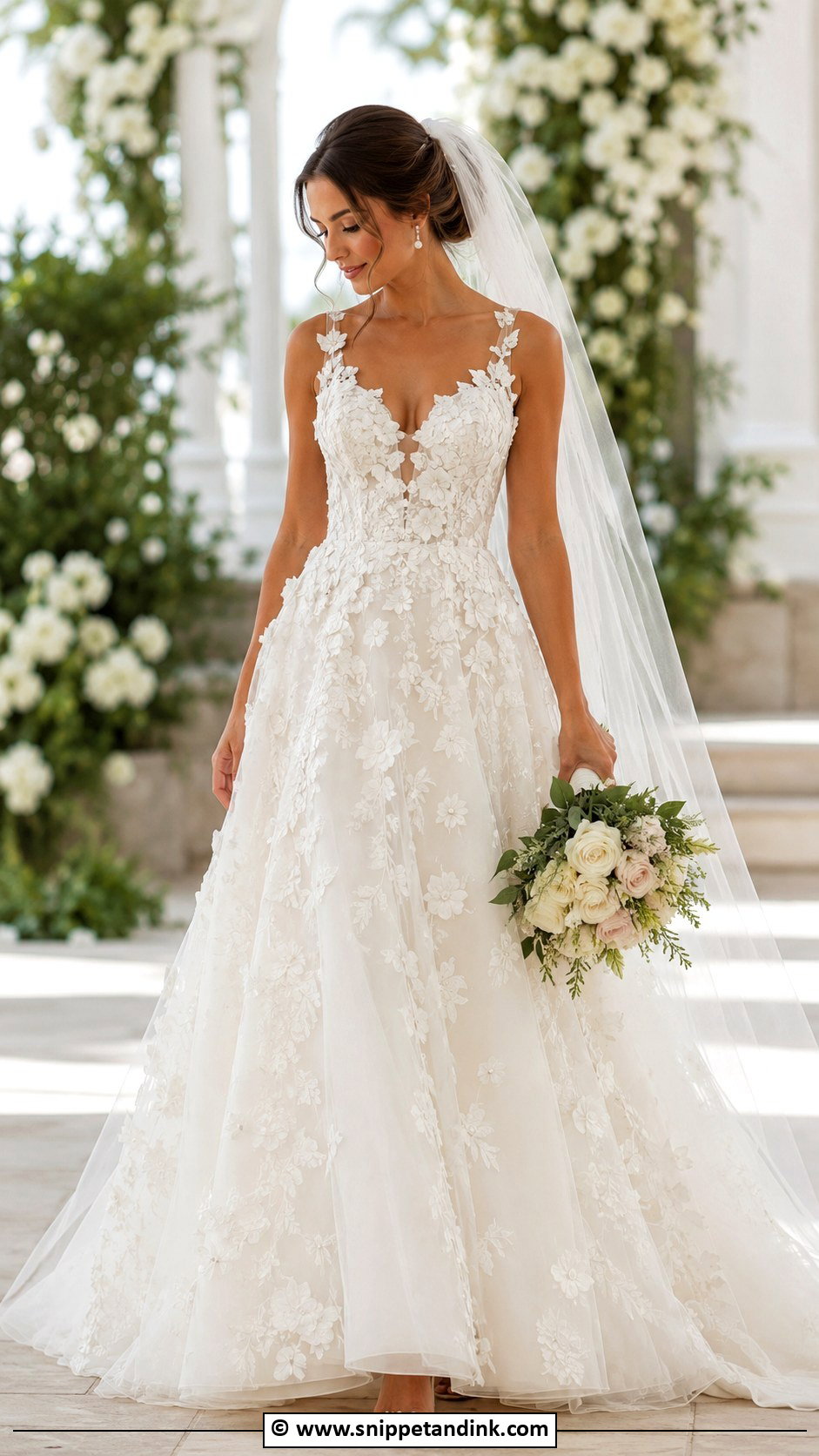
Floral appliques add soft, dimensional texture. Ivory or white florals suit a regal look better than bright colors. They can sit on the bodice, sleeves, skirt or train. Three-dimensional appliques crush when packed, so the dress should travel on a hanger, not folded. A bouquet with similar soft flowers ties it together. Spring and summer garden venues suit this best.
34. Royal Wedding Dress With Overskirt
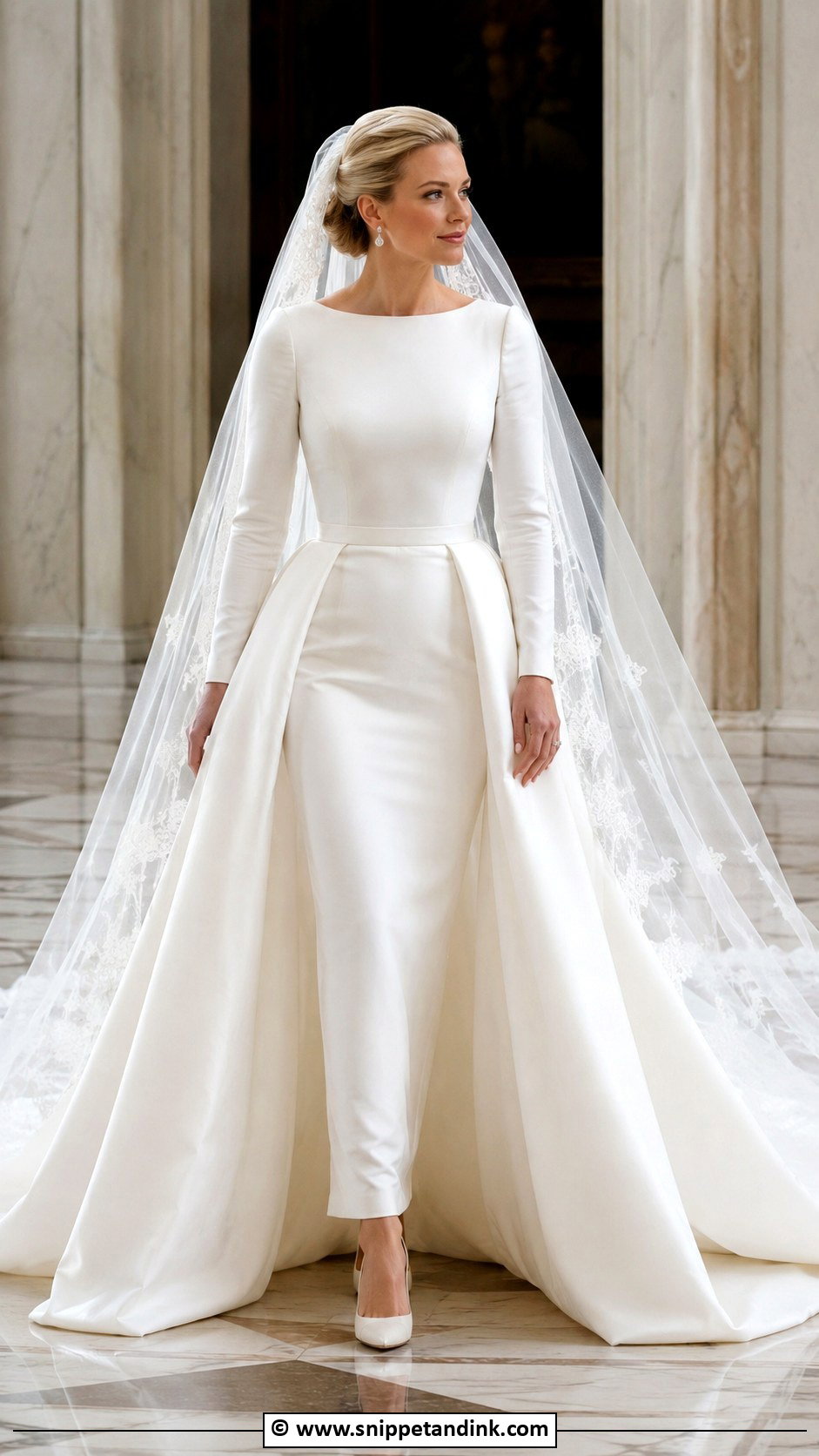
An overskirt that opens at the front or drapes from the waist adds volume and gives a layered look over a slimmer gown. Unlike a detachable skirt, it is often a permanent part of the design. Keep the bodice clean if the overskirt is dramatic. Front-opening overskirts move a lot when you walk, so check how they fall in photos at your fitting.
35. Royal Wedding Reception Dress
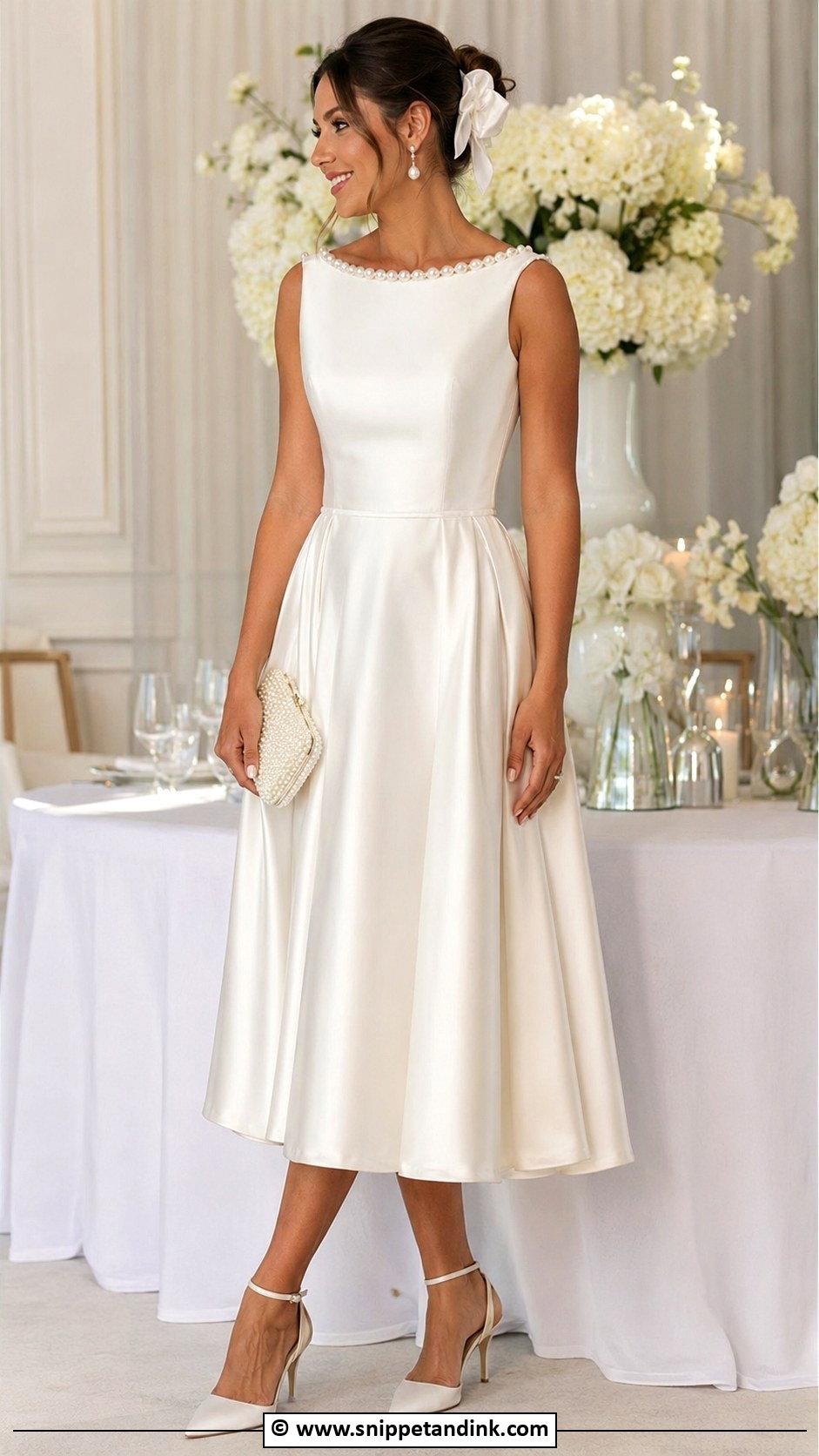
A reception dress should be easier to move in while keeping a bridal feel. A satin midi, pearl-trimmed column, lace sheath or simple crepe gown can all work. If you wore a dramatic ceremony veil, switch to a comb or a bow for the evening. Pearl earrings, comfortable heels and a small clutch are enough. It keeps the regal mood while letting you eat and dance comfortably.
Living With a Long Train for a Whole Day
A train looks magnificent for the processional and portraits, then becomes a practical problem for the next eight hours. I plan its whole day at the first fitting.
Bustle styles
An over bustle (often called an American bustle) lifts the train with hooks onto the back of the skirt. An under bustle (often called a French bustle) tucks it underneath with ribbon ties. A ballroom bustle hides the lift points so the skirt looks floor length. Heavy satin and mikado usually need more lift points than tulle. Whichever you choose, someone other than you must learn to do it, ideally at the final fitting.
Stairs, cars and outdoor ground
Practice going up and down stairs with the train held over your arm. Ask whoever drives you to leave the back seat empty so the skirt can be laid in rather than sat on. On grass or gravel, a hem guard or an early bustle saves the fabric from dirt and tears.
Structured Gowns Need More Fitting Time
Corsets, basque waists, mikado ball gowns and button backs need more fittings than a soft sheath, because each layer affects the next. Most bridal shops suggest ordering many months ahead, and production times vary widely, so ask the shop for their own timeline before falling for a gown. Plan on at least two or three fittings.
- Bring the exact shoes and undergarments to every fitting. Heel height changes hem length.
- Sit, raise your arms and hug the fitter. If the bodice moves, say so then.
- Schedule the final fitting a few weeks before the wedding, not the week of, in case one more adjustment is needed.
One Lead Feature, Then Let the Tailoring Carry It
Every gown on this list can work; the right one depends on your body, your venue, the season and how much structure you can comfortably wear for a whole day. Lace sleeves, satin, pearl details, cathedral veils, structured bodices and long trains each create a regal effect, but rarely all at once. Pick one feature to lead and let everything else support it. Get the fittings right, practice the bustle, and the dress will look regal because it fits you, not because of any single detail.
You'll Like These Ideas:









Leave a Reply