
A regal bridal look comes from presence more than price: structure in the bodice, a deliberate neckline, and a skirt and train that move well. Lace sleeves, satin skirts, pearl accents, basque waists, capes, overskirts and cathedral veils all belong to that vocabulary, and the newer modern royal wedding dresses add minimalist satin, sleek crepe, soft floral appliqué and detachable pieces that make a long day bearable. I’ve grouped 25 ideas here by the detail that defines each one, with what I look for at fittings and where each one tends to go wrong.
Start at the Waistline and Work Outwards
When a bride is torn between ten royal-looking gowns, I ask her to ignore the sleeves and lace for a moment and look at where each waist sits. That one line sets your proportions more than any other detail.
- Natural waist: sits at the narrowest point of your torso. The classic ball gown and A-line setting, and the safest choice for most figures.
- Basque waist: dips into a V or U below the natural waist. It lengthens a short torso and suits full skirts.
- Dropped waist: sits on the hips. Good on a long, straight torso; it can shorten the legs on a petite bride.
- Empire waist: just under the bust. Light and comfortable, but it reads softer and less structured.
Once the waistline suits you, I look at the bodice construction. Boning and an inner corset carry the skirt’s weight and keep the neckline in place, which matters far more on a satin ball gown than on a light crepe. Ask the shop what is inside the bodice, not just what is on it.
1. Royal Ball Gown Wedding Dress
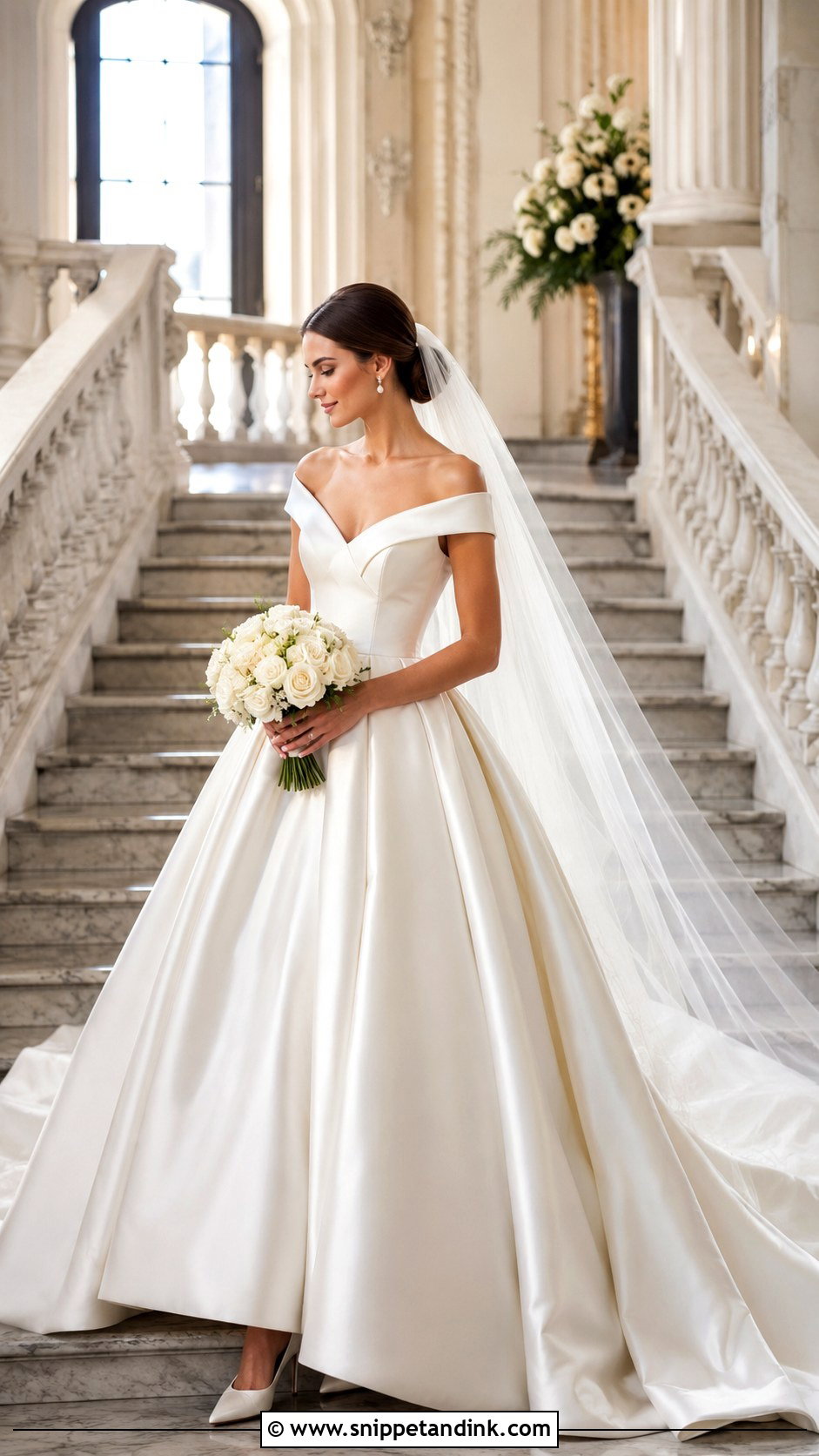
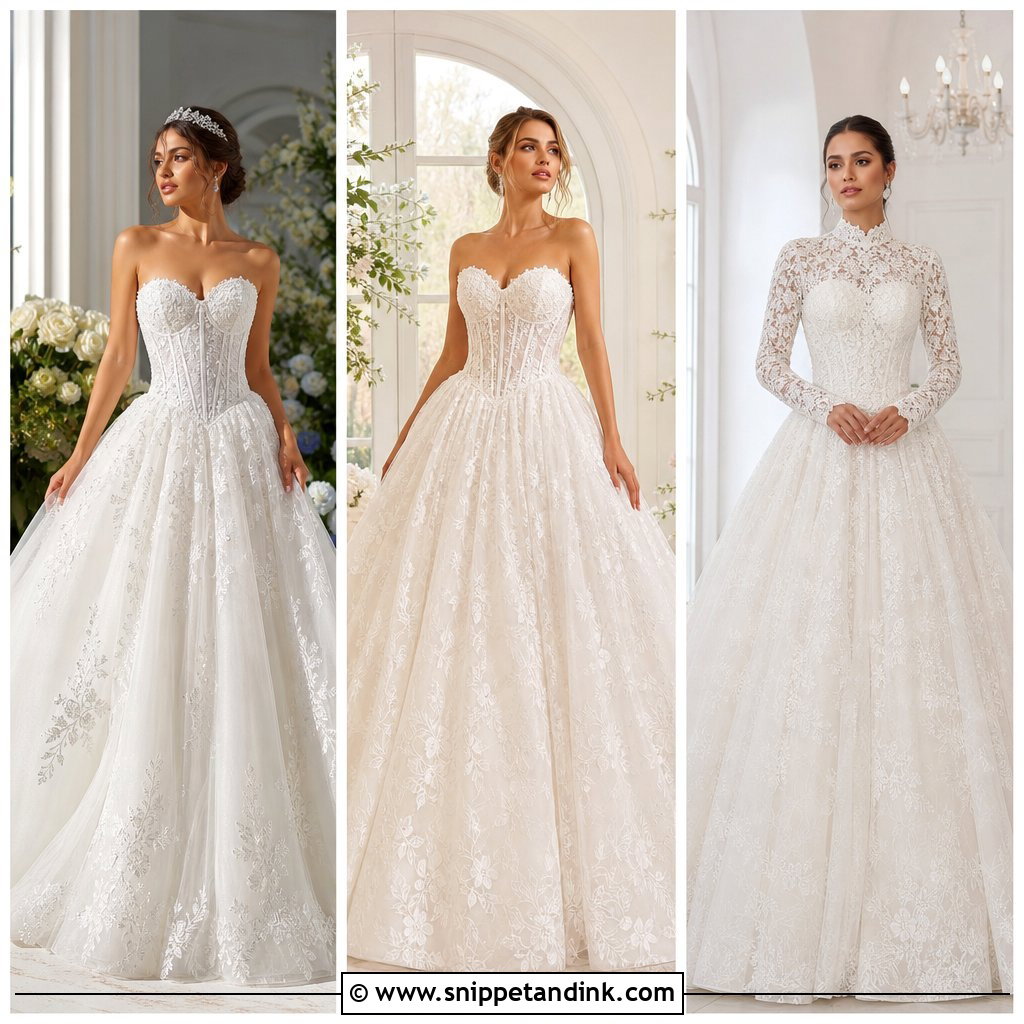
The ball gown is the grand-entrance dress, and its success depends on the bodice holding up the skirt’s weight. A structured bodice, full skirt and long train in satin, mikado or silk faille hold their shape and catch light softly. I always ask whether the gown has an inner corset or boned bodice, because without one a heavy skirt drags the waist down by the evening. Style it with a cathedral veil, pearl drops, ivory pointed-toe heels and a simple bouquet. It is at home in formal venues, on grand staircases and at black-tie receptions.
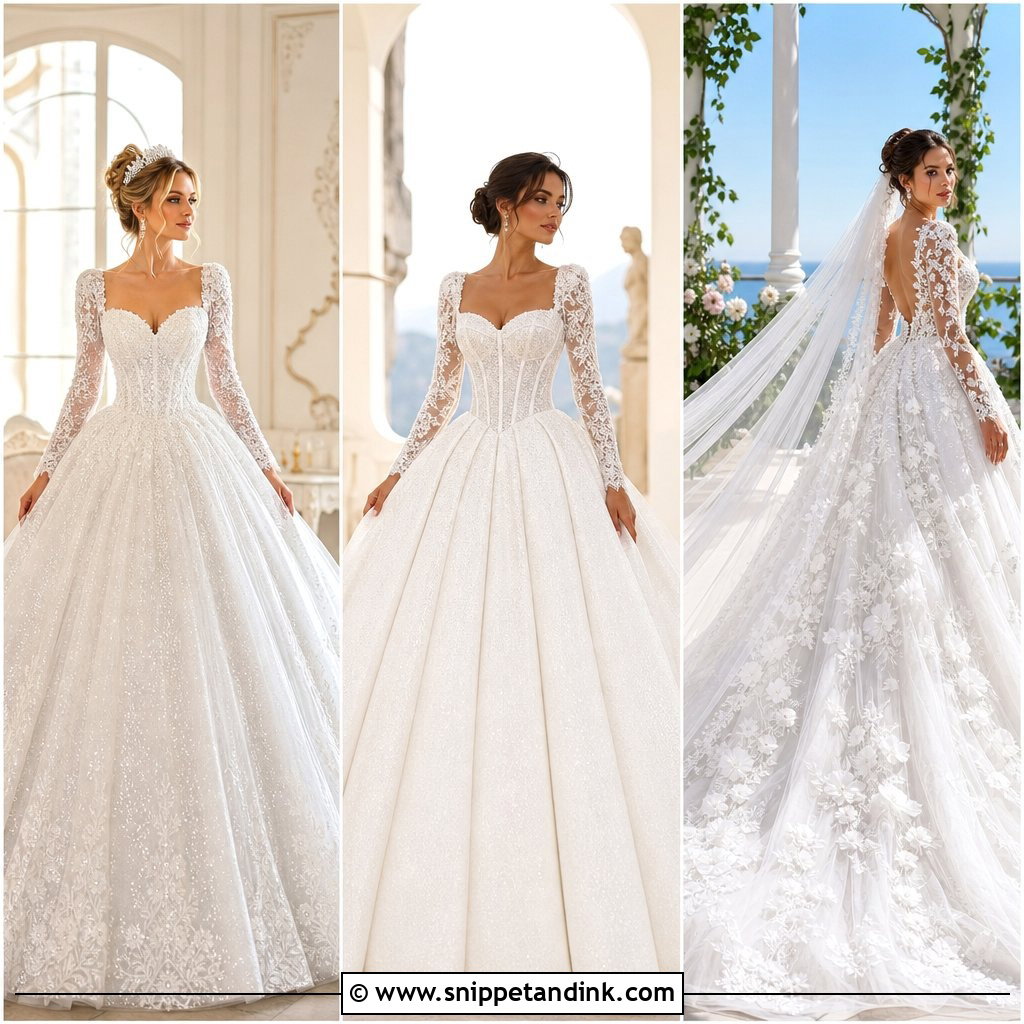
2. Long Sleeve Lace Wedding Dress
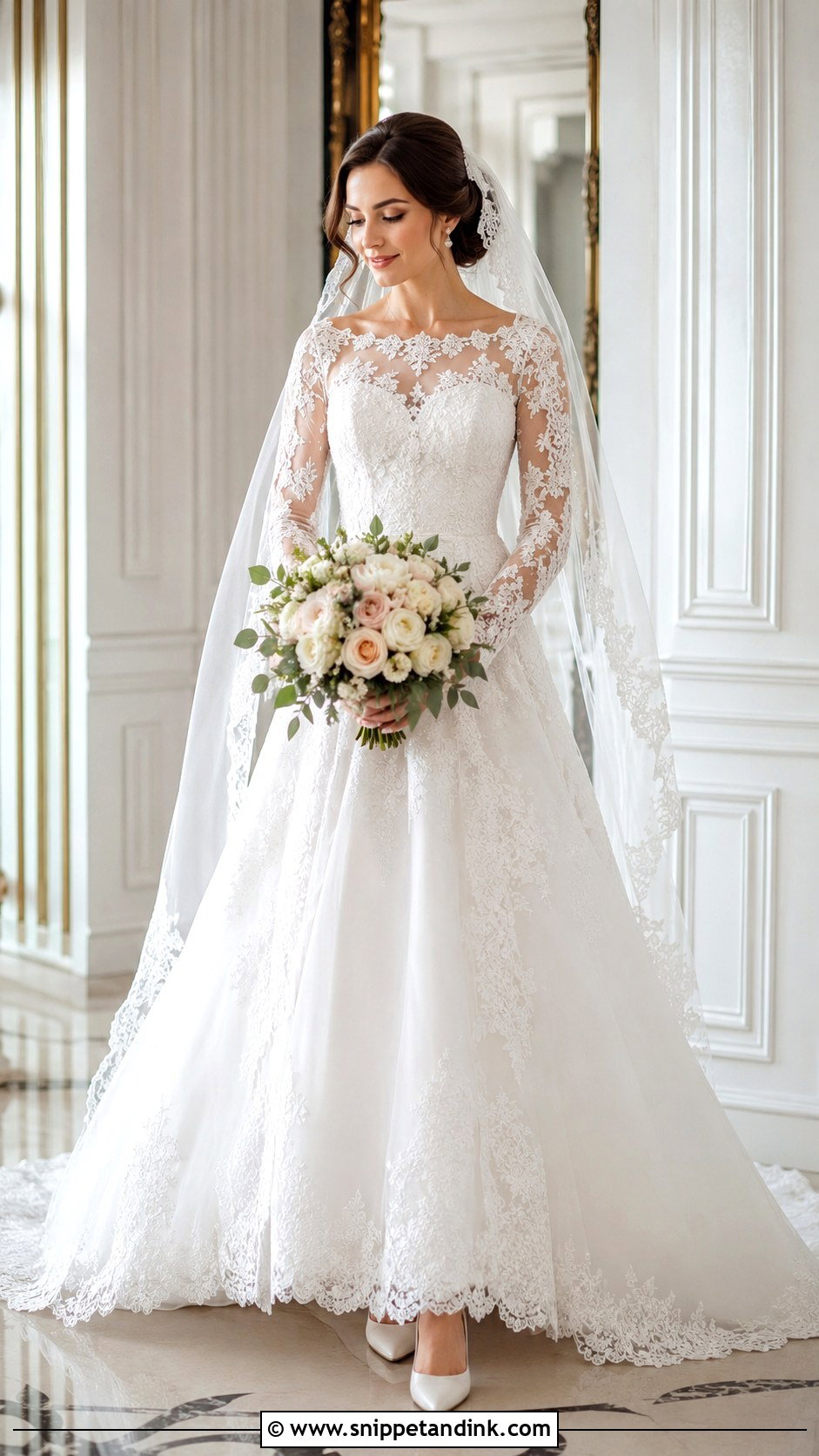
Lace sleeves give coverage and romance in one. They can be sheer and delicate or more opaque, set on a fitted bodice above an A-line skirt. A sheer lace-edged veil, pearl studs, satin pumps and a neat low bun to show the sleeve detail. For a fresher take I’d look at floral lace with fine beading or a faint shimmer. Have the sleeves fitted with your arms bent and raised; lace has little stretch, and a sleeve that’s perfect while you stand still can split at the elbow during the first hug.
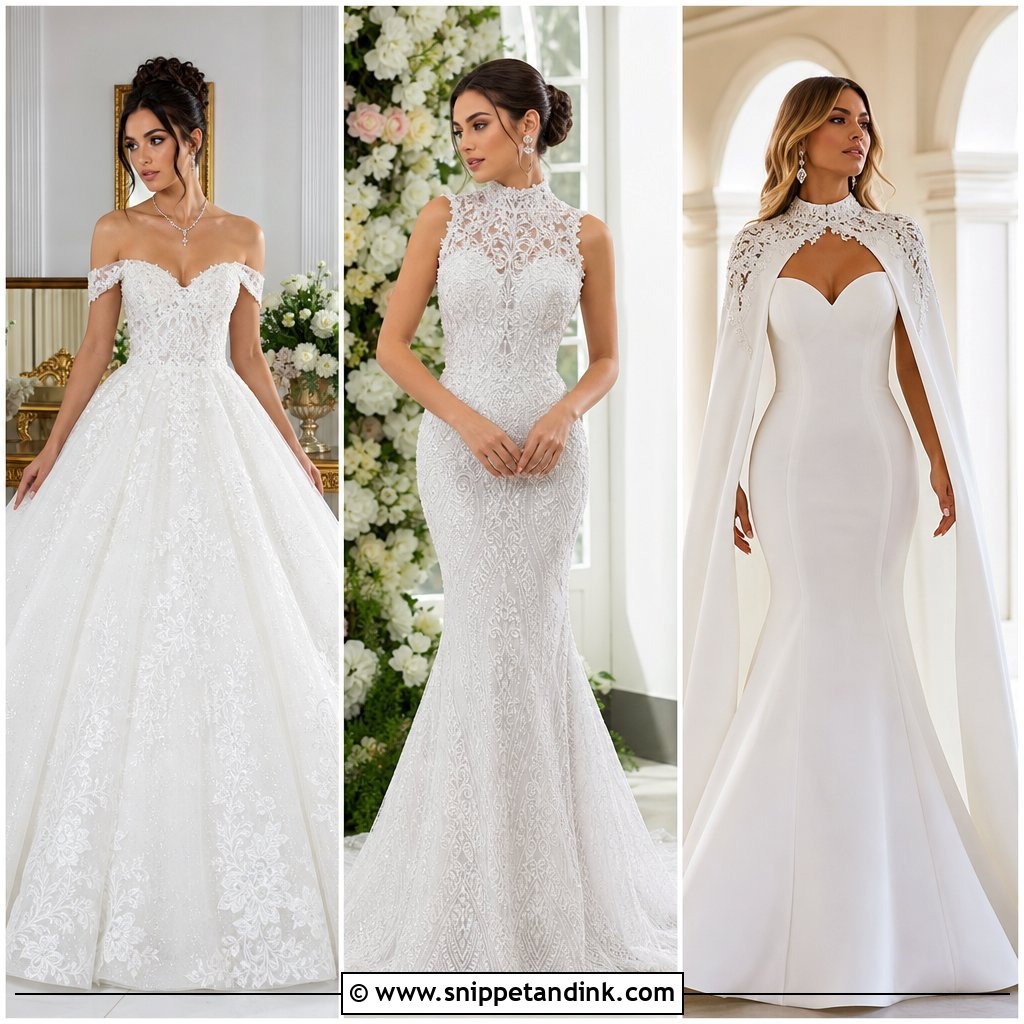
3. High Neck Wedding Dress
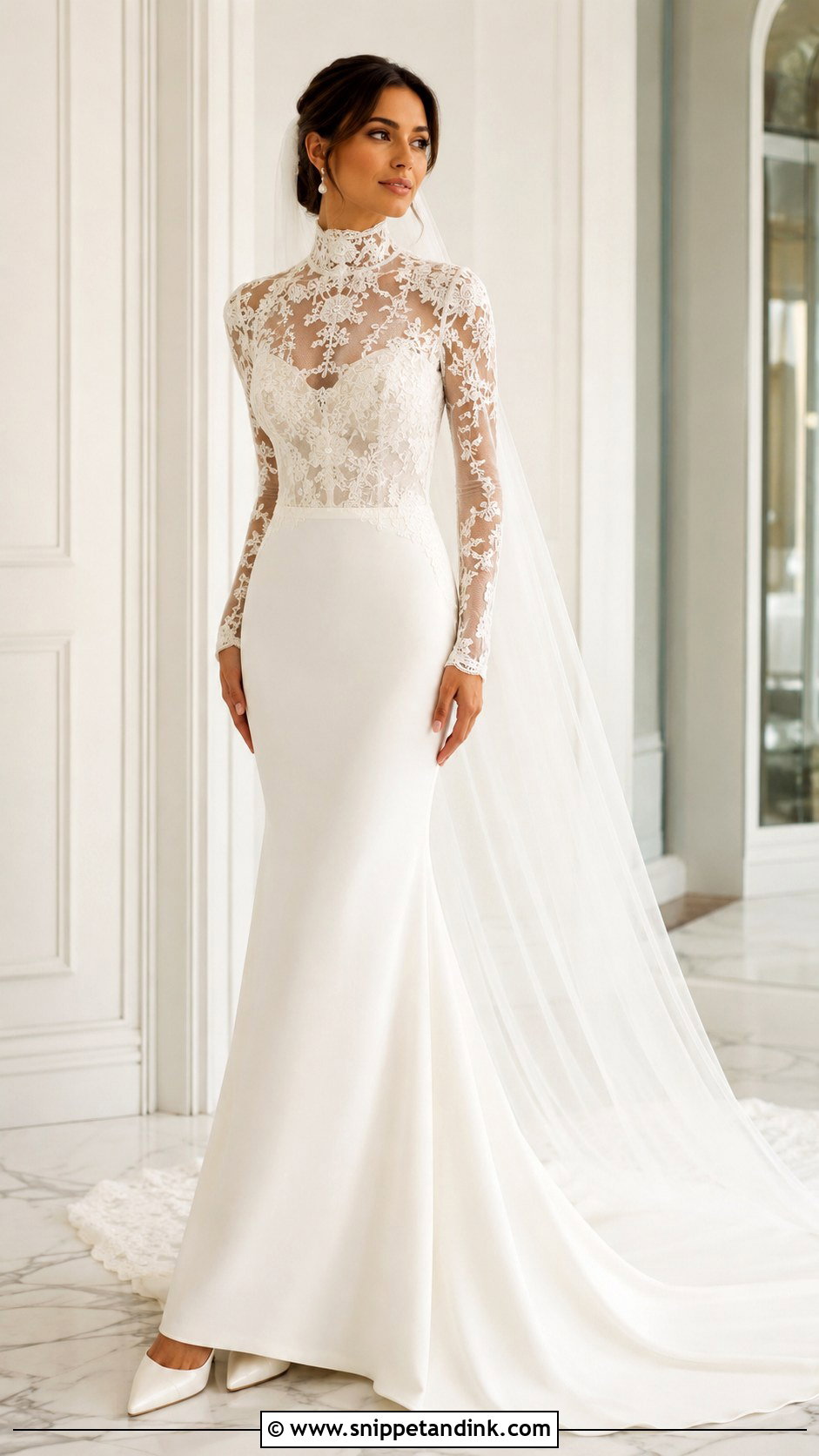
A high neck frames the face, which is why it reads regal immediately. It pairs well with long lace sleeves, a fitted waist and a smooth skirt falling into a chapel or cathedral train. Keep accessories minimal: pearl earrings, a sleek veil and closed-toe heels. If a solid high neck feels too closed, an illusion neckline with embroidered lace or tiny pearls gives the same line with more air. On a shorter neck, I’d keep the collar a touch lower so it doesn’t push against the jaw.
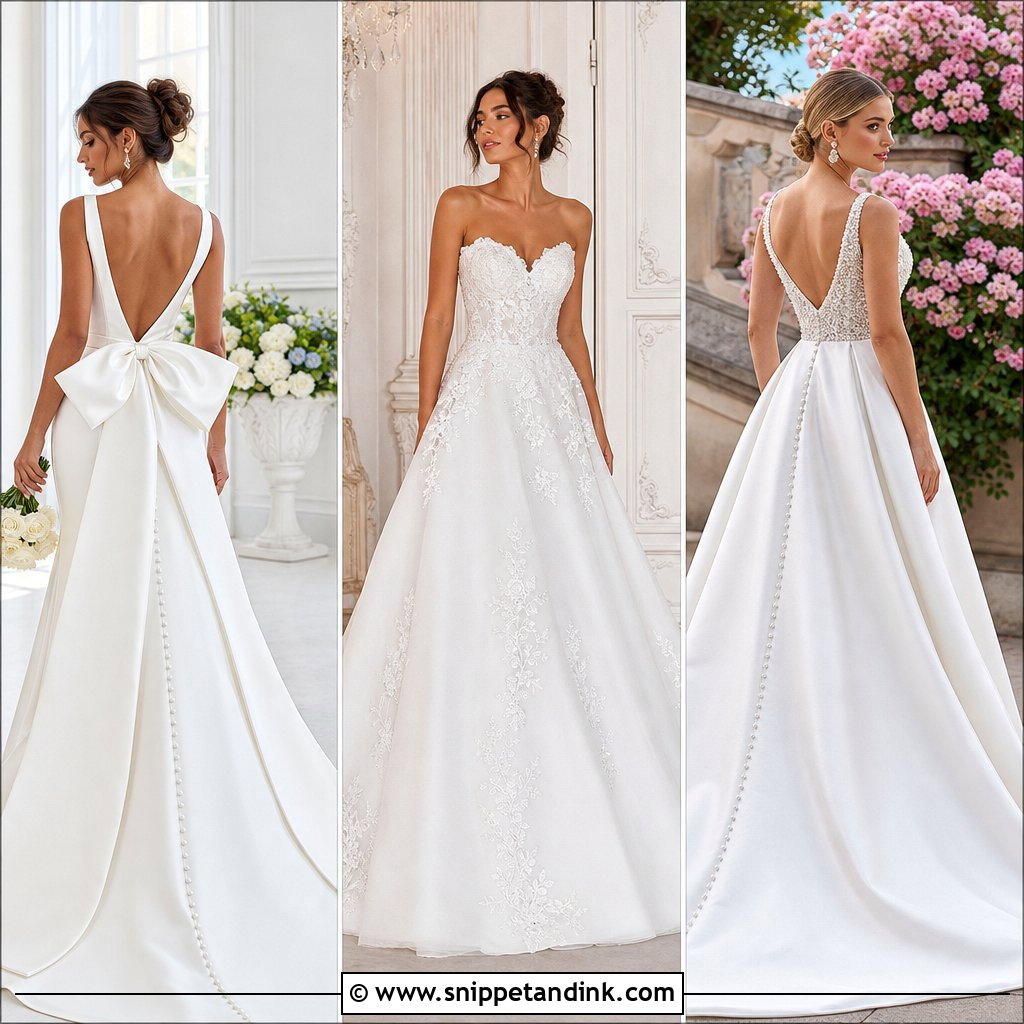
4. Satin Royal Wedding Dress
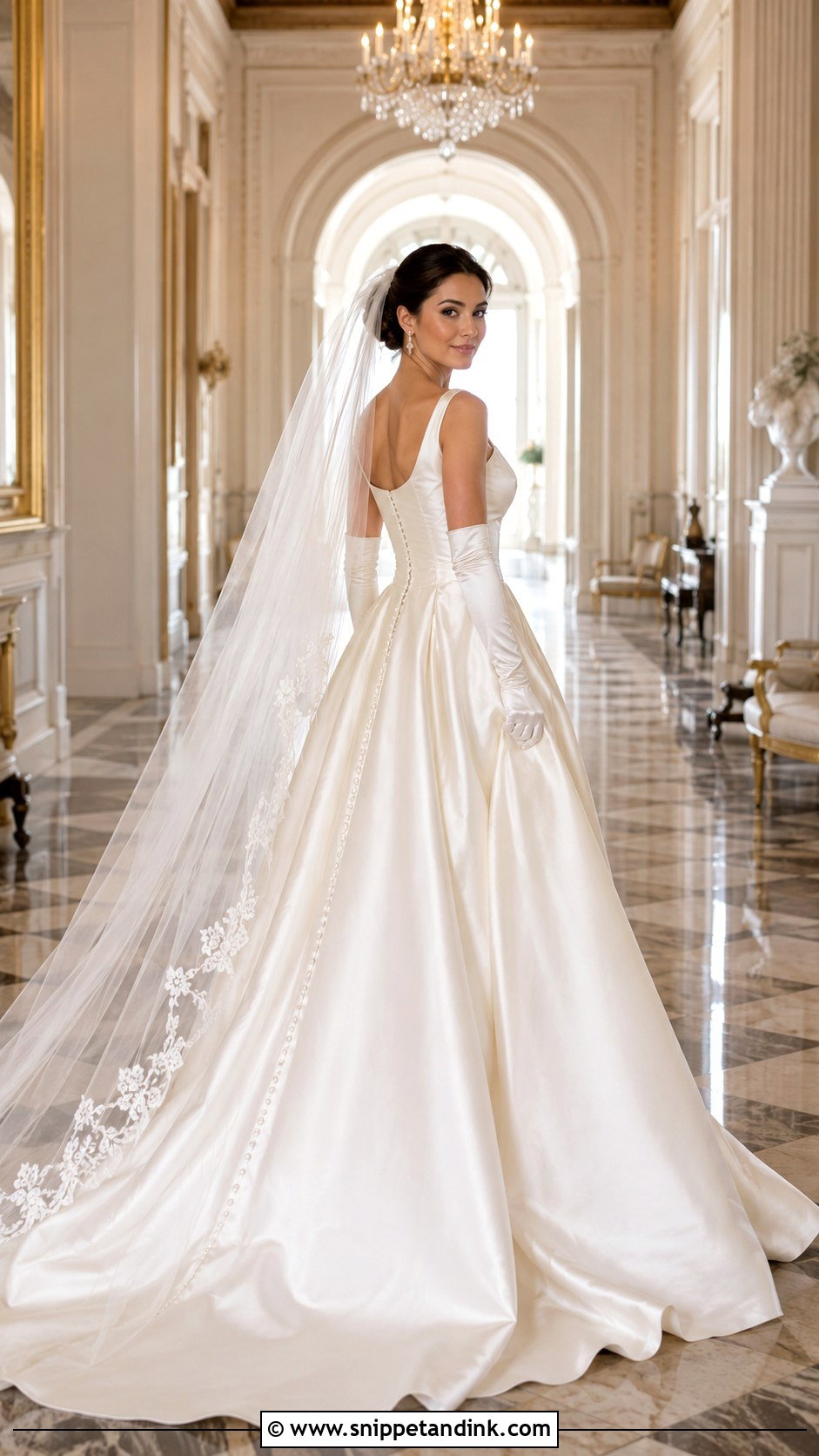
Satin shows everything. That is its power and its risk. A square neckline, fitted bodice, full skirt and buttons down the back, cut sharply and fitted with care, look luxurious with no embellishment at all. A long veil, satin gloves, crystal earrings and ivory heels complete it. Satin reflects light in bright spaces, but it also reveals every ripple at the waist, bust and hem, so I budget for careful alterations and fit it over the exact underwear you’ll wear.
5. Princess Wedding Dress With Cathedral Train
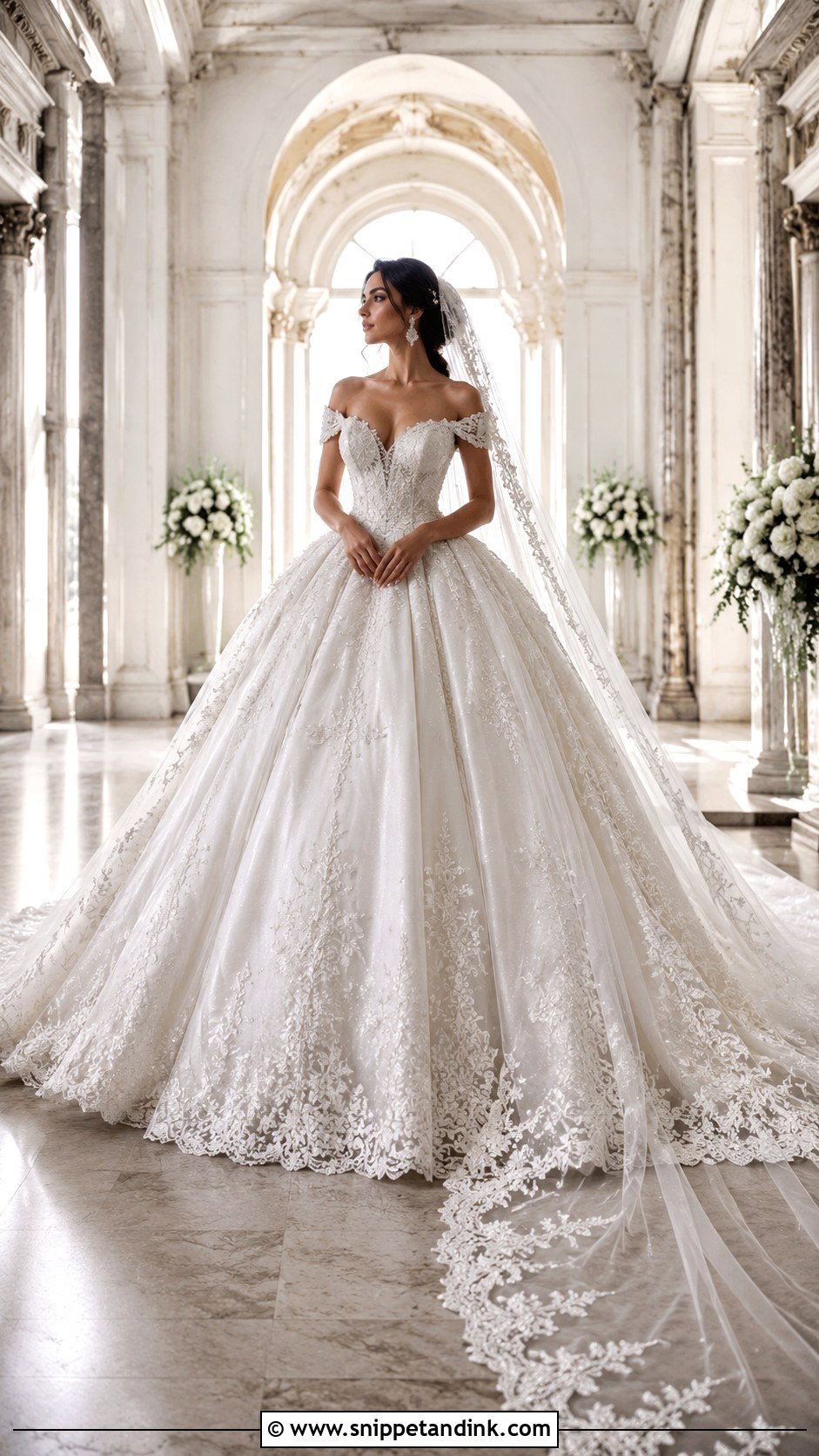
A cathedral train turns the aisle into the main event. Tulle gives softness, satin gives structure and organza floats. I keep the rest balanced: a fitted bodice, delicate earrings, a long veil and heels that disappear under the skirt. Trains this long need a plan for the reception, either a secure bustle or a detachable train. The bustle points should be tested at the final fitting with whoever will fasten them on the day.
6. Off Shoulder Royal Wedding Dress
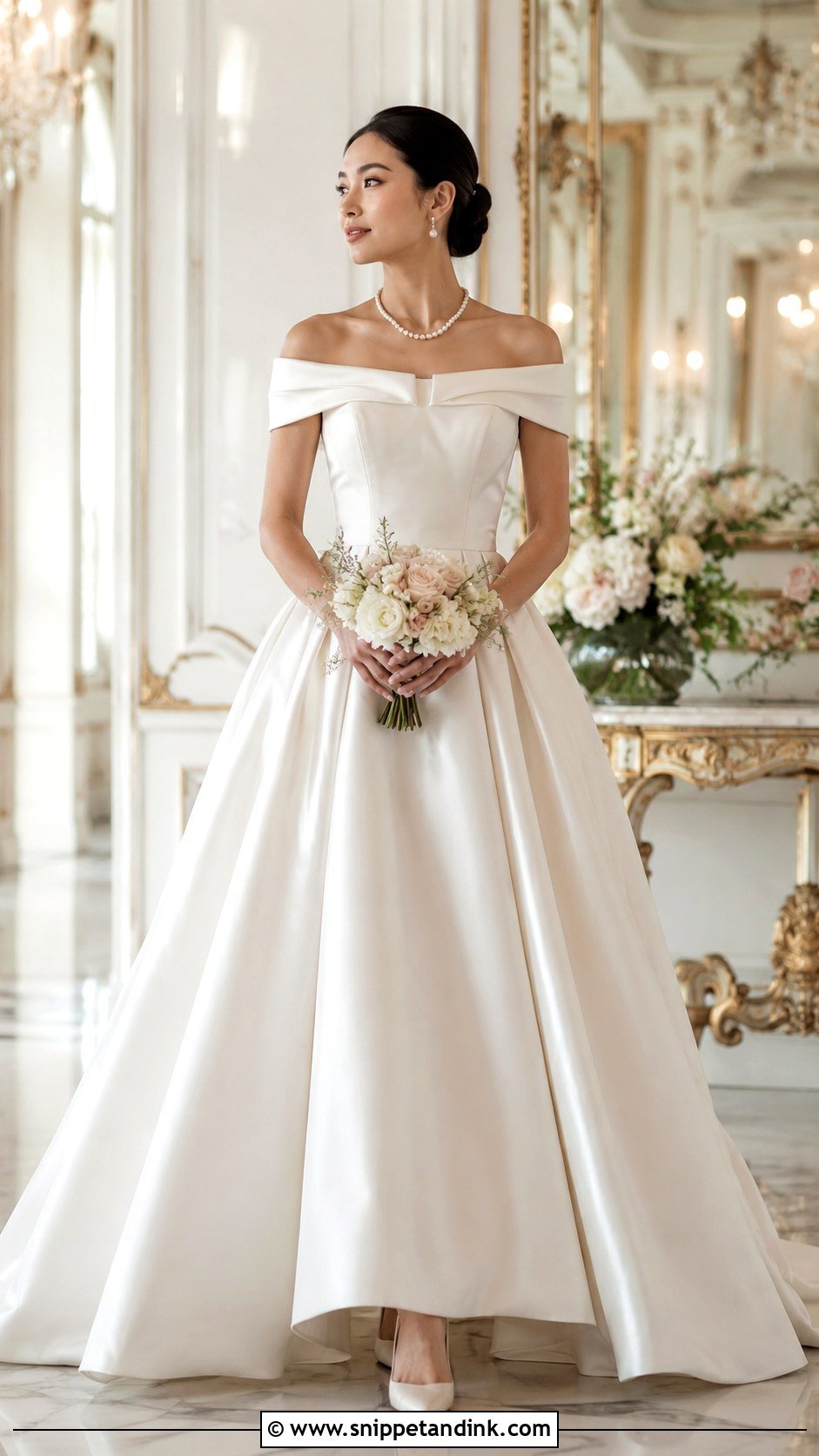
Off-shoulder necklines soften the upper body and show a little skin without going strapless. A structured bodice and full skirt keep it formal, and lace, satin or mikado move the mood from romantic to crisp. A smooth updo, pearl necklace, drop earrings and classic pumps finish it. The trade-off is arm movement: off-shoulder sleeves pin the upper arms, so I have brides wave, hug and reach for a glass at the fitting before anything is finalised.
7. Pearl Embellished Wedding Dress
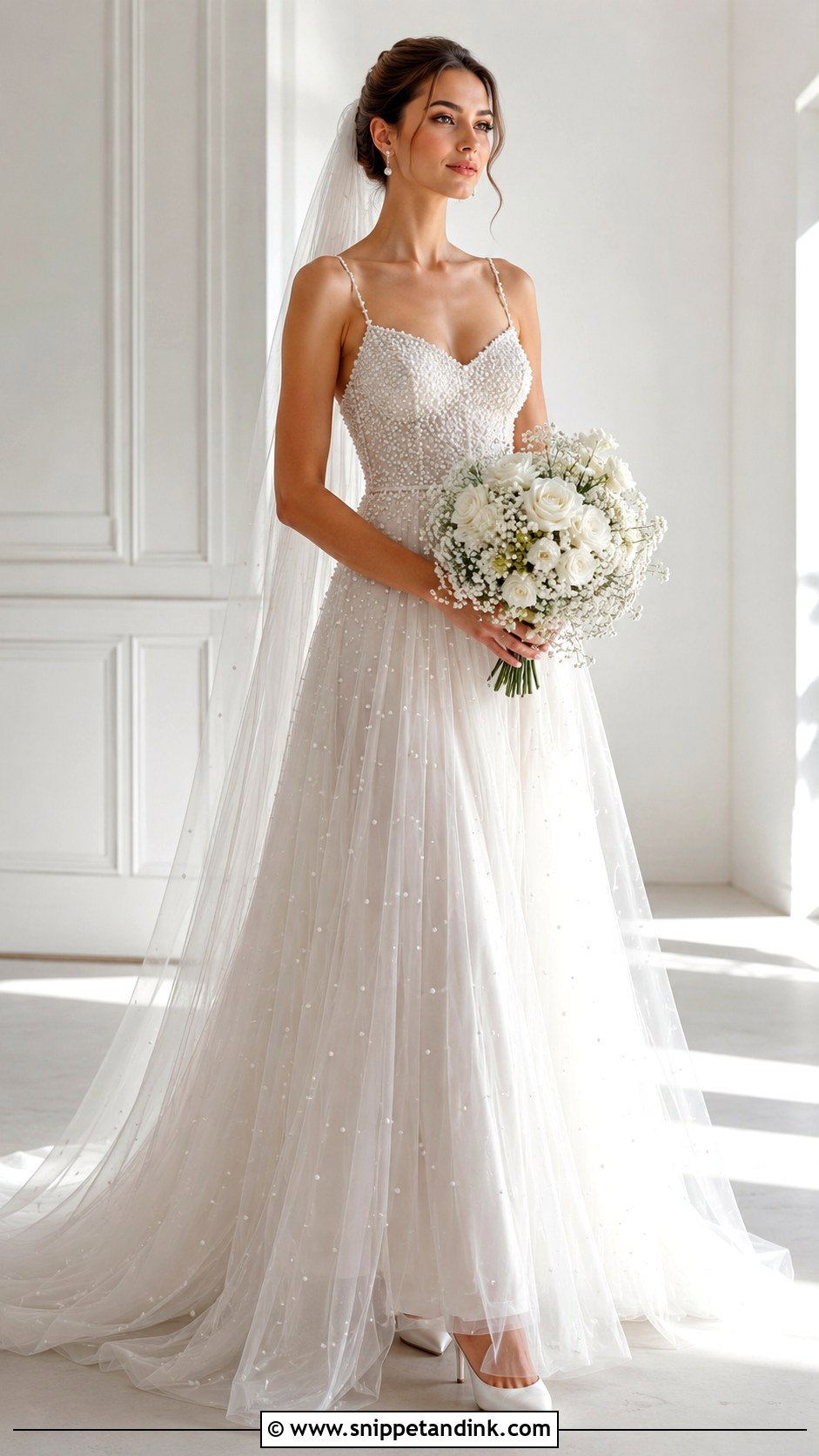
Pearls glow rather than sparkle, and one pearl feature is enough. That might be the neckline, the bodice, the sleeves or the veil; not all four. A pearl-dotted tulle gown with a clean veil, pearl earrings, satin shoes and a smooth chignon looks balanced. Heavy pearl work adds real weight and snags easily, so I’d keep the bouquet wrap simple and leave off bracelets that could catch the tulle.
8. Basque Waist Wedding Dress
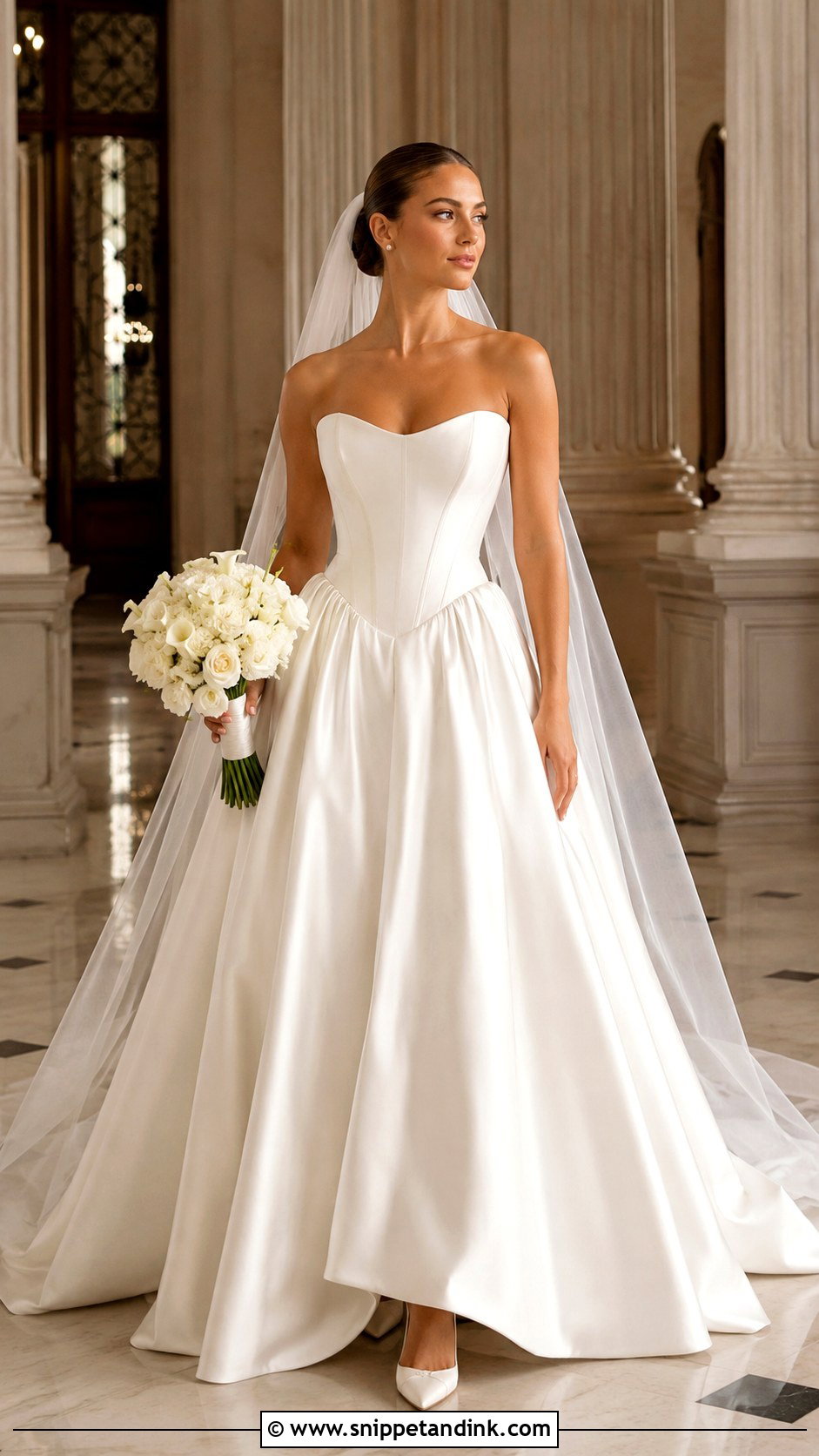
A basque waist dips to a point below the natural waistline, sculpting a royal silhouette and lengthening the torso. It pairs well with full skirts, satin and lace bodices, and clean accessories keep it current: a soft veil, pointed ivory heels, pearl studs and a structured bouquet. Fit is everything. I check that the point sits comfortably and doesn’t dig in when you sit, and that it lands centred; a basque point a centimetre off-centre is visible in every front-facing photo.
9. Lace Ball Gown Wedding Dress
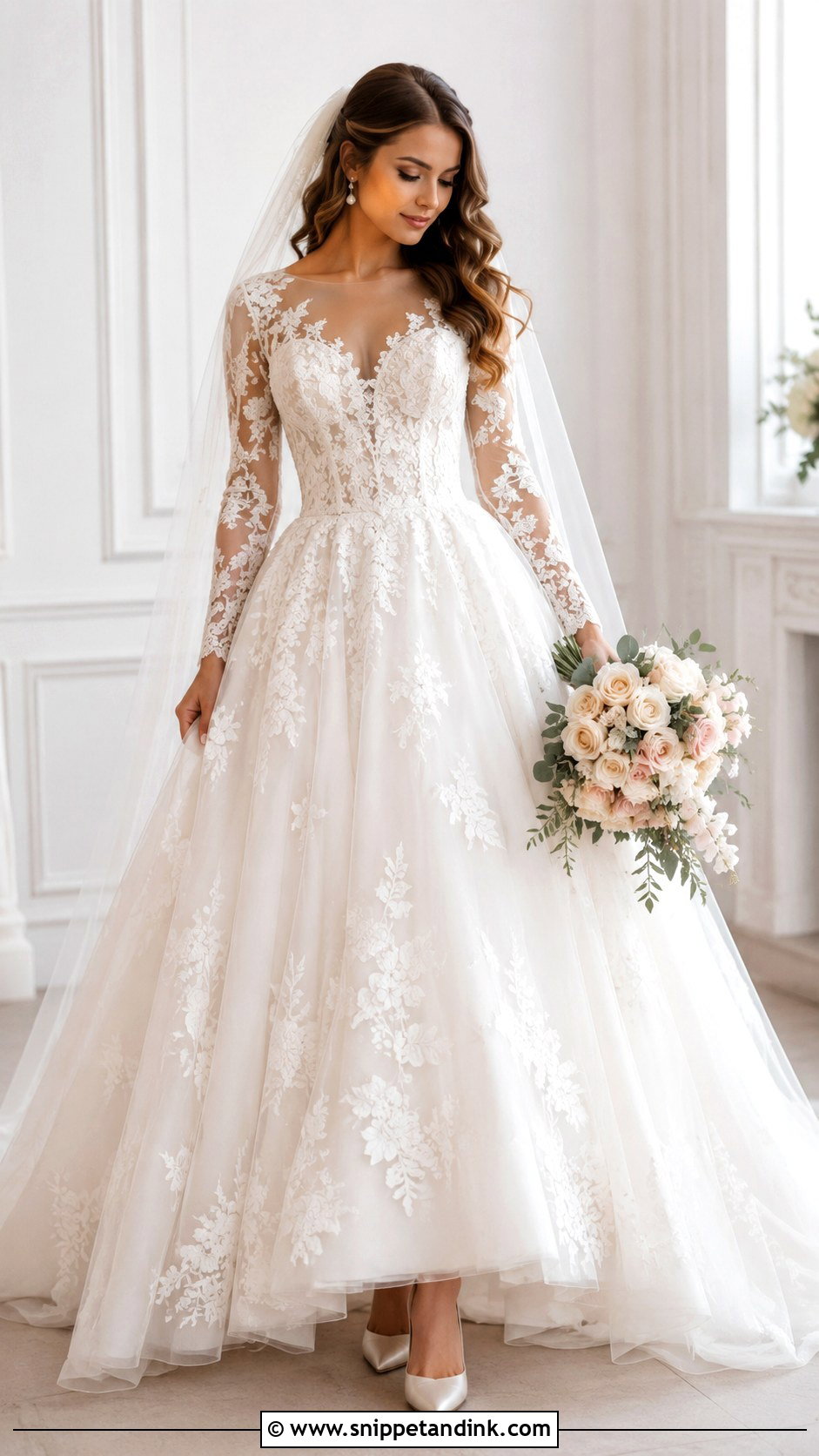
Lace on a ball gown adds depth where plain satin would be flat, especially across the bodice, sleeves and hem. A full skirt with scattered appliqué can look grand without stiffness. A sheer veil, soft curls or a low bun, pearl earrings and satin heels complete it. My advice is to choose one lace with a clear pattern and not mix several. A slightly longer train makes it feel more regal.
10. Square Neck Royal Wedding Dress
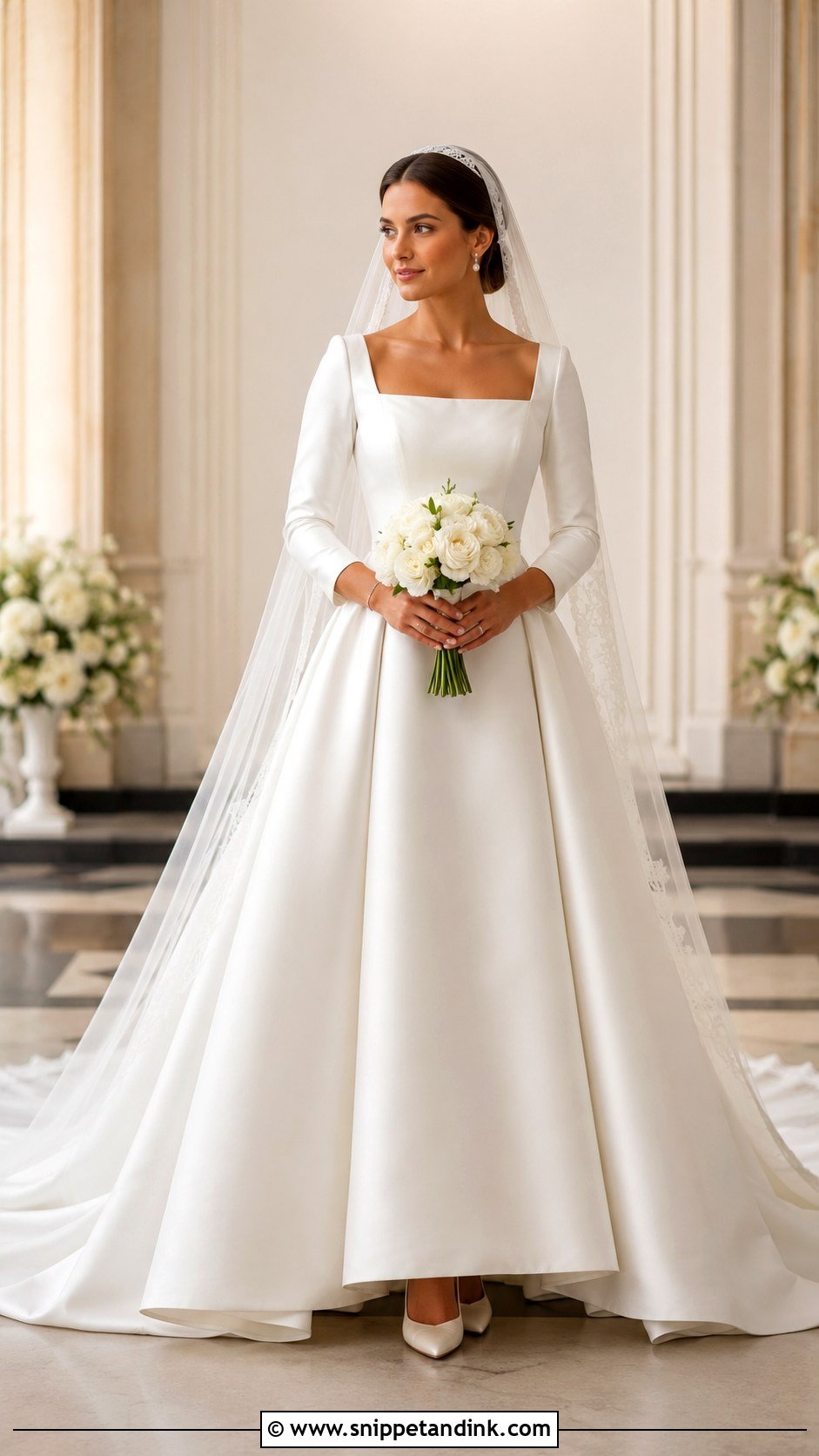
Square necklines frame the collarbone with strong straight lines and work with long sleeves, cap sleeves or wide straps. For a regal version, I’d pair a structured bodice with a full satin skirt and a chapel veil, plus pearl earrings, a delicate bracelet and ivory pumps. It suits a bride who doesn’t want a high neck or a plunge. With a fuller bust, ask for supportive inner construction; a square neck that isn’t supported gapes at the corners when you lean forward.
11. Cape Wedding Dress
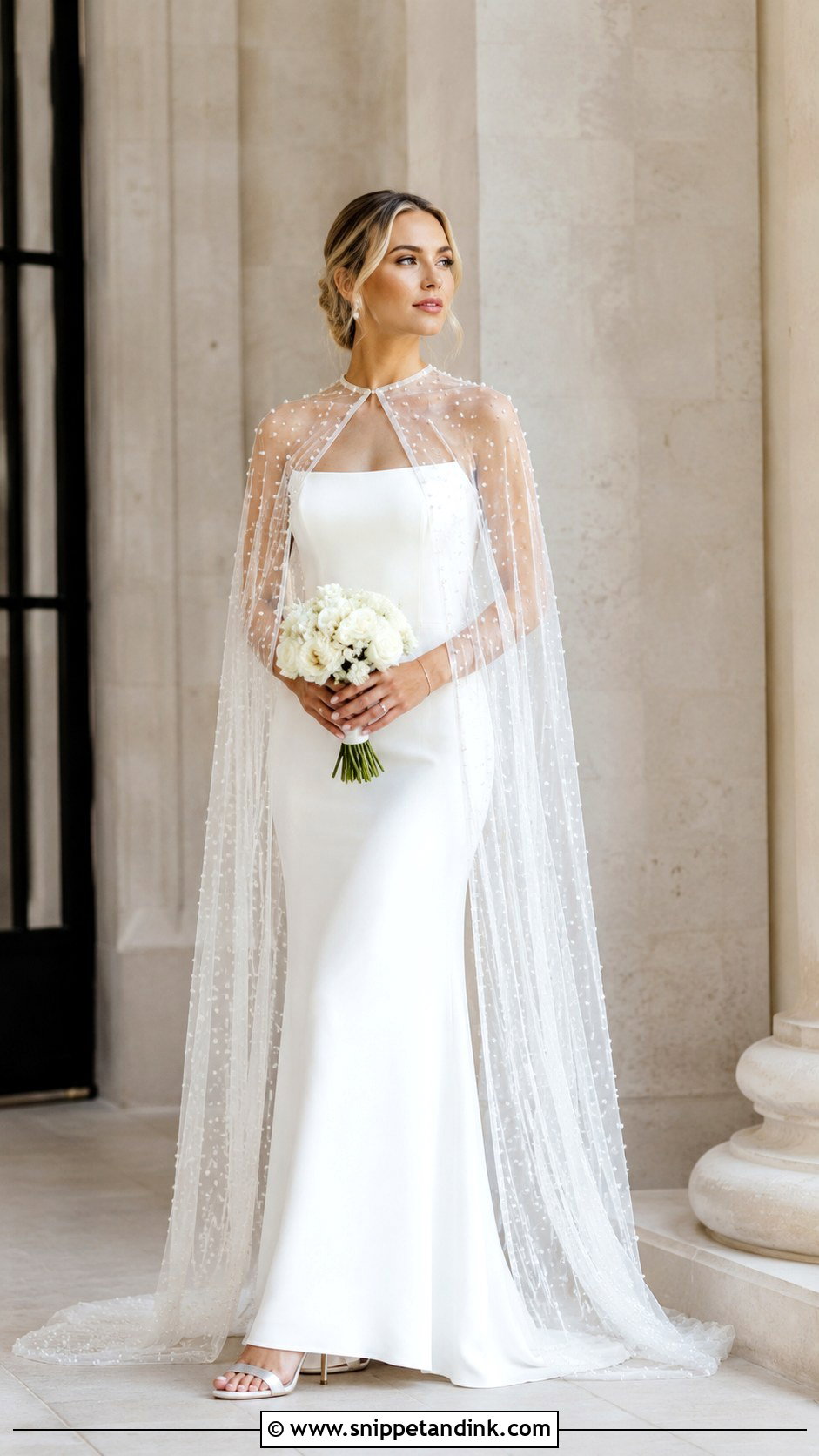
A cape replaces the veil and gives movement from the shoulders. It can be sheer, lace-trimmed, pearl-dotted or smooth satin, worn over a column, an A-line or a strapless ball gown. The jewelry should stay simple: sleek earrings, soft makeup and elegant heels. A cape is useful when the ceremony calls for coverage and the reception doesn’t. Make it detachable, and you effectively have two looks.
12. Detachable Overskirt Wedding Dress
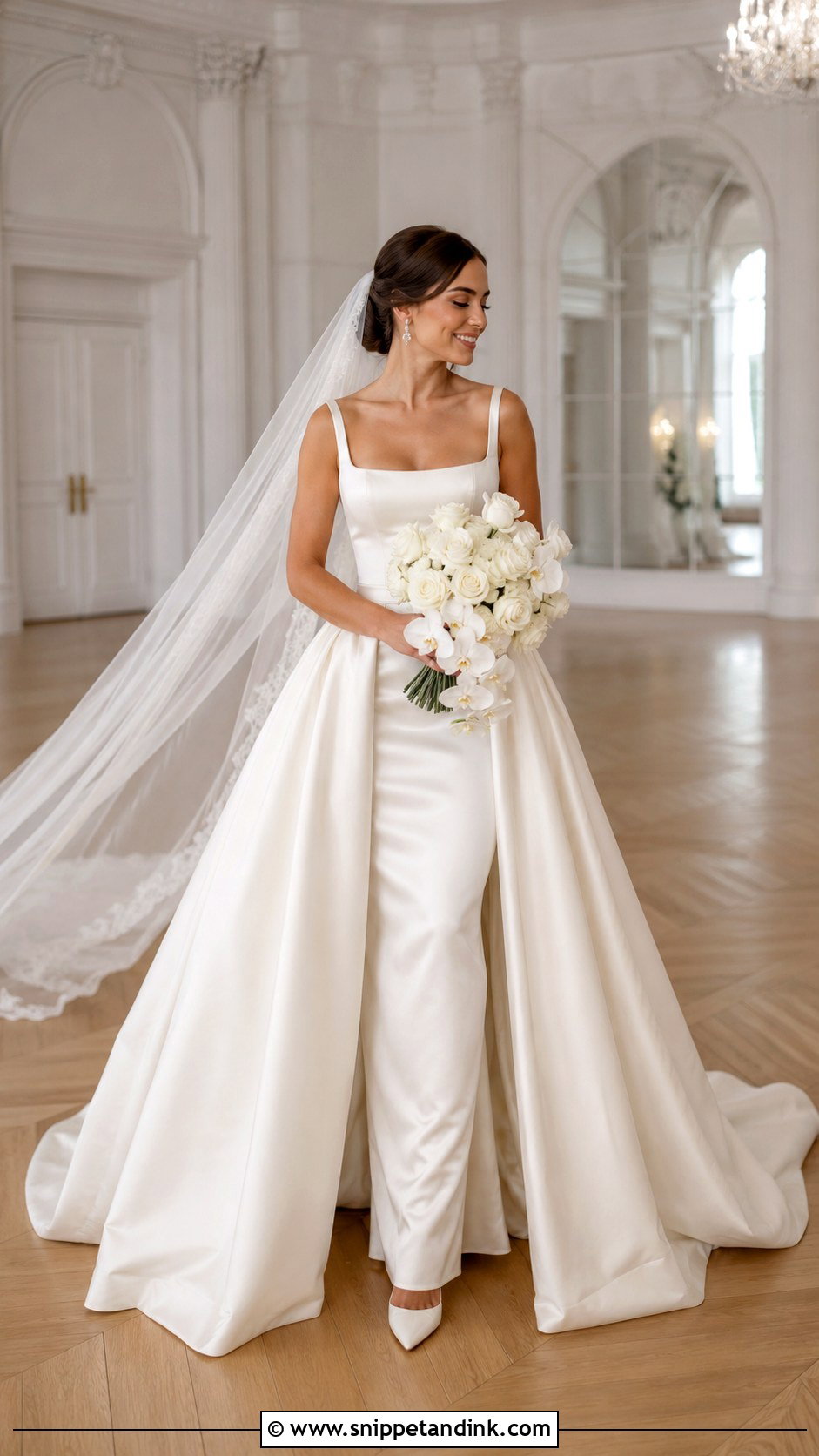
Ceremony volume, reception freedom: a detachable overskirt delivers both. The base gown might be fitted satin, a lace mermaid or sleek crepe, with the overskirt fastened on for the aisle and removed afterwards. A long veil, crystal earrings and pointed heels complete it. I check two things closely. The attachment must sit flat at the waist with no bump, and the overskirt fabric must match the gown exactly in shade; ivory satins from different bolts can differ more than you’d expect.
13. Royal Mermaid Wedding Dress
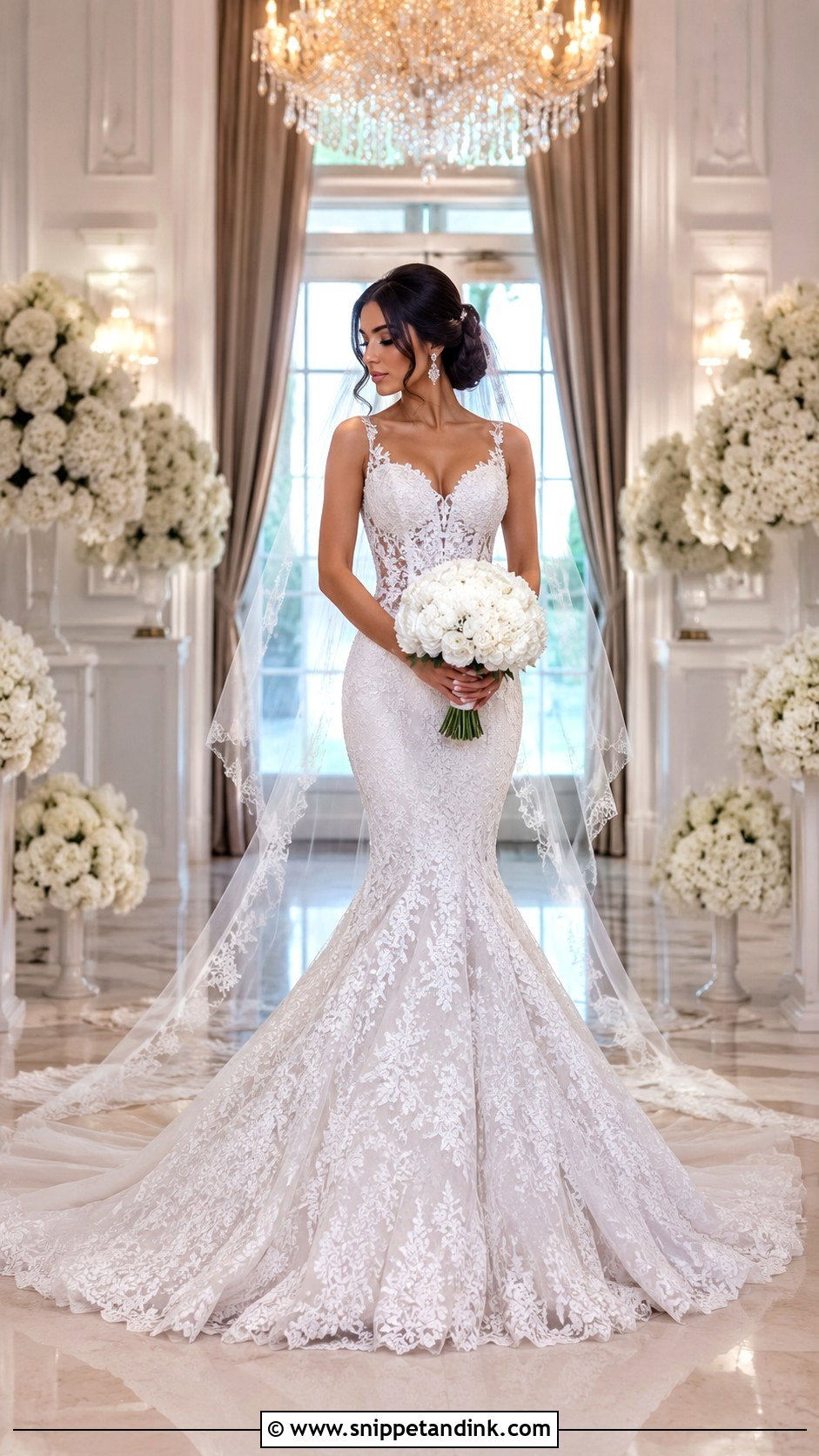
Mermaid gowns follow the body and flare at the knee or lower thigh, so the drama comes from shape, not width. Lace, satin or crepe with a long train is the most regal version, with a cathedral veil, drop earrings and sleek heels. The flare point decides comfort. Set too high, it restricts stride; too low, you’ll shuffle. I have brides sit, climb a step and walk at every fitting before committing.
14. Beaded Royal Wedding Dress
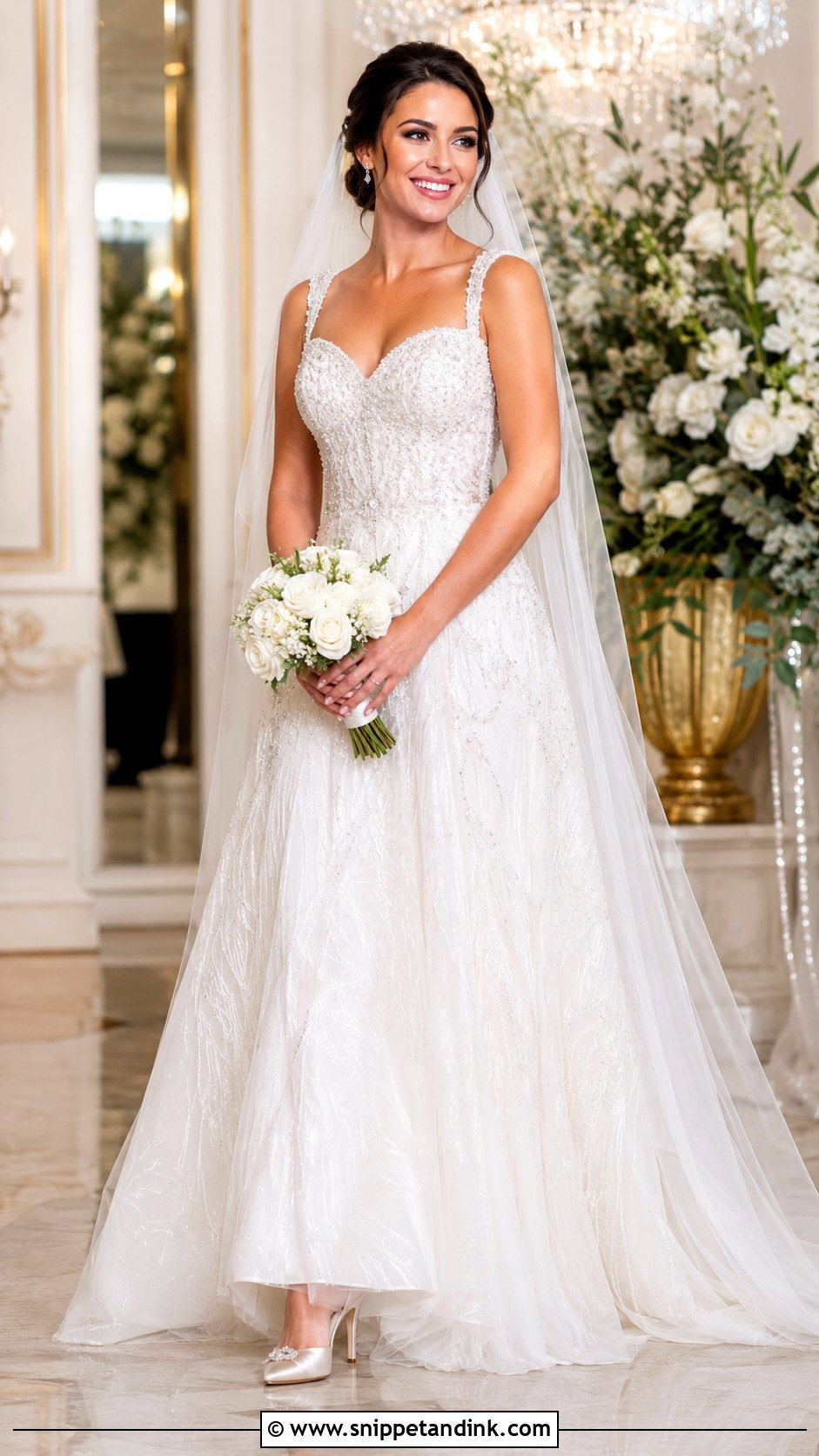
Beading should shimmer, not weigh you down. Fine crystal beading, pearl accents or delicate embroidery catch the light softly, and a plain veil, satin heels and small earrings keep the dress the focus. Heavily beaded gowns can be surprisingly heavy, and the weight sits on the shoulders and waist. I’d lift the gown on its hanger in the shop before falling for it. It is well suited to evening weddings and grand indoor spaces.



15. Minimalist Royal Wedding Dress
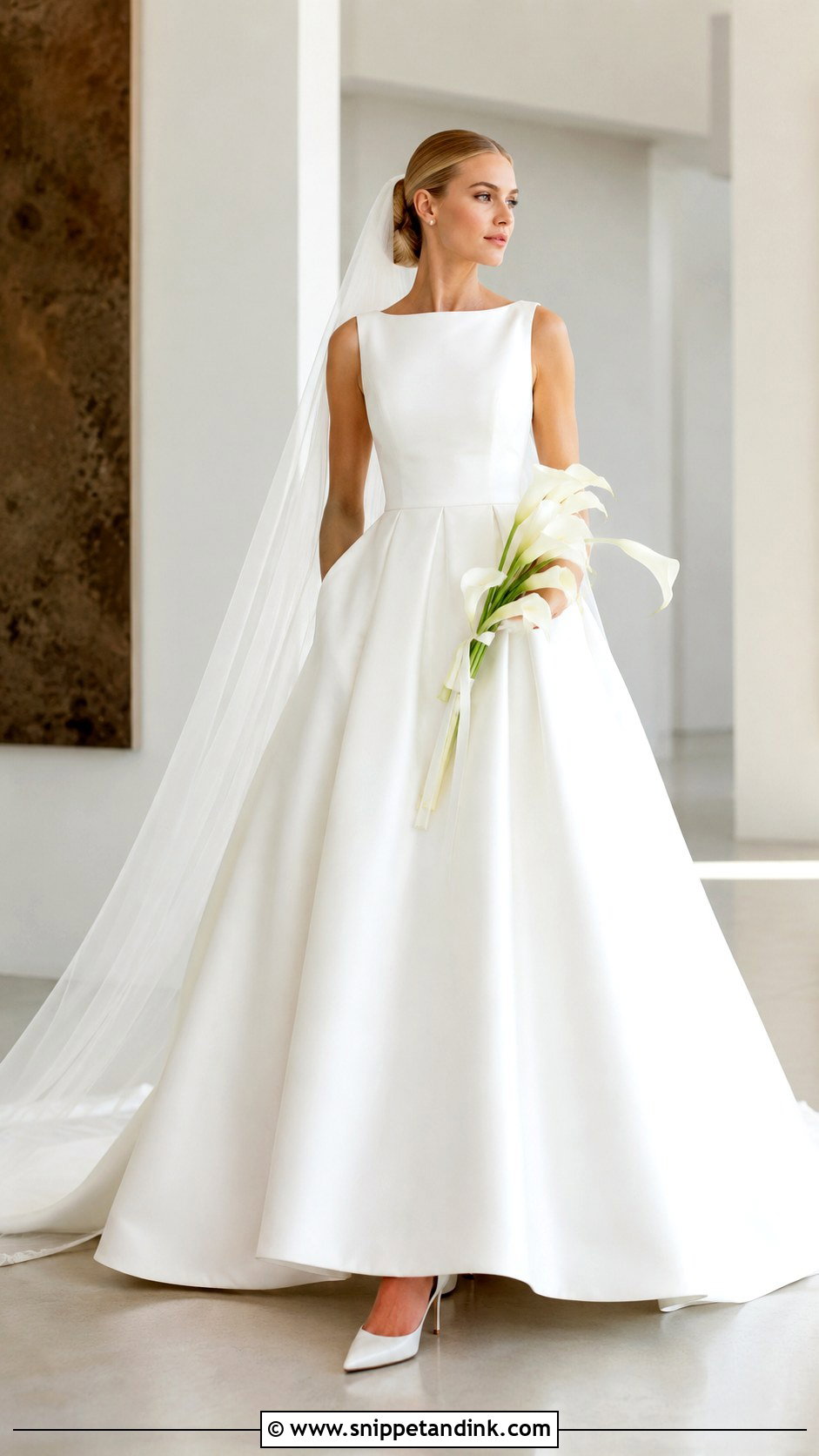
Minimal gowns rely entirely on fabric, fit and proportion. A clean mikado ball gown, satin A-line or crepe column can look refined with a long plain veil, pearl studs, a sculptural bouquet and elegant pumps. Tailoring is what makes minimalism look royal, so the neckline, waist, hem and train must be precise. One feature, perhaps a bow or a long row of buttons, adds personality without breaking the calm.
16. Royal Wedding Dress With Bow
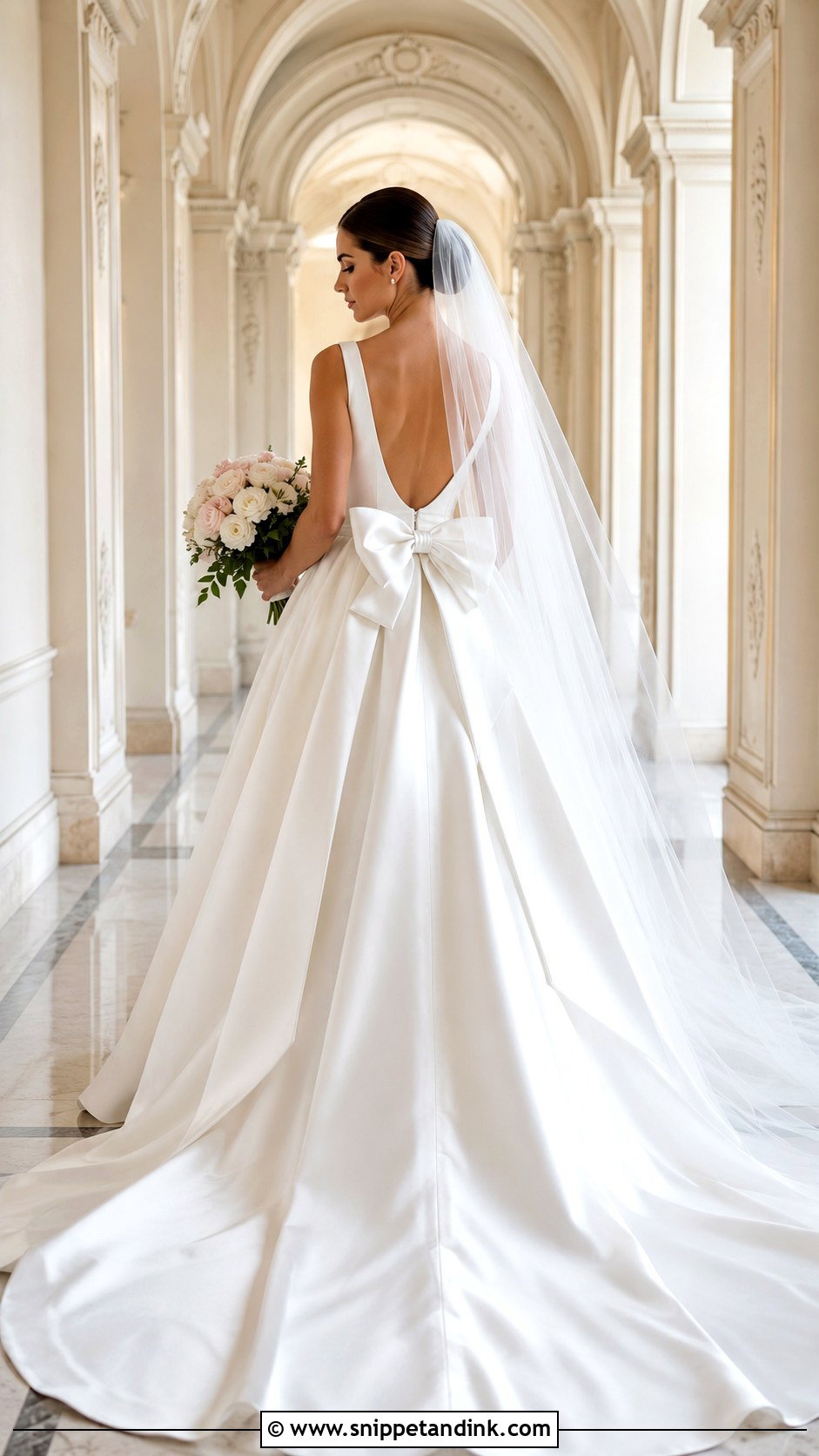
Placement decides what a bow says. A large back bow on a satin gown is formal and palace-like; a small bow at the shoulder or neckline is softer. It can also sit at the waist or on the train. Keep accessories quiet with pearl earrings, a smooth veil and satin heels. A bow must be structured with interfacing, or it wilts by the reception. Plan a few rear-facing portraits, because that’s where it shows best.
17. Tulle Royal Wedding Dress
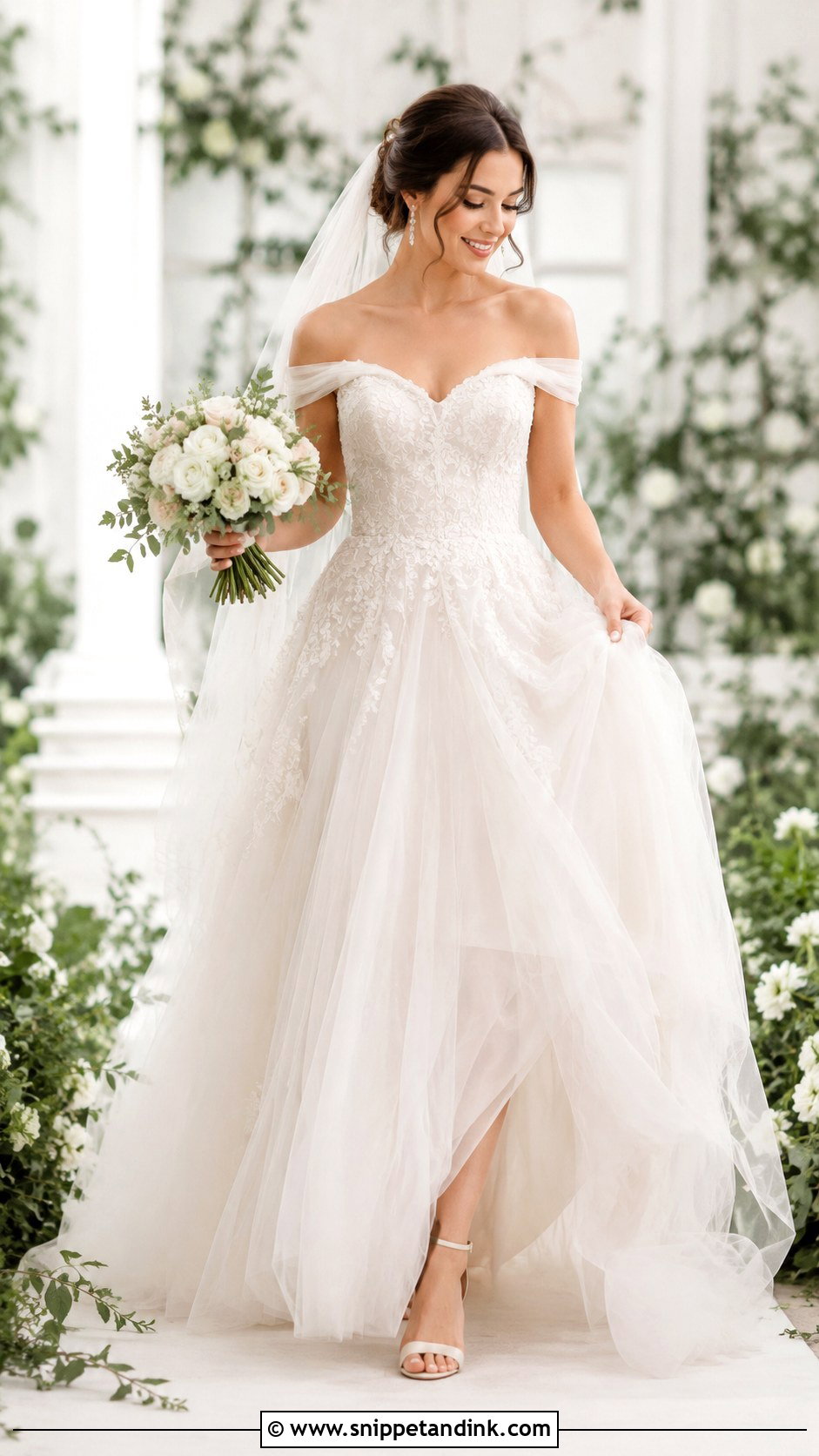
Tulle gives volume without the weight of satin or mikado. Layers of it create a full skirt, and a fitted bodice, soft off-shoulder neckline and subtle lace appliqué stop it looking like a costume. A sheer veil, delicate earrings and ivory heels complete it. On a petite frame, I’d control the volume so the skirt doesn’t swallow you. Tulle also catches on rough surfaces and heels, so a horsehair hem or a slightly shorter underlayer helps outdoors.
18. Floral Applique Wedding Dress
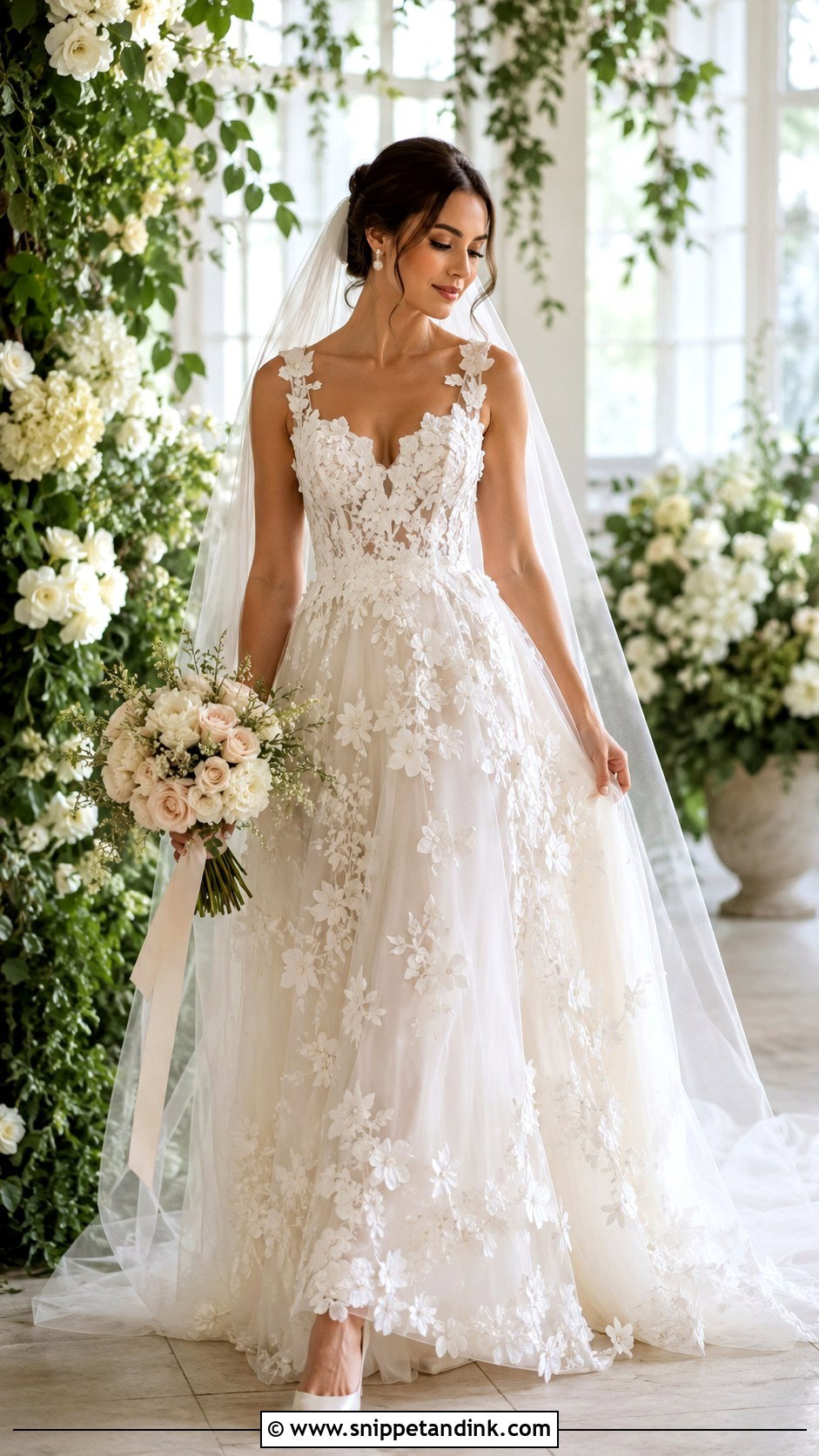
Three-dimensional flowers, embroidered vines or lace petals give a floral applique wedding dress a softer, romantic edge. I’d keep the florals to one or two areas, perhaps the bodice and veil, rather than every surface. Pearl earrings, a simple veil and soft ivory heels complete it. Spring and summer suit it naturally, and subtle appliqué works year-round. Close-up portraits are where this detail is seen properly.
19. Royal Wedding Dress With Gloves
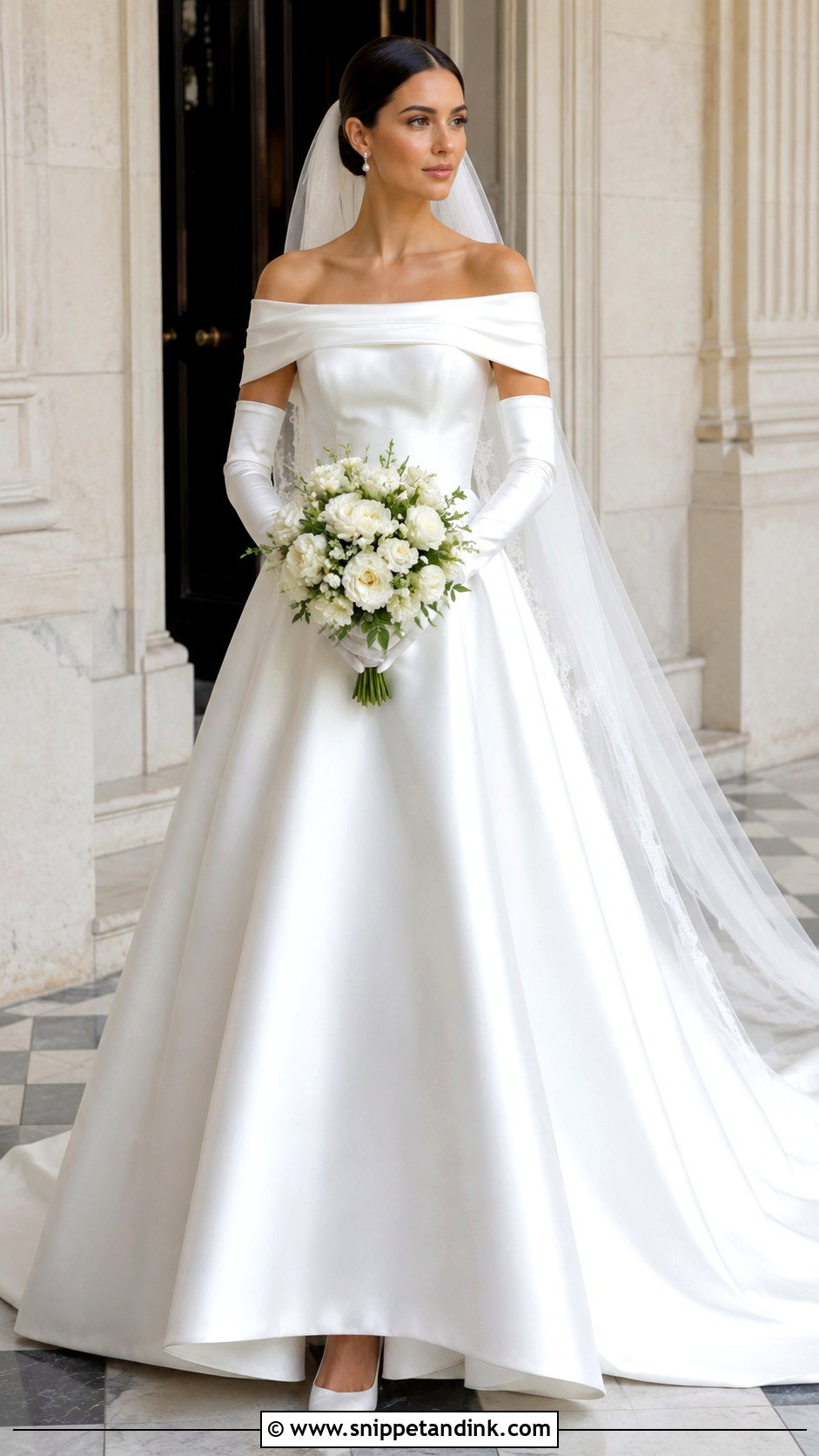
Gloves are the most dramatic accessory you can add without changing the dress. Satin opera gloves suit strapless and off-shoulder gowns; sheer gloves soften lace or tulle. A royal wedding dress with gloves needs a close match between glove and gown tone, plus pearl earrings, a sleek veil and classic pumps. Plan the ring exchange: most brides slip the left glove off, or choose a style with an opening at the ring finger. Test them with your rings and bouquet before the day.


20. Modest Royal Wedding Dress
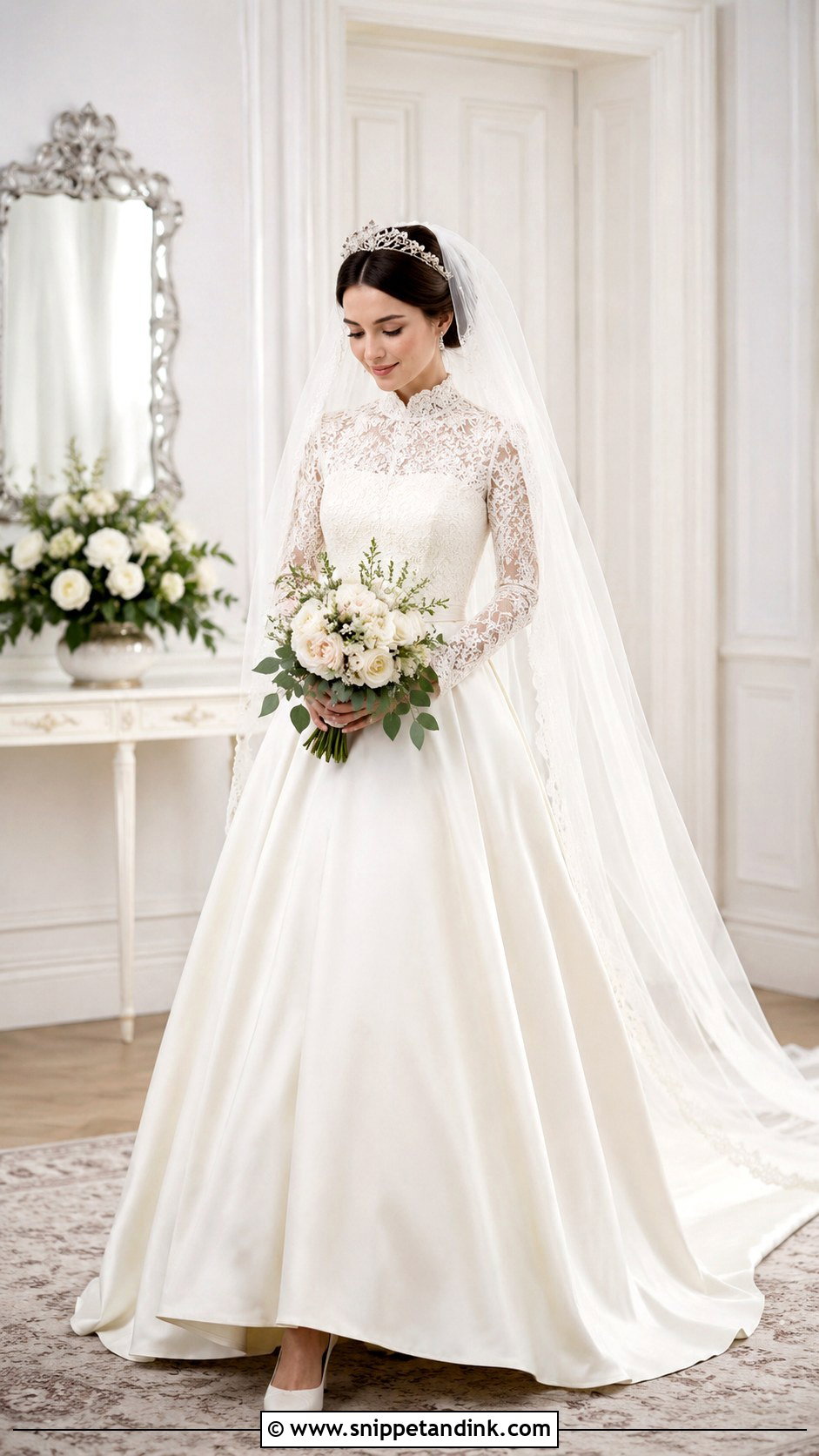
Modest gowns succeed on proportion, not just coverage. Long sleeves, higher necklines, lined bodices and well-structured skirts, with lace sleeves, satin A-lines or pearl details to keep them interesting. A long veil, closed-toe heels and refined jewelry complete the look. A defined waist, a graceful train and a considered neckline are what make the coverage look intentional. Soft makeup and a neat hairstyle finish it.
21. Vintage Royal Wedding Dress
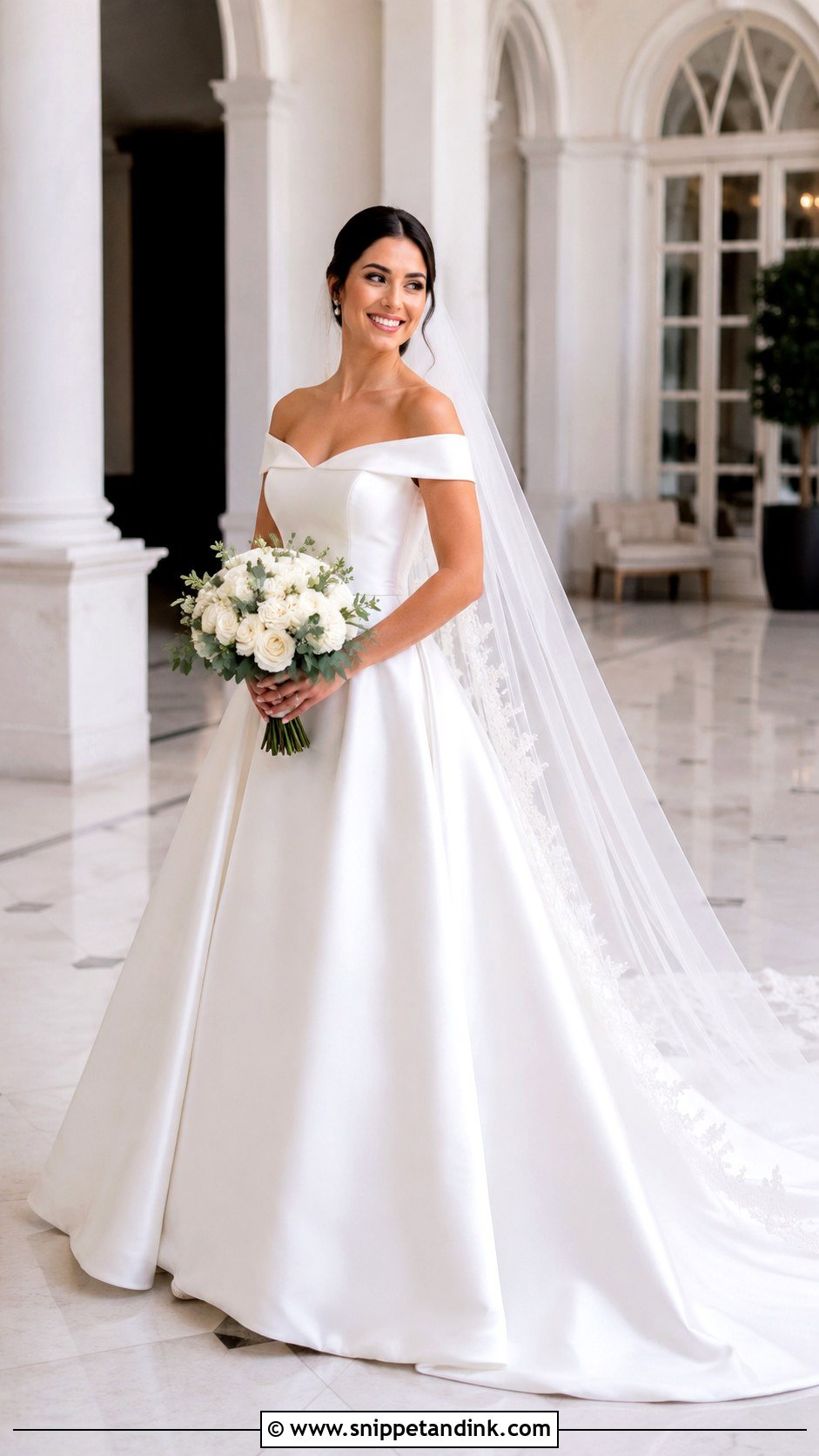
Vintage royal style means lace sleeves, covered buttons, high necklines, basque waists and full skirts. You can wear a true vintage gown or a new one inspired by historic details. A lace veil, pearl earrings, ivory shoes and a soft updo suit it. Choose one vintage focus, such as the lace or the neckline, and keep the accessories modern. With a true vintage gown, I’d have a specialist check the fabric and seams first; old silk splits along stress points when it’s altered.
22. Royal A Line Wedding Dress
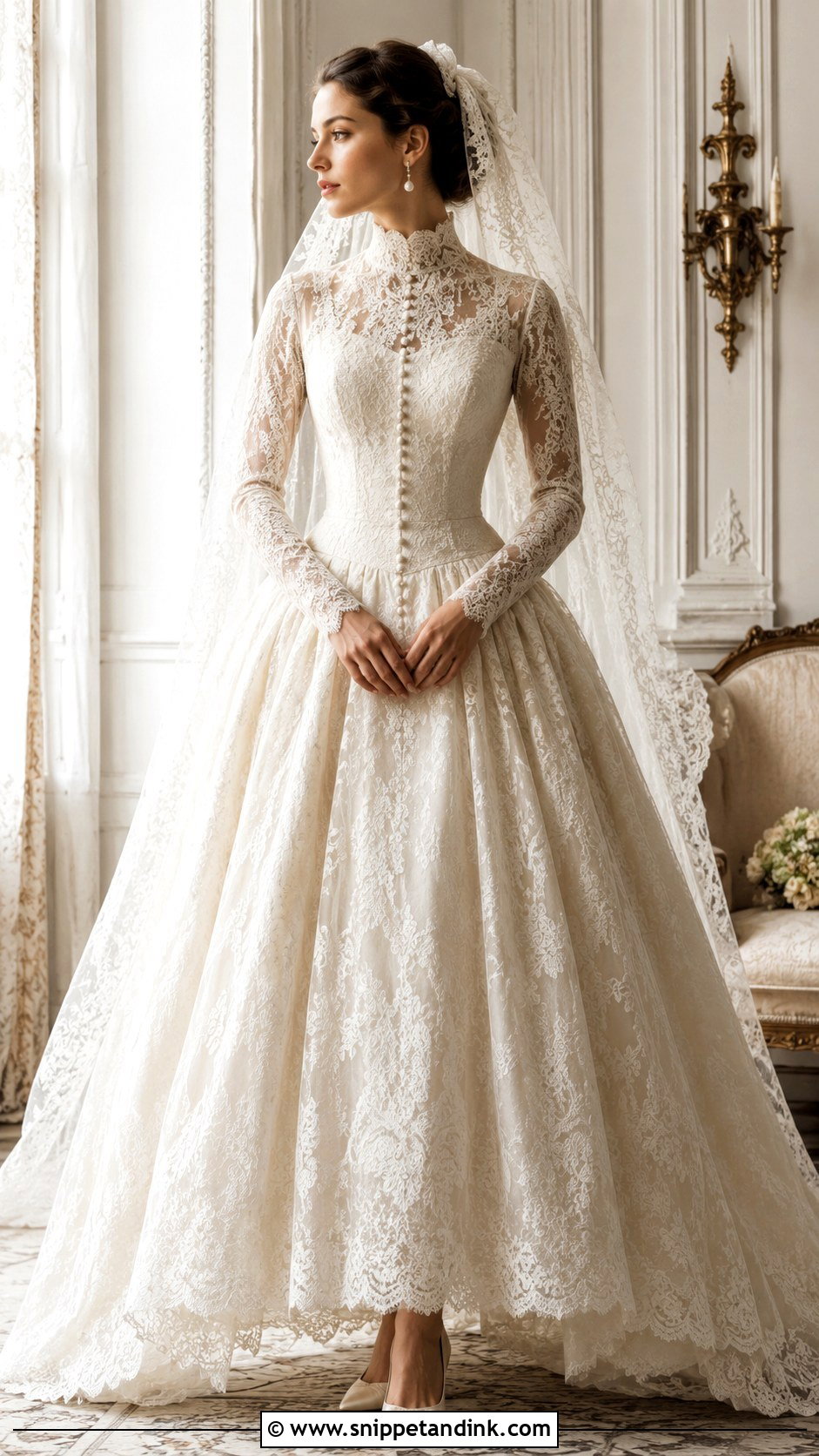
The A-line is the most forgiving royal shape. It flows from the waist with gentle volume, easier to move in than a ball gown, and works in satin, lace, organza or mikado. A cathedral veil, pearl studs, a structured bouquet and classic heels complete it. For more drama, add a longer train or a lace-trimmed veil. For something simpler, let the fabric and fit carry it.
23. Royal Wedding Dress With Veil
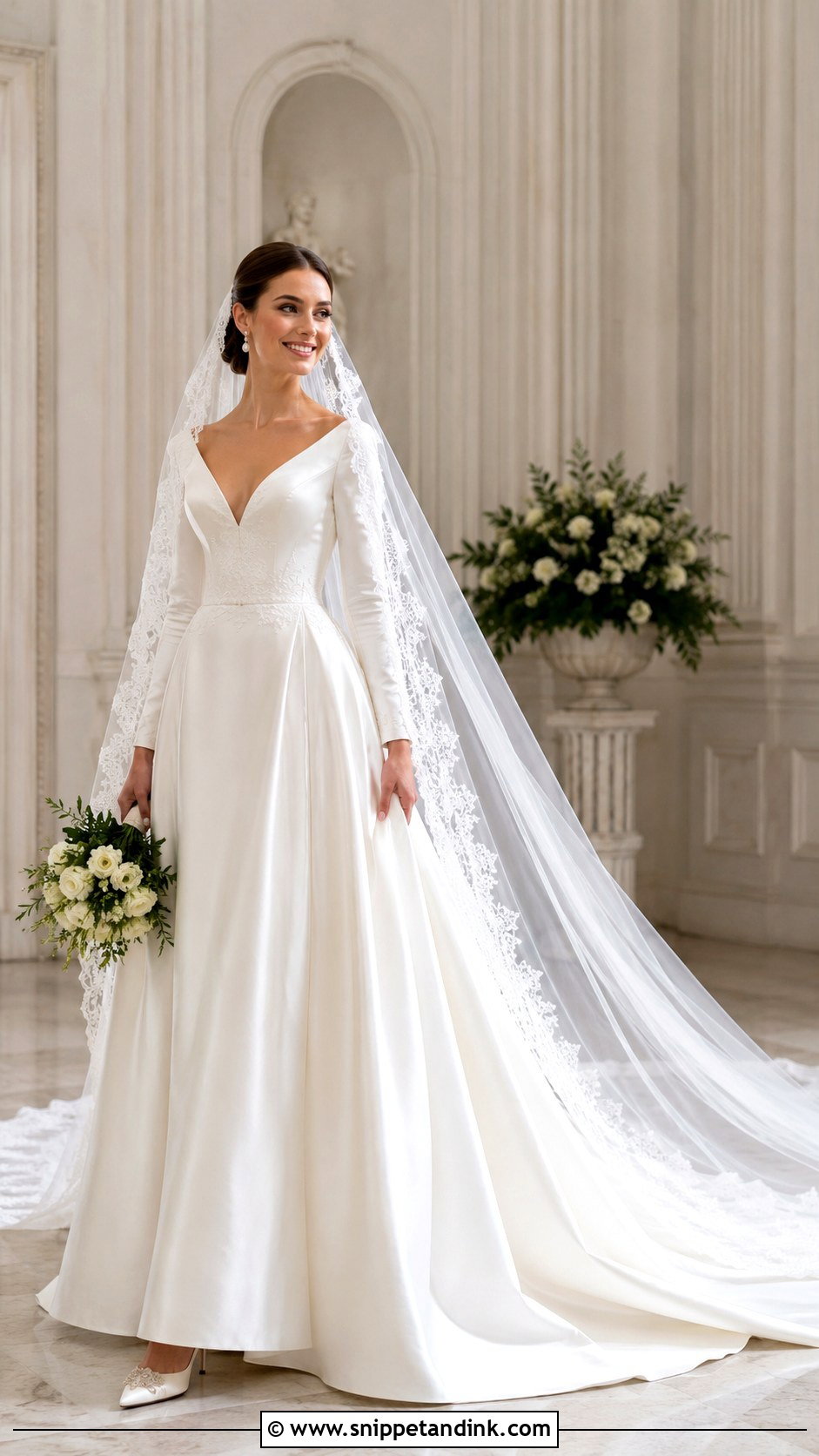
Choose the veil with the gown in front of you. A plain satin gown suits a lace-edged veil; a detailed lace dress often needs a plain sheer one. Cathedral or chapel length depends on your venue and how much fabric you want behind you. Add pearl earrings, soft heels and a bouquet that doesn’t cover the bodice. Try the veil with your actual hairstyle and shoes at a fitting; the comb position changes how it falls.
24. Royal Crepe Wedding Dress
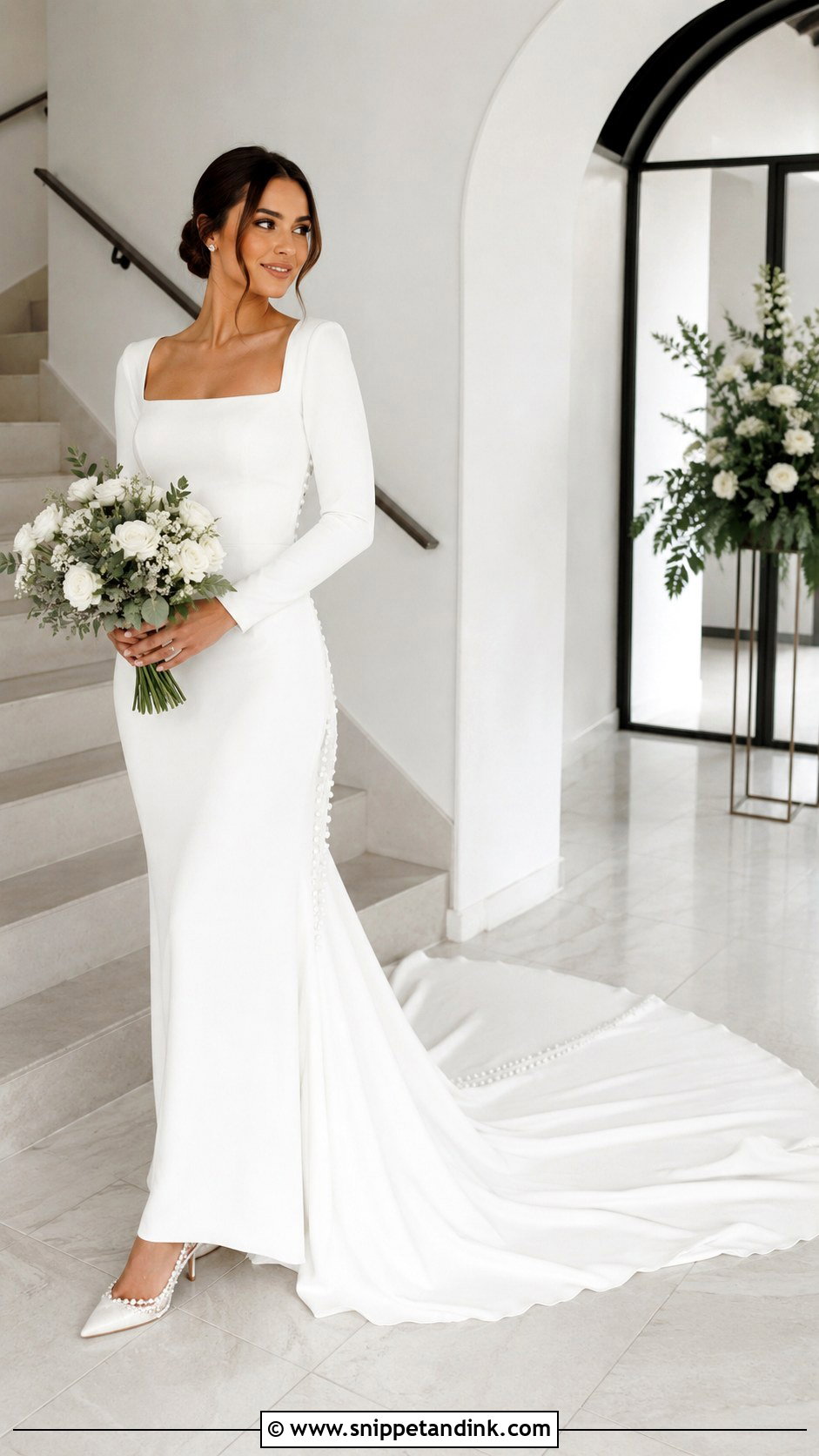
Crepe is matte, smooth and sleek, and it sits close to the body, which is why expert alterations matter so much with it. It works for fitted gowns, long sleeves, square necklines and clean trains. A long veil, pearl or diamond-like studs, pointed heels and a neat bouquet complete it. To make crepe look regal, I add one dramatic detail, such as a long train, a cape, a bow or a line of covered buttons. Crepe also forgives a hot day better than heavy satin.
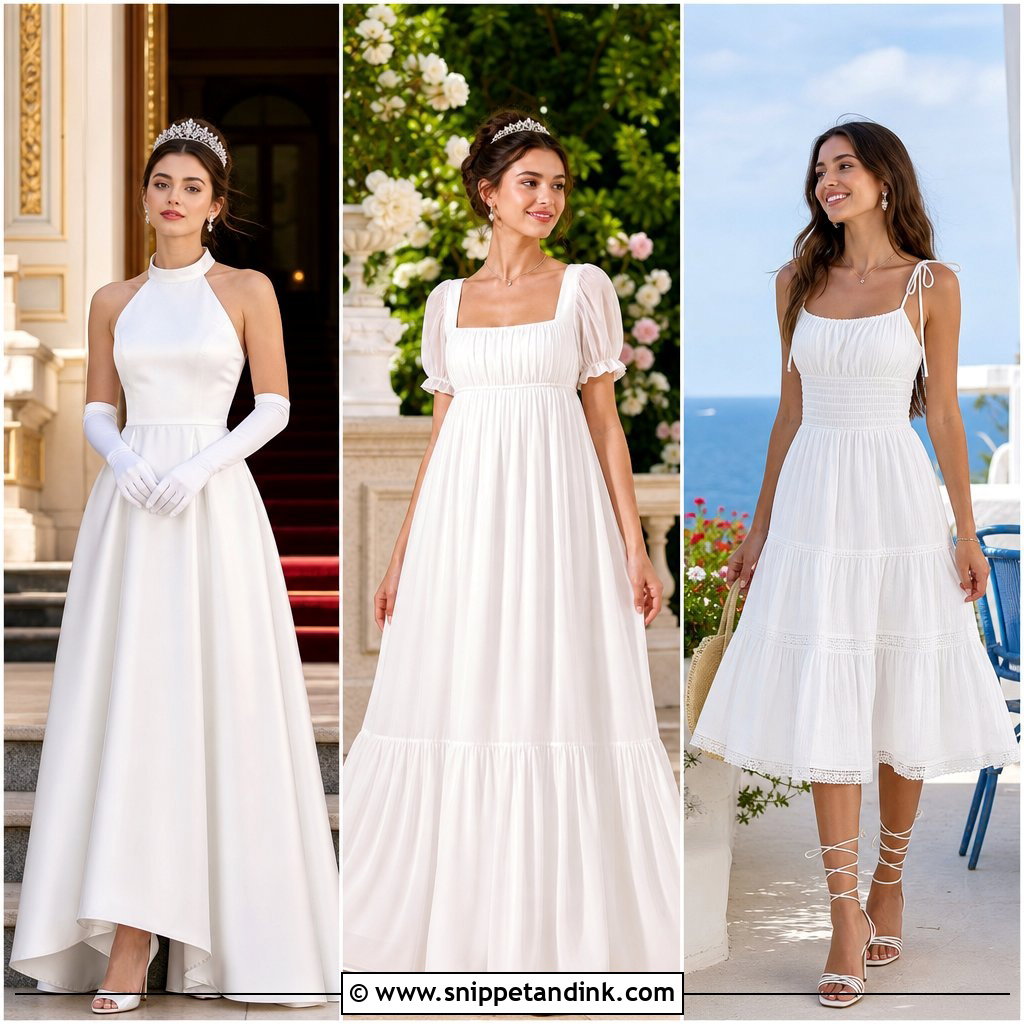
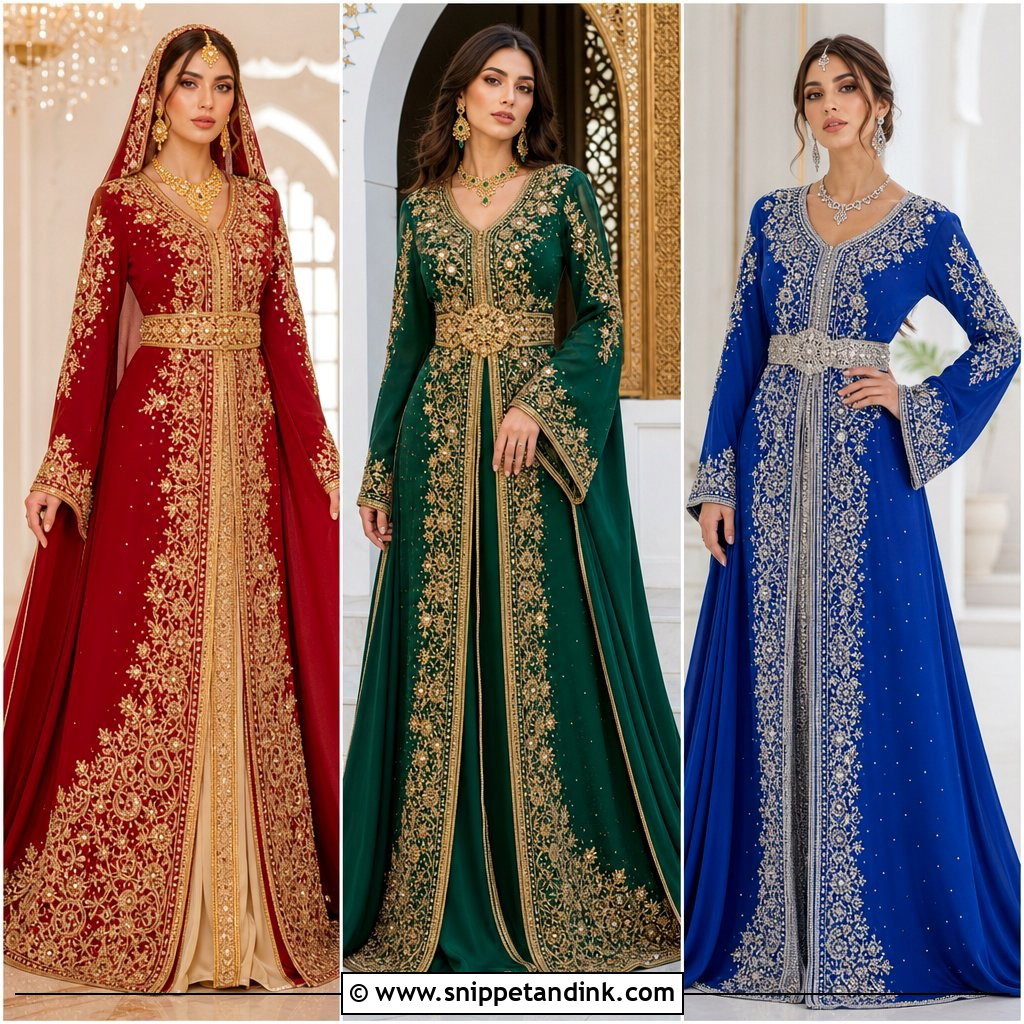


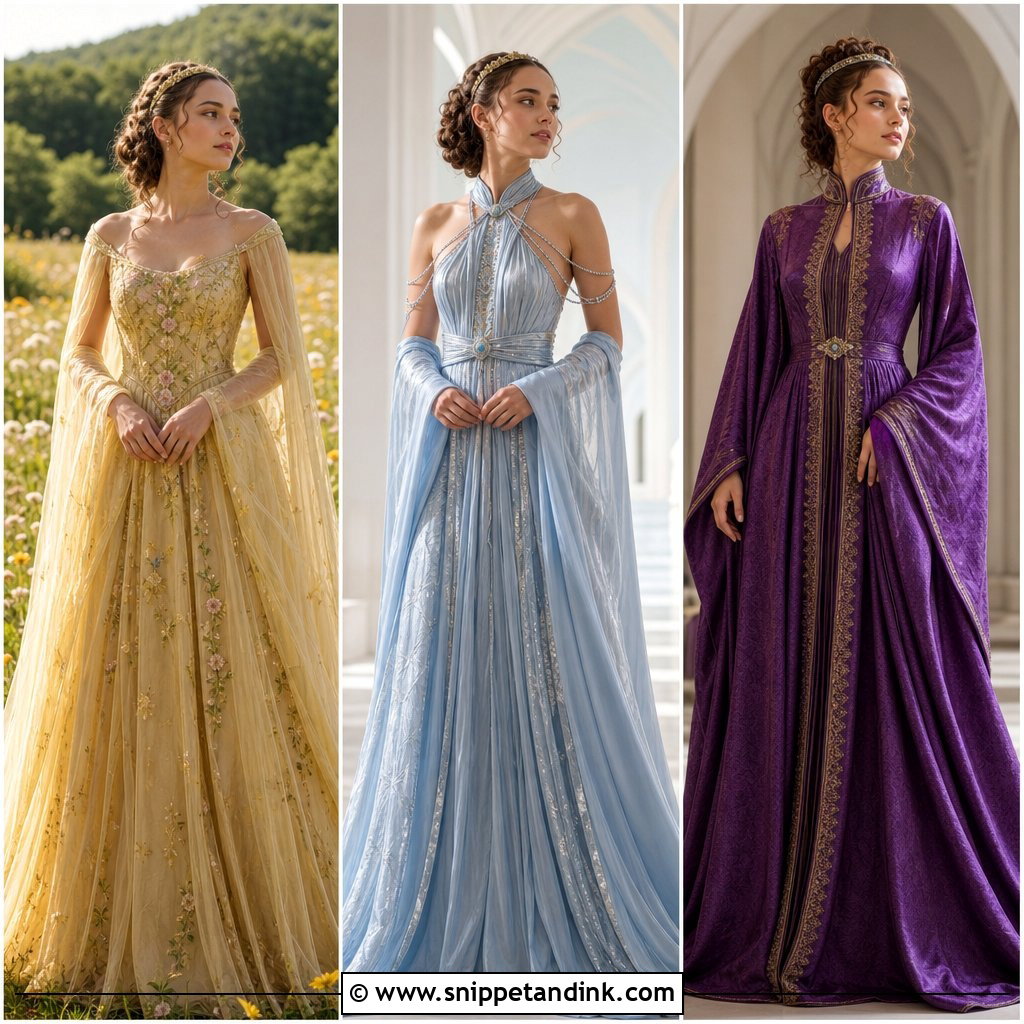
25. Royal Wedding Reception Dress
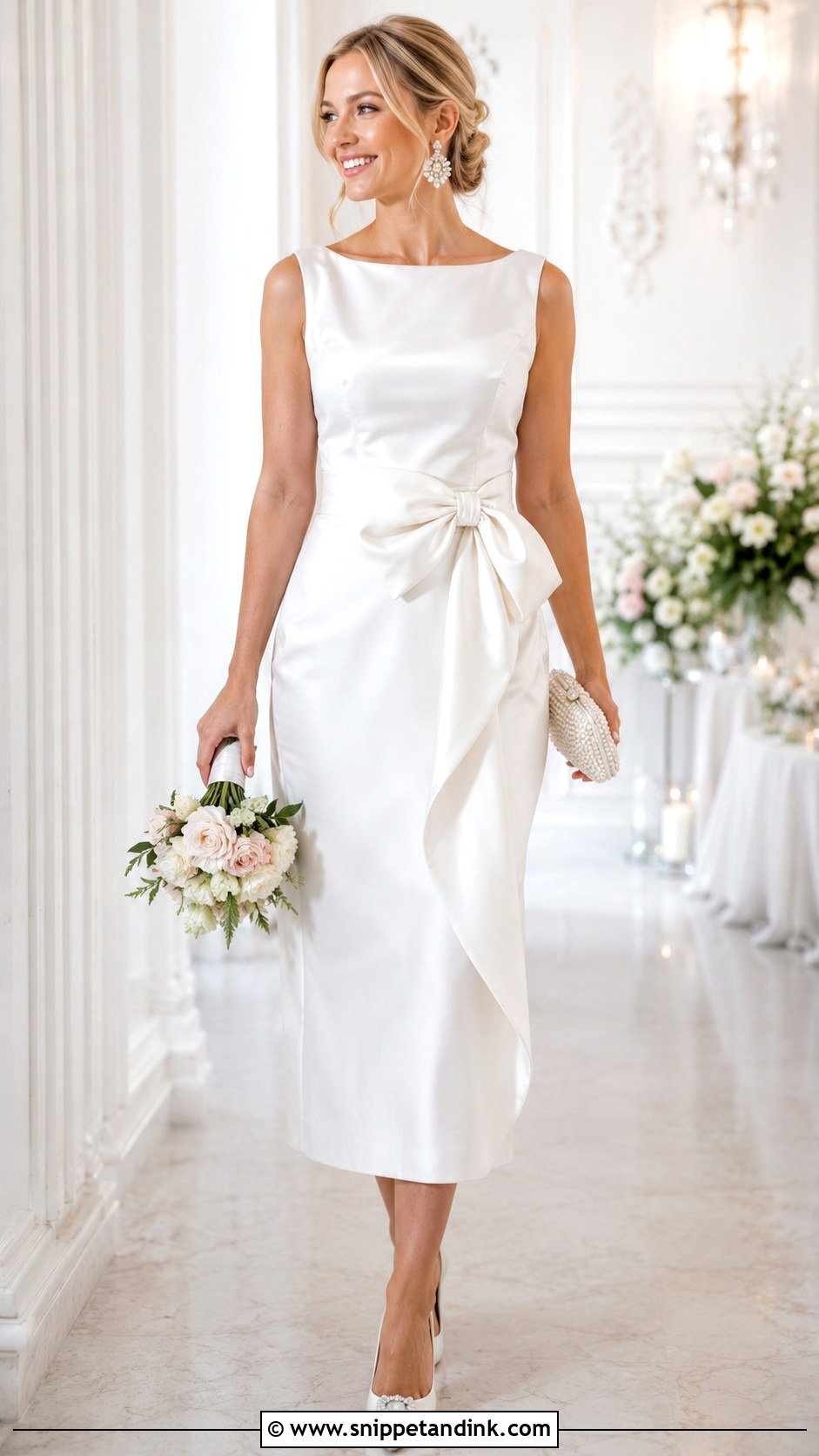
A reception dress lets you dance without managing a heavy skirt. A shorter satin dress, a sleek column, a lace midi or the same gown with its detachable train removed all work. Connect it to your main look through fabric, pearls, a bow or a similar neckline. Comfortable heels, statement earrings and a small clutch complete it. Keep it polished rather than casual, and time the change; I’d allow about twenty minutes, plus hair adjustments.
The Morning After: Cleaning and Storing a Structured Gown
Royal-style gowns are expensive to clean wrong. Spills of champagne, white wine or juice can be almost invisible on the night and turn brown months later as the sugar oxidises. I tell brides to have the gown professionally cleaned within a few weeks, by a cleaner who regularly handles bridal satin, beading and lace, and to point out every mark, including the ones you can’t see.
For storage, keep it out of plastic, which traps moisture. An acid-free box with acid-free tissue in the folds, kept somewhere cool, dark and dry, is the standard. A heavily beaded or full-skirted gown shouldn’t hang by its shoulders for long; the weight stretches the fabric. If you’d rather hang it, use the internal hanging loops at the waist and a padded hanger, and refold a boxed gown along new lines every year or so.
Ask your seamstress for the offcuts from alterations, along with any spare buttons and lace, and keep them in the box. If the gown is ever repaired, remade or passed on, those scraps are the only perfect colour match you will have.
Regal Is a Fit You Can Move In
Regal style comes in many forms: a full satin ball gown with a cathedral train, a sleek crepe column, lace sleeves, a cape or a detachable overskirt. Fit, fabric, comfort and balance matter more than any single detail. Make sure you can walk, sit and hug people in the gown you choose, and that the veil, shoes, jewelry and hair all support one idea.
You'll Like These Ideas:






Leave a Reply