
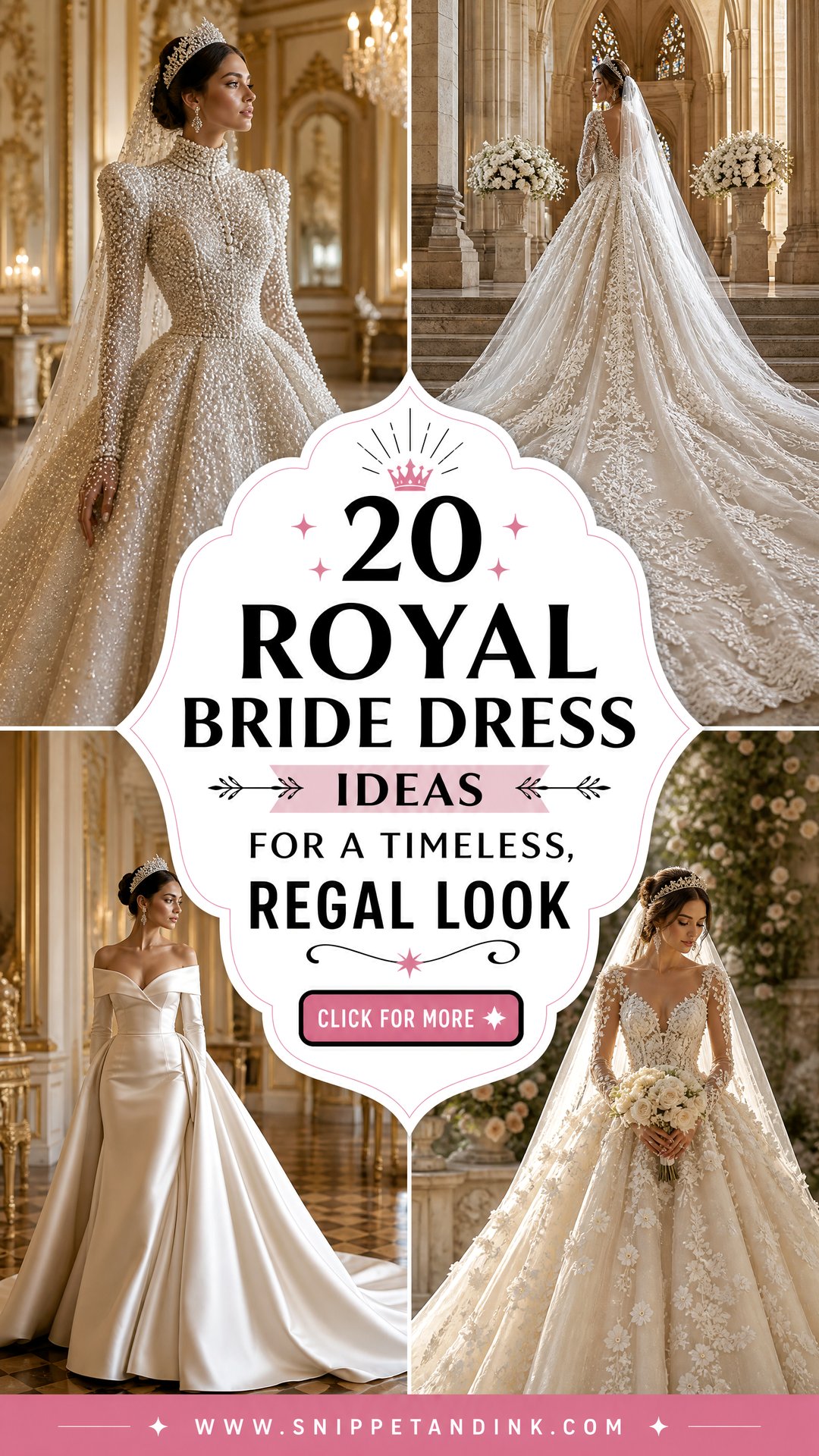
A royal-feeling wedding look rarely comes from the biggest skirt in the shop. Royal-inspired bridal fashion is really about restraint: long lace sleeves, structured satin, a clean boat neckline, a cathedral veil, a tiara or a cape, chosen so that one of them leads and everything else steps back. When I dress a bride for this mood, I start with her venue, the season and how long she’ll be on her feet, because a gown that reads as regal in a ballroom can look like fancy dress in a registry office. Each look below is built head to toe, with the veil or headpiece, shoes, jewelry and flowers worked out alongside the dress.
Ordering a Structured Gown on a Realistic Calendar
Structured satin, mikado and heavily beaded lace are made to order by most bridal houses, and production alone commonly takes four to six months before the dress even reaches the shop. I tell brides who want this style to start trying on around nine to twelve months out, so there’s breathing room if a delivery runs late. Lead times vary by designer and season, so ask the shop for the date in writing when you order.
Alterations are the second clock. A ball gown with a train, bustle and fitted sleeves usually needs two or three fittings, and I like the first one about eight to ten weeks before the wedding. Bring the shoes and the exact undergarments to every one of them, because a half-inch change in heel height changes the hem on a full skirt.
What to try at the first fitting
- Sit fully on a chair and stand up again without using your hands.
- Lift both arms as if hugging someone taller than you.
- Walk forward ten steps, then turn and walk back with the train following.
- Hold a bouquet-sized object at your waist for a couple of minutes.
If any of those pulls, pinches or makes the neckline gape, say so in the room. It’s far easier to adjust boning and seams at the first fitting than at the last.
1. Long Sleeve Lace Royal Bride Dress
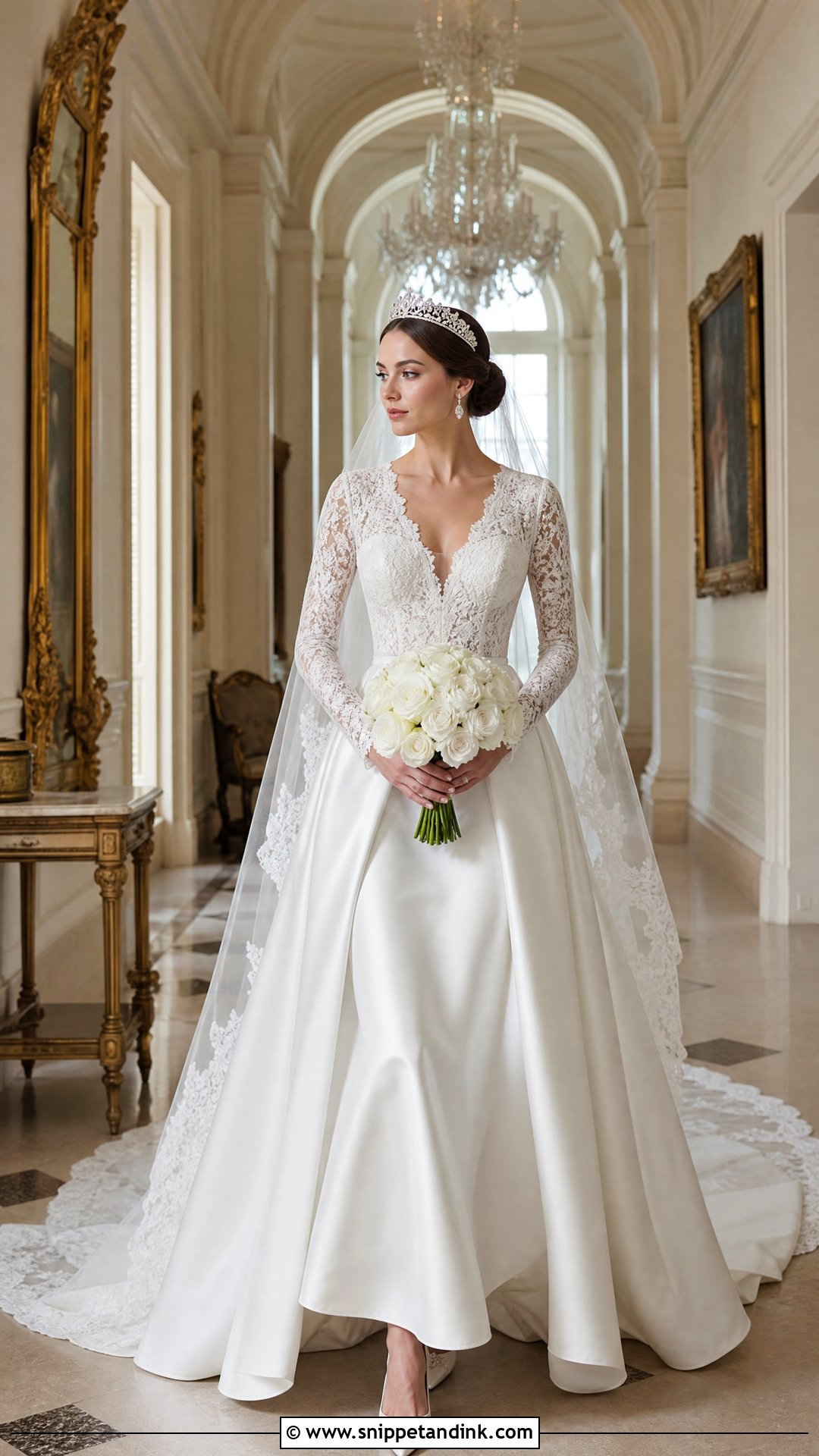
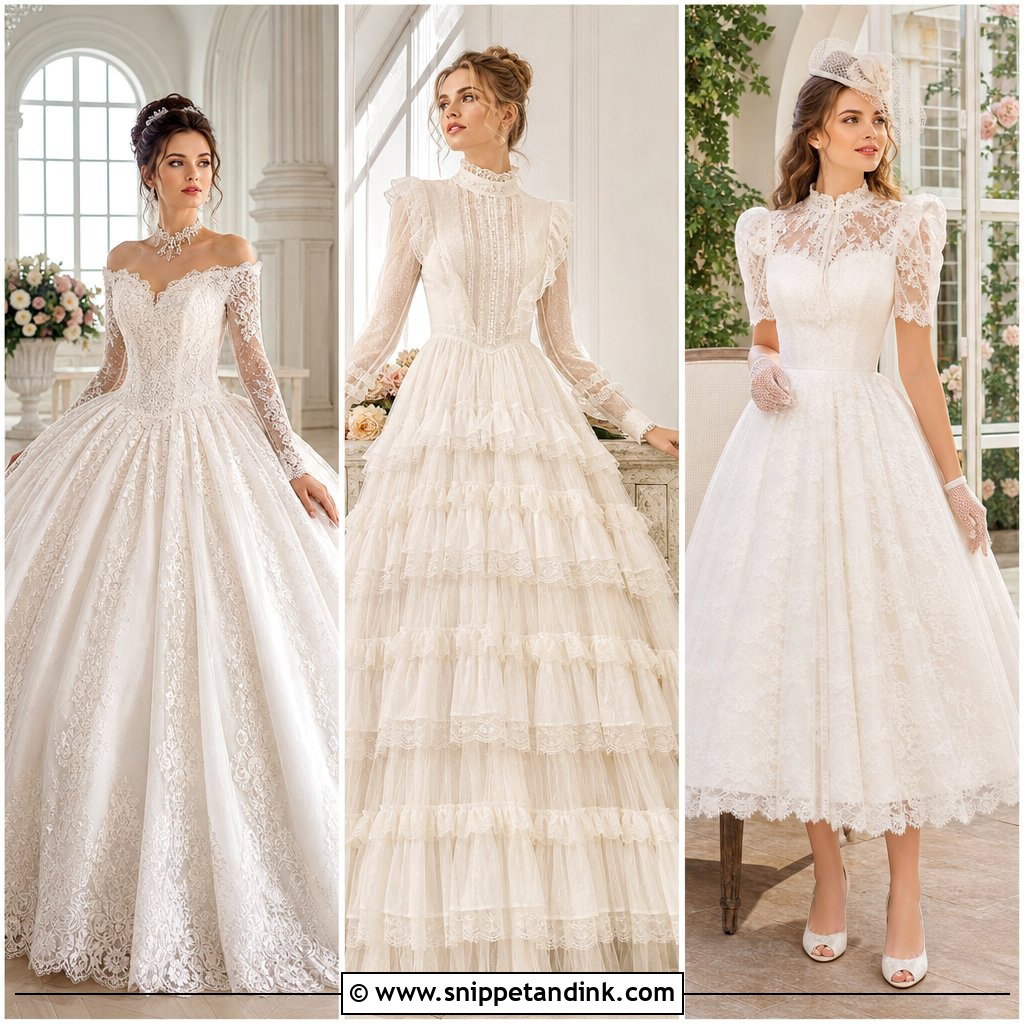
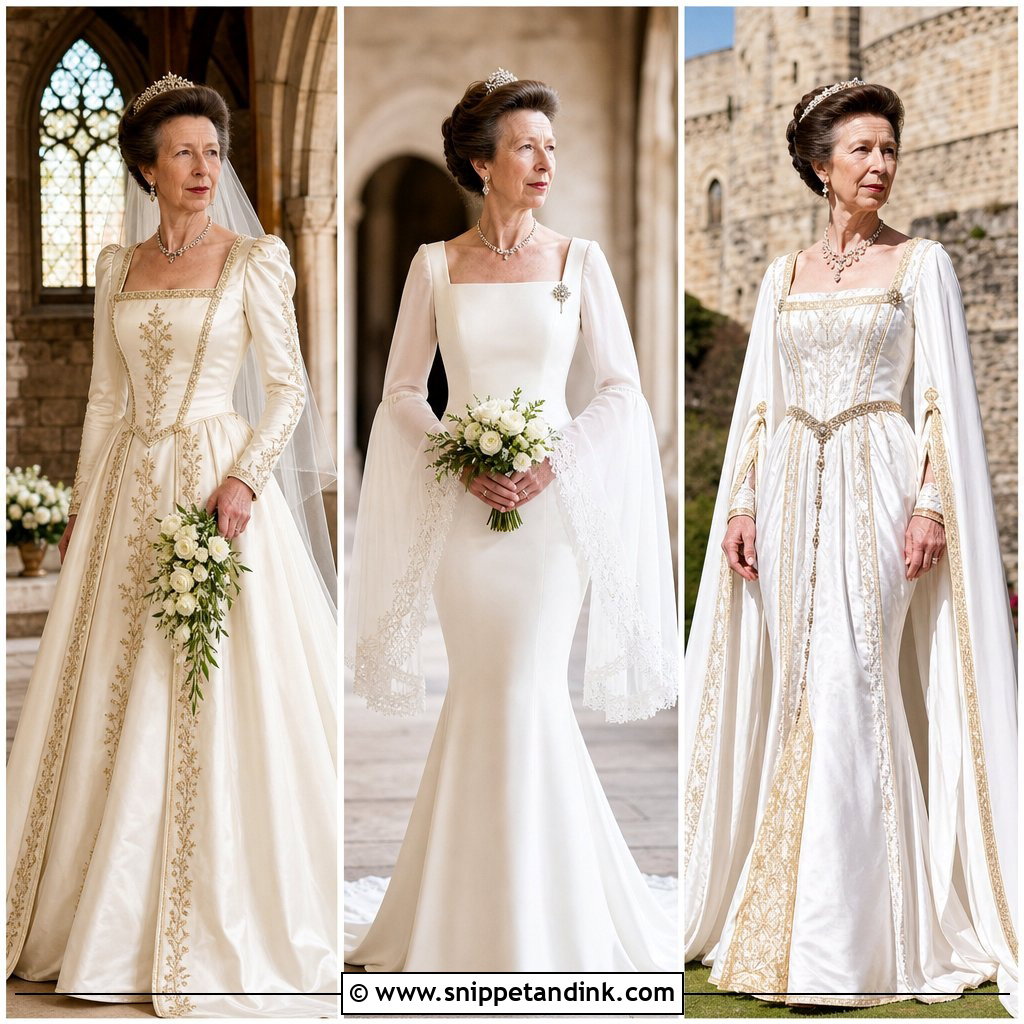
Long lace sleeves are the shape most people picture first, and they’re harder to fit than they look. I always check the sleeve at the elbow bend, because lace cut straight on the arm pulls when you lift a bouquet. Pair a fitted lace bodice and soft V-neck, covered buttons and an A-line satin skirt with a cathedral veil edged in a thin line of lace that echoes the sleeves. Add a slim crystal tiara rather than a crown, pearl drops, ivory pointed pumps and a structured bouquet of white roses, sweet peas and greenery. Sleeves earn their keep in a cold church from autumn to early spring; in July they’re a different conversation.
2. Square Neck Satin Royal Bride Dress
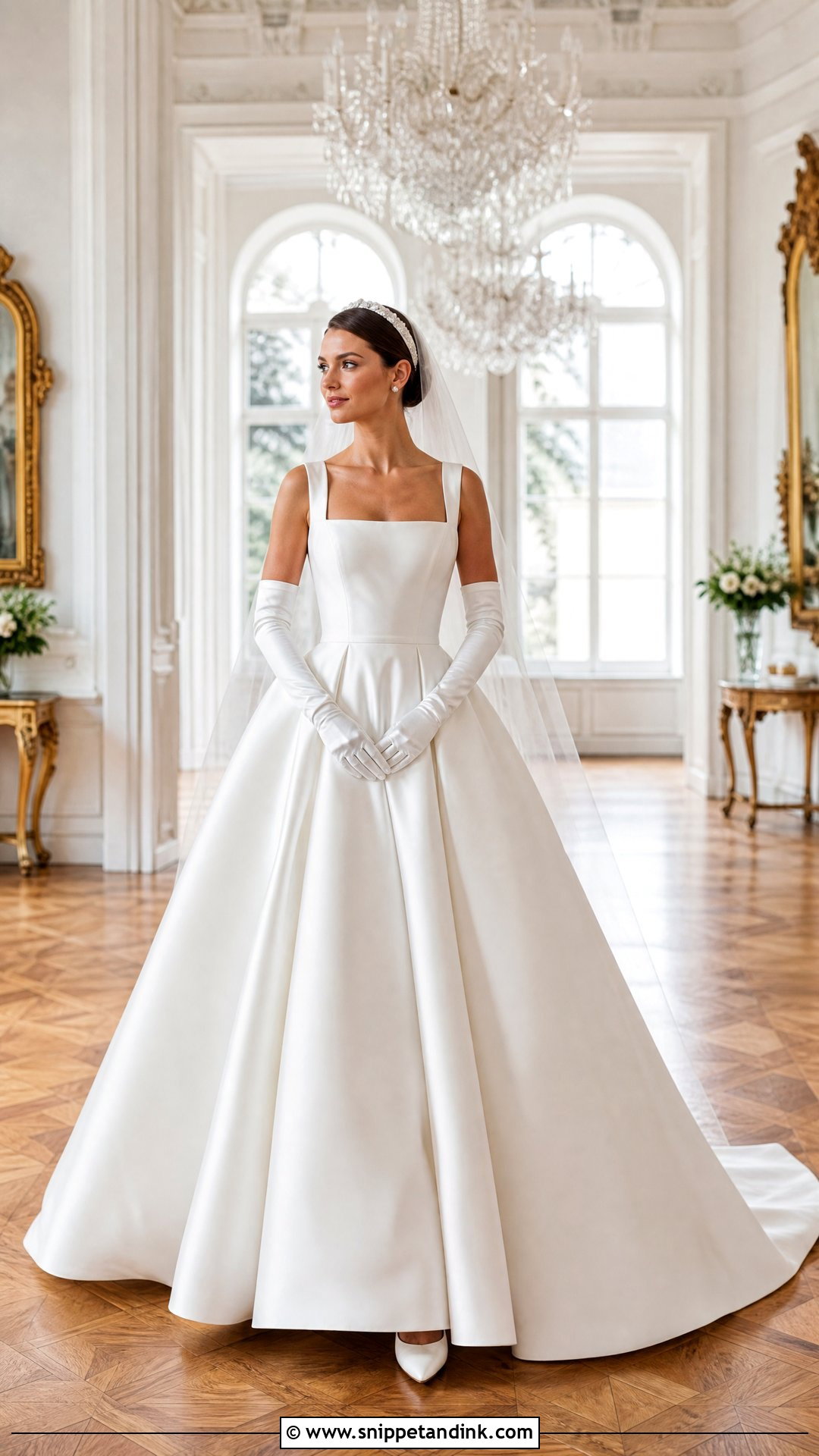
Satin with a square neck relies entirely on construction, so there’s nowhere for a poor fit to hide. Look for wide straps, a fitted waist and a full pleated skirt with a chapel or cathedral train. The two things I pin first are the neckline, which must lie flat against the chest when you breathe in, and the waist seam, which should land exactly on your natural waist. Long satin gloves suit it because they don’t cover the neckline. Finish with a low chignon, a fine headband, a plain tulle veil, pearl studs, satin pumps and a small structured bouquet.
3. High Neck Lace Royal Bride Dress
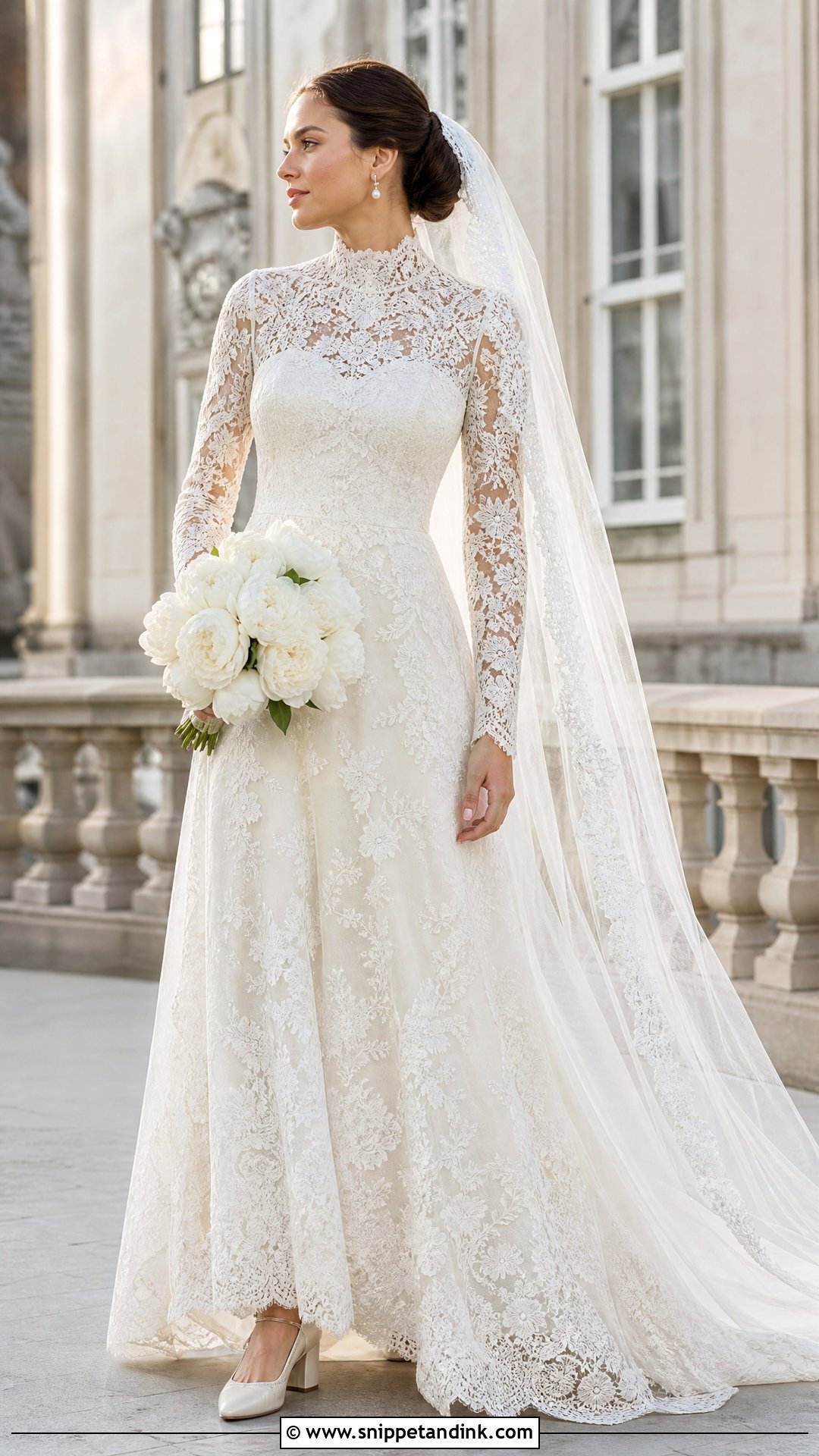
A high lace neck frames the face, which means it does the jewelry’s job for you. I’d skip the necklace entirely and wear tiny pearl earrings. Choose a lightly lined bodice with floral motifs, fitted sleeves and a flowing A-line skirt; a stiff, very full skirt under a high neck tends to swallow a shorter bride. A low bun and a lace-trimmed veil keep it traditional, ivory block heels help through hours of standing, and a loose bouquet of white peonies softens the formal line. It sits naturally in a historic estate or a garden with proper coverage built in.
4. Boat Neck Minimalist Royal Bride Dress
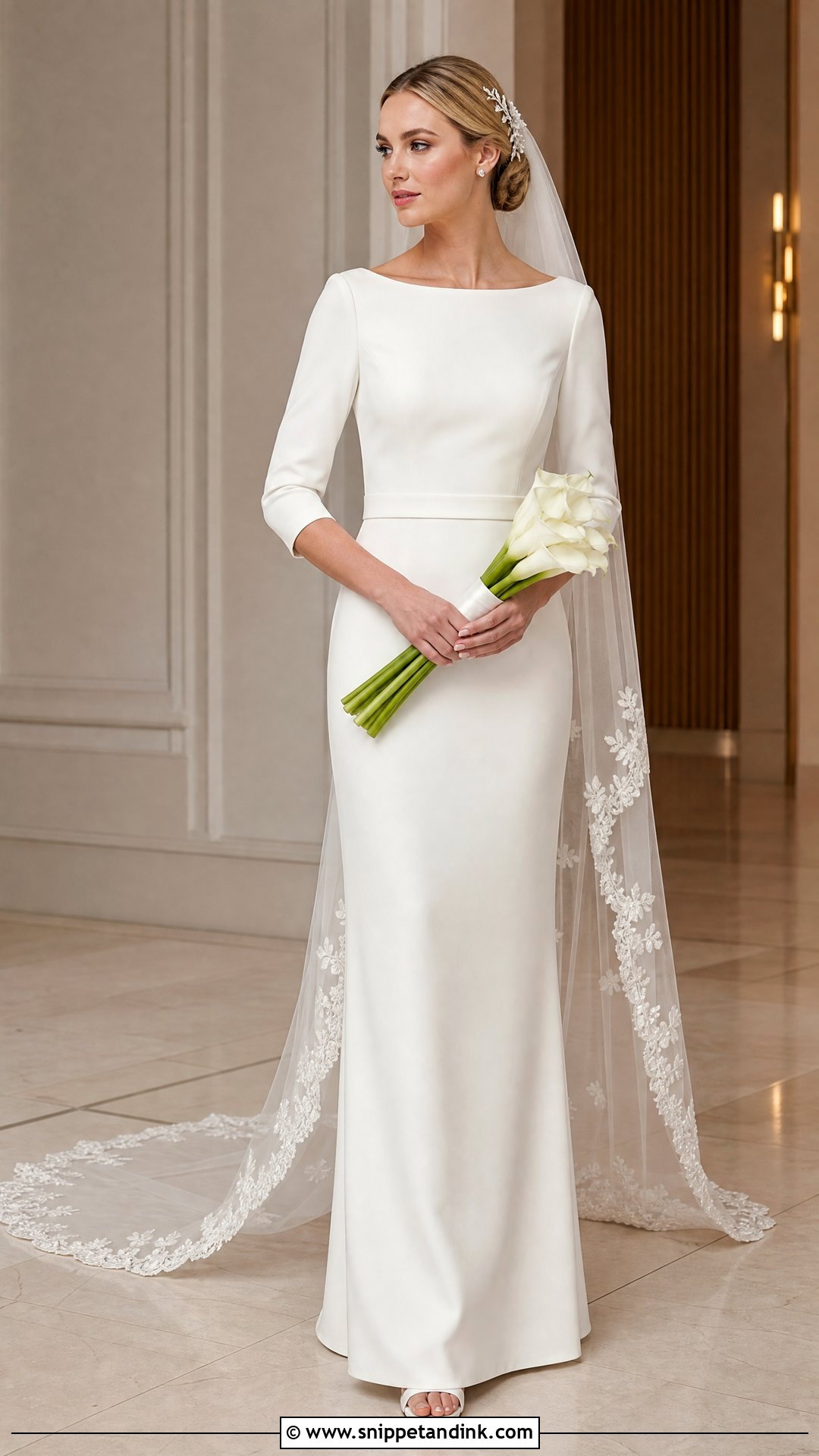
The boat neck is the quietest gown on this list and, in my experience, one of the most demanding in fabric choice. Heavy satin, crepe or silk with three-quarter sleeves should skim the body, not cling, so I size up slightly and take it in rather than fighting a tight cut. Put the detail behind you with a very long embroidered veil, then keep the front sleek: low bun, small crystal comb, studs and pointed satin heels. White calla lilies or a compact rose bouquet suit the clean line, and so do minimalist city venues.
5. Off Shoulder Royal Bride Ball Gown
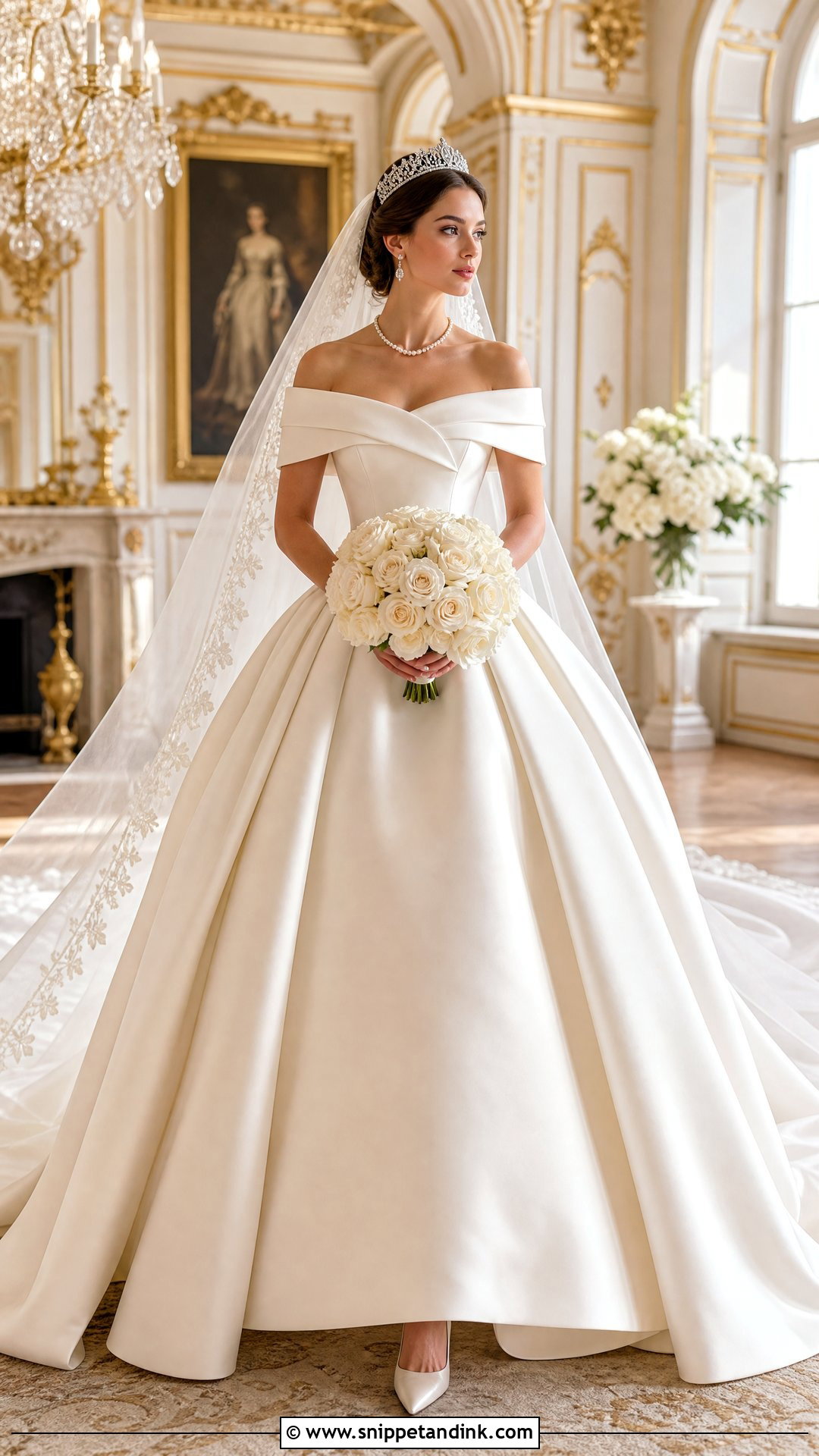
An off-shoulder ball gown gives a royal bridal outfit its romance, but the folded neckline only stays put if the corset underneath is doing the work. I ask brides to hug someone hard at the fitting; if the neckline slides, the boning needs adjusting. Choose mikado or satin over soft layers rather than heavy volume. The open neckline has room for one short pearl strand or a small pendant, plus a medium tiara, cathedral veil and pearl earrings. Padded closed-toe heels help under a wide skirt, and detachable straps or a matching wrap give you cover for the reception.
6. Pearl Beaded Royal Bride Dress
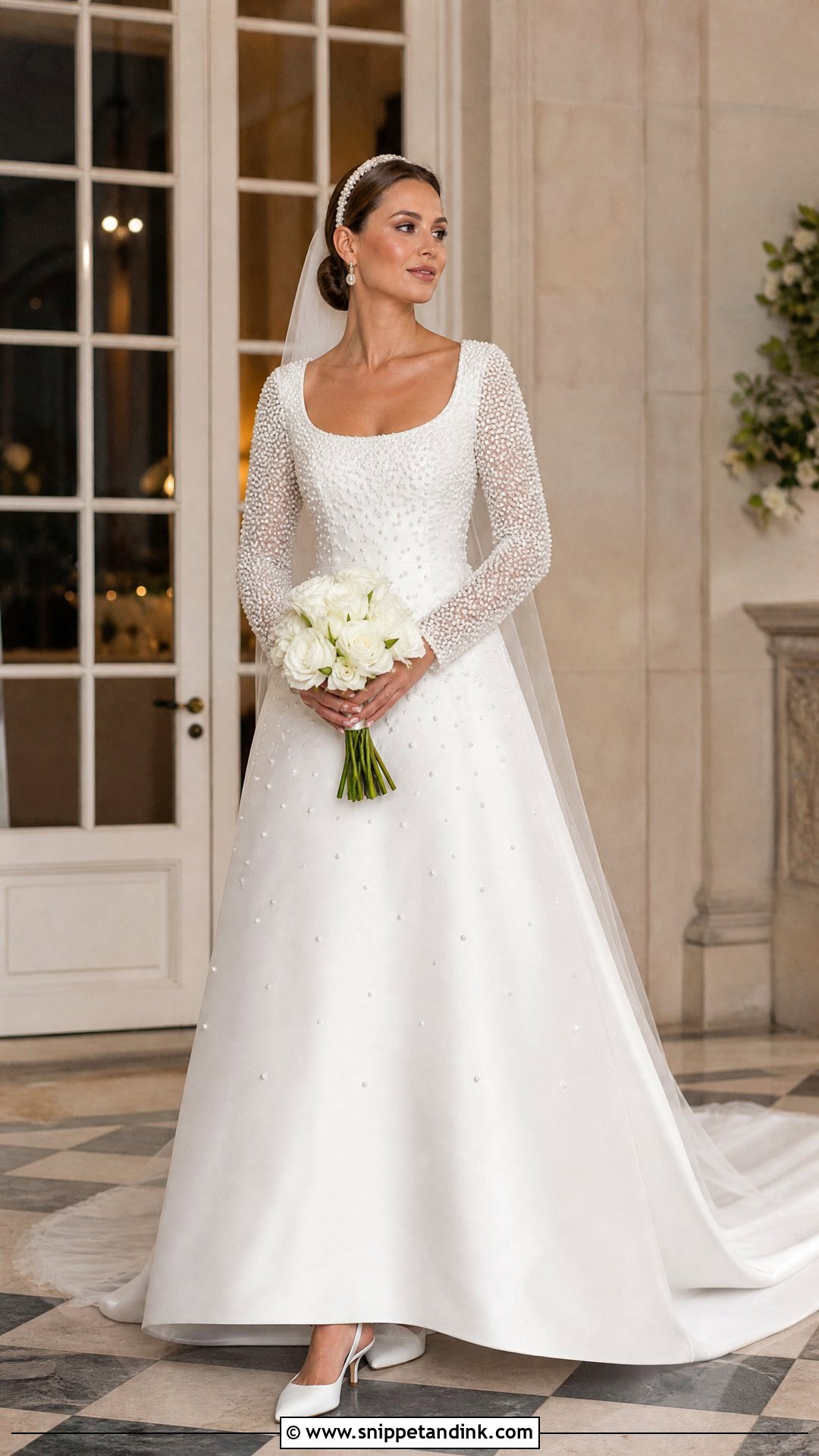
Pearls give a soft glow where crystals throw hard sparkle, which is why they read so well in candlelit rooms. The beading should thin out as it travels down the skirt; when it runs heavily to the hem, the gown gets weighty and the pearls catch on stair edges. Start with an ivory A-line, pearl-beaded sleeves and a scoop or gentle V-neck, then keep the veil plain. Pearl drops, a narrow headband and satin slingbacks carry the theme, but I’d leave off a pearl necklace if the bodice is already heavily beaded. White garden roses tied in ivory silk finish it.
7. Cathedral Train Royal Bride Dress
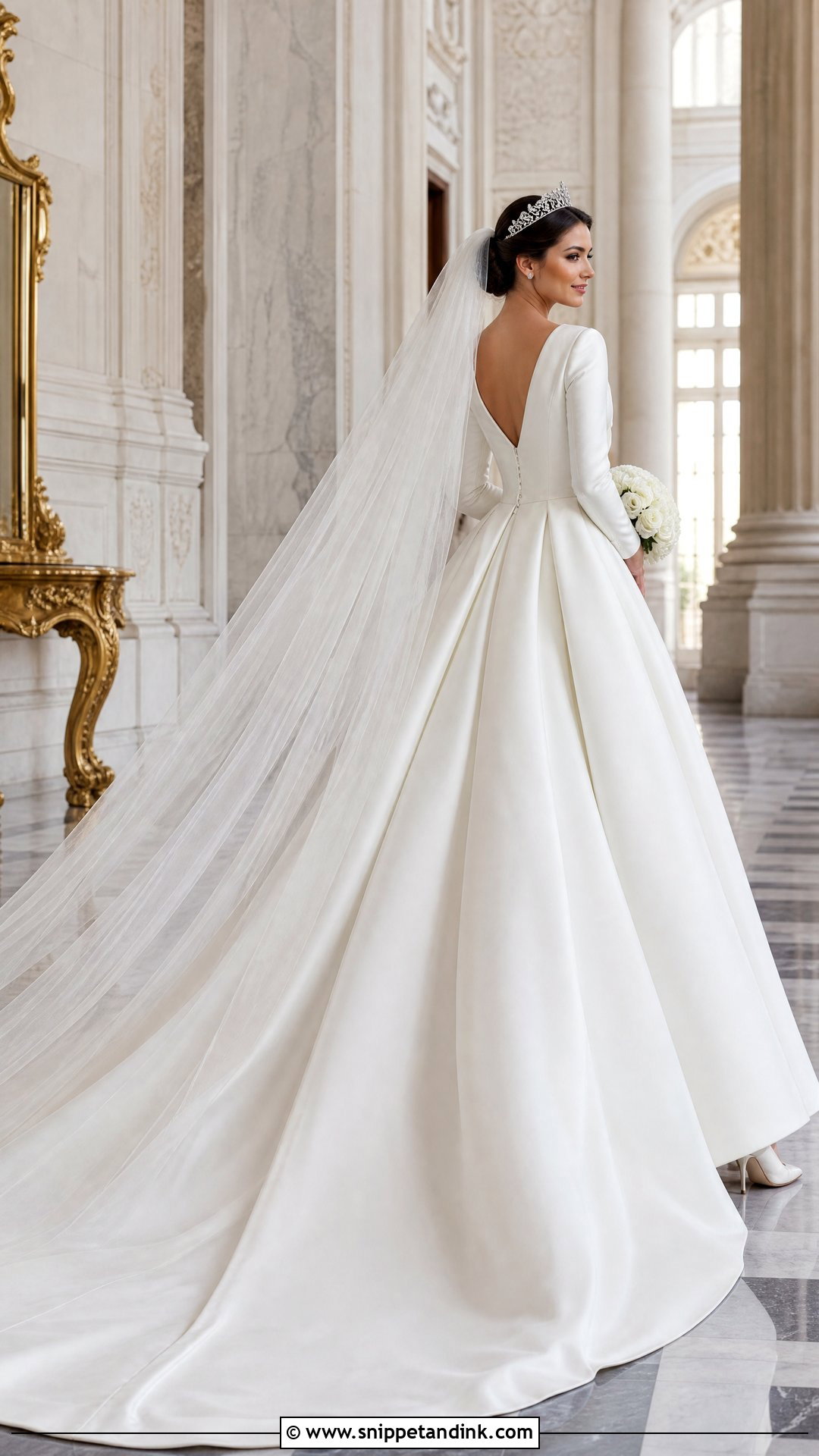
A cathedral train is all about proportion. The train should grow out of the skirt in one line, not start as a separate bulky panel at the back, and satin, mikado and jacquard hold that line best. Make the veil a touch longer than the train so the whole shape stays visible in the processional photos, then keep the rest small: a little tiara, studs, ivory pumps and a bouquet you can hold for a long walk. Practise turning and sitting at your final fitting. I’d ask for a multi-point bustle on any train this long; a single hook gives way by the first dance.
8. Cape Royal Bride Dress
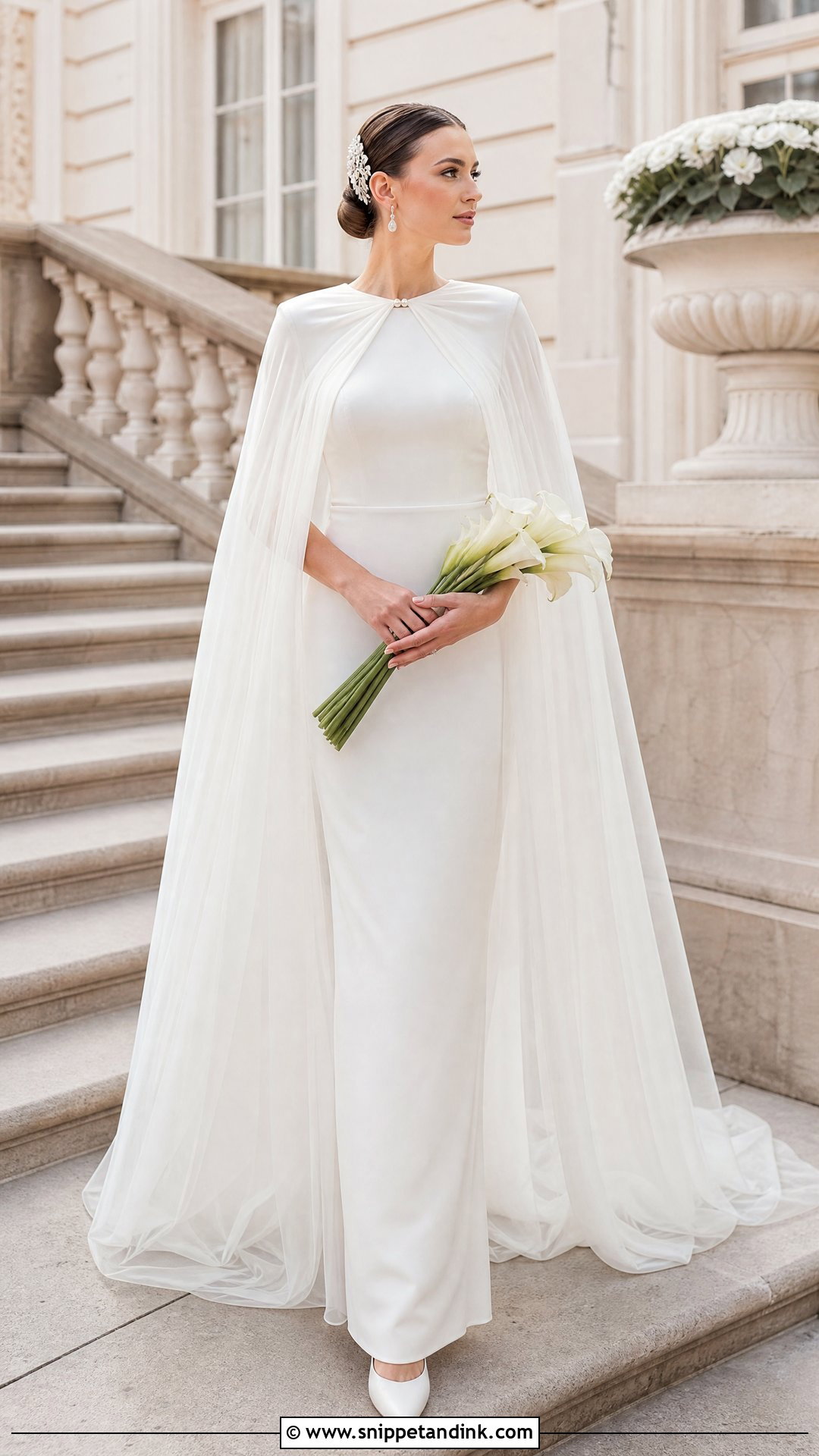
A floor-length tulle cape moves like a veil without sitting on your head, which helps brides who find veils pull on the scalp. Wear it over a fitted crepe gown, a satin A-line or a lightly beaded column, fastened at the shoulders with small pearl or covered buttons. Keep the dress plain so the cape leads. Skip a tall tiara, since it fights the neckline; a polished bun and a slim comb sit better. Drop earrings, pointed pumps and long-stemmed white flowers complete it, and after portraits the cape comes off for a shorter veil or a hairpiece.
9. Victorian Collar Royal Bride Dress
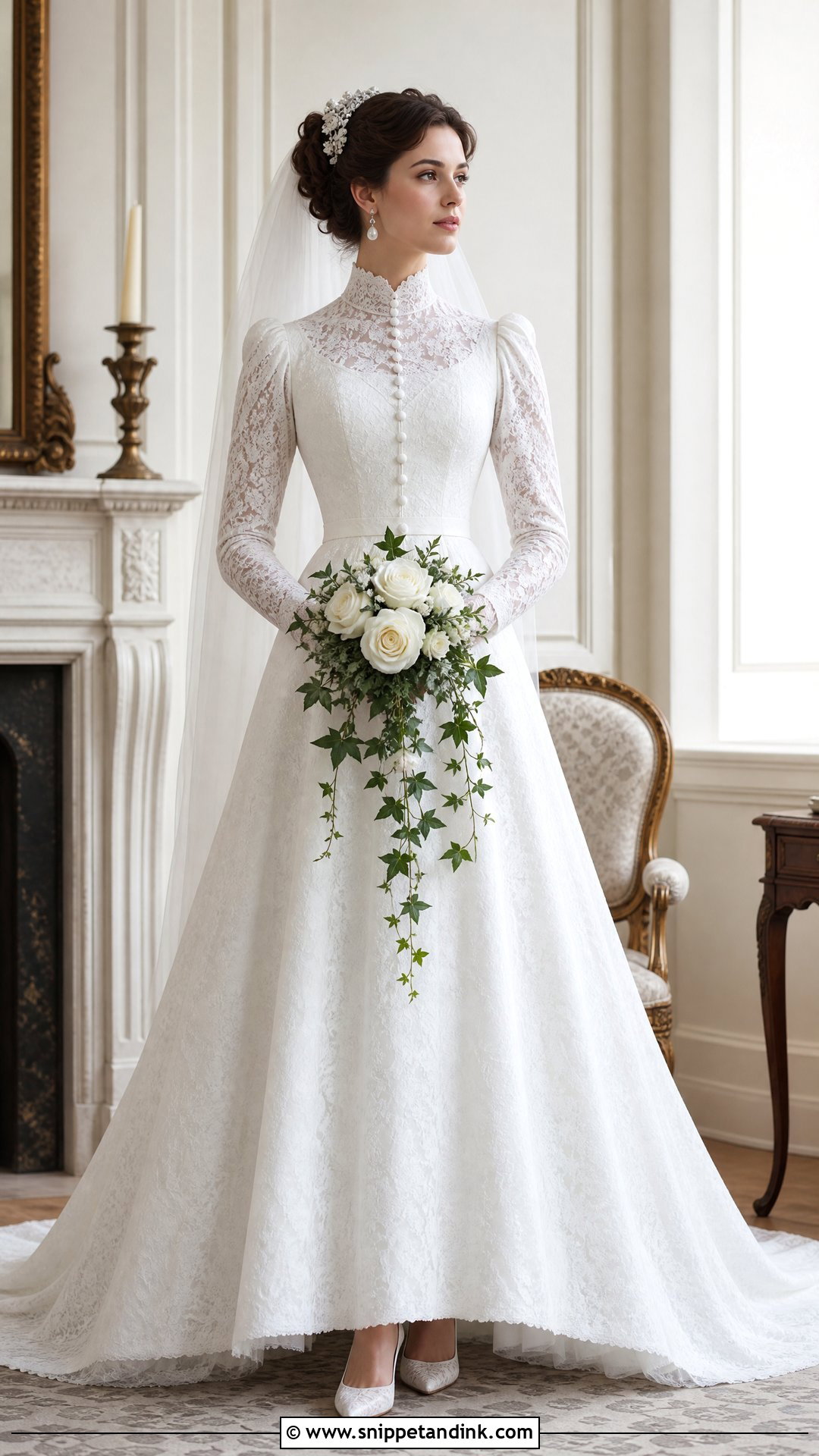
A standing lace collar is the most distinctive detail here, and it needs room around it. Look for fitted sleeves, covered buttons, a natural waist and an A-line skirt so the high neck doesn’t make the whole outfit severe. Choose lace with open areas; dense lace turns into a flat white block in photographs. I’d attach the veil below the bun so the collar stays visible, then add a narrow floral tiara or antique-style comb, small pearl earrings and lace pumps. White roses, lily of the valley and trailing greenery soften the formal construction.
10. Basque Waist Royal Bride Ball Gown
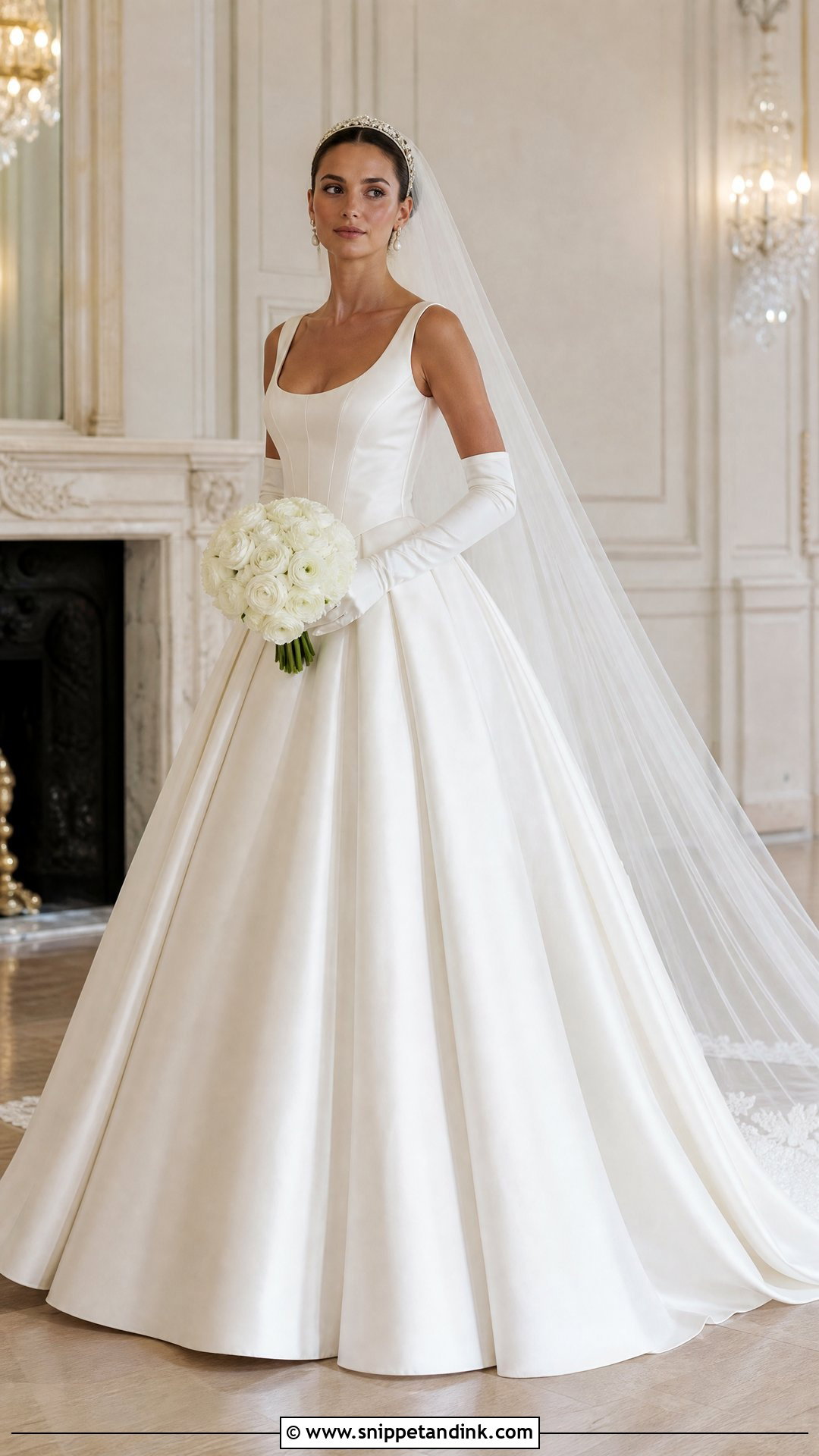
The basque waist dips into a point below the natural waistline, which lengthens the torso and throws the skirt out dramatically. The comfort test is simple: sit, bend and reach at every fitting, and if the point digs in, the seamstress can raise or soften it. Choose satin or mikado with real internal structure and a gentle scoop neck. A long plain veil and a medium crystal headband balance the strong shape, and long gloves suit a sleeveless version, though they come off for dinner. Pearl earrings, low satin heels and white ranunculus complete it.
11. Embroidered Veil Royal Bride Dress
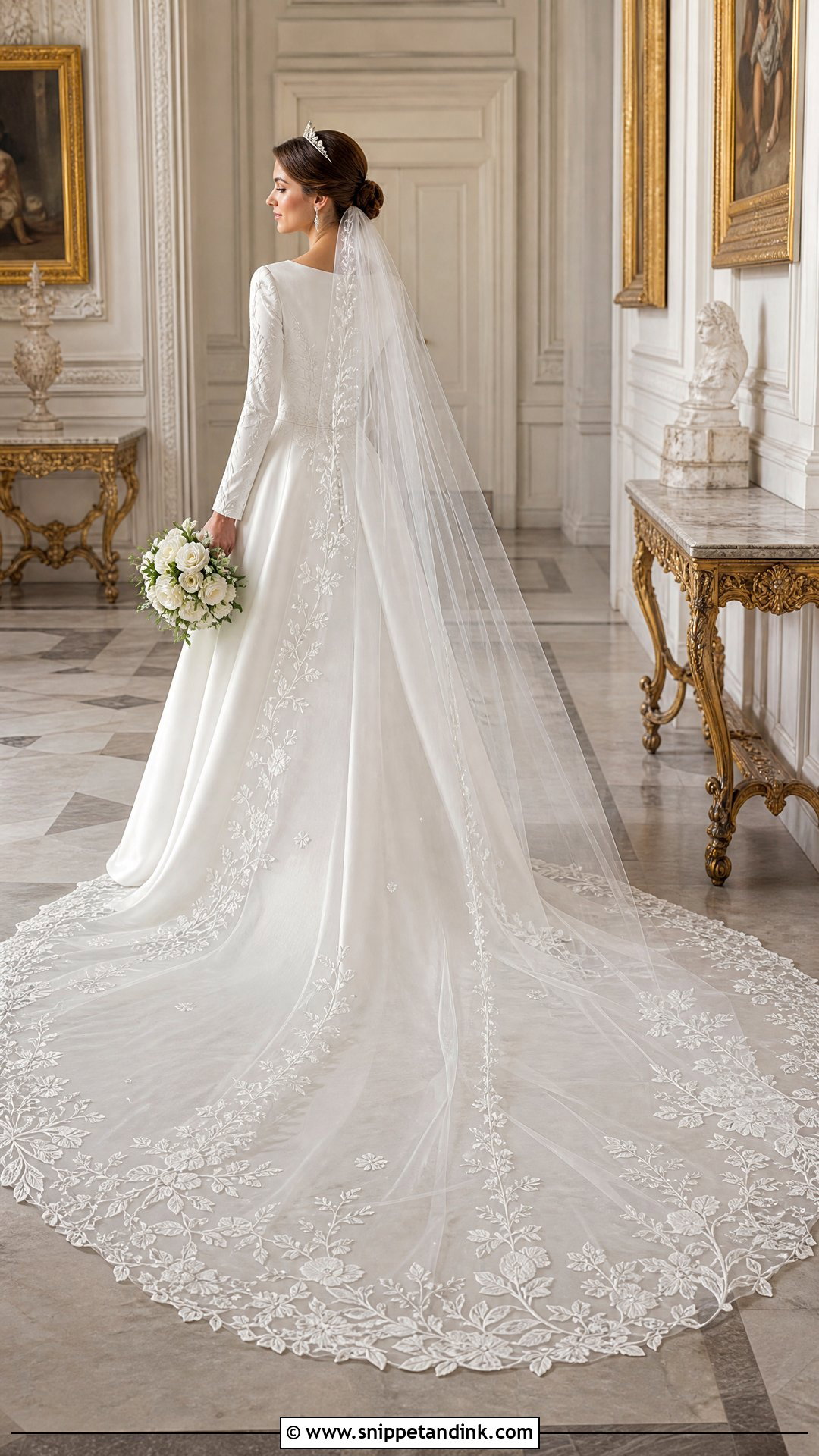
An embroidered veil puts your story on the one piece everyone sees from behind. Keep the gown clean, a long-sleeve fitted bodice and smooth A-line skirt, and concentrate the embroidery along the border: florals, a monogram, a symbol from your families or your venue. Embroidery across the whole veil weighs it down and hides the dress. I’d secure it under a delicate tiara or a comb set into a low bun, wear small sparkling earrings and plain ivory pumps, and repeat one or two flowers from the veil in the bouquet. Brief your photographer to shoot it fully spread from behind.
12. Silk Crepe Royal Bride Dress
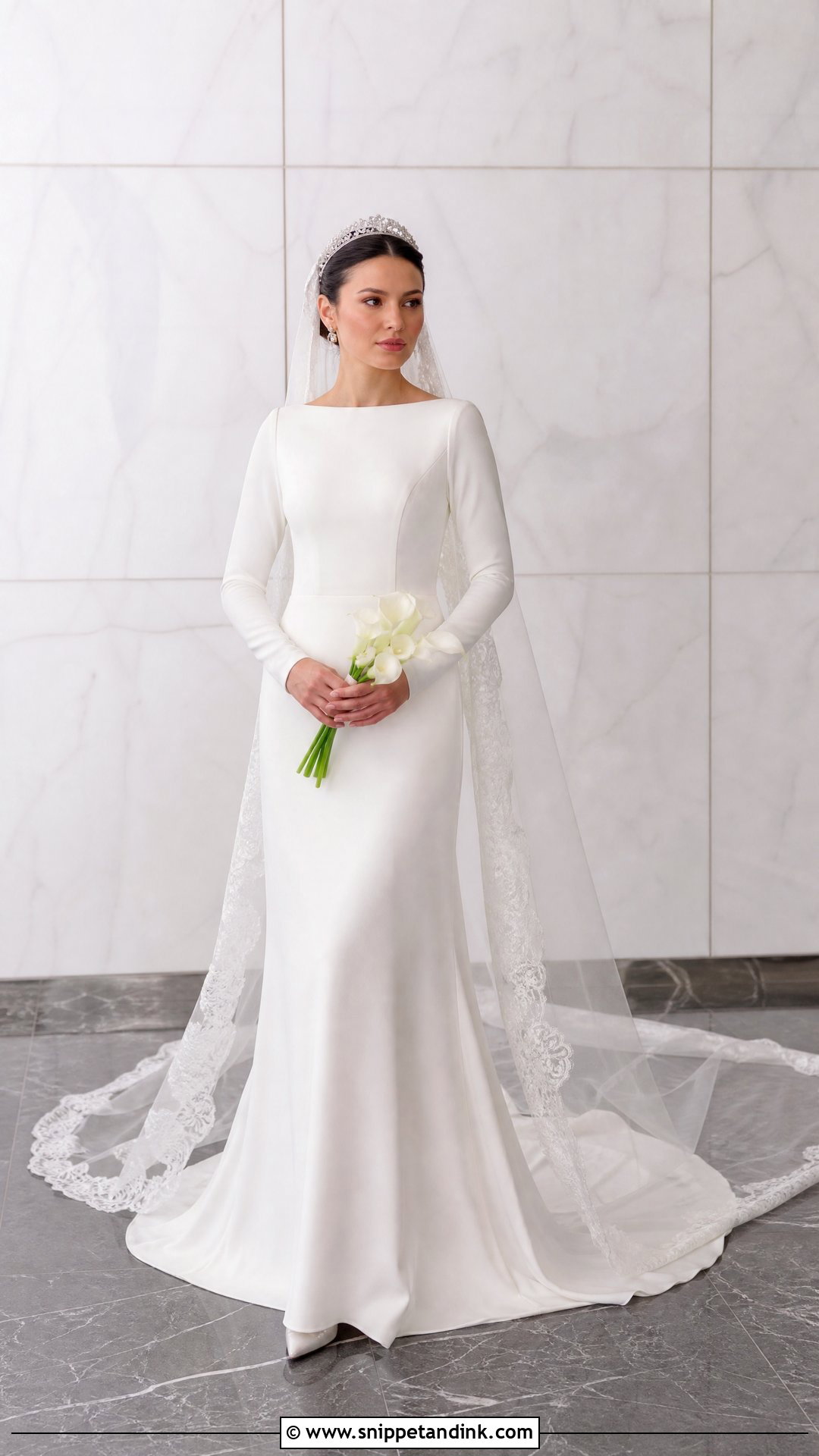
Silk crepe is honest fabric: it shows every seam, every lump of underwear and every alteration. That’s why I fit crepe last in the day, with the actual undergarments the bride will wear. A long-sleeve column with a bateau neck, defined waist and long train, shaped by princess seams or light draping, gives royal formality without a wide skirt. Petite brides carry it well. Add a lace-edged veil, a pearl-and-crystal tiara, drop earrings, pointed pumps and slim calla lilies, and consider a detachable overskirt if you want more drama on the aisle.
13. Detachable Overskirt Royal Bride Dress
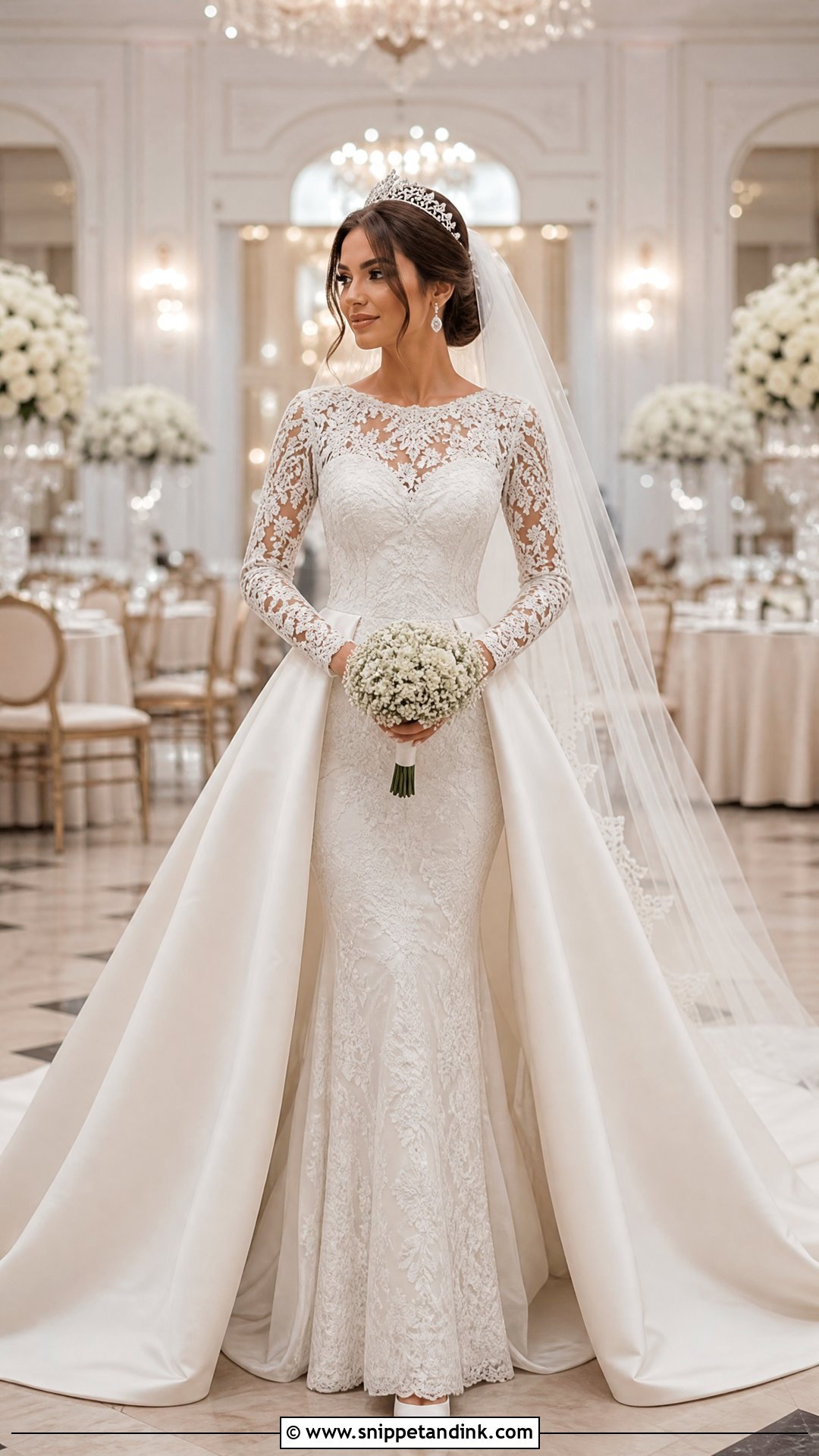
Two silhouettes for one dress budget is the obvious appeal of an overskirt. Start with a fitted lace, satin or crepe gown you’d happily dance in, then add a structured overskirt at the waist for the ceremony to create a grand royal ball gown with a sweeping train. The join should hide under a narrow belt or matching waistband. Wear a cathedral veil, small tiara and pearl earrings for the vows, then remove the overskirt and veil and switch to a sparkling comb. The fastenings are where this goes wrong, so I have the bride and whoever will help her practise the change at the last fitting.
14. Modest Satin Royal Bride Dress
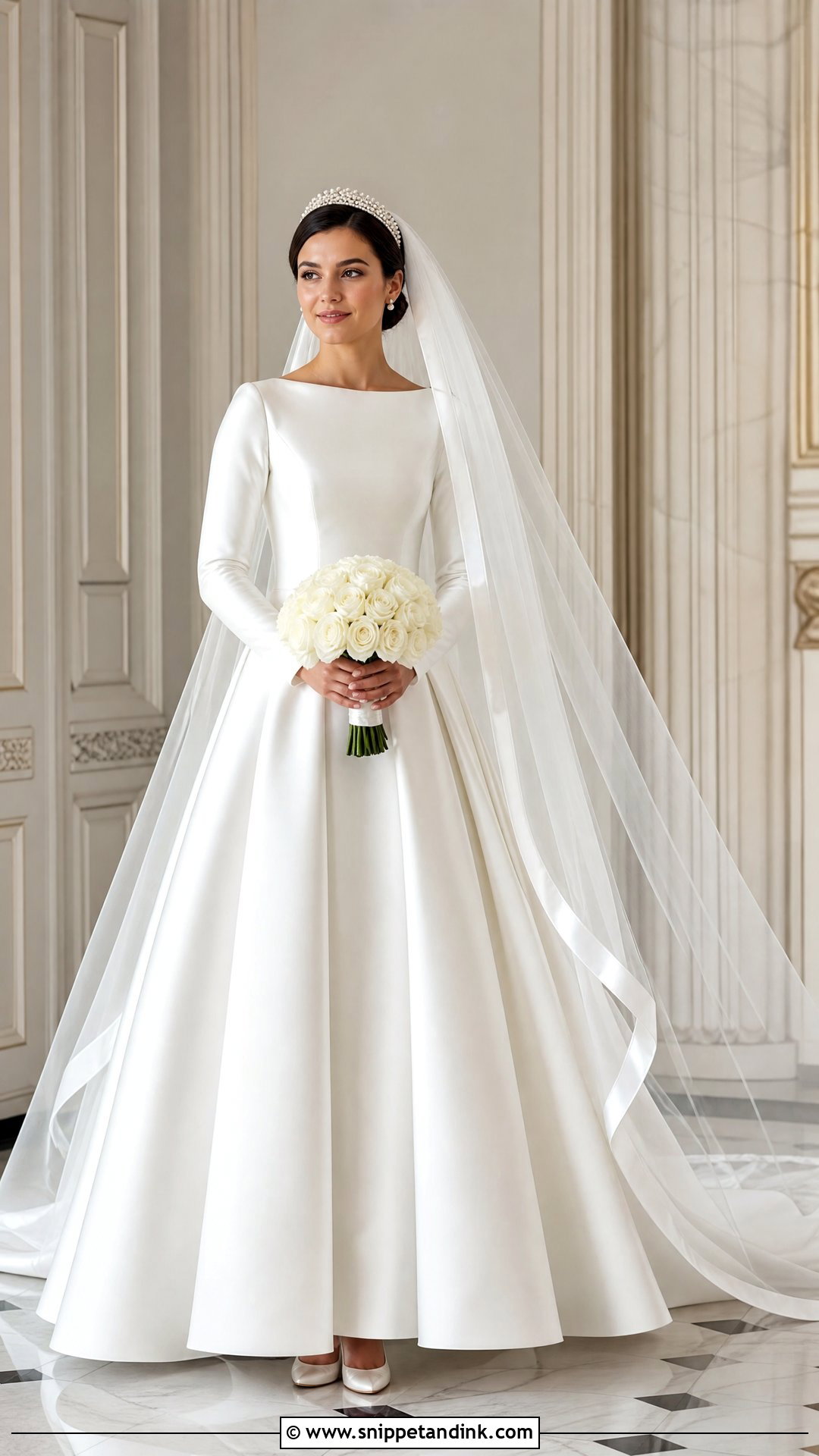
Modest satin gets its presence from cut. Choose a high bateau or jewel neckline, fitted long sleeves, a covered back and a full A-line skirt, with box pleats for controlled volume at a smooth waist. A sheer cathedral veil with a narrow satin edge, a pearl tiara, small earrings and low block pumps finish it. High-shine satin can flare white under flash, so I balance it with matte accessories. Long sleeves in a warm hall get hot; ask about breathable lining and discreet underarm shields before the final fitting, not after.

15. Floral Applique Royal Bride Dress
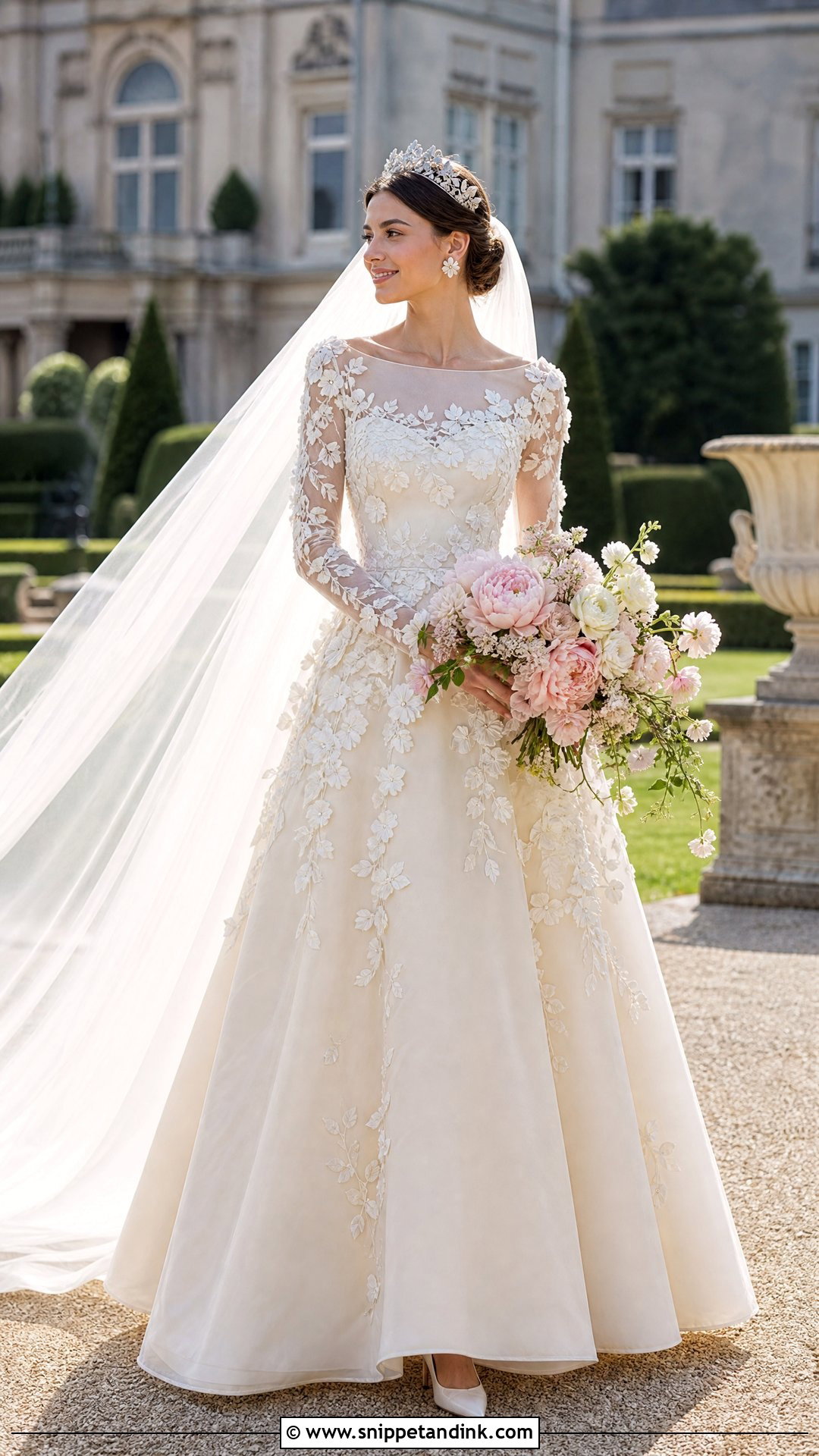
Three-dimensional appliqués soften a formal shape, and placement decides whether they look refined or busy. They should cluster on the bodice, sleeves and upper skirt, then thin toward the hem; even coverage overwhelms a petite frame. Under sheer lace, ask for a soft ivory lining instead of a bright white one, which creates harsh contrast. Pair it with a plain cathedral veil, a leaf-shaped tiara, small floral earrings and satin pumps, plus white peonies, roses and sweet peas. I’d repeat one floral element across the look rather than matching every piece.
16. Gold Embroidered Royal Bride Dress
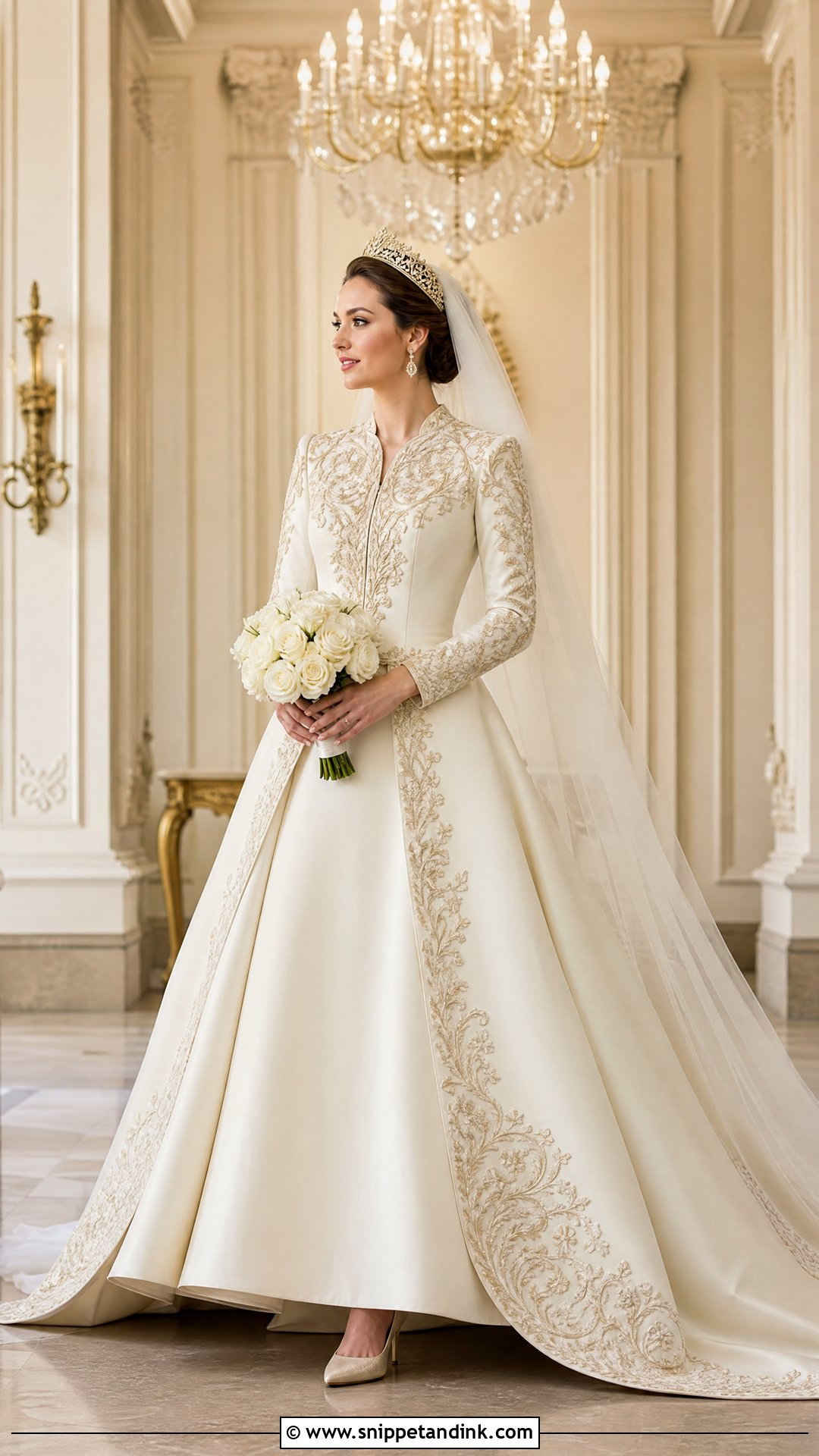
Gold thread on ivory looks ceremonial when it’s pale champagne gold; bright yellow gold tends to look costume-like next to ivory. Keep the embroidery to the bodice, cuffs, waist or train, and keep the neckline simple. A plain tulle veil, gold-toned crystal tiara, small drops and champagne satin shoes are enough, and no necklace if the bodice is ornate. Always ask for a fabric sample and look at it by a window, under warm indoor bulbs and with a phone flash. Metallic thread shifts more between those three than any other trim I work with.
17. Tea Length Royal Bride Dress
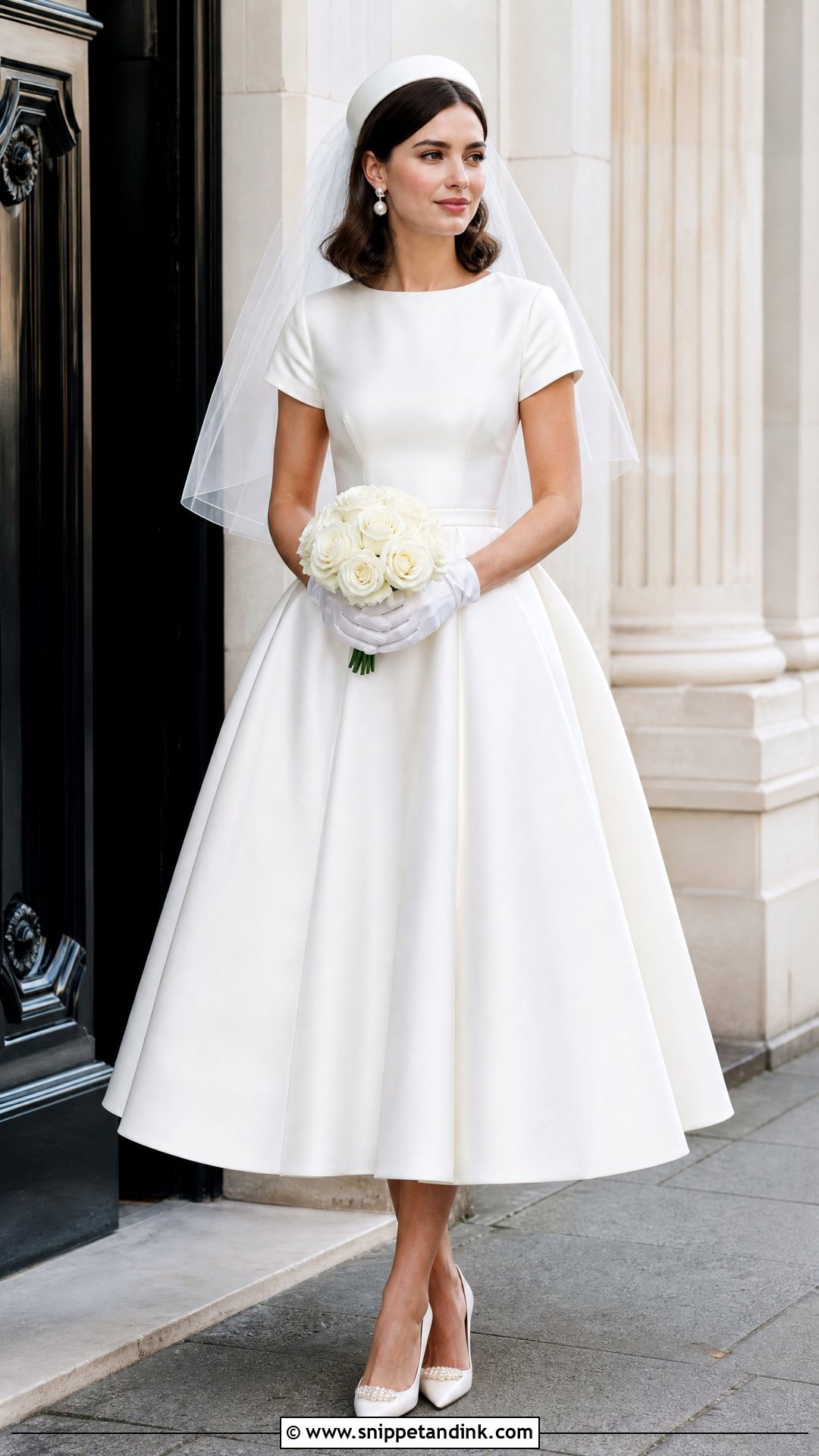
Tea length can still feel royal, but the shoes suddenly become part of the outfit. Choose structured satin with a fitted bodice, covered shoulders, a defined waist and a full skirt ending between knee and ankle, then pick ivory pumps with a pearl buckle or crystal detail. Short gloves, pearl earrings and a small pillbox headpiece with a shoulder-length veil keep the proportions tidy, and a compact white rose bouquet suits it. It’s a natural fit for a civil ceremony or a formal daytime wedding. On petite brides, I hem it at the narrowest point of the lower leg so the line looks longer.
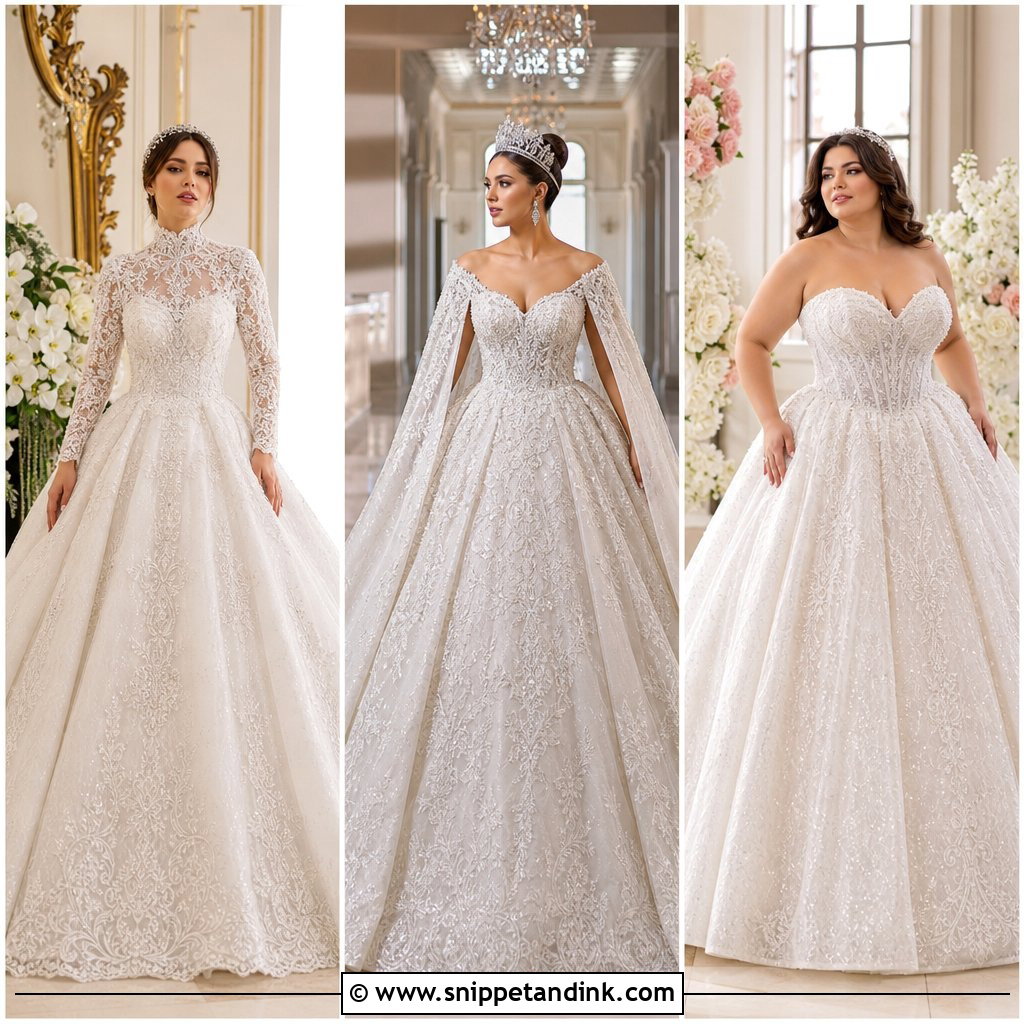
18. Plus Size Royal Bride Ball Gown
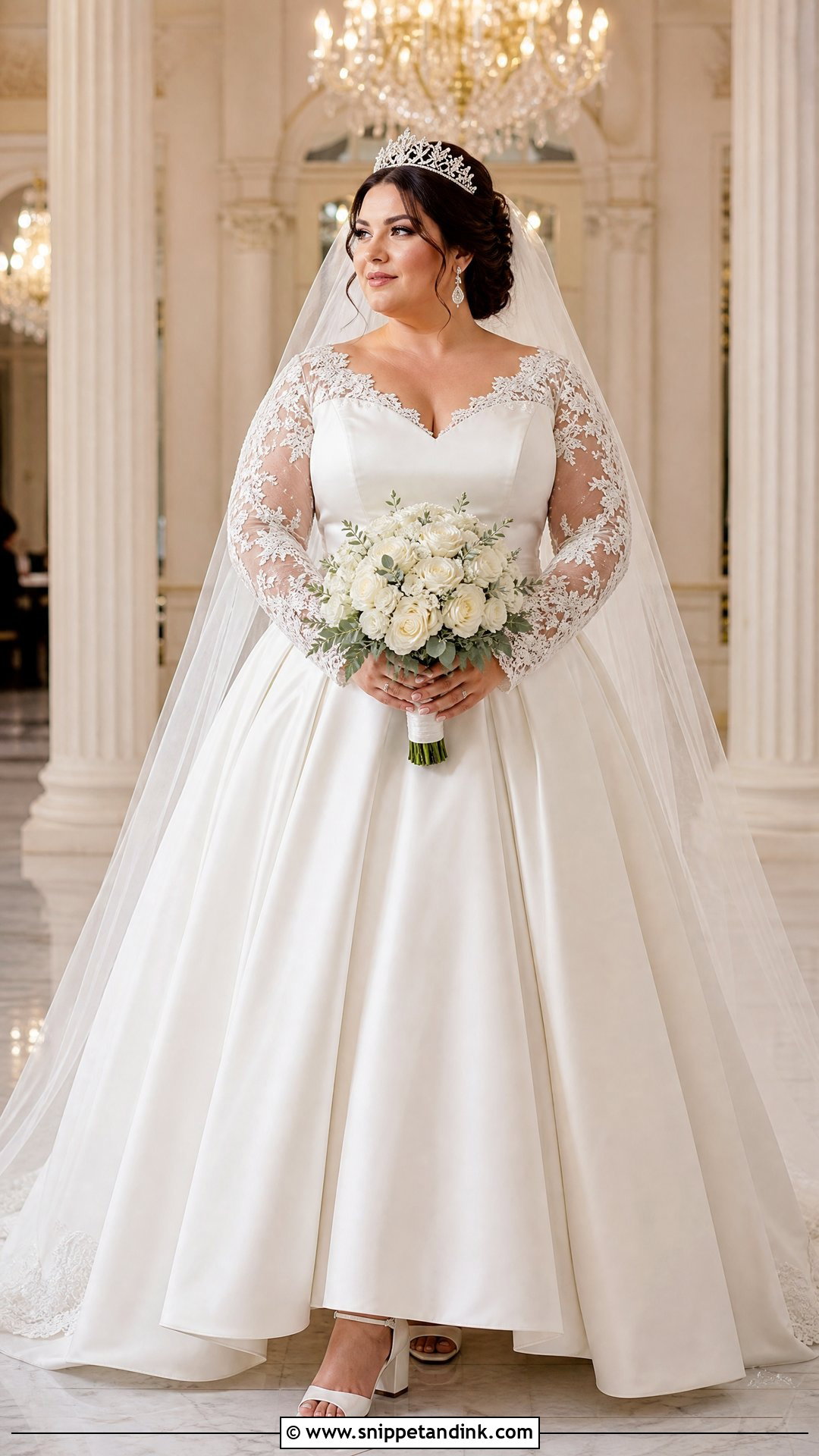
Support is the first thing I fit on a plus-size ball gown, before any styling. Wide straps or fitted sleeves, a secure neckline and a waist seam placed where your torso is narrowest give the structure something to hold. Internal boning should support without digging, and the full satin skirt needs controlled pleats so it falls smoothly over the hips. A cathedral veil, medium tiara, drop earrings and cushioned block heels suit it, and a slightly wider bouquet balances the skirt in photos. Sit and lift your arms at fittings, and ask for reinforced bustle points.
19. Mature Royal Bride Dress
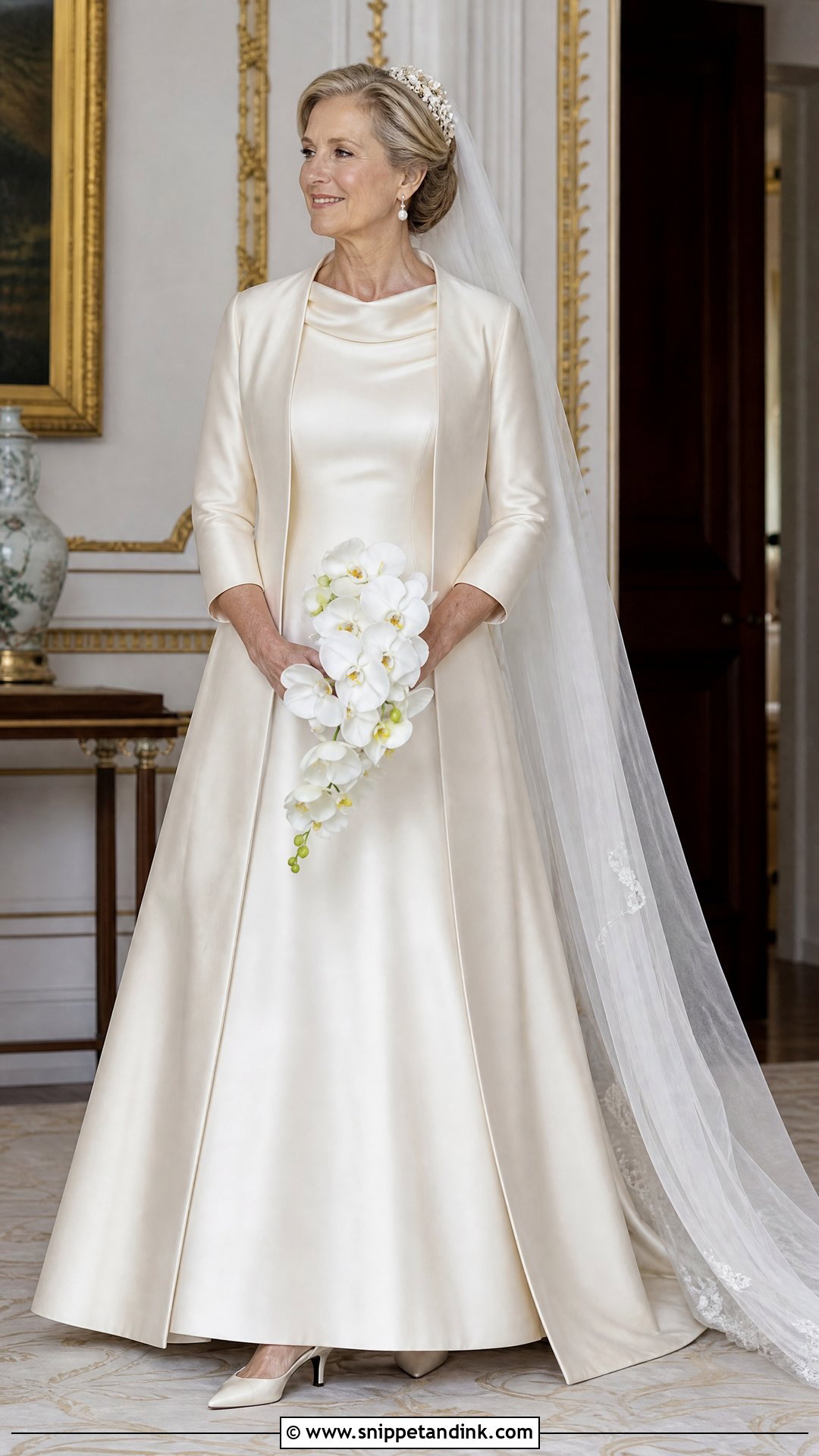
A mature bride often gets pushed toward extra embellishment she doesn’t want, and I’d resist that. Good silk or satin, clean tailoring and coverage you’re comfortable in carry more authority: an A-line with a softly draped neck, three-quarter sleeves and a defined but forgiving waist. A matching full-length coat or a removable lace jacket adds ceremony and gives a second look later. Choose a floor-length veil, pearl comb or small tiara to taste, with pearl earrings, supportive kitten heels and white orchids or roses. Soft ivory, light champagne and oyster usually flatter more than bright optical white.
20. Jacquard Royal Bride Dress
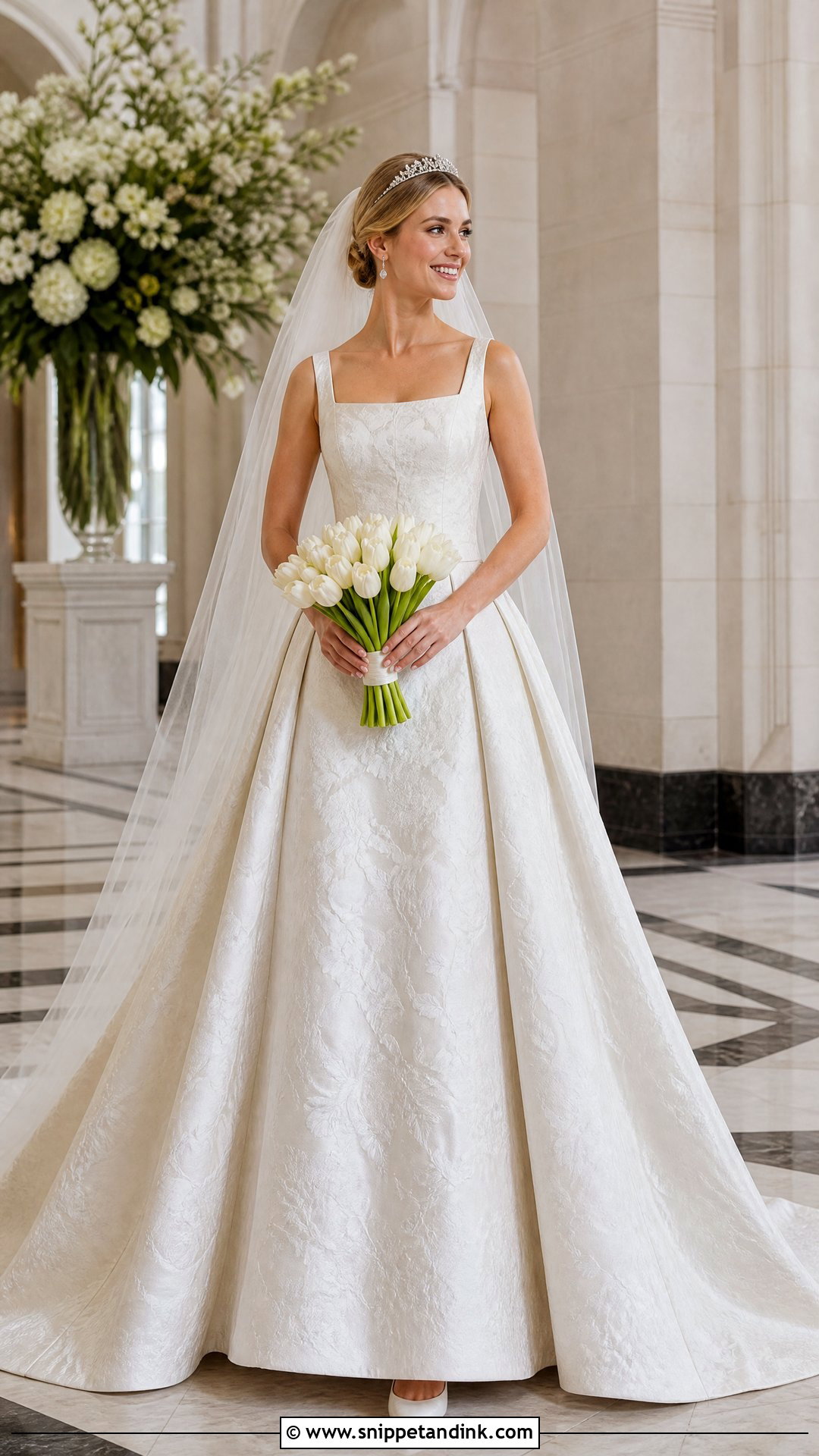
Jacquard has the pattern woven into the cloth, so it gives depth without a single bead. Choose a structured ball gown or A-line with a square neck, fitted bodice and broad pleats that open to show the weave; florals, damask and soft botanicals all read well. A plain cathedral veil keeps the fabric visible, with a slim tiara, pearl drops and satin pumps matched to the ivory. Its weight suits autumn and winter. The detail I watch at fittings is pattern placement: a large motif cut off at a side seam looks careless, so it should sit evenly on both sides of the bodice.
Trains, Bustles and a Day Spent Sitting Down
Royal-style gowns photograph best standing still, but you’ll spend much of the day sitting, hugging and dancing. Satin creases where it folds at the hip when you sit, especially soft duchess satin; mikado and jacquard keep their body better. I pack a handheld steamer with the dress and ask someone to steam the skirt once before the reception entrance. Never iron satin directly, as it leaves a shine mark.
Which bustle suits which train
An over-bustle lifts the train up onto hooks at the back of the skirt and is quick to do, which suits lighter tulle and lace. An under-bustle, often called a French bustle, tucks the train underneath with ribbon ties and keeps a smooth line on satin and mikado. Long cathedral trains usually need several points either way. Ask your seamstress to teach two people, not one, since the person you planned on is often busy at the exact moment it’s needed.
After the wedding
Get the gown to a specialist cleaner within a few weeks. Spilled champagne and sugary drinks can dry invisible and then oxidise into brown marks months later. Heavy skirts shouldn’t hang from the shoulder straps for long; use the inner hanging loops or store the gown flat in an acid-free box with acid-free tissue in the folds, somewhere cool and dry, and out of the plastic bag it came home in.
Restraint Is What Makes a Gown Read as Royal
The looks here run from traditional to minimalist, but they share the same logic. Start with a silhouette you can move and sit in, sized to your venue, then let the veil, headpiece, shoes, jewelry and bouquet support it rather than compete. Lace sleeves and satin ball gowns give the classic version; crepe columns, capes, jacquard and overskirts give a fresher one. Whichever you wear, put your budget and your time into alterations. A regal bridal look isn’t the most elaborate one in the room. It’s the one that fits perfectly and leaves the bride, not the gown, as the thing people remember.
You'll Like These Ideas:







Leave a Reply