
Royal bridal dressing is mostly about scale and restraint at the same time. The skirt, the train and the veil are big, and everything else has to be disciplined enough not to fight them. Basque waists, drop waists, sculpted corsets, bows, pearls and dimensional embellishment have all returned to bridal collections lately, and each can carry a regal look on its own. The mistake I see most is using four of them at once. Below are twenty complete looks, with the veil, jewelry, shoes, bouquet and headpiece I’d put with each gown, and the fitting detail that tends to need attention.
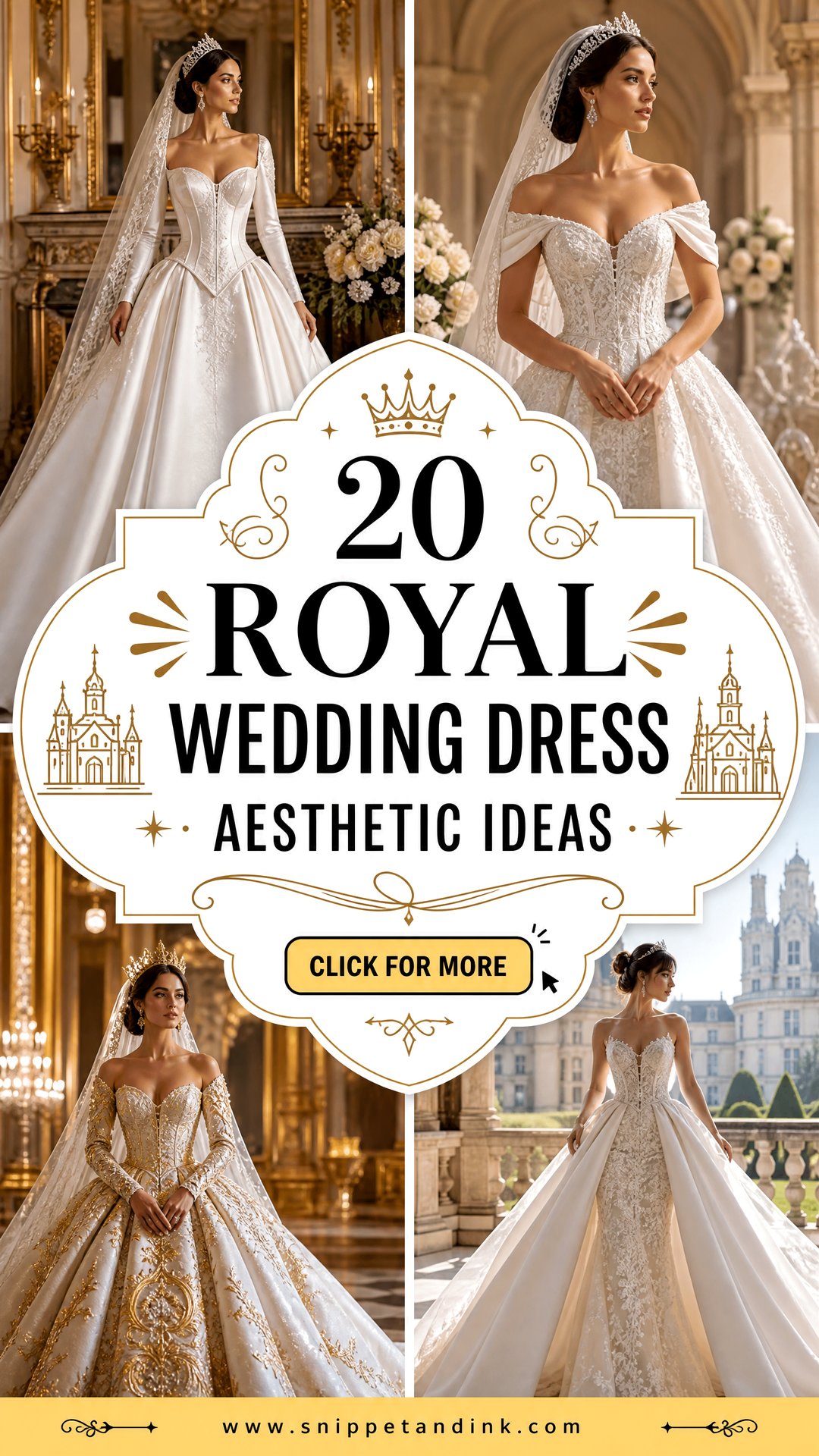
Where a Tiara Should Sit, and How It Stays There
Nearly every look below includes a tiara, and most tiara problems come from placement rather than the piece itself. A tiara perched right on the hairline slides forward; one pushed too far back disappears in front-on photos.
Placement
Set it an inch or two behind the hairline, following the curve of the head. With a high bun, it can sit further back and act almost as a crown around the bun; with a low chignon, it sits closer to the front.
Anchoring
Most tiaras have small loops or combs at each end. Your hairstylist will backcomb a little hair at those points for grip, then cross bobby pins through the loops into it. Bring the tiara to your hair trial, because a heavy jeweled piece needs more support than a fine one, and that changes how the hair is built.
With a veil
The veil comb usually goes in behind or under the bun, below the tiara, so the two don’t compete for the same hair. If you plan to remove the veil for the reception, have it pinned separately so the tiara stays in place when it comes out.
1. Long Sleeve Lace Royal Wedding Dress
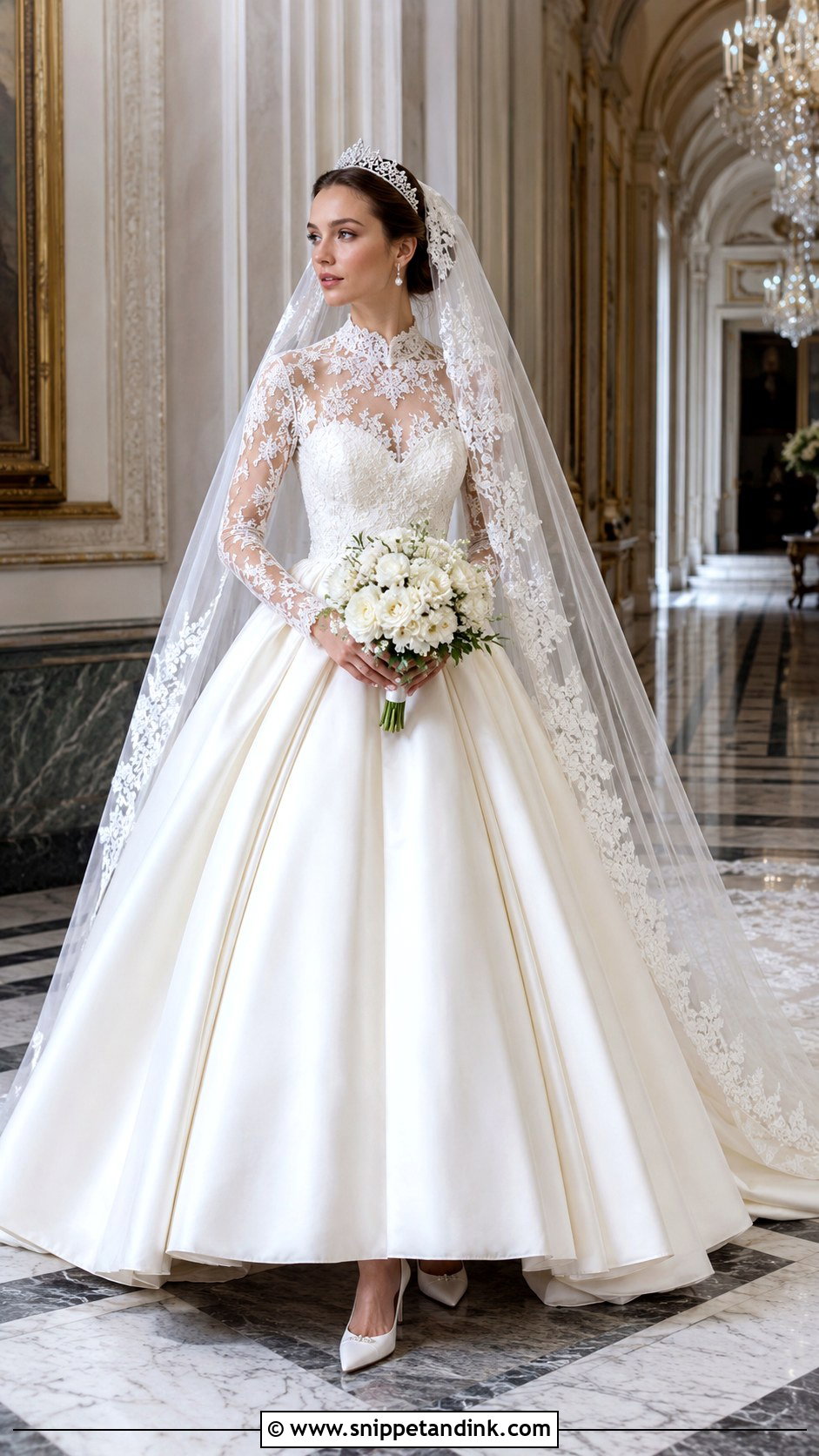
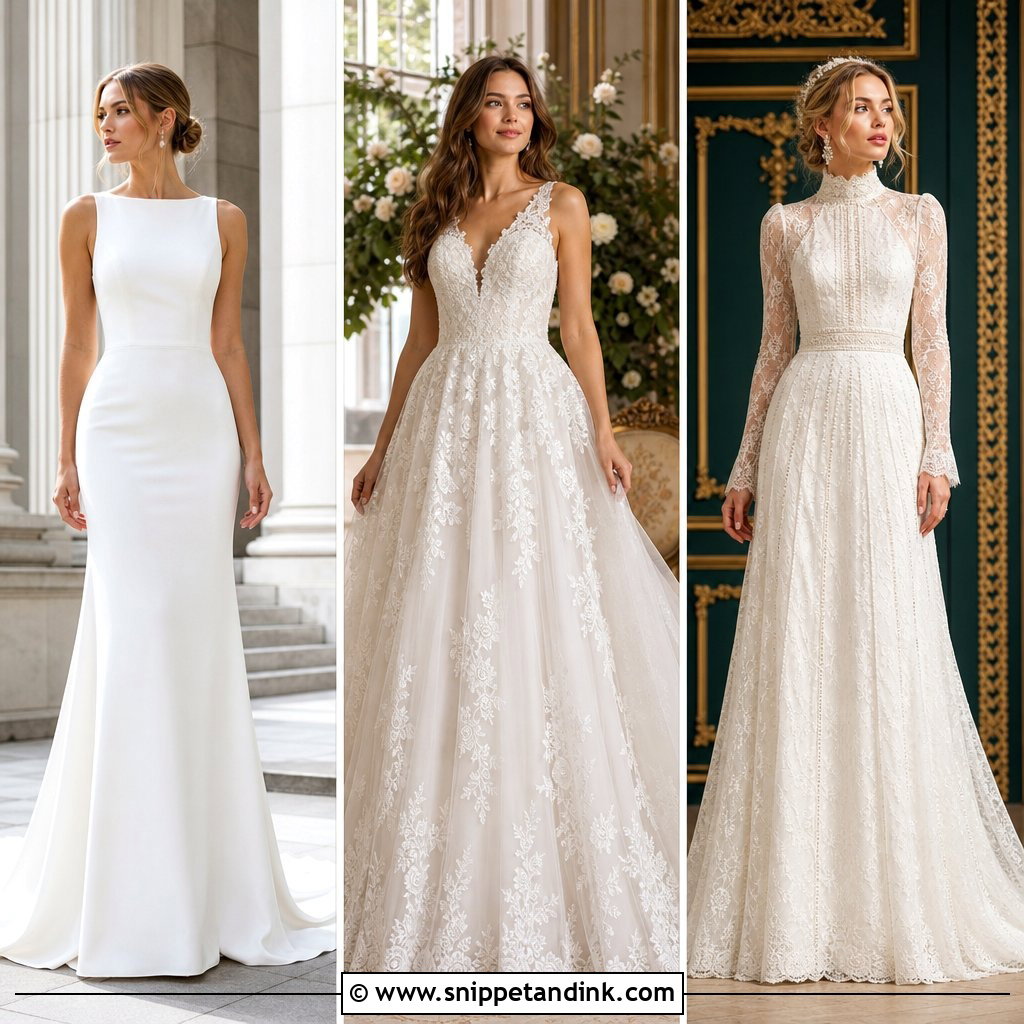
Lace sleeves on a fitted bodice with a modest V-neck are the image most people have of a royal bride, and the reason is how forgiving the shape is. The structured bodice defines the waist and a full satin or organza skirt skims the hips, which suits most figures. Sheer sleeves with floral appliqués add coverage without heat. A cathedral veil edged in the same lace, a fine tiara, pearl drops and a small white bouquet keep it traditional. Under that much skirt, nobody sees your shoes, so choose a comfortable block or kitten heel.
2. Satin Ball Gown Royal Wedding Dress
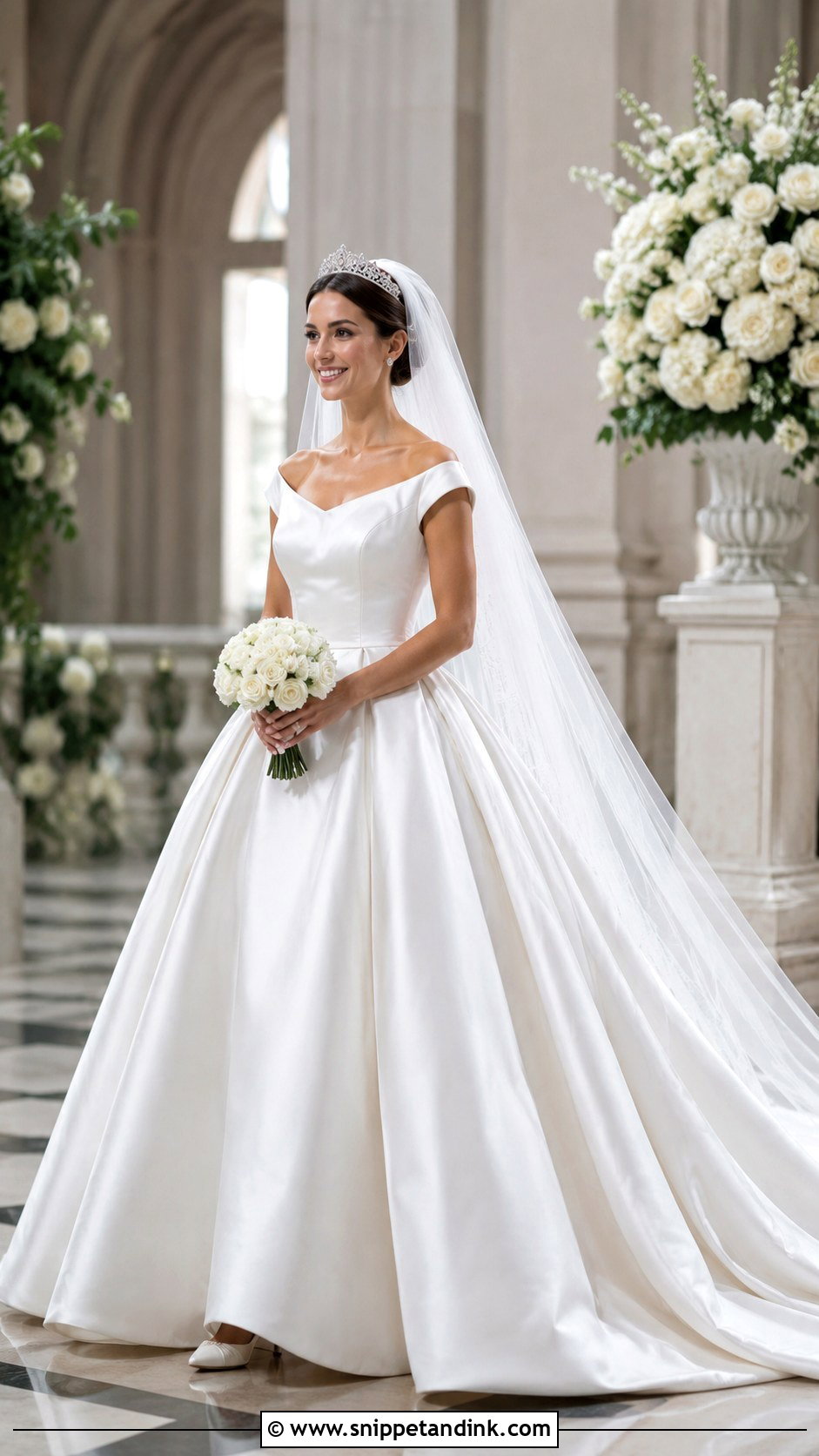
Plain satin depends entirely on the quality of the cloth. A thin satin shows every seam allowance and dimples at the waist; a heavy duchess satin hangs in clean, full pleats. Look for a structured bodice, softly curved neckline, natural waist and generously pleated skirt with a chapel or cathedral train. A plain tulle veil keeps the fabric in charge. A crystal tiara, small studs, satin pumps and white roses complete it, and a fitted bridal jacket or detachable sleeves add coverage for a church. Book a professional steam on the morning; satin creases in the car.
3. Basque Waist Royal Wedding Dress
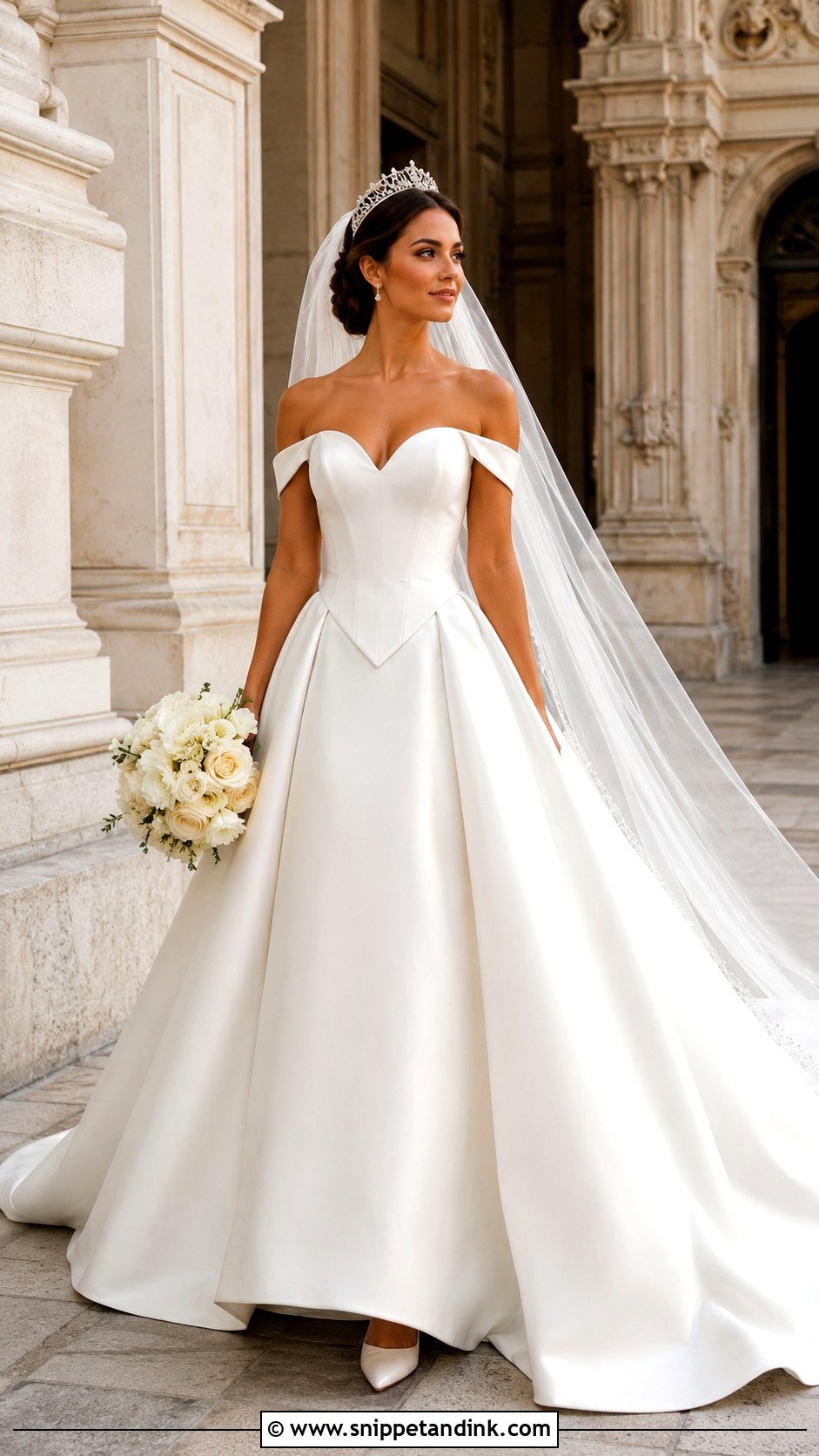
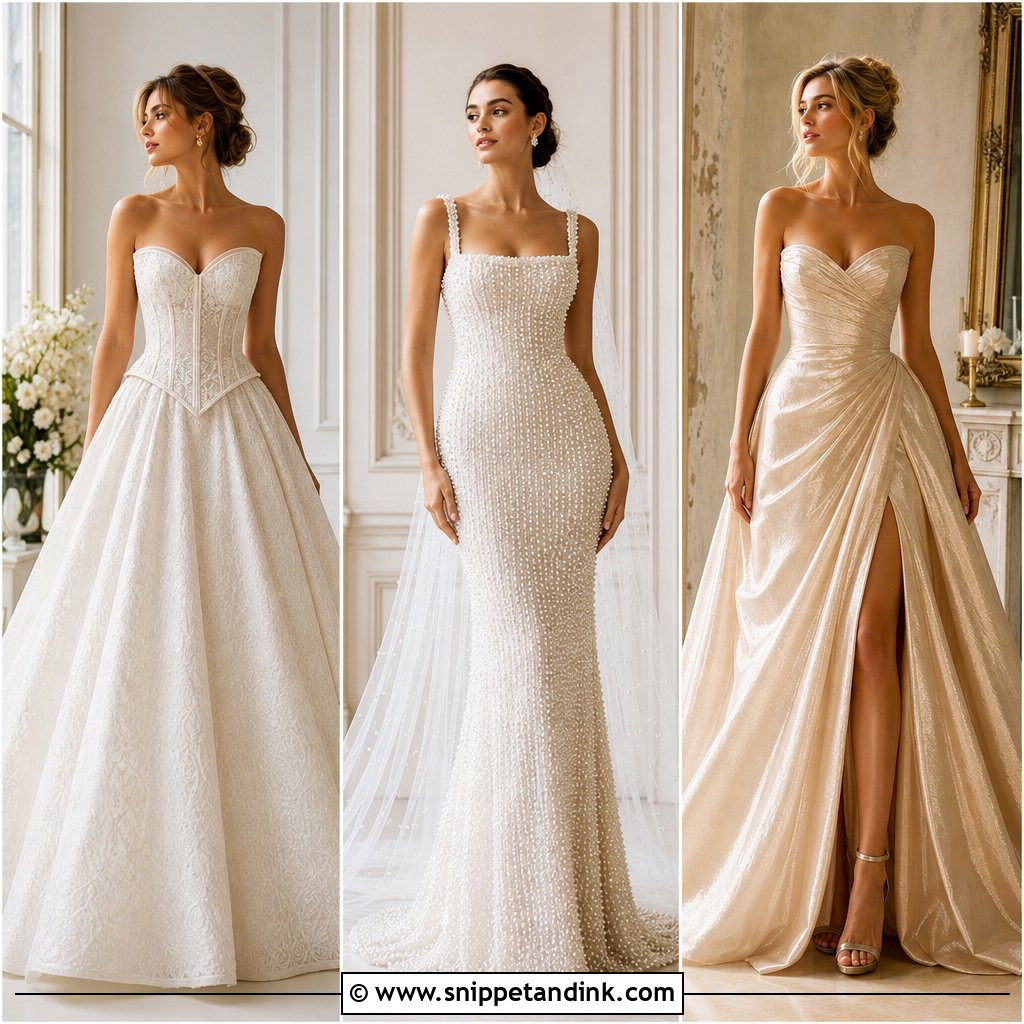
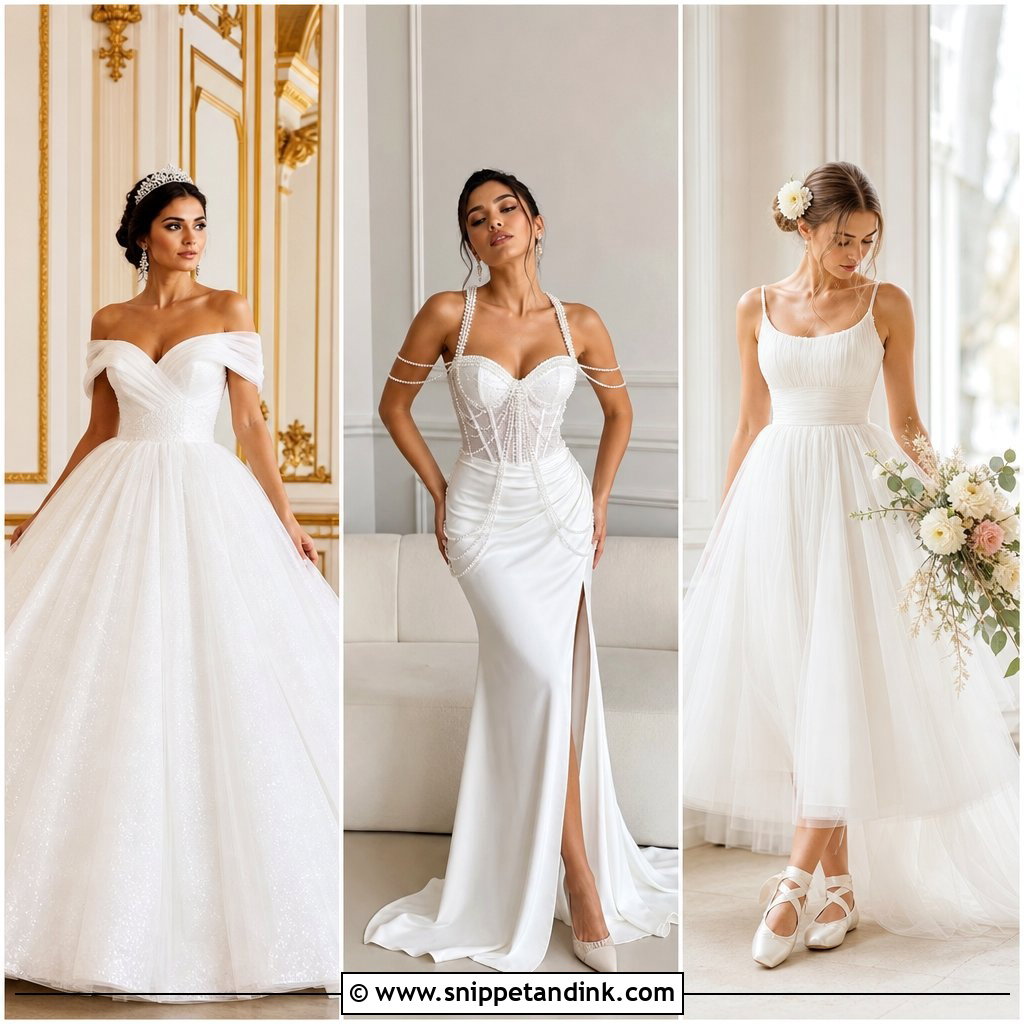
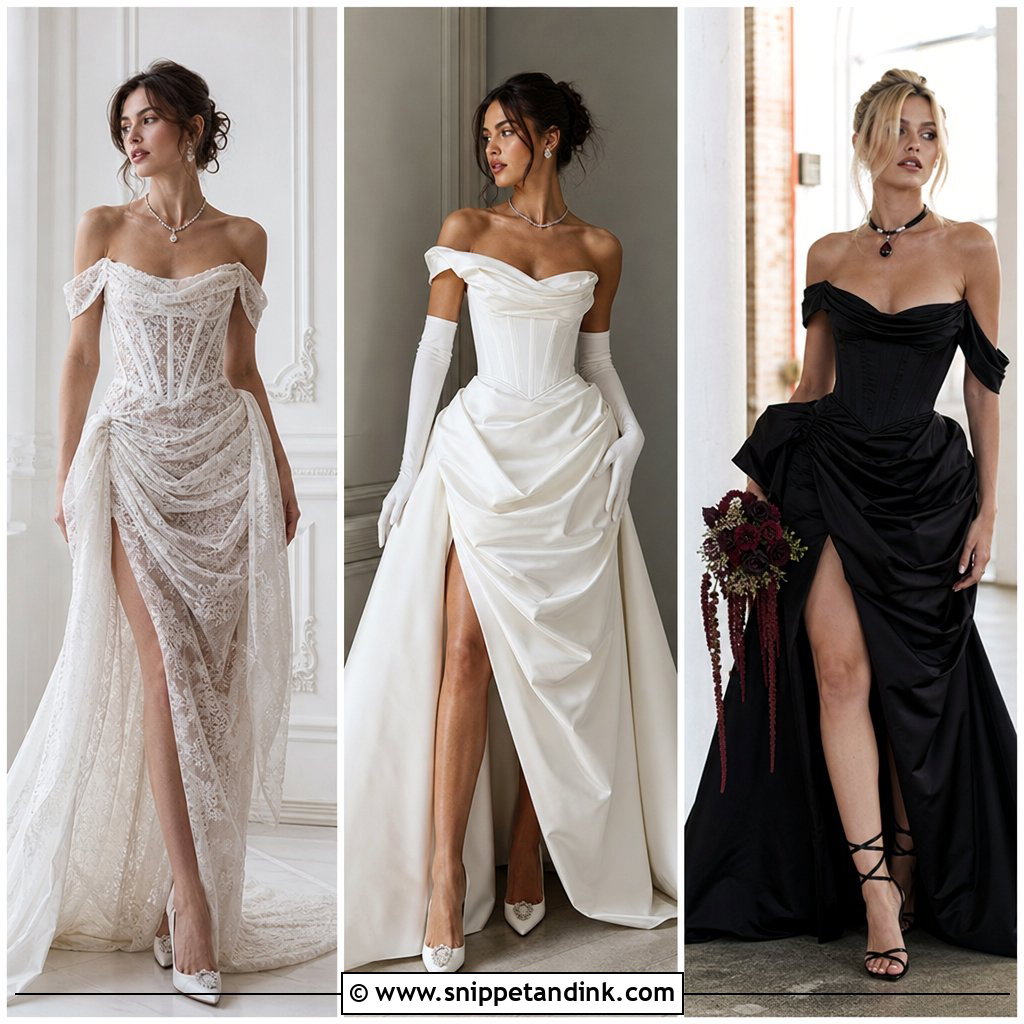
The pointed Basque waist lengthens the torso before the skirt opens, and it has to sit flat. If the point lifts or pinches when you sit, the bodice needs more alteration, and this is the shape where I’d never skip a fitting. Ivory Mikado with subtle corset seaming, a scooped neck and a wide ball gown skirt holds the line well. Detachable off-shoulder straps give you a second look for the evening. A long sheer veil, pearl earrings, a slim jeweled tiara, closed ivory heels and a round bouquet of cream roses tie it to classic court fashion.
4. High Neck Royal Wedding Dress
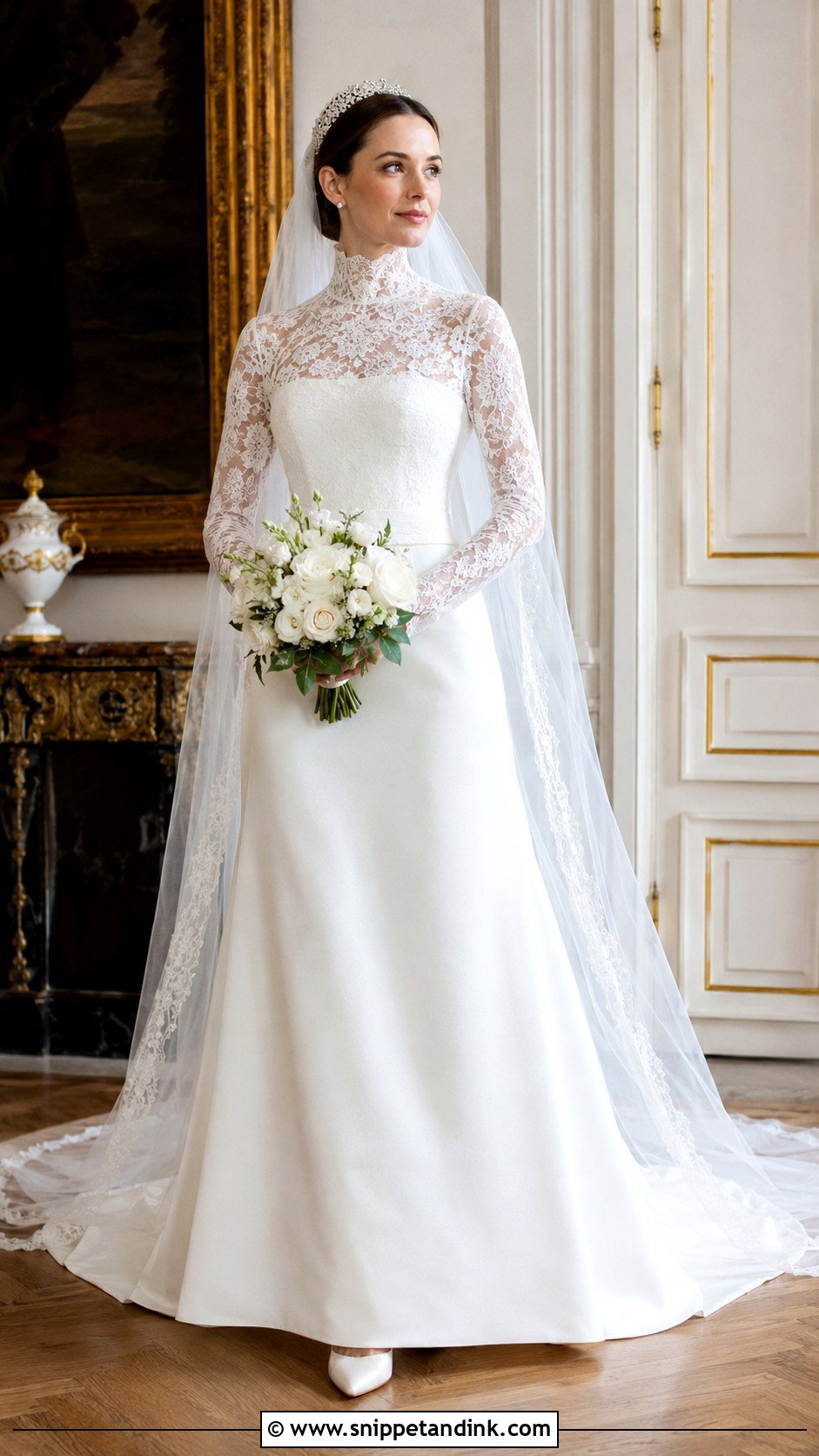
With a high neck wedding gown, the collar frames the face, so the hair has to stay out of its way. A neat chignon or low bun shows both the collar and where the veil attaches. A fitted lace bodice with a lined front, a sheer upper neckline, long sleeves and a softly flared skirt keep the shape poised, and covered buttons down the back add detail without sparkle. Secure a narrow cathedral veil beneath a small tiara or jeweled band. Pearl studs, low ivory pumps and a structured bouquet complete it; skip the necklace. A formal church or historic hall suits it.
5. Off Shoulder Royal Wedding Dress
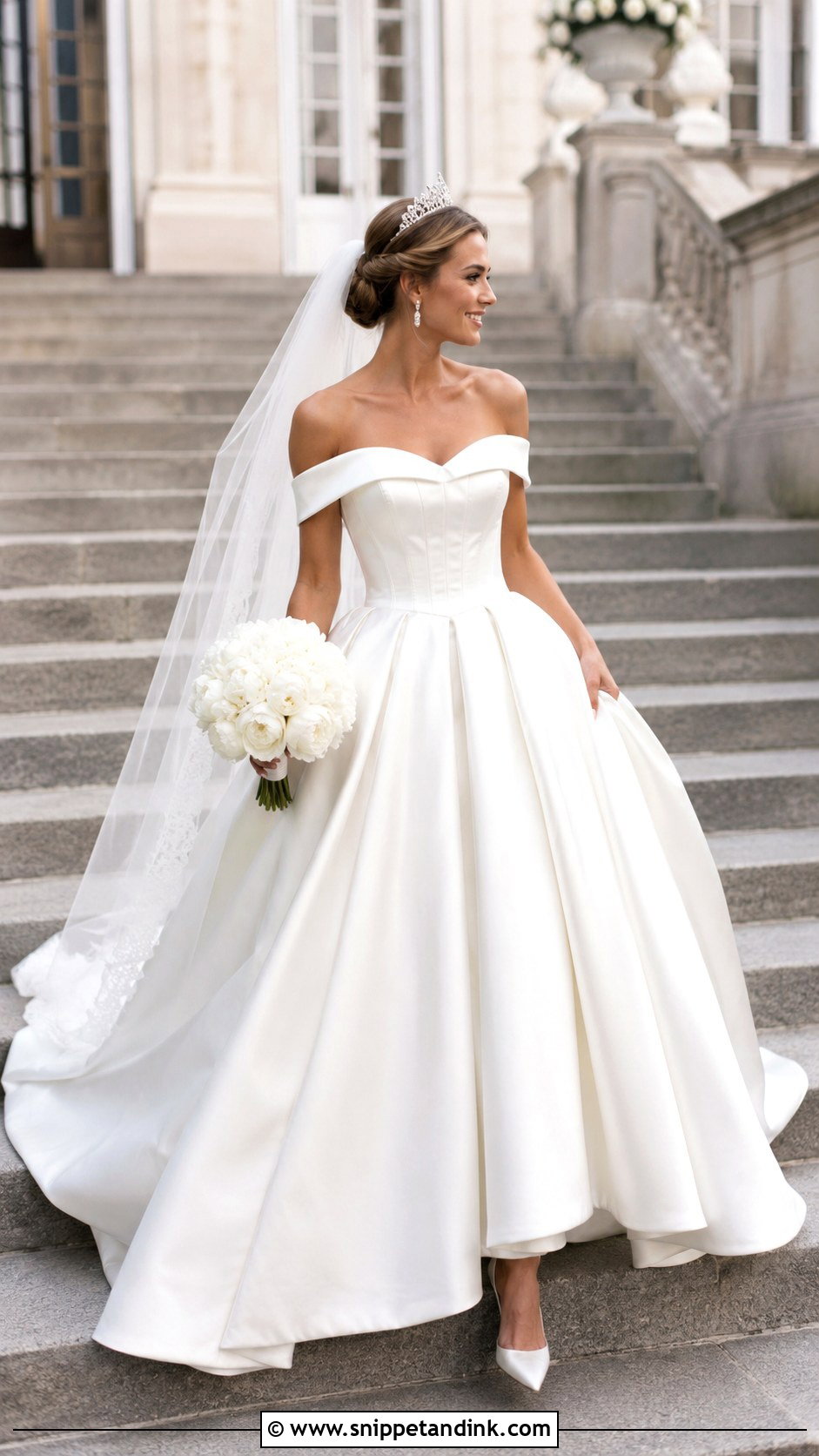
Folded satin bands across the upper arm give an off-shoulder ball gown its scale, and they only stay put if the corseted bodice underneath is doing the holding. Brides with a fuller bust should ask about internal structure before falling for the outside. Choose one focus at the neck: a short necklace or noticeable drops, not both. A cathedral veil with a clean cut edge, pointed satin heels, a small tiara and loose white peonies balance the full pleated skirt. Detachable bands leave a polished strapless gown for the reception.
6. Pearl Embellished Royal Wedding Dress
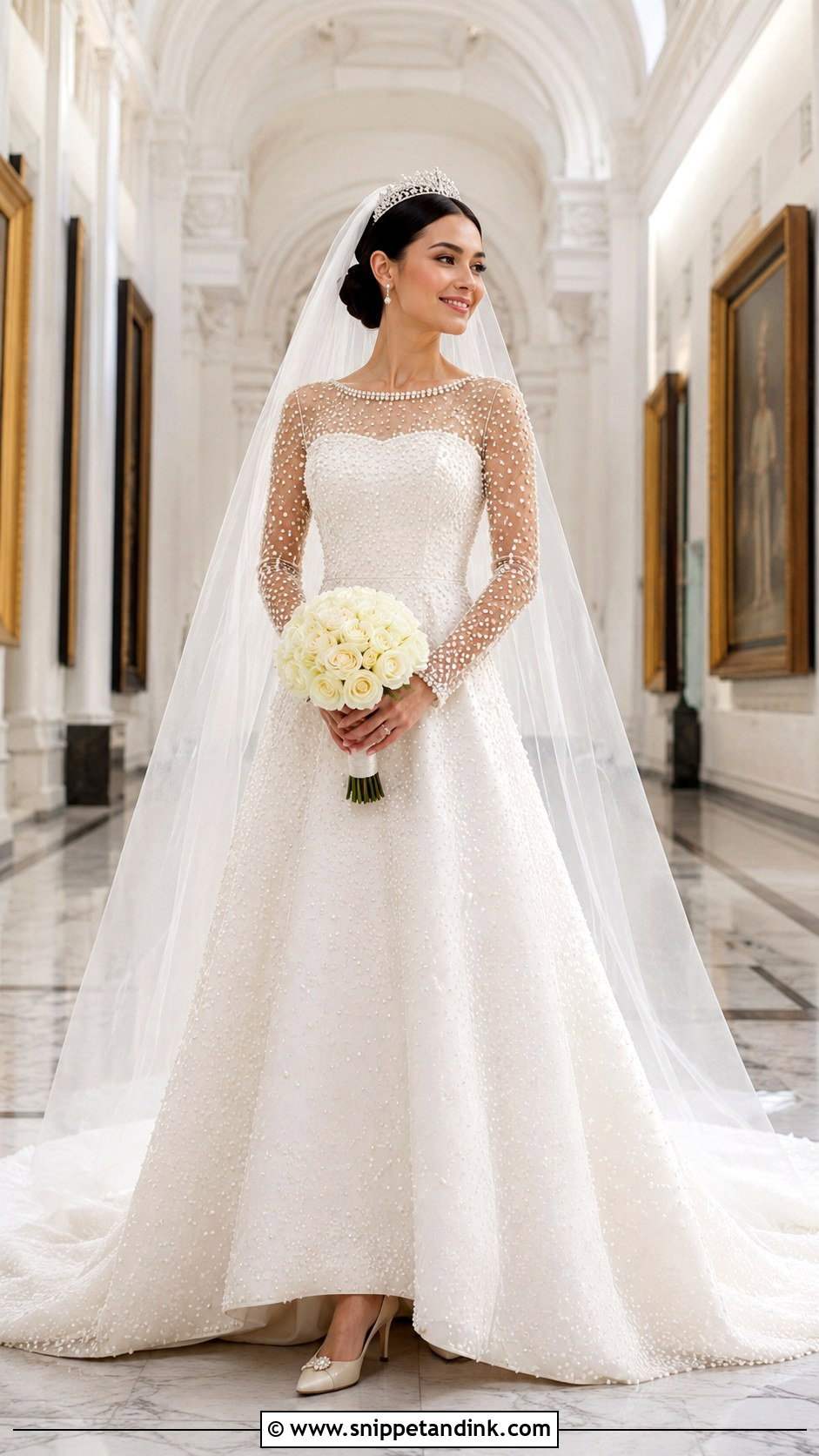
Pearls catch light softly where crystals flash, which is why I reach for them when a bride wants detail without glitter. Hand-placed pearls around the neckline and cuffs of an A-line gown with sheer long sleeves give richness; keep the skirt nearly plain so the dress doesn’t get heavy. Then resist the urge to match pearls everywhere. A plain cathedral veil, pearl drops, an understated silver tiara and ivory pumps with a small pearl buckle are already plenty. Tie white roses and greenery with silk ribbon.
7. Square Neck Royal Wedding Dress
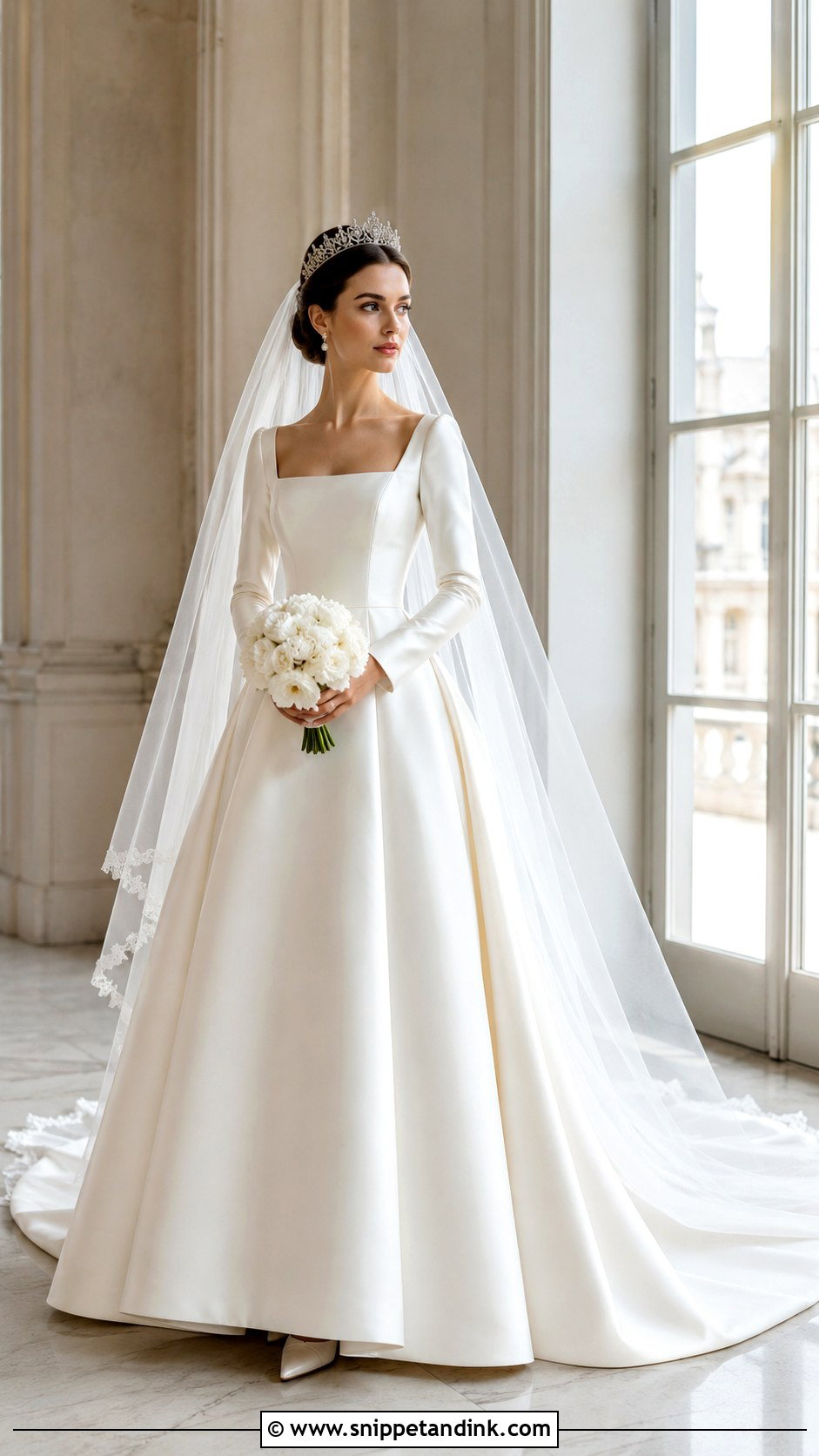
A square neckline is geometric, so it pairs best with clean fabric. Heavy ivory crepe or satin, long fitted sleeves, princess seams and an A-line skirt running into a chapel train give the structure. A simple cathedral veil and a traditional tiara suit the clean lines. Small pearl earrings, pointed pumps and a compact bouquet with little greenery keep it composed, with a smooth low bun to show the neckline. If you want detail, put covered buttons down the back and keep the front bare.
8. Cathedral Train Royal Wedding Dress
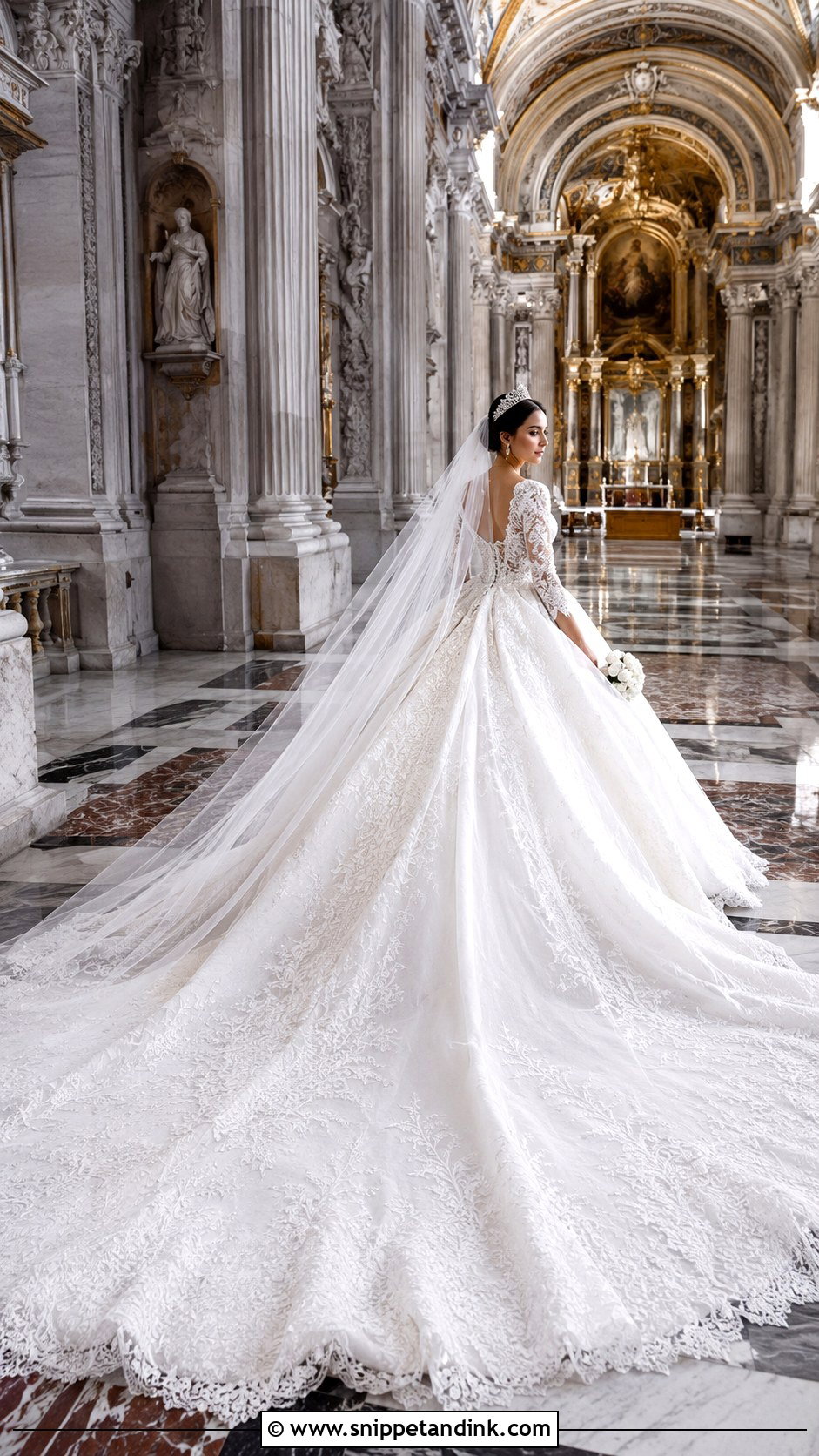
A cathedral train is the most dramatic thing in this list and the most work to wear. The veil should reach slightly past the train so the layers look deliberate. Build it on a structured ivory ball gown with a fitted bodice and long lace sleeves. A medium-height tiara, crystal earrings and plain satin heels are enough, and a small bouquet stops you adding bulk in front. Ask your seamstress for a strong bustle with several attachment points, and practice walking, turning and sitting in the full outfit at your fittings. A train this long gets stepped on, by you and by guests, unless someone is assigned to it.
9. Minimalist Royal Wedding Dress
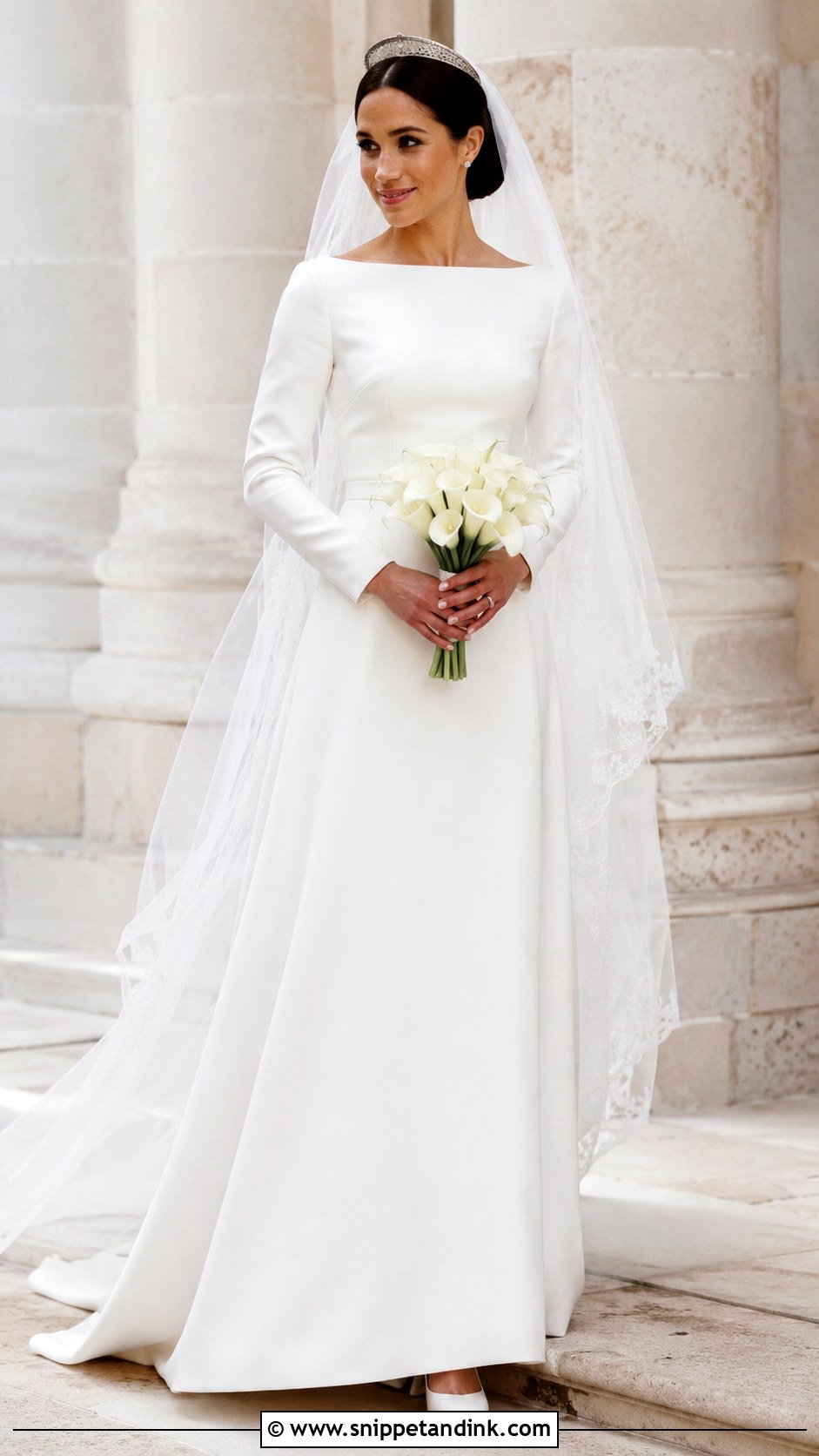
Royal doesn’t require lace or beading; precise tailoring can carry it alone. A long-sleeve crepe gown with a bateau neckline, defined waist, clean column or A-line cut and modest train looks commanding because nothing distracts from the fit. That also means nothing hides a poor one. Crepe shows undergarment lines, so bring yours to every fitting. A long silk tulle veil, small diamond-style studs, a slim tiara, pointed ivory pumps and calla lilies or roses with neatly wrapped stems complete it. A low bun keeps the neckline clean.
10. Puff Sleeve Royal Wedding Dress
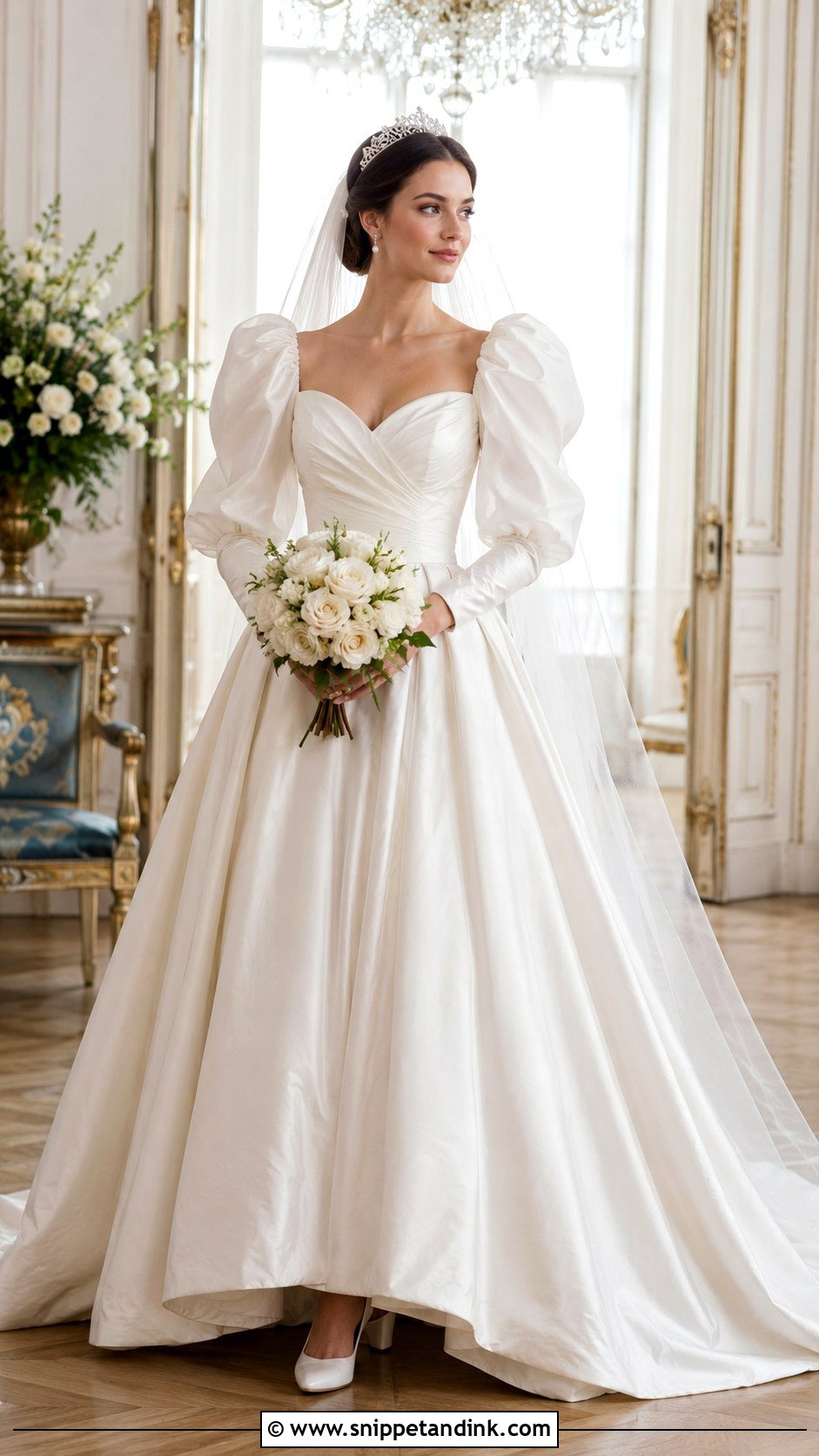
Puff sleeves can overpower a petite bride quickly, so I scale them to her frame: modest volume on a smaller bride, fuller on a taller one. Keep them controlled at the shoulder and tapered toward the wrist. A fitted bodice with a modest sweetheart neckline, lightly puffed organza sleeves and a full satin skirt make the shape. A simple tulle veil, small tiara, pearl studs, closed ivory pumps and garden roses keep the rest quiet. Match the ivory of the sleeves, skirt and veil carefully; organza and satin can look like two different whites in daylight.
11. Victorian Royal Wedding Dress
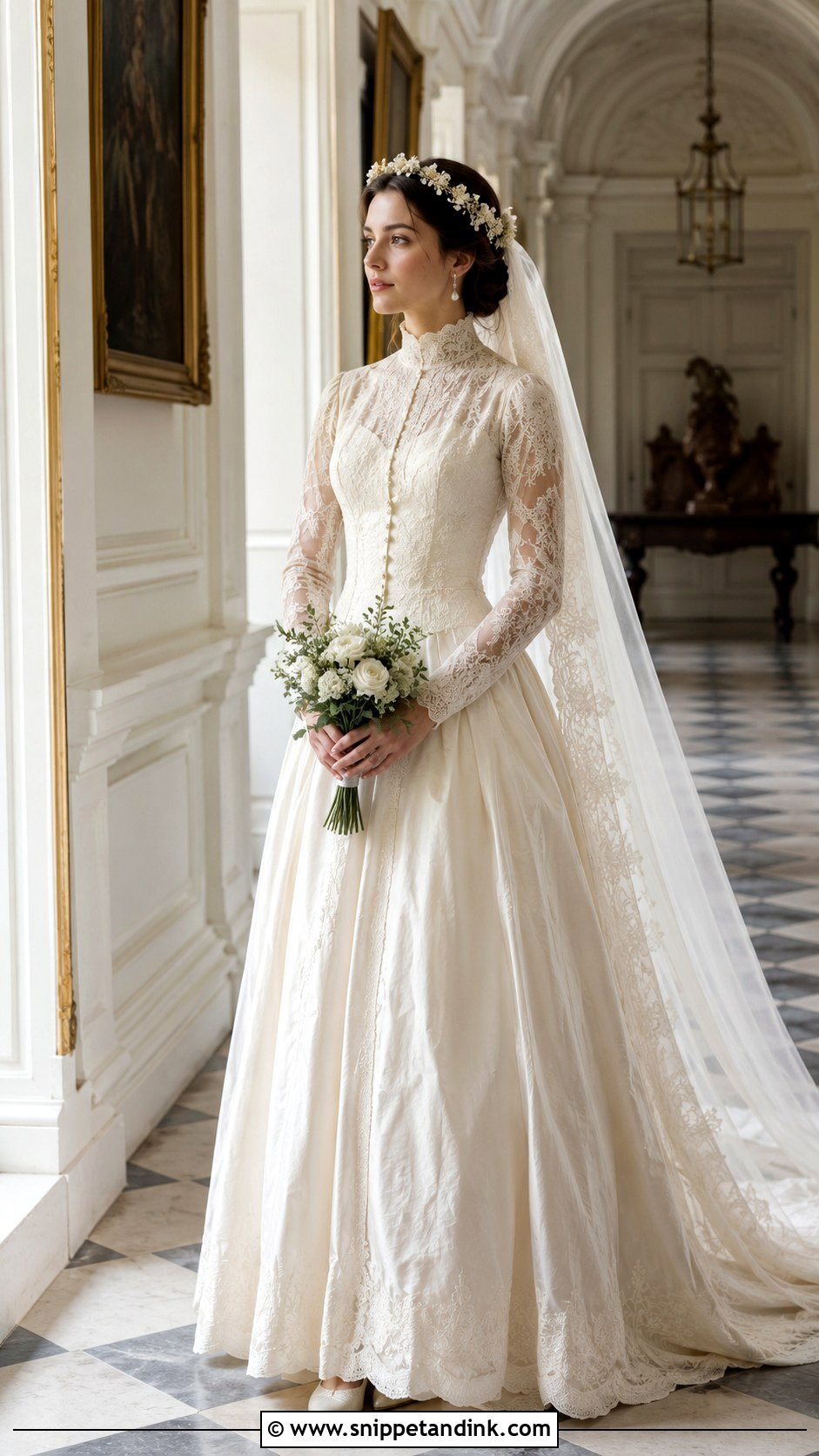
A Victorian-style gown with a high lace collar, fitted sleeves, covered buttons and a full skirt is beautiful, and it turns into costume the moment you add big ruffles, heavy embroidery and large jewelry on top. Edit hard. Lightweight lace over a smooth ivory lining gives detail without bulk. A long veil with narrow lace trim and a floral tiara are softer than a tall crown. Pearl earrings and low satin heels follow, and wrist-length gloves only if they sit under the sleeves without bunching. A small bouquet with myrtle-style greenery suits the period.
12. Embroidered Royal Wedding Dress
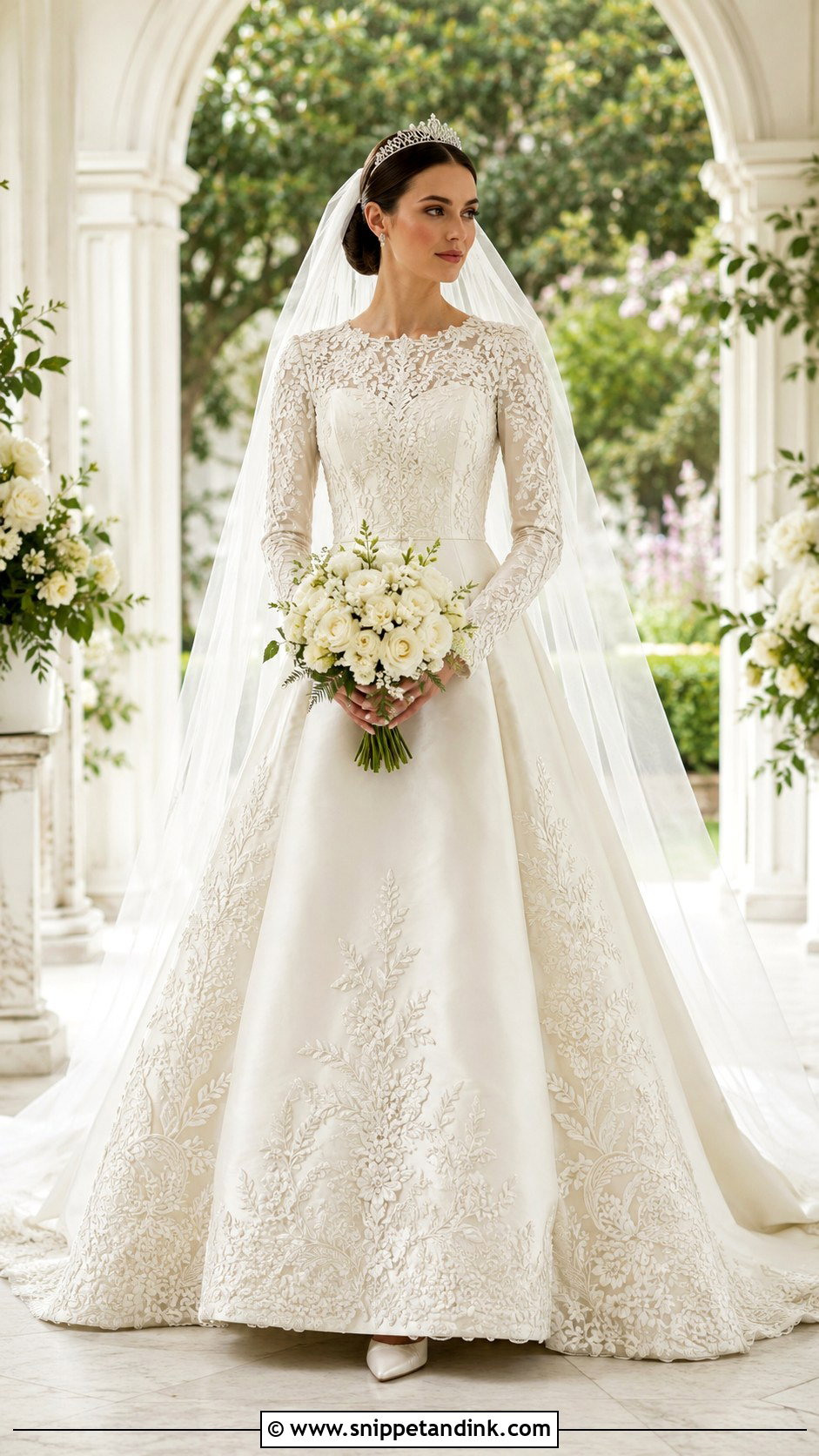
Embroidery rewards close looking, so place it where the camera will get near: bodice, sleeves, hem and train of a structured A-line. Ivory thread is subtle; a little silver brightens it. Keep the neckline simple so the pattern isn’t competing. A plain tulle veil, slim tiara, crystal studs and satin pumps are enough. I like a bouquet that repeats flowers from the embroidery motifs, which ties the outfit together in close portraits. Skip embellished shoes and an ornate necklace.
13. Cape Royal Wedding Dress
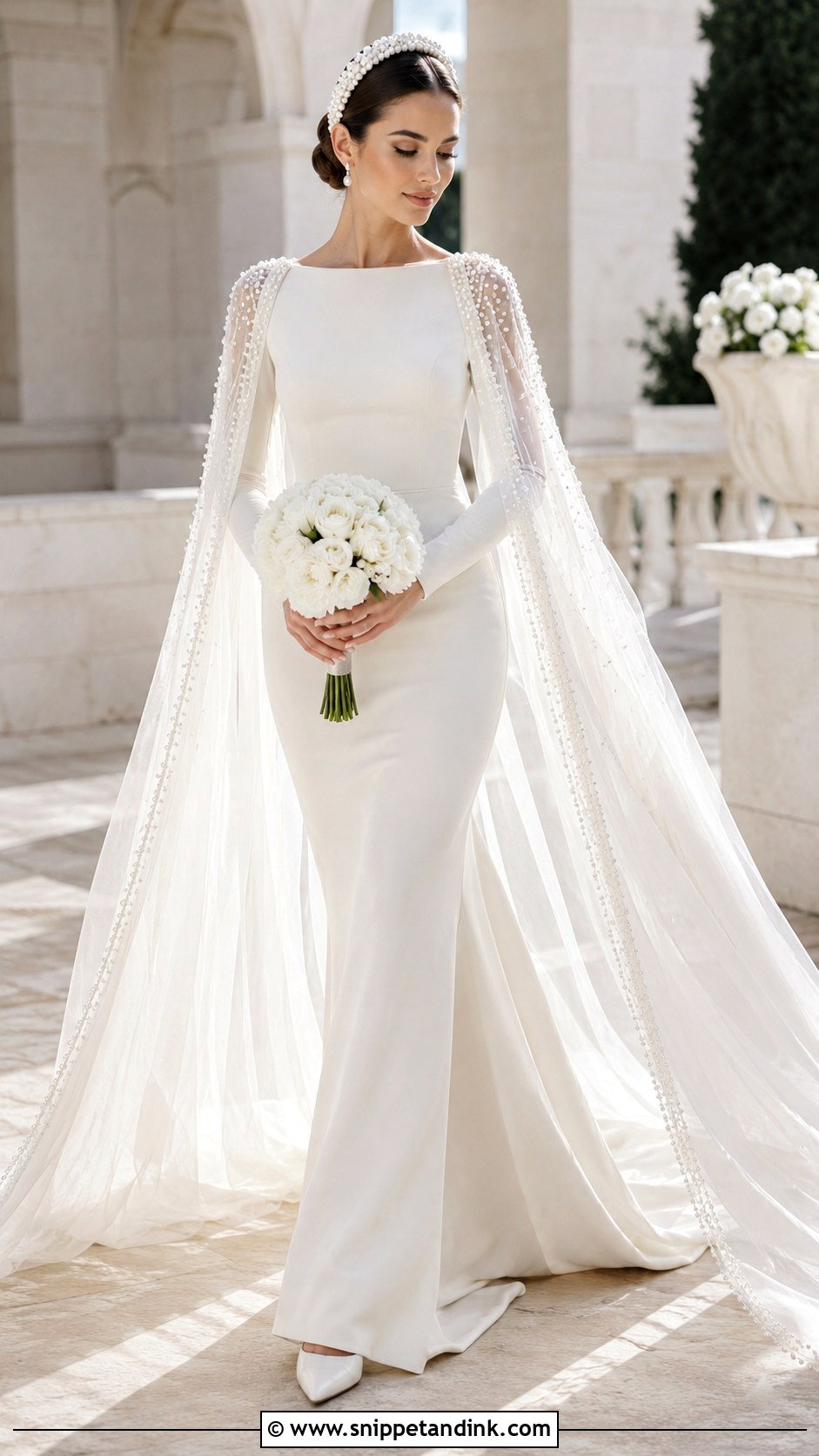
A floor-length cape replaces the veil and gives a grand entrance with less weight on the head. Secure it at the shoulders with hidden hooks or snaps, and make sure it’s detachable so you can dance without it. Under it, a clean fitted gown with long sleeves, a defined waist and a gently flared skirt is best, since the cape provides the drama. Scattered pearls or a narrow lace border are plenty. A low jeweled headband, pearl earrings, ivory pumps and a structured white bouquet finish it. Capes move with every step, which is where they look their best.
14. Sweetheart Neckline Royal Wedding Dress
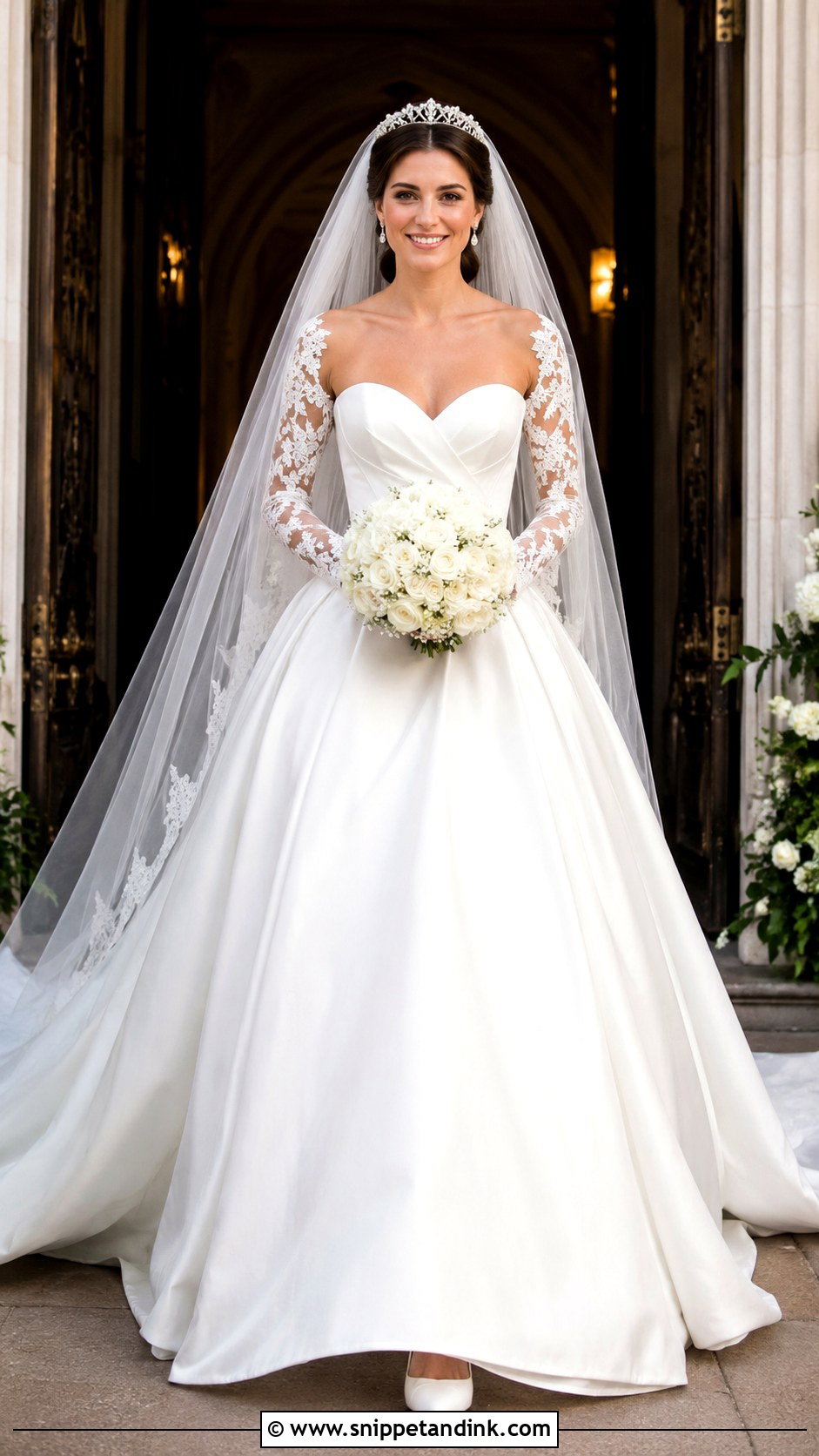
A sweetheart neckline softens a corseted satin bodice, provided the neckline is moderate and the interior support is solid. With visible corset seams, keep the accessories restrained. A full skirt with a chapel train, a cathedral veil and detachable lace sleeves give a covered ceremony look and a cleaner evening one. Choose a delicate tiara, drop earrings, pointed ivory pumps and round white roses tied in ribbon matching the gown. Sit down in the bodice at the fitting; a sweetheart that gapes when seated needs taking in at the side seams.
15. Gold Detail Royal Wedding Dress
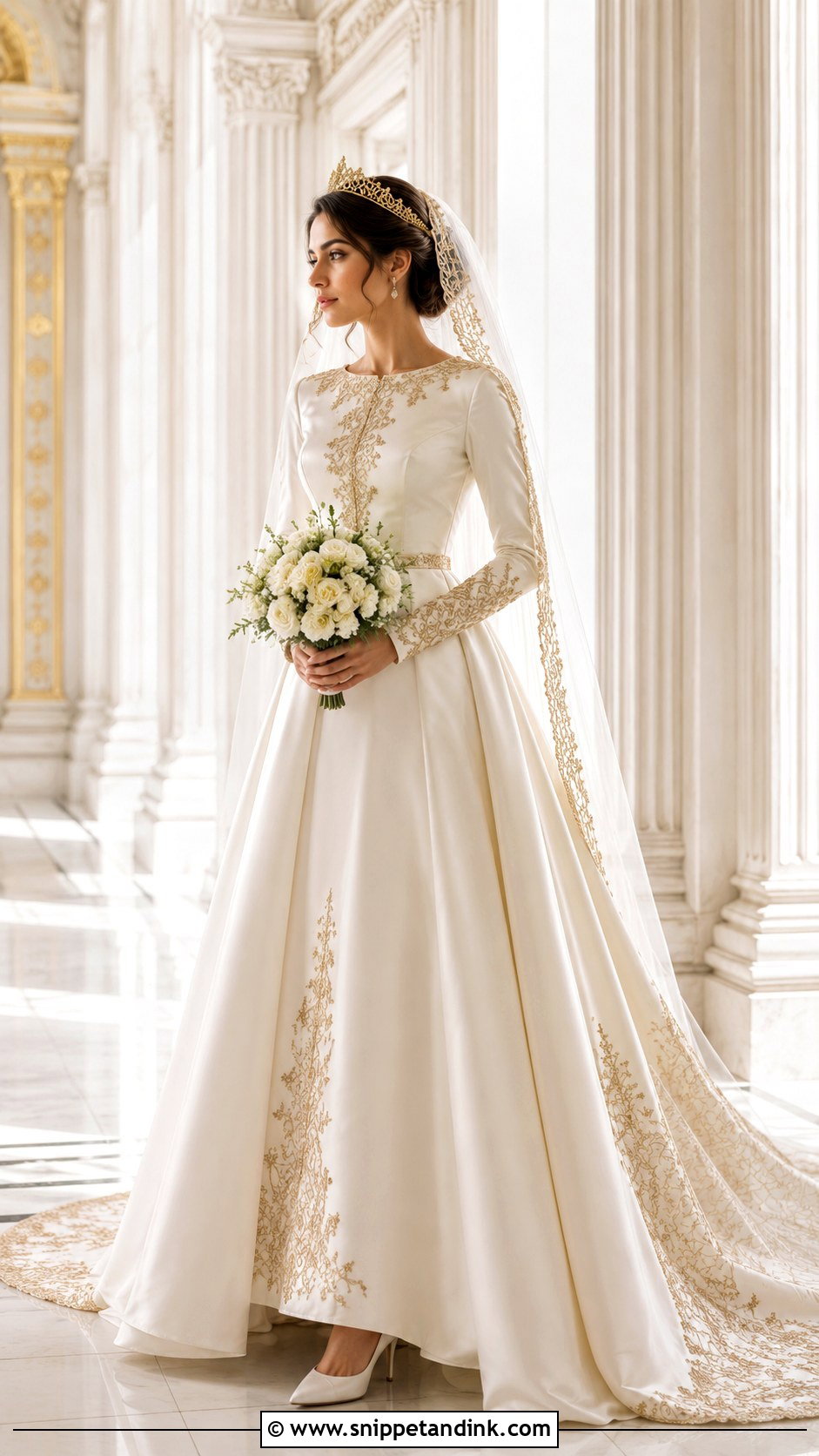
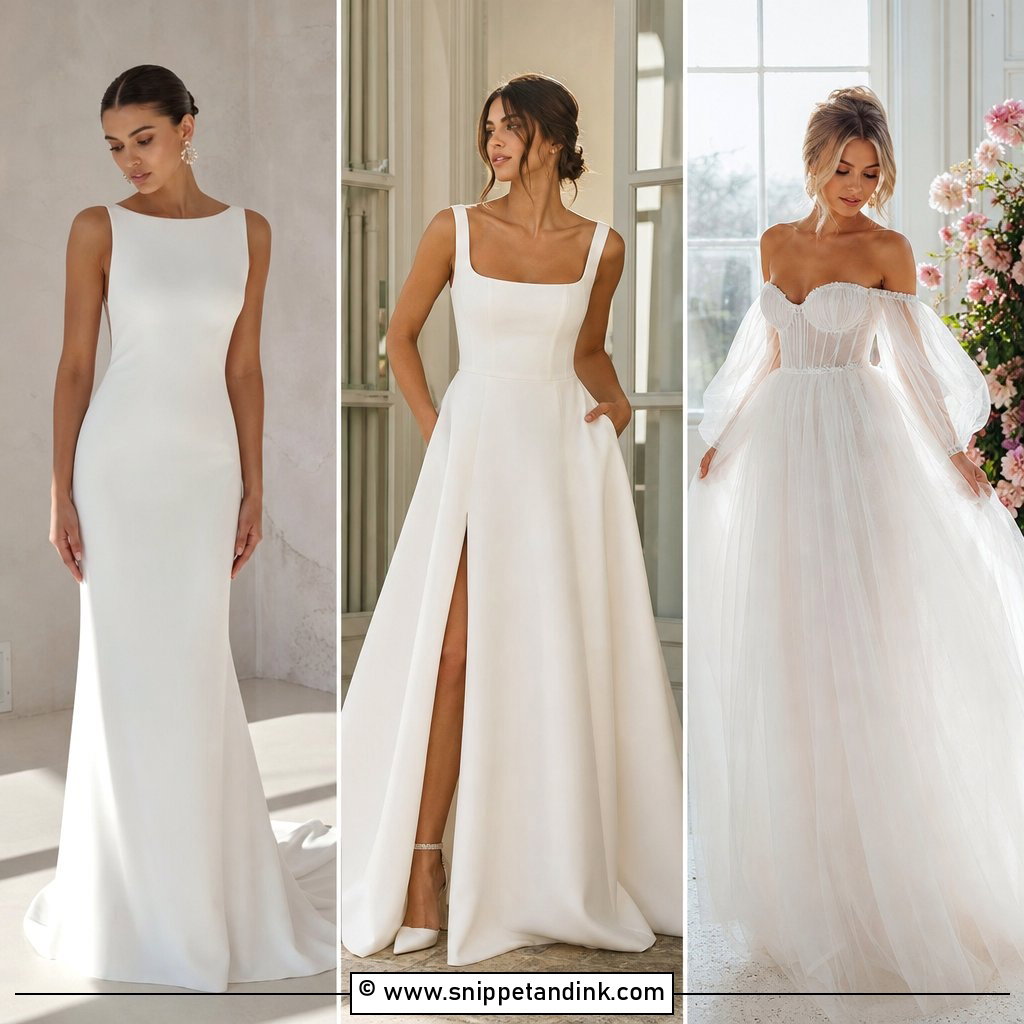
Gold on an ivory gown works best in small doses: fine embroidery at the bodice, cuffs and train rather than all over. Bright yellow gold fights ivory; champagne and antique gold sit with it naturally. An A-line silhouette, a soft ivory veil edged in matching metallic thread, a small gold-toned tiara, delicate drops and cream satin pumps keep the palette consistent. White flowers with restrained greenery and ivory-wrapped stems finish it. Metallic thread can scratch, so check the inside of the cuffs against your wrists.
16. Blue Accent Royal Wedding Dress
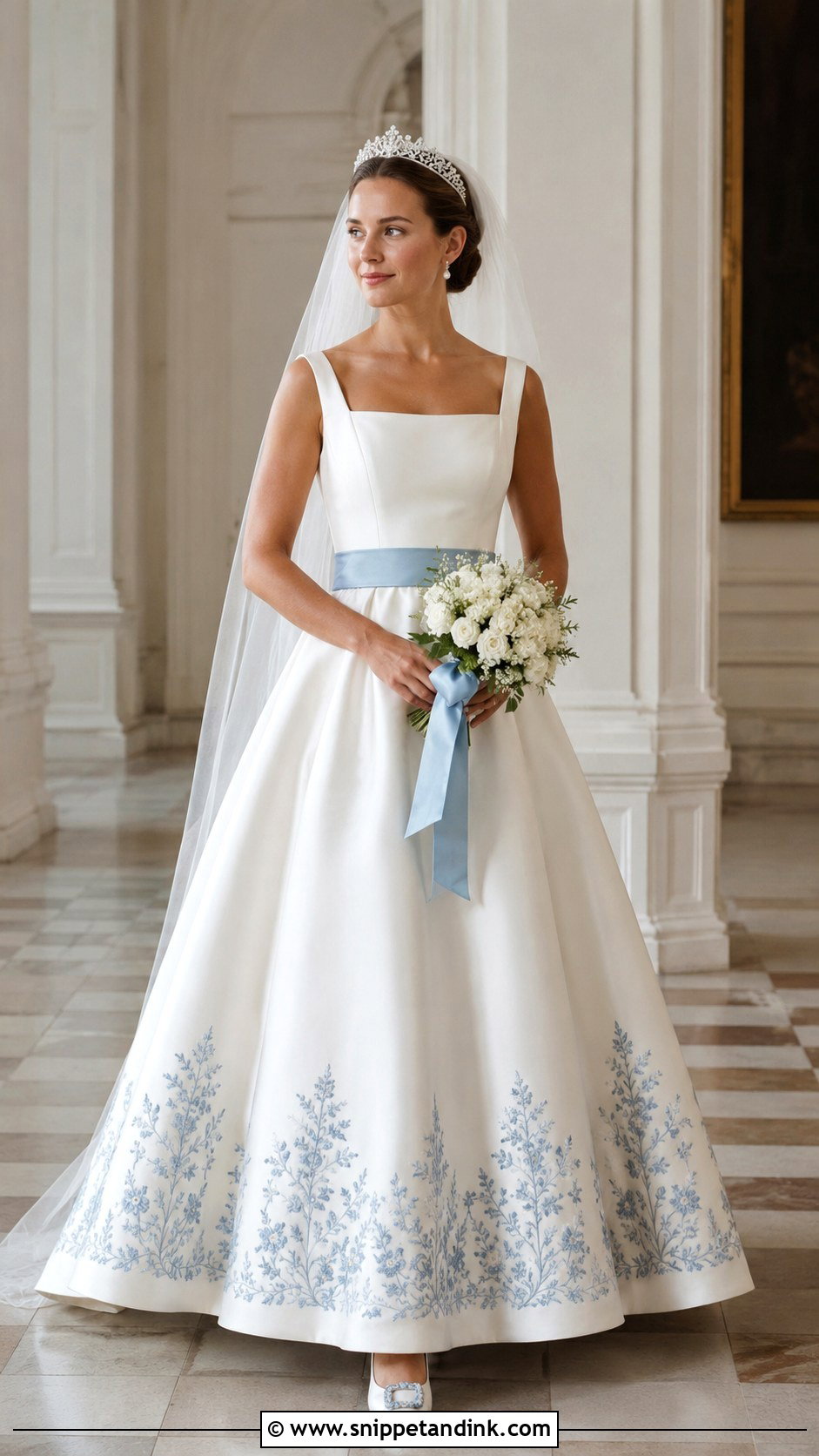
A pale blue accent personalises an ivory gown, as long as it appears in one or two places only. Start with a full satin dress with a structured bodice, square neckline and long train, then choose: a powder-blue waist sash, blue embroidered flowers at the hem, or a removable blue-lined cape. Not all three. A plain veil, silver tiara, pearl earrings and ivory pumps with a small blue buckle follow, with pale blue ribbon on a white bouquet. Pale blue reads very soft in photos, so the accent needs enough area to show.
17. Floral Appliqué Royal Wedding Dress
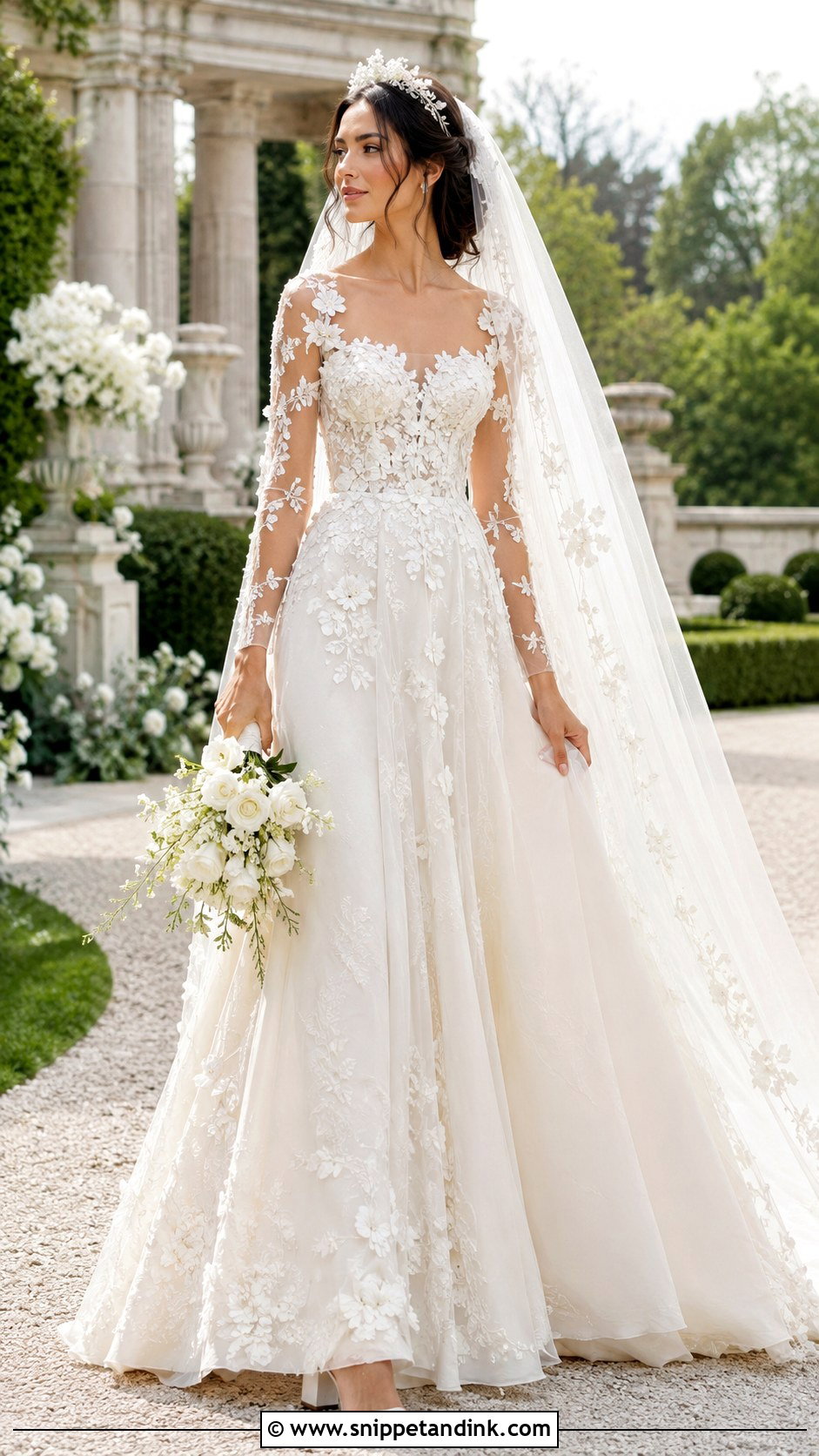
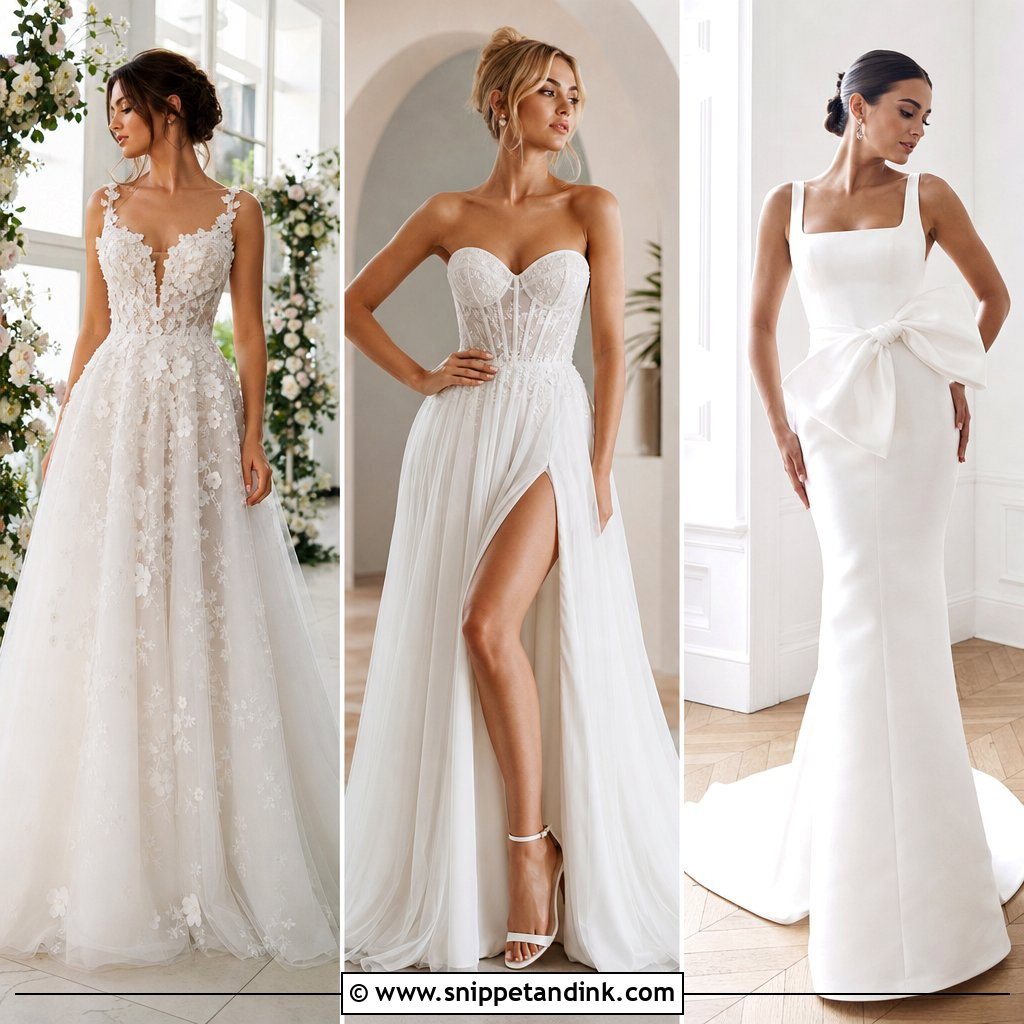
Dimensional appliqués should thin out toward the hem; heavy flowers all the way down weigh the skirt and flatten its movement. Concentrate them on the fitted bodice, sheer sleeves and upper skirt of an A-line or ball gown. A sheer cathedral veil with a few matching appliqués near the edge, a floral tiara, small studs, ivory block heels and loose seasonal white flowers complete it. Keep the hair smooth so it doesn’t add another texture. From a distance the gown reads soft; up close the detail shows.
18. Beaded Royal Wedding Dress
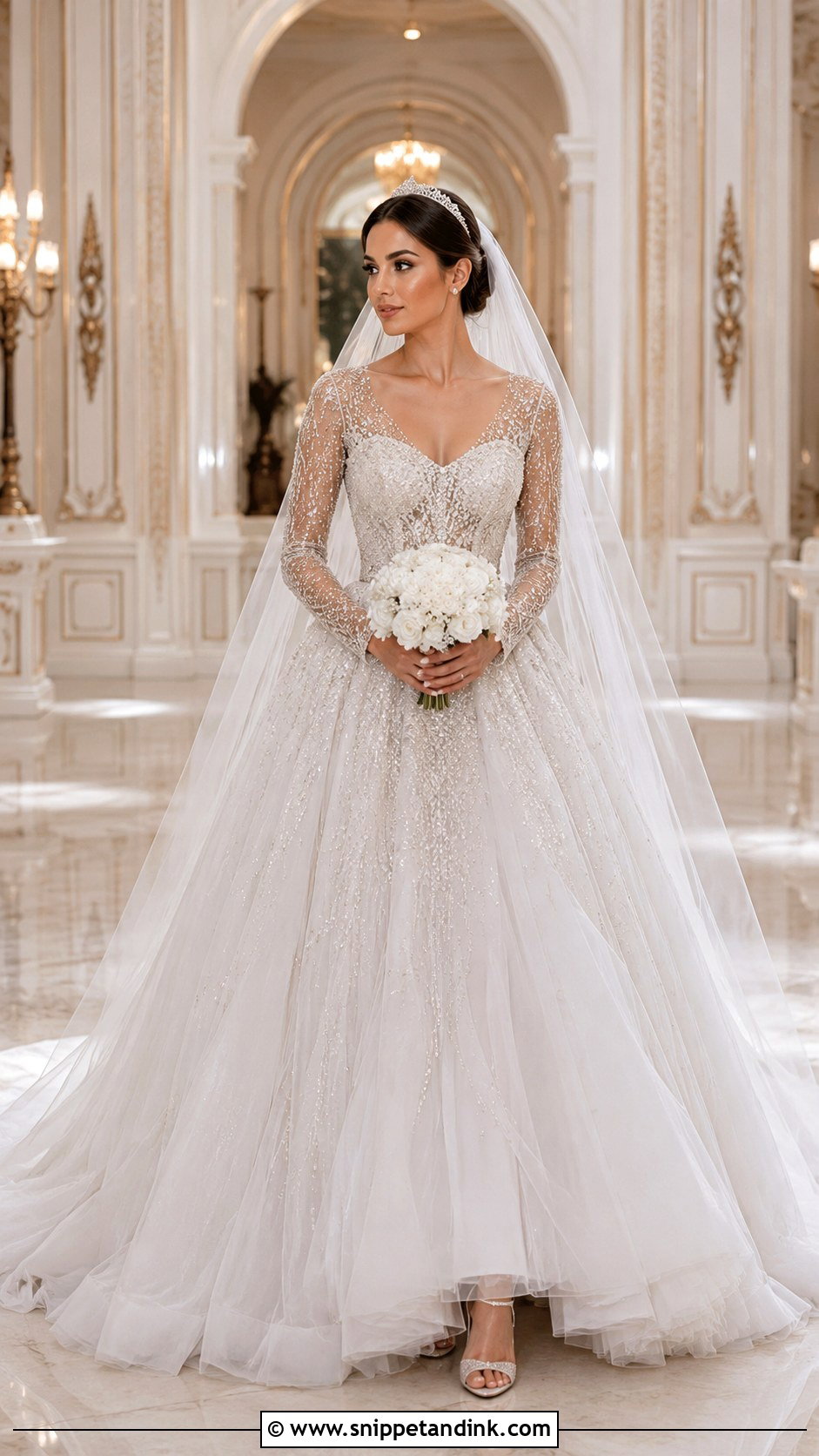
Crystal beading brings evening sparkle, and it also brings weight and scratchiness. Concentrate it on the upper body and let it fade down a full tulle skirt, which keeps the dress moving. Long sheer sleeves need a smooth lining underneath, or the beads rub the inside of the arm by evening. Try the veil against the bodice at a fitting; tulle catches on crystal settings. A plain chapel veil keeps the whole thing from becoming too reflective, with a narrow crystal tiara, simple studs, silver-toned heels and a compact white bouquet.
19. Detachable Overskirt Royal Wedding Dress
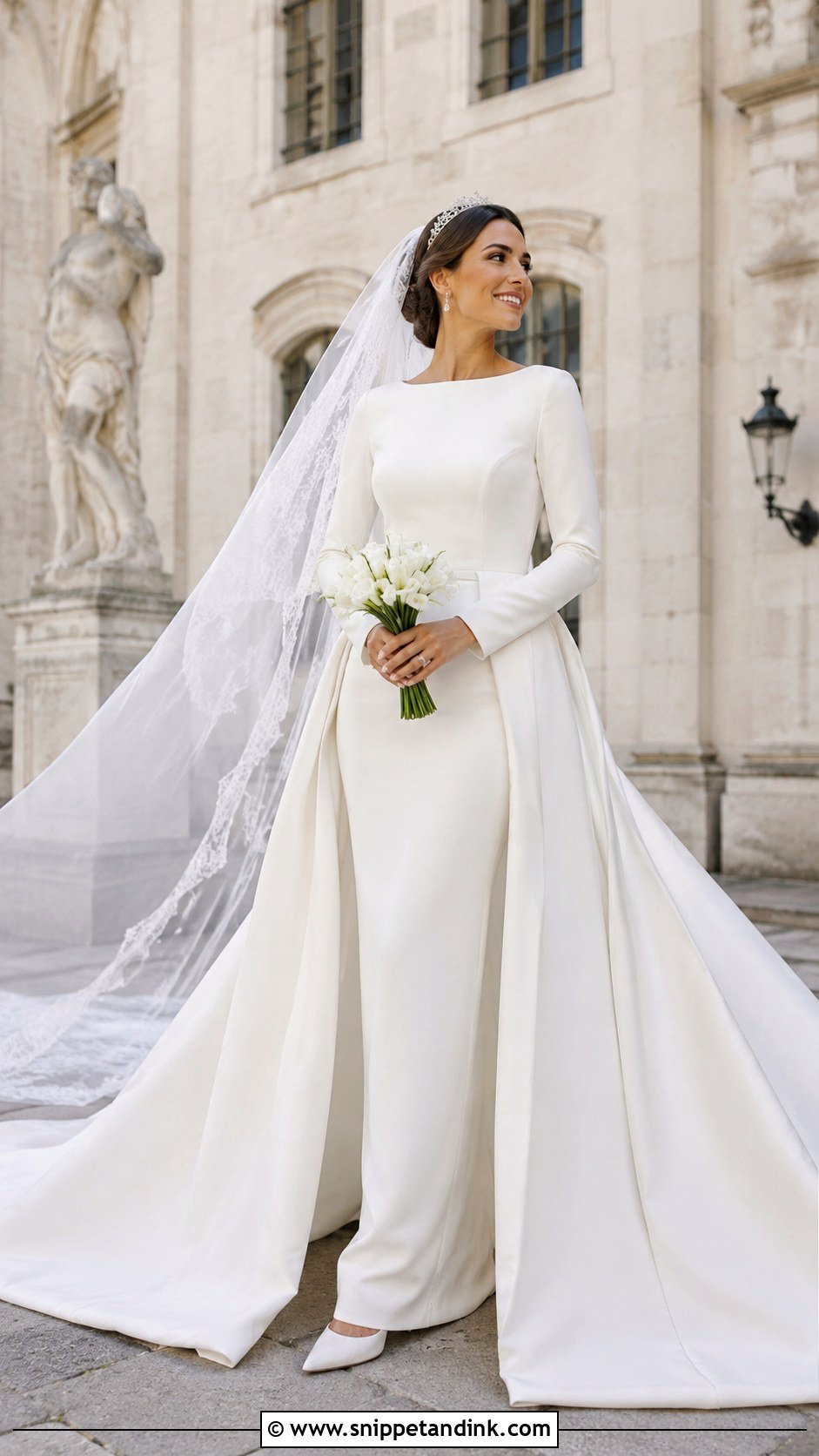
An overskirt gives you a ball gown for the ceremony and a slim dress for dancing. A fitted crepe or lace column underneath with a structured satin overskirt, deep pleats and a sweeping train on top work well, provided the two fabrics match closely in color. Check the waistband carefully: it must fasten securely and look finished from every angle once the overskirt is off. A cathedral veil, delicate tiara, drop earrings and pointed heels suit the ceremony version. Keep the bouquet streamlined so it suits both. Practice removing the overskirt with whoever will help you.
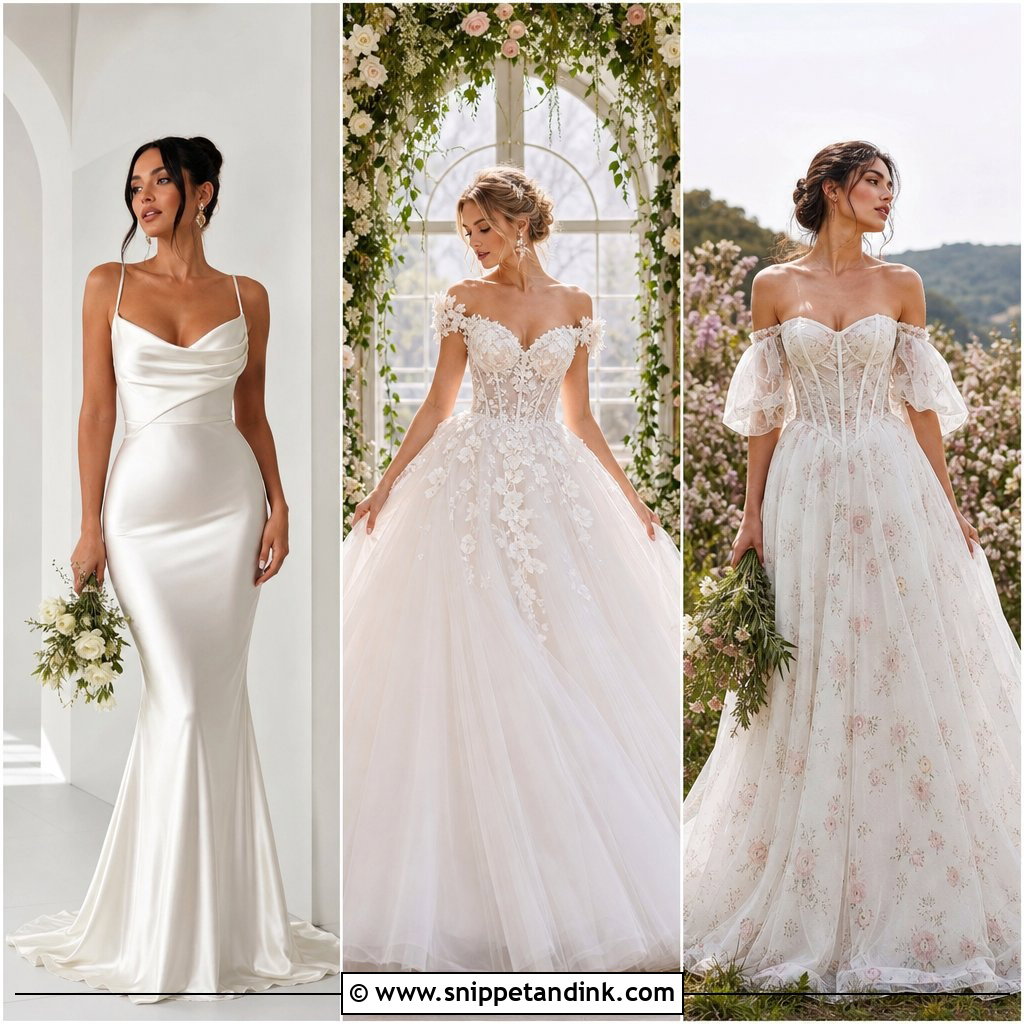
20. Bow Back Royal Wedding Dress
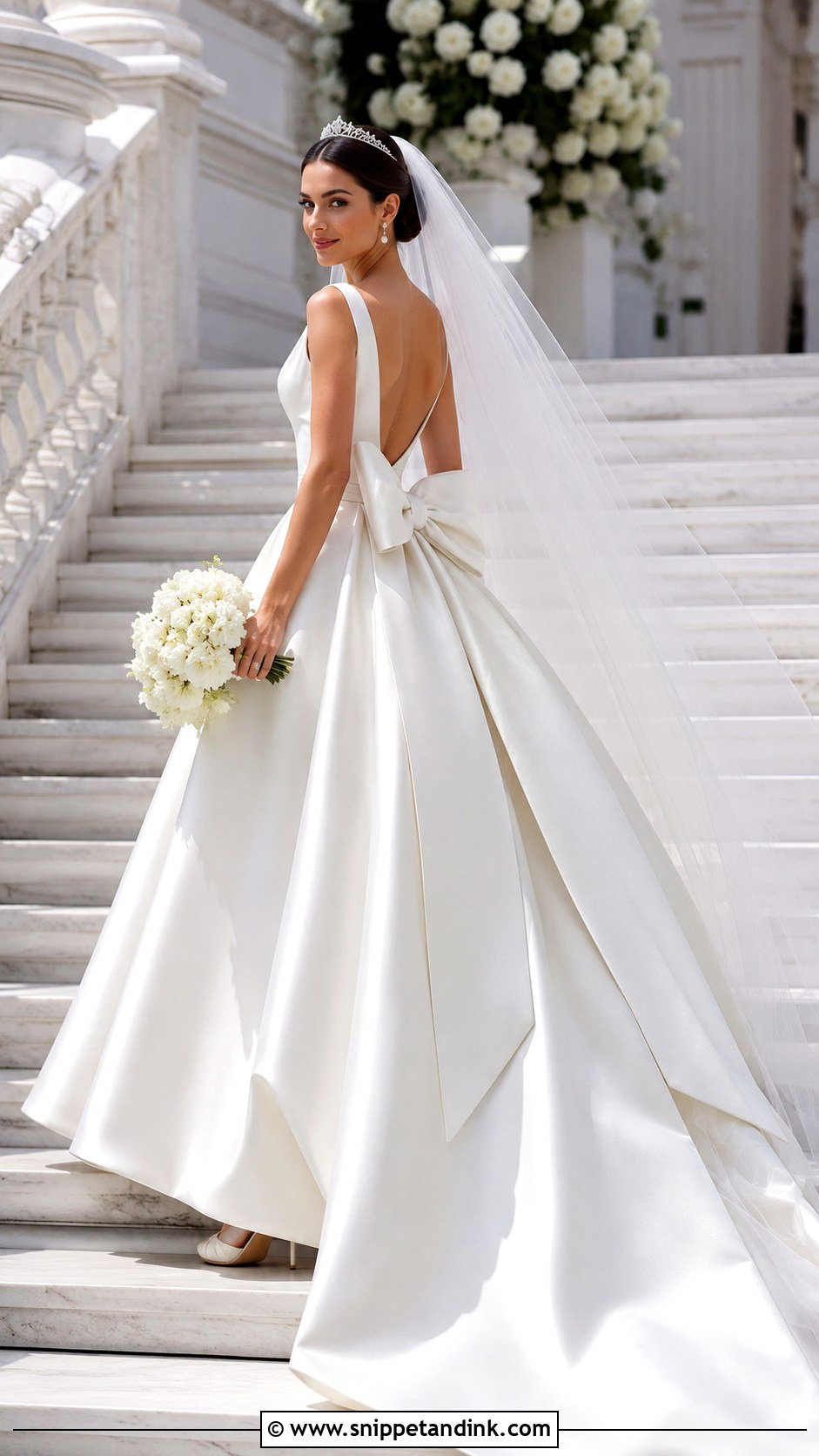
A large bow at the back waist of a royal wedding gown gives the guests something to look at during the vows. Keep the front simple so the contrast feels deliberate. A clean satin ball gown with a fitted bodice and wide skirt is the right base. Long ribbon tails can run into the train without hiding its shape, and a removable bow is useful once dancing starts. Choose a sheer veil transparent enough to show the bow underneath. Pearl earrings, a slim tiara, ivory pumps and a neat white bouquet complete it.
Long Trains Need a Person, Not Just a Bustle
Several of these gowns have chapel or cathedral trains, and they look regal only when someone is tending them. Choose one person, usually a bridesmaid or a planner, to arrange the train and veil before the processional, again at the altar, and before every set of photos. Give them a few minutes with the dress at your last fitting to learn how it falls.
Ask the seamstress which bustle style suits your fabric. An over-bustle lifts the train up with hooks to the back of the skirt; an under-bustle, sometimes called French, tucks it under with ribbon ties. Heavy satin usually needs more attachment points than tulle. Have your helper practice bustling with you, since the ties are often numbered or color-coded and easy to mix up in a hurry.
Check the venue too. Stone steps, narrow church aisles and wet grass all affect a long train. If you’ll walk down stairs, someone should hold the train behind you rather than letting it drag, and on a wet day, keep the bustle up until the processional.
One Regal Detail Beats Five
A royal look comes from impressive detail balanced with comfort and meaning. The gowns here range from traditional lace and cathedral trains to modern capes, Basque waists, bows and plain crepe. Start with the shape that makes you stand taller, then build the veil, shoes, jewelry, bouquet and headpiece around it. Resist adding every regal detail at once; one strong focal point looks more polished than several competing ones. Test the whole ensemble at your fittings: walk, sit, turn and look at it from behind before you decide.
You'll Like These Ideas:









Leave a Reply