
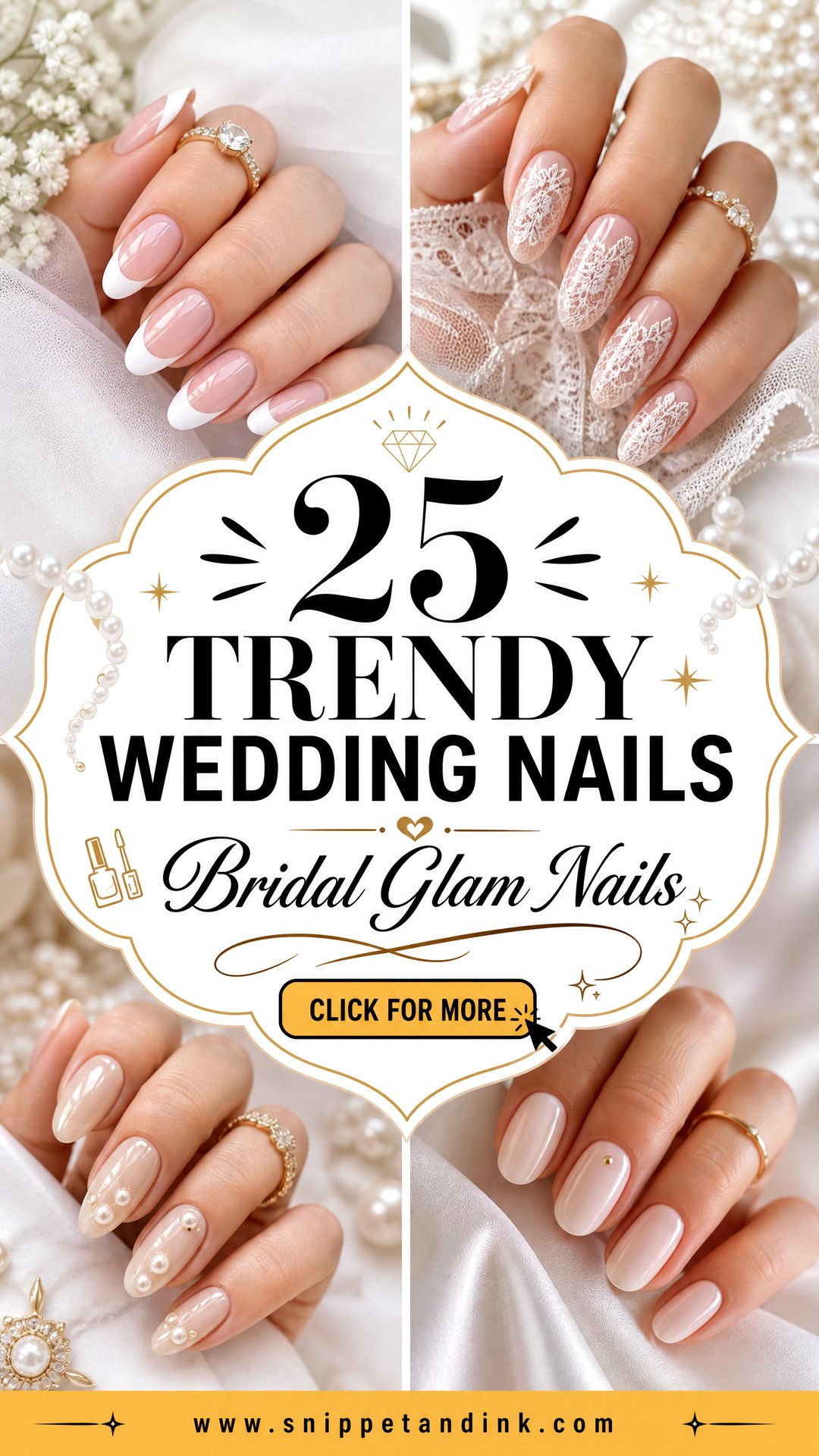
Most of the brides who sit at my desk now ask for less art and more finish. Milky bases, glazed shine, a hairline French tip, sheer pink, a few pearls, a short natural shape. The skill has moved from painting pictures on nails to getting the surface, the shape and the shade exactly right, because a ring shot is a macro photo and it shows everything. Below are the sets I’d actually put on a bride, from modern chrome nails to plain nudes, with notes on how each one wears, who it suits and what I check before I start.
Scheduling Your Manicure So the Cuticles Still Look Fresh
The most common mistake I see is a bride getting her nails done a week early to cross it off the list. Gel grows out at roughly the same speed as your natural nail, and within seven or eight days there’s a visible gap at the cuticle. In a ring close-up that gap is the first thing you notice.
I book bridal sets one to three days before the wedding. That’s close enough for the cuticles to look fresh, but it leaves a day to fix a chip or a shape you’ve changed your mind about. If you’re going for extensions or something new to you, have a trial three to six weeks ahead, wear it for a full week, and pay attention to what catches, lifts or annoys you.
- Two weeks before: stop picking or cutting cuticles yourself. Oil them every night instead; hydrated skin around the nail is what makes a manicure look expensive.
- One week before: avoid acrylic removal or a big shape change. The nail plate needs time to settle.
- Day of the appointment: bring your ring, a photo of the dress and the shade of your bouquet, and wear something you can sit still in for two hours.
- After the appointment: wear gloves for washing up and keep hand sanitiser off a matte finish, since it dulls the surface.
1. Milky White Wedding Nails
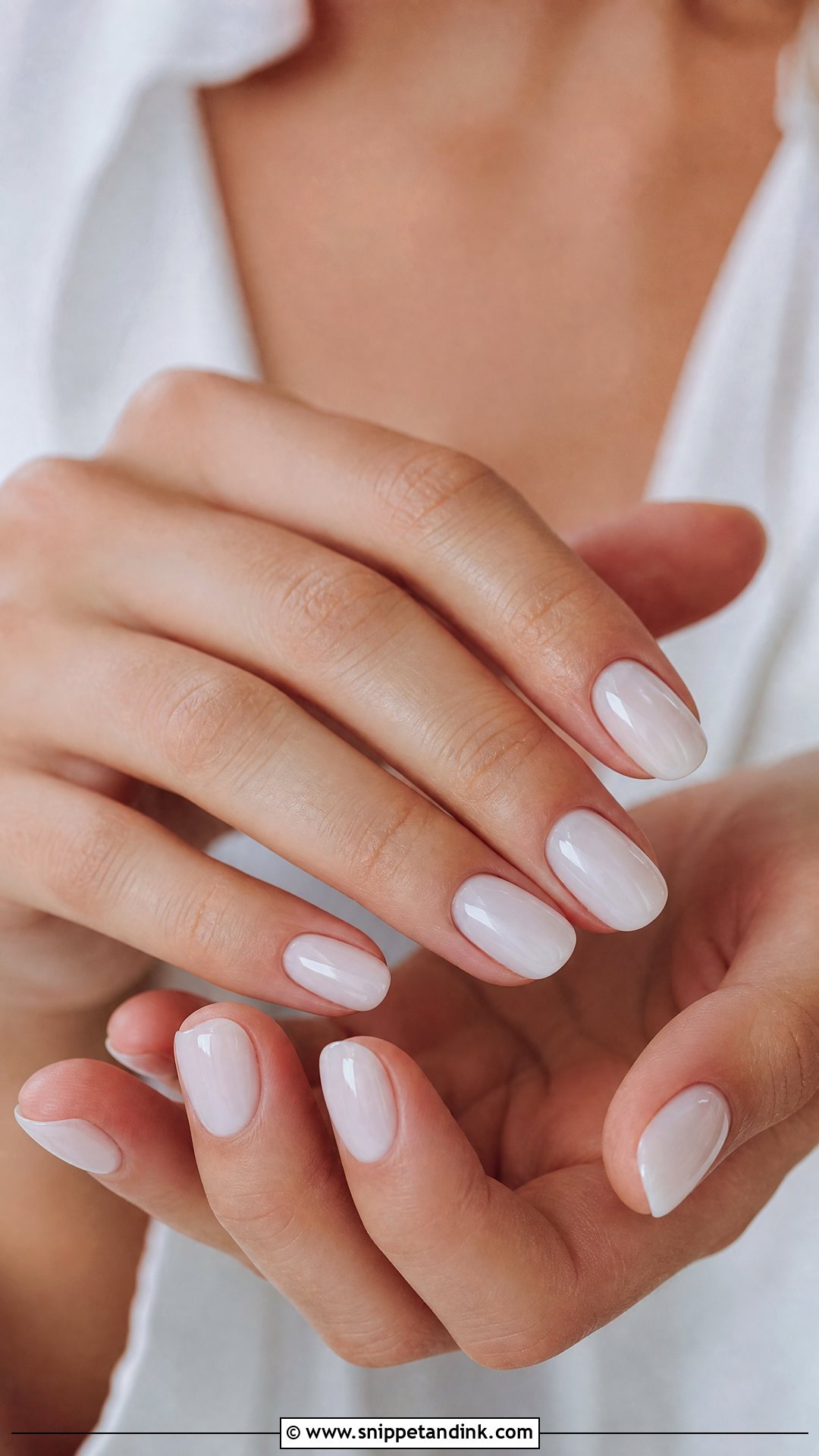
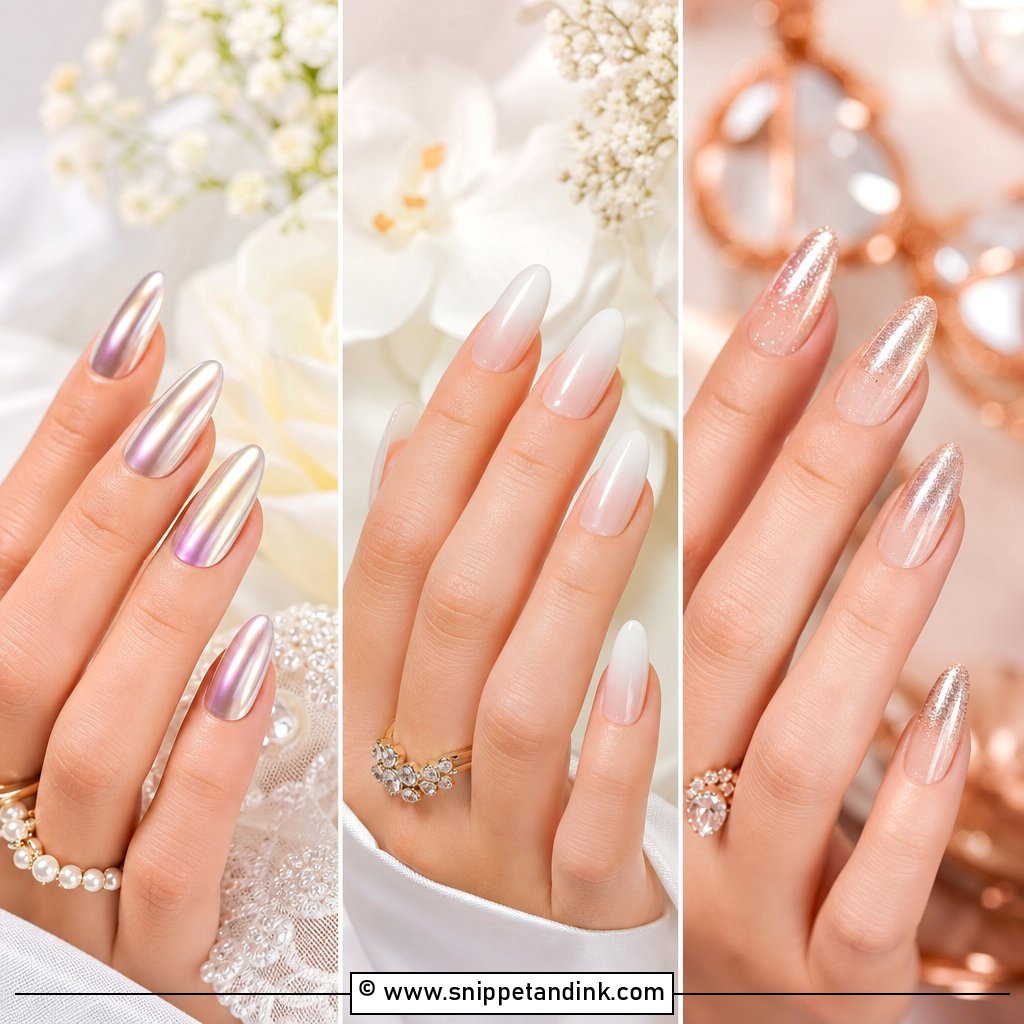
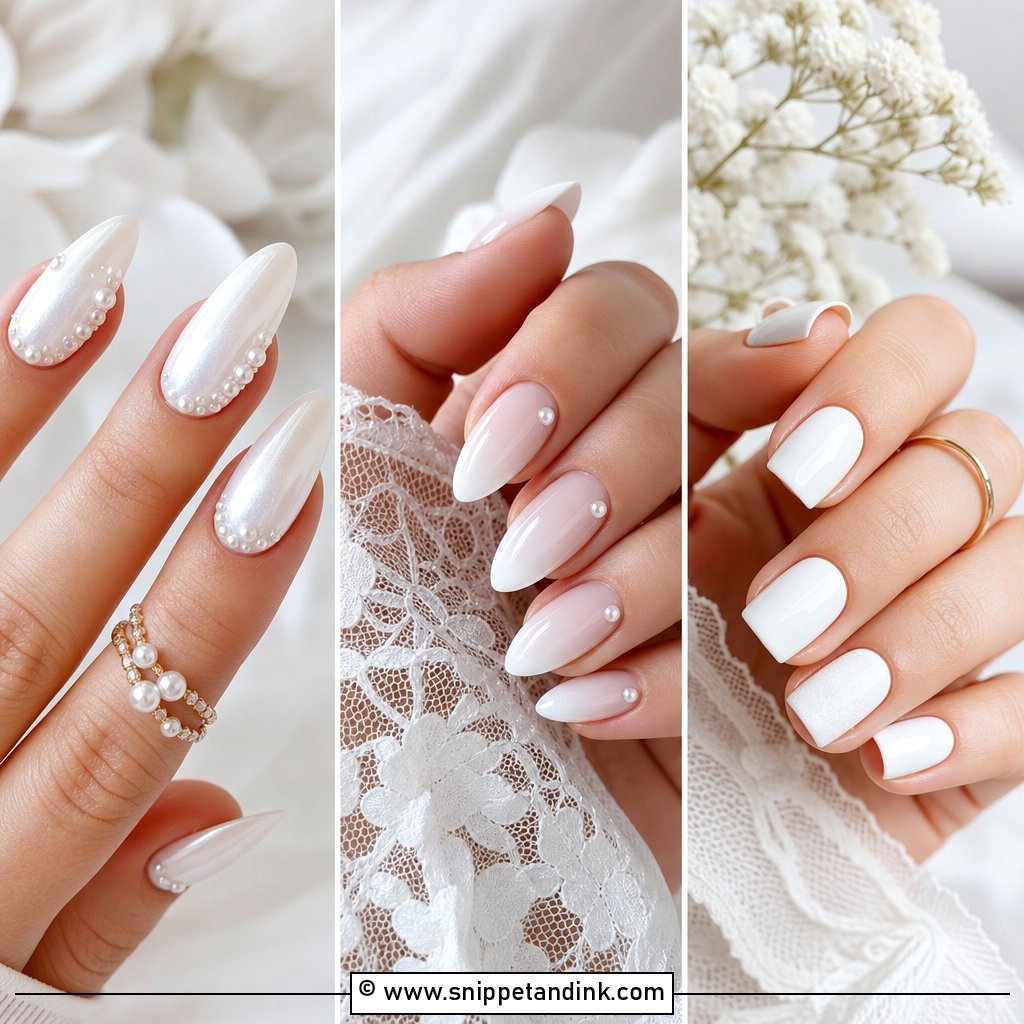
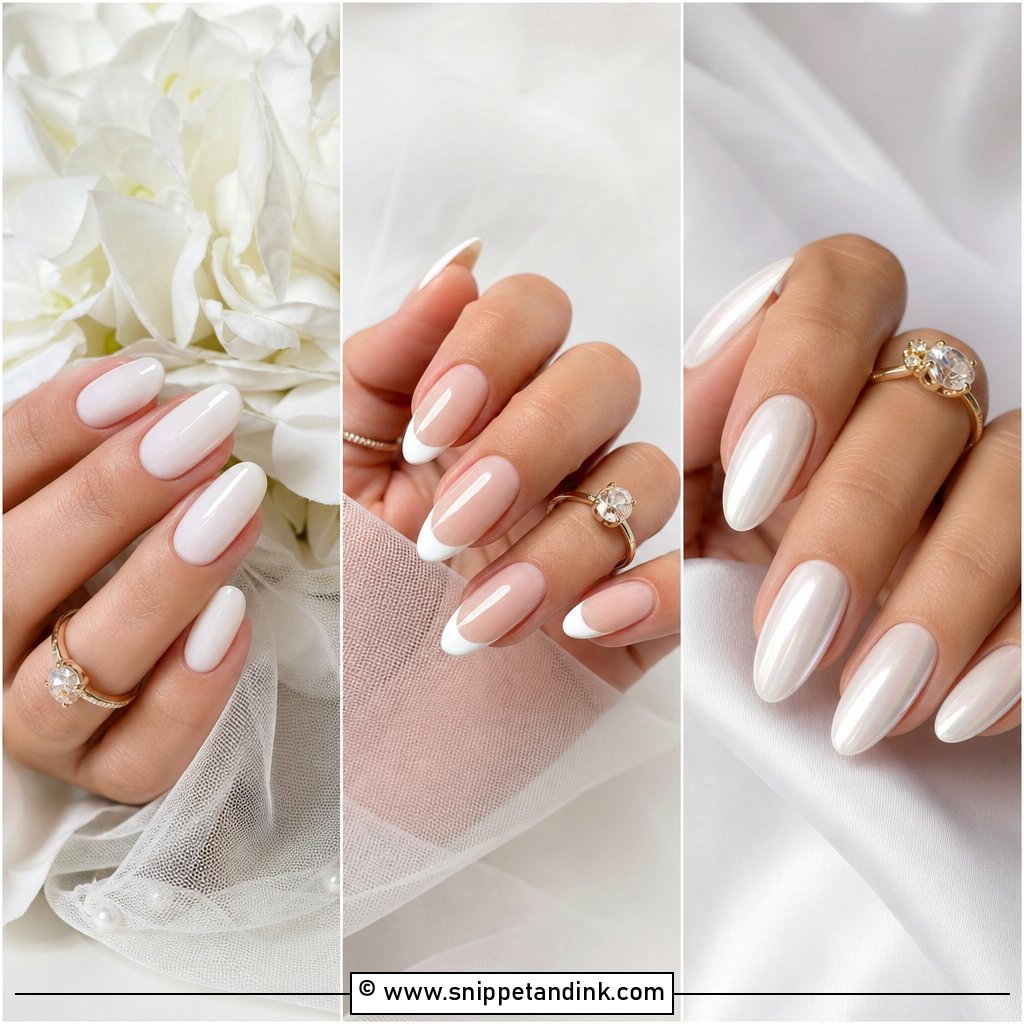
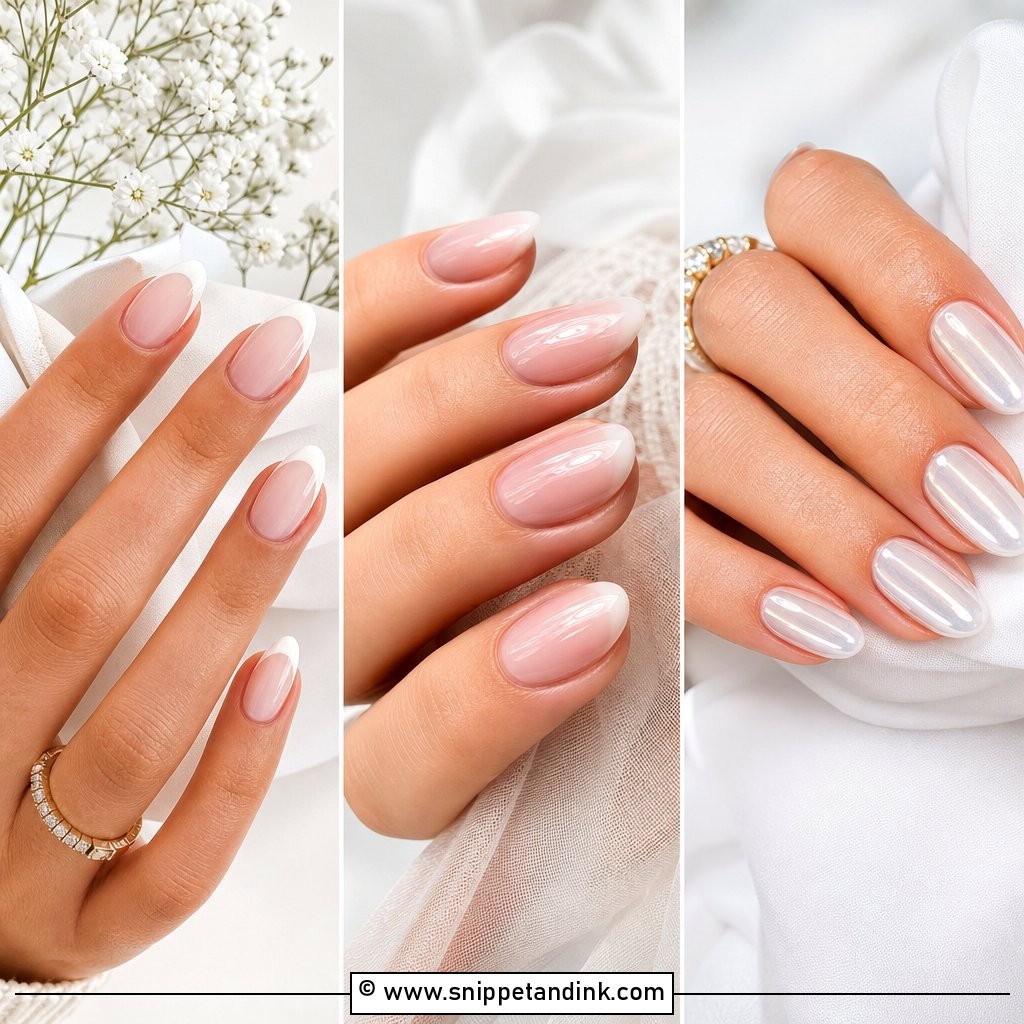
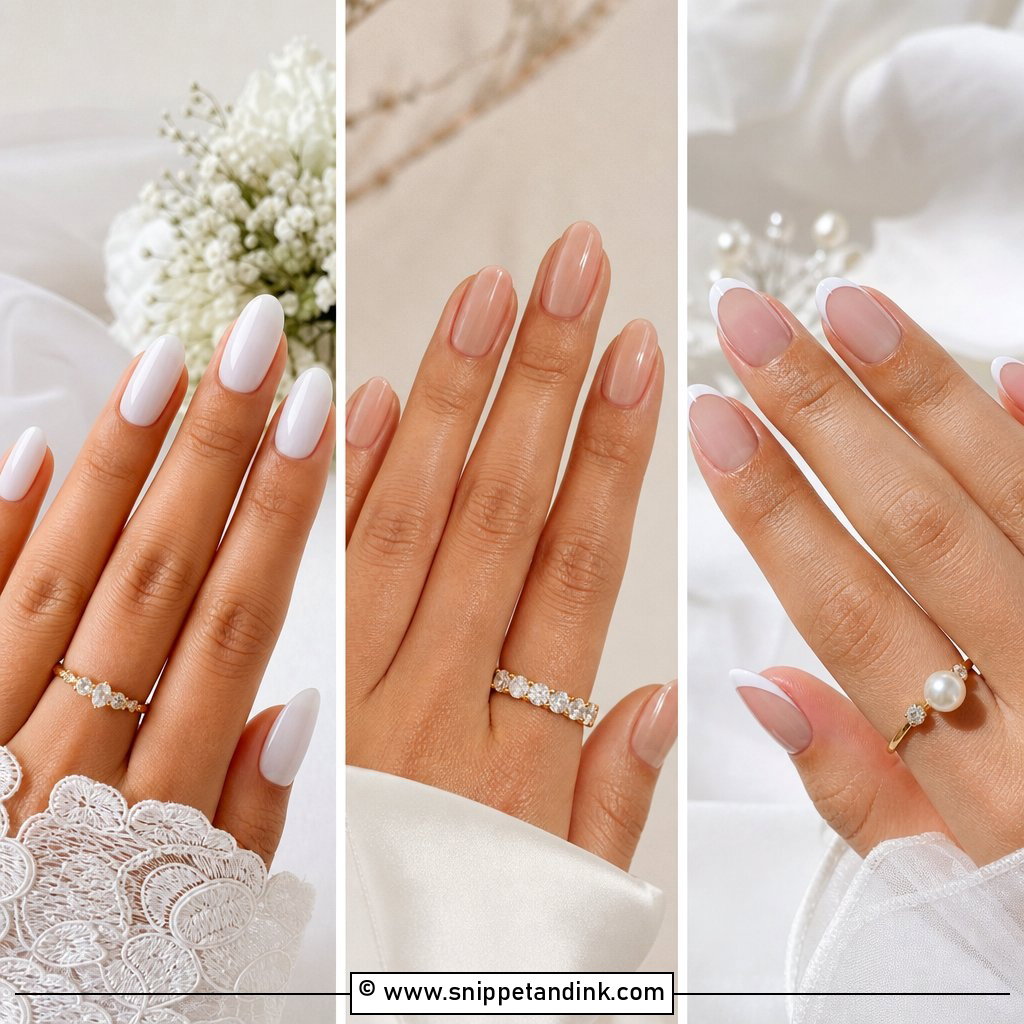
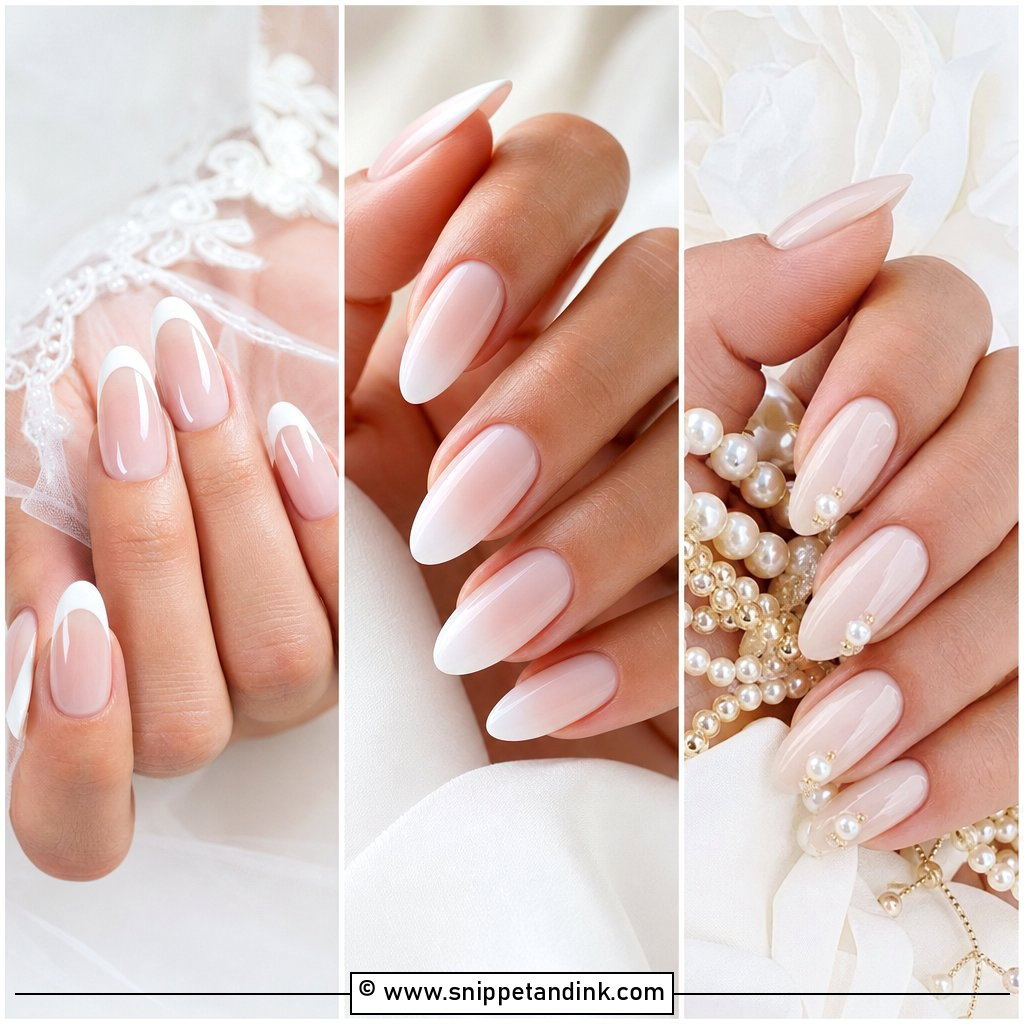
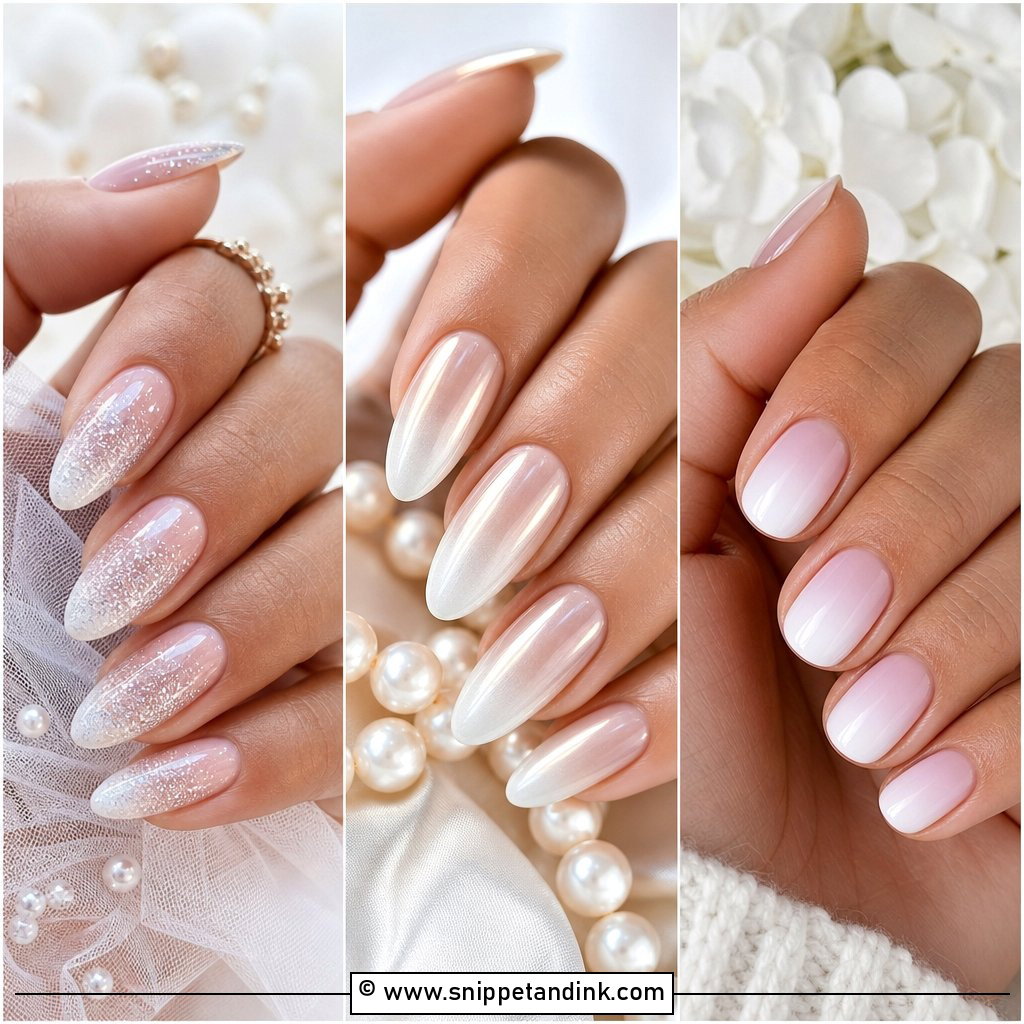
A good milky white is built, not painted. I lay down two or three thin coats of a sheer white gel until the free edge still shows a hint of the natural nail through it, because one thick coat reads as correction fluid on camera. Stark white also turns grey-blue under cool light, while a creamy milk stays warm on most skin tones. Almond, oval and short square all carry it well. If you’d like a little depth, a pearl shimmer topcoat is enough; anything heavier and you lose the clean look that made you pick it.
2. Pearl Chrome Wedding Nails
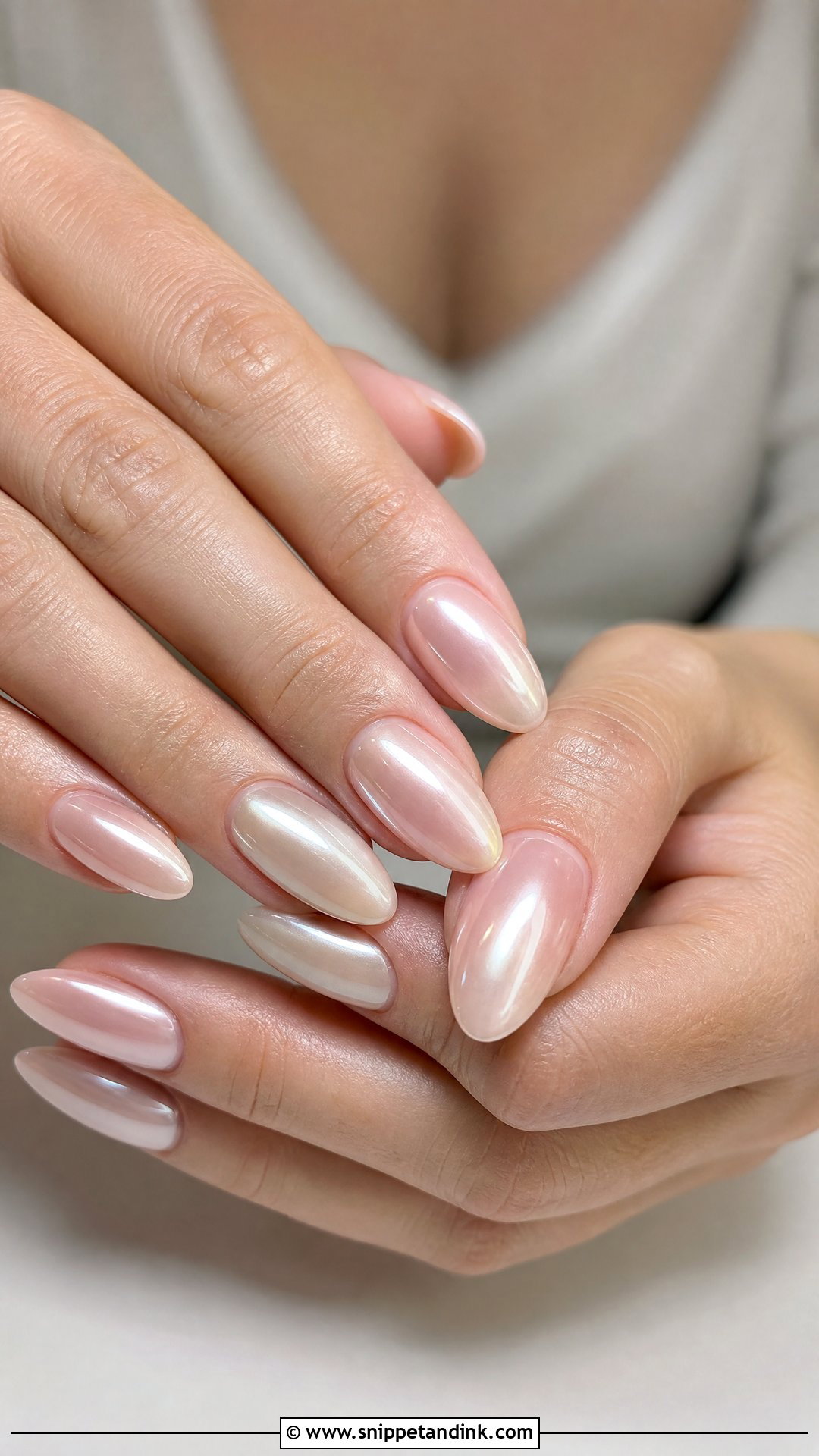
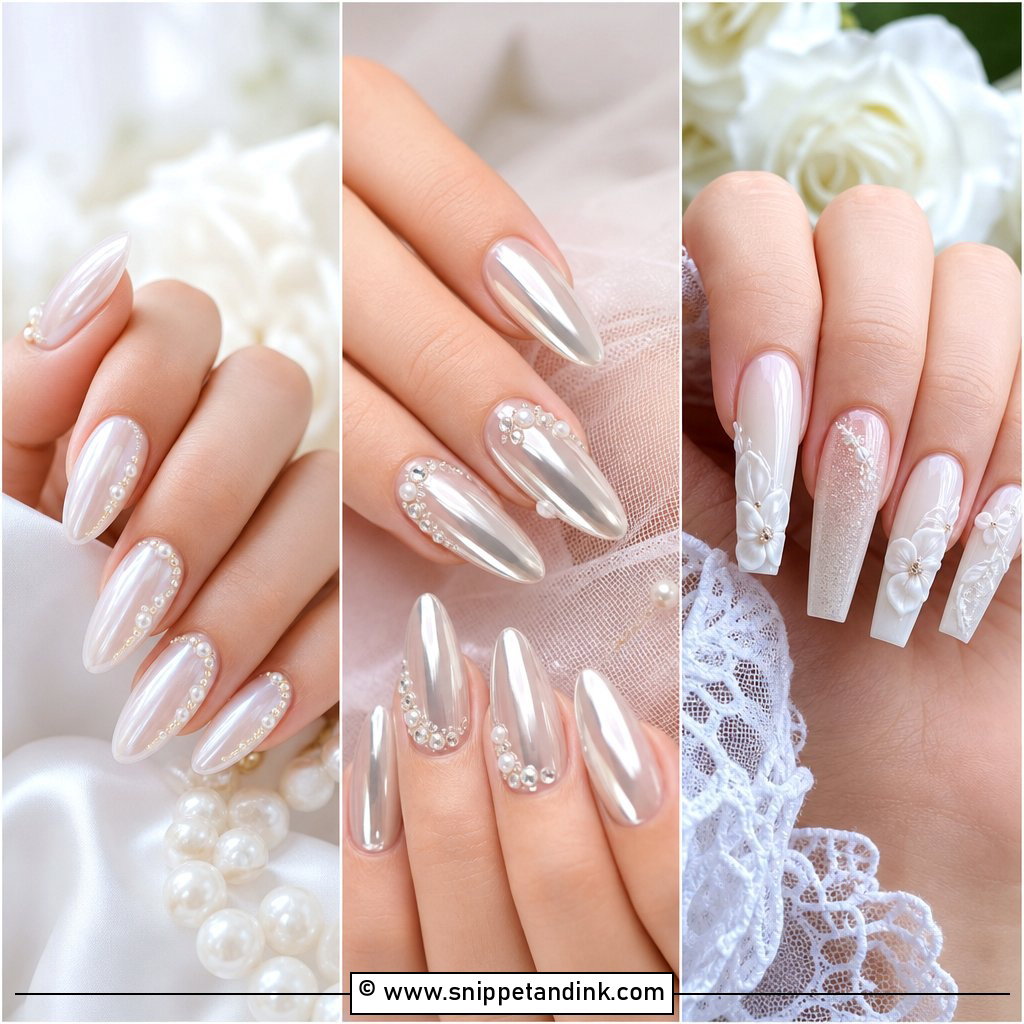
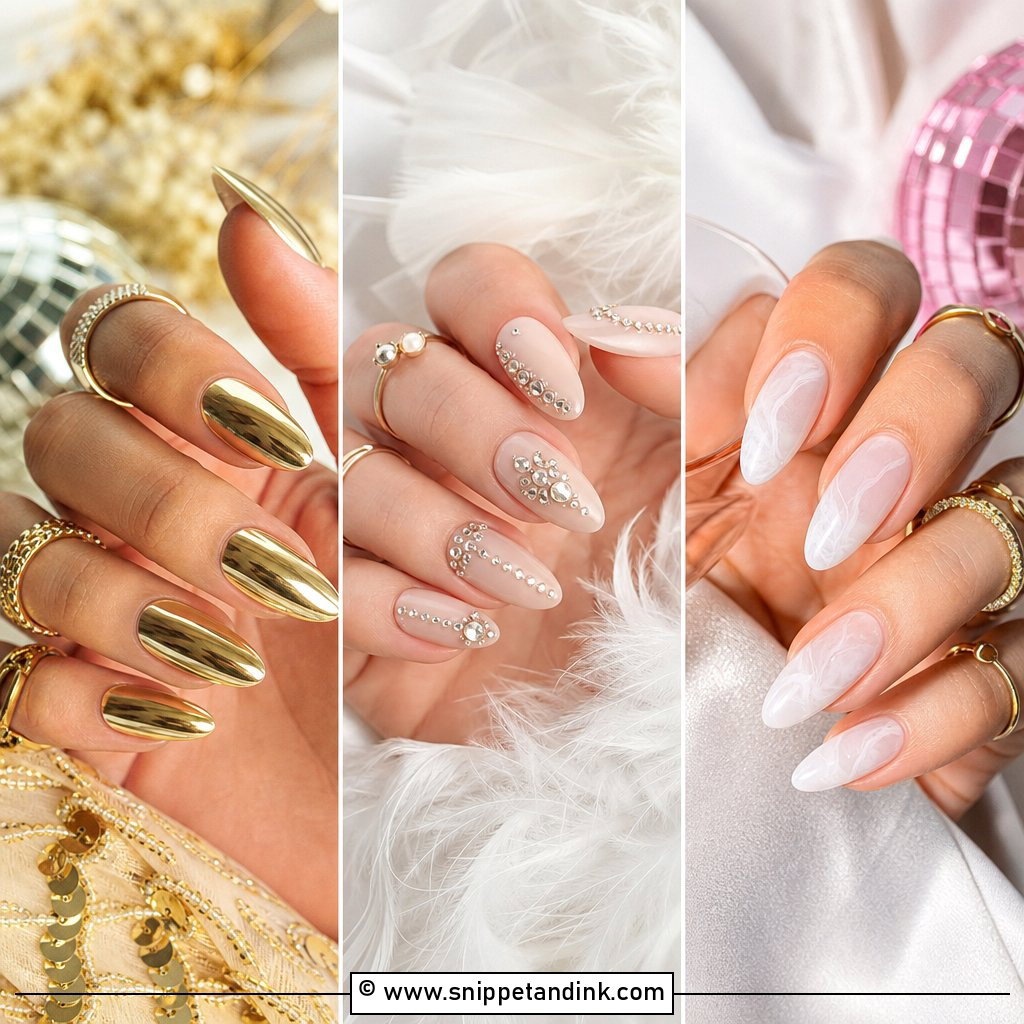
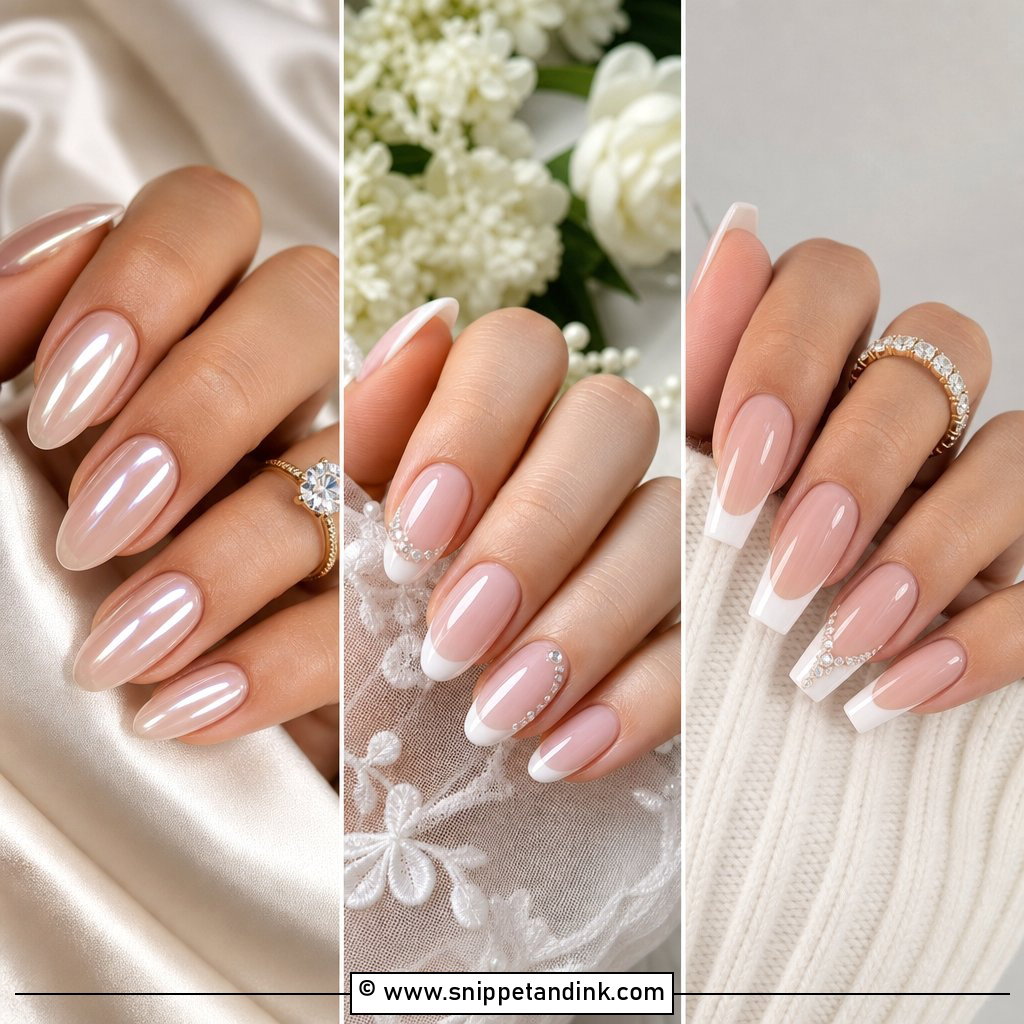
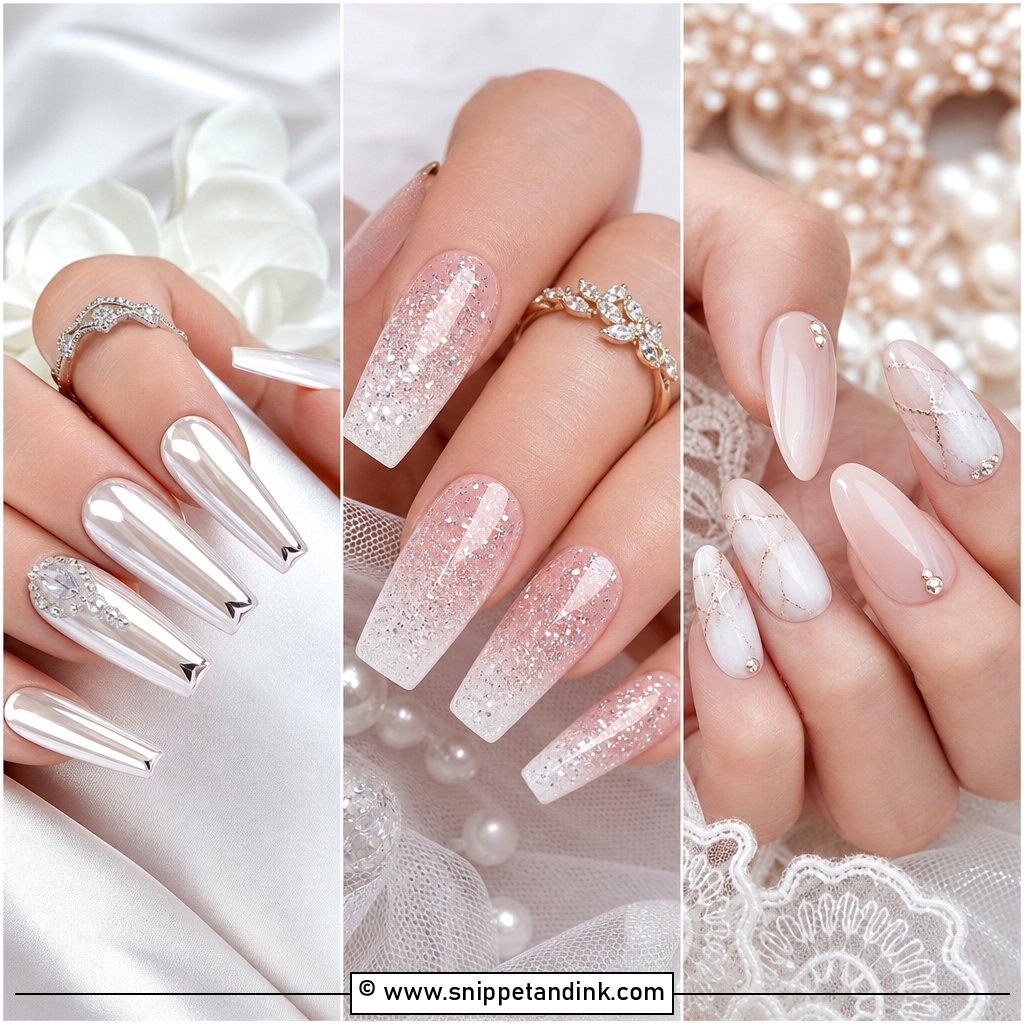
Pearl chrome is a powder, rubbed onto a cured no-wipe top coat over a sheer pink, milky or nude base. It reflects light as a sheen rather than as sparkle, which is why it looks so good in close-ups. The weak spot is the free edge: if the powder isn’t capped with a second top coat wrapped over the tip, it can wear off there within days. I like it most on almond and oval, where the curve catches a highlight down the centre of the nail. It sits naturally next to pearl earrings, pearl pins and an ivory gown.
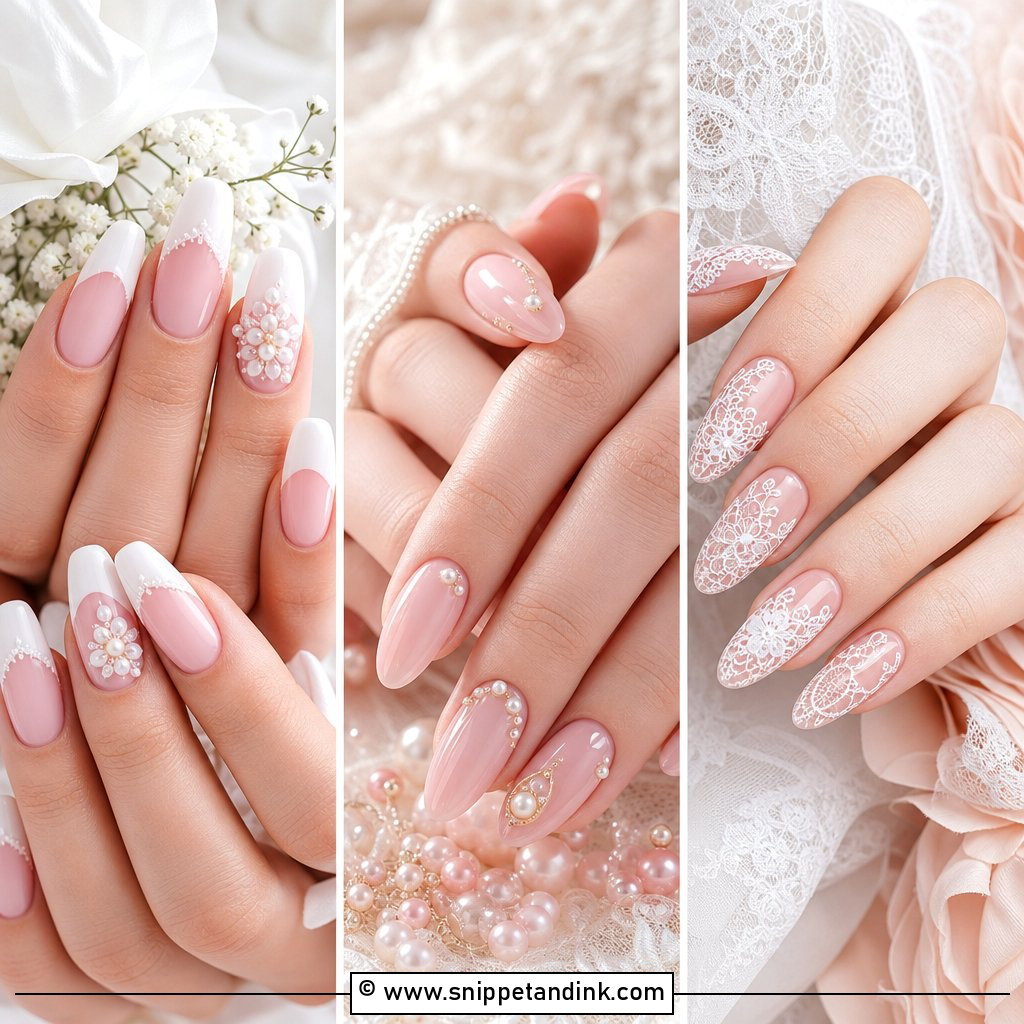
3. Classic French Wedding Nails
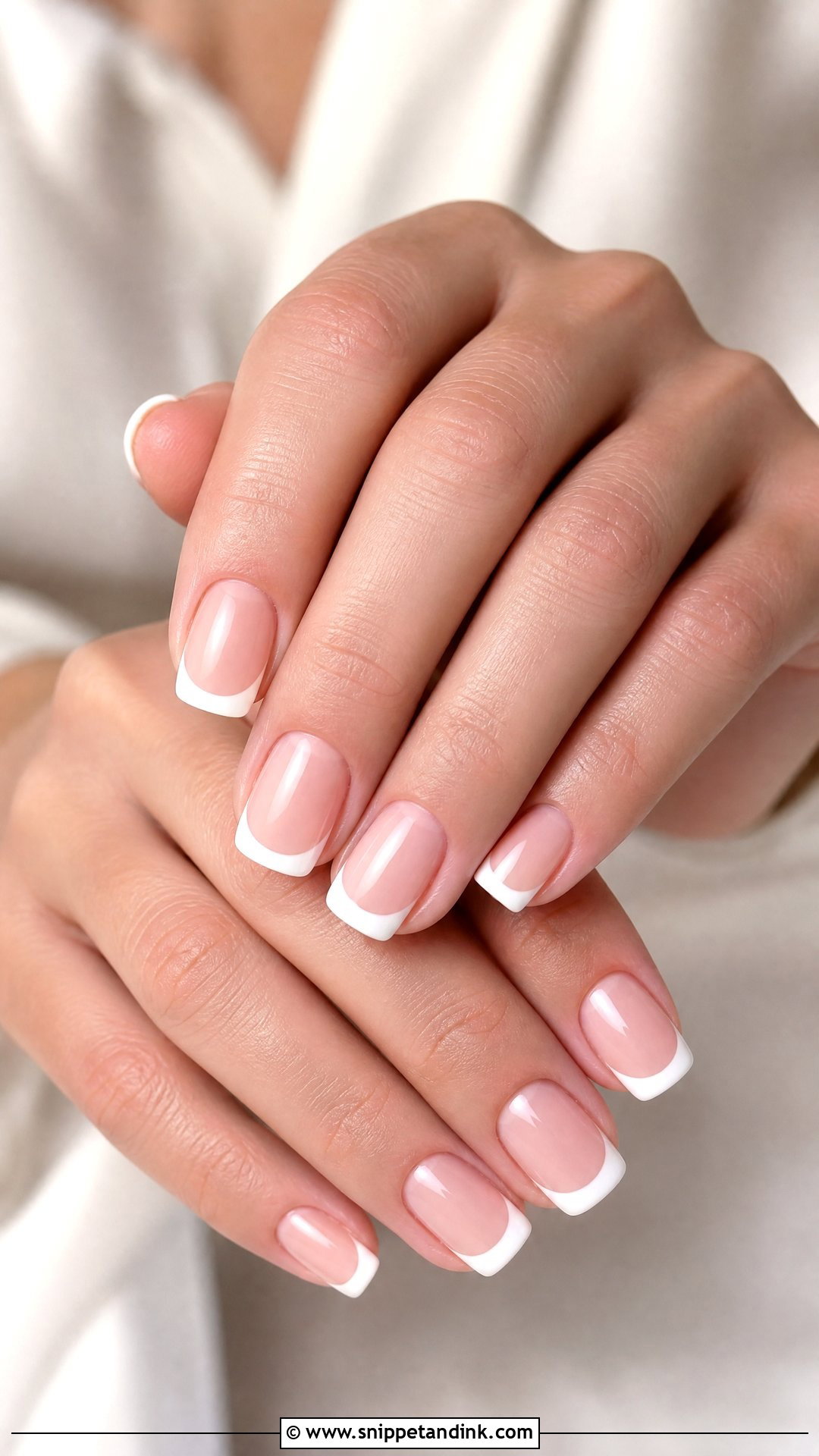
A French manicure has survived every trend cycle I’ve worked through, and for good reason: it suits almost any length. The part people get wrong at weddings is tip depth. A thick, chalky band looks dated and makes short nails look shorter, so I keep the white thin to medium and follow the natural smile line rather than drawing a flat stripe. The base should be a sheer pink or nude close to your own nail bed. Finish it glossy. It’s the one design I’d happily put on a bride, her mother and every bridesmaid at once.
4. Micro French Wedding Nails
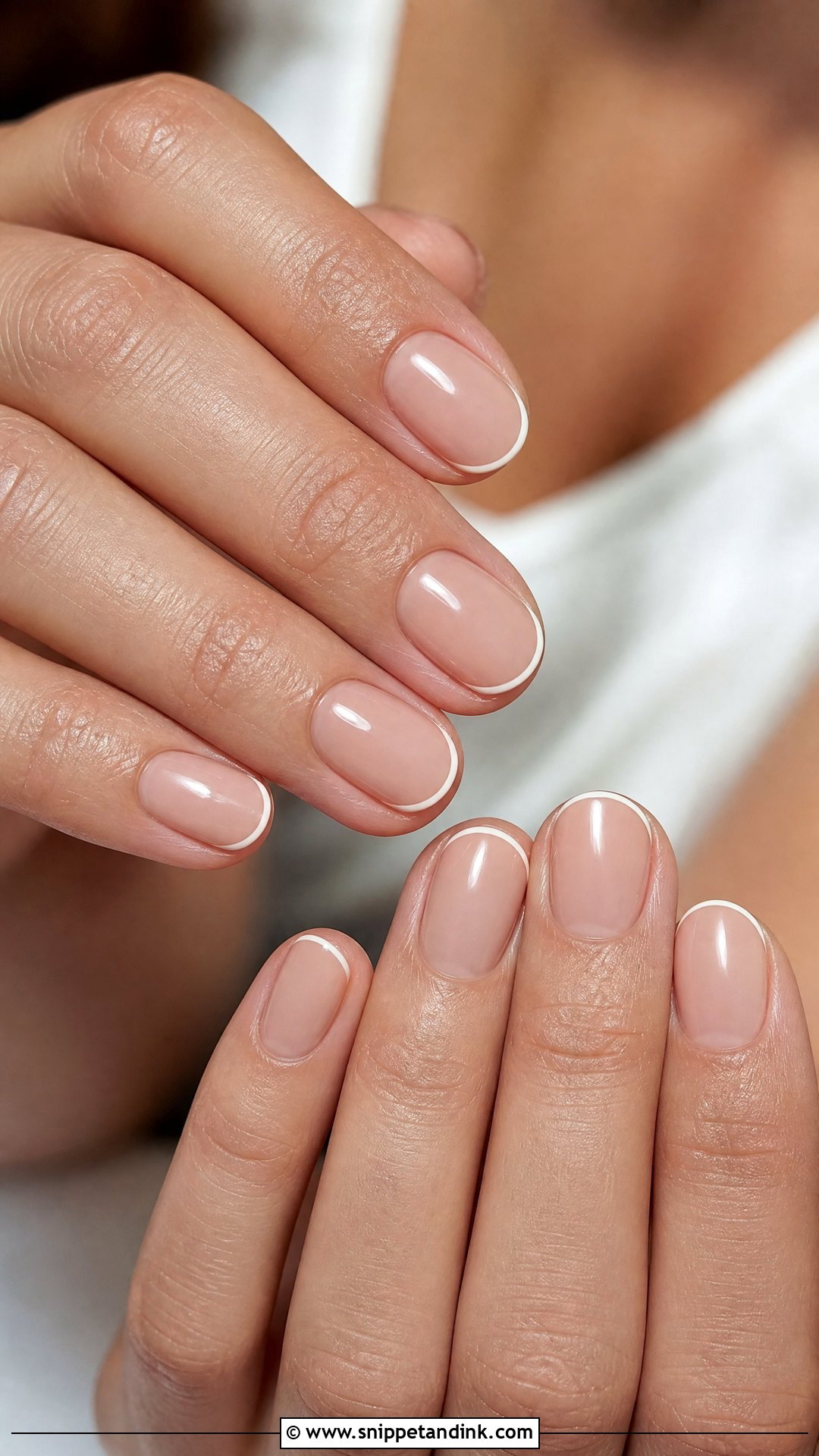
On short natural nails, a micro French is usually my first suggestion. The tip is a line a millimetre or two deep, painted with a striper brush in white, ivory, champagne or pale pink, so you get the French effect without needing extensions to make room for it. That thin line is unforgiving, though. It has to be perfectly even across all ten fingers, and a slightly shaky hand shows more here than on a classic French. Over a sheer nude it stays clean; a whisper of chrome on top gives it a more current glow.
5. Blush Pink Wedding Nails
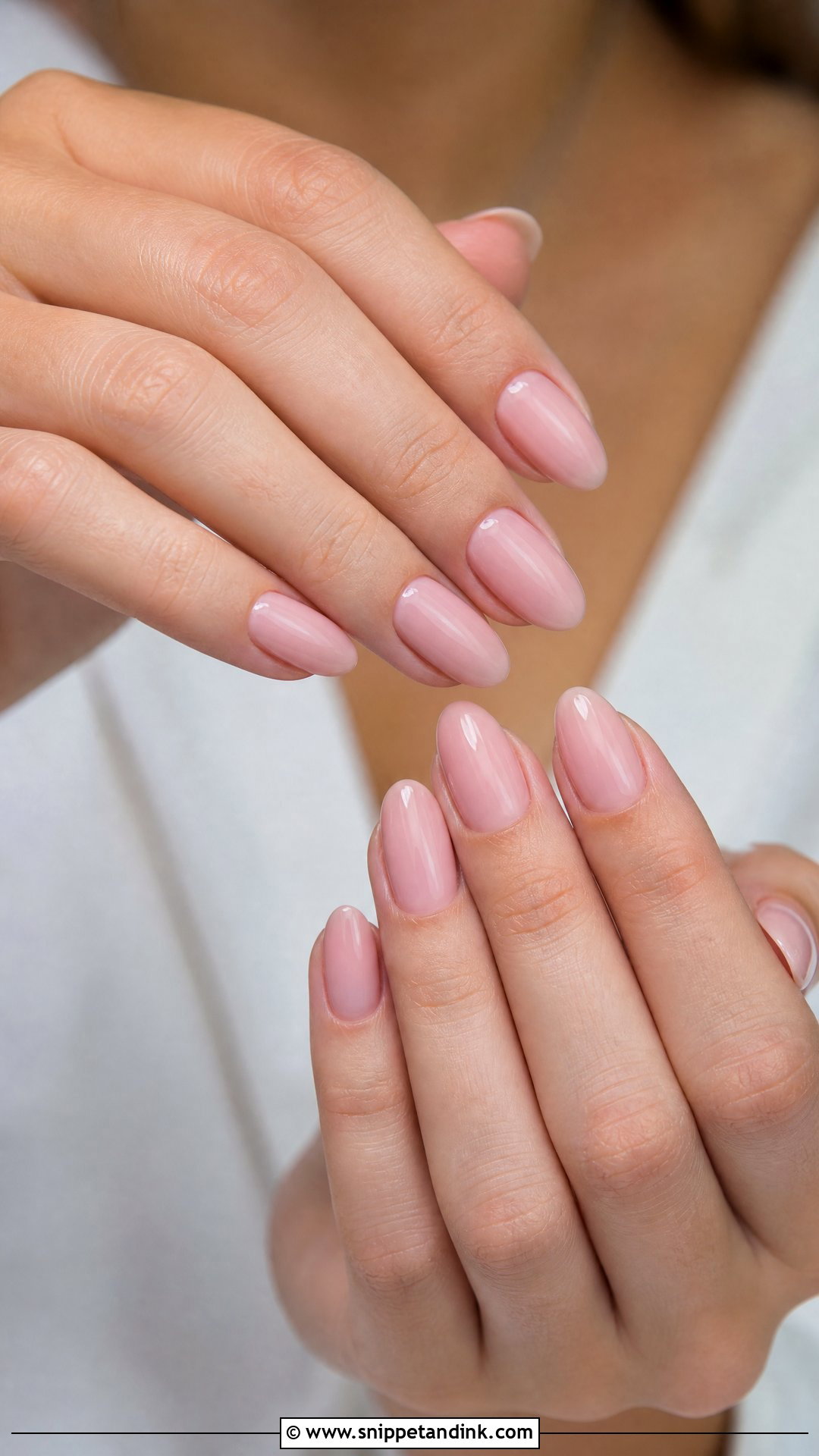
Blush pink is the shade I reach for when someone can’t decide, because it reads as a healthy nail rather than as colour. A sheer baby pink in two coats looks natural; a creamier blush gives more coverage and hides ridges or white spots on the nail plate. Test it against your skin under daylight, since some blushes turn faintly lilac on cool undertones. Short oval, almond and natural square all suit it, and it sits comfortably beside rose gold and pink bouquets. A glossy gel top coat is all the finish it needs.
6. Nude Wedding Nails
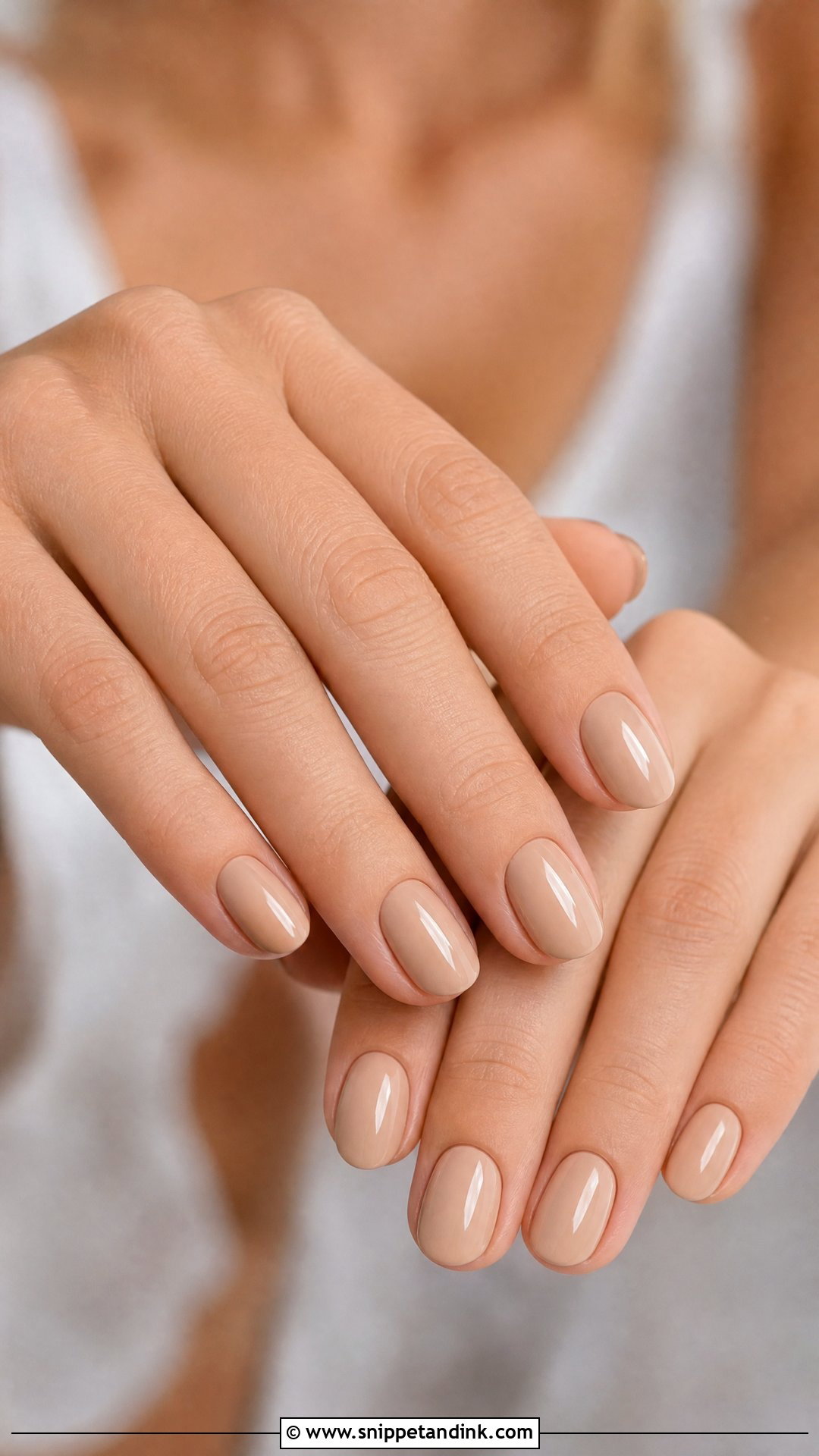
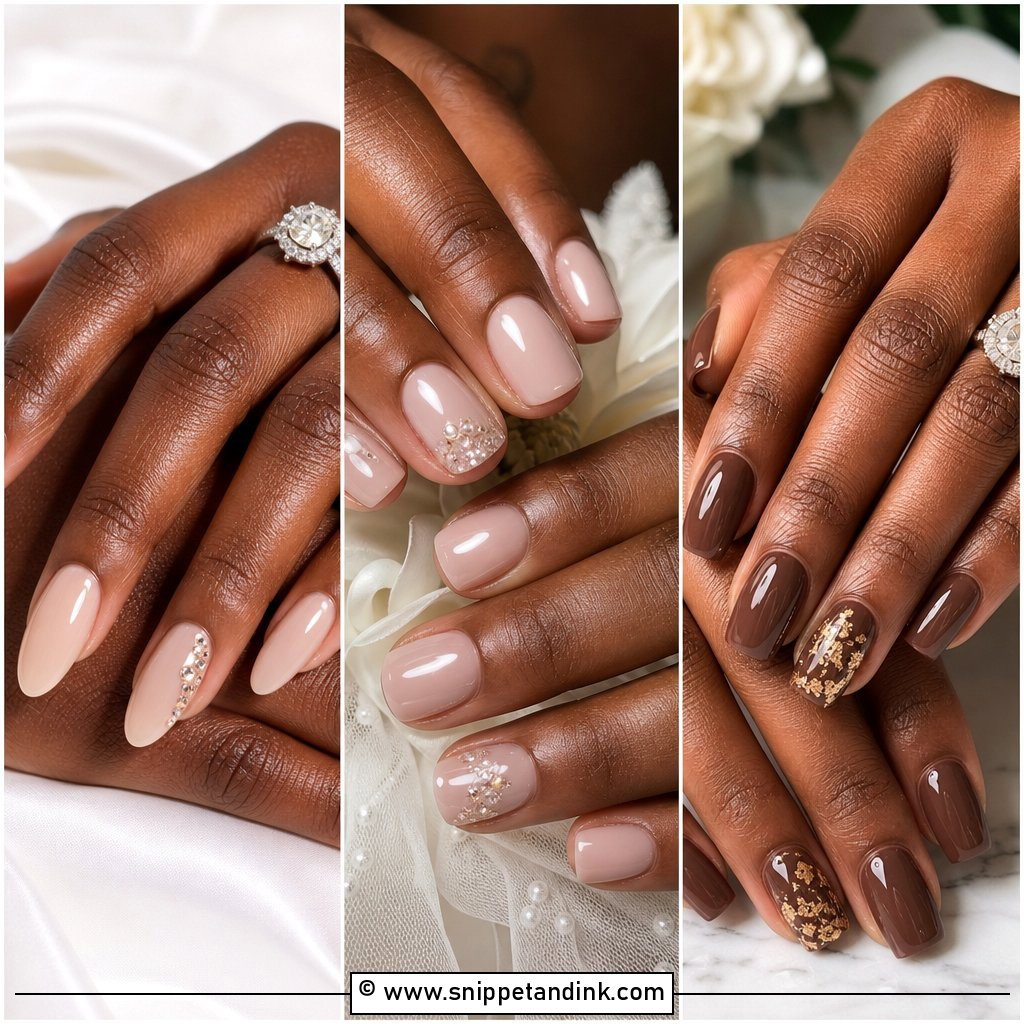
Picking a nude is mostly about undertone, and it’s where I spend the most time at a consultation. I swatch three or four bottles directly against the side of the finger, not on a nail wheel. Beige nudes sit well on warm skin, pink nudes soften fair skin, and caramel or mocha nudes are the right call on deeper tones; a nude that’s too light makes hands look chalky or grey. Glossy nude lengthens the fingers and keeps attention on the ring. A soft oval or a tiny white outline at the tip updates it if the dress or jewellery is already busy.
7. Glazed Donut Wedding Nails
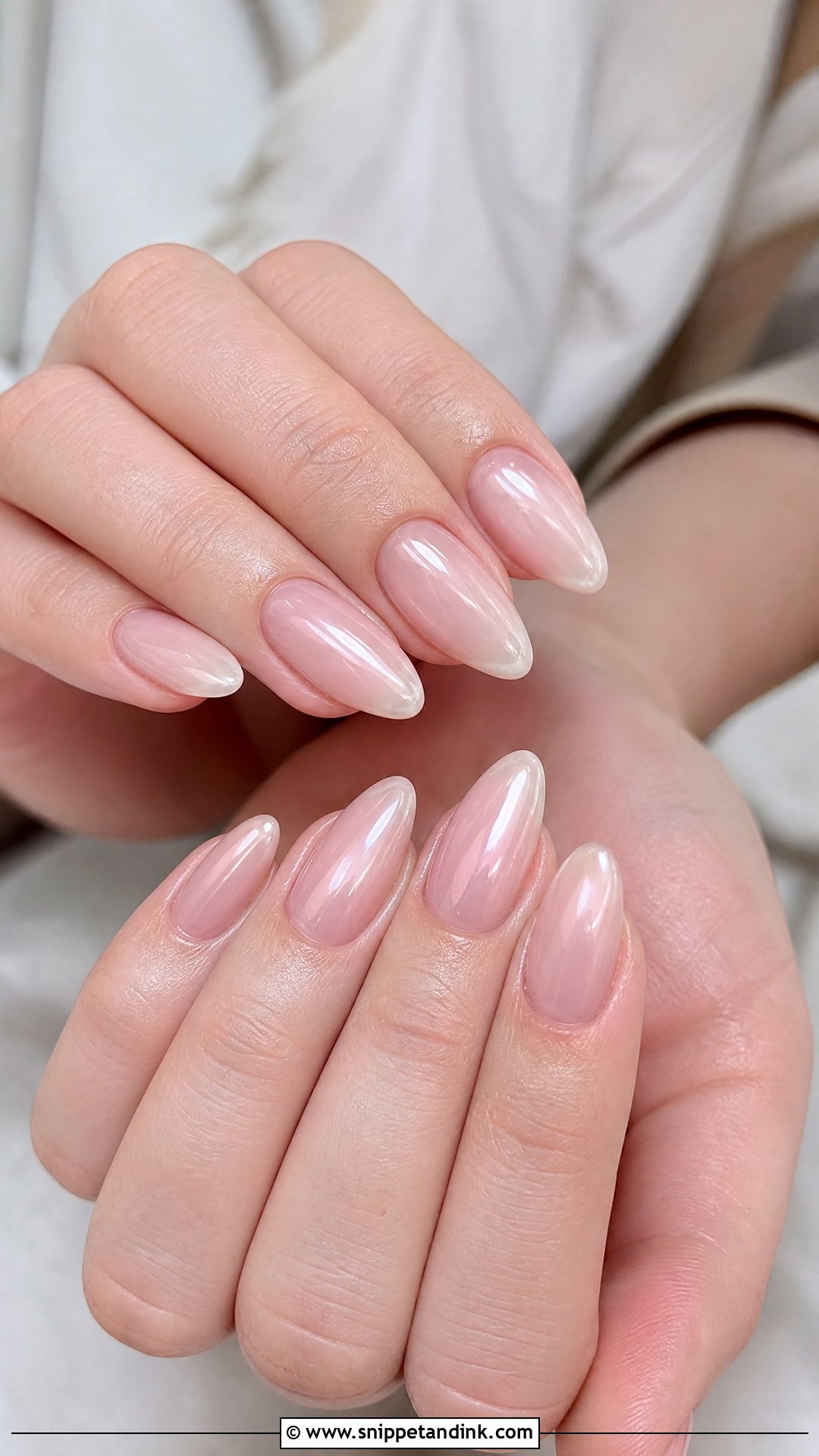
Glazed donut wedding nails are a sheer chrome powder buffed over a pale pink, nude or milky base, which gives a wet, reflective surface smoother than glitter and softer than full metallic chrome. The base colour matters more than people expect: the powder is semi-transparent, so a pink base glows pink and a milky base glows almost white. Almond shows the glow best, though short round nails work too. With dewy makeup or satin, it ties the whole look together without anyone noticing why.
8. White Chrome Wedding Nails
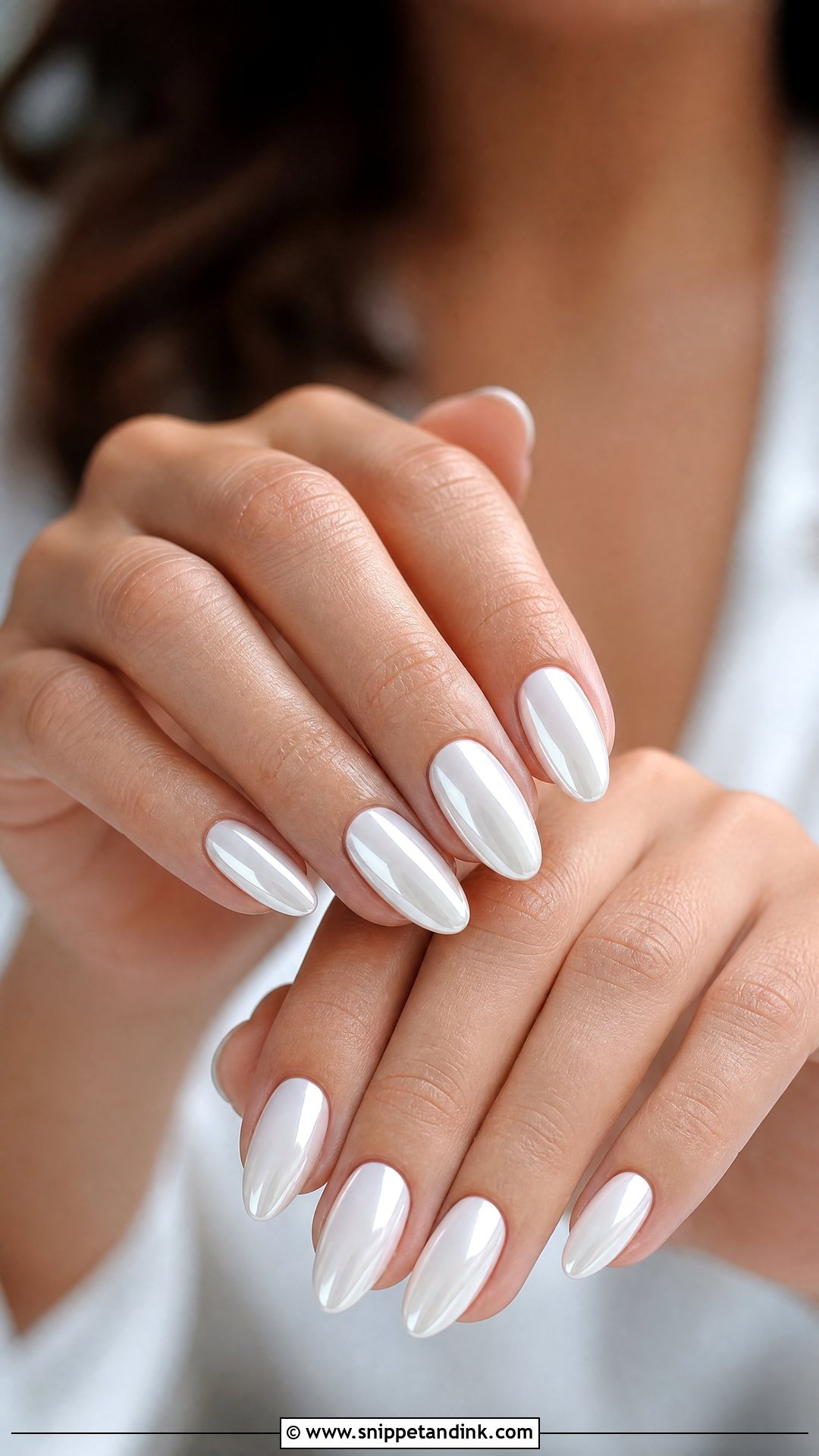
White chrome is the bolder sister of the milky nail. I start it on a soft white or ivory gel, never a bright liquid white, and keep the chrome layer thin so the finish stays luminous instead of looking like foil. It needs surface to show off, so almond, oval and coffin give it the most room; on very short nails it can look flat. It’s a strong match for winter weddings and sleek minimalist gowns. Keep the jewellery quiet, or the hands start competing with the ring.
9. French Ombre Wedding Nails
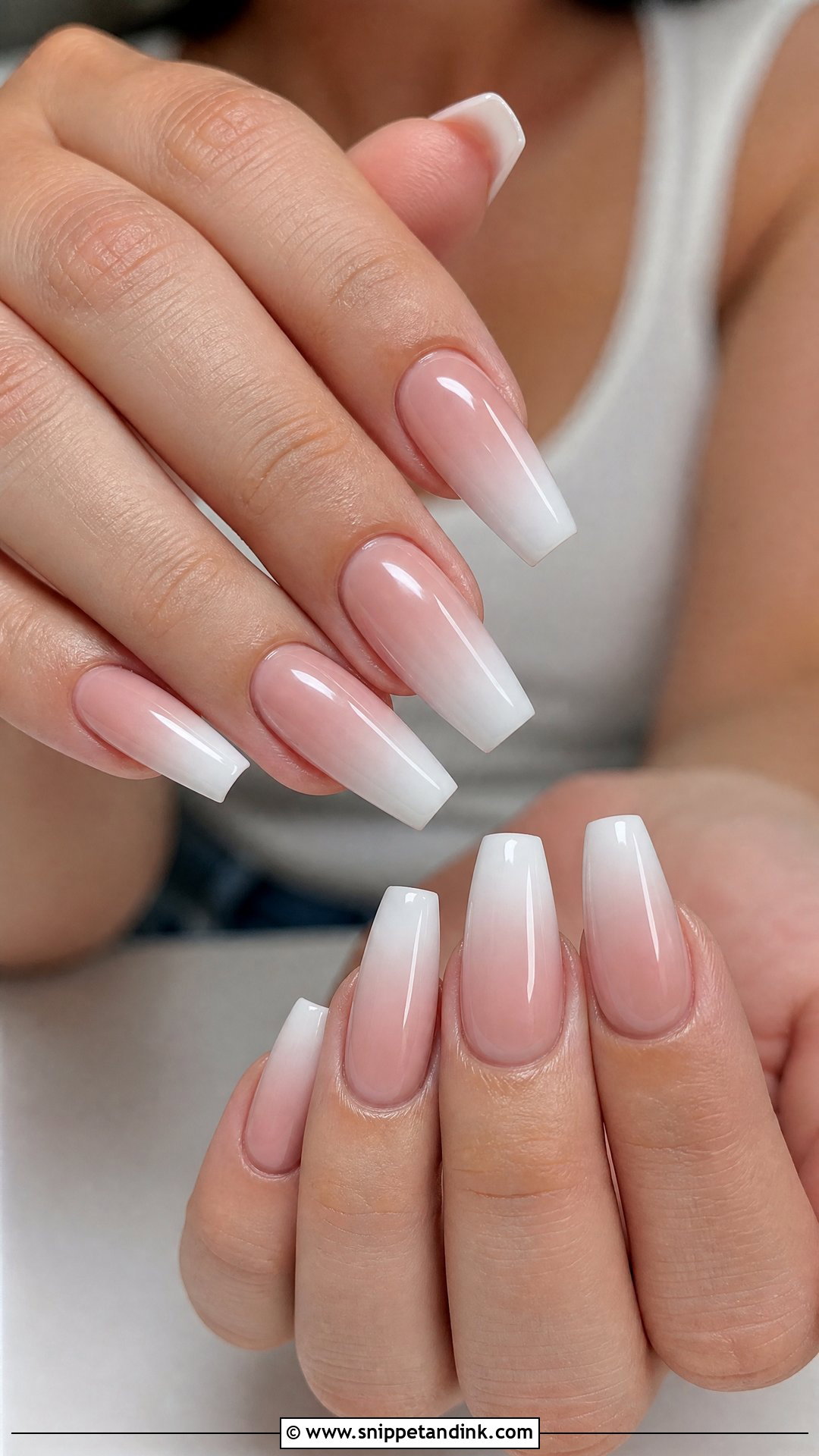
French ombre, sometimes called baby boomer nails, is a nude or pink base blended up into a soft white tip with no visible line. I build the gradient with a sponge or a dry brush in thin passes; rushing it leaves a stripe halfway up the nail. It forgives a lot. Because there’s no hard edge, regrowth at the cuticle is far less obvious than with a crisp French, which helps if your manicure has to last through the honeymoon. Almond and coffin are the usual shapes, but I’ve scaled it down to short nails many times. Seal it glossy.
10. Short Wedding Nails
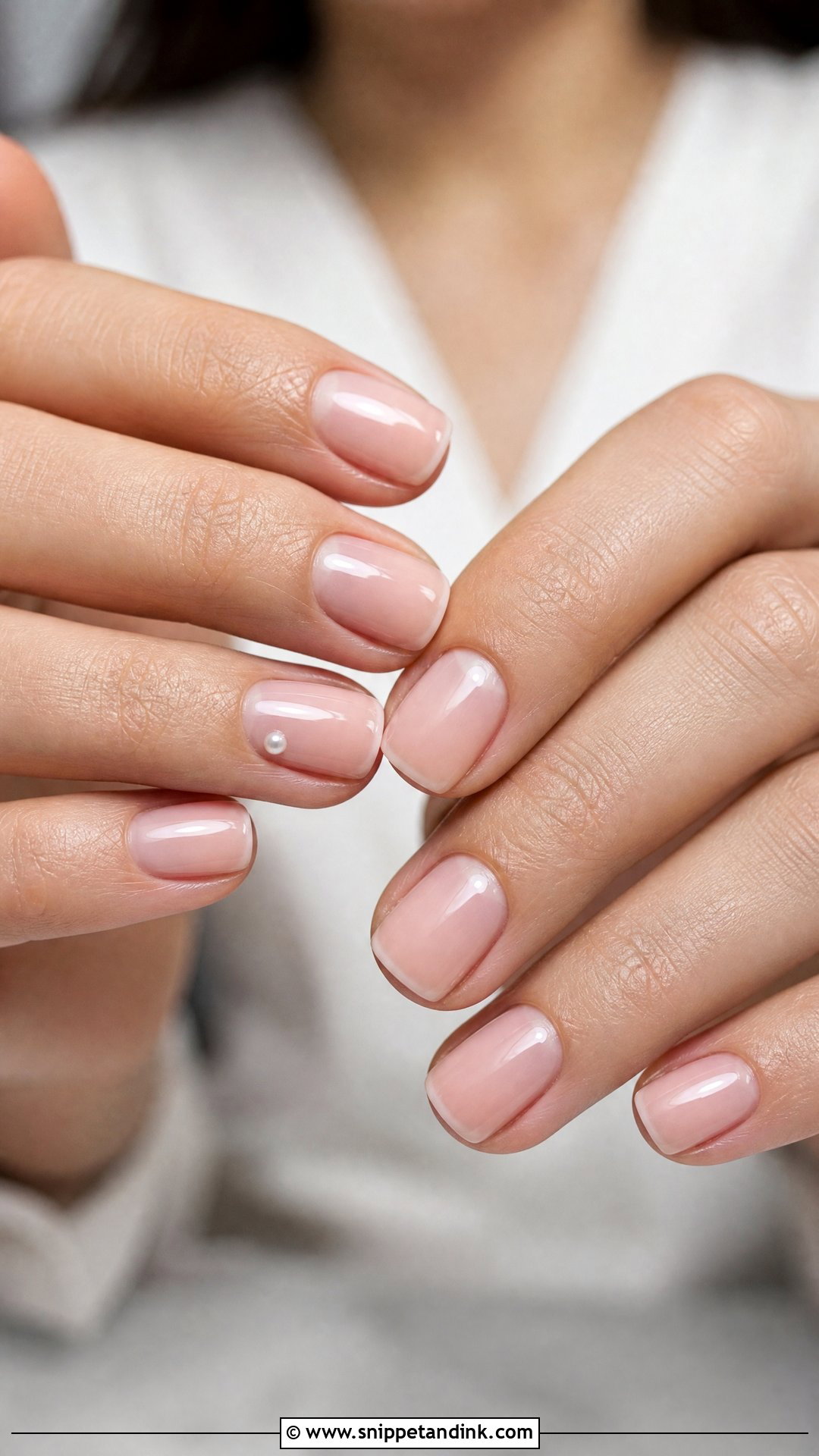
Short nails have one advantage over long ones in photos: they never look like they’re stealing focus from the ring. Short wedding nails just need a precise, matching shape on all ten fingers, because unevenness is the first thing a close-up picks up. I file soft square, rounded or short oval and keep the colour sheer: pink, milky white, nude or a micro French. One pearl, a single chrome line or a shimmer top coat is plenty of detail. If you never wear extensions, this is the set you’ll forget you’re wearing.
11. Almond Wedding Nails
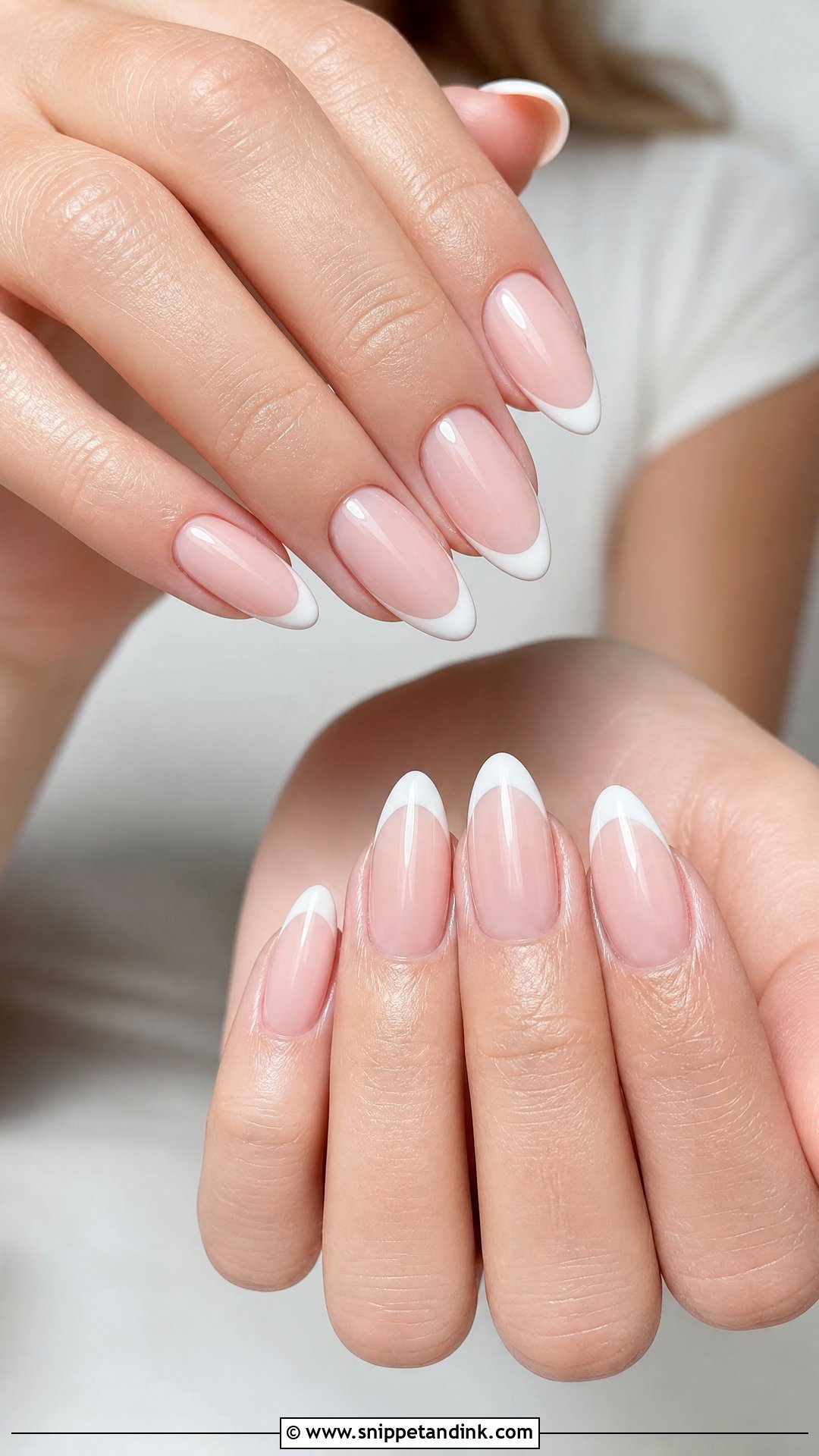
Almond wedding nails taper gently from the sidewalls to a rounded peak, which visually stretches the finger. I shape them from the side profile first, then the top, because a lopsided almond is very obvious when a hand is posed flat on a bouquet. Medium length is the most wearable; it leaves room for a French tip, glazed chrome or a couple of tiny pearls without getting in the way of buttons and zips. On a wide nail bed I keep the taper slimmer so the tip doesn’t look pinched.
12. Square Wedding Nails
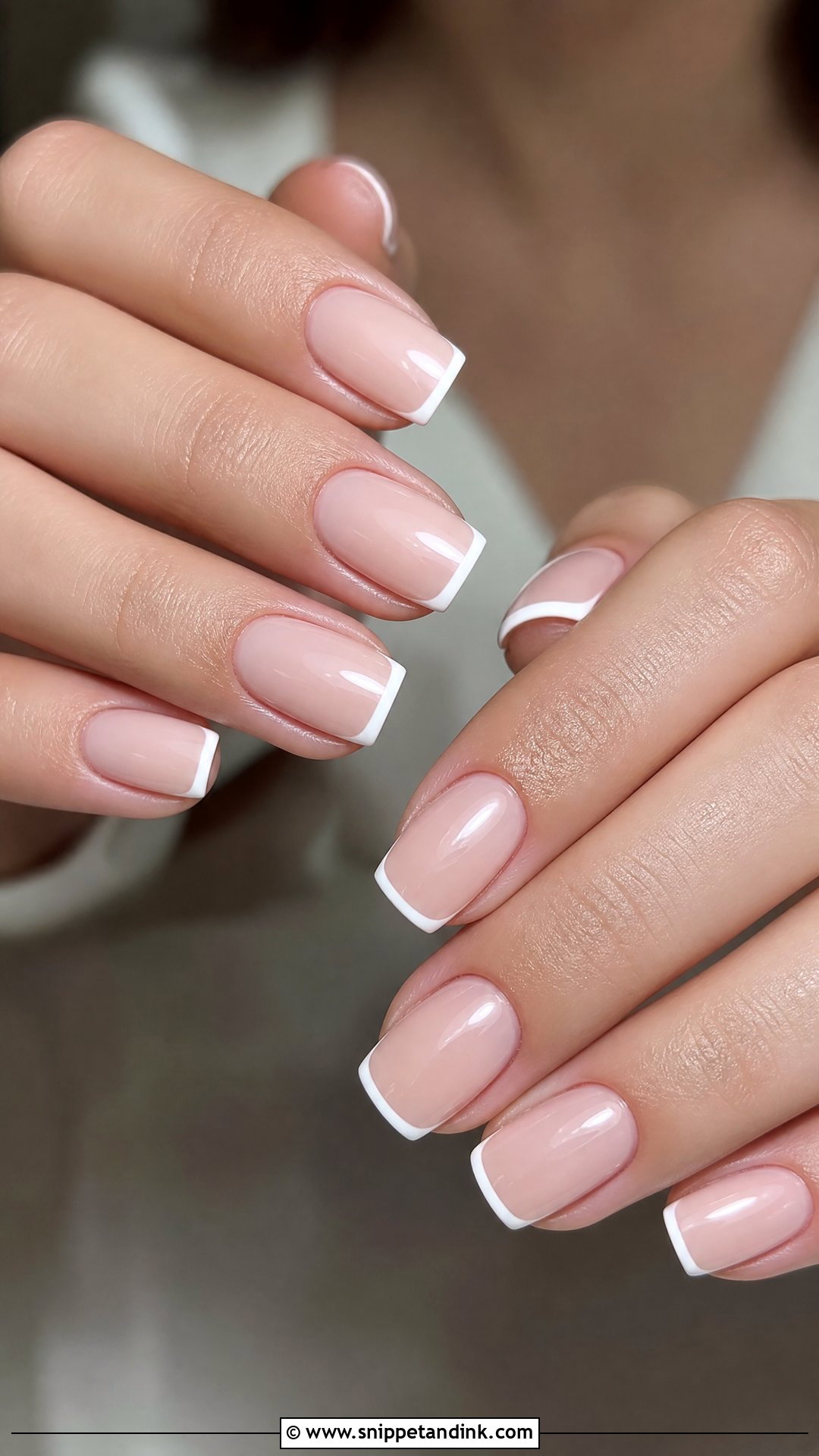
Square suits brides who like structure, and it’s the easiest shape to keep looking sharp on short natural nails. The catch is the corners. A truly square edge snags on tulle and lace, so on anything past fingertip length I soften the corners slightly. That still reads as square in photos but won’t pull threads in your veil. The straight edge is a natural partner for a French tip, nude, milky gel or chrome. With a sleek bun and minimal jewellery, a sheer nude base and a thin white tip is my pick.
13. Coffin Wedding Nails
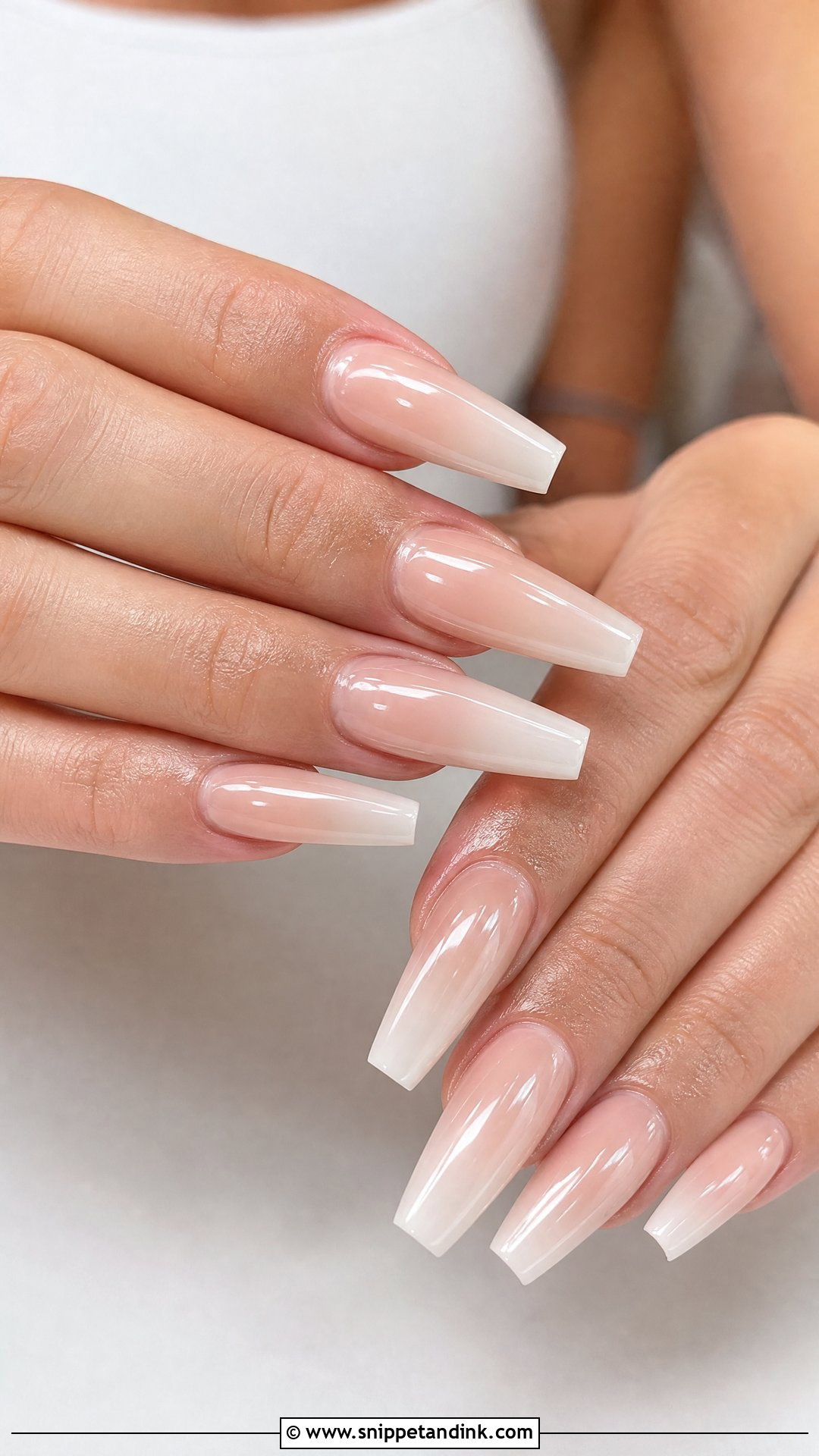
Coffin gives you a long, tapered nail with a flat tip, and the extra surface leaves room for French ombre, pearl chrome, lace art or a few crystals. Length is the decision that matters. An extra-long coffin is hard to live with on a day of hugs, cake cutting and fastening jewellery, so I usually steer brides toward medium. Keep the colour soft: milky white, blush, nude, champagne or ivory. It’s a fashion shape, so I’d skip it if you rarely wear extensions and might spend the morning knocking it against everything.
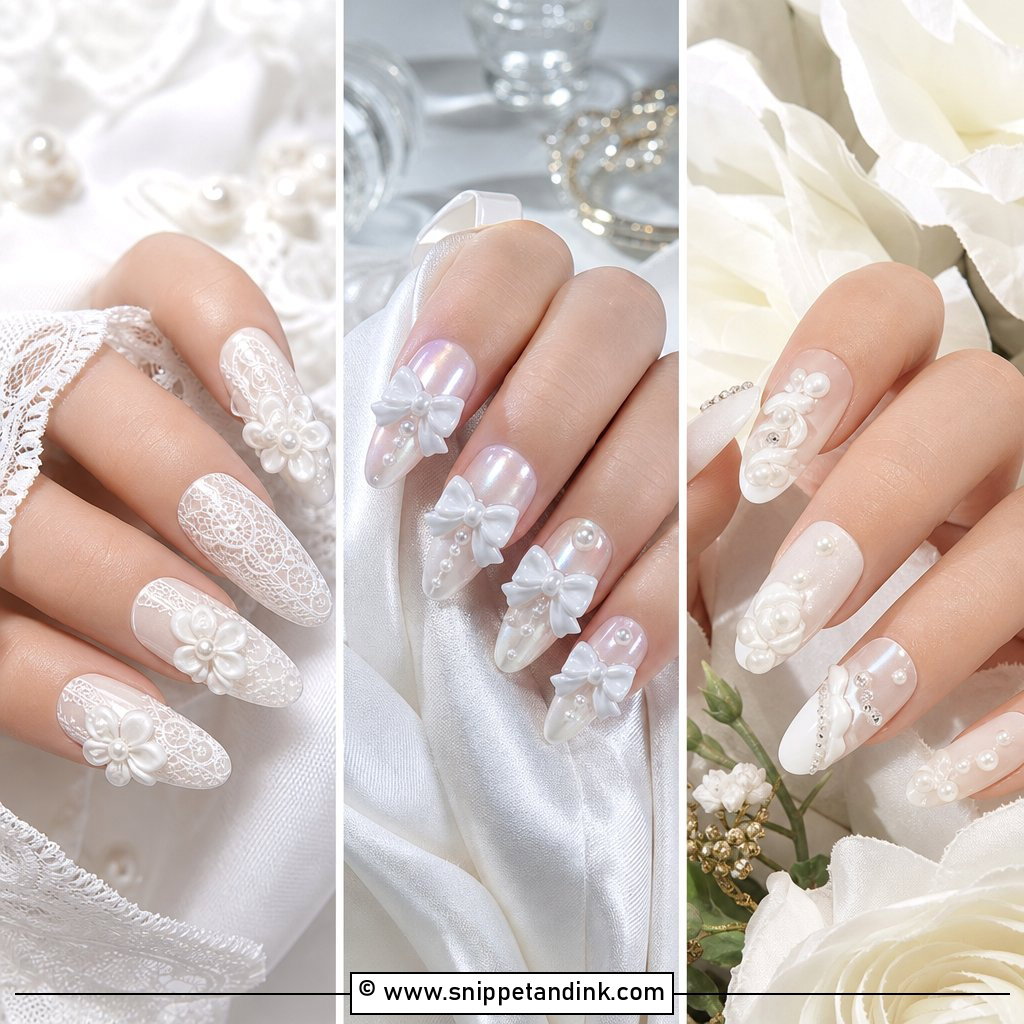
14. Lace Wedding Nails
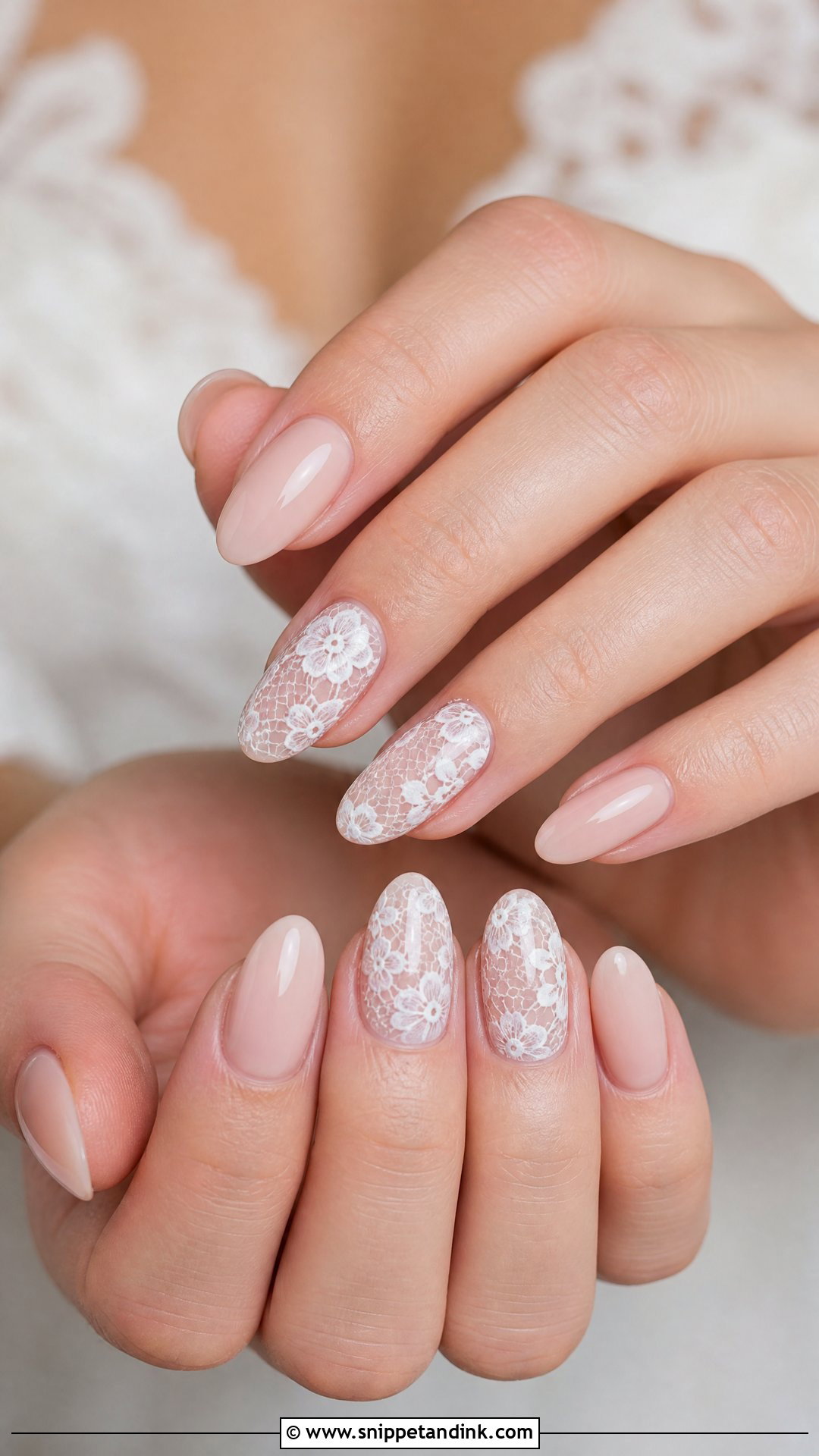
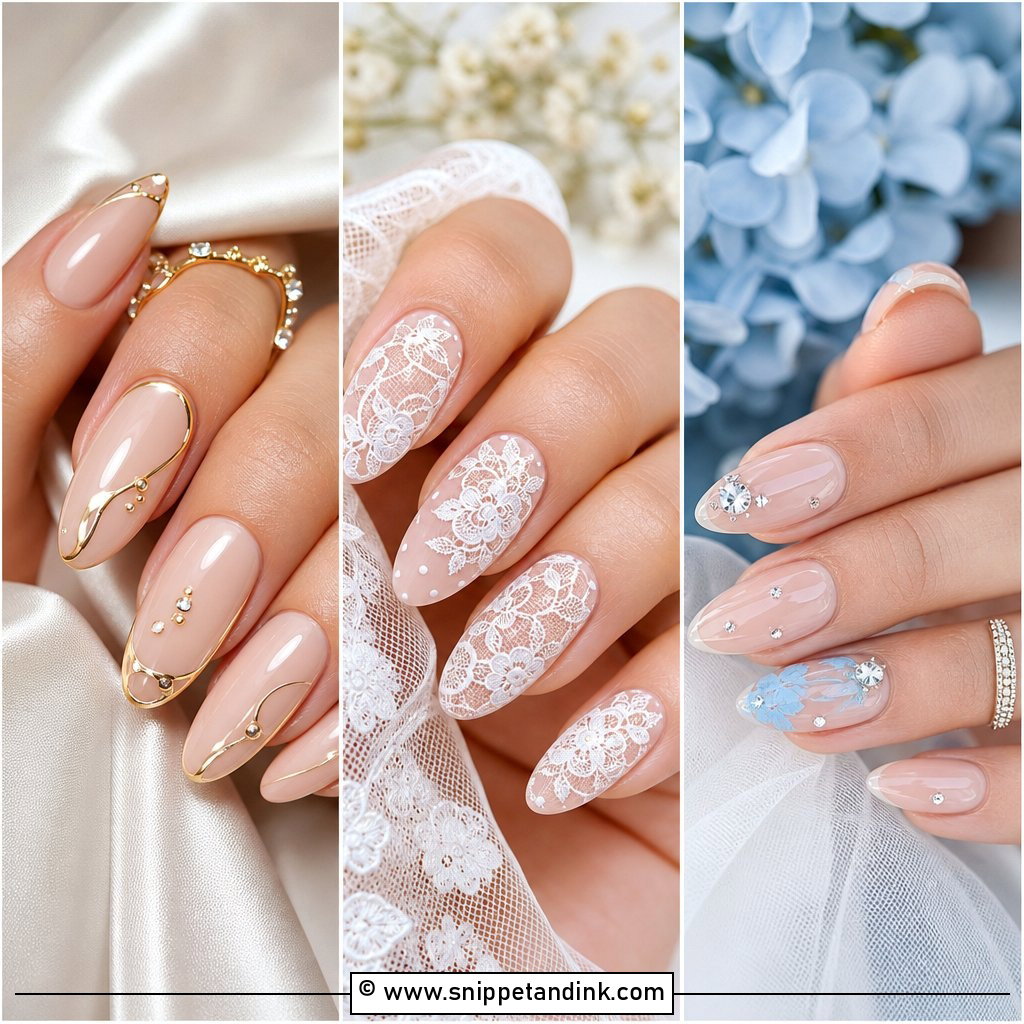
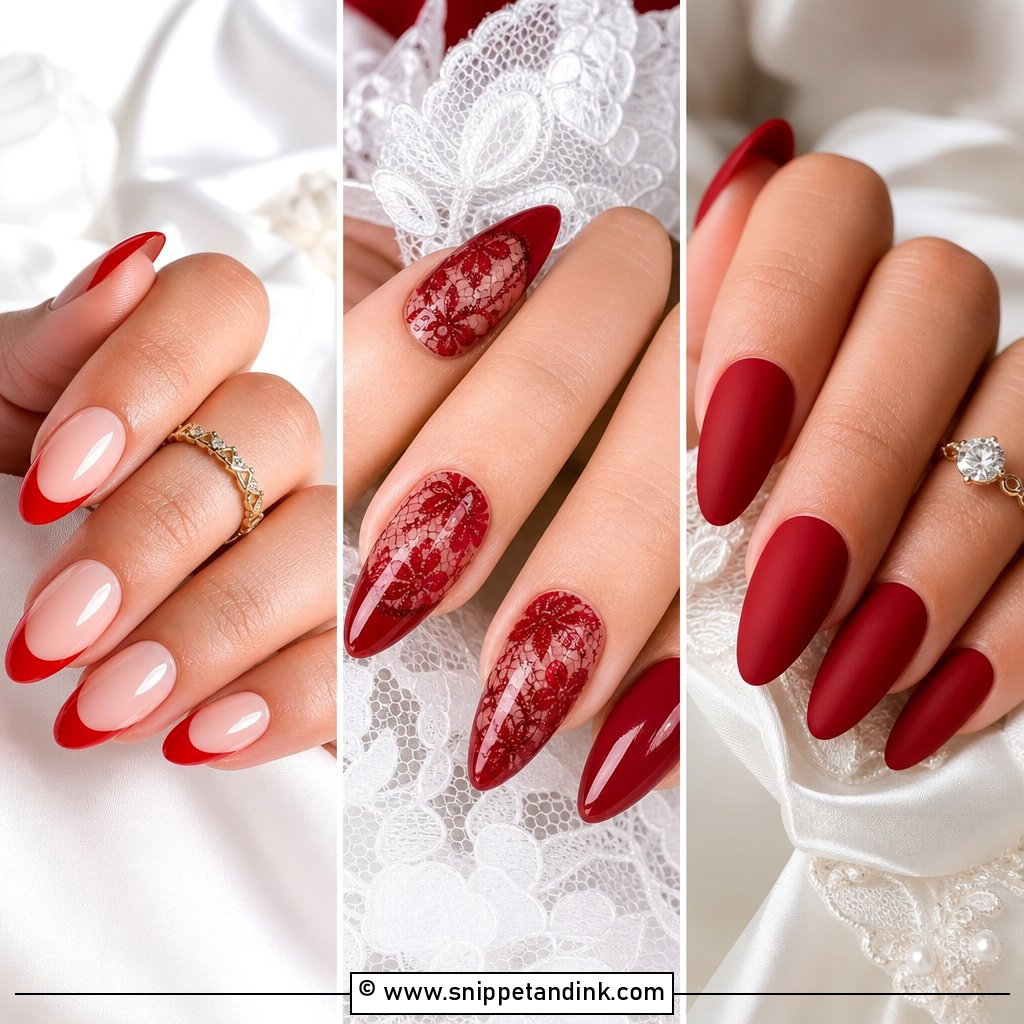
Lace on nails is hand-painted with a very fine liner brush, or done with a stamping plate if the pattern needs to repeat exactly. I ask brides to bring a photo of the actual dress lace, so I can echo its motif rather than paint generic scallops. Fine and airy is the goal; dense lace over a whole nail looks heavy and muddy from a distance. One or two accent nails is often enough. It needs a bit of space, so almond, oval or coffin work better than very short nails. Vintage gowns and garden venues suit it best.
15. Floral Wedding Nails
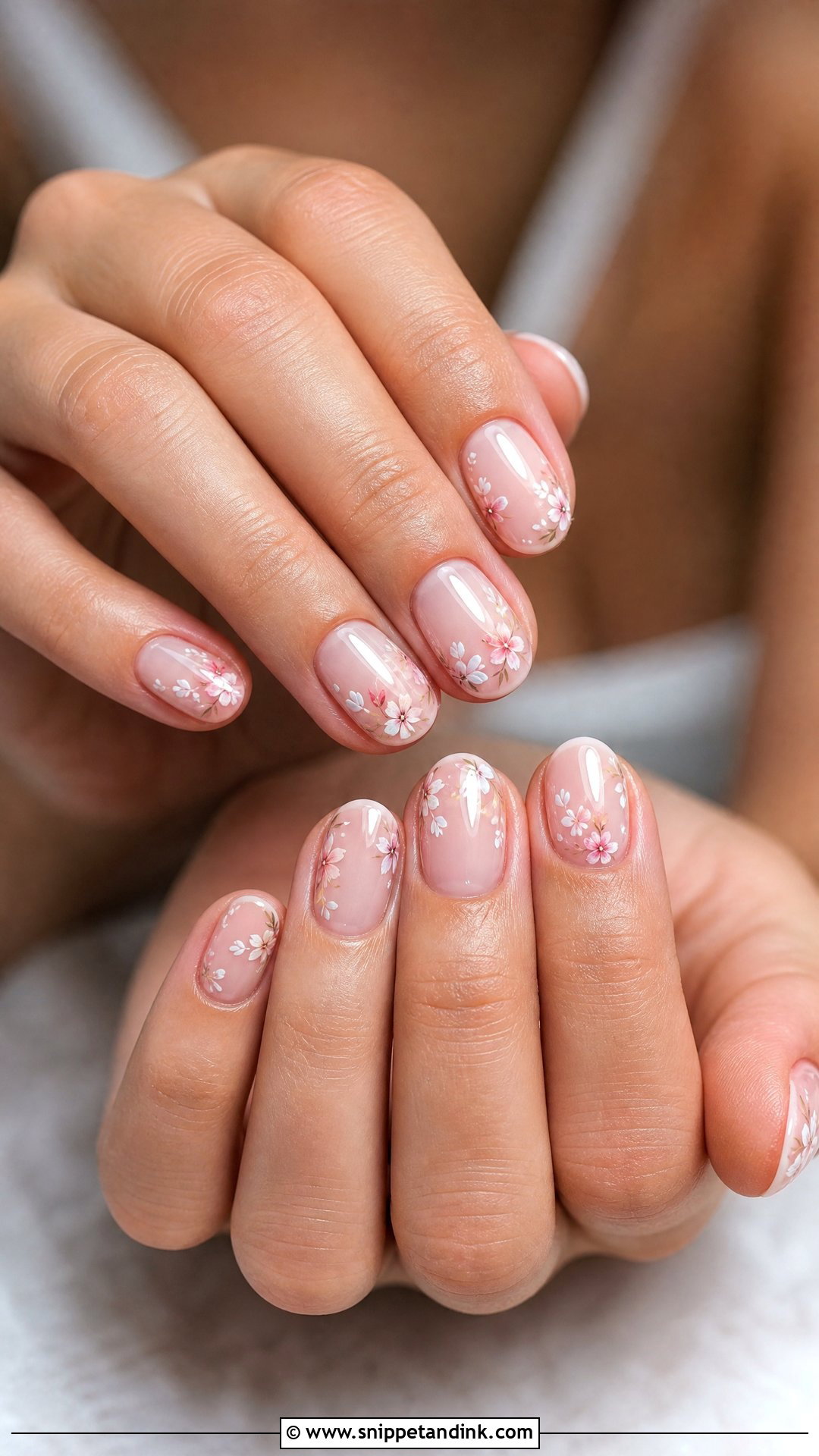
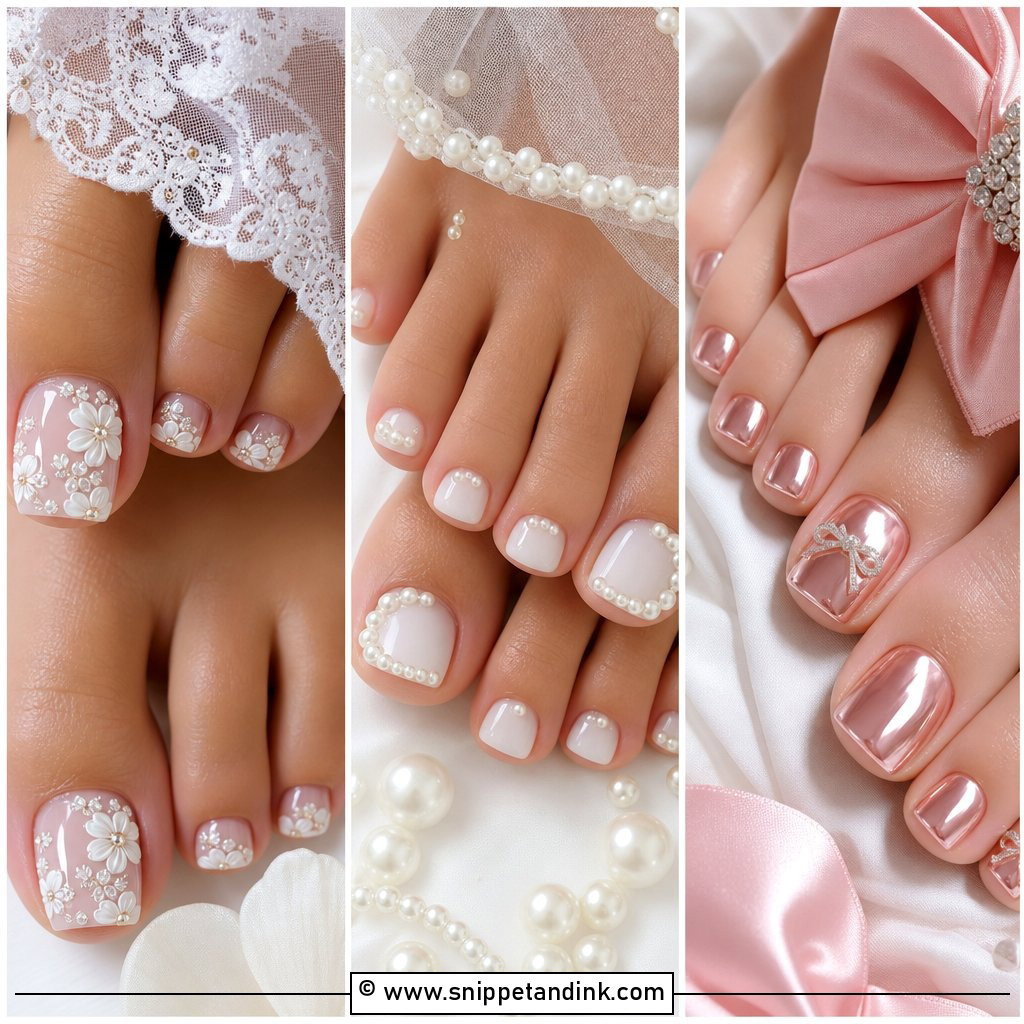
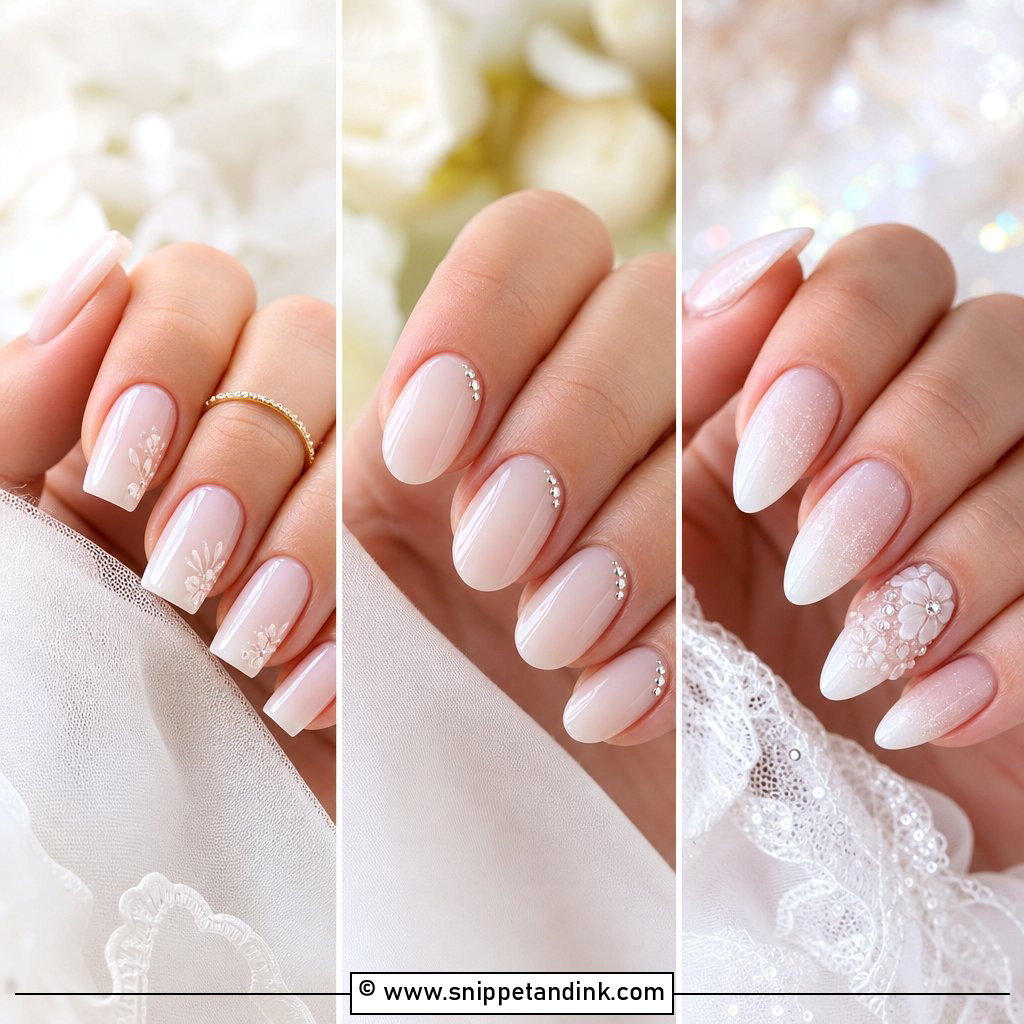
Floral art suits spring and summer, and the most bridal version is tiny white, ivory or pastel flowers on a sheer pink or nude base. Scale is everything. A flower bigger than about a third of the nail starts to look like a holiday manicure, so I keep them small and place them at the cuticle, along a tip, or on one or two accent nails. Raised gel petals with a pearl centre add a soft 3D effect. If your bouquet has baby’s breath, roses or peonies, I’ll match the flower shape to it.
16. Pearl Accent Wedding Nails
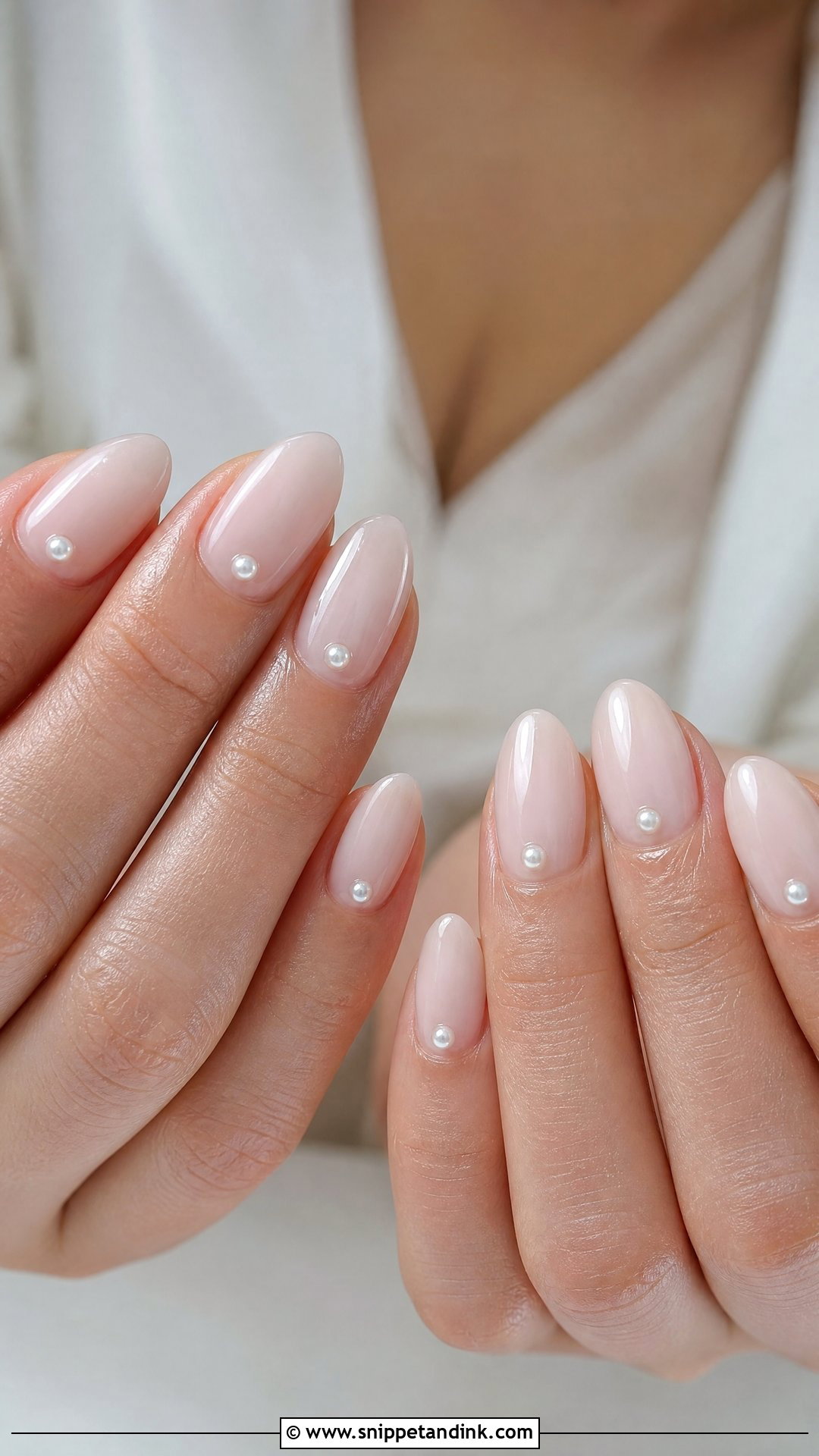
Pearls look delicate but they’re the accent I worry about most for longevity. I use flat-backed pearls, press them into a dab of builder gel and cure, then wrap a top coat around the base of each one. Simply sitting them on top of polish is how they end up in someone’s champagne glass. Start from a plain base such as sheer pink, nude, milky white or a French, then add a few near the cuticle, along the tip or on one accent nail. Almond and oval make them look soft, while square gives a more modern edge.
17. Gold Detail Wedding Nails
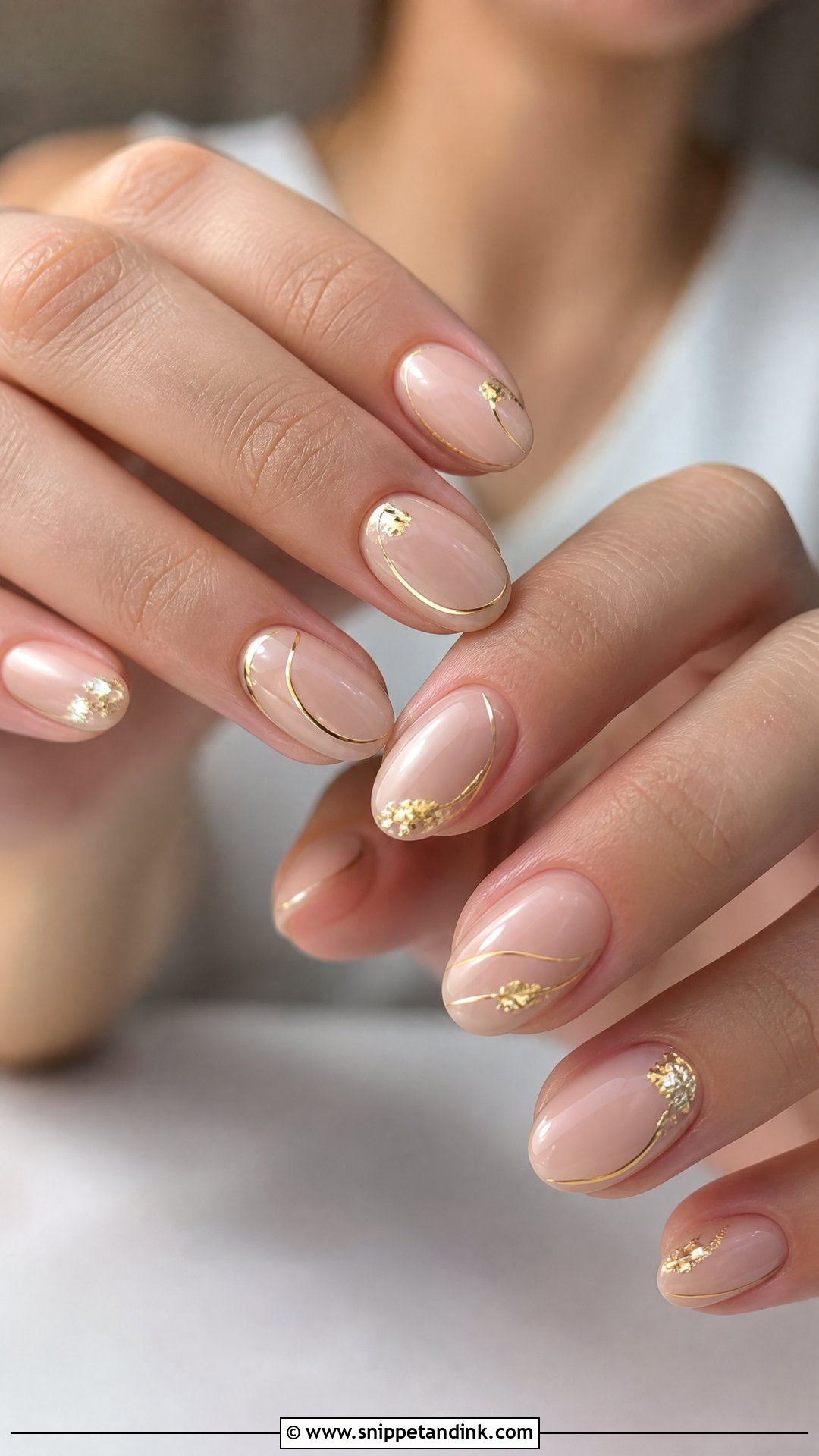
Gold detailing makes sense when your ring, dress embroidery or palette runs warm. It can be a fine gold line, a few flakes of foil or a gold French tip over a nude base. Foil needs a careful seal; any lifted edge catches on fabric and tarnishes quickly. I keep the gold sparse because metallics photograph brighter than they look in person, and a thin line at the cuticle reads as more than enough in a ring shot. Almond and short square both handle it well over a sheer pink or beige.
18. Silver Detail Wedding Nails
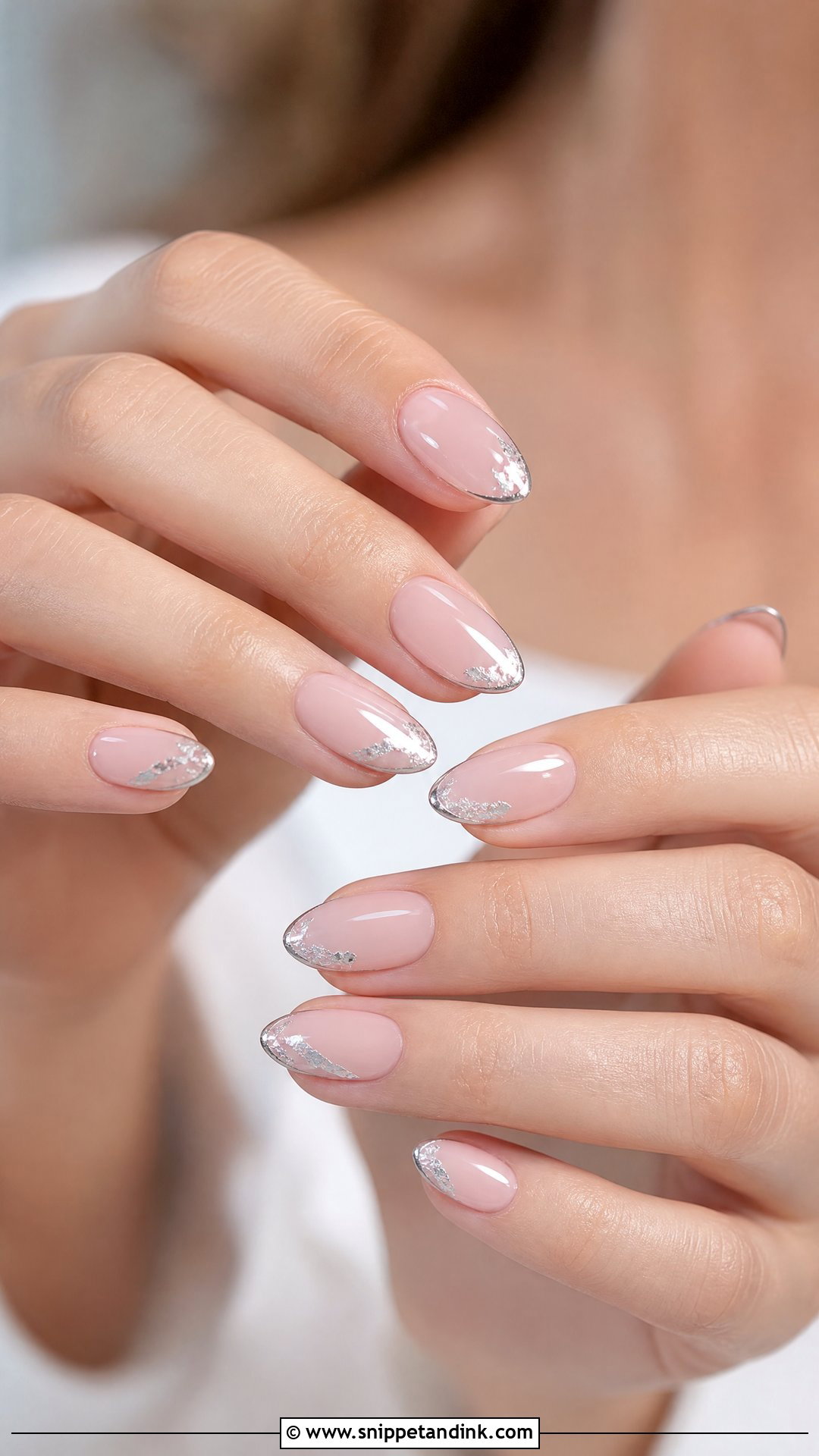
If your band is platinum, white gold or silver, silver detail ties the hands to the ring. Over a sheer nude, pale pink or milky base I add thin silver lines, fine foil or a silver micro French tip. It’s a natural fit for winter weddings and gowns with beading or crystals. Skip chunky silver glitter; it looks like party nails and is a misery to soak off. On short oval or almond nails, a fine metallic line gives just a glint.
19. Champagne Glitter Wedding Nails
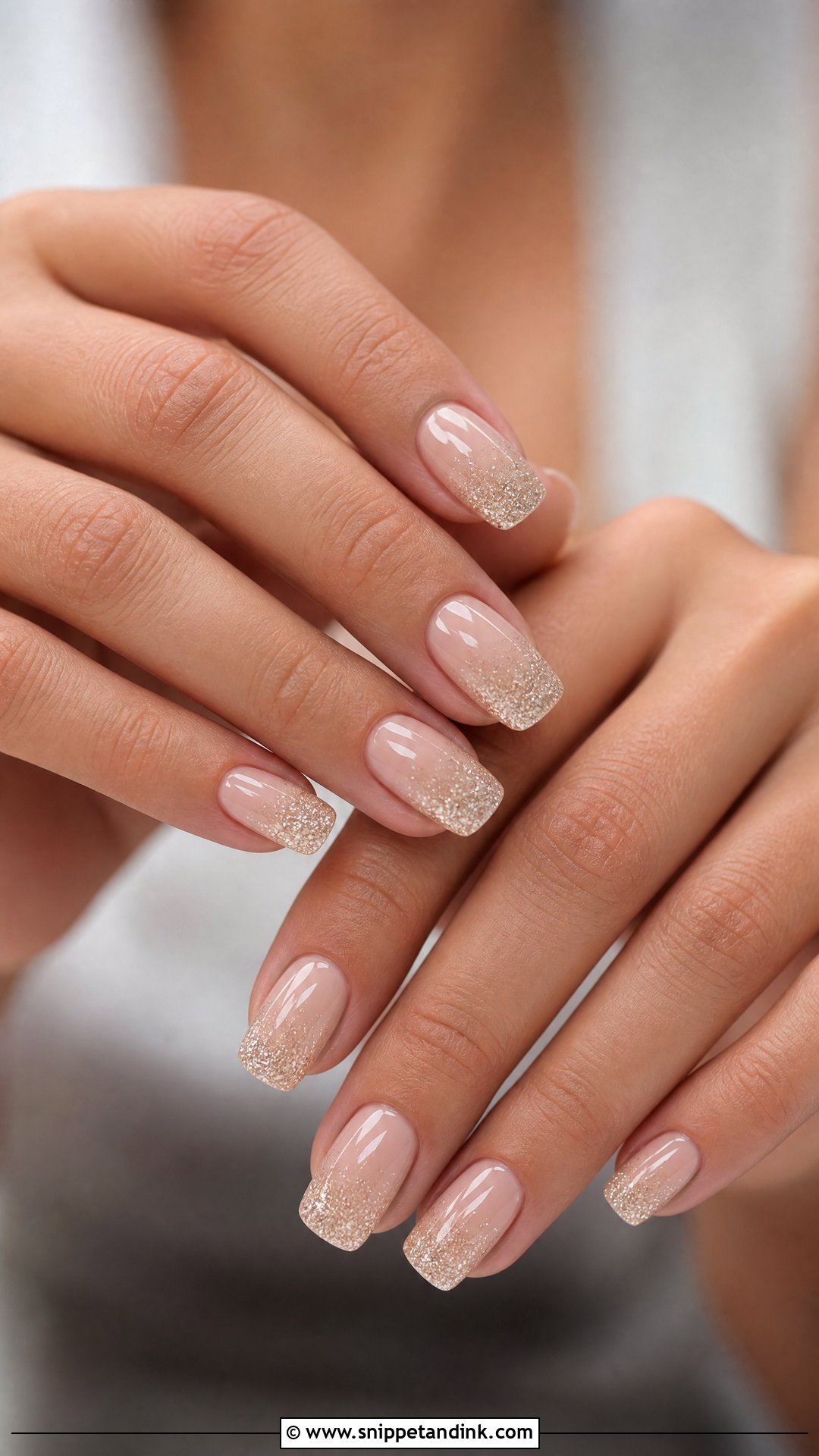
Champagne glitter sits warmer and softer than silver, so it blends into nude, blush, ivory and beige bases without shouting. I usually do it as a fade from the tip or a sheer glitter overlay, which hides a chip far better than solid colour does. A word on removal: glitter gel takes longer to soak off, and I’d rather do that in the salon than have you peel it on the honeymoon. Bridesmaids and guests can wear the same shade on a single accent nail to tie the party together.
20. Cat Eye Wedding Nails
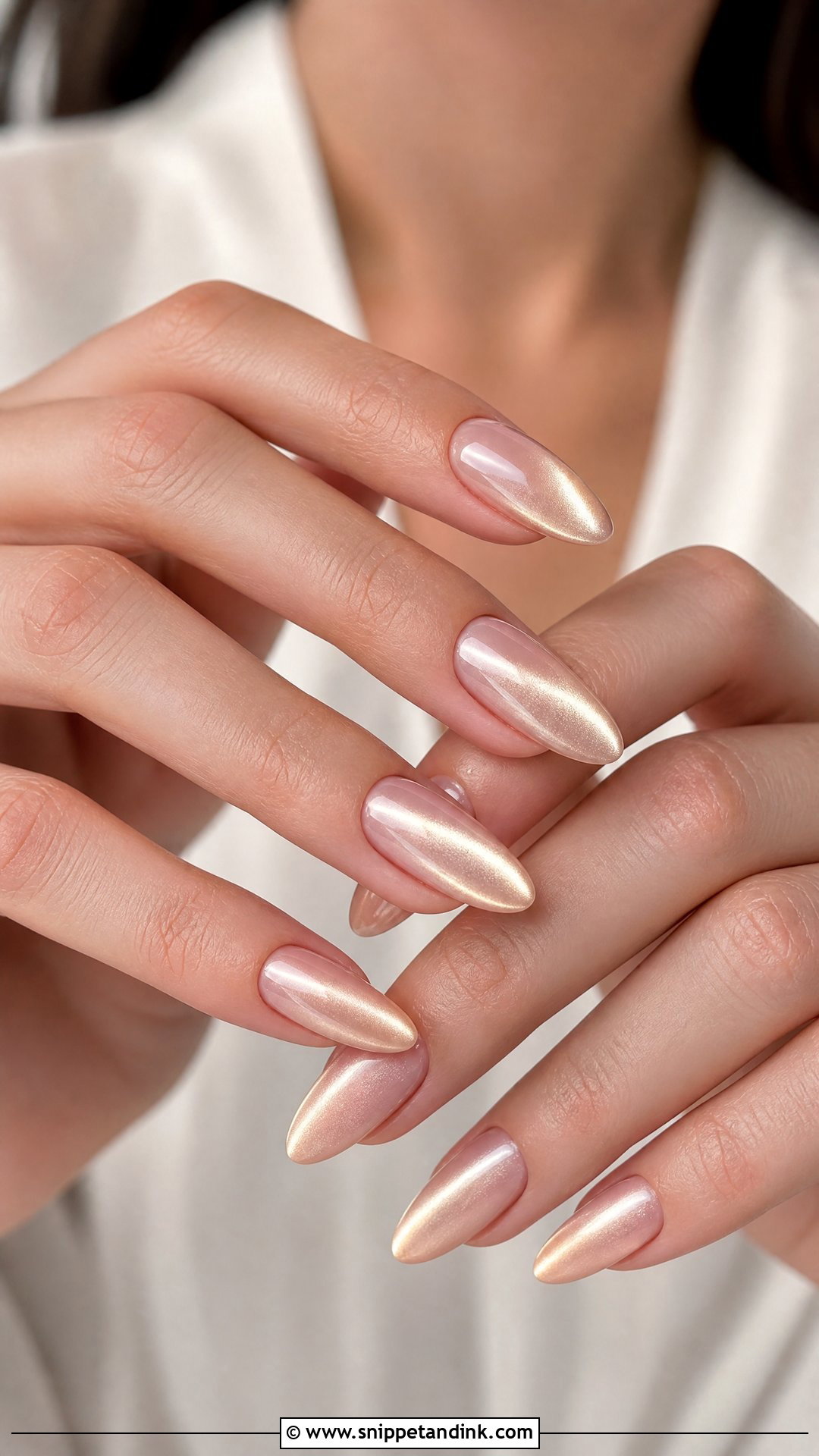
Cat eye uses a magnetic polish with metal particles that I pull into a line with a magnet before curing, which is why the shine seems to move when you turn your hand. For a wedding, I’d keep the shade to pearl, champagne, pink, nude or icy white; dark cat eye looks more evening out than bride. I also hold the magnet further away than usual to get a diffused glow rather than a sharp stripe. Almond and coffin show the effect best because the curve lets the line travel. Expect it to look like silk on the nail.
21. Something Blue Wedding Nails
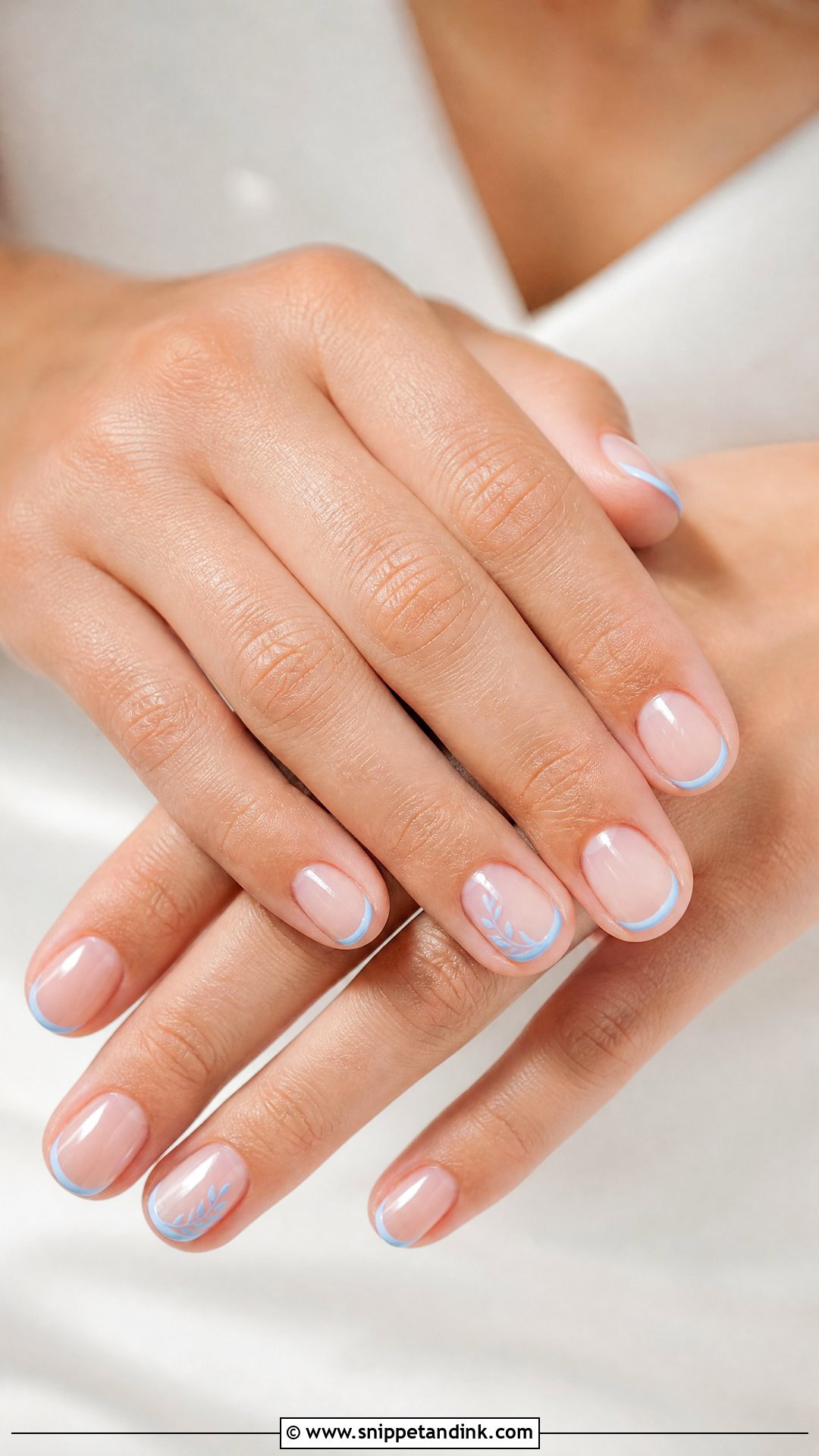
A pale blue micro French is the easiest way I know to carry something blue without it showing up in every photo. Tiny blue flowers on a sheer nude, a blue pearl shimmer or one soft blue accent nail work too. Keep the shade powdery or icy, since a saturated blue fights with ivory fabric. When a bride wants it almost hidden, I paint a dot of blue on the ring finger near the cuticle, where only you know it’s there. Silver jewellery and white flowers suit it most.
22. Matte Nude Wedding Nails
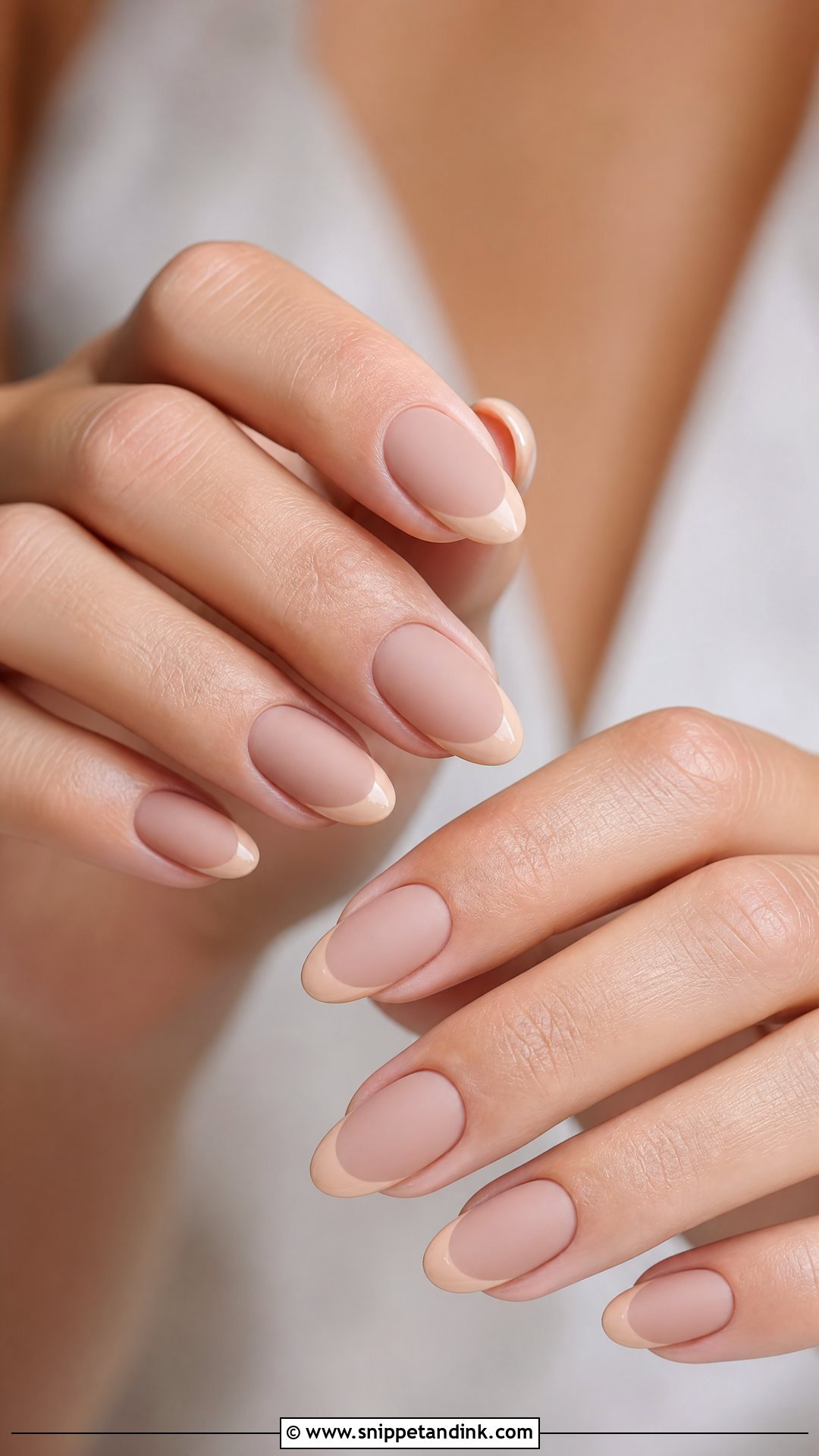
Matte nude looks soft and expensive, like velvet, but it’s the finish I’m most cautious about for a wedding. A matte top coat shows every ridge underneath, so the nail prep has to be immaculate, and it picks up stains from foundation, self-tanner and denim dye. It can also turn patchily shiny where your fingers rub together. Pick a nude matched to your undertone: pink beige, warm sand, caramel or soft mocha. A glossy French tip over the matte base is a clever contrast, and it hides wear at the free edge.
23. 3D Flower Wedding Nails
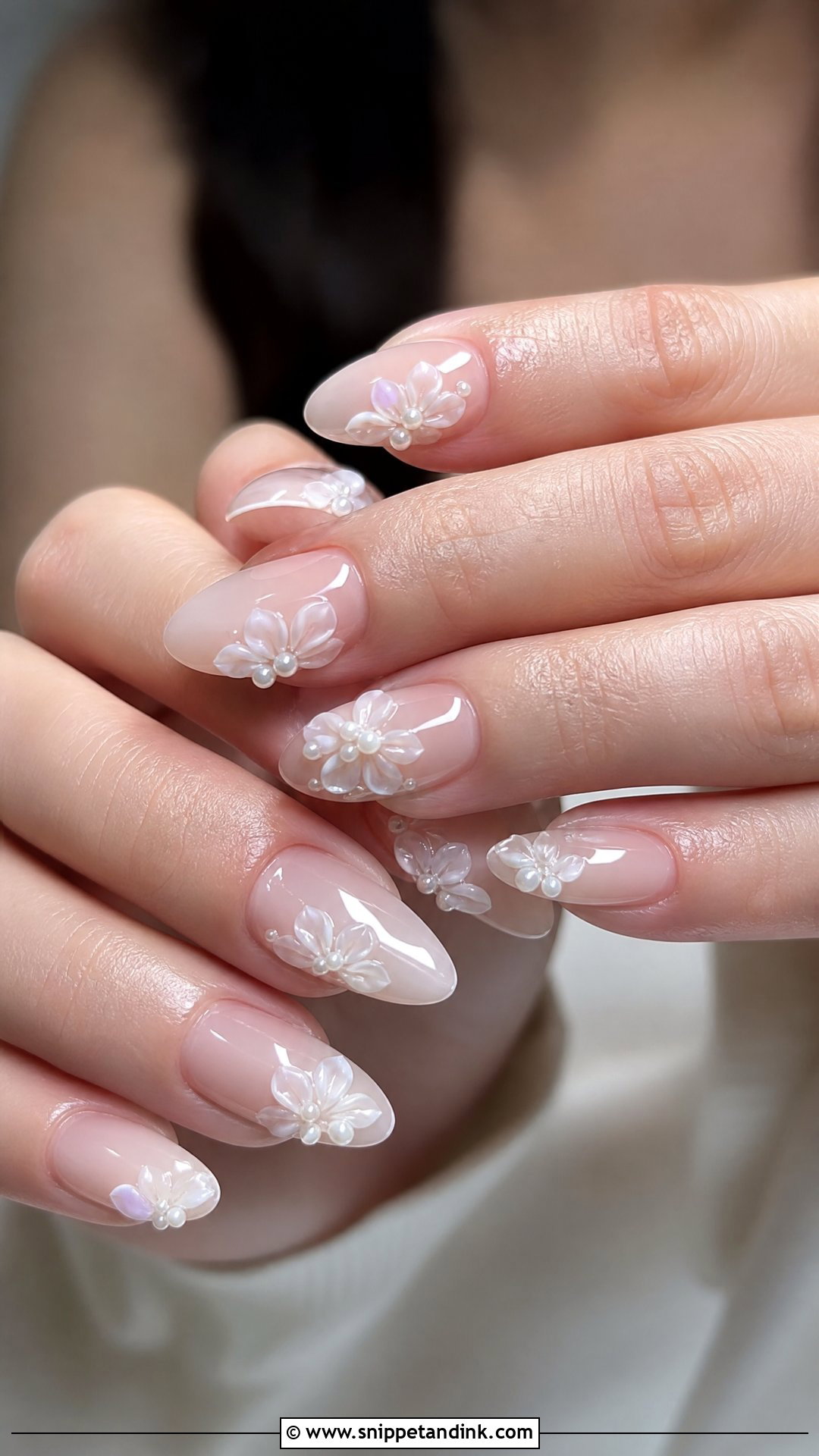
Raised flowers are sculpted in builder gel or acrylic over a nude, blush or milky base, and they’re the most tactile design here. I keep the petals low and small, and limit them to one or two accent nails, because a tall flower catches on lace, tulle and hair every time you touch your veil. Sealing matters too: I flood a top coat around the edges so there’s no lip for fabric to grab. Tiny pearls or fine shimmer can sit alongside them. They suit floral lace gowns and outdoor weddings.
24. Minimal Wedding Nails
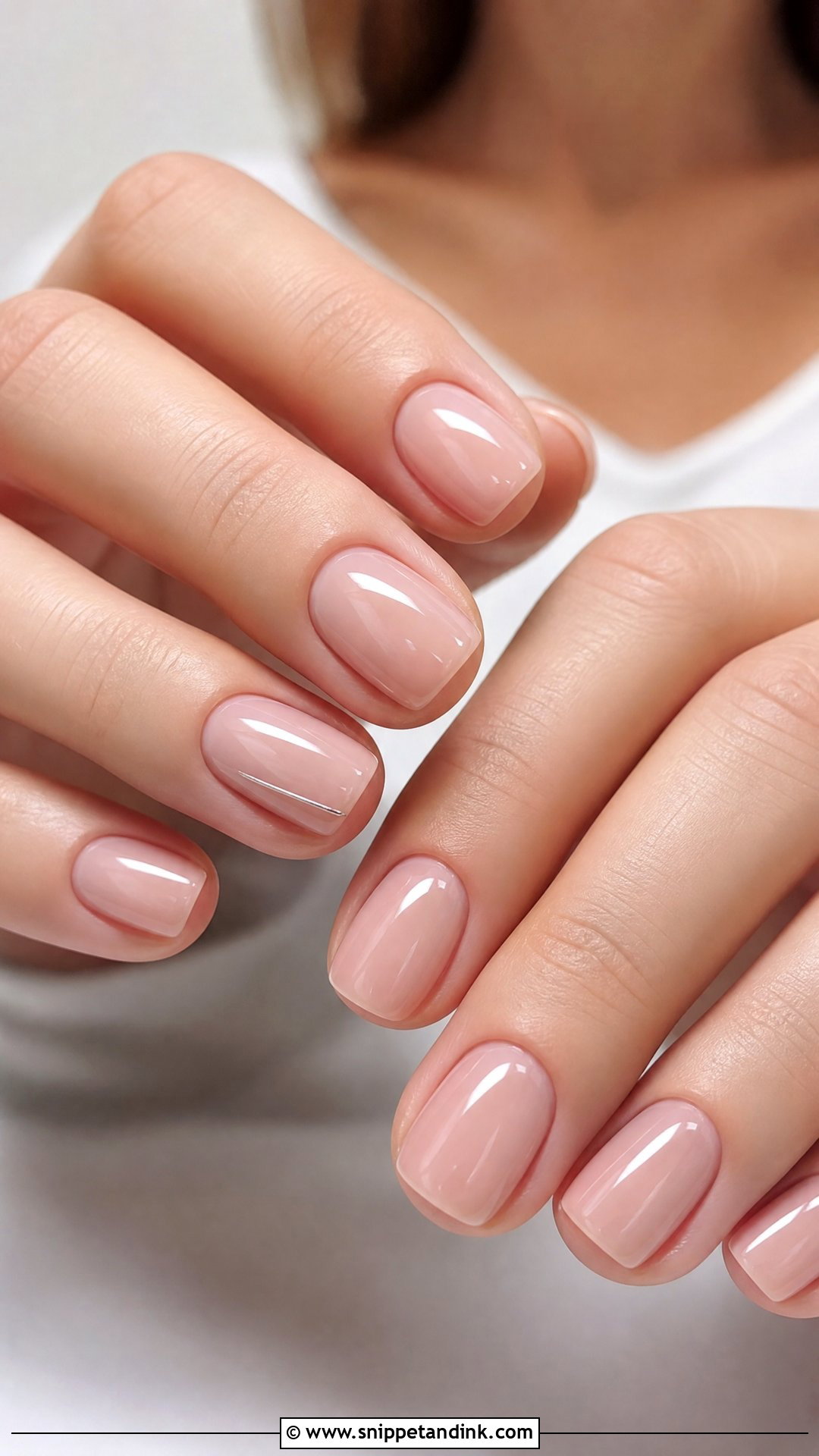
Minimal nails are really a prep job. The effect relies on healthy-looking cuticles, an even shape and a clean colour, so most of my time goes into cuticle work and filing rather than polish. Sheer nude, pale pink, milky white or clear gloss, then one small element: a micro French, a single pearl, one chrome line or a shimmer finish. This is what I suggest when the dress has beading, lace, sleeves or heavy accessories, since the hands then don’t have to do any work. It’s at its best on natural, short nails.
25. Rhinestone Wedding Nails
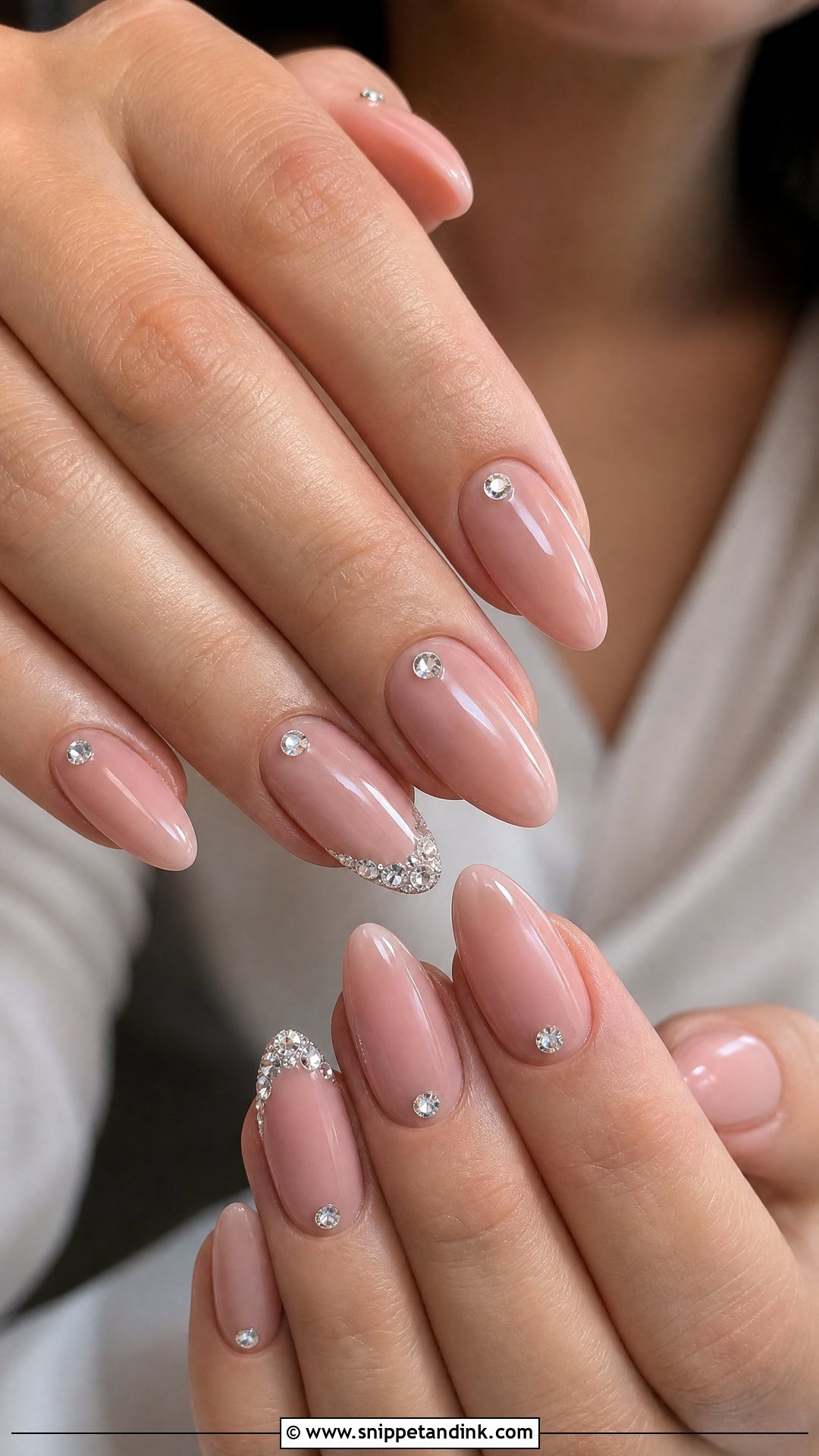
Rhinestone wedding nails work when the crystals are placed, not scattered. I set tiny stones near the cuticle, along a French line or on a single accent nail, using gel glue and a sealed edge so they don’t snag. Over blush, nude or milky white, clear crystals sit well with silver jewellery and champagne stones with gold. Under evening lighting and flash they throw a lot of sparkle, more than you see in the chair. A balanced almond or soft square shape keeps the crystals from overpowering the hand.
Which Finishes Hold Up From Getting Dressed to the Last Dance
On the wedding day your hands do far more than in a normal day. You fasten jewellery, grip a bouquet for hours, hug a hundred people and cut cake. Different finishes respond to that very differently, so it’s worth knowing before you choose.
Most forgiving
Glossy gel in sheer pink, nude or milky white, French ombre and champagne glitter fades. They hide small chips, and a slightly worn tip just looks like part of the design. These are what I’d suggest if you’re also doing your own hair or packing the car.
Needs a careful seal
Chrome powders, foil, pearls and crystals all depend on how well they’re capped. Chrome wears first at the free edge; pearls and stones loosen when they sit proud of the top coat. Run a finger over the set before you leave the chair. If anything catches on your nail, it will catch on your veil.
Handle with care
Matte top coats, tall 3D flowers and very long coffin shapes. Matte gets shiny patches and stains; raised art snags tulle and hair; long tips break on car doors. None of them is wrong, but they suit a bride who’s happy to let someone else do the lifting.
Whatever you choose, pack a small emergency kit: a nail file, a clear top coat, a tube of nail glue and a cuticle oil pen. A broken corner filed smooth within minutes looks fine in photos; one left jagged pulls a thread out of the gown.
Matching the Set to Your Hands, Not the Mood Board
If I had to give one piece of advice, it would be to choose for your hands and your day rather than for a screenshot. Classic tastes usually land on a French tip, milky white or blush. Brides who like a glow go for pearl chrome, glazed or a soft cat eye. And if you want detail, keep it to one or two accents: lace, a few flowers, pearls, a gold line or a scatter of crystals. Bring your ring, a swatch of the dress and an honest idea of how much you use your hands, and the set will look right in every photo.
You'll Like These Ideas:


Leave a Reply