
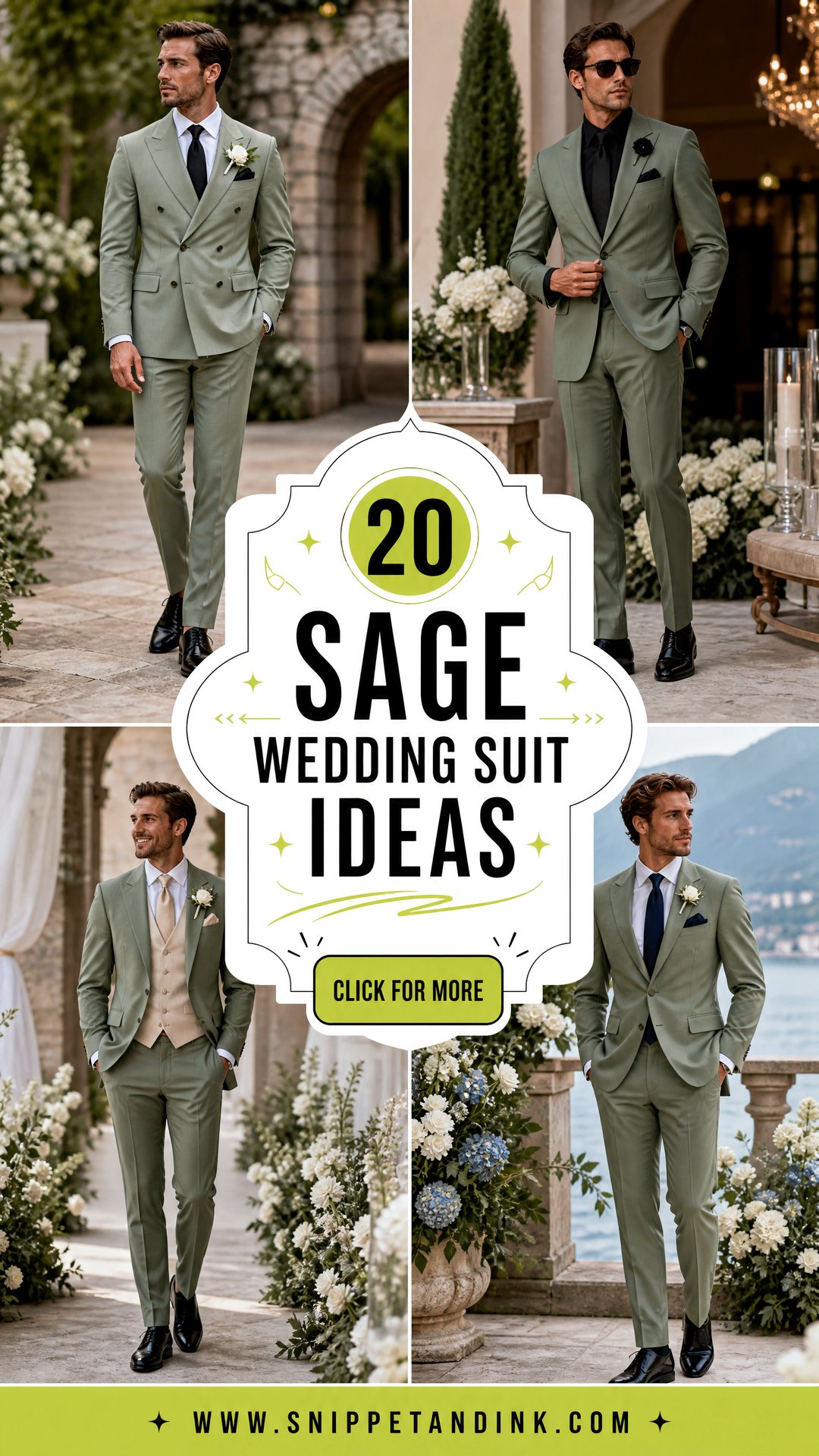
Sage gives wedding tailoring a calm color that is neither traditional navy nor loud. These 20 Sage Wedding Suit Ideas cover grooms, groomsmen, brides and guests across seasons and dress codes. Sage plays well with ivory, tan, blush, champagne, terracotta and dark brown, and it looks at home in a garden, a barn, on a coast or in a city loft. When I build a sage outfit, three things come before any accessory: the fit through the shoulders, the fabric weight for the month, and a set of accents that all point the same way. Everything from three-piece tailoring to relaxed linen separates is below.
Wool, Linen or a Blend for a Sage Suit
Sage looks different in every cloth, and the cloth decides how you’ll feel six hours in. This is how I match fabric to the wedding date:
- Lightweight wool, roughly 230 to 260 grams per square meter (about 8 to 9 oz): my default for spring and early autumn. It resists creases, breathes, and holds sage dye evenly.
- Linen or a linen-wool blend: summer and beaches. Pure linen creases the most; a blend keeps the texture with fewer wrinkles.
- Cotton: comfortable and slightly casual, with a matte face that suits rustic venues. Expect creasing at the elbows and knees.
- Heavier wool, flannel or tweed, around 300 grams and up: late autumn and winter only.
- Polyester-heavy blends: I avoid them for sage. Many have a sheen that makes the color look plasticky in flash photos, and they trap heat.
Ask for swatches before you commit and look at them outdoors. The same named shade can look greyer on one cloth and warmer on another, so compare real fabric, never screen photos.
1. Classic Sage Wedding Suit With White Shirt
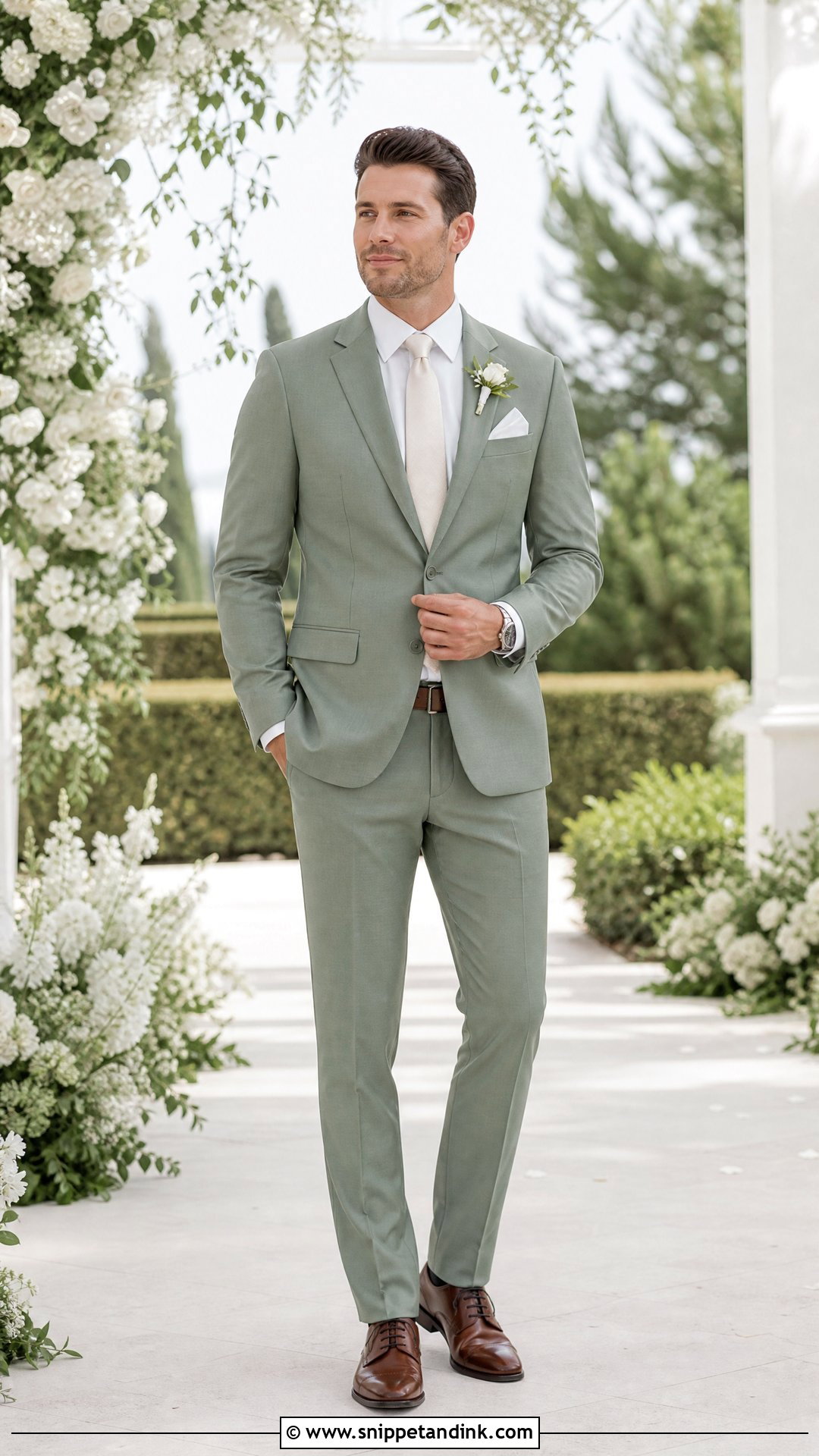
White shirt, sage suit. This is the version I start most grooms with, because it’s hard to get wrong. Choose a structured single-breasted jacket with notch lapels and matching tapered trousers. An ivory or light beige tie keeps the palette gentle while still separating from the shirt; a pure white tie would vanish against it. A white pocket square folded flat and a small boutonniere echoing the wedding flowers. Medium-brown Oxfords and a matching belt warm up the green, with simple cuff links and a classic watch. In fittings I check the shoulders first, then sleeve length, with a quarter to half an inch of shirt cuff showing, then the waist and the trouser hem.
2. Sage Three-Piece Wedding Suit With Ivory Tie
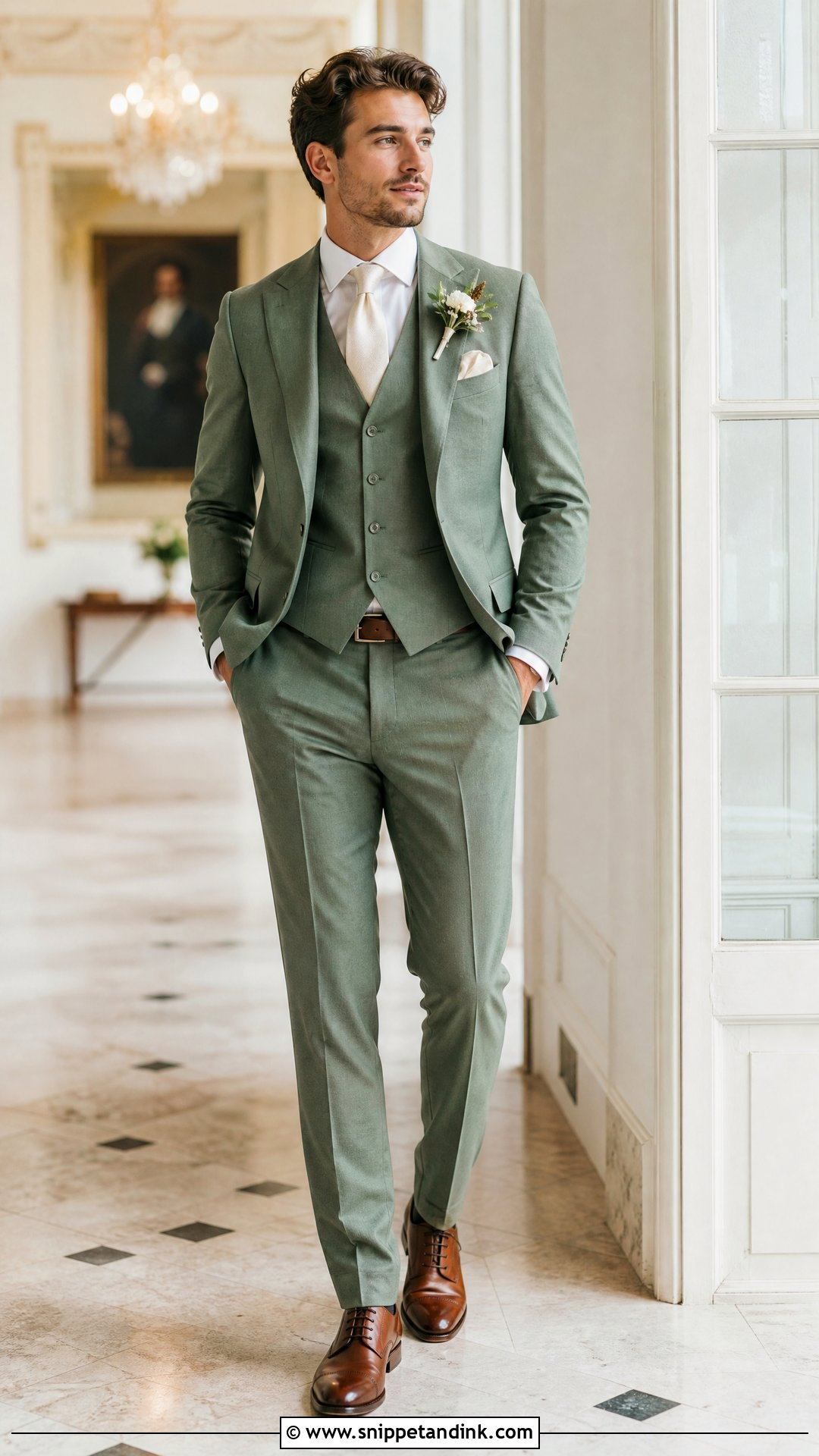
A three-piece adds polish and quietly sets the groom apart from guests in two-piece suits. The vest is where fit matters most. It should sit close with no pulling at the buttons, and its bottom edge must cover the trouser waistband, which usually means a higher-rise trouser. Layer it over a white or soft ivory shirt with an ivory silk tie for tonal contrast. Brown cap-toes, a cream pocket square, and side adjusters rather than a belt, since the vest hides the waist anyway. Leave the bottom vest button undone; most vests are cut expecting it. A small boutonniere of white flowers with restrained greenery suits garden ceremonies and formal daytime weddings.
3. Sage Linen Wedding Suit With Loafers
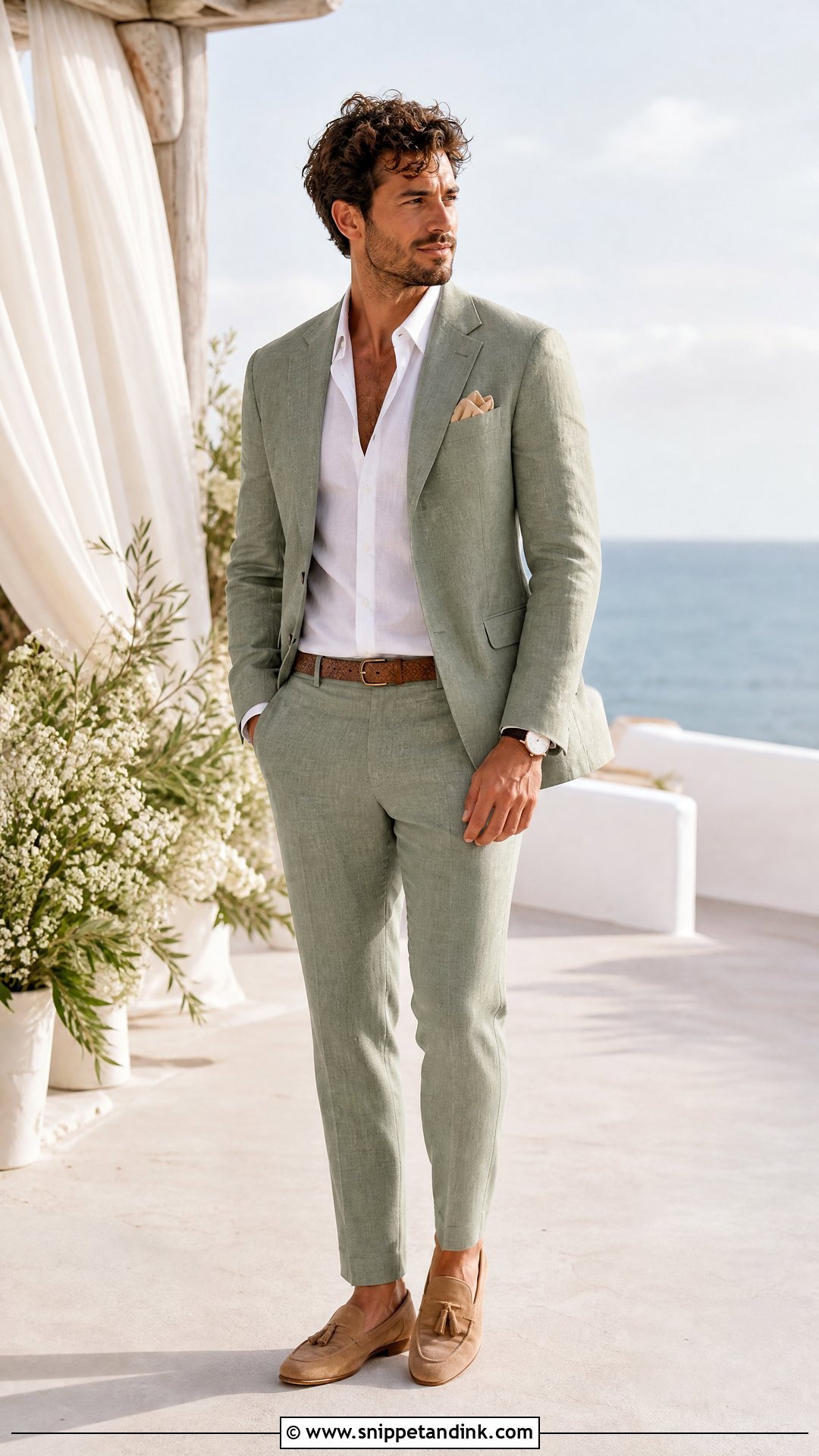
Linen breathes better than anything else here, and it will crease, so accept that from the start. Choose a lightweight, half-lined jacket and matching trousers in a relaxed but properly tailored cut. A white linen-blend shirt, with an open collar in place of a tie at a beach or destination wedding. Tan suede loafers with no-show socks, a woven leather belt, a neutral pocket square and a quiet watch. I tell grooms to steam linen that morning and then stop worrying. By the first dance it’ll have soft creases at the elbows and lap, which is exactly how linen is meant to look at a coastal ceremony or a summer garden reception.
4. Sage Double-Breasted Wedding Suit With Black Shoes
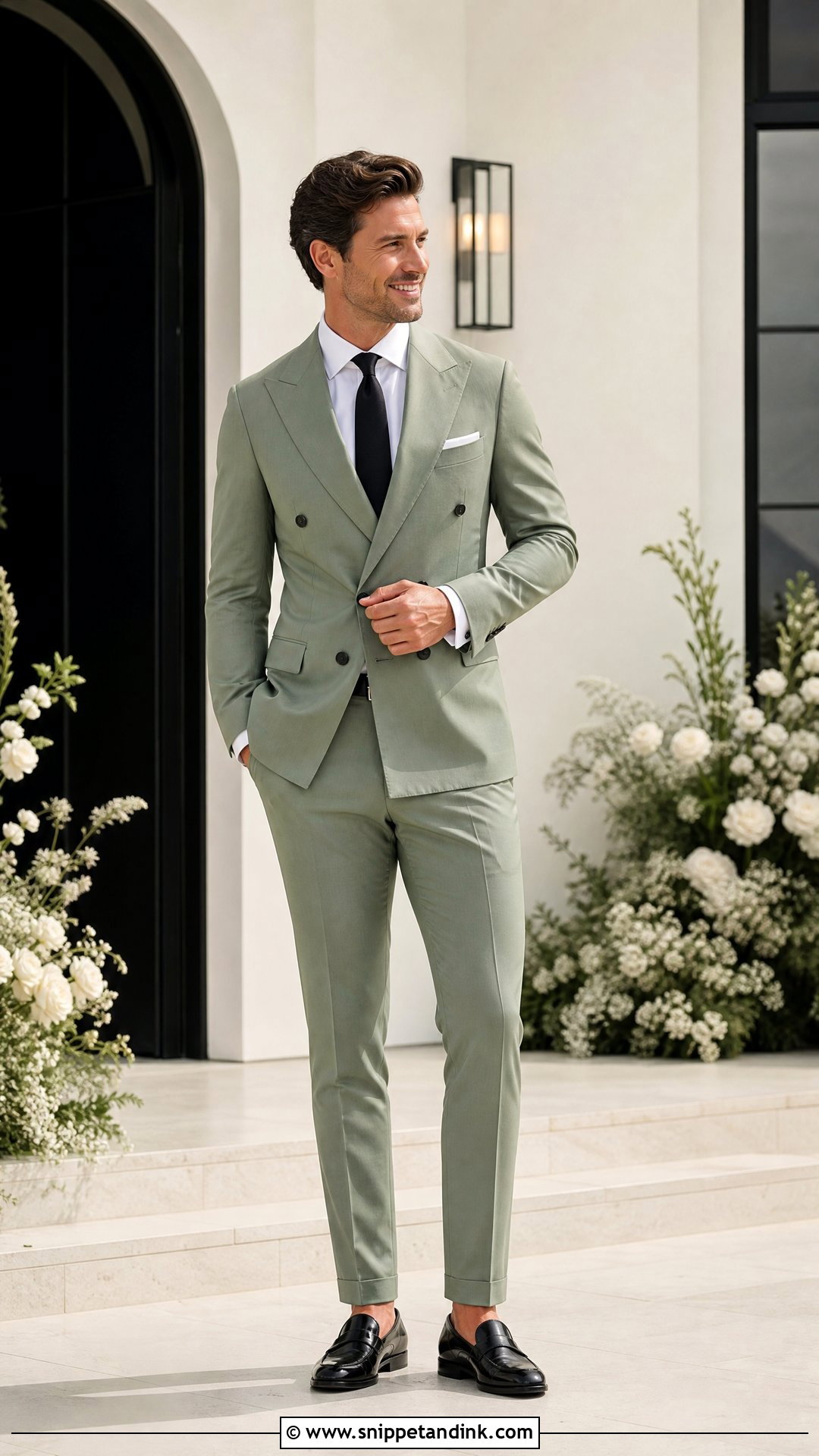
A double-breasted jacket gives a stronger, more formal shape. Look for a six-button front with peak lapels and a defined waist, balanced by trousers with little or no break. These jackets are cut to be worn buttoned, so keep it fastened while standing; left open, the extra fabric flaps and looks untidy in photos. A white spread-collar shirt and a dark sage or black silk tie. Black leather loafers or lace-ups sharpen the soft green, with a black belt to match, plus a white pocket square and plain metal cuff links. On a shorter frame, I look for a slightly lower button stance and lapels that point up and out, both of which lengthen the torso.
5. Light Sage Wedding Suit With Tan Shoes
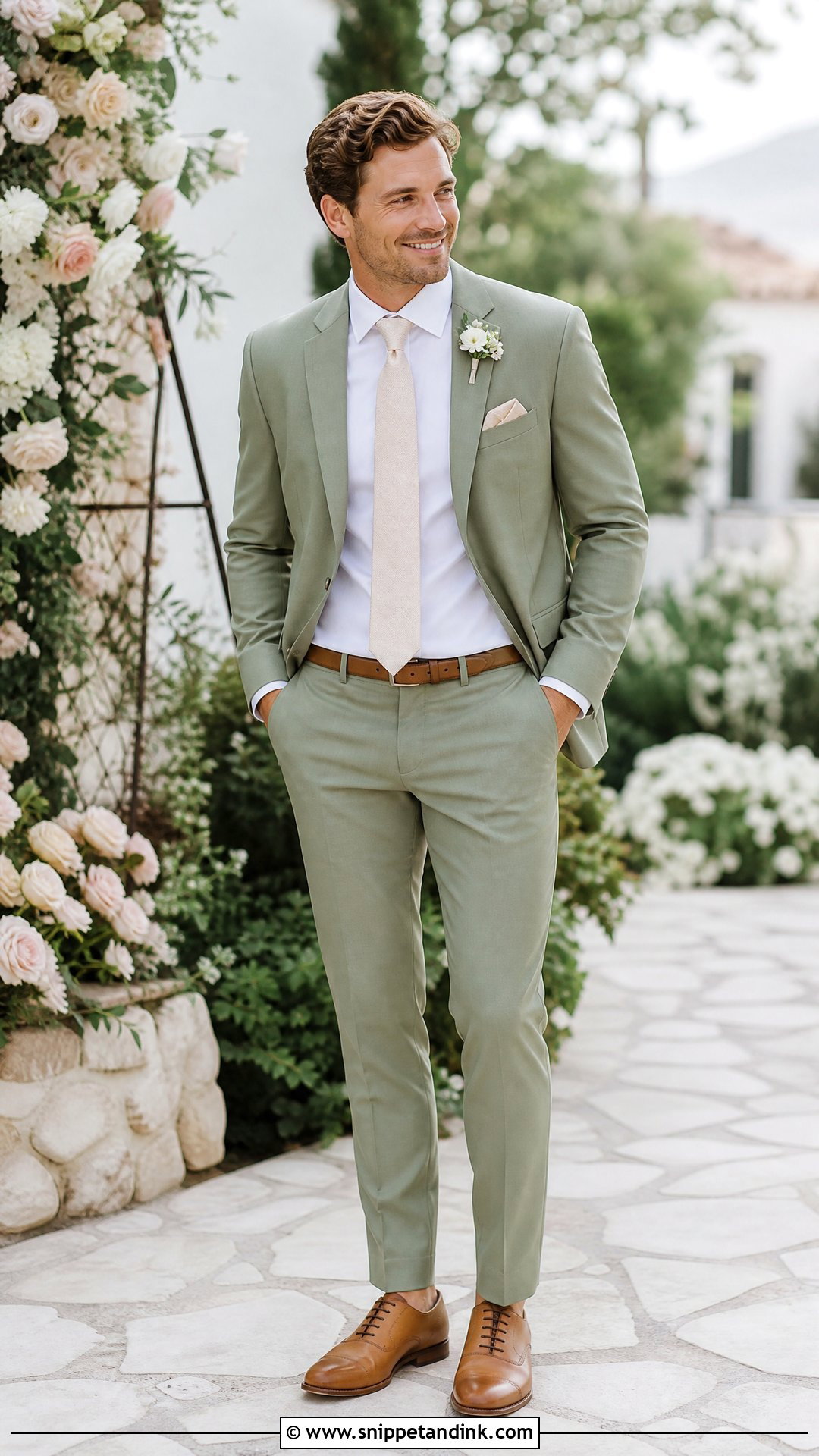
Pale sage belongs to spring and summer daylight. A slim or modern-fit jacket with matching trousers and a bright white cotton shirt; a champagne, sand or pale blush tie adds warmth. Tan leather Derbies and a matching belt keep everything light, with a cream pocket square and a white-flower boutonniere. Very pale sage shifts more than any other shade between daylight and warm indoor bulbs, sometimes toward grey, sometimes toward mint, so I always look at the cloth in the kind of light the venue will have. Light colors also show sweat marks under the arms, which is worth thinking about before an outdoor July ceremony.
6. Dark Sage Wedding Suit With Black Accessories
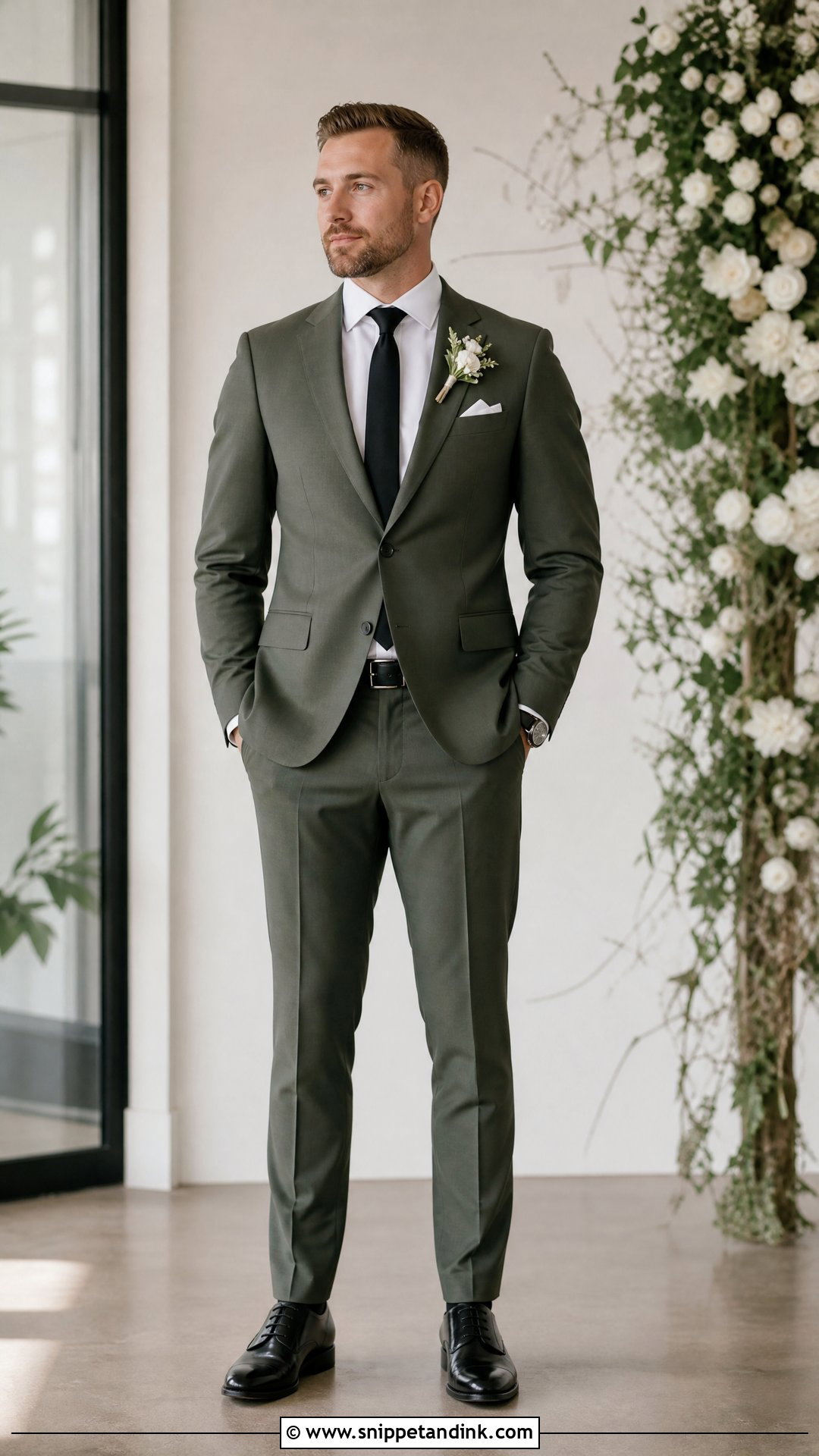
Deep sage carries an autumn or evening wedding where pastel green would look out of season. Build it on a dark sage two-piece, a fitted white shirt and a narrow black tie. Black leather loafers or polished Oxfords make it formal, with a belt in the same leather. A black or white pocket square, depending on how much contrast you want, and a white boutonniere to soften the darker palette. Resist the urge to add more green. The fabric already carries plenty of weight, and the cleanest version is the strongest one at an industrial venue or an evening reception.
7. Sage Wedding Suit With Floral Tie
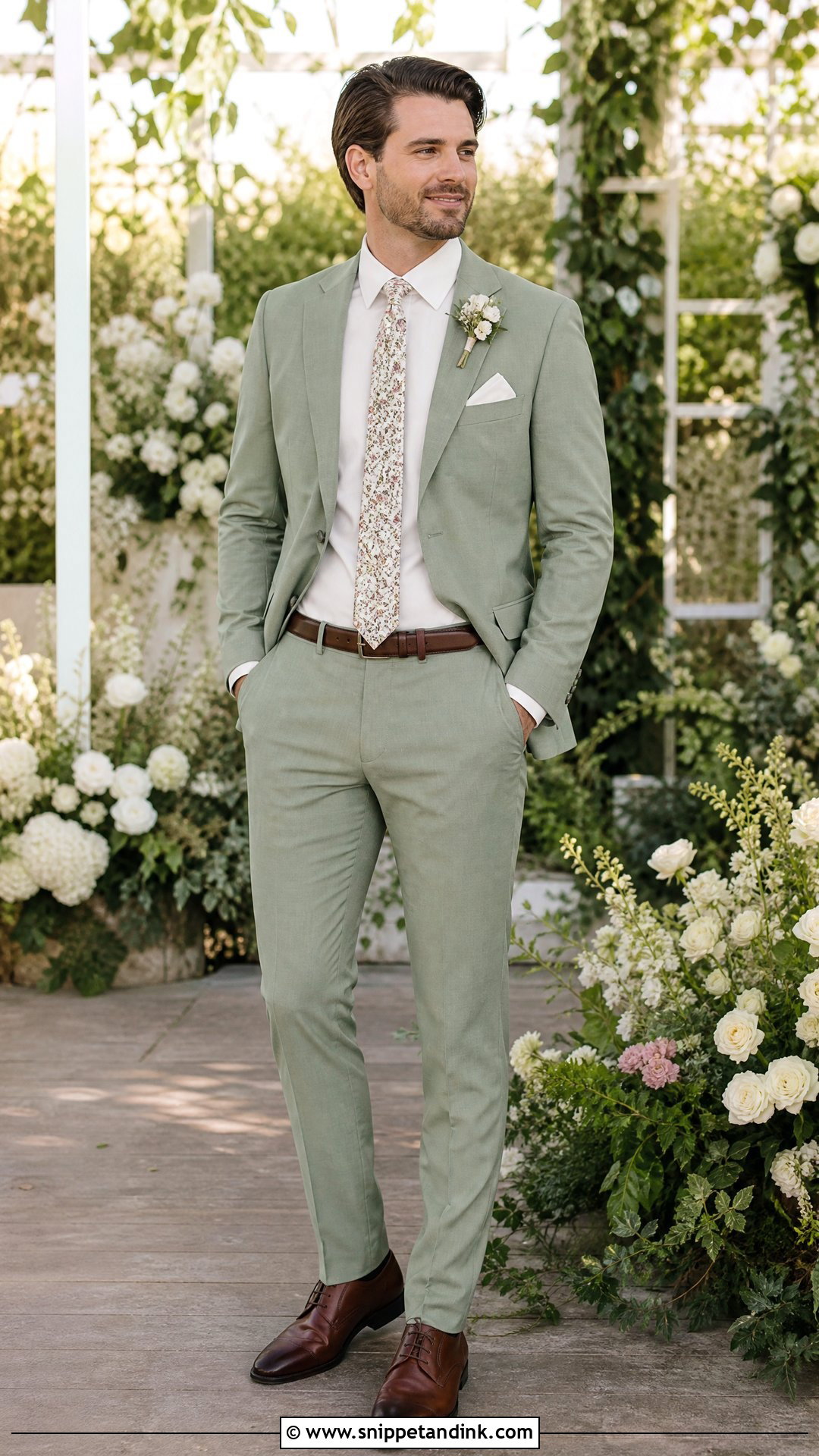
A floral tie links the groom to the flowers, literally if you ask the florist which blooms are going into the bouquet. Choose a small print with touches of sage, blush, cream, lavender or dusty blue rather than a big multicolor pattern; large florals look muddled at the distance most photos are taken from. Wear it over a plain white or ivory shirt with a tailored sage suit, dark-brown shoes and a matching belt. Keep the pocket square solid. A boutonniere using one flower from the tie’s palette is the kind of detail guests actually notice at a botanical or woodland wedding.
8. Sage Wedding Suit With Bow Tie
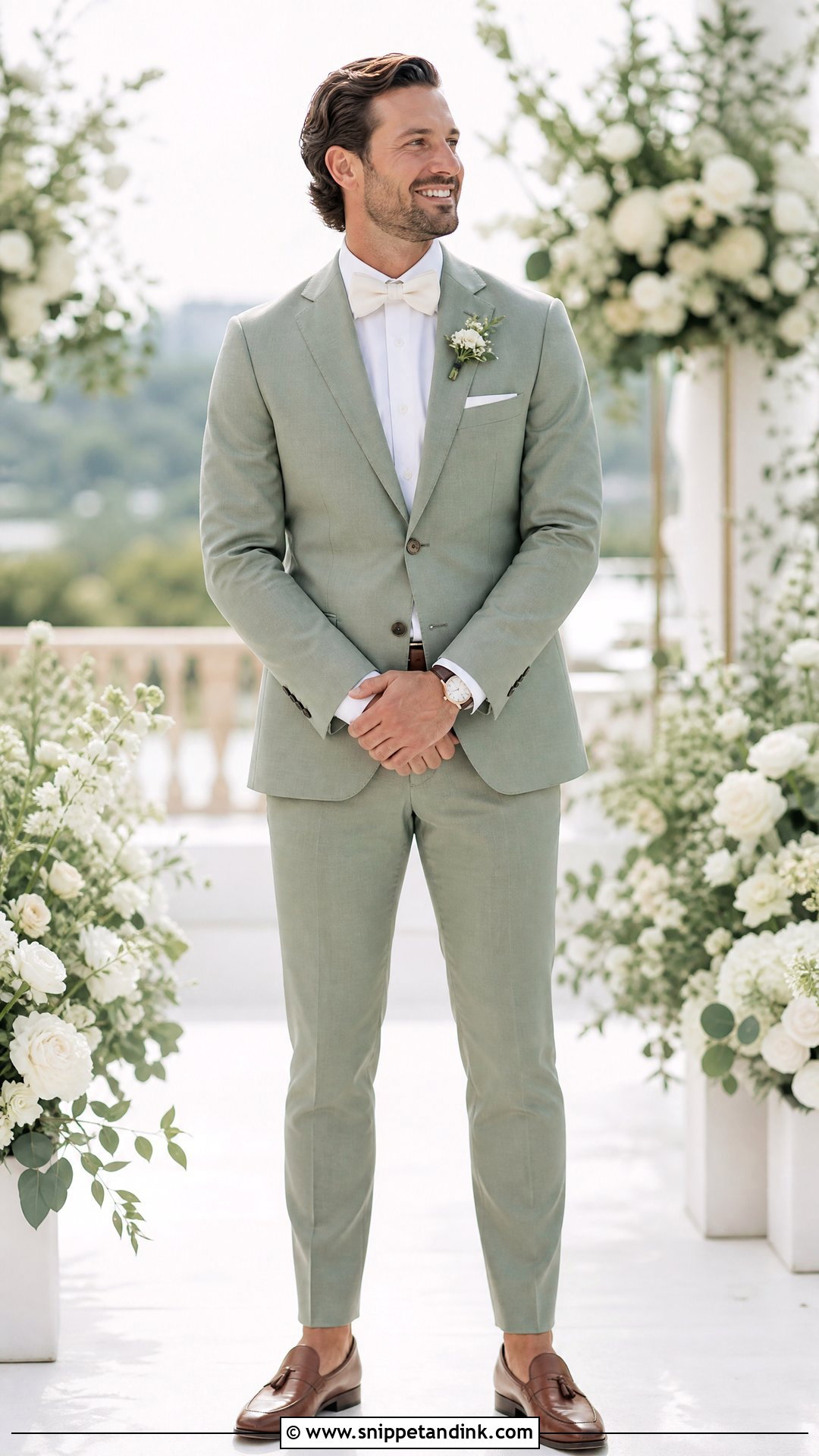
A bow tie is formal with a bit of play in it. Matching sage jacket and trousers, a white pleated or smooth-front shirt, and an ivory, champagne, chocolate or subtly patterned bow depending on the palette. Brown loafers, a coordinating belt and a white pocket square. Keep the boutonniere compact, since a big one beside a bow tie crowds the lapel. I always push grooms toward a self-tie bow. Tied by hand it sits slightly uneven, which looks real in close-up portraits, while a pre-tied one looks stamped out. Practice tying it a few times the week before, or recruit a groomsman who already knows how.
9. Sage Wedding Suit With Turtleneck
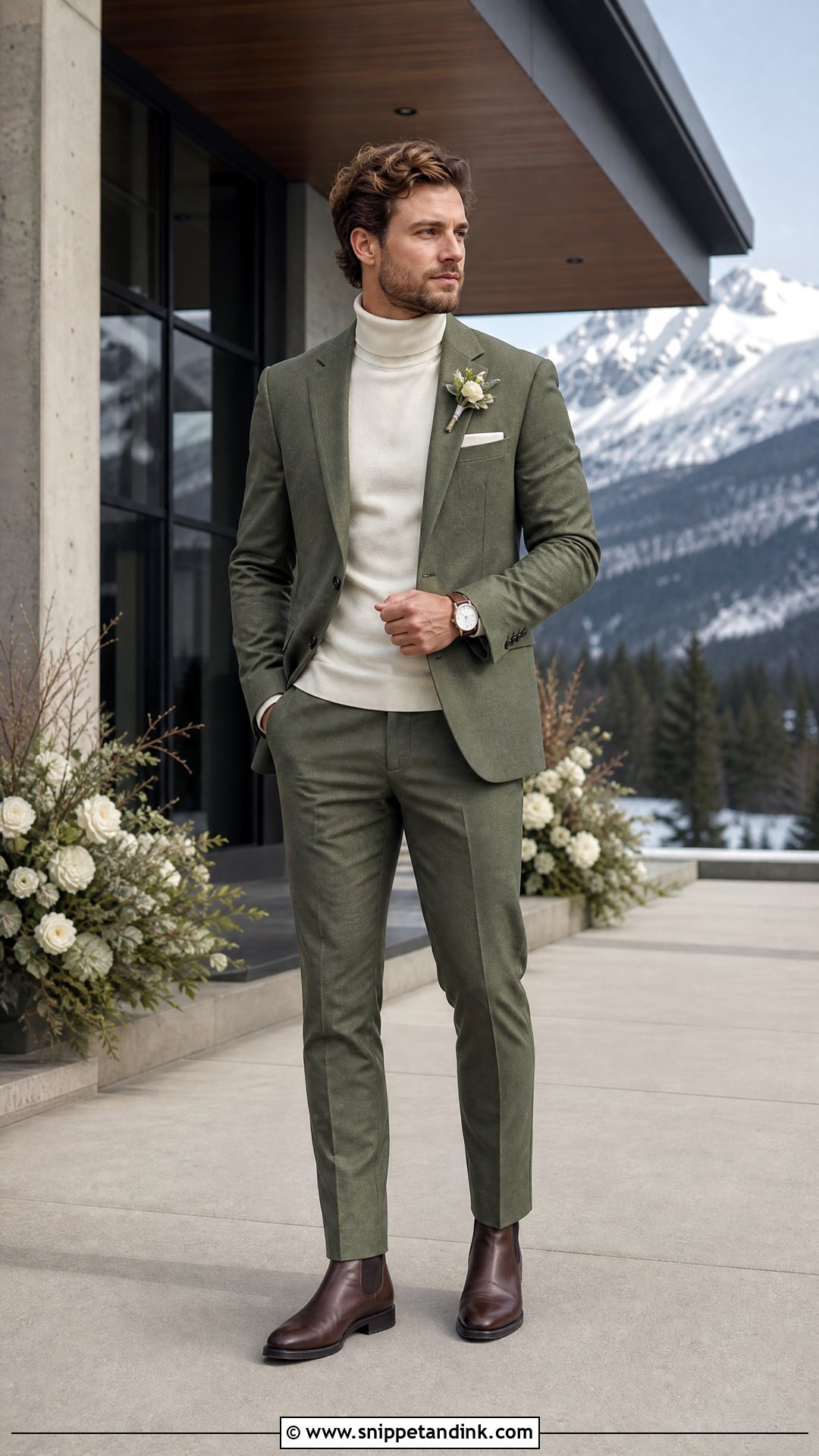
For a cool-weather wedding, a fine-gauge turtleneck can replace the shirt and tie altogether. Wear a medium or dark sage suit over a fitted cream, ivory or black knit; I like merino because it’s thin enough to lie flat under a jacket without bulking the chest. Dark-brown or black boots in a sleek Chelsea or lace-up shape. Skip the belt if the trousers have side adjusters, and add a simple pocket square. Make sure the jacket was fitted over the knit rather than over a shirt, because the shoulders and collar sit differently. Lofts, galleries, hotels and mountain venues in autumn or winter suit it.
10. Sage Wedding Suit With Champagne Vest
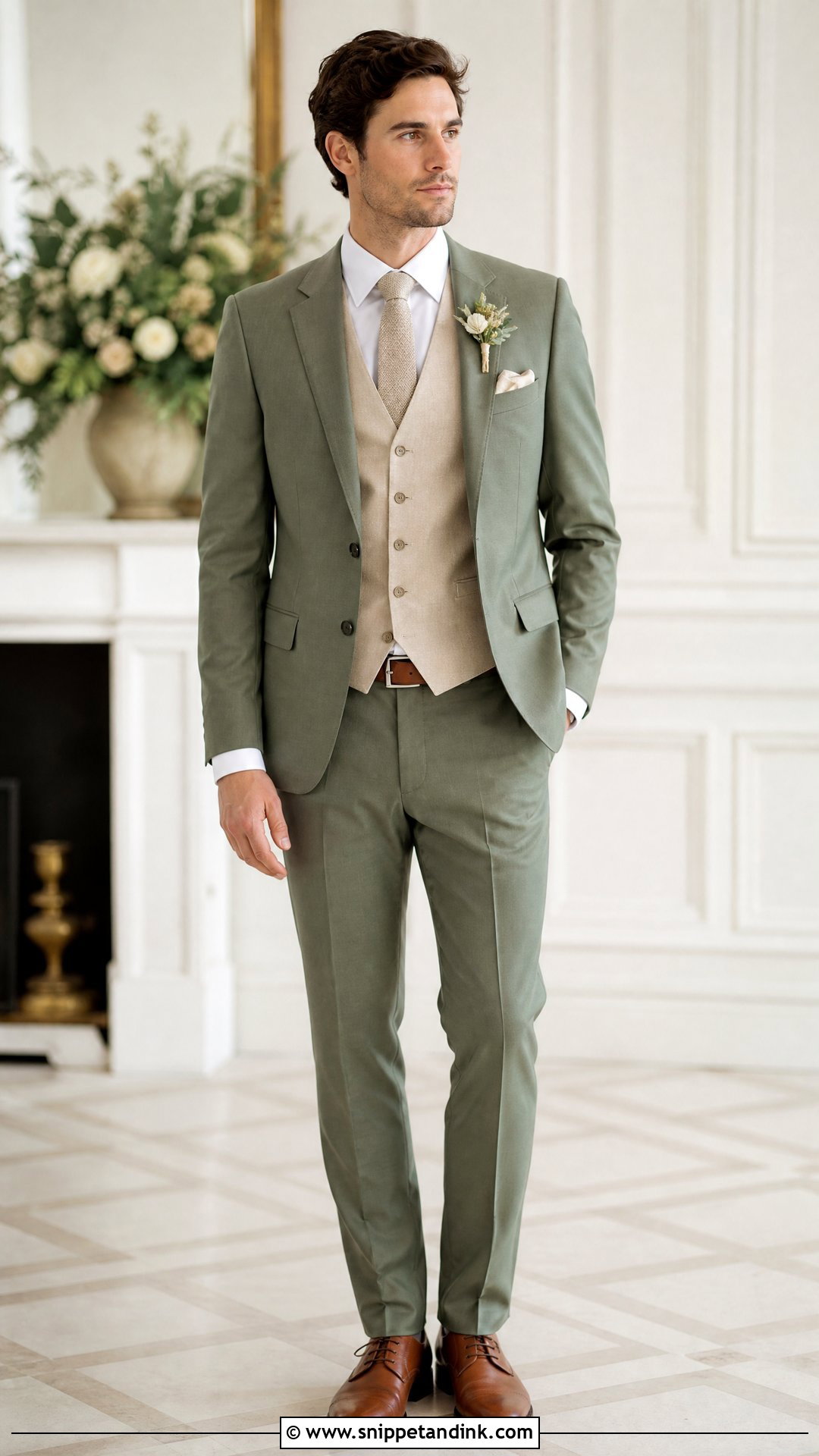
Champagne and sage make a warm pairing, and a champagne vest is an easy way to mark out the groom while the groomsmen wear plain sage two-pieces. Start with the sage jacket and trousers, add a tailored champagne vest, and keep a white shirt underneath so the layers stay clear. Choose a champagne tie or bow tie in a different texture from the vest, so they don’t look like a boxed set. Medium-brown shoes, a matching belt, a cream pocket square and a boutonniere of white or dried neutral flowers. The vest must stay hidden when the jacket is closed. If its point peeks below the jacket’s front edge, either the vest is too long or the jacket is too short.
11. Sage Wedding Suit With Blush Accessories
Blush adds color without brightness. A well-fitted sage two-piece with a white shirt and a dusty blush tie, plus a pocket square a shade lighter or darker rather than an exact match. Brown leather shoes and a matching belt keep it grounded. For the boutonniere, one small blush flower with very little greenery, since green leaves disappear against a green lapel. It sits naturally beside blush bridesmaid dresses and spring palettes. Stay muted, though. Vivid pink against sage tips toward novelty, and a tie and pocket square cut from identical fabric is the giveaway I always try to avoid.
12. Sage Wedding Suit With Terracotta Tie
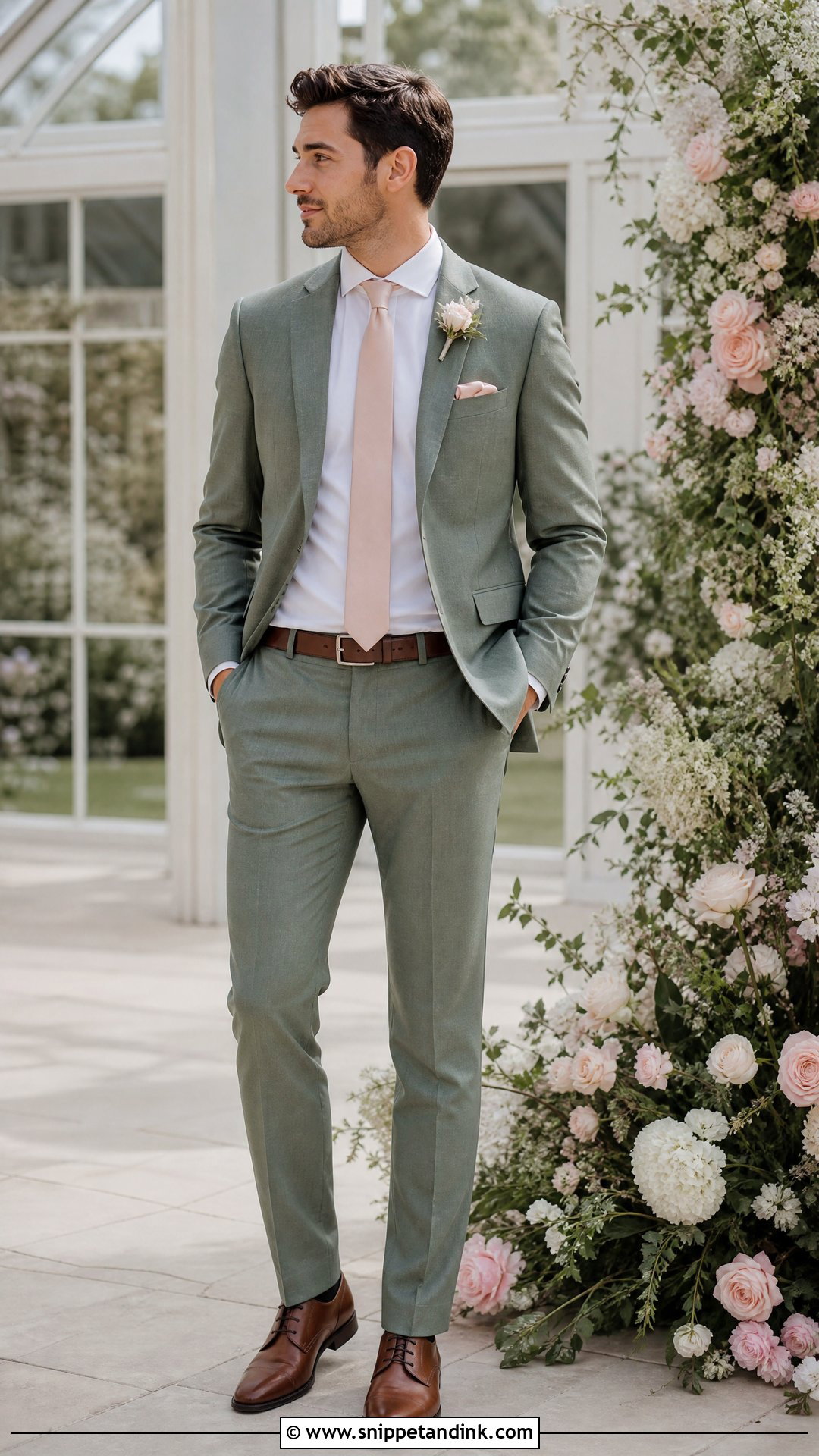
Terracotta is the warm opposite of sage’s cool grey-green, so a little goes a long way. Style the suit with a white or light cream shirt and a matte terracotta tie, a cream pocket square, rich brown shoes and a matching belt. A boutonniere with rust, peach or dried botanicals links it to an autumn or desert palette. Keep terracotta to one or two places. Texture matters here as much as color: linen, cotton or a grenadine silk tie sits naturally with sage, while shiny satin looks like a rental accessory. Rustic barns, outdoor estates and late-summer weddings suit it.
13. Sage Wedding Suit With Navy Tie
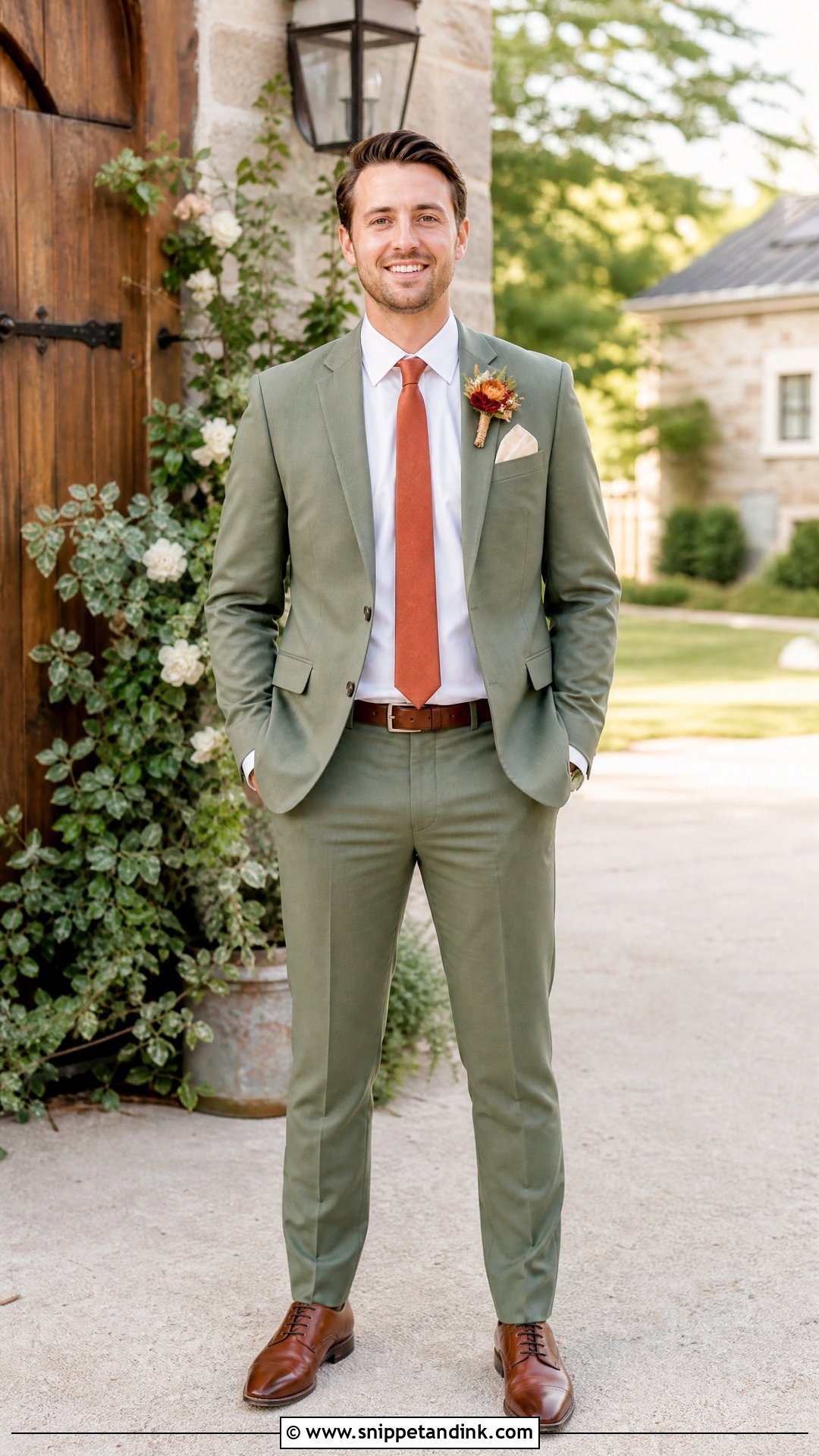
A navy tie gives a sage suit definition and keeps it classic. Pair a medium sage jacket and trousers with a bright white shirt for clear contrast. A solid navy tie is simplest; a small dot or textured weave adds interest without noise. Dark-brown or burgundy shoes suit the deeper tie, with a matching belt, a white pocket square and a cream-flower boutonniere. It’s a safe route for grooms, groomsmen and guests who like traditional accessories but want a less expected suit. Limit the navy to the tie and perhaps a watch strap. Any more dark pieces than that and they start to fight the softness of the suit.
14. Sage Wedding Suit With Brown Vest
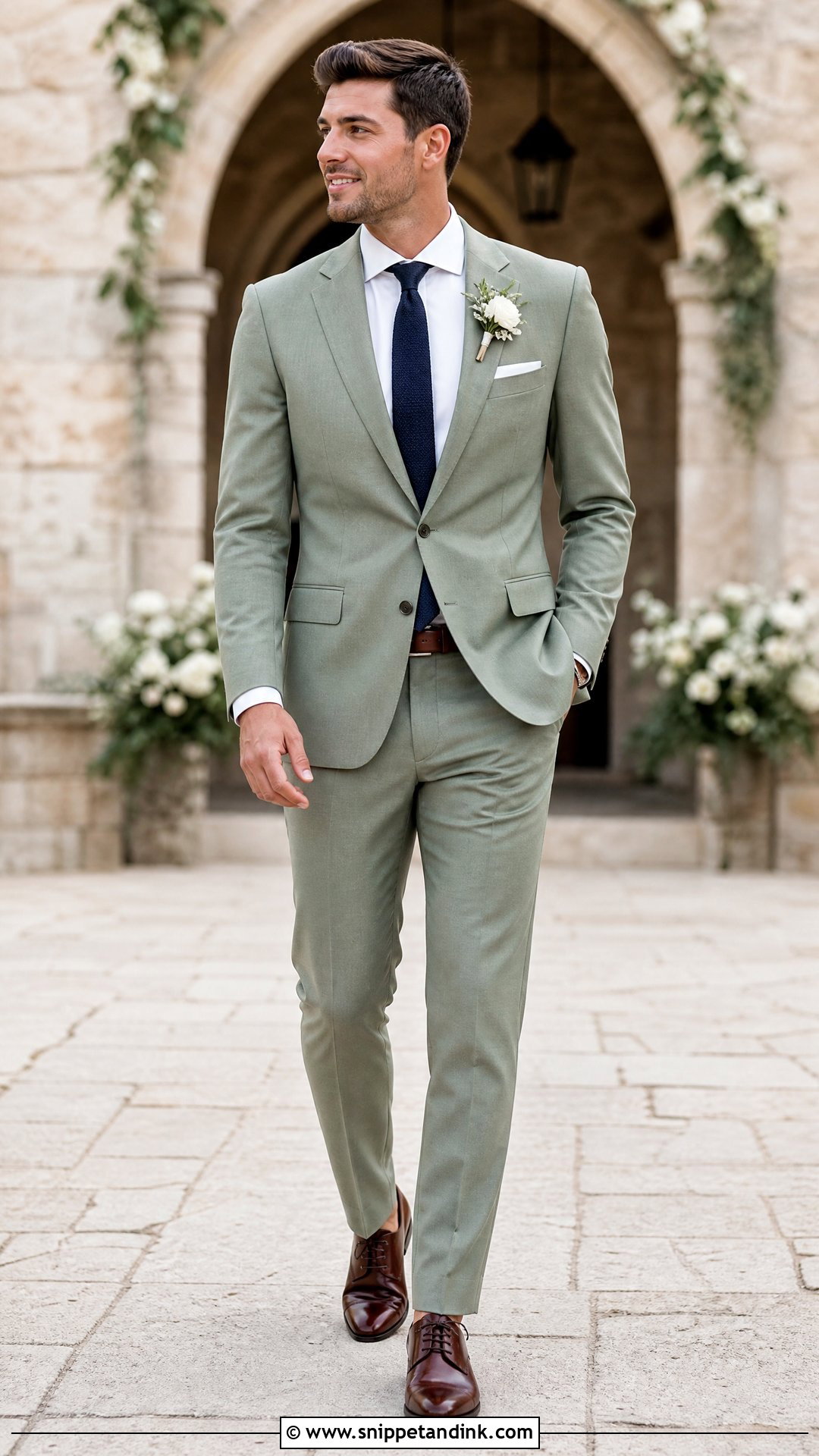
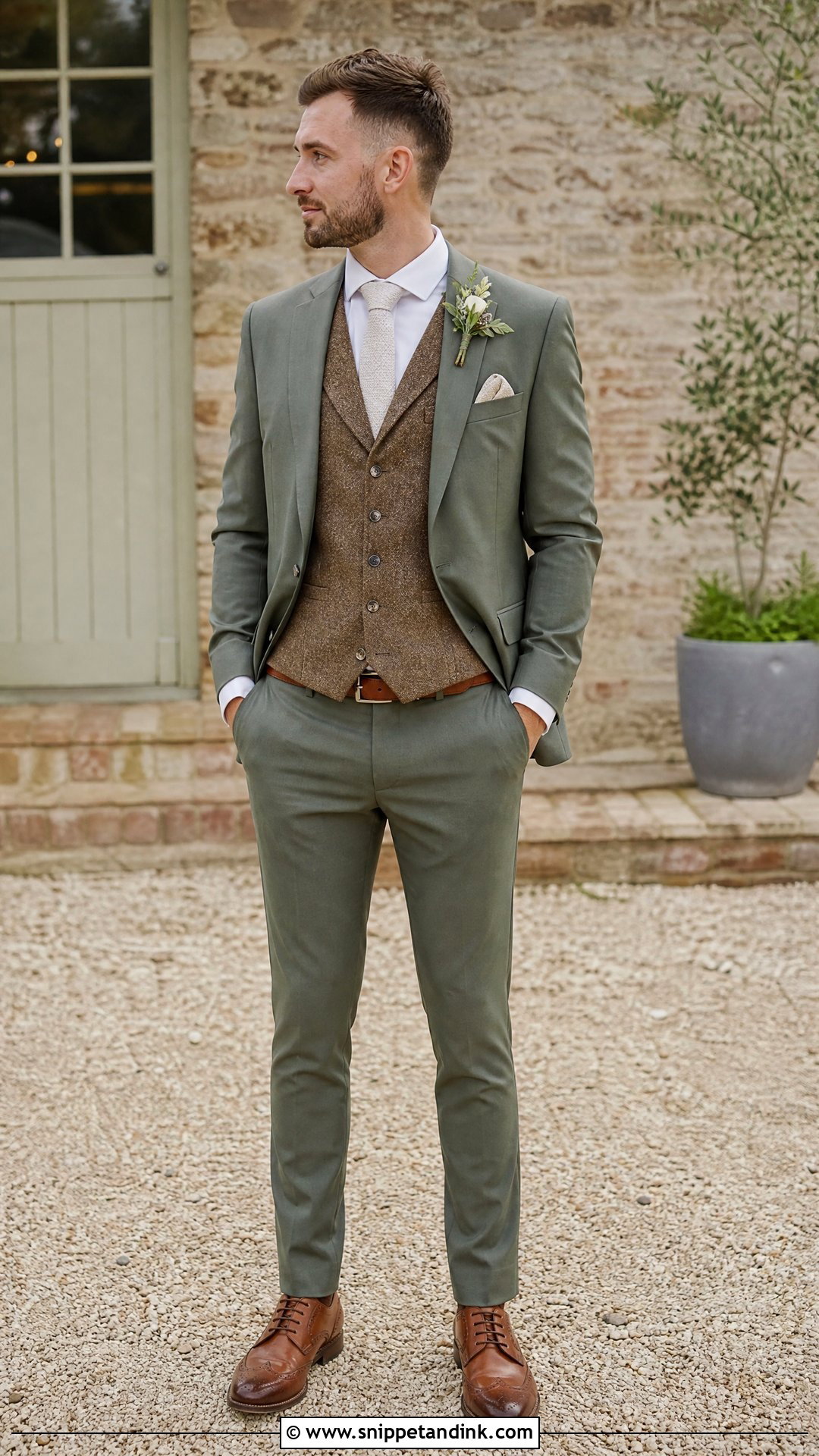
A brown vest reads rustic and less formal than a fully matched three-piece. Wear the sage jacket and trousers with a chocolate, tobacco or taupe vest over an ivory shirt, and a textured brown or cream tie. Polished brown brogues, a matching belt, a neutral pocket square and a small botanical boutonniere suit a barn, a country estate or a woodland ceremony. For summer, choose a plain cotton or light wool vest over heavy tweed, which gets hot quickly. Keep the vest’s brown visibly different from the shoes. When the two are nearly identical it looks like an accident rather than a choice.
15. Sage Wedding Suit With White Sneakers
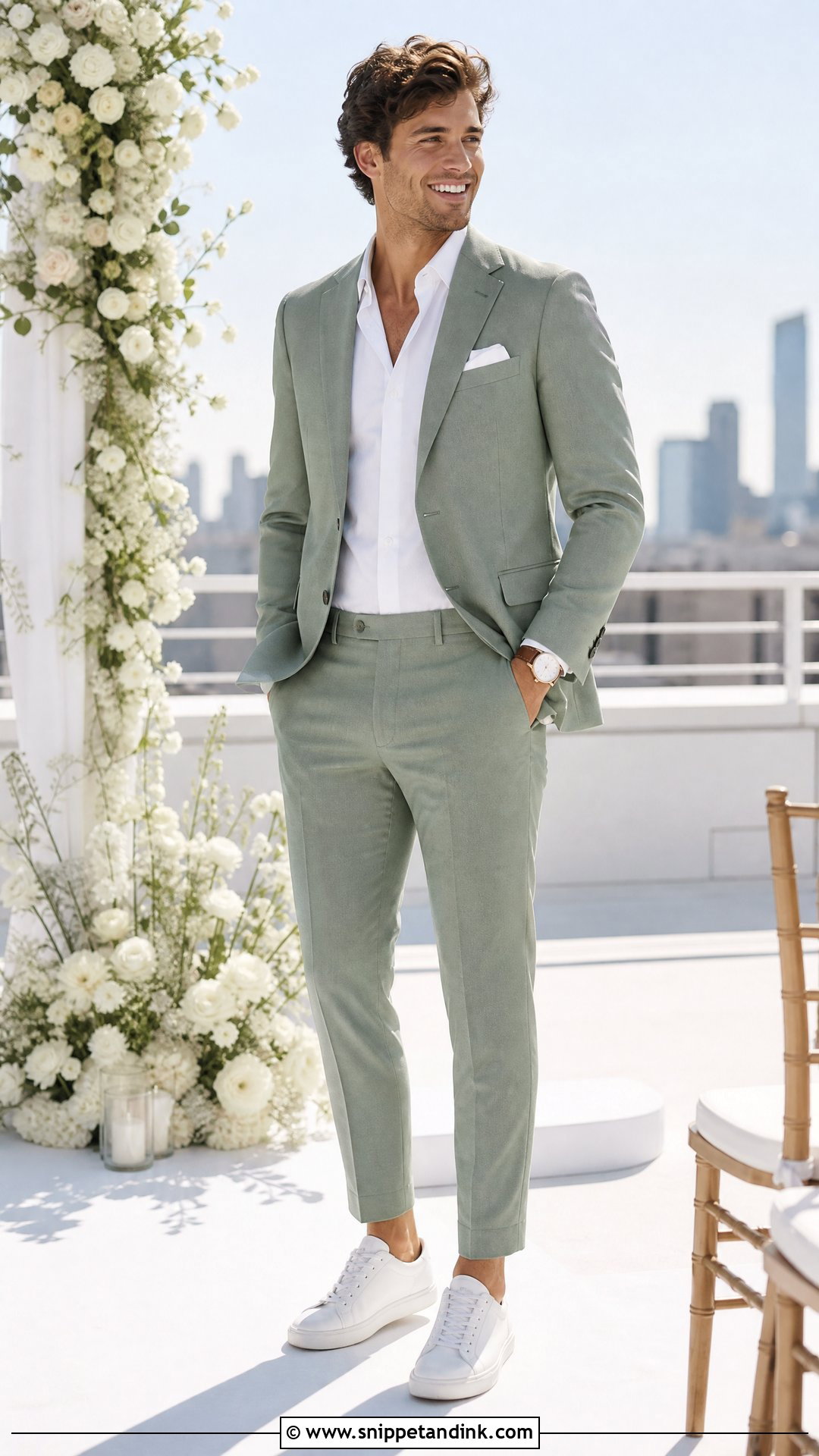
White sneakers make a sage suit relaxed and comfortable for an informal wedding, but only when everything else is sharp. Pair a softly structured sage jacket with tapered matching trousers cut to end just above the shoe with no break. A white crew-neck tee or an open-collar dress shirt, depending on the dress code. Minimal leather sneakers with no big logos, chunky soles or colored details. A white pocket square, a simple watch, and no belt if the trousers have side adjusters. Buy the sneakers early, break them in, then clean them the night before. Courthouse weddings, rooftops and laid-back destination ceremonies are where they belong.
16. Sage Wedding Suit With Suspenders
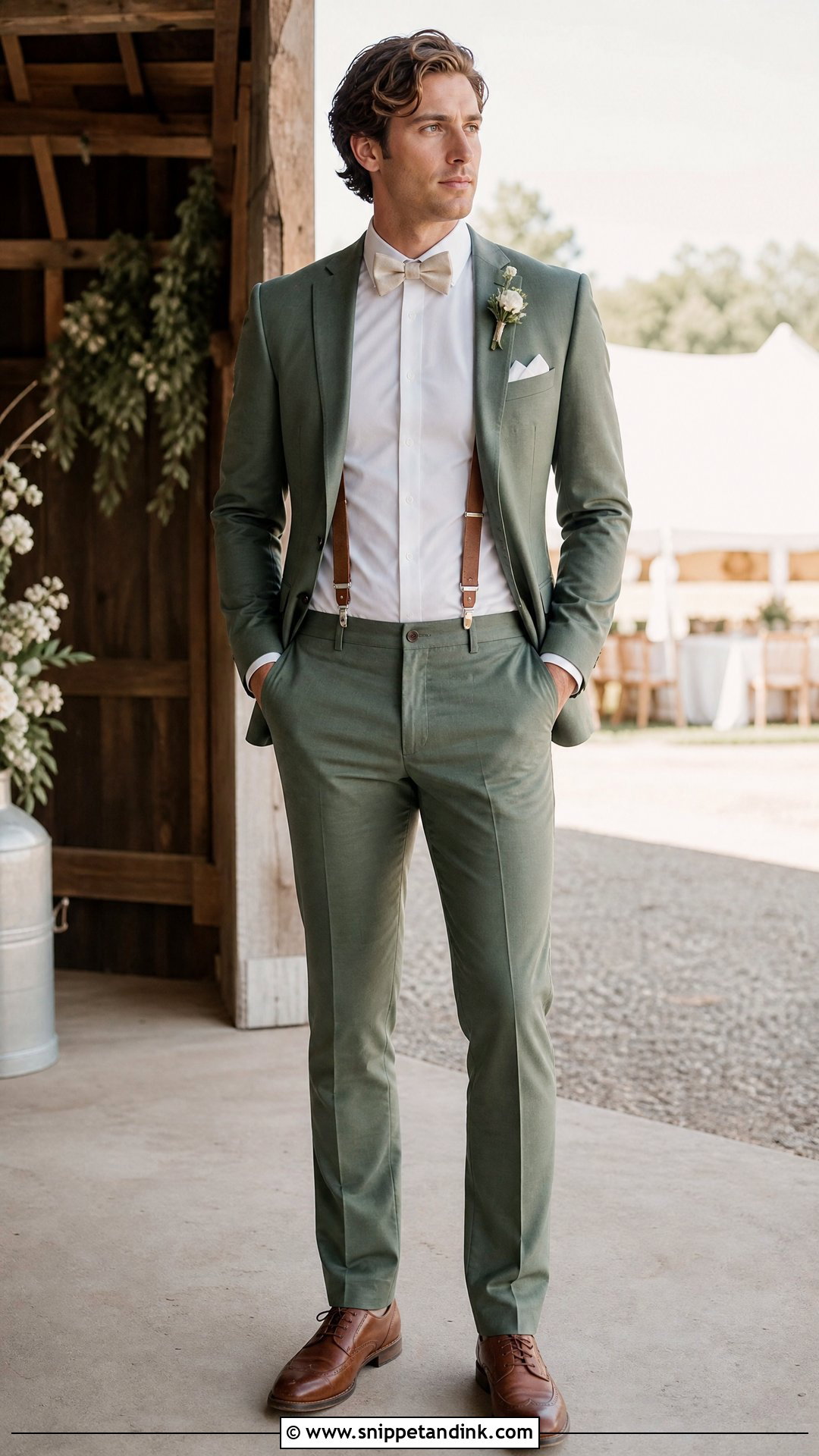
Suspenders are the detail people see once the jacket comes off at the reception. Start with a tailored sage jacket and trousers, a white shirt and brown leather braces. Button-on braces hang cleaner than clip-ons and don’t chew the waistband, so ask the tailor to sew brace buttons inside the trousers. A cream bow tie or a textured brown tie picks up the leather. Brown brogues, a pocket square and a small boutonniere. No belt: both hold the trousers up, and wearing both looks indecisive. The trousers should sit at the natural waist so the braces hang straight at a rustic or countryside wedding.
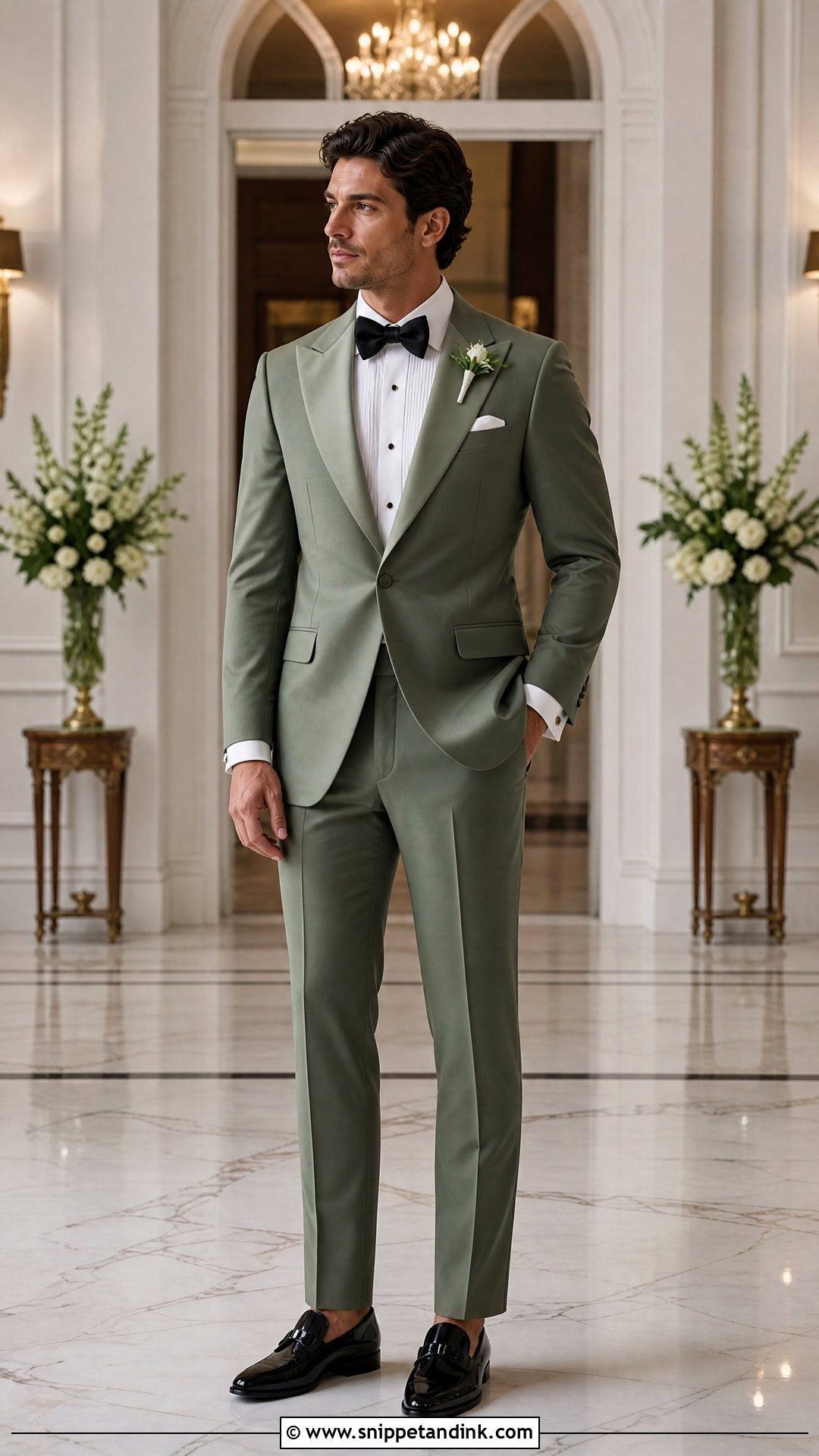
17. Sage Tuxedo Wedding Suit With Satin Lapels
A sage tuxedo takes an unexpected color and gives it the strict rules of evening dress. Choose a structured sage dinner jacket with tonal or dark satin peak lapels, matching trousers, a crisp white tuxedo shirt and a black, ivory or deep-green bow tie. Black patent loafers or highly polished Oxfords, a white pocket square, discreet cuff links and a simple boutonniere. Side adjusters instead of a belt for a smooth waistline. Keep every other element strictly traditional. The color is the one rule you’re breaking, and breaking any more starts to look themed. Formal receptions and upscale hotel evenings suit it.
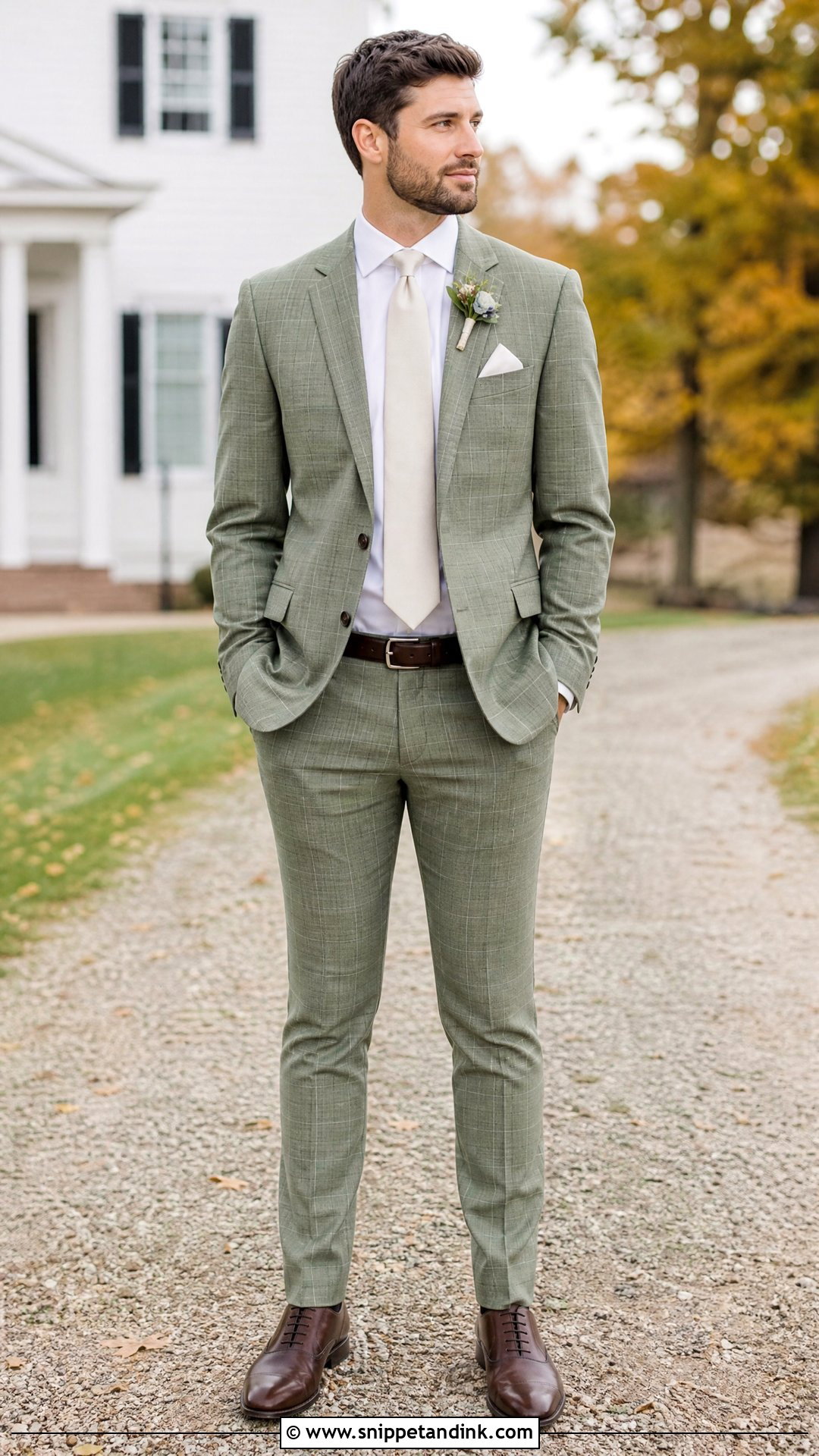
18. Sage Plaid Wedding Suit With Solid Accessories
Subtle plaid adds texture while staying formal enough for a wedding. Look for a muted sage base with a fine windowpane or understated check, never a big high-contrast pattern. A plain white shirt and a solid cream, brown or dark-green tie, with dark-brown shoes, a matching belt and a simple white pocket square. With a pattern already in the cloth, skip printed socks, floral ties and fussy boutonnieres. Pattern matching is my quick quality check: on a well-made suit the checks line up across the pockets, the lapels and the back seam. Tapered trousers stop the check from looking heavy at an autumn wedding or country estate.
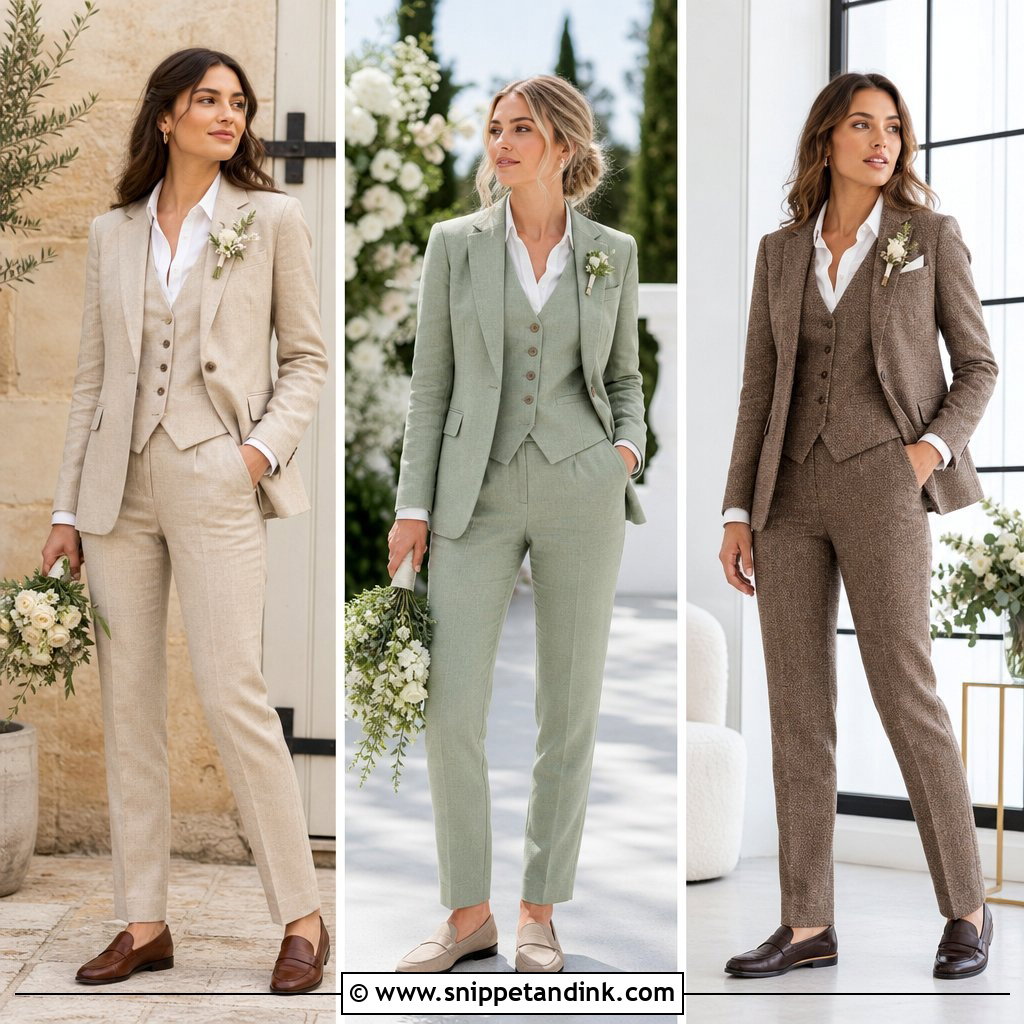
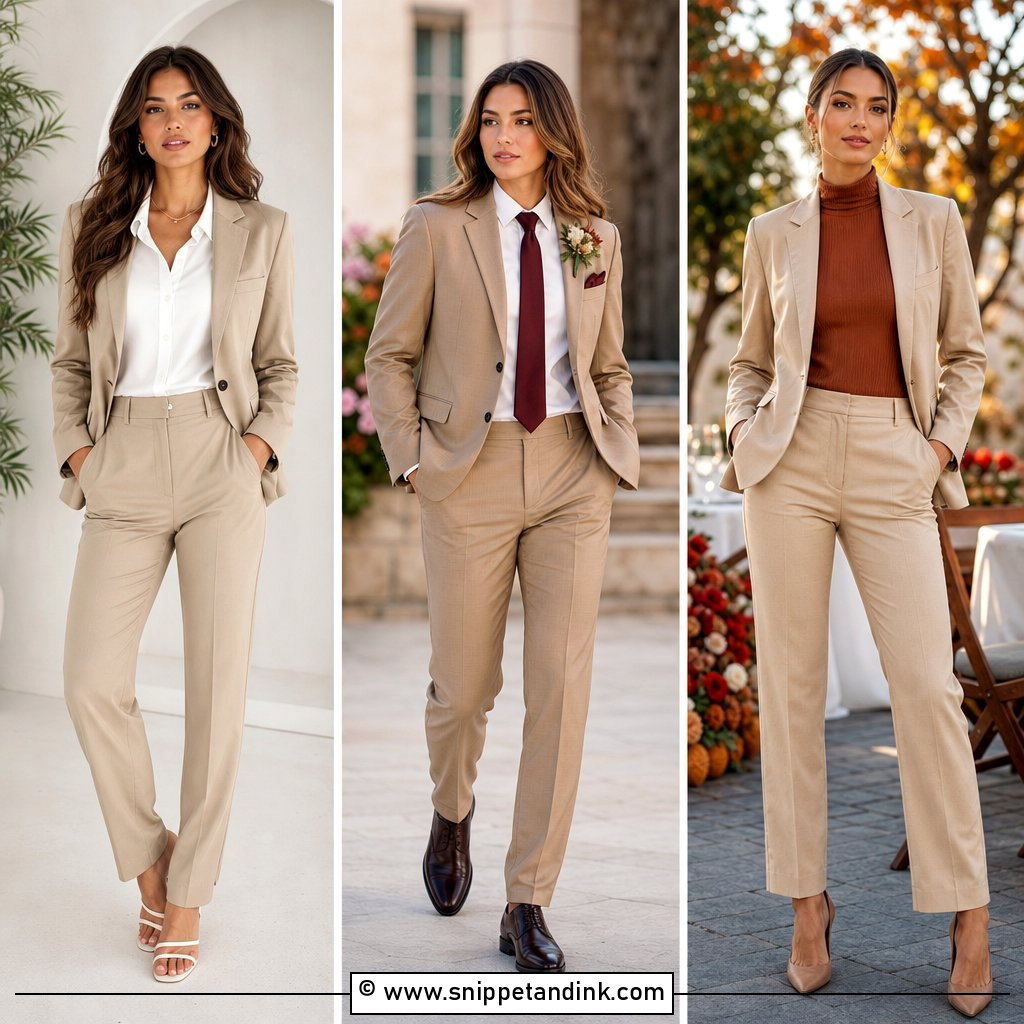
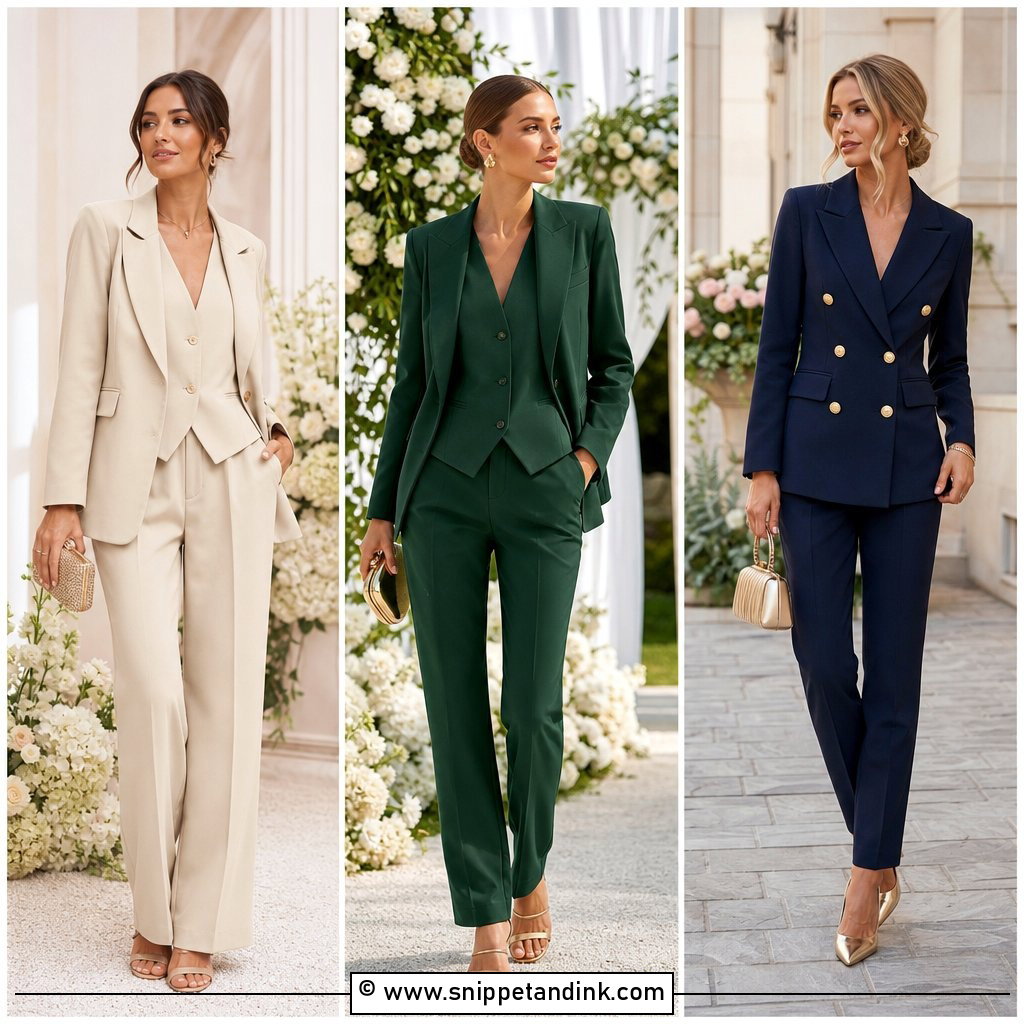
19. Sage Women’s Wedding Suit With Wide-Leg Trousers
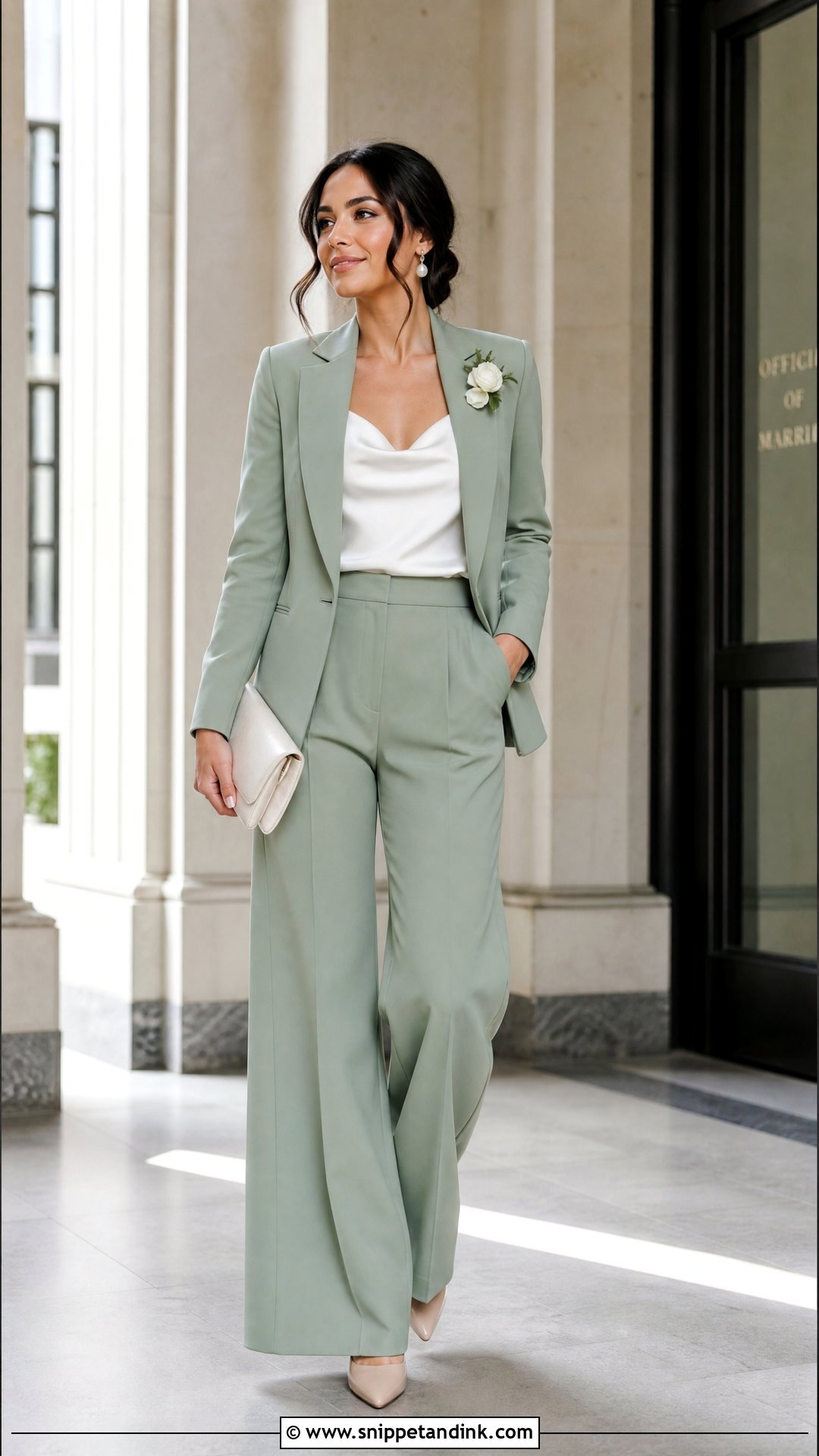
A sage suit gives a bride or guest something more modern than a dress. Choose a sharply tailored blazer with defined shoulders and matching high-waisted wide-leg trousers, over a silk ivory camisole, a fitted satin blouse or a minimal bodysuit. Pointed nude pumps lengthen the line, and metallic heels feel more celebratory. A structured cream clutch and delicate earrings chosen to suit the jacket’s neckline. For a bride, add an ivory corsage, pearls or a simple veil pinned into a sleek style. Wide-leg trousers should skim the floor without hiding the shoes, so I hem them in the exact heels you’ll wear on the day.
20. Sage Wedding Suit With Open-Collar Shirt
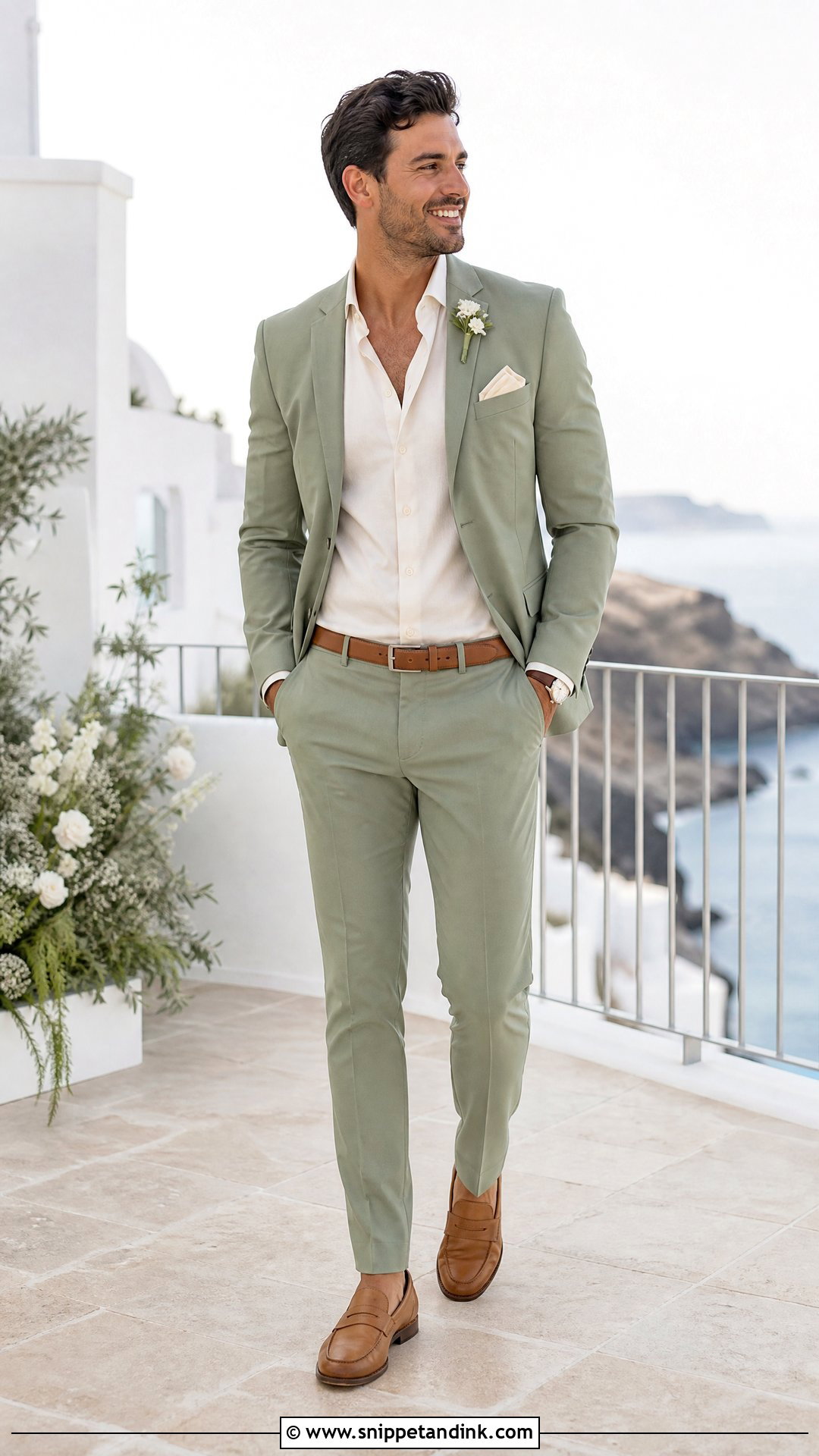
An open-collar shirt relaxes a sage suit while keeping it polished. Pair a lightweight sage jacket and trousers with a crisp white or ivory shirt, the top one or two buttons undone. The collar decides whether this works. Choose one with firm interlining, or a one-piece collar, so it stands up inside the lapels; a soft collar collapses flat under the jacket within an hour. Tan loafers, a matching belt and a neatly folded pocket square, plus a simple watch and small boutonniere. Keep the shirt tucked all day, and lose any visible undershirt or necklace. Warm-weather, outdoor and destination weddings suit it.
A Timeline for Fittings, Groomsmen and Dye Lots
Most sage suit problems I see come from leaving things late. Lead times vary a lot between ready-to-wear, made-to-measure and fully bespoke, so ask your tailor directly, but this order of events holds for almost every wedding:
- Three to four months out, choose the cloth and order, especially for made-to-measure.
- Order every groomsman’s suit at the same time from the same supplier. Green dyes vary from batch to batch, and suits ordered weeks apart can stand side by side in visibly different shades.
- Collect measurements from out-of-town groomsmen early. A tailor can take in a jacket, but not one ordered two sizes wrong.
- About a month out, have the first fitting in the shirt and shoes you’ll actually wear.
- Two weeks out, do the final fitting, then collect the suit and keep it hung, never folded.
- In the wedding week, try everything on together once, ties and boutonniere pins included.
Leave yourself a buffer. Weight often shifts in the busy last weeks, and a final fitting close to the day catches it before the photos do.
The Fit Matters More Than the Shade
A good sage suit balances color, tailoring, fabric and accessories. The same muted green can go from linen and white sneakers to satin lapels and patent shoes. Settle the season, venue, dress code and wedding palette before you settle the details. Ivory and tan keep it soft; navy, black, brown and terracotta add contrast. Book alterations early and look at the finished outfit in both daylight and indoor light. When every piece fits and points in the same direction, a sage suit looks considered rather than costumed.
You'll Like These Ideas:


Leave a Reply