
A Sangeet is the one wedding event where nobody stays still. There’s choreography, there’s an aunt pulling you onto the floor, and there’s a photographer catching all of it under warm, low light. That changes how I build hair for the night: everything has to be anchored for movement first and styled for the camera second. The looks below cover brides, bridesmaids and guests, and they’re meant to sit alongside your festive lehenga or gown rather than fight it. For each one I’ve noted how it actually behaves once the music starts and who it suits.
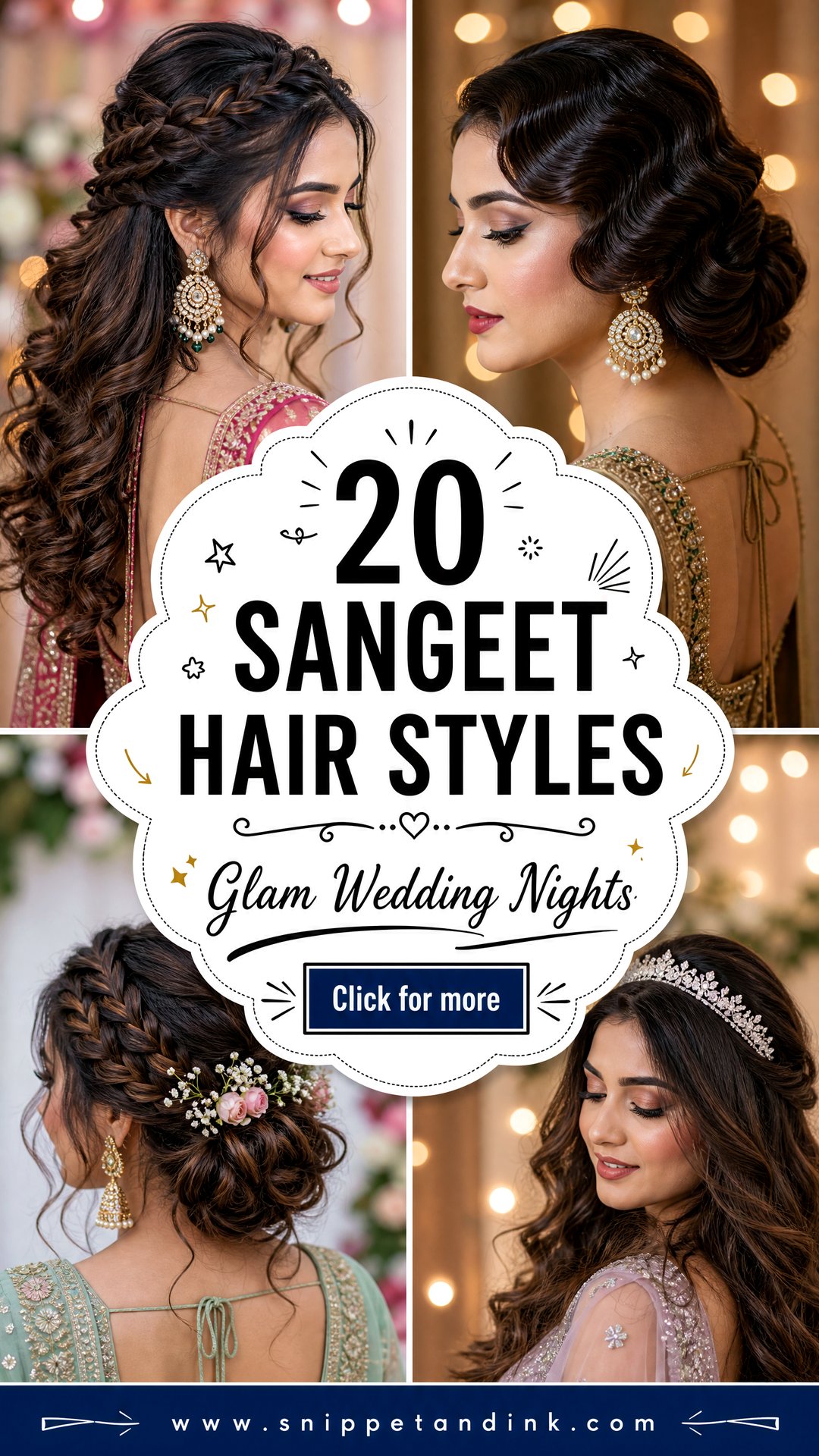
Building a Sangeet Style That Lasts Through the Dhol
Most Sangeet hair failures have nothing to do with the style itself. They come from the foundation underneath it. Before I pick up a curling iron, I check three things: how slippery the hair is, how much it weighs, and what’s going on it later in the evening.
Day-old hair grips better
Freshly washed, conditioned hair is soft and slippery, so pins slide and braids loosen. I ask clients to wash the evening before, skip heavy conditioner on the roots, and come with dry hair. If your hair gets oily quickly, a little dry shampoo at the roots on the day gives the same grip.
Pins do the real work
A decorative clip is jewelry, not structure. Every style above has crossed bobby pins or U-pins hidden underneath, placed in pairs that form an X so they lock against each other. On thick hair I use the larger pins; on fine hair, smaller ones in greater number. Matte pins in your hair color disappear in photos far better than shiny ones.
Plan around the dupatta
If a dupatta will be pinned on the head, tell your stylist at the start. It sits on the crown and gets tugged every time you twirl, so the crown needs a flat, pinnable surface rather than volume. Low buns, low ponytails and braids handle a draped dupatta well; high ponytails and crown braids don’t.
1. Sleek Low Bun With Pearl Accessories
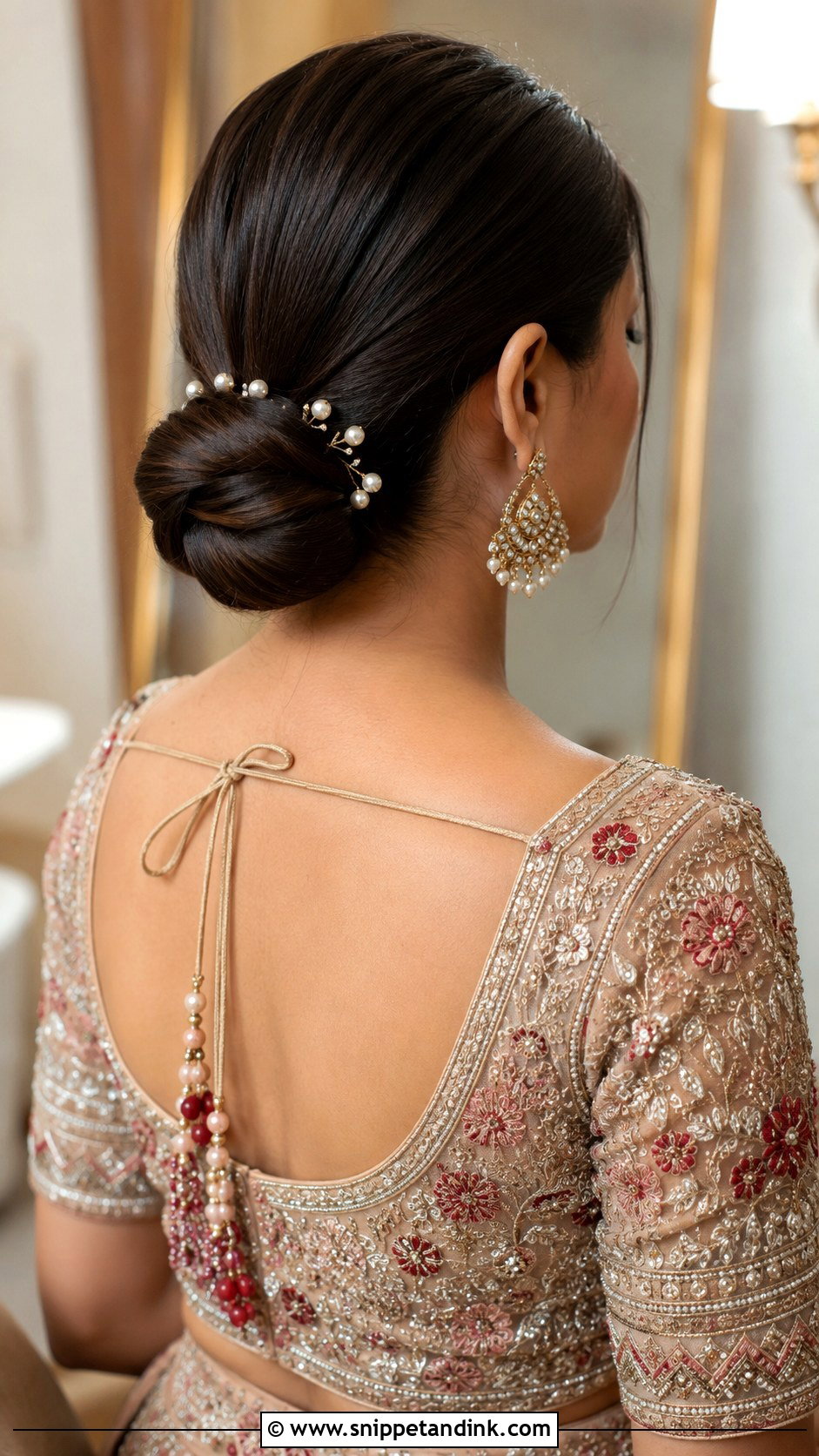
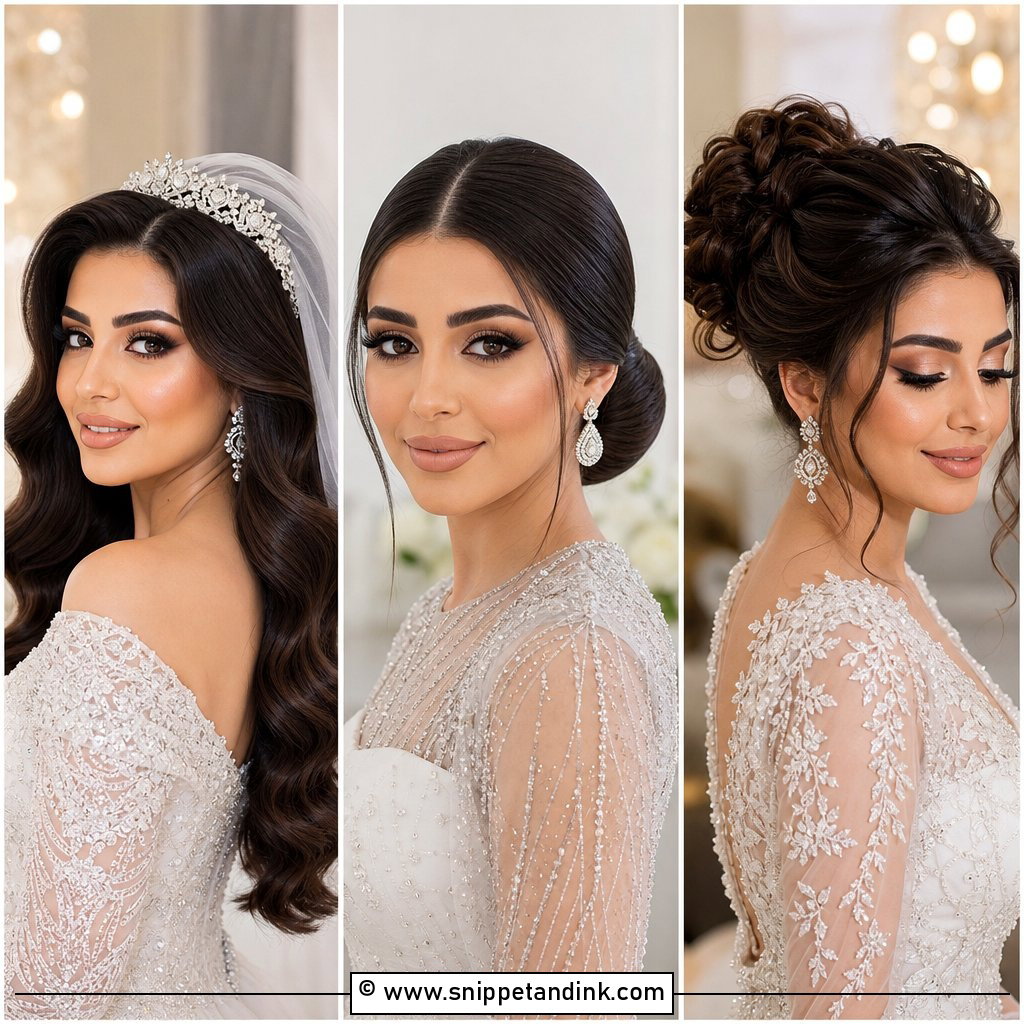
I reach for a low bun when the outfit is heavy and the earrings are big, because it keeps the neckline clear and never competes with either. The secret to a smooth finish is setting the ponytail base slightly below the occipital bone so the bun sits in the hollow of the neck and doesn’t press when you lean back in a chair. Pearl pins go in last, angled toward the bun’s center so they grip rather than slide. On very fine hair I add a small padding inside, otherwise the knot looks thin from the side. It’s one of the most secure options on this list, which matters when the dancing starts at ten.
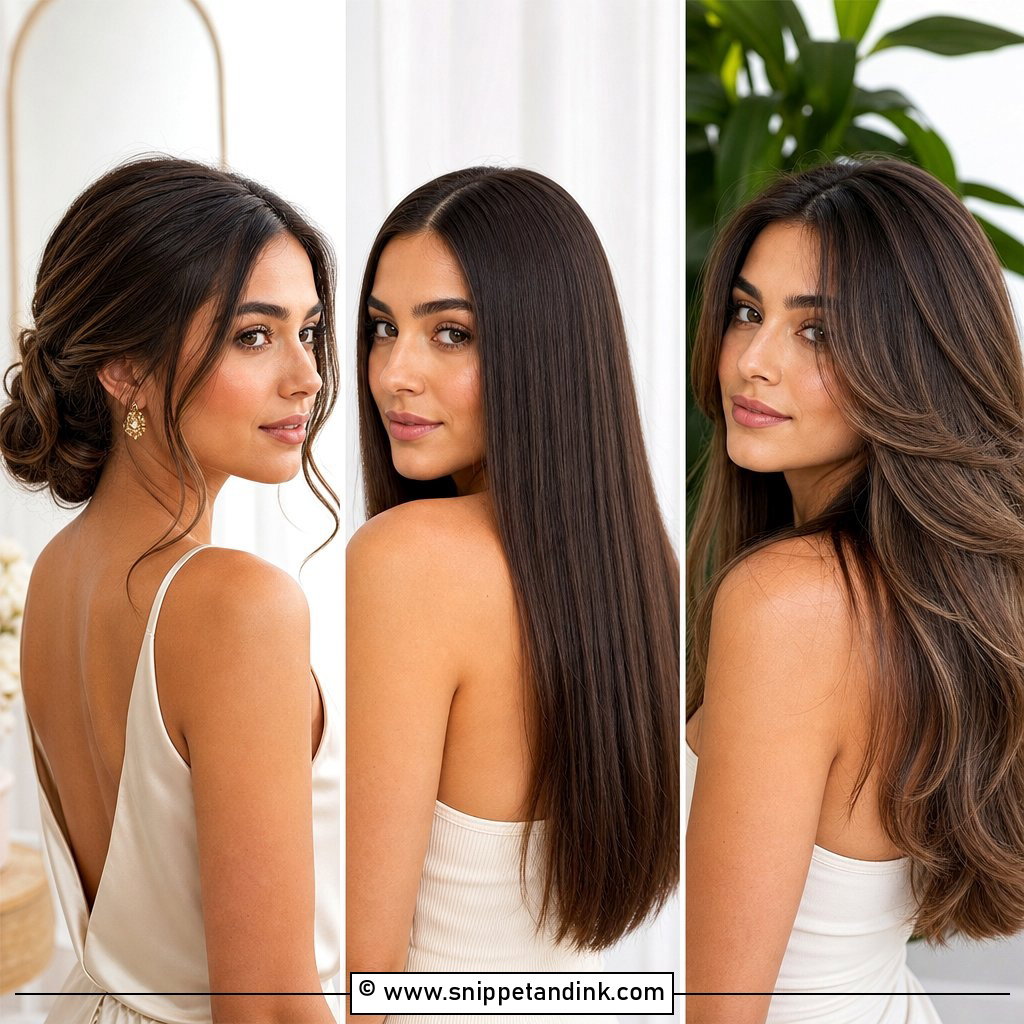
2. Open Soft Curls With Side Part
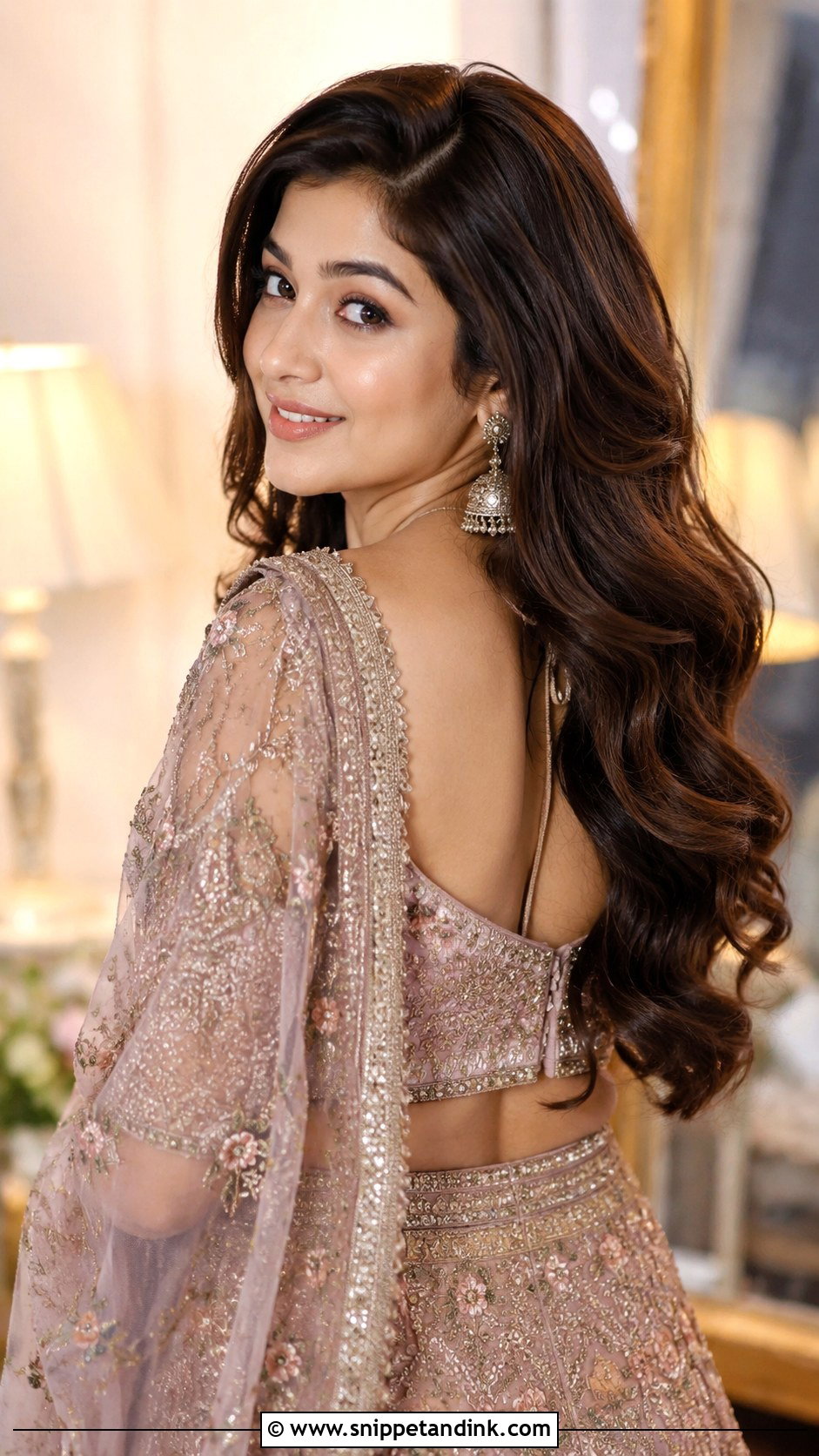
Open curls look easy, and that’s the trap. Curls left down on a dance floor will drop fastest of anything here, especially on straight or fine hair in a warm room. I curl in larger sections than you’d expect, pin each curl up while it cools, and only brush them out about twenty minutes before you leave. A deep side part gives instant drama and lets you tuck one side behind the ear to show off an earring. If your hair refuses to hold a curl past an hour, I’d honestly steer you to the half-up or twisted styles further down.
3. Fishtail Braid With Floral Accents
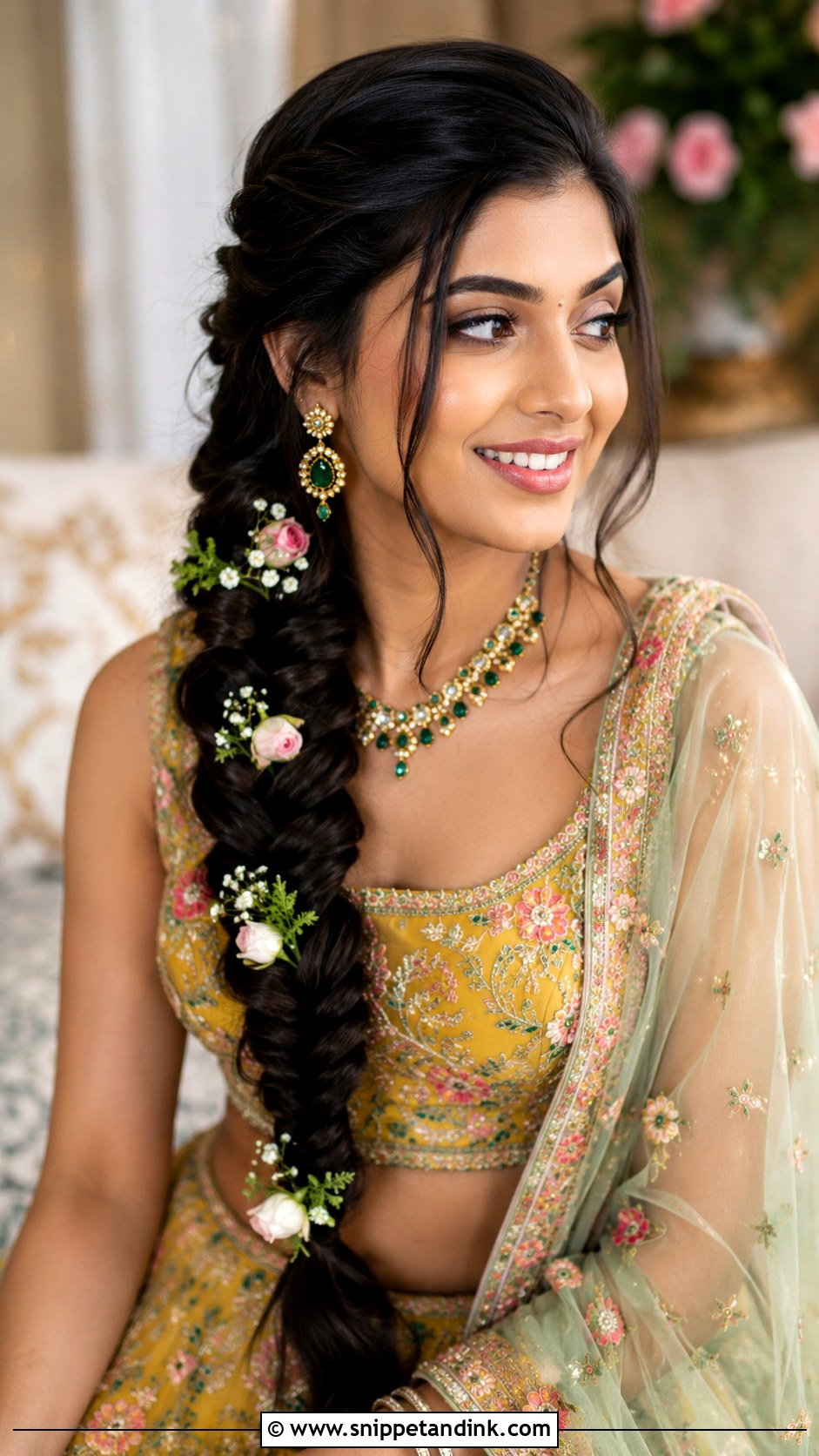
A fishtail looks like hours of work but is really just two sections crossing small pieces back and forth, which makes it one of my favorite secure options for long, thick hair. The thinner the pieces you cross, the more intricate it reads in photos. Flowers or small fabric blooms are easier to add than people think: I slide the stems into the weave at a slight upward angle so they lock into place. Worn over one shoulder, it moves with you rather than swinging out. Pair it with jhumkas and a bright lehenga and you have a look that feels traditional without being stiff.
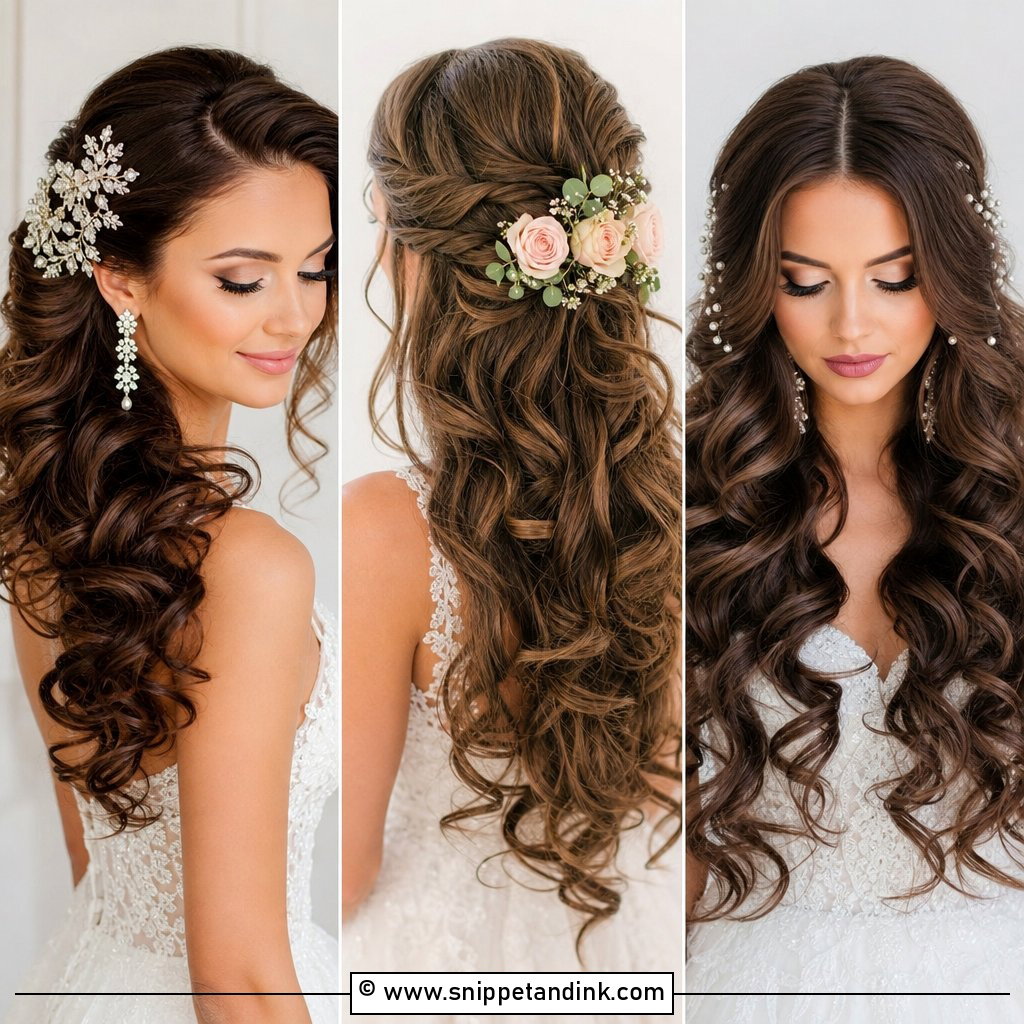
4. Half-Up Half-Down With Loose Waves
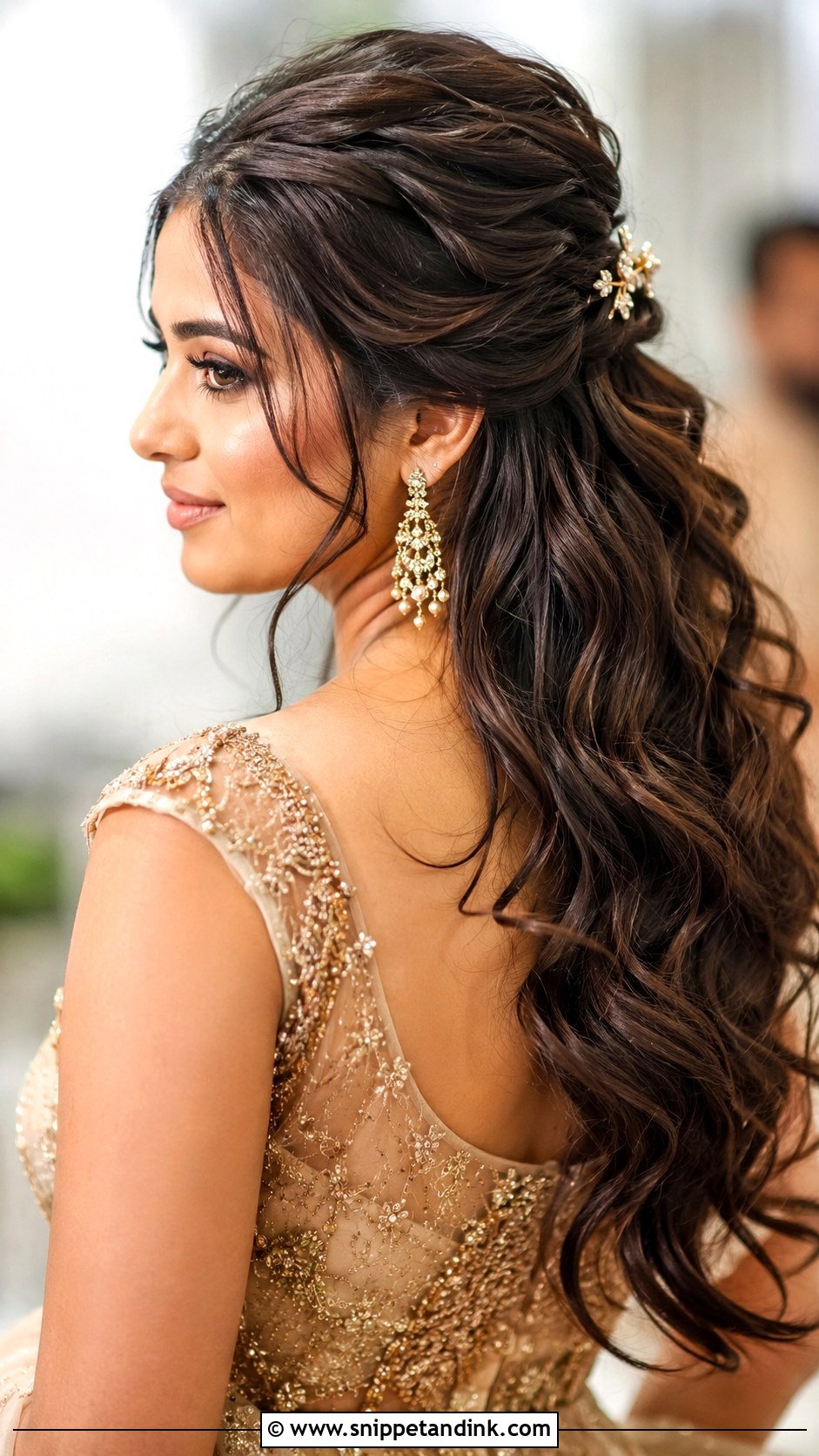
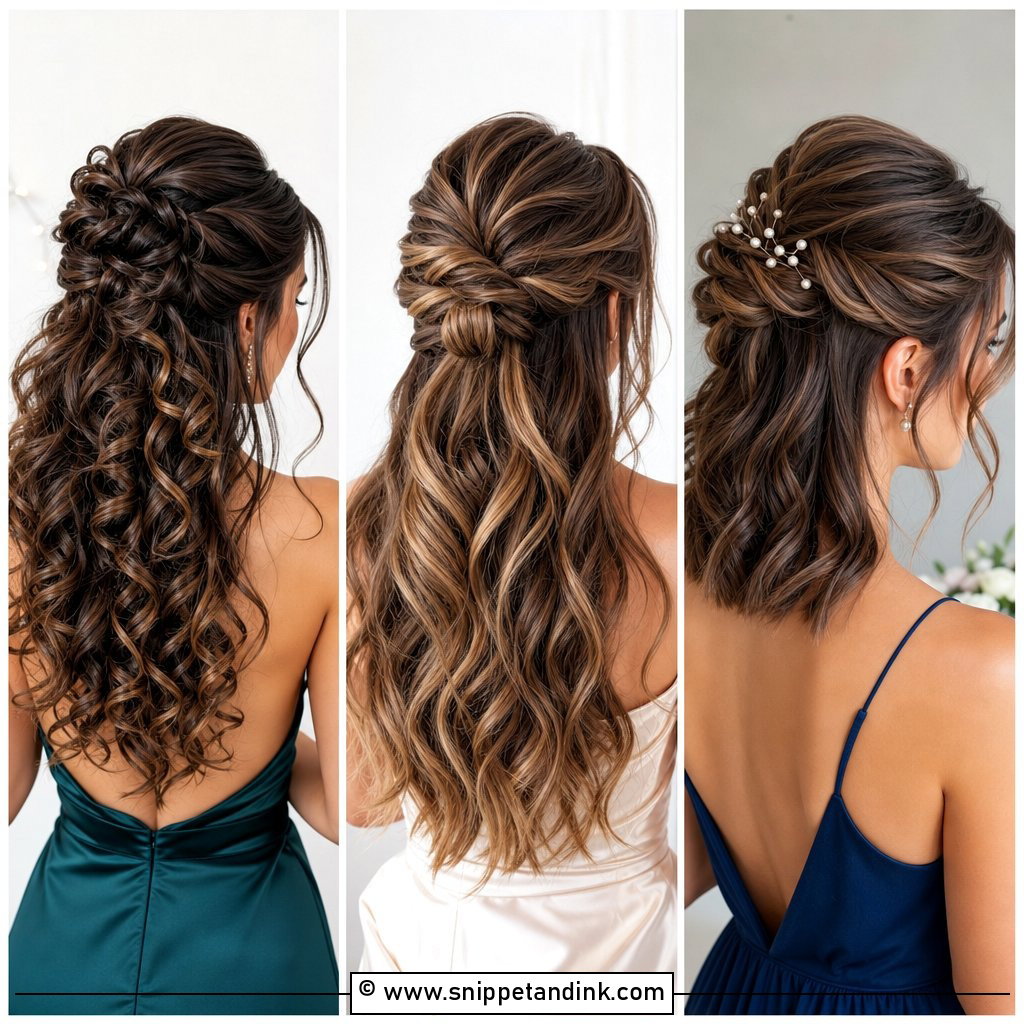
Half-up is my practical favorite for anyone who wants to show length. The top section I secure with two crossed bobby pins under the decorative clip, because the clip alone will slip after an hour of spinning. The lower waves get a light hold spray brushed through with fingers, not a comb. It works across most face shapes and for shoulder-length hair upward. A few small beads or a jeweled pin add sparkle under the lights without adding weight.
5. Voluminous High Ponytail
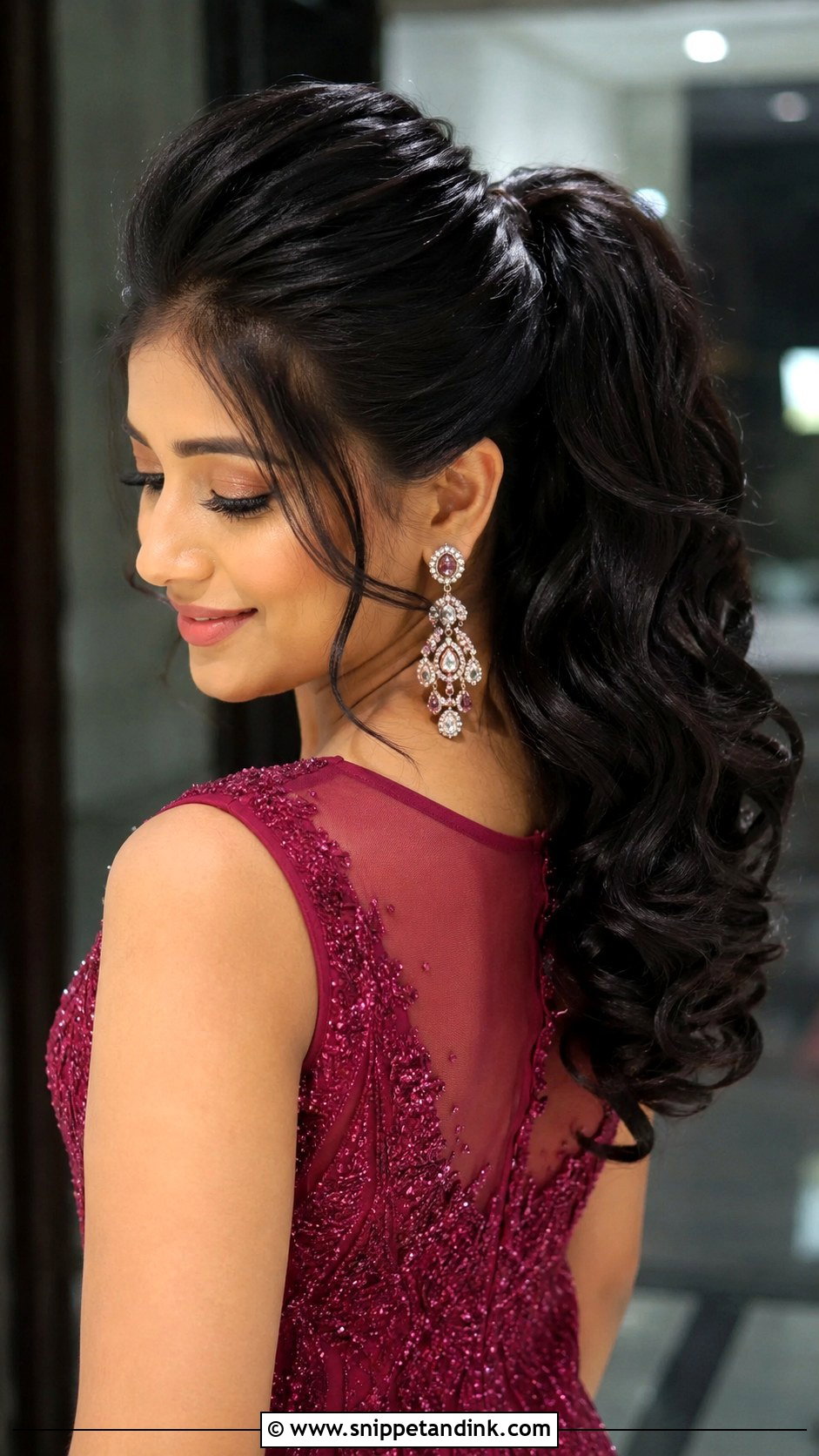
A high ponytail lifts the face and lengthens the neck, which is why it reads so confident in photos. The weight is the issue. Heavy, long hair pulls on a high pony and can bring on a headache by the second hour, so I anchor it with two elastics and a pair of pins pushed into the base from opposite sides. Backcomb only the crown, not the length. Wrapping a strand round the elastic hides it neatly. Statement earrings and a fitted gown suit it best; with a heavy dupatta draped on the head, I’d choose something lower.
6. Braided Crown With Loose Curls
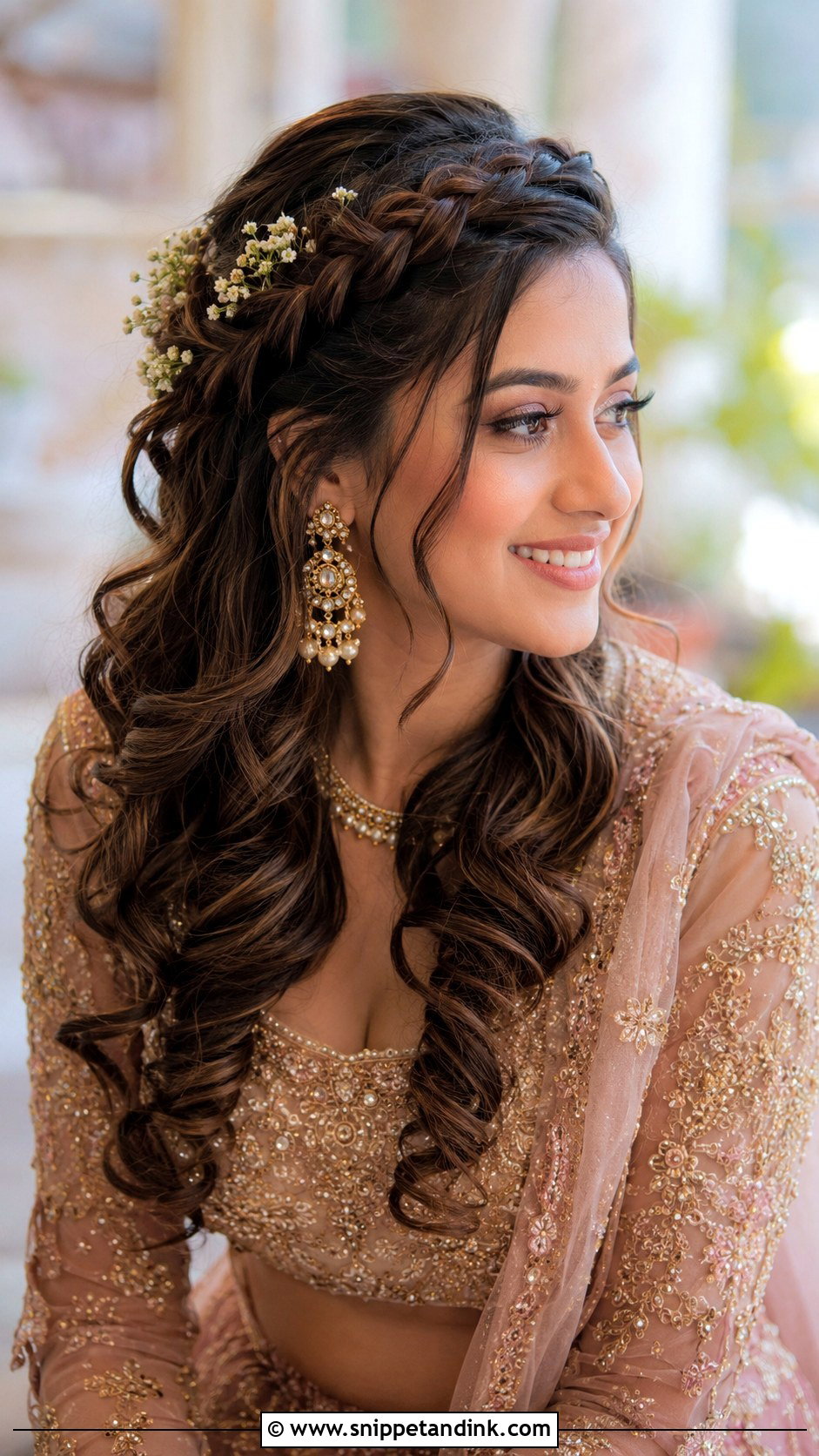
This one I usually suggest for brides with long hair who want something softer than a full updo. Two thin braids along the hairline meet at the back of the crown and get pinned flat, which locks every front strand in place while you dance. Below, the curls stay loose. Tuck small flowers or pearls into the braid after it’s pinned, never before. It’s less suited to short layers, because the ends poke out of the braid as the night goes on.
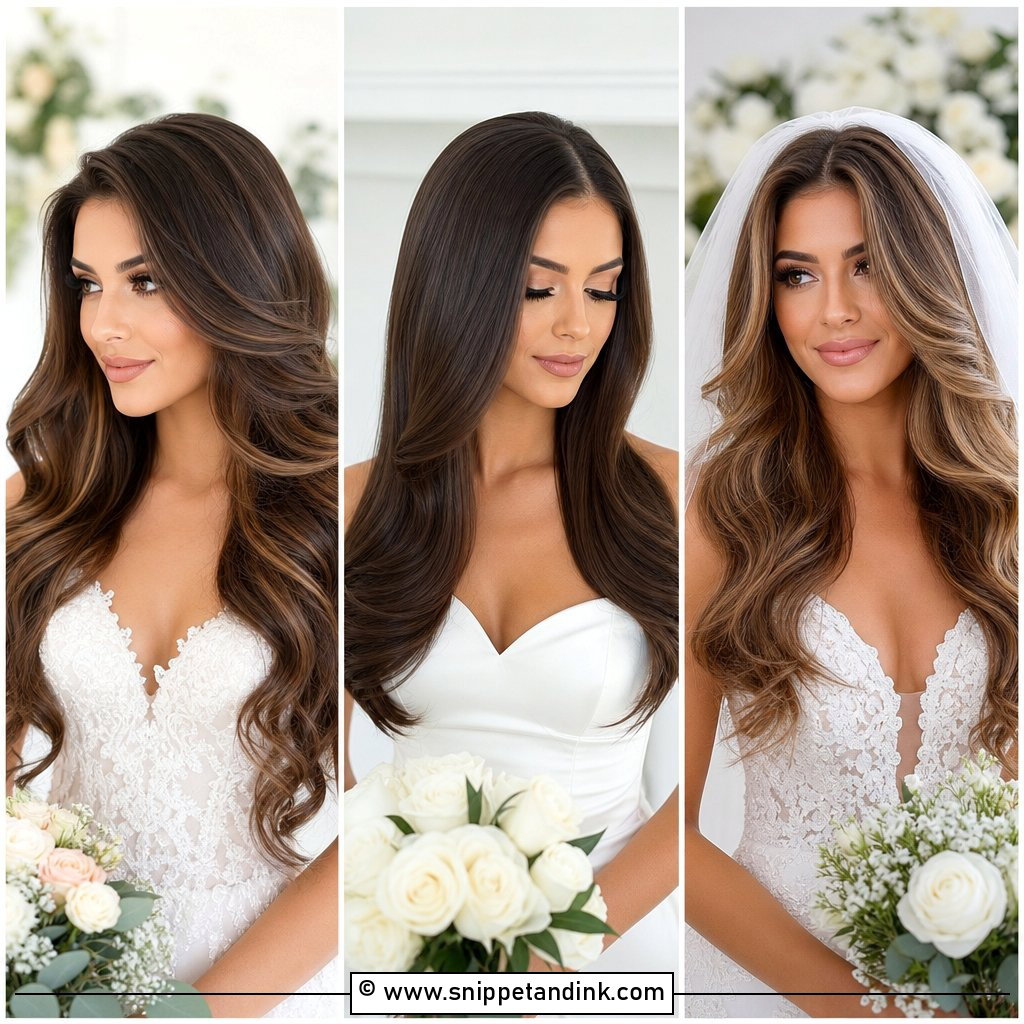
7. Sleek Straight Open Hair
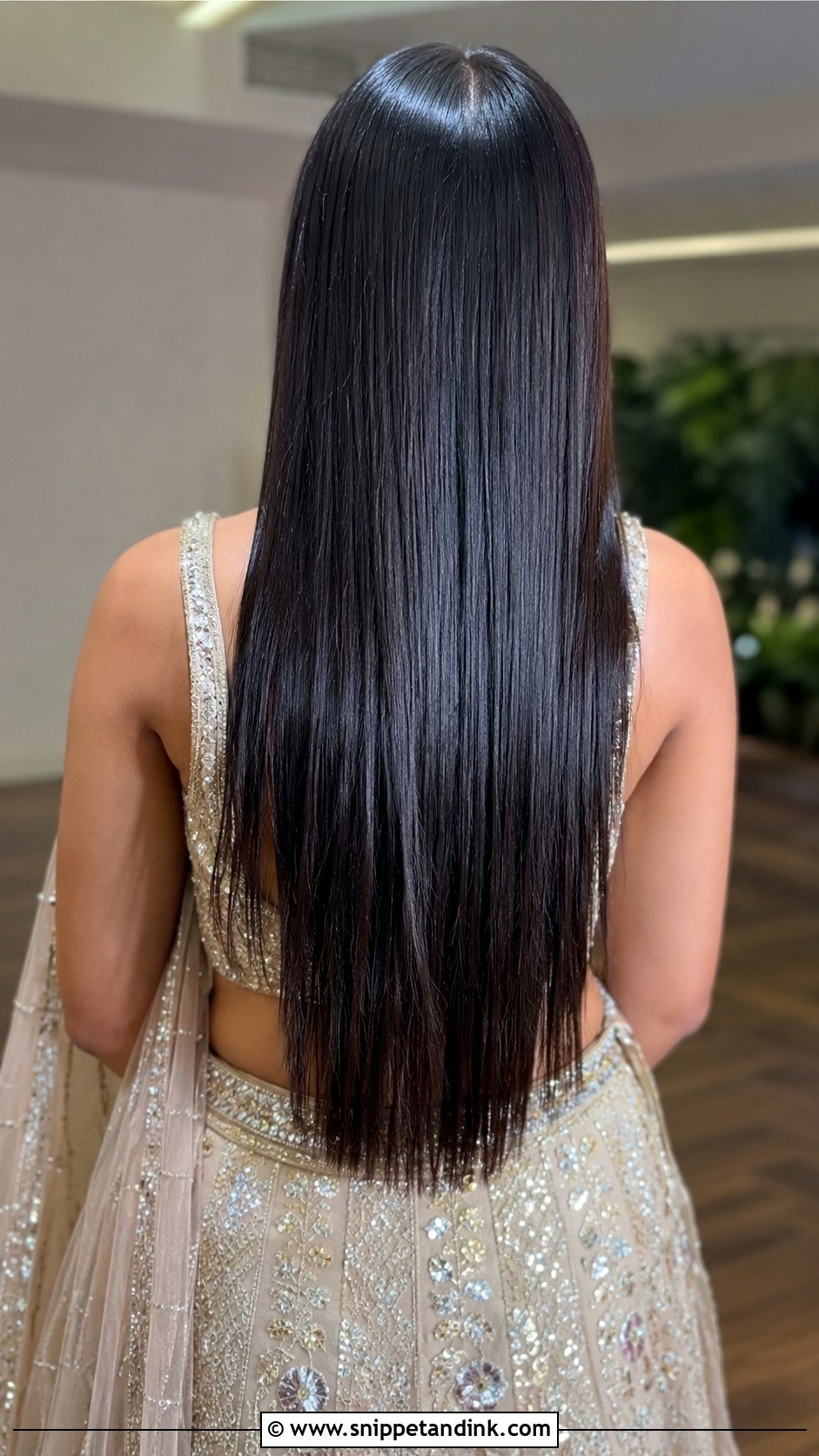
Straight open hair only looks chic when it is genuinely glossy, so the work happens before the flat iron: a smoothing treatment the week before and a heat protectant on the day. I straighten in thin sections and finish with a drop of serum rubbed between palms, mostly on the lengths. Center or side part both work. Be aware that humidity and sweat bring back natural texture at the roots fastest, so if your hair is very curly, this is a high-maintenance pick for a night of dancing. When it holds, it leaves your outfit and jewelry to do all the talking.
8. Messy Bun With Gajra
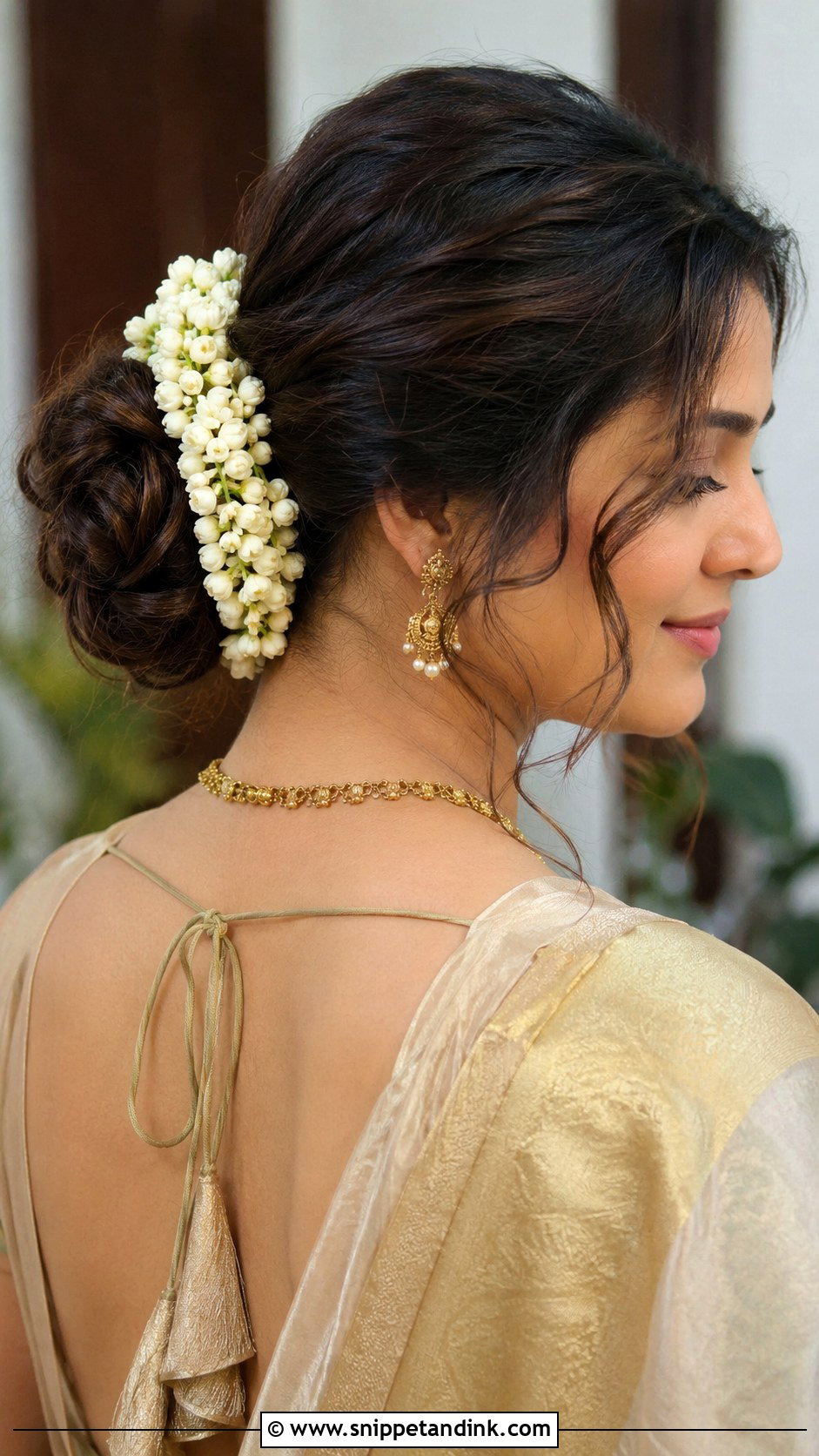
Messy buns are hard to get right, because the mess has to be planned. I set the base firmly first, then pull out texture with my fingertips, and leave just two face-framing strands. A fresh jasmine gajra wrapped round the bun adds traditional beauty and that scent everyone remembers. Gajras are heavier than they look, so I pin them through the bun in at least four places. Keep the flowers in the fridge until you’re ready to style, since jasmine browns quickly in a warm room.
9. Side Swept Curls With Hair Accessory
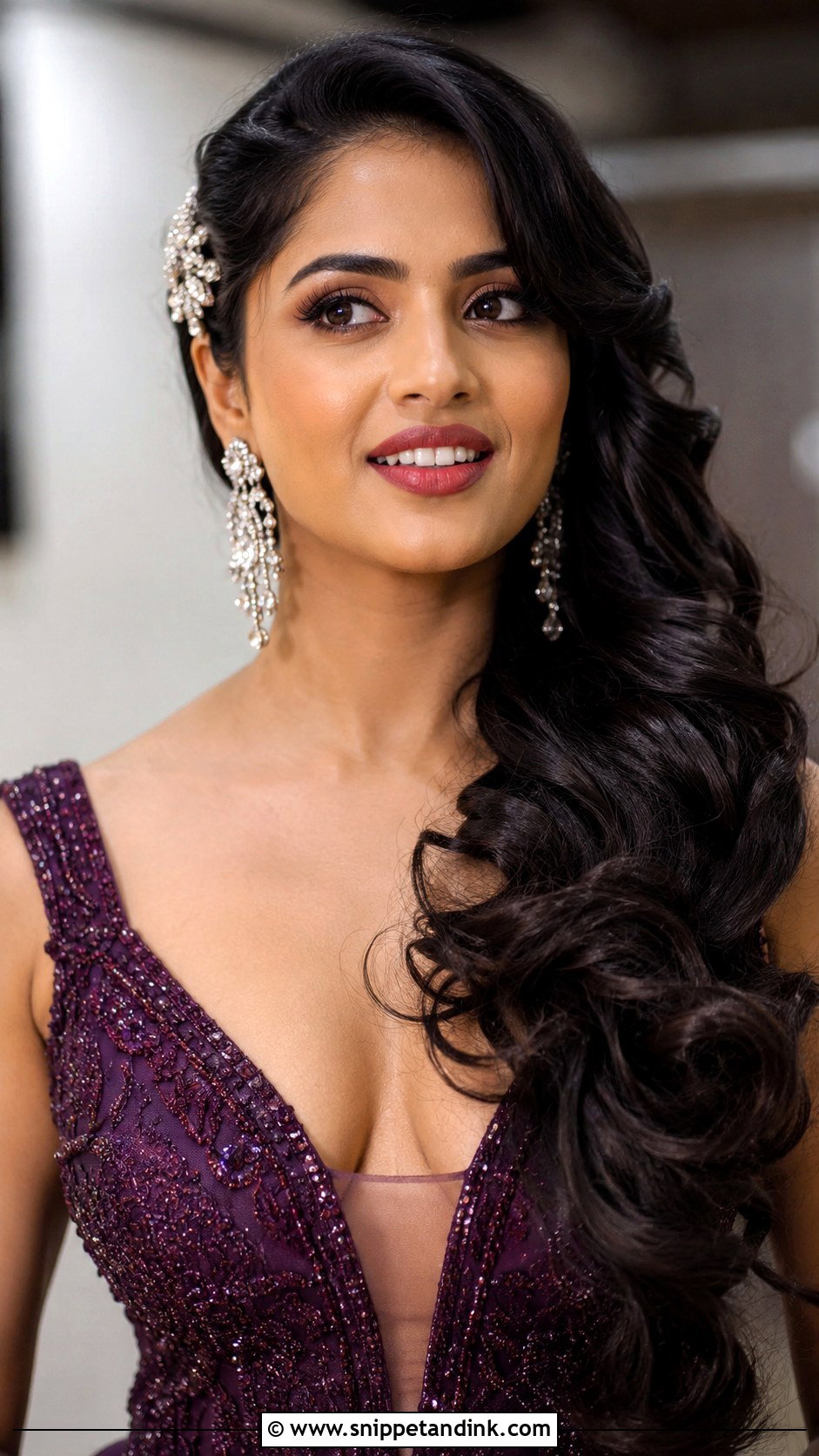
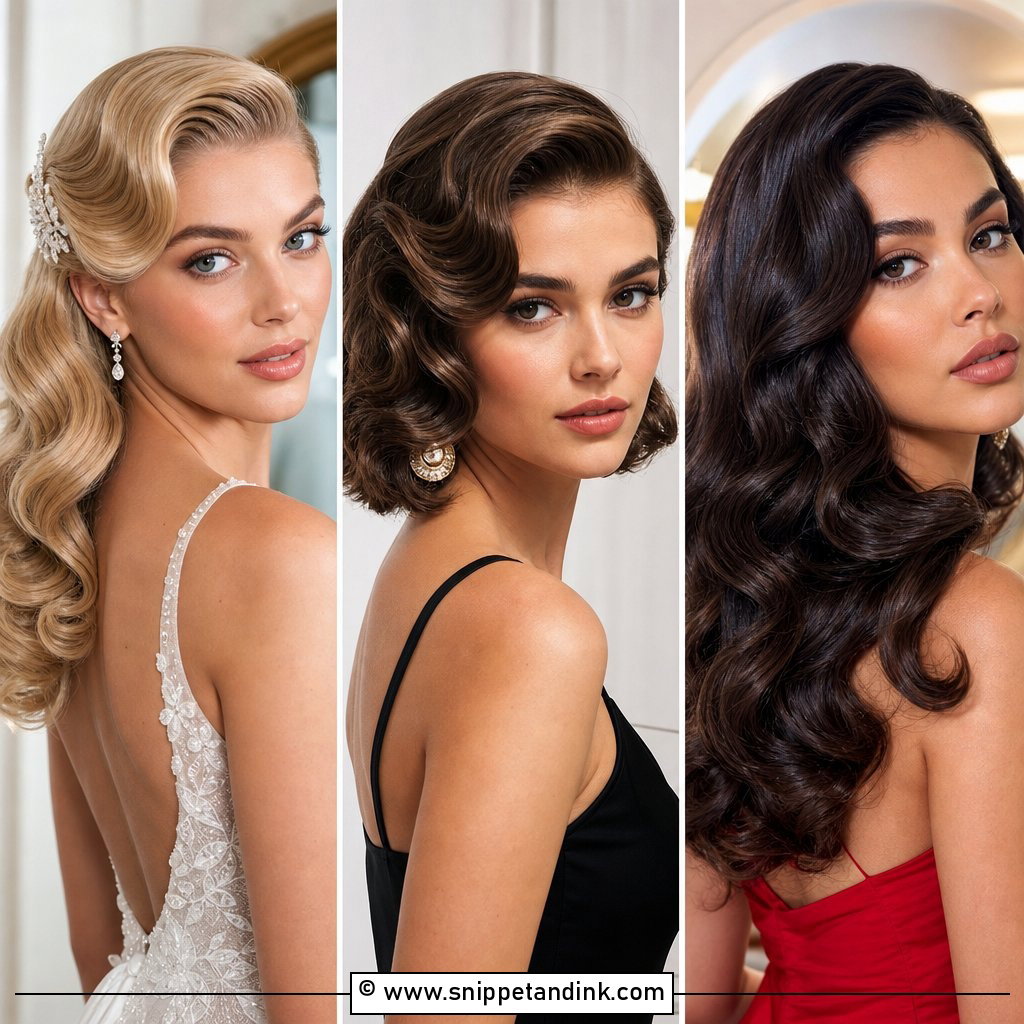
Sweeping everything to one side gives you that old Hollywood shape and shows off the jewelry on the open ear. The hidden work is a row of crossed pins behind the ear on the sweep side, which carries the weight so the decorative clip only has to look good. Long hair works best, and deep necklines especially. I’d skip it if you have a heavy necklace on one shoulder only, since the curls catch on it. A touch of shine spray at the end keeps it glossy under the lights.
10. Dutch Braid Into Low Bun
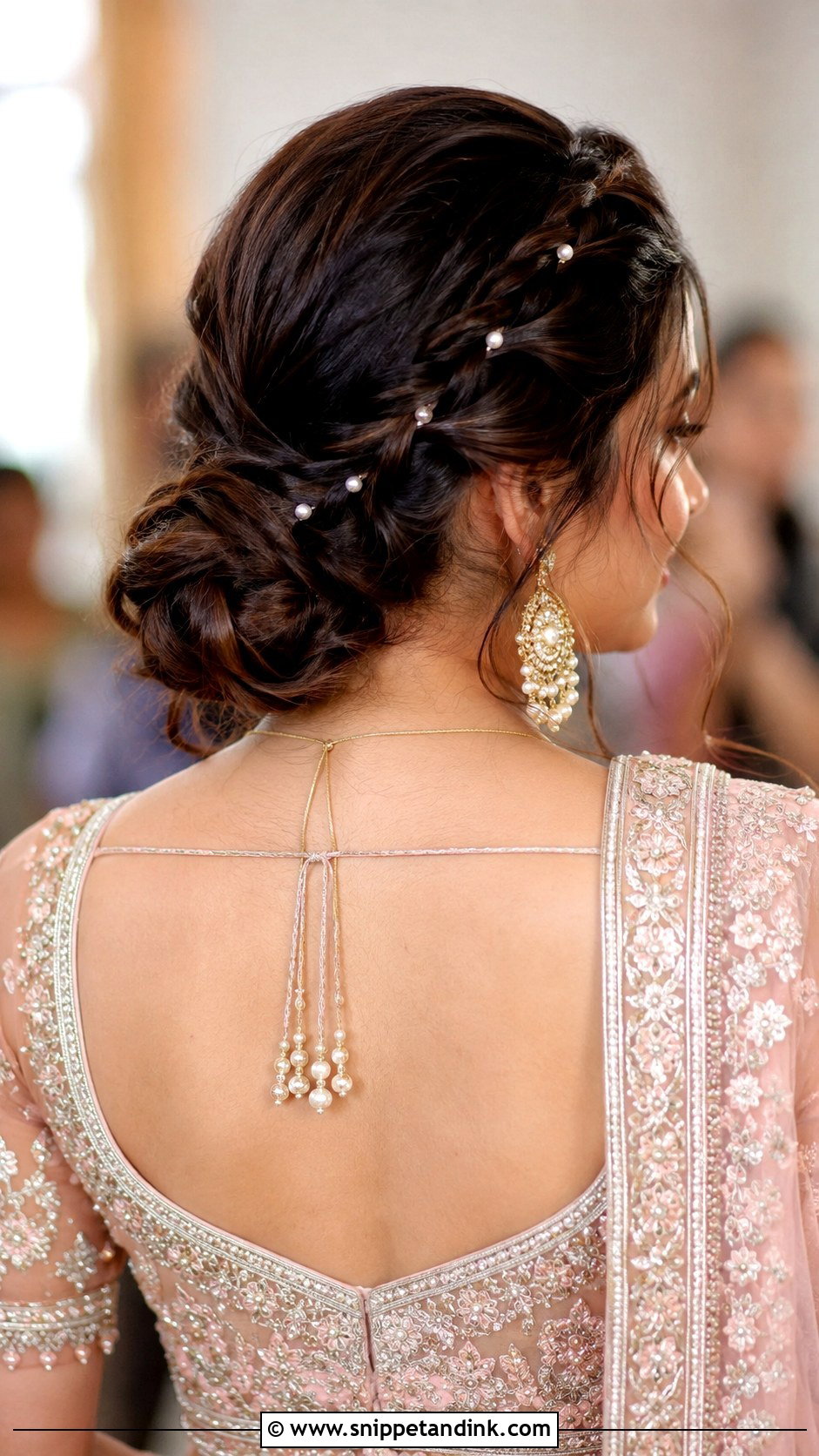
A Dutch braid is the inside-out version of a French braid, raised above the surface, which is why it shows so clearly from the front. Running it from the hairline into a low bun keeps everything off the face and completely secure for energetic dancing. I loosen the edges of the braid slightly with my fingertips so it reads wider on camera. Pearls or flowers along the braid suit traditional lehengas. Medium to long hair can carry it; very layered cuts need a little extra pinning at the nape.
11. Bouncy Blowout With Volume
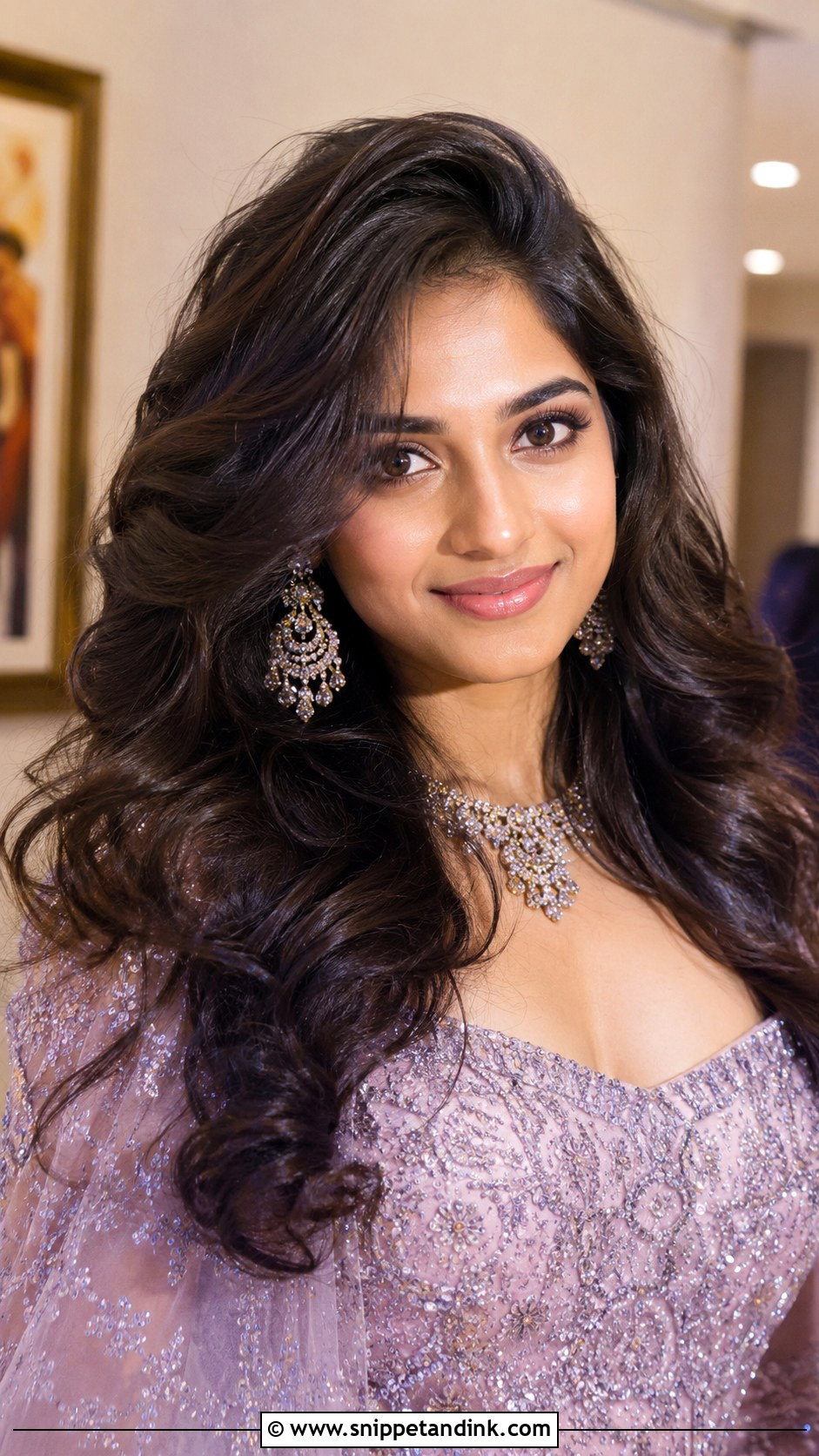
A blowout is volume built with a round brush and heat, rather than curls added afterward. I dry the roots upward first, then roll the lengths in big sections and let them cool on velcro rollers while makeup is done. That cooling stage is what keeps the bounce through the evening. A texturizing spray on the roots helps fine hair. Most face shapes and lengths suit it, and it pairs easily with both gowns and lehengas, but in a humid outdoor venue it softens within a couple of hours.
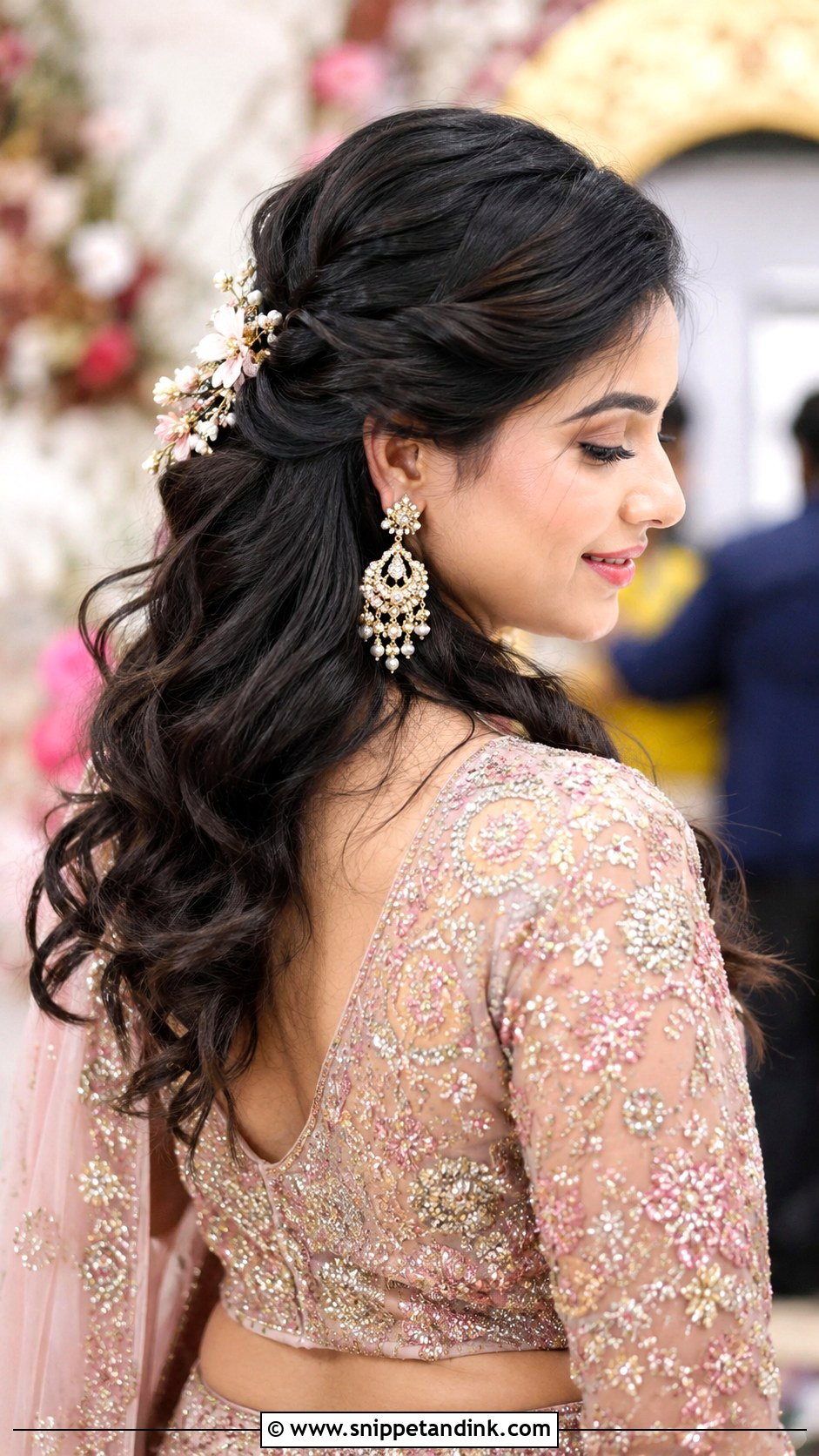
12. Twisted Half-Updo With Curls
Twisting the side sections back and meeting them at the crown gives a woven look with very little technical difficulty, which makes this a good pick if you’re doing your own hair. Twist away from the face and always in the same direction on both sides, or one side will unwind. I secure where they meet with a clear elastic and then crossed pins. Below, soft curls finish it. A small decorative pin or a few flowers over the join hide the hardware.
13. Sleek Bun With Maang Tikka
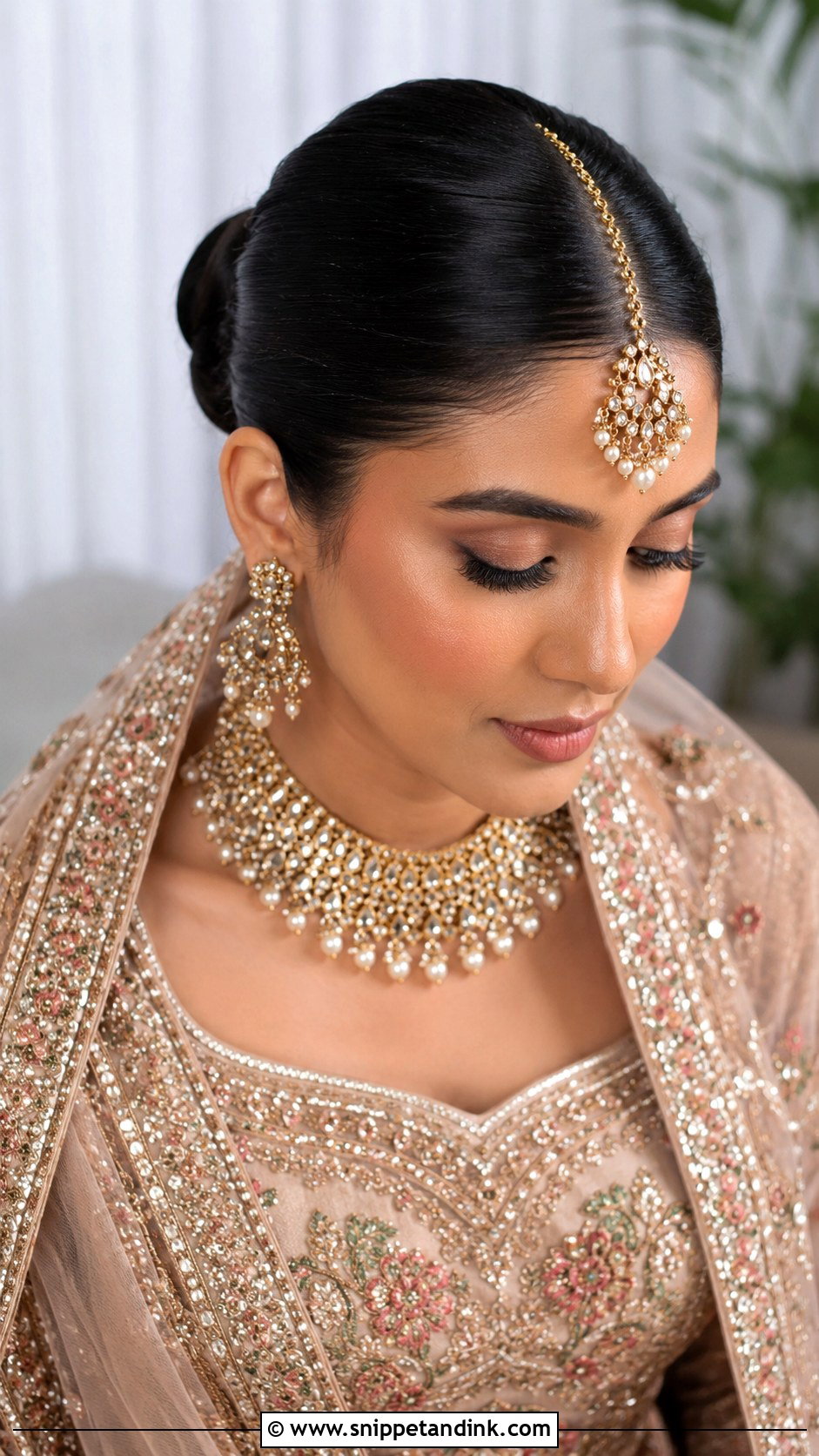
A sleek bun and a maang tikka is the classic pairing for a reason: nothing interrupts the line of the center part where the tikka sits. I set the tikka first and build the bun around its chain, so the hook isn’t pulling on loose hair. A padding inside the bun gives shorter or thinner hair the same full shape. It stays put for hours. With heavy lehengas and ornate jewelry, this is the style I’d trust most for a long night.
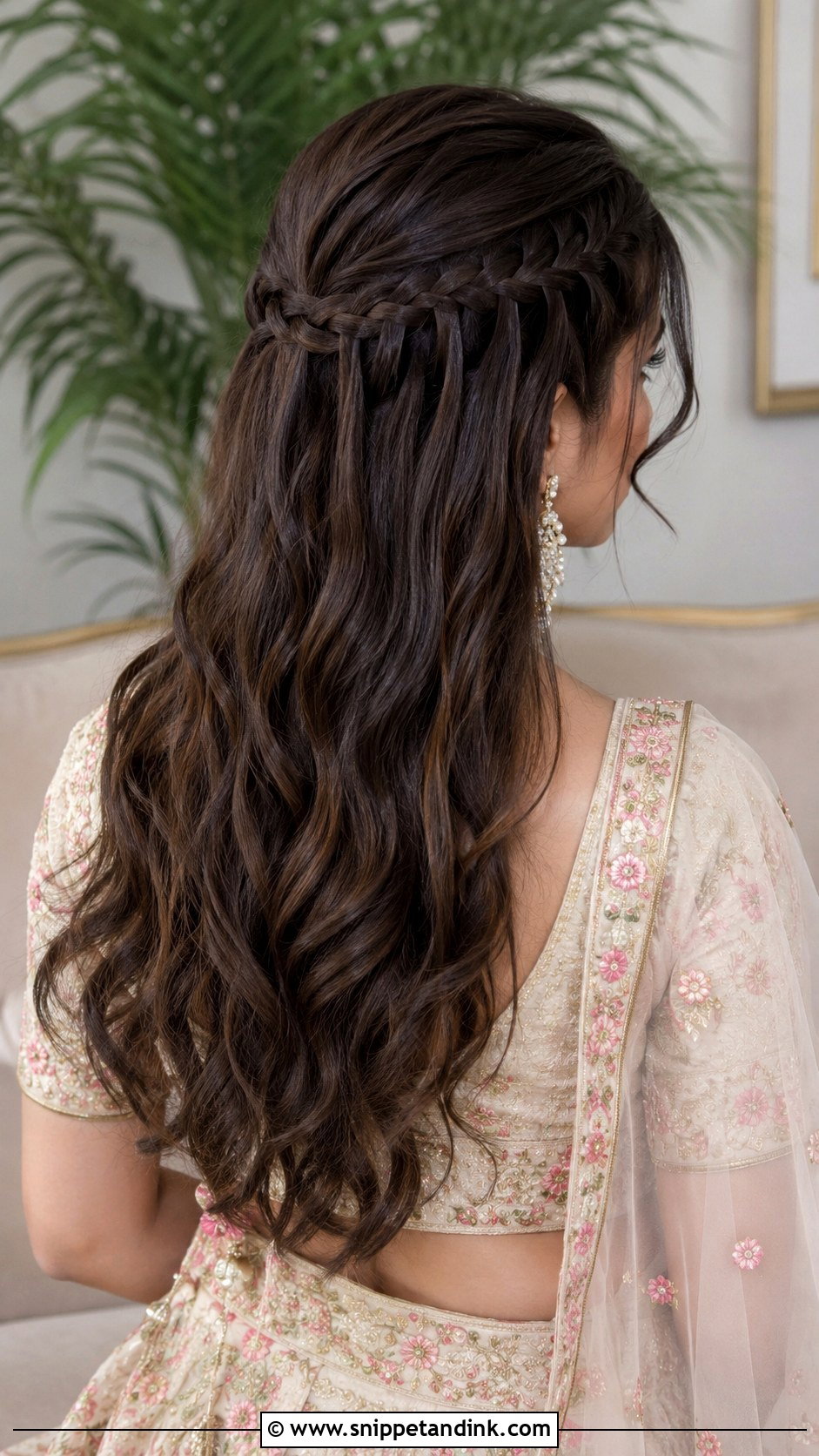
14. Waterfall Braid With Open Hair
The waterfall braid works horizontally, dropping one strand and picking up a new one at each crossing, so it looks like hair spilling through the braid. It’s delicate, and delicate means it can loosen. I pin the end hidden behind the ear and spray lightly before adding any flowers. Waves below keep it soft. Long hair with some natural grip suits it best; very silky, freshly washed hair tends to slide out of the pattern.
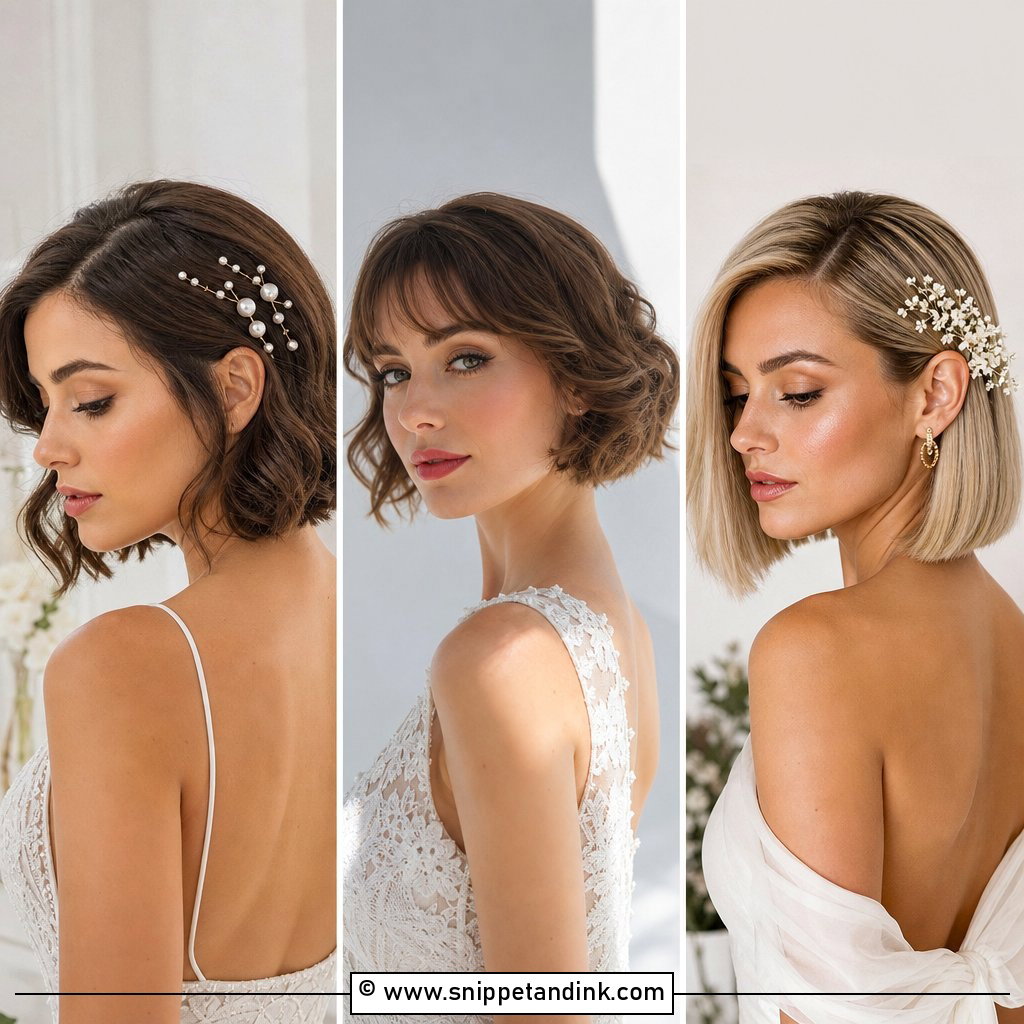
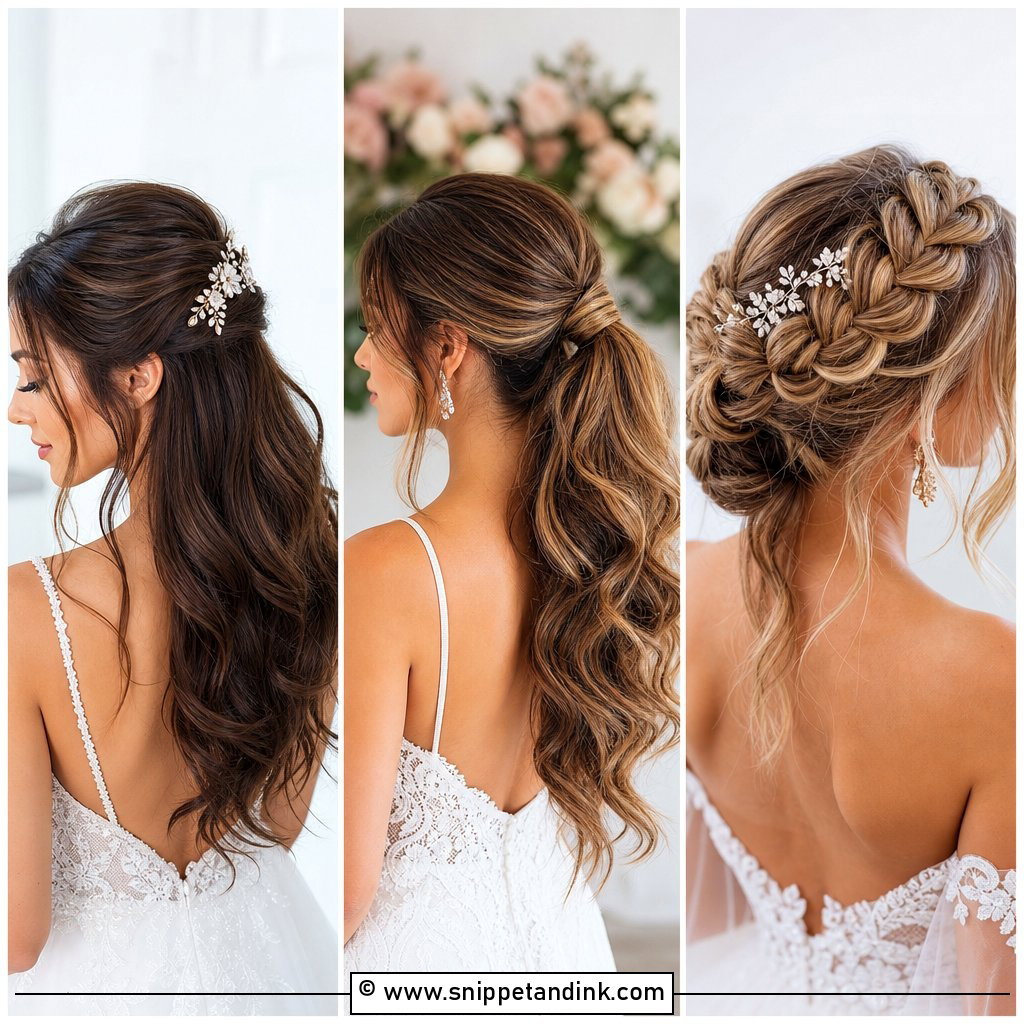
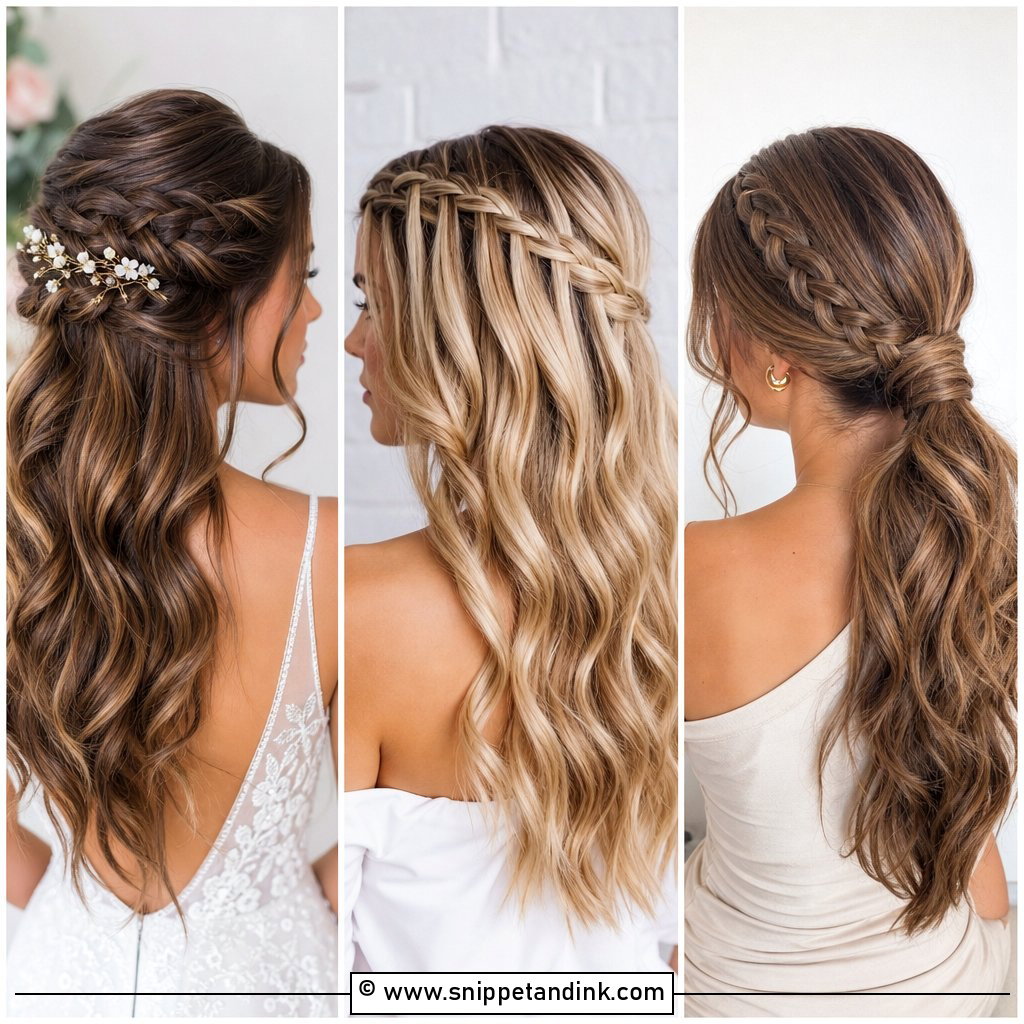
15. Curly Ponytail With Volume
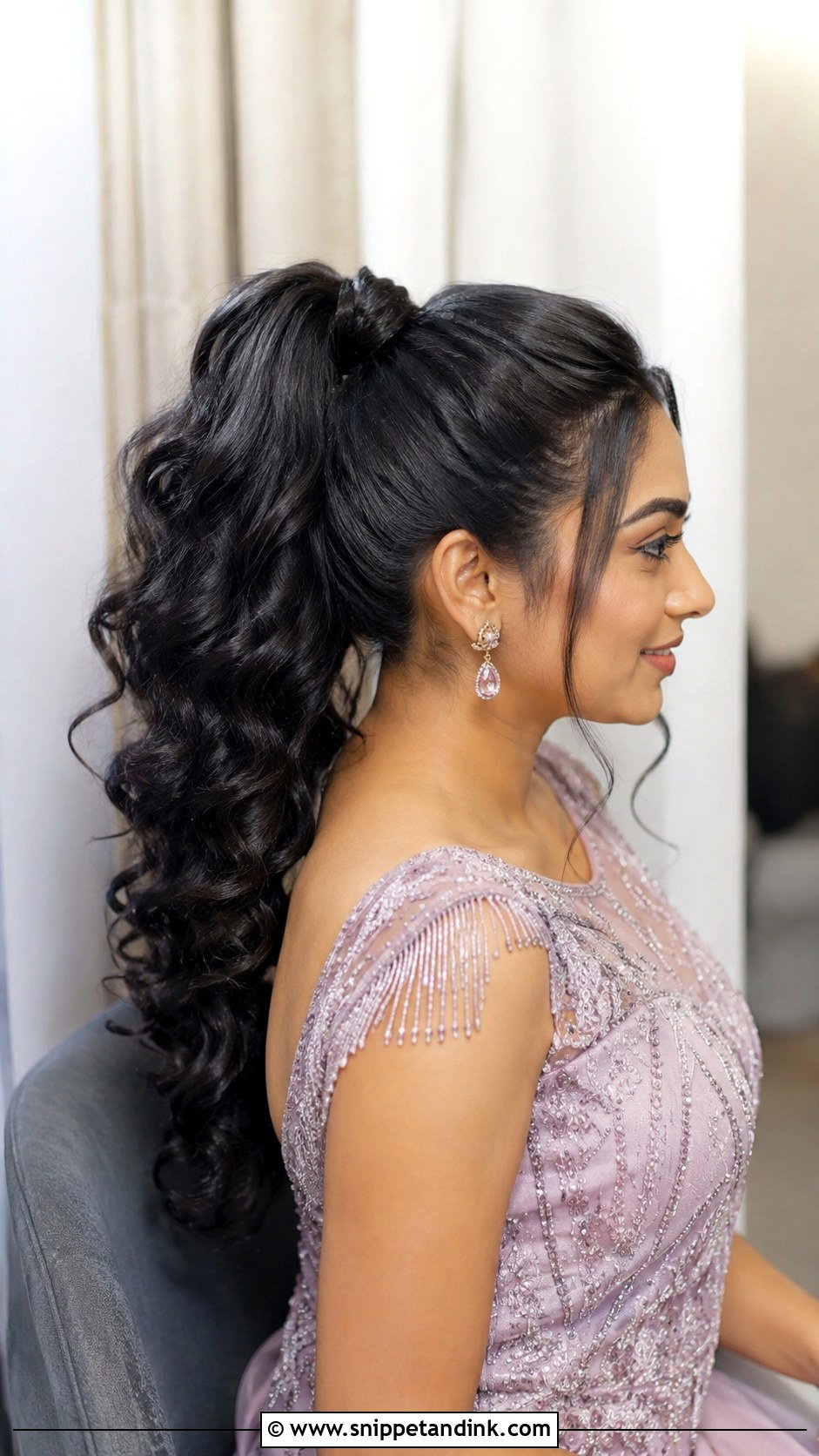
A curly ponytail gives you the movement of open curls with the security of a tied style, a compromise I recommend often for guests who want to dance hard. Mid-height is easier to wear than high if your hair is long and heavy. Curl the length after the pony is in, so the curls fall where you want them. Wrap a strand round the base to hide the elastic. A light hairspray keeps the bounce, and it pairs easily with fitted gowns or lehengas.
16. Rose Knot Half-Up Style
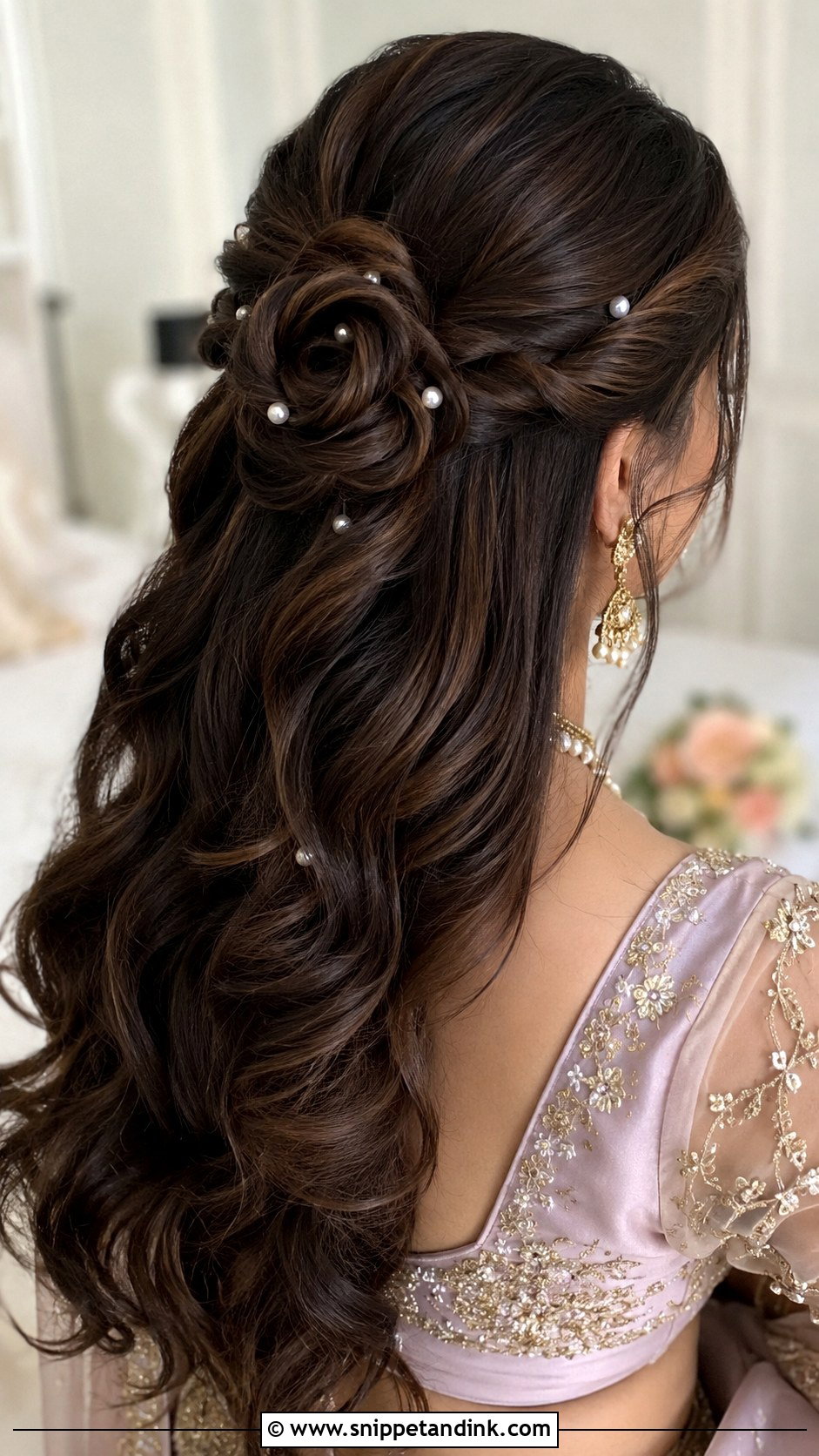
A rose knot is a twisted section coiled round on itself into a flower shape and pinned flat, usually at the crown. Everything below flows in soft waves or curls. The coil needs hair at least to the shoulders to form properly, and I set it with a couple of U-pins pushed in along the spiral rather than straight through. Tiny pearls or fresh blooms around the edge finish it. It’s a sweet, handmade detail that suits lehengas and stands out in photos from behind.
17. Vintage Finger Waves Updo
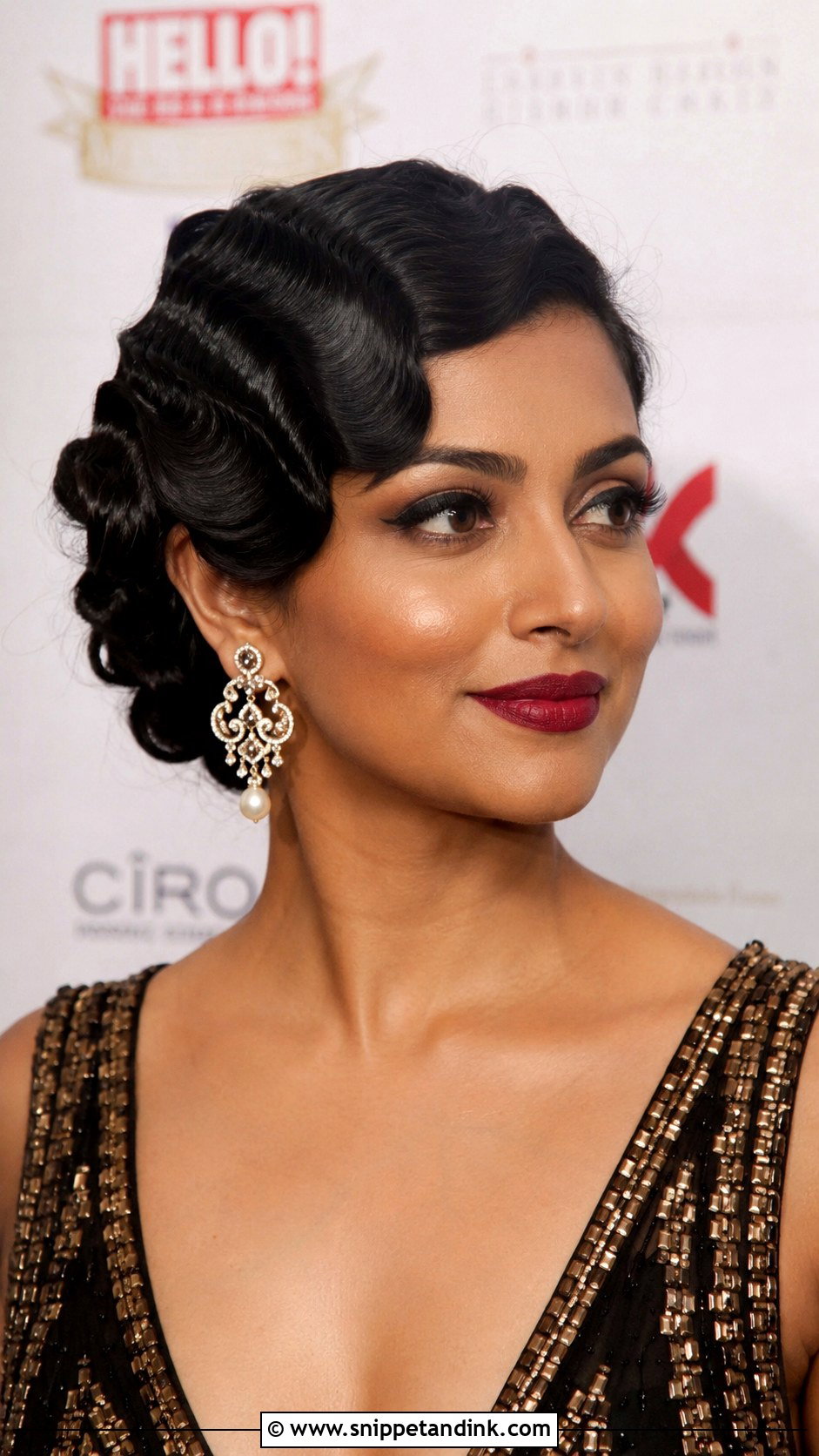
Vintage finger waves are sculpted S-shapes set close to the head, either with setting lotion and clips or with a flat iron and pin curls. It takes practice, and I wouldn’t attempt it yourself the morning of. Gathered into a low updo, it’s secure and very different from the usual Sangeet looks. Short to medium hair suits it best, since the waves sit at the front where the camera sees them. Pair it with dramatic earrings and a gown.
18. Bohemian Braided Updo
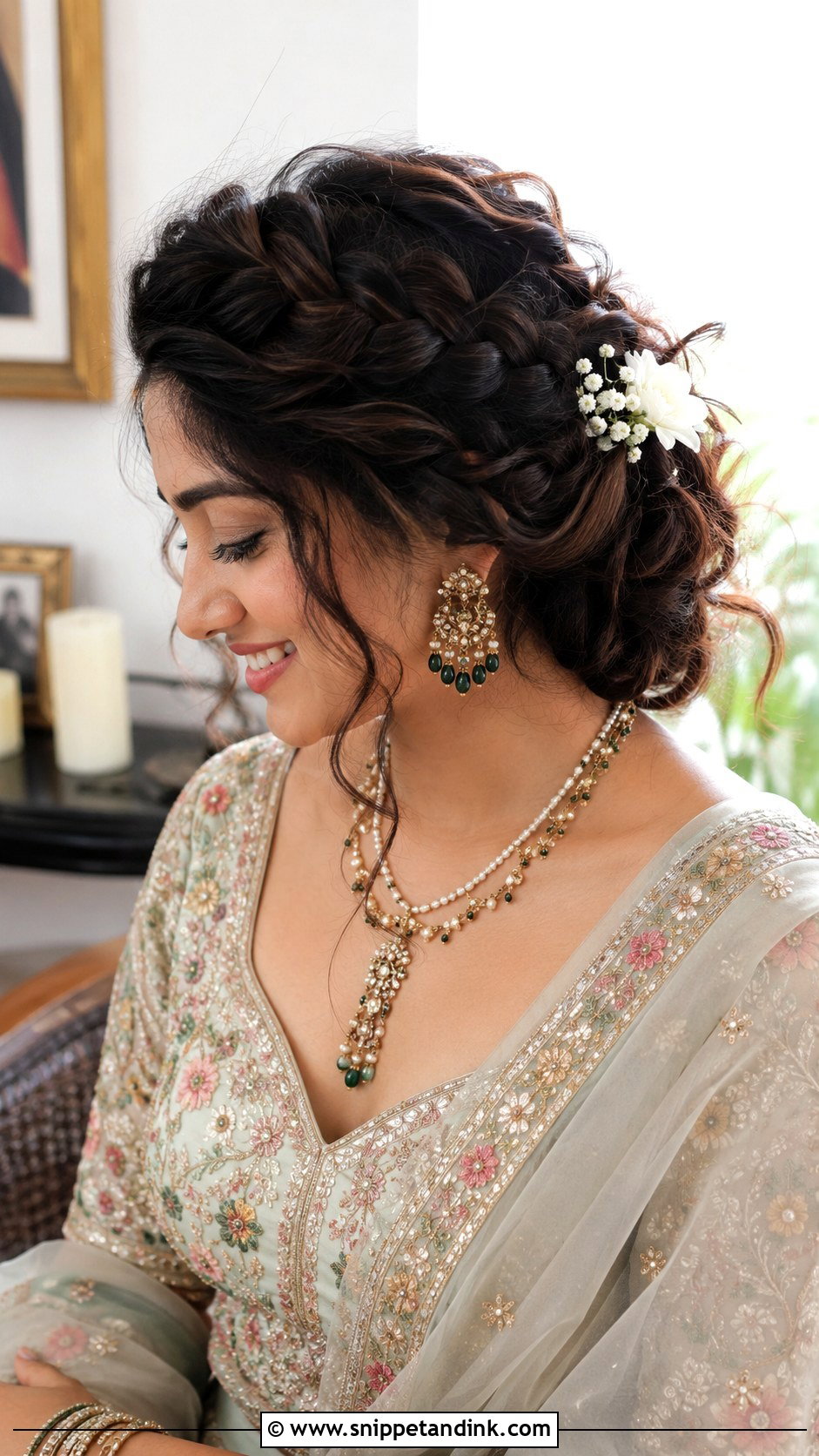
Several loose braids gathered into a textured updo give that relaxed, slightly undone feel. The key is braiding with real tension and only pancaking the braids after they’re pinned, otherwise the whole thing collapses by midnight. Long, thick hair suits it; fine hair needs extensions to look full. Fresh flowers tucked into the gaps add a garden feel with flowy lehengas. From behind, all that braid detail shows clearly in photos.
19. Sleek Center-Part Low Ponytail
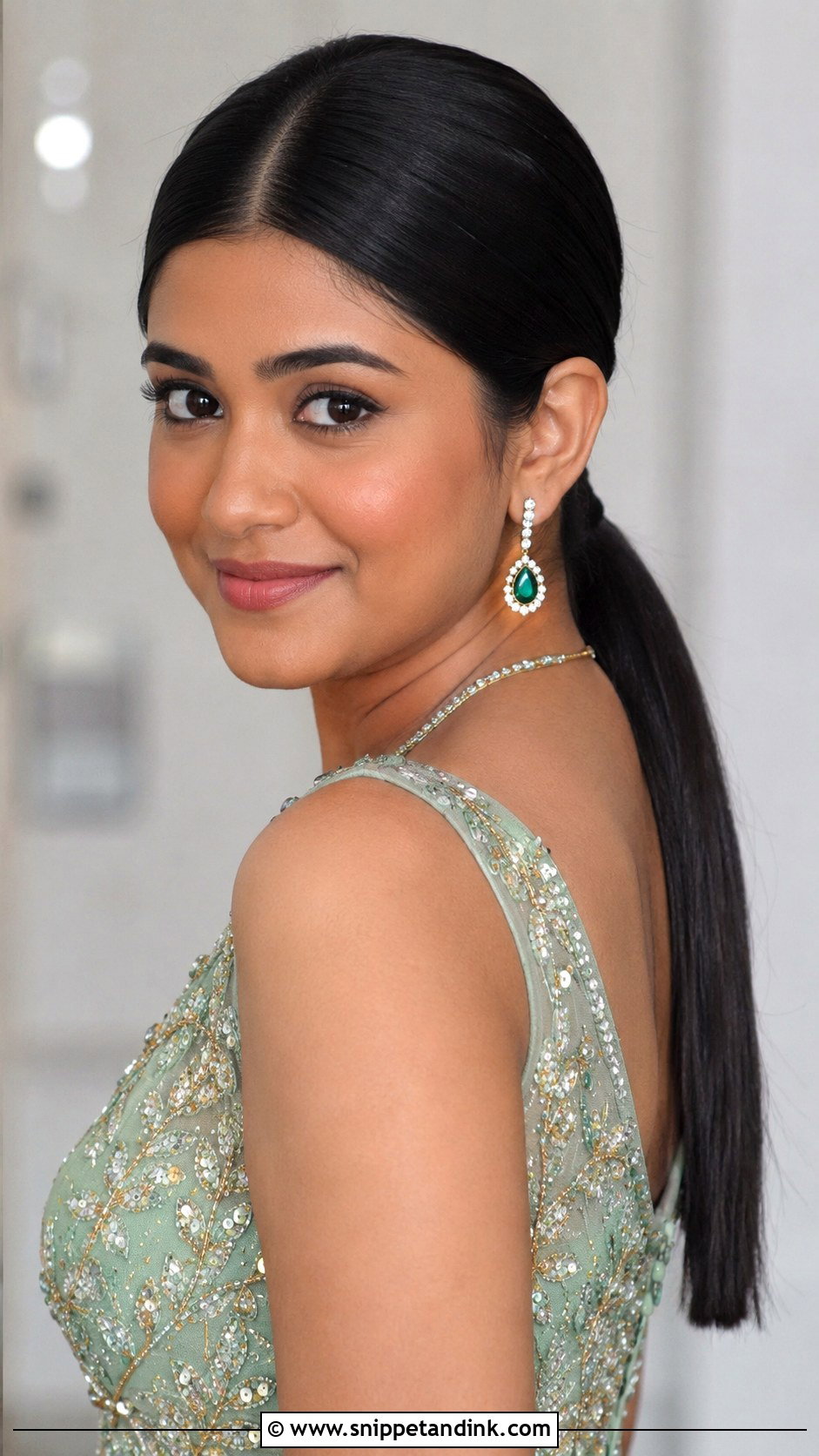
A center part and a low ponytail is the most modern look here, and the least forgiving. Any bump or uneven part line shows. I use a fine-toothed comb with a light gel at the hairline, tie the pony first, then wrap a strand around the elastic and pin it underneath. A smoothing serum adds shine and tames flyaways. Long, naturally straight hair suits it best. It keeps the focus on your outfit and jewelry, which is exactly why some brides love it.
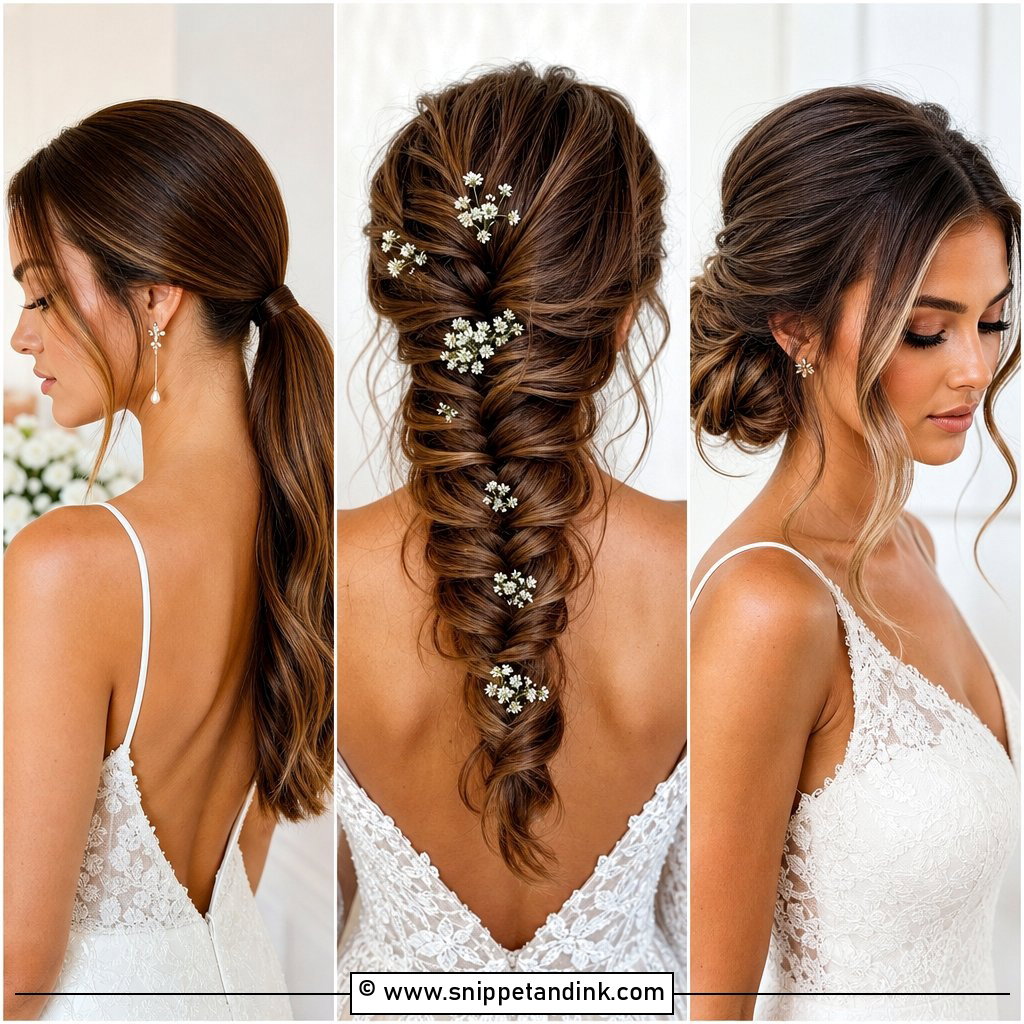
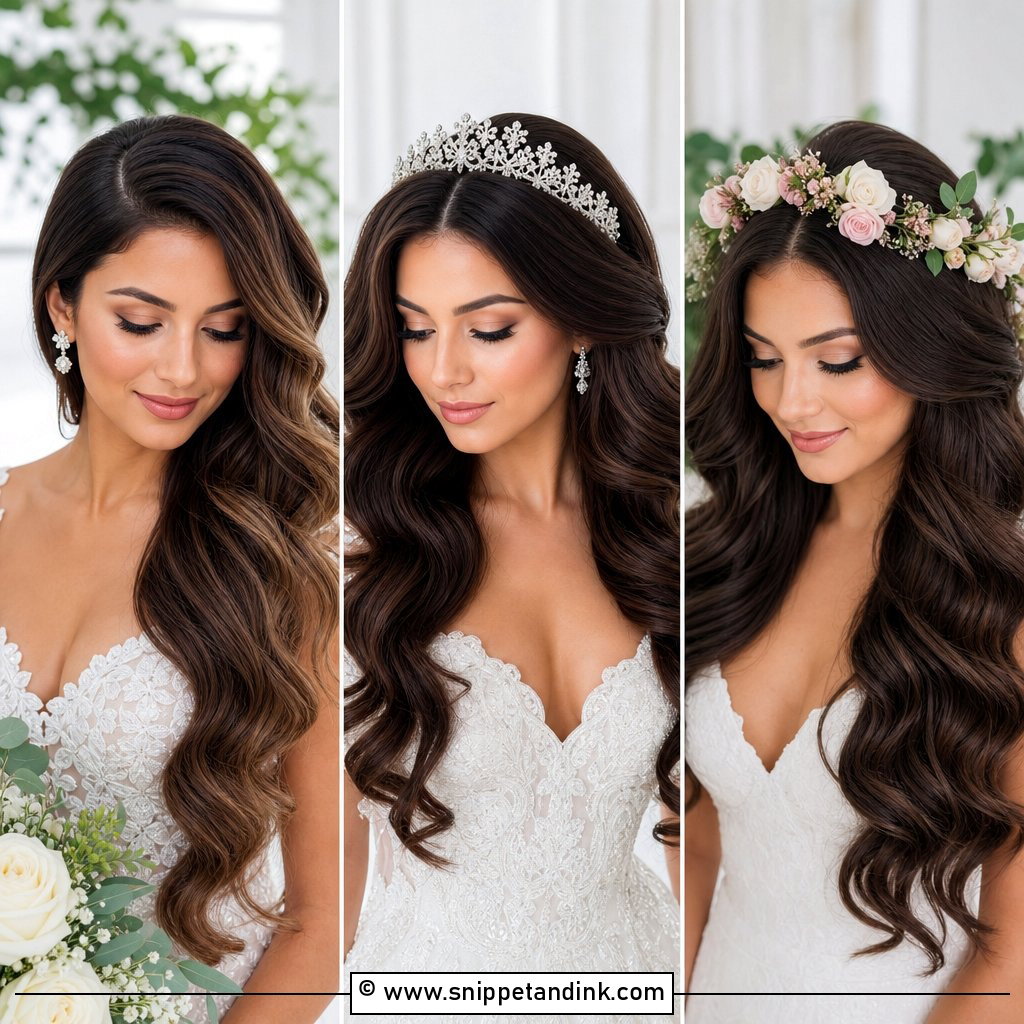
20. Loose Wavy Hair With Tiara
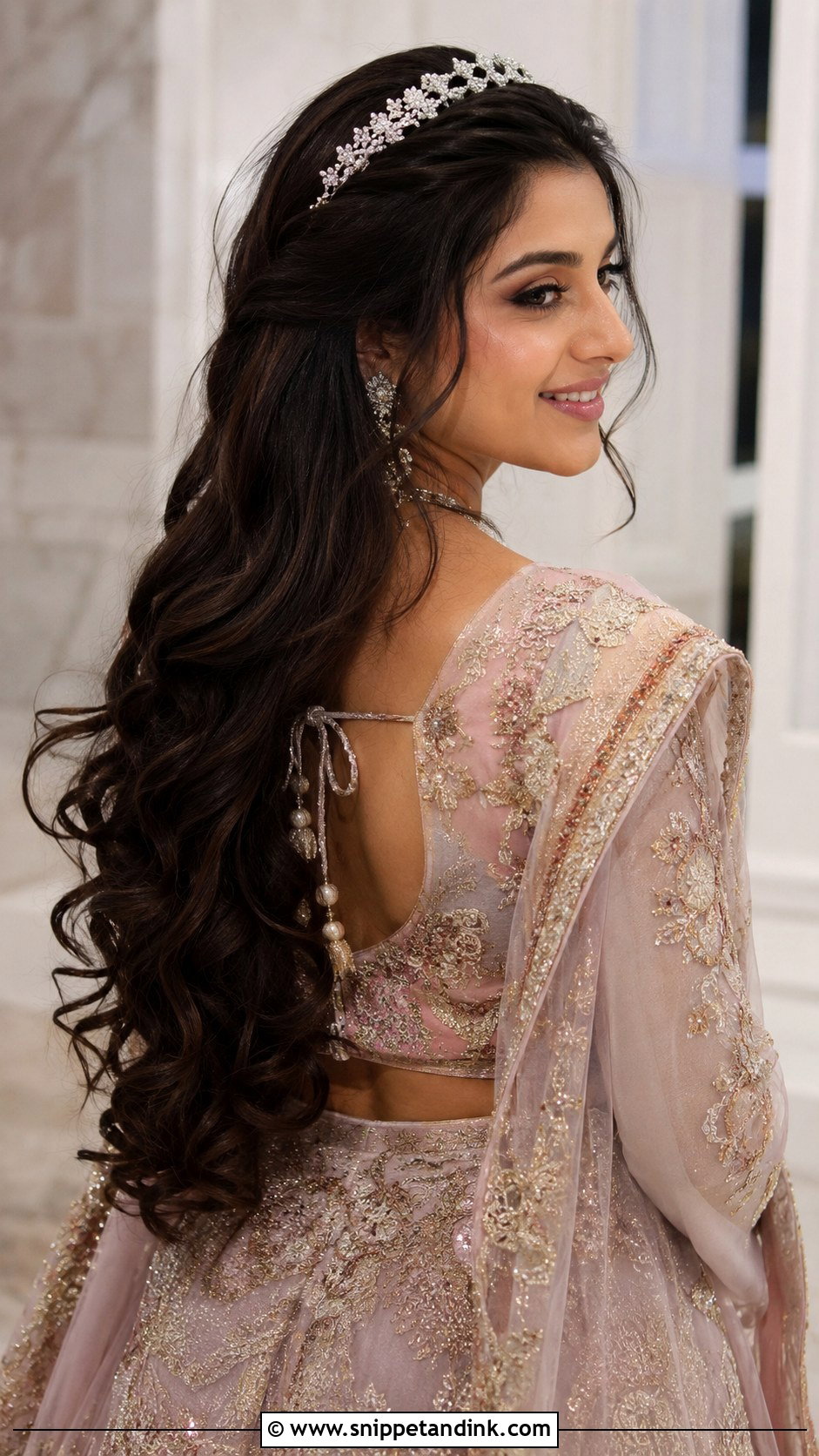
Loose wavy hair with a tiara feels regal, and the tiara is the part to plan. A tiara needs a firm base, so I backcomb a small hidden section behind it and pin the combs into that, crossing pins under each side. Then the waves fall free. Long, full hair carries the look best and suits grand lehengas or gowns. If the tiara is heavy, try it on for an hour at home first, because a pinching band ruins a night of dancing.
A Small Repair Kit for Midnight
Even the best set hair shifts after hours of dancing. I send every Sangeet client off with a tiny kit, and it fits in a clutch.
- Eight to ten bobby pins in your hair color, plus two U-pins for buns
- A travel hairspray or a small bottle of hold spray
- Two clear elastics for a ponytail that starts sagging
- A few blotting papers for a damp hairline
- A spare safety pin for a slipping dupatta
If curls fall, don’t fight them. Twist the front sections back and pin them, and the style becomes a half-up that looks intentional. If a bun loosens, push the existing pins in deeper rather than adding new ones on top. Ask a bridesmaid to learn where your hidden pins are before the event, so she can fix the back while you keep dancing.
Guests and Bridesmaids Don’t Need Bridal Hair
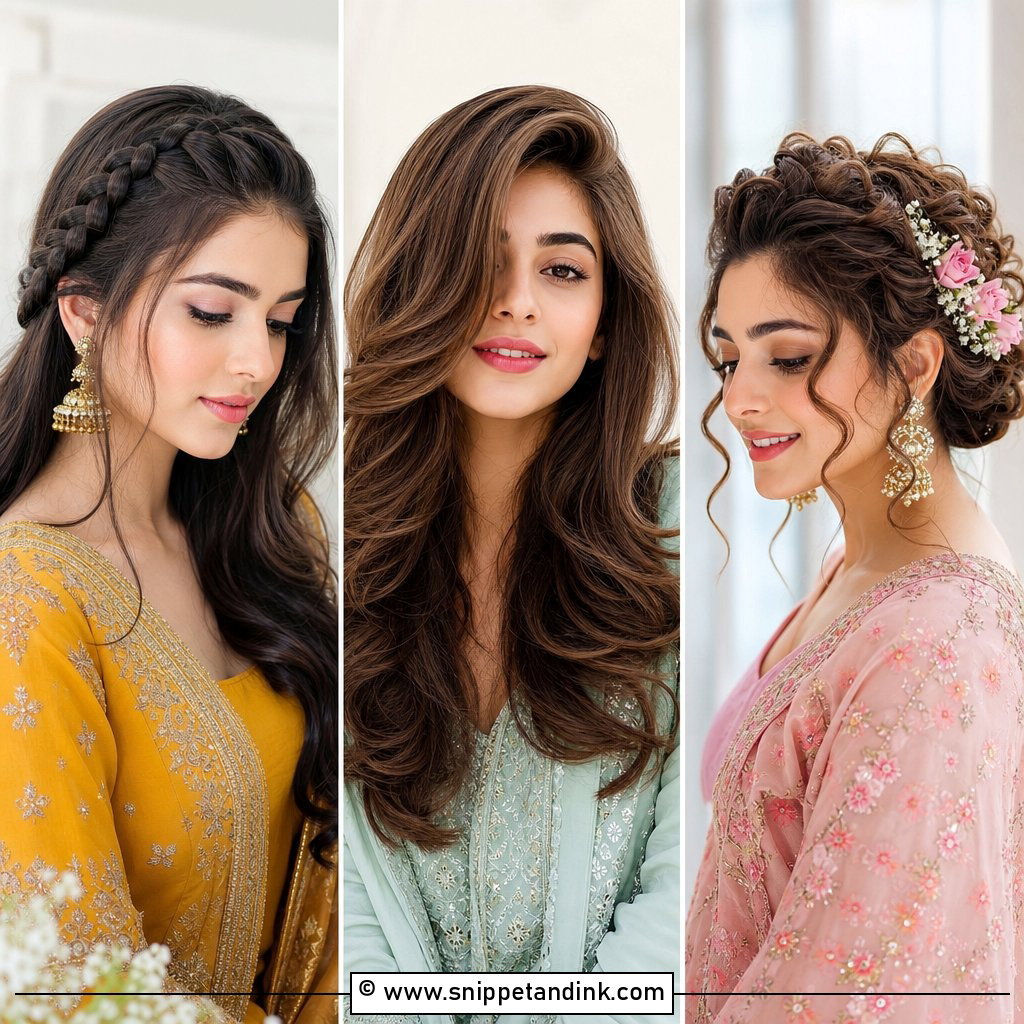
When I style a whole party for a Sangeet, I keep the bride’s look distinct. Bridesmaids often look best in a coordinated family of styles, perhaps all wearing open waves or all wearing braids, adapted to each person’s length rather than one identical updo forced onto very different hair. Guests doing their own hair should pick the styles that need the least technique: the half-up, the twisted half-updo, the curly ponytail or the sleek low bun. Those survive a beginner’s pinning far better than finger waves or a rose knot.
Test Your Sangeet Look on Your Own Kitchen Floor
Any of these can work on Sangeet night, as long as it’s anchored for movement and matched to your hair’s real texture. Plan the accessories (gajra, pearls, tikka, tiara) as part of the style, not as an afterthought, since each changes how the hair has to be built. Try your favorite once before the event, dance around the kitchen in it, and see what moves. That small test tells you more than any photo.
You'll Like These Ideas:


Leave a Reply