
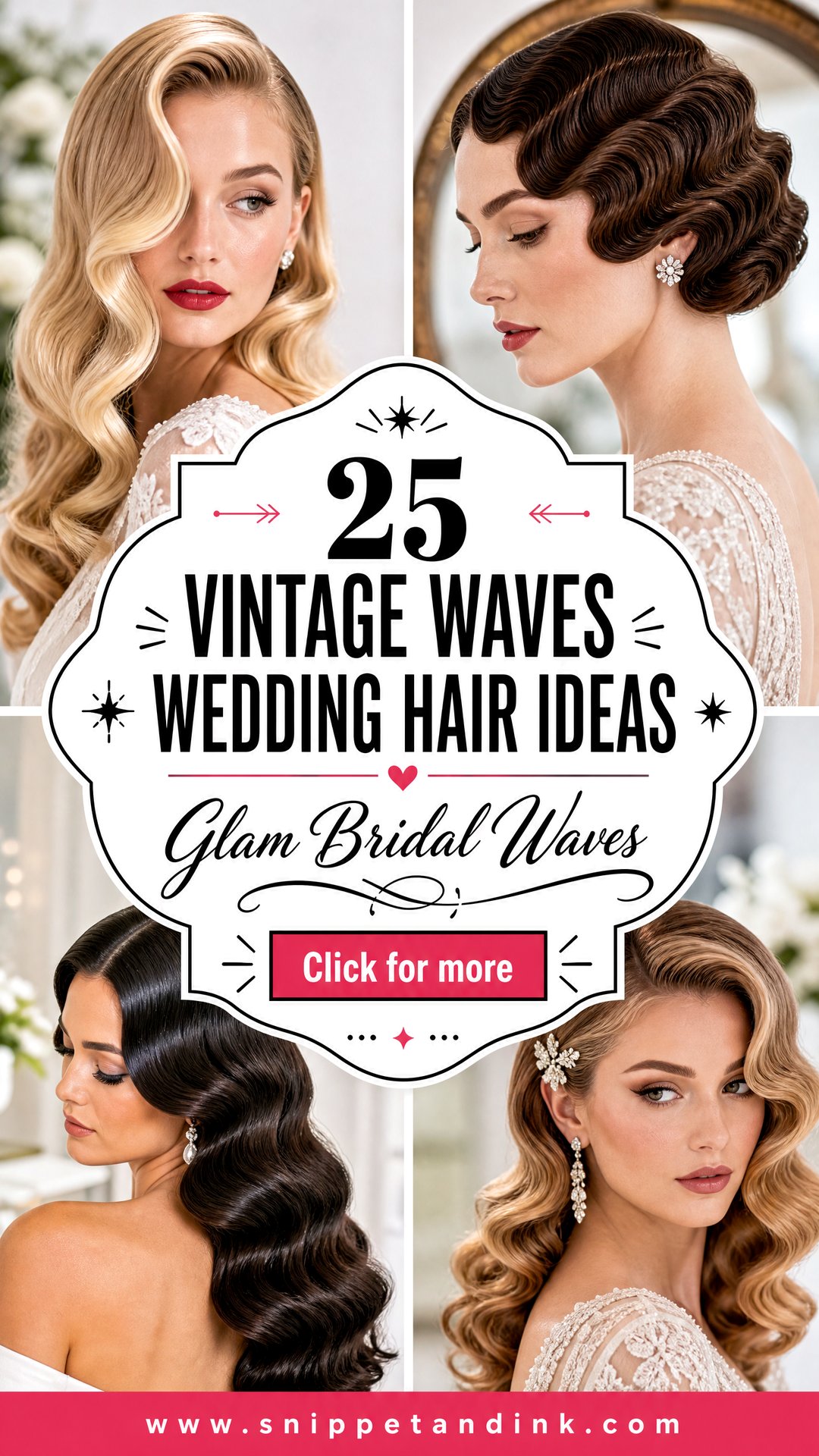
Vintage waves are the style I get asked for most by brides who want glamour without a big updo. They come in two families. There are the brushed-out, cascading waves of 1940s film stars, and the flat, sculpted finger waves of the 1920s. Both rely on a proper set: curls placed in one direction, cooled, then brushed into a single shape. Done that way, they hold through a long day and read clearly in photos from any distance. Below are 25 versions, from side-swept to low buns with pearls, with notes on who each suits and where it tends to go wrong.
The Set Is What Makes a Vintage Wave Last
The difference between a wave that lasts until midnight and one that’s gone by dinner is almost always the set, not the product. A vintage wave is made in three stages, and skipping any of them shows.
- Curl in one direction. For a side-swept wave, every section on a side is wound the same way, so the curls lock together into one shape when brushed.
- Let the curls cool in place. I pin each one flat against the head or set it in a heated roller and leave it for fifteen to twenty minutes, usually while makeup is being done. Hair takes its shape as it cools, not while it’s hot.
- Brush out, then sculpt. A soft boar bristle brush blends the curls into waves. Then the ridges get pressed with flat clips while a light spray dries, and the clips come out last.
Finger waves work differently: they’re shaped into wet hair with setting lotion or gel and dried completely, ideally under a hood dryer. If you’re doing a trial, ask your stylist to walk you through which method suits your length.
1. Old Hollywood Side-Swept Waves
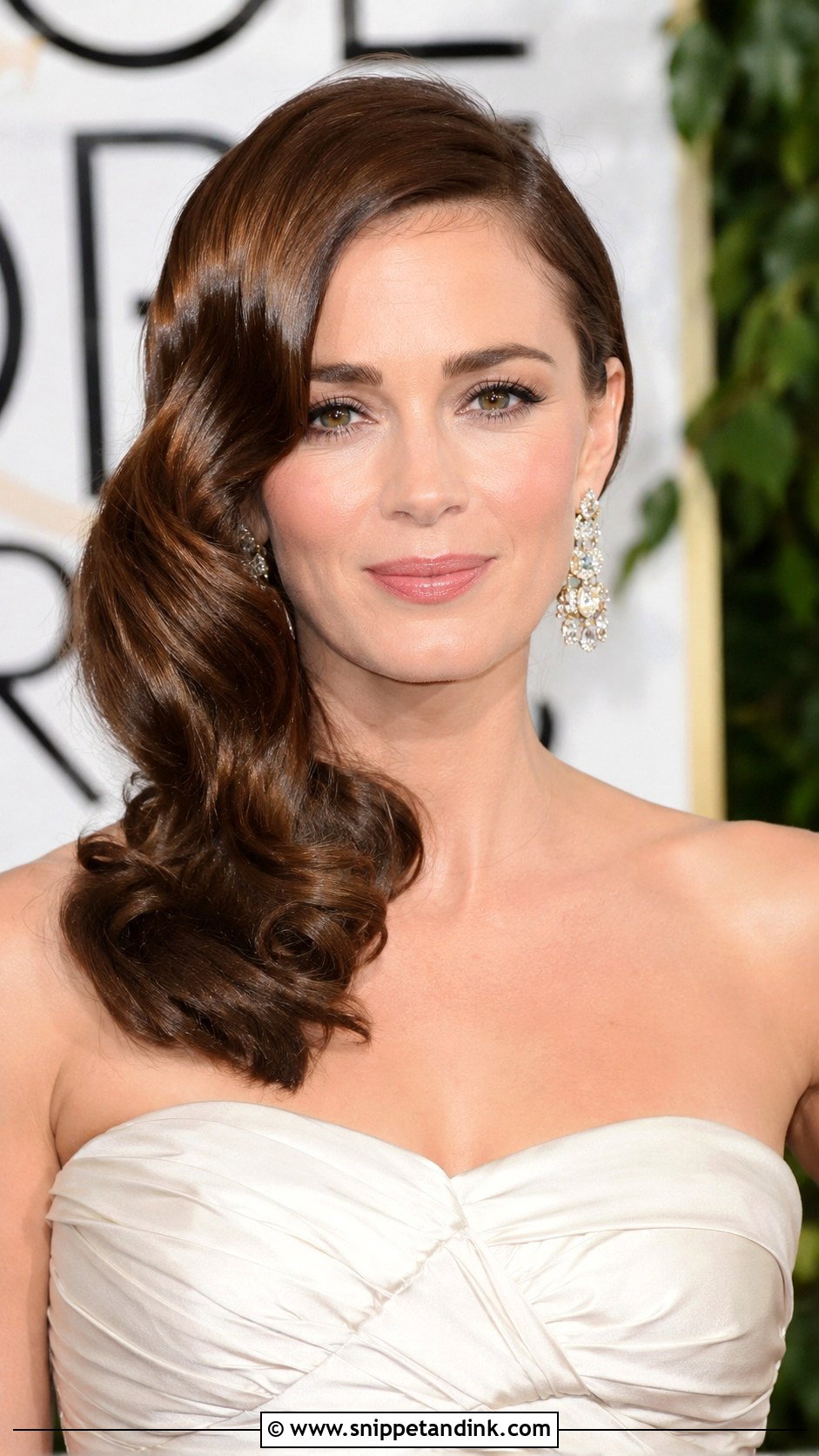
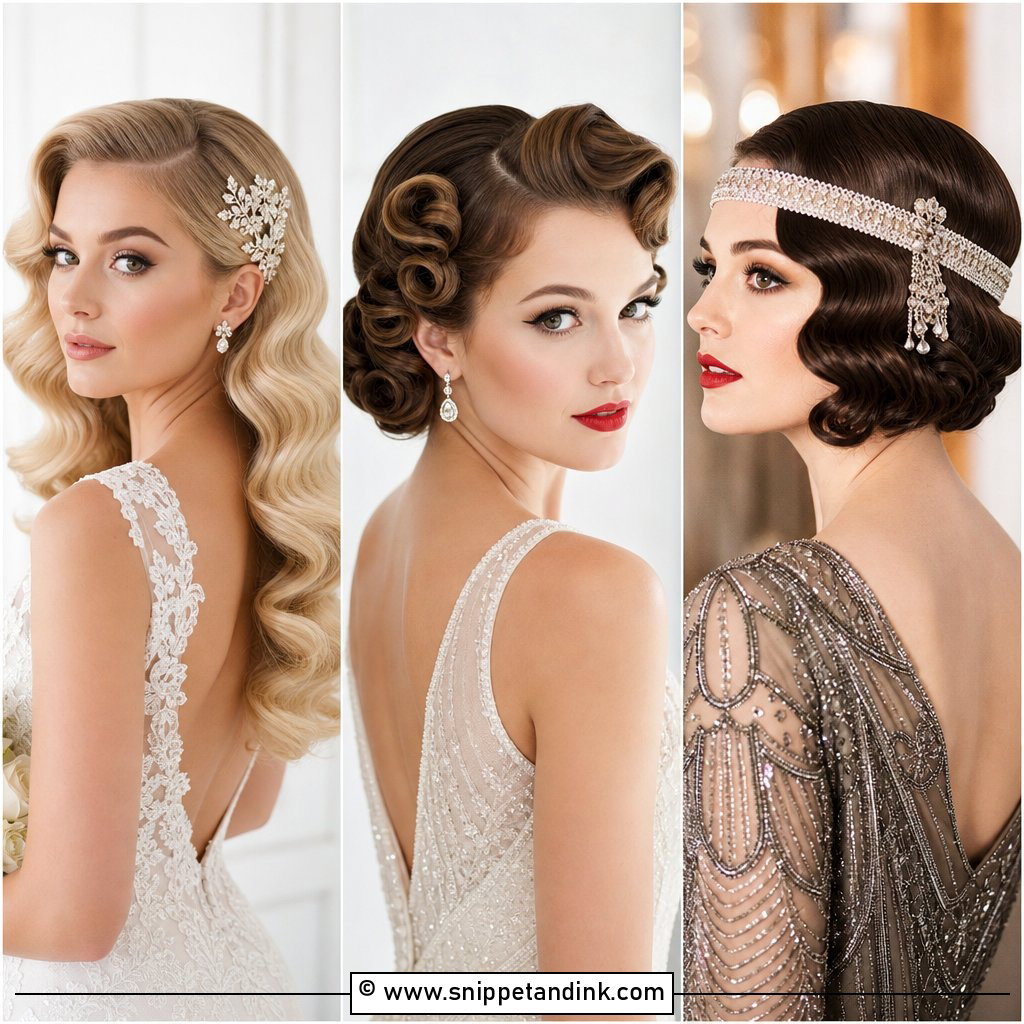
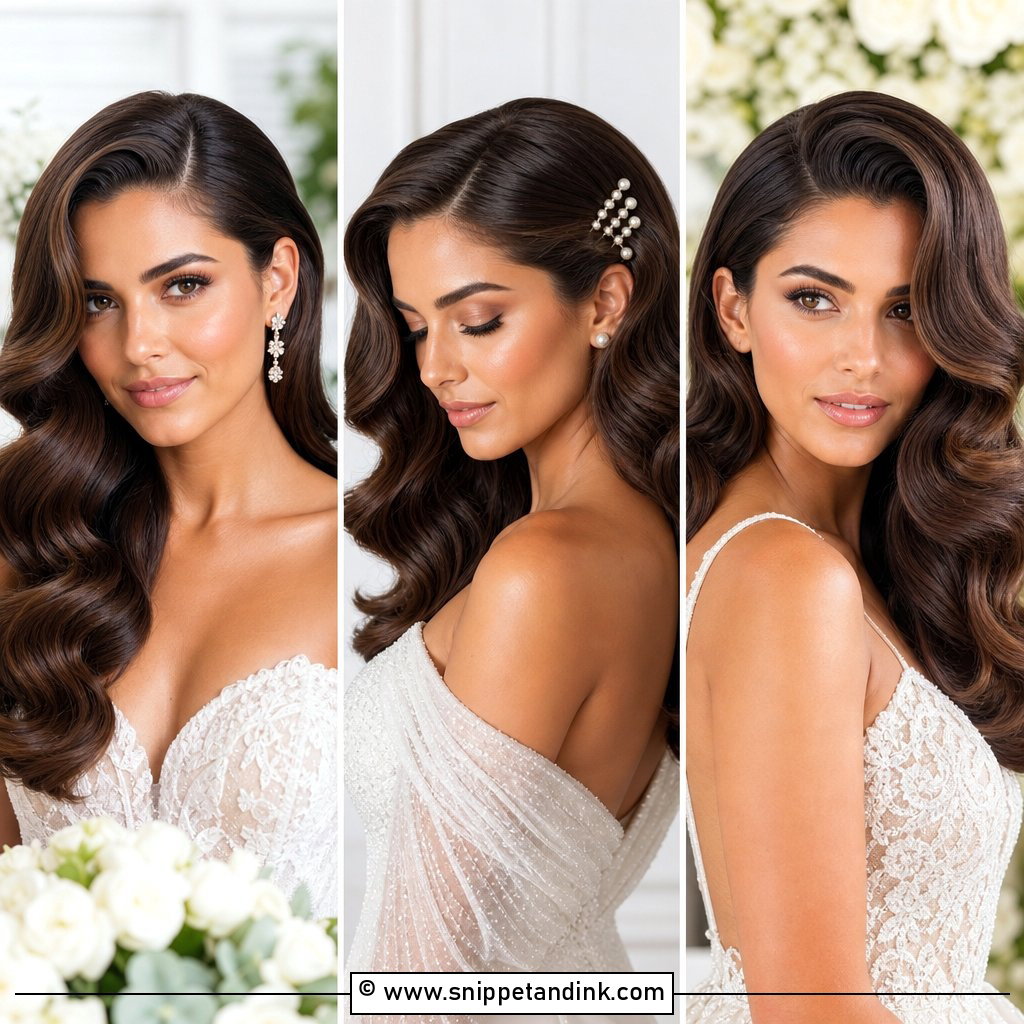
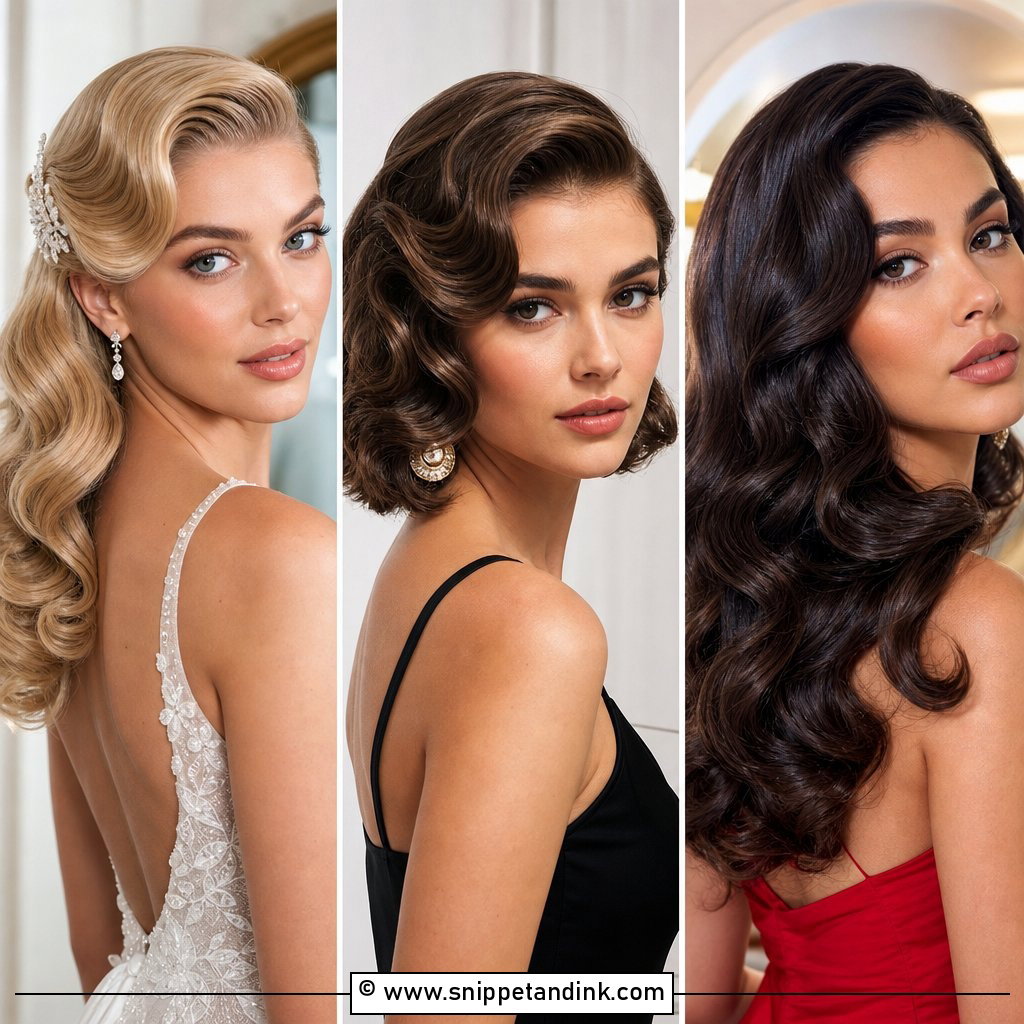
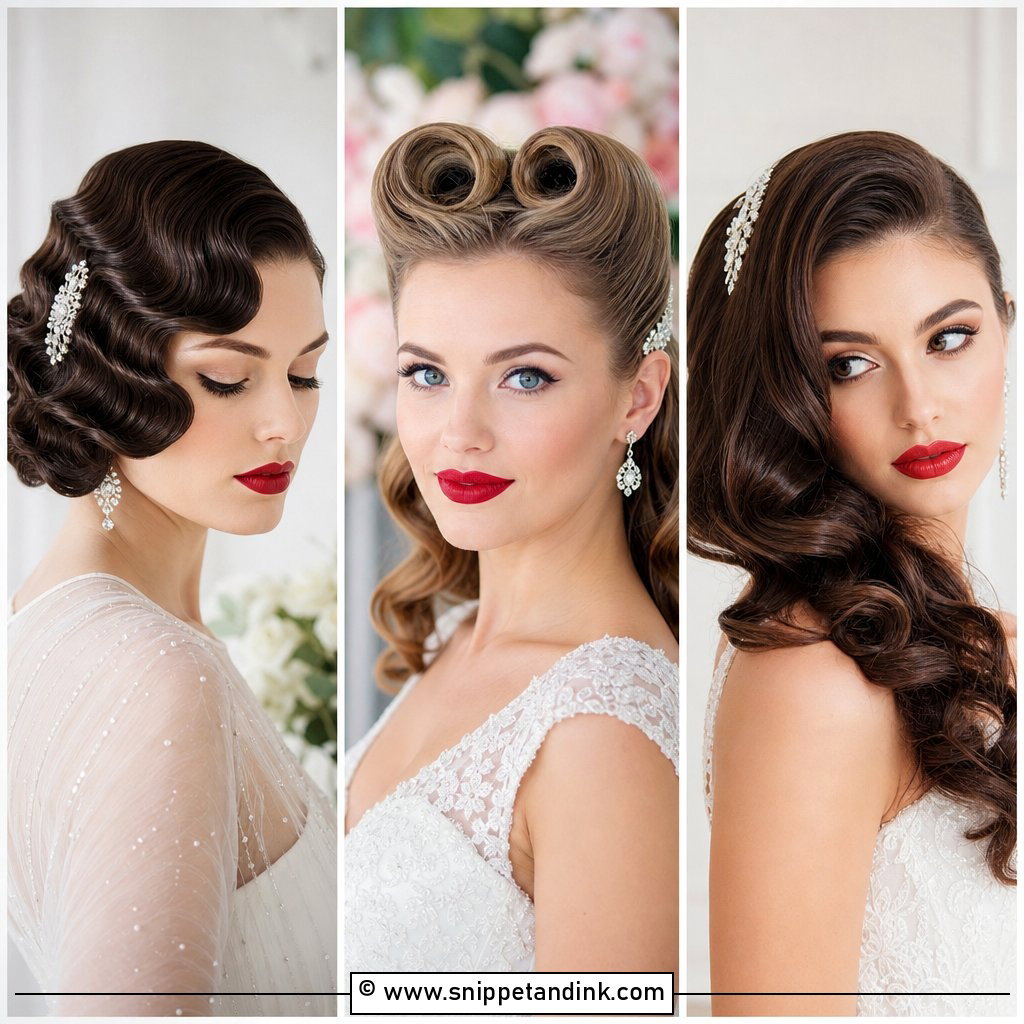
One deep side part, every curl wound the same direction, then brushed into a single glossy ribbon over one shoulder. That’s the whole secret of the classic Old Hollywood wave, and it’s why it looks so expensive. The asymmetry frames the face and opens the jawline on the other side, which is why I love it with strapless gowns and a statement earring. Keep the waves sleek, not tousled. I press the ridges with flat clips while the spray dries, then remove them right before the ceremony.
2. Veronica Lake Peekaboo Waves
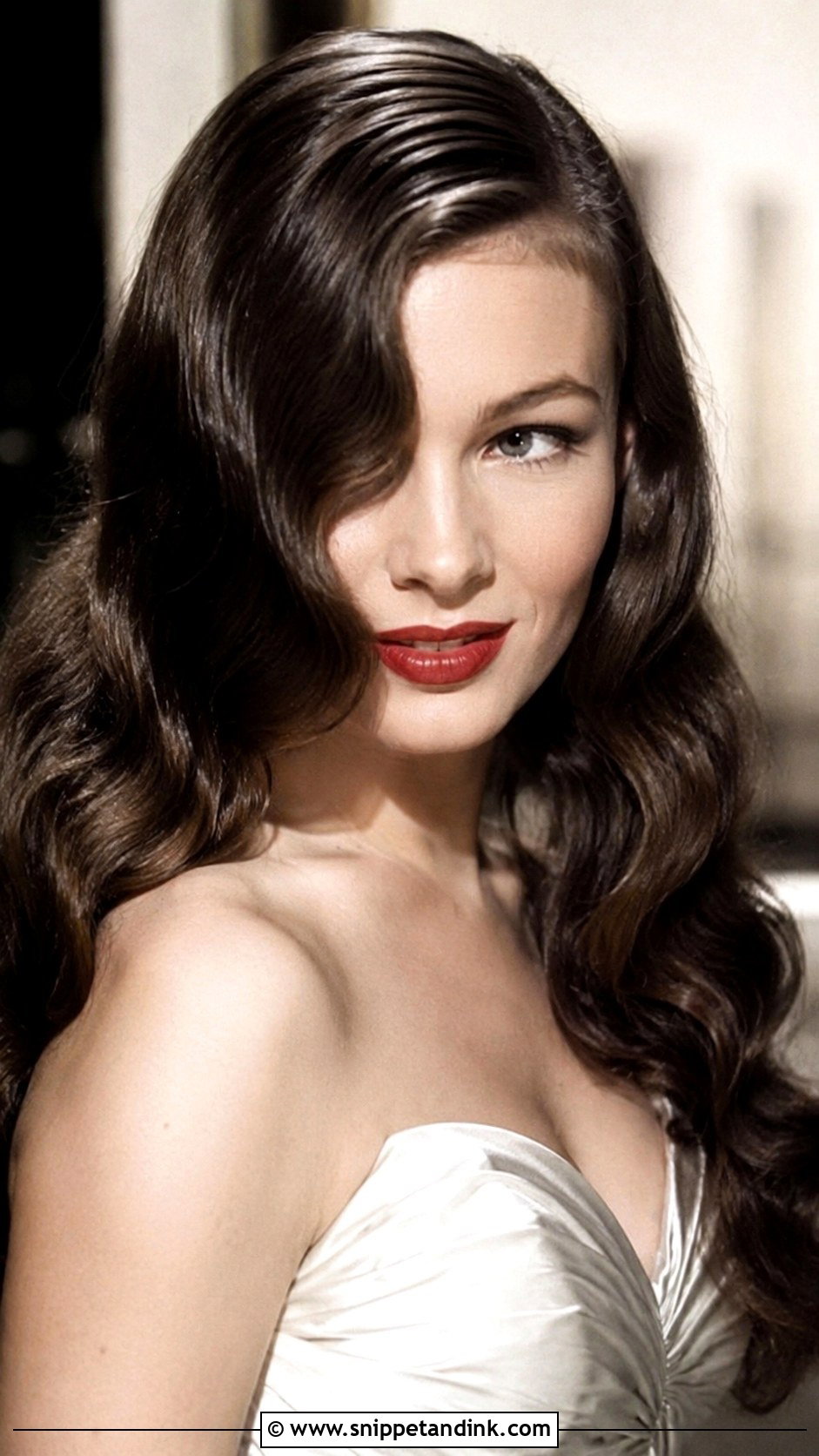
The Veronica Lake peekaboo is drama on purpose: long waves falling over one eye from a deep side part. It looks wonderful in a portrait and less wonderful when you’re signing the register or kissing your new spouse, so I usually build it with a hidden pin that lets the front section be lifted back after the photos. The curls need to stay soft enough to move. A sweetheart neckline and a red lip suit it, and a small jeweled slide on the parted side holds the part crisp.
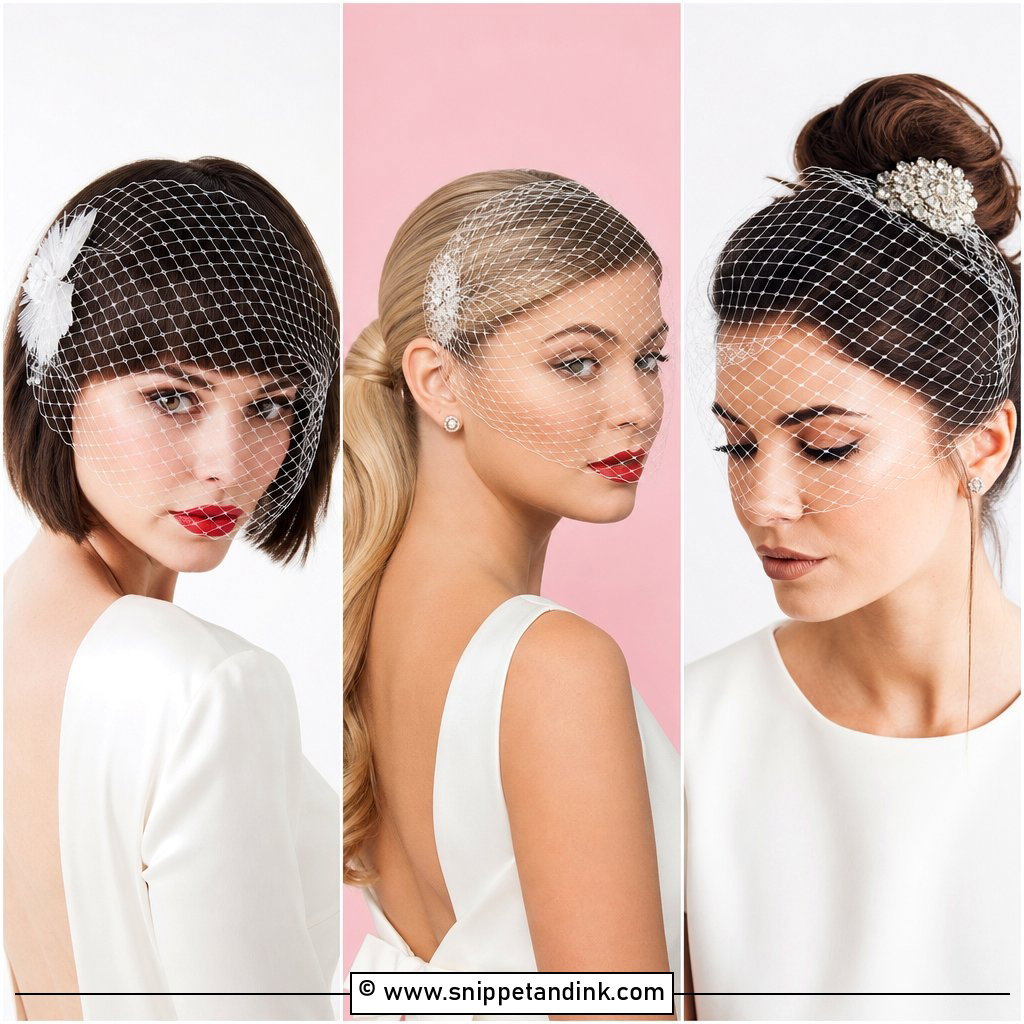
3. Vintage Finger Waves for Short Hair
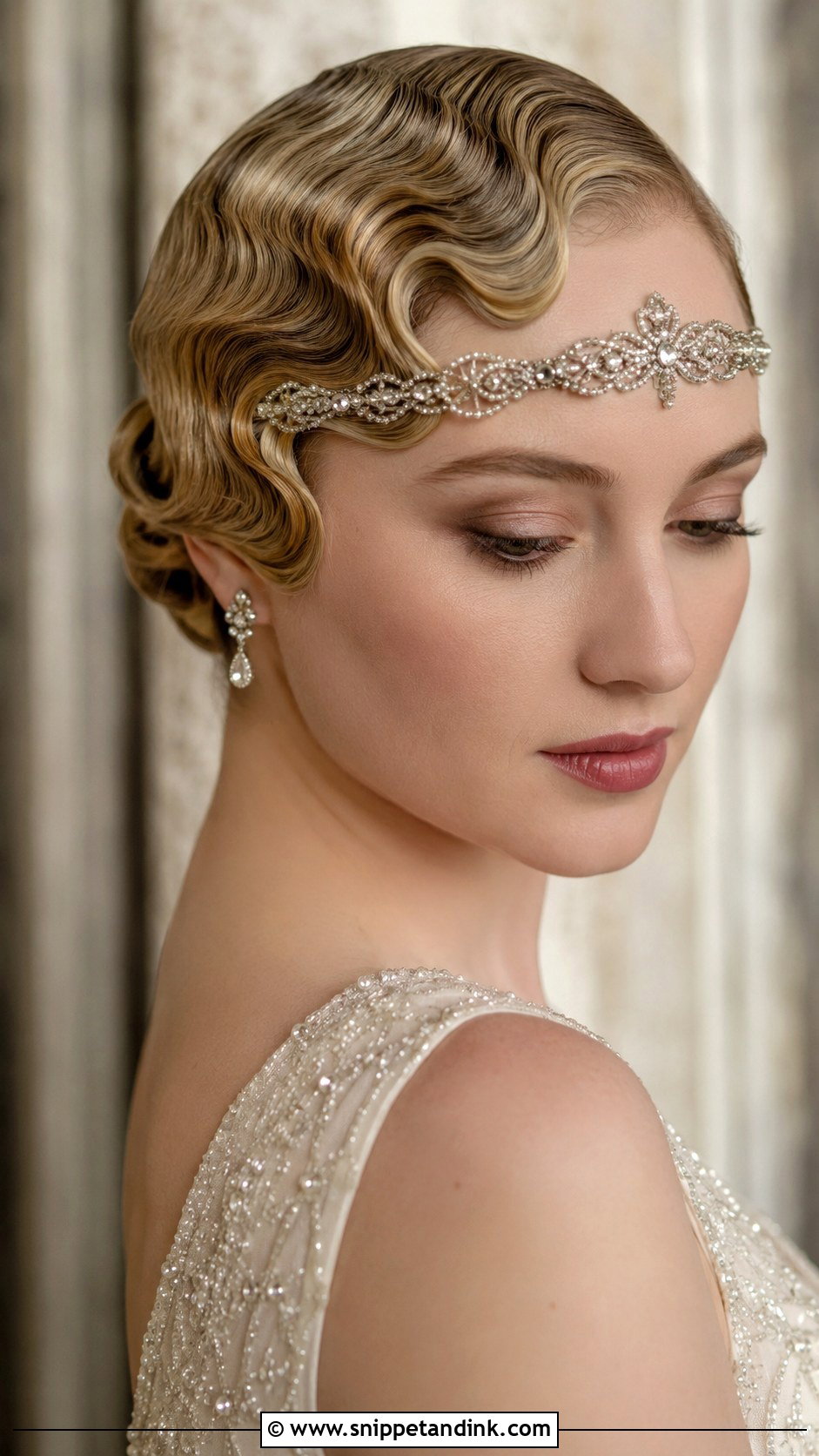
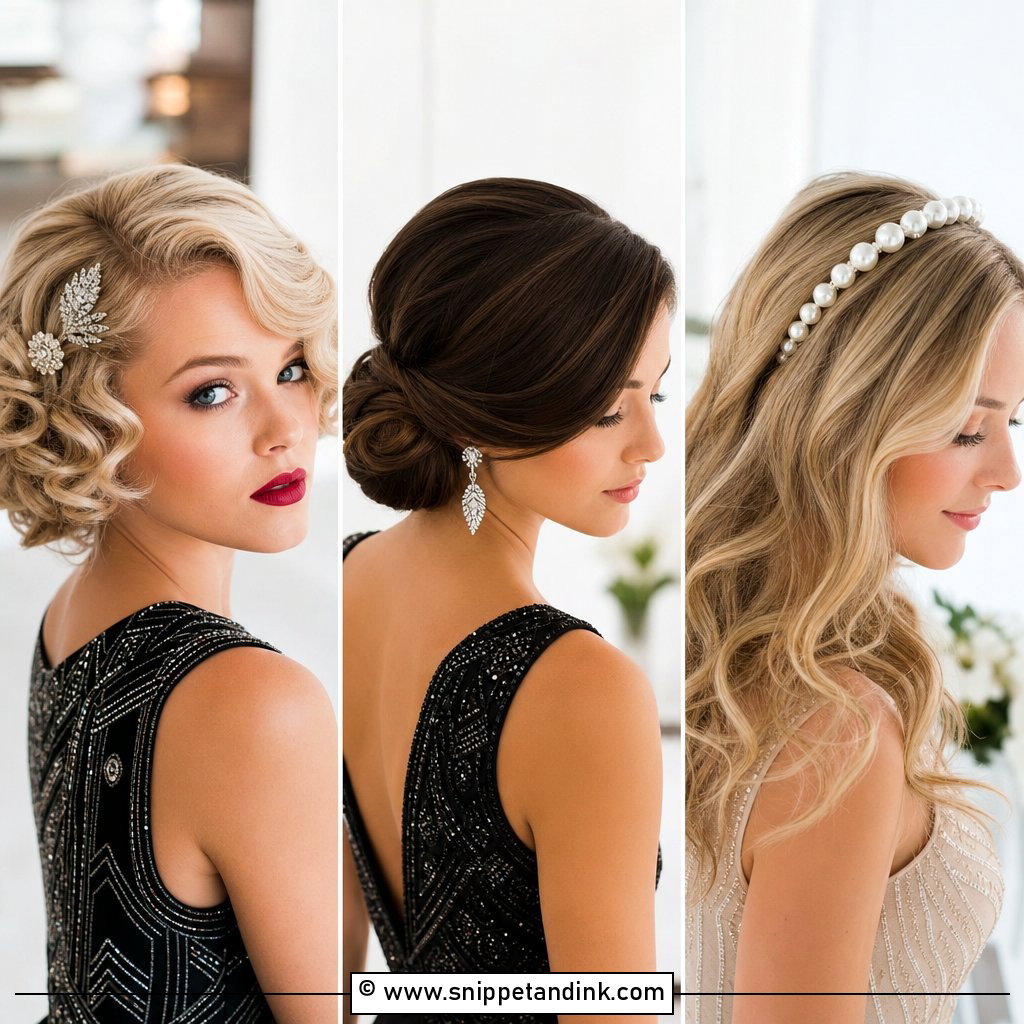
Finger waves are the best vintage option for a bob or pixie. The S-shaped ridges are pushed into wet, gelled hair with fingers and a fine comb, clipped, and dried completely before the clips come out. Rushing the drying is the most common reason they collapse. Because the shape lies flat to the head, earrings and a fine veil show clearly. A beaded headband or deco comb adds the Gatsby touch. Once set, they barely move all day, which makes them one of the lowest-maintenance looks here.
4. Soft Romantic Waves With Loose Curls
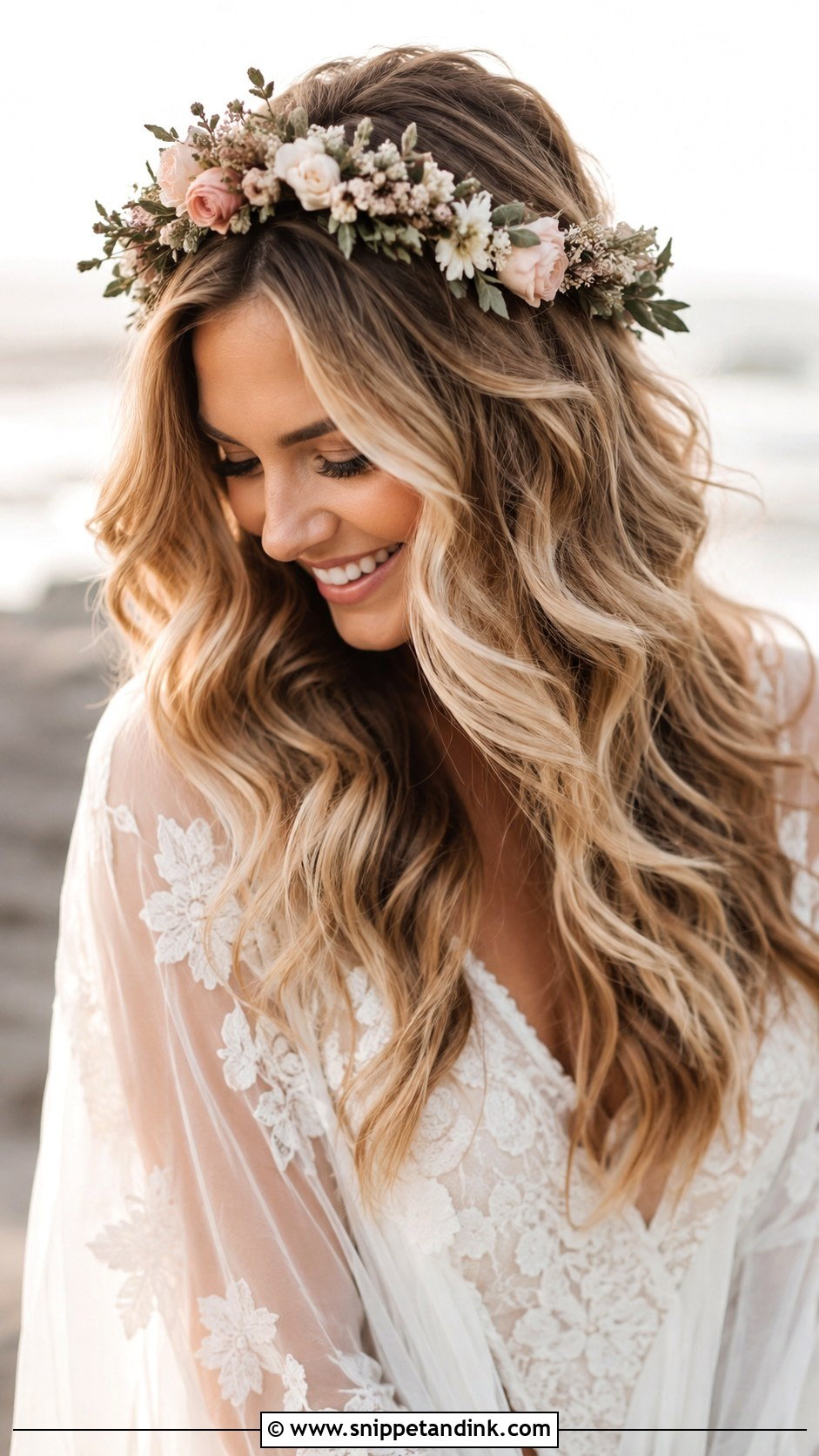
Not everyone wants a sculpted finish. These softer waves are curled with a larger barrel and broken up with fingers rather than a brush, so they look loose and a little undone while still having a vintage outline. They suit flowing bohemian gowns and flower crowns at a garden wedding. The catch: loose texture is the first to drop. On fine or very straight hair I still set it with pins and use a light texturizing spray before curling, or it can look like a blow-dry by the speeches.
5. Vintage Waves Low Bun Updo
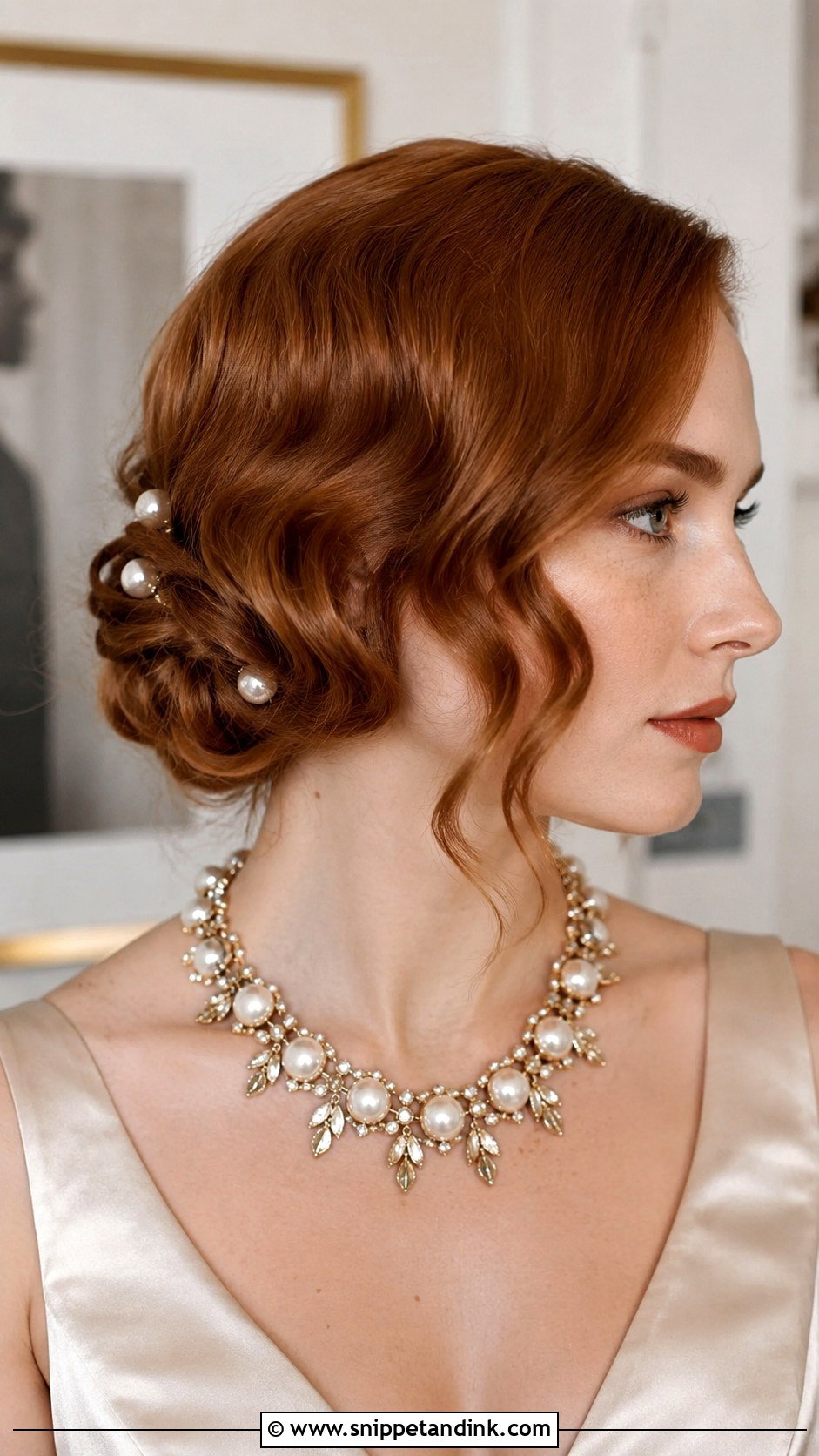
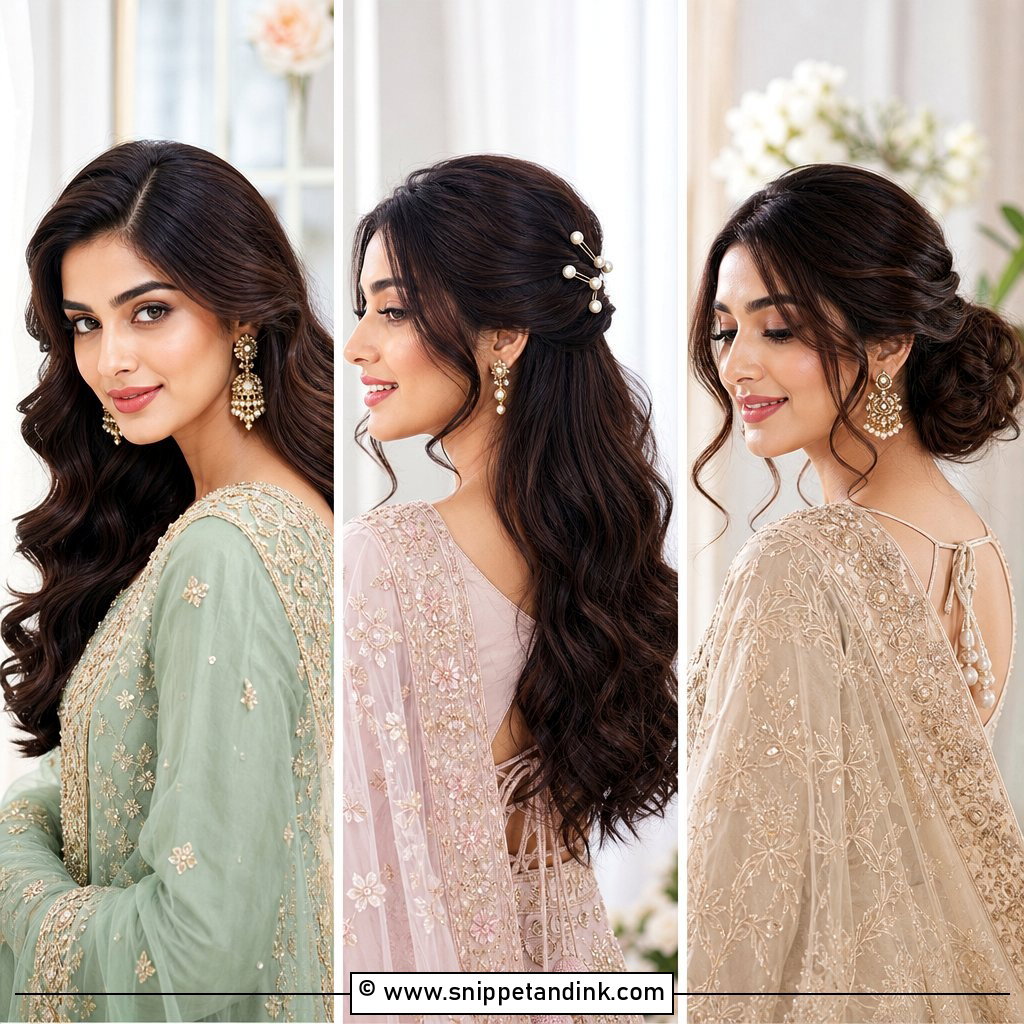
Waves at the front, a low chignon at the back: this keeps hair off your neck in summer and neat through a formal evening. I curl the front sections and brush them into defined waves, then gather the back into a soft bun at the nape so a veil comb can sit just above it. A few pearl pins in the bun add polish. It suits almost any neckline, and because the weight sits low, it’s comfortable for a long day.
6. Marcel Waves With a Deep Side Part
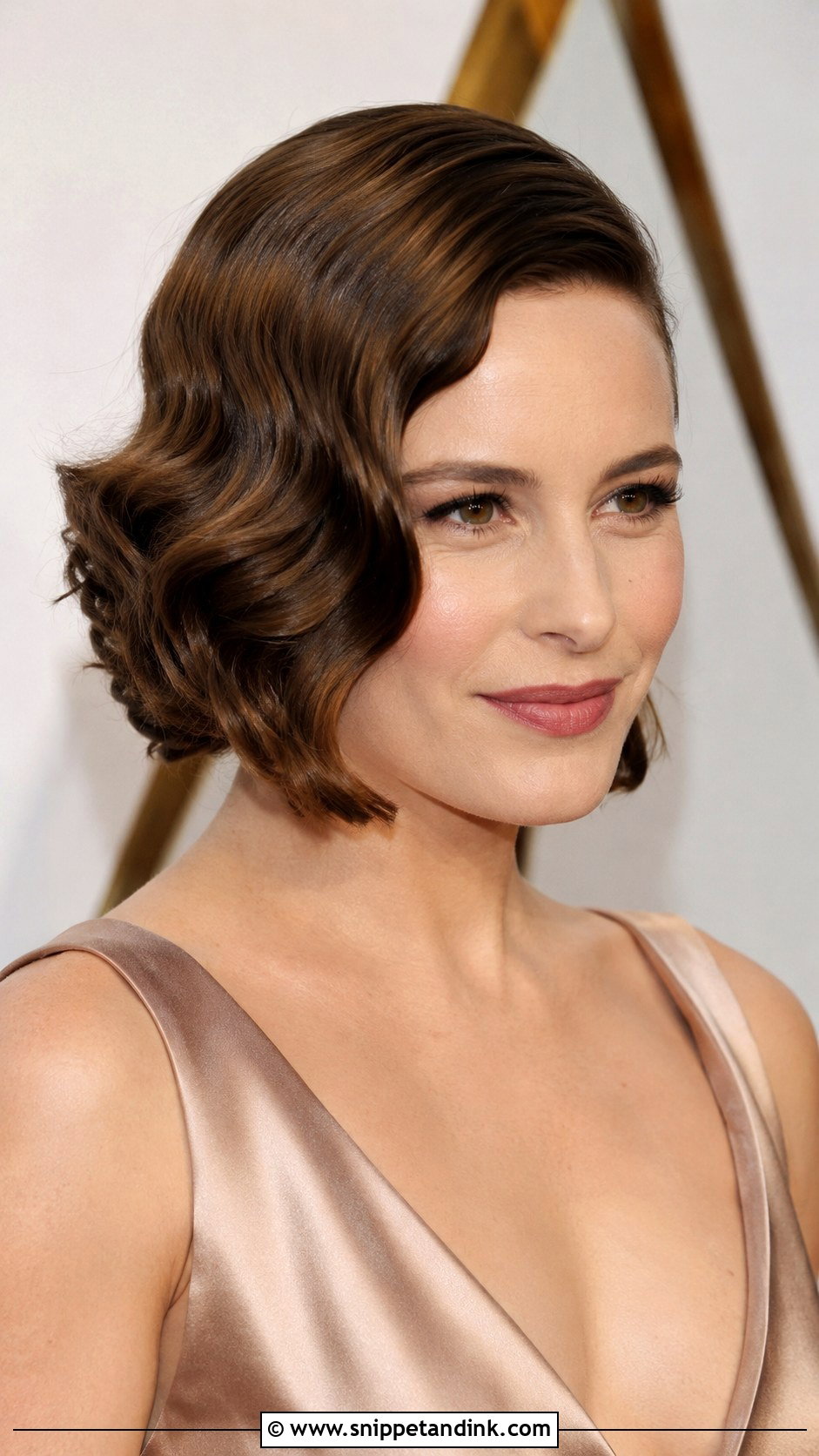
Marcel waves are the original. A heated Marcel iron presses smooth, regular ridges close to the head, and a deep side part shows them off. The finish reflects light well, which makes healthy hair look even shinier on camera. Medium-length hair is ideal; very long hair pulls the ridges flat with its own weight. Keep accessories minimal. This one needs a stylist who actually knows the iron technique, so ask to see their own work before booking.
7. Half-Up Vintage Waves With Twists
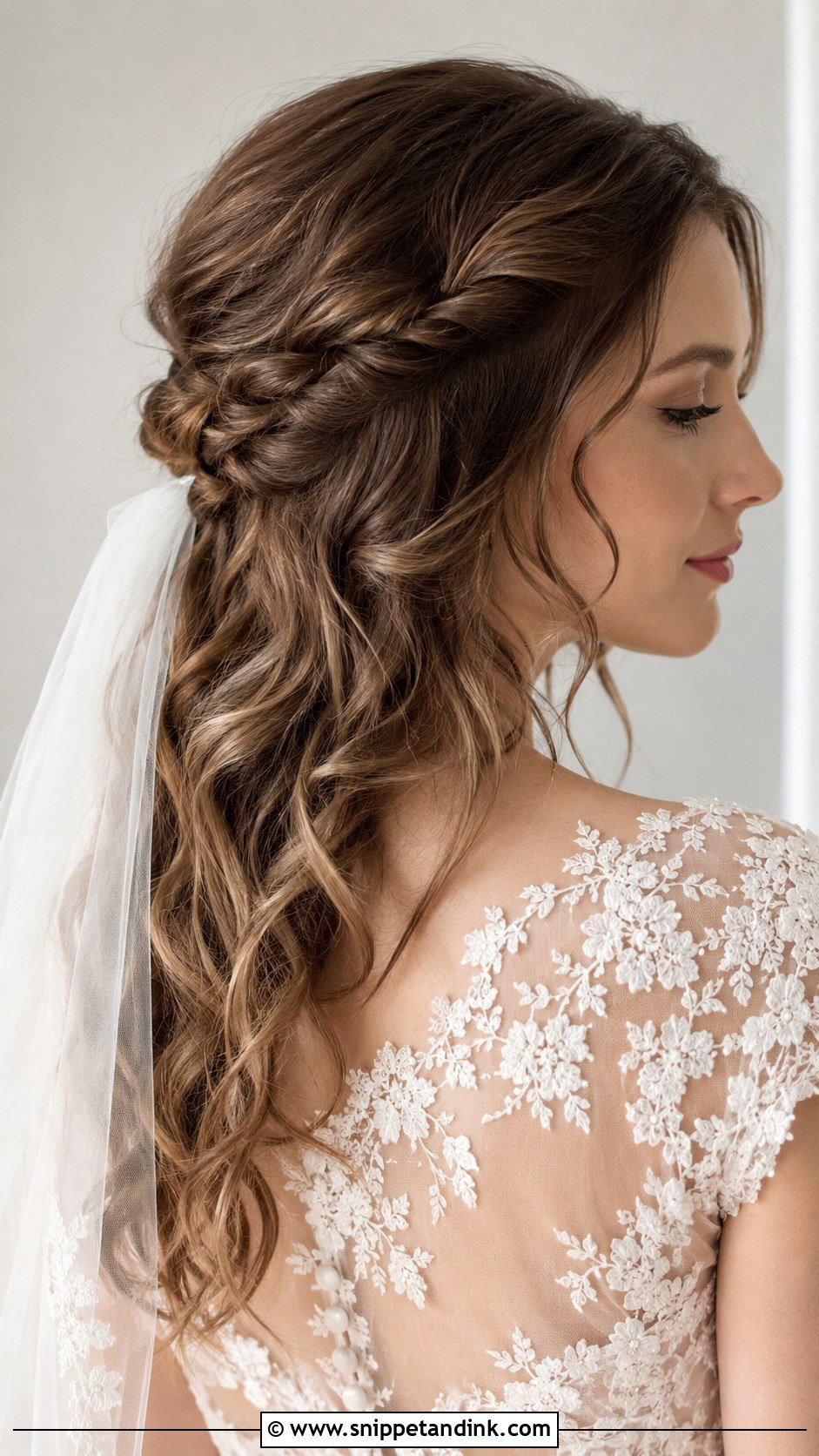
Half-up is my answer for brides who can’t choose. The top sections are twisted back and pinned at the crown, and everything below falls in soft vintage waves. The twists keep hair out of your face and give a veil or tiara something solid to anchor into. I cross-pin each twist so it doesn’t loosen as the waves below get heavier through the day. It shows off length without committing to a full updo.
8. Glamorous Waves With a Bridal Tiara
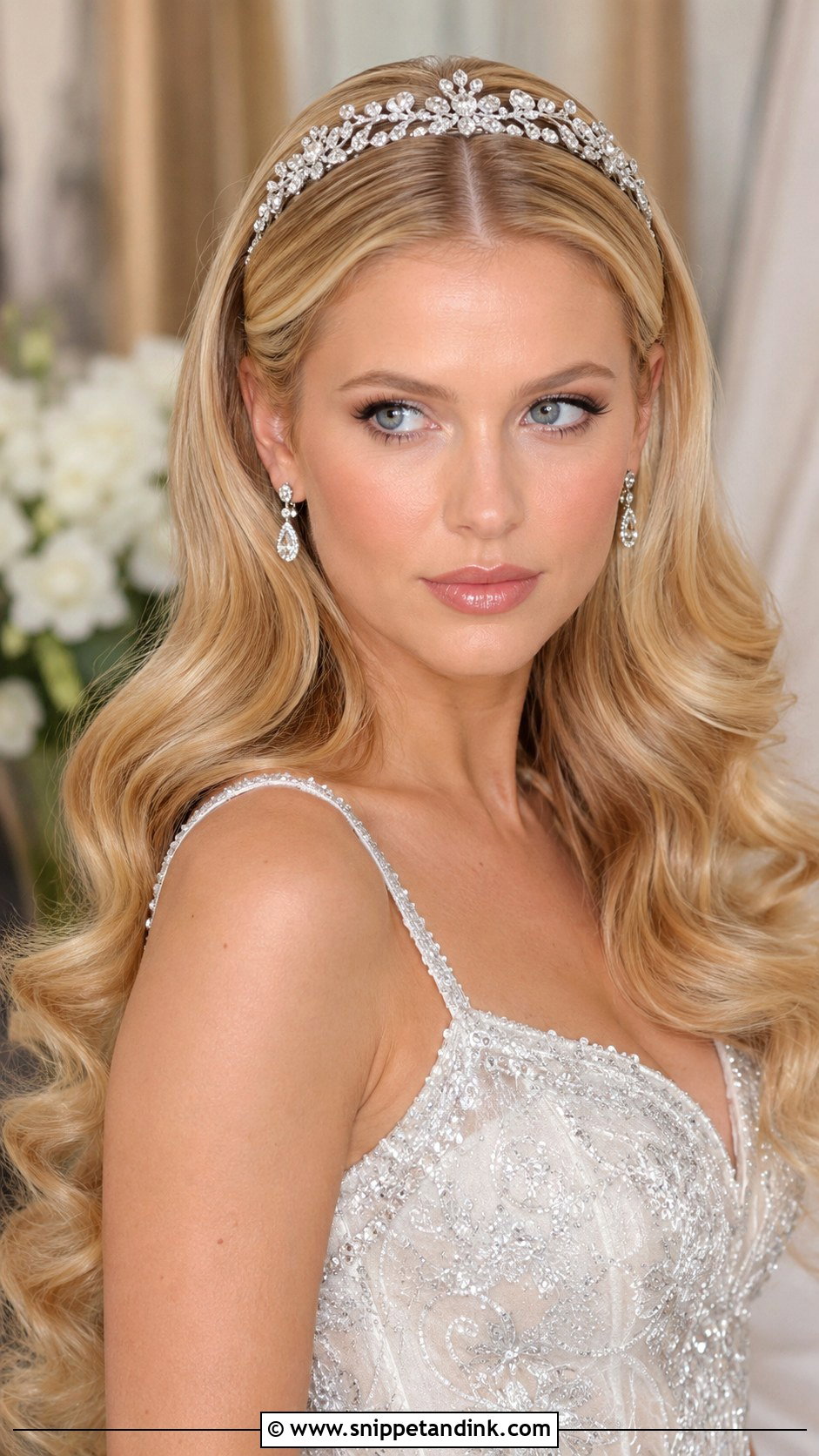
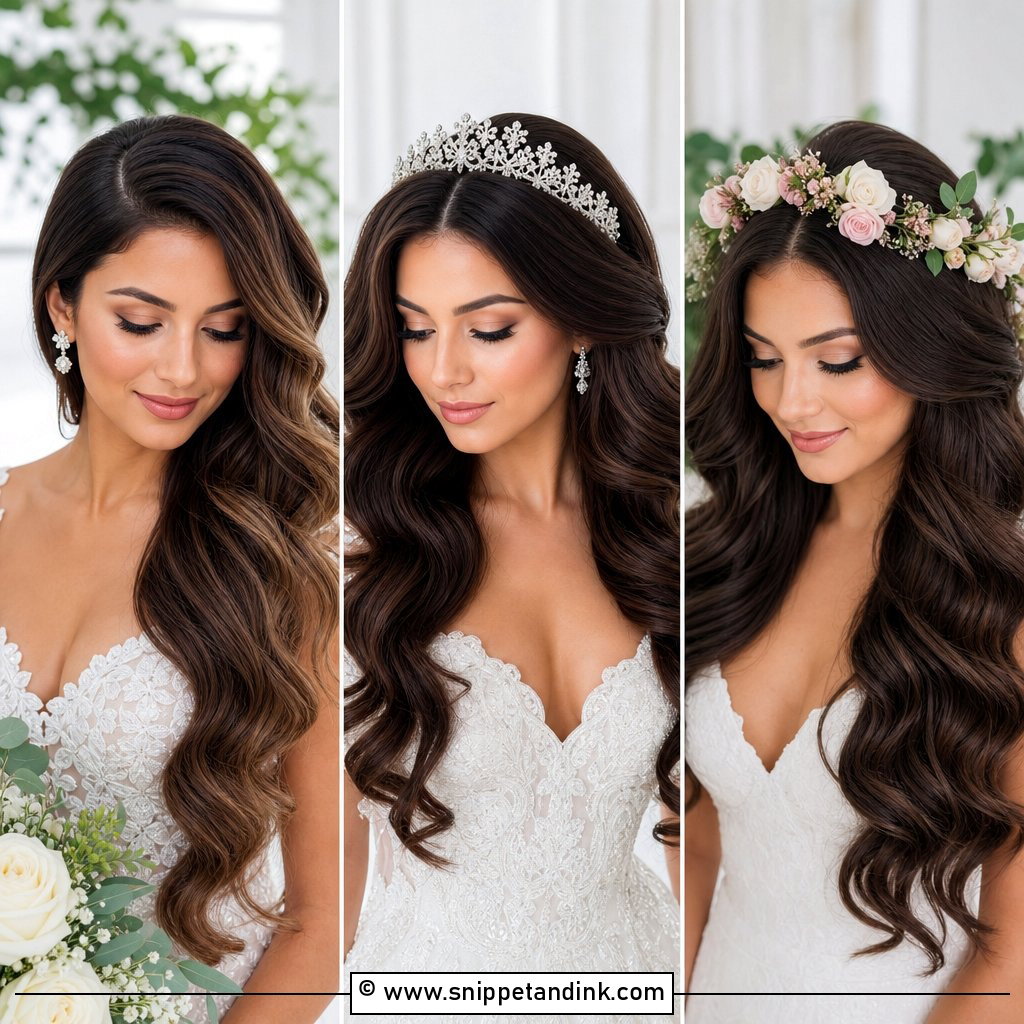
A tiara needs a balanced base, so I style these waves from a center or slightly off-center part and keep volume even on both sides. Waves that are heavier on one side make a crown look tilted in photos. The glossy curls catch light alongside the crystals, so the rest of the jewelry can stay simple. Tiaras are anchored with pins through their side loops, and they need a little backcombing underneath to grip. That’s the bit most at-home attempts skip.
9. Vintage Waves With Pearl Hair Pins
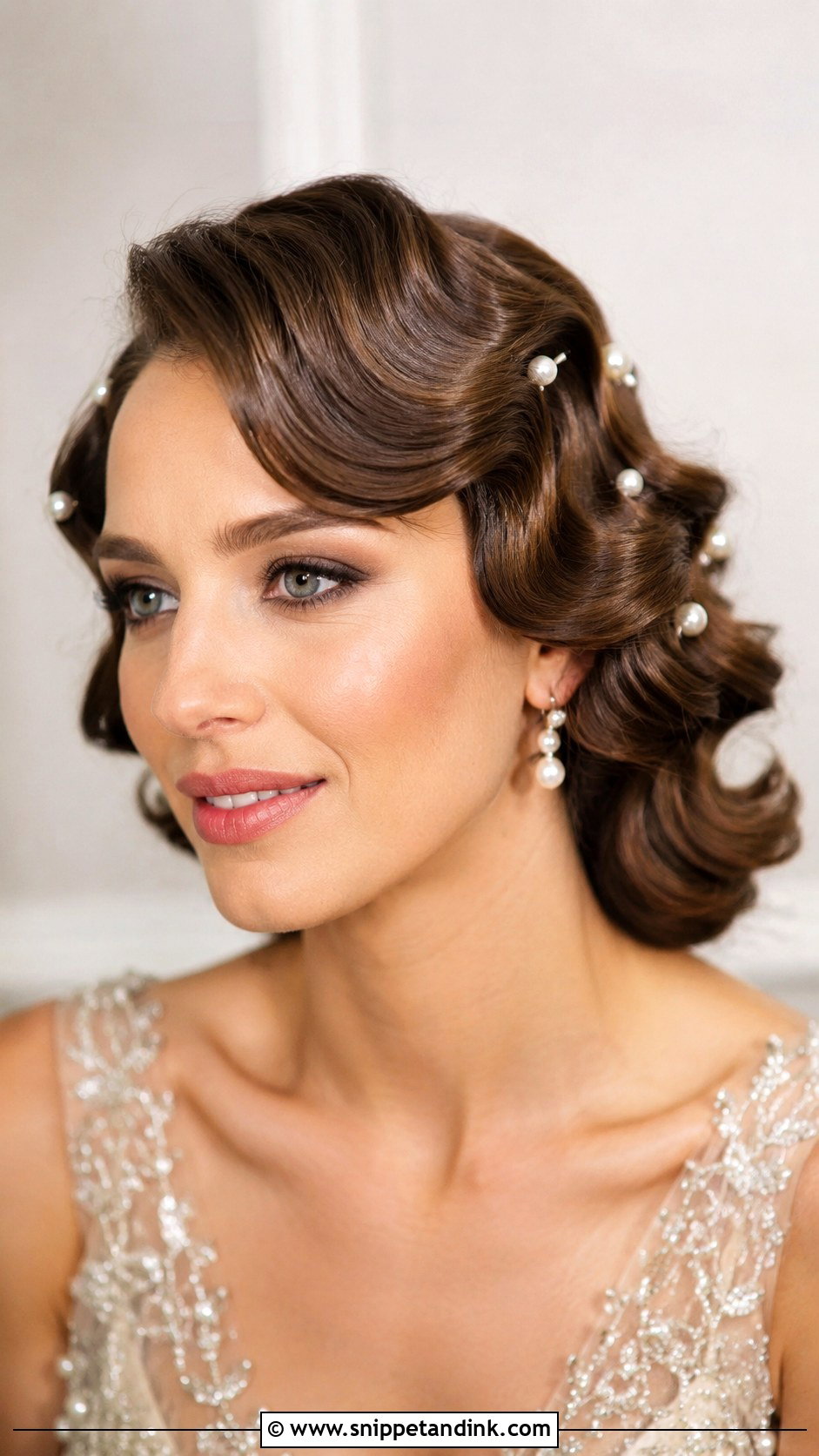
Scattered pearl pins add shine without hiding the wave. They work on half-up or fully down styles, and I place them along the curve of a wave rather than in straight lines, so they look as if they’ve settled there naturally. Pearl pins on slippery, freshly washed hair tend to slide, which is why I’d prep with a dry texture spray. Matching pearl earrings finish it quietly.
10. 1920s Gatsby Waves With Headband
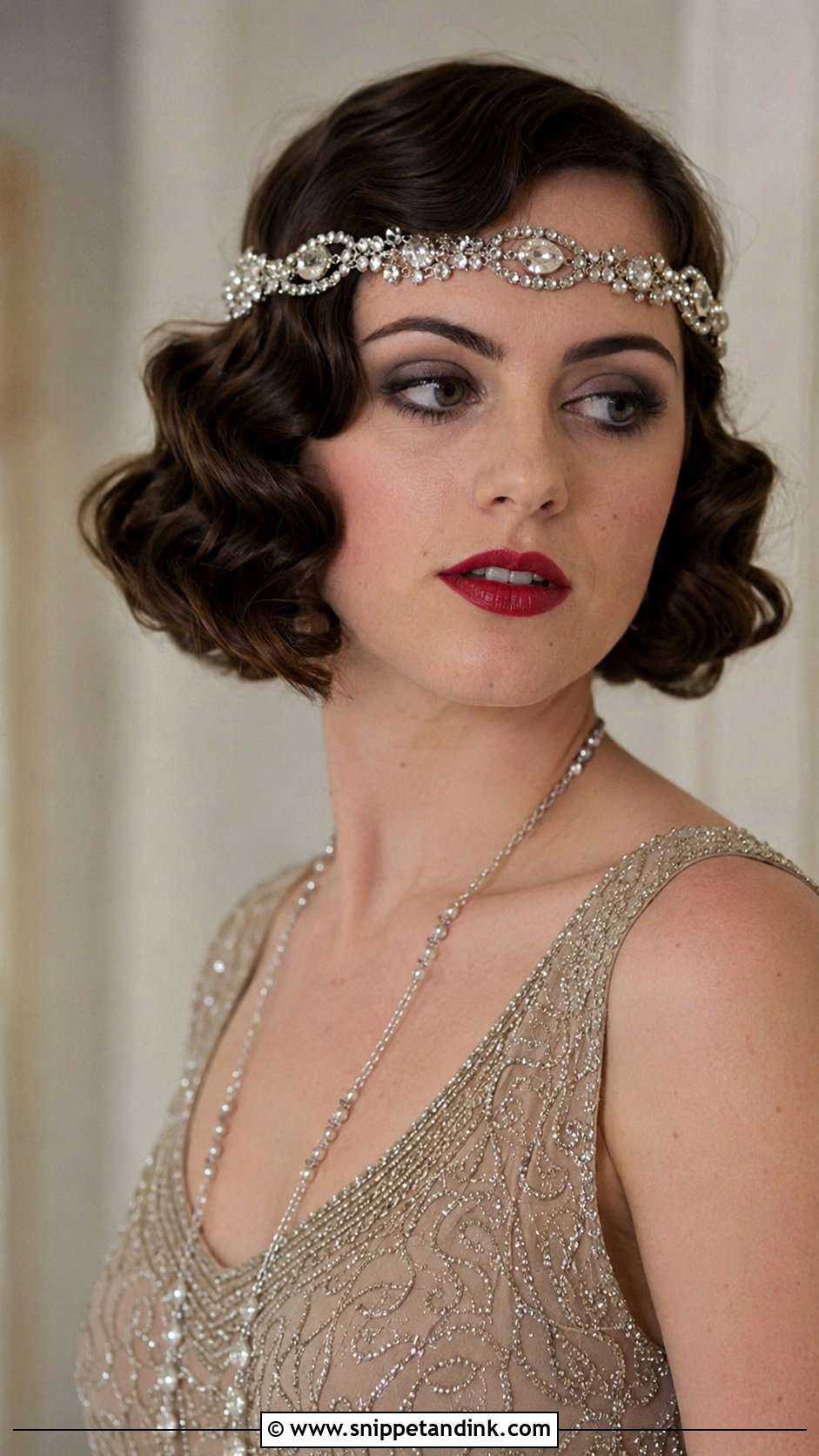
The full Gatsby look pairs sculpted finger waves with a beaded or jeweled band worn low across the forehead. The band sits over the wave, not under it, so the hair needs to be fully set first or the band flattens the ridges. It’s a costume-level statement, and it belongs at a 1920s-themed wedding with drop-waist gowns and long beaded necklaces. In a modern minimalist setting it can look like fancy dress, so be honest with yourself about the rest of the day.
11. Vintage Waves With a Birdcage Veil
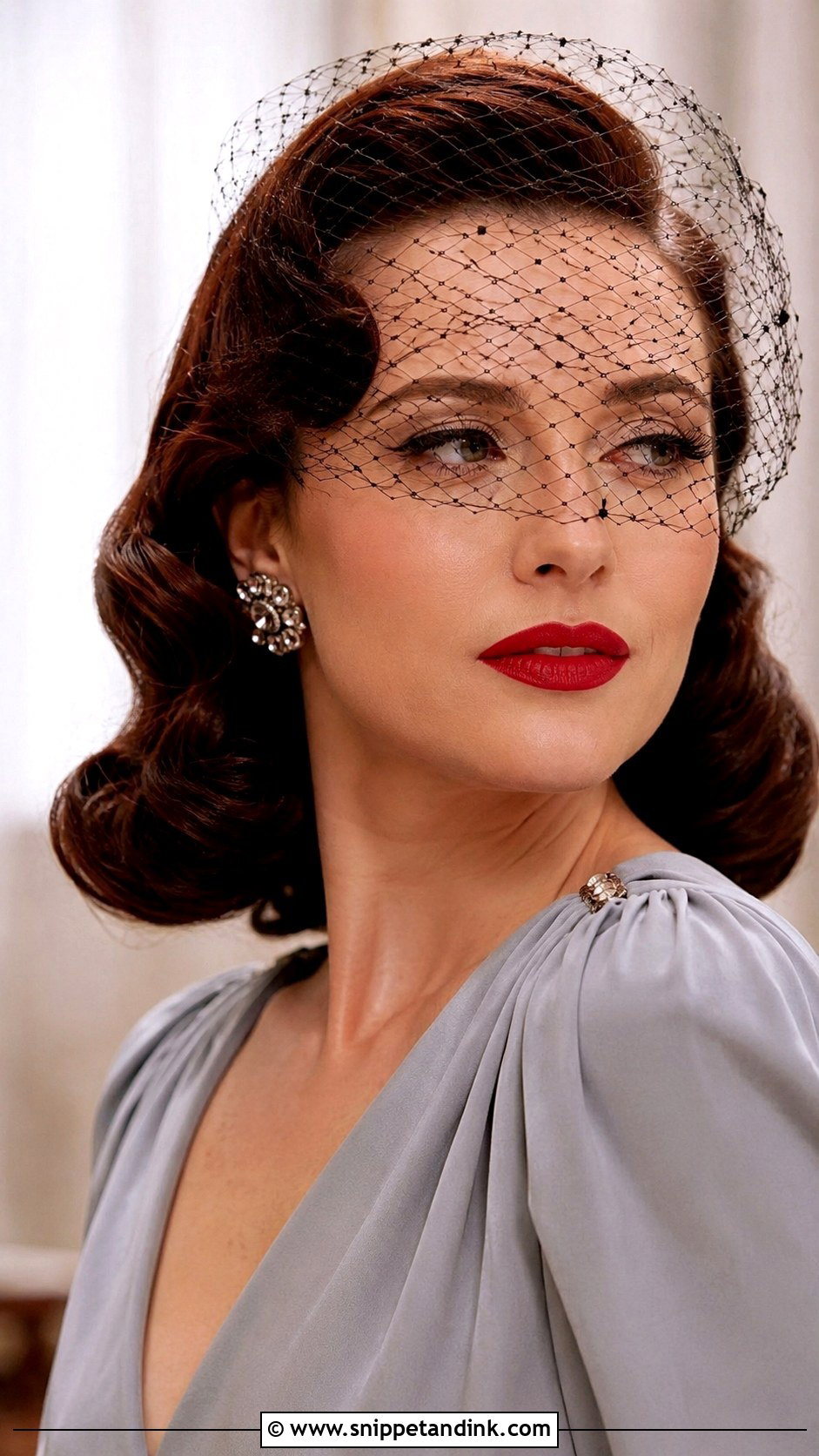
A birdcage veil and vintage waves are a natural 1940s pairing. The short net frames the face while the waves show beneath it. The veil’s comb anchors at the side or crown, so I leave a smooth, firmly pinned section exactly where it will sit; combs slide right off a fresh wave. It suits an intimate ceremony or elopement, and a bold lip with statement earrings completes it.
12. Brigitte Bardot Voluminous Waves
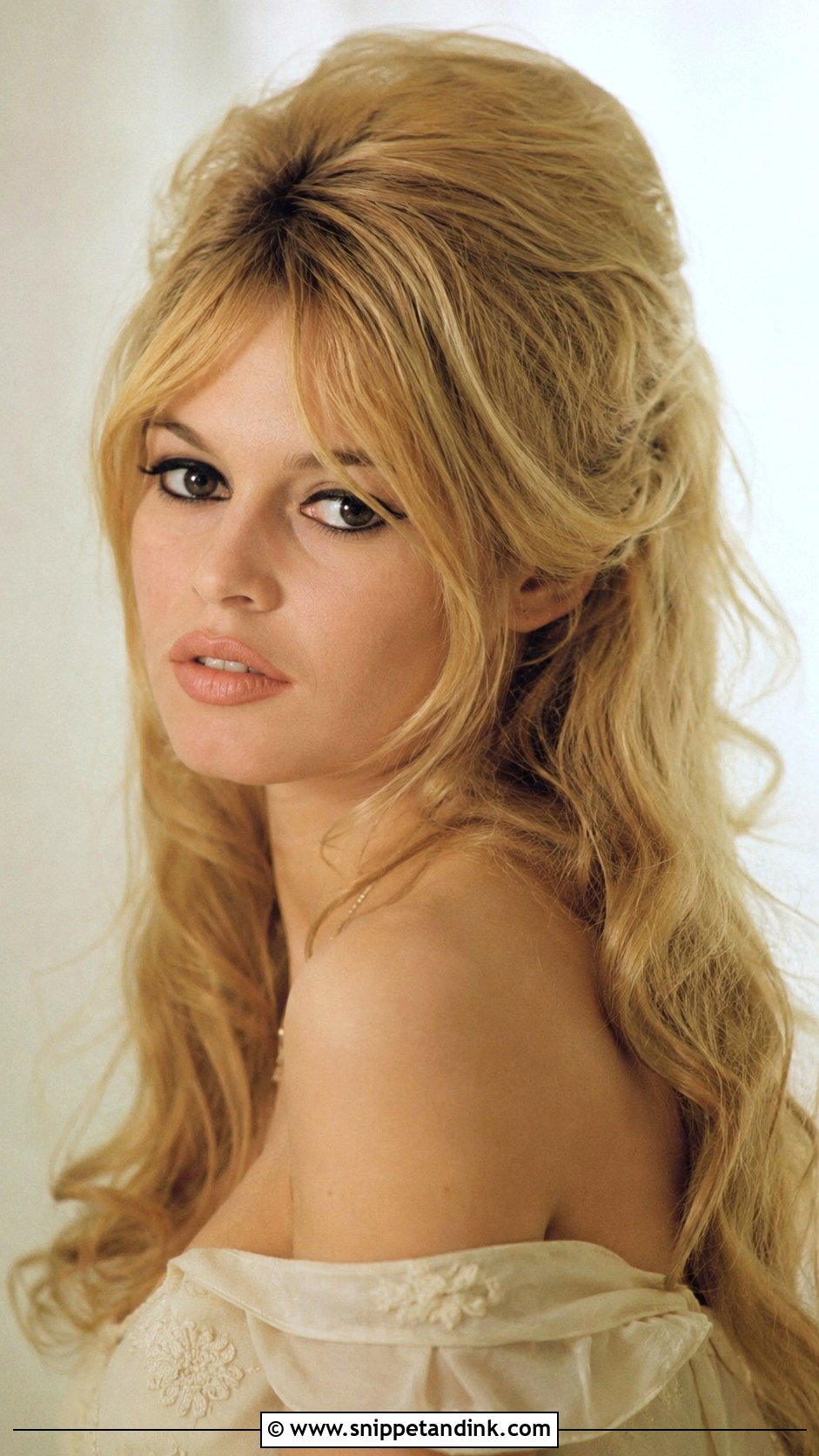
Brigitte Bardot hair is all about lift at the crown: teased roots, a bouffant on top, and soft waves through the lengths. The height lengthens the face, which helps round and heart-shaped faces most. Backcombing has to be done in small, controlled sections and smoothed over with a soft brush, or the top looks fluffy instead of shaped. A half-up section usually holds the volume best. It’s flirty, voluminous and much easier to wear than it looks.
13. Sleek Vintage Waves for Long Hair
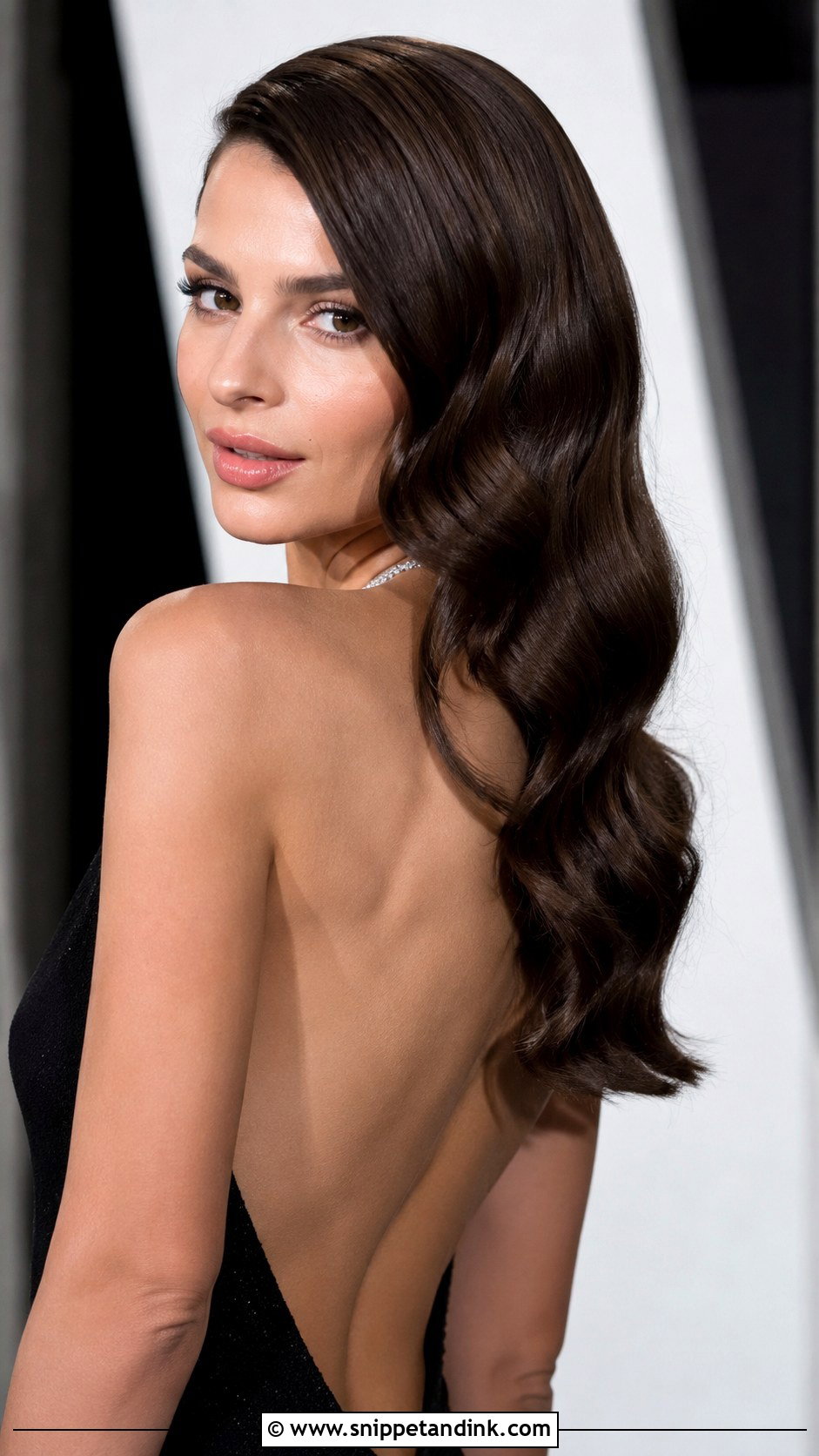
Long hair is where a continuous wave really shows. The curls flow from root to tip in one smooth cascade, which looks wonderful down the back of a backless or low-back gown. The challenge is weight: long, heavy hair pulls curls out faster, so I set each curl in a pin curl and let it cool completely before brushing. A deep side part adds the Hollywood drama. Shine spray at the end, never before curling.
14. Vintage Waves With Side Floral Accent
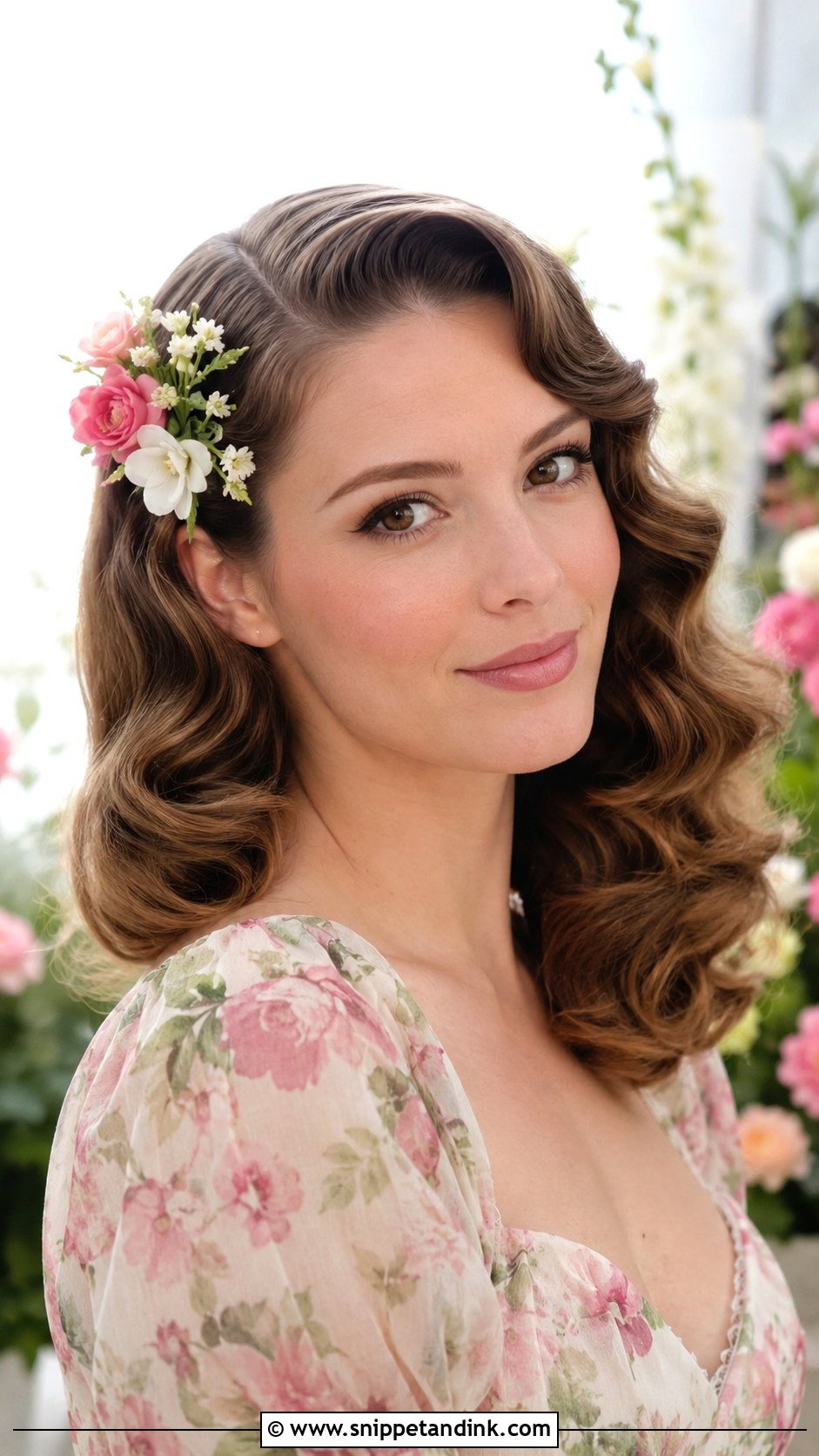
A small cluster of fresh flowers tucked behind one ear softens a glossy wave into something more garden-party. I wire and tape the stems into a little cluster so they sit flat and can be pinned in one piece. Choose sturdy blooms; delicate petals wilt quickly against warm hair and skin. Matching the bouquet ties it together. It belongs at spring and summer weddings, especially outdoors.
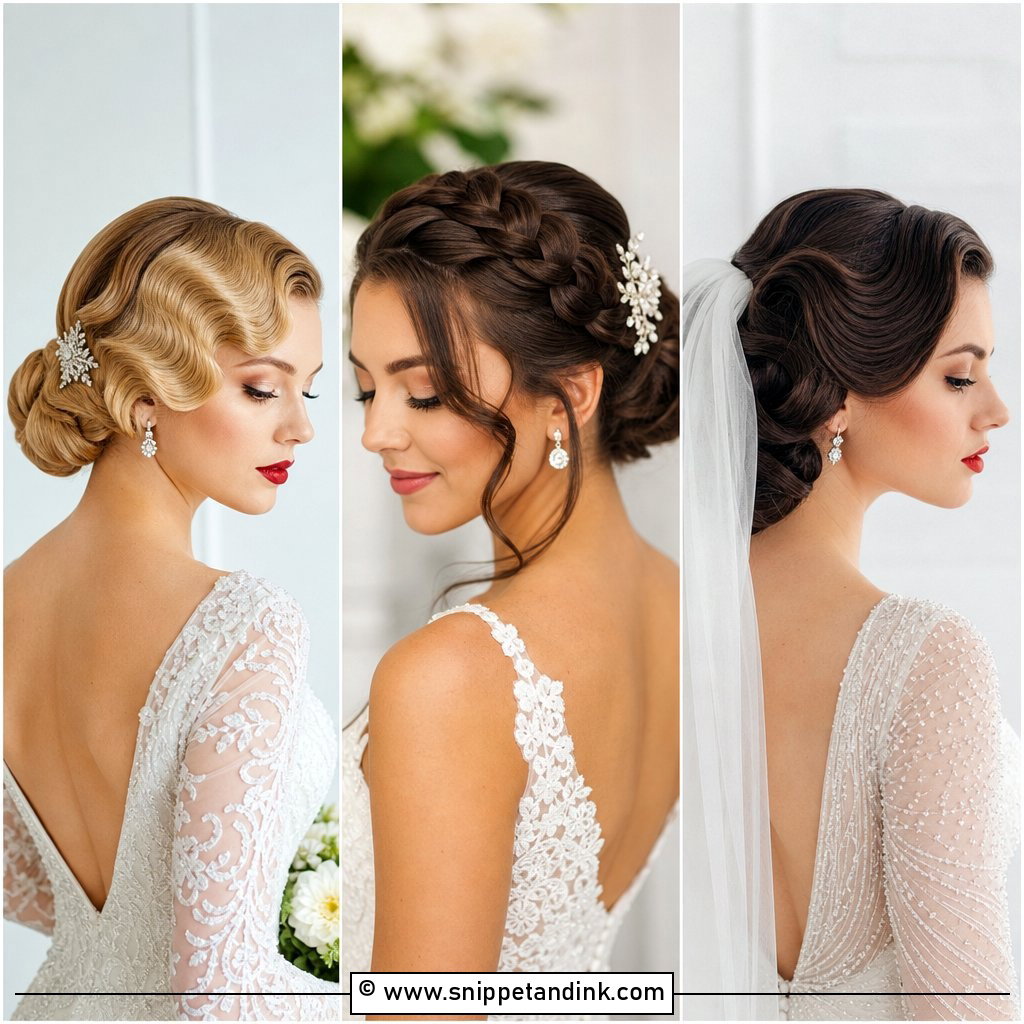
15. Victory Rolls With Flowing Waves
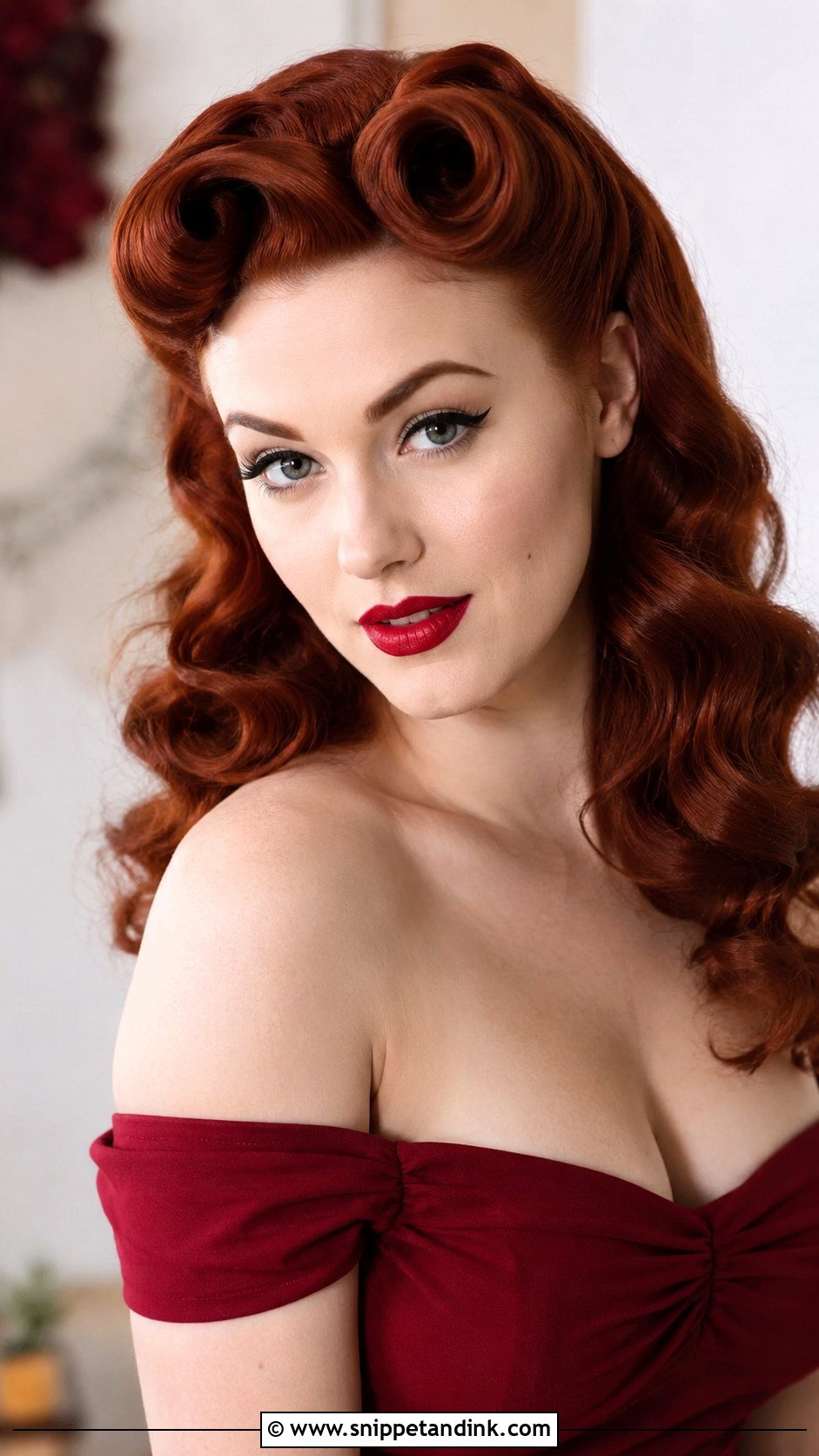
Victory rolls are built on a teased base: each front section is rolled around two fingers and pinned from inside the roll with crossed bobby pins so nothing shows. The rest of the hair falls in soft waves. It’s a full 1940s pin-up statement and wants committed styling elsewhere, like a bold red lip and cat-eye liner. Rolls on very fine hair can look thin, so I sometimes pad them with a little hair rat in a matching shade.
16. Vintage Waves Side Chignon
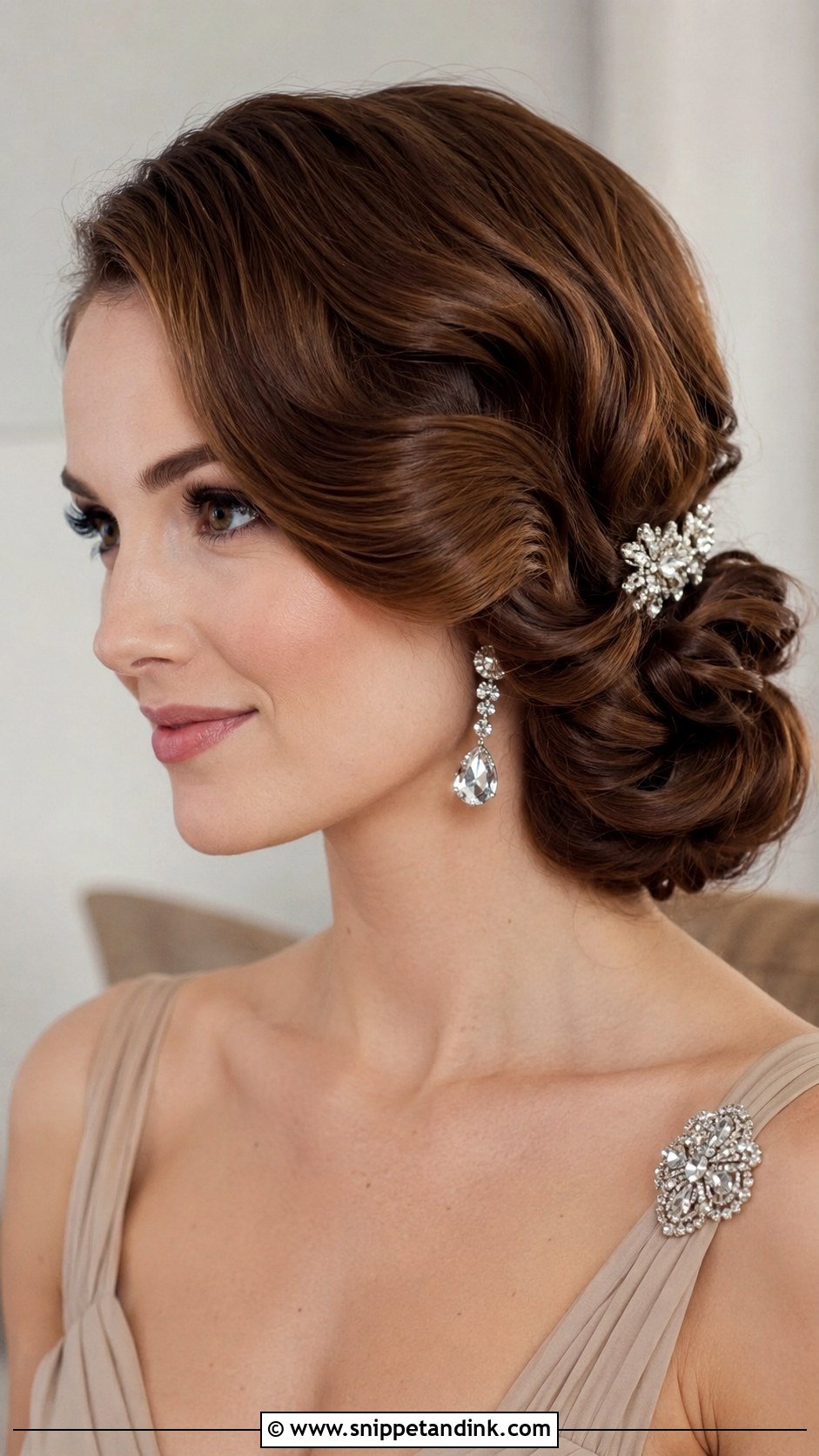
Sweeping the waves to one side and finishing them in a low bun near the shoulder gives you the drama of a side-swept wave with a neat, off-the-neck finish. The asymmetry is flattering, and statement earrings stand out on the open side. I pin the chignon to a small anchor ponytail so it can’t drift down your neck as the evening goes on. Pearl or crystal pins add a vintage touch.
17. Retro Waves With Deep Curls
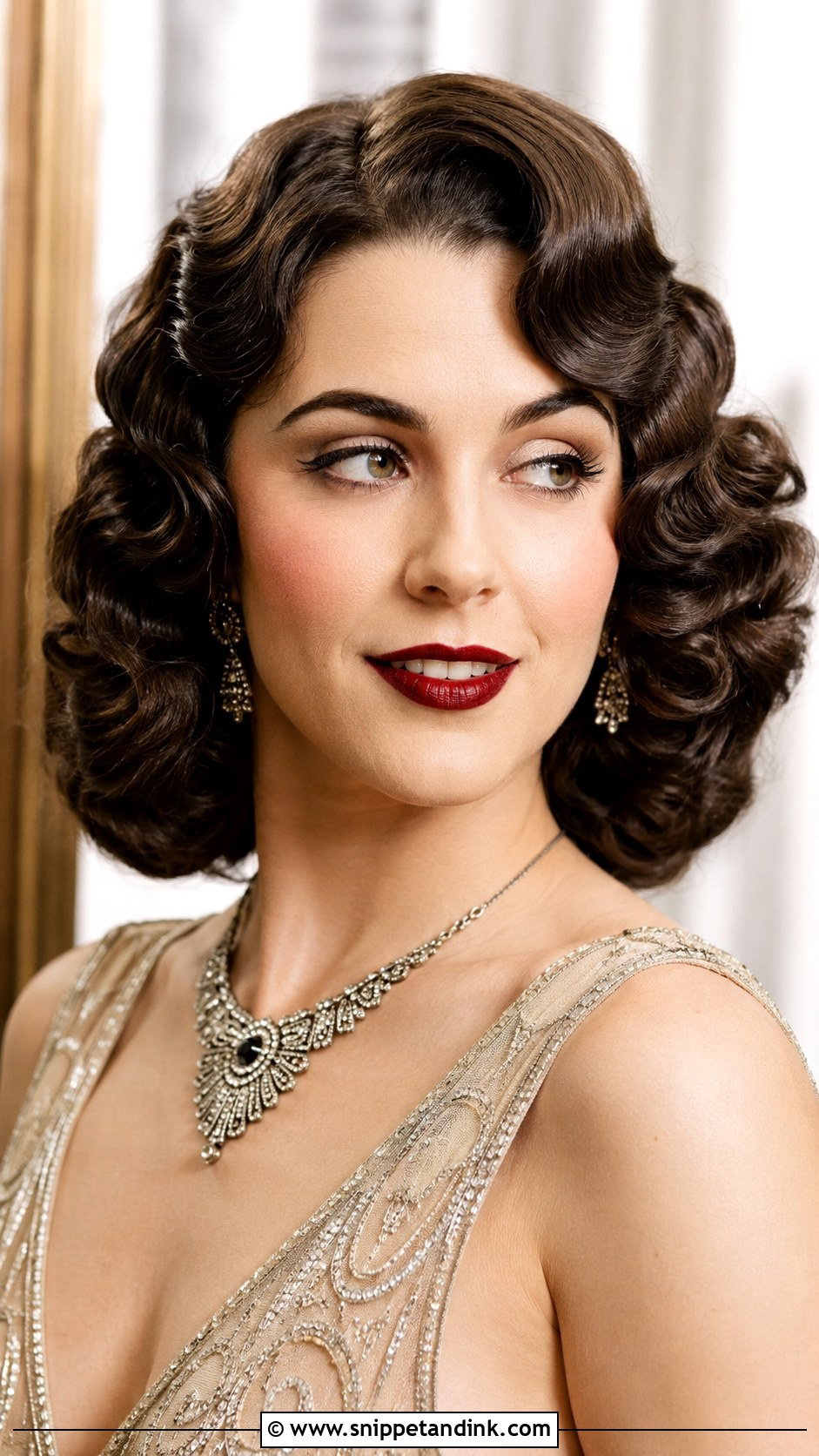
These are the most defined waves here: tighter curls set close together, with lots of bounce and 1930s structure. Smaller barrels or tighter pin curls give that definition, and I brush them out less than a Hollywood wave so the ridges stay crisp. Medium to long hair suits it, with vintage-inspired gowns and art deco jewelry. If you have a lot of natural volume, expect this one to look big; that’s part of its character.
18. Vintage Waves With Crystal Hair Vine
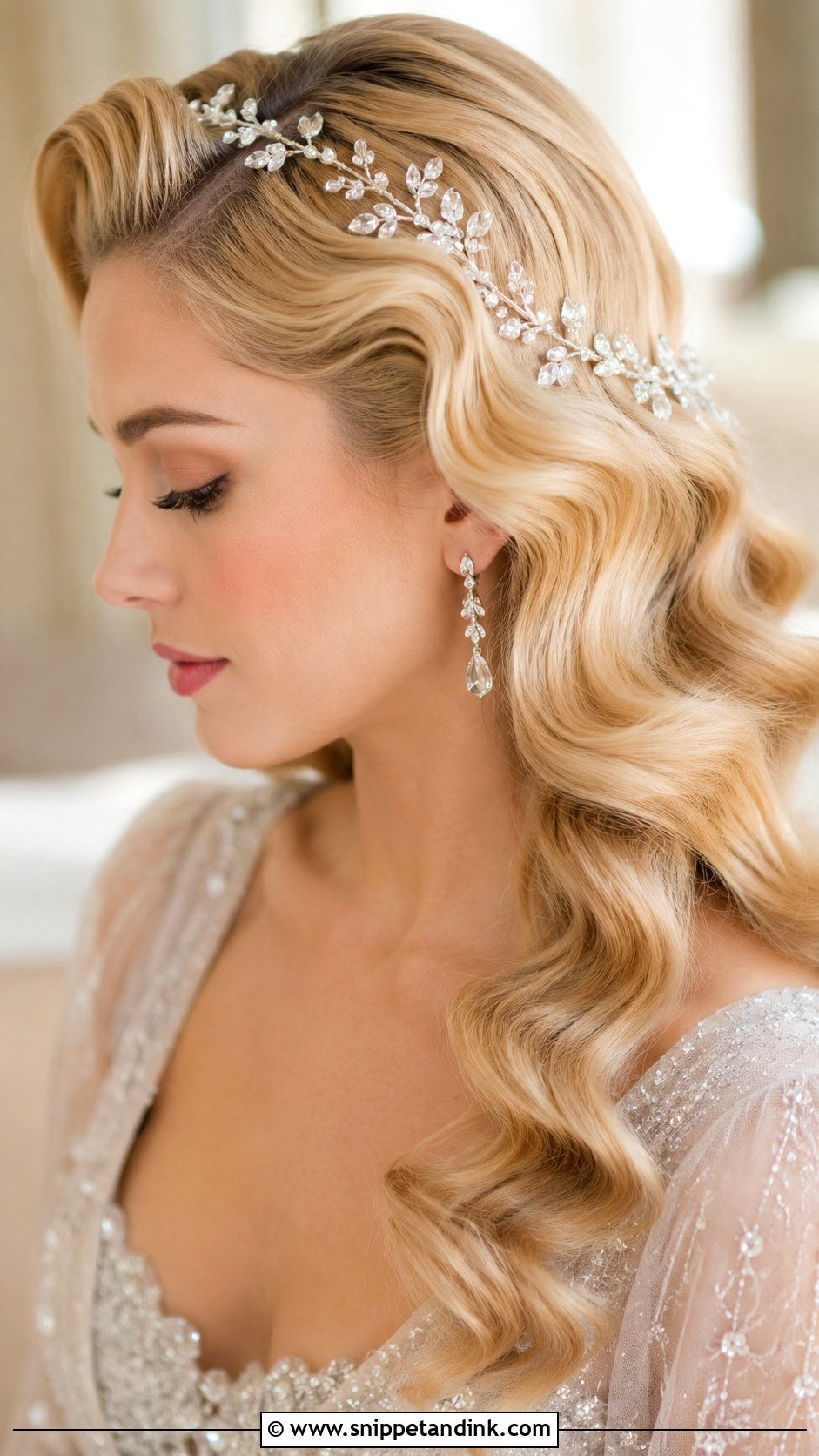
A crystal vine woven through soft waves adds sparkle without the formality of a tiara. It can trace the back of a half-up style or curve along one side of a down style. I thread the wire under small sections and pin it every few inches, so it sits in the hair rather than on top. It’s subtle enough for a daytime ceremony. Crystal earrings tie it in.
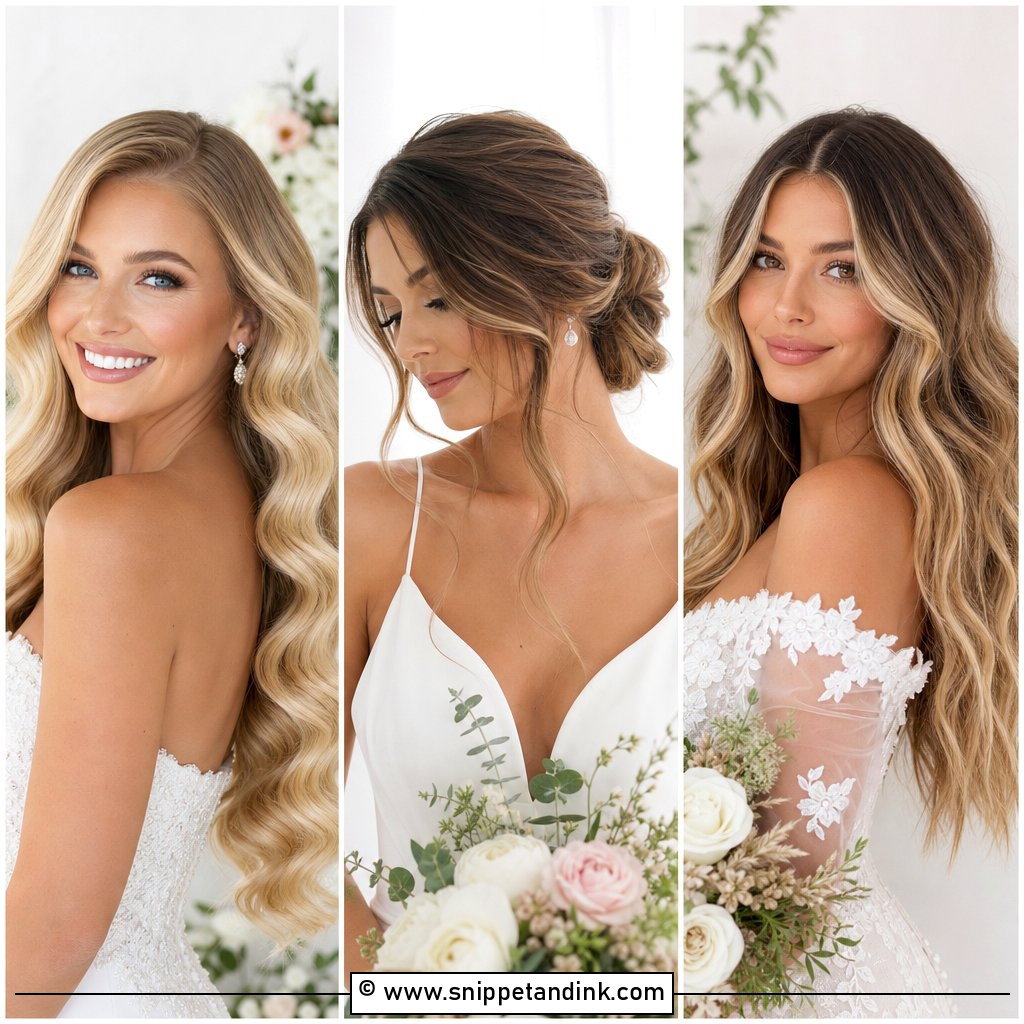
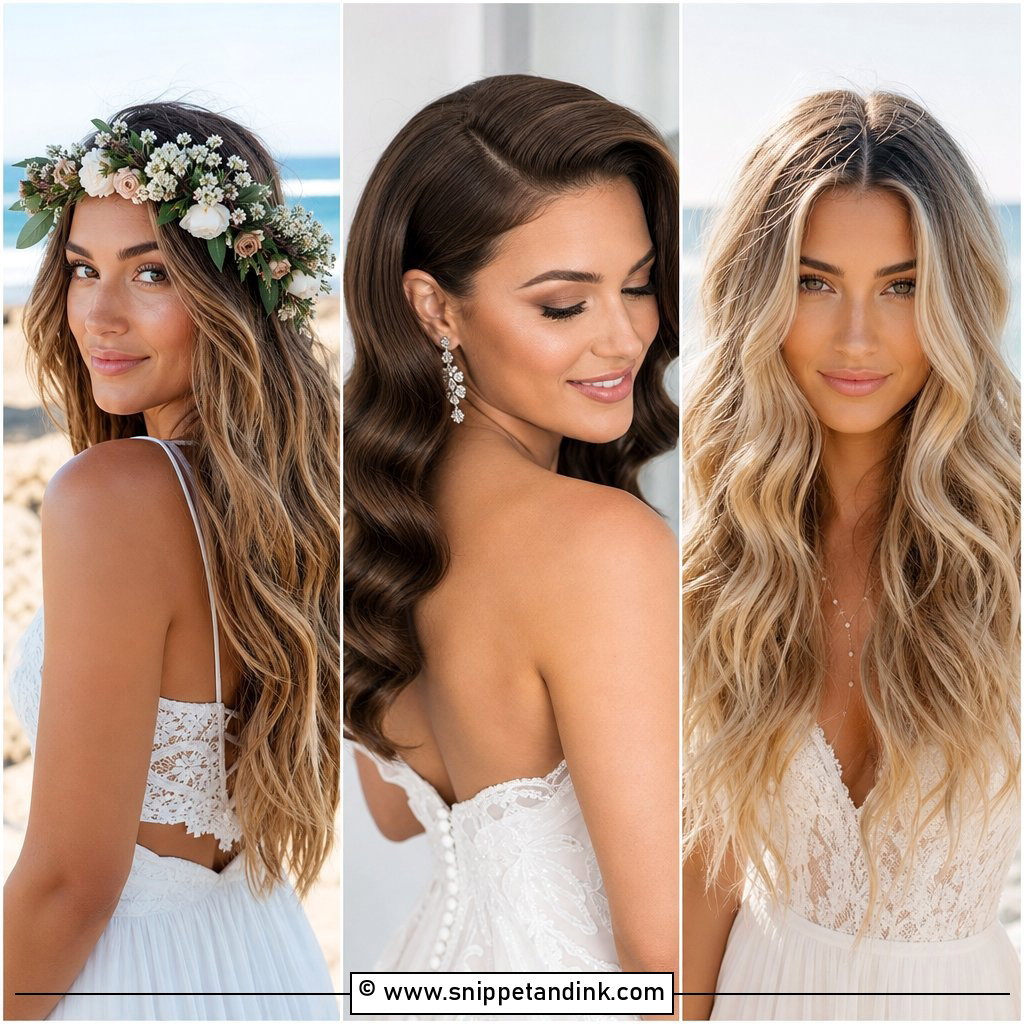
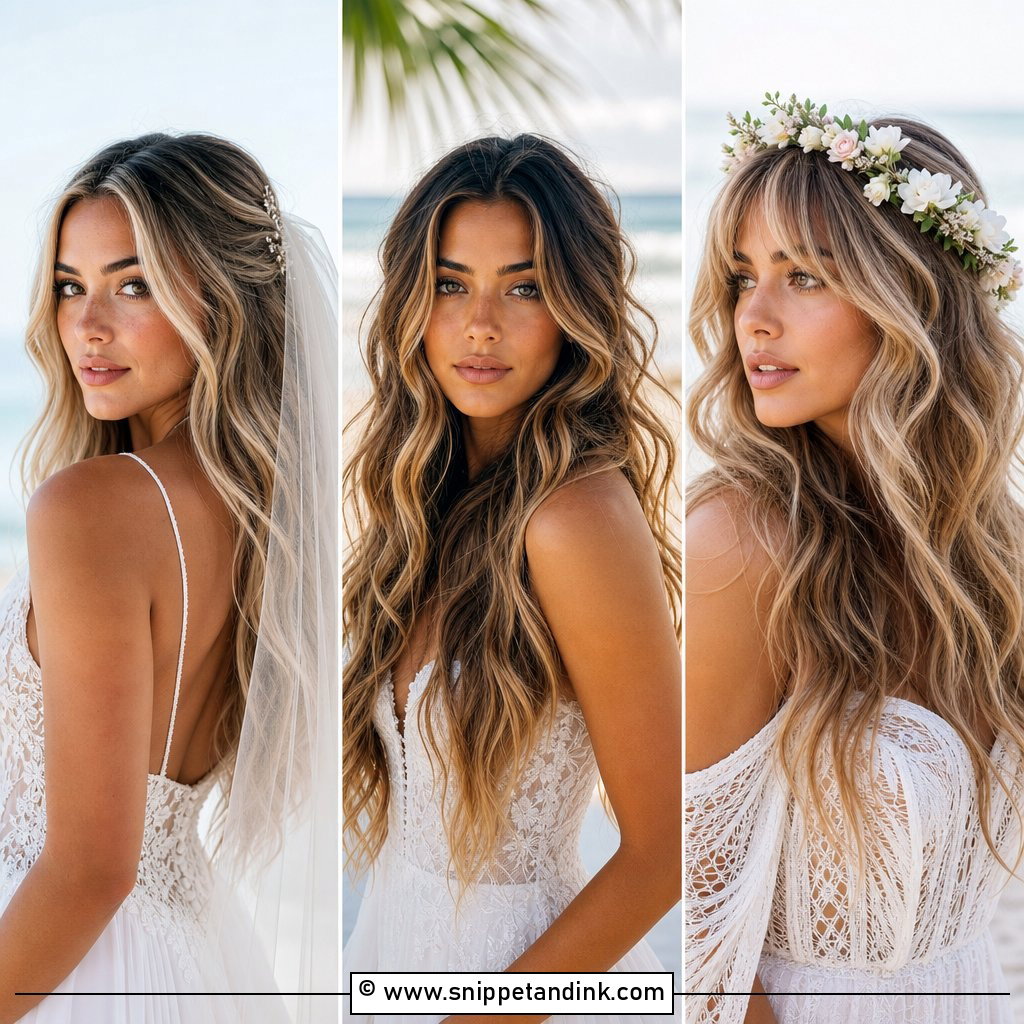
19. Effortless Tousled Vintage Waves
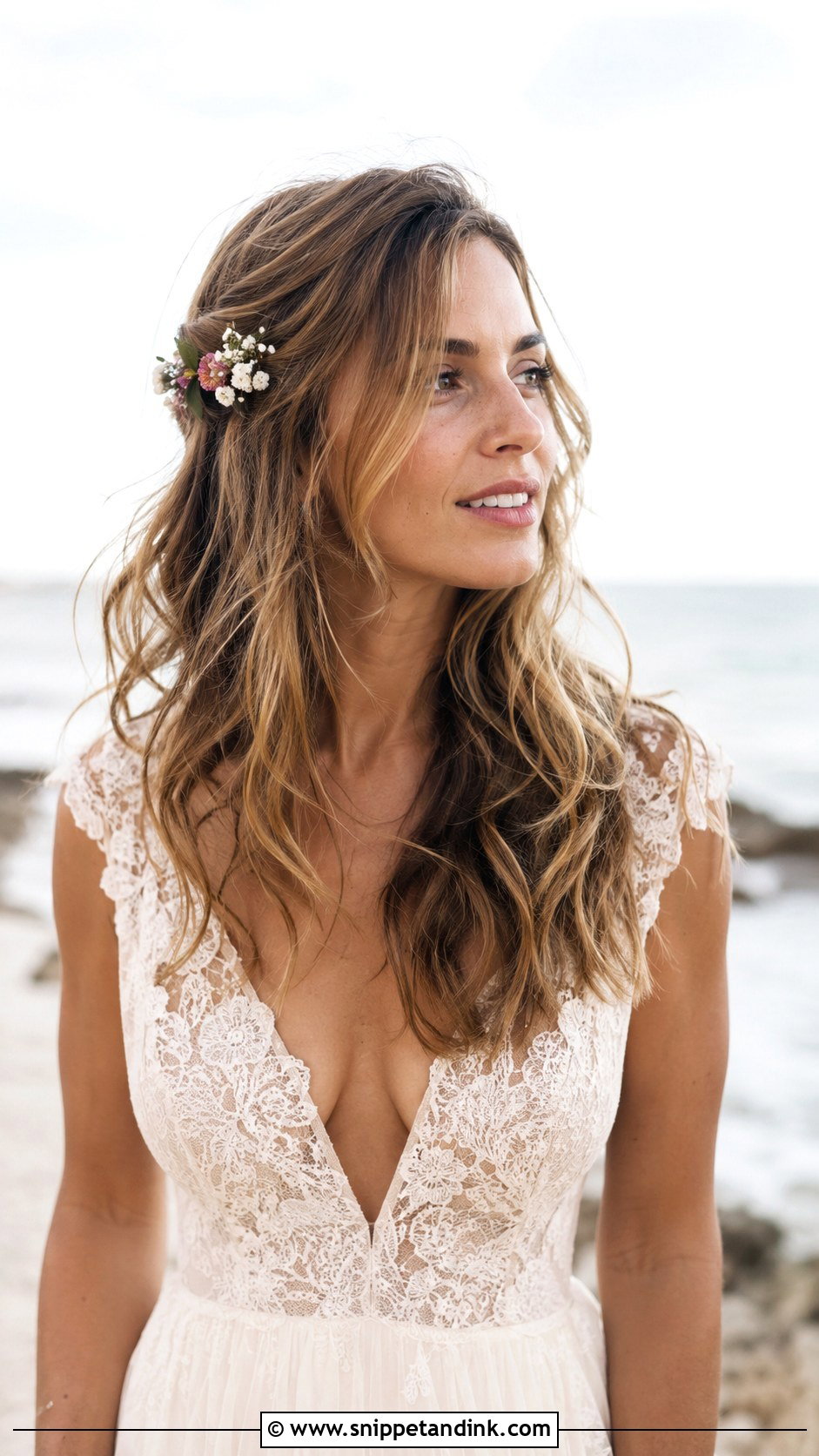
This is the relaxed end of the range: loose, slightly messy waves with a lived-in feel that suits bohemian gowns, garden ceremonies and the beach. It looks casual, but it’s still curled and set; the mess is added at the end with fingers. On a windy beach this texture is actually forgiving, since a few stray strands look intended. A simple floral pin, or nothing at all, is enough.
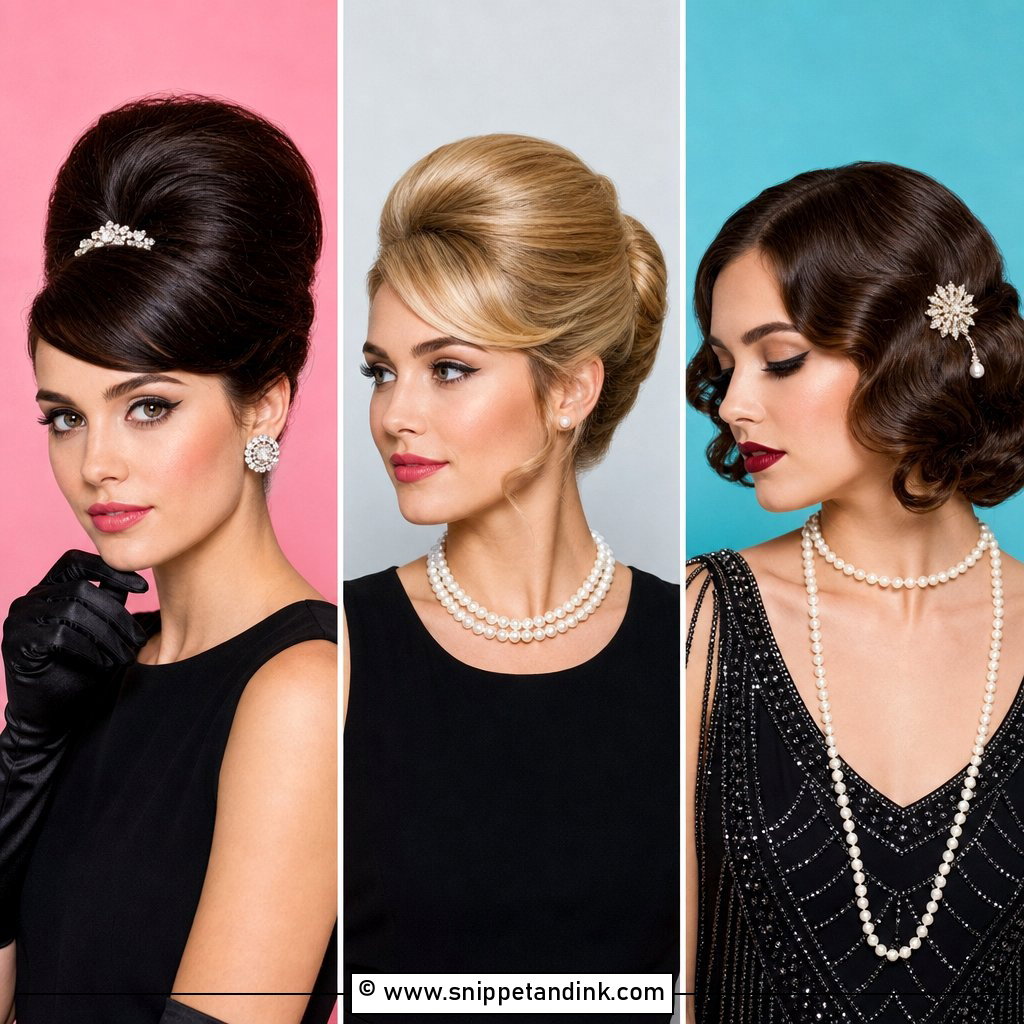
20. Vintage Waves With a Cathedral Veil
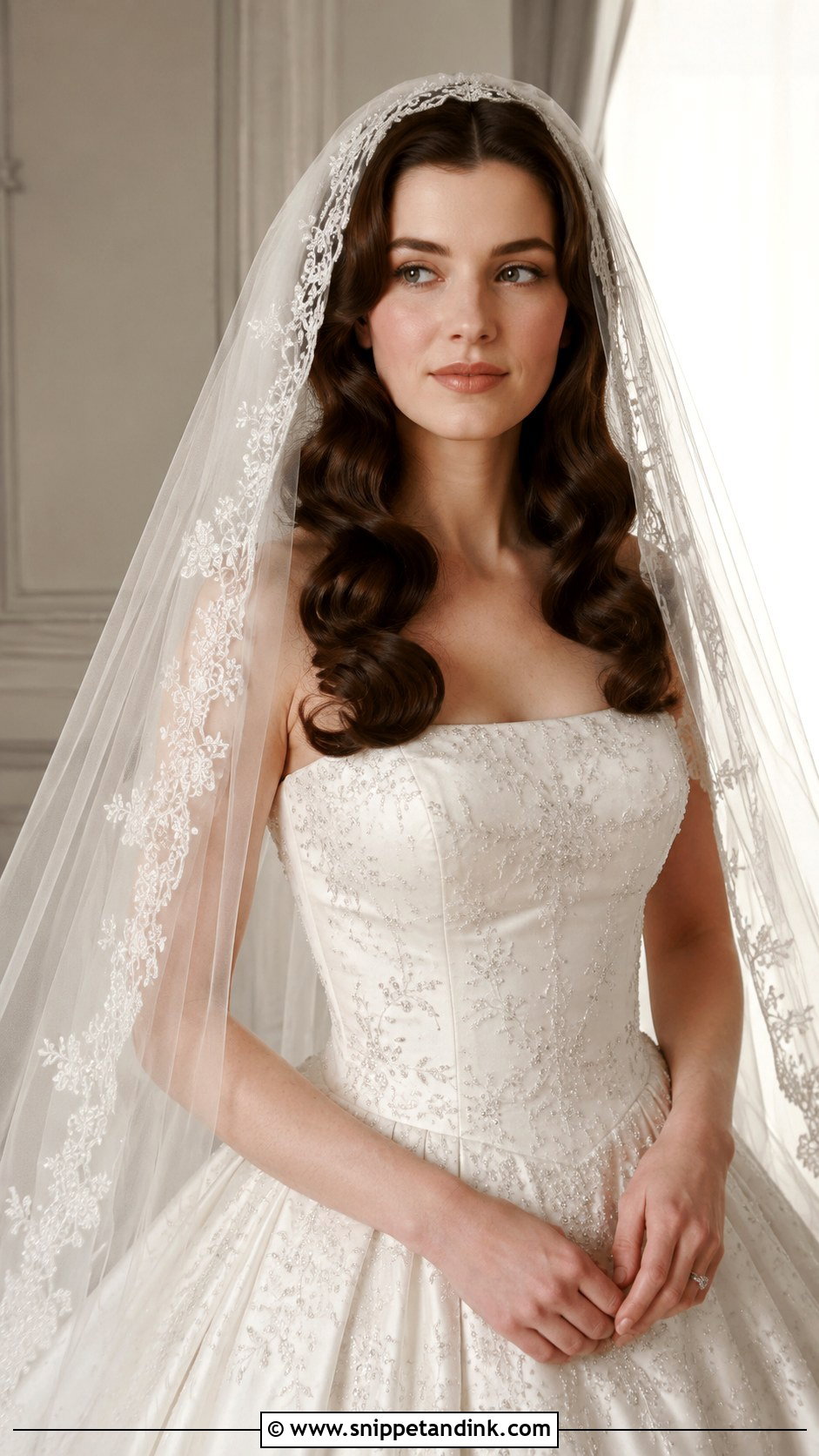
A cathedral veil and polished waves make the grand version of this look. The veil is heavy, though, and its comb drags on whatever it’s pinned into. I place it under the crown into a tight anchor section rather than straight into the curls, so the waves around the face stay intact as you walk. The waves show at the sides of the veil, and the rest of the accessories should stay simple. Save it for a formal, traditional ceremony, where the length of the veil makes sense.
21. Asymmetrical Vintage Waves
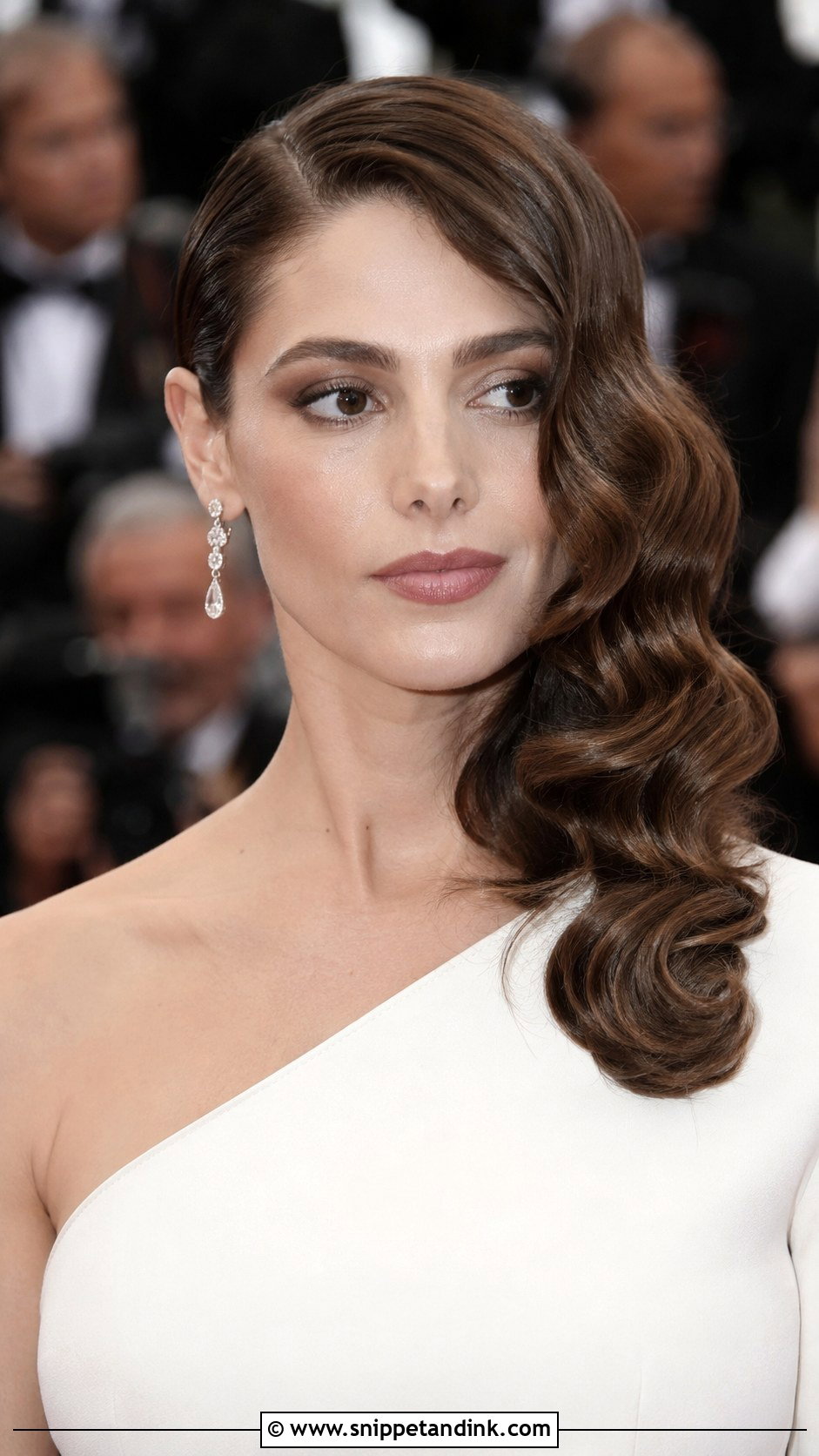
A dramatic deep part sweeps most of the hair to one side, so the waves cascade over one shoulder while the other side stays sleek and close. It pairs well with one-shoulder gowns and a statement earring on the bare side. The sleek side needs to be pinned flat behind the ear, or it puffs out by evening. Be aware it’s harder to hug and dance in, as the weight is all on one side.
22. Vintage Waves Half-Up With Bouffant
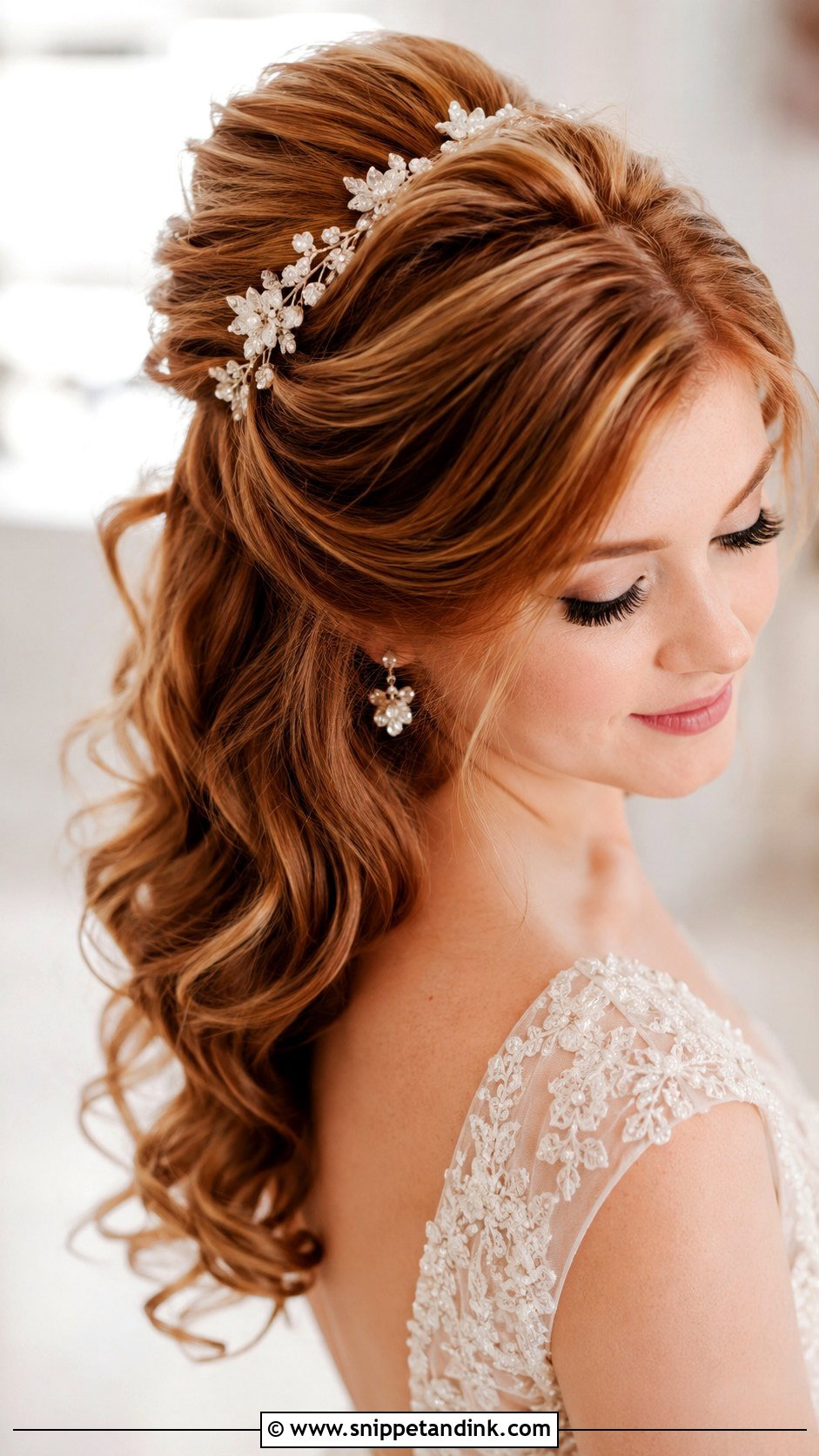
Height at the crown plus flowing waves below is a very 1960s silhouette. The crown is teased, smoothed and pinned back, and the rest falls in soft waves. It gives volume without a full updo and lengthens the face. Veils, tiaras or hair vines anchor easily into the teased section. If your hair is heavy, the bouffant needs to be teased firmly at the root or it sinks within a few hours. It carries a lot of 1960s-inspired charm.
23. Glossy Waves With a Middle Part
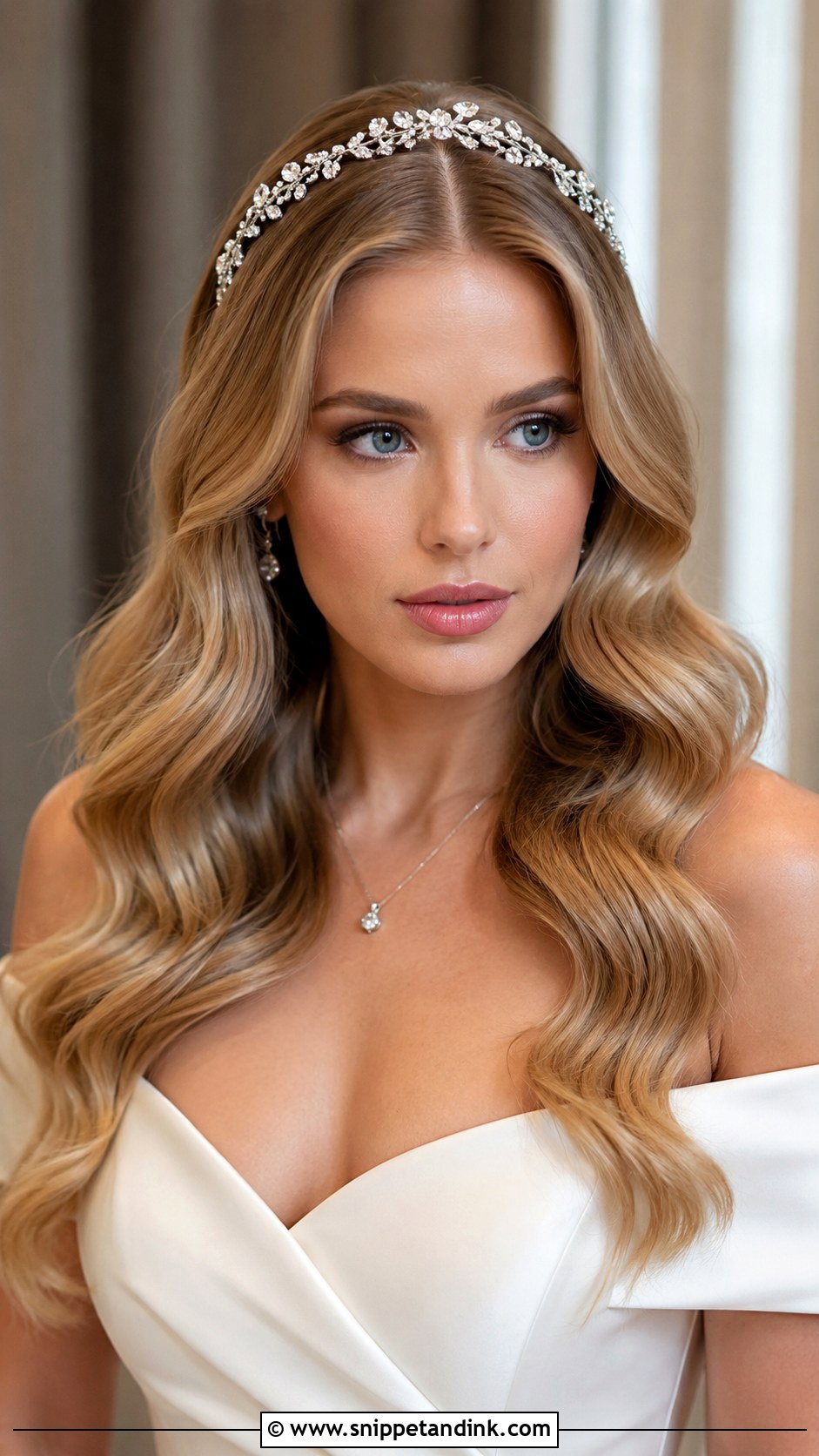
A center part with glossy, evenly matched waves on both sides reads modern and symmetrical. It suits minimalist gowns and delicate jewelry, and works with a crystal headband or simple vine. Symmetry is unforgiving: both sides must be curled with the same barrel and the same number of sections, or one side will hang lower. I check it in the mirror from straight on before every finishing spray.
24. Vintage Waves With Comb Accessory
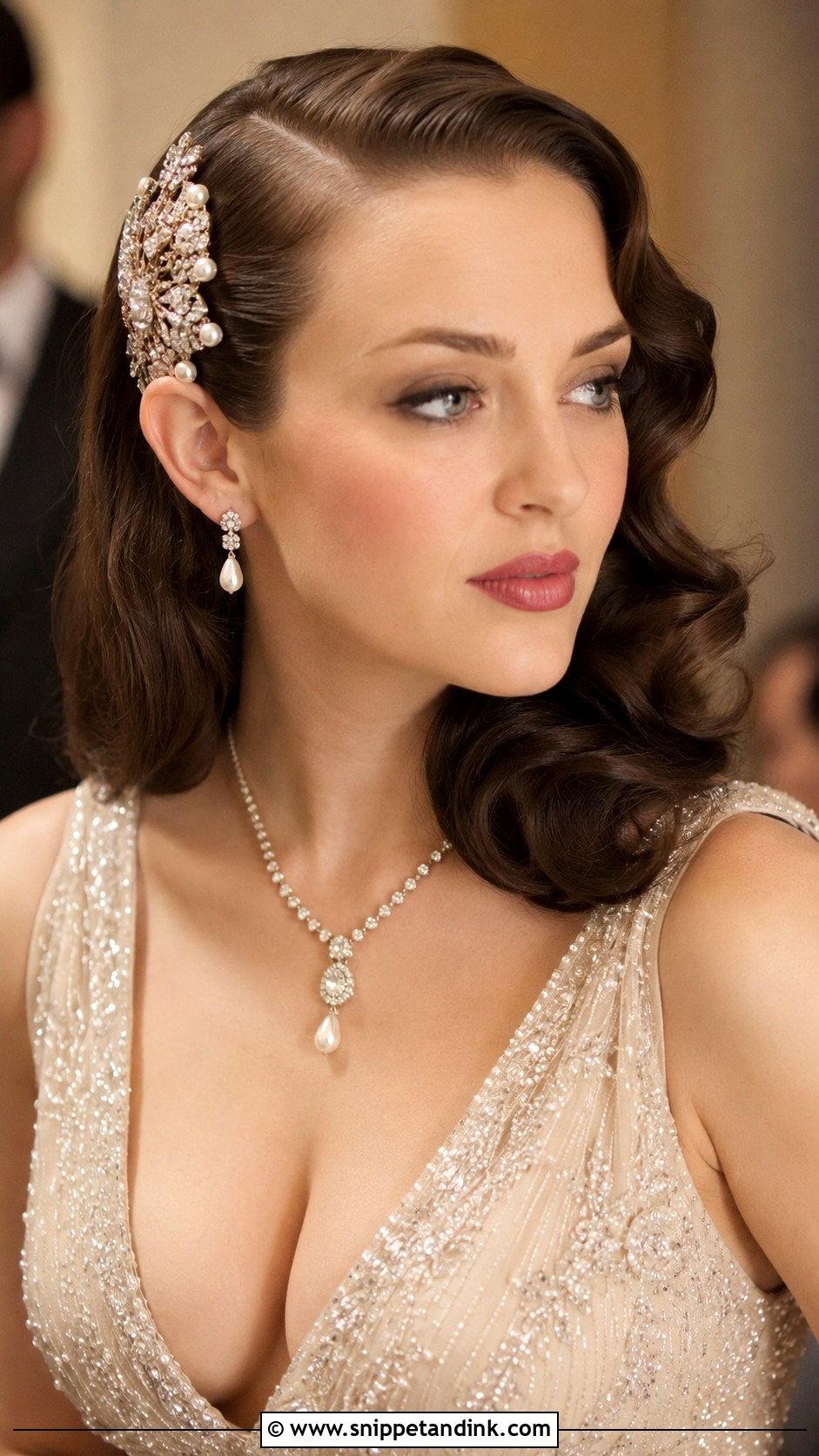
A decorative comb tucked into one side is the simplest accessory for vintage waves. A jeweled or pearl comb can secure a half-up section or simply sit above a wave as decoration. Old combs are often heavier than they look, so I slide them into a small backcombed or braided anchor rather than straight into glossy hair. Match the metal to your other jewelry, and the comb becomes a quiet finishing touch for a formal wedding.
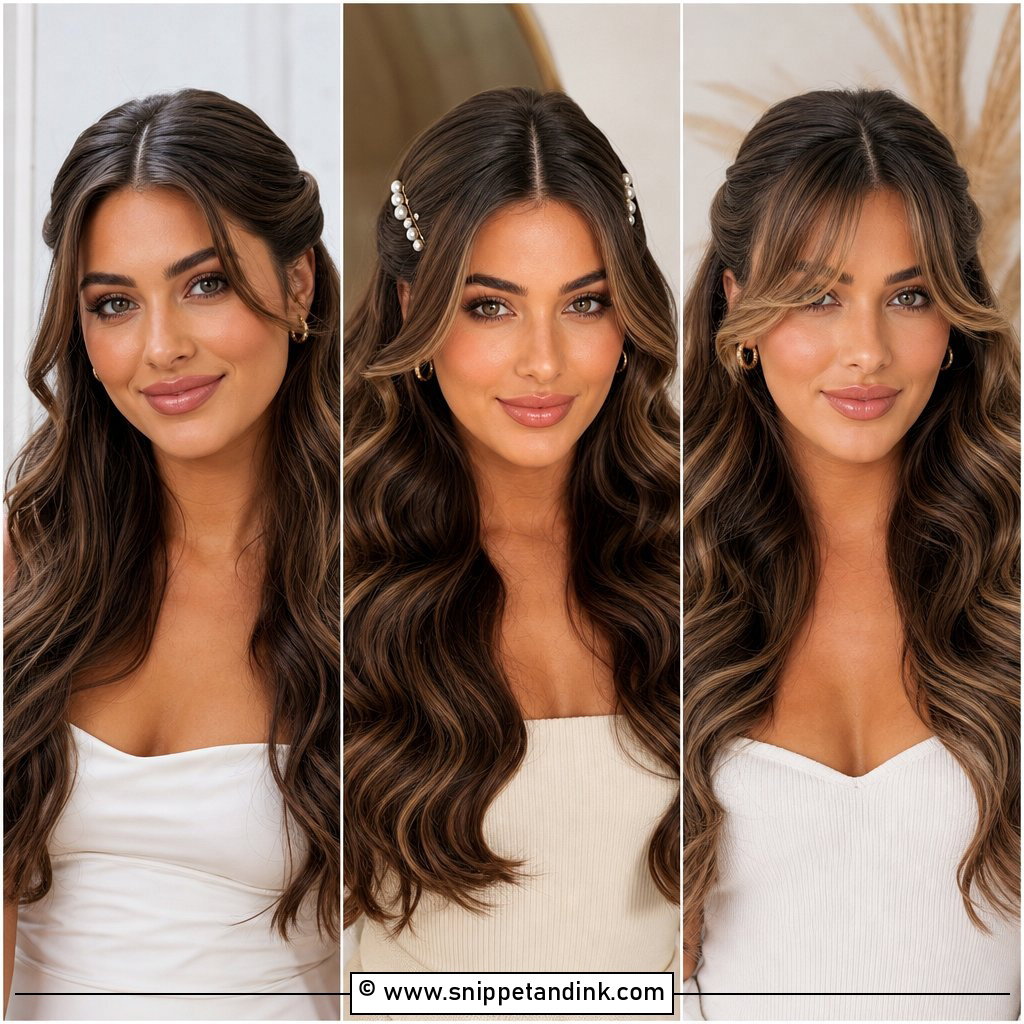
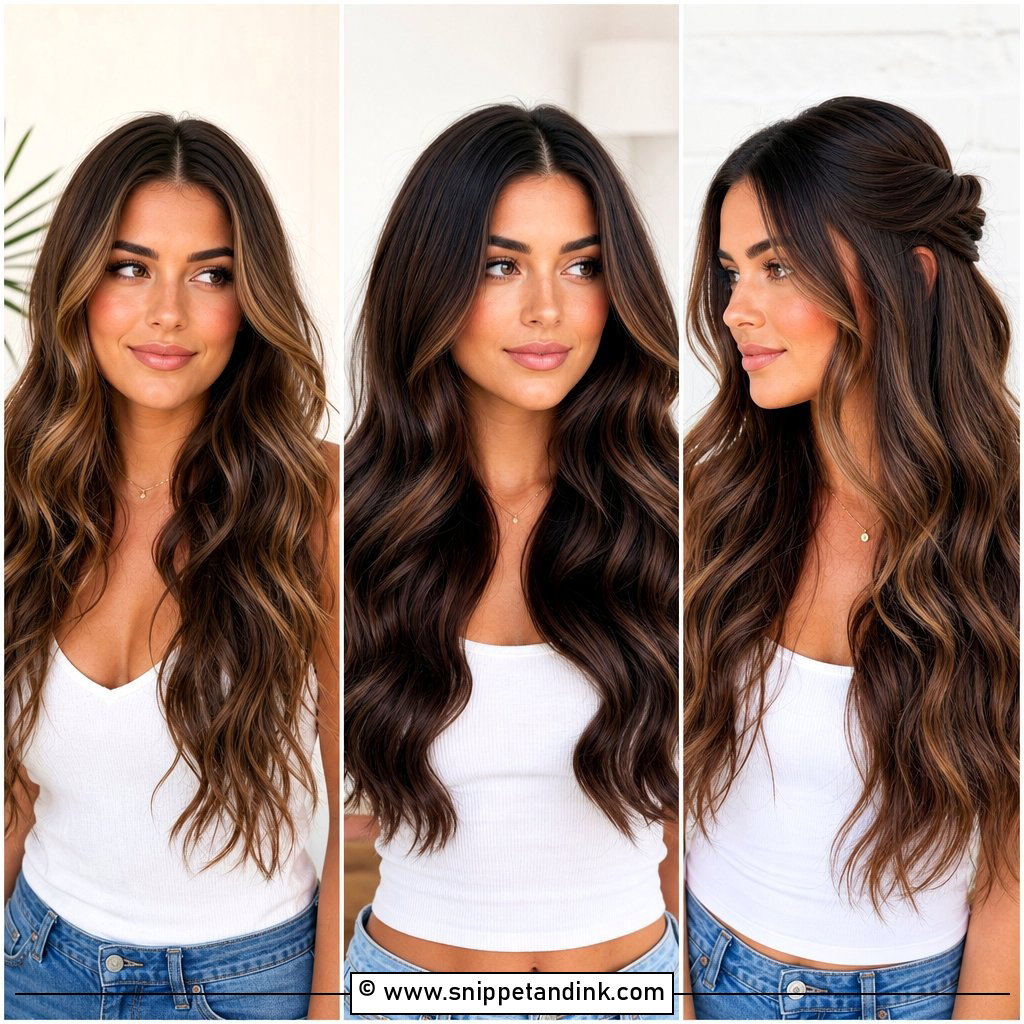
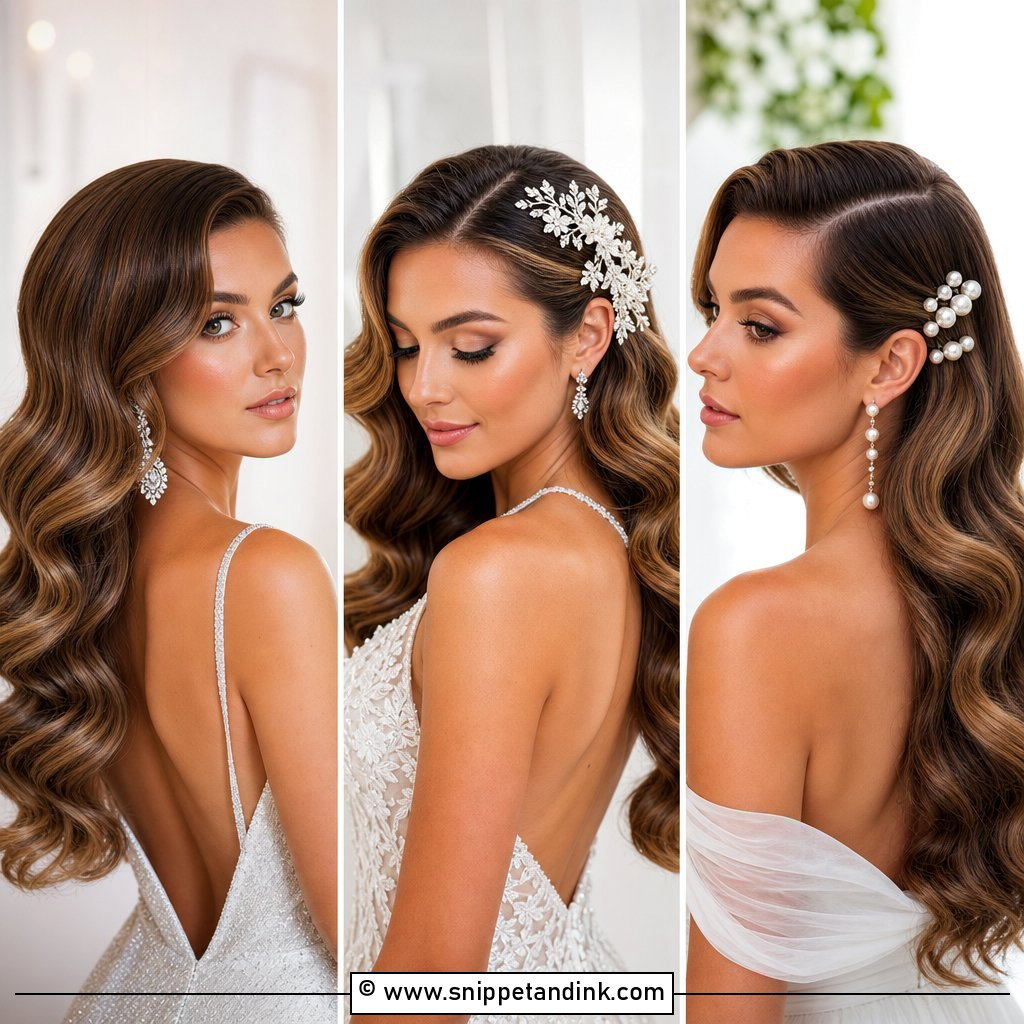
25. Soft Vintage Waves With Curtain Bangs
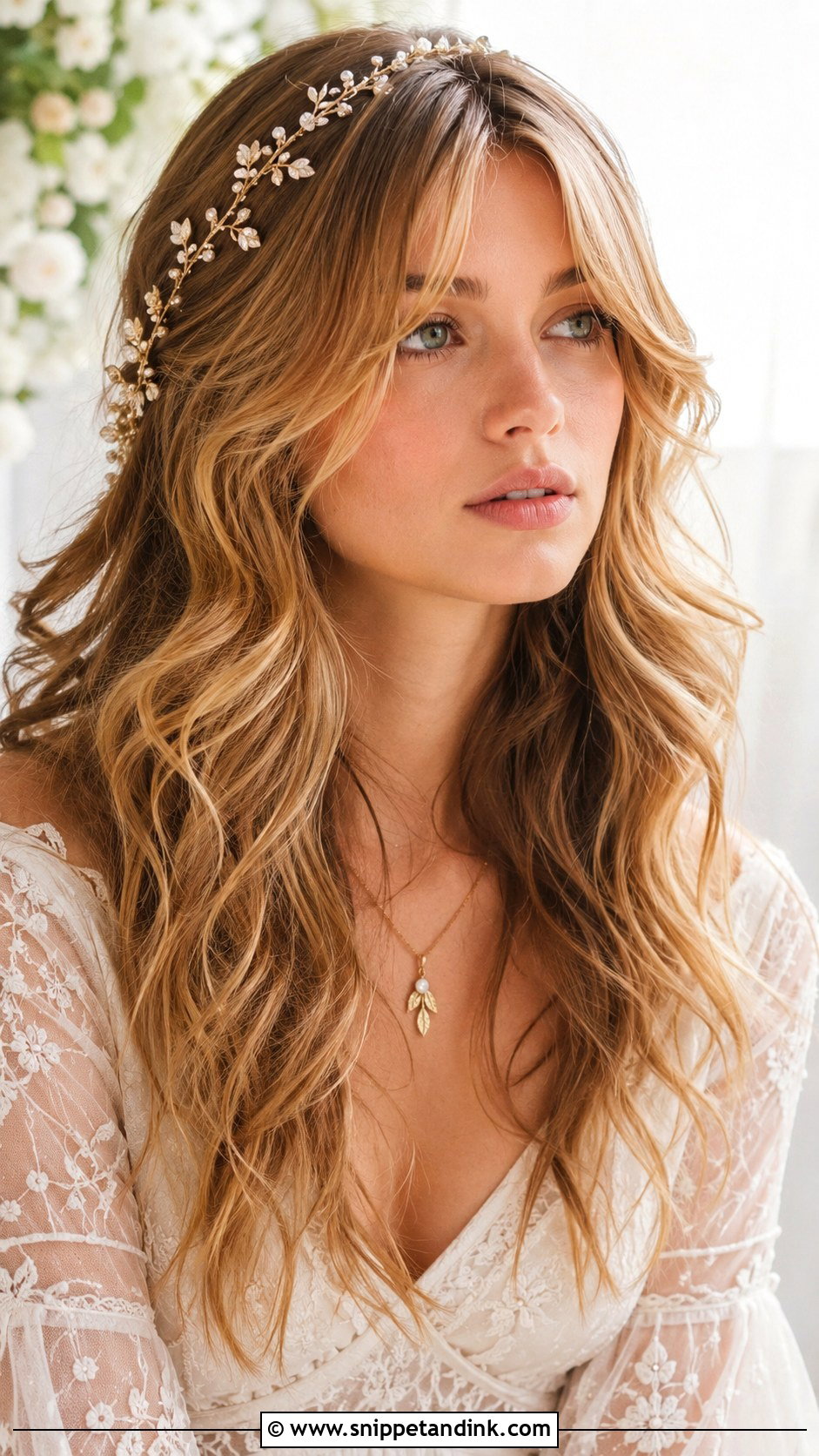
Curtain bangs sweep to each side and blend into the waves below, framing the face and softening the whole look. They suit most face shapes and pair well with bohemian or romantic gowns. Bangs move with sweat and humidity faster than anything else, so I’d trim them a week before, not the day before, and set them in a large Velcro roller while makeup is done. A delicate hair vine works with them, or leave them accessory-free.
Adapting a Forties Wave to Curly, Coily or Very Fine Hair
Vintage waves were originally created on all kinds of hair, and they can still be. You just need a different route to the same shape.
- Curly and coily hair can be wet-set on rollers or flexi rods and dried under a hood, which gives a defined wave without stressing the hair with heat. Finger waves on short natural hair hold beautifully with a firm gel.
- Very fine, straight hair needs grip before curling. I prep with a mousse or texture spray and use smaller sections, so curls aren’t too heavy to hold.
- Thick, heavy hair takes longer to set and to cool. Book extra time on the morning, and expect more pins.
Why Waves Drop Before the First Dance
Freshly washed, conditioner-soft hair is slippery and drops curls fast. Washing the night before usually holds better. Humidity is the other enemy. Moisture in the air relaxes the bonds that heat created, so on a humid day I set tighter than the finished look and let the air loosen it. Heavy oils and shine serums go on at the very end and sparingly, since they weigh a wave down.
Keep a small brush, a few flat clips and a travel spray with whoever is holding your bag. Between the ceremony and the reception, a quick re-clip of the front ridges for ten minutes brings the shape right back.
From Finger Waves to Bardot Volume, Which Era Is Yours?
Vintage waves cover a lot of ground: sleek side-swept Hollywood curls, flat 1920s finger waves, Bardot volume, victory rolls and soft tousled texture. Every one of them depends on the same basics, a good set, a patient cool-down and the right brush-out. Choose the era that matches your dress and venue, then talk to your stylist about your hair type and how long the day runs. Pearls, a crystal vine or a birdcage veil will make it yours.
You'll Like These Ideas:


Leave a Reply