
Big waves wedding hair is the style almost every bride can picture herself in, and it’s harder to get right than it looks. Too tight and it reads as prom curls. Too loose and it has vanished by the first toast. The waves I like best right now are glossy and deliberate, with enough movement to swing when you walk. Below are fifteen versions, from a strict Hollywood set to beach-loose, with notes on how each changes with a veil, a tiara, a braid or a different hair type.
Barrel Size, Curl Direction and the Brush-Out
If you’re doing your own hair, or a bridesmaid is helping, three small choices separate big, smooth waves from a head of ringlets. I make them without thinking at every appointment; knowing them helps you explain the look you want.
Go bigger than you think
A 1 inch iron gives defined curls that relax into medium waves. For the big, open shape in these photos, most hair needs something around 1.25 to 1.5 inches. Hollywood waves are often set slightly smaller, because the brush-out loosens them a lot.
Pick a direction on purpose
Curling every section the same way, away from the face, gives that sculpted, uniform ripple. Alternating directions gives a looser, beachier finish. Neither is wrong, but mixing them by accident is why home waves can look messy.
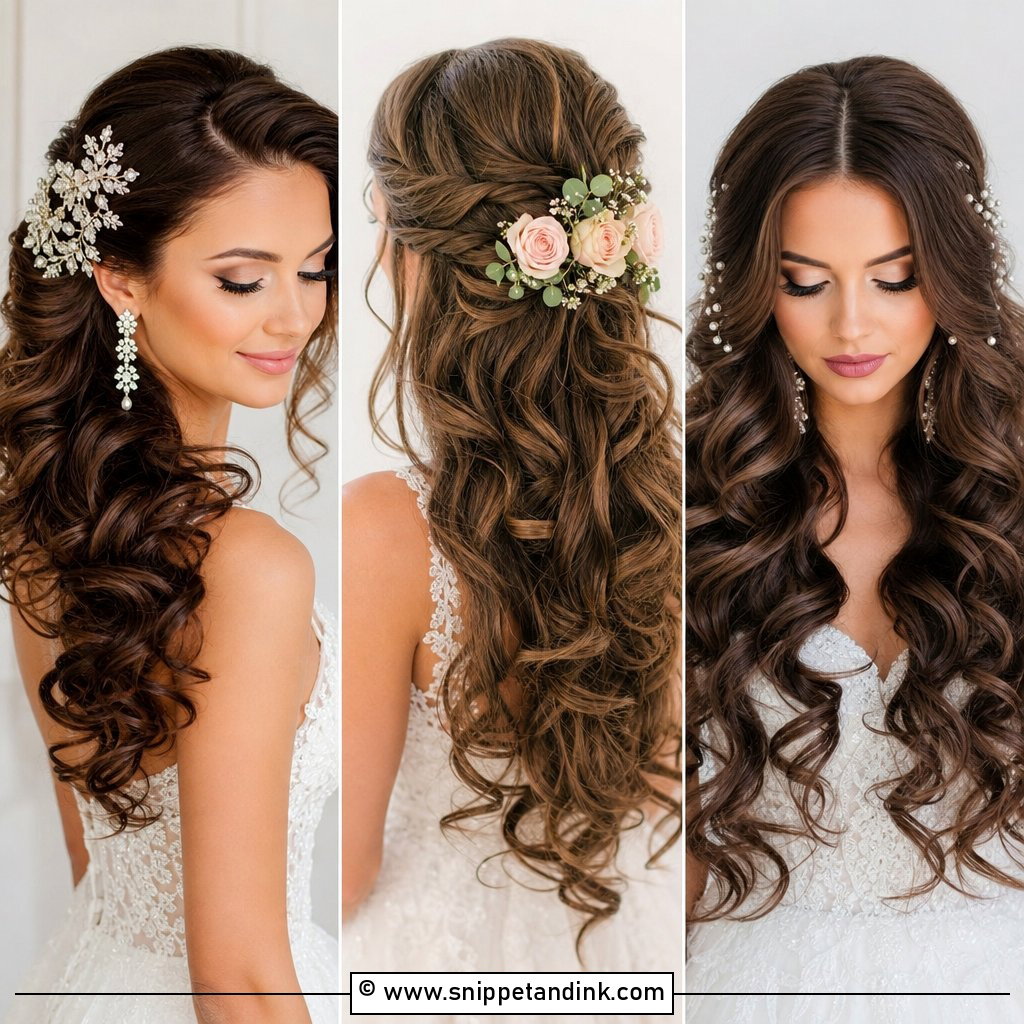
Let it cool, then brush
- Pin each curl or leave it untouched until completely cool. Warm curls drop fast.
- Brush out with a wide paddle or boar-bristle brush, slowly, from the ends up.
- Use a light hold spray and a little shine product on the surface, not heavy oil near the roots.
- Practise once a few weeks before. The first attempt is rarely the best one.
1. Hollywood Waves Wedding Hair
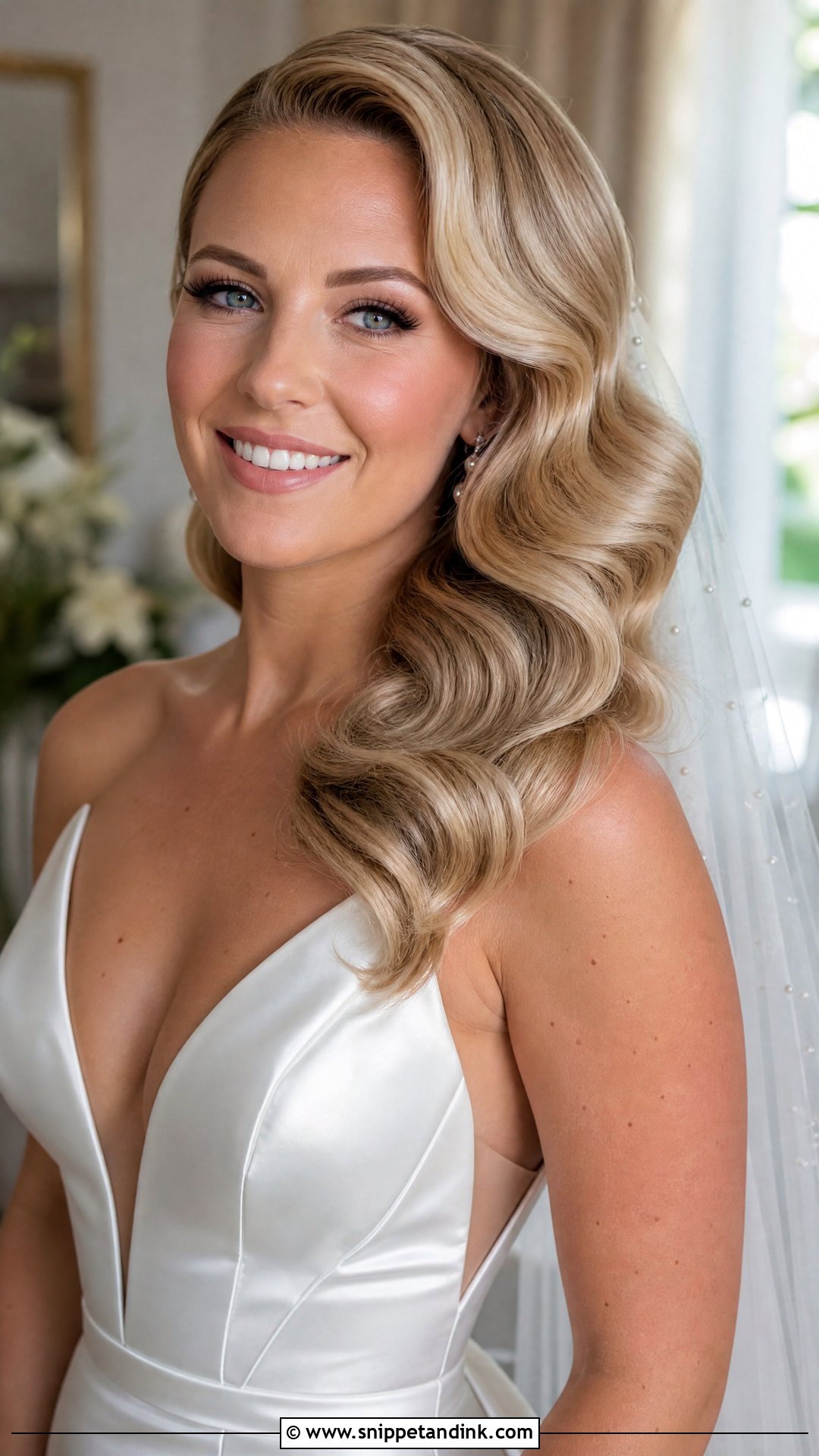
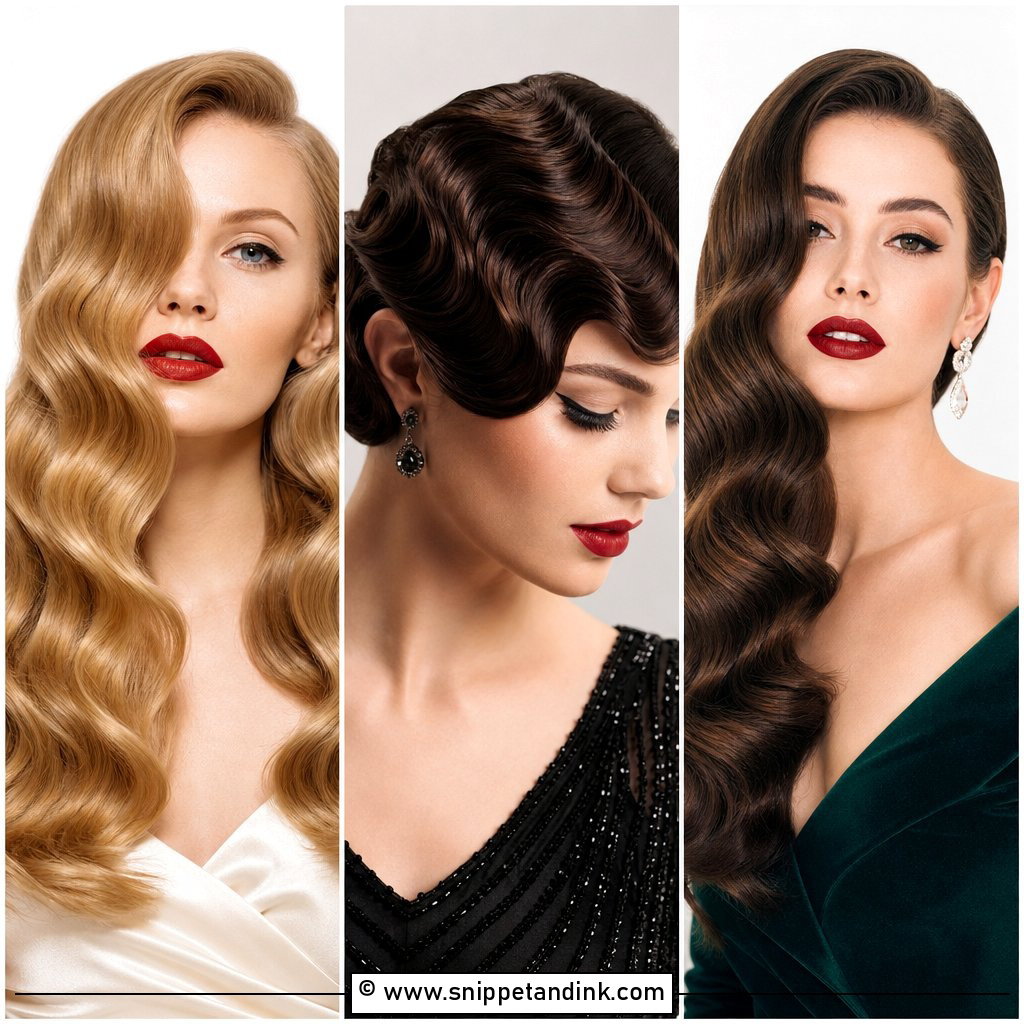
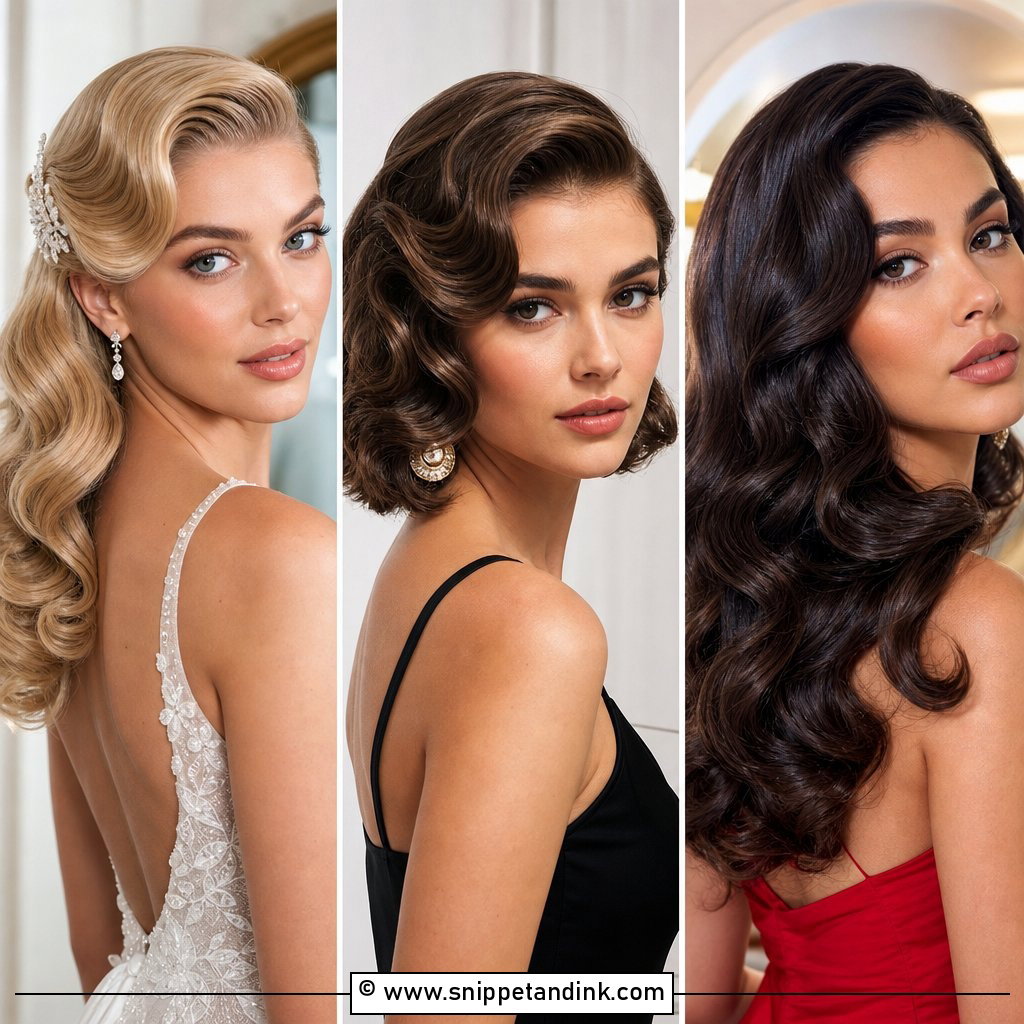
Every curl set in the same direction, cooled, then brushed into one continuous ripple: that’s the discipline behind Hollywood waves. Paired with strapless gowns or clean satin, the hair becomes part of the silhouette. I pin each curl flat against the head while it cools, and I don’t touch a brush until the last one is cold. On fine hair that won’t hold a curl, a few clip-in wefts give the waves enough body to keep their shape.
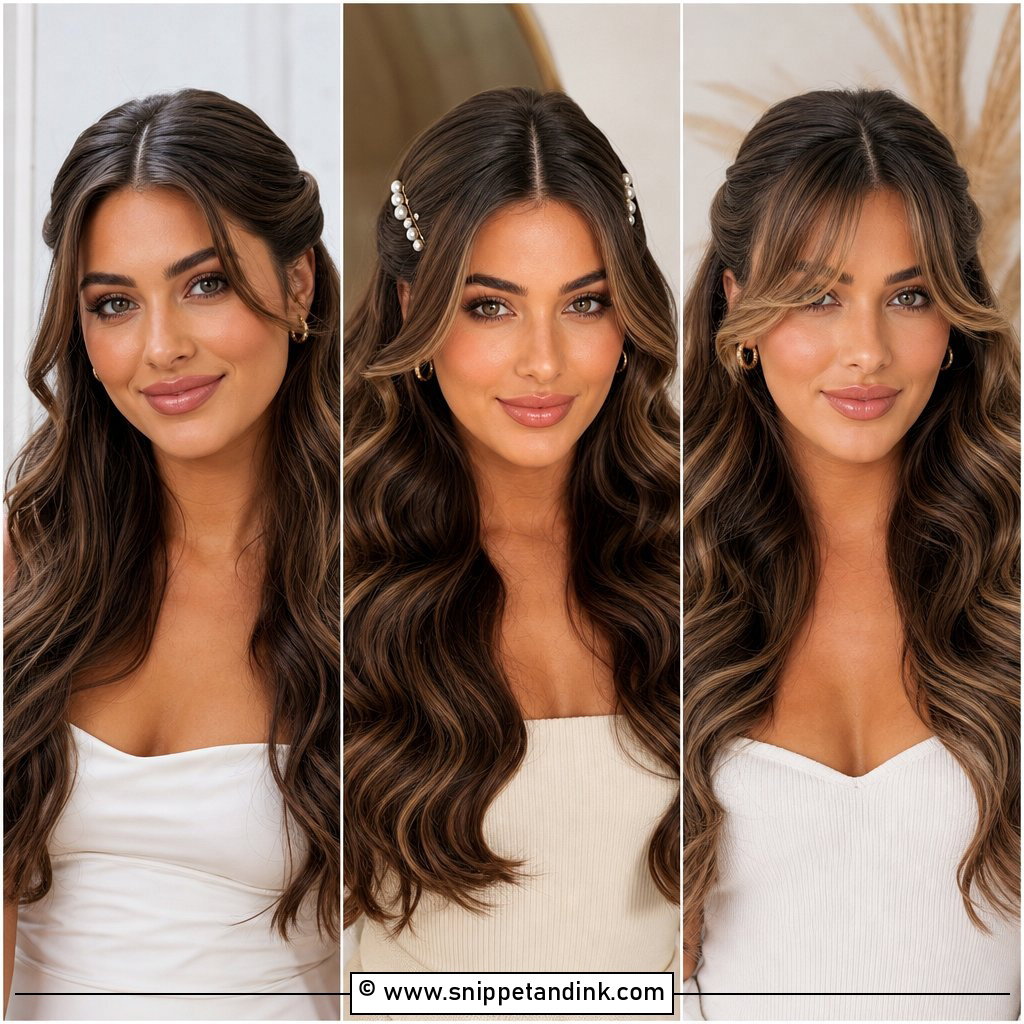
2. Side Part Waves Wedding Hair
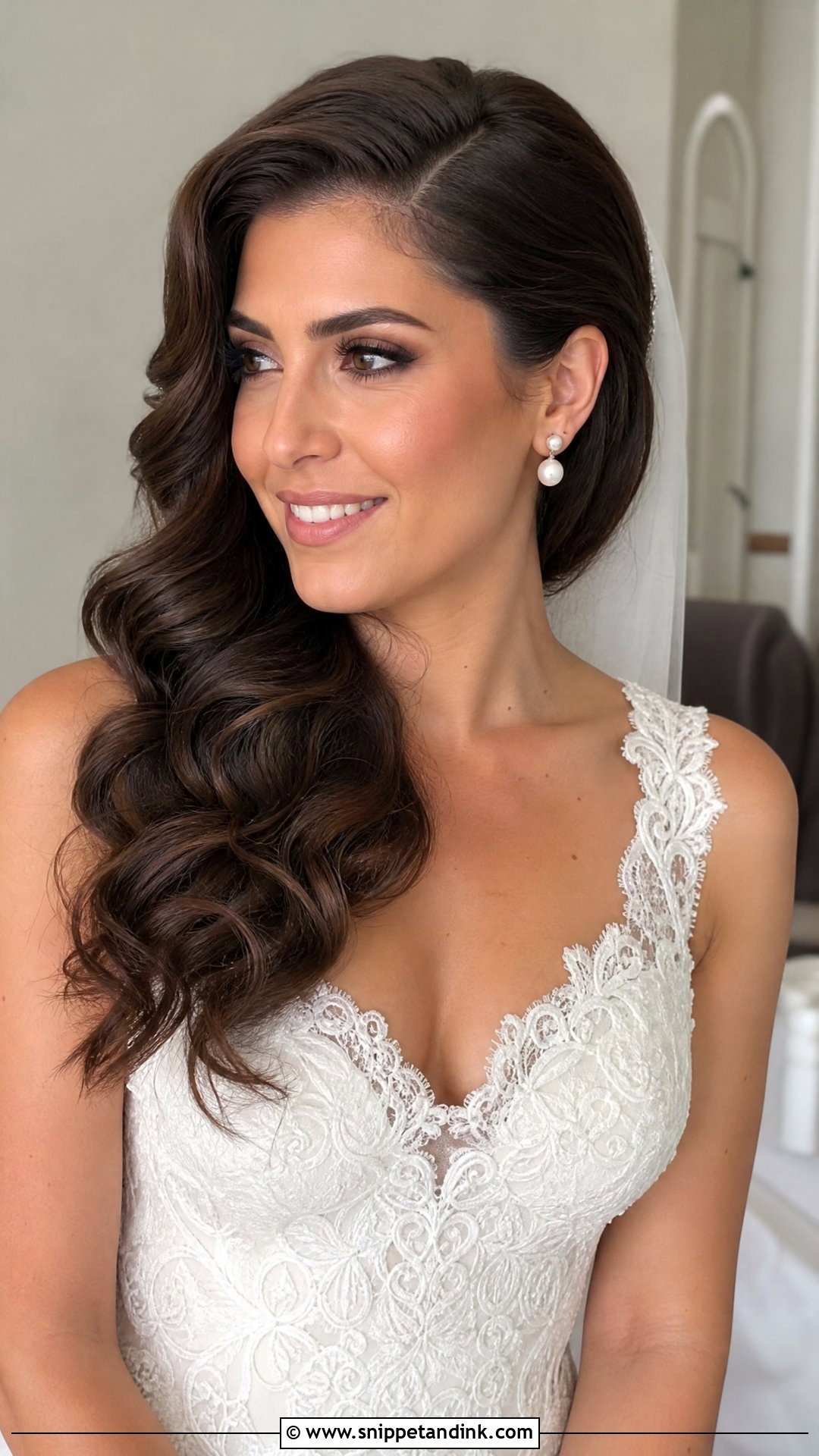
Flipping the part to one side lifts the crown on its own and sweeps the waves over in one direction. One side can then tuck behind the ear or take a comb, which suits statement earrings. Glossy reads classic; relaxed reads current. The thing to know is that a deep part on hair that normally falls in the center will try to creep back. I train it with a blow-dry in the new direction and a hidden grip at the crown.
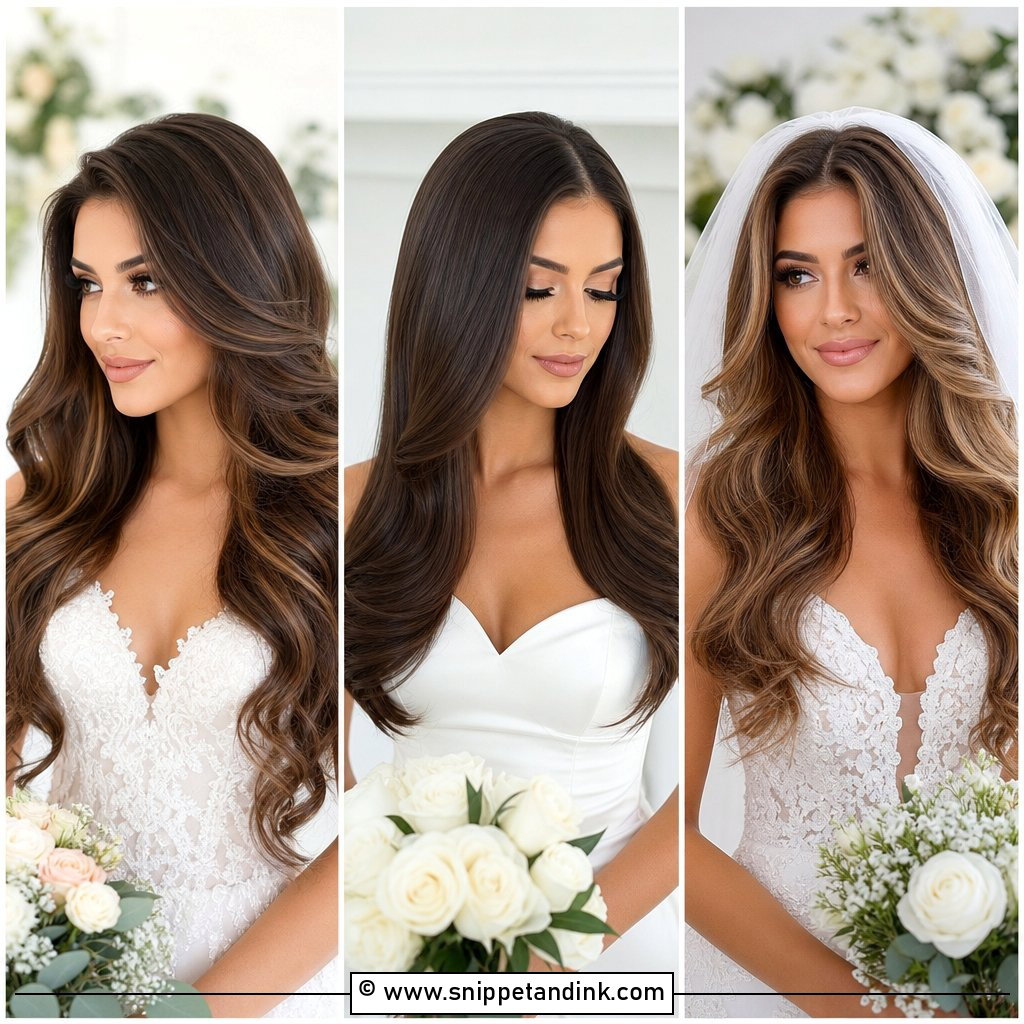
3. Middle Part Waves Wedding Hair
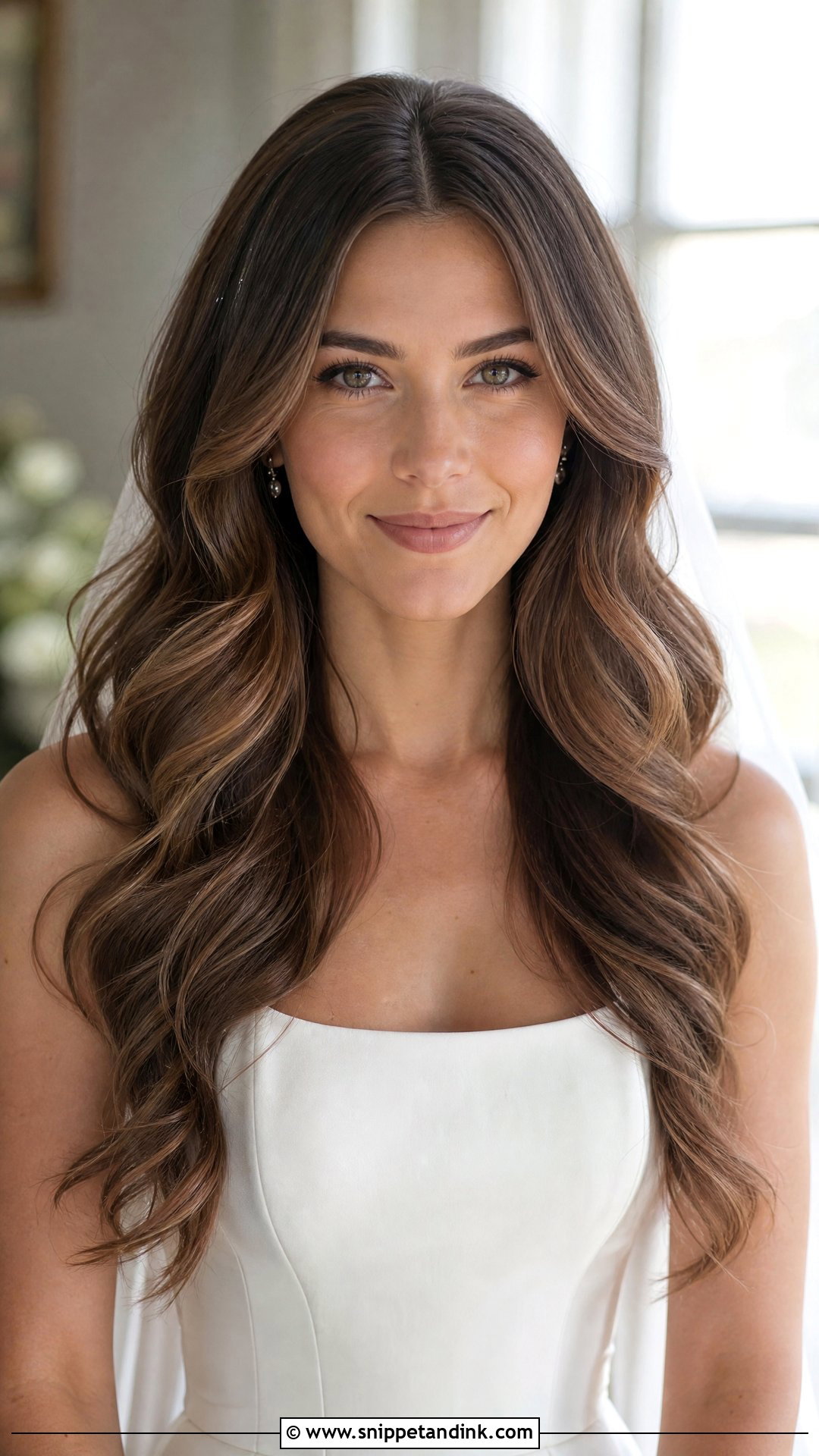
Symmetry is unforgiving. With a middle part, any difference between the two sides shows, so I curl both sides as mirror images, away from the face, and check them in the mirror together. Long layers and soft balayage both show off the wave well. Flat roots are the usual weakness, so I lift the crown with a root spray before curling. A drop of serum on the ends helps under bright ceremony lighting.
4. Half Up Big Waves Wedding Hair
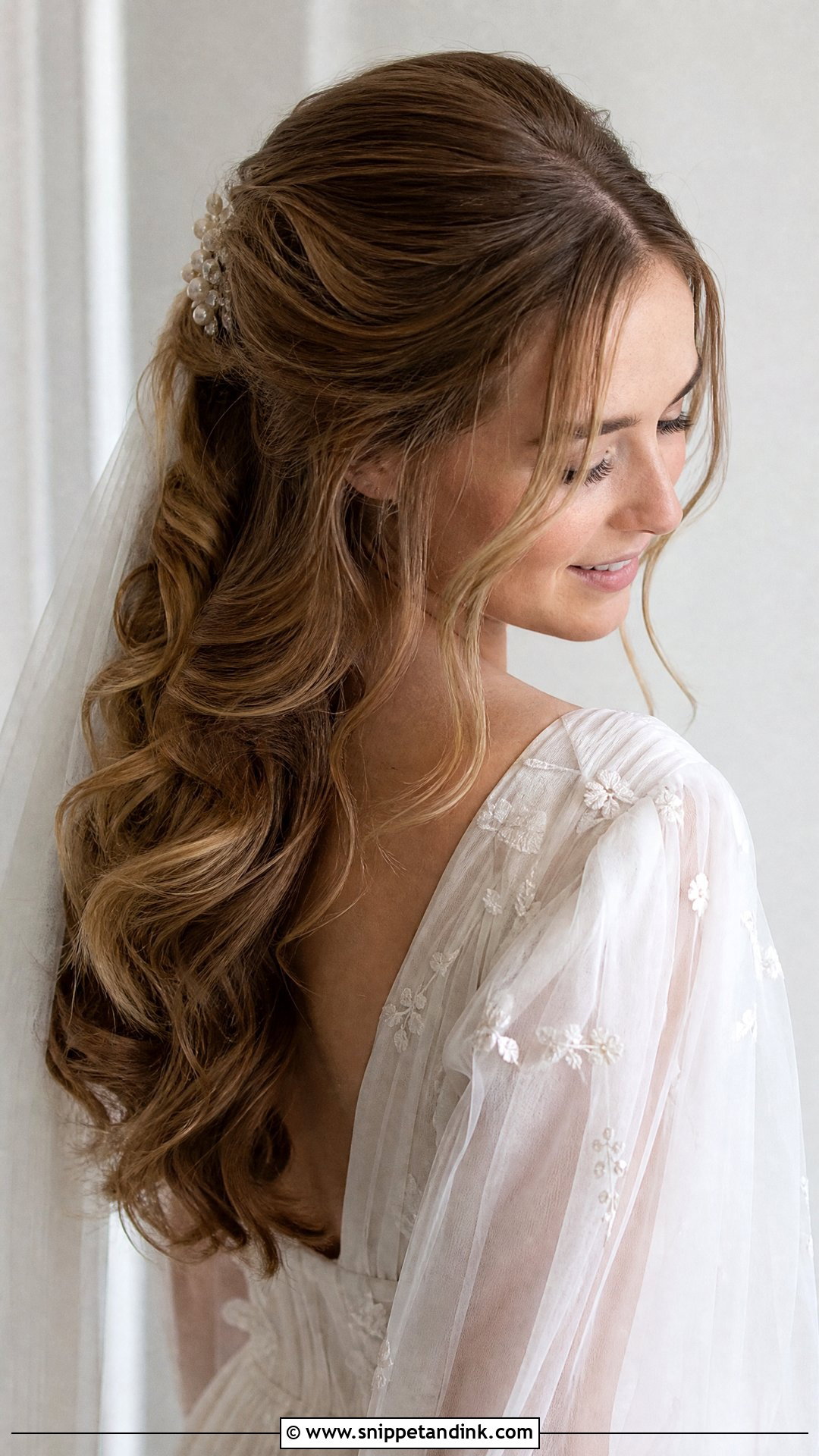
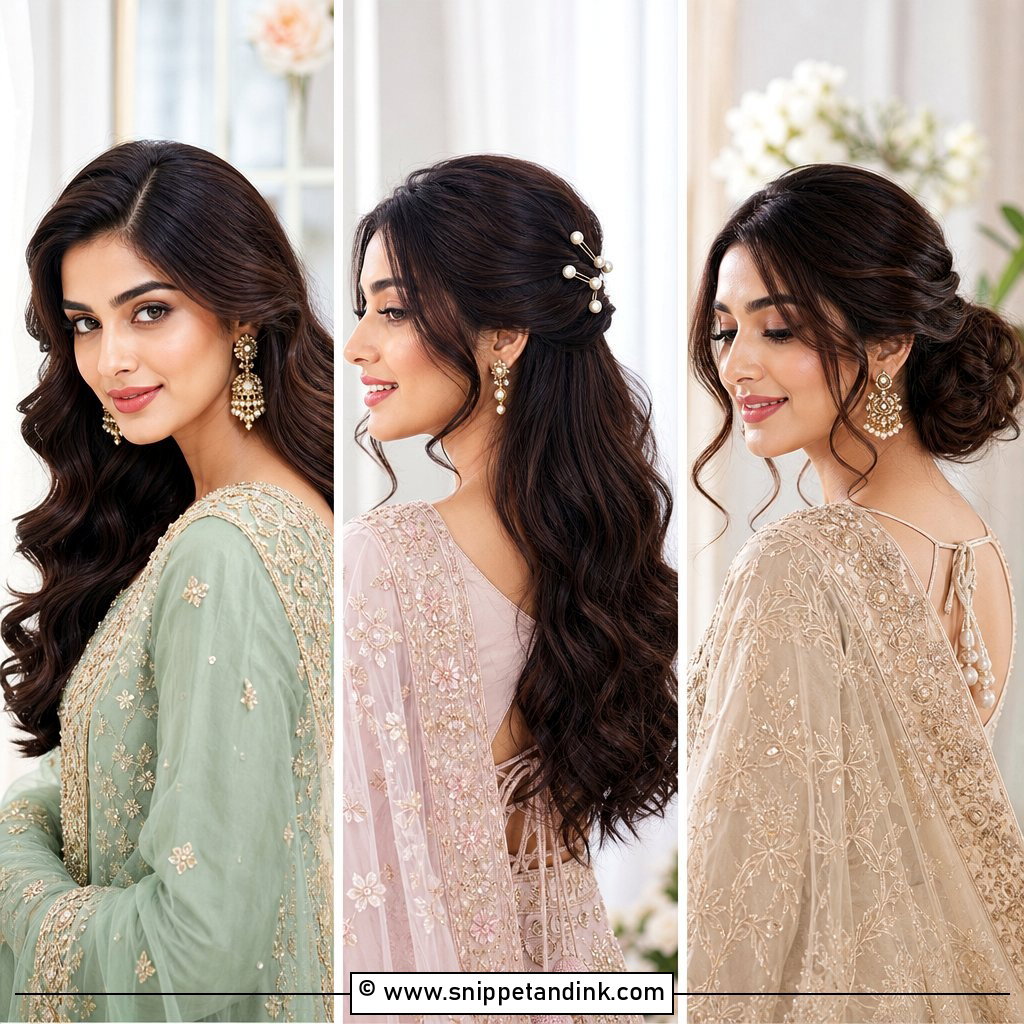
Pinning the top section gives a veil something to hold and keeps the front out of your face in wind, while the lower lengths fall in full waves. That’s why I suggest half-up so often for outdoor weddings. The top can be lifted, twisted or lightly braided. Go easy on teasing at the crown; heavy backcombing under a half-up looks like a bump in profile photos.
5. Big Waves Wedding Hair With Veil
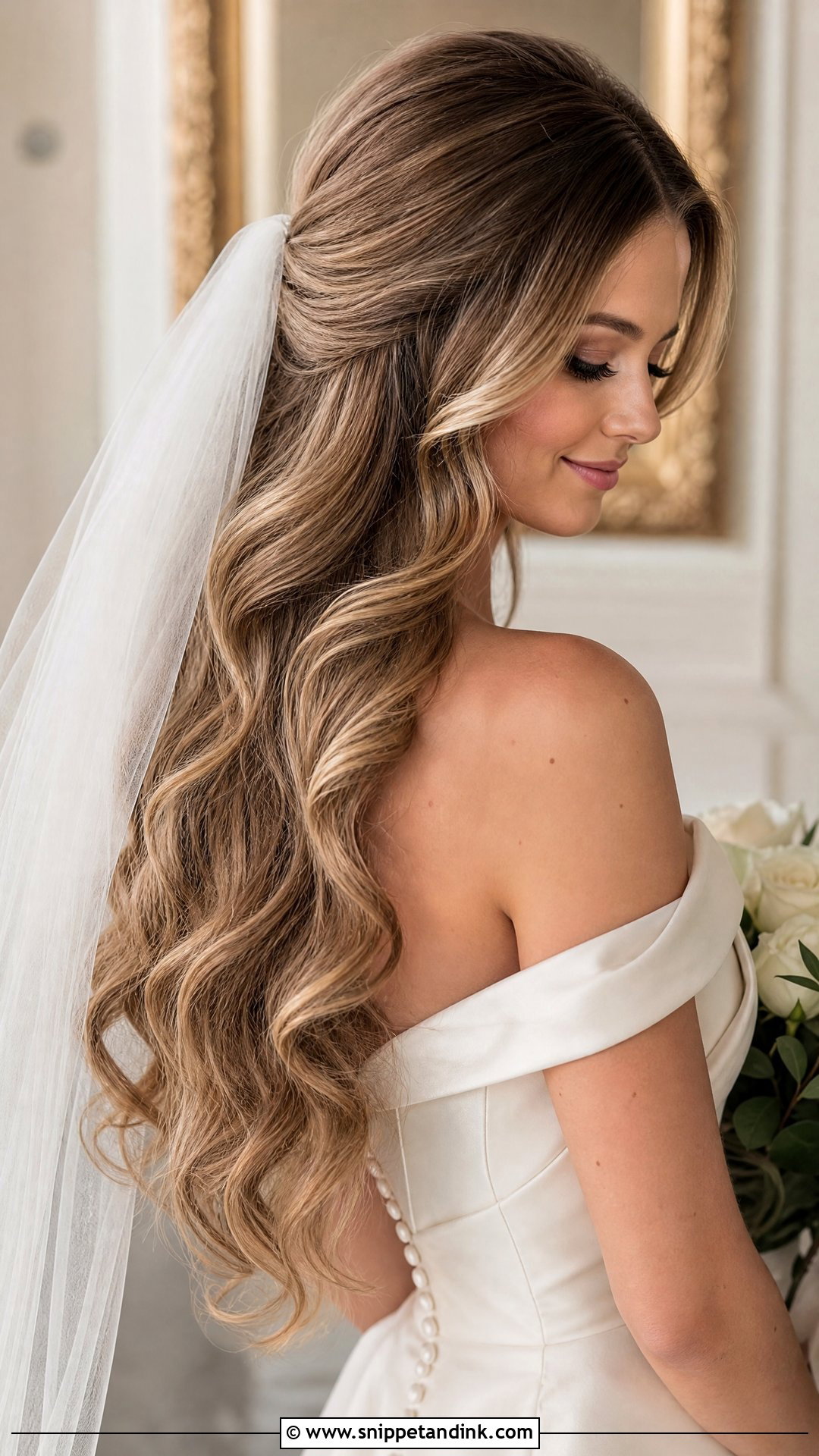
A veil changes how waves behave. Tucked at the crown, it adds height; set lower, it softens. Very bulky waves at the back push the veil outward so it doesn’t hang straight, so I keep fullness through the mid-lengths and ends, not right under the comb. A hidden anchor of crossed pins, or a small half-up section, holds the comb steady. Loose waves alone give it nothing to grip.
6. Big Waves Wedding Hair With Tiara
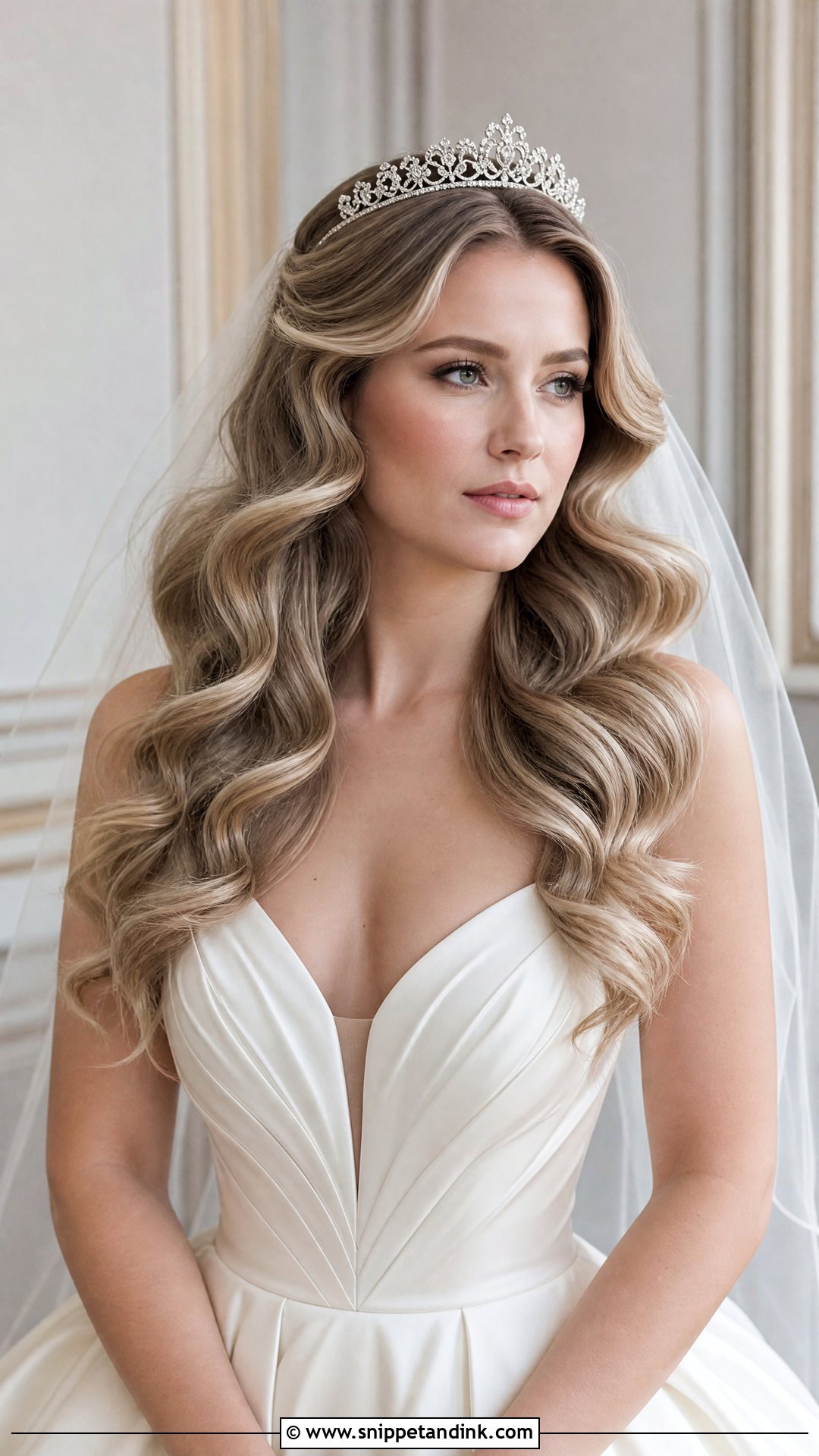
Tiaras need a smooth, firm base. I keep the front sleek and start the waves below the tiara line, so the band sits cleanly and the hair flows down in soft curves beneath it. Flyaways around a tiara catch the light and look untidy in close-ups. Combs on each end of the tiara get pinned through a small backcombed section on either side; without that, the weight slides forward.
7. Big Waves Wedding Hair With Pearl Pins
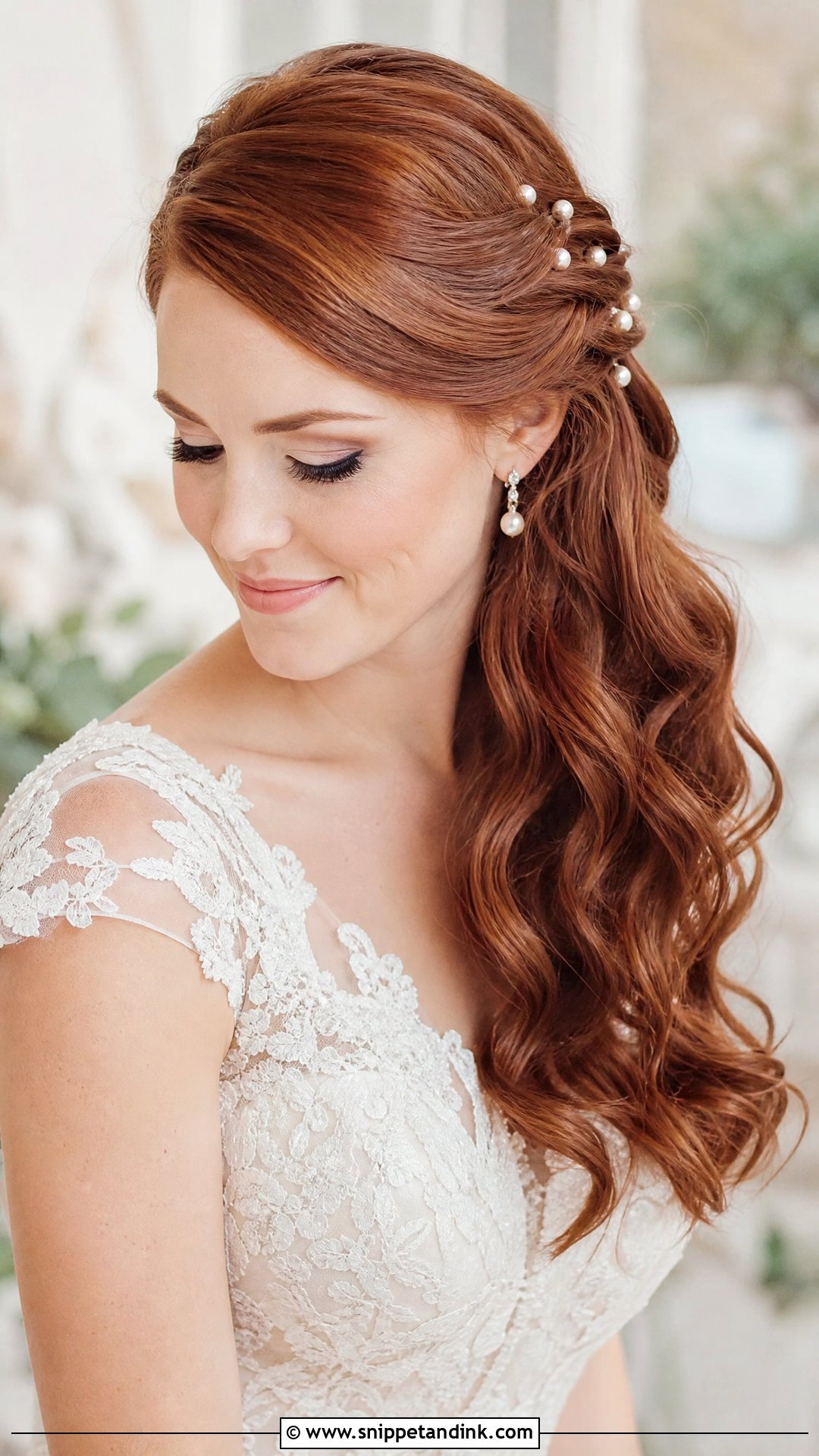
Pearls want space around them. Scatter them through one side, line them above a tucked section, or cluster a few near the back, but use fewer than you think. Five well-placed pins look intentional; twenty look like a constellation. The waves should stay touchable rather than heavily sprayed, or the pins sit on a crusty surface. Lace dresses and pearl earrings complete the idea without much else.
8. Big Waves Wedding Hair With Flower Crown
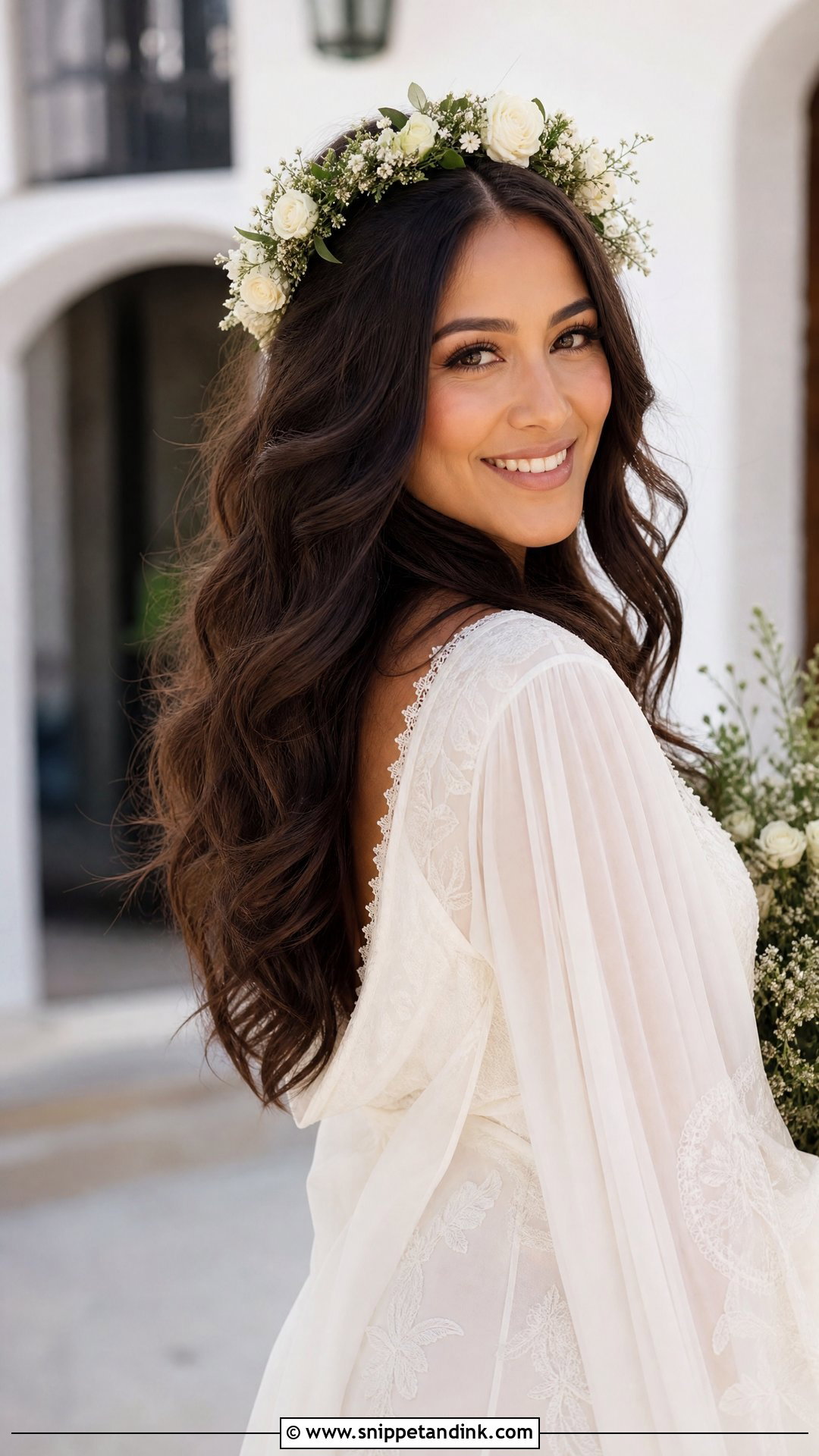
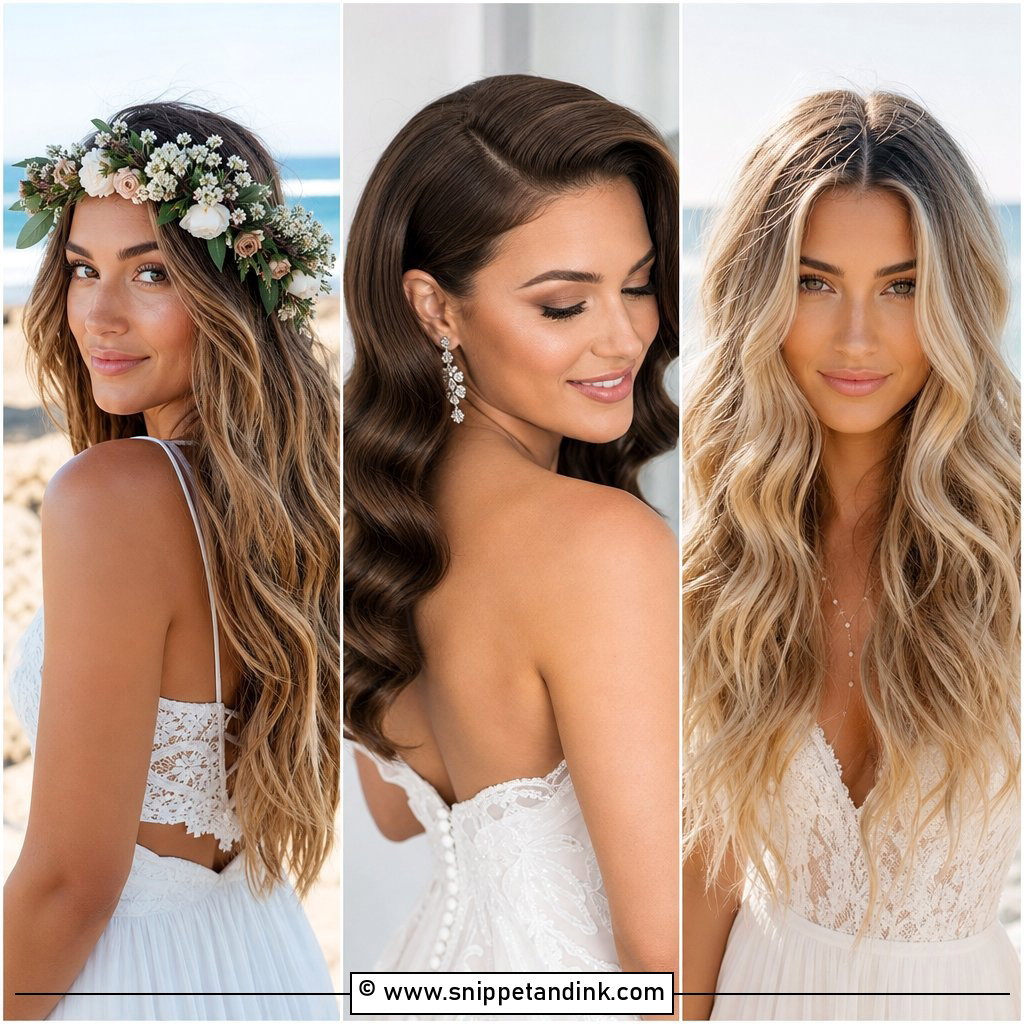
Garden and beach weddings suit a flower crown, and big waves give it movement underneath. Match the flowers to your bouquet, but keep the crown smaller than the bouquet’s scale suggests; smaller blooms and greenery look more refined in hair. I spray texture where the crown will sit so it grips instead of sliding. Fresh crowns wilt, so ask your florist to deliver them shortly before you dress.
9. Big Waves Wedding Hair For Long Hair
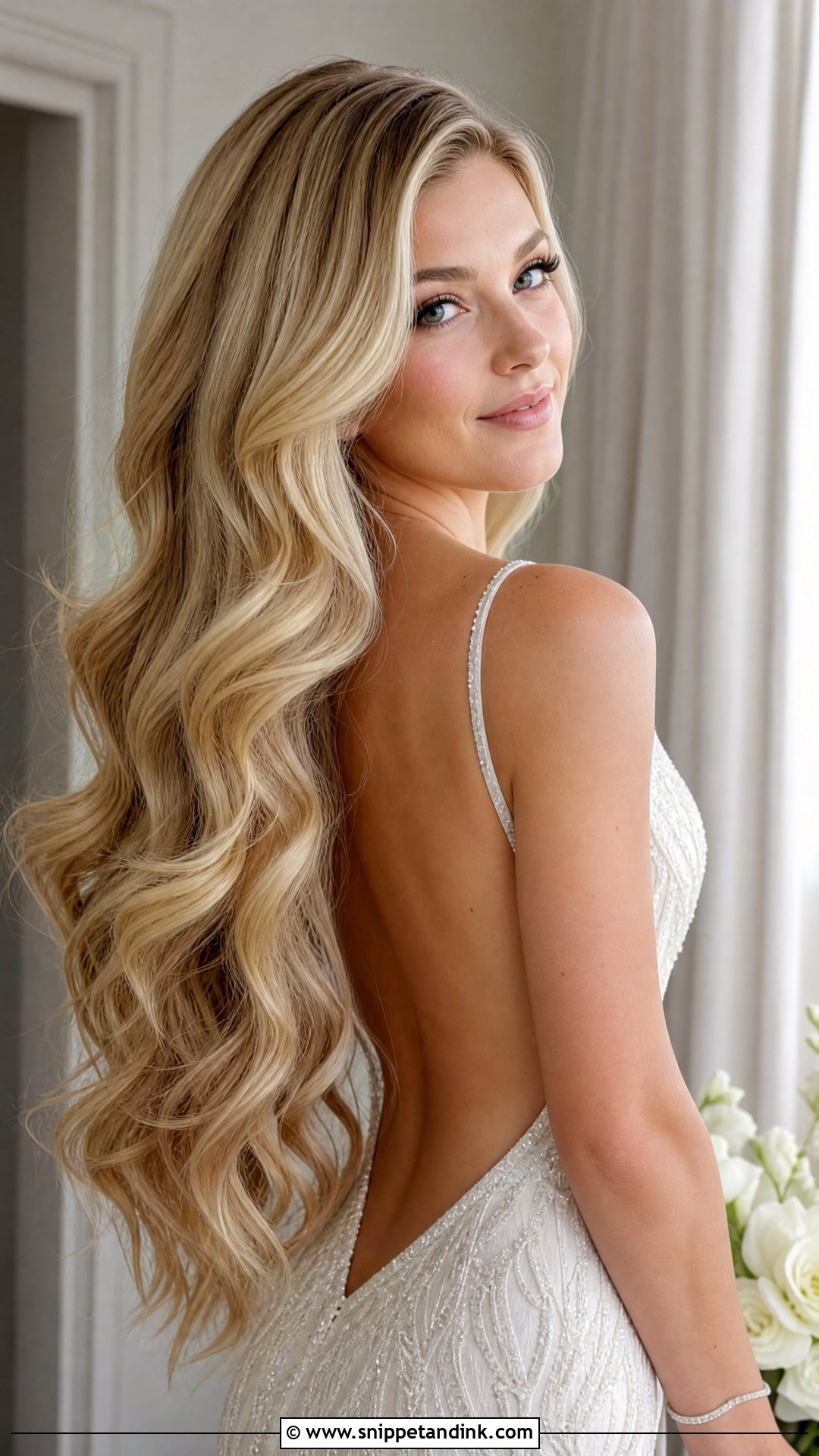
Long hair gives waves room to fall, and also adds weight that pulls them straight by evening. Layers relieve that weight. On one-length hair, I vary curl direction slightly through the back for dimension. Freshly washed hair is often too slippery to hold a set, so I prefer hair washed the night before, with texture spray added before curling. Backless gowns and long veils both pair well with the length.
10. Big Waves Wedding Hair For Medium Hair
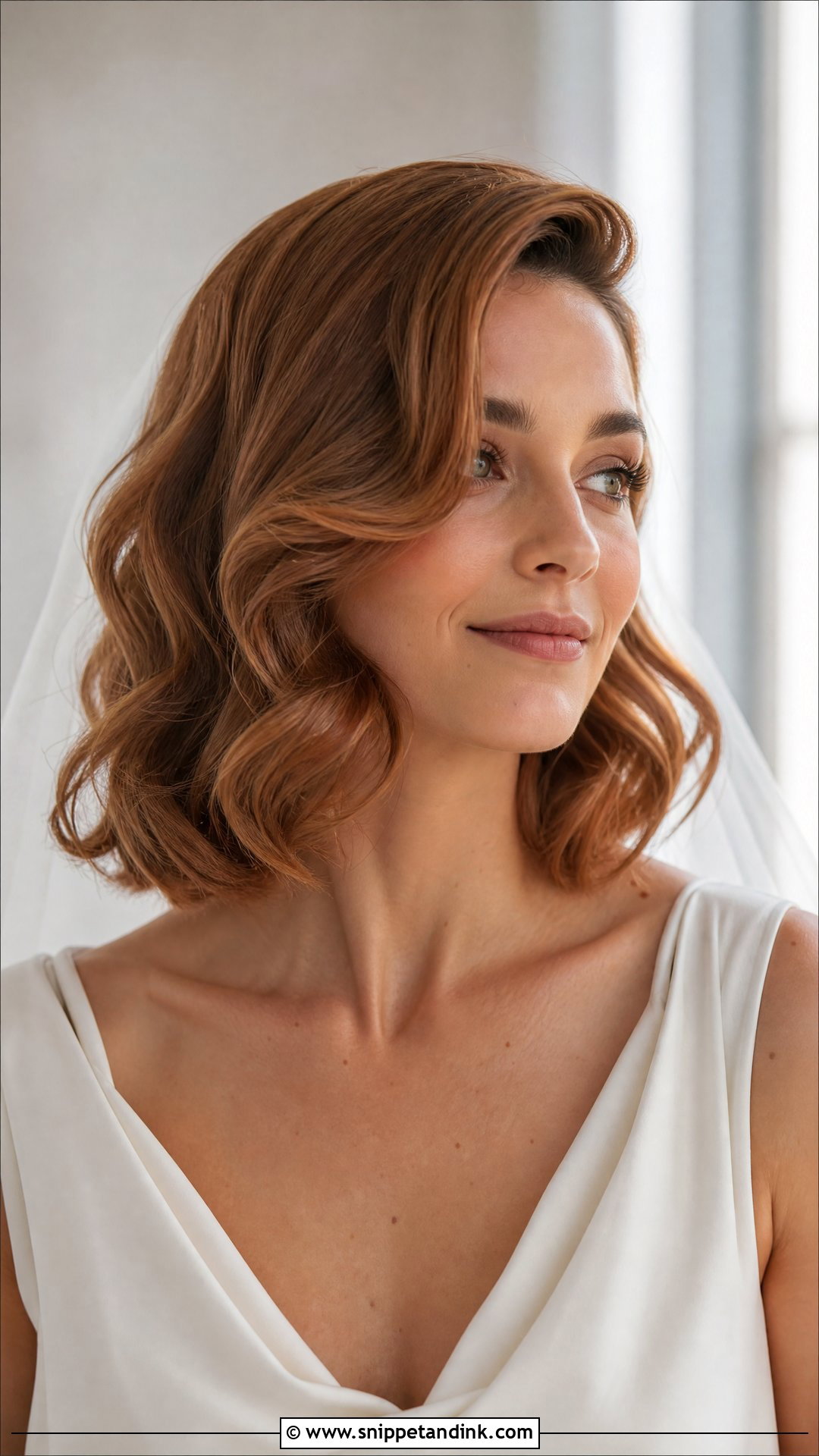
Collarbone-length hair and lobs can look just as full as longer styles. The aim is volume at the sides and a bend through the ends, so the hair bounces rather than looking clipped. On shorter lengths, I curl with a slightly smaller iron and leave the last inch straight, which stops the waves from flipping outward. A side part adds drama; center is cleaner. Extensions are optional here.
11. Big Waves Wedding Hair For Thin Hair
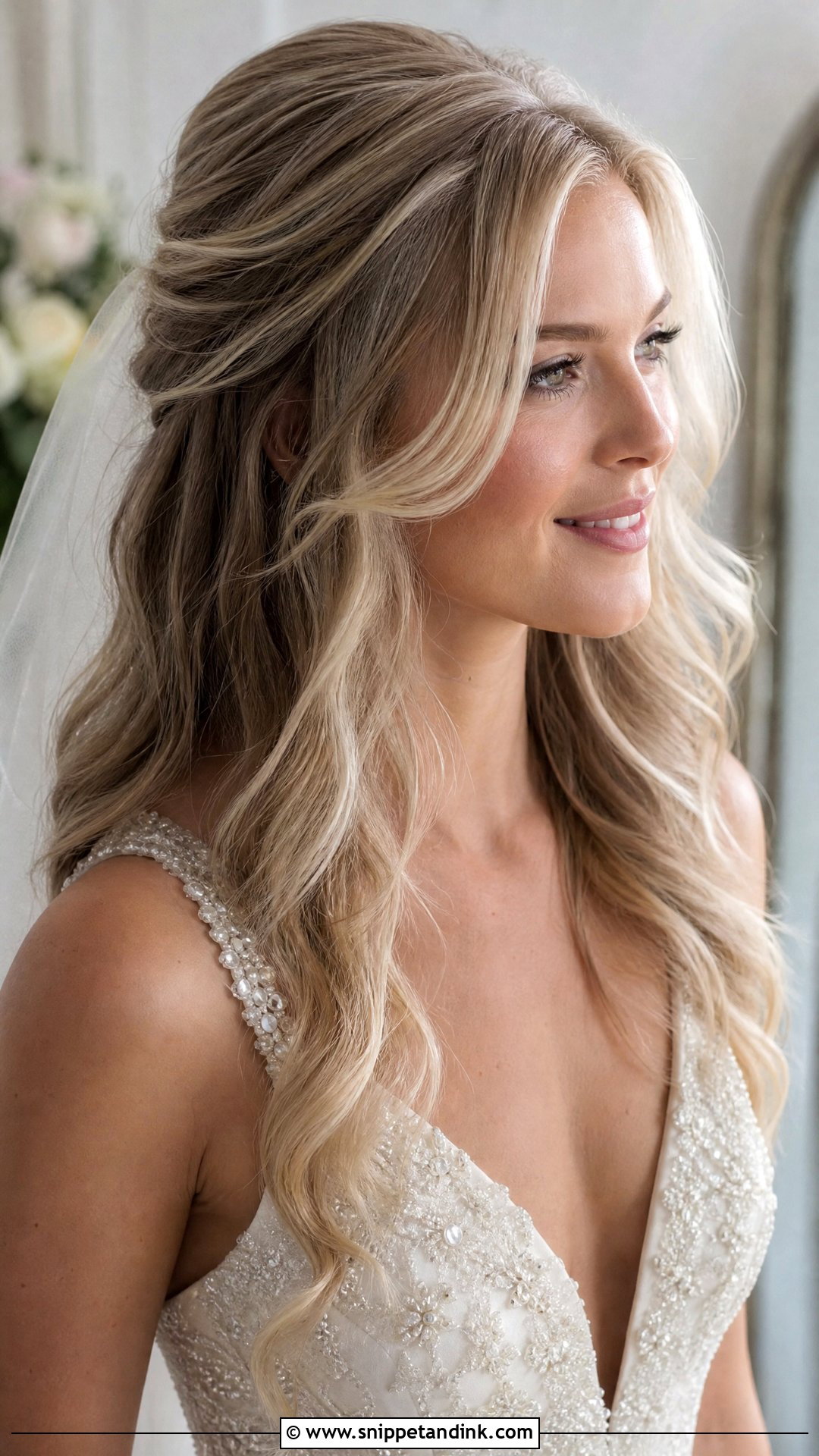
Fine hair can look thicker with big waves, provided nothing weighs it down. I use lightweight mousse and root lift, never heavy creams or oils, and I set, cool and brush very gently. Over-brushing is the main way fine waves get lost. Hidden teasing at the crown, a soft side part and a few face-framing pieces add fullness, and extensions through the ends help if you want more density.
12. Big Waves Wedding Hair For Thick Hair
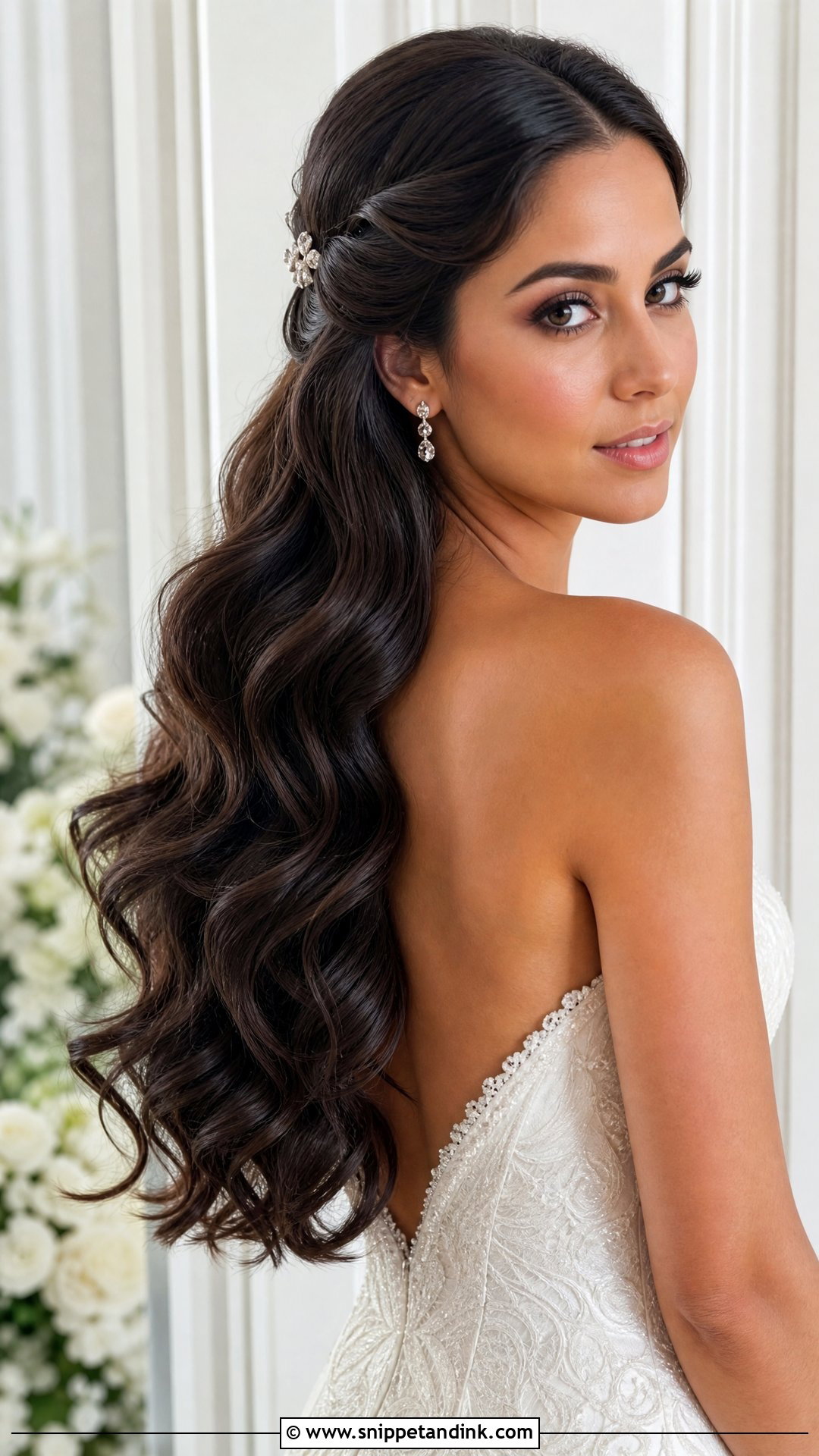
Thick hair holds waves well but expands as the day goes on. Control is the job: I work in small sections, use stronger setting products underneath and lighter shine on top, and recommend long layers to take weight off the ends. The wave pattern shows every tone of glossy brunette, copper, blonde or dimensional highlights. Pinning one side back keeps the mass off your face during dinner.
13. Big Waves Wedding Hair With Braids
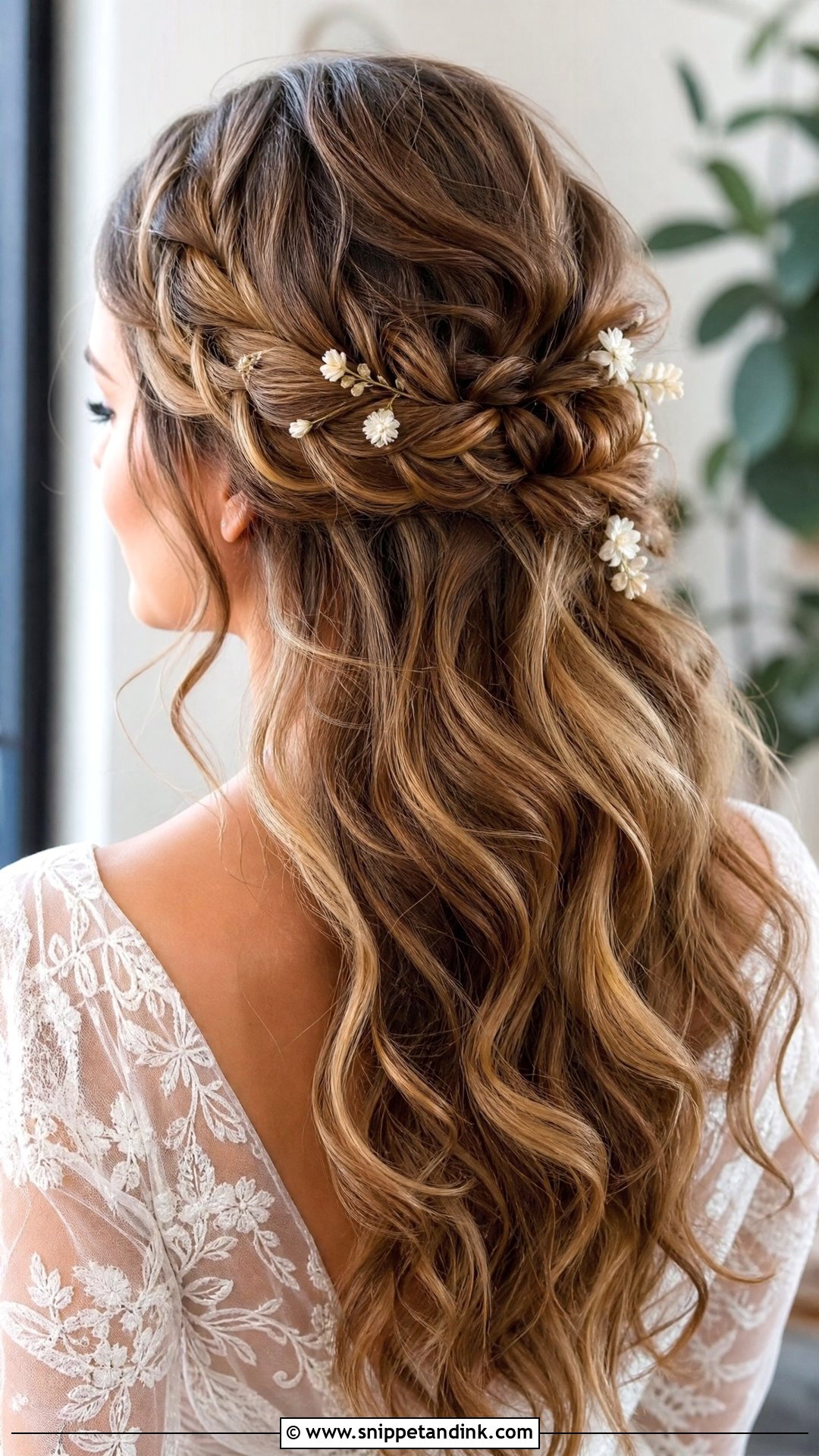
Braids should support the waves here, not compete. A loose crown braid, a small side braid or a braided half-up section adds detail while the waves stay the focus. I braid before curling the rest, then loosen the braid so its texture matches the waves around it. Tight braids beside soft waves look like two different hairstyles. Boho and rustic weddings suit it well.
14. Big Waves Wedding Hair With Hair Comb
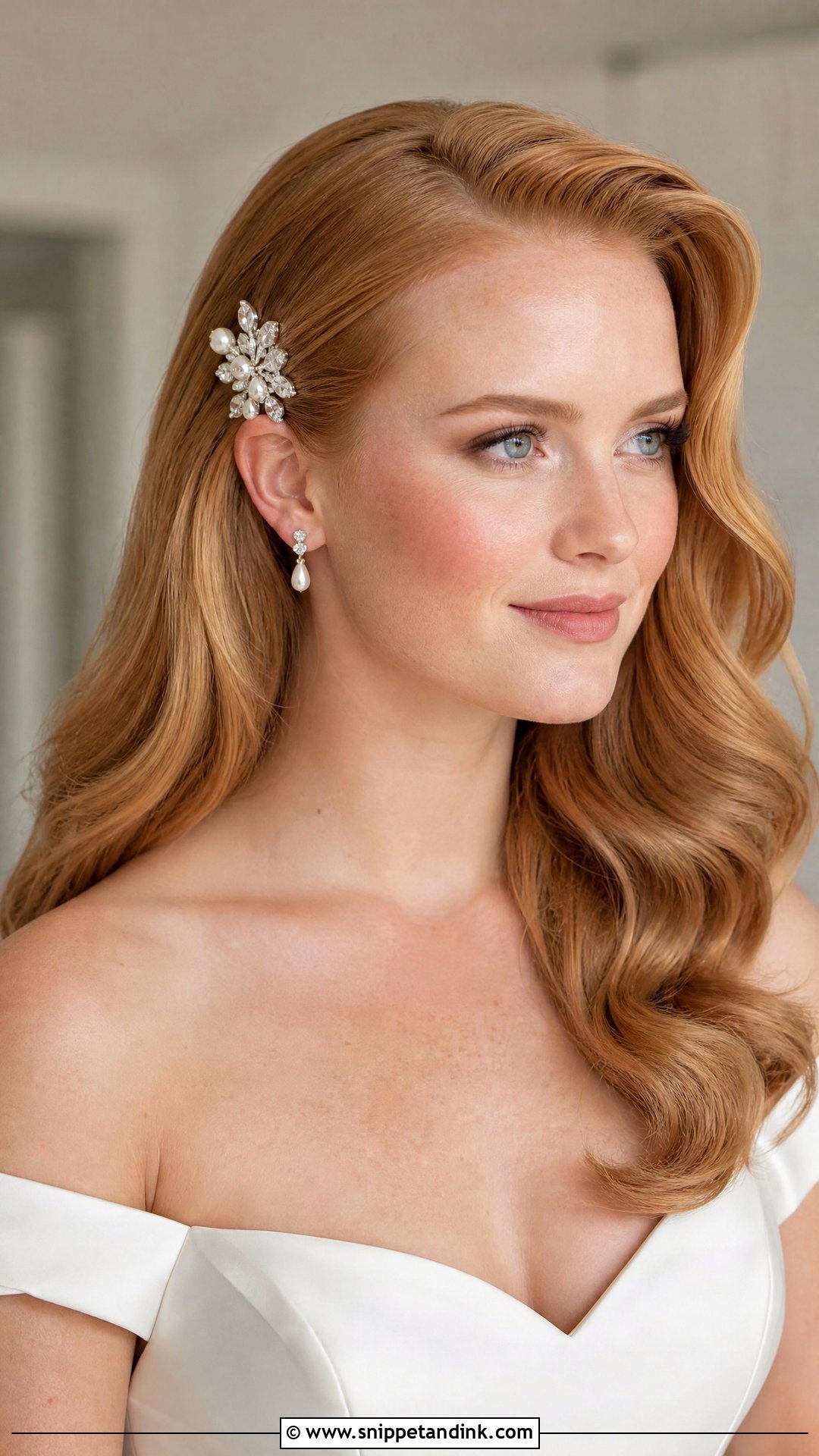
A comb gives hair mostly down a focal point. It can secure one side, sit above a low veil or decorate a half-up back. Crystal reads formal, pearl classic, floral softer. I brush the waves into their final pattern first, then place the comb, then anchor it with two pins crossed through its teeth. A comb pushed into loose waves alone will slide out by the reception.
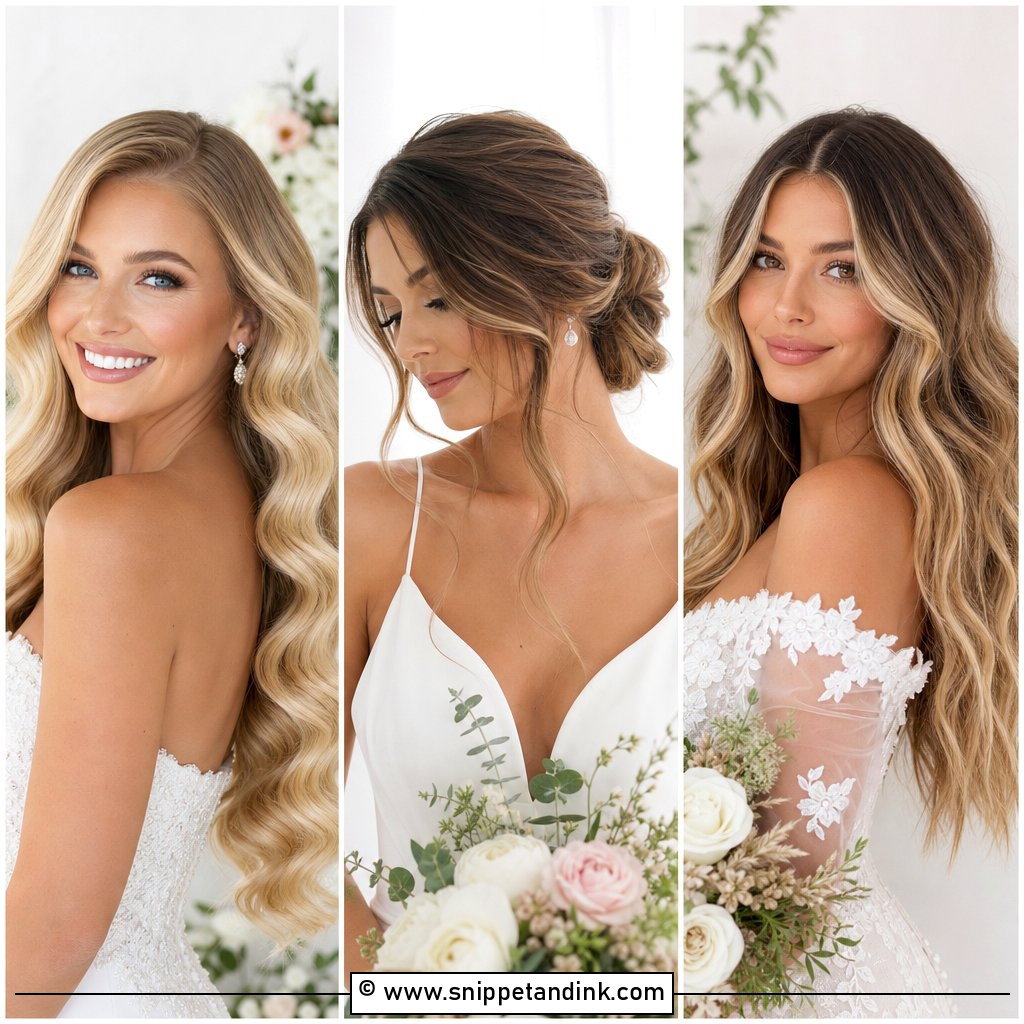
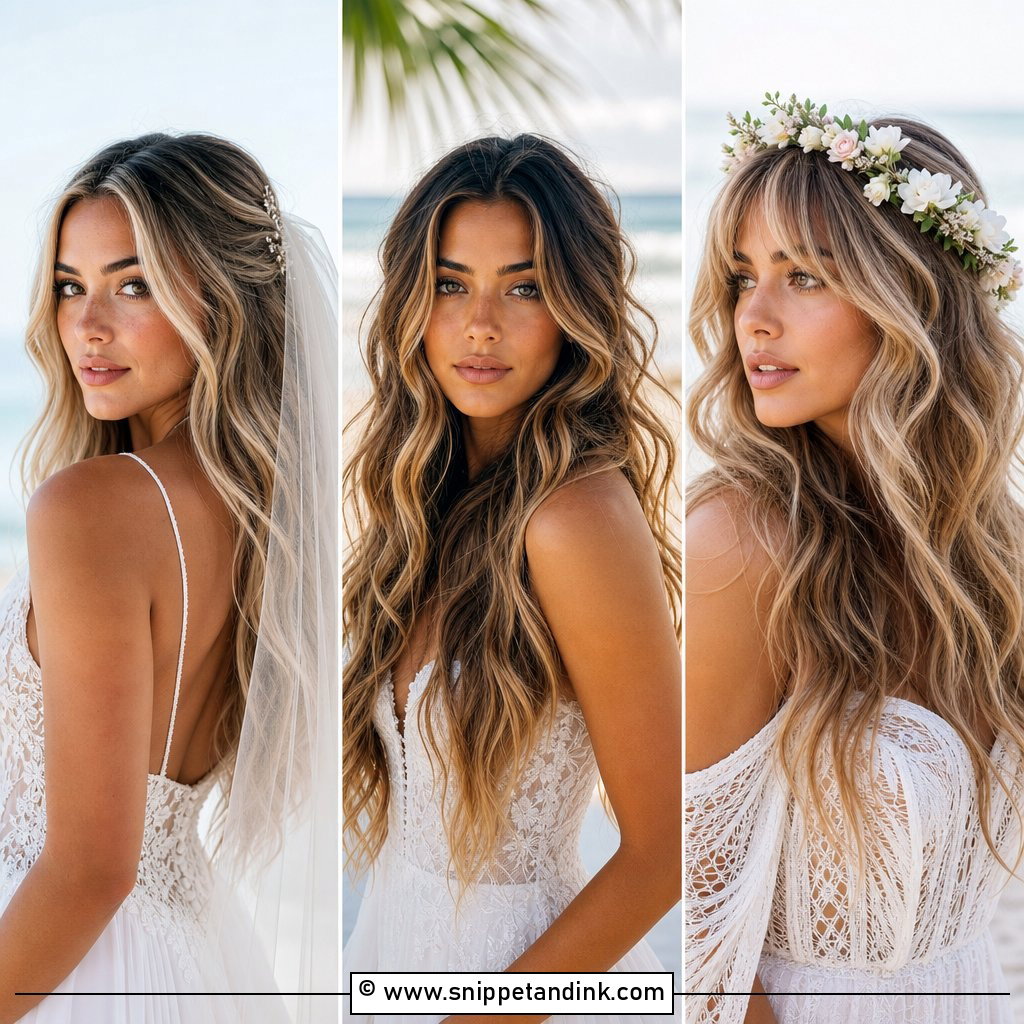
15. Big Waves Wedding Hair For Beach Wedding
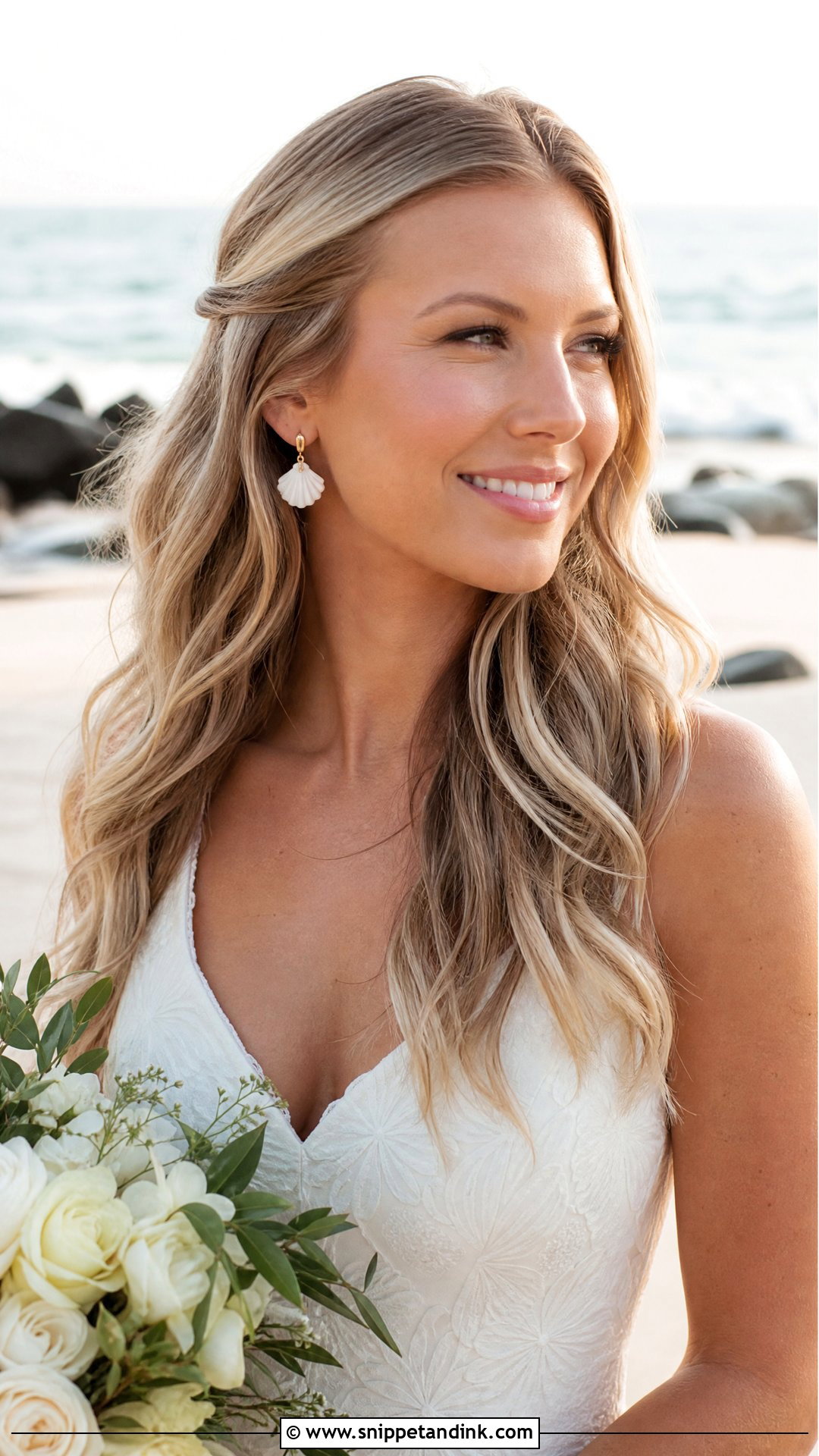
Salt air, wind and humidity all loosen curls, so beach waves start bigger and relaxed rather than tight. Tight curls frizz as they drop; big waves just soften. I finish with anti-humidity spray but keep the hair moving. A side tuck, half-up pin or small comb keeps strands out of your face for the vows, which matters more on a beach than anywhere else.
Twelve Hours With Your Hair Down
Loose waves feel wonderful at nine in the morning. The small annoyances show up later, and they’re worth planning around before you commit to wearing everything down.
- Lip gloss and lashes. A breeze blows strands into gloss. Pin the front pieces slightly back for an outdoor ceremony, or wear a less sticky lip.
- Jewelry and lace. Waves catch on drop earrings, necklace clasps and beaded shoulders. Check this at your fitting, not on the morning.
- The back of the dress. An open back or a row of buttons disappears under long waves. Ask your photographer for a few shots with the hair swept over one shoulder.
- Heat. Hair on the neck gets hot fast on a summer dance floor. A clip in a bridesmaid’s bag lets you pull it up without fuss.
None of this makes waves impractical. A couple of small fallback options just make the evening far more comfortable.
Glossy and Set, or Soft and Lived-In?
Most decisions here come back to that one question. Glossy, uniform waves suit formal venues, satin and evening light. Looser ones suit gardens, beaches and dresses that move. Bring photos to your trial, but listen when your stylist says what your hair will realistically hold in your venue’s weather. If you’re short on length or density, a few extensions fill the gap. Then pick the version you’d still be happy to see in your album years from now.
You'll Like These Ideas:


Leave a Reply