
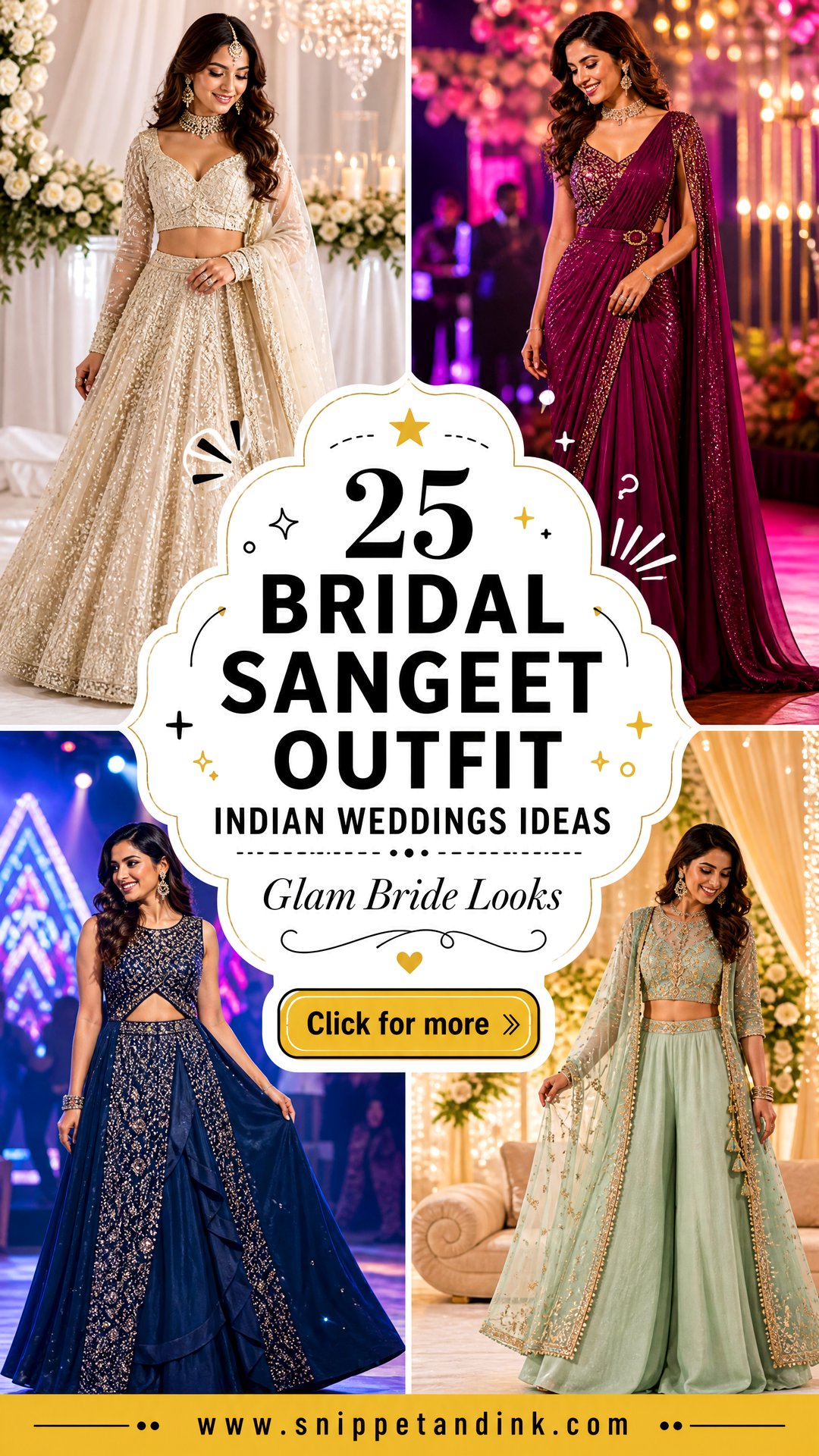
The sangeet is the one wedding event where I dress a bride to move first and pose second. She’ll be dancing a rehearsed routine, sitting on low cushions for performances, getting pulled onto the floor by aunties and standing under hot stage lights for hours. So the outfit can be lighter and more playful than the ceremony look, as long as it still reads as the bride’s. Lighter lehengas, crystal work, cape dupattas, shararas, saree gowns and corset blouses all have a place. What decides it is the routine, the venue and what your family expects. Below are 25 sangeet looks, and what I look for in each before I let a bride dance in it.
Rehearse the Choreography in the Outfit, Not in Leggings
Most sangeet wardrobe trouble shows up mid-routine, in front of everyone. I ask brides to wear the full outfit, or at least the skirt, blouse and shoes, for one full run of the dance at least a week before the event. Here’s what I watch for.
- Skirt weight. A lehenga that feels fine standing can drag after three spins. If it’s heavy, a lighter can-can or fewer layers underneath can help, and a good tailor can reinforce the waistband so it doesn’t slip.
- Hem length. Your heel catches the hem on fast steps if it’s too long. I’d rather it be a little short at the front than trip you.
- The dupatta. Decide whether it stays on for the dance. If it does, pin it at more than one point; if not, have someone take it before you go on stage.
- Shoes. Many brides switch to embellished juttis or low block heels for the performance. Practise in them, because flats change your stride and the hem length.
Ask your choreographer to see the outfit too. Some moves, like deep lunges or arm lifts, simply don’t work in a fitted blouse or a fish cut skirt, and it’s far easier to adjust a step than to re-tailor a lehenga days before.
1. Gold Sequin Sangeet Lehenga
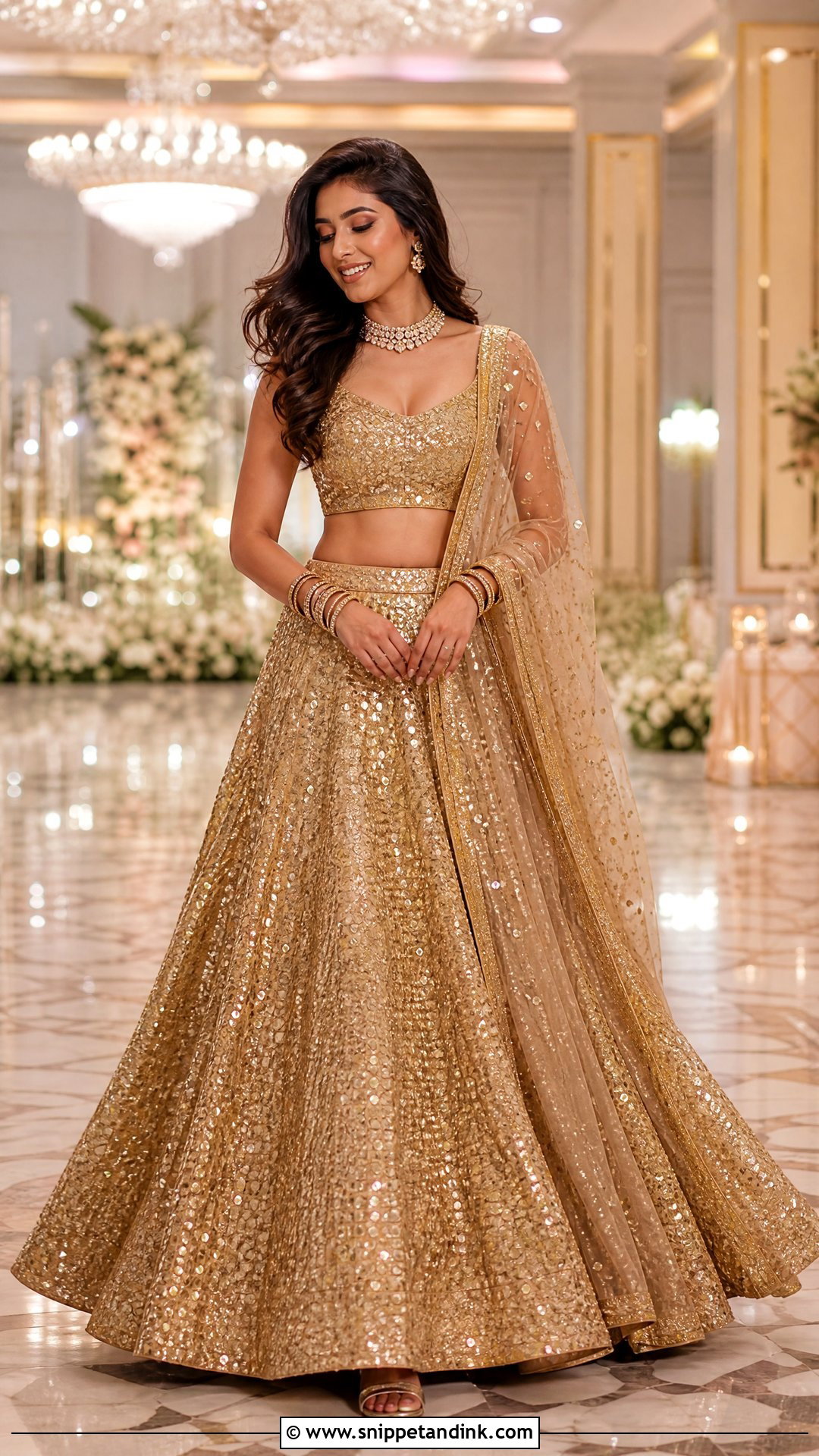
Gold sequins are made for stage lights, but only if the skirt can move. I ask for a lightweight flared skirt rather than a stiff, heavily layered one, so the sequins ripple when you turn instead of sitting like armor. A fitted blouse and a net or organza dupatta over one shoulder keep the top half light. Sequinned fabric can scratch inner arms during a long night, so I check the blouse lining under the armholes. A diamond choker, studs and slim bangles are enough jewelry, with gold heels or embellished juttis. Ballrooms and hotel stages suit it best.
2. Pink Mirror Work Sangeet Lehenga
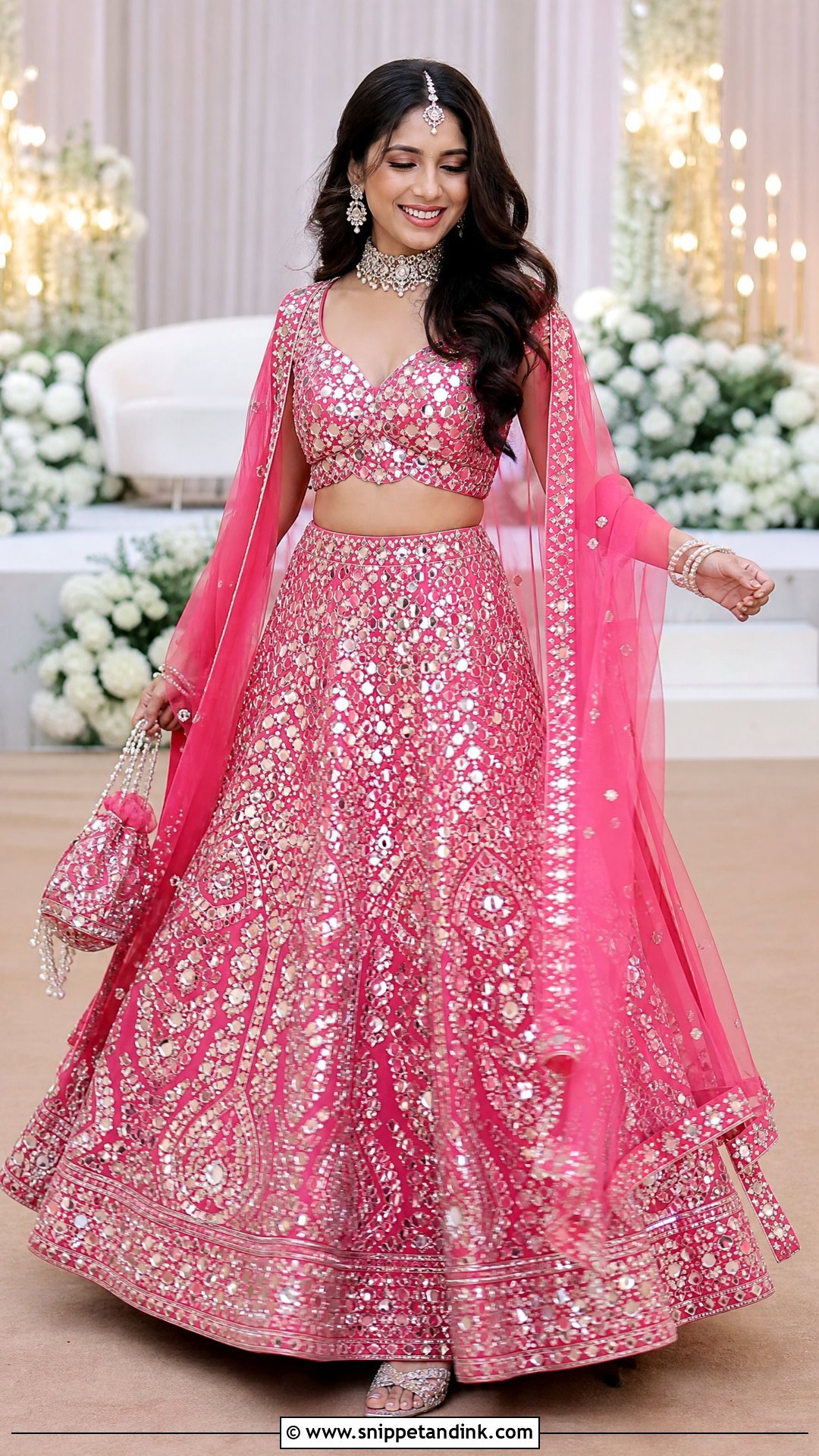
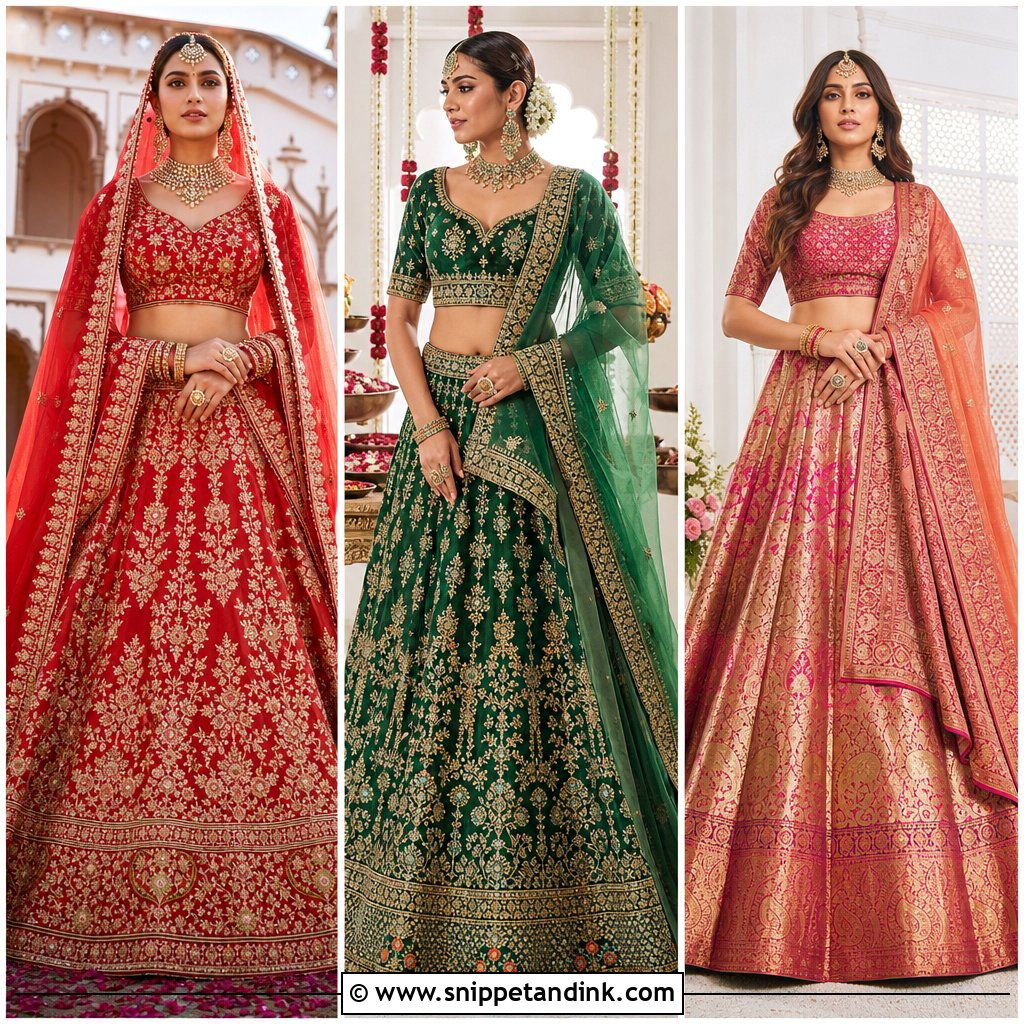
Rani, rose and fuchsia pink lift the face in photos, which is why I put so many sangeet brides in them. Mirror work adds flash without the weight of zardozi. Pair the lehenga with a matching blouse, a sheer dupatta and silver-toned jewelry; a potli with mirror accents ties it together. Real mirror work is heavier than it looks and the small glass pieces can catch on net dupattas, so I usually choose a georgette drape with it. A soft lining and a blouse cut for arm movement make it ideal if your choreography involves spins and lifts.
3. Emerald Green Sangeet Lehenga
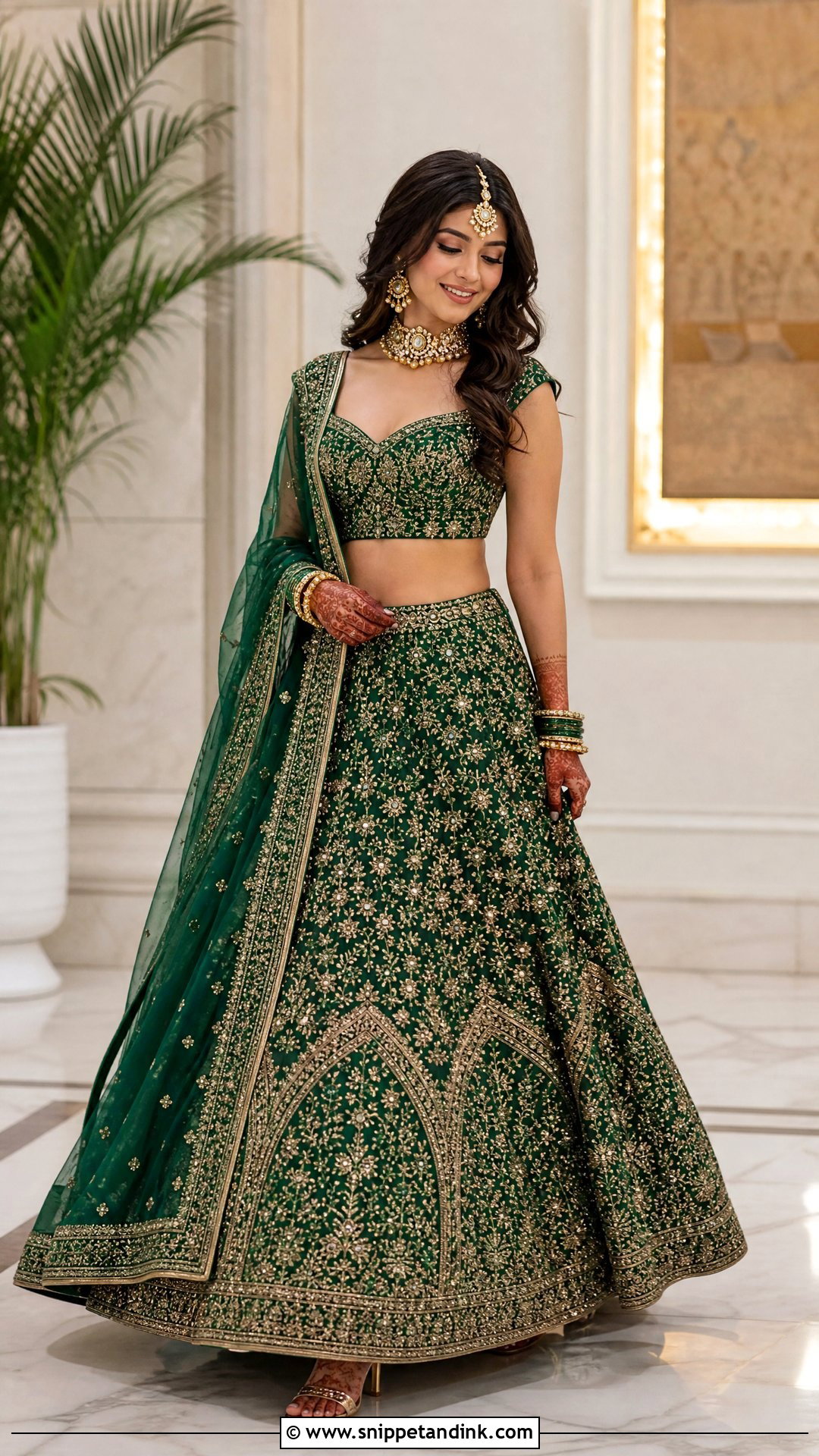
Emerald gives a rich bridal feeling without repeating the red you may wear for the pheras. Antique gold embroidery or crystal work suits it, and a structured blouse with a flowing dupatta gives a strong outline. A polki choker, maang tikka and gold bangles keep it traditional; a deep V or corset-style blouse makes it more modern, provided it’s securely fitted. Deep green can look almost black in dim halls, so I check the venue lighting. Gold heels, soft waves and dewy makeup finish it, and it sits especially well at winter sangeets indoors.
4. Ivory Pearl Sangeet Lehenga
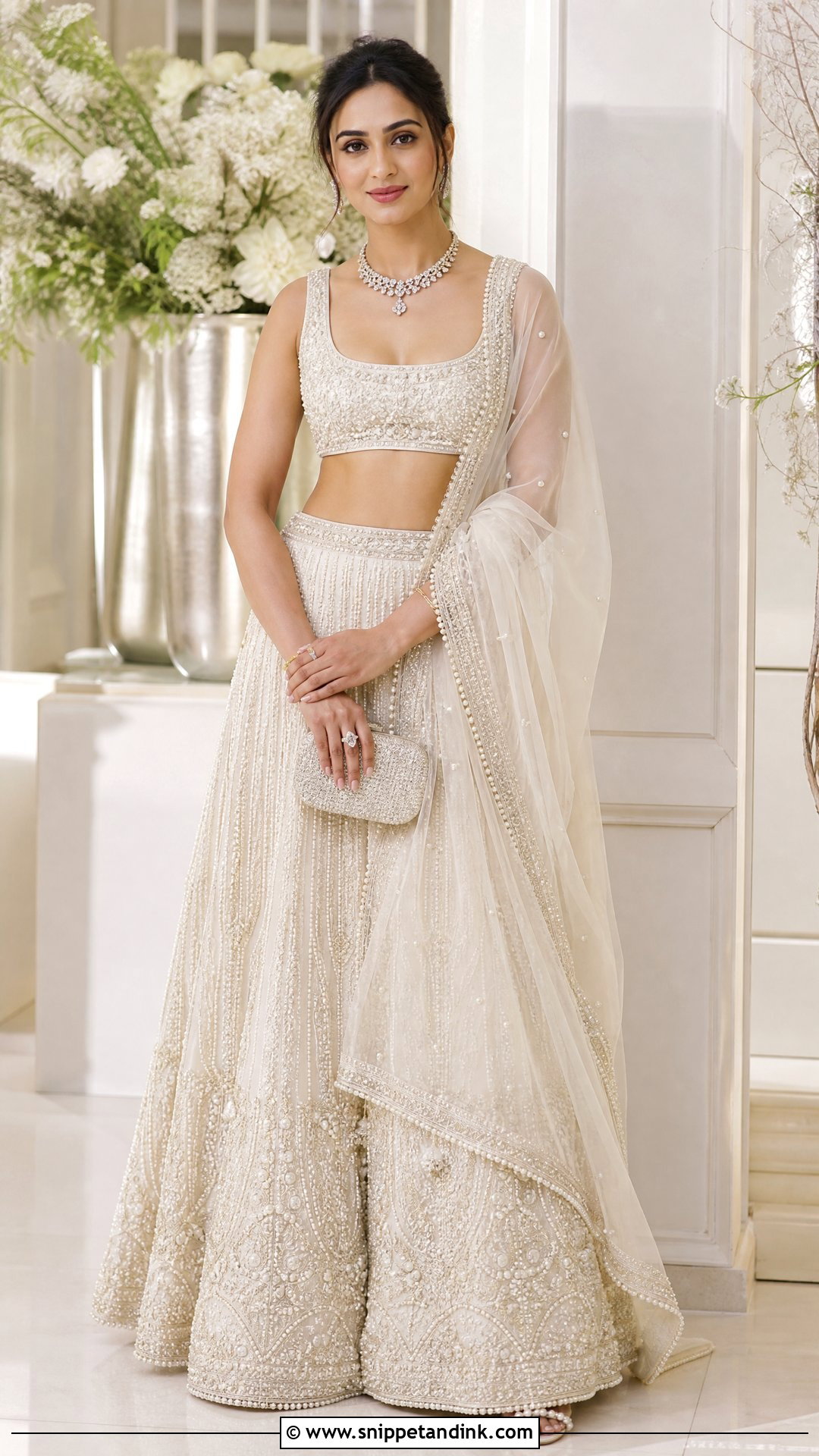
Ivory with pearl embroidery feels soft and expensive, but it can disappear on a big stage from the back of the room. I always add one strong bridal element to it: a dramatic necklace, bold earrings or a striking hairstyle. A pearl-detailed blouse, a light dupatta and diamond or kundan jewelry keep it cohesive with silver or pearl sandals. Pearls are heavy when used densely, so check how the skirt hangs with all the work on it. Indoor sangeets and destination weddings suit it, and some families prefer ivory kept away from the main events, so ask first.
5. Lavender Sangeet Lehenga
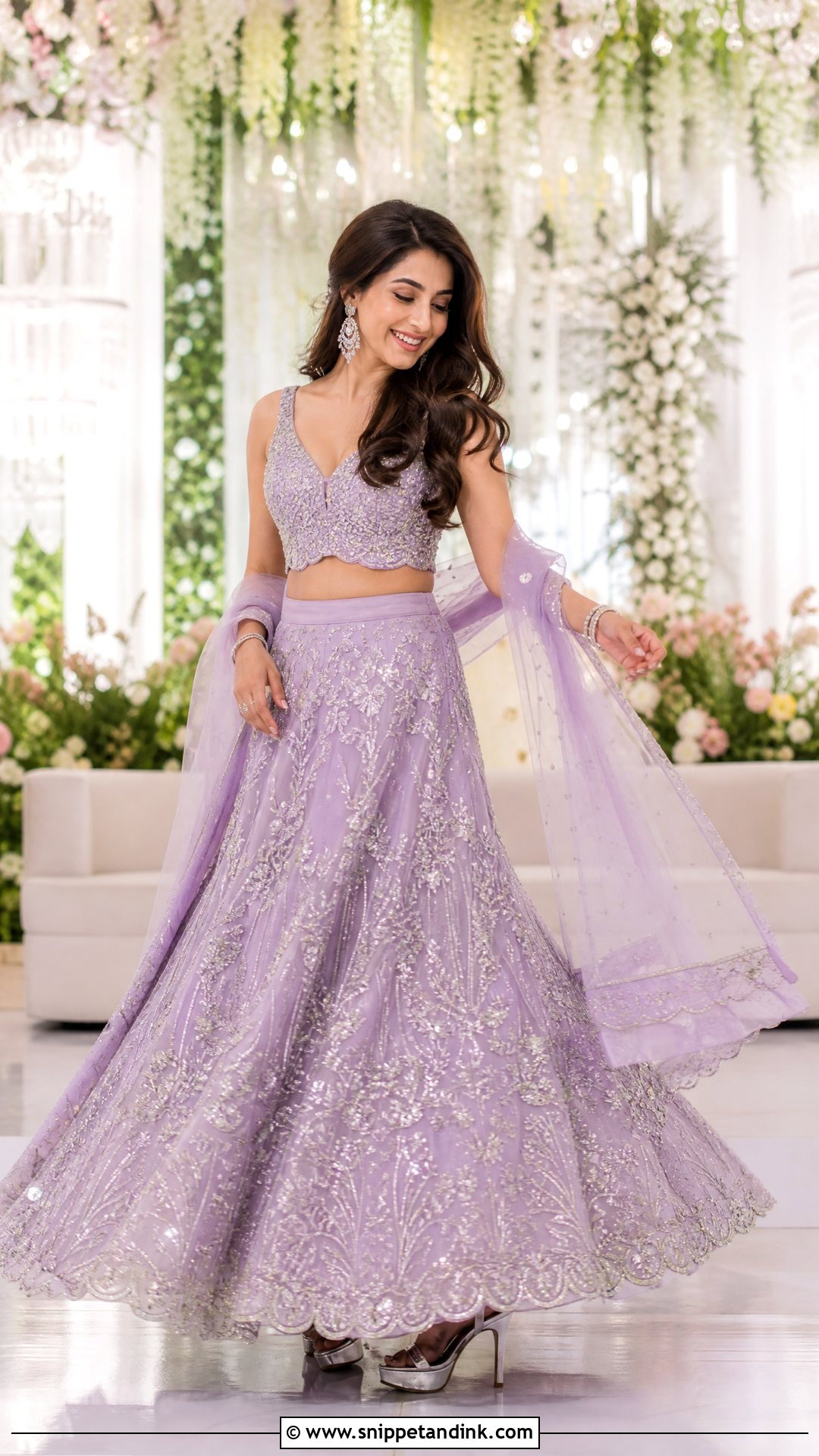
Lavender gives a romantic shade that stands apart from the usual bridal palette. Silver embroidery, crystals or subtle mirror work suit it, and it reads softly in photographs. A fitted blouse, a sheer dupatta and diamonds, pearls or white stones complete it. Pastels need a little more color in the face under stage lights, so soft pink lips and glowing skin help. Silver heels and a small clutch are enough. Spring weddings and garden sangeets are where lavender looks most at home; in a dark ballroom it can turn greyish.
6. Red Sangeet Lehenga
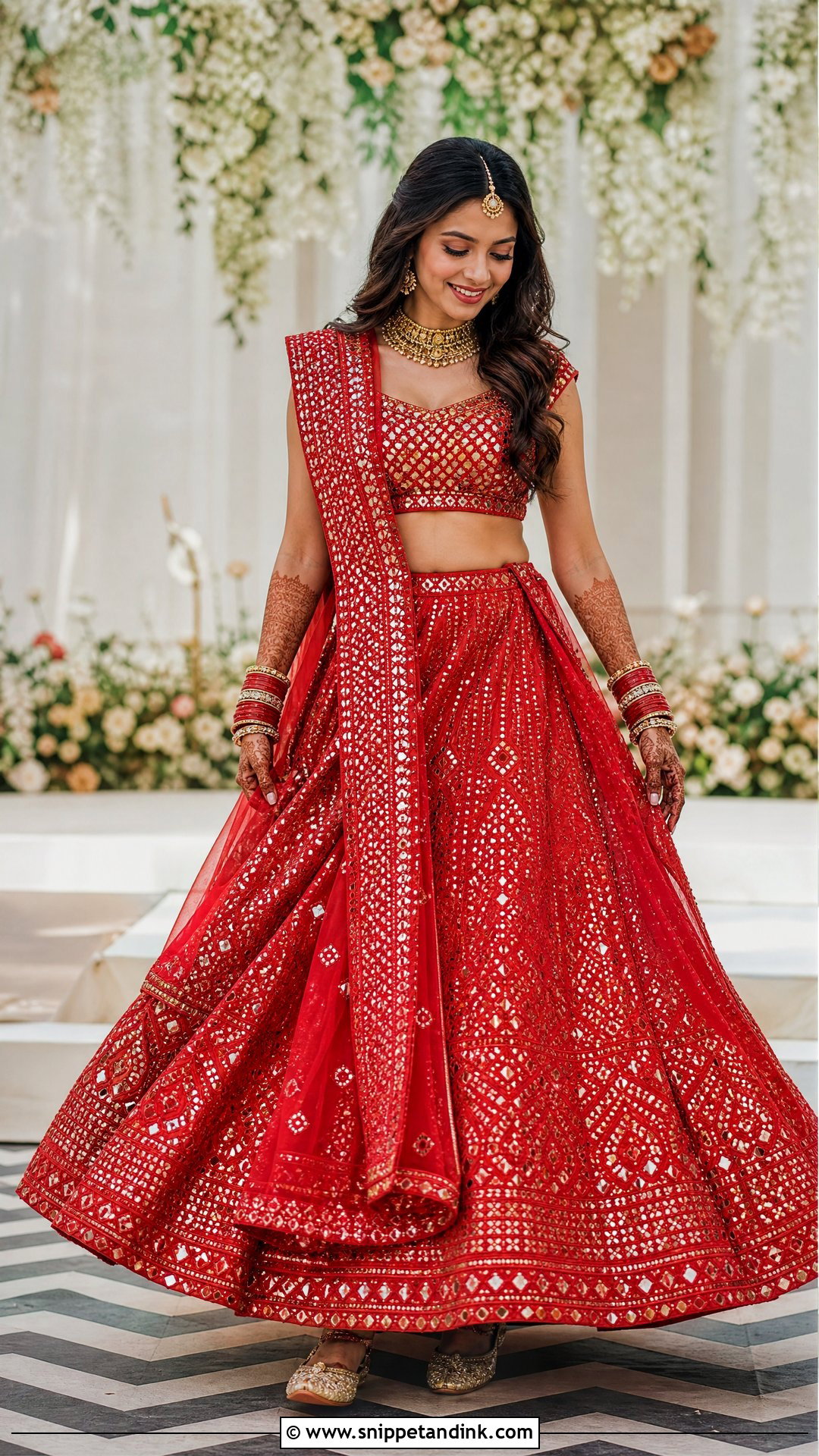
A red sangeet lehenga is the most traditional option here, and if you’re wearing red again for the ceremony, I’d make this one lighter. Sequins, mirror work or modern embroidery move better than heavy zardozi. A cropped blouse, flared skirt and draped dupatta give a festive outline you can dance in. Gold jewelry suits it; diamonds make it more contemporary. Pin the dupatta at the shoulder and the waist, not just one point, because a single pin pulls loose on the first twirl. It suits brides who love tradition but want energy for the music night.
7. Champagne Sangeet Lehenga
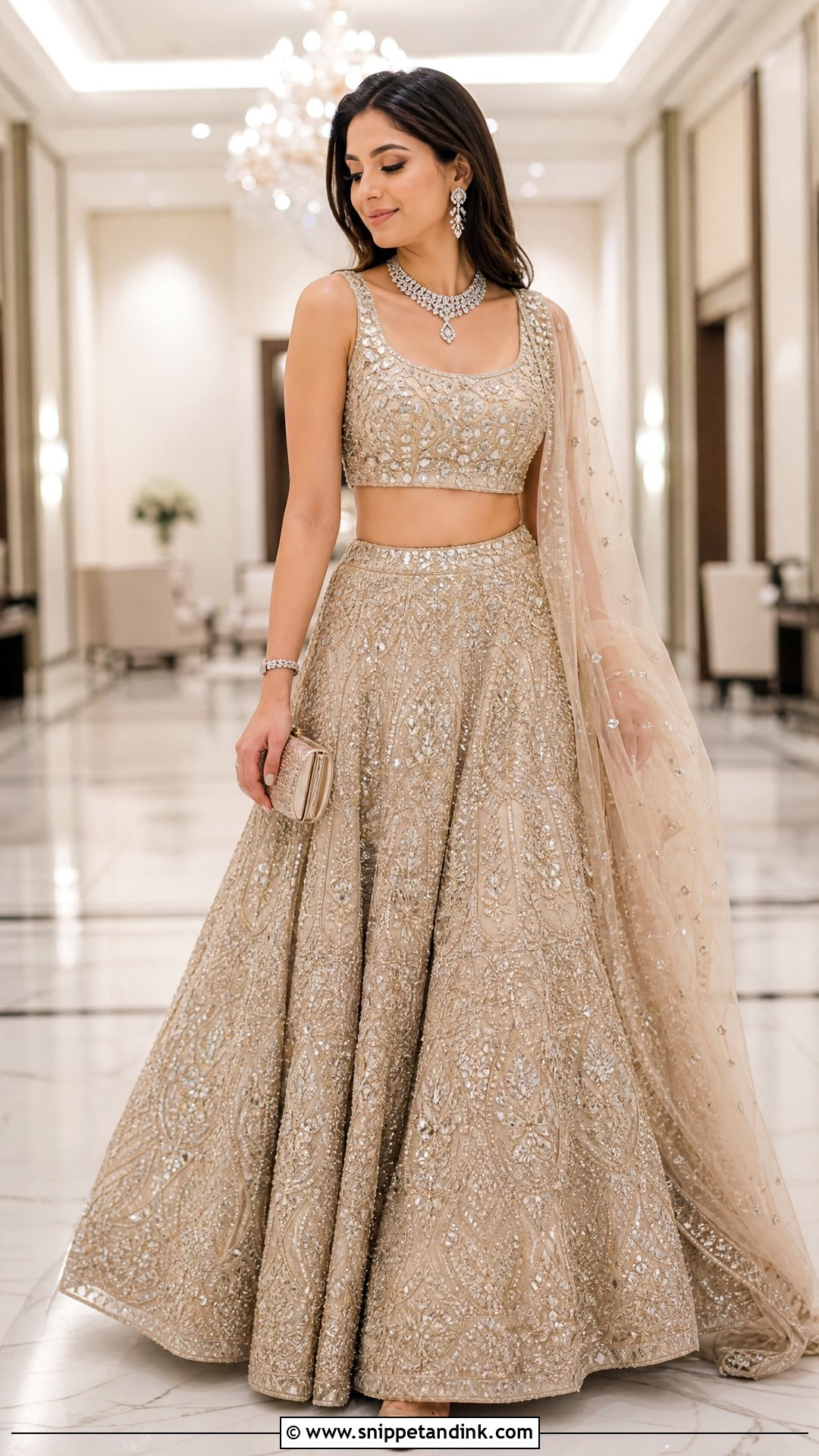
Champagne gives a soft metallic glow that looks costly without shouting. Sequins, beads, pearls or crystals reflect light in a refined way. A matching blouse and sheer champagne dupatta create one continuous look, with diamond jewelry, nude heels and a sleek clutch. My caution is skin: champagne close to medium and warm skin tones can flatten the face, so I always ask the makeup artist for defined eyes, warm blush and a stronger lip. Hotel sangeets and reception-style evenings suit it well.
8. Black Sangeet Lehenga
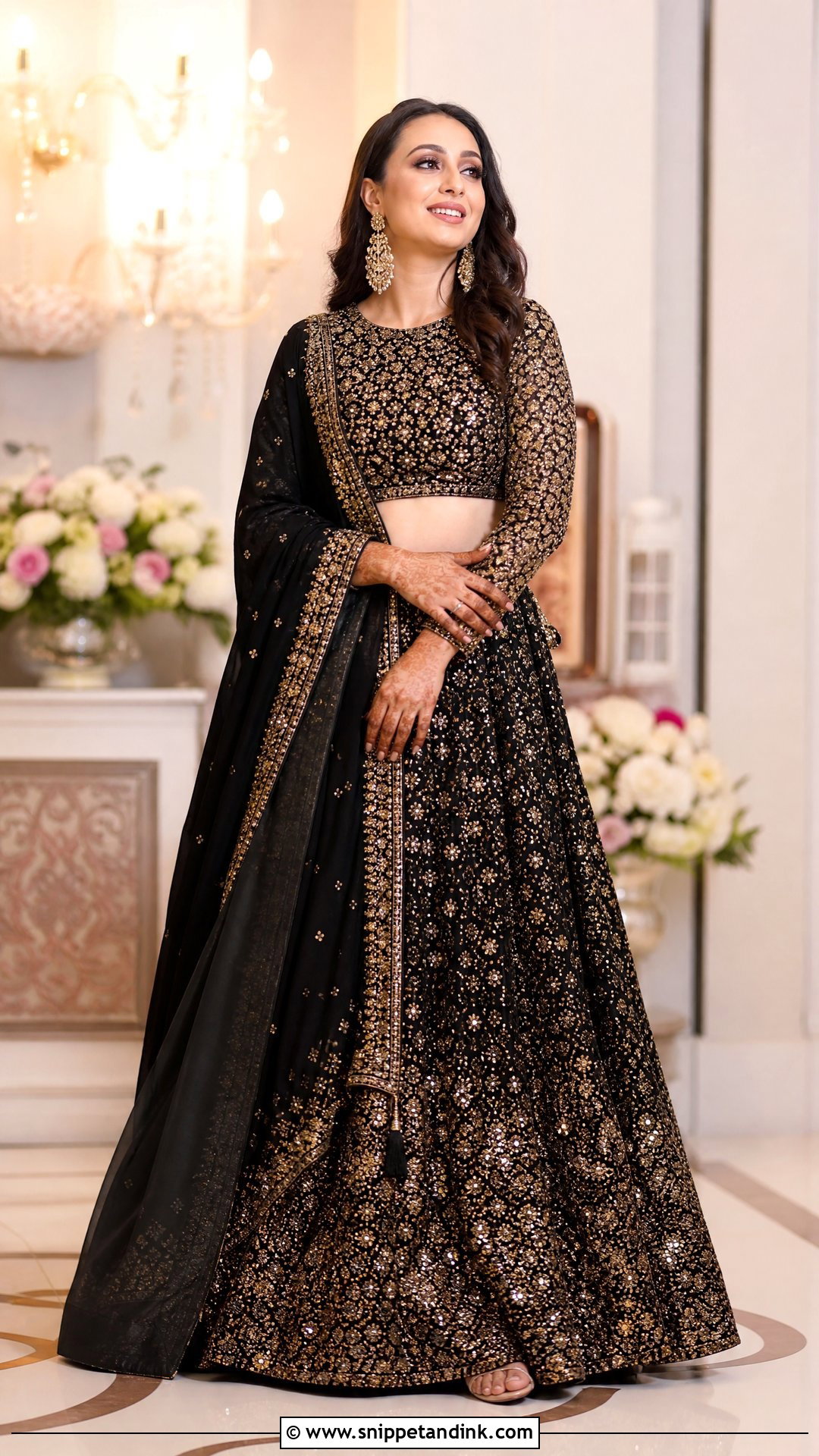
Black is high-fashion and dramatic, and it isn’t welcome at every family’s wedding events. Ask before you buy. If it fits your family, choose black with gold sequins, silver crystals or colored embroidery so it feels festive rather than somber. A statement blouse, a structured dupatta and bold jewelry carry it, with a sleek bun, smoky eyes and metallic heels. Black also hides the sweat marks that show on pastels after an hour of dancing, which is a practical bonus. Cocktail-style sangeets suit it best.
9. Saree Gown Sangeet Outfit
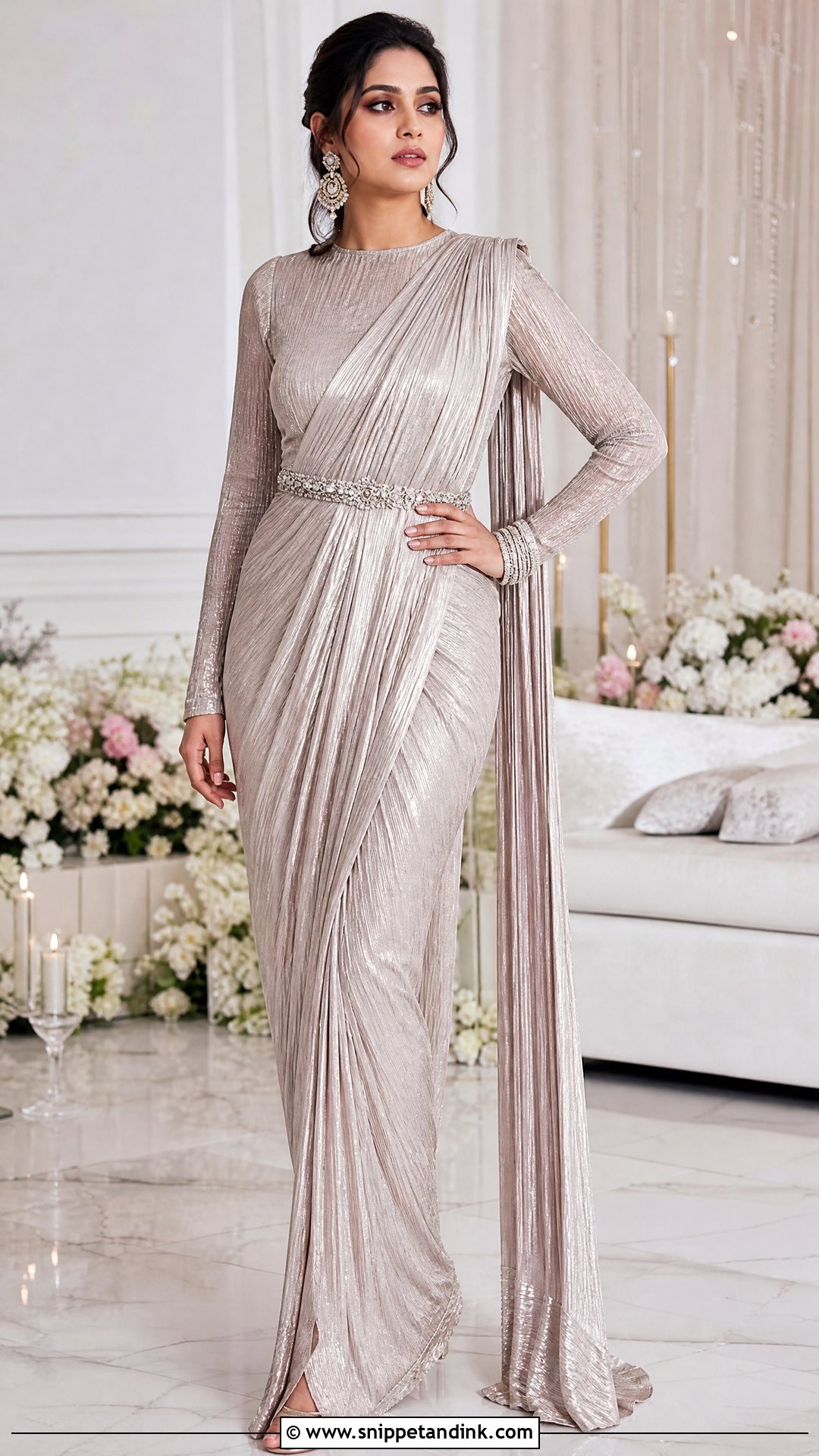
A saree gown gives you the saree’s line with none of the pleat management. The pallu is pre-draped and stitched in place, so it stays put during performances, greetings and photos. Metallic gold, emerald, champagne or deep blue suit a sangeet. Style it with a fitted blouse, statement earrings, a bracelet stack and heels. I like it for destination weddings because there’s no need to find someone to drape you. Check that the stitched pleats allow a full stride, since some saree gowns are cut narrow at the knee.
10. Ruffle Saree Sangeet Outfit
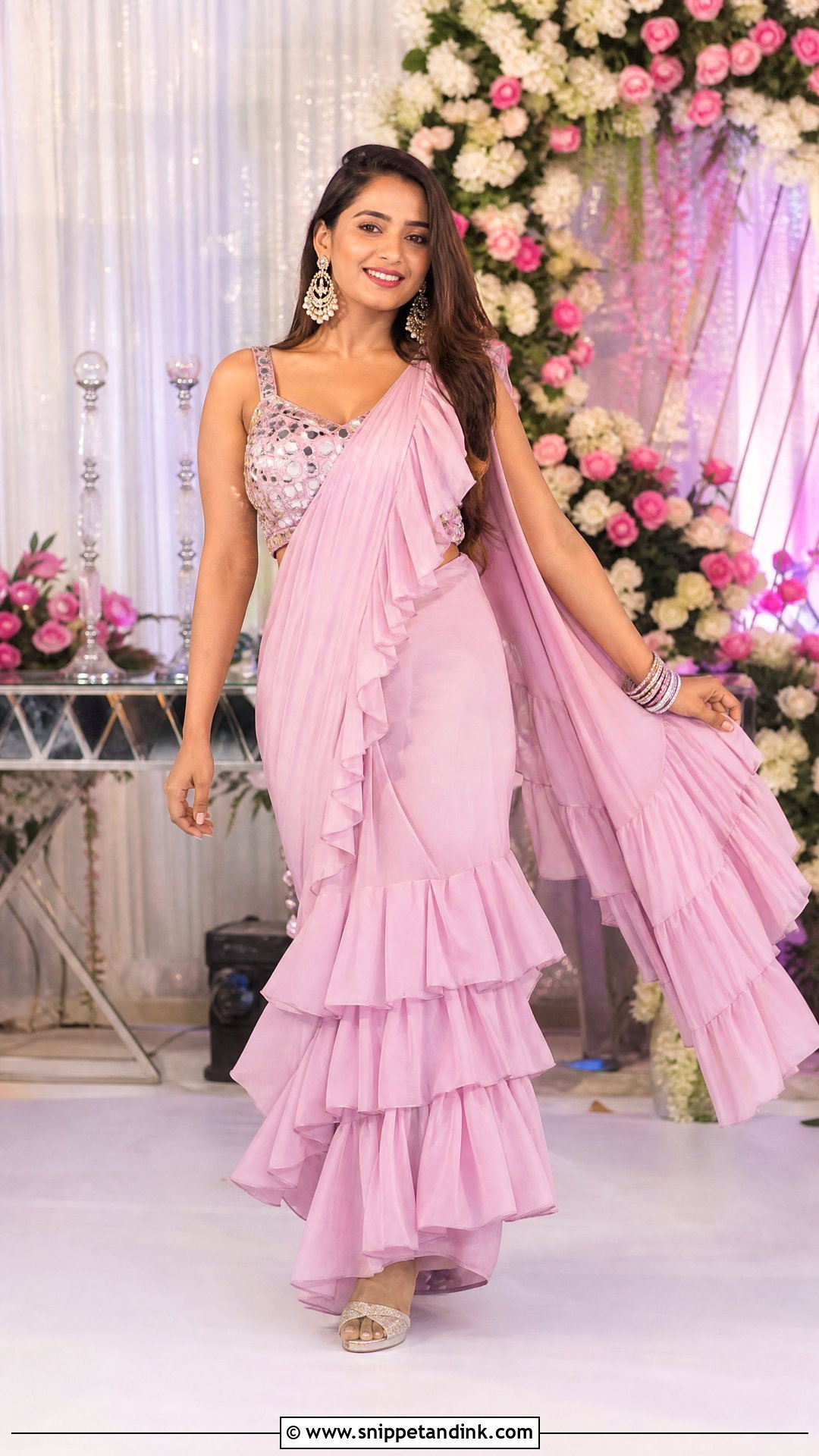
Ruffles add volume and play without a heavy skirt. A pre-stitched ruffle saree with a decorated blouse, such as mirror work, sequins or a corset, keeps it festive. Statement earrings, bangles and heels finish it, with soft curls or a sleek ponytail. Ruffles in georgette move beautifully when you dance; in stiff organza they stand away from the body and can look bulky from the side, so I prefer the softer fabric. It feels modern while staying firmly in Indian occasion wear.
11. Sequin Saree Sangeet Outfit
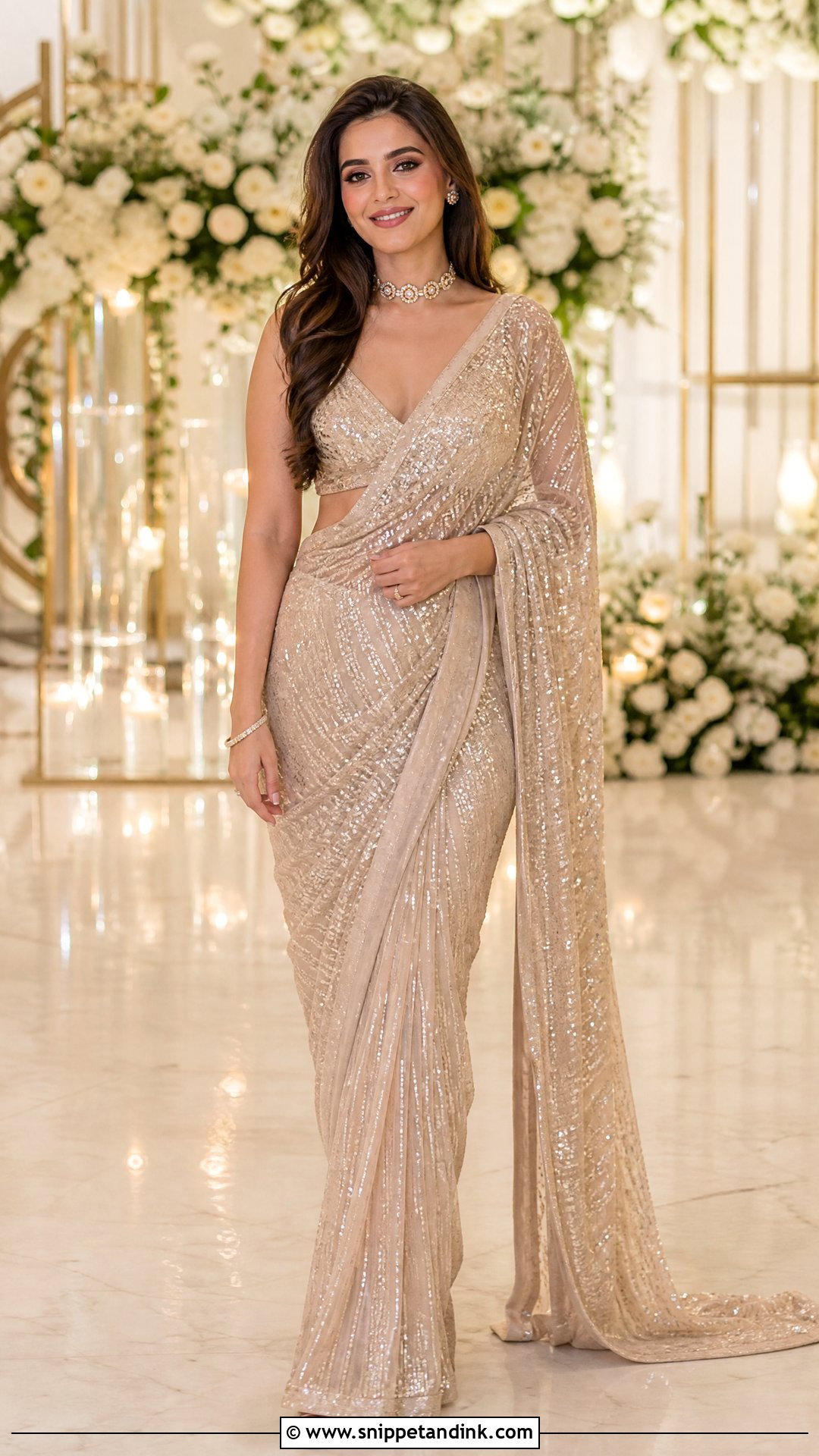
A sequin saree is one of the simplest routes to glamour without a heavy lehenga. Silver, rose gold, champagne, emerald and midnight blue sequins all catch indoor light well. Pair it with a fitted blouse, a secure petticoat and heels you can walk in. The saree already shines, so a choker, studs and a bracelet are often enough. If you’ll be dancing, I’d choose a pre-stitched version; sequinned fabric is slippery, and hand-draped pleats loosen faster than on silk or cotton.
12. Banarasi Silk Saree Sangeet Outfit
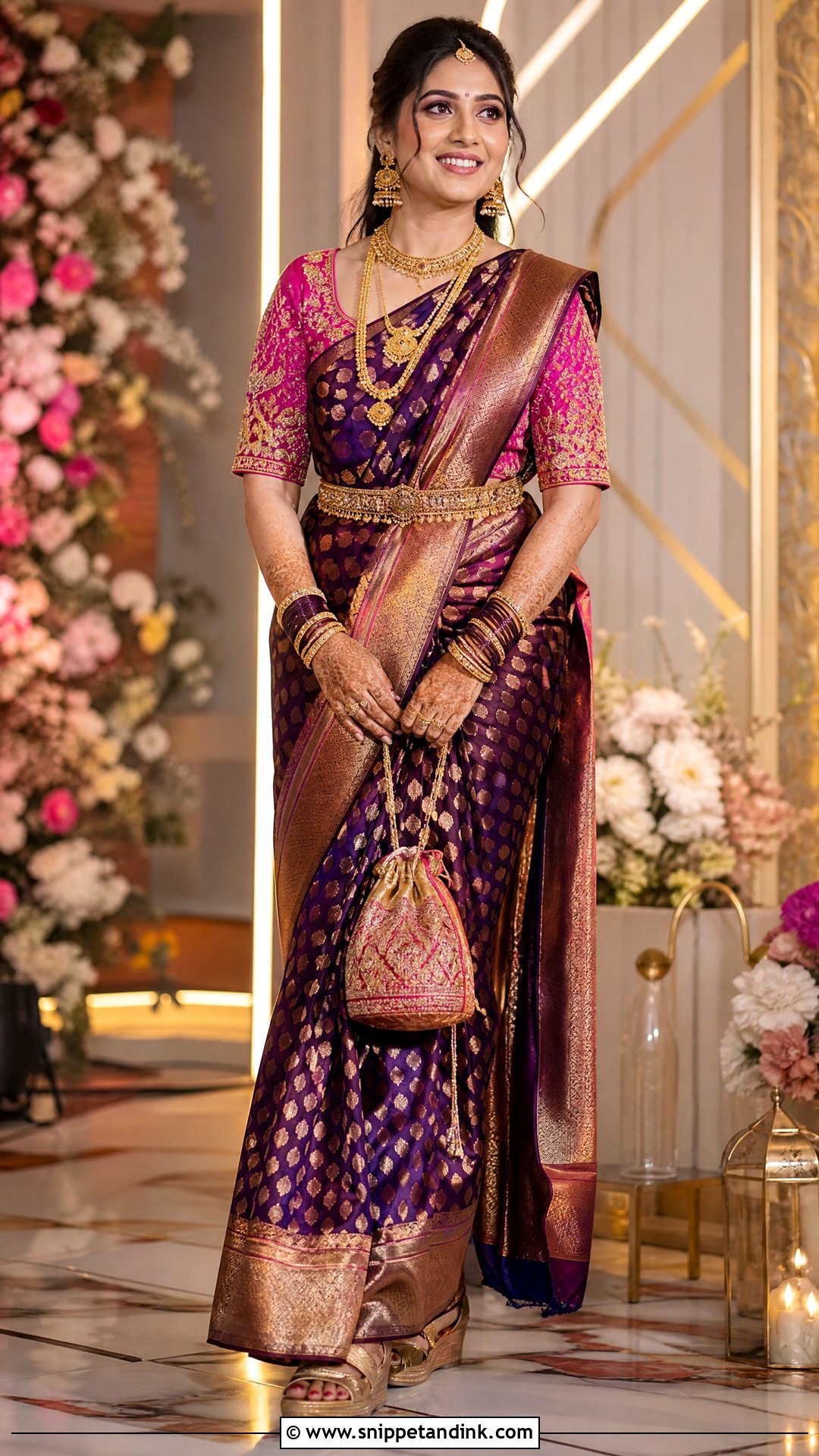
A Banarasi silk saree brings heritage to the sangeet, and many brides wear one passed down or chosen with their mother. Magenta, royal blue, emerald and deep purple look festive. A brocade or contrast blouse, gold jewelry and traditional bangles suit it. Banarasi silk is heavy, so a waist belt helps hold the drape and adds structure, and I’d pick comfortable heels or wedges over stilettos. It’s a better match for family-centered evenings with traditional songs than for a high-energy routine, since the weight slows you down.
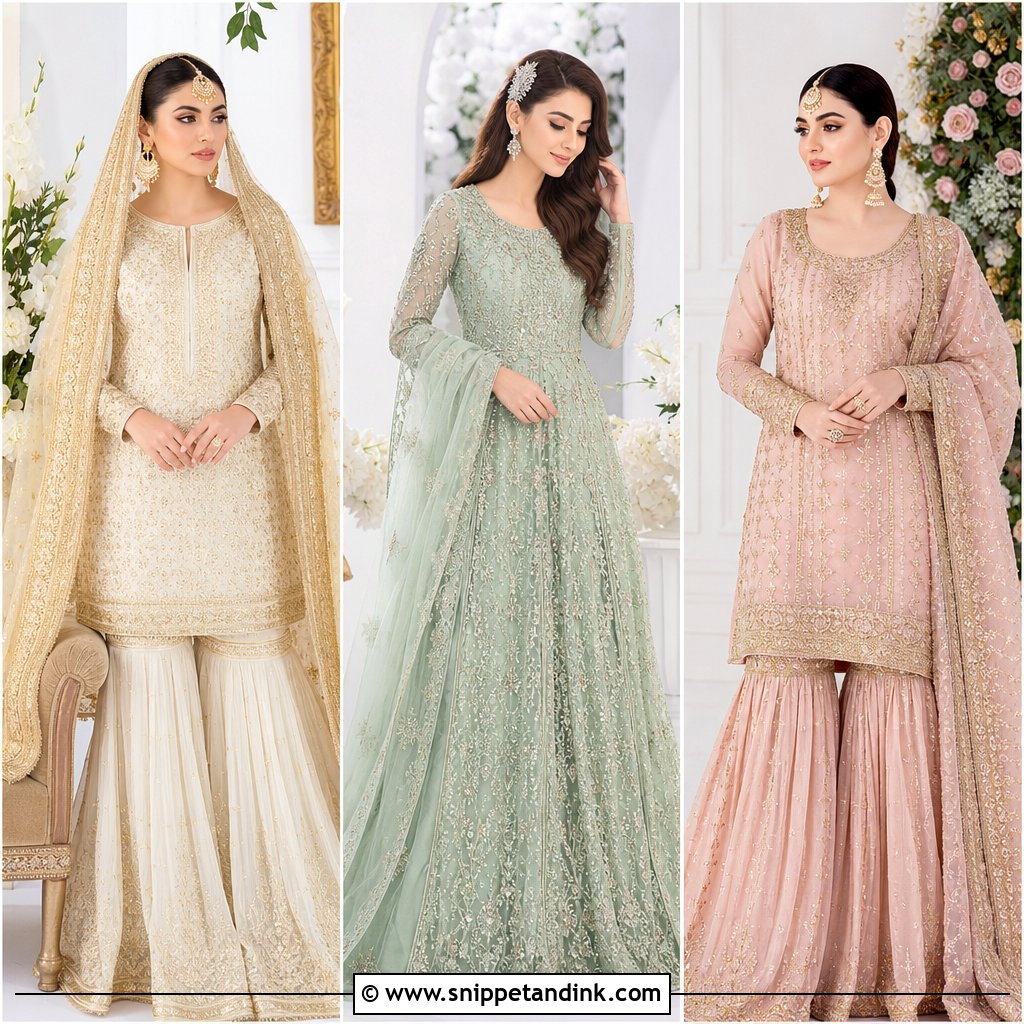
13. Sharara Sangeet Outfit
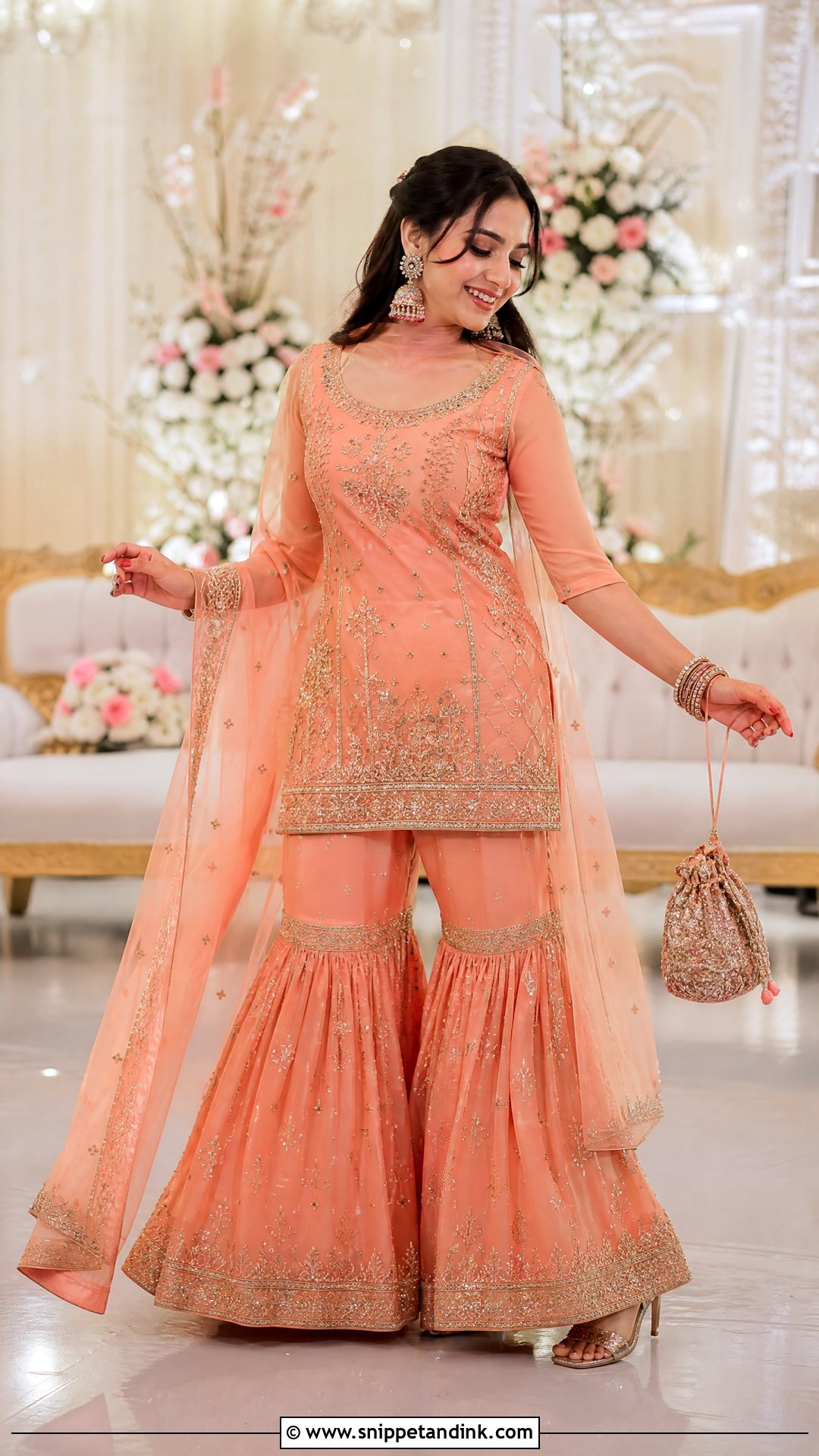
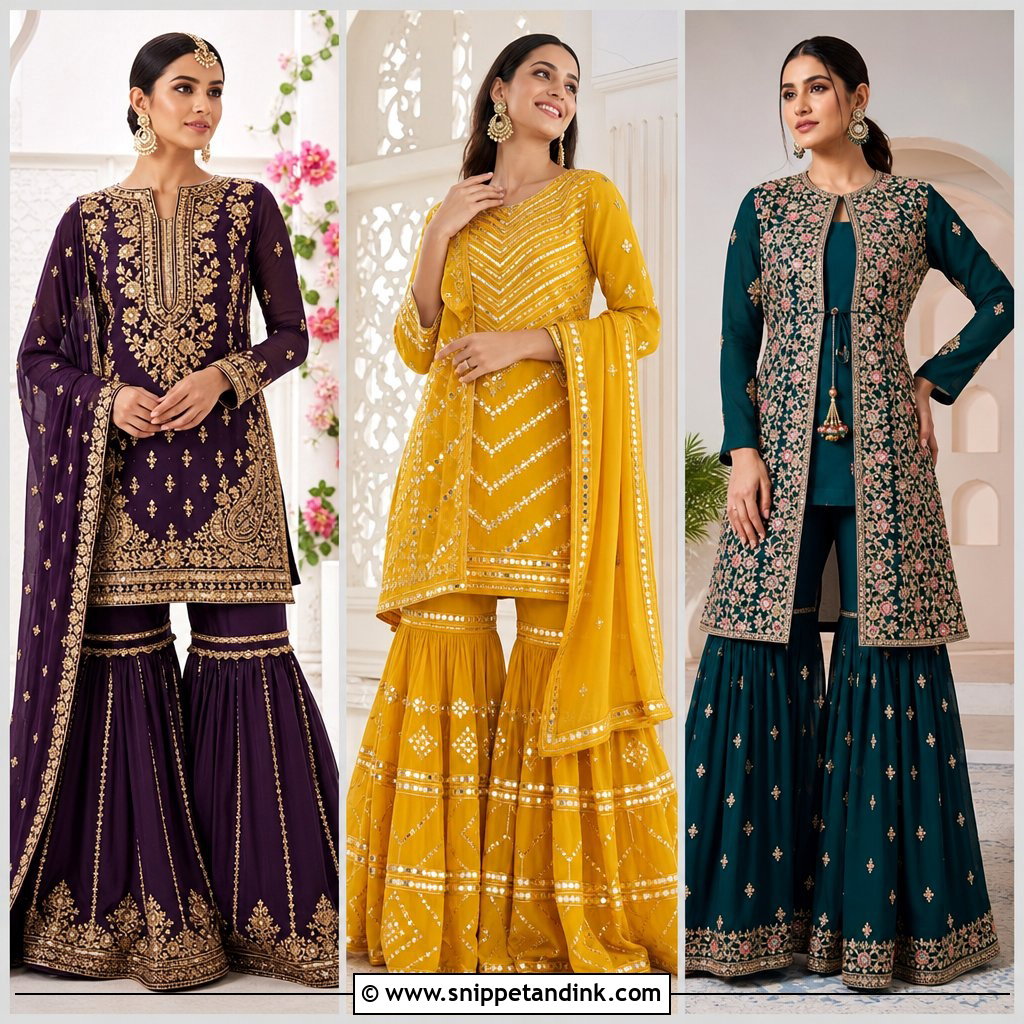
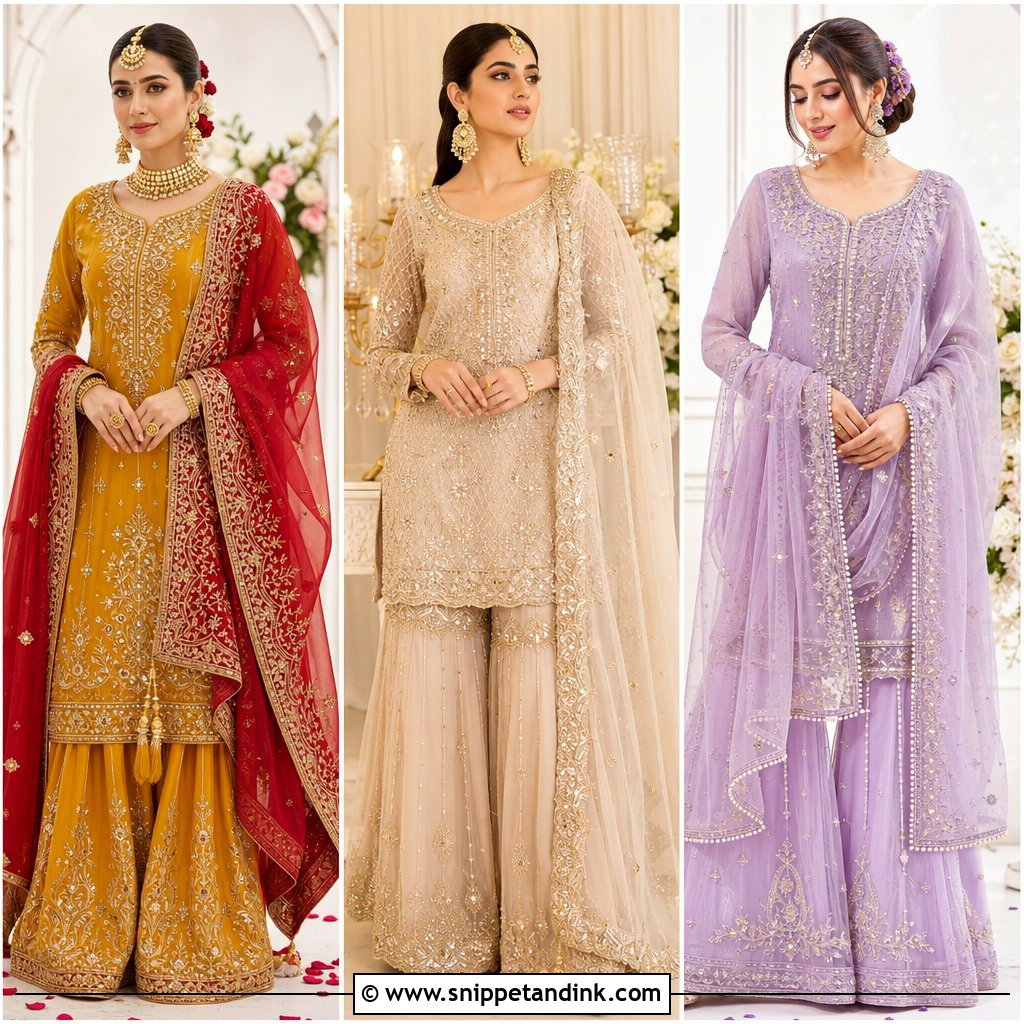
A sharara gives the movement of a lehenga with far less to manage. The wide, flared pants swing when you dance and you’ll never step on a hem the way you can with a full skirt. Pair a short embroidered kurti with flared sharara pants and a soft dupatta. Peach, ivory, green and pink suit it. Jhumkas, bangles, embellished heels and a potli complete it. It covers the midriff, which many brides and families prefer. I check the pant length with your actual shoes, since shararas look best just grazing the floor.
14. Gharara Sangeet Outfit
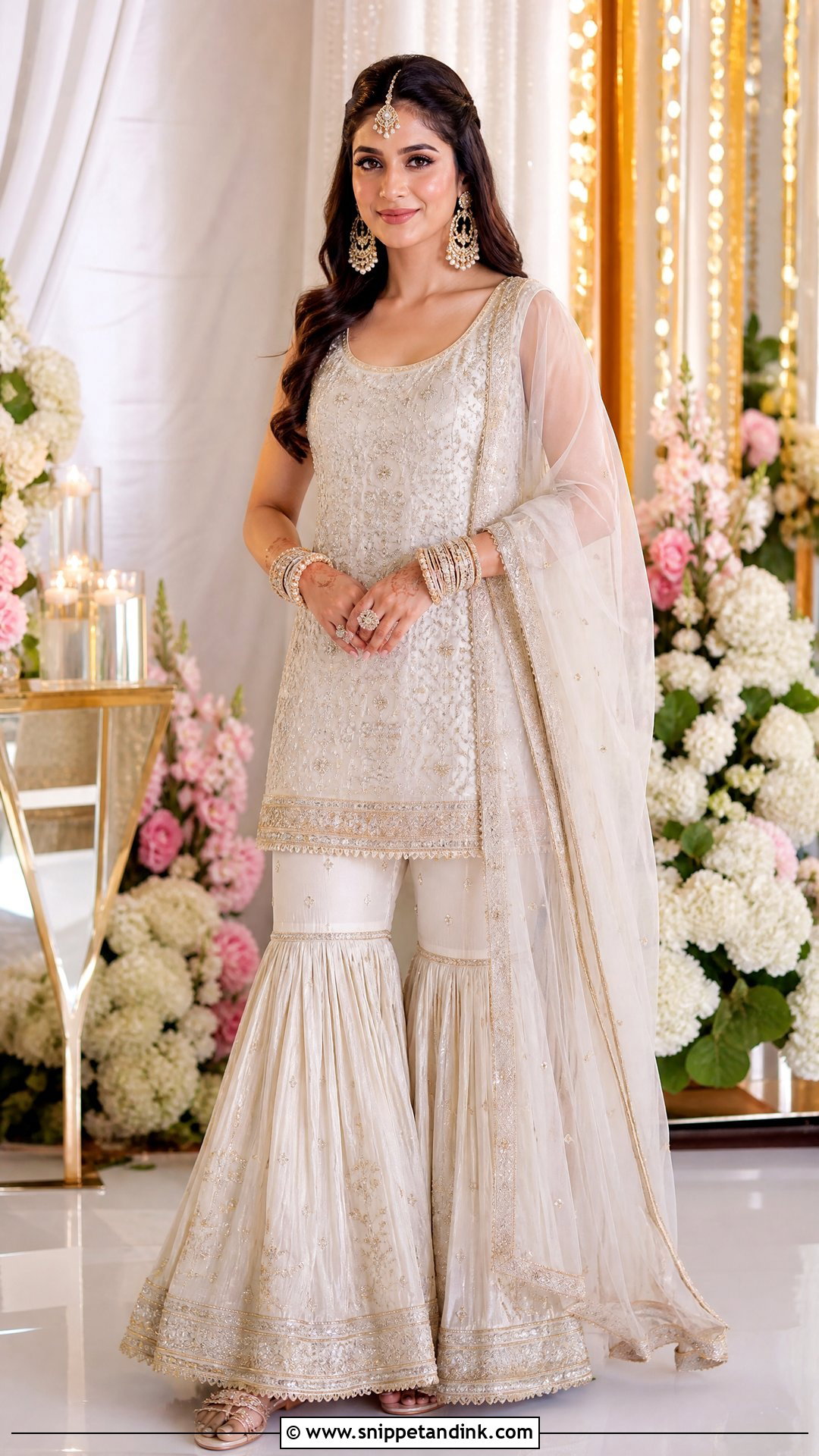
A gharara outfit has a fitted upper leg that flares from the knee, joined by a decorative band. That joint is what gives it the graceful sway when you walk. Zari, sequins, gota or pearl work make it richer. A short kurti, sheer dupatta and traditional jewelry complete it. Ivory, blush, mint and peach feel soft; maroon or navy feel regal. The knee band can restrict a deep squat or a big dance step, so try your routine in it. Block heels or decorated sandals keep you steady.

15. Anarkali Sangeet Outfit
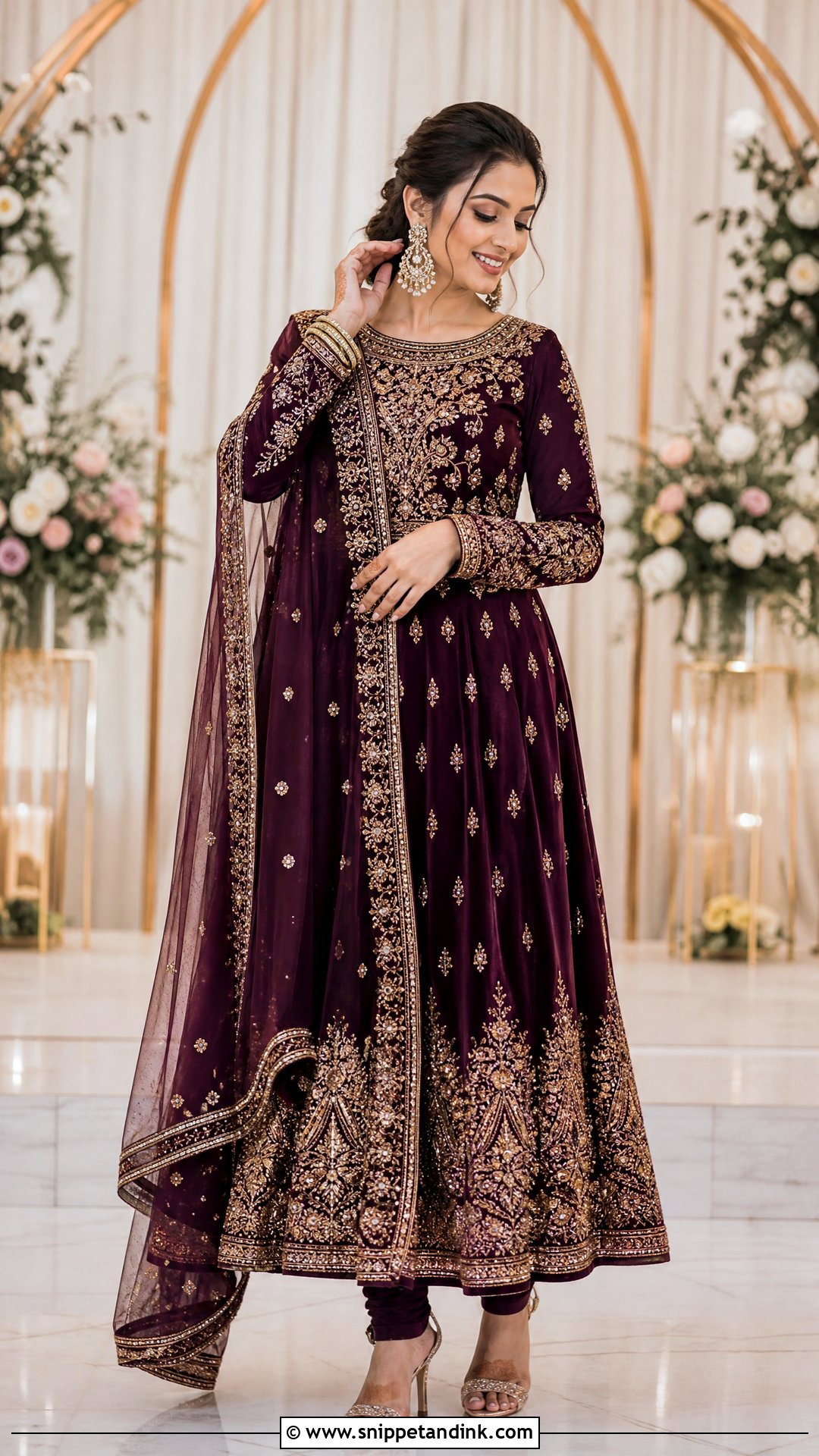
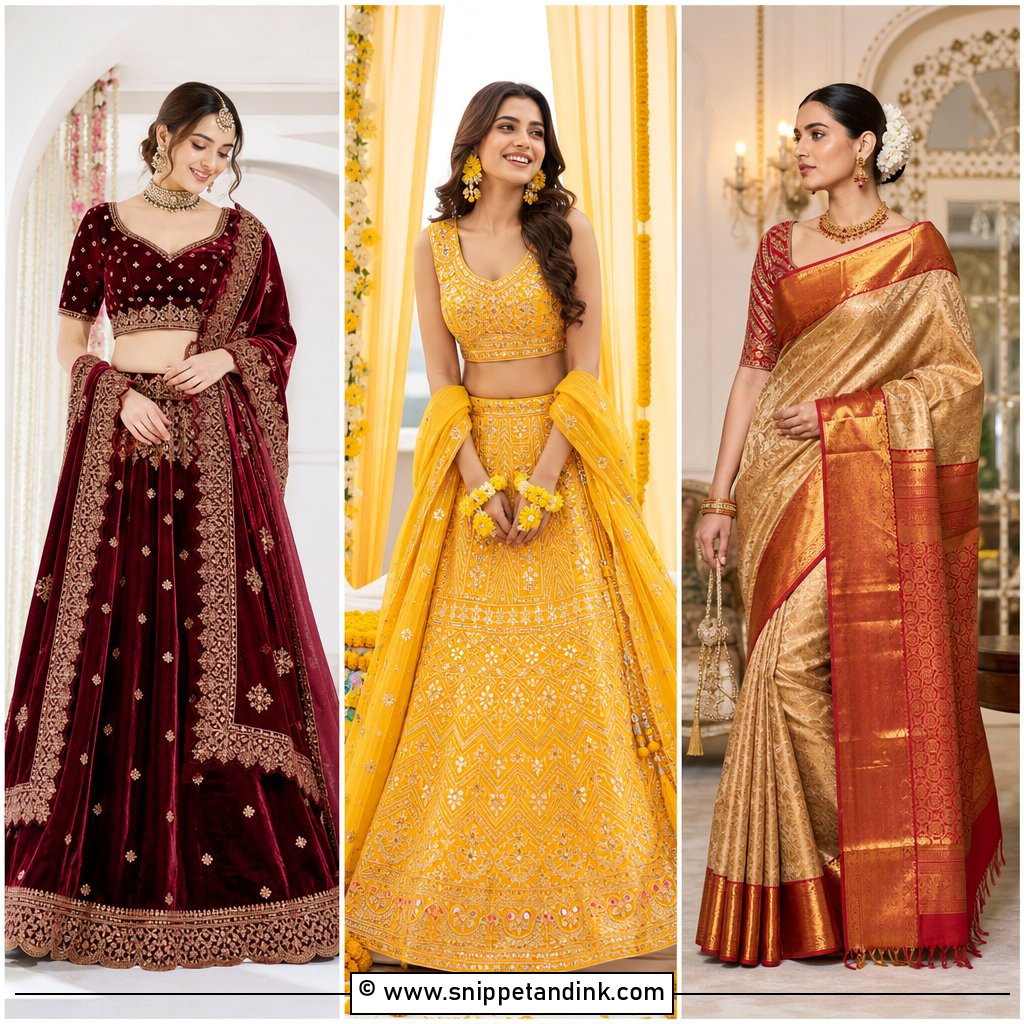
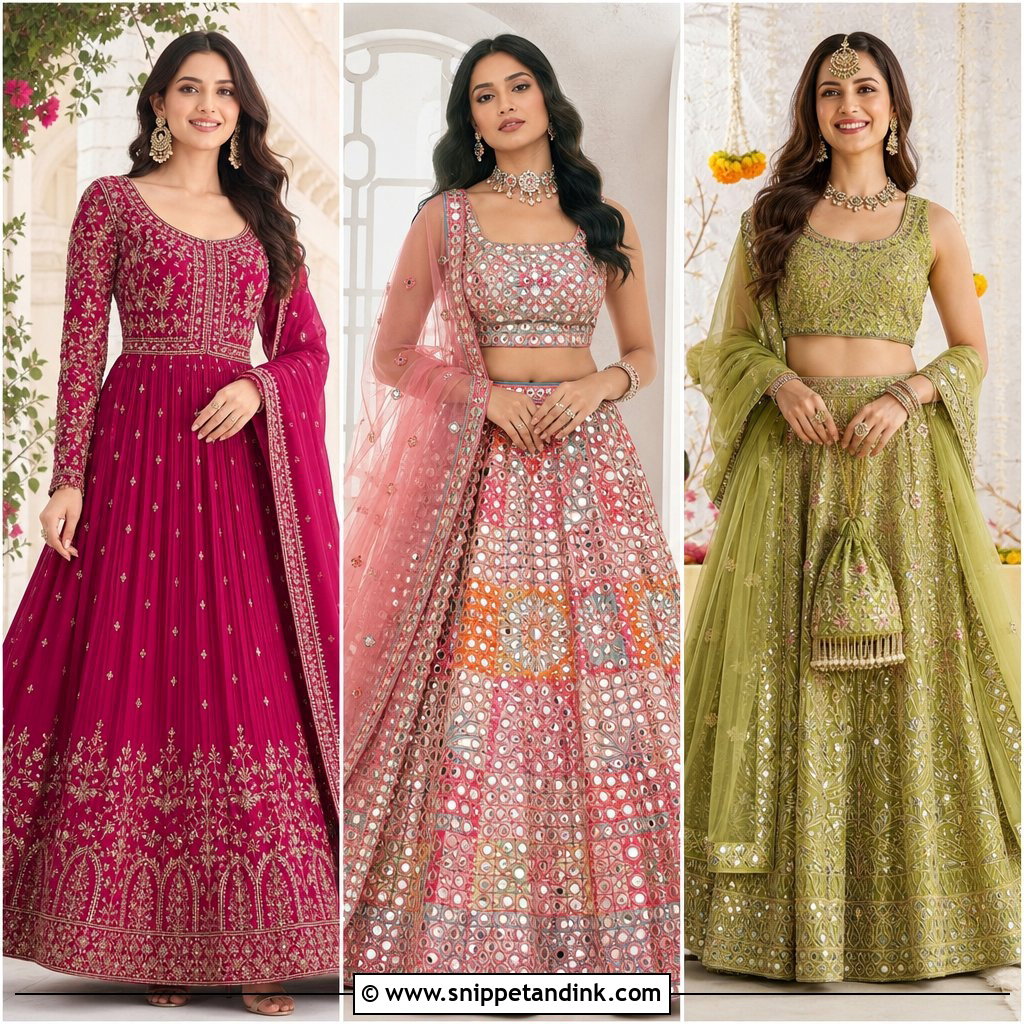
An Anarkali gives coverage, comfort and flare in one piece, and it feels less restrictive than many lehengas. Choose a floor-length Anarkali with embroidery, sequins or mirror work over churidar or slim trousers. A sheer dupatta, statement earrings and embellished heels finish it. A floor-length flare can catch under your heel on stairs, so I hem it a little shorter at the front. Jewel tones look regal; pastels look softer. Styled with strong accessories, it holds its own as bridal wear.
16. Cape Lehenga Sangeet Outfit
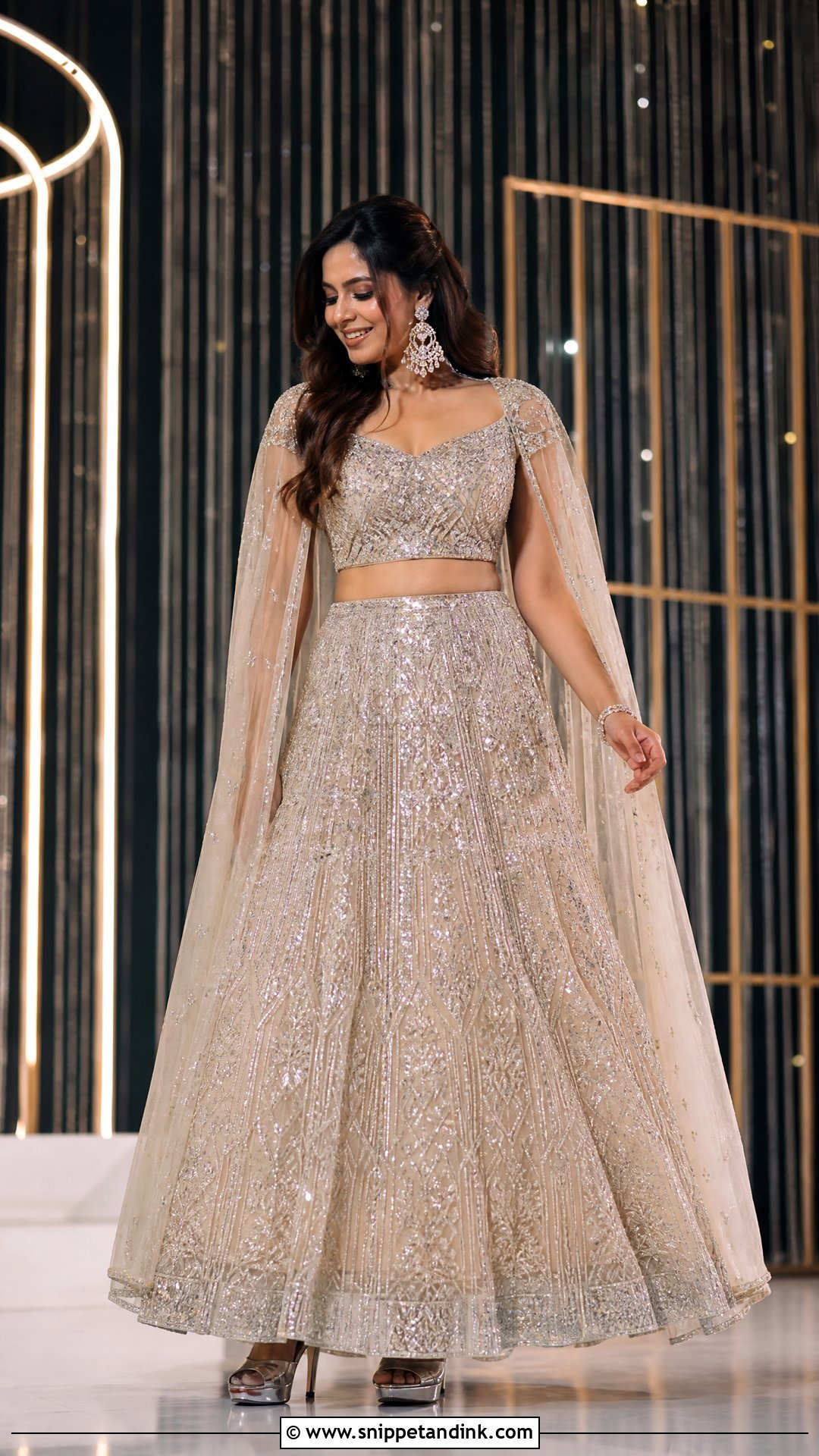
A cape replaces the dupatta, so there’s nothing to pin, slip or trip over during a routine. That alone makes it one of my most-requested sangeet styles. Pair a fitted blouse and flared skirt with a sheer embroidered cape; crystal, pearl or sequin detail makes it bridal. If the cape is heavily worked near the neck, skip the necklace and wear statement earrings instead, or the two will clash and the necklace will snag. A bracelet and metallic heels complete it.
17. Jacket Lehenga Sangeet Outfit
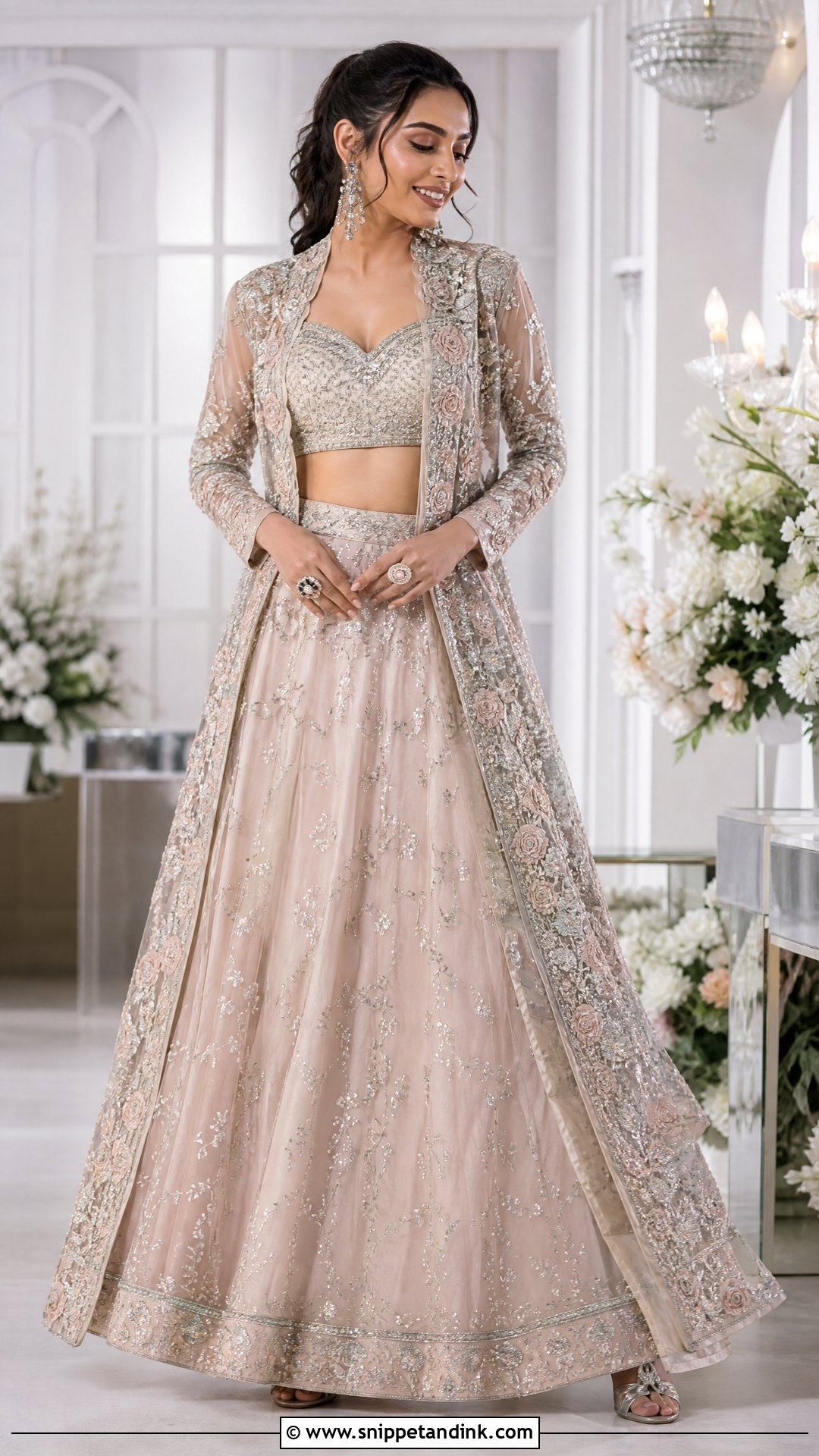
A jacket lehenga adds coverage and grandeur at once. A long or short embroidered jacket over a fitted blouse or crop top and a flowing skirt gives depth in photos, especially in mirror work or thread embroidery. You can drop the dupatta if the jacket is detailed, which frees you up for dancing. Long jackets are warm, though, and under stage lights you may want to take it off halfway through the night, so make sure the blouse underneath works on its own. It suits brides who like Indo-western styling with an Indian base.
18. Corset Lehenga Sangeet Outfit
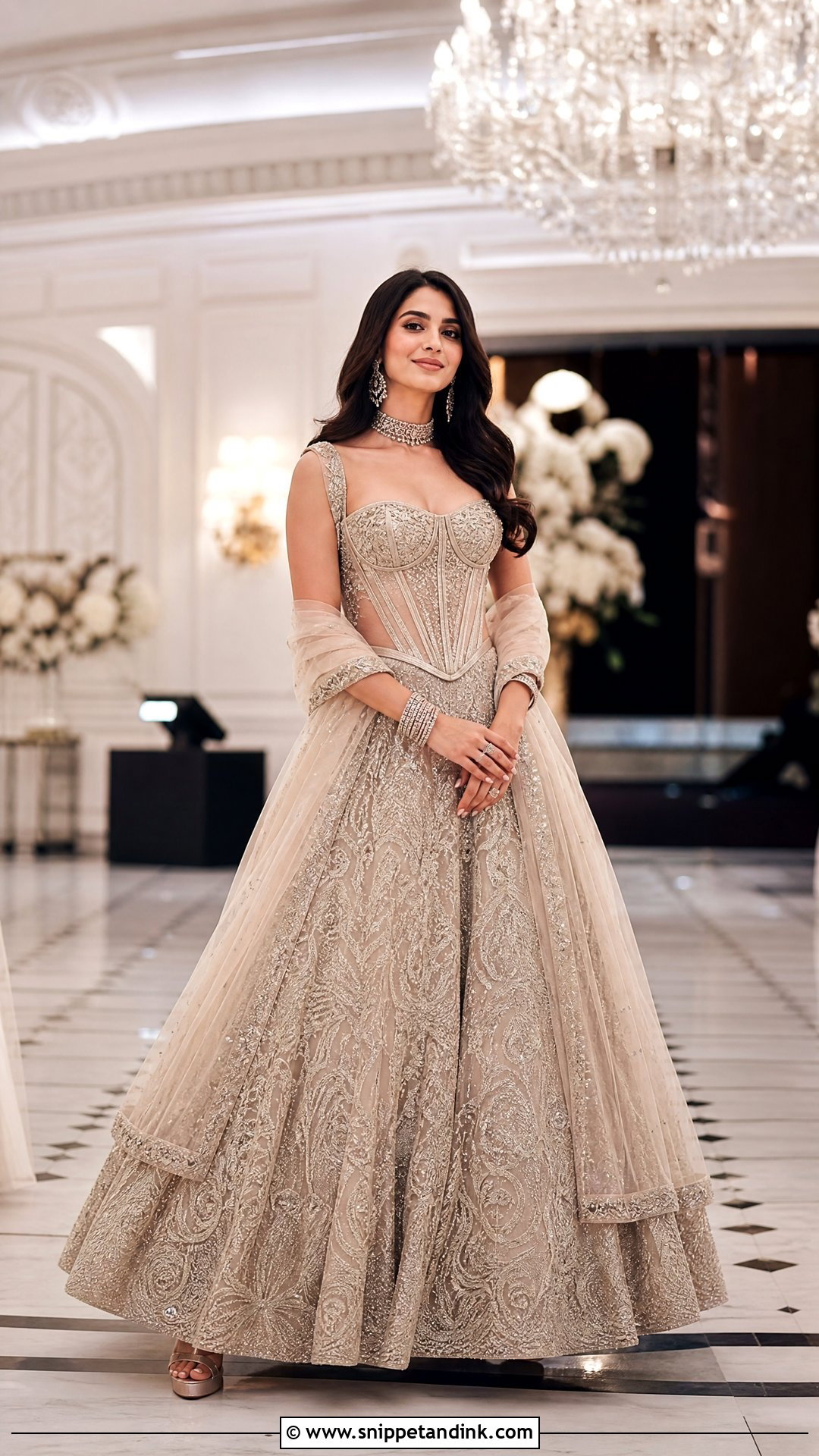
A corset blouse shapes the upper body and balances a full skirt. Secure tailoring is the whole point: I fit the corset with the bride sitting and raising her arms, because a corset that stays put while standing can slip down when you dance. Drape a soft dupatta over one arm or skip it. Champagne, lavender, sage, gold and ruby suit the shape. A choker, earrings and heels complete it. It’s a modern statement that still reads as Indian bridal wear.
19. Fish Cut Lehenga Sangeet Outfit
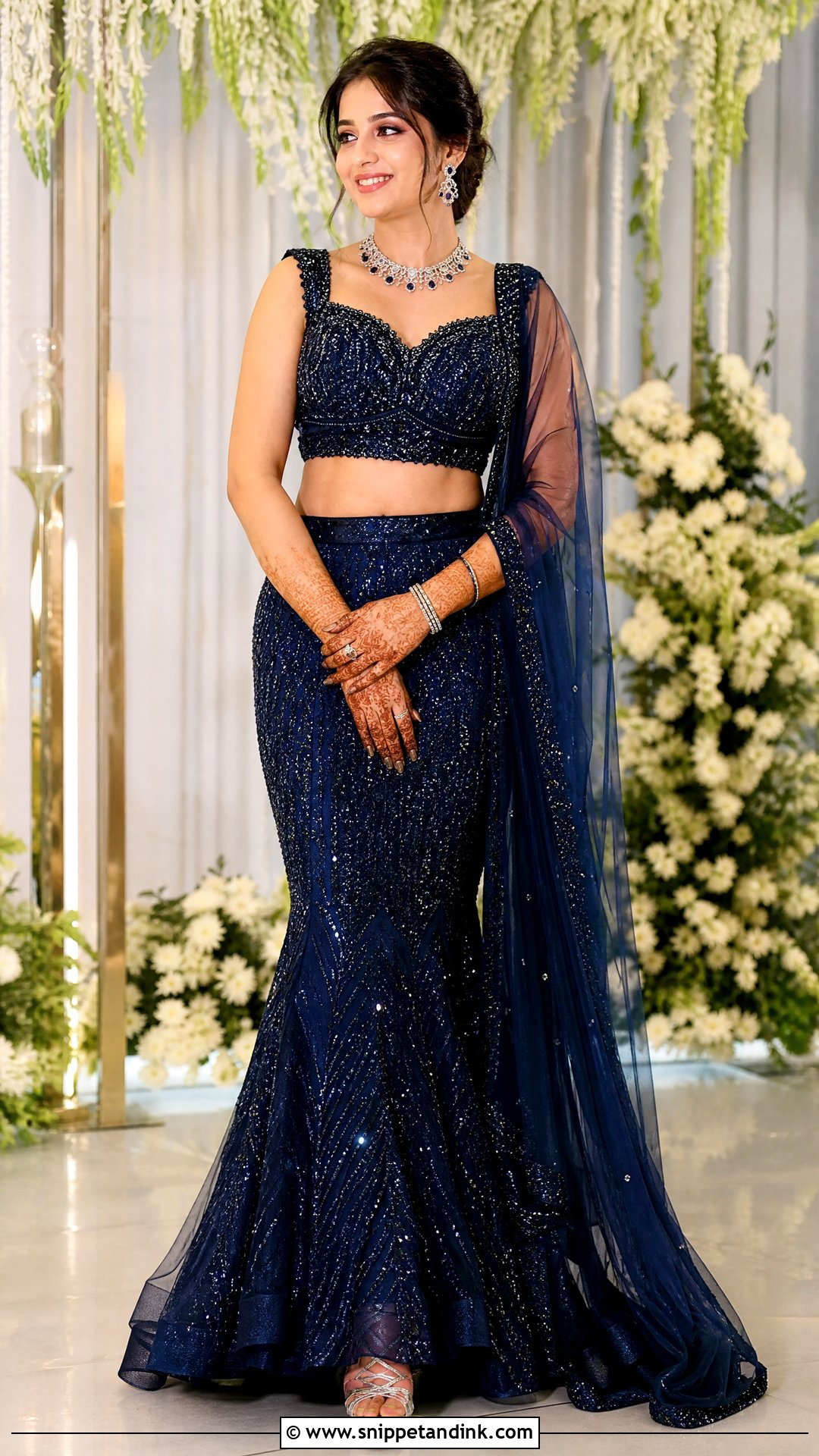
A fish cut lehenga skims the body and flares near the hem, closer to a red-carpet gown than a circular skirt. The flare has to start low enough for walking; I check the knee width by having the bride take stairs and do a small dance step. A stretch lining helps. A fitted blouse, sheer dupatta and statement necklace complete it, with sequins or metallic embroidery for evening light. Keep accessories refined. It’s demanding to dance in, so it suits brides with a gentle routine.

20. Peplum Lehenga Sangeet Outfit
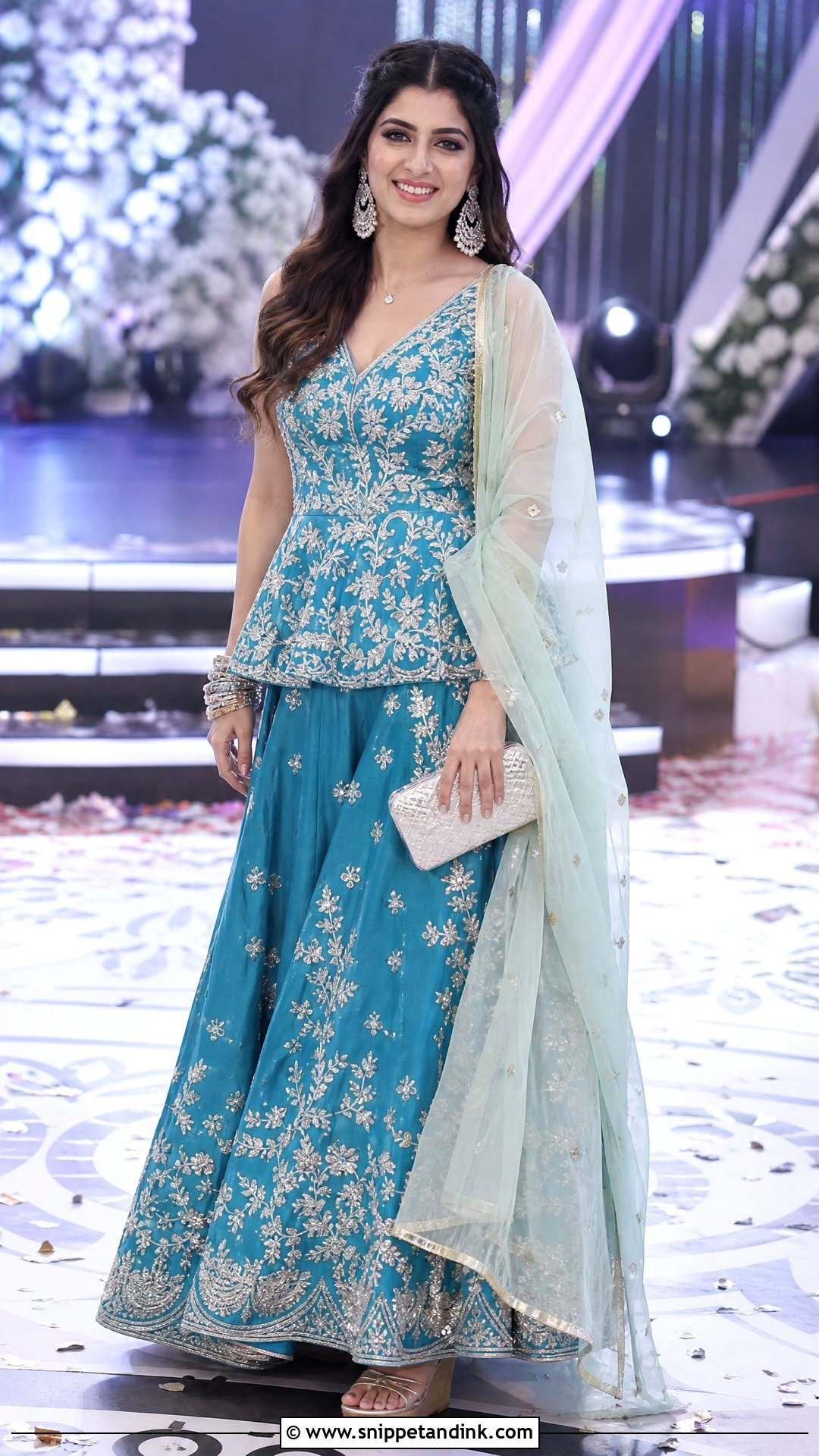
A peplum top covers the waist while still giving shape, and it’s comfortable for a long night. Pair it with a flared skirt, a light dupatta and festive jewelry. It suits brides who want support and structure without a heavy, tight blouse. Embroidery, sequins or mirror work on the peplum keep it celebratory. Teal, blush, ivory and marigold work well. The peplum should end at the high hip; any longer and it cuts the leg line when you’re on stage. Heels or wedges, a clutch and soft curls complete it.
21. Indo Western Gown Sangeet Outfit
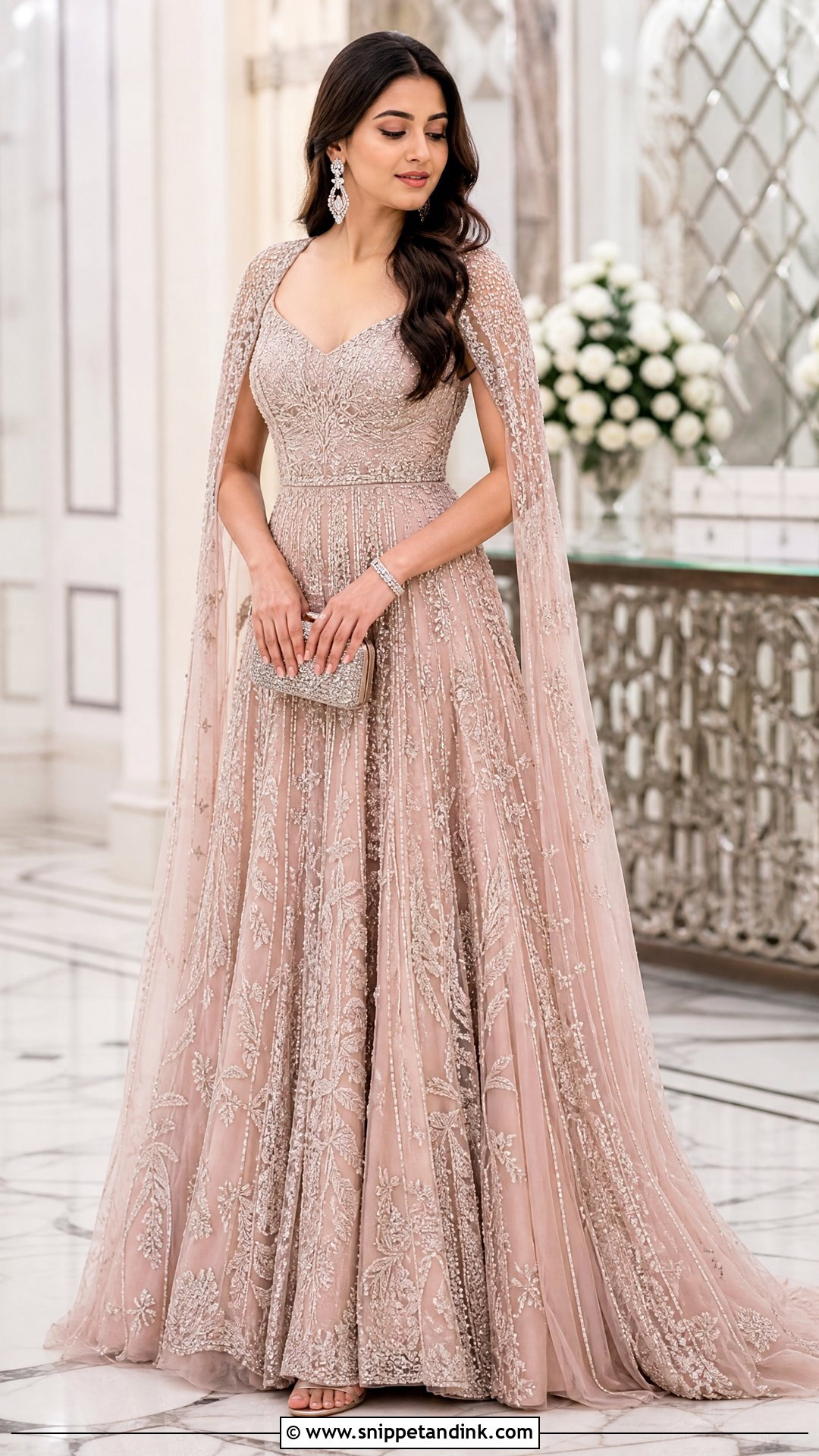
An Indo-western gown blends a gown’s ease with Indian embroidery or draping. A floor-length gown with a fitted bodice, flowing skirt and details like zari, crystals, mirror work or cape sleeves works well for cocktail-style sangeets, destination weddings and ballrooms. Diamond jewelry, heels and a sleek clutch finish it. It’s easier to dance in than a lehenga. To keep it from looking like a guest outfit, I’d insist on rich fabric and strong embellishment, and accessories that clearly belong to the bride.
22. Palazzo Sangeet Outfit
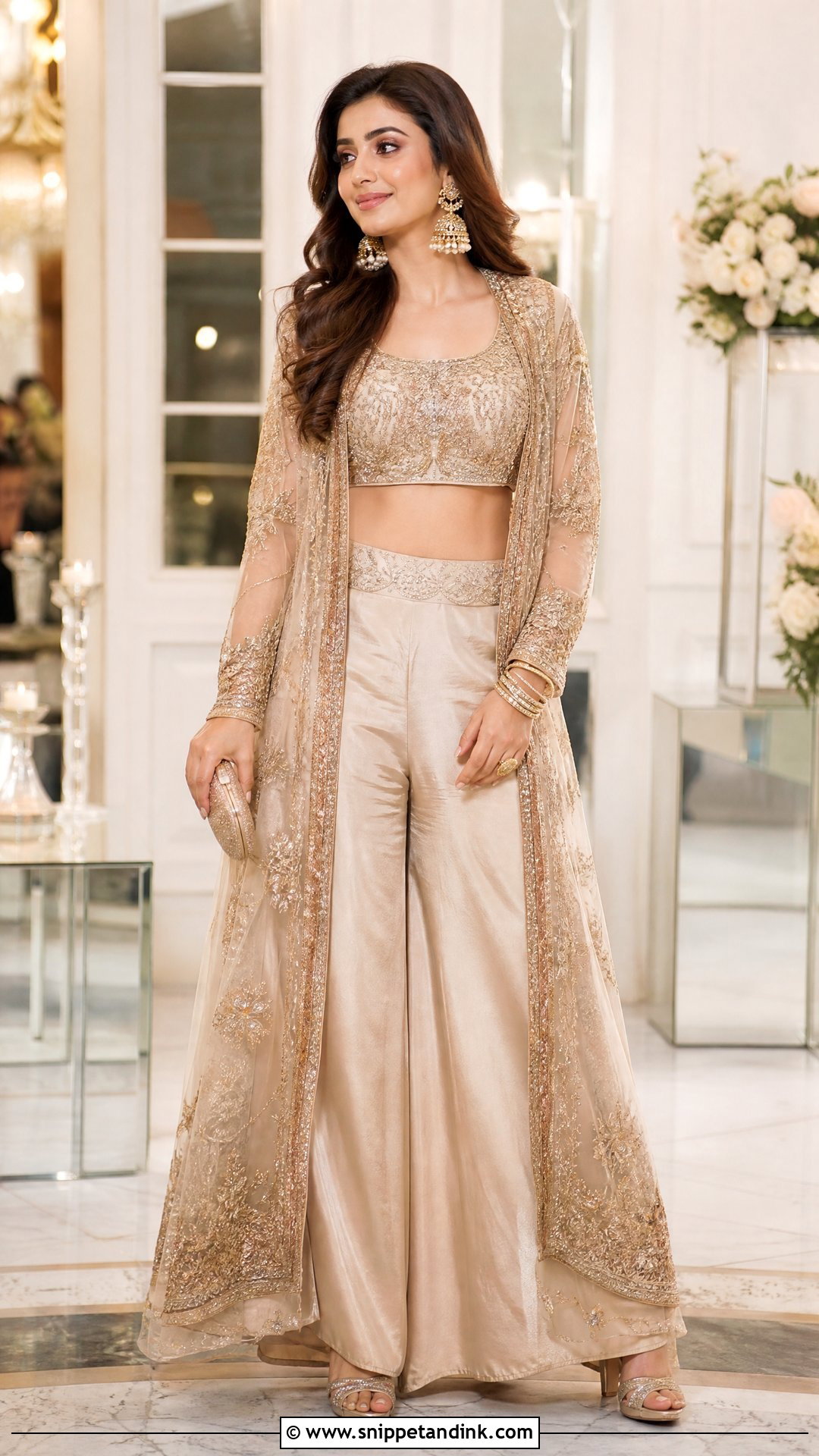
A palazzo set suits brides who put comfort first. Wide palazzo pants let you move, while a heavily embroidered kurta or crop top keeps it festive. A long jacket, cape or dupatta adds drama. It suits intimate sangeets and outdoor venues. Rich silk, georgette or organza, with embellishment at the neckline and sleeves, gives it weight. Palazzos in thin fabric can look like daywear in photos, so the fabric and tailoring are where I’d spend. Statement earrings and embellished heels complete it.
23. Dhoti Sangeet Outfit
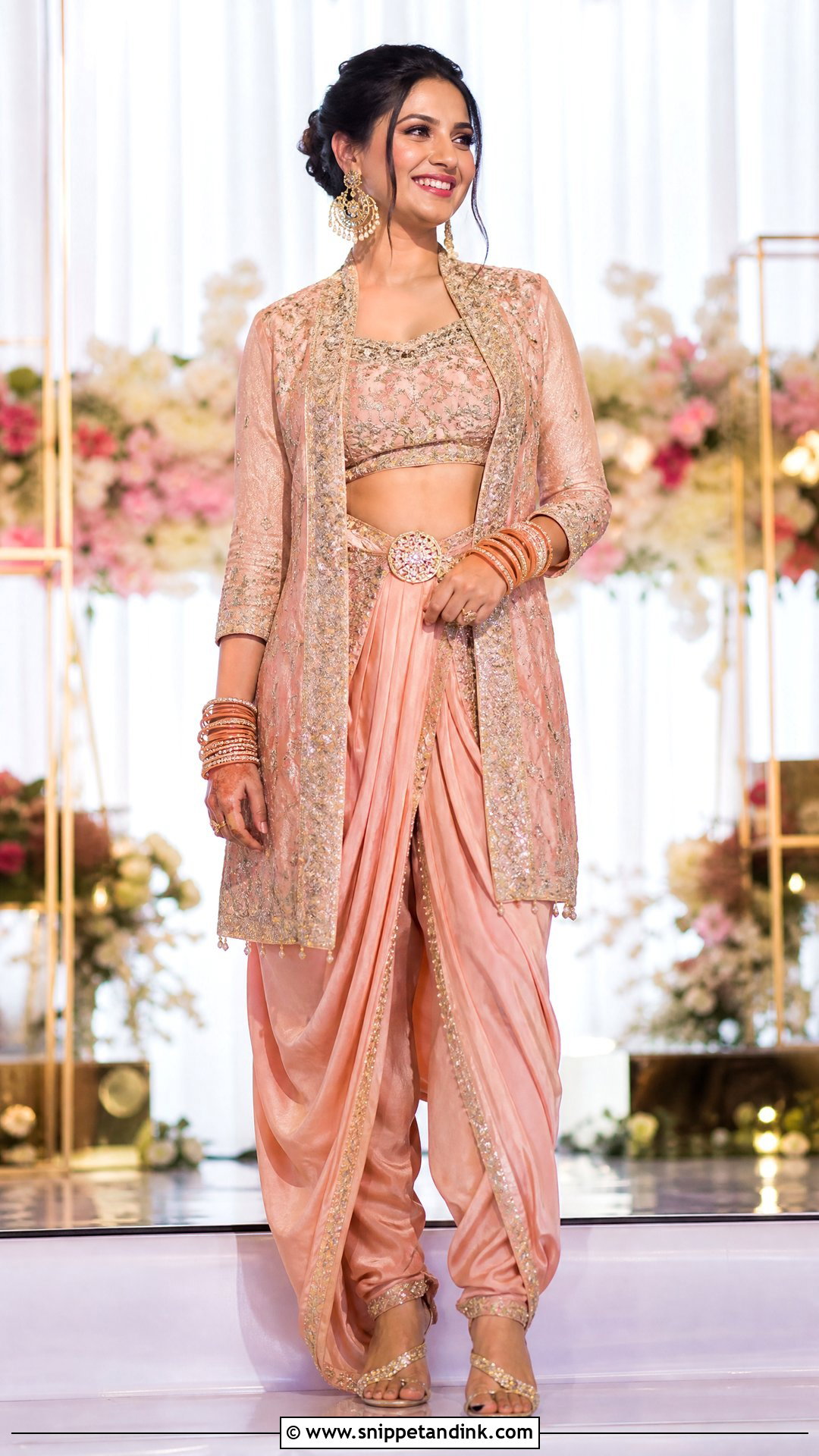
A dhoti outfit is the boldest fusion fashion choice here. The draped bottom moves freely, and a crop top, short kurti or embroidered jacket gives structure. Sequins, mirror work, zari borders or beadwork keep it festive. A belt defines the waist and holds the drape while you dance. Statement earrings, stacked bangles and heels or embellished sandals finish it. I’d suggest it for a choreography-heavy night; just make sure the dhoti is pre-stitched, since a hand-draped one can come undone mid-routine.
24. Ombre Lehenga Sangeet Outfit
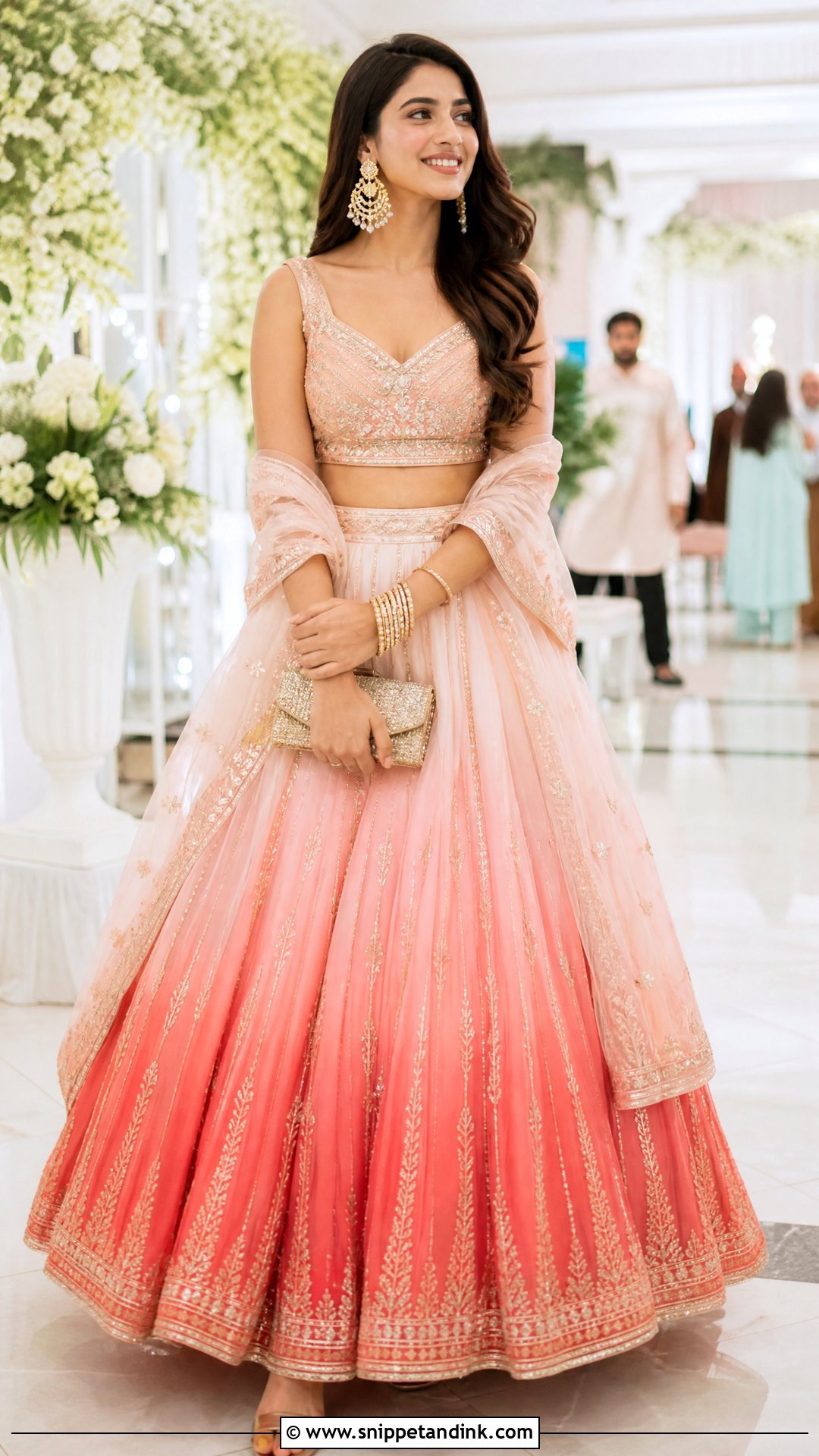
An ombre lehenga blends one color into another, from blush to coral, lavender to blue or ivory to gold, and it looks lively on the dance floor. Pair the skirt with a coordinated blouse and a light dupatta that doesn’t hide the gradient. Embroidery should follow the color change softly rather than cover it. Match jewelry to the dominant tone: gold for warm ombre, silver for cool. I’d hold the skirt under the venue’s light if you can, because some dyed gradients look patchy under colored stage lighting.

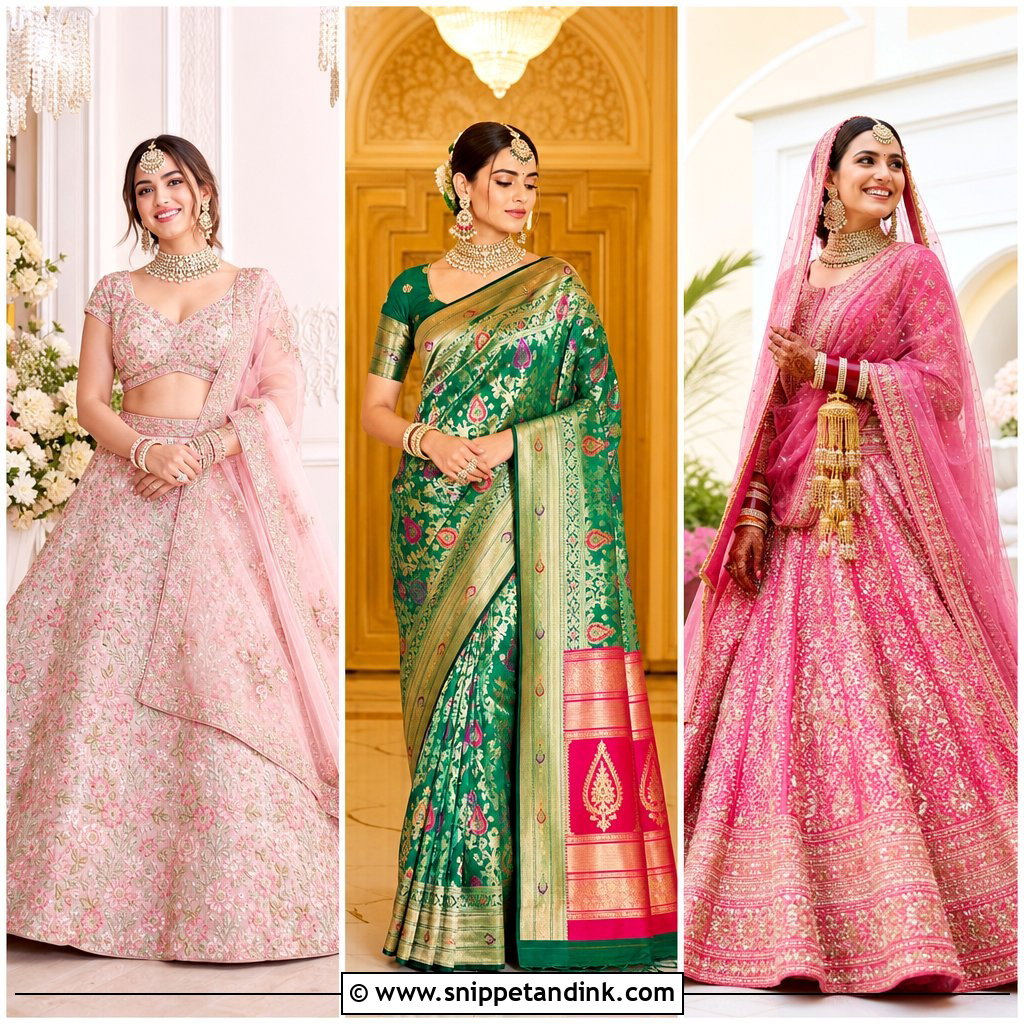



25. Blue Sangeet Lehenga
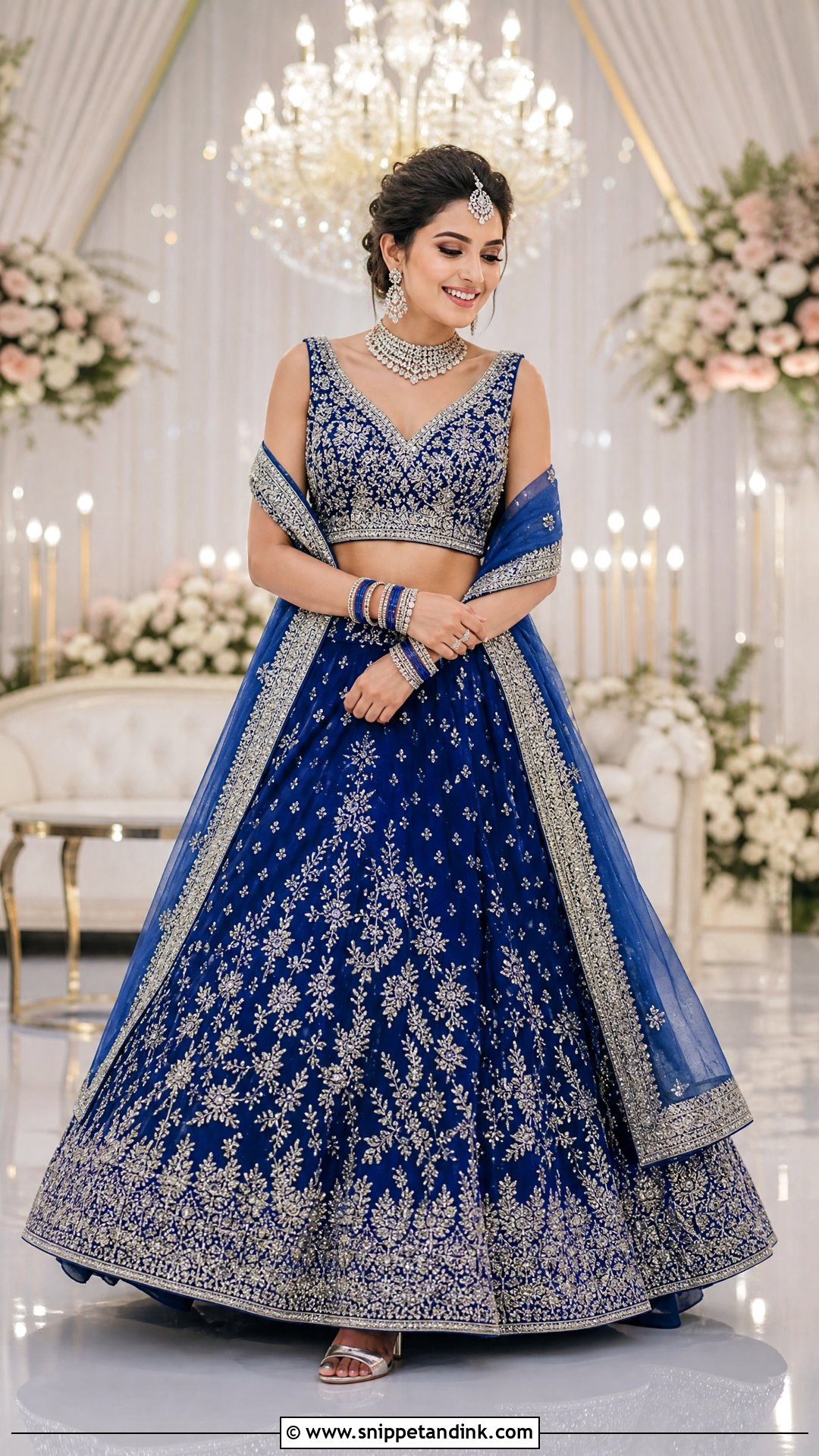
Blue is still an unusual sangeet choice, which is half its appeal. Royal blue, sapphire, powder blue and teal all work depending on the venue and season. Deep blue with silver or gold embroidery looks rich at night; lighter blue suits destination weddings in daylight. A fitted blouse and soft dupatta, with jewelry matched to the embroidery, complete it. Silver heels suit cool blues, and antique gold suits royal blue. It’s a good choice if you want color but not pink, red or ivory.
Planning the Sangeet Look Around Your Wedding Lehenga
The sangeet outfit is usually ordered alongside the ceremony outfit, and the two should be planned together.
Give it enough time
Custom embroidered pieces often take three to six months from order to final fitting, and it varies a lot by designer and season. Ready-to-wear sangeet pieces are quicker but still need alterations, so leave at least a few weeks for those.
Contrast with the main event
If your wedding lehenga is red and gold, a sangeet in pastel, jewel green or metallic gives your photos variety across the events. I also check the jewelry: borrowing pieces from your wedding set can work, but a fresh choker or earrings stops the two looks blurring together.
Pack a small repair kit
Safety pins, a needle and matching thread, double-sided tape and a spare hook for the blouse cover most problems. Sequins and mirror pieces work loose on a long dance night, and having a cousin who knows where the kit is saves a lot of panic.
Can You Dance the Last Song in It?
A sangeet outfit has to balance beauty, comfort, movement and personality. It needs to feel special enough for a major family event and practical enough for dancing, photos, greetings and hours of celebration. Lehengas, sarees, shararas, gowns, Anarkalis and fusion sets can all look bridal when the color, fabric, embroidery and jewelry work together. Think about your lighting, your routine and your family’s traditions. From silk sarees to corset lehengas and cape outfits, the right one is the one you can still dance in when the last song plays.
You'll Like These Ideas:







Leave a Reply