
Arabic bridal hair has its own rules. It has to sit under a veil or tiara without collapsing, survive a slow, heavily filmed entrance, look right beside embroidered gowns that already carry a lot of detail, and still be in place after hours of greeting relatives and dancing. When I plan these looks, the back view gets as much attention as the front, because that’s what guests watch during the zaffa. The fifteen styles below run from sleek buns and long waves to crowns, ponytails and hijab bases, with notes on what each one needs underneath to hold.
Hair for the Henna Night, the Zaffa and the Women’s Hall
Many Arabic weddings are not one look but several. There may be a henna night, a katb el kitab or nikah, then the main reception with a zaffa entrance, and sometimes a women-only hall where the bride shows her hair and changes dress. One hairstyle stretched over all of that rarely works, so I ask for the full event list at the first consultation.
- For a henna night, your hands are busy and often covered in paste for hours. Pick something that needs no touching, like a braided bun or waves pinned off the face.
- For the zaffa, plan the back view. Guests and the videographer follow you from behind for a long stretch.
- If you change dress mid-evening, decide early whether the hair changes too. Going from a crown updo to loose curls takes at least half an hour and needs a slot on the timeline.
- For a separate women’s celebration, many brides wear a secure base under a hijab or veil for the mixed part, then have it let down and refreshed.
That list also tells you whether your stylist needs to stay for the evening or can leave after the morning.
1. Arabic Bridal Low Bun
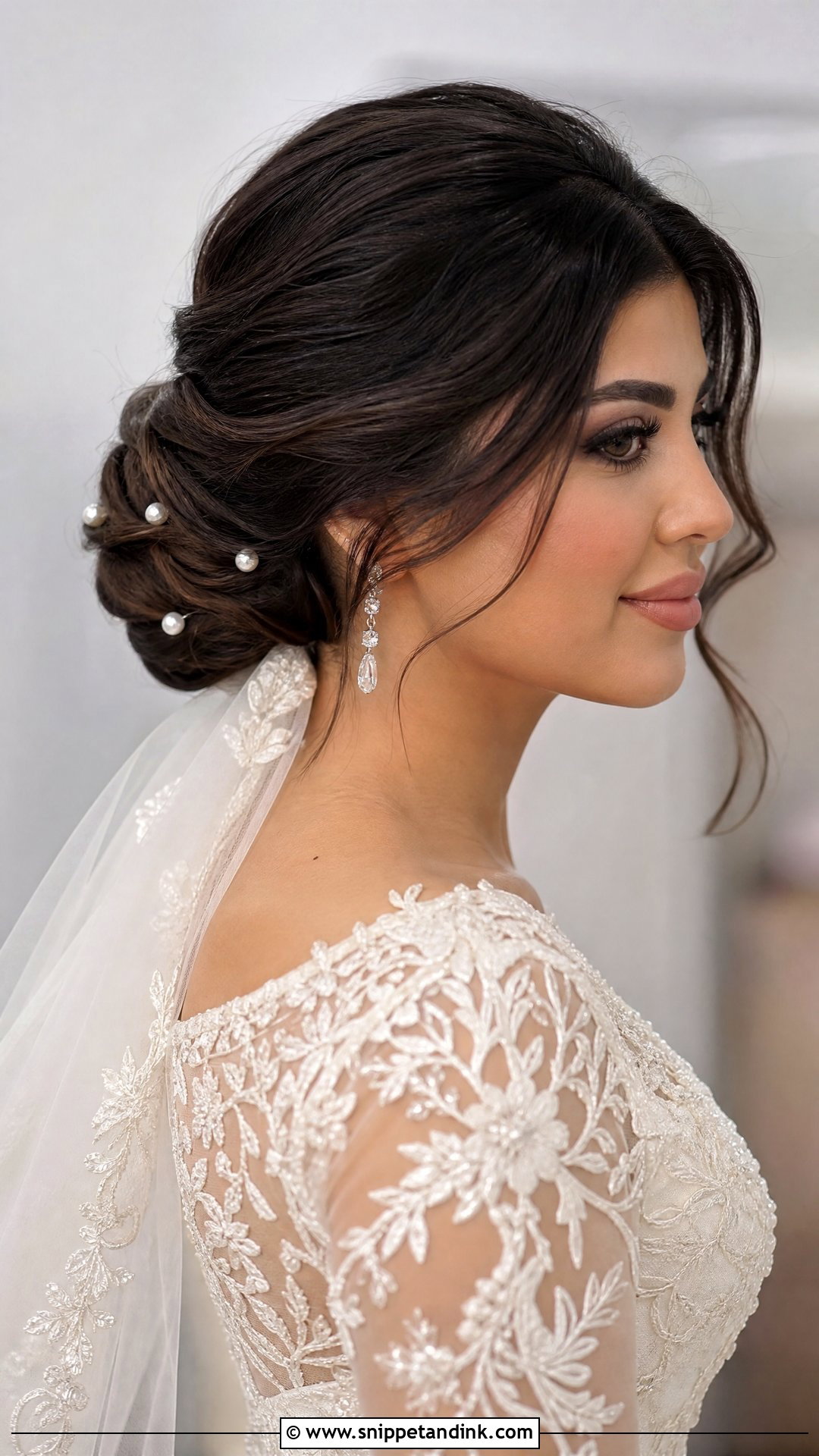
The low bun is my default next to a busy bodice, because it keeps the neck and shoulders clear so the work on heavily beaded dresses stays the focus. It sits at the nape and gives a veil comb, tiara or crystal comb a solid place to anchor. I add a little lift at the crown with backcombing under a smooth top layer, otherwise the head can look flat in side profile. Face-framing pieces are optional; on a round face I’d keep them longer than the cheekbone. Pinned into a firm base, this bun barely moves through a long night, and the back shape reads well in entrance footage.
2. Arabic Bridal High Bun
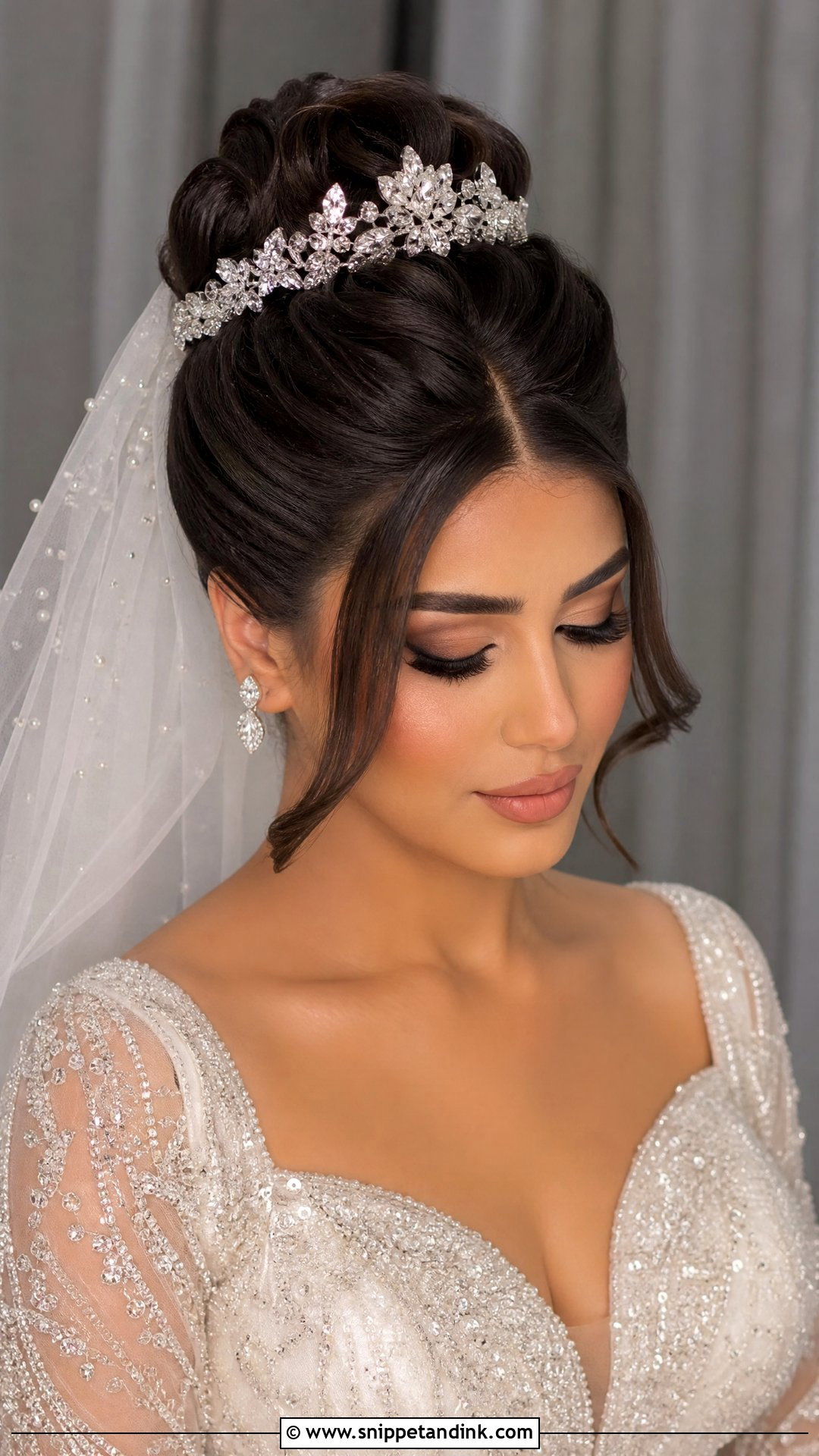
A high bun lifts everything upward, lengthens the neck and gives a grand hall entrance real presence. It pairs naturally with a crown, a cathedral veil or big earrings. The risk is weight. On thick, long Arabic hair, a high bun can pull on the scalp for hours, so I split the hair into two ponytails stacked one above the other and build the bun across both, which spreads the load. Sleek suits a modern gown; a softer, textured surface suits a romantic one. I’d steer petite brides with a short neck away from a very tall bun, since it can make the head look oversized against a big skirt.
3. Arabic Bridal Half Up Half Down Hair
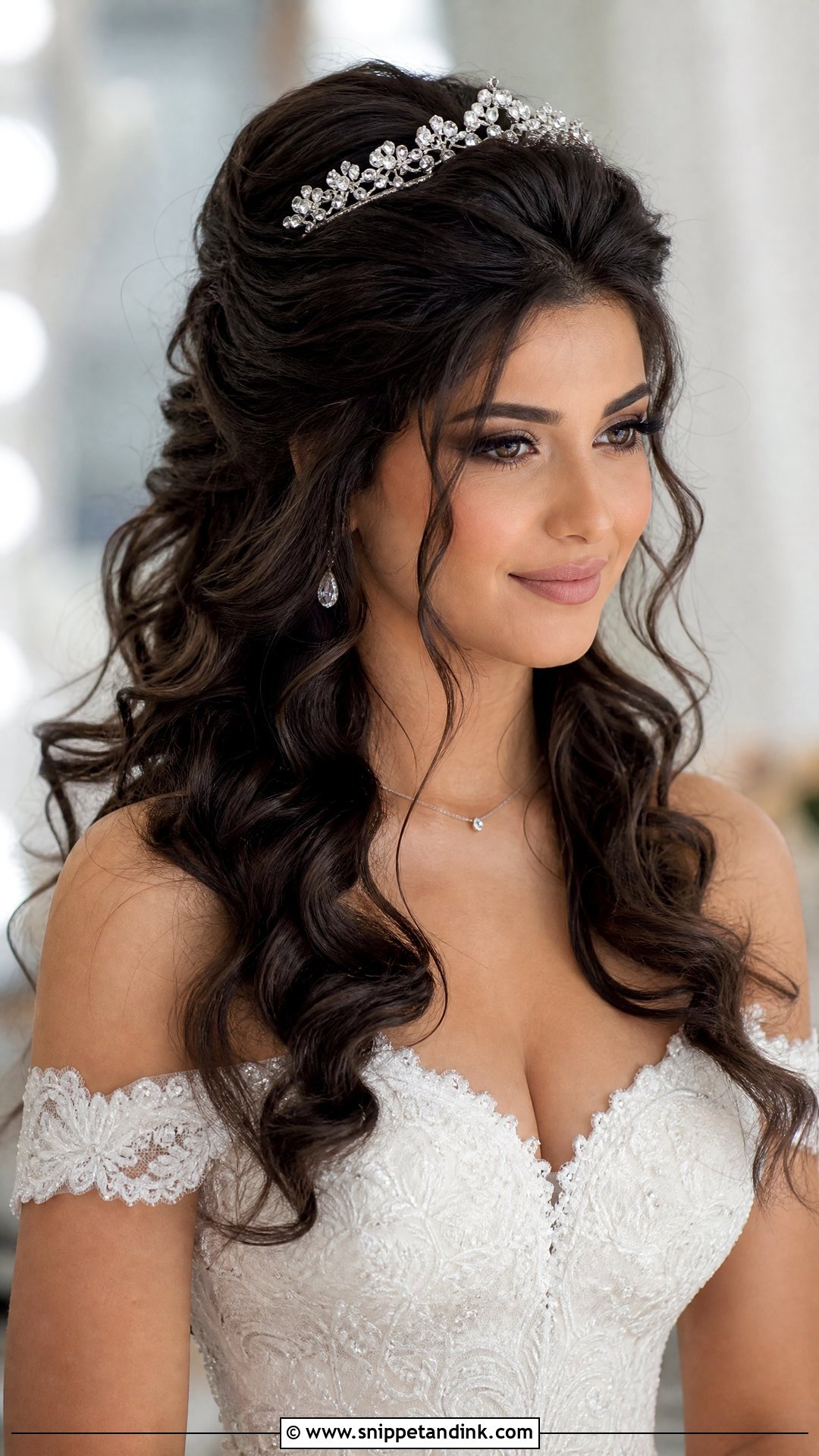
Half up, half down gives you the length on show with a pinned top section that holds a tiara or pearl pins securely. It sits best with strapless, sweetheart and off-shoulder necklines, where the loose curls frame the shoulders. The weak point is the lower half. Hair worn down takes the heat of the hall and the movement of dancing, so I set the curls with pins and let them cool fully before brushing out. I also secure the pinned section with a small hidden braid, which gives accessories something to grip. It’s a good middle ground if a full updo makes you feel unlike yourself.
4. Arabic Bridal Hollywood Waves
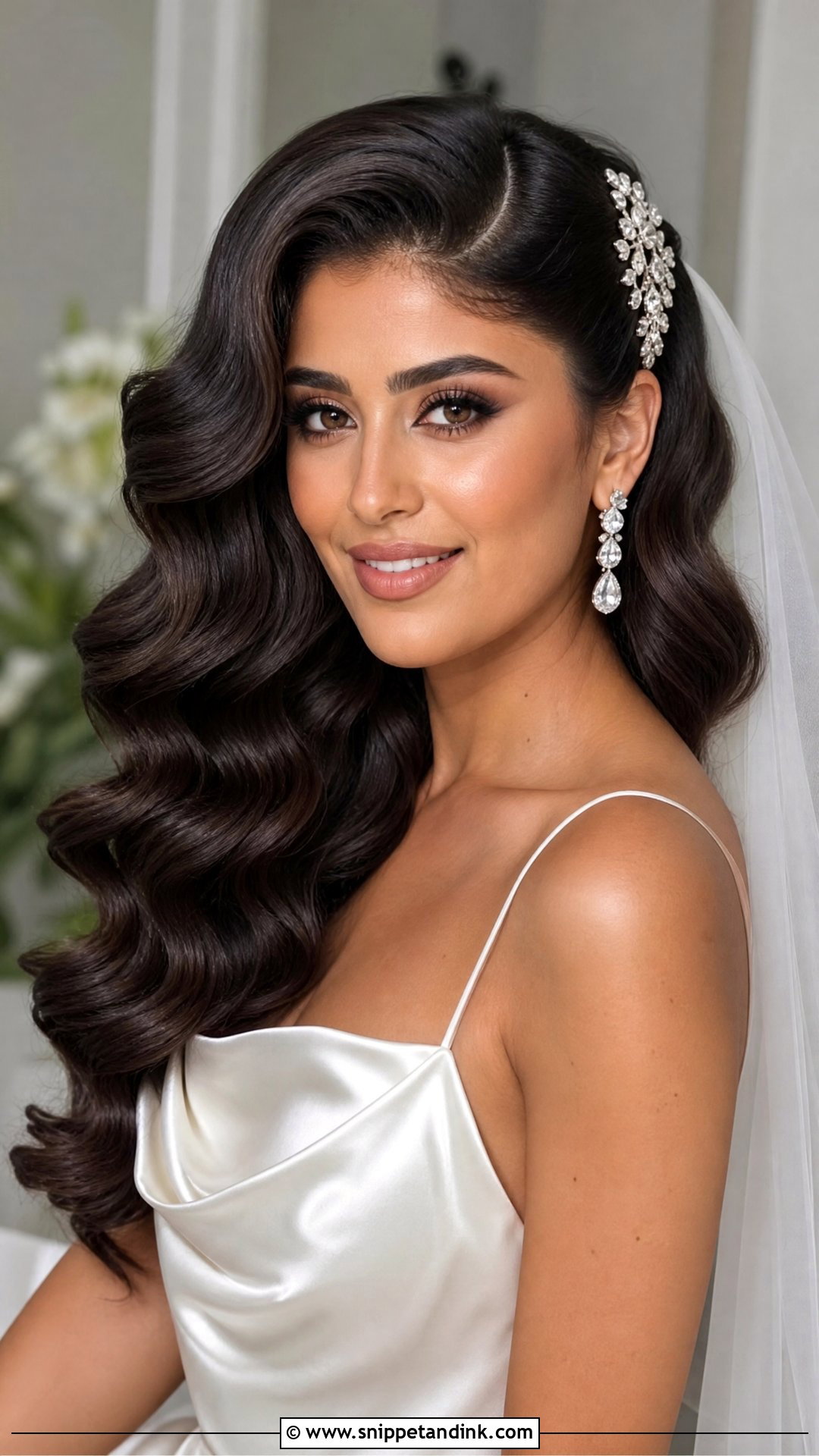
Hollywood waves are less about curling and more about setting. I curl each section in the same direction, pin every curl while it’s hot, let them cool completely, then brush them into one continuous wave and press the ridges with clips for a few minutes. A deep side part adds drama, and tucking one side behind the ear shows off an earring or a jeweled clip. Fitted gowns and satin both suit them. Fine, straight hair can drop the shape within a few hours, especially in warm weather, so I’d test this look in your real hair before trusting it for a long evening.
5. Arabic Bridal Side Swept Curls
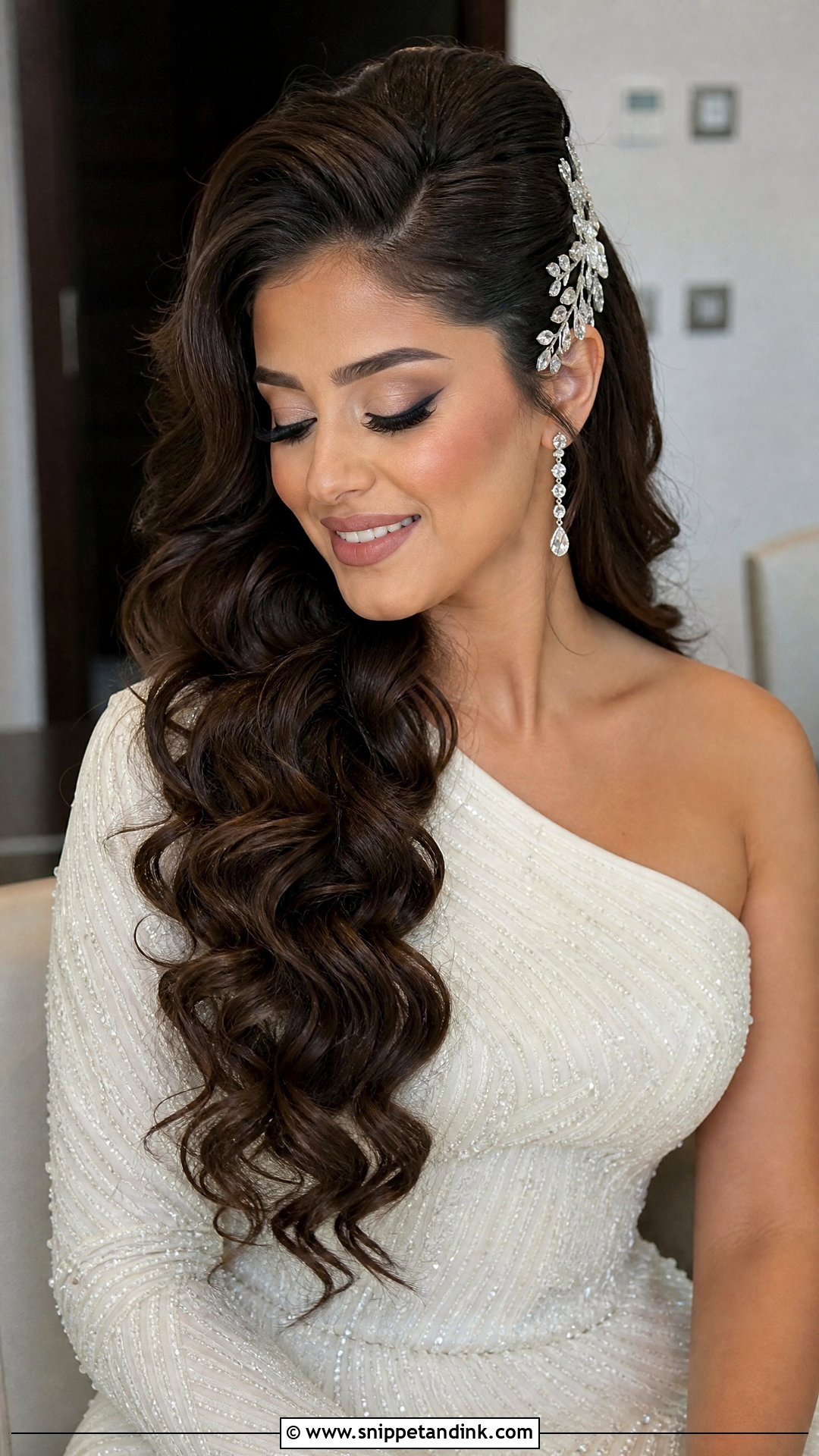
Side swept curls gather the hair over one shoulder, which gives you a soft line in close portraits. I build a hidden pinned seam behind the opposite ear, because without it the curls slowly drift back to the center. That one anchor is the whole style. It suits one-shoulder and off-shoulder gowns, or a neckline with detail you want people to see. A crystal comb or pearl pins can sit along that seam. Medium and long hair both work, and extensions fill out the curls nicely. It’s a poor match for a very high neckline, where the curls bunch against the fabric.
6. Arabic Bridal Sleek Middle Part Bun
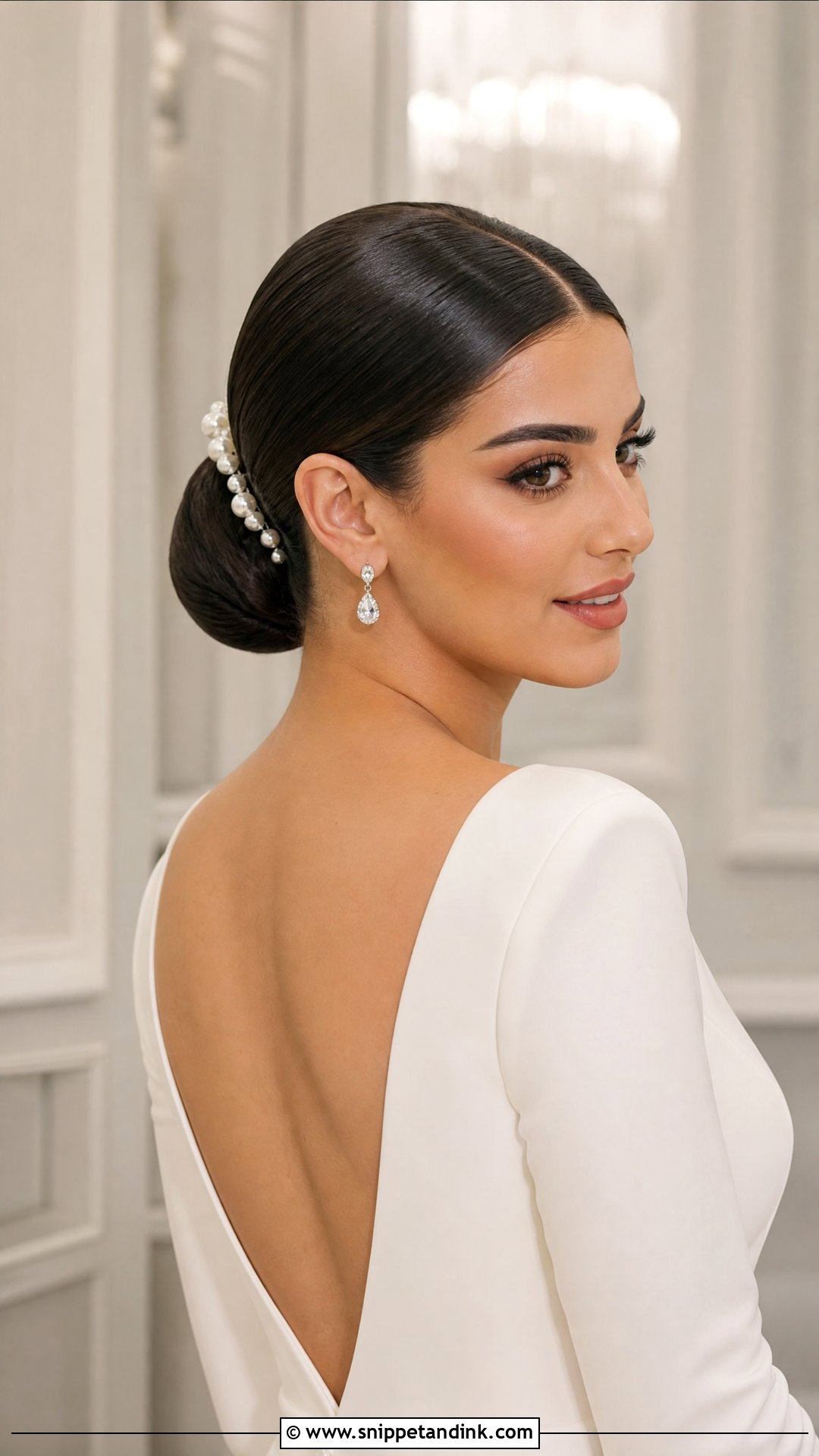
A sleek middle part bun relies on precision. I smooth each section with a boar bristle brush and a light gel, then check the part from above, because even a slight drift off-center shows under a sheer veil. It’s a modern choice with minimalist or structured gowns and strong jewelry. The smooth top is also one of the best bases for a veil comb. Be honest about your hairline before choosing it: a strong cowlick or broken baby hairs at the front are hard to hide in this style. A gloss treatment a week ahead helps the shine without making the hair slippery.
7. Arabic Bridal Braided Bun
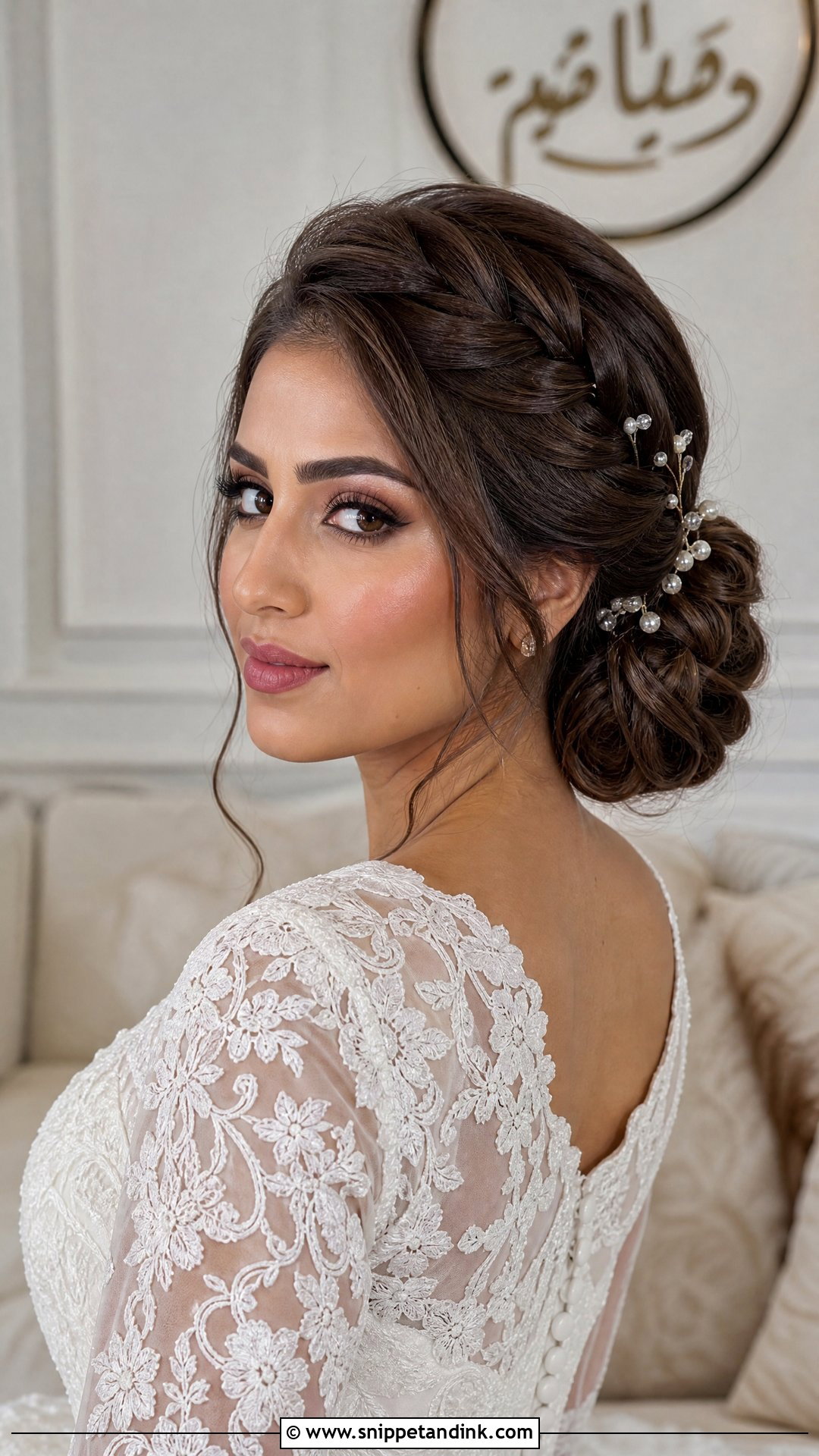
A braided bun gives you detail without fuss, and on thick hair it’s genuinely practical, because the braid locks the weight in place. I usually braid the lengths first and coil them, rather than braiding around a finished bun, which keeps the shape tighter through dancing. The braid can wrap the bun, run along one side or blend into the crown. It sits well with lace veils, embroidered gowns and pearl pins. For a softer finish I pull the braid gently apart and leave a few pieces around the face. Very short layers can poke out of the braid, so they may need a little gel to tuck in.
8. Arabic Bridal Loose Curls
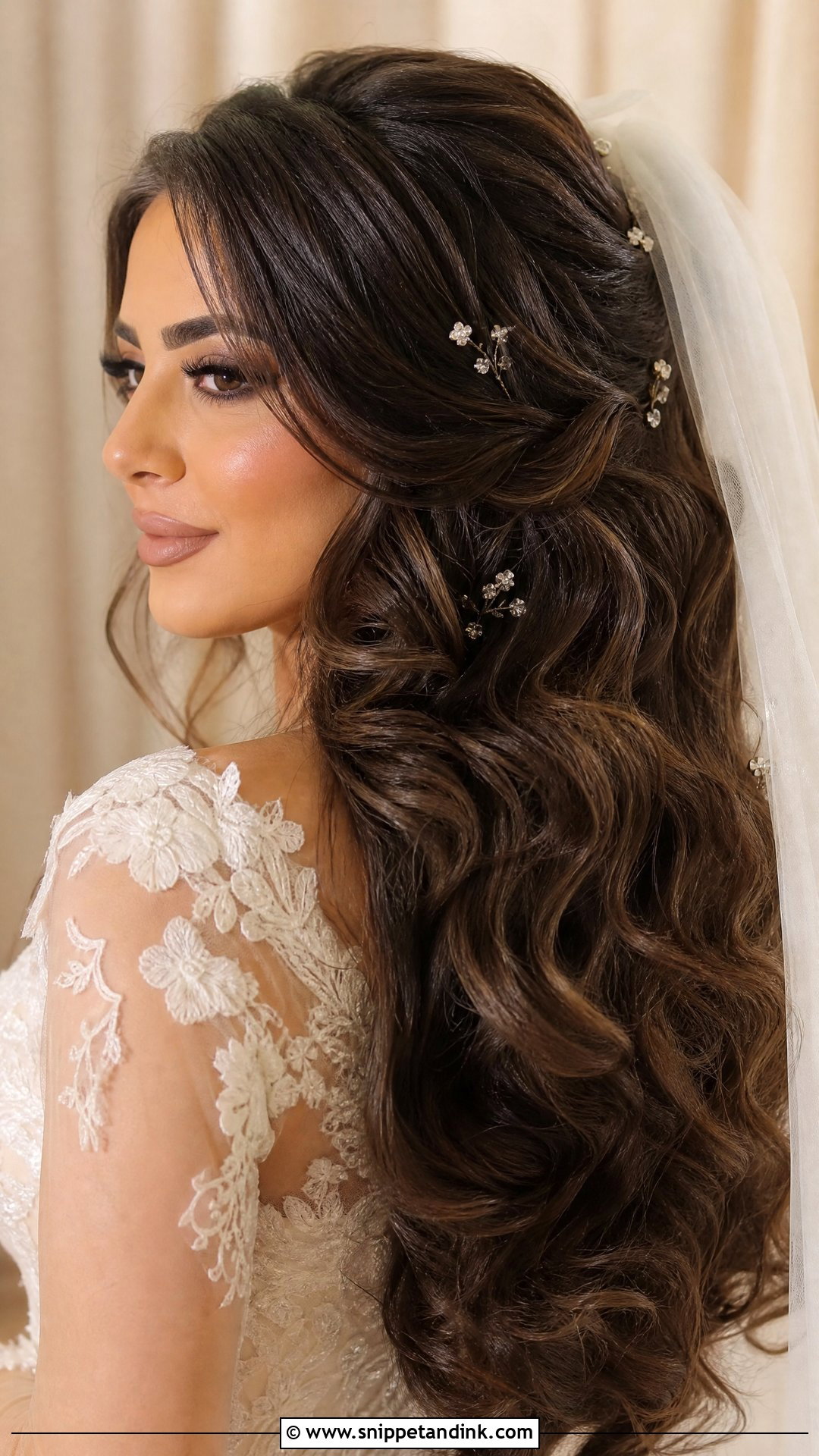
Loose curls look easy and are deceptively hard to keep. I use a medium barrel iron, pin each curl to set, and brush the finish with fingers rather than a brush so the curls stay full instead of frizzing. Long hair, layered cuts and subtle highlights show the dimension in photos. A veil can be pinned at the crown, or a jeweled headband added. In a hot, crowded hall the curls loosen over the evening, and that’s fine as long as you expect it. If you need them crisp for a late entrance, ask your stylist for a quick refresh with a small iron.
9. Arabic Bridal Voluminous Updo
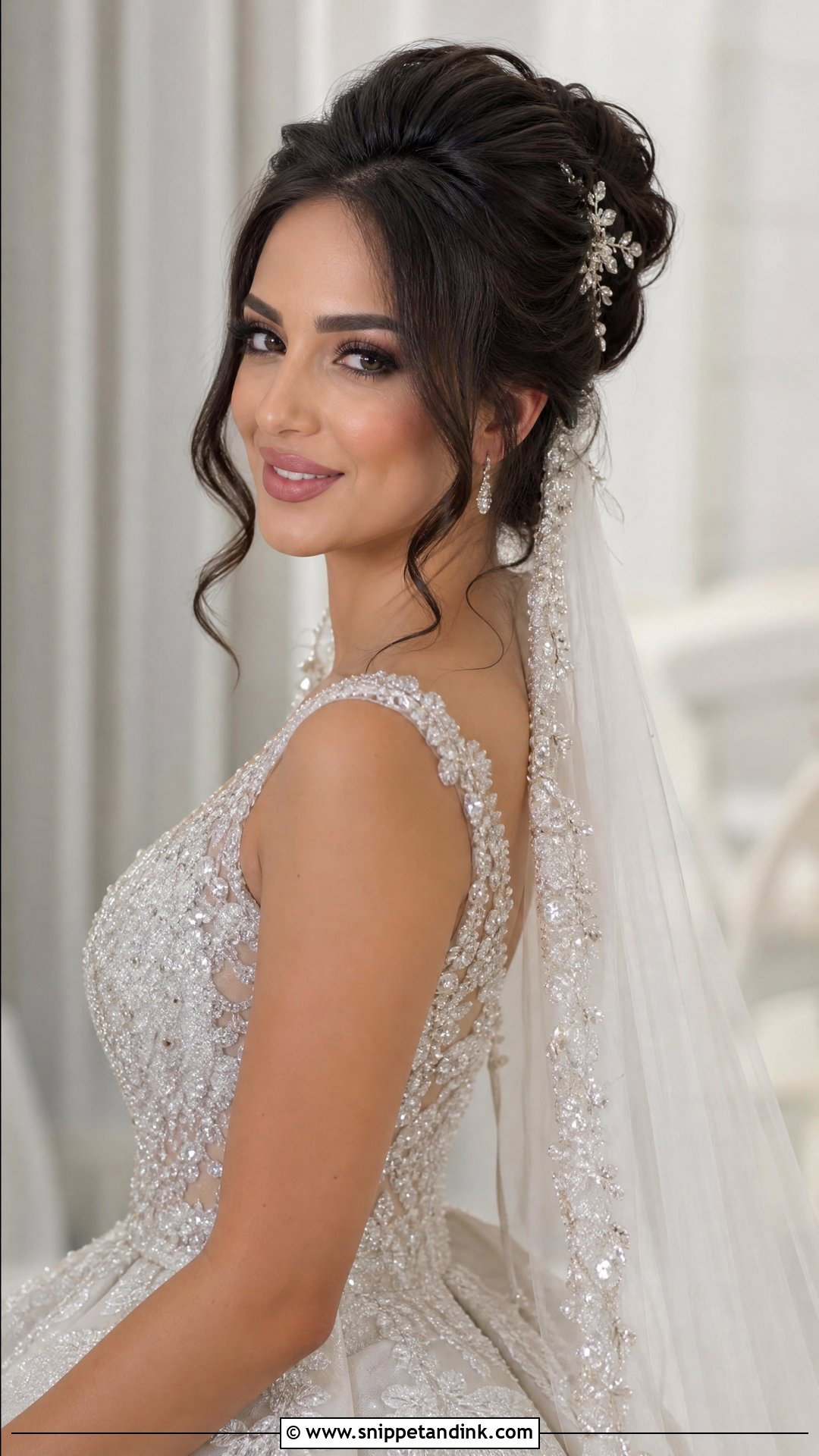
A voluminous updo is the most dramatic shape here: height at the crown, pinned curls and a full back section that gives a strong silhouette next to a beaded gown and long train. The volume should come from structure, not weight. I backcomb at the roots, smooth over, and sometimes use a padding piece so the shape holds without piling up more hair than your scalp can carry comfortably. Balance matters: too much height on a small face can overwhelm it. This kind of updo also handles humidity far better than long hair, which makes it a sensible choice for a summer reception.
10. Arabic Bridal Soft Chignon
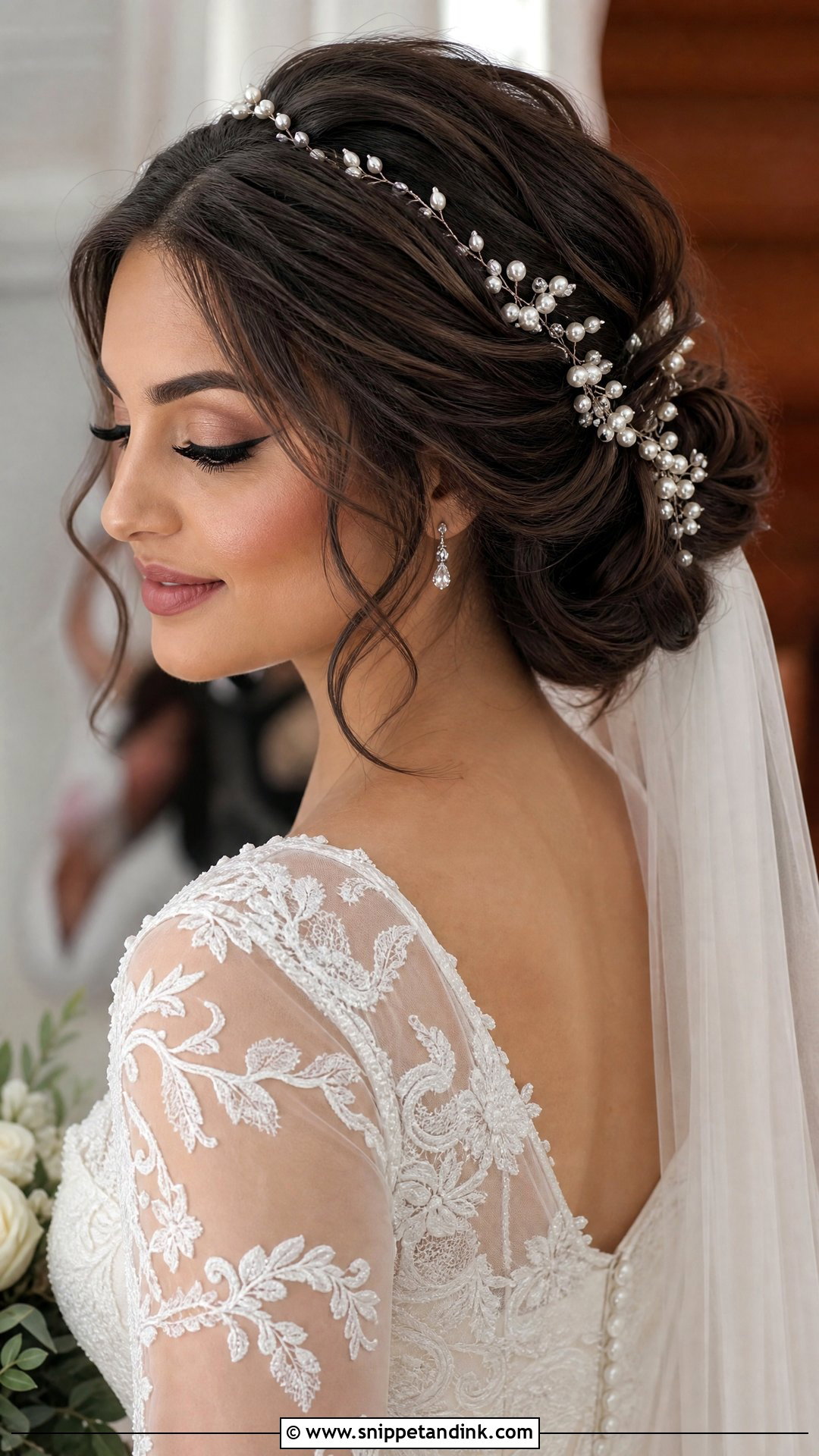
A soft chignon sits low at the nape with a relaxed shape, a gentler cousin of the sleek bun. I roll it rather than twisting tightly, leave a little texture on the surface, and pin it into a firm base underneath so the softness is only on top. It pairs well with lace gowns, long veils and pearl or floral accessories. Face-framing strands can soften a strong jaw, and a little lift at the crown stops it looking flat. I find it suits brides who want a polished look but feel stiff and overdone in a sleek bun. It also tolerates a veil being pulled on and off better than most.
11. Arabic Bridal Crown Hairstyle
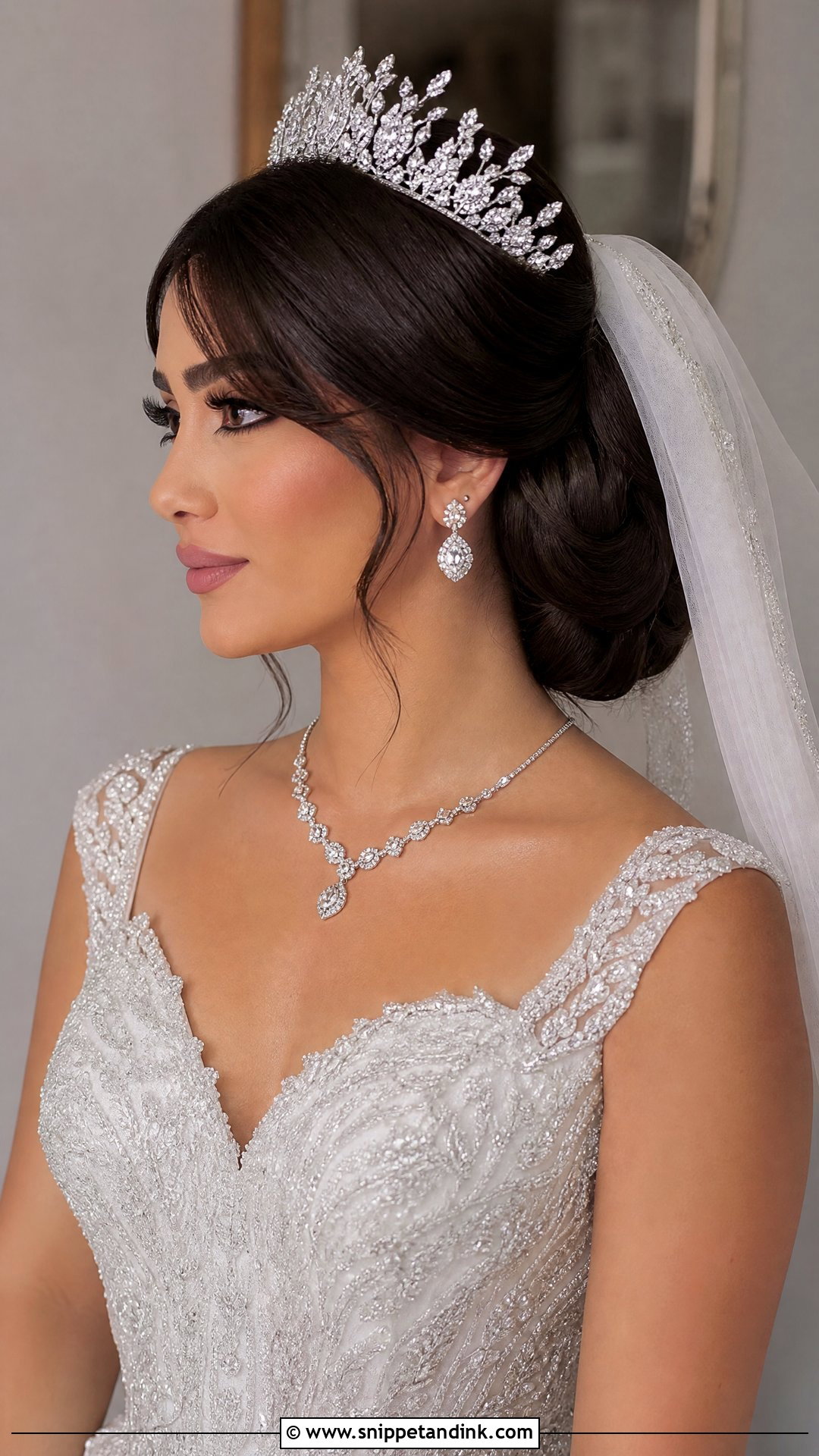
With a crown, the hairstyle becomes a support structure for a royal wedding look. A high bun, low bun or full waves can all carry one, but the crown has to sit level and stay put through a long evening. I build a small teased or braided ridge where the band will rest so the pins have something to grip, then slide the crown’s combs or loops into it. Smooth hair underneath and balanced volume on the sides keep it from looking perched. Match the metal and stones to your gown’s embroidery, and wear it for an hour at your trial to check for pressure behind the ears.
12. Arabic Bridal Veil Hairstyle
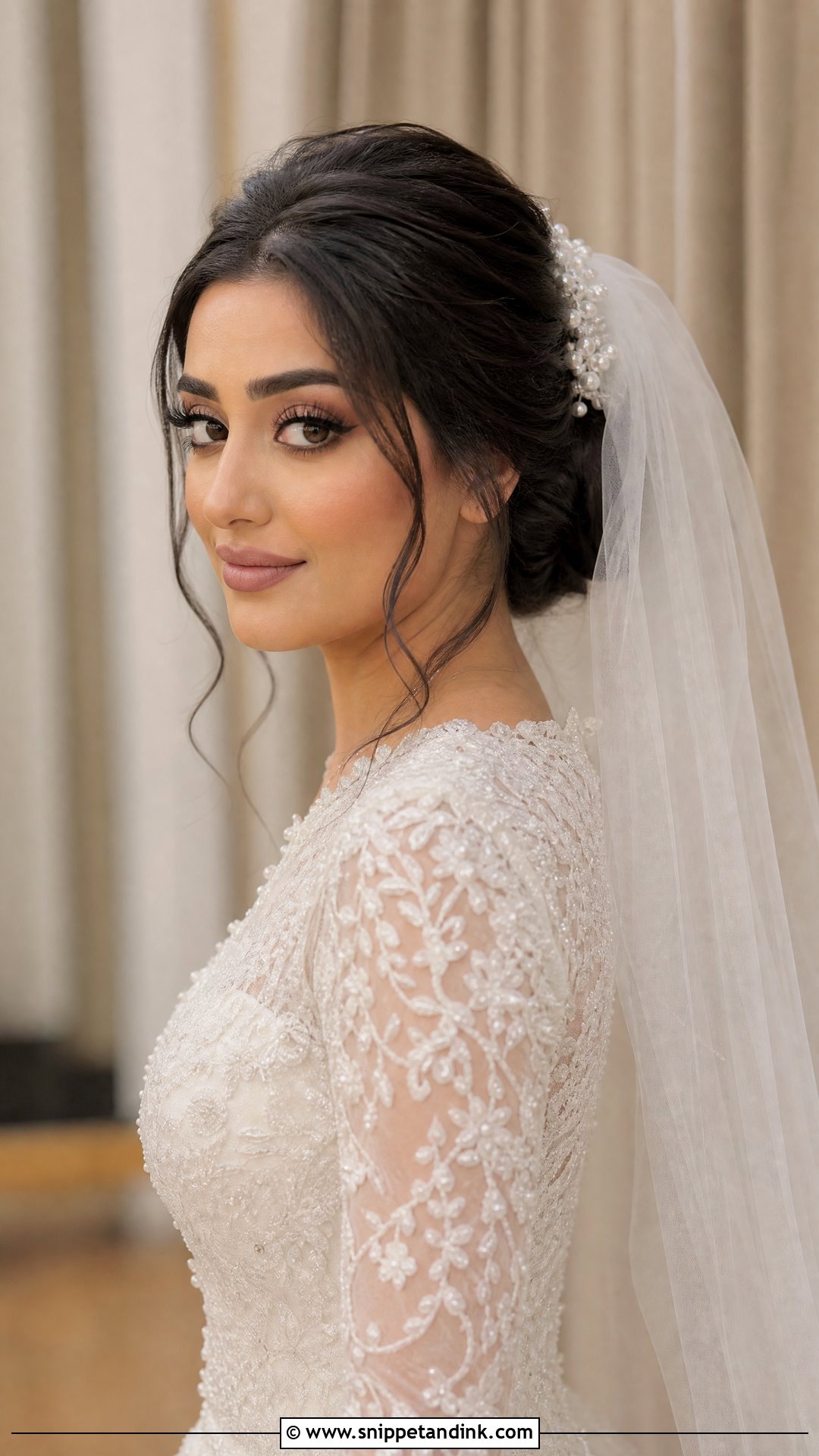
A veil hairstyle has to look good twice: with the veil on during the ceremony and without it later. Low buns, soft chignons and half-up curls give the comb a secure place to sit. The veil’s weight changes what I build. A cathedral length with heavy beading needs a firm anchor, often a small hidden braid, while a light tulle veil is fine over softer waves. I always ask the bride to bring the actual veil to the trial, not a photo of it. The hair shouldn’t disappear under the veil or fight with it, and when the veil comes off, I want the style to still look finished.
13. Arabic Bridal Long Hair With Tiara
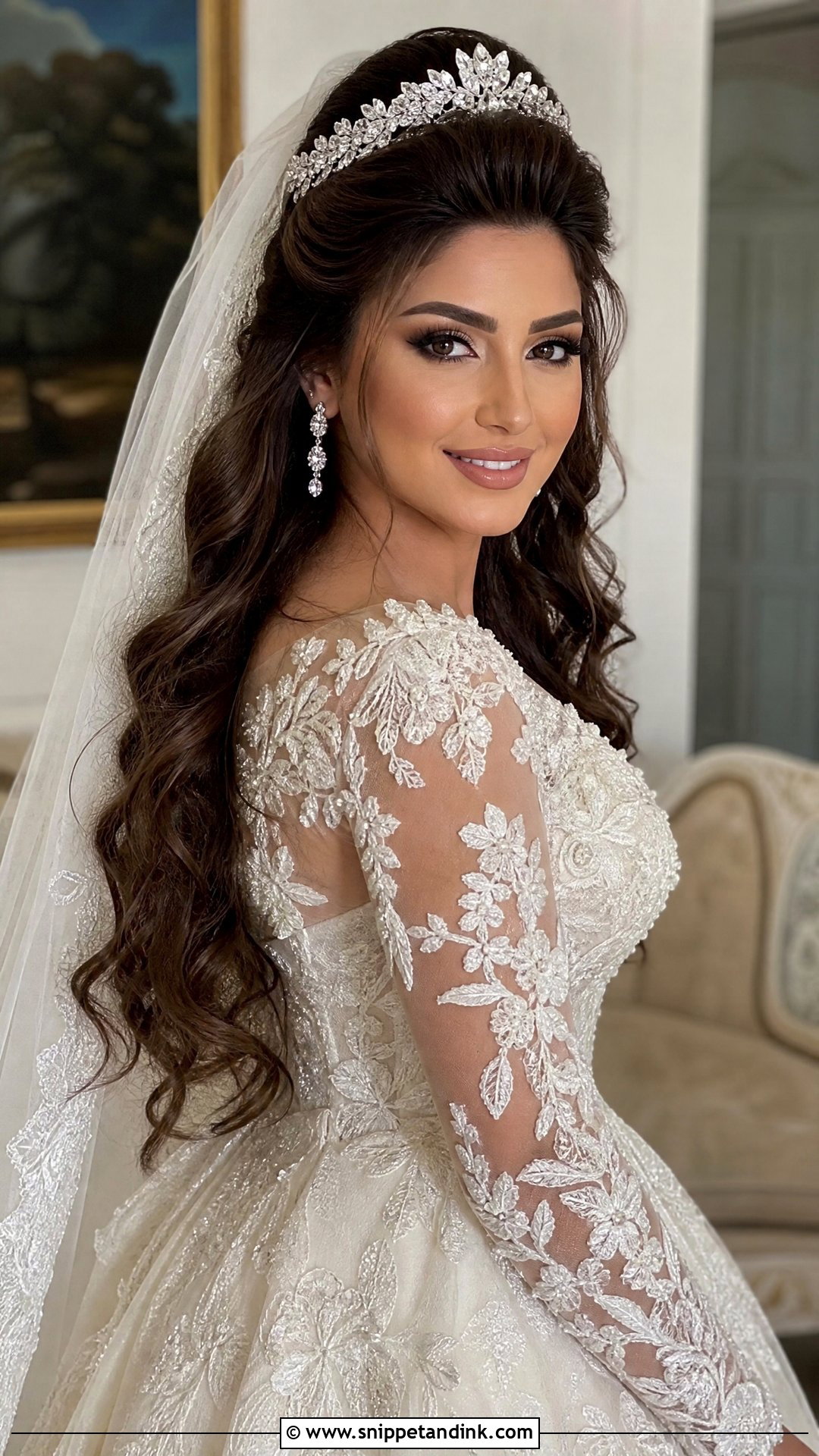
Long hair with a tiara gives a classic princess-inspired look, but the tiara needs a base. On loose curls or waves, I create a small pinned section where the band sits, often just behind the hairline, so it doesn’t slide forward. The tiara should look like part of the head, neither perched on the front nor buried at the back. A little crown volume helps it blend. Long hair down under a tiara is lovely in photos, and it also carries a practical trade-off: heat and dancing loosen curls, so a smoother top half keeps things tidy late into the night.
14. Arabic Bridal Ponytail
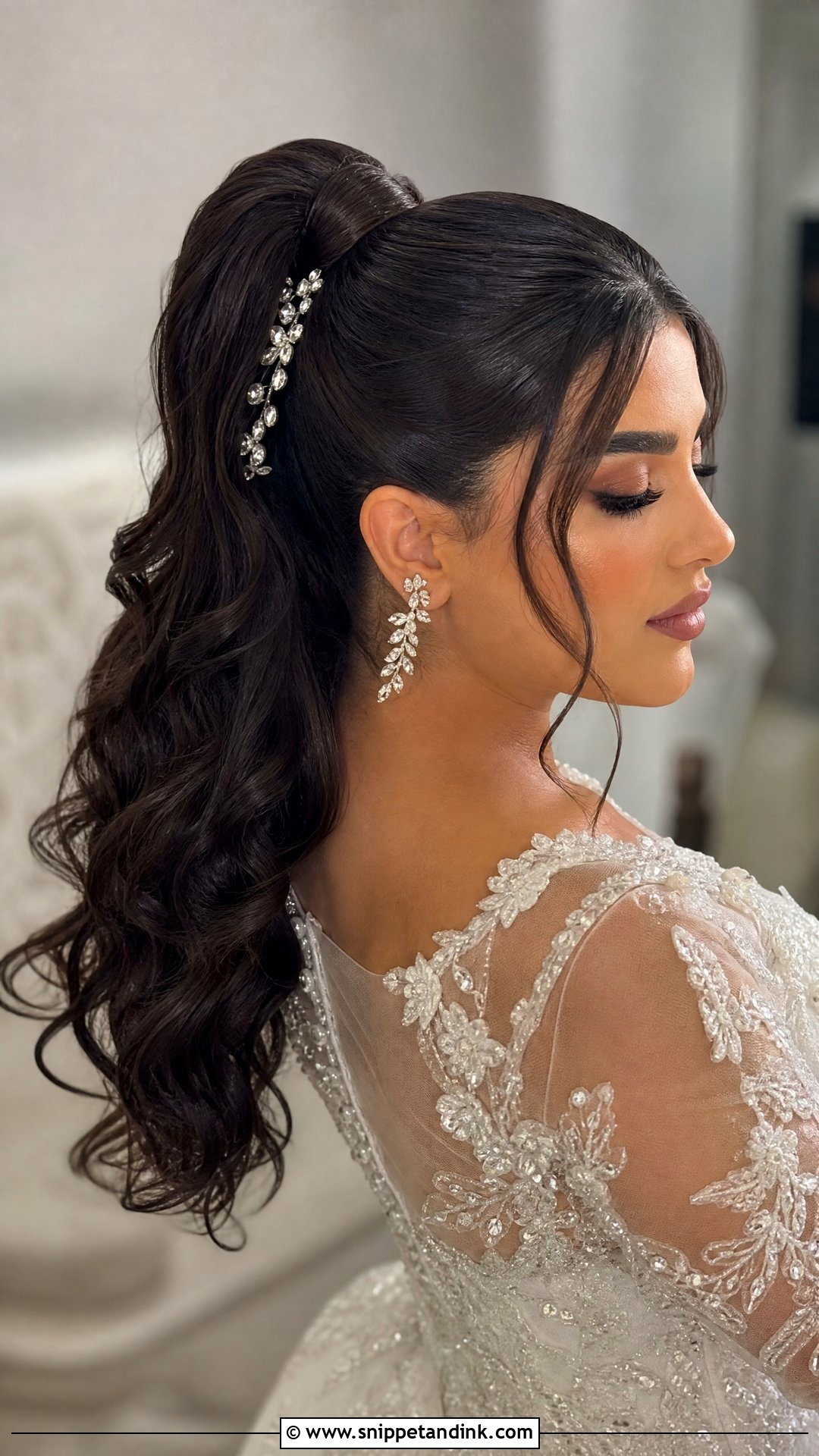
A ponytail is the most comfortable look on this list for dancing, and it shows off earrings, necklines and detailed sleeves well. High reads dramatic; low reads refined. The base is what makes it bridal: I secure the tie, wrap a strand of hair over it and pin the end out of sight. Long, heavy hair can pull at a high ponytail by mid-evening, so I’d suggest a slightly lower position or two stacked ties for thick hair. Curls or soft waves through the length hold well. Pearl pins or a crystal clip at the base give it the dressed-up finish.
15. Arabic Bridal Hijab Hairstyle
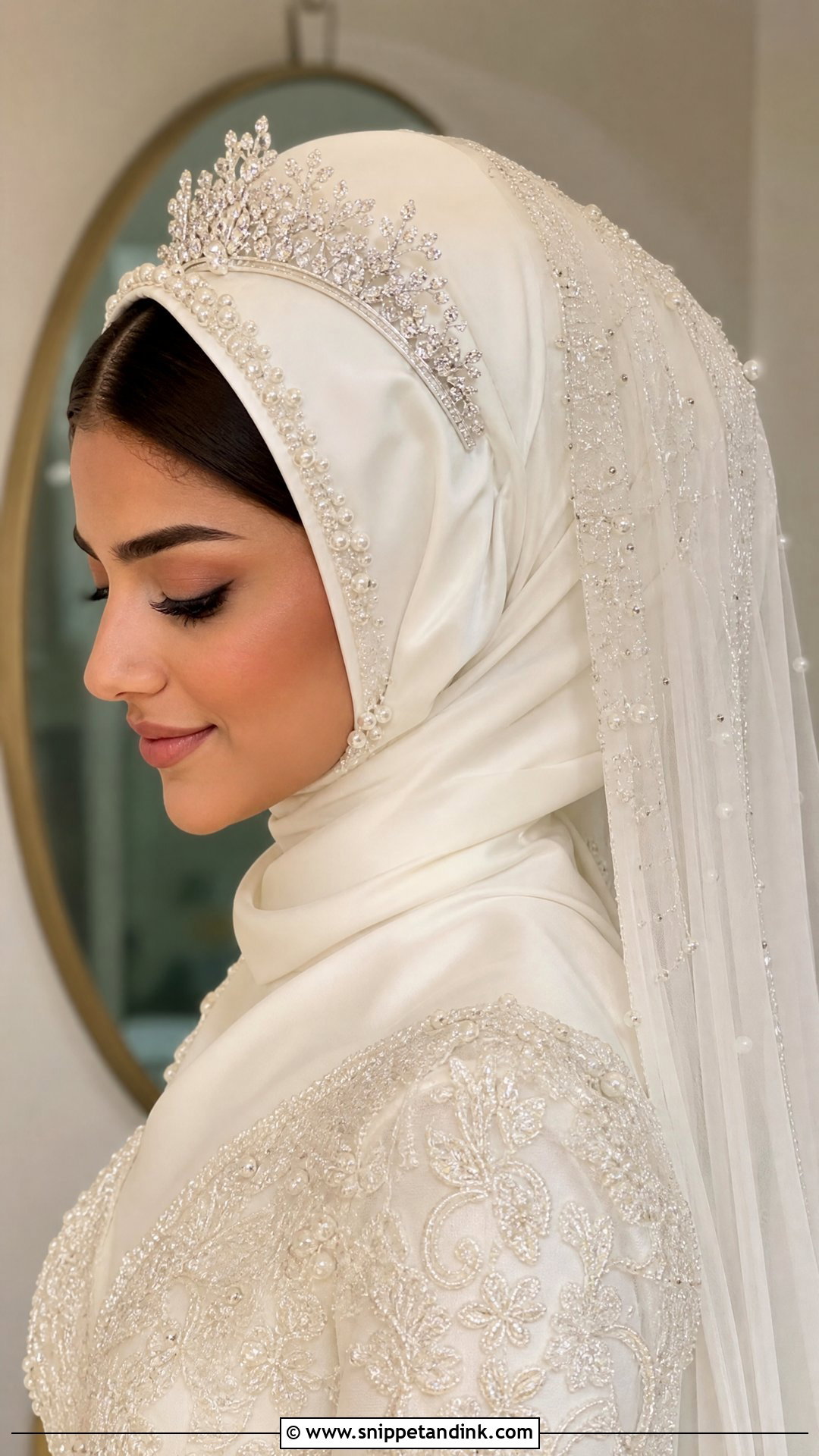
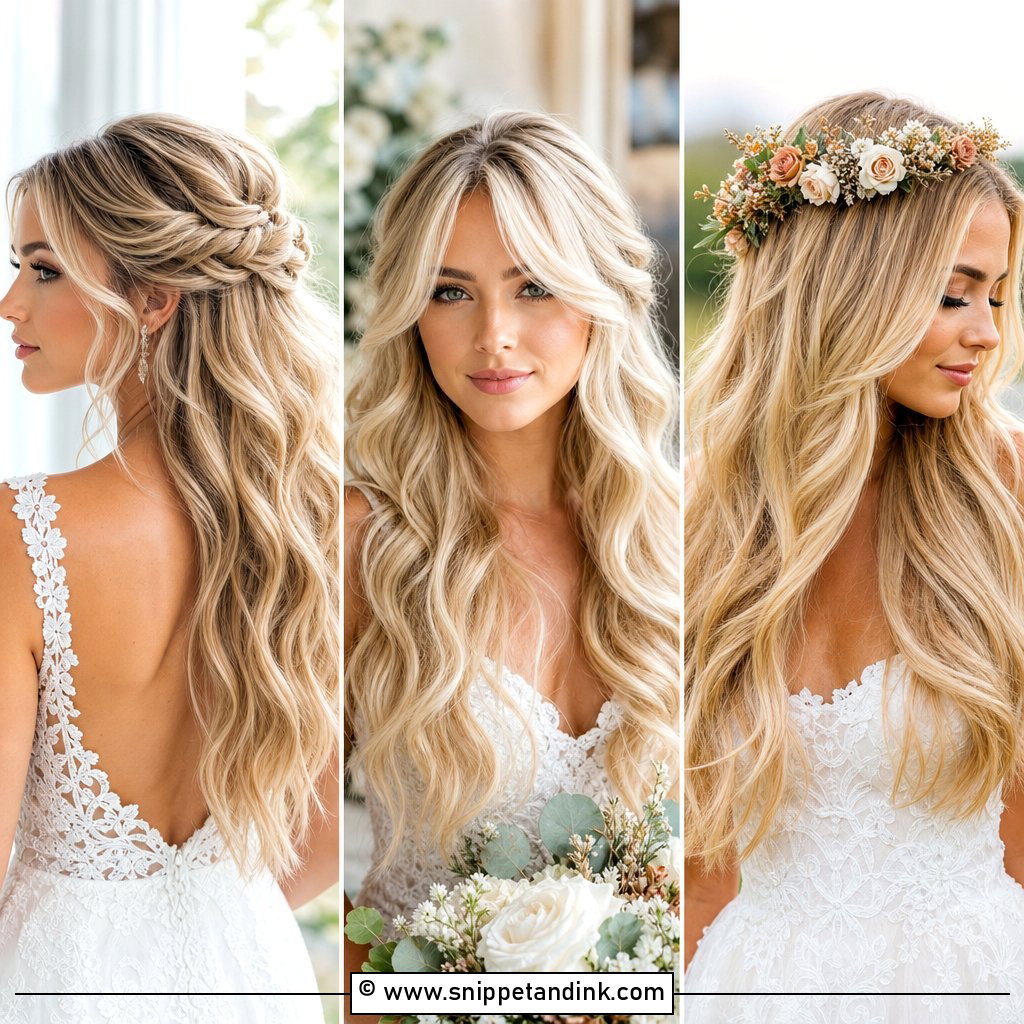
With a bridal hijab hairstyle, the work is hidden but it shapes everything. I want a smooth, even base, usually a low bun wrapped flat or a small padding piece, so the hijab falls cleanly and a crown or veil sits level. A tall, bulky bun shows through fine fabric as an odd lump. The hijab fabric should frame the face softly and suit the gown’s texture. Pearls, crystals or embroidered edges add the bridal detail. Comfort is a big part of my job here: I place pins where they hold the shape without pressing into the scalp for hours.
Thick Hair, Heavy Crowns and the Headache Nobody Mentions
Long, dense hair is wonderful for volume, but pinned up with extensions, a full crown and a long veil, it becomes real weight. By the third hour, the complaint I hear most isn’t about the look; it’s a sore scalp right where the crown or veil comb is anchored.
- Anchor the heaviest accessory into a braided or teased base rather than smooth hair, so the weight spreads over more of the scalp.
- Wear the real crown or tiara for two hours after your trial. Something that feels fine for ten minutes can press behind the ears by the reception.
- Thick hair takes longer to set. Wash it the night before, dry it completely, and allow extra time on the morning schedule.
- In hot, humid weather, an updo outlasts long curls. If you want curls, have them pinned and cooled before brushing.
Plan the take-down too. After a night of pins, extensions and spray, rushing it tears hair. Take the pins out slowly, then work plenty of conditioner through with a wide-tooth comb before you try to brush.
Silk, Chiffon and Satin Behave Differently Over the Same Bun
For a covered bride, I always test the hair with the actual hijab fabric. Pins that hold in cotton can slide in silk, and a bun that looks smooth under satin can show its edges through fine chiffon. An underscarf with grip stops the fabric shifting during the zaffa and the dancing. If you’ll uncover for a women’s celebration later, ask for the hair to be set so it can be let down with soft waves left in, rather than flattened by hours of wrapping.
Let the Gown’s Embroidery Decide How Much Hair Drama
Every style here can look regal; the question is how much your outfit is already saying. A heavily beaded or embroidered gown usually looks best with a clean bun or chignon, so the eye isn’t pulled in two directions. A plain satin dress leaves room for waves, big curls or a crown. Between those sit the half-up styles, ponytails and hijab-friendly looks, which mostly come down to comfort and how many events you’re dressing for. Bring gown photos, your veil and your heaviest accessory to the trial. I’d keep whichever look still feels comfortable two hours after the trial ends.
You'll Like These Ideas:



Leave a Reply