
A backyard wedding asks something different of a dress. It has to look bridal next to a fence and a vegetable bed, and it has to cope with grass, gravel paths and a patio that gets hot by noon. The Backyard Wedding Dresses I like for this setting are lighter than a ballroom gown: chiffon, soft lace, breathable cotton and fluid satin, often with a shorter hem or a train you can actually manage. When I style a bride for a home wedding, I start with three questions: what time is the ceremony, what is the ground like, and how formal do you want it to feel? The answers usually rule out half the rail before we look at a single neckline.
Below are twenty complete looks, from classic lace to minis and two-in-one dresses, each with the shoes and details I’d put with it outdoors.
Fit the Dress for Turf and Gravel, Not a Ballroom Floor
Bridal salons are carpeted and flat, and that hides problems a lawn will find within minutes. When I prepare a bride for a home wedding, I set the fittings up around the real ground she’ll be standing on.
Hem to the exact shoes
Bring the wedding shoes to every fitting, and decide on them before the hem is cut. A floor-length hem set for a stiletto will drag once you swap to a block heel on grass. On soft lawn, even a block heel sinks a little, so I’d hem a touch shorter than you would for a hard floor. Clear heel protectors that slip over a stiletto tip are worth having for anyone who insists on a slim heel.
Test the train and bustle outdoors
A train collects leaves, grass clippings and damp from the moment it touches the lawn. Ask your seamstress for a bustle that lifts the whole train well clear, and have a bridesmaid practice doing it up at the final fitting. If the ground is likely to be wet, a shorter train or a detachable one saves the hem.
Leave enough time
Many bridal dresses take several months to arrive after ordering, and alterations usually need two or three fittings spread over the final six to eight weeks. Simpler ready-to-wear styles, which suit a backyard well, can shorten that. Either way, plan the last fitting around two weeks out so there’s room for one more tweak.
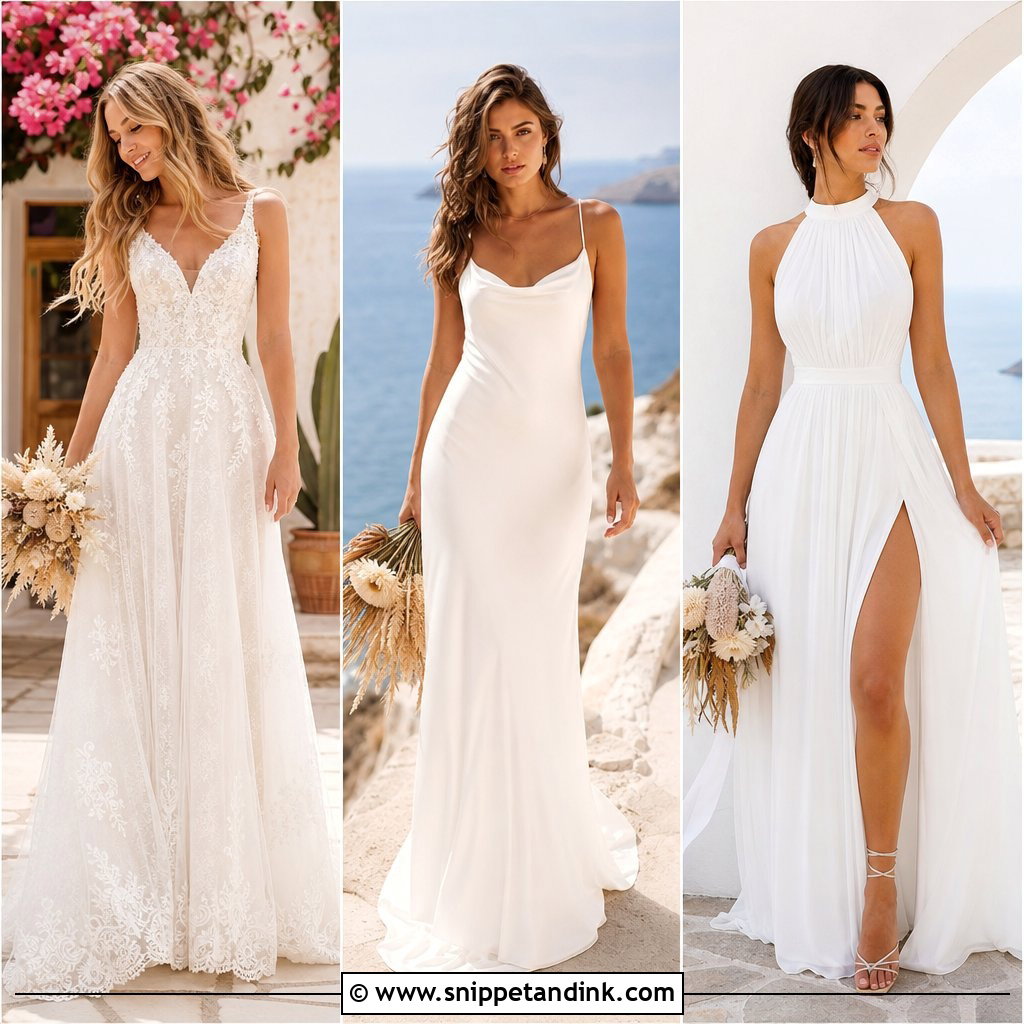
1. Lace A-Line Backyard Wedding Dress
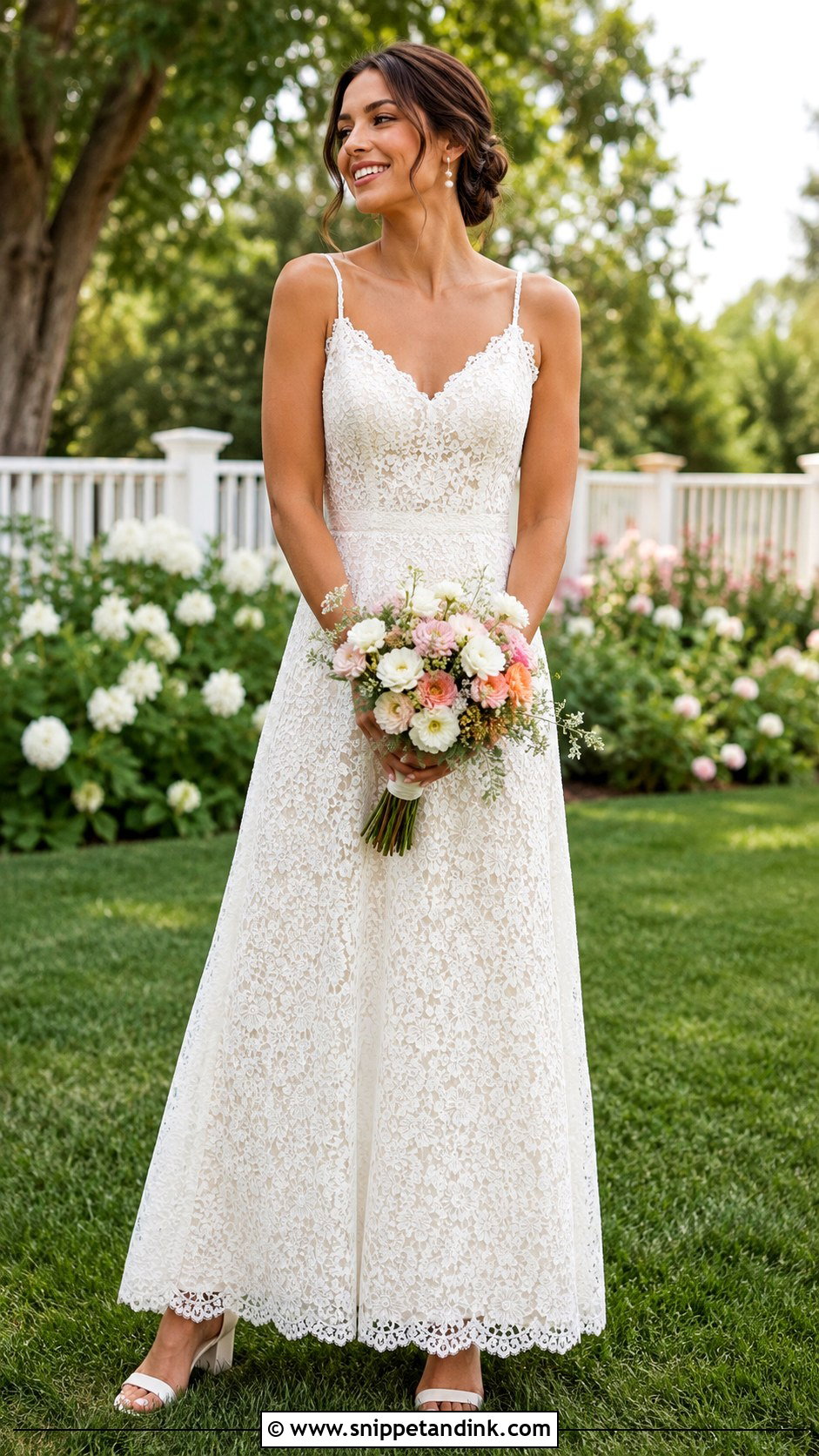
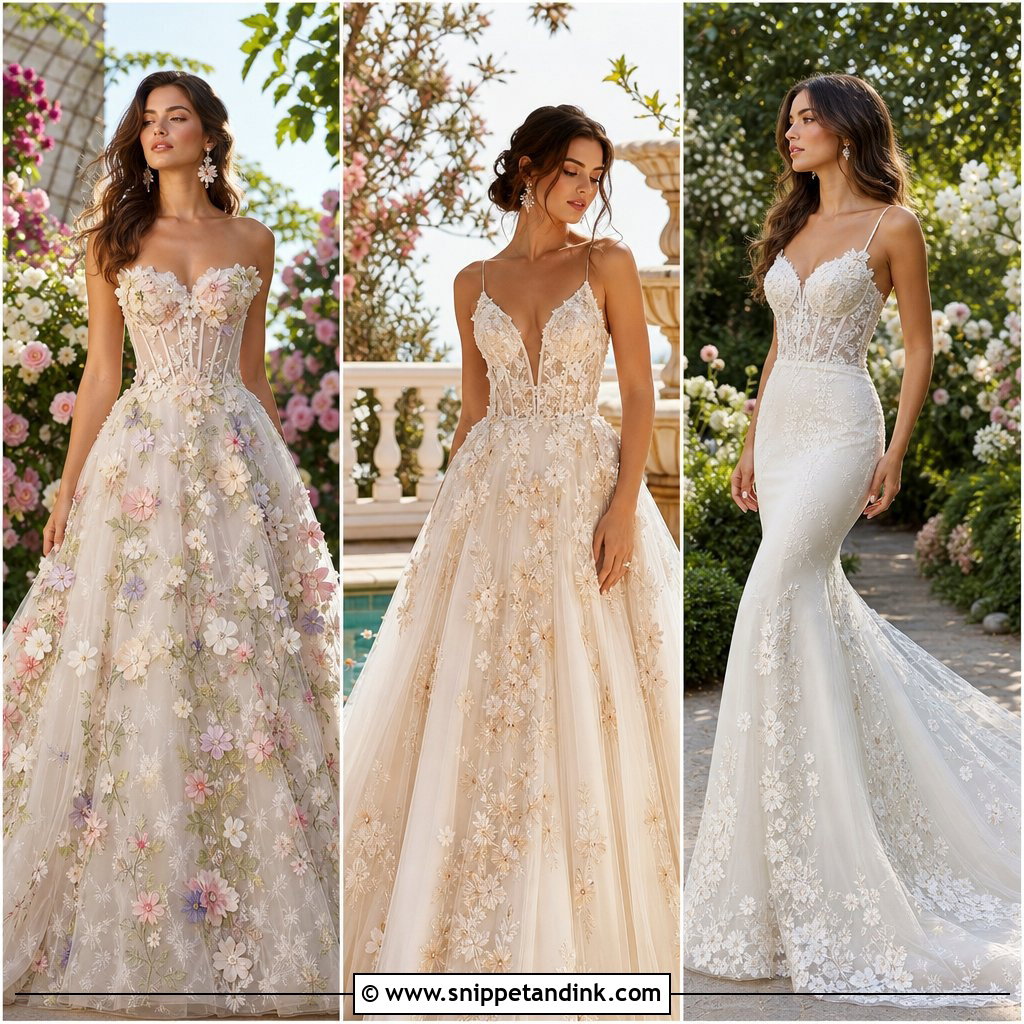
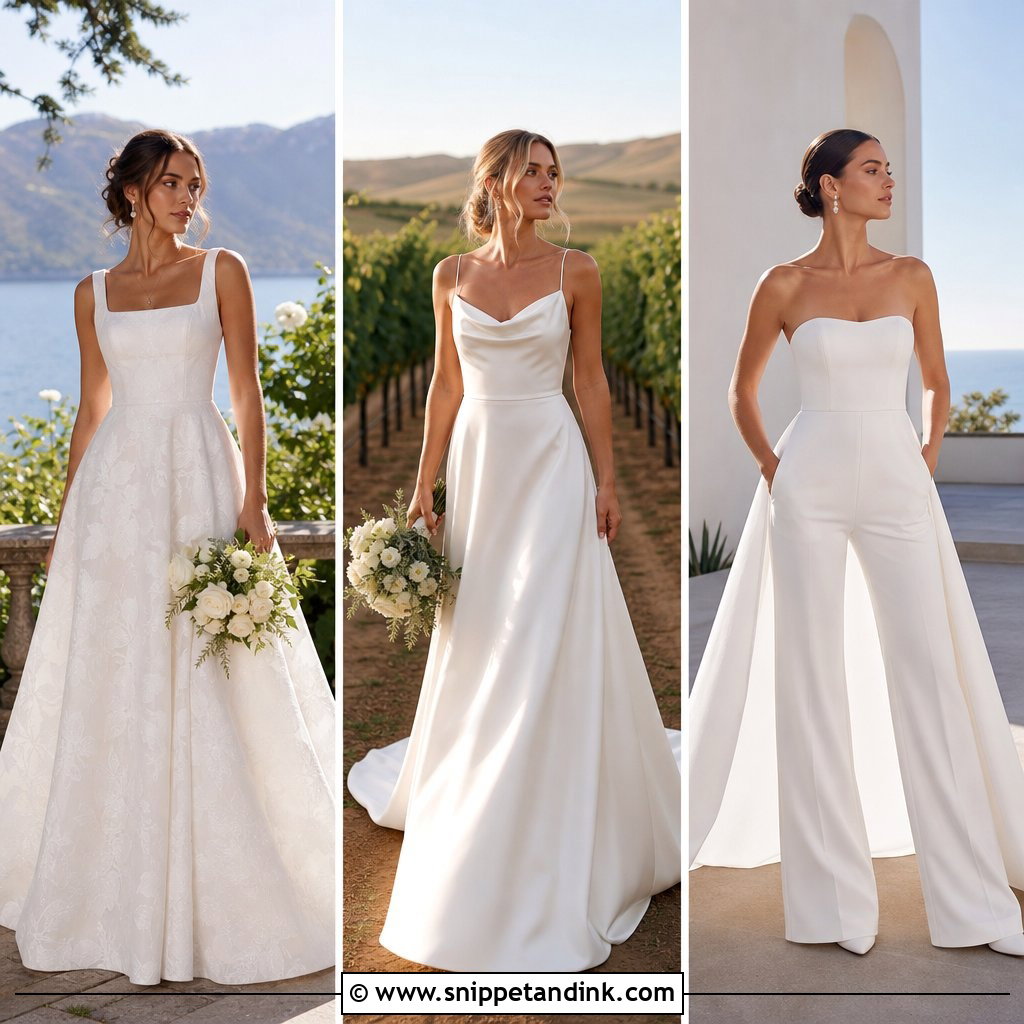
Lace A-lines are the safest place to start for a garden ceremony, and I mean that as praise. Pick a light floral lace over a soft lining; heavy corded lace looks lovely on the hanger and feels like a duvet by 3 p.m. in July. A fitted bodice with a gently flared skirt gives you a waist and still lets you sit, walk and dance. Keep the train short, or hem it so it just brushes the ground. Pearl drops, a fine bracelet and a small seasonal bouquet are enough. Block-heel sandals keep you upright on grass, and a low twisted bun leaves the neckline clear.
2. Chiffon A-Line Backyard Wedding Dress
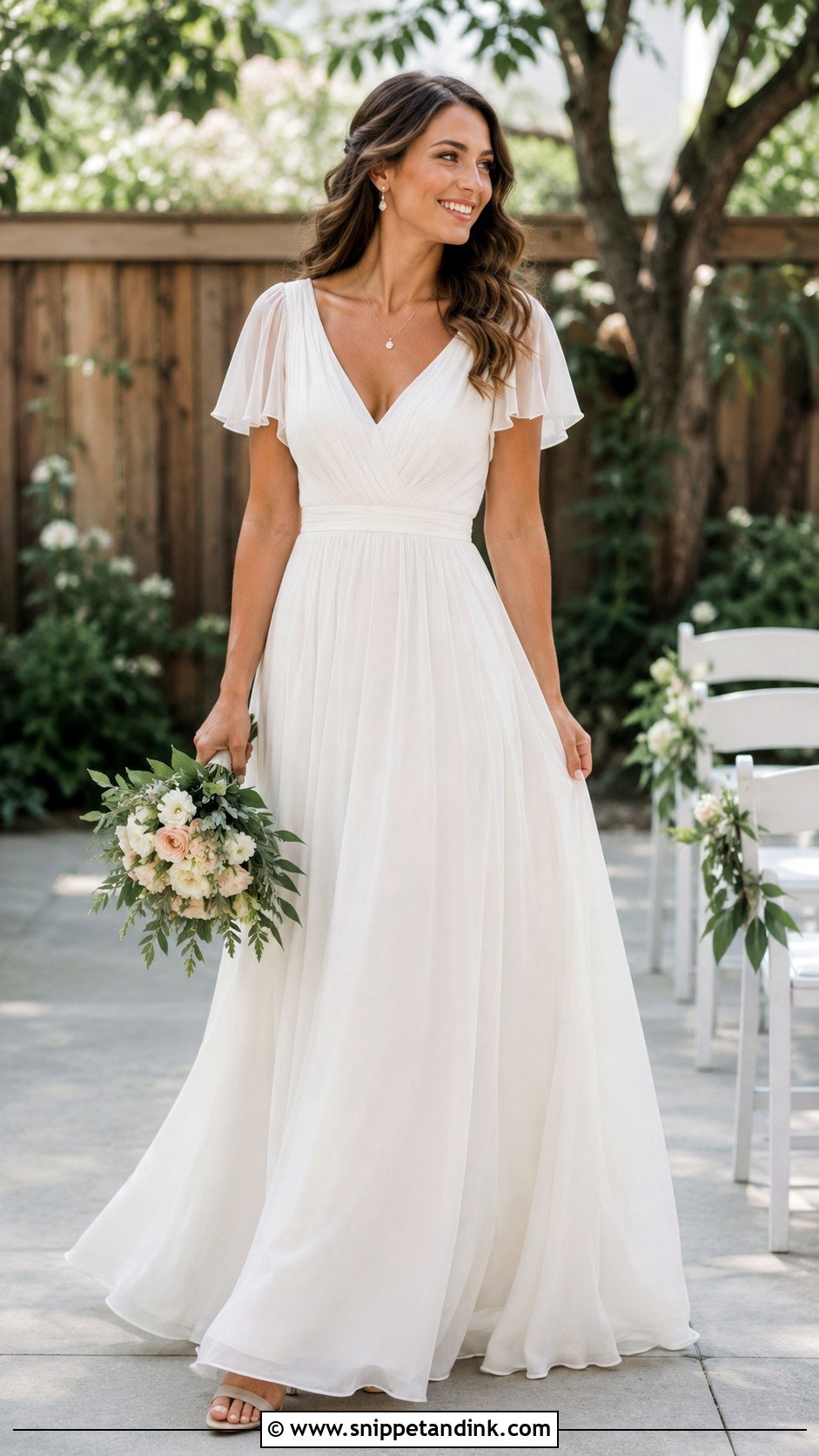
Chiffon moves in the slightest breeze, which is exactly what you want in a warm garden. Look for a lined A-line with a V-neck, a gathered waist and a skirt that doesn’t grab your legs. Flutter sleeves cover the tops of the arms without adding heat. My one warning: unlined or single-layer chiffon goes see-through against bright sun behind you, so check it outdoors at a fitting. Low block heels or embellished flats handle uneven ground, with a fine pendant, small crystal studs and a loose gathered style. It carries from an afternoon ceremony through an evening dinner without a change.
3. Tea-Length Backyard Wedding Dress
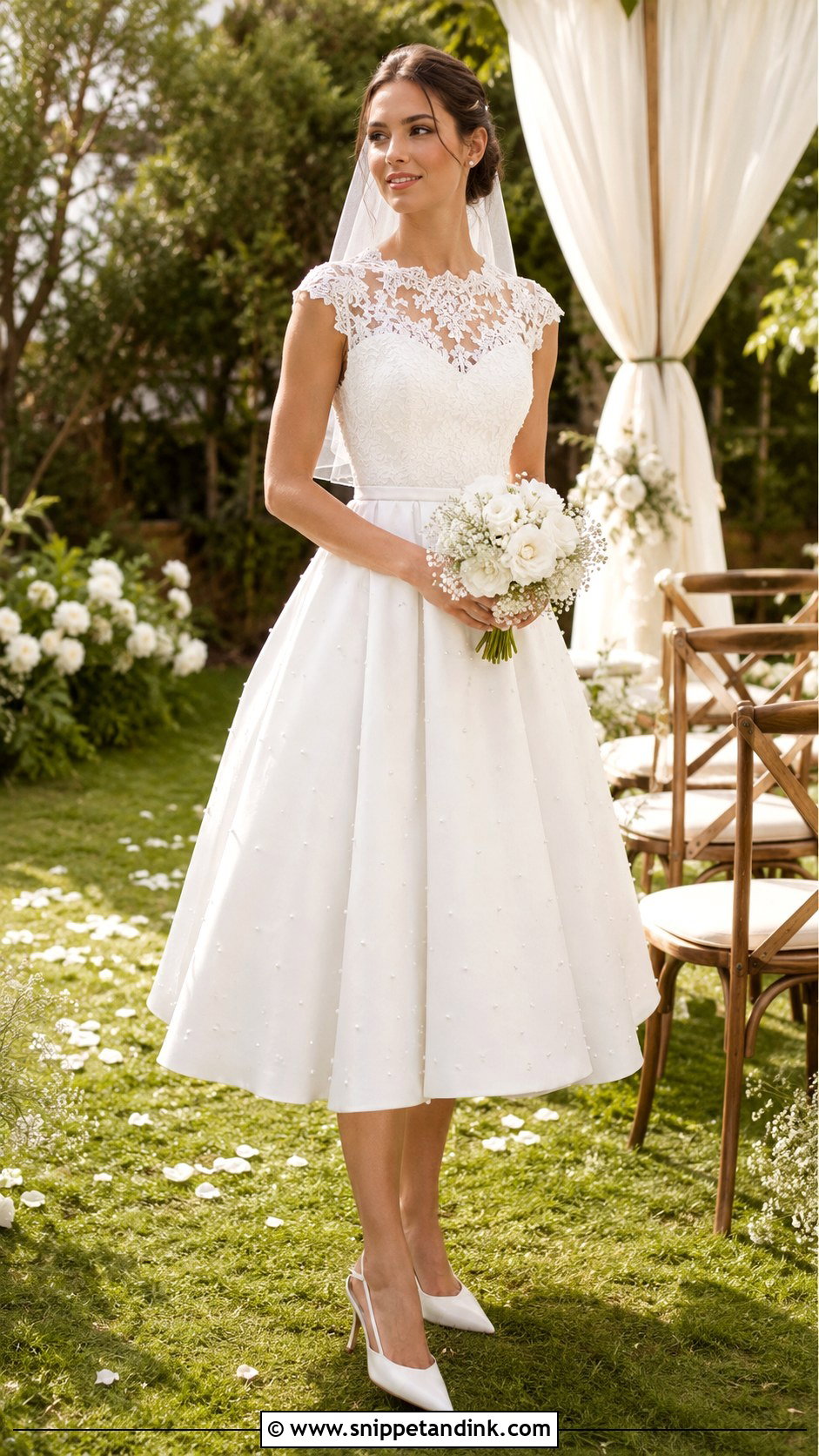
Tea-length is the practical choice I wish more outdoor brides considered, because the hem stays clear of damp grass all day. Look for a fitted bodice, a defined waist and a full skirt landing between knee and ankle. Cotton lace, light satin or a structured organza gives the skirt shape without boning. The shoes become part of the outfit at this length, so add pointed flats, low slingback heels, or bridal block heels. Pearl studs, a short veil and a compact bouquet suit the proportions, along with soft waves or a neat updo. It has a retro playfulness and it’s very easy to dance in.
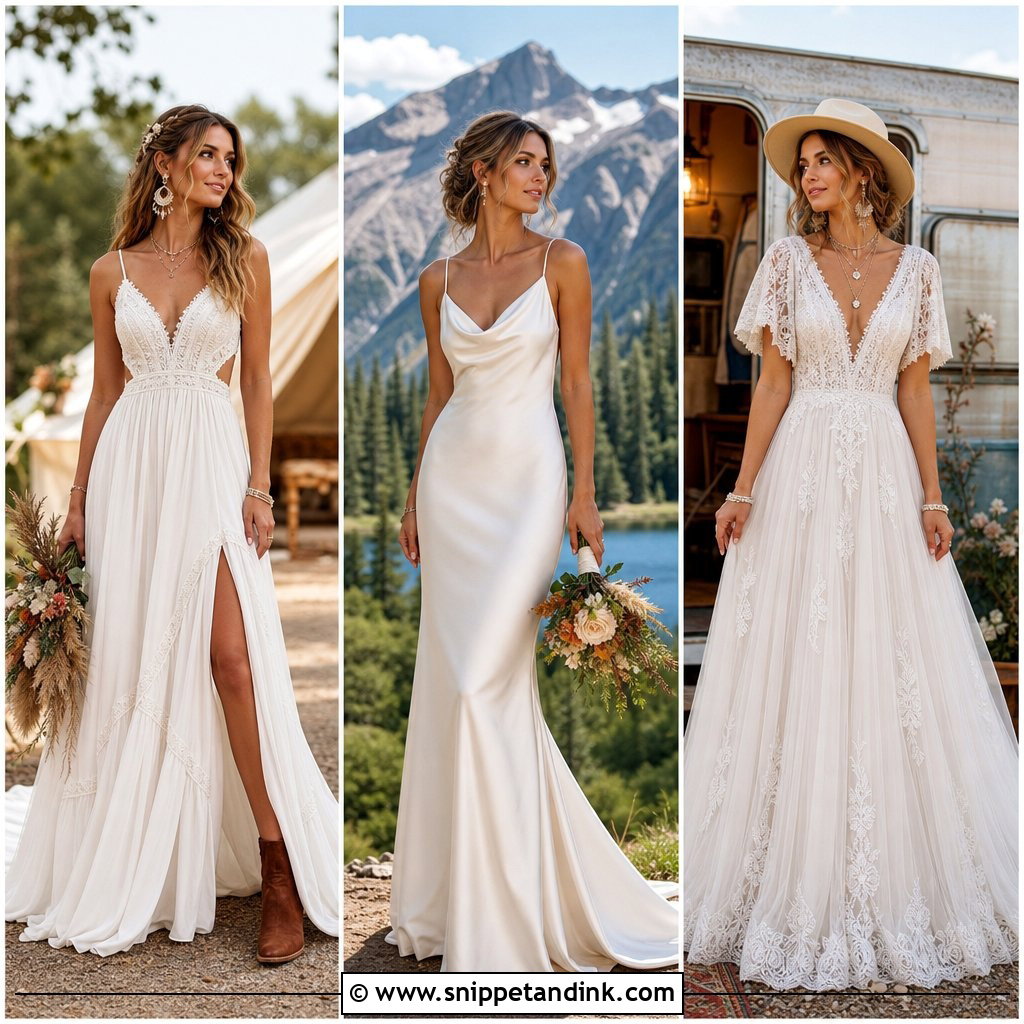
4. Satin Slip Backyard Wedding Dress
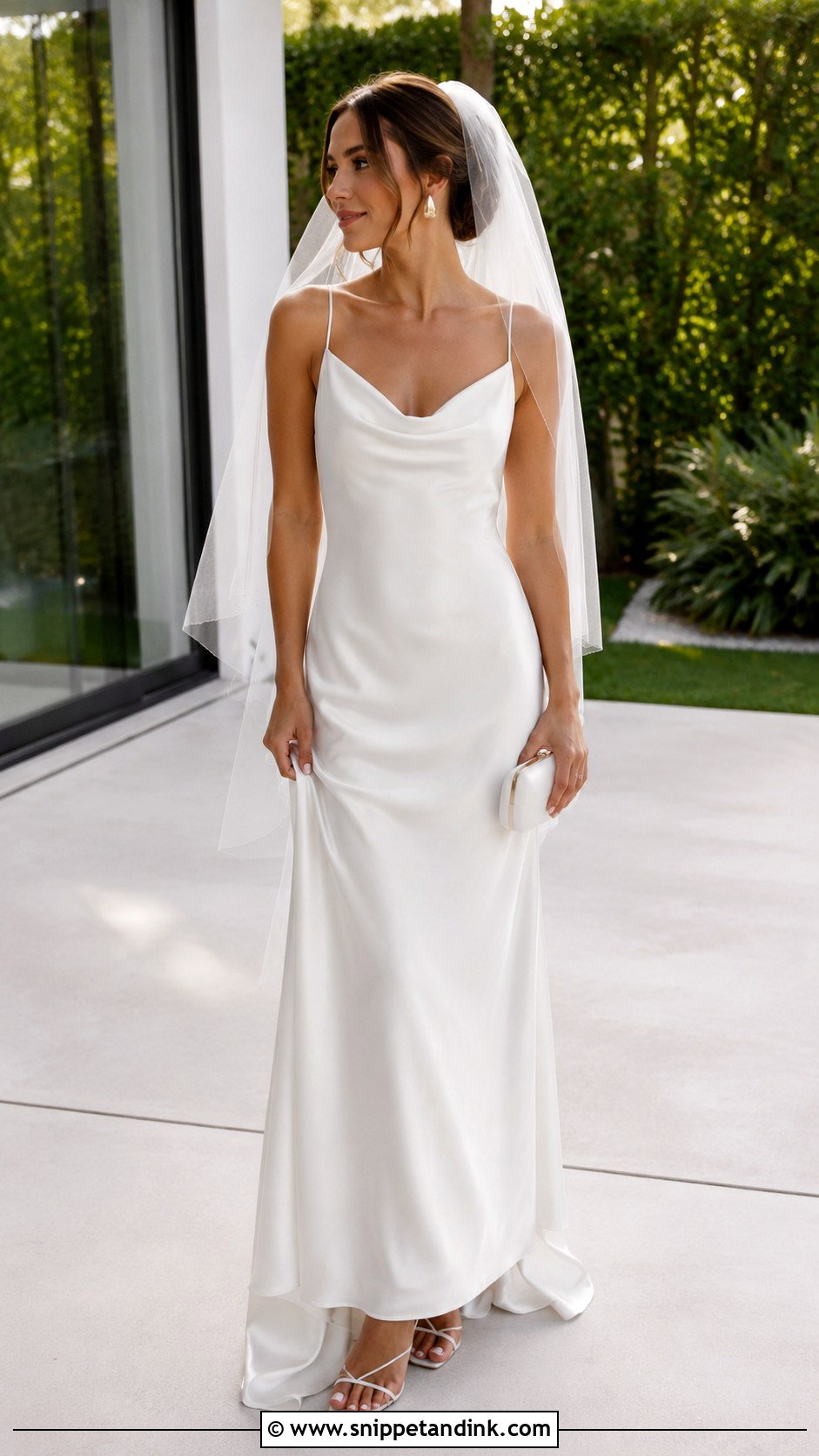
Satin slips are the minimalist’s dress, and they are less forgiving than they look. Choose a bias-cut that skims rather than clings; bias satin follows every curve and every line underneath, so no-line underwear and a good lining are non-negotiable. A softly draped neck or a plain V adds interest without breaking the clean line. Satin also creases the moment you sit in a car, so I book a steam on site before the ceremony, not the day before. Strappy block heels, sculptural earrings and a small clutch finish it, with a sleek bun or tucked waves. Wear a fingertip veil for the vows and take it off for dinner.
5. Boho Lace Backyard Wedding Dress
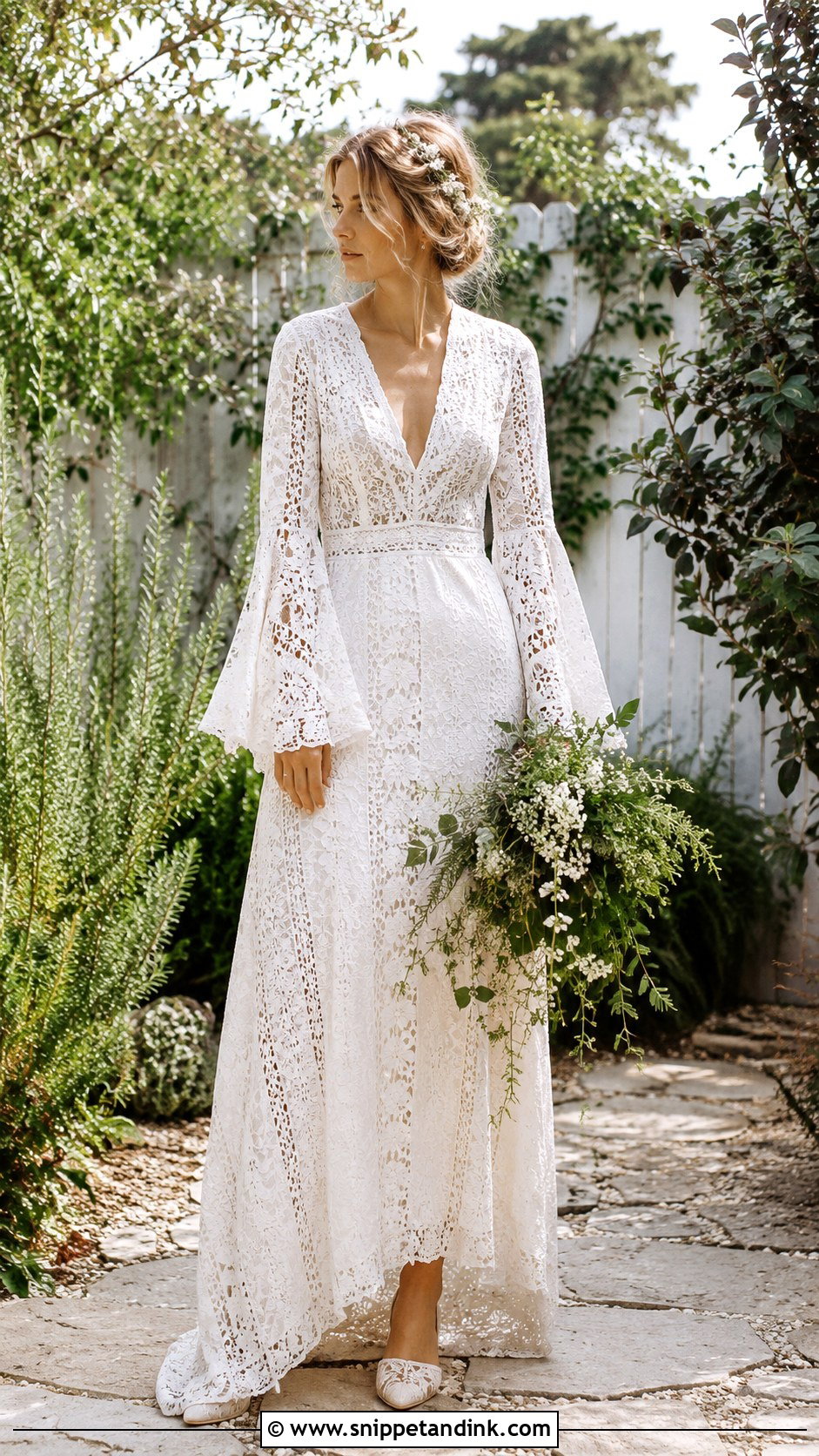
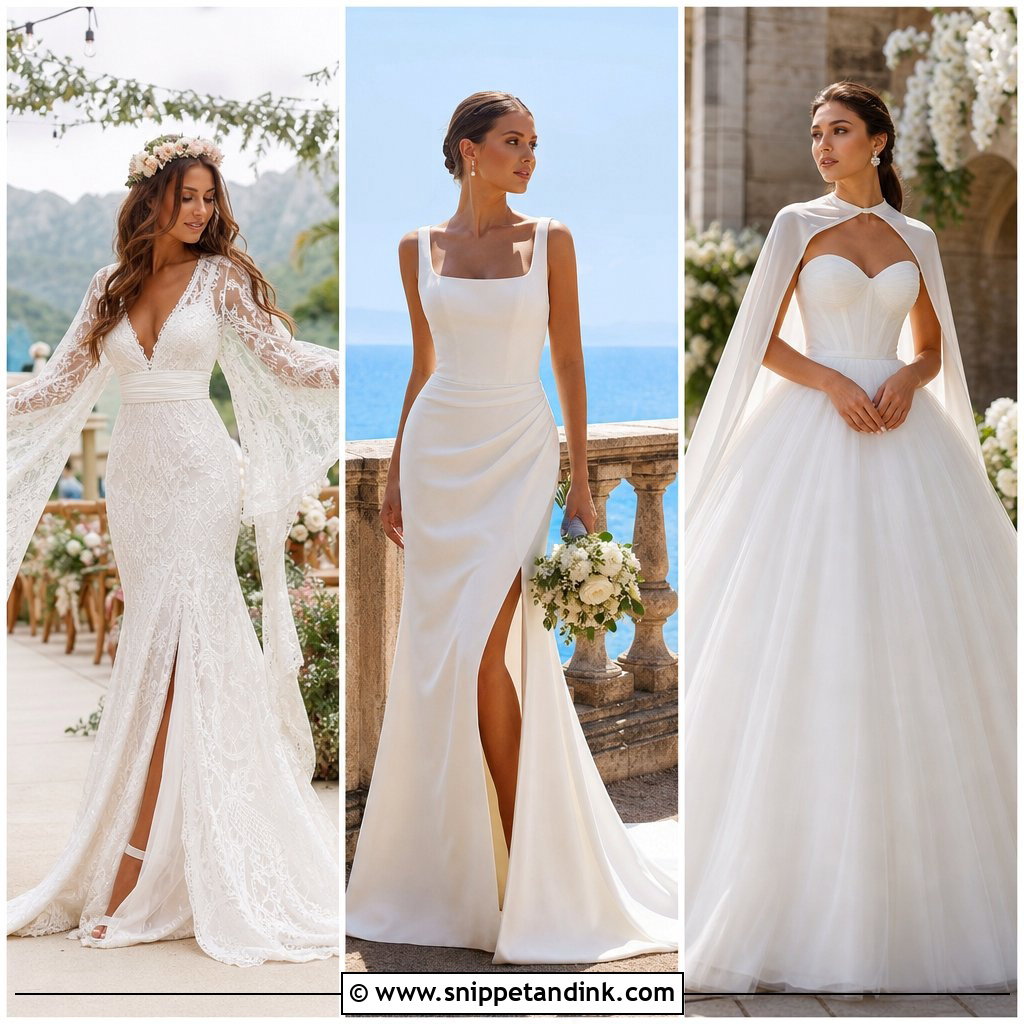
Picture openwork lace, greenery and string lights coming on at dusk. Boho dresses for this setting usually have a comfortable lining, bell sleeves or a low back, and a gently shaped waist rather than a rigid corset. That softer structure matters across a long day on your feet. Pair it with embroidered flats, suede-tone block heels or plain leather sandals. Loose waves, a couple of small floral pins and a textured greenery bouquet finish it. I’d keep jewelry minimal, since the lace already carries the detail. Done this way it reads free-spirited and romantic while still looking deliberate in your vow photos.
6. Puff-Sleeve Backyard Wedding Dress
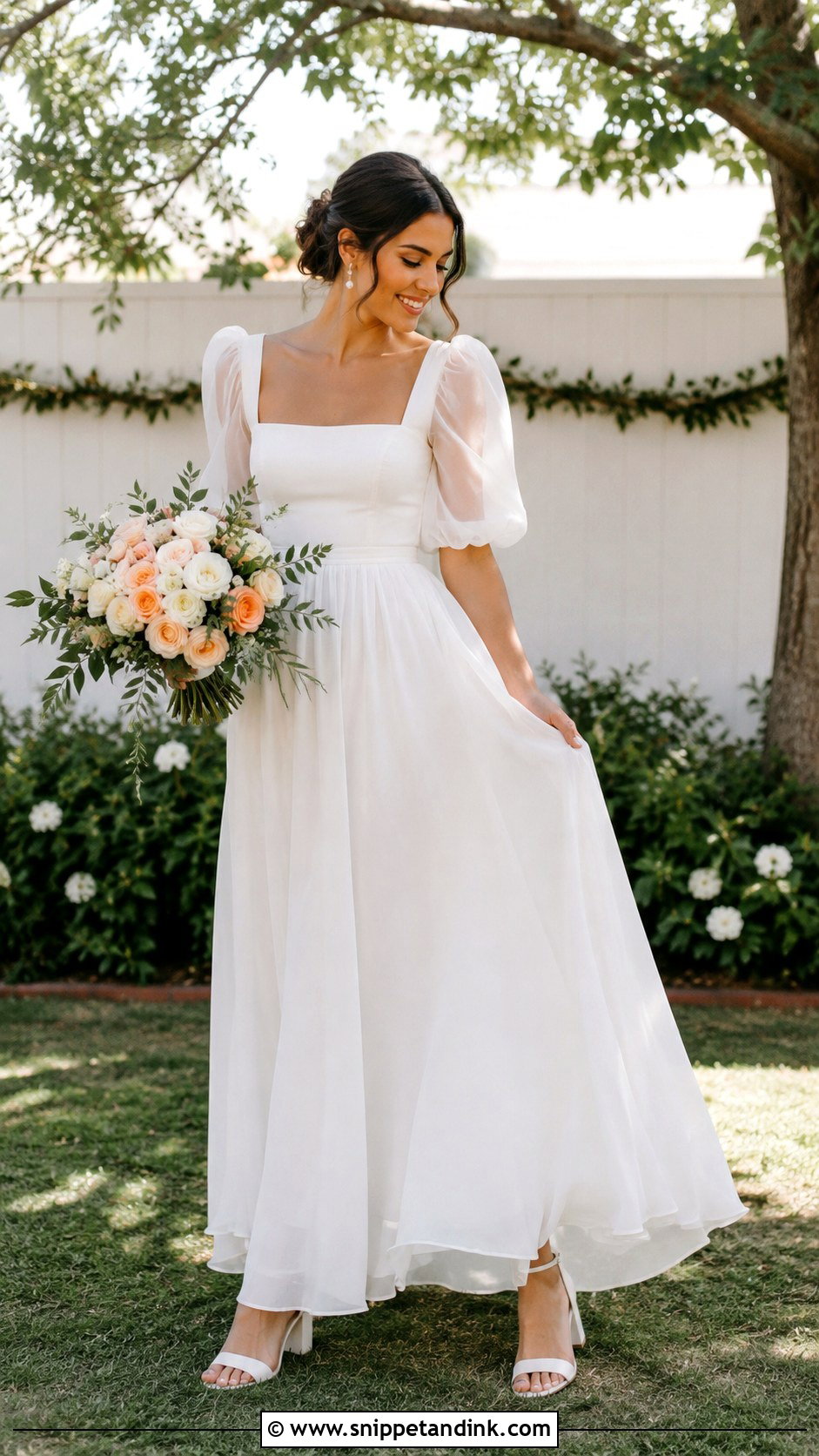
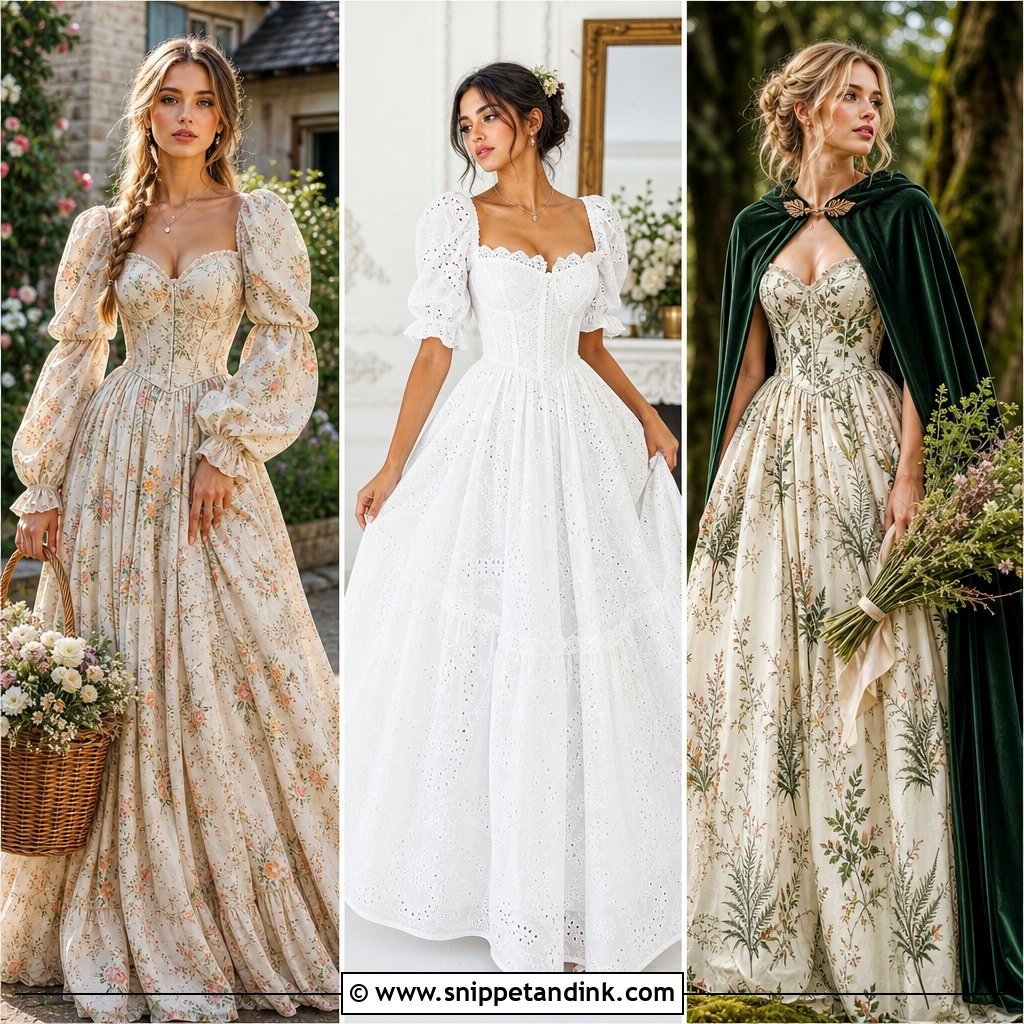
Puff sleeves give more coverage than a strapless dress and a lot more personality. Soft organza, dotted tulle or light cotton holds the volume without going stiff. Balance the shoulders with a square neckline and a fitted waist, then an A-line or column skirt to keep the overall line clean. At fittings, I ask the bride to lift her arms as if hugging someone: tight puff sleeves pull the whole bodice up. Simple drops, ivory or soft metallic block heels, and a low ponytail or neat bun so hair and sleeves don’t compete. A small bouquet of garden roses suits a spring or early summer ceremony.
7. Square-Neck Backyard Wedding Dress
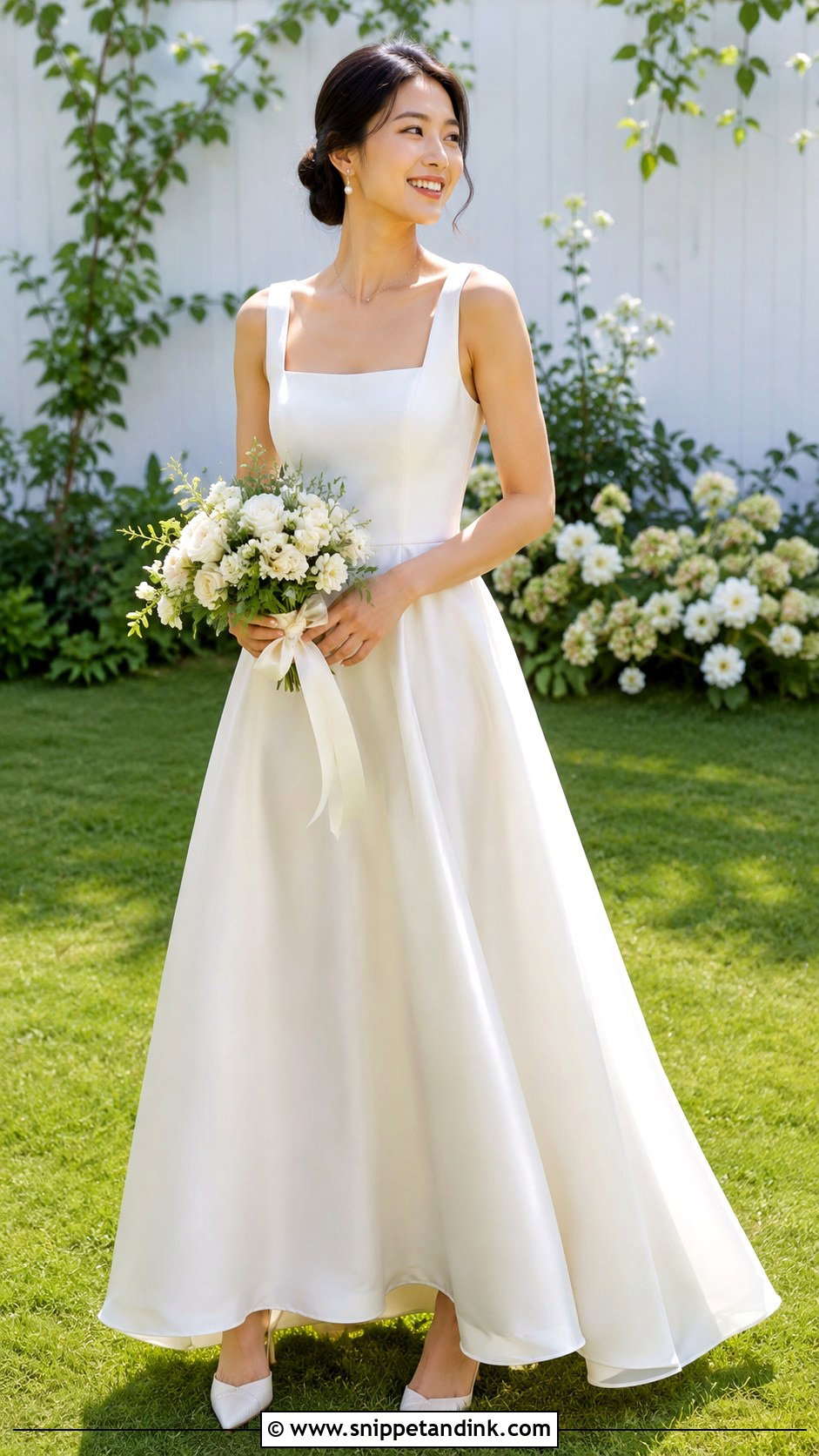
A square neckline frames the collarbone and makes a plain dress look structured. Wide straps or short sleeves give you support you won’t need to think about outdoors. It works over an A-line, a fit-and-flare or a fitted midi. Keep jewelry tiny, a fine chain or pearl studs, since the neckline is the feature. Shoe choice depends on the surface: slingbacks on a patio, block heels or pointed flats on a lawn. A neat half-up style shows the neckline without pulling everything back severely, and a medium bouquet in a plain ribbon finishes it. This is the cut I’d pick for a bride who wants classic details and support she can forget about.
8. Off-the-Shoulder Backyard Wedding Dress
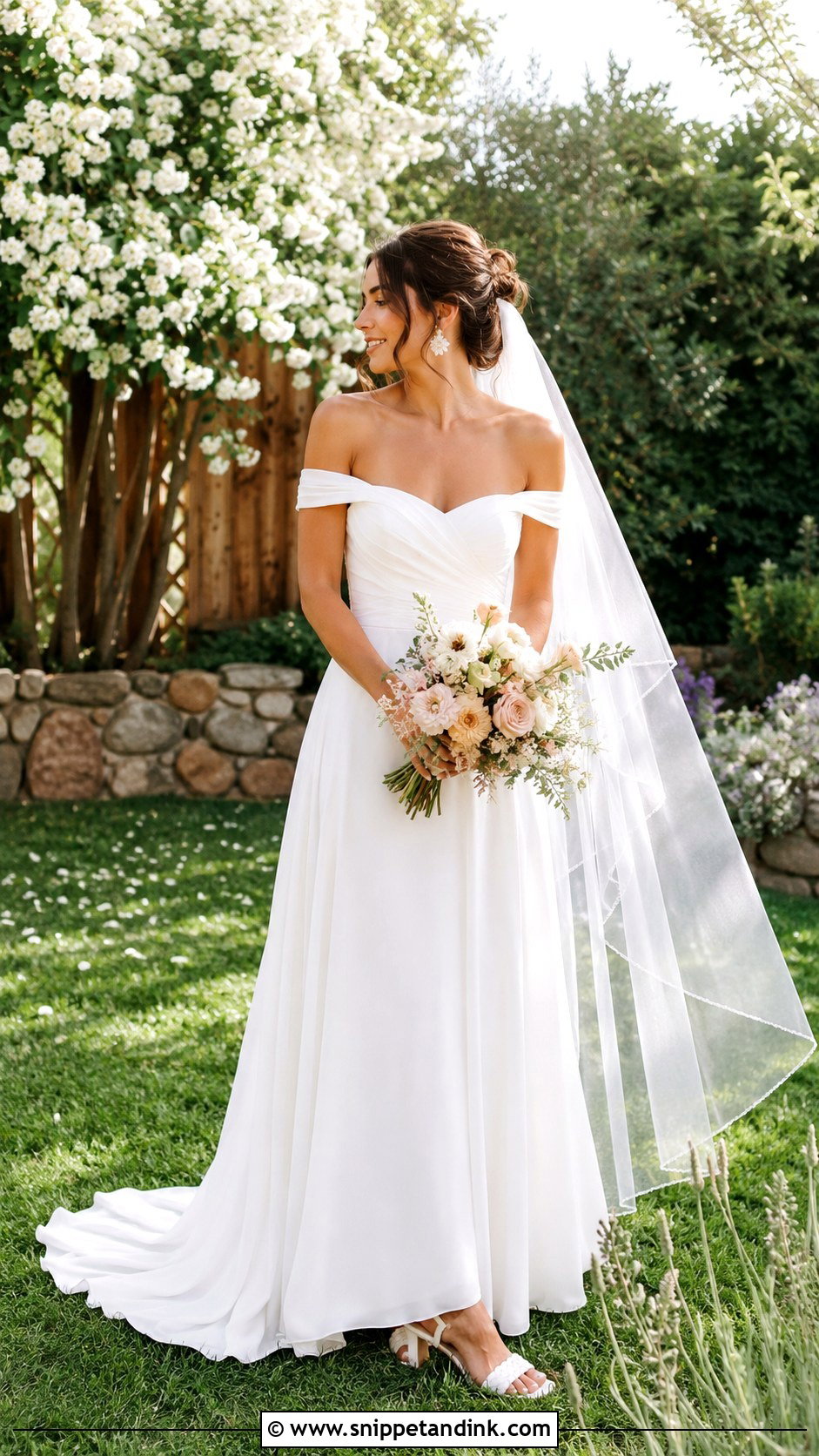
Off-the-shoulder necklines look romantic against a hedge or tree line, but only if they stay where they’re put. Ask for internal support, a silicone grip strip or a boned bodice, so you’re not hitching the neckline up during vows. A fitted bodice over a light A-line skirt lets air circulate on a warm day. Statement earrings, no necklace. On grass, low block heels, flats or wedges. Loose updos and side-swept waves both show the shoulders. A fingertip veil and a soft bouquet complete it. Bare shoulders feel the drop in temperature after sunset first, so have a light wrap ready.
9. Empire-Waist Backyard Wedding Dress
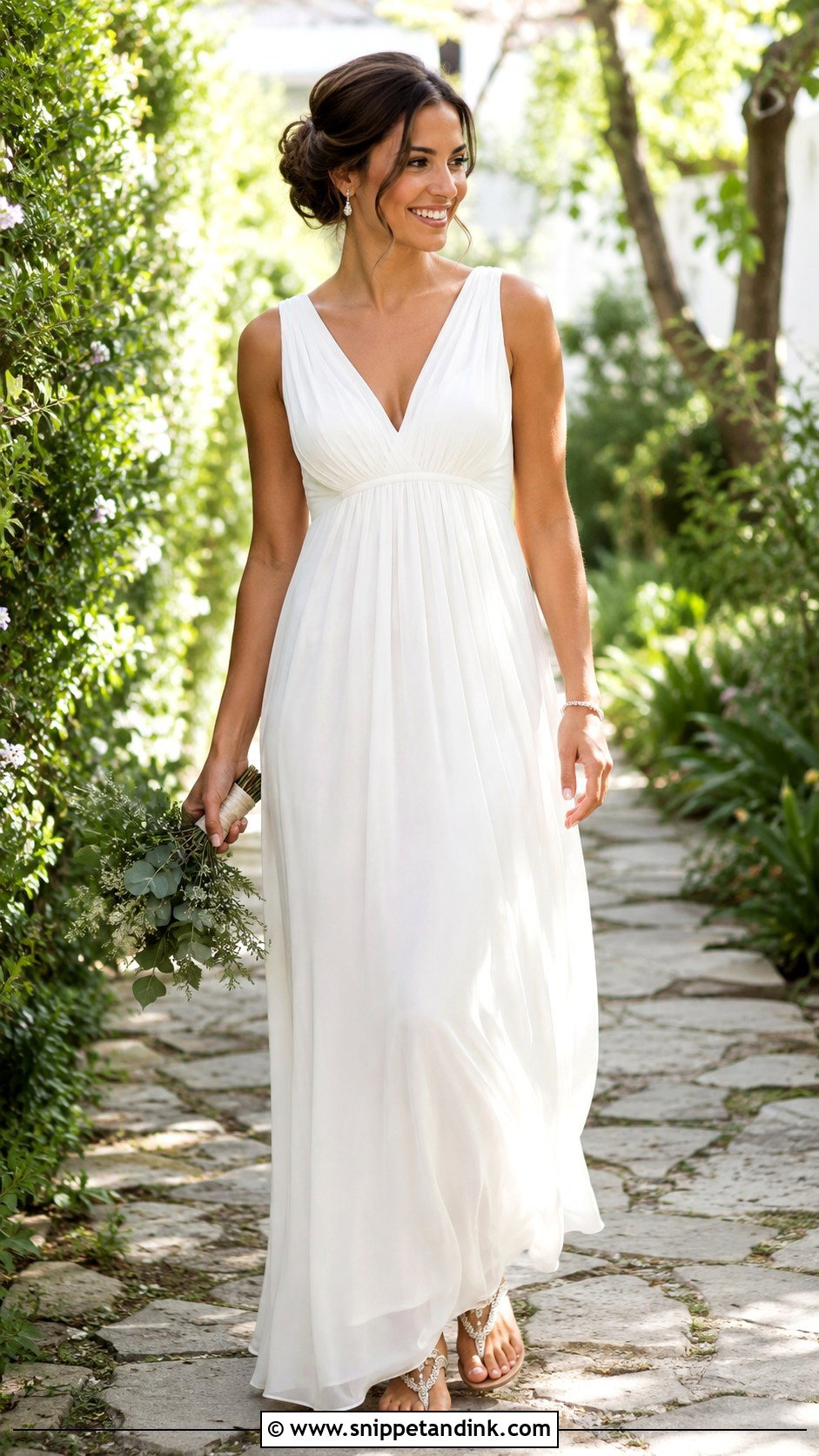
Empire waists are the most comfortable cut on this list for a long outdoor day. The seam sits just under the bust and the skirt falls from there, so nothing presses at the natural waist during dinner. Chiffon, crepe or light georgette keeps the drape soft. The bodice is what makes or breaks it: a gathered or V-neck top must actually support you, or the high seam slides down and the shape is lost. Delicate earrings, a thin bracelet, embellished flat sandals or low block heels finish it. A braided updo or loose bun and a narrow greenery bouquet keep the mood relaxed. It suits hot weather and anyone wanting room through the hips.
10. Wrap Backyard Wedding Dress
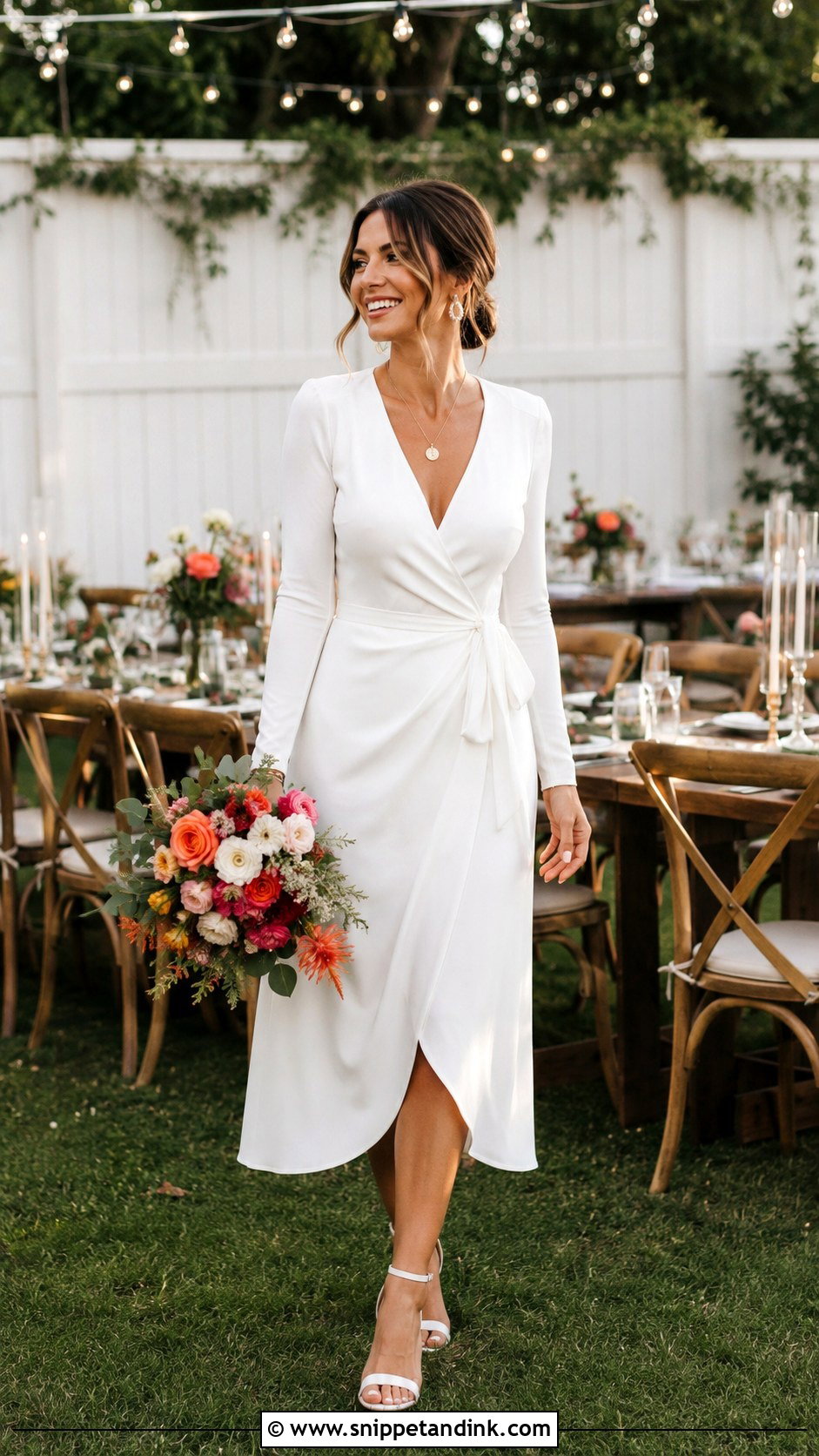
Wrap dresses adjust to you, which is why I like them for brides who fluctuate during the day or simply hate a tight waist. A true wrap needs secure inner ties and a hidden snap at the neckline, or it opens when you bend; a faux-wrap gives the same look with dependable coverage. Soft crepe, jersey and chiffon keep it from feeling structured. Choose midi or ankle length so the skirt doesn’t drag on the lawn. Pearl hoops, a simple pendant and block-heel sandals, with a low bun or brushed-out waves. A bright seasonal bouquet adds color to the plain silhouette.
11. Floral Embroidered Backyard Wedding Dress
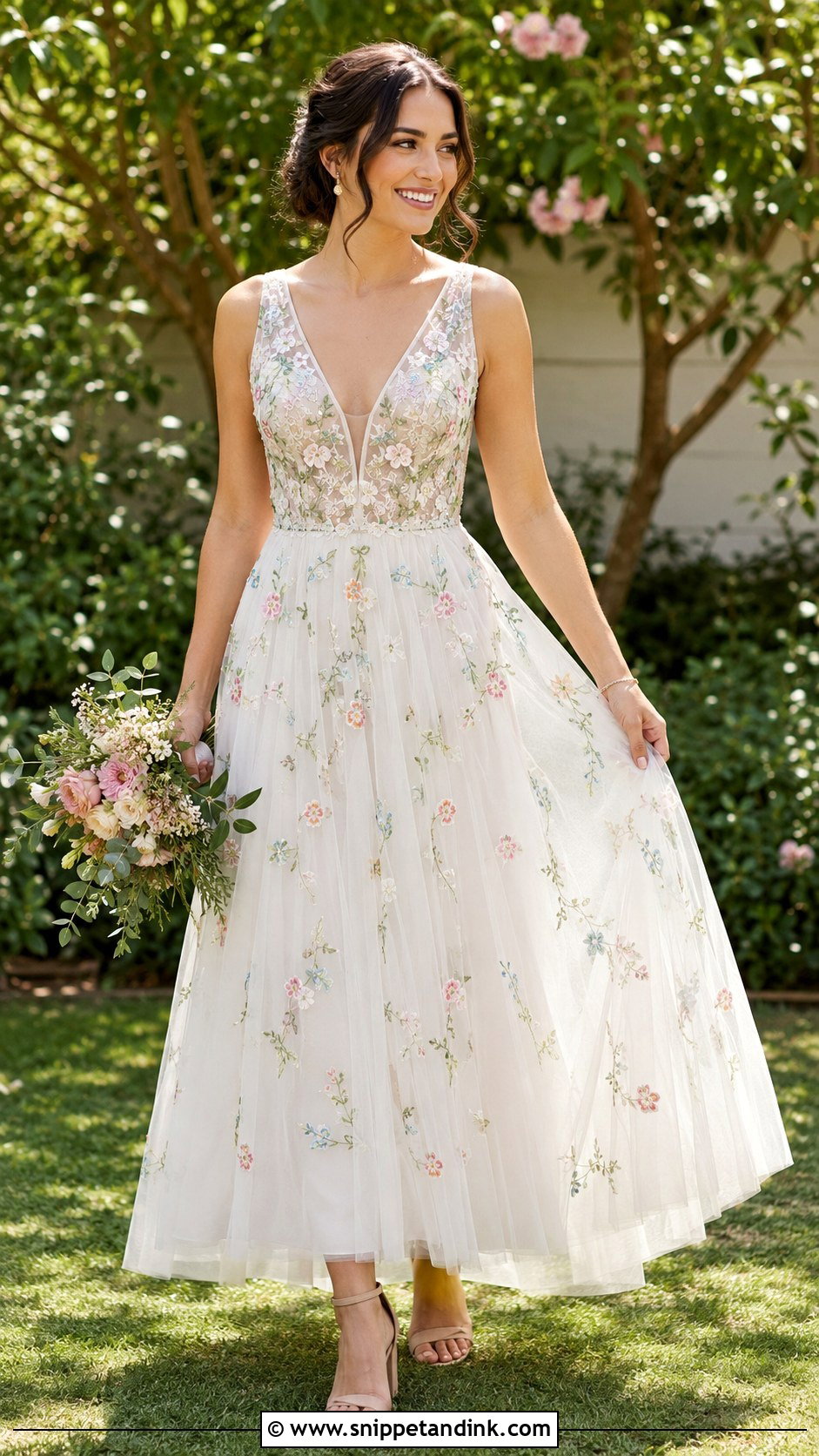
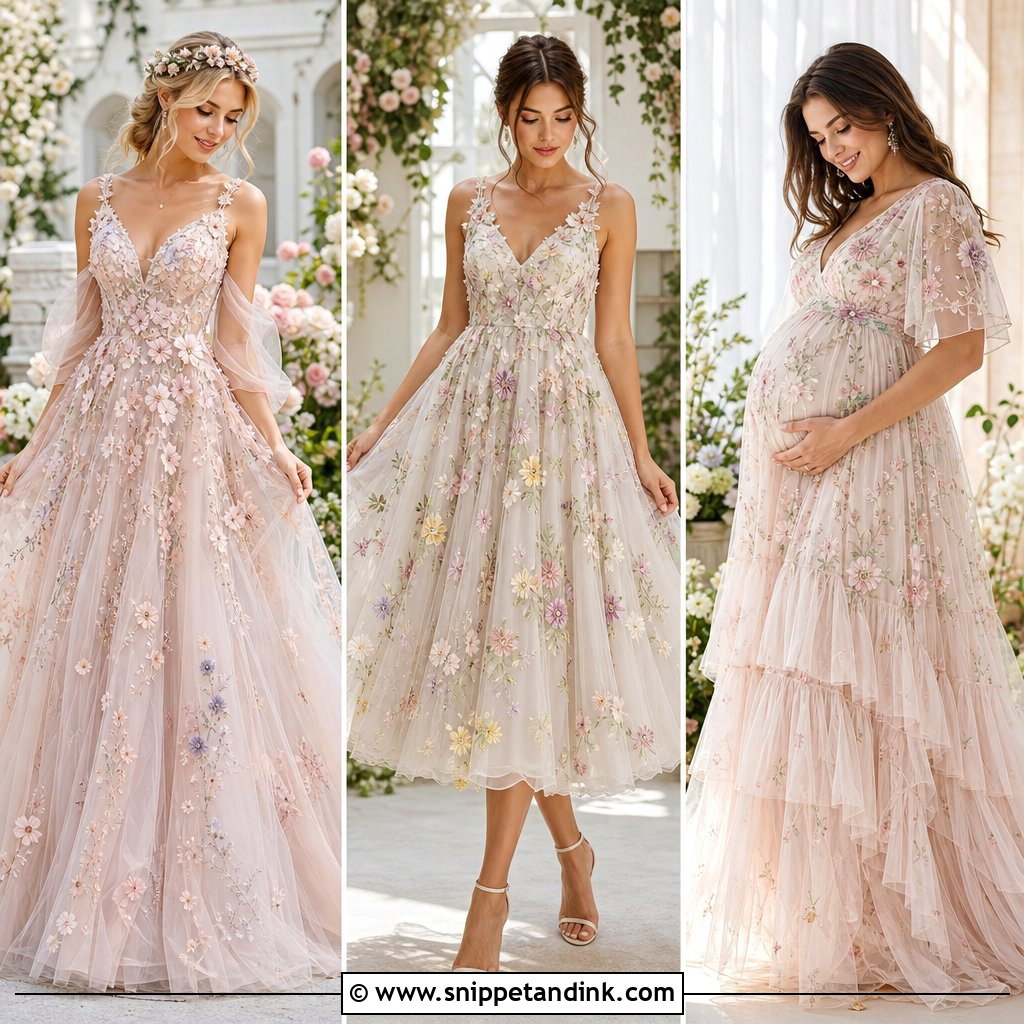
Floral embroidery ties a dress to a garden almost too neatly, so I keep it subtle. Tonal embroidery reads quietly; pale pastel threads add a little color. It sits well on a tulle A-line with a fitted bodice and a light skirt. Let the stitching be the only detail. Small studs, a thin bracelet and neutral block heels, with a relaxed updo and one or two plain pins instead of a flower crown. For the bouquet, I’d echo the embroidery colors without matching them exactly; an exact match makes the bouquet disappear against the dress in photos.
12. Crepe Column Backyard Wedding Dress
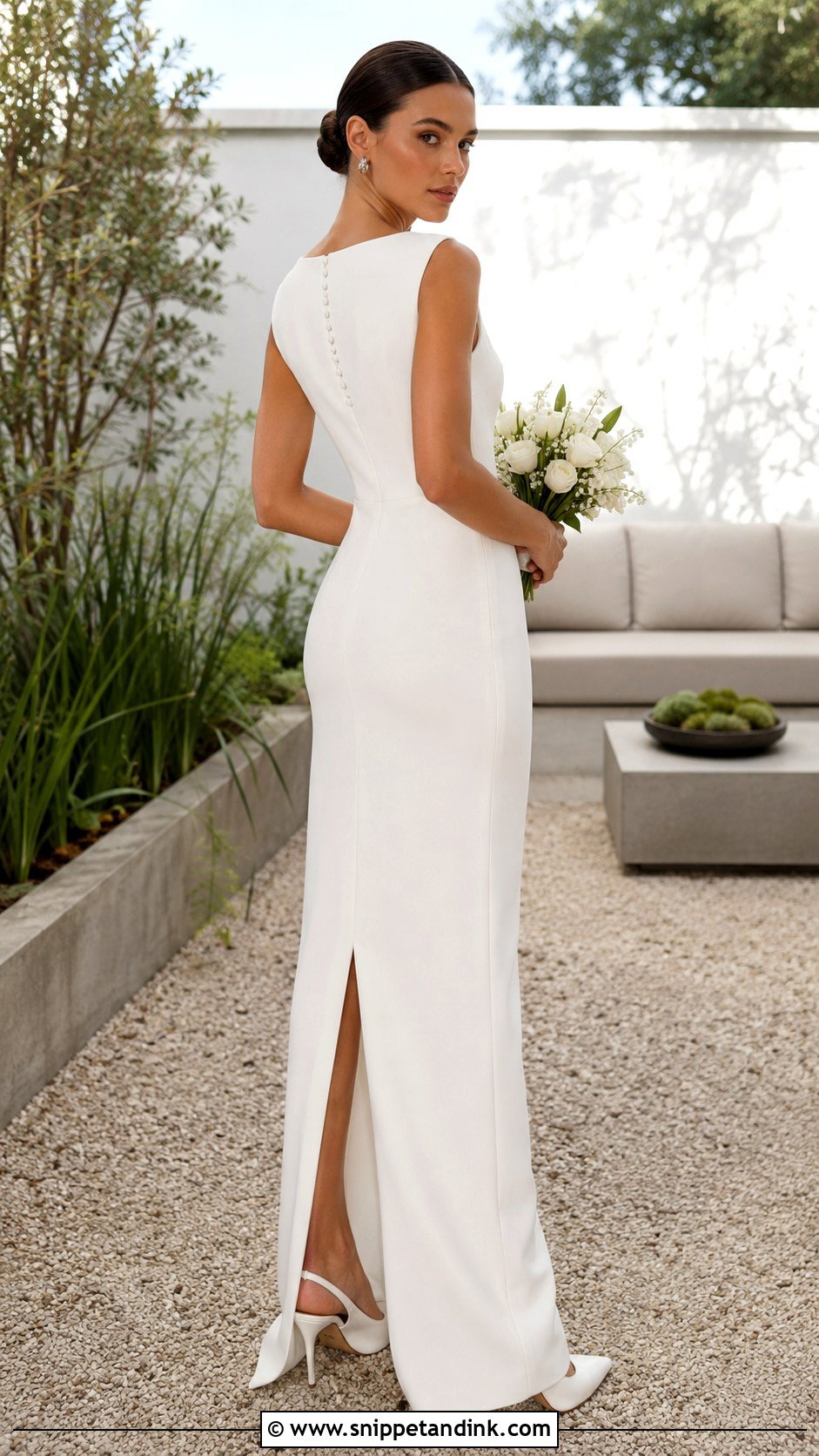
Crepe columns suit a bride who wants clean lines and no volume at all. Medium-weight crepe has enough body to sit smoothly over the hips and still bends when you sit; thin crepe shows every line underneath. A bateau neckline, V-neck, or gently curved scoop neckline keeps it simple. A back slit or a slightly relaxed skirt is essential for walking across grass and dancing. Pointed flats or slingback block heels, polished metal earrings, a sleek bun and a compact bouquet finish it. For a more formal ceremony, add a short veil or removable cape. It looks sharpest against a clean lawn or a modern patio.
13. High-Low Backyard Wedding Dress
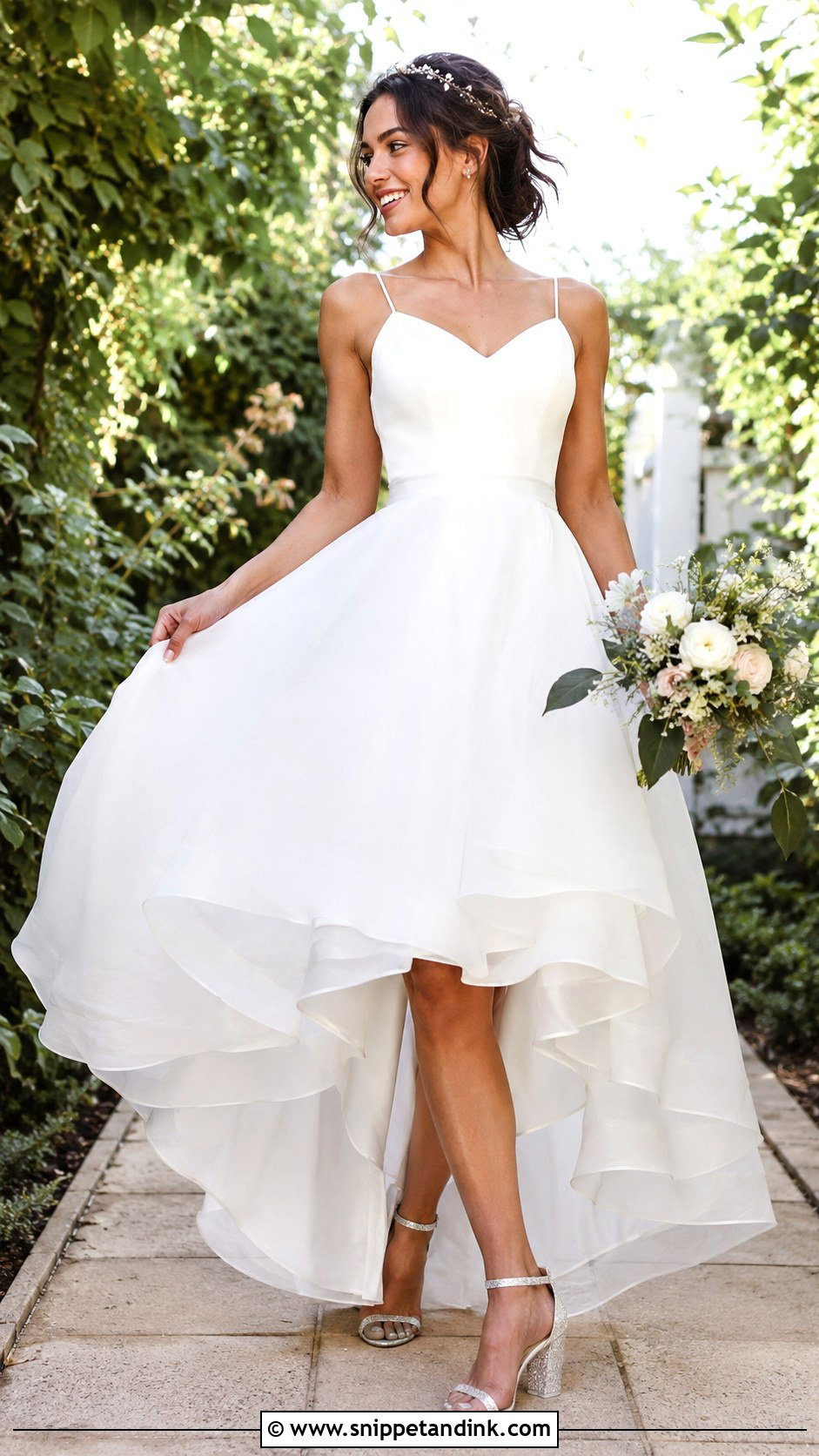
High-low hems give you the drama of a long skirt at the back while the front stays off the grass. I prefer a gradual curve; extreme high-lows look dated quickly and can feel like you’re wearing two dresses. Light satin, organza or chiffon gives movement without overwhelming a relaxed garden. Your shoes are on show, so make them count: elegant block heels, embellished flats or ankle-strap sandals. Small earrings, one delicate hair piece and a simple bouquet keep it balanced. A fitted bodice anchors the flowing skirt, and a short train makes it unmistakably bridal for dancing and photos.
14. Mini Backyard Wedding Dress
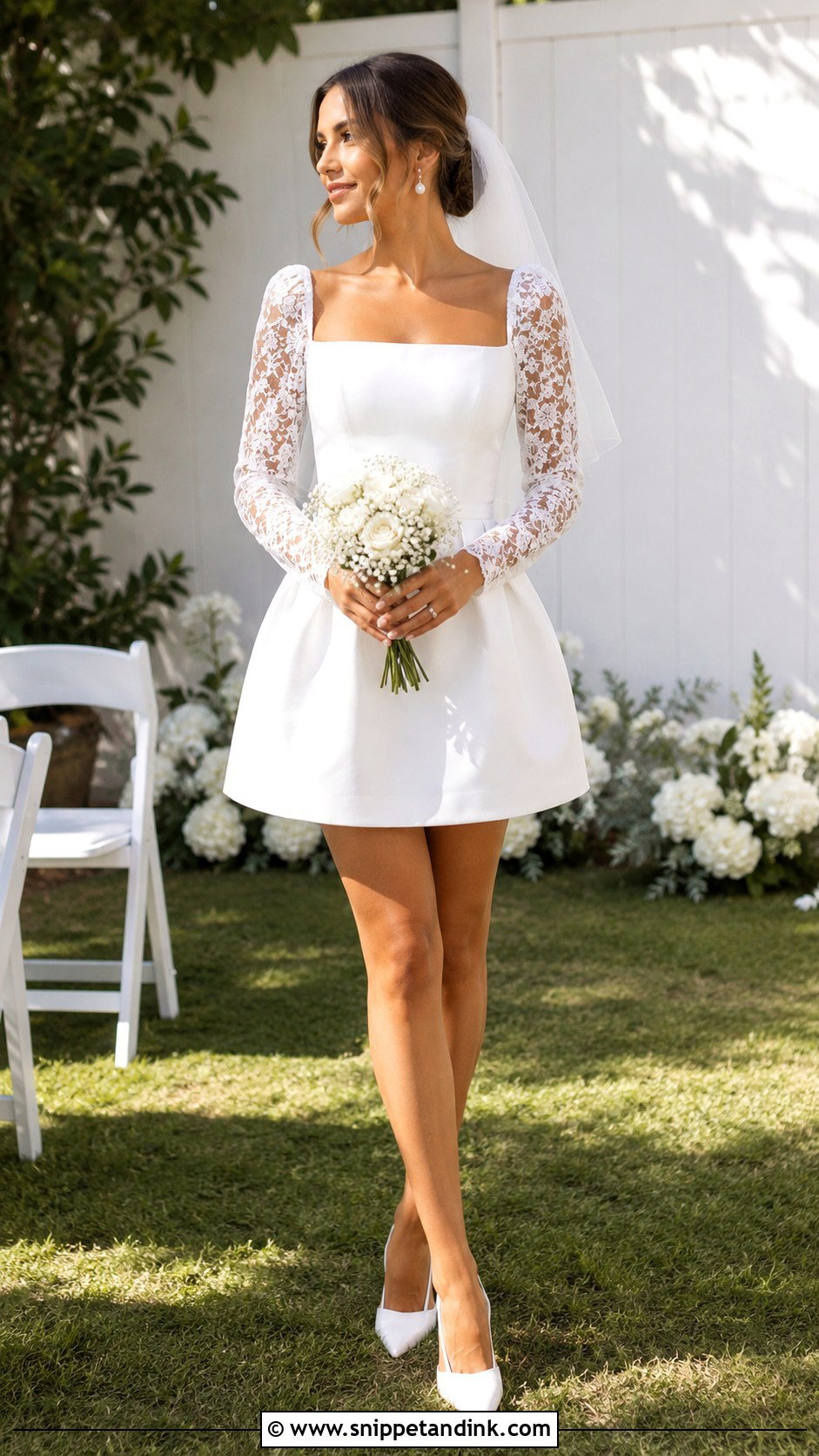
A bridal mini gives you total freedom to move, and it suits a small, casual party. The risk is that it looks like any summer dress, so I look for at least one clearly bridal detail: structured fabric, a defined waist, lace sleeves, a bow or subtle embroidery. Pointed slingbacks, low block heels or flats will cope with both grass and patio stone. Pearl earrings and a short veil bring the traditional notes without hiding the dress. Keep the bouquet small to suit the proportions. A smooth ponytail, a soft bob or a simple updo all sit nicely with a short hem. Warm-weather vows suit it best.
15. Midi Backyard Wedding Dress
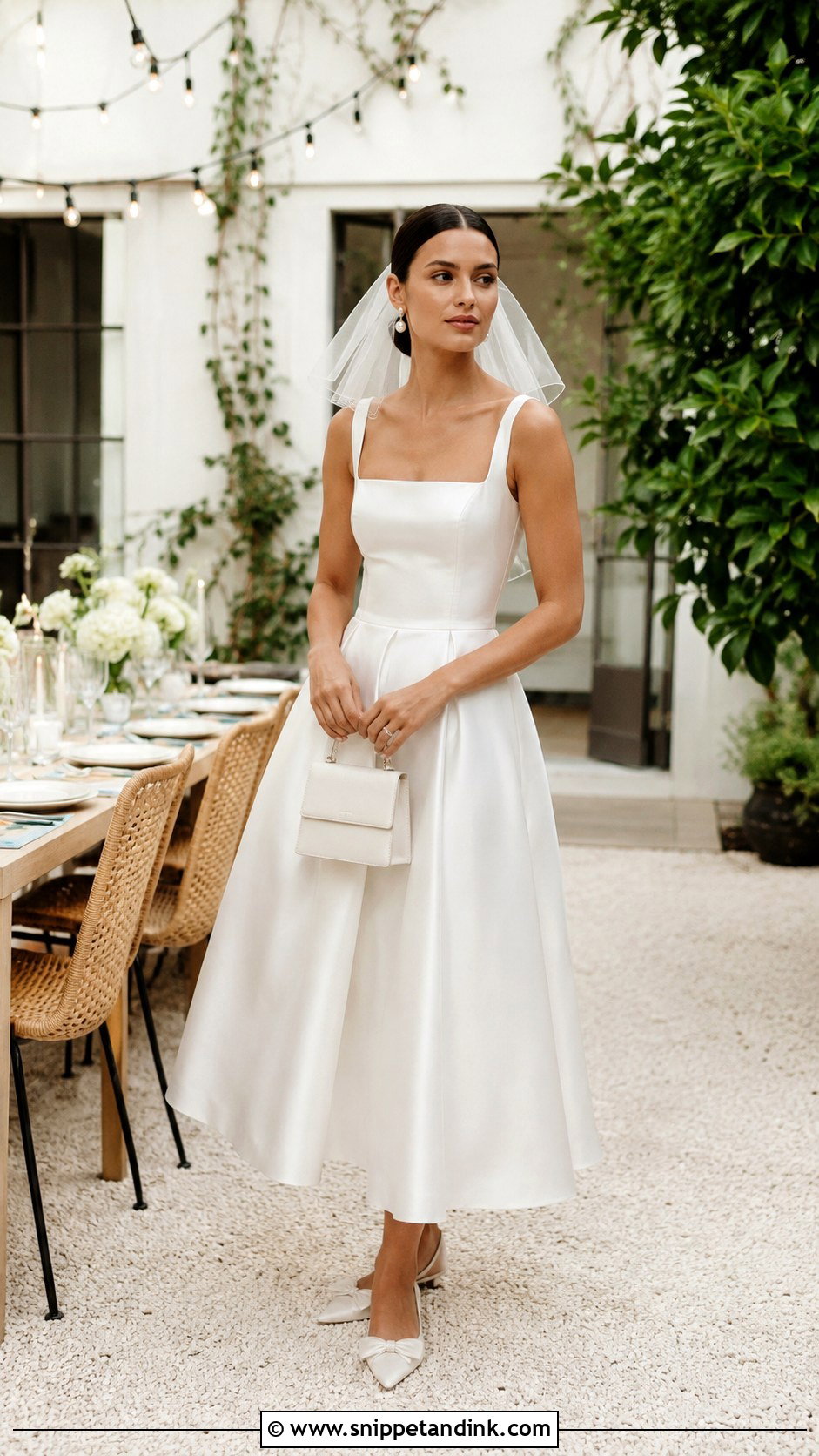
Midis sit between the fun of a mini and the formality of a full-length gown. Mid-calf is the hem I aim for; just below the knee can cut the leg awkwardly in photos. A square-neck cotton dress, a lace fit-and-flare or a satin midi can all read as bridal. Since your shoes show all day, slingbacks or pointed flats are worth investing in. Pearl drops, a structured mini bag and a short veil or a simple hair piece complete it, with a polished bun or soft shoulder-length curls. It handles a daytime ceremony, a casual dinner and dancing under outdoor lights.
16. Long-Sleeve Lace Backyard Wedding Dress
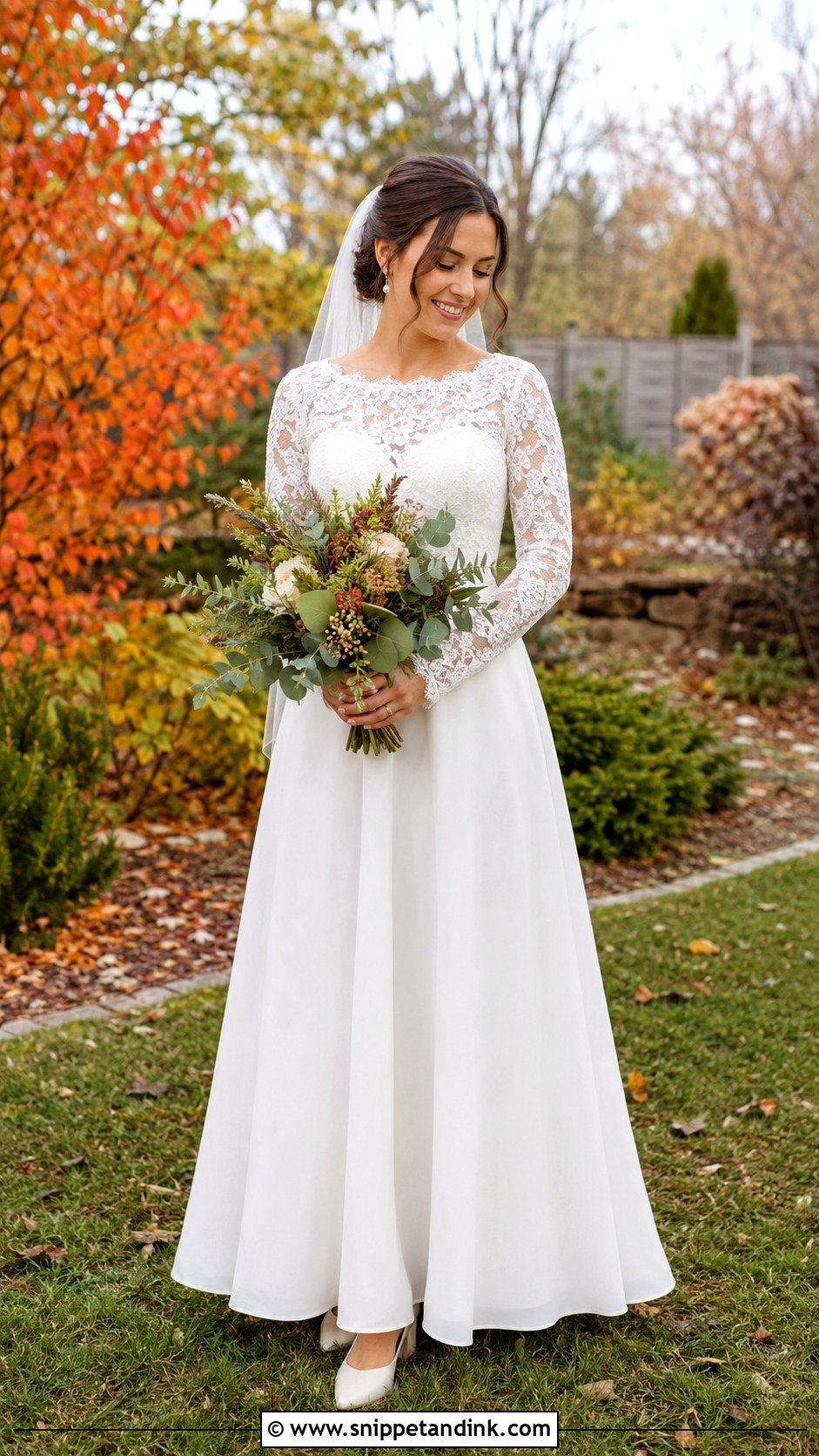
Long lace sleeves earn their place on a cool spring morning or a crisp autumn afternoon. Choose light lace over a breathable lining; dense lace sleeves get hot quickly once the sun comes out. A fitted bodice and plain A-line skirt keep the sleeves from making the whole outfit formal. For a sleeker version, a column with sheer lace sleeves and a modest back slit works well. When I fit lace sleeves, I check the elbow bend: too tight and they bunch or strain every time you raise a glass. Closed-toe block heels, pearl earrings, a low bun and a short veil, with a bouquet of seasonal greenery.
17. Cotton Backyard Wedding Dress
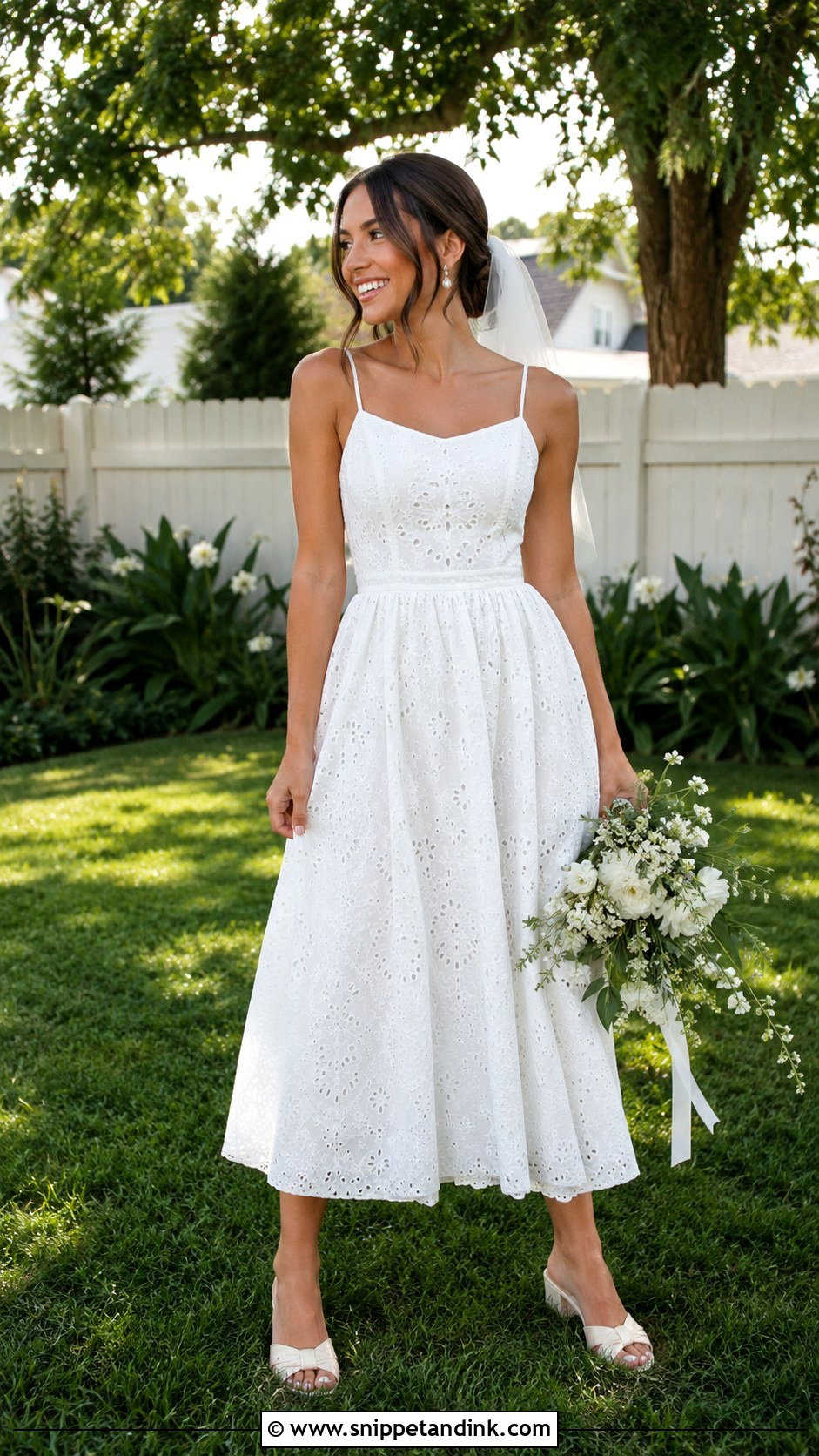
Cotton can look completely bridal if the cut and the finishing are intentional. Embroidered cotton, eyelet or crisp poplin shaped into a fitted-waist midi or a flowing A-line breathes far better than polyester in a sunny yard. The finishing pieces separate it from an everyday sundress: pearl earrings, a short veil, clean block-heel sandals. A ribbon-tied bouquet and soft updo suit its fresh feel. Eyelet and thin poplin can be sheer in sunlight, so a smooth lining matters. Cotton also wrinkles, which I’d accept as part of its charm rather than fight.
18. Plus-Size Backyard Wedding Dress
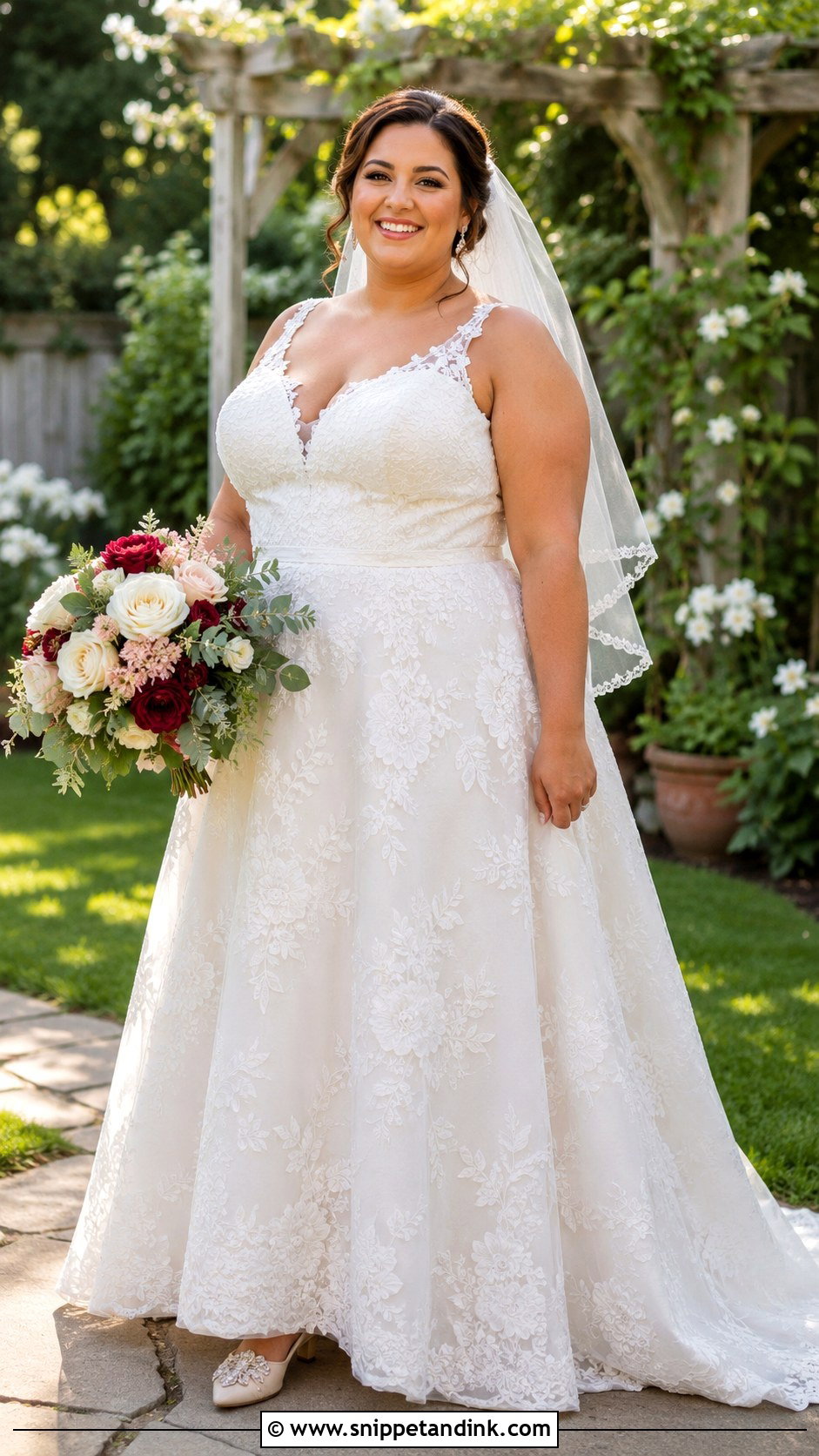
Plus-size brides tell me they’ve been handed body-shape rules their whole lives, and I’d rather throw those out. Start with the silhouette you feel strongest in. A structured A-line, a wrap-style gown or an empire waist all give definition without rigidity. What matters more is construction: breathable lining, adjustable straps, built-in cups and enough room through the arms so you can hug people without the seams pulling. Stable block heels or embellished flats, statement earrings and a light veil finish it. Alterations to the neckline, waist and hem make a big difference; a good seamstress can make an off-the-rail dress look custom. Scale the bouquet to your frame.
19. Maternity Backyard Wedding Dress
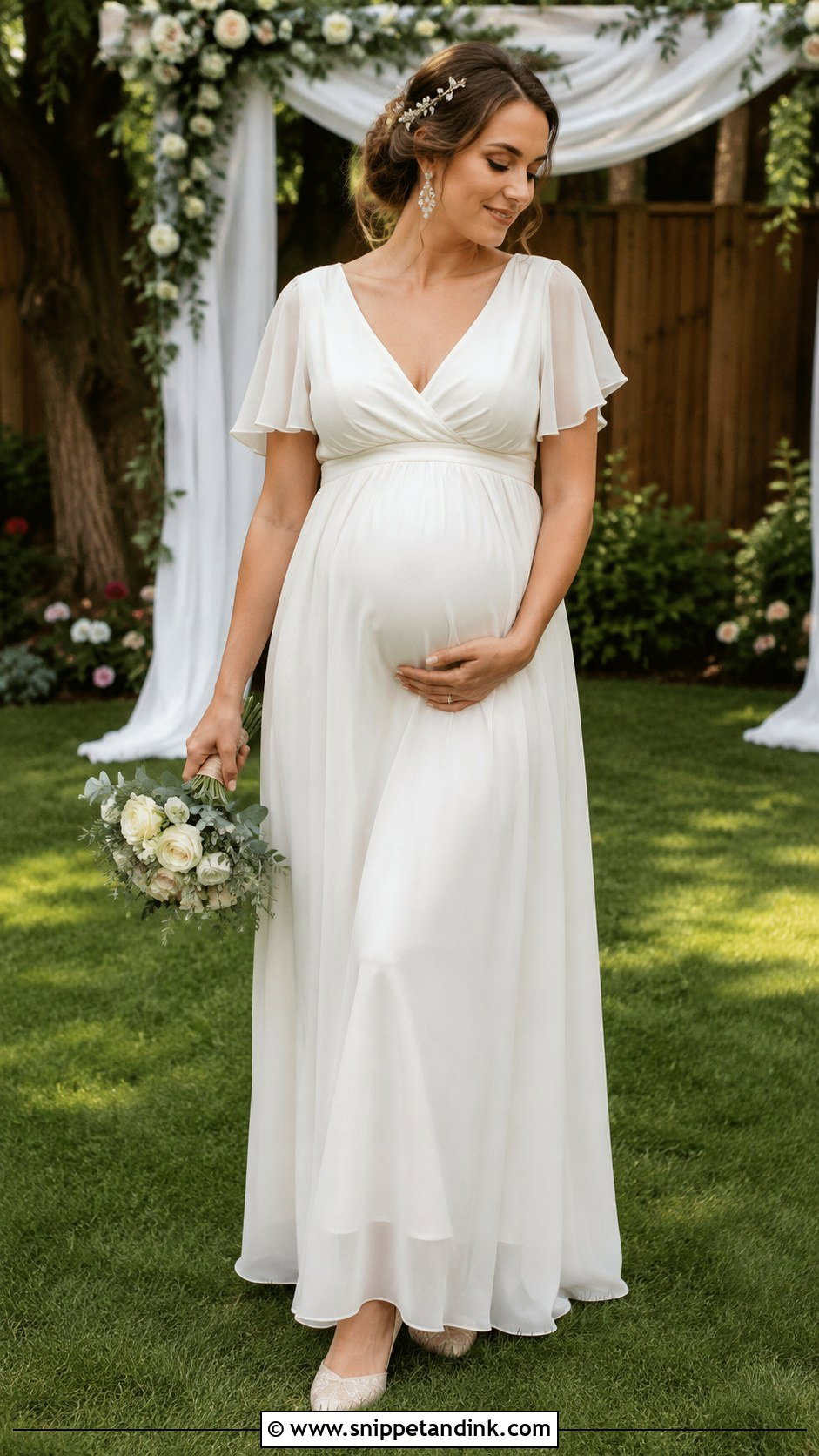
Comfort comes first when choosing a maternity dress for an outdoor wedding. An empire waist lets the skirt fall over the bump with no pressure at the natural waist. Breathable chiffon, stretch crepe or soft jersey with a smooth lining stays comfortable in the heat. A wrap neckline adds flexible support but needs securing so it doesn’t shift. I always schedule the final fitting as close to the date as possible for pregnant brides, because the body can change noticeably in a few weeks. Cushioned flats, low wedges or stable block heels, light earrings, a hair comb and an easy-to-carry bouquet. Ankle length looks bridal without tripping you.
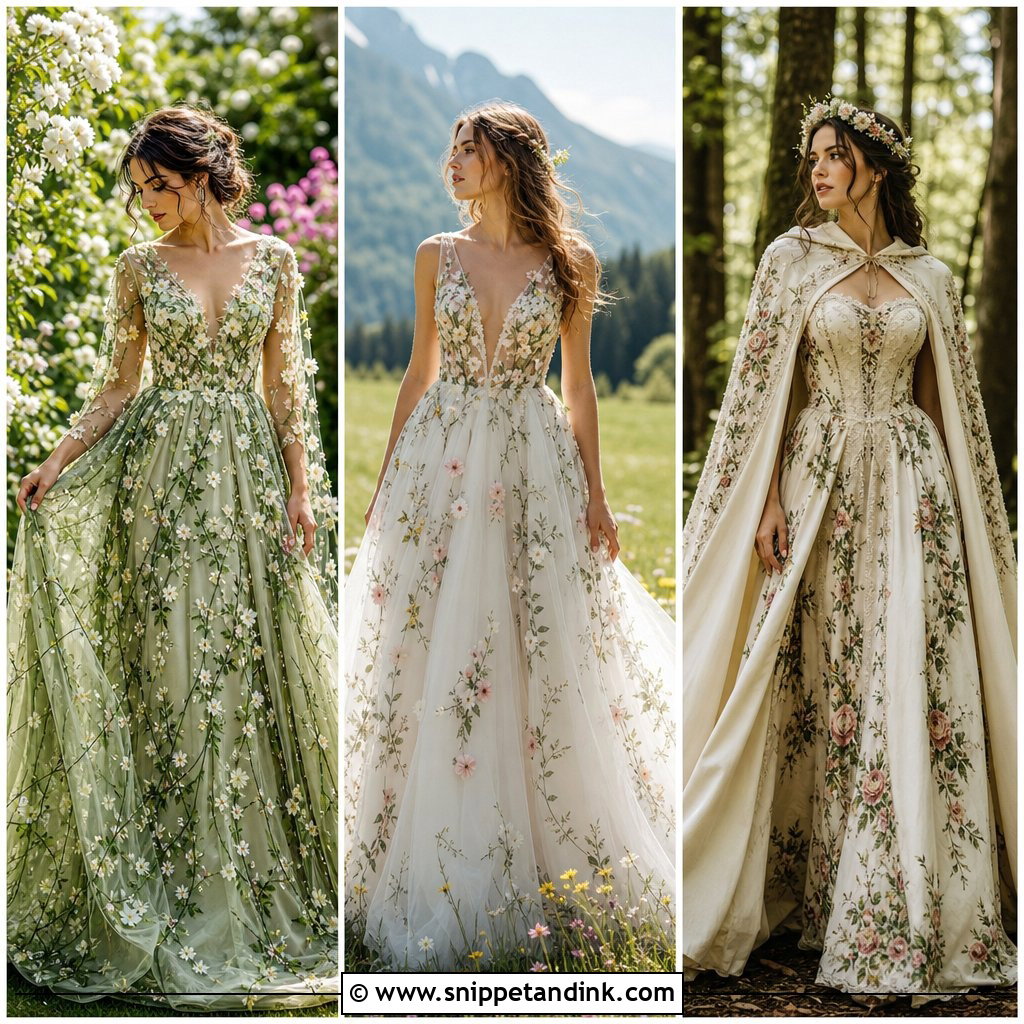
20. Convertible Backyard Wedding Dress
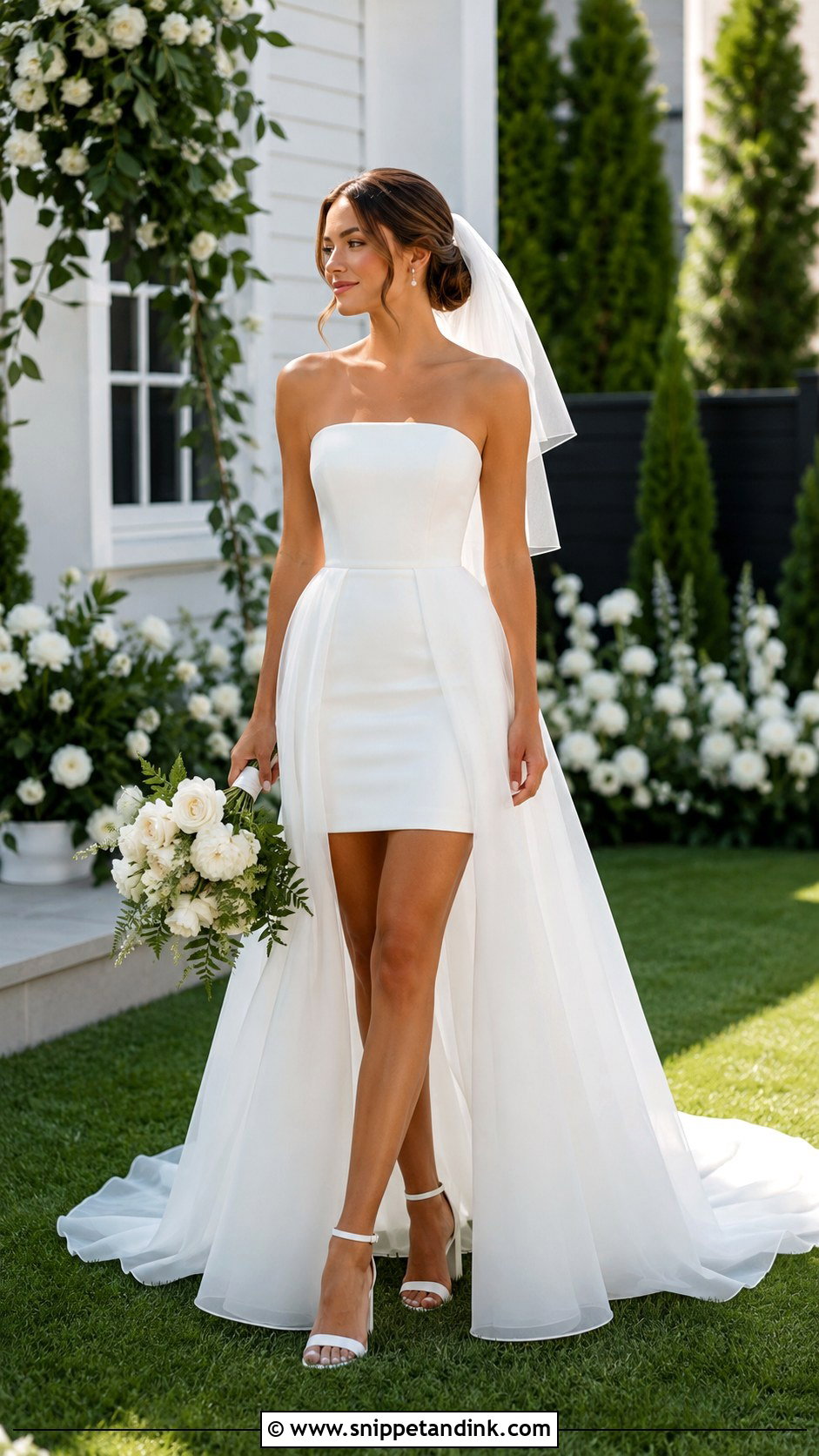
Convertible dresses give you two looks with no full change. The base is a mini, midi or fitted column, and a removable overskirt adds an A-line and short train for the ceremony. Keep the overskirt light, tulle, chiffon or organza, because you’ll be holding or wearing it outdoors. Practice taking it off before the day; the clasp or snaps are often harder than they look, and a bridesmaid should know how. Comfortable block heels, understated earrings and a hairstyle that survives the switch. The fingertip veil can come off with the overskirt. You get the drama for vows and comfort for dancing.
Grass Stains, Spilled Champagne and the Cleaning After
Every outdoor bride gets a green or brown edge on her hem. It’s normal, and it’s fixable if you handle it the right way.
- On the day, don’t rub a grass or mud mark. Let mud dry and brush it off gently later; rubbing pushes the stain deeper into the fibers.
- Take the dress to a cleaner who handles bridal wear within a few weeks, and point out every mark, including spills you can’t see.
- Champagne, white wine and sugary drinks dry clear, then slowly turn brown over months as the sugar oxidizes. Mention any spill even if the fabric looks fine.
- Store it in a breathable cotton garment bag or an acid-free box, somewhere cool and dark. Plastic dry-cleaning covers trap moisture and can yellow white fabric.
- Heavy beaded or crepe dresses keep their shape better folded with acid-free tissue than hung, since hanging lets the weight stretch the shoulders.
If you want to wear the dress again, a cotton or satin slip style is the easiest to dye or shorten afterward. Ask the cleaner before any dyeing, since some fabrics and linings take color unevenly.
Your Lawn Gets a Vote, and So Does the Weather
Any dress here can work in a garden, provided you dress for the actual venue as much as for your taste. Look for breathable fabric, a hem you can manage, real support and enough room to walk across grass. Then build the rest around it: steady shoes, a few good pieces of jewelry, a hairstyle that copes with wind, and a bouquet sized to the dress. Lace A-lines and chiffon bring the classic romance; slips, cotton midis, minis and convertibles feel more modern. I’d never ask a bride to compromise on how she feels in the dress. In a backyard, comfort and looking like yourself usually end up being the same thing.
You'll Like These Ideas:



Leave a Reply