
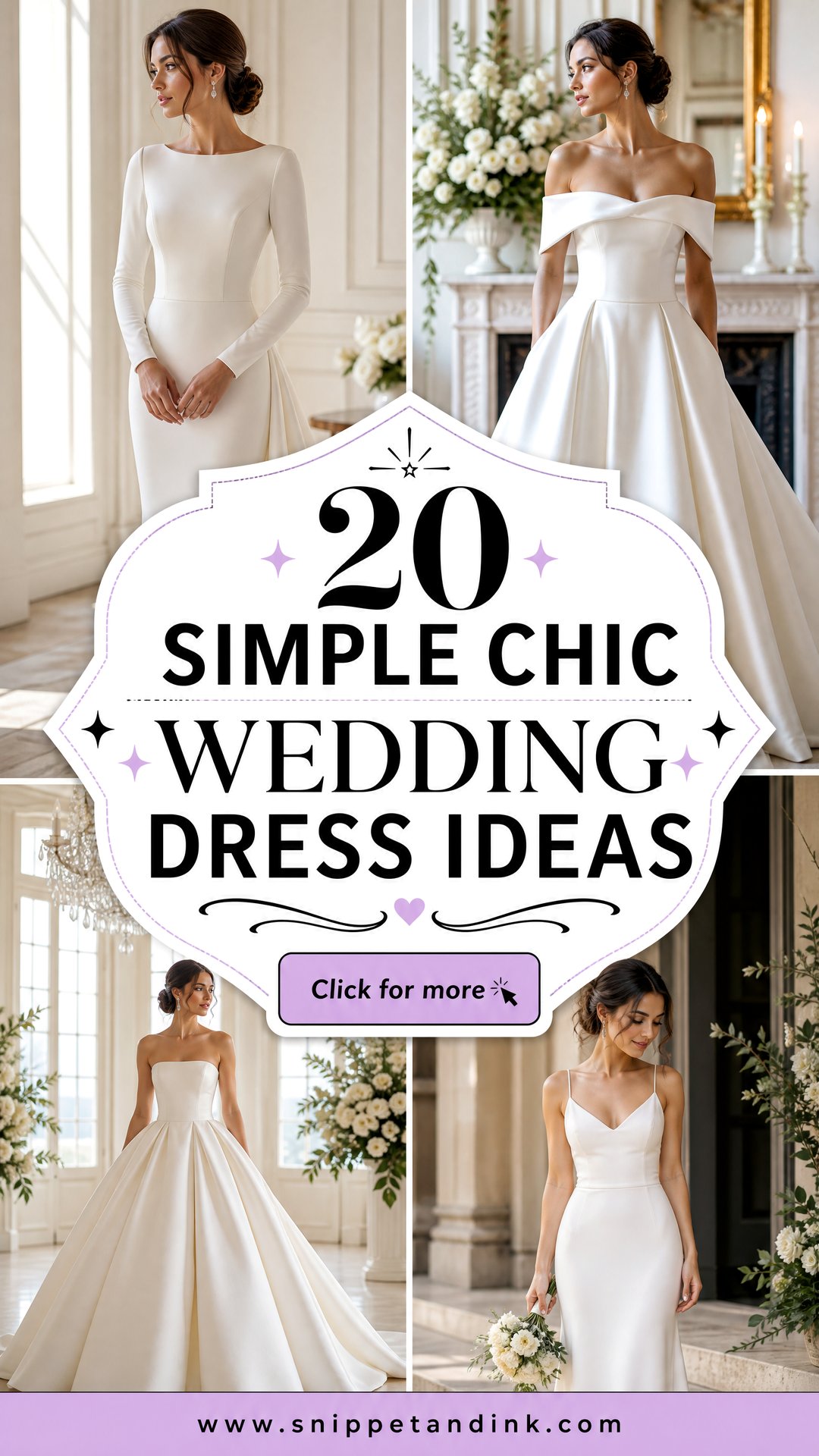
Brides who ask me for “something simple” usually mean one of two things: they want the dress to disappear so they’re the focus, or they want the cut itself to be the statement. Both are possible without beading or layers, but the work moves into the fabric, the proportions and the tailoring, and the accessories have to support the gown rather than crowd it. Fluid satin slips, structured A-lines and everything between them can suit a ballroom, a beach, a city hall or a dinner for twenty. Notice how each neckline frames your face, how the skirt moves when you walk and whether the shoes make sense on the ground you’ll be standing on. A veil, a little jewelry and a well-scaled bouquet are often all it takes to make the cleanest dress look bridal. Here are twenty complete looks to start from.
The Timeline Behind a Dress That Looks Simple on the Day
Simple doesn’t mean quick. Most bridal gowns are made to order after you choose them, and production times vary a lot by designer, often several months. Add alterations on top, and a clean dress needs more lead time than many brides expect. Here’s the order I walk brides through:
- Shop with your venue and season in mind, since a beach slip and a mikado ball gown solve different problems.
- Order to your largest measurement. Bridal sizing usually runs smaller than everyday clothing, and taking a dress in is far easier than letting it out.
- Buy your shoes and undergarments before the first fitting, not after.
- Plan on two or three fittings spread over the last couple of months, with the final one close enough to the date that your measurements won’t change.
- Ask the shop to show whoever will help you dress how the closure and bustle work.
If your date is close, look at ready-to-wear bridal or sample sales, and leave the alterations team as much time as you can.
1. Simple Satin Slip Wedding Dress
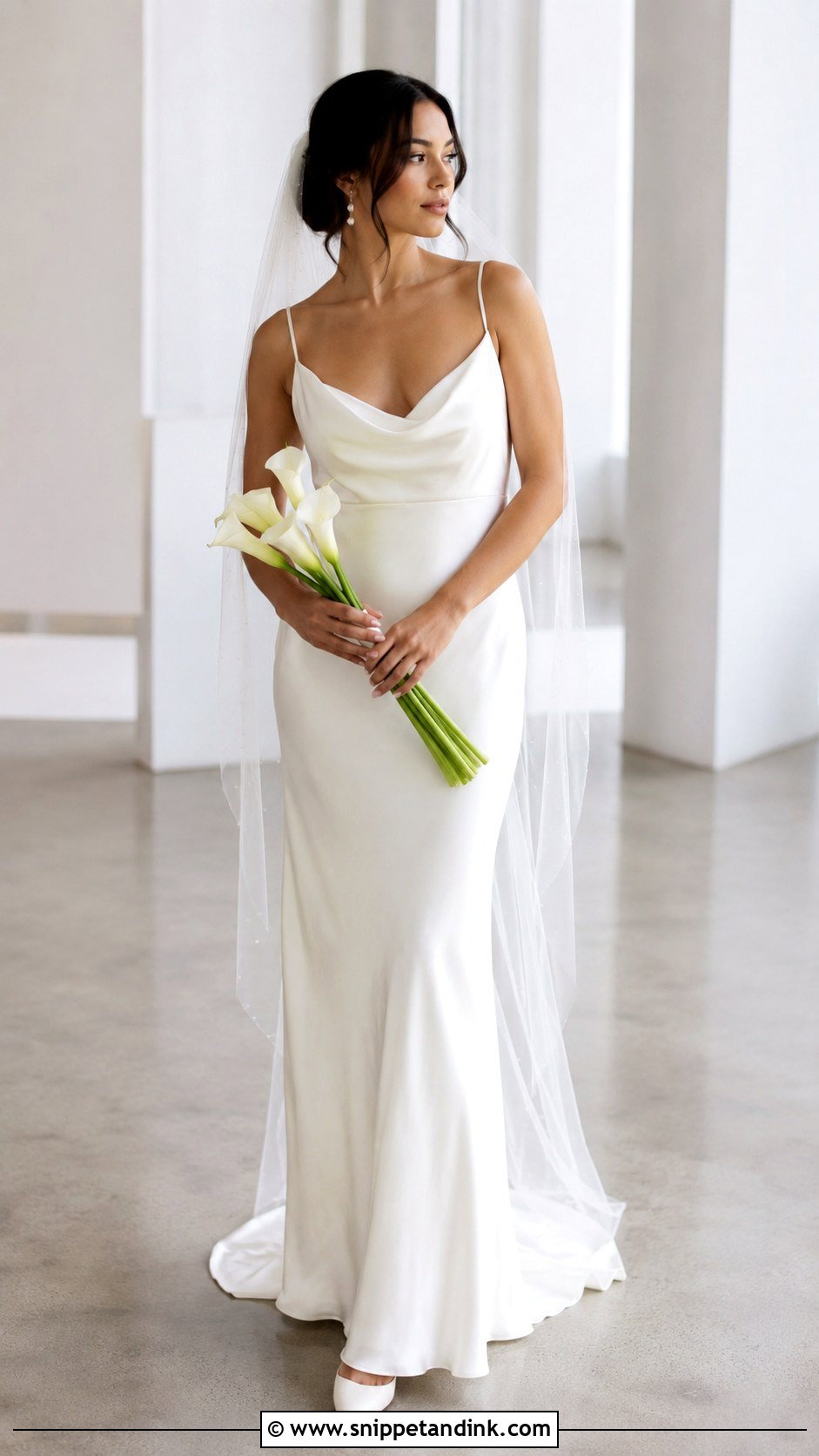
Satin slips are lovely standing and honest when you sit. Bias-cut fabric pulls across the hips and stomach when seated, so I always size a slip to the hips and take the bodice in, never the other way round. A soft cowl neckline adds movement and thin straps keep it light. Pointed ivory pumps suit a hotel; ankle-strap sandals suit a garden. Pearl drop earrings give a little shine that doesn’t fight the fabric’s gloss. Wear your hair low and smooth, tucked back or in loose waves, add a sheer fingertip veil and carry a small bunch of white calla lilies. Get the undergarments sorted before the first fitting, because satin reveals every edge.
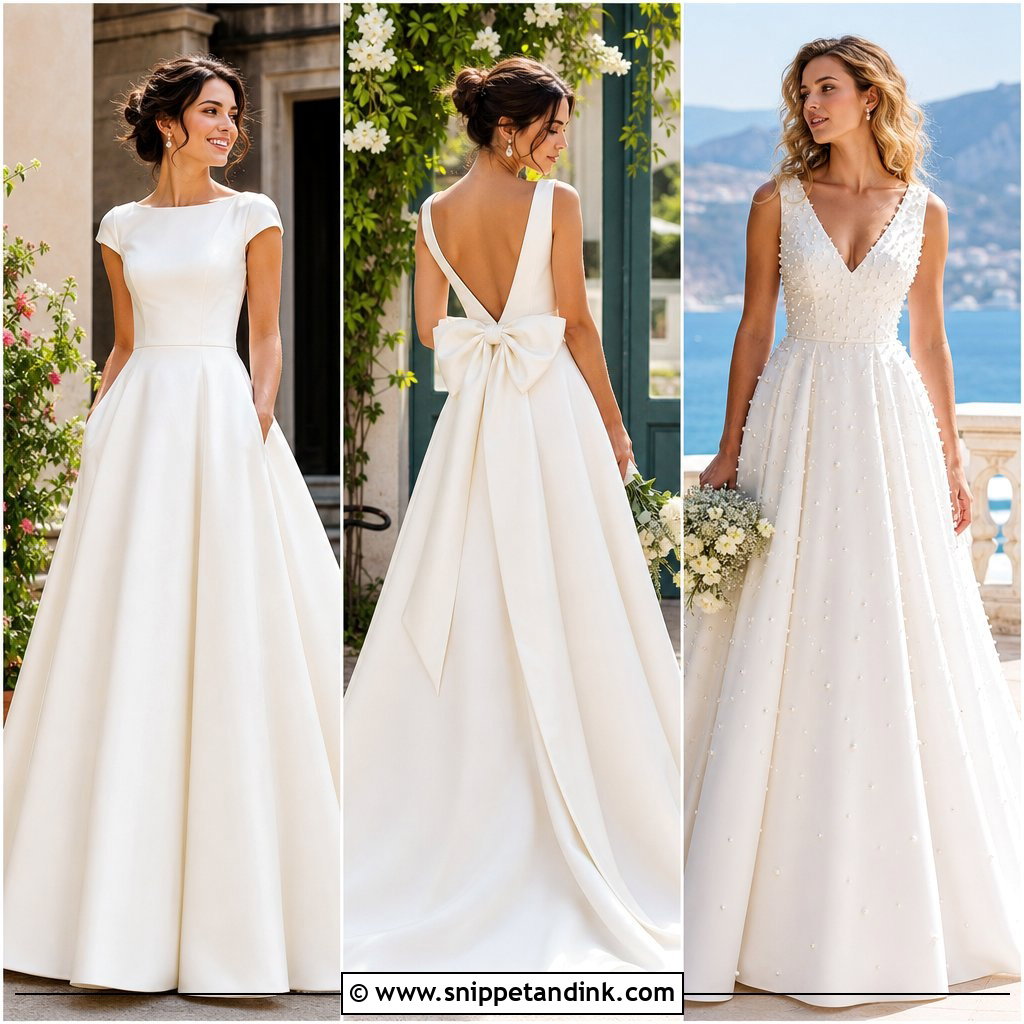
2. Square Neck A-Line Wedding Dress
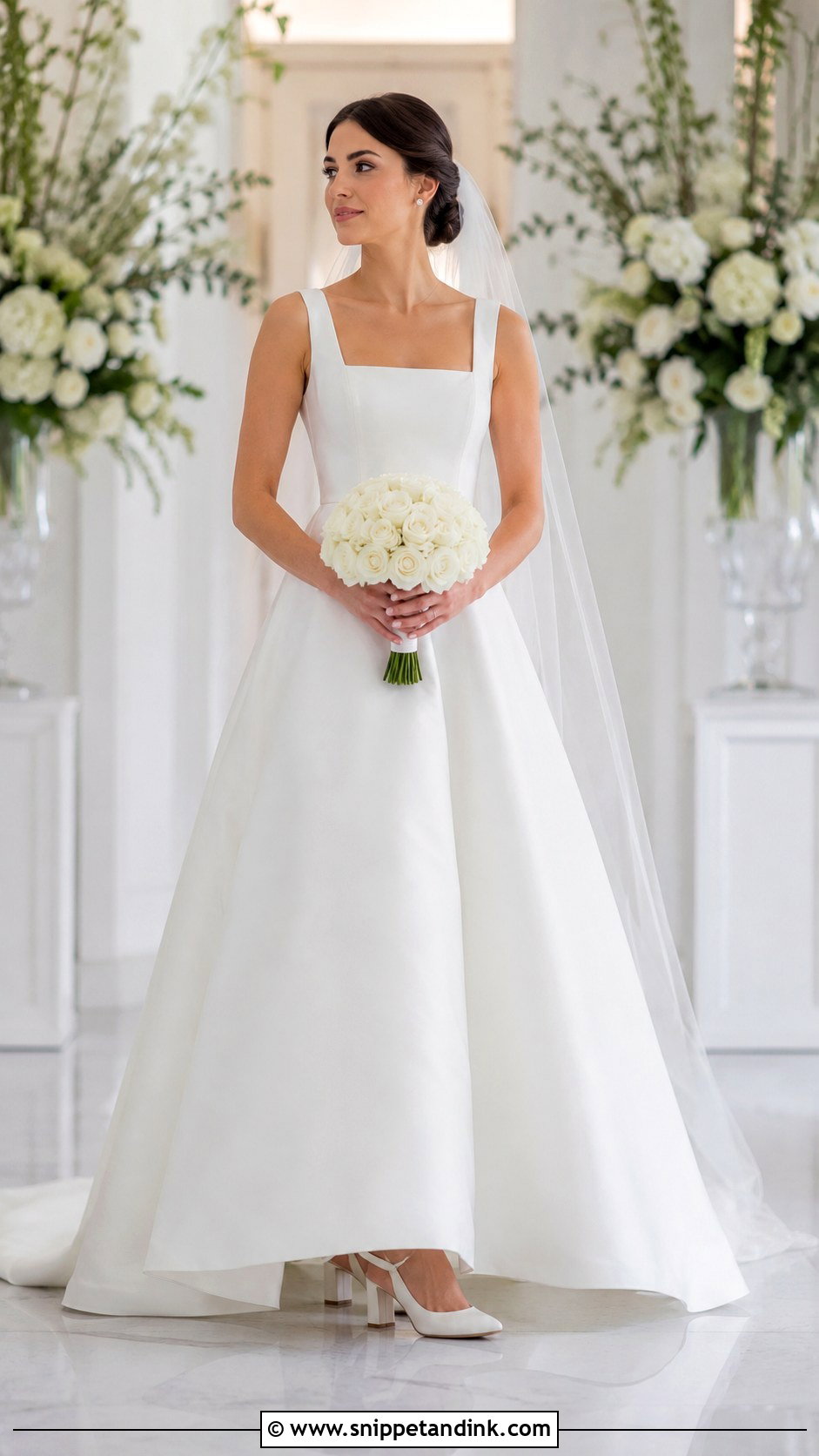
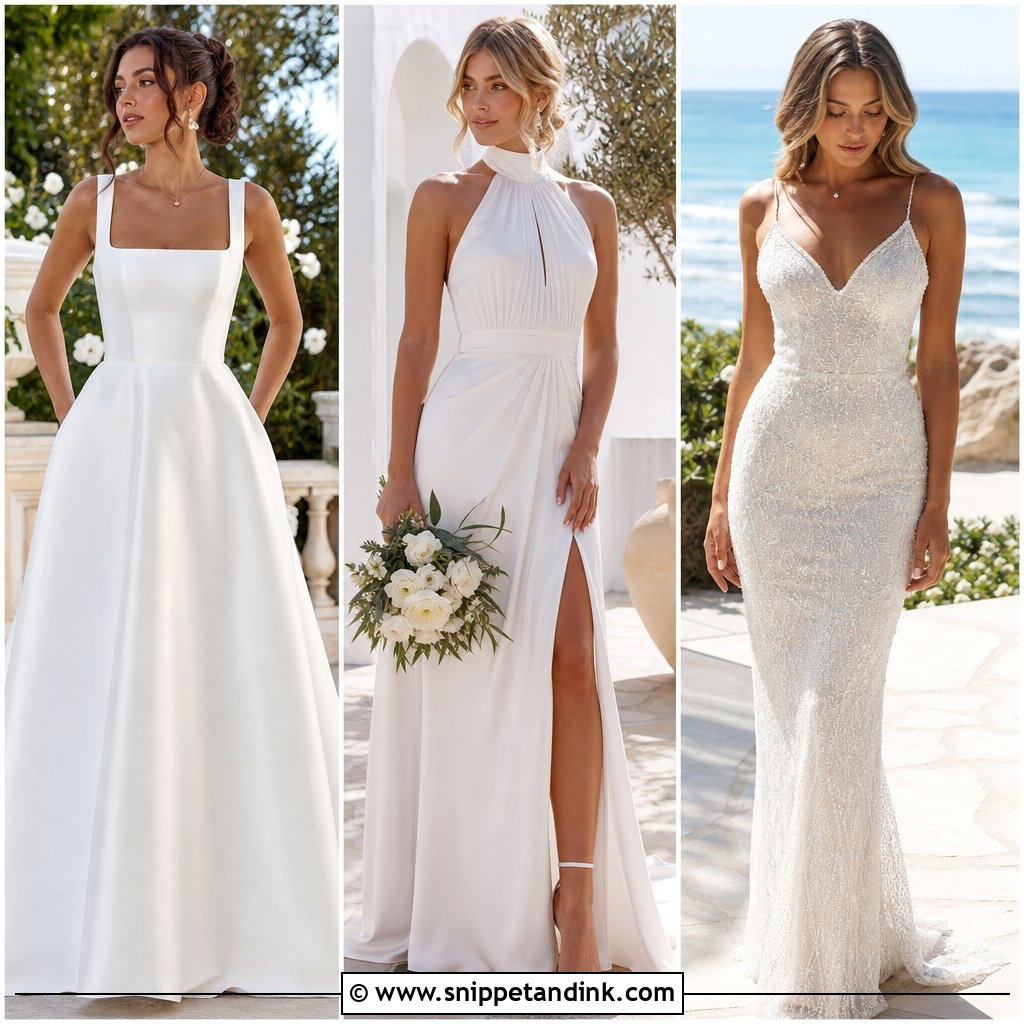
On a square-neck A-line wedding dress, I spend more time on strap placement than anything else. Straps set too far toward the shoulder edge slide off; set too close to the neck, they make the shoulders look broad. Wider straps also carry more support than spaghetti straps, which matters when the bodice is plain matte satin, crepe or mikado over an unembellished skirt. Pearl studs, a fine bracelet and block-heel pumps finish it, and a smooth low chignon leaves room for a chapel or cathedral veil. A round bouquet of white roses and greenery mirrors the skirt. Because strap width, waist height and skirt volume can all be adjusted, this shape fits more figures than almost any other on the list.
3. Strapless Crepe Column Wedding Dress
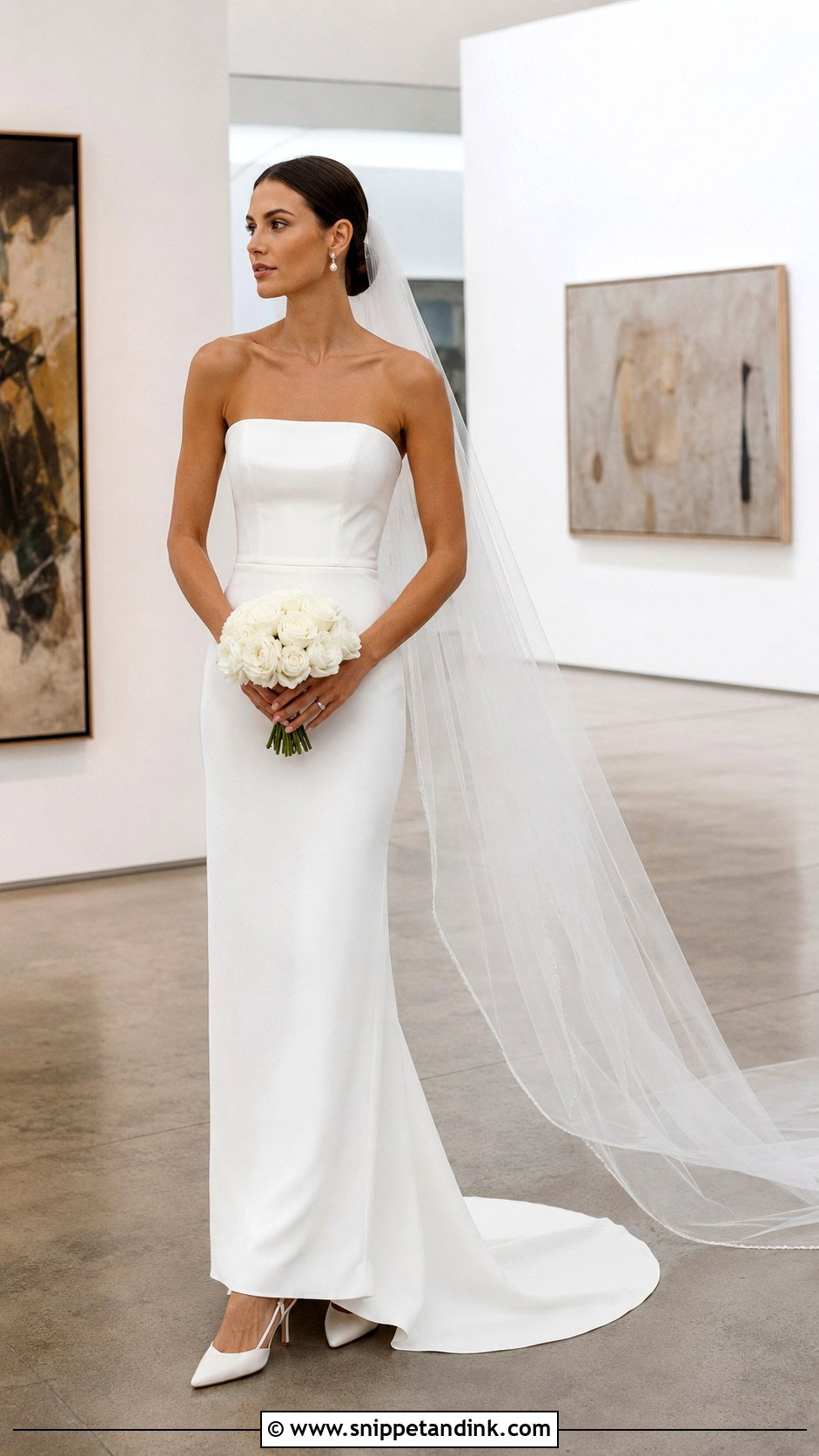
A crepe column can’t stretch at the knee the way a flared skirt can, and that’s the first thing brides notice in the fitting room. A small back slit or kick pleat solves it; I check the slit by having the bride climb a step, since that is when it opens widest. The strapless bodice needs internal boning so it sits smooth across the top edge. Sculptural pearl earrings, pointed slingbacks and a compact white bouquet keep it modern, with a sleek bun or polished shoulder-length waves. Instead of an ornate veil, a plain raw-edge cathedral veil gives quiet drama. Precise hemming is what makes it look finished, so wait to hem until your shoes arrive.
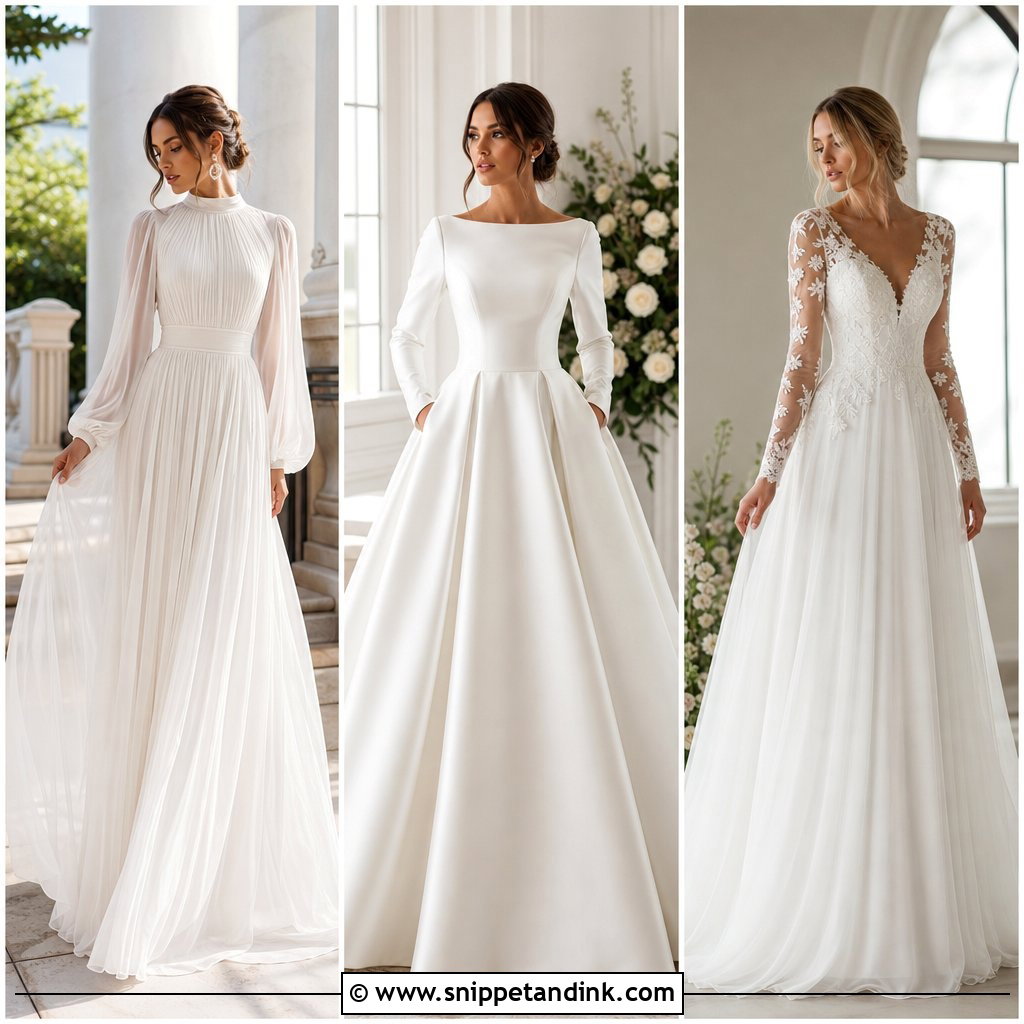
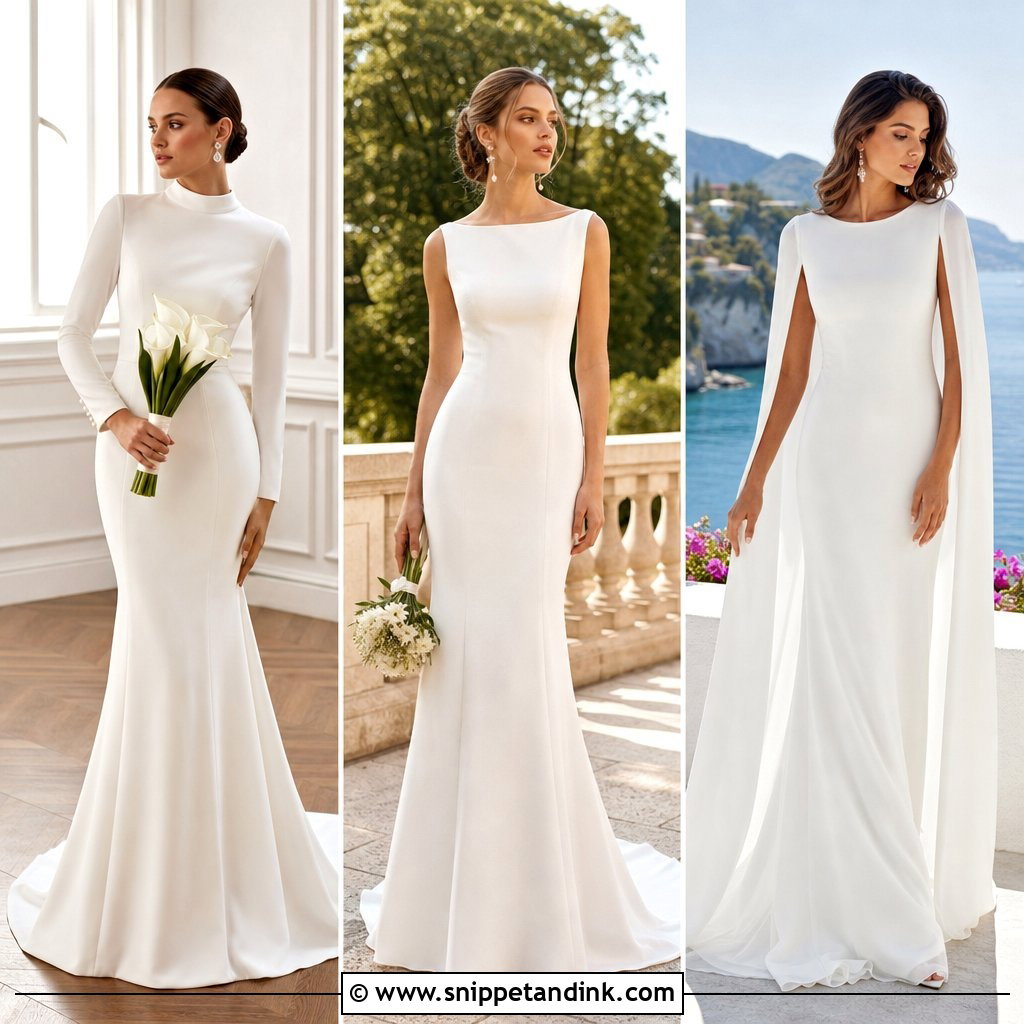
4. Long Sleeve Minimalist Wedding Dress
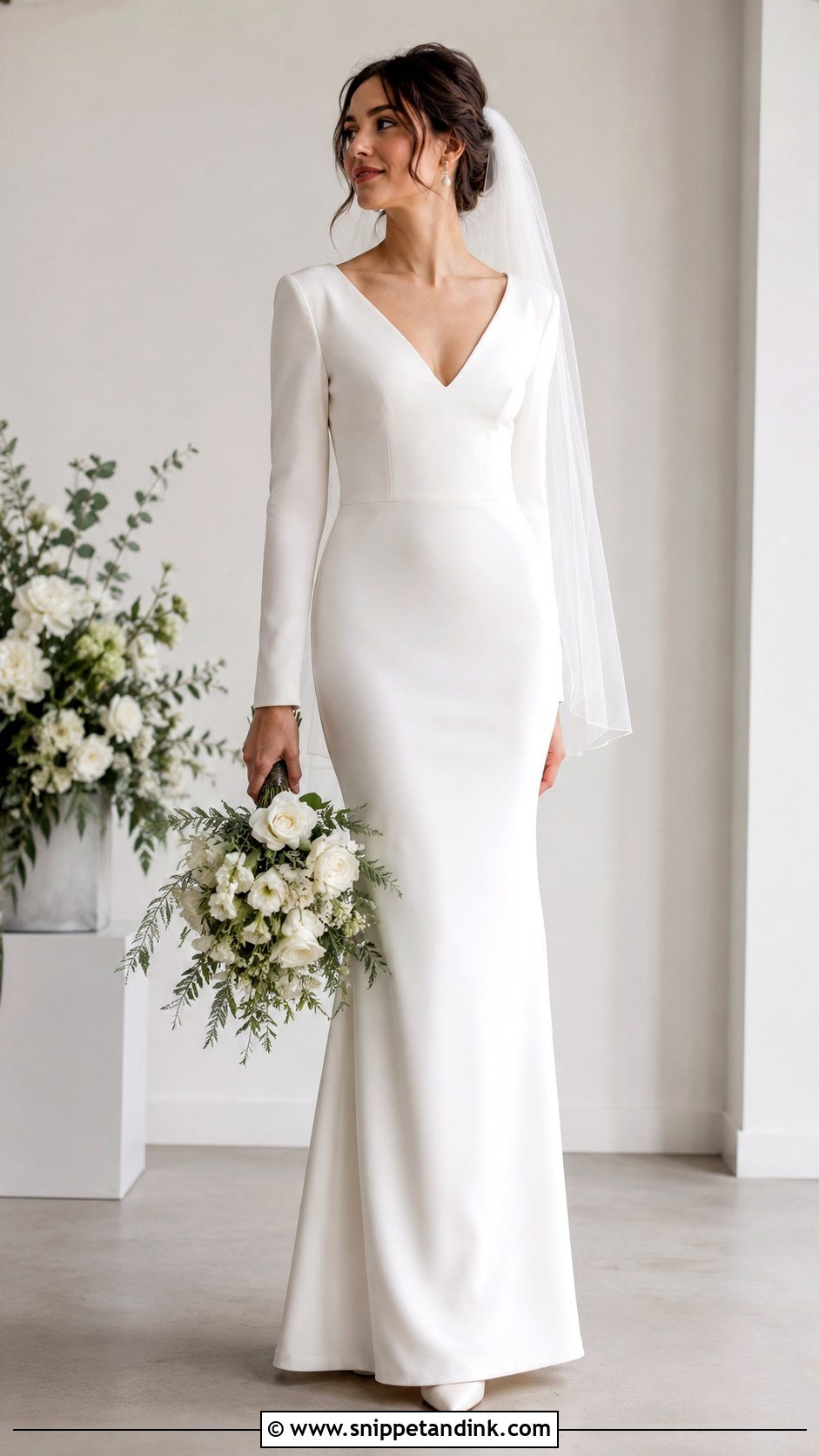
Fitted long sleeves in stretch crepe give coverage without looking old-fashioned, as long as the neckline opens up a little, with a bateau, scoop or modest V. One detail I flag early: sleeves that run past the wrist bone hide your hand during the ring exchange, and that is a photo you’ll want. I usually end them right at the wrist. Pearl earrings, ivory pumps and a slim comb above a low bun suit it, along with a medium-length veil that doesn’t swallow the sleeves and a loose bouquet with pale greenery. Before the last fitting, bend your elbows and lift your arms. Every seam should lie flat and the front hem should just clear your shoes.
5. Bateau Neck Wedding Dress
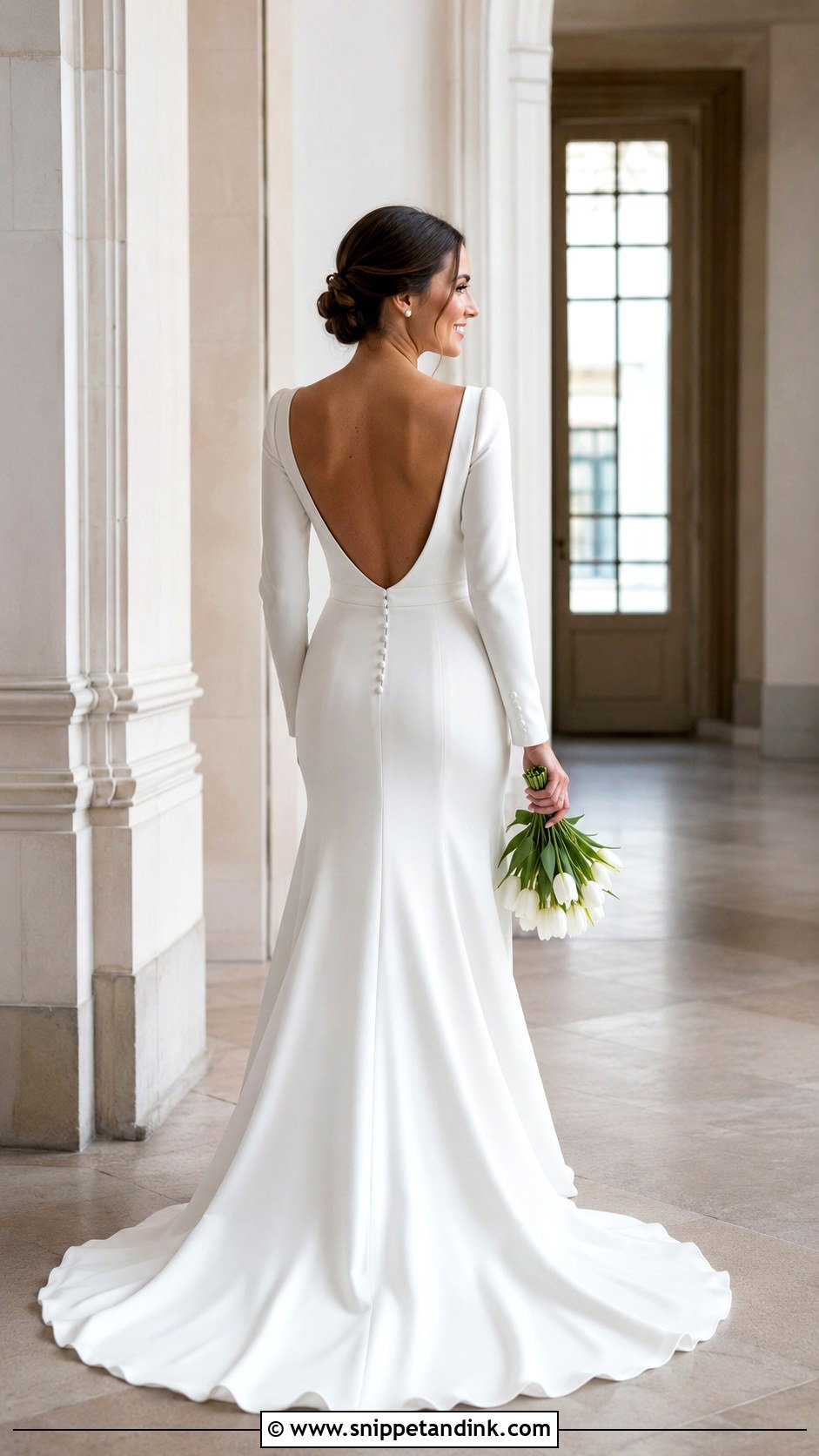
Covered buttons down the back of a bateau-neck wedding dress look wonderful and take a long time to fasten. Many gowns hide a zip beneath them, and I recommend asking for one if yours doesn’t have it, especially if you’ll change for the reception. The neckline itself is a shallow boat curve that draws attention to the shoulders and face, and it pairs well with three-quarter sleeves or none at all over a fitted crepe or silk bodice and a softly flared skirt. Keep accessories exact: pearl or diamond-style studs, a thin bracelet, closed-toe pumps. A low twist leaves the neckline visible, a veil pinned beneath it reads less formal, and a small bunch of tulips or roses suits the quiet mood.
6. Off Shoulder Mikado Wedding Dress
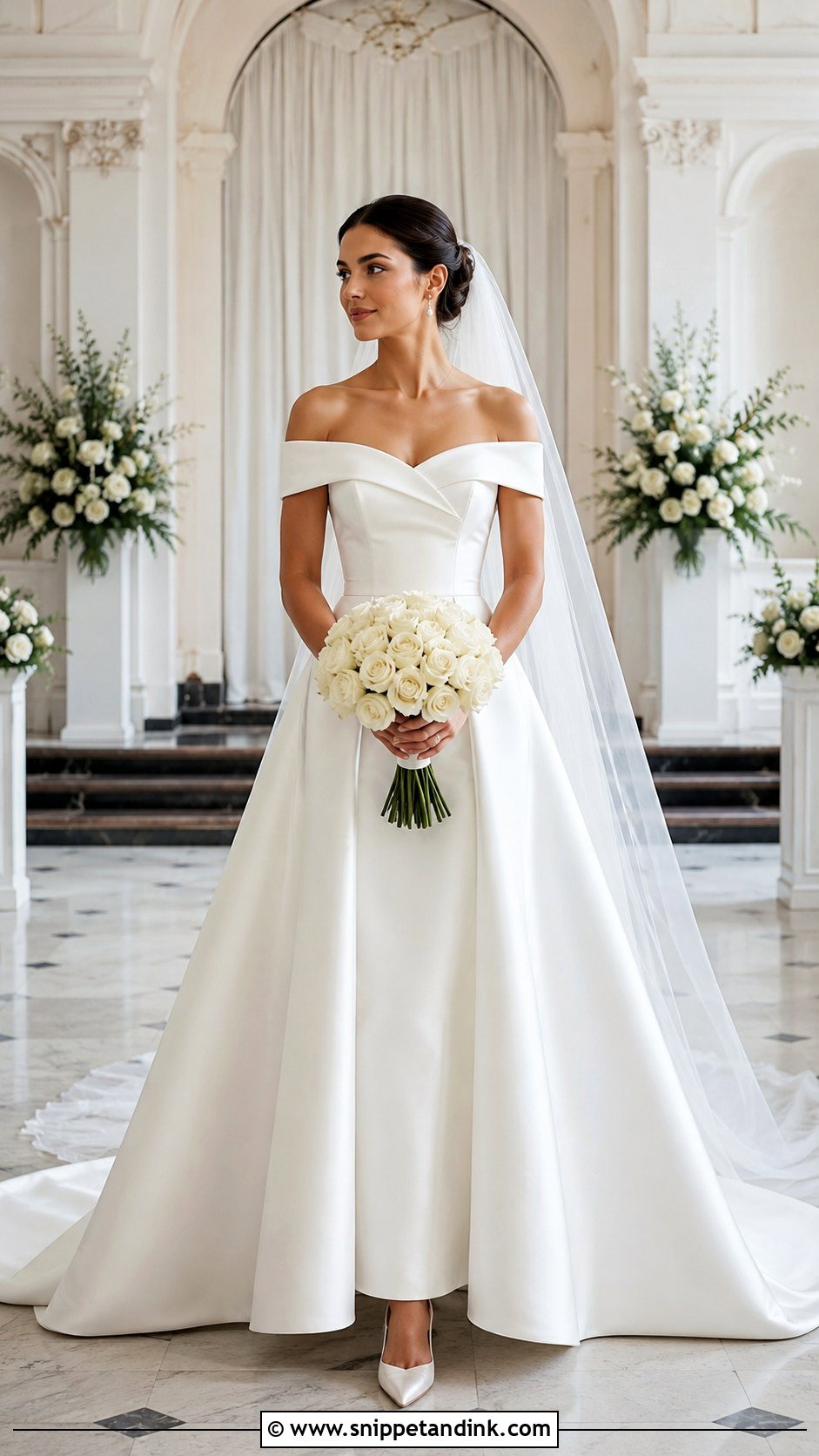
Mikado is the fabric I reach for when a bride wants a folded off-shoulder cuff that actually stands up. It holds a crisp edge and a smooth skirt from every angle. The trade-off is that it barely gives, so I fit the cuff twice, once with arms relaxed and once lifted to shoulder height, and settle somewhere between. A fitted bodice over an A-line or gently flared skirt keeps it clean. Short drops, a neat updo and pointed satin heels are enough; leave out the necklace. A long plain veil adds ceremony, and a structured white rose bouquet matches the crisp fabric. Covered buttons and a well-shaped train are all the detail it needs.
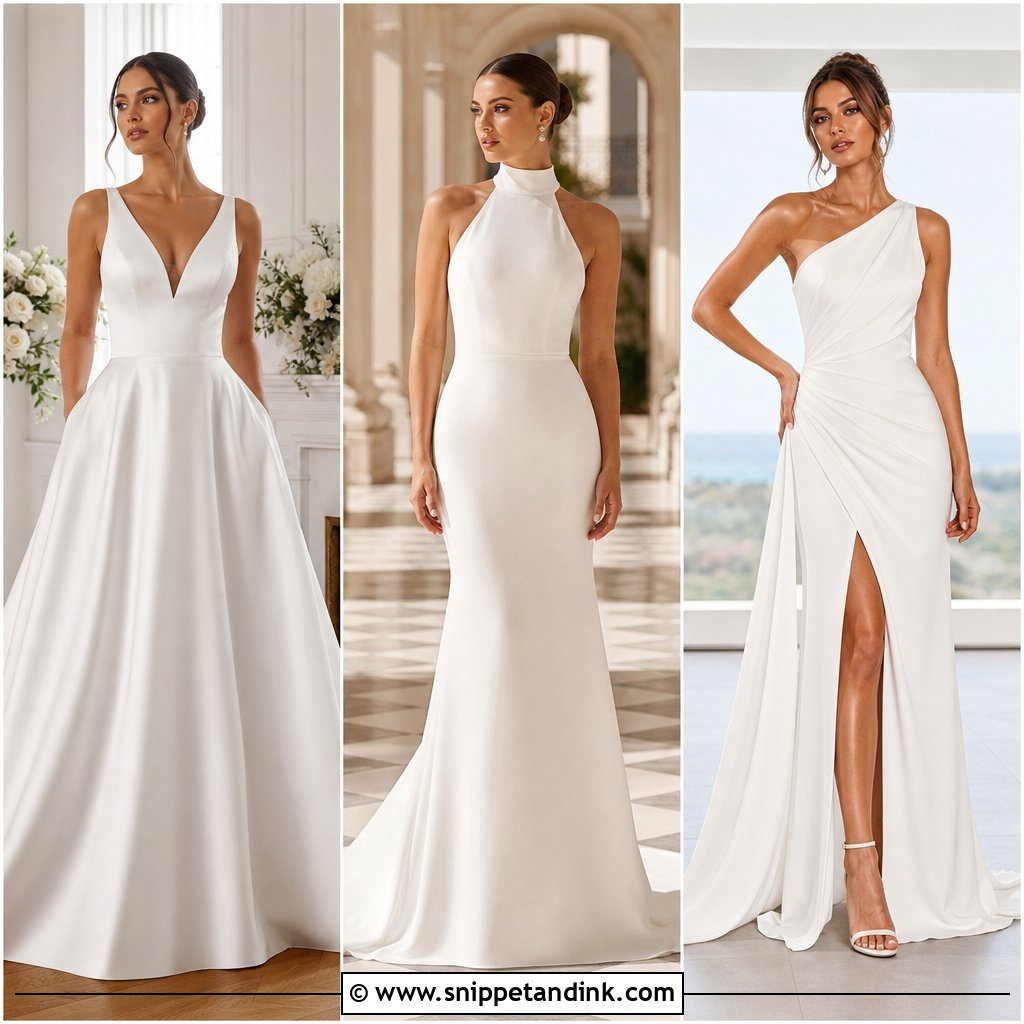
7. V Neck Sheath Wedding Dress
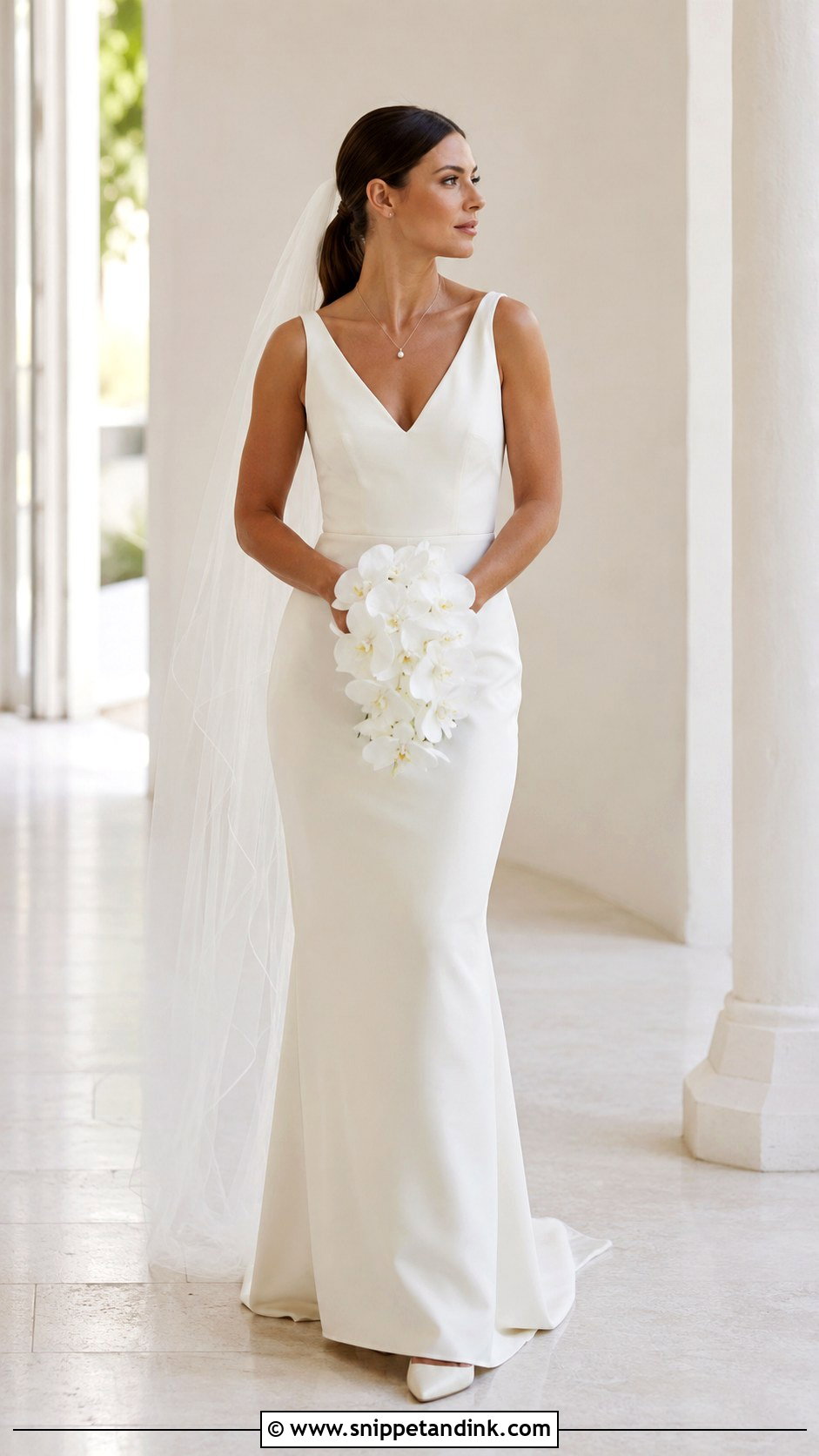
How deep should the V go? Deep enough that you like it, shallow enough that it stays put when you bend to hug a grandparent. I decide the depth with the bride leaning forward, not standing upright. Substantial crepe and a lined bodice keep a sheath clean, and a slightly wider strap leaves space for proper support. If you want more coverage, an illusion panel can raise the neckline while keeping the V shape; ask for mesh matched to your skin tone so it vanishes in photos. A fine pendant, small earrings, pointed heels or refined flats, a low ponytail with movement and a plain veil complete it. A narrow bouquet of orchids, tulips or callas follows the vertical line.
8. One Shoulder Wedding Dress
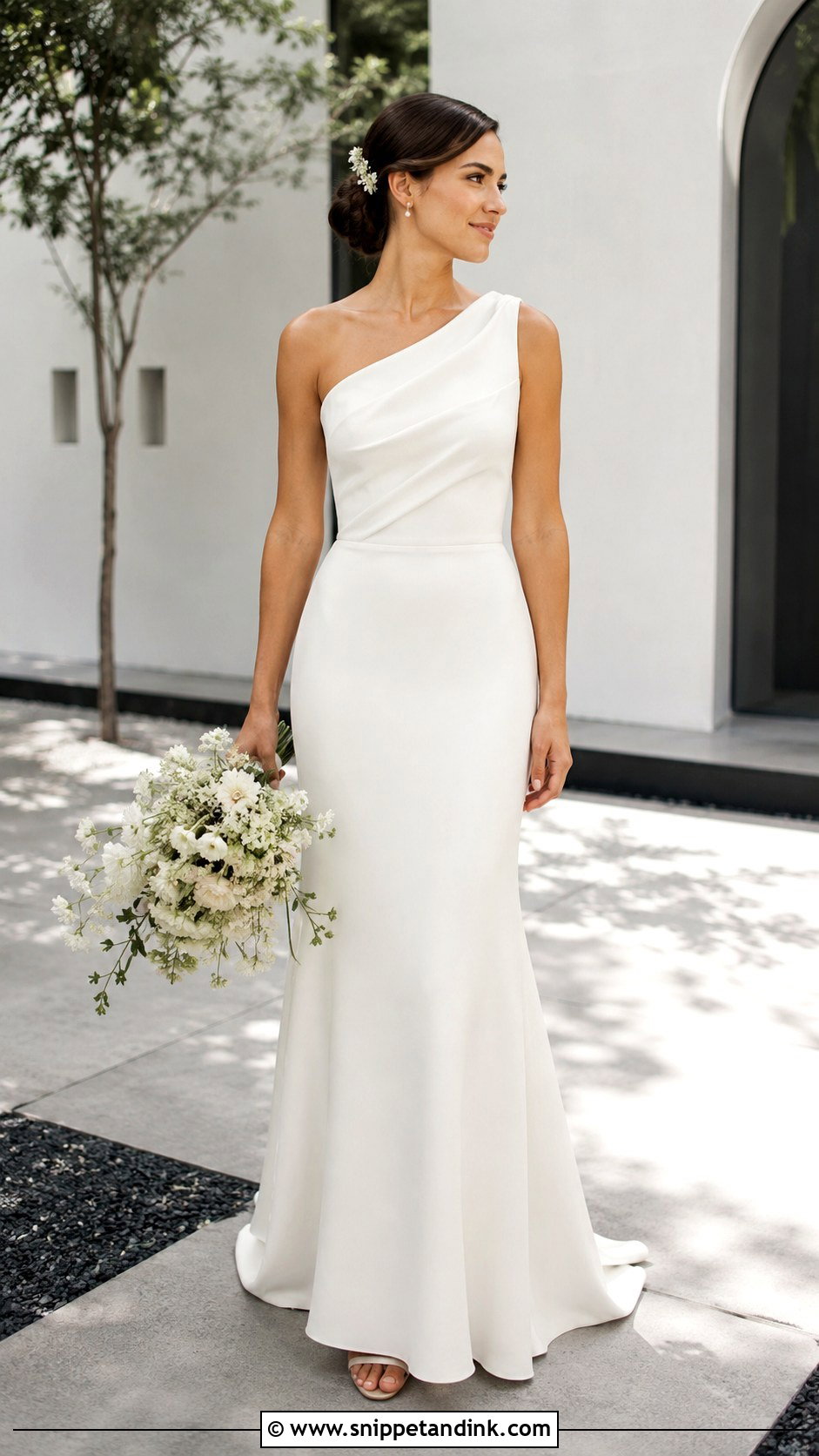
With a one-shoulder neckline, I part the hair on the side opposite the strap, so the face and bare shoulder balance each other. A clean crepe gown with an asymmetric neckline, fitted waist and straight or softly flared skirt needs very little else. Keep jewelry spare: one statement earring on the bare side feels editorial, matching studs feel traditional. Sleek ivory sandals and a small structured clutch work for the reception. A veil can fight the diagonal line, so a delicate comb in a low side bun is often the better choice. A loose white bouquet adds the only texture.
9. High Neck Satin Wedding Dress
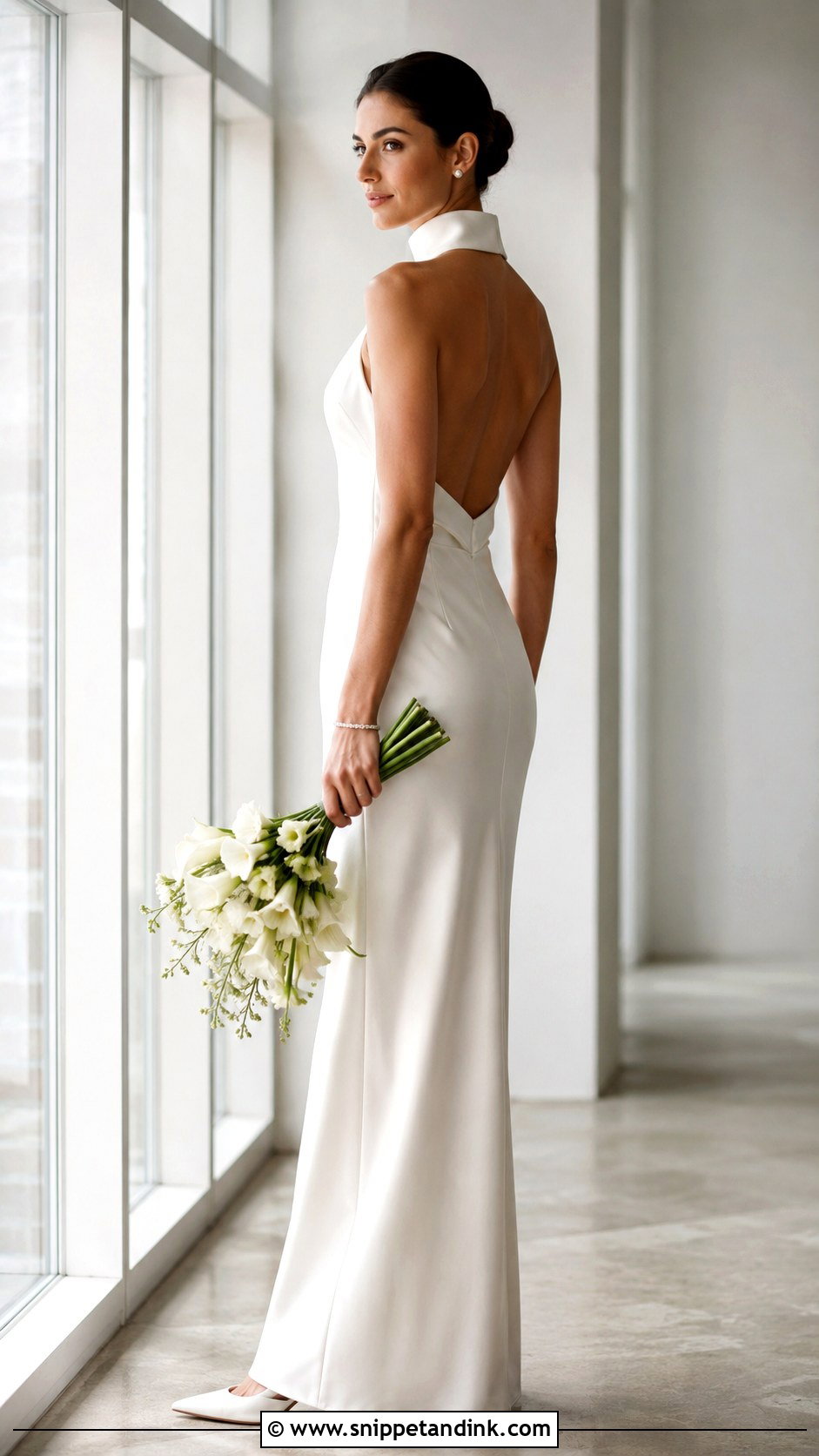
Choose a softly draped high neckline rather than a stiff collar, and balance it with an open back, a sleeveless cut or a shaped waist. One thing brides don’t expect: satin right under the chin bounces light up onto the face, which is flattering but means your makeup artist should know what you’re wearing. A straight skirt with a small train keeps it sleek. Pearl studs, a slim bracelet and pointed pumps complete it, with no necklace. Hair goes up, in a low bun, twisted knot or smooth ponytail, so fabric and hair aren’t competing. Pin a plain veil beneath the style or use one simple metal pin, and carry long-stem white flowers.
10. Backless Silk Wedding Dress
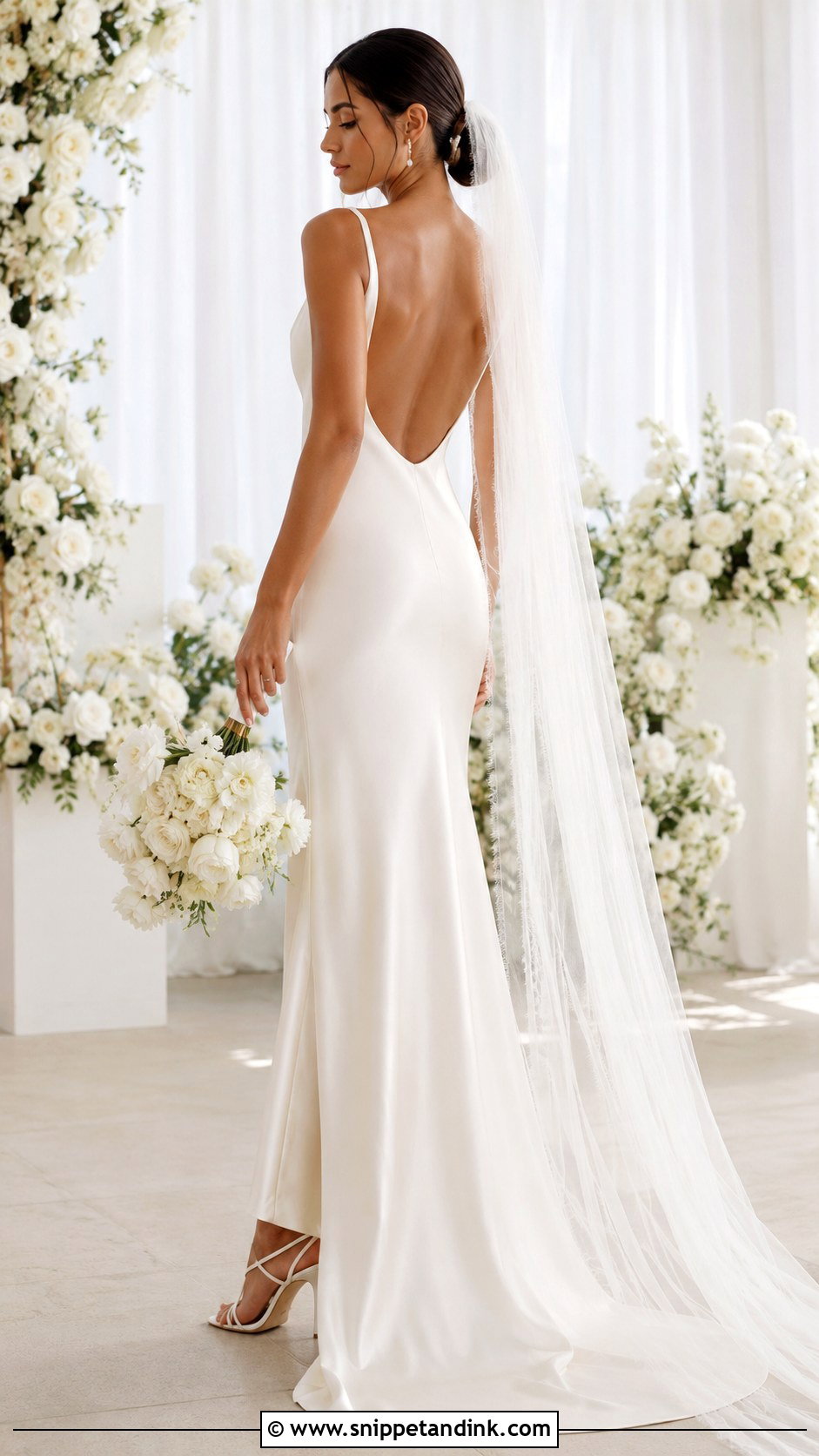
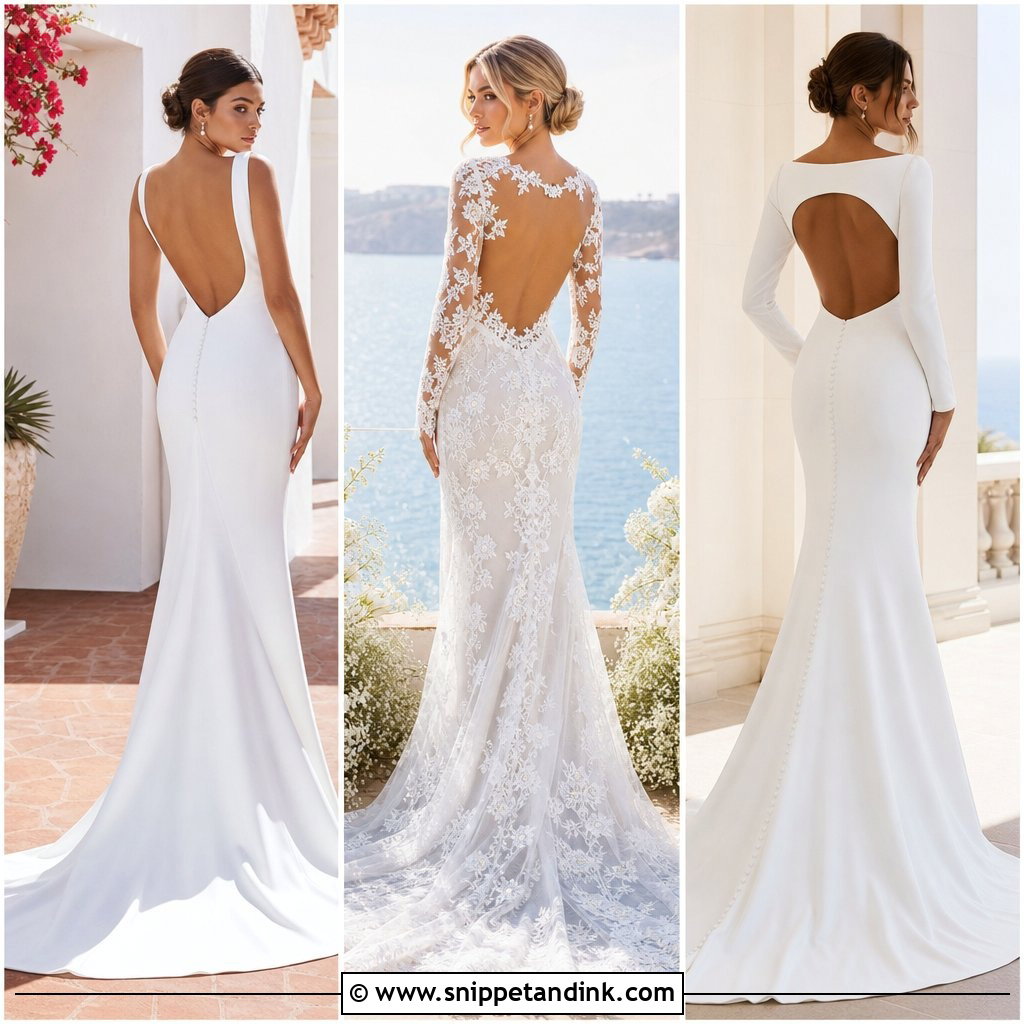
A backless silk wedding dress reveals itself as you walk away down the aisle, and the edge along the spine is what I fit most carefully. When you reach your arms forward, a loose back edge lifts away from the skin; a seamstress can add a narrow elastic or a tacked stay inside to keep it flat. From the front, a scoop, cowl or high neck with a plain floor-length skirt keeps it calm. Talk through built-in cups and fashion tape early. Delicate earrings, strappy heels and a veil positioned below a low bun keep the back visible, and a long raw-edge veil can frame it without covering it. Test it standing, sitting, turning and hugging before you commit.
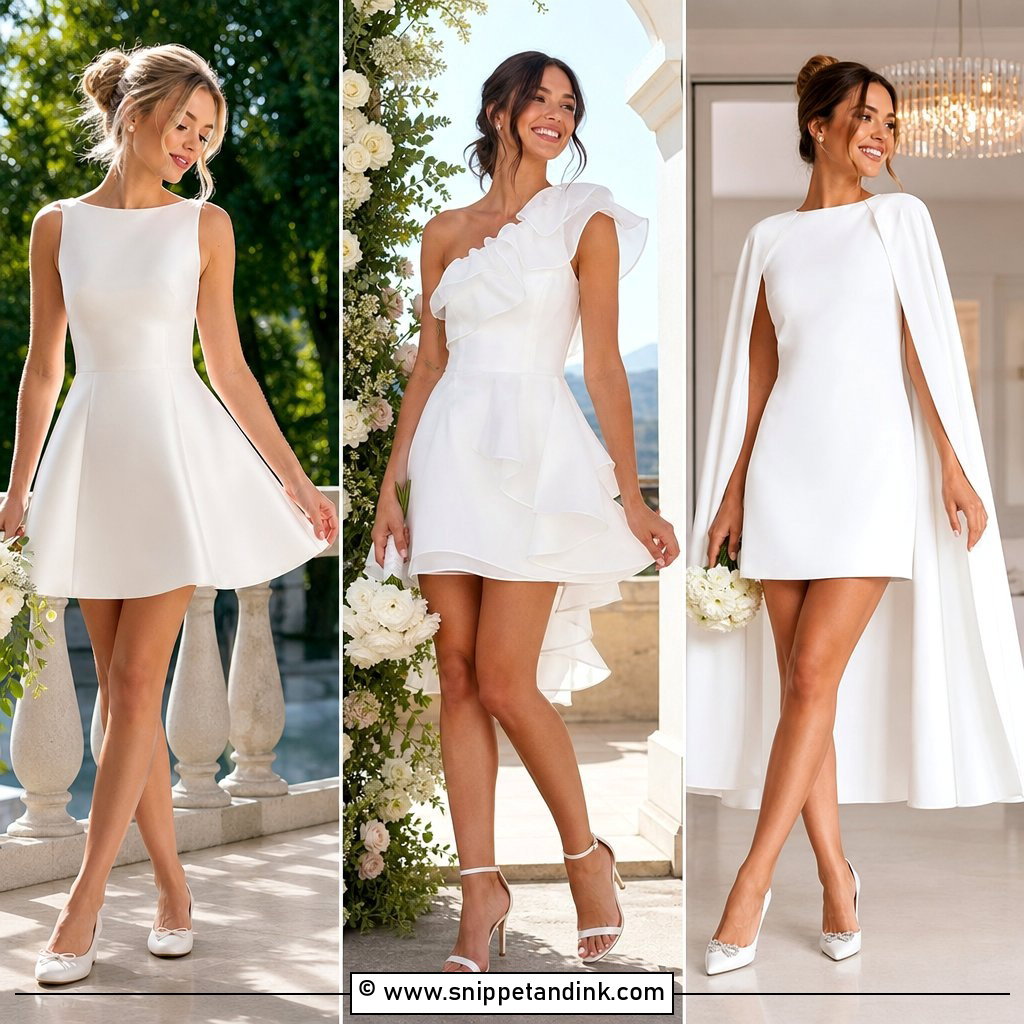
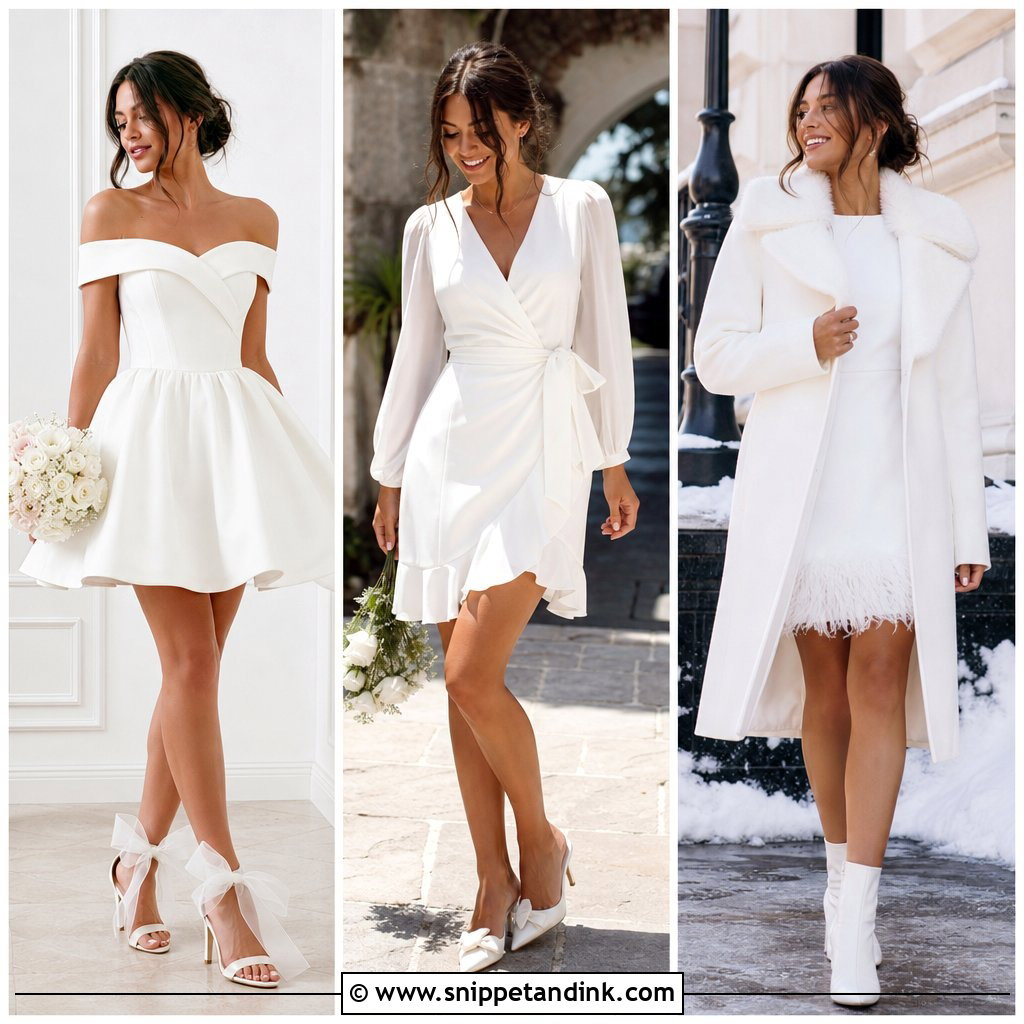
11. Tea Length Wedding Dress
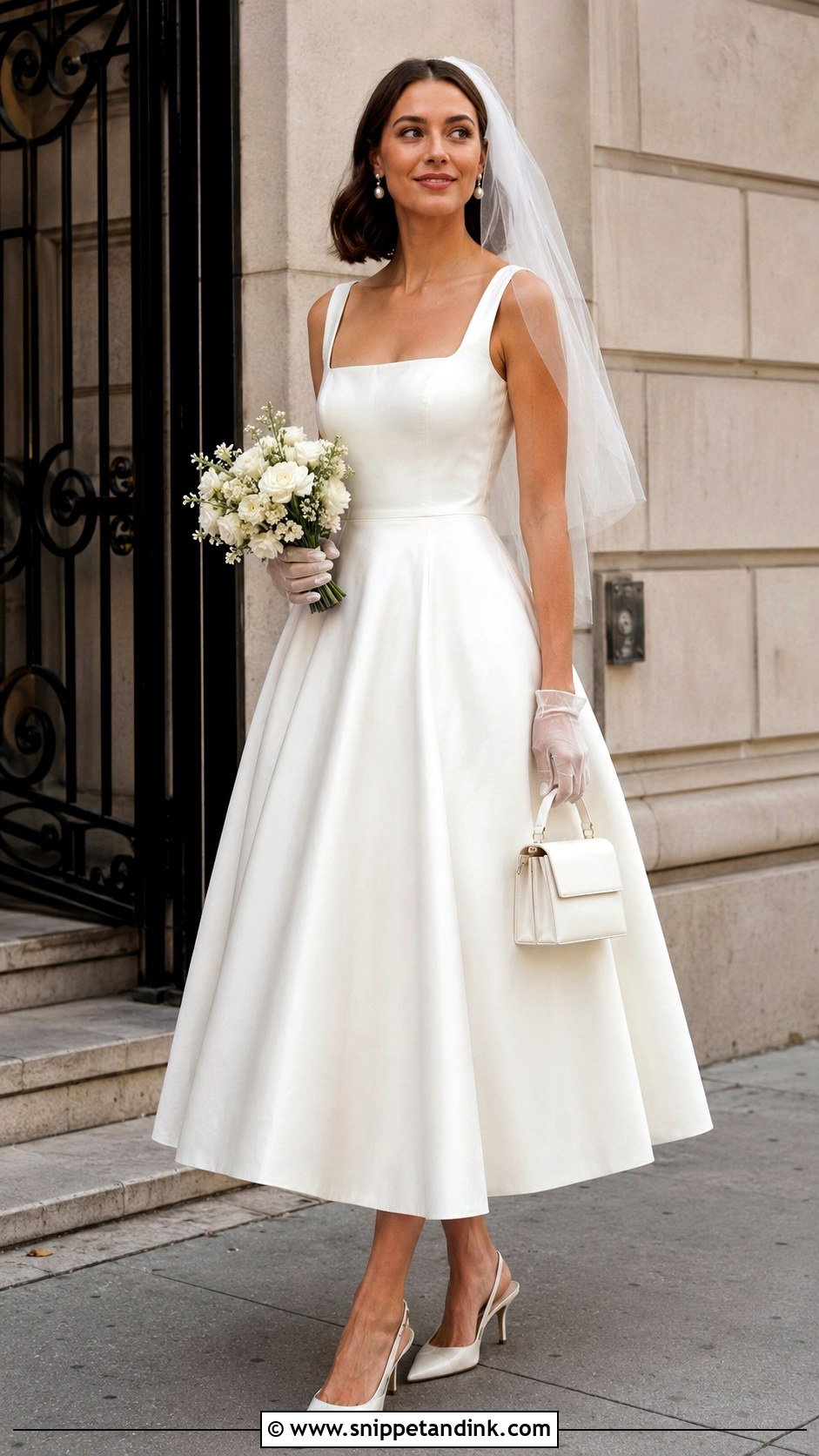
Getting the hem right is the whole job with tea length. I like it to land where the calf narrows, because a hem that cuts across the widest part of the leg shortens it. A fitted bodice with a square, scoop or off-shoulder neckline and a skirt between knee and ankle makes for an easy day in a city or at a daytime party. The shoes are on show, so pointed pumps, slingbacks or neat block heels become part of the outfit. Short gloves lean vintage; pearl hoops and a small structured bag feel modern. A birdcage veil, a bow or a shoulder-length veil suits the shorter line, with a compact bouquet and a neat bun or curled bob.
12. Satin Cowl Neck Wedding Dress
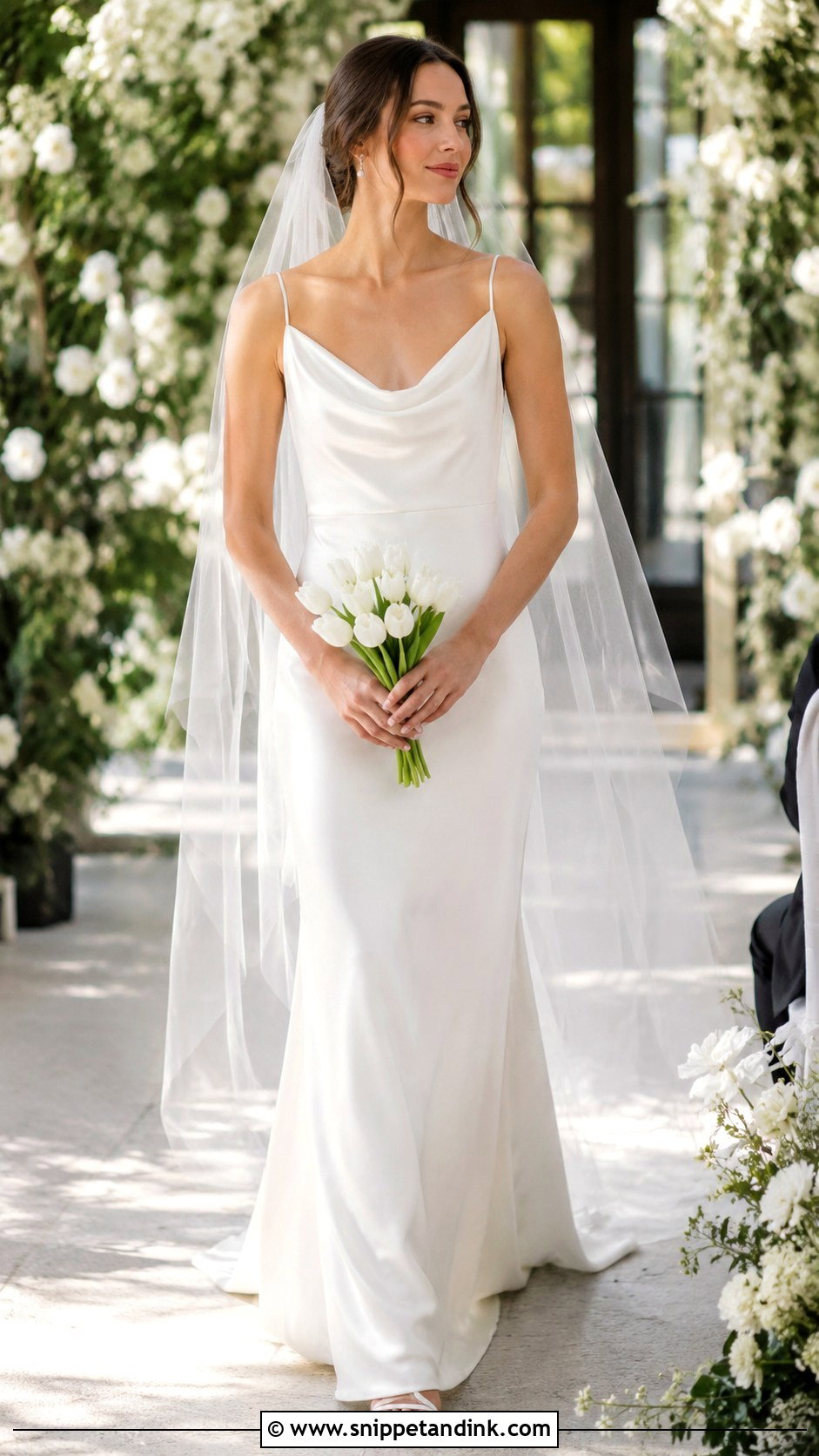
A cowl in satin moves with every step, which is the appeal and the risk. Cut on the bias with narrow straps, it can fall lower than you expect when you lean forward, so if you prefer coverage, ask for wider straps or a shallower cowl. I check the drape from the side while the bride walks, sits and reaches for a glass. Pearl drops, slim sandals and a plain fingertip veil suit it; loose waves relax it and a sleek bun dresses it up. White tulips or a small rose bouquet with little greenery keep it light. Plan for a lightweight wrap if the evening turns cool, since thin satin offers almost no warmth.
13. Minimalist Ball Gown Wedding Dress
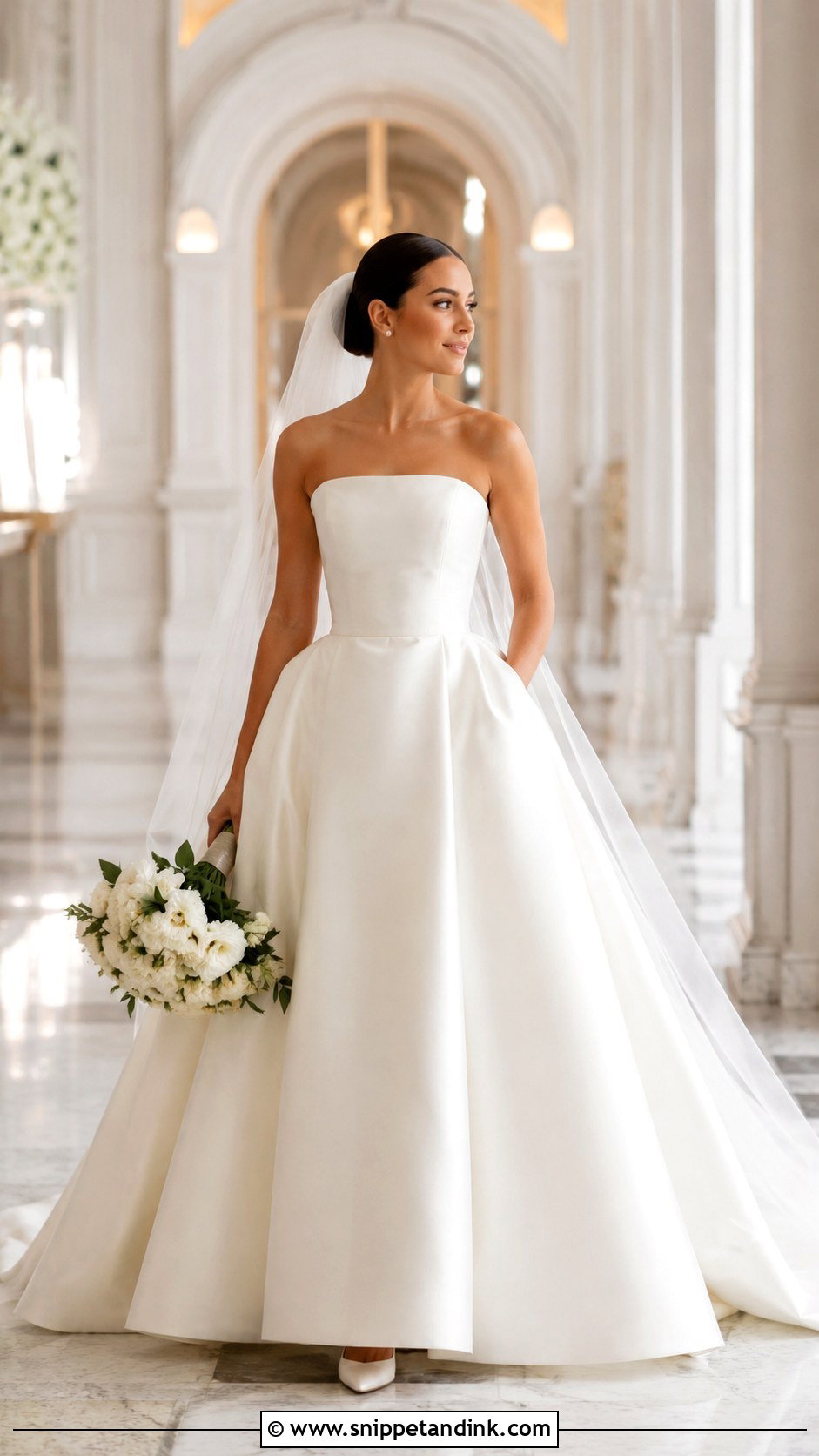
The drama in a minimalist ball gown comes from the skirt’s volume, and so does the logistics. A full satin or mikado skirt needs a helper for the car, the stairs and the bathroom, and I tell brides to practice getting into a car seat in it before the day. Keep the bodice fitted, the waist seam clean and the skirt unembellished, with a strapless, square or soft scoop neckline. Pearl studs, closed-toe pumps and a smooth updo suit it, plus a long plain veil that matches the scale. A medium bouquet holds its own against the volume where a tiny posy would vanish. Pockets are welcome if they lie flat. Hem with your exact shoes and have the bustle tested properly.
14. Crepe Mermaid Wedding Dress
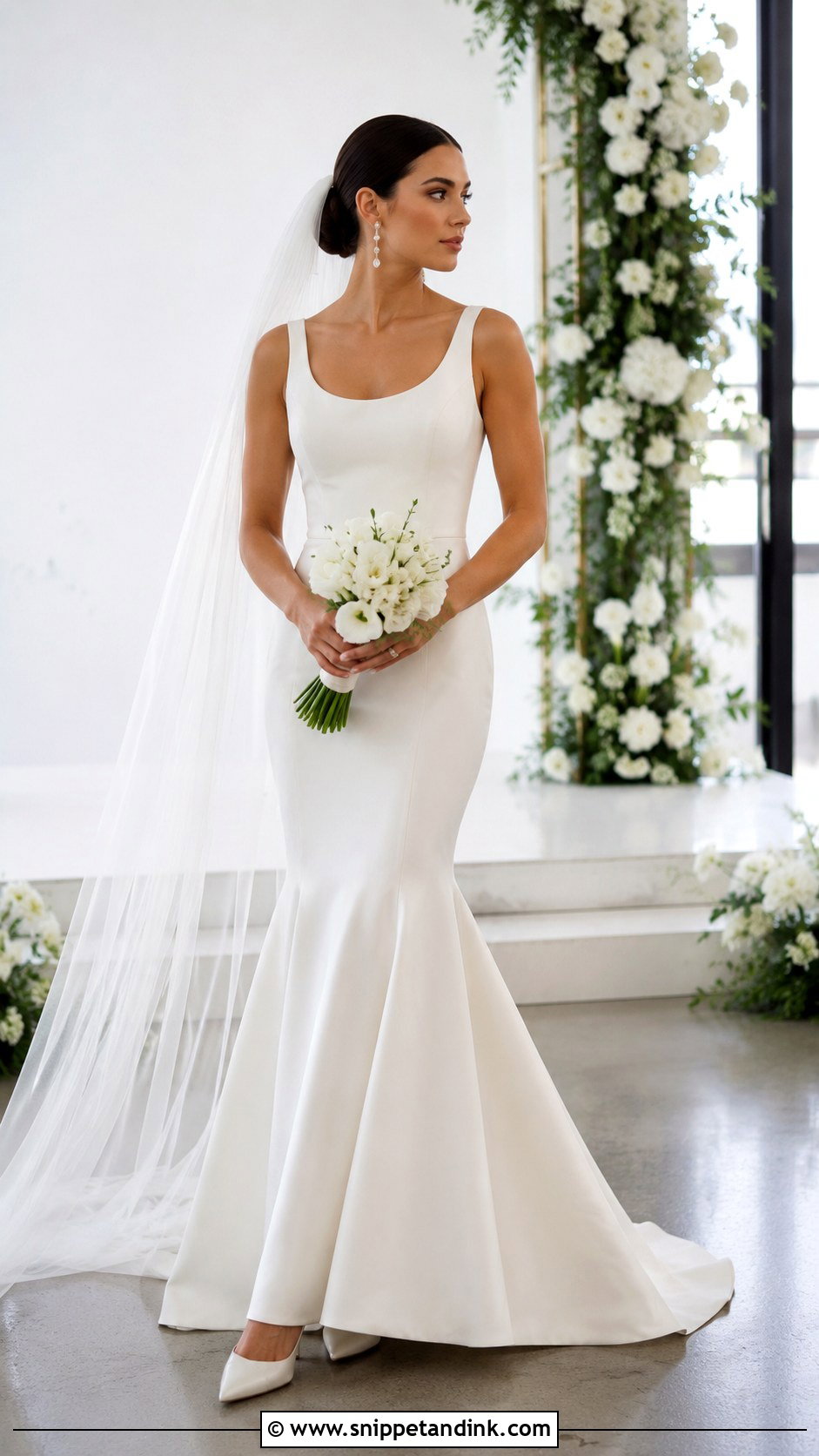
Crepe mermaids show shapewear lines more than any other style, because the fabric hugs right down past the thigh. I ask brides to bring their shapewear to the first fitting so we can see where the leg band sits against the flare. The bodice should support the torso before the skirt widens around the knee, and a straight, scoop or off-shoulder neckline balances the fitted shape. Long earrings, a low bun and pointed heels suit it, with a plain chapel veil framing the flare from behind. Choose a narrow bouquet so the waist stays visible. Sitting at dinner is the real test; if the fabric strains across the thighs when seated, it needs letting out.


15. Simple Plus Size Wedding Dress
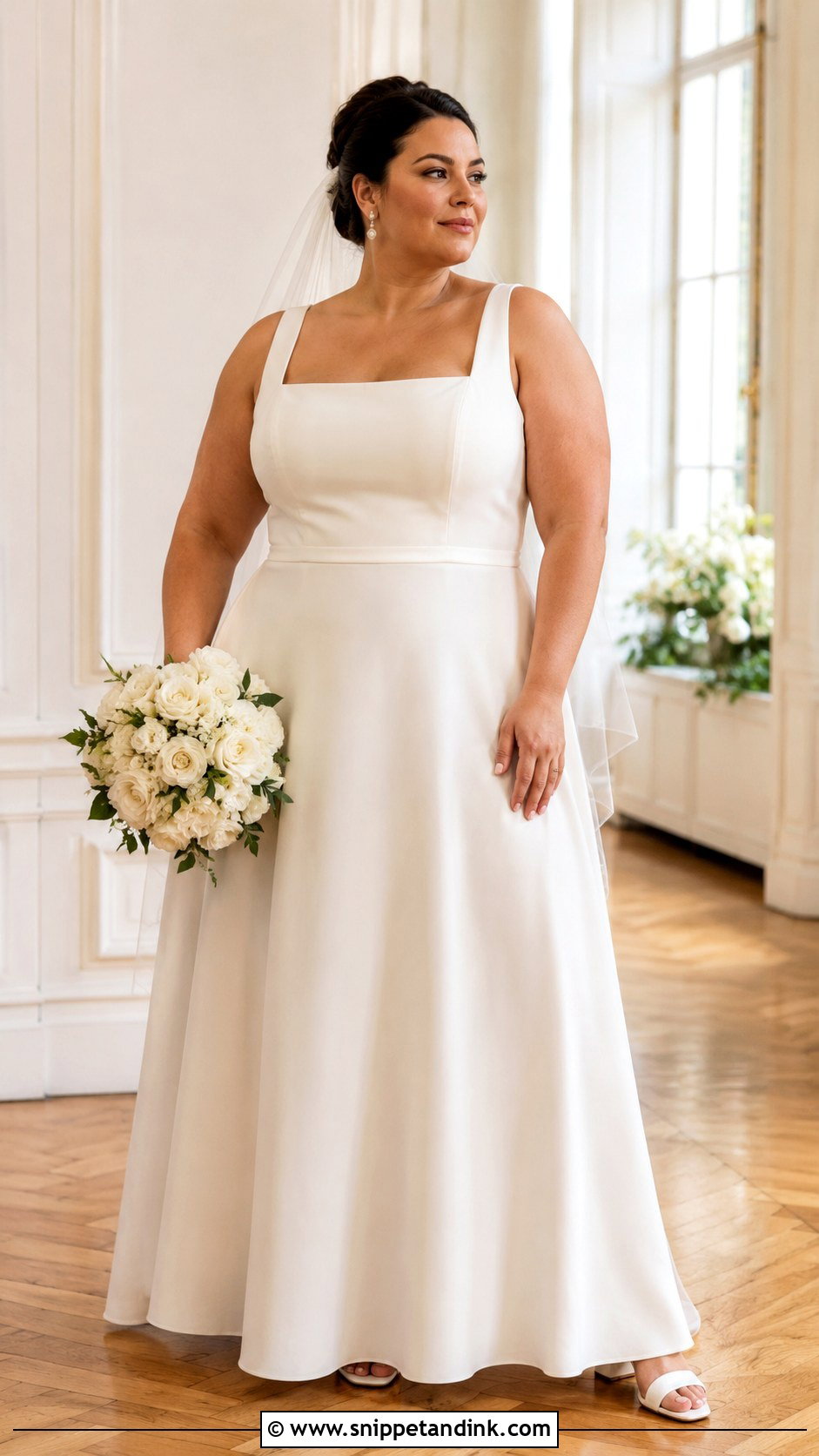
Most bridal samples are cut in small sizes, so plus-size brides often try a dress clipped open at the back and are asked to imagine the rest. Ask whether a sample in your size exists, or how the ordered size is constructed differently, before you commit. Support and proportion matter more here than hiding anything: an A-line crepe gown with a defined waist, wide straps and a square or V-neck is a strong start, with a structured bodice and seams placed to smooth the line while the skirt moves freely. A stretch-crepe sheath with a supportive lining suits brides who prefer a fitted shape. Block heels, pearl drops, a medium bouquet and a fingertip veil on a secure updo complete it. Book enough fittings to refine the bust, straps, waist, hem and bustle without rushing.
16. Simple Petite Wedding Dress
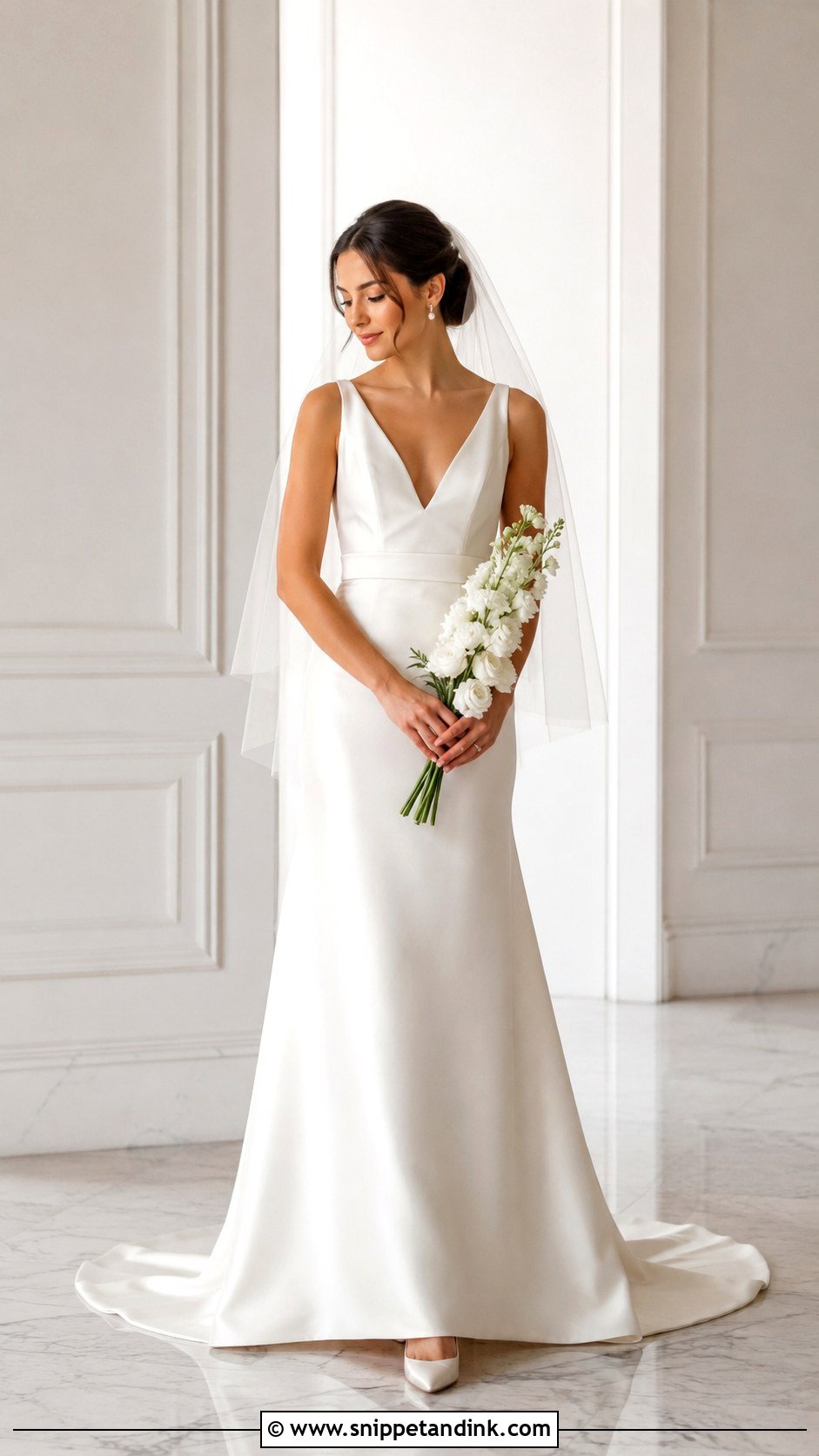
Petite alterations go beyond the hem. When a skirt is simply cut shorter, the flare often ends up starting too low, so on many gowns I’d rather take length out at the waist or bodice and keep the skirt’s proportions intact. A slim A-line or column in smooth crepe or satin gives one unbroken vertical line, and a V-neck, square neck or slightly raised waist sharpens the proportions. Watch that skirt, train and straps don’t swamp your frame. Pointed pumps, delicate earrings, a narrow bouquet and a fingertip veil keep the scale right. Wear your hair up or tucked behind the shoulders so the neckline stays visible.
17. Simple Beach Wedding Dress
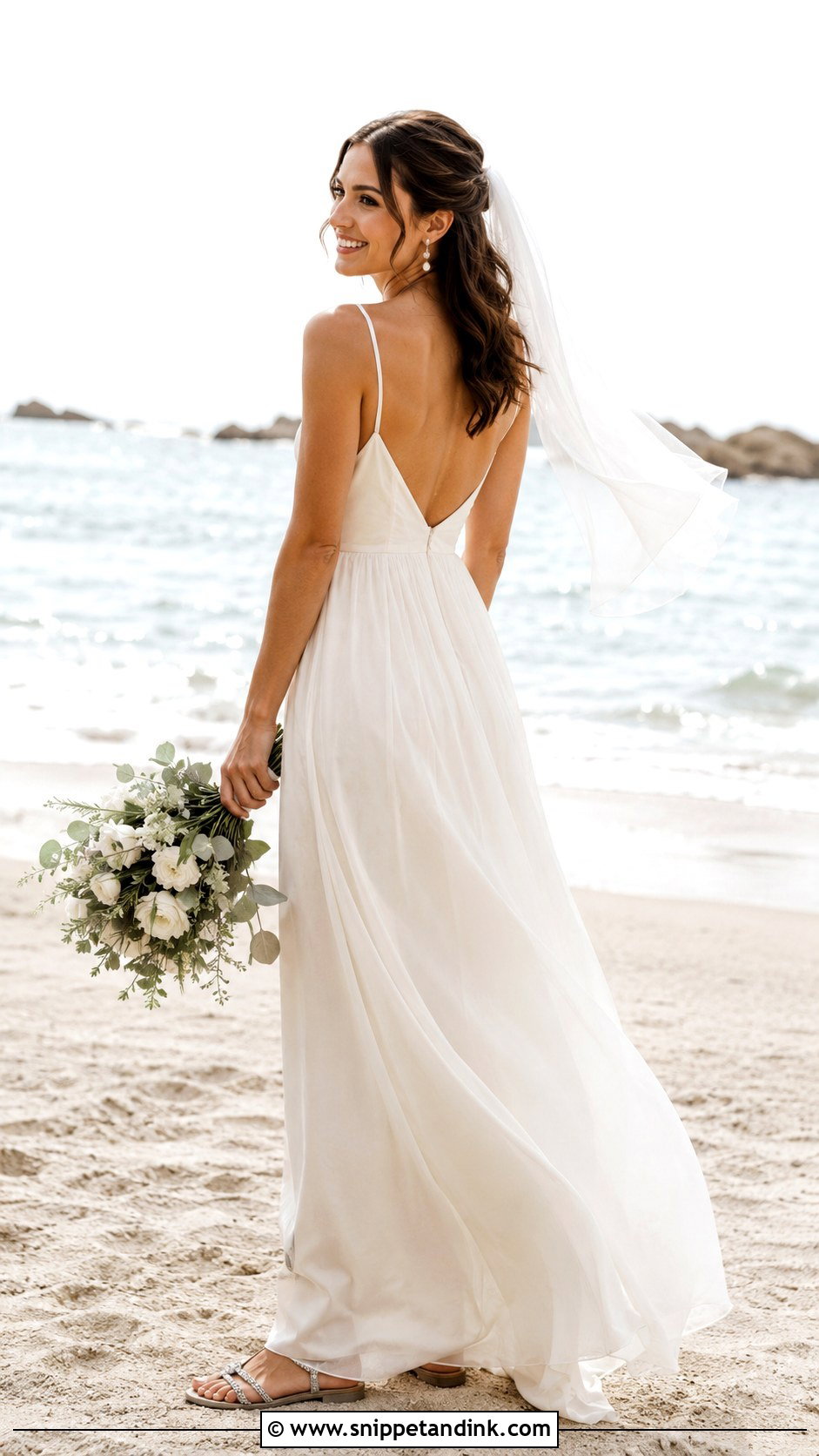
Sand changes everything about how a dress behaves. Heels sink, a long hem collects damp sand and drags, and chiffon catches every gust. Choose chiffon, silk or light crepe in a relaxed A-line or sheath, with a V-neck, slender straps and a low back, and have the front hem taken up slightly so it skims the ground. Flat embellished sandals, low block heels or barefoot sandals work, depending on the surface. Small pearl earrings and softly pinned waves cope with wind better than a sleek style. A short veil or a hair ribbon is easier to manage than a long train. Breathable lining matters in the heat, and a loose white bouquet with greenery suits the setting.
18. Simple City Hall Wedding Dress
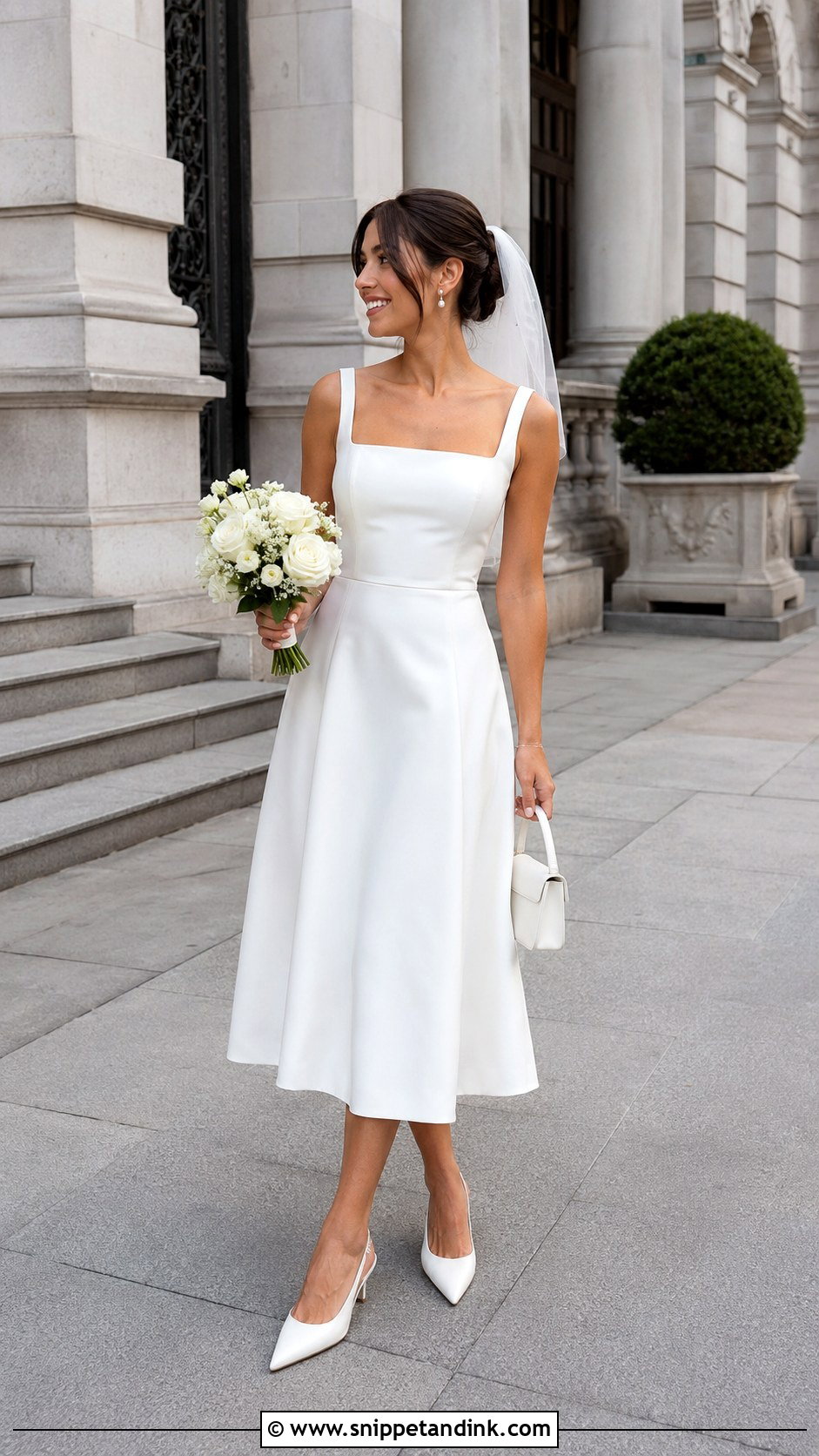
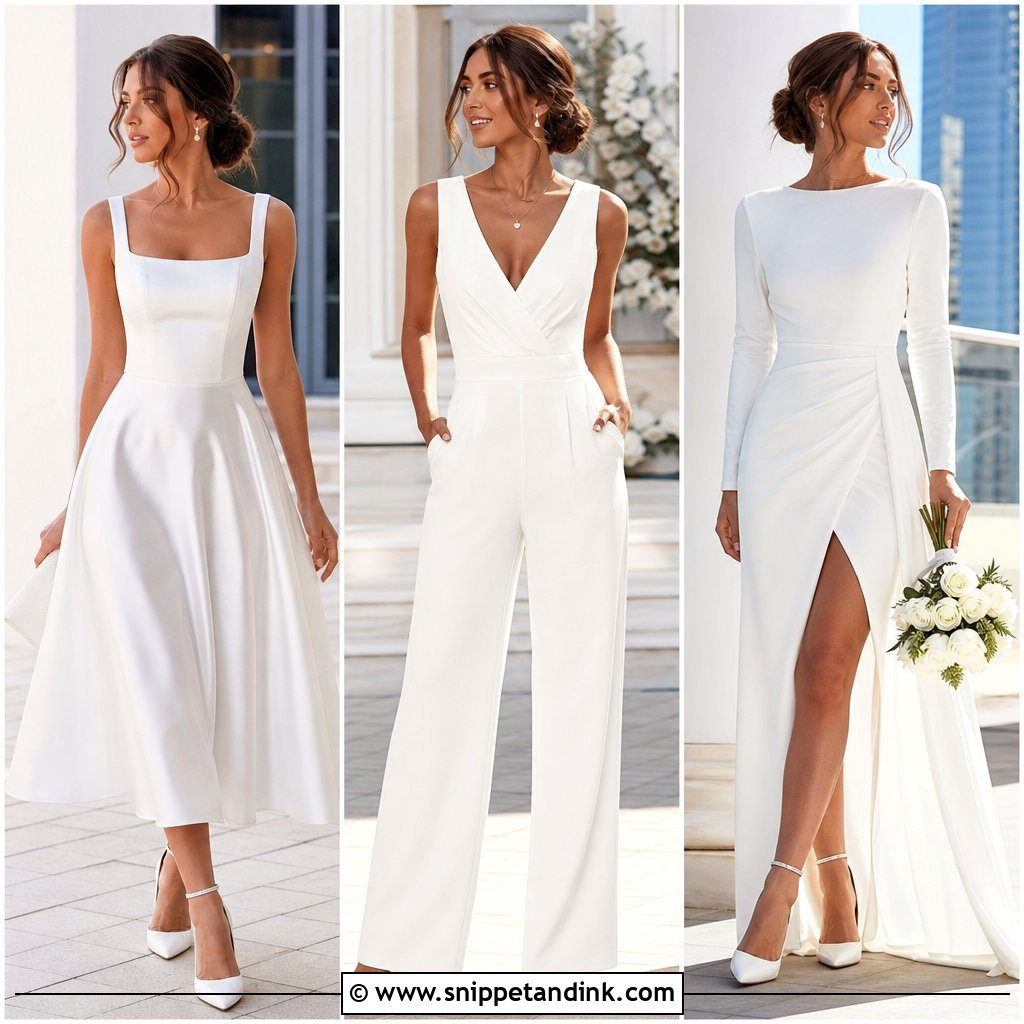
Courthouse and registry buildings mean corridors, staircases, waiting rooms and often flat overhead lighting, so I dress city hall brides for movement first. A white midi with a fitted waist, a clean square neckline and a softly flared skirt is the classic city hall wedding dress, and a sleek column midi or tailored long-sleeve dress works too. Pointed slingbacks, pearl earrings and a small structured handbag finish it, with a short veil, a pillbox-style headpiece or a hair bow as the bridal signal. In cooler weather, a tailored white coat keeps you warm without hiding the dress. Choose a compact bouquet that’s easy to carry through doors, make sure the hem clears steps and break the shoes in well beforehand.
19. Simple Winter Wedding Dress With Cape
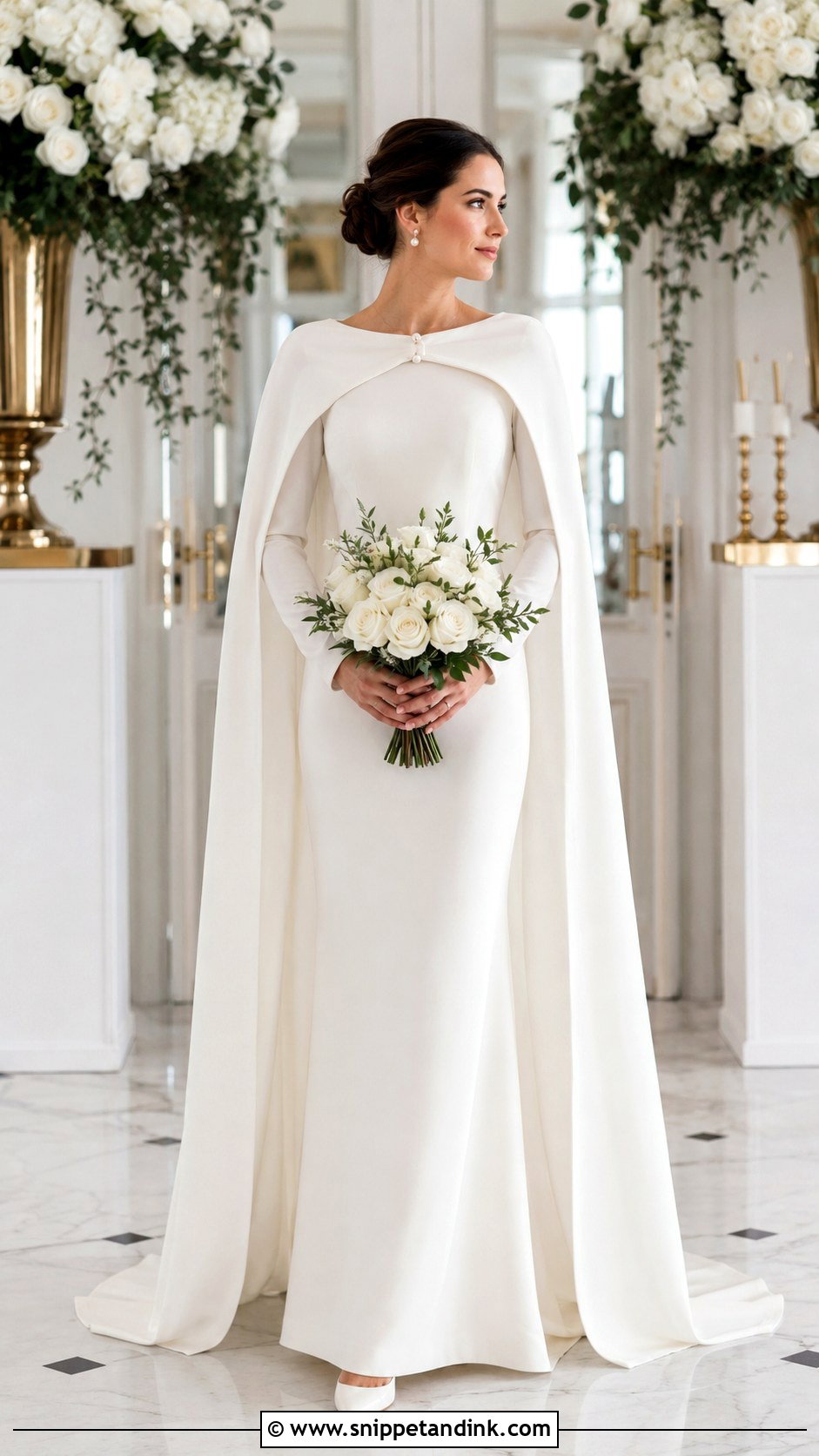
A cape solves winter in a way a cardigan never will, and it photographs as part of the outfit. Start with a long-sleeve crepe column or A-line with a bateau or high neckline, then add a floor-length cape in smooth satin, soft wool or opaque crepe depending on the cold. Keep the fastening discreet, a covered hook, a small pearl clasp or a narrow bow, and check that the weight sits on the shoulders rather than pulling at the neck. A low bun lets the collar sit neatly. Pointed closed-toe pumps, pearl earrings and a structured bouquet of white roses with seasonal greenery complete it. For an indoor ceremony, make the cape removable, and walk in it with the train to be sure neither catches underfoot.



20. Simple Wedding Dress With Bow
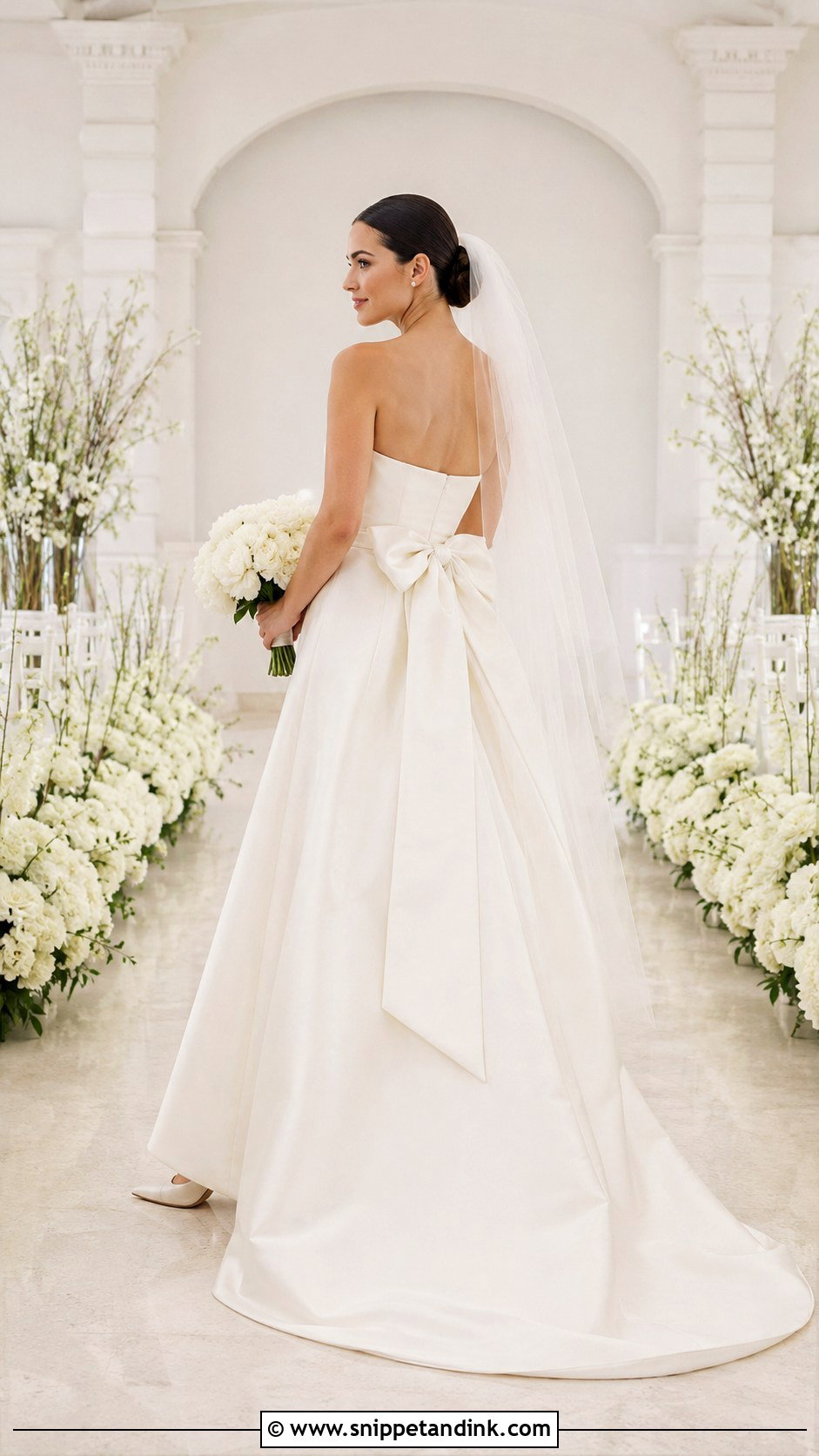
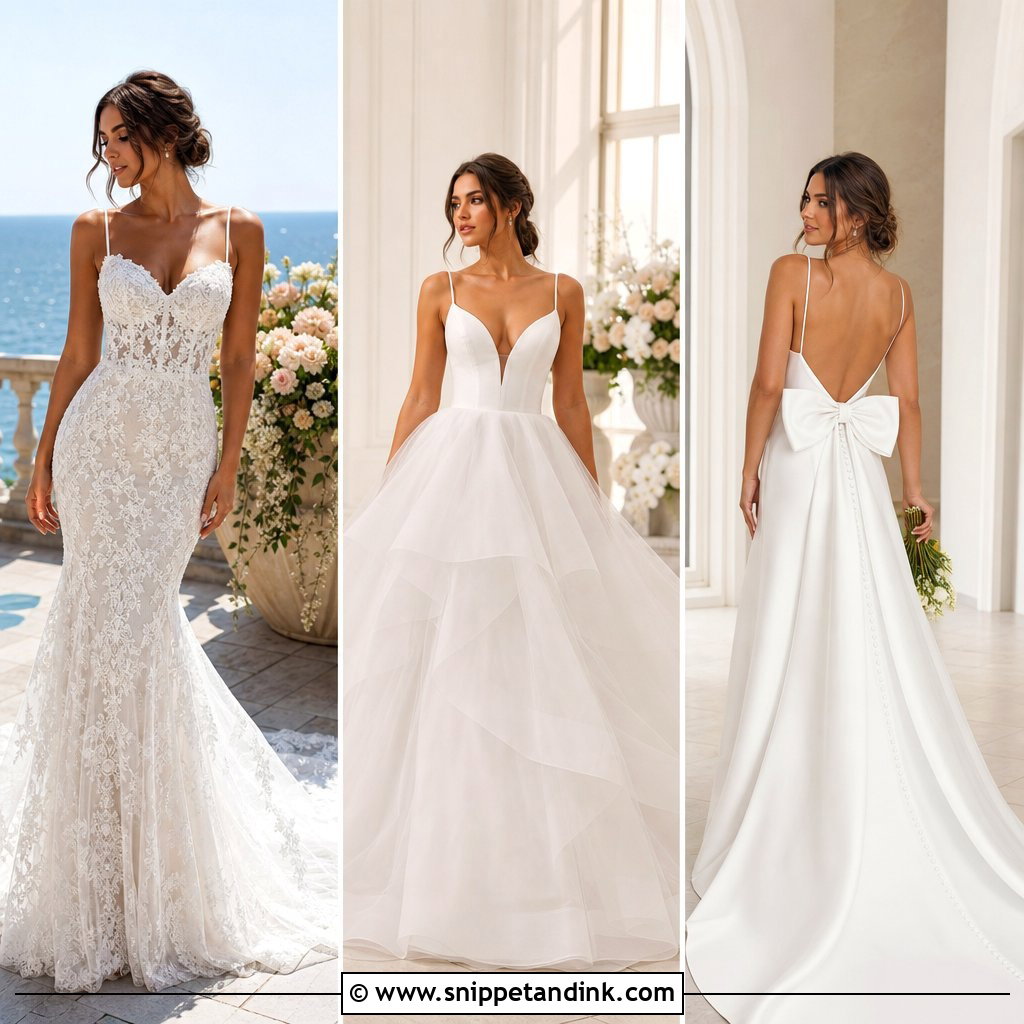
A large bow at the back of a strapless bodice has weight, and if it is stitched only to the outer fabric it can drag the top edge down through the evening. I ask for it to be anchored to the waist stay inside. Then the bow becomes the single focal point it should be, on a satin or mikado gown with a clean strapless bodice, a fitted waist and a straight or A-line skirt. Place it at the back waist for a classic finish, on one shoulder for asymmetry or at the neckline for something softer. Pearl studs, pointed ivory pumps, a plain veil that doesn’t bury the bow and a sleek chignon keep it visible, with a round white bouquet. A detachable bow lets you wear it for the ceremony and take it off for dancing.
Getting the Veil, Bouquet and Shoes to Agree With a Clean Gown
On a decorated dress, accessories can get lost in the detail. On a plain one, every piece is visible, so scale matters more than style. These are the proportions I check before a bride leaves the final fitting.
Veil length against the skirt
A long veil over a fitted column makes a strong vertical line, while the same veil over a full skirt can look like extra fabric with nowhere to go. Hold veil samples against your actual dress, from behind as well as the front, since that is the view guests have during the ceremony.
Bouquet size against your waist
Held at the hip bone, a bouquet should leave the waist visible. Too large and it hides the tailoring you paid for; too small against a big skirt and it disappears. Bring a photo of your dress to the florist, and if you can, a fabric swatch, because ivory, white and champagne all react differently with white flowers.
Shoes for the ground, not the photo
Grass swallows stilettos, stone floors punish thin soles and sand defeats almost everything. I’d rather see a bride in a block heel she can stand in for hours than in a pair she abandons after the vows, which leaves her hem dragging on the floor.
Start With the Silhouette, Then Let Everything Else Answer It
Every detail on a simple dress should have a job. Start with a silhouette that supports your body, suits the venue and lets you move, then think about fabric, neckline, hem length and tailoring before a single accessory. Shoes need to last the whole day, and jewelry, veils, capes and bouquets should answer the dress rather than talk over it. Bring your real undergarments and shoes to every fitting so the proportions are set correctly. From a satin slip or a structured ball gown to a tea-length dress or a long-sleeve crepe column, any of these looks can become your own once the fit is right.
You'll Like These Ideas:




Leave a Reply